Blog

  • Otic Drugs Market Projected For Strong Expansion Through 2030: Key Trends And Future Outlook

    Otic Drugs Market Projected For Strong Expansion Through 2030: Key Trends And Future Outlook

    Backed by market attractiveness analysis, total addressable market sizing, company benchmarking matrices, interactive Excel dashboards, wider supply chain intelligence, emerging startup coverage, and detailed product-level insights, The Business Research Company’s 2026 market reports are designed to offer research that is more actionable and strategically valuable than ever.

    Otic Drugs Market Revenue Outlook: What CAGR Lies Ahead Through 2030?

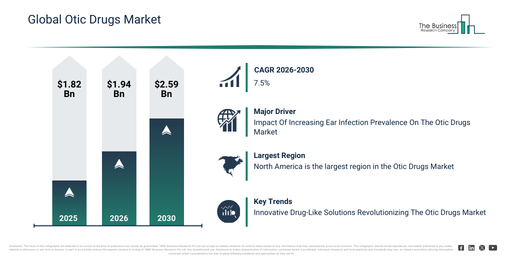
    The otic drugs market has experienced robust growth in recent years. Its expansion is projected from $1.82 billion in 2025 to $1.94 billion in 2026, demonstrating a compound annual growth rate (CAGR) of 6.4%. This historical growth can be credited to the high prevalence of otitis media, widespread antibiotic use in ENT care, an increase in hospital-based treatments, rising pediatric ear infections, and the availability of topical ear formulations.

    The otic drugs market size is expected to undergo significant expansion in the upcoming years. It is projected to attain a value of $2.59 billion by 2030, demonstrating a compound annual growth rate (CAGR) of 7.5%. The projected increase can be attributed to factors such as an expanding elderly population, a heightened awareness of ear health, the rise of homecare treatments, innovations in combination otic medications, and improved access to specialized ENT clinics. Key developments anticipated in this period include a growing embrace of combination otic therapies, an increasing inclination towards topical drug delivery, a higher demand for pediatric otic products, the broader availability of over-the-counter ear care items, and enhanced uptake of steroid-based otic treatments.

    Get A Free Sample Report With In-Depth Market Insights:

    https://thebusinessresearchcompany.com/sample_request?id=51370822&type=smp&name=Otic%20Drugs%20Market%20Report%202026&utm_source=Blogs&utm_medium=Paid&utm_campaign=Oct_PR

    Otic Drugs Market Growth Drivers: What’s Behind The Acceleration?

    The increasing occurrence of ear infections is projected to boost the expansion of the otic drugs market in the future. Otitis, an ear infection, is an inflammatory condition impacting the ear, frequently caused by bacterial or viral pathogens. Otic drugs offer localized treatment, minimize systemic absorption, and avert problems for individuals with various ear infections. For example, in April 2023, the World Health Organization (WHO), a Switzerland-based non-profit organization, reported that around 2.5 billion people are anticipated to experience hearing loss by 2050, with a minimum of 700 million needing hearing treatment. Consequently, the growing rate of ear infections propels the development of the otic drugs market.

    Otic Drugs Market Segment Analysis Spotlighting Growth Areas

    The otic drugs market covered in this report is segmented –

    1) By Drug Class: Cerumenolytics, Otic Anesthetics, Otic Anti-Infectives, Otic Steroids, Other Drug Class

    2) By Indication: Otitis, Middle Ear Infections, Other Indication

    3) By Route of Administration: Topical, Other Route of Administration

    4) By End-Users: Hospitals, Specialty Clinics, Homecare, Other End-Users

    Subsegments:

    1) By Cerumenolytics: Carbamide Peroxide, Docusate Sodium, Hydrogen Peroxide

    2) By Otic Anesthetics: Benzocaine, Lidocaine, Pramoxine

    3) By Otic Anti-Infectives: Antibiotic Solutions, Antifungal Solutions, Combination Antibiotic Or Antifungal Solutions

    4) By Otic Steroids: Hydrocortisone, Dexamethasone, Betamethasone

    5) By Other Drug Class: Antihistamines, Decongestants, Topical Analgesics

    Otic Drugs Market Trends: What’s Defining The Industry’s Next Phase?

    Leading companies active in the otic drugs market are launching innovative drug-resembling solutions to uphold their market presence. A drug-like cocktail commonly refers to a combination of various substances or compounds that possess qualities similar to pharmaceutical medications. These mixtures are frequently developed for research or experimental purposes, such as discovering new drugs, modeling diseases, or examining the effects of different compounds on biological systems. For example, in April 2023, Massachusetts Eye and Ear, an international US-based center for treatment and research, formulated a molecular drug-like cocktail that successfully restored hair cells in a mouse model by reconfiguring genetic pathways within the inner ear. This effective therapy for hearing loss tackles the permanent loss of hair cells, often caused by aging, noise exposure, and other factors, an issue that has previously been a challenge for medicine. This strategy aims to encourage the regeneration of sensory cells to enable hearing, advancing towards a gene therapy solution for hearing impairment.

    Otic Drugs Market Leading Companies: Who Holds The Strongest Market Presence?

    Major companies operating in the otic drugs market are Pfizer Inc., Johnson and Johnson Limited, Merck and Co. Inc., AbbVie Inc., Bayer AG, Novartis AG, Sanofi SA, Abbott Laboratories, GlaxoSmithKline Plc, Teva Pharmaceutical Industries Ltd., Mylan N.V., Alcon Inc., Bausch Health Companies Inc., Sun Pharmaceutical Industries Ltd., Perrigo Company PLC, Dr. Reddy’s Laboratories Ltd., Aurobindo Pharma Limited, Cipla Limited, Hikma Pharmaceuticals plc, Amneal Pharmaceuticals LLC, Zydus Lifesciences Ltd, Lupin Limited.

    View The Full Otic Drugs Market Report:

    https://thebusinessresearchcompany.com/report/otic-drugs-global-market-report?utm_source=Blogs&utm_medium=Paid&utm_campaign=Oct_PR

    Otic Drugs Market Regional Analysis: Which Geography Leads On Revenue?

    North America was the largest region in the otic drugs market in 2025. Asia-Pacific is expected to be the fastest-growing region in the forecast period. The regions covered in the otic drugs market report are Asia-Pacific, South East Asia, Western Europe, Eastern Europe, North America, South America, Middle East, Africa.

    Reach Out To Our Team:

    The Business Research Company: https://www.thebusinessresearchcompany.com/

    Americas: +1 310-496-7795

    Asia: +44 7882 955267 & +91 8897263534

    Europe: +44 7882 955267

    Email us at: marketing@tbrc.info

    Follow us on:

    LinkedIn: https://in.linkedin.com/company/the-business-research-company

    YouTube: https://www.youtube.com/channel/UC24_fI0rV8cR5DxlCpgmyFQ

    Global Market Model: https://www.thebusinessresearchcompany.com/global-market-model

  • OTC Dry Eye Drops Market Outlook 2026–2030: Growth Trends, Market Dynamics And Emerging Opportunities

    OTC Dry Eye Drops Market Outlook 2026–2030: Growth Trends, Market Dynamics And Emerging Opportunities

    Featuring market attractiveness scoring, total addressable market sizing, company benchmarking matrices, interactive Excel dashboards, deeper supply chain intelligence, emerging startup tracking, and granular product-level insights, The Business Research Company’s 2026 market reports are built to deliver research that is both more actionable and more strategically valuable.

    OTC Dry Eye Drops Market Growth Analysis: How Will Revenue Trend Over The Forecast Period?

    The otc dry eye drops market has experienced substantial growth in recent years. Its valuation is predicted to climb from $3.77 billion in 2025 to $4.07 billion in 2026, exhibiting a compound annual growth rate (CAGR) of 8.1%. This historic expansion can be attributed to factors such as the increasing prevalence of dry eye syndrome, the broad availability of otc artificial tears, a growing aging population, higher adoption of contact lenses, and well-established retail pharmacy networks.

    The otc dry eye drops market is projected to experience robust expansion over the coming years. Its value is anticipated to reach $5.33 billion by 2030, demonstrating a compound annual growth rate (CAGR) of 7.0%. Factors contributing to this growth during the projection period include an increase in screen usage and digital eye strain, enhanced understanding of ocular health, the proliferation of e-commerce pharmacy channels, a need for durable and sophisticated product formulations, and a rising inclination towards preservative-free options. Key trends observed within the forecast timeframe encompass a surging interest in preservative-free eye drops, a greater acceptance of otc remedies for dry eye caused by screens, the development of premium and improved-ingredient products, a growing tendency towards self-treatment and proactive eye care, and the flourishing of online and direct-to-consumer sales pathways.

    Get A Free Sample Report With In-Depth Market Insights:

    https://thebusinessresearchcompany.com/sample_request?id=37842234&type=smp&name=OTC%20Dry%20Eye%20Drops%20Market%20Report%202026&utm_source=Blogs&utm_medium=Paid&utm_campaign=Oct_PR

    OTC Dry Eye Drops Market Growth Factors Behind Sustained Expansion

    The expanding prevalence of screen exposure is projected to fuel the advancement of the OTC dry eye drops market moving ahead. This term, screen exposure, signifies the extended engagement with digital gadgets like smartphones, PCs, tablets, and TVs, which release blue light and demand continuous visual attention, frequently resulting in digital eye strain. The escalation in screen time is influenced by evolving digital living patterns, the prevalence of remote work, a greater reliance on virtual communication, and the broad availability of internet-connected devices. Over-the-counter dry eye drops contribute to eye comfort by delivering rapid and accessible alleviation from the dryness, irritation, and tiredness linked with prolonged periods in front of screens. As an illustration, in March 2025, data from Mastermind Behavior Services, a US-based firm, indicated that in 2024, the worldwide average daily screen usage was approximately 6 hours and 40 minutes, while adults in the U.S. utilized screens for an average of 7 hours and 3 minutes daily. Consequently, the growing amount of screen exposure is stimulating the expansion of the OTC dry eye drops market.

    OTC Dry Eye Drops Market Segment Performance And Emerging Opportunities

    The otc dry eye drops market covered in this report is segmented –

    1) By Brand Classification: Generics, Branded

    2) By Product: Preservatives Free, With Preservatives

    3) By Viscosity: High Viscosity, Low Viscosity

    4) By Distribution Channel: Online Pharmacies, Drugstores And Supermarkets, Retail Pharmacies, Other Distribution Channels

    Subsegments:

    1) By Generics: Artificial Tears (Non-Prescription), Lubricating Drops, Moisturizing Eye Drops, Rewetting Drops For Contact Lens Wearers

    2) By Branded: Brand-Specific Artificial Tears (Blink, Systane, Refresh), Prescription-To-Otc Switch Brands, Premium Lubricating Drops (With Added Ingredients Like Hyaluronic Acid, Vitamins)

    OTC Dry Eye Drops Market Industry Trends Fueling Future Revenue Growth

    Leading companies within the OTC dry eye drops market are concentrating on advancing preservative-free formulations and packaging designed to resist contamination, aiming to enhance long-term ocular safety and patient comfort. Eye lubricants without preservatives eliminate exposure to chemicals like benzalkonium chloride, which can contribute to ocular surface damage with prolonged use. To facilitate safer multi-dose dispensing, manufacturers are introducing specialized delivery systems that prevent microbial entry and maintain product sterility. For instance, in September 2024, Regener-Eyes, LLC, a US-based OTC eye care company, launched a new multi-dose bottle engineered for its preservative-free dry eye solution. The design incorporates a multi-part, one-way nozzle that prevents backflow, reducing contamination risks and enabling repeated, hygienic use for consumers. This innovative packaging allows patients with dry eye to use the solution safely throughout the day without worrying about microbial contamination. It also enhances user convenience by combining preservative-free formulation with a durable, easy-to-use delivery system.

    OTC Dry Eye Drops Market Key Players: Which Companies Lead Industry Competition?

    Major companies operating in the otc dry eye drops market are Pfizer Inc., Johnson & Johnson Services Inc., Novartis International AG, Allergan plc, Otsuka Pharmaceutical Co. Ltd., Alcon Inc., Bausch Health Companies Inc., Sun Pharmaceutical Industries Ltd., Santen Pharmaceutical Co. Ltd., Rohto Pharmaceutical Co. Ltd., Prestige Consumer Healthcare Inc., AFT Pharmaceuticals Ltd., Sentiss Pharma Private Limited, VISUfarma B.V., Ursapharm Arzneimittel GmbH, Thea Pharmaceuticals Inc., Horus Pharma, Novaliq GmbH, Medicom Healthcare Ltd., Similasan AG, Altaire Pharmaceutical Inc.

    View The Full OTC Dry Eye Drops Market Report:

    https://thebusinessresearchcompany.com/report/otc-dry-eye-drops-global-market-report?utm_source=Blogs&utm_medium=Paid&utm_campaign=Oct_PR

    OTC Dry Eye Drops Market Geographic Spread And Regional Opportunities

    North America was the largest region in the OTC dry eye drops market in 2025. Asia-Pacific is expected to be the fastest-growing region in the forecast period. The regions covered in the otc dry eye drops market report are Asia-Pacific, South East Asia, Western Europe, Eastern Europe, North America, South America, Middle East, Africa.

    Reach Out To Our Team:

    The Business Research Company: https://www.thebusinessresearchcompany.com/

    Americas: +1 310-496-7795

    Asia: +44 7882 955267 & +91 8897263534

    Europe: +44 7882 955267

    Email us at: marketing@tbrc.info

    Follow us on:

    LinkedIn: https://in.linkedin.com/company/the-business-research-company

    YouTube: https://www.youtube.com/channel/UC24_fI0rV8cR5DxlCpgmyFQ

    Global Market Model: https://www.thebusinessresearchcompany.com/global-market-model

  • OTC Drug And Dietary Supplement Market Growth Outlook From $376.32 Billion In 2026 To $497.84 Billion By 2030

    OTC Drug And Dietary Supplement Market Growth Outlook From $376.32 Billion In 2026 To $497.84 Billion By 2030

    Built to provide research that’s more actionable and strategically valuable, The Business Research Company’s 2026 market reports include market attractiveness analysis, total addressable market sizing, company benchmarking matrices, interactive Excel dashboards, broader supply chain intelligence, emerging startup tracking, and in-depth product insights.

    OTC Drug And Dietary Supplement Market Forecast: What Value Will The Market Reach By 2030?

    The otc drug and dietary supplement market has experienced robust expansion in recent years. This market is projected to expand from $352.4 billion in 2025 to $376.32 billion in 2026, demonstrating a compound annual growth rate (CAGR) of 6.8%. Historical growth can be attributed to several factors, including an increase in self-medication, greater awareness of preventive healthcare, the expansion of retail pharmacy networks, a growing aging population, and regulatory support for the availability of otc drugs.

    The otc drug and dietary supplement market is poised for significant expansion in the coming years. It is projected to grow to $497.84 billion in 2030, demonstrating a compound annual growth rate (CAGR) of 7.2%. This growth over the forecast period can be attributed to several factors, including the expansion of e-commerce healthcare platforms, a rising demand for immunity and wellness products, continuous advancements in nutraceutical research, health issues linked to urban lifestyles, and increasing disposable income in emerging economies. Major developments expected during this period include AI-driven product personalization, precision nutrition and condition-specific supplements, the widespread adoption of digital-first and omnichannel retail approaches, sustainable and clean-label formulations, and innovations in smart packaging and connected health monitoring.

    Get A Free Sample Report With In-Depth Market Insights:

    https://thebusinessresearchcompany.com/sample_request?id=91312918&type=smp&name=OTC%20Drug%20And%20Dietary%20Supplement%20Market%20Report%202026&utm_source=Blogs&utm_medium=Paid&utm_campaign=Oct_PR

    OTC Drug And Dietary Supplement Market Demand Drivers Opening New Revenue Streams

    The escalating investment in pharmaceutical research and development is anticipated to boost the OTC drug and dietary supplement market moving ahead. Research and development spending refers to the costs incurred by companies for creating, developing, and improving their products, fostering innovation and efficiency in the design and formulation of OTC drugs and dietary supplements. This rise in research and development outlays stems from companies’ efforts to enhance product effectiveness, safety, and distinctiveness within a competitive marketplace. For example, in February 2025, data from the National Center for Science and Engineering Statistics (NCSES), a US-based government statistical body, indicated that U.S. research and development spending climbed from $892 billion in 2022 to $940 billion in 2023, showing an increase of $48 billion. Consequently, the increasing pharmaceutical R&D investment is fueling the expansion of the OTC drug and dietary supplement market.

    OTC Drug And Dietary Supplement Market Segment Landscape And Growth Outlook

    The otc drug and dietary supplement market covered in this report is segmented –

    1) By Category: Vitamin And Dietary Supplements, Cough And Cold Products, Analgesics, Gastrointestinal Products, Sleep Aids, Otic Products, Wart Removers, Mouth Care Products, Ophthalmic Products, Other Categories

    2) By Dosage Form: Tablets, Hard Capsules, Powders, Ointments, Soft Capsules, Liquids, Other Dosage Forms

    3) By Application: Pharmacies, Grocery Stores, Vitamin And Health Food Stores, Online Pharmacies

    Subsegments:

    1) By Vitamin And Dietary Supplements: Multivitamins, Mineral Supplements, Herbal Supplements, Omega-3 Fatty Acids, Probiotics, Specialty Supplements

    2) By Cough And Cold Products: Cough Suppressants, Expectorants, Decongestants, Combination Products

    3) By Analgesics: Acetaminophen, NSAIDs, Topical Analgesics

    4) By Gastrointestinal Products: Antacids, Laxatives, Antidiarrheals, Proton Pump Inhibitors

    5) By Sleep Aids: Melatonin, Antihistamines, Herbal Sleep Aids

    6) By Otic Products: Ear Wax Removal Aids, Ear Drops For Infections, Anti-itch Ear Products

    7) By Wart Removers: Salicylic Acid Products, Cryotherapy Kits

    8) By Mouth Care Products: Mouthwashes, Toothpastes, Oral Rinses For Freshness

    9) By Ophthalmic Products: Artificial Tears, Allergy Eye Drops, Redness Relievers

    10) By Other Categories: Nutraceuticals, Topical Treatments For Skin Conditions, First Aid Products

    OTC Drug And Dietary Supplement Market Trends Powering Strategic Industry Growth

    Leading companies in the OTC drug and dietary supplement market are concentrating on innovative new products, such as oral contraceptives, to secure their position. Oral contraceptive pills (OCP) are taken by mouth daily to prevent pregnancy, containing hormones like progestin and oestrogen, or progestin exclusively. For instance, in July 2023, Perrigo Company PLC, an Ireland-based self-care company producing a wide array of over-the-counter (OTC) consumer goods and pharmaceutical products, marked a significant event. The U.S. Food and Drug Administration (FDA) approved Opill, a daily progestin-only oral contraceptive, for over-the-counter (OTC) availability to all ages. This groundbreaking approval makes Opill the very first birth control pill accessible without a prescription in the United States. Patrick Lockwood-Taylor, Perrigo’s President and Chief Executive Officer, highlighted the historical importance of this decision for women’s health, emphasizing Opill’s potential to revolutionize contraception access. This achievement reflects Perrigo’s strong dedication to delivering impactful solutions that improve lives, marking a momentous day for women’s health nationwide.

    OTC Drug And Dietary Supplement Market Competitive Landscape: Who Leads The Industry?

    Major companies operating in the otc drug and dietary supplement market are Pfizer Inc., Johnson & Johnson Ltd., Bayer AG, Sanofi S.A, Abbott Laboratories Inc, GSK plc, Reckitt Benckiser Plc., Teva Pharmaceutical Industries Ltd., Alcon Inc., Bausch Health Companies Inc., Sun Pharmaceutical Industries Ltd., Church & Dwight Co Inc, Perrigo Company plc, Dr. Reddy’s Laboratories Ltd., Cipla Limited, Glenmark Pharmaceuticals Limited, Alkem Laboratories Ltd, Nutraceutical International Corporation, Procter & Gamble Health Limited, UPM Pharmaceuticals Inc, Pharmavite LLC, Now Health Group Inc., Alfresa Pharma Corporation

    View The Full OTC Drug And Dietary Supplement Market Report:

    https://thebusinessresearchcompany.com/report/OTC-drug-and-dietary-supplement-global-market-report?utm_source=Blogs&utm_medium=Paid&utm_campaign=Oct_PR

    OTC Drug And Dietary Supplement Market Top Region By Revenue And Market Share

    North America was the largest region in the OTC drug and dietary supplement market in 2025. The regions covered in the otc drug and dietary supplement market report are Asia-Pacific, South East Asia, Western Europe, Eastern Europe, North America, South America, Middle East, Africa.

    Reach Out To Our Team:

    The Business Research Company: https://www.thebusinessresearchcompany.com/

    Americas: +1 310-496-7795

    Asia: +44 7882 955267 & +91 8897263534

    Europe: +44 7882 955267

    Email us at: marketing@tbrc.info

    Follow us on:

    LinkedIn: https://in.linkedin.com/company/the-business-research-company

    YouTube: https://www.youtube.com/channel/UC24_fI0rV8cR5DxlCpgmyFQ

    Global Market Model: https://www.thebusinessresearchcompany.com/global-market-model
  • Osteoporosis Drugs Market Forecast To Reach $16.2 Billion By 2030: Key Growth Drivers And Industry Trends

    Osteoporosis Drugs Market Forecast To Reach $16.2 Billion By 2030: Key Growth Drivers And Industry Trends

    Backed by market attractiveness analysis, total addressable market sizing, company benchmarking matrices, interactive Excel dashboards, wider supply chain intelligence, emerging startup coverage, and detailed product-level insights, The Business Research Company’s 2026 market reports are designed to offer research that is more actionable and strategically valuable than ever.

    Osteoporosis Drugs Market Size Outlook: How Quickly Will Revenue Expand Through 2030?

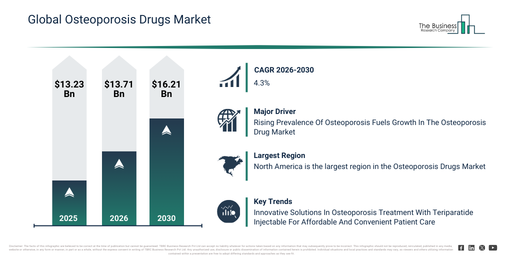
    The market for osteoporosis drugs has demonstrated consistent expansion in recent years. It will grow from $13.23 billion in 2025 to $13.71 billion in 2026 at a compound annual growth rate (CAGR) of 3.7%. This historic growth can be ascribed to several factors, such as the increasing prevalence of osteoporosis in the aging population, heightened awareness regarding bone health, progress in bisphosphonate therapies, government initiatives aimed at osteoporosis management, and the development of hospital pharmacy infrastructure.

    The osteoporosis drugs market size is projected to experience consistent growth in the coming years, with its valuation expected to reach $16.21 billion in 2030, driven by a compound annual growth rate (CAGR) of 4.3%. This expansion during the forecast period is attributed to the development of novel rrank ligand inhibitors, the integration of AI in patient monitoring, the broadening of telemedicine and remote care services, an increase in online pharmaceutical sales, and the rising adoption of injectable osteoporosis therapies. Key trends anticipated during this period include personalized osteoporosis treatment, advanced drug delivery systems, the evolution of combination therapy, preventive and early diagnosis approaches, and improved patient adherence and monitoring solutions.

    Get A Free Sample Report With In-Depth Market Insights:

    https://thebusinessresearchcompany.com/sample_request?id=9102&type=smp&name=Osteoporosis%20Drugs%20Market%20Report%202026&utm_source=Blogs&utm_medium=Paid&utm_campaign=Oct_PR

    Osteoporosis Drugs Market Growth Backed By Core Demand Fundamentals

    The escalating occurrence of osteoporosis is expected to fuel the expansion of the osteoporosis drug market. Osteoporosis is a bone disease characterized by a decline in bone mineral density and mass, or by changes in bone quality or structure. Individuals with a low calcium intake are more prone to developing osteoporosis. These osteoporosis drugs are designed to increase bone mineral density and help prevent fractures. For instance, in 2024, according to the Healthy Bones Australia, a Australia-based non-profit organization, approximately 6.2 million Australians aged 50 and above (67%) presently face poor bone health, with this number projected to climb to 7.7 million affected by osteopenia or osteoporosis by 2033. Hence, the rising prevalence of osteoporosis is propelling the growth of the osteoporosis drugs market.

    Osteoporosis Drugs Market Breakdown By Product Type And Application

    The osteoporosis drugs market covered in this report is segmented –

    1) By Type: Bisphosphonates, Selective Estrogen Receptor Modulators (SERMs), RANK Ligand Inhibitors

    2) By Administration: Oral, Injectable

    3) By Distribution Channel: Retail Pharmacies, Hospital Pharmacies, Online Sales

    4) By Application: Primary Osteoporosis, Secondary Osteoporosis

    Osteoporosis Drugs Market Growth Trends Reshaping The Competitive Landscape

    Key companies operating within the osteoporosis drugs market are prioritizing the development of cutting-edge solutions, including anabolic osteoporosis therapy, aimed at stimulating new bone growth and enhancing bone density for patients at high risk of fractures. Anabolic osteoporosis therapy refers to medical interventions that activate osteoblasts to encourage the formation of new bone, thereby increasing bone mass and strength, contrasting with antiresorptive therapies which primarily slow down existing bone loss. Illustratively, in November 2023, Apotex Inc., a pharmaceutical company based in Canada, introduced Teriparatide Injectable for Osteoporosis Treatment. This teriparatide injection is a pre-filled pen containing 250 mcg/mL, designed to deliver 28 daily doses of 20 mcg per pen, designated for individual patient use. This product will ensure these patients receive vital, cost-effective access.

    Osteoporosis Drugs Market Company Landscape And Competitive Strategy

    Major companies operating in the osteoporosis drugs market are Pfizer Inc., Merck & Co Inc., Novartis AG, GlaxoSmithKline PLC, Eli Lilly and Company, Amgen Inc., Viatris Inc., Teva Pharmaceutical Industries Ltd, Mylan N.V., Sun Pharmaceutical Industries Ltd., Dr. Reddy’s Laboratories Ltd., Cipla Limited, Cadila Healthcare Ltd., Lupin Limited, Torrent Pharmaceuticals Ltd., Theramex, Radius Health Inc., Strides Pharma Science Limited, Apotex Inc., Asahi Kasei Pharma Corporation, Daiichi Sankyo Company Limited

    View The Full Osteoporosis Drugs Market Report:

    https://thebusinessresearchcompany.com/report/osteoporosis-drugs-global-market-report?utm_source=Blogs&utm_medium=Paid&utm_campaign=Oct_PR

    Osteoporosis Drugs Market Regional Analysis And Top Geography

    North America was the largest region in the osteoporosis market in 2025. The regions covered in the osteoporosis drugs market report are Asia-Pacific, South East Asia, Western Europe, Eastern Europe, North America, South America, Middle East, Africa.

    Reach Out To Our Team:

    The Business Research Company: https://www.thebusinessresearchcompany.com/

    Americas: +1 310-496-7795

    Asia: +44 7882 955267 & +91 8897263534

    Europe: +44 7882 955267

    Email us at: marketing@tbrc.info

    Follow us on:

    LinkedIn: https://in.linkedin.com/company/the-business-research-company

    YouTube: https://www.youtube.com/channel/UC24_fI0rV8cR5DxlCpgmyFQ

    Global Market Model: https://www.thebusinessresearchcompany.com/global-market-model

  • Osteogenesis Imperfecta Treatment Market Research 2026: Market Size, Trends, Segments And Growth Forecast

    Osteogenesis Imperfecta Treatment Market Research 2026: Market Size, Trends, Segments And Growth Forecast

    Featuring market attractiveness scoring, total addressable market sizing, company benchmarking matrices, interactive Excel dashboards, deeper supply chain intelligence, emerging startup tracking, and granular product-level insights, The Business Research Company’s 2026 market reports are built to deliver research that is both more actionable and more strategically valuable.

    Osteogenesis Imperfecta Treatment Market Size, Value And Growth Trajectory Through 2030

    The osteogenesis imperfecta treatment market has experienced consistent expansion in recent years. It is anticipated to expand from $0.93 billion in 2025 to $0.98 billion in 2026, demonstrating a compound annual growth rate (CAGR) of 4.6%. Historically, the market’s growth was driven by factors including a scarcity of treatment options for osteogenesis imperfecta, a reliance on conventional bisphosphonate therapy, insufficient patient understanding of lifestyle management, limited access to specialized surgical interventions, and an underdeveloped homecare support infrastructure.

    The osteogenesis imperfecta treatment market is anticipated to experience consistent expansion over the upcoming years, reaching a valuation of $1.16 billion by 2030, demonstrating a compound annual growth rate (CAGR) of 4.3%. This projected growth is driven by several factors, including the creation of new drugs and hormone treatments, progress in minimally invasive rodding and spinal procedures, the incorporation of telemedicine into homecare services, a greater emphasis on patient-centered lifestyle and recovery initiatives, and the increasing use of precision medicine strategies. Key developments expected during this period involve a surge in the use of bisphosphonate and teriparatide treatments, an increase in rodding and spinal fusion operations, growing demand for customized physical therapy, broader availability of homecare and specialized clinic offerings, and a heightened emphasis on educating patients and managing their lifestyles.

    Get A Free Sample Report With In-Depth Market Insights:

    https://thebusinessresearchcompany.com/sample_request?id=47019178&type=smp&name=Osteogenesis%20Imperfecta%20Treatment%20Market%20Report%202026&utm_source=Blogs&utm_medium=Paid&utm_campaign=Oct_PR

    Osteogenesis Imperfecta Treatment Market Growth Catalysts And Demand Drivers

    The rising occurrence of osteogenesis imperfecta (OI) is anticipated to drive the expansion of the osteogenesis imperfecta treatment market in the future. This genetic condition, known as osteogenesis imperfecta, is marked by delicate bones prone to easy fractures, impacting people of every age. The surge in OI prevalence stems from enhancements in genetic testing and the creation of national and regional disease registries, leading to the identification of cases that were previously undiagnosed. Treatment for osteogenesis imperfecta aids patients through therapies like bisphosphonates, intramedullary rods, braces, and various supportive services, all aimed at enhancing bone strength and overall quality of life. As an illustration, data from Oxford Academic, a UK-based academic research platform, indicated that in July 2025, out of 5,722 individuals having two or more osteogenesis imperfecta (OI)-related medical claims separated by at least 30 days, 2,095 fulfilled the CE eligibility criteria, forming the total OI cohort. Consequently, the growing prevalence of OI is a key factor propelling the expansion of the osteogenesis imperfecta treatment market.

    Osteogenesis Imperfecta Treatment Market Segment Analysis And Revenue Potential

    The osteogenesis imperfecta treatment market covered in this report is segmented –

    1) By Treatment Type: Medication, Surgery, Physical Therapy, Lifestyle Modifications

    2) By Drug Class: Teriparatide, Denosumab, Other Drug Classes

    3) By Route Of Administration: Subcutaneous, Intravenous, Oral, Other Routes Of Administration

    4) By Distribution Channel: Hospital Pharmacies, Retail Pharmacies, Online Pharmacies

    5) By End-User: Hospitals, Homecare, Specialty Clinics, Other End Users

    Subsegments:

    1) By Medication: Bisphosphonates, Teriparatide, Hormone Replacement Therapy, Pain Relievers, Calcium And Vitamin D Supplements

    2) By Surgery: Rodding Surgery, Spinal Fusion Surgery, Fracture Repair Surgery, Joint Replacement Surgery

    3) By Physical Therapy: Strength Training, Range Of Motion Exercises, Aquatic Therapy, Gait Training, Assistive Device Training

    4) By Lifestyle Modifications: Nutritional Counseling, Fall Prevention Strategies, Home Environment Modification, Activity Modification, Patient Education And Support Programs

    Osteogenesis Imperfecta Treatment Market Trends Shaping Long-Term Demand

    Major companies operating in the osteogenesis imperfecta treatment market are concentrating on advanced therapeutics, such as sclerostin inhibition therapy, to accelerate bone formation and diminish fracture risk for patients with osteogenesis imperfecta (OI). Sclerostin inhibition therapy involves using monoclonal antibodies to block sclerostin, a protein known to restrict bone growth, thereby promoting increased bone mineral density and strength. For instance, in October 2024, Ultragenyx Pharmaceutical Inc., a US-based biopharmaceutical company, received Breakthrough Therapy Designation from the FDA for its investigational therapy setrusumab (UX143). Setrusumab is a fully human monoclonal antibody designed to inhibit sclerostin, which in turn stimulates new bone formation and enhances bone strength, aiming to reduce fracture risk in patients with OI Types I, III, and IV aged two years and older.

    Osteogenesis Imperfecta Treatment Market Key Players Shaping Industry Direction

    Major companies operating in the osteogenesis imperfecta treatment market are Amgen Inc., Ascendis Pharma A/S, Mereo BioPharma Group PLC, OrthoPediatrics Corp., Ultragenyx Pharmaceutical Inc., BioMarin Pharmaceutical Inc., PTC Therapeutics Inc., Kyowa Kirin Co. Ltd., Ipsen S.A., Alexion Pharmaceuticals (AstraZeneca Rare Disease), Takeda Pharmaceutical Company Limited, Novartis AG (Bone Metabolism Portfolio), Roche Holding AG (Genentech), Sun Pharmaceutical Industries Ltd., Cipla Ltd., Dr. Reddy’s Laboratories Ltd., Aurobindo Pharma Ltd., Teva Pharmaceutical Industries Ltd., Apotex Inc., Stada Arzneimittel AG, Fresenius Kabi AG, Alkem Laboratories Ltd., Hikma Pharmaceuticals PLC, Lupin Limited, Zydus Lifesciences Ltd., Torrent Pharmaceuticals Ltd., Glenmark Pharmaceuticals Ltd., Pfizer Inc., Viatris Inc., Accord Healthcare Ltd., Sandoz Group AG, Medtronic plc, Smith & Nephew plc, Zimmer Biomet Holdings Inc.

    View The Full Osteogenesis Imperfecta Treatment Market Report:

    https://thebusinessresearchcompany.com/report/osteogenesis-imperfecta-treatment-global-market-report?utm_source=Blogs&utm_medium=Paid&utm_campaign=Oct_PR

    Osteogenesis Imperfecta Treatment Market Geographic Analysis: Where Is Demand Rising Fastest?

    North America was the largest region in the osteogenesis imperfecta treatment market in 2025. Asia-Pacific is expected to be the fastest-growing region in the forecast period. The regions covered in the osteogenesis imperfecta treatment market report are Asia-Pacific, South East Asia, Western Europe, Eastern Europe, North America, South America, Middle East, Africa.

    Reach Out To Our Team:

    The Business Research Company: https://www.thebusinessresearchcompany.com/

    Americas: +1 310-496-7795

    Asia: +44 7882 955267 & +91 8897263534

    Europe: +44 7882 955267

    Email us at: marketing@tbrc.info

    Follow us on:

    LinkedIn: https://in.linkedin.com/company/the-business-research-company

    YouTube: https://www.youtube.com/channel/UC24_fI0rV8cR5DxlCpgmyFQ

    Global Market Model: https://www.thebusinessresearchcompany.com/global-market-model
  • Osimertinib Drugs Market Forecast 2026: Market Size, Competitive Landscape And Growth Drivers

    Osimertinib Drugs Market Forecast 2026: Market Size, Competitive Landscape And Growth Drivers

    Built to provide research that’s more actionable and strategically valuable, The Business Research Company’s 2026 market reports include market attractiveness analysis, total addressable market sizing, company benchmarking matrices, interactive Excel dashboards, broader supply chain intelligence, emerging startup tracking, and in-depth product insights.

    Osimertinib Drugs Market CAGR Outlook And Future Development

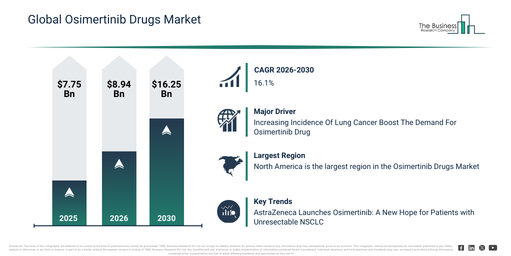
    The osimertinib drugs market has seen substantial growth recently. It is anticipated to expand from $7.75 billion in 2025 to $8.94 billion by 2026, achieving a compound annual growth rate (CAGR) of 15.3%. This historical expansion is primarily due to the increasing incidence of NSCLC, a rise in EGFR mutation testing, its proven clinical success against first-generation TKIs, regulatory clearances in major markets, and growing expenditure in oncology healthcare.

    The osimertinib drugs market size is projected to undergo swift expansion over the next few years. Its valuation is anticipated to reach $16.25 billion in 2030, exhibiting a compound annual growth rate (CAGR) of 16.1%. This projected growth during the forecast timeframe is attributable to several factors, including the expansion of precision oncology initiatives, rising diagnosis rates in developing nations, advancements in next-generation EGFR inhibitors, more extensive reimbursement options, and ongoing clinical investigations for additional therapeutic uses. Key trends anticipated throughout this period involve the expanded application as a frontline EGFR therapy, increasing uptake in the treatment of metastatic NSCLC, a rising inclination towards oral targeted treatments, enhanced research into combination therapies, and better patient adherence due to once-daily administration.

    Get A Free Sample Report With In-Depth Market Insights:

    https://thebusinessresearchcompany.com/sample_request?id=42538776&type=smp&name=Osimertinib%20Drugs%20Market%20Report%202026&utm_source=Blogs&utm_medium=Paid&utm_campaign=Oct_PR

    Osimertinib Drugs Market Opportunity Drivers: What’s Unlocking New Revenue Potential?

    The growing number of organizational efforts aimed at enhancing lung cancer care and treatment is anticipated to stimulate the expansion of the osimertinib drug market. These organizational initiatives to improve lung cancer care and treatment encompass various policies, funding allocations, and programs executed by organizations to boost the accessibility, affordability, and overall quality of care for individuals suffering from cancer. Organizations have introduced measures specifically to improve lung cancer care, emphasizing the optimal use of the osimertinib drug for more potent treatment outcomes. For example, in May 2024, The Australian Department of Health and Aged Care, an Australia-based government agency, launched the National Lung Cancer Screening Program (NLCSP). This program seeks to establish a systematic method for the early detection of lung cancer through the use of low-dose computed tomography (LDCT) scans. The initiative is specifically designed for high-risk individuals, especially those aged 50 to 80 with a substantial history of smoking. Consequently, the rising number of initiatives from organizations to enhance lung cancer care and treatment is fueling the development of the osimertinib drug market.

    Osimertinib Drugs Market Segmentation And Category Overview

    The osimertinib drugs market covered in this report is segmented –

    1) By Type: 40 mg, 80 mg

    2) By Distribution Channel: Hospital Pharmacy, Drug Store And Retail Pharmacy, Online Pharmacy

    3) By Application: Locally Advanced Non-Small Cell Lung Cancer (NSCLC), Metastatic Non-Small Cell Lung Cancer (NSCLC), Other Applications

    Subsegments:

    1) By 40 mg: Maintenance Therapy in Tolerability-Sensitive Patients, Dose Adjustment for Drug–Drug Interactions

    2) By 80 mg: First-Line Treatment for EGFR-Mutated NSCLC, Second-Line Treatment for T790M-Positive NSCLC

    Osimertinib Drugs Market Innovation Trends Shaping Future Development

    Leading companies within the osimertinib drugs market are concentrating on targeted treatments to enhance results for individuals afflicted with non-small cell lung cancer (NSCLC), especially those presenting EGFR mutations, with the goal of improving therapeutic success and patient well-being. These entities are additionally dedicating funds to clinical investigations and collaborative research efforts to broaden osimertinib’s applications and assess its effectiveness when combined with other therapies, offering wider advantages to patients. Illustratively, in September 2024, AstraZeneca Pharmaceuticals LP, a US-based pharmaceutical company, introduced osimertinib (Tagrisso) for adults diagnosed with locally advanced, unresectable non-small cell lung cancer (NSCLC) that possesses specific EGFR mutations, an approval granted by the FDA. This clearance was based on a clinical trial that showed substantial gains in progression-free survival in contrast to a placebo.

    Osimertinib Drugs Market Competitive Analysis Of Leading Industry Participants

    Major companies operating in the osimertinib drugs market are AstraZeneca plc, Dr. Reddy’s Laboratories Ltd., Cipla Limited, Zydus Lifesciences Limited, Sun Pharmaceutical Industries Ltd., Alembic Pharmaceuticals Limited, Aristo Pharmaceuticals Private Limited, Incepta Pharmaceuticals Ltd., Beacon Pharmaceutical Limited, Drug International Limited, MSN Laboratories Pvt Ltd., Hetero Drugs Ltd., Accord Healthcare Limited, Dolphin Pharmaceutical Limited, Radiant Pharmaceuticals Ltd., Beximco Pharmaceuticals Ltd., Eskayef Pharmaceuticals Ltd., Intas Pharmaceuticals Ltd., Natco Pharma Limited, Alkem Laboratories Ltd.

    View The Full Osimertinib Drugs Market Report:

    https://thebusinessresearchcompany.com/report/osimertinib-drugs-global-market-report?utm_source=Blogs&utm_medium=Paid&utm_campaign=Oct_PR

    Osimertinib Drugs Market Global Footprint: Which Region Leads The Market?

    North America was the largest region in the osimertinib drugs market in 2025. The regions covered in the osimertinib drugs market report are Asia-Pacific, South East Asia, Western Europe, Eastern Europe, North America, South America, Middle East, Africa.

    Reach Out To Our Team:

    The Business Research Company: https://www.thebusinessresearchcompany.com/

    Americas: +1 310-496-7795

    Asia: +44 7882 955267 & +91 8897263534

    Europe: +44 7882 955267

    Email us at: marketing@tbrc.info

    Follow us on:

    LinkedIn: https://in.linkedin.com/company/the-business-research-company

    YouTube: https://www.youtube.com/channel/UC24_fI0rV8cR5DxlCpgmyFQ

    Global Market Model: https://www.thebusinessresearchcompany.com/global-market-model

  • Orphan Drugs Service Market Size In 2026: Regional Growth, Key Segments And Future Outlook

    Orphan Drugs Service Market Size In 2026: Regional Growth, Key Segments And Future Outlook

    Backed by market attractiveness analysis, total addressable market sizing, company benchmarking matrices, interactive Excel dashboards, wider supply chain intelligence, emerging startup coverage, and detailed product-level insights, The Business Research Company’s 2026 market reports are designed to offer research that is more actionable and strategically valuable than ever.

    Orphan Drugs Service Market Set To Climb From $50.74 Billion In 2026 To $93.92 Billion By 2030

    The orphan drugs service market size has seen swift expansion in recent years. It is projected to increase from $43.4 billion in 2025 to $50.75 billion in 2026, demonstrating a compound annual growth rate (CAGR) of 16.9%. The market’s historical growth can be attributed to an upsurge in rare disease identification, the expansion of orphan drug legislation, greater investment in rare disease research, the provision of regulatory incentives, and the increasing influence of patient advocacy groups.

    The orphan drugs service market size is anticipated to experience rapid growth in the coming years. It is forecast to grow to $93.93 billion in 2030, at a compound annual growth rate (CAGR) of 16.6%. This expansion during the forecast period can be attributed to factors such as increasing demand for personalized rare disease therapies, the rising adoption of advanced clinical trial technologies, the expansion of global orphan drug pipelines, the growing utilization of real-world evidence, and continued regulatory support for orphan drug development. Major trends within the forecast period include an increasing demand for specialized regulatory and development services, a growing focus on accelerated approval pathways, the rising use of data-driven rare disease research platforms, the expansion of patient-centric clinical development models, and enhanced collaboration between stakeholders.

    Get A Free Sample Report With In-Depth Market Insights:

    https://thebusinessresearchcompany.com/sample_request?id=96333236&type=smp&name=Orphan%20Drugs%20Service%20Market%20Report%202026&utm_source=Blogs&utm_medium=Paid&utm_campaign=Oct_PR

    Orphan Drugs Service Market Growth Momentum: What Factors Are Shaping Demand?

    Increased funding directed towards rare diseases is anticipated to boost the expansion of the orphan drugs service market going forward. A rare disease refers to a medical condition impacting a limited portion of the population, generally fewer than 1 in 2,000 people. These conditions frequently present as chronic, progressive, and potentially life-threatening or disabling. The primary drivers for this investment include the increasing awareness of unaddressed medical requirements and the prospect of significant returns offered by regulatory benefits, such as orphan drug designation, market exclusivity, and lower development expenses. Enhanced investment in rare diseases strengthens orphan drug services by channeling more funds into research and development, thereby enabling the creation of treatments for conditions previously overlooked. This also hastens drug availability through assistance with clinical trials, regulatory approvals, and patient accessibility, ultimately improving therapeutic choices for individuals suffering from rare diseases. As an illustration, Global Genes, a US-based nonprofit organization, reported that in April 2024, firms developing treatments for rare diseases secured $7.1 billion in the first quarter of 2024, representing a substantial 307% rise from the $1.8 billion collected during the same period in 2023. Consequently, the increased investment in rare diseases is a key factor propelling the expansion of the orphan drugs service market.

    Orphan Drugs Service Market Segment Outlook: Which Categories Are Growing Fastest?

    The orphan drugs service market covered in this report is segmented –

    1) By Type: Congenital Disease, Genetic Disease, Tumors And Cancer, Chronic, Other Types

    2) By Therapeutic Area: Oncology, Metabolic Disorders, Neurological Disorders, Hematology, Infectious Diseases, Other Rare Diseases

    3) By Application: Aldult, Children

    Subsegments:

    1) By Congenital Disease: Heart Defects, Cleft Lip And Palate, Spina Bifida, Down Syndrome

    2) By Genetic Disease: Cystic Fibrosis, Huntington Disease, Sickle Cell Anemia, Muscular Dystrophy

    3) By Tumors And Cancer: Leukemia, Lymphoma, Neuroblastoma, Sarcoma

    4) By Chronic: Rare Metabolic Disorders, Rare Endocrine Disorders, Rare Cardiovascular Disorders, Rare Neurological Disorders

    5) By Other Types: Rare Infectious Diseases, Rare Immunological Disorders, Rare Dermatological Conditions, Rare Ophthalmological Disorders

    Orphan Drugs Service Market Trends Redefining Industry Growth

    Major companies operating in the orphan drugs service market are prioritizing the obtainment of regulatory approvals to accelerate the development and accessibility of treatments for rare diseases. Regulatory approvals represent official permissions from government agencies that enable a drug or treatment to be legally tested, manufactured, and marketed for patient use. For instance, in February 2023, Askbio GmbH, a US-based gene therapy company, secured the European Commission orphan drug designation for AB-1003, a novel investigational gene therapy intended for limb-girdle muscular dystrophy. This adeno-associated virus (AAV)-based therapy aims to reinstate FKRP enzyme activity in muscle cells via a single intravenous infusion. AB-1003 has been awarded orphan drug designation by both the European Commission and the U.S. Food and Drug Administration (FDA), in addition to rare pediatric disease and fast track designations from the FDA, underscoring the urgent unmet medical need. It is presently undergoing a Phase 1/2 clinical trial (LION-CS101), assessing its safety and efficacy in adults with genetically confirmed limb-girdle muscular dystrophy type 2I/R9 (LGMD2I/R9).

    Orphan Drugs Service Market Leading Companies And Competitive Benchmarking

    Major companies operating in the orphan drugs service market are Johnson & Johnson Services Inc., F. Hoffmann-La Roche Ltd., Pfizer Inc., AbbVie Inc., Bayer AG, Sanofi S.A., Novartis AG, AstraZeneca PLC, The Bristol-Myers Squibb Company, GSK plc., Eli Lilly and Company, Takeda Pharmaceutical Company Limited, Amgen Inc., IQVIA Inc., CSL Behring GmbH, Lonza Group AG, BioMarin Pharmaceutical Inc., Fortrea Holdings Inc., Medpace Inc., Sarepta Therapeutics, Caidya Inc., Cevidra Inc.

    View The Full Orphan Drugs Service Market Report:

    https://thebusinessresearchcompany.com/report/orphan-drugs-service-global-market-report?utm_source=Blogs&utm_medium=Paid&utm_campaign=Oct_PR

    Orphan Drugs Service Market Regional Split: Which Areas Are Fueling Growth?

    North America was the largest region in the orphan drugs service market in 2025. Asia-Pacific is expected to be the fastest-growing region in the forecast period. The regions covered in the orphan drugs service market report are Asia-Pacific, South East Asia, Western Europe, Eastern Europe, North America, South America, Middle East, Africa.

    Reach Out To Our Team:

    The Business Research Company: https://www.thebusinessresearchcompany.com/

    Americas: +1 310-496-7795

    Asia: +44 7882 955267 & +91 8897263534

    Europe: +44 7882 955267

    Email us at: marketing@tbrc.info

    Follow us on:

    LinkedIn: https://in.linkedin.com/company/the-business-research-company

    YouTube: https://www.youtube.com/channel/UC24_fI0rV8cR5DxlCpgmyFQ

    Global Market Model: https://www.thebusinessresearchcompany.com/global-market-model

  • Orphan Drugs Market Growth Forecast Through 2030: Market Size And Trends In 2026

    Orphan Drugs Market Growth Forecast Through 2030: Market Size And Trends In 2026

    Featuring market attractiveness scoring, total addressable market sizing, company benchmarking matrices, interactive Excel dashboards, deeper supply chain intelligence, emerging startup tracking, and granular product-level insights, The Business Research Company’s 2026 market reports are built to deliver research that is both more actionable and more strategically valuable.

    Orphan Drugs Market Forecast: Value Set To Climb From $293.6 Billion To $794.12 Billion

    The orphan drugs market has experienced significant expansion in recent years. This market is projected to grow from $229.71 billion in 2025 to $293.6 billion in 2026, exhibiting a compound annual growth rate (CAGR) of 27.8%. The historical growth can be attributed to several factors such as the implementation of orphan drug acts, the ongoing unmet needs in rare diseases, the limited availability of treatment options, various government incentives and grants, and the increasing efforts in patient advocacy.

    The orphan drugs market is projected to experience substantial expansion over the upcoming years. It is set to reach $794.12 billion in 2030, demonstrating a compound annual growth rate (CAGR) of 28.2%. This projected growth during the forecast period is largely driven by advancements in genomics research, a rise in the diagnosis rates of rare diseases, the increasing prevalence of biologic orphan drugs, the widening reach of specialty distribution channels, and greater capital expenditure in specialized therapeutics. Key trends anticipated for the forecast timeframe encompass the escalating creation of treatments for uncommon conditions, enhanced regulatory encouragement for the approval of orphan drugs, the advancement of precision medicine for rare disorders, the broadening application of gene and cell therapies, and critical partnerships between pharmaceutical and biotechnology companies.

    Get A Free Sample Report With In-Depth Market Insights:

    https://thebusinessresearchcompany.com/sample_request?id=66649151&type=smp&name=Orphan%20Drugs%20Market%20Report%202026&utm_source=Blogs&utm_medium=Paid&utm_campaign=Oct_PR

    Orphan Drugs Market Expansion Drivers: What’s Shaping Future Growth?

    An essential element propelling the expansion of the orphan drugs market is the increasing incidence of rare diseases. A rare disease is defined as any ailment impacting only a small portion of the populace. Frequently, therapies for rare diseases necessitate a temperature-controlled supply chain, known as a cold chain, which is not universally available across all nations. These conditions, also referred to as orphan diseases, manifest infrequently among individuals (for example, in 7 out of 10,000 people). Despite this rarity, the global occurrence of rare diseases has seen an upward trend in recent years. As an illustration, figures from The American Cancer Society, a US-based professional organization, indicate that in January 2025, approximately 59,660 new cases of oral cavity and oropharyngeal cancer are anticipated to be diagnosed in 2025, with an estimated 12,770 fatalities from these specific cancers. Consequently, the growing frequency of rare diseases is fueling the expansion of the orphan drugs market.

    Orphan Drugs Market Segment Landscape: Which Areas Lead Development?

    The orphan drugs market covered in this report is segmented –

    1) By Therapy Area: Oncology, Blood, Central Nervous System, Endocrine, Cardiovascular, Respiratory, Immunomodulatory

    2) By Diseases Type: Oncology, Hematology, Neurology, Cardiovascular, Other Disease Types

    3) By Drug Type: Biological, Non-Biological

    4) By Distribution Channel: Hospital Pharmacy, Retail Pharmacy, Online Sales

    Subsegments:

    1) By Oncology: Targeted Therapies, Chemotherapy Agents, Immunotherapy Drugs, Hormonal Therapies

    2) By Blood: Hematopoietic Growth Factors, Coagulation Factor Concentrates, Treatments for Rare Blood Disorders

    3) By Central Nervous System: Medications for Rare Neurological Disorders, Antiepileptic Drugs for Rare Epilepsy Syndromes, Treatments for Rare Neurodegenerative Diseases

    4) By Endocrine: Hormonal Replacement Therapies, Treatments for Rare Endocrine Disorders

    5) By Cardiovascular: Medications for Rare Cardiovascular Conditions, Treatments for Rare Genetic Heart Disorders

    6) By Respiratory: Therapies for Rare Respiratory Diseases, Medications for Rare Allergic Conditions

    7) By Immunomodulatory: Treatments for Rare Autoimmune Disorders, Immunotherapies for Rare Inflammatory Conditions

    Orphan Drugs Market Strategic Trends: What Defines The Next Growth Phase?

    Key companies within the orphan drugs market are prioritizing product approvals, such as CAR T-cell therapy, to address the critical requirements of rare diseases. This strategy improves patient outcomes and capitalizes on regulatory incentives for groundbreaking treatments. CAR T-cell therapy is a personalized immunotherapy that involves modifying a patient’s T cells to specifically target and attack cancer cells. It has demonstrated considerable effectiveness in treating certain blood cancers. For instance, in March 2024, Cabaletta Bio, a US-based biotechnology company, secured an FDA-granted orphan drug designation for CABA-201. CABA-201 is an investigational CAR T-cell therapy designed to target CD19-positive B-cells, aiming to induce durable remission in autoimmune diseases like systemic sclerosis. Its potential advantages include a targeted method, a favorable safety profile, and the prospect of enduring effects from a single infusion.

    Orphan Drugs Market Industry Leaders And Competitive Landscape

    Major companies operating in the orphan drugs market are Pfizer Inc., Johnson & Johnson Services Inc., F Hoffmann-La Roche Ltd., Farbenfabriken Bayer AG, Novartis AG, Sanofi SA, Bristol-Myers Squibb Co., AstraZeneca plc, GlaxoSmithKline plc, Takeda Pharmaceutical Company Limited, Eli Lilly and Company, Gilead Sciences Inc., Applied Molecular Genetics Inc., Novo Nordisk A/S, Merck & Co. KG, AbbVie Inc., Teva Pharmaceutical Industries Ltd., Regeneron Pharmaceuticals Inc., CSL Limited, Biogen Inc., Celgene Corporation, Vertex Pharmaceuticals Inc., Eisai Co. Ltd., Grifols SA, Alexion Pharmaceuticals Inc., BioMarin Pharmaceutical Inc., Aegerion Pharmaceuticals Inc., Sankyo Co. Ltd.

    View The Full Orphan Drugs Market Report:

    https://thebusinessresearchcompany.com/report/orphan-drug-global-market-report?utm_source=Blogs&utm_medium=Paid&utm_campaign=Oct_PR

    Orphan Drugs Market Top Region: Where Does Most Revenue Come From?

    North America was the largest region in the global orphan drugs market in 2025. Middle East is expected to be the fastest growing region in the orphan drugs market report during the forecast period. The regions covered in the orphan drugs market report are Asia-Pacific, South East Asia, Western Europe, Eastern Europe, North America, South America, Middle East, Africa.

    Reach Out To Our Team:

    The Business Research Company: https://www.thebusinessresearchcompany.com/

    Americas: +1 310-496-7795

    Asia: +44 7882 955267 & +91 8897263534

    Europe: +44 7882 955267

    Email us at: marketing@tbrc.info

    Follow us on:

    LinkedIn: https://in.linkedin.com/company/the-business-research-company

    YouTube: https://www.youtube.com/channel/UC24_fI0rV8cR5DxlCpgmyFQ

    Global Market Model: https://www.thebusinessresearchcompany.com/global-market-model

  • Organic Pharmaceutical Excipients Market Analysis: $13.28 Billion Market Size In 2026 And Future Growth Prospects

    Organic Pharmaceutical Excipients Market Analysis: $13.28 Billion Market Size In 2026 And Future Growth Prospects

    Built to provide research that’s more actionable and strategically valuable, The Business Research Company’s 2026 market reports include market attractiveness analysis, total addressable market sizing, company benchmarking matrices, interactive Excel dashboards, broader supply chain intelligence, emerging startup tracking, and in-depth product insights.

    Organic Pharmaceutical Excipients Market Revenue Growth On Track For A 9.3% CAGR Through 2030

    The organic pharmaceutical excipients market has shown significant growth in recent years. This market is expected to expand from $12.21 billion in 2025 to $13.28 billion in 2026, achieving a compound annual growth rate (CAGR) of 8.7%. The surge observed in the historical period is primarily due to the rise in generic drug manufacturing, increased application of excipients in oral formulations, the availability of natural raw materials, expanding pharmaceutical production capacity, and a long-standing preference for excipients with established safety records.

    The organic pharmaceutical excipients market is anticipated to experience substantial expansion in the coming years. This market is projected to reach $18.99 billion by 2030, exhibiting a compound annual growth rate (CAGR) of 9.3%. Factors contributing to this projected growth include the broadening of biopharmaceutical development, a growing need for environmentally friendly drug formulations, a heightened emphasis on patient-focused drug designs, improvements in excipient manufacturing techniques, and more stringent regulations promoting the use of non-toxic excipients. Key trends during this period encompass a growing inclination towards plant-derived and natural excipients, an increasing desire for transparent and safe pharmaceutical components, greater incorporation of organic excipients in solid oral medications, the proliferation of functional excipients that improve drug stability and absorption, and increasing governmental backing for naturally obtained pharmaceutical additives.

    Get A Free Sample Report With In-Depth Market Insights:

    https://thebusinessresearchcompany.com/sample_request?id=97694402&type=smp&name=Organic%20Pharmaceutical%20Excipients%20Market%20Report%202026&utm_source=Blogs&utm_medium=Paid&utm_campaign=Oct_PR

    Organic Pharmaceutical Excipients Market Development Factors: What’s Supporting Demand?

    The increasing requirement for pharmaceutical drugs is anticipated to drive the expansion of the organic pharmaceutical excipients market in the future. Pharmaceutical drugs are scientifically engineered substances utilized to diagnose, treat, prevent, or manage illnesses by engaging with specific biological pathways to restore or maintain physiological balance. A significant factor contributing to this escalating demand for pharmaceutical drugs is the increasing prevalence of complex and chronic health conditions, which necessitates ongoing therapeutic intervention and fosters the creation of more advanced, targeted, and accessible treatment options for long-term patient care. Organic pharmaceutical excipients support this growing need by enhancing drug stability, optimizing delivery, and boosting bioavailability, thereby enabling the efficient formulation and performance of a diverse range of contemporary medications. For instance, in January 2024, as per the New Drug Therapy Approvals 2023 report published by the Center for Drug Evaluation and Research (CDER), a US-based branch of the U.S. Food and Drug Administration (FDA), CDER granted approval to 55 novel drugs in 2023, with 20 (36%) identified as first-in-class, which is an increase compared to the 37 novel drug approvals in 2022. Consequently, the rising demand for pharmaceutical drugs is propelling the growth of the organic pharmaceutical excipients market.

    Organic Pharmaceutical Excipients Market Segments: Where Is Growth Concentrated?

    The organic pharmaceutical excipients market covered in this report is segmented –

    1) By Type: Oleochemicals, Carbohydrates, Protein, Other Types

    2) By Functions: Binders, Coating Agents, Colorants, Disintegrates, Other Functions

    3) By Application: Oral Formulations, Topical Formulations, Parenteral Formulations, Other Applications

    Subsegments:

    1) By Oleochemicals: Fatty Acids, Glycerin, Fatty Alcohols, Surfactants, Esters

    2) By Carbohydrates: Starch, Cellulose, Dextrins, Sugars, Pectins

    3) By Protein: Gelatin, Albumin, Collagen, Casein, Whey Protein

    4) By Other Types: Natural Excipients, Inorganic Excipients, Microcrystalline Cellulose

    Organic Pharmaceutical Excipients Market Transformation Trends: What Innovations Are Driving Change?

    Major companies in the organic pharmaceutical excipients market are focusing on developing innovative products, such as label-friendly excipient systems, to address evolving formulation needs, enhance product transparency, and support clean-label initiatives within health-related consumer markets. A label-friendly excipient system refers to a formulation-support material derived from natural or organic sources that enables the safe, stable, and effective manufacturing of drugs or supplements while aligning with consumer preferences for minimal, recognizable, and non-synthetic ingredients. For instance, in April 2023, Colorcon, a US-based pharmaceutical excipient provider, launched Nutracore, an innovative range of label-friendly excipients specifically tailored to the requirements of nutraceutical and supplement providers. These excipients are crafted from natural and organic materials to meet the growing demand for clean labeling in the nutritional and dietary supplement industry, simultaneously ensuring optimal manufacturability and performance. Nutracore excipients enable manufacturers to satisfy consumers’ label-friendly expectations without compromising on the quality and functionality of their products.

    Organic Pharmaceutical Excipients Market Key Participants And Competitive Landscape

    Major companies operating in the organic pharmaceutical excipients market are Roquette Frères SA, DuPont de Nemours Inc., Ashland Inc., Kerry Group plc, Evonik Industries AG, Croda International plc, Innophos Holdings Inc., Wacker Chemie AG, Merck KGaA, Colorcon Asia Private Limited, JRS PHARMA GMBH + CO KG, Cargill Incorporated, Ingredion Incorporated, Sensient Technologies Corporation, Lonza Group Ltd., DFE PHARMA INDIA PRIVATE LIMITED., Omya AG, Sigachi Industries Pvt. Ltd., Meggle AG, Archer Daniels Midland Company

    View The Full Organic Pharmaceutical Excipients Market Report:

    https://thebusinessresearchcompany.com/report/organic-pharmaceutical-excipients-global-market-report?utm_source=Blogs&utm_medium=Paid&utm_campaign=Oct_PR

    Organic Pharmaceutical Excipients Market Regional Breakdown: Where Is Demand Concentrated?

    North America was the largest region in the global organic pharmaceutical excipients market in 2025. The regions covered in the organic pharmaceutical excipients market report are Asia-Pacific, South East Asia, Western Europe, Eastern Europe, North America, South America, Middle East, Africa.

    Reach Out To Our Team:

    The Business Research Company: https://www.thebusinessresearchcompany.com/

    Americas: +1 310-496-7795

    Asia: +44 7882 955267 & +91 8897263534

    Europe: +44 7882 955267

    Email us at: marketing@tbrc.info

    Follow us on:

    LinkedIn: https://in.linkedin.com/company/the-business-research-company

    YouTube: https://www.youtube.com/channel/UC24_fI0rV8cR5DxlCpgmyFQ

    Global Market Model: https://www.thebusinessresearchcompany.com/global-market-model
  • T Cell Specific Surface Glycoprotein CD28 Market 2026 Market Size And Growth Forecast: Key Trends To Watch

    T Cell Specific Surface Glycoprotein CD28 Market 2026 Market Size And Growth Forecast: Key Trends To Watch

    Backed by market attractiveness analysis, total addressable market sizing, company benchmarking matrices, interactive Excel dashboards, wider supply chain intelligence, emerging startup coverage, and detailed product-level insights, The Business Research Company’s 2026 market reports are designed to offer research that is more actionable and strategically valuable than ever.

    T Cell Specific Surface Glycoprotein CD28 Market Value Analysis: What Growth Lies Ahead Over The Forecast Period?

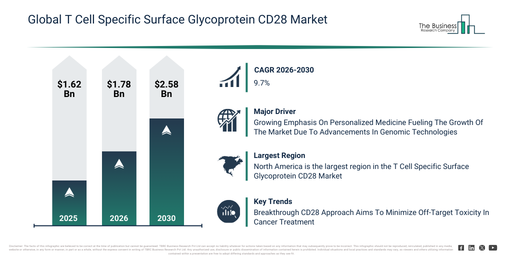
    The t cell specific surface glycoprotein cd28 market size has demonstrated significant expansion in recent years. It is projected to increase from $1.62 billion in 2025 to $1.78 billion in 2026, achieving a compound annual growth rate (CAGR) of 10.0%. This historical growth can be attributed to factors such as the early identification of cd28 as a t-cell co-stimulatory receptor, growing immunology research, the increasing prevalence of autoimmune diseases, rising cancer research initiatives, and the limited availability of monoclonal antibody therapies.

    The t cell specific surface glycoprotein cd28 market size is anticipated to undergo substantial growth in the upcoming years. It is projected to expand to $2.58 billion in 2030, demonstrating a compound annual growth rate (CAGR) of 9.7%. This forecasted growth can be attributed to the advancement of lulizumab pegol and novel cd28 inhibitors, the increase in preclinical and clinical trials, the integration of cd28-targeted therapies into autoimmune and cancer treatments, a rise in biopharmaceutical research investments, and improvements in immunomodulation and monoclonal antibody engineering. Key trends expected during the forecast period include the broader adoption of flow cytometry and ELISA technologies, an increase in immunology and cancer research applications, the continued development of new cd28 inhibitors and biobetters, the expansion of research into stem cells and autoimmune diseases, and the incorporation of lulizumab pegol in preclinical and clinical studies.

    Get A Free Sample Report With In-Depth Market Insights:

    https://thebusinessresearchcompany.com/sample_request?id=48780622&type=smp&name=T%20Cell%20Specific%20Surface%20Glycoprotein%20CD28%20Market%20Report%202026&utm_source=Blogs&utm_medium=Paid&utm_campaign=Oct_PR

    T Cell Specific Surface Glycoprotein CD28 Market Industry Drivers: What’s Behind The Revenue Growth?

    The T cell-specific surface glycoprotein CD28 market is anticipated to expand due to the increasing focus on personalized medicine. This medical strategy involves customizing treatments for individual patients, considering their genetic, environmental, and lifestyle elements to enhance results and care. The rising need for personalized medicine is fueled by progress in genomic technologies, which allow for accurate detection of genetic variations and customized therapies for individuals. T cell-specific surface glycoprotein CD28 aids personalized medicine by facilitating targeted immune modulation, thereby making treatments more accurate and efficient. It boosts treatment efficacy through encouraging ideal T cell activation, consequently bettering patient-specific immune responses. As an illustration, in February 2024, data from the Personalized Medicine Coalition (PMC), a US-based nonprofit organization, indicated that the U.S. Food and Drug Administration (FDA) cleared 26 new personalized medicines in 2023, a rise from 12 approved in 2022. Consequently, the increasing prioritization of personalized medicine is propelling the T cell-specific surface glycoprotein CD28 market’s expansion.

    T Cell Specific Surface Glycoprotein CD28 Market Segments: Where Is Growth Concentrated?

    The t cell specific surface glycoprotein cd28 market covered in this report is segmented –

    1) By Type: FPT 155, FR 104, Lulizumab Pegol, Other Types

    2) By Technology: Flow Cytometry, EnzymeLinked Immunosorbent Assay (ELISA), Polymerase Chain Reaction (PCR), Weste Blotting, Immunohistochemistry

    3) By Distribution Channel: Direct Sales, Distributors, Ecommerce, Retail Pharmacies, Wholesalers

    4) By Application: Immunology Research, Cancer Research, Autoimmune Diseases, Infectious Diseases, Stem Cell Research

    5) By End-User: Hospitals, Research Laboratories, Academic Institutions, Pharmaceutical Companies, Diagnostic Laboratories

    Subsegments:

    1) By FPT 155: Preclinical Studies, Clinical Trials, Oncology Applications, Licensing And Partnerships

    2) By FR 104: Autoimmune Disease Applications, Rheumatoid Arthritis Trials, Transplant Rejection Studies, Research Collaborations

    3) By Lulizumab Pegol: Systemic Lupus Erythematosus (SLE) Studies, Immunomodulation Research, Biopharmaceutical Development, Monoclonal Antibody Engineering

    4) By Other Types: Novel CD28 Inhibitors, Combination Therapies, Biosimilars And Biobetters, Emerging Research Compounds

    #T Cell Specific Surface Glycoprotein CD28 Market Growth Trends: What’s Shaping The Future Outlook?

    Key companies operating within the T cell-specific surface glycoprotein CD28 market are concentrating on developing innovative products, such as combination immunotherapies, to improve T cell activation, anti-tumor efficacy, and patient treatment outcomes. Combination immunotherapies represent treatments that integrate multiple immune-based approaches to enhance the body’s capability to combat disease. For instance, in February 2025, Rondo Therapeutics Inc., a US-based biopharmaceutical company, unveiled preclinical data concerning RNDO 564, a novel CD28 Nectin 4 costimulatory bispecific antibody intended for advanced bladder cancer. This antibody is engineered to selectively activate CD28 on T cells when it binds to Nectin-4-expressing tumor cells, thereby augmenting T-cell-mediated tumor killing while minimizing off-target toxicity. The presented data demonstrated powerful anti-tumor activity in preclinical models, supporting its continued development as a potential therapy for patients diagnosed with metastatic urothelial carcinoma.

    T Cell Specific Surface Glycoprotein CD28 Market Key Participants And Competitive Landscape

    Major companies operating in the t cell specific surface glycoprotein cd28 market are Gilead Sciences Inc., Johnson & Johnson, Novartis AG, Bristol-Myers Squibb Company, Takeda Pharmaceutical Company Limited, Becton Dickinson and Company, Regeneron Pharmaceuticals Inc., Bio-Techne Corporation, STEMCELL Technologies Inc., Miltenyi Biotec B.V. & Co. KG, Sino Biological Inc., Xencor Inc., ACROBiosystems Co. Ltd., Fate Therapeutics Inc., Medigene AG, Alpine Immune Sciences Inc., Adaptimmune Therapeutics plc, OSE Immunotherapeutics SA, Creative Biolabs Inc., Rondo Therapeutics Inc.

    View The Full T Cell Specific Surface Glycoprotein CD28 Market Report:

    https://thebusinessresearchcompany.com/report/t-cell-specific-surface-glycoprotein-cd28-global-market-report?utm_source=Blogs&utm_medium=Paid&utm_campaign=Oct_PR

    T Cell Specific Surface Glycoprotein CD28 Market Regional Distribution: Which Areas Power Market Growth?

    North America was the largest region in the T cell-specific surface glycoprotein CD28 market in 2025. Asia-Pacific is expected to be the fastest-growing region in the forecast period. The regions covered in the t cell specific surface glycoprotein cd28 market report are Asia-Pacific, South East Asia, Western Europe, Eastern Europe, North America, South America, Middle East, Africa.

    Reach Out To Our Team:

    The Business Research Company: https://www.thebusinessresearchcompany.com/

    Americas: +1 310-496-7795

    Asia: +44 7882 955267 & +91 8897263534

    Europe: +44 7882 955267

    Email us at: marketing@tbrc.info

    Follow us on:

    LinkedIn: https://in.linkedin.com/company/the-business-research-company

    YouTube: https://www.youtube.com/channel/UC24_fI0rV8cR5DxlCpgmyFQ

    Global Market Model: https://www.thebusinessresearchcompany.com/global-market-model