Blog

  • Wearable Injectors Market Forecast 2025–2034: Where Businesses Should Invest Next

    Wearable Injectors Market Forecast 2025–2034: Where Businesses Should Invest Next

    Unlock Global Insights – Save 20% on Market Reports with Code ONLINE20

    What Is The Predicted Market Size Trajectory For The Wearable Injectors Market From 2025 To 2034?

    The sphere of wearable injectors has experienced swift expansion lately, projecting an increase from its valuation of $\text{8.84 billion USD}$ in the year $\text{2024}$ to $\text{9.84 billion USD}$ by $\text{2025}$, reflecting a compound annual growth rate of $\text{11.3\%}$. This upward trajectory during the recorded timeframe stems from several critical factors, notably the increasing necessity for managing long-term illnesses, the enhanced ease afforded to patients, ongoing progress in technology, and demographic shifts toward an older populace.

    The market for wearable injectors is poised for substantial acceleration in the near term, projecting a valuation of $17.2 billion by the year 2029, fueled by an impressive compound annual growth rate (CAGR) of 15.0%; this substantial expansion throughout the projection timeframe is fundamentally driven by advancements in personalized medicine approaches, the increasing adoption of remote patient monitoring solutions, ongoing innovation in drug development pipelines, and the growing necessity for effective chronic disease management strategies, while prominent developments characterizing this era encompass the proliferation of biologics and large molecule therapeutics, the introduction of dual-chamber wearable systems, the integration of connected and smart device capabilities, and the refinement of patch pump technologies.

    Unlock Your Free Sample Report for Exclusive Market Data:

    https://www.thebusinessresearchcompany.com/sample.aspx?id=3308&type=smp

    What Are The Key Drivers Of Growth In The Wearable Injectors Market?

    The growing incidence of long-term health issues like diabetes, heart problems, and malignancies has substantially propelled the wearable injectors market forward. As an illustration, data released in April 2023 by the British Diabetic Association, a UK charity supporting individuals with diabetes, indicated that roughly 4.3 million residents of the UK currently have a diabetes diagnosis. Of this total, nearly 90 percent are living with type 2 diabetes, whereas roughly 8 percent have received a type 1 diagnosis, leaving the final 2 percent to encompass other diabetes variations. This considerable rise in the cohort afflicted by diabetes and other long-term conditions has consequently driven up the need for therapeutic interventions, thereby stimulating the expansion of the wearable injectors sector.

    What Are The Leading Segments Analyzed In The Wearable Injectors Market?

    The wearable injectorsmarket covered in this report is segmented –

    1) By Type: On-Body Injectors, Off-Body Injectors

    2) By End-User: Hospitals, Clinics, Homecare setting

    3) By Application: Immuno-Oncology, Diabetes, Cardiovascular Diseases, Other Applications

    Subsegments:

    1) By On-Body Injectors: Patch-Based Injectors, Adhesive-Based Injectors, Needle-Based Injectors, Needle-Free Injectors

    2) By Off-Body Injectors: Belt-Based Injectors, Handheld Injectors, Clip-Based Injectors

    What Long-Term Trends Will Shape The Future Growth Of The Wearable Injectors Industry?

    In the realm of wearable injector production, numerous firms are concentrating efforts on innovating sophisticated merchandise, prominently on-body injectors (OBI), aiming to elevate patient ease, boost compliance with prescribed therapeutic regimens, and satisfy the escalating requirement for self-administered biologic treatments. This OBI technology represents a wearable apparatus engineered for the subcutaneous dispensing of pharmaceuticals across a predetermined duration, providing significant advantage for individuals needing injections composed of substantial volumes or requiring strict temporal scheduling. A concrete illustration occurred in February 2024 when Coherus BioSciences Inc., a US biotechnology entity, introduced UDENYCA, an enhanced drug delivery system built upon the LTS Sorrel wearable architecture, explicitly purposed for the delivery of pegfilgrastim-cbqv, which is a biosimilar version of pegfilgrastim; this drug is administered subsequent to chemotherapy to mitigate the probability of febrile neutropenia, a state marked by elevated temperature and reduced white blood cell counts stemming from infections, with the OBI guaranteeing accurate dosage and patient convenience by facilitating administration in a home setting, thereby negating the necessity for supplementary clinic appointments.

    Who Are The Key Multinational Companies Dominating The Wearable Injectors Market?

    Major companies operating in the wearable injectors market include Amgen Inc., Becton Dickinson and Company (BD), Enable Injections LLC, Insulet Corporation, Ypsomed Holding AG, Medtronic MiniMed Inc., Tandem Diabetes Care Inc., Valeritas Inc., West Pharmaceutical Services Inc., Sensile Medical AG, Gerresheimer AG, Dexcom Inc., Consort Medical plc, United Therapeutics Corporation, Bühler Motor GmbH, Debiotech SA, Cellnovo Group, EoFlow Co. Ltd., CeQur SA, Haselmeier AG, Johnson & Johnson, kaleo Inc., Mylan N.V., Nemera Development S.A., F. Hoffmann-La Roche Ltd, Zosano Pharma Corporation

    Download The Full Report For Exclusive Market Findings:

    https://www.thebusinessresearchcompany.com/report/wearable-injectors-global-market-report

    What Are The Regional Market Dynamics Impacting The Wearable Injectors Industry?

    North America was the largest region in the wearable injectors market in 2024. Western Europe was the second-largest region in the wearable injectors market analysis. The regions covered in the wearable injectors market report are Asia-Pacific, Western Europe, Eastern Europe, North America, South America, Middle East, Africa

    Request A Customized Version Of The Wearable Injectors Market Report:

    https://www.thebusinessresearchcompany.com/customise?id=3308&type=smp

    Browse Through More Reports Similar to the Global Wearable Injectors Market 2025, By The Business Research Company

    Cardiac Assist Devices And Equipment Global Market Report 2025

    https://www.thebusinessresearchcompany.com/report/cardiac-assist-devices-and-equipment-global-market-report

    Pain Management Devices And Therapies Global Market Report 2025

    https://www.thebusinessresearchcompany.com/report/pain-management-devices-and-therapies-global-market-report

    Implantable Drug Delivery Devices Global Market Report 2025

    https://www.thebusinessresearchcompany.com/report/implantable-drug-delivery-devices-global-market-report

    Get in touch with us:

    The Business Research Company: https://www.thebusinessresearchcompany.com/

    Americas +1 310-496-7795

    Asia +44 7882 955267 & +91 8897263534

    Europe +44 7882 955267

    Email us at info@tbrc.info

    Follow us on:

    LinkedIn: https://in.linkedin.com/company/the-business-research-company

    YouTube: https://www.youtube.com/channel/UC24_fI0rV8cR5DxlCpgmyFQ

    Global Market Model: https://www.thebusinessresearchcompany.com/global-market-model
  • Global Voice Prosthesis Devices And Equipment Market Analysis 2025–2029: Opportunities for Strategic Growth

    Global Voice Prosthesis Devices And Equipment Market Analysis 2025–2029: Opportunities for Strategic Growth

    Unlock Global Insights – Save 20% on Market Reports with Code ONLINE20

    How Much Larger Is The Voice Prosthesis Devices And Equipment Market Expected To Become By 2029 Compared With Its 2025 Level?

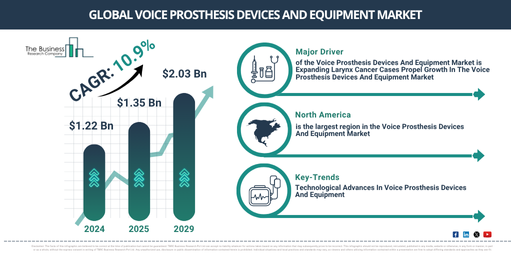
    The market encompassing voice prosthesis devices and associated hardware has experienced swift expansion lately; projecting further acceleration, this sector is anticipated to advance from a valuation of $1.22 billion in the current year, 2024, to reach $1.35 billion by 2025, reflecting a robust compound annual growth rate of 10.2%; this upward trajectory during the past period is fundamentally linked to the increased incidence of laryngeal cancer, the burgeoning elderly demographic, heightened consciousness regarding speech restoration therapies, and encouragement from medical professionals.

    Anticipation surrounds the voice prosthesis devices and equipment sector, projecting substantial expansion in the upcoming years, reaching a substantial valuation of $2.03 billion by 2029, propelled by a consistent compound annual growth rate (CAGR) of 10.9%; this upward trajectory is fundamentally supported by the adoption of less invasive procedures, expansion across developing economies, supportive governing policies and insurance coverage, alongside the increasing reliance on telehealth and remote modalities for speech therapy, while key developments shaping this market involve advancements in the materials utilized for these devices, the integration of speech recognition capabilities, a focus on tailoring solutions specifically to individual patients, and the proliferation of digital rehabilitation applications and associated tools.

    Unlock Your Free Sample Report for Exclusive Market Data:

    https://www.thebusinessresearchcompany.com/sample.aspx?id=2446&type=smp

    Which Drivers Are Supporting Growth Of The Voice Prosthesis Devices And Equipment Market?

    Anticipated escalation in occurrences of cancer affecting the larynx is projected to stimulate expansion within the market for voice prosthesis apparatus and related instrumentation in the time ahead. This malignancy, alternatively termed laryngeal cancer, signifies a form of malignancy originating within the soft tissues of the larynx, which is generally recognized as the voice box, and treatment frequently necessitates the complete surgical excision of the organ, known as total laryngectomy. Such a medical intervention consequently leads to the patient’s inability to produce their inherent vocal sounds, thus prompting those who have undergone laryngectomy to explore avenues for vocal recuperation, which in turn generates a need for prosthetic voice instruments; for illustrative purposes, data released in January 2023 by the American Cancer Society, a U.S. health entity, estimated roughly 12,380 novel instances of laryngeal cancer would arise in 2023, with 9,900 projected for males and 2,480 for females, and sadly, around 3,820 fatalities from this cancer were expected that year (3,070 males and 750 females), directly underpinning the market growth for voice prosthesis devices and equipment through the rising incidence of laryngeal malignancies.

    What Are The Segment Types Shaping The Voice Prosthesis Devices And Equipment Market?

    The voice prosthesis devices and equipmentmarket covered in this report is segmented –

    1) By Device Type: Indwelling Voice Prosthesis Devices, Non-Indwelling Voice Prosthesis Devices

    2) By Product Type: Soft Valve Assembly, Hard Valve Assembly, Other Product Types

    3) By Valve Type: Blom-Singer valve, Provox valve, Groningen valve

    4) By Material: Silicone Rubber, Silicone, Fluoroplastic, Silver Oxide, Other Materials

    5) By End User: Hospitals, Ambulatory Surgical Centers, Clinics

    Subsegments:

    1) By Indwelling Voice Prosthesis Devices: Silicone Indwelling Voice Prosthesis, Hydrophilic Indwelling Voice Prosthesis, Customizable Indwelling Prosthesis, Disposable Indwelling Prosthesis

    2) By Non-Indwelling Voice Prosthesis Devices: Hands-Free Voice Prosthesis, Removable Voice Prosthesis, Oral Voice Prosthesis, Reusable Non-Indwelling Prosthesis

    Which Market Trends Are Creating New Opportunities In The Voice Prosthesis Devices And Equipment Industry?

    Improvements in voice prosthesis technology and associated gear have resulted in several enhancements to device attributes, such as extended operational lifespan, user-friendly maintenance procedures for patients, and convenient replacement options performed in an outpatient setting. Specifically, Indwelling prostheses have been engineered to exhibit minimal airflow resistance along with superior anchoring within the tracheoesophageal wall, leading to these devices being frequently selected due to a successful voice restoration rate spanning from forty to ninety percent, often yielding highly satisfactory vocal quality.

    Which Leading Players Are Enhancing Their Voice Prosthesis Devices And Equipment Market Presence Worldwide?

    Major companies operating in the voice prosthesis devices and equipment market include Atos Medical AB, Andreas Fahl Medizintechnik – Vertrieb GmbH, Servona GmBH, Acclarent Inc., Karl Storz Gmbh & Co. Kg, Smith & Nephew PLC, InHealth Technologies, HEIMOMED Heinze GmbH & Co. KG, Sonova Holding AG, William Demant Holding A/S, Smiths Medical Inc., ICU Medical Inc., Coloplast A/S, Orbisana Healthcare GmbH, Teleflex Incorporated, Innaumation Medical Devices Private Limited, Hood Laboratories, Caden Companies LLC, Calmoseptine Inc., Ajinomoto Cambrooke Inc., Cara Incorporated, Cardinal Health Inc., Blom-Singer Indwelling Voice Prostheses, CooperSurgical Inc., Cook Medical, Dale Medical Products Inc., Stryker Corporation, Halyard Health, Integra LifeSciences Holdings Corporation, Medtronic plc, Olympus Corporation

    Download The Full Report For Exclusive Market Findings:

    https://www.thebusinessresearchcompany.com/report/voice-prosthesis-devices-and-equipment-global-market-report

    Which Region Shows The Highest Potential For Future Expansion In The Voice Prosthesis Devices And Equipment Market?

    North America was the largest region in the global voice prosthesis devices and equipment market in 2024. Asia-Pacific was the second-largest region in the voice prosthesis devices and equipment market share. The regions covered in the voice prosthesis devices and equipment market report are Asia-Pacific, Western Europe, Eastern Europe, North America, South America, Middle East, and Africa.

    Request A Customized Version Of The Voice Prosthesis Devices And Equipment Market Report:

    https://www.thebusinessresearchcompany.com/customise?id=2446&type=smp

    Browse Through More Reports Similar to the Global Voice Prosthesis Devices And Equipment Market 2025, By The Business Research Company

    Laryngoscope Global Market Report 2025

    https://www.thebusinessresearchcompany.com/report/laryngoscope-global-market-report

    Ent Devices Global Market Report 2025

    https://www.thebusinessresearchcompany.com/report/ent-devices-global-market-report

    Ent Surgical Devices And Equipment Global Market Report 2025

    https://www.thebusinessresearchcompany.com/report/ent-surgical-devices-and-equipment-global-market-report

    Get in touch with us:

    The Business Research Company: https://www.thebusinessresearchcompany.com/

    Americas +1 310-496-7795

    Asia +44 7882 955267 & +91 8897263534

    Europe +44 7882 955267

    Email us at info@tbrc.info

    Follow us on:

    LinkedIn: https://in.linkedin.com/company/the-business-research-company

    YouTube: https://www.youtube.com/channel/UC24_fI0rV8cR5DxlCpgmyFQ

    Global Market Model: https://www.thebusinessresearchcompany.com/global-market-model
  • Pulsed Field Ablation Market Expansion Outlook: $1.91 Billion by 2029 Forecast

    Pulsed Field Ablation Market Expansion Outlook: $1.91 Billion by 2029 Forecast

    Unlock Global Insights – Save 20% on Market Reports with Code ONLINE20

    What Are The Forecasted Market Size Estimates For The Pulsed Field Ablation Market Between 2025 And 2029?

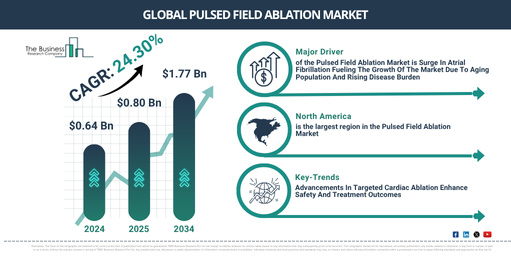
    The pulsed field ablation market has experienced substantial expansion in recent years. It is projected to increase from $0.64 billion in 2024 to $0.80 billion in 2025, maintaining a compound annual growth rate (CAGR) of 24.5%. This historic growth is attributable to factors such as the increasing embrace of minimally invasive cardiac procedures, the rising occurrence of atrial fibrillation, enhanced knowledge of advanced ablation technologies, increased funding in cardiac electrophysiology research, and a heightened demand for safer and more rapid ablation methods.

    The pulsed field ablation market is projected to experience substantial growth over the upcoming years. Its valuation is anticipated to reach $1.91 billion by 2029, demonstrating a robust compound annual growth rate (CAGR) of 24.3%. This expansion during the projection period can be attributed to several factors, including the increasing integration of pulsed field ablation technology, a higher occurrence of cardiac arrhythmias, heightened investment in research and development initiatives, greater understanding among healthcare professionals, and an escalating need for less invasive cardiac treatment options. Key developments expected during this forecast timeframe encompass enhancements in pulsed field ablation devices, novel designs for catheters, the incorporation of advanced imaging technologies into ablation systems, an increasing application of artificial intelligence to optimize procedures, and the creation of portable and accessible ablation platforms.

    Unlock Your Free Sample Report for Exclusive Market Data:

    https://www.thebusinessresearchcompany.com/sample.aspx?id=25889&type=smp

    Which Major Market Drivers Are Shaping The Future Of The Pulsed Field Ablation Market?

    The increasing occurrence of atrial fibrillation is projected to drive the expansion of the pulsed field ablation market. Atrial fibrillation, an irregular and often fast heart rhythm, can heighten the risk of stroke and other heart problems. This rise in its prevalence is largely attributed to the aging population, as advanced age considerably raises the likelihood of developing this heart rhythm disorder. Pulsed field ablation offers a treatment for atrial fibrillation by employing targeted electrical pulses to precisely eliminate abnormal heart tissue responsible for irregular rhythms, thus providing a quicker, safer, and more accurate option compared to conventional ablation techniques. For example, data from December 2024, sourced from the Australian Institute of Health and Welfare, an Australia-based government body, indicated that atrial fibrillation resulted in 2,600 deaths and played a role in an additional 15,500 deaths in Australia in 2022. The death rates were 1.3 times higher in males, and more than 62% of these deaths occurred in individuals aged 85+, whose risk was up to 7.4 times higher than that of the 75–84 age group. Consequently, the expanding prevalence of atrial fibrillation is a key driver for the growth of the pulsed field ablation market.

    What Are The Different Segment Classifications Within The Pulsed Field Ablation Market?

    The pulsed field ablation market covered in this report is segmented –

    1) By Components: Catheters, Generators

    2) By Indication: Atrial Fibrillation, Non-Atrial Fibrillation

    3) By Source Of Ablation: Pulsed Field Energy, Pulsed Field And Radiofrequency Energy, Pulsed Field And Cryoablation Energy

    4) By Application Area: Ablation, Ablation And Mapping

    5) By End Use: Hospitals, Cardiac Catheterization Labs, Ambulatory Surgical Centers, Other End Uses

    Subsegments:

    1) By Catheters: Single-use Catheters, Reusable Catheters, Diagnostic Catheters, Therapeutic Catheters, Balloon Catheters, Mapping Catheters

    2) By Generators: Monopolar Generators, Bipolar Generators, Pulsed Power Generators, Radiofrequency Generators With Pulsed Field Ablation Capability, Portable Generators, Fixed Or Stationary Generators

    Which Ongoing Trends Are Expected To Shape The Pulsed Field Ablation Market Outlook?

    Companies operating in the pulsed field ablation (PFA) market are increasingly concentrating on technological innovations, such as selective tissue ablation, to elevate procedural safety and efficacy. This focus aims to minimize harm to healthy tissues nearby, shorten recovery periods, and improve long-term treatment results for individuals with cardiac arrhythmias. Selective tissue ablation specifically involves the targeted destruction of particular diseased cells or tissues while safeguarding the surrounding healthy structures. For instance, in March 2025, Abbott, a US-based healthcare company, achieved CE Mark approval for its Volt Pulsed Field Ablation System, which is intended for treating abnormal heart rhythms. This advanced system seamlessly integrates with Abbott’s EnSite X electrophysiology platform, thereby enhancing visualization and navigation during procedures. The introduction of the Volt system marks a significant advancement in electrophysiology technology. It offers superior procedural efficiency, sharper imaging, and more accurate ablation for atrial fibrillation treatment. This next-generation device is positioned to enhance patient outcomes and streamline cardiac care.

    Which Major Industry Participants Are Leading The Pulsed Field Ablation Market Growth?

    Major companies operating in the pulsed field ablation market are Johnson & Johnson, Abbott Laboratories, Medtronic plc, Siemens Healthineers AG, Boston Scientific Corporation, ConMed, AtriCure Inc., AngioDynamics Inc., CardioFocus Inc., Galvanize Therapeutics Inc., Kardium Inc., Acutus Medical Inc., AtriAN Medical Ltd., Field Medical Inc., Thermedical Inc., Adagio Medical Inc., Arga Medtech Inc., Mirai Medical, Pulse Biosciences Inc., AccuPulse Medical Inc.

    Download The Full Report For Exclusive Market Findings:

    https://www.thebusinessresearchcompany.com/report/pulsed-field-ablation-global-market-report

    What Are The Key Regional Factors Influencing The Pulsed Field Ablation Market Growth?

    North America was the largest region in the pulsed field ablation market in 2024. Asia-Pacific is expected to be the fastest-growing region in the forecast period. The regions covered in the pulsed field ablation market report are Asia-Pacific, Western Europe, Eastern Europe, North America, South America, Middle East, Africa.

    Request A Customized Version Of The Pulsed Field Ablation Market Report:

    https://www.thebusinessresearchcompany.com/customise?id=25889&type=smp

    Browse Through More Reports Similar to the Global Pulsed Field Ablation Market 2025, By The Business Research Company

    Ablation Technology Global Market Report 2025

    https://www.thebusinessresearchcompany.com/report/ablation-technology-global-market-report

    Ablation Devices Global Market Report 2025

    https://www.thebusinessresearchcompany.com/report/ablation-devices-global-market-report

    Radiofrequency Ablation Devices Global Market Report 2025

    https://www.thebusinessresearchcompany.com/report/radiofrequency-ablation-devices-global-market-report

    Get in touch with us:

    The Business Research Company: https://www.thebusinessresearchcompany.com/

    Americas +1 310-496-7795

    Asia +44 7882 955267 & +91 8897263534

    Europe +44 7882 955267

    Email us at info@tbrc.info

    Follow us on:

    LinkedIn: https://in.linkedin.com/company/the-business-research-company

    YouTube: https://www.youtube.com/channel/UC24_fI0rV8cR5DxlCpgmyFQ

    Global Market Model: https://www.thebusinessresearchcompany.com/global-market-model
  • Vital Parameter Monitoring Devices And Equipment Industry Overview 2025: Growth Projections and Market Trends

    Vital Parameter Monitoring Devices And Equipment Industry Overview 2025: Growth Projections and Market Trends

    Unlock Global Insights – Save 20% on Market Reports with Code ONLINE20

    #What Are The Current (2025) And Forecast (2029) Sizes Of The Vital Parameter Monitoring Devices And Equipment Market?

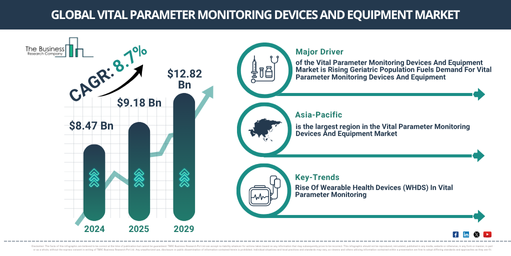
    The market encompassing essential parameter monitoring instruments and apparatuses has experienced robust expansion recently, projected to increase its valuation from 8.47 billion US dollars in 2024 up to 9.18 billion US dollars in 2025, reflecting an annual compounded growth rate of 8.4 percent; this upward trend during the past period is fundamentally linked to demographic shifts like an aging populace, the rising prevalence of long-term illnesses, increased patient autonomy, and the ongoing digitalization of healthcare systems.

    Anticipation surrounds the vital parameter monitoring devices and equipment sector, projecting robust expansion over the forthcoming years, as its market valuation is set to reach $12.82 billion by 2029, demonstrating a steady compound annual growth rate (CAGR) of 8.7%; this upswing is fundamentally driven by advancements in remote patient monitoring capabilities, the increasing adoption of personalized medicine approaches, a broader focus on preventive healthcare strategies, and the ongoing shift towards value-based healthcare models, while key market influences manifesting during this projection timeframe involve the proliferation of wearable technologies, the integration of artificial intelligence and machine learning, the widening scope of telemonitoring services, and deeper smart home integration.

    Unlock Your Free Sample Report for Exclusive Market Data:

    https://www.thebusinessresearchcompany.com/sample.aspx?id=2532&type=smp

    Which Drivers Are Shaping The Vital Parameter Monitoring Devices And Equipment Industry’s Market Share?

    Anticipated expansion in the segment of older adults is projected to stimulate the progression of the market for essential vital sign monitoring apparatus and machinery in the future, where the geriatric demographic is defined as the proportion of individuals aged sixty-five and above relative to those aged eighteen through sixty-four who are part of the workforce; this escalating worldwide senior demographic necessitates constant oversight of physiological indicators, thereby fueling the requirement for monitoring instruments and gear, exemplified by the World Health Organization’s October 2022 findings, which indicated that by 2030, globally, one in every six individuals is anticipated to have reached sixty years of age or more, further projecting that the count of people aged sixty and above will reach 2.1 billion globally by 2050, alongside a predicted surge of 426 million individuals aged eighty and above between 2020 and 2050 relative to contemporary figures, consequently establishing the rise in the elderly population as a key impetus for the advancement of the market for vital parameter monitoring equipment and devices.

    What Are The Different Segment Classifications Within The Vital Parameter Monitoring Devices And Equipment Market?

    The vital parameter monitoring devices and equipmentmarket covered in this report is segmented –

    1) By Product Type: Blood Pressure Monitoring Devices, Pulse Oximeters, Temperature Monitoring Devices

    2) By Blood Pressure Monitoring Devices: Aneroid BP Monitors, Digital BP Monitors, Ambulatory BP Monitors, Blood Pressure Instrument Accessories

    3) By Pulse Oximeters: Table-top Or Bedside Pulse Oximeters, Fingertip Pulse Oximeters, Hand-held Pulse Oximeters, Wrist-worn Pulse Oximeters, Pediatric Pulse Oximeters

    4) By Temperature Monitoring Devices: Digital Thermometers, Infrared Thermometers, Temperature Strips

    5) By End User: Hospitals, Clinics, Ambulatory Surgery Centers, Home Care Settings

    Subsegments:

    1) By Blood Pressure Monitoring Devices: Digital Blood Pressure Monitors, Aneroid Blood Pressure Monitors, Mercury Sphygmomanometers, Ambulatory Blood Pressure Monitors, Wrist Blood Pressure Monitors

    2) By Pulse Oximeters: Finger Pulse Oximeters, Handheld Pulse Oximeters, Fingertip Pulse Oximeters, Pediatric Pulse Oximeters, Wrist Pulse Oximeters

    3) By Temperature Monitoring Devices: Digital Thermometers, Infrared Thermometers, Ear Thermometers, Forehead Thermometers, Clinical Thermometers

    How Are Trends Influencing The Vital Parameter Monitoring Devices And Equipment Market?

    A growing trend sees firms specializing in equipment and instruments for tracking essential biological metrics augmenting their investment into the creation and refinement of wearable health devices (WHDs). These sophisticated electronic gadgets are designed to be worn by users, offering the capability to log various data points pertinent to personal wellness and physical activity. Such technology significantly enhances the ability to oversee health status, potentially leading to quicker identification of issues and more informed medical consultations. To illustrate, Sotera Wireless offers the ViSi Mobile, a wearable unit capable of transmitting numerous core vital signs including oxygen saturation, respiration rate, pulse rate, and the rhythm of the heart. Furthermore, VitalTag represents another wearable creation, brought about through a project supported by the Department of Homeland Security Science and Technology Directorate, tasked with continuously recording metrics like body temperature, blood pressure, heart rhythm, and blood oxygen saturation. Just recently, Current Health successfully secured clearance from the FDA for an intelligent, AI-driven wearable system intended for the observation of patient vital indicators both within clinical settings and in private residences.

    Which Major Firms Are Strengthening Their Position In The Vital Parameter Monitoring Devices And Equipment Industry?

    Major companies operating in the vital parameter monitoring devices and equipment market include Hill-Rom Holdings Inc., Halma plc, Masimo Corporation, General Electric Company, Medtronic plc, Nihon Kohden Corporation, Koninklijke Philips N.V., A&D Company Limited, Contec Medical Systems Co. Ltd., Nonin Medical Inc., Omron Corporation, Smiths Group plc, Spacelabs Healthcare, CAS Medical Systems Inc., Dragerwerk AG & Co., Briggs Healthcare Corp., OSI Systems Inc., Mindray Medical International Limited, Caretaker Medical LLC, Shenzhen Mindray Bio-Medical Electronics Co. Ltd., Boston Scientific Corporation, Hicks Inc., Covidien plc, Bosch GmbH, Biotronik Inc., Intel Corporation, Health anywhere Inc, Johnson & Johnson, Schiller AG, Edwards Lifesciences, Nonin Medical Inc., Hill-Rom Holdings Inc., Midmark Corporation, Baxter International Inc., ICU Medical Inc.

    Download The Full Report For Exclusive Market Findings:

    https://www.thebusinessresearchcompany.com/report/vital-parameter-monitoring-devices-and-equipment-global-market-report

    How Is Vital Parameter Monitoring Devices And Equipment Market Demand Varying Across Different Regions?

    Asia-Pacific was the largest region in the global vital parameter monitoring devices and equipment market in 2024. North America was the second-largest region in the vital parameter monitoring devices and equipment market share. The regions covered in the vital parameter monitoring devices and equipment market report are Asia-Pacific, Western Europe, Eastern Europe, North America, South America, Middle East, and Africa.

    Request A Customized Version Of The Vital Parameter Monitoring Devices And Equipment Market Report:

    https://www.thebusinessresearchcompany.com/customise?id=2532&type=smp

    Browse Through More Reports Similar to the Global Vital Parameter Monitoring Devices And Equipment Market 2025, By The Business Research Company

    Patient Monitoring Devices Global Market Report 2025

    https://www.thebusinessresearchcompany.com/report/patient-monitoring-devices-global-market-report

    Patient Blood Management Global Market Report 2025

    https://www.thebusinessresearchcompany.com/report/patient-blood-management-global-market-report

    Patient Handling Equipment Global Market Report 2025

    https://www.thebusinessresearchcompany.com/report/patient-handling-equipment-global-market-report

    Get in touch with us:

    The Business Research Company: https://www.thebusinessresearchcompany.com/

    Americas +1 310-496-7795

    Asia +44 7882 955267 & +91 8897263534

    Europe +44 7882 955267

    Email us at info@tbrc.info

    Follow us on:

    LinkedIn: https://in.linkedin.com/company/the-business-research-company

    YouTube: https://www.youtube.com/channel/UC24_fI0rV8cR5DxlCpgmyFQ

    Global Market Model: https://www.thebusinessresearchcompany.com/global-market-model

  • Vision Care Devices And Equipment Market Size Forecast: Revenue and CAGR by 2029

    Vision Care Devices And Equipment Market Size Forecast: Revenue and CAGR by 2029

    Unlock Global Insights – Save 20% on Market Reports with Code ONLINE20

    What Market Value Is The Vision Care Devices And Equipment Industry Expected To Reach By 2029, Starting From 2025 Levels?

    The market encompassing vision care apparatus and machinery has experienced swift expansion lately, projected to reach $\$26.62$ billion across 2025 from its 2024 valuation of $\$23.85$ billion, reflecting an accelerated annual growth rate of $11.6\%$; this past momentum is largely owing to heightened public consciousness concerning ocular well-being, demographic shifts toward older age groups, the growing importance of personal appearance and style, as well as greater engagement with digital displays.

    The global market encompassing vision care apparatus and instruments anticipates a swift upward trajectory in its valuation over the forthcoming years, projected to reach $40.61 billion by 2029, achieving an 11.1% compound annual growth rate during this period; this expansion is fundamentally driven by increasing instances of digital eye strain, evolving demographic profiles characterized by aging populations, heightened focus on myopia control, and a rising demand for environmentally sound and sustainable product offerings, while key developments shaping this sector involve the proliferation of intelligent eyewear designs, bespoke and 3D-printed spectacles, diagnostic processes enhanced by artificial intelligence, and the expansion of remote ophthalmic care services.

    Unlock Your Free Sample Report for Exclusive Market Data:

    https://www.thebusinessresearchcompany.com/sample.aspx?id=2426&type=smp

    What Are The Drivers Pushing New Developments In The Vision Care Devices And Equipment Market?

    The proliferation of electronic gadgets serves as a persistent catalyst propelling the expansion of the vision care apparatus and instruments sector. As engagement with mobile phones, personal computers, notebooks, and various other digital tools escalates in daily routines, this escalation becomes the primary contributor to the emergence of ocular ailments. A survey conducted by Deloitte revealed that the collective frequency of Americans checking their mobile devices surpasses eight billion instances each twenty-four-hour period. Furthermore, individuals dedicate, on average, roughly five hours daily to engaging with online content and applications.

    What Are The Primary Types Of Segments Analyzed In The Vision Care Devices And Equipment Market?

    The vision care devices and equipmentmarket covered in this report is segmented –

    1) By Type: Intraocular Lens, Ophthalmic Lasers, Glaucoma Drainage Devices, Contact Lenses, Other Types

    2) By Aplication: Vision Care, Diagnosis, Surgery

    3) By End User: Hospitals, Ambulatory Surgery Centers, Optical Centers, Other End Users

    Subsegments:

    1) By Intraocular Lens (IOL): Monofocal IOLs, Multifocal IOLs, Toric IOLs, Accommodating IOLs, Phakic IOLs

    2) By Ophthalmic Lasers: Excimer Lasers, Femtosecond Lasers, YAG Lasers, Diode Lasers, Argon Lasers

    3) By Glaucoma Drainage Devices: Shunt Implants, Tube Drainage Implants, Cyclodestructive Procedures, Valved Drainage Devices

    4) By Contact Lenses: Soft Contact Lenses, Rigid Gas Permeable Lenses, Toric Lenses, Scleral Lenses, Hybrid Contact Lenses

    5) By Other Types: Retinal Implant Devices, Corneal Implants, Vision Correction Devices, Eye Examination Equipment

    What Key Innovation Trends Are Fueling Advancements In The Vision Care Devices And Equipment Market?

    Key players within the vision care devices and equipment sector are actively innovating by creating novel offerings like myopia management lenses, aiming to capture broader customer segments, boost transactional volume, and enhance financial returns. These specialized corrective optical aids, whether spectacles or contact lenses, are specifically engineered to retard the advancement of nearsightedness, predominantly among younger patients. As an illustration, in the fourth month of 2023, HOYA Vision Care, a lens producer based in Thailand, introduced the MiYOSMART Sun Spectacle Lenses, which integrate both myopia regulation and defense against intense solar radiation. A distinctive attribute of the technology embedded in these non-intrusive MiYOSMART clear lenses is its proven capability to curb myopia progression in youngsters between the ages of eight and thirteen by a significant margin of 60%. Furthermore, the DIMS technology has been leveraged in creating the MiYOSMART Chameleon and MiYOSMART Sunbird lenses, which feature photochromic and polarized properties intended to halt the escalation of myopia in youth.

    Who Are The Primary Competitors In The Global Vision Care Devices And Equipment Market?

    Major companies operating in the vision care devices and equipment market include Essilor International, Johnson & Johnson, Carl Zeiss AG, The Cooper Companies, Novartis AG, Bausch & Lomb, Nidek Co.Ltd., Valeant Pharmaceuticals International Inc., Luxottica Group SpA, Escalon Services, Tomey Corporation, CIBA Vision Corporation, Visionix Ltd., Potec, LuxVisions Innovation Limited, Heine Optotechnik, Luneau Technology Operations SAS, Heidelberg Engineering Inc., Huvitz Technologies, STAAR Surgical Company, Swiss Advanced Vision, Visioneering Technologies Inc., Rayner Intraocular Lenses Limited, Jiangsu Hongchen Optical Co. Ltd., Alcon, Hoya Corporation, Topcon Corporation, Carl Zeiss Meditec AG, Lumenis Ltd., Ellex Medical Pty Ltd., Abbott Medical Optics, Canon Medical Systems, Haag-Streit AG, Optovue Inc., Quantel Medical SAS, VisionCare Devices LLC, Med-Logics Inc., Advanced Vision Science Inc., Eyenovia Inc., HumanOptics Holding AG, Clearside Biomedical Inc.

    Download The Full Report For Exclusive Market Findings:

    https://www.thebusinessresearchcompany.com/report/vision-care-devices-and-equipment-global-market-report

    Which Geographies Are Emerging As Strong Markets For The Vision Care Devices And Equipment Industry?

    North America was the largest region in global vision care devices and equipment market in 2024. Asia-Pacific was the second-largest region in the vision care devices and equipment market share. The regions covered in the vision care devices and equipment market report are Asia-Pacific, Western Europe, Eastern Europe, North America, South America, Middle East, and Africa.

    Request A Customized Version Of The Vision Care Devices And Equipment Market Report:

    https://www.thebusinessresearchcompany.com/customise?id=2426&type=smp

    Browse Through More Reports Similar to the Global Vision Care Devices And Equipment Market 2025, By The Business Research Company

    Ophthalmic Devices Global Market Report 2025

    https://www.thebusinessresearchcompany.com/report/ophthalmic-devices-global-market-report

    Ophthalmic Medical Lasers Global Market Report 2025

    https://www.thebusinessresearchcompany.com/report/ophthalmic-medical-lasers-global-market-report

    Diagnostic And Monitoring Ophthalmic Devices And Equipment Global Market Report 2025

    https://www.thebusinessresearchcompany.com/report/diagnostic-and-monitoring-ophthalmic-devices-and-equipment-global-market-report

    Get in touch with us:

    The Business Research Company: https://www.thebusinessresearchcompany.com/

    Americas +1 310-496-7795

    Asia +44 7882 955267 & +91 8897263534

    Europe +44 7882 955267

    Email us at info@tbrc.info

    Follow us on:

    LinkedIn: https://in.linkedin.com/company/the-business-research-company

    YouTube: https://www.youtube.com/channel/UC24_fI0rV8cR5DxlCpgmyFQ

    Global Market Model: https://www.thebusinessresearchcompany.com/global-market-model
  • Global Programmed Death (PD)-1 Non-Small Cell Lung Cancer Industry Trends: Where the Market Is Headed by 2029

    Global Programmed Death (PD)-1 Non-Small Cell Lung Cancer Industry Trends: Where the Market Is Headed by 2029

    Unlock Global Insights – Save 20% on Market Reports with Code ONLINE20

    How Is The Programmed Death (PD)-1 Non-Small Cell Lung Cancer Market Size Likely To Evolve From 2025 Through 2034?

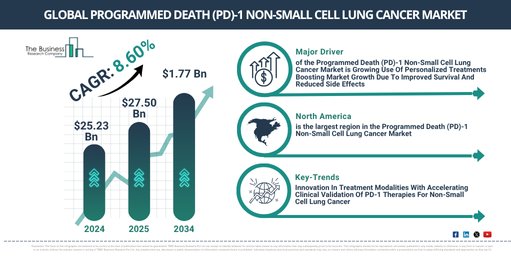
    The programmed death (PD)-1 non-small cell lung cancer market size has experienced substantial growth in recent years. It is projected to expand from $25.23 billion in 2024 to $27.50 billion in 2025, demonstrating a compound annual growth rate (CAGR) of 9.0%. The growth observed in the historic period can be attributed to the increasing prevalence of non-small cell lung cancer, rising adoption of immunotherapy in developed nations, growing awareness about cancer screening, increasing approvals for monoclonal antibodies, and rising healthcare expenditure.

    The market size for programmed death (PD)-1 non-small cell lung cancer is anticipated to experience substantial expansion over the upcoming years. This market is projected to reach $38.26 billion by 2029, exhibiting a compound annual growth rate (CAGR) of 8.6%. Factors contributing to this growth during the forecast period include greater investments in infrastructure dedicated to cancer treatment, improved patient accessibility to biologics within developing markets, an expanding global elderly population, enhanced reimbursement provisions for immunotherapies, and a rise in the clinical efficacy of PD-1 inhibitors. Key trends anticipated for the forecast period encompass technological progress in biomarker assessments, the evolution of combination immunotherapy approaches, significant spending on individualized treatment plans, continued research and development into new PD-1 inhibitors, and pioneering efforts in immune checkpoint blockade mechanisms.

    Unlock Your Free Sample Report for Exclusive Market Data:

    https://www.thebusinessresearchcompany.com/sample.aspx?id=25888&type=smp

    What Are The Main Drivers Boosting The Programmed Death (PD)-1 Non-Small Cell Lung Cancer Industry’s Expansion?

    The programmed death (PD)-1 non-small cell lung cancer market is anticipated to expand due to the growing acceptance of personalized treatments. These treatments involve medical strategies customized to a person’s unique genetic makeup, way of life, and particular disease features, aiming for more precise and impactful results. The escalating need for personalized therapies stems from the wider accessibility of genomic profiling and biomarker testing, technologies that facilitate the identification of specific mutations and biological indicators, thereby enabling healthcare professionals to choose treatments more effective for individual patients. In the context of programmed death (PD)-1 non-small cell lung cancer (NSCLC), personalized treatments are beneficial as they customize therapies according to a patient’s genetic profile, tumor attributes, and immune system response. An example illustrates this trend: in February 2024, the US Food and Drug Administration (FDA) sanctioned 16 novel personalized treatments for rare conditions in 2023, an increase from 6 in 2022, as reported by the US-based non-profit, Personalized Medicine Coalition. Consequently, the expanding use of personalized treatments is propelling the growth of the programmed death (PD)-1 non-small cell lung cancer market.

    What Are The Primary Types Of Segments Analyzed In The Programmed Death (PD)-1 Non-Small Cell Lung Cancer Market?

    The programmed death (pd)-1 non-small cell lung cancer market covered in this report is segmented –

    1) By Drug Type: Monotherapy, Combination Therapy

    2) By Line of Therapy: First-line Treatment, Second-line And Beyond

    3) By End User: Hospitals, Specialty Cancer Centers, Academic And Research Institutes, Other End Users

    Subsegments:

    1) By Monotherapy: Pembrolizumab (Keytruda), Nivolumab (Opdivo), Cemiplimab (Libtayo), Toripalimab, Tislelizumab, Camrelizumab, Dostarlimab, Other Monotherapy Drug Types

    2) By Combination Therapy: Programmed Death (PD)-1 Inhibitor And Chemotherapy, Programmed Death (PD)-1 Inhibitor And Cytotoxic T-Lymphocyte Associated Protein (CTLA)-4 Inhibitor, Programmed Death (PD)-1 Inhibitor And Vascular Endothelial Growth Factor (VEGF) Inhibitor, Programmed Death (PD)-1 Inhibitor And Targeted Therapy, Programmed Death (PD)-1 Inhibitor And Radiation Therapy, Triple Combination Therapy, Programmed Death (PD)-1 Inhibitor And Messenger Ribonucleic Acid (mRNA) Vaccine, Other Combination Drug Types

    Which Competitive Trends Are Defining The Programmed Death (PD)-1 Non-Small Cell Lung Cancer Market Structure?

    Major companies within the programmed death (PD)-1 non-small cell lung cancer market are concentrating on performing clinical trials for innovative treatments, such as monotherapy, with the goal of improving patient outcomes. Monotherapy refers to a treatment strategy that employs a single medication or therapeutic method to address a disease or condition. For example, in March 2025, Akeso, Inc., a biopharmaceutical firm based in China, reported promising findings from its Phase III HARMONi-2 trial, which evaluated Ivonescimab (AK112) combined with chemotherapy for the initial treatment of advanced non-small cell lung cancer (NSCLC). This study successfully achieved its primary objective by notably extending progression-free survival when compared to pembrolizumab, thereby emphasizing the therapeutic capability of the dual-targeted bispecific antibody.

    Who Are The Prominent Global Companies Shaping The Programmed Death (PD)-1 Non-Small Cell Lung Cancer Market?

    Major companies operating in the programmed death (pd)-1 non-small cell lung cancer market are F. Hoffmann-La Roche Ltd, Merck & Co. Inc., AbbVie Inc., Sanofi S.A., Novartis AG, GlaxoSmithKline plc, Regeneron Pharmaceuticals Inc., Incyte Corporation, Ono Pharmaceutical Co. Ltd., BeiGene Ltd., BioNTech SE, Shanghai Junshi Biosciences Co. Ltd., MacroGenics Inc., Akeso Inc., Arcus Biosciences Inc., Shandong Boan Biotechnology Co. Ltd., CStone Pharmaceuticals, iTeos Therapeutics Inc., Summit Therapeutics Inc., Shanghai Henlius Biotech Inc.

    Download The Full Report For Exclusive Market Findings:

    https://www.thebusinessresearchcompany.com/report/programmed-death-pd-1-non-small-cell-lung-cancer-global-market-report

    How Do Regional Market Performances Compare Within The Programmed Death (PD)-1 Non-Small Cell Lung Cancer Industry?

    North America was the largest region in the programmed death (PD)-1 non-small cell lung cancer market in 2024. Asia-Pacific is expected to be the fastest-growing region in the forecast period. The regions covered in the programmed death (pd)-1 non-small cell lung cancer market report are Asia-Pacific, Western Europe, Eastern Europe, North America, South America, Middle East, Africa.

    Request A Customized Version Of The Programmed Death (PD)-1 Non-Small Cell Lung Cancer Market Report:

    https://www.thebusinessresearchcompany.com/customise?id=25888&type=smp

    Browse Through More Reports Similar to the Global Programmed Death (PD)-1 Non-Small Cell Lung Cancer Market 2025, By The Business Research Company

    Pd 1 And Pdl1 Inhibitors Or Immune Checkpoint Inhibitors Global Market Report 2025

    https://www.thebusinessresearchcompany.com/report/pd-1-and-pdl1-inhibitors-or-immune-checkpoint-inhibitors-global-market-report

    Non Small Cell Lung Cancer Nsclc Global Market Report 2025

    https://www.thebusinessresearchcompany.com/report/non-small-cell-lung-cancer-nsclc-global-market-report

    Small Cell Lung Cancer Therapeutics Global Market Report 2025

    https://www.thebusinessresearchcompany.com/report/small-cell-lung-cancer-therapeutics-global-market-report

    Get in touch with us:

    The Business Research Company: https://www.thebusinessresearchcompany.com/

    Americas +1 310-496-7795

    Asia +44 7882 955267 & +91 8897263534

    Europe +44 7882 955267

    Email us at info@tbrc.info

    Follow us on:

    LinkedIn: https://in.linkedin.com/company/the-business-research-company

    YouTube: https://www.youtube.com/channel/UC24_fI0rV8cR5DxlCpgmyFQ

    Global Market Model: https://www.thebusinessresearchcompany.com/global-market-model
  • Global Ventilators Market Trends and Growth Analysis 2025–2029

    Global Ventilators Market Trends and Growth Analysis 2025–2029

    Unlock Global Insights – Save 20% on Market Reports with Code ONLINE20

    What Is The Anticipated Size Of The Ventilators Market Over The Five-Year Period 2025–2029?

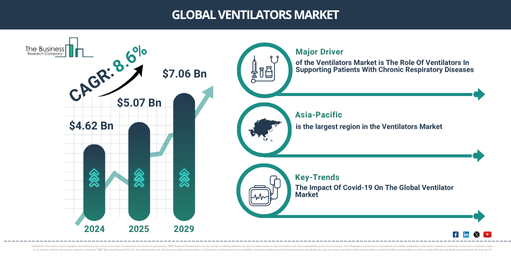
    Strong expansion has characterized the ventilators market in preceding years, projecting a rise from $4.62 billion in 2024 to $5.07 billion for 2025, reflecting a compound annual growth rate of 9.8%; this upward trajectory throughout the past period is linked to several factors, notably the increasing incidence of respiratory illnesses, the volume of surgical operations performed, the rising capacity and utilization of intensive care units, ongoing technological progress in the field, and demographic shifts towards an older population segment.

    Anticipation surrounds the ventilators sector, which forecasts robust expansion ahead, projected to attain a market valuation of $7.06 billion by 2029, driven by a compound annual growth rate (CAGR) of 8.6% across the projection timeframe; this upward trajectory is fundamentally supported by developments such as the adoption of telemedicine and remote patient surveillance, strides in individualized medical treatments, ongoing technological advancements, and increased capital expenditure in healthcare infrastructure, while key market dynamics shaping this period involve the rising prominence of mobile and transportable ventilator units, the emergence of sophisticated ventilation methodologies, deeper integration of digital health platforms and telehealth services, and continuous innovation within ventilation apparatus designs.

    Unlock Your Free Sample Report for Exclusive Market Data:

    https://www.thebusinessresearchcompany.com/sample.aspx?id=2848&type=smp

    What Are The Emerging Market Drivers Creating New Opportunities In The Ventilators Industry?

    The escalating occurrence of ailments affecting the respiratory system is fueling the expansion of the market for ventilators. Conditions like asthma, bronchitis, pneumonia, and various other significant respiratory illnesses stemming from bacterial or viral agents and diverse etiologies are set to intensify the need for these devices, which function as essential respiratory support mechanisms for individuals suffering from long-term breathing problems. To illustrate this impact, data from the Australian Institute of Health and Welfare in 2023 indicated that approximately three in ten individuals residing in Australia reported having a chronic respiratory condition; specifically, 5.1 million Australians, equating to 20 percent of the populace, suffered from allergic rhinitis (commonly termed hay fever), while asthma affected 2.7 million (11 percent), and chronic sinusitis was present in 2.0 million (8.0 percent) among an estimated total of 7.5 million people afflicted by these health issues, according to ABS reports from 2022. Furthermore, the infection caused by the coronavirus, leading to pneumonia and other respiratory complications that impair patient breathing, highlights how the advent of such widespread infectious outbreaks forming pandemics acts as a major catalyst for the growth trajectory of the ventilator sector.

    Which Key Segments Fueling The Ventilators Market?

    The ventilatorsmarket covered in this report is segmented –

    1) By Type: Intensive Care Unit Or Critical Care, Transport Or Portable Or Ambulatory, Neonatal

    2) By Interface: Invasive, Non-Invasive

    3) By End-User: Hospitals And Clinics, Home care, Ambulatory Care Centers, Other End Users

    Subsegments:

    1) By Intensive Care Unit (ICU) Or Critical Care Ventilators: Invasive Ventilators, Non-invasive Ventilators

    2) By Transport Or Portable Or Ambulatory Ventilators: Battery-operated Portable Ventilators, Lightweight Transport Ventilators

    2) By Neonatal: High-frequency Oscillatory Ventilators, Conventional Neonatal Ventilators

    Which Ongoing Trends Are Expected To Shape The Ventilators Market Outlook?

    Recognizing the heightened need spurred by the COVID-19 pandemic, which has led to severe pneumonia and respiratory failure necessitating mechanical ventilation, firms operating within the ventilator sector are actively boosting their manufacturing capacities; for example, Medtronic, a prominent producer of medical equipment, has scaled up its ventilator output by forty percent, while Philips has set an objective to quadruple its overall ventilator production capability to address the escalating requirement for these life-support devices.

    Which Key Market Players Are Investing In Expansion And Innovation Of Ventilators Market?

    Major companies operating in the ventilators market include Philips Healthcare, ResMed Inc., Medtronic plc, Becton Dickinson and Company, GE Healthcare, Hamilton Medical AG, Drägerwerk AG & Co. KGaA, Getinge AB, Smiths Group plc, Fisher & Paykel Healthcare Corporation Limited, Air Liquide S.A., Allied Healthcare Products Inc., Teleflex Incorporated, Mindray Medical International Limited, Vyaire Medical Inc., SCHILLER Healthcare India Private Limited, ZOLL Medical Corporation, Asahi Kasei Corporation, Biovo Technologies Ltd., Breas Medical AB, Enexor BioEnergy LLC, Sechrist Industries Inc., Spiritus Medical LLC, Ventis Medical Inc., Airon Corporation, Beijing Aeonmed Co. Ltd., Demax Medical Technology Co. Ltd., FW Equipment Co. Ltd., Hamilton Medical Inc., Heyer Medical AG

    Download The Full Report For Exclusive Market Findings:

    https://www.thebusinessresearchcompany.com/report/ventilators-global-market-report

    Which Region Is Projected To Lead The Ventilators Market During The Forecast Period?

    Asia-Pacific was the largest region in the ventilator devices market in 2024. Western Europe was the second-largest region in the ventilator device market. The regions covered in the ventilators market report are Asia-Pacific, Western Europe, Eastern Europe, North America, South America, Middle East, Africa

    Request A Customized Version Of The Ventilators Market Report:

    https://www.thebusinessresearchcompany.com/customise?id=2848&type=smp

    Browse Through More Reports Similar to the Global Ventilators Market 2025, By The Business Research Company

    Respiratory Devices And Equipment Therapeutic And Diagnostic Global Market Report 2025

    https://www.thebusinessresearchcompany.com/report/respiratory-devices-and-equipment-therapeutic-and-diagnostic-global-market-report

    Respiratory Devices And Equipment Therapeutic Global Market Report 2025

    https://www.thebusinessresearchcompany.com/report/respiratory-devices-and-equipment-therapeutic-global-market-report

    Anesthesia And Respiratory Devices Market 2025

    https://www.thebusinessresearchcompany.com/report/anesthesia-and-respiratory-devices-market

    Get in touch with us:

    The Business Research Company: https://www.thebusinessresearchcompany.com/

    Americas +1 310-496-7795

    Asia +44 7882 955267 & +91 8897263534

    Europe +44 7882 955267

    Email us at info@tbrc.info

    Follow us on:

    LinkedIn: https://in.linkedin.com/company/the-business-research-company

    YouTube: https://www.youtube.com/channel/UC24_fI0rV8cR5DxlCpgmyFQ

    Global Market Model: https://www.thebusinessresearchcompany.com/global-market-model
  • Urinary Stone Treatment Devices And Equipment Market Forecast: What to Expect by 2029

    Urinary Stone Treatment Devices And Equipment Market Forecast: What to Expect by 2029

    Unlock Global Insights – Save 20% on Market Reports with Code ONLINE20

    What Are The Forecasted Market Size Estimates For The Urinary Stone Treatment Devices And Equipment Market Between 2025 And 2029?

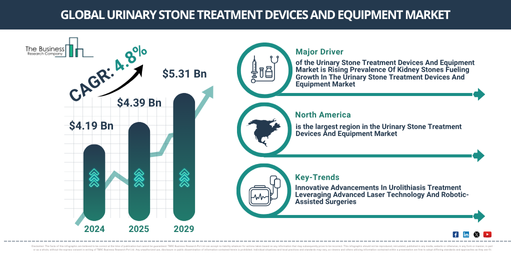
    The worldwide market for equipment and devices utilized in treating urinary stones has experienced consistent expansion lately, projected to increase from a value of $4.19 billion in 2024 to $4.39 billion by 2025, reflecting a compound annual growth rate of 4.9%. This upward trajectory during the past period stems from several key factors, notably the progressively higher rate of urinary stone occurrences, the increasing proportion of elderly individuals in the population, enhancements in the availability of medical care, and various lifestyle determinants.

    Projections indicate that the market encompassing devices and apparatus for treating urinary stones is poised for consistent expansion in the immediately following years, reaching a valuation of $5.31 billion by the year 2029, driven by a compound annual growth rate (CAGR) of 4.8%. This anticipated augmentation during the forecast duration stems from several key factors, such as the increasing adoption of less invasive procedural methods, expansion within developing economies, advancements in tailored medical treatments, and supportive regulatory frameworks. Furthermore, significant sectoral movements shaping this period involve the integration of remote consultations and telemedicine, the deployment of cutting-edge imaging systems, the utilization of three-dimensional printing for customized solutions, and a greater focus on therapeutic alternatives that avoid surgical intervention.

    Unlock Your Free Sample Report for Exclusive Market Data:

    https://www.thebusinessresearchcompany.com/sample.aspx?id=2602&type=smp

    Which Drivers Are Impacting The Urinary Stone Treatment Devices And Equipment Market?

    Surging cases of Kidney Stones, particularly within older adults, are fueling the expansion of the market for urinary stone treatment apparatus and machinery.Globally, there is an observed rise in the occurrence of urolithiasis.Data indicates that roughly 30% of the world’s population is overweight, and the count of individuals aged 60 and above is near 900 million, a figure projected to reach 1.4 billion by the year 2030.Kidney stone occurrence is escalating universally, with prevalence estimates reaching as high as 15%.A survey focusing on Robotic Stone procedures documented that the likelihood of stones forming stands at 20.1% in Saudi Arabia and 13% in the United States.Urolithiasis, or stone ailments, are commonly encountered among elderly demographics.Currently, the Asia-Pacific region houses over fifty percent of the world’s geriatric cohort aged over sixty years, and this quantity is anticipated to climb to 2.45 billion by the middle of this century.

    How Is The Urinary Stone Treatment Devices And Equipment Market Classified Into Different Segments?

    The urinary stone treatment devices and equipmentmarket covered in this report is segmented –

    1) By Product: Extracorporeal Shock Wave Lithotripsy Devices, Holmium Laser Devices, Intracorporeal Lithotripsy Devices, Stone Retrieval Devices, Ureteral Stents

    2) By Stone Type: Calcium Stones, Struvite, Uric Acid, Cystine, Drug-Induced

    3) By End User: Hospitals, Ambulatory Surgery Centers, Other End Users

    Subsegments:

    1) By Extracorporeal Shock Wave Lithotripsy Devices (ESWL): Electrohydraulic Lithotripsy, Piezoelectric Lithotripsy, Electromagnetic Lithotripsy

    2) By Holmium Laser Devices: Holmium Laser Lithotripsy Systems, Holmium Fiber Lasers

    3) By Intracorporeal Lithotripsy Devices: Laser Lithotripsy Systems, Pneumatic Lithotripsy Devices, Ultrasound Lithotripsy Devices

    4) By Stone Retrieval Devices: Graspers, Baskets, Forceps

    5) By Ureteral Stents: Metal Ureteral Stents, Silicone Ureteral Stents, Coated Ureteral Stents

    Which Competitive Trends Are Defining The Urinary Stone Treatment Devices And Equipment Market Structure?

    Within this sector, organizations are channeling funds into sophisticated laser apparatus and surgical procedures augmented by robotics for addressing urolithiasis, a pathological state characterized by the precipitation of stones or calculi within the renal, vesical, or urinary passages of individuals. Open surgical interventions for urolithiasis are progressively being executed utilizing methods that minimize invasiveness, incorporating cutting-edge lasers, superior surgical instruments, and robotic assistance systems aimed at shortening hospital stays, minimizing tissue disruption, and decreasing the duration for which a bladder catheter is needed. As an illustration, Boston Scientific Co. is actively contributing resources through a pact established with Lumenis, a provider specializing in clinical remedies with minimal intrusion and holmium laser expertise, to integrate and capitalize upon the advantages presented by state-of-the-art laser advancements.

    Who Are The Core Companies Influencing The Urinary Stone Treatment Devices And Equipment Market Landscape?

    Major companies operating in the urinary stone treatment devices and equipment market include Boston Scientific Corporation Inc., Cook Medical, C.R. Bard, Direx Group, Dornier MedTech, Bard Medical Division, Richard Wolf, Siemens Healthineers AG, Olympus Corporation, Karl Storz, HealthTronics Inc., Lumenis Ltd., Storz Medical AG, Medispec Ltd., EDAP TMS S.A., Coloplast A/S, Allengers Medical Systems Ltd., Conmed Corporation, Guangzhou Potent Optotronic Technology Co., Becton Dickinson and Company, Medtronic plc, American Medical Systems, Limmer Laser GmbH, GEMSS Co. Ltd., Convergent Laser Technologies, Hobbs Medical Inc, Endo Health Solutions Inc., Medical Coaches Inc., Applied Medical Technology Inc., E.M.S. Electro Medical Systems, EMD Medical Technologies, EMS Shockwave, InnoTherapy Inc., JenaSurgical, MTS Medical, Physio Invasiva, Santronix, Siare Engineering International Group, SonaCare Medical, Sonoscape Medical Corp., Stryker Corporation

    Download The Full Report For Exclusive Market Findings:

    https://www.thebusinessresearchcompany.com/report/urinary-stone-treatment-devices-and-equipment-global-market-report

    What Are The Key Regional Factors Influencing The Urinary Stone Treatment Devices And Equipment Market Growth?

    North America was the largest region in the urinary stone treatment devices and equipment market in 2024. Western Europe was the second-largest region in the urinary stone treatment devices and equipment market report. The regions covered in the urinary stone treatment devices and equipment market report are Asia-Pacific, Western Europe, Eastern Europe, North America, South America, Middle East, and Africa.

    Request A Customized Version Of The Urinary Stone Treatment Devices And Equipment Market Report:

    https://www.thebusinessresearchcompany.com/customise?id=2602&type=smp

    Browse Through More Reports Similar to the Global Urinary Stone Treatment Devices And Equipment Market 2025, By The Business Research Company

    Urinary Incontinence And Pelvic Organ Prolapse Devices And Equipment Global Market Report 2025

    https://www.thebusinessresearchcompany.com/report/urinary-incontinence-and-pelvic-organ-prolapse-devices-and-equipment-global-market-report

    Nephrology And Urology Devices Global Market Report 2025

    https://www.thebusinessresearchcompany.com/report/nephrology-and-urology-devices-global-market-report

    Genito Urinary Drugs Global Market Report 2025

    https://www.thebusinessresearchcompany.com/report/genito-urinary-drugs-global-market-report

    Get in touch with us:

    The Business Research Company: https://www.thebusinessresearchcompany.com/

    Americas +1 310-496-7795

    Asia +44 7882 955267 & +91 8897263534

    Europe +44 7882 955267

    Email us at info@tbrc.info

    Follow us on:

    LinkedIn: https://in.linkedin.com/company/the-business-research-company

    YouTube: https://www.youtube.com/channel/UC24_fI0rV8cR5DxlCpgmyFQ

    Global Market Model: https://www.thebusinessresearchcompany.com/global-market-model
  • Primary Biliary Cholangitis Therapeutics Industry Forecast to Hit $1.64 Billion by 2029 With a Strong 12.9% CAGR

    Primary Biliary Cholangitis Therapeutics Industry Forecast to Hit $1.64 Billion by 2029 With a Strong 12.9% CAGR

    Unlock Global Insights – Save 20% on Market Reports with Code ONLINE20

    What Are The Growth Projections For The Primary Biliary Cholangitis Therapeutics Market Size During 2025–2029?

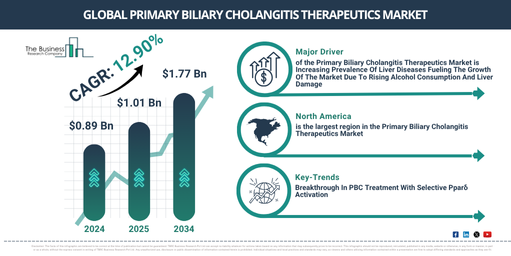
    The market size for primary biliary cholangitis therapeutics has seen rapid expansion in recent years. This market is expected to grow from $0.89 billion in 2024 to $1.01 billion in 2025, achieving a compound annual growth rate (CAGR) of 13.3%. The historical period’s growth can be linked to several factors, including increasing awareness of autoimmune liver diseases, a rise in clinical evidence supporting advancements in liver function testing, greater investment in hepatology research, and the increasing prevalence of autoimmune diseases.

    The primary biliary cholangitis therapeutics market size is projected for swift expansion in the coming years. It is predicted to attain $1.64 billion by 2029, demonstrating a compound annual growth rate (CAGR) of 12.9%. This growth throughout the forecast period can be attributed to the increasing adoption of second-line therapies, a burgeoning pipeline of novel therapeutics, a rise in combination therapies, expanded global access to diagnostics and specialty care, and an increase in patient advocacy and education initiatives. Noteworthy trends in the forecast period encompass personalized treatment approaches, the broadening use of second-line therapies, a focus on non-invasive biomarkers, an emphasis on symptom management, and the integration of real-world evidence (RWE).

    Unlock Your Free Sample Report for Exclusive Market Data:

    https://www.thebusinessresearchcompany.com/sample.aspx?id=25887&type=smp

    Which Factors And Drivers Are Influencing The Primary Biliary Cholangitis Therapeutics Market In 2025?

    The rising occurrence of liver conditions is anticipated to fuel the expansion of the primary biliary cholangitis therapeutics market in the future. These conditions encompass various ailments that hinder the liver’s proper operation, frequently resulting in inflammation, fibrosis, or hepatic insufficiency. The escalating incidence of liver disorders stems from increased alcohol consumption, since excessive intake of alcohol harms liver cells, causing inflammation and persistent liver ailments. Therapeutics for primary biliary cholangitis aid in managing liver diseases by addressing inflammation in the bile ducts, decelerating the advancement of the illness, and maintaining liver functionality. Such treatments enhance patient results through alleviating symptoms, improving life quality, and postponing the necessity for liver transplantation. As an example, the Centers for Disease Control and Prevention, a US-based government agency, reported that in March 2022, fatalities from chronic liver diseases in Texas climbed to 5,079, an increase from 4,930 recorded in 2021. Consequently, the growing frequency of liver diseases is stimulating the development of the primary biliary cholangitis therapeutics market.

    Which Key Segments Fueling The Primary Biliary Cholangitis Therapeutics Market?

    The primary biliary cholangitis therapeutics market covered in this report is segmented –

    1) By Drug: Ursodeoxycholic Acid, Obeticholic Acid, Other Drugs

    2) By Mechanism Of Action (MOA): Receptor Agonist, Receptor Modulator, Enzyme Activator, Enzyme Inhibitor, Other Mechanisms Of Action

    3) By Distribution Channel: Hospital Pharmacies, Drug Store And Retail Pharmacies, Online Pharmacies

    4) By Use: Human, Veterinary

    Subsegments:

    1) By Ursodeoxycholic Acid: Branded Ursodeoxycholic Acid, Generic Ursodeoxycholic Acid, Combination Therapies With Ursodeoxycholic Acid

    2) By Obeticholic Acid: Monotherapy, Combination Therapy, Branded Obeticholic Acid

    3) By Other Drugs: Fibrates, Budesonide, Immunosuppressants, Investigational Drugs Or Pipeline Candidates

    What Are The Latest Industry Trends Transforming The Primary Biliary Cholangitis Therapeutics Market?

    Prominent companies within the primary biliary cholangitis therapeutics market are concentrating on creating advanced products and securing approvals, particularly for peroxisome proliferator-activated receptor agonists, to enhance bile acid metabolism and decelerate disease progression in patients. Peroxisome proliferator-activated receptor (PPAR) agonists refer to medications that activate PPAR proteins, which are responsible for regulating genes linked to metabolism, inflammation, and energy balance. As an example, in August 2024, Gilead Sciences Inc., a US-based pharmaceutical company, was granted accelerated approval by the U.S. Food and Drug Administration (FDA) for Livdelzi (seladelpar). This approval is for the treatment of primary biliary cholangitis (PBC) in adults who have shown an insufficient response to ursodeoxycholic acid (UDCA) or cannot tolerate UDCA. This compound is an oral, selective PPARδ agonist that operates by activating the PPARδ receptor, thereby regulating genes involved in reducing liver inflammation, enhancing bile acid metabolism, and slowing the progression of primary biliary cholangitis (PBC).

    Which Key Players Are Driving Competition In The Primary Biliary Cholangitis Therapeutics Market?

    Major companies operating in the primary biliary cholangitis therapeutics market are F. Hoffmann-La Roche Ltd, Parvus Therapeutics, Novartis AG, Gilead Sciences Inc., Viatris Inc., Ipsen Pharma, Hanmi Pharmaceutical Co. Ltd., Intercept Pharmaceuticals, Enanta Pharmaceuticals, Mirum Pharmaceuticals, Calliditas Therapeutics AB, Dr. Falk Pharma GmbH, NGM Biopharmaceuticals Inc., Durect Corporation, COUR Pharmaceuticals, HighTide Therapeutics Inc., Pliant Therapeutics Inc., Tiziana Life Sciences, Phenex Pharmaceuticals, Synlogic Therapeutics

    Download The Full Report For Exclusive Market Findings:

    https://www.thebusinessresearchcompany.com/report/primary-biliary-cholangitis-therapeutics-global-market-report

    Which Region Currently Holds The Largest Share Of The Primary Biliary Cholangitis Therapeutics Market?

    North America was the largest region in the primary biliary cholangitis therapeutics market in 2024. Asia-Pacific is expected to be the fastest-growing region in the forecast period. The regions covered in the primary biliary cholangitis therapeutics market report are Asia-Pacific, Western Europe, Eastern Europe, North America, South America, Middle East, Africa.

    Request A Customized Version Of The Primary Biliary Cholangitis Therapeutics Market Report:

    https://www.thebusinessresearchcompany.com/customise?id=25887&type=smp

    Browse Through More Reports Similar to the Global Primary Biliary Cholangitis Therapeutics Market 2025, By The Business Research Company

    Primary Biliary Cholangitis Global Market Report 2025

    https://www.thebusinessresearchcompany.com/report/primary-biliary-cholangitis-global-market-report

    Liver Diseases Therapeutics Global Market Report 2025

    https://www.thebusinessresearchcompany.com/report/liver-diseases-therapeutics-global-market-report

    Cholinergic Drugs Global Market Report 2025

    https://www.thebusinessresearchcompany.com/report/cholinergic-drugs-global-market-report

    Get in touch with us:

    The Business Research Company: https://www.thebusinessresearchcompany.com/

    Americas +1 310-496-7795

    Asia +44 7882 955267 & +91 8897263534

    Europe +44 7882 955267

    Email us at info@tbrc.info

    Follow us on:

    LinkedIn: https://in.linkedin.com/company/the-business-research-company

    YouTube: https://www.youtube.com/channel/UC24_fI0rV8cR5DxlCpgmyFQ

    Global Market Model: https://www.thebusinessresearchcompany.com/global-market-model
  • Prescription Delivery Service Market to Reach $32.61 Billion by 2029, Growing at a CAGR of 13%

    Prescription Delivery Service Market to Reach $32.61 Billion by 2029, Growing at a CAGR of 13%

    Unlock Global Insights – Save 20% on Market Reports with Code ONLINE20

    What Is The Global Market Value Of The Prescription Delivery Service Industry In 2025?

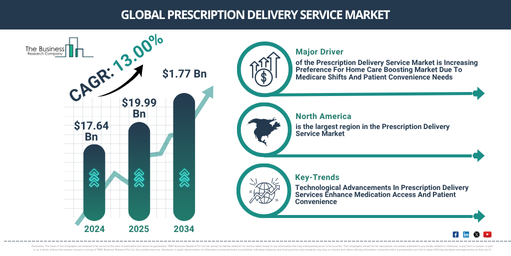
    The prescription delivery service market size has experienced rapid expansion in recent years. This market is projected to expand from $17.64 billion in 2024 to $19.99 billion in 2025, demonstrating a compound annual growth rate (CAGR) of 13.3%. Historically, this growth has been driven by factors such as the rise of e-commerce and online pharmacies, an aging demographic and prevalent chronic illnesses, enhanced healthcare accessibility in urban regions, the proliferation of mail-order pharmacies, and favorable regulatory frameworks in developed countries.

    The market size for prescription delivery services is projected to experience substantial expansion over the upcoming years. This sector is anticipated to reach a valuation of $32.61 billion by 2029, demonstrating a compound annual growth rate (CAGR) of 13.0%. This expansion during the projection period stems from factors such as the rise of telemedicine and virtual care, government reimbursement and eRx incentives, evolving consumer lifestyles prioritizing convenience, and a surge in smartphone and application utilization. Key developments expected within this period encompass the emergence of startups and subscription-based service models, enhanced integration with health monitoring devices, the application of AI and predictive analytics in demand forecasting, continuous technological improvements in logistics, and a focus on sustainability and environmentally friendly packaging solutions.

    Unlock Your Free Sample Report for Exclusive Market Data:

    https://www.thebusinessresearchcompany.com/sample.aspx?id=25886&type=smp

    What Are The Key Drivers Of Growth In The Prescription Delivery Service Market?

    The rising inclination towards home-based care is anticipated to drive the expansion of the prescription delivery service market in the future. This type of care involves health or assistance services provided within an individual’s residence, enabling them to handle medical issues or daily tasks within a comfortable and familiar environment. The demand for home-based care is consistently growing, as people, especially seniors and those with long-term illnesses, appreciate the autonomy and peace of mind derived from tailored assistance in their own familiar homes. Prescription delivery services complement home-based care by guaranteeing prompt medication access, thereby assisting patients in managing their health without needing to depart their residences. For example, in May 2025, The CareSide, an Australia-based home care service provider, reported that as of March 2024, over 280,000 people were utilizing a Home Care Package (HCP), marking a 6% increase from March 2023. Consequently, the growing preference for home-based care is a key factor propelling the expansion of the prescription delivery service market.

    How Is The Prescription Delivery Service Market Classified Into Different Segments?

    The prescription delivery service market covered in this report is segmented –

    1) By Type: Therapeutic Drugs, Hypertension, Diabetes, Cholesterol Disorders, Wellness Supplements, Diagnostic Kits, Over-The-Counter (OTC) Drugs

    2) By Delivery Technology: In-Mail Based, Drone Based, Physical Delivery, Other Delivery Technologies

    3) By Applications: Healthcare Institutions, Pharmacy Stores, Retail Pharmacy, Drug Stores, Clinics, Research Institutes

    4) By End User: Chronic Disease Patients, Elderly Population, General Population

    Subsegments:

    1) By Therapeutic Drugs: Cardiovascular Drugs, Antidiabetic Drugs, Lipid-Lowering Drugs, Antibiotics, Pain Management Drugs, Respiratory Drugs

    2) By Hypertension: ACE Inhibitors, Beta Blockers, Calcium Channel Blockers, Diuretics, Angiotensin II Receptor Blockers (ARBs)

    3) By Diabetes: Insulin, Oral Hypoglycemic Agents, GLP-1 Receptor Agonists, SGLT2 Inhibitors, DPP-4 Inhibitors

    4) By Cholesterol Disorders: Statins, Bile Acid Sequestrants, Fibrates, Niacin, PCSK9 Inhibitors

    5) By Wellness Supplements: Vitamins, Minerals, Herbal Supplements, Probiotics, Omega-3 Fatty Acids

    6) By Diagnostic Kits: Blood Glucose Monitoring Kits, Blood Pressure Monitors, Cholesterol Testing Kits, Pregnancy Test Kits

    7) By Over-The-Counter (OTC) Drugs: Pain Relievers, Cold And Allergy Medications, Digestive Aids, Skin Care Products, Cough Syrups And Expectorants

    What Trends Are Redefining The Prescription Delivery Service Market Dynamics?

    Leading companies operating in the prescription delivery service market are increasingly focusing on implementing innovative solutions, like same-day prescription delivery services, to improve patient convenience, boost medication adherence, and achieve a competitive advantage. Same-day prescription delivery services entail the swift distribution of medications to patients within a few hours of placing an order, thereby ensuring prompt access to treatment without requiring a pharmacy visit. For example, in October 2024, Walmart Inc., a US-based retail firm, introduced a nationwide same-day prescription delivery service that covers over 86% of American households. This offering is fully integrated into the Walmart app and website, allowing customers to merge pharmacy orders with groceries and general merchandise in a single online purchase. The app facilitates real-time order tracking and employs tamper-evident packaging, guaranteeing both safety and convenience. This initiative utilizes Walmart’s extensive national infrastructure, advanced AI-powered logistics, and geospatial technology to provide widespread access, especially benefiting individuals in rural or underserved locations who may encounter difficulties in visiting a pharmacy in person.

    Who Are The Top Performing Companies In The Prescription Delivery Service Market In Recent Years?

    Major companies operating in the prescription delivery service market are Amazon.com Inc., CVS Health Corporation, The Kroger Co., Albertsons Companies Inc., Rite Aid Corporation, Boots UK Limited, Lloyds Pharmacy Limited, Apollo Hospitals Enterprise Limited, The Pharmacy Group Limited, Shop Apotheke Europe N.V., Flipkart Internet Private Limited, API Holdings Limited, GoodRx Holdings Inc., Medly Health Inc., Blink Health Inc., MedAdvisor Limited, ZAVA Med Ltd., Pharmacy2U Limited, HealthHero Group Limited, Click2Pharmacy Ltd., Rowlands Pharmacy Limited, NowRx Inc.

    Download The Full Report For Exclusive Market Findings:

    https://www.thebusinessresearchcompany.com/report/prescription-delivery-service-global-market-report

    What Regional Growth Trends Are Shaping The Prescription Delivery Service Market Outlook?

    North America was the largest region in the prescription delivery service market in 2024. Asia-Pacific is expected to be the fastest-growing region in the forecast period. The regions covered in the prescription delivery service market report are Asia-Pacific, Western Europe, Eastern Europe, North America, South America, Middle East, Africa.

    Request A Customized Version Of The Prescription Delivery Service Market Report:

    https://www.thebusinessresearchcompany.com/customise?id=25886&type=smp

    Browse Through More Reports Similar to the Global Prescription Delivery Service Market 2025, By The Business Research Company

    Medical Supply Delivery Service Global Market Report 2025

    https://www.thebusinessresearchcompany.com/report/medical-supply-delivery-service-global-market-report

    Mail Order Pharmacy Global Market Report 2025

    https://www.thebusinessresearchcompany.com/report/mail-order-pharmacy-global-market-report

    Pharmaceutical Drug Delivery Global Market Report 2025

    https://www.thebusinessresearchcompany.com/report/pharmaceutical-drug-delivery-global-market-report

    Get in touch with us:

    The Business Research Company: https://www.thebusinessresearchcompany.com/

    Americas +1 310-496-7795

    Asia +44 7882 955267 & +91 8897263534

    Europe +44 7882 955267

    Email us at info@tbrc.info

    Follow us on:

    LinkedIn: https://in.linkedin.com/company/the-business-research-company

    YouTube: https://www.youtube.com/channel/UC24_fI0rV8cR5DxlCpgmyFQ

    Global Market Model: https://www.thebusinessresearchcompany.com/global-market-model