Blog

  • Electrocardiograph (ECG) Stress Test Market Trends 2025–2029: Forecasts for Key Growth Segments

    Electrocardiograph (ECG) Stress Test Market Trends 2025–2029: Forecasts for Key Growth Segments

    Unlock Global Insights – Save 20% on Market Reports with Code ONLINE20

    How Does The Market Size Of The Electrocardiograph (ECG) Stress Test Industry Compare Between 2025 And 2029?

    The electrocardiograph (ECG) test stress test market size has demonstrated significant expansion in recent years. It is projected to increase from $3.68 billion in 2024 to $3.94 billion in 2025, exhibiting a compound annual growth rate (CAGR) of 7.1%. The growth observed in the past can be attributed to rising awareness of preventive cardiac care, growing adoption of routine health screenings, increasing healthcare spending in developed nations, rising demand for early diagnosis of heart conditions, and rising use of exercise-based cardiac evaluations.

    The electrocardiograph (ECG) test stress test market size is projected to experience substantial expansion over the upcoming years. This market is set to reach a size of $5.13 billion by 2029, exhibiting a compound annual growth rate (CAGR) of 6.8%. This anticipated growth during the forecast period is fueled by factors such as the increasing embrace of portable and wearable electrocardiograph devices, a surge in demand for remote and home-based cardiac monitoring solutions, an intensified focus on the early identification of cardiovascular disorders, an expanding preference for personalized cardiac care approaches, and a rise in government initiatives aimed at heart disease screening. Key trends anticipated during this period encompass progress in wearable ECG technologies, breakthroughs in AI-driven ECG interpretation, the incorporation of ECG systems into telemedicine platforms, enhancements in portable stress testing devices, and novel developments in cloud-based ECG data storage and sharing.

    Unlock Your Free Sample Report for Exclusive Market Data:

    https://www.thebusinessresearchcompany.com/sample.aspx?id=25760&type=smp

    Which Drivers Are Impacting The Electrocardiograph (ECG) Stress Test Market?

    The increasing prevalence of cardiovascular diseases is anticipated to propel the expansion of the electrocardiograph (ECG) test market going forward. Cardiovascular diseases refer to conditions impacting the heart and blood vessels, such as heart attacks, strokes, and hypertension. The rise in these diseases is attributed to escalating rates of high blood pressure, which places additional strain on the heart and blood vessels, thereby heightening the risk of heart attacks and strokes. An electrocardiograph (ECG) test is instrumental in detecting cardiovascular diseases by evaluating heart function under physical stress, bringing to light concealed issues like narrowed arteries, irregular heart rhythms, and reduced blood flow, which may not be apparent at rest. For instance, in October 2024, according to the Centers for Disease Control and Prevention, a US-based government agency, approximately 805,000 people in the United States experience a heart attack each year; of these, 605,000 are first-time incidents, while 200,000 occur in individuals with a history of previous heart attacks. Thus, the growing prevalence of cardiovascular diseases acts as a key driver for the expansion of the electrocardiograph (ECG) test market.

    What Are The Key Segments In The Electrocardiograph (ECG) Stress Test Market?

    The electrocardiograph (ecg) stress test market covered in this report is segmented –

    1) By Product Type: Standalone Electrocardiograph (ECG) Test Devices, Electrocardiograph (ECG) Test Software, Holter Monitors, Event Monitors, Portable Electrocardiograph (ECG) Monitors

    2) By Test Type: Exercise Stress Test, Pharmacological Stress Test, Combined Exercise And Pharmacological Stress Test

    3) By Technology: Analog Electrocardiograph (ECG) Stress Testing Devices, Digital Electrocardiograph (ECG) Stress Testing Devices, Cloud-based Electrocardiograph (ECG) Stress Test Solutions, Wearable Electrocardiograph (ECG) Monitors, Telemedicine Enabled Electrocardiograph (ECG) Stress Tests

    4) By Sales Channel: Direct Sales, Distributors, Online Retailers, Third party Resellers, Healthcare Procurement Organizations

    5) By End User: Hospitals, Outpatient Clinics, Cardiology Centers, Home Healthcare Settings, Rehabilitation Centers

    Subsegments:

    1) By Standalone Electrocardiograph (ECG) Stress Test Devices: Treadmill-Based Stress Test Systems, Bicycle Ergometer-Based Stress Test Systems, Multi-Channel ECG Recorders, Wireless ECG Stress Systems, Touchscreen ECG Systems, Modular Stress Testing Workstations

    2) By Electrocardiograph (ECG) Stress Test Software: Data Acquisition And Analysis Software, Arrhythmia Detection Software, Cloud-Based Stress Test Platforms, Integration Software With EMR Or EHR Systems, Signal Noise Reduction Algorithms, Remote Diagnostic And Reporting Software

    3) By Holter Monitors: 3-Channel Holter Monitors, 12-Lead Holter Monitors, Patch-Type Holter Monitors, Long-Term Holter Monitoring, Wireless Or Bluetooth-Enabled Holter Monitors, AI-Powered ECG Analysis Holters

    4) By Event Monitors: Loop Memory Event Monitors, Post-Event Recorders, Auto-Triggered Event Monitors, Implantable Event Monitors (ILRs), Patient-Activated Event Monitors, Mobile Cardiac Telemetry (MCT)

    5) By Portable Electrocardiograph (ECG) Monitors: Smartphone-Connected ECG Devices, Handheld ECG Devices, Wearable ECG Monitors, Single-Lead Portable ECGs, Multi-Lead Portable ECGs, Home-Use Cardiac Monitoring Devices

    What Key Innovation Trends Are Fueling Advancements In The Electrocardiograph (ECG) Stress Test Market?

    Companies operating within the electrocardiograph (ECG) stress test market are significantly investing in technological advancements, such as cardiosoft technology, to improve diagnostic precision, operational efficiency, and interconnectivity across cardiology care pathways. Cardiosoft technology is defined as a PC-based ECG and stress evaluation system that assists medical professionals in observing and interpreting a patient’s heart activity, whether at rest or during exercise, by using computer software for convenient data storage and review. For instance, in March 2025, GE HealthCare, a US-based health technology company, launched a new cardiac assessment system for stress testing, designed to empower clinicians to rapidly gain insights and maintain continuous data flow, which is crucial for cardiac patients. This cardiac assessment system boasts distinctive features such as advanced ECG analysis, robust stress testing functionalities, and smooth integration with electronic medical records for streamlined data management. It commonly features intuitive software that offers real-time monitoring, customizable reports, and automated measurement tools to facilitate accurate diagnoses. Moreover, many such systems provide wireless connectivity, enhancing mobility and versatility in diverse clinical environments while simultaneously guaranteeing high-quality signal acquisition and ensuring patient safety throughout cardiac assessments.

    Who Are The Top Performing Companies In The Electrocardiograph (ECG) Stress Test Market In Recent Years?

    Major companies operating in the electrocardiograph (ecg) stress test market are Cardinal Health Inc., Koninklijke Philips N.V. , GE HealthCare Technologies Inc., Baxter International Inc., Nihon Kohden Corporation, BTL Industries Inc., Fukuda Denshi Co Ltd., Neurosoft LLC, Schiller AG, Meditech Equipment Co Ltd., CAIRE Inc., COSMED Srl , MGC Diagnostics Corporation, Allengers Global Healthcare Pvt Ltd., EB Neuro S.p.A., custo med GmbH, Clarity Medical Technologies Pvt Ltd., Cortex Biophysik GmbH, Norav Medical Ltd., Medset Medizintechnik GmbH.

    Download The Full Report For Exclusive Market Findings:

    https://www.thebusinessresearchcompany.com/report/electrocardiograph-ecg-stress-test-global-market-report

    Which Region Is Projected To Lead The Electrocardiograph (ECG) Stress Test Market During The Forecast Period?

    North America was the largest region in the electrocardiograph (ECG) test market in 2024. Asia-Pacific is expected to be the fastest-growing region in the forecast period. The regions covered in the electrocardiograph (ecg) stress test market report are Asia-Pacific, Western Europe, Eastern Europe, North America, South America, Middle East, Africa.

    Request A Customized Version Of The Electrocardiograph (ECG) Stress Test Market Report:

    https://www.thebusinessresearchcompany.com/customise?id=25760&type=smp

    Browse Through More Reports Similar to the Global Electrocardiograph (ECG) Stress Test Market 2025, By The Business Research Company

    Electrocardiograph Ecg Global Market Report 2025

    https://www.thebusinessresearchcompany.com/report/electrocardiograph-ecg-global-market-report

    Diagnostic Electrocardiograph Global Market Report 2025

    https://www.thebusinessresearchcompany.com/report/diagnostic-electrocardiograph-global-market-report

    Cardiopulmonary Stress Testing Systems Global Market Report 2025

    https://www.thebusinessresearchcompany.com/report/cardiopulmonary-stress-testing-systems-global-market-report

    Get in touch with us:

    The Business Research Company: https://www.thebusinessresearchcompany.com/

    Americas +1 310-496-7795

    Asia +44 7882 955267 & +91 8897263534

    Europe +44 7882 955267

    Email us at info@tbrc.info

    Follow us on:

    LinkedIn: https://in.linkedin.com/company/the-business-research-company

    YouTube: https://www.youtube.com/channel/UC24_fI0rV8cR5DxlCpgmyFQ

    Global Market Model: https://www.thebusinessresearchcompany.com/global-market-model
  • eHealth 2.0 Market Forecast 2025–2034: Where Businesses Should Invest Next

    eHealth 2.0 Market Forecast 2025–2034: Where Businesses Should Invest Next

    Unlock Global Insights – Save 20% on Market Reports with Code ONLINE20

    What Is The Predicted Market Size Trajectory For The eHealth 2.0 Market From 2025 To 2034?

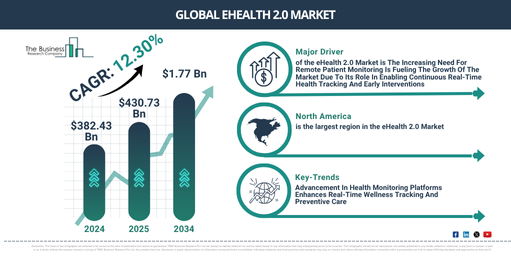
    The eHealth 2.0 market size has observed swift growth over recent years. It is anticipated to expand from $382.43 billion in 2024 to $430.73 billion in 2025, exhibiting a compound annual growth rate (CAGR) of 12.6%. The expansion during the past period can be ascribed to a growing understanding of digital health tools, increased adoption of wearable health devices, enhanced government backing for eHealth initiatives, greater integration of ICT in healthcare, and the escalating popularity of teleconsultation platforms.

    The eHealth 2.0 market size is projected to undergo rapid expansion in the coming years. It is forecast to climb to $686.26 billion by 2029, exhibiting a compound annual growth rate (CAGR) of 12.3%. This growth during the forecast period can be ascribed to the increasing integration of AI in healthcare, a rising demand for personalized medical solutions, escalating investments in digital health startups, the broadening utilization of blockchain for securing health data, and a sharpened focus on patient-centered care. Key trends anticipated in this period include advancements in remote monitoring technologies, the creation of virtual health assistants, innovations in mobile health application features, improvements in interoperability standards, and the progression of predictive analytics within healthcare.

    Unlock Your Free Sample Report for Exclusive Market Data:

    https://www.thebusinessresearchcompany.com/sample.aspx?id=25759&type=smp

    Which Industry Drivers Are Expected To Accelerate The eHealth 2.0 Market From 2025 To 2029?

    The eHealth 2.0 market is anticipated to grow, driven by the increasing demand for remote patient monitoring. This system employs digital technologies to collect and transmit patient health data from outside clinical settings, enabling prompt interventions and reducing the necessity for hospital visits. The escalating prevalence of chronic conditions is boosting the need for remote patient monitoring, as it allows for continuous health tracking, facilitating early intervention and decreasing frequent hospital stays. Remote patient monitoring enhances eHealth 2.0 by gathering real-time health data beyond traditional medical environments, thus enabling personalized and preventive care. It provides timely insights for early actions, lessening the strain on hospitals and fostering greater patient engagement. For instance, according to Vivalink, a US-based healthcare technology company, 81% of clinicians were using remote patient monitoring in August 2023, representing a substantial 305% increase from just 20% in 2021. Moreover, 84% of current users of remote patient monitoring plan to expand their adoption of this technology in 2024. Therefore, the growing requirement for remote patient monitoring is propelling the expansion of the eHealth 2.0 market.

    What Are The Leading Segments Analyzed In The eHealth 2.0 Market?

    The ehealth 2.0 market covered in this report is segmented –

    1) By Type: Telemedicine, Electronic Health Records (EHRS), E-Prescription, Remote Patient Monitoring, Mobile Health (mHealth), Health Information Exchange (HIE), Other Types

    2) By Service: Monitoring, Diagnostic, Treatment

    3) By End-User: Healthcare Providers, Insurers, Other End-Users

    Subsegments:

    1) By Telemedicine: Real-time Telemedicine, Store-And-Forward Telemedicine, Remote Patient Monitoring Telemedicine, Mobile Health (mHealth) Telemedicine

    2) By Electronic Health Records (EHRs): Web-Based Electronic Health Records (EHRs), Client Server-Based Electronic Health Records (EHRs), Hybrid Electronic Health Records (EHRs)

    3) By E-Prescription: Controlled Substances E-Prescription, Non-Controlled Substances E-Prescription, Renewal And Refill E-Prescription

    4) By Remote Patient Monitoring: Chronic Disease Monitoring, Post-Acute Care Monitoring, Wearable Device Monitoring

    5) By Mobile Health (mHealth): Fitness And Wellness Apps, Chronic Disease Management Apps, Medication Management Apps, Women’s Health Apps

    6) By Health Information Exchange (HIE): Directed Exchange, Query-Based Exchange, Consumer-Mediated Exchange

    7) By Other Types: Clinical Decision Support Systems, Medical Imaging Systems, Patient Portals, Healthcare Analytics Platforms

    Which Ongoing Trends Are Expected To Shape The eHealth 2.0 Market Outlook?

    Leading firms in the eHealth 2.0 market prioritize the creation of sophisticated technology, like health and fitness monitoring platforms, with the aim of improving patient involvement and facilitating proactive healthcare oversight. These platforms are digital tools that consistently monitor vital signs, activity levels, and general well-being. They aid both users and medical professionals in managing health, establishing objectives, and backing preventative care choices. As an illustration, in August 2024, Huawei Technologies Co., Ltd., a China-based supplier of health monitoring devices, introduced its new HUAWEI TruSense System. This system is engineered to provide more precise, exhaustive, and immediate health data for wearable technology. TruSense incorporates advanced sensors and algorithms to track more than 60 health indicators, such as heart rate, stress levels, emotional well-being, respiratory condition, and calorie consumption, thereby delivering quicker and more comprehensive health reports compared to earlier systems.

    Which Leading Companies Dominate The eHealth 2.0 Market Share?

    Major companies operating in the ehealth 2.0 market are CVS Health, Optum Inc., International Business Machines Corporation, Oracle Corporation, Siemens Healthineers, GE Healthcare, Athenahealth, Teladoc Health, eClinicalWorks, Telecare Corporation, Veradigm, Doximity, American Well, Greenway Health, Tebra Technologies Inc., AdvancedMD, Doctor on Demand, Medisafe, AMD Global Telemedicine, CompuMed Inc.

    Download The Full Report For Exclusive Market Findings:

    https://www.thebusinessresearchcompany.com/report/ehealth-20-global-market-report

    What Are The Key Regional Factors Influencing The eHealth 2.0 Market Growth?

    North America was the largest region in the eHealth 2.0 market in 2024. Asia-Pacific is expected to be the fastest-growing region in the forecast period. The regions covered in the ehealth 2.0 market report are Asia-Pacific, Western Europe, Eastern Europe, North America, South America, Middle East, Africa.

    Request A Customized Version Of The eHealth 2.0 Market Report:

    https://www.thebusinessresearchcompany.com/customise?id=25759&type=smp

    Browse Through More Reports Similar to the Global eHealth 2.0 Market 2025, By The Business Research Company

    Healthcare Edi Global Market Report 2025

    https://www.thebusinessresearchcompany.com/report/healthcare-edi-global-market-report

    Ear Nose And Throat Ent Workstation Global Market Report 2025

    https://www.thebusinessresearchcompany.com/report/ear-nose-and-throat-ent-workstation-global-market-report

    Smart Healthcare Products Global Market Report 2025

    https://www.thebusinessresearchcompany.com/report/smart-healthcare-products-global-market-report

    Get in touch with us:

    The Business Research Company: https://www.thebusinessresearchcompany.com/

    Americas +1 310-496-7795

    Asia +44 7882 955267 & +91 8897263534

    Europe +44 7882 955267

    Email us at info@tbrc.info

    Follow us on:

    LinkedIn: https://in.linkedin.com/company/the-business-research-company

    YouTube: https://www.youtube.com/channel/UC24_fI0rV8cR5DxlCpgmyFQ

    Global Market Model: https://www.thebusinessresearchcompany.com/global-market-model
  • Global Drug Repurposing Market Analysis 2025–2029: Opportunities for Strategic Growth

    Global Drug Repurposing Market Analysis 2025–2029: Opportunities for Strategic Growth

    Unlock Global Insights – Save 20% on Market Reports with Code ONLINE20

    How Much Larger Is The Drug Repurposing Market Expected To Become By 2029 Compared With Its 2025 Level?

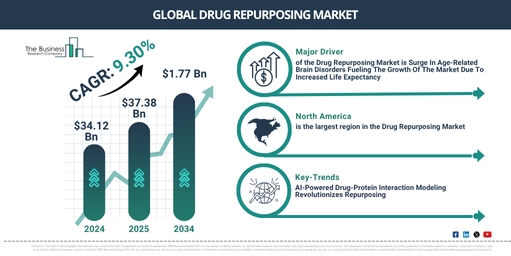
    The drug repurposing market size has experienced substantial growth in recent years. It is anticipated to expand from $34.12 billion in 2024 to $37.38 billion in 2025, exhibiting a compound annual growth rate (CAGR) of 9.5%. This past growth is primarily due to the escalating cost of novel drug development, an increase in drug failures during clinical trials, a heightened demand for faster drug approval, the growing availability of off-patent drugs, and increased government and academic funding for research.

    The market size for drug repurposing is projected to witness significant growth in the upcoming years. It is foreseen to expand to $53.42 billion by 2029, achieving a compound annual growth rate (CAGR) of 9.3%. This projected growth can be ascribed to a rising need for cost-effective therapies, increased financial commitments from pharmaceutical companies, a surge in collaborations among biotech firms, and the broadening of applications within oncology and neurology. Prominent trends throughout the forecast period encompass improvements in computational drug discovery instruments, advanced application of artificial intelligence and machine learning in drug repurposing, novel developments in predictive modeling for drug efficacy, the integration of big data analytics into drug screening, and breakthroughs in biomarker identification.

    Unlock Your Free Sample Report for Exclusive Market Data:

    https://www.thebusinessresearchcompany.com/sample.aspx?id=25758&type=smp

    What Are The Top Growth Drivers Impacting The Drug Repurposing Market Outlook?

    The increasing occurrence of neurodegenerative diseases is projected to propel the expansion of the drug repurposing market moving forward. These conditions refer to a group of disorders characterized by the gradual deterioration or loss of neuronal structure or function, including their death. The rise in neurodegenerative diseases, such as alzheimer’s dementia, is linked to increased life expectancy, given that aging is the primary risk factor contributing to the progressive decline of neuronal function over time. Drug repurposing aids in combating neurodegenerative diseases by identifying existing medications with known safety profiles that can be redirected to target disease pathways, thereby accelerating the development of effective treatments. For instance, in March 2023, according to the Alzheimer’s Association, a US-based nonprofit voluntary health organization, in 2023, approximately 6.7 million Americans aged 65 and older are living with Alzheimer’s dementia, with projections indicating an increase to 13.8 million by 2060. Consequently, the growing prevalence of neurodegenerative diseases is driving the growth of the drug repurposing market.

    What Are The Segment Types Shaping The Drug Repurposing Market?

    The drug repurposing market covered in this report is segmented –

    1) By Type: Disease-Centric, Target-Centric, Drug-Centric

    2) By Drug Molecules: Biologics, Small Molecule

    3) By Therapeutic Area: Oncology, Neurology, Infectious Diseases, Cardiovascular Diseases, Autoimmune Disorders

    4) By Route Of Administration: Oral, Intravenous, Topical, Inhalation, Intramuscular

    5) By End-User: Pharmaceutical Companies, Research And Academic Institutes, Contract Research Organizations

    Subsegments:

    1) By Disease-Centric: Phenotypic Screening, Epidemiological Analysis, Clinical Observation-Based Repurposing

    2) By Target-Centric: Protein Target Modulation, Pathway Modulation, Biomarker-Based Targeting

    3) By Drug-Centric: Off-Target Activity Identification, Structure-Based Drug Repositioning, Adverse Effect-Based Repurposing

    Which Competitive Trends Are Defining The Drug Repurposing Market Structure?

    Leading companies within the drug repurposing sector are concentrating their efforts on creating sophisticated technologies, like artificial intelligence (AI)-driven drug-protein interaction modeling, aiming to expedite the discovery of novel therapeutic applications for existing medicines. This AI-driven drug-protein interaction modeling utilizes artificial intelligence and machine learning techniques to forecast drug-protein interactions throughout the human proteome, employing extensive datasets to bolster precision and reliability. As an illustration, in July 2025, Cosmos Health Inc., a US-based healthcare firm, launched Cloudscreen 2.0, which is an advanced artificial intelligence platform specifically for drug repurposing. This next-generation system is engineered to handle datasets exceeding 100 times their previous size, facilitating a thorough analysis of drug-protein interactions. Through the integration of mutagenesis data and instruments for examining disordered proteins, the platform addresses conditions like cancer, obesity, and diabetes. Furthermore, graphics processing unit (GPU)-based cloud computing provides scalable processing capabilities, establishing the platform as a vital advancement in speeding up research and development trajectories for drug repurposing across various therapeutic domains.

    Who Are The Major Companies Operating In The Drug Repurposing Market?

    Major companies operating in the drug repurposing market are F. Hoffmann-La Roche Ltd , International Business Machines Corporation (IBM), Bayer AG, Takeda Pharmaceutical Company Limited, Amgen Inc., Teva Pharmaceutical Industries Limited, Astellas Pharma Inc., UCB S.A., Eisai Co Ltd., Celltrion Inc., Alnylam Pharmaceuticals Inc., Evotec SE, BenevolentAI Limited, Insilico Medicine Inc., Cosmos Health Inc., Recursion Pharmaceuticals Inc., Pharnext S.A., Healx Ltd., Algernon Pharmaceuticals Inc., BioXcel Therapeutics Inc.

    Download The Full Report For Exclusive Market Findings:

    https://www.thebusinessresearchcompany.com/report/drug-repurposing-global-market-report

    How Do Regional Market Performances Compare Within The Drug Repurposing Industry?

    North America was the largest region in the drug repurposing market in 2024. Asia-Pacific is expected to be the fastest-growing region in the forecast period. The regions covered in the drug repurposing market report are Asia-Pacific, Western Europe, Eastern Europe, North America, South America, Middle East, Africa.

    Request A Customized Version Of The Drug Repurposing Market Report:

    https://www.thebusinessresearchcompany.com/customise?id=25758&type=smp

    Browse Through More Reports Similar to the Global Drug Repurposing Market 2025, By The Business Research Company

    Pharmacy Repackaging Systems Global Market Report 2025

    https://www.thebusinessresearchcompany.com/report/pharmacy-repackaging-systems-global-market-report

    Music Therapy Global Market Report 2025

    https://www.thebusinessresearchcompany.com/report/music-therapy-global-market-report

    Personal Development Global Market Report 2025

    https://www.thebusinessresearchcompany.com/report/personal-development-global-market-report

    Get in touch with us:

    The Business Research Company: https://www.thebusinessresearchcompany.com/

    Americas +1 310-496-7795

    Asia +44 7882 955267 & +91 8897263534

    Europe +44 7882 955267

    Email us at info@tbrc.info

    Follow us on:

    LinkedIn: https://in.linkedin.com/company/the-business-research-company

    YouTube: https://www.youtube.com/channel/UC24_fI0rV8cR5DxlCpgmyFQ

    Global Market Model: https://www.thebusinessresearchcompany.com/global-market-model
  • Docetaxel Industry Overview 2025: Growth Projections and Market Trends

    Docetaxel Industry Overview 2025: Growth Projections and Market Trends

    Unlock Global Insights – Save 20% on Market Reports with Code ONLINE20

    #What Are The Current (2025) And Forecast (2029) Sizes Of The Docetaxel Market?

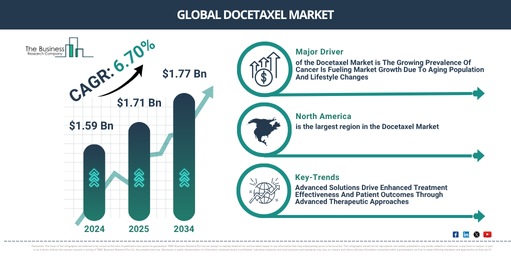
    The docetaxel market has experienced significant expansion in recent years. It is projected to increase from $1.59 billion in 2024 to $1.71 billion in 2025, demonstrating a compound annual growth rate (CAGR) of 7.0%. The growth observed in the past can be ascribed to several elements, including a heightened incidence of breast and prostate cancers, a greater uptake of chemotherapy treatments, enhanced awareness of early cancer detection, expanding healthcare availability in emerging economies, and augmented government assistance for oncology care.

    The market for docetaxel is projected to experience substantial expansion over the upcoming years. This market is anticipated to reach $2.21 billion by 2029, exhibiting a compound annual growth rate (CAGR) of 6.7%. Several factors are driving this anticipated growth, including an increased demand for efficacious cancer treatments, an expanding elderly demographic more susceptible to cancer, the wider accessibility of generic docetaxel, the enlargement of oncology drug development pipelines, and a greater inclination towards combination chemotherapy regimens. Key trends foreseen during this period involve technological progress in drug delivery mechanisms, novel formulations designed to mitigate adverse effects, the creation of nanoparticle-based docetaxel, increased investment in oncology research and development, and strides in personalized cancer therapies.

    Unlock Your Free Sample Report for Exclusive Market Data:

    https://www.thebusinessresearchcompany.com/sample.aspx?id=25757&type=smp

    Which Major Market Drivers Are Shaping The Future Of The Docetaxel Market?

    The increasing occurrence of cancer is projected to drive the expansion of the docetaxel market in the future. Cancer is defined as a collection of illnesses marked by the uncontrolled multiplication and dispersion of irregular cells throughout the body. This rise in cancer cases stems from an aging global population and evolving lifestyles, consequently boosting the need for prompt diagnosis, efficacious treatments, and ongoing patient care. Docetaxel aids in combating cancer by hindering the proliferation and division of cancerous cells, thereby effectively retarding or halting tumor advancement and contributing to better survival rates for individuals with diverse forms of malignancies. For example, data from February 2024, published by the Switzerland-based intergovernmental organization, the World Health Organization, indicates that the approximately 20 million new cancer cases recorded in 2022 are predicted to surge by 77% to exceed 35 million cases by 2050. Consequently, the expanding incidence of cancer is propelling the growth of the docetaxel market.

    What Are The Different Segment Classifications Within The Docetaxel Market?

    The docetaxel market covered in this report is segmented –

    1) By Product Type: Branded, Generic

    2) By Application: Breast Cancer, Prostate Cancer, Non-Small Cell Lung Cancer, Gastric Cancer, Head And Neck Cancer, Other Applications

    3) By Distribution Channel: Hospital Pharmacies, Retail Pharmacies, Online Pharmacies

    4) By End Use: Hospitals, Oncology Clinics, Other End Uses

    Subsegments:

    1) By Branded: Original Formulation, Improved Formulation, Combination Drugs, Injectable Forms, Pre-Mixed Solutions

    2) By Generic: Injectable Generics, Pre-Mixed Generic Solutions, Multi-Dose Vials, Single-Dose Vials, Biosimilars

    What Are The Latest Industry Trends Transforming The Docetaxel Market?

    Leading companies in the docetaxel market are concentrating on innovative solutions, such as tumor-treating fields (TTFields), to enhance treatment efficacy and offer patients advanced options that improve survival outcomes and quality of life in cancer care. Tumor treating fields (TTFields) are low-intensity, alternating electric fields designed to disrupt cancer cell division, leading to tumor cell death. For instance, in October 2024, Novocure, a Switzerland-based oncology company, obtained US Food and Drug Administration (FDA) approval for Optune Lua for use with docetaxel and PD-1/PD-L1 inhibitors in treating metastatic non-small cell lung cancer, thereby introducing a new treatment alternative that enhances survival with fewer side effects. This therapy’s capability to physically target dividing cancer cells without systemic toxicity and its compatibility with immunotherapy and chemotherapy represent substantial advancements in providing more effective and personalized treatment for patients with advanced non-small cell lung cancer.

    Which Global Market Leaders Are Shaping The Future Of The Docetaxel Sector?

    Major companies operating in the docetaxel market are Pfizer Inc., Novartis AG, Sanofi S.A., Teva Pharmaceutical Industries Limited, Sun Pharmaceutical Industries Limited, Cipla Limited, Hikma Pharmaceuticals PLC, Alkem Laboratories Limited, Cisen Pharmaceutical Co. Ltd., Eagle Pharmaceuticals Inc., Selleck Chemicals LLC, Mac-Chem Products (India) Private Limited, Alchem International Private Limited, HRV Global Life Sciences Private Limited, Qilu Pharmaceutical Co. Ltd., Avanscure Lifesciences Private Limited, Avyxa Pharma LLC, ChemFaces Biochemical Co. Ltd., Chongqing Sintaho Pharmaceutical Co. Ltd., Jiangxi Bioman Pharmaceutical Co. Ltd.

    Download The Full Report For Exclusive Market Findings:

    https://www.thebusinessresearchcompany.com/report/docetaxel-global-market-report

    Which Region Currently Holds The Largest Share Of The Docetaxel Market?

    North America was the largest region in the docetaxel market in 2024. Asia-Pacific is expected to be the fastest-growing region in the forecast period. The regions covered in the docetaxel market report are Asia-Pacific, Western Europe, Eastern Europe, North America, South America, Middle East, Africa.

    Request A Customized Version Of The Docetaxel Market Report:

    https://www.thebusinessresearchcompany.com/customise?id=25757&type=smp

    Browse Through More Reports Similar to the Global Docetaxel Market 2025, By The Business Research Company

    Fishmeal Global Market Report 2025

    https://www.thebusinessresearchcompany.com/report/fishmeal-global-market-report

    Hexane Global Market Report 2025

    https://www.thebusinessresearchcompany.com/report/hexane-global-market-report

    Dulaglutide Global Market Report 2025

    https://www.thebusinessresearchcompany.com/report/dulaglutide-global-market-report

    Get in touch with us:

    The Business Research Company: https://www.thebusinessresearchcompany.com/

    Americas +1 310-496-7795

    Asia +44 7882 955267 & +91 8897263534

    Europe +44 7882 955267

    Email us at info@tbrc.info

    Follow us on:

    LinkedIn: https://in.linkedin.com/company/the-business-research-company

    YouTube: https://www.youtube.com/channel/UC24_fI0rV8cR5DxlCpgmyFQ

    Global Market Model: https://www.thebusinessresearchcompany.com/global-market-model
  • DNA Synthesis Market Size Forecast: Revenue and CAGR by 2029

    DNA Synthesis Market Size Forecast: Revenue and CAGR by 2029

    Unlock Global Insights – Save 20% on Market Reports with Code ONLINE20

    What Market Value Is The DNA Synthesis Industry Expected To Reach By 2029, Starting From 2025 Levels?

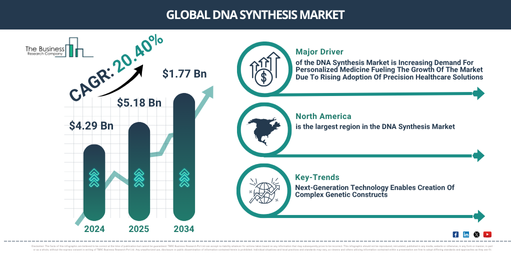
    The DNA synthesis market has experienced substantial expansion in recent years. It is projected to increase from $4.29 billion in 2024 to $5.18 billion by 2025, exhibiting a compound annual growth rate (CAGR) of 20.7%. The growth observed in the past can be attributed to the rising application of DNA synthesis in academic genomic studies, its increasing integration within agricultural biotechnology, a growing need for basic DNA libraries in gene function research, the expanding deployment of synthetic genes for vaccine development, and its broader use in infectious disease modeling.

    The DNA synthesis market is poised for rapid expansion over the coming years. Projections indicate it will reach $10.87 billion by 2029, demonstrating a compound annual growth rate (CAGR) of 20.4%. Several factors are expected to fuel this growth during the forecast period, including the rising integration of AI and automation into DNA synthesis processes, enhanced partnerships between biotechnology companies and academic bodies, the ongoing progress in DNA-based data storage solutions, a heightened emphasis on eco-friendly synthetic biology, and greater governmental efforts aimed at fostering genomic innovation. Key trends anticipated during this period encompass improvements in enzymatic DNA synthesis techniques, sophisticated incorporation of cloud-based bioinformatics within synthesis workflows, the emergence of decentralized DNA synthesis platforms, novel error-correction approaches for synthetic genes, and advancements in portable, on-demand DNA synthesis equipment.

    Unlock Your Free Sample Report for Exclusive Market Data:

    https://www.thebusinessresearchcompany.com/sample.aspx?id=25756&type=smp

    What Are The Main Drivers Boosting The DNA Synthesis Industry’s Expansion?

    The DNA synthesis market is projected to experience growth going forward due to the rising demand for personalized medicine. Personalized medicine defines a healthcare strategy that customizes treatment and prevention plans to individual genetic profiles, lifestyles, and environments to achieve optimal therapeutic outcomes. The increase in demand for personalized medicine is primarily fueled by advancements in genomic technologies, which enable treatments tailored to an individual’s genetic makeup, thereby boosting efficacy and reducing adverse effects. DNA synthesis supports personalized medicine by allowing the creation of custom DNA sequences essential for gene editing, diagnostic tools, and precision therapeutics, ultimately facilitating more accurate, efficient, and individualized healthcare solutions. For instance, in February 2024, the Personalized Medicine Coalition, a US-based advocacy company, stated that the FDA approved 16 new personalized treatments for rare disease patients in 2023, which is an increase from six approvals in 2022. Hence, the increasing demand for personalized medicine is a key driver for the DNA synthesis market.

    What Are The Primary Types Of Segments Analyzed In The DNA Synthesis Market?

    The dna synthesis market covered in this report is segmented –

    1) By Service: Oligonucleotide Synthesis, Standard Oligonucleotide Synthesis, Custom Oligonucleotide Synthesis, Gene Synthesis, Custom Gene Synthesis, Gene Library Synthesis

    2) By Method: Solid-Phase Synthesis, PCR-Based Enzyme Synthesis, Chip-Based Synthesis

    3) By Application: Research And Development, Diagnostics, Therapeutics, Synthetic Biology, Other Applications

    4) By End-User: Pharmaceutical And Biotechnology Companies, Contract Research Organizations (CROs) And Contract Development And Manufacturing Organizations(CDMOs), Academic And Research Institutes, Other End-Users

    Subsegments:

    1) By Oligonucleotide Synthesis: DNA Oligonucleotides, RNA Oligonucleotides, Modified Oligonucleotides

    2) By Standard Oligonucleotide Synthesis: Unmodified Oligonucleotides, Modified Oligonucleotides, Purity Grades

    3) By Custom Oligonucleotide Synthesis: Custom Length Oligos, Custom Modifications, Custom Purity Specifications

    4) By Gene Synthesis: Synthetic Genes, Codon-Optimized Genes, Functional Genes

    5) By Custom Gene Synthesis: Custom Sequence Design, Multi-fragment Assembly, Vector Cloning Services

    6) By Gene Library Synthesis: Random Mutagenesis Libraries, Site-Directed Mutagenesis Libraries, Combinatorial Libraries

    What Trends Are Redefining The DNA Synthesis Market Dynamics?

    Major companies operating in the DNA synthesis market are focusing on developing advanced solutions, such as synthetic deoxyribonucleic acid molecules, to enable faster, more accurate, and cost-effective development of gene therapies, diagnostics, and synthetic biology applications. Synthetic DNA molecules are artificially constructed sequences of nucleotides designed in the lab to mimic or modify natural deoxyribonucleic acid for use in research, diagnostics, and biotechnology applications. For instance, in May 2025, Ribbon Biolabs, an Austria-based synthetic biology company, launched MiroSynth, a novel class of complex synthetic DNA molecules. It is designed to enable high-throughput, automated, and scalable production of long and complex deoxyribonucleic acid sequences for advanced biotechnological applications. It offers unique features such as enhanced accuracy in sequence assembly, extended strand length capability, and rapid construction of intricate genetic constructs, making it ideal for research, therapeutic development, and industrial biotech. Its flexible design allows integration into diverse workflows, empowering researchers and developers to accelerate innovation in genomics, synthetic biology, and personalized medicine.

    Which Industry Leaders Are Driving Innovation Across The DNA Synthesis Market?

    Major companies operating in the dna synthesis market are Thermo Fisher Scientific Inc., Eurofins Scientific, GenScript Biotech Corporation, Twist Bioscience Corporation, Bioneer Corporation, DNA Script, Eton Bioscience, LGC Biosearch Technologies, Ansa Biotechnologies, Synbio Technologies, Quintara Biosciences, BaseClear B.V., IBA GmbH, Elegen Corporation, Biomatik Corporation, Bio Basic Inc., Evonetix Ltd., Camena Bioscience Ltd., Jena Bioscience GmbH, Viridos.

    Download The Full Report For Exclusive Market Findings:

    https://www.thebusinessresearchcompany.com/report/dna-synthesis-global-market-report

    What Regional Growth Trends Are Shaping The DNA Synthesis Market Outlook?

    North America was the largest region in the DNA synthesis market in 2024. Asia-Pacific is expected to be the fastest-growing region in the forecast period. The regions covered in the dna synthesis market report are Asia-Pacific, Western Europe, Eastern Europe, North America, South America, Middle East, Africa.

    Request A Customized Version Of The DNA Synthesis Market Report:

    https://www.thebusinessresearchcompany.com/customise?id=25756&type=smp

    Browse Through More Reports Similar to the Global DNA Synthesis Market 2025, By The Business Research Company

    Gene Synthesis Global Market Report 2025

    https://www.thebusinessresearchcompany.com/report/gene-synthesis-global-market-report

    Oligonucleotide Synthesis Global Market Report 2025

    https://www.thebusinessresearchcompany.com/report/oligonucleotide-synthesis-global-market-report

    Recombinant Dna Technology Global Market Report 2025

    https://www.thebusinessresearchcompany.com/report/recombinant-dna-technology-global-market-report

    Get in touch with us:

    The Business Research Company: https://www.thebusinessresearchcompany.com/

    Americas +1 310-496-7795

    Asia +44 7882 955267 & +91 8897263534

    Europe +44 7882 955267

    Email us at info@tbrc.info

    Follow us on:

    LinkedIn: https://in.linkedin.com/company/the-business-research-company

    YouTube: https://www.youtube.com/channel/UC24_fI0rV8cR5DxlCpgmyFQ

    Global Market Model: https://www.thebusinessresearchcompany.com/global-market-model
  • Global Disposable Lead Wires Market Trends and Growth Analysis 2025–2029

    Global Disposable Lead Wires Market Trends and Growth Analysis 2025–2029

    Unlock Global Insights – Save 20% on Market Reports with Code ONLINE20

    What Is The Anticipated Size Of The Disposable Lead Wires Market Over The Five-Year Period 2025–2029?

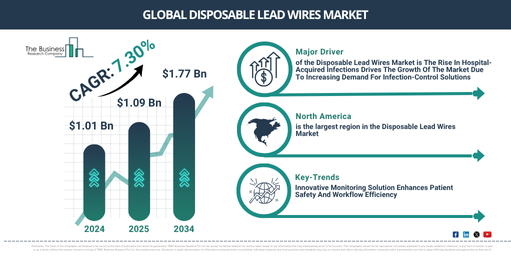
    The disposable lead wires market size has demonstrated robust growth in recent years. It is projected to expand from $1.01 billion in 2024 to $1.09 billion in 2025, achieving a compound annual growth rate (CAGR) of 7.7%. The expansion observed in the historic period can be ascribed to increasing infection control awareness, an increasing shift from reusable to disposable medical components, growing demand for single-patient use devices, increasing prevalence of cardiovascular diseases, and growing adoption of advanced, disposable, pre-gelled, color-coded lead wires.

    The disposable lead wires market is projected to undergo substantial growth in the upcoming years. Its valuation is expected to reach $1.44 billion by 2029, demonstrating a compound annual growth rate (CAGR) of 7.3%. This anticipated expansion during the forecast period stems from an increased focus on patient safety and hygiene, a rise in procedural volumes in diagnostic cardiology and telemetry, the increasing incorporation of disposable accessories in home healthcare settings, growing demand from ambulatory and outpatient care centers, and a heightened awareness of cross-contamination risks. Significant trends expected during this period include advancements in material science, technology-driven manufacturing automation, progress in infection prevention protocols, improvements in color-coding and labeling technologies, the integration of disposable lead wires into telemedicine platforms, and innovations in pre-gelled and snap-on electrode designs.

    Unlock Your Free Sample Report for Exclusive Market Data:

    https://www.thebusinessresearchcompany.com/sample.aspx?id=25755&type=smp

    Which Factors And Drivers Are Influencing The Disposable Lead Wires Market In 2025?

    The increasing occurrence of hospital-acquired infections is projected to boost the expansion of the disposable lead wires market in the future. These infections, known as HAIs, are conditions patients acquire while undergoing treatment in a medical facility, not present or developing upon their admission. The growing rate of hospital-acquired infections largely stems from the increased deployment of invasive medical devices, which compromise the body’s natural defenses and introduce harmful microorganisms directly into sterile bodily regions. Disposable lead wires contribute to lessening hospital-acquired infections by reducing the potential for cross-contamination among patients, thanks to their single-use, sterile monitoring parts. For example, the Australian Institute of Health and Welfare, an Australia-based government agency, reported in November 2024 that during 2022–23, hospital-acquired complications (HACs) affected 115,000 public hospitalizations (2.0%) and 34,200 private hospitalizations (0.8%). The most prevalent complication was healthcare-associated infection (37%), followed by delirium (13%), and cardiac complications (12%). Consequently, the rising frequency of hospital-acquired infections is propelling the disposable lead wires market.

    Which Key Segments Fueling The Disposable Lead Wires Market?

    The disposable lead wires market covered in this report is segmented –

    1) By Product Type: Standard Disposable Lead Wires, Flexible Disposable Lead Wires, Heavy-Duty Disposable Lead Wires, Specialized Disposable Lead Wires

    2) By Material: Thermoplastic Elastomer, Thermoplastic Polyurethane, Other Materials

    3) By Application: Electrocardiogram Monitoring, Electroencephalogram Monitoring, Electromyography Monitoring, Patient Monitoring In Critical Care

    4) By Distribution Channel: Direct Sales, Medical Supply Stores, Online Retail, Wholesale Distributors

    5) By End-User: Hospitals, Ambulatory Surgical Centers, Diagnostic Laboratories, Home Healthcare Providers

    Subsegments:

    1) By Standard Disposable Lead Wires: 3-Lead Standard Disposable Lead Wires, 5-Lead Standard Disposable Lead Wires, 10-Lead Standard Disposable Lead Wires, Snap-Type Connectors, Clip-Type Connector

    2) By Flexible Disposable Lead Wires: Thermoplastic Elastomer (TPE) Lead Wires, Silicone-Based Flexible Lead Wires, Polyvinyl Chloride-Free Flexible Lead Wires, Kink-Resistant Flexible Wires, Stretchable And Lightweight Configurations

    3) By Heavy-Duty Disposable Lead Wires: Reinforced-Jacket Lead Wires, High-Tensile Strength Materials, Long-Wear Surgical Monitoring Leads, Crush-Resistant Connectors, Intensive Care Unit-Grade Heavy-Duty Lead Sets

    4) By Specialized Disposable Lead Wires: Pediatric-Specific Disposable Lead Wires, Neonatal Disposable Lead Wires, Magnetic Resonance Imaging-Compatible Disposable Lead Wires, Radiolucent Lead Wires, Infection-Control Enhanced Wires

    How Are Emerging Market Trends Shaping The Disposable Lead Wires Industry Landscape?

    Major companies operating in the disposable lead wires market are concentrating on developing innovative solutions, such as multi-parameter, single-patient use monitoring lead wire systems, to enhance patient safety, improve clinical workflows, and reduce cross-contamination. These advanced medical tools are designed to check several important health signs, including heart activity, blood oxygen, and temperature, using one disposable setup to make patient care safer and more efficient. For instance, in June 2025, Cardinal Health Inc., a US-based healthcare services and products company, launched the Kendall DL Multi System in the United States. This system facilitates the continuous monitoring of three key vital signs, specifically cardiac activity, blood oxygen levels, and temperature, through a single connection point. By integrating a built-in cable management system, it helps streamline clinical workflows and minimize lead wire clutter. Its single-patient use design also reduces the risk of infections linked to reusable lead wires and helps prevent false leads off alarms, enhancing both patient safety and operational efficiency.

    Who Are The Key Multinational Companies Dominating The Disposable Lead Wires Market?

    Major companies operating in the disposable lead wires market are Cardinal Health Inc., 3M Company, Koninklijke Philips N.V., Stryker Corporation, GE Healthcare Technologies Inc., Mindray Medical International Limited, Dragerwerk AG And Co. KGaA, Nihon Kohden Corporation, OSI Systems Inc., Conmed Corporation, Ambu A/S, Vyaire Medical Inc., Shenzhen Med-link Electronics Tech Co. Ltd, ADInstruments Pty Ltd, Medico Electrodes International Ltd., Curbell Inc., Unimed Medical Supplies Inc., Danlee Medical Products Inc., Huntleigh Healthcare Ltd., Shenzhen Pray-Med Technology Co. Ltd.

    Download The Full Report For Exclusive Market Findings:

    https://www.thebusinessresearchcompany.com/report/disposable-lead-wires-global-market-report

    Which Regional Markets Are Contributing Most To The Disposable Lead Wires Industry Expansion?

    North America was the largest region in the disposable lead wires market in 2024. Asia-Pacific is expected to be the fastest-growing region in the forecast period. The regions covered in the disposable lead wires market report are Asia-Pacific, Western Europe, Eastern Europe, North America, South America, Middle East, Africa.

    Request A Customized Version Of The Disposable Lead Wires Market Report:

    https://www.thebusinessresearchcompany.com/customise?id=25755&type=smp

    Browse Through More Reports Similar to the Global Disposable Lead Wires Market 2025, By The Business Research Company

    Ecg Cables And Lead Wires Global Market Report 2025

    https://www.thebusinessresearchcompany.com/report/ecg-cables-and-lead-wires-global-market-report

    Recycled Lead Global Market Report 2025

    https://www.thebusinessresearchcompany.com/report/recycled-lead-global-market-report

    Disposable Syringes Global Market Report 2025

    https://www.thebusinessresearchcompany.com/report/disposable-syringes-global-market-report

    Get in touch with us:

    The Business Research Company: https://www.thebusinessresearchcompany.com/

    Americas +1 310-496-7795

    Asia +44 7882 955267 & +91 8897263534

    Europe +44 7882 955267

    Email us at info@tbrc.info

    Follow us on:

    LinkedIn: https://in.linkedin.com/company/the-business-research-company

    YouTube: https://www.youtube.com/channel/UC24_fI0rV8cR5DxlCpgmyFQ

    Global Market Model: https://www.thebusinessresearchcompany.com/global-market-model
  • Disability Devices Market Forecast: What to Expect by 2029

    Disability Devices Market Forecast: What to Expect by 2029

    Unlock Global Insights – Save 20% on Market Reports with Code ONLINE20

    What Are The Forecasted Market Size Estimates For The Disability Devices Market Between 2025 And 2029?

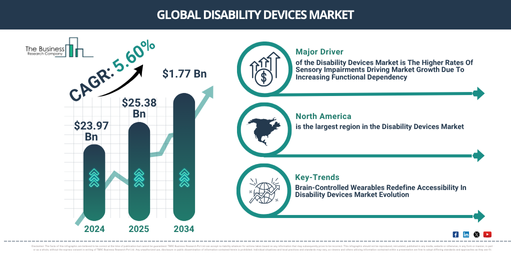
    The disability devices market size has demonstrated strong growth in recent years. It is anticipated to increase from $23.97 billion in 2024 to $25.38 billion in 2025, with a compound annual growth rate (CAGR) of 5.9%. This historical growth can be attributed to rising global awareness of disability inclusion, an increasing incidence of chronic conditions such as diabetes and arthritis, the worldwide increase in life expectancy, the initial development of regulatory frameworks that promote accessibility, and growing healthcare expenditure in high-income countries.

    The disability devices market size is expected to undergo significant expansion over the next few years, with projections indicating it will reach $31.60 billion by 2029, demonstrating a compound annual growth rate (CAGR) of 5.6%. This growth during the forecast period is propelled by factors such as the accelerating aging population within emerging markets, increased investments in inclusive healthcare infrastructure, the broadening of universal health coverage programs, a stronger emphasis on rehabilitation services in national health agendas, and the rising global burden of non-communicable diseases. Prominent trends for the forecast period include the adoption of artificial intelligence for adaptive functionalities, the integration of the Internet of Things for device monitoring, advancements in lightweight and durable materials, an increase in modular and customizable device designs, and the miniaturization of components to enhance portability.

    Unlock Your Free Sample Report for Exclusive Market Data:

    https://www.thebusinessresearchcompany.com/sample.aspx?id=25754&type=smp

    What Are The Key Drivers Of Growth In The Disability Devices Market?

    An anticipated increase in sensory impairments is projected to fuel expansion within the disability devices market. These impairments involve a partial or total decline in one or more senses, predominantly impacting sight, hearing, or other sensory capabilities, thereby considerably hindering an individual’s capacity to comprehend, process, or react to external cues. The rising prevalence of sensory impairments largely stems from influences like an aging population, ongoing health issues, and increased exposure to environmental hazards. These circumstances frequently cause sensory functions to decline progressively and become more widespread as people age, resulting in a higher occurrence of such impairments. Disability devices are essential for managing the increasing challenges posed by sensory impairments, as they boost functional abilities, foster self-reliance, and enhance the overall well-being of those impacted. For example, data from November 2024, as per The Hull Joint Strategic Needs Assessment (JSNA) published by the UK’s Hull City Council, indicates that sensory impairment contributes to 6.0% of healthy life years lost. This burden is more pronounced in older demographics, increasing from 2.5% for individuals under 50 to 12.9% for those aged 70 and above in hull. Furthermore, projections suggest that severe visual impairment among individuals aged 75 and older will increase from 2,100 to 3,100 by 2040, primarily owing to demographic aging. Consequently, the escalating incidence of sensory impairments is a key factor propelling the expansion of the disability devices market.

    How Is The Disability Devices Market Classified Into Different Segments?

    The disability devices market covered in this report is segmented –

    1) By Device Type: Vision Aids, Hearing Aids, Mobility Aids, Other Devices Types

    2) By Material: Plastic, Metal, Wood, Fabric

    3) By Application: Home Care Settings, Hospitals, Ambulatory Care Centers And Rehabilitation Centers

    4) By End User: Elderly, Physically Challenged, Visually Impaired, Hearing Impaired

    Subsegments:

    1) By Vision Aids: Magnifiers, Braille Readers, Screen Reading Software, Smart Glasses

    2) By Hearing Aids: Behind-The-Ear (BTE), In-The-Ear (ITE), Receiver-In-Canal (RIC), Cochlear Implants

    3) By Mobility Aids: Wheelchairs, Walkers And Rollators, Crutches, Mobility Scooters

    4) By Other Device Types: Communication Aids, Cognitive Aids, Environmental Control Devices, Prosthetic Devices

    Which Key Trends Are Expected To Influence The Disability Devices Market In The Coming Years?

    Leading firms within the disability devices sector are prioritizing the creation of sophisticated technologies, including brain-controlled assistive wearables, with the goal of increasing accessibility and strengthening user independence through intuitive, non-invasive methods of control. Specifically, a brain-controlled assistive wearable functions as an apparatus that employs neural and physiological indicators, enabling individuals facing physical or motor challenges to engage with digital platforms via non-verbal, movement-driven instructions. As an illustration, during March 2024, AAVAA Inc., a neurotechnology company based in Canada, introduced its Brain-Computer Interface (BCI) System designed for Smart Glasses. This system empowers users to control digital equipment through eye movements, facial expressions, and head movements by processing brain and biological signals. Characterized by its lightweight sensors and an efficient computational design, the system integrates smoothly into eyewear, thereby providing improved utility across applications such as assistive technologies, smart homes, augmented reality, and virtual reality.

    Which Leading Players Are Enhancing Their Disability Devices Market Presence Worldwide?

    Major companies operating in the disability devices market are Medline Industries LP, Sonova Holding AG, William Demant Holding A/S, GN Store Nord A/S, Ottobock SE & Co. KGaA, Hollister Inc., Cochlear Ltd., Arjo AB, Invacare Corporation, GN Hearing A/S, MED-EL Elektromedizinische Geräte Gesellschaft m.b.H., DRIVE MEDICAL GMBH & CO. KG, Permobil AB, Pride Mobility Products Corporation, Steeper Group, GF Health Products Inc., WHILL Inc., Carex Health Brands Inc., Merits Health Products, MEYRA Group, Hearing Health & Technology Matters LLC, Magic Mobility Pty Ltd, LEVO AG, Batec Mobility S.L., BetterLiving.

    Download The Full Report For Exclusive Market Findings:

    https://www.thebusinessresearchcompany.com/report/disability-devices-global-market-report

    How Does The Disability Devices Market Perform Across Key Geographic Regions?

    North America was the largest region in the disability devices market in 2024. Asia-Pacific is expected to be the fastest-growing region in the forecast period. The regions covered in the disability devices market report are Asia-Pacific, Western Europe, Eastern Europe, North America, South America, Middle East, Africa.

    Request A Customized Version Of The Disability Devices Market Report:

    https://www.thebusinessresearchcompany.com/customise?id=25754&type=smp

    Browse Through More Reports Similar to the Global Disability Devices Market 2025, By The Business Research Company

    Elderly And Disabled Assistive Devices Global Market Report 2025

    https://www.thebusinessresearchcompany.com/report/elderly-and-disabled-assistive-devices-global-market-report

    Specialty Devices Global Market Report 2025

    https://www.thebusinessresearchcompany.com/report/specialty-devices-global-market-report

    Portable Medical Devices Global Market Report 2025

    https://www.thebusinessresearchcompany.com/report/portable-medical-devices-global-market-report

    Get in touch with us:

    The Business Research Company: https://www.thebusinessresearchcompany.com/

    Americas +1 310-496-7795

    Asia +44 7882 955267 & +91 8897263534

    Europe +44 7882 955267

    Email us at info@tbrc.info

    Follow us on:

    LinkedIn: https://in.linkedin.com/company/the-business-research-company

    YouTube: https://www.youtube.com/channel/UC24_fI0rV8cR5DxlCpgmyFQ

    Global Market Model: https://www.thebusinessresearchcompany.com/global-market-model
  • Digital Health For Obesity Industry Insights: Market Forecast to 2029

    Digital Health For Obesity Industry Insights: Market Forecast to 2029

    Unlock Global Insights – Save 20% on Market Reports with Code ONLINE20

    How Is The Digital Health For Obesity Market Size Likely To Evolve From 2025 Through 2034?

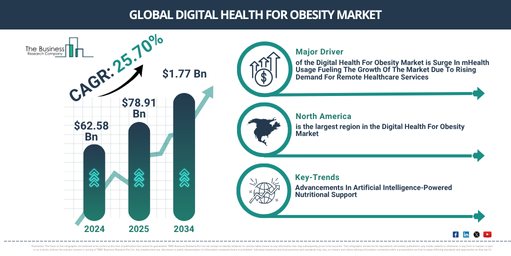
    The digital health for obesity market size has experienced substantial expansion in recent years. This market is projected to increase from $62.58 billion in 2024 to $78.91 billion in 2025, demonstrating a compound annual growth rate (CAGR) of 26.1%. The growth observed in the past can be attributed to the increasing global prevalence of obesity, greater government and payer support for digital therapeutics, a heightened focus on personalized nutrition and behavioral coaching, escalating investments and start-up activity in health tech, and the rising utilization of wearables and fitness trackers.

    The market for digital health solutions targeting obesity is projected to experience rapid expansion over the coming years. This market is predicted to reach a valuation of $197.12 billion by 2029, demonstrating a compound annual growth rate (CAGR) of 25.7%. The anticipated growth during this period stems from several factors, including a rising consumer demand for flexible health services, the increasing appeal of interactive and gamified health applications, greater incorporation of behavioral psychology into app-based treatments, the wider availability of affordable and free-to-use solutions, and an expansion in employer-supported wellness initiatives. Key developments expected over the forecast period encompass the merging of digital therapeutics (Dtx) with existing healthcare approaches, technologically advanced personalized nutrition options, innovations in wearable health devices, progress in tools for remote monitoring and tele-coaching, and the incorporation of behavioral science and gamification into mobile applications.

    Unlock Your Free Sample Report for Exclusive Market Data:

    https://www.thebusinessresearchcompany.com/sample.aspx?id=25753&type=smp

    Which Drivers Are Supporting Growth Of The Digital Health For Obesity Market?

    The digital health for obesity market is anticipated to experience growth driven by the increasing integration of mHealth. mHealth encompasses the use of mobile gadgets, including smartphones and tablets, coupled with health-related applications and wireless communication, to deliver medical and public health services, enabling capabilities such as remote supervision, patient education, and ongoing health management. The expansion of mHealth is attributable to the extensive use of smartphones, which grants easy access to health applications and digital tools for real-time monitoring, management, and improvement of individual health. mHealth aids digital health solutions for obesity by supporting mobile-driven interventions like diet tracking, physical activity monitoring, virtual coaching, and tailored feedback, all crucial for successful weight management and modifying behavior. For instance, in December 2023, the National Health Service (NHS), a UK-based publicly funded healthcare system, stated that the number of appointments viewed or managed via the NHS app increased to 4.1 million in November 2023, up from 1.95 million in November 2022. Thus, the rising adoption of mHealth is propelling the expansion of the digital health for obesity market.

    What Are The Major Segments Identified In The Digital Health For Obesity Market?

    The digital health for obesity market covered in this report is segmented –

    1) By Component: Software, Hardware, Services

    2) By Functionality: Weight Monitoring, Diet And Nutrition Management, Physical Activity Tracking, Behavioral Therapy Or Computer Based Test, Remote Patient Monitoring

    3) By End-Use: Patients, Providers, Payers, Other Users

    Subsegments:

    1) By Software: Mobile Applications, Web-Based Platforms, Artificial Intelligence-Powered Coaching Tools, Diet And Nutrition Tracking Software, Fitness And Activity Monitoring Software, Behavioral Modification Programs, Telehealth Software, Electronic Health Record (EHR) Integration Tools

    2) By Hardware: Wearable Fitness Trackers, Smart Scales, Smartwatches, Body Composition Analyzers, Connected Glucometers, Blood Pressure Monitors, Sleep Trackers, Internet of Things-Enabled Health Devices

    3) By Services: Remote Patient Monitoring, Teleconsultation Services, Weight Management Counseling, Subscription-Based Wellness Programs, Personalized Coaching Services, Behavioral Therapy Sessions, Data Analytics And Reporting Services, Clinical Support And Follow-Up

    What Are The Major Trends Driving The Growth Of The Digital Health For Obesity Market?

    Leading companies within the digital health for obesity market are emphasizing technological improvements in artificial intelligence-powered nutritional support. Their objective is to enhance personalized care, increase patient engagement, and encourage sustainable behavior changes in managing weight and related chronic conditions. Artificial intelligence-powered nutritional support utilizes artificial intelligence algorithms and virtual agents to deliver customized dietary guidance, immediate feedback, and behavior coaching, empowering individuals to make healthier food choices and maintain enduring lifestyle transformations. For example, in May 2025, Omada Health Inc., a US-based digital healthcare company dedicated to chronic disease prevention and management, introduced OmadaSpark Inc. This artificial intelligence-powered virtual agent is part of its nutritional intelligence initiative, designed to improve personalized nutrition support. It provides live educational guidance, motivation, and tools for building positive habits. This innovative solution aims to reshape individuals’ relationships with food by merging advanced technology with clinical care. The introduction represents a notable stride in expanding Omada’s digital platform for the management of chronic conditions and obesity.

    Which Major Firms Are Strengthening Their Position In The Digital Health For Obesity Industry?

    Major companies operating in the digital health for obesity market are Teladoc Health Inc., WW International Inc., Hims & Hers Inc., Noom Inc., Vida Health Inc., Twin Health Inc., Allurion Technologies Inc., Virta Health Corp., Omada Health Inc., DarioHealth Corp., WellDoc Inc., Sidekick Health, Qardio Inc., Fitterfly Pvt. Ltd., Form Health, Lark Health Inc., Knownwell Inc., Ilant Health Inc., MyNetDiary Inc., Rimidi Inc

    Download The Full Report For Exclusive Market Findings:

    https://www.thebusinessresearchcompany.com/report/digital-health-for-obesity-global-market-report

    Which Region Is Expected To Witness The Fastest Growth In The Digital Health For Obesity Market?

    North America was the largest region in the digital health for obesity market in 2024. Asia-Pacific is expected to be the fastest-growing region in the forecast period. The regions covered in the digital health for obesity market report are Asia-Pacific, Western Europe, Eastern Europe, North America, South America, Middle East, Africa.

    Request A Customized Version Of The Digital Health For Obesity Market Report:

    https://www.thebusinessresearchcompany.com/customise?id=25753&type=smp

    Browse Through More Reports Similar to the Global Digital Health For Obesity Market 2025, By The Business Research Company

    Digital Health Global Market Report 2025

    https://www.thebusinessresearchcompany.com/report/digital-health-global-market-report

    Womens Digital Health Global Market Report 2025

    https://www.thebusinessresearchcompany.com/report/womens-digital-health-global-market-report

    Digital Diabetes Management Global Market Report 2025

    https://www.thebusinessresearchcompany.com/report/digital-diabetes-management-global-market-report

    Get in touch with us:

    The Business Research Company: https://www.thebusinessresearchcompany.com/

    Americas +1 310-496-7795

    Asia +44 7882 955267 & +91 8897263534

    Europe +44 7882 955267

    Email us at info@tbrc.info

    Follow us on:

    LinkedIn: https://in.linkedin.com/company/the-business-research-company

    YouTube: https://www.youtube.com/channel/UC24_fI0rV8cR5DxlCpgmyFQ

    Global Market Model: https://www.thebusinessresearchcompany.com/global-market-model
  • Diagnostic Ultrasound Market Size and Growth Forecast for Businesses 2025–2029

    Diagnostic Ultrasound Market Size and Growth Forecast for Businesses 2025–2029

    Unlock Global Insights – Save 20% on Market Reports with Code ONLINE20

    What Are The Growth Projections For The Diagnostic Ultrasound Market Size During 2025–2029?

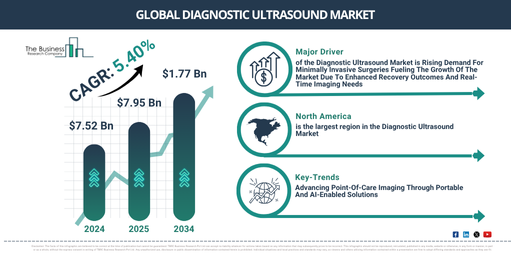
    The diagnostic ultrasound market has demonstrated robust growth in recent years. This market is anticipated to expand from $7.52 billion in 2024 to $7.95 billion in 2025, achieving a compound annual growth rate (CAGR) of 5.7%. The expansion observed in the historic period can be attributed to several factors, including the rising deployment of ultrasound in emergency care settings, the increasing availability of skilled ultrasound technicians, the growing adoption of 3D or 4D imaging technologies, the rising integration of PACS with ultrasound systems, and the increasing ultrasound usage in veterinary diagnostics.

    The diagnostic ultrasound market size is projected to experience substantial expansion in the coming years. This market is anticipated to reach $9.81 billion by 2029, demonstrating a compound annual growth rate (CAGR) of 5.4%. This projected growth is driven by factors such as the increasing uptake of tele-ultrasound solutions, greater demand for fusion imaging that integrates ultrasound with CT or MRI, increased government spending on imaging infrastructure, a developing emphasis on value-based healthcare, and wider application of ultrasound in home healthcare environments. Key trends anticipated during this period encompass progress in ultrasound contrast agents for clearer imaging, sophisticated elastography methods for characterizing tissue, the creation of wireless ultrasound probes to enhance portability, advancements in ultrasound-based drug delivery systems, and developments in ultrasound-guided robotic procedures.

    Unlock Your Free Sample Report for Exclusive Market Data:

    https://www.thebusinessresearchcompany.com/sample.aspx?id=25752&type=smp

    Which Drivers Are Shaping The Diagnostic Ultrasound Industry’s Market Share?

    The increasing demand for minimally invasive surgeries is anticipated to drive the future expansion of the diagnostic ultrasound market. These medical procedures involve small incisions, specialized instruments, and imaging technologies, resulting in less physical trauma compared to traditional open surgeries. The rising preference for minimally invasive surgeries is largely due to benefits like faster patient recovery, reduced pain, and fewer complications compared to conventional open operations. Diagnostic ultrasound aids minimally invasive surgeries by providing real-time imaging guidance, which enables precise targeting, enhances surgical accuracy, and lessens the need for more intrusive diagnostic approaches. For instance, in August 2023, The Aesthetic Society, a US-based organization for plastic surgery and cosmetic medicine, reported that Americans spent over $11.8 billion on minimally invasive surgical procedures collectively, indicating a 2% increase from the year before. Therefore, the growing demand for minimally invasive surgeries is a primary driver for the diagnostic ultrasound market’s growth.

    What Are The Emerging Segments Gaining Attention In The Diagnostic Ultrasound Market?

    The diagnostic ultrasound market covered in this report is segmented –

    1) By Technology: Two-Dimensional (2D) Ultrasound Imaging, Three-Dimensional (3D) And Four-dimensional (4D) Ultrasound Imaging, Doppler Imaging

    2) By Portability: Trolley-Based Devices, Hand-Held Devices

    3) By Application: Anesthesiology, Cardiology, Gynecology Or Obstetrics, Musculoskeletal Radiology, Critical Care, Radiology, Other Applications

    4) By End-user: Hospitals, Maternity Centers, Diagnostic Centers, Ambulatory Surgical Services, Other End-Users

    Subsegments:

    1) By Two-Dimensional (2D) Ultrasound Imaging: Static 2D Imaging, Real-Time 2D Imaging, High-Resolution 2D Imaging, Portable Or Handheld 2D Ultrasound

    2) By Three-Dimensional (3D) And Four-Dimensional (4D) Ultrasound Imaging: Static 3D Imaging, Real-time 3D Imaging, 4D Live Motion Imaging, 3D Or 4D Transvaginal Imaging, 3D Or 4D Cardiac Imaging

    3) By Doppler Imaging: Color Doppler, Power Doppler, Continuous Wave Doppler, Pulsed Wave Doppler, Spectral Doppler

    What Trends Are Expected To Drive The Diagnostic Ultrasound Market?

    Leading companies in the diagnostic ultrasound market are increasingly focusing on technological advancements, such as compact and portable ultrasound systems, to enhance diagnostic accuracy, accessibility, and workflow efficiency across diverse clinical settings. Compact ultrasound systems are characterized as lightweight, mobile imaging devices that offer high-resolution imaging capabilities, specifically designed to provide real-time diagnostic insights at the point of care, including in emergency, outpatient, and remote healthcare environments. For instance, in November 2022, Koninklijke Philips N.V., a Netherlands-based health technology company, unveiled the Philips Compact 5000 Series, a new compact ultrasound system, at the Radiological Society of North America (RSNA) conference. This advanced system is engineered to support accurate diagnoses from the first attempt by delivering high-quality imaging in a portable format, thus expanding access to precise diagnostic tools for a broader spectrum of patients and clinical environments. It incorporates an intuitive user interface, seamless data integration, and artificial intelligence-enabled automation to improve clinical decision-making and enhance patient outcomes across a wide array of medical applications.

    Who Are The Primary Competitors In The Global Diagnostic Ultrasound Market?

    Major companies operating in the diagnostic ultrasound market are Siemens Healthcare Private Limited, Fujifilm Holdings Corporation, GE Healthcare, Koninklijke Philips N.V., Konica Minolta Inc., Mindray Medical International Limited, Hologi Inc., KronosMD Inc., United Imaging Healthcare Co. Ltd., Samsung Medison Co. Ltd., Analogic Corporation, Esaote SpA, SonoScape Medical Corporation, Canon Medical Systems Corporation, Chison Medical Imaging Co. Ltd., Clarius Mobile Health, MedGyn Products Inc., Terason, Konica Minolta Inc., TELEMED Medical Systems.

    Download The Full Report For Exclusive Market Findings:

    https://www.thebusinessresearchcompany.com/report/diagnostic-ultrasound-global-market-report

    Which Global Regions Are Influencing The Competitive Landscape Of The Diagnostic Ultrasound Market?

    North America was the largest region in the diagnostic ultrasound market in 2024. Asia-Pacific is expected to be the fastest-growing region in the forecast period. The regions covered in the diagnostic ultrasound market report are Asia-Pacific, Western Europe, Eastern Europe, North America, South America, Middle East, Africa.

    Request A Customized Version Of The Diagnostic Ultrasound Market Report:

    https://www.thebusinessresearchcompany.com/customise?id=25752&type=smp

    Browse Through More Reports Similar to the Global Diagnostic Ultrasound Market 2025, By The Business Research Company

    Point Of Care Ultrasound Global Market Report 2025

    https://www.thebusinessresearchcompany.com/report/point-of-care-ultrasound-global-market-report

    Ultrasound Transducer Global Market Report 2025

    https://www.thebusinessresearchcompany.com/report/ultrasound-transducer-global-market-report

    Cardiovascular Ultrasound Global Market Report 2025

    https://www.thebusinessresearchcompany.com/report/cardiovascular-ultrasound-global-market-report

    Get in touch with us:

    The Business Research Company: https://www.thebusinessresearchcompany.com/

    Americas +1 310-496-7795

    Asia +44 7882 955267 & +91 8897263534

    Europe +44 7882 955267

    Email us at info@tbrc.info

    Follow us on:

    LinkedIn: https://in.linkedin.com/company/the-business-research-company

    YouTube: https://www.youtube.com/channel/UC24_fI0rV8cR5DxlCpgmyFQ

    Global Market Model: https://www.thebusinessresearchcompany.com/global-market-model

  • Diagnostic Ultrasound Market Size and Growth Forecast for Businesses 2025–2029

    Unlock Global Insights – Save 20% on Market Reports with Code ONLINE20

    What Are The Growth Projections For The Diagnostic Ultrasound Market Size During 2025–2029?

    The diagnostic ultrasound market has demonstrated robust growth in recent years. This market is anticipated to expand from $7.52 billion in 2024 to $7.95 billion in 2025, achieving a compound annual growth rate (CAGR) of 5.7%. The expansion observed in the historic period can be attributed to several factors, including the rising deployment of ultrasound in emergency care settings, the increasing availability of skilled ultrasound technicians, the growing adoption of 3D or 4D imaging technologies, the rising integration of PACS with ultrasound systems, and the increasing ultrasound usage in veterinary diagnostics.

    The diagnostic ultrasound market size is projected to experience substantial expansion in the coming years. This market is anticipated to reach $9.81 billion by 2029, demonstrating a compound annual growth rate (CAGR) of 5.4%. This projected growth is driven by factors such as the increasing uptake of tele-ultrasound solutions, greater demand for fusion imaging that integrates ultrasound with CT or MRI, increased government spending on imaging infrastructure, a developing emphasis on value-based healthcare, and wider application of ultrasound in home healthcare environments. Key trends anticipated during this period encompass progress in ultrasound contrast agents for clearer imaging, sophisticated elastography methods for characterizing tissue, the creation of wireless ultrasound probes to enhance portability, advancements in ultrasound-based drug delivery systems, and developments in ultrasound-guided robotic procedures.

    Unlock Your Free Sample Report for Exclusive Market Data:

    https://www.thebusinessresearchcompany.com/sample.aspx?id=25752&type=smp

    Which Drivers Are Shaping The Diagnostic Ultrasound Industry’s Market Share?

    The increasing demand for minimally invasive surgeries is anticipated to drive the future expansion of the diagnostic ultrasound market. These medical procedures involve small incisions, specialized instruments, and imaging technologies, resulting in less physical trauma compared to traditional open surgeries. The rising preference for minimally invasive surgeries is largely due to benefits like faster patient recovery, reduced pain, and fewer complications compared to conventional open operations. Diagnostic ultrasound aids minimally invasive surgeries by providing real-time imaging guidance, which enables precise targeting, enhances surgical accuracy, and lessens the need for more intrusive diagnostic approaches. For instance, in August 2023, The Aesthetic Society, a US-based organization for plastic surgery and cosmetic medicine, reported that Americans spent over $11.8 billion on minimally invasive surgical procedures collectively, indicating a 2% increase from the year before. Therefore, the growing demand for minimally invasive surgeries is a primary driver for the diagnostic ultrasound market’s growth.

    What Are The Emerging Segments Gaining Attention In The Diagnostic Ultrasound Market?

    The diagnostic ultrasound market covered in this report is segmented –

    1) By Technology: Two-Dimensional (2D) Ultrasound Imaging, Three-Dimensional (3D) And Four-dimensional (4D) Ultrasound Imaging, Doppler Imaging

    2) By Portability: Trolley-Based Devices, Hand-Held Devices

    3) By Application: Anesthesiology, Cardiology, Gynecology Or Obstetrics, Musculoskeletal Radiology, Critical Care, Radiology, Other Applications

    4) By End-user: Hospitals, Maternity Centers, Diagnostic Centers, Ambulatory Surgical Services, Other End-Users

    Subsegments:

    1) By Two-Dimensional (2D) Ultrasound Imaging: Static 2D Imaging, Real-Time 2D Imaging, High-Resolution 2D Imaging, Portable Or Handheld 2D Ultrasound

    2) By Three-Dimensional (3D) And Four-Dimensional (4D) Ultrasound Imaging: Static 3D Imaging, Real-time 3D Imaging, 4D Live Motion Imaging, 3D Or 4D Transvaginal Imaging, 3D Or 4D Cardiac Imaging

    3) By Doppler Imaging: Color Doppler, Power Doppler, Continuous Wave Doppler, Pulsed Wave Doppler, Spectral Doppler

    What Trends Are Expected To Drive The Diagnostic Ultrasound Market?

    Leading companies in the diagnostic ultrasound market are increasingly focusing on technological advancements, such as compact and portable ultrasound systems, to enhance diagnostic accuracy, accessibility, and workflow efficiency across diverse clinical settings. Compact ultrasound systems are characterized as lightweight, mobile imaging devices that offer high-resolution imaging capabilities, specifically designed to provide real-time diagnostic insights at the point of care, including in emergency, outpatient, and remote healthcare environments. For instance, in November 2022, Koninklijke Philips N.V., a Netherlands-based health technology company, unveiled the Philips Compact 5000 Series, a new compact ultrasound system, at the Radiological Society of North America (RSNA) conference. This advanced system is engineered to support accurate diagnoses from the first attempt by delivering high-quality imaging in a portable format, thus expanding access to precise diagnostic tools for a broader spectrum of patients and clinical environments. It incorporates an intuitive user interface, seamless data integration, and artificial intelligence-enabled automation to improve clinical decision-making and enhance patient outcomes across a wide array of medical applications.

    Who Are The Primary Competitors In The Global Diagnostic Ultrasound Market?

    Major companies operating in the diagnostic ultrasound market are Siemens Healthcare Private Limited, Fujifilm Holdings Corporation, GE Healthcare, Koninklijke Philips N.V., Konica Minolta Inc., Mindray Medical International Limited, Hologi Inc., KronosMD Inc., United Imaging Healthcare Co. Ltd., Samsung Medison Co. Ltd., Analogic Corporation, Esaote SpA, SonoScape Medical Corporation, Canon Medical Systems Corporation, Chison Medical Imaging Co. Ltd., Clarius Mobile Health, MedGyn Products Inc., Terason, Konica Minolta Inc., TELEMED Medical Systems.

    Download The Full Report For Exclusive Market Findings:

    https://www.thebusinessresearchcompany.com/report/diagnostic-ultrasound-global-market-report

    Which Global Regions Are Influencing The Competitive Landscape Of The Diagnostic Ultrasound Market?

    North America was the largest region in the diagnostic ultrasound market in 2024. Asia-Pacific is expected to be the fastest-growing region in the forecast period. The regions covered in the diagnostic ultrasound market report are Asia-Pacific, Western Europe, Eastern Europe, North America, South America, Middle East, Africa.

    Request A Customized Version Of The Diagnostic Ultrasound Market Report:

    https://www.thebusinessresearchcompany.com/customise?id=25752&type=smp

    Browse Through More Reports Similar to the Global Diagnostic Ultrasound Market 2025, By The Business Research Company

    Point Of Care Ultrasound Global Market Report 2025

    https://www.thebusinessresearchcompany.com/report/point-of-care-ultrasound-global-market-report

    Ultrasound Transducer Global Market Report 2025

    https://www.thebusinessresearchcompany.com/report/ultrasound-transducer-global-market-report

    Cardiovascular Ultrasound Global Market Report 2025

    https://www.thebusinessresearchcompany.com/report/cardiovascular-ultrasound-global-market-report

    Get in touch with us:

    The Business Research Company: https://www.thebusinessresearchcompany.com/

    Americas +1 310-496-7795

    Asia +44 7882 955267 & +91 8897263534

    Europe +44 7882 955267

    Email us at info@tbrc.info

    Follow us on:

    LinkedIn: https://in.linkedin.com/company/the-business-research-company

    YouTube: https://www.youtube.com/channel/UC24_fI0rV8cR5DxlCpgmyFQ

    Global Market Model: https://www.thebusinessresearchcompany.com/global-market-model