Blog

  • Which Emerging Trends Are Driving The Inhaler Corticosteroid Device Market Toward $21.77 Billion By 2029?

    Which Emerging Trends Are Driving The Inhaler Corticosteroid Device Market Toward $21.77 Billion By 2029?

    Claim your 20% discount on Global Market Reports with code ONLINE20. Limited time only.

    What CAGR And Valuation Are Anticipated For The Inhaler Corticosteroid Device Market?

    The market size for inhaler corticosteroid devices has seen significant expansion in the past few years. The market is projected to extend from $15.75 billion in 2024 to become a $16.83 billion market in 2025. This represents a compound annual growth rate (CAGR) of 6.9%. This upward trend during the historic period has been fuelled by factors such as increased spending on healthcare, a growing elderly population, favorable government initiatives, ongoing research and development activities, and a higher level of disposable income.

    Expectations are high for a substantial expansion in the inhaler corticosteroid device market size in the coming years. Predictions show a rise to $21.77 billion in 2029, with a compound annual growth rate (CAGR) of 6.6%. This progression during the forecast period is likely due to the increasing prevalence of respiratory diseases, heightened consciousness concerning respiratory health, substantial investments in respiratory technologies, growing emphasis on health consciousness, and an uptick in smoking addiction rates. Notable trends throughout the forecast period encompass the introduction of smart technologies, the creation of combination therapies, digital inhaler devices yielding real-time data, advancements in inhaler technologies, and the application of data analytics in inhaler devices.

    Get A Free Sample Of The Report:

    https://www.thebusinessresearchcompany.com/sample.aspx?id=25794&type=smp

    What Core Drivers Are Expected To Influence The Inhaler Corticosteroid Device Market?

    The rise in respiratory illnesses is anticipated to boost the inhaler corticosteroid device market’s expansion. Respiratory illnesses include various conditions impacting the lungs and airways, affecting individuals’ ability to breathe effectively. Greater air pollution is leading to an increased occurrence of these diseases, as people are exposed to harmful particles that harm lung tissue and provoke chronic illnesses such as asthma and bronchitis. Inhaler corticosteroid devices, which deliver anti-inflammatory medication to the lungs directly, are utilized in the treatment of these respiratory diseases, assisting in reducing inflammation and enhancing breathing. For instance, in June 2025, the UK’s Office for Health Improvement and Disparities reported 854,922 emergency hospital admissions in England for respiratory diseases in the financial year ended 2024. This equates to a rate of 1,428 (ranging from 1,424 to 1,432) per 100,000 population, which signifies a 7% increase from the previous year. Consequently, the rising occurrence of respiratory illnesses is fueling the inhaler corticosteroid device market’s growth.

    What Are The Main Segment Classifications In The Inhaler Corticosteroid Device Market?

    The inhaler corticosteroid device market covered in this report is segmented –

    1) By Product Type: Metered-Dose Inhalers, Dry Powder Inhalers, Soft Mist Inhalers

    2) By Formulation Type: Fluticasone Propionate, Budesonide, Beclomethasone, Mometasone Furoate

    3) By Distribution Channel: Online Pharmacies, Retail Pharmacies, Direct Sales, Hospital Pharmacies

    4) By Application: Asthma, Chronic Obstructive Pulmonary Disease (COPD), Other Applications

    5) By End-User: Hospitals, Homecare, Specialty Clinics, Other End-Users

    Subsegments:

    1) By Metered-Dose Inhalers: Conventional Metered-Dose Inhalers, Breath-Actuated Metered-Dose Inhalers, Spacer-Integrated Metered-Dose Inhalers

    2) By Dry Powder Inhalers: Single-Dose Dry Powder Inhalers, Multi-Dose Dry Powder Inhalers, Reservoir Dry Powder Inhalers

    3) By Soft Mist Inhalers: Manual Soft Mist Inhalers, Battery-Operated Soft Mist Inhalers

    How Are Industry Trends Steering The Expansion Of The Inhaler Corticosteroid Device Market?

    Leading organizations in the inhaler corticosteroid device market have their objectives set on the development of inventive solutions, specifically, rescue inhalers that integrate both albuterol and budesonide. This combination seeks to upscale the efficacy of treatments and offers dual-action therapy in one device, enhancing convenience for patients. A rescue inhaler that merges albuterol and budesonide is one which delivers both a bronchodilator (albuterol) for immediate airway opening, and a corticosteroid (budesonide) to mitigate inflammation, all in one. This combination brings forth quick relief of symptoms and long-lasting asthma control. A typical illustration of this was in January 2024 when AstraZeneca PLC, a British pharmaceutical company, launched AIRSUPRA, the only rescue inhaler integrating albuterol and budesonide that has gained FDA approval for adults with asthma. This inhaler is designed for immediate use to alleviate acute bronchoconstriction symptoms and minimize inflammation of the airways, thus reducing the occurrence of severe asthma attacks. The innovative aspect of AIRSUPRA lies in its combination of a quick-acting beta2-agonist (albuterol) with an inhaled corticosteroid (budesonide) in one inhaler. Its approval was backed by clinical trials showing that it was superior to albuterol alone in preventing asthma flare-ups.

    Which Companies Are Contributing Significantly To The Inhaler Corticosteroid Device Market Growth?

    Major companies operating in the inhaler corticosteroid device market are AstraZeneca PLC, Novartis AG, GlaxoSmithKline plc, Boehringer Ingelheim International GmbH, Teva Pharmaceutical Industries Ltd., Teijin Pharma Limited, Sun Pharmaceutical Industries Limited, Aurobindo Pharma Limited, Chiesi Farmaceutici S.p.A., Cipla Limited, Hikma Pharmaceuticals PLC, Amneal Pharmaceuticals Inc., Mundipharma International Limited, Lupin Limited, Zydus Lifesciences Limited, Recipharm AB, Glenmark Pharmaceuticals Limited, Orion Corporation, Beximco Pharmaceuticals Limited, PARI Medical Holding GmbH, Kos Pharmaceuticals Inc.

    Access The Complete Report Here:

    https://www.thebusinessresearchcompany.com/report/inhaler-corticosteroid-device-global-market-report

    Which Region Holds The Greatest Opportunity For Inhaler Corticosteroid Device Market Expansion?

    North America was the largest region in the inhaler corticosteroid device market in 2024. Asia-Pacific is expected to be the fastest-growing region in the forecast period. The regions covered in the inhaler corticosteroid device market report are Asia-Pacific, Western Europe, Eastern Europe, North America, South America, Middle East, Africa.

    Customize Your Report Here:

    https://www.thebusinessresearchcompany.com/customise?id=25794&type=smp

    Browse Through More Reports Similar to the Global Inhaler Corticosteroid Device Market 2025, By The Business Research Company

    Veterinary Infectious Disease Diagnostics Global Market Report 2025

    https://www.thebusinessresearchcompany.com/report/veterinary-infectious-disease-diagnostics-global-market-report

    Clinical Diagnostics Global Market Report 2025

    https://www.thebusinessresearchcompany.com/report/clinical-diagnostics-global-market-report

    Viral Diagnostic Test Kits Global Market Report 2025

    https://www.thebusinessresearchcompany.com/report/viral-diagnostic-test-kits-global-market-report

    About The Business Research Company:

    With over 17500+ reports from 27 industries covering 60+ geographies, The Business Research Company has built a reputation for offering comprehensive, data-rich research and insights. Armed with 1,500,000 datasets, the optimistic contribution of in-depth secondary research, and unique insights from industry leaders, you can get the information you need to stay ahead in the game.

    Get in touch with us:

    The Business Research Company: https://www.thebusinessresearchcompany.com/

    Americas +1 310-496-7795

    Asia +44 7882 955267 & +91 8897263534

    Europe +44 7882 955267

    Email us at info@tbrc.info

    Follow us on:

    LinkedIn: https://in.linkedin.com/company/the-business-research-company

    YouTube: https://www.youtube.com/channel/UC24_fI0rV8cR5DxlCpgmyFQ

    Global Market Model: https://www.thebusinessresearchcompany.com/global-market-model
  • What Is The Predicted Revenue Outlook For The Global Infectious Disease Molecular Diagnostics Market To Surpass $36.98 Billion?

    Claim your 20% discount on Global Market Reports with code ONLINE20. Limited time only.

    What Are The Market Size Estimates For The Infectious Disease Molecular Diagnostics Market?

    The market size for infectious disease molecular diagnostics has seen robust growth recently. An increase from $28.95 billion in 2024 to $30.46 billion in 2025 is projected, reflecting a compound annual growth rate (CAGR) of 5.2%. Factors contributing to the growth during the historic period include an escalating presence of infectious diseases, the growing need for prompt and accurate diagnostics, multiple occurrences of global outbreaks and pandemics, improved healthcare awareness and accessibility, alongside a surge in investments for diagnostic research and technology.

    There is an anticipation of robust expansion in the infectious disease molecular diagnostics market size in the coming years. The market is projected to escalate to $36.98 billion in 2029, with a compound annual growth rate (CAGR) of 5.0%. This growth during the prediction period can be credited to factors such as the rising use of point-of-care testing, a heightened focus on personalized medicine, increased governmental efforts to control infectious diseases, the expansion of healthcare infrastructure in developing markets, and the escalating incidence of respiratory diseases. Key trends for the forecast period encompass improvements in real-time polymerase chain reaction technology, the sophisticated integration of artificial intelligence within diagnostic platforms, the creation of multiplex testing panels, innovation in portable and domestic diagnostic kits, and advancements in automating molecular diagnostic workflows.

    Get A Free Sample Of The Report:

    https://www.thebusinessresearchcompany.com/sample.aspx?id=25793&type=smp

    Which Industry Forces Are Driving The Infectious Disease Molecular Diagnostics Market Forward?

    The surge in infectious diseases is anticipated to stimulate the expansion of the infectious disease molecular diagnostics market. These diseases, instigated by harmful microorganisms like bacteria, fungi, viruses, or parasites, can be directly or indirectly transmitted from an individual to another. The growing incidence of infectious diseases can be chiefly attributed to globalization and expanded travel, which foster swift cross-border spread of pathogens, converting localized disease outbreaks into worldwide health crises. Infectious disease molecular diagnostics contribute to the management of these diseases by ensuring swift and precise pathogen identification at the genetic level. This aids early detection, precise treatment, and successful outbreak containment. For instance, the US Centers for Disease Control and Prevention reported that the United States documented 8,331 tuberculosis (TB) instances in 2022, marking a 5.9% surge from 2021. Consequently, the escalating prevalence of infectious diseases is fuelling the expansion of the infectious disease molecular diagnostics market.

    How Is The Infectious Disease Molecular Diagnostics Market Organized By Different Segments?

    The infectious disease molecular diagnostics market covered in this report is segmented –

    1) By Product Type: Kits And Reagents, Instruments, Software And Services

    2) By Technology: Polymerase Chain Reaction, In Situ Hybridization, Isothermal Nucleic Acid Amplification Technology, Chips And Microarrays, Mass Spectrometry, Transcription Mediated Amplification, Other Technologies

    3) By Application: Respiratory Diseases, Tuberculosis, Meningitis, Gastrointestinal Tract Infections, Human Papillomavirus, Sexually Transmitted Infections, Sepsis, Drug Resistance Diseases, Other Applications

    4) By End-User: Hospitals And Clinical Laboratories, Diagnostic Laboratories, Pharmaceutical Companies, Academic And Research Institutes

    Subsegments:

    1) By Kits And Reagents: Deoxyribonucleic Acid Or Ribonucleic Acid Extraction Kits, Polymerase Chain Reaction Reagents, Isothermal Amplification Kits, Probe-Based Detection Reagents, Pathogen-Specific Assay Kits

    2) By Instruments: Real-Time Polymerase Chain Reaction Systems, Isothermal Amplification Instruments, Automated Sample Preparation Systems, Next-Generation Sequencing Platforms, Microarray Analyzers

    3) By Software And Services: Data Analysis And Interpretation Software, Laboratory Information Management Systems, Cloud-Based Infectious Disease Diagnostic Platforms, Instrument Integration And Workflow Management Tools, Bioinformatics Services

    What Current And Upcoming Trends Are Shaping The Infectious Disease Molecular Diagnostics Market?

    Leading firms in the infectious disease molecular diagnostics market are concentrating their efforts on creating ground-breaking solutions like real-time polymerase chain reaction kits. These kits can prompt extensive and precise detection of infectious pathogens. These real-time polymerase chain reaction (PCR) kits act as diagnostic instruments that enhance and concurrently identify specific genetic material of pathogens instantly, enabling quick and precise detection of infectious diseases. For example, in February 2023, Thermo Fisher Scientific Inc., an American biotechnology and life sciences company, introduced Applied Biosystems TaqPath polymerase chain reaction kits in India, specifically for infectious diseases identification. These kits are expedited, ultra-sensitive multiplex diagnostic solutions that permit real-time PCR detection of infectious disease targets using a comprehensive workflow from ribonucleic acid extraction to diagnostic report production, generally in less than 4 hours. These kits include multiplexed assays that target numerous genomic regions of pathogens, integrate internal process controls, and deliver automated data analysis, thus minimizing user error and improving result reliability.

    Who Are The Primary Market Leaders In The Infectious Disease Molecular Diagnostics Market?

    Major companies operating in the infectious disease molecular diagnostics market are F. Hoffmann-La Roche Ltd, Thermo Fisher Scientific Inc., Abbott Laboratories, Danaher Corporation, Siemens Healthineers AG, Becton Dickinson and Company (BD), Agilent Technologies Inc., Hologic Inc., Illumina Inc., Biomerieux S.A., Quidel‑Ortho Corporation, Sysmex Corporation, Bio‑Rad Laboratories Inc., QIAGEN N.V., DiaSorin S.p.A., Seegene Inc., Oxford Nanopore Technologies plc, Biocartis NV, T2 Biosystems Inc., Sherlock Biosciences Inc.

    Access The Complete Report Here:

    https://www.thebusinessresearchcompany.com/report/infectious-disease-molecular-diagnostics-global-market-report

    How Do Regional Dynamics Influence The Infectious Disease Molecular Diagnostics Market Performance?

    North America was the largest region in the infectious disease molecular diagnostics market in 2024. Asia-Pacific is expected to be the fastest-growing region in the forecast period. The regions covered in the infectious disease molecular diagnostics market report are Asia-Pacific, Western Europe, Eastern Europe, North America, South America, Middle East, Africa.

    Customize Your Report Here:

    https://www.thebusinessresearchcompany.com/customise?id=25793&type=smp

    Browse Through More Reports Similar to the Global Infectious Disease Molecular Diagnostics Market 2025, By The Business Research Company

    Infection Prevention Global Market Report 2025

    https://www.thebusinessresearchcompany.com/report/infection-prevention-global-market-report

    Surveillance Technology Global Market Report 2025

    https://www.thebusinessresearchcompany.com/report/surveillance-technology-global-market-report

    Surgical Site Infection Control Global Market Report 2025

    https://www.thebusinessresearchcompany.com/report/surgical-site-infection-control-global-market-report

    About The Business Research Company:

    With over 17500+ reports from 27 industries covering 60+ geographies, The Business Research Company has built a reputation for offering comprehensive, data-rich research and insights. Armed with 1,500,000 datasets, the optimistic contribution of in-depth secondary research, and unique insights from industry leaders, you can get the information you need to stay ahead in the game.

    Get in touch with us:

    The Business Research Company: https://www.thebusinessresearchcompany.com/

    Americas +1 310-496-7795

    Asia +44 7882 955267 & +91 8897263534

    Europe +44 7882 955267

    Email us at info@tbrc.info

    Follow us on:

    LinkedIn: https://in.linkedin.com/company/the-business-research-company

    YouTube: https://www.youtube.com/channel/UC24_fI0rV8cR5DxlCpgmyFQ

    Global Market Model: https://www.thebusinessresearchcompany.com/global-market-model
  • How Is The Infection Control Surveillance Solutions Market Expected To Grow At 9% CAGR Over 2025–2029?

    Claim your 20% discount on Global Market Reports with code ONLINE20. Limited time only.

    How Is The Infection Control Surveillance Solutions Market Expected To Grow In Terms Of Size?

    The market size for infection control surveillance solutions has experienced significant growth in the recent past. The market, which was valued at $1.67 billion in 2024, is forecasted to reach $1.83 billion in 2025, with a compound annual growth rate (CAGR) of 9.4%. The growth during the historical period can be attributed to several factors. These include increased awareness about hygiene and patient safety, the rising application of electronic health records (EHRs), an intensified focus on hospital accreditation and compliance, a surge in the adoption of antimicrobial stewardship programs, and expanded training initiatives targeting healthcare professionals in the area of infection control.

    The market size for infection control surveillance solutions is predicted to experience robust growth in the upcoming years. The market could be worth $2.59 billion by 2029, with a compound annual growth rate (CAGR) of 9.1%. Factors leading to this projected growth encompass an increasing elderly and immunocompromised population, more prevalent use of mobile and cloud-based infection control surveillance systems platforms, larger investments towards hospital IT infrastructure, escalating healthcare spending, and the emergence of telehealth and remote patient monitoring. Some significant trends to look forward to include the enhancement of automation in infection tracking systems, development of surveillance platforms with interoperability, innovation in wearable devices for infection monitoring, progress in cloud-native tools for infection control, and advanced implementation of remote patient monitoring for infection trends analysis.

    Get A Free Sample Of The Report:

    https://www.thebusinessresearchcompany.com/sample.aspx?id=25792&type=smp

    What Are The Primary Factors Supporting The Infection Control Surveillance Solutions Market Expansion?

    An upsurge in healthcare-associated infections (HAIs) is predicted to drive the expansion of the infection control surveillance solutions market. HAIs are acquired by patients while undergoing medical or surgical treatment in a healthcare setting. Such infections are witnessing a growth due to the escalating use of invasive medical equipment, such as catheters and ventilators, which can transport pathogens into the body. These infection control surveillance solutions can help decrease healthcare-associated infections by enabling early detection of infection patterns and facilitating quick measures to prevent the outbreak of such infections. For example, UK-based journal publisher BMC Infectious Diseases highlighted that the number of hospital-acquired infections surged from 0.98 per 1,000 patient-days in 2021 to 1.31 in 2022 as reported in June 2025, evidencing a worrisome trend in nosocomial infection rates. Thus, the mounting incidences of healthcare-associated infections (HAIs) are stimulating the expansion of the infection control surveillance solutions market.

    Which Segmentation Categories Are Highlighted In The Infection Control Surveillance Solutions Market Analysis?

    The infection control surveillance solutions market covered in this report is segmented –

    1) By Product Type: Software Solutions, Hardware Solutions, Services

    2) By Deployment Mode: On-Premise Solutions, Cloud-Based Solutions, Hybrid Solutions

    3) By Application: Infection Control, Surveillance And Reporting, Data Management, Compliance Monitoring, Quality Improvement

    4) By End-User: Hospitals, Long-term Care Facilities, Home Healthcare, Ambulatory Surgical Centers, Clinical Laboratories

    Subsegments:

    1) By Software Solutions: Infection Surveillance Software, Antimicrobial Stewardship Software, Outbreak Detection And Alert Systems, Compliance Monitoring Software, Clinical Decision Support Systems (CDSS), Real-Time Analytics And Reporting Dashboards, Electronic Health Record (EHR) Integration Modules

    2) By Hardware Solutions: Real-Time Location Systems (RTLS), Environmental Monitoring Devices, Handheld Data Collection Devices, ATP Testing Instruments, Network Infrastructure Equipment,

    3) By Services – Installation And Integration Services, Training And Support Services, Consulting Services, Data Analysis And Reporting Services, Managed Services

    Which Market Trends Are Expected To Define The Future Of The Infection Control Surveillance Solutions Market?

    Notable corporations active in the market for infection control surveillance solutions are prioritizing the creation of innovative technologies such as infection surveillance systems. These systems aim to strengthen early warning and reaction measures to healthcare-related infections. These systems can be digital or manual tools that are used to track, identify, and notify healthcare settings of infections systematically, thereby aiding swift preventive and control actions. For illustration, NeoIPC, a European initiative for neonatal infection prevention, organized by Fondazione Penta ETS, unveiled a novel surveillance toolkit in November 2023. This toolkit is meant to boost infection prevention and control practices in neonatal intensive care units (NICUs). It comprises real-time data collection tools specifically made for neonatal environments, facilitating early identification of infection aggregates and patterns of antimicrobial resistance. Along with integrated decision-support algorithms for prompt interventions, the toolkit features personalized dashboards for NICU personnel to keep track of IPC indicators. It encourages data exchange and benchmarking across institutions, fostering cooperative learning and accelerated responses to emerging infection threats.

    Which Organizations Are At The Forefront Of The Infection Control Surveillance Solutions Market?

    Major companies operating in the infection control surveillance solutions market are Oracle Corporation, 3M Company, Becton Dickinson and Company, Baxter International Inc., Ecolab Inc., Wolters Kluwer N.V., STERIS plc, Getinge AB, Premier Inc., Inovalon Holdings Inc., Belimed AG, Harris Healthcare Solutions Inc., RLDatix Group, Hygiena LLC, CenTrak Inc., Matachana Group S.A., Pal International Ltd., Azalea Health Innovations Inc., TOMI Environmental Solutions Inc., Ocean Health Systems Inc.

    Access The Complete Report Here:

    https://www.thebusinessresearchcompany.com/report/infection-control-surveillance-solutions-global-market-report

    Which Geographic Regions Are Creating Strong Demand In The Infection Control Surveillance Solutions Market?

    North America was the largest region in the infection control surveillance solutions market in 2024. Asia-Pacific is expected to be the fastest-growing region in the forecast period. The regions covered in the infection control surveillance solutions market report are Asia-Pacific, Western Europe, Eastern Europe, North America, South America, Middle East, Africa.

    Customize Your Report Here:

    https://www.thebusinessresearchcompany.com/customise?id=25792&type=smp

    Browse Through More Reports Similar to the Global Infection Control Surveillance Solutions Market 2025, By The Business Research Company

    Process Spectroscopy Global Market Report 2025

    https://www.thebusinessresearchcompany.com/report/process-spectroscopy-global-market-report

    Atomic Spectroscopy Global Market Report 2025

    https://www.thebusinessresearchcompany.com/report/atomic-spectroscopy-global-market-report

    Uv Stabilizers Global Market Report 2025

    https://www.thebusinessresearchcompany.com/report/uv-stabilizers-global-market-report

    About The Business Research Company:

    With over 17500+ reports from 27 industries covering 60+ geographies, The Business Research Company has built a reputation for offering comprehensive, data-rich research and insights. Armed with 1,500,000 datasets, the optimistic contribution of in-depth secondary research, and unique insights from industry leaders, you can get the information you need to stay ahead in the game.

    Get in touch with us:

    The Business Research Company: https://www.thebusinessresearchcompany.com/

    Americas +1 310-496-7795

    Asia +44 7882 955267 & +91 8897263534

    Europe +44 7882 955267

    Email us at info@tbrc.info

    Follow us on:

    LinkedIn: https://in.linkedin.com/company/the-business-research-company

    YouTube: https://www.youtube.com/channel/UC24_fI0rV8cR5DxlCpgmyFQ

    Global Market Model: https://www.thebusinessresearchcompany.com/global-market-model

  • Which Factors Will Push The In Vivo Toxicology Market To Achieve $7.31 Billion By 2029?

    Claim your 20% discount on Global Market Reports with code ONLINE20. Limited time only.

    What Is The Projected Valuation Of The In Vivo Toxicology Market In The Coming Years?

    The market for in-vivo toxicology has seen significant growth in the past few years. The sector, estimated to be worth $5.24 billion in 2024, is projected to rise to $5.61 billion in 2025, recording a compound annual growth rate (CAGR) of 7.1%. Factors such as the growing necessity for studies that adhere to Good Laboratory Practice (GLP), an increase in REACH regulations, expansion in biologics, and biosimilars requiring safety assessments, as well as increased investment in the development of oncology drugs and the expansion of gene and cell therapy pipelines, have contributed to the historical growth period.

    Expectations are high for the in-vivo toxicology market to significantly expand in the coming years, with projections of it reaching $7.31 billion by 2029 – exhibiting a compound annual growth rate (CAGR) of 6.8%. Various contributing factors to this forecasted growth include an upswing in global drug development efforts, a rising requirement for personalized medicine, an increase in the volume of clinical trials, as well as escalating outsourcing of toxicology testing from pharmaceutical companies. There is also heightening consumer safety awareness regarding food and personal care products. Specific trends to watch for during this predicted growth period are advances in animal models, integration of imaging technology into in vivo studies, the rise of automated data collection systems, incorporation of AI and ML into toxicology data analysis, and new developments in animal telemetry and biomarker detection.

    Get A Free Sample Of The Report:

    https://www.thebusinessresearchcompany.com/sample.aspx?id=25791&type=smp

    Which Growth Drivers Are Shaping The In Vivo Toxicology Market Outlook?

    The surge in drug discoveries is set to fuel the expansion of the in vivo toxicology market. The process of drug discovery entails identifying and designing new substances that can act as remedies or preventatives for diverse diseases. Advances in biotechnology have played a significant role in accelerating this process by improving our grasp of how diseases function, thereby facilitating the development of more precise treatments. In vivo toxicology plays a crucial role in drug discovery as it allows for the assessment of safety, tolerability, and potential negative effects of experimental compounds in whole organisms. Furthermore, it assists in determining dose-limiting toxicities and dictates formulation and dosing methods before clinical advancements. For example, the Government of Canada reported in May 2025 that the worldwide number of medicines in clinical development had grown to 10,134 as of March 2025, reflecting a 20% increase since September 2021. Consequently, the escalating number of drug discoveries is pushing the in vivo toxicology market’s growth.

    What Is The Segment Breakdown Of The In Vivo Toxicology Market?

    The in vivo toxicology market covered in this report is segmented –

    1) By Product: Consumables, Instruments

    2) By Testing Types: Chronic Toxicity Testing, Sub-Chronic Toxicity Testing, Sub-Acute Toxicity Testing, Acute Toxicity Testing

    3) By Methodology: In Vivo Animal Models, Genetically Modified Organisms, Non-Human Primate Studies, Rodent Models, Larger Mammals

    4) By Application: Immunotoxicity, Systemic Toxicity, Carcinogenicity, Genotoxicity, Developmental And Reproductive Toxicity (DART), Other Applications

    5) By End-User: Pharmaceutical Companies, Biosimilars Manufacturers, Contract Research Organizations (CROs), Academic And Research Institutions, Biotechnology Firms

    Subsegments:

    1) By Consumables: Animal Models, Reagents And Kits, Assay Kits, Toxicology Testing Media, Antibodies, Biochemicals, Buffers And Solutions, Disposable Labware, Animal Feed, Diluents

    2) By Instruments: Imaging Systems, Flow Cytometers, PCR Machines, Spectrophotometers, Microscopes, Analyzers, Centrifuges, Incubators, Animal Monitoring Systems, Automated Liquid Handling Systems

    How Are Global Trends Impacting The Development Of The In Vivo Toxicology Market?

    Leading firms in the in vivo toxicology market are concentrating their efforts on creating advanced solutions including secure cloud-based real-time data platforms that enhance study management and accelerate decision-making processes. These platforms give researchers and clients the ability to access key information related to toxicology studies, timelines, planning tools, and important documents remotely and securely, fostering improved collaboration and transparency. For example, in March 2023, Charles River Laboratories International Inc., a major U.S. contract research company, introduced Apollo, a secure, cloud-based platform specifically designed to offer real-time access to toxicology study data. The platform, equipped with data visualization tools and milestone tracking, supports general in vivo toxicology studies and enables faster, better-informed decision-making by offering immediate access to crucial study data. Additionally, Apollo aids in the streamlining of project planning and budget estimation throughout the drug development cycle. Through the digitization of toxicology workflows, Apollo increases accuracy, efficiency, and teamwork in in vivo research.

    Who Are The Major Stakeholders Operating In The In Vivo Toxicology Market?

    Major companies operating in the in vivo toxicology market are Thermo Fisher Scientific Inc., Laboratory Corporation of America Holdings (Labcorp), Sigma-Aldrich Co. LLC, Eurofins Scientific SE, SGS Société Générale de Surveillance SA, Agilent Technologies Inc., WuXi AppTec Co. Ltd., Charles River Laboratories International Inc., PerkinElmer Inc., Waters Corporation, Bio-Rad Laboratories Inc., Bruker Corporation, Jubilant Life Sciences Limited, Evotec SE, The Jackson Laboratory, Inotiv Inc., SRI International, MatTek Corporation, Transcure Bioservices Pvt. Ltd., Altogen Labs.

    Access The Complete Report Here:

    https://www.thebusinessresearchcompany.com/report/in-vivo-toxicology-global-market-report

    Which Region Is Likely To Register The Fastest Growth In The In Vivo Toxicology Market?

    North America was the largest region in the in-vivo toxicology market in 2024. Asia-Pacific is expected to be the fastest-growing region in the forecast period. The regions covered in the in vivo toxicology market report are Asia-Pacific, Western Europe, Eastern Europe, North America, South America, Middle East, Africa.

    Customize Your Report Here:

    https://www.thebusinessresearchcompany.com/customise?id=25791&type=smp

    Browse Through More Reports Similar to the Global In Vivo Toxicology Market 2025, By The Business Research Company

    Cytotoxic Drugs Global Market Report 2025

    https://www.thebusinessresearchcompany.com/report/cytotoxic-drugs-global-market-report

    In Vitro Diagnostics Global Market Report 2025

    https://www.thebusinessresearchcompany.com/report/in-vitro-diagnostics-global-market-report

    Cell Viability Assays Global Market Report 2025

    https://www.thebusinessresearchcompany.com/report/cell-viability-assays-global-market-report

    About The Business Research Company:

    With over 17500+ reports from 27 industries covering 60+ geographies, The Business Research Company has built a reputation for offering comprehensive, data-rich research and insights. Armed with 1,500,000 datasets, the optimistic contribution of in-depth secondary research, and unique insights from industry leaders, you can get the information you need to stay ahead in the game.

    Get in touch with us:

    The Business Research Company: https://www.thebusinessresearchcompany.com/

    Americas +1 310-496-7795

    Asia +44 7882 955267 & +91 8897263534

    Europe +44 7882 955267

    Email us at info@tbrc.info

    Follow us on:

    LinkedIn: https://in.linkedin.com/company/the-business-research-company

    YouTube: https://www.youtube.com/channel/UC24_fI0rV8cR5DxlCpgmyFQ

    Global Market Model: https://www.thebusinessresearchcompany.com/global-market-model
  • What Key Growth Drivers Are Shaping The In Vivo Contract Research Organization Market Forecast Toward $7.19 Billion?

    What Key Growth Drivers Are Shaping The In Vivo Contract Research Organization Market Forecast Toward $7.19 Billion?

    Claim your 20% discount on Global Market Reports with code ONLINE20. Limited time only.

    How Much Will The In Vivo Contract Research Organization Market Be Worth By 2029?

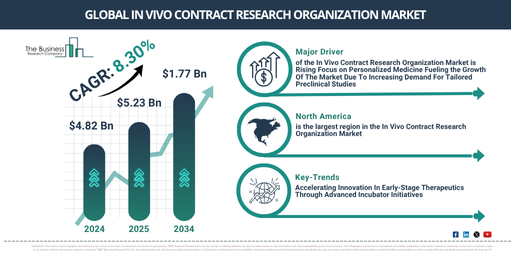
    The market size for in vivo contract research organizations has seen robust growth in the past years. The sector is projected to expand from a value of $4.82 billion in 2024 to $5.23 billion in 2025, exhibiting a compound annual growth rate (CAGR) of 8.5%. The growth experienced in the past can be credited to factors such as escalating drug development expenditures, a surge in chronic disease prevalence, augmentation of investment in pharmaceutical research and development, the proliferation of biotech startups, and a rising demand for innovative therapeutics.

    Growth is predicted for the in vivo contract research organization market, with a potential expansion to $7.19 billion by 2029, thanks to a compound annual growth rate (CAGR) of 8.3%. Several factors may contribute to this increase during the forecast period, such as the rising demand for precision medicine and the worldwide proliferation of contract research organization services. Other influential factors include the burgeoning need for personalized therapeutics, an escalation in translational research, and an increase in the number of orphan drugs. The upcoming trends during this period will likely involve advancements in imaging techniques, the automation of data processing and reporting, incorporation of omics technologies, the use of cloud-based collaborations, and developments in biologic biosimilars.

    Get A Free Sample Of The Report:

    https://www.thebusinessresearchcompany.com/sample.aspx?id=25790&type=smp

    What Market Forces Are Contributing To The Growth Of The In Vivo Contract Research Organization Market?

    The increasing emphasis on personalized medicine is predicted to fuel the expansion of the in vivo contract research organization industry. Personalized medicine employs a specialized medical approach that modifies treatment and prevention strategies based on an individual’s genetic structure, lifestyle, and environment to enhance health results. The surge in personalized medicine is attributable to the growing access and affordability of genomic sequencing technologies, allowing for precise identification of genetic anomalies and facilitating personalized therapies that enhance patient outcomes and minimize trial-and-error in treatment. The intensified focus on personalized medicine is boosting demand in the in vivo CRO industry, as tailored preclinical studies using unique animal models are required to assess targeted therapies and their impact on particular genetic profiles. For example, in February 2024, the Personalized Medicine Coalition (PMC), a nonprofit organization based in the US, reported that the FDA approved 16 new personalized treatments in 2023, a significant increase from the six approved in 2022. Personalized medicines represented over a third of all new drugs approved by the U.S. Food and Drug Administration (FDA) for the fourth year in a row. Consequently, the heightened emphasis on personalized medicine is propelling the growth of the in vivo contract research organization industry.

    Which Segments Define The Structure Of The In Vivo Contract Research Organization Market?

    The in vivo contract research organization market covered in this report is segmented –

    1) By Type: Rodent Based, Non-Rodent Based

    2) By Type Of Service: Clinical Trial Services, Preclinical Services, Post-Market Services

    3) By Good Laboratory Practice Type: Good Laboratory Practice Toxicology, Non Good Laboratory Practice

    4) By Applications: Oncology, Cardiovascular Diseases, Infectious Diseases, Neurological Disorders, Other Applications

    5) By End User: Pharmaceutical Companies, Biotechnology Companies, Contract Research Organizations (CROs), Academic And Research Institutes, Government And Regulatory Bodies

    Subsegments:

    1) By Rodent-Based: Mice Models, Rat Models, Genetically Engineered Rodents, Immunodeficient Rodents, Humanized Rodents

    2) By Non-Rodent-Based: Canine Models, Non-Human Primate Models, Swine Models, Rabbit Models, Zebrafish Models

    What Strategic Shifts And Innovations Are Influencing The In Vivo Contract Research Organization Market?

    Firms dominating the in vivo contract research organization market are centering on creating transformative solutions such as advanced therapy incubator programs to hasten the production of future-generation treatments and aid preliminary clinical investigations. An advanced therapy incubator program is a tailored scheme to assist burgeoning biotech firms by offering resources, guidance and necessary infrastructure to fast-track the progress of innovative treatments like gene, cell, and RNA-based procedures. For example, the US-based pharmaceutical entity, Charles River Laboratories International Inc., unveiled its first-ever cohort of advanced therapy incubator program in April 2025. This ground-breaking endeavor is intended to back early-stage biotech enterprises concentrating on developing future-generation treatments. The program equips members with access to Charles River’s scientific knowledge, cutting-edge lab infrastructure and tailor-made in vivo models, expediting them to swiftly yield proof-of-concept data. This program also offers a clinical setting in the real world for validating therapeutic candidates, aiding in reducing time-to-clinic and enhancing the likelihood of regulatory validation. Acting as a bridge between academic creativity and clinical progression, the scheme significantly contributes in promoting the segment of advanced treatments.

    Which Firms Are Making The Biggest Impact In The In Vivo Contract Research Organization Market?

    Major companies operating in the in vivo contract research organization market are Thermo Fisher Scientific Inc., IQVIA Inc., Labcorp Drug Development Inc., ICON plc, Pharmaceutical Product Development LLC, Eurofins Scientific SE, WuXi AppTec, Syneos Health Inc., Charles River Laboratories International Inc., Parexel International Corporation, Evotec SE, GemPharmatech Co Ltd., BIOQUAL Inc., Crown Bioscience Inc., PsychoGenics Inc., Janvier Labs SAS, Taconic Bioscience Inc., Xentech SAS, Pronexus Analytical AB, Altogen Labs Inc., AniLocus Inc.

    Access The Complete Report Here:

    https://www.thebusinessresearchcompany.com/report/in-vivo-contract-research-organization-global-market-report

    Which Region Is Forecasted To Lead The In Vivo Contract Research Organization Market In The Coming Years?

    North America was the largest region in the in vivo contract research organization market in 2024. Asia-Pacific is expected to be the fastest-growing region in the forecast period. The regions covered in the in vivo contract research organization market report are Asia-Pacific, Western Europe, Eastern Europe, North America, South America, Middle East, Africa.

    Customize Your Report Here:

    https://www.thebusinessresearchcompany.com/customise?id=25790&type=smp

    Browse Through More Reports Similar to the Global In Vivo Contract Research Organization Market 2025, By The Business Research Company

    Contract Development Manufacturing Organizations Global Market Report 2025

    https://www.thebusinessresearchcompany.com/report/contract-development-manufacturing-organizations-global-market-report

    Cell And Gene Therapy Contract Development And Manufacturing Organization Cdmo Global Market Report 2025

    https://www.thebusinessresearchcompany.com/report/cell-and-gene-therapy-contract-development-and-manufacturing-organization-cdmo-global-market-report

    Topical Drugs Contract Development And Manufacturing Organization Cdmo Global Market Report 2025

    https://www.thebusinessresearchcompany.com/report/topical-drugs-contract-development-and-manufacturing-organization-cdmo-global-market-report

    About The Business Research Company:

    With over 17500+ reports from 27 industries covering 60+ geographies, The Business Research Company has built a reputation for offering comprehensive, data-rich research and insights. Armed with 1,500,000 datasets, the optimistic contribution of in-depth secondary research, and unique insights from industry leaders, you can get the information you need to stay ahead in the game.

    Get in touch with us:

    The Business Research Company: https://www.thebusinessresearchcompany.com/

    Americas +1 310-496-7795

    Asia +44 7882 955267 & +91 8897263534

    Europe +44 7882 955267

    Email us at info@tbrc.info

    Follow us on:

    LinkedIn: https://in.linkedin.com/company/the-business-research-company

    YouTube: https://www.youtube.com/channel/UC24_fI0rV8cR5DxlCpgmyFQ

    Global Market Model: https://www.thebusinessresearchcompany.com/global-market-model

  • How Will The Immunology Biosimilars Market Expand At A CAGR Of 12.9% Through 2029?

    How Will The Immunology Biosimilars Market Expand At A CAGR Of 12.9% Through 2029?

    Claim your 20% discount on Global Market Reports with code ONLINE20. Limited time only.

    What Is The Present And Forecasted Size Of The Immunology Biosimilars Market?

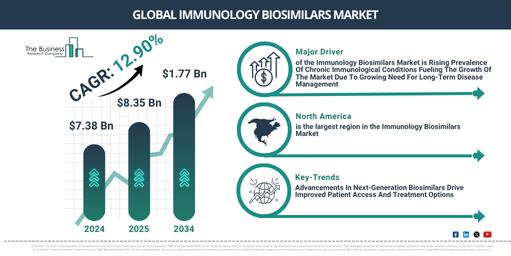
    The market size for immunology biosimilars has seen swift expansion in the past few years. Its projected growth from $7.38 billion in 2024 to $8.35 billion in 2025, forecasts a compound annual growth rate (CAGR) of 13.1%. Factors contributing to growth during the historic period include the escalating adoption of biosimilars, a surge in demand for cost-effective biologics, a growing number of autoimmune disease cases, heightened patient knowledge about biosimilar treatments, and amplified regulatory backing for biosimilar approval.

    The market size of immunology biosimilars is predicted to experience a swift expansion in the upcoming years, expanding to $13.57 billion by 2029 with a compound annual growth rate (CAGR) of 12.9%. Multiple factors driving the growth during forecasted period include an increased emphasis on minimizing healthcare costs, a surge in chronic inflammatory conditions, an extended reach in emerging markets, heightened endorsement for biosimilar interchangeability, and increased investments by pharmaceutical firms. The future trend is likely to encompass enhancements in biologics manufacturing technology, partnerships in research and development, the emergence of next-generation biosimilars, advancements in delivery mechanisms, and the incorporation of artificial intelligence in biosimilar development.

    Get A Free Sample Of The Report:

    https://www.thebusinessresearchcompany.com/sample.aspx?id=25789&type=smp

    What Drivers Are Accelerating Expansion Of The Immunology Biosimilars Market?

    The escalating rise of chronic immunological disorders is anticipated to fuel the expansion of the immunology biosimilars market. These disorders are constant conditions where the immune system either attacks the body’s tissues or falls short in its protection. The increase in these disorders can be attributed to a growing number of individuals suffering from prolonged immune system disorders that necessitate sustained treatment, active management of the disease, and consistent healthcare support. Immunology biosimilars aid these chronic conditions by offering cost-effective treatment options that bolster long-term disease control and enhance patient accessibility to crucial therapies that regulate immune system malfunctions. For example, the Australian Institute of Health and Welfare, a government institution based in Australia, reported in June 2024 that rheumatoid arthritis, a systemic autoimmune disease, impacted an estimated 514,000 people, translating to 2.0% of the population in 2022. Of these, 2.5% were females and 1.6% were males affected by the disease. Hence, the growing incidence of chronic immunological conditions is triggering an upsurge in the immunology biosimilars market.

    What Are The Primary Segmentation Parameters In The Immunology Biosimilars Market?

    The immunology biosimilars market covered in this report is segmented –

    1) By Drug Type: Monoclonal Antibodies, Fusion Proteins, Recombinant Proteins, Interferons, Other Biosimilar Immunomodulators

    2) By Disease: Inflammatory Bowel Disease, Arthritis, Other Diseases

    3) By Distribution Channel: Hospital Pharmacies, Retail Pharmacies, Online Pharmacies, Other Distribution Channels

    4) By End User: Hospitals, Clinics, Homecare Settings, Ambulatory Surgical Centers (ASCs)

    Subsegments:

    1) By Monoclonal Antibodies: Anti-Tumor Necrosis Factor Agents, Anti-Interleukin-6 Agents, Anti-Cluster of Differentiation 20 Agents, Anti-Interleukin-12/23 Agents, Other Monoclonal Antibodies

    2) By Fusion Proteins: Etanercept Biosimilars, Other Fusion Protein Biosimilars

    3) By Recombinant Proteins: Recombinant Human Insulin, Recombinant Human Growth Hormone, Recombinant Human Erythropoietin, Other Recombinant Protein Biosimilars

    4) By Interferons: Interferon Alpha, Interferon Beta, Interferon Gamma

    5) By Other Biosimilar Immunomodulators: Interleukin Inhibitors, Janus Kinase Inhibitors, Other Immunomodulatory Biosimilars

    Which Emerging Trends Are Reshaping The Immunology Biosimilars Market Landscape?

    The immunology biosimilars market is seeing a trend where leading companies are focusing on developing the next generation of biosimilar innovations. They are focussing on future interchangeability designation, novel delivery systems and improved formulations with increased stability. This is designed to provide a more effective and accessible range of treatment options for patients. Future interchangeability designation indicates a biosimilar’s potential to meet regulatory standards, allowing pharmacy-level substitution for the reference biologic without intervention from the prescribing authority. For example, in February 2025, Sandoz Group AG, a Swiss-based pharmaceutical firm, introduced Pyzchiva (ustekinumab-ttwe), a biosimilar to Stelara. It’s used for treatment of several chronic autoimmune disorders such as plaque psoriasis, Crohn’s disease, ulcerative colitis and psoriatic arthritis. The launch was accomplished in collaboration with the South Korea-based biopharmaceutical firm, Samsung Bioepis Co. Ltd. This reinforces Sandoz’s pledge to broaden access to immunology biosimilars, offering a cost-effective treatment option centred around the patient with enhanced stability, multiple dosage options and the unique capability to be re-cooled following initial refrigeration.

    Which Players Are Shaping The Competitive Landscape Of The Immunology Biosimilars Market?

    Major companies operating in the immunology biosimilars market are Pfizer Inc., Novartis AG, LG Chem Ltd., Amgen Inc., Teva Pharmaceutical Industries Ltd., Astellas Pharma Inc., Sandoz Group AG, Fresenius Kabi AG, Intas Pharmaceuticals Ltd., Stada Arzneimittel AG, Cipla Ltd., Kyowa Kirin Co. Ltd., Dr. Reddy’s Laboratories Ltd., Samsung Bioepis Co. Ltd., Gedeon Richter Plc, Celltrion Inc., Biocon Ltd., Innovent Biologics Inc., Biocad, Mabion S.A.

    Access The Complete Report Here:

    https://www.thebusinessresearchcompany.com/report/immunology-biosimilars-global-market-report

    What Are The Emerging Regional Trends Driving The Immunology Biosimilars Market?

    North America was the largest region in the immunology biosimilars market in 2024. Asia-Pacific is expected to be the fastest-growing region in the forecast period. The regions covered in the immunology biosimilars market report are Asia-Pacific, Western Europe, Eastern Europe, North America, South America, Middle East, Africa.

    Customize Your Report Here:

    https://www.thebusinessresearchcompany.com/customise?id=25789&type=smp

    Browse Through More Reports Similar to the Global Immunology Biosimilars Market 2025, By The Business Research Company

    Automated Immunoassay Analyzers Global Market Report 2025

    https://www.thebusinessresearchcompany.com/report/automated-immunoassay-analyzers-global-market-report

    Immunoassay Global Market Report 2025

    https://www.thebusinessresearchcompany.com/report/immunoassay-global-market-report

    Immunohematology Global Market Report 2025

    https://www.thebusinessresearchcompany.com/report/immunohematology-global-market-report

    About The Business Research Company:

    With over 17500+ reports from 27 industries covering 60+ geographies, The Business Research Company has built a reputation for offering comprehensive, data-rich research and insights. Armed with 1,500,000 datasets, the optimistic contribution of in-depth secondary research, and unique insights from industry leaders, you can get the information you need to stay ahead in the game.

    Get in touch with us:

    The Business Research Company: https://www.thebusinessresearchcompany.com/

    Americas +1 310-496-7795

    Asia +44 7882 955267 & +91 8897263534

    Europe +44 7882 955267

    Email us at info@tbrc.info

    Follow us on:

    LinkedIn: https://in.linkedin.com/company/the-business-research-company

    YouTube: https://www.youtube.com/channel/UC24_fI0rV8cR5DxlCpgmyFQ

    Global Market Model: https://www.thebusinessresearchcompany.com/global-market-model
  • What Is The Forecast Valuation Of The Global Image-Guided Therapy Systems AD13Market Projected To Reach $6.55 Billion By 2029?

    What Is The Forecast Valuation Of The Global Image-Guided Therapy Systems AD13Market Projected To Reach $6.55 Billion By 2029?

    Claim your 20% discount on Global Market Reports with code ONLINE20. Limited time only.

    How Big Is The Image-Guided Therapy Systems Market Today And What Is Its Future Size?

    The market size for image-guided therapy systems has seen robust growth in the past few years. The market value is predicted to expand from $4.82 billion in 2024 to $5.13 billion in 2025, reflecting a compound annual growth rate (CAGR) of 6.5%. This growth over the historical period is a result of the escalating demand for precision, an increase in the prevalence of chronic diseases, growth in the aging population worldwide, a surge in the number of minimally invasive procedures, and a growing emphasis on the adoption in the field of oncology.

    A significant surge in the market size of image-guided therapy systems can be anticipated in the coming years, reaching up to $6.55 billion in 2029, with a compound annual growth rate (CAGR) of 6.3%. The predicted growth within the forecast period could be credited to a rising inclination towards outpatient and ambulatory surgical procedures, progressive global health care expenditure, increased R&D investments, improved image resolution standards, along with an expansion in hospital infrastructure. Key trends for the future include the progression of AI-enhanced imaging, the consolidation of multi-modal systems, technological advancements in portable imaging devices, proliferation of hybrid operating rooms, and strides forward in electromagnetic tracking.

    Get A Free Sample Of The Report:

    https://www.thebusinessresearchcompany.com/sample.aspx?id=25788&type=smp

    Which Key Factors Are Fueling Growth In The Image-Guided Therapy Systems Market?

    The surge in the requirement for less intrusive medical interventions is perceived to accelerate the expansion of the image-guided therapy systems market. These surgeries require reduced incisions, thus decreasing patient discomfort and recuperation duration. The increased interest in these minor surgeries is largely attributable to the numerous advantages they offer, including less recovery time, smaller incisions, less tissue injury, and quicker return to regular activities compared to conventional open surgeries. Image-guided therapy systems are instrumental in less invasive surgeries as they provide instantaneous imaging, enabling surgeons to precisely steer instruments and focus on therapeutic areas while conserving neighboring healthy tissue. For example, the American Academy of Facial Plastic and Reconstructive Surgery confirmed in February 2024 that in 2023, 83% of all medical procedures performed were minimally invasive, leaving only 17% for traditional surgical procedures. Hence, the image-guided therapy systems market is positively influenced by the surge in demand for minimally invasive surgeries.

    How Is The Image-Guided Therapy Systems Market Segmented Across Key Categories?

    The image-guided therapy systems market covered in this report is segmented –

    1) By Product Type: Ultrasound Systems, Endoscopes, Magnetic Resonance Imaging (MRI), X-Ray Fluoroscopy Or C-Arms, Positron Emission Tomography (PET), Single-Photon Emission CT (SPECT), Other Product Types

    2) By Technology: Electromagnetic Navigation, Robotic-Assisted Imaging Guidance, Artificial Intelligence (AI)-Enhanced Real-Time 3D Or 4D Imaging, Augmented Or Mixed-Reality Visualization, Optical And Laser-Based Tracking

    3) By Modality Portability: Fixed Systems, Mobile C-Arms, Hand-Held Or Portable

    4) By Application: Cardiac Surgery, Neurosurgery, Orthopedic Surgery, Gastroenterology, Urology, Oncology, Ear, Nose, And Throat Surgery, Other Applications

    5) By End Use: Hospitals, Ambulatory Surgical Centers, Specialty Clinics, Research And Academic Institutions

    Subsegments:

    1) By Ultrasound Systems: Two-Dimensional (2D) Ultrasound Systems, Three-Dimensional (3D) And Four-Dimensional (4D) Ultrasound Systems, Doppler Ultrasound Systems, Contrast-Enhanced Ultrasound Systems, Portable and Handheld Ultrasound Devices

    2) By Endoscopes: Rigid Endoscope Systems, Flexible Endoscope Systems, Capsule Endoscope Systems, Robot-Assisted Endoscopic Systems, Single-Use (Disposable) Endoscope Systems

    3) By Magnetic Resonance Imaging (MRI): Open Magnetic Resonance Imaging Systems, Closed Magnetic Resonance Imaging Systems, Extremity Magnetic Resonance Imaging Systems, 1.5 Tesla Magnetic Resonance Imaging Systems, 3 Tesla Magnetic Resonance Imaging Systems, Intraoperative Magnetic Resonance Imaging (iMRI) Systems

    4) By X-Ray Fluoroscopy or C-Arms: Mobile C-Arm Imaging Systems, Mini C-Arm Imaging Systems, Fixed C-Arm Imaging Systems, Flat Panel Detector C-Arm Systems, Image Intensifier C-Arm Systems

    5) By Positron Emission Tomography (PET): Positron Emission Tomography–Computed Tomography (PET-CT) Systems, Positron Emission Tomography–Magnetic Resonance Imaging (PET-MRI) Systems, Time-Of-Flight (TOF) Positron Emission Tomography Systems, Digital Positron Emission Tomography Systems

    6) By Single-Photon Emission Computed Tomography (SPECT): Standalone Single-Photon Emission Computed Tomography Systems, Hybrid Single-Photon Emission Computed Tomography Or Computed Tomography Systems, Multi-Head Single-Photon Emission Computed Tomography Systems, Cardiac Single-Photon Emission Computed Tomography Systems

    7) By Other Product Types: Computed Tomography (CT) Imaging Systems, Optical Imaging Systems, Photoacoustic Imaging Systems, Hybrid Operating Room Systems, Gamma Camera Imaging Systems

    What Key Trends Are Driving Growth In The Image-Guided Therapy Systems Market?

    Major firms in the image-guided therapy systems field are concentrating their efforts on creating innovative strategies, such as 3D imaging technologies, to enhance diagnostic precision, boost surgical effectiveness, and facilitate accurate and minimally intrusive treatments for improved patient results. 3D imaging technologies are leading-edge medical imaging solutions that generate three-dimensional renders of internal anatomical formations, permitting health experts to examine anatomy with increased depth and clarity. For example, in February 2024, Koninklijke Philips N.V., a healthcare technology firm based in the Netherlands, unveiled their new Azurion neuro biplane image-guided therapy system at the European Congress of Radiology (ECR) 2024. The system boasts superior 2D and 3D imaging, automatic beam rotation for image positioning, high-level C-arm angulation and rotation, and robust table-side control in order to maintain a sterile setting. It further includes a head stabilizer to enhance stroke care and allows flexible X-ray detector positioning. Incorporating Philips’ ClarityIQ low-dose imaging technology and neuro suite software, this launch underscores Philips’ dedication to facilitating efficient workflows, enhancing clinical decision-making, and promoting patient outcomes in neurovascular operations.

    Who Are The Leading Companies Driving The Image-Guided Therapy Systems Market?

    Major companies operating in the image-guided therapy systems market are Medtronic plc, Siemens Healthcare GmbH, FUJIFILM Holdings Corporation, Koninklijke Philips N.V., Stryker Corporation, GE HealthCare Technologies Inc., Boston Scientific Corporation, Zimmer Biomet Holdings Inc., Olympus Corporation, Smith & Nephew plc, Hologic Inc., Shimadzu Corporation, KARL STORZ SE & Co. KG, Cook Medical LLC, Elekta AB, Leica Microsystems GmbH, Brainlab AG, Analogic Corporation, Hyperfine Inc., Quest Medical Imaging B.V.

    Access The Complete Report Here:

    https://www.thebusinessresearchcompany.com/report/image-guided-therapy-systems-global-market-report

    Which Region Dominates The Image-Guided Therapy Systems Market Today?

    North America was the largest region in the image-guided therapy systems market in 2024. Asia-Pacific is expected to be the fastest-growing region in the forecast period. The regions covered in the image-guided therapy systems market report are Asia-Pacific, Western Europe, Eastern Europe, North America, South America, Middle East, Africa.

    Customize Your Report Here:

    https://www.thebusinessresearchcompany.com/customise?id=25788&type=smp

    Browse Through More Reports Similar to the Global Image-Guided Therapy Systems Market 2025, By The Business Research Company

    Vision Guided Robotics Software Global Market Report 2025

    https://www.thebusinessresearchcompany.com/report/vision-guided-robotics-software-global-market-report

    Surgical Imaging Arms Global Market Report 2025

    https://www.thebusinessresearchcompany.com/report/surgical-imaging-arms-global-market-report

    Radiotherapy Devices Global Market Report 2025

    https://www.thebusinessresearchcompany.com/report/radiotherapy-devices-global-market-report

    About The Business Research Company:

    With over 17500+ reports from 27 industries covering 60+ geographies, The Business Research Company has built a reputation for offering comprehensive, data-rich research and insights. Armed with 1,500,000 datasets, the optimistic contribution of in-depth secondary research, and unique insights from industry leaders, you can get the information you need to stay ahead in the game.

    Get in touch with us:

    The Business Research Company: https://www.thebusinessresearchcompany.com/

    Americas +1 310-496-7795

    Asia +44 7882 955267 & +91 8897263534

    Europe +44 7882 955267

    Email us at info@tbrc.info

    Follow us on:

    LinkedIn: https://in.linkedin.com/company/the-business-research-company

    YouTube: https://www.youtube.com/channel/UC24_fI0rV8cR5DxlCpgmyFQ

    Global Market Model: https://www.thebusinessresearchcompany.com/global-market-model

  • How Is The Human Epidermal Growth Factor Receptor 2 (HER2)-Positive Gastric Cancer Market Expected To Grow At 4.6% CAGR Over 2025–2029?

    How Is The Human Epidermal Growth Factor Receptor 2 (HER2)-Positive Gastric Cancer Market Expected To Grow At 4.6% CAGR Over 2025–2029?

    Claim your 20% discount on Global Market Reports with code ONLINE20. Limited time only.

    How Much Will The Human Epidermal Growth Factor Receptor 2 (HER2)-Positive Gastric Cancer Market Be Worth By 2029?

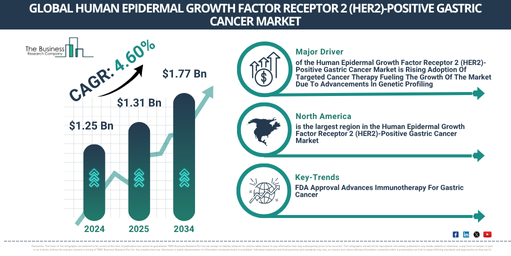
    Over the past few years, the market size of the human epidermal growth factor receptor 2 (HER2)-positive gastric cancer has seen consistent growth. Projected to increase from $1.25 billion in 2024 to $1.31 billion in 2025, it is expected to register a compound annual growth rate (CAGR) of 4.8%. The historical growth of this market is primarily due to the escalating use of companion diagnostics, heightened awareness of HER2 biomarkers amongst oncologists, an intensified focus on bespoke cancer treatments, burgeoning interest in antibody-drug conjugates, and the expansion of reimbursement for targeted therapies.

    The market size for the human epidermal growth factor receptor 2 (HER2)-positive gastric cancer is anticipated to experience consistent growth over the coming years, expanding to $1.57 billion in 2029 with a compound annual growth rate (CAGR) of 4.6%. The expected growth in this projected period has been linked to the ongoing rise in accessible molecular diagnostic labs, growing promotional campaigns for the screening of gastric cancer, increased utilization of next-generation sequencing (NGS), escalating demand for outpatient oncology care services, and an upswing in international regulatory endorsements for HER2 medications. During the predicted period, the prominent trends include improvement in treatment sequences, the implementation of nanotechnology within drug administration, the use of artificial intelligence in HER2 diagnostics, progress in antibody-dependent cellular cytotoxicity, and developments in therapeutic blends of immunotherapy.

    Get A Free Sample Of The Report:

    https://www.thebusinessresearchcompany.com/sample.aspx?id=25787&type=smp

    What External And Internal Drivers Are Influencing The Human Epidermal Growth Factor Receptor 2 (HER2)-Positive Gastric Cancer Market?

    The increase in the use of personalized cancer treatment is predicted to boost the growth of the human epidermal growth factor receptor 2 (HER2)-positive gastric cancer market in the future. Personalized medicine, or targeted therapy, employs specific medications or substances to stop cancer growth by concentrating on distinct molecules that are part of tumour development. The enhanced use of targeted therapy is driven largely by groundbreaking advances in genetic profiling, making treatments more accurate according to the specific characteristics of an individual’s tumour. This leads to increased effectiveness and reduced side effects. In the case of HER2-positive gastric cancer, targeted therapy works by directly targeting the HER2 protein, which is highly expressed in these cancers, thereby slowing down the progression of the disease and enhancing patient outcomes. For example, in February 2024, as reported by the Personalized Medicine Coalition, a professional association based in the US, the Food and Drug Administration (FDA) granted approval for 16 new personalized medications, namely 7 for cancer and 3 for various other diseases and conditions in the year 2023. This marked an increase from just 6 such approvals in 2022. As a result, the growing utilization of targeted cancer treatment is leading to an upward growth in the human epidermal growth factor receptor 2 (HER2)-positive gastric cancer market.

    What Segmentation Insights Are Provided In The Human Epidermal Growth Factor Receptor 2 (HER2)-Positive Gastric Cancer Market Research?

    The human epidermal growth factor receptor 2 (her2)-positive gastric cancer market covered in this report is segmented –

    1) By Therapy: Chemotherapy, Immunotherapy, Radiation Therapy, Targeted Therapy

    2) By Stage: Stage I, Stage II, Stage III, Stage IV

    3) By End-User: Ambulatory Surgery Centers, Hospitals And Specialty Clinics, Other End-Users

    Subsegments:

    1) By Chemotherapy: Fluoropyrimidines, Platinum-Based Agents, Taxanes, Irinotecan, Anthracyclines

    2) By Immunotherapy: Immune Checkpoint Inhibitors, Monoclonal Antibodies, Cancer Vaccines, Cytokine-Based Therapies

    3) By Radiation Therapy: External Beam Radiation Therapy, Intensity-Modulated Radiation Therapy, Stereotactic Body Radiation Therapy, 3D Conformal Radiation Therapy

    4) By Targeted Therapy: HER2-Targeted Therapies, Tyrosine Kinase Inhibitors, Antibody-Drug Conjugates, mTOR Inhibitors, PI3K/AKT/mTOR Pathway Inhibitors

    Which Notable Trends Are Transforming The Human Epidermal Growth Factor Receptor 2 (HER2)-Positive Gastric Cancer Market Outlook?

    Leaders in the field of human epidermal growth factor receptor 2 (HER2)-positive gastric cancer are working diligently to receive authorizations for cutting-edge treatments, such as high-level immunotherapy supplement combination regimens, which involves combining immune checkpoint suppressors with targeted treatments and chemotherapy. This approach provides improved patient results in initial treatment scenarios. This methodology does its job by utilizing the human body’s immune system to hamper programmed death (PD)-1 or programmed death (PD)-L1 interaction while simultaneously engaging HER2 receptors, and employing chemotherapy, thus strengthening anti-cancer activity and improving survival percentages. For example, in March 2025, the U.S. Food and Drug Administration (FDA) granted approval to Merck & Co., Inc., an American biopharmaceutical establishment, for Keytruda (pembrolizumab), paired with trastuzumab and chemotherapy, as an initial treatment for adult patients with HER2-positive unresectable or metastatic gastric or gastroesophageal junction (GEJ) adenocarcinoma with tumors that express programmed death (PD)-L1. This more recently authorized combined treatment showed a significant advantage in the median delay to disease progression and the overall survival rates versus traditional regimens. Displaying an overall response rate of 73% and a more extended average response duration, this treatment marks a transformative shift in handling advanced HER2-positive gastric cancers.

    Who Are The Leading Companies Driving The Human Epidermal Growth Factor Receptor 2 (HER2)-Positive Gastric Cancer Market?

    Major companies operating in the human epidermal growth factor receptor 2 (her2)-positive gastric cancer market are Pfizer Inc., Roche Holding AG, Merck & Co Inc., Bayer Aktiengesellschaft, Eli Lilly and Company, Bristol-Myers Squibb Company, AstraZeneca PLC, Novartis AG, Amgen Inc., Astellas Pharma Inc., Daiichi Sankyo Company Limited, Genentech Inc., Ono Pharmaceutical Co Ltd., Shanghai Henlius Biotech Inc., MacroGenics Inc., Hutchison Medipharma Limited , ALX Oncology Holdings Inc., Taiho Pharmaceutical Co Ltd., Ambrx Biopharma Inc., LintonPharm Co Ltd.

    Access The Complete Report Here:

    https://www.thebusinessresearchcompany.com/report/human-epidermal-growth-factor-receptor-2-her2-positive-gastric-cancer-global-market-report

    Which Geographic Regions Are Creating Strong Demand In The Human Epidermal Growth Factor Receptor 2 (HER2)-Positive Gastric Cancer Market?

    North America was the largest region in the human epidermal growth factor receptor 2 (HER2)-positive gastric cancer market in 2024. Asia-Pacific is expected to be the fastest-growing region in the forecast period. The regions covered in the human epidermal growth factor receptor 2 (her2)-positive gastric cancer market report are Asia-Pacific, Western Europe, Eastern Europe, North America, South America, Middle East, Africa.

    Customize Your Report Here:

    https://www.thebusinessresearchcompany.com/customise?id=25787&type=smp

    Browse Through More Reports Similar to the Global Human Epidermal Growth Factor Receptor 2 (HER2)-Positive Gastric Cancer Market 2025, By The Business Research Company

    Gastric Ulcers Global Market Report 2025

    https://www.thebusinessresearchcompany.com/report/gastric-ulcers-global-market-report

    Gastrointestinal Stromal Tumor Global Market Report 2025

    https://www.thebusinessresearchcompany.com/report/gastrointestinal-stromal-tumor-global-market-report

    Esophageal Cancer Global Market Report 2025

    https://www.thebusinessresearchcompany.com/report/esophageal-cancer-global-market-report

    About The Business Research Company:

    With over 17500+ reports from 27 industries covering 60+ geographies, The Business Research Company has built a reputation for offering comprehensive, data-rich research and insights. Armed with 1,500,000 datasets, the optimistic contribution of in-depth secondary research, and unique insights from industry leaders, you can get the information you need to stay ahead in the game.

    Get in touch with us:

    The Business Research Company: https://www.thebusinessresearchcompany.com/

    Americas +1 310-496-7795

    Asia +44 7882 955267 & +91 8897263534

    Europe +44 7882 955267

    Email us at info@tbrc.info

    Follow us on:

    LinkedIn: https://in.linkedin.com/company/the-business-research-company

    YouTube: https://www.youtube.com/channel/UC24_fI0rV8cR5DxlCpgmyFQ

    Global Market Model: https://www.thebusinessresearchcompany.com/global-market-model

  • Global Smart Sports Fitness Trackers Market Revenue and CAGR Forecast Analysis 2025–2029

    Global Smart Sports Fitness Trackers Market Revenue and CAGR Forecast Analysis 2025–2029

    Claim your 20% discount on Global Market Reports with code ONLINE20. Limited time only.

    What Is The Current Size And Growth Outlook For The Smart Sports Fitness Trackers Market?

    The market size of intelligent sports fitness trackers has experienced fast-paced expansion in recent years. The projections show a growth rate from $46.77 billion in 2024 to $53.20 billion in 2025 with a 13.8% compound annual growth rate (CAGR). This significant growth in the historical period is due to factors such as heightened consciousness about personal health, increased use of wearable technology, escalating trend of fitness tracking among young people, development of smartphone integration attributes, and a rise in participation in beginner level sports.

    The market size for intelligent sports fitness trackers is projected to experience swift expansion in the coming years, reaching a value of $88.25 billion in 2029 with a CAGR of 13.5%. Factors such as increasing demand for real-time health tracking, heightened health awareness among older age groups, the growth of the fitness and wellness sector, a stronger emphasis on preventative health care, and the rise in usage in remote patient monitoring are expected to drive this growth. Noteworthy trends for the forecasted period include technological enhancements in biometric sensors, continual innovations in wearable designs, the incorporation of personalized fitness data, ongoing research and improvement in health algorithms and the creation of multi-purpose fitness tracking devices.

    Get A Free Sample Of The Report:

    https://www.thebusinessresearchcompany.com/sample.aspx?id=25907&type=smp

    What Core Drivers Are Expected To Influence The Smart Sports Fitness Trackers Market?

    An increased understanding of health, fitness, and preventative care is forecasted to boost the expansion of the smart sports fitness trackers market. Knowledge about these areas reflects the recognition of the importance of regular exercise, healthy living habits, and preemptive steps to avoid sickness. The accessibility of information via digital outlets contributes to the growing knowledge of health, fitness, and preventative care, as user-friendly health-related content is available via websites, social media, and mobile applications, highlighting the advantages of a healthy lifestyle. Smart sports fitness trackers bolster health, fitness, and preventative care by monitoring activity levels, key health indicators, and providing insights, enabling individuals to make knowledgeable decisions and recognize potential health problems early on. For example, as per a survey study conducted in May 2022 by the International Food Information Council, a non-profit organization based in the US, among 1005 American adults between the ages of 18–80 and Gen Z adults between 18–24, about 52% of respondents shared they adhered to a specific diet or eating plan, a considerable increase from 39% in 2021. The most favored methods included clean eating (16%), mindful eating (14%), and calorie counting (13%). Consequently, the rising comprehension of health, fitness, and preventative care is contributing to the growth of the smart sports fitness tracker market.

    Which Segmentation Categories Are Highlighted In The Smart Sports Fitness Trackers Market Analysis?

    The smart sports fitness trackers market covered in this report is segmented –

    1) By Product Type: Wristbands, Smartwatches, Chest Straps, Other Product Types

    2) By Price: Economy, Mid, Premium, Super-Premium

    3) By Application: Activity Tracking, Sleep Monitoring, Heart Rate Monitoring, Augmenting Nutrition Plan, Coaching

    4) By Distribution Channel: Hypermarkets Or Supermarkets, Departmental Stores, Online Retail, Sports Stores

    5) By End-User: Professional Athletes, Fitness Enthusiasts, Other End-Users

    Subsegments:

    1) By Wristbands: Basic Fitness Trackers, Advanced Fitness Trackers With Heart Rate Monitoring, Waterproof Fitness Trackers

    2) By Smartwatches: Standalone Smartwatches, Bluetooth-Connected Smartwatches, Hybrid Smartwatches

    3) By Chest Straps: Heart Rate Monitoring Straps, Respiratory Monitoring Straps, Multi-Sensor Chest Straps

    4) By Other Product Types: Clip-On Trackers, Smart Rings, Smart Clothing Sensors

    Which Market Trends Are Expected To Define The Future Of The Smart Sports Fitness Trackers Market?

    Primary businesses in the smart sports fitness trackers market, such as Samsung Electronics Co. Ltd, are investing in the invention of smart connectivity devices with advanced safety features like the Emergency Safety Overhead System (SOS) functionality. This function lets users send rapid distress signals to emergency contacts through a designated button pattern on their device. As an example, Samsung Electronics Co. Ltd., headquartered in South Korea launched its Galaxy Fit 3 affordably priced fitness tracker in India, in February 2024. This gadget has a 1.6-inch AMOLED display, diverse health sensors, over 100 fitness modes and advanced features like sophisticated sleep monitoring, fall detection during emergencies, and blood oxygen level measurement during sleep. It also possesses a water resistance rating of 5 ATM and IP68 certification. Together with quick smartphone command functions, it’s revered for its versatility and dependability, making it an excellent wearable for health, fitness, and activity tracking in different settings.

    Who Are The Dominant Players In The Smart Sports Fitness Trackers Market Today?

    Major companies operating in the smart sports fitness trackers market are Apple Inc., Samsung Electronics Co. Ltd., Huawei Technologies Co. Ltd., Sony Corporation, Lenovo Group Limited, LG Corporation, Nike Inc., Xiaomi Corporation, Under Armour Inc., Garmin Ltd., Fossil Group Inc., Polar Electro Oy, TomTom International B.V., Bellabeat Inc., MOKO Smart Technology Limited, COROS Wearables Inc., Amazfit (by Zepp Health Corporation), Ultrahuman Healthcare Private Limited, Moov Inc., Starmax Technology Co. Ltd.

    Access The Complete Report Here:

    https://www.thebusinessresearchcompany.com/report/smart-sports-fitness-trackers-global-market-report

    Which Regional Markets Are Emerging As Key Hubs For The Smart Sports Fitness Trackers Market?

    North America was the largest region in the smart sports fitness trackers market in 2024. Asia-Pacific is expected to be the fastest-growing region in the forecast period. The regions covered in the smart sports fitness trackers market report are Asia-Pacific, Western Europe, Eastern Europe, North America, South America, Middle East, Africa.

    Customize Your Report Here:

    https://www.thebusinessresearchcompany.com/customise?id=25907&type=smp

    Browse Through More Reports Similar to the Global Smart Sports Fitness Trackers Market 2025, By The Business Research Company

    Fitness App Global Market Report 2025

    https://www.thebusinessresearchcompany.com/report/fitness-app-global-market-report

    Smart Fitness Global Market Report 2025

    https://www.thebusinessresearchcompany.com/report/smart-fitness-global-market-report

    Smart Wearables Global Market Report 2025

    https://www.thebusinessresearchcompany.com/report/smart-wearables-global-market-report

    About The Business Research Company:

    With over 17500+ reports from 27 industries covering 60+ geographies, The Business Research Company has built a reputation for offering comprehensive, data-rich research and insights. Armed with 1,500,000 datasets, the optimistic contribution of in-depth secondary research, and unique insights from industry leaders, you can get the information you need to stay ahead in the game.

    Get in touch with us:

    The Business Research Company: https://www.thebusinessresearchcompany.com/

    Americas +1 310-496-7795

    Asia +44 7882 955267 & +91 8897263534

    Europe +44 7882 955267

    Email us at info@tbrc.info

    Follow us on:

    LinkedIn: https://in.linkedin.com/company/the-business-research-company

    YouTube: https://www.youtube.com/channel/UC24_fI0rV8cR5DxlCpgmyFQ

    Global Market Model: https://www.thebusinessresearchcompany.com/global-market-model

  • Which Factors Will Push The Hormone Refractory Prostate Cancer Market To Achieve $11.91 Billion By 2029?

    Which Factors Will Push The Hormone Refractory Prostate Cancer Market To Achieve $11.91 Billion By 2029?

    Claim your 20% discount on Global Market Reports with code ONLINE20. Limited time only.

    What Is The Present And Forecasted Size Of The Hormone Refractory Prostate Cancer Market?

    The market size for hormone-refractory prostate cancer has seen a fast-paced growth in the past years. The market which was valued at $7.35 billion in 2024 is projected to escalate to $8.12 billion in 2025, representing a compound annual growth rate (CAGR) of 10.4%. The notable growth during the historic period can be credited to the rising prevalence of prostate cancer, an upswing in PSA (prostate-specific antigen) screening, heightened physician awareness and specialization, a surge in the usage of palliative care, and a growth in the number of clinical trials.

    In the coming years, the market size for hormone-refractory prostate cancer is projected to experience significant expansion. It is estimated to reach a worth of $11.91 billion by 2029, growing at a compound annual growth rate (CAGR) of 10.1%. The anticipated growth in this period is due to factors such as the increased application of genetic biomarkers, rise in the uptake of precision medicine, the broadening scope of PARP inhibitors, enhanced worldwide access to HRPC treatments, and the increasing clinical use of combined regimens. The major trends anticipated for the forecast period include the growing preference for combination therapies, advancements in radiopharmaceuticals, the application of next-generation sequencing (NGS), the integration of digital tools and remote monitoring, and the development of next-generation androgen receptor inhibitors and PARP inhibitors specifically for HRPC.

    Get A Free Sample Of The Report:

    https://www.thebusinessresearchcompany.com/sample.aspx?id=25786&type=smp

    What Underlying Factors Are Supporting The Hormone Refractory Prostate Cancer Market Growth?

    The hormone-refractory prostate cancer market is anticipated to experience accelerated growth, given the escalating investment in cancer research. Such investments provide financial and resource backing aimed at furthering the development of novel cancer detection strategies, treatments, and preventive measures. A significant surge in global cancer cases is the primary reason for this increase in research funding, necessitating more tailored and efficacious treatments. Cancer research investments are spearheading innovation in managing hormone-refractory prostate cancer by facilitating cutting-edge therapies like radioligand treatments and hormone inhibitors, as well as supporting clinical trials and biomarker research to improve treatment accuracy and results. For instance, the Cancer Research Institute (CRI), a U.S.-based nonprofit organization committed to promoting immunotherapy research, in August 2024, invested approximately $22.8 million during the 2023-2024 fiscal year, awarding 64 new grants to researchers from 42 institutions in seven nations. Consequently, the escalating investment in cancer research stands as a significant factor propelling the growth of the hormone-refractory prostate cancer market.

    How Does The Hormone Refractory Prostate Cancer Market Differ By Segment?

    The hormone refractory prostate cancer market covered in this report is segmented –

    1) By Treatment Type: Chemotherapy, Hormonal Therapy, Immunotherapy, Radiation Therapy, Surgery

    2) By Distribution Channel: Hospital Pharmacies, Retail Pharmacies, Online Pharmacies

    3) By End-User: Hospitals, Ambulatory Surgical Centers, Specialty Clinics, Other End-Users

    Subsegments:

    1) By Chemotherapy: Docetaxel, Cabazitaxel, Mitoxantrone, Estramustin

    2) By Hormonal Therapy: Anti-Androgens, CYP17 Inhibitors, LHRH Agonists, LHRH Antagonists

    3) By Immunotherapy: Cancer Vaccines, Immune Checkpoint Inhibitors, Adoptive Cell Therapy

    4) By Radiation Therapy: External Beam Radiation Therapy (EBRT), Brachytherapy, Radionuclide Therapy

    5) By Surgery: Radical Prostatectomy, Orchiectomy, Transurethral Resection Of The Prostate (TURP)

    What New Opportunities Are Emerging From Trends In The Hormone Refractory Prostate Cancer Market?

    Major firms active in the hormone-refractory prostate cancer market like Novartis AG, are prioritising the development of innovative therapies such as intravenous radioligand therapy. This advanced treatment targets and destroys cancer cells from within while leaving healthy cells unharmed, thereby enhancing patient survival rates. As an example, in March 2025, the Switzerland-based pharmaceutical giant launched Pluvicto (lutetium Lu 177 vipivotide tetraxetan), gaining Food and Drug Administration (FDA) approval. This drug was developed for early usage in patients suffering from prostate-specific membrane antigen (PSMA)-positive metastatic castration-resistant prostate cancer (mCRPC), who have previously been treated with an androgen receptor pathway inhibitor (ARPI), and are suitable candidates for postponing chemotherapy. The extended application of Pluvicto, justified by the results of the Phase III PSMAfore trial, is expected to triple the number of eligible patients. The trial results showed that Pluvicto decreased the risk of radiographic progression or death by 59%, while more than doubling median radiographic progression-free survival compared to a change in ARPI. This makes Pluvicto the first approved targeted radioligand therapy to be used before chemotherapy in this context, providing a novel therapeutic option that can defer disease progression while having a positive safety profile.

    Who Are The Global Leaders Steering The Hormone Refractory Prostate Cancer Market Forward?

    Major companies operating in the hormone refractory prostate cancer market are Pfizer Inc., Johnson And Johnson, F. Hoffmann-La Roche Ltd., Merck & Co. Inc., AbbVie Inc., Bayer AG, Sanofi S.A., Bristol-Myers Squibb Company, Novartis AG, AstraZeneca plc, Takeda Pharmaceutical Company Limited, Eli Lilly and Company, Amgen Inc., Astellas Pharma Inc., Ipsen Pharma, Exelixis Inc., Orion Corporation, Lantheus Holdings Inc., Clovis Oncology Inc., Telix Pharmaceuticals, Dendreon Pharmaceuticals LLC

    Access The Complete Report Here:

    https://www.thebusinessresearchcompany.com/report/hormone-refractory-prostate-cancer-global-market-report

    Which Region Is Likely To Register The Fastest Growth In The Hormone Refractory Prostate Cancer Market?

    North America was the largest region in the hormone-refractory prostate cancer market in 2024. Asia-Pacific is expected to be the fastest-growing region in the forecast period. The regions covered in the hormone refractory prostate cancer market report are Asia-Pacific, Western Europe, Eastern Europe, North America, South America, Middle East, Africa.

    Customize Your Report Here:

    https://www.thebusinessresearchcompany.com/customise?id=25786&type=smp

    Browse Through More Reports Similar to the Global Hormone Refractory Prostate Cancer Market 2025, By The Business Research Company

    Benign Prostatic Hyperplasia Bph Treatment Devices And Equipment Global Market Report 2025

    https://www.thebusinessresearchcompany.com/report/benign-prostatic-hyperplasia-bph-treatment-devices-and-equipment-global-market-report

    Drugs For Benign Prostatic Hypertrophy Global Market Report 2025

    https://www.thebusinessresearchcompany.com/report/drugs-for-benign-prostatic-hypertrophy-global-market-report

    Urinary Tract Cancer Global Market Report 2025

    https://www.thebusinessresearchcompany.com/report/urinary-tract-cancer-global-market-report

    About The Business Research Company:

    With over 17500+ reports from 27 industries covering 60+ geographies, The Business Research Company has built a reputation for offering comprehensive, data-rich research and insights. Armed with 1,500,000 datasets, the optimistic contribution of in-depth secondary research, and unique insights from industry leaders, you can get the information you need to stay ahead in the game.

    Get in touch with us:

    The Business Research Company: https://www.thebusinessresearchcompany.com/

    Americas +1 310-496-7795

    Asia +44 7882 955267 & +91 8897263534

    Europe +44 7882 955267

    Email us at info@tbrc.info

    Follow us on:

    LinkedIn: https://in.linkedin.com/company/the-business-research-company

    YouTube: https://www.youtube.com/channel/UC24_fI0rV8cR5DxlCpgmyFQ

    Global Market Model: https://www.thebusinessresearchcompany.com/global-market-model