Blog

  • Pharmaceutical Chemicals Market Forecast: Breaking Down The Numbers Behind Future Expansion

    Pharmaceutical Chemicals Market Forecast: Breaking Down The Numbers Behind Future Expansion

    Built to provide research that’s more actionable and strategically valuable, The Business Research Company’s 2026 market reports include market attractiveness analysis, total addressable market sizing, company benchmarking matrices, interactive Excel dashboards, broader supply chain intelligence, emerging startup tracking, and in-depth product insights.

    Pharmaceutical Chemicals Market Poised To Hit $215.71 Billion By 2030 With A 8% CAGR

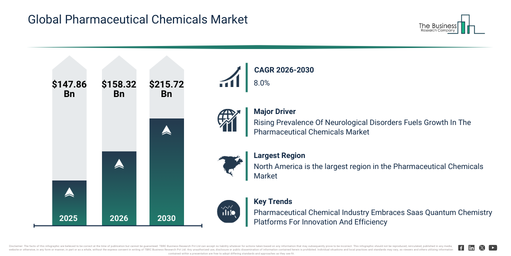
    The pharmaceutical chemicals market has shown significant expansion in recent years. Its size is expected to grow from $147.86 billion in 2025 to $158.32 billion in 2026, with a compound annual growth rate (CAGR) of 7.1%. This historical growth can be attributed to several factors, including the increasing incidence of chronic diseases, a surge in global pharmaceutical manufacturing, developments in synthetic chemistry, the expansion of generic drug production, and increased investments in research and development.

    The pharmaceutical chemicals market is anticipated to experience substantial expansion over the upcoming years. Its valuation is projected to reach $215.72 billion in 2030, exhibiting a compound annual growth rate (CAGR) of 8.0%. This projected growth during the forecast timeframe is attributable to several factors, including the increasing integration of precision medicine, the heightened need for biologics and intricate therapeutic solutions, ongoing developments in biocatalysis and enzyme technologies, the expansion of the pharmaceutical sector in developing economies, and increased funding directed towards environmentally friendly and sustainable chemical manufacturing. Key trends anticipated within this period encompass a greater emphasis on green chemistry and sustainable synthesis methods, a surging requirement for high-purity pharmaceutical chemicals, the broadening scope of contract manufacturing and outsourcing activities, the incorporation of sophisticated analytical and quality assurance instruments, and the creation of innovative drug precursors alongside specialty chemicals.

    Get A Free Sample Report With In-Depth Market Insights:

    https://thebusinessresearchcompany.com/sample_request?id=75815555&type=smp&name=Pharmaceutical%20Chemicals%20Market%20Report%202026&utm_source=Blogs&utm_medium=Paid&utm_campaign=Oct_PR

    Pharmaceutical Chemicals Market Demand Drivers Opening New Revenue Streams

    The rising occurrence of neurological disorders is set to boost the expansion of the pharmaceutical chemicals market. These conditions impact the central and peripheral nervous system, encompassing the brain, spinal cord, and the nerves across the human body. Pharmaceutical chemicals play a crucial role in developing and producing medications for neurological disorders, aiding in the management of pain and movement difficulties. As an illustration, data from the 2023 Alzheimer’s Disease Facts and Figures report by Alzheimer’s Association, a US-based voluntary health organization dedicated to Alzheimer’s care and support, indicates that roughly 6 million Americans are affected by Alzheimer’s in 2023, with projections showing an increase to nearly 13 million by 2030. Moreover, the expenses associated with Alzheimer’s and other dementias are projected to be $345 billion for the nation in 2023, potentially escalating to $1 trillion by 2050. Consequently, the growing incidence of neurological disorders significantly drives the demand in the pharmaceutical chemicals market.

    Pharmaceutical Chemicals Market Segment Landscape: Which Areas Lead Development?

    The pharmaceutical chemicals market covered in this report is segmented –

    1) By Product Type: Solvents, Reagents Or Catalysts, KSMs Or Intermediates, Building Blocks For APIs Or Advanced Intermediates

    2) By Drug Type: Proprietary, Non-Proprietary

    3) By Application: Cardiovascular Disease, Neurological Disease, Oncological Disease, Respiratory Disease, Gastrointestinal Disease, Musculoskeletal Disease

    Subsegments:

    1) By Solvents: Organic Solvents, Inorganic Solvents, Aqueous Solvents

    2) By Reagents or Catalysts: Organic Reagents, Inorganic Reagents, Biocatalysts

    3) By KSMs or Intermediates: Key Starting Materials (KSMs), Pharmaceutical Intermediates

    4) By Building Blocks for APIs or Advanced Intermediates: Simple Building Blocks, Complex Building Blocks

    Pharmaceutical Chemicals Market Trends Powering Strategic Industry Growth

    Leading pharmaceutical chemical businesses are leveraging emerging, groundbreaking technologies like software-as-a-service (SaaS) quantum chemistry platforms, which are gaining significant traction in the pharmaceutical industry, to maintain their market position. SaaS Quantum chemistry platforms are cloud-based solutions offering subscription access to specialized quantum chemistry software and resources. For example, in April 2023, QC Ware Corp, a US-based quantum computing software provider, launched Promethium, a new software-as-a-service (SaaS) quantum chemistry platform. This platform is uniquely designed to accelerate the discovery process for pharmaceuticals, chemicals, and materials by employing an advanced quantum chemistry toolset that utilizes H100 or A100 Tensor Core. The Promethium toolbox can perform calculations for various chemical systems with approximately 100 atoms in seconds, drastically reducing the minutes or hours typically required by traditional algorithms.

    Pharmaceutical Chemicals Market Industry Leaders And Competitive Landscape

    Major companies operating in the pharmaceutical chemicals market are BASF SE, The Dow Chemical Company, Abbott Laboratories, Johnson Matthey PLC, Evonik Industries AG, Eastman Chemical Company, Koninklijke DSM N.V, Lanxess AG, Albemarle Corporation, Lonza Group AG, Clariant AG, W. R. Grace and Co, Jubilant Life Sciences Ltd., Sumitomo Seika Chemicals Co Ltd., Borregaard ASA, WeylChem International GmbH, Vertellus Holdings LLC, CABB Group GmbH, Dishman Carbogen Amcis Ltd., Hikal Ltd., Porton Fine Chemicals Ltd., Denisco Chemicals Pvt Ltd., CHEMADA Industries Ltd., Valaji Pharma Chem, Syntor Fine Chemicals Ltd., Kenko Corporation

    View The Full Pharmaceutical Chemicals Market Report:

    https://thebusinessresearchcompany.com/report/pharmaceutical-chemicals-global-market-report?utm_source=Blogs&utm_medium=Paid&utm_campaign=Oct_PR

    Pharmaceutical Chemicals Market Regional Breakdown: Where Is Demand Concentrated?

    North America was the largest region in the pharmaceutical chemicals market in 2025. Asia Pacific is expected to be the fastest-growing region in the forecast period. The regions covered in the pharmaceutical chemicals market report are Asia-Pacific, South East Asia, Western Europe, Eastern Europe, North America, South America, Middle East, Africa.

    Reach Out To Our Team:

    The Business Research Company: https://www.thebusinessresearchcompany.com/

    Americas: +1 310-496-7795

    Asia: +44 7882 955267 & +91 8897263534

    Europe: +44 7882 955267

    Email us at: marketing@tbrc.info

    Follow us on:

    LinkedIn: https://in.linkedin.com/company/the-business-research-company

    YouTube: https://www.youtube.com/channel/UC24_fI0rV8cR5DxlCpgmyFQ

    Global Market Model: https://www.thebusinessresearchcompany.com/global-market-model
  • Pharmaceutical Cartridges Market Expected To Grow At 9.7% CAGR Through 2030: What Businesses Need To Know

    Pharmaceutical Cartridges Market Expected To Grow At 9.7% CAGR Through 2030: What Businesses Need To Know

    Backed by market attractiveness analysis, total addressable market sizing, company benchmarking matrices, interactive Excel dashboards, wider supply chain intelligence, emerging startup coverage, and detailed product-level insights, The Business Research Company’s 2026 market reports are designed to offer research that is more actionable and strategically valuable than ever.

    Pharmaceutical Cartridges Market Size And Revenue Outlook Through 2030

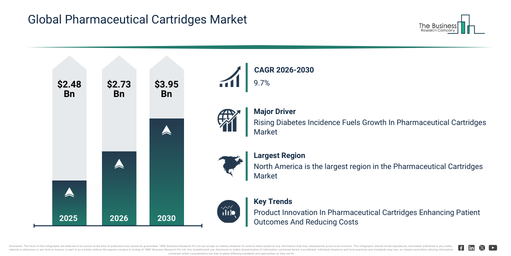
    The pharmaceutical cartridges market size has experienced swift expansion in recent years. It is anticipated to grow from $2.48 billion in 2025 to $2.73 billion in 2026, demonstrating a compound annual growth rate (CAGR) of 10.0%. The market’s historical growth can be ascribed to elements such as the dependence on conventional large-volume cartridges, the restricted availability of pre-filled dual-chamber systems, a rise in injectable drug adoption, expanding pharmaceutical manufacturing capabilities, and the early incorporation of pen injector devices.

    The pharmaceutical cartridges market is projected to experience robust expansion over the coming years. Its valuation is anticipated to reach $3.95 billion by 2030, exhibiting a compound annual growth rate (CAGR) of 9.7%. This anticipated growth during the forecast timeframe is primarily driven by factors such as the advancement of wearable injectors and intelligent delivery systems, the broadening of dual-chamber cartridge customization options, an increase in the introduction of biologics and specialized medications, the escalating uptake of pre-filled large-volume cartridges, and the expanding incorporation of digital monitoring features into injectors. Key developments expected within this period encompass a surging demand for both pre-filled and dual-chamber cartridges, the proliferation of wearable and autoinjector drug delivery technologies, a greater acceptance of glass and plastic as cartridge materials, the widening scope of applications in dental anesthesia and pen injectors, and a heightened emphasis on tailor-made cartridges to meet specific pharmaceutical requirements.

    Get A Free Sample Report With In-Depth Market Insights:

    https://thebusinessresearchcompany.com/sample_request?id=25274664&type=smp&name=Pharmaceutical%20Cartridges%20Market%20Report%202026&utm_source=Blogs&utm_medium=Paid&utm_campaign=Oct_PR

    Pharmaceutical Cartridges Market Growth Backed By Core Demand Fundamentals

    The rising occurrence of diabetes is projected to fuel the expansion of the pharmaceutical cartridges market moving ahead. Diabetes is defined as a long-term health condition where the body fails to adequately manage blood sugar (glucose) concentrations, stemming from either inadequate insulin generation or inefficient utilization of insulin. The growing prevalence of diabetes is influenced by elements like increasing obesity levels, inactive lifestyles, poor dietary habits, an older demographic, and hereditary factors. In the context of diabetes care, pharmaceutical cartridges facilitate the accurate administration of insulin, essential for effective and regulated blood sugar control. As an illustration, in June 2024, data from the National Health Service (NHS), a UK-based government body, revealed an almost 25% increase in instances of non-diabetic hyperglycemia, or pre-diabetes, among those under 40 years old over the specified period, climbing from 173,166 in 2022 to 216,440 in 2023. Consequently, the escalating occurrence of diabetes is a key impetus for the expansion of the pharmaceutical cartridges market.

    Pharmaceutical Cartridges Market Segments: Where Is Growth Concentrated?

    The pharmaceutical cartridges market covered in this report is segmented –

    1) By Type: Dual Chamber Cartridges, Large-Volume Cartridges

    2) By Material Type: Glass Cartridges, Plastic Cartridges

    3) By Application: Dental Anesthesia, Pen Injectors, Autoinjectors, Wearable Injectors

    4) By End Use: Pharmaceuticals, Biotechnology, Research Organizations, Other End Uses

    Subsegments:

    1) By Dual Chamber Cartridges: Pre-filled Dual Chamber Cartridges, Customizable Dual Chamber Cartridges

    2) By Large-Volume Cartridges: Pre-filled Large-Volume Cartridges, Non-Prefilled Large-Volume Cartridges

    Pharmaceutical Cartridges Market Growth Trends Reshaping The Competitive Landscape

    Leading companies in the pharmaceutical cartridges market are concentrating on developing innovative products, such as advanced self-administration systems, to facilitate patients’ at-home administration of large volumes of biologics, thereby enhancing convenience and reducing healthcare costs. These self-administration systems enable patients to administer medications, particularly injectables, without professional assistance by utilizing advanced technologies like prefilled and preloaded cartridges. For instance, in July 2024, SCHOTT Pharma AG & Co. KGaA, a Germany-based healthcare company, introduced cartriQ RTU cartridges, which are 10-ml ready-to-use cartridges designed for storing and administering highly sensitive biologics used to treat various conditions, including cancer and cardiovascular diseases. This prefilled and pre-loaded system simplifies self-administration for patients, enhancing convenience and reducing healthcare costs. This large-format solution is specifically tailored to protect biologics, which are revolutionizing the treatment of multiple serious diseases.

    Pharmaceutical Cartridges Market Key Participants And Competitive Landscape

    Major companies operating in the pharmaceutical cartridges market are Merck KGaA, Becton Dickinson and Company (BD), Baxter Healthcare Corporation, Clariant AG, Terumo Corporation, Catalent Inc., Sigma-Aldrich Corporation, Nipro Corporation, Schott AG, West Pharmaceutical Services Inc., Gerresheimer AG, Vetter Pharma International GmbH, Dätwyler Holding Inc., Stevanato Group S.p.A., groninger and Co. gmbh, Shandong Medicinal Glass Co. Ltd., Ypsomed AG, SGD Pharma, Consort Medical plc

    View The Full Pharmaceutical Cartridges Market Report:

    https://thebusinessresearchcompany.com/report/pharmaceutical-cartridges-global-market-report?utm_source=Blogs&utm_medium=Paid&utm_campaign=Oct_PR

    Pharmaceutical Cartridges Market Geographic Landscape: Which Region Dominates Industry Growth?

    North America was the largest region in the pharmaceutical cartridges market in 2025. Asia-Pacific is expected to be the fastest-growing region in the forecast period. The regions covered in the pharmaceutical cartridges market report are Asia-Pacific, South East Asia, Western Europe, Eastern Europe, North America, South America, Middle East, Africa.

    Reach Out To Our Team:

    The Business Research Company: https://www.thebusinessresearchcompany.com/

    Americas: +1 310-496-7795

    Asia: +44 7882 955267 & +91 8897263534

    Europe: +44 7882 955267

    Email us at: marketing@tbrc.info

    Follow us on:

    LinkedIn: https://in.linkedin.com/company/the-business-research-company

    YouTube: https://www.youtube.com/channel/UC24_fI0rV8cR5DxlCpgmyFQ

    Global Market Model: https://www.thebusinessresearchcompany.com/global-market-model
  • Pharmaceutical API Manufacturing Market Forecast To Reach $347.49 Billion By 2030: Key Trends Explained

    Pharmaceutical API Manufacturing Market Forecast To Reach $347.49 Billion By 2030: Key Trends Explained

    Featuring market attractiveness scoring, total addressable market sizing, company benchmarking matrices, interactive Excel dashboards, deeper supply chain intelligence, emerging startup tracking, and granular product-level insights, The Business Research Company’s 2026 market reports are built to deliver research that is both more actionable and more strategically valuable.

    Pharmaceutical API Manufacturing Market Growth From $266.71 Billion In 2026 To $347.49 Billion By 2030 At A CAGR Of 6.8%

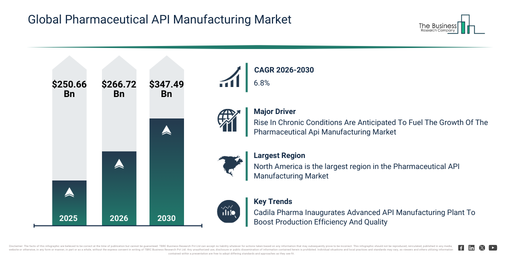
    The pharmaceutical api manufacturing market size has demonstrated significant expansion over recent years. It is anticipated to expand from $250.66 billion in 2025 to $266.72 billion in 2026, achieving a compound annual growth rate (CAGR) of 6.4%. This historical growth can be linked to factors like the restricted availability of advanced API manufacturing facilities, a reliance on traditional batch processing, the expansion of pharmaceutical product pipelines, a growing incidence of chronic and lifestyle diseases, and the adoption of standard quality management systems.

    The pharmaceutical API manufacturing market is set for significant expansion in the coming years, with projections indicating a rise to $347.49 billion by 2030, exhibiting a compound annual growth rate (CAGR) of 6.8%. This anticipated growth during the forecast period is primarily driven by the advancement of biologics and complex molecules, the increasing adoption of continuous manufacturing processes, greater investment in research and development for specialty APIs, the escalating demand for personalized and targeted therapeutics, and evolving regulatory requirements along with compliance monitoring. Prominent trends expected in the forecast period include a growing need for high-purity chemical and biological APIs, an increase in contract manufacturing and outsourcing services, a reinforced emphasis on quality control and regulatory adherence, the broadening of specialty APIs for targeted treatments, and the integration of continuous manufacturing and process optimization techniques.

    Get A Free Sample Report With In-Depth Market Insights:

    https://thebusinessresearchcompany.com/sample_request?id=44285621&type=smp&name=Pharmaceutical%20API%20Manufacturing%20Market%20Report%202026&utm_source=Blogs&utm_medium=Paid&utm_campaign=Oct_PR

    Pharmaceutical API Manufacturing Market Growth Catalysts And Demand Drivers

    The pharmaceutical API manufacturing market is anticipated to expand due to the increasing prevalence of chronic conditions. These long-term health issues, often lifelong and without a complete cure, necessitate effective medication. Active pharmaceutical ingredients (APIs) are crucial for ensuring the quality, efficacy, and safety of these essential drugs, which are produced through pharmaceutical API manufacturing to manage chronic diseases. As evidence, the Centers for Disease Control and Prevention (CDC), a US-based federal agency, reported in January 2023 that in 2023, 76.4% of U.S. adults, roughly 194 million people, had at least one chronic condition. The prevalence rates were 59.5% for young adults, 78.4% for midlife adults, and 93.0% for older adults. Consequently, the growing incidence of chronic conditions is a significant factor propelling the pharmaceutical API manufacturing market.

    Pharmaceutical API Manufacturing Market Segment Analysis: What Are The Core Market Categories?

    The pharmaceutical api manufacturing market covered in this report is segmented –

    1) By Therapy Area: Cardiovascular Disorders, Metabolic Disorders, Neurological Disorders, Oncology, Musculoskeletal Disorders, Other Therapeutic Uses

    2) By API Type: Chemical API, Biological API

    3) By Drug Type: Prescription Drugs, Over-The-Counter (OTC) Drugs

    Subsegments:

    1) By Cardiovascular Disorders: Hypertension Treatments, Cholesterol Management, Anticoagulants

    2) By Metabolic Disorders: Diabetes Medications, Obesity Management, Hormonal Therapies

    3) By Neurological Disorders: Antiepileptics, Antidepressants, Neurodegenerative Disease Treatments

    4) By Oncology: Chemotherapeutics, Targeted Therapies, Immunotherapies

    5) By Musculoskeletal Disorders: Pain Management Medications, Osteoporosis Treatments, Anti-inflammatory Drugs

    6) By Other Therapeutic Uses: Infectious Disease Treatments, Respiratory Disorder Medications, Gastrointestinal Disorder Treatments

    Pharmaceutical API Manufacturing Market Trends Shaping Long-Term Demand

    Leading firms operating in the pharmaceutical API manufacturing market are concentrating on creating novel solutions, such as API production facilities, to boost manufacturing efficiency, uphold regulatory standards, and elevate product quality. An API (Active Pharmaceutical Ingredient) manufacturing plant is a dedicated establishment built for making active pharmaceutical ingredients, which constitute the biologically active parts utilized in drug formulations. For example, in November 2023, Cadila Pharma, an India-based pharmaceutical company, inaugurated a new Active Pharmaceutical Ingredients (API) production facility. This cutting-edge facility incorporates sophisticated Distributed Control System (DCS) automation technology, intended to improve production efficiency and guarantee high purity levels in the APIs. This expansion highlights Cadila’s dedication to satisfying the increasing worldwide need for quality pharmaceuticals, simultaneously generating employment within the area and aligning with its wider strategy of innovation across diverse therapeutic fields.

    Pharmaceutical API Manufacturing Market Top Companies Driving Competitive Growth

    Major companies operating in the pharmaceutical api manufacturing market are Pfizer Inc, Sanofi S.A, Teva Pharmaceutical Industries Ltd., Aurobindo Pharma, Dr. Reddy’s Laboratories, BASF SE, Sun Pharmaceutical Industries Ltd, Novartis AG, Lupin Ltd, Cipla Inc., Arlak Biotech, Healthkind Labs Pvt. Ltd, SwisscheM Healthcare Pvt. Ltd, Apikos Pharma, Kolaz Biotech, CStone Pharma, CARsgen Therapeutics, JW Therapeutics, BeiGene, Takeda Pharmaceuticals, Astellas Pharma Inc, Otsuka Pharmaceutical Co Ltd, Legend Biotech Co, Zai Lab, Daiichi Pharmaceutical, Sankyo, GlaxoSmithKline (GSK), AstraZeneca, Abbott Laboratories, Roche Holding AG, Merck & Co, Boehringer Ingelheim, Zentiva, Microgen, Geropharm, Valenta, NovaMedica, Veropharm, Celon Pharma, SynBio, Generium, Skopinpharm, ALMEDIS, Biocad, Farmacol, Polpharma, BioVectra, Celgene Corporation, Kashiv Pharma, Cambrex, Eli Lilly and Company, Bristol-Myers Squibb Company, Apotex, Gilead Sciences, AbbVie Inc, Hisun USA Inc, AMEGA Biotech, BioMarin Pharmaceutical, Ferring Pharmaceuticals, Wavelength Pharmaceuticals, SAUDIBIO, Tabuk Pharmaceuticals, Bayer, Adcock Ingram, Johnson & Johnson, Aspen

    View The Full Pharmaceutical API Manufacturing Market Report:

    https://thebusinessresearchcompany.com/report/pharmaceutical-api-manufacturing-global-market-report?utm_source=Blogs&utm_medium=Paid&utm_campaign=Oct_PR

    Pharmaceutical API Manufacturing Market Largest Region: Which Geography Holds The Highest Market Share?

    North America was the largest region in the pharmaceutical API manufacturing market in 2025. The Middle East is expected to be the fastest-growing region in the global pharmaceutical API manufacturing market share during the forecast period. The regions covered in the pharmaceutical api manufacturing market report are Asia-Pacific, South East Asia, Western Europe, Eastern Europe, North America, South America, Middle East, Africa.

    Reach Out To Our Team:

    The Business Research Company: https://www.thebusinessresearchcompany.com/

    Americas: +1 310-496-7795

    Asia: +44 7882 955267 & +91 8897263534

    Europe: +44 7882 955267

    Email us at: marketing@tbrc.info

    Follow us on:

    LinkedIn: https://in.linkedin.com/company/the-business-research-company

    YouTube: https://www.youtube.com/channel/UC24_fI0rV8cR5DxlCpgmyFQ

    Global Market Model: https://www.thebusinessresearchcompany.com/global-market-model

  • Pharma Grade Cellulose Powder Market Analysis Through 2030: Market Size, Growth Trends And Industry Outlook

    Pharma Grade Cellulose Powder Market Analysis Through 2030: Market Size, Growth Trends And Industry Outlook

    Built to provide research that’s more actionable and strategically valuable, The Business Research Company’s 2026 market reports include market attractiveness analysis, total addressable market sizing, company benchmarking matrices, interactive Excel dashboards, broader supply chain intelligence, emerging startup tracking, and in-depth product insights.

    Pharma Grade Cellulose Powder Market Expansion Outlook: What Revenue Opportunities Are Ahead?

    The pharma grade cellulose powder market has witnessed strong expansion over recent years. It is projected to increase from $1.55 billion in 2025 to $1.65 billion in 2026, achieving a compound annual growth rate (CAGR) of 6.1%. Historically, this market’s growth can be attributed to an upsurge in oral drug formulations, the widespread adoption of cellulose excipients, the broadening scope of pharmaceutical manufacturing, the necessity for formulation stability, and the regulatory approval of cellulose-based excipients.

    The market for pharma grade cellulose powder is projected to experience robust expansion over the coming years, reaching a valuation of $2.09 billion by 2030, driven by a compound annual growth rate (CAGR) of 6.1%. This anticipated growth during the forecast period is fueled by several factors, including the expanding use in nutraceutical applications, the increasing need for clean-label excipients, the development of generic drug pipelines, innovations in excipient engineering, and stricter sustainability mandates. Key trends emerging during this timeframe encompass a rising preference for plant-based pharmaceutical excipients, broader application in solid oral dosage forms, increasing uptake of microcrystalline cellulose, the proliferation of multi-functional cellulose excipients, and a heightened emphasis on sustainable excipient procurement.

    Get A Free Sample Report With In-Depth Market Insights:

    https://thebusinessresearchcompany.com/sample_request?id=79887483&type=smp&name=Pharma%20Grade%20Cellulose%20Powder%20Market%20Report%202026&utm_source=Blogs&utm_medium=Paid&utm_campaign=Oct_PR

    Pharma Grade Cellulose Powder Market Opportunity Drivers: What’s Unlocking New Revenue Potential?

    The increasing output from pharmaceutical production is anticipated to drive the expansion of the pharma-grade cellulose powder market moving forward. Pharmaceutical production involves the creation of medicines through the formulation, synthesis, and meticulous quality control of active ingredients and excipients, ensuring safety, effectiveness, and adherence to regulatory standards. The growth in pharmaceutical production is attributed to the increase in chronic diseases, which necessitate continuous and long-term medication for their effective management. Pharma-grade cellulose powder plays a supportive role in pharmaceutical production by acting as a reliable binder, filler, and stabilizer, which helps in maintaining tablet integrity and guaranteeing uniform drug distribution. For instance, in June 2023, as per the European Federation of Pharmaceutical Industries and Associations (EFPIA), a Belgium-based trade association representing Europe’s pharmaceutical industry, the total pharmaceutical production in Europe reached $422,803 million (€390,000 million) in 2023, an increase from $393,857 million (€363,300 million) in 2022. Thus, the escalating pharmaceutical production is fueling the growth of the pharma-grade cellulose powder market.

    Pharma Grade Cellulose Powder Market Segment Breakdown: Which Categories Lead On Revenue?

    The pharma grade cellulose powder market covered in this report is segmented –

    1) By Product Type: Microcrystalline Cellulose (MCC), Carboxymethyl Cellulose (CMC), Hydroxypropyl Methylcellulose (HPMC), Hydroxypropyl Cellulose (HPC)

    2) By Functionality: Binding Agent, Thickening Agent, Stabilizer, Disintegrant, Coating Agent

    3) By Application: Pharmaceuticals, Nutraceuticals, Cosmetics, Other Applications

    4) By End-User: Contract Research Organizations (CROs), Pharmaceutical and Biotechnology Companies, Academic And Research Institutions, Manufacturers Of Dietary Supplements, Food And Beverage Industries

    Subsegments:

    1) By Microcrystalline Cellulose: Powder, Granules

    2) By Carboxymethyl Cellulose (CMC): Sodium Carboxymethyl Cellulose (CMC), Calcium Carboxymethyl Cellulose (CMC), Other Carboxymethyl Cellulose (CMC) Variants

    3) By Hydroxypropyl Methylcellulose (HPMC): Low Viscosity Hydroxypropyl Methylcellulose (HPMC), Medium Viscosity Hydroxypropyl Methylcellulose (HPMC), High Viscosity Hydroxypropyl Methylcellulose (HPMC)

    4) By Hydroxypropyl Cellulose: Low Substitution Hydroxypropyl Cellulose (HPC), High Substitution Hydroxypropyl Cellulose (HPC)

    Pharma Grade Cellulose Powder Market Innovation Trends Shaping Future Development

    Leading enterprises in the pharma-grade cellulose powder market are concentrating on establishing new microcrystalline cellulose facilities to boost their production capacity and reinforce supply chain capabilities for pharmaceutical excipients. A microcrystalline cellulose facility is a specialized site where purified cellulose undergoes precise chemical and mechanical treatments to yield uniform, fine-grade particles suitable for pharmaceutical applications. For instance, in September 2023, Nitika Pharmaceuticals Specialties, an India-based excipient manufacturing company, unveiled Tabcell, India’s largest microcrystalline cellulose (MCC) manufacturing plant located in Nagpur. This cutting-edge plant, with an installed capacity of 1200 metric tons, was inaugurated by Union Minister Nitin Gadkari and marks a significant achievement under the Government of India’s Production Linked Incentive (PLI) scheme for excipients. The new facility bolsters Nitika Pharma’s status as a global leader in pharmaceutical excipients, supporting both domestic requirements and exports to over 92 countries, while also contributing to the “Make in India” initiative and generating substantial local employment opportunities.

    Pharma Grade Cellulose Powder Market Leading Players And Competitive Positioning

    Major companies operating in the pharma grade cellulose powder market are Roquette Frères, Ashland Global, JRS Pharma, DFE Pharma, Sigachi Industries Ltd., Accent Microcell Ltd., FMC Corporation, Dow Chemical Company, Shin-Etsu Chemical Co. Ltd., Colorcon, Nippon Paper Industries Co. Ltd., Rayonier Advanced Materials, Lotte Fine Chemical, Mingtai Chemical Co. Ltd., Weifang Lude Chemical Co. Ltd., Shandong Head Co. Ltd., Zhejiang Kehong Chemical Co. Ltd., Anhui Sunhere Pharmaceutical Excipients Co. Ltd., Maple Biotech Pvt. Ltd., Ankit Pulps & Boards Pvt. Ltd.

    View The Full Pharma Grade Cellulose Powder Market Report:

    https://thebusinessresearchcompany.com/report/pharma-grade-cellulose-powder-global-market-report?utm_source=Blogs&utm_medium=Paid&utm_campaign=Oct_PR

    Pharma Grade Cellulose Powder Market Regional Analysis: Which Region Leads By Revenue?

    North America was the largest region in the pharma-grade cellulose powder market in 2025. The regions covered in the pharma grade cellulose powder market report are Asia-Pacific, South East Asia, Western Europe, Eastern Europe, North America, South America, Middle East, Africa.

    Reach Out To Our Team:

    The Business Research Company: https://www.thebusinessresearchcompany.com/

    Americas: +1 310-496-7795

    Asia: +44 7882 955267 & +91 8897263534

    Europe: +44 7882 955267

    Email us at: marketing@tbrc.info

    Follow us on:

    LinkedIn: https://in.linkedin.com/company/the-business-research-company

    YouTube: https://www.youtube.com/channel/UC24_fI0rV8cR5DxlCpgmyFQ

    Global Market Model: https://www.thebusinessresearchcompany.com/global-market-model
  • Pharma Grade Calcium Sulphate Market Outlook From 2026 To 2030: Key Growth Factors And Future Opportunities

    Pharma Grade Calcium Sulphate Market Outlook From 2026 To 2030: Key Growth Factors And Future Opportunities

    Backed by market attractiveness analysis, total addressable market sizing, company benchmarking matrices, interactive Excel dashboards, wider supply chain intelligence, emerging startup coverage, and detailed product-level insights, The Business Research Company’s 2026 market reports are designed to offer research that is more actionable and strategically valuable than ever.

    Pharma Grade Calcium Sulphate Market Growth Potential: How Will Market Size Shift Through 2030?

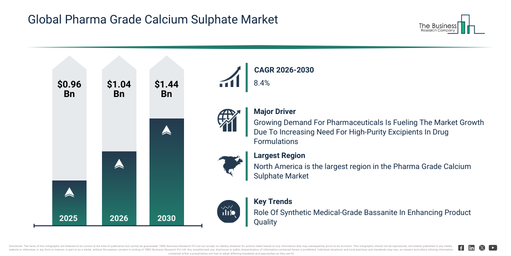
    Recent years have seen robust growth in the pharma grade calcium sulphate market size. The market is projected to expand from $0.96 billion in 2025 to $1.04 billion in 2026, exhibiting a compound annual growth rate (CAGR) of 8.5%. Historically, this growth has been driven by factors such as an increase in pharmaceutical manufacturing, a greater demand for solid dosage forms, the expansion of generic drug production, the increasing adoption of calcium-based excipients, and a stronger regulatory focus on excipient quality.

    The pharma grade calcium sulphate market is anticipated to show significant expansion in the upcoming years. It is projected to attain a size of $1.44 billion by 2030, demonstrating a compound annual growth rate (CAGR) of 8.4%. This growth during the forecast period can be attributed to factors such as the increase in global drug production, the growing application of high-performance excipients, an escalating demand for consistent formulation quality, the enlargement of nutraceutical manufacturing, and advancements in excipient processing. Prominent trends expected in this period include an increasing requirement for high-purity pharmaceutical excipients, their expanding use in tablet and capsule formulations, rising adoption in calcium supplement manufacturing, the broadening of quality-controlled excipient production, and an amplified focus on materials that comply with regulatory standards.

    Get A Free Sample Report With In-Depth Market Insights:

    https://thebusinessresearchcompany.com/sample_request?id=35208988&type=smp&name=Pharma%20Grade%20Calcium%20Sulphate%20Market%20Report%202026&utm_source=Blogs&utm_medium=Paid&utm_campaign=Oct_PR

    Pharma Grade Calcium Sulphate Market Growth Momentum: What Factors Are Shaping Demand?

    The increasing need for pharmaceutical products is projected to boost expansion in the pharma grade calcium sulphate market. Pharmaceuticals are defined as medicines and drugs created, produced, and utilized for the diagnosis, treatment, or prevention of illnesses in both humans and animals. This escalating demand for pharmaceuticals largely stems from the increasing incidence of chronic ailments, compelling a greater number of people to rely on extended medication regimens for managing conditions like diabetes, cardiovascular disorders, and cancer. As a high-purity excipient, pharma grade calcium sulphate improves pharmaceutical formulations by guaranteeing uniform tablet hardness, overall stability, and the regulated release of active components. For example, data from Eurostat, the European Union’s official statistical agency based in Luxembourg, revealed in April 2024 that the EU’s imports of medicinal and pharmaceutical goods rose by 6.1% in 2023, reaching a total of $137.4 billion (€119 billion) when compared to the prior year. Over the identical timeframe, EU exports amounted to $319.2 billion (€277 billion), leading to a significant trade surplus of $182.0 billion (€158 billion). Consequently, the increasing need for pharmaceuticals is a key factor propelling the expansion of the pharma grade calcium sulphate market.

    Pharma Grade Calcium Sulphate Market Segmentation: How Does The Market Break Down By Category?

    The pharma grade calcium sulphate market covered in this report is segmented –

    1) By Type: Calcium Sulphate Dihydrate, Calcium Sulphate Hemihydrate, Calcium Sulphate Anhydrite

    2) By Application: Pharmaceutical Excipients, Binders In Tablet Formulations, Calcium Supplements, Diagnostic Agents

    3) By Distribution Channel: Direct Distribution, Online Distribution, Wholesale Distribution, Retail Distribution

    Subsegments:

    1) By Calcium Sulphate Dihydrate: Fine Powder, Granular Form, Micronized Grade

    2) By Calcium Sulphate Hemihydrate: Alpha Hemihydrate, Beta Hemihydrate, High Purity Hemihydrate

    3) By Calcium Sulphate Anhydrite: Natural Anhydrite, Synthetic Anhydrite, High-Density Anhydrite

    Pharma Grade Calcium Sulphate Market Trends Redefining Industry Growth

    Leading companies in the pharma grade calcium sulphate market are concentrating on creating novel products, leveraging synthetic medical-grade bassanite to improve the purity and consistency of their calcium sulphate offerings. This synthetic medical-grade bassanite, identified as CaSO₄·0.5H₂O and characterized by its high purity and partial dehydration, facilitates the production of pharma-grade calcium sulphate by supplying a uniform, uncontaminated material that adheres to rigorous regulatory requirements for medical and pharmaceutical purposes. An example of this trend is the launch in February 2025 by Sree Chitra Tirunal Institute for Medical Sciences & Technology, an Indian medical institution, of Caspro & Bonyx. These are pioneering drug-eluting bone graft products, also developed with synthetic medical-grade bassanite to guarantee elevated purity, biocompatibility, and regulated drug delivery for sophisticated orthopedic uses. Caspro itself is a self-hardening, malleable bone cement composed of calcium sulfate hemihydrate fortified with phosphate ions, making it suitable for filling bone defects and releasing drugs at the implantation site for over 21 days. Bonyx, on the other hand, comprises osteoconductive bioceramic beads that can be vacuum-filled with antibiotics or other liquid medications, allowing for sustained drug release for more than 30 days. Such products signify a substantial advancement in localized treatment for bone infections and regeneration, illustrating the potential of pharma-grade calcium sulphate in advanced biomedical solutions that comply with strict international benchmarks.

    Pharma Grade Calcium Sulphate Market Competitive Overview And Top Companies

    Major companies operating in the pharma grade calcium sulphate market are Thermo Fisher Scientific Inc., Merck KGaA, Honeywell International Inc., Avantor Inc., Spectrum Chemical Manufacturing Corp., MP Biomedicals LLC, Anhui Sunhere Pharmaceutical Excipients, Huzhou Zhanwang Pharmaceutical Co. Ltd., Loba Chemie Pvt. Ltd., SRL Chemical, GFS Chemicals Inc., American Elements, Junsei Chemical Co. Ltd., Tokyo Chemical Industry Co. Ltd., Fagron N.V., Mallinckrodt Pharmaceuticals, Ashland Global Holdings Inc., JRS Pharma, DFE Pharma, Roquette Frères

    View The Full Pharma Grade Calcium Sulphate Market Report:

    https://thebusinessresearchcompany.com/report/pharma-grade-calcium-sulphate-global-market-report?utm_source=Blogs&utm_medium=Paid&utm_campaign=Oct_PR

    Pharma Grade Calcium Sulphate Market Geographic Distribution And Regional Opportunities

    North America was the largest region in the pharma grade calcium sulphate market in 2025. Asia-Pacific is expected to be the fastest-growing region in the forecast period. The regions covered in the pharma grade calcium sulphate market report are Asia-Pacific, South East Asia, Western Europe, Eastern Europe, North America, South America, Middle East, Africa.

    Reach Out To Our Team:

    The Business Research Company: https://www.thebusinessresearchcompany.com/

    Americas: +1 310-496-7795

    Asia: +44 7882 955267 & +91 8897263534

    Europe: +44 7882 955267

    Email us at: marketing@tbrc.info

    Follow us on:

    LinkedIn: https://in.linkedin.com/company/the-business-research-company

    YouTube: https://www.youtube.com/channel/UC24_fI0rV8cR5DxlCpgmyFQ

    Global Market Model: https://www.thebusinessresearchcompany.com/global-market-model
  • Pharma 5.0 Market Growth Forecast: Market Size, Key Trends And Emerging Opportunities Through 2030

    Pharma 5.0 Market Growth Forecast: Market Size, Key Trends And Emerging Opportunities Through 2030

    Featuring market attractiveness scoring, total addressable market sizing, company benchmarking matrices, interactive Excel dashboards, deeper supply chain intelligence, emerging startup tracking, and granular product-level insights, The Business Research Company’s 2026 market reports are built to deliver research that is both more actionable and more strategically valuable.

    Pharma 5.0 Market Value Analysis: What Growth Lies Ahead Over The Forecast Period?

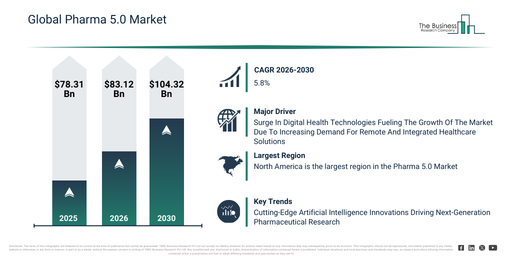
    The pharma 5.0 market size has experienced strong growth in recent years. It is anticipated to expand from $78.31 billion in 2025 to $83.12 billion in 2026, at a compound annual growth rate (CAGR) of 6.1%. Historically, this growth can be attributed to factors like reliance on traditional pharmaceutical R&D processes, limited adoption of digital tools, increasing demand for personalized therapies, a greater regulatory focus on patient outcomes, and investment in conventional manufacturing technologies.

    The pharma 5.0 market is forecast to undergo significant growth in the coming years. It is predicted to expand to $104.32 billion in 2030, demonstrating a compound annual growth rate (CAGR) of 5.8%. This anticipated rise throughout the forecast period stems from factors such as the deployment of AI-driven drug discovery platforms, the expansion of cloud-based healthcare solutions, the integration of RPA and digital twins into manufacturing, the growing adoption of genomic sequencing and pharmacogenomics, and increased collaboration between pharmaceutical and digital health startups. Noteworthy trends during this period encompass the incorporation of patient-centric digital health solutions, advancements in precision medicine and personalized treatment plans, the adoption of smart manufacturing and automation in pharma, the broadening of remote monitoring and virtual healthcare platforms, and the escalating use of predictive analytics for drug development and clinical trials.

    Get A Free Sample Report With In-Depth Market Insights:

    https://thebusinessresearchcompany.com/sample_request?id=27377&type=smp&name=Pharma%205.0%20Market%20Report%202026&utm_source=Blogs&utm_medium=Paid&utm_campaign=Oct_PR

    Pharma 5.0 Market Expansion Drivers: What’s Shaping Future Growth?

    The anticipated expansion of the pharmacy 5.0 market is attributed to the increasing prevalence of digital health technologies. These technologies encompass a wide array of digital platforms, software, and devices designed to aid healthcare provision, betterment of patient results, and greater efficiency in health systems. Their growth stems from a rising need for remote healthcare options offering accessible, immediate access to medical support. Pharmacy 5.0 facilitates digital health technologies through the smooth incorporation of AI-powered insights, customized treatment, and automated workflows, collectively enhancing patient oversight, precision in treatment, and the effectiveness of healthcare delivery. As an illustration, data from October 2024 by the Kaiser Family Foundation (KFF), a US-based non-profit health policy organization, indicated significant demographic differences in telehealth usage among Medicare beneficiaries, specifically 27% among urban dwellers and 19% among those in rural areas. Racial and ethnic breakdowns revealed usage rates of 31% for Asian/Pacific Islander beneficiaries, 30% for Hispanic beneficiaries, 26% for Black beneficiaries, 25% for American Indian/Alaska Native beneficiaries, and 24% for non-Hispanic White beneficiaries, which demonstrates ongoing acceptance of digital healthcare solutions. Consequently, the expansion of digital health technologies is a key factor propelling the development of the pharmacy 5.0 market.

    Pharma 5.0 Market Segment Trends And Revenue Contributors

    The pharma 5.0 market covered in this report is segmented –

    1) By Type: Personalized Medicine Platforms, Digital Therapeutics, Artificial Intelligence-Driven Drug Discovery, Smart Manufacturing, Artificial Intelligence-Based Diagnostics

    2) By Technology: Cloud Computing, Artificial Intelligence (AI), Machine Learning (ML), Internet of Things (IoT), Robotic Process Automation (RPA)

    3) By Deployment Mode: On-Premise, Cloud-Based

    4) By Therapeutic Area: Cardiovascular Diseases, Oncology, Infectious Diseases, Neurology, Other Therapeutic Areas

    5) By End-User: Pharmaceutical And Biotech Companies, Healthcare Providers, Contract Research Organizations (CROs), Research Institutes

    Subsegments:

    1) By Personalized Medicine Platforms: Genomic Sequencing, Biomarker Identification, Pharmacogenomics, Patient Data Integration, Precision Drug Formulation

    2) By Digital Therapeutics: Mobile Health Applications, Cognitive Behavioral Therapy (CBT) Tools, Chronic Disease Management Software, Remote Monitoring Devices

    3) By Artificial Intelligence-Driven Drug Discovery: Target Identification, Molecule Screening, Predictive Toxicology, Drug Repurposing, Clinical Trial Optimization

    4) By Smart Manufacturing (Digital Twins and Automation): Process Automation, Digital Twin Simulation, Predictive Maintenance, Quality Control Systems, Robotics In Manufacturing

    5) By Artificial Intelligence-Based Diagnostics: Medical Imaging Analysis, Genomic Data Interpretation, Predictive Risk Modeling, Diagnostic Decision Support Systems

    Pharma 5.0 Market Strategic Trends: What Defines The Next Growth Phase?

    Major companies operating in the pharma 5.0 market are concentrating on creating sophisticated solutions, such as generative artificial intelligence (AI) cloud services, to expedite drug discovery, refine clinical trials, enhance personalized treatment plans, and boost overall operational effectiveness. Generative artificial intelligence (AI) cloud services are defined as cloud-based platforms that leverage AI models to generate novel content, insights, or solutions by identifying patterns in existing data. For example, in March 2023, NVIDIA Corporation, a US-based technology firm, introduced BioNeMo Cloud, an innovative generative artificial intelligence (AI) platform intended to revolutionize life sciences research and development. This new service was developed through partnerships with prominent biotech and pharmaceutical companies, including Amgen and AstraZeneca, with the aim of delivering advanced AI models for accelerated drug discovery. BioNeMo Cloud offers researchers large language models (LLMs) specifically adapted for biomolecular data, facilitating the rapid prediction of protein structures, molecular interactions, and potential new drug candidates.

    Pharma 5.0 Market Competitive Landscape: Which Companies Lead The Industry?

    Major companies operating in the pharma 5.0 market are Pfizer Incorporated, Johnson & Johnson, Roche Holding AG, Sanofi S.A., Bristol Myers Squibb Company, AstraZeneca Plc, Novartis AG, GSK Plc, Eli Lilly and Company, Ericsson AB, Merck KGaA, Moderna Inc., BioNTech SE, Teva Pharmaceuticals Industries Ltd., Rockwell Automation Inc., Sun Pharmaceutical Industries Ltd., 3D Systems Corporation, XtalPi Inc., Insilico Medicine Inc.

    View The Full Pharma 5.0 Market Report:

    https://thebusinessresearchcompany.com/report/pharma-50-global-market-report?utm_source=Blogs&utm_medium=Paid&utm_campaign=Oct_PR

    Pharma 5.0 Market Largest Region By Revenue And Market Share

    North America was the largest region in the pharma 5.0 market in 2025. Asia-Pacific is expected to be the fastest-growing region in the forecast period. The regions covered in the pharma 5.0 market report are Asia-Pacific, South East Asia, Western Europe, Eastern Europe, North America, South America, Middle East, Africa.

    Reach Out To Our Team:

    The Business Research Company: https://www.thebusinessresearchcompany.com/

    Americas: +1 310-496-7795

    Asia: +44 7882 955267 & +91 8897263534

    Europe: +44 7882 955267

    Email us at: marketing@tbrc.info

    Follow us on:

    LinkedIn: https://in.linkedin.com/company/the-business-research-company

    YouTube: https://www.youtube.com/channel/UC24_fI0rV8cR5DxlCpgmyFQ

    Global Market Model: https://www.thebusinessresearchcompany.com/global-market-model

  • Pharma 4.0 Market CAGR Forecast Through 2030: Key Trends Shaping Industry Expansion

    Pharma 4.0 Market CAGR Forecast Through 2030: Key Trends Shaping Industry Expansion

    Built to provide research that’s more actionable and strategically valuable, The Business Research Company’s 2026 market reports include market attractiveness analysis, total addressable market sizing, company benchmarking matrices, interactive Excel dashboards, broader supply chain intelligence, emerging startup tracking, and in-depth product insights.

    Pharma 4.0 Market Size Forecast: How Big Could The Market Get By 2030?

    The pharma 4.0 market has seen substantial expansion in recent years. Its size is expected to increase from $21.68 billion in 2025 to $26.19 billion in 2026, demonstrating a compound annual growth rate (CAGR) of 20.8%. This historical growth can be ascribed to elements such as escalating manufacturing inefficiencies, intensified regulatory scrutiny, elevated drug production costs, frequent product recalls, and fragmented pharma IT systems.

    The pharma 4.0 market is anticipated to experience substantial expansion over the upcoming years. This market is projected to reach $50.01 billion by 2030, demonstrating a compound annual growth rate (CAGR) of 17.6%. This expansion during the projection period stems from factors such as increasing demand for personalized medicines, the uptake of continuous manufacturing models, the broadening of digital regulatory frameworks, the necessity for robust pharma supply chains, and rising investments in smart factories. Key trends anticipated during the forecast encompass real-time quality monitoring alongside continuous manufacturing, automation for regulatory-driven data integrity and compliance, enhanced smart supply chain visibility and traceability, the facilitation of personalized and small-batch drug manufacturing, and the advancement of workforce digital upskilling and human–machine collaboration.

    Get A Free Sample Report With In-Depth Market Insights:

    https://thebusinessresearchcompany.com/sample_request?id=20123654&type=smp&name=Pharma%204.0%20Market%20Report%202026&utm_source=Blogs&utm_medium=Paid&utm_campaign=Oct_PR

    Pharma 4.0 Market Development Factors: What’s Supporting Demand?

    An increasing need for personalized medicines is anticipated to boost the expansion of the Pharma 4.0 market in the future. This medical strategy customizes disease prevention, diagnosis, and treatment according to a person’s unique genetic composition, lifestyle, and environmental influences. This increasing demand largely stems from progress in genomics and molecular biology, facilitating treatments precisely aligned with an individual’s genetic profile, thereby enhancing effectiveness and minimizing adverse reactions. Pharma 4.0 supports personalized medicine through the incorporation of advanced digital technologies, real-time data analysis, and automated manufacturing, allowing for the customization of drug development, production, and distribution to suit specific patient requirements. For example, data from the Personalized Medicine Coalition, a US-based non-profit organization, revealed in February 2024 that the FDA cleared 16 new personalized treatments for individuals with rare diseases in 2023, representing a significant increase compared to the 6 approvals in 2022. Consequently, the escalating need for personalized medicines is fueling the expansion of the Pharma 4.0 market.

    Pharma 4.0 Market Segment Analysis Spotlighting Growth Areas

    The pharma 4.0 market covered in this report is segmented –

    1) By Component: Hardware, Software, Services

    2) By Technology: Cloud Computing, Artificial Intelligence (Al), Big Data Analytics, Internet of Things (IoT)

    3) By Application: Drug Discovery And Development, Clinical Trials, Manufacturing

    4) By End-User: Pharmaceutical Companies, Biotechnology Companies, Contract Research Organizations (CROs) And Contract Manufacturing Organizations (CMOs)

    Subsegments:

    1) By Hardware: Sensors, Industrial Robots, PLC (Programmable Logic Controllers), IoT Devices, SCADA (Supervisory Control And Data Acquisition) Systems, Other Automation Equipment

    2) By Software: Enterprise Resource Planning (ERP) Software, Manufacturing Execution Systems (MES), Lab Information Management Systems (LIMS), Supply Chain Management Software, Predictive Maintenance Software, Data Analytics And Artificial Intelligence (AI) Software, Cloud-based Solutions, Cybersecurity Software

    3) By Services: Consulting Services, Integration And Implementation Services, Managed Services, Training And Support Services, Maintenance And Repair Services

    Pharma 4.0 Market Transformation Trends: What Innovations Are Driving Change?

    Leading companies in the pharma 4.0 market are developing cloud-based drug discovery platforms, such as StarDrop, to gain a competitive advantage. StarDrop is a cloud-based drug discovery platform housed on remote servers and accessible via the Internet, enabling researchers and pharmaceutical firms to conduct drug discovery activities like compound screening, molecular modeling, and data analysis in a virtual setting. For instance, in October 2023, Optibrium Ltd., a UK-based biotechnology research company, launched a cloud-hosted version of its popular drug discovery platform, StarDrop. This platform aims to improve accessibility and lower the total cost of ownership for users. It preserves all the functionality and interactive capabilities of the desktop application. Users can access StarDrop from any internet-connected device, offering increased flexibility for researchers working remotely or across multiple locations. The cloud-based deployment is hosted on Amazon Web Services (AWS) and is supported by Optibrium’s ISO 27001-accredited information security system, guaranteeing advanced data security, including encryption for secure data transfer and protection behind a firewall.

    Pharma 4.0 Market Leading Companies: Who Holds The Strongest Market Presence?

    Major companies operating in the pharma 4.0 market are Alphabet Inc, Microsoft Corporation, Pfizer Inc, Johnson & Johnson, Amazon Web Services Inc, Roche Holding AG, International Business Machines Corporation, Merck & Co. Inc, Cisco Systems Inc, Bristol Myers Squibb Company, Oracle Corporation, AstraZeneca PLC, Novartis International AG, GlaxoSmithKline plc, Honeywell International Inc, Fujitsu Limited, ABB Ltd, Siemens Healthineers, GE Healthcare, SAS Institute Inc, Optum Inc, POLARISqb, Syntekabio, Optibrium

    View The Full Pharma 4.0 Market Report:

    https://thebusinessresearchcompany.com/report/pharma-4-0-global-market-report?utm_source=Blogs&utm_medium=Paid&utm_campaign=Oct_PR

    Pharma 4.0 Market Regional Analysis And Leading Geography

    North America was the largest region in the pharma 4.0 market in 2025. Europe is expected to be the fastest-growing region in the forecast period. The regions covered in the pharma 4.0 market report are Asia-Pacific, South East Asia, Western Europe, Eastern Europe, North America, South America, Middle East, Africa.

    Reach Out To Our Team:

    The Business Research Company: https://www.thebusinessresearchcompany.com/

    Americas: +1 310-496-7795

    Asia: +44 7882 955267 & +91 8897263534

    Europe: +44 7882 955267

    Email us at: marketing@tbrc.info

    Follow us on:

    LinkedIn: https://in.linkedin.com/company/the-business-research-company

    YouTube: https://www.youtube.com/channel/UC24_fI0rV8cR5DxlCpgmyFQ

    Global Market Model: https://www.thebusinessresearchcompany.com/global-market-model
  • Pertussis Vaccine Market To Witness 4.1% CAGR Growth Through 2030: Key Industry Drivers

    Pertussis Vaccine Market To Witness 4.1% CAGR Growth Through 2030: Key Industry Drivers

    Backed by market attractiveness analysis, total addressable market sizing, company benchmarking matrices, interactive Excel dashboards, wider supply chain intelligence, emerging startup coverage, and detailed product-level insights, The Business Research Company’s 2026 market reports are designed to offer research that is more actionable and strategically valuable than ever.

    Pertussis Vaccine Market Revenue Outlook: What CAGR Lies Ahead Through 2030?

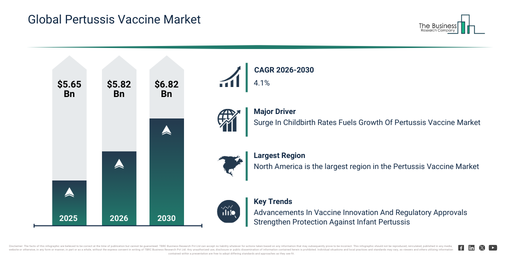
    The pertussis vaccine market has shown consistent expansion in recent years. Its valuation is set to increase from $5.65 billion in 2025 to $5.82 billion in 2026, achieving a compound annual growth rate (CAGR) of 2.9%. The historical expansion of this market can be attributed to factors such as extensive childhood immunization coverage, government-supported national vaccination programs, past outbreaks of whooping cough, the integration of the pertussis vaccine into standard immunization schedules, and the availability of whole-cell vaccines.

    The pertussis vaccine market size is projected to experience consistent expansion over the upcoming years. This market is forecast to reach $6.82 billion by 2030, demonstrating a compound annual growth rate (CAGR) of 4.1%. This anticipated growth during the forecast period is attributable to several factors, including heightened awareness regarding adult pertussis vaccination, an increase in recommendations for maternal immunization, improvements in vaccine safety and effectiveness, broader access to healthcare in developing economies, and the advancement of combination vaccine development. Key trends anticipated during this period encompass the increasing acceptance of acellular pertussis vaccines, a greater emphasis on booster immunization programs, the broadening scope of combination vaccines that incorporate pertussis, an increase in adult and maternal pertussis vaccination, and the reinforcement of government-led immunization efforts.

    Get A Free Sample Report With In-Depth Market Insights:

    https://thebusinessresearchcompany.com/sample_request?id=31366900&type=smp&name=Pertussis%20Vaccine%20Market%20Report%202026&utm_source=Blogs&utm_medium=Paid&utm_campaign=Oct_PR

    Pertussis Vaccine Market Industry Drivers: What’s Behind The Revenue Growth?

    The increasing childbirth rates are poised to boost the growth of the pertussis vaccine market in the upcoming period. Childbirth is defined as the act of a mother giving birth to a baby. It represents the conclusion of pregnancy, during which the fetus develops inside the mother’s uterus, marking the beginning of an independent life outside the womb. The pertussis vaccine is primarily administered to children to protect them from whooping cough and other severe, potentially fatal diseases. As an illustration, a report released by the Centers for Disease Control and Prevention, a US-based national public health organization, in January 2023, showed that the United States experienced a 1% rise in registered births, amounting to 3,664,292, compared to 2022. Consequently, the escalating childbirth rates are serving as a significant driver for the expansion of the pertussis vaccine market.

    Pertussis Vaccine Market Segment Performance And Emerging Opportunities

    The pertussis vaccine market covered in this report is segmented –

    1) By Product Type: DTaP (Diphtheria, Tetanus and Acellular Pertussis) Vaccine, Tdap (Tetanus, Diphtheria and Pertussis) Vaccine

    2) By Vaccine Type: Whole-Cell Vaccine, Acellular Vaccine

    3) By Application: Children, Adults, Infants

    4) By End-User: Vaccination Centers, Hospitals, Clinics

    Subsegments:

    1) By DTaP (Diphtheria, Tetanus, And Acellular Pertussis) Vaccine: Pediatric DTaP Vaccine, Combination Vaccines With DTaP

    2) By Tdap (Tetanus, Diphtheria, And Pertussis) Vaccine: Adolescent Tdap Vaccine, Adult Tdap Vaccine

    #Pertussis Vaccine Market Growth Trends: What’s Shaping The Future Outlook?

    Key companies in the pertussis vaccine market are prioritizing the development of advanced immunization solutions and obtaining regulatory clearances to enhance protection for mothers and infants against whooping cough. These endeavors aim to boost vaccine availability, expand their recommended application during pregnancy, and decrease pertussis-related illnesses in newborns. For example, in January 2023, Sanofi S.A., a biopharmaceutical company based in France, received U.S. FDA approval for the broader use of its Adacel (Tdap) vaccine during the third trimester of pregnancy. This enables maternal immunization to help safeguard infants younger than two months, who are most vulnerable to severe pertussis infection. This approval allows healthcare providers to actively vaccinate pregnant individuals, ensuring that protective antibodies are passed to the newborn before birth. As a result, infants gain crucial early-life protection against pertussis, bridging the immunity gap until they can receive their own vaccinations.

    Pertussis Vaccine Market Key Players: Which Companies Lead Industry Competition?

    Major companies operating in the pertussis vaccine market are Pfizer Inc., Merck & Co. Inc., GlaxoSmithKline plc, Sanofi Pasteur SA, CSL Limited, Serum Institute of India, Biological E. Limited, Bharat Biotech International Limited, Panacea Biotec Limited, PT Bio Farma, Walvax Biotechnology Co. Ltd., Beijing Minhai Biotechnology Co. Ltd., Wuhan Institute of Biological Products, Changchun Changsheng Life Sciences, Changsheng Bio-Technology Co. Ltd., Chiron Corporation, Sinovac Biotech Ltd., Takeda Pharmaceutical Company, Novartis AG, Johnson & Johnson

    View The Full Pertussis Vaccine Market Report:

    https://thebusinessresearchcompany.com/report/pertussis-vaccine-global-market-report?utm_source=Blogs&utm_medium=Paid&utm_campaign=Oct_PR

    Pertussis Vaccine Market Geographic Analysis: Where Is Demand Accelerating Fastest?

    North America was the largest region in the pertussis vaccine market in 2025. The regions covered in the pertussis vaccine market report are Asia-Pacific, South East Asia, Western Europe, Eastern Europe, North America, South America, Middle East, Africa.

    Reach Out To Our Team:

    The Business Research Company: https://www.thebusinessresearchcompany.com/

    Americas: +1 310-496-7795

    Asia: +44 7882 955267 & +91 8897263534

    Europe: +44 7882 955267

    Email us at: marketing@tbrc.info

    Follow us on:

    LinkedIn: https://in.linkedin.com/company/the-business-research-company

    YouTube: https://www.youtube.com/channel/UC24_fI0rV8cR5DxlCpgmyFQ

    Global Market Model: https://www.thebusinessresearchcompany.com/global-market-model
  • Personalized Vitamins Market Projected For Strong Expansion Through 2030: Key Trends And Future Outlook

    Personalized Vitamins Market Projected For Strong Expansion Through 2030: Key Trends And Future Outlook

    Featuring market attractiveness scoring, total addressable market sizing, company benchmarking matrices, interactive Excel dashboards, deeper supply chain intelligence, emerging startup tracking, and granular product-level insights, The Business Research Company’s 2026 market reports are built to deliver research that is both more actionable and more strategically valuable.

    Personalized Vitamins Market Growth Analysis: How Will Revenue Trend Over The Forecast Period?

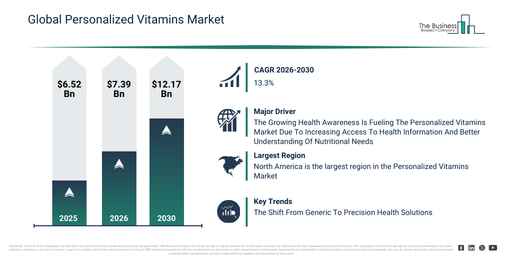
    The personalized vitamins market has seen significant growth in recent years. Its valuation is predicted to rise from $6.52 billion in 2025 to $7.39 billion in 2026, achieving a compound annual growth rate (CAGR) of 13.3%. This historical expansion is attributable to several factors including an increase in chronic health conditions, the broadening of nutraceutical markets, a surge in online supplement sales, heightened consumer health awareness, and the accessibility of personalized health assessments.

    The personalized vitamins market is projected for significant expansion over the coming years, reaching a valuation of $12.17 billion by 2030, driven by a compound annual growth rate (CAGR) of 13.3%. This anticipated increase during the forecast period is fueled by several factors, including breakthroughs in data-driven nutrition, a rise in lifestyle-related health issues, the development of direct-to-consumer healthcare approaches, a growing desire for tailored wellness products, and the broadening of digital health frameworks. Key developments expected in this period encompass a greater uptake of vitamin formulations based on individual health profiles, an increasing need for personalized supplements targeting specific diseases, the rising appeal of personalized vitamins in gummy and chewable forms, the expansion of online retail distribution channels, and an enhanced emphasis on supplements supporting immunity and energy.

    Get A Free Sample Report With In-Depth Market Insights:

    https://thebusinessresearchcompany.com/sample_request?id=63919557&type=smp&name=Personalized%20Vitamins%20Market%20Report%202026&utm_source=Blogs&utm_medium=Paid&utm_campaign=Oct_PR

    Personalized Vitamins Market Growth Factors: What’s Supporting Expansion?

    The increasing health consciousness is anticipated to fuel the expansion of the personalized vitamins market in the future. Health awareness encompasses individuals’ comprehension and knowledge regarding maintaining and enhancing their health, covering aspects like routine medical examinations, a balanced diet, physical activity, hygiene practices, and disease prevention. This heightened health awareness primarily stems from easier access to health-related information via digital platforms, allowing individuals to grasp health risks, preventive strategies, and healthy lifestyle choices more effectively. Personalized vitamins contribute to promoting health awareness by encouraging individuals to gain a deeper understanding of their distinct nutritional requirements and to make informed choices concerning their overall well-being. For example, in Jun 2024, data from the International Food Information Council (IFIC), a US based non-profit organization, revealed that the proportion of Americans adhering to a specific diet or eating pattern over the past year remained substantial at 54%. A significant number of people are aiming to boost their protein intake, with interest rising from 59% in 2022 to 67% in 2023, and reaching 71% in 2024. Furthermore, approximately half of consumers are focused on consuming more fresh foods, widely recognized as the healthiest options. Consequently, the increasing health awareness is fostering the expansion of the personalized vitamins market.

    Personalized Vitamins Market Segment Landscape And Growth Outlook

    The personalized vitamins market covered in this report is segmented –

    1) By Type: Wellness Supplements, Disease-Based Supplements

    2) By Dosage Form: Tablets, Capsules, Powders, Gummies Or Chewable, Liquids, Softgels

    3) By Distribution Channel: Supermarkets Or Hypermarkets, Specialty Stores, Retail Pharmacies, Online Pharmacies And E-commerce

    4) By End-Use: Direct-To-Consumer, Wellness And fitness Centers, Hospitals And Clinics, Other End Uses

    Subsegments:

    1) By Wellness Supplements: Energy And Vitality Support, Weight Management, Skin, Hair And Nail Health, Cognitive Health, Digestive Health, Immune Support, Anti-Aging

    2) By Disease-Based Supplements: Cardiovascular Health, Diabetes Management, Bone And Joint Health, Mental Health Support, Hormonal Balance, Allergies And Asthma Support, Vision Health

    Personalized Vitamins Market Industry Trends: What’s Reshaping Demand?

    Leading firms in the personalized vitamins market are concentrating on advancing novel solutions, including genomic-based personalization, to formulate customized supplement plans. This approach entails examining a person’s DNA to identify their distinct nutritional requirements, thereby allowing businesses to provide more accurate and potent health interventions. As an example, in January 2023, GenoPalate Inc., an American nutritional genomics firm, introduced GenoVit, a custom supplement range developed through DNA analysis. GenoVit produces bespoke vitamin formulations adapted to an individual’s genetic profile, age, gender, and current dietary intake. Furthermore, an at-home DNA kit is utilized to assess user nutrient requirements, providing scientifically supported, personalized nutrition. These supplements are intended to eliminate speculation, assisting individuals in meeting their precise nutrient demands and fostering overall well-being. This introduction underscores GenoPalate’s commitment to delivering precise, economical health solutions, moving beyond a universal approach.

    Personalized Vitamins Market Competitive Landscape: Who Leads The Industry?

    Major companies operating in the personalized vitamins market are Viome Life Sciences Inc., Vitagene Inc., VitaminLab Inc., Persona Nutrition, InsideTracker, Rootine Inc., Nutrigenomix Inc., Nourished, Tespo Inc., Elo Health Inc., Vous Vitamin LLC, Vitl Ltd., Genetic Direction LLC, GX Sciences LLC, Habit Food Personalized LLC, Care Of, Baze, Atlas Biomed, Gainful, DNAfit

    View The Full Personalized Vitamins Market Report:

    https://thebusinessresearchcompany.com/report/personalized-vitamins-global-market-report?utm_source=Blogs&utm_medium=Paid&utm_campaign=Oct_PR

    Personalized Vitamins Market Global Footprint: Which Region Leads The Industry?

    North America was the largest region in the personalized vitamins market in 2025. Asia-Pacific is expected to be the fastest-growing region in the forecast period. The regions covered in the personalized vitamins market report are Asia-Pacific, South East Asia, Western Europe, Eastern Europe, North America, South America, Middle East, Africa.

    Reach Out To Our Team:

    The Business Research Company: https://www.thebusinessresearchcompany.com/

    Americas: +1 310-496-7795

    Asia: +44 7882 955267 & +91 8897263534

    Europe: +44 7882 955267

    Email us at: marketing@tbrc.info

    Follow us on:

    LinkedIn: https://in.linkedin.com/company/the-business-research-company

    YouTube: https://www.youtube.com/channel/UC24_fI0rV8cR5DxlCpgmyFQ

    Global Market Model: https://www.thebusinessresearchcompany.com/global-market-model
  • Personalized Vitamin Products Market Outlook 2026–2030: Growth Trends, Market Dynamics And Emerging Opportunities

    Personalized Vitamin Products Market Outlook 2026–2030: Growth Trends, Market Dynamics And Emerging Opportunities

    Built to provide research that’s more actionable and strategically valuable, The Business Research Company’s 2026 market reports include market attractiveness analysis, total addressable market sizing, company benchmarking matrices, interactive Excel dashboards, broader supply chain intelligence, emerging startup tracking, and in-depth product insights.

    Personalized Vitamin Products Market Forecast: What Value Will The Market Reach By 2030?

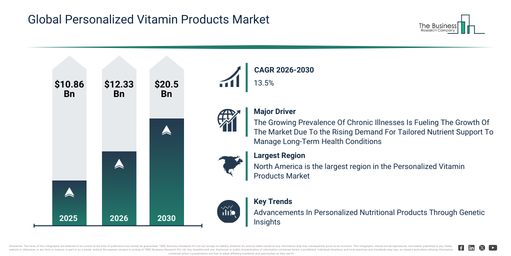
    The personalized vitamin products market size has seen rapid expansion in recent years. It is anticipated to grow from $10.86 billion in 2025 to $12.33 billion in 2026, at a compound annual growth rate (CAGR) of 13.6%. The historical growth in this market can be attributed to an increase in health and wellness awareness, the rising prevalence of nutrient deficiencies, the broader consumption of dietary supplements, the increased adoption of online health questionnaires, and the development of preventive healthcare.

    The personalized vitamin products market is poised for substantial growth in the upcoming years, with expectations to achieve a valuation of $20.5 billion by 2030, demonstrating a compound annual growth rate (CAGR) of 13.5%. This expansion during the forecast timeframe is attributable to advances in nutrigenomics, an increasing consumer appetite for customized healthcare solutions, the expansion of digital diagnostic tools, a heightened focus on personalized wellness, and the proliferation of AI-driven nutrition platforms. Notable trends anticipated in this period include the rising adoption of DNA and biomarker-based approaches for vitamin customization, the expanding popularity of subscription-based personalized vitamin programs, more frequent use of digital health assessments for devising vitamin plans, the broadening reach of direct-to-consumer personalized nutrition platforms, and a growing call for preventive and wellness-oriented vitamin regimens.

    Get A Free Sample Report With In-Depth Market Insights:

    https://thebusinessresearchcompany.com/sample_request?id=56291432&type=smp&name=Personalized%20Vitamin%20Products%20Market%20Report%202026&utm_source=Blogs&utm_medium=Paid&utm_campaign=Oct_PR

    Personalized Vitamin Products Market Demand Drivers: What’s Powering Industry Growth?

    The expanding occurrence of chronic illnesses is projected to fuel the advancement of the personalized vitamin products market in the future. Chronic illnesses are enduring health issues that persist over time, frequently necessitating continuous care and modifications to one’s way of life. The rise in these conditions is linked to inactive lifestyles, where extended periods of sitting and minimal physical activity heighten the risk of ailments such as heart conditions and diabetes. Personalized vitamin products assist in managing chronic illnesses by addressing specific nutrient deficiencies for individuals, which helps in reducing symptoms and enhancing overall well-being. This customized method strengthens immune function and acts as a complement to ongoing medical treatments for improved patient outcomes. For instance, in June 2024, data from the National Health Service, a UK-based government department, revealed that 3,615,330 individuals registered with a general practitioner were diagnosed with non-diabetic hyperglycemia or pre-diabetes (a condition where blood sugar levels are higher than usual but not high enough to be diagnosed as diabetes) in 2023, representing an 18% surge from 3,065,825 cases in 2022. Consequently, the increasing prevalence of chronic illnesses is acting as a key driver for the growth of the personalized vitamin market.

    Personalized Vitamin Products Market Breakdown By Product Type And Application

    The personalized vitamin products market covered in this report is segmented –

    1) By Product Type: Active Measurement, Standard Measurement

    2) By Application: Standard Supplements, Disease-Based

    3) By End-User: Direct-To-Consumer, Wellness And Fitness Centers, Hospitals And Clinics, Other End-Users

    Subsegments:

    1) By Active Measurement: DNA-Based Vitamin Recommendations, Blood Biomarker Testing, Microbiome Analysis, Wearable Device Data Integration, Urine Or Saliva Testing-Based Personalization

    2) By Standard Measurement: Lifestyle And Diet-Based Questionnaires, Age And Gender-Based Formulas, Health Goal-Oriented Formulations, General Wellness Packages, Subscription Box Models With Standard Personalization

    Personalized Vitamin Products Market Innovation Trends: What Developments Are Reshaping The Industry?

    Companies operating within the personalized vitamin product market are concentrating on developing innovative items, such as scientifically-backed nutritional products, to offer targeted health benefits and gain a competitive edge through originality and customization. A nutraceutical product that is science-backed refers to a supplement or food created using research and clinical studies to confirm its effectiveness and health advantages. For example, in April 2023, LifeDNA, a US-based personalized health and wellness firm, initiated the provision of advanced DNA-based New Chapter vitamin and supplement recommendations. By analyzing data from a non-invasive DNA test, LifeDNA utilizes nutrigenomics to deliver personalized reports and daily nutrition guidance to users, including tailored New Chapter vitamin and supplement suggestions that align with their distinct genetic profile, thereby assisting individuals in crafting a wellness routine that addresses their specific nutritional requirements.

    Personalized Vitamin Products Market Company Landscape And Competitive Strategy

    Major companies operating in the personalized vitamin products market are Persona Nutrition, Rootine, VitaminLab, Nourished, Vous Vitamin LLC, LemonBox, Vitamins & Me, Nutrafill, Hum Nutrition Inc., Metagenics Inc., Viome Life Sciences Inc., LifeDNA, EverlyWell Inc., Bayer AG, Nestlé Health Science, Amway Corporation, Blackmores Limited, Abbott Laboratories, Herbalife Nutrition Ltd., Glanbia plc

    View The Full Personalized Vitamin Products Market Report:

    https://thebusinessresearchcompany.com/report/personalized-vitamin-products-global-market-report?utm_source=Blogs&utm_medium=Paid&utm_campaign=Oct_PR

    Personalized Vitamin Products Market Regional Distribution: Which Areas Power Market Growth?

    North America was the largest region in the personalized vitamin products market in 2025. Asia-Pacific is expected to be the fastest-growing region in the forecast period. The regions covered in the personalized vitamin products market report are Asia-Pacific, South East Asia, Western Europe, Eastern Europe, North America, South America, Middle East, Africa.

    Reach Out To Our Team:

    The Business Research Company: https://www.thebusinessresearchcompany.com/

    Americas: +1 310-496-7795

    Asia: +44 7882 955267 & +91 8897263534

    Europe: +44 7882 955267

    Email us at: marketing@tbrc.info

    Follow us on:

    LinkedIn: https://in.linkedin.com/company/the-business-research-company

    YouTube: https://www.youtube.com/channel/UC24_fI0rV8cR5DxlCpgmyFQ

    Global Market Model: https://www.thebusinessresearchcompany.com/global-market-model