Blog

  • Personalized Medicine Biomarkers Market Growth Outlook From $31.34 Billion In 2026 To $58.79 Billion By 2030

    Personalized Medicine Biomarkers Market Growth Outlook From $31.34 Billion In 2026 To $58.79 Billion By 2030

    Backed by market attractiveness analysis, total addressable market sizing, company benchmarking matrices, interactive Excel dashboards, wider supply chain intelligence, emerging startup coverage, and detailed product-level insights, The Business Research Company’s 2026 market reports are designed to offer research that is more actionable and strategically valuable than ever.

    Personalized Medicine Biomarkers Market Size Outlook: How Quickly Will Revenue Expand Through 2030?

    The personalized medicine biomarkers market size has experienced rapid growth in recent years. It is projected to expand from $26.73 billion in 2025 to $31.34 billion in 2026, demonstrating a compound annual growth rate (CAGR) of 17.3%. This historical growth can be attributed to advancements in genomic research, an increasing incidence of cancer, the proliferation of targeted therapies, wider application of molecular diagnostics, and supportive regulatory frameworks for precision medicine.

    The personalized medicine biomarkers market size is anticipated to experience rapid growth in the upcoming years. It is projected to reach $58.8 billion by 2030, at a compound annual growth rate (CAGR) of 17.0%. This growth during the forecast period is attributed to the expansion of personalized therapeutics, a rising demand for early disease detection, growth in pharmacogenomics, increasing investment in biomarker discovery, and wider adoption across non-oncology indications. Key trends for the forecast period encompass the rising adoption of precision treatment approaches, increasing use of biomarkers in oncology care, growing integration of companion diagnostics, the expansion of predictive and prognostic biomarkers, and a higher focus on treatment response monitoring.

    Get A Free Sample Report With In-Depth Market Insights:

    https://thebusinessresearchcompany.com/sample_request?id=65633950&type=smp&name=Personalized%20Medicine%20Biomarkers%20Market%20Report%202026&utm_source=Blogs&utm_medium=Paid&utm_campaign=Oct_PR

    Personalized Medicine Biomarkers Market Growth Drivers: What’s Behind The Acceleration?

    The increasing occurrence of chronic illnesses is anticipated to boost the expansion of the personalized medicine biomarkers market in the future. Chronic illnesses are enduring health issues characterized by gradual development, lasting a minimum of one year, and necessitating continuous medical care or restricting everyday functions. This rising prevalence of chronic conditions stems from factors such as unhealthy lifestyle choices, poor nutritional habits, insufficient physical exercise, and elevated stress levels. Personalized medicine biomarkers aid in customizing treatments for chronic ailments by pinpointing efficacious therapies, forecasting disease advancement, and reducing negative reactions, all informed by a person’s unique genetic and molecular characteristics. For example, data released in February 2024 by the World Health Organization (WHO), a health authority based in Switzerland, projects that by 2050, new cancer cases will exceed 35 million, which signifies a 77% surge from the approximate 20 million cases recorded in 2022. Consequently, the increasing incidence of chronic diseases is propelling the expansion of the personalized medicine biomarkers market.

    Personalized Medicine Biomarkers Market Segment Analysis And Revenue Potential

    The personalized medicine biomarkers market covered in this report is segmented –

    1) By Biomarker Type: Genomic, Proteomics, Metabolic, Other Biomarker Types

    2) By Disease Indication: Oncology, Neurology, Diabetes, Autoimmune Diseases, Cardiology, Other Indications

    3) By Application: Early Detection Or Screening, Diagnosis, Treatment Selection, Monitoring

    4) By End Use: Hospitals And Clinics, Pharmaceutical And Biotechnology Companies, Diagnostic Labs, Other End Users

    Subsegments:

    1) By Genomic: Single Nucleotide Polymorphisms (SNPs), Copy Number Variations (CNVs), Gene Expression Biomarkers, Epigenetic Biomarkers

    2) By Proteomics: Protein Expression Biomarkers, Post-Translational Modification (PTM) Biomarkers, Protein-Protein Interaction Biomarkers, Enzyme Activity Biomarkers

    3) By Metabolic: Lipid Biomarkers, Amino Acid Biomarkers, Carbohydrate Biomarkers, Hormone Biomarkers

    4) By Other Biomarker Types: Inflammatory Biomarkers, Microbiome Biomarkers, Autoantibody Biomarkers, Extracellular Vesicle Biomarkers

    Personalized Medicine Biomarkers Market Trends: What’s Defining The Industry’s Next Phase?

    Leading companies within the personalized medicine biomarkers market are concentrating on securing regulatory authorizations, including companion diagnostic approval, to improve precision oncology by quickly connecting patients with specific therapies. Companion diagnostic approval denotes the official permission granted by a health authority, such as the FDA, for a diagnostic test specifically engineered to identify individuals who would most likely benefit from a certain therapeutic product or face a greater risk of adverse reactions. As an illustration, in August 2024, Illumina, Inc., a US-based biotechnology company, obtained Food and Drug Administration (FDA) approval for its cancer biomarker test and two companion diagnostics. The test employs next-generation sequencing (NGS) technology to find genetic mutations in cancer cells, allowing clinicians to select the most appropriate treatments based on individual biomarkers. This approval signifies a major step forward in precision oncology, intending to enhance the speed and precision of treatment selection for cancer patients, thereby elevating personalized care.

    Personalized Medicine Biomarkers Market Key Players Shaping Industry Direction

    Major companies operating in the personalized medicine biomarkers market are AbbVie Inc., Bristol-Myers Squibb Company, Thermo Fisher Scientific Inc., Abbott Laboratories, Novartis AG, Merck KGaA, GE Healthcare, Laboratory Corporation of America Holdings (LabCorp), Agilent Technologies Inc., Hologic Inc., Illumina Inc., PerkinElmer Inc., Beckman Coulter Inc., Bio-Rad Laboratories Inc., QIAGEN N.V., DH Life Sciences LLC, Myriad Genetics Inc., Guardant Health Inc., Cardiff Oncology Inc., 23andMe Inc., Coriell Life Sciences Inc.

    View The Full Personalized Medicine Biomarkers Market Report:

    https://thebusinessresearchcompany.com/report/personalized-medicine-biomarkers-global-market-report?utm_source=Blogs&utm_medium=Paid&utm_campaign=Oct_PR

    Personalized Medicine Biomarkers Market Leading Geography: Which Region Contributes The Most Revenue?

    North America was the largest region in the personalized medicine biomarkers market in 2025. Asia-Pacific is expected to be the fastest-growing region in the forecast period. The regions covered in the personalized medicine biomarkers market report are Asia-Pacific, South East Asia, Western Europe, Eastern Europe, North America, South America, Middle East, Africa.

    Reach Out To Our Team:

    The Business Research Company: https://www.thebusinessresearchcompany.com/

    Americas: +1 310-496-7795

    Asia: +44 7882 955267 & +91 8897263534

    Europe: +44 7882 955267

    Email us at: marketing@tbrc.info

    Follow us on:

    LinkedIn: https://in.linkedin.com/company/the-business-research-company

    YouTube: https://www.youtube.com/channel/UC24_fI0rV8cR5DxlCpgmyFQ

    Global Market Model: https://www.thebusinessresearchcompany.com/global-market-model
  • Personalized Medicine Market Forecast To Reach $733.26 Billion By 2030: Key Growth Drivers And Industry Trends

    Personalized Medicine Market Forecast To Reach $733.26 Billion By 2030: Key Growth Drivers And Industry Trends

    Featuring market attractiveness scoring, total addressable market sizing, company benchmarking matrices, interactive Excel dashboards, deeper supply chain intelligence, emerging startup tracking, and granular product-level insights, The Business Research Company’s 2026 market reports are built to deliver research that is both more actionable and more strategically valuable.

    Personalized Medicine Market Size, Value And Growth Trajectory Through 2030

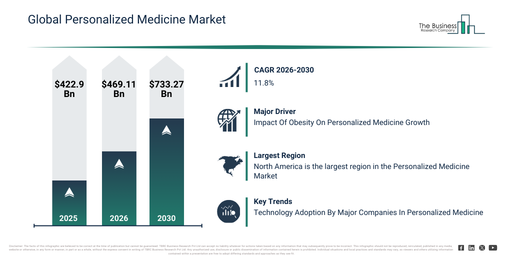
    The personalized medicine market has experienced significant growth in recent years. It is projected to expand from $422.9 billion in 2025 to $469.11 billion in 2026, demonstrating a compound annual growth rate (CAGR) of 10.9%. The historical growth of this market can be attributed to the rising prevalence of chronic diseases, advancements in genetic sequencing, increased healthcare expenditure, growing awareness of personalized medicine, and the early adoption of digital health solutions.

    The personalized medicine market is projected to undergo significant expansion in the upcoming years. Its valuation is set to reach $733.27 billion in 2030, exhibiting a compound annual growth rate (CAGR) of 11.8%. This projected growth is driven by several factors, including the incorporation of AI into diagnostics and therapeutics, the broadening scope of gene and cell therapy offerings, the increasing demand for remote patient monitoring, the creation of precise nutrition solutions, and the rising uptake of companion diagnostics. Key trends expected in this period encompass personalized genetic profiling, targeted drug development, patient-focused care models, remote health monitoring, and preventive therapies based on lifestyle.

    Get A Free Sample Report With In-Depth Market Insights:

    https://thebusinessresearchcompany.com/sample_request?id=26271832&type=smp&name=Personalized%20Medicine%20Market%20Report%202026&utm_source=Blogs&utm_medium=Paid&utm_campaign=Oct_PR

    Personalized Medicine Market Growth Factors Behind Sustained Expansion

    The increasing number of individuals with obesity is projected to fuel the expansion of the personalized medicine market in the future. Obesity is characterized by an unhealthy or excessive build-up of body fat that can detrimentally affect a person’s well-being. Personalized medicine plays a role in targeting the unique genetic and molecular elements linked to obesity, thus providing customized and efficient treatments for patients. For example, data from December 2024, provided by the Office for Health Improvement and Disparities, a UK-based government department, indicated that the percentage of women recorded as obese in early pregnancy rose from 25.4% between 2022 to 2023 to 26.2% between 2023 to 2024. Consequently, the expanding obese demographic is serving as a catalyst for the development of the personalized medicine market.

    Personalized Medicine Market Segmentation And Category Overview

    The personalized medicine market covered in this report is segmented –

    1) By Product: Personalized Medicine Diagnostics, Personalized Medicine Therapeutics, Personalized Medical Care, Personalized Nutrition and Wellness

    2) By Application: Oncology, Neurology, Blood Transfusion Safety, Diabetes, Autoimmune Diseases, Cardiology, Other Applications

    3) By End-use: Hospitals, Diagnostic Centers, Research and Academic Institutes, Other End-Users

    Subsegments:

    1) By Personalized Medicine Diagnostics: Genetic Testing, Biomarker Testing, Companion Diagnostics, Molecular Imaging

    2) By Personalized Medicine Therapeutics: Targeted Therapies, Gene Therapies, Monoclonal Antibodies, Cell and Gene Therapy Products

    3) By Personalized Medical Care: Tailored Treatment Plans, Patient-Centric Care Models, Digital Health Solutions, Remote Patient Monitoring

    4) By Personalized Nutrition And Wellness: Nutrigenomics, Customized Diet Plans, Supplement Personalization, Lifestyle Modification Programs

    Personalized Medicine Market Industry Trends Fueling Future Revenue Growth

    Leading companies within the personalized medicine market are concentrating on creating technological advancements, such as artificial intelligence (AI)-powered platforms, to improve diagnosis accuracy, individualize treatment, and increase clinical trial efficiency. These AI-powered platforms employ extensive data analysis to yield practical insights into disease development, patient reactions, and the effectiveness of various treatments. For instance, in April 2023, OM1, a US-based healthcare company that utilizes real-world data and AI, patented an AI-powered platform intended to accelerate personalized medicine. The platform facilitates customized healthcare advice, supports healthcare providers in making informed decisions, and speeds up clinical trials by effectively identifying suitable patient candidates. By incorporating AI-driven analytics into healthcare operations, this technology advances personalized medicine and strengthens market expansion.

    Personalized Medicine Market Competitive Analysis Of Leading Industry Participants

    Major companies operating in the personalized medicine market are Bayer AG, Novartis AG, Thermo Fisher Scientific Inc., GlaxoSmithKline plc, AstraZeneca plc, Abbott Laboratories, Danaher Corporation, Eli Lilly and Company, Decode Genetics Inc., GE HealthCare Technologies Inc., Roche Diagnostics, Genentech Inc., Biogen Inc., Illumina Inc., Qiagen N.V., Exact Sciences Corporation, Myriad Genetics Inc., Verily Life Sciences LLC, Guardant Health Inc., Tempus Labs, Oxford Nanopore Technologies, Foundation Medicine Inc., NanoString Technologies Inc., Exagen Inc., Asuragen Inc., Personal Genome Diagnostics, Precision Biologics Inc., Strata Oncology, Genelex Corp, Invitae Corporation, Color Genomics, Helix OpCo LLC, 10x Genomics Inc., Agena Bioscience Inc., Natera Inc., Becton Dickinson and Company, PerkinElmer Inc., Sophia Genetics, Genomic Vision, Personalis Inc.

    View The Full Personalized Medicine Market Report:

    https://thebusinessresearchcompany.com/report/personalized-medicine-global-market-report?utm_source=Blogs&utm_medium=Paid&utm_campaign=Oct_PR

    Personalized Medicine Market Regional Outlook: Where Is Opportunity Concentrated?

    North America was the largest region in the personalized medicine market in 2025. Asia-pacific is expected to be the fastest-growing region in the global personalized medicine market during the forecast period. The regions covered in the personalized medicine market report are Asia-Pacific, South East Asia, Western Europe, Eastern Europe, North America, South America, Middle East, Africa.

    Reach Out To Our Team:

    The Business Research Company: https://www.thebusinessresearchcompany.com/

    Americas: +1 310-496-7795

    Asia: +44 7882 955267 & +91 8897263534

    Europe: +44 7882 955267

    Email us at: marketing@tbrc.info

    Follow us on:

    LinkedIn: https://in.linkedin.com/company/the-business-research-company

    YouTube: https://www.youtube.com/channel/UC24_fI0rV8cR5DxlCpgmyFQ

    Global Market Model: https://www.thebusinessresearchcompany.com/global-market-model
  • Personalized Genomics Market Research 2026: Market Size, Trends, Segments And Growth Forecast

    Personalized Genomics Market Research 2026: Market Size, Trends, Segments And Growth Forecast

    Built to provide research that’s more actionable and strategically valuable, The Business Research Company’s 2026 market reports include market attractiveness analysis, total addressable market sizing, company benchmarking matrices, interactive Excel dashboards, broader supply chain intelligence, emerging startup tracking, and in-depth product insights.

    Personalized Genomics Market CAGR Outlook And Future Development

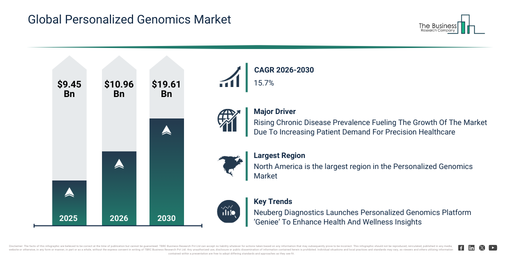
    The market size for personalized genomics has experienced rapid growth in recent years. It will grow from $9.45 billion in 2025 to $10.96 billion in 2026 at a compound annual growth rate (CAGR) of 16.0%. This historical growth can be attributed to factors such as the decreasing costs of genetic sequencing, the rising prevalence of chronic and genetic diseases, an increase in research-based genomics studies, the expansion of diagnostic laboratory infrastructure, and the early adoption of precision medicine approaches.

    The personalized genomics market size is anticipated to experience substantial growth over the next few years. It is projected to expand to $19.61 billion in 2030, showing a compound annual growth rate (CAGR) of 15.7%. This expansion during the forecast period is attributable to the incorporation of genomics into routine clinical practice, a rising demand for personalized medicine, continuous advancements in sequencing technologies, the broadening of wellness and ancestry testing, and increasing investments from pharmaceutical and biotechnology companies. Significant trends expected during this period include an increase in the adoption of direct-to-consumer genetic testing, a growing application of pharmacogenomics in treatment planning, an escalating demand for preventive and predictive healthcare solutions, the expansion of genetic testing within reproductive health, and enhanced consumer awareness regarding lifestyle and wellness genomics.

    Get A Free Sample Report With In-Depth Market Insights:

    https://thebusinessresearchcompany.com/sample_request?id=10045290&type=smp&name=Personalized%20Genomics%20Market%20Report%202026&utm_source=Blogs&utm_medium=Paid&utm_campaign=Oct_PR

    Personalized Genomics Market Demand Drivers Opening New Revenue Streams

    The increasing incidence of chronic illnesses is anticipated to boost the expansion of the personalized genomics market in the future. These enduring health conditions necessitate continuous care and include ailments such as diabetes, cardiac disease, high blood pressure, and various intricate health challenges. The surge in chronic ailments is primarily attributable to an aging populace, inactive lifestyles, inadequate nutrition, and environmental elements fostering the simultaneous emergence of multiple health problems. Personalized genomics aids in managing chronic conditions by facilitating extensive genotyping and sequencing, which helps categorize patients based on genetic risk, thereby enabling more accurate diagnoses, tailored treatments, and improved preventive measures. As an illustration, in April 2025, data from the U.S. Centers for Disease Control and Prevention (CDC), an US-based organization, indicated that 76.4% of U.S. adults, approximately 194 million individuals, were living with at least one of 12 specific chronic conditions, with 51.4% (around 130 million) affected by two or more. Consequently, the growing prevalence of chronic illnesses is serving as a catalyst for the expansion of the personalized genomics market.

    Personalized Genomics Market Segment Outlook: Which Categories Are Growing Fastest?

    The personalized genomics market covered in this report is segmented –

    1) By Test Type: Oncology Testing, Neurological Testing, Cardiovascular Testing, Other Test Types

    2) By Technology: Polymerase Chain Reaction-Based Tests, Microarray-Based Tests, Sequencing-Based Tests, Other Technologies

    3) By Application: Diagnostics, Precision Medicine, Wellness, Reproductive Health, Sports Nutrition And Health, Lifestyle, Other Applications

    4) By End User: Hospitals And Clinics, Research Centers, Pharmaceutical And Biotechnology Companies, Diagnostic Laboratories, Other End Users

    Subsegments:

    1) By Oncology Testing: Liquid Biopsy, Tumor Profiling, Genetic Testing For Cancer Risk, Companion Diagnostics

    2) By Neurological Testing: Alzheimer’s Disease Testing, Huntington’s Disease Testing, Parkinson’s Disease Testing, Epilepsy Testing

    3) By Cardiovascular Testing: Genetic Risk for Cardiovascular Diseases, Arrhythmia Testing, Coronary Artery Disease Testing

    4) By Other Test Types: Pharmacogenomics Testing, Genetic Screening For Inherited Disorders, Ancestry Testing

    Personalized Genomics Market Trends Powering Strategic Industry Growth

    Leading firms within the personalized genomics market are concentrating on creating advanced technologies, such as personalized genomics platforms, designed to offer customized understanding of health, well-being, and strategies for preventing illnesses. Such a platform functions by examining an individual’s genetic information to provide bespoke insights and advice concerning their health, overall well-being, and susceptibility to diseases. For instance, in September 2024, Neuberg Diagnostics Private Limited, an India-based diagnostic service company, unveiled Geniee Decode Your DNA, a novel customized genomics platform. This specific personalized genomics platform delivers tailored insights on health, nutritional needs, and medication responses, all derived from an individual’s genetic makeup, with the goal of optimizing wellness, aiding in disease prevention, and facilitating personalized treatments for improved health outcomes.

    Personalized Genomics Market Leading Companies And Competitive Benchmarking

    Major companies operating in the personalized genomics market are Thermo Fisher Scientific Inc., Illumina Inc., Myriad Genetics Inc., BGI Genomics Co. Ltd., Invitae Corporation, Guardant Health Inc., GeneDx LLC, Ancestry Inc., Oxford Nanopore Technologies plc, Genomic Health Inc., 23andMe Holding Co., Color Health Inc., Helix OpCo LLC, Personalis Inc., Dante Genomics, Gene By Gene Ltd., Veritas Genetics Inc., Futura Genetics, Nebula Genomics Inc., Pathway Genomics Corporation

    View The Full Personalized Genomics Market Report:

    https://thebusinessresearchcompany.com/report/personalized-genomics-global-market-report?utm_source=Blogs&utm_medium=Paid&utm_campaign=Oct_PR

    Personalized Genomics Market Geographic Landscape: Which Region Leads Industry Growth?

    North America was the largest region in the personalized genomics market in 2025. Asia-Pacific is expected to be the fastest-growing region in the forecast period. The regions covered in the personalized genomics market report are Asia-Pacific, South East Asia, Western Europe, Eastern Europe, North America, South America, Middle East, Africa.

    Reach Out To Our Team:

    The Business Research Company: https://www.thebusinessresearchcompany.com/

    Americas: +1 310-496-7795

    Asia: +44 7882 955267 & +91 8897263534

    Europe: +44 7882 955267

    Email us at: marketing@tbrc.info

    Follow us on:

    LinkedIn: https://in.linkedin.com/company/the-business-research-company

    YouTube: https://www.youtube.com/channel/UC24_fI0rV8cR5DxlCpgmyFQ

    Global Market Model: https://www.thebusinessresearchcompany.com/global-market-model

  • Personalized Gene Therapy Treatment Market Forecast 2026: Market Size, Competitive Landscape And Growth Drivers

    Personalized Gene Therapy Treatment Market Forecast 2026: Market Size, Competitive Landscape And Growth Drivers

    Backed by market attractiveness analysis, total addressable market sizing, company benchmarking matrices, interactive Excel dashboards, wider supply chain intelligence, emerging startup coverage, and detailed product-level insights, The Business Research Company’s 2026 market reports are designed to offer research that is more actionable and strategically valuable than ever.

    Personalized Gene Therapy Treatment Market Set To Climb From $10.11 Billion In 2026 To $21.22 Billion By 2030

    The personalized gene therapy treatment market size has expanded considerably in recent years. It is anticipated to increase from $8.38 billion in 2025 to $10.11 billion in 2026, reflecting a compound annual growth rate (CAGR) of 20.7%. This past growth is largely due to factors such as the increasing prevalence of genetic disorders, advancements in genomic sequencing technologies, early clinical success of targeted gene therapies, the expansion of specialized gene therapy research centers, and growing investment in precision medicine.

    The personalized gene therapy treatment market size is set to experience substantial growth in the upcoming years, with projections indicating it will reach $21.23 billion in 2030, demonstrating a compound annual growth rate (CAGR) of 20.4%. This expansion in the forecast period can be attributed to several factors including increasing regulatory approvals for personalized gene therapies, a rising demand for customized oncology treatments, the expansion of gene therapy manufacturing capabilities, the growing integration of AI in therapy design, and an increasing adoption of pharmacogenomics-guided treatments. Furthermore, major trends anticipated in the forecast period encompass the increasing adoption of gene editing-based therapies, a rising use of personalized treatment protocols, the growing integration of companion diagnostics, the expansion of viral and non-viral vector platforms, and an enhanced focus on precision oncology applications.

    Get A Free Sample Report With In-Depth Market Insights:

    https://thebusinessresearchcompany.com/sample_request?id=38270877&type=smp&name=Personalized%20Gene%20Therapy%20Treatment%20Market%20Report%202026&utm_source=Blogs&utm_medium=Paid&utm_campaign=Oct_PR

    Personalized Gene Therapy Treatment Market Growth Backed By Core Demand Fundamentals

    The increasing incidence of genetic disorders is anticipated to stimulate the expansion of the personalized gene therapy treatment market in the future. Genetic disorders are conditions resulting from anomalies in DNA that disrupt normal bodily functions. The prevalence of these disorders is escalating due to rising parental age, as older reproductive cells carry a higher likelihood of mutations that can be transmitted to offspring. Personalized gene therapy addresses genetic disorders by precisely correcting the defective genes responsible for the condition, customizing treatment to an individual’s genetic makeup, thereby enhancing efficacy and reducing side effects. For instance, in October 2024, as per the Cystic Fibrosis Trust, a UK-based charity dedicated to supporting individuals with cystic fibrosis, approximately 11,148 cystic fibrosis (a genetic disorder) patients were registered in 2022, and this figure climbed to 11,318 in 2023, showing a 1.5% increase in patient registrations year over year. Consequently, the growing prevalence of genetic disorders is propelling the growth of the personalized gene therapy treatment market.

    Personalized Gene Therapy Treatment Market Segment Landscape: Which Areas Lead Development?

    The personalized gene therapy treatment market covered in this report is segmented –

    1) By Therapy: Targeted Treatments, Pharmacogenomics

    2) By Vector Type: Viral, Non-Viral

    3) By Distribution Channel: Hospitals, Clinics, Home Administration, Other Distribution Channels

    4) By Application: Oncology, Neurology, Hematological, Infectious Diseases, Ophthalmology, Other Applications

    Subsegments:

    1) By Targeted Treatments: Monoclonal Antibodies, Chimeric Antigen Receptor T-Cell Therapy (CAR-T), Small Interfering RNA (siRNA) Therapy, Antisense Oligonucleotides (ASO), Gene Editing Therapy

    2) By Pharmacogenomics: Companion Diagnostics, Drug Metabolism Enzyme Testing, Genetic Biomarker Analysis, Single Nucleotide Polymorphism (SNP) Profiling, Adverse Drug Reaction (ADR) Prediction

    Personalized Gene Therapy Treatment Market Growth Trends Reshaping The Competitive Landscape

    Leading companies in the personalized gene therapy treatment market are increasingly focusing on forming strategic partnerships to boost their technological capabilities and make innovative therapies available to patients more efficiently. Strategic partnerships involve collaborative agreements between organizations, aiming to leverage each other’s strengths and resources for mutual development and a competitive advantage, while also sharing risks and benefits. For instance, in May 2025, Aldevron, a US-based company engaged in producing DNA, RNA, and protein, teamed up with Integrated DNA Technologies, a US-based provider of genomics solutions. Their collaboration aimed to create the world’s first mRNA-based personalized CRISPR therapy to treat an infant diagnosed with urea cycle disorder (UCD), a rare and life-threatening genetic condition. This N of 1 therapy was successfully developed and delivered in just six months, incorporating a custom guide RNA, an mRNA-encoded base editor, off-target safety services, and a clinically validated lipid nanoparticle delivery system. The development of this therapy signifies a major advancement in personalized in vivo base-editing treatments.

    Personalized Gene Therapy Treatment Market Industry Leaders And Competitive Landscape

    Major companies operating in the personalized gene therapy treatment market are Thermo Fisher Scientific Inc., Illumina Inc., Myriad Genetics Inc., BGI Genomics Co. Ltd., Invitae Corporation, Guardant Health Inc., GeneDx LLC, Ancestry Inc., Oxford Nanopore Technologies plc, Genomic Health Inc., 23andMe Holding Co., Color Health Inc., Helix OpCo LLC, Personalis Inc., Dante Genomics, Gene By Gene Ltd., Veritas Genetics Inc., Futura Genetics, Nebula Genomics Inc., Pathway Genomics Corporation

    View The Full Personalized Gene Therapy Treatment Market Report:

    https://thebusinessresearchcompany.com/report/personalized-gene-therapy-treatment-global-market-report?utm_source=Blogs&utm_medium=Paid&utm_campaign=Oct_PR

    Personalized Gene Therapy Treatment Market Largest Region: Which Geography Holds The Biggest Share?

    North America was the largest region in the personalized gene therapy treatment market in 2025. The regions covered in the personalized gene therapy treatment market report are Asia-Pacific, South East Asia, Western Europe, Eastern Europe, North America, South America, Middle East, Africa.

    Reach Out To Our Team:

    The Business Research Company: https://www.thebusinessresearchcompany.com/

    Americas: +1 310-496-7795

    Asia: +44 7882 955267 & +91 8897263534

    Europe: +44 7882 955267

    Email us at: marketing@tbrc.info

    Follow us on:

    LinkedIn: https://in.linkedin.com/company/the-business-research-company

    YouTube: https://www.youtube.com/channel/UC24_fI0rV8cR5DxlCpgmyFQ

    Global Market Model: https://www.thebusinessresearchcompany.com/global-market-model

  • Personalized Dietary Supplements Market Size In 2026: Regional Growth, Key Segments And Future Outlook

    Personalized Dietary Supplements Market Size In 2026: Regional Growth, Key Segments And Future Outlook

    Featuring market attractiveness scoring, total addressable market sizing, company benchmarking matrices, interactive Excel dashboards, deeper supply chain intelligence, emerging startup tracking, and granular product-level insights, The Business Research Company’s 2026 market reports are built to deliver research that is both more actionable and more strategically valuable.

    Personalized Dietary Supplements Market Forecast: Value Set To Climb From $10.37 Billion To $15.71 Billion

    The personalized dietary supplements market size has demonstrated rapid expansion over recent years. It is anticipated to increase from $9.36 billion in 2025 to $10.38 billion by 2026, with a compound annual growth rate (CAGR) reaching 10.9%. Historically, this growth can be ascribed to several factors: increasing health awareness, the broader use of dietary supplements, the rise of wellness and fitness culture, enhanced accessibility of online health services, and the development of the nutraceutical industry.

    The personalized dietary supplements market is projected to experience substantial growth in the coming years. This market is forecast to expand to $15.72 billion in 2030, achieving a compound annual growth rate (CAGR) of 10.9%. The expansion during the forecast period can be attributed to advancements in nutrigenomics, an increasing demand for personalized healthcare, the growth of subscription-based supplement models, a rising prevalence of lifestyle diseases, and the expansion of digital health platforms. Key trends expected over this period include an increasing adoption of personalized nutrition plans, a growing utilization of genetic and lifestyle data, a rising demand for customized vitamin and mineral blends, the expansion of direct-to-consumer supplement platforms, and an increasing focus on preventive healthcare.

    Get A Free Sample Report With In-Depth Market Insights:

    https://thebusinessresearchcompany.com/sample_request?id=75035389&type=smp&name=Personalized%20Dietary%20Supplements%20Market%20Report%202026&utm_source=Blogs&utm_medium=Paid&utm_campaign=Oct_PR

    Personalized Dietary Supplements Market Growth Catalysts And Demand Drivers

    The expanding incidence of lifestyle-related diseases is anticipated to fuel the expansion of the personalized dietary supplement market. These conditions, primarily stemming from an individual’s daily habits and choices, encompass ailments such as heart disease, type 2 diabetes, obesity, hypertension, specific cancers, and mental health challenges. The rise in lifestyle-related diseases is attributed to physical inactivity, which contributes to weight gain, compromised heart health, and diminished insulin sensitivity, thereby heightening the risk of chronic conditions. Consequently, lifestyle-related diseases foster a demand for personalized dietary supplements, providing precise nutritional support to address or avert particular health concerns. Such customized formulations are designed to cater to individual requirements, rectify nutritional deficits, and enhance overall well-being. For instance, in June 2024, according to the National Health Service, a UK-based government department, 3,615,330 individuals registered with a general practitioner (GP) were diagnosed with non-diabetic hyperglycemia or pre-diabetes in 2023, marking an 18% increase from 3,065,825 cases in 2022. Thus, the escalating prevalence of lifestyle-related diseases is propelling the growth of the personalized dietary supplement market.

    Personalized Dietary Supplements Market Segments: Where Is Growth Concentrated?

    The personalized dietary supplements market covered in this report is segmented –

    1) By Type: Vitamins, Minerals, Botanicals, Amino Acids, Enzymes, Probiotics

    2) By Dosage Forms: Tablets, Capsules, Powders, Liquids, Other Dosage Forms

    3) By Distribution Channel: Pharmacy, Super Market Or Hyper Market, Online, Health And Wellness Stores, Other Distribution Channels

    4) By Application: Additional Supplements, Medicinal Supplements, Sports Nutrition, Lifestyle Diseases, Inherited Diseases, Other Applications

    5) By End-Use: Hospitals, Clinics, Home Care, Wellness and Fitness Centers, Ambulatory Care, Other End-Uses

    Subsegments:

    1) By Vitamins: Vitamin A, Vitamin B Complex, Vitamin C, Vitamin D, Vitamin E, Vitamin K,

    2) By Minerals: Calcium, Magnesium, Zinc, Iron, Potassium, Selenium, Iodine

    3) By Botanicals: Ginseng, Turmeric, Green Tea Extract, Ashwagandha, Gingko Biloba, Echinacea, Milk Thistle

    4) By Amino Acids: Essential Amino Acids, Non-Essential Amino Acids, Branched-Chain Amino Acids, Collagen Peptides

    5) By Enzymes: Digestive Enzymes, Systemic Enzymes, Lactase, Bromelain, Papain

    6) By Probiotics: Lactobacillus species, Bifidobacterium species, Saccharomyces boulardii, Streptococcus thermophilus, Spore-forming probiotics.

    Personalized Dietary Supplements Market Trends Shaping Long-Term Demand

    Leading companies in the personalized dietary supplements market are concentrating on developing advanced products, such as custom vitamin supplements, to enhance consumer involvement through data-driven nutrition solutions. Custom vitamin supplements are nutritional products designed to match an individual’s specific health requirements, lifestyle, and biological data, often determined through questionnaires, DNA tests, or lab results. They provide personalized nutrition based on unique dietary and physiological demands. For instance, in December 2024, Bioniq, a UK-based provider of personalized nutritional support, launched Build Your Own, a hyper-personalized vitamin supplement. This product enables individuals with special health needs, such as allergies, vitamin and mineral intolerances, or chronic conditions, to create personalized supplement formulas by choosing from over 50 nutrients or following AI-driven recommendations based on their health data.

    Personalized Dietary Supplements Market Key Participants And Competitive Landscape

    Major companies operating in the personalized dietary supplements market are Viome Life Sciences Inc., Persona Nutrition, Bioniq Ltd., Rootine, Nourished, Metagenics Inc., Hum Nutrition Inc., Herbalife Nutrition Ltd., Amway Corporation, Abbott Laboratories, Bayer AG, Danone SA, Glanbia plc, Iovate Health Sciences International Inc., Reliance Vitamin Company Inc., Archer-Daniels-Midland Company (ADM), Nature’s Bounty, MusclePharm Corporation, Nutiva Inc., Pfizer Inc.

    View The Full Personalized Dietary Supplements Market Report:

    https://thebusinessresearchcompany.com/report/personalized-dietary-supplements-global-market-report?utm_source=Blogs&utm_medium=Paid&utm_campaign=Oct_PR

    Personalized Dietary Supplements Market Regional Analysis: Which Geography Leads On Revenue?

    North America was the largest region in the personalized dietary supplements market in 2025. Asia-Pacific is expected to be the fastest-growing region in the forecast period. The regions covered in the personalized dietary supplements market report are Asia-Pacific, South East Asia, Western Europe, Eastern Europe, North America, South America, Middle East, Africa.

    Reach Out To Our Team:

    The Business Research Company: https://www.thebusinessresearchcompany.com/

    Americas: +1 310-496-7795

    Asia: +44 7882 955267 & +91 8897263534

    Europe: +44 7882 955267

    Email us at: marketing@tbrc.info

    Follow us on:

    LinkedIn: https://in.linkedin.com/company/the-business-research-company

    YouTube: https://www.youtube.com/channel/UC24_fI0rV8cR5DxlCpgmyFQ

    Global Market Model: https://www.thebusinessresearchcompany.com/global-market-model
  • Personalized Cancer Vaccines Market Growth Forecast Through 2030: Market Size And Trends In 2026

    Personalized Cancer Vaccines Market Growth Forecast Through 2030: Market Size And Trends In 2026

    Built to provide research that’s more actionable and strategically valuable, The Business Research Company’s 2026 market reports include market attractiveness analysis, total addressable market sizing, company benchmarking matrices, interactive Excel dashboards, broader supply chain intelligence, emerging startup tracking, and in-depth product insights.

    Personalized Cancer Vaccines Market Revenue Growth On Track For A 6.4% CAGR Through 2030

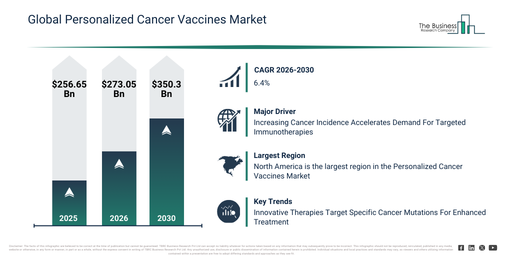
    The personalized cancer vaccines market size has experienced robust expansion in recent years. It is forecast to rise from $256.65 billion in 2025 to $273.05 billion in 2026, expanding at a compound annual growth rate (CAGR) of 6.4%. The increase observed in the historic period is largely due to advancements in cancer genomics, the substantial unmet need in oncology treatments, the inherent limitations of traditional cancer therapies, the expansion of immunotherapy research, and increased financial support for cancer research.

    The personalized cancer vaccines market is projected to experience substantial expansion over the upcoming years. This market is anticipated to reach $350.3 billion by 2030, exhibiting a compound annual growth rate (CAGR) of 6.4%. This anticipated growth during the forecast period can be primarily ascribed to the wider adoption of personalized medicine, an increase in cancer incidence rates, advancements in neoantigen discovery, heightened collaboration among biotechnology companies, and favorable regulatory environments. Key trends expected within this period encompass a growing emphasis on personalized immunotherapy, increased application of genomic tumor profiling, the expansion of therapeutic cancer vaccines, greater integration with precision oncology, and elevated clinical trial activity for cancer vaccines.

    Get A Free Sample Report With In-Depth Market Insights:

    https://thebusinessresearchcompany.com/sample_request?id=27057632&type=smp&name=Personalized%20Cancer%20Vaccines%20Market%20Report%202026&utm_source=Blogs&utm_medium=Paid&utm_campaign=Oct_PR

    Personalized Cancer Vaccines Market Opportunity Drivers: What’s Unlocking New Revenue Potential?

    The rising incidence of cancer is anticipated to drive expansion in the personalized cancer vaccine market in the future. Cancer is defined as a collection of illnesses marked by unregulated cell proliferation, capable of invading adjacent tissues and metastasizing throughout the body. The growing occurrence of cancer is fueled by factors such as demographic shifts towards older populations, evolving lifestyles, exposure to environmental agents, and advancements in diagnostic methods. This personalized cancer vaccine market contributes to cancer treatment by offering vaccines uniquely designed for individual patient tumor antigens, thereby boosting the immune system’s capacity to recognize and eradicate malignant cells. A notable example comes from July 2024, when the Australian Institute of Health and Welfare (AIHW), an Australia-based government body, reported an increase in cancer diagnoses in Australia, climbing from 160,570 cases in 2022 to 164,694 cases in 2023, which signifies a considerable rise year-on-year. Consequently, the growing frequency of cancer cases is fueling the expansion of the personalized cancer vaccine market.

    Personalized Cancer Vaccines Market Segment Analysis: What Are The Core Market Categories?

    The personalized cancer vaccines market covered in this report is segmented –

    1) By Treatment Type: Preventive Cancer Vaccines, Therapeutic Cancer Vaccines

    2) By Cancer Type: Lung Cancer, Breast Cancer, Colorectal Cancer, Leukemia, Prostate Cancer, Cervical Cancer, Glioblastoma

    3) By Mechanism Of Action: Tumor Associated Antigens (TAAs), Tumor Specific Antigens (TSAs), Somatic Mutations In Cancer Pharmacogenomics, Pharmacogenomics Towards Genomic Polymorphism, Other Mechanisms Of Action

    4) By Route Of Administration: Injectables, Other Routes Of Administration

    5) By End Use: Hospitals, Clinic, Other End Users

    Subsegments:

    1) By Preventive Cancer Vaccines: HPV Vaccines, Hepatitis B Vaccines, Combination Vaccines

    2) By Therapeutic Cancer Vaccines: Dendritic Cell Vaccines, Peptide-Based Vaccines, DNA Vaccines, RNA Vaccines, Whole Cell Vaccines

    Personalized Cancer Vaccines Market Innovation Trends Shaping Future Development

    Major companies operating within the personalized cancer vaccine market are concentrating on developing sophisticated therapeutic solutions, including personalized immunotherapy aimed at specific patient tumor mutations, to enhance treatment accuracy and improve clinical outcomes. Personalized immunotherapy refers to bespoke cancer treatments that leverage a patient’s unique genetic and tumor mutation profile, often delivered via dendritic cell–based vaccines or neoantigen-targeted platforms, to generate a tailored immune response against malignant cells. For instance, in August 2024, UCLA Health, a US-based healthcare organization, initiated a groundbreaking clinical trial to evaluate a personalized cancer vaccine targeting the H3 G34 mutation in diffuse hemispheric gliomas, utilizing dendritic cells to stimulate immunity against the RNA disruptions caused by this aggressive mutation, offering a promising therapeutic avenue for adolescents and young adults who typically face limited treatment choices and poor survival rates.

    Personalized Cancer Vaccines Market Top Companies Driving Competitive Growth

    Major companies operating in the personalized cancer vaccines market are Moderna Inc., CureVac AG, BioNTech SE, Genentech Inc., Merck & Co. Inc., GlaxoSmithKline plc, Achilles Therapeutics Plc, Evaxion Biotech AS, Geneos Therapeutics Inc., ISA Pharmaceuticals BV, VAXIMM GmbH, EpiVax Therapeutics Inc., Personalis Inc., Catalent Inc., Gritstone bio Inc., Neon Therapeutics Inc., Nouscom AG, Vaccitech plc, Agenus Inc., Transgene SA

    View The Full Personalized Cancer Vaccines Market Report:

    https://thebusinessresearchcompany.com/report/personalized-cancer-vaccines-global-market-report?utm_source=Blogs&utm_medium=Paid&utm_campaign=Oct_PR

    Personalized Cancer Vaccines Market Geographic Spread And Regional Opportunities

    North America was the largest region in the personalized cancer vaccines market in 2025. Asia-Pacific is expected to be the fastest-growing region in the forecast period. The regions covered in the personalized cancer vaccines market report are Asia-Pacific, South East Asia, Western Europe, Eastern Europe, North America, South America, Middle East, Africa.

    Reach Out To Our Team:

    The Business Research Company: https://www.thebusinessresearchcompany.com/

    Americas: +1 310-496-7795

    Asia: +44 7882 955267 & +91 8897263534

    Europe: +44 7882 955267

    Email us at: marketing@tbrc.info

    Follow us on:

    LinkedIn: https://in.linkedin.com/company/the-business-research-company

    YouTube: https://www.youtube.com/channel/UC24_fI0rV8cR5DxlCpgmyFQ

    Global Market Model: https://www.thebusinessresearchcompany.com/global-market-model
  • Peripheral Vasodilator Drugs Market Analysis: $6.98 Billion Market Size In 2026 And Future Growth Prospects

    Peripheral Vasodilator Drugs Market Analysis: $6.98 Billion Market Size In 2026 And Future Growth Prospects

    Backed by market attractiveness analysis, total addressable market sizing, company benchmarking matrices, interactive Excel dashboards, wider supply chain intelligence, emerging startup coverage, and detailed product-level insights, The Business Research Company’s 2026 market reports are designed to offer research that is more actionable and strategically valuable than ever.

    Peripheral Vasodilator Drugs Market Value Growth And Long-Term Outlook

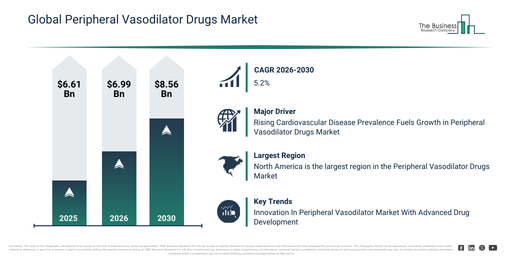
    The peripheral vasodilator drugs market has experienced substantial growth in recent years. It is forecast to increase from $6.61 billion in 2025 to $6.99 billion in 2026, at a compound annual growth rate (CAGR) of 5.7%. This historic expansion is primarily driven by factors including the escalating prevalence of hypertension, a rise in the incidence of peripheral vascular diseases, the consistent long-term clinical use of nitrates and calcium channel blockers, the growing burden of cardiovascular diseases, and the expansion of hospital-based cardiovascular treatment options.

    The peripheral vasodilator drugs market is projected for substantial expansion in the coming years. Its valuation is anticipated to reach $8.56 billion by 2030, demonstrating a compound annual growth rate (CAGR) of 5.2%. This projected growth throughout the forecast period stems from factors such as an aging global populace, an increase in heart failure and angina diagnoses, the escalating need for outpatient cardiovascular care, the wider embrace of generic vasodilator medications, and more effective detection of peripheral circulation conditions. Key trends anticipated during this period encompass the expanded application of vasodilators in managing chronic hypertension, a heightened preference for integrated cardiovascular treatment approaches, the increasing uptake of long-acting vasodilator formulations, a broader utilization of peripheral vasodilators in heart failure management, and a noticeable move towards products with enhanced safety and tolerability.

    Get A Free Sample Report With In-Depth Market Insights:

    https://thebusinessresearchcompany.com/sample_request?id=59452687&type=smp&name=Peripheral%20Vasodilator%20Drugs%20Market%20Report%202026&utm_source=Blogs&utm_medium=Paid&utm_campaign=Oct_PR

    Peripheral Vasodilator Drugs Market Growth Momentum: What Factors Are Shaping Demand?

    The anticipated rise in cardiovascular disease prevalence is poised to fuel the expansion of the peripheral vasodilator drug market. These disorders, impacting the heart and blood vessels, frequently stem from atherosclerosis and lead to conditions such as heart attacks, strokes, and hypertension. Factors contributing to the rise in cardiovascular disease cases include sedentary lifestyles, unhealthy eating habits, an aging global population, and increasing rates of obesity, alongside associated conditions like diabetes and hypertension. Peripheral vasodilators are crucial in managing cardiovascular diseases by enhancing blood flow, lowering blood pressure, easing the heart’s strain, and alleviating symptoms of conditions such as peripheral arterial disease. For instance, in October 2024, data from the Centers for Disease Control and Prevention, a US-based government agency, indicated that in 2023, cardiovascular disease resulted in 919,032 deaths, representing one in every three deaths. Coronary heart disease remained the most common form, with approximately one in 6 cardiovascular disease deaths occurring in adults under 65 years. Consequently, the increasing incidence of cardiovascular diseases is propelling the growth of the peripheral vasodilator drug market. The expanding demographic of older adults is anticipated to stimulate growth in the peripheral vasodilator drug market moving forward. The geriatric population refers to individuals generally aged 65 years and above, who often have specific healthcare, social, and physiological requirements linked to aging. This increase in the elderly population is primarily attributable to enhanced life expectancy, allowing more individuals to live longer due to advancements in healthcare, improved disease management, and better living standards. Peripheral vasodilator drugs assist the geriatric population by enhancing circulation to aging tissues, aiding in the management of age-related circulatory conditions, and diminishing complications associated with reduced vascular elasticity. For instance, in July 2024, according to the UK Parliament’s House of Commons Library, a UK-based government administration, in 2022, the UK had 12.7 million people aged 65 or older, accounting for 19% of the total population. This figure is projected to reach 22.1 million by 2072, making up 27% of the population. Therefore, the growing number of geriatric individuals is driving the growth of the peripheral vasodilator drug market.

    Peripheral Vasodilator Drugs Market Segment Breakdown: Which Categories Lead On Revenue?

    The peripheral vasodilator drugs market covered in this report is segmented –

    1) By Drug Type: Calcium Channel Blockers, Direct-Acting Vasodilators, Alpha-Adrenergic Blockers, Potassium Channel Activators, Nitrates, Other Types

    2) By Indication: Hypertension, Angina, Heart Failure, Other Indications

    3) By Application: Hospital, Retail Pharmacies, Other Applications

    Subsegments:

    1) By Calcium Channel Blockers: Dihydropyridines, Non-Dihydropyridines

    2) By Direct-Acting Vasodilators: Hydralazine, Minoxidil, Nitroprusside

    3) By Alpha-Adrenergic Blockers: Prazosin, Doxazosin, Terazosin

    4) By Potassium Channel Activators: Nicorandil, Diazoxide

    5) By Nitrates: Nitroglycerin, Isosorbide Dinitrate, Isosorbide Mononitrate

    6) By Other Types: Phosphodiesterase Inhibitors, Endothelin Receptor Antagonists

    Peripheral Vasodilator Drugs Market Trends Redefining Industry Growth

    Major companies in the peripheral vasodilator drugs market are concentrating on developing triple-drug combination therapies to enhance treatment results and expand their share in cardiovascular therapeutics. This triple-drug combination therapy is an antihypertensive Fixed-Dose Combination (FDC) designed for patients who have not achieved adequate blood pressure control with dual-drug therapies or cannot tolerate diuretic-based combinations. For example, in August 2023, Ajanta Pharma Limited, an India-based pharmaceutical company specializing in cardiology, launched Met XL AMT, a new triple-drug combination to manage hypertension among Indian patients. This product is an FDC composed of three antihypertensive agents: Telmisartan, Amlodipine, and Metoprolol. These agents work synergistically to lower blood pressure by relaxing blood vessels, which is a characteristic action of peripheral vasodilators. The drug received specific approval from DCGI for managing uncontrolled hypertension alongside stable coronary artery disease, establishing it as the world’s first fixed-dose combination (FDC) of metoprolol succinate (extended-release) 50 mg, amlodipine 5 mg, and telmisartan 40 mg.

    Peripheral Vasodilator Drugs Market Leading Players And Competitive Positioning

    Major companies operating in the peripheral vasodilator drugs market are Pfizer Inc., Bayer AG, Sanofi S.A., AstraZeneca PLC, Abbott Laboratories, Novartis AG, GSK plc, Takeda Pharmaceutical Company, Gilead Sciences Inc, Amgen Inc, Boehringer Ingelheim International GmbH, Merck & Co, Viatris Inc., Teva Pharmaceutical Industries, Astellas Pharma, Daiichi Sankyo Company Limited, Sun Pharmaceutical Industries, Mitsubishi Tanabe Pharma, Cipla Limited, Hikma Pharmaceuticals, Lupin Pharmaceuticals, Glenmark Pharmaceuticals Ltd, Torrent Pharmaceuticals, Ipca Laboratories, Alembic Pharmaceuticals

    View The Full Peripheral Vasodilator Drugs Market Report:

    https://thebusinessresearchcompany.com/report/peripheral-vasodilator-drugs-global-market-report?utm_source=Blogs&utm_medium=Paid&utm_campaign=Oct_PR

    Peripheral Vasodilator Drugs Market Top Region By Revenue And Market Share

    North America was the largest region in the peripheral vasodilator drugs market in 2025. The regions covered in the peripheral vasodilator drugs market report are Asia-Pacific, South East Asia, Western Europe, Eastern Europe, North America, South America, Middle East, Africa.

    Reach Out To Our Team:

    The Business Research Company: https://www.thebusinessresearchcompany.com/

    Americas: +1 310-496-7795

    Asia: +44 7882 955267 & +91 8897263534

    Europe: +44 7882 955267

    Email us at: marketing@tbrc.info

    Follow us on:

    LinkedIn: https://in.linkedin.com/company/the-business-research-company

    YouTube: https://www.youtube.com/channel/UC24_fI0rV8cR5DxlCpgmyFQ

    Global Market Model: https://www.thebusinessresearchcompany.com/global-market-model
  • Pericarditis Drugs Market 2026 Market Size And Growth Forecast: Key Trends To Watch

    Pericarditis Drugs Market 2026 Market Size And Growth Forecast: Key Trends To Watch

    Featuring market attractiveness scoring, total addressable market sizing, company benchmarking matrices, interactive Excel dashboards, deeper supply chain intelligence, emerging startup tracking, and granular product-level insights, The Business Research Company’s 2026 market reports are built to deliver research that is both more actionable and more strategically valuable.

    Pericarditis Drugs Market Poised To Hit $5.09 Billion By 2030 With A 9% CAGR

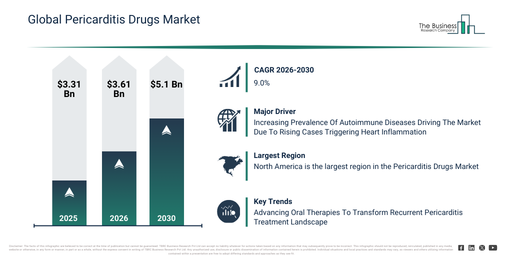
    The pericarditis drugs market has seen robust expansion in recent years. It is anticipated to grow from $3.31 billion in 2025 to $3.61 billion in 2026, achieving a compound annual growth rate (CAGR) of 9.3%. This historical growth can be attributed to several factors, including rising diagnosis rates for inflammatory cardiac conditions, the widespread availability of established NSAID therapies, the expansion of cardiology care infrastructure, increasing adoption of colchicine-based treatments, and refined clinical guidelines.

    The pericarditis drugs market is projected to experience robust expansion over the next few years. It is forecast to reach $5.1 billion by 2030, demonstrating a compound annual growth rate (CAGR) of 9.0%. This anticipated growth during the forecast period is driven by the increasing development of biologic and immunomodulatory drugs, a rising emphasis on personalized cardiac care, the expansion of outpatient and homecare treatment models, growing investment in cardiovascular research, and increased awareness of rare inflammatory heart diseases. Prominent trends for the forecast period include the increasing adoption of targeted anti-inflammatory therapies, a rising use of combination drug regimens, a growing focus on recurrent pericarditis management, the expansion of hospital-based treatment protocols, and enhanced monitoring of treatment outcomes.

    Get A Free Sample Report With In-Depth Market Insights:

    https://thebusinessresearchcompany.com/sample_request?id=85330062&type=smp&name=Pericarditis%20Drugs%20Market%20Report%202026&utm_source=Blogs&utm_medium=Paid&utm_campaign=Oct_PR

    Pericarditis Drugs Market Expansion Drivers: What’s Shaping Future Growth?

    The growing occurrence of autoimmune diseases is anticipated to boost the pericarditis drugs market in the coming years. Autoimmune conditions involve the immune system erroneously attacking the body’s healthy cells and tissues. This rise in autoimmune disease prevalence is largely due to environmental shifts that disrupt the immune system, leading it to target healthy tissues by mistake. Pericarditis medications play a vital role given the rising prevalence of autoimmune diseases, as numerous autoimmune disorders can lead to pericarditis, which is the inflammation of the heart’s lining. These medications effectively diminish inflammation, alleviate symptoms, and avert complications, thereby managing pericarditis resulting from autoimmune activity. For instance, in September 2023, the Inflammatory Bowel Disease (IBD) Clinical and Research Centre, a Canada-based organization dedicated to improving the lives of patients with Crohn’s disease and ulcerative colitis, reported that with a prevalence of 825 per 100,000 in 2023, over 320,000 people in Canada have inflammatory bowel disease (IBD). Furthermore, as the prevalence is projected to grow by 2.44% annually, 1.1% of the population, or 470,000 Canadians, are expected to be living with IBD by 2035. Consequently, the rising incidence of autoimmune diseases is fueling the expansion of the pericarditis drugs market.

    Pericarditis Drugs Market Segmentation: How Does The Market Break Down By Category?

    The pericarditis drugs market covered in this report is segmented –

    1) By Drug Class: Nonsteroidal Anti-Inflammatory Drugs (NSAIDs), Colchicine, Corticosteroids, Other Drug Class

    2) By Route Of Administration: Oral, Intravenous, Intramuscular, Topical

    3) By Distribution Channel: Hospital Pharmacies, Retail Pharmacies, Online Pharmacies, Other Distribution Channels

    4) By Therapeutic Application: Acute Pericarditis Treatment, Recurrent Pericarditis Management, Post-Cardiac Surgery, Pericardial Effusion Management

    5) By End User: Hospitals, Homecare, Specialty Clinics, Other End Users

    Subsegments:

    1) By Nonsteroidal Anti-Inflammatory Drugs: Ibuprofen, Aspirin, Indomethacin, Naproxen, Diclofenac

    2) By Colchicine: Oral Colchicine, Intravenous Colchicine

    3) By Corticosteroids: Prednisone, Methylprednisolone, Hydrocortisone, Dexamethasone

    4) By Other Drug Class: Immunosuppressive Agents, Biologic Agents, Analgesics, Antibiotics

    Pericarditis Drugs Market Strategic Trends: What Defines The Next Growth Phase?

    Major companies operating in the pericarditis drugs market are concentrating on developing innovative products, including oral anti-inflammatory therapies, to improve treatment accessibility and lower recurrence rates in patients suffering from recurrent pericarditis. An oral anti-inflammatory therapy is a small-molecule formulation designed to modulate inflammatory pathways and prevent disease relapse through systemic, non-injectable administration. For instance, in April 2025, Cardiol Therapeutics Inc., a Canada-based clinical-stage life sciences company specializing in anti-inflammatory and anti-fibrotic therapies for heart diseases, initiated a Phase III clinical trial for CardiolRx. The investigational therapy is specifically designed to target inflammasome pathway activation, a central mechanism implicated in pericarditis-related inflammation and fibrosis. Its development represents a step forward in offering a convenient, oral, non-immunosuppressive treatment option that has the potential to expand therapeutic choices for recurrent pericarditis patients.

    Pericarditis Drugs Market Competitive Overview And Top Companies

    Major companies operating in the pericarditis drugs market are Merck & Co. Inc., Pfizer Inc., Bayer AG, Novartis AG, Bristol-Myers Squibb Company, Takeda Pharmaceutical Company Limited, Teva Pharmaceutical Industries Ltd., Sun Pharmaceutical Industries Ltd., Aurobindo Pharma Limited, Hikma Pharmaceuticals USA Inc., Zydus Lifesciences Limited, Kiniksa Pharmaceuticals, Camber Pharmaceuticals Inc., Scilex Holding Company, Solara Active Pharma Sciences, Alkaloids Bioactives Pvt. Ltd., Alchem International Pvt. Ltd., Sarv Biolabs Pvt. Ltd., Midas Pharma GmbH, AdvaCare Pharma, Actavis GmbH, Enomark LLC, Honour Lab Limited.

    View The Full Pericarditis Drugs Market Report:

    https://thebusinessresearchcompany.com/report/global-pericarditis-drugs-market-report?utm_source=Blogs&utm_medium=Paid&utm_campaign=Oct_PR

    Pericarditis Drugs Market Regional Analysis And Top Geography

    North America was the largest region in the pericarditis drugs market in 2025. Asia-Pacific is expected to be the fastest-growing region in the forecast period. The regions covered in the pericarditis drugs market report are Asia-Pacific, South East Asia, Western Europe, Eastern Europe, North America, South America, Middle East, Africa.

    Reach Out To Our Team:

    The Business Research Company: https://www.thebusinessresearchcompany.com/

    Americas: +1 310-496-7795

    Asia: +44 7882 955267 & +91 8897263534

    Europe: +44 7882 955267

    Email us at: marketing@tbrc.info

    Follow us on:

    LinkedIn: https://in.linkedin.com/company/the-business-research-company

    YouTube: https://www.youtube.com/channel/UC24_fI0rV8cR5DxlCpgmyFQ

    Global Market Model: https://www.thebusinessresearchcompany.com/global-market-model
  • Pericarditis Market Size Forecast: How The Industry Is Expected To Grow From 2026 To 2030

    Pericarditis Market Size Forecast: How The Industry Is Expected To Grow From 2026 To 2030

    Built to provide research that’s more actionable and strategically valuable, The Business Research Company’s 2026 market reports include market attractiveness analysis, total addressable market sizing, company benchmarking matrices, interactive Excel dashboards, broader supply chain intelligence, emerging startup tracking, and in-depth product insights.

    Pericarditis Market Size And Revenue Outlook Through 2030

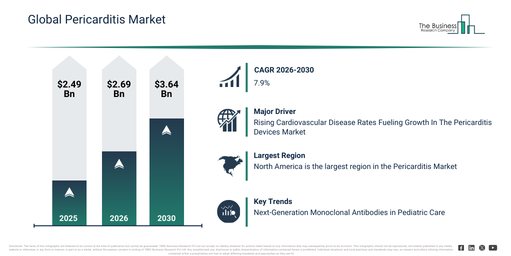
    The market for pericarditis treatments has shown significant expansion in recent times. This market is projected to expand from $2.49 billion in 2025 to $2.69 billion in 2026, demonstrating a compound annual growth rate (CAGR) of 7.9%. Historically, this market’s expansion has been driven by factors such as a lack of widespread understanding of pericarditis, a dependence on conventional diagnostic methods, slow integration of sophisticated imaging technologies, difficulties in accessing specialized cardiac medical services, and the prevalent nature of hospital-centric treatment approaches.

    The pericarditis market is projected to undergo significant expansion in the next few years, with estimates indicating it will reach $3.64 billion by 2030, growing at a compound annual growth rate (CAGR) of 7.9%. This expansion throughout the forecast period is fueled by the rising occurrence of cardiovascular disorders, increased adoption of digital diagnostic tools, the growth of outpatient surgical centers, escalating investment in precision medicine, and the incorporation of AI into cardiac care. Important trends anticipated during this period include customized pericarditis treatment approaches, less invasive surgical methods, advancements in early diagnosis, the integration of wearable cardiac monitoring systems, and the broadening of outpatient cardiac care services.

    Get A Free Sample Report With In-Depth Market Insights:

    https://thebusinessresearchcompany.com/sample_request?id=50745625&type=smp&name=Pericarditis%20Market%20Report%202026&utm_source=Blogs&utm_medium=Paid&utm_campaign=Oct_PR

    Pericarditis Market Development Factors: What’s Supporting Demand?

    The rising occurrence of cardiovascular diseases (CVDs) is anticipated to fuel the expansion of the pericarditis market. CVDs encompass conditions impacting the heart or blood vessels, often associated with arterial fatty deposits and a heightened risk of blood clots. Untreated pericarditis has the potential to cause numerous CVDs or, in severe instances, death, thus the growing incidence of CVDs propels market demand. As an example, in January 2024, the American Heart Association, a US-based non-profit organization, reported an increase in the age-adjusted death rate from cardiovascular disease to 233.3 per 100,000 in 2024, a 4.0% rise from 224.4 per 100,000 in 2023. Consequently, the increasing prevalence of cardiovascular diseases is stimulating growth in the pericarditis devices market. A rise in healthcare spending is projected to stimulate the expansion of the pericarditis market in the future. Healthcare spending denotes the collective financial investment directed towards diverse elements of healthcare services and operations within a particular geographical area, nation, or medical system. Enhanced healthcare expenditure fosters an environment conducive to the holistic management of pericarditis, covering everything from investigation and detection to therapeutic interventions and patient awareness, ultimately aiding those impacted by this ailment. For instance, in May 2023, a report from the Office for National Statistics, a UK-based government department, indicated that healthcare spending in the UK saw an increase of 5.6% between 2022 and 2023, contrasting with a 0.9% growth in 2022. The total UK healthcare expenditure was approximately $317.63 billion (£292 billion) in 2023. Hence, the surge in healthcare spending is propelling the pericarditis market’s growth.

    Pericarditis Market Segment Trends And Revenue Contributors

    The pericarditis market covered in this report is segmented –

    1) By Type: Acute Pericarditis, Chronic Pericarditis, Recurrent Pericarditis

    2) By Diagnosis And Treatment: Electrocardiogram (ECG), Echocardiogram, Computerized Tomography (Ct), X-Ray, Medication, Surgical Treatment

    3) By Application: Hospitals And Clinics, Medical Institutes, Ambulatory Surgical Centers, Research Organizations

    Subsegments:

    1) By Acute Pericarditis: Viral Pericarditis, Bacterial Pericarditis, Idiopathic Pericarditis

    2) By Chronic Pericarditis: Constrictive Pericarditis, Non-constrictive Chronic Pericarditis

    3) By Recurrent Pericarditis: Post-Acute Pericarditis Recurrences, Secondary Recurrent Pericarditis

    Pericarditis Market Transformation Trends: What Innovations Are Driving Change?

    Companies active in the pediatric market are focused on creating advanced monoclonal antibodies. This effort aims to broaden treatment alternatives, achieve better therapeutic results, and lessen adverse reactions for children suffering from diverse health issues. These next-generation antibodies are designed to offer enhanced effectiveness, precision, and security when targeting diseases. An example of this advancement is the introduction of LOQTORZITM by Coherus BioSciences, a US biotechnology firm, in January 2024. LOQTORZI is indicated for first-line treatment in adults battling metastatic or recurrent locally advanced nasopharyngeal carcinoma (NPC), administered alongside cisplatin and gemcitabine. Furthermore, it serves as a standalone therapy for patients with recurrent, unresectable, or metastatic NPC whose condition has worsened following platinum-containing chemotherapy, irrespective of their PD-L1 status.

    Pericarditis Market Competitive Landscape: Which Companies Lead The Industry?

    Major companies operating in the pericarditis market are Pfizer Inc., AstraZeneca plc, Merck & Co. Inc., Novartis International AG, Johnson & Johnson Services Inc., Takeda Pharmaceutical Co. Ltd., Zydus Cadila Healthcare Ltd., Sun Pharmaceutical Ltd., Kiniksa Pharmaceuticals Ltd., Regeneron Pharmaceuticals Inc., Amgen Inc., Merck KGaA, Hikma Pharmaceuticals plc, AbbVie Inc., Bristol-Myers Squibb Company, Eli Lilly and Company, GlaxoSmithKline plc, Sanofi S.A., Teva Pharmaceutical Industries Ltd., Bayer AG, Roche Holding AG, Daiichi Sankyo Company Limited, Astellas Pharma Inc.

    View The Full Pericarditis Market Report:

    https://thebusinessresearchcompany.com/report/pericarditis-global-market-report?utm_source=Blogs&utm_medium=Paid&utm_campaign=Oct_PR

    Pericarditis Market Geographic Analysis: Where Is Demand Rising Fastest?

    North America was the largest region in the pericarditis market in 2025. Asia-Pacific is expected to be the fastest-growing region in the pericarditis market report during the forecast period. The regions covered in the pericarditis market report are Asia-Pacific, South East Asia, Western Europe, Eastern Europe, North America, South America, Middle East, Africa.

    Reach Out To Our Team:

    The Business Research Company: https://www.thebusinessresearchcompany.com/

    Americas: +1 310-496-7795

    Asia: +44 7882 955267 & +91 8897263534

    Europe: +44 7882 955267

    Email us at: marketing@tbrc.info

    Follow us on:

    LinkedIn: https://in.linkedin.com/company/the-business-research-company

    YouTube: https://www.youtube.com/channel/UC24_fI0rV8cR5DxlCpgmyFQ

    Global Market Model: https://www.thebusinessresearchcompany.com/global-market-model

  • Perfusion Bioreactor With Artificial Intelligence (AI) Control Market Reaches $4.85 Billion In 2026: Forecast And Growth Opportunities

    Perfusion Bioreactor With Artificial Intelligence (AI) Control Market Reaches $4.85 Billion In 2026: Forecast And Growth Opportunities

    Backed by market attractiveness analysis, total addressable market sizing, company benchmarking matrices, interactive Excel dashboards, wider supply chain intelligence, emerging startup coverage, and detailed product-level insights, The Business Research Company’s 2026 market reports are designed to offer research that is more actionable and strategically valuable than ever.

    Perfusion Bioreactor With Artificial Intelligence (AI) Control Market Growth From $2.27 Billion In 2026 To $4.85 Billion By 2030 At A CAGR Of 20.8%

    The perfusion bioreactor with artificial intelligence (AI) control market size has experienced significant expansion recently. It is forecast to grow from $1.88 billion in 2025 to $2.28 billion in 2026, achieving a compound annual growth rate (CAGR) of 21.1%. The market’s past growth is primarily due to several factors, including an increase in demand for biologics manufacturing, the expansion of monoclonal antibody production, a rising adoption of perfusion-based cell culture techniques, continuous improvements in sensor and automation technologies, and the growing utilization of single-use bioprocessing systems.

    The perfusion bioreactor with artificial intelligence (ai) control market size is anticipated to undergo rapid growth over the coming years. Its value is projected to attain $4.85 billion in 2030 at a compound annual growth rate (CAGR) of 20.8%. The expansion during the forecast period is attributable to increasing investments in AI-enabled biomanufacturing, an escalating demand for cell and gene therapies, a broader adoption of continuous manufacturing, a growing emphasis on process scalability and efficiency, and increased regulatory acceptance of advanced bioprocess technologies. Key trends anticipated during this period include a greater uptake of AI-driven perfusion control systems, expanding utilization of continuous cell culture platforms, an intensifying requirement for single-use perfusion bioreactors, the broadening of real-time process optimization capabilities, and a heightened focus on production yield and process consistency.

    Get A Free Sample Report With In-Depth Market Insights:

    https://thebusinessresearchcompany.com/sample_request?id=48783474&type=smp&name=Perfusion%20Bioreactor%20With%20Artificial%20Intelligence%20%28AI%29%20Control%20Market%20Report%202026&utm_source=Blogs&utm_medium=Paid&utm_campaign=Oct_PR

    Perfusion Bioreactor With Artificial Intelligence (AI) Control Market Industry Drivers: What’s Behind The Revenue Growth?

    The rising adoption of personalized medicine is anticipated to drive expansion in the perfusion bioreactor with artificial intelligence (AI) control market moving ahead. This medical strategy involves tailoring treatments to an individual’s unique genetic makeup, molecular profile, and clinical features to provide more accurate and impactful care. Its growth is fueled by genomic advancements, which facilitate the creation of treatments specifically designed for a patient’s distinct genetic profile, enhancing both efficacy and safety. Perfusion bioreactors equipped with AI control play a crucial role in personalized medicine by ensuring the accurate and continuous generation of patient-specific cells, including stem cells or engineered tissues, within meticulously controlled environments. As an example, in February 2024, the Personalized Medicine Coalition, a US-based non-profit, reported that the FDA greenlit 16 novel personalized treatments for rare disease patients in 2023, a significant rise from six in 2022. Among the personalized treatments newly approved in 2023 were seven cancer drugs and three targeting other specific diseases and conditions. Consequently, the growing widespread use of personalized medicine is propelling the perfusion bioreactor with artificial intelligence (AI) control market forward.

    Perfusion Bioreactor With Artificial Intelligence (AI) Control Market Segment Analysis Spotlighting Growth Areas

    The perfusion bioreactor with artificial intelligence (ai) control market covered in this report is segmented –

    1) By Product Type: Single Use Perfusion Bioreactors, Multi-Use Perfusion Bioreactors

    2) By Artificial Intelligence (AI) Control Type: Predictive Analytics, Process Optimization, Real-Time Monitoring, Automated Feedback Control, Other Artificial Intelligence (AI) Control Types

    3) By Application: Cell Therapy, Monoclonal Antibody Production, Vaccine Manufacturing, Stem Cell Research, Other Applications

    4) By End-User: Biopharmaceutical Companies, Academic And Research Institutes, Contract Manufacturing Organizations, Other End-Users

    Subsegments:

    1) By Single-Use Perfusion Bioreactors: Disposable Bag Bioreactors, Modular Single-Chamber Bioreactors, Pre-Sterilized Single-Vessel Bioreactors

    2) By Multi-Use Perfusion Bioreactors: Stainless Steel Bioreactors, Glass Bioreactors, Multi-Vessel Continuous Culture Systems

    #Perfusion Bioreactor With Artificial Intelligence (AI) Control Market Growth Trends: What’s Shaping The Future Outlook?

    Major companies operating in the perfusion bioreactor with artificial intelligence (AI) control market are concentrating on developing advanced methodologies, such as AI-enhanced real-time bioprocess monitoring, to optimize cell culture performance, increase product yield, and reduce operational costs within biopharmaceutical manufacturing. AI-enhanced real-time bioprocess monitoring utilizes artificial intelligence algorithms to continuously analyze bioreactor data, providing real-time insights, predictive adjustments, and refinement of cell growth and product quality during biomanufacturing. As an illustration, in February 2025, The Cultivated B GmbH, a Germany-based biotechnology company, introduced AI-driven multi-channel biosensors designed to enhance real-time monitoring of bioreactors in cell culture and fermentation processes. These biosensors deliver continuous high-resolution data analytics, enabling bioprocess engineers to track growth and metabolism with exceptional sensitivity, detecting molecules at sub-picomolar levels such as glucose, amino acids, and lactic acid. The AI integration provides immediate insights and recommendations to optimize media formulation, improve measurement reliability, mitigate contamination risk by eliminating manual sampling, and accelerate product development for applications in pharmaceuticals, biologics, food biotechnology, waste upcycling, and alternative protein production.

    Perfusion Bioreactor With Artificial Intelligence (AI) Control Market Leading Companies: Who Holds The Strongest Market Presence?

    Major companies operating in the perfusion bioreactor with artificial intelligence (ai) control market are Thermo Fisher Scientific Inc., Merck KGaA, Lonza Group AG., Danaher Corporation, Sartorius Aktiengesellschaft, Getinge AB., WuXi Biologics Inc., Eppendorf Aktiengesellschaft, ABEC Inc., Catalyx.ai, PBS Biotech Inc., Cytovance Biologics, Culture Biosciences Inc., Esco Lifesciences Group Ltd., Cell Culture Company GmbH, Synthecon Inc., OmniBRx Biotechnologies Inc., ProlifeCell Inc., Sciperio Ltd., The Cultivated B Ltd.

    View The Full Perfusion Bioreactor With Artificial Intelligence (AI) Control Market Report:

    https://thebusinessresearchcompany.com/report/perfusion-bioreactor-with-artificial-intelligence-ai-control-global-market-report?utm_source=Blogs&utm_medium=Paid&utm_campaign=Oct_PR

    Perfusion Bioreactor With Artificial Intelligence (AI) Control Market Global Footprint: Which Region Leads The Market?

    North America was the largest region in the perfusion bioreactor with artificial intelligence (AI) control market in 2025. Asia-Pacific is expected to be the fastest-growing region in the forecast period. The regions covered in the perfusion bioreactor with artificial intelligence (ai) control market report are Asia-Pacific, South East Asia, Western Europe, Eastern Europe, North America, South America, Middle East, Africa.

    Reach Out To Our Team:

    The Business Research Company: https://www.thebusinessresearchcompany.com/

    Americas: +1 310-496-7795

    Asia: +44 7882 955267 & +91 8897263534

    Europe: +44 7882 955267

    Email us at: marketing@tbrc.info

    Follow us on:

    LinkedIn: https://in.linkedin.com/company/the-business-research-company

    YouTube: https://www.youtube.com/channel/UC24_fI0rV8cR5DxlCpgmyFQ

    Global Market Model: https://www.thebusinessresearchcompany.com/global-market-model