Blog

  • Future Demand and Leading Companies Shaping the Wheelchair Lift Market to 2029

    Future Demand and Leading Companies Shaping the Wheelchair Lift Market to 2029

    Claim your 30% discount on Global Market Reports with code ONLINE30. Limited time only.

    Claim your 30% discount on Global Market Reports with code ONLINE30. Limited time only.

    What Is the Outlook for the Wheelchair Lift Market Heading Into 2029?

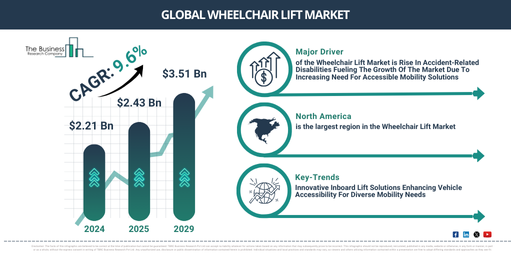
    In recent years, the market size for wheelchair lifts has seen rapid expansion. The market is projected to rise from $2.21 billion in 2024 to $2.43 billion in 2025, maintaining an annual compounded growth rate (CAGR) of 10.0%. The historic growth period can be credited to the increased incorporation of smart technology within mobility devices, heightened awareness surrounding inclusive infrastructure, a surge in temporary disabilities due to sports and job-related injuries, a growing need for compliant accessibility systems due to urban development, and an increased emphasis on self-reliance in individuals with mobility difficulties.

    In the coming years, the wheelchair lift market is poised for considerable expansion, with projections indicating that it will reach a valuation of $3.51 billion in 2029, growing at a compound annual growth rate (CAGR) of 9.6%. This predicted growth for the forecast period is rooted in several factors, including amplified investments in smart city infrastructure, a surge in cases of mobility-related chronic illnesses, an increase in the need for post-operative rehabilitation, enhanced backing from insurance and healthcare schemes, and the growing market demand for bespoke and compact lift solutions. The forecast period is also set to witness significant trends such as improvements in sensor-oriented safety features, the creation of energy-efficient lift systems, novel space-conserving and easily foldable designs, advancements in remote-controlled and application-integrated operations, and the invention of lifts that can withstand inclement weather.

    Download The Free Sample Report Here:

    https://www.thebusinessresearchcompany.com/sample.aspx?id=27445&type=smp

    Which Factors Are Pushing The Wheelchair Lift Market Forward?

    An increase in accident-related disabilities is forecasted to stimulate the wheelchair lifts market’s expansion. Disabilities, whether physical or mental, hamper a person’s ability to carry out routine tasks. The growing number of high-impact accidents caused by heavy traffic and irresponsible driving is increasing the rate of accidental disabilities. These accidents often result in long-lasting physical limitations. Wheelchair lifts give individuals with disabilities resulting from accidents the ability to enter and exit vehicles and buildings safely and independently. The Bureau of Labor Statistics, a governmental organization in the United States, showed in February 2025, the employment-population ratio for disabled individuals increased by 1.2% from 2022 to 2023. Additionally, in 2024, around 13% of the total population comprised individuals with disabilities. Consequently, a surge in accident-related disabilities is propelling the growth of the wheelchair lifts market.

    Which Segment Held The Largest Share In The Wheelchair Lift Market In 2025?

    The wheelchair lift market covered in this report is segmented

    1) By Product Type: Vertical Wheelchair Lifts, Inclined Wheelchair Lifts, Portable Wheelchair Lifts

    2) By Mechanism Type: Hydraulic Wheelchair Lifts, Electric Wheelchair Lifts, Mechanical Wheelchair Lifts

    3) By Distribution Channel: Direct Sale, Online Retail, Distributors And Dealers, Wholesale

    4) By End Use Application: Residential, Healthcare Facilities, Public Buildings, Commercial Spaces

    Subsegments:

    1) By Vertical Wheelchair Lifts: Hydraulic Vertical Lifts, Electric Vertical Lifts, Pneumatic Vertical Lifts

    2) By Inclined Wheelchair Lifts: Straight Inclined Lifts, Curved Inclined Lifts, Track-Mounted Inclined Lifts

    3) By Portable Wheelchair Lifts: Mobile Wheelchair Lifts, Foldable Wheelchair Lifts, Manual Portable Lifts

    How Are Key Trends Driving Expansion In The Wheelchair Lift Industry?

    Prominent firms in the wheelchair lifts market are concentrating on creating innovative technologies, like inboard lifts, that can be smoothly integrated into a vehicle’s interior. Essentially, inboard lifts are mechanisms installed within vehicles to assist in lifting and placing wheelchairs, ensuring safe and convenient entry for users. Take, for example, the UK-based company Passenger Lift Solutions (PLS), which is known for producing wheelchair lifts. In August 2024, they introduced the EA4 inboard lift, targeting wheelchair-accessible vehicles, reconstructed specifically to accommodate a wide variety of mobility needs, including those of wheelchair users and individuals with restricted mobility. The device features three styles of platforms—solid, vertical split, and horizontal fold—, all aimed at boosting comfort and accessibility. Due to its modular design, it enables easy installation and simple maintenance, and it’s compatible with both back and side door arrangements. With flexible platform sizes and a weight limit of 400 to 500 kg, the EA4 presents adjustable solutions for diverse passenger and vehicle necessities.

    Which Organizations Are Driving Progress In The Wheelchair Lift Industry?

    Major companies operating in the wheelchair lift market are BraunAbility, D.I.D – Daido Kogyo Co. Ltd., Stannah Lifts, Cibes Lift, Bruno Independent Living Aids Inc., Garaventa Lift GmbH, Ricon Corporation, Savaria Corporation, Terry Lifts, Stiltz Ltd., AMF Bruns Mobility, Arrow Lift, AmeriGlide Inc., Discount Ramps LLC, Adaptive Engineering Inc., Wabtec Corporation, Handi Lift Inc., ACME Home Elevator Inc., BC Lift, and Butler Mobility Products.

    Get The Full Report Here:

    https://www.thebusinessresearchcompany.com/report/wheelchair-lift-global-market-report

    Which Region Is Expected To Experience The Highest Growth In The Wheelchair Lift Industry?

    North America was the largest region in the wheelchair lift market in 2024. Asia-Pacific is expected to be the fastest-growing region in the forecast period. The regions covered in the wheelchair lift market report are Asia-Pacific, Western Europe, Eastern Europe, North America, South America, Middle East, Africa.

    Request For A Customized Report:

    https://www.thebusinessresearchcompany.com/customise?id=27445&type=smp

    About The Business Research Company:

    With over 15000+ reports from 27 industries covering 60+ geographies, The Business Research Company has built a reputation for offering comprehensive, data-rich research and insights. Armed with 1,500,000 datasets, the optimistic contribution of in-depth secondary research, and unique insights from industry leaders, you can get the information you need to stay ahead in the game.

    Get in touch with us:

    The Business Research Company: https://www.thebusinessresearchcompany.com/

    Americas +1 310-496-7795

    Asia +44 7882 955267 & +91 8897263534

    Europe +44 7882 955267

    Email us at info@tbrc.info

    Follow us on:

    LinkedIn: https://in.linkedin.com/company/the-business-research-company

    YouTube: https://www.youtube.com/channel/UC24_fI0rV8cR5DxlCpgmyFQ

    Global Market Model: https://www.thebusinessresearchcompany.com/global-market-model
  • 2025–2029 Viral Clearance Market Outlook: Regional Trends and Growth Forecast

    2025–2029 Viral Clearance Market Outlook: Regional Trends and Growth Forecast

    Claim your 30% discount on Global Market Reports with code ONLINE30. Limited time only.

    Claim your 30% discount on Global Market Reports with code ONLINE30. Limited time only.

    What Does the Forecast Indicate for the Viral Clearance Market From 2025 to 2029?

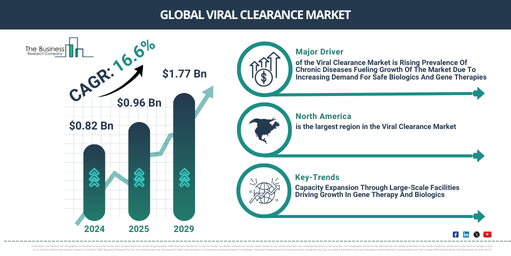
    The expansion of the viral clearance marketplace has been quick in previous years, escalating from $0.82 billion in 2024 to $0.96 billion in 2025, maintaining a compound annual growth rate (CAGR) of 16.9%. The historical growth period could be connected to the surge in biopharmaceutical production, intensified regulatory focus on viral security, the widespread occurrence of chronic and infectious diseases, the growth in manufacturing of plasma-derived products, an increased tendency to outsource to Clinical Research Organizations (CROs) and Contract Development Manufacturing Organizations (CDMOs), and the wider acceptance of monoclonal antibodies and recombinant proteins.

    The market size for viral clearance is set to witness exponential growth in the forthcoming years, ascending to a value of $1.77 billion in 2029 with a compound annual growth rate (CAGR) of 16.6%. This robust growth in the upcoming years can be linked to the escalating demand for cell and gene therapies, an accentuated emphasis on biosafety in biomanufacturing, intense regulations for validation requirements, the growth of biologics production facilities, an increase in outsourcing for viral safety testing, and the growing preference for single-use systems in bioprocessing. Future trends that are anticipated during this forecast period encompass the assimilation of high-throughput analytical technologies, accepting single-use systems, progression in the filtration and chromatography methods, advancements in continuous bioprocessing, and the proliferation of contract-based research and manufacturing services.

    Download The Free Sample Report Here:

    https://www.thebusinessresearchcompany.com/sample.aspx?id=27444&type=smp

    What Elements Are Contributing To Growth In The Viral Clearance Market?

    The growing occurrence of chronic diseases worldwide is anticipated to promote the expansion of the viral clearance market. Chronic illnesses, which have a gradual onset and persist for extended periods, often necessitate continuous treatment or management. The global incidence of these diseases is on the rise, primarily due to increased life expectancy resulting from better healthcare and living conditions. This increase leads to a surge in age-related conditions like cardiovascular diseases, diabetes, arthritis, and cancer. Viral clearance plays a vital role in the production of biologics and gene therapies used for managing chronic diseases, ensuring their safety and efficacy. For example, it was reported by the Institute for Health Metrics and Evaluation, a US-based public health research institute, in June 2023, that diabetes had affected over five hundred million individuals worldwide. These figures are predicted to more than double, hitting 1.3 billion individuals by 2050. Thus, the escalating incidence of chronic diseases is fueling the viral clearance market’s growth.

    Which Segments Are Detailed In The Global Viral Clearance Market Report?

    The viral clearance market covered in this report is segmented

    1) By Method: Viral Clearance Method, Viral Removal Method, Viral Inactivation Method, Viral Detection Method

    2) By Application: Vaccines And Therapeutics, Blood And Blood Products, Cellular And Gene Therapy Products, Tissue And Tissue Products, Other Applications

    3) By End-User: Pharmaceutical And Biotechnology Companies, Contract Research Organizations, Academic Research Institutes, Other End Users

    Subsegments:

    1) By Viral Clearance Method: Downstream Processing, Filtration, Chromatography, Precipitation, Nanofiltration

    2) By Viral Removal Method: Membrane Chromatography, Depth Filtration, Nanofiltration, Ultrafiltration, Protein A Affinity Chromatography

    3) By Viral Inactivation Method: Solvent Detergent Method, Low pH Treatment, Heat Treatment (Pasteurization), UV-C Irradiation, Caprylate Treatment

    4) By Viral Detection Method: PCR (Polymerase Chain Reaction), ELISA (Enzyme-Linked Immunosorbent Assay), Nucleic Acid Testing (NAT), Cell-Based Assays, Transmission Electron Microscopy (TEM)

    Which Emerging Trends And Strategic Shifts Are Shaping The Viral Clearance Market?

    Leading businesses in the viral clearance market are concentrating on a capacity expansion strategy, such as large-scale viral vector production facilities, to keep up with the increasing demand for gene therapies and biologics. Large-scale viral vector production sites refer to advanced bioproduction locations with the specialized ability to produce viral vectors used in cell and gene treatment, ensuring high purity, safety, and adherence to viral clearance guidelines. For instance, Thermo Fisher Scientific, a biotechnology firm based in the United States, inaugurated its new 300,000-square-foot commercial viral vector production facility in Plainville, Massachusetts in August 2022. This facility allows for fully integrated manufacturing, including viral clearance and analytical testing, doubling its worldwide capacity and aiding the swift and safe launch of gene therapies, vaccines, and next-generation biologics.

    Who Are The Key Contributors To Growth In The Viral Clearance Market?

    Major companies operating in the viral clearance market are F Hoffmann-La Roche Ltd., Merck Group, Thermo Fisher Scientific Inc., Asahi Kasei Corporation, SGS SA, Eurofins Scientific Inc., Lonza Group AG, WuXi AppTec, Catalent Biologics, Charles River Laboratories, Kedrion Biopharma, Nelson Labs, Pall Corporation, Sartorius AG, Syngene International, Microbac Laboratories, Creative Biolabs, Texcell SA, GTP Bioways, and Vironova AB.

    Get The Full Report Here:

    https://www.thebusinessresearchcompany.com/report/viral-clearance-global-market-report

    Which Region Is Projected To Lead The Viral Clearance Market By 2025?

    North America was the largest region in the viral clearance market in 2024. Asia-Pacific is expected to be the fastest-growing region in the forecast period. The regions covered in the viral clearance market report are Asia-Pacific, Western Europe, Eastern Europe, North America, South America, Middle East, Africa.

    Request For A Customized Report:

    https://www.thebusinessresearchcompany.com/customise?id=27444&type=smp

    About The Business Research Company:

    With over 15000+ reports from 27 industries covering 60+ geographies, The Business Research Company has built a reputation for offering comprehensive, data-rich research and insights. Armed with 1,500,000 datasets, the optimistic contribution of in-depth secondary research, and unique insights from industry leaders, you can get the information you need to stay ahead in the game.

    Get in touch with us:

    The Business Research Company: https://www.thebusinessresearchcompany.com/

    Americas +1 310-496-7795

    Asia +44 7882 955267 & +91 8897263534

    Europe +44 7882 955267

    Email us at info@tbrc.info

    Follow us on:

    LinkedIn: https://in.linkedin.com/company/the-business-research-company

    YouTube: https://www.youtube.com/channel/UC24_fI0rV8cR5DxlCpgmyFQ

    Global Market Model: https://www.thebusinessresearchcompany.com/global-market-model
  • Latest Market Developments in Vascular Allografts Industry: Forecast 2025–2029

    Latest Market Developments in Vascular Allografts Industry: Forecast 2025–2029

    Claim your 30% discount on Global Market Reports with code ONLINE30. Limited time only.

    Claim your 30% discount on Global Market Reports with code ONLINE30. Limited time only.

    How Much Is the Global Vascular Allografts Market Valued at Present and by 2029?

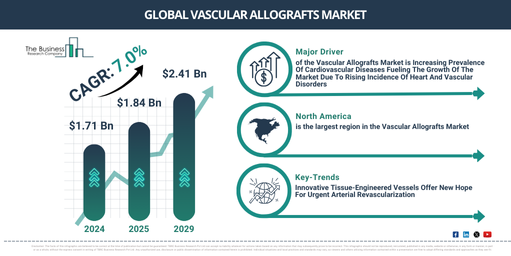
    The market size of vascular allografts has seen robust growth in the past few years. Projected to increase from $1.71 billion in 2024 to $1.84 billion in 2025, the market is predicted to expand at a compound annual growth rate (CAGR) of 7.4%. The surge in growth during the historical period can be linked to rising cases of cardiovascular ailments, an escalating demand for vascular grafts in bypass operations, an increase in vascular trauma cases needing grafts, greater consciousness about the advantages of organ transplants, and the increasing use of vascular allografts in reconstructive surgeries.

    Over the following years, the vascular allografts market is projected to witness significant growth, expanding to a value of $2.41 billion by 2029 with a Compound Annual Growth Rate (CAGR) of 7.0%. This growth during the forecast period can be credited to factors such as increased healthcare spending in emerging regions, growing regulatory approvals for vascular allograft goods, heightened awareness of minimally invasive vascular repair methods, amplified use of vascular allografts for diabetic limb salvage, and increasing demand for tailor-made, patient-specific vascular grafts. The forecast period also sees marketplace trends like enhanced tissue preservation technology, high-tech biomaterials for vascular grafts, innovatively revolutionized cryopreservation processes, adoption of regenerative medicine methodologies, progress in 3D bioprinting for vascular grafts, and sophisticated imaging for graft compatibility.

    Download The Free Sample Report Here:

    https://www.thebusinessresearchcompany.com/sample.aspx?id=27443&type=smp

    #What Drivers Are Influencing Growth In The Vascular Allografts Market?

    The rise in cardiovascular disease rates is anticipated to stimulate the vascular allografts market’s expansion. Cardiovascular diseases encompass a variety of ailments that affect the heart and blood vessels, such as coronary heart disease, heart failure, strokes, and hypertension. This increase in heart-related diseases is largely due to unhealthy eating habits, with the overconsumption of saturated and trans fats, added sugars, and sodium leading to high blood pressure, obesity, and raised cholesterol levels. Vascular allografts, which are donor blood vessels readily available for use, can augment the treatment choices for such ailments. These are incredibly beneficial to patients with impaired or ailing vessels, as they enhance the results of surgery by reinstating correct blood circulation, reducing complications, and bolstering long-term cardiovascular wellbeing. For instance, the American Heart Association, a nonprofit organization based in the US, reported in January 2024 that the age-adjusted death rate due to cardiovascular disease had gone up to 233.3 per 100,000 in 2022, a 4.0% increase from 224.4 per 100,000 in 2021. Consequently, the increasing incidence of cardiovascular diseases is fueling the growth of the vascular allograft market.

    What Are The Main Segments Identified In The Vascular Allografts Market Research?

    The vascular allografts market covered in this report is segmented

    1) By Type: Cortical Allograft, Cancellous Allograft, Corticocancellous Allograft

    2) By Material Type: Biologic Materials, Synthetic Materials, Composite Materials, Polymer-Based Materials

    3) By Application: Cardiovascular Surgery, Peripheral Vascular Surgery, Transplant Surgery, Repair Of Congenital Defects

    4) By Distribution Channel: Direct Sales, Online Sales, Distributors, Medical Supply Stores

    5) By End-User: Hospitals, Ambulatory Surgical Centers (ASCs), Specialty Clinics, Research And Academic Institutions

    Subsegments:

    1) By Cortical Allograft: Fresh Frozen Cortical Allograft, Freeze Dried Cortical Allograft, Demineralized Cortical Allograft

    2) By Cancellous Allograft: Fresh Frozen Cancellous Allograft, Freeze Dried Cancellous Allograft, Demineralized Cancellous Allograft

    3) By Corticocancellous Allograft: Fresh Frozen Corticocancellous Allograft, Freeze Dried Corticocancellous Allograft, Demineralized Corticocancellous Allograft

    What Are The Leading Trends And Opportunities In The Vascular Allografts Sector?

    Key players in the vascular allografts sector are prioritizing the development of innovative products like bioengineered graft materials. This focus on emerging technologies enhances graft longevity, compatibility, and integration with the patient’s tissue. The concept of bioengineered graft materials refers to uniquely fabricated vascular grafts that utilize cutting-edge biological and engineering methodologies. Illustratively, Humacyte Inc., a biotech firm based in the US, introduced Symvess in February 2025. This bioengineered vascular graft is tailored for adult patients requiring immediate revascularization due to extremity arterial damages and where autologous vein grafts fall short as an option. Symvess is crafted to gradually morph into the patient’s personal tissue, thereby lowering rejection risk and enhancing long-term results. Furthermore, this graft lessens the demand for immunosuppressive drugs, an essential benefit in trauma and emergency surgical situations.

    Which Companies Play A Key Role In The Development Of The Vascular Allografts Market?

    Major companies operating in the vascular allografts market are Medtronic plc, Boston Scientific Corporation, Terumo Corporation, W. L. Gore & Associates Inc., Dentsply Sirona Inc., Integra LifeSciences Holdings Corporation, MicroPort Scientific Corporation, Bioventus Inc., KLS Martin Group, MTF Biologics, MTF Biologics, ZimVie Inc., B. Braun Melsungen AG, Artivion Inc., MiMedx Group Inc., RTI Surgical Inc, LeMaitre Vascular Inc., LifeNet Health Inc., Xtant Medical Holdings Inc., Biotech Dental.

    Get The Full Report Here:

    https://www.thebusinessresearchcompany.com/report/vascular-allografts-global-market-report

    What Are The Key Regional Developments Shaping The Vascular Allografts Market?

    North America was the largest region in the vascular allografts market in 2024. Asia-Pacific is expected to be the fastest-growing region in the forecast period. The regions covered in the vascular allografts market report are Asia-Pacific, Western Europe, Eastern Europe, North America, South America, Middle East, Africa.

    Request For A Customized Report:

    https://www.thebusinessresearchcompany.com/customise?id=27443&type=smp

    About The Business Research Company:

    With over 15000+ reports from 27 industries covering 60+ geographies, The Business Research Company has built a reputation for offering comprehensive, data-rich research and insights. Armed with 1,500,000 datasets, the optimistic contribution of in-depth secondary research, and unique insights from industry leaders, you can get the information you need to stay ahead in the game.

    Get in touch with us:

    The Business Research Company: https://www.thebusinessresearchcompany.com/

    Americas +1 310-496-7795

    Asia +44 7882 955267 & +91 8897263534

    Europe +44 7882 955267

    Email us at info@tbrc.info

    Follow us on:

    LinkedIn: https://in.linkedin.com/company/the-business-research-company

    YouTube: https://www.youtube.com/channel/UC24_fI0rV8cR5DxlCpgmyFQ

    Global Market Model: https://www.thebusinessresearchcompany.com/global-market-model
  • Emerging Trends and Growth Drivers in the Urology Robotic Surgery Market Through 2029

    Emerging Trends and Growth Drivers in the Urology Robotic Surgery Market Through 2029

    Claim your 30% discount on Global Market Reports with code ONLINE30. Limited time only.

    Claim your 30% discount on Global Market Reports with code ONLINE30. Limited time only.

    What Is the Current and Projected Market Size of the Urology Robotic Surgery Industry?

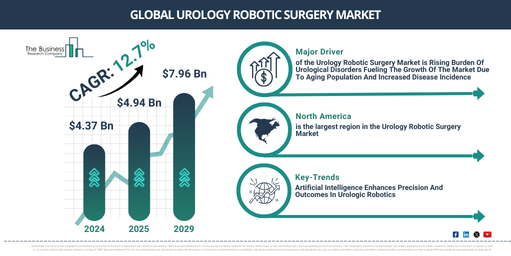
    In recent times, there has been a notable growth in the market size for urology robotic surgery. From $4.37 billion in 2024, the expected trajectory is for it to rise to $4.94 billion in 2025, marking an impressive compound annual growth rate (CAGR) of 13.0%. This significant growth during the historical period is due to a number of factors. These include a higher occurrence rate of urological disorders, an increasing preference for minimally invasive surgical procedures, a rise in the elderly population, the expansion of hospital infrastructures, and an escalation of expenditures on healthcare.

    The market size of urology robotic surgery is set to experience a significant increase in the coming years, potentially reaching $7.96 billion by 2029 with a compound annual growth rate (CAGR) of 12.7%. This projected growth during the forecast period is largely due to factors such as the rising demand for outpatient urology procedures, the surge in medical tourism in emerging markets, greater public knowledge of the benefits of robotic surgery, expanding governmental support for advanced medical care, and an intensified emphasis on patient results. Key trends expected during the forecast period involve advances in urological surgery technology, inventive strides in surgical robotics, capital investment in R&D, the creation of more compact robotic systems, and the incorporation of artificial intelligence in surgical methods.

    Download The Free Sample Report Here:

    https://www.thebusinessresearchcompany.com/sample.aspx?id=27442&type=smp

    #Which Factors Are Currently Driving The Growth Of The Urology Robotic Surgery Market?

    The ascent in urological maladies is projected to spur the expansion of the urology robotic surgery market. Urological maladies encompass illnesses impacting the urinary tract and male reproductive organs. This increased incidence of urological maladies is primarily attributed to the aging population, due to weakening bladder and pelvic muscles as age progresses, thus elevating the risk of such disorders. Urology robotic surgeries provide a precise, less intrusive alternative for treating urological disorders, enhancing surgical precision, mitigating complications, and improving recovery for conditions such as prostate cancer and kidney disease. For example, Prostate Cancer UK, a charitable organisation based in the UK, reported that in England, the number of men diagnosed with prostate cancer increased from 50,751 in 2022 to 55,033 in 2023. Hence, the rising incidence of urological disorders is fuelling the urology robotic surgery market growth.

    How Is The Global Urology Robotic Surgery Market Structured In Terms Of Segments?

    The urology robotic surgery market covered in this report is segmented

    1) By Type: Robot Machines, Navigation Systems, Planners, Simulators, Other Types

    2) By Component: Robotic Surgery Systems, Instruments And Accessories, Services

    3) By Application: Robotic Prostatectomy, Robotic Cystectomy, Robotic Pyeloplasty, Robotic Nephrectomy, Other Applications

    4) By End-User: Hospitals, Ambulatory Surgical Centers, Specialty Clinics, Other End-Users

    Subsegments:

    1) By Robot Machines: Surgical Robots, Assistive Robots, Teleoperated Robots, Autonomous Robots

    2) By Navigation Systems: Imaging Navigation Systems, Electromagnetic Navigation Systems, Optical Tracking Systems, Ultrasound Navigation Systems

    3) By Planners: Preoperative Planning Software, Intraoperative Planning Software, 3D Modeling Software, Procedure Simulation Software

    4) By Simulators: Virtual Reality Simulators, Augmented Reality Simulators, Haptic Feedback Simulators, Training Simulators

    5) By Other Types: Robotic Arms, Control Consoles, Robotic Accessories, Robotic Integration Systems

    What Trends Are Currently Influencing Growth In The Urology Robotic Surgery Market?

    Leading firms in the urology robotic surgery sector are increasingly prioritizing the development of artificial intelligence (AI)-fueled features to secure an edge over competitors in the market. These AI-backed attributes for urology robotic surgery encompass real-time imaging for tumor identification, surgical planning with 3D models, and skill evaluation during surgeries to enhance precision and surgical outcomes. To illustrate, PROCEPT BioRobotics, a surgical robotics enterprise based in the United States, was granted FDA approval for the HYDROS Robotic System in August 2024. This innovative, AI-empowered platform elevates Aquablation therapy for benign prostatic hyperplasia (BPH). The system integrates AI-guided treatment planning, advanced imaging, and robotic-assisted, non-thermal waterjet tissue removal to accurately and efficiently excise prostate tissue while preserving vital anatomy. It also enhances surgical workflow and optimizes efficiency in the operating room. HYDROS is designed to provide consistent, personalized, and long-lasting relief from symptoms while maintaining better sexual and urinary function, representing a significant advancement in BPH treatment.

    Who Are The Main Participants Shaping The Urology Robotic Surgery Market Landscape?

    Major companies operating in the urology robotic surgery market are Siemens Healthineers, Medtronic PLC, Stryker Corporation, Boston Scientific Corporation, Intuitive Surgical Inc., KARL STORZ SE & Co. KG, Sina Robotics and Medical Innovators Co. Ltd., CMR Surgical Limited, SS Innovations International Inc., Distalmotion SA, Ronovo Surgical Inc., Levita Magnetics International Corp., Titan Medical Inc., Virtual Incision Corporation, Nanjing Perlove Medical Equipment Co. Ltd., Edge Medical Robotics Corporation, Rob Surgical Systems S.L, Virtuoso Surgical Inc., GynoBotics Inc., Harbin Sagebot Intelligent Medical Equipment Co. Ltd., and Perlove Medical Robot.

    Get The Full Report Here:

    https://www.thebusinessresearchcompany.com/report/urology-robotic-surgery-global-market-report

    Which Region Currently Holds The Largest Share In The Urology Robotic Surgery Market?

    North America was the largest region in the urology robotic surgery market in 2024. Asia-Pacific is expected to be the fastest-growing region in the forecast period. The regions covered in the urology robotic surgery market report are Asia-Pacific, Western Europe, Eastern Europe, North America, South America, Middle East, Africa.

    Request For A Customized Report:

    https://www.thebusinessresearchcompany.com/customise?id=27442&type=smp

    About The Business Research Company:

    With over 15000+ reports from 27 industries covering 60+ geographies, The Business Research Company has built a reputation for offering comprehensive, data-rich research and insights. Armed with 1,500,000 datasets, the optimistic contribution of in-depth secondary research, and unique insights from industry leaders, you can get the information you need to stay ahead in the game.

    Get in touch with us:

    The Business Research Company: https://www.thebusinessresearchcompany.com/

    Americas +1 310-496-7795

    Asia +44 7882 955267 & +91 8897263534

    Europe +44 7882 955267

    Email us at info@tbrc.info

    Follow us on:

    LinkedIn: https://in.linkedin.com/company/the-business-research-company

    YouTube: https://www.youtube.com/channel/UC24_fI0rV8cR5DxlCpgmyFQ

    Global Market Model: https://www.thebusinessresearchcompany.com/global-market-model

  • CAGR of 10.9% Projected for Tumor Models Market From 2025 to 2029

    CAGR of 10.9% Projected for Tumor Models Market From 2025 to 2029

    Claim your 30% discount on Global Market Reports with code ONLINE30. Limited time only.

    Claim your 30% discount on Global Market Reports with code ONLINE30. Limited time only.

    How Will the Tumor Models Market Evolve in Terms of Growth and Size by 2029?

    The size of the tumor model market has experienced swift expansion in recent years. The market, which was valued at $1.92 billion in 2024, is projected to increase to $2.13 billion in 2025, exhibiting a compound annual growth rate (CAGR) of 11.3%. This growth during the historic period is driven by factors such as the rise in cancer cases, increased demand for tailor-made medicine, the need for improved preclinical predictability, the growing utilisation of patient-derived xenograft models, and a greater dependence on in vivo efficacy data.

    In the coming years, the tumor model market is anticipated to witness a quick expansion. By 2029, it’s predicted to reach a value of $3.23 billion, with a compound annual growth rate (CAGR) of 10.9%. Factors contributing to this growth during the forecast period include the increasing emphasis on models relevant to humans, heightened demand for precision oncology, the emergence of immuno-oncology, and the rising need for high-throughput screening models. There is also a growing interest in rare cancer models. Significant trends projected during this period involve advancements such as three-dimensional (3D) cell culture models, progress in pharmaceutical research, improvements in cell-culture technology, the incorporation of artificial intelligence in cancer modelling, and the introduction of patient-derived organoids.

    Download The Free Sample Report Here:

    https://www.thebusinessresearchcompany.com/sample.aspx?id=27441&type=smp

    What factors are expected to fuel Tumor Models market growth in the coming years?

    The tumor models market is projected to expand due to the increasing demand for personalized medicine. Personalized medicine is characterized by tailor-made healthcare and treatments, taking into account the individual’s genes and lifestyle. This personalized approach is on the rise as people are inclined towards health technologies offering real-time monitoring and bespoke treatment plans suiting their distinct biology. Tumor models contribute to personalized medicine by providing a platform for researchers and clinicians to determine how a person’s tumor will respond to certain treatments. These models replicate the characteristics of real human cancers, facilitating a more patient-specific therapeutic approach. In line with this, the Personalized Medicine Coalition, a professional membership organization based in the US, reported in February 2023 that in 2022, 12 new personalized medicines, making up around 34% of all newly approved therapies, were given the green light. This signifies a significant hike from preceding years. Consequently, the escalating demand for personalized medicine is stimulating the growth of the tumor models market.

    What Are The Key Findings From The Segmentation Analysis Of The Tumor Models Market?

    The tumor models market covered in this report is segmented

    1) By Type Of Tumor: Primary Tumor Models, Metastatic Tumor Models, Orthotopic Tumor Models, Heterotopic Tumor Models

    2) By Application: Drug Discovery And Development, Cancer Research, Personalized Medicine, Toxicology Studies

    3) By Technology: Xenograft Models, Genetically Engineered Mouse Models (GEMMs), Three-Dimensional (3D) Tumor Spheroids, Organ-On-A-Chip Models

    4) By End-User: Pharmaceutical And Biotechnology Companies, Academic Institutions, Contract Research Organizations (CROs), Government Research Organizations

    Subsegments:

    1) By Primary Tumor Models: Carcinoma Models, Sarcoma Models, Glioma Models, Melanoma Models, Leukemia Models, Lymphoma Models

    2) By Metastatic Tumor Models: Lung Metastasis Models, Bone Metastasis Models, Liver Metastasis Models, Brain Metastasis Models, Lymph Node Metastasis Models

    3) By Orthotopic Tumor Models: Orthotopic Breast Cancer Models, Orthotopic Lung Cancer Models, Orthotopic Pancreatic Cancer Models, Orthotopic Colon Cancer Models, Orthotopic Prostate Cancer Models

    4) By Heterotopic Tumor Models: Subcutaneous Tumor Models, Intramuscular Tumor Models, Intraperitoneal Tumor Models

    Which Trends Are Expected To Shape The Future Of The Tumor Models Market?

    Prominent businesses in the tumor models market are concentrating their efforts towards innovating advanced solutions like tumor spheroid models, to increase the physiological relevancy and predictive precision of in vitro cancer models. Tumor spheroid models are essentially three-dimensional (3D) accumulations of cancer cells that naturally form spherical structures in culture. For example, in June 2024, Predictive Oncology, a firm based in the US that provides high-end 3D cell culture technologies and predictive oncology solutions, introduced a new 3D cell technology to speed up the discovery of therapeutic treatments for cancer. The technology presents unique features such as cutting-edge 3D tumor spheroid and organoid models that accurately replicate the tumor microenvironment, along with rapid drug testing via high-throughput screening functions. It also facilitates the creation of personalized tumor models derived from patients, performs detailed assessment of drug penetration in 3D structures, and incorporates AI-powered data analytics for improving predictive accuracy and gaining more profound understanding of therapeutic responses.

    What Are The Most Active Companies In The Tumor Models Market Today?

    Major companies operating in the tumor models market are Merck & Co Inc., LabCorp Holdings Inc., Eurofins Scientific SE, WuXi AppTec Co Ltd., Charles River Laboratories International Inc., PerkinElmer Inc., Pharmaron Beijing Co. Ltd., The Jackson Laboratory, Taconic Biosciences Inc., Cyagen Biosciences Inc., Crown Bioscience Inc., Champions Oncology Inc., Reaction Biology Corporation, InSphero AG, Creative Biolabs Inc., Oncodesign S.A., Xentech S.A., MIMETAS BV, Experimental Pharmacology and Oncology Berlin-Buch GmbH, and Hera BioLabs Inc.

    Get The Full Report Here:

    https://www.thebusinessresearchcompany.com/report/tumor-models-global-market-report

    Which Regional Markets Are Attracting The Most Investment In Tumor Models?

    North America was the largest region in the tumor models market in 2024. Asia-Pacific is expected to be the fastest-growing region in the forecast period. The regions covered in the tumor models market report are Asia-Pacific, Western Europe, Eastern Europe, North America, South America, Middle East, Africa.

    Request For A Customized Report:

    https://www.thebusinessresearchcompany.com/customise?id=27441&type=smp

    About The Business Research Company:

    With over 15000+ reports from 27 industries covering 60+ geographies, The Business Research Company has built a reputation for offering comprehensive, data-rich research and insights. Armed with 1,500,000 datasets, the optimistic contribution of in-depth secondary research, and unique insights from industry leaders, you can get the information you need to stay ahead in the game.

    Get in touch with us:

    The Business Research Company: https://www.thebusinessresearchcompany.com/

    Americas +1 310-496-7795

    Asia +44 7882 955267 & +91 8897263534

    Europe +44 7882 955267

    Email us at info@tbrc.info

    Follow us on:

    LinkedIn: https://in.linkedin.com/company/the-business-research-company

    YouTube: https://www.youtube.com/channel/UC24_fI0rV8cR5DxlCpgmyFQ

    Global Market Model: https://www.thebusinessresearchcompany.com/global-market-model
  • Industry Forecast: Tubeless Insulin Pump Market to Generate $4.44 Billion Revenue by 2029

    Industry Forecast: Tubeless Insulin Pump Market to Generate $4.44 Billion Revenue by 2029

    Claim your 30% discount on Global Market Reports with code ONLINE30. Limited time only.

    Claim your 30% discount on Global Market Reports with code ONLINE30. Limited time only.

    What CAGR Is Anticipated for the Tubeless Insulin Pump Market Through 2029?

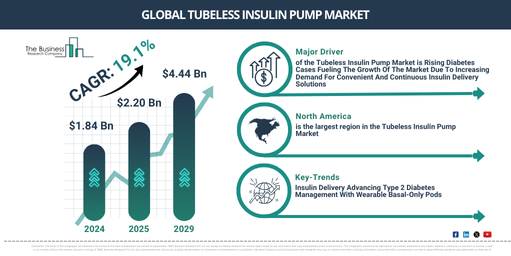
    The market size of tubeless insulin pumps has seen significant proliferation in the past few years. The market is projected to increase from $1.84 billion in 2024 to $2.20 billion in 2025, exhibiting a compound annual growth rate (CAGR) of 19.5%. The historical growth period’s significant contributors include an increase in diabetes cases, a surge in demand for unobtrusive and convenient insulin delivery, enhanced understanding of diabetes management, improved compensation policies, patients’ inclination towards insulin administration without discomfort, and the development of home healthcare services.

    The market for tubeless insulin pumps is predicted to experience a significant expansion over the upcoming years. The market is projected to reach $4.44 billion by 2029, with a compound annual growth rate (CAGR) of 19.1%. Factors contributing to this predicted growth within the forecast period include rising demand for discreet and easy-to-use insulin delivery systems, increased emphasis on tailored diabetes management methods, broadening of reimbursement policies for sophisticated insulin devices, and heightened awareness born from digital health campaigns. Key trends to note during this forecast period are the integration of AI-assisted glucose monitoring, improved connectivity with smartphone apps, reduction in size of patch devices, increased usage of closed-loop systems, and the embrace of wearable health technologies.

    Download The Free Sample Report Here:

    https://www.thebusinessresearchcompany.com/sample.aspx?id=27440&type=smp

    What Market Forces Are Driving The Tubeless Insulin Pump Sector In 2025 And Beyond?

    The rise in diabetes cases is anticipated to fuel the expansion of the tubeless insulin pump market. Diabetes, a long-term health problem that elevates blood sugar levels due to the body’s failure to produce or utilize insulin correctly, is primarily increasing due to growing obesity rates relating to poor diet and physical inactivity. Tubeless insulin pumps aid diabetes management by delivering consistent, controlled insulin doses, eliminating the need for multiple injections daily, thereby effectively regulating blood sugar levels. In June 2023, for example, the US-based public health research institute, the Institute for Health Metrics and Evaluation, revealed that over half a billion individuals worldwide were diagnosed with diabetes. This figure is projected to more than double, hitting 1.3 billion people by 2050. Thus, the escalating diabetes instances are accelerating the tubeless insulin pump market’s growth.

    How Is The Global Tubeless Insulin Pump Market Categorized By Segments?

    The tubeless insulin pump market covered in this report is segmented

    1) By Product: Wearable Insulin Pump, Implantable Insulin Pump

    2) By Technology: Continuous Glucose Monitoring (CGM) Integrated Pumps, Standard Tubeless Pumps

    3) By End User: Hospitals, Pharmacies, E-Commerce, Other End Users

    Subsegments:

    1) By Wearable Insulin Pump: Patch Pumps, Remote-Controlled Pumps, Bluetooth-Enabled Pumps, Disposable Pumps, Reusable Pumps

    2) By Implantable Insulin Pump: Programmable Implantable Pumps, Refillable Implantable Pumps, Microelectromechanical System (MEMS)-Based Pumps, Long-Acting Implantable Pumps, Biocompatible Coated Pumps

    What Long-Term Trends Are Likely To Affect The Tubeless Insulin Pump Market?

    Key players in the tubeless insulin pump industry are concentrating on the enhancement of their offerings with innovative solutions such as basal-only insulin pods. These serve as a convenient and affordable method for insulin delivery, specifically targeting individuals with type 2 diabetes who predominantly need background insulin support. A basal-only insulin pod is a wearable device that constantly supplies background insulin to regulate blood sugar, specifically designed for those living with type 2 diabetes. For instance, in April 2023, Insulet Corporation, a medical device firm based in the United States, introduced Omnipod GO. This insulin delivery mechanism is certified for usage by type 2 diabetes patients aged 18 and above who routinely require injections of long-acting insulin. The Omnipod GO is a self-contained, wearable insulin delivery system that provides a steady stream of rapid-acting insulin for a duration of 72 hours. It also incorporates a tubeless, water-resistant pod available in seven varied pre-set daily rates, with quantities ranging from 10 to 40 units each day, and operates autonomously without reliance on a mobile device for regulation.

    Which Firms Are Considered Leaders In The Tubeless Insulin Pump Market Space?

    Major companies operating in the tubeless insulin pump market are F. Hoffmann-La Roche AG, Sanofi SA, Abbott Laboratories, Medtronic plc, Eli Lilly and Company, Becton Dickinson & Company, Fresenius Kabi AG, Terumo Corporation, Insulet Corporation, Tandem Diabetes Care Inc., Ypsomed AG, Ascensia Diabetes Care, MicroTech Medical, Menarini Diagnostics, Bigfoot Biomedical, Debiotech SA, Medtrum Technologies Inc., Diabeloop, SOOIL Development, and Beta Bionics.

    Get The Full Report Here:

    https://www.thebusinessresearchcompany.com/report/tubeless-insulin-pump-global-market-report

    What Role Do Regional Policies And Investments Play In Tubeless Insulin Pump Market Expansion?

    North America was the largest region in the tubeless insulin pump market in 2024. Asia-Pacific is expected to be the fastest-growing region in the forecast period. The regions covered in the tubeless insulin pump market report are Asia-Pacific, Western Europe, Eastern Europe, North America, South America, Middle East, Africa.

    Request For A Customized Report:

    https://www.thebusinessresearchcompany.com/customise?id=27440&type=smp

    About The Business Research Company:

    With over 15000+ reports from 27 industries covering 60+ geographies, The Business Research Company has built a reputation for offering comprehensive, data-rich research and insights. Armed with 1,500,000 datasets, the optimistic contribution of in-depth secondary research, and unique insights from industry leaders, you can get the information you need to stay ahead in the game.

    Get in touch with us:

    The Business Research Company: https://www.thebusinessresearchcompany.com/

    Americas +1 310-496-7795

    Asia +44 7882 955267 & +91 8897263534

    Europe +44 7882 955267

    Email us at info@tbrc.info

    Follow us on:

    LinkedIn: https://in.linkedin.com/company/the-business-research-company

    YouTube: https://www.youtube.com/channel/UC24_fI0rV8cR5DxlCpgmyFQ

    Global Market Model: https://www.thebusinessresearchcompany.com/global-market-model
  • Trispecific Antibodies Market Revenue Outlook: Strategic Insights and Forecast to 2029

    Trispecific Antibodies Market Revenue Outlook: Strategic Insights and Forecast to 2029

    Claim your 30% discount on Global Market Reports with code ONLINE30. Limited time only.

    Claim your 30% discount on Global Market Reports with code ONLINE30. Limited time only.

    What Are the Latest Market Insights for the Trispecific Antibodies Industry?

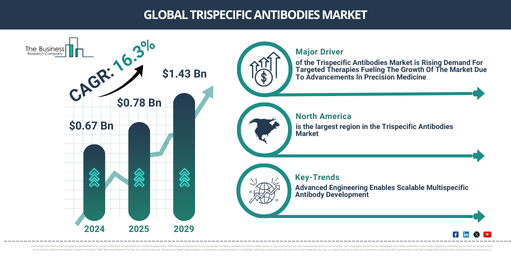
    Recent years have witnessed a swift expansion in the trispecific antibodies market size. Starting from $0.67 billion in 2024, it is anticipated to surge to $0.78 billion in 2025, indicating a compound annual growth rate (CAGR) of 16.7%. Factors fueling this historic growth include an increased incidence of cancer, escalating demand for specialized cancer treatments, amplified investments in biopharmaceutical research and development, initial success of bispecific antibodies, and an upswing in clinical trial activities.

    In the coming years, the trispecific antibodies market is projected to experience fast-paced expansion. It’s anticipated to rise to a valuation of $1.43 billion in 2029, with a compound annual growth rate of 16.3%. The projected growth for the period can be linked to an increase in approved clinical trials, enlargement of oncology indications, escalating partnerships between pharma and biotech companies, as well as supportive regulatory measures for novel biologics. Key trends set to characterize this forecast period encompass platform engineering for trispecifics, the application of artificial intelligence in drug discovery, automation in antibody screening, emerging manufacturing technologies, as well as the merging of synthetic biology tools.

    Download The Free Sample Report Here:

    https://www.thebusinessresearchcompany.com/sample.aspx?id=27439&type=smp

    What Forces Are Driving The Growth Of The Trispecific Antibodies Industry?

    The expanding need for targeted treatment approaches is projected to bolster the trispecific antibodies market’s development. These specific therapies aim to inhibit molecular abnormalities in conditions like cancer directly, thus heightening treatment accuracy and minimizing harm to unaffected cells. The burgeoning emphasis on these targeted therapies is primarily fuelled by advancements in precision medicine, which provides highly effective, custom treatments grounded on individual genetic compositions. Trispecific antibodies play a pivotal role in targeted therapies by interacting with three unique antigens at the same time, proving highly beneficial in dealing with intricate ailments like cancer and viral infections. They contribute to more precise treatment by enhancing immune cell interaction and hampering multiple disease pathways, therefore, boosting therapeutic results. For instance, the American Society of Gene & Cell Therapy (ASGCT), a non-profit medical and scientific organization based in the US, stated that the Food and Drug Administration (FDA) sanctioned 6 gene therapy products in 2023 in December 2024, a rise from 5 authorizations in 2022. Hence, the increasing need for targeted therapies is fuelling the trispecific antibodies market’s expansion.

    What Is The Overview Of Market Segmentation In The Trispecific Antibodies Industry?

    The trispecific antibodies market covered in this report is segmented

    1) By Product Type: Monoclonal Trispecific Antibodies, Bispecific-Trispecific Antibodies, Other Product Types

    2) By Application: Oncology, Autoimmune Diseases, Infectious Diseases, Other Applications

    3) By End-User: Hospitals, Research Institutes, Pharmaceutical And Biotechnology Companies, Other End-Users

    Subsegments:

    1) By Monoclonal Trispecific Antibodies: Immunoglobulin G Based, Single Chain Variable Fragment Based, Dual Variable Domain Immunoglobulin Based

    2) By Bispecific-Trispecific Antibodies: Fusion Protein Based, Tandem Single Chain Variable Fragment Based, Dock And Lock Technology Based

    3) By Other Product Types: Multivalent Binding Molecules, Synthetic Protein Scaffolds, Engineered Antibody Fragments

    What Future Market Trends Are Projected For The Trispecific Antibodies Industry?

    Key players in the trispecific antibodies market are centering their efforts on generating novel products, for example, trispecific antibody engineering platforms. These platforms can increase effectiveness, expand uses, and accelerate the development of biologics. Trispecific antibody engineering platforms serve as cutting-edge technologies aimed at constructing antibodies capable of binding to three discrete targets simultaneously. This enhances not only the accuracy but also the efficacy in treating complex diseases like cancer and viral infections. In May 2025, US biotech firm, Invenra Inc., unveiled its T-BODY platform which is intended to promote the development of trispecific therapeutic antibodies of the next generation. The platform provides support for scalable construction of multispecific antibody constructs, leading to fortified immune cell engagement, better tumor targeting, and adaptable functionality. The T-Body platform integrates superior molecular engineering to guarantee stability, manufacturability, and enhanced pharmacokinetics, all which aid in creating new treatments.

    Who Are The Primary Players Operating Across The Global Trispecific Antibodies Market?

    Major companies operating in the trispecific antibodies market are Johnson & Johnson, F. Hoffmann-La Roche AG, Merck & Co. Inc., AbbVie Inc., Sanofi S.A., AstraZeneca plc, Novartis AG, Gilead Sciences Inc., BeOne Medicines Inc., Simcere Pharmaceutical Group Limited, Biocytogen Pharmaceuticals (Beijing) Co. Ltd., Zymeworks Inc., Molecular Partners AG, CStone Pharmaceuticals Co. Ltd., Genor Biopharma Co. Ltd., Numab Therapeutics AG, Lyvgen Biopharma Holdings Limited, GT Biopharma Inc., Ichnos Sciences Inc., Purple Biotech Ltd.

    Get The Full Report Here:

    https://www.thebusinessresearchcompany.com/report/trispecific-antibodies-global-market-report

    Which Region Offers The Most Growth Potential For The Trispecific Antibodies Market Through 2029?

    North America was the largest region in the trispecific antibodies market in 2024. The regions covered in the trispecific antibodies market report are Asia-Pacific, Western Europe, Eastern Europe, North America, South America, Middle East, Africa.

    Request For A Customized Report:

    https://www.thebusinessresearchcompany.com/customise?id=27439&type=smp

    About The Business Research Company:

    With over 15000+ reports from 27 industries covering 60+ geographies, The Business Research Company has built a reputation for offering comprehensive, data-rich research and insights. Armed with 1,500,000 datasets, the optimistic contribution of in-depth secondary research, and unique insights from industry leaders, you can get the information you need to stay ahead in the game.

    Get in touch with us:

    The Business Research Company: https://www.thebusinessresearchcompany.com/

    Americas +1 310-496-7795

    Asia +44 7882 955267 & +91 8897263534

    Europe +44 7882 955267

    Email us at info@tbrc.info

    Follow us on:

    LinkedIn: https://in.linkedin.com/company/the-business-research-company

    YouTube: https://www.youtube.com/channel/UC24_fI0rV8cR5DxlCpgmyFQ

    Global Market Model: https://www.thebusinessresearchcompany.com/global-market-model

  • Future Projections: Traumatic Brain Injury Biomarkers Market to Reach $3.03 Billion by 2029 at 21.7% CAGR

    Future Projections: Traumatic Brain Injury Biomarkers Market to Reach $3.03 Billion by 2029 at 21.7% CAGR

    Claim your 30% discount on Global Market Reports with code ONLINE30. Limited time only.

    Claim your 30% discount on Global Market Reports with code ONLINE30. Limited time only.

    What Are the Forecasted Growth Rate and Market Size of the Traumatic Brain Injury Biomarkers Market?

    The market size for biomarkers in the treatment of traumatic brain injury has experienced substantial growth in recent history. Its value is projected to increase from $1.13 billion in 2024 to reach $1.38 billion in 2025, indicating a compound annual growth rate (CAGR) of 22.1%. Factors contributing to this growth during the historical period include an uptick in road accidents, heightened public consciousness about brain health, an increase in emergency room visits, a surge in military-related TBI cases, and an expansion in diagnostic alternatives.

    It is anticipated that the market size for traumatic brain injury biomarkers will experience significant expansion in the coming years, reaching $3.03 billion by 2029 with a 21.7% compound annual growth rate (CAGR). This projected growth throughout the forecast period can be accredited to the increasing need for immediate diagnostic tools, amplified investment in research regarding the brain, surges in personalized medicine adoption, the enlargement of clinical trials regarding brain injury biomarkers and augmented healthcare expenditures. Key trends within the forecast period take into account advances in proteomic platforms technology, new developments in detecting biomarkers from blood, invention of movable diagnostic devices, exploration and progression in neuroinflammation markers, and the integration of biomarker analysis with artificial intelligence.

    Download The Free Sample Report Here:

    https://www.thebusinessresearchcompany.com/sample.aspx?id=27438&type=smp

    Which Factor Is Shaping The Future Of The Traumatic Brain Injury Biomarkers Market?

    As the occurrence of road traffic mishaps is on the rise, it is predicted to fuel the expansion of the traumatic brain injury biomarkers industry. These mishaps, often occurring unexpectedly and requiring immediate medical attention, are increasing due to the surge in private vehicle usage brought on by urbanization and motorization. The vital role played by traumatic brain injury biomarkers in such incidents is by enabling quick and precise evaluations of head damages. They assist in ensuring sooner diagnosis by identifying specific blood proteins, providing vital input for clinicians to make treatment decisions quickly, thereby improving emergency patient outcomes. For example, a report on road safety by the Luxembourg-based regulatory authority, European Commission, stated that in May 2024, the total road fatalities rose to 20,634 in 2022, up from 19,917 in 2021. Hence, the increasing incidence of road traffic accidents is fostering the growth of the traumatic brain injury biomarkers market. In addition, the growing adoption of personalized medicine forms a major driving force for the traumatic brain injury biomarkers market’s growth. Personalized medicine aims to customize treatments for individual patients considering their genetic, environmental, and lifestyle factors to maximize outcomes and enhance care. The appeal of personalized medicine is growing due to advancements in genomic technologies that allow precise identification of genetic variations and custom-made treatments for individuals. Traumatic brain injury biomarkers are beneficial in this segment by identifying specific biological indicators tied to brain injuries. Implementing such biomarkers allows personalized treatment plans that enhance recovery outcomes and optimize clinical decision-making for each patient. For example, the US-based nonprofit organization, the Personalized Medicine Coalition (PMC), reported in February 2024, that the U.S. Food and Drug Administration (FDA) sanctioned 26 new personalized medicines in 2023, a considerable rise from 12 approved in 2022. Thus, the growing preference for personalized medicine is propelling the growth of the traumatic brain injury biomarkers market.

    What Is The Segment-Wise Breakdown Of The Traumatic Brain Injury Biomarkers Market?

    The traumatic brain injury biomarkers market covered in this report is segmented

    1) By Type: Protein Biomarkers, Genetic Biomarkers, Metabolomic Biomarkers

    2) By Sample Type: Blood-based, Cerebrospinal Fluid (CSF)-Based, Urine-Based

    3) By Application: Diagnosis, Prognosis, Monitoring Treatment Response

    4) By End Use: Hospitals And Clinics, Diagnostic Laboratories, Research Institutes

    Subsegments:

    1) By Protein Biomarkers: Glial Fibrillary Acidic Protein (GFAP), Ubiquitin C-Terminal Hydrolase L1 (UCH-L1), S100 Calcium Binding Protein B (S100B), Neuron-Specific Enolase (NSE)

    2) By Genetic Biomarkers: Apolipoprotein E (APOE) Genotyping, Brain-Derived Neurotrophic Factor (BDNF) Polymorphism, Interleukin-6 (IL-6) Gene Variants, Tumor Necrosis Factor-Alpha (TNF-a) Polymorphism

    3) By Metabolomic Biomarkers: Lactate, Creatine, Choline, N-Acetylaspartate (NAA)

    Which Trends Are Redefining The Future Landscape Of The Traumatic Brain Injury Biomarkers Industry?

    Leading companies involved in the market for traumatic brain injury biomarkers are honing their attention on creating innovative methods like a lab-based blood test to enhance the accuracy and rapidity of concussion assessments and diagnoses. This kind of test is a diagnostic instrument that gauges specific biomarkers in blood to determine the presence and severity of brain damage, allowing for quicker and more fact-based decision making in clinical settings. For instance, in June 2025, Abbott Laboratories, a US healthcare firm, introduced the Alinity i and Architect i1000SR lab tests. These tests exhibit the determination of two crucial biomarkers, GFAP and UCH-L1, which aid medical professionals in assessing possible concussions within 12 hours of the injury occurring. Furthermore, these tests provide lab results in a mere 18 minutes, facilitating faster triage decisions in emergencies, and minimizing dependency on superfluous CT scans. This breakthrough offers doctors a trustworthy means to identify patients possibly suffering from traumatic brain injuries, exemplifying significant progress in widening accessibility to swift, data-based care in emergency situations.

    Which Companies Hold The Largest Market Share In The Traumatic Brain Injury Biomarkers Sector?

    Major companies operating in the traumatic brain injury biomarkers market are F. Hoffmann-La Roche Ltd, Thermo Fisher Scientific Inc., Abbott Laboratories, Siemens Healthineers AG, Biogen Inc., BioMérieux S.A., DiaSorin S.p.A., Abcam Limited, Fujirebio Inc., Meso Scale Diagnostics (MSD), Olink Holding AB, Quanterix Corporation, OriGene Technologies Inc., BioDirection Inc., NanoDx Inc., BrainScope Company Inc., BrainBox Solutions Inc., DiaGenic ASA, NeuroTrauma Sciences LLC, and Banyan Biomarkers Inc.

    Get The Full Report Here:

    https://www.thebusinessresearchcompany.com/report/traumatic-brain-injury-biomarkers-global-market-report

    How Does Regional Performance Compare Across The Traumatic Brain Injury Biomarkers Industry?

    North America was the largest region in the traumatic brain injury biomarkers market in 2024. Asia-Pacific is expected to be the fastest-growing region in the forecast period. The regions covered in the traumatic brain injury biomarkers market report are Asia-Pacific, Western Europe, Eastern Europe, North America, South America, Middle East, Africa.

    Request For A Customized Report:

    https://www.thebusinessresearchcompany.com/customise?id=27438&type=smp

    About The Business Research Company:

    With over 15000+ reports from 27 industries covering 60+ geographies, The Business Research Company has built a reputation for offering comprehensive, data-rich research and insights. Armed with 1,500,000 datasets, the optimistic contribution of in-depth secondary research, and unique insights from industry leaders, you can get the information you need to stay ahead in the game.

    Get in touch with us:

    The Business Research Company: https://www.thebusinessresearchcompany.com/

    Americas +1 310-496-7795

    Asia +44 7882 955267 & +91 8897263534

    Europe +44 7882 955267

    Email us at info@tbrc.info

    Follow us on:

    LinkedIn: https://in.linkedin.com/company/the-business-research-company

    YouTube: https://www.youtube.com/channel/UC24_fI0rV8cR5DxlCpgmyFQ

    Global Market Model: https://www.thebusinessresearchcompany.com/global-market-model

  • 2025 Transcatheter Mitral Valve Market Outlook: Opportunities, Growth Trends, and Strategic Analysis

    Claim your 30% discount on Global Market Reports with code ONLINE30. Limited time only.

    Claim your 30% discount on Global Market Reports with code ONLINE30. Limited time only.

    What Is the Estimated Industry Valuation for the Transcatheter Mitral Valve Sector?

    In recent times, the market size for the transcatheter mitral valve has seen substantial growth. Its value, expected to climb from $1.47 billion in 2024, is projected to reach $1.61 billion in 2025, witnessing a compound annual growth rate (CAGR) of 9.5%. Factors contributing to growth during the historical period include an increased preference for minimally invasive cardiac procedures, higher success rates in clinical trials for early-stage TMVR devices, expansion of hospital facilities in developed regions, a growing incidence of rheumatic heart disease in poorer nations, and the broadening of training programs for interventional cardiologists.

    Anticipated robust expansion is on the horizon for the transcatheter mitral valve industry. The market is projected to climb to $2.28 billion by 2029, with a compound annual growth rate (CAGR) of 9.1%. Elements contributing to this growth in the forthcoming period are an increased preference for catheter-based treatments among younger demographics, an escalating pipeline of next-generation products for transcatheter mitral valve replacement, enhanced emphasis on precocious detection employing artificial intelligence-based imaging, a swelling number of approvals from regulatory authorities for TMV gadgets, and the amalgamation of real-time navigation and imaging technologies into transcatheter mitral valve protocols. Dominant trends to be watched in the forecast timeframe encompass advancements in imaging powered by artificial intelligence for valve evaluation, innovative material coatings for improved biocompatibility, development of bespoke transcatheter mitral valve solutions via 3D printing, innovation in the flexibility and precision of delivery catheters, and the incorporation of digital twin technology for procedural mapping.

    Download The Free Sample Report Here:

    https://www.thebusinessresearchcompany.com/sample.aspx?id=27437&type=smp

    What Forces Are Driving The Growth Of The Transcatheter Mitral Valve Market?

    The growth of the transcatheter mitral valve market is projected to surge in response to the rising prevalence of heart diseases. These health disorders, which disrupt the structure or functionality of the heart, impede its capacity to pump blood adequately. Ageing populations are a primary factor contributing to the increasing incidence of heart diseases as age-related heart and blood vessel deterioration escalates susceptibility to conditions like mitral valve regurgitation, heart failure, and arrhythmias. Utilizing a transcatheter mitral valve to mend or replace a malfunctioning mitral valve can rectify the healthy flow of blood between the heart’s chambers, enhance heart function, and alleviate symptoms. For example, the Centers for Disease Control and Prevention, a government agency in the US, reported in October 2024 that in 2022, coronary heart disease was the predominant type of heart disease, resulting in 371,506 deaths. Annually in the United States, nearly 805,000 individuals experience a heart attack, with initial incidents (605,000) being roughly three times higher than recurring ones (200,000). As such, the escalating prevalence of heart diseases is fuelling the expansion of the transcatheter mitral valve market.

    How Is The Transcatheter Mitral Valve Industry Segmented Across Key Parameters?

    The transcatheter mitral valve market covered in this report is segmented

    1) By Product: Transcatheter Mitral Valve Replacement, Transcatheter Mitral Valve Repair

    2) By Indication: Mitral Stenosis, Mitral Regurgitation

    3) By End-User: Hospitals, Ambulatory Surgical Centers, Cardiac Catheterization Laboratories

    Subsegments:

    1) By Transcatheter Mitral Valve Replacement: Self-Expanding Valves, Balloon-Expandable Valves

    2) By Transcatheter Mitral Valve Repair: Annuloplasty Devices, Chordal Repair Devices, Edge-To-Edge Repair Devices

    What Notable Trends Are Shaping The Direction Of The Transcatheter Mitral Valve Market?

    Key players in the transcatheter mitral valve industry are concentrating their efforts on the development of state-of-the-art products, such as transcatheter mitral valve replacement (TMVR) systems. Their aim is to provide a wider range of treatment choices for patients considered high-risk or inoperable. TMVR systems replace a faulty or diseased mitral valve in the heart with a synthetic version without the need for open-heart surgery through a less invasive catheter-based technique. To serve as an example, Abbott Laboratories, a medical device firm headquartered in the US, announced the launch of Tendyne in May 2025, after receiving FDA approval. Tendyne is a self-inflating valve, framed with nitinol, that comes in various sizes to suit different anatomical needs, and it can be completely repositioned or taken out during the implantation process. The device is inserted through a minor chest incision, making the procedure minimally invasive and usually wrapping up in about 1.5 hours. Engineered for swift recovery, it usually allows patients to be released within three days, making it a groundbreaking answer for mitral valve patients at high risk who do not have suitable surgical options.

    Which Companies Currently Dominate The Competitive Landscape In The Transcatheter Mitral Valve Industry?

    Major companies operating in the transcatheter mitral valve market are Abbott Laboratories, Medtronic Inc, Boston Scientific Corporation, Edwards Lifesciences Corporation, Meril Life Sciences Private Limited, MicroPort Scientific Corporation, Venus Medtech Inc., Cardiac Dimensions Inc., JenaValve Technology Inc., Ancora Heart Inc, Peijia Medical Limited, Micro Interventional Devices Inc., 4C Medical Technologies Inc., NeoChord Inc., Xeltis AG, Valcare Medical Inc., Colibri Heart Valve LLC, MitrAssist Ltd., HighLife SAS, Navigate Cardiac Structures Inc., Cardiovalve Ltd.

    Get The Full Report Here:

    https://www.thebusinessresearchcompany.com/report/transcatheter-mitral-valve-global-market-report

    Which Geographic Regions Are Driving Demand In The Transcatheter Mitral Valve Market?

    North America was the largest region in the transcatheter mitral valve market in 2024. Asia-Pacific is expected to be the fastest-growing region in the forecast period. The regions covered in the transcatheter mitral valve market report are Asia-Pacific, Western Europe, Eastern Europe, North America, South America, Middle East, Africa.

    Request For A Customized Report:

    https://www.thebusinessresearchcompany.com/customise?id=27437&type=smp

    About The Business Research Company:

    With over 15000+ reports from 27 industries covering 60+ geographies, The Business Research Company has built a reputation for offering comprehensive, data-rich research and insights. Armed with 1,500,000 datasets, the optimistic contribution of in-depth secondary research, and unique insights from industry leaders, you can get the information you need to stay ahead in the game.

    Get in touch with us:

    The Business Research Company: https://www.thebusinessresearchcompany.com/

    Americas +1 310-496-7795

    Asia +44 7882 955267 & +91 8897263534

    Europe +44 7882 955267

    Email us at info@tbrc.info

    Follow us on:

    LinkedIn: https://in.linkedin.com/company/the-business-research-company

    YouTube: https://www.youtube.com/channel/UC24_fI0rV8cR5DxlCpgmyFQ

    Global Market Model: https://www.thebusinessresearchcompany.com/global-market-model

  • Global Insights: Tissue Regeneration Scaffold Market Expected to Surpass $4.80 Billion by 2029

    Global Insights: Tissue Regeneration Scaffold Market Expected to Surpass $4.80 Billion by 2029

    Claim your 30% discount on Global Market Reports with code ONLINE30. Limited time only.

    Claim your 30% discount on Global Market Reports with code ONLINE30. Limited time only.

    How Large Is the Tissue Regeneration Scaffold Market Expected to Be in 2029?

    There has been quick expansion in the market size of tissue regeneration scaffold in the previous years. The value is predicted to rise from $2.24 billion in 2024 to $2.61 billion in 2025, reflecting a compound annual growth rate (CAGR) of 16.8%. The historic growth can be linked to the escalating investment in regenerative medicine, higher instances of chronic illnesses, an upsurge in the demand for less invasive surgeries, expanded research and developmental endeavours, and growing understanding of the advantages of tissue engineering.

    Over the coming years, brisk expansion is anticipated for the tissue regeneration scaffold market, which is expected to increase to $4.80 billion by 2029, signifying a compound annual growth rate (CAGR) of 16.4%. This progress throughout the prediction period can be ascribed to the escalating affinity towards 3D printing techniques, an amplifying emphasis on personalized medicine, the mounting necessitate for organ and tissue regeneration, swelling funding in clinical experiments, and an upsurge in cases of tissue damages. Key developments projected in this interval consist of progress in 3D bioprinting technology, novelty in biodegradable scaffold substances, incorporation of smart biomaterials into scaffolds, development in nanotechnology to improve tissue regeneration, and invention in scaffold manufacturing methods.

    Download The Free Sample Report Here:

    https://www.thebusinessresearchcompany.com/sample.aspx?id=27436&type=smp

    What Are The Contributors To Demand In The Tissue Regeneration Scaffold Market?

    The tissue regeneration scaffold market is set to benefit from the rising number of trauma cases globally. Trauma-related injuries can stem from various incidents like road accidents, industrial mishaps, or violent occurrences and often necessitate medical assistance due to damaged tissues. As these cases are on the rise, mostly as a consequence of increasing road mishaps and workplace accidents, there is a pressing requirement for efficient techniques for tissue repair and regeneration. This is where tissue regeneration scaffolds play an instrumental role. They offer a structured foundation that enhances the growth and repair of damaged tissues, expedites the healing process, minimizes complications including infections and scarring, and aids in the effective restoration of functionality in the affected area. To illustrate, the Bureau of Labor Statistics, a governmental agency in the United States, reported that in the year 2022, the cases of fatal work injuries had surged to 5,486, marking a 5.7% rise from the 5,190 recorded in 2021. This surge in trauma cases is, thus, positively influencing the development of the tissue regeneration scaffold market.

    What Segmentation Categories Are Included In The Tissue Regeneration Scaffold Market Analysis?

    The tissue regeneration scaffold market covered in this report is segmented

    1) By Type: Natural, Synthetic, Composite

    2) By Application: Orthopedic, Dental, Wound Care

    3) By End-User: Hospitals And Clinics, Research And Academic Institutes

    Subsegments:

    1) By Natural: Collagen Scaffolds, Chitosan Scaffolds, Alginate Scaffolds, Hyaluronic Acid Scaffolds, Gelatin Scaffolds

    2) By Synthetic: Polylactic Acid (PLA) Scaffolds, Polyglycolic Acid (PGA) Scaffolds, Polycaprolactone (PCL) Scaffolds, Polyethylene Glycol (PEG) Scaffolds, Polylactic-Co-Glycolic Acid (PLGA) Scaffolds

    3) By Composite: Natural-Synthetic Polymer Composites, Ceramic-Polymer Composites, Nanocomposite Scaffolds, Hydroxyapatite-Based Composites, Bioactive Glass Composites

    What Upcoming Trends Are Expected To Impact The Tissue Regeneration Scaffold Market Globally?

    Major firms in the tissue regeneration scaffold market are striving to develop superior technologies like 3D bioprinting for creation of personalized and physiologically specific scaffolds. The process of 3D bioprinting involves the use of bioinks constituted of living cells and biomaterials to develop three-dimensional, functional tissue structures useful for regenerative medicine and research. For example, in June 2023, 3D BioFibR Inc., a company based in Canada known for manufacturing biopolymer fiber, introduced two products made of collagen fiber, namely micro-collafibr and collafibr 3D scaffold. These products heavily make use of the company’s unique proprietary dry-spinning technology to create durable and biologically meaningful scaffolds that enhance the robustness and functionality of 3D bioprinted tissues and 3D cell cultures. The Collafibr 3D scaffold is composed of GMP-grade type 1 collagen fibers and is designed to replicate the structure and biomechanical properties of the natural extracellular matrix. It provides a three-dimensional habitat conducive to realistic cell growth and interaction. It is also compatible with standard well plate formats for high-throughput drug assessment, along with advanced microscopy, thereby propelling advancements in tissue modeling and regenerative medicine research.

    Who Are The Top-Ranked Companies In The Tissue Regeneration Scaffold Market Today?

    Major companies operating in the tissue regeneration scaffold market are Medtronic plc, Evonik Industries AG, Becton Dickinson and Company, Stryker Corporation, DSM-Firmenich AG, Zimmer Biomet Holdings Inc., Smith & Nephew plc, Ashland Inc., Integra LifeSciences Corporation, Organogenesis Inc., MiMedx Group Inc., LifeNet Health Inc., Vericel Corporation, BioTissue Inc., W. L. Gore & Associates Inc., Aroa Biosurgery Limited, Poly-Med Inc., CollPlant Biotechnologies Ltd., Humacyte Global Inc., Organovo Holdings Inc.

    Get The Full Report Here:

    https://www.thebusinessresearchcompany.com/report/tissue-regeneration-scaffold-global-market-report

    How Is Tissue Regeneration Scaffold Market Adoption Varying Across Different Regions And Sectors?

    North America was the largest region in the tissue regeneration scaffold market in 2024. Asia-Pacific is expected to be the fastest-growing region in the forecast period. The regions covered in the tissue regeneration scaffold market report are Asia-Pacific, Western Europe, Eastern Europe, North America, South America, Middle East, Africa.

    Request For A Customized Report:

    https://www.thebusinessresearchcompany.com/customise?id=27436&type=smp

    About The Business Research Company:

    With over 15000+ reports from 27 industries covering 60+ geographies, The Business Research Company has built a reputation for offering comprehensive, data-rich research and insights. Armed with 1,500,000 datasets, the optimistic contribution of in-depth secondary research, and unique insights from industry leaders, you can get the information you need to stay ahead in the game.

    Get in touch with us:

    The Business Research Company: https://www.thebusinessresearchcompany.com/

    Americas +1 310-496-7795

    Asia +44 7882 955267 & +91 8897263534

    Europe +44 7882 955267

    Email us at info@tbrc.info

    Follow us on:

    LinkedIn: https://in.linkedin.com/company/the-business-research-company

    YouTube: https://www.youtube.com/channel/UC24_fI0rV8cR5DxlCpgmyFQ

    Global Market Model: https://www.thebusinessresearchcompany.com/global-market-model