Blog

  • 2025 Analysis: Opportunities and Risks in the Evolving Tendon Allograft Market

    2025 Analysis: Opportunities and Risks in the Evolving Tendon Allograft Market

    Claim your 30% discount on Global Market Reports with code ONLINE30. Limited time only.

    Claim your 30% discount on Global Market Reports with code ONLINE30. Limited time only.

    What Is the Outlook for the Tendon Allograft Market Heading Into 2029?

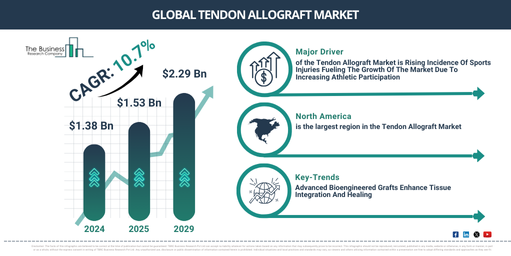
    The dimension of the tendon allograft market has seen a swift expansion in recent times, and it’s predicted to expand from $1.38 billion in 2024 to $1.53 billion in 2025, demonstrating an 11.0% CAGR. The historic period growth could be linked to the heightened consciousness regarding tendon repair treatments, an increase in injuries related to sports, a surge in orthopedic surgeries, mounting demand for less invasive surgical procedures, as well as the escalating availability of allograft tissues.

    In the coming years, the tendon allograft market is predicted to experience significant growth, reaching a value of $2.29 billion in 2029 with a compound annual growth rate (CAGR) of 10.7%. The surge during the forecast window can be ascribed to a heightened emphasis on surgeries preserving joint health, a growing acceptance of tissue engineering, an increasing incidence of musculoskeletal conditions, more government backing for regenerative medicine, and a rising demand for personalized tendon allografts. Key trends projected for this period encompass improvements in tissue processing technologies, sophisticated techniques for graft customization, advances in scaffold materials, the use of 3D printing techniques in conjunction with tendon grafts, and innovative ways to boost graft acceptance with biologics.

    Download The Free Sample Report Here:

    https://www.thebusinessresearchcompany.com/sample.aspx?id=27435&type=smp

    Which Factors Are Pushing The Tendon Allograft Market Forward?

    The growing number of sports-related injuries is predicted to fuel the expansion of the tendon allograft market. Sports-induced injuries are physical harm sustained during athletic activities or exercise, impacting muscles, ligaments, tendons, bones or joints. The rise in these injuries can be attributed to increased participation in sports and physical activities, exposing more people to potential harm. Tendon allografts contribute to sports injury recovery by offering readily available tendon tissue for surgical repair, making it ideal for athletes and those with an active lifestyle. They help in restoring tendon functionality by facilitating tissue integration and healing, enhancing mobility, and speeding up the return to sports participation. For example, data from the U.S. National Safety Council, a public health and safety institution in the U.S. showed that in 2024, sports and recreational injuries numbered at 564,845, up from 482,886 injuries in 2023. As such, the growth of the tendon allograft market is largely influenced by the increasing incidence of sports injuries.

    Which Segment Held The Largest Share In The Tendon Allograft Market In 2025?

    The tendon allograft market covered in this report is segmented

    1) By Type Of Allograft: Flexor Tendons, Extensor Tendons, Patellar Tendons, Achilles Tendons, Other Types

    2) By Product Type: Soft Tissue Allografts, Cartilage Allografts, Bone Allografts

    3) By Application: Orthopedic, Dental, Cardiovascular, Wound Care, Other Applications

    4) By Distribution Channel: Direct Sales, Distributors, Online Sales, Surgical Centers, Hospitals

    5) By End-User: Hospitals, Ambulatory Surgical Centers, Specialty Clinics, Rehabilitation Centers, Research Institutions

    Subsegments:

    1) By Flexor Tendons: Finger Flexor Tendon, Wrist Flexor Tendon, Elbow Flexor Tendon, Other Flexor Tendons

    2) By Extensor Tendons: Finger Extensor Tendon, Wrist Extensor Tendon, Elbow Extensor Tendon, Other Extensor Tendons

    3) By Patellar Tendons: Patellar Tendon Mid-Substance, Patellar Tendon Tibial Attachment, Patellar Tendon Quadriceps Attachment

    4) By Achilles Tendons: Achilles Tendon Mid-Substance, Achilles Tendon Calcaneal Attachment

    5) By Other Types: Rotator Cuff Tendons, Hamstring Tendons, Plantaris Tendons, Other Miscellaneous Tendons

    How Are Key Trends Driving Expansion In The Tendon Allograft Industry?

    Leading companies in the tendon allograft market are concentrating on product advancements such as bioengineered grafts to improve tissue integration and recovery. Bioengineered grafts, made or modified in labs, are crafted to repair or replace damaged bodily tissues, aiding in healing and function restoration. For example, AlloSource Inc., an American nonprofit organization, unveiled a new quadriceps tendon allograft in July 2022, under the AlloConnex banner, consisting of tendons, ligaments and fascia. The product line boasts a comprehensive assortment of bioengineered tissues, featuring Achilles, Anterior tibialis, Gracilis, Peroneus longus, Posterior tibialis, Semitendinosus, Quadriceps, and Patellar ligaments. The range is offered in diverse configurations such as single strand, double strand, double bundle, and pre-shaped options, catering to a variety of surgical requirements. AlloSource utilizes its unique AlloTrue cleansing technique to process all tissues, effectively removing blood and lipids, diminishing viable microorganisms, while preserving the vital biomechanical properties required for a successful transplant. Their quadriceps tendon offering is a strong choice for cruciate ligament surgeries and comes with or without the bone block to suit different surgical methods.

    Which Organizations Are Driving Progress In The Tendon Allograft Industry?

    Major companies operating in the tendon allograft market are Medtronic plc, Stryker Corporation, Stryker Corporation, Regeneration Technologies Inc., Zimmer Biomet Holdings Inc., Smith & Nephew plc, Arthrex Inc., Conmed Corporation, MTF Biologics, Orthofix Medical Inc., B. Braun Melsungen AG, MiMedx Group Inc., LifeNet Health Inc., AlloSource Inc., Xtant Medical Holdings Inc., Vivex Biomedical Inc., JRF Ortho Inc., Bone Bank Allografts, Curasan AG, EvoLogics GmbH.

    Get The Full Report Here:

    https://www.thebusinessresearchcompany.com/report/tendon-allograft-global-market-report

    Which Region Is Expected To Experience The Highest Growth In The Tendon Allograft Industry?

    North America was the largest region in the tendon allograft market in 2024. Asia-Pacific is expected to be the fastest-growing region in the forecast period. The regions covered in the tendon allograft market report are Asia-Pacific, Western Europe, Eastern Europe, North America, South America, Middle East, Africa.

    Request For A Customized Report:

    https://www.thebusinessresearchcompany.com/customise?id=27435&type=smp

    About The Business Research Company:

    With over 15000+ reports from 27 industries covering 60+ geographies, The Business Research Company has built a reputation for offering comprehensive, data-rich research and insights. Armed with 1,500,000 datasets, the optimistic contribution of in-depth secondary research, and unique insights from industry leaders, you can get the information you need to stay ahead in the game.

    Get in touch with us:

    The Business Research Company: https://www.thebusinessresearchcompany.com/

    Americas +1 310-496-7795

    Asia +44 7882 955267 & +91 8897263534

    Europe +44 7882 955267

    Email us at info@tbrc.info

    Follow us on:

    LinkedIn: https://in.linkedin.com/company/the-business-research-company

    YouTube: https://www.youtube.com/channel/UC24_fI0rV8cR5DxlCpgmyFQ

    Global Market Model: https://www.thebusinessresearchcompany.com/global-market-model
  • In-Depth Temporary Mechanical Circulatory Support Device Market Report: Business Trends, Growth Factors, and Forecast to 2029

    In-Depth Temporary Mechanical Circulatory Support Device Market Report: Business Trends, Growth Factors, and Forecast to 2029

    Claim your 30% discount on Global Market Reports with code ONLINE30. Limited time only.

    Claim your 30% discount on Global Market Reports with code ONLINE30. Limited time only.

    What Does the Forecast Indicate for the Temporary Mechanical Circulatory Support Device Market From 2025 to 2029?

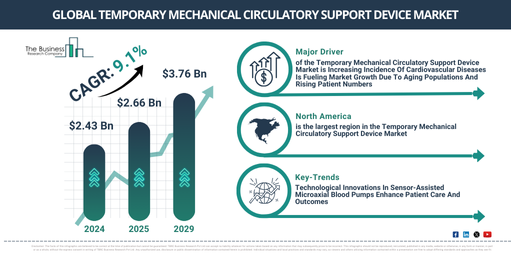
    In recent times, the market size for temporary mechanical circulatory support devices has experienced a robust growth. The market is projected to expand from $2.43 billion in 2024 to $2.66 billion in 2025, demonstrating a compound annual growth rate (CAGR) of 9.5%. Several factors can account for this growth during the historic period, including a heightened incidence of acute myocardial infarction, an increase in heart failure cases, a wider use of intra-aortic balloon pumps, an aging population, and an increased awareness of temporary support alternatives.

    In the coming years, the market size for temporary mechanical circulatory support devices is anticipated to witness robust growth, achieving a value of $3.76 billion by 2029, growing at a compound annual growth rate of 9.1%. This projected expansion during the forecast period can be linked to multiple factors such as a growing need for minimally invasive cardiac support, an increased waiting list for heart transplants, a rising number of high-risk percutaneous coronary intervention (PCI) procedures, wider adoption in pediatric cardiac treatment, and increased healthcare expenditure. Key trends during this time frame include the incorporation of artificial intelligence for patient monitoring, the developing use of magnetically levitated pumps, advancements in anti-thrombotic and biocompatible materials, customizing with 3D-printed component integration, and innovative improvements in cloud-connected hemodynamic analytics.

    Download The Free Sample Report Here:

    https://www.thebusinessresearchcompany.com/sample.aspx?id=27434&type=smp

    What Elements Are Contributing To Growth In The Temporary Mechanical Circulatory Support Device Market?

    The escalating rate of heart-related disorders anticipates pushing forward the expansion of the temporary mechanical circulatory support device market. Cardiovascular diseases (CVD), a set of conditions affecting the heart and circulatory system, can lead to situations like heart attacks, strokes, and high blood pressure. The prevalence of these diseases is increasing due to an aging populace, as it elevates the danger of cardiac and circulatory problems. Temporary mechanical circulatory support devices are beneficial for heart-related disease patients by providing temporary heart function assistance and optimizing blood flow in critical situations such as heart failure or cardiogenic shock. For instance, the American Heart Association, a non-profit organization based in the US, reported in January 2025 that approximately 942,000 individuals died from cardiovascular disease in the US in 2022, contrasting the global death toll of 19.41 million in 2021. Hence, the escalating rate of cardiovascular diseases is promoting growth in the temporary mechanical circulatory support device market.

    Which Segments Are Detailed In The Global Temporary Mechanical Circulatory Support Device Market Report?

    The temporary mechanical circulatory support device market covered in this report is segmented

    1) By Type: Left Ventricular Support Devices, Right Support Devices, Biventricular Support Devices

    2) By Technology: Pneumatic Devices, Mechanical Pumps, Biomimetic Devices, Hybrid Systems, Novel Wearable Devices

    3) By Application: Cardiogenic Shock, Bridge To Transplantation, Bridge To Recovery, High-Risk Cardiac Procedures, Other Medical Conditions

    4) By End User: Hospitals, Cardiac Surgery Centers, Outpatient Surgical Facilities, Research And Academic Institutions, Other Healthcare Institutions

    Subsegment:

    1) By Left Ventricular Support Devices: Intra-Aortic Balloon Pump, Percutaneous Ventricular Assist Device, Extracorporeal Membrane Oxygenation

    2) By Right Support Devices: Right Ventricular Assist Device, Extracorporeal Membrane Oxygenation, Percutaneous Right Ventricular Assist Device

    3) By Biventricular Support Devices: Biventricular Assist Device, Temporary Total Artificial Heart, Extracorporeal Membrane Oxygenation

    Which Emerging Trends And Strategic Shifts Are Shaping The Temporary Mechanical Circulatory Support Device Market?

    Leading firms in the interim mechanical circulatory support device market are concentrating on creating cutting-edge solutions, such as sensor-assisted microaxial blood pumps, with the aim to offer sophisticated heart support solutions capable of enhancing patient results and providing accurate management of heart conditions in critical care situations. Sensor-assisted microaxial blood pumps are compact, implantable devices that use integrated sensors to regulate and modify blood circulation in real-time, offering precise heart mechanical support. For example, in October 2022, Abiomed Inc., a medical device firm based in the US, launched the Impella RP Flex with SmartAssist. This temporary support pump for the right ventricle has features such as internal jugular venous admittance, dual sensor technology for real-time hemodynamic observation, and an anti-coagulant free cleanse system. These innovative features elevate patient mobility, simplify pump management, and minimize the risk of bleeding. This technological development facilitates early recognition and modification of pump functionality, thereby ensuring accurate patient care.

    Who Are The Key Contributors To Growth In The Temporary Mechanical Circulatory Support Device Market?

    Major companies operating in the temporary mechanical circulatory support device market are Johnson & Johnson, Abbott Laboratories, Medtronic Plc, Fresenius Medical Care AG & Co. KGaA, Boston Scientific Corporation, Terumo Corporation, Getinge AB, Meril Life Sciences Pvt. Ltd., Teleflex Incorporated, LivaNova PLC, MicroPort Scientific Corporation, Supira Medical Inc., Magenta Medical Ltd., CorWave SA, Jarvik Heart Inc., Carmat SAS, Procyrion Inc., BiVACOR Inc., CardioBridge GmbH, and BrioHealth Solutions Inc.

    Get The Full Report Here:

    https://www.thebusinessresearchcompany.com/report/temporary-mechanical-circulatory-support-device-global-market-report

    Which Region Is Projected To Lead The Temporary Mechanical Circulatory Support Device Market By 2025?

    North America was the largest region in the temporary mechanical circulatory support device market in 2024. Asia-Pacific is expected to be the fastest-growing region in the forecast period. The regions covered in the temporary mechanical circulatory support device market report are Asia-Pacific, Western Europe, Eastern Europe, North America, South America, Middle East, Africa.

    Request For A Customized Report:

    https://www.thebusinessresearchcompany.com/customise?id=27434&type=smp

    About The Business Research Company:

    With over 15000+ reports from 27 industries covering 60+ geographies, The Business Research Company has built a reputation for offering comprehensive, data-rich research and insights. Armed with 1,500,000 datasets, the optimistic contribution of in-depth secondary research, and unique insights from industry leaders, you can get the information you need to stay ahead in the game.

    Get in touch with us:

    The Business Research Company: https://www.thebusinessresearchcompany.com/

    Americas +1 310-496-7795

    Asia +44 7882 955267 & +91 8897263534

    Europe +44 7882 955267

    Email us at info@tbrc.info

    Follow us on:

    LinkedIn: https://in.linkedin.com/company/the-business-research-company

    YouTube: https://www.youtube.com/channel/UC24_fI0rV8cR5DxlCpgmyFQ

    Global Market Model: https://www.thebusinessresearchcompany.com/global-market-model
  • Temporary Healthcare Staffing Industry Poised for Rapid Expansion, Projected to Hit $62.59 Billion by 2029

    Temporary Healthcare Staffing Industry Poised for Rapid Expansion, Projected to Hit $62.59 Billion by 2029

    Claim your 30% discount on Global Market Reports with code ONLINE30. Limited time only.

    Claim your 30% discount on Global Market Reports with code ONLINE30. Limited time only.

    How Much Is the Global Temporary Healthcare Staffing Market Valued at Present and by 2029?

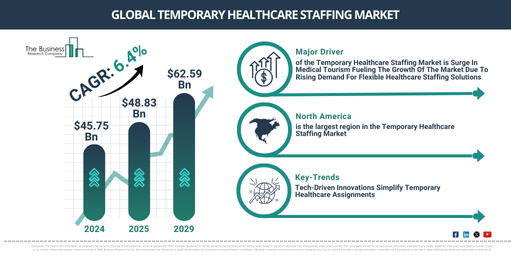
    The market size for interim healthcare staffing has seen significant growth in the past few years. It’s projected to expand from $45.75 billion in 2024 to $48.83 billion in 2025, corresponding to a compound annual growth rate (CAGR) of 6.7%. Factors contributing to this growth during the historical period include increased deficits of healthcare practitioners, surging need for adaptable staff in healthcare institutions, growing burnout and employee turnover among permanent medical personnel, elevated use of healthcare services owing to the broadened insurance coverage, and the rising trend of gig and travel nursing practices.

    The market size of temporary healthcare staffing is projected to witness robust expansion in the coming years, reaching $62.59 billion by 2029 with a 6.4% CAGR. This growth over the prediction period can be linked to the rising occurrence of public health crises and pandemics, an increase in the expenses related to full-time recruitment, the expanding reach of ambulatory and home care services, the increasing needs of rural and underserved regions for coverage, and escalating standards for accreditation and compliance. Key trends during this forecast include the progression of digital staffing platforms, the incorporation of workforce management systems, the use of technology in credentialing and background verification, advances in predictive analytics for assessing staffing requirements, and enhancements in cloud-based scheduling tools.

    Download The Free Sample Report Here:

    https://www.thebusinessresearchcompany.com/sample.aspx?id=27433&type=smp

    #What Drivers Are Influencing Growth In The Temporary Healthcare Staffing Market?

    The escalation in medical tourism is projected to stimulate the expansion of the temporary healthcare staffing market. Medical tourism is the phenomenon where individuals travel to a different country for medical services, often to procure affordable, superior, or specialized treatment. This surge in medical tourism can be attributed to the escalating healthcare costs in developed nations that prompt patients to look for cost-efficient yet high-standard medical care in foreign countries. Temporary healthcare staffing helps support medical tourism by providing an on-demand stock of skilled professionals to deal with sudden surges in patient intake, thereby ensuring consistent high-level care with no delays. For example, the US-ASEAN Business Council, a US-based non-profit organization, reported in February 2025 that Thailand drew in 2.86 million medical tourists in 2023, which generated $850. Furthermore, this figure is predicted to increase by 7.3% to 3.07 million visitors in 2024. Consequently, the burgeoning medical tourism is catalyzing the growth of the temporary healthcare staffing market.

    What Are The Main Segments Identified In The Temporary Healthcare Staffing Market Research?

    The temporary healthcare staffing market covered in this report is segmented

    1) By Service Type: Nursing, Allied Health, Physicians, Administrative, Other Service Types

    2) By Duration Of Staffing Needs: Short-Term Assignments, Long-Term Assignments, Per Diem Staffing, Seasonal Staffing

    3) By Skill Level Of Healthcare Professionals: Entry-Level Professionals, Mid-Level Professionals, Highly Experienced Professionals, Specialized Medical Practitioners

    4) By End-User: Hospitals, Clinics, Nursing Homes, Home Care, Other End-Users

    Subsegments:

    1) By Nursing: Registered Nurse, Licensed Practical Nurse, Certified Nursing Assistant, Travel Nurse, Clinical Nurse Specialist

    2) By Allied Health: Physical Therapist, Occupational Therapist, Respiratory Therapist, Radiologic Technologist, Medical Laboratory Technician

    3) By Physicians: General Practitioner, Surgeon, Anesthesiologist, Psychiatrist, Emergency Medicine Physician

    4) By Administrative: Medical Receptionist, Medical Billing Specialist, Health Information Technician, Scheduler, Medical Office Assistant

    5) By Other Service Types: Pharmacist, Dietitian, Social Worker, Case Manager, Medical Interpreter

    What Are The Leading Trends And Opportunities In The Temporary Healthcare Staffing Sector?

    Key players in the temporary healthcare staffing market are striving to create high-end solutions such as biometric-enhanced locum tenens management in an effort to increase productivity and lessen the administrative load for healthcare professionals in temporary roles. Biometric-enhanced locum tenens management, a secure mobile-centric platform, uses biometric verification to simplify administrative duties and better manage temporary healthcare workers handling locum tenens tasks. For example, CHG Healthcare Services Inc., a healthcare services firm based in the US, rolled out two biometric-flexible mobile apps, MyCompHealth and MyWeatherby, in April 2024. These apps were designed to streamline administrative jobs for locum tenens providers including scheduling shifts, managing travel, recording time, and accessing support. This initiative signals a significant progression in the temporary healthcare staffing landscape through biometric-enhanced locum tenens management, aiming to ameliorate the administrative weight and improve the experience for clinicians.

    Which Companies Play A Key Role In The Development Of The Temporary Healthcare Staffing Market?

    Major companies operating in the temporary healthcare staffing market are The Adecco Group AG, Amergies LLC, AMN Healthcare Services Inc., Jackson Healthcare Co., Aya Healthcare Inc., Aveanna Healthcare Holdings Inc., ProLink Services LLC, FlexCare LLC, A-Line Staffing Solutions LLC, Atlas MedStaff LLC, Nomad Health Inc., Anders Group LLC, Globe Locums Limited, Precedo Healthcare Services Ltd., Binding Minds Inc., Marvel Medical Staffing Inc., Interact Medical Ltd., 22nd Century Technologies Inc., Ambe International, and Alpha Apex Group Inc.

    Get The Full Report Here:

    https://www.thebusinessresearchcompany.com/report/temporary-healthcare-staffing-global-market-report

    What Are The Key Regional Developments Shaping The Temporary Healthcare Staffing Market?

    North America was the largest region in the temporary healthcare staffing market in 2024. Asia-Pacific is expected to be the fastest-growing region in the forecast period. The regions covered in the temporary healthcare staffing market report are Asia-Pacific, Western Europe, Eastern Europe, North America, South America, Middle East, Africa.

    Request For A Customized Report:

    https://www.thebusinessresearchcompany.com/customise?id=27433&type=smp

    About The Business Research Company:

    With over 15000+ reports from 27 industries covering 60+ geographies, The Business Research Company has built a reputation for offering comprehensive, data-rich research and insights. Armed with 1,500,000 datasets, the optimistic contribution of in-depth secondary research, and unique insights from industry leaders, you can get the information you need to stay ahead in the game.

    Get in touch with us:

    The Business Research Company: https://www.thebusinessresearchcompany.com/

    Americas +1 310-496-7795

    Asia +44 7882 955267 & +91 8897263534

    Europe +44 7882 955267

    Email us at info@tbrc.info

    Follow us on:

    LinkedIn: https://in.linkedin.com/company/the-business-research-company

    YouTube: https://www.youtube.com/channel/UC24_fI0rV8cR5DxlCpgmyFQ

    Global Market Model: https://www.thebusinessresearchcompany.com/global-market-model

  • Global Technology Spending On Core Administration In Healthcare Market Forecast to Reach $60.13 Billion by 2029, Driven by 8% CAGR

    Global Technology Spending On Core Administration In Healthcare Market Forecast to Reach $60.13 Billion by 2029, Driven by 8% CAGR

    Claim your 30% discount on Global Market Reports with code ONLINE30. Limited time only.

    Claim your 30% discount on Global Market Reports with code ONLINE30. Limited time only.

    What Is the Current and Projected Market Size of the Technology Spending On Core Administration In Healthcare Industry?

    The size of the technology expenditure in the healthcare market sector, particularly in core administration, has been witnessing robust growth in recent times. It’s anticipated to jump from $40.85 billion in 2024 to a higher figure of $44.26 billion in 2025, reflecting a compound annual growth rate of 8.3%. This growth in the past has been driven by factors such as a soaring demand for automation in billing and claims processing systems, an upsurge in healthcare data volume needing proficient records management systems, a rise in regulatory complexity leading to increased investment in compliance-related technology, a mounting focus on patient interaction and engagement platforms, as well as escalating operational costs leading to optimal administrative procedures.

    Anticipated to witness robust growth in the coming years, the market size for technology spending on core administration in healthcare is projected to swell to $60.13 billion by 2029, with a compound annual growth rate (CAGR) of 8.0%. This projected expansion during the forecast period can be attributed to factors such as rising adoption of cloud-based administrative systems, increased emphasis on value-based care models, escalating incentives from state and federal bodies for embracing health information technology, heightening concentration on cybersecurity and data safeguarding in administrative systems, and the growing prevalence of self-service portals for patients and staff. Forecasted trends in this period encompass technological enhancements that facilitate real-time scheduling and appointment management, progress in automation tools for claims and billing processing, advancement in cloud-based frameworks for scalable administrative tasks, the merging of telehealth platforms with background administrative tasks, and advances in cybersecurity measures to safeguard administrative data.

    Download The Free Sample Report Here:

    https://www.thebusinessresearchcompany.com/sample.aspx?id=27432&type=smp

    #Which Factors Are Currently Driving The Growth Of The Technology Spending On Core Administration In Healthcare Market?

    The surge in telemedicine needs is predicted to boost the expansion of tech expenditure on essential administration within the healthcare sector. Telemedicine offers health services from a distance using digital tools like video conferencing, messaging, or mobile applications to diagnose, manage, and monitor patients. This growing use of telemedicine permits patients to receive healthcare from afar, mitigating travel requirements and enhancing convenience, particularly for those in rural or underprivileged areas. Investments in fundamental administrative tech in healthcare bolsters telemedicine by automating functions like patient registration, appointments, invoicing, and claim management, thereby enhancing effectiveness, reducing delays, and allowing providers to concentrate on delivering timely virtual care. For instance, FAIR Health Inc., a non-profit organization based in the US, reported in April 2023 that there was a 7.3% rise in national telehealth usage, from 5.5% of medical claim lines in December 2022 to 5.9% in January 2023. Consequently, this surge in telemedicine demand is fueling the rise of tech expenditure on core administration in the healthcare sector.

    How Is The Global Technology Spending On Core Administration In Healthcare Market Structured In Terms Of Segments?

    The technology spending on core administration in healthcare market covered in this report is segmented

    1) By Type: Software, Hardware, Services

    2) By Technology: Electronic Health Records (EHRs), Patient Management Systems, Financial Management Systems, Supply Chain Management Systems, Revenue Cycle Management System

    3) By Deployment Mode: On-Premise, Cloud-Based, Hybrid

    4) By Application: Patient Management, Staff Management, Inventory Management, Other Applications

    5) By End-User: Hospitals, Clinics, Insurance Providers, Other End-Users

    Subsegments:

    1) By Software: Electronic Health Record (EHR) Systems, Practice Management Software, Revenue Cycle Management (RCM) Software, Patient Scheduling Software, Claims Management Software

    2) By Hardware: Servers and Storage Devices, Workstations and Desktops, Networking Equipment, Scanners and Imaging Devices, Point-of-Care Devices

    3) By Services: Information Technology Consulting and Support, System Integration Services, Managed Services, Training and Education Services, Maintenance and Upgrades

    What Trends Are Currently Influencing Growth In The Technology Spending On Core Administration In Healthcare Market?

    Key players in the healthcare technology spending on core administration market are concentrating their efforts on escalating the development of innovative solutions such as prebuilt AI instruments. Such tools aim to optimize administrative work processes and amplify the precision of decision-making. Prebuilt AI tools are essentially ready-to-use AI solutions that eradicate the need for exhaustive custom development, therefore allowing for rapid integration of advanced features such as automation, data analysis, and predictability in order to make workflows more efficient. Take for instance Salesforce Inc., a US-based cloud-software company, which introduced Agentforce for Health in February 2025. This library of prebuilt agentic AI instruments is programmed to automate arduous administrative, clinical, and public health duties in healthcare. The platform includes functionalities such as scheduling patient appointments, verifying eligibility with insurers, and providing support for care coordination. Utilizing data from various registries, it helps in disease monitoring and matching clinical trials. The primary objective is to lessen the administrative load, battle employee burnout, and enhance operations efficiency for healthcare providers and payers.

    Who Are The Main Participants Shaping The Technology Spending On Core Administration In Healthcare Market Landscape?

    Major companies operating in the technology spending on core administration in healthcare market are Microsoft Corporation, Siemens AG, International Business Machines Corporation, Oracle Corporation, Tata Consultancy Services (TCS) Limited, Cognizant Technology Solutions Corporation, GE Healthcare Technologies Inc., Infosys Limited, Prime Healthcare Services Inc., Conduent Incorporated, Evolent Health Inc., Veradigm Inc., Tempus AI Inc., Tebra Inc., 314e Corporation, Qventus Inc., Meditab Software Inc., CodaMetrix Inc., Raintree Systems Inc., ReLi Med Solutions Inc.

    Get The Full Report Here:

    https://www.thebusinessresearchcompany.com/report/technology-spending-on-core-administration-in-healthcare-global-market-report

    Which Region Currently Holds The Largest Share In The Technology Spending On Core Administration In Healthcare Market?

    North America was the largest region in the technology spending on core administration in healthcare market in 2024. Asia-Pacific is expected to be the fastest-growing region in the forecast period. The regions covered in the technology spending on core administration in healthcare market report are Asia-Pacific, Western Europe, Eastern Europe, North America, South America, Middle East, Africa.

    Request For A Customized Report:

    https://www.thebusinessresearchcompany.com/customise?id=27432&type=smp

    About The Business Research Company:

    With over 15000+ reports from 27 industries covering 60+ geographies, The Business Research Company has built a reputation for offering comprehensive, data-rich research and insights. Armed with 1,500,000 datasets, the optimistic contribution of in-depth secondary research, and unique insights from industry leaders, you can get the information you need to stay ahead in the game.

    Get in touch with us:

    The Business Research Company: https://www.thebusinessresearchcompany.com/

    Americas +1 310-496-7795

    Asia +44 7882 955267 & +91 8897263534

    Europe +44 7882 955267

    Email us at info@tbrc.info

    Follow us on:

    LinkedIn: https://in.linkedin.com/company/the-business-research-company

    YouTube: https://www.youtube.com/channel/UC24_fI0rV8cR5DxlCpgmyFQ

    Global Market Model: https://www.thebusinessresearchcompany.com/global-market-model
  • 2025–2029 Tardive Dyskinesia Treatment Market Outlook: Regional Trends and Growth Forecast

    2025–2029 Tardive Dyskinesia Treatment Market Outlook: Regional Trends and Growth Forecast

    Claim your 30% discount on Global Market Reports with code ONLINE30. Limited time only.

    Claim your 30% discount on Global Market Reports with code ONLINE30. Limited time only.

    What Are the Latest Market Insights for the Tardive Dyskinesia Treatment Industry?

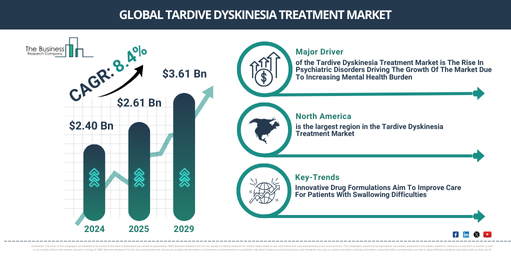
    The market for treating tardive dyskinesia has seen significant growth recently, and this trend is expected to continue, with its worth escalating from $2.40 billion in 2024 to $2.61 billion in 2025, at a compound annual growth rate (CAGR) of 8.7%. The recent growth recorded can be associated to the heightened utilization of antipsychotic medications, increased awareness about drug-related movement disorders, a surge in schizophrenia and bipolar disorders, the rise in off-label usage of antipsychotics, and an expanding elderly population using psychotropic drugs.

    The market for tardive dyskinesia treatments is predicted to experience robust growth in the coming years, reaching a total value of $3.61 billion in 2029 with a CAGR of 8.4%. This anticipated growth in the forecast period is due to factors such as an increasing demand for safer antipsychotic therapies, greater awareness raised by advocacy and educational campaigns, a shift towards individualized mental health treatments, increased healthcare expenditure on neurological and psychiatric conditions, and a rise in the number of patients undergoing long-term psychiatric therapy. Major emerging trends for this upcoming period include the development of neuroprotective strategies, creation of dual-action therapies, inclusion of real-world evidence in drug assessment, incorporation of digital biomarkers, and advancements in non-dopaminergic therapeutics.

    Download The Free Sample Report Here:

    https://www.thebusinessresearchcompany.com/sample.aspx?id=27431&type=smp

    What Forces Are Driving The Growth Of The Tardive Dyskinesia Treatment Industry?

    The escalating rates of mental health conditions are set to boost the expansion of the tardive dyskinesia treatment market. Mental illnesses encompass a broad spectrum of conditions impacting an individual’s emotions, cognitive functions, behaviors, and everyday activities, generally necessitating professional diagnosis and intervention. The rising incidences of mental conditions are linked to the increase in stress and lifestyle strains derived from demanding job responsibilities, social disconnection, and scarce self-care time. Tardive dyskinesia therapy aids in controlling involuntary motion symptoms, enhancing the treatment results and lifestyle quality for people with mental health disorders who are on extended antipsychotic drugs. For example, the House of Commons Library, a research and information facility in the UK, reported in March 2024 that the ratio of 17- to 19-year-olds with a likely mental disorder climbed from 17% in 2021 to 26% in 2022. Hence, the escalating incidence of mental illnesses is accelerating the expansion of the tardive dyskinesia treatment market.

    What Is The Overview Of Market Segmentation In The Tardive Dyskinesia Treatment Industry?

    The tardive dyskinesia treatment market covered in this report is segmented

    1) By Treatment Type: Medications, Botulinum Toxin Injections, Deep Brain Stimulation, Other Treatment Types

    2) By Drug: Valbenazine, Amantadine, Tetrabenazine, Clonazepam, Other Drugs

    3) By Route Of Administration: Oral Administration, Injection, Transdermal Patches

    4) By Distribution Channel: Hospital Pharmacies, Retail Pharmacies, Other Distribution Channels

    5) By End-Users: Hospitals, Specialty Clinics, Other End-Users

    Subsegments:

    1) By Medications: Antipsychotic Medications, Benzodiazepines, Dopamine-Depleting Agents, Anticholinergic Agents

    2) By Botulinum Toxin Injections: Facial Muscle Injections, Neck Muscle Injections, Limb Muscle Injections, Customized Injection Protocols

    3) By Deep Brain Stimulation: Subthalamic Nucleus Stimulation, Globus Pallidus Interna Stimulation, Thalamic Stimulation, Multi-Target Stimulation

    4) By Other Treatment Types: Supportive Therapies, Cognitive Behavioral Therapy, Physical Rehabilitation, Emerging Experimental Treatments

    What Future Market Trends Are Projected For The Tardive Dyskinesia Treatment Industry?

    Key companies in the tardive dyskinesia treatment market are focusing their efforts on the creation of innovative drugs like sprinkle capsule formulations. This step is aimed at enhancing medication adherence in patients struggling with swallowing difficulties. The sprinkle capsule formulation is specially designed to be poured onto soft food, making it more swallow-friendly for patients who have dysphagia or face struggles with swallowing complete capsules. For instance, in July 2024, Ingrezza sprinkle (valbenazine) capsules were introduced to the market by Neurocrine Biosciences Inc., a biotech firm based in the US. These capsules, which are the most frequently prescribed vesicular monoamine transporter 2 (VMAT2) inhibitors, are used to treat adults suffering from tardive dyskinesia and chorea, which is associated with Huntington’s disease. By controlling dopamine levels in the brain, this VMAT2 inhibitor helps handle involuntary movements. The medication comes as a one-dose daily oral capsule, including a sprinkle formulation made to simplify administration for those patients who have trouble swallowing.

    Who Are The Primary Players Operating Across The Global Tardive Dyskinesia Treatment Market?

    Major companies operating in the tardive dyskinesia treatment market are AbbVie Inc., Takeda Pharmaceutical Company Limited, Teva Pharmaceutical Industries Limited, Otsuka Pharmaceutical Co. Ltd., Jazz Pharmaceuticals plc, Kyowa Kirin Co Ltd., H. Lundbeck A/S, Zydus Lifesciences Limited, Neurocrine Biosciences Inc., Luye Pharma Group Ltd., Acadia Pharmaceuticals Inc., Upsher-Smith Laboratories LLC, SteriMax Inc., Adamas Pharmaceuticals Inc., ChemWerth Inc, Sunovion Pharmaceuticals Inc., Mitsubishi Tanabe Pharma Corporation, Synnat Pharma Pvt. Ltd, LGM Pharma LLC, and SOM Biotech S.A.

    Get The Full Report Here:

    https://www.thebusinessresearchcompany.com/report/tardive-dyskinesia-treatment-global-market-report

    Which Region Offers The Most Growth Potential For The Tardive Dyskinesia Treatment Market Through 2029?

    North America was the largest region in the tardive dyskinesia treatment market in 2024. Asia-Pacific is expected to be the fastest-growing region in the forecast period. The regions covered in the tardive dyskinesia treatment market report are Asia-Pacific, Western Europe, Eastern Europe, North America, South America, Middle East, Africa.

    Request For A Customized Report:

    https://www.thebusinessresearchcompany.com/customise?id=27431&type=smp

    About The Business Research Company:

    With over 15000+ reports from 27 industries covering 60+ geographies, The Business Research Company has built a reputation for offering comprehensive, data-rich research and insights. Armed with 1,500,000 datasets, the optimistic contribution of in-depth secondary research, and unique insights from industry leaders, you can get the information you need to stay ahead in the game.

    Get in touch with us:

    The Business Research Company: https://www.thebusinessresearchcompany.com/

    Americas +1 310-496-7795

    Asia +44 7882 955267 & +91 8897263534

    Europe +44 7882 955267

    Email us at info@tbrc.info

    Follow us on:

    LinkedIn: https://in.linkedin.com/company/the-business-research-company

    YouTube: https://www.youtube.com/channel/UC24_fI0rV8cR5DxlCpgmyFQ

    Global Market Model: https://www.thebusinessresearchcompany.com/global-market-model

  • Latest Market Developments in T Cell Surface Glycoprotein CD3 Epsilon Chain Industry: Forecast 2025–2029

    Latest Market Developments in T Cell Surface Glycoprotein CD3 Epsilon Chain Industry: Forecast 2025–2029

    Claim your 30% discount on Global Market Reports with code ONLINE30. Limited time only.

    Claim your 30% discount on Global Market Reports with code ONLINE30. Limited time only.

    What Are the Forecasted Growth Rate and Market Size of the T Cell Surface Glycoprotein CD3 Epsilon Chain Market?

    In recent times, the market size for the T cell surface glycoprotein CD3 epsilon chain has demonstrated significant growth. A rise from $1.13 billion in 2024 to approximately $1.23 billion in 2025 is forecasted, indicating a compound annual growth rate (CAGR) of 9.3%. Factors contributing to this growth during the historical period include the increasing incidence of autoimmune disorders, the escalating demand for targeted immunotherapies, the proliferation of monoclonal antibody therapies, the early clinical success of cluster of differentiation 3-based agents, and the increase in investment towards oncology research.

    In the coming years, the market for the T cell surface glycoprotein CD3 epsilon chain is projected to witness significant growth, with an expectation to reach a worth of $1.74 billion by 2029, growing at a compound annual growth rate (CAGR) of 9.0%. The projected growth during this period can be associated with the increasing use of bispecific antibodies, extension into solid tumor indications, a rise in strategic alliances and licensing agreements, an uptick in cancer incidence rates, and supportive regulatory routes for immunotherapies. Strengthening trends throughout the forecast timeframe incorporate progress in recombinant antibody engineering, the incorporation of artificial intelligence into drug discovery, innovation in bispecific and trispecific antibodies, ongoing study and progress in the modulation of the cluster of differentiation 3 epsilon chain, and a growing emphasis on personalized immunotherapy.

    Download The Free Sample Report Here:

    https://www.thebusinessresearchcompany.com/sample.aspx?id=27430&type=smp

    Which Factor Is Shaping The Future Of The T Cell Surface Glycoprotein CD3 Epsilon Chain Market?

    The surge in occurrences of autoimmune diseases is anticipated to fuel the T cell surface glycoprotein CD3 epsilon chain market’s growth. Autoimmune diseases involve scenarios where the body’s immune system wrongly assails its own vital cells and tissues. The rise in these diseases is largely due to heightened exposure to environmental contaminants, which can interfere with immune performance and prompt immune strikes on the body’s tissues. The T cell surface glycoprotein CD3 epsilon chain aids in managing autoimmune diseases by controlling T cell performance, making it a prime focus for treatment. It assists in limiting excessive immune reactions, lessening tissue harm, and enhancing patient results. For example, a survey study conducted by Versorgungsatlas.de, a Germany-based organization, found that out of 73,241,305 insured individuals in 2022, 6,304,340 had been diagnosed with at least one autoimmune disease. This points to a raw prevalence rate of 8.61%, according to the survey conducted amongst 68,959,472 in 2012 and 73,241,305 people in 2022. Consequently, the escalating prevalence of autoimmune diseases is pushing the growth of the T cell surface glycoprotein CD3 epsilon chain market.

    What Is The Segment-Wise Breakdown Of The T Cell Surface Glycoprotein CD3 Epsilon Chain Market?

    The t cell surface glycoprotein cd3 epsilon chain market covered in this report is segmented

    1) By Product Type: Antibodies, Reagents, Kits, Cell Lines

    2) By Technology: Monoclonal Antibodies Technology, Recombinant Deoxyribonucleic Acid Technology, Cell Culture Technology, Flow Cytometry Technology

    3) By Research Purpose: Basic Research, Translational Research, Clinical Research, Pharmacological Research

    4) By Application: Cancer Immunotherapy, Autoimmune Disease Treatment, Transplant Rejection, Infectious Disease Treatment, Research And Development

    5) By End-User: Pharmaceutical Companies, Biotechnology Firms, Research Institutes, Academic Institutions, Hospitals And Clinics

    Subsegments:

    1) By Antibodies: Monoclonal Antibodies, Polyclonal Antibodies, Recombinant Antibodies

    2) By Reagents: Blocking Reagents, Labeling Reagents, Detection Reagents, Isotype Controls

    3) By Kits: Enzyme Linked Immunosorbent Assay Kits, Flow Cytometry Kits, Western Blot Kits, Immunoprecipitation Kits

    4) By Cell Lines: Human Cell Lines, Mouse Cell Lines, Rat Cell Lines, Hybridoma Cell Lines

    Which Trends Are Redefining The Future Landscape Of The T Cell Surface Glycoprotein CD3 Epsilon Chain Industry?

    In the T cell surface glycoprotein CD3 epsilon chain market, leading companies are turning their attention towards the creation of advanced therapies like bispecific antibodies, aimed at increasing treatment effectiveness, boosting patient recovery rates, and addressing complicated cancer types. Bispecific antibodies are specially designed molecules with the ability to cling onto two diverse antigens concurrently – for instance, CD3 on T cells and a specific antigen associated with tumors – to steer immune cells in the direction of cancer cells. To illustrate, the US-based Janssen Pharmaceutical Companies of Johnson & Johnson was granted accelerated approval by the US Food and Drug Administration (FDA) in August 2023 for TALVEY (talquetamab-tgvs). This first-of-its-kind bispecific T-cell engaging antibody is designed for adults suffering from relapsed or refractory multiple myeloma who have already undergone at least four previous therapy lines. TALVEY is given weekly or once every two weeks via a subcutaneous injection after an initial step-up dosing phase, providing a range of flexible treatment schedules. It focuses on both CD3 epsilon chain on T cells and GPRC5D on myeloma cells, thereby prompting the immune system to launch an attack on the cancer cells.

    Which Companies Hold The Largest Market Share In The T Cell Surface Glycoprotein CD3 Epsilon Chain Sector?

    Major companies operating in the t cell surface glycoprotein cd3 epsilon chain market are Merck & Co. Inc., Becton Dickinson and Company, Bio-Techne Corporation, Abcam plc, Sino Biological Inc., MacroGenics Inc., ACROBiosystems Inc., ABclonal Technology Co Ltd., GeneTex Inc., Santa Cruz Biotechnology Inc., Novus Biologicals LLC, Bioss Antibodies Inc., MedChemExpress MCE LLC, Biorbyt Ltd., Boster Biological Technology Co Ltd., Abbexa Limited, Novatein Biosciences LLC, AssayPro LLC, ProteoGenix, Cloud-Clone Corp.

    Get The Full Report Here:

    https://www.thebusinessresearchcompany.com/report/t-cell-surface-glycoprotein-cd3-epsilon-chain-global-market-report

    How Does Regional Performance Compare Across The T Cell Surface Glycoprotein CD3 Epsilon Chain Industry?

    North America was the largest region in the T cell surface glycoprotein CD3 epsilon chain market in 2024. Asia-Pacific is expected to be the fastest-growing region in the forecast period. The regions covered in the t cell surface glycoprotein cd3 epsilon chain market report are Asia-Pacific, Western Europe, Eastern Europe, North America, South America, Middle East, Africa.

    Request For A Customized Report:

    https://www.thebusinessresearchcompany.com/customise?id=27430&type=smp

    About The Business Research Company:

    With over 15000+ reports from 27 industries covering 60+ geographies, The Business Research Company has built a reputation for offering comprehensive, data-rich research and insights. Armed with 1,500,000 datasets, the optimistic contribution of in-depth secondary research, and unique insights from industry leaders, you can get the information you need to stay ahead in the game.

    Get in touch with us:

    The Business Research Company: https://www.thebusinessresearchcompany.com/

    Americas +1 310-496-7795

    Asia +44 7882 955267 & +91 8897263534

    Europe +44 7882 955267

    Email us at info@tbrc.info

    Follow us on:

    LinkedIn: https://in.linkedin.com/company/the-business-research-company

    YouTube: https://www.youtube.com/channel/UC24_fI0rV8cR5DxlCpgmyFQ

    Global Market Model: https://www.thebusinessresearchcompany.com/global-market-model

  • Emerging Trends and Growth Drivers in the T Cell Specific Surface Glycoprotein CD28 Market Through 2029

    Emerging Trends and Growth Drivers in the T Cell Specific Surface Glycoprotein CD28 Market Through 2029

    Claim your 30% discount on Global Market Reports with code ONLINE30. Limited time only.

    Claim your 30% discount on Global Market Reports with code ONLINE30. Limited time only.

    What Is the Estimated Industry Valuation for the T Cell Specific Surface Glycoprotein CD28 Sector?

    The market size for the T cell-specific surface glycoprotein CD28 has witnessed swift expansion in the past few years. Projected growth will see the size increase from $1.47 billion in 2024 to $1.62 billion in 2025, indicating a compound annual growth rate (CAGR) of 10.1%. Factors contributing to the growth in the historic period include escalating research in immunotherapy, growing cancer rates, increase in instances of autoimmune diseases, a surge in clinical trials, and more widespread use of monoclonal antibodies.

    The market size for the T cell-specific surface glycoprotein CD28 is forecasted to experience considerable growth in the following years. It is projected to reach $2.35 billion by 2029 with a compound annual growth rate (CAGR) of 9.8%. This growth during the forecast period is credited to the surge in demand for personalized medicine, increased focus on T-cell-based therapies, heightened knowledge on immuno-oncology, a growing roster of targeted therapies, substantial investments by pharmaceutical corporations, and widened applications in chronic diseases. Key trends for the prediction period include advancements in cell engineering technologies, further development of bispecific antibodies, novel strategies in targeted immunotherapies, the implementation of AI in drug discovery, and progress in biologics production.

    Download The Free Sample Report Here:

    https://www.thebusinessresearchcompany.com/sample.aspx?id=27429&type=smp

    What Forces Are Driving The Growth Of The T Cell Specific Surface Glycoprotein CD28 Market?

    The expansion of the T cell-specific surface glycoprotein CD28 market is being spurred by the rising focus on personalized medicine. This medical approach concentrates on customizing treatments to individual patients by considering their genetic, environmental, and lifestyle factors to enhance results and healthcare quality. The need for such personalized care is growing, thanks to advances in genomic technologies. These tools allow for accurate pinpointing of genetic variations and the creation of treatments suited to each individual. T cell-specific surface glycoprotein CD28 bolsters personalized medicine by facilitating targeted immune modulation and making therapies more exact and potent. Such improvement in treatment outcomes is due to the promotion of ideal T cell activation, which strengthens patient-specific immune responses. For example, in February 2024, the Personalized Medicine Coalition (PMC), a U.S nonprofit organization, reported that the U.S. Food and Drug Administration (FDA) approved 26 new personalized medicines in 2023. This was a significant increase from the 12 that were approved in 2022. Consequently, the escalating emphasis on personalized medicine is fueling the growth of the T cell-specific surface glycoprotein CD28 market.

    How Is The T Cell Specific Surface Glycoprotein CD28 Industry Segmented Across Key Parameters?

    The t cell specific surface glycoprotein cd28 market covered in this report is segmented

    1) By Type: FPT 155, FR 104, Lulizumab Pegol, Other Types

    2) By Technology: Flow Cytometry, EnzymeLinked Immunosorbent Assay (ELISA), Polymerase Chain Reaction (PCR), Weste Blotting, Immunohistochemistry

    3) By Distribution Channel: Direct Sales, Distributors, Ecommerce, Retail Pharmacies, Wholesalers

    4) By Application: Immunology Research, Cancer Research, Autoimmune Diseases, Infectious Diseases, Stem Cell Research

    5) By End-User: Hospitals, Research Laboratories, Academic Institutions, Pharmaceutical Companies, Diagnostic Laboratories

    Subsegments:

    1) By FPT 155: Preclinical Studies, Clinical Trials, Oncology Applications, Licensing And Partnerships

    2) By FR 104: Autoimmune Disease Applications, Rheumatoid Arthritis Trials, Transplant Rejection Studies, Research Collaborations

    3) By Lulizumab Pegol: Systemic Lupus Erythematosus (SLE) Studies, Immunomodulation Research, Biopharmaceutical Development, Monoclonal Antibody Engineering

    4) By Other Types: Novel CD28 Inhibitors, Combination Therapies, Biosimilars And Biobetters, Emerging Research Compounds

    What Notable Trends Are Shaping The Direction Of The T Cell Specific Surface Glycoprotein CD28 Market?

    Prominent entities functioning in the T cell-specific surface glycoprotein CD28 market are centering their efforts on the creation of novel solutions, such as combination immunotherapies. These therapies aim to amplify T cell activation, augment anti-cancer potency, and improve patient health outcomes. Combination immunotherapies merge a range of immune-based strategies to strengthen the body’s disease-fighting capabilities. For instance, Rondo Therapeutics Inc., a biopharmaceutical establishment based in the United States, disclosed preclinical data regarding RNDO 564 in February 2025. This innovative CD28 Nectin 4 costimulatory bispecific antibody, devised for evolved bladder cancer, is tailored to stimulate CD28 on T cells when they attach to Nectin-4-expressing cancer cells. This enhances T-cell-triggered cancer cell elimination while reducing unintended toxicity. Preliminary models exhibited strong anti-cancer activity from the data, bolstering further progress towards its potential application for patients diagnosed with metastatic urothelial carcinoma.

    Which Companies Currently Dominate The Competitive Landscape In The T Cell Specific Surface Glycoprotein CD28 Industry?

    Major companies operating in the t cell specific surface glycoprotein cd28 market are Gilead Sciences Inc., Johnson & Johnson, Novartis AG, Bristol-Myers Squibb Company, Takeda Pharmaceutical Company Limited, Becton Dickinson and Company, Regeneron Pharmaceuticals Inc., Bio-Techne Corporation, STEMCELL Technologies Inc., Miltenyi Biotec B.V. & Co. KG, Sino Biological Inc., Xencor Inc., ACROBiosystems Co. Ltd., Fate Therapeutics Inc., Medigene AG, Alpine Immune Sciences Inc., Adaptimmune Therapeutics plc, OSE Immunotherapeutics SA, Creative Biolabs Inc., Rondo Therapeutics Inc.

    Get The Full Report Here:

    https://www.thebusinessresearchcompany.com/report/t-cell-specific-surface-glycoprotein-cd28-global-market-report

    Which Geographic Regions Are Driving Demand In The T Cell Specific Surface Glycoprotein CD28 Market?

    North America was the largest region in the T cell-specific surface glycoprotein CD28 market in 2024. Asia-Pacific is expected to be the fastest-growing region in the forecast period. The regions covered in the t cell specific surface glycoprotein cd28 market report are Asia-Pacific, Western Europe, Eastern Europe, North America, South America, Middle East, Africa.

    Request For A Customized Report:

    https://www.thebusinessresearchcompany.com/customise?id=27429&type=smp

    About The Business Research Company:

    With over 15000+ reports from 27 industries covering 60+ geographies, The Business Research Company has built a reputation for offering comprehensive, data-rich research and insights. Armed with 1,500,000 datasets, the optimistic contribution of in-depth secondary research, and unique insights from industry leaders, you can get the information you need to stay ahead in the game.

    Get in touch with us:

    The Business Research Company: https://www.thebusinessresearchcompany.com/

    Americas +1 310-496-7795

    Asia +44 7882 955267 & +91 8897263534

    Europe +44 7882 955267

    Email us at info@tbrc.info

    Follow us on:

    LinkedIn: https://in.linkedin.com/company/the-business-research-company

    YouTube: https://www.youtube.com/channel/UC24_fI0rV8cR5DxlCpgmyFQ

    Global Market Model: https://www.thebusinessresearchcompany.com/global-market-model

  • CAGR of 17.7% Projected for T Cell Receptor (TCR) Based Antibody Market From 2025 to 2029

    CAGR of 17.7% Projected for T Cell Receptor (TCR) Based Antibody Market From 2025 to 2029

    Claim your 30% discount on Global Market Reports with code ONLINE30. Limited time only.

    Claim your 30% discount on Global Market Reports with code ONLINE30. Limited time only.

    How Large Is the T Cell Receptor (TCR) Based Antibody Market Expected to Be in 2029?

    There has been a swift expansion in the size of the T-cell receptor (TCR)-based antibody market in the recent past. The market which was worth $2.57 billion in 2024 is projected to escalate to $3.04 billion in 2025, boasting a compound annual growth rate (CAGR) of 18.1%. This spike in growth during the previous period is linked to the growing need for specific cancer treatments, the increasing emphasis on intracellular antigen targeting, the surge in scientific studies pertaining to T cell receptor-based methods, the amplified investment into immunotherapy platforms, and the expanded use of personalized medicine strategies.

    The market size for the T-cell receptor-(TCR)-based antibody is set to experience swift expansion in the next few years, reaching a value of $5.84 billion in 2029 with a compound annual growth rate (CAGR) of 17.7%. This substantial growth projected for the forecast period could be due to the increased demand for precision and specifically targeted treatments, a mounting focus on neoantigen targeting in cancer therapy, the growing number of orphan drug approvals for uncommon cancers, escalating public and private investments in immuno-oncology, and an intensified focus on targeting neoantigens. Key trends anticipated during this forecast period are advancements in the design of T-cell receptor-mimic antibodies, the evolution of bispecific T-cell receptor-antibody formats, innovations in targeting restricted antigen through the major histocompatibility complex, advancement in the discovery of epitope driven by artificial intelligence, and the development of off-the-shelf therapeutics based on T-cell receptors.

    Download The Free Sample Report Here:

    https://www.thebusinessresearchcompany.com/sample.aspx?id=27428&type=smp

    What Are The Contributors To Demand In The T Cell Receptor (TCR) Based Antibody Market?

    The T-cell receptor-based antibody market is slated for expansion, driven by the rising prevalence of cancer. The term ‘prevalence of cancer’ refers to the total number of individuals, those newly diagnosed as well as those already diagnosed, who live with a history of cancer at a specific time. Lifestyle-related risk factors such as unhealthy diets, smoking, consuming alcohol, and exposure to environmental pollutants contribute to an increased prevalence of various cancers. The role of T cell receptor-based antibodies in cancer treatment is to target tumor cells specifically, thereby fine-tuning the therapeutic strategy. They allow the immune system to identify and eradicate cancer cells more efficiently, boosting treatment efficacy while minimizing side effects. For example, as per the Australian Institute of Health and Welfare, a government-run agency in Australia, there were 160,570 cancer cases diagnosed in Australia in 2022, a rise of 3,789 cases from 156,781 in 2021. Consequently, the growing prevalence of cancer acts as a catalyst for the growth of the T-cell receptor-based antibody market.

    What Segmentation Categories Are Included In The T Cell Receptor (TCR) Based Antibody Market Analysis?

    The T cell receptor (TCR) based antibody market covered in this report is segmented

    1) By Type Of Antibody: Monoclonal Antibodies, Polyclonal Antibodies, Bispecific Antibodies, Conjugated Antibodies

    2) By Target Antigen: Tumor-Associated Antigens, Viral Antigens, Autoimmune Antigens, Others Target Antigens

    3) By Therapeutic Approach: Cytotoxic T-Cell Therapies, Regulator T-Cell Therapies, Dual-Targeting Therapies

    4) By Application: Cancer Immunotherapy, Infectious Diseases, Autoimmune Diseases, Transplant Rejection, Diagnostic Testing

    5) By End-Users: Hospitals, Research Institutes, Specialty Clinics, Other End-Users

    Subsegments:

    1) By Monoclonal Antibodies: Fully Human Antibodies, Humanized Antibodies, Chimeric Antibodies, Murine Antibodies

    2) By Polyclonal Antibodies: Rabbit Derived Antibodies, Goat Derived Antibodies, Sheep Derived Antibodies, Donkey Derived Antibodies

    3) By Bispecific Antibodies: Tandem Single Chain Variable Fragment Antibodies, Dual Variable Domain Immunoglobulin Antibodies, Bispecific T Cell Engager Antibodies, Dual Affinity Re-Targeting Antibodies

    4) By Conjugated Antibodies: Antibody Drug Conjugates, Radioimmunoconjugates, Immunotoxins, Fluorescent Conjugated Antibodies

    What Upcoming Trends Are Expected To Impact The T Cell Receptor (TCR) Based Antibody Market Globally?

    Leading corporations in the T cell receptor-based antibody market are striving to develop innovative products such as TCR mimic antibodies, aiming to increase accuracy, elevate therapeutic efficiency, and broaden treatment alternatives for cancer and other maladies. TCR mimic antibodies are essentially engineered antibodies that identify intracellular antigens presented by MHC molecules in a similar manner to T cell receptors, hence enabling precise immune reactions against affected cells. For example, in September 2022, Biocytogen Pharmaceuticals (Beijing) Co. Ltd., a biotechnology firm based in China, formed an alliance with Guangzhou FineImmune Biotechnology Co. Ltd., another China-based biotechnology company, and launched TCR-mimic antibody-based cell therapy for cancer treatment. Biocytogen will employ its exclusive RenMice platform to create fully human antibodies that target specific peptide-MHC complexes, and FineImmune will apply its knowledge in T cell engager and cell therapy development. The goal of this partnership is to accelerate the development of the next generation of immunotherapies with enhanced specificity and lower off-target effects, potentially providing new options for individuals suffering from difficult-to-treat cancers.

    Who Are The Top-Ranked Companies In The T Cell Receptor (TCR) Based Antibody Market Today?

    Major companies operating in the t cell receptor (tcr) based antibody market are Pfizer Inc., Bristol-Myers Squibb Company, Novartis AG, GSK plc, Amgen Inc., Bio-Rad Laboratories Inc., GenScript Biotech Corporation, Biocytogen Pharmaceuticals Co. Ltd., Abcam plc, Immunocore Holdings plc, Xencor Inc., Fate Therapeutics Inc., Eureka Therapeutics Inc., Proteintech Group Inc., Santa Cruz Biotechnology Inc., Creative Biolabs Inc., TScan Therapeutics Inc., Alloy Therapeutics Inc., Affini-T Therapeutics Inc., Medigene AG, 3T Biosciences Inc., Nona Biosciences, Alithea Biotechnology GmbH, Nextera Therapeutics Inc., TCRCure Biopharma Ltd.

    Get The Full Report Here:

    https://www.thebusinessresearchcompany.com/report/t-cell-receptor-tcr-based-antibody-global-market-report

    How Is T Cell Receptor (TCR) Based Antibody Market Adoption Varying Across Different Regions And Sectors?

    North America was the largest region in the T cell receptor (TCR)-based antibody market in 2024. Asia-Pacific is expected to be the fastest-growing region in the forecast period. The regions covered in the T cell receptor (TCR) based antibody market report are Asia-Pacific, Western Europe, Eastern Europe, North America, South America, Middle East, Africa.

    Request For A Customized Report:

    https://www.thebusinessresearchcompany.com/customise?id=27428&type=smp

    About The Business Research Company:

    With over 15000+ reports from 27 industries covering 60+ geographies, The Business Research Company has built a reputation for offering comprehensive, data-rich research and insights. Armed with 1,500,000 datasets, the optimistic contribution of in-depth secondary research, and unique insights from industry leaders, you can get the information you need to stay ahead in the game.

    Get in touch with us:

    The Business Research Company: https://www.thebusinessresearchcompany.com/

    Americas +1 310-496-7795

    Asia +44 7882 955267 & +91 8897263534

    Europe +44 7882 955267

    Email us at info@tbrc.info

    Follow us on:

    LinkedIn: https://in.linkedin.com/company/the-business-research-company

    YouTube: https://www.youtube.com/channel/UC24_fI0rV8cR5DxlCpgmyFQ

    Global Market Model: https://www.thebusinessresearchcompany.com/global-market-model

  • Industry Forecast: Syndromic Multiplex Diagnostics Market to Generate $4.96 Billion Revenue by 2029

    Industry Forecast: Syndromic Multiplex Diagnostics Market to Generate $4.96 Billion Revenue by 2029

    Claim your 30% discount on Global Market Reports with code ONLINE30. Limited time only.

    Claim your 30% discount on Global Market Reports with code ONLINE30. Limited time only.

    What Is the Outlook for the Syndromic Multiplex Diagnostics Market Heading Into 2029?

    In recent years, there has been a substantial growth in the size of the syndromic multiplex diagnostics market. It is projected to escalate from a value of $3.11 billion in 2024, reaching $3.43 billion in 2025, demonstrating a compound annual growth rate (CAGR) of 10.0%. Factors such as the surge in demand for quick and precise diagnostic procedures, the increased knowledge concerning early detection of diseases, an upswing in hospital-acquired infections, the expanded use of molecular diagnostics, escalating healthcare expenditure, and an increased necessity for point-of-care testing have been instrumental in contributing to the historical growth period.

    The market size of syndromic multiplex diagnostics is anticipated to experience considerable growth in the coming years. It is estimated to expand to $4.96 billion by 2029, with a compound annual growth rate (CAGR) of 9.7%. Factors contributing to this surge during the forecast period include escalating investments in research and development, increased utilization in settings with limited resources, growth of healthcare infrastructure in underdeveloped nations, escalating governmental initiatives for the control of infectious diseases, and an upsurge in demand for decentralized testing. The forecast period is also expected to see key trends such as the progression in multiplex polymerase chain reaction (PCR) technologies, introductions in microfluidics and lab-on-chip systems, advanced automation in processing samples, development in point-of-care molecular platforms, incorporation of cloud-based diagnostic data systems, and progress in portable diagnostic devices.

    Download The Free Sample Report Here:

    https://www.thebusinessresearchcompany.com/sample.aspx?id=27427&type=smp

    Which Factors Are Pushing The Syndromic Multiplex Diagnostics Market Forward?

    The rise in infectious diseases is anticipated to boost the syndromic multiplex diagnostics market’s growth. These diseases are brought on by harmful microorganisms such as bacteria, viruses, fungi, or parasites that infest the body and proliferate, leading to symptoms and health issues. The growth in infectious diseases is propelled by increased worldwide travel, which speeds up the distribution of pathogens across territories and populations. Syndromic multiplex diagnostics augment the management of infectious diseases by providing quick and concurrent detection of numerous pathogens from a single sample. This enhances diagnostic precision and speed, enabling prompt treatment decisions and enhanced patient results. For example, in March 2023, the Centers for Disease Control and Prevention, a US-based national public health organization, reported 8,331 tuberculosis (TB) cases in 2022, a 5.9% rise from 7,874 cases in 2021. Consequently, the escalating prevalence of infectious diseases is contributing to the growth of the syndromic multiplex diagnostics market.

    Which Segment Held The Largest Share In The Syndromic Multiplex Diagnostics Market In 2025?

    The syndromic multiplex diagnostics market covered in this report is segmented

    1) By Product Type: Instruments, Reagents, Software And Services

    2) By Sample Type: Blood Samples, Urine Samples, Saliva Samples, Tissue Samples

    3) By Technology: Polymerase Chain Reaction, Mass Spectrometry, Nucleic Acid Amplification Tests, Next-Generation Sequencing

    4) By Application: Infectious Diseases, Respiratory Diseases, Gastrointestinal Diseases, Sexually Transmitted Infections, Central Nervous System Diseases

    5) By End User: Clinical Laboratories, Hospitals, Pharmaceutical And Biotechnology Companies, Research Institutes, Other End Users

    Subsegments:

    1) By Instruments: Real-Time Polymerase Chain Reaction (PCR) Systems, Microfluidic-Based Systems, Automated Sample-To-Answer Systems, Cartridge-Based Systems, Multiplex Polymerase Chain Reaction (PCR) Platforms

    2) By Reagents: Assay Panels, Primers And Probes, Enzymes, Buffers And Solutions, Sample Preparation Reagents

    3) By Software And Services: Data Analysis Software, Cloud-Based Diagnostic Platforms, Integration And Connectivity Solutions, Technical Support Services, Maintenance And Calibration Services, Training And Installation Services

    How Are Key Trends Driving Expansion In The Syndromic Multiplex Diagnostics Industry?

    Prominent firms in the syndromic multiplex diagnostics sector are concentrating on creating high-tech solutions, such as AI-boosted diagnostic systems, to increase the pace, precision, and comprehensiveness of disease-causing agent detection. Advanced computational tools that apply artificial intelligence, specifically machine learning and deep learning approaches, to interpret intricate clinical and lab data for quicker and more precise disease detection are referred to as AI-boosted diagnostic systems. For example, Qiagen N.V., a company specialising in molecular diagnostics located in the Netherlands, introduced two syndromic testing panels for its QIAstat Dx platform in January 2024: the Gastrointestinal Panel 2 and the Meningitis and Encephalitis Panel. These panels facilitate prompt and precise diagnosis of infectious diseases by identifying multiple pathogens in one test, thereby enhancing clinical judgment and patient results. The QIAstat-Dx system includes progressive data analytics, assisting healthcare professionals in effectively recognising and handling infectious disease outbreaks.

    Which Organizations Are Driving Progress In The Syndromic Multiplex Diagnostics Industry?

    Major companies operating in the syndromic multiplex diagnostics market are Roche Molecular Systems Inc., Abbott Laboratories, Becton Dickinson and Company, Hologic Inc., Bio-Rad Laboratories Inc., Qiagen N.V., Cepheid, Bosch Healthcare Solutions GmbH, Biocartis NV, Luminex Corporation, Curetis GmbH, Accelerate Diagnostics Inc., Applied BioCode Inc., Ador Diagnostics Ltd., Akonni Biosystems Inc., Alveo Technologies Inc., Atlas Genetics Ltd., BioFire Diagnostics LLC, Nanomix Inc., Primerdesign Ltd.

    Get The Full Report Here:

    https://www.thebusinessresearchcompany.com/report/syndromic-multiplex-diagnostics-global-market-report

    Which Region Is Expected To Experience The Highest Growth In The Syndromic Multiplex Diagnostics Industry?

    North America was the largest region in the syndromic multiplex diagnostics market in 2024. Asia-Pacific is expected to be the fastest-growing region in the forecast period. The regions covered in the syndromic multiplex diagnostics market report are Asia-Pacific, Western Europe, Eastern Europe, North America, South America, Middle East, Africa.

    Request For A Customized Report:

    https://www.thebusinessresearchcompany.com/customise?id=27427&type=smp

    About The Business Research Company:

    With over 15000+ reports from 27 industries covering 60+ geographies, The Business Research Company has built a reputation for offering comprehensive, data-rich research and insights. Armed with 1,500,000 datasets, the optimistic contribution of in-depth secondary research, and unique insights from industry leaders, you can get the information you need to stay ahead in the game.

    Get in touch with us:

    The Business Research Company: https://www.thebusinessresearchcompany.com/

    Americas +1 310-496-7795

    Asia +44 7882 955267 & +91 8897263534

    Europe +44 7882 955267

    Email us at info@tbrc.info

    Follow us on:

    LinkedIn: https://in.linkedin.com/company/the-business-research-company

    YouTube: https://www.youtube.com/channel/UC24_fI0rV8cR5DxlCpgmyFQ

    Global Market Model: https://www.thebusinessresearchcompany.com/global-market-model

  • Surgery Management System Market Revenue Outlook: Strategic Insights and Forecast to 2029

    Claim your 30% discount on Global Market Reports with code ONLINE30. Limited time only.

    Claim your 30% discount on Global Market Reports with code ONLINE30. Limited time only.

    What Does the Forecast Indicate for the Surgery Management System Market From 2025 to 2029?

    In recent years, the market size of the surgery management system has seen a robust growth. The market is projected to expand from $2.23 billion in 2024 to $2.44 billion in 2025, marking a compound annual growth rate (CAGR) of 9.6%. This exceptional growth during the historical period can be credited to factors such as the escalating adoption of hospital information systems, a mounting usage of standalone surgical documentation tools, an amplified investment in on-premise IT infrastructure, increased deployment of legacy or scheduling software, and a growing dependency on paper-based surgical records.

    The market for surgery management systems is projected to experience significant expansion in the coming years, with an anticipated growth to $3.48 billion by 2029 at a 9.3% Compound Annual Growth Rate (CAGR). Factors contributing to this projected growth for the forecast period include an increase in mobile-based surgery management application adoption, a surge in telehealth and remote monitoring tools, heightened demand for predictive analytics in surgery planning, increased usage of compatible cloud platforms, and a noticeable trend towards outcome-oriented reimbursement methods. Major trends to watch out for during the forecast period include advancements in mobile-first surgery management interfaces, increased utilization of NLP for automating surgical documentation, the advent of decentralized OR scheduling through blockchain, emergence of voice-assisted surgical workflow tools and improvements in AR-based surgical team coordination platforms.

    Download The Free Sample Report Here:

    https://www.thebusinessresearchcompany.com/sample.aspx?id=27426&type=smp

    What Elements Are Contributing To Growth In The Surgery Management System Market?

    The surgery management system market’s expansion is projected to be driven by the increasing number of surgical procedures. These refer to medical methods that involve cuts or manipulations to address diseases, injuries, or anomalies. This surge in surgical procedures is attributed to the escalating prevalence of chronic illnesses often necessitating surgical attention. Surgery management systems help facilitate these procedures by simplifying the preoperative preparation process, enhancing operating theatre scheduling, coordinating surgical teams, and providing real-time access to patient data. This, as a result, increases efficiency, minimizes mistakes, and boosts overall surgical results. For example, in June 2024, liposuction surpassed breast augmentation as the most frequently performed surgical procedure among women, with 1.8 million procedures carried out as reported by the International Society of Aesthetic Plastic Surgery (ISAPS), an American organization for certified aesthetic plastic surgeons. This was a 29% rise from 2021. Consequently, the mounting frequency of surgical procedures is spurring the growth of the surgery management system market.

    Which Segments Are Detailed In The Global Surgery Management System Market Report?

    The surgery management system market covered in this report is segmented

    1) By Component: Software, Services

    2) By Deployment Type: On-Premise, Cloud-Based, Hybrid

    3) By Functionality: Scheduling, Inventory Management, Patient Management, Billing And Payments, Reporting And Data Analysis

    4) By Application: Preoperative Management, Intraoperative Management, Postoperative Management, Reporting and Analytics

    5) By End-User: Hospitals, Ambulatory Surgical Centers, Clinics, Research Institutions, Other End-Users

    Subsegments:

    1) By Software: Surgical Scheduling Software, Operating Room (OR) Management Software, Surgical Workflow Automation Software, Patient Tracking And Monitoring Software, Electronic Health Record (EHR) Integration Software, Analytics And Reporting Software, Inventory And Resource Management Software, Compliance And Regulatory Management Software

    2) By Services: Preoperative Services, Intraoperative Services, Postoperative Services, Surgical Scheduling And Coordination, Patient Management Services, Documentation And Reporting Services, Training And Support Services

    Which Emerging Trends And Strategic Shifts Are Shaping The Surgery Management System Market?

    Firms dominating the surgical management system sector are pursuing the development of innovative solutions like the full surgical coordination platform to improve the productivity of surgical processes, enhance patient results and employ resources effectively. The comprehensive surgical coordination platform is a system that oversees all aspects related to surgery, from patient scheduling to surgical preparation and operation execution. For example, LeanTaaS Inc., an analytics software supplier in the USA, launched iQueue for Surgical Clinics in June 2025 to facilitate improved patient access, increased surgeries, and more intelligent operations. The platform provides benefits such as real-time data analysis and AI-powered predictive tools that smooth-en scheduling by aligning surgical needs with available means. The platform strengthens collaboration between surgeons, anesthesiologists, and nurses to lower delays and cancellations. Also, it offers automated capacity management, allowing clinics to optimize operating room performance without overloading staff. Moreover, iQueue seamlessly integrates with current electronic health records (EHR) systems, providing a consolidated perspective of surgical processes that enhances transparency and decision-making.

    Who Are The Key Contributors To Growth In The Surgery Management System Market?

    Major companies operating in the surgery management system market are GE HealthCare, Epic Systems Corporation, Getinge AB, CompuGroup Medical SE & Co. KGaA, Barco N.V., Medical Information Technology Inc., Veradigm LLC, Greenway Health LLC, Nexus AG, Surgical Information Systems Inc. (SIS), iQueue Health Inc., Provation Medical Inc., Picis Clinical Solutions Inc., Caresyntax GmbH, HST Pathways Inc., Buddy Healthcare Ltd., Surgimate Inc., OeHealth Software, Ortech Systems Inc., Nimble Solutions Inc.

    Get The Full Report Here:

    https://www.thebusinessresearchcompany.com/report/surgery-management-system-global-market-report

    Which Region Is Projected To Lead The Surgery Management System Market By 2025?

    North America was the largest region in the surgery management system market in 2024. Asia-Pacific is expected to be the fastest-growing region in the forecast period. The regions covered in the surgery management system market report are Asia-Pacific, Western Europe, Eastern Europe, North America, South America, Middle East, Africa.

    Request For A Customized Report:

    https://www.thebusinessresearchcompany.com/customise?id=27426&type=smp

    About The Business Research Company:

    With over 15000+ reports from 27 industries covering 60+ geographies, The Business Research Company has built a reputation for offering comprehensive, data-rich research and insights. Armed with 1,500,000 datasets, the optimistic contribution of in-depth secondary research, and unique insights from industry leaders, you can get the information you need to stay ahead in the game.

    Get in touch with us:

    The Business Research Company: https://www.thebusinessresearchcompany.com/

    Americas +1 310-496-7795

    Asia +44 7882 955267 & +91 8897263534

    Europe +44 7882 955267

    Email us at info@tbrc.info

    Follow us on:

    LinkedIn: https://in.linkedin.com/company/the-business-research-company

    YouTube: https://www.youtube.com/channel/UC24_fI0rV8cR5DxlCpgmyFQ

    Global Market Model: https://www.thebusinessresearchcompany.com/global-market-model