Blog

  • 2025 Analysis: Opportunities and Risks in the Evolving Benchtop Bioreactors Market

    2025 Analysis: Opportunities and Risks in the Evolving Benchtop Bioreactors Market

    Claim your 30% discount on Global Market Reports with code ONLINE30. Limited time only.

    Claim your 30% discount on Global Market Reports with code ONLINE30. Limited time only._x000D_

    _x000D_

    #How Large Is the Benchtop Bioreactors Market Expected to Be in 2029?#_x000D_

    The market size of benchtop bioreactors has seen an accelerated increase in the past few years. The market is expected to expand from $0.98 billion in 2024 to $1.08 billion in 2025, indicating a compound annual growth rate (CAGR) of 10.5%. This growth during the historic period is due to several factors, including heightened emphasis on cell-based studies, increased funding for academic and research institutes, growing interest in the field of tissue engineering, an uptick in the use of microbial fermentation methods, and increased uptake in pilot-scale bioproduction._x000D_

    _x000D_

    Over the forthcoming years, the benchtop bioreactors market is projected to experience a swift expansion, with an anticipated value of $1.59 billion come 2029, marking a CAGR of 10.1%. Factors contributing to this prospective surge during the forecast period encompass the escalating demands for personalized medicine, the emergence of biotechnology start-ups, increased government backing in biotech structures, the rise in the uptake of single-use bioreactor systems, as well as the expansion of contract research and manufacturing organizations. The conjectured period also sees some significant trends such as the evolution in sensor and monitoring technologies, the progression in process control and automation attributes, innovation in single-use bioreactor blueprints, the incorporation of artificial intelligence and machine learning in bioprocessing, and progress in downscaled bioprocess systems._x000D_

    _x000D_

    #Download The Free Sample Report Here:#_x000D_

    https://www.thebusinessresearchcompany.com/sample.aspx?id=27220&type=smp_x000D_

    _x000D_

    #What Are The Contributors To Demand In The Benchtop Bioreactors Market?#_x000D_

    The escalating use of gene therapies is predicted to drive the expansion of the benchtop bioreactors market in the future. Gene therapy is a medical procedure that modifies or substitutes faulty genes to treat or prevent ailments. The increased demand for this therapy is attributed to advancements in gene sequencing and diagnostics, allowing the accurate identification of genes that cause diseases for specific treatments. Benchtop bioreactors enhance gene therapies by providing precise control and effective production of gene-modified cells. They facilitate swift research and small-scale manufacturing, boosting process speed and consistency. For example, in December 2024, the American Society of Gene & Cell Therapy (ASGCT), a non-profit medical and scientific organization based in the US, revealed that the Food and Drug Administration (FDA) approved six gene therapy products in 2023, which is an increase from five approvals in 2022. Consequently, the surging uptake of gene therapies is fueling the growth of the benchtop bioreactors market._x000D_

    _x000D_

    #What Segmentation Categories Are Included In The Benchtop Bioreactors Market Analysis?#_x000D_

    The benchtop bioreactors market covered in this report is segmented_x000D_

    _x000D_

    1) By Type: Swing-Style Bioreactors, Stirred-Tank Bioreactors, Wave-Mixed Bioreactors, Airlift Bioreactors, Bubble Column Bioreactors_x000D_

    2) By Control Type: Automated Bioreactors, Manual Bioreactors, Continuous Bioreactors, Batch Bioreactors_x000D_

    3) By Material: Stainless Steel, Glass, Plastic, Composite Materials_x000D_

    4) By Application: Research And Development, Process Development, Bioproduction, Quality Control, Training And Education_x000D_

    5) By End User: Pharmaceutical Companies, Biotechnology Companies, Academic And Research Institutes, Contract Research Organizations (CROs), Food And Beverage Industry_x000D_

    _x000D_

    Subsegments:_x000D_

    1) By Swing-Style Bioreactors: Single-Use Swing Bioreactors, Multi-Use Swing Bioreactors, Compact Swing Bioreactors, Automated Swing Bioreactors_x000D_

    2) By Stirred-Tank Bioreactors: Single-Use Stirred-Tank Bioreactors, Glass Stirred-Tank Bioreactors, Stainless-Steel Stirred-Tank Bioreactors, Modular Stirred-Tank Bioreactors, Automated Stirred-Tank Bioreactors_x000D_

    3) By Wave-Mixed Bioreactors: Single-Use Wave-Mixed Bioreactors, Dual-Motion Wave-Mixed Bioreactors, Automated Wave-Mixed Bioreactors, Compact Wave-Mixed Bioreactors_x000D_

    4) By Airlift Bioreactors: Internal Loop Airlift Bioreactors, External Loop Airlift Bioreactors, Single-Use Airlift Bioreactors, Pilot-Scale Airlift Bioreactors_x000D_

    5) By Bubble Column Bioreactors: Vertical Bubble Column Bioreactors, Single-Use Bubble Column Bioreactors, Gas-Lift Bubble Column Bioreactors, Automated Bubble Column Bioreactors_x000D_

    _x000D_

    #What Upcoming Trends Are Expected To Impact The Benchtop Bioreactors Market Globally?#_x000D_

    Prominent players in the benchtop bioreactors market are directing their efforts towards the creation of innovative solutions including benchtop fermenters, designed to ensure detailed control and scalability for research and miniature production. Benchtop fermenters are compact bioreactors created for the controlled growth of cells or microorganisms, suitable for research and small-scale production purposes. For example, VFL Sciences Private Limited – a biotechnology appliance creator based in India – in September 2024, unveiled the GreatFlo line of benchtop fermenters or bioreactors. This flexible and modular product line is designed to facilitate simple scale-up and reproducible outcomes in cell culture and fermentation applications. These fermenters are equipped to run parallel operations with the option of expansion from 2 to 16 vessels, each housing a working volume of 200-500 ml. These devices also include features such as Peltier-controlled heating and cooling, exhaust condensers and software compatible with 21 CFR Part 11, all of which ensure meticulous control of agitation, pH, dissolved oxygen, and individual gas mixing._x000D_

    _x000D_

    #Who Are The Top-Ranked Companies In The Benchtop Bioreactors Market Today?#_x000D_

    Major companies operating in the benchtop bioreactors market are Thermo Fisher Scientific Inc., Danaher Corporation, Merck KGaA, GE Healthcare, Sartorius AG, Eppendorf AG, Solaris Biotech Solutions, IKA-Werke GmbH And Co. KG, GPC Bio USA, Praj HiPurity Systems Limited., PBS Biotech Inc., Bioengineering AG, Broadley-James Ltd., Infors HT, Solida Biotech, Bbi-biotech GmbH, Applikon Biotechnology B.V., Labfirst Scientific Instruments Co. Ltd, Pharsol Ltd., Uma Pharmatech Machinery. _x000D_

    _x000D_

    #Get The Full Report Here:#_x000D_

    https://www.thebusinessresearchcompany.com/report/benchtop-bioreactors-global-market-report_x000D_

    _x000D_

    #How Is Benchtop Bioreactors Market Adoption Varying Across Different Regions And Sectors?#_x000D_

    North America was the largest region in the benchtop bioreactors market in 2024. Asia-Pacific is expected to be the fastest-growing region in the forecast period. The regions covered in the benchtop bioreactors market report are Asia-Pacific, Western Europe, Eastern Europe, North America, South America, Middle East, Africa._x000D_

    _x000D_

    #Request For A Customized Report:#_x000D_

    https://www.thebusinessresearchcompany.com/customise?id=27220&type=smp_x000D_

    _x000D_

    #About The Business Research Company:#_x000D_

    _x000D_

    With over 15000+ reports from 27 industries covering 60+ geographies, The Business Research Company has built a reputation for offering comprehensive, data-rich research and insights. Armed with 1,500,000 datasets, the optimistic contribution of in-depth secondary research, and unique insights from industry leaders, you can get the information you need to stay ahead in the game._x000D_

    _x000D_

    #Get in touch with us:#_x000D_

    _x000D_

    The Business Research Company: https://www.thebusinessresearchcompany.com/_x000D_

    Americas +1 310-496-7795_x000D_

    Asia +44 7882 955267 & +91 8897263534_x000D_

    Europe +44 7882 955267_x000D_

    Email us at info@tbrc.info_x000D_

    _x000D_

    #Follow us on:#_x000D_

    _x000D_

    LinkedIn: https://in.linkedin.com/company/the-business-research-company_x000D_

    YouTube: https://www.youtube.com/channel/UC24_fI0rV8cR5DxlCpgmyFQ_x000D_

    Global Market Model: https://www.thebusinessresearchcompany.com/global-market-model
  • Comprehensive Forecast: Oncology Adjuvants Market Share, Growth, and Opportunities Through 2029

    Comprehensive Forecast: Oncology Adjuvants Market Share, Growth, and Opportunities Through 2029

    Claim your 30% discount on Global Market Reports with code ONLINE30. Limited time only.

    Claim your 30% discount on Global Market Reports with code ONLINE30. Limited time only.

    What Are the Forecasted Growth Rate and Market Size of the Oncology Adjuvants Market?

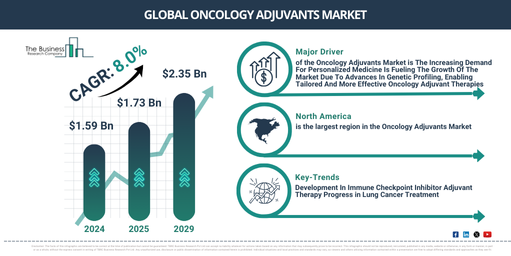
    The value of the oncology adjuvants market has noticeably increased in recent times. It is predicted to expand from $1.59 billion in 2024 to $1.73 billion in 2025, showing a compound annual growth rate (CAGR) of 8.4%. Factors contributing to this growth during the historic period include rising cancer rates globally, a higher demand for improved preclinical predictability, more use of patient-derived xenograft (PDX) models, an increased dependency on in vivo efficacy data, and a heightened focus on the early-stage of immuno-oncology.

    The market for oncology adjuvants is set to experience robust growth in the coming years, projecting to reach $2.35 billion by 2029 with a compound annual growth rate (CAGR) of 8.0%. This predicted growth during the forecast period can be traced back to factors such as heightened focus on models relevant to human beings, increased demand for precision in oncology, a surge in immuno-oncology treatments, rising demand for high-throughput screening models, and a growing interest in models for rare cancers. The industry trends expected during the forecast period include the incorporation of nanotechnology, enhancement of CAR-T cell therapies by adjuvants, developments in immuno-oncology adjuvants, further enhancement of CAR-T cell therapies by adjuvants, and the application of artificial intelligence and machine learning.

    Download The Free Sample Report Here:

    https://www.thebusinessresearchcompany.com/sample.aspx?id=27370&type=smp

    Which Factor Is Shaping The Future Of The Oncology Adjuvants Market?

    The surge in need for personalized medicine is anticipated to fuel the oncology adjuvants market’s expansion. Personalized medicine, a model that uses an individual’s genetic information and lifestyle environment to custom tailor healthcare and treatments, is on the rise due to advances in genetic and molecular profiling. These advancements allow for the development of therapies specific to a person’s unique biological composition, enhancing effectiveness while decreasing unwanted side effects. Oncology adjuvants contribute to personalized medicine by facilitating the tailoring of additional cancer treatments based on a patient’s distinctive genetic composition and tumor traits. This ensures therapies efficiently target any remaining cancer cells and helps to avoid unnecessary side effects. For example, in February 2023, the Personalized Medicine Coalition, a professional membership organization based in the US, reported that in 2022, the sanctioning of 12 new personalized medicines accounted for roughly 34% of all newly sanctioned therapies, a notable rise from prior years. Hence, the escalating demand for personalized medicine serves as a catalyst for the growth of the oncology adjuvants market.

    What Is The Segment-Wise Breakdown Of The Oncology Adjuvants Market?

    The oncology adjuvants market covered in this report is segmented

    1) By Type Of Adjuvant: Chemotherapy Adjuvants, Radiation Adjuvants, Immunotherapy Adjuvants, Hormonal Adjuvants, Targeted Therapy Adjuvants

    2) By Administration Route: Oral, Intravenous, Subcutaneous, Topical, Intramuscular

    3) By Indication: Breast Cancer, Glioblastoma, Lung Cancer, Colorectal Cancer, Ovarian Cancer, Sarcoma, Prostate Cancer, Other Indications

    4) By End User: Cancer Research Institute, Cancer Hospitals

    Subsegments:

    1) By Chemotherapy Adjuvants: Alkylating Agents, Antimetabolites, Anthracyclines, Plant Alkaloids, Topoisomerase Inhibitors, Platinum-Based Compounds, Others

    2) By Radiation Adjuvants: Radiosensitizers, Radioprotectors, Hypoxic Cell Sensitizers, Deoxyribonucleic Acid (DNA) Repair Inhibitors, Immune Modulating Agents Combined With Radiation

    3) By Immunotherapy Adjuvants: Checkpoint Inhibitors, Cytokines, Cancer Vaccines, Adoptive Cell Transfer, Immune Modulating Agents

    4) By Hormonal Adjuvants: Selective Estrogen Receptor Modulators, Aromatase Inhibitors, Gonadotropin-Releasing Hormone Agonists Or Antagonists, Androgen Receptor Inhibitors, Estrogen Receptor Downregulators

    5) By Targeted Therapy Adjuvants: Tyrosine Kinase Inhibitors (TKIs), Proteasome Inhibitors, Poly (ADP-Ribose) Polymerase (PARP) Inhibitors, mTOR Inhibitors, v-Raf Murine Sarcoma Viral Oncogene Homolog B (BRAF) Or Mitogen-Activated Protein Kinase Kinase (MEK) Inhibitors, Vascular Endothelial Growth Factor (VEGF) Inhibitors

    Which Trends Are Redefining The Future Landscape Of The Oncology Adjuvants Industry?

    Leading entities in the oncology adjuvants market are concentrating on the fabrication of innovative solutions such as immune checkpoint inhibitor adjuvant therapy. This strategy is aimed at augmenting the effectiveness of post-operative treatments and elevating the overall survival rates of patients by using the immune system to attack remnants of tumor cells. The therapy employs drugs that inhibit immune checkpoint proteins like PD-1, PD-L1 or CTLA-4 which usually serve to control the immune system’s activity. One example of this is the release, in January 2023, by US pharmaceutical firm, Merck & Co., Inc. of KEYTRUDA (pembrolizumab), an approved adjuvant treatment by the Food and Drug Administration (FDA). The therapy, which is used after surgical resection and platinum-based chemotherapy, is intended for patients suffering from Stage IB (T2a=4 centimeters), II, or IIIA non-small cell lung cancer (NSCLC). KEYTRUDA (pembrolizumab) works by blocking the PD-1 receptor, thus rejuvenating the immune system’s power to identify and combat cancer cells. It offers a potent post-operative treatment for patients with non-small cell lung cancer (NSCLC), reducing the chances of cancer relapsing and enhancing overall survival rates. Moreover, KEYTRUDA amplifies personalized cancer treatment by optimizing the patient’s immune response, rendering it an invaluable asset in contemporary immuno-oncology.

    Which Companies Hold The Largest Market Share In The Oncology Adjuvants Sector?

    Major companies operating in the oncology adjuvants market are Pfizer Inc., Johnson and Johnson, Roche Holding AG, Merck And Co. Inc., Bayer AG, Bristol-Myers Squibb Company, AstraZeneca PLC, Novartis AG, Eli Lilly and Company, Amgen Inc., Regeneron Pharmaceuticals, Daiichi Sankyo Company Limited, SEPPIC, Ipsen S.A., Jiangsu Hengrui Pharmaceuticals Co. Ltd., Croda International Plc, Dynavax Technologies Corporation, Agenus Inc., Aurorium, Elicio Therapeutics Inc.

    Get The Full Report Here:

    https://www.thebusinessresearchcompany.com/report/oncology-adjuvants-global-market-report

    How Does Regional Performance Compare Across The Oncology Adjuvants Industry?

    North America was the largest region in the oncology adjuvants market in 2024. Asia-Pacific is expected to be the fastest-growing region in the forecast period. The regions covered in the oncology adjuvants market report are Asia-Pacific, Western Europe, Eastern Europe, North America, South America, Middle East, Africa.

    Request For A Customized Report:

    https://www.thebusinessresearchcompany.com/customise?id=27370&type=smp

    About The Business Research Company:

    With over 15000+ reports from 27 industries covering 60+ geographies, The Business Research Company has built a reputation for offering comprehensive, data-rich research and insights. Armed with 1,500,000 datasets, the optimistic contribution of in-depth secondary research, and unique insights from industry leaders, you can get the information you need to stay ahead in the game.

    Get in touch with us:

    The Business Research Company: https://www.thebusinessresearchcompany.com/

    Americas +1 310-496-7795

    Asia +44 7882 955267 & +91 8897263534

    Europe +44 7882 955267

    Email us at info@tbrc.info

    Follow us on:

    LinkedIn: https://in.linkedin.com/company/the-business-research-company

    YouTube: https://www.youtube.com/channel/UC24_fI0rV8cR5DxlCpgmyFQ

    Global Market Model: https://www.thebusinessresearchcompany.com/global-market-model

  • In-Depth Bacterial And Viral Specimen Collection Market Report: Business Trends, Growth Factors, and Forecast to 2029

    In-Depth Bacterial And Viral Specimen Collection Market Report: Business Trends, Growth Factors, and Forecast to 2029

    Claim your 30% discount on Global Market Reports with code ONLINE30. Limited time only.

    Claim your 30% discount on Global Market Reports with code ONLINE30. Limited time only._x000D_

    _x000D_

    #What Is the Outlook for the Bacterial And Viral Specimen Collection Market Heading Into 2029?#_x000D_

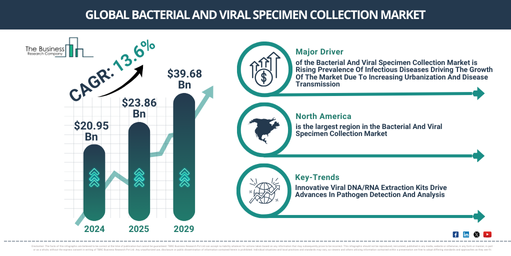
    In recent times, the bacterial and viral specimen collection market has seen substantial growth. The market size is expected to increase from $20.95 billion in 2024 to $23.86 billion in 2025, reflecting a compound annual growth rate (CAGR) of 13.9%. The historical growth can be linked to an increased demand for early and precise diagnostics, heightened incidences of viral outbreaks, increased government funding, a surge in global healthcare spending, and the expansion of telemedicine._x000D_

    _x000D_

    Over the next few years, the market size for bacterial and viral specimen collection is expected to witness significant expansion. It’s projected to reach $39.68 billion by 2029, growing at a compound annual growth rate (CAGR) of 13.6%. The growth during this period can be linked to the broader global disease surveillance networks, increasing investment for pandemic readiness, a higher number of infectious diseases, increased antimicrobial resistance, and intensifying bacterial infections. Technological advancements, digital tracking integration, the use of non-invasive specimen collection techniques, the implementation of microfluidic equipment, and the use of automated specimen tracking systems are major trends forecasted for this period._x000D_

    _x000D_

    #Download The Free Sample Report Here:#_x000D_

    https://www.thebusinessresearchcompany.com/sample.aspx?id=27219&type=smp_x000D_

    _x000D_

    #Which Factors Are Pushing The Bacterial And Viral Specimen Collection Market Forward?#_x000D_

    The upward trend of infectious diseases is projected to augment the bacterial and viral specimen collection market’s progress. Infectious diseases, resulting from harmful microorganisms such as bacteria, viruses, fungi, or parasites, can transmit from one person to another directly or indirectly. This escalation is primarily due to the increase in urbanization, resulting in greater population density and close human contact, thus favoring rapid disease propagation and forming perfect conditions for pathogens to distribute more readily among communities. The bacterial and viral specimen collection plays a vital role in managing infectious diseases by supplying crucial samples that allow for accurate detection and diagnosis, thereby endorsing prompt and specific medical interventions. For example, the Centers for Disease Control and Prevention, a US government agency, reported in March 2024 that the number of tuberculosis instances rose from 8,320 in 2022 to 9,615 in 2023, an increment of 1,295 cases. At the same time, the incidence rate escalated from 2.5 to 2.9 per 100,000 persons, indicating a significant rise over the course of the year. Therefore, the increasing prevalence of infectious diseases is fueling the expansion of the bacterial and viral specimen collection market._x000D_

    _x000D_

    #Which Segment Held The Largest Share In The Bacterial And Viral Specimen Collection Market In 2025?#_x000D_

    The bacterial and viral specimen collection market covered in this report is segmented_x000D_

    _x000D_

    1) By Product: Bacterial Specimen Collection, Viral Specimen Collection_x000D_

    2) By Application: Diagnostics, Research_x000D_

    3) By End User: Hospitals And Clinics, Diagnostic Laboratories, Academic And Research Institutions, Other End User_x000D_

    _x000D_

    Subsegments:_x000D_

    1) By Bacterial Specimen Collection: Swabs, Transport Media, Culture Plates & Media, Blood Culture Bottles, Biopsy And Tissue Collection Kits, Urine Collection Containers, Other Specialized Collection Devices_x000D_

    2) By Viral Specimen Collection: Viral Transport Media, Blood Collection Tubes, Saliva Collection Kits, Sputum Collection Containers, Stool Collection Kits, Other Specialized Collection Devices_x000D_

    _x000D_

    #How Are Key Trends Driving Expansion In The Bacterial And Viral Specimen Collection Industry?#_x000D_

    Leaders in the bacterial and viral specimen collection market are striving to incorporate innovative solutions such as viral DNA and RNA extraction kits. These advancements are designed to heighten the precision, efficiency, and quickness of detecting and analyzing pathogens. A viral DNA and RNA extraction kit operates as a lab instrument for isolating and purifying viral genetic material from clinical samples for precise molecular testing and diagnosis. For example, in April 2024, the US-based life sciences company New England Biolabs introduced the Monarch Mag Viral DNA and RNA Extraction Kit. This magnetic bead-based purification kit is engineered for fast, dependable, and exceptionally sensitive extraction of viral DNA and RNA from a variety of sample types, including saliva, respiratory swabs, and enriched wastewater. The kit can be used manually or automated, making it compatible with platforms like KingFisher Flex and Agilent Bravo and facilitating high-throughput processing. With increased sensitivity for detecting low viral loads and carrier RNA inclusion for improved recovery, the kit is ideal for downstream applications like qPCR, RT-qPCR, ddPCR, and next-generation sequencing (NGS). Its purpose is to cater to requirements in the areas of infectious disease testing, viral genome sequencing, and environmental surveillance by enabling scalable and hands-free workflows._x000D_

    _x000D_

    #Which Organizations Are Driving Progress In The Bacterial And Viral Specimen Collection Industry?#_x000D_

    Major companies operating in the bacterial and viral specimen collection market are Roche Diagnostics International AG, Thermo Fisher Scientific Inc., Becton Dickinson and Company, Lonza Group AG, Hologic Inc., bioMérieux SA, Quidel Corporation, QIAGEN N.V., DiaSorin S.p.A., Greiner Bio-One International GmbH, Spectrum Solutions LLC, Hardy Diagnostics Inc., EKF Diagnostics Holdings Plc, Trinity Biotech Plc, Puritan Medical Products Company LLC, Wuxi NEST Biotechnology Co. Ltd., Copan Diagnostics Inc., VIRCELL S.L., Medical Wire & Equipment Co. Ltd., HiMedia Laboratories Pvt. Ltd., Longhorn Vaccines and Diagnostics LLC, and Beaver Biomedical Engineering Co. Ltd. _x000D_

    _x000D_

    #Get The Full Report Here:#_x000D_

    https://www.thebusinessresearchcompany.com/report/bacterial-and-viral-specimen-collection-global-market-report_x000D_

    _x000D_

    #Which Region Is Expected To Experience The Highest Growth In The Bacterial And Viral Specimen Collection Industry?#_x000D_

    North America was the largest region in the bacterial and viral specimen collection market in 2024. Asia-Pacific is expected to be the fastest-growing region in the forecast period. The regions covered in the bacterial and viral specimen collection market report are Asia-Pacific, Western Europe, Eastern Europe, North America, South America, Middle East, Africa._x000D_

    _x000D_

    #Request For A Customized Report:#_x000D_

    https://www.thebusinessresearchcompany.com/customise?id=27219&type=smp_x000D_

    _x000D_

    #About The Business Research Company:#_x000D_

    _x000D_

    With over 15000+ reports from 27 industries covering 60+ geographies, The Business Research Company has built a reputation for offering comprehensive, data-rich research and insights. Armed with 1,500,000 datasets, the optimistic contribution of in-depth secondary research, and unique insights from industry leaders, you can get the information you need to stay ahead in the game._x000D_

    _x000D_

    #Get in touch with us:#_x000D_

    _x000D_

    The Business Research Company: https://www.thebusinessresearchcompany.com/_x000D_

    Americas +1 310-496-7795_x000D_

    Asia +44 7882 955267 & +91 8897263534_x000D_

    Europe +44 7882 955267_x000D_

    Email us at info@tbrc.info_x000D_

    _x000D_

    #Follow us on:#_x000D_

    _x000D_

    LinkedIn: https://in.linkedin.com/company/the-business-research-company_x000D_

    YouTube: https://www.youtube.com/channel/UC24_fI0rV8cR5DxlCpgmyFQ_x000D_

    Global Market Model: https://www.thebusinessresearchcompany.com/global-market-model
  • Future Demand and Leading Companies Shaping the Omics-Based Clinical Trials Market to 2029

    Future Demand and Leading Companies Shaping the Omics-Based Clinical Trials Market to 2029

    Claim your 30% discount on Global Market Reports with code ONLINE30. Limited time only.

    Claim your 30% discount on Global Market Reports with code ONLINE30. Limited time only.

    What Is the Estimated Industry Valuation for the Omics-Based Clinical Trials Sector?

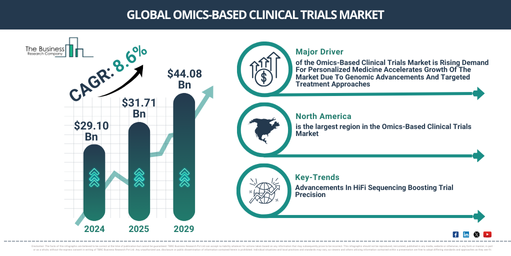
    In recent times, the market size for omics-based clinical trials has witnessed robust growth. The market, which is projected to rise from $29.10 billion in 2024 to $31.71 billion in 2025, will experience a compound annual growth rate (CAGR) of 8.9%. Factors contributing to previous growth include the surge in clinical trials utilizing omics technologies, increased focus on translational research, escalating governmental backing and funds, improved access to biobanks and biospecimens, and rising knowledge about the advantages of precision therapies.

    The market for clinical trials based on omics is predicted to see significant expansion in the coming years. With a compound annual growth rate (CAGR) estimated at 8.6%, it is expected to reach $44.08 billion by 2029. Several factors are contributing to this growth forecast, such as the rising demand for customized medical treatments, the increasing usage of multi-omics methods, a growing incidence of both chronic and rare diseases, heightened investment in genomic research and biotechnology, and a greater focus on discovering new biomarkers. During the forecast period, the notable trends include advances in Next-Generation Sequencing (NGS) technologies, the incorporation of artificial intelligence into omics platforms, technological progress in bioinformatics tools, enhancements in proteomics and metabolomics platforms, and the amalgamation of multi-omics data.

    Download The Free Sample Report Here:

    https://www.thebusinessresearchcompany.com/sample.aspx?id=27369&type=smp

    What Forces Are Driving The Growth Of The Omics-Based Clinical Trials Market?

    The growth of the omics-based clinical trials market is anticipated to be propelled by an escalating demand for personalized medicine. Personalized medicine is a medical strategy that customizes the prevention, diagnosis, and treatment of diseases according to the unique characteristics of each patient. With advancements in genomic technologies enabling quicker, cost-effective analysis of individual genetic profiles, there has been a surge in demand for personalized medicine. Omics-based clinical trials provide crucial support in this domain, helping identify unique genetic, proteomic, and metabolic profiles of individuals. This facilitates the development of more precise and effective treatment methodologies personalized for each patient. For example, as noted by the Personalized Medicine Coalition, a professional association in the US, in 2022, of the 12 new custom-made medicines approved, 34% signified all newly approved treatments, marking a significant increase from past years. Therefore, the surge in demand for personalized medicine is fuelling the omics-based clinical trials market’s expansion.

    How Is The Omics-Based Clinical Trials Industry Segmented Across Key Parameters?

    The omics-based clinical trials market covered in this report is segmented

    1) By Type: Genomics, Proteomics, Metabolomics, Transcriptomics

    2) By Phase: Phase I, Phase II, Phase III, Phase IV

    3) By Study Design: Interventional Studies, Observational Studies, Expanded Access Studies

    4) By Application: Oncology, Cardiovascular, Neurology, Infectious Diseases, Metabolic Disorders

    5) By End-User: Pharmaceutical And Biotechnology Companies, Academic And Research Institutes, Contract Research Organizations (CROs), Hospitals And Diagnostic Laboratories

    Subsegments:

    1) By Genomics: Whole Genome Sequencing, Whole Exome Sequencing, Targeted Gene Sequencing

    2) By Proteomics: Protein Expression Profiling, Post-Translational Modifications Analysis, Protein-Protein Interaction Mapping

    3) By Metabolomics: Targeted Metabolomics, Untargeted Metabolomics, Metabolic Flux Analysis

    4) By Transcriptomics: Microarray Analysis, Single-Cell Transcriptomics, Gene Expression Profiling

    What Notable Trends Are Shaping The Direction Of The Omics-Based Clinical Trials Market?

    Leading firms in the omics-based clinical trials market are emphasizing on innovative solutions, such as HiFi sequencing technology, to improve the precision, velocity, and complexity of multi-omics data examination, with the goal of enhancing trial results and bespoke treatment plans. HiFi sequencing is a next-generation sequencing (NGS) technology that provides long, highly precise reads via circular consensus sequencing (CCS), facilitating thorough and exact analysis of genomes, transcriptomes, and epigenomes. For example, in October 2024, Pacific Biosciences of California Inc., a biotech company from the US, in partnership with the Agency for Science, Technology, and Research (A*STAR), a research and product development agency from Singapore, and Macrogen Inc., a biotech company from South Korea, inaugurated an advanced lab to push forward genomics innovation in Singapore using the superior long-read sequencing technology. The establishment gives researchers the opportunity to execute in-depth genomic studies with greater accuracy and rapidity. It caters to a plethora of applications, including transcriptomics, whole genome sequencing, metagenomics, and epigenetics. The lab also encourages cooperation among global scientists and local institutions, with the objective to expedite breakthroughs in precision oncology, personalized medicine, and rare disease diagnosis. Furthermore, it provides training schemes and shared access to high-throughput sequencing facilities, fostering innovation and capacity-building within the Asia-Pacific region.

    Which Companies Currently Dominate The Competitive Landscape In The Omics-Based Clinical Trials Industry?

    Major companies operating in the omics-based clinical trials market are Pfizer Inc., F. Hoffmann-La Roche Ltd., Thermo Fisher Scientific Inc., GlaxoSmithKline Plc, Eli Lilly and Company, Novo Nordisk A/S, BioNTech SE, IQVIA Inc., Laboratory Corporation of America Holdings, ICON Public Limited Company, SGS Société Générale de Surveillance SA, Eurofins Scientific SE, Syneos Health Inc., Illumina Inc., Charles River Laboratories International Inc., Parexel International Corporation, Bruker Corporation, Fulgent Genetics Inc., Signios Biosciences, and BioAro Inc.

    Get The Full Report Here:

    https://www.thebusinessresearchcompany.com/report/omics-based-clinical-trials-global-market-report

    Which Geographic Regions Are Driving Demand In The Omics-Based Clinical Trials Market?

    North America was the largest region in the omics-based clinical trials market in 2024. Asia-Pacific is expected to be the fastest-growing region in the forecast period. The regions covered in the omics-based clinical trials market report are Asia-Pacific, Western Europe, Eastern Europe, North America, South America, Middle East, Africa.

    Request For A Customized Report:

    https://www.thebusinessresearchcompany.com/customise?id=27369&type=smp

    About The Business Research Company:

    With over 15000+ reports from 27 industries covering 60+ geographies, The Business Research Company has built a reputation for offering comprehensive, data-rich research and insights. Armed with 1,500,000 datasets, the optimistic contribution of in-depth secondary research, and unique insights from industry leaders, you can get the information you need to stay ahead in the game.

    Get in touch with us:

    The Business Research Company: https://www.thebusinessresearchcompany.com/

    Americas +1 310-496-7795

    Asia +44 7882 955267 & +91 8897263534

    Europe +44 7882 955267

    Email us at info@tbrc.info

    Follow us on:

    LinkedIn: https://in.linkedin.com/company/the-business-research-company

    YouTube: https://www.youtube.com/channel/UC24_fI0rV8cR5DxlCpgmyFQ

    Global Market Model: https://www.thebusinessresearchcompany.com/global-market-model

  • 2025–2029 Nucleic Acid Therapeutics Market Outlook: Regional Trends and Growth Forecast

    2025–2029 Nucleic Acid Therapeutics Market Outlook: Regional Trends and Growth Forecast

    Claim your 30% discount on Global Market Reports with code ONLINE30. Limited time only.

    Claim your 30% discount on Global Market Reports with code ONLINE30. Limited time only.

    How Large Is the Nucleic Acid Therapeutics Market Expected to Be in 2029?

    In recent times, there has been a noticeable escalation in the size of the nucleic acid therapeutics market. The market is projected to expand from $6.01 billion in 2024 to $6.94 billion in 2025, with a compound annual growth rate (CAGR) of 15.6%. The historical expansion can be credited to the surge in the occurrence of genetic and chronic diseases, increasing efforts in genomics research and development, a heightened use of RNA-based therapeutics, significant backing from academic and government bodies, and the rising success relating to mRNA vaccine platforms.

    The market size of nucleic acid therapeutics is projected to experience rapid expansion in the coming years. By 2029, it is anticipated to reach $12.24 billion with a compound annual growth rate (CAGR) of 15.2%. Factors contributing to its growth over the forecast period include increased demand for precision medicine, the broadening applications of mRNA vaccines beyond COVID-19, the emergence of next-generation delivery platforms, a burgeoning pipeline of nucleic acid-based drugs, and a surge in approvals from regulatory bodies. Key trends expected during the forecast timeline include extending mRNA platforms to cover oncology and rare diseases, incorporating Artificial Intelligence and machine learning in RNA drug discovery, devising targeted delivery systems for tissue-specific activity, launching modular and multi-target platform therapies, and advancing next-generation aptamer technologies.

    Download The Free Sample Report Here:

    https://www.thebusinessresearchcompany.com/sample.aspx?id=27368&type=smp

    What Are The Contributors To Demand In The Nucleic Acid Therapeutics Market?

    The growth of the nucleic acid therapeutics market is anticipated to be driven by the escalating prevalence of genetic and chronic diseases. These terms refer to the correlation between hereditary genetic factors and the risk, progression, or inception of persistent health issues like diabetes, cardiovascular diseases, cancer, and autoimmune disorders. The upswing in such diseases is majorly contributed by enhanced diagnostic technologies that detect these conditions more precisely and early. Nucleic acid therapeutics prove beneficial for these genetic and chronic diseases as they allow to regulate, repair, or silence the fundamental genetic causes, providing exact and customized treatment options. As an example, the Cystic Fibrosis Trust, a UK-based charity supporting those with cystic fibrosis, reported in October 2024 that the number of registered cystic fibrosis patients rose from 11,148 in 2022 to 11,318 in 2023, marking a 1.5% yearly increase in patient registrations. As a result, the rise in genetic and chronic diseases fuels the expansion of the nucleic acid therapeutics market.

    What Segmentation Categories Are Included In The Nucleic Acid Therapeutics Market Analysis?

    The nucleic acid therapeutics market covered in this report is segmented

    1) By Therapy Type: Antisense Oligonucleotides (ASOs), Small Interfering RNA (siRNA), Gene Therapies, Aptamers, Other Therapy Types

    2) By Therapeutic Area: Neuromuscular Disorder, Metabolic Disorders, Cardiovascular Disorders, Ophthalmological Disorders, Oncological Disorders, Other Therapeutic Areas

    3) By Route Of Administration: Intravenous, Subcutaneous, Other Route Of Administrations

    4) By Delivery Method: Viral Vector-Based Delivery Systems, Non-Viral Delivery Systems

    5) By End-Use: Pharmaceutical Companies, Government And Academic Research Institutes, Biotech Companies

    Subsegment:

    1) By Antisense Oligonucleotides (ASOs): Phosphorothioate ASOs, 2’-O-Methyl ASOs, Locked Nucleic Acid (LNA) ASOs, Gapmer ASOs, Morpholino ASOs

    2) By Small Interfering RNA (siRNA): Lipid Nanoparticle (LNP) Formulated siRNA, GalNAc-Conjugated siRNA, Chemically Modified siRNA, Naked siRNA

    3) By Gene Therapies: Viral Vector-Based Gene Therapy, Non-Viral Vector-Based Gene Therapy, CRISPR-Based Gene Therapy, Zinc Finger Nucleases (ZFNs), TALENs

    4) By Aptamers: Ribonucleic Acid (RNA) Aptamers, Deoxyribonucleic Acid (DNA) Aptamers, Spiegelmers, Pegylated Aptamers

    5) By Others Therapy Types: MicroRNA (miRNA) Therapeutics, Long Non-Coding RNA (lncRNA) Therapeutics, Ribonucleic Acid (RNA) Editing Therapies, Ribozymes

    What Upcoming Trends Are Expected To Impact The Nucleic Acid Therapeutics Market Globally?

    Leading firms in the nucleic acid therapeutics market are channeling their efforts towards the creation of innovative solutions, like antisense oligonucleotide therapy, which aims to target and suppress specific genes causing diseases. This provides precision treatments for genetic disorders and rare diseases. This therapeutic approach entails using short, synthetic strands of DNA or RNA to interfere with or modify the expression of particular genes implicated in diseases. For instance, Ionis Pharmaceuticals Inc., a biotech company based in the US, received approval from the U.S. Food and Drug Administration (FDA) in December 2024 for TRYNGOLZ (olezarsen), as a supplementary treatment to diet for the reduction of triglyceride levels in adults with familial chylomicronemia syndrome (FCS). FCS is a rare genetic disorder marked by a considerably high level of triglycerides (sHTG) and an increased risk of acute pancreatitis (AP). This is the first FDA-approved treatment that renders a significant and long-lasting reduction of triglyceride levels in this group of patients, in addition to a clinically significant decrease in the incidence of AP when used alongside a low-fat diet. This therapy is developed for easy self-administration, delivered through an auto-injector once a month.

    Who Are The Top-Ranked Companies In The Nucleic Acid Therapeutics Market Today?

    Major companies operating in the nucleic acid therapeutics market are Pfizer Inc., Merck & Co. Inc., Sanofi S.A., Novartis AG, Moderna Inc., BioNTech SE, Astellas Pharma Inc., Vertex Pharmaceuticals Incorporated, Alnylam Pharmaceuticals Inc., Sarepta Therapeutics Inc., Arrowhead Pharmaceuticals Inc., Arcturus Therapeutics Holdings Inc., Imugene Limited, CureVac SE, Sangamo Therapeutics Inc., Beam Therapeutics Inc., Arbutus Biopharma Corporation, Silence Therapeutics plc, Copernicus Therapeutics Inc., and Exothera S.A.

    Get The Full Report Here:

    https://www.thebusinessresearchcompany.com/report/nucleic-acid-therapeutics-global-market-report

    How Is Nucleic Acid Therapeutics Market Adoption Varying Across Different Regions And Sectors?

    North America was the largest region in the nucleic acid therapeutics market in 2024. Asia-Pacific is expected to be the fastest-growing region in the forecast period. The regions covered in the nucleic acid therapeutics market report are Asia-Pacific, Western Europe, Eastern Europe, North America, South America, Middle East, Africa.

    Request For A Customized Report:

    https://www.thebusinessresearchcompany.com/customise?id=27368&type=smp

    About The Business Research Company:

    With over 15000+ reports from 27 industries covering 60+ geographies, The Business Research Company has built a reputation for offering comprehensive, data-rich research and insights. Armed with 1,500,000 datasets, the optimistic contribution of in-depth secondary research, and unique insights from industry leaders, you can get the information you need to stay ahead in the game.

    Get in touch with us:

    The Business Research Company: https://www.thebusinessresearchcompany.com/

    Americas +1 310-496-7795

    Asia +44 7882 955267 & +91 8897263534

    Europe +44 7882 955267

    Email us at info@tbrc.info

    Follow us on:

    LinkedIn: https://in.linkedin.com/company/the-business-research-company

    YouTube: https://www.youtube.com/channel/UC24_fI0rV8cR5DxlCpgmyFQ

    Global Market Model: https://www.thebusinessresearchcompany.com/global-market-model

  • Autonomous Surgical Robotics Industry Poised for Rapid Expansion, Projected to Hit $4.84 Billion by 2029

    Autonomous Surgical Robotics Industry Poised for Rapid Expansion, Projected to Hit $4.84 Billion by 2029

    Claim your 30% discount on Global Market Reports with code ONLINE30. Limited time only.

    Claim your 30% discount on Global Market Reports with code ONLINE30. Limited time only._x000D_

    _x000D_

    #What Does the Forecast Indicate for the Autonomous Surgical Robotics Market From 2025 to 2029?#_x000D_

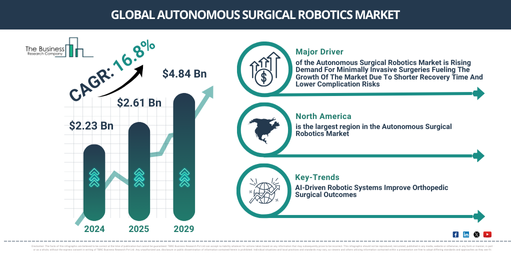
    There has been a swift expansion in the size of the autonomous surgical robotics market in recent years. It is expected to escalate from $2.23 billion in 2024 to $2.61 billion in 2025, witnessing a compound annual growth rate (CAGR) of 17.1%. The growth during the historical period can be justified by the increasing demand for minimally invasive operations, upsurge in surgical complications, scarcity of proficient surgeons, increment in healthcare spending, and the rising population of the elderly._x000D_

    _x000D_

    The market size of autonomous surgical robotics is projected to expand rapidly in the coming years with an estimated worth of $4.84 billion by 2029, indicative of a compound annual growth rate (CAGR) of 16.8%. The growth during the estimated period can be associated with the broadening of applications in surgical robotics, an increasing emphasis on personalized medicine, the growing demand for precision and accuracy in surgical procedures, the surge in the number of training programs for robotic surgery, and an amplified awareness around surgical precision and results. Noteworthy trends anticipated during this period involve the development of autonomous suturing systems, the incorporation of robotics with imaging systems, interoperability with hospital information systems, advancements in soft-tissue robotics, improvements in miniaturized robotic instruments, and the evolution of surgical robots for niche specialties._x000D_

    _x000D_

    #Download The Free Sample Report Here:#_x000D_

    https://www.thebusinessresearchcompany.com/sample.aspx?id=27218&type=smp_x000D_

    _x000D_

    #What Elements Are Contributing To Growth In The Autonomous Surgical Robotics Market?#_x000D_

    The autonomous surgical robotics market is likely to surge due to an increasing preference for minimally invasive surgeries. These surgeries, which involve small incisions or openings, offer significantly lesser trauma and recovery time for patients. The popularity of these procedures is on the rise owing to their benefits including quicker recovery periods, lesser complications, reduced pain and smaller scars. This attracts patients looking for safer and quicker treatment options. Autonomous surgical robotics plays a crucial role in enhancing minimally invasive surgeries by offering precise and regular robotic support, hence eliminating the necessity for large incisions. They not only improve surgical accuracy and patient outcomes but also reduce recovery time and surgeon fatigue. For instance, the American Society of Plastic Surgeons, a non-profit organization based in the US, reported in June 2024 that minimally invasive procedures had grown by 7% in 2023 when compared to 2022. Therefore, the escalating demand for minimally invasive surgeries is pushing the growth of the autonomous surgical robotics market._x000D_

    _x000D_

    #Which Segments Are Detailed In The Global Autonomous Surgical Robotics Market Report?#_x000D_

    The autonomous surgical robotics market covered in this report is segmented_x000D_

    _x000D_

    1) By Type: Interventional Surgical Robots, Assisted Surgical Robots, Minimally Invasive Surgical Robots, Other Types_x000D_

    2) By Application: Urology Surgery, Orthopedic Surgery, Cardiology Surgery, Neurology Surgery, Other Applications_x000D_

    3) By End-Users: Hospitals, Ambulatory Surgery Centers, Other End-Users_x000D_

    _x000D_

    Subsegments:_x000D_

    1) By Interventional Surgical Robots: Catheter-Based Interventional Robots, Endovascular Robots, Interventional Radiology Robots, Percutaneous Robots_x000D_

    2) By Assisted Surgical Robots: Robotic Arm Systems, Robotic Navigation Systems, Robotic Visualization Platforms, Robotic Positioning Systems_x000D_

    3) By Minimally Invasive Surgical Robots: Laparoscopic Robots, Thoracoscopic Robots, Robotic Endoscopes, Single-Port Surgical Robots_x000D_

    4) By Other Types: Orthopedic Surgical Robots, Neurosurgical Robots, Dental Surgical Robots, Microsurgical Robots, Autonomous Surgical Robots_x000D_

    _x000D_

    #Which Emerging Trends And Strategic Shifts Are Shaping The Autonomous Surgical Robotics Market?#_x000D_

    Leading players in the sector of autonomous surgical robotics are focusing their efforts on evolving their products, such as creating entirely autonomous guidance systems. The aim of this is to bolster precision, improve surgical results and lessen the strain on surgeons. Fully autonomous systems are smart robotic platforms offering surgical support through the autonomous execution of preprogrammed surgical procedures with extreme accuracy. For example, in July 2023, medical technology firm Stryker Corporation, which is based in the US, introduced the Ortho Q Guidance system. This pioneering robotic surgical system has been engineered for orthopedic operations and boasts AI-powered automation capable of conducting bone resections and implant procedures without the need for human intervention. Its cutting-edge features include a top-quality camera offering improved optical tracking, dual-PC architecture to facilitate real-time processing of data and implant-neutral software which can work with express knee, precision knee, and versatile hip procedures. It further includes real-time intraoperative modifications and predictive analytics, guaranteeing ideal alignment and mitigating the risk of human error._x000D_

    _x000D_

    #Who Are The Key Contributors To Growth In The Autonomous Surgical Robotics Market?#_x000D_

    Major companies operating in the autonomous surgical robotics market are Johnson & Johnson, Medtronic plc, Stryker Corporation, Intuitive Surgical Inc., Zimmer Biomet Holdings Inc., Smith & Nephew plc, Globus Medical Inc., Renishaw plc, Memic Innovative Surgery Ltd., CMR Surgical Ltd., Noah Medical Inc., THINK Surgical Inc., Medical Microinstruments S.p.A., Distalmotion SA, Moon Surgical SAS, Activ Surgical Inc., Curexo Inc., Virtual Incision Corporation, Andromeda Surgical Inc, Beijing Tuodao Medical Technology Co. Ltd. _x000D_

    _x000D_

    #Get The Full Report Here:#_x000D_

    https://www.thebusinessresearchcompany.com/report/autonomous-surgical-robotics-global-market-report_x000D_

    _x000D_

    #Which Region Is Projected To Lead The Autonomous Surgical Robotics Market By 2025?#_x000D_

    North America was the largest region in the autonomous surgical robotics market in 2024. Asia-Pacific is expected to be the fastest-growing region in the forecast period. The regions covered in the autonomous surgical robotics market report are Asia-Pacific, Western Europe, Eastern Europe, North America, South America, Middle East, Africa._x000D_

    _x000D_

    #Request For A Customized Report:#_x000D_

    https://www.thebusinessresearchcompany.com/customise?id=27218&type=smp_x000D_

    _x000D_

    #About The Business Research Company:#_x000D_

    _x000D_

    With over 15000+ reports from 27 industries covering 60+ geographies, The Business Research Company has built a reputation for offering comprehensive, data-rich research and insights. Armed with 1,500,000 datasets, the optimistic contribution of in-depth secondary research, and unique insights from industry leaders, you can get the information you need to stay ahead in the game._x000D_

    _x000D_

    #Get in touch with us:#_x000D_

    _x000D_

    The Business Research Company: https://www.thebusinessresearchcompany.com/_x000D_

    Americas +1 310-496-7795_x000D_

    Asia +44 7882 955267 & +91 8897263534_x000D_

    Europe +44 7882 955267_x000D_

    Email us at info@tbrc.info_x000D_

    _x000D_

    #Follow us on:#_x000D_

    _x000D_

    LinkedIn: https://in.linkedin.com/company/the-business-research-company_x000D_

    YouTube: https://www.youtube.com/channel/UC24_fI0rV8cR5DxlCpgmyFQ_x000D_

    Global Market Model: https://www.thebusinessresearchcompany.com/global-market-model
  • Latest Market Developments in Non-Viral Gene Delivery Technologies Industry: Forecast 2025–2029

    Latest Market Developments in Non-Viral Gene Delivery Technologies Industry: Forecast 2025–2029

    Claim your 30% discount on Global Market Reports with code ONLINE30. Limited time only.

    Claim your 30% discount on Global Market Reports with code ONLINE30. Limited time only.

    What Is the Outlook for the Non-Viral Gene Delivery Technologies Market Heading Into 2029?

    The market size for non-viral gene delivery technologies has been fast expanding in recent years. The market value is projected to escalate from $3.96 billion in 2024 to $4.57 billion in 2025, with a compound annual growth rate (CAGR) of 15.6%. The significant growth seen in the historical period is thanks to the development of genetic research, an increase in chronic genetic disorders, the expansion of biotechnological and pharmaceutical R&D, enhancement in genetic and molecular biology studies, coupled with augmented governmental and institutional financial support.

    Expectations suggest a swift expansion in the market size of non-viral gene delivery technologies in the upcoming years. The market worth is predicted to escalate to $8.06 billion by the year 2029, with a compound annual growth rate (CAGR) of 15.2%. This growth in the projected timeframe can be credited to the rising demand for customized medicine, an uptick in its application in cancer and rare disease research, emergence of clustered regularly interspaced short palindromic repeats and gene editing technologies, expedited growth in the field of mRNA-based treatments, and expansion in the realm of cell therapy and tissue engineering. The forthcoming period will witness specific trends like advances in lipid nanoparticles and polymer-based vectors, evolution of deoxyribonucleic acid and ribonucleic acid therapies, incorporation of artificial intelligence and computational modeling, introduction of next-generation lipid nanoparticles (LNPs), and progress in the field of nanotechnology.

    Download The Free Sample Report Here:

    https://www.thebusinessresearchcompany.com/sample.aspx?id=27367&type=smp

    Which Factors Are Pushing The Non-Viral Gene Delivery Technologies Market Forward?

    The growing desire for personalized medicine is set to fuel the expansion of the non-viral gene delivery technologies market. Personalized medicine is a tailored medical strategy that specifically designs prevention, diagnosis, and treatment regimes based on the unique genetic composition, lifestyle, and environmental aspects of an individual. This surge in demand for personalized medicine is spurred by developments in genomic sequencing technologies, which enable highly precise diagnosis, specifically aimed therapies and enhanced treatment outcomes, designed for individual patients. The increasing concentration on personalized medicine is promoting a heightened demand for non-viral gene delivery technologies, as they offer secure and more flexible methods to transport therapeutic genes customized to suit an individual’s genetic makeup, without the risks affiliated with viral vectors. For example, in February 2024, the Personalized Medicine Coalition, a non-profit organization based in the US reported that the Food and Drug Administration (FDA) sanctioned 16 innovative personalized therapies for patients suffering from rare diseases in 2023, in contrast to the 6 in 2022. Therefore, the escalating demand for personalized medicine is propelling the growth of the non-viral gene delivery technologies market.

    Which Segment Held The Largest Share In The Non-Viral Gene Delivery Technologies Market In 2025?

    The non-viral gene delivery technologies market covered in this report is segmented

    1) By Product: Reagents And Kits, Delivery Devices, Pre-Formulated Nanoparticles

    2) By Delivery: In-Vitro, In-Vivo, Ex-Vivo

    3) By Technology: Electroporation, Lipid-Based Transfection, Polymer-Based Transfection, Physical Methods (Microinjection, Gene Gun), Nanoparticles

    4) By Application: Gene Therapy, Deoxyribonucleic Acid (DNA) Vaccines, Ribonucleic Acid Interference (RNAi), Clustered Regularly Interspaced Short Palindromic Repeats (CRISPR) Or Cas9 Gene Editing, Protein Expression

    5) By End-Use: Biotechnology And Biopharmaceutical Companies, Research And Academic Institutes, Other End-Uses

    Subsegments:

    1) By Reagents And Kits: Transfection Reagents, Plasmid Deoxyribonucleic Acid (DNA) Kits, Messenger Ribonucleic Acid (RNA) Delivery Kits, Small Interfering Ribonucleic Acid (RNA) Delivery Kits, Clustered Regularly Interspaced Short Palindromic Repeats Associated Protein Reagents, Cell-Specific Delivery Reagents

    2) By Delivery Devices: Electroporation Systems, Microinjection Systems, Gene Guns Or Biolistic Delivery Devices, Ultrasound-Mediated Delivery Devices, Hydrodynamic Gene Delivery Systems

    3) By Pre-Formulated Nanoparticles: Lipid-Based Nanoparticles, Polymer-Based Nanoparticles, Gold-Based Nanoparticles, Dendrimer-Based Nanoparticles, Carbon Nanotube-Based Nanoparticles, Inorganic Compound-Based Nanoparticles

    How Are Key Trends Driving Expansion In The Non-Viral Gene Delivery Technologies Industry?

    Leading corporations in the non-viral gene delivery market are placing a high emphasis on the innovation of cutting-edge solutions like non-viral genetic medicine platforms. Such platforms enhance the safety and effectiveness of gene therapies by introducing therapeutic genes or nucleic acids into cells without viruses. This results in reduced immune reactions and safety concerns, while also allowing for precise gene therapy delivery for various diseases. For example, Generation Bio Co., a biotech firm based in the United States specializing in genetic medicine, unveiled its immune-quiet DNA (iqDNA) in October 2023. This innovative DNA is an advanced version of their closed-ended DNA (ceDNA) that avoids direct detection by the immune system, displaying cytokine levels and tolerability that is similar to chemically altered mRNA in both mice and non-human primates when administered through their lipid nanoparticle (LNP) system. Given iqDNA’s excellent tolerability, Generation Bio Co. is making it the prime DNA material in all its projects, including its lead hemophilia A initiative.

    Which Organizations Are Driving Progress In The Non-Viral Gene Delivery Technologies Industry?

    Major companies operating in the non-viral gene delivery technologies market are Thermo Fisher Scientific Inc., Danaher Corporation, Merck KGaA, Evonik Industries AG, Moderna Inc., Boehringer Ingelheim GmbH, Agilent Technologies Inc., Lonza Group AG, Sartorius AG, Bio-Rad Laboratories Inc., Bio-Techne Corp., Takara Bio Inc., GenScript Biotech Corporation, Poseida Therapeutics Inc., ElevateBio LLC, ProBio Inc., ReCode Therapeutics Inc., Altogen Biosystems Inc., Generation Bio, Indee Labs Inc.

    Get The Full Report Here:

    https://www.thebusinessresearchcompany.com/report/non-viral-gene-delivery-technologies-global-market-report

    Which Region Is Expected To Experience The Highest Growth In The Non-Viral Gene Delivery Technologies Industry?

    North America was the largest region in the non-viral gene delivery technologies market in 2024. Asia-Pacific is expected to be the fastest-growing region in the forecast period. The regions covered in the non-viral gene delivery technologies market report are Asia-Pacific, Western Europe, Eastern Europe, North America, South America, Middle East, Africa.

    Request For A Customized Report:

    https://www.thebusinessresearchcompany.com/customise?id=27367&type=smp

    About The Business Research Company:

    With over 15000+ reports from 27 industries covering 60+ geographies, The Business Research Company has built a reputation for offering comprehensive, data-rich research and insights. Armed with 1,500,000 datasets, the optimistic contribution of in-depth secondary research, and unique insights from industry leaders, you can get the information you need to stay ahead in the game.

    Get in touch with us:

    The Business Research Company: https://www.thebusinessresearchcompany.com/

    Americas +1 310-496-7795

    Asia +44 7882 955267 & +91 8897263534

    Europe +44 7882 955267

    Email us at info@tbrc.info

    Follow us on:

    LinkedIn: https://in.linkedin.com/company/the-business-research-company

    YouTube: https://www.youtube.com/channel/UC24_fI0rV8cR5DxlCpgmyFQ

    Global Market Model: https://www.thebusinessresearchcompany.com/global-market-model

  • Global Automated Sample Storage Systems Market Forecast to Reach $2.67 Billion by 2029, Driven by 11% CAGR

    Global Automated Sample Storage Systems Market Forecast to Reach $2.67 Billion by 2029, Driven by 11% CAGR

    Claim your 30% discount on Global Market Reports with code ONLINE30. Limited time only.

    Claim your 30% discount on Global Market Reports with code ONLINE30. Limited time only._x000D_

    _x000D_

    #How Much Is the Global Automated Sample Storage Systems Market Valued at Present and by 2029?#_x000D_

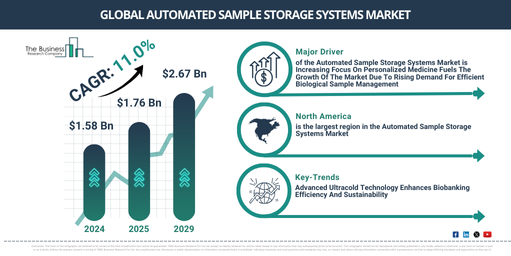
    In recent years, there has been a swift expansion in the market size of automated sample storage systems. The market is projected to grow from $1.58 billion in 2024, to $1.76 billion in 2025, implying a compound annual growth rate (CAGR) of 11.4%. The historical period’s growth can be linked to increasing demand for high-throughput screening, an escalation in the usage of robotics in laboratory procedures, a heightened dependency on centralized laboratory functions, growing emphasis on sample traceability and audit checks, and a widening acceptance of barcode and Radio Frequency Identification (RFID)-based inventory systems._x000D_

    _x000D_

    The size of the automated sample storage systems market is expected to exponentially increase in the upcoming years, with anticipations of reaching $2.67 billion by the year 2029, expanding at a compound annual growth rate (CAGR) of 11.0%. The increase over the prediction period is connected to a surge in biobanking needs, the acceptance of personalized medicine, a rising requirement for secure and traceable samples, an increase in laboratory digitization, and a surge in diagnostic tests and clinical trials. Key trends across the period of prediction incorporate improvements in the integration of hybrid cloud-LIMS, enhanced cybersecurity measures for labs dealing with sensitive data, compact benchtop automated storage units’ development, advancements in remote monitoring and control interfaces, and progress in eco-friendly refrigeration technologies._x000D_

    _x000D_

    #Download The Free Sample Report Here:#_x000D_

    https://www.thebusinessresearchcompany.com/sample.aspx?id=27217&type=smp_x000D_

    _x000D_

    #What Drivers Are Influencing Growth In The Automated Sample Storage Systems Market?_x000D_

    The growing focus on personalized medicine is projected to spur the expansion of the automated sample storage systems market. Personalized medicine is a medical strategy that customizes care and treatment based on individual patient traits, including genetic profile, lifestyle, and surroundings, to enhance health outcomes. The rise of personalized medicine is being facilitated by advances in genetic testing, allowing for more accurate treatments tailored to a person’s distinctive genetic makeup. Automated sample storage systems play a critical role in personalized medicine by securely preserving and managing biological samples, facilitating seamless access and analysis for tailoring patient-specific treatment plans. As an illustration, in February 2024, the Personalized Medicine Coalition, a non-profit organization based in the US, reported that the Food and Drug Administration (FDA) sanctioned 16 groundbreaking personalized therapies designed for patients with uncommon diseases in 2023, which was a marked increase from six in 2022. Consequently, the growing emphasis on personalized medicine is stimulating the expansion of the automated sample storage systems services market._x000D_

    _x000D_

    #What Are The Main Segments Identified In The Automated Sample Storage Systems Market Research?#_x000D_

    The automated sample storage systems market covered in this report is segmented_x000D_

    _x000D_

    1) By Type: Liquid Nitrogen Storage Systems, Mechanical Freezers, Automated Cryogenic Storage_x000D_

    2) By Technology: Robotics, Liquid Handling Systems, Temperature Monitoring Systems, Cloud-Based Storage Solutions_x000D_

    3) By Sample: Blood Samples, Tissue Samples, Cellular Samples, DNA Or RNA Samples _x000D_

    4) By Application: Biobanking, Pharmaceuticals, Clinical Research, Genomics _x000D_

    5) By End User: Hospitals, Neurological Clinics, Rehabilitation Centers, Sports Medicine Clinics, Other End Users_x000D_

    _x000D_

    Subsegments:_x000D_

    1) By Liquid Nitrogen Storage Systems: Vapor Phase Storage Systems, Liquid Phase Storage Systems, Manual Fill LN2 Systems, Auto-fill LN2 Systems, Dewar Vessels And Canisters_x000D_

    2) By Mechanical Freezers: Ultra-Low Temperature Freezers (ULT, -80°C), Low Temperature Freezers (-20°C to -40°C), High-Capacity Mechanical Freezers, Single-Door And Double-Door Units, Energy-Efficient Mechanical Freezers_x000D_

    3) By Automated Cryogenic Storage: Robotic Sample Retrieval Systems, Modular Cryogenic Storage Units, High-Throughput Cryo Storage Systems, RFID Or Barcode-Enabled Cryo Units, Integrated Cryo-Inventory Management Systems_x000D_

    _x000D_

    #What Are The Leading Trends And Opportunities In The Automated Sample Storage Systems Sector?#_x000D_

    A significant trend in the automated sample storage systems market is the focus of major players on introducing innovative solutions such as ultracold automated technology. This technology aims to improve the preservation of sensitive biological samples by maintaining ultra-low temperatures with high precision and minimal human intervention. The advanced systems of ultracold automated technology handle the storage and management of biological samples at very low temperatures, which increases their stability and decreases manual labour in laboratories. For example, in July 2023, Azenta Life Sciences, an American biotechnology research firm, unveiled the BioArc Ultra, a sophisticated and environmentally friendly ultracold automated sample storage system. The system, designed for large-scale biorepositories, facilitates automated storage and retrieval at temperatures as low as -80°C, and manages up to 10 million 2D barcoded tubes securely and efficiently. Scalability is assured via the BioArc Ultra’s modular design, while reliability is enhanced through redundant cooling and power systems. Additionally, the system’s user-friendly interface simplifies operations. The BioArc Ultra’s energy-efficient setup minimizes environmental harm while enhancing uptime and sample integrity, thus catering to contemporary biobanking requirements in a revolutionary manner._x000D_

    _x000D_

    #Which Companies Play A Key Role In The Development Of The Automated Sample Storage Systems Market?#_x000D_

    Major companies operating in the automated sample storage systems market are Thermo Fisher Scientific Inc., Micronic Holding B.V., Revvity Inc., Beckman Coulter Inc., Getinge, Eppendorf SE, Brooks Automation Inc., Hamilton Company, Azenta Inc., Oxford Instruments plc, SPT Labtech Ltd., B Medical Systems S.à r.l., Hier Biomedical Corporation, Simport Scientific Inc., LiCONiC AG, Starlab International GmbH, Biotron Healthcare (India) Pvt. Ltd., ASKION GmbH, Biofortuna Limited, and Angelantoni Life Science S.r.l. _x000D_

    _x000D_

    #Get The Full Report Here:#_x000D_

    https://www.thebusinessresearchcompany.com/report/automated-sample-storage-systems-global-market-report_x000D_

    _x000D_

    #What Are The Key Regional Developments Shaping The Automated Sample Storage Systems Market?#_x000D_

    North America was the largest region in the automated sample storage systems market in 2024. Asia-Pacific is expected to be the fastest-growing region in the forecast period. The regions covered in the automated sample storage systems market report are Asia-Pacific, Western Europe, Eastern Europe, North America, South America, Middle East, Africa._x000D_

    _x000D_

    #Request For A Customized Report:#_x000D_

    https://www.thebusinessresearchcompany.com/customise?id=27217&type=smp_x000D_

    _x000D_

    #About The Business Research Company:#_x000D_

    _x000D_

    With over 15000+ reports from 27 industries covering 60+ geographies, The Business Research Company has built a reputation for offering comprehensive, data-rich research and insights. Armed with 1,500,000 datasets, the optimistic contribution of in-depth secondary research, and unique insights from industry leaders, you can get the information you need to stay ahead in the game._x000D_

    _x000D_

    #Get in touch with us:#_x000D_

    _x000D_

    The Business Research Company: https://www.thebusinessresearchcompany.com/_x000D_

    Americas +1 310-496-7795_x000D_

    Asia +44 7882 955267 & +91 8897263534_x000D_

    Europe +44 7882 955267_x000D_

    Email us at info@tbrc.info_x000D_

    _x000D_

    #Follow us on:#_x000D_

    _x000D_

    LinkedIn: https://in.linkedin.com/company/the-business-research-company_x000D_

    YouTube: https://www.youtube.com/channel/UC24_fI0rV8cR5DxlCpgmyFQ_x000D_

    Global Market Model: https://www.thebusinessresearchcompany.com/global-market-model

  • Emerging Trends and Growth Drivers in the Non-Opioid Pain Treatment Market Through 2029

    Emerging Trends and Growth Drivers in the Non-Opioid Pain Treatment Market Through 2029

    Claim your 30% discount on Global Market Reports with code ONLINE30. Limited time only.

    Claim your 30% discount on Global Market Reports with code ONLINE30. Limited time only.

    What Does the Forecast Indicate for the Non-Opioid Pain Treatment Market From 2025 to 2029?

    The market for non-opioid pain remedies has seen substantial expansion in the recent past. The size of this market is expected to increase from $50.63 billion in 2024 to $55.31 billion in 2025, showcasing a compound annual growth rate (CAGR) of 9.2%. The past growth of this market can be attributed to factors like rising instances of chronic pain, growing preference amongst patients for safer alternatives, heightened public awareness of the risks associated with opioids, an increase in demand for non-addictive treatment options, and initiatives from healthcare providers.

    In the coming years, the non-opioid pain treatment market is predicted to experience substantial expansion. With a compound annual growth rate (CAGR) of 8.9%, the market is projected to reach $77.67 billion by 2029. The anticipated escalation in the coming period is ascribed to the growing demand for tailored pain management, the escalating acceptance of non-opioid therapies, the expanding senior population, increased investment in non-opioid drug innovation, and reinforced governmental support and repayment policies. Key trends for the predicted period involve enhancements in drug delivery systems, fusion of multidisciplinary care methods, the influence of technology on personalized medicine, breakthroughs in non-opioid pharmacological alternatives, and progress in patient tracking tools.

    Download The Free Sample Report Here:

    https://www.thebusinessresearchcompany.com/sample.aspx?id=27366&type=smp

    What Elements Are Contributing To Growth In The Non-Opioid Pain Treatment Market?

    The non-opioid pain treatment market is expected to expand primarily due to a surge in sports-related injuries. Occurring during or as a result of sports or exercise activities, these injuries are increasing as more individuals participate in high-intensity sports and recreational activities. Such participation increases the likelihood of sustaining physical trauma. Non-opioid pain treatment offers a valuable solution to sports-related injuries by delivering effective pain relief and reducing inflammation, without the associated risks of opioid use. It aids in quicker recovery, enhanced functioning, and safer sustained management. For example, the 2023/24 football season saw a 4% increase in injuries, recording 4,123 cases in Europe’s top five leagues, according to the UK insurance intermediary company, Howden Group Holdings Ltd, as of October 2024. Consequently, the growth of the non-opioid pain treatment market is primarily driven by the growing prevalence of sports-related injuries.

    Which Segments Are Detailed In The Global Non-Opioid Pain Treatment Market Report?

    The non-opioid pain treatment market covered in this report is segmented

    1) By Product: Medical Cannabis, Menthol-Containing, Omega 3 Fatty Acid-Containing, Botulinum Toxins, Capsaicin-Derived, Other Products

    2) By Drug Class: Nonsteroidal Anti-Inflammatory Drugs (Nsaids), Acetaminophen, Local Anesthetics, Antidepressants, Anticonvulsants, Corticosteroids, Other Drug Classes

    3) By Route Of Administration: Oral, Topical, Injectable, Other Route Of Administrations

    4) By Distribution Channel: Hospitals Pharmacies, Retail Pharmacies, Drug Stores, Mail Order Pharmacies

    5) By Application: Orthopedic And Musculoskeletal Pain, Postoperative Pain, Cancer Pain, Neuropathic Pain, Other Applications

    Subsegments:

    1) By Medical Cannabis: Cannabidiol Based Products, Tetrahydrocannabinol Based Products, Combined Cannabinoid Products

    2) By Menthol Containing: Topical Creams, Gels, Sprays

    3) By Omega 3 Fatty Acid Containing: Fish Oil Derived Supplements, Algae Derived Supplements, Krill Oil Derived Supplements

    4) By Botulinum Toxins: Onabotulinumtoxin A, Abobotulinumtoxin A, Incobotulinumtoxin A

    5) By Capsaicin Derived: Low Concentration Creams, High Concentration Patches, Nasal Sprays

    6) By Other Products: Magnesium Based Products, Acupuncture Devices, Transcutaneous Electrical Nerve Stimulation Devices

    Which Emerging Trends And Strategic Shifts Are Shaping The Non-Opioid Pain Treatment Market?

    Leading firms in the non-opioid pain treatment sector are channeling their resources towards the creation of innovative drug formulas, such as non-opioid oral treatments, to provide effective pain relief while mitigating risks associated with opioid usage and dependency. Non-opioid oral treatment involves pain-eliminating drugs taken orally that function through alternative modes, such as minimizing inflammation, altering nerve messages, or interacting with specific receptors to manage pain without the respiratory depression and addiction issues typically connected with opioids. For instance, Vertex Pharmaceuticals Incorporated, a biotech firm based in the U.S, launched JOURNAVX in July 2025, marking a milestone with its pioneering non-opioid therapy for moderate to severe acute pain. This advanced non-opioid treatment concentrates on modulating pain pathways and is characterized by a desirable safety profile and a swift action initiation, allowing robust pain management, decreased likelihood of dependency, and improved patient health. JOURNAVX enables targeted pain control, reduces addiction probabilities, and aides quicker recovery and superior quality of life for individuals suffering from acute pain.

    Who Are The Key Contributors To Growth In The Non-Opioid Pain Treatment Market?

    Major companies operating in the non-opioid pain treatment market are Pfizer Inc., Johnson & Johnson Services Inc., AbbVie Inc, Novartis AG, GSK plc, Amgen Inc., Teva Pharmaceutical Industries Limited, Vertex Pharmaceuticals Incorporated, SUN PHARMACEUTICAL INDUSTRIES LIMITED, Perrigo Company Public Limited Company, Dr. Reddy’s Laboratories, HIKMA PHARMACEUTICALS PUBLIC LIMITED COMPANY, Pacira BioSciences Inc, Heron Therapeutics Inc, AFT Pharmaceuticals Limited, Vivozon Pharmaceutical Co. Ltd, Levicept Ltd, Algiax Pharmaceuticals GmbH, Latigo Biotherapeutics Inc, Hyloris Pharmaceuticals SA.

    Get The Full Report Here:

    https://www.thebusinessresearchcompany.com/report/non-opioid-pain-treatment-global-market-report

    Which Region Is Projected To Lead The Non-Opioid Pain Treatment Market By 2025?

    North America was the largest region in the non-opioid pain treatment market in 2024. Asia-Pacific is expected to be the fastest-growing region in the forecast period. The regions covered in the non-opioid pain treatment market report are Asia-Pacific, Western Europe, Eastern Europe, North America, South America, Middle East, Africa.

    Request For A Customized Report:

    https://www.thebusinessresearchcompany.com/customise?id=27366&type=smp

    About The Business Research Company:

    With over 15000+ reports from 27 industries covering 60+ geographies, The Business Research Company has built a reputation for offering comprehensive, data-rich research and insights. Armed with 1,500,000 datasets, the optimistic contribution of in-depth secondary research, and unique insights from industry leaders, you can get the information you need to stay ahead in the game.

    Get in touch with us:

    The Business Research Company: https://www.thebusinessresearchcompany.com/

    Americas +1 310-496-7795

    Asia +44 7882 955267 & +91 8897263534

    Europe +44 7882 955267

    Email us at info@tbrc.info

    Follow us on:

    LinkedIn: https://in.linkedin.com/company/the-business-research-company

    YouTube: https://www.youtube.com/channel/UC24_fI0rV8cR5DxlCpgmyFQ

    Global Market Model: https://www.thebusinessresearchcompany.com/global-market-model
  • CAGR of 14.3% Projected for Next-Generation Sequencing Library Preparation Market From 2025 to 2029

    CAGR of 14.3% Projected for Next-Generation Sequencing Library Preparation Market From 2025 to 2029

    Claim your 30% discount on Global Market Reports with code ONLINE30. Limited time only.

    Claim your 30% discount on Global Market Reports with code ONLINE30. Limited time only.

    How Much Is the Global Next-Generation Sequencing Library Preparation Market Valued at Present and by 2029?

    Over the recent years, the market size of next-generation sequencing library preparation has witnessed a sharp uptick. The market value is predicted to soar from $1.42 billion in 2024 to $1.63 billion in 2025, marking a compound annual growth rate (CAGR) of 14.7%. The ballooning market during the historic period is a result of escalating use in monitoring infectious diseases, swelling funds for genomic research, amped-up implementation amidst the pandemic, enlarging accessibility for research laboratories, and proliferating application in precision medicine.

    In the coming years, the market size for next-generation sequencing library preparation is predicted to experience a fast-paced expansion. By 2029, it is projected to reach a valuation of $2.78 billion, growing at a compound annual growth rate (CAGR) of 14.3%. Factors contributing to expected growth during the forecast period include increased utilization in clinical diagnostic processes, rising demand for individualized medical treatments, expended use in the field of oncology research, a growing necessity for high-throughput sequencing, and enhanced emphasis on minimizing turnaround time. Key future market trends comprise of improvements in workflow efficiency, incorporation of artificial intelligence for data analysis, standardization of protocols enabled by technology, progress in user-friendly system designs, and advancements in cloud-based data solution technologies.

    Download The Free Sample Report Here:

    https://www.thebusinessresearchcompany.com/sample.aspx?id=27365&type=smp

    #What Drivers Are Influencing Growth In The Next-Generation Sequencing Library Preparation Market?

    The growth of the next-generation sequencing library preparation market is anticipated to be driven by the surge in gene therapy. This form of treatment, which involves modifying a person’s genes to either cure or prevent diseases is becoming increasingly popular with the rise in genetic disorders that demand durable and targeted treatment approaches. Next-generation sequencing (NGS) library preparations, which prepare top-notch DNA or RNA samples for sequencing, are employed in gene therapy to precisely validate and analyze genetic modifications. For instance, the American Society of Gene and Cell Therapy, a US-based non-profit scientific and medical organization, reported in April 2024 that the phase III gene therapy clinical trials had increased by 10%, marking the first time there had been a quarterly rise since the third quarter of 2022. Thus, the expansion of gene therapy is propelling the growth of the next-generation sequencing library preparation market.

    What Are The Main Segments Identified In The Next-Generation Sequencing Library Preparation Market Research?

    The next-generation sequencing library preparation market covered in this report is segmented

    1) By Sequencing Type: Targeted Genome Sequencing, Whole Genome Sequencing, Whole Exome Sequencing, Other Sequencing Types

    2) By Product: Reagents And Consumables, DNA Library Preparation Kits, Library Preparation Kits, RNA Library Preparation Kits, Other Products

    3) By Technology: Ion Semiconductor Sequencing, Sequencing By Synthesis (SBS), Nanopore Sequencing, Single-Molecule Real-Time Sequencing (SMRT), Other Technologies

    4) By Application: Drug And Biomarker Discovery, Disease Diagnostics, Cancer Diagnostics, Reproductive Health Diagnostics, Infectious Disease Diagnostics, Other Applications

    5) By End-User: Hospitals And Clinics, Academic And Research Institutions, Pharmaceutical And Biotechnology Companies, Other End Users

    Subsegments:

    1) By Targeted Genome Sequencing: Amplicon Sequencing, Hybridization Capture-Based Sequencing, CRISPR-Based Target Enrichment, Multiplex PCR

    2) By Whole Genome Sequencing: Human Whole Genome Sequencing, Animal Whole Genome Sequencing, Plant Whole Genome Sequencing, Microbial Whole Genome Sequencing

    3) By Whole Exome Sequencing: Clinical Whole Exome Sequencing, Research Whole Exome Sequencing, Custom Exome Sequencing, Population-Scale Exome Sequencing

    4) By Other Sequencing Types: RNA Sequencing, ChIP Sequencing (ChIP-Seq), Methylation Sequencing, Single-Cell Sequencing

    What Are The Leading Trends And Opportunities In The Next-Generation Sequencing Library Preparation Sector?

    Leading corporations in the next-generation sequencing library preparation market are concentrating on the advancement of superior technologies like Xpandomer technology, to augment sequencing pace, boost data precision, and expand scalability. This serves to optimize workflows and facilitates more effective and dependable genomic evaluation. The Xpandomer technology is a sophisticated DNA or RNA sequencing technique that transforms the target nucleic acid molecule into an artificial, increased polymer known as an Xpandomer, which is 50 times bigger than the initial DNA or RNA sequence. For example, in February 2025, Roche AG, a Biotech firm based in Switzerland, introduced Sequencing by Expansion, an advanced sequencing platform aimed at elevating genomic resolution for advanced diagnostics, disease investigation, and precision medicine applications. This inventive, automated next-generation sequencing (NGS) library preparation system simplifies intricate workflows, improves data quality, and hastens genomic analysis to assist advanced study and personalized medicine. The Sequencing by Expansion platform is extremely flexible and allows for detailed analysis of various genomic alterations in numerous diseases, such as cancer and rare genetic disorders, by enhancing resolution and accuracy for deeper biological comprehension.

    Which Companies Play A Key Role In The Development Of The Next-Generation Sequencing Library Preparation Market?

    Major companies operating in the next-generation sequencing library preparation market are F. Hoffmann-La Roche Ltd., Thermo Fisher Scientific Inc., Agilent Technologies India Private Limited, Illumina Inc., Beckman Coulter Inc., Bio-Rad Laboratories Inc., IDT Corporation, Tecan Group AG, Hamilton Company, Takara Bio Inc., 10x Genomics Inc., Oxford Nanopore Technologies Plc, Twist Bioscience Corporation, New England Biolabs Inc., SPT Labtech Limited, Watchmaker Genomics Inc., Pillar Biosciences Inc., Aurora Biomed Inc., BGI Group, and SEQWELL INC.

    Get The Full Report Here:

    https://www.thebusinessresearchcompany.com/report/next-generation-sequencing-library-preparation-global-market-report

    What Are The Key Regional Developments Shaping The Next-Generation Sequencing Library Preparation Market?

    North America was the largest region in the next-generation sequencing library preparation market in 2024. Asia-Pacific is expected to be the fastest-growing region in the forecast period. The regions covered in the next-generation sequencing library preparation market report are Asia-Pacific, Western Europe, Eastern Europe, North America, South America, Middle East, Africa.

    Request For A Customized Report:

    https://www.thebusinessresearchcompany.com/customise?id=27365&type=smp

    About The Business Research Company:

    With over 15000+ reports from 27 industries covering 60+ geographies, The Business Research Company has built a reputation for offering comprehensive, data-rich research and insights. Armed with 1,500,000 datasets, the optimistic contribution of in-depth secondary research, and unique insights from industry leaders, you can get the information you need to stay ahead in the game.

    Get in touch with us:

    The Business Research Company: https://www.thebusinessresearchcompany.com/

    Americas +1 310-496-7795

    Asia +44 7882 955267 & +91 8897263534

    Europe +44 7882 955267

    Email us at info@tbrc.info

    Follow us on:

    LinkedIn: https://in.linkedin.com/company/the-business-research-company

    YouTube: https://www.youtube.com/channel/UC24_fI0rV8cR5DxlCpgmyFQ

    Global Market Model: https://www.thebusinessresearchcompany.com/global-market-model