Blog

  • Key Market Drivers, Trends, and Forecast for the Global Multi-Channel Remote Electrocardiogram (ECG) Monitors Industry

    Key Market Drivers, Trends, and Forecast for the Global Multi-Channel Remote Electrocardiogram (ECG) Monitors Industry

    Claim your 30% discount on Global Market Reports with code ONLINE30. Limited time only.

    Claim your 30% discount on Global Market Reports with code ONLINE30. Limited time only.

    What Is the Current and Projected Market Size of the Multi-Channel Remote Electrocardiogram (ECG) Monitors Industry?

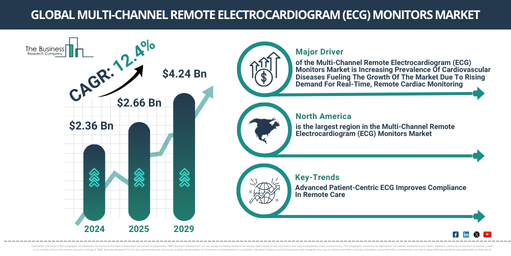
    In the last few years, the market size of the multi-channel remote electrocardiogram (ECG) monitor has expanded swiftly. It is set to escalate from $2.36 billion in 2024 to $2.66 billion in 2025, achieving a compound annual growth rate (CAGR) of 12.7%. Factors contributing to this growth in the historical period include an aging population, a surge in the occurrence of cardiovascular diseases, increased consciousness about preventive healthcare, swift adoption of telemedicine, and a tilt towards personalized cardiac care.

    The market size for multi-channel remote electrocardiogram (ECG) monitors is predicted to experience significant growth in the upcoming years, ballooning to $4.24 billion in 2029 with a 12.4% compound annual growth rate (CAGR). The projected growth during this period can be linked to increasing demands for cardiac monitoring at home, a rise in compatibility with smartphones and wearable devices, expansion services for remote patient monitoring, a surge in health insurance policies covering digital health tools, and its escalating use in fitness and sports diagnostics. Notable trends to look out for in this forecast period include integration with Artificial Intelligence (AI) and data analytics, advances in wireless monitoring technology, adoption of ECG data platforms based in the cloud, device miniaturization, and collaborations between technological businesses and healthcare providers.

    Download The Free Sample Report Here:

    https://www.thebusinessresearchcompany.com/sample.aspx?id=27354&type=smp

    #Which Factors Are Currently Driving The Growth Of The Multi-Channel Remote Electrocardiogram (ECG) Monitors Market?

    The escalation in the occurrence of heart diseases is anticipated to drive the expansion of the market for multi-channel remote electrocardiogram (ECG) monitors. Cardiovascular diseases are a set of disorders affecting the heart and blood vessels, and include conditions like coronary heart disease, heart failure, stroke, and hypertension. Physical inactivity majorly contributes to the escalation of these diseases, as lack of movement leads to risk factors like obesity, elevated blood pressure, and unhealthy cholesterol levels, which considerably up the probability of heart-related ailments. Multi-channel remote electrocardiogram (ECG) monitors act as a support system for managing cardiovascular diseases by providing uninterrupted, real-time heart monitoring from any place. These monitors augment diagnostic precision through multi-lead data and enhance the quality of patient care by diminishing the frequency of hospital visits. For example, in January 2024, the American Heart Association, a NGO based in the US, reported that the age-adjusted mortality rate due to cardiovascular diseases jumped to 233.3 per 100,000 in 2022, showing a 4.0% surge from 224.4 per 100,000 in 2021. Hence, the escalating occurrence of heart diseases is fueling the expansion of the market for multi-channel remote electrocardiogram (ECG) monitors.

    How Is The Global Multi-Channel Remote Electrocardiogram (ECG) Monitors Market Structured In Terms Of Segments?

    The multi-channel remote electrocardiogram (ECG) monitors market covered in this report is segmented

    1) By Type: Wired Multi Channel Remote Electrocardiogram (ECG) Monitor, Wireless Multi Channel Remote Electrocardiogram (ECG) Monitor

    2) By Technology: Wireless Electrocardiogram (ECG) Monitors, Bluetooth-Enabled Electrocardiogram (ECG) Monitors, Wi-Fi-Based Electrocardiogram (ECG) Monitors

    3) By Application: Home Care, Ambulatory Monitoring, Hospitals And Clinics

    4) By Distribution Channel: Direct Sales, Online Sales, Third-Party Distributors

    5) By End-User: Patients, Healthcare Providers, Diagnostic Centers

    Subsegments:

    1) By Wired Multi-Channel Remote Electrocardiogram (ECG) Monitor: Hospital-Based Wired Electrocardiogram Monitors, Ambulatory Care Wired Electrocardiogram Devices, Diagnostic Wired Electrocardiogram Systems, Resting Electrocardiogram Monitors, Stress Test Electrocardiogram Monitors

    2) By Wireless Multi-Channel Remote Electrocardiogram (ECG) Monitor: Bluetooth-Enabled Electrocardiogram Devices, Wi-Fi-Enabled Electrocardiogram Monitors, Wearable Electrocardiogram Monitors, Mobile-Connected Electrocardiogram Devices, Home-Based Wireless Electrocardiogram Systems

    What Trends Are Currently Influencing Growth In The Multi-Channel Remote Electrocardiogram (ECG) Monitors Market?

    Primary entities in the multi-channel remote electrocardiogram (ECG) monitor market are directing their efforts towards the creation of unique solutions, such as progressive patient-centric electrocardiograms (ECGs), aiming to enhance the precision of remote cardiac monitoring and adherence of patients. This sophisticated patient-centric electrocardiogram represents wearable, instantaneous monitoring devices constructed for continuous, customised, and effortless heart health evaluation. For instance, Koninklijke Philips N.V., a Dutch health technology firm, introduced a comprehensive, at-home, 12-lead electrocardiogram (ECG) solution in January 2022. The goal was to facilitate decentralized clinical investigations and promote patient compliance via real-time, remote cardiac surveillance. This state-of-the-art, patient-centric electrocardiogram, comes with a body-worn patch, ensuring accurate ECG lead placement for compliant use, and thus enabling the attainment of clinical-grade data that rivals that of traditionally site-based systems. It also provides secure, near real-time data transmission without the requirement for repeated site visits, onsite technicians, or home healthcare staff.

    Who Are The Main Participants Shaping The Multi-Channel Remote Electrocardiogram (ECG) Monitors Market Landscape?

    Major companies operating in the multi-channel remote electrocardiogram (ecg) monitor market are Medtronic plc, Koninklijke Philips N.V., GE HealthCare Technologies Inc., Boston Scientific Corporation, Shenzhen Mindray Bio-Medical Electronics Co. Ltd., Nihon Kohden Corporation, iRhythm Technologies Inc., Schiller AG, Edan Instruments Inc., BPL Medical Technologies Pvt. Ltd., Bionet Co. Ltd., AliveCor Inc., Turtle Shell Technologies Pvt. Ltd., LifeSignals Inc., VivaLNK Inc., Biotricity Inc., Cardiac Insight Inc., CardioComm Solutions Inc., Movesense Oy, Norav Medical Ltd.

    Get The Full Report Here:

    https://www.thebusinessresearchcompany.com/report/multi-channel-remote-electrocardiogram-ecg-monitors-global-market-report

    Which Region Currently Holds The Largest Share In The Multi-Channel Remote Electrocardiogram (ECG) Monitors Market?

    North America was the largest region in the multi-channel remote electrocardiogram (ECG) monitor market in 2024. Asia-Pacific is expected to be the fastest-growing region in the forecast period. The regions covered in the multi-channel remote electrocardiogram (ECG) monitors market report are Asia-Pacific, Western Europe, Eastern Europe, North America, South America, Middle East, Africa.

    Request For A Customized Report:

    https://www.thebusinessresearchcompany.com/customise?id=27354&type=smp

    About The Business Research Company:

    With over 15000+ reports from 27 industries covering 60+ geographies, The Business Research Company has built a reputation for offering comprehensive, data-rich research and insights. Armed with 1,500,000 datasets, the optimistic contribution of in-depth secondary research, and unique insights from industry leaders, you can get the information you need to stay ahead in the game.

    Get in touch with us:

    The Business Research Company: https://www.thebusinessresearchcompany.com/

    Americas +1 310-496-7795

    Asia +44 7882 955267 & +91 8897263534

    Europe +44 7882 955267

    Email us at info@tbrc.info

    Follow us on:

    LinkedIn: https://in.linkedin.com/company/the-business-research-company

    YouTube: https://www.youtube.com/channel/UC24_fI0rV8cR5DxlCpgmyFQ

    Global Market Model: https://www.thebusinessresearchcompany.com/global-market-model
  • Strategic Report on Motion Stimulation Therapy Market: Growth Opportunities and Emerging Challenges

    Strategic Report on Motion Stimulation Therapy Market: Growth Opportunities and Emerging Challenges

    Claim your 30% discount on Global Market Reports with code ONLINE30. Limited time only.

    Claim your 30% discount on Global Market Reports with code ONLINE30. Limited time only.

    How Will the Motion Stimulation Therapy Market Evolve in Terms of Growth and Size by 2029?

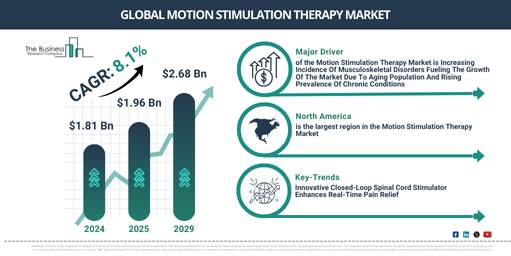
    In recent times, there has been a strong expansion in the market size of motion stimulation therapy. The market is set to escalate from $1.81 billion in 2024 to $1.96 billion in 2025, projecting a compound annual growth rate (CAGR) of 8.5%. The surge in growth during the historical period is due to factors such as the increasing occurrence of neurodegenerative afflictions, heightened awareness about the importance of physical rehabilitation, growing preference for non-invasive treatment methods, a rising number of elderly individuals needing help with mobility, and an escalation in sports-related injuries.

    The market size for motion stimulation therapy is projected to experience substantial expansion in the forthcoming years, eventually reaching a value of $2.68 billion by 2029, growing at a compound annual growth rate (CAGR) of 8.1%. Several factors contributing to this growth during the forecast period include the rising demand for portable and wearable therapy devices, growing adoption of telehealth and remote monitoring systems, increasing cases of disorders related to lifestyle, escalating demand for personalized and targeted motion therapy solutions, and a heightened emphasis on preventative healthcare boosting the use of motion therapy. Key trends during the forecast period encompass the creation of compact simulation platforms, advancements in haptic feedback technologies, technological innovation in simulators powered by artificial intelligence, the creation of portable devices suited for at-home therapy sessions, and the incorporation of biofeedback systems to enhance the effectiveness of therapy.

    Download The Free Sample Report Here:

    https://www.thebusinessresearchcompany.com/sample.aspx?id=27353&type=smp

    What factors are expected to fuel Motion Stimulation Therapy market growth in the coming years?

    The continuous rise in the occurrence of musculoskeletal disorders is anticipated to drive the expansion of the motion stimulation therapy market in the future. Disorders associated with muscles, bones, joints, tendons, and ligaments, which lead to pain or restrict movement, are referred to as musculoskeletal disorders. The aging global populace is the key factor behind the increasing prevalence of these disorders, as over time, individuals inherently experience degradation of the joint and decline of bone density. The treatment of musculoskeletal disorders is enhanced by motion stimulation therapy, which facilitates better mobility and pain reduction. This therapy offers targeted stimulation to the affected areas, promoting quick recovery and improved patient results. For instance, the Office for Health Improvement and Disparities, a government department based in the UK, reported in January 2024 that the prevalence of long-term musculoskeletal (MSK) conditions in individuals aged 16 and above who self-reported was 18.4% in 2023, which was up from 17.6% in 2022. Therefore, the upward trend in the occurrence of musculoskeletal disorders is fueling the expansion of the motion stimulation therapy market.

    What Are The Key Findings From The Segmentation Analysis Of The Motion Stimulation Therapy Market?

    The motion stimulation therapy market covered in this report is segmented

    1) By Therapy Type: Functional Neuromuscular Motion Stimulation Therapy, Peripheral Motion Stimulation Therapy, Deep Brain Motion Stimulation Therapy, Therapeutic Electrical Motion Stimulation Therapy

    2) By Applications: Diabetes Management, Pain Management, Oncology, Cardiovascular Diseases, Infectious Diseases, Others Applications

    3) By End User: Hospitals, Specialty Clinics, Other End Users

    Subsegments:

    1) By Functional Neuromuscular Motion Stimulation Therapy: Muscle Activation, Nerve Stimulation, Reflex Enhancement

    2) By Peripheral Motion Stimulation Therapy: Limb Motion Stimulation, Joint Motion Stimulation, Soft Tissue Motion Stimulation

    3) By Deep Brain Motion Stimulation Therapy: Subthalamic Nucleus Stimulation, Globus Pallidus Stimulation, Thalamic Stimulation

    4) By Therapeutic Electrical Motion Stimulation Therapy: Transcutaneous Electrical Nerve Stimulation, Functional Electrical Stimulation, Neuromuscular Electrical Stimulation

    Which Trends Are Expected To Shape The Future Of The Motion Stimulation Therapy Market?

    Major corporations involved in the motion stimulation therapy sector are concentrating on creating novel solutions like closed-loop spinal cord stimulators to boost real-time pain management and enhance patient outcomes. These state-of-the-art technologies continuously record neural signals and autonomously regulate stimulation intensities to offer personalized and efficient pain relief. For instance, in April 2024, Medtronic plc, a medical technology corporation situated in Ireland, received U.S. Food and Drug Administration (FDA) approval for its Inceptiv closed-loop rechargeable spinal cord stimulator for treating chronic pain. This groundbreaking device is set to advance motion stimulation therapy by dynamically catering to each patient’s movements and pain degrees. It surveils nerve signals at a rate of 50 times per second and instantaneously adjusts stimulation to supply consistent, personalized pain relief in the midst of everyday tasks. Besides, it is the slimmest and smallest spinal cord stimulator on the market, proving MRI compatibility for the entire body at both 1.5T and 3T, ensuring enhanced patient satisfaction and unceasing diagnostic imaging accessibility.

    What Are The Most Active Companies In The Motion Stimulation Therapy Market Today?

    Major companies operating in the motion stimulation therapy market are Abbott Laboratories, Boston Scientific Corporation, Medtronic plc, Ottobock SE & Co. KGaA, Nevro Corporation, Zynex Medical Inc., BTL Industries Inc., Onward Medical Inc., Enraf-Nonius B.V., Hocoma AG, Tyromotion GmbH, EW Motion Therapy, Ekso Bionics Holdings Inc., Mettler Electronics Corporation, Bioness Inc., Restorative Therapies Inc., ARPwave Therapy, Innovative Neurotronics Inc., St. Jude Medical Inc., Technomed Electronics Co Ltd.

    Get The Full Report Here:

    https://www.thebusinessresearchcompany.com/report/motion-stimulation-therapy-global-market-report

    Which Regional Markets Are Attracting The Most Investment In Motion Stimulation Therapy?

    North America was the largest region in the motion simulation therapy market in 2024. The regions covered in the motion stimulation therapy market report are Asia-Pacific, Western Europe, Eastern Europe, North America, South America, Middle East, Africa.

    Request For A Customized Report:

    https://www.thebusinessresearchcompany.com/customise?id=27353&type=smp

    About The Business Research Company:

    With over 15000+ reports from 27 industries covering 60+ geographies, The Business Research Company has built a reputation for offering comprehensive, data-rich research and insights. Armed with 1,500,000 datasets, the optimistic contribution of in-depth secondary research, and unique insights from industry leaders, you can get the information you need to stay ahead in the game.

    Get in touch with us:

    The Business Research Company: https://www.thebusinessresearchcompany.com/

    Americas +1 310-496-7795

    Asia +44 7882 955267 & +91 8897263534

    Europe +44 7882 955267

    Email us at info@tbrc.info

    Follow us on:

    LinkedIn: https://in.linkedin.com/company/the-business-research-company

    YouTube: https://www.youtube.com/channel/UC24_fI0rV8cR5DxlCpgmyFQ

    Global Market Model: https://www.thebusinessresearchcompany.com/global-market-model

  • Industry Trends Show Mortuary Bags Market Set to Expand at 11.8% CAGR Until 2029

    Industry Trends Show Mortuary Bags Market Set to Expand at 11.8% CAGR Until 2029

    Claim your 30% discount on Global Market Reports with code ONLINE30. Limited time only.

    Claim your 30% discount on Global Market Reports with code ONLINE30. Limited time only.

    What CAGR Is Anticipated for the Mortuary Bags Market Through 2029?

    The scale of the mortuary bags market has seen a quick expansion in the past few years. The market is projected to increase from $1.59 billion in 2024 to $1.79 billion in 2025, with a compound annual growth rate (CAGR) of 12.1%. The historical growth is associated with a rise in deaths due to traffic incidents, a higher frequency of infectious diseases, a robust public health framework, a well-established funeral services sector, and a growing focus by the government on disaster readiness.

    The market size for mortuary bags is anticipated to experience fast expansion in the upcoming years. By 2029, it is projected to reach $2.79 billion, with a compound annual growth rate (CAGR) of 11.8%. The predicted growth in this era can be linked to an increase in death rates from chronic diseases, escalating demand for cleanliness and safety, the growth of the medical infrastructure, heightened investments in disaster response mechanisms, and greater awareness of infection prevention. Noteworthy trends anticipated over the forecast period include the creation of body bags that are biodegradable, antimicrobial and leak-proof materials, digitization of procurement and inventory management, advanced production processes for lighter and more durable bags, and the use of RFID tags for improved tracking and traceability.

    Download The Free Sample Report Here:

    https://www.thebusinessresearchcompany.com/sample.aspx?id=27352&type=smp

    What Market Forces Are Driving The Mortuary Bags Sector In 2025 And Beyond?

    A surge in deadly road mishaps is predicted to accelerate the mortuary bags market’s growth. These accidents are unforeseen vehicular conflicts that lead to harm, injuries or death. The escalating number of such incidents can be attributed to distracted driving that diminishes the driver’s focus and reaction time, resulting in more common and critical collisions. Mortuary bags aid in road accidents by offering a secure, sanitary, and dignified method of transferring deceased victims from the accident site to medical establishments or morgues. For example, in May 2025, the Department for Transport in the UK reported 1,633 fatalities, a 1% rise over 2023, and 29,537 severe or fatal casualties, a figure nearly unchanged from 2023. Hence, the growing number of fatal road incidents is a key driver for the expansion of the mortuary bags market. The escalation in terrorism and international strife is also anticipated to fuel the mortuary bags market’s growth. These violent conflicts and actions disrupt global tranquility and security, often resulting in wide-scale unrest and damage. The increase in these incidents is motivated by geopolitical conflicts, escalating disputes, and perpetration of violence across geographical regions. Mortuary bags play a vital role in these situations by securely containing and ferrying deceased victims, aiding effective disaster handling, and preserving public health safety. For instance, the US-based humanitarian portal reported in March 2025 that the number of terrorist acts rose from 58 to 66, with the most lethal groups causing an 11% increase in fatalities in 2024. Consequently, the rise in terrorism and global conflict is boosting the mortuary bags market’s growth.

    How Is The Global Mortuary Bags Market Categorized By Segments?

    The mortuary bags market covered in this report is segmented

    1) By Type: Double Layer, Gusseted Bag, Single Layer, Zipper Bag

    2) By Raw Material: Polyvinyl Chloride, Polyethylene, Nylon, Polyester, Other Raw Materials

    3) By Bags Size: Adult Bags, Child And Infant Bags, Heavy Duty And Bariatric Bags

    4) By End Use: Hospitals, Mortuaries And Funeral Homes, Forensic Departments, Other End Users

    Which Firms Are Considered Leaders In The Mortuary Bags Market Space?

    Major companies operating in the mortuary bags market are Medline Industries LP, Busse Hospital Disposables, Peerless Plastics, Ferno-Washington Inc., Vezzani Group, EMSRUN, Extra Packaging LLC, Roftek Ltd., Span Surgical Co., Classic Plastics Corporation, SmartChoice Funeral Supplies, Baymro, Action Health, Barber Medical, Uniflex Healthcare, 3D Barrier Bags, Slik Pak, Deluxe Scientific Surgico Pvt. Ltd., Bi Quadro, and VISION MEDICAL.

    Get The Full Report Here:

    https://www.thebusinessresearchcompany.com/report/mortuary-bags-global-market-report

    What Role Do Regional Policies And Investments Play In Mortuary Bags Market Expansion?

    North America was the largest region in the mortuary bags market in 2024. Asia-Pacific is expected to be the fastest-growing region in the forecast period. The regions covered in the mortuary bags market report are Asia-Pacific, Western Europe, Eastern Europe, North America, South America, Middle East, Africa.

    Request For A Customized Report:

    https://www.thebusinessresearchcompany.com/customise?id=27352&type=smp

    About The Business Research Company:

    With over 15000+ reports from 27 industries covering 60+ geographies, The Business Research Company has built a reputation for offering comprehensive, data-rich research and insights. Armed with 1,500,000 datasets, the optimistic contribution of in-depth secondary research, and unique insights from industry leaders, you can get the information you need to stay ahead in the game.

    Get in touch with us:

    The Business Research Company: https://www.thebusinessresearchcompany.com/

    Americas +1 310-496-7795

    Asia +44 7882 955267 & +91 8897263534

    Europe +44 7882 955267

    Email us at info@tbrc.info

    Follow us on:

    LinkedIn: https://in.linkedin.com/company/the-business-research-company

    YouTube: https://www.youtube.com/channel/UC24_fI0rV8cR5DxlCpgmyFQ

    Global Market Model: https://www.thebusinessresearchcompany.com/global-market-model

  • Competitive and Market Trend Analysis of Molecular Diagnostics For Sexually Transmitted Diseases Industry Through 2029

    Competitive and Market Trend Analysis of Molecular Diagnostics For Sexually Transmitted Diseases Industry Through 2029

    Claim your 30% discount on Global Market Reports with code ONLINE30. Limited time only.

    Claim your 30% discount on Global Market Reports with code ONLINE30. Limited time only.

    What Are the Latest Market Insights for the Molecular Diagnostics For Sexually Transmitted Diseases Industry?

    The market size for molecular diagnostics used for sexually transmitted diseases has experienced a speedy growth recently. It is predicted to rise from $3.31 billion in 2024 to $3.67 billion by 2025, suggesting a compound annual growth rate (CAGR) of 10.9%. Factors like increased instances of sexually transmitted infections, the rising application of nucleic acid amplification tests, growing cognizance through government instituted screening programs, assistance from worldwide health organizations, and swift adoption in diagnostic laboratories have contributed to the expansion observed in the historic period.

    The demand for molecular diagnostics in the marketplace for sexually transmitted diseases is predicted to experience significant expansion in the coming years. The market size is projected to reach $5.48 billion by 2029, propelled by a compound annual growth rate (CAGR) of 10.5%. The projected surge during the forecast period can be linked to an emphasis on early detection of diseases, surging demand for individualized diagnostics, the growth of sexually transmitted infection monitoring programs, the proliferation of public-private partnerships, and an escalating preference for non-invasive testing methods. The forecast period will also witness technological advancements in the field of molecular assay platforms, point-of-care diagnostic device innovation, the evolution of multiplex polymerase chain reaction (PCR)-based testing panels, in-depth research and improvement of portable and automated systems, as well as the adoption of artificial intelligence in result interpretation.

    Download The Free Sample Report Here:

    https://www.thebusinessresearchcompany.com/sample.aspx?id=27351&type=smp

    What Forces Are Driving The Growth Of The Molecular Diagnostics For Sexually Transmitted Diseases Industry?

    An upward trend in sexually transmitted infections (STIs) is anticipated to fuel the expansion of the molecular diagnostics market for sexually transmitted diseases. STIs, infections transmitted primarily through sexual activity, can be caused by bacteria, viruses, or parasites and can affect the urinary and reproductive systems. The rising incidence of STIs is largely attributed to inconsistent use of protective methods, elevating the risk of transmitting infections among sexually active people. The crucial role of molecular diagnostics in the management of STIs cannot be understated. It allows for earlier and more precise pathogen detection – even in asymptomatic individuals. This leads to punctual treatment, minimized transmission of the disease, and improved patient outcomes overall. For example, The National Association of County and City Health Officials (NACCHO), a US nonprofit organization, reported a total of 3,755 congenital syphilis cases in January 2024, marking a 31% increase between 2021 and 2022. Hence, the expanding prevalence of STIs is contributing to the growth of the molecular diagnostics market for sexually transmitted diseases.

    What Is The Overview Of Market Segmentation In The Molecular Diagnostics For Sexually Transmitted Diseases Industry?

    The molecular diagnostics for sexually transmitted diseases market covered in this report is segmented

    1) By Product: Instruments And Services, Consumables, Software

    2) By Technology: Laboratory Testing, Point-Of-Care Testing

    3) By Application: Chlamydia Trachomatis (CT) Or Neisseria Gonorrhoeae (NG) Testing, Syphilis Testing, Gonorrhea Testing, Herpes Simplex Virus (HSV) Testing, Human Papillomavirus (HPV) Testing, Human Immunodeficiency Virus (HIV) Testing, Trichomonas, Ureaplasma And Mycoplasma, Other Applications

    Subsegment:

    1) By Instruments And Services: Molecular Diagnostic Analyzers, Automated Polymerase Chain Reaction Systems, Nucleic Acid Extraction Instruments, Diagnostic Service Providers, Maintenance And Calibration Services, Installation And Training Services

    2) By Consumables: Deoxyribonucleic Acid Extraction Kits, Ribonucleic Acid Extraction Kits, Polymerase Chain Reaction Reagents, Nucleic Acid Probes, Control And Reference Standards, Detection Enzymes And Buffers

    3) By Software: Data Interpretation And Reporting Software, Polymerase Chain Reaction Workflow Management Software, Laboratory Information Management Systems, Diagnostic Decision Support Software, Quality Control Monitoring Software

    What Future Market Trends Are Projected For The Molecular Diagnostics For Sexually Transmitted Diseases Industry?

    Leading firms in the sexually transmitted diseases molecular diagnostics market are primarily concentrating on the creation of innovative solutions, including quick point-of-care polymerase chain reaction (PCR) devices, to augment diagnostic speed, precision, and approachability. Quick point-of-care polymerase chain reaction (PCR) devices are mobile molecular diagnostic instruments that integrates the preparation, amplification, and detection of a sample into a single, convenient unit, thereby enabling swift and highly sensitive pathogen identification beyond traditional laboratory environments. For instance, in March 2025, Visby Medical, a diagnostic technology firm based in the US, introduced the Visby Medical Women’s Sexual Health Test. This product is a single-use, portable PCR device built to detect chlamydia, gonorrhea, and trichomoniasis from vaginal samples in under 30 minutes. It functions without external instruments or cold-chain logistics, has a built-in amplification system, and provides lab-grade results right at the point of care to aid instant clinical decisions. The test has been authorized for prescription home use, making it the first molecular diagnostic test for multiple sexually transmitted infections (STIs) approved by the U.S. Food and Drug Administration (FDA) for use outside of clinical settings. This release signifies a transition towards decentralized diagnostic solutions that expand accessibility, majorly among underserved or distant populations.

    Who Are The Primary Players Operating Across The Global Molecular Diagnostics For Sexually Transmitted Diseases Market?

    Major companies operating in the molecular diagnostics for sexually transmitted diseases market are F. Hoffmann-La Roche Ltd, Thermo Fisher Scientific Inc., Abbott Laboratories, Siemens Healthineers AG, Illumina Inc., Hologic Inc., bioMérieux S.A., QuidelOrtho Corporation, QIAGEN N.V., Cepheid, Sansure Biotech Inc., OraSure Technologies Inc., Meridian Bioscience, Seegene Inc., Visby Medical Inc., Zeesan Biotech, Binx Health Inc., GCC Biotech, GeneProof, and Solone Life Sciences India (P) Ltd.

    Get The Full Report Here:

    https://www.thebusinessresearchcompany.com/report/molecular-diagnostics-for-sexually-transmitted-diseases-global-market-report

    Which Region Offers The Most Growth Potential For The Molecular Diagnostics For Sexually Transmitted Diseases Market Through 2029?

    North America was the largest region in the molecular diagnostics for sexually transmitted diseases market in 2024. Asia-Pacific is expected to be the fastest-growing region in the forecast period. The regions covered in the molecular diagnostics for sexually transmitted diseases market report are Asia-Pacific, Western Europe, Eastern Europe, North America, South America, Middle East, Africa.

    Request For A Customized Report:

    https://www.thebusinessresearchcompany.com/customise?id=27351&type=smp

    About The Business Research Company:

    With over 15000+ reports from 27 industries covering 60+ geographies, The Business Research Company has built a reputation for offering comprehensive, data-rich research and insights. Armed with 1,500,000 datasets, the optimistic contribution of in-depth secondary research, and unique insights from industry leaders, you can get the information you need to stay ahead in the game.

    Get in touch with us:

    The Business Research Company: https://www.thebusinessresearchcompany.com/

    Americas +1 310-496-7795

    Asia +44 7882 955267 & +91 8897263534

    Europe +44 7882 955267

    Email us at info@tbrc.info

    Follow us on:

    LinkedIn: https://in.linkedin.com/company/the-business-research-company

    YouTube: https://www.youtube.com/channel/UC24_fI0rV8cR5DxlCpgmyFQ

    Global Market Model: https://www.thebusinessresearchcompany.com/global-market-model

  • Global Minimally Invasive Urinary Incontinence Device Market Landscape: Trends and Market Share to 2029

    Global Minimally Invasive Urinary Incontinence Device Market Landscape: Trends and Market Share to 2029

    Claim your 30% discount on Global Market Reports with code ONLINE30. Limited time only.

    Claim your 30% discount on Global Market Reports with code ONLINE30. Limited time only.

    What Are the Forecasted Growth Rate and Market Size of the Minimally Invasive Urinary Incontinence Device Market?

    The market size of minimally invasive devices for urinary incontinence has seen a robust growth in the past few years. The market is projected to rise from $1.15 billion in 2024 to $1.25 billion in 2025, marking a compound annual growth rate (CAGR) of 9.2%. This growth during the historical period stems from factors such as increased awareness of treatments for urinary incontinence, more access to minimally invasive procedures, an increasing population of older individuals needing bladder control solutions, the introduction of innovative sling and bulking agent systems, and enhanced surgical training for managing incontinence.

    In the coming years, the market size for minimally invasive urinary incontinence devices is anticipated to witness considerable growth, ballooning to $1.76 billion by 2029 with a CAGR of 8.9%. Factors contributing to the growth during the forecasted timeframe include the widening scope of reimbursement support for minor urinary treatments, a rising demand for outpatient as well as same-day procedures, enhanced focus on patient comfort and faster recovery, growing acceptance in developing economies, and the increasing prevalence of incontinence owing to lifestyle and medical ailments. Key market trends for the forecasted period include ongoing innovation in device miniaturization and material safety, the incorporation of wireless monitoring and control features, R&D in nerve stimulation technologies, progress in adjustable and reusable sling systems, and the use of 3D printing for tailored urinary devices.

    Download The Free Sample Report Here:

    https://www.thebusinessresearchcompany.com/sample.aspx?id=27350&type=smp

    Which Factor Is Shaping The Future Of The Minimally Invasive Urinary Incontinence Device Market?

    The rise in cases of prostate cancer is predicted to stimulate the expansion of the minimally invasive urinary incontinence device market. Prostate cancer, characterized by the unchecked proliferation of cells in the prostate gland, can influence both urinary and reproductive health. The increasing prevalence of this disease is primarily due to an aging male demographic, given that older age is a major risk factor. Minimally invasive urinary incontinence devices are instrumental in managing urinary complications linked to prostate cancer as they provide specialized support to manage bladder leakage, reinstate normal urinary function, and significantly enhance the overall quality of life for patients in treatment or recovery. For example, the Centers for Disease Control and Prevention, a government agency in the United States, reported in June 2025 that there had been an estimated 255,395 new cases of prostate cancer diagnosed in 2022 in the United States. In 2023, the disease had resulted in about 33,881 men’s deaths. Therefore, the increasing cases of prostate cancer are fueling the expansion of the minimally invasive urinary incontinessce device market.

    What Is The Segment-Wise Breakdown Of The Minimally Invasive Urinary Incontinence Device Market?

    The minimally invasive urinary incontinence device market covered in this report is segmented

    1) By Type: Tension Free Vaginal Tape (TVT), Tension Free Vaginal Tape (TVT) Obturator System, Other Types

    2) By Age Group: Adults (18-65 years), Senior Population (65 Years And Above), Pediatric Population

    3) By End-User: Hospitals, Clinics, Home Healthcare Settings, Research Institutions

    Subsegments:

    1) By Tension Free Vaginal Tape (TVT): Mid Urethral Sling, Retropubic Sling, Single Incision Sling

    2) By Tension Free Vaginal Tape Obturator System (TVTO): Inside Out Approach, Outside In Approach

    3) By Other Types: Bulking Agents, Artificial Urinary Sphincter, Sling Systems

    Which Trends Are Redefining The Future Landscape Of The Minimally Invasive Urinary Incontinence Device Industry?

    Prominent entities in the domain of minimally invasive urinary incontinence devices are directing their efforts towards the creation of advanced products. These include neuromodulation therapy devices, which present effective, long-term solutions requiring minimal surgical procedures. Neuromodulation therapy devices are implants designed to stimulate bladder control nerves, enhancing bladder function and alleviating incontinence by reducing unintended leakage. For instance, in December of 2023, BlueWind Medical Ltd., a neurostimulation device producer based in the US, unveiled its Revi implantable tibial neuromodulation (iTNM) device. This battery-free, minimally invasive implant aims to alleviate urge urinary incontinence (UUI) through stimulation of the posterior tibial nerve. The device, which is planted near the ankle during a single-opportunity outpatient procedure, is activated by a lightweight wearable. This allows patients to manage their symptoms conveniently in a home setting. This product introduction attests to the continuing trend of novel, patient-centric neuromodulation solutions in the urinary incontinence device market.

    Which Companies Hold The Largest Market Share In The Minimally Invasive Urinary Incontinence Device Sector?

    Major companies operating in the minimally invasive urinary incontinence device market are Johnson & Johnson Services Inc., Medtronic plc, Becton Dickinson and Company, Stryker Corporation, Boston Scientific Corporation, Olympus Corporation, Coloplast A/S, Teleflex Incorporated, Hollister Incorporated, CooperSurgical Inc., B. Braun Melsungen Aktiengesellschaft, LiNA Medical ApS, BlueWind Medical Ltd., Caldera Medical Inc., Neuspera Medical Inc., InControl Medical LLC, UroMems Inc., Rigicon Inc., Valencia Technologies Corporation, Zephyr Surgical Implants SA.

    Get The Full Report Here:

    https://www.thebusinessresearchcompany.com/report/minimally-invasive-urinary-incontinence-device-global-market-report

    How Does Regional Performance Compare Across The Minimally Invasive Urinary Incontinence Device Industry?

    North America was the largest region in the minimally invasive urinary incontinence device market in 2024. Asia-Pacific is expected to be the fastest-growing region in the forecast period. The regions covered in the minimally invasive urinary incontinence device market report are Asia-Pacific, Western Europe, Eastern Europe, North America, South America, Middle East, Africa.

    Request For A Customized Report:

    https://www.thebusinessresearchcompany.com/customise?id=27350&type=smp

    About The Business Research Company:

    With over 15000+ reports from 27 industries covering 60+ geographies, The Business Research Company has built a reputation for offering comprehensive, data-rich research and insights. Armed with 1,500,000 datasets, the optimistic contribution of in-depth secondary research, and unique insights from industry leaders, you can get the information you need to stay ahead in the game.

    Get in touch with us:

    The Business Research Company: https://www.thebusinessresearchcompany.com/

    Americas +1 310-496-7795

    Asia +44 7882 955267 & +91 8897263534

    Europe +44 7882 955267

    Email us at info@tbrc.info

    Follow us on:

    LinkedIn: https://in.linkedin.com/company/the-business-research-company

    YouTube: https://www.youtube.com/channel/UC24_fI0rV8cR5DxlCpgmyFQ

    Global Market Model: https://www.thebusinessresearchcompany.com/global-market-model

  • Comprehensive Forecast: Minimally Invasive Treatment Of Lung Cancer Market Share, Growth, and Opportunities Through 2029

    Comprehensive Forecast: Minimally Invasive Treatment Of Lung Cancer Market Share, Growth, and Opportunities Through 2029

    Claim your 30% discount on Global Market Reports with code ONLINE30. Limited time only.

    Claim your 30% discount on Global Market Reports with code ONLINE30. Limited time only.

    What Is the Estimated Industry Valuation for the Minimally Invasive Treatment Of Lung Cancer Sector?

    There has been robust growth in the market size of lung cancer’s minimally invasive treatment in the past few years. It is expected to expand from a value of $3.06 billion in 2024 to $3.35 billion in 2025, with a compound annual growth rate (CAGR) of 9.7%. The surge in growth during the historical period can be traced back to the rising incidence of lung cancer, enhanced consciousness about minimally invasive approaches, an increasing elderly population, adoption of early detection techniques, and development of healthcare infrastructure.

    The market for minimally invasive lung cancer treatments is set to experience robust expansion in the coming years. The market size is projected to escalate to $4.78 billion in 2029 with a compound annual growth rate (CAGR) of 9.3%. This anticipated growth during the forecast period is largely tied to the escalating demand for outpatient procedures, amplified investments in lung cancer specialized centers, improved accessibility to minimally invasive treatment choices, government-led initiatives towards progressive healthcare, and a concentrated effort to decrease postoperative complications. The projection period will witness trending advancements in surgical instrument technology, breakthroughs in patient monitoring systems, the evolution of precision therapy methods, ramped up research and development in less invasive interventions, and the incorporation of artificial intelligence in treatment planning.

    Download The Free Sample Report Here:

    https://www.thebusinessresearchcompany.com/sample.aspx?id=27349&type=smp

    What Forces Are Driving The Growth Of The Minimally Invasive Treatment Of Lung Cancer Market?

    The upward trend in lung cancer incidents is anticipated to stimulate the minimally invasive treatment of lung cancer market’s expansion in the future. The surge in lung cancer, which originates in the lungs and involves unrestrained cell growth, can be primarily attributed to the rise in tobacco smoking. This habit heightens the possibility of uncontrolled cell growth and tumour development. Minimally invasive treatment provides a reprieve for lung cancer sufferers by focusing on, isolating or collapsing tumours through small surgical cuts or imaging-guided probes. This approach hastens recovery time, lessens harm to healthy lung tissues, reduces the chance of complications, and expedites the return to everyday activities. For example, in June 2025, the Centers for Disease Control and Prevention, a government agency based in the US, reported that in 2022, there were 218,893 fresh lung cancer incidents in the United States, resulting in 131,584 fatalities. Thus, the mounting incidence of lung cancer is fueling the minimally invasive treatment of lung cancer market’s growth.

    How Is The Minimally Invasive Treatment Of Lung Cancer Industry Segmented Across Key Parameters?

    The minimally invasive treatment of lung cancer market covered in this report is segmented

    1) By Type: Lung Tumor Ablation, Lung Tumor Embolization

    2) By Stage: Stage I, Stage II, Stage III, Stage IV

    3) By Age Group: Under 30 Years, 31 To 45 Years, 46 To 60 Years

    4) By End-User: Hospitals, Ambulatory Surgical Centers (ASCs), Specialty Clinics, Research Institutions

    Subsegments:

    1) By Lung Tumor Ablation: Radiofrequency Ablation, Microwave Ablation, Cryoablation, Laser Ablation

    2) By Lung Tumor Embolization: Bronchial Artery Embolization, Pulmonary Artery Embolization, Chemoembolization, Radioembolization

    What Notable Trends Are Shaping The Direction Of The Minimally Invasive Treatment Of Lung Cancer Market?

    Leading businesses in the market for minimally intrusive lung cancer treatments are prioritizing the creation of sophisticated systems like fluoroscopic navigation platforms. These platforms are designed to increase precision and facilitate focused, localized therapy for the lungs. These medical imaging systems combine real-time fluoroscopy with navigation technology, enabling precise instrument guidance to the targeted areas of the lung. This technology allows for the minimally invasive biopsy and treatment of difficult-to-reach lesions, thereby lowering the risk of complications. For example, in July 2022, Medtronic plc, a medical technology firm based in Ireland, reported the world’s first endoluminal lung ablation procedure utilizing the ILLUMISITE. The ILLUMISITE platform was used by physicians in Hong Kong in a minimally invasive operation to navigate accurately through a patient’s lungs. It generated a personalized virtual pathway based on the patient’s CT scan. The navigation catheter of the platform directed the bronchoscope to the lung lesion, and a specialized ablation catheter performed the targeted treatment. This achievement marks a notable progress in the diagnosis and treatment of lung masses, integrating precise navigation with localized ablation technology.

    Which Companies Currently Dominate The Competitive Landscape In The Minimally Invasive Treatment Of Lung Cancer Industry?

    Major companies operating in the minimally invasive treatment of lung cancer market are Johnson & Johnson, Medtronic plc, Siemens Healthineers AG, Stryker Corporation, Boston Scientific Corporation, Olympus Corporation, Intuitive Surgical Inc., Weill Cornell Medicine, Accuray Incorporated, Richard Wolf GmbH, AngioDynamics Inc., CMR Surgical Ltd., Biodesix Inc., Guangzhou Geyi Medical Instrument Co. Ltd., Quantum Surgical SA, Scanlan International Inc., RZ Medizintechnik GmbH & Co. KG, August Reuchlen GmbH, SBH Surgical GmbH & Co. KG, Geister Medizintechnik GmbH.

    Get The Full Report Here:

    https://www.thebusinessresearchcompany.com/report/minimally-invasive-treatment-of-lung-cancer-global-market-report

    Which Geographic Regions Are Driving Demand In The Minimally Invasive Treatment Of Lung Cancer Market?

    North America was the largest region in the minimally invasive treatment of lung cancer market in 2024. Asia-Pacific is expected to be the fastest-growing region in the forecast period. The regions covered in the minimally invasive treatment of lung cancer market report are Asia-Pacific, Western Europe, Eastern Europe, North America, South America, Middle East, Africa.

    Request For A Customized Report:

    https://www.thebusinessresearchcompany.com/customise?id=27349&type=smp

    About The Business Research Company:

    With over 15000+ reports from 27 industries covering 60+ geographies, The Business Research Company has built a reputation for offering comprehensive, data-rich research and insights. Armed with 1,500,000 datasets, the optimistic contribution of in-depth secondary research, and unique insights from industry leaders, you can get the information you need to stay ahead in the game.

    Get in touch with us:

    The Business Research Company: https://www.thebusinessresearchcompany.com/

    Americas +1 310-496-7795

    Asia +44 7882 955267 & +91 8897263534

    Europe +44 7882 955267

    Email us at info@tbrc.info

    Follow us on:

    LinkedIn: https://in.linkedin.com/company/the-business-research-company

    YouTube: https://www.youtube.com/channel/UC24_fI0rV8cR5DxlCpgmyFQ

    Global Market Model: https://www.thebusinessresearchcompany.com/global-market-model

  • Future Demand and Leading Companies Shaping the Minimally Invasive Thoracic Surgery Market to 2029

    Future Demand and Leading Companies Shaping the Minimally Invasive Thoracic Surgery Market to 2029

    Claim your 30% discount on Global Market Reports with code ONLINE30. Limited time only.

    Claim your 30% discount on Global Market Reports with code ONLINE30. Limited time only.

    How Large Is the Minimally Invasive Thoracic Surgery Market Expected to Be in 2029?

    The market size of minimally invasive thoracic surgery has seen considerable growth in past years. It is predicted to expand from $4.04 billion in 2024 to $4.38 billion in 2025, marking a compound annual growth rate (CAGR) of 8.4%. The previous growth could be credited to factors such as the heightened occurrence of thoracic disorders and lung cancer, the escalating application of robotic-assisted thoracic procedures, an ageing population, enhanced patient awareness, and increased spending on healthcare.

    The market for minimally invasive thoracic surgery is projected to experience robust growth in the coming years, soaring to $5.98 billion by 2029 with a CAGR of 8.1%. This expansion during the forecast period can be credited to factors such as the heightened demand for reduced hospital stays, increased adaptation of pioneering imaging and navigation technologies, growing popularity among surgeons, escalating governmental and private investments, and a rising focus on value-centred healthcare models. Key trends projected for this forecast period encompass advancements in the spheres of robot-assisted surgical systems, enhancements in the design of minimally invasive instruments, incorporation of artificial intelligence, application of augmented and virtual reality tools, and technological innovations related to 3D and 4K imaging systems.

    Download The Free Sample Report Here:

    https://www.thebusinessresearchcompany.com/sample.aspx?id=27348&type=smp

    What Are The Contributors To Demand In The Minimally Invasive Thoracic Surgery Market?

    The increasing prevalence of lung diseases is anticipated to be a significant driver for the expansion of the minimally invasive thoracic surgery market in the future. Health conditions that hamper the functionality of lungs and hinder breathing, like lung cancer, pneumonia, COPD, and asthma, are grouped as lung diseases. A significant reason for the escalating number of lung diseases is tobacco smoking, as it gradually deteriorates the DNA of lung cells due to harmful chemicals, escalating the chances of unregulated cell growth and tumor development. Minimally invasive procedures provide relief to patients suffering from lung diseases by specifically targeting tumors and eliminating or annihilating them through tiny incisions or probes guided by imaging. This not only expedites the recovery process but also reduces potential harm to healthy lung tissues, minimizes the potential of complications, and fast-tracks the patient’s return to normalcy. The Centers for Disease Control and Prevention, a government agency based in the United States, reported in June 2025 that the country registered 218,893 fresh cases of lung cancer in 2022 and lung cancer was responsible for 131,584 deaths in 2023. Thus, the surge in lung diseases is fuelling the growth of the minimally invasive thoracic surgery market.

    What Segmentation Categories Are Included In The Minimally Invasive Thoracic Surgery Market Analysis?

    The minimally invasive thoracic surgery market covered in this report is segmented

    1) By Type: Lobectomy, Wedge Resection, Pneumonectomy, Other Types

    2) By Product: Energy Devices, Instruments, Staplers And Disposables, Visualization Systems

    3) By Procedure Type: Video-Assisted Thoracoscopic Surgery (VATS), Robotic-Assisted Thoracic Surgery, Endoscopic Thoracic Surgery, Other Procedure Types

    4) By Application: Lung Cancer Surgery, Esophageal Surgery, Mediastinal Surgery, Other Applications

    5) By End-User: Hospitals, Specialty Clinics, Ambulatory Surgical Centers, Other End-Users

    Subsegments:

    1) By Lobectomy: Bilobectomy, Sleeve Lobectomy, Thoracoscopic Lobectomy (VATS Lobectomy), Robotic-Assisted Lobectomy

    2) By Wedge Resection: Video-Assisted Thoracoscopic Surgery (VATS) Wedge Resection, Robotic-Assisted Wedge Resection, Open Wedge Resection

    3) By Pneumonectomy: Standard Pneumonectomy, Extended Pneumonectomy, Sleeve Pneumonectomy, Thoracoscopic

    4) By Other Types: Segmentectomy, Sleeve Resection, Decortication, Bullectomy, Thoracoscopic Resection For Metastasectomy

    What Upcoming Trends Are Expected To Impact The Minimally Invasive Thoracic Surgery Market Globally?

    Major players in the minimally invasive thoracic surgery market are putting their efforts into the advancement of new technology, such as robotic-assisted surgery platforms, aiming to enhance surgical precision and boost overall patient outcomes. The robotic-assisted surgery platform is a medical system that allows surgeons to use robotic arms to carry out minimally invasive operations with superior accuracy, better dexterity, and improved visualization when compared to conventional surgical procedures. For instance, in June 2024, the US-based institution Monmouth Medical Centre (MMC) launched the Ion Robotic platform, the Aliya PEF system, and intraoperative AI-driven CT imaging. The technology provides multiple advantages including improved surgical accuracy, enhanced patient results, and real-time imaging for better decision-making support. Together, these technologies facilitate minimally invasive, precise lung cancer diagnosis and treatment resulting in faster recovery and premium outcomes. Features like real-time navigation, non-thermal tumor ablation, and decreased radiation exposure further contribute to the early identification and effective treatment of the condition.

    Who Are The Top-Ranked Companies In The Minimally Invasive Thoracic Surgery Market Today?

    Major companies operating in the minimally invasive thoracic surgery market are Johnson And Johnson Services Inc., Medtronic Plc, Koninklijke Philips N.V., Stryker Corporation, GE Healthcare Inc., Olympus Corporation, Intuitive Surgical Operations Inc., Smith & Nephew plc, Teleflex Incorporated, Karl Storz SE & Co. KG, Cook Group Incorporated, CONMED Corporation, NuVasive Inc., Applied Medical Resources Corporation, KLS Martin Group, Aesculap Inc., Medela Inc., Richard Wolf GmbH, B. Braun Melsungen AG, Ackermann Instrumente GmbH, Cmr Surgical, Genesee Biomedical Inc.

    Get The Full Report Here:

    https://www.thebusinessresearchcompany.com/report/minimally-invasive-thoracic-surgery-global-market-report

    How Is Minimally Invasive Thoracic Surgery Market Adoption Varying Across Different Regions And Sectors?

    North America was the largest region in the minimally invasive thoracic surgery market in 2024. Asia-Pacific is expected to be the fastest-growing region in the forecast period. The regions covered in the minimally invasive thoracic surgery market report are Asia-Pacific, Western Europe, Eastern Europe, North America, South America, Middle East, Africa.

    Request For A Customized Report:

    https://www.thebusinessresearchcompany.com/customise?id=27348&type=smp

    About The Business Research Company:

    With over 15000+ reports from 27 industries covering 60+ geographies, The Business Research Company has built a reputation for offering comprehensive, data-rich research and insights. Armed with 1,500,000 datasets, the optimistic contribution of in-depth secondary research, and unique insights from industry leaders, you can get the information you need to stay ahead in the game.

    Get in touch with us:

    The Business Research Company: https://www.thebusinessresearchcompany.com/

    Americas +1 310-496-7795

    Asia +44 7882 955267 & +91 8897263534

    Europe +44 7882 955267

    Email us at info@tbrc.info

    Follow us on:

    LinkedIn: https://in.linkedin.com/company/the-business-research-company

    YouTube: https://www.youtube.com/channel/UC24_fI0rV8cR5DxlCpgmyFQ

    Global Market Model: https://www.thebusinessresearchcompany.com/global-market-model

  • 2025–2029 Minimally Invasive Gastrointestinal Surgical Systems Market Outlook: Regional Trends and Growth Forecast

    2025–2029 Minimally Invasive Gastrointestinal Surgical Systems Market Outlook: Regional Trends and Growth Forecast

    Claim your 30% discount on Global Market Reports with code ONLINE30. Limited time only.

    Claim your 30% discount on Global Market Reports with code ONLINE30. Limited time only.

    What Is the Outlook for the Minimally Invasive Gastrointestinal Surgical Systems Market Heading Into 2029?

    The market size for minimally invasive gastrointestinal surgical systems has seen robust growth in the recent past. The market is forecasted to rise from $6.66 billion in 2024, reaching $7.22 billion within a year in 2025, exhibiting a compound annual growth rate (CAGR) of 8.4%. The historical growth of this sector is due to factors such as the escalating utilization of endoscopic technologies in surgical procedures, elevated numbers of elderly patients in need of gastrointestinal treatments, increased accessibility to sophisticated surgical training programs, a growing inclination for outpatient surgical practices, and the rising demand for cosmetic and scarless surgical alternatives.

    Anticipated gains in the minimally invasive gastrointestinal surgical systems market are strong for the coming years. A growing increase to $9.84 billion is projected by 2029, with a compound annual growth rate (CAGR) of 8.1%. This upswing in the forecast period is due to factors such as the increased use of robotic systems in gastrointestinal surgeries, an upsurge in healthcare infrastructure investment in emerging markets, a higher demand for AI-assisted surgical instruments, a shift towards personalized and precision surgical methods, and a rise in telesurgery and remote-assisted procedures. Key trends in the foreseeable future include progress in robot-assisted minimally invasive surgical platforms, the creation of AI-based decision systems for surgeons, inventive flexible endoscopic tools for intricate procedures, improvements in real-time imaging and navigation technology, and the establishment of single-port and scarless surgical techniques.

    Download The Free Sample Report Here:

    https://www.thebusinessresearchcompany.com/sample.aspx?id=27347&type=smp

    Which Factors Are Pushing The Minimally Invasive Gastrointestinal Surgical Systems Market Forward?

    The increased occurrence of gastrointestinal ailments is anticipated to boost the expansion of the minimally invasive gastrointestinal surgical systems market. These disorders, impacting the digestive system – encompassing the stomach, intestines, and adjoining organs – result in symptoms like discomfort, bloating, constipation, or diarrhea. As unhealthy eating habits rise, consuming more processed and low-fiber food can interfere with digestion and damage gut health over time, leading to an increase in gastrointestinal disorders. By facilitating accurate and efficient procedures, minimally invasive gastrointestinal surgical systems aid in the treatment of these disorders, thereby reducing complications and expediting patient recovery. For instance, the UK Health Security Agency, a governmental organization based in the UK, reported in June 2025 that gastrointestinal infection rates in England surged by 27%, increasing from 96.1 per 100,000 in 2022 to 122.0 in 2024. Therefore, the surge in gastrointestinal disorders is contributing to the growth of the minimally invasive gastrointestinal surgical systems market.

    Which Segment Held The Largest Share In The Minimally Invasive Gastrointestinal Surgical Systems Market In 2025?

    The minimally invasive gastrointestinal surgical systems market covered in this report is segmented

    1) By Product Type: Endoscopic Equipment, Laparoscopic Equipment, Robotic Surgical Systems, Access Devices, Visualization Systems

    2) By Technology: Traditional Laparoscopy, Robotic-Assisted Laparoscopy, Single-Incision Surgery, Natural Orifice Transluminal Endoscopic Surgery (NOTES), Augmented Reality-Guided Surgery

    3) By Surgery: Adrenalectomy, Appendectomy, Bariatric Surgery, Cholecystectomy, Colon And Rectal Surgery, Foregut Surgery, Hernia Repair, Other Surgeries

    4) By Application: Diagnostic Application, Therapeutic Application, Preventive Application, Reconstructive Application, Palliative Application

    5) By End User: Hospitals, Ambulatory Surgical Centers (ASCs), Clinics, Research And Academic Institutions, Healthcare Compliance Organizations

    Subsegments:

    1) By Endoscopic Equipment: Flexible Endoscopes, Rigid Endoscopes, Capsule Endoscopes, Endoscopic Ultrasound Devices, Endoscopic Imaging Systems

    2) By Laparoscopic Equipment: Trocars, Laparoscopes, Insufflators, Hand Instruments, Energy Devices

    3) By Robotic Surgical Systems: Multi-Port Robotic Systems, Single-Port Robotic Systems, Microsurgical Robotic Systems, Tethered Capsule Robots, Modular Robotic Platforms

    4) By Access Devices: Speculums, Dilators, Cannulas, Surgical Sheaths, Retractors

    5) By Visualization Systems: Camera Systems, Light Sources, Display Monitors, Image Processing Units, Recording Devices

    How Are Key Trends Driving Expansion In The Minimally Invasive Gastrointestinal Surgical Systems Industry?

    Leading businesses in the minimally invasive gastrointestinal surgical systems market are prioritizing innovative strategies, such as the addition of an open console with 3D display technology, to boost surgical accuracy and visual capabilities, thus enhancing patient results. The open console with 3D display fuses an open-access control panel with three-dimensional graphics to augment usability and data depiction. An example of this is when Medtronic Plc, a pharmaceutical firm based in Ireland, unveiled the Hugo robotic-assisted surgery (RAS) system in Korea in May 2025. This marked a groundbreaking progress in less invasive surgery, featuring a modular structure, an open console with a 33-inch 3D display, and varied application in urology, gynaecology, and general surgeries. This rollout not only elevates surgical precision and team communication, but places Seoul National University Hospital at the forefront of research, training, and widespread clinical application of robotic surgery in Korea.

    Which Organizations Are Driving Progress In The Minimally Invasive Gastrointestinal Surgical Systems Industry?

    Major companies operating in the minimally invasive gastrointestinal surgical systems market are Johnson & Johnson, Fujifilm Holdings Corporation, Stryker Corporation, Boston Scientific Corporation, Zimmer Biomet Holdings Inc., Intuitive Surgical Inc., HOYA Corporation, Smith & Nephew Plc, Teleflex Incorporated, Karl Storz SE & Co. KG, Cook Medical LLC, CONMED Corporation, Applied Medical Resources Corporation, Pentax Medical Corp., Ambu A/S, Richard Wolf GmbH, B. Braun Melsungen AG, W. L. Gore & Associates Inc., Microline Surgical Inc., and Xenocor Inc.

    Get The Full Report Here:

    https://www.thebusinessresearchcompany.com/report/minimally-invasive-gastrointestinal-surgical-systems-global-market-report

    Which Region Is Expected To Experience The Highest Growth In The Minimally Invasive Gastrointestinal Surgical Systems Industry?

    North America was the largest region in the minimally invasive gastrointestinal surgical systems market in 2024. Asia-Pacific is expected to be the fastest-growing region in the forecast period. The regions covered in the minimally invasive gastrointestinal surgical systems market report are Asia-Pacific, Western Europe, Eastern Europe, North America, South America, Middle East, Africa.

    Request For A Customized Report:

    https://www.thebusinessresearchcompany.com/customise?id=27347&type=smp

    About The Business Research Company:

    With over 15000+ reports from 27 industries covering 60+ geographies, The Business Research Company has built a reputation for offering comprehensive, data-rich research and insights. Armed with 1,500,000 datasets, the optimistic contribution of in-depth secondary research, and unique insights from industry leaders, you can get the information you need to stay ahead in the game.

    Get in touch with us:

    The Business Research Company: https://www.thebusinessresearchcompany.com/

    Americas +1 310-496-7795

    Asia +44 7882 955267 & +91 8897263534

    Europe +44 7882 955267

    Email us at info@tbrc.info

    Follow us on:

    LinkedIn: https://in.linkedin.com/company/the-business-research-company

    YouTube: https://www.youtube.com/channel/UC24_fI0rV8cR5DxlCpgmyFQ

    Global Market Model: https://www.thebusinessresearchcompany.com/global-market-model

  • Latest Market Developments in Military And Humanitarian Trauma Care Industry: Forecast 2025–2029

    Latest Market Developments in Military And Humanitarian Trauma Care Industry: Forecast 2025–2029

    Claim your 30% discount on Global Market Reports with code ONLINE30. Limited time only.

    Claim your 30% discount on Global Market Reports with code ONLINE30. Limited time only.

    What Does the Forecast Indicate for the Military And Humanitarian Trauma Care Market From 2025 to 2029?

    The market size for trauma care in the military and humanitarian sector has witnessed a significant expansion lately. It is predicted to increase from $7.15 billion in 2024 to $7.73 billion in 2025, moving at a compound annual growth rate (CAGR) of 8.1%. The surge observed in the historical period is due to escalating worldwide military confrontations, increased military spending, a rise in natural disasters and pandemics, a growth in blast-related injuries, and an upward trend in surgical training programs.

    Strong progress is anticipated for the military and humanitarian trauma care market over the coming years, with expectations of it reaching a value of $10.40 billion by 2029, representing a compound annual growth rate (CAGR) of 7.7%. This predicted growth during the forecasted period can be associated with factors such as escalating asymmetric warfare, increasing occurrences of climate-related catastrophes, the expanding utilization of smart implants embedded with internet of things sensors, the rise of medical initiatives, and the augmenting application of telemedicine. Significant trends during this forecast period consist of utilizing advanced materials in devices, the implementation of AI-driven diagnostics and analysis, advancing digitization of trauma care services, an emphasis on speedy response in conflict zones, and merging of civilian and military trauma systems.

    Download The Free Sample Report Here:

    https://www.thebusinessresearchcompany.com/sample.aspx?id=27346&type=smp

    What Elements Are Contributing To Growth In The Military And Humanitarian Trauma Care Market?

    The escalating global disputes and military involvement are anticipated to fuel the expansion of the military and humanitarian trauma care market in the future. These conflicts and military activities refer to armed clashes or strategic military actions involving nations, groups, or factions that can affect worldwide security and stability. Increasing global disputes and military involvement are mainly a result of geopolitical rivalries and resource competition, leading to increased friction between nations and regional powers. In such situations, military and humanitarian trauma care is essential for the immediate provision of life-saving treatment to those injured, including both military personnel and civilians, in battlefields and crisis areas. In a report by Inkstick Media, a U.S. based publication specialized in security, foreign policy, and global conflict, it was reported in February 2024 that there was a 12% increase in the global conflict rates in 2023. This was due to an addition of over 15,000 attacks, bombings, and assaults compared to the prior year. Hence, the escalating global conflicts and military involvement are contributing to the expansion of the military and humanitarian trauma care market.

    Which Segments Are Detailed In The Global Military And Humanitarian Trauma Care Market Report?

    The military and humanitarian trauma care market covered in this report is segmented

    1) By Product Type: On Field Aid, Internal And External Fixators, Occlusion Products, Other Product Types

    2) By Material: Metal Alloys, Ceramics, Polymers

    3) By Surgical Site: Upper Extremities, Lower Extremities

    4) By End-Users: Hospitals, Military And Civilian Applications, Ambulatory Surgical Centers, Sports And Athletic Facilities

    Subsegment:

    1) By On Field Aid: Trauma Dressings And Bandages, Hemostatic Agents, Tourniquets, Chest Seals, Burn Treatment Supplies, Airway Management Devices, IV Fluids And Accessories

    2) By Internal And External Fixators: Internal Fixators, External Fixators, Bone Nails And Pins, Orthopedic Implants

    3) By Occlusion Products: Vascular Occlusion Devices, Balloon Catheters, Embolization Coils, Tourniquet Devices

    4) By Other Product Types: Surgical Kits And Instruments, Diagnostic And Monitoring Devices, Personal Protective Equipment (PPE), Evacuation And Transport Equipment

    Which Emerging Trends And Strategic Shifts Are Shaping The Military And Humanitarian Trauma Care Market?

    Key players in the military and humanitarian trauma care market are prioritizing the development of innovative systems such as variable-angle plating systems, to boost fracture stabilization and improve patient outcomes in high-stress situations. Variable-angle plating systems are a type of orthopedic implant, enabling surgeons to secure screws at various angles within the plate. This provides customized fixation for complex bone fractures and enhances stability. For instance, in August 2024, the American medical technology giant, Stryker Corporation, introduced its Pangea Plating System after receiving clearance from the US Food and Drug Administration (FDA) in late 2023. This cutting-edge system provides a multifaceted, variable-angle plating solution for a broad patient demographic, assisting in the internal fixation and stabilization of fractures, osteotomies, and arthrodesis in both standard and osteopenic bone. The Pangea System, designed with evidence-based precision, optimizes implant fit and screw placement through anatomically contoured plates to address a variety of fracture patterns. The system comes with streamlined instruments and an extensive portfolio, which includes 20 anatomic and 13 utility plates, all compiled into a single, effective system, redefining the market standards.

    Who Are The Key Contributors To Growth In The Military And Humanitarian Trauma Care Market?

    Major companies operating in the military and humanitarian trauma care market are Johnson & Johnson, Abbott Laboratories, 3M Company, Medtronic plc, Becton Dickinson and Company, Stryker Corporation, GE HealthCare Technologies Inc., Philips Healthcare, Zimmer Biomet Holdings Inc., Smith & Nephew plc, Teleflex Incorporated, Zoll Medical Corporation, Air Methods Corporation, Orthofix Medical Inc., Accumed LLC, Brooke Army Medical Center, North American Rescue LLC, Combat Medical Systems LLC, RevMedx Inc., and United States Army Institute of Surgical Research.

    Get The Full Report Here:

    https://www.thebusinessresearchcompany.com/report/military-and-humanitarian-trauma-care-global-market-report

    Which Region Is Projected To Lead The Military And Humanitarian Trauma Care Market By 2025?

    North America was the largest region in the military and humanitarian trauma care market in 2024. Asia-Pacific is expected to be the fastest-growing region in the forecast period. The regions covered in the military and humanitarian trauma care market report are Asia-Pacific, Western Europe, Eastern Europe, North America, South America, Middle East, Africa.

    Request For A Customized Report:

    https://www.thebusinessresearchcompany.com/customise?id=27346&type=smp

    About The Business Research Company:

    With over 15000+ reports from 27 industries covering 60+ geographies, The Business Research Company has built a reputation for offering comprehensive, data-rich research and insights. Armed with 1,500,000 datasets, the optimistic contribution of in-depth secondary research, and unique insights from industry leaders, you can get the information you need to stay ahead in the game.

    Get in touch with us:

    The Business Research Company: https://www.thebusinessresearchcompany.com/

    Americas +1 310-496-7795

    Asia +44 7882 955267 & +91 8897263534

    Europe +44 7882 955267

    Email us at info@tbrc.info

    Follow us on:

    LinkedIn: https://in.linkedin.com/company/the-business-research-company

    YouTube: https://www.youtube.com/channel/UC24_fI0rV8cR5DxlCpgmyFQ

    Global Market Model: https://www.thebusinessresearchcompany.com/global-market-model
  • Outlook for Automated Next-Generation Sequencing (NGS) Library Preparation Market: Key Developments and Future Strategies to 2029

    Outlook for Automated Next-Generation Sequencing (NGS) Library Preparation Market: Key Developments and Future Strategies to 2029

    Claim your 30% discount on Global Market Reports with code ONLINE30. Limited time only.

    Claim your 30% discount on Global Market Reports with code ONLINE30. Limited time only._x000D_

    _x000D_

    #What Is the Current and Projected Market Size of the Automated Next-Generation Sequencing (NGS) Library Preparation Industry?#_x000D_

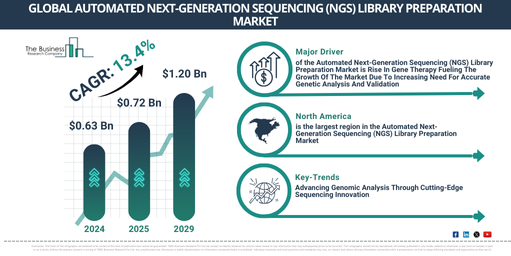
    The market size for automated next-generation sequencing (NGS) library preparation has experienced fast-paced growth in recent times. It is projected to increase from $0.63 billion in 2024 to $0.72 billion in 2025, with a compound annual growth rate (CAGR) of 13.8%. Factors contributing to its growth during the historic period include its increasing usage in monitoring infectious diseases, escalating funds for genomic research, broader implementation during global pandemics, enhanced accessibility for research laboratories, and its growing incorporation in precision medicine._x000D_

    _x000D_

    The market size for automated next-generation sequencing (NGS) library preparation is anticipated to experience a significant upswing in the forthcoming years, anticipated to reach a worth of $1.20 billion by 2029, at a compound annual growth rate (CAGR) of 13.4%. Factors contributing to the growth over the projection period include the growing acceptance in clinical diagnostics, an increase in personalized medicine demand, an escalation in oncology research applications, the need for high-throughput sequencing, and an emphasis on decreasing turnaround time. Noteworthy trends during the forecast period encompass enhancements in workflow efficiency, incorporation of artificial intelligence for data analysis, standardization of procedures powered by technology, improvements in user-friendly systems, and progress in cloud-based data solutions._x000D_

    _x000D_

    #Download The Free Sample Report Here:#_x000D_

    https://www.thebusinessresearchcompany.com/sample.aspx?id=27216&type=smp_x000D_

    _x000D_

    #Which Factors Are Currently Driving The Growth Of The Automated Next-Generation Sequencing (NGS) Library Preparation Market?_x000D_

    The surge in gene therapy is anticipated to boost the expansion of the automated next-generation sequencing (NGS) library preparation market. Gene therapy involves changing a patient’s genes to treat or prevent diseases and its use is growing due to the increasing instances of genetic conditions needing targeted, long-lasting treatment strategies. Within gene therapy, automated NGS library preparation plays a role in accurately analyzing and verifying genetic changes by preparing high-quality DNA or RNA samples for sequencing. As an example, the American Society of Gene and Cell Therapy reported in April 2024 that the number of phase III gene therapy clinical trials experienced a 10% upswing in the fourth quarter, recording the initial quarterly rise since the third quarter of 2022. As a result, the advances in gene therapy are fuelling the growth of the automated next-generation sequencing (NGS) library preparation market._x000D_

    _x000D_

    #How Is The Global Automated Next-Generation Sequencing (NGS) Library Preparation Market Structured In Terms Of Segments?#_x000D_

    The automated next-generation sequencing (NGS) library preparation market covered in this report is segmented_x000D_

    _x000D_

    1) By Type: Targeted Genome Sequencing, Whole Genome Sequencing, Whole Exome Sequencing, Other Sequencing Types_x000D_

    2) By Workflow: Nucleic Acid Extraction, Fragmentation, Adapter Ligation, Purification And Quantification_x000D_

    3) By Application: Drug And Biomarker Discovery, Disease Diagnostics, Other Applications_x000D_

    4) By End-Use: Hospitals And Clinics, Academic And Research Institutions, Pharmaceutical And Biotechnology Companies, Other End-Users_x000D_

    _x000D_

    Subsegments:_x000D_

    1) By Targeted Genome Sequencing: Amplicon-Based Targeted Sequencing, Hybridization Capture-Based Targeted Sequencing, Custom Targeted Panels, Pre-designed Gene Panels_x000D_

    2) By Whole Genome Sequencing: Human Whole Genome Sequencing, Animal Whole Genome Sequencing, Plant Whole Genome Sequencing, Microbial Whole Genome Sequencing_x000D_

    3) By Whole Exome Sequencing: Standard Exome Sequencing, Clinical Exome Sequencing, Custom Exome Panels, Ultra-Rapid Exome Sequencing_x000D_

    4) By Other Sequencing Types: RNA Sequencing (RNA-Seq), Epigenome Sequencing, Metagenomic Sequencing, Single-Cell Sequencing_x000D_

    _x000D_

    #What Trends Are Currently Influencing Growth In The Automated Next-Generation Sequencing (NGS) Library Preparation Market?#_x000D_

    Leading firms in the automated next-generation sequencing (NGS) library preparation market are prioritizing the development of breakthrough technologies such as Xpandomer technology. The focus is on boosting sequencing speed, enhancing data precision, and augmenting scalability. This is achieved by simplifying workflows and facilitating more dependable and effective genomics analysis. Xpandomer technology is a sophisticated method for sequencing either deoxyribonucleic acid (DNA) or ribonucleic acid (RNA). It transforms a target nucleic acid molecule into a larger, synthetic polymer known as an Xpandomer, which is about 50 times the length of the original DNA or RNA strand. In a specific instance, Roche AG, a Swiss biotech firm, rolled out Sequencing by Expansion in February 2025. It’s a revolutionary sequencing platform looking to enhance genomic resolution for innovative diagnostics, disease research, and applications relating to personalized medicine. This state-of-the-art automated next-generation sequencing (NGS) library preparation system streamlines intricate workflows, improves data integrity, and expedites genomic analysis to aid in advanced research and customized medicine. The Sequencing by Expansion platform is notably versatile, able to precisely analyse a spectrum of genomic changes across numerous diseases, such as cancer and rare genetic disorders. This leads to increased resolution and accuracy generating profound biological insights._x000D_

    _x000D_

    #Who Are The Main Participants Shaping The Automated Next-Generation Sequencing (NGS) Library Preparation Market Landscape?#_x000D_

    Major companies operating in the automated next-generation sequencing (NGS) library preparation market are F. Hoffmann-La Roche Ltd., Thermo Fisher Scientific Inc., Agilent Technologies India Private Limited, Illumina Inc., Beckman Coulter Inc., Bio-Rad Laboratories Inc., IDT Corporation, Tecan Group AG, Hamilton Company, Takara Bio Inc., 10x Genomics Inc., Oxford Nanopore Technologies plc, Twist Bioscience Corporation, New England Biolabs Inc., SPT Labtech Limited, Watchmaker Genomics Inc., Pillar Biosciences Inc., Aurora Biomed Inc., BGI Group, SEQWELL INC., and Hudson Robotics Inc. _x000D_

    _x000D_

    #Get The Full Report Here:#_x000D_

    https://www.thebusinessresearchcompany.com/report/automated-next-generation-sequencing-ngs-library-preparation-global-market-report_x000D_

    _x000D_

    #Which Region Currently Holds The Largest Share In The Automated Next-Generation Sequencing (NGS) Library Preparation Market?#_x000D_

    North America was the largest region in the automated next-generation sequencing (NGS) library preparation market in 2024. Asia-Pacific is expected to be the fastest-growing region in the forecast period. The regions covered in the automated next-generation sequencing (NGS) library preparation market report are Asia-Pacific, Western Europe, Eastern Europe, North America, South America, Middle East, Africa._x000D_

    _x000D_

    #Request For A Customized Report:#_x000D_

    https://www.thebusinessresearchcompany.com/customise?id=27216&type=smp_x000D_

    _x000D_

    #About The Business Research Company:#_x000D_

    _x000D_

    With over 15000+ reports from 27 industries covering 60+ geographies, The Business Research Company has built a reputation for offering comprehensive, data-rich research and insights. Armed with 1,500,000 datasets, the optimistic contribution of in-depth secondary research, and unique insights from industry leaders, you can get the information you need to stay ahead in the game._x000D_

    _x000D_

    #Get in touch with us:#_x000D_

    _x000D_

    The Business Research Company: https://www.thebusinessresearchcompany.com/_x000D_

    Americas +1 310-496-7795_x000D_

    Asia +44 7882 955267 & +91 8897263534_x000D_

    Europe +44 7882 955267_x000D_

    Email us at info@tbrc.info_x000D_

    _x000D_

    #Follow us on:#_x000D_

    _x000D_

    LinkedIn: https://in.linkedin.com/company/the-business-research-company_x000D_

    YouTube: https://www.youtube.com/channel/UC24_fI0rV8cR5DxlCpgmyFQ_x000D_

    Global Market Model: https://www.thebusinessresearchcompany.com/global-market-model