Blog

  • CAGR of 11% Projected for Laboratory Products And Outsourcing Services Market From 2025 to 2029

    CAGR of 11% Projected for Laboratory Products And Outsourcing Services Market From 2025 to 2029

    Claim your 30% discount on Global Market Reports with code ONLINE30. Limited time only.

    Claim your 30% discount on Global Market Reports with code ONLINE30. Limited time only.

    How Will the Laboratory Products And Outsourcing Services Market Evolve in Terms of Growth and Size by 2029?

    The market for laboratory products and outsourcing services has seen swift expansion in the recent past. The market size, which is projected to rise from $41.13 billion in 2024 to $45.81 billion in 2025, is predicted to experience a compound annual growth rate (CAGR) of 11.4%. The growth during the historic era is linked to enhanced regulatory support for lab testing and validation, a heightened focus on quality control and adherence to compliance, an increased use of molecular diagnostics and immunoassays, a surge in demand for quick stability testing and method validation, along with the widespread expansion of contract research organizations in burgeoning regions.

    In the coming years, the market for laboratory products and outsourcing services is anticipated to experience significant expansion. The market value is projected to reach $69.62 billion by 2029, growing at a compound annual growth rate (CAGR) of 11.0%. This predicted surge in the forecast period can be credited to an increasing trend of pharmaceutical firms employing outsourcing services, a heightened focus on the production of personalized medication, a rise in investment in biopharmaceutical R&D, increasing incidences of chronic and infectious illnesses, and enhancing utilization of automation and robotics in labs. Several key trends projected for the forecast period include advancements in molecular diagnostic technologies, incorporation of automation and robotics into lab workflows, technological progress in immunoassays for greater precision, advancements in chromatography and mass spectrometry methodologies, and the use of artificial intelligence to improve data analysis.

    Download The Free Sample Report Here:

    https://www.thebusinessresearchcompany.com/sample.aspx?id=27323&type=smp

    What factors are expected to fuel Laboratory Products And Outsourcing Services market growth in the coming years?

    Expectations are high for the laboratory products and outsourcing services market as it looks to ride the wave of increased adoption of personalized medicine in the healthcare industry. Personalized medicine pertains to a healthcare approach that tailors decisions and treatments to an individual’s specific genetic makeup, lifestyle and environmental conditions. There is a growing preference for this approach as it brings to the fore therapies that are both more efficient and targeted, thus reducing side effects and enhancing patient outcomes. By facilitating high-throughput genetic testing, biomarker analysis and specialized diagnostic services, laboratory products and outsourcing services are instrumental in refining treatments for patients on an individual basis. As reported by the Personalized Medicine Coalition (PMC) in February 2024, 16 new personalized treatments were given the green light by the FDA in 2023, marking a significant increase from the six in 2022. More than one in three of all new drug approvals by the FDA were personalized medicines for the fourth year running. As such, the booming adoption of personalized medicine is fueling the expansion of the laboratory products and outsourcing services market.

    What Are The Key Findings From The Segmentation Analysis Of The Laboratory Products And Outsourcing Services Market?

    The laboratory products and outsourcing services market covered in this report is segmented

    1) By Type: Products, Services, Method Development And Validation, Stability Testing, Other Type

    2) By Technology: Immunoassays, Molecular Diagnostics, Microbiology, Clinical Chemistry, Flow Cytometry, Mass Spectroscopy, Chromatography, Other Technology

    3) By End-Use: Pharmaceutical And Biotech Companies, Medical Device Companies, Contract Research Organizations (CRO) And Contract Development And Manufacturing Organizations (CDMO), Other End-Use

    Subsegments:

    1) By Products: Instruments, Consumables, Reagents

    2) By Services: Bioanalytical Testing, Microbiology Testing, Toxicology Testing

    3) By Method Development And Validation: Analytical Method Development, Process Validation, Bioanalytical Method Validation

    4) By Stability Testing: Real-Time Stability Testing, Photostability Testing, Accelerated Stability Testing

    5) By Other Types: Regulatory Compliance Services, Sample Storage And Logistics, Data Management

    Which Trends Are Expected To Shape The Future Of The Laboratory Products And Outsourcing Services Market?

    Major businesses in the laboratory products and outsourcing services industry are turning their focus to the creation of novel solutions, such as unified development and manufacturing platforms. These platforms have been designed to offer comprehensive services, simplify operations, and amplify the scalability for their clientele. An integrated development and manufacturing platform signifies a consolidated system which amalgamates research, development, analytical testing, and manufacturing procedures within a unique streamlined framework. This aims to bolster coordination, cut back on overall time consumed, and advance efficiency in biopharmaceutical production. For example, in March 2025, Shilpa Medicare Ltd., a pharmaceutical firm based in India, introduced a novel full-service hybrid contract development and manufacturing organization (CDMO) to present unified solutions, spanning from the early stages of development right through to commercial manufacturing. It offers both flexible outsourcing (traditional CDMO services) and ready-to-license innovative formulations, thereby enabling pharmaceutical companies to gain rapid and low-risk access to the market. The objective is to offer numerous pathways for commercialization, supporting development projects or quick B2B licensing, with special attention to oncology and complex therapeutics.

    What Are The Most Active Companies In The Laboratory Products And Outsourcing Services Market Today?

    Major companies operating in the laboratory products and outsourcing services market are Thermo Fisher Scientific Inc., Abbott Laboratories, Siemens Healthineers AG, IQVIA Holdings Inc., Labcorp Holdings Inc., Quest Diagnostics, SGS SA, Eurofins Scientific Inc., Agilent Technologies Inc., WuXi AppTec Co. Ltd., Charles River Laboratories International Inc., Intertek Group plc., Waters Corporation, Bio-Rad Laboratories Inc., ALS Limited, PerkinElmer Inc., Medpace Holdings Inc., Tecan Group AG, Greiner Bio-One International GmbH, Randox Laboratories Ltd., and Tulip Diagnostics Private Limited.

    Get The Full Report Here:

    https://www.thebusinessresearchcompany.com/report/laboratory-products-and-outsourcing-services-global-market-report

    Which Regional Markets Are Attracting The Most Investment In Laboratory Products And Outsourcing Services?

    North America was the largest region in the laboratory products and outsourcing services market in 2024. Asia-Pacific is expected to be the fastest-growing region in the forecast period. The regions covered in the laboratory products and outsourcing services market report are Asia-Pacific, Western Europe, Eastern Europe, North America, South America, Middle East, Africa.

    Request For A Customized Report:

    https://www.thebusinessresearchcompany.com/customise?id=27323&type=smp

    About The Business Research Company:

    With over 15000+ reports from 27 industries covering 60+ geographies, The Business Research Company has built a reputation for offering comprehensive, data-rich research and insights. Armed with 1,500,000 datasets, the optimistic contribution of in-depth secondary research, and unique insights from industry leaders, you can get the information you need to stay ahead in the game.

    Get in touch with us:

    The Business Research Company: https://www.thebusinessresearchcompany.com/

    Americas +1 310-496-7795

    Asia +44 7882 955267 & +91 8897263534

    Europe +44 7882 955267

    Email us at info@tbrc.info

    Follow us on:

    LinkedIn: https://in.linkedin.com/company/the-business-research-company

    YouTube: https://www.youtube.com/channel/UC24_fI0rV8cR5DxlCpgmyFQ

    Global Market Model: https://www.thebusinessresearchcompany.com/global-market-model

  • Industry Forecast: Kidney Stone Management Market to Generate $3.17 Billion Revenue by 2029

    Industry Forecast: Kidney Stone Management Market to Generate $3.17 Billion Revenue by 2029

    Claim your 30% discount on Global Market Reports with code ONLINE30. Limited time only.

    Claim your 30% discount on Global Market Reports with code ONLINE30. Limited time only.

    What CAGR Is Anticipated for the Kidney Stone Management Market Through 2029?

    The market size for managing kidney stones has seen a robust growth in the recent past. The market valuation is projected to rise from $2.30 billion in 2024 to $2.46 billion in 2025, expanding at a compound annual growth rate (CAGR) of 6.9%. The growth witnessed in the historic timeframe can be credited to the escalating occurrence of kidney stones, increasing rates of obesity, an aging population growth, heightened awareness of kidney health, and broadening access to healthcare services.

    The market for kidney stone management is set for substantial expansion in the coming years, with it projected to reach $3.17 billion in 2029, with a compound annual growth rate (CAGR) of 6.6%. This predicted increase during the forecast period is driven by factors such as an aging population, heightened adoption of minimally invasive surgery, sophisticated imaging technologies in use, the broadening of telehealth and digital health strategies, a rise in health expenditure, and augmented consciousness about renal health. The forecast period will also see significant trends such as the evolution of non-invasive treatment methods, AI-aided diagnostics, the miniaturization of surgical instruments, refinement of imaging techniques, intelligent wearable health monitors, targeted precision therapies, and advanced telehealth integration.

    Download The Free Sample Report Here:

    https://www.thebusinessresearchcompany.com/sample.aspx?id=27322&type=smp

    What Market Forces Are Driving The Kidney Stone Management Sector In 2025 And Beyond?

    The escalating incidence of chronic kidney disease (CKD) is projected to stimulate the expansion of the kidney stone management market. CKD is a condition characterized by a slow, continuous loss of kidney function typically caused by diabetes, hypertension, and inheritable factors. An upward trend in CKD cases, mainly triggered by a surge in diabetes prevalence, the prime contributor to enduring kidney damage, contributes to the market’s growth. Through the prevention of obstructions and infections, kidney stone management aids those living with CKD, safeguarding the kidneys against further harm and preserving their functionality. For instance, the Australian Institute of Health and Welfare, a government agency in Australia, reported in June 2024 a rise in CKD death rates by 4.2% in 2021 and 6.2% in 2022. Approximately 2 million hospitalizations in 2021-2022, representing 18% of all hospital admissions in Australia, were attributable to CKB. Thus, the increasing occurrence of CKD is fostering the growth of the kidney stone management market.

    How Is The Global Kidney Stone Management Market Categorized By Segments?

    The kidney stone management market covered in this report is segmented

    1) By Treatment: Extracorporeal Shock Wave Lithotripsy (ESWL), Ureteroscopy, Percutaneous Nephrolithotomy (PCNL), Other Treatments

    2) By Product Type: Lithotripter, Stone Removal Baskets, Ureteral Stents, Ureterorenoscopes

    3) By Diagnostics Method: Abdominal X-Ray, Computed Tomography, Ultrasound, Abdominal MRI, Intravenous Pyelography, Other Diagnostics Method

    4) By Distribution Channel: Retail Pharmacies, Online Pharmacies, Other Distribution Channels

    5) By End User: Hospitals, Specialty Clinics, Ambulatory Surgical Centres, Other End-Users

    Subsegments:

    1) By Extracorporeal Shock Wave Lithotripsy (ESWL): Fixed-Site ESWL systems, Mobile ESWL systems, Integrated imaging ESWL systems

    2) By Ureteroscopy: Flexible Ureteroscopes, Semi-Rigid Ureteroscopes, Disposable Ureteroscopes, Reusable Ureteroscopes

    3) By Percutaneous Nephrolithotomy (PCNL): Standard PCNL, Mini-PCNL, Ultra-Mini PCNL, Micro-PCNL

    4) By Other Treatments: Open Surgery, Laparoscopic Stone Removal, Medical Expulsive Therapy (MET), Pharmacological Stone Dissolution Therapy

    What Long-Term Trends Are Likely To Affect The Kidney Stone Management Market?

    Significant businesses in the kidney stone management market are prioritizing the creation of innovative solutions such as the Ascend ureteroscopes, to enhance and streamline kidney stone management solutions for urology clients. The Ascend ureteroscope facilitates adaptable endoscopic entry to the urinary tract, including the ureter and kidney, which aids in the visualization, diagnosis, and treatment of kidney stones among other diseases. For example, Cook Medical Inc., based in the US and specializing in medical devices, launched in May 2024, the Ascend single-use ureteroscope. This disposable endoscopic instrument developed especially for urologic tasks like kidney stone management, boasts a 275-degree up/down deflection and a deflection lock to maintain the chosen angle, thereby boosting precision during challenging procedures. Furthermore, the approval of the Ascend ureteroscope for Medicare’s Transitional Pass-through (TPT) payment scheme, significantly increases its accessibility in a clinical setting.

    Which Firms Are Considered Leaders In The Kidney Stone Management Market Space?

    Major companies operating in the kidney stone management market are Medtronic plc, Siemens Healthineers AG, C.R. Bard Inc., Stryker Corporation, Boston Scientific Corporation, Olympus Corporation, Coloplast A/S, Karl Storz GmbH & Co. KG, Cook Medical Inc., Richard Wolf GmbH, Lumenis Ltd., MorphoSys AG, Dornier MedTech, EDAP TMS S.A., E.M.S. Electro Medical Systems S.A., Dyax Corp., STORZ MEDICAL AG, Medispec Ltd., DirexGroup SA, and Elmed Medical Systems Ltd.

    Get The Full Report Here:

    https://www.thebusinessresearchcompany.com/report/kidney-stone-management-global-market-report

    What Role Do Regional Policies And Investments Play In Kidney Stone Management Market Expansion?

    North America was the largest region in the kidney stone management market in 2024. Asia-Pacific is expected to be the fastest-growing region in the forecast period. The regions covered in the kidney stone management market report are Asia-Pacific, Western Europe, Eastern Europe, North America, South America, Middle East, Africa.

    Request For A Customized Report:

    https://www.thebusinessresearchcompany.com/customise?id=27322&type=smp

    About The Business Research Company:

    With over 15000+ reports from 27 industries covering 60+ geographies, The Business Research Company has built a reputation for offering comprehensive, data-rich research and insights. Armed with 1,500,000 datasets, the optimistic contribution of in-depth secondary research, and unique insights from industry leaders, you can get the information you need to stay ahead in the game.

    Get in touch with us:

    The Business Research Company: https://www.thebusinessresearchcompany.com/

    Americas +1 310-496-7795

    Asia +44 7882 955267 & +91 8897263534

    Europe +44 7882 955267

    Email us at info@tbrc.info

    Follow us on:

    LinkedIn: https://in.linkedin.com/company/the-business-research-company

    YouTube: https://www.youtube.com/channel/UC24_fI0rV8cR5DxlCpgmyFQ

    Global Market Model: https://www.thebusinessresearchcompany.com/global-market-model
  • Ischemic Stroke Aspiration Systems Market Revenue Outlook: Strategic Insights and Forecast to 2029

    Ischemic Stroke Aspiration Systems Market Revenue Outlook: Strategic Insights and Forecast to 2029

    Claim your 30% discount on Global Market Reports with code ONLINE30. Limited time only.

    Claim your 30% discount on Global Market Reports with code ONLINE30. Limited time only.

    What Are the Latest Market Insights for the Ischemic Stroke Aspiration Systems Industry?

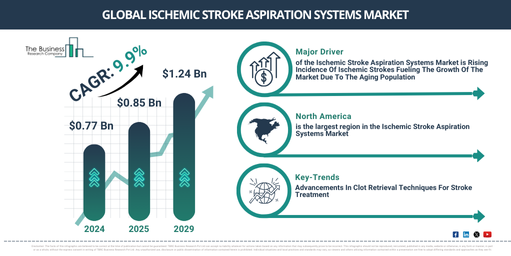
    The market size for ischemic stroke aspiration systems has experienced fast growth in the recent past. By 2025, it is expected to expand from $0.77 billion in 2024 to $0.85 billion, marking a compound annual growth rate (CAGR) of 10.3%. The historic period saw the growth due to factors such as increased investments by hospitals, heightened awareness about symptoms and treatments of stroke, an ageing patient population, improved accessibility to emergency medical services, and the uptake of mechanical thrombectomy procedures.

    The market for ischemic stroke aspiration systems is anticipated to witness significant growth in the forthcoming years, expanding to $1.24 billion by 2029 with a compound annual growth rate (CAGR) of 9.9%. Several factors contributing to this predicted expansion during the forecast period include an escalated usage of aspiration systems, surging investments in healthcare infrastructure, a growing preference for expedited stroke recovery solutions, intensified emphasis on enhancing patient outcomes, and amplified use of image-guided procedures. Noteworthy trends to watch out for during the forecasted timeframe involve advancements in aspiration catheter technology, innovation in the integration of neurovascular imaging, developments in robotic-assisted stroke interventions, the advent of portable stroke treatment devices, and innovative strides in real-time procedure monitoring systems.

    Download The Free Sample Report Here:

    https://www.thebusinessresearchcompany.com/sample.aspx?id=27321&type=smp

    What Forces Are Driving The Growth Of The Ischemic Stroke Aspiration Systems Industry?

    The escalating incidence of stroke risk is anticipated to fuel the expansion of the market for ischemic stroke aspiration systems. Stroke risk refers to a person’s potential or probability of having a stroke, dictated by certain health conditions, lifestyle patterns, and genetic vulnerabilities. The increasing stroke risk is linked with the elderly community as their stroke risk naturally escalates with age due to physiological transformations and a greater chance of ailments such as hypertension, atrial fibrillation, and atherosclerosis. Ischemic stroke aspiration systems contribute to the mitigation of stroke-related threats by facilitating swift and efficient clot removal, thus lessening brain damage and enhancing clinical results for high-risk stroke sufferers. For example, a report by the American College of Cardiology, a US non-profit medical group, declared in August 2022 that in the US, hypertension is forecasted to grow by 25.1% from 2025 to 2060, affecting an estimated 162 million individuals. Furthermore, stroke is anticipated to register the most substantial growth in cardiovascular disease rates in the U.S., with a predicted surge of 33.8%, reaching 15 million people. Consequently, the upward trend in stroke risk incidence is stimulating the expansion of the ischemic stroke aspiration systems market.

    What Is The Overview Of Market Segmentation In The Ischemic Stroke Aspiration Systems Industry?

    The ischemic stroke aspiration systems market covered in this report is segmented

    1) By Product Type: Aspiration Catheters, Aspiration Pumps, Tubing And Canisters, Accessories

    2) By Application: Acute Ischemic Stroke Intervention, Large Vessel Occlusion (LVO) Treatment, Thrombectomy Assisted Aspiration, Rescue Therapy After Failed Stent Retriever Use, Direct Aspiration First Pass Technique (ADAPT)

    3) By End User: Hospitals, Ambulatory Surgical Centers, Specialty Clinics, Other End Users

    Subsegments:

    1) By Aspiration Catheters: Mechanical Aspiration Catheters, Large-Bore Aspiration Catheters, Distal Access Catheters, Guide Catheters, Dual-Lumen Aspiration Catheters

    2) By Aspiration Pumps: Manual Aspiration Pumps, Electric Aspiration Pumps, Portable Aspiration Units, Battery-Operated Pumps, High-Flow Vacuum Pumps

    3) By Tubing And Canisters: Disposable Tubing Sets, Reusable Tubing Systems, Fluid Collection Canisters, Overflow Protection Canisters, Anti-Reflux Canister Systems

    4) By Accessories: Catheter Introducers, Aspiration Syringes, Guidewires, Connectors And Valves, Cleaning Brushes

    What Future Market Trends Are Projected For The Ischemic Stroke Aspiration Systems Industry?

    Leading organizations in the ischemic stroke aspiration systems industry are striving to innovate advanced solutions such as primary mechanical thrombectomy procedures to increase the efficiency of operations, improve patient results, and hasten the retrieval of clots during acute ischemic stroke therapy. These primary mechanical thrombectomy procedures denote the original or primary technique utilized to eliminate a blood clot from an obstructed artery in the brain during an acute ischemic stroke. To illustrate, Microvention, Inc., a provider of catheter-based technologies located in the United States, unveiled the SOFIA aspiration system in July 2025 as the pioneer technique for acute ischemic stroke treatment, establishing a benchmark for more than a decade due to its notable trackability, velocity, and established clinical efficacy. The SOFIA Aspiration System introduces several special features that amplify its clinical execution. It merges outstanding trackability and flexibility with a broad interior lumen, which allows for effective navigation inside convoluted cerebral vessels and efficient clot aspiration. The system’s soft distal tip lessens the possibilities of vessel trauma, while its optimized catheter design aids in rapid recanalization with a minimum number of device exchanges. These features render SOFIA exceptionally appropriate for aspiration-first strategies, facilitating quicker and safer clot removal in stroke interventions where time is of the essence.

    Who Are The Primary Players Operating Across The Global Ischemic Stroke Aspiration Systems Market?

    Major companies operating in the ischemic stroke aspiration systems market are Johnson & Johnson, Medtronic Plc, Stryker Corporation, Terumo Corporation, Lepu Medical Technology Co. Ltd., MicroPort Scientific Corporation, MicroVention Inc., Penumbra Inc., Imperative Care Inc., Balt Extrusion S.A.S., Acandis GmbH, Rapid Medical Ltd., NeuroSafe Medical Co. Ltd., InNeuroCo Inc., Zylox-Tonbridge Medical Technology Co. Ltd., S3V Vascular Technologies Limited, Vesalio LLC, Wallaby Medical Inc., Kaneka Medix Corporation, and Insera Therapeutics Inc.

    Get The Full Report Here:

    https://www.thebusinessresearchcompany.com/report/ischemic-stroke-aspiration-systems-global-market-report

    Which Region Offers The Most Growth Potential For The Ischemic Stroke Aspiration Systems Market Through 2029?

    North America was the largest region in the ischemic stroke aspiration systems market in 2024. Asia-Pacific is expected to be the fastest-growing region in the forecast period. The regions covered in the ischemic stroke aspiration systems market report are Asia-Pacific, Western Europe, Eastern Europe, North America, South America, Middle East, Africa.

    Request For A Customized Report:

    https://www.thebusinessresearchcompany.com/customise?id=27321&type=smp

    About The Business Research Company:

    With over 15000+ reports from 27 industries covering 60+ geographies, The Business Research Company has built a reputation for offering comprehensive, data-rich research and insights. Armed with 1,500,000 datasets, the optimistic contribution of in-depth secondary research, and unique insights from industry leaders, you can get the information you need to stay ahead in the game.

    Get in touch with us:

    The Business Research Company: https://www.thebusinessresearchcompany.com/

    Americas +1 310-496-7795

    Asia +44 7882 955267 & +91 8897263534

    Europe +44 7882 955267

    Email us at info@tbrc.info

    Follow us on:

    LinkedIn: https://in.linkedin.com/company/the-business-research-company

    YouTube: https://www.youtube.com/channel/UC24_fI0rV8cR5DxlCpgmyFQ

    Global Market Model: https://www.thebusinessresearchcompany.com/global-market-model

  • Future Projections: Iron Oxide Nanopowders Market to Reach $2.46 Billion by 2029 at 12.9% CAGR

    Future Projections: Iron Oxide Nanopowders Market to Reach $2.46 Billion by 2029 at 12.9% CAGR

    Claim your 30% discount on Global Market Reports with code ONLINE30. Limited time only.

    Claim your 30% discount on Global Market Reports with code ONLINE30. Limited time only.

    What Are the Forecasted Growth Rate and Market Size of the Iron Oxide Nanopowders Market?

    In the recent past, the iron oxide nanopowders market has experienced swift growth. Predictions indicate a rise from $1.33 billion in 2024 to $1.51 billion in 2025, demonstrating a compound annual growth rate (CAGR) of 13.3%. The expansion observed in the historical timeframe is linked to surges in pigment demand, escalating usage in the electronics industry, burgeoning necessities for magnetic storage, growing applications in water treatment, as well as the uptick in the demand for drug delivery.

    Over the upcoming years, the iron oxide nanopowders market is anticipated to experience swift expansion. The market size is projected to rise to $2.46 billion by 2029, with a Compound Annual Growth Rate (CAGR) of 12.9%. This growth during the forecasted period can be ascribed to the escalating use of iron oxide nanopowders in catalysis, the surge in its use in battery materials, increased funding for nanomedicine research, higher demand in coatings, and a rise in the necessity for environmental remediation. Key market trends throughout the forecast period will be innovation in synthesis and surface engineering, expansion into new applications driven by innovation, utilization of innovative technology in battery and energy storage systems, advancements in nanotechnology, and the creation of eco-friendly and bio-based pigment platforms.

    Download The Free Sample Report Here:

    https://www.thebusinessresearchcompany.com/sample.aspx?id=27320&type=smp

    Which Factor Is Shaping The Future Of The Iron Oxide Nanopowders Market?

    The iron oxide nanopowders market’s advancement can be tied to the escalating growth of the electronics industry. This industry encompasses the designing, production, and dissemination of electronic components and instruments that are integral to consumer, commercial, and telecommunication technologies. The rise in demand for consumer electronics due to the increasing digitization and acceptance of smart devices is determining the industry’s growth. The unique magnetic and conductive qualities of iron oxide nanopowders assist the electronics industry, making them crucial for components like sensors, data storage devices, and electronic amenities. They can enhance the function of devices by facilitating miniaturization and promoting energy efficiency, thus fostering innovation in contemporary electronics. For example, the Semiconductor Industry Association, a trade group based in the US, reported that global semiconductor industry sales hit $49.1 billion in May 2024, demonstrating a 19.3% rise from $41.2 billion from May of the previous year. As such, the escalating growth of the electronics industry is propelling the progression of the iron oxide nanopowders market.

    What Is The Segment-Wise Breakdown Of The Iron Oxide Nanopowders Market?

    The iron oxide nanopowders market covered in this report is segmented

    1) By Product Type: Magnetite, Hematite, Wüstite, Other Product Types

    2) By Form: Dry Form, Wet Form

    3) By Size: Below 50 Nanometer (NM), 50-100 Nanometer (NM), Above 100 Nanometer (NM)

    4) By Application: Electronics, Catalysts, Paints And Coatings, Energy Storage, Environmental Remediation, Biomedical, Agriculture

    5) By End-User Industry: Construction, Automotive, Aerospace, Healthcare, Consumer Goods

    Subsegments:

    1) By Magnetite: Magnetic Resonance Imaging Contrast Agents, Targeted Drug Delivery Systems, Magnetic Data Storage Devices, Ferrofluids For Cooling Applications, Wastewater Treatment Adsorbents

    2) By Hematite: Photocatalysts For Water Splitting, Anti-Corrosion Pigment Coatings, Gas Sensor Components, Lithium Ion Battery Electrodes, Ceramic And Glass Colorants

    3) By Wüstite: Steel Manufacturing Additives, High Temperature Catalysts, Fuel Cell Electrode Materials, Iron-Based Nanocomposites, Ceramic Sintering Aids

    4) By Other Product Types: Maghemite For Magnetic Imaging, Iron Oxide Nanorods, Coated Iron Nanoparticles, Iron Oxide Quantum Dots, Doped Iron Oxide Nanoparticles

    Which Trends Are Redefining The Future Landscape Of The Iron Oxide Nanopowders Industry?

    Established firms within the iron oxide nanopowders market are aiming to broaden their market footprint and improve technology integration via the adoption of strategic partnerships. Such a partnership generally signifies a mutual cooperation between two or more entities, pooling their resources, know-how, and endeavors to accomplish shared targets. For example, in January 2024, LANXESS AG, a specialty chemicals corporation based in Germany, joined forces with IBU-tec advanced materials AG, another German specialty materials producer, to create novel iron oxides, specifically designed to augment the performance of lithium iron phosphate (LFP) battery cathode materials. The ultimate aim of this convergence is to utilize the proficiency of LANXESS in producing high-powered iron oxide and exploit IBU-tec’s cutting-edge material processing technologies. This will help to amplify the effectiveness, sustainability, and scalability of LFP battery materials. By refining iron oxide nanopowders, the partnership also aims to enhance various aspects of battery performance like energy density, cycle life, and value-for-money, thus fulfilling the increasing needs for futuristic energy storage solutions.

    Which Companies Hold The Largest Market Share In The Iron Oxide Nanopowders Sector?

    Major companies operating in the iron oxide nanopowders market are American Elements Corporation, Saveer Biotech Limited, Inframat Corporation, NN-LABS LLC, Techinstro, PlasmaChem GmbH, CDH Fine Chemical, Nanoshel LLC, Skyspring Nanomaterials Inc., Adnano Technologies Pvt. Ltd., Nano Research Elements Inc., Nanostructured & Amorphous Materials Inc., Ocean NanoTech LLC, Shilpa Enterprises, Aritech Chemazone Private Limited, MKNano Inc., Vedayukt India Private Limited, Platonic Nanotech Pvt. Ltd., Sood Chemical Industries Pvt. Ltd., US Research Nanomaterials Inc.

    Get The Full Report Here:

    https://www.thebusinessresearchcompany.com/report/iron-oxide-nanopowders-global-market-report

    How Does Regional Performance Compare Across The Iron Oxide Nanopowders Industry?

    North America was the largest region in the iron oxide nanopowders market in 2024. Asia-Pacific is expected to be the fastest-growing region in the forecast period. The regions covered in the iron oxide nanopowders market report are Asia-Pacific, Western Europe, Eastern Europe, North America, South America, Middle East, Africa.

    Request For A Customized Report:

    https://www.thebusinessresearchcompany.com/customise?id=27320&type=smp

    About The Business Research Company:

    With over 15000+ reports from 27 industries covering 60+ geographies, The Business Research Company has built a reputation for offering comprehensive, data-rich research and insights. Armed with 1,500,000 datasets, the optimistic contribution of in-depth secondary research, and unique insights from industry leaders, you can get the information you need to stay ahead in the game.

    Get in touch with us:

    The Business Research Company: https://www.thebusinessresearchcompany.com/

    Americas +1 310-496-7795

    Asia +44 7882 955267 & +91 8897263534

    Europe +44 7882 955267

    Email us at info@tbrc.info

    Follow us on:

    LinkedIn: https://in.linkedin.com/company/the-business-research-company

    YouTube: https://www.youtube.com/channel/UC24_fI0rV8cR5DxlCpgmyFQ

    Global Market Model: https://www.thebusinessresearchcompany.com/global-market-model

  • 2025 In-vitro Colorectal Cancer Screening Tests Market Outlook: Opportunities, Growth Trends, and Strategic Analysis

    2025 In-vitro Colorectal Cancer Screening Tests Market Outlook: Opportunities, Growth Trends, and Strategic Analysis

    Claim your 30% discount on Global Market Reports with code ONLINE30. Limited time only.

    Claim your 30% discount on Global Market Reports with code ONLINE30. Limited time only.

    What Is the Estimated Industry Valuation for the In-vitro Colorectal Cancer Screening Tests Sector?

    In recent years, the market size for in-vitro colorectal cancer screening tests has seen significant expansion. The market, valued at $1.21 billion in 2024, is projected to increase to $1.30 billion in 2025, with a compound annual growth rate (CAGR) of 7.4%. Factors contributing to this upward trend include heightened awareness of the benefits of early cancer detection, the establishment of more governmental screening initiatives, a rise in the use of non-invasive testing procedures, increased investment in healthcare, and a greater accessibility to home screening kits.

    The market size for in-vitro colorectal cancer screening tests is anticipated to experience robust growth in the coming years, expanding to a worth of $1.71 billion by 2029 with a compound annual growth rate (CAGR) of 7.0%. This anticipated growth within the forecasted period can be credited to enhancing focus on personalised medicine, an escalating demand for affordable diagnostics, burgeoning investments in cancer research, rising uptake of molecular diagnostic methodologies, an increasing occurrence of colorectal cancer, and improving availability of tests in emerging markets. The foreseen period also suggests significant trends including advancements in liquid biopsy technology, inventive breakthroughs in biomarker discovery, incorporation of artificial intelligence in test evaluation, sophisticated progress in multi-target stool deoxyribonucleic acid tests, innovations in specimen collection and processing, progressions in automation and digital pathology, and the inclusion of cloud-based diagnostic platforms.

    Download The Free Sample Report Here:

    https://www.thebusinessresearchcompany.com/sample.aspx?id=27319&type=smp

    What Forces Are Driving The Growth Of The In-vitro Colorectal Cancer Screening Tests Market?

    The escalating rates of colorectal cancer are anticipated to drive the expansion of the in vitro colorectal cancer screening tests market. This form of cancer primarily initiates in the colon or rectum and is often a progression from precancerous polyps. Lifestyle habits that are detrimental to health, such as poor eating patterns, sedentary behavior, and obesity, amplify the risk of polyp creation and cancer progression. In vitro colorectal cancer screening tests facilitate colorectal cancer diagnosis by providing non-invasive procedures to recognize the early indicators of cancer. These tests enhance screening precision through sophisticated biomarker detection, improving early treatment and patient results. For example, in February 2025, the American Cancer Society, a nonprofit organization based in the US, estimated that the number of fresh colorectal cancer cases had surged to 154,270, marking an upswing from 152,810 in 2024. Hence, the escalating rates of colorectal cancer are fueling the expansion of the in vitro colorectal cancer screening tests market.

    How Is The In-vitro Colorectal Cancer Screening Tests Industry Segmented Across Key Parameters?

    The in-vitro colorectal cancer screening tests market covered in this report is segmented

    1) By Test Type: Fecal Occult Blood Test, Stool Deoxyribonucleic Acid Test, Blood Biomarker Test, Other Test Types

    2) By Imaging Type: Colonoscopy, Proctoscopy, Computed Tomography Scan, Ultrasound, Magnetic Resonance Imaging, Positron Emission Tomography Scan

    3) By Application: Screening, Diagnosis, Monitoring, Risk Assessment, Post-Treatment Surveillance

    4) By End User: Hospitals, Diagnostic Laboratories, Outpatient Clinics, Home Care Settings, Research Institutions

    Subsegments:

    1) By Fecal Occult Blood Test: Guaiac Based Fecal Occult Blood Test, Immunochemical Fecal Occult Blood Test

    2) By Stool Deoxyribonucleic Acid Test: Single Target Stool Deoxyribonucleic Acid Test, Multi Target Stool Deoxyribonucleic Acid Test

    3) By Blood Biomarker Test: Methylated Septin 9 Deoxyribonucleic Acid Test, Circulating Tumor Deoxyribonucleic Acid Test, Protein Biomarker Based Blood Test

    4) By Other Test Types: Urine Based Biomarker Test, Serum Based Biomarker Test, Breath Based Volatile Organic Compound Test

    What Notable Trends Are Shaping The Direction Of The In-vitro Colorectal Cancer Screening Tests Market?

    In the market of in vitro colorectal cancer screening tests, significant companies are prioritizing the development of sophisticated diagnostic alternatives such as multi-target stool DNA tests. These efforts aim to enhance early detection precision, make testing more convenient for patients and decrease mortality rates resulting from colorectal cancer. Multi-target stool DNA testing is a cutting-edge screening method that examines stool specimens for the presence of genetic and biochemical markers linked to colorectal cancer and pre-cancerous growths. For example, Exact Sciences Corp – a molecular diagnostics corporation based in the USA – introduced Cologuard Plus in March 2025. This enhanced at-home testing option is intended for adults at an average risk, who are 45 or older. The test implements superior biomarker technology, providing a higher accuracy and specificity compared to the previous version. The approach refines the algorithm crucial for spotting DNA mutations and hemoglobin biomarkers, which enhances detection of colorectal cancer and developed adenomas. By offering a non-invasive, convenient screening solution, Cologuard Plus eliminates the need for bowel preparation and dietary restrictions and effectively boosts patient compliance with advised screening protocols.

    Which Companies Currently Dominate The Competitive Landscape In The In-vitro Colorectal Cancer Screening Tests Industry?

    Major companies operating in the in-vitro colorectal cancer screening tests market are Thermo Fisher Scientific Inc., Abbott Laboratories, Siemens Healthineers, Quest Diagnostics Incorporated, Roche Diagnostics International AG, Illumina Inc., Sysmex Corporation, Bio-Rad Laboratories Inc., Qiagen N.V., Exact Sciences Corporation, Natera Inc., Leica Biosystems Nussloch GmbH, BGI Genomics Co. Ltd., NeoGenomics Inc., Guardant Health Inc., CellMax Life Inc., Epigenomics AG, Acuamark Diagnostics Inc., Beacon Biomedical Inc., Mainz Biomed NV.

    Get The Full Report Here:

    https://www.thebusinessresearchcompany.com/report/in-vitro-colorectal-cancer-screening-tests-global-market-report

    Which Geographic Regions Are Driving Demand In The In-vitro Colorectal Cancer Screening Tests Market?

    North America was the largest region in the in-vitro colorectal cancer screening tests market in 2024. Asia-Pacific is expected to be the fastest-growing region in the forecast period. The regions covered in the in-vitro colorectal cancer screening tests market report are Asia-Pacific, Western Europe, Eastern Europe, North America, South America, Middle East, Africa.

    Request For A Customized Report:

    https://www.thebusinessresearchcompany.com/customise?id=27319&type=smp

    About The Business Research Company:

    With over 15000+ reports from 27 industries covering 60+ geographies, The Business Research Company has built a reputation for offering comprehensive, data-rich research and insights. Armed with 1,500,000 datasets, the optimistic contribution of in-depth secondary research, and unique insights from industry leaders, you can get the information you need to stay ahead in the game.

    Get in touch with us:

    The Business Research Company: https://www.thebusinessresearchcompany.com/

    Americas +1 310-496-7795

    Asia +44 7882 955267 & +91 8897263534

    Europe +44 7882 955267

    Email us at info@tbrc.info

    Follow us on:

    LinkedIn: https://in.linkedin.com/company/the-business-research-company

    YouTube: https://www.youtube.com/channel/UC24_fI0rV8cR5DxlCpgmyFQ

    Global Market Model: https://www.thebusinessresearchcompany.com/global-market-model
  • Global Insights: Interventional Oncology Market Expected to Surpass $3.82 Billion by 2029

    Global Insights: Interventional Oncology Market Expected to Surpass $3.82 Billion by 2029

    Claim your 30% discount on Global Market Reports with code ONLINE30. Limited time only.

    Claim your 30% discount on Global Market Reports with code ONLINE30. Limited time only.

    How Large Is the Interventional Oncology Market Expected to Be in 2029?

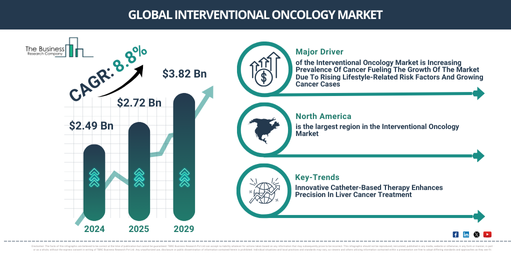
    In recent years, the interventional oncology market size has seen significant growth. It’s projected to increase from $2.49 billion in 2024 to $2.72 billion in 2025, demonstrating a compound annual growth rate (CAGR) of 9.2%. This growth over the historical period can be traced back to factors such as the rise in global cancer cases, wider acceptance of less invasive procedures, increased healthcare investments in developing economies, a growing demand for image-guided therapies, and enhanced understanding of the advantages offered by interventional oncology.

    Expectations are high for the interventional oncology market to witness substantial growth in the next several years, with a projection to expand to $3.82 billion by 2029 at a CAGR of 8.8%. The projected growth during the forecast period can be linked to a surge in demand for outpatient oncology procedures, increased usage of combined therapies with immuno-oncology, a rise in clinical trials investigating image-guided therapies, greater access to interventional oncology in developing markets, and the expanding role of precision medicine in formulating treatment plans. Key trends during this forecast period encompass advancements in image-guided ablation technologies, creation of artificial intelligent diagnostic tools, innovations in targeted drug-delivery systems, progress in minimally invasive treatment devices, and the evolution of personalized oncology treatment solutions.

    Download The Free Sample Report Here:

    https://www.thebusinessresearchcompany.com/sample.aspx?id=27318&type=smp

    What Are The Contributors To Demand In The Interventional Oncology Market?

    The rise in the frequency of cancer is forecasted to stimulate the expansion of the interventional oncology market. The term cancer prevalence refers to the overall number of individuals, both recently identified and previously recognized, living with a cancer history at a given time. The cancer rate is escalating due to lifestyle-associated risks such as unhealthy eating habits, smoking, drinking alcohol, and exposure to environmental toxins, all of which raise the likelihood of developing different forms of cancer. Interventional oncology contributes to cancer care by offering minimal invasive, tumor-focused therapies. It enhances the patient experience by minimizing damage to healthy tissues and provides faster recuperation times than conventional treatments. For instance, as per the Australian Institute of Health and Welfare, an Australian government organization, the count of cancer diagnoses in Australia hit 160,570 in 2022, signifying an escalation of 3,789 cases from 156,781 in 2021. Consequently, the mounting frequency of cancer is powering the advancement of the interventional oncology market.

    What Segmentation Categories Are Included In The Interventional Oncology Market Analysis?

    The interventional oncology market covered in this report is segmented

    1) By Type: Radiation Therapy Devices, Ablation Devices, Embolization Devices

    2) By Technology Type: Ultrasound, Computed Tomography Guided, Magnetic Resonance-Guided

    3) By Procedure: Tumor Ablation, Tumor Biopsy, Vascular Interventions, Palliative Care

    4) By Application Areas: Liver Cancer, Lung Cancer, Kidney Cancer, Pancreatic Cancer, Prostate Cancer

    5) By End-Users: Hospitals, Ambulatory Surgical Centers, Specialty Clinics, Research And Academic Institutions

    Subsegments:

    1) By Radiation Therapy Devices: Linear Accelerators, Proton Therapy Systems, Brachytherapy Devices

    2) By Ablation Devices: Radiofrequency Ablation Devices, Microwave Ablation Devices, Cryoablation Devices, Irreversible Electroporation Systems

    3) By Embolization Devices: Microspheres, Coil Embolization Devices, Liquid Embolic Agents, Embolic Protection Devices

    What Upcoming Trends Are Expected To Impact The Interventional Oncology Market Globally?

    Prominent businesses in the sphere of interventional oncology are concentrating their efforts on creating enhanced products like microcatheter-dependent embolization systems. These systems offer accurate cancer treatment, focusing on limiting harm to adjacent healthy tissue. Microcatheter-based embolization systems are medical implements that utilize mini, flexible catheters to accurately distribute embolic agents into blood vessels in order to hinder or lessen blood flow, typically employed for tumors, vascular disorders, or bleeding. As an example, in March 2025, the Occlusafe balloon occlusion catheter was launched by Terumo Corporation, a Japanese medical device firm, building upon its sophisticated Balloon-TACE (B-TACE) therapy, specifically designed for liver cancer treatment, notably hepatocellular carcinoma (HCC). This specialized microcatheter utilizes the pressure gradient effect to reroute blood flow and reach the microcirculation, thereby ensuring high concentrations of therapeutic agents at the tumor location while reducing off-target embolization. This targeted strategy is designed to enhance clinical results in challenging liver cancer cases by bolstering the accuracy of drug delivery and providing superior visualization throughout procedures.

    Who Are The Top-Ranked Companies In The Interventional Oncology Market Today?

    Major companies operating in the interventional oncology market are Johnson & Johnson, Siemens Healthineers AG, Stryker Corporation, GE HealthCare Technologies Inc., Boston Scientific Corporation, Terumo Corporation, Hologic Inc., Teleflex Incorporated, Lantheus Holdings Inc., Penumbra Inc., Merit Medical Systems Inc., Guerbet S.A, Asahi Intecc Co. Ltd., AngioDynamics Inc., Sirtex Medical Limited., Delcath Systems Inc., ABK Biomedical Inc., Profound Medical Inc., IceCure Medical Ltd., Minimax Medical Holding Group.

    Get The Full Report Here:

    https://www.thebusinessresearchcompany.com/report/interventional-oncology-global-market-report

    How Is Interventional Oncology Market Adoption Varying Across Different Regions And Sectors?

    North America was the largest region in the interventional oncology market in 2024. Asia-Pacific is expected to be the fastest-growing region in the forecast period. The regions covered in the interventional oncology market report are Asia-Pacific, Western Europe, Eastern Europe, North America, South America, Middle East, Africa.

    Request For A Customized Report:

    https://www.thebusinessresearchcompany.com/customise?id=27318&type=smp

    About The Business Research Company:

    With over 15000+ reports from 27 industries covering 60+ geographies, The Business Research Company has built a reputation for offering comprehensive, data-rich research and insights. Armed with 1,500,000 datasets, the optimistic contribution of in-depth secondary research, and unique insights from industry leaders, you can get the information you need to stay ahead in the game.

    Get in touch with us:

    The Business Research Company: https://www.thebusinessresearchcompany.com/

    Americas +1 310-496-7795

    Asia +44 7882 955267 & +91 8897263534

    Europe +44 7882 955267

    Email us at info@tbrc.info

    Follow us on:

    LinkedIn: https://in.linkedin.com/company/the-business-research-company

    YouTube: https://www.youtube.com/channel/UC24_fI0rV8cR5DxlCpgmyFQ

    Global Market Model: https://www.thebusinessresearchcompany.com/global-market-model
  • 2025 Analysis: Opportunities and Risks in the Evolving Influenza Drug Market

    Claim your 30% discount on Global Market Reports with code ONLINE30. Limited time only.

    Claim your 30% discount on Global Market Reports with code ONLINE30. Limited time only.

    What Is the Outlook for the Influenza Drug Market Heading Into 2029?

    The market size of influenza medication has experienced robust growth in the recent past. The projection is that its growth will escalate from $0.98 billion in 2024 to $1.04 billion in 2025, reflecting a compound annual growth rate (CAGR) of 6.4%. The past growth rate can be linked to frequent outbreaks of seasonal flu, an increase in healthcare spending, rising awareness about vaccines, wider use of antiviral drugs, and the enhancement of government immunization agendas.

    The market size for influenza medication is anticipated to experience significant growth in the upcoming years, expected to reach $1.32 billion in 2029, with a compound annual growth rate (CAGR) of 6.0%. This projected expansion during the forecast period is due to the rising incidence of influenza-like conditions, improved global access to healthcare, the development of healthcare infrastructure in developing economies, increased demand for combination treatments, and an amplified focus on preventive healthcare. The forecast period will also witness major trends such as innovation in creating vaccines, advancements in diagnostic abilities, the emergence of next-generation antiviral medications, progress in antiviral research, and improvements in drug delivery systems.

    Download The Free Sample Report Here:

    https://www.thebusinessresearchcompany.com/sample.aspx?id=27317&type=smp

    Which Factors Are Pushing The Influenza Drug Market Forward?

    The escalating prevalence of influenza infections is projected to boost the expansion of the influenza drug market. Influenza infections are infectious respiratory diseases triggered by influenza viruses, resulting in symptoms like fever, cough, sore throat, and body aches. The frequent viral mutations diminish the effectiveness of vaccines and increase people’s susceptibility to outbreaks, leading to the rise in influenza infections. Influenza drugs work to prevent this escalation by offering effective treatments that can lower the severity of the disease and manage widespread transmission. For example, data from the Centers for Disease Control and Prevention (CDC), a prominent public health agency based in the US, from September 2023 shows that preliminary in-season estimates for the 2022–2023 season reveal the impact of influenza virus infections in the US, causing 31 million symptomatic illnesses, 14 million medical visits, 360,000 hospitalizations, and 21,000 deaths. Hence, the escalating prevalence of influenza infections is fueling the expansion of the influenza drug market.

    Which Segment Held The Largest Share In The Influenza Drug Market In 2025?

    The influenza drug market covered in this report is segmented

    1) By Type: Influenza A, Influenza B, Influenza C

    2) By Distribution Channel: Hospital Pharmacies, Retail Pharmacies, Online Pharmacies

    3) By Route Of Administration: Oral, Intranasal, Intravenous, Intramuscular, Subcutaneous

    4) By Mechanism Of Action: Neuraminidase Inhibitors, Cap-Dependent Endonuclease Inhibitors, Fusion Inhibitors, M2 Ion Channel Inhibitors, Host Cell Protease Inhibitors, Immunomodulatory Agents, Ribonucleic Acid (RNA) Polymerase Inhibitors, Hemagglutinin Stem Binders, Cytokine Inhibitors, Host Factor Targeting

    5) By End-User: Hospitals And Clinics, Pharmacies, Vaccination Centers, Research Institutions, Government Health Agencies, Long-Term Care Facilities, Community Health Centers, Corporate Health Programs

    How Are Key Trends Driving Expansion In The Influenza Drug Industry?

    In the influenza drug market, leading companies are concentrating on advancements in technology, such as drug formulation, to improve the effectiveness of treatments, patient adherence, and overall therapeutic results. Drug formulation often entails the combination of inert substances and excipients with active pharmaceutical ingredients (APIs) to create functional drug products with desired characteristics. For example, F. Hoffmann-La Roche Ltd., a Swiss company specializing in pharmaceuticals and diagnostics, launched a strawberry-flavored, single-dose oral antiviral called Baloxavir Marboxil for Suspension in August 2024. It’s designed for children and allows parents to ensure correct weight-based dosing, thus aiding in easy administration and adherence. This innovation presents an accurate home-based medication delivery alternative, falling in line with the trend of prescription delivery services, by enabling caregivers to efficiently manage pediatric influenza treatment at home following a prescription. Its strengths lie in the unique specificity of its mechanism and improved adherence, although resistance may develop, particularly among pediatric patients, over time.

    Which Organizations Are Driving Progress In The Influenza Drug Industry?

    Major companies operating in the influenza drug market are F. Hoffmann-La Roche Ltd., Pfizer Inc., AstraZeneca PLC, GlaxoSmithKline plc, Daiichi Sankyo Co. Ltd., Moderna Inc., BioNTech SE, Shionogi & Co. Ltd., Green Cross Corp, Emergent BioSolutions Inc., Novavax Inc., Hualan Biological Engineering Inc., Serum Institute of India Pvt. Ltd., CSL Seqirus Pty Ltd., BioCryst Pharmaceuticals, Inc., SAB Biotherapeutics Inc., Viriom Inc., Osivax SAS, Cocrystal Pharma Inc., Sinovac Biotech Ltd.

    Get The Full Report Here:

    https://www.thebusinessresearchcompany.com/report/influenza-drug-global-market-report

    Which Region Is Expected To Experience The Highest Growth In The Influenza Drug Industry?

    North America was the largest region in the influenza drug market in 2024. Asia-Pacific is expected to be the fastest-growing region in the forecast period. The regions covered in the influenza drug market report are Asia-Pacific, Western Europe, Eastern Europe, North America, South America, Middle East, Africa.

    Request For A Customized Report:

    https://www.thebusinessresearchcompany.com/customise?id=27317&type=smp

    About The Business Research Company:

    With over 15000+ reports from 27 industries covering 60+ geographies, The Business Research Company has built a reputation for offering comprehensive, data-rich research and insights. Armed with 1,500,000 datasets, the optimistic contribution of in-depth secondary research, and unique insights from industry leaders, you can get the information you need to stay ahead in the game.

    Get in touch with us:

    The Business Research Company: https://www.thebusinessresearchcompany.com/

    Americas +1 310-496-7795

    Asia +44 7882 955267 & +91 8897263534

    Europe +44 7882 955267

    Email us at info@tbrc.info

    Follow us on:

    LinkedIn: https://in.linkedin.com/company/the-business-research-company

    YouTube: https://www.youtube.com/channel/UC24_fI0rV8cR5DxlCpgmyFQ

    Global Market Model: https://www.thebusinessresearchcompany.com/global-market-model

  • In-Depth Implantable Remote Patient Monitoring Devices Market Report: Business Trends, Growth Factors, and Forecast to 2029

    In-Depth Implantable Remote Patient Monitoring Devices Market Report: Business Trends, Growth Factors, and Forecast to 2029

    Claim your 30% discount on Global Market Reports with code ONLINE30. Limited time only.

    Claim your 30% discount on Global Market Reports with code ONLINE30. Limited time only.

    What Does the Forecast Indicate for the Implantable Remote Patient Monitoring Devices Market From 2025 to 2029?

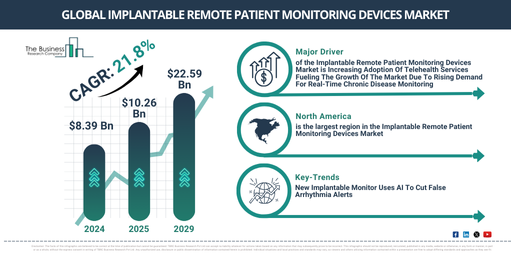
    The market size of implantable remote patient monitoring devices has seen a significant surge recently. It is projected to increase from $8.39 billion in 2024 to $10.26 billion in 2025, yielding a compound annual growth rate (CAGR) of 22.2%. The historic upswing can be attributed to factors such as the growing incidence of chronic and cardiovascular diseases, enhanced demand for early detection and constant monitoring, an increase in the aging population needing sustained care, a gradual tilt towards home-based healthcare, and escalating healthcare expenses promoting preventive surveillance.

    The market for implantable remote patient monitoring devices is set for substantial expansion in the upcoming years, with projections indicating that it could be valued at $22.59 billion in 2029, representing a compound annual growth rate (CAGR) of 21.8%. The anticipated surge in the market over the prediction period is largely owing to factors such as boosted governmental backing and reimbursement coverage, amplified awareness concerning precision medicine and personalized healthcare, expanded investment in MedTech startups and digital health, and an escalation in instances of post-operative complications and rehospitalization. Projected trends over the forecast period encompass progress in miniaturization and biocompatible materials, the incorporation of artificial intelligence (AI) and machine learning for anticipatory analytics, amalgamation with 5G and Internet of Things (IoT) networks, breakthroughs in battery-free implants and energy-harvesting, and advancements in cybersecurity protocols for medical implants.

    Download The Free Sample Report Here:

    https://www.thebusinessresearchcompany.com/sample.aspx?id=27316&type=smp

    What Elements Are Contributing To Growth In The Implantable Remote Patient Monitoring Devices Market?

    The growth of the market for implantable remote patient monitoring devices is likely to be fuelled by the rising acceptance of telehealth services. These services, which involve the use of phones, video calls or apps for remote healthcare provision, let patients consult with physicians without needing to visit a clinic or hospital. The surge in the use of telehealth services can be attributed to the increasing need for consistent, real-time health tracking for those suffering from chronic diseases, as it promotes the appropriate timing of medical intervention without repeated hospital trips. Telehealth services enhance the functionality of implantable remote patient monitoring devices by facilitating immediate data exchange between patients and medical professionals, fostering timely medical decision-making and reducing the necessity for physical patient visits. Additionally, they optimize the management of chronic diseases through ongoing monitoring and early intervention, thereby maximizing healthcare efficacy and patient convenience. For example, the Australian Digital Health Agency revealed in May 2024 that between March 2020 and July 2022, telehealth services were used by over 95,000 practitioners and provided to 18 million patients, with a total of 118.2 million telehealth services delivered. As a result, the expanding adoption of telehealth services is stimulating the growth of the implantable remote patient monitoring devices market.

    Which Segments Are Detailed In The Global Implantable Remote Patient Monitoring Devices Market Report?

    The implantable remote patient monitoring devices market covered in this report is segmented

    1) By Product: Blood Glucose Monitoring Systems, Cardiac Monitoring Devices, Weight Monitoring Devices, Other Products

    2) By Application: Cardiovascular Diseases, Neurological Disorders, Diabetes, Other Applications

    3) By End User: Hospital, Ambulatory Surgery Centers, Home Care Settings, Other End Users

    Subsegments:

    1) By Blood Glucose Monitoring Systems: Continuous Glucose Monitoring (CGM) Devices, Self-Monitoring Blood Glucose (SMBG) Devices, Lancets And Lancing Devices, Glucose Test Strips, Blood Glucose Meters,

    2) By Cardiac Monitoring Devices: Electrocardiogram (ECG) Devices, Implantable Loop Recorders, Holter Monitors, Event Monitors, Mobile Cardiac Telemetry Devices,

    3) By Weight Monitoring Devices: Digital Weighing Scales, Smart Body Composition Monitors, Infant Scales, Chair Scales, Bed Scales,

    4) By Other Products: Respiratory Monitoring Devices, Multiparameter Monitors, Fetal And Neonatal Monitoring Devices, Temperature Monitoring Devices, Neuromonitoring Devices

    Which Emerging Trends And Strategic Shifts Are Shaping The Implantable Remote Patient Monitoring Devices Market?

    Prominent firms in the implantable remote patient monitoring devices market are concentrating on the production of cutting-edge products like implantable cardiac monitors, enabling more precise observation of cardiac arrhythmias. An implantable cardiac monitor (ICM), also called an implantable loop recorder (ILR), is a compact device placed just under the skin, commonly on the chest’s left side, to incessantly track and document the heart’s electrical activity for a considerable duration. For example, Biotronik AG, a healthcare technology company based in Switzerland, in June 2023, launched the BIOMONITOR IV implantable cardiac monitor. This advanced ICM uses BIOTRONIK’s SmartECG technology and artificial intelligence, reducing false positive detections by 86%, while maintaining 98% of true episodes. This monitoring device can also differentiate premature atrial contractions (PACs) from premature ventricular contractions (PVCs), offering healthcare professionals superior tools for risk stratification and diagnosis.

    Who Are The Key Contributors To Growth In The Implantable Remote Patient Monitoring Devices Market?

    Major companies operating in the implantable remote patient monitoring devices market are Abbott Laboratories, Honeywell Life Sciences, Medtronic plc, Siemens Healthineers, Philips Healthcare, GE HealthCare Technologies Inc., Boston Scientific Corporation, Dexcom Inc., Zoll Medical Corporation, Nihon Kohden Corporation, LivaNova PLC, MicroPort Scientific Corporation, iRhythm Technologies Inc., NeuroPace Inc., Profusa Inc., Senseonics Holdings Inc., Xeltis AG, GlySens Inc., Kenzen Inc., Qura Inc.

    Get The Full Report Here:

    https://www.thebusinessresearchcompany.com/report/implantable-remote-patient-monitoring-devices-global-market-report

    Which Region Is Projected To Lead The Implantable Remote Patient Monitoring Devices Market By 2025?

    North America was the largest region in the implantable remote patient monitoring devices market in 2024. The regions covered in the implantable remote patient monitoring devices market report are Asia-Pacific, Western Europe, Eastern Europe, North America, South America, Middle East, Africa.

    Request For A Customized Report:

    https://www.thebusinessresearchcompany.com/customise?id=27316&type=smp

    About The Business Research Company:

    With over 15000+ reports from 27 industries covering 60+ geographies, The Business Research Company has built a reputation for offering comprehensive, data-rich research and insights. Armed with 1,500,000 datasets, the optimistic contribution of in-depth secondary research, and unique insights from industry leaders, you can get the information you need to stay ahead in the game.

    Get in touch with us:

    The Business Research Company: https://www.thebusinessresearchcompany.com/

    Americas +1 310-496-7795

    Asia +44 7882 955267 & +91 8897263534

    Europe +44 7882 955267

    Email us at info@tbrc.info

    Follow us on:

    LinkedIn: https://in.linkedin.com/company/the-business-research-company

    YouTube: https://www.youtube.com/channel/UC24_fI0rV8cR5DxlCpgmyFQ

    Global Market Model: https://www.thebusinessresearchcompany.com/global-market-model

  • 2025–2029 Hyper-Personalized Medicine Market Outlook: Regional Trends and Growth Forecast

    Claim your 30% discount on Global Market Reports with code ONLINE30. Limited time only.

    Claim your 30% discount on Global Market Reports with code ONLINE30. Limited time only.

    What Are the Latest Market Insights for the Hyper-Personalized Medicine Industry?

    The market size of hyper-personalized medicine has expanded swiftly in the recent past. Projected to escalate from $2,774.10 billion in 2024 to $3,188.03 billion in 2025, it demonstrates a compound annual growth rate (CAGR) of 14.9%. Factors such as growing demand for specific treatments, escalated use of genomic technologies, amplified awareness of the advantages of tailored treatments, rising investments in biotechnology, and the larger availability of health data, have all contributed to this growth in the historic period.

    There is projected rapid expansion in the market size of hyper-personalized medicine in the coming years. By 2029, the market value is aimed to reach $5,490.15 billion, with a compound annual growth rate (CAGR) of 14.6%. Factors fueling this growth in the prediction period include the bolstering development of personalized medicine delivery systems, precision medicine applications’ continued expansion, increasing depth in healthcare data analytics, advancements in the identification techniques of biomarkers, and the growing implementation of machine learning in diagnostic processes. Key future trends encompass progression in targeted drug delivery, creative breakthroughs in personalized treatment algorithms, the integration of big data analytics, developments in biomarker discovery, and innovations in patient-oriented care platforms.

    Download The Free Sample Report Here:

    https://www.thebusinessresearchcompany.com/sample.aspx?id=27313&type=smp

    What Forces Are Driving The Growth Of The Hyper-Personalized Medicine Industry?

    The growth of the hyper-personalized medicine market is likely to be boosted by the increasing need for precision therapies. Precision therapies, which focus on disease-specific genetic, molecular, or cellular features to provide efficient and individualized interventions with minimal side-effects, are gaining traction as compared to conventional treatments. These therapies help pinpoint genetic or molecular disease features, resulting in superior and customized treatment results. Hyper-personalized medicine complements precision therapies as it allows treatments to be custom-made based on an individual’s specific genetic, molecular, and lifestyle aspects, hence increasing its efficiency while minimizing adverse reaction. For instance, in February 2024, the Personalized Medicine Coalition, a non-profit organization in the US, reported that the Food and Drug Administration (FDA) granted approval to 16 innovative personalized treatments for patients with uncommon diseases in 2023, which was a significant increase from 6 in 2022. Consequently, the escalating demand for precision therapies is fueling the expansion of the hyper-personalized medicine market.

    What Is The Overview Of Market Segmentation In The Hyper-Personalized Medicine Industry?

    The hyper-personalized medicine market covered in this report is segmented

    1) By Product: Hyper Personalized Medicine Diagnostics, Hyper Personalized Medicine Therapeutics, Hyper Personalized Medical Care, Hyper Personalized Nutrition And Wellness

    2) By Technology: Genomics, Proteomics, Bioinformatics, Metabolomics

    3) By Application: Oncology, Neurology, Blood Transfusion Safety, Diabetes, Autoimmune Diseases, Cardiology

    4) By End User: Hospitals, Diagnostic Centers, Research And Academic Institutes

    Subsegments:

    1) By Hyper Personalized Medicine Diagnostics: Genomic Sequencing, Biomarker Testing, Molecular Diagnostics, Companion Diagnostics, Liquid Biopsy

    2) By Hyper Personalized Medicine Therapeutics: Targeted Drug Therapies, Gene Therapy, Cell Therapy, Immunotherapy, RNA-based Therapeutics

    3) By Hyper Personalized Medical Care: Telemedicine And Remote Monitoring, Personalized Treatment Plans, AI-driven Clinical Decision Support, Patient-specific Rehabilitation, Precision Surgery

    4) By Hyper Personalized Nutrition And Wellness: Nutrigenomics, Personalized Diet Plans, Microbiome Analysis, Customized Supplements, Wellness Coaching And Monitoring

    What Future Market Trends Are Projected For The Hyper-Personalized Medicine Industry?

    Leading corporations in the hyper-personalized medicine sector are concentrating on creating sophisticated solutions, including genomic sequencing platforms. These technologies will provide detailed patient profiling, expedite the creation of targeted therapies, and enhance the effectiveness of treatments. Genomic sequencing platforms are cutting-edge technologies that decipher an individual’s entire DNA sequence to discover genetic variations for research, diagnosis, and personalized treatment. For instance, in September 2022, the American biotech firm, Illumina Inc., introduced the NovaSeq X Series. This powerful new generation of high-throughput sequencers is aimed at propelling genomic medicine forward. By combining innovative chemistry, hardware and software upgrades, and ultra-dense flow cells, the NovaSeq X Series can achieve an unprecedented level of accuracy and scale. It enables the sequencing of over 20,000 whole genomes annually, a 2.5-fold increase over earlier models. This significant advance accelerates genomic research and boosts clinical insights, paving the way for precision therapies, extensive population studies, and early detection of diseases.

    Who Are The Primary Players Operating Across The Global Hyper-Personalized Medicine Market?

    Major companies operating in the hyper-personalized medicine market are Pfizer Inc., Johnson & Johnson, Roche Holding AG, Bayer AG, Sanofi S.A., Bristol-Myers Squibb Company, AstraZeneca PLC, Abbott Laboratories, Novartis AG, Danaher Corporation, Amgen Inc., Merck KGaA, GE Healthcare Technologies Inc., Biogen Inc., Illumina Inc., Guardant Health Inc., Berry Genomics Co. Ltd., Sophia Genetics SA, Mapmygenome, and InnoCare Pharma.

    Get The Full Report Here:

    https://www.thebusinessresearchcompany.com/report/hyper-personalized-medicine-global-market-report

    Which Region Offers The Most Growth Potential For The Hyper-Personalized Medicine Market Through 2029?

    North America was the largest region in the hyper-personalized medicine market in 2024. Asia-Pacific is expected to be the fastest-growing region in the forecast period. The regions covered in the hyper-personalized medicine market report are Asia-Pacific, Western Europe, Eastern Europe, North America, South America, Middle East, Africa.

    Request For A Customized Report:

    https://www.thebusinessresearchcompany.com/customise?id=27313&type=smp

    About The Business Research Company:

    With over 15000+ reports from 27 industries covering 60+ geographies, The Business Research Company has built a reputation for offering comprehensive, data-rich research and insights. Armed with 1,500,000 datasets, the optimistic contribution of in-depth secondary research, and unique insights from industry leaders, you can get the information you need to stay ahead in the game.

    Get in touch with us:

    The Business Research Company: https://www.thebusinessresearchcompany.com/

    Americas +1 310-496-7795

    Asia +44 7882 955267 & +91 8897263534

    Europe +44 7882 955267

    Email us at info@tbrc.info

    Follow us on:

    LinkedIn: https://in.linkedin.com/company/the-business-research-company

    YouTube: https://www.youtube.com/channel/UC24_fI0rV8cR5DxlCpgmyFQ

    Global Market Model: https://www.thebusinessresearchcompany.com/global-market-model

  • CAGR of 7.1% Projected for Human Serum Albumin Market From 2025 to 2029

    CAGR of 7.1% Projected for Human Serum Albumin Market From 2025 to 2029

    Claim your 30% discount on Global Market Reports with code ONLINE30. Limited time only.

    Claim your 30% discount on Global Market Reports with code ONLINE30. Limited time only.

    How Large Is the Human Serum Albumin Market Expected to Be in 2029?

    The market size for human serum albumin has seen robust growth in recent years. The market is projected to increase from $5.39 billion in 2024 to $5.79 billion in 2025, with a compound annual growth rate (CAGR) of 7.5%. Factors such as growing healthcare requirements, broader uses of human serum albumin, an aging demographic, rising demand for blood plasma derivatives, and an increase in liver disorders and related diseases have contributed to the growth during the history term.

    In the coming years, a significant expansion is forecasted for the human serum albumin market. It is anticipated to reach $7.63 billion by 2029, growing at a compound annual rate (CAGR) of 7.1%. This growth during the forecast period is due to factors including increased access to essential medicines, wider therapeutic usage, burgeoning hospital numbers, developing healthcare facilities and government-driven initiatives. Key trends foreseen during this period involve cell-free protein production, CRISPR-genome engineered strains, ongoing manufacturing methodologies, transdermal delivery mechanisms and advancements in lyophilization.

    Download The Free Sample Report Here:

    https://www.thebusinessresearchcompany.com/sample.aspx?id=27310&type=smp

    What Are The Contributors To Demand In The Human Serum Albumin Market?

    With liver diseases becoming increasingly rampant, the human serum albumin market is expected to witness substantial growth. Diseases that impair liver function such as cirrhosis, hepatitis, fatty liver disease, and liver cancer are classified under liver diseases. The surge in liver diseases is a direct result of the growing incidence of obesity, which in turn leads to non-alcoholic fatty liver disease (NAFLD), characterized by fat deposition, inflammation, and possible liver failure due to excess abdominal fat. Human serum albumin contributes to combating liver disease by boosting blood volume, reducing fluid accumulation, ensuring kidney function, and enhancing outcomes in complications like ascites and hepatorenal syndrome. A report released in July 2023 by the Office for Health Improvement & Disparities, a UK government department, indicates an increase of 22.0% in hospital admissions with liver disease as the primary diagnosis in the fiscal year ending 2022, with cases going up from 67,458 in 2021 to 82,290 in 2022. Hence, the rising incidence of liver diseases is propelling the growth of the human serum albumin market.

    What Segmentation Categories Are Included In The Human Serum Albumin Market Analysis?

    The human serum albumin market covered in this report is segmented

    1) By Type Of Preparation: Recombinant Human Serum Albumin, Plasma-Derived Human Serum Albumin

    2) By Formulation Type: Injection Solutions, Lyophilized Powder

    3) By Distribution Channel: Direct Sales, Online Pharmacies, Third-party Distributors, Hospital Pharmacies

    4) By Application: Volume Expanders, Drug Delivery Systems, Nutrition Enhancement, Diagnostic Agents

    5) By End-User: Hospitals, Research Laboratories, Pharmaceutical Companies, Blood Banks

    Subsegments:

    1) By Recombinant Human Serum Albumin: Yeast-Based Recombinant Human Serum Albumin, Bacterial-Based Recombinant Human Serum Albumin, Plant-Based Recombinant Human Serum Albumin, Mammalian Cell-Based Recombinant Human Serum Albumin, Insect Cell-Based Recombinant Human Serum Albumin

    2) By Plasma-Derived Human Serum Albumin: 5% Human Serum Albumin Solution, 20% Human Serum Albumin Solution, 25% Human Serum Albumin Solution, Lyophilized Human Serum Albumin, Fatty Acid-Free Human Serum Albumin

    What Upcoming Trends Are Expected To Impact The Human Serum Albumin Market Globally?

    Leading organizations active in the human serum albumin market are concentrating on the development of novel solutions, including animal-free recombinant excipients, to advance product safety, scalability, and adherence to regulatory guidelines in biomanufacturing applications. The term animal-free recombinant excipient pertains to a biologically manipulated inactive substance produced utilizing recombinant DNA technology that does not contain any components derived from animals or humans, thereby guaranteeing high purity and safety in applications related to pharmaceutical and biomanufacturing. For example, in April 2025, InVitri Inc., a company based in the US that supplies animal-free, recombinant proteins, and excipients, introduced Optibumin 25, the premier recombinant 25% human serum albumin in closed-system biomanufacturing. This particular human serum albumin has been specifically created for closed-system biomanufacturing and is designed for downstream processing, formulation, and cryopreservation practices. It is now obtainable in 100 mL single-use packets. Its composition, defined chemically and free of animal origin, assures high purity, consistency, and minimizes the risk of contamination. It is ready for GMP, scalable for large-scale production, and provides a steady, sterile solution that effortlessly assimilates into applications like viral vector production, stem cell conservation, vaccine development, and regenerative medical practices.

    Who Are The Top-Ranked Companies In The Human Serum Albumin Market Today?

    Major companies operating in the human serum albumin market are Thermo Fisher Scientific Inc., Takeda Pharmaceutical Company Limited, Merck KGaA, CSL Behring (CSL), Baxter International Inc., Grifols S A, Sartorius AG, Octapharma AG, Kedrion Biopharma, Shanghai RAAS Blood Products Co Ltd., Biotest Aktiengesellschaft, LFB Group, Hualan Biological Engineering Inc., Taibang Biologic Group, Kamada Ltd., InVitria Inc., Reliance Life Sciences, Bio Products Laboratory, Mitsubishi Tanabe Pharma, and Sichuan Yuanda Shuyang Pharmaceutical Co Ltd.

    Get The Full Report Here:

    https://www.thebusinessresearchcompany.com/report/human-serum-albumin-global-market-report

    How Is Human Serum Albumin Market Adoption Varying Across Different Regions And Sectors?

    North America was the largest region in the human serum albumin market in 2024. Asia-Pacific is expected to be the fastest-growing region in the forecast period. The regions covered in the human serum albumin market report are Asia-Pacific, Western Europe, Eastern Europe, North America, South America, Middle East, Africa.

    Request For A Customized Report:

    https://www.thebusinessresearchcompany.com/customise?id=27310&type=smp

    About The Business Research Company:

    With over 15000+ reports from 27 industries covering 60+ geographies, The Business Research Company has built a reputation for offering comprehensive, data-rich research and insights. Armed with 1,500,000 datasets, the optimistic contribution of in-depth secondary research, and unique insights from industry leaders, you can get the information you need to stay ahead in the game.

    Get in touch with us:

    The Business Research Company: https://www.thebusinessresearchcompany.com/

    Americas +1 310-496-7795

    Asia +44 7882 955267 & +91 8897263534

    Europe +44 7882 955267

    Email us at info@tbrc.info

    Follow us on:

    LinkedIn: https://in.linkedin.com/company/the-business-research-company

    YouTube: https://www.youtube.com/channel/UC24_fI0rV8cR5DxlCpgmyFQ

    Global Market Model: https://www.thebusinessresearchcompany.com/global-market-model