Blog

  • Laboratory Centrifuge Market Forecast 2025–2034: Trends Reshaping Demand, Investment, and Innovation

    Laboratory Centrifuge Market Forecast 2025–2034: Trends Reshaping Demand, Investment, and Innovation

    Claim your 30% discount on Global Market Reports with code ONLINE30. Limited time only.

    What is the Anticipated CAGR of the Lateral Flow Assays Market, and What Factors Will Drive It?

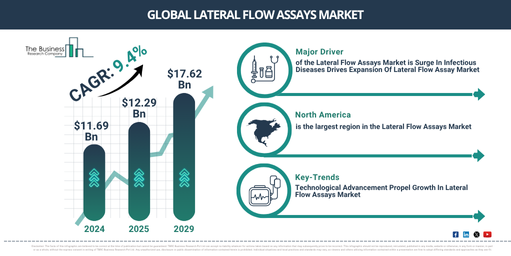
    In the past few years, the lateral flow assays market has seen significant growth. The market size is predicted to increase from $11.69 billion in 2024 to $12.29 billion in 2025, featuring a compound annual growth rate (CAGR) of 5.2%. The growth witnessed in the historical period is due to advancements in diagnostics, a surge in infectious diseases, utilization in pregnancy testing, expansion in home health care, progress in immunochromatography, and the growth of point-of-care testing.

    The market size for lateral flow assays is predicted to experience significant expansion in the coming years, potentially reaching $17.62 billion by 2029, with a CAGR of 9.4%. The projected growth during the forecast period can be attributed to several factors such as advancements in disease detection applications, prevalence of home testing kits, growth in veterinary diagnostics, development of multiplex assays, and an increase in food and environmental testing. The forecast period is also expected to witness trends like personalized medicine and home testing, improved manufacturing techniques, emphasis on environmental and food safety testing, cost-effectiveness, and the application in drug and biomarker detection.

    Download a free sample to assess the report’s scope and structure:

    https://www.thebusinessresearchcompany.com/sample.aspx?id=6359&type=smp

    What Are the Primary Drivers Supporting the Market Growth of the Lateral Flow Assays Market?

    The worldwide pervasiveness of infectious diseases significantly drives the growth of the lateral flow assay market. The recurrent occurrence of diseases like HIV and malaria in developing nations, along with a deficient healthcare system and heightened public awareness, is anticipated to speed up the utilisation of lateral flow assay testing methods. The recent COVID-19 pandemic has underscored the requirement for advanced disease detection, which is expected to boost the market size. For instance, in 2024, the UK Health Security Agency, an executive agency based in the UK, released data indicating an almost sevenfold increase in measles incidents in England from the previous year. There were 368 cases in 2023 compared to 53 in 2022, with notable incidences in the West Midlands and London, representing 44% and 33% of cases, respectively. Hence, the global spread of infectious diseases will largely influence the growth of the lateral flow assay market.

    Which Primary Segments of the Lateral Flow Assays Market Are Driving Growth and Industry Transformations?

    The lateral flow assaysmarket covered in this report is segmented –

    1) By Type: Kits And Reagents, Lateral Flow Readers

    2) By Technique: Sandwich Assays, Competitive Assays, Multiplex Detection Assays

    3) By Application: Veterinary Diagnostics, Clinical Or Point-Of-Care Testing, Drug Development And Quality Testing, Other Applications

    4) By End-User: Hospitals And Clinics, Diagnostic Laboratories, Home Care Settings, Pharmaceutical And Biotechnology Companies, Other End Users

    Subsegments:

    1) By Kits And Reagents: Rapid Test Kits, Diagnostic Kits, Control Reagents, Sample Collection And Preparation Reagents

    2) By Lateral Flow Readers: Portable Lateral Flow Readers, Benchtop Lateral Flow Readers, Smartphone-Based Lateral Flow Readers, Automated Lateral Flow Readers

    Request customized data on this market:

    https://www.thebusinessresearchcompany.com/customise?id=6359&type=smp

    Which Regions Are Key Players in the Growth of the #What Are the Primary Drivers Supporting the Market Growth of the Lateral Flow Assays Market?# Market?

    North America was the largest region in the lateral flow assays market in 2024. Asia-Pacific is expected to be the fastest-growing region in the lateral flow assays market share during the forecast period. The regions covered in the lateral flow assays market report are Asia-Pacific, Western Europe, Eastern Europe, North America, South America, Middle East, Africa.

    What Are the Most Significant Market Trends in the Lateral Flow Assays Market?

    Progress in technology is the leading trend gaining traction in the lateral flow assays market. To solidify their market position, major market participants are concentrating on the creation of technologically advanced testing products. For example, in February 2022, Abacus Diagnostica, a medical device manufacturer based in Finland, introduced their second generation COVID-19 test titled, the GenomEra SARS-CoV-2 2.0 Assay Kit. This assay is devised for quick qualitative identification of SARS-CoV-2 in respiratory samples through a multiplex reverse transcriptase polymerase chain reaction (RT-PCR) method.

    View the full report here:

    https://www.thebusinessresearchcompany.com/report/lateral-flow-assays-global-market-report

    What Parameters Are Used to Define the Lateral Flow Assays Market?

    A lateral flow assay (LFA) is made up of four parts: a sample pad where the sample is dropped, a conjugate pad where labelled tags and biorecognition elements are combined, a reaction membrane with test and control lines for target antigen-antibody interaction, and an absorbent pad where waste is stored.

    Purchase the full report and get a swift delivery:

    https://www.thebusinessresearchcompany.com/purchaseoptions.aspx?id=6359

    About The Business Research Company:

    With over 15000+ reports from 27 industries covering 60+ geographies, The Business Research Company has built a reputation for offering comprehensive, data-rich research and insights. Armed with 1,500,000 datasets, the optimistic contribution of in-depth secondary research, and unique insights from industry leaders, you can get the information you need to stay ahead in the game.

    Get in touch with us:

    The Business Research Company: https://www.thebusinessresearchcompany.com/

    Americas +1 310-496-7795

    Europe +44 7882 955267

    Asia & Others +44 7882 955267 & +91 8897263534

    Email us at info@tbrc.info

    Follow us on:

    LinkedIn: https://in.linkedin.com/company/the-business-research-company

    YouTube: https://www.youtube.com/channel/UC24_fI0rV8cR5DxlCpgmyFQ

    Global Market Model: https://www.thebusinessresearchcompany.com/global-market-model
  • Medical Imaging Equipment Market in Focus: Forecasting Growth Drivers, Scaling Potential, and Global Opportunities

    Medical Imaging Equipment Market in Focus: Forecasting Growth Drivers, Scaling Potential, and Global Opportunities

    Claim your 30% discount on Global Market Reports with code ONLINE30. Limited time only.

    #How Has the Medical Imaging Equipment Market Growth Performance Trended Historically, And What Lies Ahead?#_x000D_

    The size of the medical imaging equipment market has seen a robust increase in the past few years. The market which is predicted to be worth $45.75 billion in 2024 will escalate to $48.52 billion in 2025, showcasing a compound annual growth rate (CAGR) of 6.1%. Numerous factors have contributed to the growth during the historical period, including an aging population, a higher disease burden, government policies, increased awareness, and the incorporation of artificial intelligence._x000D_

    _x000D_

    In the upcoming years, the market size of medical imaging equipment is anticipated to experience robust growth. The market is predicted to balloon to $60.22 billion by 2029, with a compound annual growth rate (CAGR) of 5.6%. Factors contributing to this growth during the forecast period include increasing utilization of personalized medicine, enhanced remote patient monitoring, growth in emerging markets, value-based healthcare, and the rising prevalence of precision medicine. Notable trends observed during the projection period comprise the integration of digital health, innovative imaging methods, advancements in technology, incorporation of telemedicine, along with portable and point-of-care imaging._x000D_

    _x000D_

    #Download a free sample to assess the report’s scope and structure:#_x000D_

    https://www.thebusinessresearchcompany.com/sample.aspx?id=14429&type=smp_x000D_

    _x000D_

    #What Are the Core Market Drivers Propelling Growth in the Medical Imaging Equipment Industry?#_x000D_

    The increasing occurrence of long-term health conditions is predicted to boost the expansion of the medical imaging equipment market. These chronic diseases are persistent and often develop slowly over a long duration, commonly either for many years or an entire lifetime. Factors such as altered lifestyles, genetic propensities, and aging populations cause their onset. Medical imaging equipment offers significant aid to these patients by allowing early detection, accurate diagnosis, customized treatment plans, and consistent tracking of disease advancement and reaction to treatment. For example, in September 2022, the World Health Organization, a specialized agency of the United Nations based in Switzerland, reported 41 million deaths, accounting for 74% of the total deaths due to non-communicable diseases (NCDs) or chronic diseases annually worldwide. This included 17.9 million fatalities from cardiovascular ailments, 9.3 million from cancer, 4.1 million from chronic respiratory conditions, and 2.0 million from diabetes. Therefore, the escalating prevalence of chronic health conditions is contributing to the surge in the medical imaging equipment market._x000D_

    _x000D_

    #How Is the Medical Imaging Equipment Market Segmented?#_x000D_

    The medical imaging equipmentmarket covered in this report is segmented – _x000D_

    _x000D_

    1) By Equipment: Computed Tomography, X-Ray Systems, Magnetic Resonance Imaging (MRI) Systems, Ultrasound Systems, Nuclear Imaging Equipment, Mammography Equipment, Contrast Media Injectors, C-Arms And Fluoroscopy Device_x000D_

    2) By Modality: Stand-Alone Devices, Portable Devices, Hand-Held Devices_x000D_

    3) By Application: Cardiology, Neurology, Orthopedics, Gynecology, Oncology, Other Applications_x000D_

    4) By End-User: Diagnostic Imaging Centers, Ambulatory Surgical Centers, Specialty Clinics, Research Institutes_x000D_

    _x000D_

    Subsegments:_x000D_

    1) By Computed Tomography (CT) Systems: Stationary CT Scanners, Portable Or Handheld CT Scanners _x000D_

    2) By X-Ray Systems: Analog X-Ray Systems, Digital X-Ray Systems, Fluoroscopy X-Ray Systems _x000D_

    3) By Magnetic Resonance Imaging (MRI) Systems: Closed MRI Systems, Open MRI Systems, Extremity MRI Systems _x000D_

    4) By Ultrasound Systems: Diagnostic Ultrasound Systems, Therapeutic Ultrasound Systems, Portable Ultrasound Systems _x000D_

    5) By Nuclear Imaging Equipment: Single Photon Emission Computed Tomography (SPECT), Positron Emission Tomography (PET) Scanners, Hybrid PET Or CT Scanners _x000D_

    6) By Mammography Equipment: Analog Mammography Systems, Digital Mammography Systems, 3D Tomosynthesis Mammography Systems _x000D_

    7) By Contrast Media Injectors: CT Contrast Media Injectors, MRI Contrast Media Injectors, PET Or CT Contrast Media Injectors _x000D_

    8) By C-Arms And Fluoroscopy Devices: Mobile C-Arms, Mini C-Arms, Fixed C-Arms, Fluoroscopy Systems _x000D_

    _x000D_

    #Request customized data on this market:#_x000D_

    https://www.thebusinessresearchcompany.com/customise?id=14429&type=smp_x000D_

    _x000D_

    #Which Regions Are Driving the Next Phase of the Medical Imaging Equipment Market Growth?#_x000D_

    Asia-Pacific was the largest region in the medical imaging equipment market in 2024. The regions covered in the medical imaging equipment market report are Asia-Pacific, Western Europe, Eastern Europe, North America, South America, Middle East, Africa._x000D_

    _x000D_

    #What Key Market Trends and Innovations Are Shaping the Future of the Medical Imaging Equipment Industry?#_x000D_

    Dominant players in the medical imaging equipment industry are focused on creating innovative products such as the Exo Iris, their latest medical imaging apparatus. This device is armed with real-time Artificial Intelligence (AI) technology, for instance SweepAI, which autonomously procures important images, lessening dependence on the expertise of the operator and verifying steady and accurate imaging. Notably, in September 2023, Exo, a startup in the US working on medical imaging, introduced its latest imaging device, Exo Iris. This particular equipment is designed to be not just affordable but also compact and user-friendly, making it easily accessible to various healthcare providers including doctors, nurses, EMTs, and even clinicians in emergency, acute care, outpatient, and home-based settings. More impressively, it provides an ultra-wide field of view for imaging – up to 150 degrees, making it possible to capture a complete liver or a full-body fetus in just one view. The device also comes incorporated with Exo Works, a point-of-care ultrasound workflow solution, enabling effortless examination documentation and review within seconds from any location._x000D_

    _x000D_

    #View the full report here:#_x000D_

    https://www.thebusinessresearchcompany.com/report/medical-imaging-equipment-global-market-report_x000D_

    _x000D_

    #How Is the Medical Imaging Equipment Market Defined and What Are Its Core Parameters?#_x000D_

    Medical imaging equipment refers to a broad category of devices and technologies used in the field of medicine to visualize the internal structures and functions of the body. It enhances patient care by enabling accurate diagnosis, personalized treatment planning, and effective monitoring of health conditions._x000D_

    _x000D_

    #Purchase the full report and get a swift delivery:#_x000D_

    https://www.thebusinessresearchcompany.com/purchaseoptions.aspx?id=14429_x000D_

    _x000D_

    #About The Business Research Company:#_x000D_

    With over 15000+ reports from 27 industries covering 60+ geographies, The Business Research Company has built a reputation for offering comprehensive, data-rich research and insights. Armed with 1,500,000 datasets, the optimistic contribution of in-depth secondary research, and unique insights from industry leaders, you can get the information you need to stay ahead in the game._x000D_

    _x000D_

    #Get in touch with us:#_x000D_

    The Business Research Company: https://www.thebusinessresearchcompany.com/_x000D_

    Americas +1 310-496-7795_x000D_

    Europe +44 7882 955267_x000D_

    Asia & Others +44 7882 955267 & +91 8897263534_x000D_

    Email us at info@tbrc.info_x000D_

    _x000D_

    #Follow us on:#_x000D_

    _x000D_

    LinkedIn: https://in.linkedin.com/company/the-business-research-company_x000D_

    YouTube: https://www.youtube.com/channel/UC24_fI0rV8cR5DxlCpgmyFQ_x000D_

    Global Market Model: https://www.thebusinessresearchcompany.com/global-market-model

  • Global Blood Culture Tests Market Trends: Regional Breakdowns and Strategic Insights

    Global Blood Culture Tests Market Trends: Regional Breakdowns and Strategic Insights

    Claim your 30% discount on Global Market Reports with code ONLINE30. Limited time only.

    What Is the Current and Projected Market Size of the Blood Culture Tests Market Through 2034?

    There has been a fast-paced escalation in the size of the blood culture tests market in the past few years. The anticipated growth is from $6.79 billion in 2024 that will surge up to $7.51 billion in 2025 with a compound annual growth rate (CAGR) of 10.5%. The reasons behind this historical growth are an increase in the incidence of communicable diseases, the aging demographic, advancements in healthcare facilities, and a rise in research and development work.

    The market for blood culture tests is anticipated to experience swift expansion in the forthcoming years, reaching an estimate of $12.9 billion in 2029, with a CAGR of 14.5%. The increase during the predicted period is linked to growing hospital-acquired infections, a higher demand for point-of-care testing, augmented spending on healthcare, and regulatory approvals. The forthcoming period is expected to see major trends like telemedicine and remote testing, automation and AI, multiplex testing, management of sepsis, and surveillance of infectious diseases.

    Download a free sample to assess the report’s scope and structure:

    https://www.thebusinessresearchcompany.com/sample.aspx?id=7763&type=smp

    What Are the Major Market Drivers Behind the Rising Adoption of Blood Culture Tests Market?

    The rise in the prevalence of infectious diseases is set to boost the expansion of the blood culture test market. Illnesses instigated by pathogens like viruses, bacteria, fungi, and parasites, define infectious diseases. The harmful microorganisms or pathogens responsible for these diseases enter a human body from the surroundings or from a person already infected with the disease. Diseases such as COVID-19, tuberculosis, flu, measles, HIV, strep throat, etc., can cause temporary discomfort, cause major tissue damage, or even lead to fatal outcomes. As per the World Health Organization, infectious diseases are the second most significant cause of global mortality. The surge in infectious diseases worldwide is subsequently increasing the demand for blood culture tests, which are crucial in determining whether an individual suffers from bacteremia/septicemia, a potentially fatal condition. A report issued by the Uk Health Security Agency, a government body based in the UK, highlighted in August 2024 that a total of 3,732 confirmed mpox cases were observed in the UK, mainly in England, till December 31, 2022. An additional 21 cases were reported by May 31, 2023, majorly in England and a single case in Scotland. Hence, the escalating prevalence of infectious diseases is fueling the progress of the blood culture test market.

    Which Key Market Segments Comprise the Blood Culture Tests Market and Drive Its Revenue Growth?

    The blood culture testsmarket covered in this report is segmented –

    1) By Method: Conventional/Manual Methods, Automated Methods

    2) By Product: Consumables, Instruments, Software and Services

    3) By Technology: Culture-Based Technology, Molecular Technologies, Microarrays, PCR (Polymerase Chain Reaction), PNA-FiSH (Peptide Nucleic Acid – Fluorescent in Situ Hybridization), Proteomics Technology

    4) By Application: Bacteremia, Fungemia, Mycobacterial Detection

    5) By End User: Hospital Laboratories, Reference Laboratories, Academic Research Laboratories, Other Laboratories

    Subsegments:

    1) By Conventional/Manual Methods: Blood Culture Bottles (Aerobic and Anaerobic), Culture Media Preparation, Manual Observation and Identification

    2) By Automated Methods: Automated Blood Culture Systems, Continuous Monitoring Systems, Integrated Identification and Sensitivity Testing Systems

    Request customized data on this market:

    https://www.thebusinessresearchcompany.com/customise?id=7763&type=smp

    Which Areas Are Leading Regions in the Blood Culture Tests Market Expansion Across the Globe?

    North America was the largest region in the blood culture tests market in 2024. The regions covered in the blood culture tests market report include Asia-Pacific, Western Europe, Eastern Europe, North America, South America, Middle East and Africa.

    What Are the Strategic Trends Steering theBlood Culture Tests Market Direction?

    Advancements in technology are emerging as a crucial trend in the blood culture tests market. The pharmaceutical, biologics, nutraceuticals, and medical device industries are opening up new opportunities due to these advancements and globalization. The need to introduce new products in a safe, swift and affordable manner pushes producers and manufacturers to create top-notch blood culture testing to meet rigorous standards. These innovative technologies lower expenses by providing accurate, unbiased assurance of safety and performance. For example, in May 2022, Labcorp, a US-based company specializing in testing laboratories, rolled out the Labcorp OnDemandTM home collection kit that gauges hemoglobin A1c (HbA1c) using a small blood sample. The OnDemand Diabetes test kit uses dry blood technology to offer a summary of the body’s average blood glucose levels over a period. The kit allows individuals to regularly keep track of their health status at home by pricking their finger and collecting a few drops of blood.

    View the full report here:

    https://www.thebusinessresearchcompany.com/report/blood-culture-tests-global-market-report

    How Is the Blood Culture Tests Market Conceptually Defined?

    Blood culture tests refer to blood tests used to detect and identify disease-causing microorganisms in the bloodstream. A blood culture test checks for infections caused by microorganisms like bacteria, yeast, and other foreign invaders in a blood sample.

    Purchase the full report and get a swift delivery:

    https://www.thebusinessresearchcompany.com/purchaseoptions.aspx?id=7763

    About The Business Research Company:

    With over 15000+ reports from 27 industries covering 60+ geographies, The Business Research Company has built a reputation for offering comprehensive, data-rich research and insights. Armed with 1,500,000 datasets, the optimistic contribution of in-depth secondary research, and unique insights from industry leaders, you can get the information you need to stay ahead in the game.

    Get in touch with us:

    The Business Research Company: https://www.thebusinessresearchcompany.com/

    Americas +1 310-496-7795

    Europe +44 7882 955267

    Asia & Others +44 7882 955267 & +91 8897263534

    Email us at info@tbrc.info

    Follow us on:

    LinkedIn: https://in.linkedin.com/company/the-business-research-company

    YouTube: https://www.youtube.com/channel/UC24_fI0rV8cR5DxlCpgmyFQ

    Global Market Model: https://www.thebusinessresearchcompany.com/global-market-model

  • Laboratory Centrifuge Market 2025-2034: Key Highlights, Growth Dynamics, and Emerging Trends

    Laboratory Centrifuge Market 2025-2034: Key Highlights, Growth Dynamics, and Emerging Trends

    Claim your 30% discount on Global Market Reports with code ONLINE30. Limited time only.

    What Are the Key Milestones in the Laboratory Centrifuge Market’s Growth Trajectory From 2025 To 2034?

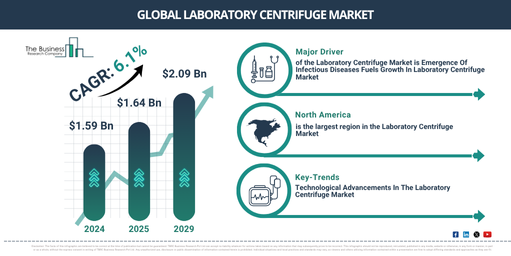
    In recent times, the laboratory centrifuge market size has consistently witnessed expansion. The market which stood at $1.59 billion in 2024 is predicted to increase to $1.64 billion in 2025, experiencing a compound annual growth rate (CAGR) of 3.1%. The advancement during the historical stages has been driven by factors like its contribution to scientific research, scholastic and educational applications, enlargement of healthcare infrastructure in the past, its crucial role in blood banking and transfusion medicine, as well as its application in the industrial and pharmaceutical sectors.

    The market size for laboratory centrifuges is set to steadily rise over the coming years. Expected to reach a value of $2.09 billion in 2029, this represents a compound annual growth rate (CAGR) of 6.1%. The predicted enlargement during this period is linked to the integration of data analytics, the increased use of point-of-care testing, greater investment in the field of life sciences, a growing emphasis on bioprocessing and biopharmaceuticals, and a shift towards personalized medicine. Looking ahead to this period, prominent trends include a stronger emphasis on user experience, the greater use of disposable technologies, remote monitoring and connectivity, the integration of safety measures, and customization and modularity.

    Download a free sample to assess the report’s scope and structure:

    https://www.thebusinessresearchcompany.com/sample.aspx?id=5733&type=smp

    How Are Key Drivers in the Industry Acting as Catalysts for the Growth of theLaboratory Centrifuge Market?

    The rise in infectious diseases is fueling the expansion of the laboratory centrifuge market. Various regions worldwide have seen a surge in infections from illnesses such as SARS, Zika virus, Ebola, and COVID-19, contributing to a heightened global disease burden. It’s believed that zoonotic infectious agents, diseases from animals that adapt to infect humans, make up approximately 60% of recognized human pathogens and up to 75% of new human pathogens. Forecasted changes in infectious disease epidemiology attribute to climate change through alterations in microbial and vector geographic domains. The rising concern is that microbes are developing resilience to increased temperatures which may result in selecting for heat-resistant microbes capable of overpowering human endothermy defenses. This could lead to the advent of new infectious diseases and alter the epidemiology existing ones. Laboratory centrifuge systems, which are used for cell, organelle, virus, protein, and nucleic acid purification, plays a significant part. For instance, the UK Health Security Agency revealed that there were 368 measles cases reported in England in 2023, a significant increase from the 53 cases in 2022. The West Midlands and London were responsible for 44% and 33% of the cases, respectively. Therefore, the arising of infectious diseases escalates the demand for lab testing solutions, thus promoting the laboratory centrifuge market.

    Which Segments in the Laboratory Centrifuge Offer the Most Growth?

    The laboratory centrifugemarket covered in this report is segmented –

    1) By Product: Equipment, Accessories

    2) By Model Type: Benchtop Centrifuges, Floor-Standing Centrifuges

    3) By Rotor Design: Fixed-Angle Rotors, Swinging-Bucket Rotors, Vertical Rotors, Other Rotors

    4) By Application: Diagnostics, Microbiology, Cellomics, Genomics, Proteomics, Blood Component Separation, Other Applications

    5) By End User: Hospitals, Biotechnology And Pharmaceutical Companies, Academic And Research Institutions

    Subsegments:

    1) By Equipment: Floor Model Centrifuges, Bench-Top Centrifuges, Ultracentrifuges, Microcentrifuges, High-Speed Centrifuges, Refrigerated Centrifuges, Clinical Centrifuges, Continuous Flow Centrifuges

    2) By Accessories: Rotors, Buckets, Adapters, Tubes And Containers, Cleaning And Maintenance Kits

    Request customized data on this market:

    https://www.thebusinessresearchcompany.com/customise?id=5733&type=smp

    What Are the Fastest-Growing Geographies in the #How Are Key Drivers in the Industry Acting as Catalysts for the Growth of theLaboratory Centrifuge Market?# Market?

    North America was the largest region in the laboratory centrifuge market in 2024. The regions covered in the laboratory centrifuge market report are Asia-Pacific, Western Europe, Eastern Europe, North America, South America, Middle East, Africa.

    What Are the Current Market Growth and Trends in the Laboratory Centrifuge Industry?

    The growing popularity of technological advancements is shaping the trend in the laboratory centrifuge market. Firms within this market are creating more effective devices with improved workflows. For example, Thermo Fisher Scientific, a US-based company specializing in life sciences and biotech research, launched the DynaSpin Single-Use Centrifuge System in September 2022. This system, designed to boost large-scale cell culture harvesting efficiency, minimizes material needs and waste, while also increasing product yield relative to conventional systems. The innovative design also diminishes downtime, facilitates scalability, and maintains compliance with regulatory standards, posing as an eco-friendly solution for the bioprocessing industry.

    View the full report here:

    https://www.thebusinessresearchcompany.com/report/laboratory-centrifuge-global-market-report

    What Are the Key Elements That Define the Laboratory Centrifuge Market?

    A laboratory centrifuge is a laboratory device used for separating the contents of a solution based on density using centrifugal force. Laboratory centrifuge systems are used in research laboratories, hospitals, or any facility that segregates material from liquid sample preparations.

    Purchase the full report and get a swift delivery:

    https://www.thebusinessresearchcompany.com/purchaseoptions.aspx?id=5733

    About The Business Research Company:

    With over 15000+ reports from 27 industries covering 60+ geographies, The Business Research Company has built a reputation for offering comprehensive, data-rich research and insights. Armed with 1,500,000 datasets, the optimistic contribution of in-depth secondary research, and unique insights from industry leaders, you can get the information you need to stay ahead in the game.

    Get in touch with us:

    The Business Research Company: https://www.thebusinessresearchcompany.com/

    Americas +1 310-496-7795

    Europe +44 7882 955267

    Asia & Others +44 7882 955267 & +91 8897263534

    Email us at info@tbrc.info

    Follow us on:

    LinkedIn: https://in.linkedin.com/company/the-business-research-company

    YouTube: https://www.youtube.com/channel/UC24_fI0rV8cR5DxlCpgmyFQ

    Global Market Model: https://www.thebusinessresearchcompany.com/global-market-model
  • Blood Collection Devices Market Outlook 2025: Mapping Growth, Innovation, and Regional Shifts

    Claim your 30% discount on Global Market Reports with code ONLINE30. Limited time only.

    What is the Anticipated CAGR of the Blood Collection Devices Market, and What Factors Will Drive It?

    The market size for blood collection devices has robustly expanded in the preceding years. The market is predicted to surge from a value of $7.95 billion in 2024 to approximately $8.48 billion in 2025, growing at a compound annual growth rate (CAGR) of 6.7%. This notable growth in the earlier period can be credited to the rising prevalence of blood-based disorders, advancing healthcare infrastructure, growing elderly population, and formulation of government initiatives and regulations.

    The market for blood collection devices is poised to experience robust growth in the upcoming years. The market is projected to reach $11.95 billion by 2029, growing at a compound annual growth rate (CAGR) of 8.9%. The predicted growth over the forecast period is due to factors such as increasing healthcare spending, an increased focus on personalized medicine and diagnostic tests, more research and development projects, and a rise in infectious diseases. Several significant trends are expected to shape the market during the forecast period, including less invasive techniques, remote blood collection services, utilizing automation and robotics, the advancement of blood collection kits, and strategic partnerships and collaborations.

    Download a free sample to assess the report’s scope and structure:

    https://www.thebusinessresearchcompany.com/sample.aspx?id=6363&type=smp

    What External and Internal Drivers Are Contributing to the Growth of theBlood Collection Devices Market?

    The proliferation of infectious illnesses is a major factor propelling the growth of the blood collection devices market. These diseases, induced by bacteria, viruses, fungi, or parasites, include hepatitis B (HBV), hepatitis C (HCV), the human immunodeficiency virus (HIV), malaria, syphilis, and brucellosis all of which require blood sampling for diagnosis. The ongoing rise in cases of these diseases and the necessary diagnostic processes are anticipated to further stimulate the use of blood collection devices. For example, the UK Health Security Agency, a government establishment based in the UK, disclosed in a report in August 2024 that as of December 31, 2022, the UK had confirmed 3,732 mpox cases, predominantly in England. By May 31, 2023, an additional 21 cases had been reported, predominantly in England, with a single case in Scotland. Therefore, the rising prevalence of infectious diseases is projected to intensify the demand for blood collection devices through the forecast period.

    What Segment Types Define the Blood Collection Devices Market Structure?

    The blood collection devicesmarket covered in this report is segmented –

    1) By Type: Blood Collection Tubes, Lancet, Micro Container Tubes, Warming Devices

    2) By Method: Manual Blood Collection, Automatic Blood Collection

    3) By Material: Glass, Stainless Steel, Plastic

    4) By End User: Hospitals, Blood Donation Centers, Diagnostic Center, Other End Users

    Subsegments:

    1) By Blood Collection Tubes: Vacuum Blood Collection Tubes, Serum Separator Tubes, EDTA Tubes

    2) By Lancet: Safety Lancets, Manual Lancets, Automatic Lancets

    3) By Micro Container Tubes: Capillary Tubes, Microtainer Tubes, Hematocrit Tubes

    4) By Warming Devices: Blood Warming Devices, Temperature Regulation Units, Infusion Warming Devices

    Request customized data on this market:

    https://www.thebusinessresearchcompany.com/customise?id=6363&type=smp

    Which Geographic Areas Hold the Strongest Growth Potential in the Blood Collection Devices Market?

    North America was the largest region in the blood collection devices market in 2024. The Asia-Pacific is expected to be the fastest-growing region in the forecast period. The regions covered in the blood collection devices market report include Asia-Pacific, Western Europe, Eastern Europe, North America, South America, Middle East and Africa.

    What Long-Term Trends Are Transforming the Competitive Landscape of the Blood Collection Devices Market?

    The trend of technological advancements is becoming increasingly significant in the blood collection devices market. Numerous firms in this sector are creating novel products or technologies to satisfy the rapidly expanding industry requirements and increase their global business presence. The high-tech products manufactured by these companies are designed to improve customer comfort and offer superior protection. For example, in April 2022, Owen Mumford, a firm specialized in designing and manufacturing medical devices, launched a new venous blood collection series under its Unistik brand name. This new series leverages the company’s proficiency and heritage in capillary blood sampling to provide a variety of venous devices that guarantee patient safety, comfort and quality. The Ultra version of Unistik ShieldLock integrates a one-handed and in-vein activated safety mechanism reducing the chance of needlestick injuries. The device also includes a unique safety attribute that, once activated, seals the tube between the needle and the Luer, preventing blood exposure after the needle is taken out from the vein.

    View the full report here:

    https://www.thebusinessresearchcompany.com/report/blood-collection-devices-global-market-report

    What Is the Definition of the Blood Collection Devices Market?

    Blood collection devices are devices used to collect blood samples from the body. Blood collection devices are used for health and wellness testing, population studies, or research and preclinical drug studies.

    Purchase the full report and get a swift delivery:

    https://www.thebusinessresearchcompany.com/purchaseoptions.aspx?id=6363

    About The Business Research Company:

    With over 15000+ reports from 27 industries covering 60+ geographies, The Business Research Company has built a reputation for offering comprehensive, data-rich research and insights. Armed with 1,500,000 datasets, the optimistic contribution of in-depth secondary research, and unique insights from industry leaders, you can get the information you need to stay ahead in the game.

    Get in touch with us:

    The Business Research Company: https://www.thebusinessresearchcompany.com/

    Americas +1 310-496-7795

    Europe +44 7882 955267

    Asia & Others +44 7882 955267 & +91 8897263534

    Email us at info@tbrc.info

    Follow us on:

    LinkedIn: https://in.linkedin.com/company/the-business-research-company

    YouTube: https://www.youtube.com/channel/UC24_fI0rV8cR5DxlCpgmyFQ

    Global Market Model: https://www.thebusinessresearchcompany.com/global-market-model
  • Laboratory Automation Systems Market Trends 2025-2034: Growth, Strategic Insights, and Opportunities Ahead

    Laboratory Automation Systems Market Trends 2025-2034: Growth, Strategic Insights, and Opportunities Ahead

    Claim your 30% discount on Global Market Reports with code ONLINE30. Limited time only.

    How Has The Laboratory Automation Systems Market Size Shifted, And What Is the Outlook Through 2034?

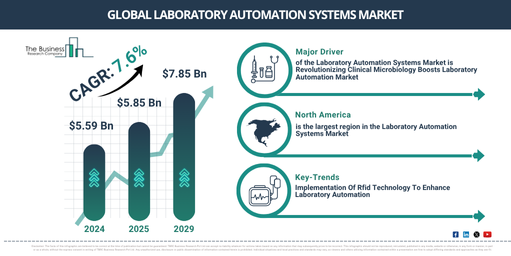
    In recent times, there has been a consistent expansion in the laboratory automation systems market. This market is forecasted to increase from $5.59 billion in 2024 to $5.85 billion in 2025, demonstrating a compound annual growth rate (CAGR) of 4.7%. Factors such as a rise in medical errors, expansion of healthcare facilities, economic growth in developing markets, increased spending in healthcare, and a fast-growing elderly population have contributed to the market’s growth during the historic period.

    In the coming years, the market size for laboratory automation systems is expected to witness robust growth, reaching $7.85 billion in 2029 with a 7.6% compound annual growth rate (CAGR). Factors such as accelerated technological innovation, an increasing elderly population, a rise in the prevalence of chronic diseases, impact of Covid-19, and a surge in lifestyle-related diseases are set to propel this growth. Key trends for this forecasted period include a higher focus on investing in research and development, collaborations with artificial intelligence firms, strategic partnerships with other market stakeholders, the development of more efficient lab automation solutions, the adoption of RFID technology, introduction of new products and gaining certifications, as well as assistance from government initiatives.

    Download a free sample to assess the report’s scope and structure:

    https://www.thebusinessresearchcompany.com/sample.aspx?id=2560&type=smp

    What Are the Major Market Drivers Behind the Rising Adoption of Laboratory Automation Systems Market?

    The surge in microbiology testing needs and the standardisation of devices used for microbiology culture collection has facilitated increased utilisation of automated laboratory systems for culture-based lab tests in clinical microbiology. Conventional manual methods for culture-based microbiology lab testing are being substituted by automated techniques, thanks to total lab automation. Systems such as Becton Dickinson’s Kiestra TLA, Copan’s WASPLab, and others facilitate total lab automation (TLA) for culture-based microbiology testing. The ability of these automated systems to enhance lab efficiency, reduce turnaround time, and improve the overall quality of culture-based microbiology testing, is fueling the growth of the automated laboratory systems market.

    Which Key Market Segments Comprise the Laboratory Automation Systems Market and Drive Its Revenue Growth?

    The laboratory automation systemsmarket covered in this report is segmented –

    1) By Type: Modular Automation, Total Lab Automation

    2) By Equipment And Software: Automated Liquid Handling, Microplate Readers, Standalone Robots, Automated Storage, Retrieval

    3) By Application: Drug Discovery, Clinical Diagnostics, Genomics Solutions, Proteomics Solutions, Others

    4) By End User: Biotechnology And Pharmaceutical Industries, Research Institutes, Hospitals And Private Labs, Academic Institutes

    Subsegments:

    1) By Modular Automation: Robotic Systems for Sample Handling, Automated Liquid Handling Systems, Modular Sample Storage Systems

    2) By Total Lab Automation: Integrated Workflow Systems, Fully Automated Laboratory Analyzers, Comprehensive Data Management Solutions

    Request customized data on this market:

    https://www.thebusinessresearchcompany.com/customise?id=2560&type=smp

    Which Areas Are Leading Regions in the Laboratory Automation Systems Market Expansion Across the Globe?

    North America was the largest region in the laboratory automation systems market in 2024. Western Europe was the second largest region in the global laboratory automation systems market analysis. The regions covered in the laboratory automation systems market report are Asia-Pacific, Western Europe, Eastern Europe, North America, South America, Middle East, Africa

    What Are the Strategic Trends Steering theLaboratory Automation Systems Market Direction?

    A rising number of hospital laboratories are embracing RFID technology for their automated systems, a shift driven by the technology’s capacity for improved productivity, enhanced product quality and cost-effectiveness. This includes diminished errors, speedier sample delivery, and a decrease in reliance on human involvement. The Radio Frequency Identification (RFID) technology system, which involves wireless communication-based automatic identification, incorporates a tag and a reader that communicate through radio frequencies. More advantageous than bar code technology, RFID technology can execute additional functions automatically without the need for human intervention. Equipped with a transponder, a transceiver, and a data processing unit, an RFID system fulfills the advanced identification and tracking demands in hospital laboratories. These automated systems in labs utilize RFID tags for patient sample identification and smart cards for the storage of patient data. This data is monitored by a workstation that tracks the laboratory process. An example can be found in the Mayo Clinic, a healthcare corporation, which utilized RFID-enabled lab automation systems to decrease errors by up to 70%, boost efficiency and patient safety, as well as cut down specimen turnaround time by half.

    View the full report here:

    https://www.thebusinessresearchcompany.com/report/laboratory-automation-systems-global-market-report

    How Is the Laboratory Automation Systems Market Conceptually Defined?

    Laboratory automation systems refer to the use of instruments to carry out laboratory tasks with a minimum of human involvement. Clinical laboratories operate more efficiently because of laboratory automation, which helps to standardize tests.

    Purchase the full report and get a swift delivery:

    https://www.thebusinessresearchcompany.com/purchaseoptions.aspx?id=2560

    About The Business Research Company:

    With over 15000+ reports from 27 industries covering 60+ geographies, The Business Research Company has built a reputation for offering comprehensive, data-rich research and insights. Armed with 1,500,000 datasets, the optimistic contribution of in-depth secondary research, and unique insights from industry leaders, you can get the information you need to stay ahead in the game.

    Get in touch with us:

    The Business Research Company: https://www.thebusinessresearchcompany.com/

    Americas +1 310-496-7795

    Europe +44 7882 955267

    Asia & Others +44 7882 955267 & +91 8897263534

    Email us at info@tbrc.info

    Follow us on:

    LinkedIn: https://in.linkedin.com/company/the-business-research-company

    YouTube: https://www.youtube.com/channel/UC24_fI0rV8cR5DxlCpgmyFQ

    Global Market Model: https://www.thebusinessresearchcompany.com/global-market-model
  • Bioprocess Containers Market in Focus: Forecasting Growth Drivers, Scaling Potential, and Global Opportunities

    Bioprocess Containers Market in Focus: Forecasting Growth Drivers, Scaling Potential, and Global Opportunities

    Claim your 30% discount on Global Market Reports with code ONLINE30. Limited time only.

    What Are the Key Milestones in the Bioprocess Containers Market’s Growth Trajectory From 2025 To 2034?

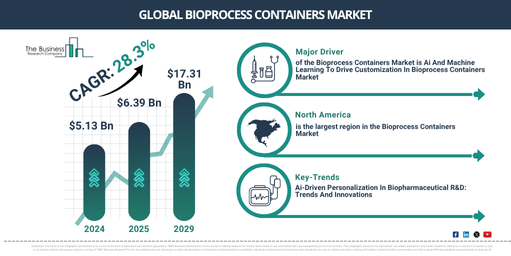
    The market size of bioprocess containers has seen significant expansion in the past few years. The market, valued at $5.13 billion in 2024, is expected to increase to $6.39 billion in 2025, experiencing a compound annual growth rate (CAGR) of 24.6%. The rise during the historic period was due to the expansion of the biopharmaceutical industry, government allocations for research and development, an increase in the privatization of laboratory activities and a surge in healthcare expenditure.

    The market size of bioprocess containers is anticipated to skyrocket over the next several years, hitting a valuation of $17.31 billion in 2029, with a compound annual growth rate (CAGR) of 28.3%. This substantial growth during the forecast period can largely be credited to factors such as increasing investments in healthcare, expansion into emergent markets, supportive regulations, and the growth in disposable income. Key trends anticipated during this period encompass sustainability and environmentally friendly solutions, the use of digitalization and data analytics, the move towards outsourcing and contract manufacturing, the shift towards customization and modular systems, and an increased focus on personalized medicine and patient-focused manufacturing.

    Download a free sample to assess the report’s scope and structure:

    https://www.thebusinessresearchcompany.com/sample.aspx?id=6364&type=smp

    What Are the Core Market Drivers Propelling Growth in the Bioprocess Containers Industry?

    The expansion of the bioprocess containers market is primarily due to the surge in biopharmaceutical research and development activities. This sector necessitates a paradigm shift from the conventional drug development approach, which aids in faster medicine delivery to patients, reduces associated expenses, and enhances knowledge and decision-making. The application of data, digital technology, and artificial intelligence boosts the chances of success by effectively and efficiently identifying new drugs. With the growth in biopharmaceutical development, a corresponding increase in the demand for bioprocess containers is inevitable for their secure, uncontaminated storage and safe transportation. For instance, an institutional report by IQVIA, a US multinational company in the pharmaceutical industry, in February 2022 showed continuous bustling in the global biopharmaceutical industry, with over 6,000 products in active development and an ascending share of this innovation stemming from a new geographical region. Consequently, the upswing in biopharmaceutical research and development propels the growth of the bioprocess containers market.

    How Is the Bioprocess Containers Market Segmented?

    The bioprocess containersmarket covered in this report is segmented –

    1) By Type: 2D Bioprocess Containers, 3D Bioprocess Containers, Tank Liners, Other Containers & Accessories

    2) By Application: Process Development, Upstream, Downstream

    3) By End User: Biopharmaceutical Companies, Life Science R&D Companies, Other End Users

    Subsegments:

    1) By 2D Bioprocess Containers: Single-Use Bags, Flexible Film Containers

    2) By 3D Bioprocess Containers: Bioreactor Bags, 3D Cell Culture Containers

    3) By Tank Liners: Protective Liners, Flexible Tank Liners

    4) By Other Containers & Accessories: Connectors and Tubing, Manifolds, Holders and Racks

    Request customized data on this market:

    https://www.thebusinessresearchcompany.com/customise?id=6364&type=smp

    Which Regions Are Driving the Next Phase of the Bioprocess Containers Market Growth?

    North America was the largest region in the bioprocess containers market in 2024. Asia-Pacific is expected to be the fastest-growing region in the forecast period. The regions covered in the bioprocess containers market report include Asia-Pacific, Western Europe, Eastern Europe, North America, South America, Middle East and Africa.

    What Key Market Trends and Innovations Are Shaping the Future of the Bioprocess Containers Industry?

    The rise in technological innovation is a pivotal trend gaining traction in the bioprocess container industry. Major firms in the market are concentrating their efforts on offering technologically superior products that align with the rapid shifts in the industry landscape and consolidate their market stand. They are integrating state-of-the-art technologies into their products, like depth filtration, disposable chromatography, sterile filtration, ultrafiltration (UF)/defiltration (DF), virus filtration, among others. These advanced technological products provide better sample safety, productivity, and other perks. For instance, Single Use Support GmbH, an Austrian biopharmaceutical solutions firm, launched the IRIS single-use bag line in October 2022. Designed specifically for the robust storage, transport, and cryopreservation of drug substances, it caters to the needs of the biopharmaceutical industry, serving as bioprocess containers. Primarily, for the storage, transport, and cryopreservation of drug substances like biologics and cell & gene therapies. These bags can be tailored to meet manufacturers’ exact needs, taking into consideration the volume, number of ports, and attached tubing. Designed to maintain high integrity at extreme low temperatures, down to -150°C (-238°F), they guarantee the safety and sterility of the contents throughout handling.

    View the full report here:

    https://www.thebusinessresearchcompany.com/report/bioprocess-containers-global-market-report

    How Is the Bioprocess Containers Market Defined and What Are Its Core Parameters?

    Bioprocess containers are single-use containers that are used for critical sterile liquid-handling applications in the biopharmaceutical industry. It is used for liquid cell culture media, reagents, buffers, containment, and storage vessels for intermediate and final products yielded from manufacturing processes.

    Purchase the full report and get a swift delivery:

    https://www.thebusinessresearchcompany.com/purchaseoptions.aspx?id=6364

    About The Business Research Company:

    With over 15000+ reports from 27 industries covering 60+ geographies, The Business Research Company has built a reputation for offering comprehensive, data-rich research and insights. Armed with 1,500,000 datasets, the optimistic contribution of in-depth secondary research, and unique insights from industry leaders, you can get the information you need to stay ahead in the game.

    Get in touch with us:

    The Business Research Company: https://www.thebusinessresearchcompany.com/

    Americas +1 310-496-7795

    Europe +44 7882 955267

    Asia & Others +44 7882 955267 & +91 8897263534

    Email us at info@tbrc.info

    Follow us on:

    LinkedIn: https://in.linkedin.com/company/the-business-research-company

    YouTube: https://www.youtube.com/channel/UC24_fI0rV8cR5DxlCpgmyFQ

    Global Market Model: https://www.thebusinessresearchcompany.com/global-market-model
  • Lab Supplies Market Insights: In-Depth Look at Growth Trends, Market Size, and Opportunities for 2025-2034

    Lab Supplies Market Insights: In-Depth Look at Growth Trends, Market Size, and Opportunities for 2025-2034

    Claim your 30% discount on Global Market Reports with code ONLINE30. Limited time only.

    How Has the Lab Supplies Market Growth Performance Trended Historically, And What Lies Ahead?

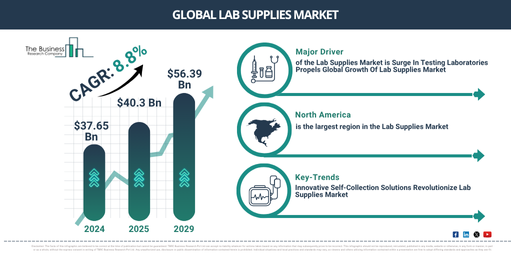
    In recent years, there has been a substantial growth in the lab supplies market size. With a compound annual growth rate (CAGR) of 7.1%, it is predicted to increase from $37.65 billion in 2024 to $40.3 billion in 2025. The expansion during the historic period is tied to factors such as scientific research and discoveries, advancements in biotechnology and pharmaceuticals, the demand for healthcare diagnostics and testing, the role of academic and educational entities, and the need for industrial quality control and assurance.

    The market size for lab supplies is predicted to experience robust expansion in the coming years, estimated to reach $56.39 billion by 2029 with a compound annual growth rate (CAGR) of 8.8%. This surge in the projection period can be credited to the escalating activities in life sciences research, heightened attention towards environmental testing, the growing importance of point-of-care testing, the worldwide action towards health crises, and advancements in the field of genomic medicine. Notable tendencies in the projection period comprise a concentration on biodegradable materials, stringent set of rules for quality and safety, partnerships with research establishments, optimization of international supply chains, and stress on single-use technologies.

    Download a free sample to assess the report’s scope and structure:

    https://www.thebusinessresearchcompany.com/sample.aspx?id=8989&type=smp

    What External and Internal Drivers Are Contributing to the Growth of theLab Supplies Market?

    The global expansion in testing laboratories is likely to spur the development of the lab supplies market. Testing laboratories, which serve as facilities for carrying out diagnostic examinations or conducting research, rely heavily on lab supplies for undertaking chemical reactions and storage. Thus, the escalation in the number of these institutions enhances the usage of lab supplies, subsequently fueling the lab supplies market. For example, the International Laboratory Accreditation Cooperation, an organization in Australia that deals with accreditation bodies, stated in April 2023 that they have accredited between 85,000 and 88,000 laboratories, 13,000 to 13,900 inspection authorities, 600 to 604 proficiency testing providers (PTP), and 250 to 260 reference material producers (RMP) spanning over 154 organizations in 129 global economies from September 2022 to April 2023. Consequently, the burgeoning number of testing laboratories on a global scale is propelling the lab supplies market’s growth.

    What Segment Types Define the Lab Supplies Market Structure?

    The lab suppliesmarket covered in this report is segmented –

    1) By Product: Equipment, Disposables

    2) By Application: Biochemistry, Endocrinology, Microbiology, Genetic Testing, Other Applications

    3) By End Users: Academic Institutes, Clinical And Diagnostic Laboratories, Pharmaceutical And Biotechnology Companies, Other End Users

    Subsegments:

    1) By Equipment: Laboratory Instruments, Analytical Equipment, Safety Equipment, Storage Equipment

    2) By Disposables: Glassware, Plasticware, Consumables, Biohazard Bags And Containers

    Request customized data on this market:

    https://www.thebusinessresearchcompany.com/customise?id=8989&type=smp

    Which Geographic Areas Hold the Strongest Growth Potential in the Lab Supplies Market?

    North America was the largest region in the lab supplies market in 2024. The regions covered in the lab supplies market report are Asia-Pacific, Western Europe, Eastern Europe, North America, South America, Middle East, Africa.

    What Long-Term Trends Are Transforming the Competitive Landscape of the Lab Supplies Market?

    The development of new products is a significant trend emerging in the lab supplies market. To maintain their market standing, primary firms are launching inventive goods. For instance, Q2 Solutions, a clinical trial laboratory services firm based in the US, unveiled the inaugural self-collection safety lab panel for American clinical trial participants in October 2022. This novel product employs self-collection technology, allowing trial participants to supply blood samples in the convenience of their own homes. The remote sampling system of clinical-grade facilitates laboratory testing that’s decentralized without compromising the quality of the sample. The solution includes easy-to-use self-collection kits for home use, complete with instruction manuals and videos, a methodology for direct patient delivery, and a streamlined process for processing and shipping specimens.

    View the full report here:

    https://www.thebusinessresearchcompany.com/report/lab-supplies-global-market-report

    What Is the Definition of the Lab Supplies Market?

    Lab supplies are equipment and instruments used in laboratories that conduct scientific research or teach practical science. These instruments are used to contain chemicals, carry out reactions and measure the results.

    Purchase the full report and get a swift delivery:

    https://www.thebusinessresearchcompany.com/purchaseoptions.aspx?id=8989

    About The Business Research Company:

    With over 15000+ reports from 27 industries covering 60+ geographies, The Business Research Company has built a reputation for offering comprehensive, data-rich research and insights. Armed with 1,500,000 datasets, the optimistic contribution of in-depth secondary research, and unique insights from industry leaders, you can get the information you need to stay ahead in the game.

    Get in touch with us:

    The Business Research Company: https://www.thebusinessresearchcompany.com/

    Americas +1 310-496-7795

    Europe +44 7882 955267

    Asia & Others +44 7882 955267 & +91 8897263534

    Email us at info@tbrc.info

    Follow us on:

    LinkedIn: https://in.linkedin.com/company/the-business-research-company

    YouTube: https://www.youtube.com/channel/UC24_fI0rV8cR5DxlCpgmyFQ

    Global Market Model: https://www.thebusinessresearchcompany.com/global-market-model
  • Strong CAGR to Propel in the Bifurcation Lesions Market and Beyond upto $4.01 Billion by 2029

    Strong CAGR to Propel in the Bifurcation Lesions Market and Beyond upto $4.01 Billion by 2029

    Claim your 30% discount on Global Market Reports with code ONLINE30. Limited time only.

    How Has The Bifurcation Lesions Market Size Shifted, And What Is the Outlook Through 2034?

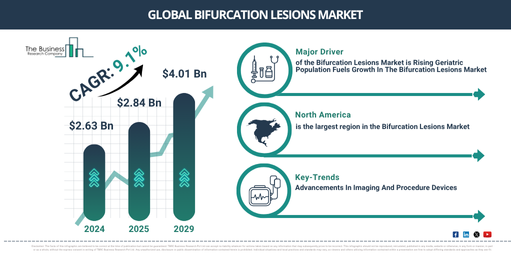
    In recent times, the market size of bifurcation lesions has experienced significant growth. The market, which stood at $2.63 billion in 2024, will expand to $2.84 billion in 2025, representing a compound annual growth rate (CAGR) of 7.8%. Numerous factors have contributed to this increase during the historic period, including the increased incidence of coronary artery diseases, a surge in the elderly population, enhanced healthcare spending, and economic expansion.

    The market size for bifurcation lesions is projected to experience significant growth in the coming years. It is expected to rise to $4.01 billion by 2029, with a compound annual growth rate (CAGR) of 9.1%. This growth over the forecast timeframe can be attributed to the burgeoning demand for less invasive surgical procedures, enhancements in healthcare facilities and infrastructure, a rising incidence of cardiovascular disease, and governmental health policies. Key trends over this forecast period include a focus on patient-oriented approaches, the use of bioresorbable stents, the incorporation of AI and machine learning, and interdisciplinary collaboration.

    Download a free sample to assess the report’s scope and structure:

    https://www.thebusinessresearchcompany.com/sample.aspx?id=7414&type=smp

    Which Primay Drivers Are Accelerating Growth in the Bifurcation Lesions Market?

    The bifurcation lesions market is predicted to grow due to a surge in the elderly population. Individuals aged 60 and above are at a higher risk of developing coronary heart disease, heart failure, or experiencing a heart attack or stroke compared to their younger counterparts. Bifurcation lesions become critical in these circumstances, treating blood clots to ensure sufficient blood supply to the heart. As per a World Health Organization (WHO) report in October 2022, it is anticipated that by 2030, one in six people globally will be 60 or above. The world will have 2.1 billion people aged 60 or older by 2050. Furthermore, the population aged 80 and above will see an increase of 426 million between 2020 and 2050. Hence, the rise in the senior population is set to propel the bifurcation lesions market.

    Which Primary Segments of the Bifurcation Lesions Market Are Driving Growth and Industry Transformations?

    The bifurcation lesionsmarket covered in this report is segmented –

    1) By Types: One-Stent, Two-Stent

    2) By Application: Coronary Vascular, Peripheral Vascular

    Subsegments:

    1) By One-Stent: Single-Stent Deployment, Balloon-Expandable Stents, Self-Expanding Stents

    2) By Two-Stent: Crush Technique, T- or Y-Configuration Stenting, Side Branch Stenting Techniques

    Request customized data on this market:

    https://www.thebusinessresearchcompany.com/customise?id=7414&type=smp

    Which Regions Are Key Players in the Growth of the #Which Primay Drivers Are Accelerating Growth in the Bifurcation Lesions Market?# Market?

    North America was the largest region in the bifurcation lesions market in 2024. Asia-Pacific is expected to be the fastest-growing region in the forecast period. The regions covered in the bifurcation lesions market report include Asia-Pacific, Western Europe, Eastern Europe, North America, South America, Middle East and Africa.

    Which Technological Trends Are Reshaping the Bifurcation Lesions Industry Dynamics?

    Innovations in imaging and procedural devices represent a crucial trend that’s gaining traction in the bifurcation lesions sector. Major firms in this sector are focusing their resources on enhancing the existing devices used for imaging and operative procedures. For example, Advanced Bifurcation Systems (ABS), which is a medical device firm in the clinical trial phase and has a distinctive bifurcation stenting solution to normalize treatment for all bifurcation lesions in coronary angioplasties, provides a platform equipped with the exclusive modular self-aligning stent technology for structured bifurcations. The ABS platform, with its uniqueness, minimizes the necessity for repeated procedures and efficiently enables bifurcation stenting treatment.

    View the full report here:

    https://www.thebusinessresearchcompany.com/report/bifurcation-lesions-global-market-report

    What Parameters Are Used to Define the Bifurcation Lesions Market?

    Bifurcation lesions refer to a coronary artery constriction that occurs next to or involves the origin of a vital side branch one does not want to lose. It occurs when plaque deposits accumulate, and the artery becomes too small for adequate blood flow to your heart.

    Purchase the full report and get a swift delivery:

    https://www.thebusinessresearchcompany.com/purchaseoptions.aspx?id=7414

    About The Business Research Company:

    With over 15000+ reports from 27 industries covering 60+ geographies, The Business Research Company has built a reputation for offering comprehensive, data-rich research and insights. Armed with 1,500,000 datasets, the optimistic contribution of in-depth secondary research, and unique insights from industry leaders, you can get the information you need to stay ahead in the game.

    Get in touch with us:

    The Business Research Company: https://www.thebusinessresearchcompany.com/

    Americas +1 310-496-7795

    Europe +44 7882 955267

    Asia & Others +44 7882 955267 & +91 8897263534

    Email us at info@tbrc.info

    Follow us on:

    LinkedIn: https://in.linkedin.com/company/the-business-research-company

    YouTube: https://www.youtube.com/channel/UC24_fI0rV8cR5DxlCpgmyFQ

    Global Market Model: https://www.thebusinessresearchcompany.com/global-market-model
  • Joint Reconstruction Devices And Equipment Market Outlook 2025–2034: Identifying Growth Drivers, Technology Trends, and Policy Impact

    Joint Reconstruction Devices And Equipment Market Outlook 2025–2034: Identifying Growth Drivers, Technology Trends, and Policy Impact

    Claim your 30% discount on Global Market Reports with code ONLINE30. Limited time only.

    What Are the Projected Market Size and Growth Rates for the Joint Reconstruction Devices And Equipment Market From 2025 To 2029?

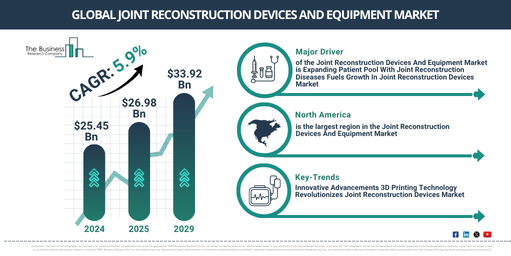
    The market size for joint reconstruction devices and equipment has experienced significant growth in recent years. It is projected to expand from a value of $25.45 billion in 2024 to $26.98 billion in 2025, reflecting a compound annual growth rate (CAGR) of 6.0%. The previous growth has been driven by factors such as improved technologies, robust economic expansion in emerging markets, and an increase in healthcare spending.

    Expectations are high for robust growth in the joint reconstruction devices and equipment market in the approaching years. The market size is estimated to reach $33.92 billion by 2029, with a compound annual growth rate (CAGR) of 5.9%. Factors contributing to this growth in the forecasted period include a rise in joint reconstruction disorders, a rapidly aging population, and increased joint replacement surgeries. Key trends to watch during this period are the development of IoT-enabled solutions for joint reconstruction surgery, the use of artificial intelligence to lower costs and time, investments in robotic products for joint reconstruction surgery, a focus on mergers and acquisitions for business growth, and investment in 3D printing technology.

    Download a free sample to assess the report’s scope and structure:

    https://www.thebusinessresearchcompany.com/sample.aspx?id=2436&type=smp

    What Are the Core Market Drivers Propelling Growth in the Joint Reconstruction Devices And Equipment Industry?

    The growth of the joint reconstruction devices and equipment market is being propelled by a vast number of patients suffering from joint reconstruction diseases. Many of these patients opt for joint replacement treatment over other available options due to its enhanced safety and reliability. The growing incidence of issues like osteoarthritis, knee and hip injuries, road accidents, cartilage, and labral injury is broadening the patient demographic. As an example, osteoarthritis is a prevalent joint disorder primarily impacting the elderly population worldwide and is effectively treated via joint replacement surgeries employing orthopedic knee and hip implants. The Arthritis Foundation predicts that by 2030, around 67 million individuals will likely be affected by arthritis. This increasing number of patients with joint diseases is fueling the demand for joint reconstruction devices and equipment, thereby extensively influencing market expansion.

    How Is the Joint Reconstruction Devices And Equipment Market Segmented?

    The joint reconstruction devices and equipmentmarket covered in this report is segmented –

    1) By Product Type: Knee Reconstruction Devices, Hip Reconstruction Devices, Extremity Reconstruction Devices

    2) By Application: Arthrodesis, Arthroscopy, Joint Replacement Surgery, Osteotomy, Resurfacing Surgery, Small Joint Surgery

    3) By End User: Hospitals, Orthopedic Clinics, Ambulatory Surgical Centers

    Subsegments:

    1) By Knee Reconstruction Devices: Total Knee Replacement (TKR) Implants, Partial Knee Replacement Implants, Knee Revision Implants

    2) By Hip Reconstruction Devices: Total Hip Replacement (THR) Implants, Hip Resurfacing Implants, Hip Revision Implants

    3) By Extremity Reconstruction Devices: Shoulder Reconstruction Devices, Ankle Reconstruction Devices, Elbow Reconstruction Devices, Wrist And Hand Reconstruction Devices

    Request customized data on this market:

    https://www.thebusinessresearchcompany.com/customise?id=2436&type=smp

    Which Regions Are Driving the Next Phase of the Joint Reconstruction Devices And Equipment Market Growth?

    North America was the largest region in the global joint reconstruction devices and equipment market in 2024. Asia-Pacific was the second largest market in joint reconstruction devices and equipment market. The regions covered in the joint reconstruction devices and equipment market report are Asia-Pacific, Western Europe, Eastern Europe, North America, South America, Middle East, Africa

    What Key Market Trends and Innovations Are Shaping the Future of the Joint Reconstruction Devices And Equipment Industry?

    Significant investments in 3D printing technology are being made by leading enterprises in the joint reconstruction devices industry due to its considerable advantages over traditional joint reconstruction surgery. This method is utilized for bone reconstructions before the surgical procedure, allowing the patient to undergo a preoperative MRI or CT scan. Such features provide notable benefits to patients in terms of safety considerations, affecting their compliance with treatment plans. For example, in August 2022, Exactech — a US-based purveyor of innovative implants and surgical tools — introduced their novel total hip arthroplasty system, a comprehensive platform with an array of innovative design features to aid surgeons in achieving optimal results for their patients.

    View the full report here:

    https://www.thebusinessresearchcompany.com/report/joint-reconstruction-devices-and-equipment-global-market-report

    How Is the Joint Reconstruction Devices And Equipment Market Defined and What Are Its Core Parameters?

    Joint reconstruction devices are implantable medical devices that are used to operate as replacements for the shoulder joint, hip joint or knee joint to restore the function of a joint. A joint can be restored by resurfacing the bones.

    Purchase the full report and get a swift delivery:

    https://www.thebusinessresearchcompany.com/purchaseoptions.aspx?id=2436

    About The Business Research Company:

    With over 15000+ reports from 27 industries covering 60+ geographies, The Business Research Company has built a reputation for offering comprehensive, data-rich research and insights. Armed with 1,500,000 datasets, the optimistic contribution of in-depth secondary research, and unique insights from industry leaders, you can get the information you need to stay ahead in the game.

    Get in touch with us:

    The Business Research Company: https://www.thebusinessresearchcompany.com/

    Americas +1 310-496-7795

    Europe +44 7882 955267

    Asia & Others +44 7882 955267 & +91 8897263534

    Email us at info@tbrc.info

    Follow us on:

    LinkedIn: https://in.linkedin.com/company/the-business-research-company

    YouTube: https://www.youtube.com/channel/UC24_fI0rV8cR5DxlCpgmyFQ

    Global Market Model: https://www.thebusinessresearchcompany.com/global-market-model