Blog

  • Autoinjectors Market Valuation Expected To Reach $9.93 Billion By 2029, Growing At A Rate Of 21.8%

    Autoinjectors Market Valuation Expected To Reach $9.93 Billion By 2029, Growing At A Rate Of 21.8%

    Claim your 30% discount on Global Market Reports with code ONLINE30. Limited time only.

    How Has the Autoinjectors Market Growth Performance Trended Historically, And What Lies Ahead?

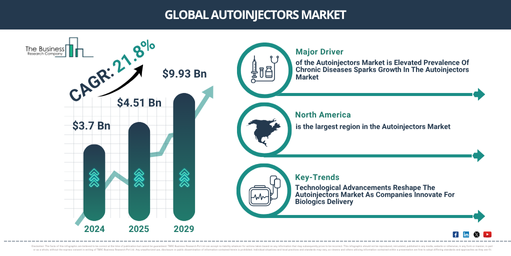
    In recent times, there has been a tremendous surge in the size of the autoinjectors market. The market’s worth is projected to escalate from $3.7 billion in 2024 to $4.51 billion in 2025, representing a compound annual growth rate (CAGR) of 22.0%. This growth during the historical period can be ascribed to the heightened occurrence of chronic illnesses, increase in the elderly population, expansion in the biotechnology and pharmaceutical sectors, a rise in patient inclination towards self-administration, and regulatory support.

    The market sphere for autoinjectors is predicted to witness a substantial rise in size in the coming years. Projecting a growth to $9.93 billion by 2029 with a Compound Annual Growth Rate (CAGR) of 21.8%. This projected expansion can be ascribed to several factors including the growth of therapeutic applications, the surge in healthcare expenses, a heightened emphasis on health care that puts the patient at the center, the ascent of telemedicine and monitoring of distant patients, as well as emerging markets. Key trends that will shape this period of projection incorporate personalized delivery of medicine, digital and intelligent autoinjectors, autoinjectors that don’t require needles, biologic drug conveyance, and features focusing on safety and security.

    Download a free sample to assess the report’s scope and structure:

    https://www.thebusinessresearchcompany.com/sample.aspx?id=5249&type=smp

    Which Factors and External Forces Are Driving Demand in the Autoinjectors Market?

    As chronic diseases continue to rise, the autoinjectors market is expected to flourish in the upcoming years. Chronic diseases are defined as those which persist over a year or more, requiring consistent medical supervision. Diseases such as heart disease, cancer, diabetes, and rheumatoid arthritis are globally regarded as the top contributors to death and disability. Autoinjectors, meant for multiple deliveries of biologics and hormones, are beneficial for patients requiring consistent dosage for managing conditions like diabetes and rheumatoid arthritis on a long-term basis. For example, research conducted by the American Cancer Society, a health organization based in the US, predicted that in January 2022, the US would experience approximately 609,360 cancer related deaths and 1.9 million fresh instances of cancer, amounting to roughly 1,670 deaths each day. This escalating prevalence of chronic health problems spurs on the autoinjectors market growth as these useful tools provide an effective, convenient solution for patients needing routine treatments.

    Which Segments in the Autoinjectors Offer the Most Growth?

    The autoinjectorsmarket covered in this report is segmented –

    1) By Type: Disposable Autoinjectors, Reusable Autoinjectors

    2) By Therapy: Rheumatoid Arthritis, Multiple Sclerosis, Diabetes, Anaphylaxis, Other Therapies

    3) By Route Of Administration: Subcutaneous, Intramuscular

    4) By Distribution Channel: Online Retailer, Pharmacy

    5) By End User: Home Care Settings, Hospitals And Clinics, Other End-Users

    Subsegments:

    1) By Disposable Autoinjectors: Single-Use Disposable Autoinjectors, Pre-filled Disposable Autoinjectors

    2) By Reusable Autoinjectors: Multi-Use Reusable Autoinjectors, Rechargeable Reusable Autoinjectors

    Request customized data on this market:

    https://www.thebusinessresearchcompany.com/customise?id=5249&type=smp

    What Are the Fastest-Growing Geographies in the #Which Factors and External Forces Are Driving Demand in the Autoinjectors Market?# Market?

    North America was the largest region in the autoinjectors market in 2024. Asia-Pacific is expected to be the fastest-growing region in the forecast period. The regions covered in the autoinjectors market report include Asia-Pacific, Western Europe, Eastern Europe, North America, South America, Middle East and Africa.

    Which Cutting-Edge Market Trends Are Expected to Drive theAutoinjectors Market’s Growth?

    Technological advancements are driving growth in the autoinjectors market. Many key players in this sector focus on creating innovative technological solutions for autoinjectors to deliver thicker biologics. For instance, in May 2023, Germany’s pharmaceutical giant, Boehringer Ingelheim, revealed that its Cyltezo Pen, an autoinjector variant for Cyltezo (adalimumab-adbm), had been approved by the U.S. Food and Drug Administration (FDA). Cyltezo is authorized for treatment of multiple chronic inflammation-based diseases. The 40 mg/0.8 mL Cyltezo Pen will be available in packages of two, four, and six.

    View the full report here:

    https://www.thebusinessresearchcompany.com/report/autoinjectors-global-market-report

    What Are the Key Elements That Define the Autoinjectors Market?

    An autoinjector is a device for injecting a single, preset dose of medication into one’s own body. It generally consists of a spring-loaded syringe that is activated when the device is pressed firmly against the body. This design allows for safe and efficient self-administration of medications, particularly in emergency situations.

    Purchase the full report and get a swift delivery:

    https://www.thebusinessresearchcompany.com/purchaseoptions.aspx?id=5249

    About The Business Research Company:

    With over 15000+ reports from 27 industries covering 60+ geographies, The Business Research Company has built a reputation for offering comprehensive, data-rich research and insights. Armed with 1,500,000 datasets, the optimistic contribution of in-depth secondary research, and unique insights from industry leaders, you can get the information you need to stay ahead in the game.

    Get in touch with us:

    The Business Research Company: https://www.thebusinessresearchcompany.com/

    Americas +1 310-496-7795

    Europe +44 7882 955267

    Asia & Others +44 7882 955267 & +91 8897263534

    Email us at info@tbrc.info

    Follow us on:

    LinkedIn: https://in.linkedin.com/company/the-business-research-company

    YouTube: https://www.youtube.com/channel/UC24_fI0rV8cR5DxlCpgmyFQ

    Global Market Model: https://www.thebusinessresearchcompany.com/global-market-model
  • Emerging Growth Drivers in the Intraocular Lens Market Landscape: Intraocular Lens Market Surges As Prevalence Of Eye Diseases Including Glaucoma Spurs Demand

    Emerging Growth Drivers in the Intraocular Lens Market Landscape: Intraocular Lens Market Surges As Prevalence Of Eye Diseases Including Glaucoma Spurs Demand

    Claim your 30% discount on Global Market Reports with code ONLINE30. Limited time only.

    What Is the Estimated Market Size of the Intraocular Lens Market In 2029?

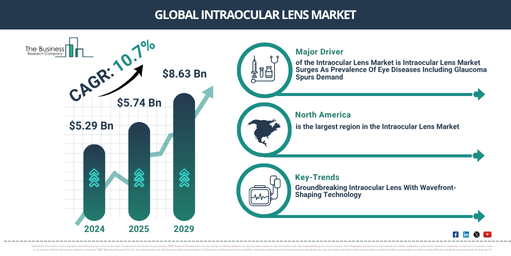
    The size of the intraocular lens marketplace has experienced robust expansion in the past few years. The projected growth is from $5.29 billion in 2024 to $5.74 billion in 2025, with a compound annual growth rate (CAGR) of 8.6%. The significant growth during the historic period can be credited to factors like the patient’s expectations and satisfaction, increased outpatient cataract surgical procedures, the advent of phacoemulsification, advancements in surgical practices, and a shift towards the use of foldable materials.

    Anticipated to witness a swift expansion in the upcoming years, the intraocular lens market is predicted to proliferate to a value of $8.63 billion by 2029, scaling at a compound annual growth rate (CAGR) of 10.7%. This progressive projection for the forecast period is derived from the attention on burgeoning markets, increasing elderly populace, the growth of cataract operation rates, and the rising demand for premium intraocular lenses, along with a shift towards ambulatory procedures. The forecast period is characterized by major trends which include an upsurge in cataract operations, a pivot towards less intrusive surgeries, the need for improved visual results, alterations and sanctions in regulations, as well as the progression of surgical methodologies.

    Download a free sample to assess the report’s scope and structure:

    https://www.thebusinessresearchcompany.com/sample.aspx?id=5731&type=smp

    Which Primay Drivers Are Accelerating Growth in the Intraocular Lens Market?

    The escalating incidence of eye-related illnesses has been a major factor driving the expansion of the intraocular lens market. Conditions like macular degeneration, glaucoma, and cataracts cause issues with vision. An intraocular lens, which is a synthetic lens linked to the eye, substitutes for the natural lens removed during cataract surgery. For example, data from October 2022, by the Association of British Dispensing Opticians, a UK-based organization for opticians, indicates over two million people face a risk of vision loss due to glaucoma. In addition, around 1,390,000 individuals suffer from ocular hypertension, while approximately 708,000 deal with glaucoma. Thus, the growing incidence of eye diseases will propagate the demand for intraocular lenses in the market.

    Which Primary Segments of the Intraocular Lens Market Are Driving Growth and Industry Transformations?

    The intraocular lensmarket covered in this report is segmented –

    1) By Type: Monofocal Intraocular Lens, Multifocal Intraocular Lens, Toric Intraocular lens, Accommodating Intraocular Lens

    2) By Material: Polymethylmethacrylate (PMMA), Silicone, Hydrophobic Acrylic

    3) By End User: Hospitals, Ambulatory Surgery Centers, Ophthalmology Clinics, Eye Research Institutes

    Subsegments:

    1) By Monofocal Intraocular Lens: Standard Monofocal Lens, Aspheric Monofocal Lens

    2) By Multifocal Intraocular Lens: Diffractive Multifocal Lens, Refractive Multifocal Lens

    3) By Toric Intraocular Lens: Toric Monofocal Lens, Toric Multifocal Lens

    4) By Accommodating Intraocular Lens: Dual-Optic Accommodating Lens, Single-Optic Accommodating Lens

    Request customized data on this market:

    https://www.thebusinessresearchcompany.com/customise?id=5731&type=smp

    Which Regions Are Key Players in the Growth of the #Which Primay Drivers Are Accelerating Growth in the Intraocular Lens Market?# Market?

    North America was the largest region in the intraocular lens market in 2024. Asia-Pacific is expected to be the fastest-growing region in the forecast period. The regions covered in the intraocular lens market report are Asia-Pacific, Western Europe, Eastern Europe, North America, South America, Middle East, Africa.

    Which Technological Trends Are Reshaping the Intraocular Lens Industry Dynamics?

    Innovative developments in intraocular lenses are becoming a significant trend in the intraocular lens market. Alcon, an international pioneer in eye care, unveiled the market release of the first presbyopia-correcting intraocular lens incorporating wavefront-shaping technology, the AcrySof IQ Vivity IOL (Vivity), in January 2022. Indian ophthalmologists now have access to this novel lens for their patients undergoing cataract procedures.

    View the full report here:

    https://www.thebusinessresearchcompany.com/report/intraocular-lens-global-market-report

    What Parameters Are Used to Define the Intraocular Lens Market?

    Intraocular lens refers to the medical devices that are implanted inside the eye to replace the eye’s natural lens when it is being removed during cataract surgery. An intraocular lens is an artificial replacement for the lens of the eye. ILOs are used for a type of vision correction surgery called refractive lens exchange.

    Purchase the full report and get a swift delivery:

    https://www.thebusinessresearchcompany.com/purchaseoptions.aspx?id=5731

    About The Business Research Company:

    With over 15000+ reports from 27 industries covering 60+ geographies, The Business Research Company has built a reputation for offering comprehensive, data-rich research and insights. Armed with 1,500,000 datasets, the optimistic contribution of in-depth secondary research, and unique insights from industry leaders, you can get the information you need to stay ahead in the game.

    Get in touch with us:

    The Business Research Company: https://www.thebusinessresearchcompany.com/

    Americas +1 310-496-7795

    Europe +44 7882 955267

    Asia & Others +44 7882 955267 & +91 8897263534

    Email us at info@tbrc.info

    Follow us on:

    LinkedIn: https://in.linkedin.com/company/the-business-research-company

    YouTube: https://www.youtube.com/channel/UC24_fI0rV8cR5DxlCpgmyFQ

    Global Market Model: https://www.thebusinessresearchcompany.com/global-market-model

  • Arrhythmia Monitoring Devices Market Forecast Reaching $12.03 Billion by 2029 at 10.2% CAGR

    Arrhythmia Monitoring Devices Market Forecast Reaching $12.03 Billion by 2029 at 10.2% CAGR

    Claim your 30% discount on Global Market Reports with code ONLINE30. Limited time only.

    What Are the Projected Market Size and Growth Rates for the Arrhythmia Monitoring Devices Market From 2025 To 2029?

    There has been substantial growth in the arrhythmia monitoring devices market in recent years. The market, which was valued at $7.5 billion in 2024, is projected to reach $8.16 billion in 2025, experiencing a compound annual growth rate (CAGR) of 8.8%. This growth during the historic period can be credited to factors such as an aging population, the expansion of healthcare infrastructure, increased interest in personalized medicine, expansion of home healthcare, along with increased funding.

    Predictions show a swift enlargement of the arrhythmia monitoring devices market in the upcoming years, with an expected value of $12.03 billion by 2029 and a compound annual growth rate (CAGR) of 10.2%. This projected growth can be credited to factors such as an increase in cardiovascular diseases, the expansion of telemedicine, regulatory approvals, the surge in remote patient monitoring, and economic growth. Key trends anticipated to emerge within the forecast period encompass advancements in wearable technology, the incorporation of artificial intelligence and machine learning, patient-focused solutions, IoT integration, preventive healthcare, and health tracking.

    Download a free sample to assess the report’s scope and structure:

    https://www.thebusinessresearchcompany.com/sample.aspx?id=7437&type=smp

    Which Major Market Drivers Are Expected to Boost the Growth Potential of the Arrhythmia Monitoring Devices Market?

    The escalating prevalence of heart-related illnesses is anticipated to propel the market for arrhythmia monitoring devices. Cardiovascular disease (CVD) involves conditions that impact the heart or blood vessels. Devices that monitor arrhythmia are essential for tracking uneven heart rates, which is the principal symptom of most cardiovascular diseases. An upsurge in the prevalence of cardiovascular diseases enhances the demand for these monitoring devices. For example, in August 2022, the American College of Cardiology, a nonprofit medical organization based in the US, issued an article suggesting that the anticipated rates of cardiovascular risk factors and diseases will significantly increase in the United States from 2025 to 2060. Conditions like heart failure are expected to rise by 33.4% and ischemic heart disease by 30.7% by 2060. Consequently, the increasing prevalence of cardiovascular diseases is expected to stimulate the arrhythmia monitoring devices market.

    Which Key Market Segments Comprise the Arrhythmia Monitoring Devices Market and Drive Its Revenue Growth?

    The arrhythmia monitoring devicesmarket covered in this report is segmented –

    1) By Type: ECG, Implantable Monitors, Holter Monitors, Mobile Cardiac Telemetry

    2) By Application: Bradycardia, Tachycardia, Atrial Fibrillation, Ventricular Fibrillation, Premature Contraction, Other Applications

    3) By End-User: Hospitals And Diagnostic Centers, Ambulatory Centers, Other End Users

    Subsegments:

    1) By ECG (Electrocardiogram): Resting ECG Machines, Stress ECG Machines, 12-Lead ECG Systems

    2) By Implantable Monitors: Implantable Loop Recorders (ILRs), Subcutaneous Implantable Cardioverter Defibrillators (S-ICDs)

    3) By Holter Monitors: 24-Hour Holter Monitors, 48-Hour Holter Monitors, 7-Day Holter Monitors

    4) By Mobile Cardiac Telemetry: Wireless Telemetry Devices, Smartphone-Integrated Telemetry Systems

    Request customized data on this market:

    https://www.thebusinessresearchcompany.com/customise?id=7437&type=smp

    Which Areas Are Leading Regions in the Arrhythmia Monitoring Devices Market Expansion Across the Globe?

    North America was the largest region in the arrhythmia monitoring devices market in 2024. Asia-Pacific is expected to be the fastest-growing region in the forecast period. The regions covered in the arrhythmia monitoring devices market report include Asia-Pacific, Western Europe, Eastern Europe, North America, South America, Middle East and Africa.

    What Are the Key Market Trends in theArrhythmia Monitoring Devices Market Over the Coming Years?

    Advancements in technology are a significant trend in the market for arrhythmia monitoring devices. Major players in this market are leveraging new technologies like AI and detection methods to boost accuracy and improve data management. For example, iRhythm Technologies, an American digital healthcare company, received approval from the Japanese Regulatory Authority for its Zio ECG Monitoring System in September 2024. The Zio system is a significant improvement over conventional Holter monitoring in the diagnosis of cardiac arrhythmia, providing superior clinical accuracy to aid physicians in making accurate diagnoses from the onset. iRhythm’s advanced deep learning technology can successfully classify a broad range of unique arrhythmias, matching the diagnostic performance of cardiologists. This ability could decrease the number of misdiagnoses resulting from computerized ECG interpretations in a clinical setting, thereby increasing overall clinical efficiency.

    View the full report here:

    https://www.thebusinessresearchcompany.com/report/arrhythmia-monitoring-devices-global-market-report

    How Is the Arrhythmia Monitoring Devices Market Conceptually Defined?

    Arrhythmia monitoring devices are equipment that determines the type and cause of abnormal heart rhythms. The arrhythmia monitoring devices are used to track and monitor irregular heart rhythms. Arrhythmia is a heart condition that affects the pace or rhythm of the heartbeat.

    Purchase the full report and get a swift delivery:

    https://www.thebusinessresearchcompany.com/purchaseoptions.aspx?id=7437

    About The Business Research Company:

    With over 15000+ reports from 27 industries covering 60+ geographies, The Business Research Company has built a reputation for offering comprehensive, data-rich research and insights. Armed with 1,500,000 datasets, the optimistic contribution of in-depth secondary research, and unique insights from industry leaders, you can get the information you need to stay ahead in the game.

    Get in touch with us:

    The Business Research Company: https://www.thebusinessresearchcompany.com/

    Americas +1 310-496-7795

    Europe +44 7882 955267

    Asia & Others +44 7882 955267 & +91 8897263534

    Email us at info@tbrc.info

    Follow us on:

    LinkedIn: https://in.linkedin.com/company/the-business-research-company

    YouTube: https://www.youtube.com/channel/UC24_fI0rV8cR5DxlCpgmyFQ

    Global Market Model: https://www.thebusinessresearchcompany.com/global-market-model

  • $15.02 Billion Forecast for AI-based Surgical Robots Market by 2029, Backed by Demand and Innovation

    $15.02 Billion Forecast for AI-based Surgical Robots Market by 2029, Backed by Demand and Innovation

    Claim your 30% discount on Global Market Reports with code ONLINE30. Limited time only.

    What Is the Estimated Market Size of the AI-based Surgical Robots Market In 2029?

    In recent years, the market size of surgical robots powered by artificial intelligence has experienced significant growth. Predictions for its expansion include an increase from $6.72 billion in 2024 up to $7.96 billion in 2025, highlighting a compound annual growth rate (CAGR) of 18.4%. Factors contributing to its growth throughout the historic period include the aging population, a growing demand for minimally invasive surgery, a rise in healthcare costs, the necessity for patient safety, and an increasing incidence of chronic diseases.

    The market size for AI-based surgical robots is predicted to experience considerable growth in the forthcoming years, reaching up to $15.02 billion by 2029, with a compound annual growth rate (CAGR) of 17.2%. Several factors drive this anticipated growth, such as the flair for telemedicine and remote surgery, escalation in investments, the rise in the count of robotic surgeries, and a dearth of medical professionals. The forecast period also foresees significant trends like the assimilation of AI and machine learning, the advent of robotics-as-a-service (raas), diminution and portability, surgical data analytics, surgery planning tailored to individual patients, and the fusion of interdisciplinary collaboration.

    Download a free sample to assess the report’s scope and structure:

    https://www.thebusinessresearchcompany.com/sample.aspx?id=7274&type=smp

    What Are the Core Growth Drivers Propelling the AI-based Surgical Robots Market Forward?

    The rise in the utilization of high-tech robots by surgeons for different uses has fueled the expansion of the market for AI-driven surgical robots. Robots are programmed machines capable of carrying out pre-set tasks. With the evolution of technology, AI is also employed to enhance the effectiveness, precision, and functioning of robots. AI-integrated surgical robots are deployed in an array of surgeries and specializations such as neurology, urology, ENT, thoracic operations, colorectal surgeries, among others. As an example, in 2023, as per Oliver Wyman, a management consulting firm based in the US, robotic surgery is implemented in 2% of surgeries throughout Europe and around 15% in the US. Consequently, the escalating utilization of high-tech robots by surgeons for a variety of uses is propelling the growth of the market for AI-enhanced surgical robots.

    What Segment Types Define the AI-based Surgical Robots Market Structure?

    The ai-based surgical robotsmarket covered in this report is segmented –

    1) By Product: Services, Instrument and Accessories

    2) By Application: Orthopedics, Neurology, Urology, Gynecology, Other Applications

    3) By End User: Hospitals, Ambulatory Surgical Centers

    Subsegments:

    1) By Services: Installation and Commissioning Services, Training and Support Services, Maintenance and Repair Services

    2) By Instruments and Accessories: Surgical Instruments, Vision Systems and Cameras, Software for Surgical Planning and Navigation, Consumables and Disposable Accessories, Integration Solutions, Specialized Robotic Systems

    Request customized data on this market:

    https://www.thebusinessresearchcompany.com/customise?id=7274&type=smp

    Which Geographic Areas Hold the Strongest Growth Potential in the AI-based Surgical Robots Market?

    North America was the largest region in the AI-based surgical robots market in 2024. Asia-Pacific is expected to be the fastest-growing region in the AI-based surgical robots market share during the forecast period. The regions covered in the AI-based surgical robots market report include Asia-Pacific, Western Europe, Eastern Europe, North America, South America, Middle East and Africa.

    Which Emerging Trends that Are Influencing theAI-based Surgical Robots Industry Evolution?

    Emergence of innovative products is an emerging trend gaining traction in the AI-based surgical robots marketplace. Major players in this space are working on fresh product development to secure their standing. For example, Suzhou Kang Duo Robot Co, a Chinese medical firm, unveiled its new Kang Duo Surgical Robot-01 (KD SR 01) in December 2022. The KD SR 01 successfully executed a robot-assisted radical pyeloplasty, marking an improvement on traditional routines like laparoscopic surgery by reducing the operation time.

    View the full report here:

    https://www.thebusinessresearchcompany.com/report/ai-based-surgical-robots-global-market-report

    What Is the Definition of the AI-based Surgical Robots Market?

    AI-based surgical robots are surgical robots powered by artificial intelligence which are well-known in the medical field and are frequently used. They are computer-manipulated devices that allow surgeons to focus on the complex aspects of surgery.

    Purchase the full report and get a swift delivery:

    https://www.thebusinessresearchcompany.com/purchaseoptions.aspx?id=7274

    About The Business Research Company:

    With over 15000+ reports from 27 industries covering 60+ geographies, The Business Research Company has built a reputation for offering comprehensive, data-rich research and insights. Armed with 1,500,000 datasets, the optimistic contribution of in-depth secondary research, and unique insights from industry leaders, you can get the information you need to stay ahead in the game.

    Get in touch with us:

    The Business Research Company: https://www.thebusinessresearchcompany.com/

    Americas +1 310-496-7795

    Europe +44 7882 955267

    Asia & Others +44 7882 955267 & +91 8897263534

    Email us at info@tbrc.info

    Follow us on:

    LinkedIn: https://in.linkedin.com/company/the-business-research-company

    YouTube: https://www.youtube.com/channel/UC24_fI0rV8cR5DxlCpgmyFQ

    Global Market Model: https://www.thebusinessresearchcompany.com/global-market-model

  • Global 3D Bioprinting Market Projected to Reach $5.04 Billion by 2029 at a CAGR of 23.1%

    Claim your 30% discount on Global Market Reports with code ONLINE30. Limited time only.

    How Fast Is The 3D Bioprinting Market Expected to Grow Between 2025 And 2029?

    There has been a swift expansion in the size of the 3D bioprinting market in the past few years. The market, which was worth $1.86 billion in 2024, is expected to increase to $2.19 billion in 2025, representing a compound annual growth rate (CAGR) of 18.2%. Prominent factors fueling the growth during the historical period are related to research and development funding, an increase in chronic diseases, a scarcity of organs, a surge in pharmaceutical testing, and the growth of tissue engineering.

    In the coming years, significant growth is anticipated for the 3D bioprinting market, which is predicted to balloon to a worth of $5.04 billion in 2029 with a compound annual growth rate (CAGR) of 23.1%. Factors contributing to this growth during the forecasted period include advancements in healthcare, increase in bioprinted skin production, raising patient awareness, and an aging population demographic. Notable trends identified for the forecast period encompass multi-material printing, vascularization methods, organ-on-a-chip technology, customized implants, and biofabrication in space.

    Download a free sample to assess the report’s scope and structure:

    https://www.thebusinessresearchcompany.com/sample.aspx?id=5341&type=smp

    What are the Fundamental Drivers and Innovations Shaping the 3D Bioprinting Market?

    The anticipated growth of the 3D bioprinting market in the forthcoming period is fueled by the increasing governmental and private supports contributing to 3D bioprinting research activities. A surge in its applications in the healthcare sector has drawn funding from both private and governmental organizations. This financial and practical support spans various development stages of 3D bioprinting methodologies. For instance, Readily3D SA, a bioprinting firm based in Switzerland, was given a funding of $600,000 by the European Union in May 2022, with the aim of developing a miniature living model of the pancreas using their Tomolite 3D bioprinting technique. Moreover, the Australian Minister for Health granted Curtin University with $737,690 to further enhance and optimize the 3D technology for bioprinting skin tissue directly onto model wounds, as an initial step towards restoring human skin.

    How Is the 3D Bioprinting Market Segmented?

    The 3D bioprintingmarket covered in this report is segmented –

    1) By Component: 3D Bioprinters, Bioinks

    2) By Material: Living Cells, Hydrogels, Extracellular Matrices, Other Materials

    3) By Application: Research Applications, Clinical Application, Other Applications

    4) By End User: Research Organization And Academic Institutes, Biopharmaceuticals Companies, Hospitals, Other End Users

    Subsegments:

    1) By 3D Bioprinters: Inkjet 3D Bioprinters, Microextrusion 3D Bioprinters, Laser-Assisted 3D Bioprinters, Stereolithography (SLA) Bioprinters

    2) By Bioinks: Natural Bioinks, Synthetic Bioinks, Hybrid Bioinks, Hydrogels

    Request customized data on this market:

    https://www.thebusinessresearchcompany.com/customise?id=5341&type=smp

    Which Regions Are Driving the Next Phase of the 3D Bioprinting Market Growth?

    North America was the largest region in the 3D bioprinting market in 2024. The Asia-Pacific is expected to be the fastest-growing region in the 3D bioprinting market during the forecast period. The regions covered in the 3D bioprinting market report include Asia-Pacific, Western Europe, Eastern Europe, North America, South America, Middle East and Africa.

    What Key Trends Are Shaping the Future of the 3D Bioprinting Market?

    Leading firms in the 3D bioprinting industry are concentrating their efforts on the creation of advanced bioprinters, primarily for use in regenerative medicine and tissue engineering. A bio 3D printer is a specific device that forms biological formations like organs and tissues, using bioinks composed of biocompatible materials or live cells. For example, in November 2022, Mito Plus, a product of Avay Biosciences, a healthcare firm based in India, was introduced. By allowing the construction of intricate human tissues, the printer seeks to address crucial issues like the scarcity of organs and enhancement of drug testing techniques. Unique characteristics of this printer include accurate temperature management (from 4°C to 80°C), a dual-extruder system for various biomaterials, an inbuilt UV curing feature for improved tissue quality, and HEPA filters to maintain a germ-free printing setting.

    View the full report here:

    https://www.thebusinessresearchcompany.com/report/3d-bioprinting-global-market-report

    How Is the 3D Bioprinting Market Defined and What Are Its Core Parameters?

    3D Bioprinting is a type of additive manufacturing that prints live structures layer by layer, mimicking the behavior of actual living systems, using cells and other biocompatible materials like inks, also known as bio-inks. 3D bioprinting materials are mainly used in connection with drug research and most recently as cell scaffolds to help repair damaged ligaments and joints.

    Purchase the full report and get a swift delivery:

    https://www.thebusinessresearchcompany.com/purchaseoptions.aspx?id=5341

    About The Business Research Company:

    With over 15000+ reports from 27 industries covering 60+ geographies, The Business Research Company has built a reputation for offering comprehensive, data-rich research and insights. Armed with 1,500,000 datasets, the optimistic contribution of in-depth secondary research, and unique insights from industry leaders, you can get the information you need to stay ahead in the game.

    Get in touch with us:

    The Business Research Company: https://www.thebusinessresearchcompany.com/

    Americas +1 310-496-7795

    Europe +44 7882 955267

    Asia & Others +44 7882 955267 & +91 8897263534

    Email us at info@tbrc.info

    Follow us on:

    LinkedIn: https://in.linkedin.com/company/the-business-research-company

    YouTube: https://www.youtube.com/channel/UC24_fI0rV8cR5DxlCpgmyFQ

    Global Market Model: https://www.thebusinessresearchcompany.com/global-market-model

  • Global Wellness Genomics Market Trends: Regional Breakdowns and Strategic Insights

    Global Wellness Genomics Market Trends: Regional Breakdowns and Strategic Insights

    Claim your 30% discount on Global Market Reports with code ONLINE30. Limited time only.

    What Is the Current and Projected Market Size of the Wellness Genomics Market Through 2034?

    The market size for wellness genomics has seen quick expansion in the past few years. The market is expected to soar from $4.99 billion in 2024 to $5.67 billion in 2025, boasting a compound annual growth rate (CAGR) of 13.5%. The historic growth pattern can be attributed to factors like rising occurrences of chronic diseases, heightened consumer health consciousness, increased demand for personalized health, a heightened focus on preventive healthcare, and the expansion of direct-to-consumer genomics.

    In the coming years, a swift escalation is anticipated in the wellness genomics market size which is predicted to soar to $9.39 billion in 2029 at a compound annual growth rate (CAGR) of 13.4%. Factors influencing the growth during the projected timeframe include more affordable testing, an upsurge in healthcare spending, a surge in interest in personalized nutrition, higher disposable incomes, an expanding elderly population, and rising demand for customized health and wellness. The forecast period will also witness several significant trends such as advancements in sequencing technology, the incorporation of AI for gaining insights, progress in polygenic risk analysis, improvements in DTC platforms, integration with digital health, and the acceleration of technology partnerships.

    Download a free sample to assess the report’s scope and structure:

    https://www.thebusinessresearchcompany.com/sample.aspx?id=24430&type=smp

    What Are the Major Market Drivers Behind the Rising Adoption of Wellness Genomics Market?

    The growing interest in personalized medicine is projected to boost the expansion of the wellness genomics market. Personalized medicine customizes treatment and care based on a person’s distinct genetic profile, lifestyle, and health concerns, leading to more precise and efficient results. With advancements in genetic technology making it easier to customize treatments to a person’s genetic profile, the call for personalized medicine is on the rise. Genetic insights uncovered through wellness genomics aid in customizing lifestyle and preventive health strategies tailored to each person’s unique biological composition. For instance, the Personalized Medicine Coalition, a US-based non-profit organization reported that in February 2024, the FDA cleared 16 personalized treatments for rare disease patients in 2023. This was more than twice the number of approvals in 2022, which stood at six. Therefore, the increasing demand for personalized medicine is propelling the growth of the wellness genomics market.

    Which Key Market Segments Comprise the Wellness Genomics Market and Drive Its Revenue Growth?

    The wellness genomicsmarket covered in this report is segmented –

    1) By Type: Predictive Testing; Consumer Genomics; Other Types

    2) By Setting Type: Direct-To Consumer (DTC); Professional

    3) By Application: Breast And Ovarian Cancer Screening; Diabetic Screening And Monitoring; Colon Cancer Screening; Alzheimer’s Disease; Prostate Cancer Screening; Orthopedic And Musculoskeletal Screening; Other Applications

    Subsegments:

    1) By Predictive Testing: Nutrigenomics Testing; Fitness Genomics Testing; Disease Susceptibility Testing

    2) By Consumer Genomics: Ancestry And Heritage Analysis; Personal Trait Analysis; Direct-To-Consumer (DTC) Wellness Kits

    3) By Other Types: Epigenetic Testing; Microbiome And Gut Health Genomics; Pharmacogenomics For Lifestyle Drugs

    Request customized data on this market:

    https://www.thebusinessresearchcompany.com/customise?id=24430&type=smp

    Which Areas Are Leading Regions in the Wellness Genomics Market Expansion Across the Globe?

    North America was the largest region in the wellness genomics market in 2024. Asia-Pacific is expected to be the fastest-growing region in the forecast period. The regions covered in the wellness genomics market report are Asia-Pacific, Western Europe, Eastern Europe, North America, South America, Middle East, Africa.

    What Are the Strategic Trends Steering theWellness Genomics Market Direction?

    Leading firms in the wellness genomics sector are prioritizing the creation of inventive solutions like customized genomics platforms. These platforms are intended to provide personalized health tips and lifestyle guidance rooted in a person’s genetic make-up. In essence, a personalized genomics platform is a technology or service that interprets a person’s genetic data to give bespoke health insights and suggestions. For example, in September 2024, Neuberg Diagnostics Private Limited, a diagnostic service provider from India, introduced Geniee. This platform gives individuals health advice specifically suited to their genetic composition. Geniee conducts exhaustive genetic testing to enable users to comprehend how their genes affect their response to drugs, diet, exercise, and nutrition. thanks to this knowledge, users can enhance their health through individualized wellness plans, early identification of risks, and refined treatment approaches. The platform’s goal is to enable people to take a proactive stance on their health, signifying a considerable advancement in personalized medicine and preventative healthcare.

    View the full report here:

    https://www.thebusinessresearchcompany.com/report/wellness-genomics-global-market-report

    How Is the Wellness Genomics Market Conceptually Defined?

    Wellness genomics refers to the use of an individual’s genetic information to provide personalized recommendations for improving health, nutrition, fitness, and overall well-being. It aims to optimize lifestyle choices and prevent disease by analyzing genetic predispositions beyond traditional medical genetics.

    Purchase the full report and get a swift delivery:

    https://www.thebusinessresearchcompany.com/purchaseoptions.aspx?id=24430

    About The Business Research Company:

    With over 15000+ reports from 27 industries covering 60+ geographies, The Business Research Company has built a reputation for offering comprehensive, data-rich research and insights. Armed with 1,500,000 datasets, the optimistic contribution of in-depth secondary research, and unique insights from industry leaders, you can get the information you need to stay ahead in the game.

    Get in touch with us:

    The Business Research Company: https://www.thebusinessresearchcompany.com/

    Americas +1 310-496-7795

    Europe +44 7882 955267

    Asia & Others +44 7882 955267 & +91 8897263534

    Email us at info@tbrc.info

    Follow us on:

    LinkedIn: https://in.linkedin.com/company/the-business-research-company

    YouTube: https://www.youtube.com/channel/UC24_fI0rV8cR5DxlCpgmyFQ

    Global Market Model: https://www.thebusinessresearchcompany.com/global-market-model

  • Medical Bed Market Valuation Expected To Reach $5.74 Billion By 2029, Growing At A Rate Of 7%

    Medical Bed Market Valuation Expected To Reach $5.74 Billion By 2029, Growing At A Rate Of 7%

    Claim your 30% discount on Global Market Reports with code ONLINE30. Limited time only.

    #What Is the Estimated Market Size of the Medical Bed Market In 2029?#_x000D_

    In the past several years, a significant expansion has been observed in the size of the medical bed market. The market value which stands at $4.11 billion in 2024 is predicted to rise to $4.38 billion in 2025, showing a compound annual growth rate (CAGR) of 6.6%. This growth during the historical period is majorly due to an increasing number of elderly folks, the widespread occurrence of persistent illnesses, progress in healthcare facilities, a boost in healthcare spending, and the escalating needs for bariatric patient care._x000D_

    _x000D_

    Anticipated robust expansion is on the horizon for the medical bed market in the ensuing years. By 2029, the market is projected to spike to $5.74 billion, showcasing a compound annual growth rate (CAGR) of 7.0%. This uptick during the forecast period can be credited to emphasis on patient welfare and ease, readiness for global pandemics, an increase in surgical procedures, demographic changes, and a surge in diseases associated with lifestyle. A few of the significant trends projected for the forecast period are advancements in technology, the rise of medical tourism, adherence to regulatory standards, material innovations, the burgeoning of telemedicine, and a comprehensive approach to patient care._x000D_

    _x000D_

    #Download a free sample to assess the report’s scope and structure:#_x000D_

    https://www.thebusinessresearchcompany.com/sample.aspx?id=13700&type=smp_x000D_

    _x000D_

    #Which Factors and External Forces Are Driving Demand in the Medical Bed Market?#_x000D_

    The medical bed market is projected to grow in response to an increase in hospital admissions due to chronic illnesses. A variety of elements, such as personal health, socio-economic circumstances, healthcare facilities, and public health initiatives, shape hospital admissions. Medical beds are critical in delivering care and assistance to patients during their hospital stay, improving their comfort, safety, and treatment management. For example, NHS Digital, a UK public entity, reported that the total number of Finished Admission Episodes (FAEs) in England reached 17.6 million in 2023, showing a growth of 7.1% from 2022-23. Furthermore, according to Allergy UK, a national charity in the UK, more than 21 million people in the UK suffered from allergies in April 2024, making it the most frequently diagnosed chronic disease in 2022, with expectations that by 2026, half of Europe will have at least one allergy. Consequently, the surge in hospitalizations due to chronic diseases is fueling the expansion of the medical bed market._x000D_

    _x000D_

    #Which Segments in the Medical Bed Offer the Most Growth?#_x000D_

    The medical bedmarket covered in this report is segmented – _x000D_

    _x000D_

    1) By Type: Electric Medical Beds, Semi Electric Medical Beds, Manual Medical Beds _x000D_

    2) By Usage: Intensive Care, Non-intensive Care_x000D_

    3) By End-User: Hospitals, Home Care Settings, Rehabilitation Centers, Other End-Users_x000D_

    _x000D_

    Subsegments:_x000D_

    1) By Electric Medical Beds: Full Electric Beds, Adjustable Electric Beds _x000D_

    2) By Semi Electric Medical Beds: Adjustable Head And Foot Sections, Manual Adjustment Options _x000D_

    3) By Manual Medical Beds: Fixed Manual Beds, Basic Adjustable Manual Beds _x000D_

    _x000D_

    #Request customized data on this market:#_x000D_

    https://www.thebusinessresearchcompany.com/customise?id=13700&type=smp_x000D_

    _x000D_

    #What Are the Fastest-Growing Geographies in the #Which Factors and External Forces Are Driving Demand in the Medical Bed Market?# Market?#_x000D_

    North America was the largest region in the medical bed market in 2024. Asia-Pacific is expected to be the fastest-growing region in the forecast period. The regions covered in the medical bed market report are Asia-Pacific, Western Europe, Eastern Europe, North America, South America, Middle East, Africa._x000D_

    _x000D_

    #Which Cutting-Edge Market Trends Are Expected to Drive theMedical Bed Market’s Growth?#_x000D_

    Prominent companies in the medical bed market are exploring innovative approaches, and introducing smart connected beds, in their efforts to improve patient care. These smart beds, equipped with AI-enabled sensors, are designed to monitor the health of the patient, enhance the efficiency of care provision, and ensure patient safety. In their mission to fulfil the growing need for proficient healthcare solutions, medical bed manufacturers are persistently evolving their product offerings. An exemplification of this is the release of Dozee Smart Connected Bed in August 2022, a joint venture of Dozee, an Indian connected health device company, and Midmark India, a leading hospital bed producer based in India. The smart bed incorporates Dozee’s AI-driven contactless sensor to keep track of pivotal health metrics such as heart rate, respiratory rate, body temperature, and oxygen saturation. The system acts as a preventive measure providing an early alert system for timely interference. Furthermore, the smart bed can be amalgamated with the hospital’s central command center and HMIS, leading to significant enhancements in patient care._x000D_

    _x000D_

    #View the full report here:#_x000D_

    https://www.thebusinessresearchcompany.com/report/medical-bed-global-market-report_x000D_

    _x000D_

    #What Are the Key Elements That Define the Medical Bed Market?#_x000D_

    A medical bed is a specialized piece of furniture designed for patients in healthcare settings. These beds are specifically engineered to provide comfort, support, and safety for individuals receiving medical care, whether in hospitals, clinics, or at home. Medical beds are equipped with various features and functionalities to address the specific needs of patients and healthcare providers._x000D_

    _x000D_

    #Purchase the full report and get a swift delivery:#_x000D_

    https://www.thebusinessresearchcompany.com/purchaseoptions.aspx?id=13700_x000D_

    _x000D_

    #About The Business Research Company:#_x000D_

    With over 15000+ reports from 27 industries covering 60+ geographies, The Business Research Company has built a reputation for offering comprehensive, data-rich research and insights. Armed with 1,500,000 datasets, the optimistic contribution of in-depth secondary research, and unique insights from industry leaders, you can get the information you need to stay ahead in the game._x000D_

    _x000D_

    #Get in touch with us:#_x000D_

    The Business Research Company: https://www.thebusinessresearchcompany.com/_x000D_

    Americas +1 310-496-7795_x000D_

    Europe +44 7882 955267_x000D_

    Asia & Others +44 7882 955267 & +91 8897263534_x000D_

    Email us at info@tbrc.info_x000D_

    _x000D_

    #Follow us on:#_x000D_

    _x000D_

    LinkedIn: https://in.linkedin.com/company/the-business-research-company_x000D_

    YouTube: https://www.youtube.com/channel/UC24_fI0rV8cR5DxlCpgmyFQ_x000D_

    Global Market Model: https://www.thebusinessresearchcompany.com/global-market-model

  • Strategic Growth Drivers Shaping the Interventional Oncology Devices Market Outlook 2025- 2034:Argon Medical’s SuperCore Advantage In Interventional Oncology

    Strategic Growth Drivers Shaping the Interventional Oncology Devices Market Outlook 2025- 2034:Argon Medical’s SuperCore Advantage In Interventional Oncology

    Claim your 30% discount on Global Market Reports with code ONLINE30. Limited time only.

    How Fast Is The Interventional Oncology Devices Market Expected to Grow Between 2025 And 2029?

    In recent times, there has been consistent growth in the market size of interventional oncology devices. It’s projected to expand from $2.39 billion in 2024 to $2.5 billion in 2025, with a compound annual growth rate (CAGR) of 4.4%. Various factors contribute to this historical growth, including an aging populace, rising cancer cases, increased spending on pharmaceutical research and development, higher healthcare expenditure, and an increase in the number of health care facilities.

    The market for interventional oncology devices is predicted to experience robust growth in the upcoming years, with projections to reach $3.28 billion by 2029, exhibiting a compound annual growth rate (CAGR) of 7.0%. The market expansion during the prediction period can be ascribed to the growing elderly population, amplified preference for minimally invasive surgeries (MIS), escalated R&D expenditure, increased healthcare spending, high potential in budding economies and a surge in cancer and chronic disease cases. Anticipated trends for this period involve focusing on the creation of advanced image-guided oncology devices, employing AI for innovative device creation, developing novel, advanced embolic devices for enhanced oncology procedures, the use of robotics technology, and cooperation with other corporations and research bodies to expedite product development and innovation.

    Download a free sample to assess the report’s scope and structure:

    https://www.thebusinessresearchcompany.com/sample.aspx?id=3304&type=smp

    Which Factors and External Forces Are Driving Demand in the Interventional Oncology Devices Market?

    Valuable players in the field of interventional oncology devices are concentrating on technologies like tissue volume, aiming at amplifying the precision of diagnoses and the efficacy of oncology treatments. Tissue volume denotation is the quantity of biological tissue retrieved during the biopsy proceedings. Higher volumes of tissue can afford more extensive samples, thereby amplifying the correctness of the diagnosis and the efficiency of the treatment strategy. For instance, Argon Medical, a medical device firm headquartered in the US, introduced the SuperCore Advantage semi-automatic biopsy in June 2023. The SuperCore Advantage is competent in securing up to 35% more samples compared to its primary competitors, cutting down the requirement for multiple passes during biopsies. This functionality plays a pivotal role in acquiring ample tissue samples for precise diagnosis.

    Which Segments in the Interventional Oncology Devices Offer the Most Growth?

    The interventional oncology devicesmarket covered in this report is segmented –

    1) By Product: Embolization Devices, Ablation Devices, Support Devices

    2) By procedure: Thermal Tumor Ablation, Non-Thermal Tumor Ablation, Transcatheter Arterial Chemoembolization (TACE), Transcatheter Arterial Radioembolization (TARE), Selective Internal Radiation Therapy (SIRT), Transcatheter Arterial Embolization (TAE), Bland Embolization

    3) By Cancer Type: Liver Cancer, Kidney Cancer, Lung Cancer, Bone Cancer, Other Cancer Types

    Subsegments:

    1) By Embolization Devices: Embolic Agents, Catheters For Embolization, Delivery Systems For Embolic Agents

    2) By Ablation Devices: Radiofrequency Ablation Devices, Microwave Ablation Devices, Cryoablation Devices, Laser Ablation Devices

    3) By Support Devices: Imaging Guidance Systems, Access Devices, Fluid Management Systems

    Request customized data on this market:

    https://www.thebusinessresearchcompany.com/customise?id=3304&type=smp

    What Are the Fastest-Growing Geographies in the #Which Factors and External Forces Are Driving Demand in the Interventional Oncology Devices Market?# Market?

    North America was the largest region in the interventional oncology devices market in 2024. Asia-Pacific was the second largest region in the global interventional oncology devices market report. The regions covered in the interventional oncology devices market report are Asia-Pacific, Western Europe, Eastern Europe, North America, South America, Middle East, Africa

    Which Cutting-Edge Market Trends Are Expected to Drive theInterventional Oncology Devices Market’s Growth?

    Prominent businesses are prioritizing the implementation of robotics technology in interventional oncology devices to increase efficiency. The robotic system combines image-guided planning and navigation with the placement of varying instruments onto the precise body part with enhanced accuracy and efficiency. For example, in March 2022, Quantum Surgical’s Epione interventional oncology robotics platform received approval from the U.S. Food and Drug Administration.

    View the full report here:

    https://www.thebusinessresearchcompany.com/report/interventional-oncology-devices-global-market-report

    What Are the Key Elements That Define the Interventional Oncology Devices Market?

    Interventional oncology devices refer to medical tools and technologies used to diagnose and treat cancer through minimally invasive procedures. They are used to target tumors directly, delivering treatments like ablation or embolization while minimizing damage to surrounding healthy tissue.

    Purchase the full report and get a swift delivery:

    https://www.thebusinessresearchcompany.com/purchaseoptions.aspx?id=3304

    About The Business Research Company:

    With over 15000+ reports from 27 industries covering 60+ geographies, The Business Research Company has built a reputation for offering comprehensive, data-rich research and insights. Armed with 1,500,000 datasets, the optimistic contribution of in-depth secondary research, and unique insights from industry leaders, you can get the information you need to stay ahead in the game.

    Get in touch with us:

    The Business Research Company: https://www.thebusinessresearchcompany.com/

    Americas +1 310-496-7795

    Europe +44 7882 955267

    Asia & Others +44 7882 955267 & +91 8897263534

    Email us at info@tbrc.info

    Follow us on:

    LinkedIn: https://in.linkedin.com/company/the-business-research-company

    YouTube: https://www.youtube.com/channel/UC24_fI0rV8cR5DxlCpgmyFQ

    Global Market Model: https://www.thebusinessresearchcompany.com/global-market-model
  • Weight Loss And Obesity Management Market Outlook 2025: Mapping Growth, Innovation, and Regional Shifts

    Claim your 30% discount on Global Market Reports with code ONLINE30. Limited time only.

    What is the Anticipated CAGR of the Weight Loss And Obesity Management Market, and What Factors Will Drive It?

    The market size for weight loss and obesity management has seen a significant expansion in the past few years. It’s projected to escalate from $237.89 billion in 2024 to $257.34 billion in 2025, having a compound annual growth rate (CAGR) of 8.2%. The historic period’s surge can be ascribed to the burgeoning popularity of trendy diets, an increase in sedentary lifestyle patterns, a heightened intake of industrially processed foods, an expanding impact of beauty paradigms in the media, and the escalating demand for rapid weight loss solutions.

    The market for weight loss and obesity management is poised for robust expansion in the coming years, with an estimated value of $352.26 billion in 2029 and an annual growth rate of 8.2%. The expected boom over the forecast timeframe can be linked to an increased emphasis on preventive health, enhanced knowledge about long-term risks of obesity, wider accessibility to bespoke dietary programs, mounting demand for professional medical weight plans, and a surge in the use of fitness tracking apps. The future trends forecasted include the progression of technology in metabolic monitoring, breakthroughs in AI-based nutrition planning, advances in wearable fitness tech, invested interest in R&D for anti-obesity medication, and inventive strides in digital weight management tools.

    Download a free sample to assess the report’s scope and structure:

    https://www.thebusinessresearchcompany.com/sample.aspx?id=24429&type=smp

    What External and Internal Drivers Are Contributing to the Growth of theWeight Loss And Obesity Management Market?

    The projected growth of the weight loss and obesity management market is primarily driven by heightened knowledge of nutrition and the importance of leading a wholesome lifestyle. Normally, a wholesome lifestyle entails a balanced diet and regular exercise, aimed at improving overall health and keeping life-threatening diseases at bay. The increasing awareness of this is predominantly attributable to rising fears of chronic illnesses, seeing as more people now understand the connection between diet, physical activity, and the prevention or control of diseases like obesity, diabetes, and cardiovascular disease. Increased awareness on nutrition and wholesome living is facilitated by the weight loss and obesity management market, which empowers informed dietary decisions, encourages exercise, and extends long-term wellness education through tailored programs, community engagements, and advisory from healthcare providers, ultimately nurturing a more health-focused society that values preventive care and sustainable practices. For instance, a survey by the US-based non-profit organization, International Food Information Council, conducted in May 2022 among 1,005 American adults aged 18-80 and Gen Z consumers aged 18-24, revealed that nearly 52% of the participants adhered to a specific diet or meal pattern in 2022, up from 39% in 2021. Clean eating accounted for 16% of the popular choices, mindful eating 14%, and calorie counting 13%. Therefore, this growing enlightenment on nutrition and wholesome living propels the growth of the weight loss and obesity management market.

    What Segment Types Define the Weight Loss And Obesity Management Market Structure?

    The weight loss and obesity managementmarket covered in this report is segmented –

    1) By Product And Services: Drugs; Supplements; Equipment; Services

    2) By Category: Prescribed; Over The Counter (OTC)

    3) By Age Group: Children; Adults; Geriatric

    4) By Distribution Channel: Institutional Sales; Retail Sales

    5) By Industry Type: Fitness Centers; Slimming Centers; Consulting Services; Online Weight Loss Programs

    Subsegments:

    1) By Drugs: Prescription Drugs; Over-The-Counter (OTC) Drugs; Herbal Drugs

    2) By Supplements: Dietary Supplements; Meal Replacements; Protein Supplements; Fat Burners; Fiber Supplements

    3) By Equipment: Fitness Equipment; Surgical Equipment

    4) By Services: Fitness Centers And Health Clubs; Consultation Services; Online Weight Loss Programs; Behavioral Therapy Services; Diet And Nutrition Counseling; Medical Weight Loss Clinics

    Request customized data on this market:

    https://www.thebusinessresearchcompany.com/customise?id=24429&type=smp

    Which Geographic Areas Hold the Strongest Growth Potential in the Weight Loss And Obesity Management Market?

    North America was the largest region in the weight loss and obesity management market in 2024. The regions covered in the weight loss and obesity management market report are Asia-Pacific, Western Europe, Eastern Europe, North America, South America, Middle East, Africa.

    What Long-Term Trends Are Transforming the Competitive Landscape of the Weight Loss And Obesity Management Market?

    Leading entities in the weight loss and obesity management market are devising new and better products in lines of obesity management drug and diabetes, with the aim to augment their performance and amplify their market presence. These drugs for the management of diabetes and obesity assist in modulating blood sugar levels and propelling weight loss by adjusting appetite, enhancing metabolism, and curbing calorie consumption, collectively facilitating efficient weight loss and obesity management. For instance, Biocon Ltd., a biotech company from India, in February 2025, introduced Liraglutide – a GLP-1 peptide used for administering obesity and diabetes, in the UK’s market. The medication finds use in type 2 diabetes and obesity management and will be distributed under the brand “Liraglutide Biocon” for treating diabetes. It will be retailed as “Biolide” for long-term weight management. The primary target of this product launch is to provide an effective treatment alternative for improved blood sugar regulation and continuous weight loss to the UK patients.

    View the full report here:

    https://www.thebusinessresearchcompany.com/report/weight-loss-and-obesity-management-global-market-report

    What Is the Definition of the Weight Loss And Obesity Management Market?

    Weight loss and obesity management refers to the structured process of reducing and controlling body weight, particularly in individuals classified as overweight or obese, through a combination of dietary changes, physical activity, behavioural therapy, medications, and sometimes surgical interventions. The objective is to improve overall health outcomes, reduce the risk of obesity-related conditions such as type 2 diabetes, cardiovascular diseases, and hypertension, and enhance quality of life.

    Purchase the full report and get a swift delivery:

    https://www.thebusinessresearchcompany.com/purchaseoptions.aspx?id=24429

    About The Business Research Company:

    With over 15000+ reports from 27 industries covering 60+ geographies, The Business Research Company has built a reputation for offering comprehensive, data-rich research and insights. Armed with 1,500,000 datasets, the optimistic contribution of in-depth secondary research, and unique insights from industry leaders, you can get the information you need to stay ahead in the game.

    Get in touch with us:

    The Business Research Company: https://www.thebusinessresearchcompany.com/

    Americas +1 310-496-7795

    Europe +44 7882 955267

    Asia & Others +44 7882 955267 & +91 8897263534

    Email us at info@tbrc.info

    Follow us on:

    LinkedIn: https://in.linkedin.com/company/the-business-research-company

    YouTube: https://www.youtube.com/channel/UC24_fI0rV8cR5DxlCpgmyFQ

    Global Market Model: https://www.thebusinessresearchcompany.com/global-market-model

  • Major Drivers Propelling the Growth oh theInjectable Drug Delivery Devices Market Forward: Rising Demand For Self-Injection Devices Fuels Growth In Injectable Drug Delivery Devices Market

    Major Drivers Propelling the Growth oh theInjectable Drug Delivery Devices Market Forward: Rising Demand For Self-Injection Devices Fuels Growth In Injectable Drug Delivery Devices Market

    Claim your 30% discount on Global Market Reports with code ONLINE30. Limited time only.

    What Are the Key Projections for the CAGR of the Injectable Drug Delivery Devices Market Size From 2025 to 2034?

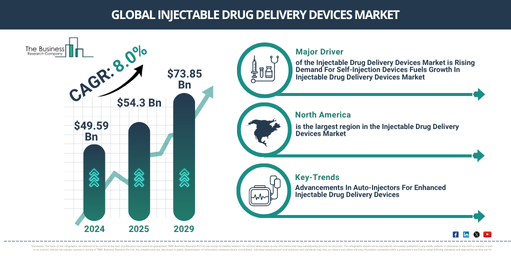
    Over recent years, there has been solid growth in the market size for injectable drug delivery devices. An increase from $49.59 billion in 2024 to $54.3 billion in 2025, demonstrating a compound annual growth rate (CAGR) of 9.5%, is projected. This previous period of growth can be linked to factors such as the swift increase in the elderly population, expansion in the number of healthcare facilities, rising spending on healthcare, development in biologics, and a heightened awareness about self-administration.

    The market for injectable drug delivery devices is anticipated to experience significant expansion in the upcoming years, projected to reach a value of $73.85 billion in 2029, with a compound annual growth rate (CAGR) of 8.0%. Factors contributing to the predicted growth during this period include the rising occurrence of chronic illnesses, escalating demand for injectable medication, unexpected outbreak of acute infections, and a wide variety of drugs and vaccines currently in different stages of clinical trials. Key trends forecasted for this period encompass a focus on the creation of microneedle-based drug delivery systems, investment in the innovation and development of self-injecting devices, concentration on producing wearable technology, development of needle-free injection systems, diversification to include prefilled syringes in their product range, enhancing the digital technology in their devices, emphasis on producing innovative devices, and a focus on the development of groundbreaking auto-injectors.

    Download a free sample to assess the report’s scope and structure:

    https://www.thebusinessresearchcompany.com/sample.aspx?id=2835&type=smp

    Which Major Market Drivers Are Expected to Boost the Growth Potential of the Injectable Drug Delivery Devices Market?

    The rise in preference for self-injection devices is a significant driver for the injectable drug delivery devices market. Patients can use these medical instruments for self-medication in a home environment. Needle-free, auto, pen, and wearable injectors are among self-injection devices. They are devised to offer a flexible tool with an excellent precision level in drug delivery and user-friendliness. The acceptance of these products has surged over recent years thanks to ongoing innovations. BD Physioject is a one-time use auto-injector built by Becton, Dickinson, and Company, offering reliability and affordability. It’s purposely designed for self-administration of medication by patients with chronic conditions such as rheumatoid arthritis, multiple sclerosis, asthma, and osteoporosis. Other companies participating in the self-injections market are AbbVie, Inc., 3M, Baxter, Gerresheimer AG, Pfizer Inc., etc. The benefits of self-injectable injections and heightened awareness of self-administration have boosted the demand for self-injectable devices, which in turn is propelling the injectable drug delivery devices market in the projected period.

    Which Key Market Segments Comprise the Injectable Drug Delivery Devices Market and Drive Its Revenue Growth?

    The injectable drug delivery devicesmarket covered in this report is segmented –

    1) By Type: Syringes, Injectors And Pump

    2) By Application: Autoimmune Diseases, Hormonal Disorders, Oncology, Orphan Diseases, Pain Management, Respiratory Therapy, Other Applications

    3) By End-user: Hospitals And Clinics, Home Healthcare Settings, Pharmaceutical And Biotechnological Companies, Research Laboratories, Other End Users

    Subsegments:

    1) By Syringes: Conventional Syringes, Prefilled Syringes, Safety Syringes

    2) By Injectors: Autoinjectors, Pen Injectors, Needle-Free Injectors

    3) By Pumps: Insulin Pumps, Ambulatory Infusion Pumps, Implantable Pumps

    Request customized data on this market:

    https://www.thebusinessresearchcompany.com/customise?id=2835&type=smp

    Which Areas Are Leading Regions in the Injectable Drug Delivery Devices Market Expansion Across the Globe?

    North America was the largest region in the injectable drug delivery devices market in 2024. Western Europe was the second-largest region in the global injectable drug delivery devices market. The regions covered in the injectable drug delivery devices market report are Asia-Pacific, Western Europe, Eastern Europe, North America, South America, Middle East, Africa

    What Are the Key Market Trends in theInjectable Drug Delivery Devices Market Over the Coming Years?

    There’s an emerging trend amongst manufacturers of injectable drug delivery devices, who are showing increased interest in the production of auto-injectors. These tools are entirely automated, reusable, and highly personalizable injectors that could be used by a person to execute hundreds of injections. The device allows patients to modulate the injection speed, providing a potential way to limit any pain or discomfort during injection. These devices are capable of modifying the speed and penetration depth of the automatic injection. An example of this is LISA, a reusable auto-injector designed by Unilife corporation, loaded with a plethora of customizable options, including Bluetooth LE, Wi-Fi or 3G connectivity, and the ability to pre-warm medication prior to injection for targeted therapies. Expectations are high for the injectable drug delivery technology market, with forecasts predicting significant growth in the near future due to a host of technical advancements and the introduction of new products designed to enhance the comfort and ease of administering parenteral therapeutics.

    View the full report here:

    https://www.thebusinessresearchcompany.com/report/injectable-drug-delivery-devices-global-market-report

    How Is the Injectable Drug Delivery Devices Market Conceptually Defined?

    Injectable Drug Delivery Devices refer to medical devices designed to administer medications directly into the body through injections. Injectable drug delivery devices are used for various routes of drug administration, such as intravenous, subcutaneous, intradermal, intra-peritoneal, and intra-muscular.

    Purchase the full report and get a swift delivery:

    https://www.thebusinessresearchcompany.com/purchaseoptions.aspx?id=2835

    About The Business Research Company:

    With over 15000+ reports from 27 industries covering 60+ geographies, The Business Research Company has built a reputation for offering comprehensive, data-rich research and insights. Armed with 1,500,000 datasets, the optimistic contribution of in-depth secondary research, and unique insights from industry leaders, you can get the information you need to stay ahead in the game.

    Get in touch with us:

    The Business Research Company: https://www.thebusinessresearchcompany.com/

    Americas +1 310-496-7795

    Europe +44 7882 955267

    Asia & Others +44 7882 955267 & +91 8897263534

    Email us at info@tbrc.info

    Follow us on:

    LinkedIn: https://in.linkedin.com/company/the-business-research-company

    YouTube: https://www.youtube.com/channel/UC24_fI0rV8cR5DxlCpgmyFQ

    Global Market Model: https://www.thebusinessresearchcompany.com/global-market-model