Blog

  • CAGR of 6.8% Projected for Electrocardiograph (ECG) Stress Test Market From 2025 to 2029

    CAGR of 6.8% Projected for Electrocardiograph (ECG) Stress Test Market From 2025 to 2029

    Claim your 30% discount on Global Market Reports with code ONLINE30. Limited time only.

    Claim your 30% discount on Global Market Reports with code ONLINE30. Limited time only.

    What Does the Forecast Indicate for the Electrocardiograph (ECG) Stress Test Market From 2025 to 2029?

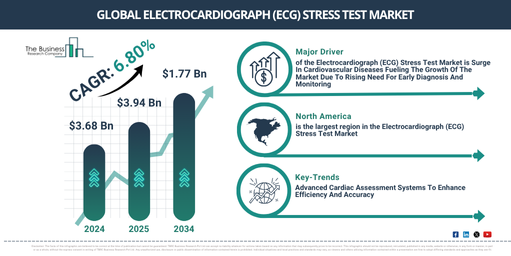
    In recent times, the market size for the stress test utilizing electrocardiograph (ECG) has witnessed considerable growth. The market forecast predicts an increase from $3.68 billion in 2024 to $3.94 billion in 2025, yielding a compound annual growth rate (CAGR) of 7.1%. Several factors played part in this market growth observed in the historic period, including a heightened awareness about cardiac care prevention, the rise in routine healthcare screenings, an escalation in healthcare expenditure in developed countries, an increase in demand for early detection of heart-related issues, and a growing preference for exercise-based heart evaluations.

    In the electrocardiograph (ECG) test stress test sector, substantial expansion is anticipated in the upcoming years. The market’s projected growth is to culminate at $5.13 billion by 2029 with a compound annual growth rate (CAGR) of 6.8%. Various factors contributing to this growth within the predicted period include the increasing adoption of portable and wearable ECG devices, a surging demand for home-based and remote cardiac monitoring, a heightened emphasis on early diagnosis of cardiovascular diseases, rising inclination towards personalized cardiac care, and escalated government-led initiatives for heart disease screening. Key trends to watch out for in the forecast period are the progression of wearable ECG technology, breakthroughs in AI-enabled ECG interpretation, the merging of ECG systems with telemedicine platforms, advancements in handheld stress test gadgets, and innovations in cloud-based ECG data storing and sharing.

    Download The Free Sample Report Here:

    https://www.thebusinessresearchcompany.com/sample.aspx?id=25760&type=smp

    What Elements Are Contributing To Growth In The Electrocardiograph (ECG) Stress Test Market?

    The escalating occurrence of cardiovascular ailments is believed to be driving the expansion of the electrocardiograph (ECG) test market. With conditions such as heart attacks, strokes, and hypertension classified under cardiovascular diseases, the increasing episodes of high blood pressure serve as a contributing factor, putting extra strain on the heart and blood vessels and thereby leading to heightened risk of heart attacks and strokes. The role of an electrocardiograph (ECG) test then becomes crucial in diagnosing these diseases by assessing the heart’s performance under physical tension, uncovering concealed problems like reduced blood flow, narrowed arteries, and irregular heart rhythms which might go unnoticed during a resting state. As an example, the Centers for Disease Control and Prevention, a US-based government institution, revealed in October 2024 that nearly 805,000 people in the United States suffer a heart attack each year. These include 605,000 initial incidents and 200,000 cases of individuals with a history of prior heart attacks. Hence, because of the ever-increasing occurrence of cardiovascular diseases, the electrocardiograph (ECG) test market is experiencing substantial growth.

    Which Segments Are Detailed In The Global Electrocardiograph (ECG) Stress Test Market Report?

    The electrocardiograph (ecg) stress test market covered in this report is segmented –

    1) By Product Type: Standalone Electrocardiograph (ECG) Test Devices, Electrocardiograph (ECG) Test Software, Holter Monitors, Event Monitors, Portable Electrocardiograph (ECG) Monitors

    2) By Test Type: Exercise Stress Test, Pharmacological Stress Test, Combined Exercise And Pharmacological Stress Test

    3) By Technology: Analog Electrocardiograph (ECG) Stress Testing Devices, Digital Electrocardiograph (ECG) Stress Testing Devices, Cloud-based Electrocardiograph (ECG) Stress Test Solutions, Wearable Electrocardiograph (ECG) Monitors, Telemedicine Enabled Electrocardiograph (ECG) Stress Tests

    4) By Sales Channel: Direct Sales, Distributors, Online Retailers, Third party Resellers, Healthcare Procurement Organizations

    5) By End User: Hospitals, Outpatient Clinics, Cardiology Centers, Home Healthcare Settings, Rehabilitation Centers

    Subsegments:

    1) By Standalone Electrocardiograph (ECG) Stress Test Devices: Treadmill-Based Stress Test Systems, Bicycle Ergometer-Based Stress Test Systems, Multi-Channel ECG Recorders, Wireless ECG Stress Systems, Touchscreen ECG Systems, Modular Stress Testing Workstations

    2) By Electrocardiograph (ECG) Stress Test Software: Data Acquisition And Analysis Software, Arrhythmia Detection Software, Cloud-Based Stress Test Platforms, Integration Software With EMR Or EHR Systems, Signal Noise Reduction Algorithms, Remote Diagnostic And Reporting Software

    3) By Holter Monitors: 3-Channel Holter Monitors, 12-Lead Holter Monitors, Patch-Type Holter Monitors, Long-Term Holter Monitoring, Wireless Or Bluetooth-Enabled Holter Monitors, AI-Powered ECG Analysis Holters

    4) By Event Monitors: Loop Memory Event Monitors, Post-Event Recorders, Auto-Triggered Event Monitors, Implantable Event Monitors (ILRs), Patient-Activated Event Monitors, Mobile Cardiac Telemetry (MCT)

    5) By Portable Electrocardiograph (ECG) Monitors: Smartphone-Connected ECG Devices, Handheld ECG Devices, Wearable ECG Monitors, Single-Lead Portable ECGs, Multi-Lead Portable ECGs, Home-Use Cardiac Monitoring Devices

    Which Emerging Trends And Strategic Shifts Are Shaping The Electrocardiograph (ECG) Stress Test Market?

    Leading corporations in the ECG stress test market are prioritizing technological innovation, including the use of cardiosoft technology, to improve diagnostic accuracy, increase workflow efficiency, and establish better connectivity within the cardiology care pathway. Cardiosoft technology is a PC-based ECG and stress test system that allows medical professionals to track and examine a patient’s cardiac activity during rest or exercise with the assistance of computer software, thus facilitating easy data storage and analysis. For example, in March 2025, GE HealthCare, an American healthcare technology company, introduced a cardiac evaluation system specific to stress testing, which allows healthcare providers to unlock critical insights quickly while ensuring a seamless flow of data, a critical aspect for heart patients. The system provides unique features like sophisticated ECG analysis, stress test capabilities, and smooth integration with electronic medical records for efficient management of data. It usually comes with easy-to-use software that provides real-time tracking, customizable reports, and automatic measurement tools for precise diagnosis. A number of these systems also have wireless connectivity, providing mobility and flexibility in diverse clinical environments, while upholding superior signal capturing and patient safety during cardiac assessments.

    Who Are The Key Contributors To Growth In The Electrocardiograph (ECG) Stress Test Market?

    Major companies operating in the electrocardiograph (ecg) stress test market are Cardinal Health Inc., Koninklijke Philips N.V. , GE HealthCare Technologies Inc., Baxter International Inc., Nihon Kohden Corporation, BTL Industries Inc., Fukuda Denshi Co Ltd., Neurosoft LLC, Schiller AG, Meditech Equipment Co Ltd., CAIRE Inc., COSMED Srl , MGC Diagnostics Corporation, Allengers Global Healthcare Pvt Ltd., EB Neuro S.p.A., custo med GmbH, Clarity Medical Technologies Pvt Ltd., Cortex Biophysik GmbH, Norav Medical Ltd., Medset Medizintechnik GmbH.

    Get The Full Report Here:

    https://www.thebusinessresearchcompany.com/report/electrocardiograph-ecg-stress-test-global-market-report

    Which Region Is Projected To Lead The Electrocardiograph (ECG) Stress Test Market By 2025?

    North America was the largest region in the electrocardiograph (ECG) test market in 2024. Asia-Pacific is expected to be the fastest-growing region in the forecast period. The regions covered in the electrocardiograph (ecg) stress test market report are Asia-Pacific, Western Europe, Eastern Europe, North America, South America, Middle East, Africa.

    Request For A Customized Report:

    https://www.thebusinessresearchcompany.com/customise?id=25760&type=smp

    About The Business Research Company:

    With over 15000+ reports from 27 industries covering 60+ geographies, The Business Research Company has built a reputation for offering comprehensive, data-rich research and insights. Armed with 1,500,000 datasets, the optimistic contribution of in-depth secondary research, and unique insights from industry leaders, you can get the information you need to stay ahead in the game.

    Get in touch with us:

    The Business Research Company: https://www.thebusinessresearchcompany.com/

    Americas +1 310-496-7795

    Asia +44 7882 955267 & +91 8897263534

    Europe +44 7882 955267

    Email us at info@tbrc.info

    Follow us on:

    LinkedIn: https://in.linkedin.com/company/the-business-research-company

    YouTube: https://www.youtube.com/channel/UC24_fI0rV8cR5DxlCpgmyFQ

    Global Market Model: https://www.thebusinessresearchcompany.com/global-market-model
  • Cryo-Electron Microscopy Industry Poised for Rapid Expansion, Projected to Hit $2.84  Billion by 2029

    Cryo-Electron Microscopy Industry Poised for Rapid Expansion, Projected to Hit $2.84 Billion by 2029

    Claim your 30% discount on Global Market Reports with code ONLINE30. Limited time only.

    Claim your 30% discount on Global Market Reports with code ONLINE30. Limited time only.

    What Is the Outlook for the Cryo-Electron Microscopy Market Heading Into 2029?

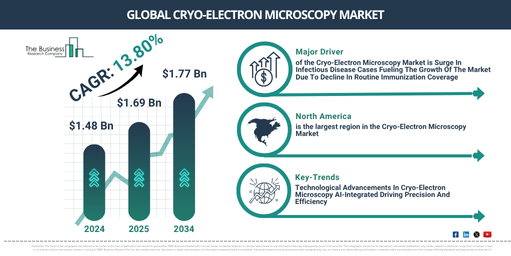
    In the last few years, there has been a swift expansion in the cryo-electron microscopy market size. It is projected to escalate from $1.48 billion in 2024 to $1.69 billion in 2025, experiencing a compound annual growth rate (CAGR) of 14.0%. The historical growth is being credited to an enhanced demand for high-resolution imaging in structural biology, advancements in the physical components of electron microscopy, an upward trend in research related to infectious diseases and virology, increased adoption in educational and research institutions, and the drawbacks of conventional microscopy techniques.

    The market for cryo-electron microscopy is set for swift expansion in the coming years, with projections suggesting it will reach a worth of $2.84 billion in 2029. This will reflect a compound annual growth rate (CAGR) of 13.8%. The predicted growth is due to various factors such as the rising use of cryo-em technology in pharmaceutical development, enhanced funding for biotechnology and life science research, advancements in automation, and image processing. Additionally, expanding usage in clinical diagnostics and breakthroughs in structural insights are influencing this growth. Key trends for the forecasted period include the integration of AI with cryo-em technology, reduction in size and increase in transportability of cryo-em systems, transition to cloud-based platforms for data analysis, high-resolution imaging technologies, and the creation of hybrid imaging systems.

    Download The Free Sample Report Here:

    https://www.thebusinessresearchcompany.com/sample.aspx?id=25731&type=smp

    Which Factors Are Pushing The Cryo-Electron Microscopy Market Forward?

    The rise in instances of infectious diseases is anticipated to fuel the expansion of the cryo-electron microscopy market. These maladies – malaria, for example – can spread directly or indirectly and are caused by bacteria, viruses, fungi, or parasites; they’re referred to as infectious diseases. Rapid urbanization, resulting in denser populations and closer human interactions, is the primary reason for their rise, as it paves the way for the transmission of these diseases. Cryo-electron microscopy contributes to infectious disease research by permitting the high-resolution view of viruses, bacteria, and the interplay between hosts and pathogens in their native-like states. This helps speed up the identification of viral structures, the comprehension of how infections occur, and the development of antivirals and vaccines. For example, the Switzerland-based World Health Organization reported in November 2023 that there were approximately 249 million cases of malaria worldwide in 2022, rising by 5 million cases (2%) from the previous year. Thus, the increasing prevalence of infectious diseases is boosting growth in the cryo-electron microscopy market.

    Which Segment Held The Largest Share In The Cryo-Electron Microscopy Market In 2025?

    The cryo-electron microscopy market covered in this report is segmented –

    1) By Product: Instruments, Fully Automated Instruments, Semi-Automated Instruments, Software, Services

    2) By Nano Formulations: Lipid Nanoparticle Formulations (LNFS), Metal Oxide Formulations, Metal Formulations, Other NanoForms

    3) By Technology: Electron Crystallography, Single Particle Analysis, Cryo-Electron Tomography, Other Technologies

    4) By Application: Life Science Research And Academia, Cancer Research, Omics Research, Pharma And Biotech Manufacturing, Cell And Gene Therapy, Vaccines, Preclinical And Clinical Research, Healthcare Or Medical Applications, Disease Diagnosis And Pathology

    5) By End-User: Research Laboratories And Institutes, Forensic And Diagnostic Laboratories, Pharmaceutical And Biotechnology Companies, Contract Research Organization, Other End-Users

    Subsegments:

    1) By Instruments, Electron Microscopes: Sample Preparation Equipment, Detectors And Cameras, Cryo-Transfer Holders

    2) By Fully Automated Instruments: Automated Sample Loading Systems, Automated Data Acquisition Systems, Automated Imaging Systems

    3) By Semi-Automated Instruments: Semi-Automated Sample Preparation Systems, Semi-Automated Imaging Systems, Semi-Automated Data Processing Units

    4) By Software: Image Analysis Software, 3D Reconstruction Software, Data Processing Software, Workflow Management Software

    4) By Services: Sample Preparation Services, Data Analysis Services, Training And Support Services, Maintenance And Repair Services

    How Are Key Trends Driving Expansion In The Cryo-Electron Microscopy Industry?

    Firms leading the cryo-electron microscopy industry are prioritizing advances in technology, such as those found in AI-integrated cryo-transmission electron microscope (cryo-TEM) systems. These systems use AI to improve image processing, automated data collection, resolution enhancement, and speed up the 3D modelling of biomolecular structures. The AI-integrated cryo-TEM systems fuse artificial intelligence with high-definition optics to optimize sample targeting, reduce user variables, and quicken data collection. To illustrate, Thermo Fisher Scientific, a US company that specializes in producing scientific apparatus and lab equipment, introduced their Thermo Scientific Krios 5 Cryo-TEM in April 2025. This latest atomic-resolution platform utilizes superior optics and AI-driven automation. The Thermo Scientific Krios 5 Cryo-TEM contains novel attributes like sophisticated automated data harvesting, increased sample throughput, and high-definition imaging abilities that allow researchers to observe molecular and cellular arrangements with exceptional precision. It also includes an improved stability and automation system which minimizes manual handling and boosts output for bulk cryo-EM processes.

    Which Organizations Are Driving Progress In The Cryo-Electron Microscopy Industry?

    Major companies operating in the cryo-electron microscopy market are Hitachi High-Tech Corporation , Thermo Fisher Scientific Inc., Danaher Corporation, Charles River Laboratories International Inc., Intertek Group plc, Bruker Corporation, Carl Zeiss AG, Japan Electron Optics Laboratory Ltd., Leica Microsystems GmbH, Gatan Inc., Oxford Instruments plc, Rigaku Corporation, TESCAN ORSAY HOLDING a.s., Nanoscience Instruments Inc., Protochips Inc., E.A. Fischione Instruments Inc., NanoImaging Services Inc., DENSsolutions B.V., Direct Electron LP, Hummingbird Scientific LLC

    Get The Full Report Here:

    https://www.thebusinessresearchcompany.com/report/cryo-electron-microscopy-global-market-report

    Which Region Is Expected To Experience The Highest Growth In The Cryo-Electron Microscopy Industry?

    North America was the largest region in the cryo-electron microscopy market in 2024. Asia-Pacific is expected to be the fastest-growing region in the forecast period. The regions covered in the cryo-electron microscopy market report are Asia-Pacific, Western Europe, Eastern Europe, North America, South America, Middle East, Africa.

    Request For A Customized Report:

    https://www.thebusinessresearchcompany.com/customise?id=25731&type=smp

    About The Business Research Company:

    With over 15000+ reports from 27 industries covering 60+ geographies, The Business Research Company has built a reputation for offering comprehensive, data-rich research and insights. Armed with 1,500,000 datasets, the optimistic contribution of in-depth secondary research, and unique insights from industry leaders, you can get the information you need to stay ahead in the game.

    Get in touch with us:

    The Business Research Company: https://www.thebusinessresearchcompany.com/

    Americas +1 310-496-7795

    Asia +44 7882 955267 & +91 8897263534

    Europe +44 7882 955267

    Email us at info@tbrc.info

    Follow us on:

    LinkedIn: https://in.linkedin.com/company/the-business-research-company

    YouTube: https://www.youtube.com/channel/UC24_fI0rV8cR5DxlCpgmyFQ

    Global Market Model: https://www.thebusinessresearchcompany.com/global-market-model
  • Industry Forecast: eHealth 2.0 Market to Generate $686.26  Billion Revenue by 2029

    Industry Forecast: eHealth 2.0 Market to Generate $686.26 Billion Revenue by 2029

    Claim your 30% discount on Global Market Reports with code ONLINE30. Limited time only.

    Claim your 30% discount on Global Market Reports with code ONLINE30. Limited time only.

    How Much Is the Global eHealth 2.0 Market Valued at Present and by 2029?

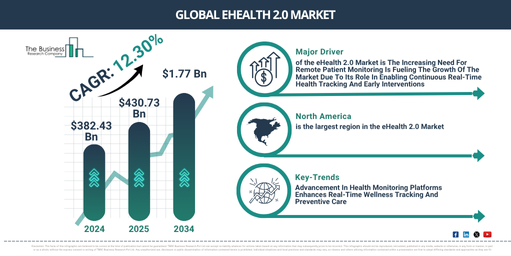
    In recent years, the eHealth 2.0 market has experienced a significant expansion. Its size is projected to increase from $382.43 billion in 2024 to $430.73 billion in 2025, with a compound annual growth rate (CAGR) of 12.6%. This substantial growth in the previous years is due to multiple factors such as the increased knowledge and understanding of digital health tools, a surge in the usage of wearable health technology, escalating government backing of eHealth schemes, the growing incorporation of Information and Communication Technology (ICT) in healthcare, and the rising popularity of telehealth consultation platforms.

    Expectations are high for the eHealth 2.0 market, with a projected rapid growth in the coming years. Predictions estimate that this market will rise to $686.26 billion by 2029, with a compound annual growth rate (CAGR) of 12.3%. This growth, expected in the forecast period, is due to the expanded use of AI in healthcare, increased demand for custom-tailored medicine, rise in funding for digital health startups, growing adoption of blockchain for securing health data, and an amplified emphasis on care that is centered around the patient. Upcoming trends during the forecast period include advancements in technologies for remote monitoring, the emergence of virtual health assistants, enhancement of mobile health app features, progression in interoperability standards and the evolution of predictive analytics in healthcare.

    Download The Free Sample Report Here:

    https://www.thebusinessresearchcompany.com/sample.aspx?id=25759&type=smp

    #What Drivers Are Influencing Growth In The eHealth 2.0 Market?

    The escalating necessity for monitoring patients remotely is predicted to fuel the development of the eHealth 2.0 market. Remote patient monitoring (RPM), which utilizes digital solutions to gather and transfer patient health information from non-clinical environments, promotes prompt interventions and decreases hospital visits. Due to a rise in chronic disease prevalence, the demand for RPM is growing as it allows consistent health surveillance, which enables early intervention and lessens the need for regular hospital trips. RPM facilitates eHealth 2.0 by obtaining real-time health information from beyond clinical environments, promoting personalized and preventive healthcare. It offers timely observations for initial intervention, thereby lightening the burden on hospitals and enhancing patient engagement. For example, in August 2023, as per Vivalink, a healthcare technology firm based in the US, the utilization of RPM by clinicians dramatically jumped to 81% from just 20% in 2021, marking a 305% increment. Moreover, 84% of existing RPM users plan to broaden their application of this technology in 2024. Hence, the growing requirement for RPM is stimulating the expansion of the eHealth 2.0 market.

    What Are The Main Segments Identified In The eHealth 2.0 Market Research?

    The ehealth 2.0 market covered in this report is segmented –

    1) By Type: Telemedicine, Electronic Health Records (EHRS), E-Prescription, Remote Patient Monitoring, Mobile Health (mHealth), Health Information Exchange (HIE), Other Types

    2) By Service: Monitoring, Diagnostic, Treatment

    3) By End-User: Healthcare Providers, Insurers, Other End-Users

    Subsegments:

    1) By Telemedicine: Real-time Telemedicine, Store-And-Forward Telemedicine, Remote Patient Monitoring Telemedicine, Mobile Health (mHealth) Telemedicine

    2) By Electronic Health Records (EHRs): Web-Based Electronic Health Records (EHRs), Client Server-Based Electronic Health Records (EHRs), Hybrid Electronic Health Records (EHRs)

    3) By E-Prescription: Controlled Substances E-Prescription, Non-Controlled Substances E-Prescription, Renewal And Refill E-Prescription

    4) By Remote Patient Monitoring: Chronic Disease Monitoring, Post-Acute Care Monitoring, Wearable Device Monitoring

    5) By Mobile Health (mHealth): Fitness And Wellness Apps, Chronic Disease Management Apps, Medication Management Apps, Women’s Health Apps

    6) By Health Information Exchange (HIE): Directed Exchange, Query-Based Exchange, Consumer-Mediated Exchange

    7) By Other Types: Clinical Decision Support Systems, Medical Imaging Systems, Patient Portals, Healthcare Analytics Platforms

    What Are The Leading Trends And Opportunities In The eHealth 2.0 Sector?

    Leading firms in the eHealth 2.0 market are putting their efforts towards the creation of cutting-edge technology, like health and fitness tracking systems, to promote active patient participation and encourage proactive healthcare management. These digital solutions in the form of health and fitness tracking systems constantly monitor essential signs, activity patterns, and general health. They aid both the users and healthcare providers in handling health issues, setting objectives, and making preventive care choices. For instance, in August 2024, the Chinese firm Huawei Technologies Co., Ltd., known for their health monitoring equipment, introduced their latest HUAWEI TruSense System. This system aims to give more precise, all-inclusive, and real-time insights into health for wearable devices. TruSense combines high-end sensors and algorithms to oversee over 60 health parameters like heart rate, stress levels, mood, respiratory health, and calorie count, providing quicker and more thorough health reports than its predecessors.

    Which Companies Play A Key Role In The Development Of The eHealth 2.0 Market?

    Major companies operating in the ehealth 2.0 market are CVS Health, Optum Inc., International Business Machines Corporation, Oracle Corporation, Siemens Healthineers, GE Healthcare, Athenahealth, Teladoc Health, eClinicalWorks, Telecare Corporation, Veradigm, Doximity, American Well, Greenway Health, Tebra Technologies Inc., AdvancedMD, Doctor on Demand, Medisafe, AMD Global Telemedicine, CompuMed Inc.

    Get The Full Report Here:

    https://www.thebusinessresearchcompany.com/report/ehealth-20-global-market-report

    What Are The Key Regional Developments Shaping The eHealth 2.0 Market?

    North America was the largest region in the eHealth 2.0 market in 2024. Asia-Pacific is expected to be the fastest-growing region in the forecast period. The regions covered in the ehealth 2.0 market report are Asia-Pacific, Western Europe, Eastern Europe, North America, South America, Middle East, Africa.

    Request For A Customized Report:

    https://www.thebusinessresearchcompany.com/customise?id=25759&type=smp

    About The Business Research Company:

    With over 15000+ reports from 27 industries covering 60+ geographies, The Business Research Company has built a reputation for offering comprehensive, data-rich research and insights. Armed with 1,500,000 datasets, the optimistic contribution of in-depth secondary research, and unique insights from industry leaders, you can get the information you need to stay ahead in the game.

    Get in touch with us:

    The Business Research Company: https://www.thebusinessresearchcompany.com/

    Americas +1 310-496-7795

    Asia +44 7882 955267 & +91 8897263534

    Europe +44 7882 955267

    Email us at info@tbrc.info

    Follow us on:

    LinkedIn: https://in.linkedin.com/company/the-business-research-company

    YouTube: https://www.youtube.com/channel/UC24_fI0rV8cR5DxlCpgmyFQ

    Global Market Model: https://www.thebusinessresearchcompany.com/global-market-model
  • Global Corticosteroid Eyedrops Market Forecast to Reach $12.88  Billion by 2029, Driven by 6.5% CAGR

    Global Corticosteroid Eyedrops Market Forecast to Reach $12.88 Billion by 2029, Driven by 6.5% CAGR

    Claim your 30% discount on Global Market Reports with code ONLINE30. Limited time only.

    Claim your 30% discount on Global Market Reports with code ONLINE30. Limited time only.

    What Does the Forecast Indicate for the Corticosteroid Eyedrops Market From 2025 to 2029?

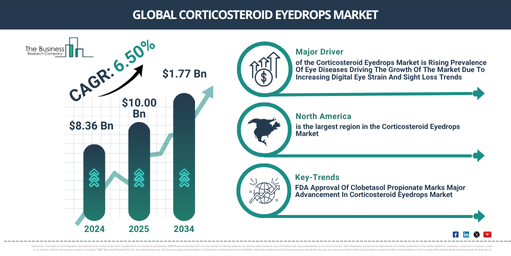
    The market for corticosteroid eyedrops has seen substantial growth in recent years and is projected to expand from $8.36 billion in 2024 to $10.00 billion in 2025, boasting a compound annual growth rate (CAGR) of 6.8%. Factors contributing to this expansion during the historic period include an aging demographic, an upswing in eye inflammation cases, a rise in cataract surgeries, the proliferation of ophthalmology clinics, an increase in allergic conjunctivitis prevalence, and enhanced understanding of eye health.

    Anticipated to witness robust growth in the coming years, the corticosteroid eyedrops market is projected to swell to $12.88 billion by 2029, expanding at a compound annual growth rate (CAGR) of 6.5%. Factors propelling growth in the said period include rising cases of diabetic eye troubles, mounting preference for minimally invasive procedures, increase in digital screen-induced eye weariness, extended reach of teleophthalmology, escalating chronic eye conditions, and a surge in worldwide surgical eye operations. Future market trends encompass nano-structured delivery systems, preservative-less formulations, intelligent packaging facilitating dosage monitoring, AI-enabled prescription platforms, and blended medications offering better bioavailability.

    Download The Free Sample Report Here:

    https://www.thebusinessresearchcompany.com/sample.aspx?id=25730&type=smp

    What Elements Are Contributing To Growth In The Corticosteroid Eyedrops Market?

    The escalating occurrence of illnesses affecting the eyes is set to drive the expansion of the corticosteroid eyedrops industry. Eye afflictions can deteriorate the eyes’ health and functionality, possibly causing vision issues or even blindness if not adequately treated. An increase in the use of screens is leading to a surge in eye diseases, causing digital eye strain and contributing to ailments like dry eyes and blurred vision. To manage eye illnesses, corticosteroid eyedrops are typically used as they curtail inflammation and alleviate symptoms like redness, swelling, and unease. For instance, the Joint Strategic Needs Assessment, a community health center in the UK, noted in their May 2024 report that around 2 million people in the UK are living with some level of vision loss. This figure is expected to rise to 2.7 million by 2030. Consequently, the surging occurrence of eye diseases is fueling the expansion of the corticosteroid eyedrops industry.

    Which Segments Are Detailed In The Global Corticosteroid Eyedrops Market Report?

    The corticosteroid eyedrops market covered in this report is segmented –

    1) By Product Type: Topical Corticosteroid Eyedrops, Systemic Corticosteroid Eyedrops, Combination Therapy Eyedrops

    2) By Delivery Device: Dropper Bottles, Spray Formulations, Ointments And Gels, Punctal Plugs

    3) By Distribution Channel: Hospital Pharmacy, Retail Pharmacy, Online Pharmacy, Other Distribution Channels

    4) By Application: Adult, Children

    5) By End User: Hospitals, Specialty Clinics, Community Pharmacies, Online Pharmacies

    Subsegments:

    1) By Topical Corticosteroid Eyedrops: Prednisolone Acetate Eyedrops, Dexamethasone Eyedrops, Fluorometholone Eyedrops, Loteprednol Etabonate Eyedrops, Rimexolone Eyedrops

    2) By Systemic Corticosteroid Eyedrops: Hydrocortisone-Based Eyedrops, Methylprednisolone-Based Eyedrops, Triamcinolone-Based Eyedrops, Betamethasone-Based Eyedrops

    3) By Combination Therapy Eyedrops: Corticosteroid + Antibiotic Combination Eyedrops, Corticosteroid + Non-Steroidal Anti-Inflammatory Drug (NSAID) Eyedrops, Corticosteroid + Antihistamine Eyedrops, Corticosteroid + Antiglaucoma Agent Eyedrops

    Which Emerging Trends And Strategic Shifts Are Shaping The Corticosteroid Eyedrops Market?

    Primary players in the corticosteroid eyedrops market are directing their efforts towards securing regulatory approval to broaden their offerings and increase their market presence. These permissions from health agencies certify that the corticosteroid eyedrops conform to essential safety, effectiveness, and quality benchmarks prior to being promoted and prescribed. For example, in March 2024, Taiwan’s Formosa Pharmaceuticals Inc. and U.S.-based AimMax Therapeutics obtained FDA approval for clobetasol propionate ophthalmic suspension 0.05% (APP13007) to treat inflammation and pain after eye operations. This drug was made using Formosa’s APNT nanoparticle technology which enables effective drug delivery through a simple, twice-daily dose for 14 days without tapering. Clinical studies proved its potent anti-inflammatory impact, marking it as an emerging choice for corticosteroid treatments to control pain and swelling post eye surgery. Being the first ophthalmic corticosteroid with clobetasol and the first new steroid endorsed in this category in over a decade and a half, it signifies a remarkable progress in ocular corticosteroid treatment.

    Who Are The Key Contributors To Growth In The Corticosteroid Eyedrops Market?

    Major companies operating in the corticosteroid eyedrops market are Pfizer Inc., AbbVie Inc., Novartis AG, Alcon Inc., Bausch Health Companies Inc., Sun Pharmaceutical Industries Ltd., Cipla Ltd., Santen Pharmaceutical Co. Ltd., Lupin Limited, Zydus Lifesciences Limited, Glenmark Pharmaceuticals Ltd., Alkem Laboratories Ltd., Sunways Pvt. Ltd., FDC Limited, Alimera Sciences Inc., Eurocrit Labs International Pvt. Ltd., Entod Pharmaceuticals Pvt. Ltd., Akorn Pharmaceuticals Inc., Pace Biotech Pvt. Ltd., Wellona Pharma Pvt. Ltd., Kala Pharmaceuticals Inc., Ophdenas Lifesciences Pvt. Ltd.

    Get The Full Report Here:

    https://www.thebusinessresearchcompany.com/report/corticosteroid-eyedrops-global-market-report

    Which Region Is Projected To Lead The Corticosteroid Eyedrops Market By 2025?

    North America was the largest region in the corticosteroid eyedrops market in 2024. Asia-Pacific is expected to be the fastest-growing region in the forecast period. The regions covered in the corticosteroid eyedrops market report are Asia-Pacific, Western Europe, Eastern Europe, North America, South America, Middle East, Africa.

    Request For A Customized Report:

    https://www.thebusinessresearchcompany.com/customise?id=25730&type=smp

    About The Business Research Company:

    With over 15000+ reports from 27 industries covering 60+ geographies, The Business Research Company has built a reputation for offering comprehensive, data-rich research and insights. Armed with 1,500,000 datasets, the optimistic contribution of in-depth secondary research, and unique insights from industry leaders, you can get the information you need to stay ahead in the game.

    Get in touch with us:

    The Business Research Company: https://www.thebusinessresearchcompany.com/

    Americas +1 310-496-7795

    Asia +44 7882 955267 & +91 8897263534

    Europe +44 7882 955267

    Email us at info@tbrc.info

    Follow us on:

    LinkedIn: https://in.linkedin.com/company/the-business-research-company

    YouTube: https://www.youtube.com/channel/UC24_fI0rV8cR5DxlCpgmyFQ

    Global Market Model: https://www.thebusinessresearchcompany.com/global-market-model
  • Drug Repurposing Market Revenue Outlook: Strategic Insights and Forecast to 2029

    Drug Repurposing Market Revenue Outlook: Strategic Insights and Forecast to 2029

    Claim your 30% discount on Global Market Reports with code ONLINE30. Limited time only.

    Claim your 30% discount on Global Market Reports with code ONLINE30. Limited time only.

    What Is the Current and Projected Market Size of the Drug Repurposing Industry?

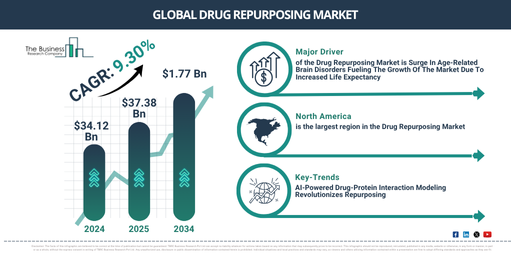
    In recent times, the drug repurposing market has seen impressive growth. The market, which will rise from $34.12 billion in 2024 to $37.38 billion in 2025, is expected to grow at a mammoth compound annual growth rate (CAGR) of 9.5%. The surge in this period is a result of factors such as the increasing expense of developing new drugs, an increase in the number of drug failures during clinical trials, the growing demand for quicker drug approval processes, a rise in the availability of off-patent drugs, and significant increases in government and academic research funding.

    In the coming years, substantial growth is anticipated for the drug repurposing market, which is projected to reach $53.42 billion by 2029 at a compound annual growth rate (CAGR) of 9.3%. Factors contributing to this growth in the forecast period include a higher demand for therapies that are cost-effective, increased investment by pharmaceutical companies, growing partnerships between biotech firms, and broader applications in the fields of oncology and neurology. Key trends forecasted for this period include advancements in tools used for computational drug discovery, increased implementation of AI and ML in drug repurposing, innovations in predictive models for drug efficacy, incorporation of big data analytics in drug screening, and progress in the identification of biomarkers.

    Download The Free Sample Report Here:

    https://www.thebusinessresearchcompany.com/sample.aspx?id=25758&type=smp

    #Which Factors Are Currently Driving The Growth Of The Drug Repurposing Market?

    The escalating occurrence of neurodegenerative diseases is anticipated to boost the expansion of the drug repurposing market in the future. Neurodegenerative diseases encompass a variety of conditions marked by the gradual degeneration or loss of neuronal structure or function, plus eventual neuronal death. The increasing instances of such diseases, like Alzheimer’s dementia, result from higher life expectancy, as age is a significant risk factor causing the steady deterioration of neuronal function over time. Drug repurposing aids patients suffering from neurodegenerative diseases by pinpointing existing medication with established safety profiles that can be rerouted to target disease channels, expediting the creation of efficient treatments. For example, in March 2023, the Alzheimer’s Association, a US-based volunteer health organization, stated that around 6.7 million US citizens aged 65 and older are battling Alzheimer’s dementia, with predictions suggesting this number will rise to 13.8 million by 2060. Hence, the ascendant prevalence of neurodegenerative diseases is fueling the growth of the drug repurposing market.

    How Is The Global Drug Repurposing Market Structured In Terms Of Segments?

    The drug repurposing market covered in this report is segmented –

    1) By Type: Disease-Centric, Target-Centric, Drug-Centric

    2) By Drug Molecules: Biologics, Small Molecule

    3) By Therapeutic Area: Oncology, Neurology, Infectious Diseases, Cardiovascular Diseases, Autoimmune Disorders

    4) By Route Of Administration: Oral, Intravenous, Topical, Inhalation, Intramuscular

    5) By End-User: Pharmaceutical Companies, Research And Academic Institutes, Contract Research Organizations

    Subsegments:

    1) By Disease-Centric: Phenotypic Screening, Epidemiological Analysis, Clinical Observation-Based Repurposing

    2) By Target-Centric: Protein Target Modulation, Pathway Modulation, Biomarker-Based Targeting

    3) By Drug-Centric: Off-Target Activity Identification, Structure-Based Drug Repositioning, Adverse Effect-Based Repurposing

    What Trends Are Currently Influencing Growth In The Drug Repurposing Market?

    Leading firms in the drug repurposing sector are honing their focus on the progression of sophisticated technology such as artificial intelligence-led drug-protein interaction modelling. This approach can expedite the discovery of alternative treatment paths for drugs already available in the market. These AI-led models employ expansive datasets, enhancing confidence and accuracy by predicting the interactions of drugs with proteins throughout the human proteome. Illustratively, in July 2025, the US healthcare firm Cosmos Health Inc. brought to the market Cloudscreen 2.0, a cutting-edge AI platform designed for drug repurposing. This progressive system can process datasets that are over 100 times larger than its predecessors, facilitating thorough analysis of drug-protein interactions. By using mutagenesis data and tools for disordered protein analysis, the platform focuses on targeting diseases such as cancer, diabetes, and obesity. Furthermore, with the application of graphics processing unit based cloud computing for scalable processing, the platform is set to be a game-changer in accelerating R&D for drug repurposing across various therapeutic sectors.

    Who Are The Main Participants Shaping The Drug Repurposing Market Landscape?

    Major companies operating in the drug repurposing market are F. Hoffmann-La Roche Ltd , International Business Machines Corporation (IBM), Bayer AG, Takeda Pharmaceutical Company Limited, Amgen Inc., Teva Pharmaceutical Industries Limited, Astellas Pharma Inc., UCB S.A., Eisai Co Ltd., Celltrion Inc., Alnylam Pharmaceuticals Inc., Evotec SE, BenevolentAI Limited, Insilico Medicine Inc., Cosmos Health Inc., Recursion Pharmaceuticals Inc., Pharnext S.A., Healx Ltd., Algernon Pharmaceuticals Inc., BioXcel Therapeutics Inc.

    Get The Full Report Here:

    https://www.thebusinessresearchcompany.com/report/drug-repurposing-global-market-report

    Which Region Currently Holds The Largest Share In The Drug Repurposing Market?

    North America was the largest region in the drug repurposing market in 2024. Asia-Pacific is expected to be the fastest-growing region in the forecast period. The regions covered in the drug repurposing market report are Asia-Pacific, Western Europe, Eastern Europe, North America, South America, Middle East, Africa.

    Request For A Customized Report:

    https://www.thebusinessresearchcompany.com/customise?id=25758&type=smp

    About The Business Research Company:

    With over 15000+ reports from 27 industries covering 60+ geographies, The Business Research Company has built a reputation for offering comprehensive, data-rich research and insights. Armed with 1,500,000 datasets, the optimistic contribution of in-depth secondary research, and unique insights from industry leaders, you can get the information you need to stay ahead in the game.

    Get in touch with us:

    The Business Research Company: https://www.thebusinessresearchcompany.com/

    Americas +1 310-496-7795

    Asia +44 7882 955267 & +91 8897263534

    Europe +44 7882 955267

    Email us at info@tbrc.info

    Follow us on:

    LinkedIn: https://in.linkedin.com/company/the-business-research-company

    YouTube: https://www.youtube.com/channel/UC24_fI0rV8cR5DxlCpgmyFQ

    Global Market Model: https://www.thebusinessresearchcompany.com/global-market-model
  • Outlook for Continuous Bladder Irrigation Devices Market: Key Developments and Future Strategies to 2029

    Outlook for Continuous Bladder Irrigation Devices Market: Key Developments and Future Strategies to 2029

    Claim your 30% discount on Global Market Reports with code ONLINE30. Limited time only.

    Claim your 30% discount on Global Market Reports with code ONLINE30. Limited time only.

    How Much Is the Global Continuous Bladder Irrigation Devices Market Valued at Present and by 2029?

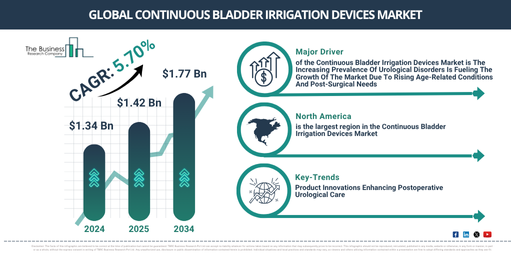
    The market for continuous bladder irrigation devices has seen significant growth in the past few years. It is projected to expand from a worth of $1.34 billion in 2024 to $1.42 billion in 2025, with a compound annual growth rate of 6.0%. Factors contributing to the earlier growth include the rise in urological disorder cases, an aging patient demographic, an increase in prostate cancer incidents, increased demand for post-surgery care, and the devices’ widening acceptance in hospitals.

    In the upcoming years, it’s predicted that the market for continuous bladder irrigation devices will experience substantial growth, escalating to a worth of $1.77 billion in 2029, exhibiting a compound annual growth rate (CAGR) of 5.7%. This growth within the projected period may be attributed to several factors including increased treatments for urinary retention, heightened awareness towards urological health, a surge in hematuria cases, emphasis on patient comfort, and the rise in minimally invasive procedures. The period also sees significant emerging trends such as the evolution of automated irrigation systems, the implementation of live monitoring sensors, advancements in technologies facilitating infection control, progress in the coatings of catheter material, and innovations in closed-system irrigation.

    Download The Free Sample Report Here:

    https://www.thebusinessresearchcompany.com/sample.aspx?id=25729&type=smp

    #What Drivers Are Influencing Growth In The Continuous Bladder Irrigation Devices Market?

    The surge in urological disorders is predicted to stimulate the expansion of the continuous bladder irrigation devices market. A urological disorder describes any ailment that impacts the urinary system or male reproductive organs. The prevalence of these disorders is mainly due to an aging population as age-related changes increase susceptibility to urinary and prostate conditions. Continuous bladder irrigation (CBI) devices play a crucial role in managing these urological conditions, by consistently cleaning the bladder to eliminate clots, debris, or infections. It aids in averting catheter obstructions and contributes to healing, particularly post-surgery procedures. For instance, the Government of Canada revealed that in 2022, approximately 12,500 novel cases of bladder cancer were recorded in Canada, leading to nearly 2,600 associated fatalities, which highlighted the significant impact of the disease that year. Therefore, the rise in urological disorders directly contributes to the expansion of the continuous bladder irrigation devices market. The market’s growth is also being propelled by the escalating volume of surgical procedures, resulting in a heightened demand for postoperative bladder management solutions. The volume of surgical procedures signifies the total number of surgeries performed across healthcare institutions in a specific time frame. It is rising due to the increasing elderly population, who are more susceptible to chronic diseases and usually require surgical intervention. CBI devices are employed during or post-surgery to steadily cleanse the bladder, removing blood, clots, and debris. It helps in avoiding catheter blockage, ensuring uninterrupted urine flow, and fostering healing. For instance, the Australian Institute of Health and Welfare reported that in 2023-24, the public hospital elective surgery waitlists experienced 778,500 admissions, a 5.8% increase from 735,500 admissions in the previous year. Thus, the mounting volume of surgical procedures is spearheading the growth of the continuous bladder irrigation devices market.

    What Are The Main Segments Identified In The Continuous Bladder Irrigation Devices Market Research?

    The continuous bladder irrigation devices market covered in this report is segmented –

    1) By Product: Foley 3 Way Catheters, Accessories, Irrigation Bags

    2) By Application: Post-Surgical Irrigation, Bladder Cancer Management, Hemorrhagic Cystitis, Urinary Tract Infections, Trauma And Urinary Retention, Home-Based Irrigation

    3) By End-Use: Hospitals, Long Term Care Facilities, Other End-Uses

    Subsegments:

    1) By Foley 3 Way Catheters: Silicone 3-Way Foley Catheters, Latex 3-Way Foley Catheters, Antimicrobial-Coated Foley Catheters, Pediatric 3-Way Foley Catheters, Temperature Sensing Foley Catheters

    2) By Accessories: Catheter Connectors, Catheter Stabilization Devices, Leg Drainage Bags, Extension Tubing, Clamps And Valves

    3) By Irrigation Bags: Sterile Irrigation Bags, Non-Sterile Irrigation Bags, Pressure Irrigation Bags, Manual Irrigation Bags, Refillable Irrigation Bags

    What Are The Leading Trends And Opportunities In The Continuous Bladder Irrigation Devices Sector?

    Key players in the continuous bladder irrigation (CBI) devices market are centering their attention on the refinement and development of new products, with particular emphasis on postoperative care goods. These are vital medical devices and supplies used to aid healing, prevent potential post-surgical infections, and efficiently manage pain, thereby ensuring proper recuperation. UNOQUIP GmbH, a leading medical device firm based in Switzerland, exemplified this trend with their announcement in January 2025, where they unveiled new additions to their current assortment of postoperative catheter options. Among the innovations are two specific catheters – the Hematuria Management Catheter and the 3-Way Silicone Foley Catheter; both purposed to foster effective continuous bladder irrigation after urological surgeries. These products underscore Uno Medical’s dedication to patient safety and comfort, tackling clinical issues like clot retention and guaranteeing optimal bladder drainage. This extension bolsters their presence within the CBI devices sector and equips the organization to cater to global healthcare providers with advanced and effective solutions in urological care.

    Which Companies Play A Key Role In The Development Of The Continuous Bladder Irrigation Devices Market?

    Major companies operating in the continuous bladder irrigation devices market are Cardinal Health Inc., Medline Industries LP, Coloplast A/S, Teleflex Incorporated, Cook Medical LLC, Hollister Incorporated, B. Braun Melsungen AG, Poly Medicure Limited, Angiplast Pvt. Ltd., Sterimed Group, Narang Medical Limited, Pocket Nurse Enterprises Inc., Advin Health Care, AdvaCare Pharma, Ribbel International Ltd., UROMED Kurt Drews KG, Multiphze LLC, Romsons Group of Industries, GCMEDICA, Medilivescare Manufacturing Pvt. Ltd., CODAN Companies.

    Get The Full Report Here:

    https://www.thebusinessresearchcompany.com/report/continuous-bladder-irrigation-devices-global-market-report

    What Are The Key Regional Developments Shaping The Continuous Bladder Irrigation Devices Market?

    North America was the largest region in the continuous bladder irrigation devices market in 2024. The regions covered in the continuous bladder irrigation devices market report are Asia-Pacific, Western Europe, Eastern Europe, North America, South America, Middle East, Africa.

    Request For A Customized Report:

    https://www.thebusinessresearchcompany.com/customise?id=25729&type=smp

    About The Business Research Company:

    With over 15000+ reports from 27 industries covering 60+ geographies, The Business Research Company has built a reputation for offering comprehensive, data-rich research and insights. Armed with 1,500,000 datasets, the optimistic contribution of in-depth secondary research, and unique insights from industry leaders, you can get the information you need to stay ahead in the game.

    Get in touch with us:

    The Business Research Company: https://www.thebusinessresearchcompany.com/

    Americas +1 310-496-7795

    Asia +44 7882 955267 & +91 8897263534

    Europe +44 7882 955267

    Email us at info@tbrc.info

    Follow us on:

    LinkedIn: https://in.linkedin.com/company/the-business-research-company

    YouTube: https://www.youtube.com/channel/UC24_fI0rV8cR5DxlCpgmyFQ

    Global Market Model: https://www.thebusinessresearchcompany.com/global-market-model
  • Future Projections: Docetaxel Market to Reach $2.21  Billion by 2029 at 6.7% CAGR

    Future Projections: Docetaxel Market to Reach $2.21 Billion by 2029 at 6.7% CAGR

    Claim your 30% discount on Global Market Reports with code ONLINE30. Limited time only.

    Claim your 30% discount on Global Market Reports with code ONLINE30. Limited time only.

    How Will the Docetaxel Market Evolve in Terms of Growth and Size by 2029?

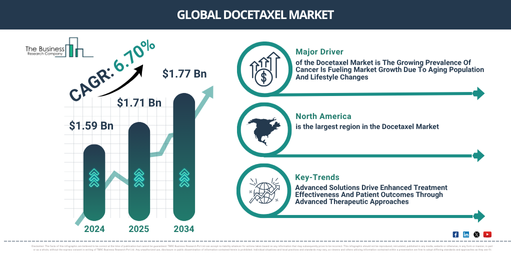
    In recent times, there has been substantial growth in the size of the docetaxel market. It is projected to expand from $1.59 billion in 2024 to $1.71 billion in 2025, experiencing a compound annual growth rate (CAGR) of 7.0%. The growth seen in the historic period can be accredited to factors such as the increasing frequency of breast and prostate cancers, the rising acceptance of chemotherapy treatments, an enhanced cognizance of early cancer detection, improved healthcare facilities in developing economies, and heightened governmental support for oncology care.

    Expectations are high for the docetaxel market in the coming years, with projections showing a robust growth pattern. It is anticipated that by 2029, the market will be worth $2.21 billion, achieving a compound annual growth rate (CAGR) of 6.7%. This predicted growth within the forecasted period is largely due to factors such as a greater need for effective cancer treatments, an aging population with a heightened risk of cancer, an increase in the availability of generic docetaxel, the expansion of cancer drug pipelines, and a growing inclination towards combination chemotherapy. The forecast period is also likely to see major trends such as technological advances in drug delivery systems, formulation innovations minimising side effects, the development of nanoparticle-based docetaxel, investment in oncology research and development, along with advancements in personalised cancer therapies.

    Download The Free Sample Report Here:

    https://www.thebusinessresearchcompany.com/sample.aspx?id=25757&type=smp

    What factors are expected to fuel Docetaxel market growth in the coming years?

    The escalating incidence of cancer is anticipated to spur the expansion of the docetaxel market. Cancer signifies a collection of ailments identified by the unchecked multiplication and dissemination of anomalous cells in the body. Ageing populations and alterations in lifestyle contribute to the escalating incidence of cancer, hence escalating demand for prompt diagnosis, efficient treatments, and extensive patient management. Docetaxel aids in cancer treatment by disrupting the growth and division of cancerous cells, effectively stalling or halting tumor advancement and aiding in improving survival outcomes for patients with different forms of malignancies. For example, the World Health Organisation, a Switzerland-based intergovernmental organization, reported an estimated 20 million new cases of cancer in 2022. This number is forecasted to surge by 77% to over 35 million cases in 2050, as of February 2024. Consequently, the escalating incidence of cancer is fuelling the expansion of the docetaxel market.

    What Are The Key Findings From The Segmentation Analysis Of The Docetaxel Market?

    The docetaxel market covered in this report is segmented –

    1) By Product Type: Branded, Generic

    2) By Application: Breast Cancer, Prostate Cancer, Non-Small Cell Lung Cancer, Gastric Cancer, Head And Neck Cancer, Other Applications

    3) By Distribution Channel: Hospital Pharmacies, Retail Pharmacies, Online Pharmacies

    4) By End Use: Hospitals, Oncology Clinics, Other End Uses

    Subsegments:

    1) By Branded: Original Formulation, Improved Formulation, Combination Drugs, Injectable Forms, Pre-Mixed Solutions

    2) By Generic: Injectable Generics, Pre-Mixed Generic Solutions, Multi-Dose Vials, Single-Dose Vials, Biosimilars

    Which Trends Are Expected To Shape The Future Of The Docetaxel Market?

    The leading firms in the docetaxel industry are directing their efforts towards groundbreaking solutions such as tumor-treating fields (TTFields), a strategy aimed to boost treatment efficiency and offer advanced options that can enhance survival rates and quality of life for cancer patients. TTFields are low-intensity, fluctuating electric fields capable of interrupting cancer cell replication, resulting in the death of tumor cells. For example, in October 2024, Novocure, a Swiss oncology firm, gained US Food and Drug Administration (FDA) consent for the utilization of Optune Lua along with docetaxel and PD-1/PD-L1 inhibitors for metastatic non-small cell lung cancer. This revolutionizes treatment by enhancing patient survival rates and reducing side effects. This therapy’s capacity to physically target dividing cancer cells without systemic toxicity, alongside its compatibility with immunotherapy and chemotherapy, represents substantial progress towards achieving a more effective and personalized treatment protocol for patients suffering from advanced non-small cell lung cancer.

    What Are The Most Active Companies In The Docetaxel Market Today?

    Major companies operating in the docetaxel market are Pfizer Inc., Novartis AG, Sanofi S.A., Teva Pharmaceutical Industries Limited, Sun Pharmaceutical Industries Limited, Cipla Limited, Hikma Pharmaceuticals PLC, Alkem Laboratories Limited, Cisen Pharmaceutical Co. Ltd., Eagle Pharmaceuticals Inc., Selleck Chemicals LLC, Mac-Chem Products (India) Private Limited, Alchem International Private Limited, HRV Global Life Sciences Private Limited, Qilu Pharmaceutical Co. Ltd., Avanscure Lifesciences Private Limited, Avyxa Pharma LLC, ChemFaces Biochemical Co. Ltd., Chongqing Sintaho Pharmaceutical Co. Ltd., Jiangxi Bioman Pharmaceutical Co. Ltd.

    Get The Full Report Here:

    https://www.thebusinessresearchcompany.com/report/docetaxel-global-market-report

    Which Regional Markets Are Attracting The Most Investment In Docetaxel?

    North America was the largest region in the docetaxel market in 2024. Asia-Pacific is expected to be the fastest-growing region in the forecast period. The regions covered in the docetaxel market report are Asia-Pacific, Western Europe, Eastern Europe, North America, South America, Middle East, Africa.

    Request For A Customized Report:

    https://www.thebusinessresearchcompany.com/customise?id=25757&type=smp

    About The Business Research Company:

    With over 15000+ reports from 27 industries covering 60+ geographies, The Business Research Company has built a reputation for offering comprehensive, data-rich research and insights. Armed with 1,500,000 datasets, the optimistic contribution of in-depth secondary research, and unique insights from industry leaders, you can get the information you need to stay ahead in the game.

    Get in touch with us:

    The Business Research Company: https://www.thebusinessresearchcompany.com/

    Americas +1 310-496-7795

    Asia +44 7882 955267 & +91 8897263534

    Europe +44 7882 955267

    Email us at info@tbrc.info

    Follow us on:

    LinkedIn: https://in.linkedin.com/company/the-business-research-company

    YouTube: https://www.youtube.com/channel/UC24_fI0rV8cR5DxlCpgmyFQ

    Global Market Model: https://www.thebusinessresearchcompany.com/global-market-model
  • Key Market Drivers, Trends, and Forecast for the Global Continence Care Industry

    Key Market Drivers, Trends, and Forecast for the Global Continence Care Industry

    Claim your 30% discount on Global Market Reports with code ONLINE30. Limited time only.

    Claim your 30% discount on Global Market Reports with code ONLINE30. Limited time only.

    What Is the Current and Projected Market Size of the Continence Care Industry?

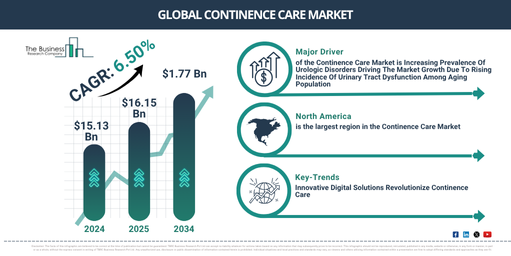
    The market size for continence care has seen robust expansion in the past years. It’s expected to increase from $15.13 billion in 2024 to $16.15 billion in 2025, posting a compound annual growth rate (CAGR) of 6.7%. The growth during the historic period could be attributed to factors such as a burgeoning elderly population, elevated consciousness about personal hygiene, a rising count of chronic diseases, decreased mobility among senior citizens, and a surge in institutional care admissions.

    In the coming years, the size of the continence care market is predicted to witness substantial progress, with growth escalating to $20.78 billion in 2029 at a compound annual growth rate (CAGR) of 6.5%. The projected growth during this period can be credited to the rising need for home healthcare, the burgeoning of e-commerce platforms, an increase in healthcare spending, better reimbursement policies, and a heightened rate of urologic disorders. The period also earmarks relevant trends such as advancements in absorbent material technologies, breakthroughs in smart continence devices, the emergence of biodegradable products, the commencement of research and development in hypoallergenic materials, and the incorporation of wearable sensors.

    Download The Free Sample Report Here:

    https://www.thebusinessresearchcompany.com/sample.aspx?id=25728&type=smp

    #Which Factors Are Currently Driving The Growth Of The Continence Care Market?

    The surge in instances of urologic disorders is anticipated to spearhead the expansion of the continence care market. Urologic disorders encompass a variety of conditions impacting the urinary tract system, including the kidneys, bladder, and urethra. An uptick in these disorders has largely been ascribed to an aging populace, given the vulnerability of older individuals to urinary tract dysfunction as a result of diminishing muscle tone and other age-related physical alterations. Continence care contributes to symptom management and comfort enhancement for individuals afflicted with urologic conditions. This is achieved by offering vital products that enable urinary control, promote hygiene, and enhance the overall quality of life, particularly for those grappling with chronic bladder problems or age-related urinary dysfunction. For instance, in November 2024, the American Urological Association, a US-based professional group, reported that over 33 million Americans suffered symptoms of overactive bladder, while an estimated 1 to 4 million men and 3 to 8 million women struggled with interstitial cystitis or bladder pain syndrome. As a result, the rising prevalence of urologic disorders is fueling the expansion of the continence care market.

    How Is The Global Continence Care Market Structured In Terms Of Segments?

    The continence care market covered in this report is segmented –

    1) By Product: Urinary Catheter, Non-Implanting Electric Stimulation Devices, Protective Garments, Urine Bag, Bowel Management Products, Other Products

    2) By Material Type: Cotton, Polymer, Nonwoven Fabrics, Foam

    3) By Application: Diabetes, Strokes, Benign Prostatic Hyperplasia, Alzheimer, Cerebral Palsy, Parkinson, Prostate Cancer, Spinal Cord Injury, Bladder Cancer, Other Applications

    4) By Distribution Channel: Hospital Pharmacies, Retail Pharmacies, Online Stores, Medical Supply Stores

    5) By End User: Hospitals, Home Care Settings, Nursing Homes, Clinics

    Subsegments:

    1) By Urinary Catheter: Intermittent Catheters, Indwelling (Foley) Catheters, External (Condom) Catheters, Suprapubic Catheters, Catheter Maintenance Products

    2) By Non-Implanting Electric Stimulation Devices: Pelvic Floor Stimulators, Transcutaneous Electrical Nerve Stimulation (TENS) Devices For Bladder Control, External Tibial Nerve Stimulation Devices

    3) By Protective Garments: Adult Diapers, Protective Underwear, Pads And Liners, Male Guards, Belted Shields

    4) By Urine Bag: Leg Urine Bags, Bedside Urine Bags, Pediatric Urine Bags, Night Drainage Bags, Urine Bag Accessories

    5) By Bowel Management Products: Rectal Catheters, Stool Collection Bags, Irrigation Systems, Anal Plugs, Bowel Stimulation Devices

    6) By Other Products: Absorbent Sheets, Skin Care Products For Incontinence, Odor Control Products, Deodorizing Tablets

    What Trends Are Currently Influencing Growth In The Continence Care Market?

    Leading companies in the continence care market are concentrating efforts on developing ground-breaking solutions such as digital health technologies to encourage real-time urinary tracking, hydration regulation, and tailored continence care. In essence, digital health solutions integrate digital applications like mobile software, apps, and internet-connected devices to enhance healthcare delivery, support health management, uplift patient results, and facilitate real-time tracking, personalized health assessments, distant monitoring, and bettered patient-healthcare provider communication. For example, Convatec Group Plc, a UK medical products and technologies establishment, introduced the me+ Companion app in August 2024, as a digital health tool to assist intermittently catheterized patients and healthcare professionals by offering real-time urinary tracking, hydration target establishment, leak recordation, and generation of tailored summary reports for improved management of continence care. Through this application, users can conveniently log their levels of fluid consumption and urine output from their mobile gadgets, enabling them to acquire a comprehensive understanding of their condition and make informed decisions. This application further reinforces communication between patients and their care teams, letting users share printable and downloadable reports.

    Who Are The Main Participants Shaping The Continence Care Market Landscape?

    Major companies operating in the continence care market are Cardinal Health Inc., 3M Healthcare, Medtronic plc, Kimberly-Clark Corporation, Unicharm Corporation, Coloplast A/S, Paul Hartmann AG, Convatec Group PLC, Ontex International N.V., Drylock Technologies, First Quality Enterprises Inc., Hollister Incorporated, ABENA A/S, Lohmann & Rauscher GmbH & Co. KG, B. Braun Melsungen AG, Principle Business Enterprises Inc., Premiere Care Industries Inc., Santex S.p.A., Pioneer Hygiene Industries, TZMO SA.

    Get The Full Report Here:

    https://www.thebusinessresearchcompany.com/report/continence-care-global-market-report

    Which Region Currently Holds The Largest Share In The Continence Care Market?

    North America was the largest region in the continence care market in 2024. Asia-Pacific is expected to be the fastest-growing region in the forecast period. The regions covered in the continence care market report are Asia-Pacific, Western Europe, Eastern Europe, North America, South America, Middle East, Africa.

    Request For A Customized Report:

    https://www.thebusinessresearchcompany.com/customise?id=25728&type=smp

    About The Business Research Company:

    With over 15000+ reports from 27 industries covering 60+ geographies, The Business Research Company has built a reputation for offering comprehensive, data-rich research and insights. Armed with 1,500,000 datasets, the optimistic contribution of in-depth secondary research, and unique insights from industry leaders, you can get the information you need to stay ahead in the game.

    Get in touch with us:

    The Business Research Company: https://www.thebusinessresearchcompany.com/

    Americas +1 310-496-7795

    Asia +44 7882 955267 & +91 8897263534

    Europe +44 7882 955267

    Email us at info@tbrc.info

    Follow us on:

    LinkedIn: https://in.linkedin.com/company/the-business-research-company

    YouTube: https://www.youtube.com/channel/UC24_fI0rV8cR5DxlCpgmyFQ

    Global Market Model: https://www.thebusinessresearchcompany.com/global-market-model

  • Strategic Report on Consumer Health Contract Manufacturing Market: Growth Opportunities and Emerging Challenges

    Strategic Report on Consumer Health Contract Manufacturing Market: Growth Opportunities and Emerging Challenges

    Claim your 30% discount on Global Market Reports with code ONLINE30. Limited time only.

    Claim your 30% discount on Global Market Reports with code ONLINE30. Limited time only.

    How Will the Consumer Health Contract Manufacturing Market Evolve in Terms of Growth and Size by 2029?

    In the last few years, the consumer health contract manufacturing market has seen swift enlargement. It is predicted to surge from $138.97 billion in 2024 to $155.62 billion in 2025, with a compound annual growth rate (CAGR) of 12.0%. Factors that contributed to the growth during the historic period include the escalating demand for over-the-counter (OTC) drugs, heightened consumer consciousness about wellness and preventative care, an increase in pharmaceutical companies outsourcing their production, the growth of retail pharmacy networks and online trading platforms, and heightened investment in local manufacturing infrastructure.

    In the coming years, the size of the consumer health contract manufacturing market is anticipated to grow swiftly, reaching a valuation of 242.36 billion in 2029, reflecting a compound annual growth rate (CAGR) of 11.7%. Factors contributing to this projected growth during the forecast period include the rising demand for bespoke consumer health products, increasing health-awareness among consumers, escalating intricacies in regulatory frameworks, broadening of the direct-to-consumer (DTC) health brands market, and the growing digitalisation of supply chains and production processes. Key trends during the predicted period encompass embracing continuous manufacturing technologies, implementing AI and predictive analytics, integrating blockchain technology into supply chains, creating smart packaging technologies, and investing in environmentally friendly production processes.

    Download The Free Sample Report Here:

    https://www.thebusinessresearchcompany.com/sample.aspx?id=25727&type=smp

    What factors are expected to fuel Consumer Health Contract Manufacturing market growth in the coming years?

    The consumer health contract manufacturing market is anticipated to expand due to the increasing need for consumer health goods. These encompass non-prescription medications, nutritional enhancements, and personal care items utilized individually for maintaining health and wellness. As the emphasis on self-care intensifies and individuals opt for non-prescription remedies to handle their health issues, avoiding regular doctor appointments, the demand for these products escalates. By resorting to consumer health contract manufacturing, companies can yield superior consumer health products efficiently by delegating the manufacturing process to specialized producers. In turn, companies can concentrate on marketing and pioneering ideas. As an illustration, Barclays Bank UK PLC, a provider of retail banking services in the UK, reported in September 2024 that data from July and August 2024 affirms that the health and beauty sector is booming. Consumer expenditure in this segment had amplified by 7.3% year on year in August 2024. Consequently, the soaring need for consumer health items is bolstering the expansion of consumer health contract manufacturing market.

    What Are The Key Findings From The Segmentation Analysis Of The Consumer Health Contract Manufacturing Market?

    The consumer health contract manufacturing market covered in this report is segmented –

    1) By Product: Over-The-Counter (OTC) Drugs, Nutritional Supplements, Personal Care Products, Medical Devices, Other Products

    2) By Service: Active Pharmaceutical Ingredient (API) Manufacturing, Finished Dose Manufacturing, Medical Device Manufacturing, Packaging And Labelling, Other Services

    3) By End Use: Pharmaceutical And Biopharmaceutical Companies, Nutraceutical Companies, Cosmeceutical Companies, Medical Device Companies, Other End Uses

    Subsegments:

    1) By Over-The-Counter (OTC) Drugs: Pain Relief, Cold And Allergy, Digestive Health, Vitamins And Minerals, Respiratory Products, Topical Products

    2) By Nutritional Supplements: Vitamins, Minerals, Herbal Supplements, Protein And Sports Nutrition, Omega Fatty Acids, Probiotics

    3) By Personal Care Products: Skincare Products, Hair Care Products, Oral Care Products, Baby Care Products, Feminine Hygiene Products, Cosmetics And Makeup

    4) By Medical Devices: Diagnostic Devices, Monitoring Devices, Therapeutic Devices, Surgical Instruments, Consumables And Accessories

    5) By Other Products: Wellness Products, Functional Foods And Beverages, Home Health Care Products, Herbal And Traditional Medicines

    Which Trends Are Expected To Shape The Future Of The Consumer Health Contract Manufacturing Market?

    Leading firms in the consumer health contract manufacturing sector are concentrating their efforts towards the launch of innovative solutions like contract development and manufacturing platforms. These platforms are intended to refine production processes, improve scalability, and expedite the market launch for consumer health products. Contract development and manufacturing platforms are integrated systems or service models that unify product development (including formulation and testing) and large-volume manufacturing all in one location. An example is Lallemand Inc., a company from Canada skilled in cultivating microorganisms which launched Expert Biome CDMO in October 2023. This platform is a thorough contract development and manufacturing platform devised to back the development and production of advanced probiotic and live biotherapeutic strains. It provides a full suite of services such as microbial strain research and development, bioprocess scaling, drug production, formulation, and regulatory support. Expert Biome upholds the finest quality standards like cGMP Pharma and is designed to tackle key issues in the health supplement and live biotherapeutics markets.

    What Are The Most Active Companies In The Consumer Health Contract Manufacturing Market Today?

    Major companies operating in the consumer health contract manufacturing market are Thermo Fisher Scientific Inc., Lonza Group Ltd., Siegrified AG, Vetter Pharma, Sirio Pharma Co. Ltd., Piramal Consumer Products, Aenova Group, Recipharm AB, Vit-Best Nutrition Inc., Laurus Labs, UFP Technologies, Scapa Healthcare, Robinson Pharma Inc., Trividia Health Inc., Tishcon Corporation, Famar SA, SCN BestCo, Akums Drugs And Pharmaceuticals, Bactolac Pharmaceutical Inc., ION Labs Inc., Rubicon Research Private Limited, Captek Softgel International.

    Get The Full Report Here:

    https://www.thebusinessresearchcompany.com/report/consumer-health-contract-manufacturing-global-market-report

    Which Regional Markets Are Attracting The Most Investment In Consumer Health Contract Manufacturing?

    North America was the largest region in the consumer health contract manufacturing market in 2024. Asia-Pacific is expected to be the fastest-growing region in the forecast period. The regions covered in the consumer health contract manufacturing market report are Asia-Pacific, Western Europe, Eastern Europe, North America, South America, Middle East, Africa.

    Request For A Customized Report:

    https://www.thebusinessresearchcompany.com/customise?id=25727&type=smp

    About The Business Research Company:

    With over 15000+ reports from 27 industries covering 60+ geographies, The Business Research Company has built a reputation for offering comprehensive, data-rich research and insights. Armed with 1,500,000 datasets, the optimistic contribution of in-depth secondary research, and unique insights from industry leaders, you can get the information you need to stay ahead in the game.

    Get in touch with us:

    The Business Research Company: https://www.thebusinessresearchcompany.com/

    Americas +1 310-496-7795

    Asia +44 7882 955267 & +91 8897263534

    Europe +44 7882 955267

    Email us at info@tbrc.info

    Follow us on:

    LinkedIn: https://in.linkedin.com/company/the-business-research-company

    YouTube: https://www.youtube.com/channel/UC24_fI0rV8cR5DxlCpgmyFQ

    Global Market Model: https://www.thebusinessresearchcompany.com/global-market-model

  • Industry Trends Show Connective Tissue Disease Treatment Market Set to Expand at 6.1% CAGR Until 2029

    Industry Trends Show Connective Tissue Disease Treatment Market Set to Expand at 6.1% CAGR Until 2029

    Claim your 30% discount on Global Market Reports with code ONLINE30. Limited time only.

    Claim your 30% discount on Global Market Reports with code ONLINE30. Limited time only.

    What CAGR Is Anticipated for the Connective Tissue Disease Treatment Market Through 2029?

    Recently, there has been robust growth in the market size for connective tissue disease treatment. It is projected to escalate from $23.08 billion in 2024 to $24.55 billion in 2025, reflecting a compound annual growth rate (CAGR) of 6.3%. The notable growth recorded in the past can be linked to factors including a rise in the incidence of autoimmune diseases, heightened consciousness about early detection, enhancements in healthcare facilities in emerging areas, increased use of biologics, and a broader insurance coverage for managing chronic illnesses.

    The market size for treatment of connective tissue diseases is projected to experience robust expansion in the forthcoming years. The prediction is that it will rise to $31.11 billion by 2029, with a compound annual growth rate (CAGR) of 6.1%. This growth during the forecast phase can be linked to factors such as an increasing aging population, escalated research & development endeavours by pharmaceutical corporations, enhanced demand for customized medicines, growth of targeted therapies’ pipeline, and an emphasis on patient-centric care paradigms. The forecast period is also likely to see major trends like progress in monoclonal antibody therapies, the incorporation of telemedicine for disease surveillance, tilt towards biologics and biosimilars, and the creation of drugs that target multiple diseases. An upsurge in alliances between academic institutions and clinical research bodies is also anticipated.

    Download The Free Sample Report Here:

    https://www.thebusinessresearchcompany.com/sample.aspx?id=25726&type=smp

    What Market Forces Are Driving The Connective Tissue Disease Treatment Sector In 2025 And Beyond?

    The escalating occurrence of autoimmune diseases is anticipated to drive the expansion of the connective tissue disease treatment market. Autoimmune diseases encompass disorders where the immune system wrongly attacks the body’s healthy tissues and organs. This growing trend is primarily due to a mix of genetic vulnerability, which makes some people more susceptible to immune system failures, and environmental factors like infections, diet, stress, and exposure to toxins. These elements can instigate or exacerbate these conditions. The treatment of connective tissue diseases seeks to control autoimmune diseases by addressing the root immune system dysfunction that incites inflammation and tissue impairment, thus reducing symptoms, decelerating disease advancement, and enhancing the overall wellbeing of patients struggling with conditions such as lupus, rheumatoid arthritis, and scleroderma. For example, as reported by the Versorgungsatlas.de, a Germany-based online platform that deals with healthcare, in 2022, 6,304,340 out of 73,241,305 insured people were diagnosed with at least one autoimmune disease, leading to a raw prevalence rate of 8.61%. Hence, the escalating occurrence of autoimmune diseases contributes to the expansion of the connective tissue disease treatment market.

    How Is The Global Connective Tissue Disease Treatment Market Categorized By Segments?

    The connective tissue disease treatment market covered in this report is segmented –

    1) By Drug Class: Anti-Inammatory Drugs, Immunosuppressants, Biologics And Targeted Therapy, Disease-Modifying Anti-Rheumatic Drugs (DMARDs), Other Drug Classes

    2) By Disease Type: Systemic Lupus Erythematosus (SLE), Rheumatoid Arthritis (RA), Scleroderma, Dermatomyositis, Mixed Connective Tissue Disease (MCTD), Polymyositis, Sjögren’s Syndrome, Vasculitis, Antiphospholipid Syndrome (APS)

    3) By Route Of Administration: Oral, Injectable, Topical

    4) By Distribution Channel: Hospital Pharmacies, Retail Pharmacies, Online Pharmacies

    5) By End-User: Hospitals, Clinics, Homecare Settings

    Subsegments:

    1) By Anti-Inflammatory Drugs: Nonsteroidal Anti-Inflammatory Drugs (NSAIDs), Systemic Corticosteroids

    2) By Immunosuppressants: Calcineurin Inhibitors, Mammalian Target Of Rapamycin (mTOR) Inhibitors, Antimetabolites, Alkylating Agents

    3) By Biologics And Targeted Therapy: Tumor Necrosis Factor (TNF) Inhibitors, Interleukin-6 (IL-6) Inhibitors, B-Cell Inhibitors, T-Cell Co-Stimulation Modulators, Janus Kinase (JAK) Inhibitors

    4) By Disease-Modifying Anti-Rheumatic Drugs (DMARDs): Conventional Synthetic Disease-Modifying Anti-Rheumatic Drugs (DMARDs), Biologic Disease-Modifying Anti-Rheumatic Drugs (DMARDs), Targeted Synthetic Disease-Modifying Anti-Rheumatic Drugs (DMARDs)

    5) By Other Drug Classes: Analgesics, Antimalarial Drugs, Antibiotics, Monoclonal Antibodies

    What Long-Term Trends Are Likely To Affect The Connective Tissue Disease Treatment Market?

    Leading players in the connective tissue disease treatment marketplace are prioritizing clinical trials to pioneer innovative treatments like allogeneic CAR-NK cell therapy. This approach intends to boost effectiveness and tackle unmet demands in autoimmune disorders. Allogeneic CAR-NK cell therapy employs genetically engineered natural killer (NK) cells from healthy donors with a chimeric antigen receptor (CAR) to target and eradicate cells causing disease. This therapy contributes to enhancing the immunological system’s ability to remove harmful B-cells associated with autoimmune diseases. It presents a potentially safer and more accessible option compared to traditional cell therapies. For example, in July 2024, Nkarta Inc., a clinical-stage bio-technology firm based in the US, initiated the Ntrust-1 clinical trial testing NKX019, an experimental allogeneic CAR-NK cell therapy for lupus nephritis. It also obtained FDA authorisation to start another trial (Ntrust-2) for systemic sclerosis, idiopathic inflammatory myopathy, and ANCA-linked vasculitis. The company’s goal is to attend to significant unmet needs in autoimmune diseases by enhancing the safety, accessibility, and effectiveness of cell-based therapies using genetically modified NK cells that selectively target CD19-expressing B-cells.

    Which Firms Are Considered Leaders In The Connective Tissue Disease Treatment Market Space?

    Major companies operating in the connective tissue disease treatment market are Pfizer Inc., F. Hoffmann-La Roche AG, AbbVie Inc., Sanofi S.A., Bristol Myers Squibb Company, AstraZeneca PLC, Novartis AG, GlaxoSmithKline (GSK) PLC, Eli Lilly and Company, Amgen Inc., Biogen Inc., Vertex Pharmaceuticals, UCB S.A., Hikma Pharmaceuticals PLC, Innovent Biologics Inc., RemeGen Co. Ltd, Kymera Therapeutics, Adicet Bio, Equillium Inc., Stem Cell Care India.

    Get The Full Report Here:

    https://www.thebusinessresearchcompany.com/report/connective-tissue-disease-treatment-global-market-report

    What Role Do Regional Policies And Investments Play In Connective Tissue Disease Treatment Market Expansion?

    North America was the largest region in the connective tissue disease treatment market in 2024. Asia-Pacific is expected to be the fastest-growing region in the forecast period. The regions covered in the connective tissue disease treatment market report are Asia-Pacific, Western Europe, Eastern Europe, North America, South America, Middle East, Africa.

    Request For A Customized Report:

    https://www.thebusinessresearchcompany.com/customise?id=25726&type=smp

    About The Business Research Company:

    With over 15000+ reports from 27 industries covering 60+ geographies, The Business Research Company has built a reputation for offering comprehensive, data-rich research and insights. Armed with 1,500,000 datasets, the optimistic contribution of in-depth secondary research, and unique insights from industry leaders, you can get the information you need to stay ahead in the game.

    Get in touch with us:

    The Business Research Company: https://www.thebusinessresearchcompany.com/

    Americas +1 310-496-7795

    Asia +44 7882 955267 & +91 8897263534

    Europe +44 7882 955267

    Email us at info@tbrc.info

    Follow us on:

    LinkedIn: https://in.linkedin.com/company/the-business-research-company

    YouTube: https://www.youtube.com/channel/UC24_fI0rV8cR5DxlCpgmyFQ

    Global Market Model: https://www.thebusinessresearchcompany.com/global-market-model