Blog

  • Cyclosporine Drugs Market Forecast To Reach $2.31 Billion By 2030: Key Growth Drivers And Industry Trends

    Cyclosporine Drugs Market Forecast To Reach $2.31 Billion By 2030: Key Growth Drivers And Industry Trends

    Built to provide research that’s more actionable and strategically valuable, The Business Research Company’s 2026 market reports include market attractiveness analysis, total addressable market sizing, company benchmarking matrices, interactive Excel dashboards, broader supply chain intelligence, emerging startup tracking, and in-depth product insights.

    Cyclosporine Drugs Market Poised To Hit $2.31 Billion By 2030 With A 6% CAGR

    The cyclosporine drugs market has shown robust expansion in recent years. It is anticipated to increase from $1.73 billion in 2025 to $1.83 billion in 2026, achieving a compound annual growth rate (CAGR) of 6.0%. The historical growth of this market can be attributed to several factors including an uptick in organ transplant procedures, its proven effectiveness in immune suppression, the growing incidence of autoimmune diseases, its long history of clinical application, and the availability of generic versions.

    The cyclosporine drugs market anticipates substantial expansion in the coming years. This market is projected to reach $2.32 billion in 2030, displaying a compound annual growth rate (CAGR) of 6.0%. Factors contributing to this growth over the projected period include a rise in the transplant patient population, broader ophthalmic treatment applications, the creation of enhanced drug delivery mechanisms, a growing need for individualized immunosuppressive treatments, and innovations in formulation technologies. Significant developments expected during this forecast span encompass an expanding role in organ transplant immunosuppression, wider utilization in autoimmune conditions, heightened demand for modified release versions, an increase in ophthalmic cyclosporine offerings, and a greater emphasis on optimizing dosages and ensuring safety.

    Get A Free Sample Report With In-Depth Market Insights:

    https://thebusinessresearchcompany.com/sample_request?id=12677323&type=smp&name=Cyclosporine%20Drugs%20Market%20Report%202026&utm_source=Blogs&utm_medium=Paid&utm_campaign=Oct_PR

    Cyclosporine Drugs Market Demand Drivers: What’s Powering Industry Growth?

    The future expansion of the cyclosporine drugs market is expected due to the growing need for organ transplantation. Organ transplantation is a medical procedure that involves replacing a non-functional or impaired organ in a patient with a healthy one from a donor. This procedure is becoming more common partly because of the rising incidence of end-stage organ conditions, as advancements in medical diagnosis and therapies have prolonged patient lives, resulting in more people needing organ replacement. Cyclosporine drugs are essential for these transplant operations because they inhibit the immune system’s inherent reaction against foreign tissues, thereby helping to safeguard the transplanted organ from rejection and damage by the recipient’s immune cells. An illustration of this trend is seen in preliminary data from January 2025, released by the Organ Procurement and Transplantation Network (OPTN), a US-based government health system overseen by the Health Resources and Services Administration. This data indicated that the United States conducted 48,149 organ transplants in 2024, which signifies a 3.3% rise compared to the transplants performed in 2023. Consequently, the expanding demand for organ transplantation is fueling the growth of the cyclosporine drugs market.

    Cyclosporine Drugs Market Segment Analysis: What Are The Core Market Categories?

    The cyclosporine drugs market covered in this report is segmented –

    1) By Type: Oral, Parenteral

    2) By Drug Formulation: Capsules, Oral Solutions, Injectable Forms, Topical Preparations

    3) By Application: Organ Transplantation, Autoimmune Disorders, Ophthalmic Disorders, Dermatological Disorders

    4) By End-User: Hospitals, Specialty Clinics, Homecare Settings, Pharmaceutical Retail

    Subsegments:

    1) By Oral: Capsules, Tablets, Oral Solution

    2) By Parenteral: Intravenous Injection, Intravenous Infusion

    Cyclosporine Drugs Market Innovation Trends: What Developments Are Reshaping The Industry?

    Companies active in the cyclosporine drugs market are concentrating on creating sophisticated solutions, like ophthalmic medications, to deliver focused treatment directly to the eyes. Ophthalmic medications are pharmaceutical products specifically formulated to address various eye conditions, including infections, inflammation, and dry eye, commonly provided as drops, ointments, or gels. For instance, in June 2023, Novaliq GmbH, a Germany-based biopharmaceutical company, declared the U.S. Food and Drug Administration (FDA) approval of VEVYE, recognized as the initial water-free and preservative-free 0.1% cyclosporine ophthalmic solution. VEVYE, developed utilizing Novaliq’s proprietary EyeSol technology, offers an innovative method for treating dry eye disease, exhibiting substantial effectiveness within four weeks. Its distinct water-free formulation enhances drug stability and improves patient comfort while diminishing irritation. This approval signifies a considerable progression in ophthalmic drug delivery, allowing for more precise targeting of inflammation.

    Cyclosporine Drugs Market Top Companies Driving Competitive Growth

    Major companies operating in the cyclosporine drugs market are Pfizer Inc., Merck & Co. Inc., AbbVie Inc., Novartis AG, Teva Pharmaceutical Industries Ltd., Intas Pharmaceuticals Limited, Astellas Pharma Inc., Apotex Inc., Dr. Reddy’s Laboratories Limited, Cipla Limited, Hikma Pharmaceuticals PLC, Santen Pharmaceutical Co. Ltd., Biocon Limited, Glenmark Pharmaceuticals Limited, Alkem Laboratories Limited, Concord Biotech Limited, CKD Bio Corporation, ChemWerth Inc., Strides Pharma Science Limited, Fishfa Biogenics.

    View The Full Cyclosporine Drugs Market Report:

    https://thebusinessresearchcompany.com/report/cyclosporine-drugs-global-market-report?utm_source=Blogs&utm_medium=Paid&utm_campaign=Oct_PR

    Cyclosporine Drugs Market Regional Outlook: Where Is Opportunity Concentrated?

    North America was the largest region in the cyclosporine drugs market in 2025. Asia-Pacific is expected to be the fastest-growing region in the forecast period. The regions covered in the cyclosporine drugs market report are Asia-Pacific, South East Asia, Western Europe, Eastern Europe, North America, South America, Middle East, Africa.

    Reach Out To Our Team:

    The Business Research Company: https://www.thebusinessresearchcompany.com/

    Americas: +1 310-496-7795

    Asia: +44 7882 955267 & +91 8897263534

    Europe: +44 7882 955267

    Email us at: marketing@tbrc.info

    Follow us on:

    LinkedIn: https://in.linkedin.com/company/the-business-research-company

    YouTube: https://www.youtube.com/channel/UC24_fI0rV8cR5DxlCpgmyFQ

    Global Market Model: https://www.thebusinessresearchcompany.com/global-market-model
  • Cyclosporine Market Research 2026: Market Size, Trends, Segments And Growth Forecast

    Cyclosporine Market Research 2026: Market Size, Trends, Segments And Growth Forecast

    Backed by market attractiveness analysis, total addressable market sizing, company benchmarking matrices, interactive Excel dashboards, wider supply chain intelligence, emerging startup coverage, and detailed product-level insights, The Business Research Company’s 2026 market reports are designed to offer research that is more actionable and strategically valuable than ever.

    Cyclosporine Market Size And Revenue Outlook Through 2030

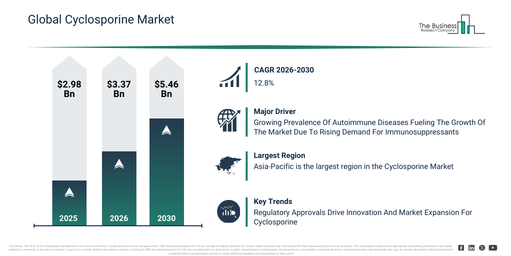
    The cyclosporine market has experienced rapid growth in recent years. It is projected to expand from $2.98 billion in 2025 to $3.37 billion in 2026, exhibiting a compound annual growth rate (CAGR) of 13.0%. The growth observed in the past can be attributed to factors such as the increasing number of organ transplant procedures, its proven effectiveness in immune suppression, the rising incidence of autoimmune diseases, early regulatory approvals, and the broader implementation of hospital-based immunotherapy.

    The cyclosporine market size is projected to experience substantial growth in the coming years. It is forecast to reach $5.46 billion by 2030, exhibiting a compound annual growth rate (CAGR) of 12.8%. This expansion during the forecast period is primarily driven by factors such as an increase in chronic autoimmune conditions, a growing burden of ophthalmic diseases, improved transplant survival rates, broader availability of generic medications, and the rising use of outpatient immunosuppressive therapy. Key trends anticipated in this period include the broadening application of cyclosporine in autoimmune disease management, increased adoption of ophthalmic cyclosporine formulations, a surge in demand for long-term immunosuppressive therapies, greater integration into organ transplant maintenance protocols, and the expansion of generic cyclosporine product offerings.

    Get A Free Sample Report With In-Depth Market Insights:

    https://thebusinessresearchcompany.com/sample_request?id=77682638&type=smp&name=Cyclosporine%20Market%20Report%202026&utm_source=Blogs&utm_medium=Paid&utm_campaign=Oct_PR

    Cyclosporine Market Growth Drivers: What’s Behind The Acceleration?

    The increasing occurrence of autoimmune diseases is anticipated to boost the expansion of the cyclosporine market in the future. Autoimmune diseases are defined as disorders where the immune system erroneously targets the body’s own cells, leading to inflammation, harm to tissues, and persistent sickness. The rising occurrence of these conditions stems from genetic predisposition, with improvements in genetic testing revealing more people with inherited risks, thus increasing their vulnerability to these disorders. Cyclosporine effectively treats autoimmune diseases by inhibiting T-cell activation, consequently diminishing detrimental immune reactions against healthy tissues in illnesses like rheumatoid arthritis, psoriasis, and lupus. For example, a thorough review released in October 2024 by Signal Transduction and Targeted Therapy, a journal from Nature, a UK-based peer-reviewed scientific publisher, indicated that around 8.4 million individuals globally are affected by rheumatoid arthritis, with its overall incidence rate rising by 2-3% each year; furthermore, utilizing the Markov model approach, the number of affected individuals is projected to be approximately 13.5-17.4 million by 2040. Consequently, the increasing prevalence of autoimmune diseases is propelling the expansion of the cyclosporine market.

    Cyclosporine Market Segment Breakdown: Which Categories Lead On Revenue?

    The cyclosporine market covered in this report is segmented –

    1) By Indication: Transplant Rejection Prophylaxis, Rheumatoid Arthritis, Psoriasis, Autoimmune Myasthenia Gravis, Dry Eye, Other Indications

    2) By Dosage Form: Capsule, Eye Drops, Liquid Solutions, Creams And Ointments

    3) By Route Of Administration: Oral, Topical, Parenteral

    4) By Distribution Channel: Hospital Pharmacies, Retail Pharmacies, Online Pharmacies

    5) By End-Users: Hospitals, Homecare, Speciality Centres, Other End-Users

    Subsegments:

    1) By Transplant Rejection Prophylaxis: Kidney Transplant, Liver Transplant, Heart Transplant, Lung Transplant, Other Transplants

    2) By Rheumatoid Arthritis: Moderate Rheumatoid Arthritis, Severe Rheumatoid Arthritis

    3) By Psoriasis: Plaque Psoriasis, Erythrodermic Psoriasis, Guttate Psoriasis, Pustular Psoriasis

    4) By Autoimmune Myasthenia Gravis: Generalized Myasthenia Gravis, Ocular Myasthenia Gravis

    5) By Dry Eye: Chronic Dry Eye, Severe Dry Eye

    6) By Other Indications: Atopic Dermatitis, Uveitis, Nephrotic Syndrome, Inflammatory Bowel Disease (IBD)

    Cyclosporine Market Trends: What’s Defining The Industry’s Next Phase?

    Leading companies in the cyclosporine market are concentrating on securing regulatory clearances to broaden their product offerings and strengthen their presence in the market. Obtaining regulatory approvals for cyclosporine confirms its safety and effectiveness, which facilitates market entry and boosts confidence among prescribers and patients. For example, in June 2023, Novaliq GmbH, a biopharmaceutical company based in Germany, obtained approval from the U.S. FDA for VEVYE (cyclosporine ophthalmic solution) 0.1%. This distinctive water-free ophthalmic medication was developed for addressing dry eye disease (DED). It represents the first and only cyclosporine-based solution for this condition, demonstrating effectiveness within a mere four weeks. VEVYE incorporates an innovative water-free technology called EyeSol, which improves cyclosporine’s bioavailability and its retention on the ocular surface without requiring preservatives, oils, or surfactants. The solution operates as a calcineurin inhibitor, contributing to the reduction of inflammation linked to dry eye disease.

    Cyclosporine Market Leading Players And Competitive Positioning

    Major companies operating in the cyclosporine market are Novartis AG, Viatris Inc., Teva Pharmaceutical Industries Ltd, Sandoz International GmbH, Sun Pharmaceutical Industries Ltd, Apotex Inc., Cipla Ltd, Dr. Reddy’s Laboratories Ltd, Lupin Limited, Glenmark Pharmaceuticals Ltd, Taj Pharmaceuticals Limited, Panacea Biotec Ltd, Novaliq GmbH, Simson Pharma Limited, Strides Pharma Science Ltd, AdvaCare Pharma, JoinHub Pharma, Grevis Pharmaceuticals Pvt Ltd, GMT Pharma International, Logos Pharma.

    View The Full Cyclosporine Market Report:

    https://thebusinessresearchcompany.com/report/cyclosporine-global-market-report?utm_source=Blogs&utm_medium=Paid&utm_campaign=Oct_PR

    Cyclosporine Market Geographic Landscape: Which Region Leads Industry Growth?

    Asia-Pacific was the largest region in the cyclosporine market in 2025. North America is expected to be the fastest-growing region in the forecast period. The regions covered in the cyclosporine market report are Asia-Pacific, South East Asia, Western Europe, Eastern Europe, North America, South America, Middle East, Africa.

    Reach Out To Our Team:

    The Business Research Company: https://www.thebusinessresearchcompany.com/

    Americas: +1 310-496-7795

    Asia: +44 7882 955267 & +91 8897263534

    Europe: +44 7882 955267

    Email us at: marketing@tbrc.info

    Follow us on:

    LinkedIn: https://in.linkedin.com/company/the-business-research-company

    YouTube: https://www.youtube.com/channel/UC24_fI0rV8cR5DxlCpgmyFQ

    Global Market Model: https://www.thebusinessresearchcompany.com/global-market-model
  • Cyclin-Dependent Kinase (CDK) 4/6 Inhibitor Drugs Market Forecast 2026: Market Size, Competitive Landscape And Growth Drivers

    Cyclin-Dependent Kinase (CDK) 4/6 Inhibitor Drugs Market Forecast 2026: Market Size, Competitive Landscape And Growth Drivers

    Featuring market attractiveness scoring, total addressable market sizing, company benchmarking matrices, interactive Excel dashboards, deeper supply chain intelligence, emerging startup tracking, and granular product-level insights, The Business Research Company’s 2026 market reports are built to deliver research that is both more actionable and more strategically valuable.

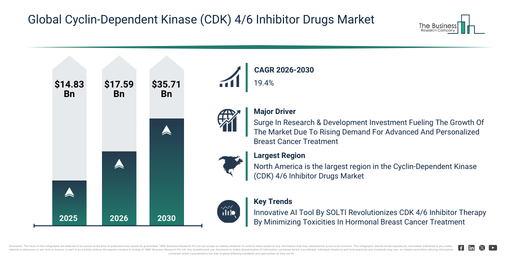
    Cyclin-Dependent Kinase (CDK) 4/6 Inhibitor Drugs Market Growth From $17.58 Billion In 2026 To $35.71 Billion By 2030 At A CAGR Of 19.4%

    The cyclin-dependent kinase (cdk) 4/6 inhibitor drugs market size has experienced rapid expansion in recent years. It is projected to grow from $14.83 billion in 2025 to $17.59 billion in 2026, achieving a compound annual growth rate (CAGR) of 18.6%. The historical growth can be attributed to various factors, including the approval of palbociclib by fda, the increasing incidence of hr-positive her2-negative breast cancer, the adoption of targeted therapies in developed countries, a rise in clinical trials for cdk4/6 inhibitors, and partnerships between pharma companies for oncology research.

    The market for cyclin-dependent kinase (cdk) 4/6 inhibitor drugs is anticipated to undergo significant expansion in the coming years. This sector is projected to reach $35.71 billion by 2030, demonstrating a compound annual growth rate (CAGR) of 19.4%. The expected growth during this forecast period is driven by an aging population with breast cancer, increasing recognition of the advantages of targeted therapy, the development of oncology healthcare infrastructure in new markets, the incorporation of digital health solutions for tracking patients, and intensified research and development into advanced cdk4/6 inhibitors. Prominent trends for the forecast period include customized treatment approaches, multi-drug therapy methods, oral cdk4/6 inhibitor preparations, wider reach in developing oncology markets, and the use of real-world data alongside patient monitoring.

    Get A Free Sample Report With In-Depth Market Insights:

    https://thebusinessresearchcompany.com/sample_request?id=56241607&type=smp&name=Cyclin-Dependent%20Kinase%20%28CDK%29%204%2F6%20Inhibitor%20Drugs%20Market%20Report%202026&utm_source=Blogs&utm_medium=Paid&utm_campaign=Oct_PR

    Cyclin-Dependent Kinase (CDK) 4/6 Inhibitor Drugs Market Growth Factors Behind Sustained Expansion

    The market for cyclin-dependent kinase (CDK) 4/6 inhibitor drugs is anticipated to grow, driven by increased investment in research and development for breast cancer treatment. Breast cancer involves the uncontrolled proliferation of abnormal cells that form tumors. The escalating need for more effective and personalized treatment approaches is stimulating this rise in breast cancer R&D. CDK 4/6 inhibitor drugs are utilized in breast cancer therapy to block proteins that promote cancer cell growth, thereby helping to slow or halt tumor progression. As an illustration, the National Cancer Institute (NCI), a US-based government agency, earmarked an estimated $542.0 million in FY 2023 specifically for breast cancer research, as reported in July 2025. Thus, increased investment in breast cancer treatment R&D is a key driver for the expansion of the cyclin-dependent kinase (CDK) 4/6 inhibitor drug market.

    Cyclin-Dependent Kinase (CDK) 4/6 Inhibitor Drugs Market Segmentation: How Does The Market Break Down By Category?

    The cyclin-dependent kinase (cdk) 4/6 inhibitor drugs market covered in this report is segmented –

    1) By Drug Type: Palbociclib (Ibrance), Ribociclib (Kisqali), Abermaciclib (Verzenio)

    2) By Patient: Pre-Menopausal, Post-Menopausal, Other Patients

    3) By End-Users: Hospitals, Clinics, Research Laboratories, Retail Pharmacies

    Cyclin-Dependent Kinase (CDK) 4/6 Inhibitor Drugs Market Industry Trends Fueling Future Revenue Growth

    Leading companies in the cyclin-dependent kinase (CDK) 4/6 inhibitor drugs market are focusing on the development of technologically advanced solutions. One such solution is an AI-based tool designed to prevent treatment toxicities, addressing several critical industry demands. AI tools for hormonal breast cancer treatment enable personalized therapies to minimize toxicities, predict adverse effects, and support timely interventions, ultimately enhancing the safety and effectiveness of treatment. For instance, in May 2024, SOLTI, a Spain-based innovative breast cancer research company, launched an AI-based tool created to minimize toxicities in the treatment of hormonal breast cancer patients. This innovative tool analyzes both cancerous and non-cancerous elements in breast tissue samples, allowing for more accurate predictions of treatment outcomes and helping to identify patients who may not require aggressive chemotherapy. By reducing unnecessary side effects and facilitating personalized treatment plans, the AI tool aims to improve patient quality of life and enhance overall treatment efficacy. This development follows promising results from SOLTI’s PATRICIA study, which highlighted the benefits of combining hormone therapy with targeted treatments for advanced ER+/HER2+ breast cancer.

    Cyclin-Dependent Kinase (CDK) 4/6 Inhibitor Drugs Market Competitive Overview And Top Companies

    Major companies operating in the cyclin-dependent kinase (cdk) 4/6 inhibitor drugs market are Pfizer Inc., Novartis AG, Eli Lilly and Company, AstraZeneca PLC, Roche Holding AG, Bristol-Myers Squibb Company, Merck & Co. Inc., Sanofi SA, Gilead Sciences Inc., Jiangsu Hengrui Medicine Co. Ltd., Innovent Biologics Inc., OncoMed Pharmaceuticals Inc., Puma Biotechnology Inc., Adlai Nortye Ltd., Arcus Biosciences Inc., Eisai Co. Ltd., G1 Therapeutics Inc., Simcere Pharmaceutical Group, Betta Pharmaceuticals Co. Ltd., Sihuan Pharmaceutical Holdings Group Ltd., Genor Biopharma Co. Ltd., Shanghai Fosun Pharmaceutical Group Co. Ltd.

    View The Full Cyclin-Dependent Kinase (CDK) 4/6 Inhibitor Drugs Market Report:

    https://thebusinessresearchcompany.com/report/cyclin-dependent-kinase-cdk-4-or-6-inhibitor-drugs-global-market-report?utm_source=Blogs&utm_medium=Paid&utm_campaign=Oct_PR

    Cyclin-Dependent Kinase (CDK) 4/6 Inhibitor Drugs Market Largest Region: Which Geography Holds The Biggest Share?

    North America was the largest region in the cyclin-dependent kinase (CDK) 4/6 inhibitor drugs market in 2025. The regions covered in the cyclin-dependent kinase (cdk) 4/6 inhibitor drugs market report are Asia-Pacific, South East Asia, Western Europe, Eastern Europe, North America, South America, Middle East, Africa.

    Reach Out To Our Team:

    The Business Research Company: https://www.thebusinessresearchcompany.com/

    Americas: +1 310-496-7795

    Asia: +44 7882 955267 & +91 8897263534

    Europe: +44 7882 955267

    Email us at: marketing@tbrc.info

    Follow us on:

    LinkedIn: https://in.linkedin.com/company/the-business-research-company

    YouTube: https://www.youtube.com/channel/UC24_fI0rV8cR5DxlCpgmyFQ

    Global Market Model: https://www.thebusinessresearchcompany.com/global-market-model
  • C-X-C Chemokine Receptor Type 2 Market Size In 2026: Regional Growth, Key Segments And Future Outlook

    C-X-C Chemokine Receptor Type 2 Market Size In 2026: Regional Growth, Key Segments And Future Outlook

    Built to provide research that’s more actionable and strategically valuable, The Business Research Company’s 2026 market reports include market attractiveness analysis, total addressable market sizing, company benchmarking matrices, interactive Excel dashboards, broader supply chain intelligence, emerging startup tracking, and in-depth product insights.

    C-X-C Chemokine Receptor Type 2 Market Expansion Outlook: What Revenue Opportunities Are Ahead?

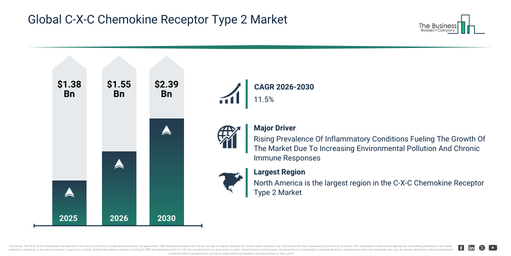
    The c-x-c chemokine receptor type 2 market has seen rapid expansion in recent years. It is projected to grow from $1.38 billion in 2025 to $1.55 billion in 2026, achieving a compound annual growth rate (CAGR) of 11.8%. Historically, the market’s expansion can be ascribed to factors including a limited understanding of cxcr2 biology, a reliance on conventional anti-inflammatory drugs, increasing research into chemokine signaling, the early-stage development of monoclonal antibodies, and a growing prevalence of inflammatory diseases.

    The c-x-c chemokine receptor type 2 market is projected to witness significant growth over the next few years, expanding to $2.39 billion in 2030 at a compound annual growth rate (CAGR) of 11.5%. This anticipated growth can be attributed to factors such as the development of novel small molecule and peptide inhibitors, an expansion of clinical trials for CXCR2 therapies, the increasing adoption of personalized and targeted immunotherapies, the integration of digital biomarkers and AI-based drug discovery, and rising pharmaceutical investment in oncology and autoimmune markets. Key trends expected in the forecast period include the development of selective CXCR2 inhibitors and dual CXCR1/2 inhibitors, advancements in monoclonal antibody and peptide-based therapeutics, the expansion of applications in cancer, autoimmune, and inflammatory diseases, growth in gene therapy and RNA-based therapeutics targeting CXCR2, and the integration of CXCR2 targeted therapies with personalized medicine approaches.

    Get A Free Sample Report With In-Depth Market Insights:

    https://thebusinessresearchcompany.com/sample_request?id=12594624&type=smp&name=C-X-C%20Chemokine%20Receptor%20Type%202%20Market%20Report%202026&utm_source=Blogs&utm_medium=Paid&utm_campaign=Oct_PR

    C-X-C Chemokine Receptor Type 2 Market Demand Drivers Opening New Revenue Streams

    The growing occurrence of inflammatory conditions is projected to stimulate the expansion of the C-X-C chemokine receptor type 2 market in the future. Inflammatory conditions are medical disorders stemming from the body’s immune response, characterized by swelling, redness, heat, pain, and functional impairment in affected tissues or organs. The increase in inflammatory conditions is primarily driven by rising environmental pollution, which triggers immune system reactions and chronic inflammation. C-X-C Chemokine Receptor Type 2 (CXCR2) supports treatments for these conditions by precisely regulating immune cell movement and inflammatory responses. It reduces unintended side effects by enabling small-molecule inhibitors and biologics that specifically modulate CXCR2 activity, thereby enhancing treatment efficacy and patient outcomes. For instance, in May 2024, according to the Centers for Disease Control and Prevention, a US-based government agency, the prevalence of asthma among adults aged 18 and over in the United States increased from 8.7% in 2022 to 8.9% in 2023. Consequently, the rising prevalence of inflammatory conditions is fueling the growth of the C-X-C chemokine receptor type 2 market. A heightened emphasis on targeted therapies is anticipated to drive the C-X-C chemokine receptor type 2 market’s growth going forward. Targeted therapies are treatments designed to specifically identify and inhibit molecular abnormalities in cancer or other diseases, aiming to improve treatment precision and minimize harm to healthy cells. The increasing focus on targeted therapies is mainly propelled by advancements in precision medicine, which facilitates personalized, more effective treatments based on individual genetic profiles. C-X-C chemokine receptor type 2 enables targeted therapies by guiding immune responses, supporting precise treatments for autoimmune and inflammatory diseases. It supports precision medicine by allowing the development of small-molecule inhibitors and biologics that specifically modulate CXCR2 activity, improving therapeutic efficacy and reducing off-target effects. For instance, in December 2024, according to the American Society of Gene & Cell Therapy (ASGCT), a US-based non-profit medical and scientific organization, the Food and Drug Administration (FDA) approved 6 gene therapy products in 2023, an increase from 5 approvals in 2022. Therefore, the increasing focus on targeted therapies is driving the growth of the C-X-C chemokine receptor type 2 market.

    C-X-C Chemokine Receptor Type 2 Market Segment Trends And Revenue Contributors

    The c-x-c chemokine receptor type 2 market covered in this report is segmented –

    1) By Product Type: Antagonists, Agonists, Inhibitors, Other Product Types

    2) By Drug Type: Monoclonal Antibodies, Small Molecule Inhibitors, Peptide-based Therapeutics, Gene Therapy Products

    3) By Route Of Administration: Intravenous, Subcutaneous, Oral, Topical

    4) By Application: Cancer Treatment, Autoimmune Disorders, Infectious Diseases, Inflammatory Diseases, Other Applications

    5) By End User: Hospitals, Research Institutions, Pharmaceutical Companies, Contract Research Organizations, Other End Users

    Subsegments:

    1) By Antagonists: Small Molecule Antagonists, Peptide Antagonists, Monoclonal Antibody Antagonists, Synthetic Antagonists

    2) By Agonists: Chemokine-Based Agonists, Recombinant Protein Agonists, Peptide-Based Agonists, Modified Cytokine Agonists

    3) By Inhibitors: Selective CXCR2 Inhibitors, Dual CXCR1 Or 2 Inhibitors, Allosteric Inhibitors, Irreversible Inhibitors

    4) By Other Product Types: RNA-Based Therapeutics, Gene Therapy Vectors, Cell-Based Therapeutics, Biologic Response Modifiers

    C-X-C Chemokine Receptor Type 2 Market Competitive Landscape: Which Companies Lead The Industry?

    Major companies operating in the c-x-c chemokine receptor type 2 market are AstraZeneca plc, GSK plc, Eli Lilly and Company, Bio-Techne Corporation, Dompé Farmaceutici S.p.A., Miltenyi Biotec B.V. & Co. KG, Abcam plc, Selleck Chemicals LLC, Cell Signaling Technology Inc., RayBiotech Inc., Bethyl Laboratories Inc., Creative Biolabs Inc., TargetMol LLC, MedChemExpress LLC, BioCompare Inc., Boster Biological Technology Co. Ltd., TME Pharma GmbH, InvivoChem Ltd., Abbexa Ltd., Abiocode Inc.

    View The Full C-X-C Chemokine Receptor Type 2 Market Report:

    https://thebusinessresearchcompany.com/report/c-x-c-chemokine-receptor-type-2-global-market-report?utm_source=Blogs&utm_medium=Paid&utm_campaign=Oct_PR

    C-X-C Chemokine Receptor Type 2 Market Regional Analysis: Which Geography Leads On Revenue?

    North America was the largest region in the C-X-C chemokine receptor type 2 market in 2025. Asia-Pacific is expected to be the fastest-growing region in the forecast period. The regions covered in the c-x-c chemokine receptor type 2 market report are Asia-Pacific, South East Asia, Western Europe, Eastern Europe, North America, South America, Middle East, Africa.

    Reach Out To Our Team:

    The Business Research Company: https://www.thebusinessresearchcompany.com/

    Americas: +1 310-496-7795

    Asia: +44 7882 955267 & +91 8897263534

    Europe: +44 7882 955267

    Email us at: marketing@tbrc.info

    Follow us on:

    LinkedIn: https://in.linkedin.com/company/the-business-research-company

    YouTube: https://www.youtube.com/channel/UC24_fI0rV8cR5DxlCpgmyFQ

    Global Market Model: https://www.thebusinessresearchcompany.com/global-market-model
  • Custom Antibody Market Growth Forecast Through 2030: Market Size And Trends In 2026

    Custom Antibody Market Growth Forecast Through 2030: Market Size And Trends In 2026

    Backed by market attractiveness analysis, total addressable market sizing, company benchmarking matrices, interactive Excel dashboards, wider supply chain intelligence, emerging startup coverage, and detailed product-level insights, The Business Research Company’s 2026 market reports are designed to offer research that is more actionable and strategically valuable than ever.

    Custom Antibody Market Growth Potential: How Will Market Size Shift Through 2030?

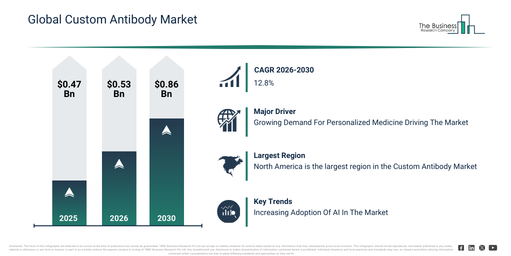
    The custom antibody market size has seen rapid expansion in recent years. It is projected to expand from $0.47 billion in 2025 to $0.53 billion in 2026, achieving a compound annual growth rate (CAGR) of 12.9%. Historically, this growth has been driven by increased biomedical research, the expansion of diagnostics testing, higher pharmaceutical R&D spending, progress in antibody engineering, and the overall growth of academic research.

    The custom antibody market size is anticipated to experience substantial expansion over the coming years. Its valuation is projected to reach $0.86 billion by 2030, exhibiting a compound annual growth rate (CAGR) of 12.8%. This expansion during the forecast period is driven by factors such as the rise of personalized medicine, broader biologics research, increased utilization of contract research organizations (CROs), growing demand for diagnostics, and advancements in precision oncology. Key developments anticipated in this period encompass a heightened need for customized research antibodies, their greater application in precision diagnostics, broader integration into drug discovery pathways, the spread of recombinant antibody technologies, and more outsourcing to CROs.

    Get A Free Sample Report With In-Depth Market Insights:

    https://thebusinessresearchcompany.com/sample_request?id=21162&type=smp&name=Custom%20Antibody%20Market%20Report%202026&utm_source=Blogs&utm_medium=Paid&utm_campaign=Oct_PR

    Custom Antibody Market Growth Backed By Core Demand Fundamentals

    The increasing need for personalized medicine is projected to drive the expansion of the custom antibody market in the future. This medical approach involves customizing treatment and prevention plans based on an individual’s unique genetic profile, lifestyle choices, and environmental influences. The rising call for personalized medicine stems from progress in genomics, the broader availability of therapies relying on biomarkers, and a greater patient preference for customized treatments that are more effective and have fewer side effects. Custom antibody supports personalized medicine through the provision of specific and custom-made immune reagents, which improve disease identification, target therapies, and locate biomarkers for tailored treatment plans. As an example, the Personalized Medicine Coalition, a US-based non-profit organization, reported in February 2024 that the Food and Drug Administration (FDA) gave its approval to 16 novel personalized treatments for patients with rare diseases in 2023, marking an increase from 6 approvals in 2022. Consequently, the escalating demand for personalized medicine is fueling the growth of the custom antibody market.

    Custom Antibody Market Segment Analysis Spotlighting Growth Areas

    The custom antibody market covered in this report is segmented –

    1) By Type: Monoclonal Antibodies, Polyclonal Antibodies, Recombinant Antibodies, Other Types

    2) By Service: Antibody Development, Antibody Production And Purification, Antibody Fragmentation And Labeling

    3) By Source: Mice, Rabbit, Other Sources

    4) By Application: Oncology, Infectious Diseases, Neurology, Stem Cells, Immunology, Cardiovascular Diseases, Other Applications

    5) By End-User: Pharmaceutical And Biotechnology Companies, Academic And Research Institutes, Contract Research Organization, Hospitals And Clinics

    Subsegments:

    1) By Monoclonal Antibodies: Murine Monoclonal Antibodies, Chimeric Monoclonal Antibodies, Humanized Monoclonal Antibodies, Fully Human Monoclonal Antibodies

    2) By Polyclonal Antibodies: Rabbit Polyclonal Antibodies, Goat Polyclonal Antibodies, Sheep Polyclonal Antibodies, Other Animal-Derived Polyclonal Antibodies

    3) By Recombinant Antibodies: Single-Chain Variable Fragment (scFv), Nanobodies, Bispecific Antibodies, Antibody Fragments

    4) By Other Types: Aptamers, Nanobodies (Camelid Antibodies), Hybridomas

    Custom Antibody Market Growth Trends Reshaping The Competitive Landscape

    Leading companies within the custom antibody market are increasingly incorporating advanced technologies, such as artificial intelligence, to refine antibody discovery processes, boost specificity, and quicken development timelines. Artificial intelligence facilitates bespoke antibody creation by refining antigen selection, forecasting antibody-antigen interactions, and optimizing candidate screening through machine learning, which results in more rapid and economical biopharmaceutical research. A notable example is Archon Biosciences Inc., a US-based biotechnology firm, which launched in October 2024 after securing $20 million in funding. This company aims to create computationally engineered antibody cages designed to adapt existing antibodies for various therapeutic uses. Archon’s unique method involves constructing antibodies into cage formations, allowing their characteristics to be altered without impacting their fundamental architecture. The objective of this breakthrough is to strengthen antibody affinity for therapeutic targets while simultaneously minimizing unintended interactions, thereby improving overall effectiveness and safety.

    Custom Antibody Market Leading Companies: Who Holds The Strongest Market Presence?

    Major companies operating in the custom antibody market are Merck & Co. Inc., AbbVie Inc., Thermo Fisher Scientific Inc., Agilent Technologies Inc., Lonza Group AG, Bio-Rad Laboratories Inc., Bio-Techne Corporation, GenScript Biotech Corporation, BioLegend Inc., Abcam plc, Cusabio Biotech Co. Ltd., OriGene Technologies Inc., Cell Signaling Technology Inc., Abgent Inc., ProSci Incorporated, Santa Cruz Biotechnology Inc., Rockland Immunochemicals Inc., Creative Biolabs Inc., Novus Biologicals LLC, Creative Diagnostics Inc., Biorbyt Ltd., BIOTEM SAS, Capra Biosciences Inc., Pacific Immunology Inc., ProteoGenix SAS

    View The Full Custom Antibody Market Report:

    https://thebusinessresearchcompany.com/report/custom-antibody-global-market-report?utm_source=Blogs&utm_medium=Paid&utm_campaign=Oct_PR

    Custom Antibody Market Geographic Spread And Regional Opportunities

    North America was the largest region in the custom antibody market in 2025. Asia-Pacific is expected to be the fastest-growing region in the forecast period. The regions covered in the custom antibody market report are Asia-Pacific, South East Asia, Western Europe, Eastern Europe, North America, South America, Middle East, Africa.

    Reach Out To Our Team:

    The Business Research Company: https://www.thebusinessresearchcompany.com/

    Americas: +1 310-496-7795

    Asia: +44 7882 955267 & +91 8897263534

    Europe: +44 7882 955267

    Email us at: marketing@tbrc.info

    Follow us on:

    LinkedIn: https://in.linkedin.com/company/the-business-research-company

    YouTube: https://www.youtube.com/channel/UC24_fI0rV8cR5DxlCpgmyFQ

    Global Market Model: https://www.thebusinessresearchcompany.com/global-market-model

  • CTLA4 Inhibitors Market Analysis: $6.54 Billion Market Size In 2026 And Future Growth Prospects

    CTLA4 Inhibitors Market Analysis: $6.54 Billion Market Size In 2026 And Future Growth Prospects

    Featuring market attractiveness scoring, total addressable market sizing, company benchmarking matrices, interactive Excel dashboards, deeper supply chain intelligence, emerging startup tracking, and granular product-level insights, The Business Research Company’s 2026 market reports are built to deliver research that is both more actionable and more strategically valuable.

    CTLA4 Inhibitors Market Value Analysis: What Growth Lies Ahead Over The Forecast Period?

    The ctla4 inhibitors market size has demonstrated significant growth in recent years. It is anticipated to increase from $5.63 billion in 2025 to $6.54 billion in 2026, achieving a compound annual growth rate (CAGR) of 16.2%. The expansion observed in prior periods can be attributed to progress in cancer immunology research, the approval of initial CTLA4 inhibitors, escalating cancer incidence rates, robust investment in oncology research and development, and augmented regulatory backing for biologics.

    The market for ctla4 inhibitors is projected to experience substantial growth over the coming years. This market is anticipated to reach $11.84 billion by 2030, exhibiting a compound annual growth rate (CAGR) of 16.0%. Several factors contribute to this projected expansion during the forecast period, including increased adoption of precision oncology, a wider array of combination immunotherapy regimens, a greater need for long-lasting cancer responses, heightened activity in the oncology drug pipeline, and the worldwide enhancement of cancer treatment facilities. Key developments expected during this period involve the increasing application of immunotherapy in cancer treatment, the growing embrace of combined cancer therapies, an increase in clinical trials targeting solid tumors, a heightened emphasis on modulating immune checkpoints, and the creation of advanced CTLA4 inhibitors.

    Get A Free Sample Report With In-Depth Market Insights:

    https://thebusinessresearchcompany.com/sample_request?id=91650535&type=smp&name=CTLA4%20Inhibitors%20Market%20Report%202026&utm_source=Blogs&utm_medium=Paid&utm_campaign=Oct_PR

    CTLA4 Inhibitors Market Growth Catalysts And Demand Drivers

    The increasing prevalence of cancer is anticipated to fuel the expansion of the CTLA4 inhibitors market in the coming years. Cancer refers to a multifaceted group of illnesses defined by the uncontrolled multiplication and dissemination of abnormal cells, which can invade adjacent tissues and impair normal bodily functions. This surge in cancer cases is primarily due to prolonged exposure to carcinogens, as these substances directly induce genetic mutations leading to the transformation of cells into malignant ones. Cytotoxic T-Lymphocyte-Associated Protein 4 (CTLA-4) inhibitors tackle the growing burden of cancer by boosting the immune system’s capacity to identify and eradicate cancer cells, thereby enhancing treatment effectiveness and providing novel therapeutic avenues for individuals with advanced or difficult-to-treat cancers. For example, in February 2024, the World Health Organization, a Switzerland-based international public health organization, reported nearly 20 million new cancer cases in 2022, leading to approximately 10 million deaths from the illness. Forecasts indicate that the yearly cancer incidence might escalate to 35 million by 2050, representing a 77% increase from 2022 data. Consequently, the rising occurrence of cancer is propelling the growth of the CTLA4 inhibitors market.

    CTLA4 Inhibitors Market Segment Performance And Emerging Opportunities

    The ctla4 inhibitors market covered in this report is segmented –

    1) By Type: Monotherapy, Combination Therapy

    2) By Mechanism Of Action: Targeted Inhibition, Immune Checkpoint Blockade, Co-Stimulatory Boosting

    3) By Route Of Administration: Intravenous (IV), Subcutaneous

    4) By Indication: Melanoma, Non-Small Cell Lung Cancer (NSCLC), Colorectal Cancer, Other Malignancies

    5) By End User: Hospitals, Specialty Clinics, Research Institutions

    Subsegments:

    1) By Monotherapy: First-Line Treatment, Second-Line Treatment, Salvage Therapy

    2) By Combination Therapy Subsegments: CTLA-4 Inhibitors With PD-1/PD-L1 Inhibitors, CTLA-4 Inhibitors With Chemotherapy, CTLA-4 Inhibitors With Targeted Therapy, CTLA-4 Inhibitors With Radiotherapy, CTLA-4 Inhibitors With Other Immunotherapies

    CTLA4 Inhibitors Market Trends Shaping Long-Term Demand

    Leading companies in the CTLA-4 inhibitors market are driving advancements in immunotherapies, particularly combination therapies, to strengthen the immune response against cancerous cells and enhance treatment outcomes for patients battling advanced or resistant cancers. Combination therapy involves using two or more treatments concurrently to address a disease or condition, thereby boosting the effectiveness of CTLA-4 inhibitors by stimulating the immune system to target cancer cells more efficiently than when administered alone. For instance, in February 2025, Innovent Biologics Inc., a China-based biotechnology company, announced that its New Drug Application (NDA) for ipilimumab injection had been accepted by the Center for Drug Evaluation (CDE) of China’s National Medical Products Administration (NMPA) and granted Priority Review status for its combined use with sintilimab as neoadjuvant therapy for resectable microsatellite instability-high (MSI-H) or mismatch repair deficient (dMMR) colon cancer. This development represents China’s first domestically developed CTLA-4 inhibitor, highlighting the expansion of local innovations in cancer treatment.

    CTLA4 Inhibitors Market Key Players: Which Companies Lead Industry Competition?

    Major companies operating in the ctla4 inhibitors market are Bristol-Myers Squibb Company, Agenus Inc., Akeso Inc., Harbour BioMed, MacroGenics Inc., NextCure Inc., Xilio Therapeutics Inc., Shattuck Labs Inc., CytomX Therapeutics Inc., Regeneron Pharmaceuticals Inc., AstraZeneca plc, Merck & Co. Inc., BeiGene Ltd., Innovent Biologics Inc., Incyte Corporation, Pfizer Inc., Amgen Inc., Eli Lilly and Company, Novartis AG, BioNTech SE

    View The Full CTLA4 Inhibitors Market Report:

    https://thebusinessresearchcompany.com/report/ctla4-inhibitors-global-market-report?utm_source=Blogs&utm_medium=Paid&utm_campaign=Oct_PR

    CTLA4 Inhibitors Market Top Region By Revenue And Market Share

    North America was the largest region in the CTLA4 inhibitors market in 2025. Asia-Pacific is expected to be the fastest-growing region in the forecast period. The regions covered in the ctla4 inhibitors market report are Asia-Pacific, South East Asia, Western Europe, Eastern Europe, North America, South America, Middle East, Africa.

    Reach Out To Our Team:

    The Business Research Company: https://www.thebusinessresearchcompany.com/

    Americas: +1 310-496-7795

    Asia: +44 7882 955267 & +91 8897263534

    Europe: +44 7882 955267

    Email us at: marketing@tbrc.info

    Follow us on:

    LinkedIn: https://in.linkedin.com/company/the-business-research-company

    YouTube: https://www.youtube.com/channel/UC24_fI0rV8cR5DxlCpgmyFQ

    Global Market Model: https://www.thebusinessresearchcompany.com/global-market-model
  • Cryptococcosis Therapeutics Market 2026 Market Size And Growth Forecast: Key Trends To Watch

    Cryptococcosis Therapeutics Market 2026 Market Size And Growth Forecast: Key Trends To Watch

    Built to provide research that’s more actionable and strategically valuable, The Business Research Company’s 2026 market reports include market attractiveness analysis, total addressable market sizing, company benchmarking matrices, interactive Excel dashboards, broader supply chain intelligence, emerging startup tracking, and in-depth product insights.

    Cryptococcosis Therapeutics Market Size Forecast: How Big Could The Market Get By 2030?

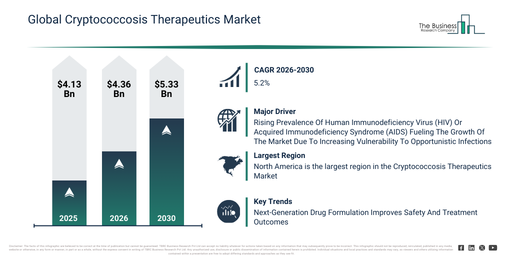
    The market for cryptococcosis therapeutics has experienced substantial expansion in recent years. It is anticipated to increase from $4.13 billion in 2025 to $4.36 billion in 2026, showing a compound annual growth rate (CAGR) of 5.6%. The historical growth of this market can be linked to factors such as the limited availability of antifungal therapeutics, a high prevalence of immunocompromised patients, the reliance on hospital-based treatment, the predominance of branded drugs, and the slow adoption of oral formulations.

    The cryptococcosis therapeutics market is projected to experience substantial expansion over the coming years. Its valuation is set to reach $5.33 billion in 2030, exhibiting a compound annual growth rate (CAGR) of 5.2%. This growth during the forecast period can be attributed to the rising incidence of cryptococcosis in developing regions, the development of novel antifungal agents, heightened awareness among healthcare providers, the expansion of online pharmacy channels, and growing investment in combination and targeted therapies. Key trends anticipated for this period include the rising adoption of generic antifungal drugs, an increasing preference for intravenous administration in severe cases, the broadening of online and retail pharmacy distribution channels, a growing focus on early diagnosis and treatment of cryptococcosis, and the development of combination therapies and novel formulations.

    Get A Free Sample Report With In-Depth Market Insights:

    https://thebusinessresearchcompany.com/sample_request?id=16549685&type=smp&name=Cryptococcosis%20Therapeutics%20Market%20Report%202026&utm_source=Blogs&utm_medium=Paid&utm_campaign=Oct_PR

    Cryptococcosis Therapeutics Market Opportunity Drivers: What’s Unlocking New Revenue Potential?

    The growth of the cryptococcosis therapeutics market is projected to be propelled by rising healthcare spending. Healthcare expenditure refers to the aggregate funds allocated to medical services, treatments, facilities, research efforts, and public health initiatives designed to sustain or improve health outcomes. The increase in healthcare expenditure is primarily attributable to an aging population, which necessitates more extensive medical care, therapies, and long-term health services. Enhanced healthcare spending bolsters cryptococcosis therapeutics by improving access to advanced treatments, facilitating early diagnoses, and providing funding for research into more effective antifungal therapies. For example, in December 2024, the Centers for Medicare & Medicaid Services (CMS), a US federal agency, reported that national health expenditures (NHE) increased by 7.5% to $4.9 trillion in 2023, representing 17.6% of the gross domestic product (GDP). Furthermore, between 2023 and 2032, average national health expenditures (NHE) are expected to expand at an average annual rate of 5.6%, leading to an increase in the health spending share of gross domestic product (GDP) from 17.3% in 2022 to 19.7% in 2032. Consequently, the increasing healthcare expenditure is a significant factor driving the expansion of the cryptococcosis therapeutics market.

    Cryptococcosis Therapeutics Market Segment Landscape And Growth Outlook

    The cryptococcosis therapeutics market covered in this report is segmented –

    1) By Drug Type: Branded, Generic

    2) By Treatment: Amphotericin B, Flucytosine, Fluconazole, Other Treatments

    3) By Route Of Administration: Oral, Intravenous, Inhalation

    4) By Distribution Channel: Hospital Pharmacies, Retail Pharmacies, Online Pharmacies

    5) By End-User: Hospitals, Ambulatory Surgical Centers, Other End Users

    Subsegments:

    1) By Branded Drugs: Ambisome, Diflucan, Vfend, Noxafil, Cresemba

    2) By Generic Drugs: Amphotericin B Deoxycholate, Fluconazole, Flucytosine

    Cryptococcosis Therapeutics Market Innovation Trends Shaping Future Development

    Leading firms within the cryptococcosis therapeutics market are concentrating their efforts on clinical trials to create novel treatments, specifically oral lipid-nanocrystal (LNC) formulations, aimed at boosting treatment accessibility, mitigating toxicity, and elevating patient results. These oral lipid-nanocrystal (LNC) formulations represent drug delivery systems designed to encase medicines within minute lipid-based crystals, facilitating oral intake and enabling targeted delivery to tissues, such as the central nervous system, while concurrently lowering kidney toxicity in contrast to conventional intravenous therapies. As an illustration, in March 2023, Matinas BioPharma Holdings, Inc., a biopharmaceutical entity based in the US, showcased MAT2203, their oral LNC amphotericin B, during two oral presentations at the European Congress of Clinical Microbiology & Infectious Diseases (ECCMID). The Phase 2 EnACT trial involving MAT2203 demonstrated a mean early fungicidal activity that surpassed the study’s main benchmark, yielded approximately 95% two-week survival among an entirely oral group of 40 patients, and exhibited zero indications of kidney toxicity following six weeks of therapeutic administration. MAT2203 utilizes Matinas’ exclusive LNC platform to transform what would typically be an intravenous-only antifungal into an orally administered therapy, underscoring its capacity to alter the prevailing IV-centric treatment model.

    Cryptococcosis Therapeutics Market Competitive Landscape: Who Leads The Industry?

    Major companies operating in the cryptococcosis therapeutics market are Pfizer Inc., Merck & Co. Inc., Gilead Sciences Inc., Asahi Kasei Pharma Corporation, Astellas Pharma Inc., Sun Pharmaceutical Industries Limited, Dr. Reddy’s Laboratories Ltd., Cipla Limited, Basilea Pharmaceutica AG, F2G Limited, Century Pharmaceuticals Ltd., LGM Pharma LLC, Zeon Health Industries Pvt. Ltd., Matinas BioPharma Holdings Inc.

    View The Full Cryptococcosis Therapeutics Market Report:

    https://thebusinessresearchcompany.com/report/cryptococcosis-therapeutics-global-market-report?utm_source=Blogs&utm_medium=Paid&utm_campaign=Oct_PR

    Cryptococcosis Therapeutics Market Regional Analysis And Top Geography

    North America was the largest region in the cryptococcosis therapeutics market in 2025. Asia-Pacific is expected to be the fastest-growing region in the forecast period. The regions covered in the cryptococcosis therapeutics market report are Asia-Pacific, South East Asia, Western Europe, Eastern Europe, North America, South America, Middle East, Africa.

    Reach Out To Our Team:

    The Business Research Company: https://www.thebusinessresearchcompany.com/

    Americas: +1 310-496-7795

    Asia: +44 7882 955267 & +91 8897263534

    Europe: +44 7882 955267

    Email us at: marketing@tbrc.info

    Follow us on:

    LinkedIn: https://in.linkedin.com/company/the-business-research-company

    YouTube: https://www.youtube.com/channel/UC24_fI0rV8cR5DxlCpgmyFQ

    Global Market Model: https://www.thebusinessresearchcompany.com/global-market-model
  • Cryogenic Vaporizer Market Size Forecast: How The Industry Is Expected To Grow From 2026 To 2030

    Cryogenic Vaporizer Market Size Forecast: How The Industry Is Expected To Grow From 2026 To 2030

    Backed by market attractiveness analysis, total addressable market sizing, company benchmarking matrices, interactive Excel dashboards, wider supply chain intelligence, emerging startup coverage, and detailed product-level insights, The Business Research Company’s 2026 market reports are designed to offer research that is more actionable and strategically valuable than ever.

    Cryogenic Vaporizer Market Revenue Outlook: What CAGR Lies Ahead Through 2030?

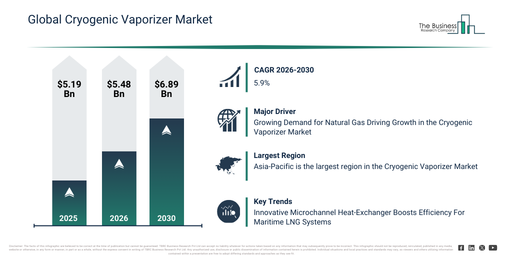
    The cryogenic vaporizer market has shown robust expansion in recent years. It is anticipated to expand from $5.19 billion in 2025 to $5.48 billion in 2026, advancing at a compound annual growth rate (CAGR) of 5.8%. The historical growth of this market can be attributed to several factors, including the growth in industrial gas consumption, the expansion of oil and gas processing facilities, the established use of cryogenic storage systems, demand from metallurgical industries, and increased use of oxygen and nitrogen gases.

    The cryogenic vaporizer market size is anticipated to undergo substantial growth in the coming years, with projections indicating a rise to $6.89 billion by 2030, reflecting a compound annual growth rate (CAGR) of 5.9%. This expansion during the forecast period is primarily driven by improvements in LNG transportation infrastructure, an increasing need for medical oxygen systems, the expansion of hydrogen and clean energy projects, growing industrial automation, and the demand for efficient gas handling equipment. Notable trends for the forecast period include the increasing use of cryogenic gases in industrial processing, the wider adoption of ambient air heated vaporizers, the continued development of LNG infrastructure and distribution, heightened demand from healthcare and medical gas supply, and an increased emphasis on energy-efficient vaporization systems.

    Get A Free Sample Report With In-Depth Market Insights:

    https://thebusinessresearchcompany.com/sample_request?id=15935518&type=smp&name=Cryogenic%20Vaporizer%20Market%20Report%202026&utm_source=Blogs&utm_medium=Paid&utm_campaign=Oct_PR

    Cryogenic Vaporizer Market Growth Momentum: What Factors Are Shaping Demand?

    The expansion of the cryogenic vaporizer market is projected to be driven by the increasing need for natural gas. Natural gas, a fossil fuel predominantly consisting of methane, is utilized for generating electricity, facilitating industrial operations, providing heating, and powering transportation. The heightened demand for natural gas is primarily due to its lower carbon intensity in comparison to coal and oil. The cryogenic vaporizer market contributes to meeting this demand by converting liquefied natural gas (LNG) into its gaseous form, ready for immediate downstream applications. For example, data from June 2024, as reported by the U.S. Energy Information Administration (EIA), a U.S.-based government agency, indicates that natural gas consumption in the United States reached 2,428 billion cubic feet (2.428 trillion cubic feet) for June 2024, or 80.9 billion cubic feet per day. This marks an increase from 78.8 billion cubic feet per day in June 2023, signifying a rise of 2.1 billion cubic feet per day. Therefore, the escalating demand for natural gas is a key factor stimulating the growth of the cryogenic vaporizer market.

    Cryogenic Vaporizer Market Breakdown By Product Type And Application

    The cryogenic vaporizer market covered in this report is segmented –

    1) By Product: Ambient Air Heated Vaporizer, Steam Heated Vaporizer, Other Products

    2) By Cryogen Type: Nitrogen, Oxygen, Natural Gas, Argon, Other Cryogen Types

    3) By End-User: Oil And Gas Industry, Power, Food And Beverage, Chemical, Rubber And Plastics, Metallurgy, Healthcare, Shipping, Other End-Users

    Subsegments:

    1) By Ambient Air Heated Vaporizer: Natural Draft Ambient Vaporizer, Forced Draft Ambient Vaporizer

    2) By Steam Heated Vaporizer: Low-Pressure Steam Heated Vaporizer, High-Pressure Steam Heated Vaporizer

    3) By Other Products: Water Bath Vaporizer, Electric Heated Vaporizer, Direct Fired Vaporizer

    Cryogenic Vaporizer Market Trends Redefining Industry Growth

    Leading companies in the cryogenic vaporizer market are increasingly focusing on developing innovative solutions, such as microchannel heat-exchanger vaporizers, to meet the rising demand for compact, high-efficiency regasification systems in the maritime LNG sector. These microchannel heat-exchanger vaporizers utilize finely machined, diffusion-welded microchannels (often in printed circuit heat exchanger, or PCHE, configuration) to achieve a very high heat transfer area density in a small footprint, offering significantly higher thermal efficiency and lower weight compared to traditional shell-and-tube vaporizers. For instance, in October 2025, Shensi Technology (Anhui) Co., Ltd., a China-based thermal-management and heat-exchanger specialist, launched the PCHE-LNG heat exchanger specifically designed for the FGSS (fuel gas supply system) sector. This pioneering cryogenic microchannel exchanger, made using advanced diffusion-welding technology, delivers a heat-transfer area density of up to 6,400 m³/m³, which allows it to halve the floor space compared to ORVs while reducing energy consumption by around 20%. It supports both high- and low-pressure LNG systems, has demonstrated full-scale operation in offshore settings, and has obtained class certifications in China, Europe, and Japan, with mass production and customization services now available.

    Cryogenic Vaporizer Market Company Landscape And Competitive Strategy

    Major companies operating in the cryogenic vaporizer market are Linde plc, Chart Industries Inc., Nikkiso Co. Ltd., Kobe Steel Ltd., Cryostar, Cryolor SA, Taylor-Wharton Cryogenics LLC, INOX India Pvt. Ltd., Cryonorm B.V., Cryeng Group Pty Ltd, Isisan Energy Solutions Private Limited, Incryo Systems Pvt. Ltd., Cryogas Equipment Private Limited, Super Cryogenic Systems Private Limited, GMS Interneer Co. Ltd., Kagla Vaportech Corporation, FIBA Technologies Inc., OPW Clean Energy Solutions, Iec Fabchem Limited, CryoVation

    View The Full Cryogenic Vaporizer Market Report:

    https://thebusinessresearchcompany.com/report/cryogenic-vaporizer-global-market-report?utm_source=Blogs&utm_medium=Paid&utm_campaign=Oct_PR

    Cryogenic Vaporizer Market Geographic Analysis: Where Is Demand Rising Fastest?

    Asia-Pacific was the largest region in the cryogenic vaporizer market in 2025. North America is expected to be the fastest-growing region in the forecast period. The regions covered in the cryogenic vaporizer market report are Asia-Pacific, South East Asia, Western Europe, Eastern Europe, North America, South America, Middle East, Africa.

    Reach Out To Our Team:

    The Business Research Company: https://www.thebusinessresearchcompany.com/

    Americas: +1 310-496-7795

    Asia: +44 7882 955267 & +91 8897263534

    Europe: +44 7882 955267

    Email us at: marketing@tbrc.info

    Follow us on:

    LinkedIn: https://in.linkedin.com/company/the-business-research-company

    YouTube: https://www.youtube.com/channel/UC24_fI0rV8cR5DxlCpgmyFQ

    Global Market Model: https://www.thebusinessresearchcompany.com/global-market-model
  • Crohn’s Disease Treatment Market Reaches $18.85 Billion In 2026: Forecast And Growth Opportunities

    Crohn’s Disease Treatment Market Reaches $18.85 Billion In 2026: Forecast And Growth Opportunities

    Featuring market attractiveness scoring, total addressable market sizing, company benchmarking matrices, interactive Excel dashboards, deeper supply chain intelligence, emerging startup tracking, and granular product-level insights, The Business Research Company’s 2026 market reports are built to deliver research that is both more actionable and more strategically valuable.

    Crohn’s Disease Treatment Market Growth Analysis: How Will Revenue Trend Over The Forecast Period?

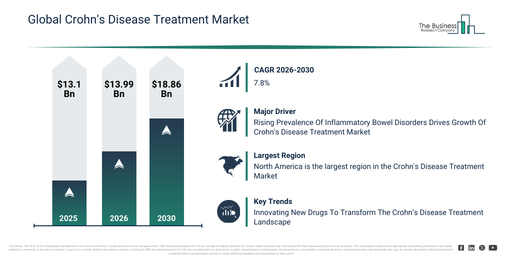
    The market size for Crohn’s disease treatments has shown significant expansion in recent years. It is anticipated to increase from $13.1 billion in 2025 to $13.99 billion in 2026, registering a compound annual growth rate (CAGR) of 6.8%. Historically, this growth has been driven by factors such as the rising prevalence of Crohn’s disease, increased awareness of inflammatory bowel diseases, the growth of hospital pharmacy networks, the availability of conventional anti-inflammatory drugs, and enhancements in diagnostic capabilities.

    The crohn’s disease treatment market size is anticipated to demonstrate significant growth over the next few years. It is projected to expand to $18.86 billion in 2030 at a compound annual growth rate (CAGR) of 7.8%. This growth during the forecast period can be attributed to the expanding pipeline of biologics and small molecules, the increasing demand for personalized treatment, greater penetration of online pharmacies, rising healthcare expenditure in emerging markets, and a focus on long-term disease management. Notable trends expected in the forecast period include the rising adoption of biologic therapies, a shift toward early and aggressive treatment approaches, an increasing emphasis on steroid-sparing regimens, the growth of oral small-molecule therapies, and the expansion of online and specialty pharmacy channels.

    Get A Free Sample Report With In-Depth Market Insights:

    https://thebusinessresearchcompany.com/sample_request?id=92540503&type=smp&name=Crohn%27s%20Disease%20Treatment%20Market%20Report%202026&utm_source=Blogs&utm_medium=Paid&utm_campaign=Oct_PR

    Crohn’s Disease Treatment Market Expansion Drivers: What’s Shaping Future Growth?

    The increasing incidence of inflammatory bowel disorders is projected to boost the growth of the Crohn’s disease treatment market in the foreseeable future. Inflammatory bowel disorders encompass a range of chronic conditions marked by inflammation in the gastrointestinal tract. They can lead to inflammation and damage in any section of the digestive system, extending from the mouth to the anus. Crohn’s disease treatment functions by reducing intestinal inflammation, which helps avert symptom flare-ups and sustain remission. For instance, in September 2023, information from the National Center for Biotechnology Information, a US-based government organization, revealed a similar rise in the prevalence of Crohn’s disease and ulcerative colitis, with inflammatory bowel disease projected at 825 cases per 100,000 people in 2023, comprising 410 for Crohn’s disease and 414 for ulcerative colitis and IBD-u. As a result, the rising occurrence of these disorders is spurring the expansion of the Crohn’s disease treatment market.

    Crohn’s Disease Treatment Market Segment Analysis And Revenue Potential

    The crohn’s disease treatment market covered in this report is segmented –

    1) By Drug Type: Antibiotics, Amino Salicylates, Corticosteroids, Immunomodulators, Other Drug Types

    2) By Distribution Channel: Hospital Pharmacies, Retail Pharmacies, Online Pharmacies

    3) By Application: Neuropathic Pain, Fibromyalgia, Chronic Back Pain, Arthritic Pain, Migraine Post-Operative Pain, Cancer Pain, Other Applications

    Subsegments:

    1) By Antibiotics: Metronidazole, Ciprofloxacin, Other Antibiotics

    2) By Amino Salicylates: Mesalamine, Sulfasalazine, Other Amino Salicylates

    3) By Corticosteroids: Prednisone, Budesonide, Other Corticosteroids

    4) By Immunomodulators: Azathioprine, Methotrexate, Mercaptopurine

    5) By Other Drug Types: Biologics, Small Molecules, Other Treatments

    Crohn’s Disease Treatment Market Strategic Trends: What Defines The Next Growth Phase?

    Leading companies operating within the Crohn’s disease treatment market are introducing new drugs and obtaining their approval, such as biosimilar ustekinumab, to provide patients with more effective and accessible treatment options, ultimately improving patient outcomes and their quality of life. Biosimilar ustekinumab refers to a biological drug that is highly similar to the original ustekinumab (a monoclonal antibody) utilized for managing autoimmune conditions. For example, in July 2024, Sandoz International GmbH, a Switzerland-based pharmaceutical company, launched Pyzchiva (ustekinumab) across Europe, making it the first ustekinumab biosimilar available in all strengths, including a 130 mg vial specifically for Crohn’s disease. This product is indicated for adults and children over six with plaque psoriasis, psoriatic arthritis, and Crohn’s disease, thereby enhancing Sandoz’s immunology portfolio while aiming to improve access to affordable treatments for chronic inflammatory disease.

    Crohn’s Disease Treatment Market Key Players Shaping Industry Direction

    Major companies operating in the crohn’s disease treatment market are AbbVie Inc., Janssen Pharmaceuticals, Takeda Pharmaceutical Company Limited, Bristol-Myers Squibb Company, Galapagos NV, Teva Pharmaceutical Industries Ltd., Mylan N.V., Glenmark Pharmaceuticals, Tillotts Pharma AG, Dr. Falk Pharma GmbH, Shire Pharmaceuticals, Salix Pharmaceuticals, Prometheus Laboratories Inc., Pfizer Inc., Novartis AG, Sanofi S.A., Eli Lilly and Company, Boehringer Ingelheim GmbH, Arena Pharmaceuticals Inc., F. Hoffmann-La Roche Ltd.

    View The Full Crohn’s Disease Treatment Market Report:

    https://thebusinessresearchcompany.com/report/crohns-disease-treatment-global-market-report?utm_source=Blogs&utm_medium=Paid&utm_campaign=Oct_PR

    Crohn’s Disease Treatment Market Global Footprint: Which Region Leads The Market?

    North America was the largest region in the global Crohn’s disease treatment market in 2025. Asia-Pacific is expected to be the fastest-growing region in the forecast period. The regions covered in the crohn’s disease treatment market report are Asia-Pacific, South East Asia, Western Europe, Eastern Europe, North America, South America, Middle East, Africa.

    Reach Out To Our Team:

    The Business Research Company: https://www.thebusinessresearchcompany.com/

    Americas: +1 310-496-7795

    Asia: +44 7882 955267 & +91 8897263534

    Europe: +44 7882 955267

    Email us at: marketing@tbrc.info

    Follow us on:

    LinkedIn: https://in.linkedin.com/company/the-business-research-company

    YouTube: https://www.youtube.com/channel/UC24_fI0rV8cR5DxlCpgmyFQ

    Global Market Model: https://www.thebusinessresearchcompany.com/global-market-model
  • Critical Care Drugs Market Growth In 2026: Market Size, Key Drivers And Future Outlook

    Critical Care Drugs Market Growth In 2026: Market Size, Key Drivers And Future Outlook

    Built to provide research that’s more actionable and strategically valuable, The Business Research Company’s 2026 market reports include market attractiveness analysis, total addressable market sizing, company benchmarking matrices, interactive Excel dashboards, broader supply chain intelligence, emerging startup tracking, and in-depth product insights.

    Critical Care Drugs Market Forecast: What Value Will The Market Reach By 2030?

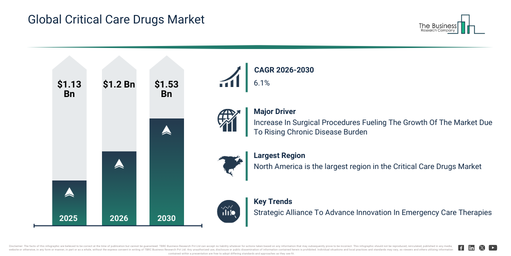
    The critical care drugs market has experienced robust expansion in recent years. Its valuation is projected to increase from $1.13 billion in 2025 to $1.2 billion in 2026, demonstrating a compound annual growth rate (CAGR) of 6.4%. The growth observed in previous periods is attributable to a rising occurrence of critical illnesses, an increase in ICU admissions, the limited availability of advanced critical care drugs, expanding hospital infrastructure, and a dependence on conventional sedatives and analgesics.

    The critical care drugs market size is expected to experience substantial growth in the upcoming years. By 2030, it is forecast to expand to $1.53 billion, demonstrating a compound annual growth rate (CAGR) of 6.1%. This anticipated growth during the forecast period can be attributed to the development of novel opioids and sedatives, the integration of AI-based monitoring and dosing tools, the expansion of acute care protocols, rising government initiatives aimed at enhancing ICU capacity, and the increasing adoption of precision critical care therapies. Major trends identified for this period include a greater use of advanced sedatives and analgesics in ICU settings, a surge in the adoption of continuous monitoring and dose optimization tools, growth in medications for acute care and critical event management, the broader implementation of protocol-based drug administration in operation theatres, and an increased focus on ensuring safety while minimizing adverse drug reactions in critical care.

    Get A Free Sample Report With In-Depth Market Insights:

    https://thebusinessresearchcompany.com/sample_request?id=35585233&type=smp&name=Critical%20Care%20Drugs%20Market%20Report%202026&utm_source=Blogs&utm_medium=Paid&utm_campaign=Oct_PR

    Critical Care Drugs Market Development Factors: What’s Supporting Demand?

    The projected increase in surgical procedures is anticipated to fuel the expansion of the critical care drugs market. Surgical procedures are medical interventions where doctors operate on the body to correct or treat health issues such as injuries or diseases. The frequency of these procedures is rising due to the growing prevalence of chronic diseases that require operative treatment. Critical care drugs are administered during surgical procedures to manage pain, stabilize vital functions, prevent infections, and support recovery both during and after surgery. For instance, in May 2025, the Australian Institute of Health and Welfare, an Australia-based government agency, reported that around 778,500 patients were admitted for surgery from public hospital waiting lists in 2023–24, marking a 5.8% rise compared to 2022–23. Therefore, the increasing number of surgical procedures is driving the growth of the critical care drugs market.

    Critical Care Drugs Market Segmentation And Category Overview

    The critical care drugs market covered in this report is segmented –

    1) By Drug Type: Opioids, Morphine, Pethidine, Naloxone, Fentanyl, Benzodiazepines, Diazepam, Midazolam, Lorazepum, Other Types

    2) By Clinical Applications: Sepsis And Septic Shock, Acute Respiratory Distress Syndrome (ARDS), Acute Cardiovascular Events, Acute Kidney Injury, Traumatic Injuries

    3) By Route Of Administration: Intravenous (IV), Intramuscular (IM), Inhalation, Subcutaneous

    4) By End User: Intensive Care Unit (ICU), Coronary Care Unit (CCU), Operation Theatres, Trauma Centers

    Subsegments:

    1) By Opioids: Codeine, Hydromorphone, Oxycodone, Tapentadol, Methadone

    2) By Morphine: Immediate-Release Morphine, Extended-Release Morphine, Injectable Morphine, Oral Morphine Solutions

    3) By Pethidine: Injectable Pethidine, Oral Pethidine, Pethidine Combinations

    4) By Naloxone: Injectable Naloxone, Nasal Naloxone, Auto-injector Naloxone

    5) By Fentanyl: Transdermal Patches, Injectable Fentanyl, Buccal Tablets, Sublingual Spray, Lozenges

    6) By Benzodiazepines: Short-Acting Benzodiazepines, Intermediate-Acting Benzodiazepines, Long-Acting Benzodiazepines

    7) By Diazepam: Oral Tablets, Injectable Diazepam, Rectal Gel, Oral Solution

    8) By Midazolam: Injectable Midazolam, Nasal Spray, Buccal Formulation, Oral Syrup

    9) By Lorazepam: Oral Tablets, Injectable Lorazepam, Oral Concentrate

    10) By Other Types: Propofol, Ketamine, Dexmedetomidine, Etomidate, Clonidine

    Critical Care Drugs Market Transformation Trends: What Innovations Are Driving Change?

    Leading companies within the critical care drugs market are increasingly engaging in strategic alliances, with the aim of broadening their product offerings, improving research capacities, quickening entry into markets, and solidifying their position in rapidly expanding therapeutic sectors. These alliances support critical care medications by expediting research, development, and market penetration, leveraging collective knowledge and assets. Such collaborations facilitate pharmaceutical companies working with medical facilities, scientific bodies, or biotechnology enterprises to boost drug innovation and streamline clinical trials. An example of this trend is seen in March 2024, when Dr. Reddy’s Laboratories Ltd., an India-based pharmaceutical company, formed a partnership with Pharmazz Inc., a US-based pharmaceutical company, for the introduction and marketing of Centhaquine, an innovative resuscitative drug for hypovolemic shock, in India, marketed as Lyfaquin. This strategic initiative provides Dr. Reddy’s with sole marketing and distribution permissions across India and Nepal, with Pharmazz set to receive initial payments and royalties. The collaboration enhances Dr. Reddy’s critical care offerings by adding a new therapy, approved by the Drugs Controller General of India (DCGI) for urgent situations, underscoring its commitment to vital treatments for patients in critical condition.

    Critical Care Drugs Market Competitive Analysis Of Leading Industry Participants

    Major companies operating in the critical care drugs market are Intas Pharmaceuticals, Sun Pharmaceutical Industries Ltd., Aurobindo Pharma, Dr. Reddy’s Laboratories Ltd., Cipla Ltd., Lupin Ltd., Zydus Lifesciences Limited, Cargus Biopharma, Glenmark Pharmaceuticals, Torrent Pharmaceuticals, Mankind Pharma, Novalab Healthcare, Arlak Biotech Ltd., Pax Healthcare, SwissChem Healthcare, Iskon Remedies, Salvus Pharma, Fortune Labs, H&I Critical Care, Biofield Pharma.

    View The Full Critical Care Drugs Market Report:

    https://thebusinessresearchcompany.com/report/critical-care-drugs-global-market-report?utm_source=Blogs&utm_medium=Paid&utm_campaign=Oct_PR

    Critical Care Drugs Market Regional Split: Which Areas Are Fueling Growth?

    North America was the largest region in the critical care drugs market in 2025. Asia-Pacific is expected to be the fastest-growing region in the forecast period. The regions covered in the critical care drugs market report are Asia-Pacific, South East Asia, Western Europe, Eastern Europe, North America, South America, Middle East, Africa.

    Reach Out To Our Team:

    The Business Research Company: https://www.thebusinessresearchcompany.com/

    Americas: +1 310-496-7795

    Asia: +44 7882 955267 & +91 8897263534

    Europe: +44 7882 955267

    Email us at: marketing@tbrc.info

    Follow us on:

    LinkedIn: https://in.linkedin.com/company/the-business-research-company

    YouTube: https://www.youtube.com/channel/UC24_fI0rV8cR5DxlCpgmyFQ

    Global Market Model: https://www.thebusinessresearchcompany.com/global-market-model