Blog

  • Botulinum Toxin Market Research 2026: Market Size, Trends, Segments And Growth Forecast

    Botulinum Toxin Market Research 2026: Market Size, Trends, Segments And Growth Forecast

    Backed by market attractiveness analysis, total addressable market sizing, company benchmarking matrices, interactive Excel dashboards, wider supply chain intelligence, emerging startup coverage, and detailed product-level insights, The Business Research Company’s 2026 market reports are designed to offer research that is more actionable and strategically valuable than ever.

    Botulinum Toxin Market Revenue Growth On Track For A 10.2% CAGR Through 2030

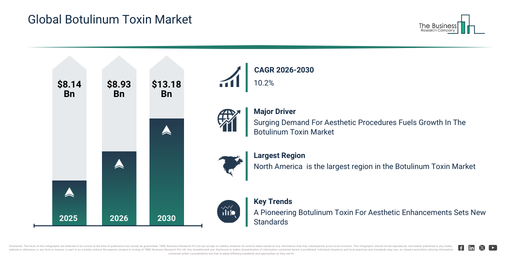
    The botulinum toxin market has observed substantial expansion in recent years. It is anticipated to expand from $8.14 billion in 2025 to $8.93 billion in 2026, demonstrating a compound annual growth rate (CAGR) of 9.6%. The historical growth of this market can be attributed to factors such as increasing demand for cosmetic procedures, a rise in the prevalence of neurological disorders, enhanced aesthetic awareness, the proliferation of dermatology clinics, and the adoption of botulinum toxin type A for therapeutic purposes.

    The botulinum toxin market is poised for significant expansion in the upcoming years. By 2030, it is forecast to reach $13.18 billion, growing at a compound annual growth rate (CAGR) of 10.2%. This anticipated growth is driven by factors such as advancements in botulinum formulations, a rising global aging population, the increase in minimally invasive procedures, the proliferation of specialty clinics, and market expansion into emerging regions. Noteworthy trends during this forecast period include the increasing adoption of minimally invasive therapeutics, the broadening scope of cosmetic procedures, the development of personalized patient treatment plans, enhanced management of neurological disorders, and greater awareness regarding hyperhidrosis treatment.

    Get A Free Sample Report With In-Depth Market Insights:

    https://www.thebusinessresearchcompany.com/sample.aspx?id=11884&type=smp&utm_source=Blogs&utm_medium=Paid&utm_campaign=Oct_PR

    Botulinum Toxin Market Growth Momentum: What Factors Are Shaping Demand?

    Future expansion of the botulinum toxin market is anticipated, driven by the growing demand for aesthetic procedures. These procedures encompass a variety of cosmetic treatments and interventions, either surgical or non-surgical, that aim to enhance or improve an individual’s appearance. Botulinum toxin finds application in these aesthetic procedures for relaxing specific muscles and reducing the visibility of wrinkles and fine lines. As an example, in June 2024, the American Society of Plastic Surgeons, a US-based non-profit organization, reported a 7% increase in minimally invasive procedures in 2023, surpassing the growth rate of surgical procedures by 2%. Consequently, the market for botulinum toxin is expanding, propelled by the rising demand for cosmetic operations.

    Botulinum Toxin Market Segment Analysis And Revenue Potential

    The botulinum toxin market covered in this report is segmented –

    1) By Type: Botulinum Toxin Type A, Botulinum Toxin Type B

    2) By Application: Therapeutics, Aesthetics

    3) By End User: Hospitals, Specialty Clinics, Dermatology Clinics, Other End Users

    Botulinum Toxin Market Trends Redefining Industry Growth

    Leading companies operating in the botulinum toxin market are concentrating on developing innovative solutions, including indigenous botulinum toxin injection, to enhance treatment efficacy, minimize side effects, and meet the growing demand for aesthetic and therapeutic applications. Indigenous botulinum toxin injection refers to botulinum toxin formulations that are developed and produced locally rather than imported from global manufacturers. For instance, in January 2023, Evolus Inc., a US-based medical aesthetics company, obtained approval from the Australian Therapeutic Goods Administration (TGA) for Nuceiva (prabotulinumtoxin A) in Australia. Nuceiva (prabotulinumtoxinA) is a neurotoxin that contains botulinum toxin type A and is used for aesthetic purposes. This product aims for the temporary improvement in the appearance of moderate glabellar lines in adult patients by blocking the nerve impulses of facial muscles, thereby causing them to relax and smoothing the wrinkles formed by facial expressions, squinting, and frowning.

    Botulinum Toxin Market Key Players Shaping Industry Direction

    Major companies operating in the botulinum toxin market are Pfizer Inc., AbbVie Inc., Teijin Pharma Ltd., Eisai Co. Ltd., Menarini Group, Ipsen Group, Galderma S.A., Daewoong Pharmaceuticals Co. Ltd., Supernus Pharmaceuticals Inc., Merz Pharma GmbH & Co. KGaA, Hugel Inc., Evolus Inc., Medytox Inc., Revance Therapeutics Inc., Sinclair Pharma, US WorldMeds LLC, Hugh Source International Ltd., MedivaPharma, Wigmore Medical, Lanzhou Institute of Biological Products Co Ltd., Metabiologics Inc.

    View The Full Botulinum Toxin Market Report:

    https://www.thebusinessresearchcompany.com/report/botulinum-toxin-global-market-report?utm_source=Blogs&utm_medium=Paid&utm_campaign=Oct_PR

    Botulinum Toxin Market Global Footprint: Which Region Leads The Industry?

    North America was the largest region in the botulinum toxin market in 2025. Asia-Pacific is expected to be the fastest-growing region in the forecast period. The regions covered in the botulinum toxin market report are Asia-Pacific, South East Asia, Western Europe, Eastern Europe, North America, South America, Middle East, Africa.

    Reach Out To Our Team:

    The Business Research Company: https://www.thebusinessresearchcompany.com/

    Americas: +1 310-496-7795

    Asia: +44 7882 955267 & +91 8897263534

    Europe: +44 7882 955267

    Email us at: marketing@tbrc.info

    Follow us on:

    LinkedIn: https://in.linkedin.com/company/the-business-research-company

    YouTube: https://www.youtube.com/channel/UC24_fI0rV8cR5DxlCpgmyFQ

    Global Market Model: https://www.thebusinessresearchcompany.com/global-market-model
  • Botanical Supplements Market Forecast 2026: Market Size, Competitive Landscape And Growth Drivers

    Botanical Supplements Market Forecast 2026: Market Size, Competitive Landscape And Growth Drivers

    Featuring market attractiveness scoring, total addressable market sizing, company benchmarking matrices, interactive Excel dashboards, deeper supply chain intelligence, emerging startup tracking, and granular product-level insights, The Business Research Company’s 2026 market reports are built to deliver research that is both more actionable and more strategically valuable.

    Botanical Supplements Market Value Growth And Long-Term Outlook

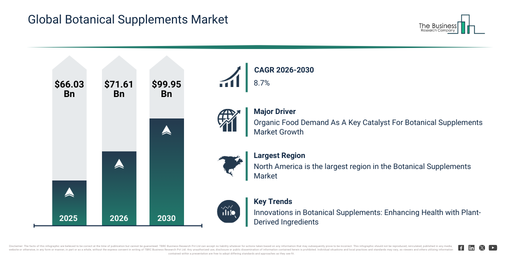
    The market size for botanical supplements has shown strong growth in recent years. It will grow from $66.03 billion in 2025 to $71.61 billion in 2026 at a compound annual growth rate (CAGR) of 8.5%. The expansion witnessed in the historical period stems from influences such as traditional use of herbal medicine, rising consumer awareness of natural health products, growth of dietary supplement industry, increasing prevalence of lifestyle-related disorders, and expanding retail pharmacy networks.

    The botanical supplements market is poised for significant expansion over the coming years, with projections indicating it will reach a value of $99.95 billion by 2030, driven by a compound annual growth rate (CAGR) of 8.7%. This growth in the forecast period is attributable to an escalating focus on preventive and holistic health, an increasing consumer appetite for plant-based nutrition, the ongoing expansion of e-commerce channels for supplement sales, continuous innovation in botanical formulations, and wider acceptance among younger consumers. Prominent trends expected during this period include a growing consumer preference for natural and plant-based supplements, a rising demand for immunity-boosting botanicals, the broader integration of herbal supplements into preventive healthcare, enhanced popularity of functional botanical blends, and a noticeable shift towards clean-label and organic formulations.

    Get A Free Sample Report With In-Depth Market Insights:

    https://www.thebusinessresearchcompany.com/sample.aspx?id=5882&type=smp&utm_source=Blogs&utm_medium=Paid&utm_campaign=Oct_PR

    Botanical Supplements Market Expansion Drivers: What’s Shaping Future Growth?

    The increasing consumer demand for organic food is anticipated to propel the growth of the botanical supplements market moving forward. Organic food refers to items produced using organic farming methods, which prioritize natural and sustainable practices while avoiding synthetic chemicals and artificial additives. Botanical supplements contribute to improved soil health, naturally manage pests and diseases, control weeds, enhance nutrient uptake in organic food, and reduce environmental impact. For instance, in April 2025, according to statistics published by the Organic Trade Association (OTA), a US-based business association for the organic industry, U.S. certified organic product sales grew 5.2% in 2024, more than twice the overall market’s 2.5% growth, and reached a record high of $71.6 billion that year. Therefore, the expanding demand for organic food is a key driver for the botanical supplements market’s growth.

    Botanical Supplements Market Segmentation And Category Overview

    The botanical supplements market covered in this report is segmented –

    1) By Source: Herbs, Leaves, Spices, Flowers, Other Sources

    2) By Form: Powder, Liquid, Tablets, Capsules, Gummies, Other Forms

    3) By Application: Energy And Weight Management, Bone And Joint Health, Gastrointestinal Health, Immunity, Cardiac Health, Diabetes, Anti-cancer, Other Applications

    4) By Distribution Channel: Hospital Pharmacies, Retail Pharmacies, Online Pharmacies

    Subsegments:

    1) By Herbs: Adaptogenic Herbs, Culinary Herbs

    2) By Leaves: Green Leaves, Tea Leaves

    3) By Spices: Common Spices, Exotic Spices

    4) By Flowers: Herbal Flowers, Edible Flowers

    5) By Other Sources: Roots, Fruits, Seeds

    Botanical Supplements Market Strategic Trends: What Defines The Next Growth Phase?

    Leading companies in the botanical supplements market are concentrating on developing innovative products, such as those derived from plants, to improve health benefits and meet the growing consumer desire for natural remedies. Plant-derived ingredients are substances obtained from plants, utilized for diverse purposes including nutritional, medicinal, or cosmetic applications. These components can encompass extracts, oils, powders, and other elements that leverage the beneficial properties inherent in plants. For instance, in May 2024, an Ireland-based nutrition and supplement company introduced a botanical blend specifically designed to manage multiple sclerosis (MS) symptoms, by incorporating ingredients like boswellic acid and curcuminoids, which are recognized for their anti-inflammatory effects and potential cognitive advantages. This formulation aims to reduce fatigue, support normal muscle function, and maintain a healthy inflammatory response, thereby enhancing the overall well-being of individuals with MS.

    Botanical Supplements Market Competitive Analysis Of Leading Industry Participants

    Major companies operating in the botanical supplements market are Himalaya Drug Company, Archer Daniels Midland Company, Amway Corporation, Bio-Botanica Inc., Blackmores Limited, Gaia Herbs LLC, Glanbia Nutritionals, Herbalife Nutrition, Pharmavite LLC, Prinova Group, Ricola AG, The Nature’s Bounty Co., Banyan Botanicals LLC, Barlean’s Organic Oils LLC, BioSchwartz LLC, Garden of Life LLC, General Nutrition Centers Inc., Herb Pharm LLC, Himalaya Wellness Company, Irwin Naturals LLC, Jarrow Formulas Inc., Life Extension, MegaFood, Nature’s Answer Inc., Nature’s Bounty Co. Inc., Nature’s Way Brands LLC, New Chapter Inc., NOW Foods, Nutramax Laboratories Inc., Oregon’s Wild Harvest Inc., Organic India Private Limited

    View The Full Botanical Supplements Market Report:

    https://www.thebusinessresearchcompany.com/report/botanical-supplements-global-market-report?utm_source=Blogs&utm_medium=Paid&utm_campaign=Oct_PR

    Botanical Supplements Market Regional Distribution: Which Areas Power Market Growth?

    North America was the largest region in the botanical supplements market in 2025. Asia-Pacific is expected to be the fastest-growing region in the forecast period. The regions covered in the botanical supplements market report are Asia-Pacific, South East Asia, Western Europe, Eastern Europe, North America, South America, Middle East, Africa.

    Reach Out To Our Team:

    The Business Research Company: https://www.thebusinessresearchcompany.com/

    Americas: +1 310-496-7795

    Asia: +44 7882 955267 & +91 8897263534

    Europe: +44 7882 955267

    Email us at: marketing@tbrc.info

    Follow us on:

    LinkedIn: https://in.linkedin.com/company/the-business-research-company

    YouTube: https://www.youtube.com/channel/UC24_fI0rV8cR5DxlCpgmyFQ

    Global Market Model: https://www.thebusinessresearchcompany.com/global-market-model
  • Bone Pain Treatment Market Size In 2026: Regional Growth, Key Segments And Future Outlook

    Bone Pain Treatment Market Size In 2026: Regional Growth, Key Segments And Future Outlook

    Built to provide research that’s more actionable and strategically valuable, The Business Research Company’s 2026 market reports include market attractiveness analysis, total addressable market sizing, company benchmarking matrices, interactive Excel dashboards, broader supply chain intelligence, emerging startup tracking, and in-depth product insights.

    Bone Pain Treatment Market Poised To Hit $8.58 Billion By 2030 With A 7.2% CAGR

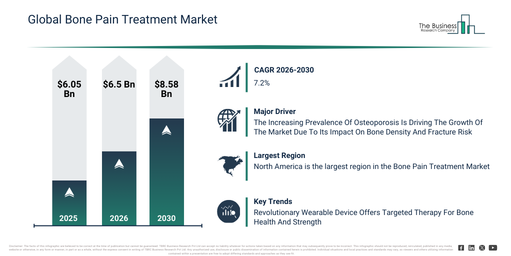
    The bone pain treatment market has experienced robust expansion over recent years. This market is projected to expand from a valuation of $6.05 billion in 2025 to $6.5 billion by 2026, exhibiting a compound annual growth rate (CAGR) of 7.5%. Historically, factors contributing to this growth include the prevalence of fractures, the spread of cancer to bone, the use of opioid pain management, specialized hospital orthopedic care, and an aging demographic.

    The bone pain treatment market is projected to experience substantial expansion in the coming years. Its valuation is anticipated to reach $8.58 billion by 2030, demonstrating a compound annual growth rate (CAGR) of 7.2%. This forecasted growth is linked to factors such as tighter opioid regulations, the increasing adoption of non-pharmacological therapies, the broadening scope of oncology supportive care, the development of rehabilitation services, and a heightened emphasis on managing chronic pain. Key trends anticipated during this period encompass a rise in multimodal pain management strategies, the expansion of non-opioid pain treatments, a greater focus on therapies for cancer-related bone pain, the widespread implementation of physical and rehabilitative interventions, and a move towards personalized pain management approaches.

    Get A Free Sample Report With In-Depth Market Insights:

    https://www.thebusinessresearchcompany.com/sample.aspx?id=24486&type=smp&utm_source=Blogs&utm_medium=Paid&utm_campaign=Oct_PR

    Bone Pain Treatment Market Development Factors: What’s Supporting Demand?

    The escalating occurrence of osteoporosis is anticipated to propel the expansion of the bone pain treatment market moving forward. Osteoporosis is a medical condition defined by a reduction in bone density and strength, leading to fragile bones highly susceptible to fractures. The rise in osteoporosis is largely attributed to the aging global population, as bone density naturally diminishes with age, elevating the risk of developing the disease. Bone pain treatment contributes to addressing osteoporosis by alleviating discomfort and improving mobility, thereby enhancing the overall management of the condition and supporting the maintenance of bone health. For instance, in April 2023, as per the AO Foundation, a Switzerland-based nonprofit organization, osteoporotic fractures occur every three seconds worldwide, affecting about 8.9 million people annually. In the U.S., these injuries already cost the healthcare system around USD 14 billion annually, and this economic burden is projected to more than double by 2025. Consequently, the increasing prevalence of osteoporosis is driving the growth of the bone pain treatment market.

    Bone Pain Treatment Market Segment Outlook: Which Categories Are Growing Fastest?

    The bone pain treatment market covered in this report is segmented –

    1) By Treatment Type: Pharmacological Treatments, Non-Pharmacological Treatments, Surgical Interventions

    2) By Drug Class: Analgesics, Antidepressants, Anticonvulsants, Corticosteroids

    3) By Indication: Injury, Infection, Tumors

    4) By Distribution Channel: Retail Pharmacies, Online Pharmacies

    5) By End-User: Hospitals, Clinics, Homecare Settings

    Subsegments:

    1) By Pharmacological Treatments: Nonsteroidal Anti-inflammatory Drugs (NSAIDs), Opioids, Corticosteroids, Anticonvulsants, Antidepressants

    2) By Non-Pharmacological Treatments: Physical Therapy, Acupuncture, Transcutaneous Electrical Nerve Stimulation

    3) By Surgical Interventions: Joint Replacement Surgery, Spinal Fusion, Vertebroplasty And Kyphoplasty, Tumor Resection, Debridement Surgery

    Bone Pain Treatment Market Transformation Trends: What Innovations Are Driving Change?

    Major companies operating in the bone pain treatment market are directing their efforts toward developing innovative solutions, such as prescription wearable devices, to deliver targeted pain relief. Prescription wearable devices are medically approved gadgets worn on the body that provide specific therapies, including electrical stimulation or heat, to help mitigate bone pain by improving blood flow, decreasing inflammation, or blocking pain signals. For instance, in May 2025, Osteoboost Health Inc., a US-based medical equipment manufacturer, introduced Osteoboost, recognized as the first FDA-cleared wearable device designed for low bone density. This wearable belt administers targeted, low-amplitude, high-frequency vibration therapy (20–40 Hz) to the spine and hips, aiming to slow bone density and strength loss in postmenopausal women with osteopenia. Worn for 30 minutes daily during regular activities, the device is clinically proven to assist in reducing the decline in bone strength and volumetric bone density, with no significant adverse events reported. The design encompasses a motorized vibration pack, pressure sensor, and accelerometers to ensure the safe and effective delivery of therapy.

    Bone Pain Treatment Market Leading Companies And Competitive Benchmarking

    Major companies operating in the bone pain treatment market are AbbVie Inc., Hikma Pharmaceuticals PLC, Sun Pharmaceutical Industries Ltd., Cipla Ltd., Dr. Reddy’s Laboratories Ltd., Lupin Limited, Alkem Laboratories Ltd., Torrent Pharmaceuticals Ltd., Zydus Lifesciences Ltd., Glenmark Pharmaceuticals Ltd., Perrigo Company plc, Viatris Inc., Mallinckrodt Pharmaceuticals, Grünenthal GmbH, Indivior PLC, Pfizer Consumer Healthcare (Haleon), Kyowa Kirin Co. Ltd., Ferring Pharmaceuticals, Chiesi Farmaceutici S.p.A., Bausch Health Companies Inc., Takeda Pharmaceutical Company Limited, Otsuka Pharmaceutical Co. Ltd., Fresenius Kabi, Aurobindo Pharma Ltd., Intas Pharmaceuticals Ltd.

    View The Full Bone Pain Treatment Market Report:

    https://www.thebusinessresearchcompany.com/report/bone-pain-treatment-global-market-report?utm_source=Blogs&utm_medium=Paid&utm_campaign=Oct_PR

    Bone Pain Treatment Market Leading Geography: Which Region Contributes The Most Revenue?

    North America was the largest region in the bone pain treatment market in 2025. Asia-Pacific is expected to be the fastest-growing region in the forecast period. The regions covered in the bone pain treatment market report are Asia-Pacific, South East Asia, Western Europe, Eastern Europe, North America, South America, Middle East, Africa.

    Reach Out To Our Team:

    The Business Research Company: https://www.thebusinessresearchcompany.com/

    Americas: +1 310-496-7795

    Asia: +44 7882 955267 & +91 8897263534

    Europe: +44 7882 955267

    Email us at: marketing@tbrc.info

    Follow us on:

    LinkedIn: https://in.linkedin.com/company/the-business-research-company

    YouTube: https://www.youtube.com/channel/UC24_fI0rV8cR5DxlCpgmyFQ

    Global Market Model: https://www.thebusinessresearchcompany.com/global-market-model
  • Bone Marrow Transplantation Market Growth Forecast Through 2030: Market Size And Trends In 2026

    Bone Marrow Transplantation Market Growth Forecast Through 2030: Market Size And Trends In 2026

    Backed by market attractiveness analysis, total addressable market sizing, company benchmarking matrices, interactive Excel dashboards, wider supply chain intelligence, emerging startup coverage, and detailed product-level insights, The Business Research Company’s 2026 market reports are designed to offer research that is more actionable and strategically valuable than ever.

    Bone Marrow Transplantation Market Size And Revenue Outlook Through 2030

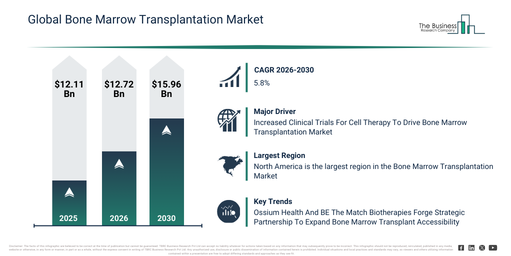
    The bone marrow transplantation market size has demonstrated strong growth in recent years. This market is set to expand from $12.11 billion in 2025 to $12.72 billion in 2026, achieving a compound annual growth rate (CAGR) of 5.1%. The expansion witnessed historically can be attributed to the increasing prevalence of leukemia and lymphoma, growing recognition of bone marrow transplantation, progress in transplantation techniques, the growth of hospital and clinical infrastructure, and the availability of donor registries.

    The bone marrow transplantation market size is projected to exhibit robust growth in the coming years. Its valuation is predicted to reach $15.96 billion by 2030, progressing at a compound annual growth rate (CAGR) of 5.8%. Factors contributing to this anticipated growth include novel stem cell technologies, the incorporation of AI in matching patients, the broader application of precision medicine, advancements in supportive therapies following transplantation, and the development of healthcare infrastructure in emerging economies. Key trends expected during this period involve tailored conditioning regimens, refinement of stem cell sources, advancements in post-transplant care, broader donor matching and registry initiatives, and the adoption of less invasive harvesting methods.

    Get A Free Sample Report With In-Depth Market Insights:

    https://www.thebusinessresearchcompany.com/sample.aspx?id=10046&type=smp&utm_source=Blogs&utm_medium=Paid&utm_campaign=Oct_PR

    Bone Marrow Transplantation Market Industry Drivers: What’s Behind The Revenue Growth?

    Increased clinical trials in cell therapy are anticipated to advance the expansion of bone marrow transplantation in the future. These trials are research endeavors conducted on human participants to assess how safe and effective the use of living cells is for treating illnesses or health conditions. Bone marrow transplantation is frequently employed in cell therapy clinical trials because it can supply hematopoietic stem cells, which are crucial for replacing compromised cells, addressing blood-related ailments, and investigating innovative cell-based therapies for numerous diseases. For example, in December 2024, data from the Association of the British Pharmaceutical Industry, a trade association located in the UK, indicated that the number of pharmaceutical industry trials initiated in the UK grew for the second successive year, increasing from 411 in 2022 to 426 in 2023. Consequently, the expansion of clinical trials for cell therapy is set to boost the bone marrow transplantation market.

    Bone Marrow Transplantation Market Segment Landscape: Which Areas Lead Development?

    The bone marrow transplantation market covered in this report is segmented –

    1) By Type: Autologous Bone Marrow Transplant, Allogenic Bone Marrow Transplant

    2) By Indication: Hodgkin Lymphoma, Acute Leukemia, Multiple Myelomas, Solid Tumors, Non-Hodgkin Lymphoma, Other Indications

    3) By End-Users: Hospitals, Multispecialty Clinics, Ambulatory Surgical Centers

    Subsegments:

    1) By Autologous Bone Marrow Transplant: Peripheral Blood Stem Cell Transplant, Bone Marrow Harvesting And Storage, Conditioning Regimens, Post-Transplant Care

    2) By Allogenic Bone Marrow Transplant: Matched Sibling Donor Transplant, Matched Unrelated Donor Transplant, Haploidentical Transplant, Cord Blood Transplant, Conditioning Regimens, Post-Transplant Care

    #Bone Marrow Transplantation Market Growth Trends: What’s Shaping The Future Outlook?

    Leading companies in the bone marrow transplantation industry are embracing a strategic partnerships approach to improve access to advanced technologies, broaden available treatment options, and deliver comprehensive transplant solutions. Such partnerships involve companies utilizing each other’s strengths and resources to achieve shared benefits and success. For example, in August 2023, Ossium Health, a US-based bioengineering company, formed an alliance with Be the Match BioTherapies, a US-based provider of cell and gene therapy solutions. Through this partnership, they aim to boost bone marrow transplant accessibility and treatment efficiency. This collaboration significantly enhances Ossium’s capacity to cater to patients on a larger scale, simultaneously allowing NMDP or Be The Match to extend a vital supply of bone marrow to a broader spectrum of patients requiring life-saving treatments.

    Bone Marrow Transplantation Market Industry Leaders And Competitive Landscape

    Major companies operating in the bone marrow transplantation market are Merck Millipore Corporation, STEMCELL Technologies Inc., HemaCare Corporation, AllCells LLC, Lonza Group Ltd., Conversant Bio Company, Lifeline Cell Technology LLC, Mesoblast Ltd., PromoCell GmbH, ATCC Inc. (American Type Culture Collection), ReachBio LLC, Gamida Cell Ltd., Abbott Laboratories Inc., Allogene Therapeutics Inc., Amgen Inc., Angiocrine Biosciences Corp., Astellas Pharma Inc., Atara Biotherapeutics Inc., Bluebird Bio Inc., Cellectis S.A., Celyad SA, Erythrocyte Regeneration and Clinical Therapeutics Inc., Gammacell AB, Gilead Sciences Inc., Graphite Bio Inc., Incyte Corporation, Intellia Therapeutics Inc., Legend Biotech Corporation, Magenta Therapeutics Inc., Novartis AG

    View The Full Bone Marrow Transplantation Market Report:

    https://www.thebusinessresearchcompany.com/report/bone-marrow-transplantation-global-market-report?utm_source=Blogs&utm_medium=Paid&utm_campaign=Oct_PR

    Bone Marrow Transplantation Market Regional Outlook: Where Is Opportunity Concentrated?

    North America was the largest region in the bone marrow transplantation market in 2025. Asia-Pacific is expected to be the fastest-growing region in the global bone marrow transplantation market report forecast period. The regions covered in the bone marrow transplantation market report are Asia-Pacific, South East Asia, Western Europe, Eastern Europe, North America, South America, Middle East, Africa.

    Reach Out To Our Team:

    The Business Research Company: https://www.thebusinessresearchcompany.com/

    Americas: +1 310-496-7795

    Asia: +44 7882 955267 & +91 8897263534

    Europe: +44 7882 955267

    Email us at: marketing@tbrc.info

    Follow us on:

    LinkedIn: https://in.linkedin.com/company/the-business-research-company

    YouTube: https://www.youtube.com/channel/UC24_fI0rV8cR5DxlCpgmyFQ

    Global Market Model: https://www.thebusinessresearchcompany.com/global-market-model
  • Bone And Joint Health Supplements Market Analysis: $16.45 Billion Market Size In 2026 And Future Growth Prospects

    Bone And Joint Health Supplements Market Analysis: $16.45 Billion Market Size In 2026 And Future Growth Prospects

    Featuring market attractiveness scoring, total addressable market sizing, company benchmarking matrices, interactive Excel dashboards, deeper supply chain intelligence, emerging startup tracking, and granular product-level insights, The Business Research Company’s 2026 market reports are built to deliver research that is both more actionable and more strategically valuable.

    Bone And Joint Health Supplements Market Growth From $16.45 Billion In 2026 To $24.11 Billion By 2030 At A CAGR Of 10%

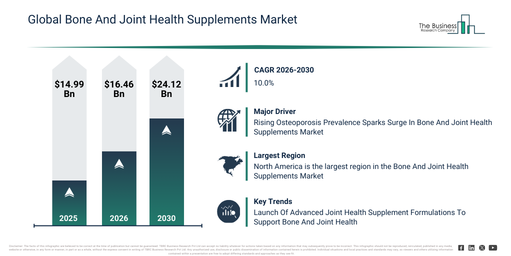
    The bone and joint health supplements market size has experienced significant expansion in recent years. It is anticipated to increase from $14.99 billion in 2025 to $16.46 billion in 2026, at a compound annual growth rate (CAGR) of 9.8%. The observed growth in the past period can be linked to the rising occurrence of osteoporosis, an increase in arthritis cases, growing recognition of bone health, an aging demographic, and the demand for calcium-fortified products.

    The bone and joint health supplements market is projected to undergo rapid expansion in the coming years. It will grow to $24.12 billion in 2030 at a compound annual growth rate (CAGR) of 10.0%. This expected growth is driven by technological advancements in supplement formulations, the proliferation of e-commerce platforms, evolving personalized nutrition trends, a surge in the adoption of plant-based supplements, and increased healthcare expenditure. Significant trends in the forecast period encompass customized bone and joint supplements, herbal and plant-derived formulations, anti-inflammatory products for joint health, age-specific nutritional supplements, and formulations engineered for enhanced bioavailability.

    Get A Free Sample Report With In-Depth Market Insights:

    https://www.thebusinessresearchcompany.com/sample.aspx?id=8182&type=smp&utm_source=Blogs&utm_medium=Paid&utm_campaign=Oct_PR

    Bone And Joint Health Supplements Market Growth Factors: What’s Supporting Expansion?

    The increasing incidence of osteoporosis is projected to fuel the expansion of the bone and joint health supplements market moving forward. Individuals with inadequate calcium intake are more susceptible to developing osteoporosis, a condition often stemming from a lifelong calcium deficiency. This refers to a state where bone quality or structure deteriorates, or there is a loss of bone mass and mineral density. Bone and joint health supplements are formulated to halt bone loss and potentially rebuild bone density, thereby preventing fractures. For instance, by June 2025, the Royal Osteoporosis Society, a UK-based non-profit organization, estimates that 3.5 million people in the UK will have osteoporosis. This condition is responsible for 500,000 broken bones each year in the UK, costing over £4.5 billion. Furthermore, among those over 50, half of women and 20% of men will experience an osteoporosis-related fracture. Therefore, the rising prevalence of osteoporosis will significantly drive the bone and joint health supplements market.

    Bone And Joint Health Supplements Market Segments: Where Is Growth Concentrated?

    The bone and joint health supplements market covered in this report is segmented –

    1) By Type: Vitamin D, Vitamin K, Calcium, Collagen, Omega-3 Fatty acids, Glucosamine-Chondroitin, Other Type

    2) By Form Type: Tablets, Capsules, Liquid, Powder, Other Forms

    3) By Application Type: Dietary Supplements, Functional Foods And Beverages, Other Application Types

    4) By Distribution Channel Type: Supermarkets Or Hypermarkets, Pharmacies, Health Stores, Convenience Stores, Internet Retailing, Other Distribution Channels

    Subsegments:

    1) By Vitamin D: Vitamin D2, Vitamin D3

    2) By Vitamin K: Vitamin K1, Vitamin K2

    3) By Calcium: Calcium Carbonate, Calcium Citrate

    4) By Collagen: Type I Collagen, Type II Collagen

    5) By Omega-3 Fatty Acids: EPA (Eicosapentaenoic Acid), DHA (Docosahexaenoic Acid)

    6) By Glucosamine-Chondroitin: Glucosamine Sulfate, Chondroitin Sulfate

    7) By Other Type: Herbal Supplements, Other Nutraceuticals

    Bone And Joint Health Supplements Market Industry Trends: What’s Reshaping Demand?

    Prominent companies active in the bone and joint health supplements market are concentrating on advancing technologies, such as undenatured (native) type II collagen formulations, to improve joint support, enhance mobility, and minimize cartilage degradation. An undenatured type II collagen formulation retains collagen’s natural triple-helix structure, unlike its hydrolyzed counterpart, and functions through an “oral tolerance” mechanism, where small quantities (e.g., ~40 mg/day) assist in modulating the immune response within the gut to diminish cartilage breakdown in joints. For example, in April 2025, Qualia Life Sciences, a US-based nutraceutical company, released Qualia Joint Health, an advanced joint supplement. The product features clinically investigated ingredients, including native type II collagen, eggshell membrane, hyaluronic acid, glucosamine, and L-carnitine, which foster cartilage production, joint lubrication, tendon strength, and healthy aging, all within a synergistic formula crafted for daily mobility and joint resilience.

    Bone And Joint Health Supplements Market Key Participants And Competitive Landscape

    Major companies operating in the bone and joint health supplements market are Nature’s Bounty Incorporated, The Procter & Gamble Company, Amway Corporation, BASF SE, Archer Daniels Midland Company, Reckitt Benckiser Group PLC, Pfizer Incorporated, Vita Life Sciences Limited, Glanbia PLC, Nutramax Laboratories Consumer Care Incorporated, Koninklijke DSM N.V., Xtend-Life Incorporated, Bergstrom Nutrition Incorporated, BioScience Nutrition Incorporated, Herbs Nutriproducts Private Limited, Arazo Nutrition Incorporated, Vitawin International Holdings Limited, Pure Encapsulations LLC, Abbott Laboratories Incorporated, NutriScience Innovations LLC, Optimum Nutrition Inc., Rainbow Light Nutritional Systems Inc., Schiff Nutrition International Inc., Solgar Vitamin and Herb Co. Inc., Source Naturals Inc., Sports Research Corporation, Swanson Health Products Inc., Twinlab Consolidation Corporation, USANA Health Sciences Inc., Vitacost.com Inc.

    View The Full Bone And Joint Health Supplements Market Report:

    https://www.thebusinessresearchcompany.com/report/bone-and-joint-health-supplements-global-market-report?utm_source=Blogs&utm_medium=Paid&utm_campaign=Oct_PR

    Bone And Joint Health Supplements Market Geographic Landscape: Which Region Leads Industry Growth?

    North America was the largest region in the bone and joint health supplements market in 2025. Asia-Pacific is expected to be the fastest-growing region in the forecast period. The regions covered in the bone and joint health supplements market report are Asia-Pacific, South East Asia, Western Europe, Eastern Europe, North America, South America, Middle East, Africa.

    Reach Out To Our Team:

    The Business Research Company: https://www.thebusinessresearchcompany.com/

    Americas: +1 310-496-7795

    Asia: +44 7882 955267 & +91 8897263534

    Europe: +44 7882 955267

    Email us at: marketing@tbrc.info

    Follow us on:

    LinkedIn: https://in.linkedin.com/company/the-business-research-company

    YouTube: https://www.youtube.com/channel/UC24_fI0rV8cR5DxlCpgmyFQ

    Global Market Model: https://www.thebusinessresearchcompany.com/global-market-model

  • Blood Cancer Drugs Market 2026 Market Size And Growth Forecast: Key Trends To Watch

    Blood Cancer Drugs Market 2026 Market Size And Growth Forecast: Key Trends To Watch

    Built to provide research that’s more actionable and strategically valuable, The Business Research Company’s 2026 market reports include market attractiveness analysis, total addressable market sizing, company benchmarking matrices, interactive Excel dashboards, broader supply chain intelligence, emerging startup tracking, and in-depth product insights.

    Blood Cancer Drugs Market Expansion Outlook: What Revenue Opportunities Are Ahead?

    The blood cancer drugs market has experienced substantial growth over recent years. It is anticipated to expand from $79.6 billion in 2025 to $84.59 billion in 2026, demonstrating a compound annual growth rate (CAGR) of 6.3%. This historical expansion can be attributed to a higher incidence of leukemia and lymphoma, the sustained use of chemotherapy, an increase in oncology hospitals, the introduction of monoclonal antibodies, and enhanced diagnostic capabilities.

    The blood cancer drugs market is projected to experience substantial expansion over the upcoming years. Its size is forecast to reach $111.86 billion by 2030, exhibiting a compound annual growth rate (CAGR) of 7.2%. This anticipated growth during the forecast period stems from factors such as advancements in precision oncology, wider acceptance of stem cell therapies, breakthroughs in biologics, increasing healthcare spending, and the proliferation of cancer screening initiatives. Key developments expected during this timeframe involve the increasing uptake of targeted blood cancer treatments, broader application of immunotherapy for hematologic malignancies, the growth of combined treatment strategies, a heightened emphasis on individualized cancer care, and enhanced survival rates for patients with blood cancer.

    Get A Free Sample Report With In-Depth Market Insights:

    https://www.thebusinessresearchcompany.com/sample.aspx?id=2587&type=smp&utm_source=Blogs&utm_medium=Paid&utm_campaign=Oct_PR

    Blood Cancer Drugs Market Demand Drivers: What’s Powering Industry Growth?

    A growing global occurrence of blood cancer cases is anticipated to drive the future expansion of the blood cancer drug market. Blood cancer encompasses a range of malignant disorders, including leukemia, lymphoma, and myeloma, which affect the blood and bone marrow, requiring comprehensive, long-term treatments such as chemotherapy, immunotherapy, targeted drugs, and stem cell transplantation. This rise in disease prevalence is attributed to factors like aging populations, genetic mutations, environmental exposures, and various lifestyle-related risks. The increasing number of blood cancer diagnoses is consequently boosting the demand for innovative blood cancer drugs that promise improved survival rates, fewer adverse effects, enhanced patient quality of life, and personalized treatment approaches. For instance, in October 2025, as reported by Blood Cancer United, a US-based blood cancer information and advocacy organization, an estimated 66,890 individuals were expected to be diagnosed with leukemia, while about 475,323 people were projected to be living with or in remission from the disease in the United States, and approximately 23,540 deaths were anticipated to be due to leukemia in 2025. Therefore, the escalating global incidence of blood cancer cases is a significant driver for the growth of the blood cancer drug market.

    Blood Cancer Drugs Market Segment Analysis: What Are The Core Market Categories?

    The blood cancer drugs market covered in this report is segmented –

    1) By Blood Cancer Type: Leukemia, Lymphoma

    2) By Drugs: Rituxan Or Mabthera (Rituximab), Gleevec Or Glivec (Imatinib), Revlimid (Lenalidomide), Velcade (Bortezomib), Tasigna (Nilotinib), Pomalyst (Pomalidomide), Vidaza (Azacitidine), Kyprolis (Carfilzomib), Adcetris (Brentuximab Vedotin), Other Drugs

    3) By Treatment Approaches: Chemotherapeutic, MAbs/Targeted Therapies, Immunotherapeutic

    Subsegments:

    1) By Leukemia: Acute Lymphoblastic Leukemia (ALL), Chronic Lymphocytic Leukemia (CLL), Acute Myeloid Leukemia (AML), Chronic Myeloid Leukemia (CML), Other Types of Leukemia

    2) By Lymphoma: Hodgkin Lymphoma, Non-Hodgkin Lymphoma (NHL), Burkitt Lymphoma, Follicular Lymphoma, Mantle Cell Lymphoma, Other Types of Lymphoma

    Blood Cancer Drugs Market Innovation Trends: What Developments Are Reshaping The Industry?

    Leading companies within the blood cancer drugs market are prioritizing the development of novel medications and pursuing FDA authorization to achieve a competitive edge. This FDA approval for drugs constitutes the formal permission granted by the United States Food and Drug Administration, enabling a pharmaceutical product to be legally marketed and sold in the United States. For example, in March 2024, Bristol Myers Squibb, a pharmaceutical company based in the US, secured FDA approval for its initial and sole CAR T-cell therapy designed for adults with relapsed or refractory chronic lymphocytic leukemia (CLL) or small lymphocytic lymphoma (SLL). This expedited approval facilitates its use in patients who have previously undergone at least two treatments, including both a Bruton tyrosine kinase inhibitor and a B-cell lymphoma 2 inhibitor. According to findings from the TRANSCEND CLL 004 trial, Breyanzi exhibited a 20% complete response rate and a median duration of response of 35.3 months among individuals who responded.

    Blood Cancer Drugs Market Top Companies Driving Competitive Growth

    Major companies operating in the blood cancer drugs market are Amgen Inc., AstraZeneca PLC, Bayer AG, Eli Lilly and Company Inc., Johnson & Johnson, Novartis AG, Pfizer Inc., AbbVie Inc., Takeda Pharmaceutical Company Limited, F. Hoffmann-La Roche Ltd., Bristol-Myers Squibb Company, Astellas Pharma Inc., Merck & Co. Inc., Gilead Sciences Inc., Sanofi S.A., Eisai Co. Ltd., Jazz Pharmaceuticals plc, Kyowa Kirin Co. Ltd., Menarini Group, Millennium Pharmaceuticals Inc., Mundipharma International Limited, Mylan N.V., Ono Pharmaceutical Co. Ltd., Otsuka Pharmaceutical Co. Ltd., Pharmacyclics LLC, Seattle Genetics Inc., Servier Laboratories, Shire plc, Spectrum Pharmaceuticals Inc., Taiho Pharmaceutical Co. Ltd., Teva Pharmaceutical Industries Ltd., Tolero Pharmaceuticals Inc., UCB S.A.

    View The Full Blood Cancer Drugs Market Report:

    https://www.thebusinessresearchcompany.com/report/blood-cancer-drugs-global-market-report?utm_source=Blogs&utm_medium=Paid&utm_campaign=Oct_PR

    Blood Cancer Drugs Market Largest Region: Which Geography Holds The Biggest Share?

    North America was the largest region in the blood cancer drugs market in 2025. Middle East is expected to be the fastest-growing region in the blood cancer drugs market during the forecast period. The regions covered in the blood cancer drugs market report are Asia-Pacific, South East Asia, Western Europe, Eastern Europe, North America, South America, Middle East, Africa.

    Reach Out To Our Team:

    The Business Research Company: https://www.thebusinessresearchcompany.com/

    Americas: +1 310-496-7795

    Asia: +44 7882 955267 & +91 8897263534

    Europe: +44 7882 955267

    Email us at: marketing@tbrc.info

    Follow us on:

    LinkedIn: https://in.linkedin.com/company/the-business-research-company

    YouTube: https://www.youtube.com/channel/UC24_fI0rV8cR5DxlCpgmyFQ

    Global Market Model: https://www.thebusinessresearchcompany.com/global-market-model

  • Blood Based Biomarkers Market Size Forecast: How The Industry Is Expected To Grow From 2026 To 2030

    Blood Based Biomarkers Market Size Forecast: How The Industry Is Expected To Grow From 2026 To 2030

    Backed by market attractiveness analysis, total addressable market sizing, company benchmarking matrices, interactive Excel dashboards, wider supply chain intelligence, emerging startup coverage, and detailed product-level insights, The Business Research Company’s 2026 market reports are designed to offer research that is more actionable and strategically valuable than ever.

    Blood Based Biomarkers Market Growth Potential: How Will Market Size Shift Through 2030?

    The blood based biomarkers market size has experienced significant expansion in recent years. This market is projected to increase from $25.83 billion in 2025 to $28.94 billion in 2026, achieving a compound annual growth rate (CAGR) of 12.0%. The historical growth of this market is largely attributable to advancements in molecular diagnostics, the development of cancer screening programs, comprehensive biomarker validation studies, enhancements in hospital diagnostic infrastructure, and a rise in research funding.

    The blood based biomarkers market is projected to experience substantial expansion in the coming years, reaching $45.5 billion in 2030 with a compound annual growth rate (CAGR) of 12.0%. This anticipated growth during the forecast period is driven by factors such as the increasing use of liquid biopsy, advancements in AI-powered biomarker analytics, the rising need for chronic disease monitoring, the uptake of personalized medicine, and the proliferation of point-of-care testing. Key developments anticipated over the forecast period encompass a wider embrace of non-invasive diagnostics, the broadening of precision oncology applications, an elevated role in early disease detection, a heightened requirement for personalized treatment monitoring, and greater integration with clinical decision support systems.

    Get A Free Sample Report With In-Depth Market Insights:

    https://www.thebusinessresearchcompany.com/sample.aspx?id=24176&type=smp&utm_source=Blogs&utm_medium=Paid&utm_campaign=Oct_PR

    Blood Based Biomarkers Market Growth Drivers: What’s Behind The Acceleration?

    An anticipated increase in cardiovascular disease incidents is set to boost the expansion of the blood-based biomarkers market. Cardiovascular diseases encompass various ailments impacting the heart and blood vessels, such as coronary artery disease, heart failure, and stroke. This surge in cardiovascular diseases can primarily be attributed to escalating risk factors like unhealthy diets and growing obesity levels. Blood-based biomarkers assist in the diagnosis and monitoring of these conditions by offering insights into how the disease advances, assessing risks, and evaluating treatment effectiveness, all through measurable substances found in the blood. For example, the National Center for Biotechnology Information, a US government agency, issued a global health research report in September 2024. Its forecasts projected a 90% increase in cardiovascular disease prevalence from 2025 to 2050, with cardiovascular deaths estimated to reach 35.6 million by 2050. Consequently, the expanding occurrence of cardiovascular diseases is a key factor propelling the growth of blood-based biomarkers.

    Blood Based Biomarkers Market Segment Breakdown: Which Categories Lead On Revenue?

    The blood based biomarkers market covered in this report is segmented –

    1) By Type: Genetic Biomarkers, Protein Biomarkers, Metabolic Biomarkers, Cell-Based Biomarkers, Epigenetic Biomarkers

    2) By Technology: Next-Generation Sequencing, Polymerase Chain Reaction, Immunoassays, Mass Spectrometry, Other Technologies

    3) By Application: Cancer, Cardiovascular Diseases, Neurological Diseases, Immunological Diseases, Other Applications

    4) By End Users: Hospitals And Clinics, Diagnostic Laboratories, Research And Academic Institutes, Other End Users

    Subsegments:

    1) By Genetic Biomarkers: Deoxyribonucleic Acid (DNA) Mutations, Ribonucleic Acid (RNA) Expression Profiles, Single Nucleotide Polymorphisms (SNPs), Copy Number Variations (CNVs), Gene Fusions

    2) By Protein Biomarkers: Enzymes, Hormones, Cytokines, Tumor Markers, Acute Phase Proteins

    3) By Metabolic Biomarkers: Lipid Profiles, Amino Acid Levels, Glucose And Lactate Levels, Organic Acids, Metabolite Panels

    4) By Cell-Based Biomarkers: Circulating Tumor Cells (CTCs), Immune Cell Profiling, Stem Cells, Platelets, Endothelial Cells

    5) By Epigenetic Biomarkers: Deoxyribonucleic Acid (DNA) Methylation Patterns, Histone Modifications, Non-Coding Ribonucleic Acid (RNA), Chromatin Accessibility, Epigenetic Enzyme Activity

    Blood Based Biomarkers Market Trends: What’s Defining The Industry’s Next Phase?

    Companies operating in the blood-based biomarkers market are emphasizing technological advancements, such as high-accuracy blood biomarker tests, to aid physicians in diagnosing Alzheimer’s disease. A high-accuracy blood biomarker test functions as a diagnostic instrument that utilizes particular biomarkers in the blood to detect conditions or monitor health with a significant level of precision and reliability. For example, in October 2023, Quanterix, a US-based life sciences company, launched the LucentAD p-Tau 217, a high-accuracy blood biomarker test designed to assist physicians in diagnosing Alzheimer’s disease (AD) in adults exhibiting cognitive impairment. This test measures phosphorylated tau protein at threonine 217 (p-Tau 217), a biomarker closely linked to AD pathology, particularly amyloid buildup in the brain. The LucentAD p-Tau 217 test achieves over 90% accuracy, meeting strict diagnostic criteria, and is meant to be used alongside other diagnostic tools rather than as a standalone examination.

    Blood Based Biomarkers Market Leading Players And Competitive Positioning

    Major companies operating in the blood based biomarkers market are Siemens Healthineers AG, Agilent Technologies Inc, Eisai Co Ltd, Sysmex Corporation, Exact Sciences Corporation, Guardant Health, Quanterix Corporation, Illumina Inc, QIAGEN NV, GENFIT, Foundation Medicine Inc, Adaptive Biotechnologies Corporation, GRAIL LLC, Biodesix Inc, Cleveland Diagnostics Inc, Creative Diagnostics, Epigenomics AG, C2N Diagnostics, Diadem srl, Proteomedix AG

    View The Full Blood Based Biomarkers Market Report:

    https://www.thebusinessresearchcompany.com/report/blood-based-biomarkers-global-market-report?utm_source=Blogs&utm_medium=Paid&utm_campaign=Oct_PR

    Blood Based Biomarkers Market Regional Analysis: Which Geography Leads On Revenue?

    North America was the largest region in the blood-based biomarkers market in 2025. Asia-Pacific is expected to be the fastest-growing region in the forecast period. The regions covered in the blood based biomarkers market report are Asia-Pacific, South East Asia, Western Europe, Eastern Europe, North America, South America, Middle East, Africa.

    Reach Out To Our Team:

    The Business Research Company: https://www.thebusinessresearchcompany.com/

    Americas: +1 310-496-7795

    Asia: +44 7882 955267 & +91 8897263534

    Europe: +44 7882 955267

    Email us at: marketing@tbrc.info

    Follow us on:

    LinkedIn: https://in.linkedin.com/company/the-business-research-company

    YouTube: https://www.youtube.com/channel/UC24_fI0rV8cR5DxlCpgmyFQ

    Global Market Model: https://www.thebusinessresearchcompany.com/global-market-model
  • Blepharitis Market Reaches $1.72 Billion In 2026: Forecast And Growth Opportunities

    Blepharitis Market Reaches $1.72 Billion In 2026: Forecast And Growth Opportunities

    Featuring market attractiveness scoring, total addressable market sizing, company benchmarking matrices, interactive Excel dashboards, deeper supply chain intelligence, emerging startup tracking, and granular product-level insights, The Business Research Company’s 2026 market reports are built to deliver research that is both more actionable and more strategically valuable.

    Blepharitis Market Value Analysis: What Growth Lies Ahead Over The Forecast Period?

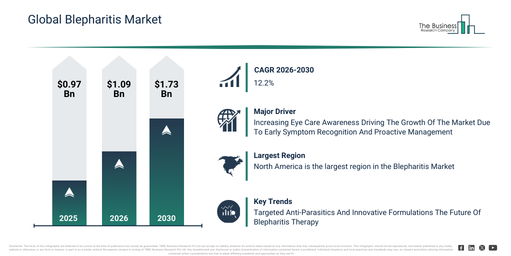
    The blepharitis market’s size has seen swift expansion in recent years. It is projected to increase from $0.97 billion in 2025 to $1.09 billion in 2026, demonstrating a compound annual growth rate (CAGR) of 12.5%. The historical growth of this market can be attributed to elements such as poor eyelid hygiene, bacterial infections, ophthalmology clinic visits, an aging population, and chronic eye irritation.

    The blepharitis market is projected to experience swift expansion in the upcoming years. It is anticipated to grow to $1.73 billion in 2030, demonstrating a compound annual growth rate (CAGR) of 12.2%. This anticipated growth can be linked to factors like increased screen time, digital eye strain, rising awareness of preventive eye care, improved management of chronic conditions, and the development of outpatient ophthalmology. Key developments expected during this forecast period encompass heightened awareness of chronic eye conditions, an increase in lid hygiene and eye cleanser products, a rise in the diagnosis of meibomian gland dysfunction, an expansion of long-term symptom management, and a focus on non-invasive treatment options.

    Get A Free Sample Report With In-Depth Market Insights:

    https://www.thebusinessresearchcompany.com/sample.aspx?id=24484&type=smp&utm_source=Blogs&utm_medium=Paid&utm_campaign=Oct_PR

    Blepharitis Market Growth Factors Behind Sustained Expansion

    The burgeoning understanding of eye health is poised to boost the growth of the blepharitis market in the future. Eye care involves a spectrum of services, treatments, and practices aimed at preserving and improving ocular health and sight. Heightened awareness regarding eye care is essential, as good vision forms the bedrock of an individual’s independence, education, productivity, and overall well-being; uncorrected vision problems invariably impact daily activities, academic performance, and professional output. Blepharitis contributes to effective eye care by supporting the early identification of symptoms, promoting consistent eyelid hygiene, and assisting in preventing complications such as dry eye and styes through appropriate and timely treatment. For instance, in October 2024, a report published by the Association of Optometrists (AOP), a UK-based association, projected that the number of people living with sight loss in the UK will reach an estimated 2.8 million by 2035, representing a 27% increase compared to 2022. Therefore, the expanding recognition of eye care is driving the expansion of the blepharitis market.

    Blepharitis Market Segmentation: How Does The Market Break Down By Category?

    The blepharitis market covered in this report is segmented –

    1) By Type: Anterior Blepharitis, Posterior Blepharitis, Mixed Blepharitis

    2) By Treatment: Eye Cleansers, Artificial Tears, Antibiotic Therapy

    3) By Diagnosis: Physical Examination, Comprehensive Eye Examination, Other Diagnosis

    4) By Application: Acute Blepharitis Management, Chronic Blepharitis Long-Term Care, Bacterial Blepharitis Treatment

    Subsegments:

    1) By Anterior Blepharitis: Staphylococcal Blepharitis, Seborrheic Blepharitis

    2) By Posterior Blepharitis: Meibomian Gland Dysfunction (MGD), Rosacea-Associated Blepharitis

    3) By Mixed Blepharitis: Combination Of Anterior And Posterior Features, Chronic Mixed Blepharitis

    Blepharitis Market Industry Trends Fueling Future Revenue Growth

    Major companies in the blepharitis market are concentrating on developing innovative therapies, such as targeted anti-parasitic agents and advanced ophthalmic formulations, to gain a competitive advantage. Innovative ophthalmic formulations refer to sophisticated and novel drug delivery systems and compositions designed to enhance the effectiveness, safety, and patient experience of treatments for eye conditions. For example, in July 2023, Tarsus Pharmaceuticals Inc., a US-based biopharmaceutical company, received approval for XDEMVY (lotilaner ophthalmic solution) 0.25% for treating demodex blepharitis. XDEMVY, previously known as TP-03, is the first and only FDA-approved treatment that directly targets Demodex mites, identified as the primary cause of Demodex blepharitis. Its approval was supported by robust clinical data from two pivotal trials, Saturn-1 and Saturn-2, involving 833 patients, which showed significant symptom improvement and a higher rate of complete collarette cure compared to a placebo. The recommended dosage is one drop in each eye twice daily for six weeks. XDEMVY is generally well-tolerated, with the most common side effects reported as mild stinging or burning upon instillation.

    Blepharitis Market Competitive Overview And Top Companies

    Major companies operating in the blepharitis market are OcuSept Ltd., Alcon Inc., Théa Pharmaceuticals Ltd., Bausch Health Companies Inc., Tarsus Pharmaceuticals Inc., URSAPHARM Arzneimittel GmbH, Scope Ophthalmic Ltd., Santen Pharmaceutical Co. Ltd., NovaBay Pharmaceuticals Inc., Harrow Inc., MiBo Medical Group, Nicox SA, Visufarma S.p.A., OCuSOFT Inc., Lumenis Ltd., Bruder Healthcare Company, I-MED Pharma Inc., KALA Pharmaceuticals Inc., Aerie Pharmaceuticals Inc., Oyster Point Pharma Inc., Dompé Farmaceutici S.p.A., Laboratoires Théa S.A., Ophtecs Corporation, Sentiss Pharma Pvt. Ltd., Ajanta Pharma Ltd.

    View The Full Blepharitis Market Report:

    https://www.thebusinessresearchcompany.com/report/blepharitis-global-market-report?utm_source=Blogs&utm_medium=Paid&utm_campaign=Oct_PR

    Blepharitis Market Geographic Spread And Regional Opportunities

    North America was the largest region in the blepharitis market in 2025. Asia-Pacific is expected to be the fastest-growing region in the forecast period. The regions covered in the blepharitis market report are Asia-Pacific, South East Asia, Western Europe, Eastern Europe, North America, South America, Middle East, Africa.

    Reach Out To Our Team:

    The Business Research Company: https://www.thebusinessresearchcompany.com/

    Americas: +1 310-496-7795

    Asia: +44 7882 955267 & +91 8897263534

    Europe: +44 7882 955267

    Email us at: marketing@tbrc.info

    Follow us on:

    LinkedIn: https://in.linkedin.com/company/the-business-research-company

    YouTube: https://www.youtube.com/channel/UC24_fI0rV8cR5DxlCpgmyFQ

    Global Market Model: https://www.thebusinessresearchcompany.com/global-market-model
  • Bladder Cancer Drugs Market Growth In 2026: Market Size, Key Drivers And Future Outlook

    Bladder Cancer Drugs Market Growth In 2026: Market Size, Key Drivers And Future Outlook

    Built to provide research that’s more actionable and strategically valuable, The Business Research Company’s 2026 market reports include market attractiveness analysis, total addressable market sizing, company benchmarking matrices, interactive Excel dashboards, broader supply chain intelligence, emerging startup tracking, and in-depth product insights.

    Bladder Cancer Drugs Market Size Forecast: How Big Could The Market Get By 2030?

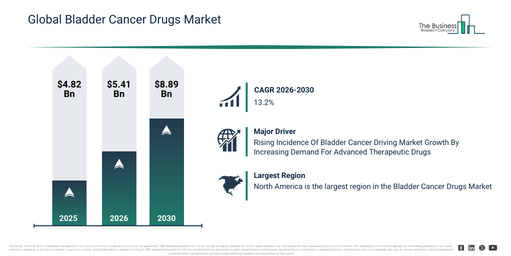
    The bladder cancer drugs market has seen rapid expansion in recent years. It is projected to increase from $4.82 billion in 2025 to $5.41 billion in 2026, exhibiting a compound annual growth rate (CAGR) of 12.2%. The growth observed in prior periods can be attributed to factors such as increasing bladder cancer incidence, established chemotherapy protocols, hospital-based oncology care, the use of bcg therapy, and improved cancer diagnosis rates.

    The bladder cancer drugs market is projected to experience substantial expansion over the upcoming years. Its valuation is anticipated to reach $8.89 billion by 2030, exhibiting a compound annual growth rate (CAGR) of 13.2%. This growth throughout the projected timeframe stems from advancements in personalized oncology treatments, breakthroughs in immuno-oncology, the broadening of healthcare infrastructure, an increase in cancer screening initiatives, and the demand for less invasive therapies. Key developments expected during this period involve the increasing embrace of immunotherapy drugs, a rise in the application of targeted bladder cancer treatments, the broadening scope of intravesical therapies, a greater emphasis on addressing early-stage cancer, and the creation of combined treatment approaches.

    Get A Free Sample Report With In-Depth Market Insights:

    https://www.thebusinessresearchcompany.com/sample.aspx?id=2586&type=smp&utm_source=Blogs&utm_medium=Paid&utm_campaign=Oct_PR

    Bladder Cancer Drugs Market Demand Drivers Opening New Revenue Streams

    The escalating number of bladder cancer cases is projected to fuel the demand for bladder cancer medications in the coming years. This malignant condition necessitates prompt diagnosis and effective therapeutic interventions to control tumor progression, prevent recurrence, and manage metastasis. The increase in bladder cancer diagnoses primarily stems from advanced age and accumulated environmental exposures, such as tobacco smoking and occupational carcinogens. This rising burden of bladder cancer bolsters the expansion of bladder cancer drugs by driving the need for sophisticated treatments that can enhance survival rates, diminish recurrence, and provide individualized care solutions. For example, in June 2023, the American Cancer Society, a US-based non-profit organization dedicated to eradicating cancer, estimated there would be 82,290 new bladder cancer cases in the United States in 2023, comprising approximately 62,420 cases in men and 19,870 cases in women. Consequently, the increasing prevalence of bladder cancer is propelling the expansion of the bladder cancer drugs market. The expanding pharmaceutical industry is anticipated to boost the growth of the bladder cancer drugs market moving forward. This industry encompasses the exploration, development, and manufacturing of drugs and medical products by both government and private entities. The growth of the pharmaceutical sector can be attributed to heightened investment in oncology research, broadened production capabilities, and an escalating global demand for advanced treatment options. An expanding pharmaceutical industry supports the bladder cancer drugs sector by stimulating research, development, and funding into innovative therapies, ultimately enhancing patient outcomes through a wider array of effective and targeted treatment choices. For instance, in April 2025, Eurostat, the EU’s statistical office in Luxembourg, reported that in 2024 compared to 2023, imports of medicinal and pharmaceutical products rose by 0.5 percent, while exports increased by 13.5 percent, leading to an increase in the trade surplus from $210 billion (€157 billion) to $260 billion (€194 billion). Therefore, the expanding pharmaceutical industry is a key driver for the bladder cancer drugs market’s growth.

    Bladder Cancer Drugs Market Segment Trends And Revenue Contributors

    The bladder cancer drugs market covered in this report is segmented –

    1) By Type: Non-Muscle-Invasive Bladder Cancer, Muscle-Invasive Bladder Cancer

    2) By Application: Low-Grade Tumors, High-Grade Tumors

    3) By Distribution Channel: Hospital Pharmacy, Retail Pharmacy, Other Distribution Channels

    Subsegments:

    1) By Non-Muscle-Invasive Bladder Cancer: Intravesical Therapy, Immunotherapy Drugs, Chemotherapy Drugs, Bacillus Calmette–Guérin (BCG) Therapy

    2) By Muscle-Invasive Bladder Cancer: Chemotherapy Drugs, Immunotherapy Drugs, Targeted Therapy Drugs, Neoadjuvant and Adjuvant Therapy

    Bladder Cancer Drugs Market Competitive Landscape: Which Companies Lead The Industry?

    Major companies operating in the bladder cancer drugs market are Eli Lilly and Company, Bristol-Myers Squibb Company, Pfizer Inc., Celgene Corporation (a subsidiary of Bristol-Myers Squibb Company), AstraZeneca PLC, Sanofi S.A., F. Hoffmann-La Roche Ltd., Novartis International AG, Johnson & Johnson, Merck & Co. Inc., Boehringer Ingelheim International GmbH, Bayer AG, Asieris Pharmaceuticals Co. Ltd., Asana BioSciences LLC, Array BioPharma Inc., Amgen Inc., Adaptimmune Therapeutics plc, UroGen Pharma Ltd., Seagen Inc., Incyte Corporation, AbbVie Inc., Eisai Co. Ltd., Ipsen S.A., Janssen Pharmaceutica NV, Kyowa Kirin Co. Ltd., Ono Pharmaceutical Co. Ltd., Pierre Fabre S.A., Taiho Pharmaceutical Co. Ltd.

    View The Full Bladder Cancer Drugs Market Report:

    https://www.thebusinessresearchcompany.com/report/bladder-cancer-drugs-global-market-report?utm_source=Blogs&utm_medium=Paid&utm_campaign=Oct_PR

    Bladder Cancer Drugs Market Top Region By Revenue And Market Share

    North America was the largest region in the bladder cancer drugs market in 2025. The Middle East is expected to be the fastest-growing region in the bladder cancer drugs market during the forecast period. The regions covered in the bladder cancer drugs market report are Asia-Pacific, South East Asia, Western Europe, Eastern Europe, North America, South America, Middle East, Africa.

    Reach Out To Our Team:

    The Business Research Company: https://www.thebusinessresearchcompany.com/

    Americas: +1 310-496-7795

    Asia: +44 7882 955267 & +91 8897263534

    Europe: +44 7882 955267

    Email us at: marketing@tbrc.info

    Follow us on:

    LinkedIn: https://in.linkedin.com/company/the-business-research-company

    YouTube: https://www.youtube.com/channel/UC24_fI0rV8cR5DxlCpgmyFQ

    Global Market Model: https://www.thebusinessresearchcompany.com/global-market-model
  • Bisphosphonates Market Size And Forecast 2026–2030: Trends Driving Industry Expansion

    Bisphosphonates Market Size And Forecast 2026–2030: Trends Driving Industry Expansion

    Backed by market attractiveness analysis, total addressable market sizing, company benchmarking matrices, interactive Excel dashboards, wider supply chain intelligence, emerging startup coverage, and detailed product-level insights, The Business Research Company’s 2026 market reports are designed to offer research that is more actionable and strategically valuable than ever.

    Bisphosphonates Market Revenue Outlook: What CAGR Lies Ahead Through 2030?

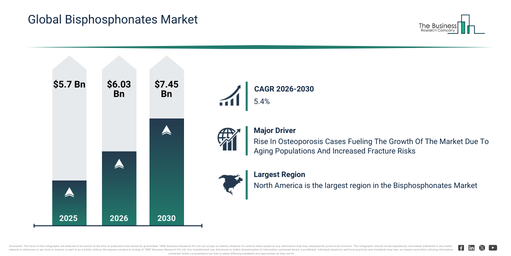
    The bisphosphonates market size has experienced strong expansion in recent years. It is anticipated to grow from $5.7 billion in 2025 to $6.03 billion in 2026, at a compound annual growth rate (CAGR) of 5.8%. Historically, this growth can be attributed to factors such as an increasing aging population, the prevalence of postmenopausal osteoporosis, physician-led bone density screening initiatives, hospital-based osteoporosis management strategies, and the adoption of injectable bisphosphonates.

    The bisphosphonates market is projected to experience robust expansion over the coming years. Its valuation is set to reach $7.45 billion by 2030, demonstrating a compound annual growth rate (CAGR) of 5.4%. Factors contributing to this growth during the projection period include a rising elderly population, the availability of home-based osteoporosis care, a preference for long-acting dosages, heightened bone health awareness, and increased penetration of generic drugs. Key trends anticipated in this period encompass a surging demand for osteoporosis treatments, a greater uptake of long-acting injectable therapies, the proliferation of generic bisphosphonate medications, an intensified focus on preventing fractures, and the incorporation of combination bone health treatments.

    Get A Free Sample Report With In-Depth Market Insights:

    https://www.thebusinessresearchcompany.com/sample.aspx?id=24483&type=smp&utm_source=Blogs&utm_medium=Paid&utm_campaign=Oct_PR

    Bisphosphonates Market Growth Backed By Core Demand Fundamentals

    The bisphosphonates market is anticipated to expand due to the growing occurrence of osteoporosis. This medical condition involves bones becoming weak and brittle, making them susceptible to fractures. The rise in osteoporosis cases is primarily attributed to the global population aging, which naturally diminishes bone density, alongside contributing lifestyle elements and inadequate preventative measures. Bisphosphonates aid in managing osteoporosis by retarding bone degradation, thereby enhancing bone strength and lowering fracture susceptibility. For example, Healthy Bones Australia, an organization focused on bone health in Australia, reported in August 2024 that approximately 193,482 fractures linked to osteoporosis and osteopenia occurred in 2023, a figure expected to climb by 34% to 237,632 fractures by 2033. Consequently, the increasing prevalence of osteoporosis is a significant factor in the expansion of the bisphosphonates market.

    Bisphosphonates Market Segment Analysis Spotlighting Growth Areas

    The bisphosphonates market covered in this report is segmented –

    1) By Type: Alendronate, Ibandronate, Risedronate, Zoledronic Acid

    2) By Route Of Administration: Oral, Intravenous

    3) By Distribution Channel: Hospital Pharmacies, Retail Pharmacies, Online Pharmacies, Other Distribution Channels

    4) By Application: Osteoporosis, Paget’s Disease, Bone Metastasis, Other Application

    5) By End-User: Hospitals, Clinics, Homecare Settings, Pharmaceutical Retail

    Subsegments:

    1) By Alendronate: Oral Tablets, Once-Weekly Formulation, Combination With Vitamin D, Generic Alendronate

    2) By Ibandronate: Oral Tablets, Monthly Oral Formulation, Intravenous Injection, Generic Ibandronate

    3) By Risedronate: Immediate-Release Tablets, Delayed-Release Tablets, Weekly And Monthly Dosing, Combination With Calcium

    4) By Zoledronic Acid: Intravenous Infusion, Annual Dosing, Oncology Use, Osteoporosis Use, Generic Zoledronic Acid

    Bisphosphonates Market Leading Companies: Who Holds The Strongest Market Presence?

    Major companies operating in the bisphosphonates market are Merck & Co. Inc., Novartis AG, Teva Pharmaceutical Industries Ltd., Sun Pharmaceutical Industries Ltd., Apotex Inc., Aurobindo Pharma Ltd., Dr. Reddy’s Laboratories Ltd., Cipla Ltd., Alkem Laboratories, Strides Pharma Science Limited, GSK plc, Viatris Inc., Sandoz, Lupin Limited, Zydus Lifesciences Ltd., Torrent Pharmaceuticals Ltd., Glenmark Pharmaceuticals Ltd., Hikma Pharmaceuticals PLC, Fresenius Kabi, Alembic Pharmaceuticals Ltd.

    View The Full Bisphosphonates Market Report:

    https://www.thebusinessresearchcompany.com/report/bisphosphonates-global-market-report?utm_source=Blogs&utm_medium=Paid&utm_campaign=Oct_PR

    Bisphosphonates Market Regional Analysis And Top Geography

    North America was the largest region in the bisphosphonates market in 2025. Asia-Pacific is expected to be the fastest-growing region in the forecast period. The regions covered in the bisphosphonates market report are Asia-Pacific, South East Asia, Western Europe, Eastern Europe, North America, South America, Middle East, Africa.

    Reach Out To Our Team:

    The Business Research Company: https://www.thebusinessresearchcompany.com/

    Americas: +1 310-496-7795

    Asia: +44 7882 955267 & +91 8897263534

    Europe: +44 7882 955267

    Email us at: marketing@tbrc.info

    Follow us on:

    LinkedIn: https://in.linkedin.com/company/the-business-research-company

    YouTube: https://www.youtube.com/channel/UC24_fI0rV8cR5DxlCpgmyFQ

    Global Market Model: https://www.thebusinessresearchcompany.com/global-market-model