Blog

  • Global Percutaneous Mechanical Circulatory Support Devices Market Trends: Regional Breakdowns and Strategic Insights

    Global Percutaneous Mechanical Circulatory Support Devices Market Trends: Regional Breakdowns and Strategic Insights

    Stay ahead with our updated market reports featuring the latest on tariffs, trade flows, and supply chain transformations.

    What is the Projected CAGR for the Percutaneous Mechanical Circulatory Support Devices Market Size from 2025 to 2034?

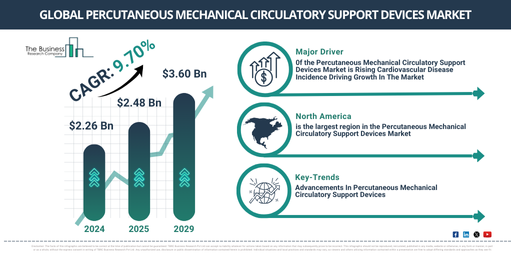
    The market for percutaneous mechanical circulatory support devices has seen a significant expansion in recent years. The market, which was worth $2.26 billion in 2024, is expected to rise to $2.48 billion in 2025, registering a compound annual growth rate (CAGR) of 10.0%. Factors contributing to growth during the historic period include a rise in cardiovascular diseases, an ageing population, greater incidences of heart attacks, enhanced awareness and screening initiatives, and higher demand for heart pump devices.

    The market size for percutaneous mechanical circulatory support devices is forecasted to experience substantial growth in the coming years. The market is anticipated to reach a value of $3.60 billion by 2029, increasing at a compound annual growth rate (CAGR) of 9.7%. Factors contributing to this expected growth during the forecast period include an increased need for long-term mechanical circulatory support, a rise in healthcare spending, growing numbers of individuals with diabetes and obesity, an increased demand for heart transplants, and wider acceptance of percutaneous procedures. Other influential trends during the forecast period comprise advancements in pump and cardiac support technologies, progress in minimally invasive medical technologies, and creation of biocompatible material.

    Download a free sample to assess the report’s scope and structure:

    https://www.thebusinessresearchcompany.com/sample.aspx?id=20921&type=smp

    What Are the Major Market Drivers Behind the Rising Adoption of Percutaneous Mechanical Circulatory Support Devices Market?

    An upsurge in cardiovascular diseases is predicted to boost the growth trajectory of the percutaneous mechanical circulatory support devices market. These diseases collectively involve disorders impacting the heart and blood vessels, including coronary artery disease, heart failure, heart attacks, stroke, and elevated blood pressure. The escalating incidence rates of cardiovascular conditions can be linked to an aging demographic, unhealthy lifestyle habits, obesity, hypertension, and genetic susceptibility. Percutaneous mechanical circulatory support devices are employed in treating cardiovascular diseases to enhance cardiac functionality, alleviate heart strain, and help facilitate recovery in severe heart conditions. As an example, in December 2023, the Australian Institute of Health and Welfare, a governmental agency in Australia, reported an increase in doctor-certified deaths due to coronary heart disease (CHD) to 14,100 in 2021 and subsequently to 14,900 in 2022. As such, the mounting incidence of cardiovascular diseases is catalyzing the growth of the percutaneous mechanical circulatory support (MCS) devices market.

    Which Key Market Segments Comprise the Percutaneous Mechanical Circulatory Support Devices Market and Drive Its Revenue Growth?

    The percutaneous mechanical circulatory support devices market covered in this report is segmented –

    1) By Product Type: Intra-Aortic Balloon Pumps, Impella Devices, Extracorporeal Membrane Oxygenation, TandemHeart, Other Types

    2) By Application: Cardiogenic Shock, Acute Myocardial Infarction, Heart Failure, Other Applications

    3) By End-User: Hospitals, Ambulatory Surgical Centers, Other End Users

    Subsegments:

    1) By Intra-Aortic Balloon Pumps (IABP): Standard IABP Devices, Enhanced IABP Devices

    2) By Impella Devices: Impella 2.5, Impella 5.0, Impella CP (Cardiac Power)

    3) By Extracorporeal Membrane Oxygenation (ECMO): Veno-Venous ECMO (VV ECMO), Veno-Arterial ECMO (VA ECMO)

    4) By Tandemheart: Tandemheart PUMP System, Tandemheart PRO System

    5) By Other Types: Centrifugal Pumps, Pneumatic Assist Devices

    Request customized data on this market:

    https://www.thebusinessresearchcompany.com/customise?id=20921&type=smp

    Which Areas Are Leading Regions in the Percutaneous Mechanical Circulatory Support Devices Market Expansion Across the Globe?

    North America was the largest region in the percutaneous mechanical circulatory support devices market in 2024. The regions covered in the percutaneous mechanical circulatory support devices market report are Asia-Pacific, Western Europe, Eastern Europe, North America, South America, Middle East, Africa.

    Which Emerging Trends that Are Influencing the Percutaneous Mechanical Circulatory Support Devices Industry Evolution?

    Leading firms in the percutaneous mechanical circulatory support devices market are striving to create groundbreaking solutions such as intra-aortic axial-flow devices to improve patient results and lessen surgical hazards. The intra-aortic axial-flow device, a form of percutaneous mechanical circulatory support device, is crafted to support the cardiovascular function by boosting the blood flow from the left ventricle to the aorta. For example, in February 2023, US medical device company Procyrion, Inc. revealed the successful inaugural human usage of their Aortix pump. This novel device aims to avert acute kidney injury in patients during cardiac surgery. Deployed via a catheter into the descending thoracic aorta, the Aortix pump elevates renal perfusion and reduces the cardiac stress during surgery. It manages to do so by simultaneously improving renal and systemic perfusion and decreasing heart strain, marking it as highly beneficial for patients with weak left ventricular function and kidney impairment. The Aortix pump, capable of pumping up to 5.0 liters per minute, is designed for temporary use in procedures like percutaneous coronary interventions (PCI).

    View the full report here:

    https://www.thebusinessresearchcompany.com/report/percutaneous-mechanical-circulatory-support-devices-global-market-report

    How Is the Percutaneous Mechanical Circulatory Support Devices Market Conceptually Defined?

    Percutaneous mechanical circulatory support (pMCS) devices are minimally invasive systems used to temporarily assist or completely replace the pumping function of the heart. These devices are inserted through a catheter into blood vessels, typically via the femoral artery, and positioned in the heart to provide mechanical support during acute heart failure, cardiogenic shock, or high-risk cardiac interventions.

    Purchase the full report and get a swift delivery:

    https://www.thebusinessresearchcompany.com/purchaseoptions.aspx?id=20921

    About The Business Research Company:

    With over 15000+ reports from 27 industries covering 60+ geographies, The Business Research Company has built a reputation for offering comprehensive, data-rich research and insights. Armed with 1,500,000 datasets, the optimistic contribution of in-depth secondary research, and unique insights from industry leaders, you can get the information you need to stay ahead in the game.

    Get in touch with us:

    The Business Research Company: https://www.thebusinessresearchcompany.com/

    Americas +1 3156230293

    Asia +44 2071930708

    Europe +44 2071930708

    Email us at info@tbrc.info

    Follow us on:

    LinkedIn: https://in.linkedin.com/company/the-business-research-company

    YouTube: https://www.youtube.com/channel/UC24_fI0rV8cR5DxlCpgmyFQ

    Global Market Model: https://www.thebusinessresearchcompany.com/global-market-model
  • Penile Implants Market in Focus: Forecasting Growth Drivers, Scaling Potential, and Global Opportunities

    Penile Implants Market in Focus: Forecasting Growth Drivers, Scaling Potential, and Global Opportunities

    Stay ahead with our updated market reports featuring the latest on tariffs, trade flows, and supply chain transformations.

    What is the Anticipated CAGR of the Penile Implants Market, and What Factors Will Drive It?

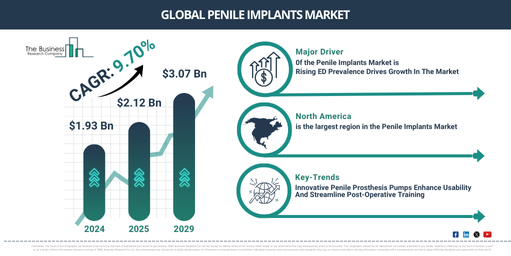
    The market for penile implants has seen a quick expansion in its size in the past few years. The market, pegged at $1.93 billion in 2024, is projected to climb to $2.12 billion in 2025, registering a compound annual growth rate (CAGR) of 10.0%. Factors contributing to the growth in the historical period include an upsurge in cases of erectile dysfunction (ED), a globally aging population, a rise in diabetes diagnoses, increased hypertension instances, and a growing incidence of cardiovascular disease.

    The market for penile implants is anticipated to experience robust expansion in the coming years, surging to a value of $3.07 billion in 2029, with a compound annual growth rate (CAGR) of 9.7%. This upward trend can be credited to factors such as the mounting occurrence of chronic ailments, escalating emphasis on male health and well-being, intensified research for novel and efficient implant devices, enhanced focus on patient awareness, and the rising preference for long-lasting solutions. Notable trends during this projection period consist of a shift towards less invasive surgical methods, the provision of customized penile implant solutions (inflatable and malleable), progress in penile implant design (for optimized comfort, longevity, and usefulness), increasing patient contentment and acknowledgement of penile implants, and the incorporation of cutting-edge technologies.

    Download a free sample to assess the report’s scope and structure:

    https://www.thebusinessresearchcompany.com/sample.aspx?id=20919&type=smp

    What Are the Core Market Drivers Propelling Growth in the Penile Implants Industry?

    Market growth in penile implants is anticipated to be driven by the increasing occurrence of erectile dysfunction (ED). ED, a condition that signals a consistent failure in achieving or maintaining an erection for satisfactory sexual activity, is amplified by several factors such as age, lifestyle conditions like diabetes, obesity, and cardiovascular diseases, psychological elements like stress and anxiety, and the heightened awareness and diagnosis due to developments in healthcare. Penile implants have emerged as a key player in tackling the increasing cases of ED, offering a lasting and efficient solution, specifically for patients for whom pharmacological treatments are unhelpful. This paves way for enhanced quality of life and long-term treatment for severe situations. For example, in January 2022, the UK-based ED Clinics reported that between 40% and 55% of men aged 40 to 70, equal to around 4.3 million in the UK, have ED, with worldwide cases predicted to escalate from 152 million in 1995 to 322 million by 2025. Hence, the increasing incidence of ED is fuelling the penile implants market. Booming awareness and acceptance of sexual health are predicted to amplify the growth of the penile implant market. Sexual health encapsulates a comprehensive state of physical, emotional, mental, and social wellness in relation to sexuality, underlining consent, safety, and well-informed choices. Enhanced awareness and acceptance of sexual health act as catalysts in empowering individuals, mitigating stigmas, uplifting health outcomes, and fostering informed decisions about sexual wellness and relationships. Furthermore, penile implants significantly contribute to the growing recognition and acceptance of sexual health by providing effective, lasting solutions for erectile dysfunction. They foster an open dialogue, assist in lessening stigma, and underline the importance of seeking medical help for sexual wellbeing. For example, in July 2024, as per the UK Health Security Agency, a government agency in the UK, the total consultations provided by SHSs in England rose by 5.0% in 2023 compared to 2022, with in-person consultations up by 7.9% and online consultations up by 7.5%. Hence, the burgeoning awareness and acceptance of sexual health are powering the growth of the penile implants market.

    How Is the Penile Implants Market Segmented?

    The penile implants market covered in this report is segmented –

    1) By Implant Type: Inflatable Penile Implants, Malleable Penile Implants, Semi-Rigid Penile Implants

    2) By Patient Type: Vascular Impotence Patients, Psychogenic Impotence Patients, Neurological Impotence Patients

    3) By Material: Silicon, Bioflex, Other Materials

    4) By Deployment Method: Outpatient Procedure, Inpatient Procedure

    5) By End User: Hospital, Ambulatory Surgery Centers, Urology Centers, Other End Users

    Subsegments:

    1) By Inflatable Penile Implants: Two-Piece Inflatable Penile Implants, Three-Piece Inflatable Penile Implants

    2) By Malleable Penile Implants: Single-Component Malleable Implants, Multi-Component Malleable Implants

    3) By Semi-Rigid Penile Implants: Semi-Rigid Rod Implants, Semi-Rigid Adjustable Implants

    Request customized data on this market:

    https://www.thebusinessresearchcompany.com/customise?id=20919&type=smp

    Which Regions Are Driving the Next Phase of the Penile Implants Market Growth?

    North America was the largest region in the penile implants market in 2024. Asia-Pacific is expected to be the fastest-growing region in the forecast period. The regions covered in the penile implants market report are Asia-Pacific, Western Europe, Eastern Europe, North America, South America, Middle East, Africa.

    Which Cutting-Edge Market Trends Are Expected to Drive the Penile Implants Market’s Growth?

    Leading organizations in the penile implants market are focusing their efforts on developing cutting-edge products such as penile prosthesis pumps. The objective is to improve both the experience of the patient and the physician through increased reliability, simplified operation, and enhanced post-operation training for inflatable penile prostheses. A penile prosthesis pump, implanted in the scrotum, functions by allowing users to manually generate an erection by pumping fluid from a reservoir into inflatable cylinders within the penis. For instance, Boston Scientific, an American medical technology company, received FDA approval in November 2023 for its Tenacio pump. This product, which forms a part of the AMS 700 inflatable penile prosthesis (IPP), incorporates automation that enables automatic deflation with just a single push of the deflation button. This resolves issues such as stiction syndrome and improves functionality. The introduction of this device simplifies the training process for patients, thus potentially reducing the learning journey and saving physicians’ time during post-operation orientations.

    View the full report here:

    https://www.thebusinessresearchcompany.com/report/penile-implants-global-market-report

    How Is the Penile Implants Market Defined and What Are Its Core Parameters?

    Penile implants are medical devices surgically inserted into the penis to treat erectile dysfunction (ED) in cases where other treatments, such as medication or therapy, have proven ineffective. These implants, available in inflatable or malleable designs, offer a durable solution by enabling men to achieve and maintain an erection, thus improving their sexual function and quality of life.

    Purchase the full report and get a swift delivery:

    https://www.thebusinessresearchcompany.com/purchaseoptions.aspx?id=20919

    About The Business Research Company:

    With over 15000+ reports from 27 industries covering 60+ geographies, The Business Research Company has built a reputation for offering comprehensive, data-rich research and insights. Armed with 1,500,000 datasets, the optimistic contribution of in-depth secondary research, and unique insights from industry leaders, you can get the information you need to stay ahead in the game.

    Get in touch with us:

    The Business Research Company: https://www.thebusinessresearchcompany.com/

    Americas +1 3156230293

    Asia +44 2071930708

    Europe +44 2071930708

    Email us at info@tbrc.info

    Follow us on:

    LinkedIn: https://in.linkedin.com/company/the-business-research-company

    YouTube: https://www.youtube.com/channel/UC24_fI0rV8cR5DxlCpgmyFQ

    Global Market Model: https://www.thebusinessresearchcompany.com/global-market-model
  • Patient Risk Stratification Market Valuation Expected To Reach $8.3 Billion By 2029, Growing At A Rate Of 31%

    Patient Risk Stratification Market Valuation Expected To Reach $8.3 Billion By 2029, Growing At A Rate Of 31%

    Stay ahead with our updated market reports featuring the latest on tariffs, trade flows, and supply chain transformations.

    How Has The Patient Risk Stratification Market Size Shifted, And What Is the Outlook Through 2034?

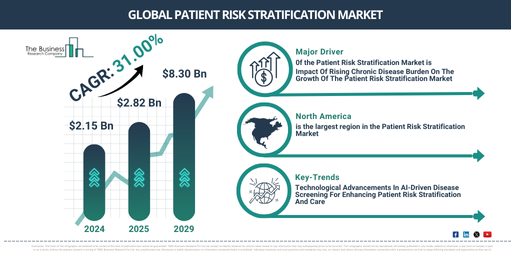
    The market size for patient risk stratification has seen rapid expansion in the past few years. There is an anticipated growth from $2.15 billion in 2024 to $2.82 billion in 2025, presenting a compound annual growth rate (CAGR) of 31.3%. The significant growth observed in the past can be associated with a variety of factors such as the rise of digital adoption, higher risk situations, an increase in the elderly population, a higher rate of medical errors, and an elevated level of electronic health record (EHR) utilization.

    In the coming years, the market size for patient risk stratification is anticipated to experience substantial growth. By 2029, it’s predicted to expand to $8.30 billion, with a compound annual growth rate (CAGR) of 31.0%. This surge projected within the forecast period can be linked to the rise in middle class and health insurance, increased incidences of chronic diseases, growing engagement with predictive analytics, heightened focus on social determinants of health (SDOH), and broadening application of technology. Key trends expected within the forecast period are enhancements in analytical features, artificial intelligence (AI), machine learning, technological progressions, innovative instruments, advancements in healthcare technology, wearable tech, and remote monitoring.

    Download a free sample to assess the report’s scope and structure:

    https://www.thebusinessresearchcompany.com/sample.aspx?id=20917&type=smp

    Which Factors and External Forces Are Driving Demand in the Patient Risk Stratification Market?

    The escalating incidence of chronic diseases is predicted to drive the expansion of the patient risk stratification market. Chronic conditions are enduring health problems that continue for a protracted period, usually three months or more. Factors contributing to the increased prevalence of chronic diseases include aging populations, unhealthy lifestyles, urbanization, environmental issues, inadequate healthcare access, economic inequality, and heightened stress levels. Patient risk stratification enables the determination of different risk levels for chronic diseases in individuals, thereby facilitating tailored care, early intervention, better resource distribution, and enhanced health outcomes. For example, the National Center for Biotechnology Information’s (NCBI) projection showed in January 2023 that the number of individuals aged 50 and above with at least one chronic disease would surge by 99.5%, from 71.522 million in 2020 to 142.66 million by 2050. Moreover, the World Health Organization (WHO) 2022 Highlights reported in September 2022 that 74% of all deaths worldwide were caused by chronic diseases, amounting to 41 million deaths annually. Of these, cardiovascular diseases accounted for 17.9 million deaths, cancer for 9.3 million, chronic respiratory diseases for 4.1 million, and diabetes for 2.0 million. As such, the escalating incidence of chronic diseases is driving the growth of the patient risk stratification market.

    Which Segments in the Patient Risk Stratification Offer the Most Growth?

    The patient risk stratification market covered in this report is segmented –

    1) By Type: Predictive Risk Stratification Model, Retrospective Risk Stratification Model, Prospective Risk Stratification Model, Concurrent Risk Stratification Model

    2) By Component: Software, Services

    3) By Delivery Model: On-Premise, Cloud-Based

    4) By Application: Risk Adjustment, Clinical Workflow, Revenue Cycle Management, Other Applications

    5) By End User: Healthcare Providers, Healthcare Payers, Other End Users

    Subsegments:

    1) By Predictive Risk Stratification Model: Machine Learning-Based Predictive Models, Statistical Predictive Models, AI-Powered Predictive Models

    2) By Retrospective Risk Stratification Model: Historical Data-Based Risk Models, Data Mining Retrospective Models

    3) By Prospective Risk Stratification Model: Longitudinal Cohort-Based Models, Real-Time Risk Assessment Models

    4) By Concurrent Risk Stratification Model: In-Hospital Risk Assessment Models, Real-Time Clinical Decision Support Models

    Request customized data on this market:

    https://www.thebusinessresearchcompany.com/customise?id=20917&type=smp

    What Are the Fastest-Growing Geographies in the Patient Risk Stratification Market?

    North America was the largest region in the patient risk stratification market in 2024. Asia-Pacific is expected to be the fastest-growing region in the forecast period. The regions covered in the patient risk stratification market report are Asia-Pacific, Western Europe, Eastern Europe, North America, South America, Middle East, Africa.

    Which Emerging Trends that Are Influencing the Patient Risk Stratification Industry Evolution?

    Leading organizations in the patient risk stratification sector are prioritizing advancements in healthcare technology like artificial intelligence (AI) for disease screening. This focus aims to optimize early detection, enhance patient results, and curtail healthcare expenses by facilitating precise risk evaluations and personalized treatment plans. AI in disease screening employs complex algorithms and machine learning to scrutinize medical data, thereby enabling early disease detection and enhancing diagnostic precision by swiftly analyzing vast data volumes. To illustrate, in May 2024, WELL Health Technologies Corporation, a healthcare company based in Canada, alongside its investee firm, HEALWELL AI, another Canadian healthcare company with a focus on AI and data science for preventative care, introduced WELL AI Decision Support (WAIDS). This tool targets rare diseases, extending its coverage to chronic conditions such as kidney disease, hypertension, and diabetes. It is capable of identifying over 100 diseases and offers risk stratification, assisting clinicians in identifying care deficiencies and gaining access to actionable data at the care point.

    View the full report here:

    https://www.thebusinessresearchcompany.com/report/patient-risk-stratification-global-market-report

    What Are the Key Elements That Define the Patient Risk Stratification Market?

    Patient risk stratification is the process of assessing and categorizing patients based on their risk of experiencing adverse health outcomes. It is used to identify high-risk patients for targeted interventions, optimize resource allocation, facilitate preventive care, improve care coordination, enhance patient outcomes, reduce costs, and support population health management.

    Purchase the full report and get a swift delivery:

    https://www.thebusinessresearchcompany.com/purchaseoptions.aspx?id=20917

    About The Business Research Company:

    With over 15000+ reports from 27 industries covering 60+ geographies, The Business Research Company has built a reputation for offering comprehensive, data-rich research and insights. Armed with 1,500,000 datasets, the optimistic contribution of in-depth secondary research, and unique insights from industry leaders, you can get the information you need to stay ahead in the game.

    Get in touch with us:

    The Business Research Company: https://www.thebusinessresearchcompany.com/

    Americas +1 3156230293

    Asia +44 2071930708

    Europe +44 2071930708

    Email us at info@tbrc.info

    Follow us on:

    LinkedIn: https://in.linkedin.com/company/the-business-research-company

    YouTube: https://www.youtube.com/channel/UC24_fI0rV8cR5DxlCpgmyFQ

    Global Market Model: https://www.thebusinessresearchcompany.com/global-market-model
  • Patent Analytics Market Forecast Reaching $1.9 Billion by 2029 at 12.2% CAGR

    Patent Analytics Market Forecast Reaching $1.9 Billion by 2029 at 12.2% CAGR

    Stay ahead with our updated market reports featuring the latest on tariffs, trade flows, and supply chain transformations.

    How Has the Patent Analytics Market Growth Performance Trended Historically, And What Lies Ahead?

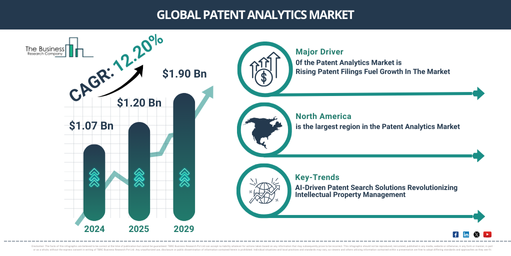
    The size of the patent analytics market has witnessed a significant acceleration recently. Its value will escalate from $1.07 billion in 2024, reaching $1.20 billion in 2025, with the compound annual growth rate (CAGR) being 12.5%. Historical growth can be credited to the soaring demand for high-end technologies, the integration of AI and Big Data, a surge in patent filings, augmenting research and development endeavors, and a rising demand for professional intellectual property solutions.

    In the coming years, we anticipate accelerated expansion in the patent analytics market, with the intention of reaching $1.90 billion by 2029, boasting a compound annual growth rate (CAGR) of 12.2%. This growth in the predicted timeframe is due largely to an increase in patent filings and litigation, a general shift toward digitalization in various industries, and a growing demand for personalized services, all complemented by increased investments in research and development. Key trends in this projected period involve greater usage of AI for patent analytics, an amplified emphasis on intellectual property protection, a surging uptake of cloud computing, increasing patent applications fueling the need for patent monitoring, and the steady progression in information and communication technologies.

    Download a free sample to assess the report’s scope and structure:

    https://www.thebusinessresearchcompany.com/sample.aspx?id=20916&type=smp

    Which Major Market Drivers Are Expected to Boost the Growth Potential of the Patent Analytics Market?

    The upswing in patent applications is projected to fuel the expansion of the patent analytics market in the future. The term “patent filings” pertains to the act of presenting applications to attain legal rights for an innovation, thereby granting the applicant unique ownership and protection for a set duration. An escalation in patent applications can be traced back to various factors, which include escalating investments in R&D, a heightened awareness of IP, and patent troll activities. Patent analytics prove beneficial in pinpointing prior art, evaluating patentability, and composing compelling claims to fortify patent application strategies. For instance, the World Intellectual Property Organization (WIPO), a Switzerland-based intergovernmental entity, reported in August 2024 that there was a 2.7% increase in global patent filings in 2023, totaling roughly 3.6 million. Consequently, the uptick in patent applications is stimulating the growth of the patent analytics market.

    Which Key Market Segments Comprise the Patent Analytics Market and Drive Its Revenue Growth?

    The patent analytics market covered in this report is segmented –

    1) By Component: Solutions, Services

    2) By Deployment Type: On-Premises, Cloud-Based

    3) By Enterprise Size: Large Enterprises, Small And Mid-Sized Enterprises (SMEs)

    4) By Application: Competitive Intelligence, Technology Landscape Analysis, Patent Valuation, Litigation Support

    5) By End-User: Corporates, Research Organizations, Intellectual Property Firms, Government Agencies

    Subsegments:

    1) By Solutions: Patent Search And Analytics Software, Patent Valuation Solutions, Competitive Intelligence Solutions, Patent Mapping And Landscape Tools, IP Portfolio Management Solutions

    2) By Services: Patent Search Services, Patent Licensing And Monetization Services, Patent Litigation Support Services, Patent Strategy And Consulting Services, Patent Filing And Prosecution Services

    Request customized data on this market:

    https://www.thebusinessresearchcompany.com/customise?id=20916&type=smp

    Which Areas Are Leading Regions in the Patent Analytics Market Expansion Across the Globe?

    North America was the largest region in the patent analytics market in 2024. Asia-Pacific is expected to be the fastest-growing region in the forecast period. The regions covered in the patent analytics market report are Asia-Pacific, Western Europe, Eastern Europe, North America, South America, Middle East, Africa.

    What Key Trends Are Shaping the Future of the Patent Analytics Market?

    Key players in the patent analytics market are directing their efforts towards the creation of enhanced patent search solutions powered by artificial intelligence (AI). These solutions are designed to improve decision-making in the field of intellectual property management. They harness advanced technology to automate and simplify patent database searches, thereby expediting the process of identifying pertinent patents, monitoring innovation trends, and evaluating patentability with increased precision. To illustrate, Clarivate Plc, a UK-based company known for transformative intelligence, rolled out its AI Search in Derwent in December 2024. This state-of-the-art patent search tool combines AI with the Derwent World Patents Index (DWPI) to yield more precise and meaningful patent search outcomes. By deploying a language transformer model, the tool comprehends the input text’s context, hence enabling intellectual property (IP) experts to conduct preliminary patentability searches, authenticate outcomes, and explore unknown technology sectors more successfully. The AI tool considerably improves both the speed and accuracy of searches, providing users the capability to discover relevant patents faster and making superior decisions during the patent research process.

    View the full report here:

    https://www.thebusinessresearchcompany.com/report/patent-analytics-global-market-report

    How Is the Patent Analytics Market Conceptually Defined?

    Patent analytics is the process of extracting and analyzing information from patent data to identify trends, assess technological advancements, and support decision-making in innovation and intellectual property management. It involves leveraging databases, statistical tools, and machine learning to evaluate patent landscapes, competitor activity, and market potential. This analysis helps businesses and researchers gain strategic insights into technology domains and legal protection opportunities.

    Purchase the full report and get a swift delivery:

    https://www.thebusinessresearchcompany.com/purchaseoptions.aspx?id=20916

    About The Business Research Company:

    With over 15000+ reports from 27 industries covering 60+ geographies, The Business Research Company has built a reputation for offering comprehensive, data-rich research and insights. Armed with 1,500,000 datasets, the optimistic contribution of in-depth secondary research, and unique insights from industry leaders, you can get the information you need to stay ahead in the game.

    Get in touch with us:

    The Business Research Company: https://www.thebusinessresearchcompany.com/

    Americas +1 3156230293

    Asia +44 2071930708

    Europe +44 2071930708

    Email us at info@tbrc.info

    Follow us on:

    LinkedIn: https://in.linkedin.com/company/the-business-research-company

    YouTube: https://www.youtube.com/channel/UC24_fI0rV8cR5DxlCpgmyFQ

    Global Market Model: https://www.thebusinessresearchcompany.com/global-market-model
  • Operations Optimization Solution Market Forecast 2025–2034: Trends Reshaping Demand, Investment, and Innovation

    Operations Optimization Solution Market Forecast 2025–2034: Trends Reshaping Demand, Investment, and Innovation

    Stay ahead with our updated market reports featuring the latest on tariffs, trade flows, and supply chain transformations.

    How Fast Is The Ophthalmic Surgical Instruments Market Expected to Grow Between 2025 And 2029?

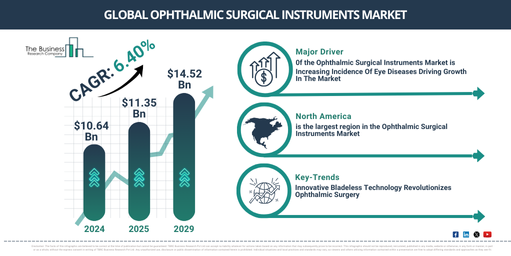
    In the past few years, the market size for ophthalmic surgical instruments has seen a notable increase. It is forecasted to rise from $10.64 billion in 2024 to $11.35 billion in 2025, with a compound annual growth rate (CAGR) of 6.6%. The growth observed in the historical period is largely due to factors such as the increase in the aging population, a growing geriatric segment, escalating instances of eye disorders, a surge in awareness and early diagnosis, as well as the expansion of healthcare infrastructure.

    Expectations for the ophthalmic surgical instruments market indicate a robust increase in its size in the upcoming years. It is projected to balloon to a whopping $14.52 billion by 2029, reflecting a compound annual growth rate (CAGR) of 6.4%. Boosters for this growth during the predicted period include enhancements in eye care facilities, a surge in eye-related ailments, the augmented prevalence of glaucoma, a widespread global occurrence of cataracts and glaucoma, and an upswing in the prevalence of ambulatory surgery centers. The forecast period also foresees key trends such as the utilization of microsurgical devices, the development of phacoemulsification systems, the inclusion of femtosecond lasers, the application of vitrectomy machines, and a rise in the precision of eye disorder diagnosis and treatments.

    Download a free sample to assess the report’s scope and structure:

    https://www.thebusinessresearchcompany.com/sample.aspx?id=20913&type=smp

    What Are the Primary Drivers Supporting the Market Growth of the Ophthalmic Surgical Instruments Market?

    The surge in eye disease occurrences is projected to boost the expansion of the ophthalmic surgical instruments market. The rise in such conditions can be attributed to ageing demographics, lifestyle choices like prolonged exposure to screens, and environmental factors such as air pollution. Ophthalmic surgical instruments serve a crucial role in diagnosing, treating and managing a wide array of eye disorders, by carrying out intricate procedures on the sensitive structures of the eye. For example, the Centers for Disease Control and Prevention, a government agency in the U.S, reported in May 2024 that by 2024, approximately 20.5 million Americans aged 40 and above, or 17.2% of that population, would experience cataracts in a minimum of one eye. This population is expected to surge past 30 million by 2028. Thus, the mounting occurrences of eye diseases are propelling the ophthalmic surgical instruments market’s expansion.

    Which Primary Segments of the Ophthalmic Surgical Instruments Market Are Driving Growth and Industry Transformations?

    The ophthalmic surgical instruments market covered in this report is segmented –

    1) By Product: Microscopes, Illumination Devices, Phacoemulsification Instruments, Lasers, Intraocular Lenses, Shunts And Related Drainage Devices, Viscoelastic Devices, Surgical Accessories

    2) By Application: Cataract Surgery, Glaucoma Surgery, Refractive Surgery, Vitreoretinal Surgery, Other Applications

    3) By End User: Hospitals, Clinics, Ambulatory Surgery Centers, Other End Users

    Subsegments:

    1) By Microscopes: Operating Microscopes, Handheld Microscopes, Digital Ophthalmic Microscopes

    2) By Illumination Devices: Slit Lamps, Surgical Headlights, Operating Room Lighting

    3) By Phacoemulsification Instruments: Phacoemulsifiers, Phaco Tips, Handpieces and Foot Pedals

    4) By Lasers: Diode Lasers, YAG Lasers, Argon Lasers

    5) By Intraocular Lenses: Monofocal Intraocular Lenses, Multifocal Intraocular Lenses, Toric Intraocular Lenses, Accommodative Intraocular Lenses

    6) By Shunts And Related Drainage Devices: Glaucoma Shunts, Drainage Implants

    7) By Viscoelastic Devices: Ocular Viscosurgical Devices (OVDs), Balanced Salt Solutions (BSS)

    8) By Surgical Accessories: Surgical Knives And Blades, Speculums, Surgical Sponges And Drapes

    Request customized data on this market:

    https://www.thebusinessresearchcompany.com/customise?id=20913&type=smp

    Which Regions Are Key Players in the Growth of the Ophthalmic Surgical Instruments Market?

    North America was the largest region in the ophthalmic surgical instruments market in 2024. The regions covered in the ophthalmic surgical instruments market report are Asia-Pacific, Western Europe, Eastern Europe, North America, South America, Middle East, Africa.

    What Are the Strategic Trends Steering the Ophthalmic Surgical Instruments Market Direction?

    Key industry players in the ophthalmic surgical instruments market are steadily honing their focus towards creating innovative solutions such as the bladeless technology, aimed at advancing surgical operations and uplifting patient results. The concept of bladeless technology is built on the idea of excluding rotary blades and utilizing alternate methods for activities like tissue removal or airflow, hence amplifying safety and proficiency. For instance, Sight Sciences, a leading medical technology firm in the US, in August 2022, revealed the SION Surgical Instrument. This particular instrument has been developed to efficiently cut the trabecular meshwork and lower the intraocular pressure in people suffering from glaucoma. This revolutionary tool comes with distinctive attributes, including a bladeless model for secure tissue removal, micro-engineered exactness tailored for seamless navigation inside the Schlemm’s canal, elevated maneuverability within the anterior chamber of the eye, single-use sterility that lessens the chances of infections, and an overall improved proficiency in tissue excision. This positions it as a significant leap forward in the field of minimally invasive glaucoma surgery.

    View the full report here:

    https://www.thebusinessresearchcompany.com/report/ophthalmic-surgical-instruments-global-market-report

    What Parameters Are Used to Define the Ophthalmic Surgical Instruments Market?

    Ophthalmic surgical instruments are specialized tools used in eye surgery to perform various procedures, such as cataract removal, corneal transplants, retinal surgery, and more. These instruments are designed to be precise, delicate, and safe for use in the small, sensitive environment of the human eye.

    Purchase the full report and get a swift delivery:

    https://www.thebusinessresearchcompany.com/purchaseoptions.aspx?id=20913

    About The Business Research Company:

    With over 15000+ reports from 27 industries covering 60+ geographies, The Business Research Company has built a reputation for offering comprehensive, data-rich research and insights. Armed with 1,500,000 datasets, the optimistic contribution of in-depth secondary research, and unique insights from industry leaders, you can get the information you need to stay ahead in the game.

    Get in touch with us:

    The Business Research Company: https://www.thebusinessresearchcompany.com/

    Americas +1 3156230293

    Asia +44 2071930708

    Europe +44 2071930708

    Email us at info@tbrc.info

    Follow us on:

    LinkedIn: https://in.linkedin.com/company/the-business-research-company

    YouTube: https://www.youtube.com/channel/UC24_fI0rV8cR5DxlCpgmyFQ

    Global Market Model: https://www.thebusinessresearchcompany.com/global-market-model
  • Open-Angle Glaucoma (OAG) Market Trends 2025-2034: Growth, Strategic Insights, and Opportunities Ahead

    Open-Angle Glaucoma (OAG) Market Trends 2025-2034: Growth, Strategic Insights, and Opportunities Ahead

    Stay ahead with our updated market reports featuring the latest on tariffs, trade flows, and supply chain transformations.

    How Has The Open-Angle Glaucoma (OAG) Market Growth Evolved From 2024 To 2025, And What’s Ahead?

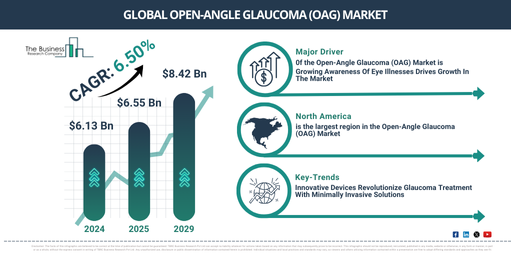
    In recent times, there has been considerable expansion in the open-angle glaucoma (OAG) market. We anticipate growth from $6.13 billion in 2024 to $6.55 billion in 2025, marking a compound annual growth rate (CAGR) of 6.8%. This upswing during the historical period can be traced back to factors such as an upsurge in glaucoma cases in elderly populations, heightened consciousness about the early diagnosis of ocular diseases, escalated spending on healthcare, implementation of vision care schemes by governments, and augmented global ophthalmology operations.

    The market size for open-angle glaucoma (OAG) is projected to experience a significant rise in the coming years, soaring to a value of $8.42 billion in 2029, with a compound annual growth rate (CAGR) of 6.5%. The augmentation observed in the forecast period is due to a surge in demand for combination therapies, an increased emphasis on personalized medicine, better reimbursement policies for glaucoma treatments, an escalating frequency of lifestyle-induced ocular conditions, and a rising preference for non-invasive diagnostic techniques. Over that forecast period, major movements are expected to be seen, such as the increased utilization of AI in glaucoma diagnostics, a switch towards outpatient glaucoma surgical procedures, higher usage of sustained-release glaucoma implants, greater integration of wearable technology for monitoring intraocular pressure, and an enhanced focus on sustainability within medical device production.

    Download a free sample to assess the report’s scope and structure:

    https://www.thebusinessresearchcompany.com/sample.aspx?id=20911&type=smp

    What Are the Major Market Drivers Behind the Rising Adoption of Open-Angle Glaucoma (OAG) Market?

    The escalating cognizance of eye maladies is anticipated to stimulate the advancement of the open-angle glaucoma (OAG) market in the future. Eye maladies involve health issues affecting the anatomy, functionality, or sight of the eyes, varying from minor troubles like dry eye to severe ailments like glaucoma and macular degeneration. They are becoming more prevalent due to the aging population, extended screen usage, growing incidences of diabetes, environmental contamination, and lifestyle choices that put eye health at risk. Open-angle glaucoma (OAG), a main cause of vision loss, particularly in older individuals, highlights the important need for regular eye check-ups, prompt identification, and proactive management to prevent permanent loss of vision. For instance, the Royal National Institute of Blind People (RNIB), a sight loss charity based in the UK, reported in October 2023 that eye care outpatient appointments in the UK topped eight million in 2021/22, positioning it as the most sought-after specialty. In addition, the count of individuals experiencing sight loss, which currently exceeds two million, is expected to surge to over four million by 2050. Thus, the escalating cognizance of eye maladies is fuelling growth in the open-angle glaucoma (OAG) market.

    Which Key Market Segments Comprise the Open-Angle Glaucoma (OAG) Market and Drive Its Revenue Growth?

    The open-angle glaucoma (OAG) market covered in this report is segmented –

    1) By Disease Type: Open Angle Glaucoma, Angle Closure Glaucoma, Other Disease Type

    2) By Drug Class: Prostaglandin Analog, Beta Blockers, Adrenergic Agonist, Carbonic Anhydrase Inhibitors, Others Drug Class

    3) By End User: Hospitals, Homecare, Specialty Clinics, Other End Users

    4) By Distribution Channel: Hospital Pharmacy, Online Pharmacy, Retail Pharmacy

    Subsegments:

    1) By Open Angle Glaucoma (OAG): Primary Open-Angle Glaucoma (POAG), Secondary Open-Angle Glaucoma

    2) By Angle Closure Glaucoma: Acute Angle-Closure Glaucoma, Chronic Angle-Closure Glaucoma

    3) By Other Disease Type: Normal-Tension Glaucoma, Congenital Glaucoma, Secondary Glaucoma

    Request customized data on this market:

    https://www.thebusinessresearchcompany.com/customise?id=20911&type=smp

    Which Areas Are Leading Regions in the Open-Angle Glaucoma (OAG) Market Expansion Across the Globe?

    North America was the largest region in the open-angle glaucoma (OAG) market in 2024. Asia-Pacific is expected to be the fastest-growing region in the forecast period. The regions covered in the open-angle glaucoma (OAG) market report are Asia-Pacific, Western Europe, Eastern Europe, North America, South America, Middle East, Africa.

    What Key Market Trends and Innovations Are Shaping the Future of the Open-Angle Glaucoma (OAG) Industry?

    Leading firms in the open-angle glaucoma (OAG) marketplace are placing high importance on forging new, cutting-edge solutions such as minimally invasive glaucoma devices (MIGDs). The aim is to present improved and less intrusive alternatives for handling primary open-angle glaucoma, minimizing the dependence on typical treatments. MIGDs are a variety of surgical implants and methodologies conceived to decrease intraocular pressure in glaucoma sufferers through minor incisions and minor ocular tissue disturbance. For instance, iSTAR Medical, a medtech entity from Belgium, introduced MINIject in the Netherlands in December 2023. This treatment for primary open-angle glaucoma, integrated with a unique porous STAR material, enhances liquid outflow and reduces IOP. MINIject therefore marks an important advancement in glaucoma treatment, offering a safer and more efficient solution for managing this prominent cause of irreversible blindness, thereby reducing reliance on traditional treatments.

    View the full report here:

    https://www.thebusinessresearchcompany.com/report/open-angle-glaucoma-oag-global-market-report

    How Is the Open-Angle Glaucoma (OAG) Market Conceptually Defined?

    Open-angle glaucoma (OAG) is a chronic, progressive eye condition characterized by the gradual clogging of the drainage canals in the eye, leading to increased intraocular pressure that damages the optic nerve, often without noticeable symptoms until significant vision loss occurs. Its treatment aims to lower intraocular pressure, thereby preventing optic nerve damage and preserving vision through medications, laser procedures, or surgical interventions.

    Purchase the full report and get a swift delivery:

    https://www.thebusinessresearchcompany.com/purchaseoptions.aspx?id=20911

    About The Business Research Company:

    With over 15000+ reports from 27 industries covering 60+ geographies, The Business Research Company has built a reputation for offering comprehensive, data-rich research and insights. Armed with 1,500,000 datasets, the optimistic contribution of in-depth secondary research, and unique insights from industry leaders, you can get the information you need to stay ahead in the game.

    Get in touch with us:

    The Business Research Company: https://www.thebusinessresearchcompany.com/

    Americas +1 3156230293

    Asia +44 2071930708

    Europe +44 2071930708

    Email us at info@tbrc.info

    Follow us on:

    LinkedIn: https://in.linkedin.com/company/the-business-research-company

    YouTube: https://www.youtube.com/channel/UC24_fI0rV8cR5DxlCpgmyFQ

    Global Market Model: https://www.thebusinessresearchcompany.com/global-market-model
  • Major Drivers Propelling the Growth oh theNutrigenomics Market Forward: Impact Of Rising Health Awareness On The Growth Of The Market

    Major Drivers Propelling the Growth oh theNutrigenomics Market Forward: Impact Of Rising Health Awareness On The Growth Of The Market

    Stay ahead with our updated market reports featuring the latest on tariffs, trade flows, and supply chain transformations.

    How Has The Nutrigenomics Market Size Shifted, And What Is the Outlook Through 2034?

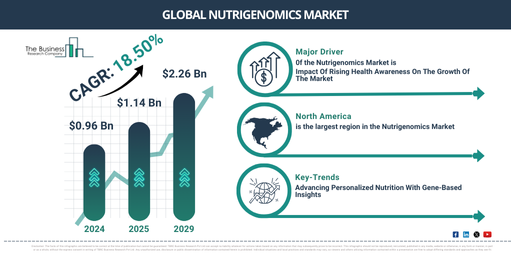
    Over the past few years, the nutrigenomics market has seen rapid expansion. The market is set to increase from a valuation of $0.96 billion in 2024 to $1.14 billion in 2025, indicating a compound annual growth rate (CAGR) of 18.9%. Factors that contributed to this growth during the historical period include an upsurge in online shopping, expansion of functional beverages sector, increase in pharmaceuticals industry, growth of e-commerce, and the development of companion diagnostics.

    The nutrigenomics industry anticipates a steep upward trajectory in its market size in the forthcoming years, projected to reach a whopping $2.26 billion by 2029 expanding at a Compound Annual Growth Rate (CAGR) of 18.5%. An array of reasons, such as growing apprehension about sugar intake, escalating demand for nutrigenomics, increased instances of chronic illnesses, a surge in the demand for proactive healthcare solutions, as well as rising cancer rates, contribute to this increase in the predicted period. Development trends for this period feature digital health integration, incorporation of artificial intelligence and big data, expansion into pharmacogenomics, utilization of digital health instruments, and advancements in product offerings.

    Download a free sample to assess the report’s scope and structure:

    https://www.thebusinessresearchcompany.com/sample.aspx?id=20906&type=smp

    Which Major Market Drivers Are Expected to Boost the Growth Potential of the Nutrigenomics Market?

    The rise in health consciousness is anticipated to push the expansion of the nutrigenomics market. Health consciousness encompasses the comprehension and awareness about diverse health-related aspects, including disease prevention, management, and treatment. This spike in health consciousness can be attributed to improved public health, decreased healthcare costs, and the betterment of life’s quality. Nutrigenomics, which investigates the link between genes and nutrients, equips health-oriented individuals to make genetically customized dietary choices, thereby maximizing their health, averting chronic diseases, and escalating personalized nutritional strategies for improved long-term health results. As an example, a study conducted by the International Food Information Council, a US-based non-profit, in May 2022, involving 1,005 American adults aged 18–80 and Gen Z adults aged 18-24, found that around 52% of respondents followed a particular diet or eating pattern, which is an increase from 39% in 2021. Top dietary preferences included clean eating (16%), mindful eating (14%), and calorie counting (13%). Thus, the rising health consciousness is fueling the development of the nutrigenomics market.

    Which Key Market Segments Comprise the Nutrigenomics Market and Drive Its Revenue Growth?

    The nutrigenomics market covered in this report is segmented –

    1) By Product: Reagents And Kits, Services

    2) By Technique: Saliva, Buccal Swab, Blood

    3) By Application: Diabetes, Obesity, Gastrointestinal, Woman’s Health, Neurological, Other Applications

    4) By End User: Hospitals And Clinics, Other End Users

    Subsegments:

    1) By Reagents And Kits: DNA Extraction Kits, Genotyping Kits, PCR Reagents, Metabolomics Kits

    2) By Services: Nutrigenomic Testing, Data Interpretation Services, Genetic Counseling

    Request customized data on this market:

    https://www.thebusinessresearchcompany.com/customise?id=20906&type=smp

    Which Areas Are Leading Regions in the Nutrigenomics Market Expansion Across the Globe?

    North America was the largest region in the nutrigenomics market in 2024. Asia-Pacific is expected to be the fastest-growing region in the forecast period. The regions covered in the nutrigenomics market report are Asia-Pacific, Western Europe, Eastern Europe, North America, South America, Middle East, Africa.

    What Key Trends Are Shaping the Future of the Nutrigenomics Market?

    The nutrigenomics sector has seen dominant corporations prioritizing technological innovation, for instance, implementing personalized nutrition insights to enhance consumer health, dietary guidance, and wellness solutions. Personalized nutrition insights deliver diet plans and approaches tailored to the distinctive biological, genetic, and lifestyle attributes of an individual. As an illustration, in June 2023, Xcode Life, a genomics enterprise from the US, launched its gene nutrition test in India to accentuate nutrigenomics offering personalized dietary insights thanks to genetic composition analysis. The test comprehensively covers about 50 nutrition-related aspects, examining how a person’s genes impact their nutritional requirements, metabolic processes, absorption of nutrients, food sensitivities, and responses to specific diets. This level of detail enables the creation of highly individualized dietary advice. The procedure utilizes the nutrigenomic model, studying the relationship between food and gene expression, thereby supplying insights on how certain foods can impact health due to genetic predispositions. A pre-requisite DNA test for the gene nutrition test simplifies the gathering of genetic data used for nutritional analysis. This integration leads to a more effective procedure for users looking for personal health insights.

    View the full report here:

    https://www.thebusinessresearchcompany.com/report/nutrigenomics-global-market-report

    How Is the Nutrigenomics Market Conceptually Defined?

    Nutrigenomics is the study of how genes and genetic variations influence an individual’s response to nutrients and diet. It aims to understand the interaction between nutrition and the genome to optimize health and prevent diseases. This field integrates genetics, molecular biology, and nutrition science to develop personalized dietary recommendations.

    Purchase the full report and get a swift delivery:

    https://www.thebusinessresearchcompany.com/purchaseoptions.aspx?id=20906

    About The Business Research Company:

    With over 15000+ reports from 27 industries covering 60+ geographies, The Business Research Company has built a reputation for offering comprehensive, data-rich research and insights. Armed with 1,500,000 datasets, the optimistic contribution of in-depth secondary research, and unique insights from industry leaders, you can get the information you need to stay ahead in the game.

    Get in touch with us:

    The Business Research Company: https://www.thebusinessresearchcompany.com/

    Americas +1 3156230293

    Asia +44 2071930708

    Europe +44 2071930708

    Email us at info@tbrc.info

    Follow us on:

    LinkedIn: https://in.linkedin.com/company/the-business-research-company

    YouTube: https://www.youtube.com/channel/UC24_fI0rV8cR5DxlCpgmyFQ

    Global Market Model: https://www.thebusinessresearchcompany.com/global-market-model
  • Critical Market Drivers Shaping the Outlook for Noonan Syndrome Market from 2025-2034: Impact Of Increasing Genetic Disorder Prevalence On The Growth Of The Market

    Critical Market Drivers Shaping the Outlook for Noonan Syndrome Market from 2025-2034: Impact Of Increasing Genetic Disorder Prevalence On The Growth Of The Market

    Stay ahead with our updated market reports featuring the latest on tariffs, trade flows, and supply chain transformations.

    How Has the Noonan Syndrome Market Growth Performance Trended Historically, And What Lies Ahead?

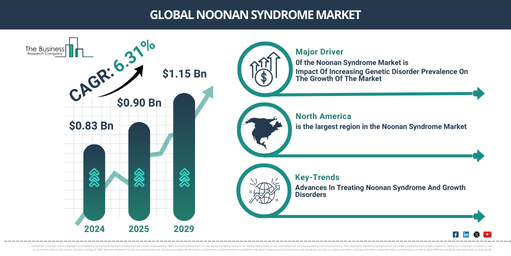
    The market size for noonan syndrome has seen significant growth in the past years. A rise from $0.83 billion in 2024 to $0.90 billion in 2025 is expected, reflecting a compound annual growth rate (CAGR) of 8.80%. This growth during the historic period is due to a surge in the demand for personalized treatments, an upswing in rare disease awareness campaigns, an increase in telemedicine use, the development of health-related mobile applications, and the proliferation of educational programs dedicated to healthcare professionals.

    The market size for Noonan syndrome is predicted to experience significant expansion in the coming years. Its value is projected to rise to $1.15 billion by 2029, with a compound annual growth rate (CAGR) of 6.31%. The anticipated growth within this forecasted timeframe can be linked to a rise in mutation instances, an expanding patient pool, increased spending on healthcare, the growth of genetic counseling services, and an uptick in genetic testing. Key trends projected for this period consist of technological advancements, growth hormone therapy, targeted therapies, telemedicine, and improvement in imaging technologies.

    Download a free sample to assess the report’s scope and structure:

    https://www.thebusinessresearchcompany.com/sample.aspx?id=20905&type=smp

    What Are the Core Growth Drivers Propelling the Noonan Syndrome Market Forward?

    The escalating incidence of genetic conditions is predicted to spur the expansion of the noonan syndrome market in the future. Genetic conditions are illnesses that arise from alterations or abnormalities in an individual’s DNA, which could either be passed down through generations or emerge randomly. The escalating incidence of these genetic conditions could be traced back to a number of elements, such as enhanced diagnosis, increased lifespan, and the impact of environmental factors. Noonan syndrome is instrumental in comprehending these genetic conditions by emphasizing the repercussions of distinctive gene mutations on physical growth, heart functionality, and overall health condition, thus promoting genetic study and enhancing diagnostic and therapeutic strategies for related illnesses. For example, in May 2024, as per the Centers for Disease Control and Prevention (CDC), a US-based public health institution, sickle cell disease (SCD) is prevalent among approximately 100,000 individuals in the United States. The majority, over 90%, of these individuals are non-Hispanic Black or African American, while between 3% and 9% are estimated to be Hispanic or Latino. Consequently, the escalating incidence of genetic conditions is propelling the expansion of the noonan syndrome market.

    What Segment Types Define the Noonan Syndrome Market Structure?

    The noonan syndrome market covered in this report is segmented –

    1) By Diagnosis: Ultrasound Test, Genetic Test, Blood Test, Other Diagnosis

    2) By Treatment: Heart Treatment, Learning Disabilities Treatment, Low Growth Treatment, Vision And Hearing Treatment, Bleeding And Bruising Treatment, Genital Problem Treatment, Lymphatic Problem Treatment, Other Treatments

    3) By Route of Administration: Oral, Parenteral, Other Route of Administrations

    4) By Distribution Channel: Direct Tenders, Retail Sales, Hospital Pharmacy, Retail Pharmacy, Online Pharmacy, Other Distribution Channels

    5) By End-Users: Clinics, Hospitals, Home Healthcare, Other End-Users

    Subsegments:

    1) By Ultrasound Test: Cardiac Ultrasound (Echocardiogram), Abdominal Ultrasound

    2) By Genetic Test: DNA Sequencing, Chromosomal Analysis

    3) By Blood Test: Biomarker Identification, Hormonal Imbalance Testing

    4) By Other Diagnosis: Physical Examination and Clinical Assessment, Imaging Tests (MRI, CT scans), Electrocardiogram (ECG)

    Request customized data on this market:

    https://www.thebusinessresearchcompany.com/customise?id=20905&type=smp

    Which Geographic Areas Hold the Strongest Growth Potential in the Noonan Syndrome Market?

    North America was the largest region in the noonan syndrome market in 2024. The regions covered in the noonan syndrome market report are Asia-Pacific, Western Europe, Eastern Europe, North America, South America, Middle East, Africa.

    What Are the Most Significant Market Trends in the Noonan Syndrome Market?

    Leading entities active in the noonan syndrome market are expanding their treatment options for multiple growth-related conditions, aiming to improve health and disease management in pediatric patients. These conditions, varying in type and cause, affect the regular physical development, generally caused by genetic, hormonal, or nutritional reasons. For example, BioMarin Pharmaceutical Inc., an American biopharmaceutical firm, shared encouraging preliminary results for VOXZOGO (vosoritide) in May 2024 during the Pediatric Endocrine Society Annual Meeting, highlighting its efficacy in treating several growth-related disorders in children such as idiopathic short stature (ISS), Noonan syndrome, and achondroplasia. The Phase 2 investigation revealed considerable improvements in growth velocity and height among children suffering from various genetic disorders, which include ACAN deficiency and NPR2 mutations. This encouraging data underscore the potential of VOXZOGO to benefit a wider swath of growth disorders beyond its current approved use for achondroplasia.

    View the full report here:

    https://www.thebusinessresearchcompany.com/report/noonan-syndrome-global-market-report

    What Is the Definition of the Noonan Syndrome Market?

    Noonan syndrome is a genetic condition marked by unique facial features, short stature, congenital heart defects, and other physical irregularities. It can affect multiple body systems with varying severity among individuals. Present from birth, this condition occurs in both males and females equally. Early diagnosis and intervention can significantly improve quality of life and manage associated complications.

    Purchase the full report and get a swift delivery:

    https://www.thebusinessresearchcompany.com/purchaseoptions.aspx?id=20905

    About The Business Research Company:

    With over 15000+ reports from 27 industries covering 60+ geographies, The Business Research Company has built a reputation for offering comprehensive, data-rich research and insights. Armed with 1,500,000 datasets, the optimistic contribution of in-depth secondary research, and unique insights from industry leaders, you can get the information you need to stay ahead in the game.

    Get in touch with us:

    The Business Research Company: https://www.thebusinessresearchcompany.com/

    Americas +1 3156230293

    Asia +44 2071930708

    Europe +44 2071930708

    Email us at info@tbrc.info

    Follow us on:

    LinkedIn: https://in.linkedin.com/company/the-business-research-company

    YouTube: https://www.youtube.com/channel/UC24_fI0rV8cR5DxlCpgmyFQ

    Global Market Model: https://www.thebusinessresearchcompany.com/global-market-model
  • Key Factors Fueling the Growth of the Non-Muscle Invasive Bladder Cancer Market in 2025: The Growing Demand for Minimally Invasive Procedures Driving The Market

    Key Factors Fueling the Growth of the Non-Muscle Invasive Bladder Cancer Market in 2025: The Growing Demand for Minimally Invasive Procedures Driving The Market

    Stay ahead with our updated market reports featuring the latest on tariffs, trade flows, and supply chain transformations.

    What Are the Projected Market Size and Growth Rates for the Non-Muscle Invasive Bladder Cancer Market From 2025 To 2029?

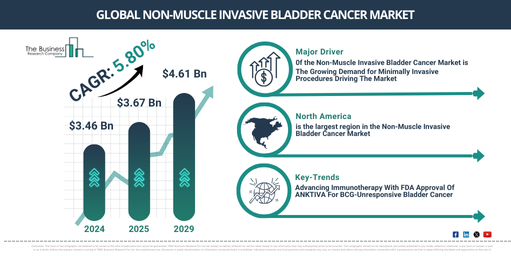
    The market size for non-muscle invasive bladder cancer has exhibited significant growth in the past few years. It is projected to increase from $3.46 billion in 2024 to $3.67 billion in 2025, with a compound annual growth rate (CAGR) of 6.1%. Factors such as an increase in the elderly population, enhanced healthcare spending, improvements in healthcare infrastructure, the emergence of telemedicine, and a surge in smoking rates have contributed to the growth experienced in the historic period.

    The market for non-muscle invasive bladder cancer is predicted to experience substantial expansion in the upcoming years, increasing to a worth of $4.61 billion by 2029, with a Compound Annual Growth Rate (CAGR) of 5.8%. The expected growth during the forecasted duration can be linked to the growing application of targeted therapies, a heightened emphasis on personalized medicine, larger investments in cancer research, a surge in the preference for minimally invasive procedures, and an escalation in chronic bladder incidences. Key trends emerging during the prediction period encompass technological breakthroughs, precision medicine, artificial intelligence adoption, telemedicine, and digitized healthcare tools.

    Download a free sample to assess the report’s scope and structure:

    https://www.thebusinessresearchcompany.com/sample.aspx?id=20904&type=smp

    What are the Fundamental Drivers and Innovations Shaping the Non-Muscle Invasive Bladder Cancer Market?

    The non-muscle invasive bladder cancer market is poised for growth, a trend fuelled by the increasing preference for minimally invasive procedures. These are surgical processes that involve small incisions and specialized equipment, resulting in less tissue damage and subsequent benefits like reduced discomfort, quicker recovery, and insignificant scarring compared to conventional open surgery. The shift towards minimally invasive surgeries is influenced by a range of factors, such as shorter recovery durations, enhanced patient outcomes, and an expanding elderly population. These factors collectively lead to improved patient safety, satisfaction, and operational efficiency in healthcare. Non-muscle invasive bladder cancer lends itself to these procedures by facilitating localized treatments like transurethral resection and intravesical therapy, which directly target the tumor without the requirement for wide-ranging surgical intervention. For example, The Aesthetic Society documents that in August 2023, Americans expended over $11.8 billion on aesthetic procedures, marking a 2% rise from the previous year. Consequently, this mounting preference for minimally invasive procedures is triggering growth in the non-muscle invasive bladder cancer market. The non-muscle invasive bladder cancer market is also witnessing growth due to the intensifying focus on personalized medicine. This approach tailors treatments according to the individual’s genetic makeup, lifestyle and environmental factors with a goal to achieve more efficacious outcomes. Personalized medicine is getting a push from several quarters, such as progress in genetic research, improvement in diagnostic tools, and an escalating demand for more targeted and effective therapies. Non-muscle invasive bladder cancer assists in this personalized approach by enabling individualized treatment programs that take into account the particular characteristics of the tumor, genetic markers and patient profiles. For example, the Personalized Medicine Coalition reports that in February 2024, the FDA green lighted 16 unique personalized therapies for patients with rare diseases last year, a significant increase from just six in 2022. This trend underscores the escalating growth of the non-muscle invasive bladder cancer market.

    How Is the Non-Muscle Invasive Bladder Cancer Market Segmented?

    The non-muscle invasive bladder cancer market covered in this report is segmented –

    1) By Stage: Carcinoma In Situ (CIS), T1 Stage, Ta Stage

    2) By Treatment: Immunotherapy, Chemotherapy, Surgery, Intravesical Therapy, Others Treatments

    3) By Tumor: Low-Grade Tumours, High-Grade Tumours

    4) By End-User: Hospital Pharmacy, Retail Pharmacy, Online Pharmacy

    Subsegments:

    1) By Carcinoma In Situ (CIS): High-Grade CIS, Low-Grade CIS

    2) By T1 Stage: T1a Stage (Superficial Tumors), T1b Stage (Invasive Into Lamina Propria)

    3) By Ta Stage: Low-Grade Ta Stage, High-Grade Ta Stage

    Request customized data on this market:

    https://www.thebusinessresearchcompany.com/customise?id=20904&type=smp

    Which Regions Are Driving the Next Phase of the Non-Muscle Invasive Bladder Cancer Market Growth?

    North America was the largest region in the non-muscle invasive bladder cancer market in 2024. Asia-Pacific is expected to be the fastest-growing region in the forecast period. The regions covered in the non-muscle invasive bladder cancer market report are Asia-Pacific, Western Europe, Eastern Europe, North America, South America, Middle East, Africa.

    What Are the Current Market Growth and Trends in the Non-Muscle Invasive Bladder Cancer Industry?

    Leading businesses within the non-muscle invasive bladder cancer market are concentrating their efforts on the creation of innovative treatments like immunotherapy to enhance patient care and results. This treatment methodology involves utilizing the body’s natural immune defenses to identify and neutralize cancer cells by stimulating effective immune responses. In March of 2024, US-based biotech company, ImmunityBio Inc., acquired approval from the FDA to use ANKTIVA (N-803) in treating patients with BCG-nonresponsive non-muscle invasive bladder cancer that exhibits carcinoma in situ, with or without papillary tumors. This endorsement stems from noteworthy clinical trial outcomes, suggesting that ANKTIVA, used in alliance with Bacillus Calmette-Guérin (BCG), presents a feasible therapeutic strategy for those patients who didn’t have a response to conventional BCG therapy. ANKTIVA is an innovative IL-15 agonist immunotherapy which bolsters the immune system, specifically catalyzing natural killer (NK) cells and CD8+ killer T cells to pinpoint and obliterate cancer cells.

    View the full report here:

    https://www.thebusinessresearchcompany.com/report/non-muscle-invasive-bladder-cancer-global-market-report

    How Is the Non-Muscle Invasive Bladder Cancer Market Defined and What Are Its Core Parameters?

    Non-muscle invasive bladder cancer (NMIBC) refers to a type of bladder cancer that is confined to the inner layers of the bladder wall and has not spread to the muscle layer. It is typically diagnosed at an early stage and can often be treated effectively with methods such as transurethral resection, intravesical therapy, or close surveillance.

    Purchase the full report and get a swift delivery:

    https://www.thebusinessresearchcompany.com/purchaseoptions.aspx?id=20904

    About The Business Research Company:

    With over 15000+ reports from 27 industries covering 60+ geographies, The Business Research Company has built a reputation for offering comprehensive, data-rich research and insights. Armed with 1,500,000 datasets, the optimistic contribution of in-depth secondary research, and unique insights from industry leaders, you can get the information you need to stay ahead in the game.

    Get in touch with us:

    The Business Research Company: https://www.thebusinessresearchcompany.com/

    Americas +1 3156230293

    Asia +44 2071930708

    Europe +44 2071930708

    Email us at info@tbrc.info

    Follow us on:

    LinkedIn: https://in.linkedin.com/company/the-business-research-company

    YouTube: https://www.youtube.com/channel/UC24_fI0rV8cR5DxlCpgmyFQ

    Global Market Model: https://www.thebusinessresearchcompany.com/global-market-model
  • Key Developments and Trends Steering the Neurodiagnostics Market Forward: Advancements In AI-Driven Software For Enhanced Diagnostic Accuracy

    Key Developments and Trends Steering the Neurodiagnostics Market Forward: Advancements In AI-Driven Software For Enhanced Diagnostic Accuracy

    Stay ahead with our updated market reports featuring the latest on tariffs, trade flows, and supply chain transformations.

    How Fast Is The Neurodiagnostics Market Expected to Grow Between 2025 And 2029?

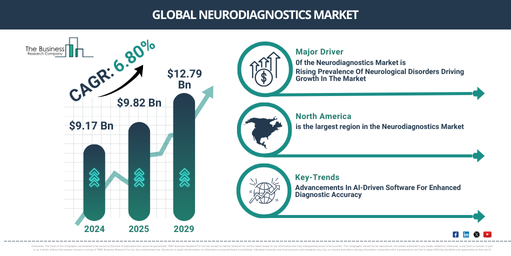
    The sector for neurodiagnostic has witnessed a robust expansion in the recent times. The market, which is anticipated to increase from $9.17 billion in 2024 to $9.82 billion in 2025, will experience a Compound Annual Growth Rate (CAGR) of 7.1%. The historic growth is attributed to factors such as the increasing incidence of neurological disorders, heightened usage of state-of-the-art imaging technologies, the growth in aged populace, increased awareness of early disease detection, the expansion of healthcare infrastructure, and the surge in investments within neuroscience research and development.

    Predictions for the neurodiagnostics market size anticipate a significant surge in the forthcoming years, reaching $12.79 billion by 2029 with an annual compound growth rate of 6.8%. This rise during the forecast period can be associated with the escalating need for non-invasive diagnosis methods, the growing occurrence of neurological conditions, heightened government funding in health infrastructure, increased awareness alongside early detection initiatives, and the widening of customized medical approaches. Key trends forecasted for this period range from the creation of portable EEG devices and assimilation of AI for elevated diagnostic precision, to improved MRI technology for brain scans, the usage of wearable devices for ongoing monitoring, breakthroughs in neurogenetics testing, and the implementation of real-time data analytics for personalized treatment strategies.

    Download a free sample to assess the report’s scope and structure:

    https://www.thebusinessresearchcompany.com/sample.aspx?id=20902&type=smp

    How Are Key Drivers in the Industry Acting as Catalysts for the Growth of the Neurodiagnostics Market?

    The anticipated growth of the neurodiagnostics market is linked to the escalating incidence of neurological conditions. Neurological disorders, which can cause a range of cognitive, motor, and sensory deficiencies, typically affect the brain, spinal cord, or nerves. The surge in such disorders is predominantly attributed to older populations, environmental influences, changes in lifestyle, genetic factors, and improved diagnostic techniques. Neurodiagnostic tools are crucial in correctly identifying, assessing, and managing these neurological conditions. They facilitate precise diagnosis, informed treatment choices, and effective disease management related to the brain, spinal cord, and nerves. For example, the National Library of Medicine, an American medical research information library, reported in April 2023 that in that year, 6.7 million Americans were diagnosed with Alzheimer’s. This figure is predicted to climb to 13.8 million by 2060. The growing incidence of such neurological disorders is hence propelling the expansion of the neurodiagnostics market.

    Which Segments in the Neurodiagnostics Offer the Most Growth?

    The neurodiagnostics market covered in this report is segmented –

    1) By Type: Diagnostic And Imaging Solutions, In-Vitro Diagnostics

    2) By Technology: Neuroimaging Technologies, Computed Tomography (CT), Magnetic Resonance Imaging (MRI), Nuclear Medicine Imaging (PET, SPECT), Near Infrared Spectroscopic Imaging (NIRS), Electro-Encephalography (EEG), Magneto-Encephalography (MEG), Voxel Based Morphometry (VBM), Neuroinformatics

    3) By Condition: Epilepsy, Alzheimer’s Disease, Parkinson’s Disease, Stroke, Joint Health, Other Conditions

    4) By End Use : Hospitals And Clinics, Diagnostic Laboratories, Imaging Centers, Other End Uses

    Subsegments:

    1) By Diagnostic And Imaging Solutions: MRI (Magnetic Resonance Imaging) Systems, CT (Computed Tomography) Scanners, EEG (Electroencephalogram) Systems, EMG (Electromyography) Systems, MEG (Magnetoencephalography) Systems, PET (Positron Emission Tomography) Scanners, SPECT (Single Photon Emission Computed Tomography) Scanners, Functional MRI (fMRI) Systems, Intracranial Pressure Monitors

    2) By In-Vitro Diagnostics: Blood-Based Diagnostics, Cerebrospinal Fluid (Csf) Analysis, Genetic Testing And Biomarkers, Neurochemical Diagnostics, Point-Of-Care Neurodiagnostics, Diagnostic Kits For Neurodegenerative Disorders

    Request customized data on this market:

    https://www.thebusinessresearchcompany.com/customise?id=20902&type=smp

    What Are the Fastest-Growing Geographies in the Neurodiagnostics Market?

    North America was the largest region in the neurodiagnostics market in 2024. Asia-Pacific is expected to be the fastest-growing region in the forecast period. The regions covered in the neurodiagnostics market report are Asia-Pacific, Western Europe, Eastern Europe, North America, South America, Middle East, Africa.

    What Long-Term Trends Are Transforming the Competitive Landscape of the Neurodiagnostics Market?

    Leading organizations in the neurodiagnostics sector are prioritizing technological innovations, such as advanced software algorithm development, to boost diagnostic precision and enhance patient recovery rates. The term advanced software algorithm is defined as a complex instruction set that processes and interprets data using methodologies like artificial intelligence (AI) or machine learning to augment judgment and diagnostics. For example, in October 2023, Ceribell Inc., an American medical device manufacturing firm, introduced the ClarityPro AI algorithm, constituting a crucial leap forward in the diagnosis of electrographic status epilepticus (ESE). This cutting-edge software, incorporated within the Ceribell EEG system, employs machine learning for EEG waveform analysis and delivers instantaneous alerts for suspected seizures. It’s worth noting that ClarityPro is the initial acute treatment device to obtain standalone diagnosis approval from the FDA. Its design aims to enhance clinical decisions by persistently tracking brain activity, providing practical insights, and facilitating swift and efficient treatment responses.

    View the full report here:

    https://www.thebusinessresearchcompany.com/report/neurodiagnostics-global-market-report

    What Are the Key Elements That Define the Neurodiagnostics Market?

    Neurodiagnostics refers to the medical field focused on diagnosing and monitoring disorders of the nervous system, including the brain, spinal cord, and peripheral nerves. It involves the use of advanced technologies and tests to assess neurological function, identify abnormalities, and aid in the diagnosis of conditions such as epilepsy, stroke, multiple sclerosis, neuropathies, and other neurological diseases.

    Purchase the full report and get a swift delivery:

    https://www.thebusinessresearchcompany.com/purchaseoptions.aspx?id=20902

    About The Business Research Company:

    With over 15000+ reports from 27 industries covering 60+ geographies, The Business Research Company has built a reputation for offering comprehensive, data-rich research and insights. Armed with 1,500,000 datasets, the optimistic contribution of in-depth secondary research, and unique insights from industry leaders, you can get the information you need to stay ahead in the game.

    Get in touch with us:

    The Business Research Company: https://www.thebusinessresearchcompany.com/

    Americas +1 3156230293

    Asia +44 2071930708

    Europe +44 2071930708

    Email us at info@tbrc.info

    Follow us on:

    LinkedIn: https://in.linkedin.com/company/the-business-research-company

    YouTube: https://www.youtube.com/channel/UC24_fI0rV8cR5DxlCpgmyFQ

    Global Market Model: https://www.thebusinessresearchcompany.com/global-market-model