Blog

  • Market Trends Influencing Strategic Decisions in the Neuroblastoma Industry: Advancements In Targeted Therapies For High-Risk Neuroblastoma Treatment

    Market Trends Influencing Strategic Decisions in the Neuroblastoma Industry: Advancements In Targeted Therapies For High-Risk Neuroblastoma Treatment

    Stay ahead with our updated market reports featuring the latest on tariffs, trade flows, and supply chain transformations.

    What Are the Key Projections for the CAGR of the Neuroblastoma Market Size From 2025 to 2034?

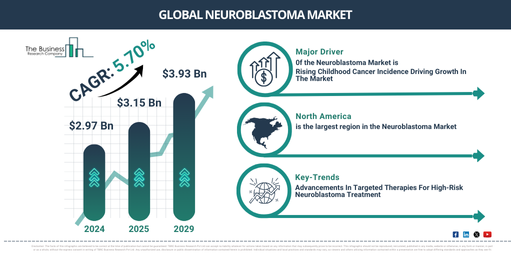
    In recent times, the neuroblastoma market has seen substantial development. The market, valued at $2.97 billion in 2024, is expected to surge to $3.15 billion in 2025, with a compound annual growth rate (CAGR) of 6.1%. The escalation in the past period can be accredited to the increased prevalence of neuroblastoma, augmented research and development in the domain of pediatric neuroblastoma therapies, escalating incidence of childhood cancer, and growing investment and support from the government.

    The neuroblastoma market is predicted to experience robust expansion in the coming years, soaring to a value of $3.93 billion by 2029, representing a compound annual growth rate (CAGR) of 5.7%. The surge during the forecast period can be credited to the escalated levels of government funding, rise in disease incidence, increased attention on early detection, the growing presence of genetic mutations, and enhanced comprehension and progress in research. The forecast period is likely to be characterized by trends such as the creation of drugs that target specific molecular pathways, breakthroughs in non-invasive imaging technologies, improvements in gene-editing technologies, a heightened focus on customized treatment, and the production of radiolabeled compounds.

    Download a free sample to assess the report’s scope and structure:

    https://www.thebusinessresearchcompany.com/sample.aspx?id=20901&type=smp

    What Are the Major Market Drivers Behind the Rising Adoption of Neuroblastoma Market?

    The escalating occurrence of pediatric cancer is anticipated to stimulate the expansion of the neuroblastoma market. Typically manifesting in main organs like the brain, bones, and blood, childhood cancer primarily impacts children and teenagers and necessitates unique therapeutic measures. The burgeoning rate of pediatric cancer is tied to several elements like enhancement in diagnostic methods, heightened awareness, environmental exposures, genetic susceptibilities, and progress in medical investigations. Neuroblastoma treatments offer targeted therapeutic strategies for children with cancer, allowing swift and potent interventions that reduce recurrence risks and ameliorate patient outcomes. It was projected by the American Cancer Society in May 2024 that around 9,620 American children below the age of 15 are anticipated to be diagnosed with cancer in 2024, climbing from 5,290 cases in 2023. Consequently, the ascending trend in pediatric cancer incidence is fueling the growth of the neuroblastoma market.

    Which Key Market Segments Comprise the Neuroblastoma Market and Drive Its Revenue Growth?

    The neuroblastoma market covered in this report is segmented –

    1) By Product Types: Tablets, Vaccines, Other Product Types

    2) By Treatment Type: Chemotherapy, Immunotherapy, Other Treatment Types

    3) By Distribution Channel: Online, Offline

    4) By End-User: Hospitals, Clinics

    Subsegments:

    1) By Tablets: Oral Chemotherapy Tablets, Targeted Therapy Tablets

    2) By Vaccines: Immunotherapy Vaccines, Therapeutic Vaccines

    3) By Other Product Types: Injectable Drugs, Monoclonal Antibodies, Cell Therapy Products

    Request customized data on this market:

    https://www.thebusinessresearchcompany.com/customise?id=20901&type=smp

    Which Areas Are Leading Regions in the Neuroblastoma Market Expansion Across the Globe?

    North America was the largest region in the neuroblastoma market in 2024. Asia-Pacific is expected to be the fastest-growing region in the forecast period. The regions covered in the neuroblastoma market report are Asia-Pacific, Western Europe, Eastern Europe, North America, South America, Middle East, Africa.

    What Key Market Trends and Innovations Are Shaping the Future of the Neuroblastoma Industry?

    Firms with significant presence in the neuroblastoma industry, like Renaissance Pharma Ltd., are increasingly investing in the advancement of specialized treatments such as humanized anti-GD2 monoclonal antibodies. These particular therapeutic interventions are designed to more safely and effectively target cancer cells, utilizing human components to limit immune rejection. For example, in August 2023, the UK-based, clinical-stage pharmaceutical entity, Renaissance Pharma Ltd., publicly announced its in-licensing of Hu14.18K322A, also known as Hu14.18, from the St. Jude Children’s Research Hospital. This specific antibody was developed to target high-risk neuroblastoma, a rare yet severe form of childhood cancer. As per their agreement, Renaissance now holds the exclusive rights for the development, production, and sale of Hu14.18 in major global markets, which include the United States, Canada, Europe, China, Japan, and Turkey.

    View the full report here:

    https://www.thebusinessresearchcompany.com/report/neuroblastoma–global-market-report

    How Is the Neuroblastoma Market Conceptually Defined?

    Neuroblastoma is a type of cancer that primarily affects children and arises from immature nerve cells called neuroblasts. It commonly develops in the adrenal glands, located on top of the kidneys, and occurs in other areas of the abdomen, chest, neck, or pelvis. The cancer can cause symptoms such as abdominal pain, swelling, fatigue, and sometimes bone pain or lumps.

    Purchase the full report and get a swift delivery:

    https://www.thebusinessresearchcompany.com/purchaseoptions.aspx?id=20901

    About The Business Research Company:

    With over 15000+ reports from 27 industries covering 60+ geographies, The Business Research Company has built a reputation for offering comprehensive, data-rich research and insights. Armed with 1,500,000 datasets, the optimistic contribution of in-depth secondary research, and unique insights from industry leaders, you can get the information you need to stay ahead in the game.

    Get in touch with us:

    The Business Research Company: https://www.thebusinessresearchcompany.com/

    Americas +1 3156230293

    Asia +44 2071930708

    Europe +44 2071930708

    Email us at info@tbrc.info

    Follow us on:

    LinkedIn: https://in.linkedin.com/company/the-business-research-company

    YouTube: https://www.youtube.com/channel/UC24_fI0rV8cR5DxlCpgmyFQ

    Global Market Model: https://www.thebusinessresearchcompany.com/global-market-model
  • Emerging Trends Redefining the Neonatal Phototherapy Market Landscape: Advancements In Non-Invasive Respiratory Treatments For Neonates With Hypoxic Respiratory Failure

    Emerging Trends Redefining the Neonatal Phototherapy Market Landscape: Advancements In Non-Invasive Respiratory Treatments For Neonates With Hypoxic Respiratory Failure

    Stay ahead with our updated market reports featuring the latest on tariffs, trade flows, and supply chain transformations.

    What is the Projected CAGR for the Neonatal Respiratory Distress Syndrome Treatment Market Size from 2025 to 2034?

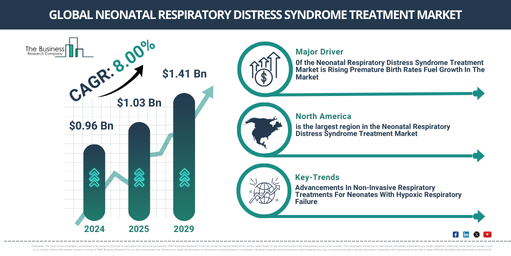
    In recent years, the market size for neonatal respiratory distress syndrome treatment has seen robust growth. The money generated by this market is forecasted to rise from $0.96 billion in 2024 to $1.03 billion in 2025, with a compound annual growth rate (CAGR) of 8.3%. Factors contributing to the growth in the historic period include an increase in permeability and fluid buildup within the alveoli, heightened alveolar-capillary permeability, a surge in the use of mechanical ventilation, more awareness amongst healthcare professionals and parents on neonatal care’s significance, as well as an uptick in healthcare investments.

    Growth in the neonatal respiratory distress syndrome treatment market is anticipated to be robust in the coming years, with estimations suggesting a value of $1.41 billion by 2029, representing a compound annual growth rate (CAGR) of 8.0%. This upward trajectory during the forecast period is largely due to factors such as the increasing inclination towards accessories and consumables, a surge in NICU admissions, a growing demand of personalized medicine, an increase in premature birth occurrences, and a rise in research and development initiatives. Some key trends expected during the forecast period include the automation of neonatal intensive care units (NICUs), the incorporation of artificial intelligence (AI), progresses in neonatal care technology, innovative surfactant therapies, and advanced ventilator technologies.

    Download a free sample to assess the report’s scope and structure:

    https://www.thebusinessresearchcompany.com/sample.aspx?id=20899&type=smp

    What Are the Core Market Drivers Propelling Growth in the Neonatal Respiratory Distress Syndrome Treatment Industry?

    The escalating rates of premature births is projected to boost the growth trajectory of the neonatal respiratory distress syndrome treatment market. A preterm birth, also known as premature birth, is when a baby arrives before the 37th week of pregnancy. Those born prior to the 32nd week face significant health threats – a typical pregnancy is approximately 40 weeks. Factors such as increasing maternal age, multiple pregnancies, health issues, lifestyle decisions, fertility treatment usage, infections, and environmental factors contribute to the upsurge in premature births. The need for Neonatal Respiratory Distress Syndrome (NRDS) treatment is frequent among premature newborns because their lungs are immature and there is inadequate surfactant production. This therapy aids in lung function improvement, breathing stabilization, and the reduction of premature infants’ risk of respiratory failure. For example, Tommy’s, a UK-based charity organization, reported in December 2022 that the percentage of live premature births in England and Wales spiked to 7.9% in 2022 from 7.5% in 2021, demonstrating a sequential rise in premature birth incidence. Over 53,000 babies were prematurely born in 2022, highlighting the reason behind the meandering trajectory of the neonatal respiratory distress syndrome treatment market.

    How Is the Neonatal Respiratory Distress Syndrome Treatment Market Segmented?

    The neonatal respiratory distress syndrome treatment market covered in this report is segmented –

    1) By Therapy: Oxygen Therapy, Surfactant Therapy

    2) By Route Of Administration: Parenteral, Inhalation, Other Routes Of Administration

    3) By End User: Hospitals, Sub-Acute Facilities, Home Care, Retail Pharmacies

    Subsegments:

    1) By Oxygen Therapy: Conventional Oxygen Therapy, High-Flow Nasal Cannula (HFNC) Oxygen Therapy, Continuous Positive Airway Pressure (CPAP) Oxygen Therapy, Invasive Mechanical Ventilation With Oxygen Therapy

    2) By Surfactant Therapy: Natural Surfactants, Synthetic Surfactants, Combined Surfactant Therapy (Natural + Synthetic), Prophylactic Surfactant Therapy, Rescue Surfactant Therapy

    Request customized data on this market:

    https://www.thebusinessresearchcompany.com/customise?id=20899&type=smp

    Which Regions Are Driving the Next Phase of the Neonatal Respiratory Distress Syndrome Treatment Market Growth?

    North America was the largest region in the neonatal respiratory distress syndrome treatment market in 2024. Asia-Pacific is expected to be the fastest-growing region in the forecast period. The regions covered in the neonatal respiratory distress syndrome treatment market report are Asia-Pacific, Western Europe, Eastern Europe, North America, South America, Middle East, Africa.

    Which Cutting-Edge Market Trends Are Expected to Drive the Neonatal Respiratory Distress Syndrome Treatment Market’s Growth?

    Leading firms in the neonatal respiratory distress syndrome treatment market are focusing on the advancement of technologies such as nitric oxide generators. These aim to improve oxygenation, reduce respiratory issues, and provide non-invasive treatment methods for neonates suffering from hypoxic respiratory failure. A nitric oxide generator is a medical apparatus that produces and dispenses nitric oxide gas, which is usually used to address respiratory problems by enhancing oxygen levels and reducing pulmonary hypertension chiefly in neonates and intensely sick patients. In a recent development, Beyond Air Inc., a US-based medical device and biopharmaceutical organization, secured FDA approval for LungFit PH in June 2022. This ground-breaking nitric oxide generator is intended to treat term and near-term neonates who have hypoxic respiratory failure, including persistent pulmonary hypertension of the newborn (PPHN). The device uses Beyond Air’s proprietary Ionizer technology to create nitric oxide from ambient air on demand, supplying an unrestricted source without any worries over dosage or flow. The technology empowers a low-power compressor to ionize nitrogen and oxygen, thereby reducing nitrogen dioxide (NO2) production which is then securely removed via a smart filter.

    View the full report here:

    https://www.thebusinessresearchcompany.com/report/neonatal-respiratory-distress-syndrome-treatment-global-market-report

    How Is the Neonatal Respiratory Distress Syndrome Treatment Market Defined and What Are Its Core Parameters?

    Neonatal respiratory distress syndrome treatment refers to the management of premature infants with insufficient surfactant production, leading to breathing difficulties. It involves administering exogenous surfactant therapy, providing respiratory support with mechanical ventilation or continuous positive airway pressure (CPAP), and oxygen supplementation.

    Purchase the full report and get a swift delivery:

    https://www.thebusinessresearchcompany.com/purchaseoptions.aspx?id=20899

    About The Business Research Company:

    With over 15000+ reports from 27 industries covering 60+ geographies, The Business Research Company has built a reputation for offering comprehensive, data-rich research and insights. Armed with 1,500,000 datasets, the optimistic contribution of in-depth secondary research, and unique insights from industry leaders, you can get the information you need to stay ahead in the game.

    Get in touch with us:

    The Business Research Company: https://www.thebusinessresearchcompany.com/

    Americas +1 3156230293

    Asia +44 2071930708

    Europe +44 2071930708

    Email us at info@tbrc.info

    Follow us on:

    LinkedIn: https://in.linkedin.com/company/the-business-research-company

    YouTube: https://www.youtube.com/channel/UC24_fI0rV8cR5DxlCpgmyFQ

    Global Market Model: https://www.thebusinessresearchcompany.com/global-market-model
  • Neonatal Phototherapy Market 2025-2034: Key Highlights, Growth Dynamics, and Emerging Trends

    Neonatal Phototherapy Market 2025-2034: Key Highlights, Growth Dynamics, and Emerging Trends

    Stay ahead with our updated market reports featuring the latest on tariffs, trade flows, and supply chain transformations.

    What Is the Current and Projected Market Size of the Neonatal Phototherapy Market Through 2034?

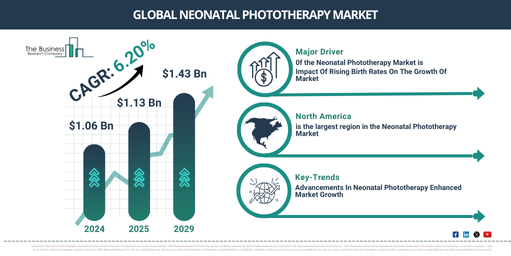
    In recent times, there has been substantial growth in the neonatal phototherapy market size. The market is projected to expand from $1.06 billion in 2024 to $1.13 billion in 2025, indicating a compound annual growth rate (CAGR) of 6.4%. Several factors have contributed to the past period’s growth, including enhancements in healthcare infrastructure, government health projects, programs on education and training, backing from non-profit entities, and clinical research and studies.

    The size of the neonatal phototherapy market is projected to experience robust growth in the coming years, expanding to $1.43 billion by 2029, with a CAGR of 6.2%. This growth during the forecast period can be linked to factors such as the broadening of healthcare accessibility, government-backed health policies, the economic development of developing countries, improved training schemes, and public health drives. Key trends for the forecast period include the advent of portable phototherapy gadgets, the use of LED-based phototherapy, the emergence of miniaturized devices, the application of AI in phototherapy, and the adoption of blue and green light technologies.

    Download a free sample to assess the report’s scope and structure:

    https://www.thebusinessresearchcompany.com/sample.aspx?id=20898&type=smp

    Which Primay Drivers Are Accelerating Growth in the Neonatal Phototherapy Market?

    The growth of the neonatal phototherapy market is predicted to be fueled by increasing birth rates. Higher birth rates are typically the result of factors such as better healthcare, increased fertility rates, cultural inclination towards larger families, and heightened immigration in some areas. Neonatal phototherapy plays a crucial role in treating jaundice in prematurely-born infants by using light therapy to eliminate excess bilirubin in their blood. This is important in minimizing the risk of serious complications like brain damage, which are more likely in premature babies due to their immature liver functionalities and higher chances of presenting jaundice. For instance, a report by a US-based national public health body, the Centers for Disease Control and Prevention, showed a 1% rise in recorded births in the United States in January 2023, totaling 3,664,292 in comparison to the previous year. Consequently, the surge in birth rates is propelling the neonatal phototherapy market’s expansion.

    Which Primary Segments of the Neonatal Phototherapy Market Are Driving Growth and Industry Transformations?

    The neonatal phototherapy market covered in this report is segmented –

    1) By Type: Convectional Phototherapy Equipment, LED Phototherapy Equipment, Fiber Optic Phototherapy Equipment

    2) By Product Type: Traditional Phototherapy Lamps, Phototherapy Beds, Flexible Phototherapy Lamps

    3) By Application: Skin Diseases Treatment, Neonatal Jaundice Management

    Subsegments:

    1) By Conventional Phototherapy Equipment: Fluorescent Tube Phototherapy Units, Incandescent Lamp Phototherapy Units

    2) By LED Phototherapy Equipment: Blue LED Phototherapy Units, White LED Phototherapy Units

    3) By Fiber Optic Phototherapy Equipment: Overhead Fiber Optic Phototherapy Units, Blanket Or Pad-Type Fiber Optic Phototherapy Units

    Request customized data on this market:

    https://www.thebusinessresearchcompany.com/customise?id=20898&type=smp

    Which Regions Are Key Players in the Growth of the Neonatal Phototherapy Market?

    North America was the largest region in the neonatal phototherapy market in 2024. The regions covered in the neonatal phototherapy market report are Asia-Pacific, Western Europe, Eastern Europe, North America, South America, Middle East, Africa.

    What Are the Key Market Trends in the Neonatal Phototherapy Market Over the Coming Years?

    Primary players in the neonatal phototherapy market are concentrating their efforts on creating innovative solutions, such as state-of-the-art open warmers, to improve postnatal care for infants. The term advanced open warmer (AOW) is used to describe a medical apparatus regularly employed in neonatal and pediatric environments to keep a consistent body temperature in newborns and infants, particularly those born prematurely or with low birth weights. For example, Draeger India Pvt. Ltd, a medical and safety technology firm based in India, unveiled the BabyRoo TN300 in October 2024. This novel device was crafted to provide flexibility in labor and delivery rooms, as well as neonatal intensive care units. Its purpose is to render the best possible care for newborns, especially those requiring intensive care after birth. The BabyRoo TN300 comes equipped with dual heat sources for consistent temperature control, skin temperature regulation for individualized warming, a prewarm function for prompt readiness, incorporated thermomonitoring to identify thermal stress, lung-protective respiratory support facilitated by an AutoBreath module, and a design centered around family care to encourage parents’ participation in infant care.

    View the full report here:

    https://www.thebusinessresearchcompany.com/report/neonatal-phototherapy-global-market-report

    What Parameters Are Used to Define the Neonatal Phototherapy Market?

    Neonatal phototherapy is a medical treatment used to manage jaundice in newborns by exposing them to specific light wavelengths. This process helps break down excess bilirubin in the baby’s blood, which is the cause of the yellowing of the skin and eyes. It is a non-invasive and effective method to reduce the risk of complications associated with high bilirubin levels, promoting safer recovery in newborns.

    Purchase the full report and get a swift delivery:

    https://www.thebusinessresearchcompany.com/purchaseoptions.aspx?id=20898

    About The Business Research Company:

    With over 15000+ reports from 27 industries covering 60+ geographies, The Business Research Company has built a reputation for offering comprehensive, data-rich research and insights. Armed with 1,500,000 datasets, the optimistic contribution of in-depth secondary research, and unique insights from industry leaders, you can get the information you need to stay ahead in the game.

    Get in touch with us:

    The Business Research Company: https://www.thebusinessresearchcompany.com/

    Americas +1 3156230293

    Asia +44 2071930708

    Europe +44 2071930708

    Email us at info@tbrc.info

    Follow us on:

    LinkedIn: https://in.linkedin.com/company/the-business-research-company

    YouTube: https://www.youtube.com/channel/UC24_fI0rV8cR5DxlCpgmyFQ

    Global Market Model: https://www.thebusinessresearchcompany.com/global-market-model
  • Next-Gen Natural Insect Repellents: Market Forecast, Transformation, and Long-Term Trajectories

    Next-Gen Natural Insect Repellents: Market Forecast, Transformation, and Long-Term Trajectories

    Stay ahead with our updated market reports featuring the latest on tariffs, trade flows, and supply chain transformations.

    What Are the Key Milestones in the Natural Insect Repellents Market’s Growth Trajectory From 2025 To 2034?

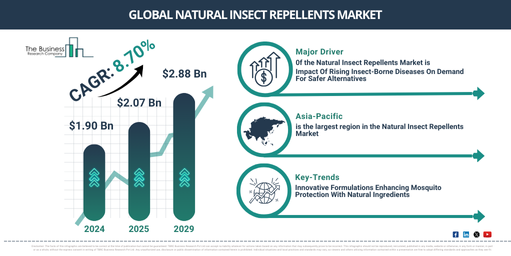
    There has been a significant expansion in the size of the natural insect repellents market in the past few years. The market, which is predicted to grow from $1.90 billion in 2024 to $2.07 billion in 2025, signifies a compound annual growth rate (CAGR) of 8.9%. Various factors contributed to this growth during the historic period including the upsurge in government initiatives against vector-borne diseases, eco-friendly policies encouraging environmentally safe products, augmented consumer inclination towards toxin-free products, increased necessity for repellents that are safe for children and pets, and the surge in popularity of sustainable and biodegradable products.

    Expectations are high for a robust growth in the market for natural insect repellents in the coming years, with estimates suggesting a rise to $2.88 billion by 2029, aided by a compound annual growth rate (CAGR) of 8.7%. This predicted growth during the projection period could be down to an increase in vector-borne diseases, higher levels of campaigns promoting global health and disease prevention, a surge in the use of aromatherapy-based repellents, a boost in disposable income levels, and a growing middle-class demographic. A number of key trends are anticipated during this forecasting period, including advances in botanical extraction technologies, the development of natural repellents with a longer shelf life, the launch of multifunctional products, innovative packaging designed for ease and convenience, and a leaning towards organic and plant-derived products.

    Download a free sample to assess the report’s scope and structure:

    https://www.thebusinessresearchcompany.com/sample.aspx?id=20896&type=smp

    Which Major Market Drivers Are Expected to Boost the Growth Potential of the Natural Insect Repellents Market?

    The growth of the natural insect repellents market is expected to accelerate due to the increasing prevalence of insect-related illnesses. These ailments are caused by infectious agents passed to people or animals from the bites of depleted insects, including mosquitoes, ticks, and flies. Because of factors like climate change, urban growth, deforestation, and expanded international travel, these sicknesses spread, expanding the living and dispersion spaces for insects that carry diseases. Natural insect repellents offer a secure, eco-friendly, and non-toxic substitute to synthetic repellents, efficiently reducing the likelihood of insect bites and the transfer of diseases. For example, the Sweden-based government institution, the European Centre for Disease Prevention and Control, reported in June 2024, a steep rise from 71 in 2022 to 130 locally contracted dengue cases in the EU/EEA in 2023. Imported dengue occurrences have similarly escalated dramatically, increasing from 1,572 in 2022 to more than 4,900 in 2023. As a result, the burgeoning prevalence of insect-borne diseases is propelling the expansion of the natural insect repellents market.

    Which Key Market Segments Comprise the Natural Insect Repellents Market and Drive Its Revenue Growth?

    The natural insect repellents market covered in this report is segmented –

    1) By Product Type: Spray Or Aerosols, Creams Or Lotions, Others Product Types

    2) By Distribution: Supermarkets Or Hypermarkets, Online, Other Distributions

    3) By Application: Special Population, General Population

    Subsegments:

    1) By Spray Or Aerosols: Pump Sprays, Aerosol Sprays, Natural Mist Sprays

    2) By Creams Or Lotions: Herbal Creams, Essential Oil-based Lotions, Organic Insect Repellent Creams, Gel-based Repellents

    3) By Other Product Types: Insect Repellent Patches, Insect Repellent Bracelets, Insect Repellent Candles, Insect Repellent Oils (Essential Oils), Insect Repellent Powders

    Request customized data on this market:

    https://www.thebusinessresearchcompany.com/customise?id=20896&type=smp

    Which Areas Are Leading Regions in the Natural Insect Repellents Market Expansion Across the Globe?

    Asia-Pacific was the largest region in the natural insect repellents market in 2024 and it is expected to be the fastest-growing region in the forecast period. The regions covered in the natural insect repellents market report are Asia-Pacific, Western Europe, Eastern Europe, North America, South America, Middle East, Africa.

    What Key Trends Are Shaping the Future of the Natural Insect Repellents Market?

    Leading businesses in the natural insect repellents market are concentrating on designing novel formulations such as mosquito-repellent sprays. These products provide immediate defense against mosquito bites, lowering the likelihood of contracting insect-borne diseases. These sprays, either in aerosol or liquid form, are designed to deter mosquitoes by creating a protective coating of active substances on the skin or surrounding area. For instance, Diptyque, a luxury fragrance brand based in France, in June 2023, revealed a body spray with mosquito-repellent properties. This limited-edition summer body perfume cleverly combines usefulness with delight, offering a unique blend of essential oils known for their insect-repellent properties like lemongrass, geranium, and lemon eucalyptus. These oils are skillfully matched with the invigorating, aromatic notes of neroli and orange blossom to create a dynamic, floral scent that also offers protection against mosquitoes.

    View the full report here:

    https://www.thebusinessresearchcompany.com/report/natural-insect-repellents-global-market-report

    How Is the Natural Insect Repellents Market Conceptually Defined?

    Natural insect repellents are substances derived from plant-based or mineral sources, formulated to deter insects without the use of synthetic chemicals. They typically use essential oils such as citronella, eucalyptus, lemongrass, lavender, or cedarwood, which are known for their insect-repelling properties. These repellents offer a safer and eco-friendly alternative to conventional products, making them suitable for individuals with sensitive skin, children, and environmentally conscious users.

    Purchase the full report and get a swift delivery:

    https://www.thebusinessresearchcompany.com/purchaseoptions.aspx?id=20896

    About The Business Research Company:

    With over 15000+ reports from 27 industries covering 60+ geographies, The Business Research Company has built a reputation for offering comprehensive, data-rich research and insights. Armed with 1,500,000 datasets, the optimistic contribution of in-depth secondary research, and unique insights from industry leaders, you can get the information you need to stay ahead in the game.

    Get in touch with us:

    The Business Research Company: https://www.thebusinessresearchcompany.com/

    Americas +1 3156230293

    Asia +44 2071930708

    Europe +44 2071930708

    Email us at info@tbrc.info

    Follow us on:

    LinkedIn: https://in.linkedin.com/company/the-business-research-company

    YouTube: https://www.youtube.com/channel/UC24_fI0rV8cR5DxlCpgmyFQ

    Global Market Model: https://www.thebusinessresearchcompany.com/global-market-model
  • Nasal Cannula Market Overview 2025: Competitive Shifts, Forecast Models, and Emerging Opportunities

    Nasal Cannula Market Overview 2025: Competitive Shifts, Forecast Models, and Emerging Opportunities

    Stay ahead with our updated market reports featuring the latest on tariffs, trade flows, and supply chain transformations.

    How Has The Nasal Cannula Market Size Shifted, And What Is the Outlook Through 2034?

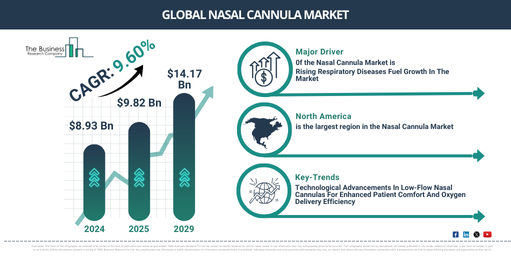
    Significant growth has been observed in the nasal cannula market in the past few years. The market, valued at $8.93 billion in 2024, is projected to increase to $9.82 billion in 2025, representing a compound annual growth rate (CAGR) of 9.9%. Factors contributing to this growth during the historical period include a heightened focus on personalized patient care, a higher incidence of obstructive sleep apnea, increased awareness of respiratory diseases, evolving lifestyle changes, and climbing population numbers.

    The market for nasal cannula is predicted to witness substantial growth in the coming years, escalating to a value of $14.17 billion by 2029 with a compound annual growth rate of 9.6%. The surge during the prediction period can be credited to various factors such as the rising occurrence of respiratory illnesses, enhanced healthcare spending, increasing ageing population, expansive government initiatives, and a rise in surgical procedures. Key trends marking this period are expected to be technologic progress, strategic partnerships, expansion of facilities, investments in research and development, and an emphasis on new product launches.

    Download a free sample to assess the report’s scope and structure:

    https://www.thebusinessresearchcompany.com/sample.aspx?id=20895&type=smp

    What Are the Core Growth Drivers Propelling the Nasal Cannula Market Forward?

    The surge in respiratory illnesses is a significant factor propelling the growth of the nasal cannula market. Respiratory illnesses are defined as health conditions that impact the airways and lungs, thereby hindering normal breathing and oxygen transport. The escalating rates of these diseases are often linked to elements such as increased allergen exposure, air pollution, viral infections, and smoking. Nasal cannulas are employed in the treatment of these illnesses to facilitate supplemental oxygen delivery directly to the nostrils, thereby enhancing oxygen concentrations in patients struggling with respiratory challenges. As a case in point, in June 2024, the American Lung Association, an established US-based non-profit entity, revealed that in 2022, about 44.2 million Americans, accounting for 13.5% of the population, were diagnosed with asthma by a qualified medical professional. Hence, the uptick in respiratory illnesses fuels the expansion of the nasal cannula market.

    What Segment Types Define the Nasal Cannula Market Structure?

    The nasal cannula market covered in this report is segmented –

    1) By Type: Low Flow Nasal Cannula, High Flow Nasal Cannula

    2) By Material: Plastic, Silicone

    3) By Size: Neonate, Infant, Child, Adult

    4) By Prongs: Straight, Curved, Flared, Other Prongs

    5) By End User: Hospitals, Ambulatory Healthcare Services, Long Term Care Centers, Others End Users

    Subsegments:

    1) By Low Flow Nasal Cannula: Adult Low Flow Nasal Cannula, Pediatric Low Flow Nasal Cannula, Disposable Low Flow Nasal Cannula, Reusable Low Flow Nasal Cannula

    2) By High Flow Nasal Cannula: Adult High Flow Nasal Cannula, Pediatric High Flow Nasal Cannula, Disposable High Flow Nasal Cannula, Reusable High Flow Nasal Cannula

    Request customized data on this market:

    https://www.thebusinessresearchcompany.com/customise?id=20895&type=smp

    Which Geographic Areas Hold the Strongest Growth Potential in the Nasal Cannula Market?

    North America was the largest region in the nasal cannula market in 2024. The regions covered in the nasal cannula market report are Asia-Pacific, Western Europe, Eastern Europe, North America, South America, Middle East, Africa.

    What Are the Most Significant Market Trends in the Nasal Cannula Market?

    Leading firms in the nasal cannula market are prioritizing technological advancements like low-flow nasal cannulas to increase patient comfort and the efficiency of oxygen delivery, while also addressing specific clinical needs. Low-flow nasal cannulas, devices that supply additional oxygen at lesser flow rates, typically between 1 to 6 liters per minute, are delivered through two prongs placed into the nostrils. For example, in May 2024, the Germany-based diagnostics and consumables firm CNSAC MedShop launched NasalOxy, a ground-breaking, patented low-flow nasal cannula engineered to overcome the constraints of conventional oxygen delivery techniques. This cutting-edge device ensures superior comfort and efficiency for patients needing extended oxygen therapy and also offers flexibility to accommodate both nasal and oral respiration. NasalOxy’s innovative design lessens contact with the mucous membrane, thus reducing irritation, discomfort and negating usual side effects linked to traditional nasal cannulas.

    View the full report here:

    https://www.thebusinessresearchcompany.com/report/nasal-cannula-global-market-report

    What Is the Definition of the Nasal Cannula Market?

    A nasal cannula is a medical device used to deliver supplemental oxygen to patients who require respiratory support. It consists of two small prongs that fit into the nostrils, connected by a thin tube to an oxygen source. This device allows for comfortable, continuous oxygen flow while enabling the patient to speak and eat.

    Purchase the full report and get a swift delivery:

    https://www.thebusinessresearchcompany.com/purchaseoptions.aspx?id=20895

    About The Business Research Company:

    With over 15000+ reports from 27 industries covering 60+ geographies, The Business Research Company has built a reputation for offering comprehensive, data-rich research and insights. Armed with 1,500,000 datasets, the optimistic contribution of in-depth secondary research, and unique insights from industry leaders, you can get the information you need to stay ahead in the game.

    Get in touch with us:

    The Business Research Company: https://www.thebusinessresearchcompany.com/

    Americas +1 3156230293

    Asia +44 2071930708

    Europe +44 2071930708

    Email us at info@tbrc.info

    Follow us on:

    LinkedIn: https://in.linkedin.com/company/the-business-research-company

    YouTube: https://www.youtube.com/channel/UC24_fI0rV8cR5DxlCpgmyFQ

    Global Market Model: https://www.thebusinessresearchcompany.com/global-market-model
  • Myopia Treatment DevicesMarket Overview 2025–2034: CAGR Trends, Long-Term Growth Paths, and Business Implications

    Myopia Treatment DevicesMarket Overview 2025–2034: CAGR Trends, Long-Term Growth Paths, and Business Implications

    Stay ahead with our updated market reports featuring the latest on tariffs, trade flows, and supply chain transformations.

    What Are the Projected Market Size and Growth Rates for the Myopia Treatment Devices Market From 2025 To 2029?

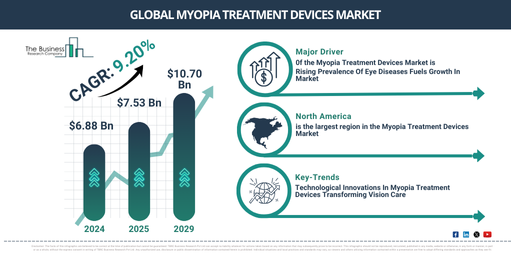
    The market for myopia treatment devices has seen remarkable expansion in the previous years. Projected to escalate from a value of $6.88 billion in 2024, it is expected to reach $7.53 billion in 2025, showcasing a compound annual growth rate (CAGR) of 9.5%. Factors such as government-led health schemes, amplified research and development activities, improved patient awareness, growth in disposable income, and an increased emphasis on children’s eye health have contributed to the growth witnessed during the historic period.

    In the coming years, the market for myopia treatment devices is anticipated to experience substantial growth. It is projected to increase to $10.70 billion by 2029, with a compound annual growth rate (CAGR) of 9.2%. This growth within the projected period can be linked to the surge in telemedicine services, developments in gene therapy, myopia control programs, enhanced surgical methods, and the inclusion of artificial intelligence (AI) in diagnostic procedures. The forecast period is expected to see major trends such as improvements in refractive surgery, solutions for digital eye strain, advanced contact lenses, laser refractive surgery, and the use of biosensors in eye health.

    Download a free sample to assess the report’s scope and structure:

    https://www.thebusinessresearchcompany.com/sample.aspx?id=20893&type=smp

    What Are the Primary Drivers Supporting the Market Growth of the Myopia Treatment Devices Market?

    The surge in instances of eye-related ailments is projected to spur the expansion of the myopia treatment devices market in the future. These ailments encompass a variety of conditions that can affect the eye’s structure or functionality, possibly leading to vision impairment. The increasing instances of these diseases can be attributed to factors such as an aging populace, increased screen viewing time, changes in lifestyle, and higher exposure to environmental pollutants. Devices for treating myopia play a crucial role in the management of these diseases by decelerating the advancement of myopia, enhancing visibility, and mitigating the risks of potential complications. This proactive method contributes significantly to preserving ocular health and improving the quality of life for those afflicted. For instance, research by the Centers for Disease Control and Prevention, a US-based government agency, in May 2024 shows that by 2024, 17.2% of Americans aged 40 and above, an estimated 20.5 million individuals, will have cataracts in minimum one eye. This number is predicted to increase to over 30 million by 2028. Hence, the rise in eye-related ailments is fuelling the expansion of the myopia treatment devices market.

    Which Primary Segments of the Myopia Treatment Devices Market Are Driving Growth and Industry Transformations?

    The myopia treatment devices market covered in this report is segmented –

    1) By Product Type: Eye Glasses, Contact Lenses, Ortho-K Lenses, Phakic Intraocular Lenses, Excimer Laser Refractive Surgery Devices

    2) By Treatment: Corrective Lenses, Laser Eye Surgery, Lens Implant Surgery

    3) By End-Use: Hospitals And Clinics, Ophthalmic Centers, Retail stores, Online Channels

    Subsegments:

    1) By Eye Glasses: Single Vision Glasses, Multifocal Glasses

    2) By Contact Lenses: Soft Contact Lenses, Rigid Gas Permeable (RGP) Contact Lenses, Hybrid Contact Lenses

    3) By Ortho-K Lenses: Overnight Ortho-K Lenses, Daytime Ortho-K Lenses

    4) By Phakic Intraocular Lenses: Anterior Chamber Phakic IOLs, Posterior Chamber Phakic IOLs

    5) By Excimer Laser Refractive Surgery Devices: LASIK (Laser-Assisted in Situ Keratomileusis) Devices, PRK (Photorefractive Keratectomy) Devices, SMILE (Small Incision Lenticule Extraction) Devices

    Request customized data on this market:

    https://www.thebusinessresearchcompany.com/customise?id=20893&type=smp

    Which Regions Are Key Players in the Growth of the Myopia Treatment Devices Market?

    North America was the largest region in the myopia treatment devices market in 2024. Asia-Pacific is expected to be the fastest-growing region in the forecast period. The regions covered in the myopia treatment devices market report are Asia-Pacific, Western Europe, Eastern Europe, North America, South America, Middle East, Africa.

    What Are the Strategic Trends Steering the Myopia Treatment Devices Market Direction?

    The dominant players in the myopia treatment devices industry are emphasizing on creating innovative and technologically pioneering devices, including overnight therapeutic lenses, to maintain their prominence and fulfill the escalating demand for convenient and efficient treatment options. Overnight therapeutic lenses are a special category of contact lenses worn during the night to temporarily correct vision, mostly for conditions like myopia, astigmatism or presbyopia. For example, in January 2022, the US-based pharmaceutical industry giant, Johnson & Johnson Vision, introduced ACUVUE Abiliti, a fresh range of myopia management solutions intended to deal with the rising incidence of myopia in children. ACUVUE Abiliti 1-Day Soft Therapeutic Lenses are crafted to control myopia progression in children from 7 to 12 years of age. These novel daily-use lenses represent a significant progress in managing myopia, showcasing an average decrease in axial length by 0.105 mm in six months. This decrement assists in mitigating the long-term hazards linked with high myopia that may result in serious vision issues in future.

    View the full report here:

    https://www.thebusinessresearchcompany.com/report/myopia-treatment-devices-global-market-report

    What Parameters Are Used to Define the Myopia Treatment Devices Market?

    Myopia treatment devices refer to various tools and technologies used to manage or correct myopia (nearsightedness). These devices utilize advanced technologies, such as reshaping the cornea with ortho-K lenses or using atropine drops, to slow the progression of myopia and improve vision without the need for constant corrective eyewear.

    Purchase the full report and get a swift delivery:

    https://www.thebusinessresearchcompany.com/purchaseoptions.aspx?id=20893

    About The Business Research Company:

    With over 15000+ reports from 27 industries covering 60+ geographies, The Business Research Company has built a reputation for offering comprehensive, data-rich research and insights. Armed with 1,500,000 datasets, the optimistic contribution of in-depth secondary research, and unique insights from industry leaders, you can get the information you need to stay ahead in the game.

    Get in touch with us:

    The Business Research Company: https://www.thebusinessresearchcompany.com/

    Americas +1 3156230293

    Asia +44 2071930708

    Europe +44 2071930708

    Email us at info@tbrc.info

    Follow us on:

    LinkedIn: https://in.linkedin.com/company/the-business-research-company

    YouTube: https://www.youtube.com/channel/UC24_fI0rV8cR5DxlCpgmyFQ

    Global Market Model: https://www.thebusinessresearchcompany.com/global-market-model

  • Myopia Treatment Outlook 2034: Key Drivers, Trends, and Market Frontiers

    Myopia Treatment Outlook 2034: Key Drivers, Trends, and Market Frontiers

    Stay ahead with our updated market reports featuring the latest on tariffs, trade flows, and supply chain transformations.

    What Is the Estimated Market Size of the Myopia Treatment Market In 2029?

    In the past few years, the myopia treatment market size has experienced significant growth. The market, which was valued at $17.82 billion in 2024, is projected to increase to $19.58 billion in 2025, indicating a compound annual growth rate (CAGR) of 9.9%. Factors such as a surge in the elderly population, increased government initiatives to raise awareness, growing consciousness about myopia treatment, increased funding in research and development, and a higher incidence of distance vision issues have contributed to this growth during the historic period.

    The market for myopia treatment is projected to witness robust expansion in the forthcoming years, reaching a worth of $28.16 billion by 2029 with a CAGR of 9.5%. This growth in the anticipated period can be attributed to the escalating prevalence of far-sightedness, increased dependency on digital mediums, enhanced healthcare facilities, rising cases of myopia, and growth in instances of vision loss. Some major trends to be noted during this forecast period include the use of rigid gas-permeable contact lenses, progress in light-based therapies, significant research delving into genetic factors, embracement of digital platforms and applications, and advancements in atropine eye drops.

    Download a free sample to assess the report’s scope and structure:

    https://www.thebusinessresearchcompany.com/sample.aspx?id=20892&type=smp

    How Are Key Drivers in the Industry Acting as Catalysts for the Growth of the Myopia Treatment Market?

    The surge in screen usage is anticipated to catalyze the expansion of the myopia treatment market. The term “screen time” encompasses the duration an individual spends on screen-based devices such as smartphones, computers, tablets or TVs. The escalation in screen time can be attributed to a higher utilization of streaming services, augmented use of social platforms, remote working conditions, and digital meetings. Myopia treatments aim to alleviate the eye discomfort and tension that results from extensive screen usage, enhancing focus, comfort and visual acuity. As cited by the US government agency, Center for Disease Control and Prevention, from July 2021 to December 2023, about 50.4% of teens aged between 12 and 17 devoted four or more hours daily to screens, 22.8% spent three hours, 17.8% used screens for two hours, 6.1% for one hour, while 3.0% used screens for less than one hour each day. Consequently, the rise in screen usage is fueling the progression of the myopia treatment market.

    Which Segments in the Myopia Treatment Offer the Most Growth?

    The myopia treatment market covered in this report is segmented –

    1) By Type: Simple Myopia, High Myopia, Pathological Myopia

    2) By Treatment: Eyeglasses, Contact Lenses, Refractive Surgery, Laser-Assisted In Situ Keratomileusis (LASIK), Photorefractive Keratectomy (PRK), Orthokeratology (Ortho-K)

    3) By Route Of Administration: Oral, Parenteral, Other Routes Of Administration

    4) By Distribution Channel: Direct Tender, Retail Sales, Other Distribution Channels

    5) By End-User: Hospital Or Clinical Laboratories, Physician Offices, Reference Laboratories, Other End-Users

    Subsegments:

    1) By Simple Myopia: Mild Myopia, Moderate Myopia

    2) By High Myopia: Severe Myopia, Very Severe Myopia

    3) By Pathological Myopia: Degenerative Myopia, Malignant Myopia

    Request customized data on this market:

    https://www.thebusinessresearchcompany.com/customise?id=20892&type=smp

    What Are the Fastest-Growing Geographies in the Myopia Treatment Market?

    Asia Pacific was the largest region in the myopia treatment market in 2024. Asia-Pacific is expected to be the fastest-growing region in the forecast period. The regions covered in the myopia treatment market report are Asia-Pacific, Western Europe, Eastern Europe, North America, South America, Middle East, Africa.

    What Long-Term Trends Are Transforming the Competitive Landscape of the Myopia Treatment Market?

    Leading businesses in the myopia treatment market are shifting their focus towards the creation of superior products like optical biometers, with a view to boosting the precision of diagnosis and offering personalized treatment solutions. Optical biometers, which use light to gauge eye-related characteristics – such as axial length and corneal curvature – play a crucial role in the detection and ongoing observation of eye health issues. As an example, NIDEK Co., Ltd., a producer of ophthalmic products based out of Japan, brought the AL-Scan M and MV-1 to the market in February 2023. The AL-Scan M device, enhanced with 3D auto-tracking and auto-shot functionalities, offers easy-to-comprehend readings that are akin to those from an autorefractor. These capabilities enhance patient throughput, particularly for the younger demographic. The AL-Scan M device is specifically tailored to deliver accurate axial length measurements, which are key to keeping tabs on the progression of myopia. In addition, it flawlessly merges with the MV-1 Myopia Viewer software, which acts as an assistant in monitoring both the patient’s treatment history and behavior.

    View the full report here:

    https://www.thebusinessresearchcompany.com/report/myopia-treatment-global-market-report

    What Are the Key Elements That Define the Myopia Treatment Market?

    Myopia treatment refers to medical or corrective interventions used to manage or correct myopia, also known as nearsightedness. Myopia is a common refractive error of the eye where distant objects appear blurry, but close objects are clear. Myopia treatment’s main goal is to improve vision and quality of life by correcting refractive errors. It also helps manage myopia progression, reducing reliance on corrective lenses for long-term vision health.

    Purchase the full report and get a swift delivery:

    https://www.thebusinessresearchcompany.com/purchaseoptions.aspx?id=20892

    About The Business Research Company:

    With over 15000+ reports from 27 industries covering 60+ geographies, The Business Research Company has built a reputation for offering comprehensive, data-rich research and insights. Armed with 1,500,000 datasets, the optimistic contribution of in-depth secondary research, and unique insights from industry leaders, you can get the information you need to stay ahead in the game.

    Get in touch with us:

    The Business Research Company: https://www.thebusinessresearchcompany.com/

    Americas +1 3156230293

    Asia +44 2071930708

    Europe +44 2071930708

    Email us at info@tbrc.info

    Follow us on:

    LinkedIn: https://in.linkedin.com/company/the-business-research-company

    YouTube: https://www.youtube.com/channel/UC24_fI0rV8cR5DxlCpgmyFQ

    Global Market Model: https://www.thebusinessresearchcompany.com/global-market-model
  • Strong CAGR to Propel in the Mosquito Borne Diseases Market and Beyond upto $4.51 Billion by 2029

    Strong CAGR to Propel in the Mosquito Borne Diseases Market and Beyond upto $4.51 Billion by 2029

    Stay ahead with our updated market reports featuring the latest on tariffs, trade flows, and supply chain transformations.

    What is the Projected CAGR for the Mosquito Borne Diseases Market Size from 2025 to 2034?

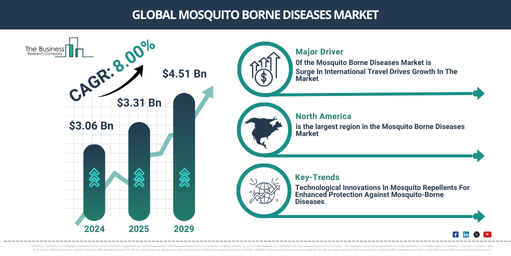
    The market size for diseases caused by mosquitoes has seen a robust expansion in recent years. The market is projected to escalate from $3.06 billion in 2024 to $3.31 billion in 2025, with a compound annual growth rate (CAGR) of 8.3%. Factors contributing to this growth during the historical period include the escalating occurrence of malaria and dengue, higher global temperatures, the deficiency of adequate public health infrastructure, growing urbanization and population, and an increased awareness about healthcare.

    Experts foresee a robust expansion in the mosquito borne diseases market over the coming years. The market is projected to surge to a formidable $4.51 billion by 2029, with a compound annual growth rate (CAGR) of 8.0%. This upswing during the forecast period can be ascribed to escalated investments in vector control initiatives, amplified importance on healthcare infrastructure, an uptick in journey and tourism to endemic areas, surfacing drug-resistant mosquito breeds, and governmental impetus towards disease elimination. Key trends for the forecast period encompass enhancement of insecticide-treated bed nets, the debut of rapid diagnostic assay kits, breakthroughs in vector management strategies, technological development, and the introduction of advanced diagnostic apparatuses.

    Download a free sample to assess the report’s scope and structure:

    https://www.thebusinessresearchcompany.com/sample.aspx?id=20888&type=smp

    Which Primay Drivers Are Accelerating Growth in the Mosquito Borne Diseases Market?

    The growth of the mosquito-borne diseases market is predicted to be fueled by the rise in international travel. The uptick in global travel can be attributed to an increased need for leisure, business, and post-pandemic reunions, coupled with enhanced travel facilities and easier access to travel infrastructure. By escalading contact with mosquito breeding grounds, allowing the transport of disease-bearing mosquitoes, and creating obstacles to effective vector control strategies, international travel plays a significant role in spreading mosquito-borne diseases. For example, the UN Tourism, a tourist company based in Spain, reported approximately 1.1 billion global tourist arrivals (overnight stays) from January to September 2024, an increase of roughly 11% compared to the same time frame in 2023. Hence, the rise in international travel is fueling the expansion of the mosquito-borne diseases market.

    Which Primary Segments of the Mosquito Borne Diseases Market Are Driving Growth and Industry Transformations?

    The mosquito borne diseases market covered in this report is segmented –

    1) By Disease Type: Malaria, Dengue, Yellow Fever, West Nile Virus, Chikungunya, Zika Virus, Other Disease Types

    2) By Treatment Type: Medication, Vaccination, Vector Control Methods, Immunotherapy, Supportive Care, Other Treatment Types

    3) By End User: Hospitals, Clinics, Diagnostic Centers, Research Institutes, Government Organizations, Non-Governmental Organizations, Other End Users

    Subsegments:

    1) By Malaria: Plasmodium Falciparum Malaria, Plasmodium Vivax Malaria, Other Malaria Types

    2) By Dengue: Dengue Fever, Severe Dengue (Dengue Hemorrhagic Fever)

    3) By Yellow Fever: Acute Yellow Fever, Chronic Yellow Fever

    4) By West Nile Virus: Neuroinvasive Disease (Encephalitis, Meningitis), Non-neuroinvasive Disease

    5) By Chikungunya: Acute Chikungunya, Chronic Chikungunya

    6) By Zika Virus: Acute Zika Infection, Congenital Zika Syndrome

    7) By Other Disease Types: Japanese Encephalitis, La Crosse Encephalitis, Eastern Equine Encephalitis (EEE), Other Mosquito-Borne Infections

    Request customized data on this market:

    https://www.thebusinessresearchcompany.com/customise?id=20888&type=smp

    Which Regions Are Key Players in the Growth of the Mosquito Borne Diseases Market?

    North America was the largest region in the mosquito borne diseases market in 2024. Latin America is expected to be the fastest-growing region in the forecast period. The regions covered in the mosquito borne diseases market report are Asia-Pacific, Western Europe, Eastern Europe, North America, South America, Middle East, Africa.

    What Are the Key Market Trends in the Mosquito Borne Diseases Market Over the Coming Years?

    Leading firms in the mosquito-borne diseases market are concentrating on introducing novel products such as sophisticated mosquito repellents to augment the shield against diseases like malaria, dengue, and Zika. Advanced mosquito repellents are inventive products integrating long-lasting and effective components or technologies like microencapsulation, natural compounds, or wearable gadgets for superior mosquito defense. For example, in March 2023, Mortein, a household insecticide brand from Australia, unveiled Mortein Smart+, a state-of-the-art liquid vaporizer intended to secure protection against mosquitoes. This product delivers two hours of residual protection post-disablement, addressing the escalating risk of mosquito-borne diseases with swifter and superior repulsion. The launch underscores Mortein’s commitment to delivering dependable solutions for households, especially in combating mosquito-transmitted diseases.

    View the full report here:

    https://www.thebusinessresearchcompany.com/report/mosquito-borne-diseases-global-market-report

    What Parameters Are Used to Define the Mosquito Borne Diseases Market?

    Mosquito borne diseases are a group of infectious illnesses caused by parasites, viruses, and bacteria transmitted to humans through the bites of infected female mosquitoes, leading to widespread health concerns, increased morbidity and mortality rates, and the need for effective prevention and control measures in both endemic and non-endemic regions worldwide.

    Purchase the full report and get a swift delivery:

    https://www.thebusinessresearchcompany.com/purchaseoptions.aspx?id=20888

    About The Business Research Company:

    With over 15000+ reports from 27 industries covering 60+ geographies, The Business Research Company has built a reputation for offering comprehensive, data-rich research and insights. Armed with 1,500,000 datasets, the optimistic contribution of in-depth secondary research, and unique insights from industry leaders, you can get the information you need to stay ahead in the game.

    Get in touch with us:

    The Business Research Company: https://www.thebusinessresearchcompany.com/

    Americas +1 3156230293

    Asia +44 2071930708

    Europe +44 2071930708

    Email us at info@tbrc.info

    Follow us on:

    LinkedIn: https://in.linkedin.com/company/the-business-research-company

    YouTube: https://www.youtube.com/channel/UC24_fI0rV8cR5DxlCpgmyFQ

    Global Market Model: https://www.thebusinessresearchcompany.com/global-market-model
  • Microscope Camera Market 2025-2034: Key Highlights, Growth Dynamics, and Emerging Trends

    Microscope Camera Market 2025-2034: Key Highlights, Growth Dynamics, and Emerging Trends

    Stay ahead with our updated market reports featuring the latest on tariffs, trade flows, and supply chain transformations.

    What Are the Projected Market Size and Growth Rates for the Microscope Camera Market From 2025 To 2029?

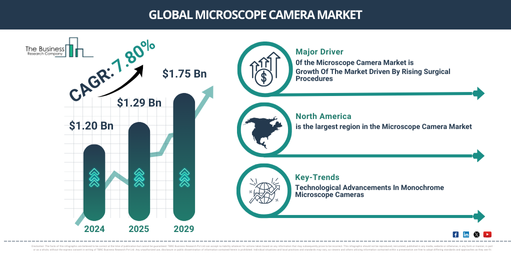
    The market size for microscope cameras has demonstrated significant growth in the past few years. It is projected to increase from $1.20 billion in 2024 to $1.29 billion in 2025, translating to a compound annual growth rate (CAGR) of 8.2%. This growth during the historic period can be linked to factors such as the rise in surgical procedures, the escalating prevalence of chronic diseases, an enhanced focus on biotechnology, the increasing implementation of virtual and augmented reality in educational settings, and the expansion of the elderly population.

    The microscope camera market is anticipated to experience substantial expansion in the coming years, with its value projected to reach $1.75 billion in 2029, exhibiting a compound annual growth rate (CAGR) of 7.8%. This expected growth within the forecast period is largely due to heightened demand for real-time visualization and high-resolution imaging, an increasing need for automation and digital microscopy, a growing awareness towards disease prevention and treatment, and an escalating preference amongst consumers for online options. Noteworthy trends for the same period include advancements in connectivity and software integration, innovations in miniaturization, the integration of cloud-based platforms, novel designs of cameras, and technological advancements.

    Download a free sample to assess the report’s scope and structure:

    https://www.thebusinessresearchcompany.com/sample.aspx?id=20882&type=smp

    How Are Key Drivers in the Industry Acting as Catalysts for the Growth of the Microscope Camera Market?

    The microscope camera market’s upward growth is expected to be driven by a rise in surgical operations. Surgical procedures, which involve the physical intervention of a surgeon to treat diseases, injuries, or deformations by altering, cutting, repairing, or removing tissue, are pivotal in improving a patient’s health and functionality. The surge in surgical operations could be due to factors like an aging population, progress in medical technology, increased instances of chronic diseases, enhanced healthcare access, increased medical awareness, improved surgical results, and expansive medical tourism. Microscope cameras play a crucial role in surgery by offering magnified, high-definition views of the surgical site, which improves precision, allows real-time documentation, and facilitates remote collaboration yielding better patient results. For example, the UK Health Security Agency, a government agency based in the UK, reported in December 2023 an increase in coronary artery bypass graft surgeries in 2023, with 27,524 surgeries, marking an increase from 2022. Consequently, the rise in surgical operations is poised to augment the growth of the microscope camera market.

    Which Segments in the Microscope Camera Offer the Most Growth?

    The microscope camera market covered in this report is segmented –

    1) By Type: Monochrome Cameras, Color Cameras

    2) By Sensor Type: Complementary Metal-Oxide-Semiconductor (CMOS) Sensors, Charge-Coupled Device (CCD) Sensors

    3) By Resolution: High-Definition Cameras, Standard-Definition Cameras

    4) By Distribution Channel: Online, Offline

    5) By Application: Medical, Industry, Education, Other Applications

    Subsegments:

    1) By Monochrome Cameras: CMOS Monochrome Cameras, CCD Monochrome Cameras

    2) By Color Cameras: CMOS Color Cameras, CCD Color Cameras

    Request customized data on this market:

    https://www.thebusinessresearchcompany.com/customise?id=20882&type=smp

    What Are the Fastest-Growing Geographies in the Microscope Camera Market?

    North America was the largest region in the microscope camera market in 2024. Asia-Pacific is expected to be the fastest-growing region in the forecast period. The regions covered in the microscope camera market report are Asia-Pacific, Western Europe, Eastern Europe, North America, South America, Middle East, Africa.

    What Long-Term Trends Are Transforming the Competitive Landscape of the Microscope Camera Market?

    Key players in the microscope camera market are prioritizing the development of technologically superior solutions, such as monochrome microscope cameras. These cameras are designed to improve the clarity and precision of images for high-resolution science and medical imaging applications. A monochrome microscope camera is a type of digital camera used in microscopy that captures high-contrast grayscale images. These cameras are often chosen because they can provide clearer and more detailed visuals, particularly in applications that require high sensitivity or operate in low-light conditions. For example, in January 2023, Nikon Corporation, a company based in Japan that manufactures optical instruments and cameras, debuted the digital sight 50M monochrome microscope camera. This camera is specifically designed for high-precision analysis and large volume sampling. It is particularly useful in areas like plate screening. The camera boasts a 50-megapixel resolution, leading to improved imaging performance and precise detection in a range of scientific and medical applications. Some of the advanced features of the camera, such as its 50-megapixel sensor and enhanced light sensitivity, allows it to capture precise and clear images. This makes it well-suited for use in scientific research, medical diagnostics, and laboratory quality control.

    View the full report here:

    https://www.thebusinessresearchcompany.com/report/microscope-camera-global-market-report

    What Are the Key Elements That Define the Microscope Camera Market?

    A microscope camera refers to a digital camera designed to capture images or videos through a microscope. It is typically attached to the eyepiece or a special adapter on a microscope, allowing the user to view and record magnified images of small objects or samples. These cameras are commonly used in fields such as biology, materials science, medicine, and forensics to document detailed specimens, perform analysis, or share findings in real time.

    Purchase the full report and get a swift delivery:

    https://www.thebusinessresearchcompany.com/purchaseoptions.aspx?id=20882

    About The Business Research Company:

    With over 15000+ reports from 27 industries covering 60+ geographies, The Business Research Company has built a reputation for offering comprehensive, data-rich research and insights. Armed with 1,500,000 datasets, the optimistic contribution of in-depth secondary research, and unique insights from industry leaders, you can get the information you need to stay ahead in the game.

    Get in touch with us:

    The Business Research Company: https://www.thebusinessresearchcompany.com/

    Americas +1 3156230293

    Asia +44 2071930708

    Europe +44 2071930708

    Email us at info@tbrc.info

    Follow us on:

    LinkedIn: https://in.linkedin.com/company/the-business-research-company

    YouTube: https://www.youtube.com/channel/UC24_fI0rV8cR5DxlCpgmyFQ

    Global Market Model: https://www.thebusinessresearchcompany.com/global-market-model
  • Micro-Perforated Films Market Trends 2025-2034: Growth, Strategic Insights, and Opportunities Ahead

    Micro-Perforated Films Market Trends 2025-2034: Growth, Strategic Insights, and Opportunities Ahead

    Stay ahead with our updated market reports featuring the latest on tariffs, trade flows, and supply chain transformations.

    What Is the Estimated Market Size of the Micro-Perforated Films Market In 2029?

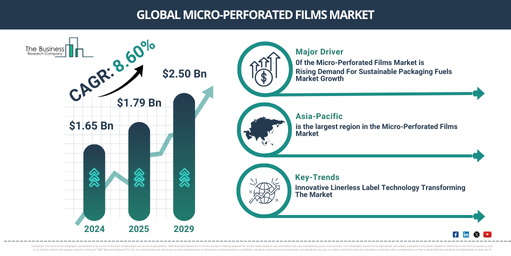
    In recent years, we’ve seen the micro-perforated films market size surge dramatically. The movement from 2024’s $1.65 billion to 2025’s $1.79 billion, with a compound annual growth rate (CAGR) of 8.8%, accentuates this point. Several factors have contributed to this increase in the historic period including: the uptick in demand for food preservation, escalating consumer preference towards eco-friendly packaging, expansion of the fresh produce market, regulations pushing for sustainable packaging, and an increased demand for convenience foods.

    The market size of micro-perforated films is projected to witness robust growth over the next several years, reaching a value of $2.50 billion by 2029 with a compound annual growth rate (CAGR) of 8.6%. The surge in the forecast period can be credited to factors such as increased demand for extended shelf life for packaged goods, expansion of the e-commerce and delivery industries, growing consumer consciousness about product freshness, increased demand for organic food items, and the evolution of the pharmaceutical and medical packaging sectors. Notable trends predicted for this period encompass growth in the utilization of eco-friendly micro-perforated films, merging of active and smart packaging with micro-perforated films, enhancing usage of micro-perforated films in non-food packaging industries, developments in high-barrier micro-perforated films, and creativity in the design of customizable micro-perforated films.

    Download a free sample to assess the report’s scope and structure:

    https://www.thebusinessresearchcompany.com/sample.aspx?id=20881&type=smp

    What Are the Major Market Drivers Behind the Rising Adoption of Micro-Perforated Films Market?

    The growth of the micro-perforated films market is projected to be accelerated by the escalating requirement for sustainable packaging solutions. These solutions prioritize the utilization of environmentally friendly materials and methods, which have a limited impact on the environment throughout their lifespan, focusing on qualities such as recyclability, biodegradability, and resource preservation. This increasing demand is stimulated by enhanced consumer consciousness regarding environmental problems, stern regulations, corporate accountability, and an aspiration to decrease plastic waste and carbon emissions. Micro-perforated films, when used in sustainable packaging, facilitate breathability and extend shelf life, while minimizing waste and favoring the use of ecological materials. For example, Trivium Packaging, a Dutch packaging firm, published the 2023 Buying Green Report in April 2023, which revealed that a total of 82% of the survey participants are ready to pay a higher price for sustainable packaging, showing a rise of 4% from 2022 and 8% from 2021. It was found that young consumers (aged 18-24) were the primary drivers of this trend, at 90%, indicating the ongoing significance of environmental worries despite economic hurdles. Consequently, the growing demand for sustainable packaging solutions is spurring the expansion of the micro-perforated films market.

    Which Key Market Segments Comprise the Micro-Perforated Films Market and Drive Its Revenue Growth?

    The micro-perforated films market covered in this report is segmented –

    1) By Material: Polypropylene (PP), Polyethylene (PE), Polyvinyl Chloride (PVC), Polyethylene Terephthalate (PET)

    2) By Hole Size: Less Than 0.1 mm, 0.1-0.5 mm, 0.5-1.0 mm, More Than 1.0 mm

    3) By Application: Packaging, Agriculture, Automotive, Electronics, Construction

    Subsegments:

    1) By Polypropylene (PP): BOPP (Biaxially Oriented Polypropylene), CPP (Cast Polypropylene)

    2) By Polyethylene (PE): LDPE (Low-Density Polyethylene), HDPE (High-Density Polyethylene), LLDPE (Linear Low-Density Polyethylene)

    3) By Polyvinyl Chloride (PVC): Rigid PVC, Flexible PVC

    4) By Polyethylene Terephthalate (PET): APET (Amorphous PET), RPET (Recycled PET), PETG (Glycol-Modified PET)

    Request customized data on this market:

    https://www.thebusinessresearchcompany.com/customise?id=20881&type=smp

    Which Areas Are Leading Regions in the Micro-Perforated Films Market Expansion Across the Globe?

    Asia-Pacific was the largest region in the micro-perforated films market in 2024. North America is expected to be the fastest-growing region in the forecast period. The regions covered in the micro-perforated films market report are Asia-Pacific, Western Europe, Eastern Europe, North America, South America, Middle East, Africa.

    What Key Market Trends and Innovations Are Shaping the Future of the Micro-Perforated Films Industry?

    Key players in the micro-perforated films industry, such as Avery Dennison, a U.S.-based label and packaging solutions provider, are turning their focus to the development of pioneering technologies like linerless label technology, which seeks to transform the pressure-sensitive label sector. Traditional labels use backing paper, but with linerless label technology, labels can be printed and applied directly without a liner, leading to less waste and greater efficiency. In fact, Avery Dennison took a significant step in this direction when it launched its AD LinrSave system in September 2023. This unique linerless label solution is expected to bring about significant changes in the pressure-sensitive prime label market. It comes with features like micro-perforations for efficient label application without producing liner waste, and a flexible adhesive and release system that is compatible with pre-existing converting machinery. In addition to supporting sustainability goals by eliminating liner waste and lessening carbon footprints, it offers brands an innovative and cost-efficient solution to improve their labeling operations.

    View the full report here:

    https://www.thebusinessresearchcompany.com/report/micro-perforated-films-global-market-report

    How Is the Micro-Perforated Films Market Conceptually Defined?

    Micro-perforated films are thin, flexible materials embedded with small, evenly spaced holes designed to regulate gas exchange and moisture levels, enabling controlled atmospheres that enhance the shelf life and quality of packaged goods in industries such as food, pharmaceuticals, and agriculture. These films are widely utilized to preserve the freshness of perishable goods, such as fruits, vegetables, bakery products, and flowers, by preventing condensation, maintaining optimal respiration and humidity conditions, and reducing spoilage during storage and transportation.

    Purchase the full report and get a swift delivery:

    https://www.thebusinessresearchcompany.com/purchaseoptions.aspx?id=20881

    About The Business Research Company:

    With over 15000+ reports from 27 industries covering 60+ geographies, The Business Research Company has built a reputation for offering comprehensive, data-rich research and insights. Armed with 1,500,000 datasets, the optimistic contribution of in-depth secondary research, and unique insights from industry leaders, you can get the information you need to stay ahead in the game.

    Get in touch with us:

    The Business Research Company: https://www.thebusinessresearchcompany.com/

    Americas +1 3156230293

    Asia +44 2071930708

    Europe +44 2071930708

    Email us at info@tbrc.info

    Follow us on:

    LinkedIn: https://in.linkedin.com/company/the-business-research-company

    YouTube: https://www.youtube.com/channel/UC24_fI0rV8cR5DxlCpgmyFQ

    Global Market Model: https://www.thebusinessresearchcompany.com/global-market-model