Blog

  • Acute Renal Failure (ARF) Outlook 2034: Key Drivers, Trends, and Market Frontiers

    Acute Renal Failure (ARF) Outlook 2034: Key Drivers, Trends, and Market Frontiers

    Our market reports now include the latest updates on global tariffs, trade impacts, and evolving supply chain dynamics.

    What is the Projected CAGR for the Acute Renal Failure (ARF) Market Size from 2025 to 2034?

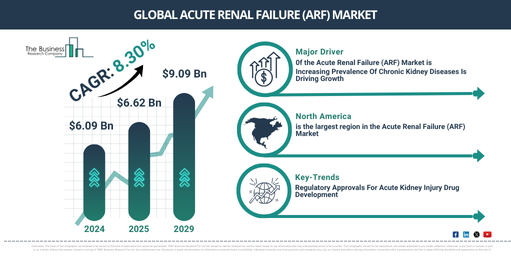
    The market for Acute Renal Failure (ARF) has seen significant growth in the past few years. Projections show it increasing from $6.09 billion in 2024 to about $6.62 billion in 2025, with a Compound Annual Growth Rate (CAGR) of 8.6%. This past growth can be linked to factors such as the increase in the aging population, the rise in sepsis cases, advancements in diagnostic capabilities, government initiatives in healthcare and a surge in instances of nephrotoxic medication.

    In the coming years, the acute renal failure (ARF) market is projected to witness robust growth, with expected size to reach $9.09 billion by 2029, expanding at a compound annual growth rate (CAGR) of 8.3%. Several factors are contributing to this anticipated growth during the forecast period, including the proliferation of home-based dialysis solutions, the emergence of new markets, the formulation of renal biomarkers, research and development of novel therapeutic medications, and the increasing demand for non-invasive diagnostic tests. Key trends expected to make an impact during this period encompass advancements in continuous renal replacement therapy (CRRT), 3D bioprinting of renal tissue, the use of wearable biosensors, next-generation dialysis machines and the application of nanotechnology in drug delivery.

    Download a free sample to assess the report’s scope and structure:

    https://www.thebusinessresearchcompany.com/sample.aspx?id=21083&type=smp

    How Are Key Drivers in the Industry Acting as Catalysts for the Growth of the Acute Renal Failure (ARF) Market?

    The growth of the acute renal failure (ARF) market is expected to be propelled by the rising incidence of chronic kidney diseases. Chronic kidney disease (CKD) is a long-term condition where the kidneys are incapable of filtering blood effectively due to damage. The surge in chronic kidney disease (CKD) is attributed to the increasing rates of diabetes, obesity, hypertension, aging populations, and lifestyle-related factors globally. Acute renal failure, marked by a sudden decrease in kidney function, can significantly induce or worsen chronic kidney disease by causing enduring damage to kidney tissues. This impairs filtration capacity and escalates the risk of progressive, long-term kidney dysfunction if not appropriately managed. For example, in June 2023, a report by Kidney Research UK, a non-profit organization based in the UK, revealed that approximately 7.2 million people in the UK, over 10% of the population, are living with chronic kidney disease. Out of these, 3.25 million are in advanced stages, while about 3.9 million are in early stages. By 2033, the number of people affected by chronic kidney disease is predicted to rise to 7.61 million. Hence, the escalation in chronic kidney diseases is driving the growth of the acute renal failure (ARF) market.

    Which Segments in the Acute Renal Failure (ARF) Offer the Most Growth?

    The acute renal failure (ARF) market covered in this report is segmented –

    1) By Disease Type: Prerenal Acute Renal Failure, Renal Acute Renal Failure, Postrenal Acute Renal Failure

    2) By Drug Type: Diuretics, Vasopressors, Erythropoiesis-Stimulating Agents (ESAS), Phosphate Binders, Calcium and Vitamin D Supplements, Antibiotics, Others Drugs

    3) By Route of Administration: Oral, Intravenous

    4) By Diagnosis: Computed Tomography (CT) Scan, Kidney Biopsy, Ultrasound

    5) By End-Users: Clinics, Hospitals, Home Healthcare, Others End-Users

    Subsegments:

    1) By Prerenal Acute Renal Failure: Hypovolemia, Decreased Cardiac Output, Renal Artery Stenosis

    2) By Renal Acute Renal Failure: Acute Tubular Necrosis, Glomerulonephritis, Interstitial Nephritis

    3) By Postrenal Acute Renal Failure: Obstructive Uropathy, Bladder Outlet Obstruction, Kidney Stones

    Request customized data on this market:

    https://www.thebusinessresearchcompany.com/customise?id=21083&type=smp

    What Are the Fastest-Growing Geographies in the #How Are Key Drivers in the Industry Acting as Catalysts for the Growth of the Acute Renal Failure (ARF) Market?# Market?

    North America was the largest region in the acute renal failure (ARF) market in 2024. Asia-Pacific is expected to be the fastest-growing region in the forecast period. The regions covered in the acute renal failure (ARF) market report are Asia-Pacific, Western Europe, Eastern Europe, North America, South America, Middle East, Africa.

    What Are the Current Market Growth and Trends in the Acute Renal Failure (ARF) Industry?

    Major businesses in the acute renal failure (ARF) market are concentrating on securing regulatory approvals for medications, with the goal of broadening their presence and enhancing their dominance in the treatment of severe acute kidney injury (AKI). Such approvals necessitate official endorsement from either governmental or regulatory organizations for the public use and marketing of medicines, medical equipment, or therapies. As an example, in February 2024, CalciMedica., a clinical-stage biopharmaceutical firm based in the US, obtained FDA approval for an IND application for a Phase 2 trial of Auxora, in order to assess its effectiveness in addressing severe acute kidney injury (AKI) related to acute hypoxemic respiratory failure (AHRF), a medical condition known for high mortality rates. The KOURAGE trial, a randomized, double-blind, placebo-controlled study, looks to recruit around 150 stage 2 and 3 acute kidney injury (AKI) patients also experiencing acute hypoxemic respiratory failure (AHRF). The test aims to determine the effectiveness of Auxora given in five daily doses, by examining how many days the patient can survive without needing ventilators or dialysis up to 30 days after treatment.

    View the full report here:

    https://www.thebusinessresearchcompany.com/report/acute-renal-failure-arf-global-market-report

    What Are the Key Elements That Define the Acute Renal Failure (ARF) Market?

    Acute renal failure (ARF), also known as acute kidney injury (AKI), refers to a sudden and rapid decline in kidney function over a period of hours or days. Acute renal failure is treated through various methods, including medication, fluid management, and dialysis, to help restore kidney function and prevent further complications.

    Purchase the full report and get a swift delivery:

    https://www.thebusinessresearchcompany.com/purchaseoptions.aspx?id=21083

    About The Business Research Company:

    With over 15000+ reports from 27 industries covering 60+ geographies, The Business Research Company has built a reputation for offering comprehensive, data-rich research and insights. Armed with 1,500,000 datasets, the optimistic contribution of in-depth secondary research, and unique insights from industry leaders, you can get the information you need to stay ahead in the game.

    Get in touch with us:

    The Business Research Company: https://www.thebusinessresearchcompany.com/

    Americas +1 3156230293

    Asia +44 2071930708

    Europe +44 2071930708

    Email us at info@tbrc.info

    Follow us on:

    LinkedIn: https://in.linkedin.com/company/the-business-research-company

    YouTube: https://www.youtube.com/channel/UC24_fI0rV8cR5DxlCpgmyFQ

    Global Market Model: https://www.thebusinessresearchcompany.com/global-market-model
  • Global Acute Pharyngitis Market Trends: Regional Breakdowns and Strategic Insights

    Global Acute Pharyngitis Market Trends: Regional Breakdowns and Strategic Insights

    Our market reports now include the latest updates on global tariffs, trade impacts, and evolving supply chain dynamics.

    What Is the Current and Projected Market Size of the Acute Pharyngitis Market Through 2034?

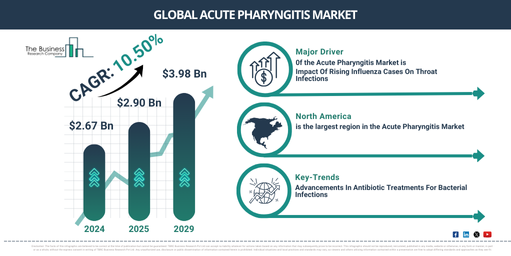
    The market size of acute pharyngitis has seen substantial growth in the past few years. This market is projected to expand from $2.67 billion in 2024 to $2.90 billion in 2025, with a Compound Annual Growth Rate (CAGR) of 8.5%. Factors contributing to this historical growth include a rise in viral and bacterial infections, heightened awareness regarding healthcare, advancements in diagnostic technologies, an increasing count of pediatric cases, and a surge in environmental pollutants and allergens.

    The pharyngitis market is predicted to experience swift expansion in the ensuing years, escalating to $3.98 billion by 2029 with a compound annual growth rate (CAGR) of 10.5%. The projected growth during this period can be linked to the rising occurrence of influenza and streptococcal infections, enhanced emphasis on personalized medicine, increasing implementation of rapid diagnostic tests, advancements in healthcare infrastructure, and broadening healthcare accessibility in developing markets. Key trends to look out for during the forecast period consist of a shift toward over-the-counter treatments, greater use of combined therapies, development in telemedicine for diagnosing pharyngitis, the emergence of natural and alternative cures, and an uptick in the preference for self-care and home-based treatments.

    Download a free sample to assess the report’s scope and structure:

    https://www.thebusinessresearchcompany.com/sample.aspx?id=21082&type=smp

    What Are the Major Market Drivers Behind the Rising Adoption of Acute Pharyngitis Market?

    The accelerated growth of the acute pharyngitis market is projected to be driven by the increasing prevalence of influenza. Influenza, caused by influenza viruses, is transferred via respiratory droplets from coughing, sneezing, or touching infected surfaces. Factors such as seasonal changes, low immunization levels, increased human travel, evolving viruses, and compromised immunity in certain groups are contributing to the increased prevalence of influenza. Acute pharyngitis treatments benefit influenza patients by relieving throat inflammation and pain, alleviating swallowing discomfort, averting secondary bacterial infections, and facilitating overall recuperation. These methods, coupled with antiviral drugs, sufficient hydration and rest, improve the body’s combat against the influenza virus. For example, data from the US-based government agency, Centers for Disease Control and Prevention, indicates that as of February 2025, the rate of clinical lab tests confirming influenza rose to 31.6%, an increase from 29.4% the preceding week and 18.6% at the outset of the year. This growing prevalence of influenza, therefore, propels the expansion of the acute pharyngitis market.

    Which Key Market Segments Comprise the Acute Pharyngitis Market and Drive Its Revenue Growth?

    The acute pharyngitis market covered in this report is segmented –

    1) By Treatment: Antibiotics, Antivirals, Over-the-Counter (OTC) Medications, Corticosteroids And Anti-inflammatory Drugs, Alternative Remedies

    2) By Distribution Channel: Hospital Pharmacy, Online Pharmacy, Retail Pharmacy

    3) By End-User: Hospitals, Homecare, Speciality Centres, Other End Users

    Subsegments:

    1) By Antibiotics: Penicillins, Cephalosporins, Macrolides

    2) By Antivirals: Neuraminidase Inhibitors, Nucleoside Analogs

    3) By Over-the-Counter (OTC) Medications: Analgesics, Throat Lozenges, Cough Syrups

    4) By Corticosteroids And Anti-inflammatory Drugs: Glucocorticoids, Non-Steroidal Anti-Inflammatory Drugs (NSAIDs)

    5) By Alternative Remedies: Herbal Teas, Honey-Based Solutions, Saltwater Gargles

    Request customized data on this market:

    https://www.thebusinessresearchcompany.com/customise?id=21082&type=smp

    Which Areas Are Leading Regions in the Acute Pharyngitis Market Expansion Across the Globe?

    North America was the largest region in the acute pharyngitis market in 2024. The regions covered in the acute pharyngitis market report are Asia-Pacific, Western Europe, Eastern Europe, North America, South America, Middle East, Africa.

    What Are the Strategic Trends Steering theAcute Pharyngitis Market Direction?

    Leading businesses in the acute pharyngitis market are concentrating on the advancement of antibiotics that can tackle bacterial infections more successfully and lessen antibiotic resistance. Antibiotics are vital in managing acute pharyngitis triggered by bacterial infections like streptococcus pyogenes because they can remove the bacteria, relieve symptoms, and avoid complications such as rheumatic fever. For instance, Alembic Pharmaceuticals Limited, a pharmaceutical firm based in India, earned the approval for an Abbreviated New Drug Application (ANDA) for Clarithromycin tablets USP, 250 mg and 500 mg from the US-based government agency Food & Drug Administration (USFDA) in February 2022. This macrolide antibiotic is utilized for mild to moderate bacterial infections, like pharyngitis or tonsillitis, community-acquired pneumonia, and chronic bronchitis. The approval emphasizes the relevance of efficient antimicrobial treatments in addressing acute pharyngitis and associated bacterial infections.

    View the full report here:

    https://www.thebusinessresearchcompany.com/report/acute-pharyngitis-global-market-report

    How Is the Acute Pharyngitis Market Conceptually Defined?

    Acute pharyngitis is the inflammation of the pharynx, which is the part of the throat located behind the mouth and nasal cavity. This condition results in a sore throat and accompanied by symptoms such as fever, headache, and swollen lymph nodes. It can be caused by various infections, including viral, bacterial, and fungal, with viral infections being the most prevalent.

    Purchase the full report and get a swift delivery:

    https://www.thebusinessresearchcompany.com/purchaseoptions.aspx?id=21082

    About The Business Research Company:

    With over 15000+ reports from 27 industries covering 60+ geographies, The Business Research Company has built a reputation for offering comprehensive, data-rich research and insights. Armed with 1,500,000 datasets, the optimistic contribution of in-depth secondary research, and unique insights from industry leaders, you can get the information you need to stay ahead in the game.

    Get in touch with us:

    The Business Research Company: https://www.thebusinessresearchcompany.com/

    Americas +1 3156230293

    Asia +44 2071930708

    Europe +44 2071930708

    Email us at info@tbrc.info

    Follow us on:

    LinkedIn: https://in.linkedin.com/company/the-business-research-company

    YouTube: https://www.youtube.com/channel/UC24_fI0rV8cR5DxlCpgmyFQ

    Global Market Model: https://www.thebusinessresearchcompany.com/global-market-model
  • Acute On Chronic Liver Failure (ACLF) Market Outlook 2025: Mapping Growth, Innovation, and Regional Shifts

    Acute On Chronic Liver Failure (ACLF) Market Outlook 2025: Mapping Growth, Innovation, and Regional Shifts

    Our market reports now include the latest updates on global tariffs, trade impacts, and evolving supply chain dynamics.

    What is the Anticipated CAGR of the Acute On Chronic Liver Failure (ACLF) Market, and What Factors Will Drive It?

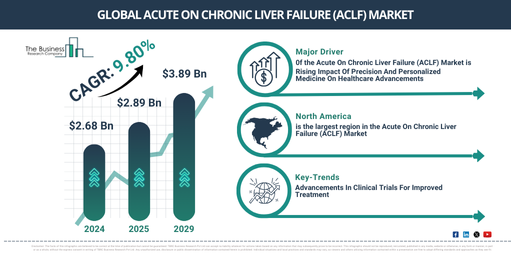
    The Acute on Chronic Liver Failure (ACLF) market has experienced robust growth in recent times. The market value is projected to escalate from $2.68 billion in 2024 up to $2.89 billion in 2025, with a Compound Annual Growth Rate (CAGR) of 8.0%. Factors contributing to this growth during the historic phase include the increasing occurrence of chronic liver diseases, heightened awareness regarding liver health, a rise in healthcare expenditures, the development of new treatment methods and therapies, an increase in alcohol-related liver damage cases, the growing number of organ transplant procedures, improvement in critical care, a rise in elderly population, and broadened research into liver failure mechanisms.

    Expectations for the acute on chronic liver failure (ACLF) market predict robust growth in the upcoming years, with market size projected to reach $3.89 billion by 2029 and a compound annual growth rate (CAGR) of 9.8%. This anticipated growth during the forecast period can be linked to factors such as the rising adoption of liver support devices, progress in regenerative medicine, the emphasis on precision medicine, the increasing popularity of minimally invasive treatments, the creation of targeted therapies, the broadening of healthcare infrastructure in developing markets, increased funding in research and development, an increased rate of metabolic disorders and the growth of public-private collaborations. Looking ahead, notable trends for the forecast period include the inclusion of artificial intelligence in diagnosis procedures, the creation of bioengineered liver tissue, advancements in extracorporeal liver support devices, the application of machine learning to personalised treatment plans, the emergence of gene editing technology, advancements in liquid biopsy techniques, the development of targeted drug delivery systems, advancements in 3D bioprinting for liver regeneration, the increase of wearable health monitoring devices, and the progression in nanotechnology-fueled therapies.

    Download a free sample to assess the report’s scope and structure:

    https://www.thebusinessresearchcompany.com/sample.aspx?id=21081&type=smp

    What External and Internal Drivers Are Contributing to the Growth of the Acute On Chronic Liver Failure (ACLF) Market?

    The escalating attention on precision and personalized medicine is anticipated to drive the expansion of the acute on chronic liver failure market. Personalized and precision medicine refers to the customization of treatments for each individual patient, considering their genetic, environmental, and lifestyle influences to maximize results and enhance care. The popularity of personalized and precision medicine is growing due to developments in genomics, increased accessibility of biomarker-based diagnostics, enhanced data analytics technology, and a higher demand for more precise and effective treatment methods. These types of medicine cater to acute-on-chronic liver failure (ACLF) by personalizing treatments based on a patient’s genetic composition, the severity of the disease, and biomarker data, enabling highly targeted therapies that improve results and reduce the probability of multi-organ failure. For example, the U.S. Food and Drug Administration (FDA) approved 26 new personalized medicines in 2023, as reported by the Personalized Medicine Coalition (PMC), a nonprofit organization in the U.S. in February 2024. This was a substantial leap from the 12 approved in 2022. Thus, the growing emphasis on precision and personalized medicine is pushing the acute on chronic liver failure market’s growth.

    What Segment Types Define the Acute On Chronic Liver Failure (ACLF) Market Structure?

    The acute on chronic liver failure (ACLF) market covered in this report is segmented –

    1) By Type Of Treatment: Pharmacological, Supportive Care

    2) By Mode Of Administration: Oral, Intravenous (IV)

    3) By End-User: Hospitals, Ambulatory Surgical Centers, Specialty Clinics

    Subsegments:

    1) By Pharmacological: Antibiotics, Anti-inflammatory Drugs, Vasopressors, Immunomodulators, Antiviral Agents

    2) By Supportive Care: Liver Dialysis, Plasma Exchange, Nutritional Support, Mechanical Ventilation, Renal Replacement Therapy (RRT)

    Request customized data on this market:

    https://www.thebusinessresearchcompany.com/customise?id=21081&type=smp

    Which Geographic Areas Hold the Strongest Growth Potential in the Acute On Chronic Liver Failure (ACLF) Market?

    North America was the largest region in the acute on chronic liver failure (ACLF) market in 2024. Asia-Pacific is expected to be the fastest-growing region in the forecast period. The regions covered in the acute on chronic liver failure (ACLF) market report are Asia-Pacific, Western Europe, Eastern Europe, North America, South America, Middle East, Africa.

    What Long-Term Trends Are Transforming the Competitive Landscape of the Acute On Chronic Liver Failure (ACLF) Market?

    Leading entities in the acute-on-chronic liver failure (ACLF) sector are increasing their focus on the execution of clinical studies to innovate new therapeutic options, regenerative medicinal techniques, and specialized drug treatments with the objective of enhancing patient survival probabilities. It’s crucial to undertake clinical trials for the validation of emerging treatment systems, synthetic liver support apparatus, and immunomodulatory therapies to boost disease control and lessen mortality rates. For instance, a clinical trial termed “G-TAK” will be initiated in several UK liver centers by A-TANGO, which is a project funded by the EU horizon in Spain, in September 2024. The aim of this trial is to provide aid to critically ill patients who struggle with alcoholic hepatitis and acute-on-chronic liver failure (ACLF). G-TAK is a combination therapy that uses toll-like 4 receptor antagonist (TAK242) to target inflammation and uses granulocyte colony-stimulating factor (G-CSF, TRL9) to advance hepatocyte proliferation, hence treating acute-on-chronic liver failure (ACLF).

    View the full report here:

    https://www.thebusinessresearchcompany.com/report/acute-on-chronic-liver-failure-aclf-global-market-report

    What Is the Definition of the Acute On Chronic Liver Failure (ACLF) Market?

    Acute on chronic liver failure (ACLF) is a severe condition characterized by acute hepatic decompensation in patients with pre-existing chronic liver disease. This deterioration triggers systemic inflammation, contributing to the progressive failure of multiple organs. The condition is associated with a high risk of mortality, requiring prompt diagnosis and intensive medical management.

    Purchase the full report and get a swift delivery:

    https://www.thebusinessresearchcompany.com/purchaseoptions.aspx?id=21081

    About The Business Research Company:

    With over 15000+ reports from 27 industries covering 60+ geographies, The Business Research Company has built a reputation for offering comprehensive, data-rich research and insights. Armed with 1,500,000 datasets, the optimistic contribution of in-depth secondary research, and unique insights from industry leaders, you can get the information you need to stay ahead in the game.

    Get in touch with us:

    The Business Research Company: https://www.thebusinessresearchcompany.com/

    Americas +1 3156230293

    Asia +44 2071930708

    Europe +44 2071930708

    Email us at info@tbrc.info

    Follow us on:

    LinkedIn: https://in.linkedin.com/company/the-business-research-company

    YouTube: https://www.youtube.com/channel/UC24_fI0rV8cR5DxlCpgmyFQ

    Global Market Model: https://www.thebusinessresearchcompany.com/global-market-model
  • Acute Ocular Pain Market in Focus: Forecasting Growth Drivers, Scaling Potential, and Global Opportunities

    Acute Ocular Pain Market in Focus: Forecasting Growth Drivers, Scaling Potential, and Global Opportunities

    Our market reports now include the latest updates on global tariffs, trade impacts, and evolving supply chain dynamics.

    What Are the Key Milestones in the Acute Ocular Pain Market’s Growth Trajectory From 2025 To 2034?

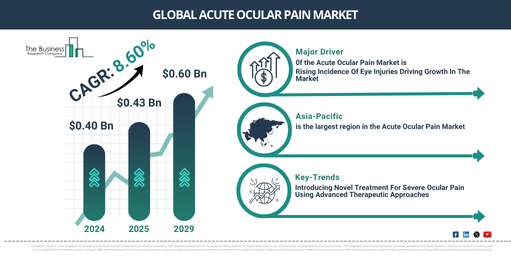
    The market for acute ocular pain has seen significant growth over recent times. Projected to expand from $0.40 billion in 2024 to $0.43 billion in 2025, the market is set to experience a compound annual growth rate (CAGR) of 8.7%. Factors such as rising cases of eye injuries and ocular surgeries, heightened awareness regarding ocular health, aging demographics, swift urbanization, and escalated spending on healthcare have contributed to the exceptional growth during the historic period.

    The market for acute ocular pain is projected to witness robust growth in the upcoming years. It is estimated to expand to a worth of $0.60 billion in 2029, with a compound annual growth rate (CAGR) of 8.6%. The projected growth within this timeline can be credited to factors such as positive insurance reimbursement policies, broader access in up-and-coming markets, a rising incidence of ocular conditions, heightened demand for targeted and efficient ocular pain treatments, and an increased requirement for care focused on the patient. Some of the significant trends driving this growth during the forecast period are advancements in diagnostic methods, progress in technology, innovative pharmaceutical formulations, breakthroughs in delivery systems, as well as the incorporation of artificial intelligence.

    Download a free sample to assess the report’s scope and structure:

    https://www.thebusinessresearchcompany.com/sample.aspx?id=21080&type=smp

    What Are the Core Market Drivers Propelling Growth in the Acute Ocular Pain Industry?

    The acute ocular pain market is projected to be boosted by a surge in eye injuries. Eye injuries encompass any trauma or harm to the eye or adjacent structures, brought about by impacts, alien substances, chemical contact, or scalding. This can trigger pain, visual disruptions, or potential long-term damage. The escalating frequency of eye injuries can be attributed to increasing occupational hazards, excessive screen usage, environmental toxins, sporting traumas, and inadequate eye protection, all of which markedly contribute to the increasing incidence of these injuries. Acute ocular pain acts as a crucial signal of inherent eye trauma, encouraging immediate diagnosis and intervention. However, deferring or failing to manage the pain effectively can intensify complications, leading to sustained discomfort and possible visual deficiencies. For instance, the Welsh Government, a state agency in the UK, reported in August 2024 that there were over 35,000 admissions to ophthalmology departments in Wales during the 2023-24 period. This represents a 5.8% increase from the previous year. As such, this growing prominence of eye injuries is fuelling the acute ocular pain market.

    How Is the Acute Ocular Pain Market Segmented?

    The acute ocular pain market covered in this report is segmented –

    1) By Drug: Topical Non-Steroidal Anti-Inflammatory Drugs, Topical Cycloplegic Agents, Oral Analgesics, Corticosteroids, Immunomodulators

    2) By Medical Condition: Corneal Abrasion, Glaucoma, Conjunctivitis, Iritis, Other Medical Conditions

    3) By Route Of Administration: Topical, Intraocular, Oral, Other Routes Of Administration

    4) By Distribution Channel: Hospital Pharmacy, Online Pharmacy, Retail Pharmacy

    5) By End User: Hospitals, Homecare, Ophthalmic Clinics, Other End Users

    Subsegments:

    1) By Topical Non-Steroidal Anti-Inflammatory Drugs (NSAIDs): Ketorolac, Bromfenac, Nepafenac, Diclofenac

    2) By Topical Cycloplegic Agents: Atropine, Cyclopentolate, Homatropine

    3) By Oral Analgesics: Acetaminophen, Ibuprofen, Tramadol, Codeine

    4) By Corticosteroids: Prednisolone, Dexamethasone, Fluorometholone, Loteprednol

    5) By Immunomodulators: Cyclosporine, Tacrolimus, Lifitegrast

    Request customized data on this market:

    https://www.thebusinessresearchcompany.com/customise?id=21080&type=smp

    Which Regions Are Driving the Next Phase of the Acute Ocular Pain Market Growth?

    Asia-Pacific was the largest region in the acute ocular pain market in 2024. North America expected to be the fastest-growing region in the forecast period. The regions covered in the acute ocular pain market report are Asia-Pacific, Western Europe, Eastern Europe, North America, South America, Middle East, Africa.

    What Key Market Trends and Innovations Are Shaping the Future of the Acute Ocular Pain Industry?

    Leading corporations in the acute ocular pain sector are concentrating on the creation of innovative solutions such as Neuropathic Corneal Pain (NCP) therapy for the treatment of severe eye discomfort. The NCP therapy, designed to manage and relieve persistent severe eye pain originating from nerve damage or dysfunction in the cornea, is a new focus in this market. OKYO Pharma, a British biopharmaceutical firm, in October 2024, for example, reported the first dose given to a patient in a Phase 2 clinical trial for OK-101, a unique NCP therapy. OK-101 is a non-opioid, anti-inflammatory prescription designed to alleviate neuropathic corneal pain caused by severe eye discomfort and corneal nerve damage. This trial aims to register a total of 48 patients diagnosed with NCP, as confirmed via confocal microscopy, and is taking place at Tufts Medical Center, supervised by Dr. Pedram Hamrah, a renowned expert in managing ocular pain.

    View the full report here:

    https://www.thebusinessresearchcompany.com/report/acute-ocular-pain-global-market-report

    How Is the Acute Ocular Pain Market Defined and What Are Its Core Parameters?

    Acute ocular pain is a sudden, intense discomfort or sharp sensation in the eye, often caused by infections, injuries, inflammation, or underlying medical conditions, and may be accompanied by symptoms such as redness, swelling, vision disturbances, or sensitivity to light, requiring prompt evaluation to determine the underlying cause and appropriate treatment. It can result from various factors, including corneal abrasions, uveitis, glaucoma, or foreign body irritation, and may indicate a serious condition needing urgent medical attention to prevent complications.

    Purchase the full report and get a swift delivery:

    https://www.thebusinessresearchcompany.com/purchaseoptions.aspx?id=21080

    About The Business Research Company:

    With over 15000+ reports from 27 industries covering 60+ geographies, The Business Research Company has built a reputation for offering comprehensive, data-rich research and insights. Armed with 1,500,000 datasets, the optimistic contribution of in-depth secondary research, and unique insights from industry leaders, you can get the information you need to stay ahead in the game.

    Get in touch with us:

    The Business Research Company: https://www.thebusinessresearchcompany.com/

    Americas +1 3156230293

    Asia +44 2071930708

    Europe +44 2071930708

    Email us at info@tbrc.info

    Follow us on:

    LinkedIn: https://in.linkedin.com/company/the-business-research-company

    YouTube: https://www.youtube.com/channel/UC24_fI0rV8cR5DxlCpgmyFQ

    Global Market Model: https://www.thebusinessresearchcompany.com/global-market-model

  • Rheumatic Heart Disease Market Valuation Expected To Reach $3.44 Billion By 2029, Growing At A Rate Of 6%

    Rheumatic Heart Disease Market Valuation Expected To Reach $3.44 Billion By 2029, Growing At A Rate Of 6%

    Get 30% off on our Global Market Reports with code ONLINE30 – Hurry, limited time offer!

    How Has The Rheumatic Heart Disease Market Size Shifted, And What Is the Outlook Through 2034?

    The market size for rheumatic heart disease has seen substantial growth in the past few years. Projected growth indicates an increase from $2.56 billion in 2024 to $2.72 billion in 2025 with a compound annual growth rate (CAGR) of 6.3%. This growth during the historic period is due to several factors including the widespread incidence of untreated strep infections, poor access to healthcare services in low-income areas, limited knowledge about rheumatic heart disease, a delay in diagnosis and treatment, as well as ineffective vaccination initiatives.

    Expectations for the rheumatic heart disease market suggest strong growth over the forthcoming years, with its size projected to reach $3.44 billion by 2029, reflecting a compound annual growth rate (CAGR) of 6.0%. Factors which may fuel this growth within the forecasted period include a rising interest in preventive screening programs, heightened awareness surrounding the importance of early detection, increased contributions towards healthcare in evolving regions, telemedicine development for remote diagnosis, and government-led prevention initiatives. Other burgeoning trends anticipated for the forecast period include the heightened use of AI in diagnostic procedures, expansion of screening via echocardiography, incorporation of mobile health solutions, advancements in anti-inflammatory treatments, and collaborations aimed at global eradication of the disease.

    Download a free sample to assess the report’s scope and structure:

    https://www.thebusinessresearchcompany.com/sample.aspx?id=23502&type=smp

    Which Factors and External Forces Are Driving Demand in the Rheumatic Heart Disease Market?

    The escalating incidence of strep throat is projected to spur the upswing of the rheumatic heart disease market in the future. Characterised as a bacterial infection caused by streptococcus pyogenes (Group A streptococcus), strep throat results in inflammation and painful discomfort in the throat, symptoms often paired with fever, swollen lymph nodes, and difficulties swallowing. The challenge of treating streptococcal infections is increasing due to heightened antibiotic resistance, which leads to lasting illness and increased transmission rates in societies. Rheumatic heart disease is a chronic complication resulting from untreated or recurring strep throat infections, underlining the critical need for prompt diagnosis and treatment of streptococcal infections to prevent serious heart damage. As an example, the US-based government department, Centers for Disease Control and Prevention, reported in April 2023 that strep throat results in an estimated 5.2 million outpatient visits per year among individuals below the age of 65. These incidences lead to 2.8 million antibiotic prescriptions on an annual basis. Thus, the escalating incidence of strep throat is accelerating the growth of the rheumatic heart disease market.

    Which Segments in the Rheumatic Heart Disease Offer the Most Growth?

    The rheumatic heart disease market covered in this report is segmented –

    1) By Type: Valve, Myocarditis, Pericarditis

    2) By Age Group: Pediatric, Adolescent, Adult, Geriatric

    3) By Application: Hospital, Diagnostic Centre, Research Centre

    4) By Distribution Channel: Hospital Pharmacies, Retail Pharmacies, Online Pharmacies, Direct Sales

    Subsegments:

    1) By Valve: Mitral Valve Disease, Aortic Valve Disease, Tricuspid Valve Disease, Pulmonary Valve Disease

    2) By Myocarditis: Acute Myocarditis, Chronic Myocarditis, Fulminant Myocarditis

    3) By Pericarditis: Acute Pericarditis, Chronic Pericarditis, Constrictive Pericarditis, Effusive Pericarditis

    Request customized data on this market:

    https://www.thebusinessresearchcompany.com/customise?id=23502&type=smp

    What Are the Fastest-Growing Geographies in the Rheumatic Heart Disease Market?

    North America was the largest region in the rheumatic heart disease market in 2024. The regions covered in the rheumatic heart disease market report are Asia-Pacific, Western Europe, Eastern Europe, North America, South America, Middle East, Africa.

    Which Cutting-Edge Market Trends Are Expected to Drive the Rheumatic Heart Disease Market’s Growth?

    Prominent firms involved in the rheumatic heart disease market are embracing strategic alliances as a means to cultivate innovative methods for treatment and diagnosis. Collaborative ventures in Rheumatic Heart Disease (RHD) management combine skills and resources to promote research and development, enrich therapeutic and diagnostic advancements, broaden market reach, and accelerate commercialisation. For instance, in July 2023, the World Heart Federation (WHF), a non-governmental outfit from Switzerland, and the Philips Foundation, a Dutch nonprofit organisation, joined forces to enhance awareness, medical education, and early detection of Rheumatic Heart Disease (RHD) within the Asia-Pacific (APAC) region. Launched in the Philippines, the project aims at boosting healthcare accessibility for more than half a million vulnerable Filipino children by providing facilities with skilled staff and modern diagnostic instruments. This alliance highlights their shared dedication to fortifying the healthcare systems and guaranteeing timely interventions for RHD patients.

    View the full report here:

    https://www.thebusinessresearchcompany.com/report/rheumatic-heart-disease-global-market-report

    What Are the Key Elements That Define the Rheumatic Heart Disease Market?

    Rheumatic heart disease (RHD) is a chronic heart condition caused by permanent damage to the heart valves due to rheumatic fever, an inflammatory disease resulting from untreated or inadequately treated streptococcal throat infections. The immune response triggered by the infection leads to inflammation and scarring of the heart valves, impairing their function and potentially causing heart failure, arrhythmias, or other complications.

    Purchase the full report and get a swift delivery:

    https://www.thebusinessresearchcompany.com/purchaseoptions.aspx?id=23502

    About The Business Research Company:

    With over 15000+ reports from 27 industries covering 60+ geographies, The Business Research Company has built a reputation for offering comprehensive, data-rich research and insights. Armed with 1,500,000 datasets, the optimistic contribution of in-depth secondary research, and unique insights from industry leaders, you can get the information you need to stay ahead in the game.

    Get in touch with us:

    The Business Research Company: https://www.thebusinessresearchcompany.com/

    Americas +1 3156230293

    Asia +44 2071930708

    Europe +44 2071930708

    Email us at info@tbrc.info

    Follow us on:

    LinkedIn: https://in.linkedin.com/company/the-business-research-company

    YouTube: https://www.youtube.com/channel/UC24_fI0rV8cR5DxlCpgmyFQ

    Global Market Model: https://www.thebusinessresearchcompany.com/global-market-model

  • Strong CAGR to Propel in the Acute Kidney Injury Market and Beyond upto $7.39 Billion by 2029

    Strong CAGR to Propel in the Acute Kidney Injury Market and Beyond upto $7.39 Billion by 2029

    Our market reports now include the latest updates on global tariffs, trade impacts, and evolving supply chain dynamics.

    How Has The Acute Kidney Injury Market Size Shifted, And What Is the Outlook Through 2034?

    In the past few years, the acute kidney injury market has experienced robust growth. The market, which is valued at $5.37 billion in 2024, is projected to rise to $5.74 billion in 2025, with a compound annual growth rate (CAGR) of 6.9%. This steady growth during the historic period can be attributed to several factors. These include the growing number of chronic diseases, an upward trend in the elderly population, a rise in hospital-acquired infections, heightened awareness regarding kidney health, and advancements in the field of critical care medicine.

    The market size for acute kidney injury is slated for substantial growth in the coming years, with projections pointing to $7.39 billion by 2029, encapsulating a compound annual growth rate (CAGR) of 6.5%. The predicted growth during the forecast period can be linked to factors such as rising incidences of sepsis, escalating demand for personalized treatments, increased government initiatives in healthcare, expanding healthcare expenditures in emerging markets, and an intense focus on individualized medicine and regenerative therapies. The forecast period is likely to see trending advancements include wearable dialysis devices, the integration of artificial intelligence in optimizing treatment, portable systems for renal replacement therapy, continuous renal replacement therapy (CRRT) developments, and the integration of remote monitoring and telemedicine.

    Download a free sample to assess the report’s scope and structure:

    https://www.thebusinessresearchcompany.com/sample.aspx?id=21079&type=smp

    Which Primay Drivers Are Accelerating Growth in the Acute Kidney Injury Market?

    The acute kidney injury market is expected to experience an upward trajectory, primarily attributed to the expanding prevalence of diabetes. Diabetes is a collective term for metabolic conditions associated with high sugar levels in the blood. It occurs either due to inadequate insulin production in the body or cells’ failure to react correctly to this hormone. The rising incidence of diabetes can be linked with factors like increasing obesity, unhealthy eating habits, inactive lifestyles, older populations, and advancements in disease awareness and diagnosis. Acute kidney injury sets off metabolic and inflammatory alterations that could potentially affect insulin resistance and glucose balance, emphasizing a sophisticated interaction that could carry implications for diabetes development and treatment. As an example, data from the Office for Health Improvement & Disparities, a government department based in the UK, showed that between March 2022 and March 2023, the proportion of individuals undergoing all eight suggested care processes for type 1 diabetes grew by 22%, while the same for type 2 diabetes increased by 21%. Concurrently, the proportion reaching the target HbA1c levels escalated to 37.9%, as per the National Diabetes Audit (NDA), marking a record high. Thus, the expanding prevalence of diabetes is accelerating the growth of the acute kidney injury market.

    Which Primary Segments of the Acute Kidney Injury Market Are Driving Growth and Industry Transformations?

    The acute kidney injury market covered in this report is segmented –

    1) By Injury: Pre-Renal Kidney Injury, Post-Renal Kidney Injury, Intrinsic Kidney Injury

    2) By Treatment Type: Dialysis, Drug Therapy, Urinary Implants

    3) By End User: Hospitals, Ambulatory Surgical Centers, Other End Users

    Subsegments:

    1) By Pre-Renal Kidney Injury: Hypovolemia, Heart Failure-Related Injury, Sepsis-Induced Injury, Renal Artery Stenosis, Hepatorenal Syndrome

    2) By Post-Renal Kidney Injury: Ureteral Obstruction, Bladder Outlet Obstruction, Prostate Enlargement (Benign Prostatic Hyperplasia), Kidney Stones, Tumors Affecting Urinary Tract

    3) By Intrinsic Kidney Injury: Acute Tubular Necrosis (ATN), Acute Interstitial Nephritis (AIN), Glomerulonephritis, Vasculitis, Rhabdomyolysis-Induced Injury

    Request customized data on this market:

    https://www.thebusinessresearchcompany.com/customise?id=21079&type=smp

    Which Regions Are Key Players in the Growth of the #Which Primay Drivers Are Accelerating Growth in the Acute Kidney Injury Market?# Market?

    North America was the largest region in the acute kidney injury market in 2024. Asia-Pacific is expected to be the fastest-growing region in the forecast period. The regions covered in the acute kidney injury market report are Asia-Pacific, Western Europe, Eastern Europe, North America, South America, Middle East, Africa.

    Which Technological Trends Are Reshaping the Acute Kidney Injury Industry Dynamics?

    Mainstream businesses active in the acute kidney injury (AKI) sector are striving to secure regulatory permissions to upgrade their product catalogue and propose innovative treatment alternatives. These permissions are formal certifications provided by authoritative agencies like FDA or EMA, permitting a product’s marketing and sale upon successful meeting of efficiency, safety, and quality benchmarks. For instance, in December 2023, Mission Therapeutics Ltd., a biotech firm headquartered in the UK, obtained FDA’s permission for the commencement of a Phase II clinical experiment for its primary asset, MTX652, aimed at acute kidney injury (AKI) in patients exposed to high risk post-cardiac surgery. It has been formulated to target key pathways associated with kidney harm and repair, with an intention to curb inflammation, ward off additional kidney damage and facilitate recovery. A standout feature of this trial is its emphasis on deploying new therapeutic strategies to tackle the fundamental molecular sources of AKI, which could present superior treatment alternatives compared to the current interventions. The Phase II trial will study MTX652’s safety, effectiveness, and pharmacokinetics, offering essential information that may encourage wider clinical usage and prospective endorsement.

    View the full report here:

    https://www.thebusinessresearchcompany.com/report/acute-kidney-injury-global-market-report

    What Parameters Are Used to Define the Acute Kidney Injury Market?

    Acute kidney injury (AKI) refers to a sudden decline in kidney function, leading to an accumulation of waste products, electrolytes, and fluids in the body. It can develop rapidly over hours or days and is often caused by conditions like reduced blood flow, direct kidney damage, or obstruction of the urinary tract.

    Purchase the full report and get a swift delivery:

    https://www.thebusinessresearchcompany.com/purchaseoptions.aspx?id=21079

    About The Business Research Company:

    With over 15000+ reports from 27 industries covering 60+ geographies, The Business Research Company has built a reputation for offering comprehensive, data-rich research and insights. Armed with 1,500,000 datasets, the optimistic contribution of in-depth secondary research, and unique insights from industry leaders, you can get the information you need to stay ahead in the game.

    Get in touch with us:

    The Business Research Company: https://www.thebusinessresearchcompany.com/

    Americas +1 3156230293

    Asia +44 2071930708

    Europe +44 2071930708

    Email us at info@tbrc.info

    Follow us on:

    LinkedIn: https://in.linkedin.com/company/the-business-research-company

    YouTube: https://www.youtube.com/channel/UC24_fI0rV8cR5DxlCpgmyFQ

    Global Market Model: https://www.thebusinessresearchcompany.com/global-market-model
  • Retractable Needle Safety Syringes Market Forecast Reaching $7.65 Billion by 2029 at 8% CAGR

    Retractable Needle Safety Syringes Market Forecast Reaching $7.65 Billion by 2029 at 8% CAGR

    Get 30% off on our Global Market Reports with code ONLINE30 – Hurry, limited time offer!

    How Has the Retractable Needle Safety Syringes Market Growth Performance Trended Historically, And What Lies Ahead?

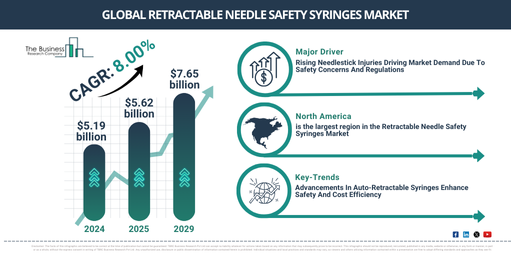
    In recent times, the market size for retractable needle safety syringes has seen robust growth. The estimated growth shows an increase from $5.19 billion in 2024 to $5.62 billion in 2025, reflecting a compound annual growth rate (CAGR) of 8.3%. The surge during the historic period is linked to the prevention of needlestick injuries, stricter regulations for safeguarding healthcare workers, an increase in hospital-acquired infections, the expansion of vaccination schemes, and a growing demand for disposable syringes.

    Expectations are high for considerable expansion in the retractable needle safety syringes market in the upcoming years, with projected growth to $7.65 billion in 2029, reflecting an 8.0% compound annual growth rate (CAGR). This anticipated surge during the forecast period is linked to stricter occupational safety guidelines, rising tendencies in emerging markets, an increased liking for progressive injection mechanisms, heightened understanding of infection control, and government campaigns advocating for more secure medical tools. The forecast period is likely to witness significant trends including the incorporation of intelligent syringes, modernization in retractable needle systems, environmentally friendly and decomposable materials, the creation of compact and weightless syringe models, and a focus on economically efficient safety syringes.

    Download a free sample to assess the report’s scope and structure:

    https://www.thebusinessresearchcompany.com/sample.aspx?id=23501&type=smp

    Which Major Market Drivers Are Expected to Boost the Growth Potential of the Retractable Needle Safety Syringes Market?

    The escalating occurrence of needlestick injuries is anticipated to stimulate the expansion of the retractable needle safety syringes market. Needlestick injuries, commonly occurring in healthcare environments, are inadvertent skin punctures by a needle, potentially leading to exposure to bloodborne pathogens and a considerable danger to health care providers. A major contributory element to the growing occurrence of needlestick injuries is the rise in the number medical procedures requiring injections alongside insufficient safety measures and inappropriate disposal methods. Retractable needle safety syringes are essential in reducing the risks associated with needlestick injuries as they incorporate automated mechanisms that retract the needle post usage, thereby avoiding unintended exposure to harmful pathogens and improving the security for healthcare professionals. For example, in April 2024, as per reports from the Centers for Disease Control and Prevention (CDC), a public health organization based in the US, approximately 385,000 needlesticks and other injuries related to sharps take place each year among hospital healthcare workers. Hence, escalating apprehensions regarding needlestick injuries are driving the demand for improved syringe solutions.

    Which Key Market Segments Comprise the Retractable Needle Safety Syringes Market and Drive Its Revenue Growth?

    The retractable needle safety syringes market covered in this report is segmented –

    1) By Product: Manual Retractable Safety Syringe, Auto-Retractable Safety Syringe

    2) By Material Type: Plastic, Glass, Metal

    3) By Needle Length: 1 Inch, 1.5 Inch, Other Needle Lengths

    4) By Application: Subcutaneous (Sub-Q), Intramuscular (IM), Intravenous (IV)

    5) By End-User: Hospitals, Clinics, Ambulatory Surgical Centers, Other End-Users

    Subsegments:

    1) By Manual Retractable Safety Syringe: Single-Use Manual Retractable Safety Syringe, Multiple-Use Manual Retractable Safety Syringe

    2) By Auto-Retractable Safety Syringe: Passive Auto-Retractable Safety Syringe, Active Auto-Retractable Safety Syringe

    Request customized data on this market:

    https://www.thebusinessresearchcompany.com/customise?id=23501&type=smp

    Which Areas Are Leading Regions in the Retractable Needle Safety Syringes Market Expansion Across the Globe?

    North America was the largest region in the retractable needle safety syringes market in 2024. Asia-Pacific is expected to be the fastest-growing region in the forecast period. The regions covered in the retractable needle safety syringes market report are Asia-Pacific, Western Europe, Eastern Europe, North America, South America, Middle East, Africa.

    What Are the Key Market Trends in the Retractable Needle Safety Syringes Market Over the Coming Years?

    Leading businesses in the market for retractable needle safety syringes are concentrating their efforts on technological advancements such as auto-retractable safety syringes. Such innovations enhance safety and efficacy in healthcare environments by offering a safer, more economical alternative for needle-based injections. The auto-retractable safety syringe is a medical tool engineered to withdraw its needle back into the barrel post-injection automatically, diminishing the probability of needlestick injuries and ensuring safer disposal. For example, Zephyrus Innovations, a medical device enterprise from the US, made public the approval of its Aeroject 3ml safety syringe by the U.S. FDA in February 2023. This advanced syringe comes equipped with a distinct gas-powered retraction function, which guarantees the automatic and safe recoiling of the needle into the syringe post-use, averting unintended exposure to dangerous pathogens. Moreover, the syringe is created with a minimum wasted space design feature, enabling more doses extraction from each vial, thus increasing cost-effectiveness and lowering medication waste in healthcare institutions.

    View the full report here:

    https://www.thebusinessresearchcompany.com/report/retractable-needle-safety-syringes-global-market-report

    How Is the Retractable Needle Safety Syringes Market Conceptually Defined?

    Retractable needle safety syringes refer to a type of syringe designed with a safety mechanism that automatically or manually retracts the needle into the syringe barrel after use. These syringes are primarily used in healthcare settings for the administration of injections, vaccinations, and blood draws, offering enhanced safety during medical procedures by reducing the potential for needle-related injuries and transmission of infections.

    Purchase the full report and get a swift delivery:

    https://www.thebusinessresearchcompany.com/purchaseoptions.aspx?id=23501

    About The Business Research Company:

    With over 15000+ reports from 27 industries covering 60+ geographies, The Business Research Company has built a reputation for offering comprehensive, data-rich research and insights. Armed with 1,500,000 datasets, the optimistic contribution of in-depth secondary research, and unique insights from industry leaders, you can get the information you need to stay ahead in the game.

    Get in touch with us:

    The Business Research Company: https://www.thebusinessresearchcompany.com/

    Americas +1 3156230293

    Asia +44 2071930708

    Europe +44 2071930708

    Email us at info@tbrc.info

    Follow us on:

    LinkedIn: https://in.linkedin.com/company/the-business-research-company

    YouTube: https://www.youtube.com/channel/UC24_fI0rV8cR5DxlCpgmyFQ

    Global Market Model: https://www.thebusinessresearchcompany.com/global-market-model
  • Acute Care Syndromic Testing Market Valuation Expected To Reach $7.5 Billion By 2029, Growing At A Rate Of 12.9%

    Acute Care Syndromic Testing Market Valuation Expected To Reach $7.5 Billion By 2029, Growing At A Rate Of 12.9%

    Our market reports now include the latest updates on global tariffs, trade impacts, and evolving supply chain dynamics.

    How Has the Acute Care Syndromic Testing Market Growth Performance Trended Historically, And What Lies Ahead?

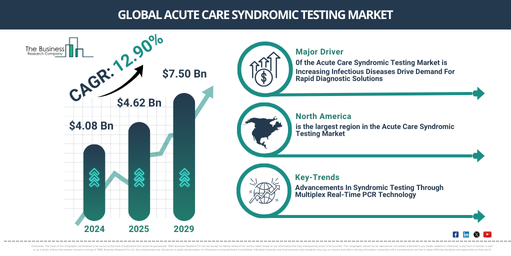
    In recent years, there has been a significant increase in the size of the acute care syndromic testing market. The market is projected to expand from $4.08 billion in 2024 to $4.62 billion in 2025, reflecting a compound annual growth rate (CAGR) of 13.2%. Key factors that have driven growth in this historical period include heightened awareness of antimicrobial resistance, increased government funding for infectious diseases, greater investment in healthcare infrastructure, a heightened emphasis on syndromic testing, the expansion of telemedicine, and the rise in infectious diseases.

    The market for acute care syndromic testing is predicted to experience a surge in size in the upcoming years, shooting up to $7.50 billion by 2029 with a compound annual growth rate (CAGR) of 12.9%. Several factors can explain this growth forecast period like the increasing incidence of infectious diseases, the need for quicker diagnostic solutions, expansion in healthcare services, rising usage of multiplex syndromic panels, and an aging population. Significant emerging trends in the forecast period include a move towards point-of-care testing, the incorporation of cloud-based platforms, the adoption of multiplex panels, the creation of AI-driven tools, and the inclusion of automation in syndromic testing.

    Download a free sample to assess the report’s scope and structure:

    https://www.thebusinessresearchcompany.com/sample.aspx?id=21078&type=smp

    Which Factors and External Forces Are Driving Demand in the Acute Care Syndromic Testing Market?

    The rise in infectious disease cases is anticipated to fuel the expansion of the acute care syndromic testing market. Infectious diseases, which can spread between humans, animals, or from the environment, are health conditions triggered by damaging microorganisms such as bacteria, viruses, fungi, or parasites. The escalating occurrence of these diseases is powered by aspects like population expansion, urbanization, international travel, antimicrobial resistance, and changes in climate, thereby augmenting the necessity for efficient prevention and treatment methods. Acute care syndromic testing plays a crucial role in quickly detecting pathogens and co-infections in infectious diseases by utilizing multiplex molecular diagnostics, paving the way for precision-based treatment decisions. For instance, the Health Security Agency reported in Week 4 of February 2024 that the influenza positivity rate had escalated to 16.6%, a rise from the earlier week’s 14.0%. The influenza-like illness (ILI) consultations also surged to 9.8 per 100,000 individuals from the previous week’s 7.5 per 100,000. Furthermore, influenza hospitalizations also saw a significant increase, reaching 7.63 per 100,000 from the preceding week’s 5.12 per 100,000. Consequently, the increasing prevalence of infectious diseases is steering the growth of the acute care syndromic testing market.

    Which Segments in the Acute Care Syndromic Testing Offer the Most Growth?

    The acute care syndromic testing market covered in this report is segmented –

    1) By Disease Type: Respiratory Diseases, Gastrointestinal Diseases, Genitourinary Diseases, Tropical Diseases, Other Disease Types

    2) By Sample Type: Blood, Urine, Biofluids, Stool, Swabs, Other Sample Types

    3) By Target: Bacteria, Viruses, Fungi, Parasites

    4) By End User: Hospitals, Clinical And Diagnostic Laboratories, Research And Academic Institutions, Other End Users

    Subsegments:

    1) By Respiratory Diseases: Influenza, Respiratory Syncytial Virus (RSV), COVID-19, Tuberculosis, Other Respiratory Diseases

    2) By Gastrointestinal Diseases: Clostridium Difficile Infection, Norovirus, Rotavirus, Salmonella, Other Gastrointestinal Diseases

    3) By Genitourinary Diseases: Urinary Tract Infections (UTIs), Sexually Transmitted Infections (STIs), Vaginal Infections, Other Genitourinary Diseases

    4) By Tropical Diseases: Malaria, Dengue, Chikungunya, Zika Virus, Other Tropical Diseases

    5) By Other Disease Types: Meningitis, Sepsis, Other Emerging Infectious Diseases

    Request customized data on this market:

    https://www.thebusinessresearchcompany.com/customise?id=21078&type=smp

    What Are the Fastest-Growing Geographies in the #Which Factors and External Forces Are Driving Demand in the Acute Care Syndromic Testing Market?# Market?

    North America was the largest region in the acute care syndromic testing market in 2024. The regions covered in the acute care syndromic testing market report are Asia-Pacific, Western Europe, Eastern Europe, North America, South America, Middle East, Africa.

    Which Cutting-Edge Market Trends Are Expected to Drive theAcute Care Syndromic Testing Market’s Growth?

    Top-tier companies working in the acute care syndromic testing market are honing their focus on technological advancements like multiplex real-time polymerase chain reaction (PCR) technology. Their aim is to boost diagnostic accuracy, facilitate quick detection of pathogens, structure lab workflows efficiently, reduce waiting period, and enhance patient results through accurate and on-time treatment strategies. The multiplex real-time PCR technology, an advanced molecular diagnostic approach, can simultaneously detect and measure multiple pathogens or genetic targets within a single PCR reaction thus escalating efficiency and correctness in disease diagnosis. For example, in April 2023, QIAGEN N.V., a biotech research firm based in the Netherlands, introduced the QIAstat-Dx syndromic testing solution in Japan. It includes a SARS-CoV-2 respiratory panel capable of detecting more than 20 pathogens from one single sample. This technology, which uses multiplex real-time PCR, can produce quick results with less labor as compared to individual PCR tests. By the culmination of 2022, there were globally more than 3,500 systems installed that aid in diagnosing conditions relating to the respiratory system, gastrointestinal tract, and meningitis. Available in over 100 nations, it is effectively promoting syndromic testing accessibility worldwide.

    View the full report here:

    https://www.thebusinessresearchcompany.com/report/acute-care-syndromic-testing-global-market-report

    What Are the Key Elements That Define the Acute Care Syndromic Testing Market?

    Acute care syndromic testing refers to a rapid molecular diagnostic approach that detects multiple pathogens simultaneously from a single patient sample. It is used in emergency and critical care settings to quickly diagnose infectious diseases. This enables faster treatment decisions, improved patient outcomes, and reduced hospital stays.

    Purchase the full report and get a swift delivery:

    https://www.thebusinessresearchcompany.com/purchaseoptions.aspx?id=21078

    About The Business Research Company:

    With over 15000+ reports from 27 industries covering 60+ geographies, The Business Research Company has built a reputation for offering comprehensive, data-rich research and insights. Armed with 1,500,000 datasets, the optimistic contribution of in-depth secondary research, and unique insights from industry leaders, you can get the information you need to stay ahead in the game.

    Get in touch with us:

    The Business Research Company: https://www.thebusinessresearchcompany.com/

    Americas +1 3156230293

    Asia +44 2071930708

    Europe +44 2071930708

    Email us at info@tbrc.info

    Follow us on:

    LinkedIn: https://in.linkedin.com/company/the-business-research-company

    YouTube: https://www.youtube.com/channel/UC24_fI0rV8cR5DxlCpgmyFQ

    Global Market Model: https://www.thebusinessresearchcompany.com/global-market-model

  • Actinic Keratosis Market Forecast Reaching $10.58 Billion by 2029 at 5.8% CAGR

    Actinic Keratosis Market Forecast Reaching $10.58 Billion by 2029 at 5.8% CAGR

    Our market reports now include the latest updates on global tariffs, trade impacts, and evolving supply chain dynamics.

    What Are the Projected Market Size and Growth Rates for the Actinic Keratosis Market From 2025 To 2029?

    The market size for actinic keratosis has experienced a consistent increase over recent years. The market, estimated at $7.95 billion in 2024, is projected to expand to $8.44 billion in 2025, following a compound annual growth rate (CAGR) of 6.1%. The expansion witnessed in the past years has been driven by factors such as escalating exposure to UV radiations, an aging demographic, heightened awareness relating to skin cancer, and the rising incidence of actinic keratosis. Also contributing to the growth are an enhanced healthcare infrastructure, higher disposable incomes, proactive government interventions, and a growing emphasis on preventive skincare.

    The market size of actinic keratosis is anticipated to witness substantial growth in the upcoming years, escalating to $10.58 billion in 2029 at a compound annual growth rate (CAGR) of 7.4%. Factors such as the advent of inventive therapies, advancements in AI-powered diagnostic instruments, the rising popularity of combination treatments, increased demand for non-invasive procedures, the growing utility of teledermatology, broadening use of photodynamic therapy, heightened awareness of aesthetic outcomes, development of targeted biological treatments, escalating healthcare investment in expanding markets, and an increasing emphasis on early detection and prevention are largely contributing to the growth in the prediction period. Notable trends in the forecast period comprise AI-based diagnostic tools, machine learning for lesion examination, advanced photodynamic therapy systems, wearable UV tracking devices, nanotech-derived drug delivery, 3D imaging for customized treatments, portable phototherapy devices for home use, early detection biosensors, automated software for lesion classification, and hydrogel-based therapeutic systems.

    Download a free sample to assess the report’s scope and structure:

    https://www.thebusinessresearchcompany.com/sample.aspx?id=21077&type=smp

    Which Major Market Drivers Are Expected to Boost the Growth Potential of the Actinic Keratosis Market?

    The rise in serious sunburn cases is set to boost the expansion of the actinic keratosis market. Serious sunburns, instigated by excessive exposure to ultraviolet (UV) radiation, cause intense skin damage, resulting in redness, pain, inflammation, and possible blistering. These sunburns can be attributed to factors such as extended exposure to UV radiation, inadequate sun protection procedures, increased outdoor activities during peak UV hours and temperatures escalating due to climate change. They can lead to actinic keratosis by disrupting the DNA in skin cells via UV radiation, subsequently causing mutations that impede regular cell activity and lead to the emergence of precancerous lesions, particularly with constant or prolonged sun exposure. As an example, in May 2024, Melanoma Focus, a charity in the UK, reported that in 2022-23 there were 201 hospitalizations because of sunburn, which included 89 children and 25 infants less than a year old. The charity also revealed that 66% of UK adults aged between 16-65 recalled being sunburned in their childhood, with 65% enduring serious sunburn and developing blisters at least once. For those with light, pale, or white skin, this figure escalated to 77%. Consequently, the persistent rise in severe sunburn cases is fuelling the actinic keratosis market’s growth.

    Which Key Market Segments Comprise the Actinic Keratosis Market and Drive Its Revenue Growth?

    The actinic keratosis market covered in this report is segmented –

    1) By Treatment Type: Topical Treatment, Surgical Procedure, Photodynamic Therapy, Other Treatment Types

    2) By Distribution Channels: Hospital Pharmacies, Drug Stores And Retail Pharmacies, Online Providers

    3) By End-User: Hospitals, Dermatology Clinics, Spas And Rejuvenation Centers, Homecare Settings, Other End-Users

    Subsegments:

    1) By Topical Treatment: 5-Fluorouracil (5-FU), Imiquimod, Diclofenac, Ingenol Mebutate, Retinoids

    2) By Surgical Procedure: Cryotherapy, Curettage And Electrodessication, Excision

    3) By Photodynamic Therapy: Aminolevulinic Acid (ALA) Plus Light Therapy, Methyl Aminolevulinate (MAL) Plus Light Therapy

    4) By Other Treatment Types: Laser Therapy, Chemical Peels, Combination Therapies

    Request customized data on this market:

    https://www.thebusinessresearchcompany.com/customise?id=21077&type=smp

    Which Areas Are Leading Regions in the Actinic Keratosis Market Expansion Across the Globe?

    North America was the largest region in the actinic keratosis market in 2024. Asia-Pacific is expected to be the fastest-growing region in the forecast period. The regions covered in the actinic keratosis market report are Asia-Pacific, Western Europe, Eastern Europe, North America, South America, Middle East, Africa.

    What Are the Key Market Trends in theActinic Keratosis Market Over the Coming Years?

    Prominent enterprises in the actinic keratosis market are concentrating their efforts on producing topical ointments, aiming to effectively assail and eradicate precancerous lesions, slash recurrence occurrences, and boost patient adherence with briefer treatment periods and enhanced safety standards. These topical ointments are medicinal creams or gels, that are applied to the affected skin area, with the active component, such as tirbanibulin, that acts by aiming at abnormal keratinocytes to address precancerous lesions. For example, in June 2024, Almirall SA, a biopharmaceutical corporation based in Spain, obtained the US Food and Drug Administration’s (FDA) approval for a supplemental new drug application (sNDA) to broaden the applicability of its drug Klisyri, to up to 100 cm2. Klisyri (tirbanibulin) 1% ointment is a microtubule inhibitor, created to halt the growth of abnormal keratinocytes, thus effectively diminishing the number and dimensions of precancerous lesions for the remediation of actinic keratosis (AK) on the face or scalp.

    View the full report here:

    https://www.thebusinessresearchcompany.com/report/actinic-keratosis-global-market-report

    How Is the Actinic Keratosis Market Conceptually Defined?

    Actinic keratosis (AK), also known as solar keratosis, is a common precancerous skin condition that occurs due to prolonged exposure to ultraviolet (UV) radiation from the sun or artificial sources leading to rough, scaly or crusty patches on sun-exposed areas of the skin such as the face, scalp, hands and arms. It is considered an early stage of squamous cell carcinoma (SCC) and requires treatment to prevent progression. Regular skin checks and protection from sun exposure are essential for managing and preventing the development of actinic keratosis.

    Purchase the full report and get a swift delivery:

    https://www.thebusinessresearchcompany.com/purchaseoptions.aspx?id=21077

    About The Business Research Company:

    With over 15000+ reports from 27 industries covering 60+ geographies, The Business Research Company has built a reputation for offering comprehensive, data-rich research and insights. Armed with 1,500,000 datasets, the optimistic contribution of in-depth secondary research, and unique insights from industry leaders, you can get the information you need to stay ahead in the game.

    Get in touch with us:

    The Business Research Company: https://www.thebusinessresearchcompany.com/

    Americas +1 3156230293

    Asia +44 2071930708

    Europe +44 2071930708

    Email us at info@tbrc.info

    Follow us on:

    LinkedIn: https://in.linkedin.com/company/the-business-research-company

    YouTube: https://www.youtube.com/channel/UC24_fI0rV8cR5DxlCpgmyFQ

    Global Market Model: https://www.thebusinessresearchcompany.com/global-market-model

  • $41.57 Billion Forecast for Acquired Immunodeficiency Syndrome (AIDS) Market by 2029, Backed by Demand and Innovation

    Our market reports now include the latest updates on global tariffs, trade impacts, and evolving supply chain dynamics.

    What Is the Estimated Market Size of the Acquired Immunodeficiency Syndrome (AIDS) Market In 2029?

    The market size for acquired immunodeficiency syndrome (AIDS) has seen a robust growth in the past years, expanding from $32.09 billion in 2024 to an expected $33.85 billion in 2025. This equates to a compound annual growth rate (CAGR) of 5.5%. Factors contributing to this ascend during the historic period can be traced back to the elevated rates of HIV infections, the increase in government fund allocations for HIV therapy, the proliferation of global awareness initiatives, the enhancement in diagnostic competency, and the rising backing from non-governmental associations.

    Growth in the acquired immunodeficiency syndrome (AIDS) market is anticipated to be robust in the coming years, with its worth expected to skyrocket to $41.57 billion by 2029, exhibiting a compound annual growth rate (CAGR) of 5.3%. This increased growth during the forecast period can be credited to factors such as the heightened demand for long-acting injectable therapies, the rising use of pre-exposure prophylaxis (PrEP), an escalation in the funding for HIV cure research, the surge in telemedicine services for managing HIV, the escalating emphasis on personalized medicine, as well as the growing consciousness about early detection of HIV. The forecast period will likely see trends such as a shift towards single-tablet regimens, a heightened inclination towards injectable and implantable HIV treatments, a ballooning demand for digital health solutions for HIV management, a growing fascination with functional HIV cure tactics, and a burgeoning role of artificial intelligence in pharmaceutical discovery.

    Download a free sample to assess the report’s scope and structure:

    https://www.thebusinessresearchcompany.com/sample.aspx?id=21076&type=smp

    What Are the Core Growth Drivers Propelling the Acquired Immunodeficiency Syndrome (AIDS) Market Forward?

    The growth of the acquired immunodeficiency syndrome (AIDS) market is anticipated to be driven by the rising incidence rates of HIV infections. HIV or human immunodeficiency virus infections are diseases where the HIV virus attacks the immune system, compromising the body’s capacity to fend off diseases and infections. Unprotected sexual contact with an infected person, needle or syringe sharing, transfusing contaminated blood products, having many sexual partners, and a compromised immune system or existent sexually transmitted infections contribute to the rise in HIV rates. AIDS management aids those with HIV infections through encouraging early detection, broadening the reach of effective antiretroviral treatments, improving prevention approaches, and fortifying healthcare infrastructures that can aid in better containment of the virus. For instance, data from the European Centre for Disease Prevention and Control (ECDC), a Sweden-based agency of the European Union, reported in November 2024, disclosed that there were 112,883 HIV diagnoses logged in 2023 in 47 out of 53 nations in the region, with 24,731 instances noted in the European Union/European Economic Area (EU/EEA). The total crude rate of HIV diagnoses came to 12.7 per 100,000 people, denoting a 2.4% surge compared to the 12.4 per 100,000 rates noted in 2022. Consequently, the rising number of HIV infections is spurring the growth of the acquired immunodeficiency syndrome (AIDS) market.

    What Segment Types Define the Acquired Immunodeficiency Syndrome (AIDS) Market Structure?

    The acquired immunodeficiency syndrome (AIDS) market covered in this report is segmented –

    1) By Type: Human Immunodeficiency Virus 1, Human Immunodeficiency Virus 2

    2) By Drug Type: Nucleoside-Analog Reverse Transcriptase Inhibitors, Non-Nucleoside Reverse Transcriptase Inhibitors, Fusion Inhibitors, CCR5 Anatagonists And Post-Attachment Inhibitors, Protease Inhibitors, Integrase Inhibitors, Pre-Exposure Prophylaxis And Post-Exposure Prophylaxis

    3) By Route Of Administration: Oral, Parenteral

    4) By Application: Hospital Pharmacy, Retail Pharmacy, Other Applications

    5) By Distribution Channel: Offline, Online

    Subsegments:

    1) By Human Immunodeficiency Virus 1 (HIV-1): Antiretroviral Therapy (ART), Pre-Exposure Prophylaxis (PrEP), Post-Exposure Prophylaxis (PEP), HIV-1 Diagnostic Tests, HIV-1 Vaccine Development, HIV-1 Opportunistic Infection Management

    2) By Human Immunodeficiency Virus 2 (HIV-2): Antiretroviral Therapy (ART) For HIV-2, HIV-2 Diagnostic Tests, HIV-2 Surveillance And Epidemiology, HIV-2 Vaccine Research, Management Of HIV-2 Co-Infections

    Request customized data on this market:

    https://www.thebusinessresearchcompany.com/customise?id=21076&type=smp

    Which Geographic Areas Hold the Strongest Growth Potential in the Acquired Immunodeficiency Syndrome (AIDS) Market?

    North America was the largest region in the acquired immunodeficiency syndrome (AIDS) market in 2024. Asia-Pacific is expected to be the fastest-growing region in the forecast period. The regions covered in the acquired immunodeficiency syndrome (AIDS) market report are Asia-Pacific, Western Europe, Eastern Europe, North America, South America, Middle East, Africa.

    Which Emerging Trends that Are Influencing theAcquired Immunodeficiency Syndrome (AIDS) Industry Evolution?

    In the acquired immunodeficiency syndrome (AIDS) market, key players are turning their focus to the development of innovative treatment approaches such as long-acting injectables. These new therapies are designed to enhance patient compliance, minimize dosing frequency, and provide a more practical solution than conventional daily oral antiretroviral treatments. Long-acting injectables slowly release their active ingredients over time through injections, effectively reducing the need for daily oral medications. For example, GSK plc., a pharmaceutical firm based in the UK, received approval from the European Commission in January 2025 for a long-acting injectable treatment known as Vocabria (cabotegravir) plus Rekambys (rilpivirine). This treatment, which is approved for HIV-positive adolescents aged 12 years and older, is typically administered through intramuscular injection every one to two months based on the specific treatment program. The prolonged efficacy of these injections can potentially increase compliance rates among teenagers who find it difficult to adhere to daily pill schedules.

    View the full report here:

    https://www.thebusinessresearchcompany.com/report/acquired-immunodeficiency-syndrome-aids-global-market-report

    What Is the Definition of the Acquired Immunodeficiency Syndrome (AIDS) Market?

    Acquired immunodeficiency syndrome (AIDS) is a chronic, life-threatening condition caused by the human immunodeficiency virus (HIV), which progressively weakens the immune system by destroying CD4 T cells, leaving the body vulnerable to opportunistic infections, severe illnesses, and certain cancers in the absence of effective antiretroviral treatment. It is managed by a combination of antiretroviral therapy (ART), regular monitoring of immune function, prevention of opportunistic infections, and comprehensive healthcare support to improve patient outcomes and quality of life.

    Purchase the full report and get a swift delivery:

    https://www.thebusinessresearchcompany.com/purchaseoptions.aspx?id=21076

    About The Business Research Company:

    With over 15000+ reports from 27 industries covering 60+ geographies, The Business Research Company has built a reputation for offering comprehensive, data-rich research and insights. Armed with 1,500,000 datasets, the optimistic contribution of in-depth secondary research, and unique insights from industry leaders, you can get the information you need to stay ahead in the game.

    Get in touch with us:

    The Business Research Company: https://www.thebusinessresearchcompany.com/

    Americas +1 3156230293

    Asia +44 2071930708

    Europe +44 2071930708

    Email us at info@tbrc.info

    Follow us on:

    LinkedIn: https://in.linkedin.com/company/the-business-research-company

    YouTube: https://www.youtube.com/channel/UC24_fI0rV8cR5DxlCpgmyFQ

    Global Market Model: https://www.thebusinessresearchcompany.com/global-market-model