Blog

  • Key Developments and Trends Steering the Cephalosporin Market Forward: Advanced-Generation Therapies To Tackle Antibiotic Resistance

    Key Developments and Trends Steering the Cephalosporin Market Forward: Advanced-Generation Therapies To Tackle Antibiotic Resistance

    Discover trends, market shifts, and competitive outlooks for the cephalosporin industry through 2025-2034 with The Business Research Company’s reliable data and in-depth research

    How Has The Cephalosporin Market Growth Evolved From 2024 To 2025, And What’s Ahead?

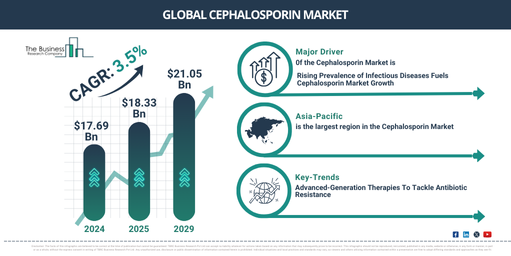
    In the past few years, the cephalosporin market size has seen a consistent rise. The projected increase is from $17.69 billion in 2024 to $18.33 billion in 2025, reflecting a compound annual growth rate (CAGR) of 3.6%. Factors like increased incidents of bacterial infections, growth in antibiotic resistance, an increase in surgical procedures and hospitalizations, heightened awareness among healthcare practitioners and regulatory backing for antibiotic development have contributed to the growth during the historical period.

    The dimension of the cephalosporin market is poised to demonstrate consistent expansion in the upcoming years, reaching a value of $21.05 billion in 2029, with a Compound Annual Growth Rate (CAGR) of 3.5%. Factors contributing to this growth over the projected period encompass an increasing global exposure to infectious diseases, rising bacterial resistance, sustained increases in surgical procedures and healthcare-related infections, along with an elevated demand for broad-spectrum antibiotics and evolving policies affecting market dynamics. The main trends foreseen during this period involve technological progress, changes in the regulatory environment, market broadening via advanced solutions, and instances of collaboration and partnerships.

    Download a free sample to assess the report’s scope and structure:

    https://www.thebusinessresearchcompany.com/sample.aspx?id=13402&type=smp

    How Are Key Drivers in the Industry Acting as Catalysts for the Growth of the Cephalosporin Market?

    The escalating incidence of transmittable diseases is anticipated to fuel the expansion of the cephalosporin market. Transmittable diseases are conditions that arise due to the infiltration and multiplication of harmful microorganisms like bacteria, viruses, fungi, and parasites. These diseases, including tuberculosis, malaria, and flu, can be passed from one person to another through different means. The demand for cephalosporin antibiotics, which are widely used to combat diseases caused by bacterial pathogens, is driven by the rise of these infectious diseases. These antibiotics can be administered for various infections owing to their integral role in confronting and controlling bacterial infections. For example, the Centers for Disease Control and Prevention reported in March 2023 that there were 8,300 reported cases of tuberculosis in the United States in 2022, an increase from 7,874 in 2021. Hence, the escalating incidence of transmittable diseases is anticipated to promote the growth of the cephalosporin market.

    Cephalosporin Market Driver: Heightened Health Care Costs Propel Cephalosporin Market Expansion


    Which Segments in the Cephalosporin Offer the Most Growth?

    The cephalosporin market covered in this report is segmented –

    1) By Type: Branded, Generic

    2) By Route Of Administration: Injection, Oral

    3) By Application: Respiratory Tract Infection, Skin Infection, Ear Infection, Urinary Tract Infection, Sexually Transmitted Infection, Other Applications

    Subsegments:

    1) By Flat Panel Detector: Active Matrix Flat Panel Detectors, Thin-Film Transistor (TFT) Flat Panel Detectors

    2) By Image Intensifier: Single-Field Image Intensifiers, Dual-Field Image Intensifiers

    3) By Other Product Type: Charge-Coupled Device (CCD), Complementary Metal-Oxide-Semiconductor (CMOS)

    Request customized data on this market:

    https://www.thebusinessresearchcompany.com/customise?id=13402&type=smp

    What Are the Fastest-Growing Geographies in the Cephalosporin Market?

    Asia-Pacific was the largest region in the cephalosporin market in 2024. The regions covered in the cephalosporin market report are Asia-Pacific, Western Europe, Eastern Europe, North America, South America, Middle East, Africa.

    What Are the Current Market Growth and Trends in the Cephalosporin Industry?

    Leading businesses in the cephalosporin market have their sights set on the creation of new goods and treatments, such as advanced-generation cephalosporins. The goal is to fight antibiotic resistance and broaden the effectiveness of their product line in dealing with a wider variety of bacterial infections. Ceftobiprole, a wide range cephalosporin antibiotic, is used to combat several bacterial infections, including those of the skin, soft tissue, and pneumonia. For example, Mast Group Ltd., a UK-based diagnostics product producer and distributor, unveiled Ceftobiprole 5µg as part of their MASTDISCS Antimicrobial Susceptibility Test series in July 2022. Ceftobiprole, or Zevtera/Mabelio, is a broadly effective 5th-generation cephalosporin approved to treat community-acquired pneumonia (CAP) and hospital-acquired pneumonia (HAP) in numerous European nations. Thanks to its extensive range of activity, proven efficiency against methicillin-resistant Staphylococcus aureus (MRSA), and an encouraging safety track record, Ceftobiprole is a suitable choice for targeted empirical therapy.

    View the full report here:

    https://www.thebusinessresearchcompany.com/report/cephalosporin-global-market-report

    What Are the Key Elements That Define the Cephalosporin Market?

    Cephalosporin refers to a class of broad-spectrum, semisynthetic-lactam antibiotics that are the most widely prescribed class of antibiotics used to treat diseases caused by gram-positive and gram-negative bacteria, such as skin infections, strep throat, pneumonia, staph infections, tonsillitis, and bronchitis. Cephalosporins are especially useful for people allergic to penicillin, another common antibiotic.

    Purchase the full report and get a swift delivery:

    https://www.thebusinessresearchcompany.com/purchaseoptions.aspx?id=13402

    About The Business Research Company:

    With over 15000+ reports from 27 industries covering 60+ geographies, The Business Research Company has built a reputation for offering comprehensive, data-rich research and insights. Armed with 1,500,000 datasets, the optimistic contribution of in-depth secondary research, and unique insights from industry leaders, you can get the information you need to stay ahead in the game.

    Get in touch with us:

    The Business Research Company: https://www.thebusinessresearchcompany.com/

    Americas +1 3156230293

    Asia +44 2071930708

    Europe +44 2071930708

    Email us at info@tbrc.info

    Follow us on:

    LinkedIn: https://in.linkedin.com/company/the-business-research-company

    YouTube: https://www.youtube.com/channel/UC24_fI0rV8cR5DxlCpgmyFQ

    Global Market Model: https://www.thebusinessresearchcompany.com/global-market-model
  • Market Trends Influencing Strategic Decisions in the Central Precocious Puberty Industry: Innovative Leuprolide Acetate Injections Transforming The Central Precocious Puberty Treatment Landscape

    Market Trends Influencing Strategic Decisions in the Central Precocious Puberty Industry: Innovative Leuprolide Acetate Injections Transforming The Central Precocious Puberty Treatment Landscape

    Discover trends, market shifts, and competitive outlooks for the central precocious puberty industry through 2025-2034 with The Business Research Company’s reliable data and in-depth research

    What is the Projected CAGR for the Central Precocious Puberty Market Size from 2025 to 2034?

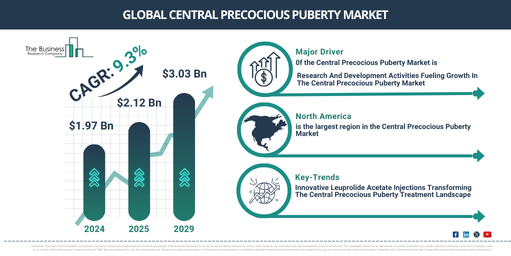
    In recent times, there has been a substantial growth in the market size for central precocious puberty. A surge from $1.97 billion in 2024 to $2.12 billion in 2025 is predicted, representing a compound annual growth rate (CAGR) of 7.8%. Factors contributing to this growth during the historic period include the rise in cases of central precocious puberty, advancements in treatment methods, environmental influences, an expansion in pediatric endocrinology services, and greater parental awareness leading to increased medical consultation. Also playing a significant role have been patient advocacy initiatives.

    The market size for central precocious puberty is projected to experience substantial growth in the upcoming years, reaching a value of $3.03 billion in 2029 with a compound annual growth rate of 9.3%. The anticipated growth during the forecast period is due to several factors such as integration of pediatric healthcare, a shift towards personalized medicine, ongoing parental education and awareness programs, the creation of longer-duration treatments, and early detection and intervention. Key trends projected for this forecast period are long-lasting formulations, a focus on patient-centric models, the use of telehealth and remote patient monitoring, individualized treatment strategies, cooperative care models, and digital health instruments for patient monitoring.

    Download a free sample to assess the report’s scope and structure:

    https://www.thebusinessresearchcompany.com/sample.aspx?id=13184&type=smp

    What Are the Major Market Drivers Behind the Rising Adoption of Central Precocious Puberty Market?

    The central precocious puberty market stands to benefit from the expected escalation in research and development activities. It involves not only the creation of new knowledge, products, and services but also the enhancement of present processes or procedures to better understand, diagnose, treat, and improve the overall care provided to those diagnosed with central precocious puberty (CPP). For example, in August 2023, Eurostat, Luxembourg’s nonprofit organization, reported a 5.4% rise to $126,153 million (€117,368 million) earmarked by the European government for R&D in 2022, amplifying from the $119,730 million (€111,393 million) allotted in 2021. This surge in R&D activities thus propels the CPP market. Another important factor pushing growth in the central precocious puberty market is the rising healthcare expenditure. This spend encompasses the total outlay for healthcare products and services, which includes everything from medical equipment and hospital services to prescription drugs and public health activities. Improved healthcare expenditure aids in bettering CPP diagnosis and treatment, reducing healthcare costs, elevating the quality of life, developing new treatments, and making the condition more widely known. As per the 2021–2030 National Health Expenditure (NHE) report published by the US Centers for Medicare & Medicaid Services in March 2022, an average annual increase of 5.1% in national health spending was projected from 2021 to 2030, culminating in an estimated expenditure of some $6.8 trillion by 2030. Over the same period, annual expenditure rates for Medicare and Medicaid are predicted to rise by 7.2% and 5.6% respectively. Thus, this upturn in healthcare spend is instrumental to boosting the growth of the CPP market.

    Which Key Market Segments Comprise the Central Precocious Puberty Market and Drive Its Revenue Growth?

    The central precocious puberty market covered in this report is segmented –

    1) By Drug: Leuprolide Acetate, Triptorelin, Histrelin Acetate, Nafarelin

    2) By Route Of Administration: Parenteral, Subcutaneous, Intramuscular, Other Routes Of Administrations

    3) By Distribution Channel: Hospital Pharmacy, Retail Pharmacy, Online Pharmacy

    4) By End-Users: Hospitals, Specialty Clinics, Homecare, Other End-Users

    Subsegments:

    1) By Leuprolide Acetate: Injectable Formulations, Depot Formulations

    2) By Triptorelin: Injectable Formulations, Long-acting Formulations

    3) By Histrelin Acetate: Implant Formulations, Injectable Formulations

    4) By Nafarelin: Nasal Spray Formulations, Injectable Formulations

    Request customized data on this market:

    https://www.thebusinessresearchcompany.com/customise?id=13184&type=smp

    Which Areas Are Leading Regions in the Central Precocious Puberty Market Expansion Across the Globe?

    North America was the largest region in the central precocious puberty market in 2024. The regions covered in the central precocious puberty market report are Asia-Pacific, Western Europe, Eastern Europe, North America, South America, Middle East, Africa

    What Are the Strategic Trends Steering theCentral Precocious Puberty Market Direction?

    Key players in the central precocious puberty market are concentrating on the development of innovative injectables such as leuprolide acetate injections to gain a distinctive advantage in the industry. Leuprolide acetate injection, a man-made hormone analogous to a natural hormone, is employed for the treatment of various health concerns, including advanced prostate cancer and early puberty onset. For example, in November 2022, Cipla Limited, a pharmaceutical corporation based in India, introduced Leuprolide Acetate Injection Depot 22.5 mg for the management of central precocious puberty and advanced prostate cancer. Leuprolide Acetate Injection Depot is a single-dose injection instrument containing 22.5 mg of leuprolide acetate designed for a three-month treatment regimen. This product is supplied in the form of freeze-dried microspheres in a single-use vial as part of a set that includes a user-friendly MIXJECT transfer device, along with a pre-filled syringe with 2 mL of a 0.8% mannitol solution.

    View the full report here:

    https://www.thebusinessresearchcompany.com/report/central-precocious-puberty-global-market-report

    How Is the Central Precocious Puberty Market Conceptually Defined?

    Central precocious puberty is a medical condition characterized by the early onset of the normal sexual development process in both girls and boys. It occurs when the initiation of sexual development happens earlier than the typical age range. There’s no underlying medical problem or identifiable reason for early puberty.

    Purchase the full report and get a swift delivery:

    https://www.thebusinessresearchcompany.com/purchaseoptions.aspx?id=13184

    About The Business Research Company:

    With over 15000+ reports from 27 industries covering 60+ geographies, The Business Research Company has built a reputation for offering comprehensive, data-rich research and insights. Armed with 1,500,000 datasets, the optimistic contribution of in-depth secondary research, and unique insights from industry leaders, you can get the information you need to stay ahead in the game.

    Get in touch with us:

    The Business Research Company: https://www.thebusinessresearchcompany.com/

    Americas +1 3156230293

    Asia +44 2071930708

    Europe +44 2071930708

    Email us at info@tbrc.info

    Follow us on:

    LinkedIn: https://in.linkedin.com/company/the-business-research-company

    YouTube: https://www.youtube.com/channel/UC24_fI0rV8cR5DxlCpgmyFQ

    Global Market Model: https://www.thebusinessresearchcompany.com/global-market-model
  • Emerging Trends Redefining the Cell Lysis And Fractionation Market Landscape: Advancements In Bioink Technology For Tissue Engineering

    Emerging Trends Redefining the Cell Lysis And Fractionation Market Landscape: Advancements In Bioink Technology For Tissue Engineering

    Discover trends, market shifts, and competitive outlooks for the cell regeneration medicine industry through 2025-2034 with The Business Research Company’s reliable data and in-depth research

    What is the Anticipated CAGR of the Cell Regeneration Medicine Market, and What Factors Will Drive It?

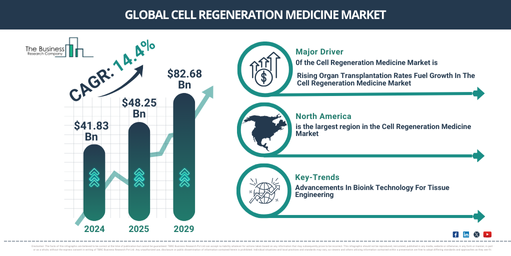
    There has been a swift expansion in the cell regeneration medicine market size in the recent past. This market, estimated to be worth $41.83 billion in 2024, is projected to surge to $48.25 billion in 2025, realizing a compound annual growth rate (CAGR) of 15.4%. Factors triggering this growth during the historical phase can be traced back to the rising elderly population, increased incidence of chronic diseases, escalating government and corporate investments, along with the escalating demand for functional regenerative medical products.

    Expectations are high for a swift expansion of the cell regeneration medicine market in the upcoming years, with projections placing its value at $82.68 billion by 2029, indicating a compound annual growth rate (CAGR) of 14.4%. Factors feeding this growth for the forecast duration range from a surge in horeca sector’s demand for regenerative medicine products, a big gap in organ supply for transplants, escalating research and development activities, to a growing call for gene therapies. The era also ushers in trends such as progressive therapies, wider scope for clinical trials, developments in tissue engineering and 3D bioprinting, therapies based on exosomes, and custom-tailored medicine.

    Download a free sample to assess the report’s scope and structure:

    https://www.thebusinessresearchcompany.com/sample.aspx?id=12884&type=smp

    What Are the Core Market Drivers Propelling Growth in the Cell Regeneration Medicine Industry?

    The cell regeneration medicine market is anticipated to surge due to the growing dominance of organ transplantation. Organ transplantation pertains to the medical technique of transferring an organ from one physique to another to substitute a faulty or absent organ. As it facilitates extended survival and circumvents medical treatments like dialysis, organ transplantation is gaining wide acceptance. The cell regeneration medicine sector extends noteworthy advances in organ transplantation by focusing on the repair and regeneration of the damaged tissues or organs. In reference to the United Network for Organ Sharing, a US-based scientific and educational organization, approximately 42,887 organ transplants were performed in the United States in 2022, reflecting an uptick of 3.7% from 2021. Thus, the extensive acceptance of organ transplants is propelling the cell regeneration medicine market.

    Driving Factor for Cell Regeneration Medicine Market: Significance of Cell Regeneration Medicine in Chronic Disease Management


    How Is the Cell Regeneration Medicine Market Segmented?

    The cell regeneration medicine market covered in this report is segmented –

    1) By Product: Therapeutics, Tools, Banks, Services

    2) By Therapeutic Category: Dermatology, Musculoskeletal, Immunology And Inflammation, Oncology, Cardiovascular, Ophthalmology, Other Therapeutic Categories

    3) By End-User: Hospitals And Clinics, Commercial Industries, Government And Academic Research Institutes

    Subsegments:

    1) By Therapeutics: Stem Cell Therapies, Gene Therapies, Tissue Engineering Products

    2) By Tools: Cell Culture Equipment, Bioreactors, Imaging Systems

    3) By Banks: Stem Cell Banks, Tissue Banks, Cord Blood Banks

    4) By Services: Cell Processing Services, Research And Development Services, Clinical Trial Services

    Request customized data on this market:

    https://www.thebusinessresearchcompany.com/customise?id=12884&type=smp

    Which Regions Are Driving the Next Phase of the Cell Regeneration Medicine Market Growth?

    North America was the largest region in the cell regeneration medicine market in 2024. The regions covered in cell regeneration medicine market report are Asia-Pacific, Western Europe, Eastern Europe, North America, South America, Middle East and Africa.

    What Key Market Trends and Innovations Are Shaping the Future of the Cell Regeneration Medicine Industry?

    Key players in the cell regeneration medicine market are concentrating their efforts on the creation of medical-grade bioink to maintain a competitive advantage. Medical-grade bioink is a particular kind of ink used in bioprinting that adheres to rigorous safety and biocompatibility regulations, making it ideal for uses in tissue engineering, regenerative medicine, and the production of biological structures intended for medical use. For instance, in October 2023, CELLINK, a Sweden-based firm recognized for their products and technologies for cell regeneration medicine, introduced CELLINK Vivoink. This is the first medical-grade bioink created for clinical applications in the fields of regenerative medicine and tissue engineering, with an emphasis on superior printability, mechanical stability, and cell viability.

    View the full report here:

    https://www.thebusinessresearchcompany.com/report/cell-regeneration-medicine-global-market-report

    How Is the Cell Regeneration Medicine Market Defined and What Are Its Core Parameters?

    Cell regeneration medicine refers to a branch of medical science and technology that focuses on harnessing the natural ability of cells to repair, replace and regenerate damaged or diseased tissues and organs within the human body. It involves using various cellular therapies, tissue engineering techniques and regenerative medicine approaches to promote healing and restore functionality to damaged areas.

    Purchase the full report and get a swift delivery:

    https://www.thebusinessresearchcompany.com/purchaseoptions.aspx?id=12884

    About The Business Research Company:

    With over 15000+ reports from 27 industries covering 60+ geographies, The Business Research Company has built a reputation for offering comprehensive, data-rich research and insights. Armed with 1,500,000 datasets, the optimistic contribution of in-depth secondary research, and unique insights from industry leaders, you can get the information you need to stay ahead in the game.

    Get in touch with us:

    The Business Research Company: https://www.thebusinessresearchcompany.com/

    Americas +1 3156230293

    Asia +44 2071930708

    Europe +44 2071930708

    Email us at info@tbrc.info

    Follow us on:

    LinkedIn: https://in.linkedin.com/company/the-business-research-company

    YouTube: https://www.youtube.com/channel/UC24_fI0rV8cR5DxlCpgmyFQ

    Global Market Model: https://www.thebusinessresearchcompany.com/global-market-model
  • Cell Lysis And Fractionation Market 2025-2034: Key Highlights, Growth Dynamics, and Emerging Trends

    Cell Lysis And Fractionation Market 2025-2034: Key Highlights, Growth Dynamics, and Emerging Trends

    Discover trends, market shifts, and competitive outlooks for the cell lysis and fractionation industry through 2025-2034 with The Business Research Company’s reliable data and in-depth research

    What Are the Key Milestones in the Cell Lysis And Fractionation Market’s Growth Trajectory From 2025 To 2034?

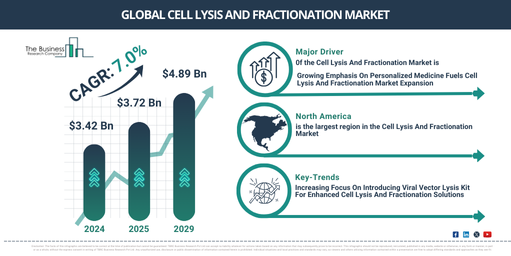
    The market size for cell lysis and fractionation has seen significant growth in the past few years. Its value will increase from $3.42 billion in 2024 to $3.72 billion in 2025, marking a compound annual growth rate (CAGR) of 8.8%. The historical growth of this market can be linked to factors such as the rise in investments for life science research, a burgeoning interest in personalized medicine, the high occurrence of diseases, advancements in technology pertaining to cell lysis and fractionation, and a growing demand for biopharmaceuticals and biotechnology products.

    The market size for cell lysis and fractionation is anticipated to enjoy significant growth within the coming years, increasing to $4.89 billion by 2029, at a compound annual growth rate (CAGR) of 7.0%. The projected growth over this period can be linked to several factors, including the growing attention to individualized medicine, escalated government investment in research, the heightened demand for efficient cell lysis and fractionation techniques, and advancements in the genomics and proteomics sector. Additional contributing trends over this forecasted period include the continuous rise in the adoption of personalized medical strategies, growing inclusion of automation and robotics in lysis and fractionation processes, extension of applications into clinical diagnostics and drug development sectors, advancements in microfluidics and lab-on-a-chip technologies for cell analysis, while also increasingly focusing on point-of-care and decentralized testing solutions.

    Download a free sample to assess the report’s scope and structure:

    https://www.thebusinessresearchcompany.com/sample.aspx?id=14064&type=smp

    Which Primay Drivers Are Accelerating Growth in the Cell Lysis And Fractionation Market?

    The increasing emphasis on personalized medicine is anticipated to catalyze the expansion of the cell lysis and fractionation markets. Personalized medicine is a novel approach to medical treatment and diagnosis, utilizing an individual’s genetic profile. This entails aligning medical treatments and decisions with the unique aspects of every patient, with a special focus on their genetic composition. Cell lysis and fractionation play a critical role in precision medicine, enabling the separation and analysis of specific subcellular components from patient samples, such as proteins, organelles, and nucleic acids. This enables medical and scientific professionals to scrutinize the molecular processes that cause diseases and conceive bespoke treatments based on the individual molecular features of each patient. For example, as reported by the Personalized Medicine Coalition (PMC), a U.S.-based entity that encourages recognition and adoption of personalized medicine, in October 2022, over 75,000 genetic testing products and 300 personalized medicines will be available in the market for individuals suffering from a myriad of cancers, rare genetic diseases, as well as a variety of chronic and infectious diseases. Therefore, the increasing emphasis on personalized medicine is fueling the expansion of the cell lysis and fractionation markets.

    Which Primary Segments of the Cell Lysis And Fractionation Market Are Driving Growth and Industry Transformations?

    The cell lysis and fractionation market covered in this report is segmented –

    1) By Type: Mammalian Cells, Microbial Cells

    2) By Application: Nucleic Acid Purification And Isolation, Protein Purification And Isolation

    3) By End-User: Research Laboratories And Institutes, Biopharmaceutical, Biotechnology Companies

    Subsegments:

    1) By Mammalian Cells: Adherent Mammalian Cells, Suspension Mammalian Cells, Primary Cells, Cell Lines

    2) By Microbial Cells: Bacterial Cells, Yeast Cells, Fungal Cells, Algal Cells

    Request customized data on this market:

    https://www.thebusinessresearchcompany.com/customise?id=14064&type=smp

    Which Regions Are Key Players in the Growth of the Cell Lysis And Fractionation Market?

    North America was the largest region in the cell lysis and fractionation market in 2024. The regions covered in the cell lysis and fractionation market report are Asia-Pacific, Western Europe, Eastern Europe, North America, South America, Middle East, Africa.

    Which Technological Trends Are Reshaping the Cell Lysis And Fractionation Industry Dynamics?

    Companies that hold significant positions in the cell lysis and fractionation market are striving to stand out by developing innovative solutions like CGT viral vector lysis kits. These innovations simplify the AAV lysis process, boosting the efficiency of standard operating procedures, quality control, and safety measures and regularizing bioprocessing workflows. An illustration of this trend surfaced in July 2023 when QIAGEN, a German specialist in sample and assay technologies, introduced its CGT Viral Vector Lysis Kit. This advanced tool enables virus titer quantification across various serotypes using a consistent, accurate procedure that begins with cell lysates. QIAGEN’s CGT viral vector lysis kit, a recent addition to its rapidly growing digital PCR product range for the biopharmaceutical sector, joins other key offerings, including three QIAcuity Residual DNA Quantification Kits and ten QIAcuity Cell and Gene Therapy (CGT) dPCR Assays, which are used for adeno-associated virus (AAV) titer quantification.

    View the full report here:

    https://www.thebusinessresearchcompany.com/report/cell-lysis-and-fractionation-global-market-report

    What Parameters Are Used to Define the Cell Lysis And Fractionation Market?

    Cell Lysis and Fractionation refers to tools and technologies designed to disrupt cell membranes and isolate cellular components for various research applications. Cell lysis and fractionation are used to break open cells and separate their components, allowing researchers to study specific proteins, organelles, or nucleic acids.

    Purchase the full report and get a swift delivery:

    https://www.thebusinessresearchcompany.com/purchaseoptions.aspx?id=14064

    About The Business Research Company:

    With over 15000+ reports from 27 industries covering 60+ geographies, The Business Research Company has built a reputation for offering comprehensive, data-rich research and insights. Armed with 1,500,000 datasets, the optimistic contribution of in-depth secondary research, and unique insights from industry leaders, you can get the information you need to stay ahead in the game.

    Get in touch with us:

    The Business Research Company: https://www.thebusinessresearchcompany.com/

    Americas +1 3156230293

    Asia +44 2071930708

    Europe +44 2071930708

    Email us at info@tbrc.info

    Follow us on:

    LinkedIn: https://in.linkedin.com/company/the-business-research-company

    YouTube: https://www.youtube.com/channel/UC24_fI0rV8cR5DxlCpgmyFQ

    Global Market Model: https://www.thebusinessresearchcompany.com/global-market-model
  • Cell Isolation Growth Trajectory: Key Forecasts and Strategic Insights

    Cell Isolation Growth Trajectory: Key Forecasts and Strategic Insights

    Discover trends, market shifts, and competitive outlooks for the cell isolation industry through 2025-2034 with The Business Research Company’s reliable data and in-depth research

    How Has The Cell Isolation Market Size Shifted, And What Is the Outlook Through 2034?

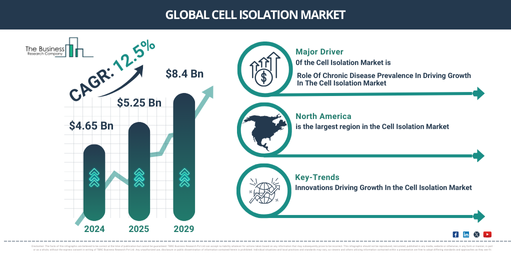
    In recent times, the cell isolation market has seen swift expansion. The market is projected to increase from $4.65 billion in 2024 to $5.25 billion in 2025, demonstrating a compound annual growth rate (CAGR) of 12.9%. The remarkable growth in previous years was due to factors such as regulatory backing and direction, utilization of single-cell analysis, spread of the biopharmaceutical sector, advancement in stem cell research, and the rapidly growing aging population.

    In the forthcoming years, the market size for cell isolation is anticipated to undergo swift expansion. It’s projected to escalate to $8.4 billion by 2029 with a compound annual growth rate (CAGR) of 12.5%. The significant growth expected in this period is ascribed to the escalating demand for cell-based assays, the uptake of microfluidics-associated technologies, the influx of funding for life sciences studies, the growth of the biopharmaceutical industry, and further research in avenues like cancer and regenerative medicine. Automation and robotics integration, multiplexed cell isolation, incorporation of Artificial Intelligence (AI), single-cell isolation and analysis, and miniaturization and portability are major trends predicted in the forecast period.

    Download a free sample to assess the report’s scope and structure:

    https://www.thebusinessresearchcompany.com/sample.aspx?id=14872&type=smp

    Which Factors and External Forces Are Driving Demand in the Cell Isolation Market?

    Advancements in the cell isolation market are anticipated to accelerate, driven by the growing pervasiveness of chronic diseases. Chronic ailments are enduring health problems that generally span many years or a lifetime. The multifaceted nature of these diseases necessitates a comprehensive strategy involving public health measures, lifestyle promoting policies, improvements in medical infrastructure, and enhanced awareness and education. This surge in persistent diseases fuels the development of cell isolation technologies and research, providing fresh prospects to capitalize on the capacity of stem cells for healing and addressing a range of health issues. For example, the Centers for Disease Control and Prevention (CDC.gov), a US government entity, reported in May 2023 that the number of deaths due to heart disease and cancer had risen to 6,95,547 in 2022, a noticeable increase from 6,05,213 in 2021. Consequently, the growing incidence of chronic diseases is fueling the expansion of the cell isolation market.

    Which Segments in the Cell Isolation Offer the Most Growth?

    The cell isolation market covered in this report is segmented –

    1) By Product: Consumables, Instruments

    2) By Cell Type: Human Cells, Animal Cells

    3) By Cell Source: Bone Marrow, Adipose Tissues, Cord Blood Or Embryonic Stem Cells, Other Cell Sources

    4) By Application: Biomolecule Isolation, Cancer Research, Stem Cell Research, Tissue Regeneration Or Regenerative Medicines, In-vitro Diagnostics, Other Applications

    5) By End-User: Pharmaceutical And Biotechnology Companies, Research And Academic Institutes, Hospitals And Diagnostic Laboratories, Other End-Users

    Subsegments:

    1) By Consumables: Reagents And Kits, Magnetic Beads And Microbeads, Cell Culture Media And Supplements, Antibodies And Enzymes

    2) By Instruments: Cell Separators, Flow Cytometers, Centrifuges, Microfluidic Devices, Automated Cell Isolation Systems

    Request customized data on this market:

    https://www.thebusinessresearchcompany.com/customise?id=14872&type=smp

    What Are the Fastest-Growing Geographies in the Cell Isolation Market?

    North America was the largest region in the cell isolation market in 2024. Asia-Pacific is expected to be the fastest-growing region in the forecast period. The regions covered in the cell isolation market report are Asia-Pacific, Western Europe, Eastern Europe, North America, South America, Middle East, Africa.

    Which Cutting-Edge Market Trends Are Expected to Drive theCell Isolation Market’s Growth?

    Leading corporations in the cell isolation marketplace are capitalizing on tech enhancements such as the closed cell isolation scheme to increase cell purity, streamline operations, and boost the effectiveness of cell-based studies and therapies. This cell segregation tool separates distinct cells or cell clusters from a mixed sample like blood or tissue, while reducing contamination and protecting cell viability. For example, in January 2022, Japan’s Sony Corporation introduced the advanced cell therapy product, the CGX10 closed cell isolation system. The CGX10, part of Sony’s Life Science division, extends into the development and delivery of cellular therapies, assisting the progression of sectors such as cell therapy and regenerative medication. This innovative solution enables the development of GMP-compliant manufacturing processes for cell products, thus expanding Sony’s influence on cell therapy advancements.

    View the full report here:

    https://www.thebusinessresearchcompany.com/report/cell-isolation-global-market-report

    What Are the Key Elements That Define the Cell Isolation Market?

    Cell isolation refers to the process of separating individual living cells from a solid block of tissue or cell suspension. This technique is vital in research fields such as stem cell and oncology studies, as well as clinical diagnostics, to separate specific cell populations from heterogeneous samples by targeting unique characteristics such as size, charge, density, shape, or protein expression.

    Purchase the full report and get a swift delivery:

    https://www.thebusinessresearchcompany.com/purchaseoptions.aspx?id=14872

    About The Business Research Company:

    With over 15000+ reports from 27 industries covering 60+ geographies, The Business Research Company has built a reputation for offering comprehensive, data-rich research and insights. Armed with 1,500,000 datasets, the optimistic contribution of in-depth secondary research, and unique insights from industry leaders, you can get the information you need to stay ahead in the game.

    Get in touch with us:

    The Business Research Company: https://www.thebusinessresearchcompany.com/

    Americas +1 3156230293

    Asia +44 2071930708

    Europe +44 2071930708

    Email us at info@tbrc.info

    Follow us on:

    LinkedIn: https://in.linkedin.com/company/the-business-research-company

    YouTube: https://www.youtube.com/channel/UC24_fI0rV8cR5DxlCpgmyFQ

    Global Market Model: https://www.thebusinessresearchcompany.com/global-market-model
  • Next-Gen Cell Culture Media : Market Forecast, Transformation, and Long-Term Trajectories

    Next-Gen Cell Culture Media : Market Forecast, Transformation, and Long-Term Trajectories

    Discover trends, market shifts, and competitive outlooks for the cell culture media industry through 2025-2034 with The Business Research Company’s reliable data and in-depth research

    How Has the Cell Culture Media Market Growth Performance Trended Historically, And What Lies Ahead?

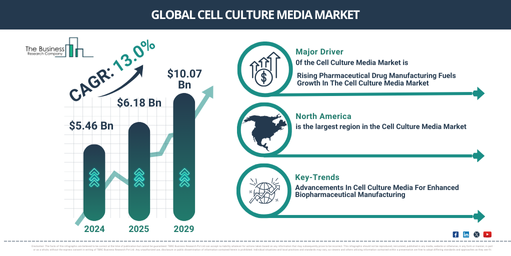
    The market size of cell culture media has seen swift expansion in the past few years. The expected progress suggests a rise from $5.46 billion in 2024 to $6.18 billion in 2025 with a compound annual growth rate (CAGR) of 13.3%. The growth in the past can be credited to the escalation in research and development (R&D) activities, the rising occurrence of chronic diseases, the expansion of the biopharmaceutical industry, government initiatives and funding support, and an increase in demand for regenerative medicine and stem cell therapies.

    Anticipations point towards a swift expansion in the cell culture media market size over the upcoming years, with projections reaching up to $10.07 billion by 2029, indicating a compound annual growth rate (CAGR) of 13.0%. This predicted growth in the forecast period could be as a result of an amplified emphasis on personalized medicine, an expanding biopharmaceutical product pipeline, advancement in stem cell research, the rising tendency to use organ-on-a-chip technology for drug testing and toxicity screening, enhancements in healthcare infrastructure, increased funding for life science research, and growth in biopharmaceutical manufacturing capacity. Other major trends foreseen within the period include the progression of biotechnology, the emergence of cellular and gene therapies, a surge in the use of organ-on-a-chip technology for drug testing and toxicity screening, increased preference for animal-free and chemically-defined cell culture media formulations, advancements in cell culture systems, microfluidics, and bioreactor technology.

    Download a free sample to assess the report’s scope and structure:

    https://www.thebusinessresearchcompany.com/sample.aspx?id=14871&type=smp

    Which Major Market Drivers Are Expected to Boost the Growth Potential of the Cell Culture Media Market?

    The anticipated growth in the cell culture media market is linked to the escalation in pharmaceutical drugs production. These drugs, which play an essential role in the prevention, diagnosis, or treatment of diseases in humans and animals, are manufactured in larger quantities due to the rising prevalence of chronic and infectious diseases and the increasing population of elderly individuals who require more drugs for managing age-related health issues. The role of cell culture media in this regard is to offer the necessary nutrients and environment for the growth and maintenance of cells used in the production of pharmaceutical drugs, facilitating ideal cell growth and the yield of required therapeutic proteins or molecules. As an example, the European Federation of Pharmaceutical Industries and Associations (EFPIA), a Belgium-headquartered European trade group that represents the pharmaceutical industry, reported in June 2023 that total bio-pharmaceutical production in Europe in 2022 was at $384,200 million (€340,000 million). This represents a roughly 4.95% increase from $366,267 million (€323,950 million) the previous year. As a result of these factors, the escalating production of pharmaceutical drugs is stimulating the growth of the cell culture media market.

    Which Key Market Segments Comprise the Cell Culture Media Market and Drive Its Revenue Growth?

    The cell culture media market covered in this report is segmented –

    1) By Type: Liquid Media, Semi-Solid And Solid Media

    2) By Product: Serum Free Media, Classical Media, Stem Cell Culture Media, Specialty Media, Chemically Defined Media, Other Cell Culture Media

    3) By Application: Biopharmaceutical Production, Diagnostics, Drug Screening And Development, Tissue Engineering And Regenerative Medicine, Other Applications

    4) By End User: Biotechnology And Pharmaceutical Industry, Academic Institute, Research Laboratory, Other End Users

    Subsegments:

    1) By Liquid Media: Classical Media, Chemically Defined Media, Serum-Free Media, Specialty Media (Protein-Free, Low-Glucose Media)

    2) By Semi-Solid And Solid Media: Semi-Solid Media (Agar-Based), Solid Media (Petri Dishes, Agar Plates For Colony Formation)

    Request customized data on this market:

    https://www.thebusinessresearchcompany.com/customise?id=14871&type=smp

    Which Areas Are Leading Regions in the Cell Culture Media Market Expansion Across the Globe?

    North America was the largest region in the cell culture media market in 2024. Asia-Pacific is expected to be the fastest-growing region in the forecast period. The regions covered in the cell culture media market report are Asia-Pacific, Western Europe, Eastern Europe, North America, South America, Middle East, Africa.

    What Are the Key Market Trends in theCell Culture Media Market Over the Coming Years?

    Large firms in the cell culture media market are centering their attention on creating new and innovative culture cell media such as chemically defined and animal-component-free formulations to secure a competitive position within the market. These chemically-defined and animal-component-free formulations are aimed at enhancing cell growth and protein production which can greatly improve the scalability and efficiency of biopharmaceutical manufacturing procedures. To illustrate, Lonza Group Ltd; a healthcare company located in Switzerland, released a novel cell culture platform called TheraPRO CHO Media System in July 2023. This system seeks to boost efficiency and quality in the production of therapeutic proteins and is specially designed to optimize the production of therapeutic monoclonal antibodies. It features a two-part production process that is both chemically-defined and free of animal components, which aids in streamlining media preparation and ensuring manufacturing scalability.

    View the full report here:

    https://www.thebusinessresearchcompany.com/report/cell-culture-media-global-market-report

    How Is the Cell Culture Media Market Conceptually Defined?

    Cell culture media refer to nutrient-rich solutions designed to support the growth, maintenance, and proliferation of cells outside of their natural environment. They typically contain a balanced mixture of amino acids, vitamins, minerals, sugars, and growth factors tailored to specific cell types. Media composition can vary widely depending on the cell’s requirements and experimental objectives.

    Purchase the full report and get a swift delivery:

    https://www.thebusinessresearchcompany.com/purchaseoptions.aspx?id=14871

    About The Business Research Company:

    With over 15000+ reports from 27 industries covering 60+ geographies, The Business Research Company has built a reputation for offering comprehensive, data-rich research and insights. Armed with 1,500,000 datasets, the optimistic contribution of in-depth secondary research, and unique insights from industry leaders, you can get the information you need to stay ahead in the game.

    Get in touch with us:

    The Business Research Company: https://www.thebusinessresearchcompany.com/

    Americas +1 3156230293

    Asia +44 2071930708

    Europe +44 2071930708

    Email us at info@tbrc.info

    Follow us on:

    LinkedIn: https://in.linkedin.com/company/the-business-research-company

    YouTube: https://www.youtube.com/channel/UC24_fI0rV8cR5DxlCpgmyFQ

    Global Market Model: https://www.thebusinessresearchcompany.com/global-market-model
  • CBCT Dental Imaging Market Overview 2025: Competitive Shifts, Forecast Models, and Emerging Opportunities

    CBCT Dental Imaging Market Overview 2025: Competitive Shifts, Forecast Models, and Emerging Opportunities

    Discover trends, market shifts, and competitive outlooks for the cbct dental imaging industry through 2025-2034 with The Business Research Company’s reliable data and in-depth research

    What Are the Projected Market Size and Growth Rates for the CBCT Dental Imaging Market From 2025 To 2029?

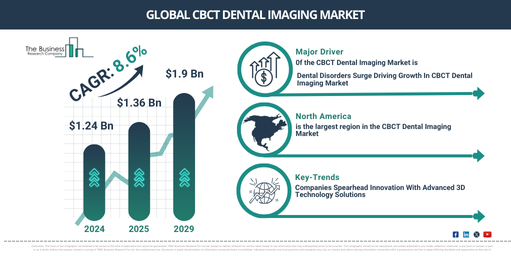
    The scale of the CBCT dental imaging market has seen a swift expansion in recent years. The market is projected to increase from $1.24 billion in 2024 to $1.36 billion in 2025, demonstrating a compound annual growth rate (CAGR) of 10.4%. The unprecedented growth during the historical period can be credited to the precision in diagnosis, structured treatment plans in dentistry, a hike in dental implant procedures, rising consciousness among dentists, and applications in endodontics.

    It is anticipated that the CBCT dental imaging industry will experience significant expansion in the forthcoming years, with projections suggesting it will reach $1.9 billion in 2029, growing at a CAGR of 8.6%. The anticipated growth during the forecast period can be credited to the increased need for minimally invasive approaches in dentistry, broadened use in orthodontics, incorporation of artificial intelligence, burgeoning tele-dentistry trends, and applicability in pediatric dentistry. Noteworthy trends for the upcoming period involve the incorporation of cad/cam technology, technological progress, rising uptake in several dental disciplines, emphasis on reducing patient doses, and mounting recognition in endodontics for root canal procedures.

    Download a free sample to assess the report’s scope and structure:

    https://www.thebusinessresearchcompany.com/sample.aspx?id=13401&type=smp

    What Are the Core Growth Drivers Propelling the CBCT Dental Imaging Market Forward?

    The escalating incidences of issues related to teeth and mouth health are predicted to bolster the expansion of the CBCT dental imaging market in the future. Various conditions concerning oral and surrounding structures are referred to as dental disorders. CBCT dental imaging operates to identify such disorders, detect hidden teeth, and enhance the standard of dental services and results. For example, in October 2024, the Australian Institute of Health and Welfare, a governmental body from Australia, reported that in 2022–23, approximately 87,400 oral health-related hospitalizations, which could have been sidestepped with timely intervention, took place. Children between 5–9 years appeared to have the record rate of avoidable hospitalizations, with 12.3 per 1,000 population. Hence, the escalating frequency of dental disorders is likely to stimulate the growth of the CBCT dental imaging market.

    CBCT Dental Imaging Market Driver: Increased Expenditure on Dental Care Boosts CBCT Dental Imaging Market Growth


    What Segment Types Define the CBCT Dental Imaging Market Structure?

    The CBCT dental imaging market covered in this report is segmented –

    1) By Product Type: Flat Panel Detector, Image Intensifier, Other Product Type

    2) By Application: Dental Implants, Orthodontics, Endodontics, Other Application

    3) By End user: Hospitals, Dental Clinics, Academics and Research Institutes, Other End-User

    Subsegments:

    1) By Flat Panel Detector: Active Matrix Flat Panel Detectors, Thin-Film Transistor (TFT) Flat Panel Detectors

    2) By Image Intensifier: Single-Field Image Intensifiers, Dual-Field Image Intensifiers

    3) By Other Product Type: Charge-Coupled Device (CCD), Complementary Metal-Oxide-Semiconductor (CMOS)

    Request customized data on this market:

    https://www.thebusinessresearchcompany.com/customise?id=13401&type=smp

    Which Geographic Areas Hold the Strongest Growth Potential in the CBCT Dental Imaging Market?

    North America was the largest region in the CBCT dental imaging market in 2024. Asia-Pacific is expected to be the fastest-growing region in the forecast period. The regions covered in the cbct dental imaging market report are Asia-Pacific, Western Europe, Eastern Europe, North America, South America, Middle East, Africa.

    Which Emerging Trends that Are Influencing theCBCT Dental Imaging Industry Evolution?

    Prominent players in the CBCT dental imaging market are now innovating with technologies such as 3D imaging to enhance precision in diagnosis, patient care, and treatment planning. The advanced 3D technology exploitation in CBCT dental imaging applies a cone-shaped X-ray beam to yield three-dimensional images of a patient’s oral and maxillofacial region. For example, Midmark Corp., a U.S. company known for its dental and medical solutions, introduced the Midmark Extraoral Imaging System (EOIS) product line in September 2022. The product line includes 3D CBCT imaging X-ray equipment that can be integrated with cephalometric functions. It aims to make CBCT imaging in dental practices more straightforward, efficient and widely available for general dentists.

    View the full report here:

    https://www.thebusinessresearchcompany.com/report/cbct-dental-imaging-global-market-report

    What Is the Definition of the CBCT Dental Imaging Market?

    CBCT Dental Imaging is a specialized type of medical imaging technique that provides detailed 3D images of a patient’s teeth, jaws, and surrounding structures by using a cone-shaped X-ray beam and a detector to capture multiple images from different angles. They are used to measure the width and height of jawbone, identify the location of nerves and blood vessels.

    Purchase the full report and get a swift delivery:

    https://www.thebusinessresearchcompany.com/purchaseoptions.aspx?id=13401

    About The Business Research Company:

    With over 15000+ reports from 27 industries covering 60+ geographies, The Business Research Company has built a reputation for offering comprehensive, data-rich research and insights. Armed with 1,500,000 datasets, the optimistic contribution of in-depth secondary research, and unique insights from industry leaders, you can get the information you need to stay ahead in the game.

    Get in touch with us:

    The Business Research Company: https://www.thebusinessresearchcompany.com/

    Americas +1 3156230293

    Asia +44 2071930708

    Europe +44 2071930708

    Email us at info@tbrc.info

    Follow us on:

    LinkedIn: https://in.linkedin.com/company/the-business-research-company

    YouTube: https://www.youtube.com/channel/UC24_fI0rV8cR5DxlCpgmyFQ

    Global Market Model: https://www.thebusinessresearchcompany.com/global-market-model
  • Strong CAGR to Propel in the Cartilage Repair Market and Beyond upto $2.57 Billion by 2029

    Strong CAGR to Propel in the Cartilage Repair Market and Beyond upto $2.57 Billion by 2029

    Discover trends, market shifts, and competitive outlooks for the cartilage repair industry through 2025-2034 with The Business Research Company’s reliable data and in-depth research

    What is the Anticipated CAGR of the Cartilage Repair Market, and What Factors Will Drive It?

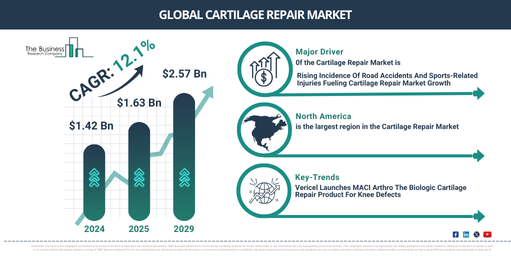
    The size of the cartilage repair market has seen a quick expansion in the previous years. It’s projected to escalate from $1.42 billion in 2024 to $1.63 billion in 2025, reflecting a compound annual growth rate (CAGR) of 14.4%. Factors contributing to this past period growth include a surge in occurrence of joint disorders, heightened rates of awareness and diagnosis, an uplift in healthcare spending, along with an increase in collaborations and partnerships.

    In the ensuing years, the size of the cartilage repair market is anticipated to experience a swift expansion. By 2029, it is projected to reach a value of $2.57 billion, growing at a Compound Annual Growth Rate (CAGR) of 12.1%. The surge during the forecasted period can be credited to factors such as the aging population, an escalation in sports-related injuries, regulatory backing for progressive therapies, and a growing inclination among patients for non-invasive treatments. Upcoming trends likely to shape the forecasted period are technological progress, regulatory green lights, and standardization, a preference for biologics among patients, and advancements in healthcare infrastructure.

    Download a free sample to assess the report’s scope and structure:

    https://www.thebusinessresearchcompany.com/sample.aspx?id=13400&type=smp

    Which Primay Drivers Are Accelerating Growth in the Cartilage Repair Market?

    Increasing numbers of road accidents and sports-related injuries are believed to drive the cartilage repair market’s expansion. This involves incidents with vehicles, pedestrians, or cyclists on public roads and streets, as well as injuries sustained during various sports and physical activities. These accidents and injuries necessitate cartilage repair procedures to mend damaged cartilage, relieve pain, and restore joint function. For example, the World Health Organization reported in June 2022 that almost 1.3 million people die annually from road traffic injuries. Moreover, according to Howden Group Holdings, in the 2023-24 premier league season, under-21 players were out of action for an average of 43.92 days per injury, an increase from 26.5 days in the prior season. These growing numbers of road accidents and sports-related injuries are thus fueling the cartilage repair market’s growth.

    Market Driver for Cartilage Repair: Escalation in Diabetes and Obesity Rates Boosting The Cartilage Repair Market Growth


    Which Primary Segments of the Cartilage Repair Market Are Driving Growth and Industry Transformations?

    The cartilage repair market covered in this report is segmented –

    1) By Treatment Modality: Cell-Based, Non-Cell-Based

    2) By Site: Knee, Hip, Ankle And Foot, Other Application Sites

    3) By Application: Hyaline Cartilage, Fibrocartilage

    4) By End User: Hospital And Clinic, Ambulatory Surgical Center (ASC), Other End-Users

    Subsegments:

    1) By Cell-Based Treatments: Autologous Chondrocyte Implantation (ACI), Stem Cell Therapy, Matrix-Induced Autologous Chondrocyte Implantation (MACI)

    2) By Non-Cell-Based Treatments: Scaffold-Based Treatment, Osteochondral Grafts, Synthetic Implants

    Request customized data on this market:

    https://www.thebusinessresearchcompany.com/customise?id=13400&type=smp

    Which Regions Are Key Players in the Growth of the Cartilage Repair Market?

    North America was the largest region in the cartilage repair market in 2024. Asia-Pacific is expected to be the fastest-growing region in the forecast period. The regions covered in the cartilage repair market report are Asia-Pacific, Western Europe, Eastern Europe, North America, South America, Middle East, Africa.

    Which Technological Trends Are Reshaping the Cartilage Repair Industry Dynamics?

    Leading businesses in the cartilage repair market are developing cutting-edge products like biologic cartilage repair solutions to augment treatment alternatives for cartilage damage and boost natural healing. These biologic cartilage repair products use treatments sourced from biology, such as cells, tissues, or growth factors, with the aim of rehabilitating or rejuvenating damaged cartilage. For example, in August 2024, Vericel, a biotechnology company from the US, introduced MACI Arthro (autologous cultured chondrocytes on porcine collagen membrane) and received the green light from a US-based federal health agency. MACI Arthro, the novel biologic cartilage repair offering, is designed to treat knee cartilage defects. Surgeons can employ this product to deal with symptomatic full-thickness cartilage defects of the knee up to 4 cm² in size using non-invasive procedures. This methodology of evaluating and preparing the defect site via small incisions using bespoke instruments marks a significant improvement over traditional techniques.

    View the full report here:

    https://www.thebusinessresearchcompany.com/report/cartilage-repair-global-market-report

    What Parameters Are Used to Define the Cartilage Repair Market?

    Cartilage repair is a medical process to treat and restore damaged or injured cartilage tissue in the body. Cartilage is a connective tissue that covers the ends of bones in joints and acts as a cushion and lubricant, allowing smooth and pain-free movement. These procedures are designed to address damaged or injured issues and promote the healing and regeneration of cartilage tissue.

    Purchase the full report and get a swift delivery:

    https://www.thebusinessresearchcompany.com/purchaseoptions.aspx?id=13400

    About The Business Research Company:

    With over 15000+ reports from 27 industries covering 60+ geographies, The Business Research Company has built a reputation for offering comprehensive, data-rich research and insights. Armed with 1,500,000 datasets, the optimistic contribution of in-depth secondary research, and unique insights from industry leaders, you can get the information you need to stay ahead in the game.

    Get in touch with us:

    The Business Research Company: https://www.thebusinessresearchcompany.com/

    Americas +1 3156230293

    Asia +44 2071930708

    Europe +44 2071930708

    Email us at info@tbrc.info

    Follow us on:

    LinkedIn: https://in.linkedin.com/company/the-business-research-company

    YouTube: https://www.youtube.com/channel/UC24_fI0rV8cR5DxlCpgmyFQ

    Global Market Model: https://www.thebusinessresearchcompany.com/global-market-model
  • $3.45 Billion Forecast for Cardiovascular Ultrasound Market by 2029, Backed by Demand and Innovation

    $3.45 Billion Forecast for Cardiovascular Ultrasound Market by 2029, Backed by Demand and Innovation

    Discover trends, market shifts, and competitive outlooks for the cardiovascular ultrasound industry through 2025-2034 with The Business Research Company’s reliable data and in-depth research

    How Has the Cardiovascular Ultrasound Market Growth Performance Trended Historically, And What Lies Ahead?

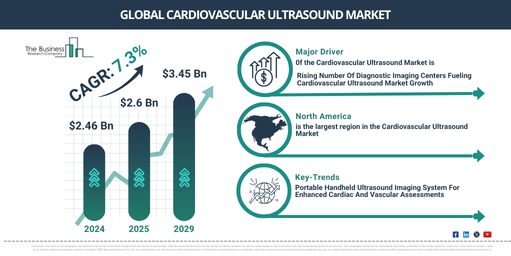
    The size of the cardiovascular ultrasound market has seen significant expansion in the past few years. The market which stood at $2.46 billion in 2024, is expected to escalate to $2.6 billion in 2025 with a Compound Annual Growth Rate (CAGR) of 5.9%. The historical growth is credited to factors such as the increasing rate of cardiovascular diseases, the aging demographic, the patient-centric nature of imaging, its non-invasive properties and safety measures, heightened consciousness and education about the issue, as well as accommodating reimbursement policies.

    The market size of cardiovascular ultrasound is anticipated to experience substantial growth in the upcoming years, escalating to $3.45 billion by 2029 with a 7.3% compound annual growth rate (CAGR). This projected expansion during the forecast period could be the result of an increased focus on preventive healthcare, the worldwide aging population, and value-driven healthcare initiatives. Predominant trends projected for this period encompass enhancements in imaging technology, incorporation of artificial intelligence (AI), broadening of point-of-care ultrasound (pocus), development of 3D/4D transesophageal echocardiography, the rise of telemedicine and remote monitoring, and advancements in data management and connectivity.

    Download a free sample to assess the report’s scope and structure:

    https://www.thebusinessresearchcompany.com/sample.aspx?id=13183&type=smp

    What Are the Core Growth Drivers Propelling the Cardiovascular Ultrasound Market Forward?

    The rise in the number of diagnostic imaging centers will likely contribute to the expansion of the cardiovascular ultrasound market. These centers, equipped with cutting-edge medical imaging technologies, can effectively diagnose and monitor numerous health conditions including cardiovascular diseases. Echocardiography, also referred to as cardiovascular ultrasound, is a pivotal imaging method in these centers. It produces on-the-spot images of the heart and blood vessels which helps medical practitioners evaluate heart function and identify various cardiovascular anomalies. As of April 2022, The Department of Health and Social Care in the UK reported the operation of 73 community diagnostic centers, delivering an additional 30,000 tests each week. This number is predicted to rise to 160 by 2025, depicting a growth rate of 119.18%. Hence, the ascent in the number of diagnostic imaging centers will reinforce the cardiovascular ultrasound market’s growth. The escalating rate of cardiovascular disease will likely fuel the cardiovascular ultrasound market’s expansion going forward. The term cardiovascular disease encompasses diseases affecting the heart or blood vessels. Echocardiography, or cardiovascular ultrasound, is an invaluable, non-invasive imaging technique integral to diagnosing, assessing, and managing cardiovascular diseases. For example, the British Heart Foundation released data in September 2024 indicating that about 7.6 million people in the UK are battling heart and circulatory diseases, with roughly 4 million males and 3.6 million females affected. These diseases are accountable for around 27% of all UK deaths, resulting in over 170,000 fatalities each year, or about 480 deaths daily, equivalent to one death every three minutes. Hence, the escalating rate of cardiovascular disease boosts the cardiovascular ultrasound market’s growth.

    What Segment Types Define the Cardiovascular Ultrasound Market Structure?

    The cardiovascular ultrasound market covered in this report is segmented –

    1) By Type: Transthoracic Echocardiography, Transesophageal Echocardiography, Fetal Echocardiography, Other Types

    2) By Technology: 2D, 3D Or 4D, Doppler

    3) By Display: Black Or White (B/W), Color

    4) By End-Use: Hospital, Diagnostic Centers, Ambulatory Care Centers, Other End-Uses

    Subsegments:

    1) By Transthoracic Echocardiography (TTE): Doppler Echocardiography, 2D Echocardiography, 3D Echocardiography, Stress Echocardiography

    2) By Transesophageal Echocardiography (TEE): Adult TEE, Pediatric TEE

    3) By Fetal Echocardiography: Standard Fetal Echocardiography, Advanced Fetal Echocardiography

    4) By Other Types: Portable Ultrasound, Contrast Echocardiography

    Request customized data on this market:

    https://www.thebusinessresearchcompany.com/customise?id=13183&type=smp

    Which Geographic Areas Hold the Strongest Growth Potential in the Cardiovascular Ultrasound Market?

    North America was the largest region in the cardiovascular ultrasound market in 2024. Europe is expected to be the fastest-growing region in the forecast period. The regions covered in the cardiovascular ultrasound market report are Asia-Pacific, Western Europe, Eastern Europe, North America, South America, Middle East, Africa

    Which Emerging Trends that Are Influencing theCardiovascular Ultrasound Industry Evolution?

    Main players in the cardiovascular ultrasound market are concentrating on the creation of novel handheld ultrasound imaging systems, such as the Vscan Air SL, to offer dependable services to their clientele. The Vscan Air SL is a mobile device that generates images of the body’s inner structures by utilizing ultrasound waves, when it’s connected to either a tablet or smartphone. For example, in August 2023, GE HealthCare Technologies Inc., an American firm specializing in medical technology, pharmaceutical diagnostics, and digital solutions, introduced the Vscan Air SL. This transportable, wireless ultrasound imaging system can expedite cardiac and vascular assessments, hastening diagnostic and treatment decisions. The system uniquely incorporates SignalMax and XDclear technologies for superior imaging performance, offering enhanced penetration, sharpness, and sensitivity through the employment of single crystal transducer technology. The latest SL version features a sector-phased array transducer intended for rapid cardiac evaluations. Due to the Vscan Air application, which is available on both Android and iOS smartphones, medical professionals can utilize Vscan Air for every patient.

    View the full report here:

    https://www.thebusinessresearchcompany.com/report/cardiovascular-ultrasound-global-market-report

    What Is the Definition of the Cardiovascular Ultrasound Market?

    Cardiovascular ultrasound is a noninvasive diagnostic method that utilizes high-frequency sound waves to generate images of the heart and its associated blood vessels. This imaging approach allows medical practitioners to observe the heart’s chambers, valves, walls, and blood vessels, offering comprehensive insights into its structure and performance.

    Purchase the full report and get a swift delivery:

    https://www.thebusinessresearchcompany.com/purchaseoptions.aspx?id=13183

    About The Business Research Company:

    With over 15000+ reports from 27 industries covering 60+ geographies, The Business Research Company has built a reputation for offering comprehensive, data-rich research and insights. Armed with 1,500,000 datasets, the optimistic contribution of in-depth secondary research, and unique insights from industry leaders, you can get the information you need to stay ahead in the game.

    Get in touch with us:

    The Business Research Company: https://www.thebusinessresearchcompany.com/

    Americas +1 3156230293

    Asia +44 2071930708

    Europe +44 2071930708

    Email us at info@tbrc.info

    Follow us on:

    LinkedIn: https://in.linkedin.com/company/the-business-research-company

    YouTube: https://www.youtube.com/channel/UC24_fI0rV8cR5DxlCpgmyFQ

    Global Market Model: https://www.thebusinessresearchcompany.com/global-market-model
  • Global Cardiovascular Implants Market Projected to Reach $36.69 Billion by 2029 at a CAGR of 6%

    Global Cardiovascular Implants Market Projected to Reach $36.69 Billion by 2029 at a CAGR of 6%

    Discover trends, market shifts, and competitive outlooks for the cardiovascular implants industry through 2025-2034 with The Business Research Company’s reliable data and in-depth research

    What Are the Projected Market Size and Growth Rates for the Cardiovascular Implants Market From 2025 To 2029?

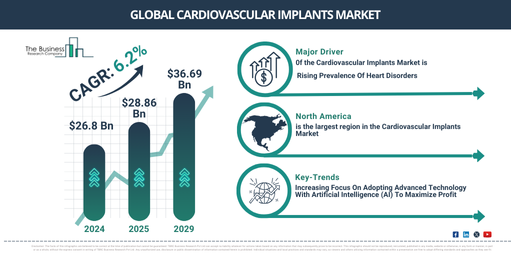
    The market size of cardiovascular implants has significantly expanded in the past few years. Predictions indicate a growth from $26.8 billion in 2024 to a substantial $28.86 billion in 2025, demonstrating a compound annual growth rate (CAGR) of 7.7%. The observed growth during the historical period can be linked to several factors. These include an increase in the aging population and cardiovascular risk, the presence of lifestyle-related cardiovascular risk components, enhancements in diagnostic technology, a rise in understanding and screening initiatives, and government actions taken for cardiovascular health.

    The market for cardiovascular implants is anticipated to witness robust growth in the coming years, with projections setting its worth at $36.69 billion by 2029, a feat to be achieved at a Compound Annual Growth Rate (CAGR) of 6.2%. Various factors contributing to this predicted ascent in the forecast period include the application of personalized medicine, the shift towards minimally invasive procedures, collaboration on a global scale in cardiovascular research, emphasis on preventive interventions by healthcare policies, and a patient-centric approach to cardiovascular care. Some of the primary trends expected within this period encompass evolving drug-eluting stents, the emergence of next-generation heart valves, enhanced inclusion of artificial intelligence (AI), a focused approach towards minimally invasive implantation methods, customized implants specific to patients’ requirements, and the formulation of leadless pacemakers.

    Download a free sample to assess the report’s scope and structure:

    https://www.thebusinessresearchcompany.com/sample.aspx?id=13399&type=smp

    What are the Fundamental Drivers and Innovations Shaping the Cardiovascular Implants Market?

    The increasing incidence of heart diseases is anticipated to fuel the expansion of the cardiovascular implants market. Heart diseases encompass several health issues impacting the heart and blood vessels, with conditions such as coronary artery disease, heart failure, arrhythmias, and valve disorders. The rising occurrence of heart diseases, like coronary artery disease and heart failure, spurs the need for cardiovascular implants such as stents and pacemakers, intended for the treatment of these conditions. These implants aid heart function and circulation in heart failure patients, regulate heart rhythm, and monitor heart rhythm. For instance, a report from the British Heart Foundation (BHF), released in September 2024, affirmed that about 7.6 million people in the UK suffer from heart and circulatory diseases. The number of people grappling with heart and circulatory diseases in the UK is anticipated to escalate by 1 million by 2030, and by 2040, this number is projected to jump by 2 million, supplementing the current statistics. Consequently, this growing incidence of heart diseases is stimulating the expansion of the cardiovascular implants market. The cardiovascular implants market is predicted to grow further driven by the increasing aging population. The aging population refers to a demographic trend marked by a growing percentage of people aged 60 and above within a population. The utilization of cardiovascular implants in the elder population aids in managing and treating cardiovascular diseases common in older people, resulting in an increased quality of life, longevity, and improved health outcomes overall. For example, as per the World Health Organization In October 2022, it is predicted that by 2030, 1 in 6 people worldwide will be 60 years old or more, and this is forecasted to touch the 2.1 billion mark by 2050. Hence, the growing aging population is fostering the growth of the cardiovascular implants market.

    How Is the Cardiovascular Implants Market Segmented?

    The cardiovascular implants market covered in this report is segmented –

    1) By Product: Coronary Stent, Implantable Cardioverter Defibrillator (ICD), Heart Valve, Implanted Cardiac Pacemaker, Cardiac Resynchronization Therapy (CRT) Devices, Peripheral Stent

    2) By Material: Metals and Alloys, Polymers, Biological Materials

    3) By Application: Arrhythmias, Acute Myocardial Infarction, Myocardial Ischemia, Other Applications

    4) By End-Users: Hospitals, Ambulatory Surgical Centers, Cardiac Centers

    Subsegments:

    1) By Coronary Stent: Drug-Eluting Stents, Bare-Metal Stents, Bioabsorbable Stents

    2) By Implantable Cardioverter Defibrillator (ICD): Single-Chamber ICD, Dual-Chamber ICD, Biventricular ICD

    3) By Heart Valve: Mechanical Heart Valves, Biological Heart Valves, Transcatheter Heart Valves

    4) By Implanted Cardiac Pacemaker: Single-Chamber Pacemaker, Dual-Chamber Pacemaker, Biventricular Pacemaker

    5) By Cardiac Resynchronization Therapy (CRT) Devices: CRT-P Devices (Pacemakers), CRT-D Devices (Defibrillators)

    6) By Peripheral Stent: Carotid Artery Stents, Renal Artery Stents, Femoral Artery Stents

    Request customized data on this market:

    https://www.thebusinessresearchcompany.com/customise?id=13399&type=smp

    Which Regions Are Driving the Next Phase of the Cardiovascular Implants Market Growth?

    North America was the largest region in the cardiovascular implants market in 2024. The regions covered in the cardiovascular implants market report are Asia-Pacific, Western Europe, Eastern Europe, North America, South America, Middle East, Africa.

    What Key Trends Are Shaping the Future of the Cardiovascular Implants Market?

    Prominent firms engaged in the cardiovascular implants market are intensifying their adoption of advanced technology, supplemented with artificial intelligence (AI), to bolster their market profits while improving patient care and the accuracy of treatments. The evolution of cardiac monitoring technology encompasses continuous monitoring and documentation of a patient’s heart function to diagnose and manage cardiac conditions. As an example, BIOTRONIK SE & Co. KG, a medical technology company based in Germany, ushered in the first worldwide implantation of its BIOMONITOR IV, an implantable cardiac monitor (ICM), in June 2023. This state-of-the-art ICM merges BIOTRONIK’s SmartECG technology with artificial intelligence to reduce false-positive identifications by 86% while preserving 98% of authentic episodes. Besides the advanced artificial intelligence, BIOMONITOR IV presents other benefits for patients and health professionals, including extended battery life and wireless connectivity, facilitating smooth data transmission and remote monitoring, thereby reducing the necessity for regular face-to-face clinic visits.

    View the full report here:

    https://www.thebusinessresearchcompany.com/report/cardiovascular-implants-global-market-report

    How Is the Cardiovascular Implants Market Defined and What Are Its Core Parameters?

    Cardiovascular implants refer to medical devices surgically placed within the cardiovascular system to manage heart and vascular conditions. These are inserted into the cardiovascular system to treat conditions such as blocked arteries, irregular heart rhythms, or valve defects, restoring normal heart function and improving blood circulation.

    Purchase the full report and get a swift delivery:

    https://www.thebusinessresearchcompany.com/purchaseoptions.aspx?id=13399

    About The Business Research Company:

    With over 15000+ reports from 27 industries covering 60+ geographies, The Business Research Company has built a reputation for offering comprehensive, data-rich research and insights. Armed with 1,500,000 datasets, the optimistic contribution of in-depth secondary research, and unique insights from industry leaders, you can get the information you need to stay ahead in the game.

    Get in touch with us:

    The Business Research Company: https://www.thebusinessresearchcompany.com/

    Americas +1 3156230293

    Asia +44 2071930708

    Europe +44 2071930708

    Email us at info@tbrc.info

    Follow us on:

    LinkedIn: https://in.linkedin.com/company/the-business-research-company

    YouTube: https://www.youtube.com/channel/UC24_fI0rV8cR5DxlCpgmyFQ

    Global Market Model: https://www.thebusinessresearchcompany.com/global-market-model