Blog

  • Hemodynamic Monitoring Systems Market Overview 2025: Competitive Shifts, Forecast Models, and Emerging Opportunities

    Hemodynamic Monitoring Systems Market Overview 2025: Competitive Shifts, Forecast Models, and Emerging Opportunities

    Discover trends, market shifts, and competitive outlooks for the hemodynamic monitoring systems industry through 2025-2034 with The Business Research Company’s reliable data and in-depth research

    What is the Projected CAGR for the Hemodynamic Monitoring Systems Market Size from 2025 to 2034?

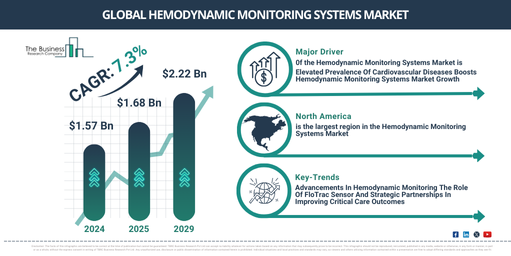
    In the recent past, the hemodynamic monitoring systems market has exhibited substantial development. This market, which is currently worth $1.57 billion as of 2024, is projected to increase to $1.68 billion in 2025. This translates to a compound annual growth rate (CAGR) of 7.2%. Factors leading to the expansion during the historical period include heightened incidence of cardiovascular illness, an aging populace and chronic ailments, surgical operations and critical care units (ICUs), a clinical focus on patient security, and advancements in the healthcare infrastructure.

    Anticipations are high for substantial expansion in the hemodynamic monitoring systems market in the ensuing years. The market forecast predicts it will propel to a value of $2.22 billion by 2029, with a strong compound annual growth rate (CAGR) of 7.3%. The projected growth during the forecast period can be ascribed to the shift towards less invasive methods, incorporation with digital health records (EHRs), mechanisms for remote patient supervision, emphasis on prompt diagnosis and intervention, international health hurdles, and essential care requirements. Noteworthily, vital trends that might shape the forecast period include the utilization of artificial intelligence (AI) and machine learning (ML). Other trends include remote observation and integration of telehealth, broadening the use of hemodynamic monitoring in critical care environments, partnership for technology progress, and a strong focus on data protection and patient confidentiality.

    Download a free sample to assess the report’s scope and structure:

    https://www.thebusinessresearchcompany.com/sample.aspx?id=13152&type=smp

    What Are the Core Growth Drivers Propelling the Hemodynamic Monitoring Systems Market Forward?

    The escalating occurrence of cardiovascular diseases is anticipated to fuel the expansion of the hemodynamic monitoring systems market in the future. Cardiovascular disease encompasses a range of conditions that impact the heart and blood vessels. Hemodynamic monitoring systems offer real-time information and understanding of a patient’s cardiovascular condition, allowing medical professionals to implement accurate and timely interventions, refine treatment methods and enhance patient results. For example, in March 2024, as per the UK government, a UK-centered website disclosed that in the fiscal year concluded in 2023, a bit over 1,862,500 individuals in England, constituting 3% of the populace, had received a GP diagnosis of coronary heart disease (CHD). Consequently, the escalating prevalence of cardiovascular diseases will stimulate the expansion of the hemodynamic monitoring systems market. An uptick in the prevalence of respiratory diseases is also anticipated to boost the growth of the hemodynamic monitoring systems market in the future. Respiratory diseases comprise a category of medical conditions impacting the respiratory system, which includes the organs and structures responsible for breathing. Hemodynamic monitoring systems are integral in managing respiratory diseases as they provide real-time cardiovascular data to healthcare providers. For example, in June 2023, the Australian Institute of Health and Welfare, a national agency situated in Australia, announced that almost a third (30%) of Australians, amounting to 7.5 million individuals, are struggling with chronic respiratory diseases. Therefore, the increasing prevalence of respiratory diseases is propelling the hemodynamic monitoring systems market.

    What Segment Types Define the Hemodynamic Monitoring Systems Market Structure?

    The hemodynamic monitoring systems market covered in this report is segmented –

    1) By Product: Monitors, Consumables

    2) By Technique Type: Invasive, Non-Invasive

    3) By End-User: Hospitals, Cath Labs, Other End-Users

    Subsegments:

    1) By Monitors: Bedside Monitors, Handheld Monitors, Portable Monitors

    2) By Consumables: Catheters, Sensors, Tubing and Accessories

    Request customized data on this market:

    https://www.thebusinessresearchcompany.com/customise?id=13152&type=smp

    Which Geographic Areas Hold the Strongest Growth Potential in the Hemodynamic Monitoring Systems Market?

    North America was the largest region in the hemodynamic monitoring systems market in 2024. The regions covered in the hemodynamic monitoring systems market report are Asia-Pacific, Western Europe, Eastern Europe, North America, South America, Middle East, Africa

    Which Emerging Trends that Are Influencing theHemodynamic Monitoring Systems Industry Evolution?

    Leading firms in the hemodynamic monitoring systems industry are focusing their efforts on creating cutting-edge solutions that can elevate patient outcomes, bolster accuracy in cardiovascular assessments, and facilitate on-the-spot data interpretation for superior clinical choices in dire care conditions. The FloTrac Sensor, a minimally invasive piece of equipment, has been designed to provide continuous hemodynamic monitorization for patients in critical condition. It offers instantaneous readings of cardiac output and other vital hemodynamic parameters by analyzing arterial waveforms via a regular arterial catheter. In an example from June 2023, Chinese company Mindray Medical International Ltd collaborated with Edwards Lifesciences, an American company, to release a hemodynamic monitoring solution that features the implementation of the FloTrac™ sensor. This sensor can connect to an arterial line and continuously compute essential hemodynamic parameters such as Cardiac Output (CO), Stroke Volume (SV), Stroke Volume Variation (SVV), Systemic Vascular Resistance (SVR), and Mean Arterial Pressure (MAP) at 20-second increments. This integration is facilitated through Mindray’s BeneVision N series patient monitors.

    View the full report here:

    https://www.thebusinessresearchcompany.com/report/hemodynamic-monitoring-systems-global-market-report

    What Is the Definition of the Hemodynamic Monitoring Systems Market?

    Hemodynamic monitoring systems are medical devices and techniques used to measure and assess physiological parameters related to the functioning of the cardiovascular system. These systems provide real-time data and insights into blood circulation, cardiac output, and other vital parameters within the circulatory system.

    Purchase the full report and get a swift delivery:

    https://www.thebusinessresearchcompany.com/purchaseoptions.aspx?id=13152

    About The Business Research Company:

    With over 15000+ reports from 27 industries covering 60+ geographies, The Business Research Company has built a reputation for offering comprehensive, data-rich research and insights. Armed with 1,500,000 datasets, the optimistic contribution of in-depth secondary research, and unique insights from industry leaders, you can get the information you need to stay ahead in the game.

    Get in touch with us:

    The Business Research Company: https://www.thebusinessresearchcompany.com/

    Americas +1 3156230293

    Asia +44 2071930708

    Europe +44 2071930708

    Email us at info@tbrc.info

    Follow us on:

    LinkedIn: https://in.linkedin.com/company/the-business-research-company

    YouTube: https://www.youtube.com/channel/UC24_fI0rV8cR5DxlCpgmyFQ

    Global Market Model: https://www.thebusinessresearchcompany.com/global-market-model
  • From Insight to Impact: Strategic Growth Mapping in the Hemodialysis Chairs Market

    From Insight to Impact: Strategic Growth Mapping in the Hemodialysis Chairs Market

    Discover trends, market shifts, and competitive outlooks for the hemodialysis chairs industry through 2025-2034 with The Business Research Company’s reliable data and in-depth research

    What Is the Current and Projected Market Size of the Hemodialysis Chairs Market Through 2034?

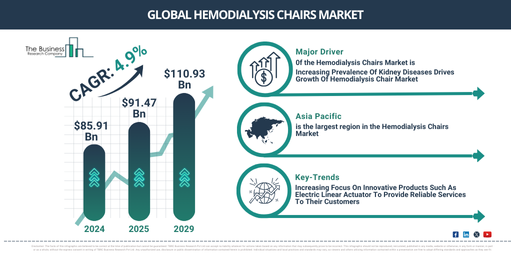
    The market size for hemodialysis chairs has experienced significant growth in the recent past. From $85.91 billion in 2024, it will expand to $91.47 billion in 2025, with a compound annual growth rate (CAGR) of 6.5%. This growth during the historical period is due to factors such as the increasing prevalence of hernias, the surge in obesity rates, an aging population, patient inclination towards less invasive surgeries, changing regulatory frameworks, and the cooperation between surgeons and manufacturers.

    The market for hemodialysis chairs is anticipated to experience consistent expansion in the coming years, projecting a growth to $110.93 billion by 2029 with a compound annual growth rate (CAGR) of 4.9%. The projected expansion during the forecast period can be ascribed to concentration on biocompatible substances, tailored treatment strategies, global health programs, augmented patient and physician awareness, and burgeoning demand for robotic-aided surgeries. Noteworthy trends in the forecast timeframe are progress in biocompatible substances, emphasis on minimally invasive procedures, breakthroughs in absorbable mesh technology, personalization for intricate hernias, and consolidation of barrier coatings.

    Download a free sample to assess the report’s scope and structure:

    https://www.thebusinessresearchcompany.com/sample.aspx?id=13452&type=smp

    What are the Fundamental Drivers and Innovations Shaping the Hemodialysis Chairs Market?

    Hemodialysis chair market growth is projected to be driven by the surging instances of kidney diseases. These conditions impact the organ’s structure and functioning, necessitating the use of hemodialysis chairs which offer much-needed comfort, safety, cushioning, and patient monitoring during long dialysis sessions. As per ZS Associates, a UK-based Kidney Research Commission, in June 2023, 7.19 million people or over 10% of the UK population is anticipated to be afflicted by kidney disease. By 2033, this number is set to increase to 7.61 million, with 51% of these patients being in the later stages of the disease, up from 45%. Hence, the growth of the hemodialysis chair market is propelled by the escalating instances of kidney diseases.

    Hemodialysis Chairs Market Driver: Diabetes Fuels Hemodialysis Chairs Market Growth


    How Is the Hemodialysis Chairs Market Segmented?

    The hemodialysis chairs market covered in this report is segmented –

    1) By Product: Manual Hemodialysis Chair, Electrical Hemodialysis Chair

    2) By Material: Leather, Vinyl, Other Material

    3) By End User: Hospitals, Hemodialysis Research Centers, Government Organizations, Ambulatory Centers, Home Care

    Subsegments:

    1) By Manual Hemodialysis Chair: Fixed Manual Hemodialysis Chair, Adjustable Manual Hemodialysis Chair

    2) By Electrical Hemodialysis Chair: Fully Electric Hemodialysis Chair, Semi-Electric Hemodialysis Chair

    Request customized data on this market:

    https://www.thebusinessresearchcompany.com/customise?id=13452&type=smp

    Which Regions Are Driving the Next Phase of the Hemodialysis Chairs Market Growth?

    Asia Pacific was the largest region in the hemodialysis chairs market in 2024. The regions covered in the hemodialysis chairs market report are Asia-Pacific, Western Europe, Eastern Europe, North America, South America, Middle East, Africa.

    What Key Trends Are Shaping the Future of the Hemodialysis Chairs Market?

    Major players in the hemodialysis chairs market are shifting their focus towards the creation of innovative electric linear actuators with IO-link for dependable customer service. An electric linear actuator, powered by a motor, is deployed in assembly, positioning, and handling systems. For example, in 2022, the Europe-based Swiss firm, Tecan Group Ltd, known for its expertise in supplying laboratory instruments and solutions for biopharmaceuticals, forensics, medical technology, and clinical diagnostics, announced that its newly launched automated liquid handling systems (Fluent) harness the power of electric linear actuators to attain accurate and consistent pipetting. This preciseness is crucial for a range of tasks like reagent dispensing, setting up assays, and sample preparation. The precision achieved through these actuators enhances the dependability and efficiency of lab processes, thereby guaranteeing efficient and smooth workflows. Tecan plays a substantial role in cancer therapy by fostering progress from research to clinical applications. Their technologies facilitate early detection, preventative care, and robotic surgery, thereby accelerating healthcare advancements globally.

    View the full report here:

    https://www.thebusinessresearchcompany.com/report/hemodialysis-chairs-global-market-report

    How Is the Hemodialysis Chairs Market Defined and What Are Its Core Parameters?

    Hemodialysis chairs are specialized pieces of medical furniture designed to provide comfort and support to patients undergoing hemodialysis treatment. Hemodialysis is a medical procedure used to filter waste products and excess fluids from the blood when the kidneys are unable to perform this function adequately. Hemodialysis chairs play a crucial role in ensuring patients engage in activities, mobility, and accessibility.

    Purchase the full report and get a swift delivery:

    https://www.thebusinessresearchcompany.com/purchaseoptions.aspx?id=13452

    About The Business Research Company:

    With over 15000+ reports from 27 industries covering 60+ geographies, The Business Research Company has built a reputation for offering comprehensive, data-rich research and insights. Armed with 1,500,000 datasets, the optimistic contribution of in-depth secondary research, and unique insights from industry leaders, you can get the information you need to stay ahead in the game.

    Get in touch with us:

    The Business Research Company: https://www.thebusinessresearchcompany.com/

    Americas +1 3156230293

    Asia +44 2071930708

    Europe +44 2071930708

    Email us at info@tbrc.info

    Follow us on:

    LinkedIn: https://in.linkedin.com/company/the-business-research-company

    YouTube: https://www.youtube.com/channel/UC24_fI0rV8cR5DxlCpgmyFQ

    Global Market Model: https://www.thebusinessresearchcompany.com/global-market-model

  • Heart Transplant Market Valuation Expected To Reach $18.1 Billion By 2029, Growing At A Rate Of 9%

    Heart Transplant Market Valuation Expected To Reach $18.1 Billion By 2029, Growing At A Rate Of 9%

    Discover trends, market shifts, and competitive outlooks for the heart transplant industry through 2025-2034 with The Business Research Company’s reliable data and in-depth research

    How Fast Is The Heart Transplant Market Expected to Grow Between 2025 And 2029?

    The size of the heart transplant market has increased rapidly over the past few years. The market, which was valued at $11.49 billion in 2024, is expected to reach $12.66 billion by 2025, growing at an annual compound rate (CAGR) of 10.2%. The strong growth in the historic period is due to significant improvements in medical technology, greater awareness and education, progress in organ preservation, and advancements in healthcare infrastructure.

    Projected to experience substantial growth in the coming years, the heart transplant market is set to reach a worth of $18.1 billion in 2029, a development marked by a compound annual growth rate of 9.3%. Factors contributing to this expected growth within the stipulated period include governmental backing and funding, worldwide expansion of transplant programs, augmentation of transplant center capabilities, and the integration of telemedicine and remote monitoring. Main trends expected within the forecast period encompass technological advancements, artificial heart and assist devices, as well as the use of artificial intelligence in donor organ selection.

    Download a free sample to assess the report’s scope and structure:

    https://www.thebusinessresearchcompany.com/sample.aspx?id=12967&type=smp

    Which Factors and External Forces Are Driving Demand in the Heart Transplant Market?

    The rise in cardiovascular disease occurrences is projected to stimulate further expansion of the heart transplant market. Cardiovascular conditions, which mainly concern the heart and blood arteries, often necessitate a heart transplant at their extreme stages. This medical procedure, often a last resort for those with end-stage heart failure non-responsive to other treatments, enhances the quality of life and life expectancy. The British Heart Foundation, a respected cardiovascular research charity based in the UK, reported for September 2024 that about 7.6 million individuals, comprising 4 million men and 3.6 million women, are currently plagued with heart and circulatory diseases in the UK. They project this number to increase by one million by 2030 and by another two million by 2040, emphasizing the deepening grip of cardiovascular diseases. This cardiovascular disease prevalence thus primes the heart transplant market for growth. Emerging awareness concerning organ donation and transplantation is likely to further spur the heart transplant market’s expansion. This awareness encapsulates the level to which individuals and communities comprehend the processes, significance, and repercussions of organ donation and transplantation in healthcare. By increasing the understanding of organ donation and transplantation, the supply of donors can be expanded, wait-times for recipients reduced, and patient outcomes can be improved. The United Network for Organ Sharing, a US-based non-profit scientific and educational organization, reported in January 2023 a new annual record of 42,887 organ transplants performed in the US during 2022, marking a 3.7% increase from 2021. Notably, this includes having 9,528 liver transplants, 4,111 heart transplants, and 2,692 lung transplants performed, reflecting the heightened awareness about organ donation. Consequently, this burgeoning awareness about organ donation and transplantation stands to power the heart transplant market.

    Which Segments in the Heart Transplant Offer the Most Growth?

    The heart transplant market covered in this report is segmented –

    1) By Surgery Type: Total Artificial Heart, Biventricular Pacing, Ventricular Assist Devices, Other Surgery Types

    2) By Transplant: Autograft, Allograft, Other Transplants

    3) By End-User: Hospitals, Cardiac Institutes, Other End-Users

    Subsegments:

    1) By Total Artificial Heart: Temporary Total Artificial Heart, Permanent Total Artificial Heart

    2) By Biventricular Pacing: Cardiac Resynchronization Therapy Pacemakers (CRT-P), Cardiac Resynchronization Therapy Defibrillators (CRT-D)

    3) By Ventricular Assist Devices: Left Ventricular Assist Device (LVAD), Right Ventricular Assist Device (RVAD), Biventricular Assist Device (BIVAD)

    4) By Other Surgery Types: Heart And Lung Transplant, Heterotopic Heart Transplant

    Request customized data on this market:

    https://www.thebusinessresearchcompany.com/customise?id=12967&type=smp

    What Are the Fastest-Growing Geographies in the Heart Transplant Market?

    North America was the largest region in the heart transplant market in 2024. Asia-Pacific is expected to be the fastest-growing region in the forecast period. The regions covered in heart transplant market report are Asia-Pacific, Western Europe, Eastern Europe, North America, South America, Middle East and Africa.

    Which Cutting-Edge Market Trends Are Expected to Drive theHeart Transplant Market’s Growth?

    Leading businesses present in the heart transplant market are more and more focusing on the development of novel solutions, like heart preservation technology, to enhance patient health outcomes and transplantation success rates. This technology significantly increases the time a heart can be preserved outside the body in comparison to the traditional ice storage method. Consequently, it allows for better patient health results and fewer post-surgery complications. For example, in May 2023, the U.S. Food and Drug Administration (FDA) gave Xvivo Perfusion AB, a medical technology enterprise based in Sweden, the approval for its Investigational Device Exemption (IDE) application regarding its heart preservation technology, enabling the company to kickstart the “PRESERVE Clinical Trial.” This is a prospective, open-label study conducted in multiple centers and single-handedly focuses on heart transplants performed post non-ischemic heart preservation from extended donors, especially including Donation after Circulatory Death (DCD) hearts. XVIVO’s heart preservation technology’s standout feature is its non-ischemic hypothermic perfusion system that employs cold, oxygenated perfusion to maintain donor hearts while being transported.

    View the full report here:

    https://www.thebusinessresearchcompany.com/report/heart-transplant-global-market-report

    What Are the Key Elements That Define the Heart Transplant Market?

    A heart transplant is a medical operation that involves removing and replacing a damaged or diseased heart with a healthy donor heart. It is a complex and life-saving medical intervention for individuals with end-stage heart failure or certain severe heart diseases.

    Purchase the full report and get a swift delivery:

    https://www.thebusinessresearchcompany.com/purchaseoptions.aspx?id=12967

    About The Business Research Company:

    With over 15000+ reports from 27 industries covering 60+ geographies, The Business Research Company has built a reputation for offering comprehensive, data-rich research and insights. Armed with 1,500,000 datasets, the optimistic contribution of in-depth secondary research, and unique insights from industry leaders, you can get the information you need to stay ahead in the game.

    Get in touch with us:

    The Business Research Company: https://www.thebusinessresearchcompany.com/

    Americas +1 3156230293

    Asia +44 2071930708

    Europe +44 2071930708

    Email us at info@tbrc.info

    Follow us on:

    LinkedIn: https://in.linkedin.com/company/the-business-research-company

    YouTube: https://www.youtube.com/channel/UC24_fI0rV8cR5DxlCpgmyFQ

    Global Market Model: https://www.thebusinessresearchcompany.com/global-market-model
  • Healthcare Visual Assistants Market Forecast Reaching $8.82 Billion by 2029 at 41% CAGR

    Healthcare Visual Assistants Market Forecast Reaching $8.82 Billion by 2029 at 41% CAGR

    Discover trends, market shifts, and competitive outlooks for the healthcare visual assistants industry through 2025-2034 with The Business Research Company’s reliable data and in-depth research

    What Are the Key Projections for the CAGR of the Healthcare Visual Assistants Market Size From 2025 to 2034?

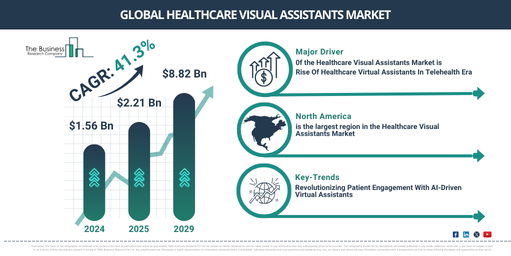
    In the last few years, the market size of healthcare visual assistants has expanded significantly. Its growth is projected to surge from $1.56 billion in 2024 to $2.21 billion in 2025, with a compound annual growth rate (CAGR) of 41.8%. The growth witnessed in the historical period can be credited to factors such as improved internet connectivity, a rise in smartphone usage, increasing demand from the healthcare industry, and the widespread use of mobile applications.

    The market size for healthcare visual assistants is predicted to undergo significant expansion in the coming years, ballooning to $8.82 billion by 2029 with a compound annual growth rate (CAGR) of 41.3%. The surge during the predicted period can be attributed to the escalating incidence of chronic illnesses, a rising demand for teleconsultations, intensified focus on patient involvement, and an increasing strain from lifestyle diseases. Key trends anticipated for this period consist of technological progression, product evolution, collaborations, and healthcare-related investments.

    Download a free sample to assess the report’s scope and structure:

    https://www.thebusinessresearchcompany.com/sample.aspx?id=13854&type=smp

    Which Major Market Drivers Are Expected to Boost the Growth Potential of the Healthcare Visual Assistants Market?

    The growth of the healthcare virtual assistant market is predicted to surge, driven by a rise in telehealth services. Telehealth services denote the use of digital communication technologies to offer health-related services and information, encompassing care, advice, reminders, education, intervention, monitoring, and remote admissions. Enhanced by healthcare virtual assistants that offer automated, round-the-clock patient support via digital platforms do duties like facilitating appointment arrangements, checking symptoms, medication reminders and offering personalized health advice; these inventions boost accessibility and efficiency in healthcare delivery. For example, the Health Information National Trends Survey (HINTS), a government agency based in the US, revealed in January 2024 that around 40% of US adults used telehealth services in 2022, despite significant access hurdles. Hence, the growing use of telehealth services is fueling the expansion of the healthcare virtual assistant market.

    Which Key Market Segments Comprise the Healthcare Visual Assistants Market and Drive Its Revenue Growth?

    The healthcare visual assistants market covered in this report is segmented –

    1) By Product: Chatbots, Smart Speakers

    2) By Technology: Automatic Speech Recognition (ASR) And Speech Recognition, Text Based, Text-To-Speech

    3) By End User: Providers, Payers, Other End Users

    Subsegments:

    1) By Chatbots: Rule-Based Chatbots, AI-Driven Chatbots, Voice-Enabled Chatbots, Patient Engagement Chatbots

    2) By Smart Speakers: Voice-Activated Smart Speakers, Health-Focused Smart Speakers, Smart Speakers With Display Screens, Multi-Functional Smart Speakers

    Request customized data on this market:

    https://www.thebusinessresearchcompany.com/customise?id=13854&type=smp

    Which Areas Are Leading Regions in the Healthcare Visual Assistants Market Expansion Across the Globe?

    North America was the largest region in the healthcare virtual assistant market in 2024. Asia-Pacific is expected to be the fastest-growing region in the forecast period. The regions covered in the healthcare visual assistants market report are Asia-Pacific, Western Europe, Eastern Europe, North America, South America, Middle East, Africa.

    What Are the Key Market Trends in theHealthcare Visual Assistants Market Over the Coming Years?

    Leading corporations in the healthcare visual assistants market are concentrating on crafting innovative products employing cutting-edge technology like AI-enabled omnichannel conversational virtual assistants, to increase their financial gains within the market. These AI-empowered conversational healthcare virtual assistants are digital utilities that offer personalized, automated patient assistance over various communication platforms using artificial intelligence. For example, TeleVox, an American healthcare technology firm, introduced Iris in April 2023. Iris is an Artificial Intelligence-powered virtual assistant that is capable of engaging in natural language discussions with patients. Iris is superior to basic chatbots that are dependent on limited content and pre-set responses, as it incorporates high-level AI features, such as the large-scale generative models provided by Microsoft Azure OpenAI Service. It empowers Iris to comprehend a broad spectrum of patient inquiries and deliver instant, pertinent replies.

    View the full report here:

    https://www.thebusinessresearchcompany.com/report/healthcare-visual-assistants-global-market-report

    How Is the Healthcare Visual Assistants Market Conceptually Defined?

    Healthcare virtual assistants refer to AI-powered digital systems or applications designed to assist patients, healthcare providers, or administrative staff in various healthcare-related tasks and services. Healthcare virtual assistants significantly enhance patient engagement by offering accessible and instant support.

    Purchase the full report and get a swift delivery:

    https://www.thebusinessresearchcompany.com/purchaseoptions.aspx?id=13854

    About The Business Research Company:

    With over 15000+ reports from 27 industries covering 60+ geographies, The Business Research Company has built a reputation for offering comprehensive, data-rich research and insights. Armed with 1,500,000 datasets, the optimistic contribution of in-depth secondary research, and unique insights from industry leaders, you can get the information you need to stay ahead in the game.

    Get in touch with us:

    The Business Research Company: https://www.thebusinessresearchcompany.com/

    Americas +1 3156230293

    Asia +44 2071930708

    Europe +44 2071930708

    Email us at info@tbrc.info

    Follow us on:

    LinkedIn: https://in.linkedin.com/company/the-business-research-company

    YouTube: https://www.youtube.com/channel/UC24_fI0rV8cR5DxlCpgmyFQ

    Global Market Model: https://www.thebusinessresearchcompany.com/global-market-model
  • Global Healthcare Revenue Cycle Management Market Projected to Reach $144.54 Billion by 2029 at a CAGR of 16%

    Global Healthcare Revenue Cycle Management Market Projected to Reach $144.54 Billion by 2029 at a CAGR of 16%

    Discover trends, market shifts, and competitive outlooks for the healthcare revenue cycle management industry through 2025-2034 with The Business Research Company’s reliable data and in-depth research

    What is the Projected CAGR for the Healthcare Revenue Cycle Management Market Size from 2025 to 2034?

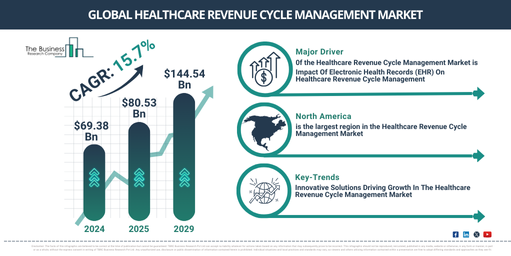
    In recent times, the market size of healthcare revenue cycle management has experienced speedy expansion. The market, which stood at $69.38 billion in 2024, is anticipated to expand to $80.53 billion in 2025, growing at a compound annual growth rate (CAGR) of 16.1%. The historical growth can be accredited to factors such as increased healthcare spending, transition towards value-based care frameworks, the need to meet regulatory compliance, the escalation in the use of electronic health records (EHR), and a strong focus on reducing costs and enhancing efficiency.

    The market size of healthcare revenue cycle management is projected to experience significant growth in the coming years, reaching an estimated value of $144.54 billion in 2029, with a 15.7% compound annual growth rate. Factors contributing to this expansion during the forecast period include increased financial responsibilities of patients, adaptable revenue cycle management strategies for medium-sized hospitals, importance of RCM in value-based care models, the synergy of RCM and EHR providers for inclusive solutions, and improvements in RCM system payment processing. Expected trends during this period are the adoption of automation and artificial intelligence (AI), transition to value-based care reimbursement models, sync of RCM systems with telehealth platforms, data analytics, and the rise of outsourcing and collaboration.

    Download a free sample to assess the report’s scope and structure:

    https://www.thebusinessresearchcompany.com/sample.aspx?id=14926&type=smp

    What are the Fundamental Drivers and Innovations Shaping the Healthcare Revenue Cycle Management Market?

    The surge in the utilization of electronic health records (EHR) is projected to drive the expansion of the healthcare revenue cycle management market in the future. Electronic health records (EHR) serve as digital replicas of patient medical records, offering comprehensive health details to authorized medical providers. The increment in electronic health record (EHR) adoption is influenced by numerous elements such as the requirement for enhanced patient care accessibility, the efficiency and effectiveness it brings to healthcare delivery, and its capacity to smoothly transmit information. Electronic health records (EHR) simplify the process of healthcare revenue cycle management by enabling precise documentation, productive processing of claims, and punctual reimbursement for healthcare services provided. As an example, the Department of Health and Social Care, a government department based in the UK, stated in June 2022 that by December 2023, EHR is anticipated to be established in 90% of NHS trusts, with mandatory implementation for every trust by March 2025. Therefore, the increasing implementation of electronic health records is fuelling the expansion of the healthcare revenue cycle management market.

    How Is the Healthcare Revenue Cycle Management Market Segmented?

    The healthcare revenue cycle management market covered in this report is segmented –

    1) By Component: Software, Service

    2) By Deployment Mode: On-Premises, Cloud Or Web Based

    3) By Function: Claims And Denial Management, Medical Coding And Billing Eligibility Verification, Payment Remittance, Other Functions

    4) By End-Use: Hospitals, Laboratories, Physicians, Other End-Users

    Subsegments:

    1) By Software: Billing And Coding Software, Patient Scheduling Software, Payment Processing Software, Claims Management Software, Revenue Cycle Analytics Software, Healthcare ERP (Enterprise Resource Planning) Software

    2) By Service: Consulting Services, Outsourcing Services, Managed Services, Training And Support Services, Revenue Cycle Optimization Services

    Request customized data on this market:

    https://www.thebusinessresearchcompany.com/customise?id=14926&type=smp

    Which Regions Are Driving the Next Phase of the Healthcare Revenue Cycle Management Market Growth?

    North America was the largest region in the healthcare revenue cycle management market in 2024. Asia-Pacific is expected to be the fastest-growing region in the forecast period. The regions covered in the healthcare revenue cycle management market report are Asia-Pacific, Western Europe, Eastern Europe, North America, South America, Middle East, Africa.

    What Key Trends Are Shaping the Future of the Healthcare Revenue Cycle Management Market?

    In the healthcare revenue cycle management market, main players are concentrating on creating novel solutions such as advanced revenue management platforms. These are aimed at aiding providers to enhance financial performance, lessen administrative load, and boost comprehensive patient care quality. Advanced revenue management platforms within healthcare are intricate software solutions crafted to rationalize and maximize the financial areas of healthcare organizations, especially in managing revenue cycles. For example, FinThrive, a healthcare company based in the US, rolled out its comprehensive revenue management platform in March 2022. This platform ensures streamlined revenue management by providing flexibility, scalability, and visibility within the revenue cycle, enabling accurate billing, regulatory compliance, and effective financial performance. These platforms are intended to maximize revenue prospects, cut administrative expenses, boost efficiency, and improve the overall monetary health of organizations, especially within sectors like healthcare where handling revenue cycles is essential for success and sustainability.

    View the full report here:

    https://www.thebusinessresearchcompany.com/report/healthcare-revenue-cycle-management-global-market-report

    How Is the Healthcare Revenue Cycle Management Market Defined and What Are Its Core Parameters?

    Healthcare revenue cycle management is the process of overseeing financial transactions in the healthcare system, from patient registration to reimbursement, ensuring efficient billing, coding, and collections to optimize revenue. It involves a combination of services and technology solutions aimed at maximizing financial performance and compliance within healthcare organizations.

    Purchase the full report and get a swift delivery:

    https://www.thebusinessresearchcompany.com/purchaseoptions.aspx?id=14926

    About The Business Research Company:

    With over 15000+ reports from 27 industries covering 60+ geographies, The Business Research Company has built a reputation for offering comprehensive, data-rich research and insights. Armed with 1,500,000 datasets, the optimistic contribution of in-depth secondary research, and unique insights from industry leaders, you can get the information you need to stay ahead in the game.

    Get in touch with us:

    The Business Research Company: https://www.thebusinessresearchcompany.com/

    Americas +1 3156230293

    Asia +44 2071930708

    Europe +44 2071930708

    Email us at info@tbrc.info

    Follow us on:

    LinkedIn: https://in.linkedin.com/company/the-business-research-company

    YouTube: https://www.youtube.com/channel/UC24_fI0rV8cR5DxlCpgmyFQ

    Global Market Model: https://www.thebusinessresearchcompany.com/global-market-model
  • Healthcare IoT Security Market Forecast 2025–2034: Trends Reshaping Demand, Investment, and Innovation

    Healthcare IoT Security Market Forecast 2025–2034: Trends Reshaping Demand, Investment, and Innovation

    Discover trends, market shifts, and competitive outlooks for the healthcare quality management software industry through 2025-2034 with The Business Research Company’s reliable data and in-depth research

    What Is the Current and Projected Market Size of the Healthcare Quality Management Software Market Through 2034?

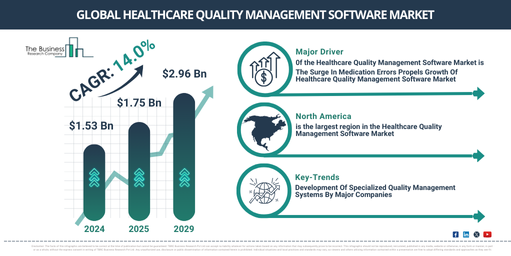
    The market for healthcare quality management software has seen rapid expansion in recent years. Predictions indicate a growth from $1.53 billion in 2024 to $1.75 billion in 2025, with a compound annual growth rate (CAGR) of 14.2%. The surge during the previous period is due to several factors including the growing incidence of chronic kidney disease, an aging populace, enhancements in healthcare infrastructure, government initiatives and funding, educational campaigns revolving around kidney health, an increase in diabetes and hypertension cases, and collaborations with healthcare professionals.

    In the coming years, the market size for healthcare quality management software is projected to undergo speedy expansion. At a 14.0% Compound Annual Growth Rate (CAGR), it is predicted to reach a value of $2.96 billion by 2029. This growth during the projected period can be ascribed to factors such as the escalating number of CKD cases, the worldwide expansion of healthcare, emphasis on preventive healthcare, rising elderly population, and renal health supportive government policies. Significant trends anticipated for this period involve the adaption of patient-oriented designs, the integration of distance monitoring technology, customizations suitable for pediatric hemodialysis, improvements in ergonomics and posture backing, as well as concentration on infection prevention steps.

    Download a free sample to assess the report’s scope and structure:

    https://www.thebusinessresearchcompany.com/sample.aspx?id=13451&type=smp

    What Are the Primary Drivers Supporting the Market Growth of the Healthcare Quality Management Software Market?

    The escalating incidences of medication errors are predicted to stimulate the expansion of the healthcare quality management software market. A medication error is a preventable fault or event that can happen at any point throughout the medication use process, such as prescribing, dispensing, administering, or monitoring. These errors can cause improper medication use or harm to the patient. Healthcare quality management software assists health organizations in thoroughly tracking and recording medication errors. It also enables systematic gathering and scrutiny of data connected to medication errors, which helps establishments in pinpointing patterns, root causes, and trends. For example, in September 2023, a report from the Nationwide Children’s Hospital, a US scholarly pediatric medical center, revealed that the annual rate of medication errors connected to ADHD treatments shot up by 5,235 recorded medication errors, equating to one error for a child every 100 minutes in 2022. Thus, the increasing frequency of medication errors spurs the growth of the healthcare quality management software market. As for the healthcare quality management software market’s growth driver, the surge in healthcare expenditure is propelling the market forward. Healthcare expenditure constitutes the entirety of resources, monetary and otherwise, allocated by a nation, government, or individuals towards the healthcare sector for medical commodities and services. This expenditure aids healthcare quality management software in various ways by allowing organizations to fund tools and technologies that can improve the overall standard of healthcare services. For instance, in May 2023, a report by the Office for National Statistics, a UK governmental department, disclosed that from 2022 to 2023, healthcare expenditure in the UK rose by 5.6%, a significant leap from the 0.9% growth seen in 2022. UK healthcare expenditure amounted to approximately $317.63 billion (£292 billion) in 2023. Therefore, a surge in healthcare expenditure fuels the expansion of the healthcare quality management software market moving forward.

    Which Primary Segments of the Healthcare Quality Management Software Market Are Driving Growth and Industry Transformations?

    The healthcare quality management software market covered in this report is segmented –

    1) By Type: Business Intelligence And Data Analytics Solutions, Clinical Risk Management Solutions, Physician Quality Reporting Solutions, Provider Performance Improvement Solutions

    2) By Deployment Mode: Cloud-Based, On-Premises, Web-Based

    3) By Application: Data Management, Risk Management, Other Application

    4) By End-Use: Hospitals, Ambulatory Surgery Centers, Nursing Homes, Other End-Uses

    Subsegments:

    1) By Business Intelligence And Data Analytics Solutions: Data Visualization Tools, Predictive Analytics Solutions, Reporting And Dashboards

    2) By Clinical Risk Management Solutions: Patient Safety Management, Incident Reporting Software, Risk Assessment And Mitigation Tools

    3) By Physician Quality Reporting Solutions: Quality Reporting Software For Physicians, Physician Performance Tracking Tools

    4) By Provider Performance Improvement Solutions: Provider Performance Monitoring Software, Performance Improvement Dashboards, Benchmarking And Compliance Tools

    Request customized data on this market:

    https://www.thebusinessresearchcompany.com/customise?id=13451&type=smp

    Which Regions Are Key Players in the Growth of the Healthcare Quality Management Software Market?

    North America was the largest region in the healthcare quality management software market in 2024. Asia-Pacific is expected to be the fastest-growing region in the forecast period. The regions covered in the healthcare quality management software market report are Asia-Pacific, Western Europe, Eastern Europe, North America, South America, Middle East, Africa.

    What Are the Most Significant Market Trends in the Healthcare Quality Management Software Market?

    Large firms active in the healthcare quality management software market are crafting novel platforms like dedicated quality management systems (QMS) that aid in simplifying compliance with regulatory norms and support data-informed decision-making for better patient care. A dedicated Quality Management System (QMS) is a type of software solution developed to facilitate and simplify the processes of quality control and regulatory compliance within healthcare entities. For example, Palantir Technologies Inc., a software company based in the US that specializes in data fusion platforms, introduced a dedicated quality management system (QMS) in January 2023. This system is intended to assist life sciences customers in handling their most crucial workflows, including comprehensive analysis of clinical data. The system assists life science establishments in satisfying GxP (good practices) stipulations, which are essential for guaranteeing the safety, quality, and conformity of healthcare and pharmaceutical products. The system can integrate with the existing foundry platform, a tool used for managing and analyzing data. The integration furthers the ability to make decisions based on data.

    View the full report here:

    https://www.thebusinessresearchcompany.com/report/healthcare-quality-management-software-global-market-report

    What Parameters Are Used to Define the Healthcare Quality Management Software Market?

    Healthcare quality management software is a type of software designed to help healthcare organizations manage and improve the quality of care and services they provide. It plays a crucial role in enhancing patient outcomes, ensuring compliance with regulatory standards, and optimizing operational efficiency within healthcare settings.

    Purchase the full report and get a swift delivery:

    https://www.thebusinessresearchcompany.com/purchaseoptions.aspx?id=13451

    About The Business Research Company:

    With over 15000+ reports from 27 industries covering 60+ geographies, The Business Research Company has built a reputation for offering comprehensive, data-rich research and insights. Armed with 1,500,000 datasets, the optimistic contribution of in-depth secondary research, and unique insights from industry leaders, you can get the information you need to stay ahead in the game.

    Get in touch with us:

    The Business Research Company: https://www.thebusinessresearchcompany.com/

    Americas +1 3156230293

    Asia +44 2071930708

    Europe +44 2071930708

    Email us at info@tbrc.info

    Follow us on:

    LinkedIn: https://in.linkedin.com/company/the-business-research-company

    YouTube: https://www.youtube.com/channel/UC24_fI0rV8cR5DxlCpgmyFQ

    Global Market Model: https://www.thebusinessresearchcompany.com/global-market-model
  • Healthcare IoT Security Market 2025-2034: Key Highlights, Growth Dynamics, and Emerging Trends

    Healthcare IoT Security Market 2025-2034: Key Highlights, Growth Dynamics, and Emerging Trends

    Discover trends, market shifts, and competitive outlooks for the healthcare iot security industry through 2025-2034 with The Business Research Company’s reliable data and in-depth research

    What is the Anticipated CAGR of the Healthcare IoT Security Market, and What Factors Will Drive It?

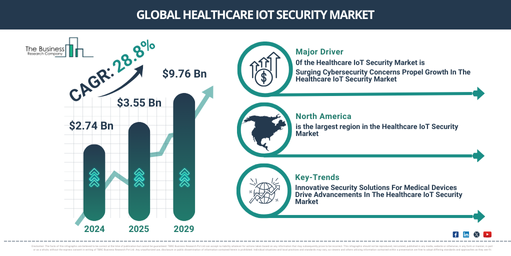
    The market size for IoT security in healthcare has seen rapid growth in the past few years. The market is projected to escalate from $2.74 billion in 2024 to $3.55 billion the subsequent year, with a compound annual growth rate (CAGR) of 29.6%. This upward trend in the past was largely driven by the necessity for rigorous security measures, administrative mandates underscoring the significance of securing healthcare data, ongoing digitization in the healthcare industry, economic expansion, and rising urbanization.

    Anticipated to witness significant expansion in the coming years, the healthcare IoT security market is poised to reach a value of $9.76 billion in 2029, registering a compound annual growth rate (CAGR) of 28.8%. Factors fostering this growth during the forecast period include intensifying concerns over cybersecurity, the escalating incorporation of IoT in healthcare for improved patient care, rising apprehensions regarding data privacy, and government-initiated measures. The forecast period will also see certain trends becoming prominent, such as advancements in IoT technology, the application of blockchain for maintaining data integrity, the creation of innovative, bespoke security solutions specifically for healthcare IoT, technological progress, and an increasing number of partnerships.

    Download a free sample to assess the report’s scope and structure:

    https://www.thebusinessresearchcompany.com/sample.aspx?id=13853&type=smp

    How Are Key Drivers in the Industry Acting as Catalysts for the Growth of the Healthcare IoT Security Market?

    The escalation of cybersecurity issues is projected to fuel the expansion of the healthcare IoT security market. These concerns pertain to possible threats, risks, and vulnerabilities linked with the employment of information technology and digital systems. In the healthcare industry, IoT security serves to minimize cybersecurity hazards by ensuring the privacy and security of patient data and medical records. For example, in November 2023, the Australia-based government department, the Department of Defence Australia, reported that the Australian Cyber Security Centre had received over 94,000 cybercrime reports during the 2022-2023 fiscal year. This figure signifies a 23 percent rise from the preceding year, 2021-22. Consequently, escalating cybersecurity issues are propelling the expansion of the healthcare IoT security market.

    Which Segments in the Healthcare IoT Security Offer the Most Growth?

    The healthcare IoT security market covered in this report is segmented –

    1) By Component: Solution, Services

    2) By Security Type: Application Security, Cloud Security, Endpoint Security, Network Security, Other Security Types

    3) By End-use: Hospitals, Surgical Centers, and Clinics, Government and Defense Institutions, Clinical Research Organizations, Research and Diagnostic Laboratories

    Subsegments:

    1) By Solution: Identity And Access Management (IAM), Data Encryption And Tokenization, Intrusion Detection And Prevention Systems (IDPS), Device Authentication And Management, Secure Network Communication

    2) By Services: Consulting Services, Risk Assessment And Management, Managed Security Services, Training And Education Services, Support And Maintenance Services

    Request customized data on this market:

    https://www.thebusinessresearchcompany.com/customise?id=13853&type=smp

    What Are the Fastest-Growing Geographies in the Healthcare IoT Security Market?

    North America was the largest region in the healthcare IoT security market in 2024. The regions covered in the healthcare iot security market report are Asia-Pacific, Western Europe, Eastern Europe, North America, South America, Middle East, Africa.

    What Are the Current Market Growth and Trends in the Healthcare IoT Security Industry?

    Leading firms in the healthcare IoT security industry are creating innovative offerings, such as security solutions for medical devices, in order to provide customers with top-tier functionality. Security solutions for medical devices encompasses a range of methods, technologies, and strategies aimed at safeguarding the confidentiality, integrity, and availability of medical devices and the sensitive data they process. As an example, in December 2022, Palo Alto Networks Inc., a prominent cybersecurity firm based in the US, introduced Medical IoT Security, a unique zero-trust security solution. The standout characteristic of Palo Alto Networks Medical IoT Security is its ability to effortlessly and securely implement and manage upcoming connected technologies for healthcare institutions. This solution, which harnesses a zero-trust tactical approach to cybersecurity, provides improved security by continually confirming each user and device, thereby removing any assumed trust. With the incorporation of machine learning (ML), Palo Alto Networks Medical IoT Security allows healthcare establishments to set device guidelines paired with automated security responses. In addition, it enables the automation of Zero Trust policy suggestions and enforcement.

    View the full report here:

    https://www.thebusinessresearchcompany.com/report/healthcare-iot-security-global-market-report

    What Are the Key Elements That Define the Healthcare IoT Security Market?

    Healthcare Internet of Things (IoT) security refers to a network of linked devices that can collect and distribute data without the need for people. These solutions aim to mitigate the security risks associated with medical IoT devices and ensure the protection of patient data and care.

    Purchase the full report and get a swift delivery:

    https://www.thebusinessresearchcompany.com/purchaseoptions.aspx?id=13853

    About The Business Research Company:

    With over 15000+ reports from 27 industries covering 60+ geographies, The Business Research Company has built a reputation for offering comprehensive, data-rich research and insights. Armed with 1,500,000 datasets, the optimistic contribution of in-depth secondary research, and unique insights from industry leaders, you can get the information you need to stay ahead in the game.

    Get in touch with us:

    The Business Research Company: https://www.thebusinessresearchcompany.com/

    Americas +1 3156230293

    Asia +44 2071930708

    Europe +44 2071930708

    Email us at info@tbrc.info

    Follow us on:

    LinkedIn: https://in.linkedin.com/company/the-business-research-company

    YouTube: https://www.youtube.com/channel/UC24_fI0rV8cR5DxlCpgmyFQ

    Global Market Model: https://www.thebusinessresearchcompany.com/global-market-model
  • Healthcare Gamification Market Insights: In-Depth Look at Growth Trends, Market Size, and Opportunities for 2025-2034

    Healthcare Gamification Market Insights: In-Depth Look at Growth Trends, Market Size, and Opportunities for 2025-2034

    Discover trends, market shifts, and competitive outlooks for the healthcare gamification industry through 2025-2034 with The Business Research Company’s reliable data and in-depth research

    How Has The Healthcare Gamification Market Size Shifted, And What Is the Outlook Through 2034?

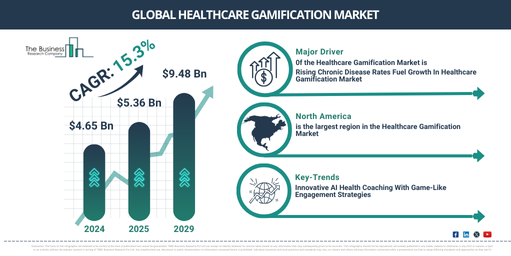
    In recent years, the size of the healthcare gamification market has seen swift expansion. The market which was valued at $4.65 billion in 2024 is predicted to increase to $5.36 billion in 2025, indicating a compound annual growth rate (CAGR) of 15.4%. This growth during the historical period is believed to be a result of growing emphasis on preventive healthcare, an uphill prevalence of chronic illnesses, an increase in the utilization of smartphones and wearable technology, the development of healthcare IT infrastructure, and a heightened focus on patient involvement.

    In the coming years, the healthcare gamification market is projected to witness a substantial expansion. By 2029, its cumulative annual growth rate (CAGR) is expected to be 15.3%, bringing the total market size to $9.48 billion. Several factors contribute to this projected growth in the forecasting period, such as the adoption of artificial intelligence in gamified health applications, the surge in demand for remote patient monitoring, increased understanding and acceptance of healthcare gamification. Furthermore, developments in augmented reality for medical uses and a focus on personalized healthcare also contribute. Some of the anticipated trends throughout the forecast period include the use of gamification in mental health and stress management, virtual reality in healthcare gamification, blockchain’s role in healthcare gamification, personalized fitness plans using gamification, and the use of gamified solutions in elderly care.

    Download a free sample to assess the report’s scope and structure:

    https://www.thebusinessresearchcompany.com/sample.aspx?id=14112&type=smp

    What External and Internal Drivers Are Contributing to the Growth of the Healthcare Gamification Market?

    The surge in the prevalence of lifestyle-related and chronic illnesses is predicted to boost the healthcare gamification industry’s expansion. These health issues are often aggravated or influenced by personal behaviors and long-term factors. Healthcare gamification utilizes game mechanics and design principles to inspire individuals to adopt healthier lifestyles and better manage their health, making it an effective tool in dealing with such diseases. For instance, the Australian Bureau of Statistics, a governmental body based in Australia, stated in December 2023 that in 2022, 81.4% of the population, equivalent to 20.7 million people, had at least one long-term health condition, and 49.9% suffered from a chronic disorder. Hence, the escalating prevalence of lifestyle-related and chronic diseases is propelling the healthcare gamification market’s growth.

    What Segment Types Define the Healthcare Gamification Market Structure?

    The healthcare gamification market covered in this report is segmented –

    1) By Type: Casual Games, Serious Games, Exercise Games, Brain Training Games, Other Types

    2) By Application: Health And Wellness Management, Medical Training And Education, Patient Engagement, Physical Therapy And Rehabilitation, Behavior Change And Lifestyle Improvement, Other Applications

    3) By End User: Hospitals And Clinics, Pharmaceutical Companies, Medical Schools And Training Institutions, Patients, Healthcare Professionals, Other End Users

    Subsegments:

    1) By Casual Games: Mobile Casual Games, Web-Based Casual Games

    2) By Serious Games: Educational Healthcare Games, Simulation-Based Training Games

    3) By Exercise Games: Fitness Games, Motion-Sensing Games

    4) By Brain Training Games: Cognitive Skill Games, Memory Improvement Games, Attention And Focus Games

    5) By Other Types: Virtual Reality (VR) Games, Augmented Reality (AR) Games, Social And Multiplayer Health Games

    Request customized data on this market:

    https://www.thebusinessresearchcompany.com/customise?id=14112&type=smp

    Which Geographic Areas Hold the Strongest Growth Potential in the Healthcare Gamification Market?

    North America was the largest region in the healthcare gamification market in 2024. Europe was the fastest-growing region in the forecast period. The regions covered in the healthcare gamification market report are Asia-Pacific, Western Europe, Eastern Europe, North America, South America, Middle East, Africa.

    What Long-Term Trends Are Transforming the Competitive Landscape of the Healthcare Gamification Market?

    Leading firms in the healthcare gamification market are putting their efforts into creating innovative products with high-end technologies, like AI health coaches with gamification, to boost their market earnings. An AI health coach with gamification is a digital solution that employs artificial intelligence to offer personalized health guidance and motivation, including components of a game to engage and inspire users to meet their health and wellness objectives. For example, in May 2023, German-based IT corporation T-Systems International GmbH introduced MagMoves. This revolutionary product integrates gamified healthcare with customization and personalization for proactive and preventative health measures. The application is constructed to make healthcare participation enjoyable, enhancing it to a more advanced level of virtual care. It employs artificial intelligence to offer a gamified virtual health coach experience, encouraging an active health management approach.

    View the full report here:

    https://www.thebusinessresearchcompany.com/report/healthcare-gamification-global-market-report

    What Is the Definition of the Healthcare Gamification Market?

    Healthcare gamification refers to the incorporation of game elements, such as competition, rewards, and interactive challenges, into healthcare-related activities and platforms. It is utilized to encourage positive behavior change and promote wellness. Gamification is employed in healthcare to educate patients about medical conditions, treatment plans, and medication adherence.

    Purchase the full report and get a swift delivery:

    https://www.thebusinessresearchcompany.com/purchaseoptions.aspx?id=14112

    About The Business Research Company:

    With over 15000+ reports from 27 industries covering 60+ geographies, The Business Research Company has built a reputation for offering comprehensive, data-rich research and insights. Armed with 1,500,000 datasets, the optimistic contribution of in-depth secondary research, and unique insights from industry leaders, you can get the information you need to stay ahead in the game.

    Get in touch with us:

    The Business Research Company: https://www.thebusinessresearchcompany.com/

    Americas +1 3156230293

    Asia +44 2071930708

    Europe +44 2071930708

    Email us at info@tbrc.info

    Follow us on:

    LinkedIn: https://in.linkedin.com/company/the-business-research-company

    YouTube: https://www.youtube.com/channel/UC24_fI0rV8cR5DxlCpgmyFQ

    Global Market Model: https://www.thebusinessresearchcompany.com/global-market-model
  • Healthcare Data Monetization Market Outlook 2025–2034: Identifying Growth Drivers, Technology Trends, and Policy Impact

    Healthcare Data Monetization Market Outlook 2025–2034: Identifying Growth Drivers, Technology Trends, and Policy Impact

    Discover trends, market shifts, and competitive outlooks for the healthcare data monetization industry through 2025-2034 with The Business Research Company’s reliable data and in-depth research

    How Has the Healthcare Data Monetization Market Growth Performance Trended Historically, And What Lies Ahead?

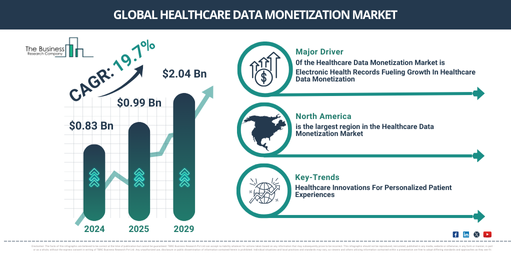
    The market size for healthcare data monetization has seen a swift expansion in the past few years. The market is projected to rise from a value of $0.83 billion in 2024 to $0.99 billion in 2025, indicating a compound annual growth rate (CAGR) of 19.9%. The historical growth period has been driven by a heightened emphasis on data protection and security, as well as a surge in the utilization of external data sources.

    The market size of healthcare data monetization is predicted to witness swift expansion in the coming years, reaching $2.04 billion in 2029 at a compound annual growth rate (CAGR) of 19.7%. This growth during the projected period can be linked to the prevalent use of electronic health records (EHR), amplified regulatory mandates and standards. Key trends during this projection period encompass an enhanced emphasis on data security and privacy, the ascendance of data exchange platforms, advancement of value-based care models, the integration of AI and machine learning, and the birth of data monetization partnerships.

    Download a free sample to assess the report’s scope and structure:

    https://www.thebusinessresearchcompany.com/sample.aspx?id=13672&type=smp

    What Are the Core Market Drivers Propelling Growth in the Healthcare Data Monetization Industry?

    The healthcare data monetization market is projected to experience significant growth due to the increasing utilization of electronic health records (EHRs). These digital copies of patient medical records, complete with their health history, diagnostics, medications and treatment procedures, are integral components of healthcare data monetization. They aid in crucial areas like medical research, the development of drugs, and clinical trials, enabling improved treatments and personalized medicine. A 2023 survey by Munich Re Group, a Germany-based insurance firm, involving 32 companies, revealed that about 90% of carriers currently employ EHRs. It also noted a surge in EHR adoption by 38% since 2020. Consequently, the expanded adoption of electronic health records is a major catalyst for the expansion of the healthcare data monetization market.

    How Is the Healthcare Data Monetization Market Segmented?

    The healthcare data monetization market covered in this report is segmented –

    1) By Type: Direct Data Monetization, Indirect Data Monetization

    2) By Deployment: On-Premise, Cloud

    3) By End User: Pharmaceutical And Biotechnology Companies, Healthcare Providers, Healthcare Payers, Medical Technology Companies

    Subsegments:

    1) By Direct Data Monetization: Data Licensing And Sales, Data Sharing Agreements, Subscription-Based Access To Data

    2) By Indirect Data Monetization: Enhanced Patient Care Services, Improved Operational Efficiency, Targeted marketing And Advertising, Research And Development Collaborations

    Request customized data on this market:

    https://www.thebusinessresearchcompany.com/customise?id=13672&type=smp

    Which Regions Are Driving the Next Phase of the Healthcare Data Monetization Market Growth?

    North America was the largest region in the healthcare data monetization market in 2024. The regions covered in the healthcare data monetization market report are Asia-Pacific, Western Europe, Eastern Europe, North America, South America, Middle East, Africa.

    What Key Market Trends and Innovations Are Shaping the Future of the Healthcare Data Monetization Industry?

    Leading enterprises in the healthcare data monetization sphere are launching progressive advancements in the realm of digital transformation like Software as a Service (SaaS) aimed at enabling healthcare providers to tailor personalized patient interactions. SaaS is a software distribution paradigm where applications are preserved in the cloud and made accessible to users via the internet, usually through a web portal or a mobile application. For instance, Salesforce, a cloud software company based in the US, launched new Customer 360 for Health capabilities in April 2023 intended to aid healthcare providers in offering more personalized patient experiences. These technological enhancements intend to optimize processes, scale down expenses, and refine patient care through the use of real-time data, AI, and automation. These attributes aid healthcare and life sciences organizations in bettering the overall care experience leveraging the comprehensive power of Salesforce’s technology, which includes real-time data from Data Cloud, Einstein AI, and automated processes through Flow.

    View the full report here:

    https://www.thebusinessresearchcompany.com/report/healthcare-data-monetization-global-market-report

    How Is the Healthcare Data Monetization Market Defined and What Are Its Core Parameters?

    Healthcare data monetization refers to the process of using healthcare data to obtain quantifiable economic benefits. It involves the practice of selling or licensing patient data to third-party organizations to generate revenue (direct monetization) or using healthcare data to improve existing products or create new ones that generate revenue (indirect monetization).

    Purchase the full report and get a swift delivery:

    https://www.thebusinessresearchcompany.com/purchaseoptions.aspx?id=13672

    About The Business Research Company:

    With over 15000+ reports from 27 industries covering 60+ geographies, The Business Research Company has built a reputation for offering comprehensive, data-rich research and insights. Armed with 1,500,000 datasets, the optimistic contribution of in-depth secondary research, and unique insights from industry leaders, you can get the information you need to stay ahead in the game.

    Get in touch with us:

    The Business Research Company: https://www.thebusinessresearchcompany.com/

    Americas +1 3156230293

    Asia +44 2071930708

    Europe +44 2071930708

    Email us at info@tbrc.info

    Follow us on:

    LinkedIn: https://in.linkedin.com/company/the-business-research-company

    YouTube: https://www.youtube.com/channel/UC24_fI0rV8cR5DxlCpgmyFQ

    Global Market Model: https://www.thebusinessresearchcompany.com/global-market-model
  • Emerging Growth Drivers in the Healthcare Data Interoperability Market Landscape: Growing Adoption Of Automated Healthcare Solutions Fuels The Growth Of Healthcare Data Interoperability Market

    Emerging Growth Drivers in the Healthcare Data Interoperability Market Landscape: Growing Adoption Of Automated Healthcare Solutions Fuels The Growth Of Healthcare Data Interoperability Market

    Discover trends, market shifts, and competitive outlooks for the healthcare data interoperability industry through 2025-2034 with The Business Research Company’s reliable data and in-depth research

    What Are the Projected Market Size and Growth Rates for the Healthcare Data Interoperability Market From 2025 To 2029?

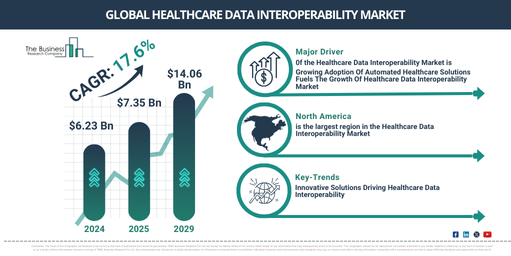
    Concurrently, the market size for healthcare data interoperability has witnessed a substantial increase in recent times. It is projected to expand from $6.23 billion in 2024 to $7.35 billion in 2025, marking a compound annual growth rate (CAGR) of 18.0%. The surge in growth during the preceding years is ascribed to a myriad of factors such as state regulations, technological progression, economic rewards, consumer requirement, partnerships within the industry, betterment of patient safety and quality, initiatives focusing value-based care, research catalysing innovation, global expansion in the healthcare sector, and public health monitoring.

    The market size for healthcare data interoperability is projected to experience significant growth in the foreseeable future. It is expected to expand to a value of $14.06 billion by 2029, exhibiting a compound annual growth rate (CAGR) of 17.6%. The anticipated growth during the forecast period can be ascribed to ongoing regulatory initiatives, progress in health information exchange technologies, the growth of telehealth and remote monitoring, artificial intelligence and analytics, increased consumer involvement, the implementation of value-based care models, the role of interoperability in precision medicine, data protection and security issues, and the establishment of global collaboration and standardization of standards. Key trends to look out for during this period include the normalization of data formats and protocols, advancements in interoperability platforms and health information exchanges, the expansion of telehealth and remote monitoring, the advent of blockchain and distributed ledger technologies, the application of artificial intelligence and machine learning, a focus on patient-centered data exchange, population health management, and the development of governance and policy for interoperability.

    Download a free sample to assess the report’s scope and structure:

    https://www.thebusinessresearchcompany.com/sample.aspx?id=14925&type=smp

    Which Primay Drivers Are Accelerating Growth in the Healthcare Data Interoperability Market?

    The proliferation of automated solutions in healthcare is anticipated to boost the development of healthcare data interoperability. These technology-driven tools and systems, known as automated healthcare solutions, are aimed at optimising and improving various facets of healthcare delivery and management. The escalating implementation in the healthcare sector is fueled by the demand for increased efficiency, precision, and patient care. Data interoperability in healthcare allows these automated solutions to merge seamlessly and exchange patient information for improved care. Furthermore, interoperability allows these solutions to simplify clinical procedures by automating regular tasks such as data input, documentation, and administrative duties. For instance, the International Federation of Robotics, a non-profit organisation based in Germany, reported in October 2022 that 14,800 professional service robots had been installed in healthcare and medicinal centres, equating to a 23% increase from the previous year. Thus, the increasing implementation of automated health solutions is propelling the development of the healthcare data interoperability market.

    Which Primary Segments of the Healthcare Data Interoperability Market Are Driving Growth and Industry Transformations?

    The healthcare data interoperability market covered in this report is segmented –

    1) By Model: Centralized, Hybrid, Decentralized

    2) By Deployment: Cloud-Based, On-Premises

    3) By Level: Foundational, Structural, Semantic

    4) By Application: Diagnosis, Treatment, Other Applications

    5) By End User: Healthcare Providers, Healthcare Payers, Pharmacies

    Subsegments:

    1) By Centralized: Single Point Of Control, Unified Data Repository, Centralized Management And Storage

    2) By Hybrid: Combination Of Centralized And Decentralized Approaches, Distributed Data Management With Centralized Control, Flexible Data Exchange Models

    3) By Decentralized: Distributed Data Storage, Peer-To-Peer Data Sharing, Localized Control And Management

    Request customized data on this market:

    https://www.thebusinessresearchcompany.com/customise?id=14925&type=smp

    Which Regions Are Key Players in the Growth of the Healthcare Data Interoperability Market?

    North America was the largest region in the healthcare data interoperability market in 2024. Asia Pacific is expected to be the fastest-growing region in the forecast period. The regions covered in the healthcare data interoperability market report are Asia-Pacific, Western Europe, Eastern Europe, North America, South America, Middle East, Africa.

    Which Technological Trends Are Reshaping the Healthcare Data Interoperability Industry Dynamics?

    Leading enterprises in the healthcare data interoperability market are innovating their strategies by venturing into digital platforms to secure a competitive advantage. Such digital platforms are essentially online-based applications or systems that promote transactions, interactions, and information dissemination between users, ranging from e-commerce sites and social media channels to cloud service platforms. For instance, KMS Healthcare, a company based in the United States, rolled out the CONNECT interoperability solution in August 2023, a platform tailored to streamline data interchange among electronic health records (EHRs). This pioneering solution consists of pre-tested FHIR APIs that are adaptable and an HL7 conversion engine, which jointly assist healthcare institutions in surmounting interoperability obstacles and optimizing data integration. The CONNECT platform facilitates direct access to vital EHRs, enabling developers to speedily deploy and test applications, thus greatly minimizing the expenses and complexities linked to setting up individual sandbox connections.

    View the full report here:

    https://www.thebusinessresearchcompany.com/report/healthcare-data-interoperability-global-market-report

    What Parameters Are Used to Define the Healthcare Data Interoperability Market?

    Healthcare data interoperability refers to the ability of different healthcare information systems, devices, and applications to securely exchange, interpret, and use data seamlessly, regardless of the platform or vendor. It facilitates the efficient sharing of patient information across various healthcare settings, improving care coordination, clinical decision-making, and patient outcomes.

    Purchase the full report and get a swift delivery:

    https://www.thebusinessresearchcompany.com/purchaseoptions.aspx?id=14925

    About The Business Research Company:

    With over 15000+ reports from 27 industries covering 60+ geographies, The Business Research Company has built a reputation for offering comprehensive, data-rich research and insights. Armed with 1,500,000 datasets, the optimistic contribution of in-depth secondary research, and unique insights from industry leaders, you can get the information you need to stay ahead in the game.

    Get in touch with us:

    The Business Research Company: https://www.thebusinessresearchcompany.com/

    Americas +1 3156230293

    Asia +44 2071930708

    Europe +44 2071930708

    Email us at info@tbrc.info

    Follow us on:

    LinkedIn: https://in.linkedin.com/company/the-business-research-company

    YouTube: https://www.youtube.com/channel/UC24_fI0rV8cR5DxlCpgmyFQ

    Global Market Model: https://www.thebusinessresearchcompany.com/global-market-model