Blog

  • Smart Portable Oxygen Generator Market Size Reaches $2.42 Billion In 2026: What Is Driving Growth?

    Smart Portable Oxygen Generator Market Size Reaches $2.42 Billion In 2026: What Is Driving Growth?

    Featuring market attractiveness scoring, total addressable market sizing, company benchmarking matrices, interactive Excel dashboards, deeper supply chain intelligence, emerging startup tracking, and granular product-level insights, The Business Research Company’s 2026 market reports are built to deliver research that is both more actionable and more strategically valuable.

    Smart Portable Oxygen Generator Market CAGR Outlook And Future Development

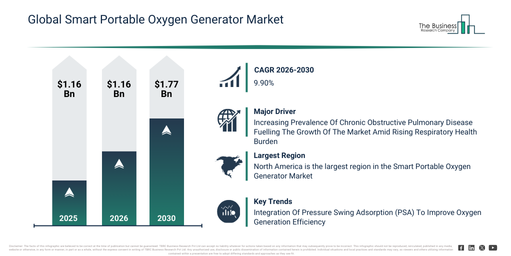
    The smart portable oxygen generator market has seen rapid expansion in recent years. Its valuation is expected to rise from $2.2 billion in 2025 to $2.42 billion in 2026, achieving a compound annual growth rate (CAGR) of 10.1%. Historically, this market’s growth has been driven by an increase in respiratory disorders, the expanding aging population, oxygen demand linked to COVID-19, limitations in hospital capacity, and the uptake of homecare.

    The smart portable oxygen generator market is anticipated to show significant expansion in the coming years. It is projected to achieve a value of $3.53 billion in 2030, with a compound annual growth rate (CAGR) of 9.9%. The drivers for this growth during the forecast period include the increasing prevalence of chronic respiratory diseases, the expansion of home oxygen therapy, a growing demand for travel-friendly devices, advancements in smart respiratory monitoring, and improvements in emergency preparedness. Notable trends expected during this period involve portable oxygen therapy devices, intelligent flow adjustment systems, lightweight travel oxygen generators, homecare respiratory support devices, and battery-powered oxygen solutions.

    Get A Free Sample Report With In-Depth Market Insights:

    https://thebusinessresearchcompany.com/sample_request?id=38692048&type=smp&name=Smart%20Portable%20Oxygen%20Generator%20Market%20Report%202026&utm_source=Blogs&utm_medium=Paid&utm_campaign=Oct_PR

    Smart Portable Oxygen Generator Market Growth Drivers: What’s Behind The Acceleration?

    The rising incidence of chronic obstructive pulmonary disease (COPD) is anticipated to drive expansion in the smart portable oxygen generator market in the future. COPD encompasses a range of progressive respiratory illnesses, including emphysema and chronic bronchitis, which lead to obstructed airflow and difficulties in breathing. The increase in COPD cases is linked to an aging demographic, where extended exposure to environmental and lifestyle hazards, coupled with the natural decrease in lung function due to age, heightens susceptibility to such chronic respiratory conditions. These smart portable oxygen generators assist COPD sufferers by automatically regulating oxygen supply to sustain optimal blood oxygen saturation, thereby alleviating shortness of breath and facilitating enhanced mobility and autonomy in their daily routines. As an illustration, the Centers for Disease Control and Prevention (CDC), a US-based public health authority, reported in May 2025 that the age-adjusted prevalence of diagnosed COPD among adults aged 18 and above in the United States stood at 3.8% in 2023, contributing to 141,733 fatalities during that period. Consequently, the expanding occurrence of COPD is a key factor propelling the demand within the smart portable oxygen generator market.

    Smart Portable Oxygen Generator Market Segment Analysis Spotlighting Growth Areas

    The smart portable oxygen generator market covered in this report is segmented –

    1) By Product Type: Continuous Flow, Pulse Flow, Dual Flow

    2) By Technology: Pressure Swing Adsorption, Membrane Oxygen Concentrators, Other Technologies

    3) By Distribution Channel: Online, Offline

    4) By Application: Homecare, Travel, Other Applications

    Subsegments:

    1) By Continuous Flow: Single Mode, Variable Flow, High Capacity, Low Capacity, Compact Design, Stationary Support

    2) By Pulse Flow: Automatic Adjustment, Fixed Pulse, Breath-Responsive, Multi-Setting, Portable Compact, Lightweight Travel

    3) By Dual Flow: Manual Switching, Automatic Switching, Combined Mode, Adaptive Flow, Hybrid Output, Multi-User Support

    Smart Portable Oxygen Generator Market Trends: What’s Defining The Industry’s Next Phase?

    Leading companies operating in the smart portable oxygen generator market are integrating technological advancements, such as pressure swing adsorption (PSA), to enhance oxygen purity, energy efficiency, and device reliability. PSA is a gas separation technology that utilizes molecular sieves to eliminate nitrogen from ambient air under pressure, thereby generating high-purity oxygen with stable performance and minimal maintenance needs. For instance, in July 2025, VARON, a US-based manufacturer of portable respiratory and home oxygen solutions, unveiled the VP-8G Portable Oxygen Concentrator. This PSA-powered smart device is specifically engineered to provide efficient, high-purity oxygen for individuals requiring mobility. The device incorporates an intelligent pulse flow system synchronized with the user’s breathing, offers eight adjustable flow settings, and features a lightweight, travel-friendly design that includes replaceable filters and batteries. The VP-8G significantly improves user convenience, enhances mobility, and optimizes oxygen delivery efficiency.

    Smart Portable Oxygen Generator Market Industry Leaders And Competitive Landscape

    Major companies operating in the smart portable oxygen generator market are Koninklijke Philips N.V., Omron Corporation, Inogen Inc., Precision Medical Inc., OxyGo LLC, O2 Concepts LLC, Nidek Medical Products Inc., Healthgenie India Private Limited, Rhythm Healthcare LLC, Besco Medical Limited, Longfian Scitech Co. Ltd., Belluscura Plc, Canta Medical Tech Co. Ltd., AngelBiss Medical Technology Co. Ltd., Zhengzhou Olive Electronic Technology Co. Ltd., Foshan Keyhub Electronic Industries Co. Ltd., Teijin Pharma Limited, Devilbiss Healthcare LLC, CAIRE Inc., Sante International Pvt. Ltd.

    View The Full Smart Portable Oxygen Generator Market Report:

    https://thebusinessresearchcompany.com/report/smart-portable-oxygen-generator-global-market-report?utm_source=Blogs&utm_medium=Paid&utm_campaign=Oct_PR

    Smart Portable Oxygen Generator Market Regional Analysis And Leading Geography

    North America was the largest region in the smart portable oxygen generator market in 2025. Asia-Pacific is expected to be the fastest-growing region in the forecast period. The regions covered in the smart portable oxygen generator market report are Asia-Pacific, South East Asia, Western Europe, Eastern Europe, North America, South America, Middle East, Africa.

    Reach Out To Our Team:

    The Business Research Company: https://www.thebusinessresearchcompany.com/

    Americas: +1 310-496-7795

    Asia: +44 7882 955267 & +91 8897263534

    Europe: +44 7882 955267

    Email us at: marketing@tbrc.info

    Follow us on:

    LinkedIn: https://in.linkedin.com/company/the-business-research-company

    YouTube: https://www.youtube.com/channel/UC24_fI0rV8cR5DxlCpgmyFQ

    Global Market Model: https://www.thebusinessresearchcompany.com/global-market-model
  • Smart Portable Electrocardiogram (ECG) Device Market Valued At $3.58 Billion In 2026: Key Trends And Growth Drivers

    Smart Portable Electrocardiogram (ECG) Device Market Valued At $3.58 Billion In 2026: Key Trends And Growth Drivers

    Built to provide research that’s more actionable and strategically valuable, The Business Research Company’s 2026 market reports include market attractiveness analysis, total addressable market sizing, company benchmarking matrices, interactive Excel dashboards, broader supply chain intelligence, emerging startup tracking, and in-depth product insights.

    Smart Portable Electrocardiogram (ECG) Device Market Set To Climb From $2.29 Billion In 2026 To $3.58 Billion By 2030

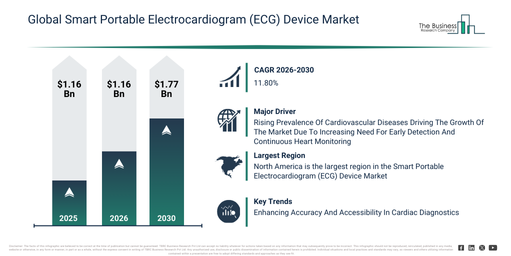
    The smart portable electrocardiogram (ecg) device market size has seen rapid growth in recent years. It is anticipated to expand from $2.04 billion in 2025 to $2.29 billion in 2026, achieving a compound annual growth rate (CAGR) of 12.1%. Historically, this growth can be attributed to an increase in cardiovascular diseases, the demand for early diagnosis, issues with hospital congestion, the adoption of wearable health technology, and advancements in telecardiology.

    The smart portable electrocardiogram (ecg) device market is projected to experience substantial expansion in the coming years. Its valuation is set to reach $3.58 billion by 2030, exhibiting a compound annual growth rate (CAGR) of 11.8%. This anticipated growth stems from factors such as remote cardiac monitoring initiatives, AI-driven arrhythmia detection, an expanding aging demographic, the proliferation of homecare diagnostics, and an increased emphasis on preventive cardiology. Key trends influencing this period encompass real-time portable cardiac monitoring, ECG devices integrated with smartphones, ongoing ambulatory ECG tracking, smaller consumer ECG devices, and the early identification of cardiac abnormalities.

    Get A Free Sample Report With In-Depth Market Insights:

    https://thebusinessresearchcompany.com/sample_request?id=21759193&type=smp&name=Smart%20Portable%20Electrocardiogram%20%28ECG%29%20Device%20Market%20Report%202026&utm_source=Blogs&utm_medium=Paid&utm_campaign=Oct_PR

    Smart Portable Electrocardiogram (ECG) Device Market Growth Factors Behind Sustained Expansion

    The expanding occurrence of cardiovascular diseases is set to boost the expansion of the smart portable electrocardiogram (ECG) device market moving forward. These are conditions that impact the heart and blood vessels. The rise in hypertension and obesity cases, which substantially increase the likelihood of heart conditions, fuels cardiovascular disease. Smart portable electrocardiogram (ECG) devices aid in managing cardiovascular disease rates by allowing for prompt identification and ongoing oversight of cardiac health, facilitating swift medical intervention and improved condition management. For example, as reported by the UK government in September 2025, a UK-based government agency indicated that over 7.6 million people currently live with cardiovascular disease, comprising more than 4 million males and 3.6 million females, with projections showing an increase of 1 million by 2030 and 2 million compared to today by 2040. Consequently, the increasing prevalence of cardiovascular diseases is propelling the growth of the smart portable electrocardiogram (ECG) device market.

    Smart Portable Electrocardiogram (ECG) Device Market Segment Performance And Emerging Opportunities

    The smart portable electrocardiogram (ecg) device market covered in this report is segmented –

    1) By Product Type: Handheld Electrocardiogram (ECG) Devices, Wearable Electrocardiogram (ECG) Devices, Patch Based Electrocardiogram (ECG) Devices

    2) By Technology: Bluetooth, Wireless Fidelity (Wi-Fi), Universal Serial Bus (USB), Other Technologies

    3) By Distribution Channel: Online, Offline

    4) By Application: Home Care, Hospitals And Clinics, Ambulatory Surgical Centers, Other Applications

    5) By End User: Personal Users, Healthcare Professionals, Other End Users

    Subsegments:

    1) By Handheld Electrocardiogram (ECG) Devices: Single Channel Devices, Multi Channel Devices, Portable Diagnostic Devices, Compact Screening Devices

    2) By Wearable Electrocardiogram (ECG) Devices: Smartwatch Based Devices, Chest Strap Devices

    3) By Patch Based Electrocardiogram (ECG) Devices: Disposable Patch Devices, Reusable Patch Devices, Wireless Patch Devices, Adhesive Sensor Patch Devices

    Smart Portable Electrocardiogram (ECG) Device Market Industry Trends Fueling Future Revenue Growth

    Key players within the smart portable electrocardiogram (ECG) device market are prioritizing the creation of advanced solutions, notably AI-powered ECG systems, to boost the accuracy and accessibility of cardiac monitoring. Such AI-powered ECG systems are defined as electrocardiogram devices that employ artificial intelligence to automatically analyze heart signals, enabling quicker and more accurate detection of cardiac abnormalities. A notable example is the launch of the Kardia 12L handheld ECG system by AliveCor, a US-based medical device company, in India during September 2025, subsequent to gaining approval from the Central Drugs Standard Control Organization (CDSCO). This pioneering device empowers healthcare professionals to conduct 12-lead ECG tests with convenience, anywhere and anytime, thanks to its single-cable design. It offers AI-enhanced ECG interpretation, facilitating swift identification of heart abnormalities while ensuring remarkable portability and user-friendliness. By integrating with AliveCor’s digital health platform, the Kardia 12L system simplifies the management of cardiac data, facilitates remote consultations, and boosts diagnostic efficiency. Ultimately, this AI-powered system elevates patient care, optimizes clinical workflows, and expands availability to sophisticated cardiac monitoring solutions.

    Smart Portable Electrocardiogram (ECG) Device Market Key Participants And Competitive Landscape

    Major companies operating in the smart portable electrocardiogram (ecg) device market are Koninklijke Philips N.V., OMRON Healthcare Co. Ltd., Mindray Bio-Medical Electronics Co. Ltd., Nihon Kohden Corporation, Contec Medical Systems Co. Ltd., iRhythm Technologies Inc., Beurer GmbH, Schiller AG, Edan Instruments Inc., Withings S.A., Bittium Corporation, BPL Medical Technologies Pvt. Ltd., Eko Health Inc., SHL Telemedicine Ltd., Qardio Inc., Sunfox Technologies Pvt. Ltd., Biotricity Inc., Peerbridge Health Inc., QT Medical Inc., Wellue Health Inc., AliveCor Inc.

    View The Full Smart Portable Electrocardiogram (ECG) Device Market Report:

    https://thebusinessresearchcompany.com/report/smart-portable-electrocardiogram-ecg-device-global-market-report?utm_source=Blogs&utm_medium=Paid&utm_campaign=Oct_PR

    Smart Portable Electrocardiogram (ECG) Device Market Geographic Analysis: Where Is Demand Accelerating Fastest?

    North America was the largest region in the smart portable electrocardiogram (ECG) device market in 2025. Asia-Pacific is expected to be the fastest-growing region in the forecast period. The regions covered in the smart portable electrocardiogram (ecg) device market report are Asia-Pacific, South East Asia, Western Europe, Eastern Europe, North America, South America, Middle East, Africa.

    Reach Out To Our Team:

    The Business Research Company: https://www.thebusinessresearchcompany.com/

    Americas: +1 310-496-7795

    Asia: +44 7882 955267 & +91 8897263534

    Europe: +44 7882 955267

    Email us at: marketing@tbrc.info

    Follow us on:

    LinkedIn: https://in.linkedin.com/company/the-business-research-company

    YouTube: https://www.youtube.com/channel/UC24_fI0rV8cR5DxlCpgmyFQ

    Global Market Model: https://www.thebusinessresearchcompany.com/global-market-model
  • Smart Pills Market Size In 2026: Growth Outlook And Forecast Through 2030

    Smart Pills Market Size In 2026: Growth Outlook And Forecast Through 2030

    Backed by market attractiveness analysis, total addressable market sizing, company benchmarking matrices, interactive Excel dashboards, wider supply chain intelligence, emerging startup coverage, and detailed product-level insights, The Business Research Company’s 2026 market reports are designed to offer research that is more actionable and strategically valuable than ever.

    Smart Pills Market Forecast: Value Set To Climb From $6.75 Billion To $10.13 Billion

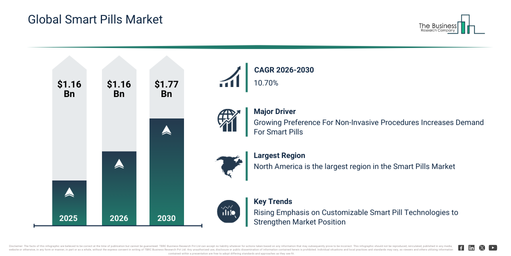
    The smart pills market has observed significant expansion in recent years. It is anticipated to increase from $6.11 billion in 2025 to $6.75 billion in 2026, exhibiting a compound annual growth rate (CAGR) of 10.5%. This historic growth is largely due to the increasing incidence of chronic conditions, the growing demand for patient compliance oversight, the expansion of digital health programs, the availability of sophisticated ingestible sensors, and the rising uptake of clinical research.

    The smart pills market is projected to experience substantial expansion over the next few years, reaching $10.13 billion by 2030, demonstrating a compound annual growth rate (CAGR) of 10.7%. This anticipated growth during the forecast period is primarily driven by the increasing demand for personalized medicine solutions, a rise in investments in digital therapeutics, the ongoing expansion of remote patient monitoring, the growing adoption of smart drug delivery platforms, and increasing regulatory support for connected health technologies. Significant trends for the forecast period include the increasing adoption of sensor-enabled drug delivery systems, a rising focus on medication adherence solutions, growing integration with mobile health platforms, the expansion of smart ingestible diagnostics, and enhanced development of miniaturized electronics.

    Get A Free Sample Report With In-Depth Market Insights:

    https://thebusinessresearchcompany.com/sample_request?id=72488295&type=smp&name=Smart%20Pills%20Market%20Report%202026&utm_source=Blogs&utm_medium=Paid&utm_campaign=Oct_PR

    Smart Pills Market Demand Drivers Opening New Revenue Streams

    The increasing preference for non-invasive procedures is expected to propel the growth of the smart pills market going forward. These procedures avoid incisions or tissue removal, thereby reducing patient risk and recovery time. The growing preference for non-invasive procedures is attributed to their ability to deliver effective diagnostic and therapeutic outcomes while minimizing physical burden on patients. Smart pills support non-invasive procedures by enabling internal imaging and physiological monitoring without surgical entry, allowing clinicians to gather diagnostic data through a simple swallowable device. For instance, in March 2024, according to NHS England, a UK-based public health service, more than 5,400 patients benefited from colon capsule endoscopy pill-cam pilots across 53 sites. Therefore, the growing preference for non-invasive procedures is driving the smart pills market.

    Smart Pills Market Driver: Growing Healthcare Expenditure Fueling The Growth Of The Market Due To Increasing Investment In Long-Term Mental Health Treatments

    The rising healthcare expenditure is anticipated to drive the smart pills market’s expansion in the future. Healthcare expenditure refers to the total financial amount spent on medical services, treatments, facilities, research, and public health initiatives to maintain or improve health outcomes. The increasing demand for healthcare spending stems from the rising prevalence of chronic mental health conditions, which necessitate continuous treatment, medication, and long-term care support. Healthcare expenditure supports the development of smart pills by funding advanced technologies that enhance drug delivery, monitoring, and patient adherence. For instance, in December 2024, according to the Centers for Medicare and Medicaid Services (CMS), a US-based federal agency, the national health expenditures (NHE) grew by 7.5% to $4.9 trillion in 2023, accounting for 17.6% of gross domestic product (GDP). Additionally, between 2023 and 2032, average national health expenditures (NHE) are projected to grow at an average annual rate of 5.6%, resulting in an increase in the health spending share of gross domestic product (GDP) from 17.3% in 2022 to 19.7% in 2032. Therefore, the growing healthcare expenditure is driving the growth of the smart pills market.

    Smart Pills Market Segment Landscape And Growth Outlook

    The smart pills market covered in this report is segmented –

    1) By Target Area: Esophagus, Stomach, Small Intestine, Large Intestine

    2) By Disease Indication: Esophageal Diseases, Colon Diseases, Small bowel Diseases, And Other Disease Indications

    3) By Application: Capsule Endoscopy, Patient Monitoring, Drug Delivery

    4) By End User: Hospital, Diagnostic Center, Research Institute

    Subsegments:

    1) By Esophagus: Diagnostic Pills For Esophageal Disorders, Pills For Monitoring Esophageal Motility

    2) By Stomach: Gastric Emptying Monitoring Pills, Diagnostic Pills For Gastric Disorders

    3) By Small Intestine: Pills For Absorption Studies, Diagnostic Pills For Small Bowel Diseases

    4) By Large Intestine: Colonoscopy Alternative Pills, Pills For Detecting Colorectal Disorders

    Smart Pills Market Trends Powering Strategic Industry Growth

    Leading companies in the smart pills market are concentrating on creating smart pills that feature configurable programs, such as ingestible, multi-sensor prototypes designed to enable personalized drug delivery and internal monitoring, with the goal of improving patient adherence to treatment and overall therapeutic results. Configurable programs are defined as the software or firmware-driven management of sensing, data collection, and activatable actions, which medical professionals or study administrators can customize for individual patients. For example, in 2025, Interuniversity Microelectronics Centre, a research and innovation institute based in Belgium, launched a prototype ingestible sensor for monitoring gut health. This sensor incorporates various sensing methods (chemical, mechanical, and electrical), integrated signal processing and power management, and real-time data transmission for remote oversight; the prototype highlights its compact size and comprehensive system integration to support adaptable sensing programs for tailored clinical application.

    Smart Pills Market Top Companies Driving Competitive Growth

    Major companies operating in the smart pills market are Medtronic plc, Olympus Corporation, CapsoVision Inc., Novartis AG, Proteus Digital Health Inc., Koninklijke Philips N.V., MicroCHIPS Inc., Bio-Images Drug Delivery (BDD) Ltd., Given Imaging Ltd., Vitality Inc., Boston Scientific Corporation, HQ Inc., Fujifilm Holdings Corporation, General Electric Company, Check-Cap Ltd., IntroMedic Co. Ltd., Jinshan Science & Technology Co. Ltd., PENTAX Medical, etectRx Inc., Pixie Scientific HQ Inc., ANX Robotica Corp., RF Co. Ltd., Shenzhen Jifu Medical Technology Co. Ltd., Otsuka America Pharmaceutical Inc., Medimetrics Personalized Drug Delivery B.V., Smart Pill Inc., Medisafe Inc., AdhereTech LLC, TabSafe Medical Services Inc.

    View The Full Smart Pills Market Report:

    https://thebusinessresearchcompany.com/report/smart-pills-global-market-report?utm_source=Blogs&utm_medium=Paid&utm_campaign=Oct_PR

    Smart Pills Market Global Footprint: Which Region Leads The Industry?

    North America was the largest region in the smart pills market in 2025. Western Europe was the second-largest region in the smart pills market analysis. The regions covered in the smart pills market report are Asia-Pacific, South East Asia, Western Europe, Eastern Europe, North America, South America, Middle East, Africa.

    Reach Out To Our Team:

    The Business Research Company: https://www.thebusinessresearchcompany.com/

    Americas: +1 310-496-7795

    Asia: +44 7882 955267 & +91 8897263534

    Europe: +44 7882 955267

    Email us at: marketing@tbrc.info

    Follow us on:

    LinkedIn: https://in.linkedin.com/company/the-business-research-company

    YouTube: https://www.youtube.com/channel/UC24_fI0rV8cR5DxlCpgmyFQ

    Global Market Model: https://www.thebusinessresearchcompany.com/global-market-model
  • Smart Pill Dispenser Market Trends Supporting 11.9% CAGR Growth Through 2030

    Smart Pill Dispenser Market Trends Supporting 11.9% CAGR Growth Through 2030

    Featuring market attractiveness scoring, total addressable market sizing, company benchmarking matrices, interactive Excel dashboards, deeper supply chain intelligence, emerging startup tracking, and granular product-level insights, The Business Research Company’s 2026 market reports are built to deliver research that is both more actionable and more strategically valuable.

    Smart Pill Dispenser Market Revenue Growth On Track For A 11.9% CAGR Through 2030

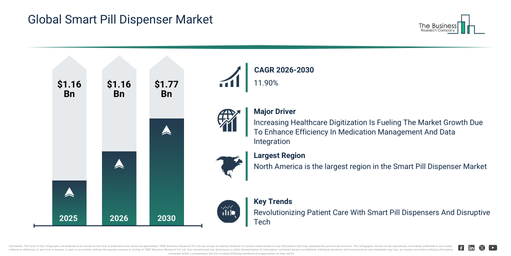
    The smart pill dispenser market size has witnessed rapid growth in recent years. It is projected to increase from $3.15 billion in 2025 to $3.54 billion in 2026, achieving a compound annual growth rate (CAGR) of 12.2%. The growth observed in the historic period is credited to the limited availability of automated pill dispensers, reliance on manual medication management, a growing elderly population, increasing chronic disease prevalence, and early adoption of home healthcare devices.

    The smart pill dispenser market size is projected to experience substantial growth over the next few years. Its valuation is set to reach $5.55 billion in 2030, demonstrating a compound annual growth rate (CAGR) of 11.9%. This anticipated growth throughout the forecast period stems from factors such as the emergence of Bluetooth and Wi-Fi-enabled smart dispensers, the expansion of telehealth services and remote patient monitoring, increased uptake within nursing homes and assisted living facilities, the incorporation of AI-powered reminders and alerts, and heightened investment in connected healthcare solutions. Key trends shaping the forecast period encompass a growing embrace of home healthcare technology, an uptick in the utilization of automated medication adherence solutions, the expansion of assisted living and elderly care establishments, seamless integration with mobile applications and remote monitoring capabilities, and a heightened emphasis on developing user-friendly and voice-assisted interfaces.

    Get A Free Sample Report With In-Depth Market Insights:

    https://thebusinessresearchcompany.com/sample_request?id=93590522&type=smp&name=Smart%20Pill%20Dispenser%20Market%20Report%202026&utm_source=Blogs&utm_medium=Paid&utm_campaign=Oct_PR

    Smart Pill Dispenser Market Growth Backed By Core Demand Fundamentals

    The expansion of the smart pill dispenser market going forward is projected to be driven by the escalating healthcare digitization. Healthcare digitization refers to the incorporation of digital technologies into medical systems to enhance the provision, administration, and effectiveness of health services. This increasing healthcare digitization is primarily motivated by the rising demand for efficient patient data management, as healthcare providers seek to optimize data storage, accessibility, and sharing to improve care coordination, reduce mistakes, and achieve better patient outcomes. Smart pill dispensers augment healthcare digitization by automating medication oversight, boosting adherence, and enabling immediate data exchange between patients and providers. For example, in April 2023, FAIR Health Inc., a US-based non-profit organization, reported a 7.3% national rise in telehealth usage, growing from 5.5% of medical claim lines in December 2022 to 5.9% in January 2023. Therefore, the growing healthcare digitization is stimulating the growth of the smart pill dispenser market.

    Smart Pill Dispenser Market Breakdown By Product Type And Application

    The smart pill dispenser market covered in this report is segmented –

    1) By Type: Portable, Desktop, Smart Pill Dispenser

    2) By Technology: Bluetooth Enabled, Wi-Fi Connectivity, Internet Of Things (IoT)-Based Solutions, Radio Frequency Identification (RFID) Technology

    3) By Application: Home Healthcare, Hospitals, Assisted Living Facilities, Other Applications

    4) By End User: Home Care Settings, Nursing Homes And Assisted Living Facilities, Pharmacies, Hospitals

    Subsegments:

    1) By Portable: Wearable Pill Dispensers, Pocket-Sized Dispensers, Travel-Friendly Pill Organizers, Battery-Operated Dispensers

    2) By Desktop: Countertop Dispensers, Wall-Mounted Units, Multi-Compartment Dispensers, Alternating Current-Powered Dispensers

    3) By Smart Pill Dispenser: Bluetooth-Enabled Dispensers, Wi-Fi-Connected Dispensers, App-Integrated Dispensers, Voice-Assisted Dispensers, Automatic Dispensing With Alerts

    Smart Pill Dispenser Market Growth Trends Reshaping The Competitive Landscape

    Leading companies within the smart pill dispenser market are actively concentrating on implementing advanced technologies, specifically disruptive technology, to improve medication adherence and enhance patient health outcomes. Disruptive technology, which encompasses innovations that fundamentally transform or replace established systems, assists smart pill dispensers by automating medication administration, facilitating remote oversight, and boosting compliance through intelligent alerts and personalized AI features. For example, in January 2024, PillSafe, a health technology company based in the US, unveiled its patented and innovative “smart” pill bottle, also named PillSafe. This PillSafe device utilizes a patented pill distribution control system that releases medication strictly at doctor-prescribed times. Pharmacists are responsible for loading the medication into the bottle, fastening the lid, and configuring the device according to the physician’s directives.

    Smart Pill Dispenser Market Leading Players And Competitive Positioning

    Major companies operating in the smart pill dispenser market are Koninklijke Philips N V, Omnicell Inc, Lepu Medical Technology Beijing Co Ltd, Swisslog Healthcare, Tunstall Healthcare Group Ltd, MedMinder Systems Inc, Capsa Healthcare LLC, Hero Health Inc, Yuyama Co Ltd, AdhereTech, MOBI Technologies Inc, TabTimer Pty Ltd, Medipense Inc, PillDrill Inc, E pill LLC, Dose Health LLC, PharmaCell Medication Systems Ltd, PharmRight Corporation, Pivotell Ltd, MedReady Inc, ScriptDrop Inc

    View The Full Smart Pill Dispenser Market Report:

    https://thebusinessresearchcompany.com/report/smart-pill-dispenser-global-market-report?utm_source=Blogs&utm_medium=Paid&utm_campaign=Oct_PR

    Smart Pill Dispenser Market Regional Distribution: Which Areas Power Market Growth?

    North America was the largest region in the smart pill dispenser market in 2025. Asia-Pacific is expected to be the fastest-growing region in the forecast period. The regions covered in the smart pill dispenser market report are Asia-Pacific, South East Asia, Western Europe, Eastern Europe, North America, South America, Middle East, Africa.

    Reach Out To Our Team:

    The Business Research Company: https://www.thebusinessresearchcompany.com/

    Americas: +1 310-496-7795

    Asia: +44 7882 955267 & +91 8897263534

    Europe: +44 7882 955267

    Email us at: marketing@tbrc.info

    Follow us on:

    LinkedIn: https://in.linkedin.com/company/the-business-research-company

    YouTube: https://www.youtube.com/channel/UC24_fI0rV8cR5DxlCpgmyFQ

    Global Market Model: https://www.thebusinessresearchcompany.com/global-market-model
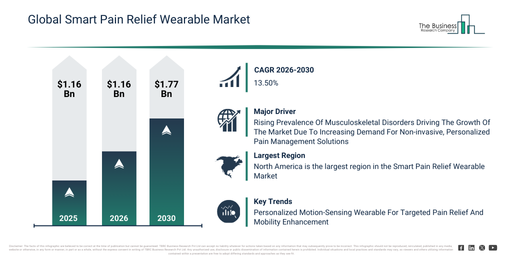
  • Smart Pain Relief Wearable Market Forecast Highlights A $3.38 Billion Opportunity For Industry Participants

    Smart Pain Relief Wearable Market Forecast Highlights A $3.38 Billion Opportunity For Industry Participants

    Built to provide research that’s more actionable and strategically valuable, The Business Research Company’s 2026 market reports include market attractiveness analysis, total addressable market sizing, company benchmarking matrices, interactive Excel dashboards, broader supply chain intelligence, emerging startup tracking, and in-depth product insights.

    Smart Pain Relief Wearable Market Value Growth And Long-Term Outlook

    The smart pain relief wearable market size has witnessed substantial expansion in recent years. It is anticipated to increase from $1.79 billion in 2025 to $2.04 billion in 2026, achieving a compound annual growth rate (CAGR) of 13.8%. Factors contributing to its historical growth include a rise in chronic pain conditions, the limitations of pharmaceutical pain management, increasing adoption of wearable technology, the demand for non-invasive therapeutic options, and a greater emphasis on homecare pain management.

    The smart pain relief wearable market size is anticipated to experience substantial growth in the upcoming years. It is forecast to reach $3.38 billion in 2030, demonstrating a compound annual growth rate (CAGR) of 13.5%. This growth within the forecast period can be attributed to factors such as AI-driven pain analytics, the expansion of home healthcare, increased sports injury rehabilitation demand, advancements in smart wearable innovation, and the adoption of digital therapeutics. Significant trends projected for the forecast period include personalized pain management wearables, multi-modal therapy integration, app-controlled pain relief devices, continuous wearable pain monitoring, and the development of non-invasive drug-free therapy.

    Get A Free Sample Report With In-Depth Market Insights:

    https://thebusinessresearchcompany.com/sample_request?id=11586681&type=smp&name=Smart%20Pain%20Relief%20Wearable%20Market%20Report%202026&utm_source=Blogs&utm_medium=Paid&utm_campaign=Oct_PR

    Smart Pain Relief Wearable Market Growth Catalysts And Demand Drivers

    The rising occurrence of musculoskeletal conditions is anticipated to drive the expansion of the smart pain relief wearable market in the future. These disorders involve health issues impacting muscles, bones, joints, tendons, ligaments, and nerves, resulting in discomfort, rigidity, or restricted mobility in various body areas stemming from overuse, strain, or injury. The increase in musculoskeletal disorders is linked to the growing adoption of sedentary lifestyles, which, over time, contribute to poor posture and diminished muscle strength. Smart pain relief wearables assist in managing musculoskeletal disorders by offering non-invasive solutions that provide localized pain alleviation and aid quicker muscle recuperation via ongoing monitoring and tailored therapeutic approaches. For example, in July 2025, the Institute for Health Transformation (IHT), a research institute based in Australia, documented a fracture occurring every 2.7 minutes in 2023. This rate in Australia is forecast to considerably quicken to one fracture every 30 seconds by 2033, signifying a substantial increase in fracture frequency throughout the decade. Consequently, the growing occurrence of musculoskeletal disorders is fueling the expansion of the smart pain relief wearable market.

    Smart Pain Relief Wearable Market Segment Analysis And Revenue Potential

    The smart pain relief wearable market covered in this report is segmented –

    1) By Product Type: Transcutaneous Electrical Nerve Stimulation (TENS) Devices, Electrical Muscle Stimulation (EMS) Devices, Heat Therapy Wearables, Vibration Therapy Wearables, Other Products

    2) By Distribution Channel: Online Stores, Pharmacies, Specialty Stores, Other Distribution channels

    3) By Application: Chronic Pain, Acute Pain, Postoperative Pain, Sports Injuries, Other Applications

    4) By End-User: Hospitals And Clinics, Home Care, Sports And Fitness Centers, Other End-users

    Subsegments:

    1) By Transcutaneous Electrical Nerve Stimulation Devices: Portable Devices, Wireless Devices, Wearable Patches, Multi-Channel Devices

    2) By Electrical Muscle Stimulation Devices: Portable Devices, Wireless Devices, Wearable Bands, Multi-Channel Devices

    3) By Heat Therapy Wearables: Infrared Heat Wearables, Moist Heat Wearables, Dry Heat Wearables, Microwave Heat Wearables

    4) By Vibration Therapy Wearables: Full Body Wearables, Localized Wearables, Smart Massage Wearables

    5) By Other Products: Cold Therapy Wearables, Ultrasound Therapy Wearables, Compression Therapy Wearables, Combination Therapy Wearables

    Smart Pain Relief Wearable Market Trends Shaping Long-Term Demand

    Leading companies in the smart pain relief wearable market are concentrating on innovative sensor technologies, such as patented motion-sensing technology, to enhance personalized pain management and improve therapeutic outcomes through real-time movement analysis and targeted vibration therapy. Patented motion-sensing technology describes a specialized system that accurately detects and analyzes an individual’s unique movement patterns using embedded sensors and custom algorithms to deliver precisely timed therapeutic interventions. For example, in July 2025, SomaTX Design Inc., a US-based health technology company, unveiled KneeMo, the inaugural smart wearable device designed to transform knee pain management by reducing pain and improving muscle function during activity. Dr. Tom Andriacchi, Professor Emeritus at Stanford University, and Dr. Jenny Hledik, a biomechanical engineer specializing in human movement, developed the device, drawing on over 50 years of research in joint mechanics and rehabilitation. This launch is well-timed as more individuals are living longer and aiming to remain active into older age.

    Smart Pain Relief Wearable Market Competitive Overview And Top Companies

    Major companies operating in the smart pain relief wearable market are OMRON Healthcare Inc., Beurer GmbH, Electrostim Medical Services Inc., Therabody Inc., Electronic Waveform Lab Inc., Nooro Inc., TensCare Limited, Soterix Medical Inc., ExcelHealth Inc., JOGO Inc., Theranica Bio-Electronics Ltd., BioElectronics Corporation, Oska Wellness Inc., Healables Digital Health Inc., NeuroMetrix Inc., OrthoCor Medical Inc., Livia Health Inc., Quell (NeuroMetrix product line company counted once as NeuroMetrix), ActiPatch (BioElectronics product line counted under BioElectronics), Cefaly Technology (CEFALY International), PainShield (PainShield Technologies).

    View The Full Smart Pain Relief Wearable Market Report:

    https://thebusinessresearchcompany.com/report/smart-pain-relief-wearable-global-market-report?utm_source=Blogs&utm_medium=Paid&utm_campaign=Oct_PR

    Smart Pain Relief Wearable Market Leading Geography: Which Region Contributes The Most Revenue?

    North America was the largest region in the smart pain relief wearable market in 2025. Asia-Pacific is expected to be the fastest-growing region in the forecast period. The regions covered in the smart pain relief wearable market report are Asia-Pacific, South East Asia, Western Europe, Eastern Europe, North America, South America, Middle East, Africa.

    Reach Out To Our Team:

    The Business Research Company: https://www.thebusinessresearchcompany.com/

    Americas: +1 310-496-7795

    Asia: +44 7882 955267 & +91 8897263534

    Europe: +44 7882 955267

    Email us at: marketing@tbrc.info

    Follow us on:

    LinkedIn: https://in.linkedin.com/company/the-business-research-company

    YouTube: https://www.youtube.com/channel/UC24_fI0rV8cR5DxlCpgmyFQ

    Global Market Model: https://www.thebusinessresearchcompany.com/global-market-model
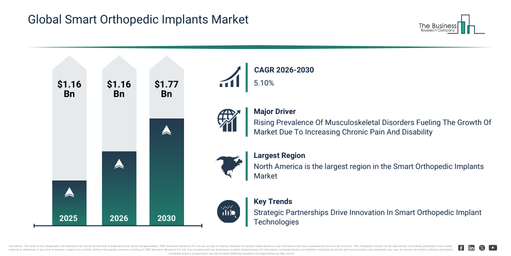
  • Smart Orthopedic Implants Market Analysis: How The Industry Is Evolving Toward A $33.36 Billion Future

    Smart Orthopedic Implants Market Analysis: How The Industry Is Evolving Toward A $33.36 Billion Future

    Backed by market attractiveness analysis, total addressable market sizing, company benchmarking matrices, interactive Excel dashboards, wider supply chain intelligence, emerging startup coverage, and detailed product-level insights, The Business Research Company’s 2026 market reports are designed to offer research that is more actionable and strategically valuable than ever.

    Smart Orthopedic Implants Market Poised To Hit $33.36 Billion By 2030 With A 5.1% CAGR

    The smart orthopedic implants market has demonstrated robust expansion recently. It is anticipated to grow from $25.92 billion in 2025 to $27.33 billion in 2026, registering a compound annual growth rate (CAGR) of 5.4%. This past growth can be attributed to several factors including an increased incidence of orthopedic disorders, the presence of limited early diagnosis methods, reliance on conventional implant monitoring, a high rate of post-operative complications, and a growing understanding of joint replacement procedures.

    The smart orthopedic implants market is anticipated to experience substantial expansion in the coming years. This market is projected to reach a valuation of $33.36 billion by 2030, demonstrating a compound annual growth rate (CAGR) of 5.1%. This anticipated growth during the forecast period is driven by factors such as the increasing acceptance of smart implants, improvements in implantable sensor technology, the incorporation of artificial intelligence into orthopedic care, the rising need for personalized medical treatments, and the expanding elderly population. Key developments expected over this period encompass remote patient monitoring, analytical predictions for orthopedic outcomes, customized rehabilitation plans, prompt identification of complications, and minimally invasive solutions for implants.

    Get A Free Sample Report With In-Depth Market Insights:

    https://thebusinessresearchcompany.com/sample_request?id=89583248&type=smp&name=Smart%20Orthopedic%20Implants%20Market%20Report%202026&utm_source=Blogs&utm_medium=Paid&utm_campaign=Oct_PR

    Smart Orthopedic Implants Market Opportunity Drivers: What’s Unlocking New Revenue Potential?

    The increasing incidence of musculoskeletal conditions is anticipated to fuel the expansion of the smart orthopedic implants market moving ahead. These disorders encompass conditions that impact bones, muscles, joints, tendons, and ligaments, frequently leading to persistent pain, restricted movement, and enduring disability. The rise in these conditions can be attributed to an aging populace, inactive lifestyles, and the increasing burden of chronic non-communicable ailments. Smart orthopedic implants facilitate this trend through offerings such as real-time biomechanical feedback, alerts for early warnings, and improved postoperative monitoring, thereby enhancing patient results and lessening the likelihood of repeat surgeries. For example, as reported in January 2024 by the Office for Health Improvement and Disparities, a UK government entity, in 2023, 18.4% of individuals aged 16 and over stated they had a long-term musculoskeletal condition, which was a minor increase from 17.6% in 2022. Such conditions were cited less often by males (15.8%) in contrast to females (20.9%). Consequently, the increasing occurrence of musculoskeletal disorders is propelling the expansion of the smart orthopedic implants market.

    Smart Orthopedic Implants Market Segmentation And Category Overview

    The smart orthopedic implants market covered in this report is segmented –

    1) By Type Of Implant: Smart Knee Implants, Smart Hip Implants, Smart Spine Implants, Smart Shoulder Implants, Smart Ankle Implants

    2) By Material: Ceramic Implants, Metallic Implants, Polymeric Implants

    3) By Technology Integration: Data Analytics And Artificial Intelligence Integration, Microelectronic Sensors, Telemedicine Capabilities

    4) By Application: Fracture Fixation, Joint Replacement, Osteotomy, Spinal Fusion

    5) By End-Use: Ambulatory Surgical Centers, Hospitals, Specialty Clinics, Other End-Uses

    Subsegments:

    1) By Smart Knee Implants: Total Knee Replacement, Partial Knee Replacement, Unicompartmental Knee Implants, Revision Knee Implants

    2) By Smart Hip Implants: Total Hip Replacement, Partial Hip Replacement, Hip Resurfacing Implants, Revision Hip Implants

    3) By Smart Spine Implants: Cervical Spine Implants, Thoracolumbar Spine Implants, Interbody Fusion Devices, Pedicle Screw Systems

    4) By Smart Shoulder Implants: Total Shoulder Replacement, Reverse Shoulder Replacement, Partial Shoulder Replacement, Revision Shoulder Implants

    5) By Smart Ankle Implants: Total Ankle Replacement, Ankle Fusion Implants, Revision Ankle Implants, Ankle Fracture Fixation Devices

    Smart Orthopedic Implants Market Innovation Trends Shaping Future Development

    Leading companies within the smart orthopedic implants market are focusing on establishing strategic collaborations to expand their global reach in delivering advanced patient care solutions. A strategic partnership involves a structured alliance between two or more organizations, aiming to combine their strengths to achieve mutual long-term objectives. This allows them to share resources, knowledge, and innovation while each entity maintains its independence. For example, in June 2025, NanoHive Medical LLC, a US-based 3D-printed spinal implant company, partnered with DirectSync Surgical, a US-based manufacturer of human-powered smart implants, to develop Hive Soft Titanium spinal interbody fusion, a smart spine implant. This collaboration seeks to integrate bone-stimulating and remote monitoring sensor technology into NanoHive’s proprietary 3D-printed spinal fusion devices, utilizing their unique rhombic dodecahedron lattice to efficiently transfer energy from the piezoelectric sensors. This innovation is designed to enhance patient care through improved data collection, bone stimulation, and connectivity with advanced surgical technologies and AI.

    Smart Orthopedic Implants Market Competitive Landscape: Which Companies Lead The Industry?

    Major companies operating in the smart orthopedic implants market are Johnson And Johnson, Medtronic plc, Stryker Corporation, Zimmer Biomet Holdings Inc, Enovis Corporation, Orthofix Medical Inc, Exactech Inc, Xenco Medical LLC, Heraeus Medical GmbH, Intelligent Implants GmbH, Statera Medical Inc, SpineGuard SA, BoneTag Technologies, DirectSync Surgical Inc, AK Medical Holdings Limited, Mathys Ltd, Smith And Nephew plc, Globus Medical Inc, NuVasive Inc, Alphatec Spine Inc, Life Spine Inc, restor3d Inc

    View The Full Smart Orthopedic Implants Market Report:

    https://thebusinessresearchcompany.com/report/smart-orthopedic-implants-global-market-report?utm_source=Blogs&utm_medium=Paid&utm_campaign=Oct_PR

    Smart Orthopedic Implants Market Regional Outlook: Where Is Opportunity Concentrated?

    North America was the largest region in the smart orthopedic implants market in 2025. Asia-Pacific is expected to be the fastest-growing region in the forecast period. The regions covered in the smart orthopedic implants market report are Asia-Pacific, South East Asia, Western Europe, Eastern Europe, North America, South America, Middle East, Africa.

    Reach Out To Our Team:

    The Business Research Company: https://www.thebusinessresearchcompany.com/

    Americas: +1 310-496-7795

    Asia: +44 7882 955267 & +91 8897263534

    Europe: +44 7882 955267

    Email us at: marketing@tbrc.info

    Follow us on:

    LinkedIn: https://in.linkedin.com/company/the-business-research-company

    YouTube: https://www.youtube.com/channel/UC24_fI0rV8cR5DxlCpgmyFQ

    Global Market Model: https://www.thebusinessresearchcompany.com/global-market-model
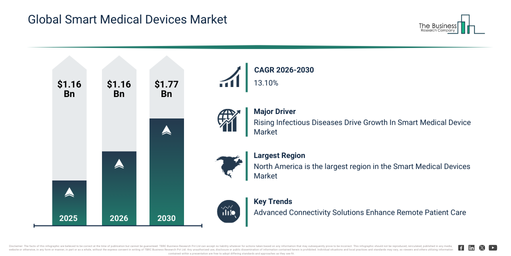
  • Smart Medical Devices Market Outlook Through 2030: Understanding The Growth Opportunity

    Smart Medical Devices Market Outlook Through 2030: Understanding The Growth Opportunity

    Featuring market attractiveness scoring, total addressable market sizing, company benchmarking matrices, interactive Excel dashboards, deeper supply chain intelligence, emerging startup tracking, and granular product-level insights, The Business Research Company’s 2026 market reports are built to deliver research that is both more actionable and more strategically valuable.

    Smart Medical Devices Market Size And Revenue Outlook Through 2030

    The market size for smart medical devices has experienced rapid growth in recent years. It is projected to expand from $46.89 billion in 2025 to $53.2 billion in 2026, achieving a compound annual growth rate (CAGR) of 13.5%. This growth observed in the past can be attributed to several factors, including the prevalence of chronic diseases, the digitization of hospitals, the miniaturization of sensors, an increasing elderly population, and a rise in healthcare expenditure.

    The smart medical devices market size is anticipated to undergo substantial growth over the next few years. This sector is forecast to reach $87.14 billion in 2030, demonstrating a compound annual growth rate (CAGR) of 13.1%. The projected expansion in the coming period is influenced by the adoption of homecare, the necessity for real-time health data, the desire for personalized treatments, the implementation of remote clinical workflows, and the rise of value-based healthcare models. Prominent developments expected during this forecast period include the broadening of remote patient monitoring, the integration of smart wearables in homecare settings, the development of interoperable medical device ecosystems, the increase in preventive and personalized care, and the growing uptake of portable diagnostic devices.

    Get A Free Sample Report With In-Depth Market Insights:

    https://thebusinessresearchcompany.com/sample_request?id=21311448&type=smp&name=Smart%20Medical%20Devices%20Market%20Report%202026&utm_source=Blogs&utm_medium=Paid&utm_campaign=Oct_PR

    Smart Medical Devices Market Growth Momentum: What Factors Are Shaping Demand?

    The increasing occurrence of infectious diseases is anticipated to fuel the expansion of the smart medical devices market in the future. These diseases are ailments caused by pathogenic microorganisms, such as bacteria, viruses, fungi, or parasites, which can be transmitted directly or indirectly between individuals. The rate of infectious disease incidence is climbing due to heightened travel, which facilitates the rapid dissemination of pathogens across national borders. Smart medical devices contribute to infectious disease management through real-time monitoring and prompt symptom detection, aiding in preventing infection transmission. They also enhance patient care by offering accurate data for timely medical interventions and enabling remote oversight, thus reducing the requirement for in-person consultations. For instance, in February 2024, the UK Health Security Agency, a UK-based government agency, reported that tuberculosis cases (a contagious bacterial infection primarily affecting the lungs) in England increased to 4,850 in 2023, representing a 10.7% rise from 4,380 cases in 2022. Hence, the rising prevalence of infectious diseases is significantly driving the growth of the smart medical devices market.

    Smart Medical Devices Market Segment Outlook: Which Categories Are Growing Fastest?

    The smart medical devices market covered in this report is segmented –

    1) By Product: Diagnostics And Monitoring, Therapeutics Devices

    2) By Distribution Channel: Pharmacies, Online Channel

    3) By Modality: Portable, Wearable

    4) By End-User: Homecare Settings, Hospitals, Other End-Users

    Subsegments:

    1) By Diagnostics And Monitoring: Wearable Health Monitors, Remote Patient Monitoring Devices, Smart Glucose Monitors, Continuous Blood Pressure Monitors, Smart Stethoscopes, Mobile Health Applications

    2) By Therapeutics Devices: Smart Insulin Delivery Devices, Drug Delivery Systems, Smart Inhalers, Neuromodulation Devices, Smart Rehabilitation Devices, Implantable Devices

    Smart Medical Devices Market Trends Redefining Industry Growth

    Leading companies in the smart medical devices market are prioritizing the development of advanced connectivity solutions, such as telehealth integration, to improve clinical efficiency, elevate patient safety, and support remote care services. Telehealth integration refers to the capacity of medical devices to effortlessly transmit patient data to central monitoring systems, allowing clinicians to observe a patient’s condition from a distant location. For example, in August 2024, Masimo Corporation, a US-based medical technology company, received FDA 510(k) clearance for its Masimo SafetyNet telemonitoring system. This approval enables the W1 watch to automatically and securely send measured vital signs, including pulse rate, respiration rate, and hemoglobin data, to the cloud-based SafetyNet system, thereby facilitating remote patient assessment and management by healthcare providers without the need for manual data input.

    Smart Medical Devices Market Competitive Landscape: Who Leads The Industry?

    Major companies operating in the smart medical devices market are Johnson & Johnson, Abbott Laboratories, Medtronic plc, Becton Dickinson and Company, Stryker Corporation, GE Healthcare, Boston Scientific Corporation, Edwards Lifesciences Corporation, ResMed Inc, Dexcom Inc, Insulet Corporation, LivaNova plc, iRhythm Technologies Inc, Proteus Digital Health Inc, AliveCor Inc, Masimo Corporation, Koninklijke Philips N V, Omron Healthcare Inc, Apple Inc, CAIRE Inc, Qardio Inc, BioIntelliSense Inc, Senseonics Holdings Inc, Withings SA, Current Health Ltd.

    View The Full Smart Medical Devices Market Report:

    https://thebusinessresearchcompany.com/report/smart-medical-devices-global-market-report?utm_source=Blogs&utm_medium=Paid&utm_campaign=Oct_PR

    Smart Medical Devices Market Geographic Landscape: Which Region Leads Industry Growth?

    North America was the largest region in the smart medical devices market in 2025. Asia-Pacific is expected to be the fastest-growing region in the forecast period. The regions covered in the smart medical devices market report are Asia-Pacific, South East Asia, Western Europe, Eastern Europe, North America, South America, Middle East, Africa.

    Reach Out To Our Team:

    The Business Research Company: https://www.thebusinessresearchcompany.com/

    Americas: +1 310-496-7795

    Asia: +44 7882 955267 & +91 8897263534

    Europe: +44 7882 955267

    Email us at: marketing@tbrc.info

    Follow us on:

    LinkedIn: https://in.linkedin.com/company/the-business-research-company

    YouTube: https://www.youtube.com/channel/UC24_fI0rV8cR5DxlCpgmyFQ

    Global Market Model: https://www.thebusinessresearchcompany.com/global-market-model
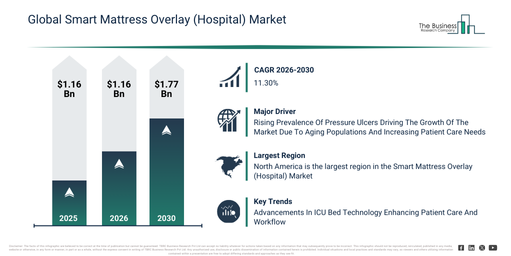
  • Smart Mattress Overlay (Hospital) Market Growth Potential: What The Latest Forecast Reveals

    Smart Mattress Overlay (Hospital) Market Growth Potential: What The Latest Forecast Reveals

    Built to provide research that’s more actionable and strategically valuable, The Business Research Company’s 2026 market reports include market attractiveness analysis, total addressable market sizing, company benchmarking matrices, interactive Excel dashboards, broader supply chain intelligence, emerging startup tracking, and in-depth product insights.

    Smart Mattress Overlay (Hospital) Market Growth From $2.23 Billion In 2026 To $3.41 Billion By 2030 At A CAGR Of 11.3%

    The smart mattress overlay (hospital) market has experienced rapid growth in recent years. This market is projected to expand from $1.99 billion in 2025 to $2.23 billion in 2026, exhibiting a compound annual growth rate (CAGR) of 11.6%. The historical growth can be attributed to an increase in long-term hospital stays, the prevalence of pressure ulcers, an aging patient population, the demand for patient comfort, and robust hospital safety protocols.

    The smart mattress overlay (hospital) market is projected to experience significant expansion in the coming years. Its valuation is anticipated to reach $3.41 billion by 2030, exhibiting a compound annual growth rate (CAGR) of 11.3%. This expansion during the forecast period is primarily driven by factors such as the increasing adoption of smart hospital infrastructure, AI-based patient positioning, the availability of homecare bed solutions, efforts to reduce nursing workload, and advancements in real-time patient monitoring. Key developments expected within this timeframe encompass solutions for pressure ulcer prevention, sensor-integrated mattress overlays, automated pressure redistribution systems, patient movement monitoring, and the broader integration with smart hospital beds.

    Get A Free Sample Report With In-Depth Market Insights:

    https://thebusinessresearchcompany.com/sample_request?id=91206841&type=smp&name=Smart%20Mattress%20Overlay%20%28Hospital%29%20Market%20Report%202026&utm_source=Blogs&utm_medium=Paid&utm_campaign=Oct_PR

    Smart Mattress Overlay (Hospital) Market Expansion Drivers: What’s Shaping Future Growth?

    The increasing occurrence of pressure ulcers is anticipated to drive the expansion of the smart mattress overlay (hospital) market in the future. Pressure ulcers are lesions of the skin and underlying tissues resulting from extended pressure on bony regions, frequently impacting people with restricted movement. This increase in ulcer prevalence stems from factors like aging populations, who demonstrate greater vulnerability to mucosal harm and slower rates of tissue regeneration. Smart mattress overlays (hospital) assist in both preventing and addressing pressure ulcers through uniform body weight distribution, mitigating extended pressure on sensitive zones, and enhancing patient comfort along with skin well-being. As an illustration, in February 2024, data from the Society of Tissue Viability (SOTV), a UK-based member-led charitable organization, indicated that approximately half a million individuals in the UK develop at least one pressure ulcer every year, leading to considerable discomfort, a diminished quality of life, and an annual expenditure for the NHS of around USD 2.55 billion (£2.2 billion), with legal costs consistently increasing. Consequently, the expanding prevalence of pressure ulcers is fueling the growth of the smart mattress overlay (hospital) market.

    Smart Mattress Overlay (Hospital) Market Segment Landscape: Which Areas Lead Development?

    The smart mattress overlay (hospital) market covered in this report is segmented –

    1) By Product Type: Pressure Relief Overlays, Alternating Pressure Overlays, Low Air Loss Overlays, Other Product Types

    2) By Material: Foam, Gel, Air, Other Materials

    3) By Technology: Sensor-Based, Air-Filled, Gel-Based, Other Technology

    4) By Application: Acute Care, Long-Term Care, Home Care, Other Applications

    5) By End-User: Hospitals, Clinics, Homecare Settings, Other End-Users

    Subsegments:

    1) By Pressure Relief Overlays: Foam Pressure Relief Overlays, Gel Pressure Relief Overlays, Air-Filled Pressure Relief Overlays, Water-Filled Pressure Relief Overlays

    2) By Alternating Pressure Overlays: Dynamic Alternating Pressure Overlays, Static Alternating Pressure Overlays, Hybrid Alternating Pressure Overlays, Portable Alternating Pressure Overlays

    3) By Low Air Loss Overlays: Continuous Low Air Loss Overlays, Zoned Low Air Loss Overlays, Microclimate Management Low Air Loss Overlays, Adjustable Low Air Loss Overlays

    4) By Other Product Types: Combination Therapy Overlays, Self-Adjusting Smart Overlays, Sensor-Integrated Overlays, Customizable Therapeutic Overlays

    Smart Mattress Overlay (Hospital) Market Strategic Trends: What Defines The Next Growth Phase?

    Leading companies in the smart mattress overlay (hospital) market are concentrating on developing innovative advancements such as intelligent ICU bed platforms to enhance patient care and optimize caregiver workflow within hospital intensive care units. An intelligent ICU bed platform is a system engineered to improve patient monitoring, safety, and comfort in critical care environments, while also supporting caregiver efficiency and workflow management. For instance, in February 2023, Stryker Corporation, a US-based medical technology company, introduced SmartMedic. This platform can be seamlessly integrated with existing intensive care unit beds to monitor patient weight, track patient repositioning, and facilitate bedside radiographic imaging, consequently reducing patient discomfort and minimizing manual interventions. Its wireless connectivity with nurse call systems significantly enhances workflow efficiency and enables healthcare staff to provide timely and precise care, marking a substantial progression in critical care patient management solutions.

    Smart Mattress Overlay (Hospital) Market Company Landscape And Competitive Strategy

    Major companies operating in the smart mattress overlay (hospital) market are Stryker Corporation, Hill-Rom Holdings Inc., Arjo AB, LINET Group SE, Talley Group Ltd., DeRoyal Industries Inc., Direct Healthcare Group, Blue Chip Medical Products, Invacare Corporation, Med-Mizer Inc., Drive DeVilbiss Healthcare, Permobil AB, Winncare Group, Apex Medical Corporation, EHOB Inc., Benmor Medical, Joerns Healthcare, Ossenberg GmbH, Reha-Bed Sp. z o.o., Malvestio S.p.A., Novis Healthcare

    View The Full Smart Mattress Overlay (Hospital) Market Report:

    https://thebusinessresearchcompany.com/report/smart-mattress-overlay-hospital-global-market-report?utm_source=Blogs&utm_medium=Paid&utm_campaign=Oct_PR

    Smart Mattress Overlay (Hospital) Market Largest Region: Which Geography Holds The Biggest Share?

    North America was the largest region in the smart mattress overlay (hospital) market in 2025. Asia-Pacific is expected to be the fastest-growing region in the forecast period. The regions covered in the smart mattress overlay (hospital) market report are Asia-Pacific, South East Asia, Western Europe, Eastern Europe, North America, South America, Middle East, Africa.

    Reach Out To Our Team:

    The Business Research Company: https://www.thebusinessresearchcompany.com/

    Americas: +1 310-496-7795

    Asia: +44 7882 955267 & +91 8897263534

    Europe: +44 7882 955267

    Email us at: marketing@tbrc.info

    Follow us on:

    LinkedIn: https://in.linkedin.com/company/the-business-research-company

    YouTube: https://www.youtube.com/channel/UC24_fI0rV8cR5DxlCpgmyFQ

    Global Market Model: https://www.thebusinessresearchcompany.com/global-market-model
  • Smart Insulin Pens Market Growth Outlook: Why Analysts Expect Continued Expansion

    Smart Insulin Pens Market Growth Outlook: Why Analysts Expect Continued Expansion

    Backed by market attractiveness analysis, total addressable market sizing, company benchmarking matrices, interactive Excel dashboards, wider supply chain intelligence, emerging startup coverage, and detailed product-level insights, The Business Research Company’s 2026 market reports are designed to offer research that is more actionable and strategically valuable than ever.

    Smart Insulin Pens Market Expansion Outlook: What Revenue Opportunities Are Ahead?

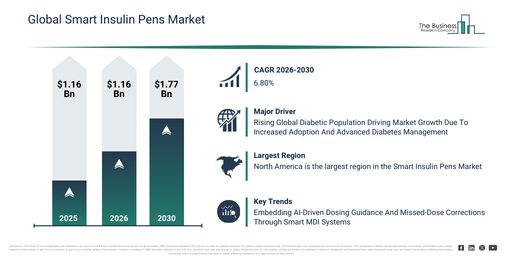
    The smart insulin pens market has experienced robust expansion in recent times. The market is forecast to increase from $0.11 billion in 2025 to $0.12 billion in 2026, exhibiting a compound annual growth rate (CAGR) of 7.2%. This historical growth can be ascribed to factors such as the increasing incidence of diabetes, a rising number of patients relying on insulin, greater understanding of precise dosing, the proliferation of home healthcare options, and the accessibility of digital health platforms.

    The smart insulin pens market is anticipated to experience robust expansion over the coming years, projected to reach $0.16 billion in 2030 at a compound annual growth rate (CAGR) of 6.8%. This growth during the forecast period is propelled by factors such as enhanced integration with digital diabetes care systems, the increasing uptake of customized insulin treatment, the broadening scope of remote patient surveillance, an intensifying emphasis on data-informed diabetes management, and growing capital allocation towards intelligent drug delivery solutions. Key developments expected in this period encompass the wider embrace of connected insulin administration tools, a surge in the utilization of real-time dosage monitoring solutions, an escalating need for in-home diabetes care, the proliferation of insulin pens featuring mobile application integration, and a heightened commitment to patient compliance and safety.

    Get A Free Sample Report With In-Depth Market Insights:

    https://thebusinessresearchcompany.com/sample_request?id=37769206&type=smp&name=Smart%20Insulin%20Pens%20Market%20Report%202026&utm_source=Blogs&utm_medium=Paid&utm_campaign=Oct_PR

    Smart Insulin Pens Market Development Factors: What’s Supporting Demand?

    The expanding global diabetic population is anticipated to drive the smart insulin pen market’s growth moving forward. This population refers to individuals diagnosed with diabetes, a chronic medical condition marked by elevated blood glucose levels. The increase in the diabetic population results from the rising worldwide prevalence of obesity and physical inactivity, which are primary factors contributing to Type 2 diabetes. Smart insulin pens improve diabetes management by providing precise insulin dosage tracking, reminders, and data integration, thus enhancing treatment adherence and overall glycemic control for people with diabetes. For instance, in 2025, according to the International Diabetes Federation, a Belgium-based health organization, in 2024, approximately 589 million adults aged 20-79 were living with diabetes, with the total number projected to reach 853 million by 2050, and more than 4 in 5 adults with diabetes residing in low and middle income countries. Hence, the increasing global diabetic population is fueling the growth of the smart insulin pen market.

    Smart Insulin Pens Market Segments: Where Is Growth Concentrated?

    The smart insulin pens market covered in this report is segmented –

    1) By Type: First Generation Pens, Second Generation Pens

    2) By Usability: Prefilled, Reusable

    3) By Application: Type 1 Diabetes, Type 2 Diabetes

    4) By End User: Hospitals & Clinics, Ambulatory Surgical Centres, Home Care Settings

    Subsegments:

    1) By First Generation Pens: Basic Smart Insulin Pens With Standard Features, Simple Connectivity to Mobile Apps for Tracking and Logging Insulin Doses

    2) By Second Generation Pens: Advanced Smart Insulin Pens With Enhanced Features, Real-Time Data Sharing With Healthcare Providers and Caregivers, Sophisticated Mobile Applications for Comprehensive Diabetes Management

    Smart Insulin Pens Market Transformation Trends: What Innovations Are Driving Change?

    Leading firms in the smart insulin pen market are developing integrated solutions that incorporate real-time glucose monitoring, dose calculation, and the detection of missed doses, aiming to streamline insulin management and mitigate the dangers of hypoglycemia. These comprehensive systems utilize Bluetooth-enabled pens, mobile applications, and small continuous glucose monitors to deliver tailored dosing information, rectify dosing mistakes, and enhance overall glycemic regulation. As an illustration, in December 2024, Medtronic, a medical technology, services, and solutions firm based in the US, introduced its Smart MDI System, which is a smart insulin pen paired with the Simplera CGM, providing real-time, customized dosing advice. This particular system is groundbreaking for offering detection of missed meal doses and suggesting corrections, thereby assisting patients in identifying and rectifying unadministered or incorrectly dosed insulin injections. Empirical data revealed that users who consistently acted upon these practical alerts reached Time in Range (TIR) levels as high as 67-71%, highlighting this technology’s capacity to optimize glucose management.

    Smart Insulin Pens Market Key Players Shaping Industry Direction

    Major companies operating in the smart insulin pens market are Companion Medical, Novo Nordisk A/S, F. Hoffmann-La Roche AG, Emperra GmbH E-Health Technologies, Diamesco Co. Ltd., Digital Medics Pvt Ltd., Bigfoot Biomedical, Diabnext, Insulet Corporation, Sanofi India, Becton Dickinson, Biocon Ltd, Johnson & Johnson, Terumo, NIPRO, Medtronic PLC, Ypsomed Holding AG, Patients Pending Ltd, Dexcom, Insujet, Eli Lilly, Abbott Laboratories, Tandem Diabetes Care Inc.

    View The Full Smart Insulin Pens Market Report:

    https://thebusinessresearchcompany.com/report/smart-insulin-pens-global-market-report?utm_source=Blogs&utm_medium=Paid&utm_campaign=Oct_PR

    Smart Insulin Pens Market Regional Analysis: Which Geography Leads On Revenue?

    North America was the largest region in the smart insulin pens market in 2025. Western Europe was the second largest region in the global smart insulin pens market share. The regions covered in the smart insulin pens market report are Asia-Pacific, South East Asia, Western Europe, Eastern Europe, North America, South America, Middle East, Africa.

    Reach Out To Our Team:

    The Business Research Company: https://www.thebusinessresearchcompany.com/

    Americas: +1 310-496-7795

    Asia: +44 7882 955267 & +91 8897263534

    Europe: +44 7882 955267

    Email us at: marketing@tbrc.info

    Follow us on:

    LinkedIn: https://in.linkedin.com/company/the-business-research-company

    YouTube: https://www.youtube.com/channel/UC24_fI0rV8cR5DxlCpgmyFQ

    Global Market Model: https://www.thebusinessresearchcompany.com/global-market-model
  • Smart Infusion Pumps Market Forecast Insights: The Road To $13.84 Billion By 2030

    Smart Infusion Pumps Market Forecast Insights: The Road To $13.84 Billion By 2030

    Featuring market attractiveness scoring, total addressable market sizing, company benchmarking matrices, interactive Excel dashboards, deeper supply chain intelligence, emerging startup tracking, and granular product-level insights, The Business Research Company’s 2026 market reports are built to deliver research that is both more actionable and more strategically valuable.

    Smart Infusion Pumps Market Growth Potential: How Will Market Size Shift Through 2030?

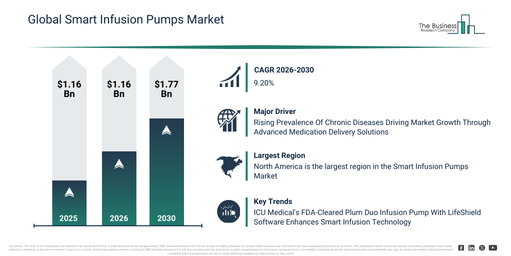
    The market for smart infusion pumps has experienced substantial expansion in recent years. This market is projected to expand from $8.88 billion in 2025 to $9.73 billion in 2026, demonstrating a compound annual growth rate (CAGR) of 9.5%. Historically, this growth has been driven by several factors, including the previous reliance on standard infusion pumps, the limited integration these pumps had with hospital IT systems, an expanding oncology and pediatric patient base, the continuous increase in hospital and clinic infrastructure, and the widespread adoption of single-channel volumetric pumps.

    The smart infusion pumps market size is anticipated to undergo robust growth over the next few years. It is expected to expand to $13.84 billion in 2030, achieving a compound annual growth rate (CAGR) of 9.2%. This growth within the forecast period can be attributed to various factors, including the advancement of multi-channel and programmable infusion systems, their integration with electronic medical records (EMR), increasing demand for home care infusion therapies, the adoption of MRI-compatible and wireless infusion pumps, and the rising utilization of digital and smart pump technologies. Key trends during this period include the expanding adoption of smart pump technology, the integration of wireless and closed-loop infusion systems, their increasing application in home care and ambulatory settings, a concerted focus on reducing medication errors and enhancing patient safety, and the broader expansion of infusion pumps in specialty clinics and oncology.

    Get A Free Sample Report With In-Depth Market Insights:

    https://thebusinessresearchcompany.com/sample_request?id=22840711&type=smp&name=Smart%20Infusion%20Pumps%20Market%20Report%202026&utm_source=Blogs&utm_medium=Paid&utm_campaign=Oct_PR

    Smart Infusion Pumps Market Industry Drivers: What’s Behind The Revenue Growth?

    The rising incidence of chronic diseases is anticipated to propel the expansion of the smart infusion pumps market in the future. These long-term health conditions develop gradually and often necessitate continuous care or management. The increasing prevalence of chronic diseases is linked to increasingly sedentary lifestyles, which contribute to conditions such as obesity, diabetes, and cardiovascular issues. Smart infusion pumps assist in managing chronic conditions by providing precise, automated medication dosages, thereby reducing human error and improving long-term treatment outcomes. For instance, in April 2025, the International Diabetes Federation (IDF), a Belgium-based non-profit organization, reported that nearly 589 million adults aged 20–79 worldwide are living with diabetes, a number projected to increase significantly to 853 million by 2050. Consequently, the growing prevalence of chronic diseases is driving the growth of the smart infusion pumps market.

    Smart Infusion Pumps Market Segment Analysis: What Are The Core Market Categories?

    The smart infusion pumps market covered in this report is segmented –

    1) By Type: Large Volumetric Infusion Pumps, Patient Controlled Analgesia Pumps, Syringe Infusion Systems, Electronic- Ambulatory Infusion Systems, Implantable Infusion Systems, MRI-Compatible IV Infusion Pump Systems, Disposable Elastomeric Infusion Systems, Other Types

    2) By Technology: Smart Pump Technology, Digital Infusion Systems, Wireless Infusion Systems, Standard Infusion Pumps, Closed-Loop Systems

    3) By Application: Chemotherapy Or Oncology, Pediatrics Or Neonatology, Gastroenterology, Hematology, Diabetes, Other Applications

    4) By End User: Hospitals, Ambulatory Surgical Centers, Home Care, Specialty Clinics, Other End User

    Subsegments:

    1) By Large Volumetric Infusion Pumps: Single Channel Pumps, Multi-Channel Pumps, Stand-Alone Systems, Integrated Systems

    2) By Patient Controlled Analgesia (PCA) Pumps: Disposable PCA Pumps, Electronic PCA Pumps

    3) By Syringe Infusion Systems: Motor-Driven Syringe Systems, Spring-Driven Syringe Systems

    4) By Electronic-Ambulatory Infusion Systems: Programmable Ambulatory Pumps, Non-Programmable Ambulatory Pumps

    5) By Implantable Infusion Systems: Intrathecal Drug Delivery Pumps, Insulin Delivery Pumps

    6) By MRI-Compatible IV Infusion Pump Systems: Shielded MRI-Compatible Pumps, Non-Shielded MRI-Compatible Pumps

    7) By Disposable Elastomeric Infusion Systems: Continuous Flow Pumps, Patient-Controlled Flow Pumps

    8) By Other Types: Enteral Feeding Pumps, Insulin Infusion Pumps, Chemotherapy Infusion Pumps

    #Smart Infusion Pumps Market Growth Trends: What’s Shaping The Future Outlook?

    Leading companies in the smart infusion pumps market are concentrating on developing innovative solutions, such as cassette-based infusion pumps, with the aim of improving medication delivery accuracy, enhancing patient safety, and streamlining drug administration workflows in clinical environments. Cassette-based infusion pumps are a type of infusion pump that utilizes a disposable cassette for the precise delivery of fluids or medications. For instance, in August 2023, ICU Medical Inc., a US-based medical technology company, obtained 510(k) regulatory clearance from the U.S. Food and Drug Administration (FDA) for the Plum Duo infusion pump, which includes cloud-based LifeShield software. This device offers dual-channel delivery, facilitating the simultaneous administration of two compatible intravenous therapies, thereby boosting workflow efficiency and patient care. It also features advanced drug library integration and automated programming, contributing to the minimization of medication errors. The LifeShield software complements the pump by providing real-time monitoring, data-driven insights, and clinical decision support, thus ensuring enhanced infusion safety and compliance with hospital protocols.

    Smart Infusion Pumps Market Competitive Analysis Of Leading Industry Participants

    Major companies operating in the smart infusion pumps market are Fresenius Kabi AG, Medtronic plc, Becton Dickinson and Company, Baxter International Inc, Terumo Corporation, Mindray Medical International Limited, Moog Inc, ICU Medical Inc, Insulet Corporation, Avanos Medical Inc, JMS Co Ltd, Vygon SA, B Braun Melsungen AG, Eitan Group, Heka Healthcare B V, PROMECON GmbH, Micrel Medical Devices SA, Smiths Medical, Zyno Medical LLC, CME Medical, Bionical Emas, Nipro Corporation

    View The Full Smart Infusion Pumps Market Report:

    https://thebusinessresearchcompany.com/report/smart-infusion-pumps-global-market-report?utm_source=Blogs&utm_medium=Paid&utm_campaign=Oct_PR

    Smart Infusion Pumps Market Geographic Spread And Regional Opportunities

    North America was the largest region in the smart infusion pumps market in 2025. Asia-Pacific is expected to be the fastest-growing region in the forecast period. The regions covered in the smart infusion pumps market report are Asia-Pacific, South East Asia, Western Europe, Eastern Europe, North America, South America, Middle East, Africa.

    Reach Out To Our Team:

    The Business Research Company: https://www.thebusinessresearchcompany.com/

    Americas: +1 310-496-7795

    Asia: +44 7882 955267 & +91 8897263534

    Europe: +44 7882 955267

    Email us at: marketing@tbrc.info

    Follow us on:

    LinkedIn: https://in.linkedin.com/company/the-business-research-company

    YouTube: https://www.youtube.com/channel/UC24_fI0rV8cR5DxlCpgmyFQ

    Global Market Model: https://www.thebusinessresearchcompany.com/global-market-model