Blog

  • Smart Implants Market Explained: What Is Fueling Growth To $10.26 Billion By 2030?

    Smart Implants Market Explained: What Is Fueling Growth To $10.26 Billion By 2030?

    Built to provide research that’s more actionable and strategically valuable, The Business Research Company’s 2026 market reports include market attractiveness analysis, total addressable market sizing, company benchmarking matrices, interactive Excel dashboards, broader supply chain intelligence, emerging startup tracking, and in-depth product insights.

    Smart Implants Market Value Analysis: What Growth Lies Ahead Over The Forecast Period?

    The smart implants market size has experienced rapid growth in recent years. It is projected to expand from $5.19 billion in 2025 to $6.05 billion in 2026, demonstrating a compound annual growth rate (CAGR) of 16.6%. This historical growth can be linked to factors such as the increasing prevalence of chronic diseases, the rising adoption of implantable medical devices, ongoing advancements in biomedical engineering, the growing acceptance of minimally invasive surgeries, and the expansion of hospital infrastructure.

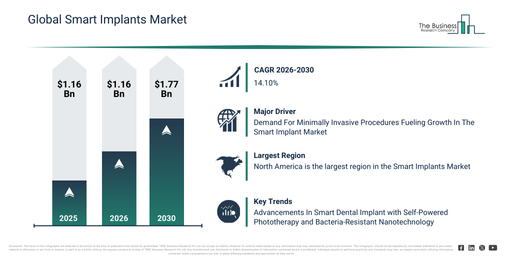
    The smart implants market is anticipated to experience substantial growth in the upcoming years, with projections indicating it will reach $10.26 billion by 2030, achieving a compound annual growth rate (CAGR) of 14.1%. This expansion during the forecast period is fueled by factors such as the increasing need for personalized healthcare solutions, the rising integration of AI-driven diagnostics, growing investments in connected medical devices, wider adoption of remote patient monitoring, and an enhanced focus on outcome-based healthcare models. Significant trends influencing this period include the increased uptake of sensor-enabled implants, a rise in the use of remote patient monitoring implants, broader integration of wireless data transmission, the expansion of minimally invasive smart implant procedures, and a stronger emphasis on personalized implant solutions.

    Get A Free Sample Report With In-Depth Market Insights:

    https://thebusinessresearchcompany.com/sample_request?id=12949830&type=smp&name=Smart%20Implants%20Market%20Report%202026&utm_source=Blogs&utm_medium=Paid&utm_campaign=Oct_PR

    Smart Implants Market Growth Factors: What’s Supporting Expansion?

    The increasing need for minimally invasive procedures is expected to drive the expansion of the smart implant market in the coming years. Minimally invasive procedures are medical interventions that cause minimal disruption to the body’s natural structure and function, leading to less strain on surrounding tissues and faster recovery times. The growing preference for minimally invasive procedures is attributed to reduced pain and discomfort, minimal scarring, and a lower likelihood of complications. Smart implants play a vital role in advancing minimally invasive surgery by providing instant feedback, enhancing precision and accuracy, enabling remote adjustments and control, facilitating data integration and analysis, and supporting improved patient monitoring and recovery. These functionalities contribute to safer, more effective, and patient-centric minimally invasive procedures across various medical specialties. For example, in August 2023, statistics from The Aesthetic Society, a US-based organization dedicated to aesthetic plastic surgery and cosmetic medicine, indicated that Americans spent over $11.8 billion on minimally invasive aesthetic procedures in 2023, representing a 2% increase from 2022. Therefore, the escalating demand for minimally invasive procedures is fueling the growth of the smart implant market.

    Smart Implants Market Segment Breakdown: Which Categories Lead On Revenue?

    The smart implants market covered in this report is segmented –

    1) By Type: Orthopedic Implants, Cardiovascular Implants, Dental Implants, Other Types

    2) By Surgery: Open Surgery, Minimally Invasive Surgery

    3) By Application: Knee And Hip Arthroplasty, Spine Fusion, Stents, Intraocular Lens, Pacing Devices

    4) By End-User: Hospitals, Ambulatory Surgical Centers, Specialty Clinics, Other End-Users

    Subsegments:

    1) By Orthopedic Implants: Smart Hip Implants, Smart Knee Implants, Smart Spinal Implants

    2) By Cardiovascular Implants: Smart Pacemakers, Implantable Cardioverter Defibrillators (Icds), Smart Stents

    3) By Dental Implants: Smart Endosteal Implants, Smart Subperiosteal Implants

    4) By Other Types: Smart Cochlear Implants, Neural Implants

    Smart Implants Market Industry Trends: What’s Reshaping Demand?

    Prominent companies operating within the smart implant sector are dedicated to developing innovative products, particularly those based on piezoelectric technology, to extend implant durability and improve patient health outcomes. Implants leveraging piezoelectric technology generate electricity from an individual’s body movements, which in turn powers functionalities such as antibacterial coatings or light therapy to foster healing and prolong the implant’s lifespan without relying on external power. For example, in February 2023, researchers at the University of Pennsylvania, a US-based research institution, unveiled a smart dental implant. This intelligent dental implant features a bacteria-resistant nanoparticle biofilm and an integrated phototherapy light designed to protect periodontal tissue from inflammation. It operates using piezoelectric technology, converting natural oral movements into electricity to power the phototherapy light, thereby promoting tissue health without requiring batteries. Additionally, barium titanate nanoparticles provide a lasting negative charge to repel detrimental bacteria, consequently enhancing implant longevity and decreasing the necessity for replacement.

    Smart Implants Market Leading Companies And Competitive Benchmarking

    Major companies operating in the smart implants market are Johnson And Johnson Services Inc., Abbott Laboratories, Medtronic plc, Stryker, Boston Scientific Corporation, Zimmer Biomet, Terumo Corporation, Smith And Nephew plc, Biotronik, Integra LifeSciences, Cochlear Ltd., CONMED Corporation, Globus Medical Inc., Penumbra Inc., Orthofix Medical Inc., Nevro Corp., Exactech Inc., Senseonics, Canary Medical Inc., Aleva Neurotherapeutics SA, Intelligent Implants, Rejoint srl

    View The Full Smart Implants Market Report:

    https://thebusinessresearchcompany.com/report/smart-implants-global-market-report?utm_source=Blogs&utm_medium=Paid&utm_campaign=Oct_PR

    Smart Implants Market Top Region By Revenue And Market Share

    North America was the largest region in the smart implants market in 2025. Asia-Pacific is expected to be the fastest-growing region in the forecast period. The regions covered in the smart implants market report are Asia-Pacific, South East Asia, Western Europe, Eastern Europe, North America, South America, Middle East, Africa.

    Reach Out To Our Team:

    The Business Research Company: https://www.thebusinessresearchcompany.com/

    Americas: +1 310-496-7795

    Asia: +44 7882 955267 & +91 8897263534

    Europe: +44 7882 955267

    Email us at: marketing@tbrc.info

    Follow us on:

    LinkedIn: https://in.linkedin.com/company/the-business-research-company

    YouTube: https://www.youtube.com/channel/UC24_fI0rV8cR5DxlCpgmyFQ

    Global Market Model: https://www.thebusinessresearchcompany.com/global-market-model
  • Smart Hearing Aids Market Forecast To Reach $10.26 Billion By 2030: Key Trends Explained

    Smart Hearing Aids Market Forecast To Reach $10.26 Billion By 2030: Key Trends Explained

    Backed by market attractiveness analysis, total addressable market sizing, company benchmarking matrices, interactive Excel dashboards, wider supply chain intelligence, emerging startup coverage, and detailed product-level insights, The Business Research Company’s 2026 market reports are designed to offer research that is more actionable and strategically valuable than ever.

    Smart Hearing Aids Market Size Forecast: How Big Could The Market Get By 2030?

    The smart hearing aids market has demonstrated strong growth in recent years. It is projected to expand from $7.14 billion in 2025 to $7.7 billion in 2026, exhibiting a compound annual growth rate (CAGR) of 7.8%. The historical growth can be attributed to the rising prevalence of hearing loss, increased awareness about hearing health, technological advancements in sound amplification, an expanding geriatric population, and the uptake of traditional hearing aids.

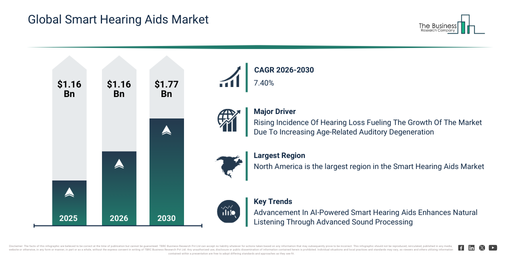
    The smart hearing aids market is anticipated to experience substantial expansion in the coming years. By 2030, this market is projected to reach $10.26 billion, exhibiting a compound annual growth rate (CAGR) of 7.4%. This projected growth is driven by factors such as the incorporation of AI and IoT into hearing aids, the proliferation of smart audiology clinics, the creation of rechargeable and Bluetooth-enabled devices, an increasing need for pediatric hearing solutions, and improvements in tinnitus management technologies. Key trends during this period are expected to encompass personalized hearing experiences, the integration of wireless audio streaming, capabilities for remote hearing aid management, enhanced noise reduction and speech clarity, and the adoption of ergonomic and discreet designs.

    Get A Free Sample Report With In-Depth Market Insights:

    https://thebusinessresearchcompany.com/sample_request?id=79357404&type=smp&name=Smart%20Hearing%20Aids%20Market%20Report%202026&utm_source=Blogs&utm_medium=Paid&utm_campaign=Oct_PR

    Smart Hearing Aids Market Demand Drivers: What’s Powering Industry Growth?

    An increasing occurrence of hearing loss is anticipated to drive the expansion of the smart hearing aids market in the future. This condition, hearing loss, describes a partial or total inability to detect sounds in either one or both ears, which impacts an individual’s capacity to communicate and process auditory data. The growing prevalence of hearing impairment is linked to the aging demographic, given that the auditory system’s natural decline frequently happens as people get older. Through sophisticated digital processing, smart hearing aids assist in managing hearing issues by boosting sound, minimizing ambient noise, and improving speech intelligibility. These devices automatically adjust to various surroundings, thereby enhancing the user’s overall hearing experience and communication effectiveness. As an illustration, in May 2024, data from the Department of Health, Disability, and Ageing, an Australia-based government administration, indicated that approximately 3.6 million individuals suffered from some level of hearing loss, with projections showing this figure is expected to reach about 7.8 million by 2060. Consequently, the increasing occurrence of hearing loss is fueling the expansion of the smart hearing aids market.

    Smart Hearing Aids Market Segmentation: How Does The Market Break Down By Category?

    The smart hearing aids market covered in this report is segmented –

    1) By Product Type: Behind-The-Ear (BTE), In-The-Ear (ITE), In-The-Canal (ITC), Completely-In-Canal (CIC), Receiver-In-Canal (RIC)

    2) By Technology: Bluetooth Enabled, Artificial Intelligence (AI)-Powered, Rechargeable, Tinnitus Masking, Other Technologies

    3) By Distribution Channel: Online Stores, Audiology Clinics, Hospitals And Clinics, Retail Pharmacies, Other Distribution Channels

    4) By End-User: Adults, Pediatrics

    Subsegments:

    1) By Behind-The-Ear (BTE): Standard Behind-The-Ear (BTE), Mini Behind-The-Ear (BTE), Power Behind-The-Ear (BTE), Rechargeable Behind-The-Ear (BTE), Bluetooth-Enabled Behind-The-Ear (BTE)

    2) By In-The-Ear (ITE): Full Shell In-The-Ear (ITE), Half Shell In-The-Ear (ITE), Wireless In-The-Ear (ITE), In-The-Ear (ITE) With Telecoil, Custom In-The-Ear (ITE)

    3) By In-The-Canal (ITC): Standard In-The-Canal (ITC), Mini In-The-Canal (ITC), Rechargeable In-The-Canal (ITC), Directional Microphone In-The-Canal (ITC), Wireless In-The-Canal (ITC)

    4) By Completely-In-Canal (CIC): Invisible-In-Canal (IIC), Wireless Completely-In-Canal (CIC), Programmable Completely-In-Canal (CIC), Completely-In-Canal (CIC) With Remote Control, Completely-In-Canal (CIC) With Venting

    5) By Receiver-In-Canal (RIC): Mini Receiver-In-Canal (RIC), Power Receiver-In-Canal (RIC), Rechargeable Receiver-In-Canal (RIC), Receiver-In-Canal (RIC) With Open Fit, Wireless Receiver-In-Canal (RIC)

    Smart Hearing Aids Market Innovation Trends: What Developments Are Reshaping The Industry?

    Key players within the smart hearing aids market are dedicating their efforts to creating sophisticated products, such as artificial intelligence (AI)-powered hearing aids, aiming to elevate natural hearing experiences through advanced sound processing. AI-powered hearing aids harness artificial intelligence to adapt instantly to diverse sound settings and improve speech understanding. They continually learn user behaviors to offer a personalized and more authentic hearing experience. For example, in February 2025, GN Store Nord A/S, a Denmark-based producer of hearing aids, unveiled ReSound Vivia, its most advanced hearing collection. This innovative device employs a dedicated Deep Neural Network (DNN) chip, trained on millions of speech samples, to deliver remarkable speech clarity in loud environments, all while preserving a subtle, comfortable design and extended battery life. Vivia’s Intelligent Focus function imitates natural human listening by prioritizing sounds based on the user’s visual focus, providing a more intuitive and effortless hearing experience.

    Smart Hearing Aids Market Industry Leaders And Competitive Landscape

    Major companies operating in the smart hearing aids market are Sonova Holding AG, GN Store Nord A S, WS Audiology, Starkey Hearing Technologies, Jabra Enhance, Widex, Beltone, Unitron, Amplifon Hearing Health Care, Eargo Inc, Audicus, iHEAR Medical, MDHearing, SoundWorld Solutions, Lexie Hearing, Audien Hearing, Melosound, Austar Hearing Science And Technology Xiamen Co Ltd, Soundwave Hearing LLC, Tweak Hearing, Rexton Hearing, Phonak, Oticon

    View The Full Smart Hearing Aids Market Report:

    https://thebusinessresearchcompany.com/report/smart-hearing-aids-global-market-report?utm_source=Blogs&utm_medium=Paid&utm_campaign=Oct_PR

    Smart Hearing Aids Market Regional Analysis And Top Geography

    North America was the largest region in the smart hearing aids market in 2025. The regions covered in the smart hearing aids market report are Asia-Pacific, South East Asia, Western Europe, Eastern Europe, North America, South America, Middle East, Africa.

    Reach Out To Our Team:

    The Business Research Company: https://www.thebusinessresearchcompany.com/

    Americas: +1 310-496-7795

    Asia: +44 7882 955267 & +91 8897263534

    Europe: +44 7882 955267

    Email us at: marketing@tbrc.info

    Follow us on:

    LinkedIn: https://in.linkedin.com/company/the-business-research-company

    YouTube: https://www.youtube.com/channel/UC24_fI0rV8cR5DxlCpgmyFQ

    Global Market Model: https://www.thebusinessresearchcompany.com/global-market-model
  • Smart Foley Catheters Market Analysis: Understanding The Drivers Behind 11.5% CAGR Through 2030 Growth

    Smart Foley Catheters Market Analysis: Understanding The Drivers Behind 11.5% CAGR Through 2030 Growth

    Featuring market attractiveness scoring, total addressable market sizing, company benchmarking matrices, interactive Excel dashboards, deeper supply chain intelligence, emerging startup tracking, and granular product-level insights, The Business Research Company’s 2026 market reports are built to deliver research that is both more actionable and more strategically valuable.

    Smart Foley Catheters Market Revenue Outlook: What CAGR Lies Ahead Through 2030?

    The market size for smart foley catheters has experienced rapid expansion in recent years. It is forecast to grow from $1.73 billion in 2025 to $1.93 billion in 2026, at a compound annual growth rate (CAGR) of 11.8%. The historical growth experienced by this market can be attributed to various factors, including high catheter-associated infection rates, an increase in surgical procedures, the demand for continuous patient monitoring, the aging population, and hospital safety initiatives.

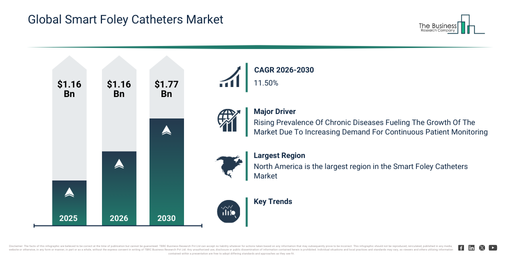
    The smart foley catheters market size is anticipated to experience significant expansion over the next few years. It is expected to reach $2.99 billion in 2030, advancing at a compound annual growth rate (CAGR) of 11.5%. This growth during the forecast period is propelled by factors such as the increasing adoption of remote patient monitoring, the emergence of AI-based alert systems, the expansion of home care environments, the development of smart hospital infrastructure, and regulatory support for enhanced patient safety. Prominent trends throughout this period include the implementation of real-time urine monitoring, innovations in catheter design for infection prevention, wireless transmission of patient data, the integration of sensors into catheter systems, and capabilities for early complication detection.

    Get A Free Sample Report With In-Depth Market Insights:

    https://thebusinessresearchcompany.com/sample_request?id=83792790&type=smp&name=Smart%20Foley%20Catheters%20Market%20Report%202026&utm_source=Blogs&utm_medium=Paid&utm_campaign=Oct_PR

    Smart Foley Catheters Market Growth Drivers: What’s Behind The Acceleration?

    The increasing occurrence of chronic illnesses is anticipated to boost the smart foley catheters market in the coming years. These long-lasting health conditions emerge gradually and persist over time, frequently necessitating ongoing medical attention. A key factor contributing to the rising incidence of chronic diseases is sedentary lifestyles, where extended periods of sitting and minimal physical activity elevate the risk of conditions like heart disease and diabetes. Smart foley catheters are instrumental in managing chronic diseases by continuously tracking urine output, pressure, and temperature, making them well-suited for individuals requiring long-term catheterization. They minimize the need for manual monitoring and intervention through real-time data provision and automated alerts, thereby enhancing patient safety and operational efficiency in clinics. For instance, in June 2024, according to the National Health Service, a UK-based government department, 3,615,330 individuals registered with a general practitioner (GP) were diagnosed with non-diabetic hyperglycemia or pre-diabetes (a condition with elevated blood sugar levels, not high enough to be classified as diabetes) in 2023, marking an 18% increase from 3,065,825 cases in 2022. Consequently, the growing prevalence of chronic diseases is stimulating the expansion of the smart foley catheters market. Anticipations suggest that increasing healthcare spending will boost the smart foley catheters market in the foreseeable future. Healthcare expenditure encompasses all financial outlays on medical services, therapies, facilities, research, and public health efforts aimed at sustaining or bettering health results. The escalating need for healthcare spending stems from the growing incidence of chronic conditions, which necessitate extensive and expensive treatments. Elevated healthcare expenditure benefits smart foley catheters by allowing hospitals and care centers to acquire sophisticated monitoring technologies, which are perfect for enhancing patient care and operational effectiveness. These devices lessen manual oversight by offering real-time data and automated notifications, thereby streamlining workflows and improving overall health outcomes. For instance, in May 2024, according to the Office for National Statistics, a UK-based government department, total healthcare expenditure saw a 5.6% increase in nominal terms in 2023, an increase of 0.9% growth compared to 2022. Consequently, the increasing healthcare expenditure is propelling the expansion of the smart foley catheters market.

    Smart Foley Catheters Market Segment Trends And Revenue Contributors

    The smart foley catheters market covered in this report is segmented –

    1) By Product Type: Sensor-Enabled Indwelling Smart Foley Catheters, Wireless-Connected Smart Foley Catheters, Temperature-Monitoring Smart Foley Catheters, Pressure and Flow-Sensing Smart Foley Catheters, Infection-Detection and Antimicrobial Smart Foley Catheters

    2) By Application: Urinary Incontinence, Surgery, Prostate Gland Surgery, Spinal Cord Injury, Other Applications

    3) By End-User: Hospitals, Clinics, Long-Term Care Facilities

    Subsegments:

    1) By Sensor-Enabled Indwelling Smart Foley Catheters: Two-Way Sensor-Integrated Foley Catheters, Three-Way Sensor-Integrated Foley Catheters, Multi-Parameter Monitoring Foley Catheters

    2) By Wireless-Connected Smart Foley Catheters: Bluetooth-Enabled Foley Catheters, Wi-Fi-Enabled Foley Catheters, Remote Monitoring–Integrated Foley Catheters, EMR/EHR-Integrated Smart Foley Catheters

    3) By Temperature-Monitoring Smart Foley Catheters: Core Body Temperature Sensing Foley Catheters, Continuous Temperature Monitoring Foley Catheters, Fever-Alert Enabled Smart Foley Catheters

    4) By Pressure and Flow-Sensing Smart Foley Catheters: Intravesical Pressure Monitoring Foley Catheters, Urine Flow Rate Monitoring Foley Catheters, Blockage and Occlusion Detection Foley Catheters, Drainage Alarm-Enabled Foley Catheters

    5) By Infection-Detection and Antimicrobial Smart Foley Catheters: Biofilm Detection Smart Foley Catheters, Early UTI Detection Smart Foley Catheters, Antimicrobial-Coated Sensor-Integrated Foley Catheters, pH and Biomarker Monitoring Smart Foley Catheters

    Smart Foley Catheters Market Key Participants And Competitive Landscape

    Major companies operating in the smart foley catheters market are Bactiguard AB, Potrero Medical Inc (Accuryn), FIZE Medical, Becton Dickinson and Company, Medtronic plc, DeRoyal Industries Inc., UNOQUIP, Boen Medical Co. Ltd., Biometrix, Cook Medical LLC, Teleflex Incorporated, B. Braun Melsungen AG, Coloplast A/S, Convatec Group Plc, Hollister Incorporated, Poly Medicure Limited, Romsons Group of Industries Pvt. Ltd., Angiplast Pvt. Ltd., Well Lead Medical Co. Ltd., Medline Industries LP.

    View The Full Smart Foley Catheters Market Report:

    https://thebusinessresearchcompany.com/report/global-smart-foley-catheters-market-report?utm_source=Blogs&utm_medium=Paid&utm_campaign=Oct_PR

    Smart Foley Catheters Market Geographic Analysis: Where Is Demand Rising Fastest?

    North America was the largest region in the smart foley catheters market in 2025. Asia-Pacific is expected to be the fastest-growing region in the forecast period. The regions covered in the smart foley catheters market report are Asia-Pacific, South East Asia, Western Europe, Eastern Europe, North America, South America, Middle East, Africa.

    Reach Out To Our Team:

    The Business Research Company: https://www.thebusinessresearchcompany.com/

    Americas: +1 310-496-7795

    Asia: +44 7882 955267 & +91 8897263534

    Europe: +44 7882 955267

    Email us at: marketing@tbrc.info

    Follow us on:

    LinkedIn: https://in.linkedin.com/company/the-business-research-company

    YouTube: https://www.youtube.com/channel/UC24_fI0rV8cR5DxlCpgmyFQ

    Global Market Model: https://www.thebusinessresearchcompany.com/global-market-model
  • Smart Exoskeleton Market Growth To $8.01 Billion By 2030: What’s Driving The Expansion?

    Smart Exoskeleton Market Growth To $8.01 Billion By 2030: What’s Driving The Expansion?

    Built to provide research that’s more actionable and strategically valuable, The Business Research Company’s 2026 market reports include market attractiveness analysis, total addressable market sizing, company benchmarking matrices, interactive Excel dashboards, broader supply chain intelligence, emerging startup tracking, and in-depth product insights.

    Smart Exoskeleton Market Growth Analysis: How Will Revenue Trend Over The Forecast Period?

    The smart exoskeleton market has experienced rapid expansion in its size during recent years. This market is forecasted to grow from $4.18 billion in 2025 to $4.77 billion in 2026, achieving a compound annual growth rate (CAGR) of 14.1%. The historical growth within this sector can be attributed to several factors including the demand for workplace injury reduction, the mobility requirements of an aging population, the enhancement of military performance, the early adoption of rehabilitation robotics, and the increasing need for industrial productivity.

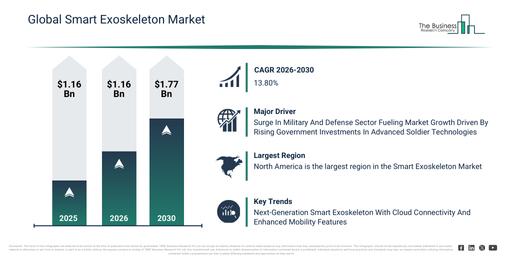
    The smart exoskeleton market is projected to undergo substantial expansion in the upcoming years. It is anticipated to attain a value of $8.01 billion by 2030, driven by a compound annual growth rate (CAGR) of 13.8%. This growth during the forecast period is primarily attributed to advancements such as AI-driven adaptive control systems, the spread of home rehabilitation, reduced production costs through mass manufacturing, the integration with digital health platforms, and increased acceptance in emerging economies. Noteworthy trends expected over this period involve AI-assisted motion control, the adoption of soft and ultra-soft exoskeletons, optimization of human-machine interfaces, the focus on rehabilitation-oriented wearable robotics, and the development of lightweight and modular designs.

    Get A Free Sample Report With In-Depth Market Insights:

    https://thebusinessresearchcompany.com/sample_request?id=27895977&type=smp&name=Smart%20Exoskeleton%20Market%20Report%202026&utm_source=Blogs&utm_medium=Paid&utm_campaign=Oct_PR

    Smart Exoskeleton Market Growth Factors Behind Sustained Expansion

    The expanding military and defense sector is projected to fuel the future growth of the smart exoskeleton market. Within this sector, smart exoskeletons are applied to enhance soldiers’ strength, endurance, and mobility, simultaneously diminishing fatigue and the risk of injury during combat or heavy-duty operations. The growth of the military and defense sector is driven by an increasing demand for advanced wearable technologies that improve soldier performance, reduce fatigue, and optimize operational efficiency, thereby encouraging greater investment in smart exoskeletons for combat support and logistics. Smart exoskeletons support the military and defense sector by augmenting soldiers’ physical capabilities, enabling them to carry heavy loads, move efficiently, and lessen fatigue during missions, which in turn boosts endurance, safety, and overall battlefield performance. For instance, in April 2024, the Stockholm International Peace Research Institute, a Sweden-based non-profit foundation, reported that total global military expenditure reached $2,443 billion in 2023, marking a 6.8% increase in real terms compared to 2022. Consequently, the burgeoning military and defense sector is a key driver for the growth of the smart exoskeleton market.

    Smart Exoskeleton Market Segment Analysis Spotlighting Growth Areas

    The smart exoskeleton market covered in this report is segmented –

    1) By Component: Hardware, Software, Services

    2) By Type: Rigid Smart Exoskeleton, Soft Smart Exoskeleton

    3) By Body Part: Upper Body, Lower Body, Full Body

    4) By End User: Industrial, Healthcare, Military, Other End Users

    Subsegments:

    1) By Hardware: Sensors, Actuators, Power Sources: Control Systems, Frames And Structures, Controllers And Processors, Communication Modules

    2) By Software: Motion Control Software, Artificial Intelligence (AI) And Machine Learning Algorithms, Data Analytics And Monitoring Software, User Interface (UI) And Customization Tools, Cloud Integration Platforms

    3) By Services: Training And Support Services, Maintenance And Repair Services, System Integration Services, Consulting And Customization Services, After-Sales And Upgradation Services

    Smart Exoskeleton Market Industry Trends Fueling Future Revenue Growth

    Leading firms within the smart exoskeleton market are increasingly prioritizing advancements, including customizable exoskeletons, to improve user experience, facilitate real-time data monitoring, and broaden their utility across the medical, industrial, and military domains. These adaptable robotic frameworks, known as customizable exoskeletons, are designed to augment or reinstate human motion, allowing for specific adjustments to an individual’s physical dimensions, needs, and functional demands for uses such as rehabilitation, aid with mobility, or boosting performance. An illustrative example is from April 2025, when Lifeward Ltd., an Israeli medical technology enterprise, introduced the ReWalk 7 Personal Exoskeleton across the country to support individuals suffering from spinal cord injuries. This seventh iteration of the exoskeleton features integrated cloud connectivity and adjustable walking speeds, delivering a bespoke and practical walking experience. Developed with insights from healthcare professionals and patients, it incorporates cutting-edge technologies to boost safety, comfort, and mobility, thereby enabling users to walk assuredly in daily settings and elevating their overall life quality.

    Smart Exoskeleton Market Top Companies Driving Competitive Growth

    Major companies operating in the smart exoskeleton market are Ottobock SE & Co. KGaA, Fourier Intelligence, CYBERDYNE INC., Hocoma AG, GERMAN BIONIC SYSTEMS GMBH, Ekso Bionics Holdings Inc., ReWalk Robotics, ExoAtlet, Rex Bionics Ltd., Bionik Laboratories Corp., SuitX, B-Temia Inc., Technaid Inc., Bioservo Technologies AB, DIH Medical, Honda Motor Co. Ltd., Hyundai Motor Company, Lockheed Martin Corporation, Parker Hannifin Corporation, Gogoa Mobility Robots.

    View The Full Smart Exoskeleton Market Report:

    https://thebusinessresearchcompany.com/report/global-smart-exoskeleton-market-report?utm_source=Blogs&utm_medium=Paid&utm_campaign=Oct_PR

    Smart Exoskeleton Market Global Footprint: Which Region Leads The Market?

    North America was the largest region in the smart exoskeleton market in 2025. Asia-Pacific is expected to be the fastest-growing region in the forecast period. The regions covered in the smart exoskeleton market report are Asia-Pacific, South East Asia, Western Europe, Eastern Europe, North America, South America, Middle East, Africa.

    Reach Out To Our Team:

    The Business Research Company: https://www.thebusinessresearchcompany.com/

    Americas: +1 310-496-7795

    Asia: +44 7882 955267 & +91 8897263534

    Europe: +44 7882 955267

    Email us at: marketing@tbrc.info

    Follow us on:

    LinkedIn: https://in.linkedin.com/company/the-business-research-company

    YouTube: https://www.youtube.com/channel/UC24_fI0rV8cR5DxlCpgmyFQ

    Global Market Model: https://www.thebusinessresearchcompany.com/global-market-model
  • Smart Disposable Medical Device Market Trends Reshaping Industry Growth Through 2030

    Smart Disposable Medical Device Market Trends Reshaping Industry Growth Through 2030

    Backed by market attractiveness analysis, total addressable market sizing, company benchmarking matrices, interactive Excel dashboards, wider supply chain intelligence, emerging startup coverage, and detailed product-level insights, The Business Research Company’s 2026 market reports are designed to offer research that is more actionable and strategically valuable than ever.

    Smart Disposable Medical Device Market Forecast: What Value Will The Market Reach By 2030?

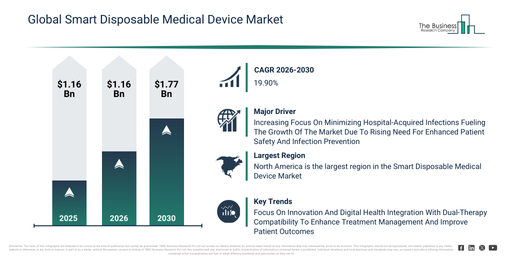
    The smart disposable medical device market has experienced significant expansion in recent times. This market is set to expand from $6.49 billion in 2025 to $7.8 billion in 2026, advancing at a compound annual growth rate (CAGR) of 20.2%. The historical growth of this market is attributable to concerns regarding hospital-acquired infections, the increasing demand for devices that do not require sterilization, a rise in chronic disease monitoring, the widespread adoption of wearable technology, and various regulatory mandates concerning safety.

    The smart disposable medical device market size is poised for substantial growth over the next few years. It is projected to reach $16.1 billion in 2030, achieving a compound annual growth rate (CAGR) of 19.9%. This expansion during the forecast period can be attributed to factors such as the increasing adoption of remote monitoring, the emergence of smart drug adherence tools, material innovations driven by sustainability, enhanced integration with digital health platforms, and the growth of outpatient care. Key trends anticipated in the forecast period include single-use connected medical devices, disposable tools with embedded sensors, devices focused on infection control, disposables that transmit real-time data, and smart drug delivery solutions.

    Get A Free Sample Report With In-Depth Market Insights:

    https://thebusinessresearchcompany.com/sample_request?id=21251569&type=smp&name=Smart%20Disposable%20Medical%20Device%20Market%20Report%202026&utm_source=Blogs&utm_medium=Paid&utm_campaign=Oct_PR

    Smart Disposable Medical Device Market Demand Drivers Opening New Revenue Streams

    The smart disposable medical device market is anticipated to grow due to an escalating focus on mitigating hospital-acquired infections (HAIs). These infections are contracted by patients while receiving treatment in medical facilities, typically becoming apparent 48 hours or more post-admission and not present upon entry. The heightened emphasis on reducing HAIs arises from the necessity to elevate patient safety, as decreasing such infections lessens complication risks and improves recovery outcomes. Smart disposable medical devices assist in minimizing HAIs by ensuring single-use sterility and enabling real-time monitoring, thereby reducing cross-contamination risks and bolstering patient safety. For instance, data from March 2025 by the Health Security Agency, a UK-based government body, reported that hospital-acquired infections were observed in 7.6% of patients in 2023, with pneumonia and lower respiratory tract infections being the most common at 29.6%, followed by urinary tract infections at 17.5%, and sepsis or disseminated infections at 10.6%. Consequently, the rising prioritization of minimizing hospital-acquired infections is driving the expansion of the smart disposable medical device market.

    Smart Disposable Medical Device Market Segment Performance And Emerging Opportunities

    The smart disposable medical device market covered in this report is segmented –

    1) By Product Type: Smart Syringes, Smart Wearable Patches, Smart Pills

    2) By Connectivity: Bluetooth, Near Field Communication (NFC)

    3) By Application: Patient Monitoring, Drug Delivery, Diagnostics

    4) By End-User: Hospitals And Clinics, Home Care, Ambulatory Surgical Centers

    Subsegments:

    1) By Smart Syringes: Connected Insulin Syringes, Connected Vaccination Syringes, Connected Needle-Free Syringes, Connected Prefilled Syringes

    2) By Smart Wearable Patches: Connected Monitoring Patches, Connected Drug Delivery Patches, Connected Pain Management Patches, Connected Cardiac Monitoring Patches

    3) By Smart Pills: Ingestible Monitoring Pills, Ingestible Drug Delivery Pills, Ingestible Temperature Sensing Pills, Ingestible Diagnostic Pills

    Smart Disposable Medical Device Market Trends Powering Strategic Industry Growth

    Leading companies operating in the smart disposable medical device market are concentrating on creating innovative solutions, such as dual-therapy compatibility, to facilitate the smooth tracking and administration of various drug categories via a singular connected platform. Dual-therapy compatibility refers to the capacity of a smart medical device to operate with and monitor two distinct types of therapies or medications simultaneously. For instance, in January 2023, Biocorp, a medical technology company based in France, announced the US Food and Drug Administration approval for Mallya, which is a smart medical device designed for disposable injector pens. This innovation enables users of both insulin and GLP-1 receptor agonist pens to connect their devices to a smartphone, allowing them to track dosing as well as the precise date and time of each injection. This connectivity feature aids in ensuring more accurate management of therapy. By providing both convenience and real-time tracking, Mallya fosters improved adherence to treatment and contributes to better patient outcomes.

    Smart Disposable Medical Device Market Leading Players And Competitive Positioning

    Major companies operating in the smart disposable medical device market are Abbott Laboratories, Medtronic plc, Boston Scientific Corporation, Terumo Corporation, Dexcom Inc., Insulet Corporation, iRhythm Technologies Inc., Ypsomed Holding AG, Biotricity Inc., Tasso Inc., Gentag Inc., Nemaura Medical Inc., Proteus Digital Health Inc., SmartTab Systems Inc., Celero Systems Inc., BlueSpark Technologies Inc., Bodytrak Inc., Element Science Inc., Becton Dickinson and Company, Roche Diagnostics, VitalConnect Inc

    View The Full Smart Disposable Medical Device Market Report:

    https://thebusinessresearchcompany.com/report/smart-disposable-medical-device-global-market-report?utm_source=Blogs&utm_medium=Paid&utm_campaign=Oct_PR

    Smart Disposable Medical Device Market Regional Split: Which Areas Are Fueling Growth?

    North America was the largest region in the smart disposable medical device market in 2025. The regions covered in the smart disposable medical device market report are Asia-Pacific, South East Asia, Western Europe, Eastern Europe, North America, South America, Middle East, Africa.

    Reach Out To Our Team:

    The Business Research Company: https://www.thebusinessresearchcompany.com/

    Americas: +1 310-496-7795

    Asia: +44 7882 955267 & +91 8897263534

    Europe: +44 7882 955267

    Email us at: marketing@tbrc.info

    Follow us on:

    LinkedIn: https://in.linkedin.com/company/the-business-research-company

    YouTube: https://www.youtube.com/channel/UC24_fI0rV8cR5DxlCpgmyFQ

    Global Market Model: https://www.thebusinessresearchcompany.com/global-market-model
  • Smart Dermatology Scanner Market Growth To $2.77 Billion Creates New Opportunities Across The Industry

    Smart Dermatology Scanner Market Growth To $2.77 Billion Creates New Opportunities Across The Industry

    Featuring market attractiveness scoring, total addressable market sizing, company benchmarking matrices, interactive Excel dashboards, deeper supply chain intelligence, emerging startup tracking, and granular product-level insights, The Business Research Company’s 2026 market reports are built to deliver research that is both more actionable and more strategically valuable.

    Smart Dermatology Scanner Market Size Outlook: How Quickly Will Revenue Expand Through 2030?

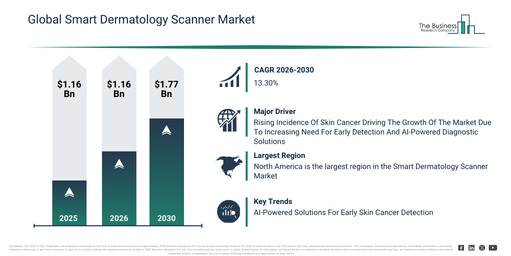
    The smart dermatology scanner market has seen significant expansion in recent years. This market is expected to increase from $1.48 billion in 2025 to $1.68 billion in 2026, demonstrating a compound annual growth rate (CAGR) of 13.6%. Historically, this growth can be linked to factors such as a rise in skin cancer cases, the need for prompt diagnosis, a shortage of dermatology specialists, the expansion of cosmetic dermatology, and improvements in imaging technology.

    The market for smart dermatology scanners is projected to undergo substantial growth in the next few years. This market is forecasted to reach $2.77 billion by 2030, exhibiting a compound annual growth rate (CAGR) of 13.3%. The anticipated expansion in the forecast period stems from factors such as AI diagnostic accuracy improvement, the availability of home-use skin scanners, the expansion of telemedicine, increasing preventive skincare awareness, and the rise of data-driven dermatology. Notable trends for the forecast period encompass AI-based skin lesion detection, non-invasive skin imaging, the development of portable dermatology scanners, advancements in teledermatology diagnostics, and improved early skin cancer screening.

    Get A Free Sample Report With In-Depth Market Insights:

    https://thebusinessresearchcompany.com/sample_request?id=26235143&type=smp&name=Smart%20Dermatology%20Scanner%20Market%20Report%202026&utm_source=Blogs&utm_medium=Paid&utm_campaign=Oct_PR

    Smart Dermatology Scanner Market Growth Backed By Core Demand Fundamentals

    The increasing occurrence of skin cancer is projected to drive expansion within the smart dermatology scanner market. Skin cancer is defined as the uncontrolled proliferation of atypical skin cells, predominantly resulting from DNA damage due to ultraviolet (UV) radiation. This rise in skin cancer cases is attributed to heightened exposure to ultraviolet (UV) radiation from both solar sources and artificial tanning equipment. Smart dermatology scanners are employed in the context of skin cancer for the early detection and analysis of suspicious skin lesions, leveraging AI-driven imaging and diagnostic capabilities. For example, the American Cancer Society, a US-based nonprofit organization dedicated to eliminating cancer through research, education, advocacy, and patient support, reported in January 2025 that new melanoma cases reached 100,640 in 2024, subsequently rising to 104,960 in 2025. Consequently, the growing prevalence of skin cancer serves as a significant impetus for the smart dermatology scanner market.

    Smart Dermatology Scanner Market Segment Landscape And Growth Outlook

    The smart dermatology scanner market covered in this report is segmented –

    1) By Product Type: Handheld Scanners, Tabletop Scanners

    2) By Technology: Artificial Intelligence, Non Artificial Intelligence

    3) By Distribution Channel: Online, Offline

    4) By Application: Skin Care Detection, Acne And Lesion Analysis

    5) By End-User: Hospitals And Clinics, Dermatology Centers

    Subsegments:

    1) By Handheld Scanners: Portable Digital Scanner, Compact Imaging Scanner, Mobile Skin Analyzer,

    2) By Tabletop Scanners: Desktop Imaging Device, Clinical Diagnostic Scanner

    Smart Dermatology Scanner Market Growth Trends Reshaping The Competitive Landscape

    Leading companies operating in the smart dermatology scanner market are focusing on developing advanced solutions, such as AI-powered diagnostic platforms, to improve early detection of skin cancer. An AI-powered diagnostic platform refers to a technology that utilizes artificial intelligence to analyze skin lesions, assess risk, and provide accurate recommendations, thereby enhancing early diagnosis and patient outcomes. For instance, in March 2025, Fraunhofer HHI, a Germany-based research institute, introduced an AI diagnostic platform for skin cancer detection. This innovation scans a patient’s entire body within six minutes, automatically assessing each skin anomaly and providing risk evaluations without the need for manual interpretation. It delivers real-time analysis of suspicious lesions while allowing clinicians to integrate results seamlessly into patient care. Integrated with Fraunhofer’s digital healthcare initiatives, such as AI imaging, data analytics, and risk assessment, it offers a streamlined diagnostic experience. The AI diagnostic platform improves early detection rates, simplifies clinical workflows, and enhances patient care.

    Smart Dermatology Scanner Market Competitive Overview And Top Companies

    Major companies operating in the smart dermatology scanner market are Canfield Scientific Inc., MedX Health Corp., MolecuLight Inc., DermLite LLC, SkinVision B.V., MetaOptima Technology Inc., Caliber Imaging & Diagnostics Inc., SciBase Holding AB, Veriskin Inc., IQONIC.AI, Skin Analytics Ltd., Skinive AI SIA, Miiskin Group ApS, DermDetect SAS, DermaSensor Inc., Teleskin d.o.o., FotoFinder Systems GmbH, Barco NV, Strata Skin Sciences Inc., Mela Sciences Inc., DeepSense Medical Ltd., Spectral AI Inc.

    View The Full Smart Dermatology Scanner Market Report:

    https://thebusinessresearchcompany.com/report/smart-dermatology-scanner-global-market-report?utm_source=Blogs&utm_medium=Paid&utm_campaign=Oct_PR

    Smart Dermatology Scanner Market Top Region: Where Does Most Revenue Come From?

    North America was the largest region in the smart dermatology scanner market in 2025. Asia-Pacific is expected to be the fastest-growing region in the forecast period. The regions covered in the smart dermatology scanner market report are Asia-Pacific, South East Asia, Western Europe, Eastern Europe, North America, South America, Middle East, Africa.

    Reach Out To Our Team:

    The Business Research Company: https://www.thebusinessresearchcompany.com/

    Americas: +1 310-496-7795

    Asia: +44 7882 955267 & +91 8897263534

    Europe: +44 7882 955267

    Email us at: marketing@tbrc.info

    Follow us on:

    LinkedIn: https://in.linkedin.com/company/the-business-research-company

    YouTube: https://www.youtube.com/channel/UC24_fI0rV8cR5DxlCpgmyFQ

    Global Market Model: https://www.thebusinessresearchcompany.com/global-market-model
  • Smart Controller For Personal Care And Health Market Forecast: Breaking Down The Numbers Behind Future Expansion

    Smart Controller For Personal Care And Health Market Forecast: Breaking Down The Numbers Behind Future Expansion

    Built to provide research that’s more actionable and strategically valuable, The Business Research Company’s 2026 market reports include market attractiveness analysis, total addressable market sizing, company benchmarking matrices, interactive Excel dashboards, broader supply chain intelligence, emerging startup tracking, and in-depth product insights.

    Smart Controller For Personal Care And Health Market Size, Value And Growth Trajectory Through 2030

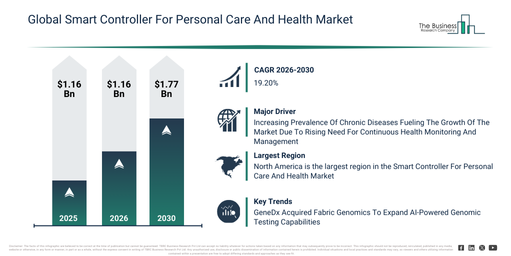
    The smart controller for personal care and health market has experienced substantial growth in recent years. This market is projected to expand from $2.05 billion in 2025 to $2.45 billion in 2026, demonstrating a compound annual growth rate (CAGR) of 19.5%. Historically, this expansion can be attributed to factors such as the rise of industrial automation, increased smart home adoption, broadening connectivity, growing energy management needs, and advancements in semiconductors.

    The smart controller for personal care and health market is anticipated to experience substantial growth in the upcoming years. This market is projected to reach $4.94 billion by 2030, exhibiting a compound annual growth rate (CAGR) of 19.2%. Key factors driving this expansion during the forecast period include the proliferation of industrial IoT, investments in smart infrastructure, the incorporation of AI into control systems, regulations promoting energy optimization, and the increasing adoption of digital twin technology. Prominent trends expected over the forecast period encompass IoT-enabled control systems, the rise of wireless smart controllers, automation control powered by AI, efficient management of energy devices, and the emergence of cloud-connected control platforms.

    Get A Free Sample Report With In-Depth Market Insights:

    https://thebusinessresearchcompany.com/sample_request?id=23607910&type=smp&name=Smart%20Controller%20For%20Personal%20Care%20And%20Health%20Market%20Report%202026&utm_source=Blogs&utm_medium=Paid&utm_campaign=Oct_PR

    Smart Controller For Personal Care And Health Market Growth Catalysts And Demand Drivers

    The rising occurrence of chronic illnesses is anticipated to propel the expansion of the smart controller for personal care and health market in the future. These long-term health conditions emerge gradually and persist over a prolonged duration, frequently necessitating ongoing medical attention. The increasing incidence of chronic ailments is partly linked to sedentary habits, since extended periods of sitting and insufficient physical exercise elevate the likelihood of developing conditions like heart disease and diabetes. Smart controllers for personal care and health improve daily well-being practices by providing individualized tracking and immediate feedback, rendering them highly suitable for the management of chronic conditions. These devices alleviate the challenges of health management through constant monitoring and practical data, thereby enhancing overall ease and quality of life. For example, data from April 2024, published by Allergy UK, a national charity in the UK, shows that over 21 million individuals in the UK suffer from allergies. Allergies were identified as the most prevalent chronic health condition in 2022, with forecasts suggesting that by 2026, half of Europe’s populace will be affected by at least one allergy. Consequently, the rising prevalence of chronic diseases is a key factor propelling the expansion of the smart controller for personal care and health market.

    Smart Controller For Personal Care And Health Market Breakdown By Product Type And Application

    The smart controller for personal care and health market covered in this report is segmented –

    1) By Type: Electronic Smart Controller, Communication Smart Controller

    2) By Application: Smart Fitness And Exercise Equipment Control, Smart Grooming And Personal Care Devices, Smart Skincare And Beauty Devices, Medication Management And Reminder Systems, Remote Health Monitoring And Vital Tracking, Elderly Care And Assisted Living Devices, Rehabilitation And Therapy Support Devices, Wellness And Lifestyle Management Systems

    3) By End User: Homecare Users, Fitness Enthusiasts, Elderly Population

    Subsegments:

    1) By Electronic Smart Controller: Sensor-Based Controllers, Touch Or Proximity Controllers, Motion Or Infrared Controllers, Wearable-Integrated Controllers, Artificial Intelligence (AI) Or Machine Learning (ML)-Powered Controllers

    2) By Communication Smart Controller: Bluetooth-Enabled Controllers, Wireless Fidelity (Wi-Fi)-Enabled Controllers, Zigbee Or Z-Wave Controllers, Near Field Communication (NFC)-Enabled Controllers, Cloud Or Internet Of Things (IoT)-Integrated Controllers

    Smart Controller For Personal Care And Health Market Trends Shaping Long-Term Demand

    Major companies in the smart controller market for personal care and health are prioritizing the development of advanced products like wearable smart rings to track health and promote personalized wellness. Wearable smart rings are compact, finger-worn devices that monitor health and wellness metrics, such as heart rate and sleep, offering real-time feedback through connected applications. For instance, in September 2023, Bonatra Healthcare Private Limited, an India-based healthcare company, introduced the Smart Ring X1, a wearable smart ring. These rings are the second wearable device to integrate with the Bonatra app, alongside continuous glucose monitors. It provides vital insights via features like sleep score, readiness score, movement index, and metabolic score, empowering users to boost their daily performance and well-being. Crafted from aerospace-grade titanium alloys, the lightweight 4-gram ring combines durability with elegance, catering to active, health-conscious lifestyles. The hypoallergenic medical-grade resin ensures comfort during extended wear, while the IP68 rating makes the Smart Ring X1 suitable for various activities, including swimming, deep diving, sailing, surfing, and trekking.

    Smart Controller For Personal Care And Health Market Competitive Landscape: Which Companies Lead The Industry?

    Major companies operating in the smart controller for personal care and health market are Philips, Panasonic, Withings, Fitbit, Garmin, Xiaomi, Omron Healthcare, iHealth Labs, Beurer, Braun, YA-MAN, FOREO, Panasonic Healthcare, Zepp Health, Polar Electro, Eufy, ResMed, Medtronic, Omate, VitalConnect

    View The Full Smart Controller For Personal Care And Health Market Report:

    https://thebusinessresearchcompany.com/report/smart-controller-for-personal-care-and-health-global-market-report?utm_source=Blogs&utm_medium=Paid&utm_campaign=Oct_PR

    Smart Controller For Personal Care And Health Market Regional Breakdown: Where Is Demand Concentrated?

    North America was the largest region in the smart controller for personal care and health market in 2025. Asia-Pacific is expected to be the fastest-growing region in the forecast period. The regions covered in the smart controller for personal care and health market report are Asia-Pacific, South East Asia, Western Europe, Eastern Europe, North America, South America, Middle East, Africa.

    Reach Out To Our Team:

    The Business Research Company: https://www.thebusinessresearchcompany.com/

    Americas: +1 310-496-7795

    Asia: +44 7882 955267 & +91 8897263534

    Europe: +44 7882 955267

    Email us at: marketing@tbrc.info

    Follow us on:

    LinkedIn: https://in.linkedin.com/company/the-business-research-company

    YouTube: https://www.youtube.com/channel/UC24_fI0rV8cR5DxlCpgmyFQ

    Global Market Model: https://www.thebusinessresearchcompany.com/global-market-model
  • Smart Biopsy Devices Market Expected To Grow At 7.6% CAGR Through 2030: What Businesses Need To Know

    Smart Biopsy Devices Market Expected To Grow At 7.6% CAGR Through 2030: What Businesses Need To Know

    Backed by market attractiveness analysis, total addressable market sizing, company benchmarking matrices, interactive Excel dashboards, wider supply chain intelligence, emerging startup coverage, and detailed product-level insights, The Business Research Company’s 2026 market reports are designed to offer research that is more actionable and strategically valuable than ever.

    Smart Biopsy Devices Market CAGR Outlook And Future Development

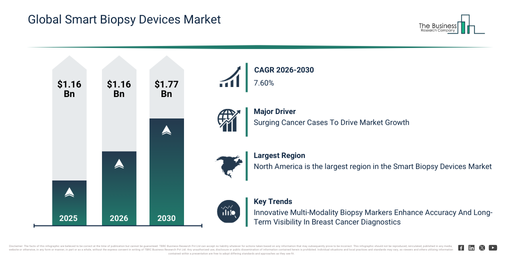
    The smart biopsy devices market has demonstrated strong growth in recent years. It is projected to expand from $3.01 billion in 2025 to $3.23 billion in 2026, achieving a compound annual growth rate (CAGR) of 7.2%. This historical growth can be attributed to several factors, including increasing cancer incidence rates, the greater adoption of minimally invasive diagnostic procedures, the development of advanced imaging infrastructure, the rising prevalence of core needle biopsy techniques, and enhanced clinician training in image-guided diagnostics.

    The smart biopsy devices market is anticipated to experience significant growth over the next few years. It is projected to reach $4.32 billion in 2030, progressing at a compound annual growth rate (CAGR) of 7.6%. This anticipated growth during the forecast period is attributable to increasing demand for precision oncology diagnostics, rising investments in smart surgical technologies, the expansion of robotic-assisted intervention platforms, a growing focus on early disease detection, and the increasing integration of AI-driven diagnostic support. Prominent trends identified for this forecast period encompass increasing adoption of image-guided biopsy systems, rising use of robotic-assisted biopsy procedures, growing integration of real-time tissue feedback technologies, expansion of minimally invasive diagnostic techniques, and an enhanced focus on diagnostic accuracy and patient safety.

    Get A Free Sample Report With In-Depth Market Insights:

    https://thebusinessresearchcompany.com/sample_request?id=78381242&type=smp&name=Smart%20Biopsy%20Devices%20Market%20Report%202026&utm_source=Blogs&utm_medium=Paid&utm_campaign=Oct_PR

    Smart Biopsy Devices Market Opportunity Drivers: What’s Unlocking New Revenue Potential?

    The increasing incidence of cancer is anticipated to drive growth in the smart biopsy devices market moving forward. Cancer is a broad category of illnesses that arises when abnormal cells proliferate uncontrollably within nearly any organ or tissue, extending beyond their normal boundaries to spread to other organs or invade adjacent body parts. The growing number of cancer cases has intensified the requirement for precise and focused tissue samples. This demand has spurred the creation and advancement of smart biopsy instruments, incorporating enhanced molecular, imaging, and precision capabilities to aid both diagnosis and treatment planning. For instance, in January 2024, the World Health Organization, an intergovernmental organization based in Switzerland, projected over 35 million new cancer cases by 2050. This marks a 77% rise from the estimated 20 million cases and 9.7 million deaths recorded in 2022. Consequently, the escalating number of cancer cases is fueling the expansion of the smart biopsy device market.

    Smart Biopsy Devices Market Segment Analysis And Revenue Potential

    The smart biopsy devices market covered in this report is segmented –

    1) By Product: Needle-Based Biopsy Instruments, Localization Wires

    2) By Guidance Technique: Ultrasound-Guided Biopsy, Stereotactic-Guided Biopsy, Magnetic Resonance Imaging-Guided Biopsy, Other Guidance Techniques

    3) By Application: Breast Cancer, Skin Cancer, Liver Cancer, Prostate Cancer, Other Applications

    4) By End-User: Hospitals, Academic And Research Institutes, Diagnostic And Imaging Centers

    Subsegments:

    1) By Needle-Based Biopsy Instruments: Core Needle Biopsy Devices, Fine Needle Aspiration (FNA) Devices, Vacuum-Assisted Biopsy Devices

    2) By Localization Wires: Hook Wire Localization Devices, Radar Localization Devices, Magnetic Localization Devices

    Smart Biopsy Devices Market Innovation Trends Shaping Future Development

    Leading firms in the smart biopsy devices market are prioritizing the creation of sophisticated solutions, like multi-modality breast biopsy markers, to optimize lesion localization, ensure extended site visibility, and boost diagnostic certainty. These multi-modality markers are specifically designed biopsy site markers that maintain clear visibility across various imaging techniques, including ultrasound, mammography, and MRI, thereby assisting clinicians in precisely monitoring biopsy sites and facilitating accurate follow-up evaluations. As an illustration, in March 2024, Mammotome, a medical technology firm based in the U.S., introduced LumiMARK, its cutting-edge 510(k)-cleared breast biopsy site marker tailored for multi-modality identification. This marker, offered in three distinct 3D shapes—such as Tulip™ and Rose™—ensures consistent visibility across different imaging methods and delivers enhanced long-term detectability in both breast tissue and lymph nodes, contributing to more accurate diagnoses and continuous clinical decision-making.

    Smart Biopsy Devices Market Competitive Landscape: Who Leads The Industry?

    Major companies operating in the smart biopsy devices market are Becton Dickinson and Company, Boston Scientific Corporation, Hologic Inc., Cook Medical Inc., Medtronic Plc, Olympus Corporation, B. Braun Melsungen AG, CONMED Corporation, FUJIFILM Holdings Corporation, Argon Medical Devices Inc., SOMATEX Medical Technologies GmbH, TSK Laboratory Europe B.V., INRAD Inc., Esaote SpA, Planmed Oy, Canon Medical Systems Corporation, Siemens Healthineers, General Electric Company, Intuitive Surgical Inc., Karl Storz SE And Co KG, Stryker Corporation

    View The Full Smart Biopsy Devices Market Report:

    https://thebusinessresearchcompany.com/report/smart-biopsy-devices-global-market-report?utm_source=Blogs&utm_medium=Paid&utm_campaign=Oct_PR

    Smart Biopsy Devices Market Geographic Landscape: Which Region Dominates Industry Growth?

    North America was the largest region in the smart biopsy devices market in 2025. Asia-Pacific is expected to be the fastest-growing region in the smart biopsy devices market report during the forecast period. The regions covered in the smart biopsy devices market report are Asia-Pacific, South East Asia, Western Europe, Eastern Europe, North America, South America, Middle East, Africa.

    Reach Out To Our Team:

    The Business Research Company: https://www.thebusinessresearchcompany.com/

    Americas: +1 310-496-7795

    Asia: +44 7882 955267 & +91 8897263534

    Europe: +44 7882 955267

    Email us at: marketing@tbrc.info

    Follow us on:

    LinkedIn: https://in.linkedin.com/company/the-business-research-company

    YouTube: https://www.youtube.com/channel/UC24_fI0rV8cR5DxlCpgmyFQ

    Global Market Model: https://www.thebusinessresearchcompany.com/global-market-model
  • Smart Adaptive Stairlift Market Forecast To Reach $3.84 Billion By 2030: Key Trends Explained

    Smart Adaptive Stairlift Market Forecast To Reach $3.84 Billion By 2030: Key Trends Explained

    Featuring market attractiveness scoring, total addressable market sizing, company benchmarking matrices, interactive Excel dashboards, deeper supply chain intelligence, emerging startup tracking, and granular product-level insights, The Business Research Company’s 2026 market reports are built to deliver research that is both more actionable and more strategically valuable.

    Smart Adaptive Stairlift Market Set To Climb From $2.53 Billion In 2026 To $3.84 Billion By 2030

    The smart adaptive stairlift market has seen substantial growth recently. It is forecast to increase from $2.27 billion in 2025 to $2.53 billion in 2026, achieving a compound annual growth rate (CAGR) of 11.3%. The expansion observed historically can be ascribed to an aging population, an increase in mobility impairment instances, requirements for home accessibility, the need for independent living solutions, and patterns in residential renovations.

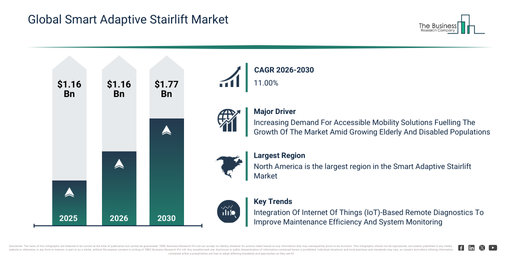
    The smart adaptive stairlift market is projected to experience substantial expansion over the coming years. This market is anticipated to reach a valuation of $3.84 billion by 2030, exhibiting a compound annual growth rate (CAGR) of 11.0%. Factors driving this growth during the forecast period include the integration with smart home systems, increased adoption in multi-story homes, installations in healthcare facilities, advancements in battery-powered technology, and improvements in ergonomic design. Key trends emerging in this period encompass sensor-based obstacle detection, customized speed and seat adjustments, AI-enabled control mechanisms, designs that are both compact and foldable, and comprehensive accessibility solutions for both indoor and outdoor environments.

    Get A Free Sample Report With In-Depth Market Insights:

    https://thebusinessresearchcompany.com/sample_request?id=75334249&type=smp&name=Smart%20Adaptive%20Stairlift%20Market%20Report%202026&utm_source=Blogs&utm_medium=Paid&utm_campaign=Oct_PR

    Smart Adaptive Stairlift Market Growth Momentum: What Factors Are Shaping Demand?

    The future expansion of the smart adaptive stairlift market is anticipated due to the rising need for accessible mobility solutions. These solutions encompass technologies and devices that facilitate safe and independent movement for individuals with restricted mobility. This demand is escalating, primarily driven by the rapidly expanding elderly demographic, who frequently encounter mobility difficulties and depend on assistive aids to preserve their autonomy and well-being. Smart adaptive stairlifts significantly improve accessible mobility, enabling individuals with limited movement to navigate between floors securely and autonomously through the integration of intelligent sensors and adaptive controls, which guarantee comfort, safety, and lessen reliance on caregivers. An illustration of this trend is a projection from January 2024 by the World Health Organization (WHO), a Switzerland-based international public health agency, indicating that approximately 3.5 billion people globally will require assistive products by 2050. Consequently, the heightened need for accessible mobility solutions is a key factor propelling the expansion of the smart adaptive stairlift market.

    Smart Adaptive Stairlift Market Segmentation And Category Overview

    The smart adaptive stairlift market covered in this report is segmented –

    1) By Product Type: Straight Stairlifts, Curved Stairlifts, Platform Stairlifts

    2) By Technology: Sensor-Based, Artificial Intelligence(AI)-Enabled, Internet Of Things (IoT)-Connected, Other Technologies

    3) By Power Source: Alternating Current (AC) Powered, Battery Powered, Hybrid

    4) By Distribution Channel: Direct Sales, Online Retail, Specialty Stores, Other Distribution Channels

    5) By End-User: Residential, Commercial, Healthcare Facilities, Other End-Users

    Subsegments:

    1) By Straight Stairlifts: Single Rail, Dual Rail, Foldable Seat, Outdoor Model

    2) By Curved Stairlifts: Custom Rail, Modular Rail, Swivel Seat, Multi-Landing Model

    3) By Platform Stairlifts: Wheelchair Platform, Foldable Platform

    Smart Adaptive Stairlift Market Trends Redefining Industry Growth

    Leading firms within the smart adaptive stairlift market are concentrating on integrating advanced technologies, notably internet of things (IoT)-powered remote diagnostics, to improve service reaction times, system oversight, and operational reliability. This IoT-driven remote diagnostics system functions by placing internet-connected sensors and control units inside stairlifts, allowing them to send operational information to distant service platforms. This capability supports functions like identifying faults, monitoring performance, and resolving issues remotely. As an illustration, during June 2023, Harmar Mobility, a US-based manufacturer and distributor of mobility solutions, introduced the UP Stairlift. This product is an IoT-enabled, modular curved stairlift system engineered for next-day installations. Its features include internet connectivity for diagnostics and tracking, a power swivel seat, a power-folding footrest, and a modular rail system that facilitates on-site assembly without requiring custom fabrication. The UP Stairlift thereby boosts maintenance effectiveness, offers greater installation adaptability, and improves user convenience, as technicians can monitor its performance remotely and address potential problems before they escalate.

    Smart Adaptive Stairlift Market Company Landscape And Competitive Strategy

    Major companies operating in the smart adaptive stairlift market are Savaria Corporation, Acorn Mobility Services Limited, Handicare Group AB, Stannah Lifts Holdings Limited, Bruno Independent Living Aids Inc., Otolift Trapliften B.V., Harmar Mobility LLC, Platinum Stairlifts Limited, AmeriGlide Incorporated, Bespoke Stairlifts Limited, Vimec Srl, Cw Products Ltd., ThyssenKrupp Home Solutions, Brooks Mobility Products Inc., Lifeway Mobility, Global Stairlifts Ltd., Mobility Plus Stairlifts, Express Lifts and Stairlifts, Independent Stairlift Company, Nova Lifts

    View The Full Smart Adaptive Stairlift Market Report:

    https://thebusinessresearchcompany.com/report/smart-adaptive-stairlift-global-market-report?utm_source=Blogs&utm_medium=Paid&utm_campaign=Oct_PR

    Smart Adaptive Stairlift Market Largest Region: Which Geography Holds The Highest Market Share?

    North America was the largest region in the smart adaptive stairlift market in 2025. Asia-Pacific is expected to be the fastest-growing region in the forecast period. The regions covered in the smart adaptive stairlift market report are Asia-Pacific, South East Asia, Western Europe, Eastern Europe, North America, South America, Middle East, Africa.

    Reach Out To Our Team:

    The Business Research Company: https://www.thebusinessresearchcompany.com/

    Americas: +1 310-496-7795

    Asia: +44 7882 955267 & +91 8897263534

    Europe: +44 7882 955267

    Email us at: marketing@tbrc.info

    Follow us on:

    LinkedIn: https://in.linkedin.com/company/the-business-research-company

    YouTube: https://www.youtube.com/channel/UC24_fI0rV8cR5DxlCpgmyFQ

    Global Market Model: https://www.thebusinessresearchcompany.com/global-market-model
  • Small Volume Parenteral Market Analysis Through 2030: Market Size, Growth Trends And Industry Outlook

    Small Volume Parenteral Market Analysis Through 2030: Market Size, Growth Trends And Industry Outlook

    Backed by market attractiveness analysis, total addressable market sizing, company benchmarking matrices, interactive Excel dashboards, wider supply chain intelligence, emerging startup coverage, and detailed product-level insights, The Business Research Company’s 2026 market reports are designed to offer research that is more actionable and strategically valuable than ever.

    Small Volume Parenteral Market Forecast: Value Set To Climb From $207.18 Billion To $275.99 Billion

    The small volume parenteral market has exhibited strong growth in recent years. It is anticipated to increase from $191.36 billion in 2025 to $207.18 billion in 2026, achieving a compound annual growth rate (CAGR) of 8.3%. Factors contributing to this historical growth include the escalating use of injectable therapies, the expansion of hospital-based drug administration, the availability of glass ampule packaging, the rise in acute care treatments, and a growing demand for parenteral nutrition.

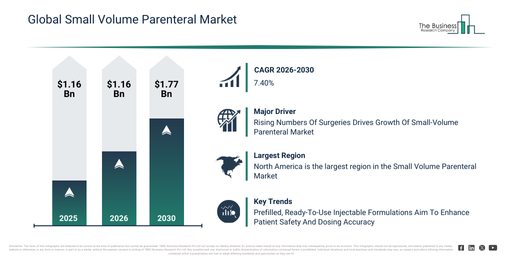
    The small volume parenteral market is projected to experience robust expansion over the coming years. Its valuation is anticipated to reach $275.99 billion in 2030, exhibiting a compound annual growth rate (CAGR) of 7.4%. This growth trajectory throughout the forecast period stems from factors such as the heightened demand for biologics and vaccines, the growing embrace of self-injectable treatments, an increase in aseptic manufacturing capabilities, a sharpened emphasis on sophisticated drug delivery methods, and greater financial commitments to sterile packaging innovations. Key trends anticipated during this period encompass the wider acceptance of prefilled syringe configurations, a surge in the need for sterile injectable medications, the expanding application of single-dose parenterals, the broadening reach of vaccine and biologic delivery, and an elevated concentration on ensuring drug safety and stability.

    Get A Free Sample Report With In-Depth Market Insights:

    https://thebusinessresearchcompany.com/sample_request?id=88831785&type=smp&name=Small%20Volume%20Parenteral%20Market%20Report%202026&utm_source=Blogs&utm_medium=Paid&utm_campaign=Oct_PR

    Small Volume Parenteral Market Expansion Drivers: What’s Shaping Future Growth?

    The small-volume parenteral market is anticipated to expand due to the growing volume of surgical procedures in the future. Surgery, a medical field, utilizes operative methods to explore or manage conditions like illness or injury, enhance bodily function or aesthetics, or mend damaged areas. The frequency of surgeries is on an upward trend, driven by innovations in medical technology and a demographic shift towards an older population, consequently boosting the need for surgical treatments. During surgical procedures, small-volume parenteral solutions are employed for the precise delivery of medicines, electrolytes, and nutrients straight into the bloodstream. For example, data from June 2024, provided by the American Society of Plastic Surgeons, a US non-profit, indicated that minimally invasive procedures grew by 7% in 2023, surpassing the general surgical procedure growth rate by 2%. Specific hand surgeries, including carpal tunnel, arthritis, and trigger finger, reached a total of 207,887 procedures, marking a 2% increase compared to 2022. Consequently, the escalating volume of surgeries is fueling the expansion of the small-volume parenteral market.

    Small Volume Parenteral Market Segment Outlook: Which Categories Are Growing Fastest?

    The small volume parenteral market covered in this report is segmented –

    1) By Type: Ampules, Vials, Prefilled Syringes

    2) By Dose Type: Single Dose, Multiple Dose

    3) By Indication Type: Pain Management, Cancer Care, Malnourishment, Gastrointestinal Disorders, Diabetes, Other Indications

    4) By Application: Local Anesthetics, Vaccines, Other Applications

    5) By End User: Hospitals, Clinics, Ambulatory Surgical Center, Other End Users

    Subsegments:

    1) By Ampules: Glass Ampules, Plastic Ampules

    2) By Vials: Glass Vials, Plastic Vials, Single-dose Vials, Multi-dose Vials

    3) By Prefilled Syringes: Glass Prefilled Syringes, Plastic Prefilled Syringes

    Small Volume Parenteral Market Strategic Trends: What Defines The Next Growth Phase?

    Leading firms within the small-volume parenteral market are concentrating on creating advanced solutions, including prefilled, ready-to-use injectable formulations, with the goal of improving dosing precision, minimizing contamination hazards, and elevating patient safety. These prefilled, ready-to-use injectable formulations consist of medications already portioned in a sterile syringe or vial, enabling healthcare professionals to administer the drug immediately without further preparation. As an illustration, in June 2025, Gland Pharma Limited, an Indian pharmaceutical company specializing in generic injectables, secured approval from the U.S. Food and Drug Administration (USFDA) for its Abbreviated New Drug Application (ANDA) concerning Angiotensin II Acetate Injection 2.5 mg/mL. This injection is prescribed for the rapid elevation of blood pressure in adults suffering from septic or distributive shock, especially when standard treatments prove inadequate. Its mechanism involves binding to vascular smooth muscle receptors, thereby causing vasoconstriction and stimulating aldosterone release, demonstrating a swift effect that usually reaches target blood pressure within five minutes. Given intravenously, its dosage is precisely adjusted to sustain the required blood pressure, offering crucial assistance to patients who continue to experience hypotension even after fluid resuscitation and vasopressor therapy.

    Small Volume Parenteral Market Key Players Shaping Industry Direction

    Major companies operating in the small volume parenteral market are Pfizer Inc., AbbVie Inc., Bayer AG, Sanofi S.A., Bristol-Myers Squibb Company, Novartis AG, GlaxoSmithKline plc, Eli Lilly and Company, Baxter International Inc., Teva Pharmaceutical Industries Ltd., Fresenius Kabi AG, Sun Pharmaceutical Industries Ltd., Boehringer Ingelheim GmbH, Viatris Inc, Intas Pharmaceuticals Ltd., Aurobindo Pharma Limited, Dr. Reddy’s Laboratories Ltd., Cipla Limited, Hikma Pharmaceuticals PLC, Lupin Limited, Biocon Limited, Torrent Pharmaceuticals Ltd., Zydus Cadila, Alembic Pharmaceuticals Ltd., Wockhardt Ltd.

    View The Full Small Volume Parenteral Market Report:

    https://thebusinessresearchcompany.com/report/small-volume-parenteral-global-market-report?utm_source=Blogs&utm_medium=Paid&utm_campaign=Oct_PR

    Small Volume Parenteral Market Regional Analysis: Which Region Leads By Revenue?

    North America was the largest region in the small volume parenteral market in 2025. Asia-Pacific is expected to be the fastest-growing region in the forecast period. The regions covered in the small volume parenteral market report are Asia-Pacific, South East Asia, Western Europe, Eastern Europe, North America, South America, Middle East, Africa.

    Reach Out To Our Team:

    The Business Research Company: https://www.thebusinessresearchcompany.com/

    Americas: +1 310-496-7795

    Asia: +44 7882 955267 & +91 8897263534

    Europe: +44 7882 955267

    Email us at: marketing@tbrc.info

    Follow us on:

    LinkedIn: https://in.linkedin.com/company/the-business-research-company

    YouTube: https://www.youtube.com/channel/UC24_fI0rV8cR5DxlCpgmyFQ

    Global Market Model: https://www.thebusinessresearchcompany.com/global-market-model