Blog

  • Radiofrequency Eye Device Market Size In 2026: Regional Growth, Key Segments And Future Outlook

    Radiofrequency Eye Device Market Size In 2026: Regional Growth, Key Segments And Future Outlook

    Built to provide research that’s more actionable and strategically valuable, The Business Research Company’s 2026 market reports include market attractiveness analysis, total addressable market sizing, company benchmarking matrices, interactive Excel dashboards, broader supply chain intelligence, emerging startup tracking, and in-depth product insights.

    Radiofrequency Eye Device Market Size Forecast: How Big Could The Market Get By 2030?

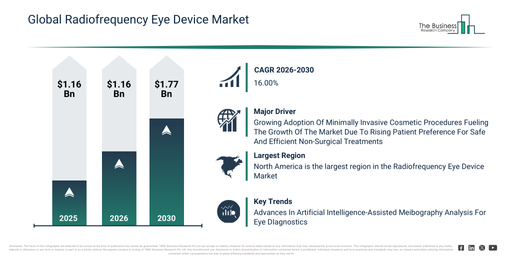
    The radiofrequency eye device market has witnessed rapid expansion over recent years. Its size is forecast to expand from $1.01 billion in 2025 to $1.17 billion in 2026, achieving a compound annual growth rate (CAGR) of 16.3%. The market’s historical growth can be attributed to several factors including an increasing demand for nonsurgical eye rejuvenation, advancements in radiofrequency device technology, heightened cosmetic awareness, the availability of minimally invasive treatment options, and rising disposable incomes.

    The radiofrequency eye device market is projected to experience substantial growth over the coming years. It is anticipated to reach $2.12 billion in 2030, demonstrating a compound annual growth rate (CAGR) of 16.0%. The expansion during this forecast period can be attributed to several factors, including the emergence of multipurpose RF devices, their integration with skincare and monitoring applications, increased prevalence in ophthalmic and cosmetic clinics, AI-assisted procedure guidance, and advancements in device portability and precision. Key trends expected in the forecast period include monopolar radiofrequency devices, bipolar radiofrequency devices, multipolar radiofrequency devices, fractional radiofrequency devices, and microneedling radiofrequency devices.

    Get A Free Sample Report With In-Depth Market Insights:

    https://thebusinessresearchcompany.com/sample_request?id=26001088&type=smp&name=Radiofrequency%20Eye%20Device%20Market%20Report%202026&utm_source=Blogs&utm_medium=Paid&utm_campaign=Oct_PR

    Radiofrequency Eye Device Market Growth Factors: What’s Supporting Expansion?

    The increasing embrace of minimally invasive cosmetic procedures is anticipated to fuel the expansion of the radiofrequency eye device market. These procedures involve minimal to no incisions or recovery time, delivering aesthetic enhancements through quicker healing and diminished risks. Patients are increasingly choosing minimally invasive options due to their preference for secure, effective treatments that require less downtime. Radiofrequency eye devices facilitate these procedures by precisely applying controlled RF energy to the sensitive periorbital skin, which promotes collagen synthesis, firms tissues, diminishes fine lines and wrinkles, and refines skin texture with little recovery period, thus serving as an effective substitute for surgery. For example, in June 2023, the American Society of Plastic Surgeons, a US-based professional medical association, indicated a 7% surge in minimally invasive cosmetic procedures, tallying 14.7 million, up from 13.7 million procedures in 2023, while cosmetic surgical procedures as a whole saw a 5% rise during the equivalent timeframe. Consequently, the expanding use of minimally invasive cosmetic procedures is projected to fuel the expansion of the radiofrequency eye device market.

    Radiofrequency Eye Device Market Segment Analysis Spotlighting Growth Areas

    The radiofrequency eye device market covered in this report is segmented –

    1) By Product Type: Monopolar Radiofrequency Devices, Bipolar Radiofrequency Devices, Multipolar Radiofrequency Devices, Other Product Types

    2) By Application: Wrinkle Reduction, Skin Tightening, Other Applications

    3) By End-User: Hospitals, Ophthalmic Clinics, Ambulatory Surgical Centers, Other End-Users

    Subsegments:

    1) By Monopolar Radiofrequency Devices: Handheld Monopolar RF Eye Devices, Console-Based / Stationary Monopolar RF Systems, Temperature-Controlled Monopolar RF Eye Devices

    2) By Bipolar Radiofrequency Devices: Handheld Bipolar RF Eye Devices, Tabletop / Console-Based Bipolar RF Systems, Eye-Dedicated Bipolar RF Devices for Periocular Skin Tightening, Bipolar RF Devices for Eyelid / Meibomian Gland Therapy

    3) By Multipolar Radiofrequency Devices: Handheld Multipolar RF Eye Devices, Stationary Multipolar RF Platforms, Multi-Functional Multipolar RF Eye Rejuvenation Systems

    4) By Other Product Types: Fractional Radiofrequency Eye Devices, Non-Ablative Radiofrequency Eye Devices, Hybrid Radiofrequency Eye Devices, Radiofrequency Devices for Dry Eye Management

    Radiofrequency Eye Device Market Industry Trends: What’s Reshaping Demand?

    Leading companies within the radiofrequency eye device market are increasingly concentrating on artificial intelligence breakthroughs for eye diagnostics, such as AI-driven meibography analysis, aiming to elevate accuracy and enhance patient outcomes in addressing dry eye and various other ocular surface conditions. This AI-assisted meibography analysis leverages deep learning algorithms to automatically evaluate meibomian gland architecture and function from infrared eyelid scans, facilitating the early identification of meibomian gland dysfunction (MGD) and supporting more accurate treatment decisions. For instance, in November 2023, Lumenis Ltd., an Israel-based ophthalmic technology firm, launched OptiPLUS, a dual-frequency radiofrequency device designed for dry-eye management, which incorporates automatic electrode detection, preset treatment options, and closed-loop temperature regulation, all designed to target the meibomian glands while simultaneously boosting periorbital collagen. This integration allows clinical practices to link AI diagnostic findings with customized radiofrequency treatment protocols, thereby improving results for individuals suffering from ocular surface disorders.

    Radiofrequency Eye Device Market Competitive Analysis Of Leading Industry Participants

    Major companies operating in the radiofrequency eye device market are InMode Ltd, Lumenis Ltd, Venus Concept, YA-MAN Ltd, MiBo Medical Group, Alma Lasers, EndyMed Medical, Pollogen Ltd, BTL Industries, Candela Medical, Silk’n International, Guangzhou Beautylife Tech, Norlanya, AMIRO, Zemits LLC, Lutronic Corporation, Jeisys Medical, RejuvaMedica Ltd, HABI Medical, ThermoLift Technologies Ltd

    View The Full Radiofrequency Eye Device Market Report:

    https://thebusinessresearchcompany.com/report/radiofrequency-eye-device-global-market-report?utm_source=Blogs&utm_medium=Paid&utm_campaign=Oct_PR

    Radiofrequency Eye Device Market Geographic Distribution And Regional Opportunities

    North America was the largest region in the radiofrequency eye device market in 2025. Asia-Pacific is expected to be the fastest-growing region in the forecast period. The regions covered in the radiofrequency eye device market report are Asia-Pacific, South East Asia, Western Europe, Eastern Europe, North America, South America, Middle East, Africa.

    Reach Out To Our Team:

    The Business Research Company: https://www.thebusinessresearchcompany.com/

    Americas: +1 310-496-7795

    Asia: +44 7882 955267 & +91 8897263534

    Europe: +44 7882 955267

    Email us at: marketing@tbrc.info

    Follow us on:

    LinkedIn: https://in.linkedin.com/company/the-business-research-company

    YouTube: https://www.youtube.com/channel/UC24_fI0rV8cR5DxlCpgmyFQ

    Global Market Model: https://www.thebusinessresearchcompany.com/global-market-model
  • Radiofrequency Ablation Devices Market Growth Forecast Through 2030: Market Size And Trends In 2026

    Radiofrequency Ablation Devices Market Growth Forecast Through 2030: Market Size And Trends In 2026

    Backed by market attractiveness analysis, total addressable market sizing, company benchmarking matrices, interactive Excel dashboards, wider supply chain intelligence, emerging startup coverage, and detailed product-level insights, The Business Research Company’s 2026 market reports are designed to offer research that is more actionable and strategically valuable than ever.

    Radiofrequency Ablation Devices Market Revenue Outlook: What CAGR Lies Ahead Through 2030?

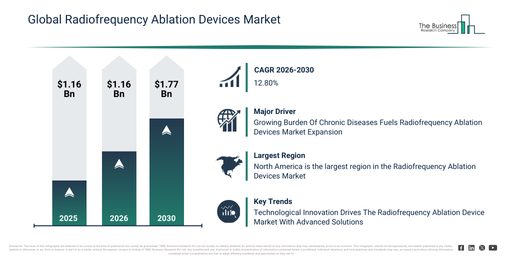
    The radiofrequency ablation devices market size has experienced swift growth in recent years. It is projected to increase from $5.25 billion in 2025 to $5.91 billion in 2026, progressing at a compound annual growth rate (CAGR) of 12.5%. The expansion observed in the historic period can be attributed to the rising prevalence of cancer and chronic pain conditions, the proliferation of interventional treatment options, increasing acceptance of thermal ablation therapies, the availability of RF generator platforms, and the growing utilization of outpatient procedures.

    The radiofrequency ablation devices market is projected to experience substantial expansion in the coming years. This market is anticipated to reach $9.55 billion in 2030, exhibiting a compound annual growth rate (CAGR) of 12.8%. This projected growth is driven by factors such as a heightened demand for image-guided oncology treatments, the increasing incorporation of RF ablation within cardiology, the broadening scope of ambulatory surgical procedures, an intensified focus on specific pain management techniques, and augmented investment in sophisticated ablation technologies. Key developments expected during this forecast period encompass a greater acceptance of minimally invasive ablation methods, an uptick in the utilization of disposable ablation catheters, the progressive integration of imaging-guided ablation systems, a wider application of pain management solutions, and a stronger emphasis on precise tissue targeting.

    Get A Free Sample Report With In-Depth Market Insights:

    https://thebusinessresearchcompany.com/sample_request?id=34968468&type=smp&name=Radiofrequency%20Ablation%20Devices%20Market%20Report%202026&utm_source=Blogs&utm_medium=Paid&utm_campaign=Oct_PR

    Radiofrequency Ablation Devices Market Demand Drivers: What’s Powering Industry Growth?

    The radiofrequency ablation devices market is experiencing growth driven by the escalating occurrence of chronic diseases. These are long-term health issues that persist for at least a year, requiring continuous medical intervention, restricting daily activities, or both. Radiofrequency ablation devices are utilized in managing chronic conditions to alleviate chronic and arthritic joint pain, and they are also commonly employed to shrink tumors, nodules, or other abnormal growths within the body. For instance, in February 2024, the World Health Organization, a Switzerland-based intergovernmental organization, projected that by 2050, there would be over 35 million new cancer cases. This represents a 77% increase when compared to the approximately 20 million cases estimated in 2022. Thus, the rising incidence of chronic diseases is fueling the expansion of the radiofrequency ablation devices market.

    Radiofrequency Ablation Devices Market Segment Performance And Emerging Opportunities

    The radiofrequency ablation devices market covered in this report is segmented –

    1) By Product Type: Disposable Equipment, Reusable Equipment

    2) By Application: Oncology, Cardiology And Cardiac Rhythm Management, Gynecology, Pain Management

    3) By End-User: Hospitals, Ambulatory Surgical Centers

    Subsegments:

    1) By Disposable Equipment: Ablation Catheters, Electrode Pads, Temperature Probes

    2) By Reusable Equipment: RF Generators, Handpieces

    Radiofrequency Ablation Devices Market Innovation Trends: What Developments Are Reshaping The Industry?

    Leading companies in the radiofrequency ablation devices market are increasing their focus on introducing advanced medical devices, such as the ELIOSTAR Balloon Ablation Catheter, to gain a competitive advantage. The ELIOSTAR Balloon Ablation Catheter is an advanced medical device specifically designed for cardiac ablation procedures, utilizing innovative technology to treat arrhythmias and enhance precision in electrophysiological interventions. For instance, in April 2023, Compal Electronics, a Taiwan-based electronics company, launched AblatePal, a new radiofrequency ablation (RFA) system intended for percutaneous and intraoperative coagulation and ablation of soft tissue. This RFA system functions by using the heat energy generated by electrical resistance when current flows through the tissue to cauterize the tumor and cause tumor necrosis. Its advanced cooling technology prevents damage to normal tissue and yields positive results that can reduce the size of the wound and shorten the duration of patients’ hospital stays.

    Radiofrequency Ablation Devices Market Leading Companies And Competitive Benchmarking

    Major companies operating in the radiofrequency ablation devices market are Medtronic plc, Abbott Laboratories, Boston Scientific Corporation, AngioDynamics Inc, AtriCure Inc, Stryker Corporation, Smith and Nephew plc, CONMED Corporation, Hologic Inc, Olympus Corporation, BIOTRONIK SE and Co KG, Baylis Medical Company Inc, Avanos Medical Inc, Cosman Medical Inc, Lepu Medical Technology Co Ltd, RF Medical Co Ltd, Gynesonics Inc, Cutera Inc, MicroPort Scientific Corporation, Merit Medical Systems Inc, ENDO-FLEX GmbH, Bramsys Industria e Comercio Ltd

    View The Full Radiofrequency Ablation Devices Market Report:

    https://thebusinessresearchcompany.com/report/radiofrequency-ablation-devices-global-market-report?utm_source=Blogs&utm_medium=Paid&utm_campaign=Oct_PR

    Radiofrequency Ablation Devices Market Largest Region By Revenue And Market Share

    North America was the largest region in the radiofrequency ablation devices market in 2025. Asia-Pacific is expected to be the fastest-growing region in the forecast period. The regions covered in the radiofrequency ablation devices market report are Asia-Pacific, South East Asia, Western Europe, Eastern Europe, North America, South America, Middle East, Africa.

    Reach Out To Our Team:

    The Business Research Company: https://www.thebusinessresearchcompany.com/

    Americas: +1 310-496-7795

    Asia: +44 7882 955267 & +91 8897263534

    Europe: +44 7882 955267

    Email us at: marketing@tbrc.info

    Follow us on:

    LinkedIn: https://in.linkedin.com/company/the-business-research-company

    YouTube: https://www.youtube.com/channel/UC24_fI0rV8cR5DxlCpgmyFQ

    Global Market Model: https://www.thebusinessresearchcompany.com/global-market-model
  • Radiation Protection Market Analysis: $2.07 Billion Market Size In 2026 And Future Growth Prospects

    Radiation Protection Market Analysis: $2.07 Billion Market Size In 2026 And Future Growth Prospects

    Featuring market attractiveness scoring, total addressable market sizing, company benchmarking matrices, interactive Excel dashboards, deeper supply chain intelligence, emerging startup tracking, and granular product-level insights, The Business Research Company’s 2026 market reports are built to deliver research that is both more actionable and more strategically valuable.

    Radiation Protection Market Growth Analysis: How Will Revenue Trend Over The Forecast Period?

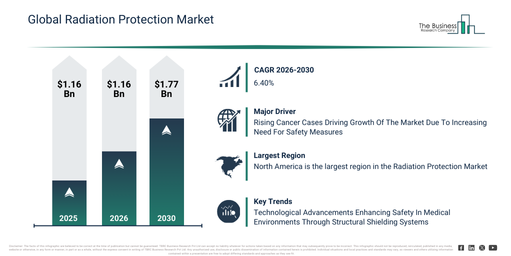
    The radiation protection market has seen significant expansion in recent years. Its value is anticipated to rise from $1.94 billion in 2025 to $2.07 billion in 2026, demonstrating a compound annual growth rate (CAGR) of 6.7%. The historical growth of this market can be attributed to factors like the increased application of x-ray and imaging procedures, the expansion of nuclear medicine uses, heightened awareness regarding radiation hazards, the enforcement of basic radiation safety regulations, and the overall growth in hospital infrastructure.

    The radiation protection market is poised for significant expansion over the next few years. Its valuation is anticipated to reach $2.66 billion by 2030, exhibiting a compound annual growth rate (CAGR) of 6.4%. This projected growth stems from various factors, including advancements in radiation detection technologies, increased investments in cancer diagnostics and therapy, more stringent radiation safety regulations and compliance mandates, a rising need for remote monitoring solutions, and the increasing establishment of ambulatory surgical centers. Key trends shaping this period encompass a growing appetite for sophisticated radiation shielding solutions, the broader embrace of personal radiation monitoring devices, an uptick in diagnostic imaging and radiation therapy procedures, a sharpened emphasis on occupational radiation safety standards, and the proliferation of mobile and modular radiation protection systems.

    Get A Free Sample Report With In-Depth Market Insights:

    https://thebusinessresearchcompany.com/sample_request?id=53896242&type=smp&name=Radiation%20Protection%20Market%20Report%202026&utm_source=Blogs&utm_medium=Paid&utm_campaign=Oct_PR

    Radiation Protection Market Growth Drivers: What’s Behind The Acceleration?

    The burgeoning incidence of cancer is projected to stimulate the expansion of the radiation protection market moving forward. Cancer encompasses a range of diseases defined by the uncontrolled multiplication and spread of abnormal cells, capable of invading nearby tissues and disseminating to other bodily regions. The increase in cancer prevalence is primarily due to longer life spans, as the probability of developing cancer escalates with age. Radiation protection aids in reducing exposure to detrimental radiation, thereby diminishing the risk of cancers induced by radiation. For instance, in August 2024, a report by Macmillan Cancer Support, a UK-based charitable organization, indicated that over 3 million individuals are currently living with cancer in the UK, with this number forecasted to rise to 3.5 million by 2025, 4 million by 2030, and 5.3 million by 2040. Hence, the increasing prevalence of cancer is a key driver for the growth of the radiation protection market.

    Radiation Protection Market Segment Landscape And Growth Outlook

    The radiation protection market covered in this report is segmented –

    1) By Product Type: Protective Barriers And Booths, Shields, Radiation Detection And Monitoring Equipment, Lead Liner Doors, Other Product Types

    2) By Technology: Ionizing Radiation Protection, Non-Ionizing Radiation Protection, Radiation Dosimetry, Remote Monitoring Technology, Radiation Measurement Software

    3) By Solution: Radiation Therapy Shielding, Diagnostic Shielding

    4) By End-User: Hospitals, Ambulatory Surgical Centers, Other End Users

    Subsegments:

    1) By Protective Barriers And Booths: Mobile Radiation Barriers, Fixed Radiation Barriers, Leaded Glass Panels, X-Ray Protection Booths

    2) By Shields: Gonad Shields, Thyroid Shields, Breast Shields, Eye Shields, Full-body Shields

    3) By Radiation Detection And Monitoring Equipment: Dosimeters, Geiger Counters, Scintillation Detectors, Ionization Chambers, Personal Radiation Detectors

    4) By Lead Liner Doors: Sliding Lead Lined Doors, Swinging Lead Lined Doors, Manual Lead Lined Doors, Automatic Lead Lined Doors

    5) By Other Product Types: Lead Aprons, Lead Gloves, Lead Glasses, Lead Curtains, Radiation Protection Drapes

    Radiation Protection Market Trends: What’s Defining The Industry’s Next Phase?

    Leading entities within the radiation protection market are directing their efforts towards cutting-edge solutions, particularly structural shielding systems, to elevate radiation safety standards in medical settings. These systems comprise fixed, engineered barriers, including lead-lined doors and walls, specifically engineered to intercept damaging ionizing radiation, thereby safeguarding both healthcare professionals and patients during imaging and radiological interventions. A notable example occurred in February 2023, when SDS (Specialist Door Solutions Ltd.), a healthcare firm based in the UK, unveiled Shieldoor, an X-ray door with lead lining tailored for healthcare environments. Shieldoor is characterized by its superior radiation attenuation capabilities, adherence to stringent NHS safety protocols, and its ability to bolster safety within radiology and diagnostic imaging suites through its robust, sanitary, and adaptable design elements.

    Radiation Protection Market Industry Leaders And Competitive Landscape

    Major companies operating in the radiation protection market are Infab Corporation, Barrier Technologies LLC, Techno‑Aide Inc., AliMed Inc., Trivitron Healthcare Pvt. Ltd., AADCO Medical Inc., Protech Medical Inc., Ultraray Radiation Protection Inc., Lancs Industries Inc., IndoSurgicals Private Limited, AmRay Medical, Uniray Medical LLP, Radiation Shield Technologies Inc., Ray‑Bar Engineering Corp., StemRad Ltd., BLOXR Solutions LLC, Mirion Technologies, MarShield, Burlington Medical, Nelco Inc, Radiation Protection Products Inc, A and L Shielding, Gaven Industries Inc, Veritas Medical Solutions LLC

    View The Full Radiation Protection Market Report:

    https://thebusinessresearchcompany.com/report/radiation-protection-global-market-report?utm_source=Blogs&utm_medium=Paid&utm_campaign=Oct_PR

    Radiation Protection Market Regional Analysis And Leading Geography

    North America was the largest region in the radiation protection market in 2025. Asia-Pacific is expected to be the fastest-growing region in the forecast period. The regions covered in the radiation protection market report are Asia-Pacific, South East Asia, Western Europe, Eastern Europe, North America, South America, Middle East, Africa.

    Reach Out To Our Team:

    The Business Research Company: https://www.thebusinessresearchcompany.com/

    Americas: +1 310-496-7795

    Asia: +44 7882 955267 & +91 8897263534

    Europe: +44 7882 955267

    Email us at: marketing@tbrc.info

    Follow us on:

    LinkedIn: https://in.linkedin.com/company/the-business-research-company

    YouTube: https://www.youtube.com/channel/UC24_fI0rV8cR5DxlCpgmyFQ

    Global Market Model: https://www.thebusinessresearchcompany.com/global-market-model
  • Quantum-Dot Neuroscience Probe Market 2026 Market Size And Growth Forecast: Key Trends To Watch

    Quantum-Dot Neuroscience Probe Market 2026 Market Size And Growth Forecast: Key Trends To Watch

    Built to provide research that’s more actionable and strategically valuable, The Business Research Company’s 2026 market reports include market attractiveness analysis, total addressable market sizing, company benchmarking matrices, interactive Excel dashboards, broader supply chain intelligence, emerging startup tracking, and in-depth product insights.

    Quantum-Dot Neuroscience Probe Market Forecast: What Value Will The Market Reach By 2030?

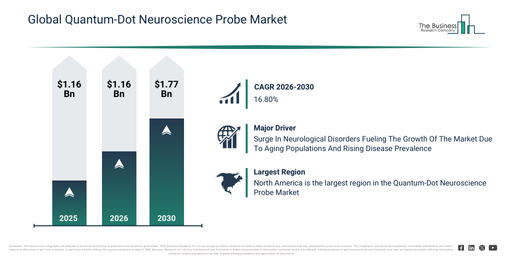
    The quantum-dot neuroscience probe market size has experienced rapid expansion in recent years. It is projected to expand from $0.94 billion in 2025 to $1.1 billion in 2026, achieving a compound annual growth rate (CAGR) of 17.0%. Its historical growth can be ascribed to factors such as advances in nanotechnology research, growth in neuroscience studies, the demand for precise neural imaging, increased academic funding, and the expansion of brain research programs.

    The quantum-dot neuroscience probe market is projected to experience substantial expansion in the coming years. This sector is anticipated to reach a valuation of $2.05 billion by 2030, demonstrating a compound annual growth rate (CAGR) of 16.8%. The projected increase during this period stems from factors such as the incorporation of AI-based neural analysis, an uptick in neurodegenerative disease research, the broadening of brain mapping projects, a need for instantaneous neural monitoring, and the market introduction of nano-probes. Key developments foreseen in this timeframe encompass high-resolution neural imaging, the use of fluorescent quantum dot probes, monitoring neural activity at the nanoscale, analyzing the brain at a molecular level, and the development of sophisticated neuro research instruments.

    Get A Free Sample Report With In-Depth Market Insights:

    https://thebusinessresearchcompany.com/sample_request?id=75879537&type=smp&name=Quantum-Dot%20Neuroscience%20Probe%20Market%20Report%202026&utm_source=Blogs&utm_medium=Paid&utm_campaign=Oct_PR

    Quantum-Dot Neuroscience Probe Market Growth Factors Behind Sustained Expansion

    An increasing number of neurological disorders is anticipated to fuel the expansion of the quantum-dot neuroscience probe market in the future. These conditions are defined as medical ailments affecting the brain, spinal cord, and nerves, thereby influencing movement, cognitive abilities, and overall nervous system performance. The escalation in neurological disorders stems from an aging global population, risk factors associated with lifestyle choices, and a greater occurrence of chronic diseases, all contributing to a higher incidence and impact of nervous system conditions. Quantum-dot neuroscience probes aid in addressing neurological disorders by providing highly accurate imaging and continuous monitoring of neural activity, which enables early detection, targeted therapeutic approaches, and a deeper insight into brain function and how diseases progress. For instance, in April 2025, the National Library of Medicine, a US-based federal government institution, documented that around 7.2 million Americans aged 65 and above currently experience Alzheimer’s dementia, with this figure expected to reach 13.8 million by 2060. Therefore, the growing prevalence of neurological disorders is a significant factor propelling the quantum-dot neuroscience probe market’s growth.

    Quantum-Dot Neuroscience Probe Market Breakdown By Product Type And Application

    The quantum-dot neuroscience probe market covered in this report is segmented –

    1) By Product Type: Optical Probes, Electrical Probes, Multifunctional Probes

    2) By Material Type: Cadmium-Based Quantum Dots, Indium-Based Quantum Dots, Carbon Quantum Dots, Other Material Types

    3) By Application: Brain Imaging, Neural Activity Monitoring, Other Applications

    4) By End-User: Academic And Research Institutes, Pharmaceutical And Biotechnology Companies, Other End-Users

    Subsegments:

    1) By Optical Probes: Fluorescent Quantum Dot Probes, Near-Infrared Quantum Dot Probes, Photoactivated Quantum Dot Probes, Voltage-Sensitive Quantum Dot Probes

    2) By Electrical Probes: Quantum Dot Field Effect Transistor Probes, Quantum Dot Nanowire Probes, Quantum Dot Microelectrode Probes, Quantum Dot Conductive Polymer Probes

    3) By Multifunctional Probes: Quantum Dot Magnetic Probes, Quantum Dot Photoelectric Probes, Quantum Dot Biosensing Probes, Quantum Dot Theranostic Probes

    Quantum-Dot Neuroscience Probe Market Key Participants And Competitive Landscape

    Major companies operating in the quantum-dot neuroscience probe market are Thermo Fisher Scientific Inc., Merck Group, ams-OSRAM AG, Nanosys Inc., American Elements Inc., QUANDELA Inc., Nanoco Technologies Ltd., UbiQD Inc., NN-Labs GmbH, Plasmachem GmbH, Avantama AG, Mesolight Inc., Quantum Solutions LLC, Cytodiagnostics Inc., Ocean NanoTech LLC, CD Bioparticles Inc., QD Laser Inc., QDI Systems Inc., Radetec Diagnostics Inc., QustomDot Inc.

    View The Full Quantum-Dot Neuroscience Probe Market Report:

    https://thebusinessresearchcompany.com/report/quantum-dot-neuroscience-probe-global-market-report?utm_source=Blogs&utm_medium=Paid&utm_campaign=Oct_PR

    Quantum-Dot Neuroscience Probe Market Geographic Analysis: Where Is Demand Accelerating Fastest?

    North America was the largest region in the quantum-dot neuroscience probe market in 2025. Asia-Pacific is expected to be the fastest-growing region in the forecast period. The regions covered in the quantum-dot neuroscience probe market report are Asia-Pacific, South East Asia, Western Europe, Eastern Europe, North America, South America, Middle East, Africa.

    Reach Out To Our Team:

    The Business Research Company: https://www.thebusinessresearchcompany.com/

    Americas: +1 310-496-7795

    Asia: +44 7882 955267 & +91 8897263534

    Europe: +44 7882 955267

    Email us at: marketing@tbrc.info

    Follow us on:

    LinkedIn: https://in.linkedin.com/company/the-business-research-company

    YouTube: https://www.youtube.com/channel/UC24_fI0rV8cR5DxlCpgmyFQ

    Global Market Model: https://www.thebusinessresearchcompany.com/global-market-model
  • Quantum Imaging Medical Device Market Size Forecast: How The Industry Is Expected To Grow From 2026 To 2030

    Quantum Imaging Medical Device Market Size Forecast: How The Industry Is Expected To Grow From 2026 To 2030

    Backed by market attractiveness analysis, total addressable market sizing, company benchmarking matrices, interactive Excel dashboards, wider supply chain intelligence, emerging startup coverage, and detailed product-level insights, The Business Research Company’s 2026 market reports are designed to offer research that is more actionable and strategically valuable than ever.

    Quantum Imaging Medical Device Market Size Outlook: How Quickly Will Revenue Expand Through 2030?

    The quantum imaging medical device market has witnessed significant growth in recent years. It is projected to expand from $1.41 billion in 2025 to $1.72 billion in 2026, achieving a compound annual growth rate (CAGR) of 21.4%. This past growth can be attributed to various factors, including the limitations inherent in conventional imaging, an increase in cancer diagnosis rates, the rising demand for advanced diagnostic tools, greater investments in medical imaging, and ongoing academic research in quantum technologies.

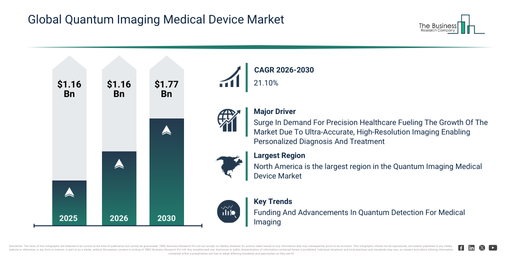
    The quantum imaging medical device market is projected to experience substantial expansion over the upcoming years. This market is anticipated to reach a valuation of $3.7 billion by 2030, exhibiting a compound annual growth rate (CAGR) of 21.1%. Key factors contributing to this anticipated growth include the widespread availability of quantum diagnostics, seamless integration with AI imaging software, the broader implementation of precision medicine, an increasing need for early disease identification, and the proliferation of research hospitals. Noteworthy developments expected during this timeframe encompass ultra-high resolution medical imaging, quantum sensor-driven diagnostics, precision oncology imaging, advanced low-dose imaging techniques, and innovative next-generation diagnostic visualization.

    Get A Free Sample Report With In-Depth Market Insights:

    https://thebusinessresearchcompany.com/sample_request?id=99182536&type=smp&name=Quantum%20Imaging%20Medical%20Device%20Market%20Report%202026&utm_source=Blogs&utm_medium=Paid&utm_campaign=Oct_PR

    Quantum Imaging Medical Device Market Demand Drivers Opening New Revenue Streams

    The increasing focus on personalized healthcare is anticipated to drive expansion within the quantum imaging medical device market in the future. Personalized healthcare refers to customizing medical treatments and preventive measures based on an individual’s distinct genetic makeup, environmental influences, and lifestyle choices, leading to more effective and individualized care. The escalating demand for personalized healthcare stems from its capacity for more efficacious treatments, where therapies are specifically adjusted to a patient’s genetic, environmental, and lifestyle elements, thereby enhancing patient outcomes and reducing adverse effects. The quantum imaging medical device further advances precision healthcare by offering exceptionally accurate, high-resolution imaging, which facilitates earlier and more precise diagnoses, enabling treatments to be specifically adapted to each patient’s particular ailment. As an illustration, in February 2024, the Personalized Medicine Coalition, a US non-profit organization, reported that the FDA gave approval to 16 new personalized treatments for patients with rare diseases in 2023, marking a substantial rise from the six approved in 2022. Consequently, the heightened focus on personalized healthcare is a key factor propelling the expansion of the quantum imaging medical device market.

    Quantum Imaging Medical Device Market Segment Analysis And Revenue Potential

    The quantum imaging medical device market covered in this report is segmented –

    1) By Product Type: Quantum Dot Imaging Devices, Quantum Sensor Imaging Devices, Quantum Camera Systems

    2) By Application: Oncology, Neurology, Cardiology, Orthopedics

    3) By End-User: Hospitals, Diagnostic Centers, Research Institutes

    Subsegments:

    1) By Quantum Dot Imaging Devices: Fluorescent Quantum Dot Imaging Devices, Near Infrared Quantum Dot Imaging Devices, Visible Spectrum Quantum Dot Imaging Devices, Multiplexed Quantum Dot Imaging Devices

    2) By Quantum Sensor Imaging Devices: Magnetic Field Quantum Sensor Imaging Devices, Gravimetric Quantum Sensor Imaging Devices, Photonic Quantum Sensor Imaging Devices, Atomic Quantum Sensor Imaging Devices

    3) By Quantum Camera Systems: Single Photon Quantum Camera Systems, Entangled Photon Quantum Camera Systems, Time Resolved Quantum Camera Systems, Quantum Enhanced Spectral Camera Systems

    Quantum Imaging Medical Device Market Trends Powering Strategic Industry Growth

    Leading companies within the quantum imaging medical device market are concentrating on establishing financial pools to accelerate advancements in quantum detection for medical imaging. These funds represent financial commitments provided to foster innovation, enabling quantum imaging medical device companies to strengthen research, refine technology development, and expedite the introduction of new imaging solutions. For instance, in May 2025, Chipiron, a medical imaging company based in France, successfully secured $17M in funding to finalize the development of its miniaturized MRI scanner, with the aim of making this essential imaging technology broadly available. The capital will support the creation of initial prototypes for hospital application, with clinical trials slated for 2026. This MRI scanner incorporates a patented low-Tc SQUID volume gradiometer, which marks the first SQUID antenna capable of sensing MRI signals in an open environment, offering a signal-to-noise ratio up to ten times greater than previous methods. Quantum sensors, such as SQUIDs, are vital in quantum imaging technology, providing enhanced sensitivity and resolution through quantum principles, especially in medical imaging applications like MRI.

    Quantum Imaging Medical Device Market Top Companies Driving Competitive Growth

    Major companies operating in the quantum imaging medical device market are BOE Technology Group Co. Ltd., Merck KGaA, Nanosys Inc., Nanoco Group Plc, Q-CTRL Pty Ltd., Quandela, UbiQD Inc., NN-Labs LLC, Avantama AG, Ocean NanoTech LLC, QD Laser Inc., Quantum Materials Corp., Quantum Science Ltd., CD Bioparticles, Qnami, Single Quantum, LiGenTec SA, QDVision Inc., QDI Systems, M Squared Lasers.

    View The Full Quantum Imaging Medical Device Market Report:

    https://thebusinessresearchcompany.com/report/quantum-imaging-medical-device-global-market-report?utm_source=Blogs&utm_medium=Paid&utm_campaign=Oct_PR

    Quantum Imaging Medical Device Market Global Footprint: Which Region Leads The Industry?

    North America was the largest region in the quantum imaging medical device market in 2025. Asia-Pacific is expected to be the fastest-growing region in the forecast period. The regions covered in the quantum imaging medical device market report are Asia-Pacific, South East Asia, Western Europe, Eastern Europe, North America, South America, Middle East, Africa.

    Reach Out To Our Team:

    The Business Research Company: https://www.thebusinessresearchcompany.com/

    Americas: +1 310-496-7795

    Asia: +44 7882 955267 & +91 8897263534

    Europe: +44 7882 955267

    Email us at: marketing@tbrc.info

    Follow us on:

    LinkedIn: https://in.linkedin.com/company/the-business-research-company

    YouTube: https://www.youtube.com/channel/UC24_fI0rV8cR5DxlCpgmyFQ

    Global Market Model: https://www.thebusinessresearchcompany.com/global-market-model
  • Quantitative Polymerase Chain Reaction (qPCR) Instruments Market Reaches $2.69 Billion In 2026: Forecast And Growth Opportunities

    Quantitative Polymerase Chain Reaction (qPCR) Instruments Market Reaches $2.69 Billion In 2026: Forecast And Growth Opportunities

    Featuring market attractiveness scoring, total addressable market sizing, company benchmarking matrices, interactive Excel dashboards, deeper supply chain intelligence, emerging startup tracking, and granular product-level insights, The Business Research Company’s 2026 market reports are built to deliver research that is both more actionable and more strategically valuable.

    Quantitative Polymerase Chain Reaction (qPCR) Instruments Market Size, Value And Growth Trajectory Through 2030

    The quantitative polymerase chain reaction (qpcr) instruments market size has experienced rapid expansion over recent years. Projections indicate it will grow from $1.66 billion in 2025 to $1.83 billion in 2026, achieving a compound annual growth rate (CAGR) of 10.2%. This market’s historical growth can be linked to factors including a rising demand for genetic research, an increasing prevalence of infectious diseases, advancements in molecular diagnostics, the expansion of biotech and pharma research, and the availability of a skilled laboratory workforce.

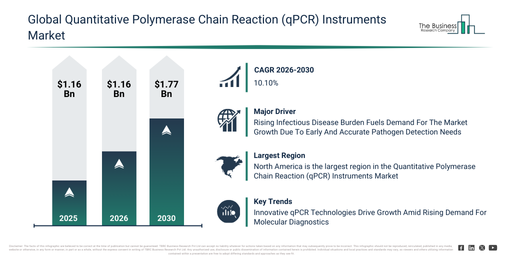
    The quantitative polymerase chain reaction (qpcr) instruments market is forecast to experience significant expansion in the upcoming years. It is projected to reach $2.69 billion by 2030, exhibiting a compound annual growth rate (CAGR) of 10.1%. This expected growth can be attributed to several factors, including the increasing uptake of point-of-care diagnostics, the expansion of molecular testing into emerging markets, the integration of AI and cloud-based analytics, a growing demand for rapid pathogen detection, and increased government funding for genomics research. Noteworthy trends during this period are expected to encompass the widespread adoption of high-throughput testing, the incorporation of automation within qPCR workflows, the miniaturization of qPCR instruments, a rising demand for multiplexing capabilities, and the development of point-of-care qPCR solutions.

    Get A Free Sample Report With In-Depth Market Insights:

    https://thebusinessresearchcompany.com/sample_request?id=97837656&type=smp&name=Quantitative%20Polymerase%20Chain%20Reaction%20%28qPCR%29%20Instruments%20Market%20Report%202026&utm_source=Blogs&utm_medium=Paid&utm_campaign=Oct_PR

    Quantitative Polymerase Chain Reaction (qPCR) Instruments Market Growth Backed By Core Demand Fundamentals

    The rising occurrence of infectious diseases is anticipated to boost the expansion of the quantitative polymerase chain reaction (qPCR) instruments market moving ahead. These diseases are conditions stemming from detrimental microorganisms like bacteria, viruses, fungi, or parasites, which can be transmitted between people either directly or indirectly. The uptick in infectious diseases is attributable to heightened global travel, enabling swift dissemination of pathogens across different regions. Quantitative polymerase chain reaction (qPCR) instruments play a crucial role in combating infectious diseases by facilitating quick, sensitive, and accurate pathogen detection, thereby supporting prompt diagnosis and efficient disease control. For example, data from February 2024, provided by GOV.UK, a UK-based government department, indicated that tuberculosis (TB) cases in England rose from 4,380 in 2022 to 4,850 in 2023. Consequently, the growing prevalence of infectious diseases is fueling the development of the quantitative polymerase chain reaction (qPCR) instruments market.

    Quantitative Polymerase Chain Reaction (qPCR) Instruments Market Segmentation And Category Overview

    The quantitative polymerase chain reaction (qpcr) instruments market covered in this report is segmented –

    1) By Product Type: Quantitative Polymerase Chain Reaction Systems, Reagents And Consumables, Software

    2) By Instrument: 7500, Viia 7 Dx, Cobas 4800, Cfx96, Smartcycler, Genexpert, Rotor-Gene Q, Rotor-Gene Q 5plex Hrm System, Biofire Filmarray Systems, Other Instruments

    3) By Application: Gene Expression, Genotyping, Pathogen Detection, Diagnostics, Other Applications

    4) By End-Users: Diagnostic Laboratories, Hospitals And Clinics, Pharma And Biotech Companies, Other End-Users

    Subsegments:

    1) By Quantitative Polymerase Chain Reaction (qPCR) Systems: Real-Time Polymerase Chain Reaction Systems, Portable Or Compact qPCR Devices, Digital Polymerase Chain Reaction Systems

    2) By Reagents And Consumables: Master Mixes, Buffers And Enzymes, Primers

    3) By Software: Data Analysis Software, Cloud-Based Analytics Platforms, Instrument Control Software

    Quantitative Polymerase Chain Reaction (qPCR) Instruments Market Growth Trends Reshaping The Competitive Landscape

    Leading companies within the Quantitative Polymerase Chain Reaction (qPCR) Instruments market are concentrating on developing innovative solutions, including next-generation real-time qPCR systems that combine clinical-grade workflows with research flexibility. This effort aims to address the increasing demand for quicker, higher-throughput molecular diagnostics, enhanced assay sensitivity crucial for personalized medicine and oncology, and improved preparedness for infectious disease testing. A next-generation qPCR system is a real-time PCR instrument that upholds the core principle of qPCR—simultaneous amplification and fluorescent detection of nucleic acids—while incorporating additional features such as improved thermal uniformity, advanced signal-processing algorithms, ergonomic user interfaces, and regulatory-compliant IVD workflows. For example, in November 2023, Roche Holding AG, a Switzerland-based diagnostics and biotechnology company, launched the LightCycler PRO System, an innovative next-generation qPCR platform. Building on Roche’s LightCycler heritage, the LightCycler PRO System is designed for both research and IVD applications. It incorporates a new vapor chamber to enhance temperature uniformity across the block, boasts updated software and a user interface with refined algorithms for signal analysis, and offers the flexibility to run user-developed assays alongside a wide array of validated LightMix research and CE-IVD assays.

    Quantitative Polymerase Chain Reaction (qPCR) Instruments Market Leading Players And Competitive Positioning

    Major companies operating in the quantitative polymerase chain reaction (qpcr) instruments market are F Hoffmann La Roche AG, Thermo Fisher Scientific Inc, Danaher Corporation, Becton Dickinson and Company, Agilent Technologies Inc, Bio Rad Laboratories Inc, QIAGEN N V, Eppendorf SE, Cepheid Inc, Takara Bio Inc, bioMerieux SA, Analytik Jena GmbH, Standard BioTools Inc, Hangzhou Bioer Technology Co Ltd, BioTeke Corporation, GeneReach Biotechnology Corp, Anitoa Systems LLC, Blue Ray Biotech Corp, Chai Biotechnologies, Bio Molecular Systems Pty Ltd, Azure Biosystems Inc

    View The Full Quantitative Polymerase Chain Reaction (qPCR) Instruments Market Report:

    https://thebusinessresearchcompany.com/report/quantitative-polymerase-chain-reaction-qpcr-instruments-global-market-report?utm_source=Blogs&utm_medium=Paid&utm_campaign=Oct_PR

    Quantitative Polymerase Chain Reaction (qPCR) Instruments Market Regional Distribution: Which Areas Power Market Growth?

    North America was the largest region in the quantitative polymerase chain reaction (qPCR) instruments market in 2025. Asia-Pacific is expected to be the fastest-growing region in the forecast period. The regions covered in the quantitative polymerase chain reaction (qpcr) instruments market report are Asia-Pacific, South East Asia, Western Europe, Eastern Europe, North America, South America, Middle East, Africa.

    Reach Out To Our Team:

    The Business Research Company: https://www.thebusinessresearchcompany.com/

    Americas: +1 310-496-7795

    Asia: +44 7882 955267 & +91 8897263534

    Europe: +44 7882 955267

    Email us at: marketing@tbrc.info

    Follow us on:

    LinkedIn: https://in.linkedin.com/company/the-business-research-company

    YouTube: https://www.youtube.com/channel/UC24_fI0rV8cR5DxlCpgmyFQ

    Global Market Model: https://www.thebusinessresearchcompany.com/global-market-model
  • Pulsed Field Ablation Market Growth In 2026: Market Size, Key Drivers And Future Outlook

    Pulsed Field Ablation Market Growth In 2026: Market Size, Key Drivers And Future Outlook

    Built to provide research that’s more actionable and strategically valuable, The Business Research Company’s 2026 market reports include market attractiveness analysis, total addressable market sizing, company benchmarking matrices, interactive Excel dashboards, broader supply chain intelligence, emerging startup tracking, and in-depth product insights.

    Pulsed Field Ablation Market CAGR Outlook And Future Development

    The pulsed field ablation market has experienced significant expansion in recent years. It is projected to grow from $0.8 billion in 2025 to $0.99 billion in 2026, exhibiting a compound annual growth rate (CAGR) of 23.8%. This historical growth can be linked to the increasing occurrence of atrial fibrillation, the widespread use of catheter-based ablation techniques, progress in cardiac mapping systems, greater public knowledge about cardiovascular conditions, and continuous technological advancements in pulsed field devices.

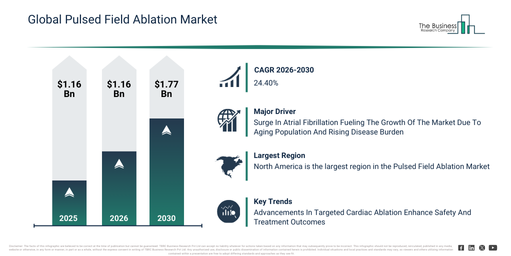
    The pulsed field ablation market is projected to experience substantial expansion in the coming years. It is set to reach a value of $2.37 billion by 2030, demonstrating a compound annual growth rate (CAGR) of 24.4%. This expansion during the forecast timeframe is primarily driven by factors such as the expanding elderly population, advancements in healthcare infrastructure across developing economies, the incorporation of artificial intelligence into ablation techniques, a growing inclination towards less invasive therapeutic options, and the creation of hybrid ablation energy sources. Key developments anticipated in the same period encompass minimally invasive approaches for cardiac interventions, customized ablation strategies for patients, improvements in safety and minimized tissue harm, the incorporation of imaging and mapping systems, and swift integration within electrophysiology laboratories.

    Get A Free Sample Report With In-Depth Market Insights:

    https://thebusinessresearchcompany.com/sample_request?id=41890260&type=smp&name=Pulsed%20Field%20Ablation%20Market%20Report%202026&utm_source=Blogs&utm_medium=Paid&utm_campaign=Oct_PR

    Pulsed Field Ablation Market Growth Catalysts And Demand Drivers

    The expanding incidence of atrial fibrillation is anticipated to fuel the expansion of the pulsed field ablation market in the coming years. Atrial fibrillation describes an irregular and frequently fast heart rhythm, elevating the danger of stroke and various heart complications. This increase in atrial fibrillation prevalence is linked to the aging demographic, given that advanced age significantly raises the likelihood of developing this cardiac rhythm disorder. Pulsed field ablation addresses atrial fibrillation through the application of precise electrical pulses to specifically eliminate irregular heart tissue responsible for abnormal rhythms, thereby presenting a quicker, safer, and more accurate option compared to conventional ablation techniques. For example, in September 2024, the American Journal of Managed Care, a US-based peer-reviewed publication, reported recent estimations showing that approximately 10.5 million U.S. adults, accounting for about 5% of the population, are currently living with atrial fibrillation (AF). Consequently, the increasing occurrence of atrial fibrillation is propelling the growth of the pulsed field ablation market.

    Pulsed Field Ablation Market Segment Outlook: Which Categories Are Growing Fastest?

    The pulsed field ablation market covered in this report is segmented –

    1) By Components: Catheters, Generators

    2) By Indication: Atrial Fibrillation, Non-Atrial Fibrillation

    3) By Source Of Ablation: Pulsed Field Energy, Pulsed Field And Radiofrequency Energy, Pulsed Field And Cryoablation Energy

    4) By Application Area: Ablation, Ablation And Mapping

    5) By End Use: Hospitals, Cardiac Catheterization Labs, Ambulatory Surgical Centers, Other End Uses

    Subsegments:

    1) By Catheters: Single-use Catheters, Reusable Catheters, Diagnostic Catheters, Therapeutic Catheters, Balloon Catheters, Mapping Catheters

    2) By Generators: Monopolar Generators, Bipolar Generators, Pulsed Power Generators, Radiofrequency Generators With Pulsed Field Ablation Capability, Portable Generators, Fixed Or Stationary Generators

    Pulsed Field Ablation Market Trends Shaping Long-Term Demand

    Leading companies in the pulsed field ablation (PFA) market are prioritizing technological advancements, such as selective tissue ablation, to boost procedural safety and effectiveness. This focus aims to minimize damage to surrounding healthy tissues, shorten recovery times, and improve long-term treatment results for patients experiencing cardiac arrhythmias. Selective tissue ablation refers to the precise destruction of specific diseased cells or tissues while safeguarding adjacent healthy structures. For instance, in March 2025, Abbott, a US-based healthcare company, received CE Mark approval for its Volt Pulsed Field Ablation System, which is intended for treating abnormal heart rhythms. This advanced system integrates effortlessly with Abbott’s EnSite X electrophysiology platform, thereby enhancing procedural visualization and navigation. The introduction of the Volt system marks a significant development in electrophysiology technology. It provides superior procedural efficiency, sharper imaging, and more accurate ablation for atrial fibrillation treatment. This next-generation device is anticipated to improve patient outcomes and streamline cardiac care.

    Pulsed Field Ablation Market Competitive Overview And Top Companies

    Major companies operating in the pulsed field ablation market are Johnson & Johnson, Abbott Laboratories, Medtronic plc, Boston Scientific Corporation, AtriCure Inc., CardioFocus Inc., Galvanize Therapeutics Inc., Kardium Inc., Acutus Medical Inc., AtriAN Medical Ltd., Field Medical Inc., Thermedical Inc., Adagio Medical Inc., Arga Medtech Inc., Mirai Medical, Pulse Biosciences Inc., AccuPulse Medical Inc., Farapulse Inc., Biosense Webster Inc., CathRx Ltd., EP Solutions SA

    View The Full Pulsed Field Ablation Market Report:

    https://thebusinessresearchcompany.com/report/pulsed-field-ablation-global-market-report?utm_source=Blogs&utm_medium=Paid&utm_campaign=Oct_PR

    Pulsed Field Ablation Market Leading Geography: Which Region Contributes The Most Revenue?

    North America was the largest region in the pulsed field ablation market in 2025. Asia-Pacific is expected to be the fastest-growing region in the forecast period. The regions covered in the pulsed field ablation market report are Asia-Pacific, South East Asia, Western Europe, Eastern Europe, North America, South America, Middle East, Africa.

    Reach Out To Our Team:

    The Business Research Company: https://www.thebusinessresearchcompany.com/

    Americas: +1 310-496-7795

    Asia: +44 7882 955267 & +91 8897263534

    Europe: +44 7882 955267

    Email us at: marketing@tbrc.info

    Follow us on:

    LinkedIn: https://in.linkedin.com/company/the-business-research-company

    YouTube: https://www.youtube.com/channel/UC24_fI0rV8cR5DxlCpgmyFQ

    Global Market Model: https://www.thebusinessresearchcompany.com/global-market-model
  • Pulse Oximeters, Spirometers Market Size And Forecast 2026–2030: Trends Driving Industry Expansion

    Pulse Oximeters, Spirometers Market Size And Forecast 2026–2030: Trends Driving Industry Expansion

    Backed by market attractiveness analysis, total addressable market sizing, company benchmarking matrices, interactive Excel dashboards, wider supply chain intelligence, emerging startup coverage, and detailed product-level insights, The Business Research Company’s 2026 market reports are designed to offer research that is more actionable and strategically valuable than ever.

    Pulse Oximeters, Spirometers Market Set To Climb From $4.73 Billion In 2026 To $6.37 Billion By 2030

    The market size for pulse oximeters and spirometers has experienced significant growth in recent years. It is anticipated to expand from $4.37 billion in 2025 to $4.73 billion by 2026, progressing at a compound annual growth rate (CAGR) of 8.2%. Historically, this expansion has been propelled by factors including the increasing prevalence of respiratory conditions, a heightened awareness of pulmonary health, the broadening of hospital respiratory monitoring services, the rising acceptance of non-invasive diagnostic instruments, and the greater incorporation of spirometry in clinical practice.

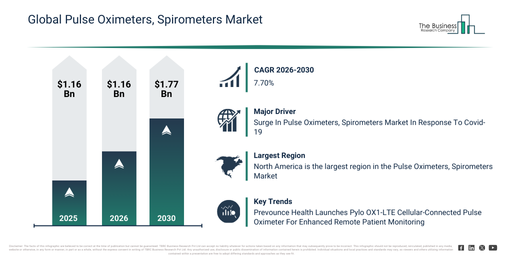
    The pulse oximeters and spirometers market is poised for significant expansion in the foreseeable future. Its size is expected to reach $6.37 billion in 2030, exhibiting a compound annual growth rate (CAGR) of 7.7%. This anticipated growth over the forecast period stems from factors such as increasing demand for remote respiratory monitoring, a rising adoption of telehealth-enabled devices, the expansion of home healthcare services, a growing emphasis on preventive respiratory diagnostics, and the increasing integration of AI-driven respiratory analytics. Major trends predicted for this period include the increasing use of portable respiratory monitoring devices, a rising need for home-based oxygen monitoring, the growing integration of connected spirometry platforms, the expansion of multiparameter respiratory monitoring, and an enhanced focus on early disease detection.

    Get A Free Sample Report With In-Depth Market Insights:

    https://thebusinessresearchcompany.com/sample_request?id=19105372&type=smp&name=Pulse%20Oximeters%2C%20Spirometers%20Market%20Report%202026&utm_source=Blogs&utm_medium=Paid&utm_campaign=Oct_PR

    Pulse Oximeters, Spirometers Market Opportunity Drivers: What’s Unlocking New Revenue Potential?

    Given that COVID-19 infection manifests as a respiratory illness, a surge in demand has been observed for respiratory devices such as pulse oximeters and spirometers. Oxygen therapy serves as a critical intervention for individuals experiencing severe COVID-19, necessitating that healthcare providers ensure a ready supply of pulse oximeters and other medical oxygen systems. These devices, specifically pulse oximeters and spirometers, prove invaluable for monitoring and managing COVID-19, assisting in the evaluation of oxygen levels and lung function. To illustrate, as reported in October 2023 by the World Health Organization, which is a Switzerland-based agency of the United Nations responsible for international public health, the pandemic had accounted for 771,191,203 confirmed cases of COVID-19 and 6,961,014 reported deaths globally. Consequently, the market for these particular devices is projected to expand significantly, driven by their utility in facilitating early detection and remote patient monitoring.

    Pulse Oximeters, Spirometers Market Segment Landscape: Which Areas Lead Development?

    The pulse oximeters, spirometers market covered in this report is segmented –

    1) By Product Type: Pulse Oximeters, Spirometers

    2) By Application: Diagnostic, Treatment Monitoring

    3) By End User: Hospitals, Clinics, Home Care Settings, Ambulatory Surgical Centers, Diagnostic Centers

    Subsegments:

    1) By Pulse Oximeters: Fingertip Pulse Oximeters, Handheld Pulse Oximeters, Wrist-Worn Pulse Oximeters, Tabletop Pulse Oximeters, Pediatric Pulse Oximeters, Multiparameter Oximeters

    2) By Spirometers: Desktop Spirometers, Portable Spirometers, Handheld Spirometers, Tabletop Spirometers

    Pulse Oximeters, Spirometers Market Innovation Trends Shaping Future Development

    Major companies in the pulse oximeters and spirometers market are developing cellular-connected pulse oximeters with the goal of enabling real-time monitoring, improving patient management through remote healthcare solutions, and enhancing the accuracy and accessibility of oxygen level tracking for individuals with respiratory conditions. Cellular-connected pulse oximeters are devices featuring cellular connectivity, allowing them to transmit real-time data on blood oxygen levels (SpO2) and heart rate to healthcare providers or remote monitoring platforms. For instance, in August 2024, Prevounce Health, a US-based wellness and fitness services company, introduced Pylo OX1-LTE, a cellular-connected pulse oximeter specifically designed for remote patient monitoring (RPM). This device delivers accurate blood oxygen saturation (SpO2) readings and pulse rates, with an accuracy of ±2% for SpO2 and ±2 bpm for pulse rates. It is user-friendly, boasts a bright OLED screen, and requires no configuration. Supporting multiple cellular networks, it ensures reliable data transmission even in areas with low signal. The Pylo OX1-LTE is integrated with Prevounce’s RPM platform and can connect with third-party health software via the Pylo cloud API.

    Pulse Oximeters, Spirometers Market Competitive Landscape: Which Companies Lead The Industry?

    Major companies operating in the pulse oximeters, spirometers market are Smiths Medical Inc., Koninklijke Philips N.V., Vyaire Medical Inc., Schiller AG, General Electric Company, Masimo Corporation, Medtronic plc, Opto Circuits (India) Ltd., Fukuda Denshi Co. Ltd., Hill-Rom Holdings Inc., MGC Diagnostics Corporation, Omron Healthcare Inc., Nonin Medical Inc., Drägerwerk AG & Co. KGaA, Spacelabs Healthcare Inc., Halma plc, SDI Diagnostics Inc., nSpire Health Inc., SIBELMED, Labtech Ltd., CareFusion Corporation, NDD Medical Technologies Inc., Vitalograph Ltd., COSMED srl, Philips Benelux, Contec Medical System Co. Ltd., Smiths Group plc, TytoCare Ltd.,

    View The Full Pulse Oximeters, Spirometers Market Report:

    https://thebusinessresearchcompany.com/report/pulse-oximeters-spirometers-global-market-report?utm_source=Blogs&utm_medium=Paid&utm_campaign=Oct_PR

    Pulse Oximeters, Spirometers Market Regional Outlook: Where Is Opportunity Concentrated?

    North America was the largest region in the pulse oximeters, spirometers market in 2025. Asia-Pacific was the second largest region in the pulse oximeters, spirometers market. The regions covered in the pulse oximeters, spirometers market report are Asia-Pacific, South East Asia, Western Europe, Eastern Europe, North America, South America, Middle East, Africa.

    Reach Out To Our Team:

    The Business Research Company: https://www.thebusinessresearchcompany.com/

    Americas: +1 310-496-7795

    Asia: +44 7882 955267 & +91 8897263534

    Europe: +44 7882 955267

    Email us at: marketing@tbrc.info

    Follow us on:

    LinkedIn: https://in.linkedin.com/company/the-business-research-company

    YouTube: https://www.youtube.com/channel/UC24_fI0rV8cR5DxlCpgmyFQ

    Global Market Model: https://www.thebusinessresearchcompany.com/global-market-model
  • Pulse Oximeter Market 2026 Outlook: Market Size, CAGR And Key Growth Opportunities

    Pulse Oximeter Market 2026 Outlook: Market Size, CAGR And Key Growth Opportunities

    Featuring market attractiveness scoring, total addressable market sizing, company benchmarking matrices, interactive Excel dashboards, deeper supply chain intelligence, emerging startup tracking, and granular product-level insights, The Business Research Company’s 2026 market reports are built to deliver research that is both more actionable and more strategically valuable.

    Pulse Oximeter Market Forecast: Value Set To Climb From $2.9 Billion To $3.73 Billion

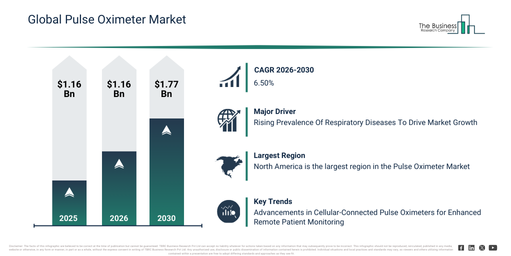
    The pulse oximeter market has experienced significant growth in recent years. Its size is expected to increase from $2.73 billion in 2025 to $2.9 billion in 2026, at a compound annual growth rate (CAGR) of 6.0%. The expansion observed historically can be linked to the growing prevalence of respiratory ailments, the enhancement of hospital monitoring infrastructure, the increasing use of non-invasive diagnostic tools, the development of emergency and critical care services, and the widespread availability of affordable fingertip oximeters.

    The pulse oximeter market is projected to experience robust expansion over the coming years. This market is anticipated to reach a valuation of $3.73 billion by 2030, exhibiting a compound annual growth rate (CAGR) of 6.5%. Factors driving this expansion during the forecast period include the increasing uptake of telehealth services, a heightened need for remote monitoring of chronic conditions, the broadening of connected healthcare ecosystems, an increased emphasis on detecting hypoxemia early, and greater integration with digital health platforms. Key trends identified for this period encompass the growing adoption of connected pulse oximeters, an increased requirement for monitoring devices used at home, wider utilization of wearable oximetry solutions, the expansion of remote patient monitoring initiatives, and a stronger focus on ongoing oxygen monitoring.

    Get A Free Sample Report With In-Depth Market Insights:

    https://thebusinessresearchcompany.com/sample_request?id=34533854&type=smp&name=Pulse%20Oximeter%20Market%20Report%202026&utm_source=Blogs&utm_medium=Paid&utm_campaign=Oct_PR

    Pulse Oximeter Market Growth Momentum: What Factors Are Shaping Demand?

    The growing incidence of respiratory illnesses is projected to stimulate the expansion of the pulse oximeter market moving forward. Respiratory diseases are conditions affecting the airways and lungs, which interfere with human breathing. The increasing prevalence of these diseases is primarily fueled by factors such as rising air pollution, exposure to dust, an aging population, and smoking habits, enabling pulse oximeters to detect changes in oxygen saturation levels before symptoms manifest. For instance, in December 2023, according to the National Center for Biotechnology Information, a US-based government agency, the number of COPD cases was expected to rise by 112 million, totaling 592 million by 2050, which would represent 9.5% of the eligible population. Therefore, the escalating prevalence of respiratory diseases is a significant driver for the growth of the pulse oximeter market.

    Pulse Oximeter Market Segments: Where Is Growth Concentrated?

    The pulse oximeter market covered in this report is segmented –

    1) By Product Type: Fingertip, Handheld, Wrist-worn, Table-Top And Bedside

    2) By Technology: Conventional, Connected

    3) By Age Group: Adult, Pediatric

    4) By End-User: Hospitals And Clinics, Ambulatory Surgical Centers, Home Healthcare

    Subsegments:

    1) By Fingertip: Adult Fingertip Oximeters, Pediatric Fingertip Oximeters

    2) By Handheld: Single-Patient Handheld Oximeters, Multi-Patient Handheld Oximeters

    3) By Wrist-Worn: Continuous Monitoring Wrist Oximeters, Spot-Check Wrist Oximeters

    4) By Table-Top And Bedside: Portable Table-Top Oximeters, Stationary Bedside Oximeters

    Pulse Oximeter Market Trends Redefining Industry Growth

    Leading companies in the pulse oximeter market are prioritizing technologically advanced solutions, such as cellular-connected pulse oximeters, to improve patient oversight and data collection. A cellular-connected pulse oximeter is a device equipped with cellular connectivity features, enabling it to wirelessly transmit data over cellular networks (like 4G or 5G) to healthcare providers or cloud-based health platforms. For example, in August 2024, Prevounce Health LLC, a US-based developer of a remote monitoring platform, launched the Pylo OX1-LTE, a cellular-connected pulse oximeter specifically designed for remote patient monitoring (RPM). This device targets patients with chronic respiratory conditions such as COPD and asthma, along with those affected by COVID-19, offering reliable cellular connectivity, accurate SpO2 and pulse rate readings, and a user-friendly design featuring a bright OLED screen. It seamlessly integrates with Prevounce’s remote care management platform and can also connect to third-party health software using the Pylo cloud API.

    Pulse Oximeter Market Competitive Landscape: Who Leads The Industry?

    Major companies operating in the pulse oximeter market are Medtronic Plc, GE Healthcare, Masimo Corporation, Nonin Medical Inc., Nihon Kohden Corporation, Koninklijke Philips NV, Philips Healthcare, Contec Medical Systems Co. Ltd., Omron Corporation, Carefusion Corp., CAS Medical Systems Inc., Opto Circuits India Ltd., Welch Allyn Inc., Spacelabs Healthcare, Meditech Equipment Co. Ltd., Vyaire Medical Inc., Beurer GmbH, Drägerwerk AG & Co. KGaA, ICU Medical Inc., Smiths Medical, Mindray Medical International Limited, Criticare Systems Inc., BPL Medical Technologies, ChoiceMMed America Co. Ltd., Beijing Choice Electronic Technology Co. Ltd., Creative Medical, Edan Instruments Inc., Heal Force Bio-Meditech Holdings Limited, Mediana Co. Ltd., Medlab Clinical Ltd.

    View The Full Pulse Oximeter Market Report:

    https://thebusinessresearchcompany.com/report/pulse-oximeter-global-market-report?utm_source=Blogs&utm_medium=Paid&utm_campaign=Oct_PR

    Pulse Oximeter Market Geographic Landscape: Which Region Leads Industry Growth?

    North America was the largest region in the pulse oximeter market in 2025. The regions covered in the pulse oximeter market report are Asia-Pacific, South East Asia, Western Europe, Eastern Europe, North America, South America, Middle East, Africa.

    Reach Out To Our Team:

    The Business Research Company: https://www.thebusinessresearchcompany.com/

    Americas: +1 310-496-7795

    Asia: +44 7882 955267 & +91 8897263534

    Europe: +44 7882 955267

    Email us at: marketing@tbrc.info

    Follow us on:

    LinkedIn: https://in.linkedin.com/company/the-business-research-company

    YouTube: https://www.youtube.com/channel/UC24_fI0rV8cR5DxlCpgmyFQ

    Global Market Model: https://www.thebusinessresearchcompany.com/global-market-model
  • Pulmonology Lasers Market Size Growth: From $6.04 Billion In 2026 To $8.36 Billion By 2030

    Pulmonology Lasers Market Size Growth: From $6.04 Billion In 2026 To $8.36 Billion By 2030

    Built to provide research that’s more actionable and strategically valuable, The Business Research Company’s 2026 market reports include market attractiveness analysis, total addressable market sizing, company benchmarking matrices, interactive Excel dashboards, broader supply chain intelligence, emerging startup tracking, and in-depth product insights.

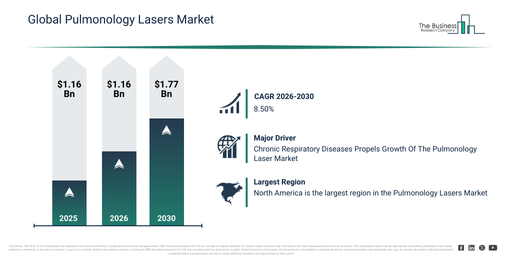
    Pulmonology Lasers Market Revenue Growth On Track For A 8.5% CAGR Through 2030

    The pulmonology lasers market has experienced robust growth in recent years. This market is projected to expand from $5.52 billion in 2025 to reach $6.04 billion in 2026, demonstrating a compound annual growth rate (CAGR) of 9.5%. Historically, this expansion has been driven by factors such as a rise in lung cancer and airway tumor cases, the broadening of interventional pulmonology procedures, an increase in hospitals equipped with laser technology, greater clinical adoption of laser therapies, and ongoing advancements in medical laser technology.

    The pulmonology lasers market is anticipated to show significant expansion in the upcoming years. It is forecast to reach $8.36 billion in 2030, driven by a compound annual growth rate (CAGR) of 8.5%. This growth during the prediction period stems from an increased preference for non-invasive respiratory treatments, augmented investments in sophisticated interventional pulmonology instruments, the rising adoption of laser-based methods for tumor management, the enlargement of specialized respiratory care centers, and technological enhancements in laser precision and control. Prominent patterns expected over the forecast horizon involve a growing acceptance of minimally invasive laser therapies, an increased deployment of nd-yag lasers in airway procedures, a heightened demand for accurate tissue ablation, the extension of photodynamic laser applications, and a strengthened focus on the safety and exactness of procedures.

    Get A Free Sample Report With In-Depth Market Insights:

    https://thebusinessresearchcompany.com/sample_request?id=73433529&type=smp&name=Pulmonology%20Lasers%20Market%20Report%202026&utm_source=Blogs&utm_medium=Paid&utm_campaign=Oct_PR

    Pulmonology Lasers Market Expansion Drivers: What’s Shaping Future Growth?

    The future expansion of the pulmonology laser market is anticipated to be driven by an increase in chronic respiratory conditions. These long-term conditions, which impact the airways and lung structures, cause breathing difficulties and significantly diminish the quality of life for affected individuals. Contributing factors to this rise include air pollution, smoking, an aging demographic, swift urbanization, and shifts in climate. Pulmonology lasers find application in managing chronic respiratory diseases, aiding in diagnostic bronchoscopy and therapeutic procedures like addressing airway blockages or growths. For example, a research study from December 2023, featured in JAMA Network Open, a medical journal from the American Medical Association, estimated that the worldwide prevalence of chronic obstructive pulmonary disease (COPD) could reach almost 600 million cases by 2050, representing a 23% rise in its occurrence. Consequently, the increased incidence of chronic respiratory conditions is fueling the expansion of the pulmonology laser market.

    Pulmonology Lasers Market Segment Analysis: What Are The Core Market Categories?

    The pulmonology lasers market covered in this report is segmented –

    1) By Type: Neodymium-Doped Yttrium Aluminum Garnet (Nd-YAG Laser), Photodynamic Laser

    2) By Indication: Bronchogenic Carcinoma, Malignant Lesions, Benign Tumors, Neoplasms, Hemorrhage, Tracheal Stenosis

    3) By End-Users: Specialty Care Centers, Hospitals, Academic Centers, Research Organizations

    Subsegments:

    1) By Nd-YAG Laser: Continuous Wave Nd-YAG Laser, Pulsed Nd-YAG Laser

    2) By Photodynamic Laser: Low-Level Photodynamic Laser, High-Intensity Photodynamic Laser

    Pulmonology Lasers Market Strategic Trends: What Defines The Next Growth Phase?

    The first discernible trend is identified.

    Pulmonology Lasers Market Company Landscape And Competitive Strategy

    Major companies operating in the pulmonology lasers market are Coherent Corp., IPG Photonics Corporation, Han’s Laser Technology Industry Group, Lumenis Ltd, Biolitec AG, Ellex Medical Pty Ltd, Fotona LLC, Spectra-Physics Inc., Lumibird SA, EKSPLA Co, Optotek Medical, Optogama UAB, Beijing Hoplaser Lead-Edge Laser Techno. Ltd, Amada Miyachi, Richard Wolf GmbH, Karl Storz SE And Co. KG, Olympus Medical Systems Corp., Boston Scientific Corporation, Dornier MedTech, Asclepion Laser Technologies GmbH

    View The Full Pulmonology Lasers Market Report:

    https://thebusinessresearchcompany.com/report/pulmonology-lasers-global-market-report?utm_source=Blogs&utm_medium=Paid&utm_campaign=Oct_PR

    Pulmonology Lasers Market Largest Region: Which Geography Holds The Biggest Share?

    North America was the largest region in the pulmonology lasers market in 2025. The regions covered in the pulmonology lasers market report are Asia-Pacific, South East Asia, Western Europe, Eastern Europe, North America, South America, Middle East, Africa.

    Reach Out To Our Team:

    The Business Research Company: https://www.thebusinessresearchcompany.com/

    Americas: +1 310-496-7795

    Asia: +44 7882 955267 & +91 8897263534

    Europe: +44 7882 955267

    Email us at: marketing@tbrc.info

    Follow us on:

    LinkedIn: https://in.linkedin.com/company/the-business-research-company

    YouTube: https://www.youtube.com/channel/UC24_fI0rV8cR5DxlCpgmyFQ

    Global Market Model: https://www.thebusinessresearchcompany.com/global-market-model