Blog

  • Recombinant Proteins Market Outlook From 2026 To 2030: Key Growth Factors And Future Opportunities

    Recombinant Proteins Market Outlook From 2026 To 2030: Key Growth Factors And Future Opportunities

    Featuring market attractiveness scoring, total addressable market sizing, company benchmarking matrices, interactive Excel dashboards, deeper supply chain intelligence, emerging startup tracking, and granular product-level insights, The Business Research Company’s 2026 market reports are built to deliver research that is both more actionable and more strategically valuable.

    Recombinant Proteins Market Set To Climb From $2.89 Billion In 2026 To $4.84 Billion By 2030

    The size of the recombinant proteins market has seen rapid expansion recently. Its projected growth trajectory shows an increase from $2.55 billion in 2025 to $2.89 billion in 2026, achieving a compound annual growth rate (CAGR) of 13.5%. Factors contributing to its historical growth include the expanding development of biologics-based drugs, the growing incidence of autoimmune and chronic diseases, the proliferation of protein-based diagnostics, the broader application of recombinant insulin, and improvements in expression system efficiency.

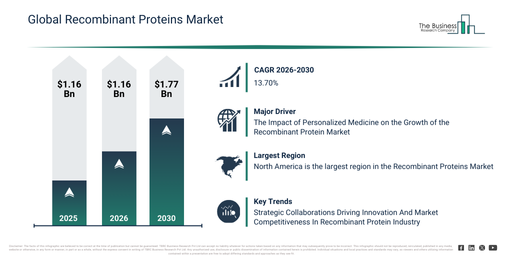
    The recombinant proteins market size is anticipated to experience substantial growth over the next few years. It is projected to expand to $4.84 billion in 2030, achieving a compound annual growth rate (CAGR) of 13.7%. This expansion during the forecast period is fueled by the increasing embrace of next-generation biologics, rising investments directed towards biomanufacturing facilities, the growing need for personalized therapeutics, the broadening scope of biosimilar development, and the increased utilization of recombinant proteins in research. Prominent trends expected in the forecast period involve a boost in the production of therapeutic antibodies, an escalating demand for recombinant enzymes, the wider adoption of protein engineering techniques, an increase in biologics manufacturing capacity, and a heightened focus on high-purity protein expression.

    Get A Free Sample Report With In-Depth Market Insights:

    https://thebusinessresearchcompany.com/sample_request?id=21030625&type=smp&name=Recombinant%20Proteins%20Market%20Report%202026&utm_source=Blogs&utm_medium=Paid&utm_campaign=Oct_PR

    Recombinant Proteins Market Growth Drivers: What’s Behind The Acceleration?

    The increasing focus on personalized medicine is anticipated to drive the expansion of the recombinant protein market in the future. Personalized medicine defines a healthcare strategy where treatments and therapies are customized to a patient’s specific characteristics, genetic makeup, and requirements, aiming for more precise and impactful health results. The rise of personalized medicine is due to innovations in genomic technologies and data analytics, which facilitate the creation of customized treatments aligned with unique genetic profiles. Recombinant proteins facilitate personalized medicine by supporting the creation of bespoke therapies designed to target an individual’s distinct genetic and molecular blueprint, thereby enhancing treatment efficacy and mitigating adverse effects. As an illustration, in February 2024, the Personalized Medicine Coalition, a US-based non-profit organization, reported that the FDA approved 16 new personalized treatments for patients with rare diseases in 2023, marking a substantial increase from the 6 approved in 2022. Consequently, the heightened attention on personalized medicine is fueling the growth of the recombinant protein market moving forward.

    Recombinant Proteins Market Breakdown By Product Type And Application

    The recombinant proteins market covered in this report is segmented –

    1) By Product: Antibodies, Cytokines, Virus Antigens, Enzymes, Recombinant Regulatory Proteins, Hormones, Other Products

    2) By Application: Drug And Discovery Development, Therapeutics, Research, Other Applications

    3) By End User: Pharmaceutical And Biotechnology Companies, Academic And Research Institutes, Diagnostic Laboratories, Other End Users

    Subsegments:

    1) By Antibodies: Monoclonal Antibodies, Polyclonal Antibodies

    2) By Cytokines: Interleukins, Interferons, Tumor Necrosis Factors (TNFs)

    3) By Virus Antigens: Viral Capsid Proteins, Envelope Proteins

    4) By Enzymes: Restriction Enzymes, Polymerases, Ligases

    5) By Recombinant Regulatory Proteins: Transcription Factors, Receptors

    6) By Hormones: Insulin, Growth Hormones

    7) By Other Products: Fusion Proteins, Peptide Therapeutics

    Recombinant Proteins Market Trends: What’s Defining The Industry’s Next Phase?

    Leading firms within the recombinant protein market are forming alliances to enhance their competitive position. Such collaborations frequently stimulate innovation through the integration of varied organizational expertise. As an illustration, in October 2023, ARTES Biotechnology GmbH, a biotechnology firm based in Germany, entered into a collaboration with Basic Pharma, a pharmaceutical company located in the Netherlands. This joint effort includes a strategic partnership and a co-marketing agreement, with objectives centered on the development and production of non-GMP recombinant proteins, emphasizing the creation of an optimized supply chain to accelerate the introduction of novel pharmaceutical products to the market.

    Recombinant Proteins Market Leading Companies And Competitive Benchmarking

    Major companies operating in the recombinant proteins market are Abcam plc, Abnova Corporation, Bio-Rad Laboratories Inc., Merck Co. & KGaA, R&D Systems Inc., Proteintech Group Inc., RayBiotech Life Inc., GenScript Biotech Corporation, Elpiscience Biopharmaceuticals Co. Ltd., Elevian Inc., Gigagen Inc., Janssen- Cilag Pvt. Ltd., Sino Biological Inc., OriGene Technologies Inc., Feldan Therapeutics Inc., Bio-Techne Corporation, Thermo Fisher Scientific Inc., PerkinElmer Inc., Crown Bioscience Inc., Airway Therapeutics Inc., Amgen Inc., Aviva Systems Biology Corp., Eli Lilly and Company

    View The Full Recombinant Proteins Market Report:

    https://thebusinessresearchcompany.com/report/recombinant-proteins-global-market-report?utm_source=Blogs&utm_medium=Paid&utm_campaign=Oct_PR

    Recombinant Proteins Market Top Region By Revenue And Market Share

    North America was the largest region in the recombinant protein market in 2025. The regions covered in the recombinant proteins market report are Asia-Pacific, South East Asia, Western Europe, Eastern Europe, North America, South America, Middle East, Africa.

    Reach Out To Our Team:

    The Business Research Company: https://www.thebusinessresearchcompany.com/

    Americas: +1 310-496-7795

    Asia: +44 7882 955267 & +91 8897263534

    Europe: +44 7882 955267

    Email us at: marketing@tbrc.info

    Follow us on:

    LinkedIn: https://in.linkedin.com/company/the-business-research-company

    YouTube: https://www.youtube.com/channel/UC24_fI0rV8cR5DxlCpgmyFQ

    Global Market Model: https://www.thebusinessresearchcompany.com/global-market-model
  • Recombinant DNA Technology Market Growth Forecast: Market Size, Key Trends And Emerging Opportunities Through 2030

    Recombinant DNA Technology Market Growth Forecast: Market Size, Key Trends And Emerging Opportunities Through 2030

    Built to provide research that’s more actionable and strategically valuable, The Business Research Company’s 2026 market reports include market attractiveness analysis, total addressable market sizing, company benchmarking matrices, interactive Excel dashboards, broader supply chain intelligence, emerging startup tracking, and in-depth product insights.

    Recombinant DNA Technology Market Forecast: Value Set To Climb From $998.83 Billion To $1414.92 Billion

    The recombinant dna technology market size has seen robust expansion in recent years. It is anticipated to increase from $913.42 billion in 2025 to $998.83 billion in 2026, achieving a compound annual growth rate (CAGR) of 9.4%. The growth observed in the preceding period can be attributed to several factors including the expansion of molecular biology research, a rising incidence of chronic diseases, advances in biologics development, increased academic and government research funding, and the early commercialization of recombinant therapies.

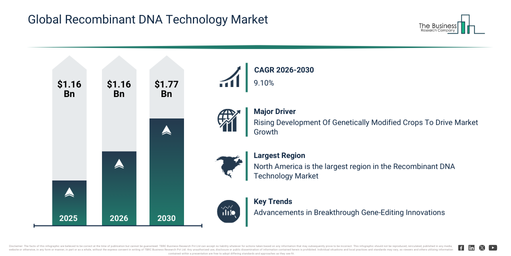
    The recombinant DNA technology market is projected to witness robust expansion in the coming years. Its valuation is set to climb to $1414.92 billion by 2030, exhibiting a compound annual growth rate (CAGR) of 9.1%. This anticipated growth within the forecast period is driven by factors such as increasing investments in gene therapy development, a rising demand for personalized medicine, the broadening of CRISPR-based applications, a growing focus on sustainable bioproduction, and enhanced collaboration between academia and industry. Significant trends expected during this period include a greater adoption of gene editing platforms, an increase in the development of recombinant vaccines, the expanding utilization of advanced expression systems, an enlargement of cell and gene therapy pipelines, and a heightened emphasis on scalable biomanufacturing.

    Get A Free Sample Report With In-Depth Market Insights:

    https://thebusinessresearchcompany.com/sample_request?id=69523130&type=smp&name=Recombinant%20DNA%20Technology%20Market%20Report%202026&utm_source=Blogs&utm_medium=Paid&utm_campaign=Oct_PR

    Recombinant DNA Technology Market Growth Factors Behind Sustained Expansion

    The increasing creation of genetically modified crops is projected to stimulate the expansion of the recombinant DNA technology market going forward. Genetically modified crops are defined as plants whose genetic composition has been purposefully altered using advanced biotechnological methods. Recombinant DNA (rDNA) technology finds application in genetically modified (GM) crops through a process that includes isolating genes for desired characteristics, assembling recombinant DNA, inserting it into recipient crop cells, screening for successful integration, propagating transgenic plants, assessing trait expression, conducting field experiments, securing necessary regulatory endorsements, and ultimately launching crops with improved attributes commercially. For example, in December 2023, according to the United States Department of Agriculture, a US-based government agency, Canada sowed 11.7 million hectares of genetically engineered (GE) crops, mainly consisting of canola, soybeans, and corn. This indicated a 4% rise from 2022, primarily driven by the growth in canola planting areas. Thus, the escalating development of genetically modified crops is propelling the growth of the recombinant DNA technology market.

    Recombinant DNA Technology Market Segment Analysis And Revenue Potential

    The recombinant dna technology market covered in this report is segmented –

    1) By Product Type: Recombinant Protein Drugs, Vaccines, Genetically Modified Crops, Expression Systems, Cell And Gene Therapy, Gene Editing

    2) By Component Type: Expression System, Cloning Vector

    3) By Application Type: Food And Agriculture, Health And Disease, Environment, Other Application Types

    4) By End-Use Type: Biotechnology And Pharmaceutical Companies, Academic And Government Research Institutes, Other End-Use Types

    Subsegments:

    1) By Recombinant Protein Drugs: Hormones, Growth Factors

    2) By Vaccines: Recombinant Viral Vaccines, Recombinant Bacterial Vaccines, Subunit Vaccines

    3) By Genetically Modified Crops: Herbicide-Tolerant Crops, Insect-Resistant Crops, Nutritionally Enhanced Crop

    4) By Expression Systems: Bacterial Expression Systems, Yeast Expression Systems, Mammalian Expression Systems

    5) By Cell And Gene Therapy: Cell-Based Therapies, Gene Replacement Therapies, CAR T-Cell Therapies

    6) By Gene Editing: CRISPR Or Cas9 Technologies, TALENs (Transcription Activator-Like Effector Nucleases), ZFNs (Zinc Finger Nucleases)

    Recombinant DNA Technology Market Industry Trends Fueling Future Revenue Growth

    Major companies operating in the recombinant DNA technology market are increasingly focusing on incorporating advanced gene-editing techniques like clustered regularly interspaced short palindromic repeats (CRISPR)-based recombinant DNA engineering to improve precision, therapeutic efficacy, and targeted genome modification. CRISPR-based recombinant DNA engineering is a molecular method that utilizes a guide RNA and the Cas9 enzyme to locate and cut specific DNA sequences, facilitating targeted gene correction, controlled DNA insertion, and efficient genomic modification. For instance, in December 2023, Vertex Pharmaceuticals, a US-based biotechnology company, along with CRISPR Therapeutics, a Switzerland-based gene-editing biotechnology company, obtained approval from the US Food and Drug Administration for Casgevy, a CRISPR-enabled recombinant DNA therapy developed for the treatment of sickle cell disease and transfusion-dependent beta thalassemia by editing a patient’s own stem cells to increase fetal hemoglobin production. Casgevy features precise DNA cleavage, high-fidelity gene modification, and ex vivo cell processing. Casgevy enhances treatment outcomes by enabling lasting gene correction, reducing reliance on conventional treatments, and supporting long-term clinical benefits.

    Recombinant DNA Technology Market Industry Leaders And Competitive Landscape

    Major companies operating in the recombinant dna technology market are Profacgen BioTech Corp, Amgen Inc, Novartis International AG, GenScript Biotech Corporation, Pfizer Inc, Novo Nordisk A/S, Eli Lilly and Company, Sanofi S.A, Merck & Co. Inc, Biogen Inc, GlaxoSmithKline PLC, New England Biolabs Inc, Bayer CropScience, F. Hoffmann-La Roche Ltd, Regeneron Pharmaceuticals Inc, Gilead Sciences Inc, Vertex Pharmaceuticals Incorporated, CRISPR Therapeutics AG, Editas Medicine Inc, bluebird bio Inc, Lonza Group AG, Horizon Discovery Group PLC, Sarepta Therapeutics Inc, Sangamo Therapeutics Inc

    View The Full Recombinant DNA Technology Market Report:

    https://thebusinessresearchcompany.com/report/recombinant-DNA-technology-global-market-report?utm_source=Blogs&utm_medium=Paid&utm_campaign=Oct_PR

    Recombinant DNA Technology Market Regional Analysis And Top Geography

    North America was the largest region in the recombinant DNA technology market share in 2025. Asia-Pacific is expected to be the fastest-growing region in the forecast period. The regions covered in the recombinant dna technology market report are Asia-Pacific, South East Asia, Western Europe, Eastern Europe, North America, South America, Middle East, Africa.

    Reach Out To Our Team:

    The Business Research Company: https://www.thebusinessresearchcompany.com/

    Americas: +1 310-496-7795

    Asia: +44 7882 955267 & +91 8897263534

    Europe: +44 7882 955267

    Email us at: marketing@tbrc.info

    Follow us on:

    LinkedIn: https://in.linkedin.com/company/the-business-research-company

    YouTube: https://www.youtube.com/channel/UC24_fI0rV8cR5DxlCpgmyFQ

    Global Market Model: https://www.thebusinessresearchcompany.com/global-market-model
  • Real-Time Blood Glucose CGM Patch Market CAGR Forecast Through 2030: Key Trends Shaping Industry Expansion

    Real-Time Blood Glucose CGM Patch Market CAGR Forecast Through 2030: Key Trends Shaping Industry Expansion

    Backed by market attractiveness analysis, total addressable market sizing, company benchmarking matrices, interactive Excel dashboards, wider supply chain intelligence, emerging startup coverage, and detailed product-level insights, The Business Research Company’s 2026 market reports are designed to offer research that is more actionable and strategically valuable than ever.

    Real-Time Blood Glucose Continuous Glucose Monitoring (CGM) Patch Market Revenue Growth On Track For A 14.5% CAGR Through 2030

    The real-time blood glucose continuous glucose monitoring (cgm) patch market has experienced rapid expansion in recent years. Its size is projected to increase from $7.04 billion in 2025 to $8.08 billion in 2026, exhibiting a compound annual growth rate (CAGR) of 14.8%. The historical growth of this market can be attributed to the rising incidence of diabetes, enhanced awareness of glucose self-monitoring, increased adoption of wearable medical devices, the expansion of hospital-based diabetes management, and improvements in sensor accuracy.

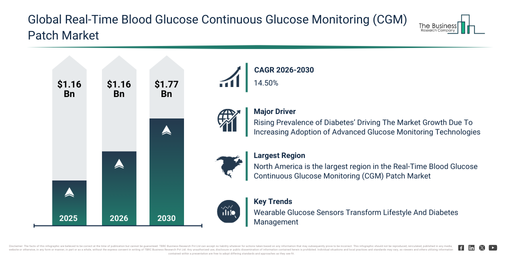
    The real-time blood glucose continuous glucose monitoring (cgm) patch market is projected to experience substantial expansion over the upcoming years. Its size is anticipated to reach $13.89 billion by 2030, exhibiting a compound annual growth rate (CAGR) of 14.5%. This projected growth during the forecast period is attributable to several factors, including the integration of real-time data analytics, the increasing uptake of telehealth, a growing demand for personalized diabetes management solutions, the expansion of homecare diagnostics, and rising investments in continuous monitoring technologies. Key trends observed during this period encompass the increasing adoption of patch-based glucose monitoring systems, a heightened demand for real-time glucose visibility, a noticeable shift towards non-invasive and minimally invasive monitoring methods, the expansion of home-based diabetes management strategies, and a greater utilization of continuous monitoring for early diagnosis.

    Get A Free Sample Report With In-Depth Market Insights:

    https://thebusinessresearchcompany.com/sample_request?id=84456155&type=smp&name=Real-Time%20Blood%20Glucose%20Continuous%20Glucose%20Monitoring%20%28CGM%29%20Patch%20Market%20Report%202026&utm_source=Blogs&utm_medium=Paid&utm_campaign=Oct_PR

    Real-Time Blood Glucose Continuous Glucose Monitoring (CGM) Patch Market Demand Drivers Opening New Revenue Streams

    The increasing occurrence of diabetes is anticipated to drive the expansion of the real-time blood glucose continuous glucose monitoring (CGM) patch market in the future. Diabetes is defined as a chronic metabolic condition characterized by elevated blood glucose levels, resulting from either insufficient insulin production or insulin resistance. The prevalence of diabetes is escalating as growing obesity leads to higher insulin resistance, which in turn disrupts blood sugar regulation and significantly raises the risk of developing type 2 diabetes. The real-time blood glucose continuous glucose monitoring (CGM) patch enables individuals with diabetes to continuously monitor their blood glucose levels in real time, offering timely alerts for hyperglycemia or hypoglycemia. This empowers them to make informed adjustments to their diet, medication, and lifestyle, ultimately enhancing overall disease management and reducing the potential for complications. For example, in June 2024, according to the National Health Service, a UK-based government department, 2023 saw the NHS identify over half a million (549,000) additional individuals in England at risk of developing type 2 diabetes. This brought the total number of people with non-diabetic hyperglycemia, or pre-diabetes, registered with a GP, to 3,615,330. This figure signifies a notable rise compared to 3,065,825 in 2022, reflecting an increase of nearly 20%. Consequently, the rising prevalence of diabetes is propelling the growth of the real-time blood glucose continuous glucose monitoring (CGM) patch market.

    Real-Time Blood Glucose Continuous Glucose Monitoring (CGM) Patch Market Segmentation And Category Overview

    The real-time blood glucose continuous glucose monitoring (cgm) patch market covered in this report is segmented –

    1) By Product Type: Wearable Continuous Glucose Monitoring (CGM) Patch, Implantable Continuous Glucose Monitoring (CGM) Patch

    2) By Technology: Enzymatic, Non-Enzymatic

    3) By Distribution Channel: Online Pharmacies, Retail Pharmacies, Hospital Pharmacies, Other Distribution Channels

    4) By Application: Type 1 Diabetes, Type 2 Diabetes, Gestational Diabetes, Other Applications

    5) By End User: Hospitals And Clinics, Homecare Settings, Diagnostic Centers, Other End Users

    Subsegments:

    1) By Wearable Continuous Glucose Monitoring (CGM) Patch: Sensor-Embedded Wearable Continuous Glucose Monitoring (CGM) Patch, Bluetooth-Enabled Wearable Continuous Glucose Monitoring (CGM) Patch, Mobile-Connected Wearable Continuous Glucose Monitoring (CGM) Patch

    2) By Implantable Continuous Glucose Monitoring (CGM) Patch: Subcutaneous Implantable Continuous Glucose Monitoring (CGM) Patch, Long-Term Implantable Continuous Glucose Monitoring (CGM) Patch, Miniaturized Implantable Continuous Glucose Monitoring (CGM) Patch

    Real-Time Blood Glucose Continuous Glucose Monitoring (CGM) Patch Market Trends Powering Strategic Industry Growth

    Major companies operating in the real-time blood glucose continuous glucose monitoring (CGM) patch market are prioritizing the development of innovative products, such as over-the-counter continuous glucose monitoring sensors, to broaden access and enhance user convenience. These over-the-counter continuous glucose monitoring (CGM) sensors are wearable devices that meticulously track glucose levels in real time and are available for purchase without a prescription, thereby empowering users to continuously monitor their glucose, comprehend the influence of lifestyle factors on their levels, and more easily manage or prevent diabetes. For instance, in September 2024, Dexcom Inc., a US-based diabetes technology company, introduced Stelo, its inaugural over-the-counter (OTC) continuous glucose monitoring (CGM) patch in the United States. This compact, wearable sensor is affixed to the back of the upper arm, supplying real-time glucose readings directly to a smartphone application without requiring fingersticks. Specifically designed for individuals with Type 2 diabetes who do not use insulin and those with prediabetes, Stelo provides personalized insights into how diet, exercise, and sleep impact glucose levels. The device offers up to 15-day wear time, is waterproof, features spike and pattern detection, and integrates with Dexcom’s established glucose sensing technology, thereby rendering continuous glucose monitoring more accessible, convenient, and actionable for a wider population.

    Real-Time Blood Glucose Continuous Glucose Monitoring (CGM) Patch Market Key Participants And Competitive Landscape

    Major companies operating in the real-time blood glucose continuous glucose monitoring (cgm) patch market are Abbott Laboratories, Dexcom Inc., Medtronic plc, Senseonics Holdings Inc., Medtrum Technologies Inc., Biolinq Inc., MicroTech Medical Inc., Zhejiang POCTech Co. Ltd., SiBio Technology Co. Ltd., Metronom Health Inc., Nemaura Medical Inc., PKvitality SAS, Nutromics Ltd., EOFlow Co. Ltd., i-SENS Inc., Sinocare Inc., Afon Technology Ltd., LifePlus Inc., Ultrahuman Healthcare Pvt. Ltd., Roche Diabetes Care AG, Ascensia Diabetes Care Holdings AG

    View The Full Real-Time Blood Glucose Continuous Glucose Monitoring (CGM) Patch Market Report:

    https://thebusinessresearchcompany.com/report/real-time-blood-glucose-continuous-glucose-monitoring-cgm-patch-global-market-report?utm_source=Blogs&utm_medium=Paid&utm_campaign=Oct_PR

    Real-Time Blood Glucose Continuous Glucose Monitoring (CGM) Patch Market Geographic Analysis: Where Is Demand Rising Fastest?

    North America was the largest region in the real-time blood glucose continuous glucose monitoring (CGM) patch market in 2025. Asia-Pacific is expected to be the fastest-growing region in the forecast period. The regions covered in the real-time blood glucose continuous glucose monitoring (cgm) patch market report are Asia-Pacific, South East Asia, Western Europe, Eastern Europe, North America, South America, Middle East, Africa.

    Reach Out To Our Team:

    The Business Research Company: https://www.thebusinessresearchcompany.com/

    Americas: +1 310-496-7795

    Asia: +44 7882 955267 & +91 8897263534

    Europe: +44 7882 955267

    Email us at: marketing@tbrc.info

    Follow us on:

    LinkedIn: https://in.linkedin.com/company/the-business-research-company

    YouTube: https://www.youtube.com/channel/UC24_fI0rV8cR5DxlCpgmyFQ

    Global Market Model: https://www.thebusinessresearchcompany.com/global-market-model
  • Real-Time Blood Glucose CGM Patch Market To Witness 10.5% CAGR Growth Through 2030: Key Industry Drivers

    Real-Time Blood Glucose CGM Patch Market To Witness 10.5% CAGR Growth Through 2030: Key Industry Drivers

    Featuring market attractiveness scoring, total addressable market sizing, company benchmarking matrices, interactive Excel dashboards, deeper supply chain intelligence, emerging startup tracking, and granular product-level insights, The Business Research Company’s 2026 market reports are built to deliver research that is both more actionable and more strategically valuable.

    Real-Time Blood Glucose CGM Patch Market Value Growth And Long-Term Outlook

    The real-time blood glucose cgm patch market size has experienced rapid growth in recent years. It is forecast to expand from $7.05 billion in 2025 to $7.77 billion in 2026, achieving a compound annual growth rate (CAGR) of 10.1%. This market’s historical growth can be linked to factors such as rising diabetes prevalence, the limitations of finger-prick testing, the adoption of wearable medical devices, increasing patient self-monitoring demand, and the digitalization of healthcare.

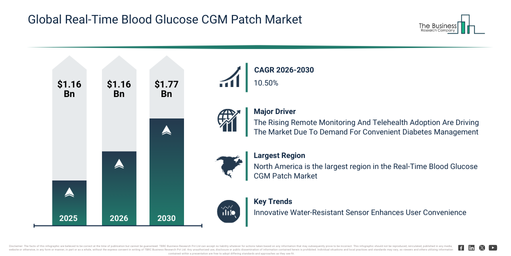
    The real-time blood glucose cgm patch market size is anticipated to undergo rapid expansion over the next few years. It is projected to achieve a value of $11.57 billion in 2030, demonstrating a compound annual growth rate (CAGR) of 10.5%. This growth throughout the forecast period is attributable to AI-based glucose prediction, telehealth integration, preventive diabetes management, the expansion of remote patient monitoring, and reimbursement policy support. Significant trends for the forecast period comprise continuous glucose monitoring wearables, needle-free glucose tracking, real-time glucose alerts, long-duration wearable patches, and improved sensor accuracy.

    Get A Free Sample Report With In-Depth Market Insights:

    https://thebusinessresearchcompany.com/sample_request?id=29165&type=smp&name=Real-Time%20Blood%20Glucose%20CGM%20Patch%20Market%20Report%202026&utm_source=Blogs&utm_medium=Paid&utm_campaign=Oct_PR

    Real-Time Blood Glucose CGM Patch Market Growth Backed By Core Demand Fundamentals

    The real-time blood glucose CGM patch market is anticipated to expand due to the increasing integration of remote monitoring and telehealth. Remote monitoring involves utilizing digital tools to gather and transmit patient health metrics, such as blood glucose levels, heart rate, or blood pressure, from non-clinical settings to healthcare professionals for ongoing evaluation. Telehealth adoption, conversely, signifies the expanding utilization of virtual medical services, including video appointments, distant check-ups, and digital exchanges between patients and care providers. This surge in remote monitoring and telehealth is driven by a heightened need for convenient and accessible healthcare solutions, particularly for managing chronic ailments like diabetes. The real-time blood glucose CGM patch facilitates this trend by allowing constant, real-time data sharing with providers, thereby enabling prompt interventions and virtual diabetes management. For instance, in February 2025, the American Hospital Association (AHA), a US-based national organization, stated that the United States is expected to face a deficit of up to 86,000 physicians by 2036, underscoring telehealth’s vital role in bridging this healthcare gap. Consequently, the rising remote monitoring and telehealth adoption are propelling the growth of the real-time blood glucose CGM patch market.

    Real-Time Blood Glucose CGM Patch Market Segment Outlook: Which Categories Are Growing Fastest?

    The real-time blood glucose cgm patch market covered in this report is segmented –

    1) By Product Type: Wearable Continuous Glucose Monitoring Patch, Implantable Continuous Glucose Monitoring Patch

    2) By Technology: Enzymatic, Non-Enzymatic

    3) By Application: Type 1 Diabetes, Type 2 Diabetes, Gestational Diabetes, Other Applications

    4) By Distribution Channel: Online Pharmacies, Retail Pharmacies, Hospital Pharmacies, Other Distribution Channels

    5) By End User: Hospitals And Clinics, Homecare Settings, Diagnostic Centers, Other End Users

    Subsegments:

    1) By Wearable Continuous Glucose Monitoring Patch: Arm Patches, Abdominal Patches

    2) By Implantable Continuous Glucose Monitoring Patch: Short-Term Implantable Patches, Long-Term Implantable Patches

    Real-Time Blood Glucose CGM Patch Market Growth Trends Reshaping The Competitive Landscape

    Leading firms within the real-time blood glucose continuous glucose monitoring (CGM) patch sector are prioritizing the creation of novel offerings, including water-resistant sensors, aimed at improving user comfort and the dependability of ongoing monitoring. Such a sensor is an instrument crafted to perform precisely and without interruption even upon contact with water or perspiration, thereby safeguarding its internal parts from harm. As an illustration, in February 2024, Dexcom Inc., a US medical device enterprise, introduced the Dexcom ONE+, a real-time continuous glucose monitoring (CGM) system across Spain, Belgium, and Poland. This system presents a more compact, precise, and intuitive CGM solution, delivering uninterrupted real-time glucose data around the clock with adaptable alerts, notably featuring a distinct delay-first high function to mitigate alarm exhaustion. It integrates an integrated water-resistant sensor usable in various body areas, boasts a swift 30-minute warm-up period, provides a 10-day sensor lifespan complemented by a 12-hour grace period for sensor replacement, and ensures effortless connection to smartphones and receivers, thereby facilitating extensive diabetes management.

    Real-Time Blood Glucose CGM Patch Market Top Companies Driving Competitive Growth

    Major companies operating in the real-time blood glucose cgm patch market are Abbott Laboratories, Dexcom Inc., Medtronic plc, Senseonics Holdings Inc., Medtrum Technologies Inc., Zhejiang POCTech Co. Ltd., MicroTech Medical Inc., Biolinq Inc., Metronom Health Inc., Afon Technology Ltd., Nemaura Medical Inc., Ultrahuman Healthcare Pvt. Ltd., PKvitality SAS, EOFlow Co. Ltd., i-SENS Inc., SiBio Technology Co. Ltd., Sinocare Inc., GlucoTrack Inc., Know Labs Inc., LifePlus Inc.

    View The Full Real-Time Blood Glucose CGM Patch Market Report:

    https://thebusinessresearchcompany.com/report/real-time-blood-glucose-cgm-patch-global-market-report?utm_source=Blogs&utm_medium=Paid&utm_campaign=Oct_PR

    Real-Time Blood Glucose CGM Patch Market Global Footprint: Which Region Leads The Market?

    North America was the largest region in the real-time blood glucose continuous glucose monitoring (CGM) patch market in 2025. Asia-Pacific is expected to be the fastest-growing region in the forecast period. The regions covered in the real-time blood glucose cgm patch market report are Asia-Pacific, South East Asia, Western Europe, Eastern Europe, North America, South America, Middle East, Africa.

    Reach Out To Our Team:

    The Business Research Company: https://www.thebusinessresearchcompany.com/

    Americas: +1 310-496-7795

    Asia: +44 7882 955267 & +91 8897263534

    Europe: +44 7882 955267

    Email us at: marketing@tbrc.info

    Follow us on:

    LinkedIn: https://in.linkedin.com/company/the-business-research-company

    YouTube: https://www.youtube.com/channel/UC24_fI0rV8cR5DxlCpgmyFQ

    Global Market Model: https://www.thebusinessresearchcompany.com/global-market-model
  • Rat Model Market Projected For Strong Expansion Through 2030: Key Trends And Future Outlook

    Rat Model Market Projected For Strong Expansion Through 2030: Key Trends And Future Outlook

    Built to provide research that’s more actionable and strategically valuable, The Business Research Company’s 2026 market reports include market attractiveness analysis, total addressable market sizing, company benchmarking matrices, interactive Excel dashboards, broader supply chain intelligence, emerging startup tracking, and in-depth product insights.

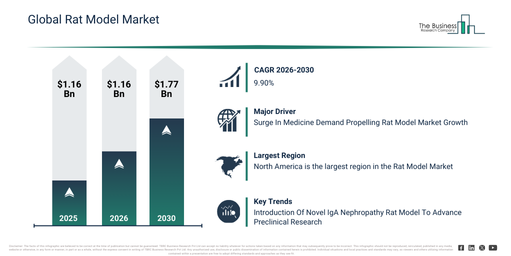
    Rat Model Market Poised To Hit $2.8 Billion By 2030 With A 9.9% CAGR

    The rat model market has experienced robust expansion over recent years. This market is projected to expand from $1.75 billion in 2025 to $1.92 billion in 2026, exhibiting a compound annual growth rate (CAGR) of 9.4%. Historically, this growth stemmed from factors such as the rise in biomedical research activities, the greater adoption of animal models for drug discovery, the expansion of academic research institutions, the accessibility of diverse rat strains including both inbred and outbred varieties, and the escalating demand for toxicology testing requirements.

    The rat model market is anticipated to experience significant expansion in the upcoming years. It is predicted to reach $2.8 billion in 2030, exhibiting a compound annual growth rate (CAGR) of 9.9%. This growth throughout the forecast period can be attributed to increased investment in precision medicine research, a rising demand for predictive disease models, the broadening of gene-editing applications, a greater emphasis on lowering clinical trial failure rates, and the increased adoption of humanized rat platforms. Prominent trends expected in the forecast period encompass the growing utilization of CRISPR-based rat models, an escalating demand for immunodeficient and humanized rats, the increasing integration of preclinical disease modeling, the expansion of genetic editing technologies, and a heightened focus on the accuracy of translational research.

    Get A Free Sample Report With In-Depth Market Insights:

    https://thebusinessresearchcompany.com/sample_request?id=49241239&type=smp&name=Rat%20Model%20Market%20Report%202026&utm_source=Blogs&utm_medium=Paid&utm_campaign=Oct_PR

    Rat Model Market Growth Catalysts And Demand Drivers

    The increasing need for pharmaceutical products is anticipated to drive the expansion of the rat model market in the foreseeable future. Researchers utilize rat models for drug discovery due to their manageable feeding requirements and smaller stature compared to more intricate mammals like primates, making them a more practical choice. Consequently, the growing demand for medicines directly fuels the demand for the rat models market. As an illustration, data from July 2024, provided by the National Center for Biotechnology Information, a US-based government agency, revealed that total medicine expenditure in the United States in 2023 saw a 13.6% rise over 2022, amounting to $722.5 billion. Hence, the heightened demand for medicines is serving as a primary impetus for the rat model market.

    Rat Model Market Segment Landscape: Which Areas Lead Development?

    The rat model market covered in this report is segmented –

    1) By Type: Knockout, Outbred, Inbred, Hybrid, Immunodeficient, Conditioned

    2) By Service: Cryopreservation, Breeding, Re-derivation, Genetic Testing

    3) By Application: Oncology, Neurology, Immunology, Toxicology, Other Applications

    Subsegments:

    1) By Knockout: CRISPR Knockout, Traditional Knockout

    2) By Outbred: Sprague Dawley, Long-Evans, Wistar

    3) By Inbred: Fischer 344, Lewis, Buffalo

    4) By Hybrid: F1 Hybrid, F2 Hybrid

    5) By Immunodeficient: Nude Rats, SCID Rats

    6) By Conditioned: Obese Rats, Diabetic Rats

    Rat Model Market Trends Shaping Long-Term Demand

    Major companies and preclinical research organizations are increasingly concentrating on the development of specialized animal models for nephropathy. These models are crucial for better mimicking human kidney diseases and expediting the discovery of new therapies. Nephropathy animal models refer to animals that have been engineered or induced to reproduce human kidney diseases, offering a controlled system for investigating disease mechanisms, testing treatments, and exploring renal dysfunction, injury, and treatment responses. For instance, in October 2024, Physiogenex, a France-based preclinical research company, unveiled its new IgA nephropathy rat model, which it had previously presented at ASN Kidney Week. This model is designed to provide researchers with a reliable platform for translational studies, exhibiting hallmark characteristics of IgA nephropathy, including mesangial IgA deposition and proteinuria, thereby supporting the development of targeted therapies and advancing mechanistic research in kidney disease.

    Rat Model Market Leading Players And Competitive Positioning

    Major companies operating in the rat model market are Genoway SA, Charles River Laboratories International Inc, Taconic Biosciences Inc, Envigo Ltd, Janvier Labs, Harlan Laboratories Inc, Cyagen Biosciences Inc, Ozgene Pty Ltd, Beijing Biocytogen Co Ltd, Ingenious Targeting Laboratory, Mirimus Inc, Pharmaron Beijing Co Ltd, PolyGene AG, Shanghai Model Organisms Center Inc, Transgenic Inc, Viva Biotech Holdings, WuXi AppTec Co Ltd, Applied StemCell Inc, Transviragen Inc, Biomere, Laboratory Corporation of America Holdings, Horizon Discovery Group PLC, Synthego Corporation, ViGene Biosciences Inc

    View The Full Rat Model Market Report:

    https://thebusinessresearchcompany.com/report/rat-model-global-market-report?utm_source=Blogs&utm_medium=Paid&utm_campaign=Oct_PR

    Rat Model Market Regional Split: Which Areas Are Fueling Growth?

    North America was the largest region in the rat model market in 2025.Asia-Pacific is expected to be the fastest-growing region in the global rat model market report during the forecast period. The regions covered in the rat model market report are Asia-Pacific, South East Asia, Western Europe, Eastern Europe, North America, South America, Middle East, Africa.

    Reach Out To Our Team:

    The Business Research Company: https://www.thebusinessresearchcompany.com/

    Americas: +1 310-496-7795

    Asia: +44 7882 955267 & +91 8897263534

    Europe: +44 7882 955267

    Email us at: marketing@tbrc.info

    Follow us on:

    LinkedIn: https://in.linkedin.com/company/the-business-research-company

    YouTube: https://www.youtube.com/channel/UC24_fI0rV8cR5DxlCpgmyFQ

    Global Market Model: https://www.thebusinessresearchcompany.com/global-market-model
  • Rare Cell Isolation Market Outlook 2026–2030: Growth Trends, Market Dynamics And Emerging Opportunities

    Rare Cell Isolation Market Outlook 2026–2030: Growth Trends, Market Dynamics And Emerging Opportunities

    Backed by market attractiveness analysis, total addressable market sizing, company benchmarking matrices, interactive Excel dashboards, wider supply chain intelligence, emerging startup coverage, and detailed product-level insights, The Business Research Company’s 2026 market reports are designed to offer research that is more actionable and strategically valuable than ever.

    Rare Cell Isolation Market Size And Revenue Outlook Through 2030

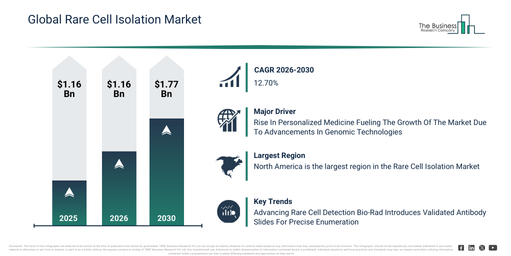
    The rare cell isolation market has experienced significant expansion recently. This market is projected to expand from $2.51 billion in 2025 to $2.83 billion in 2026, demonstrating a compound annual growth rate (CAGR) of 12.7%. Historically, this growth can be linked to factors such as increasing demand for cancer diagnostics, intensified research into stem cell therapies, innovations in fluorescence-activated cell sorting, an increase in prenatal testing, and the embrace of magnetic bead separation techniques.

    The rare cell isolation market is projected to experience substantial expansion over the upcoming years, reaching a valuation of $4.57 billion by 2030, exhibiting a compound annual growth rate (CAGR) of 12.7%. This anticipated growth is fueled by factors such as the incorporation of AI into cell isolation processes, the advancement of automated cell sorting technologies, the wider adoption of precision medicine, increased investment in genomics research, and a growing need for liquid biopsy solutions. Significant trends expected during this period include the integration of microfluidics, sophisticated high-throughput cell analysis, applications in personalized diagnostics, automated detection of rare cells, and progress in single-cell genomics.

    Get A Free Sample Report With In-Depth Market Insights:

    https://thebusinessresearchcompany.com/sample_request?id=37947841&type=smp&name=Rare%20Cell%20Isolation%20Market%20Report%202026&utm_source=Blogs&utm_medium=Paid&utm_campaign=Oct_PR

    Rare Cell Isolation Market Opportunity Drivers: What’s Unlocking New Revenue Potential?

    The increasing need for personalized medicine is projected to propel the rare cell isolation market’s expansion in the future. Personalized medicine describes a healthcare strategy focused on customizing treatment and care to an individual’s distinct genetic makeup, lifestyle, and surrounding environment. The rising adoption of personalized medicine results from advancements in genomic technologies, which have made genetic testing more rapid and economical, enabling healthcare providers to pinpoint specific genetic mutations. Rare cell isolation aids personalized medicine by allowing accurate analysis of a patient’s circulating tumor cells, fetal cells, or immune cells, thereby empowering clinicians to customize therapeutic approaches based on the unique molecular and genetic profiles of these cells. For instance, in February 2024, the Personalized Medicine Coalition, a US-based professional membership organization, reported that the Food and Drug Administration (FDA) sanctioned 16 new personalized medicines in 2023, an increase from 6 in 2022. Consequently, the increasing demand for personalized medicine is driving the growth of the rare cell isolation market.

    Rare Cell Isolation Market Segments: Where Is Growth Concentrated?

    The rare cell isolation market covered in this report is segmented –

    1) By Product: Reagents And Kits, Instruments

    2) By Technology: Magnetic Bead Separation, Fluorescence-Activated Cell Sorting

    3) By Cell Type: Circulating Tumor Cells, Stem Cells, Fetal Cells

    Subsegments:

    1) By Reagents And Kits: Antibodies And Magnetic Beads, Microfluidic Reagents, Density Gradient Media, Cell Separation Buffers, Staining And Labeling Reagents, Nucleic Acid Isolation Kits, Consumables

    2) By Instruments: Magnetic-Activated Cell Sorting (MACS) Systems, Fluorescence-Activated Cell Sorting (FACS) Instruments, Microfluidic-Based Cell Isolation Devices, High-Throughput Cell Sorters, Automated Cell Analyzers, Centrifuges For Cell Isolation, Dielectrophoresis-Based Instruments

    Rare Cell Isolation Market Innovation Trends Shaping Future Development

    Leading companies in the rare cell isolation market are increasingly concentrating on technological advancements, such as rare cell and circulating tumor cell enumeration, to bolster the precision, efficiency, and scalability of rare cell detection within cancer diagnostics and personalized medicine applications. Rare cell and circulating tumor cell enumeration is defined as the method of identifying and counting rare cells, including cancerous cells, in blood or other samples, which aids in disease surveillance and research efforts. For instance, in March 2024, Bio-Rad Laboratories, a US-based life sciences company, launched Celselect Slides Validated Antibodies, an innovative solution for rare cell and circulating tumor cell enumeration. This product delivers distinct capabilities such as pre-validated antibody panels optimized for use with Celselect Slides, ensuring consistent staining quality and compatibility with the Celselect platform for rare cell capture. It further enables high-content imaging, standardized enumeration, and flexible panel design, supporting various applications in cancer research and liquid biopsy workflows. This particular innovation streamlines rare cell analysis by decreasing assay development time while simultaneously improving reliability in subsequent single-cell analysis workflows.

    Rare Cell Isolation Market Competitive Overview And Top Companies

    Major companies operating in the rare cell isolation market are Thermo Fisher Scientific Inc, Danaher Corporation, Merck KGaA, GE Healthcare Technologies Inc, Corning Incorporated, Lonza Group AG, Terumo BCT Inc, Bio Rad Laboratories Inc, QIAGEN N V, PerkinElmer Inc, Bio Techne Corporation, STEMCELL Technologies Inc, Miltenyi Biotec B V Co KG, Izon Science Limited, RareCyte Inc, Akadeum Life Sciences Inc, NanoCellect Biomedical Inc, CELLENION SASU, Applied Cells Inc, Menarini Silicon Biosystems, Fluxion Biosciences Inc, Cynvenio Biosystems Inc

    View The Full Rare Cell Isolation Market Report:

    https://thebusinessresearchcompany.com/report/rare-cell-isolation-global-market-report?utm_source=Blogs&utm_medium=Paid&utm_campaign=Oct_PR

    Rare Cell Isolation Market Top Region: Where Does Most Revenue Come From?

    North America was the largest region in the rare cell isolation market in 2025. Asia-Pacific is expected to be the fastest-growing region in the forecast period. The regions covered in the rare cell isolation market report are Asia-Pacific, South East Asia, Western Europe, Eastern Europe, North America, South America, Middle East, Africa.

    Reach Out To Our Team:

    The Business Research Company: https://www.thebusinessresearchcompany.com/

    Americas: +1 310-496-7795

    Asia: +44 7882 955267 & +91 8897263534

    Europe: +44 7882 955267

    Email us at: marketing@tbrc.info

    Follow us on:

    LinkedIn: https://in.linkedin.com/company/the-business-research-company

    YouTube: https://www.youtube.com/channel/UC24_fI0rV8cR5DxlCpgmyFQ

    Global Market Model: https://www.thebusinessresearchcompany.com/global-market-model
  • Rapid Tests Market Growth Outlook From $38.66 Billion In 2026 To $59.06 Billion By 2030

    Rapid Tests Market Growth Outlook From $38.66 Billion In 2026 To $59.06 Billion By 2030

    Featuring market attractiveness scoring, total addressable market sizing, company benchmarking matrices, interactive Excel dashboards, deeper supply chain intelligence, emerging startup tracking, and granular product-level insights, The Business Research Company’s 2026 market reports are built to deliver research that is both more actionable and more strategically valuable.

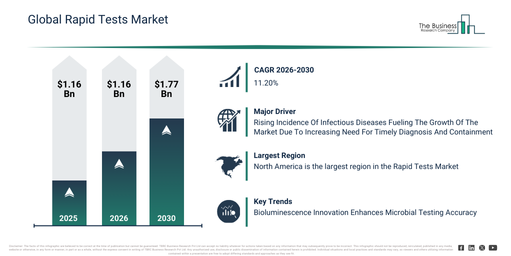
    Rapid Tests Market Growth From $38.66 Billion In 2026 To $59.06 Billion By 2030 At A CAGR Of 11.2%

    The rapid tests market size has experienced substantial expansion in recent years. This market is projected to grow from $34.67 billion in 2025 to $38.66 billion in 2026, exhibiting a compound annual growth rate (CAGR) of 11.5%. The expansion witnessed during the historic period can be attributed to a heightened demand for swift disease identification, advancements in lateral flow assay technologies, increasing awareness about preventive healthcare, the development of healthcare infrastructure in emerging economies, and the rising prevalence of infectious diseases.

    The market for rapid tests is projected to experience substantial expansion in the coming years. This market is projected to reach $59.06 billion by 2030, exhibiting a compound annual growth rate (CAGR) of 11.2%. This anticipated growth throughout the forecast period stems from factors such as the incorporation of AI and IoT into rapid tests, increasing uptake of home healthcare options, the creation of multiplex testing kits, the broadening scope of personalized medicine, and governmental programs that back point-of-care diagnostic tools. Key trends anticipated during this period encompass the widening availability of point-of-care testing, the miniaturization of diagnostic instruments, swift screening for infectious diseases, diagnostic solutions designed for home use, and the development of economical testing alternatives.

    Get A Free Sample Report With In-Depth Market Insights:

    https://thebusinessresearchcompany.com/sample_request?id=22120549&type=smp&name=Rapid%20Tests%20Market%20Report%202026&utm_source=Blogs&utm_medium=Paid&utm_campaign=Oct_PR

    Rapid Tests Market Growth Momentum: What Factors Are Shaping Demand?

    The increasing occurrence of infectious diseases is projected to fuel the expansion of the rapid tests market in the future. These diseases are ailments resulting from detrimental microorganisms, including bacteria, viruses, fungi, or parasites, capable of transmission between individuals either directly or indirectly. The growing prevalence of infectious diseases stems from increased travel, which allows pathogens to quickly disseminate internationally. Rapid diagnostic tests aid in combating infectious diseases by facilitating swift and precise detection where care is provided, thereby permitting prompt treatment and patient isolation. These tests bolster public health strategies by minimizing diagnostic wait times, enhancing disease control, and curbing the transmission of infections. For example, in February 2024, the UK Health Security Agency, a government body based in the UK, reported that tuberculosis (a communicable bacterial infection mainly impacting the lungs) instances in England climbed to 4,850 in 2023, representing a 10.7% rise from 4,380 cases recorded in 2022. Consequently, the escalating incidence of infectious diseases is propelling the expansion of the rapid tests market.

    Rapid Tests Market Segment Analysis: What Are The Core Market Categories?

    The rapid tests market covered in this report is segmented –

    1) By Product: Instruments, Consumables, Other Products

    2) By Contaminants: Pathogens, Allergens

    3) By Technology: Polymerase Chain Reaction (PCR)-Based, Immunoassay-Based, Chromatography-Based

    4) By Application: Cardiology, Oncology, Pregnancy And Fertility, Toxicology, Glucose Monitoring, Infectious Disease, Other Applications

    5) By End User: Hospitals And Clinics, Diagnostic Laboratories, Home Care, Other End-Users

    Subsegments:

    1) By Instruments: Portable Analyzers, Benchtop Analyzers, Handheld Devices, Readers Or Scanners, Multiplex Analyzers

    2) By Consumables: Test Strips, Test Cassettes Or Cartridges, Reagents, Sample Collection Devices, Control And Calibration Materials

    3) By Other Products: Software And Data Management Systems, Accessories, Maintenance And Service Kits

    Rapid Tests Market Trends Redefining Industry Growth

    Major companies in the rapid tests market are focusing on developing technologically sophisticated solutions, such as advanced bioluminescence technology, to enable more rapid, sensitive, and precise pathogen detection. This advanced bioluminescence technology refers to the application of light-emitting biochemical reactions, typically involving luciferase enzymes and substrates, to identify the presence of microorganisms or biological markers. For example, in March 2025, Nelson Labs, a US-based testing services provider, launched a rapid sterility testing method. This new testing approach utilizes advanced bioluminescence technology to decrease the traditional 14-day incubation period to as little as six days. The system detects microbial adenosine triphosphate (ATP), an indicator of living organisms, by measuring the light produced during the bioluminescent reaction. It automates the identification of microbial contamination, improves accuracy, and ensures regulatory compliance, thereby allowing for faster, dependable product release without compromising safety.

    Rapid Tests Market Competitive Landscape: Which Companies Lead The Industry?

    Major companies operating in the rapid tests market are F Hoffmann La Roche AG, Abbott Laboratories, Thermo Fisher Scientific Inc, Siemens Healthineers, BioMerieux SA, Quidel Corporation, Bio Rad Laboratories Inc, PerkinElmer Inc, OraSure Technologies Inc, SEKISUI Diagnostics LLC, Trivitron Healthcare Pvt Ltd, Ellume Limited, Access Bio Inc, ACON Laboratories Inc, CTK Biotech Inc, iHealth Labs Inc, Wondfo USA Co Ltd, InBios International Inc, Lab Care Diagnostics India Pvt Ltd, Immunostics Inc, Aptitude Medical Systems Inc, Beijing Hotgen Biotech Co Ltd, CorDx Inc, Maxim Biomedical Inc, OSANG LLC

    View The Full Rapid Tests Market Report:

    https://thebusinessresearchcompany.com/report/rapid-tests-global-market-report?utm_source=Blogs&utm_medium=Paid&utm_campaign=Oct_PR

    Rapid Tests Market Regional Breakdown: Where Is Demand Concentrated?

    North America was the largest region in the rapid tests market in 2025. Asia-Pacific is expected to be the fastest-growing region in the forecast period. The regions covered in the rapid tests market report are Asia-Pacific, South East Asia, Western Europe, Eastern Europe, North America, South America, Middle East, Africa.

    Reach Out To Our Team:

    The Business Research Company: https://www.thebusinessresearchcompany.com/

    Americas: +1 310-496-7795

    Asia: +44 7882 955267 & +91 8897263534

    Europe: +44 7882 955267

    Email us at: marketing@tbrc.info

    Follow us on:

    LinkedIn: https://in.linkedin.com/company/the-business-research-company

    YouTube: https://www.youtube.com/channel/UC24_fI0rV8cR5DxlCpgmyFQ

    Global Market Model: https://www.thebusinessresearchcompany.com/global-market-model
  • Rapid Microbiology Testing Kits Market Forecast To Reach $7.7 Billion By 2030: Key Growth Drivers And Industry Trends

    Rapid Microbiology Testing Kits Market Forecast To Reach $7.7 Billion By 2030: Key Growth Drivers And Industry Trends

    Built to provide research that’s more actionable and strategically valuable, The Business Research Company’s 2026 market reports include market attractiveness analysis, total addressable market sizing, company benchmarking matrices, interactive Excel dashboards, broader supply chain intelligence, emerging startup tracking, and in-depth product insights.

    Rapid Microbiology Testing Kits Market Expansion Outlook: What Revenue Opportunities Are Ahead?

    The rapid microbiology testing kits market size has experienced a slight rise in recent years. This market is projected to expand from $5.28 billion in 2025 to $5.36 billion in 2026, exhibiting a compound annual growth rate (CAGR) of 1.5%. Historically, the factors driving this growth include the occurrence of infectious disease outbreaks, the constraints of conventional testing methods, increased regulatory attention to safety, the expansion of clinical diagnostics, and growth in pharmaceutical manufacturing.

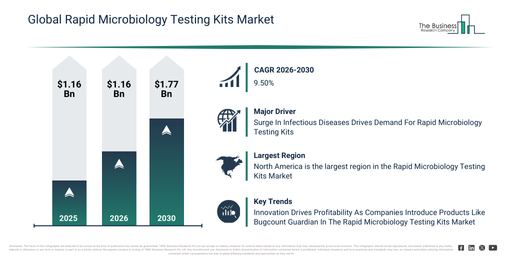
    The rapid microbiology testing kits market is projected to experience robust expansion over the coming years. It is anticipated to reach $7.7 billion in 2030, exhibiting a compound annual growth rate (CAGR) of 9.5%. This anticipated growth during the forecast period stems from factors such as increasing antimicrobial resistance, the need for quick turnaround times, the spread of decentralized testing, advancements in kit technology, and enhanced global surveillance efforts. Key developments foreseen within this period encompass a heightened need for quicker infection diagnosis, the broadening of point-of-care testing, greater uptake in pharmaceutical quality control, expanding applications in food safety testing, and a transition from culture-based approaches to molecular techniques.

    Get A Free Sample Report With In-Depth Market Insights:

    https://thebusinessresearchcompany.com/sample_request?id=59831486&type=smp&name=Rapid%20Microbiology%20Testing%20Kits%20Market%20Report%202026&utm_source=Blogs&utm_medium=Paid&utm_campaign=Oct_PR

    Rapid Microbiology Testing Kits Market Expansion Drivers: What’s Shaping Future Growth?

    The growing incidence of infectious diseases is a primary impetus for the rapid microbiology testing kits market. Rapid diagnostic methods are distinguished by their greater speed, accuracy, and widespread availability compared to traditional testing approaches. As the count of infectious disease cases rises, so does the necessity for tests to confirm these conditions. This escalating need for general microbiology tests, in turn, fuels the demand for rapid microbiology tests, which provide results more quickly than conventional options. For instance, according to the Centers for Disease Control and Prevention, a US-based government agency, tuberculosis cases escalated from 8,320 in 2022 to 9,615 in 2023, indicating an increase of 1,295 cases. Additionally, the incidence rate advanced from 2.5 per 100,000 individuals in 2022 to 2.9 in 2023. Thus, the escalating prevalence of infectious diseases is a significant factor driving the expansion of the rapid microbiology testing kits market.

    Rapid Microbiology Testing Kits Market Segment Breakdown: Which Categories Lead On Revenue?

    The rapid microbiology testing kits market covered in this report is segmented –

    1) By Product Type: Instruments, Reagents And Kits, Consumables

    2) By Testing Type: Growth-Based Rapid Microbiology Testing Kits, Cellular Component-Based Rapid Microbiology Testing Kits, Nucleic Acid-Based Rapid Microbiology Testing Kits, Viability-Based Rapid Microbiology Testing Kits, Other Rapid Microbiology Testing Kits Methods

    3) By Application: Clinical Disease Diagnosis, Food And Beverage Testing, Pharmaceutical And Biological Drug Testing, Cosmetics And Personal Care Products Testing, Environmental Testing, Research Applications, Other Applications

    Subsegments:

    1) By Instruments: Automated Microbiology Analyzers, Microbial Detection Systems, PCR Machines, Spectrophotometers

    2) By Reagents And Kits: Culture Media, Detection Reagents, PCR Kits, Antigen And Antibody Tests

    3) By Consumables: Sample Collection Swabs, Test Plates And Tubes, Pipettes And Tips, Microcentrifuge Tubes

    Rapid Microbiology Testing Kits Market Strategic Trends: What Defines The Next Growth Phase?

    Leading companies in the rapid microbiology testing kits market are developing innovative products, such as BugCount Guardian, to enhance their market profitability. BugCount Guardian functions as a novel, self-governing method for promptly identifying water quality. For instance, in September 2023, LuminUltra Technologies Ltd., a biological diagnostics testing firm based in Canada, introduced BugCount Guardian. This system is engineered to continuously track shifts in microbial activity and pinpoint alterations in water quality, thereby enabling proactive management of water systems and the early detection of potential issues. The BugCount Guardian seamlessly integrates into a client’s industrial process, automatically collecting samples at intervals specified by the user, conducting the test, and delivering the results entirely without human operator involvement.

    Rapid Microbiology Testing Kits Market Competitive Landscape: Who Leads The Industry?

    Major companies operating in the rapid microbiology testing kits market are Abbott Laboratories, Becton Dickinson and Company, Bruker Corporation, Charles River Laboratories International Inc., Danaher Corporation, Don Whitley Scientific Limited, Merck KGaA, Neogen Corporation, Quidel Corporation, Rapid Micro Biosystems Inc., Thermo Fisher Scientific, Bio-Rad Laboratories, Siemens Healthcare Diagnostics, Sysmex Corporation, Biomérieux, Sartorius Group, TSI Inc., Gen-Probe, Hoffmann-La Roche Ltd, Remel, Savyon Diagnostics Ltd., Seegene Inc., Trinity Biotech plc, Veredus Laboratories Pte Ltd., ZeptoMetrix Corporation, Hardy Diagnostics, Liofilchem s.r.l., Microbiologics Inc.

    View The Full Rapid Microbiology Testing Kits Market Report:

    https://thebusinessresearchcompany.com/report/rapid-microbiology-testing-kits-global-market-report?utm_source=Blogs&utm_medium=Paid&utm_campaign=Oct_PR

    Rapid Microbiology Testing Kits Market Geographic Landscape: Which Region Dominates Industry Growth?

    North America was the largest region in the rapid microbiology testing kits market in 2025. Western Europe was the second-largest region in the global rapid microbiology testing kits market report. The regions covered in the rapid microbiology testing kits market report are Asia-Pacific, South East Asia, Western Europe, Eastern Europe, North America, South America, Middle East, Africa.

    Reach Out To Our Team:

    The Business Research Company: https://www.thebusinessresearchcompany.com/

    Americas: +1 310-496-7795

    Asia: +44 7882 955267 & +91 8897263534

    Europe: +44 7882 955267

    Email us at: marketing@tbrc.info

    Follow us on:

    LinkedIn: https://in.linkedin.com/company/the-business-research-company

    YouTube: https://www.youtube.com/channel/UC24_fI0rV8cR5DxlCpgmyFQ

    Global Market Model: https://www.thebusinessresearchcompany.com/global-market-model
  • Rapid Decompression Sickness Chamber Market Research 2026: Market Size, Trends, Segments And Growth Forecast

    Rapid Decompression Sickness Chamber Market Research 2026: Market Size, Trends, Segments And Growth Forecast

    Backed by market attractiveness analysis, total addressable market sizing, company benchmarking matrices, interactive Excel dashboards, wider supply chain intelligence, emerging startup coverage, and detailed product-level insights, The Business Research Company’s 2026 market reports are designed to offer research that is more actionable and strategically valuable than ever.

    Rapid Decompression Sickness Chamber Market Growth Potential: How Will Market Size Shift Through 2030?

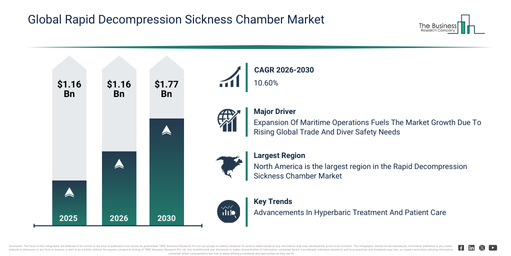
    The decompression sickness chamber market has experienced substantial expansion in recent years. This market is forecast to increase from $1.5 billion in 2025 to $1.66 billion in 2026, achieving a compound annual growth rate (CAGR) of 10.9%. The historical growth can be attributed to several factors including a rise in diving activities, the expansion of military aviation, an increase in decompression sickness cases, the demand for emergency hyperbaric care, and the adoption of hyperbaric units in hospitals.

    The rapid decompression sickness chamber market is anticipated to experience significant expansion in the upcoming years. It is projected to attain a size of $2.48 billion by 2030, exhibiting a compound annual growth rate (CAGR) of 10.6%. The drivers for this growth during the forecast period include rising demand for portable chambers, defense modernization programs, the adoption of technological automation, offshore energy expansion, and improvements in emergency medical preparedness. Prominent trends throughout this period feature advanced hyperbaric therapy systems, portable decompression chambers, automated pressure control mechanisms, military grade emergency chambers, and compact chamber design innovations.

    Get A Free Sample Report With In-Depth Market Insights:

    https://thebusinessresearchcompany.com/sample_request?id=51077207&type=smp&name=Rapid%20Decompression%20Sickness%20Chamber%20Market%20Report%202026&utm_source=Blogs&utm_medium=Paid&utm_campaign=Oct_PR

    Rapid Decompression Sickness Chamber Market Development Factors: What’s Supporting Demand?

    Increasing maritime operations are anticipated to fuel the expansion of the rapid decompression sickness chamber market in the future. These activities encompass all sea-related operations and services, including shipping, fishing, port administration, and offshore sectors. The surge in maritime activities stems from the expansion of global commerce. The increasing transport of goods via ships provides an economical and effective method to link international markets, consequently elevating the need for ports, vessels, and marine services. Rapid decompression sickness (RDS) chambers support maritime operations by offering treatment to divers and crew members encountering abrupt pressure shifts. This ensures prompt recuperation from decompression sickness, reduces operational delays, and upholds safety standards in submerged and offshore settings. As an illustration, the United States Naval Institute, a US-based non-profit body, indicated in March 2025 that maritime trade volume is forecast to increase by 2% in 2024, with container trade expected to expand by 2.7%. Thus, the expanding scope of maritime activities is a key factor propelling the growth of the rapid decompression sickness chamber market.

    Rapid Decompression Sickness Chamber Market Segmentation: How Does The Market Break Down By Category?

    The rapid decompression sickness chamber market covered in this report is segmented –

    1) By Product Type: Monoplace Chambers, Multiplace Chambers

    2) By Technology: Manual, Automated

    3) By Application: Hospitals, Military And Defense, Diving Centers

    4) By End-User: Healthcare Facilities, Military, Other End-Users

    Subsegments:

    1) By Monoplace Chambers: Acrylic Monoplace Chambers, Steel Monoplace Chambers, Transparent Monoplace Chambers

    2) By Multiplace Chambers: Hospital-Based Multiplace Chambers, Military Multiplace Chambers

    Rapid Decompression Sickness Chamber Market Transformation Trends: What Innovations Are Driving Change?

    Leading companies within the rapid decompression sickness chamber market are concentrating on developing advanced therapies, such as hyperbaric oxygen therapy, to bolster treatment efficacy, reduce recuperation periods, and enhance patient safety. Hyperbaric oxygen therapy (HBOT) is defined as a medical procedure that supplies pure oxygen to the body under elevated atmospheric pressure, thereby improving oxygen absorption in the blood and aiding in tissue repair and recovery. For example, in January 2024, Sechrist Industries Inc., a US-based manufacturing company, unveiled two innovative products, the 3300HM hyperbaric chamber and the eHEAL system, with the aim of improving treatment efficiency and patient care. The eHEAL software system automates the logging of hyperbaric treatments, boosting accuracy, efficiency, and real-time data capture to minimize errors and administrative workload. The 3300HM hyperbaric chamber provides a contemporary patient step-in design for enhanced accessibility, integrates safety technologies, and offers flexible compression options with straightforward operation. Together, these products streamline the treatment workflow, elevate patient safety, and improve clinical data management, propelling hyperbaric medicine forward with increased precision and user-friendliness.

    Rapid Decompression Sickness Chamber Market Company Landscape And Competitive Strategy

    Major companies operating in the rapid decompression sickness chamber market are IHC Hytech BV., Shanghai Baobang Medical Equipment Co. Ltd., Sechrist Industries Inc., Perry Baromedical Corporation, Drass Galeazzi Srl, SOS Medical, HiperTech Electronics Inc., Comanex, Oxycare, Haux Life Support GmbH., Hyperbaric, Fink Engineering Pty. Ltd., Gulf Coast Hyperbarics Inc., Hearmec Co. Ltd., HPO TECH, iSubC Diving Equipment Ltd., Khrunichev Medical Equipment Plant JSC., OxyHeal Health Group Inc., PBUCH S.A., Tekna Manufacturing LLC, BAROKS A.Ş., Oxybarica.

    View The Full Rapid Decompression Sickness Chamber Market Report:

    https://thebusinessresearchcompany.com/report/rapid-decompression-sickness-chamber-global-market-report?utm_source=Blogs&utm_medium=Paid&utm_campaign=Oct_PR

    Rapid Decompression Sickness Chamber Market Largest Region: Which Geography Holds The Highest Market Share?

    North America was the largest region in the rapid decompression sickness chamber market in 2025. Asia-Pacific is expected to be the fastest-growing region in the forecast period. The regions covered in the rapid decompression sickness chamber market report are Asia-Pacific, South East Asia, Western Europe, Eastern Europe, North America, South America, Middle East, Africa.

    Reach Out To Our Team:

    The Business Research Company: https://www.thebusinessresearchcompany.com/

    Americas: +1 310-496-7795

    Asia: +44 7882 955267 & +91 8897263534

    Europe: +44 7882 955267

    Email us at: marketing@tbrc.info

    Follow us on:

    LinkedIn: https://in.linkedin.com/company/the-business-research-company

    YouTube: https://www.youtube.com/channel/UC24_fI0rV8cR5DxlCpgmyFQ

    Global Market Model: https://www.thebusinessresearchcompany.com/global-market-model
  • Radiotherapy Devices Market Forecast 2026: Market Size, Competitive Landscape And Growth Drivers

    Radiotherapy Devices Market Forecast 2026: Market Size, Competitive Landscape And Growth Drivers

    Featuring market attractiveness scoring, total addressable market sizing, company benchmarking matrices, interactive Excel dashboards, deeper supply chain intelligence, emerging startup tracking, and granular product-level insights, The Business Research Company’s 2026 market reports are built to deliver research that is both more actionable and more strategically valuable.

    Radiotherapy Devices Market Value Analysis: What Growth Lies Ahead Over The Forecast Period?

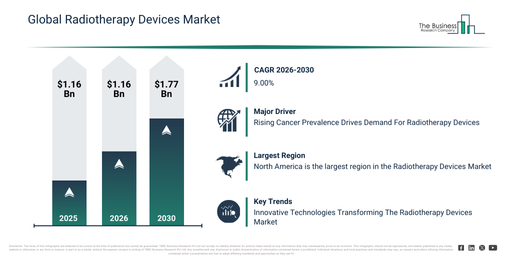
    The radiotherapy devices market has experienced robust growth in recent years. It is projected to expand from $6.64 billion in 2025 to $7.21 billion in 2026, indicating a compound annual growth rate (CAGR) of 8.6%. This historical expansion can be linked to factors such as the rising global incidence rates of cancer, the broadening of oncology treatment infrastructure, the increasing uptake of external beam radiation therapies, advancements in linear accelerator performance, and the greater availability of sophisticated radiotherapy techniques.

    The radiotherapy devices market size is anticipated to experience substantial growth in the upcoming years. It is projected to expand to $10.18 billion by 2030, demonstrating a compound annual growth rate (CAGR) of 9.0%. This forecasted growth can be attributed to the increasing demand for personalized cancer treatment, rising investments in proton therapy centers, the expansion of AI-assisted oncology workflows, a greater emphasis on reducing radiation side effects, and ongoing technological innovation in radiation delivery systems. Significant trends during this period are expected to include the increasing adoption of image-guided radiation therapy systems, the rising deployment of proton therapy technologies, the growing integration of AI-based treatment planning, the expansion of stereotactic radiation techniques, and an enhanced focus on precision dose delivery.

    Get A Free Sample Report With In-Depth Market Insights:

    https://thebusinessresearchcompany.com/sample_request?id=81198564&type=smp&name=Radiotherapy%20Devices%20Market%20Report%202026&utm_source=Blogs&utm_medium=Paid&utm_campaign=Oct_PR

    Radiotherapy Devices Market Industry Drivers: What’s Behind The Revenue Growth?

    A rise in cancer prevalence is anticipated to drive expansion in the radiotherapy devices market. This refers to the overall count or percentage of individuals within a population identified with cancer at a specific moment or throughout a defined timeframe. Radiotherapy serves as a frequent primary or supplementary treatment for individuals newly diagnosed with cancer. Its application frequently involves reducing tumor size, managing cancer progression, or eliminating cancerous cells prior to or following surgical procedures. An illustrative example can be seen in Australia, where, as reported in July 2024 by the Australian Institute of Health and Welfare, a government entity located there, the number of diagnosed cancer cases rose from 160,570 in 2022 to 164,694 in 2023, indicating a considerable increase annually. This observable upward trajectory underscores the rising incidence of cancer across the nation. Consequently, the expanding cancer prevalence is propelling the growth of the radiotherapy devices market.

    Radiotherapy Devices Market Segment Trends And Revenue Contributors

    The radiotherapy devices market covered in this report is segmented –

    1) By Product Type: External Beam Radiation Therapy Devices, Linear Accelerator Devices, Proton Therapy Devices

    2) By Application: Skin Cancer, Breast Cancer, Prostate Cancer, Cervical Cancer, Lung Cancer, Other Applications

    3) By End Users: Hospitals, Ambulatory Surgical Centers, Oncological Treatment Centers

    Subsegments:

    1) By External Beam Radiation Therapy Devices: Intensity-Modulated Radiation Therapy (IMRT) Devices, Image-Guided Radiation Therapy (IGRT) Devices, Stereotactic Body Radiation Therapy (SBRT) Devices, Stereotactic Radiosurgery (SRS) Devices, 3D Conformal Radiation Therapy (3D CRT) Devices

    2) By Linear Accelerator Devices: Conventional Linear Accelerators, Stereotactic Linear Accelerators

    3) By Proton Therapy Devices: Cyclotron-Based Devices, Synchrotron-Based Devices, Synchrocyclotron-Based Devices

    #Radiotherapy Devices Market Growth Trends: What’s Shaping The Future Outlook?

    Leading companies in the radiotherapy devices market are introducing advanced technologies, such as The Versa HD, to boost their earnings within the sector. The Versa HD functions as a linear accelerator system specifically for radiation therapy. For example, in May 2023, the Mitchell Cancer Institute, a US-based facility specializing in cancer treatment, unveiled new radiation technology named The Versa HD. This Versa HD system is able to provide Volumetric Modulated Arc Therapy (VMAT), which accelerates the administration of treatments and improves the patient’s experience. High-Definition Dynamic Radiosurgery (HDRS), which possesses unique sequencing capabilities and transforms the linac into a specialized SRS solution, is another service that The Versa HD is equipped to offer.

    Radiotherapy Devices Market Key Players Shaping Industry Direction

    Major companies operating in the radiotherapy devices market are Varian Medical Systems Inc., Elekta AB, Accuray Incorporated, IBA Ion Beam Applications SA, Koninklijke Philips N.V., Siemens Aktiengesellschaft, Eckert & Ziegler Bebig, IsoRay Inc., General Electric Healthcare, Vision RT Ltd., RaySearch Laboratories AB, Theragenics Corporation, Canon Medical Systems Corporation, Mitsubishi Electric Corporation, Shinva Medical Instrument Company Limited, Neusoft Medical Systems Co. Ltd., Mevion Medical Systems Inc., Optivus Proton Therapy Inc., Panacea Medical Technologies Pvt. Ltd., P-Cure Ltd., Provision Healthcare LLC, Sumitomo Heavy Industries Ltd., ViewRay Inc., Miranda Medical, Nordion Inc., NTP Radioisotopes SOC Ltd., Curium, Hitachi Ltd., Brainlab AG, Best Theratronics Ltd., ProTom International Inc., RefleXion Medical Inc., Insightec Ltd., TomoTherapy Incorporated, Agile MV LLC, CIVCO Radiotherapy, Johari Digital Healthcare Ltd., Alpha Tau Medical Ltd.,

    View The Full Radiotherapy Devices Market Report:

    https://thebusinessresearchcompany.com/report/radiotherapy-devices-global-market-report?utm_source=Blogs&utm_medium=Paid&utm_campaign=Oct_PR

    Radiotherapy Devices Market Regional Analysis: Which Region Leads By Revenue?

    North America was the largest region in the radiotherapy devices market in 2025. Asia-Pacific was the second-largest region in the global radiotherapy devices market report. The regions covered in the radiotherapy devices market report are Asia-Pacific, South East Asia, Western Europe, Eastern Europe, North America, South America, Middle East, Africa.

    Reach Out To Our Team:

    The Business Research Company: https://www.thebusinessresearchcompany.com/

    Americas: +1 310-496-7795

    Asia: +44 7882 955267 & +91 8897263534

    Europe: +44 7882 955267

    Email us at: marketing@tbrc.info

    Follow us on:

    LinkedIn: https://in.linkedin.com/company/the-business-research-company

    YouTube: https://www.youtube.com/channel/UC24_fI0rV8cR5DxlCpgmyFQ

    Global Market Model: https://www.thebusinessresearchcompany.com/global-market-model