
Blog

  • Microneedle Flu Vaccine Market Reaches $2.67 Billion In 2026: Forecast And Growth Opportunities

    Microneedle Flu Vaccine Market Reaches $2.67 Billion In 2026: Forecast And Growth Opportunities

    Featuring market attractiveness scoring, total addressable market sizing, company benchmarking matrices, interactive Excel dashboards, deeper supply chain intelligence, emerging startup tracking, and granular product-level insights, The Business Research Company’s 2026 market reports are built to deliver research that is both more actionable and more strategically valuable.

    Microneedle Flu Vaccine Market Value Analysis: What Growth Lies Ahead Over The Forecast Period?

    The microneedle flu vaccine market size has experienced rapid expansion in recent years. It is anticipated to grow from $1.66 billion in 2025 to $1.82 billion in 2026, at a compound annual growth rate (CAGR) of 10.0%. The historical growth of this market is linked to several factors, including the proliferation of global influenza vaccination initiatives, advancements in transdermal drug delivery research, the expansion of public immunization drives, initial clinical trials involving microneedle platforms, and an increasing desire for minimally invasive vaccine solutions.

    The microneedle flu vaccine market size is anticipated to experience substantial expansion in the coming years. This market is projected to reach $2.67 billion in 2030, driven by a compound annual growth rate (CAGR) of 10.0%. Several factors are contributing to this growth during the forecast period, including increased investments in next-generation vaccine technologies, a heightened focus on pandemic preparedness, the spread of decentralized vaccination models, greater acceptance among pediatric and elderly demographics, and more regulatory approvals for microneedle platforms. Key trends observed over the forecast period encompass the escalating development of painless vaccine delivery systems, a rising embrace of self-administered vaccination techniques, an intensifying emphasis on cold-chain-free vaccine formats, the broadening of large-scale immunization initiatives, and a stronger focus on patient compliance.

    Get A Free Sample Report With In-Depth Market Insights:

    https://thebusinessresearchcompany.com/sample_request?id=42697633&type=smp&name=Microneedle%20Flu%20Vaccine%20Market%20Report%202026&utm_source=Blogs&utm_medium=Paid&utm_campaign=Sep_PR

    Microneedle Flu Vaccine Market Growth Backed By Core Demand Fundamentals

    The increasing incidence of needle phobia is anticipated to boost the expansion of the microneedle flu vaccine market moving ahead. This condition, characterized by an intense fear or anxiety provoked by the sight, feeling, or expectation of procedures involving needles, frequently leads to people avoiding essential medical care. Its rising occurrence stems from psychological sensitivity and unfavorable prior encounters, fostering enduring fear and avoidance patterns. Microneedle flu vaccines present a minimally invasive, nearly pain-free option that diminishes psychological obstacles to vaccination, thereby enhancing patient adherence. As an illustration, the American Society for Clinical Pathology (ASCP), a professional membership organization based in the US, reported in February 2025 that roughly 50% to 60% of children suffer from needle phobia, also termed trypanophobia, with this fear being most common among those aged 4 to 6. Consequently, the increasing prevalence of needle phobia is a key factor propelling the microneedle flu vaccine market.

    Microneedle Flu Vaccine Market Segment Outlook: Which Categories Are Growing Fastest?

    The microneedle flu vaccine market covered in this report is segmented –

    1) By Product Type: Hollow Microneedle, Solid Microneedle, Coated Microneedle, Dissolving Microneedle

    2) By Route Of Administration: Transdermal, Intradermal

    3) By Distribution Channel: Hospital Pharmacies, Retail Pharmacies, Online Pharmacies

    4) By Application: Flu Vaccination, Seasonal Flu Prevention, Pediatric Vaccines, Elderly Vaccines

    Subsegments:

    1) By Hollow Microneedle: Single-Use Hollow Microneedles, Pre-Filled Disposable Microneedles, Polymer-Based Hollow Microneedles, Silicon-Based Hollow Microneedles

    2) By Solid Microneedle: Metal Solid Microneedles, Silicon Solid Microneedles, Polymer Solid Microneedles

    3) By Coated Microneedle: Antigen-Coated Microneedles, Vaccine-Coated Microneedles, Biodegradable Coated Microneedles, Nano-Coated Microneedles

    4) By Dissolving Microneedle: Fast-Dissolving Microneedles, Slow-Release Microneedles, Hydrogel-Based Dissolving Microneedles, Sugar-Based Dissolving Microneedles

    Microneedle Flu Vaccine Market Growth Trends Reshaping The Competitive Landscape

    Major companies in the microneedle flu vaccine market are prioritizing investments to accelerate the development of patch-based RNA vaccines. These efforts support initial research and partnerships aimed at advancing next-generation vaccine delivery systems. For instance, in March 2024, the Biomedical Advanced Research and Development Authority (BARDA), a U.S.-based government agency, announced a $50 million investment through the Patch Forward Prize to speed up the creation of microneedle patch-based RNA vaccines targeting influenza and COVID-19. This program seeks to stimulate early-stage innovation by funding concept development and moving combination products into Phase I clinical trials. It also fosters cooperation between vaccine and patch developers. The initiative aims to overcome technical and regulatory obstacles, enhance vaccine accessibility, and strengthen national preparedness against infectious disease threats.

    Microneedle Flu Vaccine Market Competitive Landscape: Who Leads The Industry?

    Major companies operating in the microneedle flu vaccine market are Merck & Co. Inc., Sanofi SA, GlaxoSmithKline plc, Seqirus, Vaxxas, Micron Biomedical Inc., Vaxess Technologies, Debiotech S.A., NanoPass Technologies Limited, Microdermics Inc., Micropoint Technologies Pte Ltd., CosMED Pharmaceutical Co. Ltd., TSRL Inc., Corium International, Becton Dickinson and Company (BD), AptarGroup, FluGen Inc., 3M Drug Delivery Systems, Nitto Denko Corporation, Zosano Pharma Corporation, Camurus AB, Raphas Co. Ltd.

    View The Full Microneedle Flu Vaccine Market Report:

    https://thebusinessresearchcompany.com/report/microneedle-flu-vaccine-global-market-report?utm_source=Blogs&utm_medium=Paid&utm_campaign=Sep_PR

    Microneedle Flu Vaccine Market Geographic Landscape: Which Region Dominates Industry Growth?

    North America was the largest region in the microneedle flu vaccine market in 2025. Asia-Pacific is expected to be the fastest-growing region in the forecast period. The regions covered in the microneedle flu vaccine market report are Asia-Pacific, South East Asia, Western Europe, Eastern Europe, North America, South America, Middle East, Africa.

    Reach Out To Our Team:

    The Business Research Company: https://www.thebusinessresearchcompany.com/

    Americas: +1 310-496-7795

    Asia: +44 7882 955267 & +91 8897263534

    Europe: +44 7882 955267

    Email us at: marketing@tbrc.info

    Follow us on:

    LinkedIn: https://in.linkedin.com/company/the-business-research-company

    YouTube: https://www.youtube.com/channel/UC24_fI0rV8cR5DxlCpgmyFQ

    Global Market Model: https://www.thebusinessresearchcompany.com/global-market-model

  • Microneedle Drug Delivery Systems Market Growth In 2026: Market Size, Key Drivers And Future Outlook

    Microneedle Drug Delivery Systems Market Growth In 2026: Market Size, Key Drivers And Future Outlook

    Built to provide research that’s more actionable and strategically valuable, The Business Research Company’s 2026 market reports include market attractiveness analysis, total addressable market sizing, company benchmarking matrices, interactive Excel dashboards, broader supply chain intelligence, emerging startup tracking, and in-depth product insights.

    Microneedle Drug Delivery Systems Market Size Forecast: How Big Could The Market Get By 2030?

    The microneedle drug delivery systems market size has observed substantial growth over recent years. It is forecast to rise from $5.86 billion in 2025 to $6.92 billion in 2026, achieving a compound annual growth rate (CAGR) of 18.1%. This historical expansion can be linked to several contributing factors: an increase in transdermal drug delivery research, a growing patient preference for minimally invasive therapies, the expansion of vaccination programs, a rise in clinical trials involving microneedles, and continuous advancements in microfabrication techniques.

    The microneedle drug delivery systems market is anticipated to undergo significant expansion in the coming years, with its size expected to reach $13.16 billion in 2030, exhibiting a compound annual growth rate (CAGR) of 17.4%. This projected growth is largely fueled by the increasing embrace of self-care medical devices, a rise in investments targeting biologics delivery systems, the expansion of wearable drug delivery platforms, a greater focus on patient compliance, and the growing commercialization of microneedle products. Over the forecast period, prominent trends include the wider adoption of dissolving microneedle technologies, an escalating demand for pain-free drug delivery methods, an increased emphasis on vaccine delivery applications, the proliferation of self-administered drug systems, and a reinforced focus on biodegradable microneedles.

    Get A Free Sample Report With In-Depth Market Insights:

    https://thebusinessresearchcompany.com/sample_request?id=36200111&type=smp&name=Microneedle%20Drug%20Delivery%20Systems%20Market%20Report%202026&utm_source=Blogs&utm_medium=Paid&utm_campaign=Sep_PR

    Microneedle Drug Delivery Systems Market Growth Catalysts And Demand Drivers

    The rising occurrence of obesity is anticipated to boost the expansion of the microneedle drug delivery systems market in the future. Obesity, a medical ailment, is defined by an excessive accumulation of body fat that can detrimentally impact an individual’s well-being. For treating obesity, microneedle drug delivery systems offer a convenient and pain-free method for administering medications to patients. As an illustration, data from May 2024 by the Office for Health Improvement and Disparities, a UK-based government body, indicated that an estimated 64.0% of adults aged 18 and older in England were classified as either overweight or living with obesity between 2022 and 2023. Consequently, the growing prevalence of obesity is fueling the expansion of the microneedle drug delivery systems markets.

    Microneedle Drug Delivery Systems Market Segment Landscape: Which Areas Lead Development?

    The microneedle drug delivery systems market covered in this report is segmented –

    1) By Technology: Hollow, Porous, Solid, Other Technologies

    2) By Application: Drug Delivery, Vaccine Delivery, Other Applications

    3) By End-User: Life Sciences, Research Laboratories, Hospitals, Ambulatory Surgical Centers, Other End-Users

    Subsegments:

    1) By Hollow: Solid Hollow Microneedles, Coated Hollow Microneedles

    2) By Porous: Porous Silicon Microneedles, Hydrogel-Based Porous Microneedles

    3) By Solid: Solid Microneedles For Vaccination, Solid Microneedles For Drug Delivery

    4) By Other Technologies: Dissolving Microneedles, Biodegradable Microneedles

    Microneedle Drug Delivery Systems Market Trends Shaping Long-Term Demand

    Leading companies involved in microneedle drug delivery systems are concentrating on product innovation, such as radiofrequency microneedle systems, to provide dependable services to their clientele. A radiofrequency microneedle system is a minimally invasive technology that combines microneedles with radiofrequency energy to enhance drug delivery and stimulate collagen production in the skin for both therapeutic and cosmetic applications. For instance, in February 2023, Candela, a US-based medical aesthetic device company, unveiled the Profound Matrix system. This multi-application system includes the Sublime, Sublative RF, and the innovative Matrix Pro applicators. Both the Sublime and Sublative RF employ bipolar radiofrequency (RF) technology to improve the look of fine lines and wrinkles, whereas the Matrix Pro applicator is dedicated to regenerating and stimulating collagen production. It features a series of slender microneedles that deliver short-pulse RF energy to the skin, leading to improved patient comfort, reduced downtime, and enhanced overall results.

    Microneedle Drug Delivery Systems Market Company Landscape And Competitive Strategy

    Major companies operating in the microneedle drug delivery systems market are Zosano Pharma Corporation, Nanopass Technologies, Raphas Co. Ltd., Micron Biomedical Inc., Vaxess Technologies, Debiotech, TheraJect Inc., Corium Inc., Valeritas Inc., LTS Lohmann Therapie-Systeme AG, Cutanos, Moonlight Therapeutics Inc., QuadMedicine, SNVIA Co. Ltd., NanoPass Technologies Ltd., BioSerenTach, Innoture Medical Technology Limited, AdminMed nanoBioSciences LLC, MyLife Technologies, Micropoint Technologies

    View The Full Microneedle Drug Delivery Systems Market Report:

    https://thebusinessresearchcompany.com/report/microneedle-drug-delivery-systems-global-market-report?utm_source=Blogs&utm_medium=Paid&utm_campaign=Sep_PR

    Microneedle Drug Delivery Systems Market Largest Region: Which Geography Holds The Highest Market Share?

    North America was the largest region in the microneedle drug delivery systems market in 2025. Europe was the second-largest region in the microneedle drug delivery systems market analysis. The regions covered in the microneedle drug delivery systems market report are Asia-Pacific, South East Asia, Western Europe, Eastern Europe, North America, South America, Middle East, Africa.

    Reach Out To Our Team:

    The Business Research Company: https://www.thebusinessresearchcompany.com/

    Americas: +1 310-496-7795

    Asia: +44 7882 955267 & +91 8897263534

    Europe: +44 7882 955267

    Email us at: marketing@tbrc.info

    Follow us on:

    LinkedIn: https://in.linkedin.com/company/the-business-research-company

    YouTube: https://www.youtube.com/channel/UC24_fI0rV8cR5DxlCpgmyFQ

    Global Market Model: https://www.thebusinessresearchcompany.com/global-market-model
  • Microfluidic Devices Market Size And Forecast 2026–2030: Trends Driving Industry Expansion

    Microfluidic Devices Market Size And Forecast 2026–2030: Trends Driving Industry Expansion

    Backed by market attractiveness analysis, total addressable market sizing, company benchmarking matrices, interactive Excel dashboards, wider supply chain intelligence, emerging startup coverage, and detailed product-level insights, The Business Research Company’s 2026 market reports are designed to offer research that is more actionable and strategically valuable than ever.

    Microfluidic Devices Market Revenue Outlook: What CAGR Lies Ahead Through 2030?

    The microfluidic devices market size has experienced rapid expansion in recent years. This market is projected to expand from $10.14 billion in 2025 to $11.72 billion in 2026, demonstrating a compound annual growth rate (CAGR) of 15.5%. The historical growth of this market can be attributed to several factors including limited microfabrication techniques, the high cost of early microfluidic devices, a reliance on traditional fluid handling methods, the escalating volume of pharmaceutical and biotech research, and the increasing adoption of basic lab-on-a-chip applications.

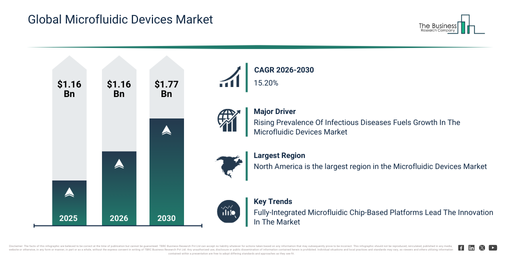
    The microfluidic devices market is projected to experience substantial growth in the coming years. It is anticipated to expand to $20.65 billion in 2030, demonstrating a compound annual growth rate (CAGR) of 15.2%. This growth over the forecast period is attributable to advancements in microfabrication and 3D printing, an increasing demand for point-of-care diagnostics, the integration of sensors and actuators with microfluidic platforms, rising investment in precision medicine research, and the expansion of high-throughput screening applications. Significant trends expected during this period include a greater adoption of lab-on-a-chip and digital microfluidic devices, the incorporation of advanced microfluidic sensors for diagnostics, enhanced utilization of microfluidic platforms in pharmaceutical research, an increase in polymer and silicon-based microfluidic materials, and a heightened focus on miniaturization and high-throughput fluid handling.

    Get A Free Sample Report With In-Depth Market Insights:

    https://thebusinessresearchcompany.com/sample_request?id=34033463&type=smp&name=Microfluidic%20Devices%20Market%20Report%202026&utm_source=Blogs&utm_medium=Paid&utm_campaign=Sep_PR

    Microfluidic Devices Market Opportunity Drivers: What’s Unlocking New Revenue Potential?

    The growing incidence of infectious diseases is anticipated to fuel the expansion of the microfluidic devices market. These disorders are brought on by pathogenic microorganisms like bacteria, viruses, fungi, or parasites. The widespread occurrence of infectious diseases is influenced by pathogen characteristics, environmental factors, human behavior, and the availability of medical services. Microfluidic devices serve as a potent instrument in combating infectious diseases, owing to their capacity to handle and analyze minute quantities of biological samples with considerable precision and efficiency. This technology improves the ability to detect, diagnose, and manage infectious diseases effectively and accurately, leading to superior health outcomes and disease control. For illustration, in November 2025, the European Centre for Disease Prevention and Control (ECDC), a Sweden-based government agency, reported 266,165 CHIKVD cases and 118 deaths in 2025, indicating a 35.2% decline from 2024, with Brazil in South America being the most affected region. Thus, the increasing prevalence of infectious diseases stimulates the growth of the microfluidic devices market.

    Microfluidic Devices Market Segments: Where Is Growth Concentrated?

    The microfluidic devices market covered in this report is segmented –

    1) By Device Type: Chips, Sensors, Other Device Types

    2) By Material: Glass, Silicon, Polymer, Other Materials

    3) By End-User: Pharmaceutical And Biotechnology Companies, Research Institutes, Diagnostic Centers, Healthcare Facilities, Other End-Users

    Subsegments:

    1) By Chips: Lab-On-A-Chip (LoC) Devices, Digital Microfluidic Chips, Microfluidic Flow Control Chips, Integrated Microfluidic Platforms, Diagnostic Microfluidic Chips

    2) By Sensors: Pressure Sensors, Flow Sensors, Temperature Sensors, Chemical Sensors, Optical Sensors

    3) By Other Device Types: Microfluidic Pumps, Valves And Actuators, Microarray Devices, Microfluidic Analytical Devices, Microfluidic Bioreactors

    Microfluidic Devices Market Innovation Trends Shaping Future Development

    Leading companies in the microfluidic devices market are concentrating on developing advanced platforms, such as microfluidic chip-based systems, to streamline and automate complex laboratory procedures, improve experimental precision and efficiency, and facilitate a broad array of applications. A microfluidic chip-based platform is a miniaturized device that consolidates multiple laboratory functions onto a single chip for accurate control and analysis of small fluid volumes. For instance, in January 2023, SCIEX, a US-based manufacturer of mass spectrometry instrumentation, released the Intabio ZT system, which is the first fully integrated microfluidic chip-based platform. This system is the initial fully integrated microfluidic chip-based platform to combine imaged capillary isoelectric focusing (icIEF) separation with UV detection. Additionally, the system employs the Biologics Explorer software, which enhances data processing capabilities, offering a more profound understanding of the biopharmaceuticals being analyzed.

    Microfluidic Devices Market Key Players Shaping Industry Direction

    Major companies operating in the microfluidic devices market are Thermo Fisher Scientific Inc., Danaher Corporation, Agilent Technologies Inc., Teledyne Technologies Incorporated, Illumina Inc., PerkinElmer Inc., Bio-Rad Laboratories Inc., Zeon Corporation, Standard BioTools Inc., Biosurfit SA, Blacktrace Holdings Ltd., LioniX International B.V., CMC Microsystems Inc., Micronit Microfluidics B.V., Sphere Fluidics Limited, Microfluidic ChipShop GmbH, BlackHole Lab Inc., Bartels-Mikrotechnik GmbH, Hesperos Inc., Fluigent SA

    View The Full Microfluidic Devices Market Report:

    https://thebusinessresearchcompany.com/report/microfluidic-devices-global-market-report?utm_source=Blogs&utm_medium=Paid&utm_campaign=Sep_PR

    Microfluidic Devices Market Regional Analysis: Which Region Leads By Revenue?

    North America was the largest region in the microfluidic devicess market in 2025. Asia-Pacific is expected to be the fastest-growing region in the market going forward. The regions covered in the microfluidic devices market report are Asia-Pacific, South East Asia, Western Europe, Eastern Europe, North America, South America, Middle East, Africa.

    Reach Out To Our Team:

    The Business Research Company: https://www.thebusinessresearchcompany.com/

    Americas: +1 310-496-7795

    Asia: +44 7882 955267 & +91 8897263534

    Europe: +44 7882 955267

    Email us at: marketing@tbrc.info

    Follow us on:

    LinkedIn: https://in.linkedin.com/company/the-business-research-company

    YouTube: https://www.youtube.com/channel/UC24_fI0rV8cR5DxlCpgmyFQ

    Global Market Model: https://www.thebusinessresearchcompany.com/global-market-model

  • Microelectronic Medical Implants Market 2026 Outlook: Market Size, CAGR And Key Growth Opportunities

    Featuring market attractiveness scoring, total addressable market sizing, company benchmarking matrices, interactive Excel dashboards, deeper supply chain intelligence, emerging startup tracking, and granular product-level insights, The Business Research Company’s 2026 market reports are built to deliver research that is both more actionable and more strategically valuable.

    Microelectronic Medical Implants Market Growth Analysis: How Will Revenue Trend Over The Forecast Period?

    The microelectronic medical implants market has experienced rapid growth in recent years. It is projected to expand from $48.23 billion in 2025 to $53.42 billion in 2026, at a compound annual growth rate (CAGR) of 10.8%. The growth observed in the historic period can be attributed to advancements in microelectronics manufacturing, the increasing prevalence of chronic diseases, the adoption of implantable cardiac devices, improvements in biocompatible materials, and the expansion of minimally invasive therapies.

    The microelectronic medical implants market size is anticipated to undergo significant expansion in the coming years. Its value is expected to escalate to $79.08 billion by 2030, demonstrating a compound annual growth rate (CAGR) of 10.3%. This growth over the forecast period is fueled by factors such as increasing capital directed towards bioelectronic medicine, a rise in the adoption of personalized implant therapies, the spread of wireless and remote monitoring implants, a growing need for long-term therapeutic implants, and an enhanced focus on integrating digital health solutions. Noteworthy trends during this period include the wider acceptance of smart implantable devices, a surging demand for miniaturized electronic implants, greater integration of wireless monitoring capabilities, the expansion of neurostimulation and cardiac implants, and an increased emphasis on the long-term reliability of implants.

    Get A Free Sample Report With In-Depth Market Insights:

    https://thebusinessresearchcompany.com/sample_request?id=53889869&type=smp&name=Microelectronic%20Medical%20Implants%20Market%20Report%202026&utm_source=Blogs&utm_medium=Paid&utm_campaign=Sep_PR

    Microelectronic Medical Implants Market Growth Momentum: What Factors Are Shaping Demand?

    The increasing prevalence of hearing impairments is anticipated to boost the microelectronic medical implants market. Hearing impairment is defined as a diminished capacity to hear as well as someone with normal hearing, characterized by hearing thresholds of 20 dB or better in both ears. Microelectronic medical implants can enhance hearing for individuals with severe hearing loss who no longer find assistance from hearing aids, consequently stimulating the microelectronic medical implants market. For instance, data from February 2024, published by the World Health Organization (WHO), a Switzerland-based intergovernmental organization responsible for providing global health leadership, indicates that over 5% of the world’s population, totaling 430 million people, including 34 million children, are in need of rehabilitation for disabling hearing loss. This figure is projected to surpass 700 million by 2050. Therefore, the growing occurrence of hearing impairments is a primary driver for the expansion of the microelectronic medical implants market.

    Microelectronic Medical Implants Market Segment Analysis: What Are The Core Market Categories?

    The microelectronic medical implants market covered in this report is segmented –

    1) By Product: Neurostimulators, Drug Infusion Pumps, Pacemakers, Spinal Fusion Stimulators, Implantable Drug Pumps, Hearing Implants, Eye Implants, Ocular Implants, Other Products

    2) By Technology: Radiofrequency, Sensors, Other Technologies

    3) By Material: Metals, Titanium, Stainless Steel, Platinum, Gold Brazed Alloys, Polymers, Ceramics, Other Materials

    4) By Application: Cardiology, Neurology, Ophthalmology, Oncology, Other Applications

    5) By End-Users: Hospitals And Clinics, Ambulatory Surgical Centers

    Subsegments:

    1) By Neurostimulators: Deep Brain Stimulators, Peripheral Nerve Stimulators

    2) By Drug Infusion Pumps: Insulin Pumps, Pain Management Pumps

    3) By Pacemakers: Single-Chamber Pacemakers, Dual-Chamber Pacemakers, Biventricular Pacemakers

    4) By Spinal Fusion Stimulators: Bone Growth Stimulators, Electrical Stimulation Devices

    5) By Implantable Drug Pumps: Intrathecal Drug Delivery Systems, Programmable Pumps

    6) By Hearing Implants: Cochlear Implants, Bone-Anchored Hearing Aids

    7) By Eye Implants: Retinal Implants, Glaucoma Implants

    8) By Ocular Implant: Intraocular Lenses, Sustained-Release Drug Delivery Implants

    9) By Other Products: Bioelectronic Implants: Wireless Monitoring Devices

    Microelectronic Medical Implants Market Trends Redefining Industry Growth

    Major companies in the microelectronic medical implants market are concentrating on integrating adaptive neuromodulation technologies, including adaptive deep brain stimulation (aDBS), to enhance treatment precision, real-time monitoring, and personalized therapy optimization. aDBS systems are designed as closed-loop neurostimulation technologies that detect neural activity and automatically adjust electrical stimulation based on real-time brain biomarkers, enabling capabilities such as dynamic therapy modulation, reduced overstimulation, and improved symptom management. For instance, in February 2025, Medtronic plc, an Ireland-based medical technology company, secured U.S. FDA approval for its BrainSense Adaptive Deep Brain Stimulation (aDBS) System, an advanced aDBS technology crafted to optimize Parkinson’s disease therapy by continuously sensing neural signals and adapting stimulation accordingly, featuring real-time brain-signal monitoring, automated stimulation adjustments, and an Electrode Identifier tool that accelerates and improves programming accuracy. BrainSense aDBS enhances therapy consistency, clinician workflow efficiency, and overall patient outcomes.

    Microelectronic Medical Implants Market Competitive Analysis Of Leading Industry Participants

    Major companies operating in the microelectronic medical implants market are Medtronic PLC, Abbott Laboratories, Boston Scientific Corporation, BIOTRONIK SE & Co. KG, Cochlear Limited, LivaNova PLC, MicroPort Scientific Corporation, Zimmer Biomet Holdings Inc., Edwards Lifesciences Corporation, Inspire Medical Systems Inc., NeuroPace Inc., Envoy Medical Corporation, ImThera Medical Inc., EndoStim Inc., Integra LifeSciences Corporation, MED-EL Elektromedizinische Geräte GmbH, Abiomed Inc., Lepu Medical Technology Co. Ltd., Beijing PINS Medical Co. Ltd., Nurotron Biotechnology Co. Ltd.

    View The Full Microelectronic Medical Implants Market Report:

    https://thebusinessresearchcompany.com/report/microelectronic-medical-implants-global-market-report?utm_source=Blogs&utm_medium=Paid&utm_campaign=Sep_PR

    Microelectronic Medical Implants Market Geographic Distribution And Regional Opportunities

    North America was the largest region in the microelectronic medical implants market share in 2025. Asia-Pacific is expected to be the fastest-growing region in the microelectronic medical implants market during the forecast period. The regions covered in the microelectronic medical implants market report are Asia-Pacific, South East Asia, Western Europe, Eastern Europe, North America, South America, Middle East, Africa.

    Reach Out To Our Team:

    The Business Research Company: https://www.thebusinessresearchcompany.com/

    Americas: +1 310-496-7795

    Asia: +44 7882 955267 & +91 8897263534

    Europe: +44 7882 955267

    Email us at: marketing@tbrc.info

    Follow us on:

    LinkedIn: https://in.linkedin.com/company/the-business-research-company

    YouTube: https://www.youtube.com/channel/UC24_fI0rV8cR5DxlCpgmyFQ

    Global Market Model: https://www.thebusinessresearchcompany.com/global-market-model

  • Microcatheter Market Size Growth: From $1.71 Billion In 2026 To $2.18 Billion By 2030

    Microcatheter Market Size Growth: From $1.71 Billion In 2026 To $2.18 Billion By 2030

    Built to provide research that’s more actionable and strategically valuable, The Business Research Company’s 2026 market reports include market attractiveness analysis, total addressable market sizing, company benchmarking matrices, interactive Excel dashboards, broader supply chain intelligence, emerging startup tracking, and in-depth product insights.

    Microcatheter Market Forecast: What Value Will The Market Reach By 2030?

    The microcatheter market size has grown strongly in recent years. It will grow from $1.6 billion in 2025 to $1.71 billion in 2026 at a compound annual growth rate (CAGR) of 6.6%. The growth in the historic period can be attributed to increase in cardiovascular procedures, advancement in interventional radiology, demand for minimally invasive surgery, early catheter innovation, aging population.

    The microcatheter market is anticipated to experience robust expansion over the coming years. Its valuation is projected to reach $2.18 billion by 2030, demonstrating a compound annual growth rate (CAGR) of 6.3%. This projected increase throughout the forecast period stems from factors such as an increase in neurovascular incidents, advancements in catheter miniaturization technology, a rise in oncology-related interventions, the adoption of robotic-assisted procedures, and the proliferation of surgical centers. Key developments expected during this period involve an uptick in minimally invasive techniques, the creation of highly flexible catheter designs, specific drug delivery applications, a broadening scope of neurovascular interventions, and the development of catheters compatible with advanced imaging.

    Get A Free Sample Report With In-Depth Market Insights:

    https://thebusinessresearchcompany.com/sample_request?id=61481909&type=smp&name=Microcatheter%20Market%20Report%202026&utm_source=Blogs&utm_medium=Paid&utm_campaign=Sep_PR

    Microcatheter Market Expansion Drivers: What’s Shaping Future Growth?

    The microcatheter market is projected to grow in the coming years, driven by the increasing demand for minimally invasive procedures. Minimally invasive procedures refer to medical interventions conducted through small incisions or natural body openings, utilizing specialized instruments to reduce tissue damage, shorten recovery periods, and minimize complications compared to traditional surgery. The rising demand for these procedures is fueled by a growing preference for treatments that offer quicker recovery times, less pain, and a lower risk of complications. Microcatheters aid minimally invasive procedures by allowing physicians to access small or tortuous vessels with high precision, enabling the targeted delivery of therapeutic agents or devices while reducing tissue damage, procedural risks, and recovery time. For instance, in June 2024, the International Society of Aesthetic Plastic Surgery (ISAPS), a US-based international organization, reported that aesthetic procedures globally reached nearly 35 million, an increase of 3.4% from 2023, largely due to the rising demand for minimally invasive cosmetic treatments and preferences for enhanced appearance. Therefore, the growing demand for minimally invasive procedures is propelling the growth of the microcatheter market.

    Microcatheter Market Segment Breakdown: Which Categories Lead On Revenue?

    The microcatheter market covered in this report is segmented –

    1) By Product: Delivery Microcatheters, Diagnostic Microcatheters, Aspiration Microcatheters, Steerable Microcatheters, Micro-Guide Catheters

    2) By Design: Single-Lumen, Dual-Lumen

    3) By Application: Cardiovascular, Neurovascular, Peripheral Vascular, Oncological

    Subsegments:

    1) By Delivery Microcatheters: Single‑Lumen, Dual‑Lumen, Drug or Therapeutic Agent, Device‑Deployment

    2) By Diagnostic Microcatheters: Imaging‑Guided, Sampling or Biopsy, Angiographic, Hybrid Diagnostic‑Therapeutic

    3) Aspiration Microcatheters: Large‑Bore, Small‑Bore, Combined Aspiration + Embolization, Disposable

    4) Steerable Microcatheters: Manual, Robotic Or Actuated, Shape‑Memory Alloy Tip, Multi‑Directional Or Omni‑Directional

    5) Micro‑Guide Catheters: Over‑The‑Wire, Flow‑Directed, Single‑Lumen, Dual‑Lumen

    Microcatheter Market Strategic Trends: What Defines The Next Growth Phase?

    Leading companies in the microcatheter market are focusing on advancements in rapid-exchange braided shaft and tapered-tip designs to bolster their competitive advantage. These innovations feature microcatheters crafted with multi-layer reinforced braided shafts, which improve pushability and torque control, along with extremely fine tapered tips that allow for greater penetration while reducing vessel trauma. For instance, in February 2024, BIOTRONIK, a Switzerland-based company, introduced the Micro Rx catheter, which includes a reinforced distal shaft where a core wire is placed between two braided layers for excellent push transmission, a tapered tip with one of the smallest leading edges for enhanced penetration, and a proximal-end stop engineered to integrate with guide extension catheters for increased stability. These collective enhancements improve physician command in traversing complex vascular anatomies, decrease procedural duration, and contribute to improved patient results.

    Microcatheter Market Leading Companies And Competitive Benchmarking

    Major companies operating in the microcatheter market are Cardinal Health Inc., Medtronic PLC, Stryker Corporation, Koninklijke Philips N.V., Becton Dickinson and Company, Boston Scientific Corporation, B. Braun Melsungen AG, Terumo Corporation, Teleflex Incorporated, Cook Group Incorporated, Integer Holdings, Merit Medical Systems Inc., Penumbra Inc., MicroPort Scientific Corp., Asahi Intecc Co. Ltd., Phenox GmbH, Rapid Medical, Acandis GmbH & Co. KG, Evasc Neurovascular, Vantis Vascular Inc.

    View The Full Microcatheter Market Report:

    https://thebusinessresearchcompany.com/report/global-microcatheter-market-report?utm_source=Blogs&utm_medium=Paid&utm_campaign=Sep_PR

    Microcatheter Market Largest Region By Revenue And Market Share

    North America was the largest region in the microcatheter market in 2025. Asia-Pacific is expected to be the fastest-growing region in the forecast period. The regions covered in the microcatheter market report are Asia-Pacific, South East Asia, Western Europe, Eastern Europe, North America, South America, Middle East, Africa.

    Reach Out To Our Team:

    The Business Research Company: https://www.thebusinessresearchcompany.com/

    Americas: +1 310-496-7795

    Asia: +44 7882 955267 & +91 8897263534

    Europe: +44 7882 955267

    Email us at: marketing@tbrc.info

    Follow us on:

    LinkedIn: https://in.linkedin.com/company/the-business-research-company

    YouTube: https://www.youtube.com/channel/UC24_fI0rV8cR5DxlCpgmyFQ

    Global Market Model: https://www.thebusinessresearchcompany.com/global-market-model

  • Microbiome Testing Kit Market Analysis 2026: Market Size, Growth Trends And Industry Outlook

    Microbiome Testing Kit Market Analysis 2026: Market Size, Growth Trends And Industry Outlook

    Backed by market attractiveness analysis, total addressable market sizing, company benchmarking matrices, interactive Excel dashboards, wider supply chain intelligence, emerging startup coverage, and detailed product-level insights, The Business Research Company’s 2026 market reports are designed to offer research that is more actionable and strategically valuable than ever.

    Microbiome Testing Kit Market Size Outlook: How Quickly Will Revenue Expand Through 2030?

    The microbiome testing kit market has experienced significant expansion recently. It is forecast to grow from $1.63 billion in 2025 to $2.03 billion in 2026, at a compound annual growth rate (CAGR) of 24.3%. The growth observed in the past can be attributed to developments in microbiome research, evolving consumer wellness trends, greater accessibility of DNA sequencing, increased awareness regarding digestive health, and a rise in research funding.

    The microbiome testing kit market is predicted to undergo significant expansion over the next few years, with its size projected to reach $4.8 billion in 2030, demonstrating a compound annual growth rate (CAGR) of 24.0%. This anticipated growth during the forecast period is fueled by elements such as the increasing demand for precision nutrition, the emergence of AI-driven microbiome analytics, an intensified focus on chronic disease prevention, the proliferation of e-commerce health platforms, and the evolution of personalized healthcare models. Major trends expected in this period encompass the rise of at-home diagnostic testing, the provision of personalized nutrition and wellness insights, an expansion in gut health applications, the wider adoption of preventive health screening, and a general increase in consumer health awareness.

    Get A Free Sample Report With In-Depth Market Insights:

    https://thebusinessresearchcompany.com/sample_request?id=63507733&type=smp&name=Microbiome%20Testing%20Kit%20Market%20Report%202026&utm_source=Blogs&utm_medium=Paid&utm_campaign=Sep_PR

    Microbiome Testing Kit Market Development Factors: What’s Supporting Demand?

    The rising need for individualized healthcare approaches is anticipated to fuel the expansion of the microbiome testing kit market in the future. Personalized medicine defines a healthcare method where treatments and preventive measures are customized based on an individual’s distinct genetic profile, way of life, and surroundings. This growing embrace of personalized medicine largely stems from progress in genomics, allowing for accurate detection of genetic differences and the development of specific treatments for individuals. Microbiome testing kits bolster personalized medicine by providing specific data about an individual’s microbial makeup, thus serving as excellent tools for customized health management. These kits minimize speculation in diet and lifestyle adjustments by delivering accurate, evidence-based advice, thereby enhancing general well-being and preventing illnesses. For example, data from February 2024, shared by the US-based nonprofit Personalized Medicine Coalition (PMC), indicated that the U.S. Food and Drug Administration (FDA) authorized 26 novel personalized medicines in 2023, which represents a notable rise from the 12 approved in 2022. Consequently, the expanding need for personalized medicine is a key force behind the development of the microbiome testing kit market.

    Microbiome Testing Kit Market Segmentation: How Does The Market Break Down By Category?

    The microbiome testing kit market covered in this report is segmented –

    1) By Product Type: At-Home Testing, Laboratory-Based Testing

    2) By Sample Type: Stool, Saliva, Skin, Other Sample Types

    3) By Application: Gut Health, Skin Health, Nutrition And Diet, Disease Risk Assessment, Other Applications

    4) By Distribution Channel: Online, Pharmacies, Retail Stores, Other Distribution Channel

    5) By End-User: Individuals, Hospitals And Clinics, Research And Academic Institutes, Other End-Users

    Subsegments:

    1) By At-Home Testing: Gut Health Analysis, Digestive Function Assessment, Personalized Nutrition Guidance, Probiotic Response Evaluation

    2) By Laboratory-Based Testing Kits: Microbial Diversity Profiling, Pathogen Detection, Metabolic Activity Analysis, Antibiotic Resistance Screening

    Microbiome Testing Kit Market Transformation Trends: What Innovations Are Driving Change?

    Leading companies operating within the microbiome testing kit market are actively concentrating on developing innovative solutions, such as next-generation sequencing-based gut microbiome analysis, to provide personalized understanding of gut health and dietary advice. This next-generation sequencing-based gut microbiome analysis is a method that swiftly decodes the deoxyribonucleic acid of all microbes present in the gut to determine their specific types, quantities, and potential health effects. For example, in January 2025, CJ Bioscience Inc., a biotechnology company from South Korea, launched SMILE GUT, a direct-to-consumer gut microbiome testing kit designed to offer individualized insights into gut health. The kit utilizes next-generation sequencing and artificial intelligence to analyze stool samples, producing a gut microbiome index score that indicates microbial diversity, the balance between beneficial and harmful bacteria, and alignment with healthy gut profiles. It then provides tailored health recommendations, including probiotic guidance and dietary suggestions, with results delivered within 14 business days, empowering users to proactively manage their gut health.

    Microbiome Testing Kit Market Industry Leaders And Competitive Landscape

    Major companies operating in the microbiome testing kit market are OraSure Technologies Inc., Genova Diagnostics Inc., Ombre Health Inc., Viome Inc., Zymo Research Corporation, EasyDNA Pty Ltd., Psomagen Inc., DayTwo Ltd., Atlas Biomed Group Limited., BIOHM Health Inc., Mapmygenome India Limited, Biomes NGS GmbH, Carbiotix AB, CosmosID Inc., Juno Bio Ltd., Microba Life Sciences Limited., Sun Genomics Inc., Unseen Bio ApS, InnerBuddies, MyMicroZoo B.V.

    View The Full Microbiome Testing Kit Market Report:

    https://thebusinessresearchcompany.com/report/microbiome-testing-kit-global-market-report?utm_source=Blogs&utm_medium=Paid&utm_campaign=Sep_PR

    Microbiome Testing Kit Market Regional Analysis And Leading Geography

    North America was the largest region in the personalized genomics market in 2025. Asia-Pacific is expected to be the fastest-growing region in the forecast period. The regions covered in the microbiome testing kit market report are Asia-Pacific, South East Asia, Western Europe, Eastern Europe, North America, South America, Middle East, Africa.

    Reach Out To Our Team:

    The Business Research Company: https://www.thebusinessresearchcompany.com/

    Americas: +1 310-496-7795

    Asia: +44 7882 955267 & +91 8897263534

    Europe: +44 7882 955267

    Email us at: marketing@tbrc.info

    Follow us on:

    LinkedIn: https://in.linkedin.com/company/the-business-research-company

    YouTube: https://www.youtube.com/channel/UC24_fI0rV8cR5DxlCpgmyFQ

    Global Market Model: https://www.thebusinessresearchcompany.com/global-market-model
  • Microbiology Diagnostic Devices And Equipment Market Forecast To 2030: Starting From $11.53 Billion In 2026

    Microbiology Diagnostic Devices And Equipment Market Forecast To 2030: Starting From $11.53 Billion In 2026

    Featuring market attractiveness scoring, total addressable market sizing, company benchmarking matrices, interactive Excel dashboards, deeper supply chain intelligence, emerging startup tracking, and granular product-level insights, The Business Research Company’s 2026 market reports are built to deliver research that is both more actionable and more strategically valuable.

    Microbiology Diagnostic Devices And Equipment Market Size, Value And Growth Trajectory Through 2030

    The microbiology diagnostic devices and equipment market size has experienced rapid growth in recent years. It will grow from $6.43 billion in 2025 to $7.5 billion in 2026 at a compound annual growth rate (CAGR) of 16.6%. The historical market expansion can be ascribed to elements such as the development of diagnostic laboratory infrastructure, a rise in infectious disease incidents, increased volumes of hospital-based testing, enhancements in laboratory automation technologies, and greater accessibility to microbiology consumables.

    The microbiology diagnostic devices and equipment market is projected to experience substantial growth in the coming years, reaching $11.53 billion in 2030, demonstrating a compound annual growth rate (CAGR) of 11.4%. This expansion during the forecast period is primarily driven by a heightened need for quick diagnostic tests, greater investments in automating laboratory processes, the broader merging of molecular techniques with microbiology, an increasing emphasis on identifying antimicrobial resistance, and the wider uptake of point-of-care microbiology tools. Key developments observed during this period encompass the expanding use of automated microbiology analyzers, a surging requirement for solutions that quickly detect pathogens, the increasing deployment of high-throughput laboratory equipment, the broadened application of sophisticated culture and identification methods, and a sharpened focus on streamlining laboratory workflows through automation.

    Get A Free Sample Report With In-Depth Market Insights:

    https://thebusinessresearchcompany.com/sample_request?id=81118459&type=smp&name=Microbiology%20Diagnostic%20Devices%20And%20Equipment%20Market%20Report%202026&utm_source=Blogs&utm_medium=Paid&utm_campaign=Sep_PR

    Microbiology Diagnostic Devices And Equipment Market Industry Drivers: What’s Behind The Revenue Growth?

    The expanding occurrence of noncommunicable diseases (NCDs) is anticipated to drive future expansion within the microbiology diagnostic devices and equipment market. These are health conditions not directly passed between individuals, encompassing ailments like cardiovascular disease, cancer, chronic respiratory conditions, and diabetes. The growing impact of NCDs frequently leads to complications necessitating laboratory-conducted microbiological tests for infection detection and patient health monitoring. As an illustration, the World Health Organization, an intergovernmental body located in Switzerland, reported in February 2024 a projection of over 35 million new cancer cases by 2050, marking a 77% rise from the approximately 20 million cases estimated in 2022. Consequently, the growing incidence of noncommunicable diseases is a key factor propelling the expansion of the microbiology diagnostic devices and equipment market.

    Microbiology Diagnostic Devices And Equipment Market Segment Trends And Revenue Contributors

    The microbiology diagnostic devices and equipment market covered in this report is segmented –

    1) By Type: Laboratory Instruments, Microbiology Analyzers, Reagents And Consumables

    2) By Reagents: Pathogen-Specific Kits, General Reagents

    3) By End-User: Diagnostic Laboratories, Hospitals, Other End-Users

    Subsegments:

    1) By Laboratory Instruments: Incubators, Autoclaves And Sterilizers, Refrigerators And Freezers, Centrifuges, Microscopes

    2) By Microbiology Analyzers: Automated Microbiology Analyzers, Polymerase Chain Reaction (PCR) Analyzers, Mass Spectrometers, Immunoassay Analyzers, Flow Cytometers

    3) By Reagents And Consumables: Culture Media, Stains And Dyes, Reagent Kits, Sample Collection Devices, Test Strips And Kits For Specific Pathogens

    #Microbiology Diagnostic Devices And Equipment Market Growth Trends: What’s Shaping The Future Outlook?

    Major companies within the microbiology diagnostic devices and equipment market are innovating by developing advanced systems, such as third-generation total lab automation (TLA) systems. These developments aim to boost the efficiency and accuracy of laboratory testing while simultaneously reducing associated costs. Third-generation total lab automation (TLA) systems currently represent the most sophisticated TLA technology available. They are engineered to automate a broad spectrum of laboratory tasks, covering everything from specimen processing and plating to incubation, imaging, and culture reading. For instance, in January 2023, Becton, Dickinson, and Company (BD), a US-based medical device company, launched its third-generation total lab automation (TLA) systems. This particular system is modular, enabling customization to automate various functions within a microbiology laboratory. It boasts a modular design, incorporates a robotic track system, provides advanced informatics solutions, and integrates artificial intelligence (AI). Furthermore, it serves as a valuable asset for laboratories seeking to enhance their efficiency, cut down expenses, and deliver improved patient care.

    Microbiology Diagnostic Devices And Equipment Market Key Participants And Competitive Landscape

    Major companies operating in the microbiology diagnostic devices and equipment market are Danaher, Abbott Laboratories, Thermo Fisher Scientific, Becton Dickinson and Company, Biomerieux, Bio-Rad Laboratories Inc., Roche, Bruker Corporation, Merck KGaA, Siemens Healthcare, Beckman Coulter Inc., Ortho Clinical Diagnostics, Sysmex Corporation, Siemens Healthineers, TestLine Clinical Diagnostics s.r.o., Cepheid, Hologic, Meridian Bioscience, Qiagen N.V., Immunodiagnostic Systems Holdings PLC, Mesa Biotech Inc., PerkinElmer Inc., Neogen Corporation

    View The Full Microbiology Diagnostic Devices And Equipment Market Report:

    https://thebusinessresearchcompany.com/report/microbiology-diagnostic-devices-and-equipment-global-market-report?utm_source=Blogs&utm_medium=Paid&utm_campaign=Sep_PR

    Microbiology Diagnostic Devices And Equipment Market Geographic Analysis: Where Is Demand Accelerating Fastest?

    North America was the largest region in the microbiology diagnostics devices and equipment market in 2025. Asia-Pacific was the second largest region in the global microbiology diagnostic devices and equipment market. The regions covered in the microbiology diagnostic devices and equipment market report are Asia-Pacific, South East Asia, Western Europe, Eastern Europe, North America, South America, Middle East, Africa.

    Reach Out To Our Team:

    The Business Research Company: https://www.thebusinessresearchcompany.com/

    Americas: +1 310-496-7795

    Asia: +44 7882 955267 & +91 8897263534

    Europe: +44 7882 955267

    Email us at: marketing@tbrc.info

    Follow us on:

    LinkedIn: https://in.linkedin.com/company/the-business-research-company

    YouTube: https://www.youtube.com/channel/UC24_fI0rV8cR5DxlCpgmyFQ

    Global Market Model: https://www.thebusinessresearchcompany.com/global-market-model

  • Microarray Scanners Market Size In 2026 And Beyond: Understanding Future Growth Potential

    Built to provide research that’s more actionable and strategically valuable, The Business Research Company’s 2026 market reports include market attractiveness analysis, total addressable market sizing, company benchmarking matrices, interactive Excel dashboards, broader supply chain intelligence, emerging startup tracking, and in-depth product insights.

    Microarray Scanners Market CAGR Outlook And Future Development

    The market for microarray scanners has experienced robust expansion over recent years. Its valuation is projected to increase from $1 billion in 2025 to $1.08 billion in 2026 at a compound annual growth rate (CAGR) of 8.1%. This historical growth has been driven by factors such as the broadening of genomics research, increased financial support for academic and research institutions, wider adoption of microarray technologies, a growing need for gene expression analysis, and improvements in fluorescence detection techniques.

    The microarray scanners market is anticipated to experience significant expansion over the next few years. It is projected to achieve a value of $1.5 billion by 2030, demonstrating a compound annual growth rate (CAGR) of 8.6%. This growth trajectory is fueled by factors such as the increasing adoption of precision medicine research, rising investments in biotechnology and pharmaceutical research and development, the broadening scope of large-scale genomic studies, growing integration of AI-driven data analysis, and the escalating demand for high-throughput research instruments. Key trends for the forecast period include the wider implementation of high-resolution fluorescence scanners, an increase in their utilization within genomic and proteomic research, enhanced integration with data analysis software, the expansion of automated sample processing, and a heightened focus on multiplex detection capabilities.

    Get A Free Sample Report With In-Depth Market Insights:

    https://thebusinessresearchcompany.com/sample_request?id=41858246&type=smp&name=Microarray%20Scanners%20Market%20Report%202026&utm_source=Blogs&utm_medium=Paid&utm_campaign=Sep_PR

    Microarray Scanners Market Growth Factors: What’s Supporting Expansion?

    The increasing occurrence of chronic diseases is anticipated to propel the expansion of the microarray scanner market in the coming years. A chronic disease is defined as an illness that endures for three months or longer and may worsen over time. Microarray scanners are instrumental in analyzing gene expression patterns, which enables researchers to explore the molecular underpinnings of chronic diseases and identify potential biomarkers essential for their diagnosis, prognosis, and treatment. For example, in January 2023, the National Center for Biotechnology Information (NCBI), a US-based National Library of Medicine, indicated that the worldwide count of individuals suffering from chronic diseases is expected to reach 142.66 million by the year 2050. Hence, the rising prevalence of chronic diseases is a significant factor driving the growth of the microarray scanner market.

    Microarray Scanners Market Segment Analysis Spotlighting Growth Areas

    The microarray scanners market covered in this report is segmented –

    1) By Product Type: Fluorescence Microarray Scanners, Charge-Coupled Devices Microarray Scanners, Colorimetric Microarray Scanners, Other Product Types

    2) By Application: Gene Expression, Drug Discovery, Other Applications

    3) By End User: Hospitals, Diagnostic Laboratories, Pharmaceutical And Biotechnology Companies, Academic And Research Institutes

    Subsegments:

    1) By Fluorescence Microarray Scanners: Laser Scanners, Multispectral Scanners

    2) By Charge-Coupled Devices (CCD) Microarray Scanners: Standard CCD Scanners, High-Resolution CCD Scanners

    3) By Colorimetric Microarray Scanners: Slide Scanners, Digital Colorimetric Scanners

    4) By Other Product Types: Hybrid Scanners, Custom Or Specialized Microarray Scanners

    Microarray Scanners Market Industry Trends: What’s Reshaping Demand?

    Leading companies in the microarray scanners sector are developing innovative products, such as sophisticated microarray platforms, to maintain their market position. A sophisticated microarray platform is a high-throughput technology that permits the simultaneous analysis of thousands of genes, proteins, or biomarkers on a single chip, offering improved sensitivity, specificity, and data precision. For example, in June 2023, MARGenomics private ltd., a Spain-based company, unveiled the Applied Biosystems GeneChip 3000 Dx v2. This advanced microarray platform represents a significant stride in the microarray technology domain. Notably, this platform was the first in Europe and the United States to secure regulatory approval for diagnostic use, highlighting its potential impact on clinical diagnostics and research. Given its capacity to deliver high-resolution genomic data, it is anticipated to bolster personalized medicine approaches across various therapeutic fields.

    Microarray Scanners Market Top Companies Driving Competitive Growth

    Major companies operating in the microarray scanners market are F. Hoffmann-La Roche AG, Thermo Fisher Scientific Inc., GE Healthcare Life Sciences, Hitachi High-Tech Corporation, Innopsys Inc., PerkinElmer Inc., VWR International LLC, Illumina Inc., Bio-Rad Laboratories Inc., Agilent Technologies Inc., Tecan Group AG, Huron Technologies International Inc., Miltenyi Biotec B.V. & Co. KG, Luminex Corporation, Molecular Devices LLC, CapitalBio Technology Inc., Berthold Technologies GmbH & Co. KG, RayBiotech Inc., Scienion AG, Oxford Gene Technology IP Limited, Applied Microarrays Inc., Arrayit Corporation

    View The Full Microarray Scanners Market Report:

    https://thebusinessresearchcompany.com/report/microarray-scanners-global-market-report?utm_source=Blogs&utm_medium=Paid&utm_campaign=Sep_PR

    Microarray Scanners Market Global Footprint: Which Region Leads The Industry?

    North America was the largest region in the microarray scanners market in 2025. The regions covered in the microarray scanners market report are Asia-Pacific, South East Asia, Western Europe, Eastern Europe, North America, South America, Middle East, Africa.

    Reach Out To Our Team:

    The Business Research Company: https://www.thebusinessresearchcompany.com/

    Americas: +1 310-496-7795

    Asia: +44 7882 955267 & +91 8897263534

    Europe: +44 7882 955267

    Email us at: marketing@tbrc.info

    Follow us on:

    LinkedIn: https://in.linkedin.com/company/the-business-research-company

    YouTube: https://www.youtube.com/channel/UC24_fI0rV8cR5DxlCpgmyFQ

    Global Market Model: https://www.thebusinessresearchcompany.com/global-market-model

  • Metzenbaum Scissors Market Reaches $2.06 Billion In 2026: Key Developments Shaping Expansion

    Metzenbaum Scissors Market Reaches $2.06 Billion In 2026: Key Developments Shaping Expansion

    Backed by market attractiveness analysis, total addressable market sizing, company benchmarking matrices, interactive Excel dashboards, wider supply chain intelligence, emerging startup coverage, and detailed product-level insights, The Business Research Company’s 2026 market reports are designed to offer research that is more actionable and strategically valuable than ever.

    Metzenbaum Scissors Market Set To Climb From $1.77 Billion In 2026 To $2.06 Billion By 2030

    The metzenbaum scissors market size has experienced consistent growth in recent years. It is projected to expand from $1.7 billion in 2025 to $1.77 billion in 2026, demonstrating a compound annual growth rate (CAGR) of 4.2%. The growth observed in the historic period can be attributed to the widespread use of stainless steel instruments, the limited availability of precision surgical tools, an increase in general surgery procedures, expanding hospital and clinic infrastructure, and a continued reliance on conventional surgical scissors.

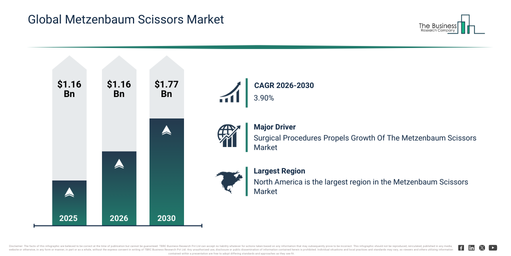
    The metzenbaum scissors market size is anticipated to show steady growth in the coming years. It is projected to increase to $2.06 billion in 2030, with a compound annual growth rate (CAGR) of 3.9%. This growth throughout the forecast period can be linked to the wider adoption of titanium and advanced materials, an increase in minimally invasive and robotic-assisted surgeries, the expansion of veterinary and dental surgical procedures, growing investment in surgical instrument innovation, and a regulatory emphasis on surgical instrument safety and sterilization. Significant trends expected during this period include a rising demand for precision surgical instruments, greater use of titanium and high-quality stainless steel scissors, an increase in minimally invasive and delicate tissue surgeries, the broadening of veterinary and dental surgical applications, and a focus on ergonomic designs for enhanced surgeon comfort.

    Get A Free Sample Report With In-Depth Market Insights:

    https://thebusinessresearchcompany.com/sample_request?id=16227505&type=smp&name=Metzenbaum%20Scissors%20Market%20Report%202026&utm_source=Blogs&utm_medium=Paid&utm_campaign=Sep_PR

    Metzenbaum Scissors Market Demand Drivers: What’s Powering Industry Growth?

    The increasing volume of surgical procedures is projected to boost the expansion of the metzenbaum scissors market in the future. Surgical procedures involve medical interventions carried out by skilled surgeons to address illnesses, injuries, or other bodily ailments. These interventions necessitate making cuts or employing specific instruments to manipulate tissues, organs, or bones internally. The rise in surgical procedures can be attributed to an aging global populace, advancements in medical science, a surge in chronic diseases, and better access to medical services. Metzenbaum scissors are predominantly utilized in surgical operations for cutting and separating delicate tissues. Their construction, characterized by long, thin blades with rounded tips, renders them perfect for accurate tissue manipulation without inflicting undue harm. For example, in June 2024, data from the International Society of Aesthetic Plastic Surgery (ISAPS), a US-based nonprofit professional organization, indicated that overall surgical and non-surgical procedures saw a 3.4% increase in 2023, reaching 34.9 million. This rise was fueled by a 5.5% growth in surgical procedures. Plastic surgeons conducted more than 15.8 million surgical procedures and 19.1 million non-surgical procedures, representing a 40% overall surge in procedures over the last four years. Consequently, the growing number of surgical procedures is driving the growth of the metzenbaum scissors market.

    Metzenbaum Scissors Market Segment Performance And Emerging Opportunities

    The metzenbaum scissors market covered in this report is segmented –

    1) By Type: Bending, Straight

    2) By Material: Stainless Steel, Titanium, Plastic

    3) By Jaw Design: Straight, Angled, Curved

    4) By Application: Surgical, Dental, Veterinary

    5) By End-User: Hospitals, Clinics, Private Practices, Veterinary Clinics

    Subsegments:

    1) By Bending: Curved Bending Metzenbaum Scissors, Heavy-Duty Bending Metzenbaum Scissors, Micro Bending Metzenbaum Scissors, Bending Metzenbaum Scissors For Precision Surgery

    2) By Straight: Standard Straight Metzenbaum Scissors, Long Straight Metzenbaum Scissors, Straight Metzenbaum Scissors For General Surgery, Straight Metzenbaum Scissors For Delicate Procedures

    Metzenbaum Scissors Market Leading Players And Competitive Positioning

    Major companies operating in the metzenbaum scissors market are Olympus Corporation, CooperSurgical Inc., Karl Storz SE & Co. KG, Integra LifeSciences Corporation, ConMed Corporation, Aspen Surgical Products Inc., Nopa Instruments Medizintechnik GmbH, Electro Surgical Instrument Co., HARFINS GmbH, Wexler Surgical Inc., Xelpov Surgical Ltd., Sontec Instruments Inc., DTR Medical Ltd., Johnson & Johnson (Ethicon), B Braun Melsungen AG, Medtronic plc, KLS Martin Group, Scanlan International Inc., Stille AB, Zimmer Biomet Holdings Inc., Arthrex Inc., Swann‑Morton Ltd., World Precision Instruments LLC, Sklar Surgical Instruments.

    View The Full Metzenbaum Scissors Market Report:

    https://thebusinessresearchcompany.com/report/metzenbaum-scissors-global-market-report?utm_source=Blogs&utm_medium=Paid&utm_campaign=Sep_PR

    Metzenbaum Scissors Market Regional Distribution: Which Areas Power Market Growth?

    North America was the largest region in the metzenbaum scissors market in 2025. The regions covered in the metzenbaum scissors market report are Asia-Pacific, South East Asia, Western Europe, Eastern Europe, North America, South America, Middle East, Africa.

    Reach Out To Our Team:

    The Business Research Company: https://www.thebusinessresearchcompany.com/

    Americas: +1 310-496-7795

    Asia: +44 7882 955267 & +91 8897263534

    Europe: +44 7882 955267

    Email us at: marketing@tbrc.info

    Follow us on:

    LinkedIn: https://in.linkedin.com/company/the-business-research-company

    YouTube: https://www.youtube.com/channel/UC24_fI0rV8cR5DxlCpgmyFQ

    Global Market Model: https://www.thebusinessresearchcompany.com/global-market-model

  • Metered Dose Inhaler Devices Market Growth Outlook For 2026: Drivers, Trends And Future Opportunities

    Metered Dose Inhaler Devices Market Growth Outlook For 2026: Drivers, Trends And Future Opportunities

    Featuring market attractiveness scoring, total addressable market sizing, company benchmarking matrices, interactive Excel dashboards, deeper supply chain intelligence, emerging startup tracking, and granular product-level insights, The Business Research Company’s 2026 market reports are built to deliver research that is both more actionable and more strategically valuable.

    Metered Dose Inhaler Devices Market Forecast: Value Set To Climb From $17.12 Billion To $21.06 Billion

    The metered dose inhaler devices market has experienced robust expansion in recent years. Its valuation is predicted to climb from $16.23 billion in 2025 to $17.12 billion in 2026, exhibiting a compound annual growth rate (CAGR) of 5.5%. This past growth can be ascribed to factors such as the increasing prevalence of asthma, a rise in COPD incidence, the widespread application of inhalation therapy, physician preference for MDIs, and the availability of generic inhalers.

    The metered dose inhaler devices market size is projected to experience substantial expansion over the coming years. This market is anticipated to reach a valuation of $21.06 billion by 2030, exhibiting a compound annual growth rate (CAGR) of 5.3%. Factors contributing to this anticipated growth include the rise of smart inhalers, stringent environmental regulations concerning propellants, the expansion of homecare treatments, increasing demand for digital adherence monitoring, and the advent of new respiratory therapies. Key trends identified for this period encompass smart dose tracking inhalers, the development of breath-actuated inhalation technology, more compact and portable device designs, improvements in dose accuracy, and the wider adoption of eco-friendly propellants.

    Get A Free Sample Report With In-Depth Market Insights:

    https://thebusinessresearchcompany.com/sample_request?id=91055853&type=smp&name=Metered%20Dose%20Inhaler%20Devices%20Market%20Report%202026&utm_source=Blogs&utm_medium=Paid&utm_campaign=Sep_PR

    Metered Dose Inhaler Devices Market Growth Drivers: What’s Behind The Acceleration?

    The metered dose inhaler devices market is anticipated to grow due to the increasing prevalence of chronic obstructive pulmonary diseases. Chronic obstructive pulmonary disease (COPD) is a progressive lung condition characterized by obstructed airflow, typically caused by long-term exposure to irritants like cigarette smoke, leading to symptoms such as shortness of breath, coughing, and wheezing. The rising incidence of COPD is influenced by factors including tobacco use, air pollution, an aging population, and delayed diagnosis or treatment. Metered dose inhaler (MDI) devices assist in managing COPD by delivering medication directly to the lungs, offering rapid relief and improving airflow. For example, in December 2023, the National Institutes of Health, a US-based government agency, projected that COPD cases would increase from 532 million in 2030 to a total of 592 million by 2050. Consequently, the increasing prevalence of chronic obstructive pulmonary diseases is propelling the growth of the metered dose inhaler devices market. The rising air pollution is expected to boost the growth of the metered dose inhaler (MDI) devices market going forward. Air pollution refers to the presence of harmful substances, including particulate matter, gases, and biological molecules, in the atmosphere that can cause adverse health effects. Exposure to air pollution is a significant risk factor for respiratory diseases such as asthma and chronic obstructive pulmonary disease (COPD). The increase in air pollution is largely attributed to industrialization, urbanization, higher vehicular emissions, and the burning of fossil fuels. MDIs support public health by providing targeted medication to manage respiratory conditions that are triggered or worsened by polluted air. For instance, in October 2025, the Clean Air Fund, a UK-based nonprofit philanthropic organization, reported that in 2023, funding for fossil fuel–related projects surged 80%, increasing from $5.3B to $9.5B due to rising air pollution. Additionally, fossil fuel combustion contributes to over 5 million of the 8.1 million annual premature air pollution deaths. Therefore, the rising air pollution is driving the growth of the metered dose inhaler devices market.

    Metered Dose Inhaler Devices Market Segment Landscape And Growth Outlook

    The metered dose inhaler devices market covered in this report is segmented –

    1) By Type: Desktop Metered Dose Inhaler Devices, Portable Metered Dose Inhaler Devices, Other Types

    2) By Distribution Channel: Online, Offline

    3) By Application: Asthma, Chronic Obstructive Pulmonary Disease, Other Applications

    4) By End-User: Hospitals, Clinics, Homecare Settings, Other End Users

    Subsegments:

    1) By Desktop Metered Dose Inhaler Devices: Standard desktop MDI devices, High-performance desktop MDI devices, Smart desktop MDI devices

    2) By Portable Metered Dose Inhaler Devices: Conventional portable MDI devices, Advanced portable MDI devices, Smart portable MDI devices

    3) By Other Types: Nebulizer-Based MDI devices, Dry powder inhaler (DPI) combined devices, Soft mist inhaler (SMI) devices, Other specialized MDI devices

    Metered Dose Inhaler Devices Market Trends: What’s Defining The Industry’s Next Phase?

    Major companies in the metered dose inhaler devices market are concentrating on developing technologically advanced solutions, such as pressurized metered dose inhalers, to improve drug delivery efficiency and patient compliance. Pressurized metered-dose inhalers (pMDIs) are devices for inhalation that deliver an exact dose of medication in aerosol form using a pressurized propellant. For instance, in July 2023, Lupin Limited, an India-based pharmaceutical company, introduced Luforbec 100/6, a pressurized metered dose inhaler (pMDI) designed for treating adult asthma and chronic obstructive pulmonary disease (COPD) in Germany. This product combines beclometasone (100 µg) and formoterol (6 µg), offering an effective treatment option for patients who require combination therapy. Importantly, Luforbec is priced approximately 47% lower than the fixed reference price, thereby increasing its accessibility. Given that asthma impacts about 5% of adults in Germany, this launch emphasizes Lupin’s commitment to addressing critical healthcare requirements and enhancing patient outcomes in the field of respiratory care.

    Metered Dose Inhaler Devices Market Competitive Overview And Top Companies

    Major companies operating in the metered dose inhaler devices market are Pfizer Inc., Merck & Co. Inc., AstraZeneca PLC, GlaxoSmithKline plc, 3M Company, Boehringer Ingelheim GmbH, Teva Pharmaceutical Industries Ltd., Berry Global Inc., AptarGroup Inc., Philips Healthcare, Chiesi Farmaceutici S.p.A., Cipla Limited, Gerresheimer AG, Zydus Lifesciences Limited, Mylan N.V., Nemera, Beximco Pharmaceuticals Limited, Cohero Health Inc., Bespak Europe Ltd., Trudell Medical International, Iconovo AB

    View The Full Metered Dose Inhaler Devices Market Report:

    https://thebusinessresearchcompany.com/report/metered-dose-inhaler-devices-global-market-report?utm_source=Blogs&utm_medium=Paid&utm_campaign=Sep_PR

    Metered Dose Inhaler Devices Market Leading Geography: Which Region Contributes The Most Revenue?

    North America was the largest region in the metered dose inhaler devices market in 2025. Asia-Pacific is expected to be the fastest-growing region in the forecast period. The regions covered in the metered dose inhaler devices market report are Asia-Pacific, South East Asia, Western Europe, Eastern Europe, North America, South America, Middle East, Africa.

    Reach Out To Our Team:

    The Business Research Company: https://www.thebusinessresearchcompany.com/

    Americas: +1 310-496-7795

    Asia: +44 7882 955267 & +91 8897263534

    Europe: +44 7882 955267

    Email us at: marketing@tbrc.info

    Follow us on:

    LinkedIn: https://in.linkedin.com/company/the-business-research-company

    YouTube: https://www.youtube.com/channel/UC24_fI0rV8cR5DxlCpgmyFQ

    Global Market Model: https://www.thebusinessresearchcompany.com/global-market-model