Blog

  • Home Medical Equipment (HME) Devices Market Reaches $61.05 Billion In 2026: Key Developments Shaping Expansion

    Home Medical Equipment (HME) Devices Market Reaches $61.05 Billion In 2026: Key Developments Shaping Expansion

    Backed by market attractiveness analysis, total addressable market sizing, company benchmarking matrices, interactive Excel dashboards, wider supply chain intelligence, emerging startup coverage, and detailed product-level insights, The Business Research Company’s 2026 market reports are designed to offer research that is more actionable and strategically valuable than ever.

    Home Medical Equipment (HME) Devices Market Revenue Outlook: What CAGR Lies Ahead Through 2030?

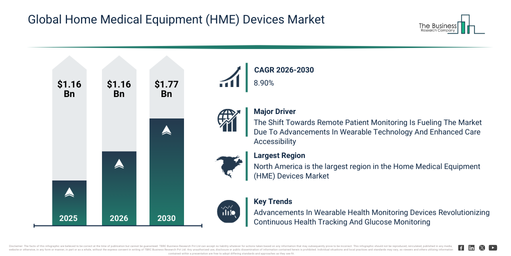
    The home medical equipment (hme) devices market size has experienced strong growth in recent years. It is projected to expand from $39.9 billion in 2025 to $43.47 billion in 2026, with a compound annual growth rate (CAGR) of 8.9%. The growth observed in the past can be attributed to factors such as aging population growth, increasing prevalence of chronic diseases, the expansion of home healthcare services, rising hospital cost pressures, and a growing acceptance of self-monitoring medical devices.

    The home medical equipment (hme) devices market is projected to experience substantial expansion over the coming years. This market is set to reach $61.05 billion by 2030, exhibiting an impressive compound annual growth rate (CAGR) of 8.9%. This anticipated growth is driven by several factors, including heightened investments in digital health technologies, an increasing need for home-based care options, the broader integration of telehealth with hme devices, a stronger emphasis on preventive healthcare measures, and the rising uptake of smart medical equipment. Key developments expected during this period involve the greater adoption of remote patient monitoring devices, an escalating demand for portable and easy-to-use equipment, the proliferation of connected home healthcare solutions, the increasing incorporation of AI-enabled diagnostic capabilities, and a heightened focus on ensuring patient comfort and promoting independence.

    Get A Free Sample Report With In-Depth Market Insights:

    https://thebusinessresearchcompany.com/sample_request?id=67073834&type=smp&name=Home%20Medical%20Equipment%20%28HME%29%20Devices%20Market%20Report%202026&utm_source=Blogs&utm_medium=Paid&utm_campaign=Oct_PR

    Home Medical Equipment (HME) Devices Market Demand Drivers: What’s Powering Industry Growth?

    Future expansion of the home medical equipment devices market is anticipated due to the increasing adoption of remote patient monitoring. Remote Patient Monitoring (RPM) involves leveraging technology to track a patient’s health and medical status remotely, generally away from conventional healthcare environments. This process utilizes tools like wearable sensors, mobile applications, or other electronic instruments to gather health information (e.g., heart rate, blood pressure, glucose levels) and relay it to medical professionals. This move towards remote patient monitoring is fueled by progress in wearable tech, enabling uninterrupted, real-time collection of health data, leading to better handling of chronic illnesses and improved patient support beyond standard clinical environments. Home medical equipment devices play a crucial role in remote patient monitoring by empowering individuals to monitor their health status from their residences. Such devices facilitate physicians in overseeing patient advancements, modifying treatments, and intervening as needed, thereby reducing the necessity for regular face-to-face appointments. An example illustrating this trend is from April 2024, when the Insurance Thought Leadership Inc., a US-based firm specializing in insurance and risk management information, reported a rise in telehealth utilization to surpass 53 million medicare participants, with 91% of health systems implementing telehealth programs. Consequently, the increasing adoption of remote patient monitoring is serving as a primary catalyst for the expansion of the home medical equipment devices market.

    Home Medical Equipment (HME) Devices Market Segment Landscape And Growth Outlook

    The home medical equipment (hme) devices market covered in this report is segmented –

    1) By Product Type: Oxygen Equipment, Mobility Assistive Devices, Respiratory Therapy Equipment, Other Products

    2) By Application: Home Healthcare, Long-term Care, Other Applications

    3) By Distribution Channel: Online Retail, Hospital Pharmacies, Retail Pharmacies, Other Distribution Channels

    4) By End-User: Adults, Pediatric, Geriatric

    Subsegments:

    1) Oxygen Equipment: Oxygen Concentrators, Oxygen Cylinders, Liquid Oxygen Systems, Oxygen Masks, Oxygen Regulators

    2) Mobility Assistive Devices: Wheelchairs, Walking Aids, Scooters, Lift Chairs, Stair Lifts

    3) Respiratory Therapy Equipment: Ventilators, CPAP Machines, BiPAP Machines, Nebulizers, Inhalers

    4) Other Products: Home Dialysis Equipment, Blood Pressure Monitors, Temperature Monitors, Pulse Oximeters, Patient Lifting Equipment

    Home Medical Equipment (HME) Devices Market Innovation Trends: What Developments Are Reshaping The Industry?

    Leading companies operating in the home medical equipment devices market are prioritizing the development of sophisticated products, such as wearable health monitoring devices, to offer highly accurate, real-time health tracking and improve patient outcomes. These wearable health monitoring devices are advanced technologies built to continuously monitor vital health parameters including heart rate, blood pressure, and glucose levels. For instance, in September 2024, Abbott Laboratories, a US-based healthcare company, introduced Lingo, marking it as the first over-the-counter continuous glucose monitoring (CGM) system in the United States. Lingo is specifically designed for adults not on insulin therapy, allowing users to track their glucose levels using a small adhesive sensor that synchronizes with a smartphone app. The aim of Lingo is to provide accessible glucose monitoring for health-conscious individuals and those managing prediabetes.

    Home Medical Equipment (HME) Devices Market Competitive Landscape: Who Leads The Industry?

    Major companies operating in the home medical equipment (hme) devices market are Cardinal Health Inc., Abbott Laboratories, Medtronic plc, 3M Health Care, Medline Industries Inc., Fresenius Medical Care AG & Co. KGaA, Becton Dickinson and Company, Koninklijke Philips N.V., Stryker Corporation, GE HealthCare, Baxter International Inc., Smith & Nephew, ResMed Inc., Fisher and Paykel Healthcare Corporation Limited, Rotech Healthcare Inc., Invacare Corporation, Sunrise Medical LLC, Hollister Incorporated, B. Braun SE, Omron Healthcare Inc., Nidek Medical Products Inc.

    View The Full Home Medical Equipment (HME) Devices Market Report:

    https://thebusinessresearchcompany.com/report/home-medical-equipment-hme-devices-global-market-report?utm_source=Blogs&utm_medium=Paid&utm_campaign=Oct_PR

    Home Medical Equipment (HME) Devices Market Geographic Landscape: Which Region Dominates Industry Growth?

    North America was the largest region in the home medical equipment (HME) devices market in 2025. Asia-Pacific is expected to be the fastest-growing region in the forecast period. The regions covered in the home medical equipment (hme) devices market report are Asia-Pacific, South East Asia, Western Europe, Eastern Europe, North America, South America, Middle East, Africa.

    Reach Out To Our Team:

    The Business Research Company: https://www.thebusinessresearchcompany.com/

    Americas: +1 310-496-7795

    Asia: +44 7882 955267 & +91 8897263534

    Europe: +44 7882 955267

    Email us at: marketing@tbrc.info

    Follow us on:

    LinkedIn: https://in.linkedin.com/company/the-business-research-company

    YouTube: https://www.youtube.com/channel/UC24_fI0rV8cR5DxlCpgmyFQ

    Global Market Model: https://www.thebusinessresearchcompany.com/global-market-model
  • Home Medical Alert Systems Market Growth Outlook For 2026: Drivers, Trends And Future Opportunities

    Home Medical Alert Systems Market Growth Outlook For 2026: Drivers, Trends And Future Opportunities

    Featuring market attractiveness scoring, total addressable market sizing, company benchmarking matrices, interactive Excel dashboards, deeper supply chain intelligence, emerging startup tracking, and granular product-level insights, The Business Research Company’s 2026 market reports are built to deliver research that is both more actionable and more strategically valuable.

    Home Medical Alert Systems Market Growth Analysis: How Will Revenue Trend Over The Forecast Period?

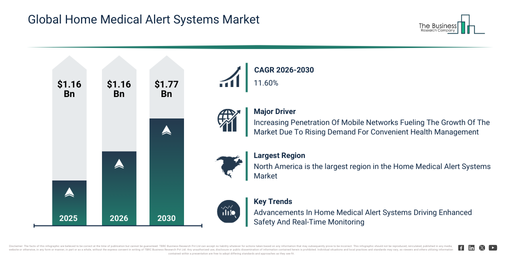
    The home medical alert systems market size has seen rapid growth in recent years. This market is expected to expand from $4.4 billion in 2025 to $4.93 billion in 2026, achieving a compound annual growth rate (CAGR) of 11.9%. Historically, this growth can be attributed to an increasing elderly population, a reliance on landline-based pers systems, limited mobile connectivity in early years, growing awareness of in-home safety, and the development of basic emergency pendant devices.

    The home medical alert systems market is projected to experience substantial expansion in the coming years. This market is forecast to reach $7.65 billion in 2030, exhibiting a compound annual growth rate (CAGR) of 11.6%. Factors contributing to this growth over the forecast period include the increasing uptake of smartphone-based and AI-powered alert applications, their integration with smart home ecosystems, the growing prevalence of chronic diseases, ongoing advancements in wearable technology, and the expansion of assisted living and nursing home facilities. Key trends anticipated during the forecast period encompass the increasing use of wearable medical alert devices, their integration with telehealth and remote monitoring services, a heightened demand for GPS and fall detection functionalities, the broadening of subscription-based and pay-as-you-go service models, and an intensified emphasis on user-friendly interfaces and accessibility.

    Get A Free Sample Report With In-Depth Market Insights:

    https://thebusinessresearchcompany.com/sample_request?id=32455841&type=smp&name=Home%20Medical%20Alert%20Systems%20Market%20Report%202026&utm_source=Blogs&utm_medium=Paid&utm_campaign=Oct_PR

    Home Medical Alert Systems Market Growth Drivers: What’s Behind The Acceleration?

    The future expansion of the home medical alert systems market is anticipated to be fueled by the growing reach of mobile networks. These networks are wireless communication infrastructures, facilitating internet and telephone services for mobile devices through radio wave transmission. The widespread adoption of mobile networks is accelerating, driven by the escalating need for internet connectivity in both urban and rural regions. Given that home medical alert systems frequently depend on mobile connectivity for operation, this encourages further network deployments in residential settings. For example, in February 2025, the GSM Association, a global organization for mobile operators and companies based in the UK, indicated that the world had 5.8 billion unique mobile subscribers, signifying a 71% penetration rate. This figure is projected to rise to 6.5 billion by 2030. Consequently, the expanding penetration of mobile networks serves as a key driver for the growth of the home medical alert systems market.

    Home Medical Alert Systems Market Breakdown By Product Type And Application

    The home medical alert systems market covered in this report is segmented –

    1) By Type: Personal Emergency Response Systems (PERS), Wearable Alert Systems, Smartphone Based Alert Systems, In Home Alert Systems

    2) By Service Model: Subscription Based Services, One Time Purchase Models, Bundled Services, Pay-As-You-Go Services

    3) By Applications: Home Based Use, Nursing Home, Assisted Living Facilities, Hospices, Other Applications

    4) By Distribution Channel: Online Retailers, Medical Equipment Stores, Direct Sales, Healthcare Facilities

    5) By End User: Seniors, Disabled Individuals, Patients With Chronic Conditions, Other End Users

    Subsegments:

    1) By Personal Emergency Response Systems (PERS): Landline-Based PERS, Cellular-Based PERS, GPS-Enabled PERS, Two-Way Voice Communication PERS, Fall Detection-Integrated PERS

    2) By Wearable Alert Systems: Medical Alert Smartwatches, Emergency Pendant Alarms, Wristband Alert Devices, Necklace Alert Devices, Clip-On Wearable Sensors

    3) By Smartphone-Based Alert Systems: Dedicated Medical Alert Apps, Hybrid Smartphone + Wearable Systems, AI-Powered Emergency Response Apps, Family-Connected Alert Apps, GPS Location Tracking Apps

    4) By In-Home Alert Systems: Wall-Mounted Emergency Buttons, Bedside Alert Systems, Voice-Activated Home Assistants, Motion-Sensor Based Alarms, Smart Home-Integrated Medical Alerts

    Home Medical Alert Systems Market Trends: What’s Defining The Industry’s Next Phase?

    Leading companies in the home medical alert systems market are emphasizing advanced technologies, such as artificial intelligence (AI)-powered fall detection, to facilitate quicker emergency responses, bolster user safety, and enable more personalized health monitoring. AI-powered fall detection describes the application of artificial intelligence algorithms in devices to accurately identify falls and alert caregivers in real-time, thereby improving emergency intervention and reducing false alarms. For example, in November 2024, LogicMark, a US-based enterprise focused on medical alert systems, unveiled the Freedom Alert Max, an advanced home medical alert device. This innovative system integrates AI-powered fall detection, GPS tracking, and emergency video calling into a single unit. It further provides seamless connectivity with mobile applications and continuous 24/7 US-based professional monitoring. The Freedom Alert Max enhances the safety and independence of seniors and at-risk individuals.

    Home Medical Alert Systems Market Company Landscape And Competitive Strategy

    Major companies operating in the home medical alert systems market are ADT Inc., Connect America LLC, Lifeline Systems Pvt. Ltd., LifeStation Inc., Medical Guardian LLC, LifeFone Inc., AlertOne Services LLC, Life Alert Emergency Response Inc., Rescue Alert of California, MyNotifi by MedHab Inc., Bay Alarm Medical, SafeGuardian LLC, LifeCall Medical Alert Systems, Senior Safety Medical Alert, AlertCare Medical Alert Systems, LifeSignals Group Inc., LogicMark Inc., ResponseNow Medical Alert Systems, Rescue Touch LLC, Vital Alert Communication Inc.

    View The Full Home Medical Alert Systems Market Report:

    https://thebusinessresearchcompany.com/report/home-medical-alert-systems-global-market-report?utm_source=Blogs&utm_medium=Paid&utm_campaign=Oct_PR

    Home Medical Alert Systems Market Largest Region: Which Geography Holds The Highest Market Share?

    North America was the largest region in the home medical alert systems market in 2025. Asia-Pacific is expected to be the fastest-growing region in the forecast period. The regions covered in the home medical alert systems market report are Asia-Pacific, South East Asia, Western Europe, Eastern Europe, North America, South America, Middle East, Africa.

    Reach Out To Our Team:

    The Business Research Company: https://www.thebusinessresearchcompany.com/

    Americas: +1 310-496-7795

    Asia: +44 7882 955267 & +91 8897263534

    Europe: +44 7882 955267

    Email us at: marketing@tbrc.info

    Follow us on:

    LinkedIn: https://in.linkedin.com/company/the-business-research-company

    YouTube: https://www.youtube.com/channel/UC24_fI0rV8cR5DxlCpgmyFQ

    Global Market Model: https://www.thebusinessresearchcompany.com/global-market-model
  • Home Healthcare Equipment Market Size Forecast From 2026 To 2030: Key Industry Trends

    Home Healthcare Equipment Market Size Forecast From 2026 To 2030: Key Industry Trends

    Built to provide research that’s more actionable and strategically valuable, The Business Research Company’s 2026 market reports include market attractiveness analysis, total addressable market sizing, company benchmarking matrices, interactive Excel dashboards, broader supply chain intelligence, emerging startup tracking, and in-depth product insights.

    Home Healthcare Equipment Market Forecast: What Value Will The Market Reach By 2030?

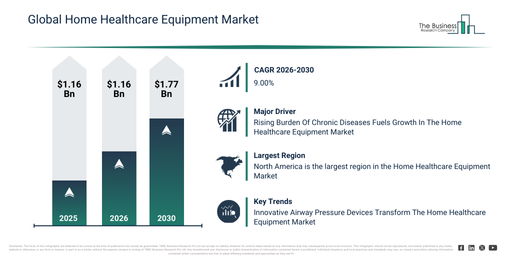
    The home healthcare equipment market has experienced significant growth in recent years. It is anticipated to expand from $37.83 billion in 2025 to $41.25 billion in 2026, demonstrating a compound annual growth rate (CAGR) of 9.0%. Historically, this growth has been driven by factors such as the increasing prevalence of chronic diseases, an expanding aging population, rising healthcare cost pressures, the growing acceptance of home-based care models, and the improved availability of portable medical devices.

    The home healthcare equipment market is projected for significant expansion in the coming years, with its valuation set to reach $58.15 billion by 2030, exhibiting a compound annual growth rate (CAGR) of 9.0%. This anticipated growth during the forecast period is driven by factors such as the increasing call for telehealth-supported home care, the growing embrace of smart medical devices, the broadening of value-based healthcare frameworks, a heightened emphasis on preventive home healthcare, and breakthroughs in connected health technologies. Key developments anticipated in this period include the wider adoption of remote patient monitoring solutions, an escalating need for diagnostic equipment used at home, an increase in the deployment of connected medical devices, the proliferation of solutions for managing chronic diseases in a home setting, and a strengthened focus on patient-centered care equipment.

    Get A Free Sample Report With In-Depth Market Insights:

    https://thebusinessresearchcompany.com/sample_request?id=12188432&type=smp&name=Home%20Healthcare%20Equipment%20Market%20Report%202026&utm_source=Blogs&utm_medium=Paid&utm_campaign=Oct_PR

    Home Healthcare Equipment Market Growth Factors Behind Sustained Expansion

    The increasing prevalence of chronic diseases is projected to drive the growth of the home healthcare equipment market moving forward. Chronic conditions are identified as health issues that endure for a year or more, requiring continuous medical attention, limiting daily activities, or both. Heart disease, cancer, obesity, and diabetes are some examples. Home healthcare equipment is vital for managing chronic diseases, equipping patients with the essential tools and devices for monitoring their health, receiving treatment, and elevating their quality of life within their home settings. For instance, in June 2024, information from the National Health Service, a UK-based government department, indicated that 3,615,330 individuals registered with a general practitioner (GP) were diagnosed with non-diabetic hyperglycemia or pre-diabetes (a condition characterized by elevated blood sugar levels, insufficient for a diabetes classification) in 2023, marking an 18% increase from 3,065,825 cases in 2022. Thus, the substantial impact of chronic diseases is propelling the expansion of the home healthcare equipment market.

    Home Healthcare Equipment Market Segment Analysis And Revenue Potential

    The home healthcare equipment market covered in this report is segmented –

    1) By Product: Blood Glucose Monitor, Blood Pressure Monitor, Rehabilitation equipment, Other Products

    2) By Service: Rehabilitation, Infusion Therapy, Respiratory Therapy, Pregnancy Care

    3) By Application: Diagnostics And Monitoring, Therapeutics, Care And Rehabilitation, Other Application

    4) By End User: Hospitals Or Clinics Or Diagnostic Labs, Research And Development Centre, Home Care Settings

    Subsegments:

    1) By Blood Glucose Monitor: Glucometers, Continuous Glucose Monitors (CGMs), Test Strips

    2) By Blood Pressure Monitor: Digital Blood Pressure Monitors, Manual Blood Pressure Monitors, Ambulatory Blood Pressure Monitors

    3) By Rehabilitation Equipment: Mobility Aids, Exercise Equipment, Home Modification Products

    4) By Other Products: Thermometers, Nebulizers, Pulse Oximeters

    Home Healthcare Equipment Market Industry Trends Fueling Future Revenue Growth

    Leading businesses within the home healthcare equipment market are intensifying efforts to launch innovative airway pressure devices, aiming to secure a competitive advantage. These sophisticated medical tools, known as advanced airway pressure devices, are engineered to provide regulated and variable pressure, assisting patients with their breathing, and are frequently utilized for ailments like sleep apnea and respiratory failure. An example of this trend occurred in July 2024, when Varon, a home healthcare equipment provider based in the US, unveiled its Sunnygrand series, which includes state-of-the-art CPAP (continuous positive airway pressure) and BiPAP (bilevel positive airway pressure) devices specifically developed to manage sleep apnea. The devices integrate intelligent algorithms that dynamically adapt to a user’s unique breathing patterns, thereby guaranteeing optimal airflow and promoting superior sleep quality. CPAP machines operate by supplying a constant flow of air, which helps maintain open airways, positioning them as the predominant therapeutic option for obstructive sleep apnea. Conversely, BiPAP devices offer distinct pressure settings—a higher pressure for inhalation and a lower one for exhalation—presenting a more comfortable alternative for individuals who struggle with CPAP therapy or have intricate respiratory issues. Ultimately, these instruments are crucial for enhancing both sleep quality and general well-being by effectively preventing breathing disturbances that occur during sleep.

    Home Healthcare Equipment Market Key Players Shaping Industry Direction

    Major companies operating in the home healthcare equipment market are LifeScan Inc., Microlife Corporation, A&D Company Limited, Abbott Laboratories, Panasonic Corp., Jiangsu Yuyue Medical Equipment & Supply Co. Ltd., Sannuo Hong Kong Limited Company, Insulet Corporation, Phonak Holding AG, William Demant Holding AS, Invacare Holdings Corporation, 3M Company, ARKRAY Inc., Apex Ltd., ApiJect Systems Corp., B. Braun Melsungen AG, Baxter International Inc., Becton Dickinson and Company, Bigfoot Biomedical Inc., Cardinal Health Inc., GE Healthcare Technologies Inc.

    View The Full Home Healthcare Equipment Market Report:

    https://thebusinessresearchcompany.com/report/home-healthcare-equipment-global-market-report?utm_source=Blogs&utm_medium=Paid&utm_campaign=Oct_PR

    Home Healthcare Equipment Market Regional Analysis: Which Region Leads By Revenue?

    North America was the largest region in the home health care equipment market in 2025. The regions covered in the home healthcare equipment market report are Asia-Pacific, South East Asia, Western Europe, Eastern Europe, North America, South America, Middle East, Africa.

    Reach Out To Our Team:

    The Business Research Company: https://www.thebusinessresearchcompany.com/

    Americas: +1 310-496-7795

    Asia: +44 7882 955267 & +91 8897263534

    Europe: +44 7882 955267

    Email us at: marketing@tbrc.info

    Follow us on:

    LinkedIn: https://in.linkedin.com/company/the-business-research-company

    YouTube: https://www.youtube.com/channel/UC24_fI0rV8cR5DxlCpgmyFQ

    Global Market Model: https://www.thebusinessresearchcompany.com/global-market-model
  • Home Health Monitoring Devices Market 2026: Market Size, Growth Drivers And Emerging Opportunities

    Home Health Monitoring Devices Market 2026: Market Size, Growth Drivers And Emerging Opportunities

    Backed by market attractiveness analysis, total addressable market sizing, company benchmarking matrices, interactive Excel dashboards, wider supply chain intelligence, emerging startup coverage, and detailed product-level insights, The Business Research Company’s 2026 market reports are designed to offer research that is more actionable and strategically valuable than ever.

    Home Health Monitoring Devices Market Size Outlook: How Quickly Will Revenue Expand Through 2030?

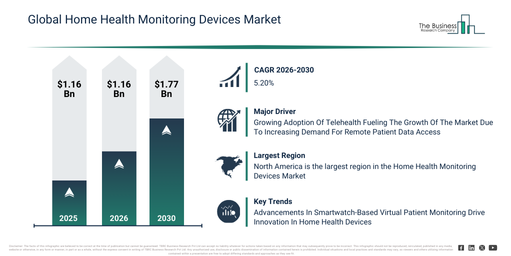
    The home health monitoring devices market has experienced significant expansion in recent years. This market is set to increase from $1.42 billion in 2025 to $1.49 billion in 2026, demonstrating a compound annual growth rate (CAGR) of 5.5%. Historically, this expansion was driven by several factors, including the limited availability of home-based health devices, increasing public awareness of chronic diseases, a reliance on hospital visits for health monitoring, the early adoption of basic heart and breath monitors, and a low penetration of remote health technologies.

    The home health monitoring devices market is projected to experience substantial expansion over the upcoming years. This market is set to reach $1.83 billion in 2030, exhibiting a compound annual growth rate (CAGR) of 5.2%. This anticipated growth during the forecast period can be linked to several factors, including advancements in wearable and connected technologies, a growing elderly demographic, the increasing embrace of telemedicine, the development of smart home healthcare frameworks, and greater investment in AI-driven health analytics. Key trends for the same period encompass the growing acceptance of wearable health monitoring tools, an intensified emphasis on managing chronic conditions within the home setting, the blending of telehealth with remote patient monitoring, an uptick in preventive healthcare and wellness tracking, and improvements in user-friendly interfaces and mobile connectivity.

    Get A Free Sample Report With In-Depth Market Insights:

    https://thebusinessresearchcompany.com/sample_request?id=22844746&type=smp&name=Home%20Health%20Monitoring%20Devices%20Market%20Report%202026&utm_source=Blogs&utm_medium=Paid&utm_campaign=Oct_PR

    Home Health Monitoring Devices Market Demand Drivers Opening New Revenue Streams

    The increasing embrace of telehealth is projected to fuel expansion within the home health monitoring devices market going forward. Telehealth involves employing technology to deliver medical services and consultations remotely, eliminating the necessity for physical appointments. The need for telehealth is escalating due to the ease it offers in accessing healthcare, enabling individuals to swiftly consult medical professionals from their residences, thereby conserving time and lessening travel requirements. This surge in telehealth utilization bolsters the need for home health monitoring devices by allowing healthcare providers to remotely obtain real-time patient information, which is crucial for precise diagnoses, prompt interventions, and sustained effective care without requiring in-person visits. As an illustration, in May 2025, the Centers for Medicare & Medicaid Services, a US-based federal agency, documented that 95% of HRSA-funded health centers utilized telehealth for primary care services in 2024. Consequently, the expanding use of telehealth will accelerate the advancement of the home health monitoring devices market.

    Home Health Monitoring Devices Market Segmentation And Category Overview

    The home health monitoring devices market covered in this report is segmented –

    1) By Type: Heart Monitors, Breath Monitors, Hematology Monitors, Multi-Parameter Monitors, Other Types

    2) By Application: Care Centre, Household, Other Applications

    3) By End User: Elderly Population, Chronic Disease Patients, General Health-Conscious Consumers, Post-Operative And Rehabilitation Patients, Healthcare Providers And Caregivers

    Subsegments:

    1) By Heart Monitors: ECG Monitors, Heart Rate Monitors, Blood Pressure Monitors, Holter Monitors

    2) By Breath Monitors: Pulse Oximeters, Spirometers, Breath Analyzers

    3) By Hematology Monitors: Blood Glucose Monitors, INR Monitors, Hemoglobin Monitors, Blood Clotting Time Monitors

    4) By Multi-Parameter Monitors: Vital Signs Monitors, Wearable Multi-Parameter Devices

    5) By Other Types: Body Temperature Monitors, Sleep Apnea Monitors, Urine Analyzers, Activity And Fitness Trackers

    Home Health Monitoring Devices Market Trends Powering Strategic Industry Growth

    Leading companies in the home health monitoring devices market are concentrating on developing advanced solutions, such as smartwatches tailored for virtual patient monitoring, to achieve seamless integration with health applications and telehealth platforms, thereby facilitating straightforward data sharing with healthcare providers. A smartwatch for virtual patient monitoring functions as a wearable digital device designed to continuously track and transmit health-related data in real-time, empowering remote healthcare providers to observe a patient’s physiological status and respond proactively. For instance, in July 2024, KORE, a US-based Internet of Things (IoT) company, introduced the mCareWatch 241, a smartwatch specifically for virtual patient monitoring. This watch is equipped with an emergency SOS function that assists users in quickly obtaining help when needed. It further supports calling features, GPS location tracking, and quick-dial options to guarantee reliable communication and safety. Essential health monitoring tools integrated include a heart rate sensor, a step counter, fall detection capabilities, and alerts for inactivity. Users are also able to set up geo-fencing alerts and reminders, accessible through a dedicated mobile app and a web interface.

    Home Health Monitoring Devices Market Competitive Analysis Of Leading Industry Participants

    Major companies operating in the home health monitoring devices market are Abbott Laboratories Inc., Omron Healthcare Co. Ltd., Garmin Ltd., ResMed Inc., Masimo Corporation, ChoiceMMed America Corp., Beurer GmbH, iRhythm Technologies Inc., A&D Company Limited, Microlife Corporation, Telli Health LLC, AliveCor Inc., CareSimple Inc., BioBeat Technologies Ltd., BioIntelliSense Inc., Tenovi Inc., 100Plus Inc., BodiMetrics LLC, Oxitone Medical Ltd., Guangdong Transtek Medical Electronics Co. Ltd.

    View The Full Home Health Monitoring Devices Market Report:

    https://thebusinessresearchcompany.com/report/home-health-monitoring-devices-global-market-report?utm_source=Blogs&utm_medium=Paid&utm_campaign=Oct_PR

    Home Health Monitoring Devices Market Geographic Distribution And Regional Opportunities

    North America was the largest region in the home health monitoring devices market in 2025. Asia-Pacific is expected to be the fastest-growing region in the forecast period. The regions covered in the home health monitoring devices market report are Asia-Pacific, South East Asia, Western Europe, Eastern Europe, North America, South America, Middle East, Africa.

    Reach Out To Our Team:

    The Business Research Company: https://www.thebusinessresearchcompany.com/

    Americas: +1 310-496-7795

    Asia: +44 7882 955267 & +91 8897263534

    Europe: +44 7882 955267

    Email us at: marketing@tbrc.info

    Follow us on:

    LinkedIn: https://in.linkedin.com/company/the-business-research-company

    YouTube: https://www.youtube.com/channel/UC24_fI0rV8cR5DxlCpgmyFQ

    Global Market Model: https://www.thebusinessresearchcompany.com/global-market-model
  • Holter Monitor Market Set To Expand From $1.66 Billion In 2026: Growth Outlook Through 2030

    Holter Monitor Market Set To Expand From $1.66 Billion In 2026: Growth Outlook Through 2030

    Featuring market attractiveness scoring, total addressable market sizing, company benchmarking matrices, interactive Excel dashboards, deeper supply chain intelligence, emerging startup tracking, and granular product-level insights, The Business Research Company’s 2026 market reports are built to deliver research that is both more actionable and more strategically valuable.

    Holter Monitor Market Size, Value And Growth Trajectory Through 2030

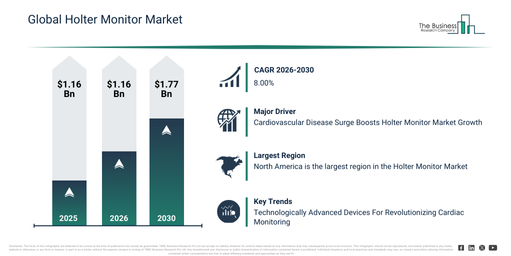
    The holter monitor market has exhibited robust growth in recent years. It is projected to increase from $1.11 billion in 2025 to $1.22 billion in 2026, at a compound annual growth rate (CAGR) of 9.4%. The expansion observed historically can be attributed to the rising prevalence of cardiovascular diseases, the increasing utilization of ambulatory ECG monitoring, a greater adoption of cardiac diagnostic devices by hospitals, improved awareness regarding arrhythmia detection, and the expansion of specialty cardiac centers.

    The holter monitor market is anticipated to experience robust expansion in the coming years, projected to reach $1.66 billion by 2030, driven by a compound annual growth rate (CAGR) of 8.0%. This significant growth during the forecast period can be attributed to several factors, including an aging demographic facing increased cardiac risks, the escalating need for remote cardiac diagnostic solutions, the wider embrace of continuous heart rhythm monitoring, the expansion of cardiac services within home healthcare settings, and a heightened emphasis on the prompt identification of cardiac irregularities. Concurrently, key trends anticipated over this period encompass a move towards wireless and wearable holter monitoring technologies, an increase in long-term continuous cardiac surveillance, the wider acceptance of remote and home-based heart monitoring, a greater call for compact and user-friendly holter devices, and the growing incorporation of holter monitoring into proactive cardiac prevention strategies.

    Get A Free Sample Report With In-Depth Market Insights:

    https://thebusinessresearchcompany.com/sample_request?id=79830527&type=smp&name=Holter%20Monitor%20Market%20Report%202026&utm_source=Blogs&utm_medium=Paid&utm_campaign=Oct_PR

    Holter Monitor Market Growth Backed By Core Demand Fundamentals

    The growing occurrence of cardiovascular diseases is anticipated to drive the holter monitor market forward. Cardiovascular disease describes conditions affecting the heart or blood vessels, frequently resulting in complications such as heart attacks or strokes. The increased prevalence of cardiovascular disease is attributed to inactive lifestyles, unhealthy eating habits, rising rates of obesity, and an aging population. Holter monitors are used in cardiovascular diseases for continuous tracking of heart rhythms, assisting in the diagnosis and management of conditions like arrhythmias and ischemic events. For instance, GOV.UK, a UK-based government agency, reported in December 2024 that in March 2024, approximately 2.24 million adults in England, comprising about 4.4% of those aged 18 and over, had a GP-recorded diagnosis of CKD. This marks an increase from 2.09 million cases reported in the preceding year. Thus, the increasing incidence of cardiovascular diseases is fueling the growth of the holter monitor market.

    Holter Monitor Market Segment Outlook: Which Categories Are Growing Fastest?

    The holter monitor market covered in this report is segmented –

    1) By Product Type: Wired, Wireless

    2) By Channel Type: 3 Channel, 12 Channel, Other Channel Types

    3) By Monitoring Capacity: Upto 7 Days, Above 7 Days

    4) By End User: Hospitals, Specialty Cardiac Centers, Other End Users

    Subsegments:

    1) By Wired: Single-Channel Wired Holter Monitor, Multi-Channel Wired Holter Monitor, Standard Wired Holter Monitors (12-lead Ecg), Portable Wired Holter Monitors, Long-Term Continuous Monitoring Wired Devices, Hospital-Grade Wired Holter Monitors

    2) By Wireless: Single-Channel Wireless Holter Monitor, Multi-Channel Wireless Holter Monitor, Bluetooth-enabled Wireless Holter Monitors, Cloud-Connected Wireless Holter Monitors, Wearable Wireless Holter Monitors ( Patches Or Wristbands), Mobile App-Integrated Wireless Holter Monitors

    Holter Monitor Market Growth Trends Reshaping The Competitive Landscape

    Leading companies in the holter monitor market are dedicated to developing products featuring advanced technology that captures high-quality ECG recordings. High-quality ECG (electrocardiogram) recording signifies the process of obtaining precise and dependable electrical signals from the heart, which are vital for diagnosing various cardiac ailments. For example, in November 2023, Norav Medical, a Germany-based supplier of innovative medical devices, introduced the NR-314P Holter device. This novel Holter device delivers up to 14 days of continuous ECG recording in a lightweight 41g design. This compact unit incorporates 3-lead ECG technology, wireless connectivity, and smooth integration with EHR/HIS systems through HL7 and DICOM. It supports uninterrupted daily activities thanks to its rechargeable battery and water-resistant build. The NR-314P elevates patient care with its sophisticated analysis capabilities. Moreover, its water-resistant, lightweight design and rechargeable lithium polymer battery foster user adherence to long-term monitoring for continuous ECG recording during everyday routines.

    Holter Monitor Market Leading Companies And Competitive Benchmarking

    Major companies operating in the holter monitor market are Koninklijke Philips N.V., GE HealthCare Technologies, Lepu Medical Technology (Beijing) Co. Ltd, Fukuda Denshi Co. Ltd, Bittium Corporation, BTL Corporate, iRhythm Technologies Inc., Schiller AG, Edan Instruments Inc., Contec Medical Systems Co. Ltd, BPL Medical Technologies, ScottCare Corporation, EB Neuro S.p.A., custo med GmbH, ACS Diagnostics GmbH, Biotricity Inc., Cortrium ApS, Cardioline S.p.A., Labtech Ltd, Aspel SA, Borsam BioMedical Instruments Co. Ltd, AMEDTEC Medizintechnik Aue GmbH

    View The Full Holter Monitor Market Report:

    https://thebusinessresearchcompany.com/report/holter-monitor-global-market-report?utm_source=Blogs&utm_medium=Paid&utm_campaign=Oct_PR

    Holter Monitor Market Largest Region By Revenue And Market Share

    North America was the largest region in the holter monitor market in 2025. The regions covered in the holter monitor market report are Asia-Pacific, South East Asia, Western Europe, Eastern Europe, North America, South America, Middle East, Africa.

    Reach Out To Our Team:

    The Business Research Company: https://www.thebusinessresearchcompany.com/

    Americas: +1 310-496-7795

    Asia: +44 7882 955267 & +91 8897263534

    Europe: +44 7882 955267

    Email us at: marketing@tbrc.info

    Follow us on:

    LinkedIn: https://in.linkedin.com/company/the-business-research-company

    YouTube: https://www.youtube.com/channel/UC24_fI0rV8cR5DxlCpgmyFQ

    Global Market Model: https://www.thebusinessresearchcompany.com/global-market-model
  • Hollow-Fiber Bioreactors Market Size And Growth In 2026: Key Factors Shaping Future Demand

    Hollow-Fiber Bioreactors Market Size And Growth In 2026: Key Factors Shaping Future Demand

    Built to provide research that’s more actionable and strategically valuable, The Business Research Company’s 2026 market reports include market attractiveness analysis, total addressable market sizing, company benchmarking matrices, interactive Excel dashboards, broader supply chain intelligence, emerging startup tracking, and in-depth product insights.

    Hollow-Fiber Bioreactors Market CAGR Outlook And Future Development

    The hollow-fiber bioreactors market size has seen substantial growth in recent years. It is anticipated to expand from $1.5 billion in 2025 to $1.64 billion in 2026, demonstrating a compound annual growth rate (CAGR) of 9.3%. The market’s past growth can be attributed to factors such as reliance on traditional cell culture systems, limitations in bioreactor scalability, increasing biopharmaceutical research and development activities, a rise in academic research focused on tissue engineering, and the adoption of reusable bioreactors for early-stage production.

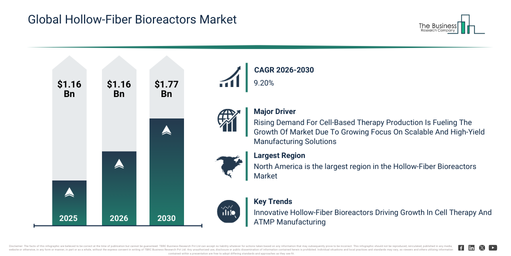
    The hollow-fiber bioreactors market size is anticipated to expand considerably in the coming years. This market is projected to reach $2.33 billion by the year 2030, exhibiting a compound annual growth rate (CAGR) of 9.2%. During the forecast period, this increase can be linked to improvements in single-use bioreactor technologies, the growth of modular and automated systems, a growing need for high-throughput protein production, more outsourcing to contract research organizations (CROs), and the integration of continuous perfusion and monitoring systems. Significant trends expected in the forecast period include the growing acceptance of single-use hollow-fiber bioreactors, an expansion in high-density cell culture applications, an escalating requirement for biopharmaceutical protein production, the growth of tissue engineering and regenerative medicine, and a focus on automated and high-throughput bioreactor systems.

    Get A Free Sample Report With In-Depth Market Insights:

    https://thebusinessresearchcompany.com/sample_request?id=34364634&type=smp&name=Hollow-Fiber%20Bioreactors%20Market%20Report%202026&utm_source=Blogs&utm_medium=Paid&utm_campaign=Oct_PR

    Hollow-Fiber Bioreactors Market Growth Catalysts And Demand Drivers

    The hollow-fiber bioreactors market is projected to expand due to the increasing need for cell-based therapy production. This type of production involves creating therapeutic items from living cells to address conditions like cancers, autoimmune issues, and genetic disorders. The rising demand for these therapies stems from the necessity for consistent, scalable manufacturing systems capable of handling high cell concentrations without compromising quality. Hollow-fiber bioreactors facilitate this by providing a high-surface-area, enclosed system that allows for the effective expansion and collection of therapeutic cells under regulated environments. For example, as reported in December 2024 by the International Federation of Pharmaceutical Manufacturers and Associations, a non-profit organization based in Switzerland, there were six first-in-class cell and gene treatments launched in 2023, marking a 50% increase from the three introduced in 2022. Consequently, the escalating demand for cell-based therapy production is boosting the hollow-fiber bioreactors market. The expanding adoption of personalized medicine is anticipated to drive growth within the hollow-fiber bioreactors market. Personalized medicine is a medical strategy that customizes treatments and healthcare choices to suit each patient’s unique attributes, requirements, and genetic makeup. This surge in personalized medicine is attributed to the growing use of sophisticated diagnostic tools that accurately pinpoint disease mechanisms specific to individual patients, allowing healthcare professionals to enhance treatment efficacy and minimize guesswork in therapy selection. Hollow-fiber bioreactors are crucial for personalized medicine, as they enable the scalable, high-quality production of cell cultures, which is essential for developing patient-specific therapies. For instance, in February 2024, the Personalized Medicine Coalition, a US-based hospital and health care entity, reported that the Food and Drug Administration (FDA), a US-based federal agency, cleared 16 new personalized therapies for patients with rare diseases in 2023, an increase from six in 2022. Thus, the rising prevalence of personalized medicine is stimulating the expansion of the hollow-fiber bioreactors market.

    Hollow-Fiber Bioreactors Market Segment Landscape: Which Areas Lead Development?

    The hollow-fiber bioreactors market covered in this report is segmented –

    1) By Product Type: Single-Use Hollow-Fiber Bioreactors, Reusable Hollow-Fiber Bioreactors

    2) By Application: Cell Culture, Tissue Engineering, Biopharmaceutical Production, Wastewater Treatment, Other Applications

    3) By End-User: Pharmaceutical And Biotechnology Companies, Research Institutes, Contract Research Organizations, Other End-Users

    Subsegments:

    1) By Single-Use Hollow-Fiber Bioreactors: Pre-Assembled Single-Use Hollow-Fiber Bioreactors, Modular Single-Use Hollow-Fiber Bioreactors, Customizable Single-Use Hollow-Fiber Bioreactors, High-Throughput Single-Use Hollow-Fiber Bioreactors, Automated Single-Use Hollow-Fiber Bioreactors

    2) By Reusable Hollow-Fiber Bioreactors: Fixed-Bed Reusable Hollow-Fiber Bioreactors, Modular Reusable Hollow-Fiber Bioreactors, High-Capacity Reusable Hollow-Fiber Bioreactors, Multipurpose Reusable Hollow-Fiber Bioreactors, Clean-In-Place Reusable Hollow-Fiber Bioreactors

    Hollow-Fiber Bioreactors Market Trends Shaping Long-Term Demand

    Major companies in the hollow-fiber bioreactors market are focusing on developing innovative solutions, such as single-use hollow-fiber membrane networks, to enable high-density, scalable, and low-shear cell culture suitable for advanced therapies. These single-use hollow-fiber membrane networks are disposable bioreactor systems, made of semi-permeable fibers, that facilitate continuous nutrient delivery and waste removal. This mechanism helps maintain uniform nutrient distribution, low-shear conditions, and scalable high-density cell growth, while simultaneously reducing contamination risk and simplifying biomanufacturing. For instance, in March 2025, ABEC Inc., a US-based process‑engineering company, launched its ATB (Advanced Therapy Bioreactor), a single-use, closed, hollow-fiber bioreactor platform specifically designed for advanced therapy medicinal product (ATMP) manufacturing. The ATB system incorporates proprietary hollow-fiber membrane networks that mimic the human circulatory system for localized nutrient and gas exchange, combined with oscillation-based mixing instead of mechanical agitation, to maintain optimal growth environments. Its design supports consistent scale‑up from 0.2 L to 10 L, preserving the same hollow-fiber surface-area-to-volume ratio across scales, and has demonstrated high densities and viabilities for a range of difficult-to-culture cells, including primary T-cells, CD34+ stem cells, HEK293, and CHO lines.

    Hollow-Fiber Bioreactors Market Industry Leaders And Competitive Landscape

    Major companies operating in the hollow-fiber bioreactors market are General Electric Company, Veolia Environnement S.A., Thermo Fisher Scientific Inc., Mitsubishi Chemical Corporation, Kubota Corporation, DuPont de Nemours Inc., MANN+HUMMEL GmbH, Alfa Laval AB, Sartorius AG, Repligen Corporation, Shenzhen Dreamemway Environmental Products Co. Ltd., FiberCell Systems Inc., Reynolds Culligan Water, Shanghai MegaVision Membrane Engineering & Technology Co. Ltd., Memfill Tech Private Limited, FibraCast Inc., iMemFlo Membrane Technology Co. Ltd., Guangdong Skyview Environmental Science and Technology Co. Ltd., PHILOS Co. Ltd., Blufox Engineering Pvt. Ltd.

    View The Full Hollow-Fiber Bioreactors Market Report:

    https://thebusinessresearchcompany.com/report/hollow-fiber-bioreactors-global-market-report?utm_source=Blogs&utm_medium=Paid&utm_campaign=Oct_PR

    Hollow-Fiber Bioreactors Market Regional Analysis And Leading Geography

    North America was the largest region in the hollow-fiber bioreactors market in 2025. Asia-Pacific is expected to be the fastest-growing region in the forecast period. The regions covered in the hollow-fiber bioreactors market report are Asia-Pacific, South East Asia, Western Europe, Eastern Europe, North America, South America, Middle East, Africa.

    Reach Out To Our Team:

    The Business Research Company: https://www.thebusinessresearchcompany.com/

    Americas: +1 310-496-7795

    Asia: +44 7882 955267 & +91 8897263534

    Europe: +44 7882 955267

    Email us at: marketing@tbrc.info

    Follow us on:

    LinkedIn: https://in.linkedin.com/company/the-business-research-company

    YouTube: https://www.youtube.com/channel/UC24_fI0rV8cR5DxlCpgmyFQ

    Global Market Model: https://www.thebusinessresearchcompany.com/global-market-model
  • Hollow Fiber Dialyzer Market Forecast 2026–2030: Market Size, Trends And Growth Opportunities

    Hollow Fiber Dialyzer Market Forecast 2026–2030: Market Size, Trends And Growth Opportunities

    Backed by market attractiveness analysis, total addressable market sizing, company benchmarking matrices, interactive Excel dashboards, wider supply chain intelligence, emerging startup coverage, and detailed product-level insights, The Business Research Company’s 2026 market reports are designed to offer research that is more actionable and strategically valuable than ever.

    Hollow Fiber Dialyzer Market Set To Climb From $6.78 Billion In 2026 To $8.4 Billion By 2030

    The hollow fiber dialyzer market size has experienced robust expansion in recent years. The market is projected to expand from $6.41 billion in 2025 to $6.78 billion in 2026, demonstrating a compound annual growth rate (CAGR) of 5.8%. This historical growth can be linked to several factors, including the rising incidence of chronic kidney disease, the increase in hospital-based dialysis services, the continued dependence on low flux membrane technologies, an expanding aging population, and heightened awareness of renal replacement therapies.

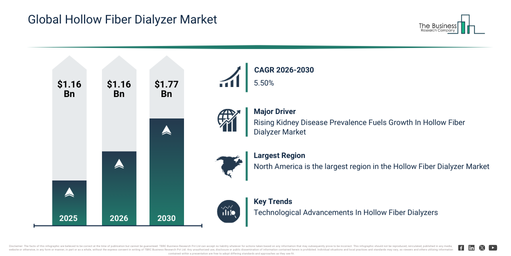
    The hollow fiber dialyzer market is projected to experience substantial growth in the upcoming years, with its size expected to reach $8.4 billion by 2030, expanding at a compound annual growth rate (CAGR) of 5.5%. This anticipated expansion is driven by factors such as the increasing adoption of high-flux and high-efficiency dialyzers, advancements in hollow fiber membrane design, the establishment of more dialysis centers in emerging markets, rising healthcare expenditure on renal care, and a focus on improving dialysis outcomes and treatment quality. Concurrently, major trends for the forecast period include a surging demand for high-flux dialyzers, the wider embrace of biocompatible membrane materials, an increasing use of dialyzers for both pediatric and geriatric patients, a noticeable shift toward synthetic polymer hollow fiber dialyzers, and a strong emphasis on enhancing filtration efficiency and ensuring patient safety.

    Get A Free Sample Report With In-Depth Market Insights:

    https://thebusinessresearchcompany.com/sample_request?id=87173853&type=smp&name=Hollow%20Fiber%20Dialyzer%20Market%20Report%202026&utm_source=Blogs&utm_medium=Paid&utm_campaign=Oct_PR

    Hollow Fiber Dialyzer Market Opportunity Drivers: What’s Unlocking New Revenue Potential?

    The growing occurrence of renal ailments is projected to boost the expansion of the hollow fiber dialysis market in the future. Renal conditions encompass disorders that impair kidney function, such as chronic kidney disease and acute kidney injury, affecting waste filtration and fluid balance. This rise in kidney disease prevalence is linked to higher incidences of chronic illnesses like diabetes and hypertension, coupled with an aging demographic. In managing kidney diseases, a hollow fiber dialyzer is employed to eliminate waste products and surplus fluids from the bloodstream, thereby carrying out the crucial filtration role of a non-functional kidney. For example, data from June 2023, sourced from Kidney Research UK, a UK-based charity supporting kidney disease research, indicates that by 2033, the number of individuals impacted by CKD stages 3–5 is anticipated to reach approximately 3.9 million. Consequently, the expanding occurrence of kidney diseases fuels the growth of the hollow fiber dialysis market.

    Hollow Fiber Dialyzer Market Segments: Where Is Growth Concentrated?

    The hollow fiber dialyzer market covered in this report is segmented –

    1) By Type: Low Flux Membrane, High Flux Membrane

    2) By Material Type: Synthetic Polymer Hollow Fiber Dialyzers, Cellulose-Based Hollow Fiber Dialyzers

    3) By Application: Hospitals, Dialysis Centers, Other Applications

    Subsegments:

    1) By Low Flux Membrane: Standard Low Flux Dialyzers, Biocompatible Low Flux Dialyzers, Low Flux Dialyzers For Pediatric Use

    2) By High Flux Membrane: Standard High Flux Dialyzers, Modified High Flux Dialyzers, High Flux Dialyzers For Pediatric Use, High Efficiency Dialyzers

    Hollow Fiber Dialyzer Market Innovation Trends Shaping Future Development

    Major companies within the hollow fiber dialyzer market are concentrating on developing advanced treatments, such as dialysis therapy, for efficient and effective blood purification. Dialysis therapy refers to the medical procedure utilized to extract waste products, excess fluid, and toxins from the blood of individuals whose kidneys are not functioning correctly. These dialyzers operate as artificial kidneys, filtering out the waste products, excess fluids, and toxins from the blood that the natural kidneys typically remove. For instance, in August 2024, Fresenius Medical Care, a Germany-based medical device company, obtained U.S. Food and Drug Administration approval for its 5008X Hemodialysis System. This medical device is specifically designed for treating patients with kidney disease. The system offers high-volume hemodiafiltration (Hv-HDF), a dialysis therapy method that employs both diffusion and convection to effectively eliminate toxins and excess fluid from the bloodstream. Distinct from traditional high-flux hemodialysis, which primarily uses diffusion for filtering small molecules, the 5008X system considerably improves the removal of larger molecules, thereby yielding better patient outcomes. The device incorporates advanced membrane engineering and user-friendly features, making it appropriate for both in-center and home dialysis applications.

    Hollow Fiber Dialyzer Market Key Participants And Competitive Landscape

    Major companies operating in the hollow fiber dialyzer market are Fresenius Medical Care AG & Co. KGaA, Asahi Kasei Medical Co. Ltd., Toray Industries Inc., Baxter International Inc., B. Braun Melsungen AG, Nipro Corporation, Shandong Weigao Group Medical Polymer Company Limited, Nikkiso Co. Ltd., Jiangxi Sanxin Medtec Co. Ltd., BLT Biolight, SB‑Kawasumi Laboratories Inc., Shanghai Peony Medical Devices Co. Ltd., Medica S.p.A., Gambro, Medtronic plc, JMS Co. Ltd., Dialife SA, Farmasol Medical Products Ind and Trd Co., SWS Hemodialysis Care Co. Ltd., Chengdu OCI Medical Devices Co. Ltd., Shenzhen Landwind Industry Co. Ltd., Sundial Medical Co. Ltd.

    View The Full Hollow Fiber Dialyzer Market Report:

    https://thebusinessresearchcompany.com/report/hollow-fiber-dialyzer-global-market-report?utm_source=Blogs&utm_medium=Paid&utm_campaign=Oct_PR

    Hollow Fiber Dialyzer Market Geographic Analysis: Where Is Demand Accelerating Fastest?

    North America was the largest region in the hollow fiber dialyzer market in 2025. Asia-Pacific is expected to be the fastest-growing region in the forecast period. The regions covered in the hollow fiber dialyzer market report are Asia-Pacific, South East Asia, Western Europe, Eastern Europe, North America, South America, Middle East, Africa.

    Reach Out To Our Team:

    The Business Research Company: https://www.thebusinessresearchcompany.com/

    Americas: +1 310-496-7795

    Asia: +44 7882 955267 & +91 8897263534

    Europe: +44 7882 955267

    Email us at: marketing@tbrc.info

    Follow us on:

    LinkedIn: https://in.linkedin.com/company/the-business-research-company

    YouTube: https://www.youtube.com/channel/UC24_fI0rV8cR5DxlCpgmyFQ

    Global Market Model: https://www.thebusinessresearchcompany.com/global-market-model
  • Histology Equipment Market Size Reaches $0.71 Billion In 2026: What Is Driving Growth?

    Histology Equipment Market Size Reaches $0.71 Billion In 2026: What Is Driving Growth?

    Featuring market attractiveness scoring, total addressable market sizing, company benchmarking matrices, interactive Excel dashboards, deeper supply chain intelligence, emerging startup tracking, and granular product-level insights, The Business Research Company’s 2026 market reports are built to deliver research that is both more actionable and more strategically valuable.

    Histology Equipment Market Forecast: Value Set To Climb From $0.71 Billion To $0.83 Billion

    The histology equipment market has experienced consistent expansion in recent years. It is anticipated to grow from $0.68 billion in 2025 to $0.71 billion in 2026, demonstrating a compound annual growth rate (CAGR) of 4.4%. This historical growth can be attributed to several factors, including the increasing use of histopathology in disease diagnosis, the expansion of hospital and diagnostic laboratory infrastructure, the rising incidence of cancer necessitating tissue analysis, heightened academic and research activity within life sciences, and the broader adoption of laboratory automation.

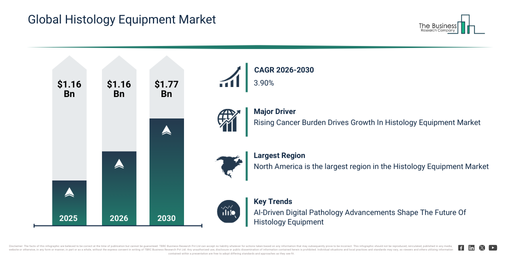
    The histology equipment market is projected to experience consistent expansion over the upcoming years, reaching a valuation of $0.83 billion by 2030, demonstrating a compound annual growth rate (CAGR) of 3.9%. This anticipated growth during the forecast period is primarily driven by several factors, including the escalating demand for precision medicine diagnostics, increased investment in digital pathology platforms, the expansion of pharmaceutical and biotech research pipelines, growing clinical trial activities, and the imperative for more rapid and precise tissue analysis. Key trends anticipated within this period encompass the growing adoption of automated histology workflow systems, the increasing utilization of digital pathology and slide scanning, a heightened demand for high-throughput tissue processing, the broader application of histology equipment in clinical diagnostics, and an intensified emphasis on standardization and workflow efficiency within laboratory environments.

    Get A Free Sample Report With In-Depth Market Insights:

    https://thebusinessresearchcompany.com/sample_request?id=79687151&type=smp&name=Histology%20Equipment%20Market%20Report%202026&utm_source=Blogs&utm_medium=Paid&utm_campaign=Oct_PR

    Histology Equipment Market Growth Momentum: What Factors Are Shaping Demand?

    The growing burden of cancer is projected to fuel the expansion of the histology equipment market moving forward. Cancer describes a condition where aberrant cells multiply and spread uncontrollably, potentially resulting in death if left untreated. The increase in cancer occurrences is multifaceted, involving both adaptable lifestyle elements and inherent biological and demographic aspects. Histology equipment assists in diagnosing and studying cancer by enabling comprehensive tissue examination, helping to pinpoint cancer types and stages, and guiding treatment plans. For instance, in July 2024, according to the Australian Institute of Health and Welfare, an Australia-based government agency, in Australia the number of cancer cases diagnosed increased from 160,570 in 2022 to 164,694 in 2023, reflecting a notable rise over the year. This upward trajectory highlights the expanding prevalence of cancer within the country. Therefore, the escalating burden of cancer is driving the histology equipment market.

    Histology Equipment Market Segment Analysis: What Are The Core Market Categories?

    The histology equipment market covered in this report is segmented –

    1) By Equipment: Slide Staining Systems, Scanners, Tissue Processing Systems, Microtomes, Coverslippers, Other Equipments

    2) By Product: Instruments And Analysis Software System, Consumable And Reagents

    3) By Application: Hospitals, Pharmaceutical Companies, Diagnostic Centers, Academic Institutes, Research Laboratories, Other Applications

    Subsegments:

    1) By Slide Staining Systems: Manual Staining Systems, Automated Staining Systems, Hybrid Staining Systems

    2) By Scanners: Digital Slide Scanners, Whole Slide Imaging Scanners, Confocal Scanners

    3) By Tissue Processing Systems: Manual Tissue Processors, Automated Tissue Processors, Vacuum Infiltration Tissue Processors

    4) By Microtomes: Rotary Microtomes, Cryostat Microtomes, Sliding Microtomes, Manual Microtomes, Semi-automated Microtomes

    5) By Coverslippers: Automatic Coverslippers, Manual Coverslippers, Semi-Automatic Coverslippers

    6) By Other Equipments: Embedding Stations, Tissue Embedding Centers, Cryostats, Histology Staining Racks, Histology Printers

    Histology Equipment Market Trends Redefining Industry Growth

    Leading companies in the global histology equipment market are increasingly adopting AI-enabled digital pathology solutions, including whole slide imaging systems integrated with artificial intelligence, to strengthen their competitive standing. For instance, in May 2024, 3DHISTECH, a Europe-based medical equipment manufacturer, introduced its P480 2nd Generation slide scanner, equipped with polarization imaging, a touchscreen interface, and an upgraded stepper-motor focusing system for faster and more robust performance. Similarly, in June 2024, Roche received FDA 510(k) clearance for its VENTANA DP 200 whole-slide scanner, part of its Digital Pathology Dx platform, which offers high-resolution imaging and remote diagnostic capabilities. This trend underscores how vendors are increasingly embedding intelligence into histology technologies to improve diagnostic precision, workflow efficiency, and accessibility—though high upfront investment and digital infrastructure needs continue to present adoption challenges.

    Histology Equipment Market Top Companies Driving Competitive Growth

    Major companies operating in the histology equipment market are Thermo Fisher Scientific Inc., Roche Diagnostics International Ltd, Agilent Technologies Inc., Hologic Inc., Leica Microsystems Nussloch GmbH, Cole-Parmer Instrument Company LLC, Sakura Finetechnical Company Ltd., Biogenex Laboratories Inc, StatLab Medical Products Inc., Biocare Medical LLC, Andwin Scientific, Covaris Inc., A. Menarini Diagnostics S.r.l, Diapath S.p.A., PolyScience Inc., CellPath USA, Medite Medical GmbH, Hacker Instruments & Industries Inc., Amos Scientific Pty. Ltd., TissueGnostics GmbH, Konfoong Bioinformation Tech Co. Ltd (KFBIO), Labstac USA, Intelsint Srl, Milestone Medical Inc., Histo-Line Laboratories s.r.l.

    View The Full Histology Equipment Market Report:

    https://thebusinessresearchcompany.com/report/histology-equipment-global-market-report?utm_source=Blogs&utm_medium=Paid&utm_campaign=Oct_PR

    Histology Equipment Market Global Footprint: Which Region Leads The Industry?

    North America was the largest region in the histology equipment market in 2025. Asia-Pacific is expected to be the fastest-growing region in the forecast period. The regions covered in the histology equipment market report are Asia-Pacific, South East Asia, Western Europe, Eastern Europe, North America, South America, Middle East, Africa.

    Reach Out To Our Team:

    The Business Research Company: https://www.thebusinessresearchcompany.com/

    Americas: +1 310-496-7795

    Asia: +44 7882 955267 & +91 8897263534

    Europe: +44 7882 955267

    Email us at: marketing@tbrc.info

    Follow us on:

    LinkedIn: https://in.linkedin.com/company/the-business-research-company

    YouTube: https://www.youtube.com/channel/UC24_fI0rV8cR5DxlCpgmyFQ

    Global Market Model: https://www.thebusinessresearchcompany.com/global-market-model
  • Hip Replacement Implants Market Valued At $12.73 Billion In 2026: Key Trends And Growth Drivers

    Hip Replacement Implants Market Valued At $12.73 Billion In 2026: Key Trends And Growth Drivers

    Built to provide research that’s more actionable and strategically valuable, The Business Research Company’s 2026 market reports include market attractiveness analysis, total addressable market sizing, company benchmarking matrices, interactive Excel dashboards, broader supply chain intelligence, emerging startup tracking, and in-depth product insights.

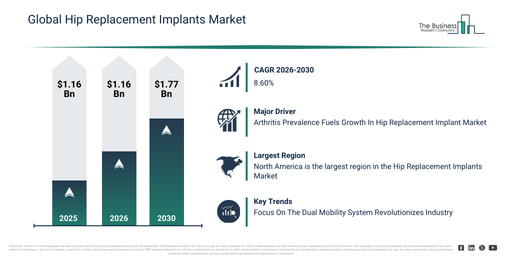
    Hip Replacement Implants Market Revenue Growth On Track For A 8.6% CAGR Through 2030

    The hip replacement implants market size has seen robust expansion in recent years. It is anticipated to increase from $8.43 billion in 2025 to $9.17 billion in 2026, achieving a compound annual growth rate (CAGR) of 8.8%. The historical growth in this market can be linked to factors such as the rising incidence of osteoarthritis, the growth of the aging population, the increased availability of orthopedic surgical facilities, advancements in implant material durability, and the growing expertise of orthopedic surgeons.

    The hip replacement implants market size is anticipated to undergo significant expansion in the upcoming years. It is predicted to reach $12.73 billion in 2030, achieving a compound annual growth rate (CAGR) of 8.6%. This growth during the forecast period is influenced by the rising demand for mobility restoration procedures, increased adoption of minimally invasive orthopedic surgeries, the development of personalized and 3D-printed implants, an intensified focus on implant longevity, and advancements in bearing surface technologies. Noteworthy trends for this period encompass the growing use of ceramic and hybrid hip implants, increased application of minimally invasive hip replacement techniques, a greater need for long-lasting implant materials, the broadening of personalized hip implant designs, and an elevated emphasis on revision hip procedures.

    Get A Free Sample Report With In-Depth Market Insights:

    https://thebusinessresearchcompany.com/sample_request?id=42404824&type=smp&name=Hip%20Replacement%20Implants%20Market%20Report%202026&utm_source=Blogs&utm_medium=Paid&utm_campaign=Oct_PR

    Hip Replacement Implants Market Expansion Drivers: What’s Shaping Future Growth?

    The projected expansion of the hip replacement implant market is fueled by the rising incidence of arthritis. Arthritis is characterized by the inflammation and soreness of one or multiple joints, resulting in significant pain in bones and joints. Common forms of arthritis include osteoarthritis and rheumatoid arthritis. In procedures like hip replacement surgeries, also known as hip arthroplasty, hip replacement implants are frequently utilized to manage arthritis, alleviate hip pain, and reinstate joint function. During these surgeries, artificial implants replace compromised or non-functional segments of the hip joint. As an illustration, data from January 2024, provided by the Office for Health Improvement and Disparities, a UK-based government body, indicated that in 2023, 18.4% of individuals aged 16 and above reported experiencing a long-term musculoskeletal condition. This represented a slight increase from 17.6% in 2022. It was also noted that males reported these conditions less often (15.8%) than females (20.9%). Consequently, the growing prevalence of arthritis is a key factor propelling the expansion of the hip replacement implant market.

    Hip Replacement Implants Market Segment Breakdown: Which Categories Lead On Revenue?

    The hip replacement implants market covered in this report is segmented –

    1) By Product Type: Femoral Reconstruction, Acetabular Reconstruction, Revision Hip Implants

    2) By Component: Ace Tabular Cup Systems, Hip Stem Systems, Revision Accessories And Components

    3) By Material: Metal-On-Polyethylene, Ceramic-On-Polyethylene, Ceramic-On-Ceramic

    4) By End-User: Orthopedic Clinics, Hospitals, Surgical Centers

    Subsegments:

    1) By Femoral Reconstruction: Femoral Heads, Femoral Stems

    2) By Acetabular Reconstruction: Acetabular Cups, Acetabular Liners

    3) By Revision Hip Implants: Revision Femoral Components, Revision Acetabular Components

    Hip Replacement Implants Market Strategic Trends: What Defines The Next Growth Phase?

    Leading companies in the hip replacement implant market are focused on developing innovative products, such as the Dual Mobility System, to secure a competitive advantage and increase their revenue streams. The Dual Mobility System itself is a hip arthroplasty implant that incorporates the advanced OXINIUM DH bearing surface, aiming to boost stability, lower the risk of dislocation, and enhance the range of motion, while simultaneously addressing wear and corrosion issues prevalent with conventional hip implants. As an example, in August 2023, Smith & Nephew PLC, a UK-based medical equipment manufacturing company, introduced its OR3O Dual Mobility System for primary and revision hip arthroplasty in India. This particular system, also featuring the sophisticated OXINIUM DH bearing surface, provides improved stability, a reduced dislocation risk, and a better range of motion when compared to standard solutions. In contrast to typical hip implants, OR3O eliminates the requirement for a modular CoCr liner and/or CoCr head ball, thereby lessening the wear and corrosion risks linked to that alloy by employing proprietary OXINIUM on XLPE for its femoral head and polyethylene inserts. OXINIUM DH further incorporates a patented diffusion hardening process to deepen the hardening, which contributes to its superior durability.

    Hip Replacement Implants Market Leading Players And Competitive Positioning

    Major companies operating in the hip replacement implants market are Zimmer Biomet Holdings Inc., DePuy Synthes, Stryker Corporation, Smith & Nephew PLC, Corin Group PLC, Waldemar Link GmbH & Co KG, Wright Medical Group NV, Corentec Co Ltd., MicroPort Scientific Corporation, Exactech Inc., OMNI life science Inc., Medacta International SA, PETER BREHM GmbH, Gruppo Bioimpianti srl., LimaCorporate SPA, Mathys AG Bettlach, Merete GmbH, Ortho Development Corporation, Shanghai MicroPort Orthopedics Inc., FH Orthopedics Inc., ConforMIS Inc., AK Medical Holdings Limited, Beijing Chunlizhengda Medical Instruments Co. Ltd.

    View The Full Hip Replacement Implants Market Report:

    https://thebusinessresearchcompany.com/report/hip-replacement-implants-global-market-report?utm_source=Blogs&utm_medium=Paid&utm_campaign=Oct_PR

    Hip Replacement Implants Market Regional Distribution: Which Areas Power Market Growth?

    North America was the largest region in the hip replacement implants market in 2025. Asia-Pacific is expected to be the fastest-growing region in the hip replacement implants market during the forecast period. The regions covered in the hip replacement implants market report are Asia-Pacific, South East Asia, Western Europe, Eastern Europe, North America, South America, Middle East, Africa.

    Reach Out To Our Team:

    The Business Research Company: https://www.thebusinessresearchcompany.com/

    Americas: +1 310-496-7795

    Asia: +44 7882 955267 & +91 8897263534

    Europe: +44 7882 955267

    Email us at: marketing@tbrc.info

    Follow us on:

    LinkedIn: https://in.linkedin.com/company/the-business-research-company

    YouTube: https://www.youtube.com/channel/UC24_fI0rV8cR5DxlCpgmyFQ

    Global Market Model: https://www.thebusinessresearchcompany.com/global-market-model
  • High-Resolution Anoscopy Market Size In 2026: Growth Outlook And Forecast Through 2030

    High-Resolution Anoscopy Market Size In 2026: Growth Outlook And Forecast Through 2030

    Backed by market attractiveness analysis, total addressable market sizing, company benchmarking matrices, interactive Excel dashboards, wider supply chain intelligence, emerging startup coverage, and detailed product-level insights, The Business Research Company’s 2026 market reports are designed to offer research that is more actionable and strategically valuable than ever.

    High-Resolution Anoscopy Market Value Growth And Long-Term Outlook

    The high-resolution anoscopy market has demonstrated robust expansion in recent years. It is forecast to grow from $16 billion in 2025 to $17 billion in 2026, at a compound annual growth rate (CAGR) of 6.2%. This historical growth can be attributed to several factors, including increased awareness of anal cancer and aIN, the expansion of specialty diagnostic clinics, the adoption of colposcopy-based diagnostic methods, enhancements in anoscopy visualization technologies, and a rise in preventive screening initiatives.

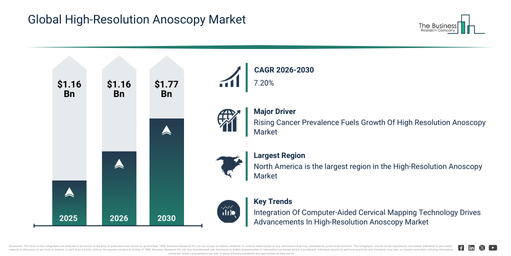
    The high-resolution anoscopy market is set for significant expansion in the upcoming years. Its value is projected to reach $22.43 billion by 2030, progressing at a compound annual growth rate (CAGR) of 7.2%. This growth during the forecast period can be attributed to several factors, including increased funding for early cancer detection initiatives, a growing demand for portable diagnostic instruments, the expansion of diagnostic services supported by telemedicine, the rising application of AI in image analysis, and a heightened focus on less invasive diagnostic methods. Prominent trends anticipated in this period involve the increasing adoption of digital and portable anoscopy devices, the growing use of high-resolution imaging for early disease identification, a reinforced emphasis on anal cancer screening programs, the extension of outpatient diagnostic offerings, and enhanced integration of image documentation systems.

    Get A Free Sample Report With In-Depth Market Insights:

    https://thebusinessresearchcompany.com/sample_request?id=38075625&type=smp&name=High-Resolution%20Anoscopy%20Market%20Report%202026&utm_source=Blogs&utm_medium=Paid&utm_campaign=Oct_PR

    High-Resolution Anoscopy Market Development Factors: What’s Supporting Demand?

    The increasing incidence of cancer is projected to fuel the growth of the high resolution anoscopy market. Cancer refers to a complex array of diseases distinguished by the unchecked growth and multiplication of abnormal cells. High-resolution anoscopy provides advanced imaging capabilities via a colposcope or operating microscope, allowing for more precise scrutiny and evaluation of the anal canal. High-Resolution Anoscopy medical equipment is instrumental in detecting malignant lesions or irregularities within the anal tract. For illustration, in January 2024, figures from the American Cancer Society, a US-based nonprofit cancer advocacy organization, indicated that cancer cases had risen to 2,001,140 from 1,958,310 in 2023, marking a 2.19% increase. Therefore, the expanding prevalence of cancer is stimulating the growth of the disposable endoscopes market.

    High-Resolution Anoscopy Market Segmentation: How Does The Market Break Down By Category?

    The high-resolution anoscopy market covered in this report is segmented –

    1) By Product Type: Colposcopes, Portable Colposcope, Hand-Held Colposcope, Anoscopes, Disposable Anoscope, Reusable Anoscope

    2) By Patient Population: Adults, Pediatrics

    3) By End Use: Hospitals, Specialty Clinics

    Subsegments:

    1) By Colposcopes: Standard Colposcopes, Digital Colposcopes

    2) By Portable Colposcope: Battery-Powered Portable Colposcopes, Rechargeable Portable Colposcopes

    3) By Hand-Held Colposcope: Standard Hand-Held Colposcopes, Advanced Hand-Held Colposcopes

    4) By Anoscopes: Standard Anoscopes, Lighted Anoscopes

    5) By Disposable Anoscope: Single-Use Disposable Anoscopes, Specialty Disposable Anoscopes

    6) By Reusable Anoscope: Standard Reusable Anoscopes, Advanced Reusable Anoscopes

    High-Resolution Anoscopy Market Transformation Trends: What Innovations Are Driving Change?

    Key companies operating in the high-resolution anoscopy market are adopting advanced technologies, such as computer-aided cervical mapping technology, to offer treatment-related services to their clientele and sustain their market position. This innovative device, combining computer-aided colposcopy with cervical mapping, generates data that assists healthcare professionals in the prompt detection of cervical abnormalities. For instance, in 2023, Rudolf Riester GmbH, a German manufacturer of medical devices for hospital and specialist care globally, revealed the launch of its LT-300 SD Digital Colposcope. Healthcare providers are able to identify anomalies by utilizing this Digital Colposcope for clinical examinations of the cervix, vulva, vagina, and the lower section of the womb. The LT-300 SD Digital Colposcopes are employed worldwide in hospitals, clinics, medical schools, telemedicine, assault advocacy programs, and prosecutor’s offices.

    High-Resolution Anoscopy Market Competitive Overview And Top Companies

    Major companies operating in the high-resolution anoscopy market are Philips Medical Systems Technologies Ltd., Olympus Corporation, Hoya Corporation, Karl Storz SE & Co. KG, CooperSurgical, Ecleris S.R.L, Pentax Medical, Fujifilm Medical Systems, Carl Zeiss Meditec AG, Optomic, Narang Medical Limited, Medorah Meditek Pvt Ltd., Welch Allyn, Leisegang Feinmechanik Optik GmbH, Medimar S.A., DYSIS Medical, Gynius Plus AB, Lutech Medical, Ottomed Endoscopy, Seiler Garepa Pvt. Ltd

    View The Full High-Resolution Anoscopy Market Report:

    https://thebusinessresearchcompany.com/report/high-resolution-anoscopy-global-market-report?utm_source=Blogs&utm_medium=Paid&utm_campaign=Oct_PR

    High-Resolution Anoscopy Market Leading Geography: Which Region Contributes The Most Revenue?

    North America was the largest region in the high-resolution anoscopy market in 2025. The regions covered in the high-resolution anoscopy market report are Asia-Pacific, South East Asia, Western Europe, Eastern Europe, North America, South America, Middle East, Africa.

    Reach Out To Our Team:

    The Business Research Company: https://www.thebusinessresearchcompany.com/

    Americas: +1 310-496-7795

    Asia: +44 7882 955267 & +91 8897263534

    Europe: +44 7882 955267

    Email us at: marketing@tbrc.info

    Follow us on:

    LinkedIn: https://in.linkedin.com/company/the-business-research-company

    YouTube: https://www.youtube.com/channel/UC24_fI0rV8cR5DxlCpgmyFQ

    Global Market Model: https://www.thebusinessresearchcompany.com/global-market-model