Blog

  • E-Textile Health Monitoring Market CAGR Forecast Through 2030: Key Trends Shaping Industry Expansion

    E-Textile Health Monitoring Market CAGR Forecast Through 2030: Key Trends Shaping Industry Expansion

    Backed by market attractiveness analysis, total addressable market sizing, company benchmarking matrices, interactive Excel dashboards, wider supply chain intelligence, emerging startup coverage, and detailed product-level insights, The Business Research Company’s 2026 market reports are designed to offer research that is more actionable and strategically valuable than ever.

    Exoskeleton Rehabilitation Market Poised To Hit $2.91 Billion By 2030 With A 17.4% CAGR

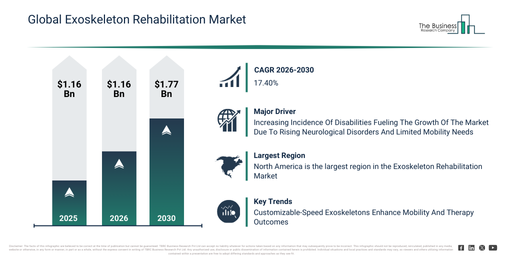
    The exoskeleton rehabilitation market size has experienced rapid growth in recent years. This market is set to expand from $1.3 billion in 2025 to $1.53 billion in 2026, exhibiting a compound annual growth rate (CAGR) of 17.7%. The growth observed during the historic period can be ascribed to a rise in stroke cases, spinal cord injuries, the adoption of rehabilitation technology, a shortage of therapists, and the demand for intensive therapy.

    The exoskeleton rehabilitation market is poised for significant expansion in the coming years. It is projected to reach $2.91 billion by 2030, demonstrating a compound annual growth rate (CAGR) of 17.4%. This growth during the forecast period is fueled by the increase in home-based rehabilitation, the development of AI-guided therapy systems, the rising aging population, the broadening scope of neurorehabilitation, and advancements in remote therapy monitoring. Prominent trends expected in the forecast period include robotic assisted rehabilitation, personalized therapy motion control, wearable mobility support systems, high precision movement training, and data driven recovery monitoring.

    Get A Free Sample Report With In-Depth Market Insights:

    https://thebusinessresearchcompany.com/sample_request?id=58294247&type=smp&name=Exoskeleton%20Rehabilitation%20Market%20Report%202026&utm_source=Blogs&utm_medium=Paid&utm_campaign=Oct_PR

    Exoskeleton Rehabilitation Market Development Factors: What’s Supporting Demand?

    The rising occurrence of disabilities is anticipated to fuel the expansion of the exoskeleton rehabilitation market moving forward. Disabilities are defined as enduring physical, sensory, or cognitive limitations that hinder an individual’s capacity to perform daily tasks. The surge in disability cases is primarily attributable to neurological disorders, given that enhanced survival rates from strokes and injuries frequently lead to persistent impairments. Exoskeleton rehabilitation offers aid to those with disabilities through wearable robotic assistance, making it particularly suitable for individuals experiencing restricted mobility. This technology alleviates physical exertion by facilitating guided movements and repetitive therapeutic exercises, thereby fostering functional recuperation and greater independence. For instance, in July 2025, as reported by Eurostat, a Luxembourg-based statistical office of the European Union (EU), 23.9% of people aged 16 or older in the EU indicated experiencing a disability or an activity limitation in 2024. Consequently, the increasing prevalence of disabilities is a significant factor propelling the growth of the exoskeleton rehabilitation market.

    Exoskeleton Rehabilitation Market Segment Performance And Emerging Opportunities

    The exoskeleton rehabilitation market covered in this report is segmented –

    1) By Product Type: Lower Limb Exoskeletons, Upper Limb Exoskeletons, Full Body Exoskeletons

    2) By Mobility: Mobile, Stationary

    3) By Application: Neurological Disorders, Orthopedic Disorders, Spinal Cord Injury, Stroke, Other Applications

    4) By End-User: Hospitals And Clinics, Rehabilitation Centers, Other End-Users

    Subsegments:

    1) By Lower Limb Exoskeletons: Neurorehabilitation Systems, Gait Training Systems, Mobility Assistance Systems, Balance Support Systems

    2) By Upper Limb Exoskeletons: Arm Rehabilitation Systems, Hand Rehabilitation Systems, Shoulder Support Systems, Elbow Assistance Systems, Wrist Assistance Systems

    3) By Full Body Exoskeletons: Integrated Rehabilitation Systems, Whole Body Support Systems, Multi Joint Assistance Systems, Full Mobility Assistance Systems, Postural Support Systems

    Exoskeleton Rehabilitation Market Transformation Trends: What Innovations Are Driving Change?

    Leading companies in the exoskeleton rehabilitation market are prioritizing the development of advanced products, such as customizable speed exoskeleton systems, to enhance both mobility and therapeutic outcomes. Customizable speed exoskeleton systems are rehabilitation exoskeletons designed to allow therapists or users to modify walking or movement speeds, aligning with individual therapy requirements and patient abilities. For example, in April 2025, Lifeward Ltd., an Israel-based medical device company, introduced the ReWalk 7 Personal Exoskeleton, a customizable-speed exoskeleton system. This wearable robotic exoskeleton provides powered hip and knee motion, empowering individuals with paraplegia to stand, walk, and climb stairs. It incorporates improved stability features and a new, more intuitive user interface for initiating motion, facilitating smooth transitions between daily activities with increased user confidence and diminished physical strain.

    Exoskeleton Rehabilitation Market Leading Players And Competitive Positioning

    Major companies operating in the exoskeleton rehabilitation market are Ottobock SE and Co KGaA, Fourier Intelligence, DIH Holding US Inc., Cyberdyne Inc., Wandercraft SAS, Myomo Inc., Ekso Bionics Holdings Inc., Tyromotion GmbH, Lifeward Inc., Able Human Motion SL, Bioservo Technologies AB, ExoAtlet Global SA, Bama Teknoloji, Focal Meditech BV, B Temia Inc., Bionik Laboratories Corp, Gogoa Mobility Robots SL, Rex Bionics Ltd., Wearable Robotics Srl, Bionic Yantra Private Limited

    View The Full Exoskeleton Rehabilitation Market Report:

    https://thebusinessresearchcompany.com/report/global-exoskeleton-rehabilitation-market-report?utm_source=Blogs&utm_medium=Paid&utm_campaign=Oct_PR

    Exoskeleton Rehabilitation Market Regional Split: Which Areas Are Fueling Growth?

    North America was the largest region in the exoskeleton rehabilitation market in 2025. Asia-Pacific is expected to be the fastest-growing region in the forecast period. The regions covered in the exoskeleton rehabilitation market report are Asia-Pacific, South East Asia, Western Europe, Eastern Europe, North America, South America, Middle East, Africa.

    Reach Out To Our Team:

    The Business Research Company: https://www.thebusinessresearchcompany.com/

    Americas: +1 310-496-7795

    Asia: +44 7882 955267 & +91 8897263534

    Europe: +44 7882 955267

    Email us at: marketing@tbrc.info

    Follow us on:

    LinkedIn: https://in.linkedin.com/company/the-business-research-company

    YouTube: https://www.youtube.com/channel/UC24_fI0rV8cR5DxlCpgmyFQ

    Global Market Model: https://www.thebusinessresearchcompany.com/global-market-model
  • E-Textile Health Monitoring Market To Witness 27.4% CAGR Growth Through 2030: Key Industry Drivers

    E-Textile Health Monitoring Market To Witness 27.4% CAGR Growth Through 2030: Key Industry Drivers

    Featuring market attractiveness scoring, total addressable market sizing, company benchmarking matrices, interactive Excel dashboards, deeper supply chain intelligence, emerging startup tracking, and granular product-level insights, The Business Research Company’s 2026 market reports are built to deliver research that is both more actionable and more strategically valuable.

    E-Textile Health Monitoring Market Size And Revenue Outlook Through 2030

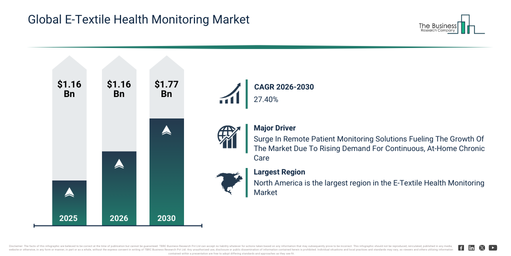
    Recent years have witnessed substantial growth in the e-textile health monitoring market size. It is projected to increase from $3.59 billion in 2025 to $4.59 billion in 2026, exhibiting a compound annual growth rate (CAGR) of 27.7%. This historical growth is attributable to the rising adoption of wearable health devices, advancements in flexible electronics, an increasing prevalence of chronic diseases, growing demand for remote patient monitoring, and the development of conductive textile materials.

    The e-textile health monitoring market is projected to experience substantial expansion over the upcoming years. This market is forecast to reach $12.09 billion by 2030, exhibiting a compound annual growth rate (CAGR) of 27.4%. Key drivers for this growth during the projection period include the integration with AI-powered health platforms, the broadening of wireless communication protocols, rising uptake in sports and fitness industries, obtaining regulatory clearances for clinical uses, and the increasing need for individualized healthcare solutions. Significant trends anticipated in the forecast period encompass real-time health data analysis, the incorporation of wearable sensors, remote patient oversight, proactive health evaluation, and diagnostics facilitated by smart textiles.

    Get A Free Sample Report With In-Depth Market Insights:

    https://thebusinessresearchcompany.com/sample_request?id=73669577&type=smp&name=E-Textile%20Health%20Monitoring%20Market%20Report%202026&utm_source=Blogs&utm_medium=Paid&utm_campaign=Oct_PR

    E-Textile Health Monitoring Market Industry Drivers: What’s Behind The Revenue Growth?

    A growing need for remote patient monitoring solutions is projected to fuel the expansion of the e-textile health monitoring market. These solutions, known as RPM, involve technologies that empower healthcare providers to remotely monitor and manage patient health data via connected devices and digital platforms. The rising adoption of remote patient monitoring is attributed to the increasing incidence of chronic diseases, as such technologies facilitate ongoing tracking of vital signs and early detection of health problems, leading to timely interventions and fewer hospital readmissions. E-textile health monitoring supports remote patient monitoring by embedding sensors into fabrics to continuously gauge physiological metrics like heart rate, respiration, and body temperature, enabling real-time health data transmission for uninterrupted and comfortable remote patient tracking. For instance, in August 2025, data from the Department of Health and Human Services, a US-based government administration, revealed that in 2024, close to 1 million enrollees utilized remote patient monitoring, marking a 27% increase from 2023. Consequently, the heightened demand for remote patient monitoring solutions is boosting the growth of the e-textile health monitoring market. The increasing prevalence of respiratory disorders is projected to drive the e-textile health monitoring market forward. These conditions impair normal lung and airway function, hindering breathing and oxygen exchange. The surge in respiratory disorders is linked to rising air pollution, which damages lung tissues and contributes to ailments such as asthma, chronic bronchitis, and other breathing difficulties. E-textile health monitoring supports the management of respiratory disorders by continuously tracking breathing patterns, facilitating the early detection of irregularities and enabling quick medical intervention to avert complications. For example, in October 2024, the Center for Infectious Disease Research and Policy (CIDRAP), a US-based public health organization, reported that 8.2 million individuals received a new diagnosis of tuberculosis (TB) in 2023, an increase from 7.5 million new cases documented in 2022. Consequently, the growing number of respiratory disorders is propelling the expansion of the e-textile health monitoring market.

    E-Textile Health Monitoring Market Segment Landscape And Growth Outlook

    The e-textile health monitoring market covered in this report is segmented –

    1) By Product Type: Wearable Health-Monitoring E-Textiles, Medical-Grade Monitoring E-Textiles, Consumer Fitness & Wellness E-Textiles, Rehabilitation & Assistive E-Textiles, Other Product Types

    2) By Technology: Sensor Integration, Wireless Communication, Conductive Materials, Other Technologies

    3) By Material: Conductive Yarns, Conductive Fabrics, Other Materials

    4) By Application: Cardiac Monitoring, Respiratory Monitoring, Activity Monitoring, Temperature Monitoring, Other Applications

    5) By End-User: Hospitals And Clinics, Homecare Settings, Sports And Fitness, Military And Defense, Other End-Users

    Subsegments:

    1) By Wearable Health-Monitoring E-Textiles: Smart Shirts and Tops, Smart Pants and Leggings, Smart Socks and Footwear, Smart Undergarments

    2) By Medical-Grade Monitoring E-Textiles: Cardiac Monitoring Garments, Respiratory Monitoring Garments, Continuous Vital-Sign Monitoring Textiles, Clinical Remote Patient Monitoring Textiles

    3) By Consumer Fitness & Wellness E-Textiles: Fitness Tracking Apparel, Sports Performance Monitoring Clothing, Posture and Movement Monitoring Apparel

    4) By Rehabilitation & Assistive E-Textiles: Physiotherapy Monitoring Garments, Gait and Mobility Monitoring Textiles, Recovery and Rehabilitation Smart Textiles

    5) By Other E-Textile Health-Monitoring Products: Sensor-Embedded Textile Patches, Smart Bandages for Health Monitoring, Textile-Based Monitoring Accessories

    E-Textile Health Monitoring Market Competitive Overview And Top Companies

    Major companies operating in the e-textile health monitoring market are Myant Health Inc., Smartex Srl, Siren Care Inc., Carre Technologies Inc., BioSerenity, Chronolife SAS, Sensoria Health Inc., Xenoma Inc., AiQ Smart Clothing Inc., Embro GmbH, Interactive Wear AG, Loomia Technologies Inc., Ohmatex ApS, Nextiles Inc., Wearable X Inc., Sensing Tex S.L., TexRay Industrial Co. Ltd., Clothing Plus Oy, HealthWatch Ltd., Athos Works Inc.

    View The Full E-Textile Health Monitoring Market Report:

    https://thebusinessresearchcompany.com/report/e-textile-health-monitoring-global-market-report?utm_source=Blogs&utm_medium=Paid&utm_campaign=Oct_PR

    E-Textile Health Monitoring Market Top Region: Where Does Most Revenue Come From?

    North America was the largest region in the e-textile health monitoring market in 2025. Asia-Pacific is expected to be the fastest-growing region in the forecast period. The regions covered in the e-textile health monitoring market report are Asia-Pacific, South East Asia, Western Europe, Eastern Europe, North America, South America, Middle East, Africa.

    Reach Out To Our Team:

    The Business Research Company: https://www.thebusinessresearchcompany.com/

    Americas: +1 310-496-7795

    Asia: +44 7882 955267 & +91 8897263534

    Europe: +44 7882 955267

    Email us at: marketing@tbrc.info

    Follow us on:

    LinkedIn: https://in.linkedin.com/company/the-business-research-company

    YouTube: https://www.youtube.com/channel/UC24_fI0rV8cR5DxlCpgmyFQ

    Global Market Model: https://www.thebusinessresearchcompany.com/global-market-model
  • Esophagoscopes And Gastroscopes Market Projected For Strong Expansion Through 2030: Key Trends And Future Outlook

    Esophagoscopes And Gastroscopes Market Projected For Strong Expansion Through 2030: Key Trends And Future Outlook

    Built to provide research that’s more actionable and strategically valuable, The Business Research Company’s 2026 market reports include market attractiveness analysis, total addressable market sizing, company benchmarking matrices, interactive Excel dashboards, broader supply chain intelligence, emerging startup tracking, and in-depth product insights.

    Esophagoscopes And Gastroscopes Market Growth From $1.88 Billion In 2026 To $2.48 Billion By 2030 At A CAGR Of 7.2%

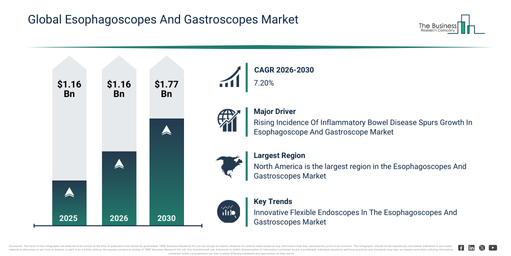
    The esophagoscopes and gastroscopes market size has shown significant expansion in recent years. It is projected to grow from $1.77 billion in 2025 to $1.88 billion in 2026, achieving a compound annual growth rate (CAGR) of 6.2%. This historical growth can be attributed to the rising prevalence of gastrointestinal disorders, the increasing adoption of endoscopic diagnostic techniques, the expansion of hospital-based gastroenterology units, growing awareness of early disease diagnosis, and the availability of trained endoscopy specialists.

    The esophagoscopes and gastroscopes market is projected to experience substantial expansion in the coming years. This market is anticipated to reach a valuation of $2.48 billion by 2030, exhibiting a compound annual growth rate (CAGR) of 7.2%. This growth during the forecast period can be primarily attributed to factors such as the escalating demand for minimally invasive therapeutic procedures, increased investments in advanced endoscopic imaging systems, the expanding use of disposable endoscopes, the proliferation of outpatient diagnostic services, and a heightened emphasis on patient safety and preventing infections. Key trends predicted for this period encompass the wider embrace of high-definition imaging endoscopes, a surge in minimally invasive diagnostic techniques, an increasing need for single-use endoscopic equipment, the broadening scope of therapeutic endoscopy applications, and a reinforced commitment to infection control protocols.

    Get A Free Sample Report With In-Depth Market Insights:

    https://thebusinessresearchcompany.com/sample_request?id=90626747&type=smp&name=Esophagoscopes%20And%20Gastroscopes%20Market%20Report%202026&utm_source=Blogs&utm_medium=Paid&utm_campaign=Oct_PR

    Esophagoscopes And Gastroscopes Market Growth Factors: What’s Supporting Expansion?

    The rising prevalence of inflammatory bowel disease is propelling the esophagoscope and gastroscope market. Inflammatory bowel disease is a long-term condition that causes inflammation within the digestive system. Esophagoscopes and gastroscopes are valuable instruments for the diagnosis and management of inflammatory bowel disease (IBD), as they facilitate the visualization and observation of the internal structures of the gastrointestinal tract. For instance, in March 2023, according to a research article from the Journal of the Canadian Association of Gastroenterology, a Canada-based open-access peer-reviewed journal, the incidence rate of inflammatory bowel disease in Canada is projected to increase from 825 per 100,000 in 2023 to 1075 per 100,000 in 2035. Consequently, the growing number of inflammatory bowel disease cases drives the esophagoscope and gastroscope markets.

    Esophagoscopes And Gastroscopes Market Breakdown By Product Type And Application

    The esophagoscopes and gastroscopes market covered in this report is segmented –

    1) By Type: Rigid, Flexible, Transnasal, Other Types

    2) By Application: Gastroesophageal Reflux Disease, Ulcers, Barrett’s Esophagus, Celiac Disease, Other Applications

    3) By End User: Hospitals, Ambulatory Surgical Centers, Specialty Clinics, Diagnostic Centers, Other End Users

    Subsegments:

    1) By Rigid: Rigid Esophagoscopes, Rigid Gastroscopes

    2) By Flexible: Flexible Esophagoscopes, Flexible Gastroscopes

    3) By Transnasal: Transnasal Esophagoscopes, Transnasal Gastroscopes

    4) By Other Types: Single-Use Endoscopes, Dual-Use Endoscopes

    Esophagoscopes And Gastroscopes Market Industry Trends: What’s Reshaping Demand?

    Leading companies in the esophagoscopes and gastroscopes market are concentrating on developing innovative solutions, such as flexible endoscopes, to secure a competitive advantage. A flexible endoscope is a medical instrument used for examining internal organs, like the gastrointestinal tract, employing a pliable tube with an integrated camera that sends real-time images, thereby enabling minimally invasive procedures. For instance, in October 2024, Lumicell, a US-based biotechnology company, secured a $400,000 Phase I Small Business Innovation Research (SBIR) grant from the National Cancer Institute (NCI) to create a novel flexible endoscope for diagnosing Barrett’s esophagus. This endoscopic imaging platform will merge far infrared fluorescence and reflected light imaging to identify potentially cancerous lesions in real-time, with the aim of improving the early detection of esophageal adenocarcinoma (EAC). Current methods for diagnosing precancerous lesions involve endoscopy and random biopsies, a process that is not consistently efficient or timely. Lumicell’s technology intends to heighten diagnostic sensitivity, lessen resource dependency, and facilitate immediate treatment of identified lesions.

    Esophagoscopes And Gastroscopes Market Competitive Landscape: Which Companies Lead The Industry?

    Major companies operating in the esophagoscopes and gastroscopes market are Medtronic plc, FUJIFILM Corporation, Boston Scientific Corporation, B Braun Melsungen AG, Olympus Corporation, HOYA Corporation, Karl Storz SE & Co. KG, CONMED Corporation, Ambu A/S, Richard Wolf GmbH, SonoScape Medical Corporation, Vimex Endoscopy Sp. z o.o., Smart Medical Systems Ltd., Jedmed Instrument Co, Endomed Systems GmbH, Maxer Endoscopy GmbH, Surtex Instruments Limited, FENTEX medical GmbH, Machida Endoscope Co. Ltd., Aohua Endoscopy Co. Ltd., Zhejiang Shendasiao Medical Instrument Co. Ltd., Hangzhou Orient Medical Co. Ltd., Optec Endoscopy Systems GmbH

    View The Full Esophagoscopes And Gastroscopes Market Report:

    https://thebusinessresearchcompany.com/report/esophagoscopes-and-gastroscopes-global-market-report?utm_source=Blogs&utm_medium=Paid&utm_campaign=Oct_PR

    Esophagoscopes And Gastroscopes Market Regional Breakdown: Where Is Demand Concentrated?

    North America was the largest region in the esophagoscopes and gastroscopes market in 2025. Asia-Pacific is expected to be the fastest-growing region in the forecast period. The regions covered in the esophagoscopes and gastroscopes market report are Asia-Pacific, South East Asia, Western Europe, Eastern Europe, North America, South America, Middle East, Africa.

    Reach Out To Our Team:

    The Business Research Company: https://www.thebusinessresearchcompany.com/

    Americas: +1 310-496-7795

    Asia: +44 7882 955267 & +91 8897263534

    Europe: +44 7882 955267

    Email us at: marketing@tbrc.info

    Follow us on:

    LinkedIn: https://in.linkedin.com/company/the-business-research-company

    YouTube: https://www.youtube.com/channel/UC24_fI0rV8cR5DxlCpgmyFQ

    Global Market Model: https://www.thebusinessresearchcompany.com/global-market-model
  • Esophageal Dilator Market Outlook 2026–2030: Growth Trends, Market Dynamics And Emerging Opportunities

    Backed by market attractiveness analysis, total addressable market sizing, company benchmarking matrices, interactive Excel dashboards, wider supply chain intelligence, emerging startup coverage, and detailed product-level insights, The Business Research Company’s 2026 market reports are designed to offer research that is more actionable and strategically valuable than ever.

    Esophageal Dilator Market Expansion Outlook: What Revenue Opportunities Are Ahead?

    The esophageal dilator market has experienced significant expansion in recent years. It is anticipated to increase from $1.57 billion in 2025 to $1.65 billion in 2026, driven by a compound annual growth rate (CAGR) of 5.2%. The historical development of this market can be linked to factors such as the constrained availability of advanced esophageal dilators, the continued reliance on conventional mechanical dilators, a rise in awareness regarding esophageal conditions, the expansion of hospital and clinic infrastructure, and the widespread adoption of standard surgical interventions.

    The esophageal dilator market size is anticipated to experience consistent expansion over the upcoming years, projected to reach $1.99 billion in 2030, exhibiting a compound annual growth rate (CAGR) of 4.8%. This foreseen growth is primarily due to the emergence of controlled-release and pre-loaded balloon dilators, increasing utilization of flexible and hydrostatic dilators, the expansion of ambulatory surgical centers, a rising elderly demographic suffering from esophageal conditions, and improvements in materials and guided procedure technologies. Significant trends for the forecast period include a growing demand for minimally invasive esophageal procedures, higher adoption rates of balloon and hydrostatic dilator types, the increasing occurrence of esophageal disorders, a strong emphasis on patient safety and procedural accuracy, and the integration of advanced materials to improve durability and flexibility.

    Get A Free Sample Report With In-Depth Market Insights:

    https://thebusinessresearchcompany.com/sample_request?id=24764046&type=smp&name=Esophageal%20Dilator%20Market%20Report%202026&utm_source=Blogs&utm_medium=Paid&utm_campaign=Oct_PR

    Esophageal Dilator Market Demand Drivers: What’s Powering Industry Growth?

    The anticipated expansion of the esophageal dilator market is linked to the growing occurrence of esophageal conditions. These conditions refer to various ailments impacting the esophagus, the conduit moving sustenance from the mouth to the stomach. The escalating frequency of esophageal disorders stems from factors like increased instances of gastroesophageal reflux disease (GERD), obesity, and shifts in lifestyle. Esophageal dilators function by expanding narrowed parts of the esophagus, thereby enhancing swallowing and diminishing discomfort. As an illustration, in January 2024, the American Cancer Society, a US-based organization, reported 16,120 new deaths from esophageal cancer in 2023, with projections indicating an increase to 16,130 by 2024. Consequently, the rising rate of esophageal disorders is fueling the expansion of the esophageal dilator market. The increased integration of minimally invasive procedures is projected to spur the growth of the esophageal dilator market. These procedures are medical interventions conducted via small cuts, employing specific instruments to lessen discomfort, shorten recuperation periods, and minimize tissue harm. The surge in minimally invasive procedures is attributable to a rising patient preference for quicker recovery and reduced pain following operations. Esophageal dilators are employed in these less invasive methods to carefully expand constricted areas of the esophagus, thereby re-establishing unobstructed swallowing. For example, in June 2024, the American Society of Plastic Surgeons, a US-based organization, indicated a 7% increase in minimally invasive procedures in 2023, surpassing the 2% growth rate of surgical procedures. Consequently, the expanding embrace of minimally invasive procedures is propelling the esophageal dilator market’s growth.

    Esophageal Dilator Market Segment Analysis And Revenue Potential

    The esophageal dilator market covered in this report is segmented –

    1) By Dilator Type: Balloon Dilators, Mechanical Dilators, Hydrostatic Dilators

    2) By Material: Plastic, Metal, Other Materials

    3) By Esophageal Disease: Achalasia, Esophageal Strictures, Zenker’s Diverticulum, Esophageal Cancer

    4) By End User: Hospitals, Ambulatory Surgical Centers, Clinics, Doctors’ Offices

    Subsegments:

    1) By Balloon Dilators: Inflatable Balloon Dilators, Non-Inflatable Balloon Dilators, Pre-loaded Balloon Dilators, Controlled-Release Balloon Dilators

    2) By Mechanical Dilators: Bougie Dilators, Metal Dilators, Flexible Mechanical Dilators, Rigid Mechanical Dilators

    3) By Hydrostatic Dilators: Fluid-Filled Hydrostatic Dilators, High-Pressure Hydrostatic Dilators, Low-Pressure Hydrostatic Dilators, Hydrostatic Dilators With Guide Wire

    Esophageal Dilator Market Competitive Landscape: Who Leads The Industry?

    Major companies operating in the esophageal dilator market are Medtronic plc, Boston Scientific Corporation, Olympus Corporation, Cook Medical, Karl Storz SE & Co. KG, Micro-Tech Endoscopy, Endo-med Technologies Private Limited, Shaili Endoscopy, Bard Medical, GE Healthcare, Telemed Systems, Fiagon AG, Crospon Ltd., MFI Medical Equipments, Merit Medical Systems Inc., Becton Dickinson and Company, PENTAX Medical, M I Tech Co. Ltd., ELLA-CS, Taewoong Medical Co. Ltd., Albyn Medical, Ankon Medical, Alton Shanghai Medical Instruments, Anrei Medical

    View The Full Esophageal Dilator Market Report:

    https://thebusinessresearchcompany.com/report/esophageal-dilator-global-market-report?utm_source=Blogs&utm_medium=Paid&utm_campaign=Oct_PR

    Esophageal Dilator Market Geographic Landscape: Which Region Dominates Industry Growth?

    North America was the largest region in the esophageal dilator market in 2025. The regions covered in the esophageal dilator market report are Asia-Pacific, South East Asia, Western Europe, Eastern Europe, North America, South America, Middle East, Africa.

    Reach Out To Our Team:

    The Business Research Company: https://www.thebusinessresearchcompany.com/

    Americas: +1 310-496-7795

    Asia: +44 7882 955267 & +91 8897263534

    Europe: +44 7882 955267

    Email us at: marketing@tbrc.info

    Follow us on:

    LinkedIn: https://in.linkedin.com/company/the-business-research-company

    YouTube: https://www.youtube.com/channel/UC24_fI0rV8cR5DxlCpgmyFQ

    Global Market Model: https://www.thebusinessresearchcompany.com/global-market-model
  • Esophageal Catheters Market Growth Outlook From $2.82 Billion In 2026 To $3.91 Billion By 2030

    Esophageal Catheters Market Growth Outlook From $2.82 Billion In 2026 To $3.91 Billion By 2030

    Featuring market attractiveness scoring, total addressable market sizing, company benchmarking matrices, interactive Excel dashboards, deeper supply chain intelligence, emerging startup tracking, and granular product-level insights, The Business Research Company’s 2026 market reports are built to deliver research that is both more actionable and more strategically valuable.

    Esophageal Catheters Market Growth Potential: How Will Market Size Shift Through 2030?

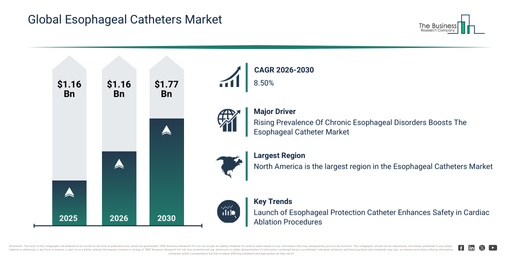
    The esophageal catheters market has experienced strong expansion in recent years. This market is projected to increase from $2.62 billion in 2025 to $2.82 billion in 2026, exhibiting a compound annual growth rate (CAGR) of 7.6%. The historical growth is attributable to several factors, including the rising prevalence of gastrointestinal disorders, an uptick in the diagnosis of GERD and dysphagia, the enlargement of gastroenterology departments, the introduction of advanced catheter designs, and the growing application of diagnostic esophageal procedures.

    The esophageal catheters market is projected to undergo substantial growth in the upcoming years. By 2030, its valuation is anticipated to reach $3.91 billion, exhibiting a compound annual growth rate (CAGR) of 8.5%. This expansion during the forecast period is primarily driven by factors such as the escalating demand for outpatient diagnostic solutions, the increasing embrace of minimally invasive therapies, advancements in precision diagnostics, greater investments in gastrointestinal healthcare, and an intensified focus on patient-centric treatment approaches. Prominent trends expected in this period include a wider adoption of single-use esophageal catheters, a heightened requirement for high-precision pressure monitoring, the expanding use of minimally invasive diagnostic techniques, an increase in radiofrequency ablation procedures, and a stronger emphasis on ensuring patient safety and comfort.

    Get A Free Sample Report With In-Depth Market Insights:

    https://thebusinessresearchcompany.com/sample_request?id=26969929&type=smp&name=Esophageal%20Catheters%20Market%20Report%202026&utm_source=Blogs&utm_medium=Paid&utm_campaign=Oct_PR

    Esophageal Catheters Market Growth Drivers: What’s Behind The Acceleration?

    The increasing incidence of chronic esophageal disorders is expected to propel the growth of the esophageal catheter market. Chronic esophageal disorders are defined as medical conditions or diseases that affect the esophagus, the muscular tube connecting the mouth to the stomach, over a prolonged period. Esophageal catheters, such as manometry catheters, are instrumental in diagnosing these disorders by measuring pressure changes and motility patterns throughout the esophagus. For instance, in January 2023, a report from the National Library of Medicine, a US-based medical library, estimated 7,39,666 new cases and 7,23,466 fatalities from esophageal cancer in 2030. Globally, 9,87,723 cases and 9,14,304 deaths are projected for 2040. Therefore, the growing prevalence of chronic esophageal disorders is driving the growth of the esophageal catheter market.

    Esophageal Catheters Market Segmentation And Category Overview

    The esophageal catheters market covered in this report is segmented –

    1) By Product Type: Balloon Dilation Catheter, Irrigation Catheter, Pressure Monitoring Catheter, Radiofrequency Ablation Catheter, Suction Catheter

    2) By Application: Gastroesophageal Reflux Disease (GERD), Dysphagia, Chest Pain, Other Applications

    3) By End-User: Hospitals, Clinics, Ambulatory Surgical Centers

    Subsegments:

    1) By Balloon Dilation Catheter: Single-Use Balloon Catheters, Multi-Use Balloon Catheters

    2) By Irrigation Catheter: Standard Irrigation Catheters, Specialty Irrigation Catheters

    3) By Pressure Monitoring Catheter: Continuous Pressure Monitoring Catheters, Intermittent Pressure Monitoring Catheters

    4) By Radiofrequency Ablation Catheter: Circular Ablation Catheters, Linear Ablation Catheters

    5) By Suction Catheter: Standard Suction Catheters, Pediatric Suction Catheters

    Esophageal Catheters Market Trends: What’s Defining The Industry’s Next Phase?

    Leading companies in the esophageal catheters market are prioritizing the development of innovative technologies, such as esophageal protection devices, to enhance procedural safety and strengthen their standing in the market. An esophageal protection catheter is a medical instrument specifically designed to reduce the risk of thermal damage to the esophagus during cardiac ablation procedures. This catheter functions by mechanically moving the esophagus away from the ablation sites. As an illustration, in February 2025, S4 Medical Corp., a US-based medical device company, introduced the esolution Atrial Fibrillation Esophageal Protection Device in the United States after obtaining FDA clearance. This device is catheter-based and features a dual-lumen architecture, comprising an outer sheath and an inner mechanical deflection component. The catheter is engineered to adapt to a patient’s anatomy during procedures, positioning it as a safe and effective choice for minimizing esophageal injury.

    Esophageal Catheters Market Company Landscape And Competitive Strategy

    Major companies operating in the esophageal catheters market are Medtronic plc, Boston Scientific Corporation, B Braun Melsungen AG, Olympus Corporation, Teleflex Incorporated, Cook Medical Inc., Merit Medical Systems Inc., Avanos Medical Inc., Laborie Medical Technologies Inc., FUJIFILM Medical Systems, Taewoong Medical Co, Alicn Medical Co Ltd, Medcaptain Medical Technology Co Ltd, PENTAX Medical Co, EndoControl Medical, MicroTech Medical, Rotech Healthcare, Steris Medical Devices, SMI Endoscopy, Halyard Health

    View The Full Esophageal Catheters Market Report:

    https://thebusinessresearchcompany.com/report/esophageal-catheters-global-market-report?utm_source=Blogs&utm_medium=Paid&utm_campaign=Oct_PR

    Esophageal Catheters Market Largest Region: Which Geography Holds The Highest Market Share?

    North America was the largest region in the esophageal catheters market in 2025. Asia-Pacific is expected to be the fastest-growing region in the forecast period. The regions covered in the esophageal catheters market report are Asia-Pacific, South East Asia, Western Europe, Eastern Europe, North America, South America, Middle East, Africa.

    Reach Out To Our Team:

    The Business Research Company: https://www.thebusinessresearchcompany.com/

    Americas: +1 310-496-7795

    Asia: +44 7882 955267 & +91 8897263534

    Europe: +44 7882 955267

    Email us at: marketing@tbrc.info

    Follow us on:

    LinkedIn: https://in.linkedin.com/company/the-business-research-company

    YouTube: https://www.youtube.com/channel/UC24_fI0rV8cR5DxlCpgmyFQ

    Global Market Model: https://www.thebusinessresearchcompany.com/global-market-model
  • Erectile Dysfunction Devices Market Forecast To Reach $3.73 Billion By 2030: Key Growth Drivers And Industry Trends

    Erectile Dysfunction Devices Market Forecast To Reach $3.73 Billion By 2030: Key Growth Drivers And Industry Trends

    Built to provide research that’s more actionable and strategically valuable, The Business Research Company’s 2026 market reports include market attractiveness analysis, total addressable market sizing, company benchmarking matrices, interactive Excel dashboards, broader supply chain intelligence, emerging startup tracking, and in-depth product insights.

    Erectile Dysfunction Devices Market Value Analysis: What Growth Lies Ahead Over The Forecast Period?

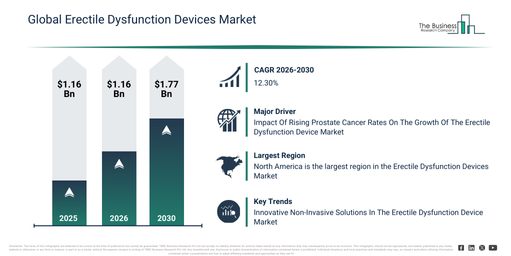
    The erectile dysfunction devices market size has experienced swift expansion in recent years. It is projected to increase from $2.09 billion in 2025 to $2.35 billion in 2026, demonstrating a compound annual growth rate (CAGR) of 12.3%. This historical growth can be linked to factors such as the increasing prevalence of diabetes, a higher incidence of cardiovascular diseases, an expanding aging male population, improved awareness of erectile dysfunction treatments, and wider availability of urology care services.

    The erectile dysfunction devices market is projected to experience swift expansion over the coming years. This market is anticipated to reach a valuation of $3.73 billion by 2030, demonstrating a compound annual growth rate (CAGR) of 12.3%. This anticipated growth during the forecast period stems from factors such as the increasing occurrence of lifestyle-associated conditions, enhanced awareness regarding male health, greater adoption of medical devices for sexual well-being, wider availability of minimally invasive therapies, and advancements in healthcare infrastructure within developing economies. Key trends anticipated for this period encompass the increasing use of non-invasive solutions for erectile dysfunction, a rising inclination towards managing erectile dysfunction at home, a heightened demand for vacuum erection and penile pump devices, greater acceptance of surgical penile implants for severe ED cases, and an increased emphasis on tailored erectile dysfunction treatment approaches.

    Get A Free Sample Report With In-Depth Market Insights:

    https://thebusinessresearchcompany.com/sample_request?id=60804400&type=smp&name=Erectile%20Dysfunction%20Devices%20Market%20Report%202026&utm_source=Blogs&utm_medium=Paid&utm_campaign=Oct_PR

    Erectile Dysfunction Devices Market Growth Factors Behind Sustained Expansion

    The increasing incidence of prostate cancer is anticipated to stimulate the expansion of the erectile dysfunction devices market. Prostate cancer is a malignancy that develops in the prostate gland, a small male organ situated beneath the bladder responsible for contributing to semen production. The rise in prostate cancer cases is linked to an aging demographic, improved diagnostic methods, and lifestyle factors that may contribute to its spread. Erectile dysfunction devices aid prostate cancer patients by improving sexual function and enhancing their quality of life after treatments, which often affect erectile capabilities. For instance, in September 2025, the American Cancer Society, a US-based professional organization, projected that the United States would see an estimated 313,780 new cases of prostate cancer in 2025. The probability of developing prostate cancer rises sharply with age, increasing from 0.2% in men under 50 to 6.5% in individuals aged 70–79. Therefore, the growing prevalence of prostate cancer is driving the growth of the erectile dysfunction devices market.

    Erectile Dysfunction Devices Market Segment Outlook: Which Categories Are Growing Fastest?

    The erectile dysfunction devices market covered in this report is segmented –

    1) By Device Type: Non-Surgical Devices, Surgical Devices

    2) By Cause: Diabetes, Neurological Disorders, Hypertension, Other Causes

    3) By Approach: Invasive, Non-Invasive

    4) By Age Group: Less Than 40 Years, 40-60 Years, More Than 60 Years

    5) By End-User: Hospitals, Clinics, Ambulatory Surgical Centers, Other End-Users

    Subsegments:

    1) By Non-Surgical Devices: Penile Pumps (Vacuum Erection Devices), External Penile Prostheses, Erectile Dysfunction Medications (Oral, Topical), Penile Traction Devices, Intraurethral Suppositories

    2) By Surgical Devices: Penile Implants (Inflatable, Semi-Rigid), Penile Prostheses (Inflatable, Non-Inflatable), Vascular Surgery Devices (Penile Artery Surgery)

    Erectile Dysfunction Devices Market Industry Trends Fueling Future Revenue Growth

    Key players in the erectile dysfunction devices market are developing advanced products, such as non-invasive devices, to gain a competitive advantage. Such a device is a medical instrument engineered to improve or regain erectile function without surgical intervention, commonly employing techniques like vacuum therapy, electrical stimulation, or non-penetrative penile implants. As an example, Ohh-Med Medical, an Israel-based medical equipment manufacturer, launched its VerticaPlus device for erectile dysfunction in June 2024. This novel device incorporates a unique cloud-based mobile application designed to improve the therapy experience by providing real-time feedback and tracking progress. The updated version integrates this app as a personal coach during treatment, offering continuous feedback, guided tutorials, and personalized settings to facilitate more precise and effective therapy.

    Erectile Dysfunction Devices Market Key Players Shaping Industry Direction

    Major companies operating in the erectile dysfunction devices market are Boston Scientific Corporation, Coloplast Corporation, MTS Medical AG, Alma Lasers Ltd., Shenzhen Huikang Medical Apparatus Co Ltd, Storz Medical AG, UroMatrix Medical Systems, Medispec Ltd., Zephyr Surgical Implants, Timm Medical Technologies Inc., Promedon GmbH, Zimmer MedizinSysteme GmbH, Rigicon Inc., NOVAmedtek, Vacurect, The Elator, Silimed Indústria de Implantes, Restore Medical Inc, Medtronic plc, Titan Medical Inc, Encore Medical Ltd

    View The Full Erectile Dysfunction Devices Market Report:

    https://thebusinessresearchcompany.com/report/erectile-dysfunction-devices-global-market-report?utm_source=Blogs&utm_medium=Paid&utm_campaign=Oct_PR

    Erectile Dysfunction Devices Market Regional Analysis: Which Region Leads By Revenue?

    North America was the largest region in the erectile dysfunction devices market in 2025. Asia-Pacific is expected to be the fastest-growing region in the forecast period. The regions covered in the erectile dysfunction devices market report are Asia-Pacific, South East Asia, Western Europe, Eastern Europe, North America, South America, Middle East, Africa.

    Reach Out To Our Team:

    The Business Research Company: https://www.thebusinessresearchcompany.com/

    Americas: +1 310-496-7795

    Asia: +44 7882 955267 & +91 8897263534

    Europe: +44 7882 955267

    Email us at: marketing@tbrc.info

    Follow us on:

    LinkedIn: https://in.linkedin.com/company/the-business-research-company

    YouTube: https://www.youtube.com/channel/UC24_fI0rV8cR5DxlCpgmyFQ

    Global Market Model: https://www.thebusinessresearchcompany.com/global-market-model
  • Epithelioma Treatment Market Research 2026: Market Size, Trends, Segments And Growth Forecast

    Epithelioma Treatment Market Research 2026: Market Size, Trends, Segments And Growth Forecast

    Backed by market attractiveness analysis, total addressable market sizing, company benchmarking matrices, interactive Excel dashboards, wider supply chain intelligence, emerging startup coverage, and detailed product-level insights, The Business Research Company’s 2026 market reports are designed to offer research that is more actionable and strategically valuable than ever.

    Epithelioma Treatment Market Size Forecast: How Big Could The Market Get By 2030?

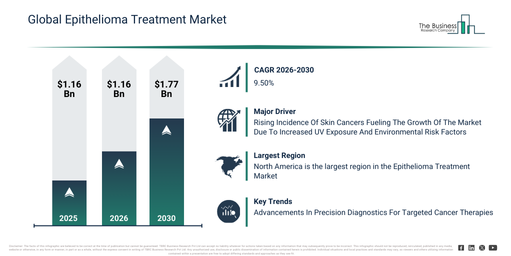
    The epithelioma treatment market has experienced robust expansion in recent years. Projections indicate it will grow from $5.19 billion in 2025 to $5.69 billion in 2026, achieving a compound annual growth rate (CAGR) of 9.5%. This historical expansion is attributable to several factors, including an escalating incidence of epithelial tumors, the proliferation of oncology treatment facilities, significant advancements in surgical oncology, the increasing adoption of radiation therapy technologies, and the expansion of clinical research dedicated to cancer treatment.

    The epithelioma treatment market size is projected to demonstrate strong growth over the next few years. It is expected to expand to $8.16 billion in 2030, achieving a compound annual growth rate (CAGR) of 9.5%. This anticipated growth during the forecast period can be attributed to the increasing demand for personalized cancer therapies, rising investments in oncology drug development, the expansion of advanced diagnostic imaging, a growing adoption of combination treatment regimens, and an increasing focus on improving patient survival outcomes. Prominent trends within the forecast period include the increasing adoption of targeted cancer therapies, the rising use of combination treatment approaches, the growing integration of precision oncology diagnostics, the expansion of minimally invasive surgical techniques, and an enhanced focus on early tumor detection.

    Get A Free Sample Report With In-Depth Market Insights:

    https://thebusinessresearchcompany.com/sample_request?id=43116315&type=smp&name=Epithelioma%20Treatment%20Market%20Report%202026&utm_source=Blogs&utm_medium=Paid&utm_campaign=Oct_PR

    Epithelioma Treatment Market Demand Drivers Opening New Revenue Streams

    The escalating incidence of skin cancers is projected to stimulate the expansion of the epithelioma treatment market going forward. Skin cancer is characterized by the unregulated proliferation of aberrant skin cells, which arises from uncorrected DNA damage that initiates mutations. A significant increase in exposure to ultraviolet radiation from both sunlight and tanning beds, alongside environmental influences such as ozone depletion, represents the chief factor behind the surge in skin cancer cases. Epithelioma treatment specifically targets and eliminates cancerous epithelial cells, thus effectively addressing the core issue of skin cancer. As an illustration, in January 2024, the American Cancer Society, a US-based non-profit organization, stated that an estimated 100,640 new cases of melanoma are forecast in the US for 2024, with roughly 59,170 anticipated in men and 41,470 in women. Consequently, the increasing occurrence of skin cancers is driving the growth of the epithelioma treatment market.

    Epithelioma Treatment Market Segment Landscape: Which Areas Lead Development?

    The epithelioma treatment market covered in this report is segmented –

    1) By Disease Type: Basal Cell Epithelioma, Squamous Cell Epithelioma, Malignant Epithelioma

    2) By Treatment Type: Drug Class, Surgical Treatments, Radiation Therapy, Photodynamic Therapy, Combination Therapies

    3) By Distribution Channel: Hospital Pharmacies, Retail Pharmacies, E-Commerce, Other Distribution Channels

    4) By End-User: Hospitals, Specialty Clinics, Ambulatory Surgical Centers, Research And Academic Institutes

    Subsegments:

    1) By Basal Cell Epithelioma: Superficial Basal Cell Epithelioma, Nodular Basal Cell Epithelioma, Infiltrative Basal Cell Epithelioma, Morpheaform (Sclerosing) Basal Cell Epithelioma, Pigmented Basal Cell Epithelioma

    2) By Squamous Cell Epithelioma: Cutaneous Squamous Cell Carcinoma, Oral Squamous Cell Carcinoma, Esophageal Squamous Cell Carcinoma, Pulmonary Squamous Cell Carcinoma, Cervical Squamous Cell Carcinoma

    3) By Malignant Epithelioma: Epithelioid Sarcoma, Clear Cell Sarcoma, Spindle Cell Carcinoma, Adenoid Cystic Carcinoma, Mucoepidermoid Carcinoma

    Epithelioma Treatment Market Trends Powering Strategic Industry Growth

    Major companies operating in the epithelioma treatment market are concentrating on developing new and innovative therapies, such as companion diagnostics, to enhance treatment precision, improve patient outcomes, and facilitate personalized medicine approaches. Companion diagnostics are tests that help determine which patients will respond optimally to a particular treatment, thereby maximizing safety and efficacy. For instance, in November 2024, Roche Holdings AG, a Switzerland-based pharmaceutical company, received U.S. Food and Drug Administration (FDA) approval for an expanded indication of its PATHWAY anti-HER2/neu (4B5) rabbit monoclonal primary antibody test. This approval allows the test to identify patients with previously treated, unresectable, or metastatic HER2-positive biliary tract cancer (BTC) who may be eligible for treatment with Ziihera (zanidatamab-hrii). Roche aims to enhance personalized healthcare by providing a reliable diagnostic tool to guide targeted therapy decisions for BTC patients.

    Epithelioma Treatment Market Competitive Analysis Of Leading Industry Participants

    Major companies operating in the epithelioma treatment market are Pfizer Inc., F. Hoffmann-La Roche Ltd, Merck & Co. Inc., Sanofi, Bristol-Myers Squibb Company, Novartis AG, Eli Lilly and Company, Amgen Inc., Regeneron Pharmaceuticals Inc., Sun Pharmaceutical Industries Ltd., Zhejiang Hisun Pharmaceutical Co. Ltd., Verrica Pharmaceuticals Inc., Sirnaomics Inc., MediWound Ltd, Philogen SpA, PellePharm Inc., Kintor Pharmaceutical Limited, DermBiont, Transgene SA, AiViva BioPharma Inc.

    View The Full Epithelioma Treatment Market Report:

    https://thebusinessresearchcompany.com/report/epithelioma-treatment-global-market-report?utm_source=Blogs&utm_medium=Paid&utm_campaign=Oct_PR

    Epithelioma Treatment Market Geographic Distribution And Regional Opportunities

    North America was the largest region in the epithelioma treatment market in 2025. Asia-Pacific is expected to be the fastest-growing region in the forecast period. The regions covered in the epithelioma treatment market report are Asia-Pacific, South East Asia, Western Europe, Eastern Europe, North America, South America, Middle East, Africa.

    Reach Out To Our Team:

    The Business Research Company: https://www.thebusinessresearchcompany.com/

    Americas: +1 310-496-7795

    Asia: +44 7882 955267 & +91 8897263534

    Europe: +44 7882 955267

    Email us at: marketing@tbrc.info

    Follow us on:

    LinkedIn: https://in.linkedin.com/company/the-business-research-company

    YouTube: https://www.youtube.com/channel/UC24_fI0rV8cR5DxlCpgmyFQ

    Global Market Model: https://www.thebusinessresearchcompany.com/global-market-model
  • Epigenetics Diagnostics Market Forecast 2026: Market Size, Competitive Landscape And Growth Drivers

    Epigenetics Diagnostics Market Forecast 2026: Market Size, Competitive Landscape And Growth Drivers

    Featuring market attractiveness scoring, total addressable market sizing, company benchmarking matrices, interactive Excel dashboards, deeper supply chain intelligence, emerging startup tracking, and granular product-level insights, The Business Research Company’s 2026 market reports are built to deliver research that is both more actionable and more strategically valuable.

    Epigenetics Diagnostics Market Revenue Outlook: What CAGR Lies Ahead Through 2030?

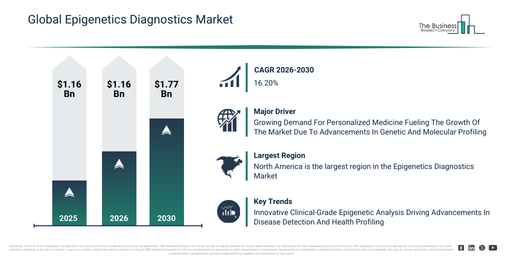
    The epigenetics diagnostics market has experienced substantial expansion in recent times. This market is projected to expand from $16.56 billion in 2025 to $19.29 billion in 2026, demonstrating a compound annual growth rate (CAGR) of 16.5%. Historically, this expansion was driven by factors such as the restricted access to epigenetic diagnostic tools, a dependence on established molecular biology techniques, rising recognition of epigenetic research, a surge in academic and clinical research endeavors, and the gradual integration of automated instrumentation.

    The epigenetics diagnostics market is projected to experience swift expansion over the coming years. This market is anticipated to reach $35.17 billion by 2030, exhibiting a compound annual growth rate (CAGR) of 16.2%. Key drivers for this growth during the forecast period include innovations in sequencing and epigenetic analysis technologies, increased funding for personalized medicine, the broadening scope of diagnostics for oncology and metabolic diseases, the incorporation of cloud-based bioinformatics services, and a surge in demand from pharmaceutical and biotechnology companies. Significant trends observed throughout this period encompass the growing uptake of epigenetic biomarker kits, an increase in the deployment of next-generation sequencing and microarray systems, the expansion of data analysis and bioinformatics offerings, an intensifying emphasis on applications in oncology and personalized medicine, and the integration of automated liquid handling and high-throughput technologies.

    Get A Free Sample Report With In-Depth Market Insights:

    https://thebusinessresearchcompany.com/sample_request?id=35277182&type=smp&name=Epigenetics%20Diagnostics%20Market%20Report%202026&utm_source=Blogs&utm_medium=Paid&utm_campaign=Oct_PR

    Epigenetics Diagnostics Market Growth Backed By Core Demand Fundamentals

    The epigenetics diagnostics market is anticipated to expand due to the increasing need for personalized medicine. Personalized medicine involves tailoring medical interventions to an individual’s specific genetic profile, biological characteristics, and lifestyle choices. This rising demand stems from breakthroughs in genetic and molecular profiling, which facilitate treatments precisely adapted to an individual’s unique biological makeup, enhancing efficacy and minimizing adverse reactions. Epigenetics diagnostics plays a crucial role in personalized medicine by pinpointing distinct epigenetic patterns that inform customized prevention and treatment strategies for superior patient outcomes. For example, as reported by the US-based non-profit organization Personalized Medicine Coalition in February 2024, the FDA gave its approval to 16 new personalized therapies for patients with rare diseases in 2023, an increase from six approvals in 2022. Consequently, the expanding demand for personalized medicine is a key catalyst for the growth of the epigenetics diagnostics market.

    Epigenetics Diagnostics Market Segments: Where Is Growth Concentrated?

    The epigenetics diagnostics market covered in this report is segmented –

    1) By Product: Kits And Reagents, Software And Services, Instruments

    2) By Technology: Deoxyribonucleic Acid (DNA) Methylation, Histone Methylation, Histone Acetylation, Large NonCoding, Ribonucleic Acid (RNA), Micro Ribonucleic Acid (RNA) Modification, Chromatin Structures

    3) By Application: Oncology, Metabolic Diseases, Developmental Biology, Immunology, Cardiovascular Diseases, Other Applications

    4) By End User: Pharmaceutical And Biotechnology firms, Academic And Research Institutes, Clinical Diagnostic Laboratories

    Subsegments:

    1) By Kits and Reagents: Deoxyribonucleic Acid Methylation Kits, Histone Modification Kits, Chromatin Accessibility Kits, Bisulfite Conversion Kits, Polymerase Chain Reaction Reagents, Antibodies and Probes, Enzymes and Buffers

    2) By Software and Services: Data Analysis Software, Bioinformatics Services, Epigenetic Data Interpretation, Cloud-based Data Storage, Custom Assay Development, Validation and Consulting Services

    3) By Instruments: Next-Generation Sequencers, Microarray Systems, Polymerase Chain Reaction and Quantitative Polymerase Chain Reaction Instruments, Mass Spectrometry Systems, Imaging Systems, Automation and Liquid Handling Systems

    Epigenetics Diagnostics Market Growth Trends Reshaping The Competitive Landscape

    Leading firms within the epigenetics diagnostics market are concentrating on creating novel strategies, including clinical-grade epigenetic analysis, to improve the precision, responsiveness, and practical clinical value in identifying epigenetic modifications linked to diseases. This type of analysis involves employing validated and standardized methodologies to detect epigenetic alterations with the necessary accuracy and dependability for making clinical diagnoses and treatment choices. As an illustration, in October 2024, EpiMedTech, a Singapore-based biotechnology company, launched epiGeneComplete. This clinical-grade test combines genetic and epigenetic analysis, leveraging next-generation sequencing and sophisticated DNA methylation techniques to offer comprehensive information on crucial health indicators such as aging, stress, inflammation, addiction risk, and metabolism. Performed in CAP-accredited laboratories, this non-invasive test, utilizing saliva, demonstrates high sensitivity and accuracy. It facilitates personalized health profiling and is built as an open, flexible platform to allow for future expansion of diagnostic capabilities, signifying a significant stride in routine health screening and the early detection of diseases.

    Epigenetics Diagnostics Market Leading Companies And Competitive Benchmarking

    Major companies operating in the epigenetics diagnostics market are F. Hoffmann-La Roche Ltd., Merck KGaA, Thermo Fisher Scientific Inc., Agilent Technologies Inc., Illumina Inc., PerkinElmer Inc., Bio-Rad Laboratories Inc., QIAGEN N.V., GeneTex Inc., Bio-Techne Corporation, Promega Corporation, New England Biolabs Incorporated, Pacific Biosciences of California Inc., Enzo Biochem Inc., Diagenode Société Anonyme, Zymo Research Corporation, Active Motif Inc., ADmit Therapeutics SL, Epigentek Group Inc., INHERENT Biosciences Inc.

    View The Full Epigenetics Diagnostics Market Report:

    https://thebusinessresearchcompany.com/report/epigenetics-diagnostics-global-market-report?utm_source=Blogs&utm_medium=Paid&utm_campaign=Oct_PR

    Epigenetics Diagnostics Market Largest Region By Revenue And Market Share

    North America was the largest region in the epigenetics diagnostics market in 2025. Asia-Pacific is expected to be the fastest-growing region in the forecast period. The regions covered in the epigenetics diagnostics market report are Asia-Pacific, South East Asia, Western Europe, Eastern Europe, North America, South America, Middle East, Africa.

    Reach Out To Our Team:

    The Business Research Company: https://www.thebusinessresearchcompany.com/

    Americas: +1 310-496-7795

    Asia: +44 7882 955267 & +91 8897263534

    Europe: +44 7882 955267

    Email us at: marketing@tbrc.info

    Follow us on:

    LinkedIn: https://in.linkedin.com/company/the-business-research-company

    YouTube: https://www.youtube.com/channel/UC24_fI0rV8cR5DxlCpgmyFQ

    Global Market Model: https://www.thebusinessresearchcompany.com/global-market-model
  • Epigenetics Market Size In 2026: Regional Growth, Key Segments And Future Outlook

    Epigenetics Market Size In 2026: Regional Growth, Key Segments And Future Outlook

    Built to provide research that’s more actionable and strategically valuable, The Business Research Company’s 2026 market reports include market attractiveness analysis, total addressable market sizing, company benchmarking matrices, interactive Excel dashboards, broader supply chain intelligence, emerging startup tracking, and in-depth product insights.

    Epigenetics Market Growth Analysis: How Will Revenue Trend Over The Forecast Period?

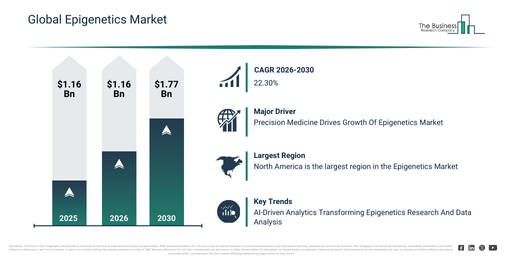
    The epigenetics market has experienced substantial growth in recent years. Its value is expected to rise from $12.74 billion in 2025 to $15.62 billion in 2026, at a compound annual growth rate (CAGR) of 22.6%. Historically, this expansion can be linked to heightened cancer research activities, the broadening of academic genomics research, the accessibility of advanced sequencing instruments, an increasing emphasis on molecular diagnostics, and greater funding allocated to life sciences research.

    The epigenetics market is anticipated to experience significant expansion in the coming years. It is projected to reach $35.01 billion in 2030, exhibiting a compound annual growth rate (CAGR) of 22.3%. This projected growth during the forecast period is fueled by factors such as greater investments in precision medicine, the growing embrace of epigenetic therapeutics, the broadening scope of personalized oncology treatments, the expanding application of AI-driven genomic analysis, and heightened collaboration between pharmaceutical companies and research institutions. Key trends for the same period encompass the heightened utilization of epigenetic biomarkers in oncology, the increasing uptake of high-throughput epigenetic analysis instruments, a rising demand for DNA methylation assays, the broadening of epigenetics-driven drug discovery efforts, and improved integration of bioinformatics platforms.

    Get A Free Sample Report With In-Depth Market Insights:

    https://thebusinessresearchcompany.com/sample_request?id=29548743&type=smp&name=Epigenetics%20Market%20Report%202026&utm_source=Blogs&utm_medium=Paid&utm_campaign=Oct_PR

    Epigenetics Market Growth Catalysts And Demand Drivers

    The epigenetics market is anticipated to expand due to a growing emphasis on precision medicine in the future. This medical strategy involves tailoring treatments to specific patient requirements by taking into account their unique genetic makeup, environmental factors, and lifestyle choices. Within epigenetics, precision medicine leverages individual epigenetic profiles and genetic data to develop customized healthcare plans, leading to more effective disease management and patient treatment. As an illustration, Novotech, an Australia-based biotechnology company, reported in March 2024 that in 2023, 43% of the 217 FDA-approved oncology treatments were precision oncology treatments, and 78 of these included DNA or NGS-detectable biomarkers. Consequently, the growing focus on precision medicine is stimulating the expansion of the epigenetics market.

    Epigenetics Market Segment Analysis: What Are The Core Market Categories?

    The epigenetics market covered in this report is segmented –

    1) By Product: Reagents, Enzymes, Instruments, Kits

    2) By Technology: DNA Methylation, Histone Methylation, Histone Acetylation, Large Noncoding RNA, MicroRNA Modification, Chromatin Structures

    3) By Application: Oncology, Metabolic Diseases, Developmental Biology, Immunology, Cardiovascular Diseases, Other Applications

    4) By End-User: Academic And Research Institutes, Pharmaceutical And Biotechnology Companies, Contract Research Organizations, Other End Users

    Subsegments:

    1) By Reagents: DNA Methylation Reagents, Histone Modification Reagents, RNA Modifications Reagents, Enzymes

    2) By Enzymes: DNA Methyltransferases, Histone Acetyltransferases, Histone Deacetylases

    3) By Instruments: Sequencers, PCR Machines, Microarray Platforms, Mass Spectrometers

    4) By Kits: DNA Methylation Kits, Chromatin Immunoprecipitation (ChIP) Kits, RNA-Seq Kits, Bisulfite Conversion Kits

    Epigenetics Market Trends Shaping Long-Term Demand

    Major companies operating in the epigenetics market are intensifying their efforts to implement artificial intelligence (AI)-driven analytics, aiming to gain a competitive edge. AI-driven analytics involves employing artificial intelligence (AI) technologies to automatically process and interpret significant amounts of data. As an illustration, FOXO Technologies, a US-based firm, unveiled its Bioinformatics Services in July 2023, designed to transform epigenetic data analysis. FOXO’s Bioinformatics Services provide a adaptable platform of sophisticated data solutions, customized to address the particular requirements of clients working in academia, healthcare, and pharmaceutical research. Utilizing a cutting-edge suite of bioinformatic tools, FOXO seeks to empower its clients to boost the speed and accuracy with which they process, analyze, and interpret data sets, thereby accelerating discoveries and deepening their understanding of complex diseases.

    Epigenetics Market Industry Leaders And Competitive Landscape

    Major companies operating in the epigenetics market are Illumina Inc., Thermo Fisher Scientific, Merck Millipore, Active Motif, Abcam PLC, Qiagen NV, Diagenode SA, CellCentric Ltd., Chroma Medicine Inc., Constellation Pharmaceuticals Inc., Domainex Ltd., Eisai Co. Ltd., Epigen Biosciences Inc., EpigenDx Inc., Epigenomics AG, Epizyme Inc., Gilead Sciences Inc., GlaxoSmithKline plc, Janssen Pharmaceuticals Inc., MDxHealth SA, Novartis AG, OncoDNA SA, Oryzon Genomics S.A., Pfizer Inc., Syndax Pharmaceuticals Inc., Valirx plc

    View The Full Epigenetics Market Report:

    https://thebusinessresearchcompany.com/report/epigenetics-global-market-report?utm_source=Blogs&utm_medium=Paid&utm_campaign=Oct_PR

    Epigenetics Market Regional Analysis And Leading Geography

    North America was the largest region in the epigenetics market in 2025. Asia-Pacific is expected to be the fastest-growing region in the epigenetics market during the forecast period. The regions covered in the epigenetics market report are Asia-Pacific, South East Asia, Western Europe, Eastern Europe, North America, South America, Middle East, Africa.

    Reach Out To Our Team:

    The Business Research Company: https://www.thebusinessresearchcompany.com/

    Americas: +1 310-496-7795

    Asia: +44 7882 955267 & +91 8897263534

    Europe: +44 7882 955267

    Email us at: marketing@tbrc.info

    Follow us on:

    LinkedIn: https://in.linkedin.com/company/the-business-research-company

    YouTube: https://www.youtube.com/channel/UC24_fI0rV8cR5DxlCpgmyFQ

    Global Market Model: https://www.thebusinessresearchcompany.com/global-market-model

  • Epidural Anesthesia Disposable Device Market Growth Forecast Through 2030: Market Size And Trends In 2026

    Epidural Anesthesia Disposable Device Market Growth Forecast Through 2030: Market Size And Trends In 2026

    Backed by market attractiveness analysis, total addressable market sizing, company benchmarking matrices, interactive Excel dashboards, wider supply chain intelligence, emerging startup coverage, and detailed product-level insights, The Business Research Company’s 2026 market reports are designed to offer research that is more actionable and strategically valuable than ever.

    Epidural Anesthesia Disposable Device Market Forecast: What Value Will The Market Reach By 2030?

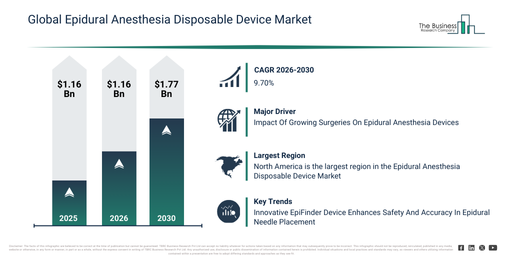
    The epidural anesthesia disposable device market has experienced significant growth in recent years. It is projected to expand from $1.76 billion in 2025 to $1.93 billion in 2026, achieving a compound annual growth rate (CAGR) of 9.7%. This past growth can be attributed to several factors, including an increasing volume of surgical procedures, the wider application of epidural anesthesia in pain management, a heightened focus on infection control within hospitals, the expanding adoption of regional anesthesia techniques, and a growing availability of trained anesthesiology professionals.

    The epidural anesthesia disposable device market size is projected to experience robust expansion over the coming years. Its valuation is set to reach $2.79 billion by 2030, demonstrating a compound annual growth rate (CAGR) of 9.7%. This growth trajectory during the forecast period is primarily driven by factors such as an increase in childbirths utilizing epidural anesthesia, an escalating need for minimally invasive pain management solutions, the proliferation of ambulatory surgical centers, advancements in healthcare infrastructure, and a heightened emphasis on patient safety and procedural efficacy. Key developments anticipated in this period encompass a growing inclination towards single-use epidural anesthesia devices, a greater uptake of pre-packaged epidural trays, an expanding application of epidural anesthesia in both surgical and obstetric settings, an intensified focus on preventing infections during anesthesia administration, and an increasing desire for standardized, ready-to-use epidural kits.

    Get A Free Sample Report With In-Depth Market Insights:

    https://thebusinessresearchcompany.com/sample_request?id=66064308&type=smp&name=Epidural%20Anesthesia%20Disposable%20Device%20Market%20Report%202026&utm_source=Blogs&utm_medium=Paid&utm_campaign=Oct_PR

    Epidural Anesthesia Disposable Device Market Opportunity Drivers: What’s Unlocking New Revenue Potential?

    The expanding number of surgeries is projected to drive the growth of the epidural anesthesia disposable device moving forward. These medical procedures, where doctors employ tools to address injuries or illnesses by making cuts in the body to assess and fix problems, are increasing due to several factors. These include advancements in medical technology, greater awareness and access to healthcare, an aging population with more complex health needs, and evolving surgical techniques that allow for safer and more effective treatments. The epidural anesthesia disposable device is crucial for minimizing the risk of cross-contamination and infection, thereby enhancing patient safety and streamlining the surgical process by ensuring each patient receives a sterile, single-use device. For example, in July 2024, the American Society of Plastic Surgeons, a US-based non-governmental organization, reported that Liposuction topped its 2024 statistics as the most popular surgical plastic surgery procedure, with a 1% increase in individuals opting for the procedure in 2024 vs 2023. Consequently, the rising number of surgeries significantly propels the epidural anesthesia disposable device market.

    Epidural Anesthesia Disposable Device Market Segment Breakdown: Which Categories Lead On Revenue?

    The epidural anesthesia disposable device market covered in this report is segmented –

    1) By Type: Continuous Epidural Tray, Single Dose Epidural Tray, Epidural Anesthesia Needles, Other Types

    2) By Age Group: Adults, Pediatrics

    3) By Applications: Hospital, Clinics, Ambulatory Surgical Centers, Long Term Care Centers

    Subsegments:

    1) By Continuous Epidural Tray: Pre-Packaged Continuous Epidural Tray, Customizable Continuous Epidural Tray

    2) By Single Dose Epidural Tray: Pre-Packaged Single Dose Epidural Tray, Customizable Single Dose Epidural Tray

    3) By Epidural Anesthesia Needles: Tuohy Needles, Quincke Needles, Crawford Needles

    4) By Other Types: Epidural Catheters, Epidural Pump Sets, Epidural Syringes

    Epidural Anesthesia Disposable Device Market Innovation Trends Shaping Future Development

    Leading companies within the epidural anesthesia disposable device market are concentrating on innovating products and securing their approval from the U.S. Food and Drug Administration to enhance patient safety and efficacy. These developments aim to address the rising demand for minimally invasive pain management solutions, as healthcare providers strive to improve patient outcomes while reducing complications associated with traditional anesthesia methods. For instance, in May 2023, Omeq Medical, an Israel-based medical technology company, obtained FDA clearance for its EpiFinder device. This device is engineered to assist physicians in precisely positioning an epidural needle during the standard Loss of Resistance (LOR) technique employed for administering epidural anesthesia.

    Epidural Anesthesia Disposable Device Market Key Participants And Competitive Landscape

    Major companies operating in the epidural anesthesia disposable device market are Baxter International Inc., Medline Industries Inc., B. Braun Melsungen AG, Smiths Medical Inc., Teleflex Incorporated, Halyard Health, Sarstedt Inc., Vygon Ltd., Vogt Medical Vertrieb GmbH, Romsons International, Narang Medical Limited, sfm medical devices GmbH, PAJUNK, Balton Ltd., Troge Medical GmbH, Becton Dickinson and Company, Hull Anesthesia Inc., Zhejiang Fert Medical Device, Epimed International Inc., Omnimedix Medical Devices Pvt Ltd, Shenzhen Mindray Medical Equipment Co Ltd

    View The Full Epidural Anesthesia Disposable Device Market Report:

    https://thebusinessresearchcompany.com/report/epidural-anesthesia-disposable-device-global-market-report?utm_source=Blogs&utm_medium=Paid&utm_campaign=Oct_PR

    Epidural Anesthesia Disposable Device Market Geographic Analysis: Where Is Demand Accelerating Fastest?

    North America was the largest region in the epidural anesthesia disposable device market in 2025. The regions covered in the epidural anesthesia disposable device market report are Asia-Pacific, South East Asia, Western Europe, Eastern Europe, North America, South America, Middle East, Africa.

    Reach Out To Our Team:

    The Business Research Company: https://www.thebusinessresearchcompany.com/

    Americas: +1 310-496-7795

    Asia: +44 7882 955267 & +91 8897263534

    Europe: +44 7882 955267

    Email us at: marketing@tbrc.info

    Follow us on:

    LinkedIn: https://in.linkedin.com/company/the-business-research-company

    YouTube: https://www.youtube.com/channel/UC24_fI0rV8cR5DxlCpgmyFQ

    Global Market Model: https://www.thebusinessresearchcompany.com/global-market-model