Blog

  • Disability Devices Market CAGR Forecast Through 2030: Key Trends Shaping Industry Expansion

    Disability Devices Market CAGR Forecast Through 2030: Key Trends Shaping Industry Expansion

    Backed by market attractiveness analysis, total addressable market sizing, company benchmarking matrices, interactive Excel dashboards, wider supply chain intelligence, emerging startup coverage, and detailed product-level insights, The Business Research Company’s 2026 market reports are designed to offer research that is more actionable and strategically valuable than ever.

    Disabled And Elderly Assistive Technology Market Revenue Growth On Track For A 7.3% CAGR Through 2030

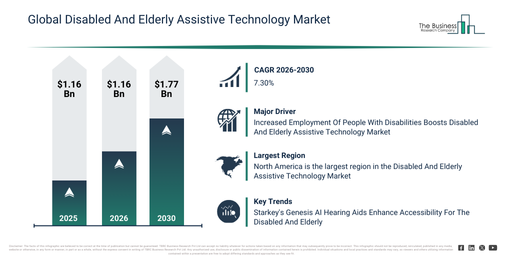
    The disabled and elderly assistive technology market has experienced substantial expansion in recent years. Projections indicate it will grow from $45.53 billion in 2025 to $48.87 billion in 2026, achieving a compound annual growth rate (CAGR) of 7.3%. The market’s historical growth can be attributed to an expanding elderly population, an increasing prevalence of physical disabilities, the broadening of homecare services, rising awareness of assistive devices, and enhanced availability of mobility aids.

    The disabled and elderly assistive technology market is anticipated to show significant expansion in the upcoming years. It is projected to achieve a value of $64.72 billion by 2030, growing at a compound annual growth rate (CAGR) of 7.3%. This expansion during the forecast period is driven by an increasing aging population, a growing preference for aging in place, a rising need for daily activity assistance, the expansion of elderly care infrastructure, and increased healthcare spending on long-term care. Notable trends expected in this period include an increased demand for home-based assistive solutions, a greater adoption of mobility and ambulatory aids, a stronger focus on independent living support, a shift towards personalized assistive devices, and an escalating use of wearable monitoring and safety products.

    Get A Free Sample Report With In-Depth Market Insights:

    https://thebusinessresearchcompany.com/sample_request?id=65293670&type=smp&name=Disabled%20And%20Elderly%20Assistive%20Technology%20Market%20Report%202026&utm_source=Blogs&utm_medium=Paid&utm_campaign=Oct_PR

    Disabled And Elderly Assistive Technology Market Growth Drivers: What’s Behind The Acceleration?

    A growing employment-population ratio among individuals with disabilities is anticipated to propel the expansion of the disabled and elderly assistive technology market in the future. This rising ratio for people with disabilities is attributed to improved accessibility, inclusive hiring practices, and enhanced support programs. Disabled and elderly assistive technology enables individuals with disabilities to perform job tasks more effectively and independently, improving their employability and access to a wider range of job opportunities. For instance, in February 2024, according to the Bureau of Labor Statistics, a US-based agency of the United States Department of Labor, in 2023, the employment-population ratio for individuals with disabilities rose by 1.2% points, reaching 22.5%. Therefore, the increasing employment-population ratio for individuals with disabilities is driving the disabled and elderly assistive technology market.

    Disabled And Elderly Assistive Technology Market Segment Breakdown: Which Categories Lead On Revenue?

    The disabled and elderly assistive technology market covered in this report is segmented –

    1) By Product Type: Medical Mobility Aids And Ambulatory Devices, Assistive Furniture, Bathroom Safety And Assistive Products, Communication Aids, Activity Monitors, Location Monitors, Other Product Types

    2) By Distribution Channel: Online, Offline

    3) By End-User: Hospitals, Elderly Nursing Homes, Homecare, Other End-Users

    Subsegments:

    1) By Medical Mobility Aids And Ambulatory Devices: Wheelchairs (Manual And Powered), Walking Aids (Canes, Crutches, Walkers), Scooters, Prosthetics And Orthotics, Transfer Aids (Lift Chairs, Slings, Hoists)

    2) By Assistive Furniture: Adjustable Beds, Recliners And Lift Chairs, Ergonomic Chairs And Desks, Raised Seating And Supportive Chairs, Overbed Tables And Ramps

    3) By Bathroom Safety And Assistive Products: Grab Bars, Shower Chairs And Stools, Raised Toilet Seats, Bath Lifts, Non-Slip Mats And Flooring, Commode Chairs

    4) By Communication Aids: Voice-Activated Devices, Hearing Aids, Speech Generating Devices, Text-to-speech Systems, Amplified Telephones

    5) By Activity Monitors: Wearable Health Devices (Smartwatches, Fitness Trackers), Heart Rate Monitors, Fall Detection Systems, Sleep Trackers, Blood Pressure Monitors

    6) By Location Monitors: Gps Tracking Devices For Seniors, Wearable Location Trackers, Mobile Apps For Location Monitoring, Fall Detection And Alert Systems With Location Tracking

    7) By Other Product Types: Cognitive Aids (Memory Assistance Tools), Vision Aids (Magnifiers, Electronic Glasses), Environmental Control Systems (Smart Home Devices), Medication Management Aids

    Disabled And Elderly Assistive Technology Market Trends: What’s Defining The Industry’s Next Phase?

    Key companies operating in the disabled and elderly assistive technology market are concentrating on technological advancements, especially with AI-powered hearing aids and other assistive devices, to gain a competitive edge. These hearing aids harness artificial intelligence to enhance sound fidelity, adapt to various surroundings, and deliver tailored hearing solutions. For instance, in January 2024, Starkey, a U.S.-based hearing aid manufacturer, introduced the Genesis AI hearing aids in Australia and New Zealand. These devices incorporate real-time environmental adjustments, advanced noise reduction, and seamless connectivity with smart devices, providing users with clearer audio and improved conversational abilities. This breakthrough demonstrates how AI integration in hearing aids considerably boosts accessibility and user experience, addressing the particular requirements of individuals with hearing difficulties.

    Disabled And Elderly Assistive Technology Market Competitive Overview And Top Companies

    Major companies operating in the disabled and elderly assistive technology market are Medline Industries LP, Sonova Holding AG, Demant A/S, GN Store Nord A/S, Otto Bock HealthCare GmbH, Cochlear Ltd, Starkey Laboratories Inc., Invacare Holdings Corp, MED-EL Medical Electronics, Permobil Inc., Sunrise Medical LLC, Pride Mobility Products Corp., Tobii Dynavox LLC, Freedom Scientific Inc., Liberator Ltd., Jabbla UK Ltd., Blue Chip Medical Products Inc., Medical Depot Inc., Inclusive Technology Ltd, Exact Dynamics B.V.

    View The Full Disabled And Elderly Assistive Technology Market Report:

    https://thebusinessresearchcompany.com/report/disabled-and-elderly-assistive-technology-global-market-report?utm_source=Blogs&utm_medium=Paid&utm_campaign=Oct_PR

    Disabled And Elderly Assistive Technology Market Leading Geography: Which Region Contributes The Most Revenue?

    North America was the largest region in the disabled and elderly assistive technology market in 2025. Asia-Pacific is expected to be the fastest-growing region in the forecast period. The regions covered in the disabled and elderly assistive technology market report are Asia-Pacific, South East Asia, Western Europe, Eastern Europe, North America, South America, Middle East, Africa.

    Reach Out To Our Team:

    The Business Research Company: https://www.thebusinessresearchcompany.com/

    Americas: +1 310-496-7795

    Asia: +44 7882 955267 & +91 8897263534

    Europe: +44 7882 955267

    Email us at: marketing@tbrc.info

    Follow us on:

    LinkedIn: https://in.linkedin.com/company/the-business-research-company

    YouTube: https://www.youtube.com/channel/UC24_fI0rV8cR5DxlCpgmyFQ

    Global Market Model: https://www.thebusinessresearchcompany.com/global-market-model
  • Disability Devices Market To Witness 5.5% CAGR Growth Through 2030: Key Industry Drivers

    Disability Devices Market To Witness 5.5% CAGR Growth Through 2030: Key Industry Drivers

    Featuring market attractiveness scoring, total addressable market sizing, company benchmarking matrices, interactive Excel dashboards, deeper supply chain intelligence, emerging startup tracking, and granular product-level insights, The Business Research Company’s 2026 market reports are built to deliver research that is both more actionable and more strategically valuable.

    Disability Devices Market Value Growth And Long-Term Outlook

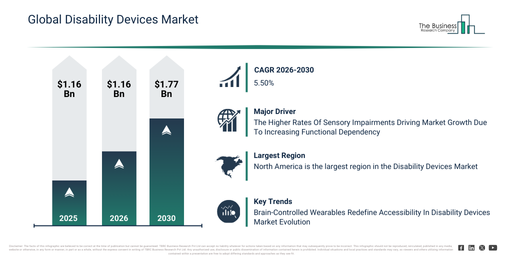
    The disability devices market size has exhibited strong growth over recent years. Its expansion is projected to move from $25.38 billion in 2025 to $26.87 billion in 2026, demonstrating a compound annual growth rate (CAGR) of 5.9%. The market’s historical growth can be attributed to a limited supply of advanced disability devices, the high cost associated with assistive technology, a reliance on conventional mobility aids, an increasing elderly population, and low awareness concerning cognitive and communication aids.

    The disability devices market is projected to experience robust expansion over the coming years. Its valuation is anticipated to reach $33.33 billion by 2030, demonstrating a compound annual growth rate (CAGR) of 5.5%. This growth during the forecast period is primarily driven by advancements in smart and connected disability technologies, augmented governmental backing and insurance provisions, an expansion in rehabilitation facilities and home-based care services, a heightened emphasis on accessible and inclusive education, and the creation of AI-driven vision and hearing solutions. Significant trends expected during this period include a greater uptake of intelligent mobility devices, an increasing need for vision and hearing aids, the incorporation of tools for cognitive and communication assistance, a rise in the deployment of environmental control and home automation systems, and a focus on designing disability devices that are both customizable and ergonomic.

    Get A Free Sample Report With In-Depth Market Insights:

    https://thebusinessresearchcompany.com/sample_request?id=31062712&type=smp&name=Disability%20Devices%20Market%20Report%202026&utm_source=Blogs&utm_medium=Paid&utm_campaign=Oct_PR

    Disability Devices Market Growth Factors Behind Sustained Expansion

    The rising incidence of sensory impairments is anticipated to drive growth within the disability devices market. Sensory impairments refer to the partial or complete absence of one or more senses, predominantly impacting vision, hearing, or other sensory functions, thereby substantially limiting an individual’s capability to perceive, interpret, or react to environmental stimuli. The elevated rates of sensory impairments are primarily fueled by factors such as an aging demographic, chronic health conditions, and increased exposure to environmental risks, as these circumstances frequently degrade sensory functions over time and become more prevalent with advancing age, resulting in a greater occurrence of impairments. Disability devices are crucial in addressing the increasing burden of sensory impairments by improving functional capabilities, supporting independence, and enhancing the overall quality of life for affected individuals. For instance, in November 2024, according to The Hull Joint Strategic Needs Assessment (JSNA) by the Hull City Council, a UK-based unitary authority, sensory impairment accounts for 6.0% of healthy life years lost, with a higher burden in older age, rising from 2.5% in those under 50 to 12.9% in people aged 70+ in Hull. Additionally, serious visual impairment among those 75+ is expected to climb from 2,100 to 3,100 by 2040 due to aging. Therefore, the greater prevalence of sensory impairments is propelling the expansion of the disability devices market.

    Disability Devices Market Segmentation: How Does The Market Break Down By Category?

    The disability devices market covered in this report is segmented –

    1) By Device Type: Vision Aids, Hearing Aids, Mobility Aids, Other Device Types

    2) By Material: Plastic, Metal, Wood, Fabric

    3) By Application: Home Care Settings, Hospitals, Ambulatory Care Centers And Rehabilitation Centers

    4) By End User: Elderly, Physically Challenged, Visually Impaired, Hearing Impaired

    Subsegments:

    1) By Vision Aids: Magnifiers, Braille Readers, Screen Reading Software, Smart Glasses

    2) By Hearing Aids: Behind-The-Ear (BTE), In-The-Ear (ITE), Receiver-In-Canal (RIC), Cochlear Implants

    3) By Mobility Aids: Wheelchairs, Walkers And Rollators, Crutches, Mobility Scooters

    4) By Other Device Types: Communication Aids, Cognitive Aids, Environmental Control Devices, Prosthetic Devices

    Disability Devices Market Industry Trends Fueling Future Revenue Growth

    Major companies in the disability devices market are prioritizing the development of advanced technologies, such as brain-controlled assistive wearables, aiming to improve accessibility and enhance user autonomy through intuitive, non-invasive control mechanisms. A brain-controlled assistive wearable is defined as a device that leverages neural and physiological signals, allowing individuals with physical or motor impairments to interact with digital systems using non-verbal, movement-based commands. For example, in March 2024, AAVAA Inc., a Canada-based neurotechnology company, released its Brain-Computer Interface (BCI) System for Smart Glasses. This system empowers users to operate digital devices by interpreting brain and biosignals derived from eye movements, facial gestures, and head motion. Its design, featuring lightweight sensors and computational efficiency, facilitates seamless integration into eyewear, thus offering enhanced usability across assistive, smart home, augmented reality, and virtual reality applications.

    Disability Devices Market Competitive Landscape: Which Companies Lead The Industry?

    Major companies operating in the disability devices market are Medline Industries LP, Sonova Holding AG, William Demant Holding A/S, GN Store Nord A/S, Ottobock SE & Co. KGaA, Hollister Inc., Cochlear Ltd., Arjo AB, Invacare Corporation, GN Hearing A/S, MED−EL Elektromedizinische Geräte Gesellschaft m.b.H., DRIVE MEDICAL GMBH & CO. KG, Permobil AB, Pride Mobility Products Corporation, Steeper Group, GF Health Products Inc., WHILL Inc., Carex Health Brands Inc., Merits Health Products, MEYRA Group, Hearing Health & Technology Matters LLC, Magic Mobility Pty Ltd, LEVO AG, Batec Mobility S.L., BetterLiving.

    View The Full Disability Devices Market Report:

    https://thebusinessresearchcompany.com/report/disability-devices-global-market-report?utm_source=Blogs&utm_medium=Paid&utm_campaign=Oct_PR

    Disability Devices Market Regional Outlook: Where Is Opportunity Concentrated?

    North America was the largest region in the disability devices market in 2025. Asia-Pacific is expected to be the fastest-growing region in the forecast period. The regions covered in the disability devices market report are Asia-Pacific, South East Asia, Western Europe, Eastern Europe, North America, South America, Middle East, Africa.

    Reach Out To Our Team:

    The Business Research Company: https://www.thebusinessresearchcompany.com/

    Americas: +1 310-496-7795

    Asia: +44 7882 955267 & +91 8897263534

    Europe: +44 7882 955267

    Email us at: marketing@tbrc.info

    Follow us on:

    LinkedIn: https://in.linkedin.com/company/the-business-research-company

    YouTube: https://www.youtube.com/channel/UC24_fI0rV8cR5DxlCpgmyFQ

    Global Market Model: https://www.thebusinessresearchcompany.com/global-market-model
  • Direct Oral Anticoagulants (DOACs) Device Market Projected For Strong Expansion Through 2030: Key Trends And Future Outlook

    Direct Oral Anticoagulants (DOACs) Device Market Projected For Strong Expansion Through 2030: Key Trends And Future Outlook

    Built to provide research that’s more actionable and strategically valuable, The Business Research Company’s 2026 market reports include market attractiveness analysis, total addressable market sizing, company benchmarking matrices, interactive Excel dashboards, broader supply chain intelligence, emerging startup tracking, and in-depth product insights.

    Direct Oral Anticoagulants (DOACs) Device Market Poised To Hit $49.48 Billion By 2030 With A 8.5% CAGR

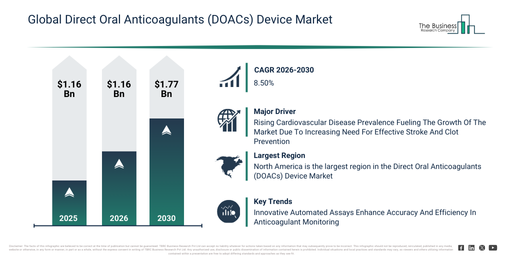
    The direct oral anticoagulants (doacs) device market has experienced significant expansion in recent years. It is forecast to rise from $32.8 billion in 2025 to $35.69 billion in 2026, exhibiting a compound annual growth rate (CAGR) of 8.8%. The growth observed in previous periods was driven by factors such as the limited access to doac monitoring equipment, the reliance on hospital-based coagulation assessments, the increasing incidence of atrial fibrillation and thrombotic conditions, the widespread adoption of oral anticoagulant treatments, and a heightened focus on patient safety and effective anticoagulation monitoring.

    The market for direct oral anticoagulants (doacs) devices is projected to experience substantial expansion over the forthcoming years. This market is anticipated to reach a valuation of $49.48 billion by 2030, demonstrating a compound annual growth rate (CAGR) of 8.5%. Several factors are expected to fuel this growth during the projection period, including progress in portable and point-of-care device technologies, the integration of digital health platforms with cloud-based monitoring solutions, a growing preference for personalized anticoagulation management, the expansion of services in homecare and specialized clinics, and a rise in regulatory endorsements for new monitoring systems. Key trends anticipated during the forecast encompass a greater embrace of point-of-care doac monitoring devices, an increased application of factor Xa and direct thrombin inhibitor monitoring, heightened public awareness regarding stroke and thromboembolism prevention, the broadening of homecare and ambulatory monitoring options, and a reinforced emphasis on improving accuracy, sensitivity, and speed in testing.

    Get A Free Sample Report With In-Depth Market Insights:

    https://thebusinessresearchcompany.com/sample_request?id=96455245&type=smp&name=Direct%20Oral%20Anticoagulants%20%28DOACs%29%20Device%20Market%20Report%202026&utm_source=Blogs&utm_medium=Paid&utm_campaign=Oct_PR

    Direct Oral Anticoagulants (DOACs) Device Market Demand Drivers Opening New Revenue Streams

    The expanding occurrence of cardiovascular conditions is projected to boost the growth of the direct oral anticoagulants (DOACs) device market in the future. Cardiovascular disorders encompass various ailments affecting the heart and blood vessels, frequently resulting in complications like heart attacks, strokes, or other circulatory issues. These disorders are escalating due to progressively inactive lifestyles, contributing to weight gain, heightened blood pressure, and a gradual decline in cardiovascular function. Direct oral anticoagulants (DOACs) assist in managing cardiovascular disorders by effectively reducing the likelihood of stroke and blood clots in individuals with atrial fibrillation, providing dependable anticoagulation without requiring regular blood tests. For example, in October 2024, data from the Centers for Disease Control and Prevention, a US-based government agency, indicated that in 2023, cardiovascular disease was responsible for 919,032 lives lost, representing one in every three deaths. Coronary heart disease continued to be the most common type of heart disease, and notably, approximately one in six cardiovascular disease fatalities affected adults younger than 65 years. Consequently, the rising occurrence of cardiovascular disorders is propelling the expansion of the direct oral anticoagulants (DOACs) device market.

    Direct Oral Anticoagulants (DOACs) Device Market Segment Trends And Revenue Contributors

    The direct oral anticoagulants (doacs) device market covered in this report is segmented –

    1) By Product: Factor Xa Inhibitors, Direct Thrombin Inhibitors

    2) By Disease: Atrial Fibrillation, Deep Vein Thrombosis, Pulmonary Embolism, Heart Attacks, Post-Surgical Thromboprophylaxis, Other Diseases

    3) By Application: Stroke Prevention, Venous Thromboembolism Prevention, Treatment Of Acute Thrombotic Events, Long-Term Prophylaxis, Other Applications

    4) By End User: Hospitals, Ambulatory Surgical Centers, Specialty Clinics, Homecare Settings, Other End Users

    Subsegments:

    1) By Factor Xa Inhibitors: Rivaroxaban Monitoring Devices, Apixaban Monitoring Devices, Edoxaban Monitoring Devices, Betrixaban Monitoring Devices

    2) By Direct Thrombin Inhibitors: Dabigatran Etexilate, Dabigatran Mesylate

    Direct Oral Anticoagulants (DOACs) Device Market Trends Powering Strategic Industry Growth

    Leading companies within the direct oral anticoagulants (DOACs) device market are concentrating on developing advanced solutions, such as automated coagulation assays, to enhance the accuracy, efficiency, and consistency of direct oral anticoagulant level monitoring in clinical laboratories. Automated coagulation assays are laboratory tests performed by machines that measure how quickly blood clots, aiding in the diagnosis of bleeding or clotting disorders. For instance, in February 2024, Roche Holding AG, a Switzerland-based pharmaceutical company, introduced three new coagulation tests specifically tailored for Factor Xa inhibitors. These tests improve clinicians’ capability to accurately evaluate the anticoagulation status of patients taking direct Factor Xa inhibitors like rivaroxaban and apixaban. They support clinical decision-making by precisely measuring the anti-Xa activity of apixaban, edoxaban, rivaroxaban, and heparin in critical scenarios such as bleeding, overdose, or urgent surgery. Utilizing Roche’s reagent cassette technology on cobas t analyzers, these automated tests deliver high-quality results, minimize manual handling, and streamline laboratory workflow efficiency.

    Direct Oral Anticoagulants (DOACs) Device Market Competitive Landscape: Who Leads The Industry?

    Major companies operating in the direct oral anticoagulants (doacs) device market are Pfizer Inc., Roche Diagnostics Corporation, Bristol-Myers Squibb Company, Siemens Healthcare GmbH, Becton Dickinson And Company, Boehringer Ingelheim International GmbH, Teva Pharmaceutical Industries Limited, Daiichi Sankyo Co. Ltd, Sysmex Corporation, Dr. Reddy’s Laboratories Limited, Werfen S.A., Alembic Pharmaceuticals Limited, Diagnostica Stago SAS, Helena Laboratories Corporation, iLine Microsystems S.L., Technoclone GmbH, Anthos Therapeutics Inc., FLoBio LLC, Perosphere Technologies Inc., DOASENSE GmbH.

    View The Full Direct Oral Anticoagulants (DOACs) Device Market Report:

    https://thebusinessresearchcompany.com/report/direct-oral-anticoagulants-doacs-device-global-market-report?utm_source=Blogs&utm_medium=Paid&utm_campaign=Oct_PR

    Direct Oral Anticoagulants (DOACs) Device Market Geographic Landscape: Which Region Leads Industry Growth?

    North America was the largest region in the direct oral anticoagulants (DOACs) device market in 2025. The regions covered in the direct oral anticoagulants (doacs) device market report are Asia-Pacific, South East Asia, Western Europe, Eastern Europe, North America, South America, Middle East, Africa.

    Reach Out To Our Team:

    The Business Research Company: https://www.thebusinessresearchcompany.com/

    Americas: +1 310-496-7795

    Asia: +44 7882 955267 & +91 8897263534

    Europe: +44 7882 955267

    Email us at: marketing@tbrc.info

    Follow us on:

    LinkedIn: https://in.linkedin.com/company/the-business-research-company

    YouTube: https://www.youtube.com/channel/UC24_fI0rV8cR5DxlCpgmyFQ

    Global Market Model: https://www.thebusinessresearchcompany.com/global-market-model
  • Digital X-ray Devices Market Outlook 2026–2030: Growth Trends, Market Dynamics And Emerging Opportunities

    Digital X-ray Devices Market Outlook 2026–2030: Growth Trends, Market Dynamics And Emerging Opportunities

    Backed by market attractiveness analysis, total addressable market sizing, company benchmarking matrices, interactive Excel dashboards, wider supply chain intelligence, emerging startup coverage, and detailed product-level insights, The Business Research Company’s 2026 market reports are designed to offer research that is more actionable and strategically valuable than ever.

    Digital X-ray Devices Market Size And Revenue Outlook Through 2030

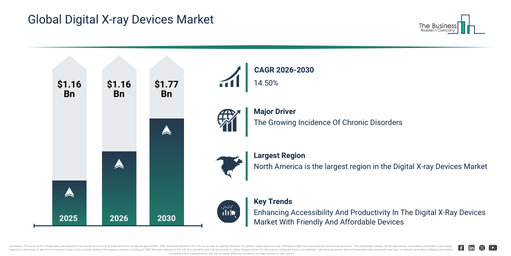
    The digital x-ray devices market size has seen substantial growth in recent years. Its value is expected to rise from $14.3 billion in 2025 to $16.41 billion in 2026, demonstrating a compound annual growth rate (CAGR) of 14.7%. This historic growth can be linked to factors such as increasing demand for diagnostic imaging services, the shift from analog to digital radiography, the expansion of hospital imaging infrastructure, a growing prevalence of chronic diseases, and the improved availability of digital imaging solutions.

    The digital x-ray devices market is anticipated to undergo significant expansion over the next few years. It is projected to grow to $28.17 billion in 2030, achieving a compound annual growth rate (CAGR) of 14.5%. This growth during the forecast period is fueled by several factors, including the increasing integration of AI-based diagnostics, a rising demand for point-of-care imaging solutions, the expansion of tele-radiology services, growing investments in advanced healthcare infrastructure, and an increased focus on workflow automation. Key trends expected in this period involve the greater adoption of AI-assisted image analysis, the wider deployment of portable and mobile x-ray systems, a growing preference for flat panel detector technologies, the expansion of cloud-connected imaging platforms, and an enhanced focus on dose reduction technologies.

    Get A Free Sample Report With In-Depth Market Insights:

    https://thebusinessresearchcompany.com/sample_request?id=44437654&type=smp&name=Digital%20X-ray%20Devices%20Market%20Report%202026&utm_source=Blogs&utm_medium=Paid&utm_campaign=Oct_PR

    Digital X-ray Devices Market Growth Backed By Core Demand Fundamentals

    The rising occurrence of chronic conditions, such as cancer, is anticipated to propel the expansion of the digital X-ray devices market over the coming years. Such chronic conditions, including cancer, are defined as health issues that persist for an extended period and frequently advance slowly. Digital X-ray devices contribute to cancer care by providing enhanced imaging capabilities, reducing radiation exposure, and improving diagnostic accuracy. For instance, in July 2024, according to the projections published by Cancer Research UK, a UK-based cancer charity, cancer incidence rates in the United Kingdom are forecast to increase for most types between 2023-2025 and 2038-2040, with rises ranging from less than 1% for breast cancer to 50% for eye cancer, while a smaller number of cancers are expected to show a decline, with reductions ranging from 2% for lung cancer to 27% for mesothelioma. Consequently, the increasing incidence of chronic disorders, such as cancer, fuels the digital X-ray devices market.

    Digital X-ray Devices Market Segment Analysis Spotlighting Growth Areas

    The digital x-ray devices market covered in this report is segmented –

    1) By Technology: Direct Radiography, Computed Radiography

    2) By Portability: Handheld Systems, Portable X-Ray Systems, Mobile X-Ray Systems, Floor-to-ceiling Mounted Systems, Ceiling Mounted Systems, Fixed Digital X-Ray Systems

    3) By Application: General Radiography, Chest Imaging Applications, Orthopedic Applications, Cardiovascular Imaging, Other General Radiography Applications, Dental Applications, Mammography, Fluoroscopy

    4) By End Users: Hospitals, Diagnostic Centers, Dental Care Centers

    Subsegments:

    1) By Direct Radiography (DR): Flat Panel Detectors, Portable DR Systems

    2) By Computed Radiography (CR): CR Cassette-Based Systems, CR Tabletop Systems

    Digital X-ray Devices Market Growth Trends Reshaping The Competitive Landscape

    Leading companies in the digital x-ray devices market are dedicated to developing user-friendly and affordable equipment to boost productivity. By prioritizing intuitive designs and accessible pricing, these manufacturers aim to improve healthcare providers’ access to advanced imaging technology. For instance, in November 2023, Carestream Health, a US-based company specializing in medical and dental imaging systems, launched the HORIZON X-ray System. This system is an affordable and digital-ready imaging solution intended for small to midsize healthcare facilities, including imaging centers, orthopedic clinics, and urgent care centers. The HORIZON X-ray System is engineered to be user-friendly and economical, making it an excellent option for such facilities. Its compact, floor-mounted design facilitates easy installation in confined spaces, eliminating the need for extra ceiling support. The intuitive manual analog system allows operators to quickly learn how to use the device, enhancing productivity during patient examinations. The system also features a floating tabletop that assists with rapid positioning for various procedures, further optimizing workflow. Moreover, its budget-friendly pricing and low maintenance costs provide a practical solution for facilities mindful of expenses, enabling them to access high-quality imaging without a substantial financial burden.

    Digital X-ray Devices Market Company Landscape And Competitive Strategy

    Major companies operating in the digital x-ray devices market are Samsung Medison, Esaote SpA, Hitachi Ltd, Canon Inc., Siemens Healthcare GmbH, FUJIFILM Holdings Corporation, Koninklijke Philips N.V., GE Healthcare, Villa Sistemi Medicali S.p.A., Konica Minolta, Hologic Inc., Toshiba Medical Systems Corporation, Shenzhen Mindray Bio-Medical Electronics Co., Dentsply Sirona, Shimadzu Corporation, Carestream Health, Agfa-Gevaert Group, Planmeca Oy, J. Morita Corporation, MinXray Inc.

    View The Full Digital X-ray Devices Market Report:

    https://thebusinessresearchcompany.com/report/digital-xray-devices-global-market-report?utm_source=Blogs&utm_medium=Paid&utm_campaign=Oct_PR

    Digital X-ray Devices Market Largest Region: Which Geography Holds The Biggest Share?

    North America was the largest region in the digital X-ray devices market in 2025. Asia-Pacific is expected to be the fastest-growing region in the forecast period. The regions covered in the digital x-ray devices market report are Asia-Pacific, South East Asia, Western Europe, Eastern Europe, North America, South America, Middle East, Africa.

    Reach Out To Our Team:

    The Business Research Company: https://www.thebusinessresearchcompany.com/

    Americas: +1 310-496-7795

    Asia: +44 7882 955267 & +91 8897263534

    Europe: +44 7882 955267

    Email us at: marketing@tbrc.info

    Follow us on:

    LinkedIn: https://in.linkedin.com/company/the-business-research-company

    YouTube: https://www.youtube.com/channel/UC24_fI0rV8cR5DxlCpgmyFQ

    Global Market Model: https://www.thebusinessresearchcompany.com/global-market-model
  • Digital Wound Measurement Devices Market Growth Outlook From $2.93 Billion In 2026 To $3.79 Billion By 2030

    Digital Wound Measurement Devices Market Growth Outlook From $2.93 Billion In 2026 To $3.79 Billion By 2030

    Featuring market attractiveness scoring, total addressable market sizing, company benchmarking matrices, interactive Excel dashboards, deeper supply chain intelligence, emerging startup tracking, and granular product-level insights, The Business Research Company’s 2026 market reports are built to deliver research that is both more actionable and more strategically valuable.

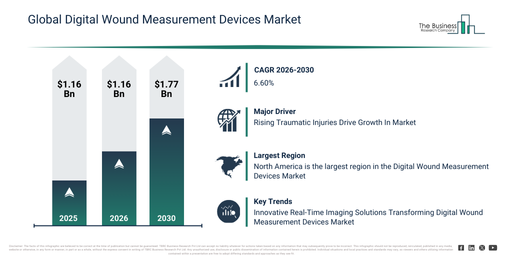
    Digital Wound Measurement Devices Market Growth From $2.93 Billion In 2026 To $3.79 Billion By 2030 At A CAGR Of 6.6%

    The market for digital wound measurement devices has demonstrated robust growth in recent years. This market is projected to expand from $2.74 billion in 2025 to $2.93 billion in 2026, exhibiting a compound annual growth rate (CAGR) of 6.9%. Historically, this growth can be ascribed to factors such as the rising incidence of chronic wounds, the greater integration of digital healthcare solutions, the increased need for precise wound documentation, the broadening of hospital-based wound care initiatives, and advancements in imaging sensor technologies.

    The market for digital wound measurement devices is anticipated to show significant expansion over the next few years, set to reach $3.79 billion in 2030, growing at a compound annual growth rate (CAGR) of 6.6%. This increase during the projection period can be attributed to the rising adoption of telemedicine in wound care, the escalating demand for at-home wound monitoring solutions, increased investments in digital health infrastructure, the broadening availability of AI-assisted wound assessment tools, and a sharpened focus on outcome-based wound management. Noteworthy trends during this forecast period involve the expanding use of non-contact wound measurement technologies, greater integration with electronic medical records, more widespread application of 3D imaging for wound assessment, the growth of remote wound monitoring solutions, and an intensified emphasis on clinical accuracy and proper documentation.

    Get A Free Sample Report With In-Depth Market Insights:

    https://thebusinessresearchcompany.com/sample_request?id=67006770&type=smp&name=Digital%20Wound%20Measurement%20Devices%20Market%20Report%202026&utm_source=Blogs&utm_medium=Paid&utm_campaign=Oct_PR

    Digital Wound Measurement Devices Market Growth Catalysts And Demand Drivers

    An anticipated increase in traumatic injuries is projected to boost the digital wound measurement devices market moving ahead. These injuries are medically defined as acute physical harm demanding immediate clinical care due to their critical nature. This surge in traumatic injuries stems from various elements such as more road accidents, an uptick in workplace mishaps, sports-related harm, and the increasing occurrence of violent clashes or natural catastrophes, collectively fueling the need for medical interventions and equipment, including digital wound measurement solutions. Digital wound measurement devices assist individuals with traumatic injuries by providing precise, live data on wound dimensions, depth, and healing trajectory, enabling medical professionals to customize treatment strategies, monitor recuperation more efficiently, and enhance healing results, thereby lowering infection risks and enhancing overall patient care quality. As an illustration, in May 2025, the Department for Transport, a UK-based government agency, stated that Great Britain recorded an estimated 1,633 road fatalities in 2024, representing a 1% increase from 2023. Notably, motorcyclists witnessed the most significant rise in fatalities among key road user groups, climbing by 9% compared to 2023. Consequently, the increase in traumatic injuries is propelling the expansion of the digital wound measurement devices market.

    Digital Wound Measurement Devices Market Segment Performance And Emerging Opportunities

    The digital wound measurement devices market covered in this report is segmented –

    1) By Product: Contact Wound Measuring Devices, Non-contact Measuring Devices

    2) By Wound Type: Chronic Wounds, Acute Wounds

    3) By Technique: 2D, 3D

    4) By End User: Hospitals And Clinics, Long Term Care Facilities, Home Care Settings, Other End Users

    Subsegments:

    1) By Contact Wound Measuring Devices: Contact Laser Wound Measurement Devices, Contact Optical Wound Measuring Devices, Contact Ultrasound Wound Measuring Devices

    2) By Non-Contact Measuring Devices: 3D Imaging Wound Measurement Devices, Laser Scanning Wound Measuring Devices, Infrared Wound Measurement Devices

    Digital Wound Measurement Devices Market Trends Shaping Long-Term Demand

    Major companies operating in the digital wound measurement devices market are developing innovative solutions, such as flagship wound imaging devices, to enhance the accuracy of wound assessments, streamline clinical workflows, and provide real-time data that aids in personalized treatment planning, ultimately improving patient outcomes and reducing healthcare costs. A flagship wound imaging device refers to a leading or primary product in the field of wound care technology that utilizes advanced imaging techniques to enhance the diagnosis and treatment of wounds. For instance, in December 2024, MolecuLight Corp., a Canada-based digital wound measurement company, launched the MolecuLight digital wound measurement devices, expanding the capabilities of its flagship wound imaging device. The device provides immediate visual feedback, allowing healthcare professionals to assess wounds accurately at the point of care. It utilizes advanced imaging technology to create three-dimensional representations of wounds, enabling precise measurements of size and depth. The device is designed for non-invasive use, minimizing discomfort for patients while ensuring accurate data collection.

    Digital Wound Measurement Devices Market Key Players Shaping Industry Direction

    Major companies operating in the digital wound measurement devices market are 3M company, Medline Industries Inc., Smith & Nephew plc, Coloplast A/S, ConvaTec Group plc, Molnlycke Health Care AB, Net Health Systems Inc., WoundSource Inc., DermaRite Industries LLC, Advancis Medical, Swift Medical Inc., Spectral MD Inc., Kent Imaging Inc., Arnaz Medical Ltd., eKare Inc., Wound Matrix Inc., WoundZoom Inc., MolecuLight Inc., BSN Medical GmbH, WoundVision

    View The Full Digital Wound Measurement Devices Market Report:

    https://thebusinessresearchcompany.com/report/digital-wound-measurement-devices-global-market-report?utm_source=Blogs&utm_medium=Paid&utm_campaign=Oct_PR

    Digital Wound Measurement Devices Market Regional Analysis: Which Geography Leads On Revenue?

    North America was the largest region in the digital wound measurement devices market in 2025. Asia-Pacific is expected to be the fastest-growing region in the forecast period. The regions covered in the digital wound measurement devices market report are Asia-Pacific, South East Asia, Western Europe, Eastern Europe, North America, South America, Middle East, Africa.

    Reach Out To Our Team:

    The Business Research Company: https://www.thebusinessresearchcompany.com/

    Americas: +1 310-496-7795

    Asia: +44 7882 955267 & +91 8897263534

    Europe: +44 7882 955267

    Email us at: marketing@tbrc.info

    Follow us on:

    LinkedIn: https://in.linkedin.com/company/the-business-research-company

    YouTube: https://www.youtube.com/channel/UC24_fI0rV8cR5DxlCpgmyFQ

    Global Market Model: https://www.thebusinessresearchcompany.com/global-market-model
  • Digital Twin Cardio-Pulmonary Bypass Market Forecast To Reach $1.49 Billion By 2030: Key Growth Drivers And Industry Trends

    Digital Twin Cardio-Pulmonary Bypass Market Forecast To Reach $1.49 Billion By 2030: Key Growth Drivers And Industry Trends

    Built to provide research that’s more actionable and strategically valuable, The Business Research Company’s 2026 market reports include market attractiveness analysis, total addressable market sizing, company benchmarking matrices, interactive Excel dashboards, broader supply chain intelligence, emerging startup tracking, and in-depth product insights.

    Digital Twin Cardio-Pulmonary Bypass Market Expansion Outlook: What Revenue Opportunities Are Ahead?

    The digital twin cardio-pulmonary bypass market size has seen substantial growth recently. It will grow from $0.6 billion in 2025 to $0.72 billion in 2026 at a compound annual growth rate (CAGR) of 20.1%. This historical expansion can be attributed to several factors, including the increasing use of simulation software in cardiac surgeries, improvements in cardio-pulmonary modeling, the creation of real-time monitoring systems, the incorporation of predictive analytics, and a rising demand for risk-free training platforms.

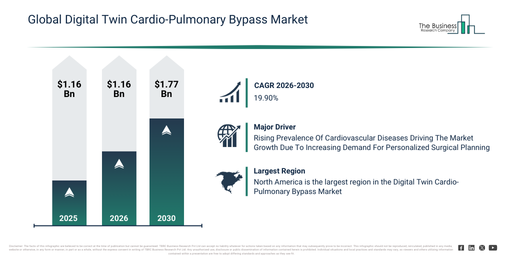
    The digital twin cardio-pulmonary bypass market is projected to experience substantial expansion over the upcoming years. It is anticipated to reach $1.49 billion by 2030, exhibiting a compound annual growth rate (CAGR) of 19.9%. This projected growth is driven by factors such as its integration with AI-powered decision support systems, the broadening scope of remote surgical monitoring, its increasing application in clinical training curricula, improved predictive modeling for patient results, and wider adoption among hospitals and research institutions. Key developments anticipated during this period encompass real-time hemodynamic simulation, advanced predictive surgical planning, AI-enabled procedural optimization, virtual reality training for surgeons, and remote clinical oversight.

    Get A Free Sample Report With In-Depth Market Insights:

    https://thebusinessresearchcompany.com/sample_request?id=61451237&type=smp&name=Digital%20Twin%20Cardio-Pulmonary%20Bypass%20Market%20Report%202026&utm_source=Blogs&utm_medium=Paid&utm_campaign=Oct_PR

    Digital Twin Cardio-Pulmonary Bypass Market Opportunity Drivers: What’s Unlocking New Revenue Potential?

    The increasing occurrence of cardiovascular diseases (CVDs) is projected to boost the expansion of the digital twin cardio-pulmonary bypass market in the future. These diseases encompass a range of ailments impacting the heart and blood vessels, specifically conditions like coronary artery disease, heart failure, stroke, and high blood pressure. The growing incidence of CVDs stems from an aging global population, as advancing age naturally leads to a gradual weakening of the heart and blood vessels, heightening the susceptibility to cardiac issues. Digital Twin Cardio-Pulmonary Bypass offers a solution by enabling the simulation of a patient’s cardiac and circulatory systems. This capability empowers medical professionals to forecast surgical results, refine medical interventions, and minimize potential complications, thus directly aiding in the care and therapy of cardiovascular diseases (CVDs). As an illustration, data from the Centers for Disease Control and Prevention, a US-based government agency, indicated in October 2024 that in 2023, cardiovascular disease was responsible for 919,032 lives lost, representing one in every three deaths. Coronary heart disease continued to be the most common type of heart disease, and it’s important to note that approximately one in six deaths attributed to cardiovascular diseases affected individuals under 65 years of age. Consequently, the increasing prevalence of cardiovascular diseases is serving as a key driver for the expansion of the digital twin cardio-pulmonary bypass market.

    Digital Twin Cardio-Pulmonary Bypass Market Segment Landscape And Growth Outlook

    The digital twin cardio-pulmonary bypass market covered in this report is segmented –

    1) By Component: Software, Hardware, Services

    2) By Deployment Mode: On-Premises, Cloud-Based

    3) By Application: Cardiac Surgery, Pulmonary Surgery, Research And Development, Training And Education, Other Applications

    4) By End-User: Hospitals, Specialty Clinics, Academic And Research Institutes, Other End-Users

    Subsegments:

    1) By Software: Simulation Software, Data Analytics Software, Monitoring Software, Integration Software

    2) By Hardware: Sensors And Monitoring Devices, Computing Systems, Imaging Devices, Connectivity Modules

    3) By Services: Implementation Services, Maintenance Services, Training Services, Consulting Services

    Digital Twin Cardio-Pulmonary Bypass Market Competitive Analysis Of Leading Industry Participants

    Major companies operating in the digital twin cardio-pulmonary bypass market are Tata Consultancy Services Limited (TCS), Medtronic plc, Siemens Healthineers AG, Koninklijke Philips N.V., GE HealthCare Technologies Inc., Boston Scientific Corporation, Dassault Systèmes SE, Terumo Corporation, Synopsys Inc., Getinge AB, LivaNova PLC, Materialise NV, HeartFlow Inc., CFD Research Corporation (CFDRC), Kitware Inc., Circle Cardiovascular Imaging Inc., Keya Medical Inc., inHEART SAS, PrediSurge Inc., InSilicoTrials Technologies SA

    View The Full Digital Twin Cardio-Pulmonary Bypass Market Report:

    https://thebusinessresearchcompany.com/report/digital-twin-cardio-pulmonary-bypass-global-market-report?utm_source=Blogs&utm_medium=Paid&utm_campaign=Oct_PR

    Digital Twin Cardio-Pulmonary Bypass Market Geographic Spread And Regional Opportunities

    North America was the largest region in the digital twin cardio-pulmonary bypass market in 2025. Asia-Pacific is expected to be the fastest-growing region in the forecast period. The regions covered in the digital twin cardio-pulmonary bypass market report are Asia-Pacific, South East Asia, Western Europe, Eastern Europe, North America, South America, Middle East, Africa.

    Reach Out To Our Team:

    The Business Research Company: https://www.thebusinessresearchcompany.com/

    Americas: +1 310-496-7795

    Asia: +44 7882 955267 & +91 8897263534

    Europe: +44 7882 955267

    Email us at: marketing@tbrc.info

    Follow us on:

    LinkedIn: https://in.linkedin.com/company/the-business-research-company

    YouTube: https://www.youtube.com/channel/UC24_fI0rV8cR5DxlCpgmyFQ

    Global Market Model: https://www.thebusinessresearchcompany.com/global-market-model
  • Digital Twin Cardiac Cath Lab Market Research 2026: Market Size, Trends, Segments And Growth Forecast

    Digital Twin Cardiac Cath Lab Market Research 2026: Market Size, Trends, Segments And Growth Forecast

    Backed by market attractiveness analysis, total addressable market sizing, company benchmarking matrices, interactive Excel dashboards, wider supply chain intelligence, emerging startup coverage, and detailed product-level insights, The Business Research Company’s 2026 market reports are designed to offer research that is more actionable and strategically valuable than ever.

    Digital Twin Cardiac Cath Lab Market Growth Potential: How Will Market Size Shift Through 2030?

    The digital twin cardiac cath lab market size has experienced significant expansion in recent years. It will grow from $1.7 billion in 2025 to $2.13 billion in 2026 at a compound annual growth rate (CAGR) of 25.5%. This historical growth can be attributed to factors such as the early adoption of digital twins in healthcare, the advancement of sophisticated imaging systems, the integration of cath lab data analytics, an increasing demand for minimally invasive procedures, and rising investments in healthcare IT infrastructure.

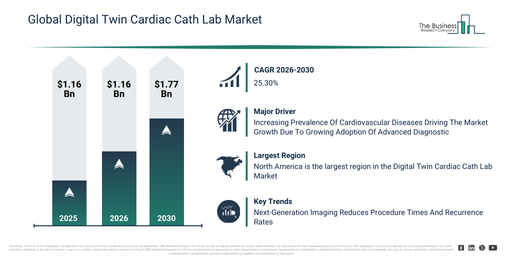
    The digital twin cardiac cath lab market size is expected to experience significant growth in the coming years. It is projected to reach $5.24 billion in 2030, with a compound annual growth rate (CAGR) of 25.3%. This anticipated expansion can be attributed to elements such as AI-enabled predictive modeling, the expansion of remote training programs, integration with hospital ERP systems, the adoption of immersive AR/VR simulations, and an increasing demand for real-time procedure optimization. Prominent trends throughout the forecast period include real-time procedure simulation, AI-based workflow optimization, predictive maintenance for equipment, virtual training and education, and enhanced clinical decision support.

    Get A Free Sample Report With In-Depth Market Insights:

    https://thebusinessresearchcompany.com/sample_request?id=13264715&type=smp&name=Digital%20Twin%20Cardiac%20Cath%20Lab%20Market%20Report%202026&utm_source=Blogs&utm_medium=Paid&utm_campaign=Oct_PR

    Digital Twin Cardiac Cath Lab Market Growth Momentum: What Factors Are Shaping Demand?

    The escalating occurrence of cardiovascular diseases is anticipated to fuel the expansion of the digital twin cardiac cath lab market in the foreseeable future. These conditions, affecting the heart and blood vessels, encompass ailments like coronary artery disease, heart attacks, and strokes. Their increasing prevalence stems from factors such as sedentary lifestyles, physical inactivity, and inadequate dietary habits, which, alongside extended life expectancy, contribute to a greater population vulnerable to cardiac issues. Digital twin cardiac cath lab systems aid in managing cardiovascular diseases by generating virtual models of patients’ hearts and blood vessels. This technology empowers cardiologists to simulate and refine intricate interventional procedures prior to execution, leading to enhanced treatment accuracy, fewer complications during procedures, and better patient results in cardiac catheterization laboratories. For example, data from October 2024, provided by the Centers for Disease Control and Prevention, a US-based government agency, revealed that in 2023, cardiovascular disease was responsible for 919,032 deaths, representing one in every three fatalities. Coronary heart disease continued to be the most widespread type of heart ailment, with approximately one in six cardiovascular disease-related deaths affecting individuals younger than 65 years. Consequently, the rising incidence of cardiovascular diseases is a key factor propelling the expansion of the digital twin cardiac cath lab market.

    Digital Twin Cardiac Cath Lab Market Breakdown By Product Type And Application

    The digital twin cardiac cath lab market covered in this report is segmented –

    1) By Component: Software, Hardware, Services

    2) By Deployment Mode: On-Premises, Cloud-Based

    3) By Application: Cardiac Diagnostics, Interventional Cardiology, Training And Education, Research And Development, Other Applications

    4) By End User: Hospitals, Specialty Clinics, Academic And Research Institutes, Other End Users

    Subsegments:

    1) By Software: Cardiac Simulation Software, Imaging And Visualization Software, Data Integration And Analytics Platforms, Procedure Planning And Optimization Tools

    2) By Hardware: Imaging Systems, Catheterization Equipment, Sensors And Monitoring Devices, Computing And Storage Systems

    3) By Services: Implementation And Integration Services, Training And Education Services, Maintenance And Support Services, Consulting Services

    Digital Twin Cardiac Cath Lab Market Trends Redefining Industry Growth

    Leading firms within the digital twin cardiac cath lab market are primarily using innovative technologies, such as artificial intelligence (AI)-driven imaging, to boost procedural accuracy, shorten operational durations, and achieve superior patient results. Artificial intelligence (AI)-driven imaging involves the application of AI algorithms to analyze medical scans, facilitating automatic detection and interpretation of anatomical features; this process delivers quicker, more precise insights, supports customized treatment plans, and enhances both procedural efficiency and patient outcomes. An example of this advancement occurred in March 2024, when inHEART, a US-based artificial intelligence medical technology firm, obtained U.S. Food and Drug Administration (FDA) 510(k) clearance for its AI-powered software module, which automates the segmentation of CT images to generate comprehensive 3D cardiac models. This innovation empowers physicians to refine treatment approaches, streamline procedure planning, and decrease ventricular tachycardia (VT) procedure times by up to 60%, concurrently diminishing recurrence rates. The software utilizes AI algorithms to examine pre-procedural imaging data, generating exceptionally precise, patient-tailored cardiac models that are readily compatible with prominent electroanatomic mapping (EAM) systems employed in cardiac catheterization labs.

    Digital Twin Cardiac Cath Lab Market Leading Companies And Competitive Benchmarking

    Major companies operating in the digital twin cardiac cath lab market are Tata Consultancy Services Limited, Siemens Healthineers AG, Koninklijke Philips N.V., GE HealthCare Technologies Inc., Dassault Systèmes SE, Materialise NV, HeartFlow Inc., Stereotaxis Inc., Imricor Medical Systems Inc., Circle Cardiovascular Imaging Inc., Medis Medical Imaging Systems BV, VirtaMed AG, Volta Medical SAS, DASI Simulations Inc., inHEART SAS, PrediSurge Inc., InSilicoTrials Technologies SA, Canon Medical Systems Corporation, Abbott Laboratories, Boston Scientific Corporation, Johnson & Johnson MedTech

    View The Full Digital Twin Cardiac Cath Lab Market Report:

    https://thebusinessresearchcompany.com/report/digital-twin-cardiac-cath-lab-global-market-report?utm_source=Blogs&utm_medium=Paid&utm_campaign=Oct_PR

    Digital Twin Cardiac Cath Lab Market Top Region By Revenue And Market Share

    North America was the largest region in the digital twin cardiac cath lab market in 2025. Asia-Pacific is expected to be the fastest-growing region in the forecast period. The regions covered in the digital twin cardiac cath lab market report are Asia-Pacific, South East Asia, Western Europe, Eastern Europe, North America, South America, Middle East, Africa.

    Reach Out To Our Team:

    The Business Research Company: https://www.thebusinessresearchcompany.com/

    Americas: +1 310-496-7795

    Asia: +44 7882 955267 & +91 8897263534

    Europe: +44 7882 955267

    Email us at: marketing@tbrc.info

    Follow us on:

    LinkedIn: https://in.linkedin.com/company/the-business-research-company

    YouTube: https://www.youtube.com/channel/UC24_fI0rV8cR5DxlCpgmyFQ

    Global Market Model: https://www.thebusinessresearchcompany.com/global-market-model
  • Digital Twin Cardiac Ablation Suite Market Forecast 2026: Market Size, Competitive Landscape And Growth Drivers

    Digital Twin Cardiac Ablation Suite Market Forecast 2026: Market Size, Competitive Landscape And Growth Drivers

    Featuring market attractiveness scoring, total addressable market sizing, company benchmarking matrices, interactive Excel dashboards, deeper supply chain intelligence, emerging startup tracking, and granular product-level insights, The Business Research Company’s 2026 market reports are built to deliver research that is both more actionable and more strategically valuable.

    Digital Twin Cardiac Ablation Suite Market Value Analysis: What Growth Lies Ahead Over The Forecast Period?

    The digital twin cardiac ablation suite market has recently experienced substantial expansion. It is projected to grow from $0.99 billion in 2025 to $1.21 billion in 2026, achieving a compound annual growth rate (CAGR) of 22.9%. Historically, this growth was largely due to factors including the high cost of traditional ablation tools, limited access to patient-specific modeling, reliance on manual planning, fragmented healthcare data systems, and the slow adoption of advanced simulation technologies.

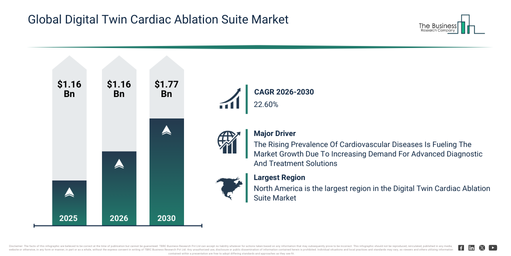
    The market for digital twin cardiac ablation suites is projected to experience substantial expansion over the upcoming years. This market is forecast to reach $2.73 billion in 2030, exhibiting a compound annual growth rate (CAGR) of 22.6%. Key drivers for this expansion during the projection period include an increasing need for accurate cardiac interventions, greater uptake of digital twin innovations, the incorporation of AI into procedure formulation, escalating spending on healthcare IT infrastructure, and the broader availability of telecardiology and distant monitoring services. Significant developments anticipated within this timeframe encompass tailored procedure enhancements, continuous patient oversight, proactive equipment servicing, practical surgical instruction through simulations, and seamless integration with electronic health records.

    Get A Free Sample Report With In-Depth Market Insights:

    https://thebusinessresearchcompany.com/sample_request?id=69352415&type=smp&name=Digital%20Twin%20Cardiac%20Ablation%20Suite%20Market%20Report%202026&utm_source=Blogs&utm_medium=Paid&utm_campaign=Oct_PR

    Digital Twin Cardiac Ablation Suite Market Expansion Drivers: What’s Shaping Future Growth?

    The expanding occurrence of heart and blood vessel disorders is projected to fuel the expansion of the digital twin cardiac ablation suite market. These conditions, affecting the heart and blood vessels, can lead to serious events like heart attacks and strokes. Their incidence is growing, particularly among older populations in developed nations, as advanced age significantly heightens the risk of such health issues. Digital Twin Cardiac Ablation Suites play a crucial role in managing cardiovascular diseases by creating virtual models of patient hearts, allowing doctors to simulate and refine ablation procedures before actual treatment. This approach improves patient outcomes and reduces complications for those with irregular heart rhythms. For instance, data from October 2024, provided by the US-based government agency, the Centers for Disease Control and Prevention, showed that cardiovascular disease caused 919,032 fatalities, representing one-third of all deaths. Coronary heart disease was the most common form, and notably, approximately one in six cardiovascular disease deaths occurred in adults under 65 years. Consequently, the increasing prevalence of cardiovascular diseases is a key factor driving the growth of the digital twin cardiac ablation suite market. A heightened focus on precision medicine is anticipated to propel the future expansion of the digital twin cardiac ablation suite market. This medical strategy customizes treatments and healthcare decisions for individual patients, taking into account their unique genetic makeup, lifestyle, and environmental factors. The increasing importance of precision medicine stems from advancements in genomic sequencing technologies and data analytics, which enable healthcare providers to identify specific biological markers and develop therapies precisely targeted to individual patients, thereby enhancing treatment effectiveness. Digital Twin Cardiac Ablation Suites facilitate precision medicine by generating personalized virtual heart models. These models allow physicians to simulate and optimize ablation strategies specifically adapted to each patient’s distinct cardiac anatomy and arrhythmia patterns before undertaking any actual procedures. As an illustration, in February 2024, the US-based non-profit organization, Personalized Medicine Coalition, reported that in 2023, the FDA sanctioned 16 novel personalized treatments for patients with rare diseases, a significant rise from the six approvals seen in 2022. Therefore, the increasing emphasis on precision medicine is a significant catalyst for the growth of the digital twin cardiac ablation suite market.

    Digital Twin Cardiac Ablation Suite Market Segment Analysis And Revenue Potential

    The digital twin cardiac ablation suite market covered in this report is segmented –

    1) By Component: Software, Hardware, Services

    2) By Deployment Mode: On-Premises, Cloud-Based

    3) By Application: Preoperative Planning, Intraoperative Guidance, Postoperative Assessment, Training And Education, Other Applications

    4) By End-Users: Hospitals, Specialty Clinics, Research Institutes, Other End-Users

    Subsegments:

    1) By Software: Virtual Heart Modeling, Cardiac Simulation Software, Electrophysiology Simulation Tools, Patient Specific Cardiac Modeling, Three Dimensional Cardiac Mapping

    2) By Hardware: Imaging Devices, Computing Systems, Data Storage Devices

    3) By Services: Installation And Integration Services, Maintenance And Support Services, Training And Education Services, Consulting Services, Remote Monitoring Services

    Digital Twin Cardiac Ablation Suite Market Industry Leaders And Competitive Landscape

    Major companies operating in the digital twin cardiac ablation suite market are Siemens Healthineers AG, Koninklijke Philips N.V., GE HealthCare Technologies Inc., Boston Scientific Corporation, Medtronic Public Limited Company, Abbott Laboratories, Dassault Systèmes SE, Stereotaxis Inc., Johnson & Johnson, Kardium Inc., CathWorks Ltd., inHEART SAS, Volta Medical SAS, Circle Cardiovascular Imaging Inc., Imricor Medical Systems Inc., CardioFocus Inc., CathVision ApS, HeartFlow Inc., Lepu Medical Technology Beijing Co. Ltd., Ortus Solutions Ltd., Biosense Webster Inc.

    View The Full Digital Twin Cardiac Ablation Suite Market Report:

    https://thebusinessresearchcompany.com/report/digital-twin-cardiac-ablation-suite-global-market-report?utm_source=Blogs&utm_medium=Paid&utm_campaign=Oct_PR

    Digital Twin Cardiac Ablation Suite Market Regional Analysis And Top Geography

    North America was the largest region in the digital twin cardiac ablation suite market in 2025. Asia-Pacific is expected to be the fastest-growing region in the forecast period. The regions covered in the digital twin cardiac ablation suite market report are Asia-Pacific, South East Asia, Western Europe, Eastern Europe, North America, South America, Middle East, Africa.

    Reach Out To Our Team:

    The Business Research Company: https://www.thebusinessresearchcompany.com/

    Americas: +1 310-496-7795

    Asia: +44 7882 955267 & +91 8897263534

    Europe: +44 7882 955267

    Email us at: marketing@tbrc.info

    Follow us on:

    LinkedIn: https://in.linkedin.com/company/the-business-research-company

    YouTube: https://www.youtube.com/channel/UC24_fI0rV8cR5DxlCpgmyFQ

    Global Market Model: https://www.thebusinessresearchcompany.com/global-market-model
  • Digital Therapeutics Market Size In 2026: Regional Growth, Key Segments And Future Outlook

    Digital Therapeutics Market Size In 2026: Regional Growth, Key Segments And Future Outlook

    Built to provide research that’s more actionable and strategically valuable, The Business Research Company’s 2026 market reports include market attractiveness analysis, total addressable market sizing, company benchmarking matrices, interactive Excel dashboards, broader supply chain intelligence, emerging startup tracking, and in-depth product insights.

    Digital Therapeutics Market Size Forecast: How Big Could The Market Get By 2030?

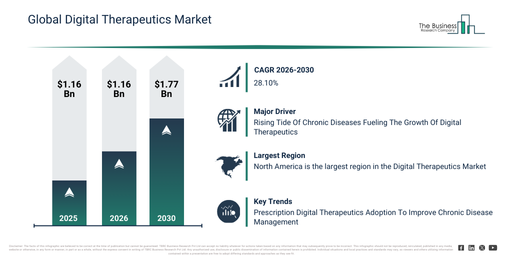
    The digital therapeutics market has seen remarkable growth in recent years. It is anticipated to expand from $10.93 billion in 2025 to $14.02 billion in 2026, achieving a compound annual growth rate (CAGR) of 28.3%. This historical expansion can be attributed to several factors including the rising adoption of smartphones in healthcare, enhanced acceptance of digital health solutions, the widening scope of telemedicine services, early regulatory endorsements for digital therapeutics, and an increasing prevalence of chronic diseases.

    The digital therapeutics market is projected to experience substantial expansion in the coming years. Its valuation is anticipated to reach $37.82 billion in 2030, demonstrating a compound annual growth rate (CAGR) of 28.1%. This projected market acceleration stems from factors such as enhanced reimbursement avenues for digital therapeutics, a greater need for tailored digital healthcare, the proliferation of AI-powered treatment platforms, an increase in collaborations between healthcare providers and technology companies, and a heightened emphasis on proactive digital health strategies. Key developments anticipated during this period include a greater uptake of software-based therapeutic tools, the growing incorporation of wearable health devices, expanded utilization of remote patient monitoring systems, the development of more evidence-backed digital care initiatives, and a stronger concentration on individualized treatment approaches.

    Get A Free Sample Report With In-Depth Market Insights:

    https://thebusinessresearchcompany.com/sample_request?id=72156698&type=smp&name=Digital%20Therapeutics%20Market%20Report%202026&utm_source=Blogs&utm_medium=Paid&utm_campaign=Oct_PR

    Digital Therapeutics Market Development Factors: What’s Supporting Demand?

    The increasing occurrence of chronic illnesses is anticipated to drive the expansion of the digital therapeutics market in the future. Chronic diseases are persistent conditions typically lasting a year or longer, necessitating continuous medical care or restricting daily activities, or both. Digital therapeutics involve software-based interventions that provide evidence-backed therapeutic solutions to patients, improving chronic disease management and offering more treatment alternatives. For instance, in March 2025, the Office for Health Improvement & Disparities (OHID), a UK-based unit of the Department of Health and Social Care, reported that the prevalence of type 2 diabetes recorded by GPs in adults aged 17 and over in England was 7.0% in March 2024, an increase from 6.8% in March 2023. Consequently, the rising prevalence of chronic diseases fuels the growth of the digital therapeutics market.

    Digital Therapeutics Market Segmentation And Category Overview

    The digital therapeutics market covered in this report is segmented –

    1) By Product: Software, Devices

    2) By Sales Channel: Business-To-Business (B2B), Business-To-Consumers (B2C)

    3) By Application: Preventive Applications, Treatment Or Care-Related Applications

    Subsegments:

    1) By Software: Mobile Applications, Web-Based Platforms, Digital Therapeutics Software

    2) By Devices: Wearable Devices, Biosensors, Digital Therapeutic Devices

    Digital Therapeutics Market Transformation Trends: What Innovations Are Driving Change?

    Key players within the digital therapeutics market are focusing on developing technological advancements, notably prescription-only digital behavioral therapy platforms, to enhance treatment accessibility, improve patient engagement, and provide clinically validated outcomes. A prescription-only digital behavioral therapy platform employs software-based interventions provided through devices like smartphones or tablets. It integrates evidence-based modules such as cognitive behavioral therapy (CBT), remote monitoring, and interactive goal tracking, thereby facilitating scalable, drug-free disease management and personalized patient support. For instance, in July 2023, Better Therapeutics, a US-based prescription digital therapeutics company, launched AspyreRx (formerly BT-001), a digital therapeutic for type 2 diabetes. The product delivers a 90-day self-paced program through a smartphone app, featuring weekly CBT lessons, personalized goal-setting, and tracking of blood glucose and lifestyle data; clinical trials demonstrated sustained reductions in HbA1c, weight improvement, and better quality-of-life outcomes.

    Digital Therapeutics Market Key Participants And Competitive Landscape

    Major companies operating in the digital therapeutics market are Omada Health Inc., WellDoc Inc., 2Morrow Inc., Propeller Health, Pear Therapeutics, Canary Health Inc., Noom Health Inc., Akili Interactive Labs, Better Therapeutics, Happify Health, Kaia Health, Medtronic plc, Teladoc Health Inc., Fitbit Health Solutions, EMulate Therapeutics, BigHealth, DarioHealth, IQVIA, JOGO Health, SilverCloud Health, Biofourmis Inc., Prosoma, Virta Health Corp., One Drop Inc., Lark Health, Xealth, CogniFit Ltd.

    View The Full Digital Therapeutics Market Report:

    https://thebusinessresearchcompany.com/report/digital-therapeutics-global-market-report?utm_source=Blogs&utm_medium=Paid&utm_campaign=Oct_PR

    Digital Therapeutics Market Geographic Analysis: Where Is Demand Rising Fastest?

    North America was the largest region in the digital therapeutics market in 2025. Asia-Pacific is expected to be the fastest-growing region in the forecast period. The regions covered in the digital therapeutics market report are Asia-Pacific, South East Asia, Western Europe, Eastern Europe, North America, South America, Middle East, Africa.

    Reach Out To Our Team:

    The Business Research Company: https://www.thebusinessresearchcompany.com/

    Americas: +1 310-496-7795

    Asia: +44 7882 955267 & +91 8897263534

    Europe: +44 7882 955267

    Email us at: marketing@tbrc.info

    Follow us on:

    LinkedIn: https://in.linkedin.com/company/the-business-research-company

    YouTube: https://www.youtube.com/channel/UC24_fI0rV8cR5DxlCpgmyFQ

    Global Market Model: https://www.thebusinessresearchcompany.com/global-market-model
  • Digital Radiography Market Growth Forecast Through 2030: Market Size And Trends In 2026

    Digital Radiography Market Growth Forecast Through 2030: Market Size And Trends In 2026

    Backed by market attractiveness analysis, total addressable market sizing, company benchmarking matrices, interactive Excel dashboards, wider supply chain intelligence, emerging startup coverage, and detailed product-level insights, The Business Research Company’s 2026 market reports are designed to offer research that is more actionable and strategically valuable than ever.

    Digital Radiography Market Revenue Outlook: What CAGR Lies Ahead Through 2030?

    The digital radiography market has experienced significant expansion in recent years. Its value is set to rise from $8.38 billion in 2025 to $9.22 billion in 2026, growing at a compound annual growth rate (CAGR) of 10.1%. Factors contributing to its historical growth include the enlargement of hospital imaging departments, the phasing out of analog x-ray systems, an uptick in diagnostic imaging volumes, enhancements in detector technology, and the development of outpatient diagnostic centers.

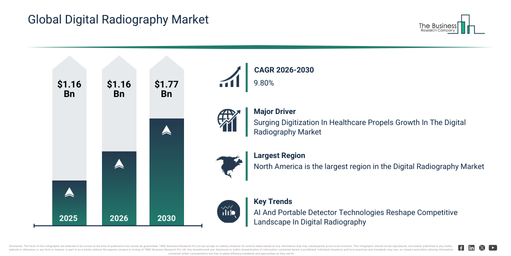
    The digital radiography market is projected to experience substantial expansion over the upcoming years. It is anticipated to reach $13.42 billion by 2030, exhibiting a compound annual growth rate (CAGR) of 9.8%. This market’s growth is driven by various factors including the increasing demand for point-of-care imaging solutions, greater investments in smart hospital initiatives, the broadening of teleradiology services, wider implementation of cloud-based imaging platforms, and an elevated emphasis on operational efficiency. Key developments expected during this period encompass the rising integration of direct radiography systems, the expanding application of AI-powered image analysis, a heightened demand for portable imaging devices, the advancement of digital imaging infrastructure, and a stronger focus on improving diagnostic accuracy.

    Get A Free Sample Report With In-Depth Market Insights:

    https://thebusinessresearchcompany.com/sample_request?id=43162775&type=smp&name=Digital%20Radiography%20Market%20Report%202026&utm_source=Blogs&utm_medium=Paid&utm_campaign=Oct_PR

    Digital Radiography Market Industry Drivers: What’s Behind The Revenue Growth?

    Future expansion of the digital radiography market is anticipated, driven by the expanding digitization within the healthcare sector. Digitization, or digital enablement, involves transforming information into a digital format. This surge in digitization stems from businesses and services adopting digital platforms to enhance efficiency through the reduction of manual operations and by facilitating quicker, more accessible user interactions. Digital radiography contributes to this digitization by streamlining the capture, storage, and distribution of images via electronic systems, leading to accelerated workflows and better access to diagnostic data. As an illustration, in November 2024, a report from the Brookings Institution, a U.S.-based research body, indicated that in 2023, 26% of the U.S. workforce held positions demanding advanced digital proficiencies. Consequently, the growing prevalence of digitization in healthcare fuels the expansion of the digital radiography market.

    Digital Radiography Market Segment Outlook: Which Categories Are Growing Fastest?

    The digital radiography market covered in this report is segmented –

    1) By Product Type: Computed Radiography, Direct Radiography

    2) By Equipment: Detectors, Sensors, Photoconductor, Retrofit Radiography System, Scintillator, Phosphor Imaging Plate (IP), Other Equipment

    3) By Portability: Fixed, Mobile

    4) By Application: Dentistry, Orthopedics, General Surgery, Mammography, Pulmonary Imaging

    5) By End Use Industry: Hospitals, Clinics, Ambulatory Surgical Centers

    Subsegments:

    1) By Computed Radiography (CR): CR Systems, CR Detectors, CR Software

    2) By Direct Radiography (DR): DR Systems, DR Detectors, DR Software

    #Digital Radiography Market Growth Trends: What’s Shaping The Future Outlook?

    Leading firms within the digital radiography market are concentrating on creating cutting-edge solutions, including mobile digital radiography systems that are battery-powered, feature wireless flat-panel detectors, and incorporate AI-driven image processing. These mobile systems function as portable X-ray devices, combining lightweight wireless flat-panel detectors, integrated batteries, and touch-screen interfaces, allowing technologists to conduct superior radiographs directly at the patient’s bedside. A notable illustration is the launch of the DRX-Rise Mobile X-ray System in May 2023 by Carestream Health Inc., a medical imaging systems provider based in the US. The DRX-Rise features an advanced lithium battery and in-bin detector charging, enabling radiographers to cover more ground and perform additional examinations per charge. It also incorporates dual touchscreen displays for distinct workzones to boost productivity, alongside enhanced drive functionalities for accurate and silent bedside positioning. This system comes equipped with Carestream’s ImageView software, which leverages the Eclipse processing engine and artificial intelligence to enhance image quality, minimize errors, and optimize dose efficiency. The DRX-Rise highlights its affordability and minimal capital investment, providing an accessible route for facilities to upgrade or enlarge their digital radiography fleets without substantial costs. Its silent operation and ease of movement further render it appropriate for busy or delicate environments like the ICU and NICU.

    Digital Radiography Market Top Companies Driving Competitive Growth

    Major companies operating in the digital radiography market are Agfa-Gevaert Group, Carestream Health Inc., Canon Inc., Fujifilm Holdings Corporation, Koninklijke Philips N.V., Siemens Aktiengesellschaft, GE Healthcare, Hitachi Ltd., Konica Minolta Inc., Varian Medical Systems Inc., North Star Imaging Inc., Shimadzu Corporation, Toshiba Medical Systems Corporation, Bosello High Technology SRL, Detection Technology Oyj, COMET Group, Hologic Inc., Samsung Medison Co. Ltd., Esaote SpA, Mindray Medical International Limited, Analogic Corporation, Varex Imaging Corporation, Ziehm Imaging GmbH, Planmeca Oy, Dentsply Sirona Inc., Villa Sistemi Medicali S.p.A.

    View The Full Digital Radiography Market Report:

    https://thebusinessresearchcompany.com/report/digital-radiography-global-market-report?utm_source=Blogs&utm_medium=Paid&utm_campaign=Oct_PR

    Digital Radiography Market Global Footprint: Which Region Leads The Market?

    North America was the largest region in the digital radiography market in 2025. Asia-Pacific is expected to be the fastest-growing region in the digital radiography market report during the forecast period. The regions covered in the digital radiography market report are Asia-Pacific, South East Asia, Western Europe, Eastern Europe, North America, South America, Middle East, Africa.

    Reach Out To Our Team:

    The Business Research Company: https://www.thebusinessresearchcompany.com/

    Americas: +1 310-496-7795

    Asia: +44 7882 955267 & +91 8897263534

    Europe: +44 7882 955267

    Email us at: marketing@tbrc.info

    Follow us on:

    LinkedIn: https://in.linkedin.com/company/the-business-research-company

    YouTube: https://www.youtube.com/channel/UC24_fI0rV8cR5DxlCpgmyFQ

    Global Market Model: https://www.thebusinessresearchcompany.com/global-market-model