Blog

  • Digital Pathology Market Analysis: $1.68 Billion Market Size In 2026 And Future Growth Prospects

    Digital Pathology Market Analysis: $1.68 Billion Market Size In 2026 And Future Growth Prospects

    Featuring market attractiveness scoring, total addressable market sizing, company benchmarking matrices, interactive Excel dashboards, deeper supply chain intelligence, emerging startup tracking, and granular product-level insights, The Business Research Company’s 2026 market reports are built to deliver research that is both more actionable and more strategically valuable.

    Digital Pathology Market Growth Analysis: How Will Revenue Trend Over The Forecast Period?

    The digital pathology market has seen significant expansion in recent years. Its value is expected to increase from $1.42 billion in 2025 to $1.68 billion in 2026, demonstrating a compound annual growth rate (CAGR) of 18.5%. This historical growth can be attributed to several factors, including the increasing digitization of pathology laboratories, the expansion of cancer diagnostics, the growing adoption of telepathology, the rising demand for standardized pathology workflows, and the improved availability of digital scanners.

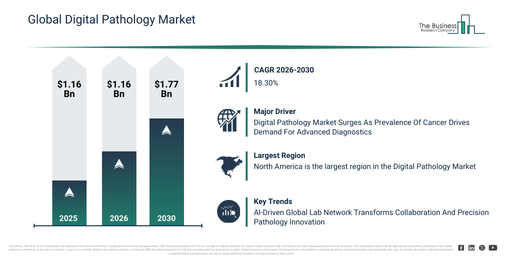
    The digital pathology market is expected to experience substantial expansion over the next few years, with its size projected to reach $3.29 billion in 2030, demonstrating a compound annual growth rate (CAGR) of 18.3%. This growth during the forecast period is driven by increasing investments in computational pathology, a rising demand for precision diagnostics, the expansion of digital pathology within drug discovery, the growing integration of artificial intelligence in disease diagnosis, and an intensified focus on interoperability and data sharing. Significant trends anticipated during this period encompass the increasing adoption of whole slide imaging systems, the rising utilization of AI-based image analysis software, the broadening availability of remote pathology services, the integration of cloud-based pathology platforms, and an enhanced emphasis on workflow automation.

    Get A Free Sample Report With In-Depth Market Insights:

    https://thebusinessresearchcompany.com/sample_request?id=68216864&type=smp&name=Digital%20Pathology%20Market%20Report%202026&utm_source=Blogs&utm_medium=Paid&utm_campaign=Oct_PR

    Digital Pathology Market Growth Factors: What’s Supporting Expansion?

    The expanding occurrence of cancer is a primary catalyst for the growth of the digital pathology market. As populations advance in age, the probability of developing cancer increases due to inherent cellular changes and extended exposure to various risk factors. Moreover, lifestyle aspects such as smoking, poor dietary habits, lack of physical activity, and excessive alcohol consumption are significant contributors to cancer risk. Digital pathology enables patients to achieve faster cancer diagnosis and treatment, and consequently, the escalating number of cancer cases is fueling the market’s expansion. For instance, in January 2024, according to the American Cancer Society, a US-based nonprofit cancer advocacy organization, the count of cancer cases climbed to 2,001,140 compared to 1,958,310 in 2023, indicating a growth of 2.19%. Therefore, the increasing prevalence of cancer is set to propel the digital pathology market forward.

    Digital Pathology Market Segment Landscape: Which Areas Lead Development?

    The digital pathology market covered in this report is segmented –

    1) By Product: Scanners, Software, Storage And Communication Systems

    2) By Pathology Discipline: Human Pathology, Veterinary Pathology

    3) By Application: Drug Discovery, Disease Diagnosis, Teleconsultation, Training And Education

    4) By End-User: Pharmaceutical And Biotechnology Companies, Hospitals And Reference Laboratories, Academic And Research Institutes

    Subsegments:

    1) By Scanners: Whole Slide Scanners, Tissue Microarray Scanners, Digital Imaging Systems

    2) By Software: Image Analysis Software, Workflow Management Software, Diagnostic Software

    3) By Storage And Communication Systems: Data Storage Solutions, Cloud-Based Platforms, Network And Communication Systems

    Digital Pathology Market Industry Trends: What’s Reshaping Demand?

    Leading companies in the digital pathology market are prioritizing the creation of advanced solutions like collaborative AI-powered lab networks to improve data sharing and clinical innovation. These collaborative AI-powered lab networks consist of interconnected pathology laboratories that leverage shared AI systems and data platforms to foster standardization, accelerate turnaround times, and generate real-world evidence. For instance, in July 2025, PathAI, a US-based provider of digital pathology and AI solutions, introduced its Precision Pathology Network, which is driven by its AISight image management system. This network links anatomic pathology labs with biopharmaceutical partners, granting early access to AI algorithms and establishing secure frameworks for sharing de-identified pathology data essential for translational research. Participating laboratories benefit from access to PathAI’s advanced algorithms, such as MET-Predict, and have the opportunity to monetize real-world pathology data, while biopharma companies receive a consistent flow of clinical and molecular information for biomarker studies and the development of precision drugs.

    Digital Pathology Market Leading Players And Competitive Positioning

    Major companies operating in the digital pathology market are Danaher Corporation, Hoffmann-La Roche Ltd, Koninklijke Philips N.V, Hamamatsu Photonics K.K, 3DHISTECH Ltd, Olympus Corporation, Nikon Corporation, Leica Biosystems, Ventana Medical Systems, Sectra AB, Visiopharm A/S, Indica Labs Inc, PathAI, Paige.ai, Ibex Medical Analytics, Aiforia Technologies, Proscia, Inspirata Inc, Huron Digital Pathology, Akoya Biosciences, Aperio Digital Pathology, PerkinElmer, Definiens AG, Digipath, Apollo Enterprise Imaging Corp

    View The Full Digital Pathology Market Report:

    https://thebusinessresearchcompany.com/report/digital-pathology-global-market-report?utm_source=Blogs&utm_medium=Paid&utm_campaign=Oct_PR

    Digital Pathology Market Regional Split: Which Areas Are Fueling Growth?

    North America was the largest region in the digital pathology market in 2025. Asia-Pacific was the second-largest region in the digital pathology market. The regions covered in the digital pathology market report are Asia-Pacific, South East Asia, Western Europe, Eastern Europe, North America, South America, Middle East, Africa.

    Reach Out To Our Team:

    The Business Research Company: https://www.thebusinessresearchcompany.com/

    Americas: +1 310-496-7795

    Asia: +44 7882 955267 & +91 8897263534

    Europe: +44 7882 955267

    Email us at: marketing@tbrc.info

    Follow us on:

    LinkedIn: https://in.linkedin.com/company/the-business-research-company

    YouTube: https://www.youtube.com/channel/UC24_fI0rV8cR5DxlCpgmyFQ

    Global Market Model: https://www.thebusinessresearchcompany.com/global-market-model
  • Digital Or Electrical Sphygmomanometer Market 2026 Market Size And Growth Forecast: Key Trends To Watch

    Digital Or Electrical Sphygmomanometer Market 2026 Market Size And Growth Forecast: Key Trends To Watch

    Built to provide research that’s more actionable and strategically valuable, The Business Research Company’s 2026 market reports include market attractiveness analysis, total addressable market sizing, company benchmarking matrices, interactive Excel dashboards, broader supply chain intelligence, emerging startup tracking, and in-depth product insights.

    Digital Or Electrical Sphygmomanometer Market Forecast: What Value Will The Market Reach By 2030?

    The market for digital or electrical sphygmomanometers has seen significant growth in recent years. It is forecast to expand from $1.28 billion in 2025 to $1.43 billion in 2026, achieving a compound annual growth rate (CAGR) of 12.0%. The historical growth can be attributed to the increasing prevalence of hypertension, a rise in lifestyle-related diseases, the expansion of primary healthcare services, heightened awareness of blood pressure monitoring, and improved access to digital medical devices.

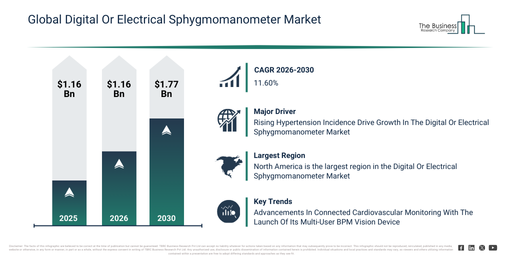
    The digital or electrical sphygmomanometer market is set to experience significant expansion in the coming years. It is predicted to reach $2.22 billion by 2030, demonstrating a compound annual growth rate (CAGR) of 11.6%. This anticipated growth can be linked to factors such as an expanding aging population, a surge in demand for home-based health monitoring, increased attention on the early detection of cardiovascular conditions, the broadening of ambulatory care services, and greater healthcare spending on chronic disease management. Noteworthy trends during this period include the increased adoption of home blood pressure monitoring, a growing preference for fully automatic devices, a rising need for upper arm sphygmomanometers, a shift towards portable and compact monitors, and an enhanced focus on regular preventive health checkups.

    Get A Free Sample Report With In-Depth Market Insights:

    https://thebusinessresearchcompany.com/sample_request?id=66784641&type=smp&name=Digital%20Or%20Electrical%20Sphygmomanometer%20Market%20Report%202026&utm_source=Blogs&utm_medium=Paid&utm_campaign=Oct_PR

    Digital Or Electrical Sphygmomanometer Market Demand Drivers: What’s Powering Industry Growth?

    The increasing prevalence of hypertension is anticipated to fuel the expansion of the digital or electrical sphygmomanometer market in the coming years. Hypertension is characterized by persistently elevated blood pressure against artery walls, which can result in various health issues. A diet high in sodium, frequently found in processed foods, contributes to elevated blood pressure by promoting water retention, thereby increasing blood volume and placing stress on the heart and blood vessels. Digital sphygmomanometers enhance the precision, ease, and efficiency of hypertension management through their consistent measurement capabilities, options for home monitoring, and data logging functions. For example, in January 2025, the Center for Disease Control and Prevention, a US-based government agency, stated that in 2023, high blood pressure was a primary or contributing factor in 664,470 deaths in the United States. Consequently, the growing incidence of hypertension is a significant factor driving the demand within the digital or electrical sphygmomanometer market.

    Digital Or Electrical Sphygmomanometer Market Segments: Where Is Growth Concentrated?

    The digital or electrical sphygmomanometer market covered in this report is segmented –

    1) By Product Type: Upper Arm, Wrist Type

    2) By Technology: Full Automatic, Semi Automatic

    3) By Portability: Portable, Non-Portable

    4) By End-User: Hospitals And Clinics, Ambulatory Care Centers, Home Care Settings, Other End-Users

    Subsegments:

    1) By Upper Arm: Fully Automatic Upper Arm Sphygmomanometers, Semi-Automatic Upper Arm Sphygmomanometers

    2) By Wrist Type: Fully Automatic Wrist Sphygmomanometers, Semi-Automatic Wrist Sphygmomanometers

    Digital Or Electrical Sphygmomanometer Market Innovation Trends: What Developments Are Reshaping The Industry?

    Leading companies in the digital or electrical sphygmomanometer market are concentrating on developing innovative products, such as multi-user profile connectivity, to enable seamless and personalized cardiovascular monitoring for multiple individuals using a single device. This multi-user profile connectivity allows a blood pressure monitor to store and differentiate readings for several users, ensuring accurate tracking of individual health trends. For instance, in January 2025, Withings, a France-based provider of connected health and medical-grade consumer wellness devices, launched the BPM Vision, a home blood pressure monitor. This product features a large color display with measurement guidance, supports up to eight unique user profiles, and includes interchangeable cuffs suited for various arm sizes. It offers Wi-Fi connectivity for automatic data syncing with the Withings app and includes a long-lasting battery designed to operate for up to 12 months on a single charge. This launch reflects the growing industry focus on integrating smart, user-friendly, and multi-person monitoring capabilities into digital blood pressure devices to enhance home-based cardiovascular care.

    Digital Or Electrical Sphygmomanometer Market Competitive Overview And Top Companies

    Major companies operating in the digital or electrical sphygmomanometer market are Omron Healthcare Inc., Welch Allyn Inc., Contec Medical Systems Co.Ltd., Beurer GmbH, SCHILLER AG, BPL Medical Technologies, Microlife Corporation, SunTech Medical Inc., Rossmax International Ltd., Rudolf Riester GmbH, iHealth Labs Inc., Citizen Systems Japan Co. Ltd., American Diagnostic Corporation, GPC Medical Ltd., A&D Company Limited, Bremed Ltd., Nissei Co. Ltd., Timesco Healthcare Ltd., ChoiceMMed, Ozeri, Panasonic Healthcare Co. Ltd., Zewa Medical Technology

    View The Full Digital Or Electrical Sphygmomanometer Market Report:

    https://thebusinessresearchcompany.com/report/digital-or-electrical-sphygmomanometer-global-market-report?utm_source=Blogs&utm_medium=Paid&utm_campaign=Oct_PR

    Digital Or Electrical Sphygmomanometer Market Top Region: Where Does Most Revenue Come From?

    North America was the largest region in the digital or electrical sphygmomanometer market in 2025. The regions covered in the digital or electrical sphygmomanometer market report are Asia-Pacific, South East Asia, Western Europe, Eastern Europe, North America, South America, Middle East, Africa.

    Reach Out To Our Team:

    The Business Research Company: https://www.thebusinessresearchcompany.com/

    Americas: +1 310-496-7795

    Asia: +44 7882 955267 & +91 8897263534

    Europe: +44 7882 955267

    Email us at: marketing@tbrc.info

    Follow us on:

    LinkedIn: https://in.linkedin.com/company/the-business-research-company

    YouTube: https://www.youtube.com/channel/UC24_fI0rV8cR5DxlCpgmyFQ

    Global Market Model: https://www.thebusinessresearchcompany.com/global-market-model
  • Digital Laparoscopy Market Size Forecast: How The Industry Is Expected To Grow From 2026 To 2030

    Digital Laparoscopy Market Size Forecast: How The Industry Is Expected To Grow From 2026 To 2030

    Backed by market attractiveness analysis, total addressable market sizing, company benchmarking matrices, interactive Excel dashboards, wider supply chain intelligence, emerging startup coverage, and detailed product-level insights, The Business Research Company’s 2026 market reports are designed to offer research that is more actionable and strategically valuable than ever.

    Digital Laparoscopy Market Size Outlook: How Quickly Will Revenue Expand Through 2030?

    The digital laparoscopy market has shown substantial growth in recent years. It is forecast to increase from $3.09 billion in 2025 to $3.36 billion in 2026, exhibiting a compound annual growth rate (CAGR) of 8.7%. Historically, the market’s expansion can be linked to factors like the reliance on conventional open surgeries, limited access to digital imaging systems, the high cost of laparoscopic equipment, low adoption rates of robotic-assisted procedures, and a lack of standardized training programs.

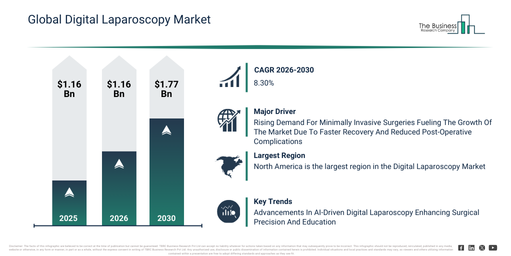
    The digital laparoscopy market is projected to experience substantial expansion in the coming years, with its size expected to reach $4.62 billion by 2030, driven by a compound annual growth rate (CAGR) of 8.3%. This anticipated growth is primarily fueled by several factors, including advancements in 3D and wireless camera technologies, a rising inclination towards minimally invasive surgical techniques, heightened investment in robotic laparoscopy, the integration of AR/VR-assisted surgical systems, and the broadening application of laparoscopic procedures in developing markets. Key trends expected during this period encompass the growing acceptance of minimally invasive surgeries, an increased need for high-definition and 3D laparoscopy cameras, the incorporation of augmented and virtual reality into surgical practices, the extension of laparoscopic procedures into various medical specialties, and a concentrated effort on enhancing workflow efficiency and real-time imaging within operating environments.

    Get A Free Sample Report With In-Depth Market Insights:

    https://thebusinessresearchcompany.com/sample_request?id=56847540&type=smp&name=Digital%20Laparoscopy%20Market%20Report%202026&utm_source=Blogs&utm_medium=Paid&utm_campaign=Oct_PR

    Digital Laparoscopy Market Growth Drivers: What’s Behind The Acceleration?

    The increasing need for minimally invasive surgical techniques is anticipated to drive the expansion of the digital laparoscopy market in the future. These surgeries involve operating through small cuts with specialized instruments, aiming to lessen pain, shorten recovery periods, and minimize scars compared to conventional open operations. Their growing popularity stems from causing less damage to tissues, which leads to quicker healing, less discomfort, and shorter hospital stays. Digital laparoscopy improves minimally invasive operations by offering accurate, live visual feedback and surgical guidance powered by AI, which in turn boosts precision, reduces complications, and accelerates patient healing. An example is data from June 2024 by the US-based American Society of Plastic Surgeons (ASPS), indicating that among approximately 1.6 million cosmetic surgeries done in 2023, liposuction represented 347,782 procedures, showing a 7 percent rise from 2022. Consequently, the increasing preference for minimally invasive procedures is a key factor boosting the expansion of the digital laparoscopy market.

    Digital Laparoscopy Market Segment Analysis: What Are The Core Market Categories?

    The digital laparoscopy market covered in this report is segmented –

    1) By Product: Digital Laparoscopy Cameras, Digital Laparoscopy Instruments, Visualization Systems, Light Sources, Insufflators, Other Products

    2) By Procedure Type: Diagnostic Laparoscopy, Therapeutic Laparoscopy, Minimally Invasive Laparoscopic Surgery

    3) By Technology: Robotic Laparoscopy, Advanced Imaging Systems, Miniaturized Endoscopic Equipment, Augmented Reality (AR) And Virtual Reality (VR) Systems

    4) By Application: Gynecological Surgery, Gastrointestinal Surgery, Urological Surgery, Bariatric Surgery, Oncological Surgery, Orthopedic Surgery

    5) By End-User: Hospitals, Ambulatory Surgical Centers, Specialty Clinics, Research Institutions, Medical Device Manufacturers

    Subsegments:

    1) By Digital Laparoscopy Cameras: High-Definition Cameras, Three-Dimensional Cameras, Single-Use Cameras, Wireless Cameras

    2) By Digital Laparoscopy Instruments: Graspers, Scissors, Dissectors, Electrocautery Instruments, Suturing Devices

    3) By Visualization Systems: Monitors, Recording Systems, Image Processing Units, Display Units

    4) By Light Sources: Xenon Light Sources, Led Light Sources, Halogen Light Sources

    5) By Insufflators: Carbon Dioxide Insufflators, Gas Insufflators

    6) By Other Products: Camera Holders, Suction Irrigation Devices, Trocars, Cable Connectors

    Digital Laparoscopy Market Trends: What’s Defining The Industry’s Next Phase?

    Major companies operating in the digital laparoscopy market are focusing on developing advanced solutions, such as AI-powered laparoscopic and robotic-assisted surgeries, to enhance surgical precision and improve patient outcomes. These surgeries refer to minimally invasive operations where artificial intelligence guides robotic instruments to improve precision, control, and real-time decision-making. For instance, in April 2024, Medtronic plc, an Ireland-based healthcare technology company, introduced two major advancements with Touch Surgery Live Stream, which securely broadcasts laparoscopic and robotic-assisted surgeries in real-time to over 20 countries, allowing for remote surgical training and collaboration. Additionally, the upgraded Touch Surgery Performance Insights platform uses 14 AI-driven algorithms to analyze surgical videos after procedures, providing valuable insights on workflow, instrument use, and anatomy identification.

    Digital Laparoscopy Market Competitive Landscape: Which Companies Lead The Industry?

    Major companies operating in the digital laparoscopy market are Medtronic plc, Fujifilm Holdings Corporation, Stryker Corporation, Boston Scientific Corporation, Olympus Corporation, Intuitive Surgical Operations Inc., Arthrex Inc., Teleflex Incorporated, KARL STORZ SE & Co. KG, Cook Medical, Smith & Nephew plc, CONMED Corporation, Richard Wolf GmbH, Ethicon Inc., B. Braun SE, Distalmotion SA, Erbe Elektromedizin GmbH, Momentis Surgical Ltd., Moon Surgical SAS, Medtronic Surgical Technologies, Olympus Endoscopy Solutions

    View The Full Digital Laparoscopy Market Report:

    https://thebusinessresearchcompany.com/report/digital-laparoscopy-global-market-report?utm_source=Blogs&utm_medium=Paid&utm_campaign=Oct_PR

    Digital Laparoscopy Market Regional Breakdown: Where Is Demand Concentrated?

    North America was the largest region in the digital laparoscopy market in 2025. Asia-Pacific is expected to be the fastest-growing region in the forecast period. The regions covered in the digital laparoscopy market report are Asia-Pacific, South East Asia, Western Europe, Eastern Europe, North America, South America, Middle East, Africa.

    Reach Out To Our Team:

    The Business Research Company: https://www.thebusinessresearchcompany.com/

    Americas: +1 310-496-7795

    Asia: +44 7882 955267 & +91 8897263534

    Europe: +44 7882 955267

    Email us at: marketing@tbrc.info

    Follow us on:

    LinkedIn: https://in.linkedin.com/company/the-business-research-company

    YouTube: https://www.youtube.com/channel/UC24_fI0rV8cR5DxlCpgmyFQ

    Global Market Model: https://www.thebusinessresearchcompany.com/global-market-model
  • Digital Karyotyping Market Reaches $2.09 Billion In 2026: Forecast And Growth Opportunities

    Digital Karyotyping Market Reaches $2.09 Billion In 2026: Forecast And Growth Opportunities

    Featuring market attractiveness scoring, total addressable market sizing, company benchmarking matrices, interactive Excel dashboards, deeper supply chain intelligence, emerging startup tracking, and granular product-level insights, The Business Research Company’s 2026 market reports are built to deliver research that is both more actionable and more strategically valuable.

    Digital Karyotyping Market Size, Value And Growth Trajectory Through 2030

    The digital karyotyping market size has demonstrated rapid expansion in recent years. It is projected to increase from $1.29 billion in 2025 to $1.42 billion in 2026, reflecting a compound annual growth rate (CAGR) of 10.3%. This historic growth is attributable to the rising use of genomic techniques in cancer research, advancements in dna sequencing technologies, increased funding for genetic disorder research, the adoption of digital genomic analysis tools, and the expansion of molecular diagnostics laboratories.

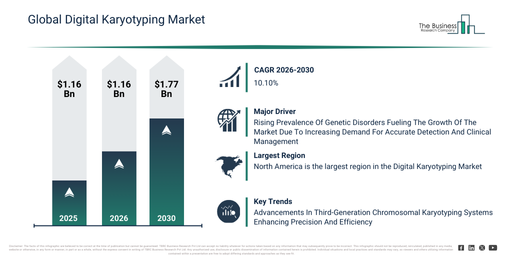
    The digital karyotyping market is projected to experience swift expansion over the coming years. It is anticipated to reach $2.09 billion in 2030 at a compound annual growth rate (CAGR) of 10.1%. This anticipated growth during the forecast period stems from factors such as increasing demand for precision oncology, the incorporation of AI-based genomic interpretation, broader applications in prenatal and rare disease screening, the expansion of clinical genomics services, and the development of high-throughput digital karyotyping platforms. Key developments expected during this period encompass high-resolution copy number analysis, sequence-based chromosomal mapping, enhanced identification of genomic alterations, the integration with sophisticated bioinformatics tools, and a wider application scope within cancer genomics.

    Get A Free Sample Report With In-Depth Market Insights:

    https://thebusinessresearchcompany.com/sample_request?id=61491997&type=smp&name=Digital%20Karyotyping%20Market%20Report%202026&utm_source=Blogs&utm_medium=Paid&utm_campaign=Oct_PR

    Digital Karyotyping Market Growth Factors Behind Sustained Expansion

    A growing occurrence of genetic disorders is anticipated to stimulate the expansion of the digital karyotyping market in the future. These disorders refer to health issues stemming from alterations or irregularities within an individual’s genes or chromosomes. The widespread presence of genetic disorders results from a rise in inherited and chromosomal abnormalities, thereby increasing the chance of transmitting genetic variations through generations. Digital karyotyping addresses the growing requirement for managing genetic disorders by allowing accurate identification of chromosomal abnormalities, enhancing diagnostic precision, and directing specific treatment choices, rather than depending exclusively on conventional cytogenetic approaches. For example, in May 2024, data from the National Health Service, a UK-based government body, indicated that 17,000 individuals are affected by sickle cell disease, an inherited genetic blood disorder, and approximately 250 new diagnoses are made annually. Consequently, the rising occurrence of genetic disorders is projected to fuel the expansion of the digital karyotyping market.

    Digital Karyotyping Market Segment Breakdown: Which Categories Lead On Revenue?

    The digital karyotyping market covered in this report is segmented –

    1) By Product Type: Instruments, Software, Consumables

    2) By Application: Cancer Diagnostics, Genetic Disease Research, Prenatal Screening

    3) By End-User: Hospitals And Clinics, Diagnostic Laboratories, Research Institutes

    Subsegments:

    1) By Instruments: Automated Karyotyping Systems, Microscopes And Imaging Platforms, Scanners And Analyzers, Hybridization And Sequencing Equipment

    2) By Software: Image Analysis Software, Chromosome Classification And Detection Tools, Data Management And Integration Platforms, AI Or Ml-Based Interpretation Software

    3) By Consumables: Reagents And Kits, Probes And Stains, Slides And Coverslips, Sample Preparation Materials

    Digital Karyotyping Market Industry Trends Fueling Future Revenue Growth

    Leading companies in the digital karyotyping market are focusing on technological advancements, particularly on third-generation chromosomal karyotyping systems to enhance their competitive position. These sophisticated platforms utilize high-resolution imaging, automated scanning, and digital analysis, enabling them to detect and classify chromosomal abnormalities with increased accuracy, speed, and reduced manual intervention, consequently improving diagnostic reliability and throughput in genetic testing. For instance, in April 2023, Hangzhou Diagens, a China-based biotechnology company, unveiled the MetaSight G200, a system engineered to capture intelligent metaphase images and complete a slide scan in just four minutes. This system is outfitted with the world’s inaugural chromosome defect recognition module, which automatically labels abnormalities, along with a contactless magnetic levitation motor and a zigzag electric scanning platform to ensure stability.

    Digital Karyotyping Market Competitive Landscape: Who Leads The Industry?

    Major companies operating in the digital karyotyping market are Thermo Fisher Scientific, Corewell Health Laboratory, Eurofins Scientific, Agilent Technologies, Bio-Rad Laboratories Inc., Natera Inc., BGI Genomics Co. Ltd., PerkinElmer Inc., Oxford Nanopore Technologies, Genasis, Personal Genome Diagnostics Inc., DSS Imagetech, MetaSystems, Applied Spectral Imaging (ASI), Bioview, ArgusSoft, Ibex Medical Analytics, KaryoLogic Inc., Cyto Vision, Beijing Abaco Biotechnology

    View The Full Digital Karyotyping Market Report:

    https://thebusinessresearchcompany.com/report/digital-karyotyping-global-market-report?utm_source=Blogs&utm_medium=Paid&utm_campaign=Oct_PR

    Digital Karyotyping Market Geographic Landscape: Which Region Dominates Industry Growth?

    North America was the largest region in the digital karyotyping market in 2025. Asia-Pacific is expected to be the fastest-growing region in the forecast period. The regions covered in the digital karyotyping market report are Asia-Pacific, South East Asia, Western Europe, Eastern Europe, North America, South America, Middle East, Africa.

    Reach Out To Our Team:

    The Business Research Company: https://www.thebusinessresearchcompany.com/

    Americas: +1 310-496-7795

    Asia: +44 7882 955267 & +91 8897263534

    Europe: +44 7882 955267

    Email us at: marketing@tbrc.info

    Follow us on:

    LinkedIn: https://in.linkedin.com/company/the-business-research-company

    YouTube: https://www.youtube.com/channel/UC24_fI0rV8cR5DxlCpgmyFQ

    Global Market Model: https://www.thebusinessresearchcompany.com/global-market-model
  • Digital Hydration Reminder Urinalysis Strip Market Growth In 2026: Market Size, Key Drivers And Future Outlook

    Digital Hydration Reminder Urinalysis Strip Market Growth In 2026: Market Size, Key Drivers And Future Outlook

    Built to provide research that’s more actionable and strategically valuable, The Business Research Company’s 2026 market reports include market attractiveness analysis, total addressable market sizing, company benchmarking matrices, interactive Excel dashboards, broader supply chain intelligence, emerging startup tracking, and in-depth product insights.

    Digital Hydration Reminder Urinalysis Strip Market CAGR Outlook And Future Development

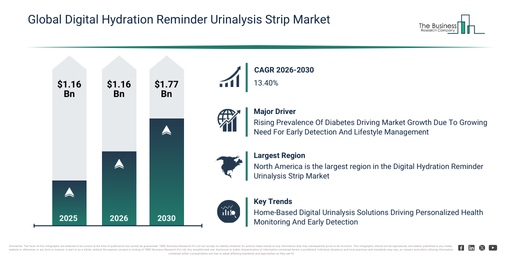
    The digital hydration reminder urinalysis strip market size has experienced rapid growth in recent years. It is projected to increase from $1.53 billion in 2025 to $1.74 billion in 2026, reflecting a compound annual growth rate (CAGR) of 13.7%. The historical expansion of this market can be attributed to a growing awareness of hydration and overall wellness, the adoption of home-based diagnostic testing, increasing smartphone penetration, advancements in urinalysis strip technology, and a rise in preventive healthcare practices.

    The digital hydration reminder urinalysis strip market size is anticipated to undergo significant expansion over the coming years. It is projected to achieve a value of $2.88 billion by 2030, growing at a compound annual growth rate (CAGR) of 13.4%. This projected growth stems from factors such as the expansion of digital health ecosystems, the integration with wearable health devices, a rising demand for personalized health monitoring, increased adoption in sports and fitness applications, and a greater emphasis on chronic disease management. Key trends expected in this forecast period include smart hydration level tracking, app-connected urinalysis strips, real-time hydration feedback, personalized hydration recommendations, and integration with wellness platforms.

    Get A Free Sample Report With In-Depth Market Insights:

    https://thebusinessresearchcompany.com/sample_request?id=83242287&type=smp&name=Digital%20Hydration%20Reminder%20Urinalysis%20Strip%20Market%20Report%202026&utm_source=Blogs&utm_medium=Paid&utm_campaign=Oct_PR

    Digital Hydration Reminder Urinalysis Strip Market Demand Drivers Opening New Revenue Streams

    The escalating occurrence of diabetes is anticipated to drive the expansion of the digital hydration reminder urinalysis strip market in the coming years. Diabetes is a persistent medical state where the body either fails to produce adequate insulin or cannot utilize it effectively, leading to elevated glucose levels in the bloodstream. The increase in diabetes cases is attributed to rising obesity rates, primarily stemming from unhealthy eating habits and inactive lifestyles. Digital hydration reminder urinalysis strips aid in monitoring hydration levels and urine biomarkers linked to diabetes risks, promoting better lifestyle management, enabling the early detection of complications, and enhancing the overall health for individuals living with diabetes. For example, according to the International Diabetes Federation (IDF), a Belgium-based health organization focused on diabetes awareness and advocacy, diabetes was responsible for 3.4 million deaths worldwide in 2024, which equates to one death every nine seconds. Consequently, the increasing prevalence of diabetes is fueling the growth of the digital hydration reminder urinalysis strip market.

    Digital Hydration Reminder Urinalysis Strip Market Segmentation: How Does The Market Break Down By Category?

    The digital hydration reminder urinalysis strip market covered in this report is segmented –

    1) By Product Type: Single-Use Strips, Multi-Use Strips, Smart Strips

    2) By Distribution Channel: Online Retail, Pharmacies, Specialty Stores, Other Distribution Channels

    3) By Application: Home Care, Hospitals And Clinics, Sports And Fitness, Occupational Health, Other Applications

    4) By End-User: Individuals, Healthcare Professionals, Athletes, Other End Users

    Subsegments:

    1) By Single-Use Strips: Colorimetric Strips, Enzymatic Strips, Electrochemical Strips

    2) By Multi-Use Strips: Reusable Sensor Strips, Washable Strips, Modular Test Strips

    3) By Smart Strips: Bluetooth-Enabled Strips, App-Integrated Strips, Internet of Things-Connected Strips

    Digital Hydration Reminder Urinalysis Strip Market Trends Powering Strategic Industry Growth

    Leading companies within the digital hydration reminder urinalysis strip market are concentrating their efforts on creating home-based healthcare solutions, facilitating convenient and real-time observation of hydration levels and various health biomarkers. These at-home healthcare offerings aim to furnish users with personalized insights, enable early identification of potential health issues, and enhance overall wellness management. For example, in January 2024, Vivoo, a US-based health-tech firm specializing in at-home wellness diagnostics, unveiled its innovative at-home digital Urinary Tract Infection (UTI) testing product at CES 2024. The accompanying kit allows individuals to perform tests in minutes by scanning a urine strip with the Vivoo app, which employs AI to deliver accurate results and enable data sharing with healthcare providers. This particular innovation supports convenient monitoring from home, thereby contributing to early detection and improved access to healthcare services.

    Digital Hydration Reminder Urinalysis Strip Market Company Landscape And Competitive Strategy

    Major companies operating in the digital hydration reminder urinalysis strip market are Healthy.io, Vivoo, UroQR, Med2AI, Spark Diagnostics, Scanwell Health, Ribbon Checkup, Starling Medical, Withings, Kamleon, Minuteful Kidney, Inui Health, Urinostics, BioSens Diagnostics, HydroSense Health, AI‑Urinalysis Labs, HydraView Medical, UrineInsight Tech, SmartDip Diagnostics, HomeUrine Tech, AIHydration Health, BioStrip Analytics, DipScan Solutions, QR‑Urinalysis Systems

    View The Full Digital Hydration Reminder Urinalysis Strip Market Report:

    https://thebusinessresearchcompany.com/report/digital-hydration-reminder-urinalysis-strip-global-market-report?utm_source=Blogs&utm_medium=Paid&utm_campaign=Oct_PR

    Digital Hydration Reminder Urinalysis Strip Market Largest Region: Which Geography Holds The Highest Market Share?

    North America was the largest region in the digital hydration reminder urinalysis strip market in 2025. Asia-Pacific is expected to be the fastest-growing region in the forecast period. The regions covered in the digital hydration reminder urinalysis strip market report are Asia-Pacific, South East Asia, Western Europe, Eastern Europe, North America, South America, Middle East, Africa.

    Reach Out To Our Team:

    The Business Research Company: https://www.thebusinessresearchcompany.com/

    Americas: +1 310-496-7795

    Asia: +44 7882 955267 & +91 8897263534

    Europe: +44 7882 955267

    Email us at: marketing@tbrc.info

    Follow us on:

    LinkedIn: https://in.linkedin.com/company/the-business-research-company

    YouTube: https://www.youtube.com/channel/UC24_fI0rV8cR5DxlCpgmyFQ

    Global Market Model: https://www.thebusinessresearchcompany.com/global-market-model
  • Digital Health For Obesity Market Size And Forecast 2026–2030: Trends Driving Industry Expansion

    Digital Health For Obesity Market Size And Forecast 2026–2030: Trends Driving Industry Expansion

    Backed by market attractiveness analysis, total addressable market sizing, company benchmarking matrices, interactive Excel dashboards, wider supply chain intelligence, emerging startup coverage, and detailed product-level insights, The Business Research Company’s 2026 market reports are designed to offer research that is more actionable and strategically valuable than ever.

    Digital Health For Obesity Market Set To Climb From $99.36 Billion In 2026 To $247.33 Billion By 2030

    The market size for digital health solutions addressing obesity has seen substantial growth in recent years. It is anticipated to expand from $78.91 billion in 2025 to $99.36 billion in 2026, exhibiting a compound annual growth rate (CAGR) of 25.9%. The historical expansion of this market can be attributed to factors such as restricted access to digital tools for managing obesity, the increasing occurrence of obesity, a reliance on conventional methods for weight management, insufficient integration between healthcare providers and digital platforms, and the rising adoption of smartphones and internet services.

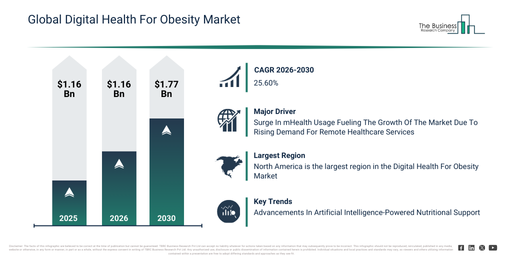
    The digital health for obesity market size is expected to experience significant growth over the next few years. It is projected to reach $247.33 billion by 2030, demonstrating a compound annual growth rate (CAGR) of 25.6%. This anticipated growth is driven by advancements in AI-powered coaching and predictive analytics, the increasing adoption of connected wearable devices, the expansion of telemedicine infrastructure, a growing awareness of personalized obesity care, and rising investment in digital health platforms. Major trends influencing this period include the wider acceptance of mobile and web-based health applications, a surge in the use of wearable fitness and health tracking devices, an increasing demand for personalized weight management programs, the broadening of telehealth and remote patient monitoring services, and the integration of behavioral therapy and lifestyle coaching into digital platforms.

    Get A Free Sample Report With In-Depth Market Insights:

    https://thebusinessresearchcompany.com/sample_request?id=67948293&type=smp&name=Digital%20Health%20For%20Obesity%20Market%20Report%202026&utm_source=Blogs&utm_medium=Paid&utm_campaign=Oct_PR

    Digital Health For Obesity Market Growth Backed By Core Demand Fundamentals

    The expanding embrace of mHealth is projected to propel the digital health for obesity market’s advancement in the coming period. mHealth, or mobile health, involves leveraging mobile devices like smartphones and tablets, alongside health applications and wireless technology, to provide medical and public health services, thus facilitating remote oversight, patient instruction, and dynamic health administration. This surge in mHealth stems from the pervasive ownership of smartphones, which grants convenient access to health applications and digital utilities for tracking, governing, and enhancing individual well-being instantaneously. Furthermore, mHealth supports digital health solutions designed for obesity through mobile-centric interventions such as monitoring dietary intake, tracking physical activity, offering virtual guidance, and providing tailored feedback – all crucial for successful weight control and behavioral adjustments. As an illustration, the National Health Service (NHS), a UK-based publicly funded healthcare provider, reported in December 2023 that appointments accessed or managed via its app increased to 4.1 million in November 2023, a significant rise from 1.95 million in November 2022. Consequently, the growing integration of mHealth is propelling the expansion of the digital health for obesity market.

    Digital Health For Obesity Market Segment Trends And Revenue Contributors

    The digital health for obesity market covered in this report is segmented –

    1) By Component: Software, Hardware, Services

    2) By Functionality: Weight Monitoring, Diet And Nutrition Management, Physical Activity Tracking, Behavioral Therapy Or Computer Based Test, Remote Patient Monitoring

    3) By End-Use: Patients, Providers, Payers, Other Users

    Subsegments:

    1) By Software: Mobile Applications, Web-Based Platforms, Artificial Intelligence-Powered Coaching Tools, Diet And Nutrition Tracking Software, Fitness And Activity Monitoring Software, Behavioral Modification Programs, Telehealth Software, Electronic Health Record (EHR) Integration Tools

    2) By Hardware: Wearable Fitness Trackers, Smart Scales, Smartwatches, Body Composition Analyzers, Connected Glucometers, Blood Pressure Monitors, Sleep Trackers, Internet of Things-Enabled Health Devices

    3) By Services: Remote Patient Monitoring, Teleconsultation Services, Weight Management Counseling, Subscription-Based Wellness Programs, Personalized Coaching Services, Behavioral Therapy Sessions, Data Analytics And Reporting Services, Clinical Support And Follow-Up

    Digital Health For Obesity Market Growth Trends Reshaping The Competitive Landscape

    Major companies operating within the digital health for obesity market are prioritizing technological advancements, particularly in artificial intelligence-powered nutritional support. This strategic focus is aimed at enhancing personalized care, elevating patient engagement, and fostering sustainable behavior changes in the management of weight and related chronic conditions. Artificial intelligence-powered nutritional support involves the application of artificial intelligence algorithms and virtual agents to provide tailored dietary guidance, real-time feedback, and behavioral coaching, assisting individuals in making healthier food choices and sustaining long-term lifestyle modifications. For instance, in May 2025, Omada Health Inc., a US-based digital healthcare company dedicated to chronic disease prevention and management, introduced OmadaSpark Inc. This AI-powered virtual agent was launched as part of its nutritional intelligence initiative, designed to bolster personalized nutrition support. It offers instant educational guidance, motivation, and tools for building healthy habits. This innovation endeavors to transform individuals’ relationships with food by integrating advanced technology with clinical care, representing a crucial step in expanding Omada’s digital platform for managing chronic conditions and obesity.

    Digital Health For Obesity Market Key Players Shaping Industry Direction

    Major companies operating in the digital health for obesity market are Teladoc Health Inc., WW International Inc., Hims & Hers Inc., Noom Inc., Vida Health Inc., Twin Health Inc., Allurion Technologies Inc., Virta Health Corp., Omada Health Inc., DarioHealth Corp., WellDoc Inc., Sidekick Health, Qardio Inc., Fitterfly Pvt. Ltd., Form Health, Lark Health Inc., Knownwell Inc., Ilant Health Inc., MyNetDiary Inc., Rimidi Inc

    View The Full Digital Health For Obesity Market Report:

    https://thebusinessresearchcompany.com/report/digital-health-for-obesity-global-market-report?utm_source=Blogs&utm_medium=Paid&utm_campaign=Oct_PR

    Digital Health For Obesity Market Regional Analysis: Which Region Leads By Revenue?

    North America was the largest region in the digital health for obesity market in 2025. Asia-Pacific is expected to be the fastest-growing region in the forecast period. The regions covered in the digital health for obesity market report are Asia-Pacific, South East Asia, Western Europe, Eastern Europe, North America, South America, Middle East, Africa.

    Reach Out To Our Team:

    The Business Research Company: https://www.thebusinessresearchcompany.com/

    Americas: +1 310-496-7795

    Asia: +44 7882 955267 & +91 8897263534

    Europe: +44 7882 955267

    Email us at: marketing@tbrc.info

    Follow us on:

    LinkedIn: https://in.linkedin.com/company/the-business-research-company

    YouTube: https://www.youtube.com/channel/UC24_fI0rV8cR5DxlCpgmyFQ

    Global Market Model: https://www.thebusinessresearchcompany.com/global-market-model
  • Digital Health For Cardiovascular Market 2026 Outlook: Market Size, CAGR And Key Growth Opportunities

    Digital Health For Cardiovascular Market 2026 Outlook: Market Size, CAGR And Key Growth Opportunities

    Featuring market attractiveness scoring, total addressable market sizing, company benchmarking matrices, interactive Excel dashboards, deeper supply chain intelligence, emerging startup tracking, and granular product-level insights, The Business Research Company’s 2026 market reports are built to deliver research that is both more actionable and more strategically valuable.

    Digital Health For Cardiovascular Market Forecast: Value Set To Climb From $60.99 Billion To $137.87 Billion

    The digital health for cardiovascular market has seen substantial expansion in recent years. Its valuation is set to climb from $49.64 billion in 2025 to $60.99 billion in 2026, exhibiting a compound annual growth rate (CAGR) of 22.9%. Historically, this market’s growth has been fueled by the increasing occurrence of cardiovascular diseases, the development of digital infrastructure in hospitals, the implementation of electronic health records, the growing demand for remote healthcare services, and the advancement of wearable health technology.

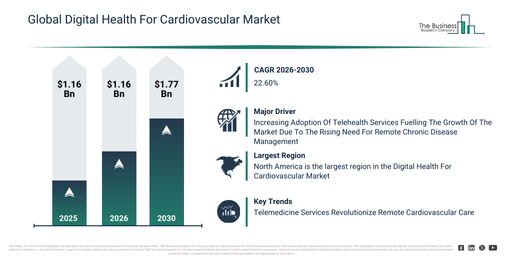
    The digital health for cardiovascular market is projected to experience substantial expansion in the upcoming years, with its value expected to reach $137.87 billion by 2030, exhibiting a compound annual growth rate (CAGR) of 22.6%. This anticipated growth throughout the forecast period stems from factors such as a heightened demand for home-based cardiac care, increased investments in AI-driven diagnostics, the broadening of cloud-based healthcare platforms, a greater emphasis on preventive cardiovascular care, and the rising uptake of real-time patient monitoring. Prominent trends observed during this period include the wider adoption of remote cardiac monitoring solutions, the growing utilization of wearable ECG devices, the increasing integration of AI-based diagnostic software, the expansion of telecardiology platforms, and an enhanced focus on continuous patient surveillance.

    Get A Free Sample Report With In-Depth Market Insights:

    https://thebusinessresearchcompany.com/sample_request?id=17172389&type=smp&name=Digital%20Health%20For%20Cardiovascular%20Market%20Report%202026&utm_source=Blogs&utm_medium=Paid&utm_campaign=Oct_PR

    Digital Health For Cardiovascular Market Growth Catalysts And Demand Drivers

    The expanding integration of telehealth services is anticipated to fuel the progression of the digital health for cardiovascular care market moving forward. Telehealth services encompass healthcare provisions delivered remotely through phones, video calls, or applications, enabling patients to consult medical professionals without physically visiting a clinic or hospital. The growing acceptance of telehealth services stems from their convenience in providing access to healthcare from home, particularly for managing ongoing conditions such as heart disease. Digital health for cardiovascular care plays a supportive role for telehealth services by facilitating remote monitoring and consultations, thereby making healthcare more accessible to patients. It enhances healthcare efficiency by supplying real-time data, which improves diagnostic and treatment strategies and lessens the requirement for in-person visits. For instance, in November 2024, the Australian Digital Health Agency 2022, an Australian government entity, reported in its Patient Experiences 2023–24 publication that 89.2% of individuals who had a telehealth consultation stated they would use telehealth again for future consultations if offered. This represented an increase from 87.7% in 2022-23. Accordingly, the widespread adoption of telehealth services is a significant driver for the growth of the digital health for cardiovascular care market.

    Digital Health For Cardiovascular Market Segment Analysis Spotlighting Growth Areas

    The digital health for cardiovascular market covered in this report is segmented –

    1) By Product Type: Remote Monitoring Devices, Mobile Health Applications, Diagnostic Software, Wearable ECG Monitors, Blood Pressure Monitors, Biosensors

    2) By Technology: Artificial Intelligence (AI), Internet Of Things (IoT), Telemedicine, Wearable Devices, Big Data Analytics, Interoperable Health Data Platforms

    3) By Deployment: On-Premise, Cloud

    4) By Application: Cardiac Monitoring, Diagnosis And Early Detection, Post-Surgical Care, Preventive Care, Rehabilitation Management

    5) By End User: Hospitals And Clinics, Homecare Settings, Ambulatory Care Centers, Academic And Research Institutes

    Subsegments:

    1) By Remote Monitoring Devices: Implantable Loop Recorders, Holter Monitors, Mobile Cardiac Telemetry Devices, Patch Monitors

    2) By Mobile Health Applications: Heart Rate Monitoring Apps, Blood Pressure Monitoring Apps, Medication Adherence Apps, Diet And Lifestyle Management Apps

    3) By Diagnostic Software: Electrocardiogram (ECG) Interpretation Software, Artificial intelligence (AI)-Powered Diagnostic Tools, Cardiac Imaging Analysis Software, Risk Assessment Tools

    4) By Wearable Electrocardiogram (ECG) Monitors: Smartwatches With Electrocardiogram (ECG) Functionality, Chest Strap Electrocardiogram (ECG) Monitors, Wristband Electrocardiogram (ECG) Monitors, Clothing-Integrated Electrocardiogram (ECG) Sensors

    5) By Blood Pressure Monitors: Arm Cuff Monitors, Wrist Cuff Monitors, Cuffless Continuous BP Monitors, Wireless Blood Pressure (BP) Monitors

    6) By Biosensors: Implantable Biosensors, Skin Patch Biosensors, Sweat-Based Sensors, Multi-Parameter Biosensors

    Digital Health For Cardiovascular Market Trends Shaping Long-Term Demand

    Leading companies in the digital health for cardiovascular care market are concentrating on developing innovative services, such as telemedicine, to improve remote patient monitoring, enhance access to care, and provide timely interventions for individuals with heart conditions. Telemedicine service refers to the application of digital communication technologies, including video calls, mobile applications, and remote monitoring devices, to deliver medical consultations, diagnoses, and treatment from a distance. For instance, in January 2025, Withings, a France-based consumer electronics company, launched Cardio Check-Up, a telemedicine service that is part of its Withings Plus subscription. Subscribers can utilize any Withings device collecting electrocardiogram data to receive a professional review of their heart health. This service offers four annual cardiologist reports, based on the collected data, facilitated through Heartbeat Health.

    Digital Health For Cardiovascular Market Competitive Analysis Of Leading Industry Participants

    Major companies operating in the digital health for cardiovascular market are Abbott Laboratories, Medtronic plc, Siemens Healthineers AG, Philips Healthcare, GE HealthCare Technologies Inc., Boston Scientific Corporation, Edwards Lifesciences Corporation, Biotronik SE & Co. KG, LivaNova PLC, HeartFlow Inc., Viz.ai Inc., Bardy Diagnostics Inc., Ultromics Limited, RSIP Vision Ltd., Cardiologs Technologies SAS, Aktiia SA, FibriCheck, Cleerly Inc., AliveCor Inc., iRhythm Technologies Inc., Preventice Solutions (Boston Scientific), Eko Health Inc., BioTelemetry Inc., Withings Health Solutions

    View The Full Digital Health For Cardiovascular Market Report:

    https://thebusinessresearchcompany.com/report/digital-health-for-cardiovascular-global-market-report?utm_source=Blogs&utm_medium=Paid&utm_campaign=Oct_PR

    Digital Health For Cardiovascular Market Geographic Distribution And Regional Opportunities

    North America was the largest region in the digital health for cardiovascular market in 2025. Asia-Pacific is expected to be the fastest-growing region in the forecast period. The regions covered in the digital health for cardiovascular market report are Asia-Pacific, South East Asia, Western Europe, Eastern Europe, North America, South America, Middle East, Africa.

    Reach Out To Our Team:

    The Business Research Company: https://www.thebusinessresearchcompany.com/

    Americas: +1 310-496-7795

    Asia: +44 7882 955267 & +91 8897263534

    Europe: +44 7882 955267

    Email us at: marketing@tbrc.info

    Follow us on:

    LinkedIn: https://in.linkedin.com/company/the-business-research-company

    YouTube: https://www.youtube.com/channel/UC24_fI0rV8cR5DxlCpgmyFQ

    Global Market Model: https://www.thebusinessresearchcompany.com/global-market-model
  • Digital Fluoroscopy System Market Size Growth: From $7.26 Billion In 2026 To $9.51 Billion By 2030

    Digital Fluoroscopy System Market Size Growth: From $7.26 Billion In 2026 To $9.51 Billion By 2030

    Built to provide research that’s more actionable and strategically valuable, The Business Research Company’s 2026 market reports include market attractiveness analysis, total addressable market sizing, company benchmarking matrices, interactive Excel dashboards, broader supply chain intelligence, emerging startup tracking, and in-depth product insights.

    Digital Fluoroscopy System Market Revenue Growth On Track For A 7% CAGR Through 2030

    The digital fluoroscopy system market size has experienced considerable growth in the last few years. It will grow from $6.77 billion in 2025 to $7.26 billion in 2026 at a compound annual growth rate (CAGR) of 7.3%. The historic period’s growth stemmed from factors such as the prevalence of analog fluoroscopy systems, restricted access to sophisticated imaging technology, an increase in diagnostic medical procedures, expanding hospital facilities, and heightened recognition of patient safety concerns during imaging.

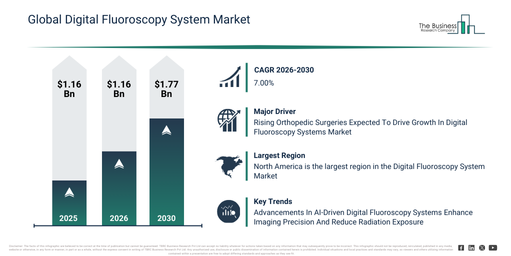
    The digital fluoroscopy system market is projected to experience robust expansion in the coming years, set to reach a valuation of $9.51 billion by 2030, demonstrating a compound annual growth rate (CAGR) of 7.0%. This anticipated growth can be attributed to several factors, including the advancement of mobile and ceiling-mounted c-arms, increased uptake of sophisticated fixed fluoroscopy systems, a growing volume of interventional procedures, the increasing incorporation of AI-based imaging analytics, and the proliferation of ambulatory surgery centers. Key trends anticipated during the forecast timeframe encompass the expanding utilization of real-time imaging systems, a heightened demand for minimally invasive surgical interventions, improved radiation dose management and safety measures, seamless integration with hospital information systems (HIS), and the broadening scope of gastrointestinal and interventional procedures.

    Get A Free Sample Report With In-Depth Market Insights:

    https://thebusinessresearchcompany.com/sample_request?id=12416384&type=smp&name=Digital%20Fluoroscopy%20System%20Market%20Report%202026&utm_source=Blogs&utm_medium=Paid&utm_campaign=Oct_PR

    Digital Fluoroscopy System Market Opportunity Drivers: What’s Unlocking New Revenue Potential?

    The digital fluoroscopy system market is anticipated to expand with the rising volume of orthopedic surgeries. Orthopedic procedures focus on correcting or treating conditions affecting the musculoskeletal system, such as bones, joints, muscles, ligaments, and tendons. The increase in these surgeries stems from an aging global population and a higher occurrence of musculoskeletal problems and injuries. Digital fluoroscopy systems offer live imaging during orthopedic operations, thereby improving the accuracy of both diagnosis and treatment of musculoskeletal ailments. As an illustration, in April 2024, data from the Independent Healthcare Providers Network, a healthcare organization based in the UK, indicated that in February 2024, the independent sector performed 25.7% of all NHS elective trauma and orthopaedics procedures and 22.6% of all NHS ophthalmology activity. Consequently, the growing frequency of orthopedic surgeries is set to stimulate the digital fluoroscopy system market.

    Digital Fluoroscopy System Market Driver: Rise In Cardiovascular Disease Cases Fueling The Growth Of The Market Due To Increasing Need For Real-Time Imaging In Cardiac Diagnosis And Treatment

    Digital Fluoroscopy System Market Segment Performance And Emerging Opportunities

    The digital fluoroscopy system market covered in this report is segmented –

    1) By Type: Fixed Fluoroscopy Equipment, C Arms

    2) By Application: Diagnostics, Surgeries, Gastrointestinal Surgeries, Other Applications

    3) By End User: Hospital And Clinics, Diagnostics Centers, Ambulatory Surgery Centers, Other End Users

    Subsegments:

    1) By Fixed Fluoroscopy Equipment: Single-Plane Fixed Fluoroscopy, Bi-Plane Fixed Fluoroscopy, Advanced Fixed Fluoroscopy Systems, Mobile Integration Fixed Fluoroscopy

    2) By C-Arms: Mobile C-Arms, Ceiling-Mounted C-Arms, Compact C-Arms, High-End C-Arms, Mini C-Arms

    Digital Fluoroscopy System Market Innovation Trends Shaping Future Development

    Leading companies in the digital fluoroscopy system market are concentrating on data-integrated imaging systems, such as AI-based solutions tailored for cardiology suites, with the goal of enhancing imaging precision and operational efficiency while simultaneously lowering radiation exposure. AI-driven solutions within cardiology suites, used for digital fluoroscopy, improve image sharpness and procedural exactness, allowing for immediate analysis and better choices during complex cardiovascular interventions. For example, in August 2023, Canon Medical Systems Corporation, a Japan-based manufacturer of X-ray systems, launched the Alphenix/Evolve Edition Angiography system in Europe, which incorporates real-time AI technology specifically designed to optimize imaging for interventional cardiology. This particular system integrates deep learning processes for minimizing noise and improving image clarity, which in turn reduces both radiation exposure and the duration of procedures. Among its primary innovations are the αEvolve Imaging for exceptional contrast, the Dynamic Device Stabilizer for real-time detection of balloon markers, and Echo Fusion for the automated integration of fluoroscopic and echocardiography images. Furthermore, the system is equipped with a 12×12-inch flat panel detector and a Dose Tracking System, contributing to increased procedural adaptability and comprehensive radiation monitoring.

    Digital Fluoroscopy System Market Leading Companies And Competitive Benchmarking

    Major companies operating in the digital fluoroscopy system market are Medtronic Plc, Siemens Healthineers AG, Fujifilm Holdings Corporation, Koninklijke Philips NV, GE HealthCare Technologies Inc., Hologic Inc, Hitachi High-Tech Corporation, Shimadzu Corporation, Neusoft Medical Systems Co Ltd, Agfa-Gevaert NV, Carestream Health Inc, Varex Imaging Corporation, United Imaging Healthcare Co Ltd, Canon Medical Systems Corporation, Ziehm Imaging GmbH, Orthoscan Inc, Villa Sistemi Medicali SpA, Planmed Oy, Allengers Medical Systems Limited, Xoran Technologies LLC, Del Medical Inc, Omega Medical Imaging LLC, Eurocolumbus srl

    View The Full Digital Fluoroscopy System Market Report:

    https://thebusinessresearchcompany.com/report/digital-fluoroscopy-system-global-market-report?utm_source=Blogs&utm_medium=Paid&utm_campaign=Oct_PR

    Digital Fluoroscopy System Market Largest Region By Revenue And Market Share

    North America was the largest region in the digital fluoroscopy system market in 2025. Asia-Pacific is expected to be the fastest-growing region in the forecast period. The regions covered in the digital fluoroscopy system market report are Asia-Pacific, South East Asia, Western Europe, Eastern Europe, North America, South America, Middle East, Africa.

    Reach Out To Our Team:

    The Business Research Company: https://www.thebusinessresearchcompany.com/

    Americas: +1 310-496-7795

    Asia: +44 7882 955267 & +91 8897263534

    Europe: +44 7882 955267

    Email us at: marketing@tbrc.info

    Follow us on:

    LinkedIn: https://in.linkedin.com/company/the-business-research-company

    YouTube: https://www.youtube.com/channel/UC24_fI0rV8cR5DxlCpgmyFQ

    Global Market Model: https://www.thebusinessresearchcompany.com/global-market-model
  • Digital Dose Inhalers Market Analysis 2026: Market Size, Growth Trends And Industry Outlook

    Digital Dose Inhalers Market Analysis 2026: Market Size, Growth Trends And Industry Outlook

    Backed by market attractiveness analysis, total addressable market sizing, company benchmarking matrices, interactive Excel dashboards, wider supply chain intelligence, emerging startup coverage, and detailed product-level insights, The Business Research Company’s 2026 market reports are designed to offer research that is more actionable and strategically valuable than ever.

    Digital Dose Inhalers Market Value Growth And Long-Term Outlook

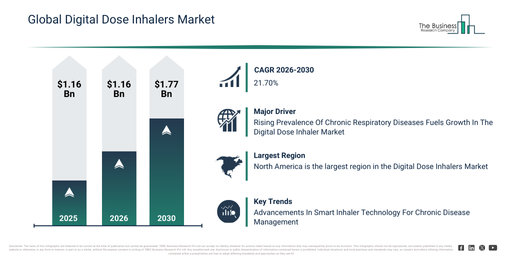
    The digital dose inhalers market has experienced substantial growth in recent years. It is projected to increase from $23.78 billion in 2025 to $28.97 billion in 2026, reflecting a compound annual growth rate (CAGR) of 21.8%. This historical expansion can be attributed to the rising prevalence of asthma and COPD, the escalating burden of chronic respiratory diseases, the increased adoption of inhalation therapy, the expansion of hospital respiratory care services, and enhanced access to inhaler medications.

    The digital dose inhalers market size is projected for substantial expansion in the coming years. It will grow to $63.58 billion in 2030 at a compound annual growth rate (CAGR) of 21.7%. This anticipated growth stems from several factors, including the increasing demand for remote patient monitoring, a greater emphasis on personalized respiratory care, improved awareness of the advantages of medication adherence, the broadening of digital health ecosystems, and higher healthcare expenditures on managing chronic diseases. Key trends anticipated during this period involve the increasing adoption of smart inhalation devices, a heightened focus on monitoring medication adherence, the expanded deployment of connected respiratory care solutions, a move towards managing respiratory diseases at home, and a greater need for accurate dosing and usage tracking.

    Get A Free Sample Report With In-Depth Market Insights:

    https://thebusinessresearchcompany.com/sample_request?id=43090379&type=smp&name=Digital%20Dose%20Inhalers%20Market%20Report%202026&utm_source=Blogs&utm_medium=Paid&utm_campaign=Oct_PR

    Digital Dose Inhalers Market Growth Momentum: What Factors Are Shaping Demand?

    The increasing incidence of chronic respiratory conditions is projected to fuel the expansion of the digital dose inhalers market. Chronic respiratory diseases are persistent health issues impacting the lungs and air passages, leading to ongoing challenges with breathing. This surge in chronic respiratory diseases stems from multiple factors such as elevated air pollution levels, a growing elderly demographic, and an increase in tobacco consumption. Digital dose inhalers are crucial for enhancing medication compliance and tracking for individuals suffering from conditions like asthma and chronic obstructive pulmonary disease (COPD). As an illustration, in December 2023, the National Center for Biotechnology Information, a US-based government entity, projected that the count of COPD cases would increase by 112 million, reaching 592 million by 2050, constituting 9.5% of the eligible population. Consequently, the expanding occurrence of chronic respiratory illnesses is stimulating growth within the digital dose inhalers market.

    Digital Dose Inhalers Market Segment Landscape And Growth Outlook

    The digital dose inhalers market covered in this report is segmented –

    1) By Product: Metered Dose Inhaler (MDI), Dry Powder Inhaler (DPI)

    2) By Formulation Type: Branded Medication, Generic Medication

    3) By Indications: Asthma, Chronic Obstructive Pulmonary Disease (COPD), Other Indications

    4) By End User: Medical Device Industry, Hospital

    Subsegments:

    1) By Metered Dose Inhaler (MDI): Conventional MDI, Smart MDI

    2) By Dry Powder Inhaler (DPI): Single-Dose DPI, Multi-Dose DPI, Smart DPI

    Digital Dose Inhalers Market Trends Redefining Industry Growth

    Companies operating within the digital dose inhalers market are dedicated to developing inventive products, such as smart inhalers, to elevate patient outcomes and optimize medication management. Smart inhalers represent sophisticated devices equipped with sensors and connectivity functions that monitor drug usage, inhalation technique, and adherence, while simultaneously delivering real-time feedback through mobile applications. For instance, in June 2024, Aseptika Ltd., a healthcare company from the UK, unveiled the PUFFClicker3 universal smart inhaler dose tracker at the Med-Tech Innovation Expo. The PUFFClicker3 holds the distinction of being the world’s inaugural inhaler dose tracker compatible with both pressurized metered dose inhalers (pMDI) and dry powder inhalers (DPI), supporting 101 SNOMED-coded inhaler types. This innovation simplifies the transition for patients between different inhaler types and provides integrated graphical instructions for using each supported inhaler.

    Digital Dose Inhalers Market Industry Leaders And Competitive Landscape

    Major companies operating in the digital dose inhalers market are Teva Pharmaceutical Industries Ltd., AstraZeneca plc, GlaxoSmithKline plc, Novartis AG, Propeller Health, Adherium Limited, Cohero Health, FindAir Sp z o o, Amiko Digital Health Limited, Sensirion AG, H&T Presspart Manufacturing Ltd., Philips Respironics, Boehringer Ingelheim GmbH, Cipla Limited, Glenmark Pharmaceuticals Limited, OPKO Health Inc., Mundipharma International Limited, Pneuma Respiratory Inc., Cognita Labs, AptarGroup Inc.

    View The Full Digital Dose Inhalers Market Report:

    https://thebusinessresearchcompany.com/report/digital-dose-inhalers-global-market-report?utm_source=Blogs&utm_medium=Paid&utm_campaign=Oct_PR

    Digital Dose Inhalers Market Regional Analysis And Leading Geography

    North America was the largest region in the digital dose inhalers market in 2025. Asia-Pacific is expected to be the fastest-growing region inthe forecast period. The regions covered in the digital dose inhalers market report are Asia-Pacific, South East Asia, Western Europe, Eastern Europe, North America, South America, Middle East, Africa.

    Reach Out To Our Team:

    The Business Research Company: https://www.thebusinessresearchcompany.com/

    Americas: +1 310-496-7795

    Asia: +44 7882 955267 & +91 8897263534

    Europe: +44 7882 955267

    Email us at: marketing@tbrc.info

    Follow us on:

    LinkedIn: https://in.linkedin.com/company/the-business-research-company

    YouTube: https://www.youtube.com/channel/UC24_fI0rV8cR5DxlCpgmyFQ

    Global Market Model: https://www.thebusinessresearchcompany.com/global-market-model
  • Digital Dentistry Market Forecast To 2030: Starting From $11.15 Billion In 2026

    Digital Dentistry Market Forecast To 2030: Starting From $11.15 Billion In 2026

    Featuring market attractiveness scoring, total addressable market sizing, company benchmarking matrices, interactive Excel dashboards, deeper supply chain intelligence, emerging startup tracking, and granular product-level insights, The Business Research Company’s 2026 market reports are built to deliver research that is both more actionable and more strategically valuable.

    Digital Dentistry Market Poised To Hit $11.15 Billion By 2030 With A 10.2% CAGR

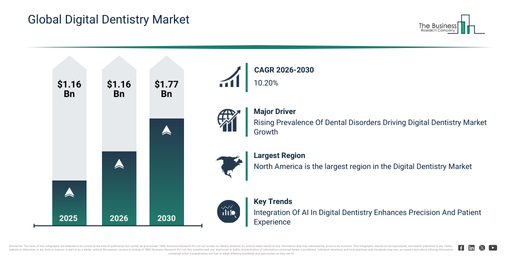
    The digital dentistry market has experienced rapid expansion in recent years. Its valuation is projected to increase from $6.79 billion in 2025 to $7.57 billion in 2026, achieving a compound annual growth rate (CAGR) of 11.4%. This past growth can be attributed to various factors, including an uptick in dental care procedures, the increasing demand for precise diagnostics, the proliferation of private dental clinics, a growing awareness of advanced dental treatments, and enhanced accessibility to dental technologies.

    The digital dentistry market is projected to experience substantial growth in the upcoming years, with its size expected to reach $11.15 billion in 2030, demonstrating a compound annual growth rate (CAGR) of 10.2%. This anticipated expansion is fueled by an escalating demand for efficient dental workflows, rising patient expectations for precise treatments, the ongoing expansion of cosmetic and implant dentistry, increased investments in digital healthcare infrastructure, and the growing adoption of technology-driven dental solutions. Prominent trends throughout this forecast period encompass the increasing use of intraoral scanners, a rise in the application of CAD/CAM-based restorations, a growing inclination towards chairside digital workflows, a shift towards comprehensive digital treatment planning, and the expanding integration of 3D printing within dental practices.

    Get A Free Sample Report With In-Depth Market Insights:

    https://thebusinessresearchcompany.com/sample_request?id=29460820&type=smp&name=Digital%20Dentistry%20Market%20Report%202026&utm_source=Blogs&utm_medium=Paid&utm_campaign=Oct_PR

    Digital Dentistry Market Expansion Drivers: What’s Shaping Future Growth?

    The expanding occurrence of dental ailments is projected to drive the future growth of the digital dentistry market. These conditions encompass various issues impacting teeth, gums, and other oral structures, such as cavities, gum disease, tooth decay, and infections within the mouth. Such disorders arise from elements like insufficient oral hygiene, detrimental dietary choices, tobacco consumption, limited availability of dental services, and the demographics of an aging population. Digital dentistry is revolutionizing the identification and management of dental conditions through innovations like computer-aided design or computer-aided manufacturing (CAD or CAM) systems, digital imaging techniques, and artificial intelligence (AI) diagnostics, thereby improving accuracy and results. For example, in October 2024, data from the Australian Institute of Health and Welfare, an Australia-based government agency, indicated that in 2022–23 approximately 87,400 hospitalizations occurred due to dental conditions that could have been prevented with prompt intervention. The highest rate of these avoidable hospitalizations was observed in children aged 5–9 years, reaching 12.3 per 1,000 population. Consequently, the rising occurrence of dental disorders is fueling the expansion of the digital dentistry market.

    Digital Dentistry Market Breakdown By Product Type And Application

    The digital dentistry market covered in this report is segmented –

    1) By Type: Instruments, Consumables

    2) By Specialty Areas: Orthodontics, Prosthodontics, Implantology, Other Specialty Areas

    3) By Application: Diagnostics, Therapeutics, Other Applications

    4) By End User: Hospitals, Dental Clinics, Others End Users

    Subsegments:

    1) By Instruments: Digital X-ray Systems, Intraoral Scanners, CAD Or CAM Systems, 3D Printers

    2) By Consumables: Dental Imaging Software, Impression Materials, Digital Inks, 3D Printing Resins

    Digital Dentistry Market Strategic Trends: What Defines The Next Growth Phase?

    Leading companies in the digital dentistry market are increasingly integrating artificial intelligence and machine learning technologies into diagnostic products, such as AI-guided orthodontic scans, to elevate treatment precision, efficiency, and capabilities for early detection. An AI-guided orthodontics scan employs artificial intelligence to assist in performing accurate scans of a patient’s teeth, thereby facilitating treatment planning and customization. For instance, in June 2023, DentalMonitoring, a France-based medical equipment manufacturing company, introduced an AI-guided scan specifically for orthodontics, named ScanAssist. This device utilizes AI-guided instructions and real-time feedback to support patients in completing their scans, with the aim of improving patient engagement and overall experience. The in-app system produces a 3D mouth model that tracks patients’ scans, providing high-quality images and a detailed analysis of both treatment progression and oral health. ScanAssist, a recently added feature within the DentalMonitoring app, leverages software and AI to identify over 130 intraoral observations relevant to braces and aligner treatments.

    Digital Dentistry Market Key Participants And Competitive Landscape

    Major companies operating in the digital dentistry market are 3M Company, Danaher Corporation, Zimmer Biomet Holdings Inc., DWS Systems, Dentsply Sirona Inc., Align Technology Inc., Institut Straumann AG, Planmeca Oy, Carestream Health Inc., Glidewell Dental, Ivoclar Vivadent, ZimVie Inc, Midmark Corporation, Stratasys, J. Morita Corporation, 3Shape A/S, Roland DG Corporation, Formlabs Inc., KaVo Dental GmbH, Implant Sciences Corporation, Biolase Inc, VITA North America, Medit, exocad GmbH, Kuraray Noritake Dental Inc, DOT GmBH, Apteryx Inc

    View The Full Digital Dentistry Market Report:

    https://thebusinessresearchcompany.com/report/digital-dentistry-global-market-report?utm_source=Blogs&utm_medium=Paid&utm_campaign=Oct_PR

    Digital Dentistry Market Geographic Analysis: Where Is Demand Accelerating Fastest?

    North America was the largest region in the digital dentistry market in 2025. Asia-Pacific is expected to be the fastest-growing region in the forecast period. The regions covered in the digital dentistry market report are Asia-Pacific, South East Asia, Western Europe, Eastern Europe, North America, South America, Middle East, Africa.

    Reach Out To Our Team:

    The Business Research Company: https://www.thebusinessresearchcompany.com/

    Americas: +1 310-496-7795

    Asia: +44 7882 955267 & +91 8897263534

    Europe: +44 7882 955267

    Email us at: marketing@tbrc.info

    Follow us on:

    LinkedIn: https://in.linkedin.com/company/the-business-research-company

    YouTube: https://www.youtube.com/channel/UC24_fI0rV8cR5DxlCpgmyFQ

    Global Market Model: https://www.thebusinessresearchcompany.com/global-market-model