Blog

  • Diagnostic Imaging Services Market Size In 2026: Growth Outlook And Forecast Through 2030

    Diagnostic Imaging Services Market Size In 2026: Growth Outlook And Forecast Through 2030

    Backed by market attractiveness analysis, total addressable market sizing, company benchmarking matrices, interactive Excel dashboards, wider supply chain intelligence, emerging startup coverage, and detailed product-level insights, The Business Research Company’s 2026 market reports are designed to offer research that is more actionable and strategically valuable than ever.

    Diagnostic Imaging Services Market Size, Value And Growth Trajectory Through 2030

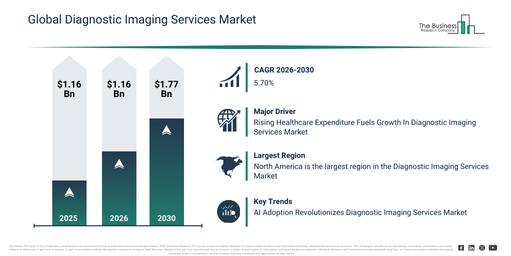
    The market for diagnostic imaging services has shown robust expansion in recent times. This sector is projected to expand from $566.86 billion in 2025 to $599.12 billion by 2026, demonstrating a compound annual growth rate (CAGR) of 5.7%. Historically, this growth can be ascribed to several factors, including the increased availability of hospital-based imaging services, the rising incidence of chronic illnesses, the proliferation of diagnostic imaging centers, enhanced access to imaging technologies, and a growing preference for non-invasive diagnostic methods.

    The diagnostic imaging services market is anticipated to experience substantial expansion in the coming years. It is projected to reach a size of $749.09 billion by 2030, demonstrating a compound annual growth rate (CAGR) of 5.7%. This growth during the forecast period can be attributed to factors such as increasing investments in AI-driven imaging analytics, the rising demand for personalized diagnostic services, the expansion of ambulatory imaging facilities, the greater adoption of advanced MRI and CT technologies, and a heightened focus on workflow automation. Key trends shaping the forecast period encompass the increasing integration of AI-assisted imaging interpretation, the expanding utilization of advanced multimodal imaging modalities, the continued growth of outpatient diagnostic centers, the integration of cloud-based imaging platforms, and an amplified emphasis on detecting diseases early.

    Get A Free Sample Report With In-Depth Market Insights:

    https://thebusinessresearchcompany.com/sample_request?id=33429315&type=smp&name=Diagnostic%20Imaging%20Services%20Market%20Report%202026&utm_source=Blogs&utm_medium=Paid&utm_campaign=Oct_PR

    Diagnostic Imaging Services Market Growth Momentum: What Factors Are Shaping Demand?

    The future expansion of the diagnostic imaging services market is anticipated, largely influenced by increasing healthcare spending. Healthcare expenditure refers to the total amount of money allocated to healthcare goods and services within a defined timeframe, typically assessed at a national or regional level. Spending on diagnostic imaging services constitutes a significant and growing segment of overall healthcare costs. The advancement of new and more sophisticated imaging technologies, including MRI, CT scans, and PET scans, has enabled the diagnosis of a broader spectrum of conditions with enhanced accuracy. Nevertheless, these advanced technologies are associated with higher price tags. For instance, as reported by Health Affairs, a U.S.-based academic journal, in June 2024, the national healthcare expenditure in the U.S. is expected to escalate from $4,799.3 billion in 2023 to $5,048.8 billion in 2024, signifying an increase of about $249.5 billion. Consequently, the upward trend in healthcare expenditures is a primary driver for the growth of the systemic diagnostic Imaging Services market.

    Diagnostic Imaging Services Market Segment Performance And Emerging Opportunities

    The diagnostic imaging services market covered in this report is segmented –

    1) By Type: X-Ray Imaging, Ultrasound, Magnetic Resource Imaging, Computed Tomography, Nuclear Imaging, Mammography

    2) By Application: Cardiology, Gynecology Or OBS, Orthopedics And Musculoskeletal, Oncology, Neurology And Spine, General Imaging

    3) By End User: Hospitals, Diagnostic Imaging Centers, Ambulatory Imaging Centers, Other End Users

    Subsegments:

    1) By X-Ray Imaging: Conventional X-Ray, Digital X-Ray, Fluoroscopy

    2) By Ultrasound: Diagnostic Ultrasound, 3D Or 4D Ultrasound, Doppler Ultrasound

    3) By Magnetic Resonance Imaging (MRI): Closed MRI, Open MRI, Functional MRI (fMRI)

    4) By Computed Tomography (CT): Single-Slice CT, Multi-Slice CT, Cone Beam CT

    5) By Nuclear Imaging: Positron Emission Tomography (PET), Single Photon Emission Computed Tomography (SPECT), Bone Scintigraphy

    6) By Mammography: Screen-Film Mammography, Digital Mammography, 3D Mammography

    Diagnostic Imaging Services Market Trends Redefining Industry Growth

    Major corporations operating within the diagnostic imaging services market are increasingly focusing on the integration of artificial intelligence and the utilization of blockchain technology to fundamentally change diagnostic imaging. Artificial intelligence, often referred to as AI, represents the replication of human intelligence by machines to accomplish tasks that specifically necessitate human capabilities. For instance, in February 2023, RadNet, a US-based healthcare company, unveiled an enhanced breast cancer detection (EBCD) service, with the goal of improving the accuracy of breast cancer screenings for women. This service also features an additional AI-powered analysis known as Accord for certain suspicious examinations, ensuring thorough evaluations. Furthermore, EBCD provides an in-depth lifetime risk assessment for breast cancer, aiding patients in understanding their individual risk factors and guiding the development of personalized screening protocols.

    Diagnostic Imaging Services Market Key Participants And Competitive Landscape

    Major companies operating in the diagnostic imaging services market are RadNet Inc., Sonic Healthcare Ltd., HCA Healthcare Inc., Tenet Healthcare Corporation, Ramsay Health Care Limited, IHH Healthcare Berhad, Fresenius Medical Care AG & Co. KGaA, Spire Healthcare Group plc, Fortis Healthcare Limited, Apollo Hospitals Enterprise Limited, Narayana Hrudayalaya Limited, QIAGEN N.V., Eurofins Scientific SE, Unilabs AB, Affidea Group, InHealth Group Limited, Capitol Health Limited, NMC Health plc, RAYUS Radiology, Akumin Inc., Envision Healthcare Corporation

    View The Full Diagnostic Imaging Services Market Report:

    https://thebusinessresearchcompany.com/report/diagnostic-imaging-services-global-market-report?utm_source=Blogs&utm_medium=Paid&utm_campaign=Oct_PR

    Diagnostic Imaging Services Market Geographic Analysis: Where Is Demand Rising Fastest?

    North America was the largest region in the diagnostic imaging services market in 2025. Asia-Pacific is expected to be the fastest-growing region in the forecast period. The regions covered in the diagnostic imaging services market report are Asia-Pacific, South East Asia, Western Europe, Eastern Europe, North America, South America, Middle East, Africa.

    Reach Out To Our Team:

    The Business Research Company: https://www.thebusinessresearchcompany.com/

    Americas: +1 310-496-7795

    Asia: +44 7882 955267 & +91 8897263534

    Europe: +44 7882 955267

    Email us at: marketing@tbrc.info

    Follow us on:

    LinkedIn: https://in.linkedin.com/company/the-business-research-company

    YouTube: https://www.youtube.com/channel/UC24_fI0rV8cR5DxlCpgmyFQ

    Global Market Model: https://www.thebusinessresearchcompany.com/global-market-model
  • Diagnostic Imaging Equipment Market Trends Supporting 4.8% CAGR Growth Through 2030

    Diagnostic Imaging Equipment Market Trends Supporting 4.8% CAGR Growth Through 2030

    Featuring market attractiveness scoring, total addressable market sizing, company benchmarking matrices, interactive Excel dashboards, deeper supply chain intelligence, emerging startup tracking, and granular product-level insights, The Business Research Company’s 2026 market reports are built to deliver research that is both more actionable and more strategically valuable.

    Diagnostic Imaging Equipment Market CAGR Outlook And Future Development

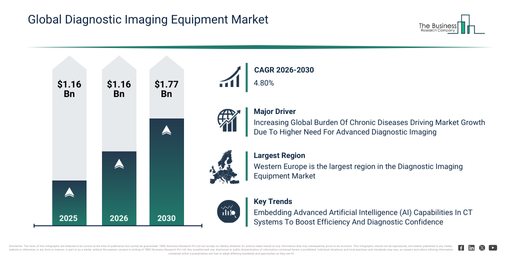
    The diagnostic imaging equipment market has experienced consistent expansion in recent years. This market is projected to expand from $54.96 billion in 2025 to $57.05 billion in 2026, demonstrating a compound annual growth rate (CAGR) of 3.8%. Historically, this growth has been driven by factors such as the increasing prevalence of chronic diseases, the expansion of hospital imaging infrastructure, the growing demand for early disease diagnosis, technological improvements in imaging modalities, and rising healthcare expenditure.

    The diagnostic imaging equipment market size is poised for consistent expansion over the coming years. It is projected to reach $68.72 billion by 2030, exhibiting a compound annual growth rate (CAGR) of 4.8%. This anticipated growth stems from factors such as the increasing integration of AI-based diagnostic assistance, heightened investments in digital healthcare infrastructure, a surging need for point-of-care imaging solutions, the broadening reach of telemedicine services, and a greater emphasis on optimizing imaging efficiency. During this forecast period, significant developments will include the wider adoption of AI-assisted imaging technologies, a rising requirement for portable diagnostic imaging devices, the increasing integration of multi-modal imaging platforms, the rollout of high-resolution imaging innovations, and a stronger focus on automating workflows.

    Get A Free Sample Report With In-Depth Market Insights:

    https://thebusinessresearchcompany.com/sample_request?id=39400120&type=smp&name=Diagnostic%20Imaging%20Equipment%20Market%20Report%202026&utm_source=Blogs&utm_medium=Paid&utm_campaign=Oct_PR

    Diagnostic Imaging Equipment Market Expansion Drivers: What’s Shaping Future Growth?

    The global rise in chronic conditions is anticipated to fuel the expansion of the diagnostic imaging equipment market. A chronic disease is defined as a condition lasting a year or longer, necessitating continuous medical care, restricting daily activities, or both, encompassing illnesses like cancer and diabetes. The escalating burden of chronic diseases stems from the widespread adoption of unhealthy lifestyles, characterized by poor nutrition, physical inactivity, tobacco use, and excessive alcohol consumption, all of which significantly elevate global risk factors. Imaging techniques in radiology are crucial for identifying a range of diseases, including diabetes, cancer, cardiovascular disease, and chronic illnesses that have not yet manifested symptoms. For instance, in 2025, the International Diabetes Federation, a Belgium-based health organization, reported that in 2024, around 589 million adults aged 20-79 were living with diabetes, with the total number projected to reach 853 million by 2050, and stated that more than 4 in 5 adults with diabetes resided in low and middle income countries. Therefore, a global increase in chronic diseases is driving the diagnostic imaging equipment market.

    Diagnostic Imaging Equipment Market Segment Landscape And Growth Outlook

    The diagnostic imaging equipment market covered in this report is segmented –

    1) By Imaging Modality: X-Ray Systems Devices And Equipment, Ultrasound Systems Devices And Equipment, Computed Tomography (CT) Scanners Devices And Equipment, Magnetic Resonance Imaging Systems Devices And Equipment, Cardiovascular Monitoring And Diagnostic Devices And Equipment, Nuclear Imaging Devices And Equipment

    2) By Product: Instruments Or Equipment, Imaging Accessories And Software

    3) By Type of Expenditure: Public, Private

    4) By End User: Hospitals And Clinics, Diagnostic Laboratories, Other End Users

    Subsegments:

    1) By X-Ray Systems Devices And Equipment: Analog X-Ray Systems, Digital X-Ray Systems, Fluoroscopy Systems, Portable X-Ray Systems, Mammography Systems

    2) By Ultrasound Systems Devices And Equipment: Diagnostic Ultrasound Systems, 2D Ultrasound Systems, 3D Or 4D Ultrasound Systems, Portable Ultrasound Systems

    3) By Computed Tomography (CT) Scanners Devices And Equipment: Conventional CT Scanners, Spiral Or Helical CT Scanners, Multislice CT Scanners, Portable CT Scanners

    4) By Magnetic Resonance Imaging Systems Devices And Equipment: Closed MRI Systems, Open MRI Systems, Extremity MRI Systems, High-Field MRI Systems, Low-Field MRI Systems

    5) By Cardiovascular Monitoring And Diagnostic Devices And Equipment: ECG Systems, Echocardiography Systems, Stress Testing Systems, Cardiac Catheterization Equipment, Holter Monitoring Systems

    6) By Nuclear Imaging Devices And Equipment: Positron Emission Tomography (PET) Scanners, Single-Photon Emission Computed Tomography (SPECT) Scanners, Hybrid PET Or CT Scanners, Gamma Cameras

    Diagnostic Imaging Equipment Market Strategic Trends: What Defines The Next Growth Phase?

    Leading companies in the diagnostic imaging equipment market are concentrating on technological breakthroughs, such as integrating advanced artificial intelligence (AI) capabilities into computed tomography (CT) systems. This focus aims to enhance image quality, streamline workflows, decrease radiation dosage, and boost diagnostic certainty. These AI-driven systems assist in automating routine tasks like positioning, reconstruction, and motion correction, thereby enabling radiologists to dedicate their attention to intricate cases and alleviating the workload on busy imaging teams. As an illustration, in January 2025, Philips, a Netherlands-based health technology company, unveiled its AI-enabled CT 5300. The CT 5300 features a NanoPanel Precise detector, specifically designed for AI reconstruction, alongside AI cardiac motion correction and smart workflow automation, all working to improve speed, consistency, and diagnostic accuracy. Through its AI-powered reconstruction software, the system achieves an 80% lower radiation dose, up to 85% lower noise, and enhanced low-contrast detectability. The system additionally supports real-time remote collaboration via virtual tools, which helps centers manage escalating patient volumes, staff shortages, and diverse complex cases more effectively.

    Diagnostic Imaging Equipment Market Top Companies Driving Competitive Growth

    Major companies operating in the diagnostic imaging equipment market are Siemens AG, Koninklijke Philips NV, Fujifilm Holdings Corporation, General Electric Company, Carestream Health Inc., Hologic Inc., Mindray Medical International Limited, Canon Medical Systems Corporation, Esaote SpA, Shimadzu Medical Systems USA, Samsung Electronics Co. Ltd., Koning Corporation, Toshiba Medical Systems Corporation, Hitachi Medical Systems America Inc., Agfa-Gevaert NV, Analogic Corporation, Del Medical Inc., Esaote North America Inc., Imaging Dynamics Company Ltd., InfiMed Inc., Mediso Medical Imaging Systems Kft., NeuroLogica Corp., Planmed Oy, Shimadzu Corporation, SonoScape Medical Corp., SuperSonic Imagine SA, Terason, Toshiba America Medical Systems Inc., Ziehm Imaging GmbH, Zonare Medical Systems Inc.

    View The Full Diagnostic Imaging Equipment Market Report:

    https://thebusinessresearchcompany.com/report/diagnostic-imaging-equipment-global-market-report?utm_source=Blogs&utm_medium=Paid&utm_campaign=Oct_PR

    Diagnostic Imaging Equipment Market Global Footprint: Which Region Leads The Market?

    Western Europe was the largest region in the global diagnostic imaging equipment market in 2025. North America was the second largest region in the global diagnostic imaging equipment market. Africa. was the smallest region in the global diagnostic imaging equipment market. The regions covered in the diagnostic imaging equipment market report are Asia-Pacific, South East Asia, Western Europe, Eastern Europe, North America, South America, Middle East, Africa.

    Reach Out To Our Team:

    The Business Research Company: https://www.thebusinessresearchcompany.com/

    Americas: +1 310-496-7795

    Asia: +44 7882 955267 & +91 8897263534

    Europe: +44 7882 955267

    Email us at: marketing@tbrc.info

    Follow us on:

    LinkedIn: https://in.linkedin.com/company/the-business-research-company

    YouTube: https://www.youtube.com/channel/UC24_fI0rV8cR5DxlCpgmyFQ

    Global Market Model: https://www.thebusinessresearchcompany.com/global-market-model
  • Diagnostic Catheters Market Forecast Highlights A $6.08 Billion Opportunity For Industry Participants

    Diagnostic Catheters Market Forecast Highlights A $6.08 Billion Opportunity For Industry Participants

    Built to provide research that’s more actionable and strategically valuable, The Business Research Company’s 2026 market reports include market attractiveness analysis, total addressable market sizing, company benchmarking matrices, interactive Excel dashboards, broader supply chain intelligence, emerging startup tracking, and in-depth product insights.

    Diagnostic Catheters Market Set To Climb From $4.78 Billion In 2026 To $6.08 Billion By 2030

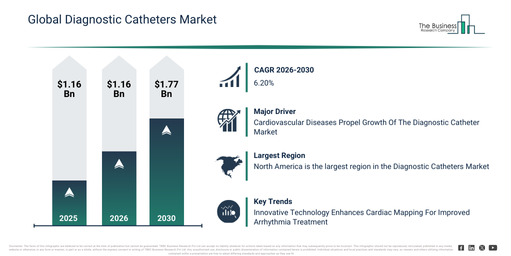
    The diagnostic catheters market size has shown substantial growth over recent years. Projections indicate it will expand from $4.5 billion in 2025 to $4.78 billion in 2026, exhibiting a compound annual growth rate (CAGR) of 6.2%. The market’s historical expansion is largely due to factors such as a rise in cardiovascular diagnostic procedures, the increasing prevalence of chronic diseases, the expansion of catheterization laboratories, growing hospital-based diagnostic capabilities, and improved availability of imaging technologies.

    The diagnostic catheters market is set to experience significant growth in the coming years, with its valuation expected to reach $6.08 billion in 2030, demonstrating a compound annual growth rate (CAGR) of 6.2%. This anticipated growth is largely driven by an expanding elderly population, a heightened need for early disease detection, the proliferation of diagnostic and imaging centers, an increased focus on precise diagnostic methods, and rising healthcare expenditure on diagnostic services. Notable trends during this forecast period include the increasing adoption of minimally invasive diagnostic procedures, a growing demand for high-resolution imaging catheters, the wider implementation of multi-parameter monitoring catheters, a shift towards disposable diagnostic catheters, and their expanding use in electrophysiology diagnostics.

    Get A Free Sample Report With In-Depth Market Insights:

    https://thebusinessresearchcompany.com/sample_request?id=63697864&type=smp&name=Diagnostic%20Catheters%20Market%20Report%202026&utm_source=Blogs&utm_medium=Paid&utm_campaign=Oct_PR

    Diagnostic Catheters Market Development Factors: What’s Supporting Demand?

    The increasing incidence of cardiovascular diseases is projected to propel the growth of the diagnostic catheter market going forward. Cardiovascular disease (CVD) refers to a range of disorders affecting the heart and blood vessels, including conditions like coronary artery disease, heart attacks, and stroke. The surge in cardiovascular diseases is due to several factors, such as an unhealthy diet, obesity, stress, urbanization, and socioeconomic conditions. Diagnostic catheters are employed to visualize and assess the function of cardiovascular structures and to detect abnormalities in patients afflicted with cardiovascular diseases. For instance, in October 2024, data from the Centers for Disease Control and Prevention, a US-based government agency, revealed that in 2023, cardiovascular disease resulted in 919,032 fatalities, constituting approximately one in every three deaths. Consequently, the rising prevalence of cardiovascular diseases is a key driver for the growth of the diagnostic catheter market.

    Diagnostic Catheters Market Breakdown By Product Type And Application

    The diagnostic catheters market covered in this report is segmented –

    1) By Type: Diagnostic Imaging Catheters, Angiography Catheters, Electrophysiology Catheters, Non-Imaging Diagnostic Catheter, Pressure And Hemodynamic Monitoring Catheters, Temperature Monitoring Catheters, Other Non-Imaging Diagnostic Catheter

    2) By Application Area: Cardiology, Urology, Gastroenterology, Neurology, Other Application Areas

    3) By End-User: Hospitals, Diagnostic And Imaging Centers

    Subsegments:

    1) By Diagnostic Imaging Catheters: Intracardiac Imaging Catheters, Endoscopic Imaging Catheters, Optical Coherence Tomography (OCT) Catheters, Ultrasound Imaging Catheters

    2) By Angiography Catheters: Diagnostic Angiography Catheters, Coronary Angiography Catheters, Peripheral Angiography Catheters, Neurovascular Angiography Catheters

    3) By Electrophysiology Catheters: Mapping Catheters, Ablation Catheters, Diagnostic EP Catheters, Electrophysiology Recording Catheters

    4) By Non-Imaging Diagnostic Catheters: Pressure Measurement Catheters, Fluid Aspiration Catheters, Blood Gas Sampling Catheters

    5) By Pressure And Hemodynamic Monitoring Catheters: Pulmonary Artery Catheters (Swan-Ganz Catheters), Central Venous Pressure Catheters, Intra-arterial Pressure Monitoring Catheters, Intracranial Pressure Monitoring Catheters

    6) By Temperature Monitoring Catheters: Core Temperature Monitoring Catheters, Bladder Temperature Monitoring Catheters, Esophageal Temperature Monitoring Catheters

    7) By Other Non-Imaging Diagnostic Catheters: Biopsy Catheters, Infusion Catheters, Aspiration Catheters, Microcatheters For Diagnostic Use

    Diagnostic Catheters Market Transformation Trends: What Innovations Are Driving Change?

    Major companies operating in the diagnostic catheter market are focusing on developing technological advancements, such as TRUEref technology, to enhance the mapping of complex cardiac arrhythmias. TRUEref technology refers to a method for providing high-precision reference data in imaging and diagnostics, often used in medical devices for enhanced accuracy. For instance, in July 2023, Biosense Webster Inc., a US-based company that specializes in manufacturing medical devices for cardiac arrhythmias, launched the OPTRELL Mapping Catheter to provide high-definition electrophysiological mapping. It is powered by the CARTO 3 System, a high-density diagnostic tool designed for precise electrophysiological mapping in complex cardiac arrhythmia cases. It features 48 small electrodes arranged in a fixed array, delivering high-resolution maps for better ablation targeting. This technology enhances clinicians’ ability to detect ablation gaps and understand arrhythmia mechanisms, ultimately improving treatment outcomes for patients.

    Diagnostic Catheters Market Leading Players And Competitive Positioning

    Major companies operating in the diagnostic catheters market are Johnson & Johnson, Abbott Laboratories, Medtronic plc, Koninklijke Philips N.V., Becton Dickinson and Company, Boston Scientific Corporation, B Braun Melsungen AG, Terumo Corporation, Biotronik SE & Co KG, AngioDynamics Inc, Cook Medical Incorporated, Teleflex Incorporated, Merit Medical Systems Inc, Smiths Medical, Olympus Corporation, Nipro Corporation, Vascular Solutions Inc, InspireMD Inc, Endovascular Solutions Inc, Cardinal Health Technologies Inc

    View The Full Diagnostic Catheters Market Report:

    https://thebusinessresearchcompany.com/report/diagnostic-catheters-global-market-report?utm_source=Blogs&utm_medium=Paid&utm_campaign=Oct_PR

    Diagnostic Catheters Market Regional Split: Which Areas Are Fueling Growth?

    North America was the largest region in the diagnostic catheters market in 2025. Asia-Pacific is expected to be the fastest-growing region in the forecast period. The regions covered in the diagnostic catheters market report are Asia-Pacific, South East Asia, Western Europe, Eastern Europe, North America, South America, Middle East, Africa.

    Reach Out To Our Team:

    The Business Research Company: https://www.thebusinessresearchcompany.com/

    Americas: +1 310-496-7795

    Asia: +44 7882 955267 & +91 8897263534

    Europe: +44 7882 955267

    Email us at: marketing@tbrc.info

    Follow us on:

    LinkedIn: https://in.linkedin.com/company/the-business-research-company

    YouTube: https://www.youtube.com/channel/UC24_fI0rV8cR5DxlCpgmyFQ

    Global Market Model: https://www.thebusinessresearchcompany.com/global-market-model
  • Diagnostic And Monitoring Ophthalmic Devices And Equipment Market Analysis: How The Industry Is Evolving Toward A $6.54 Billion Future

    Diagnostic And Monitoring Ophthalmic Devices And Equipment Market Analysis: How The Industry Is Evolving Toward A $6.54 Billion Future

    Backed by market attractiveness analysis, total addressable market sizing, company benchmarking matrices, interactive Excel dashboards, wider supply chain intelligence, emerging startup coverage, and detailed product-level insights, The Business Research Company’s 2026 market reports are designed to offer research that is more actionable and strategically valuable than ever.

    Diagnostic And Monitoring Ophthalmic Devices And Equipment Market Forecast: Value Set To Climb From $5.39 Billion To $6.54 Billion

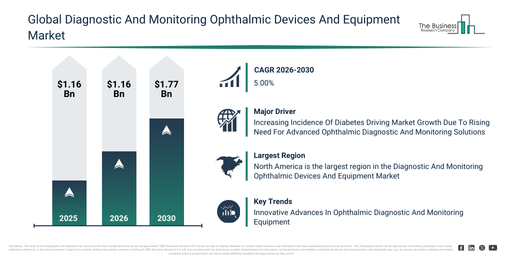
    The market size for diagnostic and monitoring ophthalmic devices and equipment has demonstrated consistent expansion in recent years. It will grow from $5.14 billion in 2025 to $5.39 billion in 2026 at a compound annual growth rate (CAGR) of 4.8%. This growth observed in the past can be ascribed to the increasing prevalence of various eye disorders, a growing aging demographic, the expansion of ophthalmic diagnostic centers, a rising awareness concerning preventive eye care, and ongoing advancements in imaging technologies.

    The diagnostic and monitoring ophthalmic devices and equipment market size is anticipated to show consistent expansion over the coming years. It is projected to reach $6.54 billion in 2030, achieving a compound annual growth rate (CAGR) of 5.0%. This growth throughout the forecast period is driven by factors such as a heightened demand for early detection of glaucoma and retinal diseases, the rising implementation of tele-ophthalmology solutions, the development of smart diagnostic platforms, increasing investments in precision eye care, and the enhanced integration of AI-based analytics. Significant trends expected during the forecast period include the increasing adoption of AI-enabled ophthalmic diagnostics, a growing need for high-resolution retinal imaging systems, the expanded use of non-invasive vision monitoring devices, the proliferation of automated refraction and screening equipment, and a stronger focus on early disease detection.

    Get A Free Sample Report With In-Depth Market Insights:

    https://thebusinessresearchcompany.com/sample_request?id=51718265&type=smp&name=Diagnostic%20And%20Monitoring%20Ophthalmic%20Devices%20And%20Equipment%20Market%20Report%202026&utm_source=Blogs&utm_medium=Paid&utm_campaign=Oct_PR

    Diagnostic And Monitoring Ophthalmic Devices And Equipment Market Industry Drivers: What’s Behind The Revenue Growth?

    The rising occurrence of diabetes is anticipated to fuel the expansion of the diagnostic and monitoring ophthalmic devices and equipment market in the coming years. Diabetes, a chronic condition, arises when the body struggles to utilize or generate sufficient insulin, the hormone responsible for managing blood sugar. This increase in diabetes cases stems from widespread alterations in lifestyle, particularly diets rich in sugar and fat coupled with reduced physical movement. Tools like smart contact lenses, falling under diagnostic and monitoring ophthalmic devices and equipment, offer capabilities for ongoing glucose surveillance and addressing diabetic retinopathy. These devices are capable of wirelessly tracking glucose concentrations and delivering immediate information to the user. For example, the International Diabetes Federation, a Belgium based health organization, reported that in 2024, approximately 589 million adults aged 20-79 had diabetes, with projections indicating this figure will escalate to 853 million by 2050, and over 4 in 5 adults with diabetes live in low and middle income countries. Consequently, the growing prevalence of diabetes is a key factor propelling the expansion of the diagnostic and monitoring ophthalmic devices and equipment market.

    Diagnostic And Monitoring Ophthalmic Devices And Equipment Market Segment Analysis And Revenue Potential

    The diagnostic and monitoring ophthalmic devices and equipment market covered in this report is segmented –

    1) By Product Type: Optical Coherence Tomographers, Ophthalmic Ultrasound Imaging Systems, Fundus Cameras, Ophthalmoscopes, Keratometers, Specular Microscopes., Tonometers, Slit Lamps, Retinoscopes, Other Products

    2) By Application: Retinal Evaluation, Glaucoma Detection And Monitoring, Surgical Evaluation, General Examine, Intraoperative Devices, Refraction Equipment

    3) By End User: Hospitals, Clinics, Diagnostic Laboratories, Research Centers

    Subsegments:

    1) By Optical Coherence Tomographers: Time-Domain OCT (TD-OCT), Spectral-Domain OCT (SD-OCT), Swept-Source OCT (SS-OCT)

    2) By Ophthalmic Ultrasound Imaging Systems: B-Scan Ultrasound, A-Scan Ultrasound, Pachymetry Ultrasound

    3) By Fundus Cameras: Digital Fundus Cameras, Non-Mydriatic Fundus Cameras, Mydriatic Fundus Cameras, Wide-Field Fundus Cameras

    4) By Ophthalmoscopes: Direct Ophthalmoscopes, Indirect Ophthalmoscopes

    5) By Keratometers: Manual Keratometers, Automated Keratometers

    6) By Specular Microscopes: Contact Specular Microscopes, Non-Contact Specular Microscopes

    7) By Tonometers: Applanation Tonometers, Non-Contact Tonometers, Indentation Tonometers, Rebound Tonometers

    8) By Slit Lamps: Manual Slit Lamps, Digital Slit Lamps, Portable Slit Lamps

    9) By Retinoscopes: Handheld Retinoscopes, Tabletop Retinoscopes

    10) By Other Products: Dioptometers, Optotype Projector, Perimeters (Static Perimeters, Kinetic Perimeters), Biometers (Optical Biometers, Ultrasound Biometers), Pachymeters, Autorefractors Or Phoropters, Corneal Topographers, Wavefront Aberrometers

    #Diagnostic And Monitoring Ophthalmic Devices And Equipment Market Growth Trends: What’s Shaping The Future Outlook?

    Leading companies in the diagnostic and monitoring equipment sector within the ophthalmic devices market are developing innovative products, such as Smart contact lenses, by employing smart soft contact lens technology to improve patient service. This smart soft contact lens technology is a recent innovation that facilitates continuous 24-hour monitoring of intraocular pressure (IOP) in the management of glaucoma. For instance, in January 2023, BVS Sight Inc., a US-based firm, launched Smart contact lenses utilizing this smart soft contact lens technology. Smart soft contact lenses are constructed upon various commercial soft contact lens brands without altering their inherent attributes like lens power, biocompatibility, softness, transparency, wettability, oxygen transmissibility, and overnight wearability.

    Diagnostic And Monitoring Ophthalmic Devices And Equipment Market Competitive Overview And Top Companies

    Major companies operating in the diagnostic and monitoring ophthalmic devices and equipment market are Carl Zeiss Meditec, Alcon Inc., Bausch + Lomb, Haag-Streit, Topcon Corporation, Nidek Co. Ltd., Abbott Medical Optics, Johnson and Johnson Vision Care, Essilor International S.A., Ziemer Ophthalmic Systems AG, Ellex, Quantel Medical Inc., Optovue, Canon Inc., Halma plc, Coburn Technologies Inc., Kowa Company Ltd., Hoya Corporation, Gulden Ophthalmics, Glaukos Corporation, Matronix India Corporation, HEINE Optotechnik, Visionix Ltd., Appasamy Associates, Ophtec BV, Lumenis, Ocular Instruments, Ophthalmic Instruments Company, Keeler Ltd., Oculus, Reichert Technologies, Tomey Corporation, US Ophthalmic

    View The Full Diagnostic And Monitoring Ophthalmic Devices And Equipment Market Report:

    https://thebusinessresearchcompany.com/report/diagnostic-and-monitoring-ophthalmic-devices-and-equipment-global-market-report?utm_source=Blogs&utm_medium=Paid&utm_campaign=Oct_PR

    Diagnostic And Monitoring Ophthalmic Devices And Equipment Market Top Region: Where Does Most Revenue Come From?

    North America was the largest region in the global diagnostic and monitoring ophthalmic devices and equipment market in 2025. Asia-Pacific was the second-largest region in diagnostic and monitoring ophthalmic devices and equipment market. The regions covered in the diagnostic and monitoring ophthalmic devices and equipment market report are Asia-Pacific, South East Asia, Western Europe, Eastern Europe, North America, South America, Middle East, Africa.

    Reach Out To Our Team:

    The Business Research Company: https://www.thebusinessresearchcompany.com/

    Americas: +1 310-496-7795

    Asia: +44 7882 955267 & +91 8897263534

    Europe: +44 7882 955267

    Email us at: marketing@tbrc.info

    Follow us on:

    LinkedIn: https://in.linkedin.com/company/the-business-research-company

    YouTube: https://www.youtube.com/channel/UC24_fI0rV8cR5DxlCpgmyFQ

    Global Market Model: https://www.thebusinessresearchcompany.com/global-market-model
  • Diabetic Footwear Market Outlook Through 2030: Understanding The Growth Opportunity

    Diabetic Footwear Market Outlook Through 2030: Understanding The Growth Opportunity

    Featuring market attractiveness scoring, total addressable market sizing, company benchmarking matrices, interactive Excel dashboards, deeper supply chain intelligence, emerging startup tracking, and granular product-level insights, The Business Research Company’s 2026 market reports are built to deliver research that is both more actionable and more strategically valuable.

    Diabetic Footwear Market Revenue Growth On Track For A 9.8% CAGR Through 2030

    The market size for diabetic footwear has shown significant expansion in recent years. It is anticipated to increase from $9.2 billion in 2025 to $10.15 billion in 2026, achieving a compound annual growth rate (CAGR) of 10.3%. Key drivers of this historical growth include the escalating prevalence of diabetes, heightened awareness of diabetic foot complications, the expansion of specialty footwear retail channels, increasing physician recommendations for therapeutic footwear, and the accessibility of supportive footwear materials.

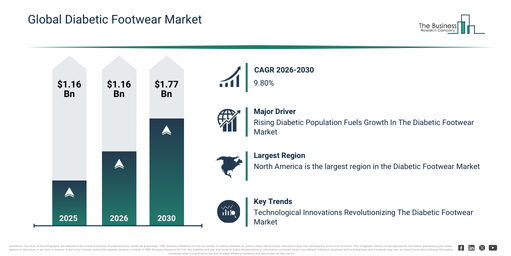
    The diabetic footwear market size is anticipated to experience substantial growth over the coming years, reaching $14.74 billion by 2030, exhibiting a compound annual growth rate (CAGR) of 9.8%. This expansion during the forecast period is fueled by several factors, such as the increasing demand for customized orthopedic footwear, the growing embrace of smart insole technologies, the widening of online distribution channels, a heightened emphasis on preventive diabetic care, and continuous product innovation aimed at improving comfort and mobility. Significant developments expected during this timeframe involve a greater demand for therapeutic footwear designs, increased utilization of pressure-relief insoles, the broadening of customized diabetic footwear solutions, a rise in the use of lightweight and breathable materials, and a stronger focus on preventing foot ulcers.

    Get A Free Sample Report With In-Depth Market Insights:

    https://thebusinessresearchcompany.com/sample_request?id=44481836&type=smp&name=Diabetic%20Footwear%20Market%20Report%202026&utm_source=Blogs&utm_medium=Paid&utm_campaign=Oct_PR

    Diabetic Footwear Market Growth Factors: What’s Supporting Expansion?

    The rising number of individuals with diabetes is anticipated to fuel the expansion of the diabetic footwear market moving forward. Diabetes is a chronic health condition characterized by elevated blood glucose levels. Diabetic footwear plays a crucial role in preventing severe foot health complications that can arise from diabetes, simultaneously offering key advantages such as improved blood circulation, a generous toe box, and massaging capabilities to reduce pressure in the most pain-sensitive areas of the foot. For instance, in June 2023, a report from the Institute for Health Metrics and Evaluation, a US-based independent population health research organization, indicated that the global diabetic population will more than double, reaching 1.3 billion, in the next 30 years. Additionally, by 2050, the total count of diabetics is projected to reach 529 million. Thus, the escalating count of diabetic patients is a significant driver behind the growth of the diabetic footwear market.

    Diabetic Footwear Market Segmentation And Category Overview

    The diabetic footwear market covered in this report is segmented –

    1) By Type: Shoes, Sandals, Slippers

    2) By Distribution Channel: Online Platform, Specialty Stores, Footwear Stores, Other Distribution Channels

    3) By End User: Men, Women

    Subsegments:

    1) By Shoes: Athletic Shoes, Dress Shoes, Casual Shoes, Therapeutic Shoes

    2) By Sandals: Open-Toe Sandals, Closed-Toe Sandals, Adjustable Sandals

    3) By Slippers: Indoor Slippers, Outdoor Slippers, Heated Slippers

    Diabetic Footwear Market Industry Trends: What’s Reshaping Demand?

    Leading companies in the diabetic footwear market are focused on developing innovative products, such as smart shoes, to enhance patient care and improve health outcomes. These intelligent shoes often incorporate advanced features like pressure sensors and monitoring systems that help detect foot issues early, thereby reducing the risk of complications such as ulcers and amputations. For instance, in March 2024, nine students from Oman College of Health Sciences, an Oman-based educational institution, developed a smart shoe with the aim of reducing complications in diabetic patients. This innovative footwear seeks to address critical health issues associated with diabetes, particularly diabetic foot complications, which can lead to severe consequences like foot ulcers and amputations.

    Diabetic Footwear Market Competitive Landscape: Which Companies Lead The Industry?

    Major companies operating in the diabetic footwear market are Podartis Srl Co., Orthofeet Inc., Dr. Comfort LLC, Drew Shoe Corp., Aetrex Worldwide Inc., Finn Comfort USA Inc., Apex Foot Health Industries LLC, Propét USA Inc., Anodyne Shoes LLC, P.W. Minor and Son Inc., Pedorthic Shoe Company, San Antonio Shoe Inc., DARCO International Inc., Diabetic Soles Inc., Orthopedic Footwear LLC, SureFit Footwear Inc., Ewidex Footwear Inc., Gravity Defyer Medical Footwear Inc., Orthoshoes Inc., Doctor Cutillas Footwear SL

    View The Full Diabetic Footwear Market Report:

    https://thebusinessresearchcompany.com/report/diabetic-footwear-global-market-report?utm_source=Blogs&utm_medium=Paid&utm_campaign=Oct_PR

    Diabetic Footwear Market Regional Breakdown: Where Is Demand Concentrated?

    North America was the largest region in the diabetic footwear market in 2025. The regions covered in the diabetic footwear market report are Asia-Pacific, South East Asia, Western Europe, Eastern Europe, North America, South America, Middle East, Africa.

    Reach Out To Our Team:

    The Business Research Company: https://www.thebusinessresearchcompany.com/

    Americas: +1 310-496-7795

    Asia: +44 7882 955267 & +91 8897263534

    Europe: +44 7882 955267

    Email us at: marketing@tbrc.info

    Follow us on:

    LinkedIn: https://in.linkedin.com/company/the-business-research-company

    YouTube: https://www.youtube.com/channel/UC24_fI0rV8cR5DxlCpgmyFQ

    Global Market Model: https://www.thebusinessresearchcompany.com/global-market-model
  • Diabetes Treatment Devices Market Growth Potential: What The Latest Forecast Reveals

    Diabetes Treatment Devices Market Growth Potential: What The Latest Forecast Reveals

    Built to provide research that’s more actionable and strategically valuable, The Business Research Company’s 2026 market reports include market attractiveness analysis, total addressable market sizing, company benchmarking matrices, interactive Excel dashboards, broader supply chain intelligence, emerging startup tracking, and in-depth product insights.

    Diabetes Treatment Devices Market Value Growth And Long-Term Outlook

    The diabetes treatment devices market size has shown significant growth in recent years. It is anticipated to increase from $12.34 billion in 2025 to $13.11 billion in 2026, achieving a compound annual growth rate (CAGR) of 6.2%. Historically, this growth can be attributed to the reliance on traditional blood glucose meters, a limited understanding of self-monitoring devices, the expansion of hospital and diagnostic center infrastructure, the rising occurrence of diabetes, and the widespread use of standard lancets and testing strips.

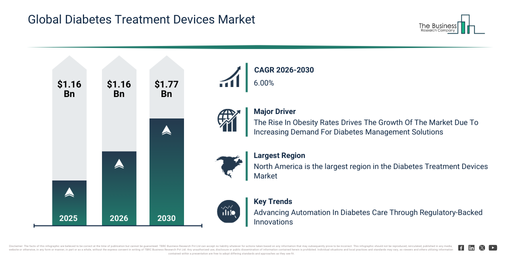
    The diabetes treatment devices market is set to observe significant expansion over the next few years. It is predicted to attain a value of $16.53 billion by 2030, progressing at a compound annual growth rate (CAGR) of 6.0%. This anticipated growth throughout the forecast period stems from factors such as the creation of smart insulin pens and pumps, the increasing adoption of real-time continuous glucose monitoring, the merging of technology with smartphones and wearable devices, the growth of remote patient monitoring initiatives, and the enlargement of diabetes clinics alongside online distribution channels. Prominent trends expected in this period include the escalating uptake of continuous glucose monitoring devices, a rising preference for intelligent insulin delivery systems, an increase in homecare and remote patient observation, the wider availability of wearable and portable glucometers, and an enhanced demand for safety-improved lancets and testing strips.

    Get A Free Sample Report With In-Depth Market Insights:

    https://thebusinessresearchcompany.com/sample_request?id=74774479&type=smp&name=Diabetes%20Treatment%20Devices%20Market%20Report%202026&utm_source=Blogs&utm_medium=Paid&utm_campaign=Oct_PR

    Diabetes Treatment Devices Market Demand Drivers: What’s Powering Industry Growth?

    The rising prevalence of obesity is projected to stimulate the expansion of the diabetes treatment devices market in the future. Obesity rate defines the proportion of individuals categorized as obese based on their body mass index (BMI). The growing obesity levels are primarily caused by unhealthy eating patterns rich in calories, sugars, and fats, leading to excessive weight gain when not balanced by physical activity. Diabetes treatment devices assist in reducing obesity rates by fostering improved blood sugar control, which in turn supports healthier lifestyle choices and weight management. For instance, in September 2024, according to the US Centers for Disease Control and Prevention (CDC), an US-based national public-health agency, adult obesity rates reached 35% or more in 23 US states in 2023, an increase from 22 states in 2022, indicating a worsening obesity situation. Therefore, increasing obesity rates are propelling the growth of the diabetes treatment devices market.

    Diabetes Treatment Devices Market Segment Outlook: Which Categories Are Growing Fastest?

    The diabetes treatment devices market covered in this report is segmented –

    1) By Device Type: Blood Glucose Monitoring Devices, Self-Monitoring Devices, Blood Glucose Meters, Testing Strips, Lancets, Continuous Glucose Monitoring Devices, Sensors, Transmitters, Receiver, Other Device Types

    2) By Distribution Channel: Hospital Pharmacies, Retail Pharmacies, Diabetes Clinics Or Centers, Institutional Sales, Online Pharmacies, Other Distribution Channels

    3) By End-User: Hospitals, Homecare, Diagnostic Centers, Ambulatory Surgery Centers, Other End-Users

    Subsegments:

    1) By Blood Glucose Monitoring Devices: Invasive Blood Glucose Monitoring Devices, Non-Invasive Blood Glucose Monitoring Devices

    2) By Self-Monitoring Devices: Handheld Glucometers, Wearable Self-Monitoring Devices

    3) By Blood Glucose Meters: Standard Glucose Meters, Smart Or Connected Glucose Meters

    4) By Testing Strips: Glucose Oxidase Strips, Glucose Dehydrogenase Strips

    5) By Lancets: Standard Lancets, Safety Lancets

    6) By Continuous Glucose Monitoring Devices: Real-Time Continuous Glucose Monitoring Devices, Intermittently Scanned Continuous Glucose Monitoring Devices

    7) By Sensors: Short-Term Sensors, Long-Term Implantable Sensors

    8) By Transmitters: Reusable Transmitters, Disposable Transmitters

    9) By Receiver: Dedicated Continuous Glucose Monitoring Devices Monitors, Smartphone Or Smartwatch-Connected Receivers

    10) By Other Device Types: Insulin Pens, Insulin Pumps, Smart Insulin Patches

    Diabetes Treatment Devices Market Innovation Trends: What Developments Are Reshaping The Industry?

    Leading firms within the diabetes treatment devices market are prioritizing the integration of sophisticated automation technologies, including automated insulin delivery algorithms, to boost the accuracy of treatment and maintain consistent glycemic control. Such algorithms utilize live glucose readings from continuous glucose monitoring sensors to automatically modify basal insulin dosages, thereby assisting in keeping glucose levels within the desired range with very little manual input. A notable example is Medtronic plc, a medical technology firm from the US, which secured FDA approval in April 2023 for its MiniMed 780G System. This automated insulin delivery technology aims to aid those with type 1 diabetes by automatically rectifying high glucose levels and adjusting insulin delivery every five minutes. The system incorporates SmartGuard technology for insulin adjustments that respond to real-time glucose changes, offers Bluetooth connectivity for mobile observation, and includes built-in continuous glucose monitoring support. The MiniMed 780G System contributes to enhanced treatment accuracy, greater glucose stability, and improved daily diabetes management results.

    Diabetes Treatment Devices Market Competitive Landscape: Who Leads The Industry?

    Major companies operating in the diabetes treatment devices market are Johnson And Johnson, Abbott Laboratories, Medtronic plc, Becton Dickinson And Company, Hoffmann-La Roche Ltd, Insulet Corporation, DexCom Inc, Tandem Diabetes Care Inc, Lifescan Inc, Ypsomed Holding AG, Ascensia Diabetes Care Holdings AG, B Braun Melsungen AG, Beta Bionics Inc, Senseonics Holdings Inc, Bigfoot Biomedical Inc, Medtrum Technologies Inc, Diabeloop SA, Roche Diabetes Care GmbH, Insulet Inc, Omnipod Inc, Tandem Inc, Abbott Diabetes Care

    View The Full Diabetes Treatment Devices Market Report:

    https://thebusinessresearchcompany.com/report/diabetes-treatment-devices-global-market-report?utm_source=Blogs&utm_medium=Paid&utm_campaign=Oct_PR

    Diabetes Treatment Devices Market Geographic Landscape: Which Region Dominates Industry Growth?

    North America was the largest region in the diabetes treatment devices market in 2025. Asia-Pacific is expected to be the fastest-growing region in the forecast period. The regions covered in the diabetes treatment devices market report are Asia-Pacific, South East Asia, Western Europe, Eastern Europe, North America, South America, Middle East, Africa.

    Reach Out To Our Team:

    The Business Research Company: https://www.thebusinessresearchcompany.com/

    Americas: +1 310-496-7795

    Asia: +44 7882 955267 & +91 8897263534

    Europe: +44 7882 955267

    Email us at: marketing@tbrc.info

    Follow us on:

    LinkedIn: https://in.linkedin.com/company/the-business-research-company

    YouTube: https://www.youtube.com/channel/UC24_fI0rV8cR5DxlCpgmyFQ

    Global Market Model: https://www.thebusinessresearchcompany.com/global-market-model
  • Diabetes Care Devices Market Growth Outlook: Why Analysts Expect Continued Expansion

    Diabetes Care Devices Market Growth Outlook: Why Analysts Expect Continued Expansion

    Backed by market attractiveness analysis, total addressable market sizing, company benchmarking matrices, interactive Excel dashboards, wider supply chain intelligence, emerging startup coverage, and detailed product-level insights, The Business Research Company’s 2026 market reports are designed to offer research that is more actionable and strategically valuable than ever.

    Diabetes Care Devices Market Poised To Hit $130.76 Billion By 2030 With A 12.3% CAGR

    The diabetes care devices market size has seen significant rapid expansion in recent years. This market is expected to expand from $73.91 billion in 2025 to $82.22 billion in 2026, demonstrating a compound annual growth rate (CAGR) of 11.3%. Several factors contributed to this historical growth, including the increasing global prevalence of diabetes, enhanced access to glucose monitoring devices, the expansion of outpatient diabetes care services, greater awareness of self-monitoring practices, and the rising availability of disposable testing supplies.

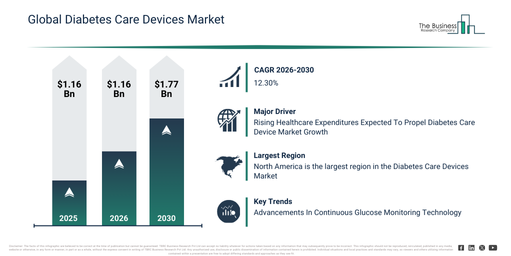
    The diabetes care devices market is projected to experience substantial expansion in the coming years, anticipated to reach a valuation of $130.76 billion by 2030, exhibiting a compound annual growth rate (CAGR) of 12.3%. This projected growth can be attributed to a heightened demand for real-time glucose monitoring, the increasing uptake of closed-loop insulin systems, the broadening reach of digital diabetes management platforms, a sharpened emphasis on individualized diabetes care, and increased healthcare investments dedicated to chronic disease management. Key trends during this period are expected to encompass the growing acceptance of continuous glucose monitoring devices, an increase in the utilization of smart insulin delivery systems, the deeper integration of mobile health platforms, the broadening of connected diabetes management ecosystems, and a greater concentration on patient-focused monitoring solutions.

    Get A Free Sample Report With In-Depth Market Insights:

    https://thebusinessresearchcompany.com/sample_request?id=39718479&type=smp&name=Diabetes%20Care%20Devices%20Market%20Report%202026&utm_source=Blogs&utm_medium=Paid&utm_campaign=Oct_PR

    Diabetes Care Devices Market Growth Drivers: What’s Behind The Acceleration?

    The diabetes care device market is projected to expand in the future, driven by increasing healthcare expenditures. Healthcare expenditures encompass the total amount spent on health-related services, products, and activities over a specific period, typically at an individual, community, national, or global level. This rise in healthcare spending, combined with enhanced access to healthcare services and a growing number of diabetes diagnoses, stimulates increased investments in research and development. This ultimately leads to advancements in diabetes care devices, such as improved glucose monitoring systems, insulin delivery mechanisms, and digital health solutions. For example, in June 2025, the Centers for Medicare & Medicaid Services (CMS), a U.S. federal agency, reported that National Health Expenditure (NHE) grew by 7.5% to $4.9 trillion in 2023, amounting to $14,570 per person, and accounted for 17.6% of Gross Domestic Product (GDP). Hospital expenditures also rose by 10.4% to $1,519.7 billion in 2023, a faster rate than the 3.2% growth recorded in 2022. Therefore, the continuous increase in healthcare expenditure is anticipated to fuel the growth of the diabetes care device market going forward.

    Diabetes Care Devices Market Segment Landscape: Which Areas Lead Development?

    The diabetes care devices market covered in this report is segmented –

    1) By Type: Blood Glucose Test Strips, Insulin Pens, Syringes, Pumps And Injectors, Lancing Devices And Equipment, Continuous Glucose Monitoring Devices And Equipment, Blood Glucose Meters

    2) By Type of Expenditure: Public, Private

    3) By Consumable Type: Instruments Or Equipment, Disposables

    4) By Type Of Testing: Point Of Care (POC) Testing, Non-Point Of Care (POC) Testing

    5) By End User: Hospitals And Clinics, Diagnostic Laboratories, Other End Users

    Subsegments:

    1) By Blood Glucose Test Strips: Standard Blood Glucose Test Strips, Test Strips for Continuous Glucose Monitors

    2) By Insulin Pens: Pre-filled Insulin Pens, Reusable Insulin Pens, Smart Insulin Pens

    3) By Syringes: Insulin Syringes (various capacities), Disposable Syringes, Safety Syringes

    4) By Pumps and Injectors: Insulin Pumps, Insulin Jet Injectors, Patch Pumps

    5) By Lancing Devices and Equipment: Manual Lancing Devices, Automatic Lancing Devices, Lancets (various gauges)

    6) By Continuous Glucose Monitoring Devices and Equipment: Real-Time CGM Systems, Flash Glucose Monitoring Systems, CGM Sensors and Transmitters

    7) By Blood Glucose Meters: Standard Blood Glucose Meters, Smart Blood Glucose Meters, Meters with Integrated Data Management

    Diabetes Care Devices Market Trends: What’s Defining The Industry’s Next Phase?

    Leading firms within the diabetes care devices market are prioritizing the creation of sophisticated solutions, including real-time glucose monitoring technology, to elevate precision, user convenience, and proactive disease control. This real-time glucose monitoring system delivers automated, ongoing glucose readings and notifications, empowering individuals with diabetes to make prompt choices and mitigate potential health hazards. An illustrative example is seen in August 2025, when Abbott Laboratories, a healthcare company based in the US, introduced the FreeStyle Libre 2 Plus. This innovation provides continuous, minute-by-minute glucose data transmitted directly to a compatible smartphone, alongside customizable alerts for instances of low or high glucose levels. The device facilitates assured self-management of diabetes by supplying automated alerts, insights into historical trends, and directional indicators, thereby eliminating the need for regular fingerstick tests. Utilizing near-field communication and Bluetooth connectivity, it functions effectively and is designed for wear for a duration of up to 15 days. Furthermore, it permits caregivers to obtain glucose status updates via integrated digital health platforms. This device contributes to enhanced patient safety through facilitating rapid interventions and boosts user engagement by offering real-time data that informs everyday health decisions.

    Diabetes Care Devices Market Company Landscape And Competitive Strategy

    Major companies operating in the diabetes care devices market are Abbott Laboratories, Becton Dickinson and Company, Roche Holding AG, Medtronic plc, Dexcom Inc., Novo Nordisk A/S, Eli Lilly and Company, LifeScan Inc., Ascensia Diabetes Care, Tandem Diabetes Care Inc., Insulet Corporation, Ypsomed AG, Terumo Corporation, Nipro Corporation, Owen Mumford Ltd., ARKRAY Inc., AgaMatrix Inc., Acon Laboratories Inc., HTL-STREFA S.A., Sanofi India Limited

    View The Full Diabetes Care Devices Market Report:

    https://thebusinessresearchcompany.com/report/diabetes-care-devices-global-market-report?utm_source=Blogs&utm_medium=Paid&utm_campaign=Oct_PR

    Diabetes Care Devices Market Largest Region: Which Geography Holds The Highest Market Share?

    North America was the largest region in the global diabetes care devices market in 2025. Western Europe was the second largest region in the global diabetes care devices market. The regions covered in the diabetes care devices market report are Asia-Pacific, South East Asia, Western Europe, Eastern Europe, North America, South America, Middle East, Africa.

    Reach Out To Our Team:

    The Business Research Company: https://www.thebusinessresearchcompany.com/

    Americas: +1 310-496-7795

    Asia: +44 7882 955267 & +91 8897263534

    Europe: +44 7882 955267

    Email us at: marketing@tbrc.info

    Follow us on:

    LinkedIn: https://in.linkedin.com/company/the-business-research-company

    YouTube: https://www.youtube.com/channel/UC24_fI0rV8cR5DxlCpgmyFQ

    Global Market Model: https://www.thebusinessresearchcompany.com/global-market-model
  • Desmoplastic Small Round Cell Tumor Treatment Market Forecast Insights: The Road To $5.92 Billion By 2030

    Desmoplastic Small Round Cell Tumor Treatment Market Forecast Insights: The Road To $5.92 Billion By 2030

    Featuring market attractiveness scoring, total addressable market sizing, company benchmarking matrices, interactive Excel dashboards, deeper supply chain intelligence, emerging startup tracking, and granular product-level insights, The Business Research Company’s 2026 market reports are built to deliver research that is both more actionable and more strategically valuable.

    Desmoplastic Small Round Cell Tumor Treatment Market Size And Revenue Outlook Through 2030

    The desmoplastic small round cell tumor treatment market has experienced robust expansion recently. Projections indicate its value will increase from $4.01 billion in 2025 to $4.35 billion in 2026, demonstrating a compound annual growth rate (CAGR) of 8.3%. Historically, this growth was influenced by factors such as a scarcity of treatment modalities for dsrct, the dependence on traditional chemotherapy and surgical interventions, insufficient public understanding of rare tumors, underdeveloped specialized oncology facilities, and prolonged dsrct diagnosis times.

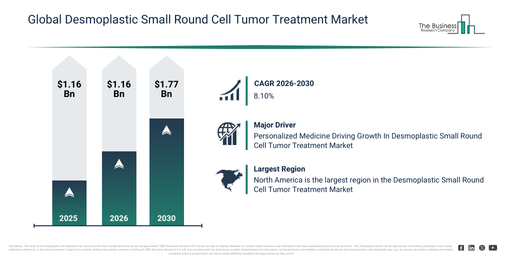
    The desmoplastic small round cell tumor treatment market size is anticipated to experience robust expansion over the next few years. It is projected to reach $5.92 billion in 2030, demonstrating a compound annual growth rate (CAGR) of 8.1%. This growth throughout the forecast period can be attributed to the development of targeted therapies and immunotherapies, the integration of AI-driven diagnostics, an increase in clinical trials for DSRCT, the expansion of oncology clinics and ambulatory surgical centers, and rising healthcare funding for rare cancers. Major trends expected during this period include the increasing adoption of multimodal cancer treatments, a heightened focus on rare cancer research and clinical trials, growing investment in targeted therapies and immunotherapy, the expansion of specialized oncology centers, and enhanced patient support programs and post-treatment care.

    Get A Free Sample Report With In-Depth Market Insights:

    https://thebusinessresearchcompany.com/sample_request?id=65902504&type=smp&name=Desmoplastic%20Small%20Round%20Cell%20Tumor%20Treatment%20Market%20Report%202026&utm_source=Blogs&utm_medium=Paid&utm_campaign=Oct_PR

    Desmoplastic Small Round Cell Tumor Treatment Market Growth Factors Behind Sustained Expansion

    The heightened emphasis on personalized medicine is projected to stimulate expansion in the desmoplastic small round cell tumor treatment market. Personalized medicine offers tailored healthcare solutions, taking into account a patient’s individual genetic makeup, lifestyle, and surroundings, encompassing strategies like pharmacogenomics, targeted therapies, and gene editing for more accurate and potent treatments. This growing focus stems from progress in genomics, better patient results, and the possibility of more precise and effective therapies. For desmoplastic small round cell tumor (DSRCT) treatment, personalized medicine customizes therapies according to the tumor’s specific genetic and molecular profile, leading to targeted interventions that boost effectiveness and lessen side effects. As an illustration, in February 2024, the Personalized Medicine Coalition, a US non-profit organization, highlighted that in 2023, the FDA cleared 16 new personalized treatments for rare disease patients, a substantial rise from the six approved in 2022. Consequently, the intensified attention on personalized medicine is propelling the desmoplastic small round cell tumor treatment market. Increased funding for oncology research is anticipated to drive forward the desmoplastic small round cell tumor treatment market. This surge in oncology research investment is a response to the rising global occurrence of cancer, breakthroughs in precision medicine, and the escalating demand for novel treatments and therapies designed to better patient results. Oncology research contributes significantly to managing desmoplastic small round cell tumors by deepening insights into the tumor’s biological characteristics, thereby facilitating the creation of targeted therapies and enhanced treatment guidelines that improve patient recovery. For example, in 2023, the Office for National Statistics, a UK government body, reported that the UK government’s net expenditure on research and development (R&D) reached £17.4 ($22.1 billion) billion in 2023, an increase from £16.1 billion ($20.45 billion) in 2022, signifying an 8.2% growth. Hence, expanding investment in oncology research is a key driver for the desmoplastic small round cell tumor treatment market.

    Desmoplastic Small Round Cell Tumor Treatment Market Segments: Where Is Growth Concentrated?

    The desmoplastic small round cell tumor treatment market covered in this report is segmented –

    1) By Type: Immunotherapy, Surgical Operation, Chemotherapy, Radiotherapy

    2) By Drug Class: Cytotoxic Agents, Targeted Therapies, Immunomodulators

    3) By End User: Hospitals, Oncology Clinics, Ambulatory Surgical Centers

    Subsegments:

    1) By Immunotherapy: Checkpoint Inhibitors, CAR T-Cell Therapy, Monoclonal Antibodies, Immune Modulators

    2) By Surgical Operation: Tumor Resection, Debulking Surgery, Laparoscopic Surgery

    3) By Chemotherapy: Neoadjuvant Chemotherapy, Adjuvant Chemotherapy, Targeted Therapy Agents

    4) By Radiotherapy: External Beam Radiation Therapy (EBRT), Brachytherapy, Stereotactic Radiosurgery (SRS)

    Desmoplastic Small Round Cell Tumor Treatment Market Key Players Shaping Industry Direction

    Major companies operating in the desmoplastic small round cell tumor treatment market are Pfizer Inc., Johnson & Johnson Services Inc., F. Hoffmann-La Roche AG, Merck & Co. Inc., AbbVie Inc., Bayer AG, Sanofi S.A., Bristol-Myers Squibb Company, AstraZeneca PLC, Novartis AG, Fresenius Kabi AG, Takeda Pharmaceutical Company Limited, Eli Lilly and Company, Boehringer Ingelheim International GmbH, Gilead Sciences Inc., Amgen Inc., GlaxoSmithKline plc (GSK), Teva Pharmaceutical Industries Ltd., Regeneron Pharmaceuticals Inc., Aurobindo Pharma Limited, Hikma Pharmaceuticals PLC, Zymeworks Inc., Blueprint Medicines Corporation, MacroGenics Inc., Exelixis Inc

    View The Full Desmoplastic Small Round Cell Tumor Treatment Market Report:

    https://thebusinessresearchcompany.com/report/desmoplastic-small-round-cell-tumor-treatment-global-market-report?utm_source=Blogs&utm_medium=Paid&utm_campaign=Oct_PR

    Desmoplastic Small Round Cell Tumor Treatment Market Regional Analysis: Which Region Leads By Revenue?

    North America was the largest region in the desmoplastic small round cell tumor treatment market in 2025. The regions covered in the desmoplastic small round cell tumor treatment market report are Asia-Pacific, South East Asia, Western Europe, Eastern Europe, North America, South America, Middle East, Africa.

    Reach Out To Our Team:

    The Business Research Company: https://www.thebusinessresearchcompany.com/

    Americas: +1 310-496-7795

    Asia: +44 7882 955267 & +91 8897263534

    Europe: +44 7882 955267

    Email us at: marketing@tbrc.info

    Follow us on:

    LinkedIn: https://in.linkedin.com/company/the-business-research-company

    YouTube: https://www.youtube.com/channel/UC24_fI0rV8cR5DxlCpgmyFQ

    Global Market Model: https://www.thebusinessresearchcompany.com/global-market-model
  • Dermatoscopes Market Explained: What Is Fueling Growth To $2.73 Billion By 2030?

    Dermatoscopes Market Explained: What Is Fueling Growth To $2.73 Billion By 2030?

    Built to provide research that’s more actionable and strategically valuable, The Business Research Company’s 2026 market reports include market attractiveness analysis, total addressable market sizing, company benchmarking matrices, interactive Excel dashboards, broader supply chain intelligence, emerging startup tracking, and in-depth product insights.

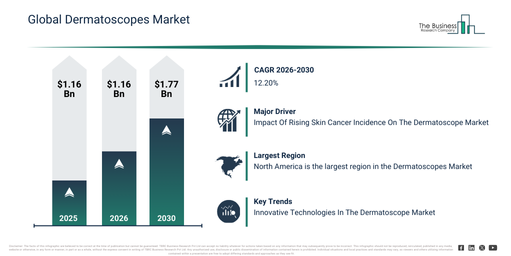
    Dermatoscopes Market Growth From $1.72 Billion In 2026 To $2.73 Billion By 2030 At A CAGR Of 12.2%

    The dermatoscopes market size has shown substantial growth in recent years. It is projected to expand from $1.53 billion in 2025 to $1.72 billion in 2026, reflecting a compound annual growth rate (CAGR) of 12.4%. This historical growth can be linked to factors such as increased awareness of skin cancer screening, the wider availability of handheld diagnostic tools, a rise in outpatient dermatology visits, the growing integration of dermoscopy in primary care, and advancements in optical magnification technologies.

    The dermatoscopes market is anticipated to undergo significant expansion over the next few years. It is projected to reach $2.73 billion by 2030, exhibiting a compound annual growth rate (CAGR) of 12.2%. This growth within the forecast period can be attributed to several factors, including the increasing demand for connected diagnostic instruments, the rising adoption of AI-assisted clinical decision support systems, the expansion of remote dermatology consultations, a growing emphasis on rapid point-of-care diagnostics, and the increasing integration of dermatoscopes with mobile platforms. Notable trends expected during this period encompass the greater adoption of digital and hybrid dermatoscopes, the increasing use of AI-based lesion analysis, an escalating demand for portable diagnostic tools, the proliferation of teledermatology-compatible devices, and an enhanced focus on the early detection of melanoma.

    Get A Free Sample Report With In-Depth Market Insights:

    https://thebusinessresearchcompany.com/sample_request?id=51472464&type=smp&name=Dermatoscopes%20Market%20Report%202026&utm_source=Blogs&utm_medium=Paid&utm_campaign=Oct_PR

    Dermatoscopes Market Demand Drivers Opening New Revenue Streams

    The anticipated increase in skin cancer cases is poised to boost the expansion of the dermatoscope market. Defined by the uncontrolled growth of skin cells, skin cancer typically results from damage to these cells, frequently due to ultraviolet radiation exposure from the sun. A dermatoscope serves to magnify and light up the skin’s exterior, aiding in the visualization of skin lesions and distinguishing between benign and cancerous lesions. To illustrate, Cancer Australia, an Australia-based public governance body for cancer, forecasts that approximately 17,443 new melanoma cases will be diagnosed in 2025 (comprising 10,187 males and 7,256 females). Furthermore, the lifetime probability of a melanoma diagnosis by age 85 is anticipated to be 1 in 19 (5.4%) across the population, specifically 1 in 16 (6.4%) for males and 1 in 23 (4.4%) for females. Consequently, the growing occurrence of skin cancer is a key driver for the dermatoscope market.

    Dermatoscopes Market Segment Analysis: What Are The Core Market Categories?

    The dermatoscopes market covered in this report is segmented –

    1) By Product: Contact Dermatoscope, Hybrid Dermatoscope, Non-Contact Dermatoscope

    2) By Technology: Light-Emitting Diode (LED), Xenon, Halogen

    3) By Application: Skin Tumors, Scabies, Warts, Fungal Infections, Other Applications

    4) By End-User: Hospitals, Dermatology Clinics

    Subsegments:

    1) By Contact Dermatoscope: Handheld Contact Dermatoscope, Tabletop Contact Dermatoscope

    2) By Hybrid Dermatoscope: Digital Hybrid Dermatoscope, Analog Hybrid Dermatoscope

    3) By Non-Contact Dermatoscope: Handheld Non-Contact Dermatoscope, Stationary Non-Contact Dermatoscope

    Dermatoscopes Market Trends Powering Strategic Industry Growth

    Major companies within the dermatoscope sector are concentrating on developing innovative lenses, such as optional conversion lenses, and on providing reliable services to their clientele. An optional conversion lens is a type of lens that can be affixed to a scope to extend its focal length, allowing it to achieve closer proximity to a subject without requiring physical movement. For instance, in June 2023, DeepX, a South Korea-based company specializing in advanced teledermatology solutions, unveiled the DermoSight. DermoSight is presently approved for capturing images of skin lesions for teledermatology assessments, akin to other digital dermatoscopes. It is also designed to operate with an AI algorithm utilizing proprietary optical transfer diagnosis (OTD) technology, although the FDA has not yet sanctioned this technology for commercial use with DermoSight. OTD enables the examination of lesions beneath the skin by analyzing their light-transmitting characteristics. This technology aims to establish dermatoscopic assessments as a powerful, non-invasive, and straightforward AI instrument, thus aiding in the acceleration and enhancement of skin cancer diagnosis.

    Dermatoscopes Market Competitive Analysis Of Leading Industry Participants

    Major companies operating in the dermatoscopes market are Welch Allyn Inc., HEINE Optotechnik GmbH, DermLite LLC, FotoFinder Systems GmbH, Canfield Scientific Inc., Optomed Oy, Rudolf Riester GmbH, American Diagnostic Corporation, Firefly Global, MetaOptima Technology Inc., Pixience, Dino-Lite Company, DermoScan GmbH, Derma Medical Systems, AMD Global Telemedicine Inc., Caliber Imaging & Diagnostics Inc., Optilia Medical, Illuco Corporation Ltd., Nidek Co Ltd., KIRCHNER & WILHELM GmbH + Co. KG

    View The Full Dermatoscopes Market Report:

    https://thebusinessresearchcompany.com/report/dermatoscopes-global-market-report?utm_source=Blogs&utm_medium=Paid&utm_campaign=Oct_PR

    Dermatoscopes Market Geographic Distribution And Regional Opportunities

    North America was the largest region in the dermatoscopes market in 2025. The regions covered in the dermatoscopes market report are Asia-Pacific, South East Asia, Western Europe, Eastern Europe, North America, South America, Middle East, Africa.

    Reach Out To Our Team:

    The Business Research Company: https://www.thebusinessresearchcompany.com/

    Americas: +1 310-496-7795

    Asia: +44 7882 955267 & +91 8897263534

    Europe: +44 7882 955267

    Email us at: marketing@tbrc.info

    Follow us on:

    LinkedIn: https://in.linkedin.com/company/the-business-research-company

    YouTube: https://www.youtube.com/channel/UC24_fI0rV8cR5DxlCpgmyFQ

    Global Market Model: https://www.thebusinessresearchcompany.com/global-market-model
  • Dermatology Medical Lasers Market Forecast To Reach $10.8 Billion By 2030: Key Trends Explained

    Dermatology Medical Lasers Market Forecast To Reach $10.8 Billion By 2030: Key Trends Explained

    Backed by market attractiveness analysis, total addressable market sizing, company benchmarking matrices, interactive Excel dashboards, wider supply chain intelligence, emerging startup coverage, and detailed product-level insights, The Business Research Company’s 2026 market reports are designed to offer research that is more actionable and strategically valuable than ever.

    Dermatology Medical Lasers Market Expansion Outlook: What Revenue Opportunities Are Ahead?

    The market size for dermatology medical lasers has experienced rapid expansion in recent years. It is projected to grow from $4.84 billion in 2025 to $5.71 billion in 2026, at a compound annual growth rate (CAGR) of 18.0%. The growth observed in the past can be attributed to factors such as the increasing prevalence of skin disorders, the rising popularity of cosmetic dermatology procedures, an expanding number of dermatology clinics, growing demand for tattoo removal services, and technological advancements in laser devices.

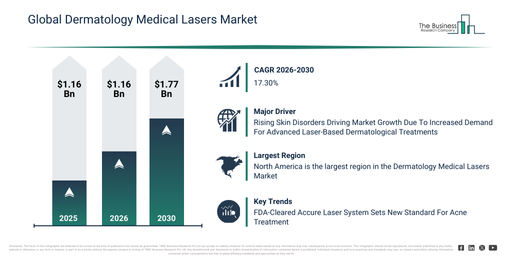
    The dermatology medical lasers market size is expected to experience substantial growth over the next few years. It is projected to expand to $10.8 billion in 2030, at a compound annual growth rate (CAGR) of 17.3%. This anticipated growth during the forecast period can be attributed to an increasing demand for minimally invasive cosmetic procedures, rising investments in aesthetic clinics, the growing adoption of advanced laser platforms, the expansion of dermatology services into emerging markets, and an increasing focus on personalized skin treatments. Major trends identified for the forecast period include the increasing uptake of non-invasive aesthetic laser treatments, a rising demand for multi-application dermatology lasers, the growing utilization of fractional and pulsed laser technologies, the expansion of tattoo and scar removal procedures, and an enhanced focus on skin rejuvenation solutions.

    Get A Free Sample Report With In-Depth Market Insights:

    https://thebusinessresearchcompany.com/sample_request?id=37181692&type=smp&name=Dermatology%20Medical%20Lasers%20Market%20Report%202026&utm_source=Blogs&utm_medium=Paid&utm_campaign=Oct_PR

    Dermatology Medical Lasers Market Growth Backed By Core Demand Fundamentals

    The dermatology medical laser market is anticipated to expand due to an increase in skin disorders. These disorders encompass a range of conditions like acne, psoriasis, eczema, hyperpigmentation, and scars, which affect the skin’s appearance, function, and overall health. The primary reason for the rise in skin disorders is heightened exposure to environmental pollutants and climatic factors, which exacerbate inflammatory and infectious skin conditions globally. Dermatology medical lasers provide numerous applications for treating skin disorders, offering patients effective, targeted, and frequently minimally invasive solutions for various dermatological problems. For instance, in January 2023, the American Cancer Society, a US-based voluntary health organization for cancer, stated that melanoma constitutes only about 1% of skin cancers but causes the vast majority of skin cancer deaths, with a total of 97,610 new cases of melanomas identified in 2023 (58,120 in men and 39,490 in women), and 7,990 people are anticipated to pass away from the disease. Consequently, the increasing prevalence of skin disorders is driving the growth of the dermatology medical laser market.

    Dermatology Medical Lasers Market Segment Breakdown: Which Categories Lead On Revenue?

    The dermatology medical lasers market covered in this report is segmented –

    1) By Device: Surgical Lasers, Vascular Lasers

    2) By Application: Cancer, Hair Removal, Tattoo Removal, Resurfacing, Other Applications

    3) By End-users: Hospitals, Skin Care Clinics, Cosmetic Surgical Centres

    Subsegments:

    1) By Surgical Lasers: CO2 Lasers, Erbium Lasers, Diode Lasers, Nd:YAG Lasers, Alexandrite Lasers, Fractional Lasers, Other Surgical Lasers

    2) By Vascular Lasers: Pulsed Dye Lasers (PDL), KTP Lasers, Nd:YAG Lasers, Diode Lasers, Alexandrite Lasers, Other Vascular Lasers

    Dermatology Medical Lasers Market Growth Trends Reshaping The Competitive Landscape

    Leading companies in the dermatology medical lasers market are focusing on developing innovative products such as the Accure Laser System. Their aim is to enhance treatment precision, improve patient outcomes, and more effectively address specific skin conditions like acne, scars, and pigmentation disorders. The Accure Laser System is an advanced dermatological laser technology designed for highly precise targeting of specific skin conditions. For instance, in October 2024, AccureAcne Inc., a US-based company that offers dermatology treatments, announced that the U.S. Food and Drug Administration (FDA) had granted clearance for its Accure Laser System for the long-term treatment of mild to severe inflammatory acne vulgaris. This innovative approach is designed to effectively reduce sebum production across various skin types and severities of acne.

    Dermatology Medical Lasers Market Leading Companies And Competitive Benchmarking

    Major companies operating in the dermatology medical lasers market are Cynosure Inc., Syneron, Shenzhen GSD, Sincoheren, Fotona, Alma Lasers Ltd., Cutera Inc., Asclepion Laser Technologies GmbH, Biolitec AG, Candela Medical Corporation, DEKA Research & Development Corporation, DermaQuip, DermaSweep, Dominion Aesthetic Technologies, Lumenis Ltd., Milesman, Quanta System S.p.A., Sciton Inc., Sharplight Technologies, Solta Medical Inc., Thermi, Venus Concept Ltd., Viora Ltd., Zimmer MedizinSysteme GmbH, Zeltiq Aesthetics Inc.

    View The Full Dermatology Medical Lasers Market Report:

    https://thebusinessresearchcompany.com/report/dermatology-medical-lasers-global-market-report?utm_source=Blogs&utm_medium=Paid&utm_campaign=Oct_PR

    Dermatology Medical Lasers Market Largest Region By Revenue And Market Share

    North America was the largest region in the dermatology medical lasers market in 2025. Asia-Pacific was the second-largest region in the dermatology medical lasers market report. The regions covered in the dermatology medical lasers market report are Asia-Pacific, South East Asia, Western Europe, Eastern Europe, North America, South America, Middle East, Africa.

    Reach Out To Our Team:

    The Business Research Company: https://www.thebusinessresearchcompany.com/

    Americas: +1 310-496-7795

    Asia: +44 7882 955267 & +91 8897263534

    Europe: +44 7882 955267

    Email us at: marketing@tbrc.info

    Follow us on:

    LinkedIn: https://in.linkedin.com/company/the-business-research-company

    YouTube: https://www.youtube.com/channel/UC24_fI0rV8cR5DxlCpgmyFQ

    Global Market Model: https://www.thebusinessresearchcompany.com/global-market-model