Blog

  • Hypertrophic And Keloid Scar Treatment Market Outlook From 2026 To 2030: Key Growth Factors And Future Opportunities

    Hypertrophic And Keloid Scar Treatment Market Outlook From 2026 To 2030: Key Growth Factors And Future Opportunities

    Built to provide research that’s more actionable and strategically valuable, The Business Research Company’s 2026 market reports include market attractiveness analysis, total addressable market sizing, company benchmarking matrices, interactive Excel dashboards, broader supply chain intelligence, emerging startup tracking, and in-depth product insights.

    Hypertrophic And Keloid Scar Treatment Market Expansion Outlook: What Revenue Opportunities Are Ahead?

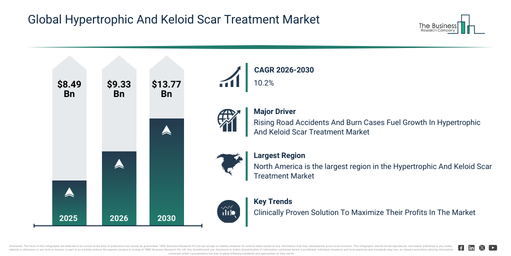
    The hypertrophic and keloid scar treatment market has shown strong expansion in recent years. This market is expected to increase from $8.49 billion in 2025 to $9.33 billion in 2026, achieving a compound annual growth rate (CAGR) of 9.9%. The historical period’s growth is attributable to an increasing number of surgical procedures, a rising incidence of trauma and burns, the widespread application of corticosteroid injections, the growth of dermatology and cosmetic clinics, and the clearly visible aesthetic impact of scars.

    The hypertrophic and keloid scar treatment market is projected to experience substantial expansion in the coming years. This market is set to reach a value of $13.77 billion by 2030, driven by a compound annual growth rate (CAGR) of 10.2%. Factors contributing to this growth during the forecast period include an increasing preference for non-invasive scar interventions, wider adoption of laser and radiotherapy methods, greater understanding of the importance of early scar management, the development of combination treatment approaches, and improved accessibility to specialized dermatology services. Key trends anticipated in the same period involve a heightened uptake of combination scar management therapies, a growing inclination towards minimally invasive and non-surgical treatments, the increased application of laser and energy-based scar revision technologies, the broadening of post-surgical and preventive scar care offerings, and an enhanced emphasis on early intervention alongside long-term scar control.

    Get A Free Sample Report With In-Depth Market Insights:

    https://thebusinessresearchcompany.com/sample_request?id=13199128&type=smp&name=Hypertrophic%20And%20Keloid%20Scar%20Treatment%20Market%20Report%202026&utm_source=Blogs&utm_medium=Paid&utm_campaign=Oct_PR

    Hypertrophic And Keloid Scar Treatment Market Development Factors: What’s Supporting Demand?

    The hypertrophic and keloid scar treatment market is projected to expand due to a rise in road accidents and burn cases. Road accidents are defined as incidents occurring on the road that involve at least one vehicle and individuals. Both road accidents and burn cases demand careful attention and suitable measures for prevention and effective treatment. Hypertrophic and keloid scar treatments are utilized for those injured in road accidents, helping to reduce the height and tightness of scars. The increasing occurrence of road accidents and burn cases directly contributes to the growth of the hypertrophic and keloid scar treatment market. For example, as reported by The Health Foundation, a UK-based independent organization, in January 2025, data from 2023 showed 43 serious or fatal casualties per billion miles traveled by car, in contrast to 1,032 for cyclists and 1,914 for motorcyclists, while 92 pedestrians per million residents sustained fatal or serious injuries. Thus, the escalating number of road accidents and burn cases will propel the hypertrophic and keloid scar treatment market.

    Hypertrophic And Keloid Scar Treatment Market Segment Outlook: Which Categories Are Growing Fastest?

    The hypertrophic and keloid scar treatment market covered in this report is segmented –

    1) By Treatment: Cryotherapy, Surgical Excision, Pressure Dressings, Intralesional 5-Fluorouracil, Superficial X-Ray, Intralesional Corticosteroid Injection, Other Treatments

    2) By Products: Topical Products, Laser Products, Injectables, Other Products

    3) By Scar: Hypertrophic Scars, Keloid Scars

    4) By End-Use: Hospitals, Clinics, Other End-Users

    Subsegments:

    1) By Cryotherapy: Liquid Nitrogen Cryotherapy, Intralesional Cryotherapy

    2) By Surgical Excision: Simple Excision, Excision With Skin Grafting

    3) By Pressure Dressings: Elastic Bandage Pressure Dressings, Silicone Gel Pressure Dressings

    4) By Intralesional 5-Fluorouracil: Standalone 5-FU Treatment, Combination With Corticosteroids

    5) By Superficial X-Ray: Low-Dose X-Ray Therapy, Combination X-Ray With Other Treatments

    6) By Intralesional Corticosteroid Injection: Triamcinolone Acetonide Injection, Combination With 5-Fluorouracil

    7) By Other Treatments: Laser Therapy, Radiotherapy, Interferon Therapy

    Hypertrophic And Keloid Scar Treatment Market Transformation Trends: What Innovations Are Driving Change?

    Leading companies in the hypertrophic and keloid scar treatment market are prioritizing the development of clinically validated silicon-based solutions, such as medical-grade silicone strips, to maximize their market profitability. Medical-grade silicone strips are therapeutic products crafted from high-quality silicone material, specifically formulated to encourage scar healing and reduction. For instance, in April 2023, Scar Erase, a UK-based firm offering silicone-based scar reduction therapy, introduced Scar Erase silicone strips, a clinically tested and affordable option for scar recovery. Constructed from 3mm of medical-grade silicone, these strips aid in treating various scar types, including hypertrophic, keloid, post-surgery, and stretch marks. This silicone technology effectively envelops the scar area, promoting hydration and an optimal healing environment, which leads to significant improvements in scar texture, color, and height. It is designed for comfort and discretion, offering an accessible at-home solution for scar treatment.

    Hypertrophic And Keloid Scar Treatment Market Leading Companies And Competitive Benchmarking

    Major companies operating in the hypertrophic and keloid scar treatment market are Smith & Nephew plc, Merz Pharmaceutical LLC, Lumenis Ltd., Enaltus LLC, Sonoma Pharmaceuticals Inc., Molnlycke Health Care AB, Suneva Medical Inc., Pacific World Corporation, Perrigo Company plc, Cynosure Inc., Alliance Pharma plc, Newmedical Technology Inc., HRA Pharma, Scar Heal Inc., McKesson Medical Surgical Inc., Johnson & Johnson Private Limited, Medtronic plc, 3M Company, Sinclair Pharma plc, Avita Medical, Stratpharma AG, Biodermis, Mederma, Silagen

    View The Full Hypertrophic And Keloid Scar Treatment Market Report:

    https://thebusinessresearchcompany.com/report/hypertrophic-and-keloid-scar-treatment-global-market-report?utm_source=Blogs&utm_medium=Paid&utm_campaign=Oct_PR

    Hypertrophic And Keloid Scar Treatment Market Geographic Landscape: Which Region Leads Industry Growth?

    North America was the largest region in the hypertrophic and keloid scar treatment market in 2025. Asia-Pacific is expected to be the fastest-growing region in the global hypertrophic and keloid scar treatment market report during the forecast period. The regions covered in the hypertrophic and keloid scar treatment market report are Asia-Pacific, South East Asia, Western Europe, Eastern Europe, North America, South America, Middle East, Africa.

    Reach Out To Our Team:

    The Business Research Company: https://www.thebusinessresearchcompany.com/

    Americas: +1 310-496-7795

    Asia: +44 7882 955267 & +91 8897263534

    Europe: +44 7882 955267

    Email us at: marketing@tbrc.info

    Follow us on:

    LinkedIn: https://in.linkedin.com/company/the-business-research-company

    YouTube: https://www.youtube.com/channel/UC24_fI0rV8cR5DxlCpgmyFQ

    Global Market Model: https://www.thebusinessresearchcompany.com/global-market-model
  • Hyperpigmentation Disorder Treatment Market Growth Forecast: Market Size, Key Trends And Emerging Opportunities Through 2030

    Hyperpigmentation Disorder Treatment Market Growth Forecast: Market Size, Key Trends And Emerging Opportunities Through 2030

    Backed by market attractiveness analysis, total addressable market sizing, company benchmarking matrices, interactive Excel dashboards, wider supply chain intelligence, emerging startup coverage, and detailed product-level insights, The Business Research Company’s 2026 market reports are designed to offer research that is more actionable and strategically valuable than ever.

    Hyperpigmentation Disorder Treatment Market Growth Potential: How Will Market Size Shift Through 2030?

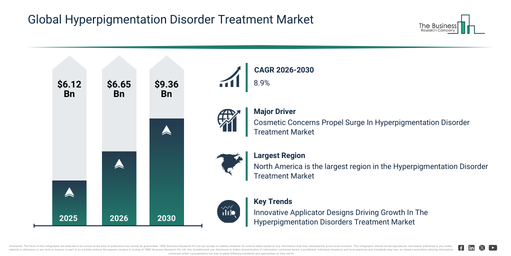
    The hyperpigmentation disorder treatment market size has experienced strong growth in recent years. It is forecast to grow from $6.12 billion in 2025 to $6.65 billion in 2026, achieving a compound annual growth rate (CAGR) of 8.5%. Historically, this expansion can be attributed to factors such as the increasing prevalence of melasma and PIH, rising aesthetic awareness, the growth of dermatology clinics, widespread use of topical depigmenting agents, and increasing sun exposure.

    The hyperpigmentation disorder treatment market is anticipated to experience substantial expansion in the coming years. This market is projected to reach $9.36 billion by 2030, exhibiting a compound annual growth rate (CAGR) of 8.9%. This projected growth is driven by several factors, including an increasing demand for laser and energy-based devices, the broadening scope of personalized skincare treatments, an increase in disposable income, wider acceptance of combination therapies, and the expanding impact of aesthetic medicine. Key trends anticipated during this period encompass an escalating demand for non-invasive aesthetic solutions, a stronger inclination towards combination therapy methods, greater utilization of preventive and maintenance skincare routines, the proliferation of medical-grade cosmeceuticals, and an elevated uptake of advanced procedures performed in clinics.

    Get A Free Sample Report With In-Depth Market Insights:

    https://thebusinessresearchcompany.com/sample_request?id=38232050&type=smp&name=Hyperpigmentation%20Disorder%20Treatment%20Market%20Report%202026&utm_source=Blogs&utm_medium=Paid&utm_campaign=Oct_PR

    Hyperpigmentation Disorder Treatment Market Industry Drivers: What’s Behind The Revenue Growth?

    The increasing prevalence of cosmetic concerns is projected to significantly contribute to the expansion of the hyperpigmentation disorder treatment market. Cosmetic concerns relate to individuals’ anxieties or considerations concerning their physical appearance, beauty, or aesthetic qualities. An escalation in these concerns encourages individuals to pursue and undergo hyperpigmentation disorder treatments, subsequently fostering innovation across the cosmetic and dermatological industries and elevating the overall patient experience. As an illustration, in March 2025, data from the Yellow Bus ABA, a US-based therapy group, indicated that in 2023, the global plastic surgery sector witnessed considerable activity, with around 34.9 million aesthetic procedures performed globally, marking a 3.4% increase compared to 2022. Therefore, heightened cosmetic concerns are a key driver for the growth of the hyperpigmentation disorder treatment market.

    Hyperpigmentation Disorder Treatment Market Segment Landscape: Which Areas Lead Development?

    The hyperpigmentation disorder treatment market covered in this report is segmented –

    1) By Treatment Type: Cosmeceuticals, Laser Therapy, Chemical Peels, Microdermabrasion

    2) By Disease Indication: Melasma, Post-Inflammatory Hyperpigmentation, Solar Lentigines

    3) By End-Users: Hospitals, Esthetic Clinics And Dermatology Centers

    Subsegments:

    1) By Cosmeceuticals: Topical Creams and Gels, Serums and Lotions

    2) By Laser Therapy: Fractional Laser Resurfacing, Intense Pulsed Light (IPL) Therapy

    3) By Chemical Peels: Superficial Peels, Medium Depth Peels

    4) By Microdermabrasion: Crystal Microdermabrasion, Diamond Microdermabrasion

    #Hyperpigmentation Disorder Treatment Market Growth Trends: What’s Shaping The Future Outlook?

    Leading companies operating within the hyperpigmentation disorders treatment market are concentrating on developing glycolic acid solutions to bolster their position and achieve a competitive advantage. Glycolic acid solutions are skincare formulations that include glycolic acid, an alpha hydroxy acid (AHA) well-known for its exfoliating characteristics, which contribute to improving skin texture, luminosity, and general appearance by encouraging cell turnover. For example, in February 2024, L’Oréal SA, a personal care corporation based in France, unveiled the Glycolic Bright Dark Circle Eye Serum, intended to alleviate dark circles and dullness around the eyes. This innovative serum utilizes glycolic acid for its exfoliating attributes, fostering brighter skin and enhanced texture. The product’s composition is also expected to contain hydrating ingredients to nurture the sensitive eye area.

    Hyperpigmentation Disorder Treatment Market Industry Leaders And Competitive Landscape

    Major companies operating in the hyperpigmentation disorder treatment market are Vivier Pharma, Obagi Cosmeceuticals LLC, EpiPharm AG, Laboratories Pierre Fabre, SkinCeuticals, Galderma S.A., Allergan PLC., Lumenis Be Ltd., Aerolase Corporation, Candela Corporation, Cynosure, PCA Skin, La Roche-Posay, L’Oréal S.A., Pierre Fabre Laboratories, Clinuvel Pharmaceuticals Ltd., Clarify Medical Inc., Dr. Reddy’s Laboratories Ltd., Glenmark Pharmaceuticals Ltd., SkinMedica Inc., Neutrogena Corporation, Paula’s Choice Inc., ZO Skin Health Inc., Estée Lauder Companies Inc.

    View The Full Hyperpigmentation Disorder Treatment Market Report:

    https://thebusinessresearchcompany.com/report/hyperpigmentation-disorder-treatment-global-market-report?utm_source=Blogs&utm_medium=Paid&utm_campaign=Oct_PR

    Hyperpigmentation Disorder Treatment Market Largest Region: Which Geography Holds The Biggest Share?

    North America was the largest region in the hyperpigmentation disorders treatment market in 2025.Asia-Pacific is expected to be the fastest-growing region in the global hyperpigmentation disorder treatment market report during the forecast period. The regions covered in the hyperpigmentation disorder treatment market report are Asia-Pacific, South East Asia, Western Europe, Eastern Europe, North America, South America, Middle East, Africa.

    Reach Out To Our Team:

    The Business Research Company: https://www.thebusinessresearchcompany.com/

    Americas: +1 310-496-7795

    Asia: +44 7882 955267 & +91 8897263534

    Europe: +44 7882 955267

    Email us at: marketing@tbrc.info

    Follow us on:

    LinkedIn: https://in.linkedin.com/company/the-business-research-company

    YouTube: https://www.youtube.com/channel/UC24_fI0rV8cR5DxlCpgmyFQ

    Global Market Model: https://www.thebusinessresearchcompany.com/global-market-model
  • Hyperlipidemia Market CAGR Forecast Through 2030: Key Trends Shaping Industry Expansion

    Hyperlipidemia Market CAGR Forecast Through 2030: Key Trends Shaping Industry Expansion

    Featuring market attractiveness scoring, total addressable market sizing, company benchmarking matrices, interactive Excel dashboards, deeper supply chain intelligence, emerging startup tracking, and granular product-level insights, The Business Research Company’s 2026 market reports are built to deliver research that is both more actionable and more strategically valuable.

    Hyperlipidemia Market Value Analysis: What Growth Lies Ahead Over The Forecast Period?

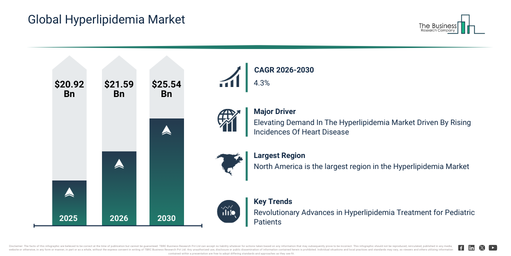
    The hyperlipidemia market has experienced consistent expansion in recent years. It is projected to grow from $20.92 billion in 2025 to $21.59 billion in 2026, demonstrating a compound annual growth rate (CAGR) of 3.2%. Historically, this growth can be attributed to the rising prevalence of cardiovascular diseases, widespread use of statins, increased awareness of cholesterol management, sedentary lifestyles and dietary changes, and an aging population growth.

    The hyperlipidemia market is anticipated to experience sustained expansion over the coming years, reaching a valuation of $25.54 billion by 2030, demonstrating a compound annual growth rate (CAGR) of 4.3%. This projected growth is driven by several factors, including the rising adoption of PCSK9 inhibitors, an increase in familial hyperlipidemia diagnoses, the spread of personalized lipid therapies, a growing demand for preventive cardiology, and improved access to advanced treatments. Significant developments expected during this forecast period encompass the greater embrace of combination lipid-lowering therapies, an intensified focus on early screening and preventive care, the expanded use of injectable biologics for high-risk individuals, the broader implementation of home-based and long-term lipid management solutions, and a stronger emphasis on treatment approaches integrated with lifestyle modifications.

    Get A Free Sample Report With In-Depth Market Insights:

    https://thebusinessresearchcompany.com/sample_request?id=51026553&type=smp&name=Hyperlipidemia%20Market%20Report%202026&utm_source=Blogs&utm_medium=Paid&utm_campaign=Oct_PR

    Hyperlipidemia Market Growth Factors: What’s Supporting Expansion?

    The rising occurrence of chronic conditions like heart disease is projected to drive the expansion of the hyperlipidemia market moving forward. Heart diseases are conditions that affect the heart and its proper functioning. Hyperlipidemia treatment provides benefits to individuals with heart disease by reducing the danger of heart attacks, preventing strokes, improving endothelial function, and decreasing the necessity for invasive interventions. For example, in April 2025, the Centers for Disease Control and Prevention (CDC), a US-based federal agency, reported that in 2023, roughly 194 million U.S. adults, or 76.4%, stated they had at least one chronic condition. The rate was 59.5% among young adults, 78.4% among midlife adults, and 93.0% among older adults. Hence, the increasing prevalence of chronic disorders such as heart disease propels the growth of the hyperlipidemia market.

    Hyperlipidemia Market Segments: Where Is Growth Concentrated?

    The hyperlipidemia market covered in this report is segmented –

    1) By Type: Familial Hyperlipidemia, Acquired Hyperlipidemia

    2) By Treatment: Statins, PCSK9 Inhibitors, Bile Acid Sequestrants, Cholesterol Absorption Inhibitors, Fibric Acid Derivatives, Combination, Other Treatments

    3) By Route of Administration: Oral, Parenteral

    4) By End-Users: Hospitals, Specialty Clinics, Homecare, Other End Users

    Subsegments:

    1) By Familial Hyperlipidemia: Familial Hypercholesterolemia (FH), Familial Combined Hyperlipidemia, Familial Dysbetalipoproteinemia

    2) By Acquired Hyperlipidemia: Diet-Related Hyperlipidemia, Secondary Hyperlipidemia, Drug-Induced Hyperlipidemia

    Hyperlipidemia Market Industry Trends: What’s Reshaping Demand?

    Leading companies in the hyperlipidemia market are focusing on creating innovative products, including advanced therapies for lowering low-density lipoprotein cholesterol, to maintain their competitive standing. For example, in March 2024, US-based biotechnology firm Regeneron Pharmaceuticals, Inc. announced the U.S. Food & Drug Administration (FDA) approval of Praluent (alirocumab) Injection. This represents a significant step forward in treating heterozygous familial hypercholesterolemia (HeFH) in pediatric patients aged 8 and older, providing a targeted strategy to manage dangerously elevated low-density lipoprotein cholesterol (LDL-C) levels. The recent FDA endorsement is supported by Phase 3 trial results, which showed a 31% reduction in LDL-C levels with regular administration. Praluent’s established safety profile, consistent with that of adults, reassures both families and healthcare providers, and its status as the first therapy to target the genetically-validated PCSK9 protein signifies a milestone in heart disease treatment. Together, these attributes position Praluent as a crucial option for managing high cholesterol in children with HeFH.

    Hyperlipidemia Market Key Participants And Competitive Landscape

    Major companies operating in the hyperlipidemia market are Pfizer Inc., Johnson and Johnson Limited, Merck and Co. Inc., AbbVie Inc., Bayer AG, Novartis AG, Sanofi-Aventis LLC., Bristol-Myers Squibb Company, GlaxoSmithKline plc., Eli Lilly and Co. Ltd., Boehringer Ingelheim International GmbH, Teva Pharmaceutical Industries Ltd., Daiichi Sankyo Company Limited, Sun Pharmaceutical Industries Limited, Otsuka Pharmaceutical Co. Ltd., Menarini Group, Dr. Reddy’s Laboratories Ltd., Apotex Inc., Hikma Pharmaceuticals PLC, Cipla Inc., Aspen Pharmacare Holdings Limited, Zydus Lifesciences Ltd.

    View The Full Hyperlipidemia Market Report:

    https://thebusinessresearchcompany.com/report/hyperlipidemia-global-market-report?utm_source=Blogs&utm_medium=Paid&utm_campaign=Oct_PR

    Hyperlipidemia Market Regional Analysis: Which Geography Leads On Revenue?

    North America was the largest region in the hyperlipidemia market in 2025. The regions covered in the hyperlipidemia market report are Asia-Pacific, South East Asia, Western Europe, Eastern Europe, North America, South America, Middle East, Africa.

    Reach Out To Our Team:

    The Business Research Company: https://www.thebusinessresearchcompany.com/

    Americas: +1 310-496-7795

    Asia: +44 7882 955267 & +91 8897263534

    Europe: +44 7882 955267

    Email us at: marketing@tbrc.info

    Follow us on:

    LinkedIn: https://in.linkedin.com/company/the-business-research-company

    YouTube: https://www.youtube.com/channel/UC24_fI0rV8cR5DxlCpgmyFQ

    Global Market Model: https://www.thebusinessresearchcompany.com/global-market-model
  • Hyperimmune Globulins Market To Witness 6.7% CAGR Growth Through 2030: Key Industry Drivers

    Hyperimmune Globulins Market To Witness 6.7% CAGR Growth Through 2030: Key Industry Drivers

    Built to provide research that’s more actionable and strategically valuable, The Business Research Company’s 2026 market reports include market attractiveness analysis, total addressable market sizing, company benchmarking matrices, interactive Excel dashboards, broader supply chain intelligence, emerging startup tracking, and in-depth product insights.

    Hyperimmune Globulins Market Size Forecast: How Big Could The Market Get By 2030?

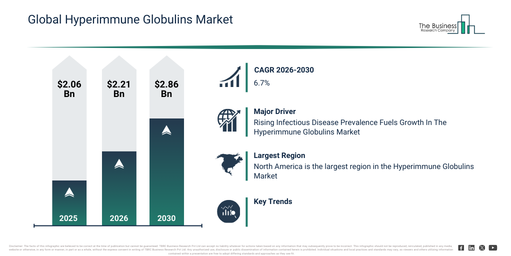
    The hyperimmune globulins market size has shown significant growth in recent years. It is projected to expand from $2.06 billion in 2025 to $2.21 billion in 2026, achieving a compound annual growth rate (CAGR) of 7.6%. The expansion witnessed in the past can be attributed to its established application in rabies and tetanus prophylaxis, the rising occurrence of infectious diseases, the reliance on plasma-derived therapies, various government immunization programs, and the increasing availability of hospital-based emergency care.

    The hyperimmune globulins market is projected to experience substantial expansion in the coming years, reaching an estimated $2.86 billion by 2030, driven by a compound annual growth rate (CAGR) of 6.7%. This anticipated growth is primarily attributable to factors such as a rise in organ transplantation rates, an increase in viral infection outbreaks, the ongoing expansion of plasma donation infrastructure, continuous advancements in purification technologies, and a heightened focus on achieving rapid immune protection. Concurrently, significant trends expected during this forecast period include an escalating demand for passive immunization therapies, a wider application in post-exposure prophylaxis, greater adoption in transplant and immunocompromised patient care, the scaling up of plasma collection and fractionation capacity, and a reinforcement of regulatory oversight and quality standards.

    Get A Free Sample Report With In-Depth Market Insights:

    https://thebusinessresearchcompany.com/sample_request?id=25259280&type=smp&name=Hyperimmune%20Globulins%20Market%20Report%202026&utm_source=Blogs&utm_medium=Paid&utm_campaign=Oct_PR

    Hyperimmune Globulins Market Demand Drivers: What’s Powering Industry Growth?

    The growing occurrence of infectious diseases is projected to stimulate the expansion of the hyperimmune globulin market in the future. Infectious diseases are illnesses resulting from harmful agents (pathogens) like viruses, bacteria, fungi, and parasites entering the body. The rise in these diseases can be linked to factors such as antimicrobial resistance, climate change, and population growth. Hyperimmune globulins are employed in cases of infectious diseases to confer immediate passive immunity, providing concentrated antibodies against specific pathogens, thereby aiding in the prevention or treatment of conditions such as rabies, hepatitis B, or tetanus. For example, in August 2024, a report by the UK Health Security Agency, a UK-based government agency, indicated that in 2023, the West Midlands region reported the highest number of measles cases, with 160 cases (44%), followed by London with 122 cases (33%). Significantly, children under the age of 10 accounted for 63% of all cases, totaling 232 cases. Measles activity experienced a considerable surge towards the year’s end, with 157 new cases documented in December, contrasting with just 45 cases in November. Consequently, the increasing prevalence of infectious diseases is fueling the growth of the hyperimmune globulin market. Government-led initiatives for research and development within the healthcare sector are anticipated to foster the growth of the hyperimmune globulins market moving forward. The increase in these governmental R&D efforts stems from a heightened demand for innovative medical solutions and the necessity to address new health challenges. Such initiatives facilitate the development and availability of hyperimmune globulins for effectively combating specific infectious diseases. For instance, in May 2024, the Office for National Statistics, a UK-based government department, reported that total healthcare expenditure witnessed a 5.6% increase in nominal terms from 2022 to 2023, signifying a notable acceleration compared to the 0.9% growth recorded in 2022. Thus, the escalating government initiatives for healthcare research and development are propelling the hyperimmune globulins market.

    Hyperimmune Globulins Market Segment Analysis: What Are The Core Market Categories?

    The hyperimmune globulins market covered in this report is segmented –

    1) By Type: Hepatitis B Hyperimmune Globulin, Rabies Hyperimmune Globulin, Tetanus Hyperimmune Globulin, Cytomegalovirus (CMV) Hyperimmune Globulin, Varicella-Zoster Virus (VZV) Hyperimmune Globulin, Respiratory Syncytial Virus (RSV) Hyperimmune Globulin, Other Types

    2) By Route Of Administration: Intramuscular, Intravenous

    3) By Application: Government Institution, Private Sector, Other Applications

    Subsegments:

    1) By Hepatitis B Hyperimmune Globulin: Intramuscular Hepatitis B Hyperimmune Globulin, Intravenous Hepatitis B Hyperimmune Globulin

    2) By Rabies Hyperimmune Globulin: Rabies Immune Globulin (Human), Rabies Immune Globulin (Equine)

    3) By Tetanus Hyperimmune Globulin: Tetanus Immune Globulin (Human), Tetanus Immune Globulin (Equine)

    4) By Cytomegalovirus (Cmv) Hyperimmune Globulin: Cmv Immune Globulin For Organ Transplantation, Cmv Immune Globulin For Neonatal Infection

    5) By Varicella-Zoster Virus (Vzv) Hyperimmune Globulin: Vzv Immune Globulin For Post-Exposure Prophylaxis, Vzv Immune Globulin For Immunocompromised Patients

    6) By Respiratory Syncytial Virus (Rsv) Hyperimmune Globulin: Rsv Immune Globulin For Infants And Children, Rsv Immune Globulin For Adults With Respiratory Conditions

    7) By Other Types: Diphtheria Hyperimmune Globulin, Botulism Hyperimmune Globulin, Other Specialized Hyperimmune Globulins

    Hyperimmune Globulins Market Top Companies Driving Competitive Growth

    Major companies operating in the hyperimmune globulins market are Bayer AG, Takeda Pharmaceutical Company Limited, Baxter International Inc., CSL Ltd., Fresenius Kabi AG, Grifols SA, Octapharma AG, Shanghai RAAS Blood Products Co. Ltd., Emergent BioSolutions Inc., Kedrion Biopharma Inc., LFB SA, Hualan Biological Engineering Inc., Taibang Biologic Group, Bio Products Laboratory (BPL) Ltd., ADMA Biologics, Cangene Corporation, Kamada Ltd., Saol Therapeutics Inc., Shire, Sichuan Yuanda Shuyang Pharmaceutical Co. Ltd.

    View The Full Hyperimmune Globulins Market Report:

    https://thebusinessresearchcompany.com/report/hyperimmune-globulins-global-market-report?utm_source=Blogs&utm_medium=Paid&utm_campaign=Oct_PR

    Hyperimmune Globulins Market Geographic Spread And Regional Opportunities

    North America was the largest region in the hyperimmune globulins market in 2025. Asia-Pacific is expected to be the fastest-growing region in the forecast period. The regions covered in the hyperimmune globulins market report are Asia-Pacific, South East Asia, Western Europe, Eastern Europe, North America, South America, Middle East, Africa.

    Reach Out To Our Team:

    The Business Research Company: https://www.thebusinessresearchcompany.com/

    Americas: +1 310-496-7795

    Asia: +44 7882 955267 & +91 8897263534

    Europe: +44 7882 955267

    Email us at: marketing@tbrc.info

    Follow us on:

    LinkedIn: https://in.linkedin.com/company/the-business-research-company

    YouTube: https://www.youtube.com/channel/UC24_fI0rV8cR5DxlCpgmyFQ

    Global Market Model: https://www.thebusinessresearchcompany.com/global-market-model
  • Hyperhidrosis Treatment Market Projected For Strong Expansion Through 2030: Key Trends And Future Outlook

    Hyperhidrosis Treatment Market Projected For Strong Expansion Through 2030: Key Trends And Future Outlook

    Backed by market attractiveness analysis, total addressable market sizing, company benchmarking matrices, interactive Excel dashboards, wider supply chain intelligence, emerging startup coverage, and detailed product-level insights, The Business Research Company’s 2026 market reports are designed to offer research that is more actionable and strategically valuable than ever.

    Hyperhidrosis Treatment Market Revenue Outlook: What CAGR Lies Ahead Through 2030?

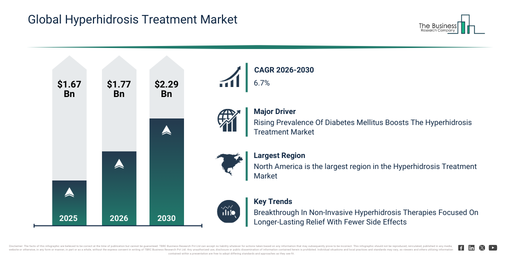
    The hyperhidrosis treatment market has experienced significant growth in recent years. It is projected to expand from $1.67 billion in 2025 to $1.77 billion in 2026, exhibiting a compound annual growth rate (CAGR) of 5.9%. The market’s past growth is primarily due to increased awareness of hyperhidrosis as a medical condition, the extensive use of aluminum chloride topical treatments, the growing availability of dermatology clinics, rising social discomfort associated with excessive sweating, and established surgical intervention practices.

    The hyperhidrosis treatment market size is projected to experience robust expansion in the coming years. This market is set to reach $2.29 billion by 2030, demonstrating a compound annual growth rate (CAGR) of 6.7%. Factors contributing to this growth during the forecast period include a heightened demand for non-surgical interventions, progress in laser therapy technologies, an uptick in the use of botulinum toxin a injections, the proliferation of home-use medical devices, and improved healthcare accessibility in developing economies. Key trends expected throughout this period encompass the increasing embrace of botulinum toxin treatments, a growing inclination towards minimally invasive options, an escalating need for home-based iontophoresis devices, the proliferation of laser and energy-based therapies, and an elevated emphasis on therapies designed to enhance quality of life.

    Get A Free Sample Report With In-Depth Market Insights:

    https://thebusinessresearchcompany.com/sample_request?id=64070783&type=smp&name=Hyperhidrosis%20Treatment%20Market%20Report%202026&utm_source=Blogs&utm_medium=Paid&utm_campaign=Oct_PR

    Hyperhidrosis Treatment Market Growth Drivers: What’s Behind The Acceleration?

    The rising incidence of diabetes mellitus is anticipated to drive the expansion of the hyperhidrosis treatment market in the coming years. Diabetes mellitus is characterized by the body’s inability to produce sufficient insulin or its improper response to insulin, leading to elevated blood sugar (glucose) levels. This condition can harm the nerves responsible for sweat gland regulation, resulting in excessive sweating, or hyperhidrosis. Moreover, diabetes can impair an individual’s capacity to maintain a consistent body temperature and generate appropriate sweat levels for cooling. As an illustration, in June 2023, the Institute for Health Metrics and Evaluation, a US-based public health research institute, stated that over half a billion individuals worldwide had diabetes. This figure is projected to exceed double, reaching 1.3 billion people by 2050. Consequently, the growing prevalence of diabetes mellitus is acting as a key impetus for the hyperhidrosis treatment market.

    Hyperhidrosis Treatment Market Segment Breakdown: Which Categories Lead On Revenue?

    The hyperhidrosis treatment market covered in this report is segmented –

    1) By Treatment Type: Topical Treatments, Surgical Treatments, Botulin Toxin A, Iontophoresis, Laser Treatments, Other Treatments

    2) By Route Of Administration: Oral, Injectable

    3) By Disease Type: Axillary Hyperhidrosis, Palmar Hyperhidrosis, Plantar Hyperhidrosis, Other Diseases

    4) By Distribution Channel: Hospitals, Ambulatory Surgical Centers, Retail Pharmacies, Online

    Subsegments:

    1) By Topical Treatments: Aluminum Chloride Solutions, Antiperspirants

    2) By Surgical Treatments: Sympathectomy, Excision

    3) By Botulin Toxin A: Injection Treatments, Combination Therapies

    4) By Iontophoresis: Home Devices, Clinical Devices

    5) By Laser Treatments: Microwave Therapy, Laser Ablation

    6) By Other Treatments: Oral Medications, Alternative Therapies

    Hyperhidrosis Treatment Market Trends: What’s Defining The Industry’s Next Phase?

    Leading firms within the hyperhidrosis treatment market are prioritizing the creation of enhanced non-invasive and safer treatments that are more effective, furthering topical and targeted medication formulations, and undertaking clinical trials aimed at providing extended symptom alleviation alongside reduced adverse effects. For instance, in March 2025, a newly approved topical therapy, sofpironium gel, represents a notable breakthrough in addressing primary axillary hyperhidrosis, a condition affecting millions in the U.S. The gel functions as a retrometabolic compound specifically targeting M3 muscarinic receptors in sweat glands, thereby diminishing perspiration and mitigating systemic side effects due to rapid metabolism. Phase 3 trials demonstrated significant alleviation of symptoms, with relief commencing within one week and persisting throughout the six-week study. In contrast to current topical anticholinergics, sofpironium exhibited a superior safety record and a reduced incidence of adverse effects. Long-term data also validated its lasting effectiveness and tolerability, thereby establishing the gel as a potent, non-invasive option for individuals seeking better solutions than existing therapies.

    Hyperhidrosis Treatment Market Leading Players And Competitive Positioning

    Major companies operating in the hyperhidrosis treatment market are Pfizer Inc., AbbVie Inc., Sanofi S.A., AstraZeneca Plc, GSK plc, Teva Pharmaceutical Industries Ltd., Mylan N.V., Cynosure LLC, Ipsen SA, Galderma S.A., Merz Pharma GmbH & Co. KGaA, Daewoong Pharmaceutical Co. Ltd., Supernus Pharmaceuticals Inc, Kaken Pharmaceutical Co Ltd, Avanor Healthcare Ltd., HUGEL Inc., Evolus Inc., Revance Therapeutics Inc., Dermira Inc., Sesderma SL, Miramar Labs Inc., Dermavant Sciences Inc., Theravida Inc., SweatBlock, Brickell Biotech Inc., Fresh Tracks Therapeutics Inc., Advin Health Care Inc, Dermadry Laboratories Inc., Ulthera Inc., Dermata Therapeutics Inc.

    View The Full Hyperhidrosis Treatment Market Report:

    https://thebusinessresearchcompany.com/report/hyperhidrosis-treatment-global-market-report?utm_source=Blogs&utm_medium=Paid&utm_campaign=Oct_PR

    Hyperhidrosis Treatment Market Top Region By Revenue And Market Share

    North America was the largest region in the hyperhidrosis treatment market in 2025. Asia-Pacific is expected to be the fastest-growing region in the forecast period. The regions covered in the hyperhidrosis treatment market report are Asia-Pacific, South East Asia, Western Europe, Eastern Europe, North America, South America, Middle East, Africa.

    Reach Out To Our Team:

    The Business Research Company: https://www.thebusinessresearchcompany.com/

    Americas: +1 310-496-7795

    Asia: +44 7882 955267 & +91 8897263534

    Europe: +44 7882 955267

    Email us at: marketing@tbrc.info

    Follow us on:

    LinkedIn: https://in.linkedin.com/company/the-business-research-company

    YouTube: https://www.youtube.com/channel/UC24_fI0rV8cR5DxlCpgmyFQ

    Global Market Model: https://www.thebusinessresearchcompany.com/global-market-model
  • Hypercholesterolemia Market Outlook 2026–2030: Growth Trends, Market Dynamics And Emerging Opportunities

    Hypercholesterolemia Market Outlook 2026–2030: Growth Trends, Market Dynamics And Emerging Opportunities

    Featuring market attractiveness scoring, total addressable market sizing, company benchmarking matrices, interactive Excel dashboards, deeper supply chain intelligence, emerging startup tracking, and granular product-level insights, The Business Research Company’s 2026 market reports are built to deliver research that is both more actionable and more strategically valuable.

    Hypercholesterolemia Market Growth Analysis: How Will Revenue Trend Over The Forecast Period?

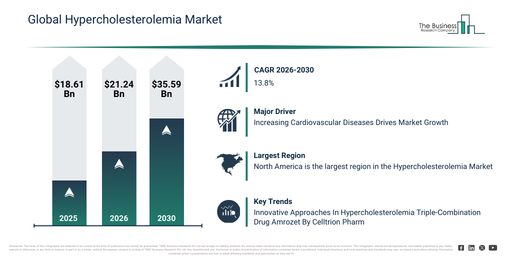
    The hypercholesterolemia market size has seen rapid growth over recent years. It is anticipated to expand from $18.61 billion in 2025 to $21.24 billion in 2026, achieving a compound annual growth rate (CAGR) of 14.1%. The expansion observed during the historic period can be credited to an increasing prevalence of cardiovascular diseases, the widespread application of statins as initial therapy, a rise in sedentary lifestyles, considerable consumption of unhealthy diets, and established clinical guidelines for cholesterol management.

    The hypercholesterolemia market is poised for significant expansion in the coming years, with its size projected to reach $35.59 billion by 2030, exhibiting a compound annual growth rate (CAGR) of 13.8%. This anticipated growth can be linked to heightened awareness of familial hypercholesterolemia, the increasing embrace of biologic therapies, an expanding aging population, advancements in lipid profiling diagnostics, and the ongoing growth of preventive healthcare initiatives. Noteworthy trends during this period include a greater adoption of PCSK9 inhibitors, an intensified focus on early screening and diagnosis, a rising need for combination lipid-lowering therapies, a transition towards injectable long-acting treatments, and the expanding importance of preventive cardiovascular care.

    Get A Free Sample Report With In-Depth Market Insights:

    https://thebusinessresearchcompany.com/sample_request?id=92976611&type=smp&name=Hypercholesterolemia%20Market%20Report%202026&utm_source=Blogs&utm_medium=Paid&utm_campaign=Oct_PR

    Hypercholesterolemia Market Growth Factors Behind Sustained Expansion

    The anticipated rise in cardiovascular diseases is set to drive the expansion of the hypercholesterolemia market in the future. Cardiovascular diseases (CVDs) are defined as a category of conditions impacting the heart and blood vessels. This surge in cardiovascular ailments stems from factors like unhealthy eating habits, lack of physical activity, growing obesity levels, prolonged stress, an aging demographic, and the widespread occurrence of conditions such as hypertension and diabetes. Treatment for hypercholesterolemia aids patients with cardiovascular disease by decreasing LDL cholesterol levels, diminishing arterial plaque accumulation, enhancing circulation, and mitigating the likelihood of heart attacks, strokes, and other heart-related issues. As an illustration, data from October 2024, provided by the Centers for Disease Control and Prevention, a US-based government body, indicates that around 805,000 individuals in the United States suffer a heart attack annually; among these, 605,000 are initial occurrences, while 200,000 happen in those who have previously experienced a heart attack. Consequently, the growing incidence of cardiovascular diseases is projected to fuel the advancement of the hypercholesterolemia market.

    Hypercholesterolemia Market Segmentation: How Does The Market Break Down By Category?

    The hypercholesterolemia market covered in this report is segmented –

    1) By Disease Type: Genetic, Acquired

    2) By Treatment: Statins, Bile Acid Resins, Niacin, PCSK9 Inhibitors, Cholesterol Absorption Inhibitors, Fibric Acid Derivatives, Other Treatments

    3) By Route Of Administration: Oral, Injectable

    4) By Distribution Channel: Hospital Pharmacies, Retail Pharmacies, Other Distribution Channels

    5) By End User: Hospitals, Specialty Clinics, Home Healthcare, Other End Users

    Subsegments:

    1) By Genetic: Heterozygous Familial Hypercholesterolemia, Homozygous Familial Hypercholesterolemia

    2) By Acquired: Primary Hypercholesterolemia, Secondary Hypercholesterolemia

    Hypercholesterolemia Market Industry Trends Fueling Future Revenue Growth

    Major companies operating in the hypercholesterolemia market are engaged in developing innovative products, including triple-combination drugs, with the goal of enhancing treatment efficacy and patient compliance. Such a triple-combination drug refers to a pharmaceutical formulation that merges three active ingredients into a singular dosage form, like a tablet or capsule. As an illustration, in February 2025, Celltrion Pharm, Inc., a pharmaceutical company based in South Korea, launched Amrozet Tablet, a medication for hypertension-hyperlipidemia. This drug combines three active ingredients: amlodipine, a calcium channel blocker used for hypertension; rosuvastatin, a statin for lowering cholesterol; and ezetimibe, which aids in reducing cholesterol absorption in the intestines. The product is offered in four dosage combinations, specifically 5/5/10 mg, 5/10/10 mg, 10/5/10 mg, and 10/10/10 mg. It is prescribed for hypertension and myocardial ischemia under amlodipine, and for primary hypercholesterolemia when under the rosuvastatin-ezetimibe combination. Additionally, it helps relieve chronic stable angina or vasospastic angina and aims to lower the risk of hospitalization for angina and heart surgery in patients with documented coronary artery disease.

    Hypercholesterolemia Market Competitive Overview And Top Companies

    Major companies operating in the hypercholesterolemia market are Pfizer Inc., Merck & Co Inc., Abbvie Inc., Bayer AG, Sanofi S.A., AstraZeneca PLC, Novartis AG, GlaxoSmithKline plc (GSK), Eli Lilly and Company, Amgen Inc., Viatris Inc., Aegerion Pharmaceuticals Inc., Fresenius Kabi AG, Sun Pharmaceutical Industries Ltd., Chiesi Farmaceutici S.p.A., Aurobindo Pharma Limited, Dr. Reddy’s Laboratories Ltd., Lupin Limited, Ionis Pharmaceuticals Inc., NewAmsterdam Pharma N.V., HDL Therapeutics Inc.

    View The Full Hypercholesterolemia Market Report:

    https://thebusinessresearchcompany.com/report/hypercholesterolemia-global-market-report?utm_source=Blogs&utm_medium=Paid&utm_campaign=Oct_PR

    Hypercholesterolemia Market Regional Analysis And Top Geography

    North America was the largest region in the hypercholesterolemia market in 2025. Asia-Pacific is expected to be the fastest-growing region in the forecast period. The regions covered in the hypercholesterolemia market report are Asia-Pacific, South East Asia, Western Europe, Eastern Europe, North America, South America, Middle East, Africa.

    Reach Out To Our Team:

    The Business Research Company: https://www.thebusinessresearchcompany.com/

    Americas: +1 310-496-7795

    Asia: +44 7882 955267 & +91 8897263534

    Europe: +44 7882 955267

    Email us at: marketing@tbrc.info

    Follow us on:

    LinkedIn: https://in.linkedin.com/company/the-business-research-company

    YouTube: https://www.youtube.com/channel/UC24_fI0rV8cR5DxlCpgmyFQ

    Global Market Model: https://www.thebusinessresearchcompany.com/global-market-model
  • Hypercalcemia Treatment Market Growth Outlook From $20.38 Billion In 2026 To $31.12 Billion By 2030

    Hypercalcemia Treatment Market Growth Outlook From $20.38 Billion In 2026 To $31.12 Billion By 2030

    Built to provide research that’s more actionable and strategically valuable, The Business Research Company’s 2026 market reports include market attractiveness analysis, total addressable market sizing, company benchmarking matrices, interactive Excel dashboards, broader supply chain intelligence, emerging startup tracking, and in-depth product insights.

    Hypercalcemia Treatment Market Forecast: What Value Will The Market Reach By 2030?

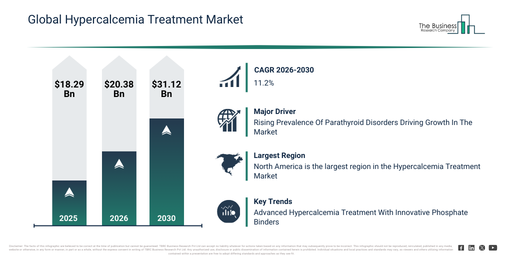
    The hypercalcemia treatment market has experienced rapid expansion recently. This market is projected to expand from $18.29 billion in 2025 to $20.38 billion in 2026, demonstrating a compound annual growth rate (CAGR) of 11.5%. Historically, this growth has been driven by factors such as the rising incidence of malignancy-related hypercalcemia, the well-established clinical application of bisphosphonates, an increasing occurrence of primary hyperparathyroidism, structured hospital emergency management protocols, and the wider availability of generic calcium-lowering drugs.

    The hypercalcemia treatment market is anticipated to experience substantial expansion in the coming years. This market is projected to reach $31.12 billion by 2030, demonstrating a compound annual growth rate (CAGR) of 11.2%. Several factors are expected to drive this growth during the forecast period, including an expanding cancer patient population, increased adoption of denosumab therapy, advancements in calcimimetic drugs, rising awareness of early diagnosis, and the broader implementation of outpatient and long-term care management. Significant trends anticipated in the forecast period encompass the increasing use of targeted therapies for hypercalcemia, a growing preference for rapid-acting injectable treatments, an escalating focus on oncology-associated hypercalcemia management, the expansion of combination drug therapies, and a wider embrace of protocol-based emergency management.

    Get A Free Sample Report With In-Depth Market Insights:

    https://thebusinessresearchcompany.com/sample_request?id=67989201&type=smp&name=Hypercalcemia%20Treatment%20Market%20Report%202026&utm_source=Blogs&utm_medium=Paid&utm_campaign=Oct_PR

    Hypercalcemia Treatment Market Demand Drivers Opening New Revenue Streams

    The increasing occurrence of parathyroid conditions is anticipated to drive the expansion of the hypercalcemia treatment market in the future. Parathyroid disorders are health issues impacting the parathyroid glands, responsible for controlling the body’s calcium levels via parathyroid hormone (PTH) production. The growing prevalence of these disorders stems from an older demographic, heightened public awareness, advancements in diagnostic methods, and an increasing incidence of conditions like primary hyperparathyroidism and chronic kidney disease. Treating hypercalcemia is vital for managing parathyroid disorders, as it helps regulate high calcium levels, avert complications such as kidney stones and bone density loss, and enhance overall metabolic equilibrium. For example, in February 2024, data from the National Institute of Health (NIH), a US government entity, indicated that in the United States, hypoparathyroidism is projected to impact 6.4 to 37 per 100,000 person-years, with 75% of these cases arising from complications following thyroidectomy or head and neck surgical procedures. Consequently, the increased prevalence of parathyroid disorders is fueling the expansion of the hypercalcemia treatment market.

    Hypercalcemia Treatment Market Segment Trends And Revenue Contributors

    The hypercalcemia treatment market covered in this report is segmented –

    1) By Drug Type: Bisphosphonates, Calcitonin, Glucocorticoids, Denosumab, Calcimimetics, Other Drug Types

    2) By Distribution Channel: Hospitals Pharmacies, Retail Pharmacies, Online Pharmacies

    3) By End-Users: Hospitals, Clinics

    Subsegments:

    1) By Bisphosphonates: Zoledronic Acid, Pamidronate

    2) By Calcitonin: Salmon Calcitonin, Synthetic Calcitonin

    3) By Glucocorticoids: Prednisone, Dexamethasone, Hydrocortisone

    4) By Denosumab: Denosumab (Monotherapy), Denosumab Combination Therapy

    5) By Calcimimetics: Cinacalcet, Etelcalcetide

    6) By Other Drug Types: Gallium Nitrate, Mithramycin

    Hypercalcemia Treatment Market Trends Powering Strategic Industry Growth

    Leading firms within the hypercalcemia treatment market are concentrating on creating novel solutions, including phosphate binders, with the aim of achieving superior regulation of calcium and phosphorus, thereby enhancing patient results. These binders are drugs designed to attach to phosphate within the digestive system, hindering its absorption into the circulatory system, and are frequently prescribed for controlling elevated phosphate levels in individuals suffering from kidney disease or hypercalcemia. Illustratively, in May 2024, Strides Pharma Science Limited, an India-based pharmaceutical company, obtained authorization from the United States Food and Drug Administration (FDA) for its Sevelamer Carbonate Tablets, 800 mg. This medication effectively addresses hyperphosphatemia in those with chronic kidney disease by binding to dietary phosphate and stopping its absorption. Furthermore, these tablets contribute to preserving bone health and mitigating cardiovascular risks linked to heightened phosphate levels.

    Hypercalcemia Treatment Market Competitive Landscape: Which Companies Lead The Industry?

    Major companies operating in the hypercalcemia treatment market are Amgen Inc., Novartis AG, Pfizer Inc., Roche Holding AG, Merck KGaA, Eli Lilly and Company, AstraZeneca plc, GSK plc, AbbVie Inc., Teva Pharmaceutical Industries Ltd., Sandoz Group AG, Hikma Pharmaceuticals plc, Kyowa Kirin Co. Ltd., Ipsen SA, Endo Inc., OPKO Health Inc., Sanofi, Bayer AG, Sun Pharmaceutical Industries Ltd., Dr Reddy’s Laboratories Ltd., Aurobindo Pharma Ltd.

    View The Full Hypercalcemia Treatment Market Report:

    https://thebusinessresearchcompany.com/report/hypercalcemia-treatment-global-market-report?utm_source=Blogs&utm_medium=Paid&utm_campaign=Oct_PR

    Hypercalcemia Treatment Market Geographic Analysis: Where Is Demand Rising Fastest?

    North America was the largest region in the hypercalcemia treatment market in 2025. The regions covered in the hypercalcemia treatment market report are Asia-Pacific, South East Asia, Western Europe, Eastern Europe, North America, South America, Middle East, Africa.

    Reach Out To Our Team:

    The Business Research Company: https://www.thebusinessresearchcompany.com/

    Americas: +1 310-496-7795

    Asia: +44 7882 955267 & +91 8897263534

    Europe: +44 7882 955267

    Email us at: marketing@tbrc.info

    Follow us on:

    LinkedIn: https://in.linkedin.com/company/the-business-research-company

    YouTube: https://www.youtube.com/channel/UC24_fI0rV8cR5DxlCpgmyFQ

    Global Market Model: https://www.thebusinessresearchcompany.com/global-market-model
  • Hyperbaric Oxygen Therapy Market Forecast To Reach $7.89 Billion By 2030: Key Growth Drivers And Industry Trends

    Hyperbaric Oxygen Therapy Market Forecast To Reach $7.89 Billion By 2030: Key Growth Drivers And Industry Trends

    Backed by market attractiveness analysis, total addressable market sizing, company benchmarking matrices, interactive Excel dashboards, wider supply chain intelligence, emerging startup coverage, and detailed product-level insights, The Business Research Company’s 2026 market reports are designed to offer research that is more actionable and strategically valuable than ever.

    Hyperbaric Oxygen Therapy Market Size Outlook: How Quickly Will Revenue Expand Through 2030?

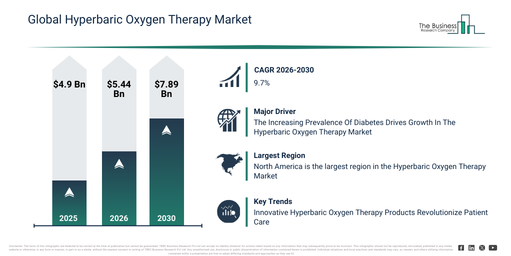
    The hyperbaric oxygen therapy market has seen rapid expansion in recent years. It is forecast to rise from $4.9 billion in 2025 to $5.44 billion in 2026, driven by an 11.0% compound annual growth rate (CAGR). Historically, this growth can be ascribed to a higher occurrence of chronic non-healing wounds, its established application in decompression sickness treatment, an increase in carbon monoxide poisoning cases, clinical validation for managing radiation injuries, and the availability of hyperbaric chambers in hospitals.

    The hyperbaric oxygen therapy market is projected to experience substantial expansion over the next several years, reaching a valuation of $7.89 billion by 2030, demonstrating a compound annual growth rate (CAGR) of 9.7%. This anticipated growth is influenced by a rising diabetic population facing wound complications, continuous technological improvements in chamber design, the broadening of outpatient and ambulatory applications, increased awareness among medical professionals, and enhanced reimbursement support in specific geographic areas. Key developments during this forecast timeframe also involve the extended application of HBOT in managing chronic wounds, a growing preference for portable and monoplace HBOT systems, heightened clinical acceptance of HBOT for radiation-induced injuries, its increasing incorporation into multidisciplinary treatment approaches, and the expansion of HBOT’s utility beyond its conventional indications.

    Get A Free Sample Report With In-Depth Market Insights:

    https://thebusinessresearchcompany.com/sample_request?id=20104769&type=smp&name=Hyperbaric%20Oxygen%20Therapy%20Market%20Report%202026&utm_source=Blogs&utm_medium=Paid&utm_campaign=Oct_PR

    Hyperbaric Oxygen Therapy Market Growth Backed By Core Demand Fundamentals

    The expanding prevalence of diabetes is projected to stimulate the growth of the hyperbaric oxygen therapy market in the coming years. Diabetes, identified as a collection of chronic metabolic conditions, is distinguished by persistently elevated blood glucose levels. Its rise can be attributed to factors such as inactive lifestyles, inadequate dietary habits, obesity, and hereditary predispositions. Hyperbaric oxygen therapy (HBOT) serves as a treatment for complications linked to diabetes, especially diabetic foot ulcers and other types of wounds that struggle to heal. As an illustration, in June 2023, the Institute for Health Metrics and Evaluation, a US-based public health research institute, disclosed that over half a billion individuals worldwide were living with diabetes. This figure is anticipated to more than double, reaching 1.3 billion people by 2050. Consequently, the increasing incidence of diabetes is a key driver for the hyperbaric oxygen therapy market.

    Hyperbaric Oxygen Therapy Market Segment Analysis Spotlighting Growth Areas

    The hyperbaric oxygen therapy market covered in this report is segmented –

    1) By Product Type: Monoplace Hyperbaric Oxygen Therapy, Multiplace Hyperbaric Oxygen Therapy

    2) By Application: Wound Healing, Decompression Sickness, Infection Treatment, Gas Embolism, Other Applications

    3) By End-Users: Hospitals And Clinics, Ambulatory Surgery Centers, Other End-Users

    Subsegments:

    1) By Monoplace Hyperbaric Oxygen Therapy: Single-Chamber Monoplace HBOT Systems, Standard Monoplace HBOT Chambers, Advanced Monoplace HBOT Chambers With Integrated Monitoring

    2) By Multiplace Hyperbaric Oxygen Therapy: Dual-Chamber Multiplace HBOT Systems, Multi-Person Multiplace HBOT Chambers, High-Pressure Multiplace HBOT Chambers, Customized Multiplace HBOT Chambers

    Hyperbaric Oxygen Therapy Market Growth Trends Reshaping The Competitive Landscape

    Major companies engaged in the hyperbaric oxygen therapy market are developing innovative offerings, including hyperbaric chambers, to better cater to customers with enhanced functionalities. Hyperbaric chambers are specialized medical instruments that establish a pressurized environment for delivering hyperbaric oxygen therapy (HBOT), enabling patients to breathe pure oxygen and improve oxygen delivery to the body’s tissues. As an illustration, in January 2024, Sechrist Industries Inc., a US-based producer of hyperbaric technology and medical equipment, unveiled the 3300 HM Hyperbaric Chamber. The 3300 HM Hyperbaric Chamber features an expansive interior crafted for superior patient comfort and accessibility, accommodating a broad spectrum of patient sizes and mobility needs. Equipped with advanced monitoring systems, it guarantees real-time tracking of vital signs and chamber conditions, thus elevating patient safety. This chamber also incorporates state-of-the-art oxygen delivery systems that maximize the efficiency of oxygen absorption, and its user-friendly interface allows for simple operation by healthcare professionals.

    Hyperbaric Oxygen Therapy Market Leading Companies: Who Holds The Strongest Market Presence?

    Major companies operating in the hyperbaric oxygen therapy market are Healogics LLC, SOS Medical Group Ltd., Environmental Tectonics Corporation, Sechrist Industries Inc., BioBarica Profesionales, Perry Baromedical Corporation, Shanghai Baobang Medical Equipment Co. Ltd., Hyperbaric Modular Systems Inc., Baroks Hyperbaric, Haux-Life-Support GmbH, Haux-Technik GmbH, Hyperbaric SAC, Pan America Hyperbarics Inc., OxyHeal Health Group, Fink Engineering Pty Ltd, AHA Hyperbarics, The Oxybarica Group, NHC Medical And Beauty, Hyperbaric Medical Solutions, Gulf Coast Hyperbarics, Hearmec Co. Ltd., Hpotech Hyperbaric Solutions

    View The Full Hyperbaric Oxygen Therapy Market Report:

    https://thebusinessresearchcompany.com/report/hyperbaric-oxygen-therapy-global-market-report?utm_source=Blogs&utm_medium=Paid&utm_campaign=Oct_PR

    Hyperbaric Oxygen Therapy Market Global Footprint: Which Region Leads The Market?

    North America was the largest region in the hyperbaric oxygen therapy market in 2025. Asia-Pacific is expected to be the fastest-growing region in the forecast period. The regions covered in the hyperbaric oxygen therapy market report are Asia-Pacific, South East Asia, Western Europe, Eastern Europe, North America, South America, Middle East, Africa.

    Reach Out To Our Team:

    The Business Research Company: https://www.thebusinessresearchcompany.com/

    Americas: +1 310-496-7795

    Asia: +44 7882 955267 & +91 8897263534

    Europe: +44 7882 955267

    Email us at: marketing@tbrc.info

    Follow us on:

    LinkedIn: https://in.linkedin.com/company/the-business-research-company

    YouTube: https://www.youtube.com/channel/UC24_fI0rV8cR5DxlCpgmyFQ

    Global Market Model: https://www.thebusinessresearchcompany.com/global-market-model
  • Hydronephrosis Market Research 2026: Market Size, Trends, Segments And Growth Forecast

    Hydronephrosis Market Research 2026: Market Size, Trends, Segments And Growth Forecast

    Featuring market attractiveness scoring, total addressable market sizing, company benchmarking matrices, interactive Excel dashboards, deeper supply chain intelligence, emerging startup tracking, and granular product-level insights, The Business Research Company’s 2026 market reports are built to deliver research that is both more actionable and more strategically valuable.

    Hydronephrosis Market Size, Value And Growth Trajectory Through 2030

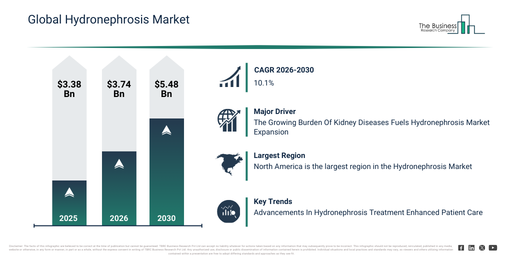
    The hydronephrosis market size has seen substantial growth recently. It is forecast to expand from $3.38 billion in 2025 to $3.74 billion in 2026, achieving a compound annual growth rate (CAGR) of 10.4%. The historical expansion of this market is attributable to advancements in diagnostic imaging technologies, an increasing incidence of kidney stones, greater awareness of renal disorders, the development of hospital infrastructure, and the wider availability of surgical intervention options.

    The hydronephrosis market is anticipated to experience significant expansion in the coming years, projected to reach $5.48 billion by 2030, demonstrating a compound annual growth rate (CAGR) of 10.1%. This growth during the forecast period can be attributed to factors such as an increasing aging population, the rising prevalence of chronic kidney diseases, greater adoption of precision medicine approaches, the expansion of advanced urology treatment centers, and a heightened focus on early-stage diagnosis. Major trends observed in this period include the growing utilization of advanced imaging diagnostics, an increase in minimally invasive treatment techniques, an intensified focus on early disease detection, the broadening of integrated diagnostic and treatment pathways, and enhanced monitoring of renal function.

    Get A Free Sample Report With In-Depth Market Insights:

    https://thebusinessresearchcompany.com/sample_request?id=96924517&type=smp&name=Hydronephrosis%20Market%20Report%202026&utm_source=Blogs&utm_medium=Paid&utm_campaign=Oct_PR

    Hydronephrosis Market Growth Catalysts And Demand Drivers

    An anticipated increase in kidney disease cases is set to drive the expansion of the hydronephrosis market moving ahead. Renal disease, also termed nephropathy, encompasses various ailments that harm the kidneys, hindering their capacity to efficiently filter blood. The growing occurrence of kidney diseases stems from multiple factors, including the escalating rates of diabetes and hypertension, obesity, an older demographic, and hereditary and ancestral influences. Treatment for hydronephrosis involves resolving the root cause of the urinary blockage, potentially through pharmaceuticals, surgical procedures, or alternative treatments aimed at re-establishing typical urine flow. As an illustration, in June 2023, a report from Kidney Research UK, a non-profit organization based in the UK, indicated that approximately 7.2 million individuals in the UK are currently afflicted with chronic kidney disease, accounting for more than 10% of the populace. Among these, 3.25 million suffer from advanced forms of the condition, with an additional 3.9 million experiencing it in its nascent phases. Projections suggest that by 2033, the count of persons impacted by chronic kidney disease will increase to 7.61 million. Consequently, the expanding prevalence of kidney diseases is fueling the growth of the hydronephrosis market.

    Hydronephrosis Market Segment Performance And Emerging Opportunities

    The hydronephrosis market covered in this report is segmented –

    1) By Type: Unilateral Hydronephrosis, Bilateral Hydronephrosis

    2) By Indication: Intrinsic, Extrinsic

    3) By Diagnosis: Laboratory Test, Imaging

    4) By Treatment: Shock Wave Lithotripsy, Laparoscopy, Bladder Catheterization, Other Treatments

    Subsegments:

    1) By Unilateral Hydronephrosis: Congenital Unilateral Hydronephrosis, Acquired Unilateral Hydronephrosis, Obstructive Unilateral Hydronephrosis, Non-Obstructive Unilateral Hydronephrosis

    2) By Bilateral Hydronephrosis: Congenital Bilateral Hydronephrosis, Acquired Bilateral Hydronephrosis, Obstructive Bilateral Hydronephrosis, Non-Obstructive Bilateral Hydronephrosis

    Hydronephrosis Market Trends Shaping Long-Term Demand

    Leading companies in the hydronephrosis market are actively developing innovative products, such as drainage catheters, to enhance patient care by offering efficient and minimally invasive solutions for urine removal from the kidneys. Drainage catheters are medical devices employed to extract fluids like urine or blood from the body, aiming to relieve pressure or prevent fluid buildup. For example, in October 2024, Argon Medical Devices Inc., a US-based manufacturer specializing in medical products, launched the SKATER mini-loop drainage catheter. This catheter is a medical device designed for the minimally invasive drainage of unwanted fluid collections in the body. It is inserted through the skin with the aid of imaging guidance and features a loop that is 40% smaller, ensuring secure placement and effective drainage from smaller cavities. Recognized for its durability, kink resistance, and compatibility with alcohol, this catheter improves usability in interventional procedures. By expanding Argon’s drainage portfolio, the SKATER Mini-Loop seeks to improve patient outcomes and streamline the drainage process for healthcare professionals.

    Hydronephrosis Market Key Players: Which Companies Lead Industry Competition?

    Major companies operating in the hydronephrosis market are Boston Scientific Corporation, Medtronic PLC, Cook Medical, Coloplast A/S, B. Braun Group, KARL STORZ SE & Co. KG, Olympus Corporation, Richard Wolf GmbH, Teleflex Incorporated, BD, Terumo Corporation, UroGen Pharma Ltd., Urologix Inc., C. R. Bard, ConvaTec Group PLC, AngioDynamics Inc., Merit Medical Systems Inc., NxStage Medical Inc., Fresenius Medical Care, Nipro Corporation

    View The Full Hydronephrosis Market Report:

    https://thebusinessresearchcompany.com/report/hydronephrosis-global-market-report?utm_source=Blogs&utm_medium=Paid&utm_campaign=Oct_PR

    Hydronephrosis Market Regional Split: Which Areas Are Fueling Growth?

    North America was the largest region in the hydronephrosis market in 2025. The regions covered in the hydronephrosis market report are Asia-Pacific, South East Asia, Western Europe, Eastern Europe, North America, South America, Middle East, Africa.

    Reach Out To Our Team:

    The Business Research Company: https://www.thebusinessresearchcompany.com/

    Americas: +1 310-496-7795

    Asia: +44 7882 955267 & +91 8897263534

    Europe: +44 7882 955267

    Email us at: marketing@tbrc.info

    Follow us on:

    LinkedIn: https://in.linkedin.com/company/the-business-research-company

    YouTube: https://www.youtube.com/channel/UC24_fI0rV8cR5DxlCpgmyFQ

    Global Market Model: https://www.thebusinessresearchcompany.com/global-market-model
  • Hydrocortisone Market Forecast 2026: Market Size, Competitive Landscape And Growth Drivers

    Hydrocortisone Market Forecast 2026: Market Size, Competitive Landscape And Growth Drivers

    Built to provide research that’s more actionable and strategically valuable, The Business Research Company’s 2026 market reports include market attractiveness analysis, total addressable market sizing, company benchmarking matrices, interactive Excel dashboards, broader supply chain intelligence, emerging startup tracking, and in-depth product insights.

    Hydrocortisone Market CAGR Outlook And Future Development

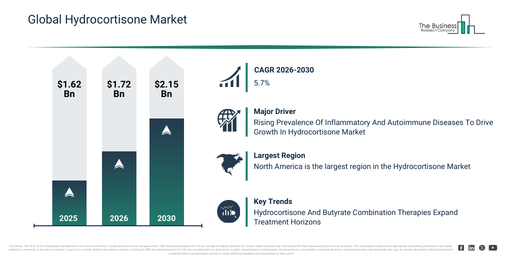
    The hydrocortisone market size has experienced considerable growth in recent years. It is projected to expand from $1.62 billion in 2025 to $1.72 billion in 2026, at a compound annual growth rate (CAGR) of 6.5%. The historical growth can be linked to the extensive use of corticosteroids in inflammatory diseases, high physician familiarity with hydrocortisone therapy, the availability of generic formulations, a rising prevalence of skin disorders, and its established role in the treatment of adrenal insufficiency.

    The hydrocortisone market is anticipated to experience robust expansion in the coming years, with its size projected to reach $2.15 billion by 2030, exhibiting a compound annual growth rate (CAGR) of 5.7%. This growth over the forecast period is fueled by several factors, including the increasing occurrence of autoimmune and respiratory ailments, the rise in self-medication using over-the-counter (OTC) creams, advancements in delivery systems, an expanding elderly population, and improved accessibility through online pharmacies. Significant trends expected during this period involve a heightened demand for topical corticosteroids in dermatology, increased adoption of low-dose and OTC hydrocortisone products, broader application of hydrocortisone in chronic inflammatory conditions, a growing preference for extended-release oral formulations, and an intensified focus on developing safer long-term corticosteroid therapies.

    Get A Free Sample Report With In-Depth Market Insights:

    https://thebusinessresearchcompany.com/sample_request?id=94568551&type=smp&name=Hydrocortisone%20Market%20Report%202026&utm_source=Blogs&utm_medium=Paid&utm_campaign=Oct_PR

    Hydrocortisone Market Opportunity Drivers: What’s Unlocking New Revenue Potential?

    The growing occurrence of inflammatory and autoimmune disorders is projected to boost the expansion of the hydrocortisone market in the future. These conditions involve the immune system mistakenly attacking the body’s own tissues, leading to ongoing inflammation and tissue harm. The increased use of treatments for inflammatory and autoimmune diseases is a result of their rising incidence and ongoing progress in medical treatments. Hydrocortisone finds application in these conditions, such as severe asthma attacks, to swiftly decrease airway inflammation and enhance respiration, usually given intravenously in urgent situations. As an illustration, in August 2024, Public Health Scotland, a national organization based in Scotland, reported that in 2023, the Scottish Multiple Sclerosis Register (SMSR) registered 455 newly diagnosed MS patients. Consequently, the rising prevalence of inflammatory and autoimmune diseases is set to fuel the growth of the hydrocortisone market. The increasing number of older people globally is anticipated to propel the hydrocortisone market’s growth in the coming years. An aging population signifies an expanding segment of elderly individuals within a society, driven by longer life expectancies and lower birth rates. This demographic shift is accelerating due to medical advancements that have prolonged human lives. Hydrocortisone is utilized by this demographic to mitigate inflammation and address various ailments like arthritis, adrenal insufficiency, and skin conditions. For example, in January 2024, the Population Reference Bureau, a US-based non-profit organization, stated that the population of Americans aged 65 and above is projected to increase from 58 million in 2022 to 82 million by 2050, representing a 47% surge. This means the proportion of this age group within the total U.S. population will expand from 17% to 23% over the same timeframe. Hence, the increasing aging population is a significant factor driving the expansion of the hydrocortisone market.

    Hydrocortisone Market Segment Landscape And Growth Outlook

    The hydrocortisone market covered in this report is segmented –

    1) By Type: Cream, Injection, Tablet

    2) By Route Of Administration: Parenteral, Oral, Topical

    3) By Application: Adrenocortical Dysfunction, Rheumatoid Arthritis, Dermatitis, Asthma And Chronic Obstructive Pulmonary Disease, Other Applications

    4) By Distribution Channel: Hospital Pharmacies, Retail Pharmacies, Online Pharmacies

    Subsegments:

    1) By Cream: Topical Hydrocortisone Cream (0.5%, 1%, 2.5%), Hydrocortisone Ointment

    2) By Injection: Hydrocortisone Sodium Succinate Injection, Hydrocortisone Acetate Injection

    3) By Tablet: Oral Hydrocortisone Tablets (5mg, 10mg, 20mg), Extended-Release Hydrocortisone Tablets

    Hydrocortisone Market Innovation Trends Shaping Future Development

    Leading companies within the hydrocortisone market are increasingly focusing on combination therapies, such as lotions incorporating butyrate active ingredients, to boost treatment efficacy and diversify their product portfolios. Hydrocortisone combined with butyrate lotion offers a promising synergistic approach to managing skin conditions by leveraging hydrocortisone’s anti-inflammatory properties alongside butyrate’s immunomodulatory effects and its potential to improve skin barrier function. As an illustration, in November 2023, J. Molner AS., an Estonian-based pharmaceutical company, introduced Hydrocortisone Butyrate Lotion, 0.1%, in the United States. This launch signifies a crucial step in its strategy to build a commercial platform for its pharmaceutical products in global markets. The newly available lotion is specifically formulated to treat inflammatory skin conditions, highlighting Molner’s commitment to expanding its international market presence.

    Hydrocortisone Market Competitive Landscape: Who Leads The Industry?

    Major companies operating in the hydrocortisone market are Pfizer Inc., Johnson & Johnson, Bayer AG, GlaxoSmithKline plc, Viatris Inc., Teva Pharmaceutical Industries Ltd., Sandoz AG, Fresenius Kabi AG, Sun Pharmaceutical Industries Ltd., Hikma Pharmaceuticals PLC, Aspen Pharmacare Holdings Limited, Macleods Pharmaceuticals Limited, Glenmark Pharmaceuticals Ltd., Torrent Pharmaceuticals Limited, Taro Pharmaceutical Industries Ltd., Lannett Company Inc., Almirall SA, Leo Pharma AS, Perrigo Company plc, Recordati S.p.A.

    View The Full Hydrocortisone Market Report:

    https://thebusinessresearchcompany.com/report/hydrocortisone-global-market-report?utm_source=Blogs&utm_medium=Paid&utm_campaign=Oct_PR

    Hydrocortisone Market Top Region: Where Does Most Revenue Come From?

    North America was the largest region in the hydrocortisone market in 2025. Asia-Pacific is expected to be the fastest-growing region in the forecast period. The regions covered in the hydrocortisone market report are Asia-Pacific, South East Asia, Western Europe, Eastern Europe, North America, South America, Middle East, Africa.

    Reach Out To Our Team:

    The Business Research Company: https://www.thebusinessresearchcompany.com/

    Americas: +1 310-496-7795

    Asia: +44 7882 955267 & +91 8897263534

    Europe: +44 7882 955267

    Email us at: marketing@tbrc.info

    Follow us on:

    LinkedIn: https://in.linkedin.com/company/the-business-research-company

    YouTube: https://www.youtube.com/channel/UC24_fI0rV8cR5DxlCpgmyFQ

    Global Market Model: https://www.thebusinessresearchcompany.com/global-market-model