Blog

  • Cardiovascular Health Supplements Market Forecast 2024: Forecast Market Size, Drivers And Key Segments   

    Cardiovascular Health Supplements Market Forecast 2024: Forecast Market Size, Drivers And Key Segments  

    The Business Research Company’s global market reports are now updated with the latest market sizing information for the year 2024 and forecasted to 2033

    Market Overview

    • Current Size: The cardiovascular health supplements market will grow from $11.67 billion in 2023 to $13.11 billion in 2024, with a CAGR of 12.3%.
    • Future Projections: Expected to reach $20.98 billion by 2028, growing at a CAGR of 12.5%.

    Historical Growth Drivers

    • Less Invasive Techniques: Shift towards less invasive surgical methods and increased demand for structural heart devices.
    • Healthcare Training: Ongoing training and education programs for healthcare professionals.
    • Healthcare Expenditure: Rising investments in healthcare and increased awareness of heart health.

    Future Growth Drivers

    • Aging Population: Growing number of elderly individuals requiring cardiovascular support.
    • Awareness and Screening: Increased awareness about heart health and implementation of screening programs.
    • Reimbursement Policies: Favorable policies for structural heart procedures and timely regulatory approvals.

    View More On The Cardiovascular Health Supplements Market Report 2024 –
    https://www.thebusinessresearchcompany.com/report/cardiovascular-health-supplements-global-market-report

    Rising Prevalence of Heart-Related Diseases

    • Cardiovascular Diseases (CVD): Conditions like heart failure, coronary heart disease, and related illnesses are on the rise due to factors like inactivity, poor diet, smoking, and stress.
    • Statistics: The British Heart Foundation reported 17,639 deaths from heart and circulatory diseases in Scotland in 2021, up from 17,448 in 2020.

    Major Market Players

    • Key Companies: Pfizer, Johnson & Johnson, Amway, Herbalife Nutrition, General Nutrition Centers (GNC), NOW Health Group, and others.
    • Focus Areas: Companies are developing new products and natural ingredients to address cardiovascular health needs.

    Innovations and New Product Developments

    • Advanced Plant Sterols: Introduction of natural plant products like dispersible phytosterols aimed at lowering cholesterol levels.
      • Example: Nutrartis launched Cardiosmile in September 2023, a liquid supplement containing water-dispersible phytosterols for cholesterol management.

    Strategic Acquisitions

    • Sanofi and Qunol: In September 2023, Sanofi acquired Qunol to enhance its position in the vitamin and supplement market, focusing on cardiovascular health supplements for the aging population.

    Market Segmentation

    • By Type: Natural Supplements, Synthetic Supplements.
    • By Ingredient: Vitamins and Minerals, Herbs and Botanicals, Omega Fatty Acids, Coenzyme Q10 (CoQ10), Other Ingredients.
    • By Form: Liquid, Tablet, Capsules, Softgels, Powder, Other Forms.
    • By Distribution Channel: Offline, Online.

    Regional Insights

    • Asia-Pacific: The largest market in 2023, with continued dominance expected in the forecast period.

    The cardiovascular health supplements market is expanding rapidly, driven by increasing heart disease prevalence, advancements in supplement formulations, and strategic market moves by major players. The emphasis on natural ingredients and innovations in product development will likely sustain growth in this sector.

    Request A Sample Of The Global Cardiovascular Health Supplements Market Report 2024:
    https://www.thebusinessresearchcompany.com/sample_request?id=15533&type=smp

  • Growth Trajectory Of The Cardiovascular Clinical Trials Market 2024-2033

    Growth Trajectory Of The Cardiovascular Clinical Trials Market 2024-2033

    The Business Research Company’s global market reports are now updated with the latest market sizing information for the year 2024 and forecasted to 2033

    Market Overview

    • 2023 Market Size: $4.99 billion
    • 2024 Projected Market Size: $5.34 billion
    • CAGR (2023-2024): 7.0%

    The cardiovascular clinical trials market has shown strong growth recently, driven by increased myocardial infarction rates, advancements in genomics, and a growing demand for new drug development. This trend is expected to continue with significant growth in the upcoming years.

    Future Market Growth

    • 2028 Projected Market Size: $7.03 billion
    • CAGR (2024-2028): 7.1%

    The market’s growth is anticipated to be supported by factors such as an aging population, emerging markets, precision medicine, digital health technologies, and a focus on patient-centric trials. Key trends include increased collaborations, technological advancements, and innovations in product development.

    View More On The Cardiovascular Clinical Trials Market Report 2024 –
    https://www.thebusinessresearchcompany.com/report/cardiovascular-clinical-trials-global-market-report

    Key Drivers and Trends

    • Rising Cardiovascular Diseases: The increasing incidence of cardiovascular diseases is a major driver for market growth. Conditions like coronary artery disease, heart failure, and stroke are becoming more prevalent due to sedentary lifestyles, unhealthy diets, and other risk factors. Cardiovascular clinical trials are crucial for developing new drugs to manage these conditions. For example, the prevalence of coronary heart disease in U.S. adults rose from 4.6% in 2020 to 4.9% in 2021, according to the CDC.
    • Strategic Partnerships: Companies are forming strategic partnerships to enhance their capabilities. In September 2023, Cereno Scientific AB partnered with Clinical Trial Consultants (CTC) to conduct a Phase I study for CS014, a histone deacetylase inhibitor. This collaboration will support the development and execution of the trial in Sweden.
    • Acquisitions: Acquisitions are bolstering market capabilities. For instance, AstraZeneca acquired CinCor Pharma in February 2023 for $1.8 billion to strengthen its cardiovascular and renal therapy portfolio, including the addition of baxdrostat for treatment-resistant hypertension.

    Market Segmentation

    • By Phase:
      • Phase I
      • Phase II
      • Phase III
      • Phase IV
    • By Study Design:
      • Interventional
      • Observational
      • Expanded Access
    • By Indication:
      • Acute Coronary Syndrome
      • Coronary Artery Disease
      • Ischemic Heart Disease
      • Pulmonary Arterial Hypertension
      • Stroke
      • Cardiac Arrhythmias
      • Heart Failure
      • Other Indications

    Regional Insights

    • North America: The largest market in 2023, driven by advanced healthcare infrastructure and high research activity.
    • Asia-Pacific: Expected to be the fastest-growing region due to increasing healthcare investments, expanding clinical research capabilities, and a large patient population.

    Conclusion
    The cardiovascular clinical trials market is set for robust growth, driven by the rising prevalence of cardiovascular diseases, strategic partnerships, and significant acquisitions. Technological advancements and a focus on patient-centric approaches will further enhance market development.

    Request A Sample Of The Global Cardiovascular Clinical Trials Market Report 2024:
    https://www.thebusinessresearchcompany.com/sample_request?id=15532&type=smp

  • 5 Key Insights On The Genomics Services Market 2024

    5 Key Insights On The Genomics Services Market 2024

    The Business Research Company’s global market reports are now updated with the latest market sizing information for the year 2024 and forecasted to 2033

    As per The Business Research Company’s Genomics Services Global Market Report 2023, the genomics services market is expected to show significant growth in the forecast period.

    Market Overview

    • 2023 Market Size: $13.16 billion
    • 2024 Projected Market Size: $15.51 billion
    • CAGR (2023-2024): 17.9%

    The genomics services market has experienced rapid expansion due to technological advancements, such as next-generation sequencing, the increasing role of genomics in cancer research, and growing applications in agriculture and direct-to-consumer genomics testing.

    Future Market Growth

    • 2028 Projected Market Size: $30.07 billion
    • CAGR (2024-2028): 18%

    The market is expected to continue growing rapidly, driven by the adoption of precision medicine, increased research on complex diseases, rising interest in microbiome research, and the integration of genomics into routine healthcare.

    View More On The Genomics Services Market Report 2024 –

    https://www.thebusinessresearchcompany.com/report/genomics-services-global-market-report

    Key Trends and Drivers

    • Gene Therapy Demand: The increasing demand for gene therapy, which addresses genetic disorders by targeting underlying genetic causes, is a significant driver of market growth. Genomic services play a crucial role in gene therapy by ensuring targeted treatments and accurate characterization of viral vectors.
    • Single-Cell Genomics: Advancements in single-cell genomics are allowing for more precise analysis at the cellular level, driving the market forward.
    • Multi-Omics Integration: The integration of genomics with other omics disciplines, such as proteomics and metabolomics, is expanding the scope and applications of genomic services.
    • AI and Machine Learning: The incorporation of AI and machine learning in genomics is enhancing data analysis and interpretation, leading to more personalized and accurate healthcare solutions.
    • Cloud-Based Genomics Platforms: Cloud platforms are providing scalable and accessible solutions for genomic data storage and analysis, facilitating collaboration and innovation.

    Impact of Gene Therapy on the Market

    • Growth in Gene Therapy: The increasing demand for gene therapy is expected to significantly propel the genomics services market. For instance, the gene therapy pipeline expanded by 6% in 2022, with 3,726 therapies under development. This growth underscores the critical role of genomic services in supporting gene therapy research and applications.

    Leading Companies and Innovations

    • Major Players: Thermo Fisher Scientific Inc., Danaher Corporation, Laboratory Corporation of America Holdings, Quest Diagnostics Incorporated, and Eurofins Scientific SE are among the key players driving innovation in the genomics services market.
    • Advanced Long-Read Sequencing Services: Companies are expanding their product offerings with advanced long-read sequencing services, which provide more comprehensive and accurate genomic analysis. For example, Clinical-Microbiomics A/S launched advanced long-read sequencing services in April 2024, setting new standards in microbial analysis and microbiome research.

    Notable Acquisitions

    • Frontage Laboratories and Ocean Ridge Biosciences: In April 2021, Frontage Laboratories Inc. acquired Ocean Ridge Biosciences to strengthen its presence in the genomics services market. This acquisition is expected to enhance Frontage’s offerings, providing more affordable and accurate genomics services.

    Market Segmentation

    • By Product: Instruments or Systems or Software, Consumables and Reagents
    • By Services Type: Gene Expression Services (RNASeq), Epigenomics Services, Genotyping, Next-Generation Sequencing, Sanger’s Sequencing, Other Service Types
    • By End-User: Research Institutes, Healthcare Facilities and Diagnostic Centers, Pharmaceutical and Biotechnological Companies, Contract Research Organizations (CROs), Other End Users

    Regional Insights

    • North America: Dominated the genomics services market in 2023, driven by advanced research infrastructure and significant investment in genomics.
    • Asia-Pacific: Expected to be the fastest-growing region during the forecast period, fueled by increasing research activities and healthcare advancements.

    Conclusion

    The genomics services market is poised for continued growth, driven by advancements in gene therapy, single-cell genomics, and the integration of AI in genomics. As the demand for personalized medicine and comprehensive genomic analysis increases, the market will likely see significant innovation and expansion.

    Request A Sample Of The Global Genomics Services Market Report 2024:
    https://www.thebusinessresearchcompany.com/sample_request?id=15576&type=smp

  • Global Genomic Data Analysis And Interpretation Market Analysis 2024: Size, Share, And Key Trends

    Global Genomic Data Analysis And Interpretation Market Analysis 2024: Size, Share, And Key Trends

    The Business Research Company’s global market reports are now updated with the latest market sizing information for the year 2024 and forecasted to 2033

    As per The Business Research Company’s Genomic Data Analysis And Interpretation Global Market Report 2023, the genomic data analysis and interpretation market is expected to show significant growth in the forecast period.

    Market Overview

    • 2023 Market Size: $1.14 billion
    • 2024 Projected Market Size: $1.29 billion
    • CAGR (2023-2024): 13.1%

    The genomic data analysis and interpretation market has seen significant growth, fueled by the increasing proliferation of direct-to-consumer genetic testing, rising public interest in genomics, advancements in next-generation sequencing (NGS) technologies, and the integration of genomics into oncology practices.

    Future Market Growth

    • 2028 Projected Market Size: $2.14 billion
    • CAGR (2024-2028): 13.4%

    The market is expected to continue its upward trajectory, driven by the rising demand for personalized medicine, increased research and development activities, the adoption of high-throughput sequencing technologies, and expanding applications of genomics in various fields, including agriculture.

    View More On The Genomic Data Analysis And Interpretation Market Report 2024 –

    https://www.thebusinessresearchcompany.com/report/genomic-data-analysis-and-interpretation-global-market-report

    Key Trends and Drivers

    • Cancer Surge: The increasing number of cancer cases is a major driver of growth in the genomic data analysis and interpretation market. Genomic analysis helps identify genetic mutations and biomarkers, leading to personalized treatment strategies. For example, in 2021, there were 1.9 million new cancer cases diagnosed in the US, highlighting the critical role of genomic analysis in cancer treatment.
    • Multi-Omics Integration: The integration of genomic data with other omics fields (like proteomics and metabolomics) is enhancing the depth of analysis and paving the way for more comprehensive insights into biological systems.
    • AI and Machine Learning: These technologies are transforming genomic data analysis by improving the accuracy and speed of data interpretation, leading to more precise diagnostics and therapeutic strategies.
    • Cloud-Based Platforms: The shift towards cloud-based genomic data analysis platforms is enabling scalable and accessible solutions, facilitating collaboration and innovation across the industry.
    • Expansion in Pharmacogenomics: The growing focus on pharmacogenomics, which studies how genes affect a person’s response to drugs, is expanding the applications of genomic data analysis in personalized medicine.

    Impact of Cancer on Market Growth

    • Cancer Cases Drive Demand: The rising incidence of cancer, due to factors like an aging population and lifestyle changes, is significantly driving the genomic data analysis market. Genomic data analysis plays a crucial role in identifying genetic mutations and developing personalized treatment strategies, which are essential for improving patient outcomes.

    Leading Companies and Innovations

    • Major Players: Key companies in the market include F. Hoffmann-La Roche AG, Thermo Fisher Scientific Inc., Agilent Technologies Inc., Illumina Inc., and Bio-Rad Laboratories Inc. These companies are at the forefront of developing innovative genomic data analysis tools and services.
    • Advanced Long-Read Sequencing Services: Companies are focusing on advanced long-read sequencing services, which provide more comprehensive and accurate genomic analysis. For instance, Clinical-Microbiomics A/S launched new long-read sequencing services in April 2024, offering higher-resolution insights into microbial communities and supporting more detailed genomic analysis.

    Notable Acquisitions

    • Bionano Genomics and BioDiscovery: In October 2021, Bionano Genomics Inc. acquired BioDiscovery Inc. for $100 million, enhancing its genomic analysis capabilities and expanding its portfolio to include optical genome mapping (OGM) technology. This acquisition underscores the importance of strategic collaborations in driving market growth.

    Market Segmentation

    • By Product: Software, Services
    • By Application: Functional Genomics, Real-time Polymerase Chain Reaction (PCR), Transfection, Single Nucleotide Polymorphisms (SNP) Analysis, Mutational Analysis, Microarray Analysis, Ribonucleic Acid (RNA) Interference, Pathway Analysis
    • By End User: Research and Academic Institutions, Biotechnology and Biopharmaceutical Companies, Hospitals and Diagnostic Laboratories, Contract Research Organizations, Forensic Laboratories, Other End Users

    Regional Insights

    • North America: Dominated the market in 2023, driven by advanced research infrastructure and significant investment in genomics.
    • Asia-Pacific: Expected to be the fastest-growing region during the forecast period, fueled by increasing research activities and healthcare advancements.

    Conclusion

    The genomic data analysis and interpretation market is poised for continued growth, driven by the rising incidence of cancer, advancements in sequencing technologies, and the integration of AI and machine learning. As personalized medicine and comprehensive genomic analysis become more prevalent, the market will likely see significant innovation and expansion.

    Request A Sample Of The Global Genomic Data Analysis And Interpretation Market Report 2024:
    https://www.thebusinessresearchcompany.com/sample_request?id=15575&type=smp

  • Key Insights On The Genetic Toxicology Market 2024 – Size, Driver, And Major Players

    Key Insights On The Genetic Toxicology Market 2024 – Size, Driver, And Major Players

    The Business Research Company’s global market reports are now updated with the latest market sizing information for the year 2024 and forecasted to 2033

    As per The Business Research Company’s Genetic Toxicology Global Market Report 2023, the genetic toxicology market is expected to show significant growth in the forecast period.

    Market Overview

    • Significant growth in recent years: The genetic toxicology testing market grew from $1.48 billion in 2023 to $1.63 billion in 2024, with a 10% CAGR.
    • Projected expansion: By 2028, the market is expected to reach $2.4 billion, growing at a 10.2% CAGR.

    Historical Growth Drivers

    • Public health crises: Rising health concerns have fueled the demand for genetic toxicology testing.
    • Globalization: Increased cross-border trade necessitates rigorous testing solutions.
    • Personalized medicine: A focus on tailored healthcare has led to more genetic testing.
    • Drug development: The growing number of drugs requires extensive genetic toxicity testing.

    View More On The Genetic Toxicology Market Report 2024 – https://www.thebusinessresearchcompany.com/report/genetic-toxicology-testing-global-market-report

    Future Growth Drivers

    • Testing for novel foods: Rising concerns about food safety will drive demand for genetic toxicology testing.
    • Environmental and health concerns: Increased awareness of environmental risks will boost the market.
    • Regulatory scrutiny: Stricter regulations will lead to more rigorous testing protocols.
    • In vitro methods: These methods are increasingly being adopted for their efficiency.
    • High-throughput screening: The rise of these platforms will enhance testing capabilities.

    Role of Personalized Medicine

    • Demand surge: Personalized medicine, which tailors treatments to individual patients, is a significant growth driver.
    • Genetic breakthroughs: Advances in genetics have fueled the rise of personalized medicine.
    • FDA approvals: In 2023, the FDA approved 16 new personalized medicines, up from six in 2022.
    • Impact on genetic toxicology: This testing provides critical data on genetic variability and treatment responses, supporting personalized medicine initiatives.

    Major Market Players

    • Key companies: F. Hoffmann-La Roche Ltd., Thermo Fisher Scientific Inc., Abbott Laboratories, Merck KGaA, and others dominate the market.
    • Focus on innovation: Companies are developing new drug screening platforms to enhance testing accuracy.

    Innovations in Drug Screening

    • Phenotypic drug screening: A method focusing on the effects of compounds in living organisms is revolutionizing the market.
    • Creative Biogene’s zebrafish models: Launched in August 2022, these models support drug discovery and toxicology research, offering a platform to assess drug toxicity.

    Strategic Acquisitions

    • Charles River Laboratories and Vigene Biosciences: In June 2021, Charles River acquired Vigene Biosciences for $292.5 million, expanding its gene therapy capabilities.
    • Focus on CDMO sectors: The acquisition bolsters Charles River’s presence in the cell and gene therapy contract development and manufacturing organization sectors.

    Market Segmentation

    • By Type: In Vitro, In Vivo.
    • By Product: Services, Reagents and Consumables, Assays.
    • By Application: Healthcare, Food, Cosmetics, Agriculture, and other industries.

    Regional Insights

    • North America: The largest market in 2023.
    • Asia-Pacific: Expected to be the fastest-growing region during the forecast period.

    Request A Sample Of The Global Genetic Toxicology Market Report 2024:
    https://www.thebusinessresearchcompany.com/sample_request?id=15574&type=smp

  • Understand How The Gastrointestinal Pathogen Testing Market Is Poised To Grow Through 2024-2033

    Understand How The Gastrointestinal Pathogen Testing Market Is Poised To Grow Through 2024-2033

    The Business Research Company’s global market reports are now updated with the latest market sizing information for the year 2024 and forecasted to 2033

    As per The Business Research Company’s Gastrointestinal Pathogen Testing Global Market Report 2023, the gastrointestinal pathogen testing market is expected to show significant growth in the forecast period.

    Market Overview

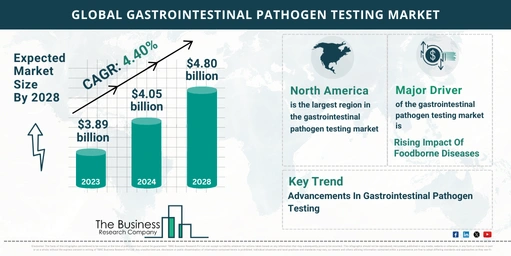
    • 2023 Market Size: $3.89 billion
    • 2024 Projected Market Size: $4.05 billion
    • CAGR (2023-2024): 4.2%

    The gastrointestinal pathogen testing market has grown steadily, driven by the increased prevalence of gastrointestinal infections, heightened awareness of foodborne illnesses, globalization leading to travel-related infections, regulatory initiatives for food safety, and a rise in healthcare expenditure. The demand for rapid and accurate diagnostic solutions has further bolstered market growth.

    Future Market Growth

    • 2028 Projected Market Size: $4.80 billion
    • CAGR (2024-2028): 4.4%

    The market is expected to maintain steady growth in the coming years. Factors such as the global increase in gastrointestinal infections, the importance of early detection and treatment, expanding healthcare infrastructure, and the rising demand for point-of-care testing solutions will drive growth. Additionally, stricter food safety regulations and continuous R&D efforts will play crucial roles.

    View More On The Gastrointestinal Pathogen Testing Market Report 2024 –
    https://www.thebusinessresearchcompany.com/report/gastrointestinal-pathogen-testing-global-market-report

    Key Trends and Drivers

    • Impact of Foodborne Diseases: The rising incidence of foodborne diseases is a significant driver for the gastrointestinal pathogen testing market. These diseases, caused by consuming contaminated food or beverages, have increased due to changes in food production, distribution, and inadequate safety measures. Gastrointestinal pathogen testing is essential in identifying specific pathogens, guiding treatment, tracking outbreaks, and preventing the spread of these diseases. For example, England and Wales reported 167 cases of listeriosis in 2022, up from 160 cases in 2021, highlighting the ongoing need for effective testing solutions.
    • Rapid Testing Methods: The market is witnessing a shift towards rapid testing methods that offer quicker diagnosis, aiding in timely treatment and outbreak control. These advancements are crucial in managing the spread of gastrointestinal infections.
    • Molecular Diagnostics: The adoption of molecular diagnostic techniques is increasing due to their accuracy and speed. These methods are becoming more common in both traditional and non-traditional healthcare settings, providing more accessible and efficient testing solutions.
    • Automation and Robotics: Advancements in automation and robotics are streamlining testing processes, reducing human error, and increasing throughput, which is particularly important in high-demand scenarios like foodborne illness outbreaks.
    • Novel Biomarkers: The emergence of novel biomarkers for pathogen detection is enhancing the accuracy and comprehensiveness of gastrointestinal testing, allowing for better disease management and prevention strategies.
    • AI and Machine Learning: The integration of AI and machine learning algorithms is revolutionizing pathogen detection, enabling faster and more precise identification of infections, which can lead to improved patient outcomes.

    Leading Companies and Innovations

    • Major Players: Thermo Fisher Scientific Inc., Abbott Laboratories, F. Hoffmann-La Roche Ltd., Becton Dickinson and Company, Hologic Inc., bioMérieux S.A., Bio-Rad Laboratories Inc., QIAGEN N.V., and others dominate the market, offering a wide range of diagnostic solutions.
    • Metagenomic Diagnostic Tests: Companies are focusing on developing advanced diagnostic solutions like metagenomic diagnostic tests. For example, in April 2024, Microba Life Sciences launched MetaPanel, a test designed to identify a wide range of gastrointestinal pathogens with high accuracy. This test covers 175 pathogen targets and uses next-generation sequencing (NGS) technology, offering comprehensive diagnostic capabilities.

    Strategic Acquisitions

    • SSID and TechLab Acquisition: In August 2022, SSI Diagnostica Group acquired TechLab, a move aimed at expanding SSID’s infectious disease product portfolio and accelerating growth in the US market. This acquisition strengthens SSID’s commercial and manufacturing capabilities, particularly in the crucial US market.

    Market Segmentation

    • By Pathogen Type: Bacteria, Viruses, Parasites
    • By Test Type: Molecular Tests, Culture, Biochemical Tests, Other Test Types
    • By Panel Type: Syndromic Full Multiplex Panels, Other Panel Types
    • By End-User: Hospitals, Diagnostic Laboratories, Point-Of-Care, Other End Users

    Regional Insights

    • North America: The largest region in the gastrointestinal pathogen testing market in 2023, driven by strong healthcare infrastructure and significant investment in diagnostic technologies.
    • Asia-Pacific: Expected to be the fastest-growing region during the forecast period, propelled by expanding healthcare infrastructure, rising awareness of food safety, and increasing prevalence of gastrointestinal infections.

    Conclusion

    The gastrointestinal pathogen testing market is set to grow steadily, driven by the increasing incidence of gastrointestinal infections and foodborne diseases, along with advancements in testing technologies. The ongoing development of rapid and accurate diagnostic solutions, combined with strategic industry acquisitions, will further enhance market growth.

    Request A Sample Of The Global Gastrointestinal Pathogen Testing Market Report 2024:
    https://www.thebusinessresearchcompany.com/sample_request?id=15571&type=smp

  • Global Food Allergen Testing Market Analysis 2024: Size, Share, And Key Trends

    Global Food Allergen Testing Market Analysis 2024: Size, Share, And Key Trends

    The Business Research Company’s global market reports are now updated with the latest market sizing information for the year 2024 and forecasted to 2033

    As per The Business Research Company’s Food Allergen Testing Global Market Report 2023, the food allergen testing market is expected to show significant growth in the forecast period.

    Market Overview

    • Recent Growth: The food allergen testing market expanded from $0.91 billion in 2023 to $1.01 billion in 2024, with a CAGR of 10.3%.
    • Future Projections: The market is anticipated to reach $1.5 billion by 2028, growing at a 10.5% CAGR.

    Historical Growth Drivers

    • Increased food allergies: A rise in food allergies has heightened the need for thorough allergen testing.
    • Stringent regulations: Governments worldwide are enforcing stricter food safety regulations.
    • Consumer awareness: People are more conscious of food allergens and demand safer products.
    • Global food supply chains: As food trade becomes more globalized, rigorous testing is essential.
    • Technological advancements: Innovations in testing technologies have enhanced the accuracy and speed of allergen detection.

    View More On The Food Allergen Testing Market Report 2024 –
    https://www.thebusinessresearchcompany.com/report/food-allergen-testing-global-market-report

    Future Growth Drivers

    • Expanding regulations: New and evolving food industry regulations will continue to drive market growth.
    • Allergen-free products: There’s a growing demand for products free from common allergens.
    • Technological innovations: Continued advancements in testing methods will improve detection capabilities.
    • Global increase in food allergies: Rising incidences of allergies will fuel the need for testing.
    • Focus on food safety: Quality assurance in food production is becoming increasingly critical.

    Impact of Rising Food Allergies

    • Driving market growth: The rising incidence of food allergies, influenced by genetics, environmental factors, and dietary changes, is a key market driver.
    • CDC findings: In 2021, 6.2% of adults and 5.8% of children in the U.S. reported food allergies, highlighting the need for rigorous allergen testing.
    • Importance of testing: Accurate allergen testing prevents allergic reactions, protecting consumers with food sensitivities.

    Major Market Players

    • Leading companies: Thermo Fisher Scientific, Ecolab Inc., Eurofins Scientific, SGS SA, and others lead the market.
    • Innovation focus: Companies are developing new tests and technologies to stay competitive.

    Innovations in Allergen Testing

    • Rapid gluten tests: New immunochromatographic assays like the SENSIStrip Gluten PowerLine offer quick and accurate detection of gluten, reducing false negatives.
    • Key features: These tests use monoclonal antibodies for sensitive detection and include a hook line to avoid false-negative results.

    Strategic Acquisitions

    • ALS Limited’s expansion: In March 2024, ALS Limited acquired York Analytical Laboratories and Wessling Holding GmbH & Co. KG for $148.03 million.
    • Acquisition goals: Strengthen market presence, diversify services, and gain a competitive edge in the life sciences and analytical testing sectors.
    • Company profiles: York Analytical specializes in food intolerance and allergy testing, while Wessling Holding provides analytical services across various industries.

    Market Segmentation

    • By Test Type: Allergen Testing, Intolerance Testing.
    • By Technology: Biosensors, Immunoassay (ELISA), PCR, Other Technologies.
    • By Application: Seafood, Meat Products, Dairy, Beverages, Bakery, Baby Food, and more.

    Regional Insights

    • North America: The largest market in 2023.
    • Asia-Pacific: Expected to be the fastest-growing region in the forecast period.

    Request A Sample Of The Global Food Allergen Testing Market Report 2024:
    https://www.thebusinessresearchcompany.com/sample_request?id=15569&type=smp

  • Facial Injectable Global Market Outlook 2024-2033: Size And Growth Rate Analysis

    Facial Injectable Global Market Outlook 2024-2033: Size And Growth Rate Analysis

    The Business Research Company’s global market reports provide comprehensive analysis on the various markets in 27 industries across 60 geographies.

    Market Overview

    • 2023 Market Size: $12.45 billion
    • 2024 Projected Market Size: $13.74 billion
    • CAGR (2023-2024): 10.4%

    The facial injectable market has experienced rapid growth, driven by factors such as the aging population, increased consumer awareness, changing beauty standards, regulatory approvals, and advancements in injection techniques. The growing preference for non-surgical cosmetic procedures has also significantly contributed to market expansion.

    Future Market Growth

    • 2028 Projected Market Size: $20.50 billion
    • CAGR (2024-2028): 10.5%

    The market is expected to continue its rapid growth, fueled by rising demand for non-surgical procedures, expanding applications of facial injectables, and increasing customization in aesthetic treatments. Emerging markets and lifestyle changes, along with healthcare trends favoring minimally invasive techniques, will further drive growth.

    View More On The Facial Injectable Market Report 2024 –
    https://www.thebusinessresearchcompany.com/report/facial-injectable-global-market-report

    Key Trends and Drivers

    • Surging Demand for Cosmetic Procedures: The increasing demand for cosmetic procedures is a major driver of the facial injectable market. These procedures, which aim to enhance appearance with minimal disruption, are gaining popularity due to societal emphasis on aesthetics, advancements in medical technology, and a growing desire for self-improvement. For instance, in 2022, the UK saw a 102% increase in cosmetic procedures compared to 2021, reflecting the rising consumer interest in such treatments.
    • Long-Lasting Hyaluronic Fillers: Innovation in hyaluronic acid (HA) fillers is transforming the facial injectable market. These fillers, designed to offer natural-looking and long-lasting results, are becoming increasingly popular in minimally invasive aesthetic procedures. For example, Allergan’s JUVEDERM VOLUX XC, launched in January 2023, is specifically designed to enhance jawline definition and offers effects lasting up to twelve months, meeting the growing demand for durable and subtle results.
    • Combination Therapies: There is a growing trend toward combining different facial injectables and techniques to achieve more natural and personalized outcomes. This approach allows practitioners to address multiple aesthetic concerns simultaneously, enhancing patient satisfaction.
    • Minimally Invasive Techniques: The rise of minimally invasive techniques and devices is shaping the market, with patients increasingly opting for procedures that offer quicker recovery times and fewer side effects.
    • Personalization and Customization: The expansion of personalized treatment approaches is another key trend. Patients are seeking customized aesthetic treatments tailored to their specific needs, leading to the development of new products and techniques that allow for greater precision and individualized results.

    Leading Companies and Innovations

    • Major Players: AbbVie Inc., Sanofi S.A., Ipsen Pharma, Galderma S.A., Merz Pharma GmbH & Co. KGaA, Sinclair Pharma Plc, Revance Therapeutics Inc., Suneva Medical Inc., Prollenium Medical Technologies, and others are key players in the facial injectable market, offering a range of products and innovative solutions.
    • Product Innovation: Major companies are focusing on developing advanced facial injectable products that offer improved efficacy, safety, and patient satisfaction. Long-lasting hyaluronic fillers, such as JUVEDERM VOLUX XC, are examples of how innovation is driving market growth.

    Strategic Acquisitions

    • Prollenium Medical Technologies and SoftFil: In October 2022, Prollenium Medical Technologies acquired SoftFil, expanding its product offerings and strengthening its position in the aesthetic medicine industry. This acquisition enables Prollenium to provide a more comprehensive range of solutions, enhancing its ability to meet the growing demand for facial injectables.

    Market Segmentation

    • By Type: Botulinum Toxin, Collagen, Hyaluronic Acid, Calcium Hydroxyapatite, Polylactic Acid, Polymethyl-methacrylate Microspheres (PMMA), Fat Injection, Other Types
    • By Application: Wrinkle Reduction, Facelift, Acne Scar Treatment, Lipoatrophy Treatment, Lip Enhancement, Other Applications
    • By End-User: Hospitals and Ambulatory Surgery Centers, Dermatology and Cosmetic Clinics, Other End-Users

    Regional Insights

    • North America: The largest region in the facial injectable market in 2023, driven by high consumer demand, advanced healthcare infrastructure, and significant investments in aesthetic treatments.
    • Asia-Pacific: Expected to be the fastest-growing region during the forecast period, fueled by increasing disposable income, changing beauty standards, and a growing middle-class population with a strong interest in aesthetic procedures.

    Conclusion

    The facial injectable market is poised for continued rapid growth, driven by the rising demand for non-surgical cosmetic procedures and innovations in injectable products. Strategic industry acquisitions and the development of advanced, long-lasting fillers will further enhance market dynamics.

    Request A Sample Of The Global Facial Injectable Market Report 2024:
    https://www.thebusinessresearchcompany.com/sample_request?id=15567&type=smp

  • Global Cough Remedies Market Key Insights 2024-2033

    Global Cough Remedies Market Key Insights 2024-2033

    The Business Research Company’s global market reports are now updated with the latest market sizing information for the year 2024 and forecasted to 2033

    According to The Business Research Company’s Cough Remedies Global Market Report 2023, the cough remedies market is expected to show promising growth in the forecast period.

    Market Overview

    • 2023 Market Size: $10.19 billion
    • 2024 Projected Market Size: $11.06 billion
    • CAGR (2023-2024): 8.6%

    The cough remedies market has demonstrated robust growth due to factors such as increasing government healthcare expenditure, rising awareness of natural remedies, and growing vehicle emissions. The market is projected to expand significantly in the coming years.

    View More On The Cough Remedies Market Report 2024 –
    https://www.thebusinessresearchcompany.com/report/cough-remedies-global-market-report

    Future Market Growth

    • 2028 Projected Market Size: $15.44 billion
    • CAGR (2024-2028): 8.7%

    The forecasted growth is driven by the rising prevalence of respiratory diseases, an aging population, and ongoing innovations in cough treatments. The demand for over-the-counter (OTC) products and increasing air pollution further contribute to this growth.

    Key Drivers and Trends

    • Respiratory Diseases: The increase in respiratory diseases is a major driver for the cough remedies market. Conditions such as asthma and chronic obstructive pulmonary disease (COPD) are prevalent due to environmental pollutants and lifestyle factors. For example, in 2021, approximately 25 million people in the U.S. had asthma, and 15.6 million adults reported being diagnosed with COPD.
    • Innovation in Herbal Cough Syrups: Companies are developing herbal cough syrups to offer natural and effective remedies. For instance, Ernest launched HoneyKof Herbal Cough Syrup in April 2021. This honey-based, non-drowsy syrup is made from natural ingredients like ginger, basil leaves, and liquorice, providing a soothing alternative to conventional cough remedies.
    • Strategic Acquisitions: GSK plc’s acquisition of BELLUS Health Inc. in June 2023 is a key market development. This acquisition enhances GSK’s respiratory portfolio with BELLUS’s P2X3 antagonist, aimed at treating chronic cough.

    Market Segmentation

    • By Product Type:
      • Expectorants
      • Antihistamines
      • Bronchodilators
      • Decongestants
      • Antibiotics
    • By Dosage Form:
      • Oral Syrup
      • Tablets or Pills
      • Nasal Drops
      • Lozenges
    • By Age Group:
      • Pediatric
      • Adult
    • By Distribution Channel:
      • Retail Pharmacy
      • Hospital Pharmacy
      • Other Pharmacies

    Regional Insights

    • North America: Was the largest market in 2023 due to advanced healthcare systems and high consumer demand for cough remedies.
    • Asia-Pacific: Expected to be the fastest-growing region in the forecast period, driven by increasing healthcare access and rising pollution levels.

    Conclusion
    The cough remedies market is set for substantial growth, fueled by the rising incidence of respiratory diseases, innovation in natural and OTC products, and strategic industry developments. As the market evolves, investments in new technologies and strategic partnerships will likely continue to drive advancements in cough treatment solutions.

    Request A Sample Of The Global Cough Remedies Market Report 2024:
    https://www.thebusinessresearchcompany.com/sample_request?id=15546&type=smp

  • Comprehensive Analysis On Size, Share, And Drivers Of The Epilepsy Drugs Market

    Comprehensive Analysis On Size, Share, And Drivers Of The Epilepsy Drugs Market

    The Business Research Company’s global market reports provide comprehensive analysis on the various markets in 27 industries across 60 geographies.

    Market Overview

    • Recent Growth: The epilepsy drugs market grew from $9.59 billion in 2023 to $10.34 billion in 2024, with a CAGR of 7.8%.
    • Future Projections: The market is expected to reach $14.03 billion by 2028, growing at a CAGR of 8%.

    Historical Growth Drivers

    • Development of antiepileptic drugs: Continuous innovation in drug formulations has driven market growth.
    • Advancements in diagnostics: Improved diagnostic techniques have enabled earlier and more accurate epilepsy diagnosis.
    • Neurological understanding: Increased knowledge of epilepsy’s neurological basis has spurred targeted treatments.
    • Rising demand for treatment: Growing awareness and demand for epilepsy management solutions have expanded the market.
    • Regulatory approvals: Approval of new medications has introduced more effective treatment options.

    View More On The Epilepsy Drugs Market Report 2024 – https://www.thebusinessresearchcompany.com/report/epilepsy-drugs-global-market-report

    Future Growth Drivers

    • Personalized medicine: Expansion of tailored treatment approaches will drive future market growth.
    • Novel drug delivery methods: Innovations in how drugs are administered will improve patient outcomes.
    • Digital health solutions: The emergence of digital tools will enhance epilepsy management and monitoring.
    • Increased R&D investment: More funding for research will lead to the development of new and better treatments.
    • AI and ML integration: Artificial intelligence and machine learning will revolutionize drug discovery and patient care.

    Rising Epilepsy Cases Driving Market Growth

    • Prevalence of epilepsy: The rising number of epilepsy cases, particularly in older adults and those with neurological conditions, is a major growth driver.
    • Global statistics: Approximately 5 million people are diagnosed with epilepsy annually, with higher rates in low- and middle-income countries.
    • Treatment impact: Epilepsy drugs stabilize brain activity, reducing seizure frequency and severity.

    Major Market Players

    • Key companies: Pfizer Inc., SK Biopharmaceuticals, Sanofi, Abbott Laboratories, Novartis AG, and others dominate the market.
    • Innovation focus: Leading companies are investing in novel treatments and advanced technologies to enhance patient care.

    Innovations in Epilepsy Treatment

    • Advanced treatment solutions: Companies are developing new drugs, neurostimulation techniques, and precision medicine approaches tailored to individual patients.
    • Clasepi by Akumentis Healthcare: Launched in January 2024, this cannabidiol (CBD) drug is designed to treat seizures in patients with Lennox-Gastaut Syndrome, Dravet Syndrome, and Tuberous Sclerosis Complex. It has shown effectiveness where traditional medications have failed.

    Strategic Acquisitions

    • Harmony Biosciences and Epygenix Therapeutics: In April 2024, Harmony Biosciences acquired Epygenix Therapeutics to strengthen its epilepsy treatment portfolio and expand its market presence.
    • Focus on rare andintractable epilepsy: The acquisition enhances Harmony’s capabilities in treating rare genetic epilepsy forms.

    Market Segmentation

    • By Seizure Type: Focal Seizures, Generalized Seizures, Non-Epileptic Seizures.
    • By Generation Type: First Generation Anti-Epileptics, Second Generation Anti-Epileptics, Third Generation Anti-Epileptics.
    • By Route of Administration: Oral, Intravenous, Intra-Muscular.
    • By Distribution Channel: Drug Stores and Retail Pharmacies, Hospital Pharmacies.

    Regional Insights

    • North America: The largest region in the epilepsy drugs market in 2023, with significant market presence expected to continue.

    Request A Sample Of The Global Epilepsy Drugs Market Report 2024:
    https://www.thebusinessresearchcompany.com/sample_request?id=15564&type=smp