Blog

  • Comprehensive Analysis On Size, Share, And Drivers Of The Endocrine Testing Market

    Comprehensive Analysis On Size, Share, And Drivers Of The Endocrine Testing Market

    The Business Research Company’s global market reports provide comprehensive analysis on the various markets in 27 industries across 60 geographies.

    Market Overview

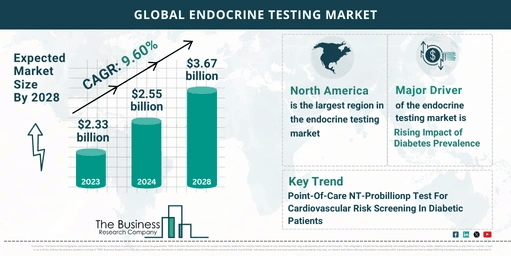
    • 2023 Market Size: $2.33 billion
    • 2024 Projected Market Size: $2.55 billion
    • CAGR (2023-2024): 9.4%

    The endocrine testing market has shown robust growth, driven by advances in hormone research, diagnostic standardization, public health initiatives, and patient empowerment. The rising prevalence of endocrine disorders and advancements in testing technologies are key factors contributing to this growth.

    Future Market Growth

    • 2028 Projected Market Size: $3.67 billion
    • CAGR (2024-2028): 9.6%

    The market is expected to continue expanding, supported by increasing awareness and early diagnosis, an aging population, and technological advancements in biomarker detection and testing methods. Key trends include the integration of omics technologies and artificial intelligence.

    View More On The Endocrine Testing Market Report 2024 –
    https://www.thebusinessresearchcompany.com/report/endocrine-testing-global-market-report

    Key Trends and Drivers

    • Impact of Diabetes Prevalence: The rising incidence of diabetes is a significant driver for the endocrine testing market. Diabetes is linked to various endocrine dysfunctions, making effective testing crucial for diagnosis and management. According to the International Diabetes Federation, approximately 537 million adults were living with diabetes in 2021, with numbers projected to rise to 643 million by 2030 and 783 million by 2045. Endocrine tests like hemoglobin A1c, fasting plasma glucose, and C-peptide are vital for monitoring diabetes.
    • Advancements in Biomarker Detection: Innovations in biomarker detection are enhancing the accuracy and efficiency of endocrine testing. Technologies such as tandem mass spectrometry and advanced immunoassays are leading the way.
    • Point-of-Care Testing Solutions: The development of point-of-care testing solutions is improving accessibility and efficiency in diagnosing endocrine disorders. For instance, Roche Holding AG’s launch of a point-of-care NT-proBNP test in April 2024 helps in screening diabetes patients at risk of cardiovascular diseases, facilitating early detection and intervention.
    • Integration of Omics Technologies: The integration of omics technologies, including genomics and proteomics, is enabling more comprehensive and personalized approaches to endocrine testing.
    • Artificial Intelligence and Machine Learning: AI and machine learning are being increasingly used to enhance diagnostic accuracy and streamline testing processes.

    Major Companies and Innovations

    • Key Players: Thermo Fisher Scientific Inc., Abbott Laboratories, Roche Holding, Siemens Healthineers, Quest Diagnostics, Agilent Technologies Inc., PerkinElmer Inc., BioMérieux SA, Beckman Coulter Inc., and others.
    • Product Innovations: Companies are focusing on developing advanced testing solutions, including novel biomarker detection technologies and point-of-care tests. For example, Roche’s NT-proBNP test for cardiovascular risk screening in diabetic patients is an innovative product enhancing early detection and patient management.

    Strategic Acquisitions

    • Tolmar Pharmaceuticals and Jatenzo: In October 2022, Tolmar Pharmaceuticals acquired Jatenzo from Clarus Therapeutics. This acquisition enhances Tolmar’s portfolio in specialty pharmaceuticals, particularly in testosterone replacement therapy, complementing their focus on pediatric endocrinology and men’s health.

    Market Segmentation

    • By Test Type: Estradiol (E2), Follicle Stimulating Hormone (FSH), Human Chorionic Gonadotropin (hCG), Luteinizing Hormone (LH), Dehydroepiandrosterone Sulfate (DHEAS), Progesterone, Testosterone, Thyroid Stimulating Hormone (TSH), Prolactin, Other Types
    • By Technology: Tandem Mass Spectrometry, Immunoassay, Monoclonal & Polyclonal Antibody Technologies, Sensor Technology, Clinical Chemistry, Other Technologies
    • By End-User: Hospitals, Clinical Laboratories, Diagnostic Centers, Other End-Users

    Regional Insights

    • North America:The largest region in the endocrine testing market in 2023, driven by high healthcare standards, advanced diagnostic infrastructure, and significant investments in research and development.
    • Asia-Pacific:Expected to be the fastest-growing region during the forecast period, due to increasing healthcare spending, rising prevalence of endocrine disorders, and growing awareness in emerging markets.

    Conclusion

    The endocrine testing market is poised for continued strong growth, driven by advancements in technology, increasing prevalence of endocrine disorders, and the rising demand for early and accurate diagnosis. Innovations in testing methods and strategic acquisitions are shaping the future of the market.

    Request A Sample Of The Global Endocrine Testing Market Report 2024:
    https://www.thebusinessresearchcompany.com/sample_request?id=15562&type=smp

  • What’s The Growth Forecast For Drug Eluting Stent Market Through 2024-2033?

    What’s The Growth Forecast For Drug Eluting Stent Market Through 2024-2033?

    The Business Research Company’s global market reports provide comprehensive analysis on the various markets in 27 industries across 60 geographies.

    Market Overview

    • 2023 Market Size:$7.05 billion
    • 2024 Projected Market Size:$7.63 billion
    • CAGR (2023-2024):2%

    The drug-eluting stent market has experienced strong growth due to the need for improved treatment options, advancements in clinical evidence, regulatory approvals, and healthcare economics. This trend is expected to continue as new technologies and patient-centered approaches emerge.

    Future Market Growth

    • 2028 Projected Market Size:$10.52 billion
    • CAGR (2024-2028):4%

    Growth in the market is anticipated to be driven by an aging population, increasing chronic disease burden, expanding indications for use, favorable healthcare reimbursement policies, and the push towards patient-centered care. Key trends include personalized medicine, minimally invasive techniques, and next-generation drug formulations.

    View More On The Drug Eluting Stent Market Report 2024 –
    https://www.thebusinessresearchcompany.com/report/drug-eluting-stent-global-market-report

    Key Trends and Drivers

    • Impact of Coronary Heart Disease:The rising prevalence of coronary heart disease (CHD) is a significant driver for the drug-eluting stent market. CHD, characterized by the narrowing or blockage of coronary arteries due to plaque buildup, can lead to severe complications such as heart attacks. Drug-eluting stents help address this issue by releasing medication that prevents re-narrowing of arteries. For instance, data from the Centers for Disease Control and Prevention (CDC) indicated an increase in the prevalence of CHD among adults from 4.6% in 2020 to 4.9% in 2022.
    • Innovation in Stent Design:Companies are focusing on advancing drug-eluting stent technologies. For example, Medtronic’s Onyx Frontier, launched in August 2022, features a dual-layer balloon that improves drug delivery precision and stent deployment. This new generation of stents shows a 16% increase in deliverability compared to previous models.
    • Personalized Medicine and Minimally Invasive Techniques:The shift towards personalized medicine and minimally invasive techniques is enhancing treatment efficacy and patient outcomes. These advancements are leading to more precise and effective interventions.
    • Emerging Healthcare Technologies:Next-generation drug formulations and innovative delivery systems are pushing the boundaries of interventional cardiology, providing more effective solutions for coronary artery disease.

    Strategic Acquisitions

    • Cordis and MedAlliance:In October 2023, Cordis acquired MedAlliance, a move aimed at expanding its product portfolio in the coronary and peripheral vascular markets. MedAlliance’s expertise in drug-eluting stents aligns with Cordis’ goals to advance cardiovascular innovation.

    Market Segmentation

    • By Product: Polymer-Based, Polymer-Free
    • By Drug: Sirolimus, Paclitaxel, Zotarolimus, Everolimus, Biolimus, Other Drugs
    • By Scaffold: Cobalt-Chromium, Platinum-Chromium, Nitinol, Biodegradable, Other Scaffolds
    • By Application: Coronary Diseases, Peripheral Vascular Diseases
    • By End-User: Hospitals, Specialty Clinics

    Regional Insights

    • North America:The largest market region in 2023, driven by advanced healthcare infrastructure and high adoption rates of new technologies.
    • Asia-Pacific:Expected to be the fastest-growing region, fueled by increasing healthcare investments, rising prevalence of cardiovascular diseases, and expanding access to advanced medical technologies.

    Conclusion

    The drug-eluting stent market is set for continued strong growth, driven by advancements in technology, increasing prevalence of coronary heart disease, and a shift towards personalized and minimally invasive treatments. Innovations in stent design and strategic acquisitions are shaping the future landscape of this market.

    Request A Sample Of The Global Drug Eluting Stent Market Report 2024:
    https://www.thebusinessresearchcompany.com/sample_request?id=15557&type=smp

  • Future Growth Forecast For The Direct-To-Consumer (DTC) Laboratory Testing Global Market 2024-2033

    Future Growth Forecast For The Direct-To-Consumer (DTC) Laboratory Testing Global Market 2024-2033

    The Business Research Company’s global market reports provide comprehensive analysis on the various markets in 27 industries across 60 geographies.

    Market Overview

    • Current Size: The DTC laboratory testing market is set to grow from $3.43 billion in 2023 to $4.45 billion in 2024, achieving a CAGR of 29.8%.
    • Future Projections: Expected to reach $12.73 billion by 2028, with a CAGR of 30.1%.

    Historical Growth Drivers

    • Prevalence of Diseases: Increasing rates of infectious and chronic diseases have driven demand for accessible testing.
    • Aging Population: The growing geriatric demographic has heightened the need for routine and preventive testing.
    • Miniaturized Instruments: Advancements in portable testing devices have made lab tests more accessible.
    • Biomarker Profiling: Enhanced use of biomarkers has improved disease detection and personalized medicine.
    • Demand for Personalized Medicine: Rising interest in tailored healthcare solutions has fueled market growth.

    View More On The Direct-To-Consumer (DTC) Laboratory Testing Market Report 2024 – https://www.thebusinessresearchcompany.com/report/direct-to-consumer-dtc-laboratory-testing-global-market-report

    Future Growth Drivers

    • Rapid Diagnosis: The demand for quick and accurate disease diagnosis is pushing market expansion.
    • Wellness and Preventive Healthcare: Growing emphasis on proactive health management drives interest in DTC testing.
    • On-site Testing: Increased preference for rapid, on-site diagnostics is contributing to market growth.
    • Telemedicine: The rise of telehealth solutions supports the growth of remote testing services.

    Rising Infectious Diseases Fuel Market Growth

    • Infectious Disease Prevalence: The increasing incidence of diseases like tuberculosis is driving the need for widespread testing.
    • Public Health Efforts: DTC testing supports early detection and management of infectious diseases.
    • Global Statistics: In 2022, approximately 10.6 million cases of tuberculosis were reported globally.

    Major Market Players

    • Key Companies: Laboratory Corporation of America Holdings (LabCorp), Quest Diagnostics, PerkinElmer, Genesis Healthcare, and others are leading the market.
    • Innovations: These companies are focusing on improving accessibility and convenience through new technologies and services.

    Innovations in DTC Testing

    • Mobile Phlebotomy Services: Companies are offering at-home blood collection services for added convenience.
      • Example: Quest Diagnostics launched Quest Mobile in July 2023, allowing patients to schedule at-home specimen collection.

    Strategic Partnerships

    • Getlabs and Nice Healthcare: In May 2023, these companies partnered to enhance in-home healthcare services and laboratory testing.
    • Partnership Goals: Improve accessibility and convenience for patients through collaborative healthcare solutions.

    Market Segmentation

    • By Sample Type: Blood, Urine, Saliva, Other Sample Types.
    • By Test Type: Genetic Testing, Disease Risk Assessment, Complete Blood Count (CBC), Diabetes Testing, Thyroid-Stimulating Hormone (TSH) Testing, Other Test Types.
    • By Application: Diagnostics, Research and Development, Drug Discovery and Development.
    • By End User: Hospitals, Clinics, Specialty Labs, Diagnostic Centers.

    Regional Insights

    • North America: The largest market in 2023, with continued strong presence expected.
    • Asia-Pacific: Anticipated to be the fastest-growing region in the forecast period.

    The DTC laboratory testing market is evolving rapidly, driven by technological advancements, rising health awareness, and increasing disease prevalence. The focus on convenience and accessibility is reshaping how individuals engage with their health, highlighting the market’s dynamic growth potential.

    Request A Sample Of The Global Direct-To-Consumer (DTC) Laboratory Testing Market Report 2024:
    https://www.thebusinessresearchcompany.com/sample_request?id=15556&type=smp

  • Top 5 Insights From The Dental Inlays And Onlays Market Report 2024

    Top 5 Insights From The Dental Inlays And Onlays Market Report 2024

    The Business Research Company’s global market reports are now updated with the latest market sizing information for the year 2024 and forecasted to 2033

    According to The Business Research Company’s Dental Inlays And Onlays Global Market Report 2023, the dental inlays and onlays market is expected to show promising growth in the forecast period.

    Market Overview

    • 2023 Market Size: $3.13 billion
    • 2024 Projected Market Size: $3.46 billion
    • CAGR (2023-2024): 10.7%

    The dental inlays and onlays market has been growing rapidly due to advancements in restorative dentistry and increasing consumer awareness. The market is expected to continue its robust expansion with a forecasted growth to $5.25 billion by 2028.

    Future Market Growth

    • 2028 Projected Market Size: $5.25 billion
    • CAGR (2024-2028): 11.0%

    Factors driving this growth include innovations in dental technology, increased demand for cosmetic procedures, and a rising number of dental practices and practitioners.

    View More On The Dental Inlays And Onlays Market Report 2024 – https://www.thebusinessresearchcompany.com/report/dental-inlays-and-onlays-global-market-report

    Key Trends and Drivers

    • Impact of Dental Diseases:The increasing prevalence of dental diseases such as tooth decay and damage is a major driver for the market. These conditions necessitate restorative treatments like dental inlays and onlays. The National Health Service reported a 23.2% increase in dental disorder treatments from 2021 to 2023, reflecting a growing demand for such solutions.
    • Technological Innovations:The market is experiencing transformative changes due to advancements in technology. Digital light processing (DLP) technology is enhancing the durability and aesthetics of dental restorations. For instance, Desktop Metal Inc. introduced the Einstein series of 3D dental printers, which utilize DLP technology to improve precision and efficiency in creating dental inlays and onlays. Additionally, Flexcera Smile Ultra+ resin, launched by Desktop Health, offers enhanced lifelike appearance and strength.
    • Strategic Acquisitions:National Dentex’s acquisition of Dental Services Group in April 2021 is a significant market development. This move aims to create the largest dental lab network in North America, expanding the range of services available to dental professionals and enhancing market reach.

    Market Segmentation

    • By Type:
      • Direct
      • Indirect
    • By Material:
      • Porcelain
      • Zirconia
      • Gold
      • Composite
    • By Application:
      • Hospitals
      • Clinics

    Regional Insights

    • North America:Dominated the market in 2023, driven by advanced dental care infrastructure and high adoption of new technologies.

    Conclusion

    The dental inlays and onlays market is set for continued growth, driven by technological innovations, rising dental disease prevalence, and increased consumer and practitioner awareness. The integration of advanced technologies and strategic industry moves are likely to shape the future of dental restorations.

    Request A Sample Of The Global Dental Inlays And Onlays Market Report 2024:
    https://www.thebusinessresearchcompany.com/report/dental-inlays-and-onlays-global-market-report

  • How Is The Dental Fluoride Treatment Market Expected To Grow Through 2024-2033

    How Is The Dental Fluoride Treatment Market Expected To Grow Through 2024-2033

    The Business Research Company’s global market reports are now updated with the latest market sizing information for the year 2024 and forecasted to 2033

    According to The Business Research Company’s Dental Fluoride Treatment Global Market Report 2023, the dental fluoride treatment market is expected to show promising growth in the forecast period.

    Market Overview

    • 2023 Market Size: $14.45 billion
    • 2024 Projected Market Size: $15.27 billion
    • CAGR (2023-2024): 5.6%

    The dental fluoride treatment market has shown robust growth due to factors such as the high prevalence of dental disorders and increasing awareness about oral hygiene. The market is expected to continue expanding with advancements in technology and increased demand for effective dental treatments.

    Future Market Growth

    • 2028 Projected Market Size: $19.20 billion
    • CAGR (2024-2028): 5.9%

    Growth in the market is anticipated due to rising cases of dental disorders, increased demand for effective treatments, and heightened awareness about oral health. Key trends include technological advancements, product innovation, and integration of oral health initiatives into chronic disease prevention programs.

    View More On The Dental Fluoride Treatment Market Report 2024 – https://www.thebusinessresearchcompany.com/report/dental-fluoride-treatment-global-market-report

    Key Trends and Drivers

    • Impact of Rising Dental Disorders:Increasing cases of dental disorders are driving market growth. Poor oral hygiene, high sugar intake, and lack of access to dental care contribute to the rise in conditions such as cavities and gum diseases. Dental fluoride treatments are crucial for preventing and managing these issues by strengthening enamel, reducing sensitivity, and protecting against acid erosion. For instance, the National Health Service reported a 23.2% increase in dental disorder treatments from 2021 to 2023, highlighting the growing need for effective fluoride treatments.
    • Innovative Developments:Companies are focusing on developing innovative products like silver diamine fluoride (SDF) to provide non-invasive treatment options. For example, Centrix Inc. launched SilverSense SDF in June 2024, a professional-use solution that effectively treats tooth sensitivity and arrests dental caries. This advancement represents a significant step in preventive and restorative dental care.
    • Strategic Acquisitions:The market is witnessing strategic acquisitions aimed at expanding product portfolios and enhancing market presence. Behrman Capital’s acquisition of Vista Apex in April 2024 is a notable example. Vista Apex, a manufacturer of dental products, will benefit from Behrman Capital’s investment to advance its product offerings and market reach.

    Market Segmentation

    • By Product Type:
      • Topical
      • Systemic
    • By Age Group:
      • Adults
      • Children
    • By End-User:
      • Professional-Use
      • Personal-Use

    Regional Insights

    • North America:The largest market region in 2023, driven by advanced healthcare infrastructure and high adoption of fluoride treatments.
    • Asia-Pacific:Expected to be the fastest-growing region due to increasing dental health awareness, rising disposable incomes, and expanding access to dental care.

    Conclusion

    The dental fluoride treatment market is poised for continued growth driven by technological innovations, rising dental disorders, and increasing awareness about oral health. With ongoing advancements in fluoride products and strategic market moves by major companies, the market is set to expand significantly in the coming years.

    Request A Sample Of The Global Dental Fluoride Treatment Market Report 2024:
    https://www.thebusinessresearchcompany.com/sample_request?id=15551&type=smp

  • Global CRISPR Gene Editing Market Key Insights 2024-2033

    Global CRISPR Gene Editing Market Key Insights 2024-2033

    The Business Research Company’s global market reports are now updated with the latest market sizing information for the year 2024 and forecasted to 2033

    According to The Business Research Company’s CRISPR Gene Editing Global Market Report 2023, the CRISPR gene editing market is expected to show promising growth in the forecast period.

    Market Overview

    • Current Size: The CRISPR gene editing market will expand from $1.78 billion in 2023 to $2.26 billion in 2024, with a CAGR of 26.9%.
    • Future Projections: Expected to reach $5.92 billion by 2028, growing at a CAGR of 27.2%.

    Historical Growth Drivers

    • Demand for Genome Editing: Increased interest in CRISPR technology for its precision and effectiveness in gene editing.
    • Government Funding: Rising investments in research and development of gene editing technologies.
    • Cancer and Chronic Diseases: Higher cancer cases and chronic diseases have driven demand for advanced treatments.
    • Awareness and Infrastructure: Greater awareness about CRISPR and improved healthcare infrastructure have supported market growth.

    View More On The CRISPR Gene Editing Market Report 2024 –
    https://www.thebusinessresearchcompany.com/report/crispr-gene-editing-global-market-report

    Future Growth Drivers

    • Genetic Disorders: Growing prevalence of genetic disorders is boosting the need for CRISPR applications.
    • Precision Medicine: Emphasis on personalized medicine drives the adoption of CRISPR technologies.
    • Investment in R&D: Increased funding in CRISPR research and development fuels innovation.
    • Aging Population: Rising geriatric population contributes to higher demand for genetic therapies.

    Genetic Disorder Prevalence Fuels Market Growth

    • Genetic Disorders: Conditions like cystic fibrosis and sickle cell anemia benefit from CRISPR’s precision.
    • Prevalence Statistics: Approximately 6,000 babies born annually in the US have Down syndrome, highlighting the need for advanced genetic treatments.

    Major Market Players

    • Key Companies: Thermo Fisher Scientific, Merck KGaA, Agilent Technologies, GenScript, and others are leading the market.
    • Innovations: These companies are developing cutting-edge CRISPR tools to enhance gene editing precision and efficiency.

    Innovations in CRISPR Gene Editing

    • New Tools: Innovations like QIAGEN’s QIAprep& CRISPR Kit and CRISPR Q-Primer streamline gene editing processes.
      • Example: QIAGEN’s tools reduce experiment time by seven days through integrated sample preparation and detection.

    Strategic Collaborations

    • Pfizer and Beam Therapeutics: In January 2022, Pfizer partnered with Beam Therapeutics to develop treatments for rare genetic diseases affecting the liver, muscles, and central nervous system.
    • Collaboration Goals: Focus on advancing CRISPR gene editing technologies for targeted therapies.

    Market Segmentation

    • By Type: CRISPR-Associated Nuclease (Cas Nuclease), Guide RNA, DNA Ligase, Restriction Endonuclease, Other Types.
    • By Services: Design Tools, Plasmid and Vector, Cas9 and g-RNA, Delivery System Products, Other Services.
    • By Technology: CRISPR/Cas9, Zinc Finger Nucleases, Other Technologies.
    • By Application: Agricultural, Biomedical, Industrial, Genome Engineering, Disease Models, Functional Genomics, Other Applications.
    • By End User: Academic Institutes, Biotechnology Companies, Contract Research Organizations (CROs), Pharmaceutical and Biopharmaceutical Companies.

    Regional Insights

    • North America: The largest market in 2023, with continued dominance expected.
    • Asia-Pacific: Expected to be the fastest-growing region in the forecast period.

    The CRISPR gene editing market is on a rapid growth trajectory, driven by advances in technology, rising genetic disorder prevalence, and significant investments in research and development. The increasing emphasis on precision medicine and innovations in gene editing tools are expected to further propel market expansion.

    Request A Sample Of The Global CRISPR Gene Editing Market Report 2024:
    https://www.thebusinessresearchcompany.com/sample_request?id=15549&type=smp

  • How Is The Congenital Heart Disease (CHD) Market Expected To Grow Through 2024-2033

    How Is The Congenital Heart Disease (CHD) Market Expected To Grow Through 2024-2033

    The Business Research Company’s global market reports are now updated with the latest market sizing information for the year 2024 and forecasted to 2033

    According to The Business Research Company’s Congenital Heart Disease (CHD) Global Market Report 2023, the congenital heart disease (CHD) market is expected to show promising growth in the forecast period.

    Market Overview

    • 2023 Market Size: $4.03 billion
    • 2024 Projected Market Size: $4.42 billion
    • CAGR (2023-2024): 9.7%

    The congenital heart disease (CHD) market has experienced significant growth due to advancements in diagnostic and therapeutic technologies, increased awareness, and improved healthcare policies. The market is expected to continue expanding, reaching $6.43 billion by 2028.

    Future Market Growth

    • 2028 Projected Market Size: $6.43 billion
    • CAGR (2024-2028): 9.8%

    The expected growth is driven by increasing access to healthcare in developing regions, ongoing innovations in cardiac imaging, and rising global healthcare expenditures.

    View More On The Congenital Heart Disease (CHD) Market Report 2024 –
    https://www.thebusinessresearchcompany.com/report/congenital-heart-disease-chd-global-market-report

    Key Drivers and Trends

    • Maternal Diabetes Impact: The rise in maternal diabetes is a major driver for market growth. Gestational diabetes can increase the risk of congenital heart disease in infants. According to the CDC, the incidence of gestational diabetes increased from 6.0% to 8.3% from 2016 to 2021, highlighting the growing impact on CHD prevalence.
    • Technological Innovations: The adoption of non-surgical heart valves, like the Harmony Transcatheter Pulmonary Valve (TPV) System by Medtronic, is transforming CHD treatment. This minimally invasive valve offers a non-surgical solution for patients with right ventricular outflow tract (RVOT) anomalies, improving patient outcomes and quality of life.
    • Strategic Acquisitions: Venus MedTech’s acquisition of Cardiovalve Ltd. in December 2021 for $300 million is a significant market development. This acquisition enhances Venus MedTech’s capabilities in mitral and tricuspid valve replacement, positioning it as a leading player in structural heart treatments.

    Market Segmentation

    • By Type:
      • Heart Valve Defects
      • Heart Wall Defects
      • Blood Vessel Defects
      • Other Types
    • By Diagnosis:
      • Electrocardiogram
      • Chest X-ray
      • Echocardiogram
      • Transesophageal Echocardiogram
      • Pulse Oximetry
      • Exercise Stress Test
      • Cardiac Computed Tomography (CT) Scan or Magnetic Resonance Imaging (MRI)
      • Cardiac Catheterization
      • Other Diagnosis
    • By Treatment:
      • Interventional Cardiology
      • Cardiac Surgery
      • Telemedicine
      • Medication Management
      • Lifestyle Modifications
    • By Age Group:
      • Infants
      • Children
      • Adolescents
      • Adults
    • By Application:
      • Hospitals and Clinics
      • Diagnostic Centers
      • Ambulatory Surgical Centers
      • Research and Academic Institutions

    Regional Insights

    • North America: Was the largest market in 2023 due to advanced healthcare infrastructure and high adoption of new technologies.

    Conclusion
    The congenital heart disease market is poised for continued growth driven by technological advancements, increased awareness of maternal diabetes, and strategic industry moves. Innovations in non-surgical treatments and acquisitions of key players are likely to drive further expansion and improvements in patient care.

    Request A Sample Of The Global Congenital Heart Disease (CHD) Market Report 2024:
    https://www.thebusinessresearchcompany.com/sample_request?id=15545&type=smp

  • Global Complementary And Alternative Medicine Market Analysis: Estimated Market Size And Growth Rate

    Global Complementary And Alternative Medicine Market Analysis: Estimated Market Size And Growth Rate

    The Business Research Company’s global market reports are now updated with the latest market sizing information for the year 2024 and forecasted to 2033

    Market Overview

    • 2023 Market Size: $151.23 billion
    • 2024 Projected Market Size: $182.31 billion
    • CAGR (2023-2024): 20.5%

    The complementary and alternative medicine (CAM) market has experienced significant growth due to increasing consumer awareness, chronic disease prevalence, and dissatisfaction with conventional medicine. This upward trend is expected to continue with even more substantial growth in the coming years.

    Future Market Growth

    • 2028 Projected Market Size: $388.00 billion
    • CAGR (2024-2028): 20.8%

    The anticipated growth in the CAM market is driven by advancements in personalized medicine, preventive healthcare, and expanding insurance coverage for CAM therapies. Rising demand for natural products and digital health innovations also contribute to this robust growth.

    View More On The Complementary And Alternative Medicine Market Report 2024 –
    https://www.thebusinessresearchcompany.com/report/complementary-and-alternative-medicine-global-market-report

    Key Drivers and Trends

    • Chronic Diseases: The rise in chronic diseases is a primary driver for the CAM market. Conditions such as arthritis, diabetes, and cancer are becoming more prevalent due to aging populations and lifestyle factors. CAM provides alternative treatments that address underlying health issues, such as stress and inflammation. For instance, nearly 46.6% of Australians had chronic diseases in 2020-21.
    • Advanced Aromatherapy Solutions: Companies are focusing on developing innovative aromatherapy products. For example, in December 2022, Adoratherapy launched its Alkemie Chakra Healing collection, which includes a range of products like aroma perfume sprays and body oils designed to balance and heal through essential oils.
    • Company Acquisitions: Strategic acquisitions are enhancing market offerings. In March 2023, The Healing Company acquired Chopra Global’s wellbeing experiences, strengthening its position in the CAM market by integrating holistic health solutions and expanding its service portfolio.

    Market Segmentation

    • By Type:
      • Alternative Medical Systems
      • Mind-Body Interventions
      • Biologically Based Therapies
      • Manipulative and Body-Based Methods
      • Energy Therapies
      • Other Types
    • By Disease Indication:
      • Arthritis
      • Asthma
      • Cancer
      • Diabetes
      • Cardiology
      • Neurology
      • Other Disease Indications
    • By Application:
      • E-training
      • Direct Contact
      • Distance Correspondence
    • By End-Users:
      • Hospitals
      • Specialty Clinics
      • Therapy Centers
      • Other End-Users

    Regional Insights

    • North America: Was the largest market in 2023, driven by advanced healthcare systems and high consumer adoption of CAM therapies.
    • Asia-Pacific: Expected to be the fastest-growing region due to increasing healthcare access, rising disposable incomes, and growing awareness of CAM therapies.

    Conclusion
    The complementary and alternative medicine market is poised for extraordinary growth, propelled by the rising prevalence of chronic diseases, innovation in product offerings, and strategic market developments. As the market evolves, advancements in technology and holistic health solutions will play a crucial role in shaping its future.

    Request A Sample Of The Global Complementary And Alternative Medicine Market Report 2024:
    https://www.thebusinessresearchcompany.com/sample_request?id=15543&type=smp

  • Clinical Nutrition For Diabetes Care Market Forecast Until 2033 – Estimated Market Size And Growth Rate

    Clinical Nutrition For Diabetes Care Market Forecast Until 2033 – Estimated Market Size And Growth Rate

    The Business Research Company’s market reports offer an in-depth analysis on the market’s growth potential, major drivers, key trends and more.

    The clinical nutrition market for diabetes care is experiencing strong growth, driven by increasing diabetes prevalence, rising awareness about diabetes management, and advancements in nutritional science. This blog explores the key drivers, trends, and major players shaping this market.

    Market Growth Overview
    Recent Market Expansion (2023-2024):

    • Market size increased from $2.72 billion in 2023 to $2.93 billion in 2024.
    • Compound Annual Growth Rate (CAGR) of 7.9%.
    • Key drivers: Advocacy by medical professionals, rise in lifestyle diseases, increased consumer awareness, healthcare infrastructure development, and rising diabetes prevalence.

    Future Market Projections (2024-2028):

    • Expected growth to $4 billion by 2028.
    • Projected CAGR of 8.1%.
    • Growth driven by: Insurance coverage for diabetes management, increased healthcare expenditure, obesity epidemic, aging population, and rising diabetes prevalence.

    Read More On The Clinical Nutrition For Diabetes Care Market Report 2024 –
    https://www.thebusinessresearchcompany.com/report/clinical-nutrition-for-diabetes-care-global-market-report

    Key Growth Drivers
    Rising Diabetes Prevalence:

    • Diabetes prevalence is increasing due to sedentary lifestyles, unhealthy diets, genetic factors, and aging populations.
    • Example: According to the International Diabetes Federation, 537 million people aged 20-79 had diabetes in 2021, projected to rise to 783 million by 2045.
    • Clinical nutrition plays a crucial role in managing diabetes by providing tailored dietary plans that regulate blood sugar levels, promote weight management, and reduce complications.

    Advocacy and Awareness:

    • Increased advocacy by healthcare professionals emphasizes the importance of nutrition in diabetes care.
    • Rising consumer awareness leads to greater demand for specialized nutritional products.

    Healthcare Infrastructure Development:

    • Improved healthcare infrastructure enhances access to clinical nutrition products, particularly in emerging markets.
    • Insurance coverage for diabetes management further supports market growth.

    Emerging Trends in Clinical Nutrition
    Focus on Immune-Supportive Nutrition:

    • There is a growing interest in nutritional products that support the immune system, particularly for individuals with chronic conditions like diabetes.

    Plant-Based Nutrition:

    • The demand for plant-based nutritional products is rising as consumers seek healthier and more sustainable dietary options.
    • Plant-based formulas offer a balanced diet while managing blood sugar levels effectively.

    Functional Foods and Supplements:

    • Functional foods and supplements designed for diabetes management are gaining popularity.
    • These products provide targeted benefits, such as blood sugar control, weight management, and cardiovascular health.

    Digital Health Integration:

    • Integration of digital health tools in diabetes management is becoming more common.
    • Digital platforms offer personalized nutrition plans, real-time monitoring, and support for individuals with diabetes.

    Personalized Nutrition Plans:

    • There is a shift towards personalized nutrition plans tailored to individual needs.
    • Personalized plans consider factors like age, activity level, and specific health conditions to optimize diabetes management.

    Major Players and Innovations
    Key Companies:

    • Leading players: Pfizer Inc., Bayer AG, Sanofi-Aventis LLC, Abbott Laboratories, Roche Holdings Inc., Medtronic plc, Danone SA, Eli Lilly and Company, and more.
    • These companies are focusing on developing specialized nutritional formulations for diabetes care.

    Specialized Nutritional Formulations:

    • Example: In December 2021, Danone India launched Protinex Diabetes Care, a product fortified with 26 essential vitamins and minerals, designed specifically for individuals with diabetes. It features a low Glycemic Index (GI) of 17, which helps manage blood sugar levels.

    Strategic Partnerships:

    • Example: In June 2023, Abbott Laboratories partnered with the American Diabetes Association (ADA) to develop innovative solutions for diabetes management, combining cutting-edge technologies and educational resources.

    Regional Market Insights
    North America:

    • Largest market region in 2023.
    • High prevalence of diabetes and advanced healthcare infrastructure contribute to market dominance.

    Global Expansion:

    • Emerging markets, particularly in Asia-Pacific, show strong growth potential due to rising diabetes cases and improving healthcare systems.

    Conclusion
    The clinical nutrition market for diabetes care is poised for significant growth, driven by the increasing prevalence of diabetes, advancements in nutritional science, and rising consumer awareness. Companies are innovating with specialized formulations, digital health integration, and personalized nutrition plans to meet the growing demand. With North America leading the market and global expansion on the horizon, the future of clinical nutrition for diabetes care is bright, offering improved outcomes for patients worldwide.

    Request for A Sample Of The Global Clinical Nutrition For Diabetes Care Market Report:
    https://www.thebusinessresearchcompany.com/sample_request?id=15540&type=smp

  • Chronic Wound Care Market Growth Analysis Till 2033 By The Business Research Company

    Chronic Wound Care Market Growth Analysis Till 2033 By The Business Research Company

    The Business Research Company’s market reports offer an in-depth analysis on the market’s growth potential, major drivers, key trends and more.

    The chronic wound care market has seen robust growth over recent years, with expectations for continued expansion. This blog will explore the key factors driving this growth, the technological advancements shaping the industry, and the major players contributing to the market’s evolution.

    Market Growth Overview
    Recent Market Expansion (2023-2024):

    • Market size grew from $14.23 billion in 2023 to $15.27 billion in 2024.
    • Compound Annual Growth Rate (CAGR) of 7.4%.
    • Key drivers: Aging population, rising prevalence of chronic diseases, increased diabetes cases, improved wound management awareness, and better access to healthcare.

    Future Market Projections (2024-2028):

    • Expected growth to $20.43 billion by 2028.
    • Projected CAGR of 7.5%.
    • Growth driven by: Rising demand for wound care products, increasing healthcare spending in emerging markets, focus on preventive care, personalized treatment solutions, and infection control.

    Read More On The Chronic Wound Care Market Report 2024 –
    https://www.thebusinessresearchcompany.com/report/chronic-wound-care-global-market-report

    Key Growth Drivers
    Aging Population and Chronic Diseases:

    • The aging population contributes to the increased incidence of chronic wounds.
    • Conditions like diabetes and vascular diseases necessitate specialized wound care.

    Increased Awareness and Healthcare Access:

    • Enhanced awareness about wound management among healthcare professionals and patients.
    • Improved access to healthcare services ensures timely and effective wound care.

    Rising Incidence of Sports Injuries:

    • The number of sports-related injuries is increasing, driving demand for chronic wound care.
    • Example: A 32% increase in sports injuries from 2021 to 2022, according to the National Safety Council.
    • Chronic wound care products help in faster healing and infection prevention, essential for athletes’ quick recovery.

    Technological Advancements
    Integration of Digital Health Solutions:

    • The adoption of digital tools for wound care management is on the rise.
    • Digital health solutions enable remote monitoring and personalized treatment plans, improving patient outcomes.

    Artificial Intelligence in Wound Care:

    • AI is being utilized for wound assessment and treatment planning.
    • AI-driven tools help in accurate wound diagnosis and optimize treatment strategies.

    Innovative Wound Care Systems:

    • Companies are developing advanced solutions like Negative Pressure Wound Therapy (NPWT).
    • Example: Smith & Nephew’s RENASYS EDGE, a portable NPWT system launched in 2024, designed for home-based care.

    Major Players and Innovations
    Key Companies:

    • Leading players: Cardinal Health Inc., Johnson & Johnson, 3M Company, Medtronic PLC, Smith & Nephew PLC, and more.
    • These companies focus on R&D and innovative products to maintain their market positions.

    Strategic Acquisitions:

    • Example: LifeNet Health acquired Bioventus Inc.’s wound care division in May 2023 for $0.085 billion.
    • The acquisition expanded LifeNet Health’s portfolio, strengthening its market position with products like TheraSkin and SonicOne.

    Regional Market Insights
    North America:

    • Largest market region in 2023.
    • Strong healthcare infrastructure and high adoption of advanced wound care technologies.

    Asia-Pacific:

    • Expected to be the fastest-growing region during the forecast period.
    • Increasing healthcare spending and infrastructure development contribute to market growth.

    Conclusion
    The chronic wound care market is poised for significant growth, driven by an aging population, rising chronic disease prevalence, and technological advancements. Companies are continuously innovating, focusing on personalized and home-based care solutions, which will likely drive further expansion. With North America leading the market and Asia-Pacific emerging as a key growth region, the future of chronic wound care looks promising, offering improved patient outcomes and innovative treatment options.

    Request for A Sample Of The Global Chronic Wound Care Market Report:
    https://www.thebusinessresearchcompany.com/sample_request?id=15539&type=smp