Blog

  • Key Trends And Drivers In The TCR Therapy Market 2024

    Key Trends And Drivers In The TCR Therapy Market 2024

    The Business Research Company’s market reports offer an in-depth analysis on the market’s growth potential, major drivers, key trends and more.

    Rapid Growth in the TCR Therapy Market

    • Exponential Growth: The T-cell receptor (TCR) therapy market has seen remarkable growth in recent years, driven by the increasing incidence of cancer and a rising interest in immunotherapy. The market size surged from $0.13 billion in 2023 to an expected $0.18 billion in 2024, reflecting a compound annual growth rate (CAGR) of 40.6%.
    • Historic Growth Drivers: Several factors contributed to this rapid growth, including encouraging clinical trial results and robust financial support from investors. The increasing number of cancer cases has further fueled the demand for TCR therapies, as they offer a targeted approach to treatment.

    Future Market Projections and Drivers

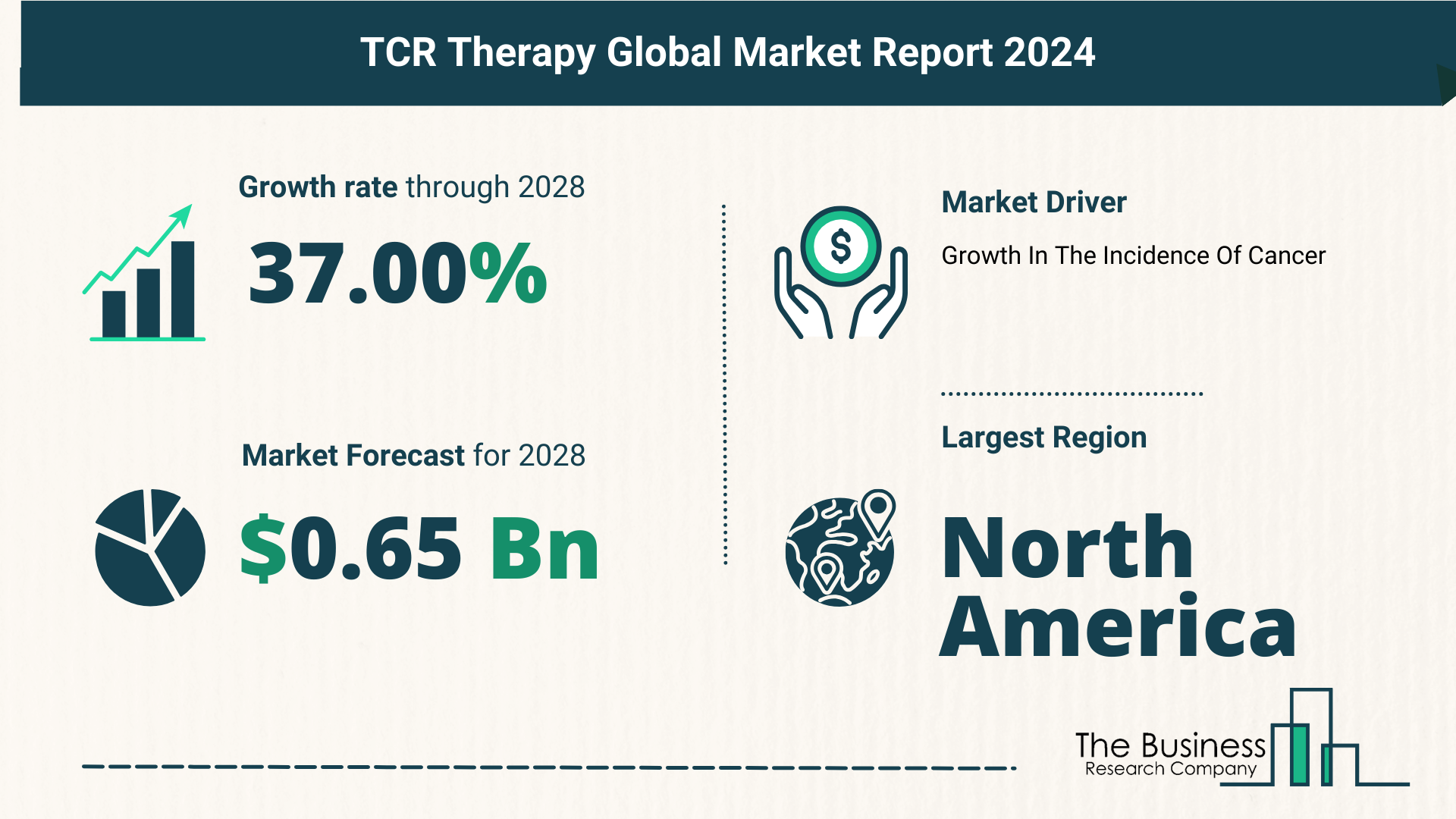
    • Projected Growth: Looking ahead, the TCR therapy market is expected to continue its exponential growth, reaching $0.65 billion by 2028 at a CAGR of 37.0%. This growth is anticipated due to ongoing clinical trials, the use of innovative technologies in healthcare, and the expanding application of TCR therapy in treating solid tumors.
    • Key Growth Drivers: The forecasted growth is supported by factors such as regulatory support, streamlined approval processes, and the integration of TCR therapy with complementary treatments. The adoption of next-generation TCR engineering and increased personalization of treatments are also expected to play a significant role in the market’s expansion.

    Read More On The TCR Therapy Market Report 2024 – https://www.thebusinessresearchcompany.com/report/tcr-therapy-global-market-report

    Growing Incidence of Cancer as a Key Market Driver

    • Cancer Incidence: The rising incidence of cancer globally is a critical driver for the TCR therapy market. Cancer, characterized by the uncontrolled growth of abnormal cells, poses significant health challenges, leading to increased demand for advanced treatment options like TCR therapy.
    • TCR Therapy’s Potential: TCR therapy harnesses the immune system’s power to target and destroy cancer cells, offering a potentially transformative approach to treatment. With the number of cancer cases projected to rise significantly by 2040, the demand for TCR therapies is expected to grow in parallel.

    Strategic Partnerships Fueling Innovation

    • Partnerships: Major companies in the TCR therapy industry are increasingly adopting strategic partnerships to enhance innovation and gain a competitive edge. These partnerships allow companies to leverage each other’s strengths and resources, accelerating the development of new treatments.
    • Example: In December 2023, ImmunoScape partnered with the Experimental Drug Development Centre (EDDC) to develop new TCR-based bispecific molecules for solid tumors. This collaboration aims to combine expertise in immunology and computational biology to advance cancer treatment research.

    AstraZeneca’s Acquisition Strengthening TCR-T Therapy Portfolio

    • Acquisition: In January 2023, AstraZeneca acquired Neogene Therapeutics Inc. for $320 million, significantly boosting its TCR-T therapy portfolio. This acquisition provided AstraZeneca with cutting-edge technology and expertise, further solidifying its position in the TCR therapy market.
    • Strategic Impact: The acquisition aligns with AstraZeneca’s strategy to enhance its oncology pipeline and develop personalized TCR-T therapies for various cancer types, ultimately aiming to improve patient outcomes.

    Market Segmentation and Regional Insights

    • Product Segmentation: The TCR therapy market is segmented by product type, indication, distribution channel, and end-user. Key product types include infusions and injectables, with indications ranging from leukemia and lymphoma to other cancer types.
    • Regional Insights: North America dominated the TCR therapy market in 2023, driven by advanced healthcare infrastructure and high investment in cancer research. However, the Asia-Pacific region is expected to be the fastest-growing market during the forecast period, attributed to increasing healthcare investments and expanding clinical trials.

    Conclusion

    The TCR therapy market is poised for continued exponential growth, driven by the rising incidence of cancer, strategic partnerships, and advancements in technology. As the market expands, major companies are focusing on innovation and personalized therapies, setting the stage for a transformative impact on cancer treatment.

    Request for A Sample Of The Global TCR Therapy Market Report:
    https://www.thebusinessresearchcompany.com/sample_request?id=14517&type=smp
  • Synthetic Hormones Market Growth Analysis Till 2033 By The Business Research Company

    Synthetic Hormones Market Growth Analysis Till 2033 By The Business Research Company

    The Business Research Company’s market reports offer an in-depth analysis on the market’s growth potential, major drivers, key trends and more.

    The synthetic hormones market has experienced significant growth in recent years, driven by various factors such as the promotion of animal growth, fertility treatments, and menopausal symptom management. This blog explores the market’s current state, future growth prospects, major trends, and key players.

    Market Overview

    • Strong Recent Growth:
      • The synthetic hormones market size increased from $6.0 billion in 2023 to $6.38 billion in 2024, reflecting a CAGR of 6.3%.
      • Growth in the recent period was fueled by animal growth promotion, performance enhancement, and fertility treatments.
    • Future Growth Expectations:
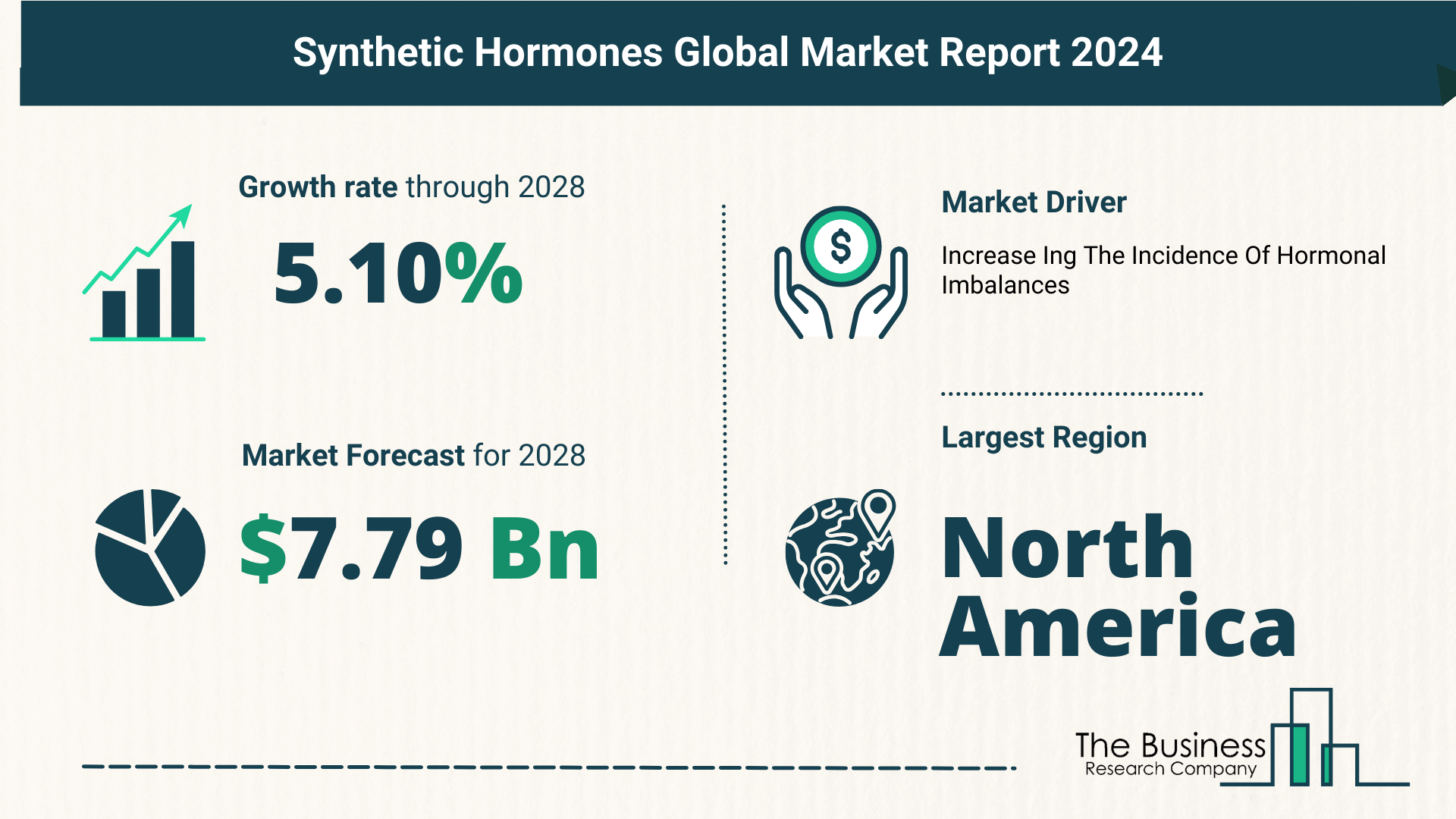
      • The market is expected to grow to $7.79 billion by 2028, with a CAGR of 5.1%.
      • Future growth is attributed to expanding the transgender healthcare market, increased healthcare expenditure, and regulatory approvals.

    Key Drivers of Market Growth

    • Rising Hormonal Imbalances:
      • The growing incidence of hormonal imbalances is a major driver of the synthetic hormones market.
      • Hormonal imbalances, caused by stress, aging, and lifestyle choices, lead to a need for synthetic hormones to regulate bodily functions.
      • Example: In 2022, the UK saw a 35% increase in hormone replacement therapy (HRT) prescriptions, highlighting the rising demand.

    Read More On The Synthetic Hormones Market Report 2024 – https://www.thebusinessresearchcompany.com/report/synthetic-hormones-global-market-report

    Major Trends Shaping the Market

    • Emergence of Plant-Based Hormone Therapy:
      • Increasing interest in plant-based alternatives is shaping the synthetic hormones market.
      • These therapies offer a natural and sustainable approach, attracting consumers seeking less invasive treatments.
    • Integration in Anti-Aging Treatments:
      • Hormone therapy is increasingly integrated into anti-aging treatments, driving market growth.
      • This trend is supported by a growing focus on wellness and longevity among consumers.
    • Technological Advancements in Drug Delivery:
      • Innovation in drug delivery systems, such as long-acting injections, is enhancing the effectiveness and convenience of synthetic hormones.
      • Example: Pfizer and OPKO Health’s once-weekly NGENLA (somatrogon) injections received EU approval in 2022, offering a new option for pediatric growth hormone deficiency.
    • Focus on Hormone-Free Birth Control:
      • The market is also witnessing a shift toward hormone-free birth control options, catering to those seeking alternatives to synthetic hormones.

    Strategic Moves by Key Players

    • Development of Long-Acting Recombinant Human Growth Hormone Products:
      • Companies like Pfizer are focusing on innovative products like recombinant human growth hormone to boost profitability.
      • Example: Pfizer’s NGENLA injections provide a long-lasting alternative for growth hormone deficiencies, requiring only weekly administration.
    • Aspen Pharmacare’s Expansion in China:
      • In November 2023, Aspen Pharmacare acquired Sandoz’s Chinese business for $100 million, including products like the synthetic hormone injectable Sandostatin.
      • This acquisition strengthens Aspen’s presence in the fast-growing Chinese pharmaceutical market.

    Market Segmentation

    • By Product Type:
      • Steroid Hormones
      • Peptide Hormones
      • Amino Acid Derivatives
      • Other Product Types
    • By Route of Administration:
      • Oral
      • Nasal
      • Topical
      • Intravenous
    • By Application:
      • Growth Hormone Deficiency
      • Thyroid Hormone Deficiency
      • Menopause
      • Male Hypogonadism
      • Other Applications
    • By End User:
      • Hospital Pharmacies
      • Retail Pharmacies
      • Online Pharmacies

    Regional Insights

    • North America Dominates:
      • In 2023, North America was the largest region in the synthetic hormones market, driven by advanced healthcare infrastructure and high demand.
    • Asia-Pacific’s Rapid Growth:
      • The Asia-Pacific region is expected to be the fastest-growing market during the forecast period, supported by expanding healthcare access and rising awareness of hormone treatments.

    Conclusion

    The synthetic hormones market is poised for strong growth, driven by the rising incidence of hormonal imbalances, technological advancements, and expanding applications in healthcare. With significant investments and strategic moves by key players, the market is set to continue evolving, offering new opportunities and challenges in the coming years.

    Request for A Sample Of The Global Synthetic Hormones Market Report:
    https://www.thebusinessresearchcompany.com/sample_request?id=14515&type=smp

  • Robotic Process Automation In Healthcare Market Report 2024: Market Size, Drivers, And Trends

    Robotic Process Automation In Healthcare Market Report 2024: Market Size, Drivers, And Trends

    The Business Research Company’s global market reports are now updated with the latest market sizing information for the year 2024 and forecasted to 2033

    The healthcare industry is undergoing a significant transformation, with robotic process automation (RPA) playing a crucial role in streamlining operations, reducing costs, and enhancing patient care. This blog explores the rapid growth of the RPA in healthcare market, its drivers, major trends, and key players shaping the future of healthcare automation.

    Market Growth Overview

    • 2023 Market Size: $1.71 billion.
    • 2024 Market Size: Expected to reach $1.97 billion.
    • CAGR (2023-2024): 15.3%.
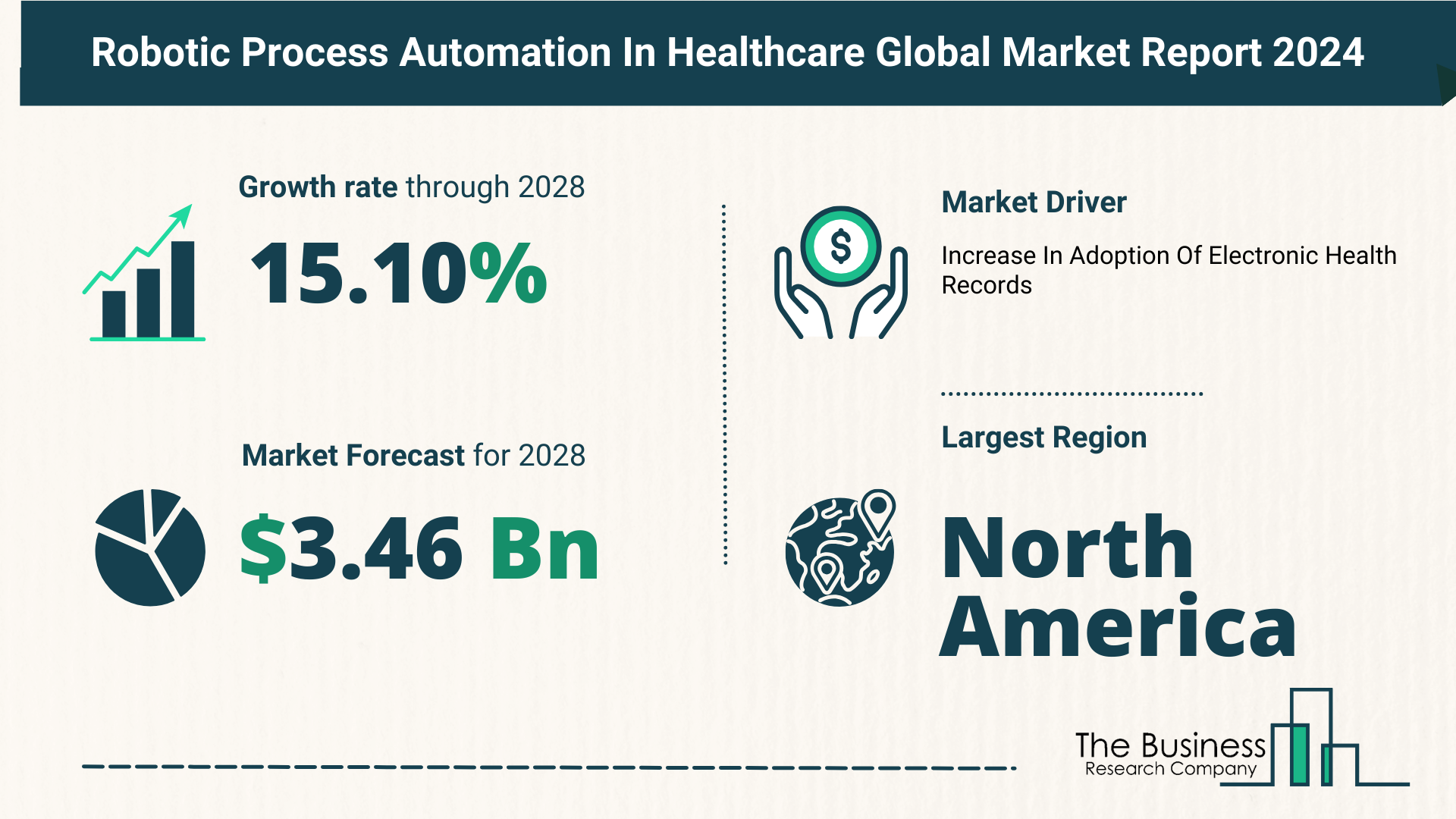
    • 2028 Market Size: Projected to reach $3.46 billion.
    • CAGR (2024-2028): 15.1%.

    Key Drivers of Growth (2023-2024)

    • Rising Demand for Telehealth Services: The increasing reliance on telehealth during and post-pandemic has accelerated the need for automated processes to manage patient interactions and data.
    • Supply Chain Optimization: With the growing complexity of healthcare supply chains, RPA helps in streamlining procurement, inventory management, and logistics.
    • Interoperability Solutions: The need for seamless data exchange across different healthcare systems has boosted the adoption of RPA to ensure accurate and timely data flow.
    • Complex Healthcare Billing Processes: RPA reduces errors and inefficiencies in billing, leading to faster and more accurate claims processing.
    • Digitization of Healthcare Data: The shift towards digital healthcare records and data management has increased the demand for automation to handle large volumes of data efficiently.

    View More On The Robotic Process Automation In Healthcare Market Report 2024 – https://www.thebusinessresearchcompany.com/report/robotic-process-automation-in-healthcare-global-market-report

    Future Growth Drivers (2024-2028)

    • Cost Reduction: RPA helps in minimizing operational costs by automating repetitive and time-consuming tasks, allowing healthcare providers to focus on patient care.
    • Operational Efficiency: Enhanced RPA solutions are expected to improve workflow efficiency, reduce administrative burdens, and improve overall healthcare delivery.
    • Enhanced Patient Experience: Automation of administrative tasks allows healthcare providers to spend more time on patient care, leading to improved patient satisfaction.
    • Electronic Health Records (EHR): The increasing adoption of EHR systems continues to drive the demand for RPA to manage and streamline patient data.
    • Rising Healthcare Labor Costs: Automation helps mitigate the impact of rising labor costs by reducing the need for manual intervention in routine tasks.

    Trends Shaping the Market

    • Advanced Technology Integration: The incorporation of artificial intelligence (AI) and machine learning (ML) into RPA is transforming healthcare operations, enabling more complex and intelligent automation.
    • Blockchain Technology: The integration of blockchain in healthcare processes enhances data security, transparency, and interoperability, further driving the adoption of RPA.
    • Outcome-Based Reimbursement Models: The shift towards value-based care and outcome-based reimbursement models is prompting healthcare providers to adopt RPA for more efficient management of patient outcomes and financial transactions.
    • AI in Healthcare Processes: AI-powered RPA is expected to revolutionize healthcare by enabling predictive analytics, personalized treatment plans, and enhanced decision-making processes.
    • Value-Based Care Models: The focus on value-based care is pushing healthcare organizations to adopt RPA to improve efficiency and reduce costs while delivering high-quality patient care.

    Key Players in the RPA in Healthcare Market

    • Major Companies:IBM, EnterBridge, NICE Ltd., Thoughtonomy Limited, Datamatics Global Services Limited, Pegasystems Inc., UiPath Inc., Verint Systems, Celonis SE, Automation Anywhere Inc., and others.
    • Recent Developments:
      • Exela Technologies (2021):Launched EON, an RPA platform, to automate tasks for a large health insurance company, enhancing operational efficiency.
      • SS&C Technologies (2022):Acquired Blue Prism Group Plc for $1.6 billion to enhance its healthcare automation offerings.

    Regional Insights

    • North America:The largest market for RPA in healthcare in 2023, driven by advanced healthcare infrastructure, high adoption rates of EHR, and significant investment in healthcare technology.

    Conclusion

    The robotic process automation in healthcare market is on a rapid growth trajectory, driven by technological advancements, rising demand for efficiency, and the increasing complexity of healthcare operations. As the market continues to evolve, healthcare providers and technology companies alike are poised to benefit from the transformative impact of RPA on the healthcare industry.

    Request A Sample Of The Global Robotic Process Automation In Healthcare Market Report 2024:
    https://www.thebusinessresearchcompany.com/sample_request?id=14480&type=smp

  • How Is The Resistance Bands Market Expected To Grow Through 2024-2033

    How Is The Resistance Bands Market Expected To Grow Through 2024-2033

    The Business Research Company’s global market reports are now updated with the latest market sizing information for the year 2024 and forecasted to 2033

    According to The Business Research Company’s Resistance Bands Global Market Report 2024, the resistance bands market is expected to show promising growth in the forecast period.

    The resistance bands market has seen remarkable growth, with a significant rise in market size over the past few years. In 2023, the market size was valued at $1.31 billion, and it is expected to reach $1.48 billion in 2024, reflecting a compound annual growth rate (CAGR) of 13.1%.

    Key Drivers of Market Growth:

    • Heightened Physical Activities: Increased daily exercise routines among individuals.
    • Affordability and Accessibility: Resistance bands are becoming more affordable and easily accessible to the general public.
    • Home-Based Gym Activities: A growing trend of setting up home gyms has fueled demand.

    Future Prospects: A Look Ahead to 2028

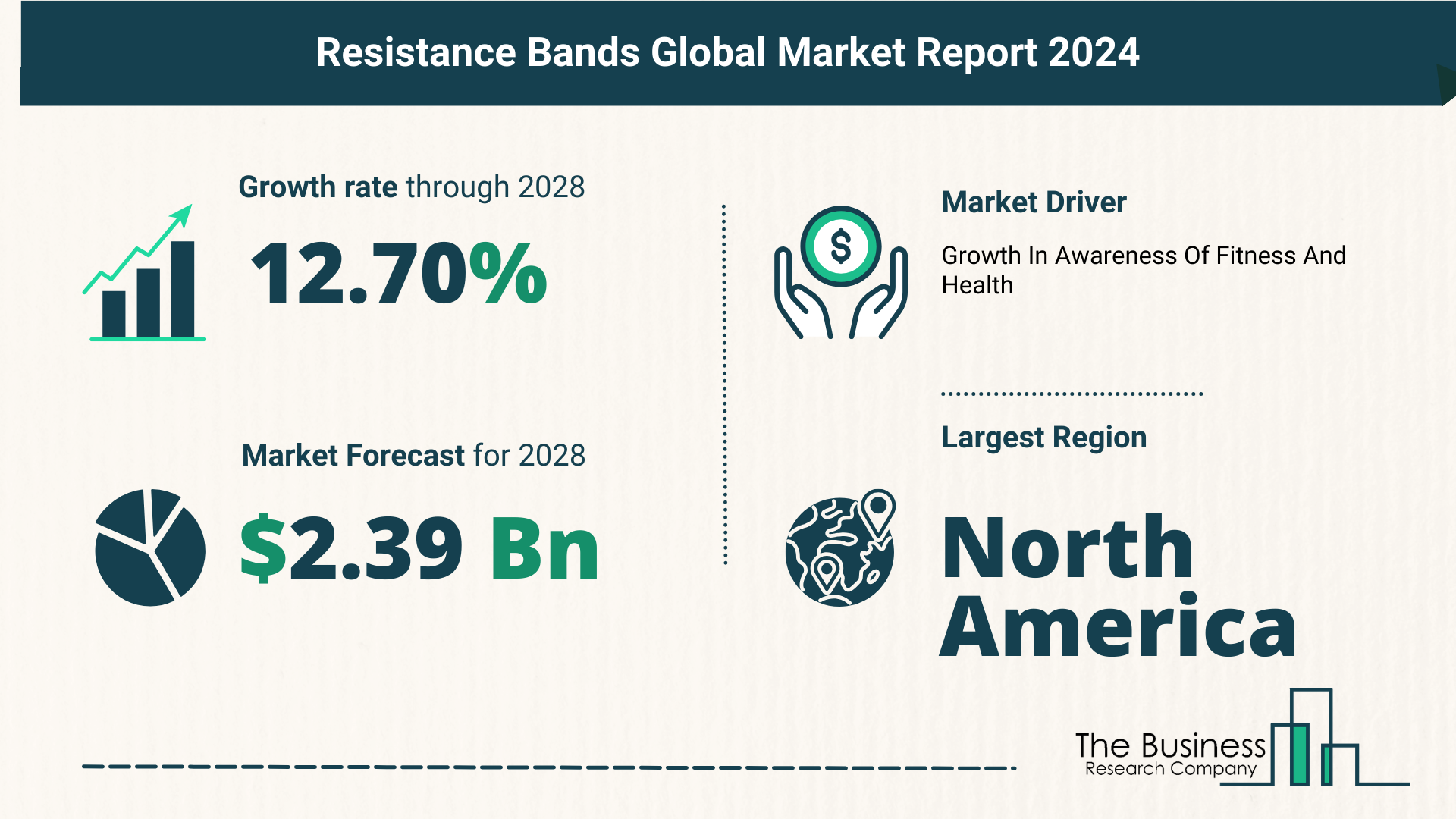
    Looking forward, the resistance bands market is poised for continued expansion. By 2028, the market is projected to reach $2.39 billion, growing at a CAGR of 12.7%.

    Factors Contributing to Future Growth:

    • Demand in Physical Therapy: Resistance bands are increasingly being used in physical therapy, contributing to market expansion.
    • Adoption of Physical Activities: Rising awareness of the importance of regular exercise is driving market growth.
    • Compact and Portable: The preference for compact and portable exercise tools continues to rise.
    • Technological Integration: Resistance bands are being enhanced with technology, increasing their appeal.

    View More On The Resistance Bands Market Report 2024 – https://www.thebusinessresearchcompany.com/report/resistance-bands-global-market-report

    Growing Awareness of Fitness and Health

    The increasing awareness of fitness and health is a significant driver of the resistance bands market. Fitness, encompassing both physical and mental well-being, is a key focus area for many individuals.

    Benefits of Resistance Bands:

    • Ease of Use: Suitable for all fitness levels.
    • Strength Training: Ideal for building strength and endurance.
    • Injury Rehabilitation: Widely used in recovery and physical therapy.
    • Functional Fitness: Supports a wide range of exercises for overall fitness.

    Market Impact:

    • Fitness Industry Revenue:The fitness and health club industry achieved $33.25 billion in revenue in 2021, indicating a growing market for fitness-related products like resistance bands.

    Innovative Products and Technological Advancements

    The resistance bands market is witnessing significant innovation, particularly in the integration of technology.

    Example: The STRAFFR Band

    • Bluetooth and Sensor-Based: The STRAFFR band, launched by a German startup, incorporates a patented sensor system to measure workout performance.
    • Durable Materials: Made from medical-grade silicone, offering enhanced durability.
    • Performance Tracking: Tracks metrics like repetitions, calories burned, and weight moved via a companion app.

    Strategic Acquisitions to Expand Market Reach

    Acquisitions are playing a key role in expanding the resistance bands market. In February 2022, GlobalBees Brands Pvt. Ltd. acquired Reach Fitness, an Indian manufacturer of fitness products, including resistance bands.

    Impact of the Acquisition:

    • Portfolio Expansion: Strengthens GlobalBees’ fitness product offerings.
    • Market Growth: Capitalizes on the growing demand for accessible fitness solutions.
    • Shared Vision: Promotes the goal of making fitness products more accessible.

    Market Segmentation and Regional Insights

    The resistance bands market is segmented by type, material, distribution channel, and application.

    Market Segments:

    • By Type: Includes tube resistance bands, pull-up resistance bands, therapy resistance bands, and others.
    • By Material: Fabric and latex are the primary materials used.
    • By Distribution Channel: Products are sold through specialty stores, supermarkets and hypermarkets, online retail, and other channels.
    • By Application: Primarily used by individuals and health and sports clubs.

    Regional Insights:

    • North America Dominates:In 2023, North America was the largest region in the resistance bands market, indicating a strong demand for fitness products in this region.

    The resistance bands market is set for continued growth, driven by increasing fitness awareness, technological advancements, and strategic acquisitions. With a promising future ahead, resistance bands are likely to remain a staple in fitness routines worldwide.

    Request A Sample Of The Global Resistance Bands Market Report 2024:
    https://www.thebusinessresearchcompany.com/sample_request?id=14476&type=smp

  • Growth Trajectory Of The Medical Lifting Sling Market 2024-2033

    Growth Trajectory Of The Medical Lifting Sling Market 2024-2033

    The Business Research Company’s global market reports are now updated with the latest market sizing information for the year 2024 and forecasted to 2033

    The medical lifting sling market has experienced significant growth in recent years and is projected to continue expanding.

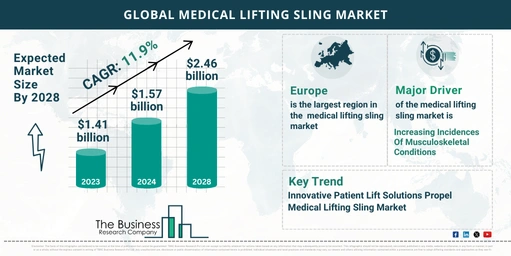
    • Current Market Size: In 2023, the market reached $1.41 billion and is expected to grow to $1.57 billion in 2024, at a compound annual growth rate (CAGR) of 11.7%.
    • Future Projections: By 2028, the market is anticipated to reach $2.46 billion, maintaining a CAGR of 11.9%.

    Key Drivers of Growth
    Several factors are contributing to the growth of the medical lifting sling market:

    • Elderly Population Increase: The rising number of elderly individuals is driving demand for medical lifting slings.
    • Growing Disability Rates: An increase in the number of people with disabilities is boosting market growth.
    • Healthcare Infrastructure Investments: Greater investments in healthcare infrastructure are supporting market expansion.
    • R&D Activities: Increased research and development are leading to innovations in medical lifting slings.
    • Awareness and Training: Enhanced awareness and training programs are driving the adoption of lifting slings.

    View More On The Medical Lifting Sling Market Report 2024 – https://www.thebusinessresearchcompany.com/report/medical-lifting-sling-global-market-report

    Expansion of Home Healthcare Services
    The growth in the forecast period can be attributed to the expansion of home healthcare services.

    • Chronic Diseases: The rise in chronic diseases is leading to higher demand for medical lifting slings.
    • Government Policies: Increasing adoption of supportive government policies is fostering market growth.
    • Obesity Rates: The growing cases of obesity are driving the need for bariatric lifting slings.
    • Vehicular Accidents: Rising cases of vehicular accidents are contributing to market demand.

    Emerging Trends in the Medical Lifting Sling Market
    Several trends are shaping the future of the medical lifting sling market:

    • Smart Technologies Integration: The integration of smart technologies into medical lifting slings is becoming increasingly popular.
    • Technological Advancements: Continuous technological advancements are driving product innovations.
    • Customized and Personalized Slings: There is a growing demand for customized and personalized lifting slings to meet specific patient needs.
    • Eco-friendly Materials: The trend towards using eco-friendly and sustainable materials in manufacturing is gaining traction.

    Impact of Rising Musculoskeletal Disorders
    Musculoskeletal disorders are a key driver for the medical lifting sling market.

    • Increase in Disorders: Factors like aging, lack of exercise, poor nutrition, and lifestyle habits are contributing to a rise in musculoskeletal conditions.
    • Role of Lifting Slings: Medical lifting slings play a crucial role in managing and preventing these disorders by reducing strain on caregivers and enhancing patient mobility.
    • Work-Related Cases: For instance, in the UK, 477,000 cases of work-related musculoskeletal disorders were recorded in 2021-2022.

    Innovative Solutions from Market Leaders
    Leading companies are driving market growth through innovative patient lift solutions.

    • Patient Lift Solutions: These devices safely lift, transfer, and reposition patients with limited mobility, improving safety and comfort.
    • Example: Invacare Corporation launched the Birdie Evo XPLUS patient lift in May 2022, featuring advanced technology to enhance patient comfort and safety.

    Strategic Acquisitions Bolster Market Position
    Acquisitions are playing a crucial role in expanding the offerings of companies in the medical lifting sling market.

    • Charme Capital Partners: In March 2022, Charme Capital Partners acquired Prism Healthcare Ltd., aiming to enhance its offerings and invest in UK manufacturing capabilities.
    • Prism Healthcare: This acquisition supports the expansion of healthcare offerings, including medical lifting slings.

    Market Segmentation and Regional Insights
    The medical lifting sling market is segmented by product, application, and end-use.

    • Product Types: Nylon Slings, Padded Slings, Mesh Slings, Canvas Slings, and other slings.
    • Applications: Bariatric Slings, Hammock Slings, Seating Slings, Standing Slings, Toileting Slings, Transfer Slings, Universal Slings, and other slings.
    • End-Use: Hospitals, Homecare, Elderly Care, and other healthcare settings.

    Regional Insights

    • Largest Market: Europe was the largest region in the medical lifting sling market in 2023.
    • Fastest Growth: The Asia-Pacific region is expected to witness the fastest growth during the forecast period.

    The medical lifting sling market is poised for significant growth, driven by rising demand, technological advancements, and strategic industry developments.

    Request A Sample Of The Global Medical Lifting Sling Market Report 2024:
    https://www.thebusinessresearchcompany.com/sample_request?id=15854&type=smp

  • 5 Key Insights On The Medical Imaging Equipment Market 2024

    5 Key Insights On The Medical Imaging Equipment Market 2024

    The Business Research Company’s global market reports are now updated with the latest market sizing information for the year 2024 and forecasted to 2033

    As per The Business Research Company’s Medical Imaging Equipment Global Market Report 2024, the medical imaging equipment market is expected to show significant growth in the forecast period.

    • Market Size Growth:
      • The medical imaging equipment market has shown significant growth in recent years. In 2023, the market size reached $42.68 billion and is projected to grow to $45.75 billion in 2024, with a compound annual growth rate (CAGR) of 7.2%.
      • This expansion is driven by an aging population, an increasing disease burden, and government initiatives aimed at raising awareness and integrating artificial intelligence (AI) in healthcare.
    • Future Market Projections:
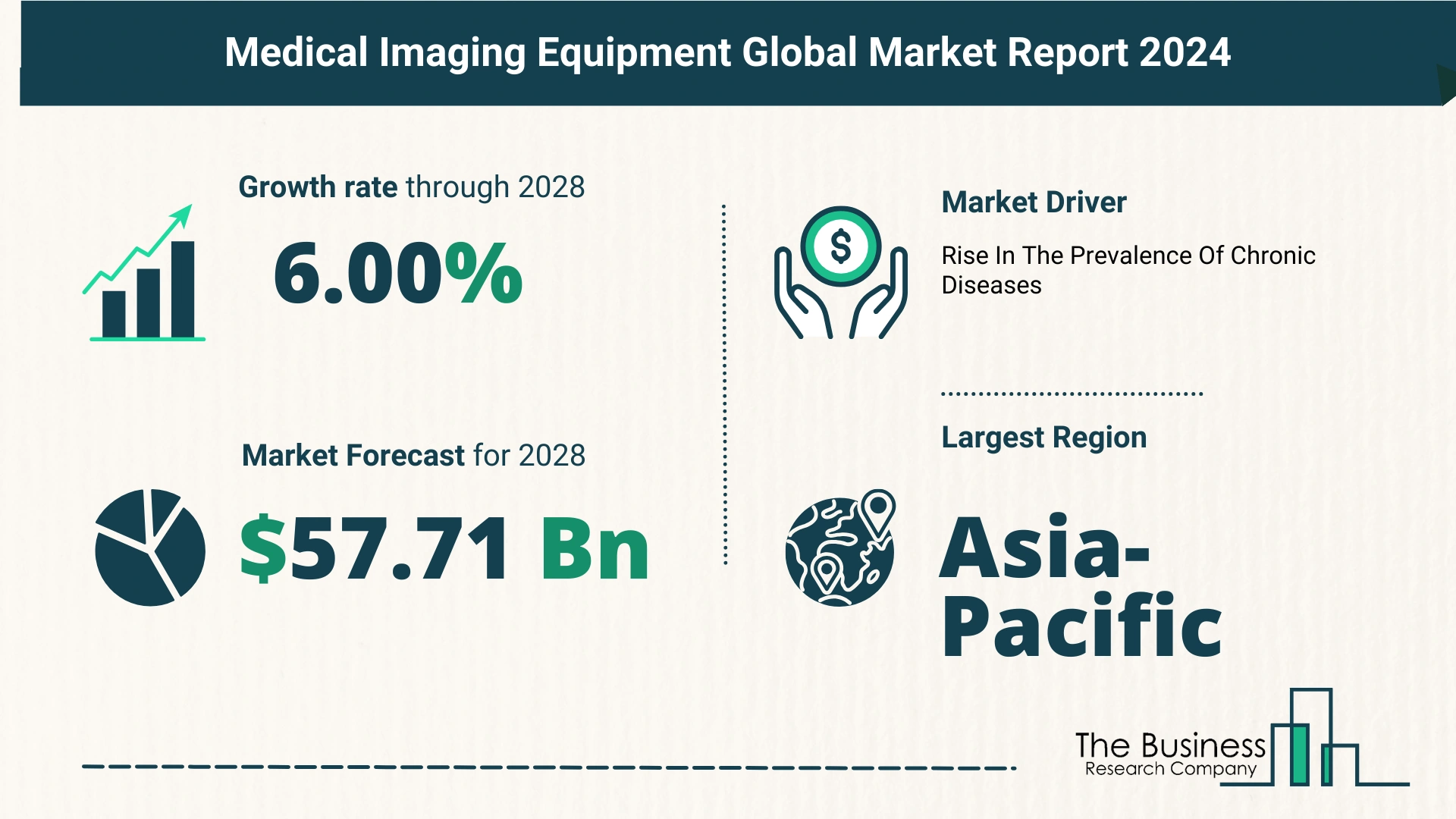
      • The market is expected to continue its upward trajectory, reaching $57.71 billion by 2028, at a CAGR of 6.0%.
      • Key factors fueling this growth include the rise of personalized medicine, remote patient monitoring, and the growth of emerging markets. Value-based healthcare and precision medicine also play pivotal roles in driving the market forward.

    View More On The Medical Imaging Equipment Market Report 2024 – https://www.thebusinessresearchcompany.com/report/medical-imaging-equipment-global-market-report

    Role of Medical Imaging in Chronic Disease Management

    • Chronic Disease Prevalence:
      • Chronic diseases, which are long-lasting and progress slowly, are on the rise due to factors like changing lifestyles, genetic predispositions, and aging populations. This increase is expected to drive the demand for medical imaging equipment.
      • Medical imaging is crucial for the early detection, accurate diagnosis, and personalized treatment of chronic conditions. It also aids in ongoing monitoring of disease progression and treatment effectiveness.
      • Global Impact:
        • In 2022, chronic diseases accounted for 41 million deaths globally, with 17.9 million deaths from cardiovascular diseases, 9.3 million from cancer, 4.1 million from chronic respiratory diseases, and 2.0 million from diabetes.

    Advancements in Medical Imaging Technology

    • Exo Iris: A Case Study:
      • Major companies in the medical imaging equipment market are focusing on developing advanced products like the Exo Iris. This new device integrates real-time AI, such as SweepAI, which ensures consistent and precise imaging, reducing the dependency on operator skills.
      • Key Features:
        • Compact and affordable design.
        • Ultra-wide field of view (up to 150 degrees), enabling comprehensive imaging of large organs or full-body fetuses in a single view.
        • Integrated with Exo Works, a point-of-care ultrasound workflow solution for seamless documentation and review.

    Strategic Acquisitions Strengthening Market Position

    • Radon Medical Imaging’s Expansion:
      • In July 2023, Radon Medical Imaging LLC expanded its services by acquiring Tristate Biomedical Solutions LLC, a US-based medical equipment company.
      • Impact of Acquisition:
        • This acquisition enhances Radon’s ability to provide maintenance and repair services for medical imaging equipment, strengthens its business, and expands its geographic reach.

    Market Segmentation and Regional Insights

    • Market Segmentation:
      • By Equipment: Includes Computed Tomography, X-Ray Systems, MRI Systems, Ultrasound Systems, Nuclear Imaging Equipment, Mammography Equipment, and more.
      • By Modality: Covers Stand-Alone Devices, Portable Devices, and Hand-Held Devices.
      • By Application: Encompasses Cardiology, Neurology, Orthopedics, Gynecology, Oncology, and other applications.
      • By End-User: Involves Diagnostic Imaging Centers, Ambulatory Surgical Centers, Specialty Clinics, and Research Institutes.
    • Regional Insights:
      • In 2023, Asia-Pacific emerged as the largest region in the medical imaging equipment market, reflecting the region’s robust healthcare infrastructure and increasing investment in medical technologies.

    Conclusion

    • Market Outlook:
      • The medical imaging equipment market is poised for strong growth, driven by technological advancements, strategic acquisitions, and the increasing prevalence of chronic diseases. Companies operating in this market are focusing on innovation and expansion to meet the growing demand and to stay competitive in a rapidly evolving industry.

    Request A Sample Of The Global Medical Imaging Equipment Market Report 2024:
    https://www.thebusinessresearchcompany.com/sample_request?id=14429&type=smp

  • Understand How The Chatbots For Mental Health And Therapy Market Is Poised To Grow Through 2024-2033

    Understand How The Chatbots For Mental Health And Therapy Market Is Poised To Grow Through 2024-2033

    The Business Research Company’s global market reports are now updated with the latest market sizing information for the year 2024 and forecasted to 2033

    As per The Business Research Company’s Chatbots For Mental Health And Therapy Global Market Report 2024, the chatbots for mental health and therapy market is expected to show significant growth in the forecast period.

    • Steady Market Growth: The chatbots for mental health and therapy market is experiencing significant growth, expanding from $1.17 billion in 2023 to $1.27 billion in 2024 at a CAGR of 8.5%.
    • Drivers of Growth: The rise in demand for accessible mental health services and increased awareness about mental health issues are primary growth drivers. The market is also benefiting from advancements in natural language processing (NLP) and machine learning algorithms.

    Future Market Projections

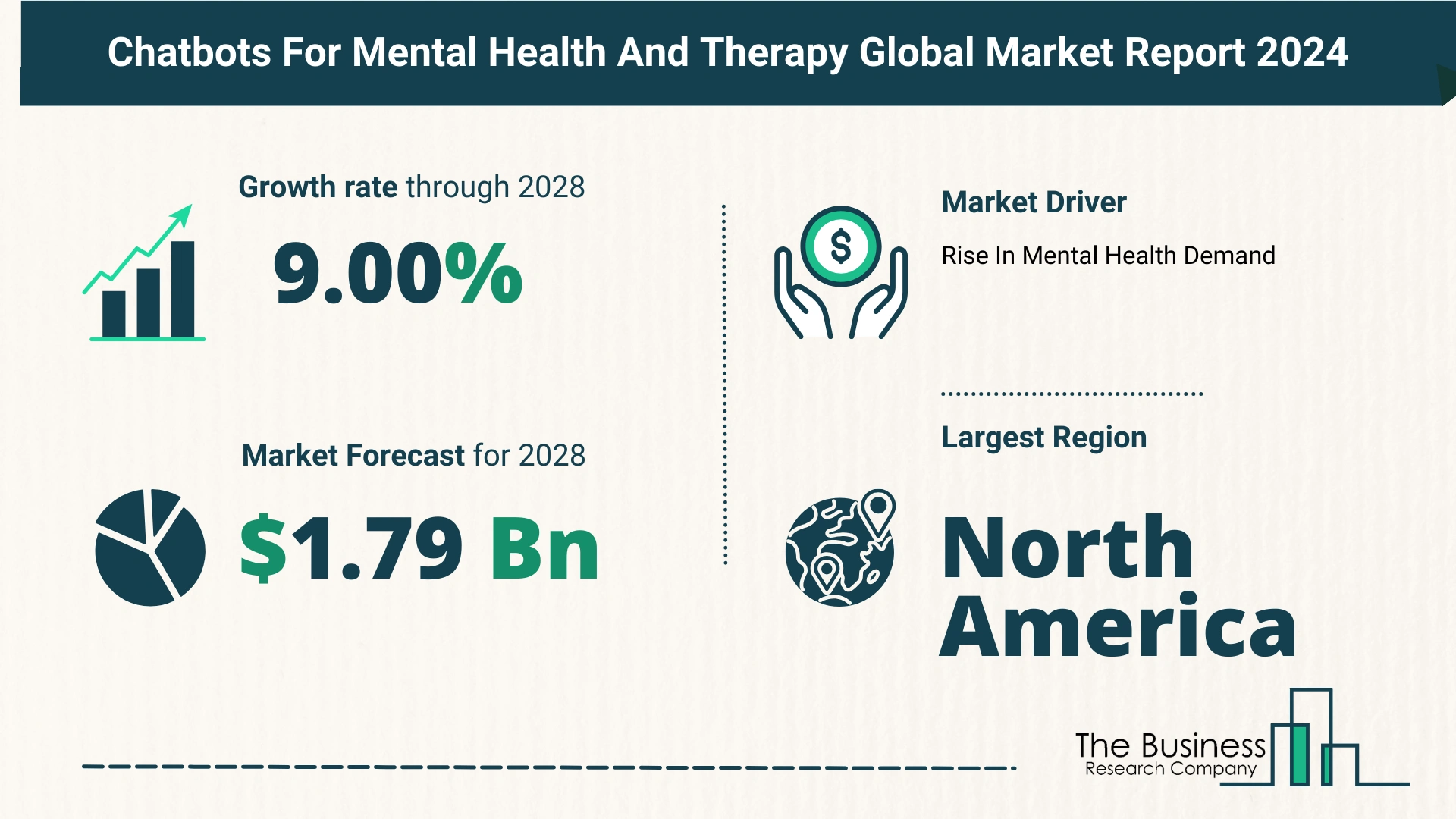
    • Projected Expansion: The market size is expected to grow to $1.79 billion by 2028, with a higher CAGR of 9.0%.
    • Key Growth Factors: The growing need for scalable therapy solutions and the increasing acceptance of digital health technologies are expected to drive this growth. Additionally, there is rising awareness of the benefits of chatbots for mental health.

    Trends Shaping the Future

    • Technological Advancements: Innovations in NLP and machine learning are enhancing chatbot capabilities, making them more effective in mental health support.
    • Teletherapy and Virtual Reality Integration: The expansion of teletherapy and the integration of virtual reality (VR) are creating more immersive and personalized therapy experiences.
    • Wearable Device Integration: Chatbots are increasingly being integrated with wearable devices and other digital health tools, providing users with real-time feedback and support.
    • Crisis Intervention Features: The development of more sophisticated crisis intervention capabilities is expected to improve the immediate response to users in distress.

    View More On The Chatbots For Mental Health And Therapy Market Report 2024 – https://www.thebusinessresearchcompany.com/report/chatbots-for-mental-health-and-therapy-global-market-report

    Rise in Mental Health Demand and Its Impact

    • Increasing Mental Health Demand: The growing prevalence of mental health disorders is driving demand for accessible mental health services.
    • Role of Chatbots: Chatbots are meeting this demand by providing round-the-clock availability and offering psychoeducational resources, self-help tools, and evidence-based treatments.
    • Impact on Market Growth: The increased demand for mental health services is significantly contributing to the expansion of the chatbots for mental health and therapy market.

    Leading Companies in the Market

    • Key Players: Major companies in this market include Talkspace Online Therapy Inc., IBM, Cisco Systems Inc., Oracle Corporation, and BetterHelp, among others.
    • Focus on Advanced AI Solutions: These companies are focusing on integrating advanced AI technologies, particularly NLP algorithms, to improve the effectiveness of their mental health chatbots.

    Revolutionizing Mental Health Support

    • AI Therapist Technology: Companies are leveraging advanced AI therapist technology to revolutionize mental health support.
    • Example – TalkThru: In July 2023, TalkThru launched an AI therapist chatbot that uses innovative NLP algorithms, allowing for sensitive and meaningful user interactions. This AI-driven solution provides 24/7 accessibility and personalized support.

    Strategic Acquisitions Enhancing Market Position

    • Amwell’s Strategic Moves: In August 2021, American Well Corporation acquired Silvercloud Health Limited and Conversa Health Inc. to expand its digital healthcare integration and mental health services.
    • Impact of Acquisitions: These acquisitions enable Amwell to create new digital care workflows, enhance patient engagement, and provide an integrated system combining physical, virtual, and automated care experiences.

    Market Segmentation and Regional Insights

    • Segmentation: The chatbots for mental health and therapy market is segmented by component (SaaS and others), technology (Machine Learning, NLP, etc.), and application (Conversational Interfaces, Behavioral Pattern Recognition, etc.).
    • Regional Insights: North America was the largest region in 2023, while Asia-Pacific is expected to be the fastest-growing region in the forecast period.

    The chatbots for mental health and therapy market is poised for robust growth, driven by increasing mental health demand, technological advancements, and strategic industry moves. As the market evolves, it will play an increasingly vital role in making mental health support more accessible and effective for individuals worldwide.

    Request A Sample Of The Global Chatbots For Mental Health And Therapy Market Report 2024:
    https://www.thebusinessresearchcompany.com/sample_request?id=14666&type=smp

  • Understand How The Lab Automation In Drug Discovery Market Is Poised To Grow Through 2024-2033

    Understand How The Lab Automation In Drug Discovery Market Is Poised To Grow Through 2024-2033

    The Business Research Company’s global market reports are now updated with the latest market sizing information for the year 2024 and forecasted to 2033

    As per The Business Research Company’s Lab Automation In Drug Discovery Global Market Report 2024, the lab automation in drug discovery market is expected to show significant growth in the forecast period.

    • Market Size Expansion: The lab automation in drug discovery market has experienced substantial growth, rising from $6.13 billion in 2023 to an expected $6.47 billion in 2024, with a CAGR of 5.6%. This growth is driven by factors like the increasing complexity of drug discovery, the need for efficiency and cost reduction, and rising labor costs.
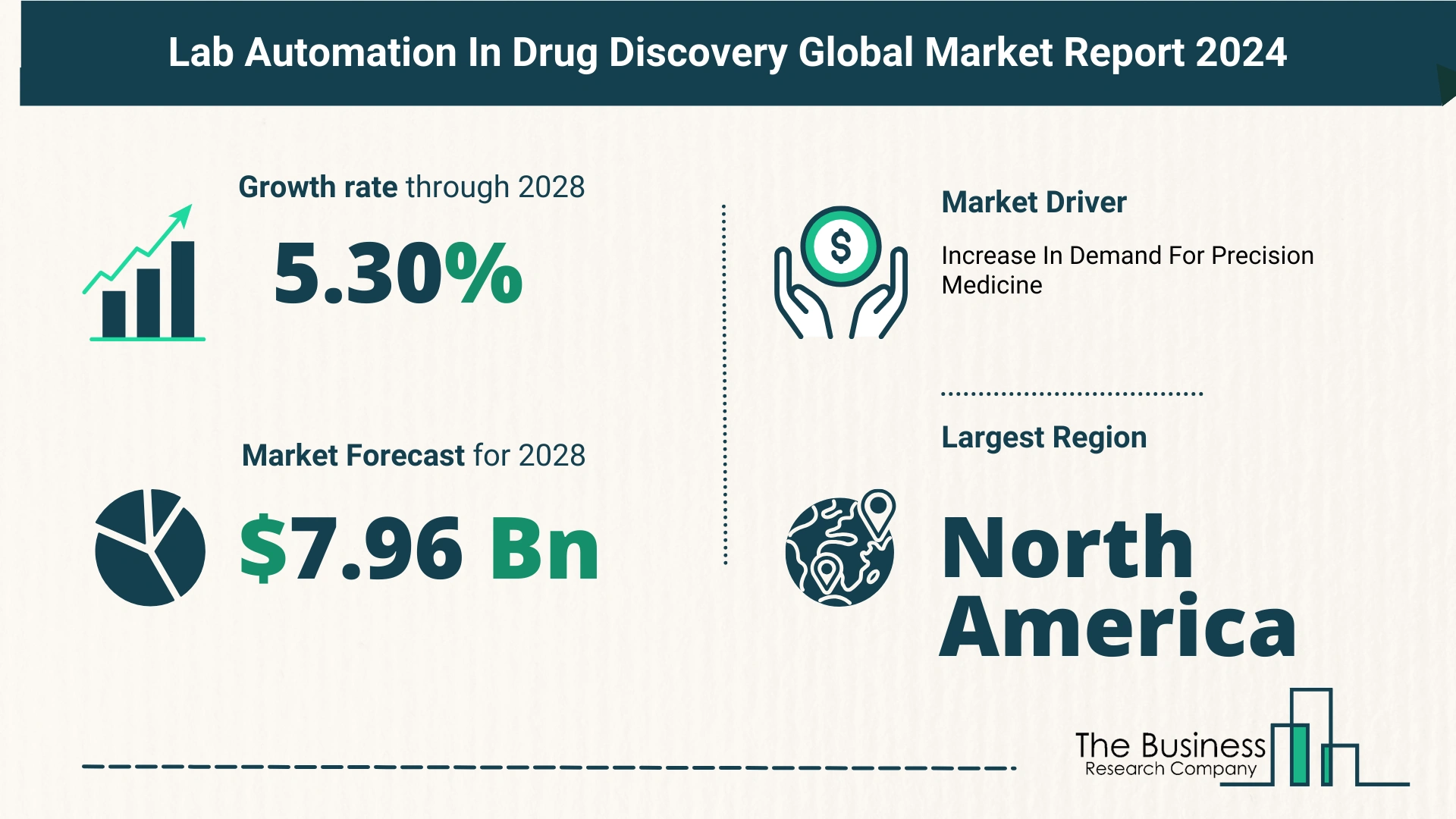
    • Future Projections: The market is projected to reach $7.96 billion by 2028, growing at a CAGR of 5.3%. Key drivers include the expansion of drug pipelines, the rise in personalized medicine, and the focus on rare diseases and orphan drugs.

    Precision Medicine Driving Market Growth

    • Importance of Precision Medicine: Precision medicine, which tailors treatment based on individual genetic, environmental, and lifestyle factors, is a significant growth driver for lab automation in drug discovery. Automation enhances research efficiency and accuracy, leading to more effective, personalized treatments.
    • Market Impact: The increasing demand for precision medicine is contributing to the rapid growth of the lab automation market, with over 75,000 genetic testing products and 300 personalized medicines available as of October 2022.

    View More On The Lab Automation In Drug Discovery Market Report 2024 – https://www.thebusinessresearchcompany.com/report/lab-automation-in-drug-discovery-global-market-report

    Key Industry Players and Technological Innovations

    • Major Companies: Leading companies in the market include Thermo Fisher Scientific, Abbott Diagnostics, Roche Holdings, and Siemens Healthineers, among others. These companies are focusing on developing advanced automation solutions to stay competitive.
    • Technological Advances: Innovations like Strateos Inc.’s rapid idea-to-data solution, launched in April 2022, are transforming drug discovery. This platform enables quick transformation of ideas into actionable data through linked robotic automation and cloud-based design.

    Strategic Acquisitions Boosting Market Presence

    • Brooks Automation’s Acquisition: In March 2023, Brooks Automation acquired Aim Lab Automation Technologies Pty Ltd., an Australian company specializing in robotic automation. This acquisition is expected to enhance Brooks’ presence in clinical diagnostics and accelerate technological advancements in lab automation for drug discovery.

    Market Segmentation and Regional Insights

    • Market Segments: The lab automation market is segmented by type (e.g., automated liquid handlers, robotic arms), component (instruments, software), application (high-throughput screening, sample preparation), and end-user (biotech and pharmaceutical industries).
    • Regional Growth: North America was the largest market in 2023, while Asia-Pacific is expected to be the fastest-growing region during the forecast period, driven by increasing investments in drug discovery and automation technologies.

    Request A Sample Of The Global Lab Automation In Drug Discovery Market Report 2024:
    https://www.thebusinessresearchcompany.com/sample_request?id=14410&type=smp

  • Key Trends And Drivers In The HERG Screening Market 2024

    Key Trends And Drivers In The HERG Screening Market 2024

    The Business Research Company’s market reports offer an in-depth analysis on the market’s growth potential, major drivers, key trends and more.

    Rapid Growth in the HERG Screening Market

    • Current Market Overview: The HERG screening market is experiencing significant growth, with its size increasing from $1.42 billion in 2023 to an expected $1.62 billion in 2024, reflecting a compound annual growth rate (CAGR) of 14.2%.
    • Growth Drivers: This rapid expansion can be attributed to increased drug development activities, stricter regulatory requirements, heightened awareness of cardiac safety, and a rising incidence of cardiac disorders.

    Forecasted Market Expansion and Emerging Trends

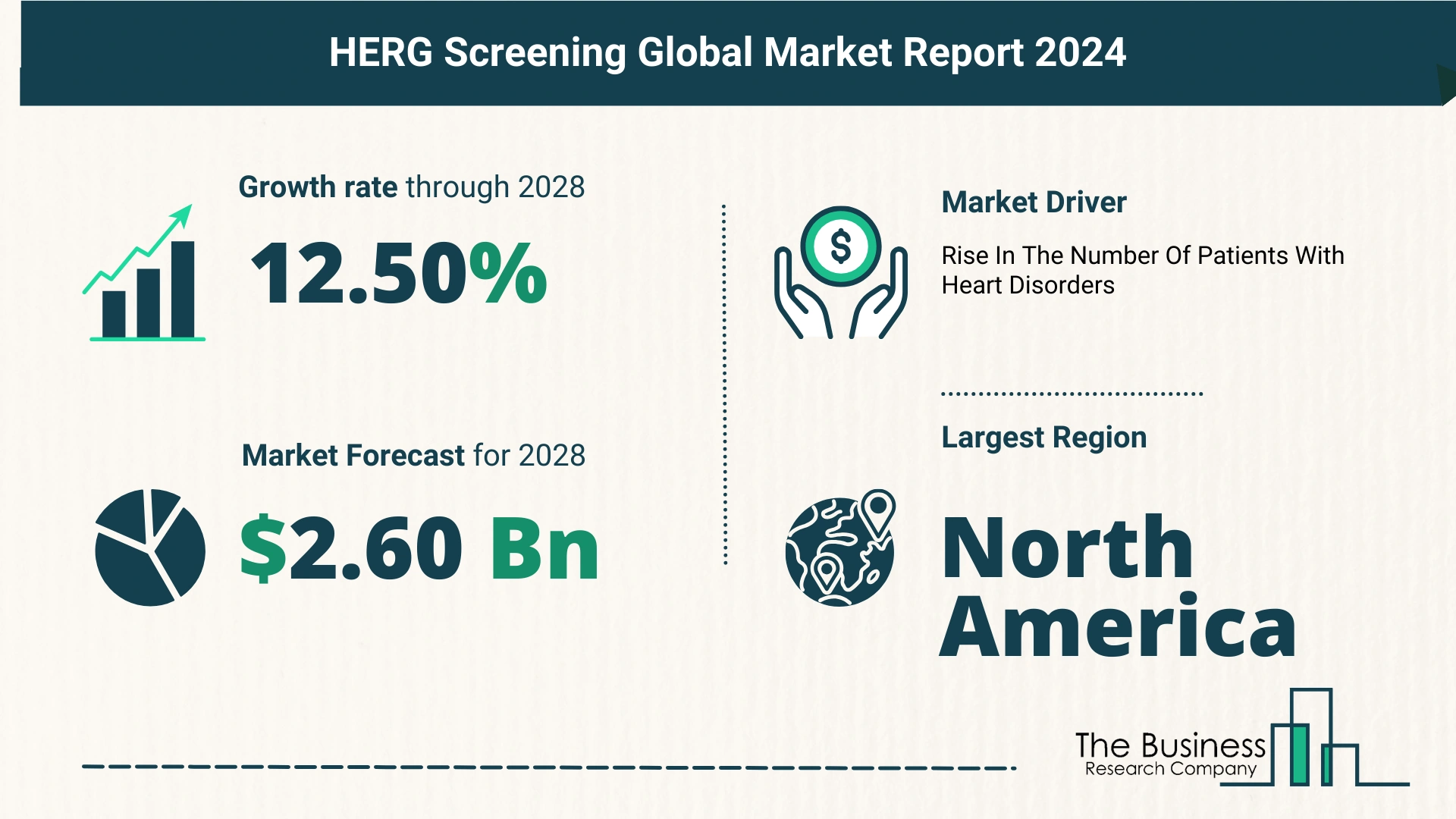
    • Future Market Projections: The HERG screening market is projected to grow to $2.60 billion by 2028, with a CAGR of 12.5%.
    • Key Factors for Growth: The expansion of personalized medicine, increased outsourcing of drug development activities, growth in emerging markets and research, and a focus on non-cardiac safety assessments are key contributors to this expected growth.
    • Major Trends: Advanced in vitro models, integration of genomic and proteomic data, advancements in computational approaches, a focus on pediatric drug safety, and collaborations for data sharing and standardization are anticipated to shape the market.

    Read More On The HERG Screening Market Report 2024 – https://www.thebusinessresearchcompany.com/report/herg-screening-global-market-report

    Impact of Rising Cardiovascular Disorders on Market Growth

    • Prevalence of Heart Disorders: The increase in cardiovascular disorders, driven by unhealthy lifestyles, an aging population, genetic factors, diabetes, and metabolic syndrome, is fueling the demand for HERG screening.
    • Cardiac Safety: HERG screening plays a crucial role in identifying potential drug candidates, preventing adverse cardiac events like torsade de pointes (TdP), and improving patient outcomes.
    • Statistical Evidence: For example, in the U.S., 1 in 20 adults aged 20 and older have cardiovascular diseases, with 695,000 cases and 375,476 deaths reported in 2021. In the UK, heart attack deaths increased from 19,440 in 2020 to 20,061 in 2021.

    Leading Companies and Innovations in HERG Screening

    • Key Market Players: Major companies in the HERG screening market include Eurofins-Cerep SA., Aviva Biosciences Inc., AstraZeneca Public Limited Company, Merck KGaA, and Charles River Laboratories Inc.
    • Innovation in Screening Services: Metrion Biosciences Ltd., for instance, launched a GLP-certified HERG screening service in August 2023. This service enhances cardiac safety in drug development by using the whole-cell patch-clamp technique and adhering to regulatory guidelines like ICH S7A and ICH S7B.

    Strategic Collaborations for Enhanced Cardiac Safety

    • Collaborative Efforts: In September 2021, ApconiX partnered with PhysioStim to establish a European Center of Excellence for preclinical cardiovascular safety evaluation. This collaboration aims to provide a comprehensive range of preclinical cardiac safety tests, including automated electrophysiology for HERG screening and GLP compliance assays.

    Regional Insights and Market Segmentation

    • Regional Market Leaders: In 2023, North America was the largest region in the HERG screening market. However, Asia-Pacific is expected to be the fastest-growing region during the forecast period.
    • Market Segmentation: The HERG screening market is segmented by type (Gene KCNH2, Mutant KCNH2), ion channel (Voltage-Gated, Ligand Gated), and applications (Antiarrhythmic, Antipsychotic, Antibiotics, and Other Applications).

    The HERG screening market is poised for continued expansion, driven by advancements in drug development, increased awareness of cardiac safety, and ongoing innovations in screening technologies. As the prevalence of cardiovascular disorders rises globally, the demand for HERG screening is set to grow, supported by strategic collaborations and the entry of new players in the market.

    Request for A Sample Of The Global HERG Screening Market Report:
    https://www.thebusinessresearchcompany.com/sample_request?id=14392&type=smp

  • Dental Practice Management Software Market Report 2024: Market Size, Drivers, And Trends

    Dental Practice Management Software Market Report 2024: Market Size, Drivers, And Trends

    The Business Research Company’s global market reports are now updated with the latest market sizing information for the year 2024 and forecasted to 2033

    Rapid Market Growth

    • The dental practice management software market has seen significant growth, with the market size increasing from $1.47 billion in 2023 to $1.62 billion in 2024, representing a compound annual growth rate (CAGR) of 10.3%.
    • This growth is driven by the rising demand for efficient practice management, the prevalence of dental diseases, regulatory compliance, increasing awareness of dental care, and the integration of billing and payment solutions.

    Future Market Expansion

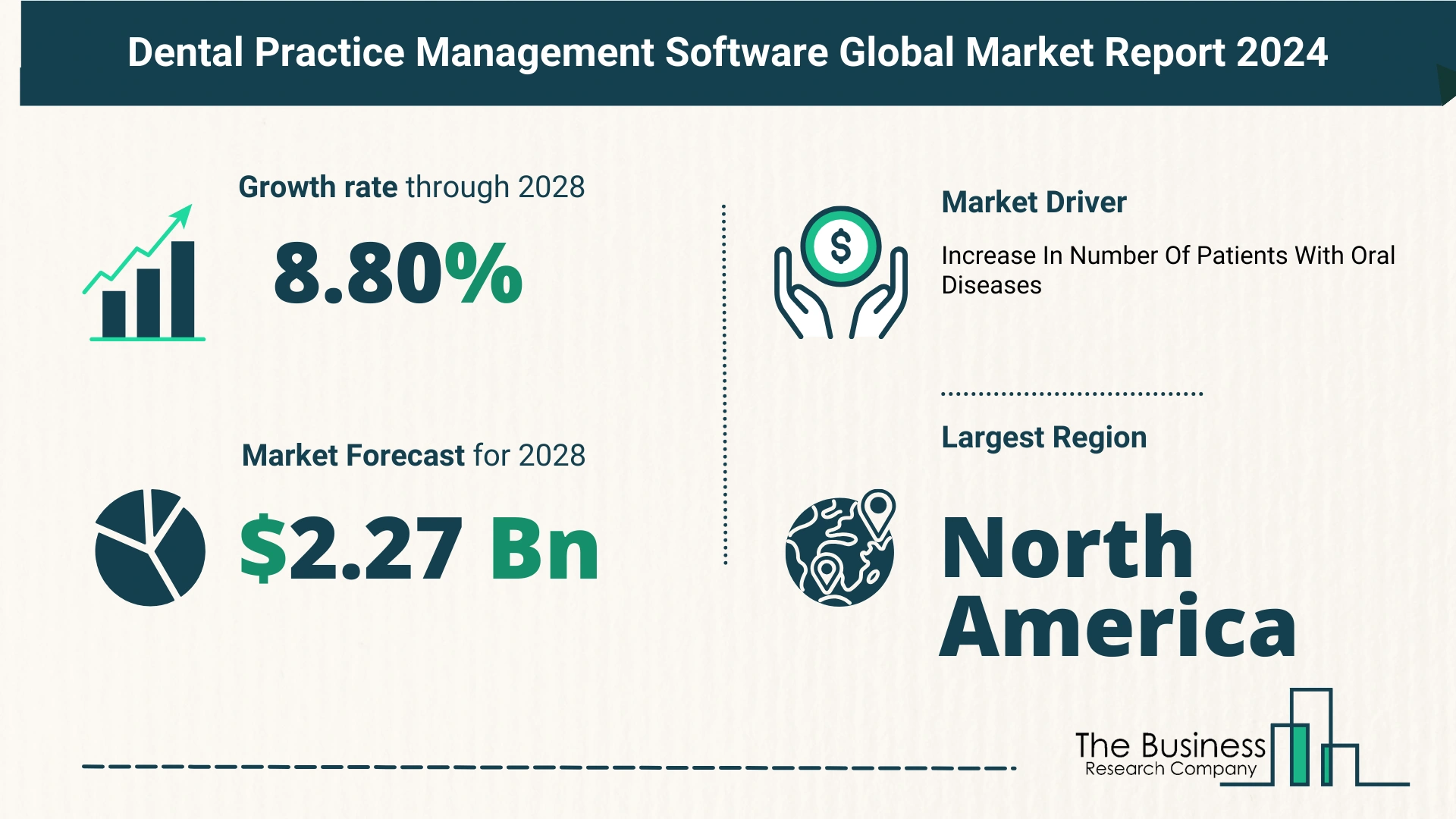
    • The market is expected to continue its strong growth trajectory, reaching $2.27 billion by 2028 with a CAGR of 8.8%.
    • Factors contributing to this growth include the adoption of cloud-based software, tele-dentistry services, interoperability with other healthcare systems, and personalized patient engagement tools.
    • Trends to watch include a shift towards subscription-based models, the emergence of virtual consultation platforms, the integration of virtual reality, and the rise of predictive analytics and dental software-as-a-service (SaaS) offerings.

    View More On The Dental Practice Management Software Market Report 2024 – https://www.thebusinessresearchcompany.com/report/dental-practice-management-software-global-market-report

    Managing Increasing Patient Influx

    Rising Oral Health Issues

    • The increasing number of patients with oral diseases is driving the demand for dental practice management software, which helps practices manage patient care efficiently.
    • Poor oral health habits, financial constraints, and limited access to dental services are leading to a higher prevalence of oral diseases, including oral cancer.
    • In 2023, an estimated 54,540 adults in the US were projected to be diagnosed with oral or oropharyngeal cancer, underscoring the need for effective dental practice management tools.

    Benefits of Dental Practice Management Software

    • Dental practice management software streamlines workflows, enhances efficiency, and improves patient care.
    • It enables dental practices to manage an increasing number of patients effectively, ensuring better health outcomes and patient satisfaction.

    Advancements by Leading Companies

    Innovation in Treatment Planning

    • Major companies are focusing on developing advanced software solutions, such as AI-powered treatment plan software, to gain a competitive edge.
    • For example, in April 2023, Adit launched a revolutionary dental treatment plan software that uses AI and machine learning to improve patient monitoring and provide timely data.
    • This platform offers customizable treatment plans with integrated features like practice management and patient communication, reducing administrative burdens and enhancing patient engagement.

    Strategic Acquisitions

    • Acquisitions are reshaping the dental practice management software market, with companies expanding their service offerings and market reach.
    • In January 2023, Planet DDS acquired Cloud 9 Software, enhancing its cloud-based solutions and market leadership, particularly in orthodontic and pediatric care.
    • Such acquisitions highlight the consolidation trend in the market and the emphasis on improving efficiency and patient care.

    Regional Market Insights

    North America and Asia-Pacific

    • North America was the largest region in the dental practice management software market in 2023, reflecting the region’s advanced healthcare infrastructure and high adoption rates of digital solutions.
    • Asia-Pacific is expected to be the fastest-growing region during the forecast period, driven by increasing healthcare investments, growing awareness of dental care, and the adoption of new technologies in dental practices.

    Request A Sample Of The Global Dental Practice Management Software Market Report 2024:
    https://www.thebusinessresearchcompany.com/sample_request?id=14322&type=smp