Blog

  • Key Trends And Drivers In The Drugs for Immunotherapy Market 2024

    Key Trends And Drivers In The Drugs for Immunotherapy Market 2024

    The Business Research Company’s market reports offer an in-depth analysis on the market’s growth potential, major drivers, key trends and more.

    The drugs for immunotherapy market has experienced significant growth in recent years, driven by various factors contributing to its expansion and future projections.

    • Market Size and Growth Trends
      • The market size was $255.14 billion in 2023 and is expected to reach $281.43 billion in 2024, growing at a CAGR of 10.3%.
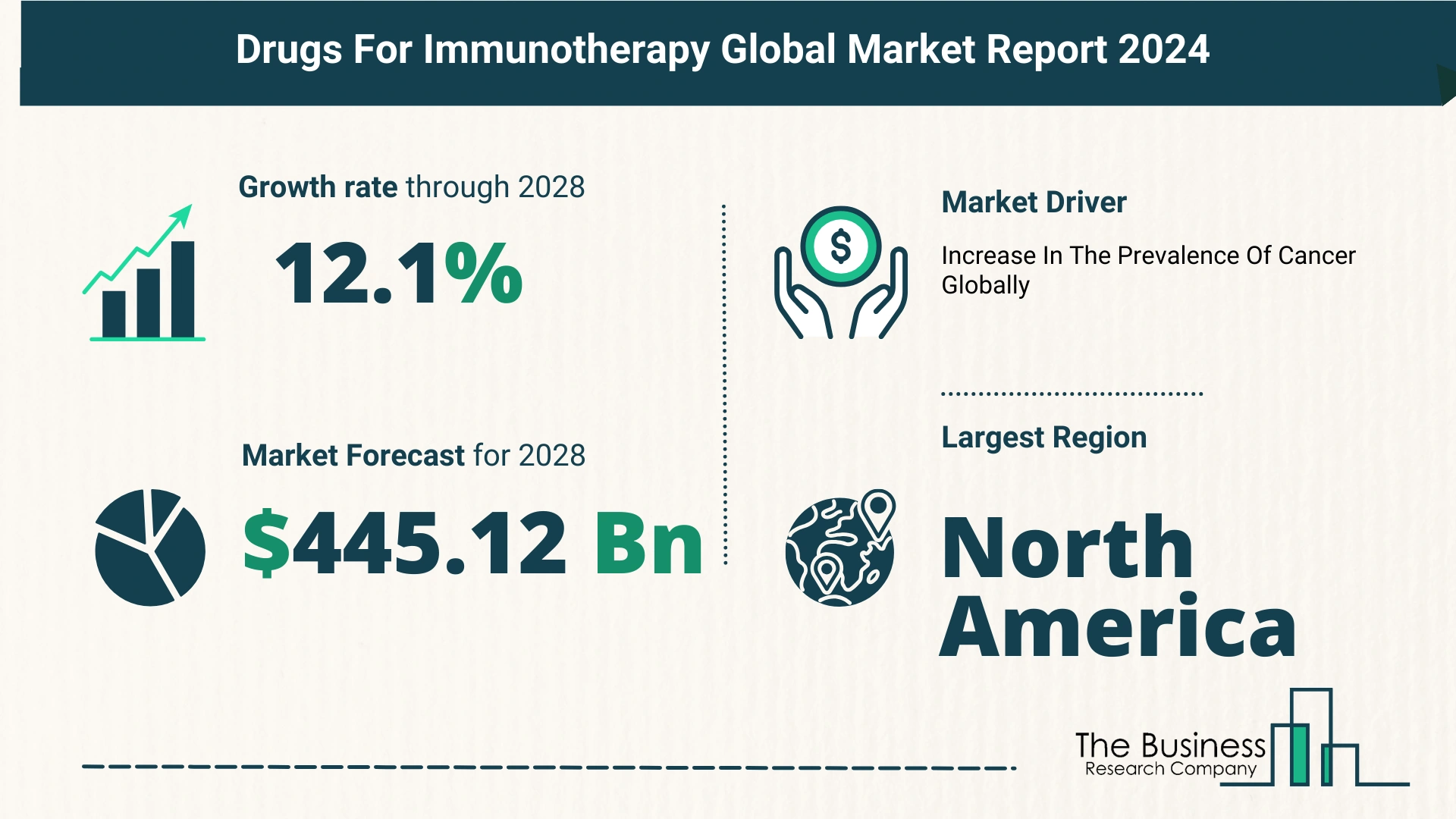
      • By 2028, it is forecasted to grow to $445.12 billion at a CAGR of 12.1%.

    Drivers of Market Growth

    Rising Incidences of Cancer

    The global increase in cancer cases is a primary driver for the drugs for immunotherapy market, influenced by lifestyle factors and aging populations.

    • Obesity, smoking, alcohol consumption, and poor diet contribute to cancer incidences.
    • Predictions suggest a significant rise in cancer cases globally, further boosting demand for immunotherapy drugs.

    Read More On The Drugs for Immunotherapy Market Report 2024 – https://www.thebusinessresearchcompany.com/report/drugs-for-immunotherapy-global-market-report

    Innovations in Immunotherapy

    Major companies are advancing therapies to cater to evolving healthcare needs, focusing on targeted treatments like immune checkpoint inhibitors.

    • Innovations such as Keytruda (pembrolizumab) from Merck & Co., Inc. highlight significant advancements in cancer treatment.
    • FDA-approved therapies like Keytruda expand treatment options and improve patient outcomes.

    Strategic Acquisitions and Expansions

    Key acquisitions by major pharmaceutical firms, such as Pfizer Inc.’s acquisition of Trillium Therapeutics, bolster market competitiveness and portfolio diversification.

    • Pfizer Inc.’s acquisition enhances its oncology offerings, particularly in immuno-therapeutics for hematological malignancies.

    Market Segmentation

    The drugs for immunotherapy market is segmented by type, therapy area, and end user to cater to diverse medical needs and treatment preferences.

    • By Type: Monoclonal Antibodies, Interferons, Interleukins, Vaccines, Checkpoint Inhibitors, Other Types
    • By Therapy Area: Cancer, Autoimmune & Inflammatory Diseases, Infectious Diseases, Other Therapy Areas
    • By End User: Hospitals & Clinics, Ambulatory Surgical Centers, Other End Users

    Regional Insights

    North America led the market in 2023, with the Middle East anticipated as the fastest-growing region during the forecast period.

    • North America: Significant market presence due to advanced healthcare infrastructure and high investment in research.
    • Middle East: Rapid growth expected, driven by increasing healthcare expenditures and rising cancer incidences.

    Conclusion

    The drugs for immunotherapy market is poised for substantial growth, propelled by rising cancer rates, innovative treatment solutions, strategic acquisitions, and expanding global healthcare access. With ongoing advancements in immunology and personalized medicine, the future promises continued evolution and improvement in patient care and outcomes.

    Request for A Sample Of The Global Drugs for Immunotherapy Market Report:
    https://www.thebusinessresearchcompany.com/sample_request?id=2559&type=smp
  • Global Diagnostic Enzyme Market Key Insights 2024-2033

    Global Diagnostic Enzyme Market Key Insights 2024-2033

    The Business Research Company’s global market reports are now updated with the latest market sizing information for the year 2024 and forecasted to 2033

    According to The Business Research Company’s Diagnostic Enzyme Global Market Report 2024, the diagnostic enzyme market is expected to show promising growth in the forecast period.

    Market Growth and Projections

    • The diagnostic enzyme market has shown robust growth, reaching $4.02 billion in 2023 and projected to grow to $4.25 billion in 2024, with a CAGR of 5.7%.
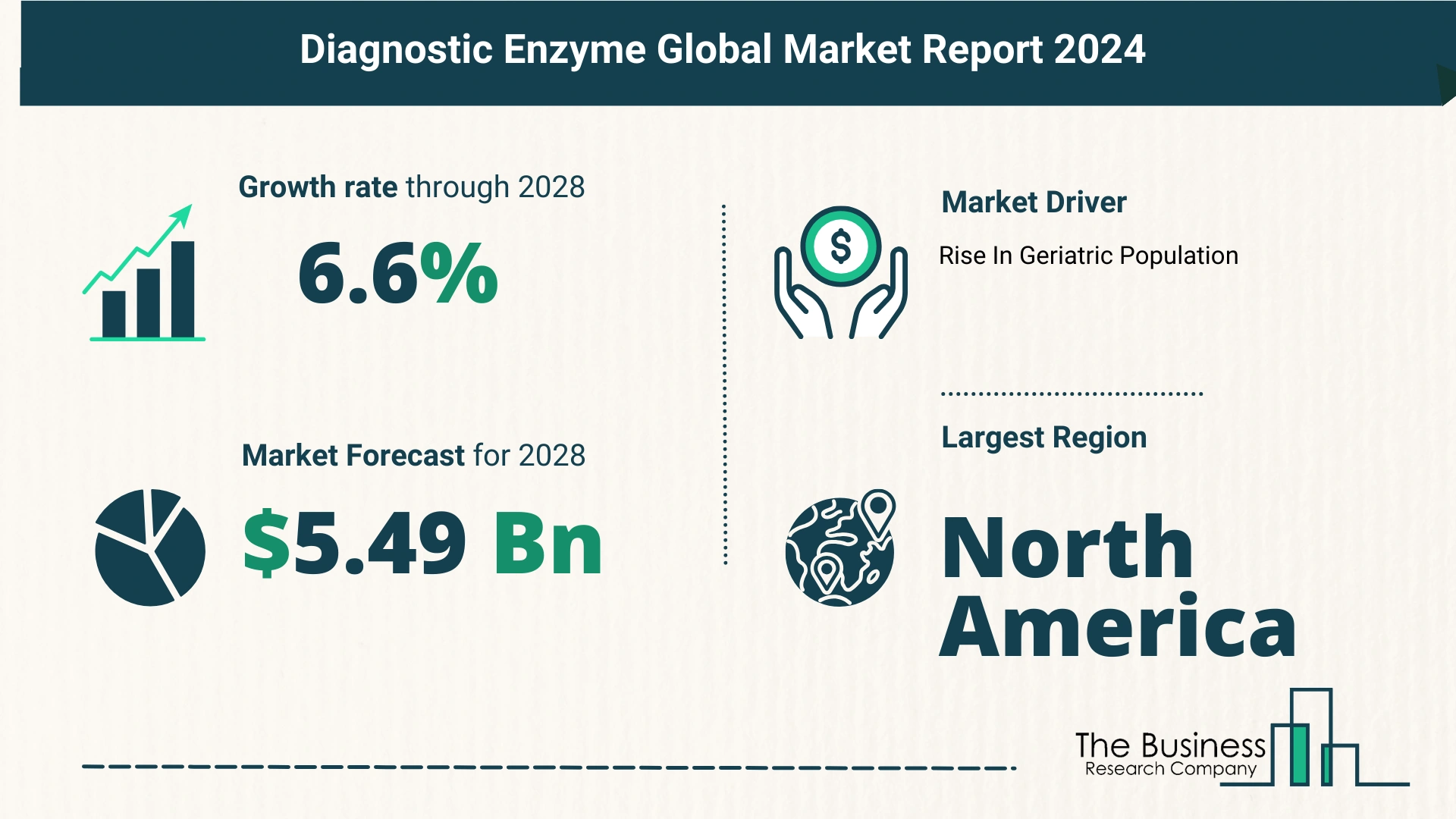
    • Expected growth to $5.49 billion by 2028, at a CAGR of 6.6%, driven by increasing healthcare spending and government initiatives.

    Factors Driving Market Growth

    • Prevalence of Chronic Diseases: Rising incidence contributes to demand for diagnostic enzymes.
    • Geriatric Population: Increasing elderly demographics require more diagnostic enzyme applications.
    • Awareness and Preventive Healthcare: Growing emphasis on early diagnosis boosts market demand.

    View More On The Diagnostic Enzyme Market Report 2024 – https://www.thebusinessresearchcompany.com/report/diagnostic-enzymes-global-market-report

    Rise In Geriatric Population For Diagnostic Enzymes Market

    • The aging global population, expected to double by 2050, fuels demand for diagnostic enzymes.
    • Elderly individuals are more susceptible to chronic diseases requiring diagnostic enzyme testing.

    Key Players in the Market

    • Major companies include Sanofi S.A., Roche Holding AG, Thermo Fisher Scientific Inc., and more.
    • Diverse product offerings and strategic expansions characterize market leadership.

    Technology-Enabled Service Innovation In Diagnostic Enzyme Market

    • Innovative Solutions: Companies integrate machine learning for enzyme discovery and optimization.
    • Ginkgo Enzyme Services: Launched by Ginkgo Bioworks, enhances enzyme production efficiency.

    Case Study: Qiagen Acquires Blirt S.A

    • QIAGEN’s acquisition of BLIRT S.A enhances its molecular testing capabilities and market presence.
    • Strategic move strengthens QIAGEN’s position in molecular diagnostics and sample technologies.

    Market Segmentation and Regional Insights

    • By Product Type: Carbohydrases, Polymerases And Nucleases, Protease, Others.
    • By Source: Animals, Microorganisms, Plants.
    • By Application: Biocatalysts, Diagnostics, Pharmaceuticals, Research & Biotechnology.

    Regional Dynamics

    • North America: Largest market in 2023, driven by technological advancements.
    • Middle East: Fastest-growing region, reflecting increasing healthcare investments.

    Conclusion

    The diagnostic enzyme market is poised for substantial growth driven by technological advancements, demographic shifts, and expanding healthcare infrastructure. Companies are innovating to meet evolving market demands, enhancing diagnostic capabilities across global regions. As the market evolves, strategic partnerships and technological integrations will continue to shape its trajectory, ensuring sustained growth and innovation in diagnostic enzyme applications.

    Request A Sample Of The Global Diagnostic Enzyme Market Report 2024:
    https://www.thebusinessresearchcompany.com/sample_request?id=3394&type=smp

  • Global Conjugated Monoclonal Antibodies Market Overview 2024: Size, Drivers, And Trends

    Global Conjugated Monoclonal Antibodies Market Overview 2024: Size, Drivers, And Trends

    The Business Research Company’s global market reports provide comprehensive analysis on the various markets in 27 industries across 60 geographies.

     Market Overview and Growth Trends

    • The conjugated monoclonal antibodies market has shown robust growth, increasing from $10.9 billion in 2023 to $11.48 billion in 2024, with a CAGR of 5.3%.
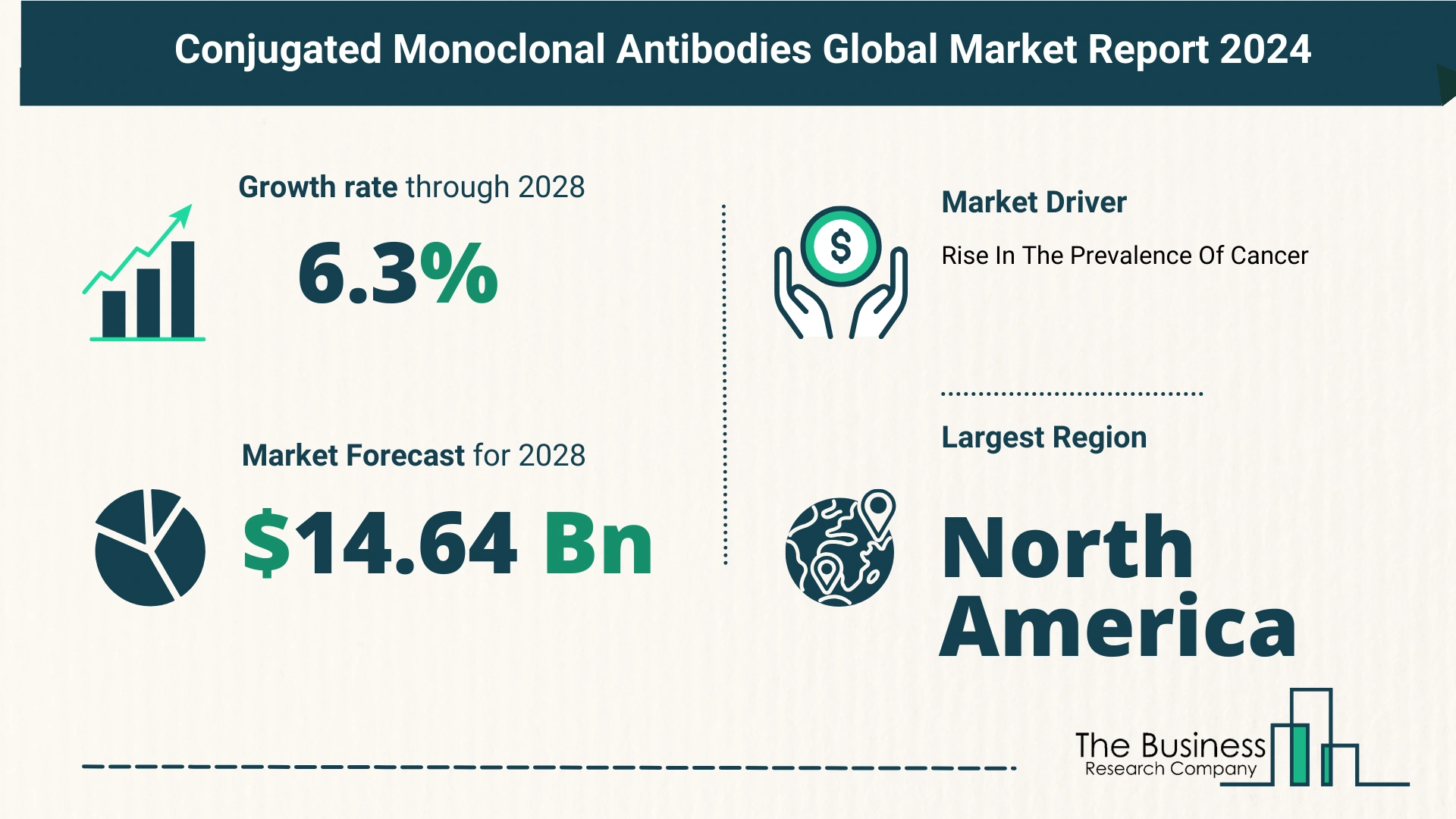
    • Forecasted to reach $14.64 billion by 2028, growing at a CAGR of 6.3%.
    • Factors driving historic and forecasted growth include rising cancer prevalence, expanding private healthcare, government support, and increased patient populations.

    Major Growth Drivers

    • Therapeutic Potential: Antibody-drug conjugates (ADCs) are increasingly used in cancer treatment due to their targeted delivery and efficacy.
    • Market Expansion: Growing demand for minimally invasive procedures and expanding healthcare access are boosting market growth.
    • Technological Advancements: Advances in drug delivery systems and next-generation conjugates are significant trends shaping the market.
    • Patient-Centric Care: Shift towards personalized medicine and biomarker-driven development are enhancing treatment outcomes.

    View More On The Conjugated Monoclonal Antibodies Market Report 2024 – https://www.thebusinessresearchcompany.com/report/conjugated-monoclonal-antibodie-global-market-report

    Strategic Partnerships Fueling Innovation

    • Collaborative Efforts: Companies like Pfizer, Roche, and Bristol-Myers Squibb are forming strategic partnerships to advance ADC therapies.
    • Example: BeiGene Ltd. and Duality Biologics partnered to develop ADC therapies for solid tumors, leveraging combined strengths.

    Lonza Group AG’s Acquisition Strategy

    • Acquisition of Synaffix BV: Lonza Group AG acquired Synaffix BV to bolster its ADC capabilities and expand its portfolio, aiming to accelerate ADC therapy development.

    Market Segmentation

    The conjugated monoclonal antibodies market is segmented based on:

    1. Drugs: Adcetris, Kadcyla
    2. Technology: Cleavable Linker, Non-cleavable Linker
    3. Application: Blood Cancer, Breast Cancer, Ovarian Cancer, Lung Cancer, Brain Tumor, Other Applications

    Regional Insights

    • North America: Largest market in 2023, driven by advanced healthcare infrastructure and early adoption of new therapies.
    • Middle East: Expected to exhibit the fastest growth, supported by increasing healthcare investments and rising cancer incidences.

    Conclusion

    The conjugated monoclonal antibodies market is poised for substantial growth, driven by technological advancements, strategic collaborations, and increasing healthcare access globally. As companies continue to innovate and expand their capabilities, the market is set to witness transformative developments in cancer treatment and beyond.

    Request A Sample Of The Global Conjugated Monoclonal Antibodies Market Report 2024:
    https://www.thebusinessresearchcompany.com/sample_request?id=3424&type=smp

  • How Is The Patient Referral Tracking Systems Market Expected To Grow Through 2024-2033

    How Is The Patient Referral Tracking Systems Market Expected To Grow Through 2024-2033

    The Business Research Company’s global market reports are now updated with the latest market sizing information for the year 2024 and forecasted to 2033

    According to The Business Research Company’s Patient Referral Tracking Systems Global Market Report 2024, the patient referral tracking systems market is expected to show promising growth in the forecast period.

    Electronic Health Record Adoption Fueling Growth In Patient Referral Tracking Systems Market
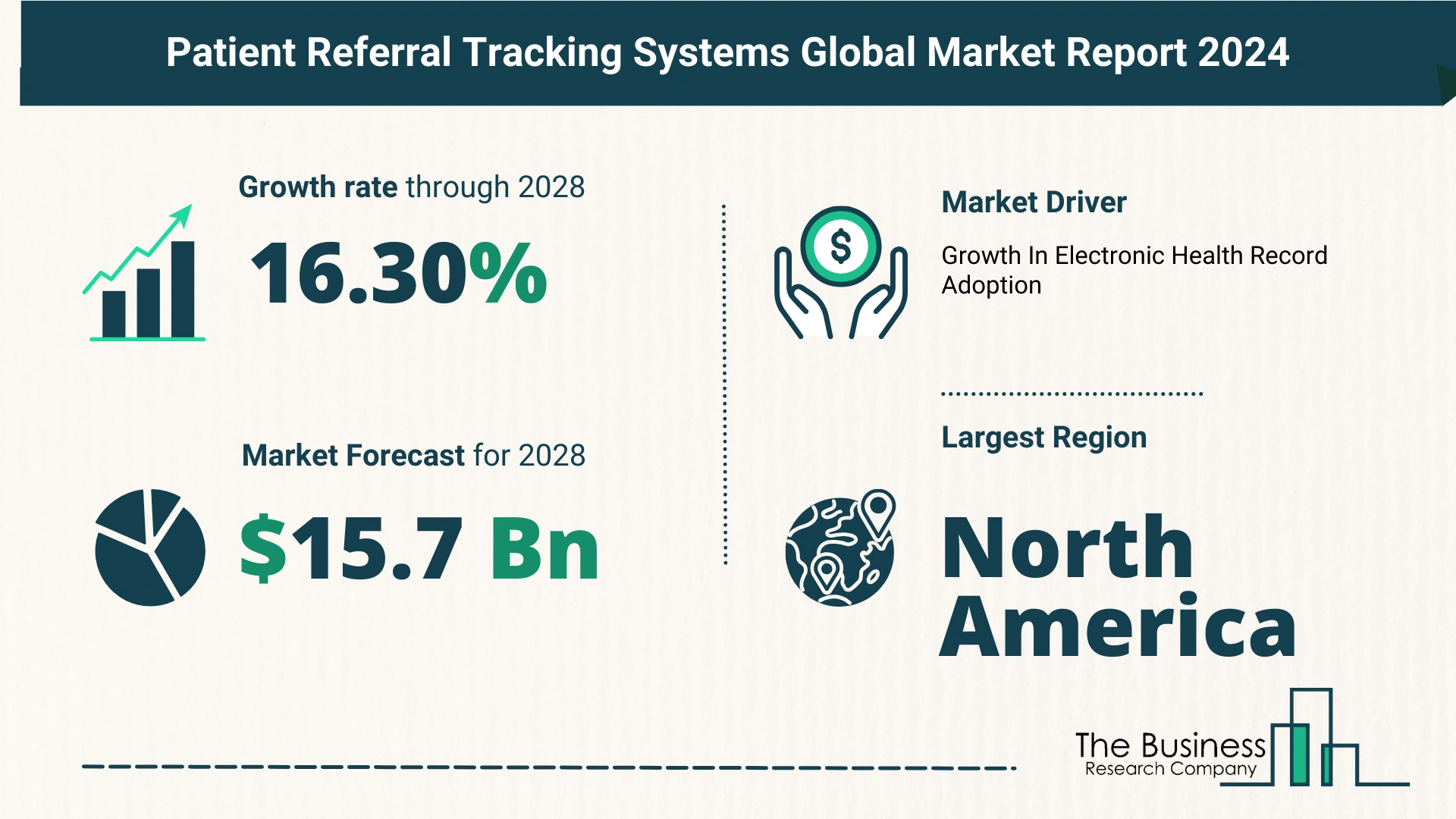
    The patient referral tracking system market has experienced rapid growth in recent years, driven by increasing adoption of electronic health records (EHRs) across healthcare settings. EHRs serve as digital repositories of patient health information, facilitating secure access and sharing among healthcare providers. This adoption trend is pivotal in enhancing healthcare efficiency, patient safety, and care coordination. Notably, nearly all non-federal acute care hospitals and a significant majority of office-based physicians in the United States have adopted certified EHRs, marking substantial growth from previous years.

    Major Companies and Market Overview
    Major players in the patient referral tracking systems market include UnitedHealth Group, McKesson Corporation, IBM, Oracle, Medtronic, GE Healthcare, Cerner Corporation, and others. These companies drive innovation through advanced technology solutions aimed at optimizing patient referrals and enhancing healthcare delivery.

    View More On The Patient Referral Tracking Systems Market Report 2024 – https://www.thebusinessresearchcompany.com/report/patient-referral-tracking-systems-global-market-report

    Centralized Referral Management Solutions Revolutionizing Home-Based Care
    Recent developments in centralized referral management solutions, such as enterprise referral managers, are transforming efficiency and coordination within healthcare environments. These solutions offer benefits like reduced referral leakage, shorter lead times, automated reminders, and secure patient data exchange. For example, WellSky’s enterprise referral manager aims to streamline referral, intake, and customer relationship management processes in home health and hospice care, enhancing staff efficiency and patient care transitions.

    AristaMD Expands Patient Referral Management Capabilities Through Preferral Acquisition
    AristaMD’s acquisition of Preferral in January 2022 exemplifies strategic expansion in patient referral management. This acquisition integrates Preferral’s platform with AristaMD’s eConsult solutions, promising streamlined referral processes and improved specialty care access. Preferral’s expertise in online referral management complements AristaMD’s commitment to enhancing patient outcomes through efficient healthcare workflows.

    Market Segmentation and Growth Outlook
    The patient referral tracking systems market is segmented by type (inbound, outbound), deployment mode (cloud-based, on-premise), and end-users (healthcare providers, payers, patients, and others). North America emerged as the largest market region in 2023, reflecting significant adoption and investment in healthcare technology solutions.

    Forecasted Growth and Trends
    Looking ahead, the patient referral tracking system market is poised for continued expansion, projected to reach $15.7 billion by 2028 with a CAGR of 16.3%. Key trends driving this growth include the adoption of AI-driven referral optimization, expansion of virtual care platforms, emphasis on patient engagement, integration with population health management strategies, and advancements in data analytics and reporting capabilities.

    In conclusion, the patient referral tracking systems market is witnessing robust growth fueled by technological advancements and increasing healthcare digitization. As industry leaders innovate to meet evolving healthcare demands, the integration of EHRs and advanced referral management solutions will play a pivotal role in enhancing care coordination, efficiency, and patient outcomes globally.

    Request A Sample Of The Global Patient Referral Tracking Systems Market Report 2024:
    https://www.thebusinessresearchcompany.com/sample_request?id=15231&type=smp

  • Future Growth Forecast For The Orthopedic Support Systems Global Market 2024-2033

    Future Growth Forecast For The Orthopedic Support Systems Global Market 2024-2033

    The Business Research Company’s global market reports provide comprehensive analysis on the various markets in 27 industries across 60 geographies.

    The orthopedic support systems market has experienced robust growth recently and is poised for further expansion.

    Market Size and Growth

    • The market size grew from $3.31 billion in 2023 to $3.60 billion in 2024, with a CAGR of 8.9%.
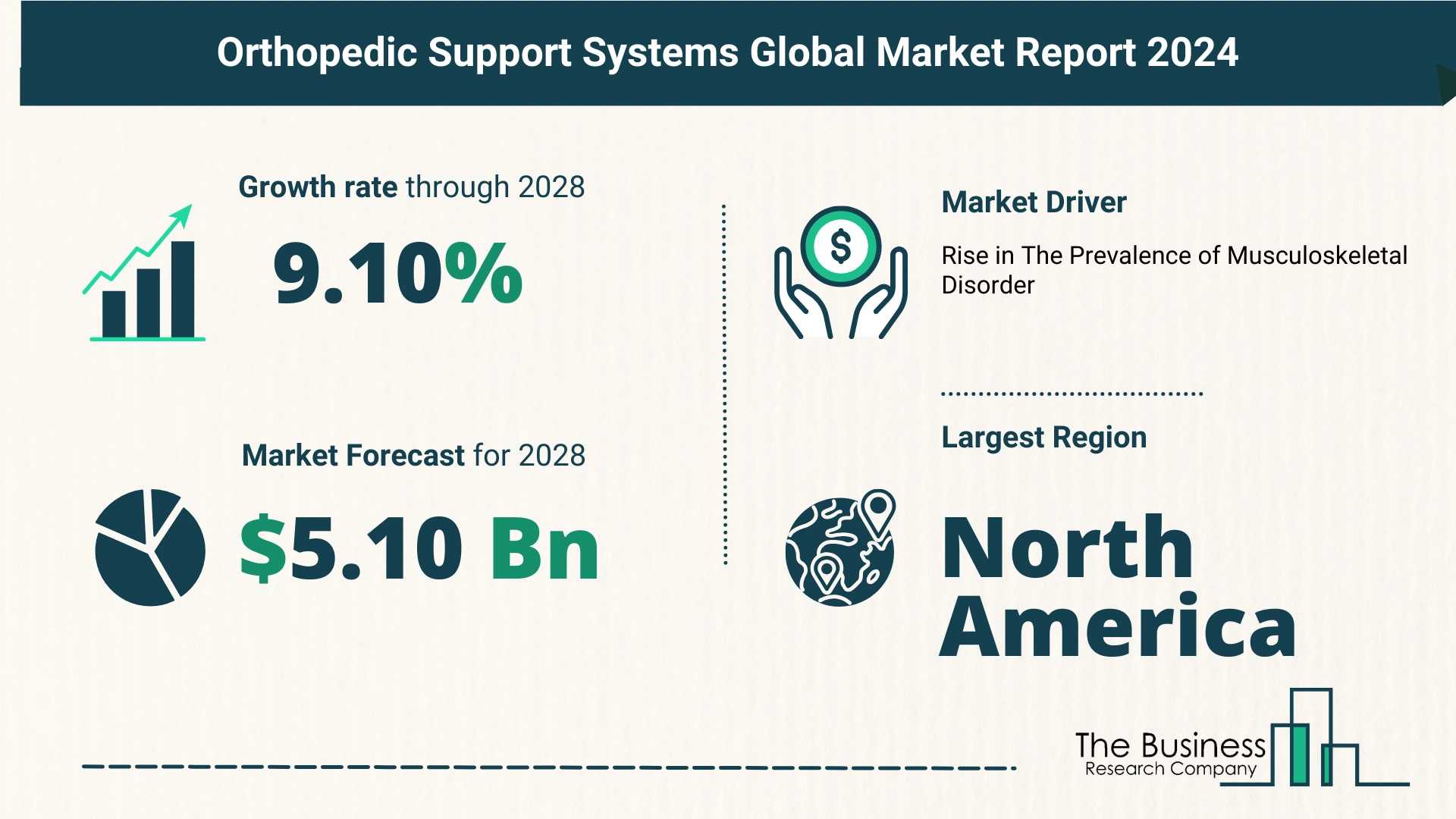
    • Expected to reach $5.10 billion by 2028, growing at a CAGR of 9.1%.

    Drivers of Growth

    • Advances in material science and surgical techniques.
    • Increasing sports injuries and aging population.
    • Rising patient awareness and education.

    Forecasted Trends

    • Wearable Technology Integration: Innovations in wearable devices for monitoring and treatment.
    • Minimally Invasive Techniques: Shift towards less invasive orthopedic procedures.
    • Telehealth and Remote Monitoring: Utilization of technology for remote patient management.
    • Orthopedic Rehabilitation Robotics: Integration of robotics in rehabilitation processes.
    • Value-Based Care Models: Focus on outcomes and cost-effectiveness.

    View More On The Orthopedic Support Systems Market Report 2024 – https://www.thebusinessresearchcompany.com/report/orthopedic-support-systems-global-market-report

    Musculoskeletal Disorder Prevalence Driving Market Growth
    Musculoskeletal disorders (MSDs) are becoming more prevalent, bolstering the demand for orthopedic support systems. Factors contributing to this rise include aging populations, sedentary lifestyles, and occupational hazards. Orthopedic supports play a crucial role in managing these conditions, aiding healing, preventing injuries, and improving functional outcomes.

    Key Players and Innovations
    Major companies are at the forefront of innovation in the orthopedic support systems market, introducing advanced products to meet growing demand.

    • Companies: Johnson & Johnson, Medtronic plc, Zimmer Biomet Holdings, and more.
    • Innovations: Products like the VRTX spinal support system from Aspen Medical Products, designed for emergency spinal treatment, illustrate the industry’s focus on enhancing patient care and outcomes.

    Strategic Acquisitions and Market Segmentation
    Strategic acquisitions, such as OrthoPediatrics Corp.’s acquisition of MD Orthopaedics Inc., highlight efforts to strengthen market presence and expand product portfolios, especially in pediatric orthopedics.

    Market Segmentation
    The market is segmented based on products, patient demographics, and applications.

    • Products: Braces and support, splints, bandages, and sleeves.
    • Patients: Adult and pediatric.
    • Applications: Upper and lower body extremities.

    Regional Insights
    North America currently dominates the orthopedic support systems market, while Asia-Pacific shows promising growth potential, expected to be the fastest-growing region.

    Conclusion
    The orthopedic support systems market is witnessing significant growth driven by technological advancements, rising chronic conditions, and expanding healthcare accessibility through telehealth. Innovations in product development and strategic expansions are set to further propel market expansion, catering to the increasing demand for effective orthopedic solutions globally.

    Request A Sample Of The Global Orthopedic Support Systems Market Report 2024:
    https://www.thebusinessresearchcompany.com/sample_request?id=15229&type=smp

  • 5 Key Insights On The Oral Hygiene Market 2024

    5 Key Insights On The Oral Hygiene Market 2024

    The Business Research Company’s global market reports are now updated with the latest market sizing information for the year 2024 and forecasted to 2033

    As per The Business Research Company’s Oral Hygiene Global Market Report 2024, the oral hygiene market is expected to show significant growth in the forecast period.

    Market Size and Growth Trends

    • The oral hygiene market has shown robust growth, reaching $47.55 billion in 2023 and is projected to hit $50.14 billion in 2024, growing at a CAGR of 5.4%.
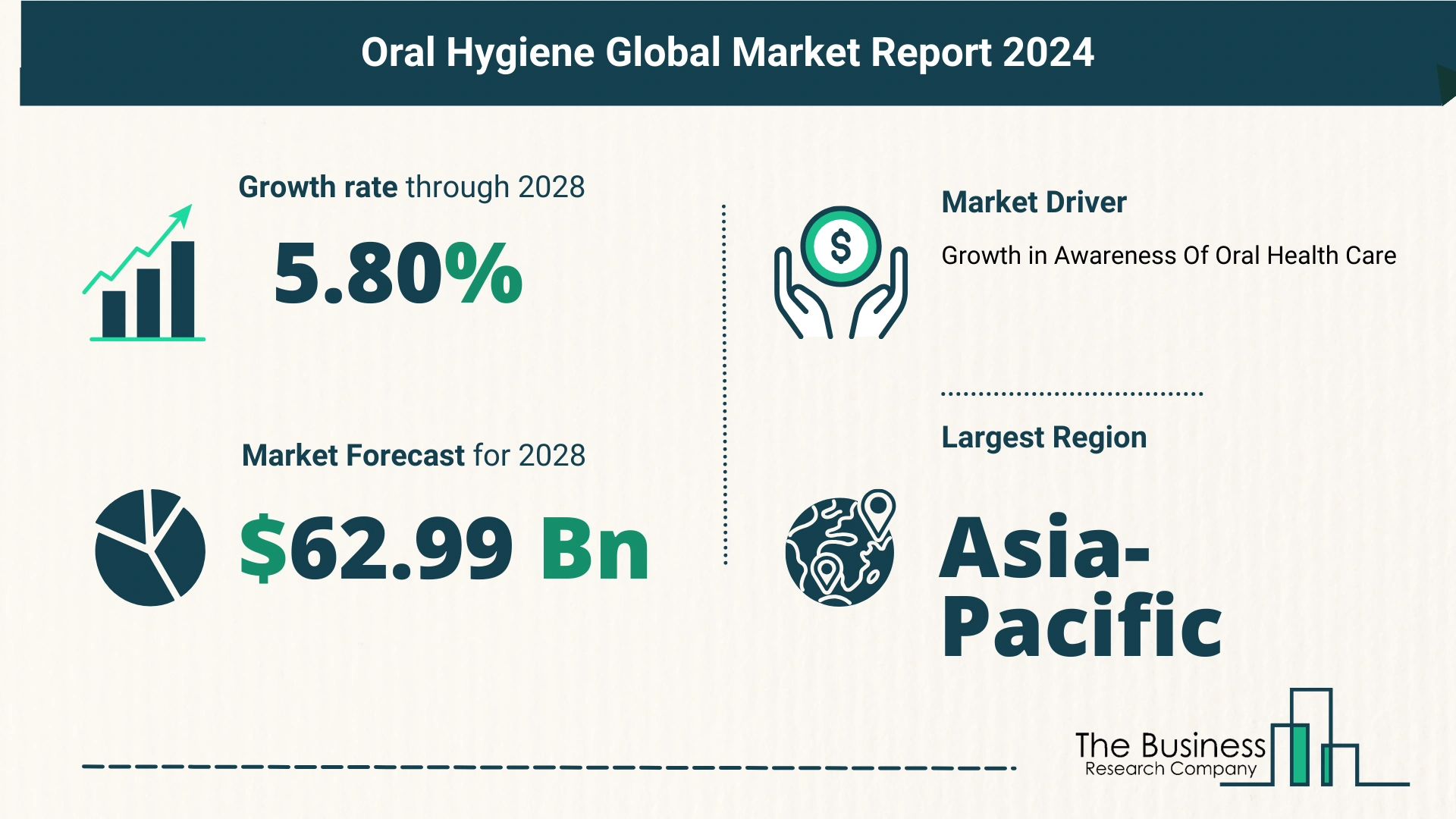
    • Forecasted to grow to $62.99 billion by 2028, with a CAGR of 5.8%.
    • Drivers include rising awareness of oral health, technological advancements, increasing disposable incomes, and expanded access to dental services.

    Major Trends Shaping the Future

    • Demand for Natural Products: Surge in consumer preference for natural and sustainable oral care products.
    • Advanced Technologies: Adoption of smart, software-enabled toothbrushes and innovative dental care technologies.
    • Product Diversification: Introduction of specialized products like probiotics and herbal extracts.
    • Digital Health Solutions: Growth of e-commerce platforms and digital health solutions in oral care.

    View More On The Oral Hygiene Market Report 2024 – https://www.thebusinessresearchcompany.com/report/oral-hygiene-global-market-report

    Growing Awareness of Oral Health Care Is Driving Market Expansion
    The emphasis on oral health care is growing due to its role in preventing dental diseases and enhancing overall well-being. Increased awareness translates into higher adoption rates of oral hygiene products, driving market growth significantly. For instance, national dental expenditures in the US surged from $146 billion in 2020 to $162 billion in 2021, reflecting increased spending on oral health care.

    Key Players in the Market
    Major companies driving innovation and market growth include:

    • The Procter & Gamble Company
    • Johnson & Johnson
    • Unilever PLC
    • GlaxoSmithKline plc
    • Colgate-Palmolive Company
    • Philips NV
    • Church & Dwight Co. Inc.
    • Dentsply Sirona Inc.
    • Patanjali Ayurved Limited
    • Sunstar Suisse SA
    • Ivoclar Vivadent AG
    • Ranir LLC

    Technological Advancements in Oral Hygiene Products
    Innovations such as smart toothbrushes are revolutionizing oral care:

    • Burst Oral Care: Launched Pro Sonic and Curve Sonic Toothbrushes with advanced features like smart sensors, software-enabled brushing feedback, and extended battery life, catering to diverse consumer needs and preferences.

    Strategic Acquisitions Driving Market Growth

    • Sunstar’s Acquisition of Playbrush: The acquisition of UK-based Playbrush enhances Sunstar’s digital health portfolio, integrating smart toothbrush technology aimed at children, thereby expanding its market reach and product offerings.

    Market Segmentation
    The oral hygiene market is segmented based on:

    1. Product Types: Toothpaste, Toothbrushes, Mouthwash, Dental Accessories, Denture Products, Dental Prosthesis Cleaning Solutions.
    2. Distribution Channels: Supermarkets, Pharmacies, Online Stores, Convenience Stores.
    3. Applications: Adults, Kids, Infants.

    Regional Insights

    • Asia-Pacific: Dominated the market in 2023, driven by population growth and increasing disposable incomes.
    • Europe: Expected to witness the fastest growth, fueled by rising health consciousness and technological advancements in dental care.

    In conclusion, the oral hygiene market is poised for substantial growth driven by technological innovations, increasing consumer awareness, and strategic market expansions. Companies are focusing on product diversification and digital integration to meet evolving consumer demands and capitalize on emerging opportunities in the global oral care landscape.

    Request A Sample Of The Global Oral Hygiene Market Report 2024:
    https://www.thebusinessresearchcompany.com/sample_request?id=15228&type=smp

  • Understand How The Generative AI In Healthcare Market Is Poised To Grow Through 2024-2033

    Understand How The Generative AI In Healthcare Market Is Poised To Grow Through 2024-2033

    The Business Research Company’s global market reports are now updated with the latest market sizing information for the year 2024 and forecasted to 2033

    As per The Business Research Company’s Generative AI In Healthcare Global Market Report 2024, the generative AI in healthcare market is expected to show significant growth in the forecast period.

    Market Overview

    • Current Market Size: The generative AI in healthcare market has shown exponential growth, reaching $1.72 billion in 2023.
    • Projected Growth: Expected to grow to $2.36 billion in 2024, with a CAGR of 37.2%.
    • Future Projections: By 2028, the market is projected to reach $8.44 billion, with a CAGR of 37.5%.

    Key Drivers of Growth

    • Historic Growth Factors:
      • Increased healthcare data analytics.
      • Demand for personalized medicine.
      • Adoption of AI-enabled healthcare solutions.
      • Need for personalized treatment plans.
      • Accelerated drug discovery and development processes.
    • Future Growth Factors:
      • Advancements in medical imaging techniques.
      • Expansion of AI-powered monitoring systems.
      • Globalization of healthcare.
      • Growth in patient population.
      • Adoption of modern medical treatments.
      • Rise in virtual patient simulation.

    View More On The Generative AI In Healthcare Market Report 2024 – https://www.thebusinessresearchcompany.com/report/generative-ai-in-healthcare-global-market-report

    Surge in Personalized Medicine

    • Fueling Market Growth: Demand for personalized medicine is a significant driver.
    • Definition: Precision medicine tailors treatments based on individual genetic, environmental, and lifestyle factors.
    • Impact of Generative AI: Utilizes algorithms to analyze patient data for personalized treatment options.
    • Example: FDA approved 16 new personalized treatments in 2023, up from 6 in 2022, indicating growing adoption.

    Leading Companies in Generative AI Healthcare

    • Key Players:
      • Alphabet Inc.
      • Microsoft Corporation
      • Amazon Web Services Inc.
      • Johnson & Johnson Services Inc.
      • Siemens AG
      • Intel Corporation
      • IBM Watson Health Corporation
      • Ernst & Young Global Limited
      • Oracle Corporation
      • Nvidia Corporation
      • Harman International Industries Inc.
      • Epic Systems Corporation
      • Persistent Systems Private Limited
      • Tempus Labs Inc.
      • Verge Genomics Inc.
      • PathAI Inc.
      • BenevolentAI Ltd
      • Abridge AI Inc.

    Strategic Collaborations

    • Google Cloud and Mayo Clinic Partnership: Integrating generative AI to improve healthcare delivery.
    • Objective: Enhance clinical workflows and patient outcomes with HIPAA compliance.
    • Impact: Streamlining operations and enabling personalized interactions.

    Microsoft’s Strategic Acquisition

    • Nuance Acquisition: Acquired Nuance Communications for $19.7 billion in March 2022.
    • Goal: Expand enterprise software presence, particularly in healthcare.
    • Focus: Enhance AI capabilities for improved healthcare outcomes.

    Market Segmentation

    • By Component:
      • Solutions
      • Services
    • By Function:
      • AI-Assisted Robotic Surgery
      • Virtual Nursing Assistants
      • Aid Clinical Judgment or Diagnosis
      • Workflow and Administrative Tasks
      • Image Analysis
    • By Application:
      • Clinical
      • System
    • By End User:
      • Hospitals and Clinics
      • Clinical Research
      • Healthcare Organizations
      • Diagnostic Centers
      • Other End Users

    Regional Insights

    • Current Market Landscape: North America dominated the generative AI in healthcare market in 2023.
    • Emerging Market: Asia-Pacific expected to exhibit the fastest growth during the forecast period.

    The generative AI in healthcare market is poised for substantial growth, driven by advancements in medical technologies and increasing adoption of personalized medicine. Strategic partnerships and acquisitions are pivotal in enhancing AI capabilities and expanding market presence. With innovations in AI algorithms and expanded applications across healthcare sectors, the future promises transformative advancements in patient care and clinical outcomes globally.

    Request A Sample Of The Global Generative AI In Healthcare Market Report 2024:
    https://www.thebusinessresearchcompany.com/sample_request?id=15184&type=smp

  • Electronic Data Capture Systems Market Growth Analysis Till 2033 By The Business Research Company

    Electronic Data Capture Systems Market Growth Analysis Till 2033 By The Business Research Company

    The Business Research Company’s market reports offer an in-depth analysis on the market’s growth potential, major drivers, key trends and more.

    Market Growth Overview

    The electronic data capture systems market has seen robust growth in recent years, driven by several key factors. Starting from $1.75 billion in 2023, the market is projected to reach $2.02 billion in 2024, growing at a CAGR of 15.5%. Looking ahead, the market is expected to expand further to $3.64 billion by 2028, with a CAGR of 15.8%. This growth is fueled by increasing clinical trial complexity, globalization, and the demand for real-time data access.

    Forecast Period Insights

    In the forecast period, the market will benefit from trends such as:

    • Patient-Centricity: Focus on enhancing patient experience and engagement.
    • AI and Machine Learning Integration: Leveraging advanced technologies for data analysis.
    • Decentralized Clinical Trials: Expanding trial capabilities beyond traditional settings.
    • Wearable Technology: Integration for real-time health monitoring.
    • Data Security and Privacy: Heightened focus on safeguarding sensitive information.

    Read More On The Electronic Data Capture Systems Market Report 2024 – https://www.thebusinessresearchcompany.com/report/electronic-data-capture-systems-global-market-report

    Driving Forces Behind Market Expansion

    Clinical Trial Outsourcing Dynamics

    The rise in clinical trial outsourcing to contract research organizations (CROs) is a significant driver:

    • Cost efficiency and global reach attract pharmaceutical and biotechnology firms.
    • Streamlined data collection and real-time monitoring enhance trial efficiency.

    Key Players and Innovations

    Innovations in Virtual Data Capture

    Companies are innovating with virtual data capture (VDC) solutions:

    • ClinCapture Inc.: Introduced VDC to facilitate decentralized trials, improving efficiency and reducing in-person contact.

    Strategic Acquisitions and Market Leadership

    • Greenlight Guru: Enhanced its MedTech solutions through SMART-TRIAL acquisition, solidifying its market position.

    Market Segmentation and Regional Insights

    Segmentation Overview

    The market is segmented by:

    • Component: Software and Services.
    • Clinical Trial Phase: Phase I to Phase IV.
    • Delivery Mode: Cloud-based, Web-hosted, and Licensed Enterprise solutions.
    • End-User: Hospitals, CROs, Pharmaceutical and Biotechnology firms, and others.

    Regional Dynamics

    • North America: Largest market in 2023.
    • Asia-Pacific: Fastest-growing region, driven by expanding healthcare infrastructure and clinical trial activities.

    Conclusion

    The electronic data capture systems market is poised for substantial growth driven by technological advancements, increasing clinical trial complexity, and the global expansion of healthcare initiatives. Innovations in virtual data capture and strategic acquisitions are reshaping the market landscape, offering new opportunities for stakeholders across the healthcare ecosystem.

    In summary, as the industry continues to evolve, stakeholders must adapt to emerging trends and technological innovations to capitalize on the expanding opportunities within the electronic data capture systems market.

    Request for A Sample Of The Global Electronic Data Capture Systems Market Report:
    https://www.thebusinessresearchcompany.com/sample_request?id=15170&type=smp

  • Growth Trajectory Of The Dermatology Imaging Devices Market 2024-2033

    Growth Trajectory Of The Dermatology Imaging Devices Market 2024-2033

    The Business Research Company’s global market reports are now updated with the latest market sizing information for the year 2024 and forecasted to 2033

    Market Overview and Growth Trends

    • The dermatology imaging devices market has experienced rapid growth, reaching $1.96 billion in 2023 and projected to hit $2.18 billion in 2024, with a CAGR of 11.4%.
    • Forecasted growth to $3.42 billion by 2028, driven by AI integration, rising aesthetic awareness, and home-based solutions.

    Drivers of Market Expansion

    • Increased Skin Disorder Prevalence: Rising cases of dermatitis, acne, and skin cancer propel market demand.
    • Aging Population: Growing numbers of seniors drive the need for non-invasive dermatological procedures.
    • Telemedicine Evolution: Technological advancements enhance remote diagnosis capabilities.

    View More On The Dermatology Imaging Devices Market Report 2024 – https://www.thebusinessresearchcompany.com/report/dermatology-imaging-devices-global-market-report

    Major Trends Shaping the Market

    • Wearable Devices: Emerging trend in dermatology imaging for convenient monitoring.
    • Personalized Treatments: Advancements in AI enable tailored skincare solutions.
    • 3D Imaging Innovations: Enhanced visualization for precise diagnosis and treatment planning.
    • Preventive Dermatology: Focus shifts towards early detection and prevention strategies.
    • Miniaturization of Technology: Compact devices enable broader accessibility and portability.

    Rising Skin Disorder Prevalence Fuels Dermatology Imaging Devices Market Growth

    The increasing prevalence of skin disorders is expected to drive the growth of the dermatology imaging devices market. Skin disorders encompass a range of conditions affecting skin appearance and function, including dermatitis, acne, eczema, psoriasis, and skin cancer. Dermatology imaging devices play a crucial role in visualizing and diagnosing these conditions, aiding in accurate treatment planning. For instance, the rise in melanoma cases underscores the market’s importance, with projections showing significant growth in diagnosis needs.

    Development Of Advanced Technology Sensors To Provide Enhanced Insights

    Key companies are focusing on advanced sensor technologies to enhance imaging capabilities. Capacitive-touch imaging technology, such as the MoistureMap MM 200 from Courage + Khazaka Electronic GmbH, exemplifies innovations in capturing high-resolution skin images. These sensors detect changes in skin properties like texture and moisture, offering precise measurements and 3D imaging capabilities. Such advancements are crucial in improving diagnostic accuracy and patient outcomes in dermatology.

    EMZ Partners Acquires FotoFinder Systems For Accelerating Innovation In Dermatology Imaging

    EMZ Partners’ acquisition of FotoFinder Systems in 2022 signifies strategic investment in cutting-edge dermatology imaging technology. This move aims to advance early skin cancer detection and aesthetic procedures through innovative skin visualization solutions. FotoFinder Systems GmbH continues to lead in developing state-of-the-art dermatology imaging devices, contributing to market expansion and technological advancements.

    Market Segmentation and Regional Insights

    • By Modality: Includes digital photographic imaging, optical coherence tomography (OCT), dermatoscope, high-frequency ultrasound, and other modalities.
    • By Application: Segments cover skin cancers, inflammatory dermatoses, plastic surgery, and other medical applications.
    • By End-Use: Usage spans hospitals, dermatology centers, and specialty clinics, reflecting diverse market demands.
    • Regional Outlook: North America led the market in 2023, with Asia-Pacific poised for rapid growth, driven by increasing healthcare infrastructure and technological adoption.

    In conclusion, the dermatology imaging devices market is witnessing substantial growth driven by technological advancements, increasing skin disorder prevalence, and expanding applications across healthcare settings. Innovations in AI integration, 3D imaging, and wearable devices are set to redefine diagnostic and treatment standards in dermatology, ensuring a promising outlook for market expansion globally.

    Request A Sample Of The Global Dermatology Imaging Devices Market Report 2024:
    https://www.thebusinessresearchcompany.com/sample_request?id=15160&type=smp

  • Key Trends And Drivers In The Mammography Systems Market 2024

    Key Trends And Drivers In The Mammography Systems Market 2024

    The Business Research Company’s market reports offer an in-depth analysis on the market’s growth potential, major drivers, key trends and more.

    Market Overview

    • Current Market Size: The mammography systems market has shown robust growth, reaching $2.30 billion in 2023.
    • Projected Growth: Expected to grow to $2.50 billion in 2024, with a CAGR of 8.8%.
    • Future Projections: By 2028, the market is projected to reach $3.53 billion, with a CAGR of 9.0%.

    Key Drivers of Growth

    • Historic Growth Factors:
      • Increasing prevalence of breast cancer.
      • Government initiatives promoting breast cancer awareness.
      • Favorable reimbursement policies.
      • Rising awareness about early detection.
    • Future Growth Factors:
      • Adoption of 3D mammography.
      • Increase in healthcare expenditure.
      • Shift towards digital mammography systems.
      • Expansion in emerging markets with improved healthcare infrastructure.
      • Focus on preventive healthcare and early disease detection.

    Read More On The Mammography Systems Market Report 2024 – https://www.thebusinessresearchcompany.com/report/mammography-systems-global-market-report

    Surge in Breast Cancer Cases

    • Fueling Market Demand: Rise in breast cancer cases globally is a key driver.
    • Impact: Mammography systems crucial for early detection and effective management.
    • Statistics: Breast cancer cases increased by 5.76% from 2021 to 2023, highlighting the need for enhanced diagnostic tools.

    Leading Companies in Mammography Systems

    • Key Players:
      • Toshiba Corporation
      • Siemens Healthineers AG
      • Fujifilm Holdings Corporation
      • Koninklijke Philips N.V.
      • GE Healthcare Inc.
      • Delphinus Medical Technologies Inc.
      • Konica Minolta Inc.
      • Hologic Inc.
      • Carestream Health Inc.
      • Varex Imaging Corporation
      • Analogic Corporation
      • Sequoia Healthcare Pvt. Ltd.
      • DRGEM Corporation

    Advancements in AI-Powered Systems

    • Technological Innovations: Development of AI-powered mammography systems enhances diagnostic accuracy and workflow efficiency.
    • Example: Fujifilm launched Amulet Sophinity, integrating AI for improved image reconstruction and diagnostic precision.

    Strategic Expansions and Acquisitions

    • Market Expansion: Solis Mammography’s acquisition of Carolina Breast Imaging aims to enhance service accessibility and technology integration.
    • Impact: Strengthening presence in North Carolina and offering advanced breast health services supported by AI.

    Market Segmentation

    • By Product:
      • Analog Systems
      • Full Field Digital Mammography Systems
      • Breast Tomosynthesis Systems
    • By Technology:
      • Screen Film
      • 2D Mammography
      • 3D Mammography
      • Other Technologies
    • By Modality:
      • Portable Mammography Systems
      • Non-Portable Mammography Systems
    • By End-User:
      • Hospitals
      • Ambulatory Surgical Centers
      • Other End-Users

    Regional Insights

    • Current Market Landscape: North America dominated the mammography systems market in 2023.
    • Emerging Market: Asia Pacific poised as the fastest-growing region during the forecast period.

    The mammography systems market is witnessing significant growth driven by technological advancements, increasing healthcare investments, and rising awareness of breast cancer. Innovations in AI and digital imaging are revolutionizing diagnostic capabilities, promising improved patient outcomes globally. Strategic expansions and acquisitions further bolster market presence, ensuring broader access to advanced mammography solutions in healthcare settings worldwide.

    Request for A Sample Of The Global Mammography Systems Market Report:
    https://www.thebusinessresearchcompany.com/sample_request?id=15214&type=smp