Blog

  • How Is The Companion Diagnostics Market Expected To Grow Through 2024-2033

    How Is The Companion Diagnostics Market Expected To Grow Through 2024-2033

    The Business Research Company’s global market reports are now updated with the latest market sizing information for the year 2024 and forecasted to 2033

    According to The Business Research Company’s Companion Diagnostics Global Market Report 2024, the companion diagnostics market is expected to show promising growth in the forecast period.

    The companion diagnostics market has witnessed remarkable growth in recent years, with a substantial surge from $6.26 billion in 2023 to $7.52 billion in 2024, showcasing a robust Compound Annual Growth Rate (CAGR) of 20.1%. The historic growth can be attributed to various factors such as increased adoption of personalized medicine, the expansion of oncology and cancer therapies, heightened collaboration in pharmaceutical R&D, precision medicine initiatives, and advancements in biomarker discovery.

    Anticipating the Future: Projected Expansion
    Forecasted Growth and Catalysts
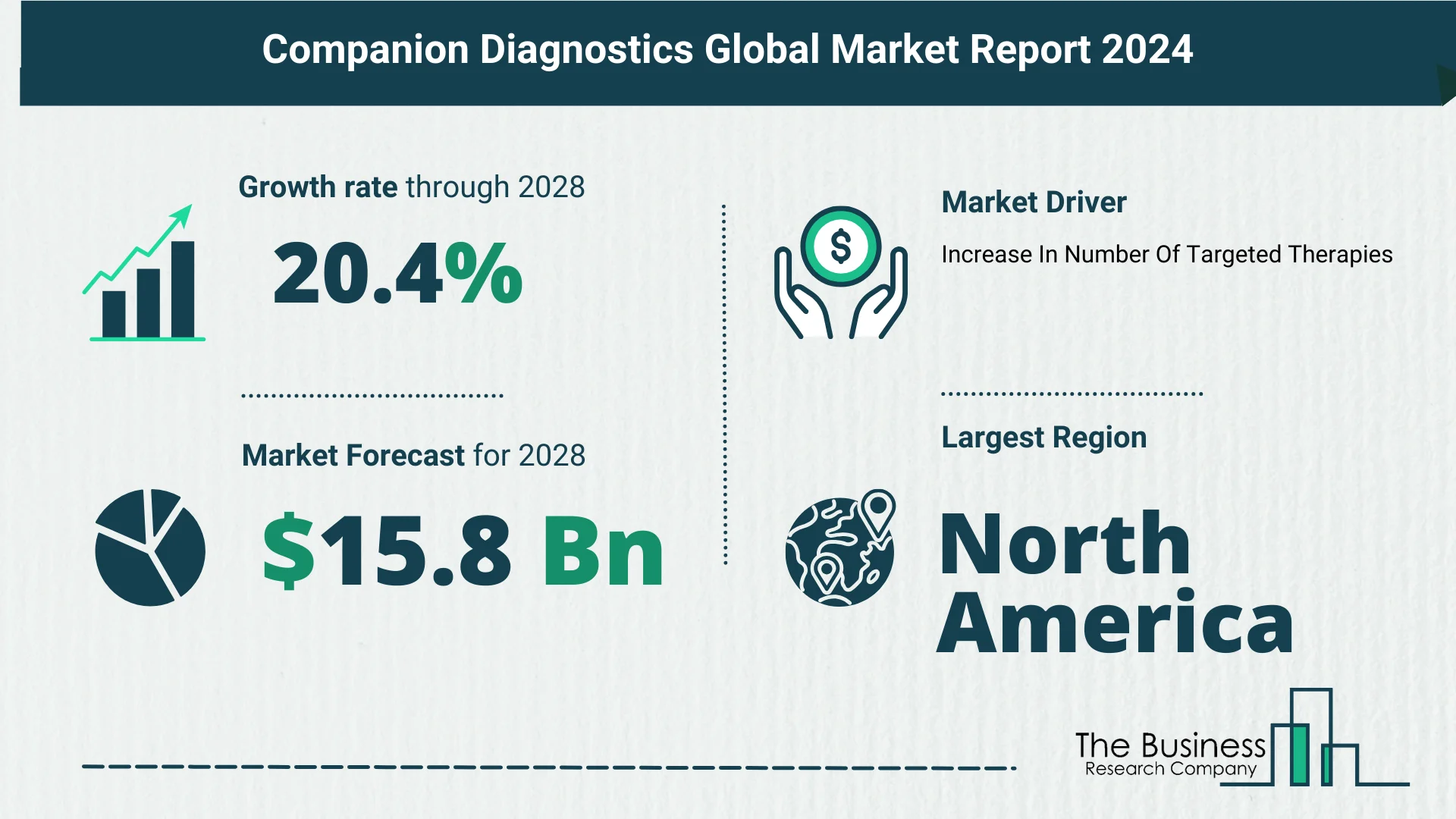
    Looking ahead, the companion diagnostics market is poised for exponential growth, projected to reach $15.8 billion in 2028 with a CAGR of 20.4%. The forecasted expansion is fueled by factors including the development of targeted therapies, advancements in infectious disease diagnostics, increasing rare disease diagnostics, biomarker-based drug development, the rise of point-of-care testing, and applications of liquid biopsy. Major trends in the forecast period encompass immunotherapy and immunology advances, the integration of AI and machine learning in diagnostics, product innovations, the adoption of Industry 4.0, and strategic collaborations.

    Targeted Therapies Propelling Market Growth
    Understanding Targeted Therapies
    The exponential growth of the companion diagnostics market is closely tied to the increasing prevalence of targeted therapies. Targeted therapy, a pharmacological approach focusing on specific characteristics of cancer cells, inhibits the growth and spread of diseases. With fewer adverse effects compared to chemotherapy, biological marker-based companion diagnostics are becoming integral for personalized cancer care. The European Society for Medical Oncology reported an estimated eligibility increase from 8.82% in previous years to 13.60% in 2020 for genome-targeted therapy, highlighting the growing prominence of these therapies.

    • The increasing number of targeted therapies is a key driver for companion diagnostics market growth.
    • Genome-targeted therapy eligibility rose from 8.82% to 13.60% in 2020.

    Innovations Transforming Precision Medicine
    Innovative Treatment Solutions
    Major companies in the companion diagnostics market, including F Hoffmann-La Roche Ltd., Agilent Technologies Inc., Qiagen NV, and others, are at the forefront of developing groundbreaking solutions. The introduction of therascreen KRAS PCR Mutation Analysis exemplifies this innovation, offering a rapid and effective method to identify patients with non-small cell lung cancer. This companion diagnostic, launched by Laboratory Corporation of America Holdings, aids in identifying tumors with specific genetic mutations, ensuring patients receive the most effective and targeted treatments.

    • Innovative treatment solutions, like therascreen KRAS PCR Mutation Analysis, contribute to market growth.
    • The test aids in identifying patients with non-small cell lung cancer and specific genetic mutations.

    Strategic Moves: Acquisitions Driving Market Dynamics
    Agilent’s Acquisition of Resolution Bioscience
    In April 2021, Agilent Technologies Inc. acquired Resolution Bioscience for $695 million, strengthening its position in NGS-based cancer diagnostics. This strategic move enhances Agilent’s capabilities in precision medicine, aligning with the demands of the rapidly expanding sector. Resolution Bioscience, known for its expertise in NGS technology and molecular biology, brings valuable assets to Agilent’s portfolio.

    • Agilent Technologies’ acquisition of Resolution Bioscience enhances NGS-based cancer diagnostics capabilities.
    • The acquisition facilitates access to technology in the rapidly growing precision medicine sector.

    View More On The Companion Diagnostics Market Report 2024 – https://www.thebusinessresearchcompany.com/report/companion-diagnostics-global-market-report

    Market Segmentation: Understanding the Landscape
    Segmentation Overview
    The companion diagnostics market is segmented based on:

    1. Product And Service: Assays, Kits And Reagents, Software And Services
    2. Technology: Polymerase Chain Reaction, Next-Generation Sequencing, In Situ Hybridization, Immunohistochemistry
    3. Indication: Lung Cancer, Breast Cancer, Colorectal Cancer, Leukemia, Melanoma
    4. End-User: Pharmaceutical And Biopharmaceutical Companies, Reference Laboratories, Contract Research Organizations
    • Comprehensive segmentation provides insights into the diverse facets of the companion diagnostics market.

    Regional Dominance: North America Leading the Way
    North America’s Market Influence
    In 2023, North America emerged as the largest region in the companion diagnostics market, underscoring its significant role in shaping market dynamics and trends.

    • North America leads the companion diagnostics market, reflecting its influence in the sector.

    Conclusion: Embracing a Dynamic Future
    The companion diagnostics market is experiencing unparalleled growth, driven by factors such as the surge in targeted therapies, innovative treatment solutions, strategic acquisitions, and a robust focus on precision medicine. As the industry continues to evolve, staying attuned to emerging trends, technological advancements, and strategic collaborations will be essential for stakeholders looking to capitalize on the market’s exponential growth potential. The future of companion diagnostics promises transformative advancements, contributing to a more personalized and effective approach in the realm of diagnostics and therapeutics.

    Request A Sample Of The Global Companion Diagnostics Market Report 2024:
    https://www.thebusinessresearchcompany.com/sample_request?id=7038&type=smp

  • Global Clinical Workflow Solutions Market Overview 2024: Size, Drivers, And Trends

    Global Clinical Workflow Solutions Market Overview 2024: Size, Drivers, And Trends

    The Business Research Company’s global market reports provide comprehensive analysis on the various markets in 27 industries across 60 geographies.

    The clinical workflow solutions market has experienced a rapid upswing in recent years, catapulting from $9.49 billion in 2023 to $11.02 billion in 2024, showcasing an impressive Compound Annual Growth Rate (CAGR) of 16.1%. The surge in the historic period can be attributed to the proliferation of healthcare digitalization, the widespread adoption of electronic health records (EHR), increased regulatory compliance, a growing need for efficiency and productivity, and intensified healthcare integration efforts.

    Charting Future Success: Projected Expansion
    Anticipated Growth Drivers
    The clinical workflow solutions market is poised for robust growth, with projections reaching $18.82 billion by 2028, demonstrating a CAGR of 14.3%. The forecasted expansion in the coming years can be attributed to increasing interoperability and data exchange, the surge in telehealth and remote care, the adoption of value-based care models, a rising demand for population health management, and the increasing uptake of precision medicine. Key trends in the forecast period include the integration of artificial intelligence (AI) in healthcare, technological advancements, innovative solutions, strategic collaborations, and heightened focus on healthcare integration solutions.

    Fueling Growth: Clinical Trials on the Rise
    The Impact of Clinical Trials
    The clinical workflow solutions market is set to be propelled by the escalating number of clinical trials. These scientific studies evaluate the safety, efficacy, and potential benefits of new medical treatments, interventions, drugs, medical devices, or procedures in humans. The growth in clinical trials necessitates the adoption of clinical workflow solutions to address challenges related to data management, patient recruitment, regulatory compliance, and overall trial efficiency.

    • The number of registered clinical trials increased from 399,499 in 2022 to 437,533 in 2023.
    • 31% of studies (141,513) are registered in the U.S., and 53% (244,707) are registered in non-U.S. locations.

    Industry Leaders: Driving Market Dynamics
    Key Players Shaping the Market
    Major companies influencing the clinical workflow solutions market landscape include Allscripts Healthcare Solutions Inc., Cerner Corporation, GE Healthcare, McKesson Corporation, Koninklijke Philips NV, and many others. These industry giants play a pivotal role in steering the market and shaping its trajectory.

    View More On The Clinical Workflow Solutions Market Report 2024 – https://www.thebusinessresearchcompany.com/report/clinical-workflow-solutions-global-market-report

    Cloud-Based Revolution: Automation Platforms Gain Momentum
    Embracing Cloud-Based Solutions
    Major players are shifting focus towards introducing cloud-based platforms for clinical workflow automation, seeking a competitive edge. Cloud-based platforms automate repetitive tasks in clinical workflows, converting manual processes into web-based digital workflows. In a notable example, CenTrak Inc. launched WorkflowRT, a scalable and cloud-based platform optimizing clinical workflows. Leveraging real-time location systems (RTLS) and location sensors, it ensures seamless communication and efficiency in various care settings.

    • CenTrak Inc. introduced WorkflowRT, a cloud-based platform for clinical workflow automation.
    • The platform utilizes RTLS and location sensors to enhance communication and efficiency.

    Strategic Acquisitions: A Catalyst for Growth
    Transformative Acquisition of Athenahealth
    In February 2022, Bain Capital and Hellman & Friedman acquired Athenahealth for a staggering $17 billion. This strategic move aims to propel Athenahealth into the next phase of its growth journey. Athenahealth, a provider of clinical workflow solutions, is now poised for transformative developments under the umbrella of these private investment and equity firms.

    • Athenahealth’s acquisition for $17 billion by Bain Capital and Hellman & Friedman signifies a transformative phase for the company.

    Market Segmentation: Unveiling the Landscape
    Diverse Segmentation
    The clinical workflow solutions market is segmented based on:

    1. Type: Real-Time Communication Solutions, Data Integration Solutions, Workflow Automation Solutions, Enterprise Reporting and Analytics Solutions, Care Collaboration Solutions
    2. Application: Diagnostic Applications, Research Applications, Therapeutic Applications
    3. End-User: Ambulatory Care Centers, Long-Term Care Facilities, Hospitals
    • Comprehensive segmentation offers insights into the varied facets of the clinical workflow solutions market.

    Regional Dynamics: Leading the Charge
    Market Dominance and Growth Forecasts
    In 2023, North America emerged as the largest region in the clinical workflow solutions market, showcasing its significant influence. Looking ahead, Asia-Pacific is expected to be the fastest-growing region in the forecast period, underlining the global nature of the market’s transformative journey.

    • North America holds the title of the largest region in the clinical workflow solutions market.
    • Asia-Pacific is projected to be the fastest-growing region in the forecast period.

    Conclusion: A Healthier Tomorrow through Clinical Workflow Solutions
    The clinical workflow solutions market’s trajectory reflects a dynamic landscape, driven by factors such as the surge in clinical trials, the adoption of cloud-based automation platforms, strategic acquisitions, and the collaborative efforts of industry leaders. As the industry continues its evolution, staying abreast of emerging trends, technological advancements, and strategic collaborations will be imperative for stakeholders aiming to capitalize on the market’s substantial growth potential. The future of clinical workflow solutions promises innovative solutions, enhanced efficiency, and a transformative impact on the landscape of healthcare delivery.

    Request A Sample Of The Global Clinical Workflow Solutions Market Report 2024:
    https://www.thebusinessresearchcompany.com/sample_request?id=6932&type=smp

  • Key Takeaways From The Global Clinical Chemistry Market Forecast 2024

    Key Takeaways From The Global Clinical Chemistry Market Forecast 2024

    The Business Research Company’s global market reports are now updated with the latest market sizing information for the year 2024 and forecasted to 2033

    As per The Business Research Company’s Clinical Chemistry Global Market Report 2024, the clinical chemistry market is expected to show significant growth in the forecast period.

    The clinical chemistry market has witnessed robust growth, with the market size surging from $14.04 billion in 2023 to a projected $15.02 billion in 2024, showcasing a commendable Compound Annual Growth Rate (CAGR) of 7.0%. This upward trajectory in recent years can be attributed to increased demand for diagnostic testing, the expansion of the healthcare industry, a growing aging population, elevated disease diagnosis and management, and significant research and development activities.

    **Future Prospects: Forecast and Driving Forces
    Continued Expansion on the Horizon
    The clinical chemistry market is poised for sustained growth, projected to reach $20.06 billion in 2028, with a robust CAGR of 7.5%. Anticipated drivers for this expansion include an escalating demand for precision medicine, the imperative need for biomarker discovery, a rising demand for personalized healthcare solutions, the emergence of infectious diseases, and the increasing adoption of telemedicine and remote monitoring.

    Paving the Way for Trends
    The forecast period introduces major trends that will shape the clinical chemistry landscape. These encompass advanced analytical techniques, the integration of AI and machine learning, ongoing technological innovations, laboratory automation, and the introduction of cutting-edge solutions.

    **Chronic Diseases’ Impact: Catalyst for Market Growth
    Rising Chronic Disease Burden
    The clinical chemistry market is set to thrive due to the escalating prevalence of chronic diseases. Conditions such as diabetes, cancer, and heart disease, which endure for a year or longer, necessitate continuous medical care and can restrict daily activities. Chronic diseases are a global concern, responsible for a significant portion of deaths and disabilities worldwide. Clinical chemistry plays a vital role in determining and managing various chronic diseases, including cardiovascular disease, diabetes, and hormone disorders. The World Health Organization (WHO) reported in September 2023 that chronic diseases claim 41 million lives annually, constituting 74% of global deaths. This underscores the pivotal role of clinical chemistry in addressing healthcare challenges.

    Industry Leaders in Action
    Key players in the clinical chemistry market, including Abbott Laboratories, Roche Ltd., and Siemens AG, are actively contributing to the industry’s growth. These companies are crucial in developing and advancing technologies that play a pivotal role in the diagnosis and management of chronic diseases.

    View More On The Clinical Chemistry Market Report 2024 – https://www.thebusinessresearchcompany.com/report/clinical-chemistry-global-market-report

    **Technological Marvels: Transforming the Clinical Chemistry Landscape
    Technological Advancements Take Center Stage
    Technological advancements emerge as a central trend in the clinical chemistry market, with major players consistently adopting innovative solutions to bolster their market positions. A notable example is the Core Clinical Chemistry Lab at Vanderbilt University Medical Center, which, in July 2021, launched a faster and higher-volume automated chemistry line, doubling the daily capacity for crucial tests of patient blood samples. This signifies a broader industry shift towards embracing cutting-edge technologies to enhance efficiency and capacity.

    **Strategic Acquisitions: Roche Expands Its Footprint
    Roche’s Acquisition of GenMark Diagnostics
    In May 2021, Roche, a Swiss-based pharmaceutical and diagnostics company, made a significant move by acquiring GenMark Diagnostics for $1.8 million. This strategic acquisition broadens Roche’s molecular diagnostic portfolio, adding techniques that provide swift and critical information for patients and healthcare professionals. GenMark’s expertise in syndromic testing and clinical chemistry enhances Roche’s capabilities in managing infectious diseases and antibiotic resistance.

    **Segmentation Insights: Diverse Offerings in the Market
    Delineating Market Segments
    The clinical chemistry market is segmented based on products, applications, and end-users. Products include Analyzers and Reagents & Consumables. Applications span a spectrum, including General Chemistry Tests, Liver Function Tests, Kidney Function Tests, Urinalysis, Electrolyte Panels, Lipid Profiles, Specialty Chemical Tests, and various other applications. End-users encompass Hospitals, Diagnostic or Pathology Centers, Ambulatory Surgery Centers, and other diverse end-users.

    **Regional Dynamics: North America Leading, Asia-Pacific Rising
    Market Leadership and Growth Hubs
    In 2023, North America emerged as the largest region in the clinical chemistry market, a trend expected to continue. Meanwhile, the Asia-Pacific region is poised to be the fastest-growing hub in the forecast period, signaling the global nature of the clinical chemistry market’s expansion.

    Conclusion: The Future of Precision Healthcare
    Charting a Path to Precision Healthcare
    As the clinical chemistry market propels forward, driven by the surge in chronic diseases, technological advancements, and strategic acquisitions, the industry is poised to redefine precision healthcare. Major trends, coupled with the efforts of industry leaders and innovative solutions, position clinical chemistry as a cornerstone in healthcare diagnostics and management. The road ahead is one of continual growth, with technology at the forefront, paving the way for a future where healthcare is not only personalized but also efficient, accessible, and transformative.

    Request A Sample Of The Global Clinical Chemistry Market Report 2024:
    https://www.thebusinessresearchcompany.com/sample_request?id=7630&type=smp

  • Global Central Lab Market Report 2024 – Top Market Trends And Opportunities

    Global Central Lab Market Report 2024 – Top Market Trends And Opportunities

    The Business Research Company’s market reports offer an in-depth analysis on the market’s growth potential, major drivers, key trends and more.

    Market Momentum
    The central lab market has experienced substantial growth, surging from $2.8 billion in 2023 to an anticipated $3.04 billion in 2024, boasting a commendable compound annual growth rate (CAGR) of 8.6%. Historical growth drivers include increased clinical trials, growth in drug development activities, regulatory compliance, expansion in healthcare research, and the surge in diagnostic testing.

    Projected Growth
    The trajectory continues upwards, with expectations to reach $4.15 billion by 2028, reflecting a robust CAGR of 8.1%. Key factors driving this growth include the rise of personalized healthcare, increasing biomarker research, the growing demand for telemedicine and remote monitoring, global health challenges, and a burgeoning need for precision diagnostics.

    Major Trends in the Forecast Period

    • Technological advancements
    • Innovative solutions
    • Strategic collaborations

    Chronic Disease Prevalence Fuels Market Expansion
    The prevalence of chronic diseases is a significant catalyst for the burgeoning central lab market. Chronic diseases, with their long-lasting nature, necessitate continuous testing and monitoring, leading to an increased demand for central lab services. For instance, in the US alone, an anticipated 1.9 million new cancer cases in 2022 underscore the critical role of central labs in managing chronic conditions.

    Key Players in the Market
    Major companies contributing to the growth of the central lab market include Celerion Inc., Cerba Research, Eurofins Central Laboratory LLC, Labcorp Drug Development India Private Limited, Sonic Healthcare Limited, Quest Diagnostics, and many more. These entities play a vital role in shaping the industry landscape and driving innovations.

    Read More On The Central Lab Market Report 2024 – https://www.thebusinessresearchcompany.com/report/central-lab-global-market-report

    Innovative Offerings Driving Market Dynamics
    To meet the demands of a dynamic market, major companies are developing innovative products, such as self-service advanced analytics solutions. An example is LabVantage Solutions Inc., which introduced LabVantage Analytics, a self-service advanced analytics platform enabling users to delve into complex data sets for actionable business insights. This innovative offering enhances accessibility, analysis, and visualization of data, fostering informed decision-making.

    Strategic Acquisitions: Thermo Fisher Scientific Case Study
    In December 2021, Thermo Fisher Scientific acquired PPD Inc. for $17.4 billion, fortifying its position in clinical research services. PPD Inc., a renowned contract research organization, provides comprehensive drug development, laboratory, and lifecycle management services. This strategic move showcases the industry’s evolution through collaborations and acquisitions.

    Market Segmentation
    The central lab market is segmented based on:
    1) Service Type

    • Genetic Services
    • Biomarker Services
    • Microbiology Services
    • Anatomic Pathology or Histology
    • Specimen Management And Storage
    • Special Chemistry Services
    • Other Service Types

    2) Test Type

    • Human And Tumor Genetics
    • Clinical Chemistry
    • Medical Microbiology And Cytology
    • Other Esoteric Tests

    3) End-User

    • Pharmaceutical Companies
    • Academic And Research Institutes
    • Biotechnology Companies

    Regional Dynamics
    In 2023, North America emerged as the largest region in the central lab market, while Asia-Pacific is projected to be the fastest-growing region in the forecast period. This geographical shift underscores the global nature of the central lab market and its potential impact on healthcare worldwide.

    In conclusion, the central lab market is at the forefront of transforming healthcare. With a focus on innovation, strategic collaborations, and addressing the rising prevalence of chronic diseases, the market is poised for continued growth and evolution.

    Request for A Sample Of The Global Central Lab Market Report:
    https://www.thebusinessresearchcompany.com/sample_request?id=7317&type=smp

  • Key Trends And Drivers In The Connected Healthcare Market 2024

    Key Trends And Drivers In The Connected Healthcare Market 2024

    The Business Research Company’s market reports offer an in-depth analysis on the market’s growth potential, major drivers, key trends and more.

    Market Overview

    The connected healthcare market has witnessed exponential growth, surging from $124.39 billion in 2023 to an estimated $158.37 billion in 2024 at an impressive CAGR of 27.3%. Historical growth can be attributed to factors like an aging population, the rise of chronic diseases, digital health adoption, efficiency in healthcare costs, the surge in remote patient monitoring, and the heightened demand spurred by the pandemic.

    Future Projections

    The growth trajectory for the connected healthcare market continues to ascend, with expectations to reach a staggering $424.8 billion in 2028 at an even higher CAGR of 28.0%. Key drivers in the forecast period include the increasing adoption of personalized medicine, health data interoperability, value-based care models, a growing focus on mental health and well-being, efforts towards healthcare access and equity, the rising importance of cybersecurity and data protection, and a burgeoning demand for population health management.

    Major Trends in the Forecast Period

    • Expansion of IoT devices and sensors
    • Integration of artificial intelligence in healthcare
    • Rise of wearable health technology
    • Continuous technological advancements
    • Focus on product innovations

    Rising Healthcare Expenditure Fuels Growth

    The connected healthcare market is set to benefit from the escalating global healthcare expenditure. As countries allocate more financial resources to healthcare services, technology, and infrastructure, demand for connected healthcare solutions will soar. For instance, the UK witnessed a 9.4% increase in healthcare spending between 2020 and 2021, contributing significantly to the growth of the connected healthcare market.

    Read More On The Connected Healthcare Market Report 2024 – https://www.thebusinessresearchcompany.com/report/connected-healthcare-global-market-report

    Key Players in the Market

    The market is dominated by major companies like Allscripts Healthcare Solutions, Cerner Corporation, Koninklijke Philips, IBM, Apple, GE Healthcare, and many more. These players play a pivotal role in driving innovations and expanding the market with diverse products and services.

    Revolutionary Advancements Enhance Market Competitiveness

    Major companies are focusing on technological advancements to gain a competitive edge. An example is ZS Associates Group, Inc., which launched the AI-powered ZAIDYN Connected Health solution. This innovative product aids pharmaceutical firms, healthcare providers, and payers in recognizing unmet needs, engaging patients, and enhancing health outcomes. The solution offers three product suites – health insights, patient engagement, and connected research.

    Strategic Acquisitions: Baxter International Inc. Case Study

    In December 2021, Baxter International Inc. acquired Hill-Rom Holdings Inc. for $15 billion, signaling a strategic move to diversify its product portfolio and strengthen its presence in the connected care market, especially in critical care segments. Hill-Rom Holdings Inc., known for its medical communication apps, complements Baxter’s objective of offering a wider array of products to its customers.

    Market Segmentation

    The connected healthcare market is segmented based on:

    1) Type

    • e-Prescription
    • mHealth Services
    • mHealth Devices

    2) Function

    • Remote Patient Monitoring
    • Clinical Monitoring
    • Telemedicine
    • Other Functions

    3) Application

    • Monitoring Applications
    • Diagnosis and Treatment
    • Education and Awareness
    • Healthcare Management
    • Wellness and Prevention

    4) End Users

    • Hospitals and Clinics
    • Home Monitoring

    Regional Dynamics

    In 2023, North America emerged as the largest region in the connected healthcare market, with Asia-Pacific projected to be the fastest-growing region in the forecast period. This shift indicates a global trend towards the integration of connected healthcare solutions.

    In conclusion, the connected healthcare market is on an upward trajectory, driven by a confluence of factors such as technological advancements, rising healthcare expenditure, and strategic innovations by major players. The future holds promising opportunities for healthcare transformation through connected technologies.

    Request for A Sample Of The Global Connected Healthcare Market Report:
    https://www.thebusinessresearchcompany.com/sample_request?id=5693&type=smp

  • Understand How The Cranial Implants Market Is Poised To Grow Through 2024-2033

    Understand How The Cranial Implants Market Is Poised To Grow Through 2024-2033

    The Business Research Company’s global market reports are now updated with the latest market sizing information for the year 2024 and forecasted to 2033

    As per The Business Research Company’s Cranial Implants Global Market Report 2024, the cranial implants market is expected to show significant growth in the forecast period.

    The cranial implants market has experienced substantial growth, becoming a vital component of the healthcare landscape. With a notable surge from $1.11 billion in 2023 to $1.23 billion in 2024 at a Compound Annual Growth Rate (CAGR) of 11.1%, the market is poised for further expansion. Let’s unravel the contributing factors and explore the future projections of this burgeoning industry.

    Factors Driving Historic Growth

    • Increased prevalence of trauma and injury cases
    • Surge in neurological surgeries
    • Adoption of patient-specific implants
    • Aging population demographics
    • Regulatory compliance in the industry
    • Rise in medical tourism

    Projections for Future Growth

    The cranial implants market is projected to continue its upward trajectory, reaching $1.82 billion in 2028 with a CAGR of 10.2%. The anticipated growth in the forecast period is attributed to several key factors.

    Driving Forces for Future Growth

    • Emerging technologies shaping the market
    • Surge in minimally invasive procedures
    • Increasing cases of neurological disorders
    • Growing prominence of telemedicine and remote surgery
    • Rising demand for biocompatible materials

    Major Trends in the Forecast Period

    • IoT integration in cranial implants
    • Customized cranial reconstruction gaining traction
    • Continuous technological innovations
    • Rise of innovative solutions in the market
    • Strategic partnerships shaping the industry landscape

    Unveiling the Health Challenges: Neurological Diseases and Traumatic Brain Injuries

    The growth of the cranial implants market is intricately linked to the rising prevalence of neurological diseases and traumatic brain injuries, particularly stemming from road accidents.

    Statistical Insights

    • Parkinson’s disease statistics highlight its prominence as the second most common age-related neurological disorder.
    • A notable one in six people in the UK faces at least one neurological condition, affecting around 600,000 individuals annually.

    Market Impact

    The demand for cranial implants is accentuated by the need for effective treatment solutions for neurological disorders and traumatic brain injuries. These implants enable non-intrusive access to the brain, making treatments more accessible.

    Key Players Shaping the Industry

    Several major companies are actively contributing to the dynamics of the cranial implants market.

    Notable Companies

    • Braun Melsungen AG
    • DePuy Synthes Inc.
    • Stryker Corporation
    • Zimmer Biomet Holdings Inc.
    • And many more.

    Innovative Peek Cranial Implants Redefining Neurological Care

    Innovation takes center stage in the cranial implants market, with companies focusing on advanced products like polyether ether ketone (PEEK) cranial implants.

    PEEK Cranial Implants

    • PEEK cranial implants offer a competitive edge, allowing restoration of cranial defects in a single surgery.
    • Launched by CureTech, these implants are custom-made using computer-aided design (CAD) software and 3D printing technology.
    • PEEK implants boast high biocompatibility, radiolucency, and a modulus of elasticity similar to that of bone.

    View More On The Cranial Implants Market Report 2024 – https://www.thebusinessresearchcompany.com/report/cranial-implants-global-market-report

    Strategic Expansion: Incite Innovations’ Acquisition of NeuroStructures Inc

    In January 2022, Incite Innovations made a significant move in the market by acquiring NeuroStructures Inc., a US-based manufacturer of spinal implants.

    Acquisition Highlights

    • Aimed at expanding the product portfolio of Incite Innovations
    • Strengthening the company’s position in the spinal implant market and surgical instruments sector
    • Reflects the ongoing trend of strategic acquisitions shaping the industry landscape

    Market Segmentation

    Understanding the diverse landscape of cranial implants involves considering the market’s segmentation.

    Key Segments

    1. Type
      • Customized Cranial Implants
      • Non-customized Cranial Implants
    2. Material
      • Polymer
      • Ceramic
      • Metal
    3. End User
      • Hospital and Trauma Centers
      • Ambulatory Surgical Centers
      • Specialty Clinics
      • Other End-Users

    Regional Dominance

    In 2023, North America emerged as the largest region in the cranial implants market, with Asia-Pacific predicted to record the fastest growth over the forecast period.

    Conclusion

    The cranial implants market’s growth trajectory is a testament to the industry’s resilience and capacity for innovation. As it continues to address neurological challenges and trauma cases, the market is evolving with new technologies and strategic partnerships. With a forecast brimming with emerging trends and opportunities, the cranial implants market is set to redefine neurological care and surgical solutions in the coming years.

    Request A Sample Of The Global Cranial Implants Market Report 2024:
    https://www.thebusinessresearchcompany.com/sample_request?id=5242&type=smp

  • 5 Takeaways From The Cryogenic Equipment Market Overview 2024

    5 Takeaways From The Cryogenic Equipment Market Overview 2024

    The Business Research Company’s global market reports are now updated with the latest market sizing information for the year 2024 and forecasted to 2033

    According to The Business Research Company’s Cryogenic Equipment Global Market Report 2024, the cryogenic equipment market is expected to show promising growth in the forecast period.

    The cryogenic equipment market has experienced robust growth in recent years, showcasing a trajectory of continuous expansion. With a market size of $14.44 billion in 2023, the forecast predicts an increase to $15.85 billion in 2024, boasting a Compound Annual Growth Rate (CAGR) of 9.7%. Looking ahead, the anticipated growth in the forecast period points to a market size of $22.48 billion in 2028 at a slightly reduced but still impressive CAGR of 9.1%. This blog explores the key factors propelling this growth, major trends influencing the industry, and the impact of rising demand for liquefied natural gas.

    Driving Forces of Market Growth

    1. Increased Industrial Gas Demand
      • Growing demand for industrial gases contributes to the expansion of the cryogenic equipment market.
      • Applications range from manufacturing processes to healthcare, highlighting the versatile use of cryogenic systems.
    2. Need for Energy Storage and Distribution
      • Cryogenic equipment plays a crucial role in energy storage and distribution processes.
      • The efficiency and effectiveness of cryogenic systems make them indispensable in modern energy infrastructure.
    3. Healthcare and Medical Applications
      • Cryogenic equipment is vital in healthcare for applications like cryopreservation and medical advances.
      • The ability to store biological samples at ultra-low temperatures ensures their viability for extended periods.
    4. Space Exploration
      • The aerospace industry relies on cryogenic systems for various applications, including rocket propulsion.
      • Cryogenic technology is pivotal in ensuring the success of space exploration missions.
    5. Energy Efficiency
      • Cryogenic processes contribute to enhanced energy efficiency across industries.
      • The focus on sustainable and eco-friendly solutions further drives the adoption of cryogenic equipment.

    Expanding Horizons in the Forecast Period

    1. Growing Need for Electronics Manufacturing
      • Increased demand for electronics fuels the need for cryogenic equipment in manufacturing processes.
      • Cryogenic cooling solutions play a crucial role in semiconductor manufacturing.
    2. Aerospace and Defense Requirements
      • Rising demands in the aerospace and defense sector contribute significantly to market growth.
      • Cryogenic applications are essential for various aerospace and defense technologies.
    3. Renewable Energy Storage
      • Cryogenic equipment becomes integral to renewable energy storage solutions.
      • The ability to store energy efficiently supports the growth of sustainable energy practices.
    4. Environmental Sustainability
      • Increasing focus on environmental sustainability drives the adoption of cryogenic systems.
      • Cryogenic processes offer eco-friendly alternatives in various industries.

    Major Trends Shaping the Market

    1. Hydrogen Economy Development
      • The development of the hydrogen economy emerges as a prominent trend in the cryogenic equipment market.
      • Cryogenic systems play a pivotal role in the storage and transportation of hydrogen.
    2. Biotechnology and Medical Advances
      • Cryogenic equipment becomes a cornerstone in biotechnology and medical advancements.
      • Cryopreservation and stem cell banking showcase the technological strides in the healthcare sector.
    3. Cryogenic Cooling Solutions for Semiconductor Manufacturing
      • Technological advancements lead to the adoption of cryogenic cooling solutions in semiconductor manufacturing.
      • Enhanced efficiency and precision in manufacturing processes drive this trend.
    4. Cryogenic Systems for Food Freezing and Preservation
      • The food and beverage industry increasingly relies on cryogenic systems for freezing and preservation.
      • Cryogenic solutions offer efficient and rapid freezing, ensuring food quality.

    Impact of Liquefied Natural Gas (LNG) Demand

    The surge in demand for liquefied natural gas (LNG) is a key driver for the cryogenic equipment market.

    • LNG, cooled to -260 degrees Fahrenheit, is used in various applications, including cooking, electricity generation, and heating homes.
    • Cryogenic equipment, such as storage tanks and vaporizers, facilitates the transport of LNG.
    • Rising global demand, driven by domestic and industrial users, propels the need for cryogenic equipment.

    View More On The Cryogenic Equipment Market Report 2024 – https://www.thebusinessresearchcompany.com/report/cryogenic-equipment-global-market-report

    Technological Advancements and Strategic Acquisitions

    1. Cutting-Edge Technologies in Cryo Store Pico
      • Azenta’s Cryo Store Pico, launched in February 2023, showcases advancements in cryogenic technology.
      • The technology optimizes productivity and minimizes human error in long-term sample preservation.
    2. Chart Industries’ Acquisition of Cryogenic Gas Technologies
      • In February 2021, Chart Industries acquired Cryogenic Gas Technologies, bolstering its position in hydrogen liquefaction.
      • The acquisition emphasizes the importance of reliable liquefaction and storage equipment in the hydrogen market.

    Market Segmentation

    The cryogenic equipment market is segmented based on equipment, cryogen type, application, and end-user.

    1. By Equipment
      • Tanks
      • Valves
      • Vaporizers
      • Pumps
      • Other Equipment
    2. By Cryogen
      • Nitrogen
      • Argon
      • Oxygen
      • LNG
      • Hydrogen
      • Helium
      • Other Cryogens
    3. By Application
      • Storage
      • Transportation
      • Processing
      • Other Applications
    4. By End-User
      • Energy and Power
      • Chemicals
      • Metallurgy
      • Electronics
      • Shipping
      • Other End Users

    Regional Dynamics

    • Asia-Pacific emerged as the largest region in the cryogenic equipment market in 2023, showcasing the region’s dominance in this evolving industry.

    Conclusion
    The cryogenic equipment market is poised for substantial growth, driven by diverse applications across industries. From healthcare to energy storage, and from aerospace to semiconductor manufacturing, cryogenic systems continue to revolutionize various sectors. As technological advancements and environmental sustainability become focal points, the market is expected to witness further innovations, ensuring its pivotal role in the evolving landscape of modern industries.

    Request A Sample Of The Global Cryogenic Equipment Market Report 2024:
    https://www.thebusinessresearchcompany.com/sample_request?id=6411&type=smp

  • Dental Crown And Bridges Market Forecast 2024: Forecast Market Size, Drivers And Key Segments

    Dental Crown And Bridges Market Forecast 2024: Forecast Market Size, Drivers And Key Segments

    The Business Research Company’s global market reports are now updated with the latest market sizing information for the year 2024 and forecasted to 2033

    The dental crown and bridges market has witnessed robust growth in recent years, and projections indicate a continued upward trajectory. From $4.33 billion in 2023, the market is expected to reach $4.67 billion in 2024, marking a significant Compound Annual Growth Rate (CAGR) of 7.9%. Looking ahead, the forecast for 2028 is even more promising, with an estimated market size of $6.29 billion at a CAGR of 7.7%. In this blog, we explore the key drivers of this growth, major trends shaping the industry, and the influence of government initiatives.

    Driving Forces Behind Market Growth

    1. Dental Health Awareness and Aging Population
      • Increasing awareness about dental health contributes to a growing demand for restorative dentistry.
      • The aging population’s need for dental procedures fuels market expansion.
    2. Cosmetic Dentistry Culture and Dental Tourism
      • A cultural shift towards cosmetic dentistry boosts the demand for crowns and bridges.
      • Dental tourism plays a significant role in market growth as individuals seek affordable dental procedures abroad.
    3. Insurance Coverage
      • The availability of insurance coverage for dental procedures encourages individuals to invest in dental crown and bridge treatments.

    Future Growth Factors

    1. Regulatory Compliance and Oral Health Education
      • Stringent regulations and compliance standards drive market growth.
      • Increasing emphasis on oral health education contributes to a more informed consumer base.
    2. Minimally Invasive Dentistry and Medical Tourism
      • Growing popularity of minimally invasive dental procedures.
      • The rise in medical tourism further propels market expansion.
    3. Emerging Market Expansion and Digital Dentistry
      • Exploring new markets and regions contributes to the market’s upward trajectory.
      • Digital dentistry, including CAD/CAM technology, emerges as a major trend in the forecast period.
    4. Technological Innovations and Customization
      • Continuous technological advancements, including 3D printing and customization.
      • Innovative telehealth and teledentistry solutions become integral to the industry.
    5. Strategic Partnerships
      • Collaborations between key players in the industry lead to innovative solutions and market growth.

    Government-Led Oral Health Initiatives

    Government initiatives globally play a crucial role in driving the growth of the dental crown and bridges market. By providing funding, guidance, and resources, these initiatives aim to improve oral health outcomes for individuals and communities.

    • In March 2023, the Government of Canada released Budget 2023, supporting up to 9 million uninsured Canadians with dental care needs.
    • The Canada Dental Benefit, launched in December 2022, provides financial support for eligible families with children under 12 years of age.

    View More On The Dental Crown And Bridges Market Report 2024 – https://www.thebusinessresearchcompany.com/report/dental-crown-and-bridges-global-market-report

    Innovations Reshaping the Market

    Revolutionary Dental Technology: Flexcera by Dental Wings

    Major companies in the dental crown and bridges market, such as 3M Company and Ivoclar Vivadent AG, are embracing revolutionary technologies like Flexcera. Developed by Desktop Health, Flexcera is a light-curable 3D printing resin designed for dental restorations, offering enhanced strength and aesthetic qualities.

    Strategic Acquisitions

    1. Dentsply Sirona and Datum Dental Ltd
      • In January 2021, Dentsply Sirona acquired Datum Dental Ltd., an Israel-based medical device manufacturing company.
      • This strategic move strengthens Dentsply Sirona’s commitment to dental innovation and empowers dental professionals with regenerative solutions.

    Market Segmentation

    The dental crown and bridges market is segmented based on various factors, including type, material, price, and end user.

    1. By Type
      • Crowns
      • Bridges
    2. By Material
      • Ceramics
      • Porcelain Fused To Metals
      • Metals
    3. By Price
      • Premium
      • Value
      • Discounted
    4. By End User
      • Dental Hospitals And Clinics
      • Dental Laboratories
      • Other End Users

    Regional Overview

    • North America led the dental crown and bridges market in 2023.
    • Asia-Pacific is expected to be the fastest-growing region in the forecast period, indicating a shift in the market dynamics.

    Conclusion

    The dental crown and bridges market’s remarkable growth is fueled by a combination of factors, including increasing awareness, technological innovations, and government initiatives. As the industry embraces digital dentistry and revolutionary technologies, the future holds promising opportunities for dental professionals and patients alike. With a focus on oral health education, regulatory compliance, and strategic collaborations, the market is set to reshape the landscape of restorative dentistry in the coming years.

    Request A Sample Of The Global Dental Crown And Bridges Market Report 2024:
    https://www.thebusinessresearchcompany.com/sample_request?id=5814&type=smp

  • Key Trends And Drivers In The Dentures Market 2024

    Key Trends And Drivers In The Dentures Market 2024

    The Business Research Company’s market reports offer an in-depth analysis on the market’s growth potential, major drivers, key trends and more.

    The dentures market has witnessed remarkable growth in recent years, with the market size surging from $2.73 billion in 2023 to an anticipated $2.92 billion in 2024, boasting a Compound Annual Growth Rate (CAGR) of 7.0%. As we delve into the factors fueling this expansion, it’s clear that the forecast is equally promising, with projections pointing to a robust market of $3.81 billion by 2028, at a CAGR of 6.9%.

    Factors Driving Growth: Unveiling the Dynamics

    • Dental Health Awareness and Aging Population:
      • Increasing awareness of dental health.
      • A growing aging population contributing to restorative dentistry needs.
    • Cosmetic Dentistry Culture and Dental Tourism:
      • Surge in cosmetic dentistry practices.
      • Dental tourism influencing market growth.
    • Insurance Coverage:
      • Expanding insurance coverage for dental procedures.

    Future Trends: A Glimpse into Tomorrow

    • Digital Dentures:
      • Integration of digital technologies for precision.
      • Adoption of 3D scanning for accurate measurements.
    • Sustainable and Biocompatible Materials:
      • Rising interest in environmentally friendly denture materials.
      • Biocompatible materials gaining traction.
    • Advancements in Denture Materials:
      • Continuous innovation in materials for enhanced durability.
      • Adhesive-free dentures emerging as a consumer preference.

    Rising Cases of Periodontal and Edentulism: A Key Growth Driver

    The surge in periodontal and edentulism cases is a pivotal factor propelling the dentures market. The prevalence of periodontitis, especially among the elderly, is significant. Data from the Centers for Disease Control and Prevention revealed that over 70% of Americans aged 65 and older suffer from periodontitis. This alarming statistic underscores the need for effective dental solutions, positioning dentures as a crucial player in restoring oral health.

    Read More On The Dentures Market Report 2024 – https://www.thebusinessresearchcompany.com/report/dentures-global-market-report 

    Technological Advancements: Redefining Production Processes

    • 3D Printing and CAD/CAM Integration:
      • Introduction of 3D printed digital denture equipment.
      • CAD/CAM technologies enhancing denture production processes.
    • Industry Example: 3dme Solutions:
      • In October 2022, 3dme Solutions launched 3Dme Crown, utilizing AI for efficient crown prosthesis design.

    Industry Expansion and Acquisition: National Dentex Labs

    • Strategic Acquisition of Dental Arts:
      • National Dentex Labs acquiring Dental Arts in November 2021.
      • Dental Arts specializes in denture repairs and relines.
    • Portfolio Expansion:
      • National Dentex Labs enhancing its portfolio to better serve dental care organizations and professionals.

    Market Segmentation: Understanding the Landscape

    The dentures market is multifaceted, segmented based on various factors such as type, material, usage, manufacturing process, and end-user.

    1. Type:
      • Complete Dentures
      • Partial Dentures
    2. Material:
      • Acrylic Dentures
      • Ceramic Dentures
      • Porcelain Dentures
      • Metal Dentures
      • Other Materials
    3. Usage:
      • Fixed
      • Removable
    4. Manufacturing Process:
      • Conventional Denture
      • 3D-Printed Denture
    5. End User:
      • Specialized Dental Hospitals
      • Somatology Departments in General Hospitals
      • Dental Clinics

    Regional Dominance: North America Leads the Way

    In 2023, North America emerged as the largest region in the dentures market, showcasing the region’s dominance in driving industry growth.

    Conclusion: A Promising Horizon for Dentures

    The dentures market’s trajectory presents a compelling narrative of growth, propelled by a confluence of factors ranging from demographic shifts to technological innovations. As we look ahead, the industry is poised to not only meet the rising demand for dental solutions but also to redefine the standards of precision and sustainability in oral healthcare. With a diverse landscape and continual advancements, the dentures market stands as a testament to the dynamic nature of the healthcare industry, promising a future where smiles are restored and oral well-being is paramount.

    Request for A Sample Of The Global Dentures Market Report:
    https://www.thebusinessresearchcompany.com/sample_request?id=5815&type=smp

  • What’s The Growth Forecast For Dermatology Devices Market Through 2024-2033?

    What’s The Growth Forecast For Dermatology Devices Market Through 2024-2033?

    The Business Research Company’s global market reports provide comprehensive analysis on the various markets in 27 industries across 60 geographies.

    The dermatology devices market has witnessed a remarkable surge in size, reflecting a dynamic landscape driven by various factors. The market, valued at $14.06 billion in 2023, is poised to reach $16.33 billion in 2024, marking a robust compound annual growth rate (CAGR) of 16.1%. A deeper analysis unveils the contributing elements behind this growth and the anticipated trajectory in the coming years.

    Factors Fueling Growth in the Historic Period

    • Increased skin health awareness
    • Rising prevalence of dermatological conditions
    • Aging population demographics
    • Surge in aesthetic and cosmetic procedures
    • Advances in skin cancer diagnostics

    Projections for the Future

    Anticipating a robust upward trend, the dermatology devices market is expected to reach $28.84 billion in 2028, exhibiting a CAGR of 15.3%. The growth in the forecast period is attributed to various factors, including:

    Driving Forces for Future Growth

    • Minimally invasive treatments gaining traction
    • Rising medical tourism
    • Growth in emerging markets
    • Increasing research and development activities

    Major Trends Shaping the Landscape

    • Adoption of tele-dermatology services
    • Integration of AI and machine learning applications
    • Personalized dermatology care on the rise
    • Advancements in laser technologies
    • Ongoing innovation in dermatology devices

    Cosmetic Dermatology’s Impact on Market Growth

    The surge in demand for cosmetic dermatology procedures stands out as a significant catalyst propelling the dermatology devices market.

    Understanding Cosmetic Dermatology

    Cosmetic dermatology, a specialized branch, focuses on enhancing appearance through non-surgical treatments. The increasing popularity of procedures such as laser treatments, dermal fillers, and skin rejuvenation is contributing to the market’s growth.

    Statistical Insights

    • Over 12.8 million surgical and 17.5 million non-surgical cosmetic procedures globally in January 2023.
    • An expected increase to more than 14.9 million surgical and 18.8 million non-surgical operations in 2022.

    Market Impact

    The demand for advanced dermatology devices is driven by the need for safe and effective solutions, aligning with the rising trends in cosmetic dermatology procedures.

    Key Players in the Market

    Several major companies are actively contributing to the dynamics of the dermatology devices market.

    Notable Companies

    • Cutera Inc.
    • Lumenis Ltd.
    • Alma Lasers Ltd.
    • Solta Medical Inc.
    • Johnson & Johnson Private Limited
    • And many more.

    View More On The Dermatology Devices Market Report 2024 – https://www.thebusinessresearchcompany.com/report/dermatology-devices-global-market-report

    Technological Innovations in Skin Cancer Detection

    Technological advancements, especially in AI-driven solutions, are revolutionizing skin cancer detection.

    Revolutionary Technologies

    • 3Derm Systems, Inc. introduces 3DermSpot, utilizing AI for the autonomous detection of melanoma, squamous cell carcinoma, and basal cell carcinoma.
    • A focus on standardized skin images expedites the skin cancer detection process.

    Allergan Aesthetics’ Strategic Move

    In May 2021, Allergan Aesthetics made a strategic acquisition, reinforcing its body contouring portfolio.

    Acquisition Highlights

    • Soliton’s RAP device acquisition aims to enhance body contouring treatments.
    • The RAP device employs rapid pulses of acoustics for cellulite treatment and tattoo removal.
    • Investigated for potential application in fibrotic scar treatment.

    Market Segmentation

    Understanding the diverse landscape of dermatology devices involves considering the market’s segmentation.

    Key Segments

    1. Product Type
      • Diagnostic Devices
      • Treatment Devices
      • Other Product Types
    2. Application
      • Skin Cancer Diagnosis
      • Psoriasis
      • Skin Rejuvenation
      • Warts
      • Other Applications
    3. End User
      • Hospitals
      • Clinics
      • Other End Users

    Regional Dominance

    In 2023, North America emerged as the largest region in the dermatology devices market.

    Conclusion

    The dermatology devices market is on an upward trajectory, fueled by a combination of historical growth factors and promising future trends. From cosmetic dermatology’s influence to technological innovations and strategic acquisitions, the industry is navigating towards a future defined by advancements and increased demand. As we embrace the coming years, the dermatology devices market is poised to be a focal point of innovation and transformation in healthcare.

    Request A Sample Of The Global Dermatology Devices Market Report 2024:
    https://www.thebusinessresearchcompany.com/sample_request?id=6435&type=smp