Blog

  • Toxicology Drug Screening Market Outlook Highlights The Next Major Growth Opportunities

    Toxicology Drug Screening Market Outlook Highlights The Next Major Growth Opportunities

    Through market attractiveness analysis, total addressable market evaluation, company benchmarking matrices, interactive Excel dashboards, expanded supply chain intelligence, emerging startup coverage, and detailed product insights, The Business Research Company’s 2026 market reports provide more actionable and strategically valuable research.

    Toxicology Drug Screening Market Size, Value And Growth Trends Through 2030

    The toxicology drug screening market has experienced significant expansion over the past several years, with its valuation climbing from $21.44 billion in 2025 to an anticipated $23.5 billion in 2026, reflecting a compound annual growth rate (CAGR) of 9.6%. This upward trajectory during the historical period was largely driven by factors such as a dependence on manual toxicology testing techniques, minimal levels of laboratory automation, a rising frequency of substance abuse monitoring programs, heightened regulatory scrutiny, and the integration of traditional bioanalytical instruments.

    The toxicology drug screening market is projected to experience robust expansion over the coming years, reaching a valuation of $33.48 billion by 2030, reflecting a compound annual growth rate (CAGR) of 9.2%. This anticipated growth during the forecast period is driven by factors such as the emergence of AI-powered predictive toxicology tools, the incorporation of genomics and transcriptomics into screening processes, the proliferation of contract research organizations (CROs), an increasing need for real-time drug monitoring systems, and the deployment of cloud-based and secure data management platforms. Key trends influencing this period encompass a rising reliance on high-throughput screening technologies, the integration of laboratory information management systems (LIMS), the growing utilization of predictive and AI-enhanced toxicology platforms, the broadening of workplace drug screening initiatives, and a heightened emphasis on data security and regulatory compliance.

    Download A Free Sample Report For Comprehensive Market Insights:

    https://www.thebusinessresearchcompany.com/sample.aspx?id=24728&type=smp&utm_source=BlogsPR&utm_medium=Paid&utm_campaign=Jul_PR

    Toxicology Drug Screening Market Growth Drivers And Industry Catalysts

    The growing incidence of substance abuse is anticipated to drive the expansion of the toxicology drug screening market in the coming years. Drug abuse refers to the harmful or excessive consumption of drugs for non-therapeutic purposes, which adversely affects an individual’s health and overall well-being. This trend is escalating due to heightened stress levels and mental health issues, prompting many people to turn to substance misuse as a coping mechanism. Toxicology drug screening plays a crucial role in addressing drug abuse by identifying the presence of drugs or their metabolites in the body, facilitating early detection, diagnosis, and monitoring of substance misuse or overdose. For example, in August 2024, the National Records of Scotland (NRS), a government agency based in Scotland, reported 1,172 drug misuse deaths in 2023, representing a 12% increase (121 more deaths) compared to 2022. Consequently, the rising prevalence of drug abuse is fueling growth in the toxicology drug screening market.

    Toxicology Drug Screening Market Segment Analysis: What Are The Major Market Categories?

    The toxicology drug screening market covered in this report is segmented –

    1) By Type: Screening Assays, Analytical Confirmatory Tests, Sample Collection Devices, Laboratory Consumables, Rapid Point-of-Care Tests, Laboratory Software And Reporting Systems

    2) By Test Type: Acute Systemic Toxicity, Dermal Toxicity, Carcinogenicity, Ocular Toxicity, Genotoxicity, Neurotoxicity, Organ-Specific Toxicity

    3) By Technology Type: High-Throughput Screening, Genomics, Transcriptomics, Toxicogenomics, Molecular Screening

    4) By Application: Immunotoxicity, Systemictoxicity, Developmental And Reproductive Toxicity (DART), Endocrine Disruption, Other Applications

    5) By End Users: Hospitals, Clinics, Contract Research Organizations (CROs), Pharmaceutical Companies, Workplace Testing Facilities

    Subsegments:

    1) By Screening Assays: Immunoassay Drug Screening Kits, Enzyme-Linked Immunosorbent Assay (ELISA) Kits, Lateral Flow Rapid Screening Assays, Fluorescence Polarization Immunoassays

    2) By Analytical Confirmatory Tests: Gas Chromatography–Mass Spectrometry (GC-MS), Liquid Chromatography–Mass Spectrometry (LC-MS/MS), High-Performance Liquid Chromatography (HPLC), Capillary Electrophoresis Toxicology Tests

    3) By Sample Collection Devices: Urine Drug Collection Cups, Saliva (Oral Fluid) Collection Devices, Blood Collection Tubes, Hair Drug Collection Kits

    4) By Laboratory Consumables: Calibrators And Controls, Reagents And Buffers, Extraction Cartridges And Columns, Sample Preparation Kits

    5) By Rapid Point-of-Care Tests: Multi-Panel Urine Dip Cards, Saliva Drug Screening Cassettes, Breath Alcohol And Drug Screening Devices, Single-Drug Detection Test Strips

    6) By Laboratory Software And Reporting Systems: Laboratory Information Management Systems (LIMS), Toxicology Reporting And Result Interpretation Software, Chain-of-Custody Tracking Software, Compliance And Audit Documentation Systems

    Toxicology Drug Screening Market Trends Influencing Long-Term Demand

    Key players in the toxicology drug screening industry are concentrating on launching innovative products, such as the 3D liver microphysiological system, a technology that enables the cultivation of highly biomimetic human liver microtissues characterized by organized cellular structures and robust metabolic activity. This 3D liver microphysiological system (MPS) represents a sophisticated in vitro platform, engineered to more faithfully mimic the human liver’s physiological surroundings compared to conventional cell culture methods, typically involving the culture of diverse human liver cell types. A concrete example occurred in February 2025 when CN Bio Innovations Ltd., a UK-based life sciences firm specializing in organ-on-a-chip (OOC) technologies, introduced the PhysioMimix DILI assay kit. This integrated laboratory kit was designed for in vitro evaluation of human drug-induced liver injury, incorporating a well-characterized 3D liver MPS that reconstructs metabolically active, highly functional human liver tissue along with Kupffer cells. Moreover, it facilitates seamless integration of organ-on-a-chip technology through a plug-and-play format, streamlining implementation and shortening the time required for widespread adoption.

    Toxicology Drug Screening Market Leading Companies Driving Competitive Growth

    Major companies operating in the toxicology drug screening market are Thermo Fisher Scientific Inc., Abbott Laboratories, Danaher Corporation, Merck KGaA, Siemens Healthineers, BD Bioscience, Quest Diagnostics, ICON plc, Agilent Technologies Inc., Eurofins Scientific SE, Wuxi AppTec, Charles River Laboratories International Inc., Shimadzu Corporation, Waters Corporation, Bio-Rad Laboratories Inc., Bruker Corporation, Evotec AG, Promega Corporation, The Jackson Laboratory, Clinical Reference Laboratory Inc., Enzo Life Sciences Inc., Covance Inc., Randox Toxicology, Alere Inc.

    Access The Complete Toxicology Drug Screening Market Report:

    https://www.thebusinessresearchcompany.com/report/toxicology-drug-screening-global-market-report?utm_source=BlogsPR&utm_medium=Paid&utm_campaign=Jul_PR

    Toxicology Drug Screening Market Global Footprint: Which Region Holds Market Leadership?

    North America was the largest region in the toxicology drug screening market in 2025. Asia-Pacific is expected to be the fastest-growing region in the forecast period. The regions covered in the toxicology drug screening market report are Asia-Pacific, South East Asia, Western Europe, Eastern Europe, North America, South America, Middle East, Africa.

    Get in touch with us:

    The Business Research Company: https://www.thebusinessresearchcompany.com/?utm_source=BlogsPR&utm_medium=Paid&utm_campaign=home_page_test

    Americas: +1 310-496-7795

    Asia: +44 7882 955267 & +91 8897263534

    Europe: +44 7882 955267

    Email us at: marketing@tbrc.info

    Follow us on:

    LinkedIn: https://in.linkedin.com/company/the-business-research-company

    YouTube: https://www.youtube.com/channel/UC24_fI0rV8cR5DxlCpgmyFQ

    Global Market Model: https://www.thebusinessresearchcompany.com/global-market-model

  • Topical Wound Agents Market Trends And Growth Drivers Point To Strong Future Potential

    Topical Wound Agents Market Trends And Growth Drivers Point To Strong Future Potential

    Delivering more actionable and strategically valuable research, The Business Research Company’s 2026 market reports feature market attractiveness analysis, total addressable market evaluation, company benchmarking matrices, interactive Excel dashboards, expanded supply chain intelligence, emerging startup coverage, and detailed product insights.

    Topical Wound Agents Market CAGR Analysis And Future Market Development

    The market for topical wound agents has experienced notable growth over the past few years. Its value is projected to increase from $1.9 billion in 2025 to $2.06 billion in 2026, reflecting a compound annual growth rate (CAGR) of 8.4%. This expansion during the historical period can be linked to factors such as the higher incidence of diabetes and ulcers, a growing volume of surgical interventions, the established effectiveness of topical antimicrobials, the broadening of wound care departments within hospitals, and an expanding demographic of older adults.

    The topical wound agents market is anticipated to experience substantial expansion in the coming years. Projections indicate it will reach a value of $2.75 billion by 2030, reflecting a compound annual growth rate (CAGR) of 7.5%. This forecasted growth is being driven by several key factors, including heightened demand for chronic wound management, a greater use of sophisticated wound therapies, the broadening scope of outpatient care settings, an intensified focus on infection control, and improved awareness regarding the benefits of early wound intervention. Shaping the landscape of the forecast period are major trends such as a rising prevalence of chronic wounds, more frequent application of advanced antimicrobial substances, increased requirements for wound care administered at home, the proliferation of products incorporating silver and growth factors, and a stronger inclination towards the adoption of moist wound healing methodologies.

    Download A Free Sample Report For Comprehensive Market Insights:

    https://www.thebusinessresearchcompany.com/sample.aspx?id=15943&type=smp&utm_source=BlogsPR&utm_medium=Paid&utm_campaign=Jul_PR

    Topical Wound Agents Market Opportunity Drivers: What Is Creating New Revenue Potential?

    The projected expansion of the topical wound agent market is being driven by a growing number of road accidents. These incidents refer to unforeseen vehicular collisions resulting in injuries, which can vary from minor scrapes to serious trauma needing emergency intervention. Human error, especially distracted driving, remains a key factor behind the escalation in such accidents. Topical wound agents play a vital role in emergency response by facilitating quick disinfection, alleviating pain, preventing infections, and speeding up the healing of wounds caused by these incidents. For example, data from August 2025 by the International Transport Forum—a France-based intergovernmental body—revealed that Australia experienced 1,297 road fatalities in 2024, a 4% rise from the previous year. Consequently, the increase in road accidents is fueling the growth of the topical wound agent market.

    Topical Wound Agents Market Segment Breakdown: Which Categories Generate The Most Revenue?

    The topical wound agents market covered in this report is segmented –

    1) By Drug Type: Antiseptics, Antibiotics, Other Drugs

    2) By Dosage Forms: Creams, Lotions, Powders, Emulsions, Gels, Other Dosage Forms

    3) By Application: Chronic Wounds, Acute Wounds

    4) By End-Use: Hospitals, Clinics, Other End-Users

    Subsegments:

    1) By Antiseptics: Chlorhexidine, Iodine-Based Antiseptics, Silver-Based Antiseptics, Hydrogen Peroxide

    2) By Antibiotics: Neosporin, Bacitracin, Mupirocin, Gentamicin

    3) By Other Drugs: Growth Factors, Local Anesthetics, Corticosteroids

    Topical Wound Agents Market Innovation Trends Driving Future Development

    Key players in the topical wound agents sector are emphasizing innovative wound care solutions that incorporate silicone technology, including silicone-enhanced foam dressings designed for gentle adherence, prolonged usage periods, and superior exudate control, thereby facilitating effective recovery for intricate wounds. Such silicone-enhanced foam dressings are defined as multi-layered wound devices that utilize a soft silicone adhesive interface to reduce discomfort during dressing replacement, a highly absorbent core to accommodate varying levels of exudate, and monitoring capabilities that enable healthcare providers to evaluate the wound without requiring frequent dressing changes. As an example, in January 2023, Convatec Group plc, a medical products and technologies company headquartered in the UK, launched ConvaFoam, a range of advanced foam dressings suited to diverse wound types and healing phases, which features improved silicone for superior adhesion and comfort, a patterned film layer permitting exudate observation, and a super-absorbent layer capable of managing fluid for up to seven days.

    Topical Wound Agents Market Key Players And Strategic Industry Positioning

    Major companies operating in the topical wound agents market are Johnson & Johnson, 3M Company, Pfizer Inc., Bayer AG, GlaxoSmithKline plc, Medline Industries LP, B. Braun SE, Coloplast A/S, Hartmann Group, Mölnlycke Health Care AB, BSN Medical, ConvaTec Limited, Sonoma Pharmaceuticals Inc., Teva Pharmaceutical Industries Ltd., Dr. Reddy’s Laboratories Ltd., Cipla Limited, Lupin Limited, Integra LifeSciences Corporation, Hollister Incorporated, Orion Corporation

    Access The Complete Topical Wound Agents Market Report:

    https://www.thebusinessresearchcompany.com/report/topical-wound-agents-global-market-report?utm_source=BlogsPR&utm_medium=Paid&utm_campaign=Jul_PR

    Topical Wound Agents Market Regional Distribution: Which Areas Drive Market Expansion?

    North America was the largest region in the topical wound agents market in 2025. Asia-Pacific is expected to be the fastest-growing region in the forecast period. The regions covered in the topical wound agents market report are Asia-Pacific, South East Asia, Western Europe, Eastern Europe, North America, South America, Middle East, Africa.

    Get in touch with us:

    The Business Research Company: https://www.thebusinessresearchcompany.com/?utm_source=BlogsPR&utm_medium=Paid&utm_campaign=home_page_test

    Americas: +1 310-496-7795

    Asia: +44 7882 955267 & +91 8897263534

    Europe: +44 7882 955267

    Email us at: marketing@tbrc.info

    Follow us on:

    LinkedIn: https://in.linkedin.com/company/the-business-research-company

    YouTube: https://www.youtube.com/channel/UC24_fI0rV8cR5DxlCpgmyFQ

    Global Market Model: https://www.thebusinessresearchcompany.com/global-market-model

  • Topical Drugs Contract Development And Manufacturing Organization (CDMO) Market Expansion Is Reshaping Competitive Dynamics Across The Industry

    Topical Drugs Contract Development And Manufacturing Organization (CDMO) Market Expansion Is Reshaping Competitive Dynamics Across The Industry

    Enhanced with market attractiveness analysis, total addressable market evaluation, company benchmarking matrices, interactive Excel dashboards, expanded supply chain intelligence, emerging startup coverage, and detailed product insights, The Business Research Company’s 2026 market reports deliver more actionable and strategically valuable research.

    Topical Drugs Contract Development And Manufacturing Organization (CDMO) Market Expansion From $70.96 Billion In 2026 To $121.22 Billion In 2030

    The market for topical drugs contract development and manufacturing organizations (CDMOs) has experienced significant expansion in recent years. Projected to increase from $61.16 billion in 2025 to $70.96 billion in 2026, this growth reflects a compound annual growth rate (CAGR) of 16.0%. Several factors have driven this historic period of expansion, including the rise in pharmaceutical outsourcing, a growing incidence of dermatological conditions, cost-saving measures implemented by pharmaceutical firms, heightened regulatory complexities, and the broadening availability of generic topical drugs.

    The contract development and manufacturing organization (CDMO) market for topical drugs is anticipated to experience rapid expansion over the coming years. By 2030, it is projected to reach $121.22 billion, growing at a compound annual growth rate (CAGR) of 14.3%. This forecast period growth is driven by the rising development of advanced topical therapies, an increased demand for transdermal patches, the expansion of pipelines among small and mid-sized pharmaceutical companies, a growing requirement for scalable manufacturing capabilities, and a heightened emphasis on accelerating time-to-market. Key trends shaping this period include a greater reliance on outsourcing for topical drug production, an escalating need for complex topical formulations, the broadening of transdermal drug delivery systems, a stronger focus on manufacturing that adheres to regulatory standards, and an increased demand for comprehensive, end-to-end CDMO solutions.

    Download A Free Sample Report For Comprehensive Market Insights:

    https://www.thebusinessresearchcompany.com/sample.aspx?id=15942&type=smp&utm_source=BlogsPR&utm_medium=Paid&utm_campaign=Jul_PR

    Topical Drugs Contract Development And Manufacturing Organization (CDMO) Market Growth Momentum: Which Factors Are Influencing Demand?

    The rising incidence of skin disorders is anticipated to drive the expansion of the topical drugs contract development and manufacturing organization (CDMO) market in the coming period. These medical conditions impact the skin, resulting in symptoms like inflammation, itching, and lesions. This upward trend in skin disease prevalence is influenced by environmental pollution, exposure to UV radiation, genetic factors, shifts in lifestyle, and microbial infections. Through the development and production of targeted therapies, topical drugs CDMOs play a key role in reducing skin disease prevalence by enhancing the management and treatment of dermatological issues. For example, in 2023, Cancer Australia, a government agency based in Australia, reported that around 8,257 new melanoma cases were diagnosed, representing 2.6% of all cancer-related deaths. Consequently, the growing prevalence of skin diseases is fueling growth in the topical drugs CDMO market.

    Topical Drugs Contract Development And Manufacturing Organization (CDMO) Market Segmentation: How Is The Market Structured Across Key Categories?

    The topical drugs contract development and manufacturing organization (cdmo) market covered in this report is segmented –

    1) By Product Type: Semi-Solid Formulations, Liquid Formulations Drugs, Solid Formulations, Transdermal Products

    2) By Service Type: Contract Development, Contract Manufacturing

    3) By Therapeutic Area: Dermatology, Pain Management, Wound Care, Ophthalmology, Other Therapeutic Areas

    4) By End-Use: Pharmaceutical Companies, Biopharmaceutical Companies, Other End-Uses

    Subsegments:

    1) By Semi-Solid Formulations: Creams, Ointments, Gels, Pastes

    2) By Liquid Formulations Drugs: Solutions, Suspensions, Emulsions, Lotions

    3) By Solid Formulations: Powders

    4) By Transdermal Products: Patches

    Topical Drugs Contract Development And Manufacturing Organization (CDMO) Market Trends Reshaping Industry Growth

    Leading firms in the topical drugs contract development and manufacturing organization (CDMO) market are prioritizing the establishment of cutting-edge production facilities to maintain their competitive edge. A state-of-the-art manufacturing facility refers to a specialized site outfitted with the newest technologies and advanced processes specifically designed for creating and producing topical pharmaceutical products. For example, in November 2023, SOHM Inc., a pharmaceutical company based in the United States, unveiled a CDMO GMP manufacturing facility. This new site in Carlsbad provides extensive space for topical product manufacturing and SOHM’s operations, featuring 2,500 square feet allocated for storing finished goods. Initially, it boasts a daily production capacity of 500 gallons (1,892 liters) for topical items. By the conclusion of Q1 2024 or the beginning of Q2 2024, the facility is anticipated to broaden its capabilities to include soft-gel suppositories.

    Topical Drugs Contract Development And Manufacturing Organization (CDMO) Market Competitive Landscape And Leading Companies

    Major companies operating in the topical drugs contract development and manufacturing organization (cdmo) market are Catalent Inc., Lonza Group AG, Recipharm AB, Piramal Pharma Solutions, Cambrex Corporation, PCI Pharma Services, Famar S.A., Contract Pharmaceuticals Limited, UPM Pharmaceuticals Inc., MedPharm Ltd, Tergus Pharma LLC, NextPharma Technologies Holding Limited, Bora Pharmaceuticals Co. Ltd., LTS Lohmann Therapie-Systeme AG, CoreRx Inc., Halo Pharmaceutical Inc., Tapemark Company, Groupe PARIMA Inc., Dow Development Laboratories LLC, Tedor Pharma Inc.

    Access The Complete Topical Drugs Contract Development And Manufacturing Organization (CDMO) Market Report:

    https://www.thebusinessresearchcompany.com/report/topical-drugs-contract-development-and-manufacturing-organization-cdmo-global-market-report?utm_source=BlogsPR&utm_medium=Paid&utm_campaign=Jul_PR

    Topical Drugs Contract Development And Manufacturing Organization (CDMO) Market Leading Geography: Which Region Generates The Most Revenue?

    Asia-Pacific was the largest region in the topical drugs contract development and manufacturing organization (CDMO) market in 2025. The regions covered in the topical drugs contract development and manufacturing organization (cdmo) market report are Asia-Pacific, South East Asia, Western Europe, Eastern Europe, North America, South America, Middle East, Africa.

    Get in touch with us:

    The Business Research Company: https://www.thebusinessresearchcompany.com/?utm_source=BlogsPR&utm_medium=Paid&utm_campaign=home_page_test

    Americas: +1 310-496-7795

    Asia: +44 7882 955267 & +91 8897263534

    Europe: +44 7882 955267

    Email us at: marketing@tbrc.info

    Follow us on:

    LinkedIn: https://in.linkedin.com/company/the-business-research-company

    YouTube: https://www.youtube.com/channel/UC24_fI0rV8cR5DxlCpgmyFQ

    Global Market Model: https://www.thebusinessresearchcompany.com/global-market-model

  • Topical Corticosteroids Market Forecast Reveals Where Future Industry Value Will Be Created

    Topical Corticosteroids Market Forecast Reveals Where Future Industry Value Will Be Created

    Through market attractiveness analysis, total addressable market evaluation, company benchmarking matrices, interactive Excel dashboards, expanded supply chain intelligence, emerging startup coverage, and detailed product insights, The Business Research Company’s 2026 market reports provide more actionable and strategically valuable research.

    Topical Corticosteroids Market Forecast Highlighting Growth From $9.88 Billion To $13.13 Billion

    The topical corticosteroids market has experienced robust expansion in recent years. It is projected to increase from $9.17 billion in 2025 to $9.88 billion in 2026, with a compound annual growth rate (CAGR) of 7.7%. Historical growth has been fueled by the rising prevalence of eczema and dermatitis, a growing number of dermatology clinic consultations, the extensive use of prescription topical steroids, heightened public awareness regarding skin health, and the broadening of hospital pharmacy distribution networks.

    The topical corticosteroids market is anticipated to experience significant expansion over the next several years. By 2030, it is projected to reach a value of $13.13 billion, with a compound annual growth rate (CAGR) of 7.4%. Factors driving this growth during the forecast period include the creation of innovative formulations with fewer side effects, the expansion of over-the-counter hydrocortisone products, a greater reliance on internet-based pharmacies, a growing need for customized dermatological treatments, and the wider implementation of at-home skincare solutions. Key developments shaping the market in the coming years include the increasing occurrence of persistent skin conditions, heightened demand for non-prescription corticosteroid items, more frequent application of combined topical treatments, the widening reach of online and physical pharmacy outlets, and a stronger emphasis on safer, low-potency products suitable for extended use.

    Download A Free Sample Report For Comprehensive Market Insights:

    https://www.thebusinessresearchcompany.com/sample.aspx?id=25925&type=smp&utm_source=BlogsPR&utm_medium=Paid&utm_campaign=Jul_PR

    Topical Corticosteroids Market Expansion Drivers: What Is Shaping Future Growth?

    The upward trend in skin disorder cases is set to boost the topical corticosteroids market moving ahead. Skin disorders encompass various conditions that alter the skin’s look, structure, or function, often compromising overall health, comfort, and life quality. This increase in skin disorders stems from heightened stress linked to modern lifestyles—marked by extended work hours, unhealthy eating habits, and prolonged screen time—which damages skin health and pushes people to pursue effective skincare and dermatological treatments. Topical corticosteroids are crucial for managing these disorders as they alleviate inflammation, itching, and redness by dampening excessive immune responses, making them vital for handling issues like eczema, psoriasis, and dermatitis. As an illustration, Cancer Australia, an Australian government agency, reported in September 2024 that an estimated 18,257 new melanoma cases were diagnosed in 2023, with 1,314 deaths that year. Consequently, the growing prevalence of skin disorders is fueling expansion in the topical corticosteroids market.

    Topical Corticosteroids Market Segmentation Trends And Revenue Drivers

    The topical corticosteroids market covered in this report is segmented –

    1) By Type: Prescription, Over-The-Counter (OTC)

    2) By Medication Type: Ointments, Creams, Liquid And Solutions, Lotions, Gel, Oils, Pastes, Sprays, Other Medication Types

    3) By Distribution Channel: Hospital Pharmacies, Pharmacy Stores, Online Pharmacies, Other Distribution Channels

    4) By Application: Acne, Dermatitis, Psoriasis, Skin Infection, Hyperpigmentation, Melasma, Other Applications

    5) By End User: Hospital, Dermatology Clinics, Homecare, Other End Users

    Subsegments:

    1) By Prescription: Potent, Moderate Potency Topical Corticosteroids, Mild Topical Corticosteroids, Prescription Combination Products

    2) By Over-The-Counter: Hydrocortisone Creams And Ointments, OTC Combination Creams, Corticosteroid Sprays, Corticosteroid Lotions And Gels

    Topical Corticosteroids Market Strategic Trends: What Is Defining The Next Phase Of Growth?

    Leading players in the topical corticosteroids market are placing greater emphasis on nanoparticle-based corticosteroid formulations to address the increasing demand for safer, more reliable, and more effective anti-inflammatory therapies after surgery. A nanoparticle-based corticosteroid formulation functions as a drug delivery method in which corticosteroids are encapsulated within tiny nanoparticles to enhance skin absorption, enable controlled drug release, and minimize systemic side effects. For example, in September 2024, Eyenovia, an ophthalmic pharmaceutical firm based in the US, introduced clobetasol propionate ophthalmic suspension 0.05%, an advanced corticosteroid developed using Formosa Pharmaceuticals’ APNT nanoparticle technology. This product offers a stable nanosuspension that stays uniform throughout the bottle, supports twice-daily application, and delivers rapid relief from pain and inflammation after ocular surgery, with clinical evidence indicating that complete pain resolution occurs in around 80% of patients by day 4. Its preparation lowers the likelihood of adverse effects and makes it the first new ophthalmic steroid to become available in the US market in over 15 years, thereby enhancing both patient experience and treatment results.

    Topical Corticosteroids Market Industry Leaders: Which Organizations Are Driving Competition?

    Major companies operating in the topical corticosteroids market are Merck & Co. Inc., GSK plc , Teva Pharmaceutical Industries Ltd., Sandoz International GmbH , Macleods Pharmaceuticals Ltd., Sun Pharmaceutical Industries Ltd., Menarini Group, Aurobindo Pharma Ltd., Dr. Reddy’s Laboratories Ltd., Cipla Ltd., Lupin Limited , LEO Pharma A/S, Taro Pharmaceutical Industries Ltd., Ajanta Pharma Ltd., Micro Labs Ltd., FDC Limited, Harrow Inc., Salve Pharmaceuticals Pvt. Ltd., Lincoln Pharmaceuticals Ltd., Emcure Pharmaceuticals Ltd.

    Access The Complete Topical Corticosteroids Market Report:

    https://www.thebusinessresearchcompany.com/report/topical-corticosteroids-global-market-report?utm_source=BlogsPR&utm_medium=Paid&utm_campaign=Jul_PR

    Topical Corticosteroids Market Regional Outlook: Where Are The Largest Opportunities Located?

    North America was the largest region in the topical corticosteroids market in 2025. Asia-Pacific is expected to be the fastest-growing region in the forecast period. The regions covered in the topical corticosteroids market report are Asia-Pacific, South East Asia, Western Europe, Eastern Europe, North America, South America, Middle East, Africa.

    Get in touch with us:

    The Business Research Company: https://www.thebusinessresearchcompany.com/?utm_source=BlogsPR&utm_medium=Paid&utm_campaign=home_page_test

    Americas: +1 310-496-7795

    Asia: +44 7882 955267 & +91 8897263534

    Europe: +44 7882 955267

    Email us at: marketing@tbrc.info

    Follow us on:

    LinkedIn: https://in.linkedin.com/company/the-business-research-company

    YouTube: https://www.youtube.com/channel/UC24_fI0rV8cR5DxlCpgmyFQ

    Global Market Model: https://www.thebusinessresearchcompany.com/global-market-model
  • Topical Antifungals Market Growth Through 2030 Creates New Strategic Opportunities

    Topical Antifungals Market Growth Through 2030 Creates New Strategic Opportunities

    Delivering more actionable and strategically valuable research, The Business Research Company’s 2026 market reports feature market attractiveness analysis, total addressable market evaluation, company benchmarking matrices, interactive Excel dashboards, expanded supply chain intelligence, emerging startup coverage, and detailed product insights.

    Topical Antifungals Market Revenue Growth Supported By A CAGR Of 8.22% Through 2030

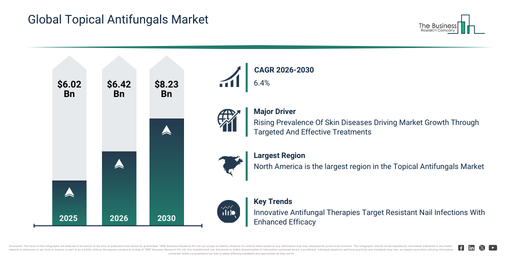
    The market for topical antifungals has experienced robust expansion in recent times. Valued at $6.02 billion in 2025, it is anticipated to reach $6.42 billion by 2026, reflecting a compound annual growth rate (CAGR) of 6.7%. Several factors drove this historic growth, including a scarcity of alternative topical antifungal treatments, a high prevalence of dermatophyte infections, dependence on hospital-based pharmacies, limited public knowledge regarding fungal diseases, and a continued preference for traditional pharmaceutical formulations.

    The topical antifungal market is projected to experience significant expansion over the coming years, reaching $8.23 billion by 2030 with a compound annual growth rate (CAGR) of 6.4%. This anticipated growth in the forecast period is driven by innovations in azoles and allylamines, a rise in home healthcare adoption, the expansion of online pharmacy platforms, growing demand for convenient formulations such as creams and sprays, and increased investment from pharmaceutical companies in dermatology. Key trends shaping this period include a higher incidence of skin fungal infections, a growing preference for topical treatments over systemic alternatives, the development of novel formulations and delivery systems, heightened awareness of home healthcare and self-medication, and the growth of online pharmacies and e-commerce distribution channels.

    Download A Free Sample Report For Comprehensive Market Insights:

    https://www.thebusinessresearchcompany.com/sample.aspx?id=24727&type=smp&utm_source=BlogsPR&utm_medium=Paid&utm_campaign=Jul_PR

    Topical Antifungals Market Development Factors: Which Trends Are Supporting Demand?

    The anticipated expansion of the topical antifungals market will be significantly fueled by the rising incidence of skin diseases. These ailments encompass disorders that compromise the skin’s integrity, appearance, or functionality, including irritation, inflammation, or infectious conditions. Their growing frequency is primarily attributed to heightened contact with environmental contaminants and ultraviolet radiation, which harm the skin and trigger a range of disorders. Topical antifungals are employed to manage these conditions by delivering focused effects against fungal pathogens, limiting systemic absorption, lowering the risk of adverse effects, and accelerating recovery in impacted regions. For example, in March 2023, the World Health Organization, a Switzerland-based health body, reported that skin conditions affect roughly 1.8 billion people globally at any moment. Consequently, the growing prevalence of skin diseases is set to drive the topical antifungals market forward.

    Topical Antifungals Market Segment Analysis Highlighting Growth Areas

    The topical antifungals market covered in this report is segmented –

    1) By Product Type: Azoles, Allylamines, Echinocandins, Polyenes

    2) By Formulation Type: Creams, Ointments, Lotions, Sprays, Powders

    3) By Indication: Dermatophyte Infections, Candidiasis, Tinea Infections, Onychomycosis

    4) By Distribution Channel: Pharmacies, Online Pharmacies, Hospital Pharmacies, Drug Stores

    5) By End-User: Hospitals, Clinics, Home Healthcare

    Subsegments:

    1) By Azoles: Clotrimazole, Miconazole, Ketoconazole, Fluconazole

    2) By Allylamines: Terbinafine, Naftifine, Butenafine

    3) By Echinocandins: Caspofungin, Micafungin, Anidulafungin

    4) By Polyenes: Nystatin, Amphotericin B

    Topical Antifungals Market Transformation Trends: Which Innovations Are Driving Change?

    Leading players in the topical antifungals sector are concentrating on creating advanced formulations, including histone deacetylase (HDAC) inhibitors, to boost therapeutic effectiveness, combat antifungal resistance, and improve nail bed penetration for onychomycosis treatment. These inhibitors work by blocking histone deacetylase enzymes, which are responsible for removing acetyl groups from histone proteins. As an example, in January 2024, Vanda Pharmaceuticals Inc., a biotechnology firm based in the United States, secured approval from the U.S. Food and Drug Administration (FDA) for its Investigational New Drug (IND) application to evaluate VTR-297 as a therapy for onychomycosis, a prevalent fungal nail condition. VTR-297 is a small-molecule HDAC inhibitor that exhibits antifungal properties. Originally derived from the bacterial strain Streptomyces hygroscopicus, it was initially identified as an antifungal antibiotic.

    Topical Antifungals Market Leading Companies: Who Holds Significant Market Presence?

    Major companies operating in the topical antifungals market are Pfizer Inc., Bayer AG, Novartis AG, GSK plc, Macleods Pharmaceuticals Ltd., Sun Pharmaceutical Industries Ltd., Galderma S.A., Aurobindo Pharma Limited, Dr. Reddy’s Laboratories, Cipla Limited, Lupin Limited, Zydus Lifesciences Ltd., Glenmark Pharmaceuticals Ltd., Alkem Laboratories Ltd., Ipca Laboratories Ltd., Taro Pharmaceutical Industries Ltd., Natco Pharma Ltd., Glamris Dermacare, Perrigo Company plc, Teva Pharmaceutical Industries Ltd., Viatris Inc., Amneal Pharmaceuticals LLC, Torrent Pharmaceuticals Ltd., Abbott Laboratories, Johnson & Johnson (Janssen Consumer Health), Reckitt Benckiser Group plc, Himalaya Wellness Company, Aristo Pharmaceuticals Pvt. Ltd., Emcure Pharmaceuticals Ltd., Ajanta Pharma Ltd., Alembic Pharmaceuticals Ltd.

    Access The Complete Topical Antifungals Market Report:

    https://www.thebusinessresearchcompany.com/report/topical-antifungals-global-market-report?utm_source=BlogsPR&utm_medium=Paid&utm_campaign=Jul_PR

    Topical Antifungals Market Geographic Landscape: Which Region Dominates Industry Growth?

    North America was the largest region in the topical antifungals market in 2025. Asia-Pacific is expected to be the fastest-growing region in the forecast period. The regions covered in the topical antifungals market report are Asia-Pacific, South East Asia, Western Europe, Eastern Europe, North America, South America, Middle East, Africa.

    Get in touch with us:

    The Business Research Company: https://www.thebusinessresearchcompany.com/?utm_source=BlogsPR&utm_medium=Paid&utm_campaign=home_page_test

    Americas: +1 310-496-7795

    Asia: +44 7882 955267 & +91 8897263534

    Europe: +44 7882 955267

    Email us at: marketing@tbrc.info

    Follow us on:

    LinkedIn: https://in.linkedin.com/company/the-business-research-company

    YouTube: https://www.youtube.com/channel/UC24_fI0rV8cR5DxlCpgmyFQ

    Global Market Model: https://www.thebusinessresearchcompany.com/global-market-model
  • Tofacitinib Market Size Projected To Increase From $3.86 Billion To $6.52 Billion During The Forecast Period

    Tofacitinib Market Size Projected To Increase From $3.86 Billion To $6.52 Billion During The Forecast Period

    Enhanced with market attractiveness analysis, total addressable market evaluation, company benchmarking matrices, interactive Excel dashboards, expanded supply chain intelligence, emerging startup coverage, and detailed product insights, The Business Research Company’s 2026 market reports deliver more actionable and strategically valuable research.

    Tofacitinib Market Value Expansion And Long-Term Growth Outlook

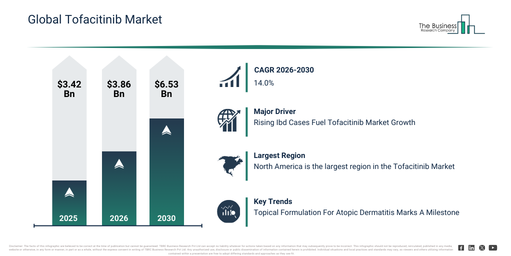
    The size of the tofacitinib market has seen swift expansion in recent times. In 2025, it was valued at $3.42 billion, and this figure is projected to reach $3.86 billion by 2026, reflecting a compound annual growth rate (CAGR) of 12.9%. Several factors have driven this growth over the historical period, including a higher incidence of rheumatoid arthritis, greater awareness surrounding ulcerative colitis, the broadening scope of the biologics market, the authorization of Janus kinase inhibitors, and the proliferation of hospital pharmacy networks.

    The tofacitinib market is projected to experience significant expansion over the coming years. By 2030, it is anticipated to reach a value of $6.53 billion, with a compound annual growth rate (CAGR) of 14.0%. This forecasted growth is driven by factors such as the development of new tofacitinib formulations, a heightened emphasis on precision medicine, increased investments in biosimilars, the growth of online pharmacy channels, and a higher demand for immunosuppressants. Key trends shaping this period include a greater uptake of targeted therapies, a rise in cases of ulcerative colitis and rheumatic diseases, a move toward personalized medicine, increased research and development efforts in biopharmaceuticals, and the broadening of specialty pharmacy services.

    Download A Free Sample Report For Comprehensive Market Insights:

    https://www.thebusinessresearchcompany.com/sample.aspx?id=10779&type=smp&utm_source=BlogsPR&utm_medium=Paid&utm_campaign=Jul_PR

    Tofacitinib Market Industry Drivers: What Is Driving Revenue Growth?

    The projected expansion of the tofacitinib market is significantly driven by a growing prevalence of inflammatory bowel disease. This term refers to a spectrum of chronic gastrointestinal conditions, most notably Crohn’s disease and ulcerative colitis. Tofacitinib plays a critical role in treating IBD patients by blocking Janus kinase (JAK) enzymes, effectively alleviating symptoms and supporting mucosal healing. For example, data from Crohn’s and Colitis Canada, a nonprofit organization based in Canada, indicated in June 2023 that over 322,600 Canadians were affected by these diseases in 2023, making up roughly 0.82% of the population. As this condition continues to rise, projections suggest that about 470,000 Canadians—approximately 1.1% of the population, or one in every 91 individuals—will have IBD by 2035. Consequently, the surge in inflammatory bowel disease cases serves as a primary driver for the tofacitinib market’s growth.

    Tofacitinib Market Segment Performance And Strategic Opportunities

    The tofacitinib market covered in this report is segmented –

    1) By Drug Class: Antirheumatic, Janus Kinase Inhibitor, Immunosuppressant

    2) By Strength: 5mg, 10mg, 11mg, 22mg

    3) By Route Of Administration: Oral, Other Routes Of Administration

    4) By Distribution Channel: Hospital Pharmacy, Retail Pharmacy, Online Pharmacy

    5) By Application: Ulcerative Colitis, Rheumatoid Arthritis, Psoriasis, Other Applications

    Subsegments:

    1) By Antirheumatic: Conventional Synthetic Antirheumatics, Targeted Synthetic Antirheumatics

    2) By Janus Kinase Inhibitor: JAK1 Inhibitors, JAK2 Inhibitors, JAK3 Inhibitors

    3) By Immunosuppressant: Corticosteroids, Non-Steroidal Immunosuppressants

    Tofacitinib Market Growth Trends: What Is Influencing The Future Outlook?

    Key players in the tofacitinib market are placing greater emphasis on developing topical formulations of the drug as a strategy to strengthen their market position. A topical version of tofacitinib is a preparation intended for direct application to the skin. A case in point is Intas Pharmaceuticals, an Indian company, which introduced Tofacitinib Topical (JAKi) in June 2023 for managing mild to moderate atopic dermatitis (AD) in India. This marks the first JAK inhibitor approved for AD within the country. A Phase III clinical trial of TOFATAS (Tofacitinib Ointment 2% w/w) carried out on AD patients in India showed outstanding safety and effectiveness. With the introduction of TOFATAS, the aim is to offer renewed optimism for individuals dealing with AD, given that no topical JAK inhibitors were previously authorized in India.

    Tofacitinib Market Key Players: Which Companies Shape Industry Competition?

    Major companies operating in the tofacitinib market are Pfizer Inc, Beacon Pharmaceuticals Limited, Glenmark Pharmaceuticals LTD, Sun Pharmaceutical Industries Ltd, Zydus Lifesciences Ltd, Unichem Laboratories, Sandoz International GmbH, Mylan N.V., Hetero Drugs Limited, Torrent Pharmaceuticals Ltd, Lupin Limited, Aurobindo Pharma Limited, Cipla Inc, Dr. Reddys Laboratories Ltd, Strides Pharma Science Limited, Alkem Laboratories Limited, Cadila Healthcare Limited, Wockhardt Limited, Alembic Pharmaceuticals Limited, Intas Pharmaceuticals Limited

    Access The Complete Tofacitinib Market Report:

    https://www.thebusinessresearchcompany.com/report/tofacitinib-global-market-report?utm_source=BlogsPR&utm_medium=Paid&utm_campaign=Jul_PR

    Tofacitinib Market Largest Region: Which Geography Holds The Highest Market Share?

    North America was the largest region in the tofacitinib market in 2025. Asia-Pacific is expected to be the fastest-growing region in the forecast period. The regions covered in the tofacitinib market report are Asia-Pacific, South East Asia, Western Europe, Eastern Europe, North America, South America, Middle East, Africa.

    Get in touch with us:

    The Business Research Company: https://www.thebusinessresearchcompany.com/?utm_source=BlogsPR&utm_medium=Paid&utm_campaign=home_page_test

    Americas: +1 310-496-7795

    Asia: +44 7882 955267 & +91 8897263534

    Europe: +44 7882 955267

    Email us at: marketing@tbrc.info

    Follow us on:

    LinkedIn: https://in.linkedin.com/company/the-business-research-company

    YouTube: https://www.youtube.com/channel/UC24_fI0rV8cR5DxlCpgmyFQ

    Global Market Model: https://www.thebusinessresearchcompany.com/global-market-model

  • TNF Alpha Inhibitors Market Growth Outlook Reveals A CAGR Of 3% And A Market Value Of $50.58 Billion By 2030

    TNF Alpha Inhibitors Market Growth Outlook Reveals A CAGR Of 3% And A Market Value Of $50.58 Billion By 2030

    Through market attractiveness analysis, total addressable market evaluation, company benchmarking matrices, interactive Excel dashboards, expanded supply chain intelligence, emerging startup coverage, and detailed product insights, The Business Research Company’s 2026 market reports provide more actionable and strategically valuable research.

    TNF Alpha Inhibitors Market Expected To Reach $50.58 Billion By 2030 At 3% CAGR

    In recent years, the market for TNF alpha inhibitors has experienced consistent expansion. Projected figures indicate a rise from $43.83 billion in 2025 to $44.95 billion in 2026, reflecting a compound annual growth rate (CAGR) of 2.6%. This historical growth has been driven by several factors, including a high incidence of rheumatoid arthritis, the well-documented effectiveness of TNF blockers, robust endorsement from clinical guidelines, increased uptake of biologics within hospital settings, and broader application of immunology therapies.

    The market for TNF alpha inhibitors is anticipated to experience consistent expansion over the coming years, reaching a projected value of $50.58 billion by 2030, reflecting a compound annual growth rate (CAGR) of 3.0%. This forecasted growth is driven by several factors, including a rising incidence of inflammatory bowel disease, greater adoption of biosimilars, expanded patient access initiatives, the development of safer drug formulations, and increased healthcare expenditure. Key trends shaping this period involve the growing preference for biologic anti-inflammatory treatments, their wider application in managing autoimmune conditions, a notable shift toward biosimilar versions of TNF inhibitors, the expansion of subcutaneous delivery methods, and a greater emphasis on extended long-term therapy.

    Download A Free Sample Report For Comprehensive Market Insights:

    https://www.thebusinessresearchcompany.com/sample.aspx?id=3459&type=smp&utm_source=BlogsPR&utm_medium=Paid&utm_campaign=Jul_PR

    #TNF Alpha Inhibitors Market Growth Factors: Which Forces Are Supporting Market Expansion?

    A rising number of elderly individuals is set to fuel the expansion of the TNF-alpha inhibitors market in the coming period. The geriatric demographic, referring to those aged 65 and above, is more prone to autoimmune conditions and tends to exhibit heightened inflammatory activity in the bloodstream. In this older population, TNF-alpha inhibitors have demonstrated effectiveness in lessening inflammation and atherosclerosis. As reported in January 2024 by the Population Reference Bureau, a nonprofit organization based in the United States, the count of Americans aged 65 or older is projected to climb from 58 million in 2022 to 82 million by 2050—an increase of 47%. Concurrently, the share of this age group within the total U.S. population is anticipated to rise from 17% to 23% over that timeframe. Consequently, the growing number of older adults is accelerating the growth trajectory of the TNF-alpha inhibitors market.

    TNF Alpha Inhibitors Market Segment Landscape And Growth Potential

    The tnf alpha inhibitors market covered in this report is segmented –

    1) By Drug: Remicade (Infliximab), Enbrel (Etanercept), Humira (Adalimumab), Cimzia (Certolizumab Pegol), Simponi (Golimumab)

    2) By Route Of Administration: Subcutaneous, Intravenous, Other Route Of Administration

    3) By Disease Type: Inflammatory Bowel Disease, Psoriatic Arthritis, Ulcerative Colitis (UC), Rheumatoid Arthritis, Ankylosing Spondylitis, Other Disease Types

    TNF Alpha Inhibitors Market Industry Trends: What Changes Are Reshaping Demand?

    Key players in the TNF alpha inhibitor market are increasingly focusing on forming strategic partnerships as a way to broaden their product offerings and ensure that TNF-blockers reach patients more effectively. In this context, product distribution involves making these treatments, including TNF-alpha inhibitors, accessible for purchase through various market channels. A notable example from June 2023 is the collaboration between Mark Cuban Cost Plus Drug Company, a pharmaceutical firm based in the US, and Coherus BioSciences Inc., a US-based biopharmaceutical company. Under this agreement, Mark Cuban Cost Plus Drug Company customers can now obtain YUSIMRY (adalimumab-aqvh), a biosimilar of HUMIRA (adalimumab injection), which is a TNF blocker approved for conditions such as Crohn’s disease, ulcerative colitis, plaque psoriasis, and hidradenitis suppurativa, in addition to managing symptoms of rheumatoid arthritis, juvenile idiopathic arthritis, psoriatic arthritis, and ankylosing spondylitis. This initiative is part of Coherus’ broader biosimilar approach, where they leverage their strong manufacturing and supply chain capabilities to deliver safe and effective biosimilars with a consistent and dependable supply.

    TNF Alpha Inhibitors Market Competitive Landscape: Who Are The Leading Companies?

    Major companies operating in the tnf alpha inhibitors market are Pfizer Inc., Johnson & Johnson, Janssen Biotech Inc., AbbVie Inc., Amgen Inc., Sandoz International GmbH, Cadila Healthcare Limited, Intas Pharmaceuticals Ltd., Samsung Bioepis Co. Ltd., Celltrion Healthcare Co. Ltd., AryoGen Pharmed Co. Ltd., EPIRUS Biopharmaceuticals Inc., Mylan N.V., Teva Pharmaceutical Industries Ltd., Apotex Inc.

    Access The Complete TNF Alpha Inhibitors Market Report:

    https://www.thebusinessresearchcompany.com/report/tnf-alpha-inhibitor-global-market-report?utm_source=BlogsPR&utm_medium=Paid&utm_campaign=Jul_PR

    TNF Alpha Inhibitors Market Regional Analysis: Which Region Leads By Revenue?

    North America was the largest region in the TNF alpha inhibitors market in 2025. The regions covered in the tnf alpha inhibitors market report are Asia-Pacific, South East Asia, Western Europe, Eastern Europe, North America, South America, Middle East, Africa.

    Get in touch with us:

    The Business Research Company: https://www.thebusinessresearchcompany.com/?utm_source=BlogsPR&utm_medium=Paid&utm_campaign=home_page_test

    Americas: +1 310-496-7795

    Asia: +44 7882 955267 & +91 8897263534

    Europe: +44 7882 955267

    Email us at: marketing@tbrc.info

    Follow us on:

    LinkedIn: https://in.linkedin.com/company/the-business-research-company

    YouTube: https://www.youtube.com/channel/UC24_fI0rV8cR5DxlCpgmyFQ

    Global Market Model: https://www.thebusinessresearchcompany.com/global-market-model

  • Tissue Regeneration Scaffold Market Forecast Highlights Expansion From $3.05 Billion To $5.58 Billion Through 2030

    Tissue Regeneration Scaffold Market Forecast Highlights Expansion From $3.05 Billion To $5.58 Billion Through 2030

    Delivering more actionable and strategically valuable research, The Business Research Company’s 2026 market reports feature market attractiveness analysis, total addressable market evaluation, company benchmarking matrices, interactive Excel dashboards, expanded supply chain intelligence, emerging startup coverage, and detailed product insights.

    Tissue Regeneration Scaffold Market Size And Revenue Forecast Through 2030

    The market for tissue regeneration scaffolds has seen swift expansion over recent years, with its value projected to increase from $2.61 billion in 2025 to $3.05 billion in 2026, reflecting a compound annual growth rate (CAGR) of 16.9%. Factors driving past growth include a scarcity of high-quality scaffolds, a dependency on conventional grafting techniques, a rising frequency of orthopedic and dental injuries, heightened activity in tissue engineering research, and improvements in hospital and clinical facilities.

    The tissue regeneration scaffold market is anticipated to experience significant expansion in the coming years, with projections indicating it will reach $5.58 billion by 2030, driven by a compound annual growth rate (CAGR) of 16.3%. This forecasted growth is fueled by the development of composite and nanocomposite scaffolds, progress in bioactive and hydroxyapatite-based materials, the incorporation of 3D bioprinting into scaffold manufacturing, increased investment in regenerative medicine, and a rise in partnerships between academic institutions and hospitals. Key trends shaping this period include a growing preference for both natural and synthetic tissue scaffolds, expanding applications in orthopedics, dentistry, and wound care, the integration of 3D bioprinting alongside advanced fabrication methods, a heightened emphasis on biocompatibility and scaffold functionalization, and the proliferation of research and academic initiatives in regenerative medicine.

    Download A Free Sample Report For Comprehensive Market Insights:

    https://www.thebusinessresearchcompany.com/sample.aspx?id=27436&type=smp&utm_source=BlogsPR&utm_medium=Paid&utm_campaign=Jul_PR

    Tissue Regeneration Scaffold Market Demand Drivers: What Is Fueling Industry Growth?

    The increasing incidence of trauma-related injuries is anticipated to drive expansion in the tissue regeneration scaffold market in the coming years. Trauma cases involve injuries from accidents, falls, or violence that cause tissue damage requiring medical care. This rise is mainly fueled by a higher frequency of road traffic accidents and workplace or industrial incidents, creating a greater demand for advanced tissue repair and regeneration options. Tissue regeneration scaffolds assist in trauma care by offering a structural framework that facilitates damaged tissue repair and growth, thereby speeding up recovery, lowering the risk of complications like infections or scarring, and more effectively restoring normal function in the affected area. For example, in October 2024, the Department of Health Alaska, a US government agency, reported that roughly 3,373 people in Alaska suffered from traumatic brain injuries (TBI) in 2023, encompassing both fatal cases and non-fatal injuries treated and released from hospitals or emergency departments. Consequently, the surge in trauma cases is fueling growth in the tissue regeneration scaffold market.

    Tissue Regeneration Scaffold Market Categorization By Product Type And Application

    The tissue regeneration scaffold market covered in this report is segmented –

    1) By Type: Natural, Synthetic, Composite

    2) By Application: Orthopedic, Dental, Wound Care

    3) By End-User: Hospitals And Clinics, Research And Academic Institutes

    Subsegments:

    1) By Natural: Collagen Scaffolds, Chitosan Scaffolds, Alginate Scaffolds, Hyaluronic Acid Scaffolds, Gelatin Scaffolds

    2) By Synthetic: Polylactic Acid (PLA) Scaffolds, Polyglycolic Acid (PGA) Scaffolds, Polycaprolactone (PCL) Scaffolds, Polyethylene Glycol (PEG) Scaffolds, Polylactic-Co-Glycolic Acid (PLGA) Scaffolds

    3) By Composite: Natural-Synthetic Polymer Composites, Ceramic-Polymer Composites, Nanocomposite Scaffolds, Hydroxyapatite-Based Composites, Bioactive Glass Composites

    Tissue Regeneration Scaffold Market Innovation Trends: Which Developments Are Transforming The Industry?

    Key players in the tissue regeneration scaffold market are prioritizing the advancement of cutting-edge technologies like three-dimensional (3D) bioprinting to produce scaffolds that are highly tailored and biologically meaningful. By employing bioinks composed of living cells and biomaterials, 3D bioprinting enables the creation of functional three-dimensional tissue constructs for use in regenerative medicine and scientific inquiry. In June 2023, for example, 3D BioFibR Inc., a Canadian manufacturer of biopolymer fibers, introduced two collagen fiber products named micro-collafibr and collafibr 3D scaffold. These leverage proprietary dry-spinning technology to generate robust, biologically relevant scaffolds that enhance the mechanical integrity and functionality of 3D bioprinted tissues and cell cultures. The Collafibr 3D scaffold, constructed from GMP-grade type 1 collagen fibers, closely mimics the structure and biomechanical characteristics of the natural extracellular matrix. It offers a three-dimensional setting conducive to authentic cell growth and interaction, while also being compatible with standard well plate formats for high-throughput drug screening and advanced microscopy. Consequently, this innovation propels progress in tissue modeling and regenerative medicine research.

    Tissue Regeneration Scaffold Market Company Landscape And Strategic Competition

    Major companies operating in the tissue regeneration scaffold market are Evonik Industries AG, DSM-Firmenich AG, Ashland Inc., Integra LifeSciences Corporation, Organogenesis Inc., MiMedx Group Inc., LifeNet Health Inc., BioTissue Inc., Aroa Biosurgery Limited, Poly-Med Inc., CollPlant Biotechnologies Ltd.

    Access The Complete Tissue Regeneration Scaffold Market Report:

    https://www.thebusinessresearchcompany.com/report/tissue-regeneration-scaffold-global-market-report?utm_source=BlogsPR&utm_medium=Paid&utm_campaign=Jul_PR

    Tissue Regeneration Scaffold Market Geographic Distribution And Regional Opportunities

    North America was the largest region in the tissue regeneration scaffold market in 2025. Asia-Pacific is expected to be the fastest-growing region in the forecast period. The regions covered in the tissue regeneration scaffold market report are Asia-Pacific, South East Asia, Western Europe, Eastern Europe, North America, South America, Middle East, Africa.

    Get in touch with us:

    The Business Research Company: https://www.thebusinessresearchcompany.com/?utm_source=BlogsPR&utm_medium=Paid&utm_campaign=home_page_test

    Americas: +1 310-496-7795

    Asia: +44 7882 955267 & +91 8897263534

    Europe: +44 7882 955267

    Email us at: marketing@tbrc.info

    Follow us on:

    LinkedIn: https://in.linkedin.com/company/the-business-research-company

    YouTube: https://www.youtube.com/channel/UC24_fI0rV8cR5DxlCpgmyFQ

    Global Market Model: https://www.thebusinessresearchcompany.com/global-market-model
  • Tissue Plasminogen Activator Market Expected To Reach $5.65 Billion By 2030 As Growth Accelerates At 8.6% CAGR

    Tissue Plasminogen Activator Market Expected To Reach $5.65 Billion By 2030 As Growth Accelerates At 8.6% CAGR

    Enhanced with market attractiveness analysis, total addressable market evaluation, company benchmarking matrices, interactive Excel dashboards, expanded supply chain intelligence, emerging startup coverage, and detailed product insights, The Business Research Company’s 2026 market reports deliver more actionable and strategically valuable research.

    Tissue Plasminogen Activator Market Growth From $4.06 Billion In 2026 To $5.65 Billion By 2030 At A CAGR Of 8.6%

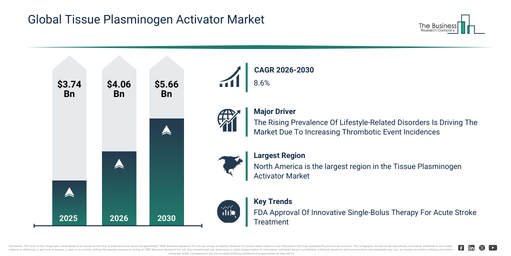
    The tissue plasminogen activator market has experienced substantial expansion in recent years, with projections indicating an increase from $3.74 billion in 2025 to $4.06 billion in 2026, reflecting a compound annual growth rate (CAGR) of 8.7%. This upward trajectory in the historical period has been driven by factors such as the prevalence of stroke, the implementation of emergency care protocols, the adoption of hospital-based thrombolysis, the burden of cardiovascular disease, and the backing of clinical guidelines.

    The market for tissue plasminogen activator is projected to experience robust expansion over the coming years. By 2030, its value is anticipated to reach $5.66 billion, reflecting a compound annual growth rate (CAGR) of 8.6%. This forecasted growth is driven by factors such as an aging population, heightened awareness of stroke symptoms, the proliferation of biosimilars, increased funding for emergency healthcare, and faster diagnostic capabilities. Key developments shaping the market during this period include the growing application of tPA in treating acute ischemic stroke, the broader implementation of emergency thrombolytic therapy, the uptake of biosimilar tPA products, the emergence of rapid response care models, and a heightened emphasis on time-critical drug administration.

    Download A Free Sample Report For Comprehensive Market Insights:

    https://www.thebusinessresearchcompany.com/sample.aspx?id=24413&type=smp&utm_source=BlogsPR&utm_medium=Paid&utm_campaign=Jul_PR

    Tissue Plasminogen Activator Market Growth Drivers: What Factors Are Accelerating Expansion?

    The growing occurrence of lifestyle-associated diseases is anticipated to boost the expansion of the tissue plasminogen activator market in the coming period. Lifestyle-related disorders encompass a category of non-communicable illnesses primarily arising from detrimental behavioral patterns, including poor nutritional intake, lack of physical exercise, tobacco use, and heavy alcohol intake, which lead to ailments like heart disease, diabetes, and high blood pressure. This increase in lifestyle-driven conditions is fueled by evolving eating habits and diminished physical activity, with the embrace of sedentary behaviors being a major factor, as it interferes with metabolic processes and accelerates the development of clot-related events. Through its ability to effectively break down dangerous blood clots involved in ischemic strokes and heart attacks, tissue plasminogen activator (tPA) mitigates the medical effects of lifestyle-related disorders, cutting death rates and enhancing recovery outcomes. As an example, data from the Office for Health Improvement and Disparities, a UK governmental agency, indicated that in May 2025, an estimated 64.5% of adults aged 18 and above in England were either overweight or obese in 2023 to 2024, a rise from 64.0% in 2022 to 2023. Consequently, the rising frequency of lifestyle-associated diseases is propelling forward the tissue plasminogen activator market.

    Tissue Plasminogen Activator Market Segment Analysis And Revenue Opportunities

    The tissue plasminogen activator market covered in this report is segmented –

    1) By Product Type: Alteplase, Tenecteplase, Reteplase, Other Product Types

    2) By Dosage Form: Powder For Injection, Solution For Injection

    3) By Distribution Channel: Direct Sales, Distributors, Online Pharmacies, Retail Pharmacies

    4) By Application: Ischemic Stroke, Myocardial Infarction, Pulmonary Embolism, Thrombolysis, Other Applications

    5) By End-User: Hospitals, Specialized Cardiac Clinics, Emergency Medical Services (EMS)

    Subsegments:

    1) By Alteplase: Recombinant Alteplase, Biosimilar Alteplase, Lyophilized Alteplase

    2) By Tenecteplase: Recombinant Tenecteplase: Genetically Engineered Tenecteplase, Long-Acting Tenecteplase

    3) By Reteplase: Recombinant Reteplase, Double-Chain Reteplase, Single-Bolus Reteplase

    4) By Other Product Types: Monteplase, Lanoteplase, Desmoteplase, Combination Agents With tPA Analogs

    Tissue Plasminogen Activator Market Trends: What Is Shaping Future Industry Growth?

    Major players in the tissue plasminogen activator market are actively pursuing the development of advanced formulations like single-bolus thrombolytic agents, aiming to elevate acute stroke care by refining thrombolytic therapy. These single-bolus agents consist of fast-acting drugs given in one intravenous dose to quickly dissolve blood clots and restore normal circulation in cases like myocardial infarction, stroke, or pulmonary embolism. A notable example occurred in March 2025, when Genentech Inc., a biotechnology firm based in the United States, received U.S. Food and Drug Administration (FDA) approval for TNKase (tenecteplase) to treat acute ischemic stroke (AIS) in adults. This marks the company’s second authorization for stroke management, with TNKase providing a more efficient and simplified approach via a single five-second intravenous bolus, contrasting with the standard 60-minute infusion required for Activase (alteplase). Strong clinical data from the AcT trial supported this approval, showing that TNKase matches Activase in both safety and efficacy for AIS patients. This innovation is projected to greatly enhance treatment timeliness and ease, which is vital for individuals suffering from acute ischemic strokes, where prompt intervention is key to minimizing long-term disability and death rates.

    Tissue Plasminogen Activator Market Leading Players Shaping Industry Direction

    Major companies operating in the tissue plasminogen activator market are F. Hoffmann-La Roche Ltd., Genentech Inc., Boehringer Ingelheim International GmbH, Mitsubishi Tanabe Pharma Corporation, Eisai Co. Ltd., Kyowa Kirin Co. Ltd., Chugai Pharmaceutical Co. Ltd., Hisun Pharmaceutical Co. Ltd., Livzon Pharmaceutical Group Inc., Shanghai Shyndec Pharmaceutical Co. Ltd., CSPC Pharmaceutical Group Limited, China Grand Pharmaceutical and Healthcare Holdings Limited, Tasly Pharmaceutical Group Co. Ltd., Beijing Sihuan Pharmaceutical Co. Ltd., Shenzhen Salubris Pharmaceuticals Co. Ltd., Guangzhou Baiyunshan Pharmaceutical Holdings Co. Ltd., Zhejiang Hisun Pharmaceutical Co. Ltd., North China Pharmaceutical Group Corporation, Jiangsu Hengrui Pharmaceuticals Co. Ltd., Simcere Pharmaceutical Group Ltd., Qilu Pharmaceutical Co. Ltd., Harbin Pharmaceutical Group Co. Ltd., Gennova Biopharmaceuticals Ltd., Reliance Life Sciences, Angde Biological Pharmaceutical Co. Ltd.

    Access The Complete Tissue Plasminogen Activator Market Report:

    https://www.thebusinessresearchcompany.com/report/tissue-plasminogen-activator-global-market-report?utm_source=BlogsPR&utm_medium=Paid&utm_campaign=Jul_PR

    Tissue Plasminogen Activator Market Largest Region By Revenue And Market Share

    North America was the largest region in the tissue plasminogen activator market in 2025. Asia-Pacific is expected to be the fastest-growing region in the forecast period. The regions covered in the tissue plasminogen activator market report are Asia-Pacific, South East Asia, Western Europe, Eastern Europe, North America, South America, Middle East, Africa.

    Get in touch with us:

    The Business Research Company: https://www.thebusinessresearchcompany.com/?utm_source=BlogsPR&utm_medium=Paid&utm_campaign=home_page_test

    Americas: +1 310-496-7795

    Asia: +44 7882 955267 & +91 8897263534

    Europe: +44 7882 955267

    Email us at: marketing@tbrc.info

    Follow us on:

    LinkedIn: https://in.linkedin.com/company/the-business-research-company

    YouTube: https://www.youtube.com/channel/UC24_fI0rV8cR5DxlCpgmyFQ

    Global Market Model: https://www.thebusinessresearchcompany.com/global-market-model
  • Tissue Engineering For Wound Care Market Set To Grow From $7.93 Billion In 2026 To $13.6 Billion By 2030 At A CAGR Of 14.4%

    Tissue Engineering For Wound Care Market Set To Grow From $7.93 Billion In 2026 To $13.6 Billion By 2030 At A CAGR Of 14.4%

    Through market attractiveness analysis, total addressable market evaluation, company benchmarking matrices, interactive Excel dashboards, expanded supply chain intelligence, emerging startup coverage, and detailed product insights, The Business Research Company’s 2026 market reports provide more actionable and strategically valuable research.

    Tissue Engineering For Wound Care Market Expansion Outlook: What Revenue Opportunities Lie Ahead?

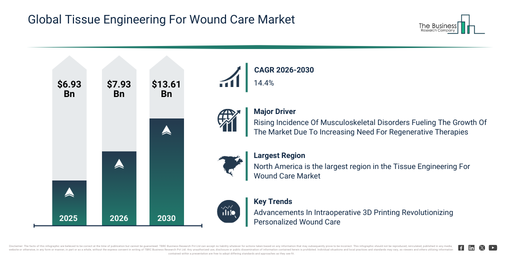
    The market for tissue engineering in wound care has experienced swift expansion in recent years. Its value is projected to increase from $6.93 billion in 2025 to $7.93 billion in 2026, reflecting a compound annual growth rate (CAGR) of 14.5%. This historical growth has been driven by an aging demographic, a rising incidence of diabetes, burn-related injuries, hospital-based wound management initiatives, and breakthroughs in biomaterials.

    The wound care sector involving tissue engineering is projected to experience significant expansion over the next several years. By 2030, the market is anticipated to reach $13.61 billion, reflecting a compound annual growth rate (CAGR) of 14.4%. This anticipated expansion during the forecast interval is driven by factors such as an increase in chronic wound occurrences, greater acceptance of regenerative medicine, the broadening of outpatient wound care services, advancements in biomaterials, and higher levels of healthcare spending. Among the key developments shaping the upcoming period are the growing application of bioengineered skin substitutes, the rise of solutions for managing chronic wounds, the implementation of therapies using stem cells, an increasing array of sophisticated wound care options, and a strong emphasis on speeding up the natural healing of tissue.

    Download A Free Sample Report For Comprehensive Market Insights:

    https://www.thebusinessresearchcompany.com/sample.aspx?id=24412&type=smp&utm_source=BlogsPR&utm_medium=Paid&utm_campaign=Jul_PR

    Tissue Engineering For Wound Care Market Growth Factors Supporting Long-Term Expansion

    A rising number of musculoskeletal disorders is expected to drive expansion in the tissue engineering for wound care market in the years ahead. These disorders impact muscles, bones, joints, tendons, or ligaments, manifesting as pain, stiffness, or impaired movement. Their increase is largely attributed to more sedentary lifestyles, where prolonged sitting and decreased physical activity weaken muscles and stress joints, resulting in chronic conditions. Tissue engineering for wound care becomes essential in addressing musculoskeletal disorders by facilitating the regeneration of damaged tissues, thereby restoring function and structure where natural recovery falls short. For example, data from the Office for Health Improvement and Disparities, a UK government public health agency, showed in January 2024 that self-reported long-term musculoskeletal conditions among people aged 16 and over rose to 18.4% in 2023, up from 17.6% in 2022. Consequently, the growing prevalence of these disorders is set to propel the tissue engineering for wound care market forward.

    Tissue Engineering For Wound Care Market Segmentation And Category Breakdown

    The tissue engineering for wound care market covered in this report is segmented –

    1) By Product Material: Scaffold, Tissue Grafts, Other Products

    2) By Type Of Wound: Chronic Wounds, Acute Wounds

    3) By Application: Skin Regeneration, Soft Tissue Repair

    4) By End-User: Hospitals, Specialty Centers And Clinics, Ambulatory Surgical Centers

    Subsegments:

    1) By Scaffold: Natural Scaffolds, Synthetic Scaffolds, Composite Scaffolds, Hydrogels, Nanofiber-Based Scaffolds

    2) By Tissue Grafts: Autografts, Allografts, Xenografts, Bioengineered Skin Substitutes, Amniotic Tissue Grafts

    3) By Other Products: Cell-Based Products, Growth Factors, Acellular Dermal Matrices, Collagen-Based Dressings, Stem Cell-Derived Biomaterials

    Tissue Engineering For Wound Care Market Industry Trends Shaping Future Revenue Growth

    Key industry players in the tissue engineering for wound care market are prioritizing the development of cutting-edge technologies, including intraoperative 3D printers, to facilitate fast prototyping of intricate structures. These intraoperative 3D printers are sophisticated tools employed during surgeries to produce patient-specific implants, models, or instruments in real time, thereby improving accuracy and enabling tailored treatment. For example, in September 2024, Tides Medical, a biotechnology firm based in the United States, introduced APLICOR 3D, an innovative wound care intraoperative 3D printer. This device revolutionizes wound management by employing the patient’s own tissue, artificial intelligence, and 3D printing to create custom skin grafts directly at the wound site. The single-use procedure addresses each patient’s distinct requirements while streamlining supply chain and inventory management and reducing demands on physicians. By scanning the wound with a specialized tablet to ascertain precise dimensions, depth, and tissue requirements, the provider sends a 3D file to the printer. After harvesting and processing fat to create bio-ink, the printer constructs the graft, enabling successful wound closure within an hour.

    Tissue Engineering For Wound Care Market Competitive Analysis Of Major Industry Participants

    Major companies operating in the tissue engineering for wound care market are Smith & Nephew plc, ConvaTec Group Plc, MTF Biologics, MiMedx Group Inc., LifeNet Health Inc., Kerecis LLC, Aroa Biosurgery Ltd., Tissue Regenix Group PLC, BioStem Technologies Inc., Organogenesis Holdings Inc., Integra LifeSciences Holdings Corporation, Osiris Therapeutics (Smith & Nephew), Stryker Corporation, Medline Industries LP, Mölnlycke Health Care AB, 3M Health Care, Cardinal Health Inc., Derma Sciences Inc., Acell Inc., Wright Medical Group N.V., Anika Therapeutics Inc., Regen Lab SA, Skye Biologics Inc., Human Regenerative Technologies LLC, StimLabs LLC

    Access The Complete Tissue Engineering For Wound Care Market Report:

    https://www.thebusinessresearchcompany.com/report/tissue-engineering-for-wound-care-global-market-report?utm_source=BlogsPR&utm_medium=Paid&utm_campaign=Jul_PR

    Tissue Engineering For Wound Care Market Regional Analysis And Leading Geography

    North America was the largest region in the tissue engineering for wound care market in 2025. The regions covered in the tissue engineering for wound care market report are Asia-Pacific, South East Asia, Western Europe, Eastern Europe, North America, South America, Middle East, Africa.

    Get in touch with us:

    The Business Research Company: https://www.thebusinessresearchcompany.com/?utm_source=BlogsPR&utm_medium=Paid&utm_campaign=home_page_test

    Americas: +1 310-496-7795

    Asia: +44 7882 955267 & +91 8897263534

    Europe: +44 7882 955267

    Email us at: marketing@tbrc.info

    Follow us on:

    LinkedIn: https://in.linkedin.com/company/the-business-research-company

    YouTube: https://www.youtube.com/channel/UC24_fI0rV8cR5DxlCpgmyFQ

    Global Market Model: https://www.thebusinessresearchcompany.com/global-market-model