Blog

  • Ublituximab Market Trends Are Creating New Opportunities For Industry Leaders

    Ublituximab Market Trends Are Creating New Opportunities For Industry Leaders

    Delivering more actionable and strategically valuable research, The Business Research Company’s 2026 market reports feature market attractiveness analysis, total addressable market evaluation, company benchmarking matrices, interactive Excel dashboards, expanded supply chain intelligence, emerging startup coverage, and detailed product insights.

    Ublituximab Market Growth Analysis: How Will Revenue Expand During The Forecast Period?

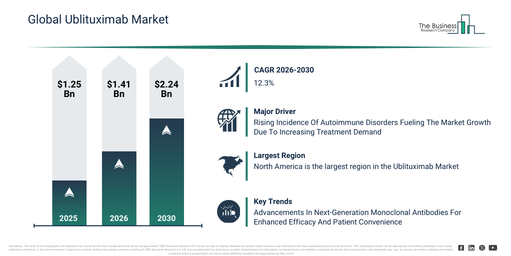
    The market for ublituximab has experienced significant expansion in recent times, with its valuation anticipated to increase from $1.25 billion in 2025 to $1.41 billion in 2026, reflecting a compound annual growth rate (CAGR) of 12.6%. This upward trajectory during the historical period can be linked to progress in the creation of monoclonal antibodies, a rising incidence of conditions associated with B-cells, enhanced capabilities for producing biologics, the granting of regulatory approvals for therapies focused on CD20, and a surge in research activities within the field of immuno-oncology.

    The ublituximab market is projected to experience significant expansion in the coming years, with an anticipated growth to $2.24 billion by 2030, reflecting a compound annual growth rate of 12.3%. This upward trend during the forecast period is driven by the advancing development of next-generation antibodies, a heightened emphasis on treatment longevity and safety, and an increased focus on autoimmune disease applications. Additionally, there is a notable surge in investments directed toward innovations in biologics manufacturing, alongside a rising preference for precision immunotherapy approaches. Key emerging trends shaping this period include the growing utilization of CD20-targeted monoclonal antibodies, an intensified concentration on therapies that deplete B-cells, and the expanding application of immune-modulating treatments. The landscape is also characterized by the widening adoption of combined antibody regimens and continued refinements in antibody engineering for enhanced optimization.

    Download A Free Sample Report For Comprehensive Market Insights:

    https://www.thebusinessresearchcompany.com/sample.aspx?id=28344&type=smp&utm_source=BlogsPR&utm_medium=Paid&utm_campaign=Jul_PR

    Ublituximab Market Development Factors: Which Trends Are Supporting Demand?

    The anticipated growth of the ublituximab market is being significantly fueled by the increasing occurrence of autoimmune disorders. These medical conditions involve the immune system erroneously attacking healthy cells and sometimes impairing blood cell production and function. Heightened prevalence rates are largely attributed to advancements in diagnostic technologies and improved public awareness, as healthcare systems now possess enhanced capabilities to detect cases that were previously overlooked through sophisticated testing methods and expanded screening initiatives. Ublituximab functions as a glycoengineered anti-CD20 monoclonal antibody that addresses autoimmune disorders by specifically targeting and eliminating pathogenic B cells, thereby suppressing abnormal immune responses and malignant cell growth. As an example, data from February 2024 provided by Arthritis Australia, a non-profit organization based in Australia, indicates that an estimated 212,136 men and 362,137 women are expected to be diagnosed with rheumatoid arthritis (RA) in 2025, with projections suggesting these figures will climb to approximately 280,040 males and 479,828 females by 2040. Consequently, the growing prevalence of autoimmune conditions is propelling expansion within the ublituximab market.

    Ublituximab Market Segment Landscape And Growth Potential

    The ublituximab market covered in this report is segmented –

    1) By Formulation Type: Intravenous, Pre-Filled Syringes

    2) By Indication: Chronic Lymphocytic Leukemia, Multiple Sclerosis, Non-Hodgkin Lymphoma

    3) By Distribution Channel: Hospital Pharmacies, Retail Pharmacies, Online Pharmacies

    4) By End-User: Hospitals, Specialty Clinics, Research Institutes

    Subsegments:

    1) By Intravenous: Single Dose Vials, Multi Dose Vials, Lyophilized Powder, Liquid Solution

    2) By Pre Filled Syringes: Standard Pre Filled Syringes, Safety Engineered Pre Filled Syringes, Disposable Pre Filled Syringes, Reusable Pre Filled Syringes

    Ublituximab Market Transformation Trends: Which Innovations Are Driving Change?

    Major pharmaceutical firms in the ublituximab space are prioritizing the creation of advanced products, especially next-generation monoclonal antibodies, to boost therapeutic efficacy, cut down on adverse effects, and improve ease of use for patients. These next-generation monoclonal antibodies are specially designed to offer better targeting, increased potency, or enhanced safety, thereby elevating treatment outcomes, lowering the risk of side effects, and allowing for more patient-friendly dosing schedules. A notable example comes from January 2023, when TG Therapeutics Inc., a biopharmaceutical company based in the United States, introduced BRIUMVI (ublituximab-xiiy) for adults dealing with relapsing forms of multiple sclerosis. This treatment features a one-hour infusion regimen and comes with a comprehensive patient support program aimed at improving access and ensuring consistent adherence to therapy. As a glycoengineered anti-CD20 monoclonal antibody, it effectively depletes B-cells, leading to fewer relapses and reduced disease activity in RMS patients, while also limiting potential side effects and offering a more manageable dosing routine than conventional options. The drug works by attaching to a distinct epitope on B-cells that express CD20, triggering their targeted destruction through antibody-dependent cellular cytotoxicity (ADCC) and apoptosis, which in turn helps regulate the autoimmune mechanisms driving multiple sclerosis.

    Ublituximab Market Competitive Landscape: Who Are The Leading Companies?

    Major companies operating in the ublituximab market are Samsung Biologics Co. Ltd., TG Therapeutics Inc.

    Access The Complete Ublituximab Market Report:

    https://www.thebusinessresearchcompany.com/report/ublituximab-global-market-report?utm_source=BlogsPR&utm_medium=Paid&utm_campaign=Jul_PR

    Ublituximab Market Leading Geography: Which Region Generates The Most Revenue?

    North America was the largest region in the ublituximab market in 2025. Asia-Pacific is expected to be the fastest-growing region in the forecast period. The regions covered in the ublituximab market report are Asia-Pacific, South East Asia, Western Europe, Eastern Europe, North America, South America, Middle East, Africa.

    Get in touch with us:

    The Business Research Company: https://www.thebusinessresearchcompany.com/?utm_source=BlogsPR&utm_medium=Paid&utm_campaign=home_page_test

    Americas: +1 310-496-7795

    Asia: +44 7882 955267 & +91 8897263534

    Europe: +44 7882 955267

    Email us at: marketing@tbrc.info

    Follow us on:

    LinkedIn: https://in.linkedin.com/company/the-business-research-company

    YouTube: https://www.youtube.com/channel/UC24_fI0rV8cR5DxlCpgmyFQ

    Global Market Model: https://www.thebusinessresearchcompany.com/global-market-model

  • Tyrosine Kinase Inhibitors Market Growth Is Reshaping Competitive Advantage Across The Industry

    Tyrosine Kinase Inhibitors Market Growth Is Reshaping Competitive Advantage Across The Industry

    Enhanced with market attractiveness analysis, total addressable market evaluation, company benchmarking matrices, interactive Excel dashboards, expanded supply chain intelligence, emerging startup coverage, and detailed product insights, The Business Research Company’s 2026 market reports deliver more actionable and strategically valuable research.

    Tyrosine Kinase Inhibitors Market Forecast: What Market Value Is Expected By 2030?

    Over recent years, the tyrosine kinase inhibitors market has experienced robust expansion. It is projected to increase from $62.66 billion in 2025 to $67.85 billion in 2026, reflecting a compound annual growth rate (CAGR) of 8.3%. This past growth has been driven by factors such as the authorization of first-generation TKIs, a rising incidence of chronic myeloid leukemia, progress in molecular biology, the expansion of hospital pharmacy networks, and heightened research and development efforts in oncology therapeutics.

    The market for tyrosine kinase inhibitors is projected to experience robust expansion over the coming years, reaching an estimated $95.44 billion by 2030, with a compound annual growth rate (CAGR) of 8.9%. This anticipated growth during the forecast period is driven by the introduction of next-generation TKIs, the broadening of emerging markets, a rising emphasis on precision medicine, the expansion of online pharmacy channels, and strategic alliances between biotechnology and pharmaceutical firms. Key trends shaping this period include the advancement of personalized cancer therapies, a growing focus on targeted oncology drugs, an increase in clinical trials for TKIs, the development of combination treatment regimens, and a greater uptake of oral oncology medications.

    Download A Free Sample Report For Comprehensive Market Insights:

    https://www.thebusinessresearchcompany.com/sample.aspx?id=11957&type=smp&utm_source=BlogsPR&utm_medium=Paid&utm_campaign=Jul_PR

    Tyrosine Kinase Inhibitors Market Industry Drivers: What Is Driving Revenue Growth?

    The anticipated rise in cancer prevalence is set to drive expansion in the tyrosine kinase inhibitors market. Cancer encompasses a diverse range of diseases originating in any body tissue or organ, characterized by uncontrolled abnormal cell growth that invades adjacent areas and spreads to other organs. Tyrosine kinase inhibitors are employed in targeted therapies to specifically combat cancerous cells by obstructing tyrosine kinases, which helps curb further cell proliferation. A February 2024 projection from the World Health Organization, an intergovernmental entity based in Switzerland, indicated that by 2050, new cancer cases could exceed 35 million—a 77% jump from the estimated 20 million cases recorded in 2022. Consequently, the growing occurrence of cancer is fueling the tyrosine kinase inhibitors market’s growth.

    Tyrosine Kinase Inhibitors Market Categorization By Product Type And Application

    The tyrosine kinase inhibitors market covered in this report is segmented –

    1) By Type: BCR-ABL Tyrosine Kinase Inhibitor, Epidermal Growth Factor Receptor (EGFR) Tyrosine Kinase Inhibitors, Vascular Endothelial Growth Factor Receptor (VEGFR) Tyrosine Kinase Inhibitors, Other Types

    2) By Distribution Channel: Hospital Pharmacy, Independent Pharmacies, Online Pharmacies

    3) By Application: Chronic Myeloid Leukemia (CML), Lung Cancer, Breast Cancer, Renal Cell Cancer, Other Applications

    Subsegments:

    1) By BCR-ABL Tyrosine Kinase Inhibitor: Imatinib, Dasatinib, Nilotinib, Bosutinib, Ponatinib

    2) By Epidermal Growth Factor Receptor (EGFR) Tyrosine Kinase Inhibitors: Gefitinib, Erlotinib, Afatinib, Osimertinib, Dacomitinib

    3) By Vascular Endothelial Growth Factor Receptor (VEGFR) Tyrosine Kinase Inhibitors: Sorafenib, Sunitinib, Pazopanib, Axitinib, Regorafenib

    4) By Other Types: Platelet-Derived Growth Factor Receptor (PDGFR) Inhibitors, RET Tyrosine Kinase Inhibitors, Fibroblast Growth Factor Receptor (FGFR) Inhibitors, Other Emerging Tyrosine Kinase Inhibitors

    Tyrosine Kinase Inhibitors Market Growth Trends: What Is Influencing The Future Outlook?

    Major players in the tyrosine kinase inhibitor market are placing significant emphasis on creating innovative therapeutic solutions, specifically targeted leukemia inhibitors, to improve treatment effectiveness and patient results. These inhibitors are engineered to selectively block aberrant tyrosine kinase activity within cancerous cells, thereby increasing survival rates and minimizing side effects when compared to standard treatment approaches. As an example, in February 2023, Xspray Pharma AB, a pharmaceutical firm based in Sweden, entered into a partnership with EVANSERA, a US life sciences services organization, to support the US market entry and distribution of its first groundbreaking cancer medication, Dasynoc, aimed at managing chronic myeloid leukemia (CML) and acute lymphoblastic leukemia (ALL). This drug introduces a novel and unique therapeutic option for CML and ALL patients within the US tyrosine kinase inhibitor market, which is valued at $3.5 billion. Additionally, it marks a notable milestone for CML patients, as retrospective registry data shared at ASH 2022 indicated a 5-year overall survival rate of 79% among those receiving both a tyrosine kinase inhibitor (TKI) and a proton pump inhibitor (PPI) (like omeprazole), as opposed to a 94% rate for individuals treated solely with a TKI.

    Tyrosine Kinase Inhibitors Market Company Landscape And Strategic Competition

    Major companies operating in the tyrosine kinase inhibitors market are Pfizer Inc, Johnson And Johnson, F. Hoffmann-La Roche AG, AbbVie Inc, Bayer AG, Novartis AG, Bristol-Myers Squibb Company, AstraZeneca Plc, Eli Lilly and Company, Amgen Inc, Boehringer Ingelheim International GmbH, Astellas Pharma Inc, Eisai Co. Ltd, Incyte Corporation, Dr. Reddy’s Laboratories Ltd, Exelixis Inc, Blueprint Medicines Corporation, Deciphera Pharmaceuticals LLC, Turning Point Therapeutics Inc, Kura Oncology Inc, ArQule Inc

    Access The Complete Tyrosine Kinase Inhibitors Market Report:

    https://www.thebusinessresearchcompany.com/report/tyrosine-kinase-inhibitors-global-market-report?utm_source=BlogsPR&utm_medium=Paid&utm_campaign=Jul_PR

    Tyrosine Kinase Inhibitors Market Regional Outlook: Where Are The Largest Opportunities Located?

    North America was the largest region in the tyrosine kinase inhibitors market in 2025. Asia-Pacific is expected to be the fastest-growing region in the forecast period. The regions covered in the tyrosine kinase inhibitors market report are Asia-Pacific, South East Asia, Western Europe, Eastern Europe, North America, South America, Middle East, Africa.

    Get in touch with us:

    The Business Research Company: https://www.thebusinessresearchcompany.com/?utm_source=BlogsPR&utm_medium=Paid&utm_campaign=home_page_test

    Americas: +1 310-496-7795

    Asia: +44 7882 955267 & +91 8897263534

    Europe: +44 7882 955267

    Email us at: marketing@tbrc.info

    Follow us on:

    LinkedIn: https://in.linkedin.com/company/the-business-research-company

    YouTube: https://www.youtube.com/channel/UC24_fI0rV8cR5DxlCpgmyFQ

    Global Market Model: https://www.thebusinessresearchcompany.com/global-market-model
  • Tylosin Market Forecast Signals New Revenue Opportunities Through 2030

    Tylosin Market Forecast Signals New Revenue Opportunities Through 2030

    Through market attractiveness analysis, total addressable market evaluation, company benchmarking matrices, interactive Excel dashboards, expanded supply chain intelligence, emerging startup coverage, and detailed product insights, The Business Research Company’s 2026 market reports provide more actionable and strategically valuable research.

    Tylosin Market Size Outlook: How Fast Will Revenue Grow Through 2030?

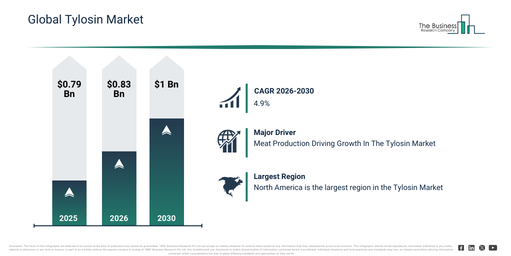
    The tylosin market has experienced robust growth in recent times, expanding from $0.79 billion in 2025 to $0.83 billion in 2026, reflecting a compound annual growth rate (CAGR) of 5.6%. This historical expansion has been driven by the rise in commercial livestock farming, the prevalence of bacterial infections among animals, the proven effectiveness of macrolide antibiotics, the broadening of veterinary healthcare services, and the growing worldwide demand for meat.

    The tylosin market is anticipated to experience consistent growth in the upcoming years, with projections showing it will reach $1 billion by 2030, representing a compound annual growth rate (CAGR) of 4.9%. This expansion during the forecast period is driven by factors such as a heightened demand for protein-rich diets, the expansion of commercial animal farming, increased investment in veterinary care, stricter animal health regulations, and a greater emphasis on preventive veterinary treatments. Key trends shaping this period include a rising need for veterinary antibiotics, broader application in managing livestock diseases, a stronger focus on animal health and welfare, growth in the poultry and swine farming sectors, and enhanced oversight of veterinary antibiotic usage.

    Download A Free Sample Report For Comprehensive Market Insights:

    https://www.thebusinessresearchcompany.com/sample.aspx?id=15946&type=smp&utm_source=BlogsPR&utm_medium=Paid&utm_campaign=Jul_PR

    #Tylosin Market Growth Factors: Which Forces Are Supporting Market Expansion?

    The expected rise in meat output will fuel demand within the tylosin market moving forward. Meat production encompasses the breeding, slaughter, and processing of animals to supply meat for human diets. This growth is fueled by escalating consumer appetite for high-protein foods, influenced by evolving nutritional trends. By ensuring herd health through effective management of respiratory and gastrointestinal bacterial infections, the tylosin market underpins increasing livestock output. In July 2024, for example, the UK-based Department for Environment Food and Rural Affairs reported that total animal feed production climbed from 29,397 units in 2022 to 31,128 units in 2023. Consequently, the surge in meat production is propelling the expansion of the tylosin market.

    The advancement and modernization of livestock farming are anticipated to drive the tylosin market forward in the coming period. Livestock farming modernization involves integrating cutting-edge technologies, enhanced management strategies, and efficient production systems to boost animal health, output, and sustainability. This shift is largely spurred by the growing need for premium animal-based products, motivating farmers to embrace novel practices, tools, and organizational frameworks. By enabling effective control of bacterial infections, tylosin aids in preserving animal health and productivity, thereby facilitating more streamlined and eco-friendly farm operations. As an illustration, in January 2024, the US Government Accountability Office noted that 27% of American farms and ranches utilized precision agriculture methods for crop or livestock management in 2023. Hence, the modernization and growth of livestock farming are fueling market expansion for tylosin.

    The veterinary pharmaceutical industry’s growth is set to propel the tylosin market in the foreseeable future. This sector encompasses companies that research, produce, and distribute drugs, vaccines, and health items tailored to prevent, cure, and control animal diseases. Its expansion is largely attributed to rising pet ownership, which intensifies the need for sophisticated animal health solutions and veterinary care. This growth stimulates the tylosin market by amplifying demand for potent antimicrobial agents that sustain animal well-being and output. In February 2025, the UK Competition and Markets Authority reported that consumer expenditure on veterinary and other pet services reached approximately $7.84 billion in 2023. Thus, the veterinary pharmaceutical industry’s expansion is accelerating the tylosin market’s development.

    Tylosin Market Segment Analysis And Revenue Opportunities

    The tylosin market covered in this report is segmented –

    1) By Type: Tylosin Tartrate, Tylosin Phosphate, Other Types

    2) By Application: Animal Feed Additives, Animal Drugs, Other Applications

    3) By Distribution Channel: Hospital Pharmacies, Drug Stores And Retail Pharmacies, Online Providers

    Subsegment:

    1) By Tylosin Tartrate: Injectable Tylosin Tartrate, Oral Soluble Tylosin Tartrate, Water-Soluble Tylosin Tartrate, Veterinary-Grade Tylosin Tartrate

    2) By Tylosin Phosphate: Feed-Grade Tylosin Phosphate, Water-Soluble Tylosin Phosphate, Premix Tylosin Phosphate, Medicated Feed Tylosin Phosphate

    3) By Other Types: Tylosin Base, Tylosin Complexes and Blends, Customized Veterinary Tylosin Formulations, Combination Antibiotic Formulations Containing Tylosin

    Tylosin Market Leading Players Shaping Industry Direction

    Major companies operating in the tylosin market are Zoetis Inc., Elanco Animal Health Inc., Ceva Santé Animale, Phibro Animal Health Corporation, Huvepharma AD, Vetoquinol S.A., Norbrook Inc., Shandong Lukang Pharmaceutical Co. Ltd., Qilu Animal Health Products Co. Ltd., Hebei Veyong Animal Pharmaceutical, Apeloa Pharmaceutical Co. Ltd., Suanfarma SA, AdvaCare Pharma, Ningxia Tairui Pharmaceutical Co. Ltd., Pucheng Chia Tai Biochemistry Co. Ltd., Anhui Sinotech Industrial, Rochem International Inc., Vetgen Healthcare Pvt. Ltd., Sunvet Pharma Private Ltd., Nestlife Science Pvt. Ltd.

    Access The Complete Tylosin Market Report:

    https://www.thebusinessresearchcompany.com/report/tylosin-global-market-report?utm_source=BlogsPR&utm_medium=Paid&utm_campaign=Jul_PR

    Tylosin Market Geographic Landscape: Which Region Dominates Industry Growth?

    North America was the largest region in the tylosin market in 2025. Asia-Pacific is expected to be the fastest-growing region in the forecast period. The regions covered in the tylosin market report are Asia-Pacific, South East Asia, Western Europe, Eastern Europe, North America, South America, Middle East, Africa.

    Get in touch with us:

    The Business Research Company: https://www.thebusinessresearchcompany.com/?utm_source=BlogsPR&utm_medium=Paid&utm_campaign=home_page_test

    Americas: +1 310-496-7795

    Asia: +44 7882 955267 & +91 8897263534

    Europe: +44 7882 955267

    Email us at: marketing@tbrc.info

    Follow us on:

    LinkedIn: https://in.linkedin.com/company/the-business-research-company

    YouTube: https://www.youtube.com/channel/UC24_fI0rV8cR5DxlCpgmyFQ

    Global Market Model: https://www.thebusinessresearchcompany.com/global-market-model
  • Tumor Necrosis Factor Inhibitor Drugs Market Growth Is Accelerating As Industry Transformation Continues

    Tumor Necrosis Factor Inhibitor Drugs Market Growth Is Accelerating As Industry Transformation Continues

    Delivering more actionable and strategically valuable research, The Business Research Company’s 2026 market reports feature market attractiveness analysis, total addressable market evaluation, company benchmarking matrices, interactive Excel dashboards, expanded supply chain intelligence, emerging startup coverage, and detailed product insights.

    Tumor Necrosis Factor Inhibitor Drugs Market Size, Value And Growth Trends Through 2030

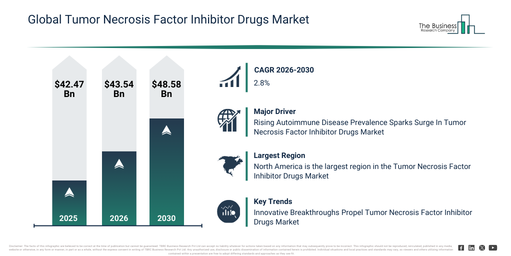
    The market for tumor necrosis factor inhibitor drugs has experienced consistent expansion in recent years. Projections indicate an increase from $42.47 billion in 2025 to $43.54 billion in 2026, reflecting a compound annual growth rate (CAGR) of 2.5%. This historical growth has been driven by several factors, including a higher incidence of autoimmune conditions, a scarcity of alternative therapies, intensified research and development efforts in biologics, robust patent protections for leading TNFi medications, and heightened awareness among both patients and healthcare providers.

    Over the coming years, the market for tumor necrosis factor inhibitor drugs is projected to experience consistent expansion, eventually reaching a value of $48.58 billion by 2030, with a compound annual growth rate of 2.8%. This anticipated growth during the forecast period is chiefly driven by the broadening availability of biosimilars, progress in precision medicine, a rising number of patients with chronic conditions, greater incorporation of digital health monitoring tools, and innovations in next-generation delivery systems. Key developments shaping this period include the rise of personalized TNF inhibitor treatments, wider acceptance and rollout of biosimilars, the use of combination therapies involving TNF inhibitors, a shift toward home-based and self-administered care options, and the introduction of sophisticated drug delivery technologies.

    Download A Free Sample Report For Comprehensive Market Insights:

    https://www.thebusinessresearchcompany.com/sample.aspx?id=9383&type=smp&utm_source=BlogsPR&utm_medium=Paid&utm_campaign=Jul_PR

    Tumor Necrosis Factor Inhibitor Drugs Market Demand Drivers: What Is Fueling Industry Growth?

    The anticipated expansion of the tumor necrosis factor inhibitor drugs market is being driven by the growing prevalence of autoimmune illnesses. Autoimmune disorders occur when the body’s immune system mistakenly attacks and destroys its own healthy tissues. These inhibitor drugs are employed in such conditions to curb inflammatory responses; they disrupt the inflammatory process whenever pain, swelling, or disease arises. By stabilizing and strengthening the immune system, these medications shield the body from inflammation. For example, as reported by the Mayo Clinic—a US-based nonprofit academic medical center—in January 2025, an estimated 15 million individuals are living with one or more of 105 different autoimmune diseases. Consequently, the rising incidence of autoimmune disorders is fueling growth in the tumor necrosis factor inhibitor drugs market.

    Tumor Necrosis Factor Inhibitor Drugs Market Segmentation And Category Breakdown

    The tumor necrosis factor inhibitor drugs market covered in this report is segmented –

    1) By Product Type: Humira, Enbrel, Remicade, Simponi Or Simponi Aria, Cimzia, Biosimilars

    2) By Route Of Administration: Subcutaneous Injection, Intravenous Injection

    3) By Distribution Channel: Hospital Pharmacies, Retail Pharmacies, Online Pharmacies

    4) By Application: Rheumatoid Arthritis, Psoriasis, Psoriatic Arthritis, Crohn’s Disease, Ulcerative Colitis, Ankylosing Spondylitis, Juvenile Idiopathic Arthritis, Hidradenitis Suppurativa, Other Applications

    Tumor Necrosis Factor Inhibitor Drugs Market Innovation Trends: Which Developments Are Transforming The Industry?

    Key players in the tumor necrosis factor (TNF) inhibitor drugs market are concentrating on creating innovative products, particularly interchangeable biosimilar TNF-inhibitor formulations, to address the growing need for affordable biologic treatments, enhanced patient accessibility, and superior alternatives to branded TNF inhibitors. These interchangeable biosimilars represent advanced biologic products engineered to align with the reference medicine in terms of safety, purity, potency, and clinical efficacy, while providing increased cost-effectiveness and broader availability when contrasted with conventional branded biologics. For example, in May 2024, Teva Pharmaceuticals, a pharmaceutical firm based in the United States, joined forces with Alvotech, a biotechnology company headquartered in Luxembourg, to launch SIMLANDI (adalimumab-ryvk) injection in the U.S. market as an interchangeable biosimilar to Humira. This product is employed in the management of various autoimmune disorders, such as adult rheumatoid arthritis, juvenile idiopathic arthritis, adult psoriatic arthritis, adult ankylosing spondylitis, Crohn’s disease, adult ulcerative colitis, adult plaque psoriasis, adult hidradenitis suppurativa, and adult uveitis.

    Tumor Necrosis Factor Inhibitor Drugs Market Competitive Analysis Of Major Industry Participants

    Major companies operating in the tumor necrosis factor inhibitor drugs market are AbbVie Inc.,Amgen Inc.,Johnson & Johnson Services Inc.,Novartis International AG,Pfizer Inc.,Samsung Bioepis Co. Ltd.,Sanofi SA,Lupin Ltd.,Cadila Healthcare Ltd.,Aryogen Biopharma,Casi Pharmaceuticals,Celltrion Inc.,Hanall Biopharma,Intas Pharmaceuticals,Mylan N.V.,Sandoz International GmbH,Fresenius Kabi AG,Boehringer Ingelheim GmbH,Merck KGaA,Teva Pharmaceutical Industries Limited

    Access The Complete Tumor Necrosis Factor Inhibitor Drugs Market Report:

    https://www.thebusinessresearchcompany.com/report/tumor-necrosis-factor-inhibitor-drugs-global-market-report?utm_source=BlogsPR&utm_medium=Paid&utm_campaign=Jul_PR

    Tumor Necrosis Factor Inhibitor Drugs Market Largest Region: Which Geography Holds The Highest Market Share?

    North America was the largest region in the tumor necrosis factor inhibitor drugs market in 2025. Asia-Pacific is expected to be the fastest-growing region in the tumor necrosis factor (TNF) inhibitors drugs market report during the forecast period. The regions covered in the tumor necrosis factor inhibitor drugs market report are Asia-Pacific, South East Asia, Western Europe, Eastern Europe, North America, South America, Middle East, Africa.

    Get in touch with us:

    The Business Research Company: https://www.thebusinessresearchcompany.com/?utm_source=BlogsPR&utm_medium=Paid&utm_campaign=home_page_test

    Americas: +1 310-496-7795

    Asia: +44 7882 955267 & +91 8897263534

    Europe: +44 7882 955267

    Email us at: marketing@tbrc.info

    Follow us on:

    LinkedIn: https://in.linkedin.com/company/the-business-research-company

    YouTube: https://www.youtube.com/channel/UC24_fI0rV8cR5DxlCpgmyFQ

    Global Market Model: https://www.thebusinessresearchcompany.com/global-market-model

  • Tumor Models Market Outlook Highlights The Next Major Growth Opportunities

    Tumor Models Market Outlook Highlights The Next Major Growth Opportunities

    Enhanced with market attractiveness analysis, total addressable market evaluation, company benchmarking matrices, interactive Excel dashboards, expanded supply chain intelligence, emerging startup coverage, and detailed product insights, The Business Research Company’s 2026 market reports deliver more actionable and strategically valuable research.

    Tumor Models Market CAGR Analysis And Future Market Development

    The tumor models market has experienced rapid expansion over recent years, with its value rising from $2.13 billion in 2025 to an estimated $2.37 billion in 2026, reflecting a compound annual growth rate (CAGR) of 11.3%. This historic growth is driven by several key factors, including the restricted availability of advanced tumor models, a continued dependence on conventional 2D cell cultures, a surge in funding for cancer research, the escalating incidence of cancer, and the increased adoption of both orthotopic and heterotopic models.

    The tumor models market is projected to experience rapid expansion in the coming years, reaching $3.57 billion by 2030 with a compound annual growth rate (CAGR) of 10.8%. This forecasted growth is driven by progress in organ-on-a-chip and 3D spheroid technologies, a heightened focus on personalized oncology treatments, the growing role of contract research organizations (CROs) in tumor research, rising pharmaceutical R&D spending, and the incorporation of AI and big data analytics into tumor model studies. Key trends shaping this period include the growing adoption of 3D tumor spheroids and organ-on-a-chip platforms, an increased demand for personalized medicine and targeted cancer therapies, the expanded use of xenograft and genetically engineered mouse models (GEMMs), the advancement of drug discovery and toxicology investigations utilizing tumor models, and collaborations between pharmaceutical firms and academic institutions.

    Download A Free Sample Report For Comprehensive Market Insights:

    https://www.thebusinessresearchcompany.com/sample.aspx?id=27441&type=smp&utm_source=BlogsPR&utm_medium=Paid&utm_campaign=Jul_PR

    Tumor Models Market Growth Drivers: What Factors Are Accelerating Expansion?

    The rising need for tailored therapeutic approaches is anticipated to advance the tumor models market in the coming years. Personalized medicine is defined as a healthcare model that leverages genetic information and lifestyle factors to customize treatments and medical care for individual patients. Its increasing prevalence stems from a growing preference for health technologies capable of real-time monitoring and the development of treatment plans aligned with a person’s unique biological profile. Tumor models facilitate personalized medicine by serving as experimental platforms that replicate the behavior of actual human cancers, allowing researchers and clinicians to evaluate and predict how a specific patient’s tumor might react to various therapies, thus fostering a more targeted treatment strategy. For example, in February 2024, the Personalized Medicine Coalition (PMC), a non-profit organization based in the United States, reported that the U.S. Food and Drug Administration (FDA) approved 26 new personalized medicines in 2023, a marked rise compared to the 12 approvals recorded in 2022. Consequently, the escalating demand for personalized medicine is fueling expansion in the tumor models market.

    Tumor Models Market Segment Outlook: Which Categories Are Expanding The Fastest?

    The tumor models market covered in this report is segmented –

    1) By Type Of Tumor: Primary Tumor Models, Metastatic Tumor Models, Orthotopic Tumor Models, Heterotopic Tumor Models

    2) By Application: Drug Discovery And Development, Cancer Research, Personalized Medicine, Toxicology Studies

    3) By Technology: Xenograft Models, Genetically Engineered Mouse Models (GEMMs), Three-Dimensional (3D) Tumor Spheroids, Organ-On-A-Chip Models

    4) By End-User: Pharmaceutical And Biotechnology Companies, Academic Institutions, Contract Research Organizations (CROs), Government Research Organizations

    Subsegments:

    1) By Primary Tumor Models: Carcinoma Models, Sarcoma Models, Glioma Models, Melanoma Models, Leukemia Models, Lymphoma Models

    2) By Metastatic Tumor Models: Lung Metastasis Models, Bone Metastasis Models, Liver Metastasis Models, Brain Metastasis Models, Lymph Node Metastasis Models

    3) By Orthotopic Tumor Models: Orthotopic Breast Cancer Models, Orthotopic Lung Cancer Models, Orthotopic Pancreatic Cancer Models, Orthotopic Colon Cancer Models, Orthotopic Prostate Cancer Models

    4) By Heterotopic Tumor Models: Subcutaneous Tumor Models, Intramuscular Tumor Models, Intraperitoneal Tumor Models

    Tumor Models Market Trends: What Is Shaping Future Industry Growth?

    Key players in the tumor models market are prioritizing the creation of cutting-edge solutions like tumor spheroid models to improve how accurately in vitro cancer models mirror real physiological conditions and predict therapeutic outcomes. These spheroid models are three-dimensional clusters of cancer cells that naturally form spherical aggregates during culture. In a notable example from June 2024, Predictive Oncology, a company headquartered in the United States that specializes in advanced 3D cell culture techniques and predictive oncology tools, introduced a novel 3D cell technology aimed at accelerating the discovery of cancer drugs. This technology stands out for several distinctive attributes, including sophisticated 3D tumor spheroid and organoid models that effectively replicate the tumor microenvironment, high-throughput screening capabilities that enable rapid drug evaluation, support for constructing personalized tumor models derived directly from patients, in-depth analysis of how drugs penetrate 3D structures, and seamless integration with AI-driven data analytics to boost predictive accuracy and provide richer insights into treatment responses.

    Tumor Models Market Key Companies And Competitive Benchmarking

    Major companies operating in the tumor models market are WuXi AppTec Co Ltd., Charles River Laboratories International Inc., Pharmaron Beijing Co. Ltd., The Jackson Laboratory, Taconic Biosciences Inc., Cyagen Biosciences Inc., Crown Bioscience Inc., Champions Oncology Inc., InSphero AG, Creative Biolabs Inc., Oncodesign S.A., Xentech S.A., MIMETAS BV, Experimental Pharmacology and Oncology Berlin-Buch GmbH.

    Access The Complete Tumor Models Market Report:

    https://www.thebusinessresearchcompany.com/report/tumor-models-global-market-report?utm_source=BlogsPR&utm_medium=Paid&utm_campaign=Jul_PR

    Tumor Models Market Regional Analysis: Which Region Leads By Revenue?

    North America was the largest region in the tumor models market in 2025. Asia-Pacific is expected to be the fastest-growing region in the forecast period. The regions covered in the tumor models market report are Asia-Pacific, South East Asia, Western Europe, Eastern Europe, North America, South America, Middle East, Africa.

    Get in touch with us:

    The Business Research Company: https://www.thebusinessresearchcompany.com/?utm_source=BlogsPR&utm_medium=Paid&utm_campaign=home_page_test

    Americas: +1 310-496-7795

    Asia: +44 7882 955267 & +91 8897263534

    Europe: +44 7882 955267

    Email us at: marketing@tbrc.info

    Follow us on:

    LinkedIn: https://in.linkedin.com/company/the-business-research-company

    YouTube: https://www.youtube.com/channel/UC24_fI0rV8cR5DxlCpgmyFQ

    Global Market Model: https://www.thebusinessresearchcompany.com/global-market-model

  • Tumor Infiltrating Lymphocytes Market Trends And Growth Drivers Point To Strong Future Potential

    Tumor Infiltrating Lymphocytes Market Trends And Growth Drivers Point To Strong Future Potential

    Through market attractiveness analysis, total addressable market evaluation, company benchmarking matrices, interactive Excel dashboards, expanded supply chain intelligence, emerging startup coverage, and detailed product insights, The Business Research Company’s 2026 market reports provide more actionable and strategically valuable research.

    Tumor Infiltrating Lymphocytes Market Expansion From $13.75 Billion In 2026 To $23.25 Billion In 2030

    The tumor infiltrating lymphocytes market has seen significant expansion over the past few years. In 2025, its value stood at $12.05 billion, with projections reaching $13.75 billion by 2026, reflecting a compound annual growth rate (CAGR) of 14.2%. This historical growth has been fueled by factors such as a rising incidence of cancer, progress in immunotherapy studies, heightened interest in tailored treatment approaches, the initial achievements of adoptive cell therapies, and joint efforts involving research institutions and biotechnology firms.

    The market for tumor infiltrating lymphocytes is anticipated to experience substantial expansion over the coming years, reaching a valuation of $23.25 billion by 2030, reflecting a compound annual growth rate (CAGR) of 14.0%. This projected growth during the forecast period is driven by several key factors, including the increasing uptake of tumor infiltrating lymphocyte therapies, the broadening of cGMP-compliant manufacturing capabilities, the incorporation of artificial intelligence to refine cell therapy processes, a rise in collaborative efforts between pharmaceutical and biotechnology firms, and the receipt of regulatory approvals for innovative T-cell treatments. Significant developments shaping this period encompass the evolution of personalized cell therapy, the advancement of ex vivo T-cell expansion methodologies, the use of immunotherapy in combination strategies, the modulation of the tumor microenvironment, and enhancements in cell storage and cryopreservation techniques.

    Download A Free Sample Report For Comprehensive Market Insights:

    https://www.thebusinessresearchcompany.com/sample.aspx?id=9440&type=smp&utm_source=BlogsPR&utm_medium=Paid&utm_campaign=Jul_PR

    Tumor Infiltrating Lymphocytes Market Growth Factors Supporting Long-Term Expansion

    The growing number of individuals affected by cancer is anticipated to fuel the expansion of the tumor infiltrating lymphocytes (TIL) market in the upcoming period. Cancer represents a disease where certain body cells multiply uncontrollably and spread to other areas, causing various health complications, with some proving fatal. Tumor infiltrating lymphocytes are immune cells capable of recognizing and eliminating cancerous cells. These lymphocytes are taken from a patient’s tumor, cultivated to large quantities outside the body in a lab, and then reintroduced into the patient to enhance the immune system’s ability to fight cancer. As an illustration, a report from the Australian Institute of Health and Welfare, a national agency providing health and welfare data for Australia, stated in August 2024 that by 2034, there could be around 209,000 new cancer cases diagnosed in Australia, marking a notable rise from the estimated 169,000 cases projected for 2024, driven by a growing population and higher cancer incidence. Additionally, in 2024, cancer is expected to be responsible for approximately three out of every ten deaths across the nation. Consequently, the increase in the number of cancer patients will stimulate the growth of the tumor infiltrating lymphocyte market.

    Tumor Infiltrating Lymphocytes Market Segment Landscape: Which Areas Lead Market Development?

    The tumor infiltrating lymphocytes market covered in this report is segmented –

    1) By Anatomy: CD3, CD8, CD16, CD56, CD4, CD57, FOXP3

    2) By Component: T-Cells, Natural Killer Cells

    3) By Application: Melanoma, Cervical Cancer, Ovarian Cancer, Other Applications

    4) By End-User: Hospitals, Cancer Research Centers, Clinics

    Tumor Infiltrating Lymphocytes Market Industry Trends Shaping Future Revenue Growth

    Major players within the tumor-infiltrating lymphocyte sector are increasingly pursuing strategic collaborations as a method for creating groundbreaking treatments capable of regulating gene editing. Such alliances involve companies pooling their respective strengths and assets in pursuit of shared advantages and outcomes. A case in point is February 2023, when Moderna, a pharmaceutical and biotech firm headquartered in the US, forged a strategic alliance with Life Edit Therapeutics, an American enterprise specializing in next-generation genome editing. The objective was to expedite the creation of novel in vivo gene editing therapies. By integrating Moderna’s mRNA technology with Life Edit’s proprietary genome editing platform, this partnership seeks to craft more precise and potent therapeutics targeting conditions like cancer and genetic disorders. This collaboration highlights a rising tendency within the biopharma field to merge cutting-edge technologies in order to deliver advanced therapeutic innovations.

    Tumor Infiltrating Lymphocytes Market Industry Leaders And Market Competition

    Major companies operating in the tumor infiltrating lymphocytes market are Novartis AG, Pfizer Inc., Precision BioScience Inc., TCR2 Therapeutics Inc., Merck KGaA, Autolus Therapeutics PLC., Eli Lilly and Company, Oxford Biomedica PLC., Unum Therapeutics Inc., Amgen Inc., Gilead Sciences Inc., Sorrento Therapeutics Inc., TILT Biotherapeutics Ltd., Iovance Biotherapeutics Inc., Adaptimmune Therapeutics plc, Atara Biotherapeutics Inc., BioNTech SE, CARsgen Therapeutics Ltd., Cellectis S.A., Celyad Oncology SA, CRISPR Therapeutics AG, Intellia Therapeutics Inc., MaxCyte Inc.

    Access The Complete Tumor Infiltrating Lymphocytes Market Report:

    https://www.thebusinessresearchcompany.com/report/tumor-infiltrating-lymphocytes-global-market-report?utm_source=BlogsPR&utm_medium=Paid&utm_campaign=Jul_PR

    Tumor Infiltrating Lymphocytes Market Geographic Distribution And Regional Opportunities

    North America was the largest region in the tumor infiltrating lymphocytes market in 2025. The regions covered in the tumor infiltrating lymphocytes market report are Asia-Pacific, South East Asia, Western Europe, Eastern Europe, North America, South America, Middle East, Africa.

    Get in touch with us:

    The Business Research Company: https://www.thebusinessresearchcompany.com/?utm_source=BlogsPR&utm_medium=Paid&utm_campaign=home_page_test

    Americas: +1 310-496-7795

    Asia: +44 7882 955267 & +91 8897263534

    Europe: +44 7882 955267

    Email us at: marketing@tbrc.info

    Follow us on:

    LinkedIn: https://in.linkedin.com/company/the-business-research-company

    YouTube: https://www.youtube.com/channel/UC24_fI0rV8cR5DxlCpgmyFQ

    Global Market Model: https://www.thebusinessresearchcompany.com/global-market-model

  • Tubulin Inhibitors For Breast Cancer Market Expansion Is Reshaping Competitive Dynamics Across The Industry

    Tubulin Inhibitors For Breast Cancer Market Expansion Is Reshaping Competitive Dynamics Across The Industry

    Delivering more actionable and strategically valuable research, The Business Research Company’s 2026 market reports feature market attractiveness analysis, total addressable market evaluation, company benchmarking matrices, interactive Excel dashboards, expanded supply chain intelligence, emerging startup coverage, and detailed product insights.

    Tubulin Inhibitors For Breast Cancer Market Forecast Highlighting Growth From $2.09 Billion To $2.77 Billion

    The market value of tubulin inhibitors intended for breast cancer treatment has experienced notable expansion over the past few years. Projections indicate an increase from $1.94 billion in 2025 to $2.09 billion in 2026, reflecting a compound annual growth rate (CAGR) of 7.7%. This historical growth is driven by several contributing factors, including a restricted supply of tubulin inhibitor therapies, a continued dependence on traditional chemotherapy, a rising incidence of breast cancer, a greater number of oncology treatments administered in hospital settings, and the widespread implementation of standardized therapeutic guidelines.

    The market for tubulin inhibitors targeting breast cancer is projected to experience substantial expansion in the coming years. By 2030, its value is anticipated to reach $2.78 billion, reflecting a compound annual growth rate (CAGR) of 7.4%. This forecasted growth is driven by the development of novel colchicine, taxanes, vinca alkaloids, and epothilones, along with the broadening of neoadjuvant and adjuvant therapies. Increased investment in personalized and targeted treatments, a growing number of regulatory approvals for new formulations, and the integration of digital health tools and clinical decision support systems are also contributing factors. Key trends shaping this period include the growing application of tubulin inhibitors in early-stage breast cancer, the expansion of combination and targeted therapeutic strategies, an uptick in clinical trials focused on novel tubulin inhibitors, the widespread adoption of personalized medicine, and a rising demand for outpatient and clinic-based care options.

    Download A Free Sample Report For Comprehensive Market Insights:

    https://www.thebusinessresearchcompany.com/sample.aspx?id=24731&type=smp&utm_source=BlogsPR&utm_medium=Paid&utm_campaign=Jul_PR

    Tubulin Inhibitors For Breast Cancer Market Demand Drivers Creating New Revenue Opportunities

    The expansion of the tubulin inhibitors market for breast cancer treatment is anticipated to be driven forward by the increasing incidence of chronic diseases in the coming period. These chronic conditions, including breast cancer, are persistent health issues marked by unchecked cell growth and high relapse rates, demanding ongoing therapeutic approaches. Their rising frequency is largely attributed to inactive lifestyles that foster obesity, diabetes, and heart-related problems. Tubulin inhibitors play a role in managing these diseases by interfering with abnormal cell division, thereby lowering inflammation, decelerating disease advancement, and aiding in the control of disorders linked to uncontrolled cellular multiplication. As an example, the National Breast Cancer Foundation, a nonprofit organization in the United States, reported in April 2025 that around 316,950 women and 2,800 men are projected to receive diagnoses of invasive breast cancer, alongside 59,080 new cases of non-invasive (in situ) breast cancer. Consequently, the climb in chronic disease prevalence is fueling the growth trajectory of the breast cancer tubulin inhibitor market.

    Tubulin Inhibitors For Breast Cancer Market Segments: Where Are The Largest Growth Opportunities?

    The tubulin inhibitors for breast cancer market covered in this report is segmented –

    1) By Drug Class: Taxanes, Vinca Alkaloids, Epothilones, Other Drug Classes

    2) By Mechanism Of Action: Microtubule Destabilizers, Microtubule Polymerization Inhibitors, Modulators Of Tubulin Dynamics, Targeted Microtubule-Associated Proteins

    3) By Stage Of Breast Cancer: Early-stage Breast Cancer, Locally Advanced Breast Cancer, Metastatic Breast Cancer

    4) By Treatment Approach: Chemotherapy, Combination Therapy, Adjuvant Therapy, Neoadjuvant Therapy

    5) By Application: Hospital, Clinic, Drug Center, Other Applications

    Subsegments:

    1) By Taxanes: Paclitaxel, Docetaxel

    2) By Vinca Alkaloids: Vinorelbine, Vincristine, Vindesine

    3) By Epothilones: Ixabepilone, Epothilone B Derivatives

    4) By Other Drug Classes: Maytansinoids, Eribulin Mesylate, Cabazitaxel, Discodermolide

    Tubulin Inhibitors For Breast Cancer Market Trends Driving Strategic Industry Expansion

    Leading corporations in the tubulin inhibitors sector for breast cancer are advancing novel therapeutic strategies, notably antibody-drug conjugates (ADCs), to boost treatment accuracy and reduce adverse effects. By linking tubulin inhibitors with monoclonal antibodies that specifically seek out breast cancer cells, ADCs deliver potent anti-mitotic agents directly to the tumor location. This targeted approach enhances the potency of tubulin inhibitors while lowering overall systemic toxicity. For example, in December 2023, Roche, a pharmaceutical firm based in Switzerland, broadened the use of Kadcyla (ado-trastuzumab emtansine), a HER2-targeted ADC carrying the tubulin inhibitor DM1 straight to HER2-positive breast cancer cells, leading to better results in advanced breast cancer instances. This cutting-edge therapy offers a more tailored, potent, and safer treatment option, improving patient outcomes in cases of advanced breast cancer.

    Tubulin Inhibitors For Breast Cancer Market Major Participants And Competitive Dynamics

    Major companies operating in the tubulin inhibitors for breast cancer market are Pfizer Inc., F. Hoffmann-La Roche Ltd., Sanofi S.A., Novartis AG, Eli Lilly and Company, Eisai Co. Ltd., Sun Pharmaceutical Industries Limited, Genentech Inc., Luye Pharma Group Ltd., CSPC Pharmaceutical Group Limited, Jiangsu Hengrui Pharmaceuticals Co. Ltd., Natco Pharma Limited, Samyang Biopharmaceuticals Corporation, Qilu Pharmaceutical Co. Ltd., Beijing Biostar Pharmaceuticals Co. Ltd., Beijing Youcare Pharmaceutical Group Co. Ltd., Teva Pharmaceutical Industries Ltd., Fresenius Kabi AG, Dr. Reddy’s Laboratories Ltd., Cipla Ltd., Hikma Pharmaceuticals PLC, Aurobindo Pharma Ltd., Accord Healthcare Ltd., Baxter International Inc., Mylan N.V. (Viatris Inc.), Intas Pharmaceuticals Ltd., Zydus Lifesciences Ltd.

    Access The Complete Tubulin Inhibitors For Breast Cancer Market Report:

    https://www.thebusinessresearchcompany.com/report/tubulin-inhibitors-for-breast-cancer-global-market-report?utm_source=BlogsPR&utm_medium=Paid&utm_campaign=Jul_PR

    Tubulin Inhibitors For Breast Cancer Market Largest Region By Revenue And Market Share

    North America was the largest region in the tubulin inhibitors for breast cancer market in 2025. Asia-Pacific is expected to be the fastest-growing region in the forecast period. The regions covered in the tubulin inhibitors for breast cancer market report are Asia-Pacific, South East Asia, Western Europe, Eastern Europe, North America, South America, Middle East, Africa.

    Get in touch with us:

    The Business Research Company: https://www.thebusinessresearchcompany.com/?utm_source=BlogsPR&utm_medium=Paid&utm_campaign=home_page_test

    Americas: +1 310-496-7795

    Asia: +44 7882 955267 & +91 8897263534

    Europe: +44 7882 955267

    Email us at: marketing@tbrc.info

    Follow us on:

    LinkedIn: https://in.linkedin.com/company/the-business-research-company

    YouTube: https://www.youtube.com/channel/UC24_fI0rV8cR5DxlCpgmyFQ

    Global Market Model: https://www.thebusinessresearchcompany.com/global-market-model
  • Tuberous Sclerosis Drug Market Forecast Reveals Where Future Industry Value Will Be Created

    Tuberous Sclerosis Drug Market Forecast Reveals Where Future Industry Value Will Be Created

    Enhanced with market attractiveness analysis, total addressable market evaluation, company benchmarking matrices, interactive Excel dashboards, expanded supply chain intelligence, emerging startup coverage, and detailed product insights, The Business Research Company’s 2026 market reports deliver more actionable and strategically valuable research.

    Tuberous Sclerosis Drug Market Revenue Growth Supported By A CAGR Of 1.26% Through 2030

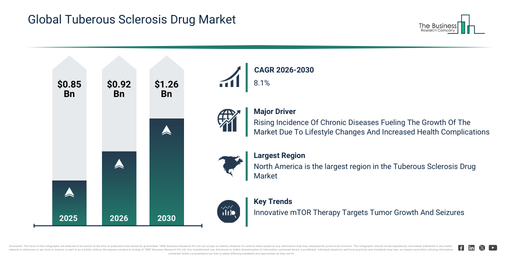
    The market for tuberous sclerosis drugs has experienced robust expansion in recent years. Projections indicate an increase from $0.85 billion in 2025 to $0.92 billion in 2026, reflecting a compound annual growth rate (CAGR) of 8.1%. This historical growth has been driven by factors such as heightened awareness of rare diseases, advancements in genetic research, incentives for orphan drug development, specialized hospital care, and the management of seizure disorders.

    The market for tuberous sclerosis drugs is projected to experience robust expansion over the coming years, reaching a value of $1.26 billion by 2030, with a compound annual growth rate (CAGR) of 8.1%. This anticipated growth during the forecast period is driven by factors such as the rise of precision medicine, the expansion of newborn screening programs, increased funding for orphan drugs, enhanced diagnostic capabilities, and the development of biologic therapies. Key trends shaping this period include the advancement of targeted mTOR inhibitor therapies, a broader focus on developing treatments for rare diseases, an emphasis on managing seizures, higher rates of genetic diagnosis, and the implementation of long-term strategies for symptom control.

    Download A Free Sample Report For Comprehensive Market Insights:

    https://www.thebusinessresearchcompany.com/sample.aspx?id=24419&type=smp&utm_source=BlogsPR&utm_medium=Paid&utm_campaign=Jul_PR

    Tuberous Sclerosis Drug Market Expansion Supported By Key Demand Factors

    The escalating prevalence of long-term health conditions is anticipated to drive expansion in the tuberous sclerosis drug market in the coming period. Chronic illnesses, which are defined as persistent medical conditions that generally advance gradually and necessitate continuous care, encompass ailments like diabetes, cardiovascular disease, hypertension, arthritis, chronic lung disorders, cancer, and obesity. This growing burden of chronic disease stems from shifts in lifestyle, especially poor dietary habits and reduced physical activity, which create lasting health complications. Medications for tuberous sclerosis contribute to managing these chronic conditions by addressing fundamental mechanisms behind disorders such as tuberous sclerosis complex (TSC), delivering effective therapies for controlling tumor development and managing seizures. These pharmaceutical interventions enhance patients’ quality of life through sustained symptom relief and decreased dependency on frequent hospital visits. By June 2024, data from the National Health Service, a UK governmental agency, revealed that 3,615,330 individuals consulting a general practitioner received diagnoses of non-diabetic hyperglycemia or pre-diabetes during 2023, representing an 18% rise from the 3,065,825 cases documented in 2022. Consequently, the growing frequency of chronic disease diagnoses is fueling momentum in the tuberous sclerosis drug market.

    Tuberous Sclerosis Drug Market Segment Analysis: What Are The Major Market Categories?

    The tuberous sclerosis drug market covered in this report is segmented –

    1) By Drug Class: Targeted Therapy, Immunotherapy, Symptomatic Treatment

    2) By Route Of Administration: Oral, Intravenous, Subcutaneous

    3) By Treatment Stage: Initial Diagnosis, Chronic Management, Recurrent Management

    4) By Distribution Channel: Hospital Pharmacies, Retail Pharmacies, Online Pharmacies

    5) By End-Users: Hospitals, Homecare, Specialty Clinics, Other End-Users

    Subsegments:

    1) By Targeted Therapy: Mammalian Target Of Rapamycin (mTOR) Inhibitors, Vascular Endothelial Growth Factor (VEGF) Inhibitors, Tyrosine Kinase Inhibitors

    2) By Immunotherapy: Monoclonal Antibodies, Cytokine Therapy

    3) By Symptomatic Treatment: Antiepileptic Drugs, Corticosteroids, Behavioral Therapy Medications

    Tuberous Sclerosis Drug Market Growth Trends Influencing Competitive Dynamics

    Leading players in the tuberous sclerosis drug market are prioritizing the creation of advanced therapeutics, particularly mammalian target of rapamycin (mTOR) inhibitors, aimed at minimizing tumor growth, managing seizure activity, and targeting the disease’s fundamental biological processes. An mTOR inhibitor is a drug category designed to suppress the mTOR protein, which plays a critical role in controlling cell growth, multiplication, and longevity. As an example, in August 2024, Upsher-Smith Laboratories LLC, a pharmaceutical firm based in the United States, introduced TORPENZ (everolimus) tablets in strengths of 2.5 mg, 5 mg, 7.5 mg, and 10 mg for individuals with tuberous sclerosis complex (TSC). This oral mTOR inhibitor functions by blocking the hyperactive mTOR pathway that drives excessive cell proliferation in TSC, thereby reducing the size of noncancerous tumors and alleviating symptoms like seizures.

    Tuberous Sclerosis Drug Market Leading Companies Driving Competitive Growth

    Major companies operating in the tuberous sclerosis drug market are Novartis AG, Dr. Reddy’s Laboratories Ltd., Pfizer Inc., Teva Pharmaceutical Industries Ltd., Viatris Inc., Sun Pharmaceutical Industries Ltd., Cipla Limited, Aurobindo Pharma Ltd., Lupin Limited, Zydus Lifesciences Ltd., Glenmark Pharmaceuticals Ltd., Hikma Pharmaceuticals PLC, Alembic Pharmaceuticals Ltd., Torrent Pharmaceuticals Ltd., Intas Pharmaceuticals Ltd., Amneal Pharmaceuticals Inc., Alkem Laboratories Ltd., Wockhardt Ltd., Hetero Drugs Ltd., Mylan N.V., Accord Healthcare Ltd., Apotex Inc., Sandoz Group AG, Fresenius Kabi AG, Macleods Pharmaceuticals Ltd.

    Access The Complete Tuberous Sclerosis Drug Market Report:

    https://www.thebusinessresearchcompany.com/report/tuberous-sclerosis-drug-global-market-report?utm_source=BlogsPR&utm_medium=Paid&utm_campaign=Jul_PR

    Tuberous Sclerosis Drug Market Regional Analysis And Leading Geography

    North America was the largest region in the tuberous sclerosis drug market in 2025. Asia-Pacific is expected to be the fastest-growing region in the forecast period. The regions covered in the tuberous sclerosis drug market report are Asia-Pacific, South East Asia, Western Europe, Eastern Europe, North America, South America, Middle East, Africa.

    Get in touch with us:

    The Business Research Company: https://www.thebusinessresearchcompany.com/?utm_source=BlogsPR&utm_medium=Paid&utm_campaign=home_page_test

    Americas: +1 310-496-7795

    Asia: +44 7882 955267 & +91 8897263534

    Europe: +44 7882 955267

    Email us at: marketing@tbrc.info

    Follow us on:

    LinkedIn: https://in.linkedin.com/company/the-business-research-company

    YouTube: https://www.youtube.com/channel/UC24_fI0rV8cR5DxlCpgmyFQ

    Global Market Model: https://www.thebusinessresearchcompany.com/global-market-model
  • Tuberculous Meningitis Treatment Market Growth Through 2030 Creates New Strategic Opportunities

    Tuberculous Meningitis Treatment Market Growth Through 2030 Creates New Strategic Opportunities

    Through market attractiveness analysis, total addressable market evaluation, company benchmarking matrices, interactive Excel dashboards, expanded supply chain intelligence, emerging startup coverage, and detailed product insights, The Business Research Company’s 2026 market reports provide more actionable and strategically valuable research.

    Tuberculous Meningitis Treatment Market Value Expansion And Long-Term Growth Outlook

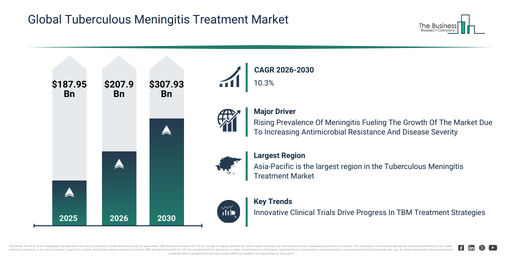
    The market for tuberculous meningitis treatments has experienced considerable expansion over the past few years, with its size projected to rise from $187.95 billion in 2025 to $207.9 billion in 2026, reflecting a compound annual growth rate (CAGR) of 10.6%. This historical growth is driven by factors such as the scarce supply of effective anti-tuberculosis medications, a high incidence of TB meningitis in developing areas, dependence on standard hospital treatment approaches, insufficient early detection and public awareness, and restricted availability of neurosurgical procedures.

    The market for tuberculous meningitis treatments is projected to undergo substantial expansion in the coming years. By 2030, its value is anticipated to reach $307.93 billion, reflecting a compound annual growth rate (CAGR) of 10.3%. This forecasted growth is driven by several key factors, including the emergence of innovative anti-tuberculosis therapies, the enhancement of healthcare infrastructure within developing economies, the growing implementation of telemedicine and digital patient monitoring solutions, increased funding directed toward clinical research and personalized medicine, and the incorporation of AI-powered systems for both diagnosis and treatment strategy formulation. Prominent trends shaping this future period encompass a heightened use of both frontline and subsequent anti-tuberculosis medications, a wider application of adjunctive corticosteroid treatments, a greater number of neurosurgical procedures being performed for severe cases, the proliferation of specialized treatment initiatives within hospitals and clinics, and a stronger focus on individualized patient oversight and customized therapeutic plans.

    Download A Free Sample Report For Comprehensive Market Insights:

    https://www.thebusinessresearchcompany.com/sample.aspx?id=24730&type=smp&utm_source=BlogsPR&utm_medium=Paid&utm_campaign=Jul_PR

    Tuberculous Meningitis Treatment Market Growth Drivers And Industry Catalysts

    The increasing incidence of meningitis is anticipated to drive expansion in the tuberculous meningitis treatment market moving forward. Meningitis involves inflammation of the protective layers surrounding the brain and spinal cord, usually resulting from infections, and can cause severe neurological issues, demanding urgent medical intervention. Its prevalence is climbing due to growing antimicrobial resistance, which complicates effective bacterial infection treatment, leading to extended illness duration, elevated transmission rates, and heightened outbreak risks. Tuberculous meningitis treatment addresses this condition by eradicating tuberculosis bacteria, reducing brain inflammation, and alleviating intracranial pressure to avert complications and enhance patient recovery. For example, in September 2024, according to Meningitis Now, a UK-based charity, 396 cases of invasive meningococcal disease were confirmed in 2023, a rise from 205 cases in 2022. Consequently, the growing prevalence of meningitis is fueling the tuberculous meningitis treatment market’s growth.

    The increase in healthcare spending is projected to drive the tuberculous meningitis treatment market forward. Healthcare expenditure encompasses total outlays on medical services, treatments, and health-related resources over a set timeframe. This rise stems from an aging population, which boosts demand for medical services, long-term care, and age-specific treatments, collectively intensifying financial pressures on healthcare systems. Such expenditure supports tuberculous meningitis management by funding crucial diagnostics, advanced drugs, expert care, and clinical studies, thereby enhancing patient outcomes and lessening disease impact. In April 2025, the American Medical Association, a US-based professional group, reported that U.S. health spending rose by 7.5% in 2023, reaching $4.9 trillion—or $14,570 per person—a significant uptick from the 4.6% growth seen in 2022. Hence, rising healthcare expenditure is propelling the tuberculous meningitis treatment market’s expansion.

    Tuberculous Meningitis Treatment Market Segment Breakdown: Which Categories Generate The Most Revenue?

    The tuberculous meningitis treatment market covered in this report is segmented –

    1) By Treatment: Antibiotic Therapy, Adjunctive Corticosteroid Therapy, Neurosurgical Management

    2) By Distribution Channel: Hospital Pharmacy, Retail Pharmacy, Online Pharmacy

    3) By End User: Hospitals, Specialty Clinics, Other End Users

    Subsegments:

    1) By Antibiotic Therapy: First-Line Anti-Tuberculosis Drugs, Second-Line Anti-Tuberculosis Drugs

    2) By Adjunctive Corticosteroid Therapy: Dexamethasone, Prednisolone

    3) By Neurosurgical Management: Ventriculoperitoneal Shunt, External Ventricular Drainage (EVD), Surgical Removal Of Tuberculoma

    Tuberculous Meningitis Treatment Market Trends Influencing Long-Term Demand

    Major players in the tuberculous meningitis treatment market are concentrating on advancing therapeutic approaches via ongoing clinical research to boost effectiveness and improve patient results. Clinical trials constitute human research studies designed to assess the safety, efficacy, and ideal application of medical interventions like drugs, vaccines, or procedures. Such trials are crucial for verifying whether a novel treatment is effective, identifying potential side effects, and establishing its performance relative to current therapies prior to approval for broad use. For example, in December 2023, the AIDS Clinical Trials Group, a US-based organization specializing in HIV clinical research, initiated the IMAGINE-TBM (A5384) clinical trial—an international, randomized, open-label phase 2 study examining a new six-month treatment protocol for tuberculous meningitis (TBM). This protocol involves high-dose rifampicin, high-dose isoniazid, linezolid, and pyrazinamide, and it will be compared against the existing nine-month standard of care. The study plans to enroll 330 participants aged 15 and older, including both HIV-positive and HIV-negative individuals, across multiple countries with high TB burdens. Its objective is to assess the safety and efficacy of the shorter regimen to improve treatment outcomes and shorten therapy duration for this serious illness.

    Tuberculous Meningitis Treatment Market Key Players And Strategic Industry Positioning

    Major companies operating in the tuberculous meningitis treatment market are Merck & Co. Inc., Sanofi S.A., GlaxoSmithKline plc, Otsuka Pharmaceutical Co. Ltd., Sun Pharmaceutical Industries Limited, Aurobindo Pharma Limited, Cipla Limited, Cadila Pharmaceuticals Ltd., Amneal Pharmaceuticals Inc., Lupin Limited, Alkem Laboratories Limited, Macleods Pharmaceuticals Ltd., Torrent Pharmaceuticals Limited, Strides Pharma Science Limited, Ajanta Pharma Limited, Wockhardt Limited, Orchid Pharma Limited, Panacea Biotec Limited, Anuh Pharma Ltd., Rusan Pharma Ltd.

    Access The Complete Tuberculous Meningitis Treatment Market Report:

    https://www.thebusinessresearchcompany.com/report/tuberculous-meningitis-treatment-global-market-report?utm_source=BlogsPR&utm_medium=Paid&utm_campaign=Jul_PR

    Tuberculous Meningitis Treatment Market Geographic Analysis: Where Is Demand Growing The Fastest?

    Asia-Pacific was the largest region in the tuberculous meningitis treatment market in 2025. The regions covered in the tuberculous meningitis treatment market report are Asia-Pacific, South East Asia, Western Europe, Eastern Europe, North America, South America, Middle East, Africa.

    Get in touch with us:

    The Business Research Company: https://www.thebusinessresearchcompany.com/?utm_source=BlogsPR&utm_medium=Paid&utm_campaign=home_page_test

    Americas: +1 310-496-7795

    Asia: +44 7882 955267 & +91 8897263534

    Europe: +44 7882 955267

    Email us at: marketing@tbrc.info

    Follow us on:

    LinkedIn: https://in.linkedin.com/company/the-business-research-company

    YouTube: https://www.youtube.com/channel/UC24_fI0rV8cR5DxlCpgmyFQ

    Global Market Model: https://www.thebusinessresearchcompany.com/global-market-model
  • Trispecific Antibodies Market Size Projected To Increase From $0.91 Billion To $1.66 Billion During The Forecast Period

    Trispecific Antibodies Market Size Projected To Increase From $0.91 Billion To $1.66 Billion During The Forecast Period

    Delivering more actionable and strategically valuable research, The Business Research Company’s 2026 market reports feature market attractiveness analysis, total addressable market evaluation, company benchmarking matrices, interactive Excel dashboards, expanded supply chain intelligence, emerging startup coverage, and detailed product insights.

    Trispecific Antibodies Market Expected To Reach $1.66 Billion By 2030 At 16.2% CAGR

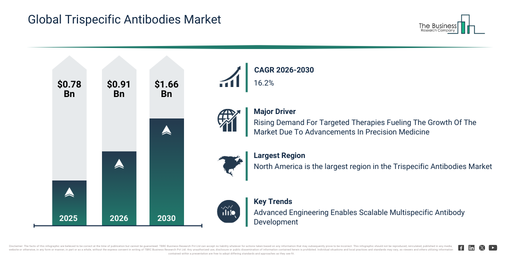
    The market for trispecific antibodies has experienced rapid expansion over recent years, with its value projected to rise from $0.78 billion in 2025 to $0.91 billion in 2026, reflecting a compound annual growth rate (CAGR) of 16.7%. This historic growth was largely driven by several key factors, including the constrained supply of trispecific antibody platforms, early-stage investigative efforts in oncology and autoimmune treatments, dependence on established monoclonal antibody technologies, an escalating emphasis on targeted therapeutic strategies, and rising investments in research and development from both biotechnology and pharmaceutical firms.

    The trispecific antibodies market is projected to experience significant expansion in the coming years, reaching a value of $1.66 billion by 2030, driven by a compound annual growth rate (CAGR) of 16.2%. This forecasted growth is fueled by progress in multivalent and synthetic protein scaffolds, a growing need for personalized immunotherapy, the adoption of dock-and-lock and tandem scFv technologies, the broadening of global clinical trial activities, and heightened partnerships among pharmaceutical companies, biotechnology firms, and research institutions. Key trends shaping this period include the creation of trispecific antibodies for targeted cancer treatments, their increasing use in autoimmune and infectious disease applications, the advancement of monoclonal and bispecific-trispecific antibody platforms, greater investment in fusion protein and synthetic antibody technologies, and a rise in collaborative efforts between pharma and research entities to drive antibody innovation.

    Download A Free Sample Report For Comprehensive Market Insights:

    https://www.thebusinessresearchcompany.com/sample.aspx?id=27439&type=smp&utm_source=BlogsPR&utm_medium=Paid&utm_campaign=Jul_PR

    Trispecific Antibodies Market Opportunity Drivers: What Is Creating New Revenue Potential?

    The anticipated expansion of the trispecific antibodies market is being driven by the growing demand for targeted therapies. These treatments are designed to specifically address molecular aberrations in conditions such as cancer, thereby enhancing therapeutic accuracy and reducing damage to healthy cells. This increased emphasis on targeted treatments stems largely from progress in precision medicine, which allows for more individualized and effective care tailored to patients’ genetic profiles. By engaging three different antigens at the same time, trispecific antibodies significantly bolster targeted therapies, offering strong efficacy against complex illnesses like cancer and viral infections. They refine treatment precision through improved immune cell recruitment and the simultaneous disruption of multiple disease pathways, leading to superior clinical results. As an example, in December 2024 the American Society of Gene & Cell Therapy—a U.S.-based nonprofit medical and scientific organization—reported that the Food and Drug Administration cleared six gene therapy products in 2023, compared to five in the prior year. Consequently, the rising appetite for targeted therapies is fueling expansion in the trispecific antibodies market.

    Trispecific Antibodies Market Segmentation: How Is The Market Structured Across Key Categories?

    The trispecific antibodies market covered in this report is segmented –

    1) By Product Type: Monoclonal Trispecific Antibodies, Bispecific-Trispecific Antibodies, Other Product Types

    2) By Application: Oncology, Autoimmune Diseases, Infectious Diseases, Other Applications

    3) By End-User: Hospitals, Research Institutes, Pharmaceutical And Biotechnology Companies, Other End-Users

    Subsegments:

    1) By Monoclonal Trispecific Antibodies: Immunoglobulin G Based, Single Chain Variable Fragment Based, Dual Variable Domain Immunoglobulin Based

    2) By Bispecific-Trispecific Antibodies: Fusion Protein Based, Tandem Single Chain Variable Fragment Based, Dock And Lock Technology Based

    3) By Other Product Types: Multivalent Binding Molecules, Synthetic Protein Scaffolds, Engineered Antibody Fragments

    Trispecific Antibodies Market Innovation Trends Driving Future Development

    Key players in the trispecific antibodies market are placing significant emphasis on creating innovative solutions, particularly trispecific antibody engineering platforms, aimed at improving efficacy, expanding possible uses, and accelerating biologics development. These engineering platforms represent cutting-edge technologies that enable the production of antibodies capable of binding to three distinct targets at once, allowing for more targeted and effective management of complex conditions like cancer and viral infections. To illustrate, in May 2025, Invenra Inc., a biotechnology firm based in the United States, introduced its T-BODY platform to drive forward next-generation trispecific therapeutic antibodies. This system allows for the scalable construction of multispecific antibody designs, resulting in superior immune cell activation, improved precision in tumor targeting, and adaptable functionality. Through advanced molecular engineering, the T-Body platform guarantees stability, ease of manufacturing, and enhanced pharmacokinetic properties, thereby supporting the creation of novel therapeutic options.

    Trispecific Antibodies Market Competitive Landscape And Leading Companies

    Major companies operating in the trispecific antibodies market are Johnson & Johnson, F. Hoffmann-La Roche AG, Merck & Co. Inc., AbbVie Inc., Sanofi S.A., AstraZeneca plc, Novartis AG, Biocytogen Pharmaceuticals (Beijing) Co. Ltd., Zymeworks Inc., Molecular Partners AG, Genor Biopharma Co. Ltd., Numab Therapeutics AG, GT Biopharma Inc., Ichnos Sciences Inc.

    Access The Complete Trispecific Antibodies Market Report:

    https://www.thebusinessresearchcompany.com/report/trispecific-antibodies-global-market-report?utm_source=BlogsPR&utm_medium=Paid&utm_campaign=Jul_PR

    Trispecific Antibodies Market Global Footprint: Which Region Holds Market Leadership?

    North America was the largest region in the trispecific antibodies market in 2025. The regions covered in the trispecific antibodies market report are Asia-Pacific, South East Asia, Western Europe, Eastern Europe, North America, South America, Middle East, Africa.

    Get in touch with us:

    The Business Research Company: https://www.thebusinessresearchcompany.com/?utm_source=BlogsPR&utm_medium=Paid&utm_campaign=home_page_test

    Americas: +1 310-496-7795

    Asia: +44 7882 955267 & +91 8897263534

    Europe: +44 7882 955267

    Email us at: marketing@tbrc.info

    Follow us on:

    LinkedIn: https://in.linkedin.com/company/the-business-research-company

    YouTube: https://www.youtube.com/channel/UC24_fI0rV8cR5DxlCpgmyFQ

    Global Market Model: https://www.thebusinessresearchcompany.com/global-market-model