Blog

  • Meningococcal Disease Vaccine Market Analysis Through 2030: Market Size, Growth Trends And Industry Outlook

    Meningococcal Disease Vaccine Market Analysis Through 2030: Market Size, Growth Trends And Industry Outlook

    Backed by market attractiveness analysis, total addressable market sizing, company benchmarking matrices, interactive Excel dashboards, wider supply chain intelligence, emerging startup coverage, and detailed product-level insights, The Business Research Company’s 2026 market reports are designed to offer research that is more actionable and strategically valuable than ever.

    Meningococcal Disease Vaccine Market Revenue Outlook: What CAGR Lies Ahead Through 2030?

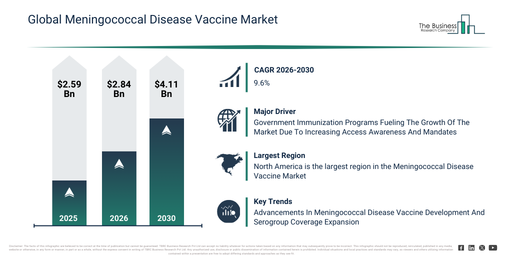
    The meningococcal disease vaccine market has experienced robust expansion in recent years. It is forecast to increase from $2.59 billion in 2025 to $2.84 billion in 2026, demonstrating a compound annual growth rate (CAGR) of 9.7%. Historically, this market growth is attributable to factors such as frequent meningococcal disease outbreaks, elevated mortality and morbidity rates, government-backed vaccination initiatives, heightened public awareness of bacterial meningitis, and the broadening of pediatric immunization schedules.

    The meningococcal disease vaccine market is projected to experience robust expansion over the coming years. This market is anticipated to reach a valuation of $4.11 billion by the year 2030, demonstrating a compound annual growth rate (CAGR) of 9.6%. Several factors contribute to this projected growth during the forecast period, including an increase in global travel and migration, a heightened emphasis on preventive healthcare, the broadening of vaccine coverage in developing nations, a rise in adolescent immunization programs, and progress in vaccine research and development. Key trends observed within this period encompass a greater uptake of conjugate and recombinant vaccines, the broadening of routine immunization schedules, a growing emphasis on vaccination for adolescents and adults, an increase in vaccinations driven by travel requirements and disease outbreaks, and a stronger focus on early preventive immunization.

    Get A Free Sample Report With In-Depth Market Insights:

    https://thebusinessresearchcompany.com/sample_request?id=18776920&type=smp&name=Meningococcal%20Disease%20Vaccine%20Market%20Report%202026&utm_source=Blogs&utm_medium=Paid&utm_campaign=Nov_PR

    Meningococcal Disease Vaccine Market Industry Drivers: What’s Behind The Revenue Growth?

    The expansion of government immunization programs is projected to boost the meningococcal disease vaccine market moving forward. These initiatives are public health efforts that provide free or low-cost vaccines to shield communities from infectious diseases. The increase in government immunization programs is driven by a heightened focus on preventing infectious diseases and alleviating healthcare burdens through widespread vaccinations. Such programs stimulate the growth of meningococcal vaccines by broadening access, increasing vaccination rates, enhancing awareness, and reducing disease incidence. They also generate demand by mandating vaccinations and championing public health. For instance, in April 2024, according to the Pan American Health Organization (PAHO), a US-based specialized agency, the 22nd Vaccination Week in the Americas (VWA) was launched with the theme “Engage now to protect your future. GetVax,” aiming to improve vaccination coverage, especially in underserved areas, by administering over 65 million doses. This initiative concentrated on combating misinformation and improving access to vaccines through community engagement and tailored campaigns. Therefore, the increasing government immunization programs are driving the growth of the meningococcal disease vaccine market.

    Meningococcal Disease Vaccine Market Segment Landscape And Growth Outlook

    The meningococcal disease vaccine market covered in this report is segmented –

    1) By Vaccine Type: Conjugate Vaccines, Polysaccharide Vaccines, Recombinant Vaccines, Live Attenuated Vaccines

    2) By Age Group: Infants, Children, Adults, Older Adults

    3) By Indication: Preventive Vaccination, Post-Exposure Prophylaxis, Travel-Related Vaccination, Outbreak Response

    4) By Distribution Channel: Hospital Pharmacy, Retail Pharmacy, Online Pharmacy, Other Distribution Channels

    5) By End-Users: Hospitals, Specialty Clinics, Homecare, Other End-Users

    Subsegments:

    1) By Conjugate Vaccines: Monovalent Conjugate Vaccines, Quadrivalent Conjugate Vaccines, Pediatric Conjugate Vaccines, Adolescent Or Adult Conjugate Vaccines

    2) By Polysaccharide Vaccines: Bivalent Polysaccharide Vaccines, Trivalent Polysaccharide Vaccines, Quadrivalent Polysaccharide Vaccines, Age-Specific Polysaccharide Formulations

    3) By Recombinant Vaccines: Serogroup B Recombinant Protein Vaccines, Multicomponent Recombinant Vaccines, Outer Membrane Vesicle (OMV) Based Recombinant Vaccines

    4) By Live Attenuated Vaccines: Experimental Intranasal Live Attenuated Vaccines, Genetically Engineered Attenuated Strain Vaccines, Combined Live Attenuated Vaccines

    #Meningococcal Disease Vaccine Market Growth Trends: What’s Shaping The Future Outlook?

    Major companies operating in the meningococcal disease vaccine market are concentrating on creating advanced products, like pentavalent meningococcal vaccines, to expand serogroup coverage, streamline immunization schedules, and improve disease prevention. A pentavalent meningococcal vaccine is an innovative immunization solution designed to target five major serogroups of Neisseria meningitidis in a single dose, reducing the necessity for multiple separate vaccinations and enhancing compliance. For example, in October 2023, Pfizer Inc., a US-based biopharmaceutical company, announced the Food and Drug Administration (FDA) approval for PENBRAYA, marking it as the first and sole vaccine for preventing meningococcal disease in individuals aged 10 to 25 years. This innovative vaccine combines elements from two existing meningococcal vaccines, Trumenba and Nimenrix, to protect against the five most common serogroups (A, B, C, W, and Y) of Neisseria meningitidis that cause the majority of invasive meningococcal disease (IMD) globally. PENBRAYA signifies a substantial advancement in meningococcal disease prevention, offering the broadest serogroup coverage of any meningococcal vaccine available in the U.S. and potentially simplifying the vaccination schedule by decreasing the total number of doses required for full protection.

    Meningococcal Disease Vaccine Market Competitive Landscape: Who Leads The Industry?

    Major companies operating in the meningococcal disease vaccine market are Pfizer Inc, Merck & Co Inc, Sanofi SA, GlaxoSmithKline plc, Serum Institute of India Pvt Ltd, Biovac Institute, Bio Manguinhos, Finlay Institute of Vaccines, Walvax Biotechnology Co Ltd, CSL Limited, China National Biotec Group, Hualan Biological Engineering Inc, Chongqing Zhifei Biological Products Co Ltd, Hangzhou Jinjiang Group Co Ltd, Shenzhen Kangtai Biological Products Co Ltd, Panacea Biotec, Biological E Limited, Instituto Butantan, Incepta Pharmaceuticals Ltd, Bio Med Pvt Ltd, Bharat Biotech International Ltd, Zhejiang Tianyuan Bio Pharmaceutical Co Ltd, Beijing Tiantan Biological Products Co Ltd.

    View The Full Meningococcal Disease Vaccine Market Report:

    https://thebusinessresearchcompany.com/report/meningococcal-disease-vaccine-global-market-report?utm_source=Blogs&utm_medium=Paid&utm_campaign=Nov_PR

    Meningococcal Disease Vaccine Market Regional Analysis: Which Geography Leads On Revenue?

    North America was the largest region in the meningococcal disease vaccine market in 2025. Asia-Pacific is expected to be the fastest-growing region in the forecast period. The regions covered in the meningococcal disease vaccine market report are Asia-Pacific, South East Asia, Western Europe, Eastern Europe, North America, South America, Middle East, Africa.

    Reach Out To Our Team:

    The Business Research Company: https://www.thebusinessresearchcompany.com/

    Americas: +1 310-496-7795

    Asia: +44 7882 955267 & +91 8897263534

    Europe: +44 7882 955267

    Email us at: marketing@tbrc.info

    Follow us on:

    LinkedIn: https://in.linkedin.com/company/the-business-research-company

    YouTube: https://www.youtube.com/channel/UC24_fI0rV8cR5DxlCpgmyFQ

    Global Market Model: https://www.thebusinessresearchcompany.com/global-market-model
  • Melatonin Market Outlook From 2026 To 2030: Key Growth Factors And Future Opportunities

    Melatonin Market Outlook From 2026 To 2030: Key Growth Factors And Future Opportunities

    Featuring market attractiveness scoring, total addressable market sizing, company benchmarking matrices, interactive Excel dashboards, deeper supply chain intelligence, emerging startup tracking, and granular product-level insights, The Business Research Company’s 2026 market reports are built to deliver research that is both more actionable and more strategically valuable.

    Melatonin Market Growth Analysis: How Will Revenue Trend Over The Forecast Period?

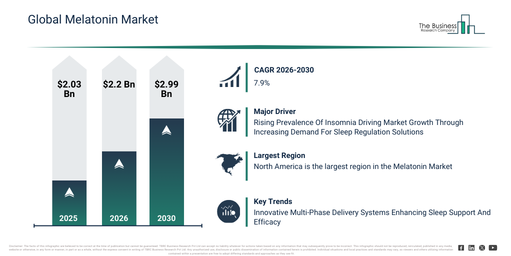
    The melatonin market size has experienced robust growth in recent years. Projections indicate it will expand from $2.03 billion in 2025 to reach $2.2 billion in 2026, demonstrating a compound annual growth rate (CAGR) of 8.3%. Historically, this expansion has been driven by factors such as the increasing occurrence of sleep disorders, elevated stress levels and lifestyle imbalances, the growing consumption of dietary supplements, enhanced understanding of circadian rhythm health, and the accessibility of over-the-counter (OTC) melatonin products.

    The melatonin market size is projected to experience substantial expansion in the coming years. Its valuation is set to reach $2.99 billion by 2030, demonstrating a compound annual growth rate (CAGR) of 7.9%. This anticipated growth can be attributed to several factors, including the rising demand for tailored sleep solutions, a heightened emphasis on mental well-being, the expansion of e-commerce platforms for supplement sales, wider acceptance of preventive healthcare practices, and increased research efforts in sleep health. Key trends shaping this period involve a greater demand for natural sleep aids, the increasing uptake of over-the-counter (OTC) sleep supplements, a growing preference for non-addictive remedies, the introduction of various dosage formats, and an intensified focus on circadian rhythm health.

    Get A Free Sample Report With In-Depth Market Insights:

    https://thebusinessresearchcompany.com/sample_request?id=32806829&type=smp&name=Melatonin%20Market%20Report%202026&utm_source=Blogs&utm_medium=Paid&utm_campaign=Nov_PR

    Melatonin Market Growth Factors: What’s Supporting Expansion?

    The increasing occurrence of insomnia is anticipated to boost the expansion of the melatonin market in the future. Insomnia, a sleep condition, involves challenges with initiating sleep, maintaining sleep, or premature waking without the ability to return to sleep, even when there’s a chance to rest. The rise in insomnia instances is linked to increased stress, prolonged exposure to screens, inconsistent sleep routines, an aging demographic, and a greater prevalence of long-term health issues. Melatonin proves beneficial for insomnia by aiding in the regulation of the body’s natural sleep-wake cycle, thus facilitating easier sleep onset and maintenance, particularly when circadian rhythms are disturbed. An example illustrates this: during April 2024, data from Oxford University Press, a UK publishing firm, indicated that in 2024, around 19.5% of adult females and 14.0% of adult males in the Americas experienced insomnia, amounting to about 123 million individuals. Consequently, the increasing occurrence of insomnia is propelling the expansion of the melatonin market.

    Melatonin Market Breakdown By Product Type And Application

    The melatonin market covered in this report is segmented –

    1) By Source Type: Natural Melatonin, Synthetic Melatonin

    2) By Product Type: Tablets, Capsules, Liquid Solutions, Gummies, Sublingual Tablets

    3) By Treatment Type: Dietary Supplements, Pharmaceuticals

    4) By Application: Insomnia Treatment, Jet Lag Management, Sleep Disorders, Stress Relief, Circadian Rhythm Regulation

    5) By Distribution Channel: Online Retailers, Pharmacies, Health Food Stores, Supermarkets, Hypermarkets, Specialty Stores

    Subsegments:

    1) By Natural Melatonin: Plant-Based Melatonin, Animal-Based Melatonin

    2) By Synthetic Melatonin: Prescription-Based Synthetic Melatonin, Over-the-Counter (OTC) Synthetic Melatonin

    Melatonin Market Industry Trends: What’s Reshaping Demand?

    Leading firms within the melatonin market are concentrating on creating novel technologies, including three-in-one tablet in capsule technology, aimed at boosting controlled release, elevating absorption efficiency, and delivering extended sleep assistance for superior consumer results. This three-in-one tablet-in-capsule method integrates three distinct tablets inside a single capsule, allowing for the timed release of components, thereby enhancing bodily absorption and rendering the treatment more effective and user-friendly. An example of this is Ritual, a wellness enterprise based in the US, which introduced a new melatonin supplement in September 2023. This product incorporates its pioneering BioSeries technology, a three-phase release mechanism contained within one capsule, which administers melatonin sequentially to harmonize with the body’s inherent sleep-wake rhythm. Such an approach improves the caliber of sleep by promoting faster initiation of sleep, sustaining uninterrupted rest, and guaranteeing a revitalized sensation upon awakening.

    Melatonin Market Company Landscape And Competitive Strategy

    Major companies operating in the melatonin market are Church and Dwight Co Inc, Herbalife Nutrition Ltd, Zenith Nutrition, Amway Corporation, Aurobindo Pharma, Aspen Holdings, Nu Skin Enterprises Inc, GNC Holdings LLC, Pharmavite LLC, Jamieson Wellness Inc, Rexall Sundown Inc, Natures Way Brands LLC, Schiff Nutrition International, Natrol LLC, Solgar Inc, Biotics Research Corporation, Herbaland Naturals Inc, Lactonova Nutripharm Pvt Ltd, Prime Health Ltd, Nestle Health Science, Bayer Consumer Health, Abbott Nutrition

    View The Full Melatonin Market Report:

    https://thebusinessresearchcompany.com/report/melatonin-global-market-report?utm_source=Blogs&utm_medium=Paid&utm_campaign=Nov_PR

    Melatonin Market Geographic Spread And Regional Opportunities

    North America was the largest region in the melatonin market in 2025. Asia-Pacific is expected to be the fastest-growing region in the forecast period. The regions covered in the melatonin market report are Asia-Pacific, South East Asia, Western Europe, Eastern Europe, North America, South America, Middle East, Africa.

    Reach Out To Our Team:

    The Business Research Company: https://www.thebusinessresearchcompany.com/

    Americas: +1 310-496-7795

    Asia: +44 7882 955267 & +91 8897263534

    Europe: +44 7882 955267

    Email us at: marketing@tbrc.info

    Follow us on:

    LinkedIn: https://in.linkedin.com/company/the-business-research-company

    YouTube: https://www.youtube.com/channel/UC24_fI0rV8cR5DxlCpgmyFQ

    Global Market Model: https://www.thebusinessresearchcompany.com/global-market-model
  • Meibomian Gland Dysfunction Market Growth Forecast: Market Size, Key Trends And Emerging Opportunities Through 2030

    Meibomian Gland Dysfunction Market Growth Forecast: Market Size, Key Trends And Emerging Opportunities Through 2030

    Built to provide research that’s more actionable and strategically valuable, The Business Research Company’s 2026 market reports include market attractiveness analysis, total addressable market sizing, company benchmarking matrices, interactive Excel dashboards, broader supply chain intelligence, emerging startup tracking, and in-depth product insights.

    Meibomian Gland Dysfunction Market Forecast: What Value Will The Market Reach By 2030?

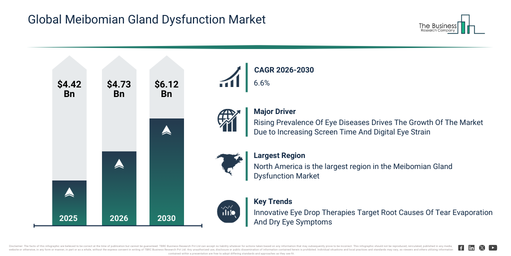
    The meibomian gland dysfunction market has experienced substantial growth in recent times. This market is projected to expand from $4.42 billion in 2025 to $4.73 billion by 2026, exhibiting a compound annual growth rate (CAGR) of 7.0%. Historically, this expansion has been driven by factors such as a rise in dry eye disease incidence, increased screen time exposure, the growing aging population, wider clinical recognition of mgd, and the availability of basic treatment options.

    The meibomian gland dysfunction market size is anticipated to undergo significant growth over the next few years. It is projected to expand to $6.12 billion by 2030, achieving a compound annual growth rate (CAGR) of 6.6%. This increase during the forecast period is attributable to factors such as the increasing adoption of device-assisted therapies, rising investments in ophthalmic care, a growing awareness of chronic eye conditions, the expansion of home-use treatment devices, and an increasing focus on personalized eye care. Key trends in this period are expected to include the increasing adoption of advanced diagnostic tools, a rising utilization of device-based therapies, a growing preference for combination treatment approaches, the expansion of home-based management solutions, and an enhanced focus on early disease detection.

    Get A Free Sample Report With In-Depth Market Insights:

    https://thebusinessresearchcompany.com/sample_request?id=15651978&type=smp&name=Meibomian%20Gland%20Dysfunction%20Market%20Report%202026&utm_source=Blogs&utm_medium=Paid&utm_campaign=Nov_PR

    Meibomian Gland Dysfunction Market Demand Drivers: What’s Powering Industry Growth?

    The meibomian gland dysfunction (MGD) market is anticipated to expand, driven by the increasing incidence of eye disease. Eye disease refers to any condition or disorder affecting the eye or visual system, compromising its structure, function, or overall health. The growing number of eye disease cases is attributed to increased screen time and digital eye strain, leading to symptoms such as dryness, blurred vision, and long-term retinal damage from extended blue light exposure. Meibomian gland dysfunction exacerbates eye disease by destabilizing the tear film, which results in inflammation, dryness, and an elevated risk of ocular surface disorders. For instance, in February 2025, the National Institutes of Health (NIH), a US-based government agency, reported that the global prevalence of myopia is projected to increase to 36.59% by 2040 and 39.80% by 2050, with the total number of cases expected to exceed 740 million by 2050. Thus, the rising occurrences of eye disease are a primary driver for the growth of the meibomian gland dysfunction (MGD) market.

    Meibomian Gland Dysfunction Market Segment Analysis And Revenue Potential

    The meibomian gland dysfunction market covered in this report is segmented –

    1) By Treatment Type: Medication, Surgery, Lifestyle Modifications

    2) By Dysfunction Type: Obstructive Meibomian Gland Dysfunction, Evaporative Meibomian Gland Dysfunction, Mixed Meibomian Gland Dysfunction

    3) By Disease Severity: Mild Meibomian Gland Dysfunction, Moderate Meibomian Gland Dysfunction, Severe Meibomian Gland Dysfunction

    4) By Distribution channel: Hospitals And Clinics, Pharmacies, Online Retailers

    5) By End-User: Hospitals, Ophthalmology Clinics, Home Care Settings

    Subsegments:

    1) By Medication: Topical Antibiotics, Topical Steroids, Lubricating Eye Drops, Topical Cyclosporine, Omega-3 Supplements

    2) By Surgery: Meibomian Gland Probing, Intense Pulsed Light (IPL) Therapy, Thermal Pulsation Treatment, BlephEx

    3) By Lifestyle Modifications: Warm Compress Therapy, Lid Hygiene, Dietary Adjustments, Blinking Exercises

    Meibomian Gland Dysfunction Market Innovation Trends: What Developments Are Reshaping The Industry?

    Leading companies active in the meibomian gland dysfunction market are prioritizing the creation of novel treatments, such as prescription eye drop solutions, to diminish tear evaporation and alleviate dry eye discomfort. These prescription eye drop solutions, including anti-inflammatory or antibiotic varieties, contribute to managing meibomian gland dysfunction by reducing inflammation, clearing gland obstructions, and enhancing tear film stability. For example, in May 2023, Bausch + Lomb Corporation, an eye health company from Canada, unveiled MIEBO (perfluorohexyloctane ophthalmic solution), an innovative prescription eye drop developed for the treatment of dry eye disease (DED). As the initial and sole prescription eye drop engineered to directly tackle tear evaporation, which is the main cause of DED, MIEBO creates a protective, enduring layer over the ocular surface. Its advanced water-free formulation delivers effective and sustained relief, particularly benefiting patients experiencing dry eye symptoms linked to Meibomian gland dysfunction.

    Meibomian Gland Dysfunction Market Key Players Shaping Industry Direction

    Major companies operating in the meibomian gland dysfunction market are Johnson And Johnson, Alcon Inc., Bausch Lomb Corporation, Santen Pharmaceutical, Lumenis Ltd, Topcon Healthcare Solutions Inc, AFT Pharmaceuticals, Sight Sciences Inc, OASIS Medical Inc, OCuSOFT Inc, Novaliq GmbH, Scope Ophthalmics Ltd, Medmont International Pty Ltd, Azura Ophthalmics Ltd, BlephEx LLC, Bruder Healthcare Company, ESW Vision Inc, MiBo Medical Group Inc, Kala Pharmaceuticals Inc, Allergan Eye Care, TearScience Inc, Sun Pharmaceutical Industries Ltd

    View The Full Meibomian Gland Dysfunction Market Report:

    https://thebusinessresearchcompany.com/report/meibomian-gland-dysfunction-global-market-report?utm_source=Blogs&utm_medium=Paid&utm_campaign=Nov_PR

    Meibomian Gland Dysfunction Market Top Region By Revenue And Market Share

    North America was the largest region in the meibomian gland dysfunction market in 2025. The regions covered in the meibomian gland dysfunction market report are Asia-Pacific, South East Asia, Western Europe, Eastern Europe, North America, South America, Middle East, Africa.

    Reach Out To Our Team:

    The Business Research Company: https://www.thebusinessresearchcompany.com/

    Americas: +1 310-496-7795

    Asia: +44 7882 955267 & +91 8897263534

    Europe: +44 7882 955267

    Email us at: marketing@tbrc.info

    Follow us on:

    LinkedIn: https://in.linkedin.com/company/the-business-research-company

    YouTube: https://www.youtube.com/channel/UC24_fI0rV8cR5DxlCpgmyFQ

    Global Market Model: https://www.thebusinessresearchcompany.com/global-market-model
  • Medications For Heart Failure Market CAGR Forecast Through 2030: Key Trends Shaping Industry Expansion

    Medications For Heart Failure Market CAGR Forecast Through 2030: Key Trends Shaping Industry Expansion

    Backed by market attractiveness analysis, total addressable market sizing, company benchmarking matrices, interactive Excel dashboards, wider supply chain intelligence, emerging startup coverage, and detailed product-level insights, The Business Research Company’s 2026 market reports are designed to offer research that is more actionable and strategically valuable than ever.

    Medications For Heart Failure Market Size Outlook: How Quickly Will Revenue Expand Through 2030?

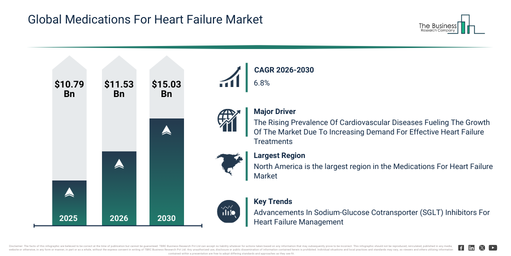
    The market size for medications addressing heart failure has experienced robust growth in recent years. Its value is projected to increase from $10.79 billion in 2025 to $11.53 billion in 2026, achieving a compound annual growth rate (CAGR) of 6.8%. This historical expansion can be largely attributed to factors such as the rising occurrence of cardiovascular diseases, an aging global demographic, an increase in the incidence of hypertension and diabetes, improved access to vital cardiac medications, and the broadening availability of hospital-based cardiac care.

    The market for medications for heart failure is anticipated to experience robust growth in the upcoming years. It is projected to expand to $15.03 billion by 2030, exhibiting a compound annual growth rate (CAGR) of 6.8%. This growth during the forecast period can be attributed to an expanding heart failure patient population, increasing acceptance of novel drug classifications, a rising emphasis on personalized cardiovascular therapy, the broadening of outpatient and home-based care approaches, and a stronger focus on preventive cardiology. Significant trends during this period include the rising adoption of combination drug therapies, the expanding use of SGLT2 inhibitors in heart failure treatment, a growing concentration on early diagnosis and long-term disease management, the expansion of evidence-based treatment guidelines, and a heightened emphasis on reducing heart failure hospitalizations.

    Get A Free Sample Report With In-Depth Market Insights:

    https://thebusinessresearchcompany.com/sample_request?id=48752056&type=smp&name=Medications%20For%20Heart%20Failure%20Market%20Report%202026&utm_source=Blogs&utm_medium=Paid&utm_campaign=Nov_PR

    Medications For Heart Failure Market Growth Drivers: What’s Behind The Acceleration?

    An escalating incidence of cardiovascular diseases is anticipated to boost the growth of the medications for the heart failure market moving forward. These conditions involve the heart and blood vessels, often leading to severe health events such as heart attacks and strokes. The increase in cardiovascular diseases is primarily fueled by inactive lifestyles that gradually impair heart and vessel health. As the rates of cardiovascular disease climb, the demand for effective treatments expands, encouraging greater investment in heart failure medications. With the condition becoming more widespread, pharmaceutical companies are prioritizing the creation and enhancement of therapies to improve symptom management and patient outcomes. For instance, in September 2024, the Heart Failure Society of America (HFSA), a US-based organization of heart failure experts, reported that approximately 6.7 million Americans aged 20 and older are currently living with heart failure (HF). This number is expected to reach 8.7 million by 2030, 10.3 million by 2040, and 11.4 million by 2050. Hence, the increasing prevalence of cardiovascular diseases is propelling the expansion of medications for the heart failure market.

    Medications For Heart Failure Market Segmentation And Category Overview

    The medications for heart failure market covered in this report is segmented –

    1) By Drug Class: Angiotensin-Converting Enzyme (ACE) Inhibitors, Beta Blockers, Diuretics, Aldosterone Antagonists, Angiotensin II Receptor Blockers (ARBs), Other Drug Classes

    2) By Route Of Administration: Oral, Intravenous, Other Routes Of Administrations

    3) By Distribution Channel: Hospital Pharmacies, Retail Pharmacies, Online Pharmacies, Other Distribution Channels

    4) By Application: Hospital, Clinic, Other Applications

    Subsegments:

    1) By Angiotensin-Converting Enzyme (ACE) Inhibitors: Enalapril, Lisinopril, Ramipril, Captopril, Perindopril

    2) By Beta Blockers: Carvedilol, Metoprolol Succinate, Bisoprolol, Nebivolol

    3) By Diuretics: Loop Diuretics, Thiazide Diuretics, Potassium-Sparing Diuretics

    4) By Aldosterone Antagonists: Spironolactone, Eplerenone

    5) By Angiotensin II Receptor Blockers (ARBs): Valsartan, Losartan, Candesartan, Irbesartan

    6) By Other Drug Classes: Angiotensin Receptor-Neprilysin Inhibitors, Ivabradine, Sodium-Glucose Cotransporter-2 (SGLT2) Inhibitors, Hydralazine Or Isosorbide Dinitrate, Digoxin

    Medications For Heart Failure Market Trends: What’s Defining The Industry’s Next Phase?

    Leading companies within the medication for heart failure market are concentrating on developing sophisticated drugs, such as sodium-glucose cotransporter (SGLT) inhibitors, to facilitate more effective long-term management of heart failure symptoms and associated complications. An SGLT inhibitor is an advanced therapeutic agent that targets glucose reabsorption mechanisms to address heart failure, enhance overall efficiency, and optimize cardiovascular health. For instance, in May 2023, Lexicon Pharmaceuticals, a US-based biopharmaceutical company, introduced Inpefa (sotagliflozin), which gained approval from the Food and Drug Administration (FDA). This once-daily oral tablet is formulated to lessen the risk of cardiovascular death, hospitalization for heart failure, and urgent heart failure visits in adults presenting with heart failure or type 2 diabetes mellitus, chronic kidney disease, and other cardiovascular risk factors. This approval represents a significant landmark for Lexicon, as Inpefa is the first dual SGLT1/SGLT2 inhibitor to enter the market, offering a new treatment avenue for heart failure patients facing a wide spectrum of conditions.

    Medications For Heart Failure Market Competitive Analysis Of Leading Industry Participants

    Major companies operating in the medications for heart failure market are Merck & Co. Inc., Bayer AG, Sanofi SA, Bristol-Myers Squibb, AstraZeneca plc, Novartis AG, Eli Lilly and Company, Boehringer Ingelheim Pharmaceuticals Inc., CSPC Pharmaceutical, Hikma Pharmaceuticals PLC, Cadila Pharmaceuticals, Ionis Pharmaceuticals Inc., Hainan Poly Pharm Co Ltd, Lunan Pharmaceutical Group, Mylan Laboratories Inc., JM Laboratories, Lexicon Pharmaceuticals, Pfizer Inc, Johnson & Johnson, GlaxoSmithKline plc, Teva Pharmaceutical Industries Ltd, Amgen Inc, Otsuka Pharmaceutical Co Ltd

    View The Full Medications For Heart Failure Market Report:

    https://thebusinessresearchcompany.com/report/medications-for-heart-failure-global-market-report?utm_source=Blogs&utm_medium=Paid&utm_campaign=Nov_PR

    Medications For Heart Failure Market Regional Analysis And Top Geography

    North America was the largest region in the medications for the heart failure market in 2025. Asia-Pacific is expected to be the fastest-growing region in the forecast period. The regions covered in the medications for heart failure market report are Asia-Pacific, South East Asia, Western Europe, Eastern Europe, North America, South America, Middle East, Africa.

    Reach Out To Our Team:

    The Business Research Company: https://www.thebusinessresearchcompany.com/

    Americas: +1 310-496-7795

    Asia: +44 7882 955267 & +91 8897263534

    Europe: +44 7882 955267

    Email us at: marketing@tbrc.info

    Follow us on:

    LinkedIn: https://in.linkedin.com/company/the-business-research-company

    YouTube: https://www.youtube.com/channel/UC24_fI0rV8cR5DxlCpgmyFQ

    Global Market Model: https://www.thebusinessresearchcompany.com/global-market-model
  • Medication Side-Effect Tracker App Market To Witness 14% CAGR Growth Through 2030: Key Industry Drivers

    Medication Side-Effect Tracker App Market To Witness 14% CAGR Growth Through 2030: Key Industry Drivers

    Featuring market attractiveness scoring, total addressable market sizing, company benchmarking matrices, interactive Excel dashboards, deeper supply chain intelligence, emerging startup tracking, and granular product-level insights, The Business Research Company’s 2026 market reports are built to deliver research that is both more actionable and more strategically valuable.

    Medication Side-Effect Tracker App Market Size, Value And Growth Trajectory Through 2030

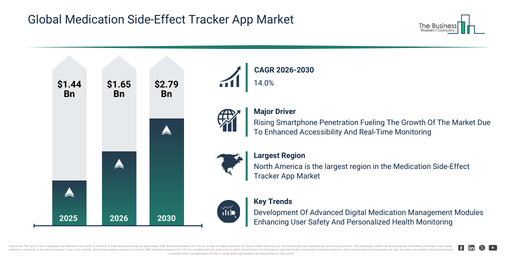
    The medication side-effect tracker app market has experienced substantial expansion in recent years. It is projected to rise from $1.44 billion in 2025 to $1.65 billion in 2026, demonstrating a compound annual growth rate (CAGR) of 14.3%. The growth observed in previous periods can be linked to factors such as the increasing integration of smartphones in healthcare, the rising incidence of long-term medication use, enhanced recognition of adverse drug reactions, the proliferation of digital health applications, and greater patient participation in self-monitoring.

    The medication side-effect tracker app market is projected for swift expansion over the coming years, with expectations to reach $2.79 billion by 2030, exhibiting a compound annual growth rate (CAGR) of 14.0%. This anticipated growth stems from factors such as heightened demand for tailored digital therapeutics, greater integration with electronic health records, an expanding application of predictive analytics in medication oversight, broader adoption of remote patient monitoring, and an increased emphasis on preventive healthcare solutions. Key trends during this projection period involve a surge in personalized medication monitoring tools, increasing incorporation of AI-powered symptom analysis, broader utilization of wearable technology and health app integrations, expanded data exchange with healthcare providers, and a sharpened focus on medication safety and patient adherence.

    Get A Free Sample Report With In-Depth Market Insights:

    https://thebusinessresearchcompany.com/sample_request?id=31644655&type=smp&name=Medication%20Side-Effect%20Tracker%20App%20Market%20Report%202026&utm_source=Blogs&utm_medium=Paid&utm_campaign=Nov_PR

    Medication Side-Effect Tracker App Market Growth Factors Behind Sustained Expansion

    The increasing adoption of smartphones is anticipated to propel the growth of the medication side-effect tracker app market going forward. These mobile devices allow users to access the internet, applications, and digital services conveniently while on the move. Smartphone penetration is rising as more individuals rely on these portable devices for daily communication, information, and various services. This widespread smartphone usage enables a greater number of people to easily access medication side-effect tracker apps, facilitating real-time monitoring of adverse reactions and improving treatment safety. For instance, in February 2023, a report from Uswitch Limited, a UK-based online and telephone comparison and switching service provider, indicated that by 2025, it is expected that 95% of the 68.3 million people living in the UK will own smartphones. Consequently, the growing penetration of smartphones is driving the growth of the medication side-effect tracker app market.

    Medication Side-Effect Tracker App Market Segment Outlook: Which Categories Are Growing Fastest?

    The medication side-effect tracker app market covered in this report is segmented –

    1) By Platform: iPhone Operating System, Android, Web-Based

    2) By Subscription Model: Free, Freemium, Paid

    3) By Functionality: Symptom Tracking, Medication Reminders, Data Analytics, Reporting And Sharing, Other Functionalities

    4) By End-User: Patients, Caregivers, Healthcare Providers, Other End-Users

    Subsegments:

    1) By iPhone Operating System: iPhone Apps, iPad Apps, Apple Watch Apps, Apple Health Integration

    2) By Android: Smartphone Apps, Tablet Apps, Wearable Device Apps, Google Fit Integration

    3) By Web-Based: Browser-Based Platforms, Cloud-Based Dashboards, Institutional Or Enterprise Solutions, Cross-Platform Access

    Medication Side-Effect Tracker App Market Industry Trends Fueling Future Revenue Growth

    Major companies operating in the medication side-effect tracker app market are prioritizing the development of advanced solutions, specifically digital medication adherence and management modules. These modules aim to bolster user safety, facilitate personalized medication management, and avert detrimental drug interactions by providing predictive alerts, individualized guidance, and integrated digital tracking platforms. A digital medication adherence and management module represents a technology-powered system that utilizes AI and machine learning algorithms to supervise medication intake, anticipate potential adverse effects, and issue tailored safety alerts for individual users. For example, in December 2023, Samsung Ltd., an electronics company based in South Korea, introduced a medication side-effect tracking feature within its Samsung Health app. This functionality empowers users to record their medications and access detailed data on possible side effects and drug interactions. Samsung Electronics announced that this module will enhance the Samsung Health app, helping users manage their health more efficiently. It permits users to monitor both prescription and over-the-counter medications while offering essential guidance and advice, making it especially beneficial for individuals who consistently take medications or use supplements for overall wellness.

    Medication Side-Effect Tracker App Market Leading Companies And Competitive Benchmarking

    Major companies operating in the medication side-effect tracker app market are F Hoffmann La Roche Ltd., Janssen Healthcare Innovation, GoodRx Holdings Inc., Sidekick Health, WellDoc Inc., CareZone, DarioHealth, Medisafe Inc., Mango Health Inc., Ampersand Health LLC, Montuno Software LLC, Round Health, MedCoach Inc., Flaredown, EveryDose, smartpatient GmbH, CareClinic, Tiga Health, Bearable, Ada Health GmbH

    View The Full Medication Side-Effect Tracker App Market Report:

    https://thebusinessresearchcompany.com/report/medication-side-effect-tracker-app-global-market-report?utm_source=Blogs&utm_medium=Paid&utm_campaign=Nov_PR

    Medication Side-Effect Tracker App Market Geographic Analysis: Where Is Demand Rising Fastest?

    North America was the largest region in the medication side-effect tracker app market in 2025. Asia-Pacific is expected to be the fastest-growing region in the forecast period. The regions covered in the medication side-effect tracker app market report are Asia-Pacific, South East Asia, Western Europe, Eastern Europe, North America, South America, Middle East, Africa.

    Reach Out To Our Team:

    The Business Research Company: https://www.thebusinessresearchcompany.com/

    Americas: +1 310-496-7795

    Asia: +44 7882 955267 & +91 8897263534

    Europe: +44 7882 955267

    Email us at: marketing@tbrc.info

    Follow us on:

    LinkedIn: https://in.linkedin.com/company/the-business-research-company

    YouTube: https://www.youtube.com/channel/UC24_fI0rV8cR5DxlCpgmyFQ

    Global Market Model: https://www.thebusinessresearchcompany.com/global-market-model
  • Medication Management System Market Projected For Strong Expansion Through 2030: Key Trends And Future Outlook

    Medication Management System Market Projected For Strong Expansion Through 2030: Key Trends And Future Outlook

    Built to provide research that’s more actionable and strategically valuable, The Business Research Company’s 2026 market reports include market attractiveness analysis, total addressable market sizing, company benchmarking matrices, interactive Excel dashboards, broader supply chain intelligence, emerging startup tracking, and in-depth product insights.

    Medication Management System Market CAGR Outlook And Future Development

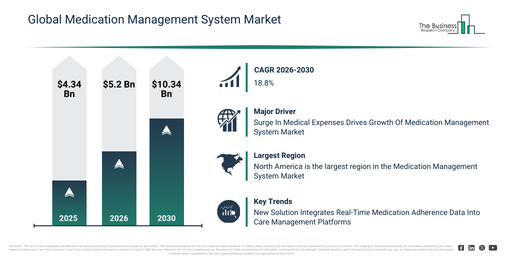
    The medication management system market has experienced significant expansion in recent times. Its value is set to rise from $4.34 billion in 2025 to $5.2 billion in 2026, demonstrating a compound annual growth rate (CAGR) of 19.7%. This market’s historical growth can be linked to an increase in medication-related errors, growing hospital patient volumes, the wider adoption of electronic health records usage, the necessity for effective prescription management, and the rising intricacy of drug regimens.

    The medication management system market is projected for substantial expansion in the coming years, with its size expected to reach $10.34 billion by 2030, demonstrating a compound annual growth rate (CAGR) of 18.8%. This anticipated growth throughout the forecast period stems from several factors, including the proliferation of value-based healthcare models, increased integration of automation in pharmacy operations, a heightened emphasis on clinical decision support tools, the expansion of digital hospitals, and the requirement for real-time medication tracking. Key developments during this forecast timeframe encompass the increasing deployment of integrated medication workflow platforms, a stronger commitment to minimizing medication errors, the expansion of cloud-based medication management systems, a rising need for interoperable healthcare software, and greater attention to patient safety and the coordination of care.

    Get A Free Sample Report With In-Depth Market Insights:

    https://thebusinessresearchcompany.com/sample_request?id=68100542&type=smp&name=Medication%20Management%20System%20Market%20Report%202026&utm_source=Blogs&utm_medium=Paid&utm_campaign=Nov_PR

    Medication Management System Market Demand Drivers Opening New Revenue Streams

    Rising medical expenses are anticipated to drive the expansion of the medication management system market moving ahead. These costs encompass expenditures made by individuals for healthcare services, as well as those by hospitals for necessary equipment, patient treatment, and day-to-day operational needs. The escalation in medical expenditures stems from a greater demand for healthcare provisions, a growing prevalence of chronic diseases, ongoing technological innovations, and elevated labor and operational outlays within healthcare frameworks. Medication management systems address this demand by enhancing operational efficiency, minimizing errors in medication administration, optimizing workflows, and ultimately decreasing overall healthcare expenditures. For example, in December 2023, data from the Centers for Medicare & Medicaid Services, a U.S.-based government body, indicated that national health expenditure rose by 4.1% to $4,500 billion in 2022. Furthermore, national health spending is forecast to reach $6,200 billion by 2028, underscoring a significant surge in healthcare-related costs. Consequently, the upward trend in medical costs is indeed fueling the expansion of the medication management systems market.

    Medication Management System Market Segment Landscape: Which Areas Lead Development?

    The medication management system market covered in this report is segmented –

    1) By Product Type: Computerized Physician Order Entry, Clinical Decision Support System Solutions, Electronic Medication Administration Record, Inventory Management Solutions, Other Product Types

    2) By Mode Of Delivery: Web-Based, Cloud-Based, On-Premise

    3) By End Users: Pharmacies, Hospitals, Other End Users

    Subsegments:

    1) By Computerized Physician Order Entry (CPOE): Standalone CPOE Systems, Integrated CPOE with EHR

    2) By Clinical Decision Support System Solutions: Drug Interaction Checkers, Dosing Assistance Tools, Clinical Guidelines And Protocols

    3) By Electronic Medication Administration Record (eMAR): Patient-Specific eMAR Solutions, Mobile eMAR Applications

    4) By Inventory Management Solutions: Automated Inventory Tracking Systems, Pharmacy Management Software

    5) By Other Product Types: Medication Reconciliation Tools, Patient Adherence Monitoring Systems, Medication Therapy Management Solutions

    Medication Management System Market Trends Powering Strategic Industry Growth

    Major companies operating in the medication management system market are concentrating on developing innovations, such as providing real-time data access to evaluate treatment effectiveness and support informed decisions. Real-time data access refers to the capacity to obtain and analyze data instantly as it is generated or updated, without significant delays. For instance, in June 2024, PatchRx, a US-based medication adherence technology company, introduced PatchRx Connect. This solution is designed to seamlessly integrate real-time medication adherence data into existing care management platforms, allowing clinical teams to gain insights into patients’ medication-taking behaviors without disrupting their established workflows. The system includes a smart device that tracks medication usage, providing actionable insights for healthcare providers. Additionally, it features patient engagement tools, such as SMS alerts, to improve adherence rates.

    Medication Management System Market Industry Leaders And Competitive Landscape

    Major companies operating in the medication management system market are McKesson Corporation, Optum Inc., Cardinal Health Inc., Cerner Corporation, Epic Systems Corporation, Omnicell Inc., Genoa Healthcare LLC, Allscripts Healthcare Solutions Inc., Swisslog Healthcare (US) Inc., QuadraMed Affinity Corporation, AdhereHealth LLC, Hero Health Inc., ARxIUM Inc., Talyst LLC, Jini Health Inc., CareRight Technologies LLC, eMARneek BIQHS, CARI Health, Healthera Ltd.

    View The Full Medication Management System Market Report:

    https://thebusinessresearchcompany.com/report/medication-management-system-global-market-report?utm_source=Blogs&utm_medium=Paid&utm_campaign=Nov_PR

    Medication Management System Market Global Footprint: Which Region Leads The Market?

    North America was the largest region in the medication management system market in 2025. The regions covered in the medication management system market report are Asia-Pacific, South East Asia, Western Europe, Eastern Europe, North America, South America, Middle East, Africa.

    Reach Out To Our Team:

    The Business Research Company: https://www.thebusinessresearchcompany.com/

    Americas: +1 310-496-7795

    Asia: +44 7882 955267 & +91 8897263534

    Europe: +44 7882 955267

    Email us at: marketing@tbrc.info

    Follow us on:

    LinkedIn: https://in.linkedin.com/company/the-business-research-company

    YouTube: https://www.youtube.com/channel/UC24_fI0rV8cR5DxlCpgmyFQ

    Global Market Model: https://www.thebusinessresearchcompany.com/global-market-model
  • Medication Adherence Market Outlook 2026–2030: Growth Trends, Market Dynamics And Emerging Opportunities

    Medication Adherence Market Outlook 2026–2030: Growth Trends, Market Dynamics And Emerging Opportunities

    Backed by market attractiveness analysis, total addressable market sizing, company benchmarking matrices, interactive Excel dashboards, wider supply chain intelligence, emerging startup coverage, and detailed product-level insights, The Business Research Company’s 2026 market reports are designed to offer research that is more actionable and strategically valuable than ever.

    Medication Adherence Market Set To Climb From $4.77 Billion In 2026 To $7.35 Billion By 2030

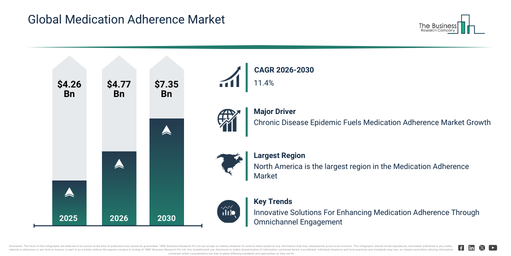
    The medication adherence market has experienced significant expansion recently. Projections indicate a rise from $4.26 billion in 2025 to $4.77 billion in 2026, demonstrating a compound annual growth rate (CAGR) of 12.0%. Historically, this growth has been driven by factors such as elevated rates of medication non-adherence, a growing incidence of chronic diseases, increased healthcare expenses stemming from inadequate adherence, the proliferation of digital health solutions, and an expanding older population.

    The medication adherence market size is poised for significant expansion in the upcoming years. It is projected to reach $7.35 billion by 2030, progressing at a compound annual growth rate (CAGR) of 11.4%. This anticipated growth during the forecast period stems from factors such as the expansion of remote patient monitoring initiatives, the rising adoption of smart healthcare devices, an increasing focus on value-based healthcare, the broader availability of telehealth services, and the growing application of data-driven patient management. Prominent trends observed in this period encompass the escalating adoption of remote medication monitoring, an enhanced emphasis on chronic disease management, the proliferation of home-based medication adherence solutions, greater integration with healthcare provider workflows, and a stronger commitment to patient engagement and behavior change.

    Get A Free Sample Report With In-Depth Market Insights:

    https://thebusinessresearchcompany.com/sample_request?id=14403295&type=smp&name=Medication%20Adherence%20Market%20Report%202026&utm_source=Blogs&utm_medium=Paid&utm_campaign=Nov_PR

    Medication Adherence Market Growth Backed By Core Demand Fundamentals

    An increasing prevalence of chronic conditions is anticipated to drive expansion in the medication adherence market moving forward. These long-lasting health issues require ongoing medical care, restrict daily functions, or exhibit both characteristics. This surge in chronic disease cases is mainly attributable to an aging demographic, given that older people are more prone to conditions such as diabetes, cardiovascular diseases, and arthritis due to age-related physiological changes. Typically, chronic illnesses are defined as health states that continue for a minimum of one year. For individuals with chronic diseases, adhering to medication is vital to avert disease advancement and premature death. Improved medication adherence can lead to superior clinical outcomes, reduced healthcare expenditures, enhanced patient understanding, and the development of sustained drug adherence programs. As an example, the NHS Confederation, a national association based in the UK, projected in April 2025 that by 2035, approximately 17% of the UK population might experience four or more chronic conditions. Consequently, the growing occurrence of chronic diseases is a key impetus for the medication adherence industry.

    Medication Adherence Market Segments: Where Is Growth Concentrated?

    The medication adherence market covered in this report is segmented –

    1) By Type: Hardware Centric, Software Centric

    2) By Medication: Cardiovascular, Central Nervous System, Diabetes, Oncology, Respiratory, Gastrointestinal, Rheumatology, Other Medications

    3) By Application: Hospital, Retail Pharmacies, Long-Term Care Facilities, Mail-Order Pharmacies

    Subsegments:

    1) By Hardware Centric: Smart Pill Dispensers, Medication Adherence Packaging, Wearable Devices, Electronic Pill Bottles, Smart Inhalers

    2) By Software Centric: Mobile Health (mHealth) Apps, Medication Reminders And Tracking Apps, Telemedicine Solutions, Electronic Health Records (EHR) Integration, Patient Management Systems With Adherence Features

    Medication Adherence Market Growth Trends Reshaping The Competitive Landscape

    Leading companies operating within the medication adherence market are concentrating on developing innovations, such as omnichannel engagement, which assists in improving refill adherence and inspiring shifts in patient behavior. Omnichannel engagement refers to a unified and integrated method for interacting with customers across numerous channels and contact points. For example, in May 2024, Ushur, a US-based software development company, launched a prebuilt healthcare solution aimed at elevating medication adherence among patients. A new prebuilt digital self-service solution is now available to help healthcare organizations streamline medication adherence processes. This innovative platform is dedicated to identifying hindrances to medication adherence, encouraging compliance with refills, and promoting positive health behaviors. It employs advanced automation and AI to engage patients at risk of not adhering to their medication, ensuring robust communication through secure, HIPAA-compliant channels.

    Medication Adherence Market Key Participants And Competitive Landscape

    Major companies operating in the medication adherence market are Omnicell Inc., Cardinal Health, McKesson Corporation, Allscripts Healthcare Solutions, Inc., DrFirst.com, Inc., AdhereTech Inc, MedMinder, Caredose, MedAdvisor International Pty Ltd., Adherium, Aardex Group, Propeller Health, Umotif, Echo, Popit, Tinylogics, Adherence Solutions LLC, SMRxT Inc., emocha, DIMAGI, INC., Seamless MD, Wisepill Technologies

    View The Full Medication Adherence Market Report:

    https://thebusinessresearchcompany.com/report/Medication-Adherence-Global-Market-Report?utm_source=Blogs&utm_medium=Paid&utm_campaign=Nov_PR

    Medication Adherence Market Regional Split: Which Areas Are Fueling Growth?

    North America was the largest region in the medication adherence market in 2025. Western Europe was the second largest region in the global medication adherence market share. The regions covered in the medication adherence market report are Asia-Pacific, South East Asia, Western Europe, Eastern Europe, North America, South America, Middle East, Africa.

    Reach Out To Our Team:

    The Business Research Company: https://www.thebusinessresearchcompany.com/

    Americas: +1 310-496-7795

    Asia: +44 7882 955267 & +91 8897263534

    Europe: +44 7882 955267

    Email us at: marketing@tbrc.info

    Follow us on:

    LinkedIn: https://in.linkedin.com/company/the-business-research-company

    YouTube: https://www.youtube.com/channel/UC24_fI0rV8cR5DxlCpgmyFQ

    Global Market Model: https://www.thebusinessresearchcompany.com/global-market-model
  • Medicated Shampoo Market Growth Outlook From $14.59 Billion In 2026 To $17.86 Billion By 2030

    Medicated Shampoo Market Growth Outlook From $14.59 Billion In 2026 To $17.86 Billion By 2030

    Featuring market attractiveness scoring, total addressable market sizing, company benchmarking matrices, interactive Excel dashboards, deeper supply chain intelligence, emerging startup tracking, and granular product-level insights, The Business Research Company’s 2026 market reports are built to deliver research that is both more actionable and more strategically valuable.

    Medicated Shampoo Market Forecast: Value Set To Climb From $14.59 Billion To $17.86 Billion

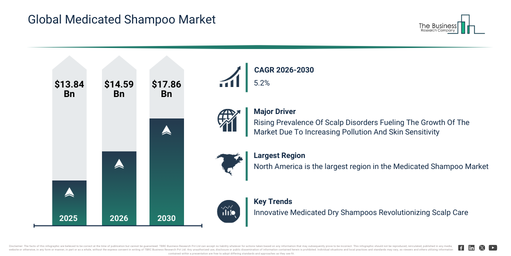
    The medicated shampoo market size has seen significant growth in recent years. It is projected to expand from $13.84 billion in 2025 to $14.59 billion in 2026, achieving a compound annual growth rate (CAGR) of 5.4%. This past growth can be linked to an increase in dandruff and scalp disorders, escalating urban pollution exposure, the expansion of pharmacy retail chains, increased awareness of hair and scalp hygiene, and the availability of otc medicated shampoos.

    The medicated shampoo market is poised for significant expansion in the coming years. Projections indicate it will reach $17.86 billion by 2030, exhibiting a compound annual growth rate (CAGR) of 5.2%. This anticipated growth during the forecast period is primarily driven by factors such as the increasing occurrence of psoriasis and fungal infections, a rising desire for customized scalp care, the broadening reach of online sales platforms, a heightened emphasis on preventive treatments for hair loss, and advancements in the development of active ingredient formulations. Key trends anticipated during this period encompass an escalating need for specialized scalp treatment options, an increasing inclination towards shampoos endorsed by dermatologists, a greater uptake of herbal and natural medicated formulations, the expansion of available over-the-counter medicated hair care items, and enhanced consumer understanding of scalp health and hygiene.

    Get A Free Sample Report With In-Depth Market Insights:

    https://thebusinessresearchcompany.com/sample_request?id=17769501&type=smp&name=Medicated%20Shampoo%20Market%20Report%202026&utm_source=Blogs&utm_medium=Paid&utm_campaign=Nov_PR

    Medicated Shampoo Market Growth Catalysts And Demand Drivers

    The increasing prevalence of scalp disorders is expected to stimulate the growth of the medicated shampoo market going forward. Scalp disorders refer to conditions that impact the skin of the scalp, manifesting as symptoms such as itching, flaking, inflammation, irritation, or hair loss. The incidence of scalp disorders is on the rise, attributed to escalating environmental pollution, chemical exposure, stress, and lifestyle factors that disrupt the scalp’s natural barrier and microbiome. The medicated shampoo market supports this trend by offering formulations with antifungal, anti-inflammatory, and keratolytic agents that effectively treat underlying causes and promote scalp healing. For instance, in February 2025, according to the American Academy of Dermatology Association, a US-based non-profit professional organization, acne, one of the most common dermatological conditions, affects 0.05 billion people each year in the United States, highlighting the growing burden of skin and scalp-related disorders requiring targeted therapeutic care. Therefore, the increasing prevalence of scalp disorders is driving the growth of the medicated shampoo market.

    Medicated Shampoo Market Segment Analysis: What Are The Core Market Categories?

    The medicated shampoo market covered in this report is segmented –

    1) By Type: Anti-Dandruff, Antifungal, Anti-Hair Loss, Antibacterial Or Scalp Treatment

    2) By Distribution Channel: Pharmacies Or Drugstores, Supermarkets Or Hypermarkets, Online Retail Or E-commerce, Specialty Stores

    3) By Application: Dandruff, Seborrheic Dermatitis, Psoriasis, Fungal Infections, Other Applications

    4) By End-User: Adults, Children, Men, Women

    Subsegments:

    1) By Anti-Dandruff: Zinc Pyrithione, Ketoconazole, Coal-Tar, Herbal/Natural

    2) By Antifungal: Ketoconazole-Based, Selenium Sulfide-Based, Ciclopirox-Based

    3) By Anti-Hair Loss: Minoxidil-Based, Biotin Or Natural Extracts, DHT Blockers

    4) By Antibacterial Or Scalp Treatment: Salicylic Acid, Climbazole, Tea Tree Oil

    Medicated Shampoo Market Trends Shaping Long-Term Demand

    Major companies operating in the medicated shampoo market are focusing on developing innovative formulations, such as medicated dry shampoo, to address the growing consumer demand for convenient, waterless scalp-care solutions that effectively manage dermatological conditions. Medicated dry shampoo refers to a specialized hair-care product that blends traditional oil-absorbing dry-shampoo functionality with therapeutic active ingredients to treat scalp disorders such as dandruff, seborrheic dermatitis, and psoriasis while allowing application without water. For instance, in November 2024, Raven Innovations LLC, a US-based pharmaceutical and personal-care company, launched RestoraScalp, which is the world’s first medicated dry shampoo formulated to treat scalp conditions including dandruff, seborrheic dermatitis, and psoriasis. This innovative product features 2% salicylic acid as the active therapeutic ingredient, a soothing botanical blend containing chamomile, olive leaf, and green tea extracts, and a vegan, cruelty-free, and fragrance-free formulation suitable for all skin types, offering an effective waterless solution for scalp treatment on non-wash days.

    Medicated Shampoo Market Top Companies Driving Competitive Growth

    Major companies operating in the medicated shampoo market are Johnson & Johnson, The Procter & Gamble Company, Unilever PLC, Kao Corporation, Cipla Limited, The Himalaya Company, Avalon Natural Products Inc., Ederma Pharma India Private Limited, Elegant Cosmed Private Limited, Luxica Pharma Inc., Yaxon Biocare Pvt. Ltd., Art Naturals Inc., Nioxin Research Laboratories Inc., Sulfur 8 Inc., Summer Laboratories Inc., Mars Medisoap Private Limited, Staple Pharmaceuticals Pvt. Ltd., Astonea Labs Limited, Ketopoz Pharmaceuticals Pvt. Ltd., Maylizz Biotech Private Limited

    View The Full Medicated Shampoo Market Report:

    https://thebusinessresearchcompany.com/report/medicated-shampoo-global-market-report?utm_source=Blogs&utm_medium=Paid&utm_campaign=Nov_PR

    Medicated Shampoo Market Top Region: Where Does Most Revenue Come From?

    North America was the largest region in the medicated shampoo market in 2025. Asia-Pacific is expected to be the fastest-growing region in the forecast period. The regions covered in the medicated shampoo market report are Asia-Pacific, South East Asia, Western Europe, Eastern Europe, North America, South America, Middle East, Africa.

    Reach Out To Our Team:

    The Business Research Company: https://www.thebusinessresearchcompany.com/

    Americas: +1 310-496-7795

    Asia: +44 7882 955267 & +91 8897263534

    Europe: +44 7882 955267

    Email us at: marketing@tbrc.info

    Follow us on:

    LinkedIn: https://in.linkedin.com/company/the-business-research-company

    YouTube: https://www.youtube.com/channel/UC24_fI0rV8cR5DxlCpgmyFQ

    Global Market Model: https://www.thebusinessresearchcompany.com/global-market-model
  • Medicated Personal Care Products Market Forecast To Reach $11.42 Billion By 2030: Key Growth Drivers And Industry Trends

    Medicated Personal Care Products Market Forecast To Reach $11.42 Billion By 2030: Key Growth Drivers And Industry Trends

    Built to provide research that’s more actionable and strategically valuable, The Business Research Company’s 2026 market reports include market attractiveness analysis, total addressable market sizing, company benchmarking matrices, interactive Excel dashboards, broader supply chain intelligence, emerging startup tracking, and in-depth product insights.

    Medicated Personal Care Products Market Revenue Growth On Track For A 4.8% CAGR Through 2030

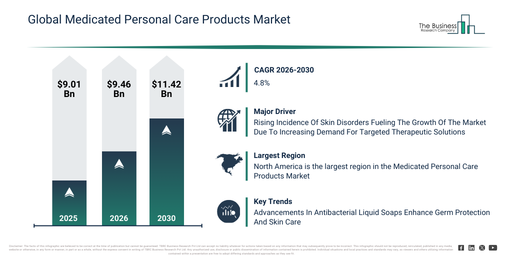
    The medicated personal care products market size has experienced robust growth in recent years. It is projected to expand from $9.01 billion in 2025 to $9.46 billion in 2026, showing a compound annual growth rate (CAGR) of 5.1%. The expansion observed historically can be attributed to the increasing prevalence of skin and scalp disorders, heightened consumer awareness concerning personal hygiene, the broadening of over-the-counter healthcare products, evolving urbanization and lifestyle shifts, and the wider availability of medicated formulations.

    The medicated personal care products market is set to experience consistent expansion over the coming years. Its valuation is projected to reach $11.42 billion by 2030, exhibiting a compound annual growth rate (CAGR) of 4.8%. This anticipated growth during the forecast timeframe is attributable to several factors, including a heightened demand for preventive skin health solutions, a greater inclination towards clinically proven products, the broadening of e-commerce distribution channels, an increased emphasis on personalized personal care, and clearer regulatory guidelines for medicated cosmetics. Prominent trends expected within this period encompass an escalating need for therapeutic-cosmetic hybrid formulations, a surge in the adoption of dermatologist-recommended products, a stronger concentration on condition-specific personal care solutions, the enlargement of over-the-counter (OTC) medicated care selections, and a reinforced commitment to product safety and compliance.

    Get A Free Sample Report With In-Depth Market Insights:

    https://thebusinessresearchcompany.com/sample_request?id=12714275&type=smp&name=Medicated%20Personal%20Care%20Products%20Market%20Report%202026&utm_source=Blogs&utm_medium=Paid&utm_campaign=Nov_PR

    Medicated Personal Care Products Market Opportunity Drivers: What’s Unlocking New Revenue Potential?

    An increasing prevalence of skin conditions is anticipated to fuel the expansion of the medicated personal care products market in the future. Skin conditions are health issues impacting the look, composition, or operation of the skin, including ailments like acne, eczema, and psoriasis. The increase in these disorders is attributed to greater contact with environmental contaminants that can breach the skin’s protective layer, leading to irritation, inflammation, and chronic issues. Medicated personal care products address skin disorders by delivering potent ingredients to affected regions, thereby alleviating inflammation, irritation, or infection, and fostering recovery and better skin health overall. For instance, in July 2024, according to Cancer Research UK, a UK-based cancer research organization, the average annual number of new melanoma skin cancer cases in the UK is expected to increase from approximately 20,800 in 2023–2025 to around 26,500 in 2038–2040. Consequently, the growing occurrence of skin disorders is stimulating the growth of the medicated personal care products market.

    Medicated Personal Care Products Market Segment Breakdown: Which Categories Lead On Revenue?

    The medicated personal care products market covered in this report is segmented –

    1) By Type: Oral Care, Deodorants, Feminine Care, Antiperspirants, Body Powders, Hand Sanitizers, Other Types

    2) By Beauty Care: Shampoos, Oils, Soaps, Moisturizers, Gels, Other Beauty Care

    3) By Distribution Channel: Hypermarkets And Supermarkets, Specialty Stores, E-Commerce, Other Distribution Channels

    Subsegments:

    1) By Oral Care: Medicated Toothpaste, Mouthwash, Dental Gels, Oral Sprays, Medicated Chewing Gums

    2) By Deodorants: Roll-Ons, Sprays, Sticks, Creams

    3) By Feminine Care: Medicated Wipes, Antifungal Creams, Vaginal Washes, Soothing Gels

    4) By Antiperspirants: Clinical Strength Antiperspirants, Prescription-Grade Sprays, Medicated Roll-Ons

    5) By Body Powders: Antifungal Powders, Antibacterial Powders, Medicated Talcum Powders

    6) By Hand Sanitizers: Alcohol-Based Sanitizers, Non-Alcohol-Based Sanitizers, Moisturizing Sanitizers, Foam Sanitizers

    7) By Other Types: Foot Care Creams, Medicated Shampoos, Acne Treatment Lotions, Scalp Treatment Solutions

    Medicated Personal Care Products Market Innovation Trends Shaping Future Development

    Major companies operating in the medicated personal care products market are concentrating on developing advanced offerings like antibacterial liquid soap to enhance germ protection and provide consumers with a more effective and gentle cleansing experience. Antibacterial liquid soap is a kind of medicated liquid soap formulated with chemical ingredients specifically engineered to eliminate or inhibit the growth of bacteria on the skin, thereby reducing the risk of infection and promoting hygiene. For instance, in April 2023, Dettol, a UK-based hygiene product brand, launched a reformulated version of its original liquid hand wash. The updated formula delivers both a moisture seal benefit and 99.99% germ protection. This product features improved ingredients and is dermatologically tested to ensure gentle care, leaving hands feeling soft and nourished after every wash. This update aims to offer a more effective and skin-friendly handwashing experience.

    Medicated Personal Care Products Market Leading Players And Competitive Positioning

    Major companies operating in the medicated personal care products market are Procter and Gamble, Johnson and Johnson, Unilever PLC, L Oreal SA, Henkel AG and Co KGaA, Colgate Palmolive Company, Kenvue Inc, Reckitt Benckiser Group plc, Haleon plc, Kao Corporation, Church and Dwight Co Inc, Perrigo Company plc, Merz Pharma GmbH and Co KGaA, Topix Pharmaceuticals Inc, Kutol Products Company Inc, Cosmetic Solutions LLC, ARG Laboratories Inc, KPH Cosmos Pvt Ltd, Beiersdorf AG, Himalaya Wellness Company, Dabur India Ltd, Emami Ltd

    View The Full Medicated Personal Care Products Market Report:

    https://thebusinessresearchcompany.com/report/medicated-personal-care-products-global-market-report?utm_source=Blogs&utm_medium=Paid&utm_campaign=Nov_PR

    Medicated Personal Care Products Market Regional Breakdown: Where Is Demand Concentrated?

    North America was the largest region in the medicated personal care products market in 2025. The regions covered in the medicated personal care products market report are Asia-Pacific, South East Asia, Western Europe, Eastern Europe, North America, South America, Middle East, Africa.

    Reach Out To Our Team:

    The Business Research Company: https://www.thebusinessresearchcompany.com/

    Americas: +1 310-496-7795

    Asia: +44 7882 955267 & +91 8897263534

    Europe: +44 7882 955267

    Email us at: marketing@tbrc.info

    Follow us on:

    LinkedIn: https://in.linkedin.com/company/the-business-research-company

    YouTube: https://www.youtube.com/channel/UC24_fI0rV8cR5DxlCpgmyFQ

    Global Market Model: https://www.thebusinessresearchcompany.com/global-market-model
  • Medicated Bath Additive Market Research 2026: Market Size, Trends, Segments And Growth Forecast

    Medicated Bath Additive Market Research 2026: Market Size, Trends, Segments And Growth Forecast

    Backed by market attractiveness analysis, total addressable market sizing, company benchmarking matrices, interactive Excel dashboards, wider supply chain intelligence, emerging startup coverage, and detailed product-level insights, The Business Research Company’s 2026 market reports are designed to offer research that is more actionable and strategically valuable than ever.

    Medicated Bath Additive Market Value Growth And Long-Term Outlook

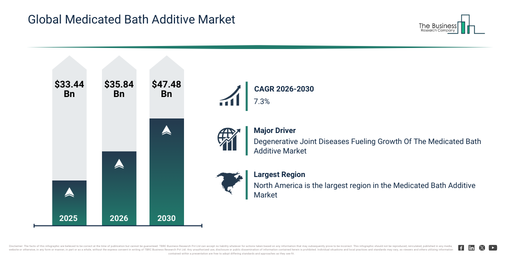
    The medicated bath additive market size has experienced substantial growth in recent years. This market is projected to expand from $33.44 billion in 2025 to $35.84 billion by 2026, exhibiting a compound annual growth rate (CAGR) of 7.2%. Historically, this growth can be ascribed to several factors, including an increase in skin-related disorders, heightened awareness of personal hygiene, the growing adoption of over-the-counter medicated products, the enlargement of retail pharmacy networks, and a consumer trend towards preventive self-care.

    The market for medicated bath additives is projected to experience robust expansion over the coming years, anticipated to reach a valuation of $47.48 billion by 2030, exhibiting a compound annual growth rate (CAGR) of 7.3%. This projected growth is driven by several factors, including the increasing emphasis on wellness and self-care practices, a surge in demand for high-quality medicated bath items, greater online sales penetration, a heightened focus on achieving relaxation and promoting mental well-being, and continuous advancements in product formulations and components. Key trends anticipated during this period encompass an increasing need for therapeutic products and those designed for specific skin conditions, a growing inclination towards natural and herbal bath options, the broader adoption of personal care routines centered on wellness, more frequent application of medicated products for alleviating stress and muscle discomfort, and an elevated consumer interest in bath solutions recommended by dermatologists.

    Get A Free Sample Report With In-Depth Market Insights:

    https://thebusinessresearchcompany.com/sample_request?id=13979171&type=smp&name=Medicated%20Bath%20Additive%20Market%20Report%202026&utm_source=Blogs&utm_medium=Paid&utm_campaign=Nov_PR

    Medicated Bath Additive Market Growth Momentum: What Factors Are Shaping Demand?

    An increasing incidence of degenerative joint diseases is anticipated to drive the future expansion of the medicated bath additive market. These chronic conditions involve the progressive breakdown of cartilage and joint components, resulting in discomfort, rigidity, and limited movement. The rising occurrence of these disorders is linked to an aging populace, inactive lifestyles, joint trauma, excess weight, and inherited susceptibilities. Medicated bath additives assist those suffering from degenerative joint diseases by delivering remedial minerals and compounds that alleviate joint pain, lessen inflammation, and enhance mobility via surface application and heat-related benefits. For example, in February 2025, Springer Nature Group, a UK-based academic and professional publishing company, reported that in 2022, knee osteoarthritis affected an estimated 12.94 million males and 18.80 million females. Projections indicate these figures will climb to 18.45 million males and 25.60 million females by 2046. Consequently, the increasing incidence of degenerative joint diseases is fueling the expansion of the medicated bath additive market.

    Medicated Bath Additive Market Segmentation: How Does The Market Break Down By Category?

    The medicated bath additive market covered in this report is segmented –

    1) By Product: Bath Bombs, Bath Soaps, Shower gel, Shampoo, Conditioner, Accessories

    2) By Form: Solid, Gels And Jellies, Liquid, Other Forms

    3) By Gender: Male, Female

    4) By Distribution Channel: Retail Pharmacies, Supermarket Or Hypermarket, Online Sales, General Stores, Cosmetic Stores

    Subsegments:

    1) By Bath Bombs: Epsom Salt Bath Bombs, Essential Oil-Infused Bath Bombs, CBD Bath Bombs, Herbal Bath Bombs

    2) By Bath Soaps: Antibacterial Soaps, Moisturizing Soaps, Exfoliating Soaps, Medicated Bar Soaps

    3) By Shower Gel: Antifungal Shower Gels, Aromatherapy Shower Gels, Moisturizing Shower Gels, Acne-Treatment Shower Gels

    4) By Shampoo: Anti-Dandruff Shampoos, Medicated Scalp Treatment Shampoos, Volumizing Shampoos, Hair Repair Shampoos

    5) By Conditioner: Deep Conditioning Treatments, Anti-Frizz Conditioners, Scalp Therapy Conditioners, Leave-In Conditioners

    6) By Accessories: Bath Sponges And Loofahs, Bath Brushes, Pumice Stones, Bath Gloves

    Medicated Bath Additive Market Competitive Overview And Top Companies

    Major companies operating in the medicated bath additive market are Johnson & Johnson, Unilever plc, Reckitt Benckiser Group plc, Galderma S.A., Lupin Limited, L’Occitane International S.A., Kneipp GmbH, Lush Cosmetics Ltd., Almirall S.A., Himalaya Wellness Company, Weleda AG, Tom’s of Maine Inc., Herbivore Botanicals LLC, Westlab ltd., Acure Organics, Nardo’s Naturals, Soothing Touch, The Mother Soap Co., Buff City Soap, The Body Shop, Dr Teal’s, Village Naturals Therapy, Bathclin Corporation, Witch Baby Soap, Naturobath

    View The Full Medicated Bath Additive Market Report:

    https://thebusinessresearchcompany.com/report/medicated-bath-additive-global-market-report?utm_source=Blogs&utm_medium=Paid&utm_campaign=Nov_PR

    Medicated Bath Additive Market Geographic Landscape: Which Region Leads Industry Growth?

    North America was the largest region in the medicated bath additive market in 2025. The regions covered in the medicated bath additive market report are Asia-Pacific, South East Asia, Western Europe, Eastern Europe, North America, South America, Middle East, Africa.

    Reach Out To Our Team:

    The Business Research Company: https://www.thebusinessresearchcompany.com/

    Americas: +1 310-496-7795

    Asia: +44 7882 955267 & +91 8897263534

    Europe: +44 7882 955267

    Email us at: marketing@tbrc.info

    Follow us on:

    LinkedIn: https://in.linkedin.com/company/the-business-research-company

    YouTube: https://www.youtube.com/channel/UC24_fI0rV8cR5DxlCpgmyFQ

    Global Market Model: https://www.thebusinessresearchcompany.com/global-market-model