Blog

  • Mutation Detection Kits In Genome Editing Market Growth Is Reshaping Competitive Advantage Across The Industry

    Mutation Detection Kits In Genome Editing Market Growth Is Reshaping Competitive Advantage Across The Industry

    Through market attractiveness analysis, total addressable market evaluation, company benchmarking matrices, interactive Excel dashboards, expanded supply chain intelligence, emerging startup coverage, and detailed product insights, The Business Research Company’s 2026 market reports provide more actionable and strategically valuable research.

    Mutation Detection Kits In Genome Editing Market Revenue Growth Supported By A CAGR Of 2.1% Through 2030

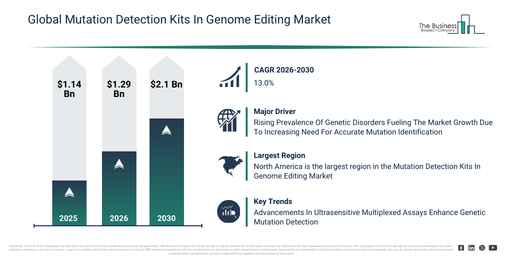
    The market for mutation detection kits used in genome editing has experienced swift expansion over recent years. Valued at $1.14 billion in 2025, this sector is projected to reach $1.29 billion by 2026, representing a compound annual growth rate (CAGR) of 13.2%. Historical growth has been driven by factors such as restricted access to mutation detection kits, dependence on manual and conventional detection methods, a rise in genome editing research, an increasing need for precise validation instruments, and the utilization of fundamental nucleic acid reagents.

    Over the coming years, the global market for mutation detection kits used in genome editing is anticipated to experience significant expansion. Projections indicate a rise to $2.1 billion by 2030, fueled by a compound annual growth rate (CAGR) of 13.0%. This upward trajectory in the forecast period is driven by factors such as the creation of sophisticated CRISPR-centric mutation validation kits, heightened investment in next-generation sequencing technologies, the growing availability of cloud-based bioinformatics tools, broader applications within clinical diagnostics and personalized medicine, and the incorporation of AI-driven data interpretation systems. Key developments expected during this timeframe involve a greater preference for mutation detection kits based on PCR and next-generation sequencing methods, the more frequent application of CRISPR mutation validation instruments in genome editing studies, the emergence of software platforms tailored for genomic data analysis and visualization, a wider scope for mutation detection within drug development and clinical diagnostics, and the combination of cloud-based bioinformatics frameworks designed to facilitate instantaneous data interpretation.

    Download A Free Sample Report For Comprehensive Market Insights:

    https://www.thebusinessresearchcompany.com/sample.aspx?id=27356&type=smp&utm_source=BlogsPR&utm_medium=Paid&utm_campaign=Jul_PR

    Mutation Detection Kits In Genome Editing Market Growth Factors Supporting Long-Term Expansion

    The growing occurrence of genetic disorders is anticipated to boost the expansion of mutation detection kits within the genome editing market. These disorders are conditions resulting from DNA abnormalities, often inherited or arising from fresh genetic mutations, with their increasing prevalence fueled by heightened awareness and improved diagnostic tools that facilitate earlier and more precise detection, subsequently raising reported case numbers. Such kits are instrumental in addressing these disorders by pinpointing disease-related gene mutations, which supports focused research and the creation of exact therapeutic solutions. For example, as reported by the National Health Service, a UK government agency, in May 2024, approximately 17,000 individuals in England suffer from sickle cell disease, an inherited blood condition, with roughly 250 new diagnoses annually. Hence, the escalating frequency of genetic disorders is propelling demand for mutation detection kits in the genome editing market.

    Mutation Detection Kits In Genome Editing Market Segment Analysis: What Are The Major Market Categories?

    The mutation detection kits in genome editing market covered in this report is segmented –

    1) By Product Type: Reagents, Kits, Software Solutions

    2) By Technology: Clustered Regularly Interspaced Short Palindromic Repeats (CRISPR), Transcription Activator-Like Effector Nucleases Or Meganuclease-TAL Effector Nucleases (TALENs/MegaTALs), Zinc Finger Nucleases (ZFN), Other Technologies

    3) By Application: Research, Clinical Diagnostics, Drug Development, Other Applications

    4) By End Use: Academic Institutions, Hospitals And Diagnostic Centers, Biotechnology Companies

    Subsegments:

    1) By Reagents: Deoxyribonucleic Acid Polymerases (DNA) Polymerases, Nucleases, Buffers And Enzymes, Fluorescent Dyes And Probes, Primers And Oligonucleotides

    2) By Kits: Polymerase Chain Reaction (PCR)-Based Mutation Detection Kits, Next-Generation Sequencing-Based Mutation Analysis Kits, Clustered Regularly Interspaced Short Palindromic Repeats (CRISPR) Mutation Validation Kits, Gel Electrophoresis-Based Detection Kits

    3) By Software Solutions: Mutation Analysis And Visualization Tools, Clustered Regularly Interspaced Short Palindromic Repeats (CRISPR) Off-Target Prediction Software, Genomic Alignment and Annotation Software, Data Interpretation Platforms For Next-Generation Sequencing, Cloud-Based Bioinformatics Platforms

    Mutation Detection Kits In Genome Editing Market Industry Trends Shaping Future Revenue Growth

    Leading firms within the genome editing mutation detection kit market are prioritizing the creation of sophisticated tools, like ultrasensitive multiplexed assays, to boost the accuracy, speed, and sensitivity of genetic mutation identification. These assays represent advanced diagnostic solutions capable of concurrently detecting and quantifying various genetic mutations, even at extremely low concentrations, thus empowering researchers and clinicians to conduct faster, more precise, and thorough mutation assessments that enhance disease diagnosis and treatment oversight. A case in point is Bio-Rad Laboratories Inc., a US-based research enterprise, which unveiled the ddPLEX ESR1 Mutation Detection Kit in April 2024. This kit is a highly sensitive multiplexed digital PCR assay tailored for detecting breast cancer mutations, allowing simultaneous identification and exact measurement of seven distinct ESR1 mutations with an analytical sensitivity down to a 0.01% variant allele fraction, and it accommodates both plasma and tissue sample analyses. These advancements highlight the industry’s dedication to refining diagnostic precision and facilitating more effective disease surveillance and individualized therapeutic approaches.

    Mutation Detection Kits In Genome Editing Market Leading Companies Driving Competitive Growth

    Major companies operating in the mutation detection kits in genome editing market are F. Hoffmann-La Roche Ltd, Merck KGaA, Thermo Fisher Scientific Inc., QIAGEN N.V., Eurofins Scientific SE, Agilent Technologies Inc., Illumina Inc., Bio-Rad Laboratories Inc., Integrated DNA Technologies Inc., GenScript Biotech Corporation, Takara Bio Inc., Promega Corporation, Analytik Jena AG, Twist Bioscience Corporation, New England Biolabs Inc., Applied Biological Materials Inc., Synthego Corporation, BioVision Inc., Creative Biogene Corporation

    Access The Complete Mutation Detection Kits In Genome Editing Market Report:

    https://www.thebusinessresearchcompany.com/report/mutation-detection-kits-in-genome-editing-global-market-report?utm_source=BlogsPR&utm_medium=Paid&utm_campaign=Jul_PR

    Mutation Detection Kits In Genome Editing Market Global Footprint: Which Region Holds Market Leadership?

    North America was the largest region in the mutation detection kits in genome editing market in 2025. Asia-Pacific is expected to be the fastest-growing region in the forecast period. The regions covered in the mutation detection kits in genome editing market report are Asia-Pacific, South East Asia, Western Europe, Eastern Europe, North America, South America, Middle East, Africa.

    Get in touch with us:

    The Business Research Company: https://www.thebusinessresearchcompany.com/?utm_source=BlogsPR&utm_medium=Paid&utm_campaign=home_page_test

    Americas: +1 310-496-7795

    Asia: +44 7882 955267 & +91 8897263534

    Europe: +44 7882 955267

    Email us at: marketing@tbrc.info

    Follow us on:

    LinkedIn: https://in.linkedin.com/company/the-business-research-company

    YouTube: https://www.youtube.com/channel/UC24_fI0rV8cR5DxlCpgmyFQ

    Global Market Model: https://www.thebusinessresearchcompany.com/global-market-model
  • Muscle Relaxant Drugs Market Forecast Signals New Revenue Opportunities Through 2030

    Muscle Relaxant Drugs Market Forecast Signals New Revenue Opportunities Through 2030

    Delivering more actionable and strategically valuable research, The Business Research Company’s 2026 market reports feature market attractiveness analysis, total addressable market evaluation, company benchmarking matrices, interactive Excel dashboards, expanded supply chain intelligence, emerging startup coverage, and detailed product insights.

    Muscle Relaxant Drugs Market Value Expansion And Long-Term Growth Outlook

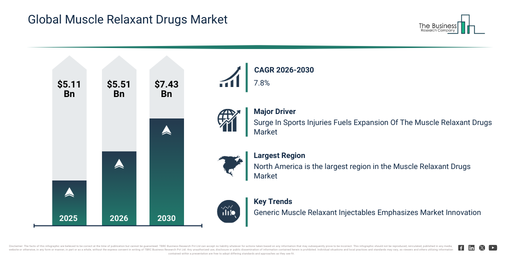
    The muscle relaxant drugs market has experienced robust expansion in recent years, with projections indicating an increase from $5.11 billion in 2025 to $5.51 billion in 2026, representing a compound annual growth rate (CAGR) of 7.8%. This historical growth has been driven by a higher incidence of musculoskeletal disorders, an uptick in back pain and muscle injuries, more frequent hospital visits for neurological conditions, an expanded hospital infrastructure, and improvements in both oral and injectable formulations.

    The muscle relaxant drugs market is projected to undergo robust expansion in the coming years. By 2030, its value is anticipated to reach $7.43 billion, reflecting a compound annual growth rate (CAGR) of 7.8%. This forecasted growth is driven by several key factors, including the growing uptake of homecare services and telemedicine, an increased focus on personalized medicine and precision therapy, a rising elderly population, new developments in targeted neuromuscular drugs, and the growth of emerging markets in Asia-Pacific and Latin America. Noteworthy trends expected to shape the forecast period comprise a greater shift toward non-opioid muscle relaxants, heightened demand for tailored therapies for muscle disorders, the proliferation of at-home muscle relaxation treatments, broader availability of injectable and topical formulations, and a higher level of public awareness regarding musculoskeletal health.

    Download A Free Sample Report For Comprehensive Market Insights:

    https://www.thebusinessresearchcompany.com/sample.aspx?id=8751&type=smp&utm_source=BlogsPR&utm_medium=Paid&utm_campaign=Jul_PR

    Muscle Relaxant Drugs Market Demand Drivers Creating New Revenue Opportunities

    The rising incidence of sports injuries is anticipated to fuel expansion in the muscle relaxant drugs market moving forward. Sports injuries encompass a wide variety of physical damages resulting from involvement in athletic or recreational pursuits, affecting structures such as muscles, bones, tendons, ligaments, and joints. Muscle relaxants, frequently utilized to address muscle spasms and injury-related discomfort, work by acting on the central nervous system to reduce muscle tightness and promote relaxation. As an example, data from Injury Facts published in 2024 by the National Safety Council, a U.S.-based organization focused on public health and safety, showed that emergency department visits due to sports and recreational equipment injuries climbed by 12% in 2022, increased by an additional 2% in 2023, and skyrocketed by 17% in 2024, with an estimated 4.4 million individuals receiving care that year. Consequently, this growing number of sports injuries is set to drive demand for muscle relaxant pharmaceuticals.

    Muscle Relaxant Drugs Market Segment Breakdown: Which Categories Generate The Most Revenue?

    The muscle relaxant drugs market covered in this report is segmented –

    1) By Drug Type: Facial Muscle Relaxant Drugs, Skeletal Muscle Relaxant Drugs, Neuromuscular Blocking Agents

    2) By Formulation: Cyclobenzaprine, Carisoprodol, Chlorzoxazone, Metaxalone, Methocarbamol, Baclofen, Tizanidine, Orphenadrine, Dantrolene

    3) By Route Of Administration: Oral, Injectable, Spray, Ointment

    4) By End-User: Hospitals, Homecare, Specialty Clinics, Other End-Users

    Subsegments:

    1) By Facial Muscle Relaxant Drugs: Botulinum Toxin, Dysport, Xeomin

    2) By Skeletal Muscle Relaxant Drugs: Centrally Acting Muscle Relaxants, Peripherally Acting Muscle Relaxants

    3) By Neuromuscular Blocking Agents: Non-Depolarizing Agents, Depolarizing Agents

    Muscle Relaxant Drugs Market Trends Driving Strategic Industry Expansion

    Leading players in the muscle relaxant drug industry are prioritizing the creation of new offerings, like generic injectable muscle relaxants, to secure a market edge and improve cost-effectiveness. These generic injectables represent affordable, unbranded medications delivered via injection, featuring the same active components as their brand-name equivalents. For example, in November 2023, Lupin Limited, a pharmaceutical firm based in India, introduced Rocuronium Bromide Injection in 50 mg/5 mL and 100 mg/10 mL multiple-dose vial formats. This product release followed the Abbreviated New Drug Application (ANDA) clearance obtained by Lupin’s collaboration partner, Caplin Steriles Limited, from the U.S. Food and Drug Administration (FDA). This newly launched generic option provides a substitute for Organon USA Inc.’s Zemuron Injection, aimed at inducing skeletal muscle relaxation during surgical procedures or mechanical ventilation. Designed for use with both hospitalized and outpatient individuals, it supports general anesthesia by enabling prompt sequence and routine tracheal intubation.

    Muscle Relaxant Drugs Market Key Players And Strategic Industry Positioning

    Major companies operating in the muscle relaxant drugs market are Pfizer Inc., Ipsen Pharma SA, Par Pharmaceutical Companies Inc., Novartis AG, Accord Healthcare Ltd., Amneal Pharmaceuticals LLC, Aurobindo Pharma Ltd., Mylan NV, Hikma Pharmaceuticals PLC, Akorn Incorporated, Merck & Co. Inc., Teva Pharmaceuticals Industries Ltd., Dr. Reddy’s Laboratories, Lannett Company Inc., Unichem Laboratories, Endo Pharmaceuticals Inc., Abbvie Inc., Merz Pharmaceuticals LLC, Vertical Pharmaceuticals LLC, Mallinckrodt Pharmaceuticals, Eisai Co. Ltd., Sun Pharmaceutical Industries Ltd., Cadila Healthcare Ltd., Torrent Pharmaceuticals Ltd., Alembic Pharmaceuticals Ltd., Wockhardt Ltd., Glenmark Pharmaceuticals Ltd., Cipla Ltd., Lupin Ltd., Intas Pharmaceuticals Ltd., Alkem Laboratories Ltd.

    Access The Complete Muscle Relaxant Drugs Market Report:

    https://www.thebusinessresearchcompany.com/report/muscle-relaxant-drugs-global-market-report?utm_source=BlogsPR&utm_medium=Paid&utm_campaign=Jul_PR

    Muscle Relaxant Drugs Market Regional Distribution: Which Areas Drive Market Expansion?

    North America was the largest region in the muscle relaxant drugs market share in 2025. The regions covered in the muscle relaxant drugs market report are Asia-Pacific, South East Asia, Western Europe, Eastern Europe, North America, South America, Middle East, Africa.

    Get in touch with us:

    The Business Research Company: https://www.thebusinessresearchcompany.com/?utm_source=BlogsPR&utm_medium=Paid&utm_campaign=home_page_test

    Americas: +1 310-496-7795

    Asia: +44 7882 955267 & +91 8897263534

    Europe: +44 7882 955267

    Email us at: marketing@tbrc.info

    Follow us on:

    LinkedIn: https://in.linkedin.com/company/the-business-research-company

    YouTube: https://www.youtube.com/channel/UC24_fI0rV8cR5DxlCpgmyFQ

    Global Market Model: https://www.thebusinessresearchcompany.com/global-market-model
  • Multivitamin Capsules And Tablets Market Growth Is Accelerating As Industry Transformation Continues

    Multivitamin Capsules And Tablets Market Growth Is Accelerating As Industry Transformation Continues

    Enhanced with market attractiveness analysis, total addressable market evaluation, company benchmarking matrices, interactive Excel dashboards, expanded supply chain intelligence, emerging startup coverage, and detailed product insights, The Business Research Company’s 2026 market reports deliver more actionable and strategically valuable research.

    Multivitamin Capsules And Tablets Market Expected To Reach $40.59 Billion By 2030 At 6.2% CAGR

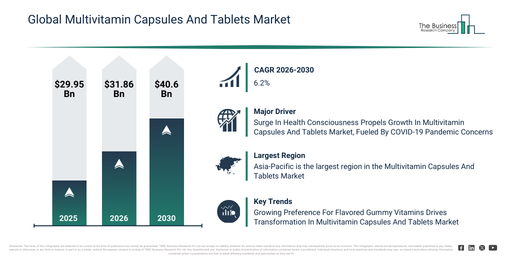
    The market for multivitamin capsules and tablets has experienced robust expansion over the past few years. Projections indicate it will increase from $29.95 billion in 2025 to $31.86 billion in 2026, reflecting a compound annual growth rate (CAGR) of 6.3%. This historical growth has been driven by factors such as heightened health awareness, a greater frequency of vitamin deficiencies, the widening reach of retail pharmacy chains, rising consumer interest in immune-supporting supplements, and the growing proportion of elderly individuals.

    The multivitamin capsules and tablets market is projected to experience robust expansion over the coming years. By 2030, its value is anticipated to reach $40.6 billion, driven by a compound annual growth rate (CAGR) of 6.2%. This forecasted growth is fueled by several key factors, including the rising adoption of personalized supplements, increased utilization of e-commerce platforms, a heightened emphasis on preventive healthcare, advancements in bioavailable vitamin formulations, and the broadening of prenatal and pediatric multivitamin product lines. Notable trends shaping this period encompass personalized nutrition solutions, growing awareness of micronutrient deficiencies, the development of fortified multivitamin products tailored to specific age groups, the proliferation of online and e-commerce sales channels, and the integration of herbal and natural ingredients.

    Download A Free Sample Report For Comprehensive Market Insights:

    https://www.thebusinessresearchcompany.com/sample.aspx?id=5299&type=smp&utm_source=BlogsPR&utm_medium=Paid&utm_campaign=Jul_PR

    Multivitamin Capsules And Tablets Market Expansion Supported By Key Demand Factors

    A growing awareness of personal health and wellness among people is fueling the demand for multivitamin capsules and tablets. These supplements, frequently recommended by healthcare providers, are used to prevent or treat vitamin deficiencies resulting from inadequate nutrition, specific medical conditions, or pregnancy, as they supply a blend of vitamins naturally present in food and other sources. Additionally, heightened health concerns linked to the COVID-19 pandemic have further boosted the popularity of multivitamins. For example, in 2024, the International Food Information Council, a nonprofit based in the US, reported that the proportion of consumers aiming to boost their protein intake rose steadily, climbing from 59% in 2022 to 67% in 2023, and reaching 71% in 2024. Consequently, this escalating emphasis on health is anticipated to propel growth in the multivitamin capsule and tablet market over the forecast period.

    Multivitamin Capsules And Tablets Market Segmentation: How Is The Market Structured Across Key Categories?

    The multivitamin capsules and tablets market covered in this report is segmented –

    1) By Type: Multivitamins Tablets, Multivitamins Capsules

    2) By Distribution Channel: Store Based, Non-Store Based

    3) By Application: Energy And Weight Management, General Health, Bone And Joint Health, Gastrointestinal Health, Immunity, Cardiac Health, Diabetes, Anti-Cancer, Other Applications

    4) By End User: Adults, Geriatric, Pregnant Women, Children, Infants

    Subsegments:

    1) By Multivitamins Tablets: Chewable Tablets, Effervescent Tablets, Coated Tablets, Standard Tablets

    2) By Multivitamins Capsules: Softgel Capsules, Hard Capsules, Liquid-Filled Capsules

    Multivitamin Capsules And Tablets Market Growth Trends Influencing Competitive Dynamics

    In the multivitamin capsules and tablets market, prominent companies are placing a strong emphasis on creating advanced product formats, with flavored gummy vitamins emerging as a key innovation designed to improve user convenience, taste satisfaction, and the overall experience of taking supplements. These flavored gummy varieties are crafted to attract individuals across different age groups while also catering to various dietary requirements and specific health issues. A notable example of this trend occurred in May 2023, when SmartyPants Vitamins, a U.S.-based firm specializing in gummy multivitamins, introduced a fresh range of gelatin-free multivitamin gummies that became available for purchase at Walmart. These particular gummies utilize pectin sourced from citrus fruits and apples, which makes them an appropriate choice for individuals who follow a vegetarian lifestyle or who choose to avoid gelatin for reasons related to their diet or faith. Furthermore, the company’s Kids & Toddler gummy formula is designed to contain significantly less sugar compared to many of the leading competing products, thus providing a more health-conscious alternative without compromising on flavor or the product’s overall appeal to consumers.

    Multivitamin Capsules And Tablets Market Competitive Landscape And Leading Companies

    Major companies operating in the multivitamin capsules and tablets market are Abbott Laboratories, Otsuka Holdings Co., GlaxoSmithKline Plc, Bayer, Natures Bounty Co., Glanbia Plc, Nu Skin Entreprises, Arkopharma, Nutramarks, Nestle S.A, Usana Health Sciences Inc, Lasons India Pvt. Ltd, VOOST, Berocca, Blackmores, Swisse, Nature’s Way, Centrum, Cenovis, MuscleBlaze MB-Vite, HK Vitals, Rainbow Light, One A Day Men’s Multivitamin, Zhejiang NHU, Simply Supplements, Evolution Organics, Nutri-Link, BioCare, Solgar, Evalar, Biovea, Herbalife Ltd, NBTY Inc, Forever Living, Grupo Omnilife, Shaklee Corporation, American Health Inc, Atrium Innovations, NOW Foods, HealthVit, Nature Made, GNC Holdings Inc, Vital Health Foods, Vitabiotics Ltd, SA Natural Products, Beauty Gen, BSN, Grenade, Nature’s Nutrition, PharmaFreak

    Access The Complete Multivitamin Capsules And Tablets Market Report:

    https://www.thebusinessresearchcompany.com/report/multivitamin-capsules-and-tablets-global-market-report?utm_source=BlogsPR&utm_medium=Paid&utm_campaign=Jul_PR

    Multivitamin Capsules And Tablets Market Leading Geography: Which Region Generates The Most Revenue?

    Asia-Pacific was the largest region in the multivitamin capsules and tablets market in 2025. North America was the second-largest market in the multivitamin capsules and tablets market. The regions covered in the multivitamin capsules and tablets market report are Asia-Pacific, South East Asia, Western Europe, Eastern Europe, North America, South America, Middle East, Africa.

    Get in touch with us:

    The Business Research Company: https://www.thebusinessresearchcompany.com/?utm_source=BlogsPR&utm_medium=Paid&utm_campaign=home_page_test

    Americas: +1 310-496-7795

    Asia: +44 7882 955267 & +91 8897263534

    Europe: +44 7882 955267

    Email us at: marketing@tbrc.info

    Follow us on:

    LinkedIn: https://in.linkedin.com/company/the-business-research-company

    YouTube: https://www.youtube.com/channel/UC24_fI0rV8cR5DxlCpgmyFQ

    Global Market Model: https://www.thebusinessresearchcompany.com/global-market-model
  • Multivalent Vaccines Market Outlook Highlights The Next Major Growth Opportunities

    Multivalent Vaccines Market Outlook Highlights The Next Major Growth Opportunities

    Through market attractiveness analysis, total addressable market evaluation, company benchmarking matrices, interactive Excel dashboards, expanded supply chain intelligence, emerging startup coverage, and detailed product insights, The Business Research Company’s 2026 market reports provide more actionable and strategically valuable research.

    Multivalent Vaccines Market Size And Revenue Forecast Through 2030

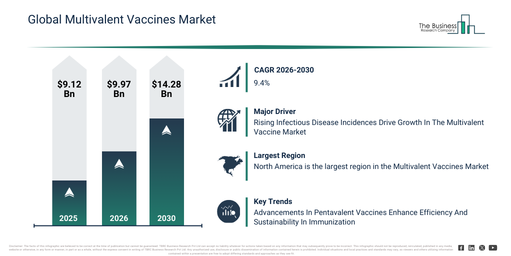
    The market for multivalent vaccines has experienced robust expansion in recent years. Projected figures indicate a rise from $9.12 billion in 2025 to $9.97 billion in 2026, reflecting a compound annual growth rate (CAGR) of 9.4%. Several factors drove this historical growth, including worldwide immunization efforts, a significant prevalence of infectious diseases, government-led vaccination initiatives, upgrades to cold chain systems, and heightened public health education campaigns.

    The multivalent vaccines market is anticipated to experience robust expansion in the coming years, with projections reaching $14.28 billion by 2030, reflecting a compound annual growth rate (CAGR) of 9.4%. This forecasted growth is driven by heightened attention to pandemic readiness, a growing proportion of elderly individuals, advances in recombinant vaccine development, broader implementation of universal immunization initiatives, and increased healthcare investments. Key trends shaping this period include a heightened preference for broad-spectrum immunization, a stronger emphasis on combination vaccines, the extension of both pediatric and geriatric vaccination programs, a rising uptake of preventive healthcare approaches, and augmented funding for vaccine research and development pipelines.

    Download A Free Sample Report For Comprehensive Market Insights:

    https://www.thebusinessresearchcompany.com/sample.aspx?id=19120&type=smp&utm_source=BlogsPR&utm_medium=Paid&utm_campaign=Jul_PR

    Multivalent Vaccines Market Growth Drivers And Industry Catalysts

    The growing frequency of infectious disease outbreaks is anticipated to boost the multivalent vaccines market in the coming years. Infectious diseases are those caused by bacteria, viruses, fungi, or parasites, and they can be transmitted via direct contact, contaminated surfaces, air, or water. This rise in cases is largely fueled by increased global travel, which facilitates the rapid spread of pathogens across different regions. The multivalent vaccines market aids in disease prevention by providing vaccines that target multiple strains of a pathogen in a single shot, thereby minimizing the need for separate immunizations and enhancing herd immunity. For example, in April 2024, TravelHealthPro, a UK-based travel health resource supported by the UK Health Security Agency, reported that the UK saw 2,004 malaria cases in 2023, compared to 1,369 imported cases in 2022. Consequently, the increasing incidence of infectious diseases is propelling the expansion of the multivalent vaccines market.

    Multivalent Vaccines Market Segmentation Trends And Revenue Drivers

    The multivalent vaccines market covered in this report is segmented –

    1) By Type: Conjugate Vaccines, Inactivated And Subunit Vaccines, Live Attenuated Vaccines, Toxoid Vaccines, Recombinant Vaccines

    2) By Disease: Influenza, Pneumonia, Hepatitis, Meningitis, Rotavirus

    3) By Route Of Administration: Oral, Injectable

    4) By Age Group: Pediatrics, Adults, Geriatrics

    5) By Distribution Channel: Hospital Pharmacies, Retail Pharmacies, Online Pharmacies

    Subsegments:

    1) By Conjugate Vaccines: Polysaccharide Conjugate Vaccines, Protein Conjugate Vaccines

    2) By Inactivated And Subunit Vaccines: Inactivated Whole Virus Vaccines, Subunit Protein Vaccines, Virus-Like Particle Vaccines

    3) By Live Attenuated Vaccines: Live Attenuated Bacterial Vaccines, Live Attenuated Viral Vaccines

    4) By Toxoid Vaccines: Diphtheria Toxoid Vaccines, Tetanus Toxoid Vaccines

    5) By Recombinant Vaccines: Recombinant Protein Vaccines, Recombinant DNA Vaccines

    Multivalent Vaccines Market Trends Influencing Long-Term Demand

    Leading players in the multivalent vaccines market are prioritizing the creation of next-generation pentavalent vaccines aimed at broadening immunization coverage, streamlining vaccination schedules, and enhancing population health outcomes. These pentavalent vaccines are multivalent formulations specifically engineered to guard against five different pathogens within a single shot, thereby cutting down the number of injections needed, boosting patient adherence, and smoothing out the execution of vaccination programs. A concrete example is Panacea Biotec Ltd., an Indian biotech firm, which introduced EasyFourPol in December 2023. This is recognized as the world’s initial completely liquid pentavalent vaccine, offering protection from diphtheria, tetanus, pertussis, polio, and Haemophilus influenzae Type B. Its ready-to-use format removes any preparatory steps for medical staff, lowers the frequency of clinic visits and related immunization expenses, and lessens environmental strain by decreasing the demand for extra vials, syringes, and packaging.

    Multivalent Vaccines Market Industry Leaders: Which Organizations Are Driving Competition?

    Major companies operating in the multivalent vaccines market are Pfizer Inc., Merck & Co. Inc., Sanofi SA, GlaxoSmithKline plc, Novartis AG, CSL Seqirus, Zydus Lifesciences Limited, Sinovac Biotech Ltd., GC Biopharma Corp., Serum Institute of India Pvt. Ltd., Indian Immunologicals Ltd., Bavarian Nordic, Panacea Biotec Ltd., VBI Vaccines Inc., WestVac Biopharma Co. Ltd., Emergent BioSolutions Inc., Moderna Inc., BioNTech SE, Abbott Laboratories, Boehringer Ingelheim International GmbH

    Access The Complete Multivalent Vaccines Market Report:

    https://www.thebusinessresearchcompany.com/report/multivalent-vaccines-global-market-report?utm_source=BlogsPR&utm_medium=Paid&utm_campaign=Jul_PR

    Multivalent Vaccines Market Regional Outlook: Where Are The Largest Opportunities Located?

    North America was the largest region in the multivalent vaccines market in 2025. The regions covered in the multivalent vaccines market report are Asia-Pacific, South East Asia, Western Europe, Eastern Europe, North America, South America, Middle East, Africa.

    Get in touch with us:

    The Business Research Company: https://www.thebusinessresearchcompany.com/?utm_source=BlogsPR&utm_medium=Paid&utm_campaign=home_page_test

    Americas: +1 310-496-7795

    Asia: +44 7882 955267 & +91 8897263534

    Europe: +44 7882 955267

    Email us at: marketing@tbrc.info

    Follow us on:

    LinkedIn: https://in.linkedin.com/company/the-business-research-company

    YouTube: https://www.youtube.com/channel/UC24_fI0rV8cR5DxlCpgmyFQ

    Global Market Model: https://www.thebusinessresearchcompany.com/global-market-model
  • Multiple Sclerosis Treatment Market Trends And Growth Drivers Point To Strong Future Potential

    Multiple Sclerosis Treatment Market Trends And Growth Drivers Point To Strong Future Potential

    Delivering more actionable and strategically valuable research, The Business Research Company’s 2026 market reports feature market attractiveness analysis, total addressable market evaluation, company benchmarking matrices, interactive Excel dashboards, expanded supply chain intelligence, emerging startup coverage, and detailed product insights.

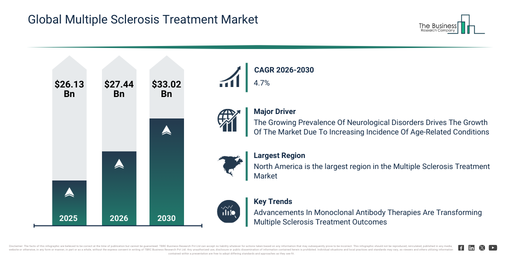
    Multiple Sclerosis Treatment Market Growth From $27.44 Billion In 2026 To $33.01 Billion By 2030 At A CAGR Of 4.7%

    In recent years, the multiple sclerosis treatment market has experienced robust growth. It is projected to increase from $26.13 billion in 2025 to $27.44 billion in 2026, achieving a compound annual growth rate (CAGR) of 5.0%. This historical expansion can be linked to progress in autoimmune disease research, the creation of injectable MS therapies, the growth of neurology clinics, the provision of hospital-based treatments, and the advancement of biologics.

    The multiple sclerosis treatment market is projected to experience sustained expansion over the coming years, with an anticipated increase to $33.02 billion by 2030, reflecting a compound annual growth rate (CAGR) of 4.7%. This upward trajectory in the forecast period is driven by factors such as the growing uptake of oral therapies, a shift toward home-based care for MS, emphasis on long-term disease management, advancements in imaging diagnostics, and the development of personalized immunotherapies. Key developments shaping this period include the broadening range of disease-modifying therapies, the rising availability of oral MS medications, a heightened focus on early detection, increased utilization of monoclonal antibodies, and the adoption of tailored treatment strategies.

    Download A Free Sample Report For Comprehensive Market Insights:

    https://www.thebusinessresearchcompany.com/sample.aspx?id=24612&type=smp&utm_source=BlogsPR&utm_medium=Paid&utm_campaign=Jul_PR

    Multiple Sclerosis Treatment Market Opportunity Drivers: What Is Creating New Revenue Potential?

    The anticipated expansion of the multiple sclerosis treatment market is significantly driven by the increasing incidence of neurological disorders. These conditions impact the brain, spinal cord, and peripheral nerves, often causing impairments in movement, communication, behavior, or essential bodily functions. Their rising frequency is largely attributed to an aging global population, where extended lifespans elevate the susceptibility to age-linked diseases like Alzheimer’s. By modulating the immune system to curb inflammation, shield nerves from damage, and ease symptoms, multiple sclerosis therapies play a crucial role in managing such disorders and enhancing patients’ quality of life. Data from the World Federation of Neurology, a UK-based organization representing national neurological societies, revealed in October 2023 that over 40% of people worldwide are currently affected by a neurological condition, with projections indicating that this figure could nearly double by 2050. Consequently, this surge in neurological disorders is actively fueling growth in the multiple sclerosis treatment market.

    Multiple Sclerosis Treatment Market Segment Analysis Highlighting Growth Areas

    The multiple sclerosis treatment market covered in this report is segmented –

    1) By Treatment Type: Immunomodulators, Corticosteroids, Symptomatic Treatments, Monoclonal Antibodies, Oral Therapies

    2) By DiseaseType: Clinically Isolated Syndrome, Relapse-Remitting Multiple Sclerosis, Primary Progressive Multiple Sclerosis, Secondary Progressive Multiple Sclerosis

    3) By Route Of Administration: Oral, Injectable, Intravenous

    4) By Distribution Channel: Hospital Pharmacies, Retail Pharmacies, Online Pharmacies

    5) By End-Users: Hospitals, Specialty Clinics, Homecare, Other End-Users

    Subsegments:

    1) By Immunomodulators: Interferon Beta-1A, Interferon Beta-1B, Glatiramer Acetate

    2) By Corticosteroids: Methylprednisolone, Prednisone, Dexamethasone

    3) By Symptomatic Treatments: Muscle Relaxants, Antidepressants, Anticonvulsants, Bladder Dysfunction Drugs

    4) By Monoclonal Antibodies: Natalizumab, Ocrelizumab, Alemtuzumab, Ofatumumab

    5) By Oral Therapies: Fingolimod, Dimethyl Fumarate, Teriflunomide, Cladribine, Siponimod

    Multiple Sclerosis Treatment Market Innovation Trends Driving Future Development

    Major players in the multiple sclerosis treatment market are creating innovative products, including monoclonal antibody medications, to boost therapeutic effectiveness and enhance patient results. Monoclonal antibody drugs are artificially produced molecules engineered to bind to specific antigens; in the context of multiple sclerosis, they work by decreasing inflammation and stopping immune cells from attacking nerve fibers, thus controlling disease advancement. As an example, in February 2024, Roche Pharma India, a pharmaceutical firm based in India, launched Ocrevus (Ocrelizumab) for managing multiple sclerosis (MS). This medication targets CD20-positive B cells, thereby lessening inflammation and nerve injury in MS. It stands as the initial authorized treatment for both relapsing and primary progressive forms of MS, markedly cutting relapse frequencies and slowing disability progression, while offering the benefit of infusions administered twice a year.

    Multiple Sclerosis Treatment Market Leading Companies: Who Holds Significant Market Presence?

    Major companies operating in the multiple sclerosis treatment market are Biogen Inc., F. Hoffmann-La Roche Ltd, Novartis AG, Bayer AG, Teva Pharmaceutical Industries Ltd, Sanofi Genzyme, Merck KGaA, Bristol Myers Squibb, AbbVie Inc., Johnson & Johnson (Janssen), TG Therapeutics Inc., Acorda Therapeutics Inc., Takeda Pharmaceutical Company Ltd, Mitsubishi Tanabe Pharma Corporation, Chugai Pharmaceutical Co. Ltd., Pfizer Inc., Almirall S.A., Otsuka Pharmaceutical Co. Ltd., Apitope International NV, BrainStorm Cell Therapeutics Inc., Roche Diagnostics, InnoCare Pharma, NervGen Pharma Corp., Receptos Inc., Biogen Idec International GmbH, MedDay Pharmaceuticals SA, Genentech Inc., Roche Holding AG

    Access The Complete Multiple Sclerosis Treatment Market Report:

    https://www.thebusinessresearchcompany.com/report/multiple-sclerosis-treatment-global-market-report?utm_source=BlogsPR&utm_medium=Paid&utm_campaign=Jul_PR

    Multiple Sclerosis Treatment Market Geographic Landscape: Which Region Dominates Industry Growth?

    North America was the largest region in the multiple sclerosis treatment market in 2025. Asia-Pacific is expected to be the fastest-growing region in the forecast period. The regions covered in the multiple sclerosis treatment market report are Asia-Pacific, South East Asia, Western Europe, Eastern Europe, North America, South America, Middle East, Africa.

    Get in touch with us:

    The Business Research Company: https://www.thebusinessresearchcompany.com/?utm_source=BlogsPR&utm_medium=Paid&utm_campaign=home_page_test

    Americas: +1 310-496-7795

    Asia: +44 7882 955267 & +91 8897263534

    Europe: +44 7882 955267

    Email us at: marketing@tbrc.info

    Follow us on:

    LinkedIn: https://in.linkedin.com/company/the-business-research-company

    YouTube: https://www.youtube.com/channel/UC24_fI0rV8cR5DxlCpgmyFQ

    Global Market Model: https://www.thebusinessresearchcompany.com/global-market-model
  • Multiple Sclerosis Drugs Market Expansion Is Reshaping Competitive Dynamics Across The Industry

    Multiple Sclerosis Drugs Market Expansion Is Reshaping Competitive Dynamics Across The Industry

    Enhanced with market attractiveness analysis, total addressable market evaluation, company benchmarking matrices, interactive Excel dashboards, expanded supply chain intelligence, emerging startup coverage, and detailed product insights, The Business Research Company’s 2026 market reports deliver more actionable and strategically valuable research.

    Multiple Sclerosis Drugs Market Expansion Outlook: What Revenue Opportunities Lie Ahead?

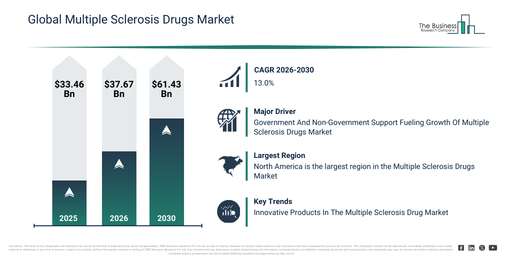
    The market for multiple sclerosis medications has seen significant expansion in recent years. Projected to climb from $33.46 billion in 2025 to $37.67 billion in 2026, it demonstrates a compound annual growth rate (CAGR) of 12.6%. This historical growth can be accounted for by factors such as constrained access to MS treatments, a rising incidence of multiple sclerosis, heightened awareness among both patients and healthcare providers, sustained dependence on interferon-based therapies, and the broader reach of hospital and retail pharmacy outlets.

    The market for multiple sclerosis drugs is projected to experience significant expansion over the coming years, with an estimated value of $61.43 billion by 2030, reflecting a compound annual growth rate (CAGR) of 13.0%. This predicted growth during the forecast period is driven by several factors, including the creation of innovative monoclonal antibodies, the broader availability of oral disease-modifying therapies, the application of personalized medicine approaches in MS care, increased funding for research and development of new treatments, as well as the growing utilization of digital health monitoring tools and telemedicine platforms. Key trends shaping this period comprise the rising use of disease-modifying therapies for multiple sclerosis, the advancement of customized and targeted MS treatment strategies, the widening of distribution networks through hospital and retail pharmacies, a growing inclination toward oral and parenteral administration methods, and the introduction of new immunomodulators, immunosuppressants, and monoclonal antibodies.

    Download A Free Sample Report For Comprehensive Market Insights:

    https://www.thebusinessresearchcompany.com/sample.aspx?id=2817&type=smp&utm_source=BlogsPR&utm_medium=Paid&utm_campaign=Jul_PR

    Multiple Sclerosis Drugs Market Growth Momentum: Which Factors Are Influencing Demand?

    The expansion of the multiple sclerosis drugs market is bolstered by backing from both governmental and non-governmental entities. Various schemes and programs are financed by these organizations to improve the quality of life for individuals affected by multiple sclerosis (MS). As an example, the government of Alberta, alongside the Department of Economic Development, Trade, and Tourism in Canada, allocated $1 million to support the Canadian Prospective Cohort Study to Understand Progression in Multiple Sclerosis (CanProCo), aiming to advance research and innovations that deepen understanding and treatment of MS. CanProCo brings together around 50 MS researchers from diverse fields across Canada. Additional funding from the Canada Brain Research, Biogen Canada, the MS Society of Canada, and Hoffmann-La Roche Limited (Roche Canada) raised a total of $10 million. Such substantial financial assistance from government and non-government sources drives the growth of the multiple sclerosis drugs market.

    Multiple Sclerosis Drugs Market Segment Performance And Strategic Opportunities

    The multiple sclerosis drugs market covered in this report is segmented –

    1) By Drug Class: Immunomodulators, Immunosuppressants, Interferons, Other Drug Classes

    2) By Distribution Channels: Hospital Pharmacy, Retail Pharmacy, Online Stores

    3) By Route Of Administration: Oral Drugs, Parenteral Drugs

    Subsegments:

    1) By Immunomodulators: Glatiramer Acetate, Fingolimod, Teriflunomide, Dimethyl Fumarate

    2) By Immunosuppressants: Natalizumab, Alemtuzumab, Ocrelizumab

    3) By Interferons: Interferon Beta-1a, Interferon Beta-1b

    4) By Other Drug Classes: Sphingosine 1-Phosphate Receptor Modulators, Monoclonal Antibodies, Other Emerging Therapies

    Multiple Sclerosis Drugs Market Trends Reshaping Industry Growth

    Key players in the multiple sclerosis drugs industry are concentrating on creating innovative approaches to boost treatment effectiveness, improve patients’ quality of life, and meet the varied requirements of those affected by multiple sclerosis. These innovative approaches involve novel and inventive methods, products, or technologies aimed at successfully tackling particular issues or obstacles. For example, in September 2024, the U.S. Food and Drug Administration (FDA) granted approval to Genentech, a biotechnology firm based in the United States, for Ocrevus Zunovo (ocrelizumab & hyaluronidase-ocsq) to treat relapsing multiple sclerosis (RMS) and primary progressive multiple sclerosis (PPMS). Ocrevus Zunovo represents the first and only subcutaneous injection delivered by healthcare professionals on a twice-yearly schedule, with each administration lasting roughly 10 minutes, thereby offering individuals with MS additional therapeutic choices.

    Multiple Sclerosis Drugs Market Key Players: Which Companies Shape Industry Competition?

    Major companies operating in the multiple sclerosis drugs market are Biogen Inc., Novartis International AG, F. Hoffmann-La Roche Ltd., Bayer HealthCare LLC, Merck & Co. Inc., Sanofi S.A., Teva Pharmaceutical Industries Ltd., GlaxoSmithKline plc, Acorda Therapeutics Inc., EMD Serono Inc., AbbVie Inc., Bayer Schering Pharma AG, Bristol-Myers Squibb Company, Johnson & Johnson, Mitsubishi Tanabe Pharma Corporation, Opexa Therapeutics Inc., Receptos Inc., Synthon Pharmaceuticals Inc., TG Therapeutics Inc., Alkermes plc, Amgen Inc., Atara Biotherapeutics Inc., Celgene Corporation, Genzyme Corporation

    Access The Complete Multiple Sclerosis Drugs Market Report:

    https://www.thebusinessresearchcompany.com/report/multiple-sclerosis-drugs-global-market-report?utm_source=BlogsPR&utm_medium=Paid&utm_campaign=Jul_PR

    Multiple Sclerosis Drugs Market Largest Region: Which Geography Holds The Highest Market Share?

    North America was the largest region in the global multiple sclerosis drug market in 2025. The Middle East is expected to be the fastest-growing region in the forecast period. The regions covered in the multiple sclerosis drugs market report are Asia-Pacific, South East Asia, Western Europe, Eastern Europe, North America, South America, Middle East, Africa.

    Get in touch with us:

    The Business Research Company: https://www.thebusinessresearchcompany.com/?utm_source=BlogsPR&utm_medium=Paid&utm_campaign=home_page_test

    Americas: +1 310-496-7795

    Asia: +44 7882 955267 & +91 8897263534

    Europe: +44 7882 955267

    Email us at: marketing@tbrc.info

    Follow us on:

    LinkedIn: https://in.linkedin.com/company/the-business-research-company

    YouTube: https://www.youtube.com/channel/UC24_fI0rV8cR5DxlCpgmyFQ

    Global Market Model: https://www.thebusinessresearchcompany.com/global-market-model
  • Multiple Myeloma Drugs Market Forecast Reveals Where Future Industry Value Will Be Created

    Multiple Myeloma Drugs Market Forecast Reveals Where Future Industry Value Will Be Created

    Through market attractiveness analysis, total addressable market evaluation, company benchmarking matrices, interactive Excel dashboards, expanded supply chain intelligence, emerging startup coverage, and detailed product insights, The Business Research Company’s 2026 market reports provide more actionable and strategically valuable research.

    Multiple Myeloma Drugs Market Growth Potential: How Will Market Size Change Through 2030?

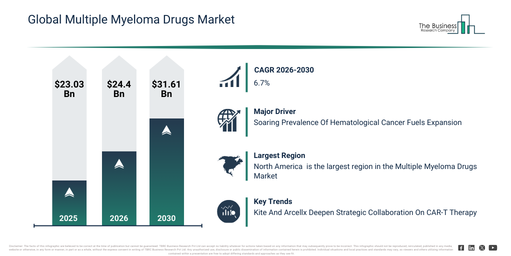
    The market for multiple myeloma drugs has experienced robust expansion over the past few years. Projections indicate it will rise from $23.03 billion in 2025 to $24.4 billion in 2026, reflecting a compound annual growth rate (CAGR) of 6.0%. This historical growth has been driven by a higher incidence of multiple myeloma, the introduction of innovative immunomodulatory drugs, increased public understanding of plasma cell cancers, advancements in proteasome inhibitors, and the broader reach of hospital pharmacy systems.

    The multiple myeloma drugs market is projected to experience robust expansion in the coming years, reaching an estimated value of $31.61 billion by 2030 with a compound annual growth rate (CAGR) of 6.7%. This upward trajectory during the forecast period is fueled by several factors, including the increasing uptake of precision medicine, heightened financial commitments toward biologic therapies, a growing demographic of elderly individuals, the widening reach of online pharmacy channels, and notable progress in monoclonal antibody treatment technologies. Key emerging trends shaping this period encompass the development of personalized therapeutic approaches, the adoption of multi-drug treatment protocols, initiatives focused on bone health management for multiple myeloma patients, innovations in targeted drug delivery mechanisms, and the broadening scope of clinical trial activities.

    Download A Free Sample Report For Comprehensive Market Insights:

    https://www.thebusinessresearchcompany.com/sample.aspx?id=11943&type=smp&utm_source=BlogsPR&utm_medium=Paid&utm_campaign=Jul_PR

    Multiple Myeloma Drugs Market Expansion Drivers: What Is Shaping Future Growth?

    The rising incidence of hematological cancer is projected to propel the expansion of the multiple myeloma drugs market in the coming years. These cancers originate in blood-forming tissues like bone marrow or in immune system cells, encompassing conditions such as leukemia, lymphoma, and multiple myeloma itself. Medications designed for multiple myeloma are commonly employed to treat the disease by destroying and curbing cancer cell proliferation, slowing the process of cell division through the stimulation of various enzymatic activities, while also helping to maintain bone strength and alleviate discomfort in weakened bones. For example, in January 2023, the American Cancer Society (ACS), a U.S.-based nonprofit organization focused on cancer eradication, reported approximately 59,610 new cases of leukemia and around 20,380 instances of acute myeloid leukemia (AML). Furthermore, the total number of leukemia-related deaths reached 23,710. Consequently, the growing prevalence of hematological cancer is fueling the advancement of the multiple myeloma drugs market.

    Multiple Myeloma Drugs Market Segment Landscape And Growth Potential

    The multiple myeloma drugs market covered in this report is segmented –

    1) By Drug Type: Immunomodulatory Drugs, Proteasome Inhibitors, Histone Deacetylase Inhibitors, Monoclonal Antibody Drugs, Steroids, Other Drug Types

    2) By Therapy: Targeted Therapy, Biologic Therapy, Chemotherapy, Other Therapies

    3) By Distribution Channel: Hospital Pharmacies, Retail Pharmacies, Online Pharmacies, Other Distribution Channels

    4) By End-User: Men, Women

    Subsegments:

    1) By Immunomodulatory Drugs: Lenalidomide, Thalidomide, Pomalidomide

    2) By Proteasome Inhibitors: Bortezomib, Carfilzomib, Ixazomib

    3) By Histone Deacetylase Inhibitors: Panobinostat, Romidepsin

    4) By Monoclonal Antibody Drugs: Daratumumab, Elotuzumab, Isatuximab

    5) By Steroids: Dexamethasone, Prednisone

    6) By Other Drug Types: Alkylating Agents, Antimetabolites, New Experimental Drugs

    Multiple Myeloma Drugs Market Strategic Trends: What Is Defining The Next Phase Of Growth?

    Key players within the multiple myeloma drug market are reinforcing their collaborative strategies to co-develop cell therapies, expanding existing partnerships to accelerate both the development and commercialization of next-generation CAR T products. Such strategic alliances facilitate the joint sharing of resources, help spread risk, and enable faster scaling of novel therapeutic approaches. For example, in May 2024, Kite Pharma, a U.S.-based biopharmaceutical firm, together with Arcellx, Inc., a clinical-stage U.S. biotechnology company, provided key operational updates regarding their partnered BCMA-targeted CAR T therapy, anitocabtagene autoleucel (anito cel). The two entities outlined the design for a global Phase 3 study called iMMagine 3, which is intended to assess anito cel in individuals with relapsed or refractory multiple myeloma who have already undergone treatment with both an immunomodulatory drug (IMiD) and an anti-CD38 monoclonal antibody. This trial is projected to include roughly 450 patients across the globe.

    Multiple Myeloma Drugs Market Competitive Landscape: Who Are The Leading Companies?

    Major companies operating in the multiple myeloma drugs market are Pfizer Inc., Johnson & Johnson Pvt. Ltd, Merck & Co. Inc., AbbVie Inc., Roche Holding AG, Novartis AG, Bristol-Myers Squibb Company, Takeda Pharmaceutical Company Limited, Eli Lilly and Company, Kite Pharma Inc, Amgen Inc., Teva Pharmaceutical Industries Ltd., Cipla Ltd., ONO Pharmaceutical Co. Ltd., BieGene Ltd., Onyx Pharmaceuticals Inc., Karyopharm Therapeutics Inc., Poseida Therapeutics Inc., ImmunoGen Inc., PharmaMar SA

    Access The Complete Multiple Myeloma Drugs Market Report:

    https://www.thebusinessresearchcompany.com/report/multiple-myeloma-drugs-global-market-report?utm_source=BlogsPR&utm_medium=Paid&utm_campaign=Jul_PR

    Multiple Myeloma Drugs Market Regional Analysis: Which Region Leads By Revenue?

    North America was the largest region in the multiple myeloma drugs market in 2025. The regions covered in the multiple myeloma drugs market report are Asia-Pacific, South East Asia, Western Europe, Eastern Europe, North America, South America, Middle East, Africa.

    Get in touch with us:

    The Business Research Company: https://www.thebusinessresearchcompany.com/?utm_source=BlogsPR&utm_medium=Paid&utm_campaign=home_page_test

    Americas: +1 310-496-7795

    Asia: +44 7882 955267 & +91 8897263534

    Europe: +44 7882 955267

    Email us at: marketing@tbrc.info

    Follow us on:

    LinkedIn: https://in.linkedin.com/company/the-business-research-company

    YouTube: https://www.youtube.com/channel/UC24_fI0rV8cR5DxlCpgmyFQ

    Global Market Model: https://www.thebusinessresearchcompany.com/global-market-model
  • Multidrug Resistant Bacteria Market Growth Through 2030 Creates New Strategic Opportunities

    Multidrug Resistant Bacteria Market Growth Through 2030 Creates New Strategic Opportunities

    Delivering more actionable and strategically valuable research, The Business Research Company’s 2026 market reports feature market attractiveness analysis, total addressable market evaluation, company benchmarking matrices, interactive Excel dashboards, expanded supply chain intelligence, emerging startup coverage, and detailed product insights.

    Multidrug Resistant Bacteria Market Value Analysis: What Growth Is Expected Over The Forecast Period?

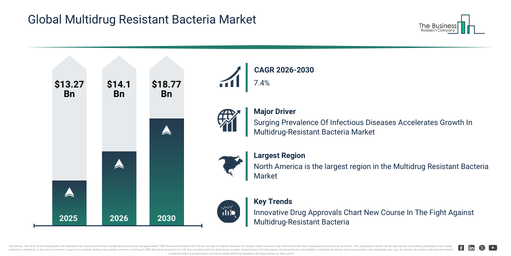
    The market for multidrug resistant bacteria has experienced robust expansion in recent years, climbing from $13.27 billion in 2025 to $14.1 billion in 2026, reflecting a compound annual growth rate (CAGR) of 6.2%. This historical growth has been driven by several factors, including excessive antibiotic usage within hospital settings, insufficient infection control measures, a sluggish uptake of rapid diagnostic tools, a scarcity of therapeutic choices to address resistant bacterial strains, and a substantial prevalence of bloodstream infections.

    The market for multidrug resistant bacteria is projected to experience robust expansion over the coming years. By 2030, its value is anticipated to reach $18.77 billion, reflecting a compound annual growth rate (CAGR) of 7.4%. Several factors are driving this forecasted growth, including heightened investment in antimicrobial research and development, the adoption of diagnostics powered by artificial intelligence, the advancement of precision medicine treatments, governmental efforts to curb antimicrobial resistance, and the broadening of infection management services in homecare and outpatient settings. Key trends shaping the projection period encompass a higher incidence of hospital-acquired infections, expanded educational campaigns on antibiotic resistance, the creation of innovative antibacterial drugs, the proliferation of point-of-care diagnostic technologies, and the increasing provision of home healthcare services.

    Download A Free Sample Report For Comprehensive Market Insights:

    https://www.thebusinessresearchcompany.com/sample.aspx?id=13044&type=smp&utm_source=BlogsPR&utm_medium=Paid&utm_campaign=Jul_PR

    Multidrug Resistant Bacteria Market Development Factors: Which Trends Are Supporting Demand?

    The rising occurrence of infectious diseases is anticipated to accelerate the growth of the multidrug-resistant bacteria market in the coming period. These diseases are caused by harmful microorganisms including bacteria, viruses, fungi, or parasites. A strong link exists between multidrug-resistant bacteria and infectious diseases, as these bacteria are responsible for causing infections that become challenging to manage with standard antibiotics. Over time, they have acquired resistance to numerous antibiotics, which reduces their vulnerability to the drugs typically employed for treating bacterial infections. As an example, an article published in November 2023 by the Centers for Disease Control and Prevention, a national public health agency based in the United States, revealed that tuberculosis cases in the USA rose from 8,320 in 2022 to 9,615 in 2023, reflecting an increase of 1,295 cases. Consequently, the growing prevalence of infectious diseases is expected to propel the multidrug-resistant bacteria market forward.

    Multidrug Resistant Bacteria Market Categorization By Product Type And Application

    The multidrug resistant bacteria market covered in this report is segmented –

    1) By Disease: Urinary Tract Infection, Intra-Abdominal Infections, Blood Stream Infections, Clostridium Difficile Infections, Acute Bacterial Skin And Skin Structure Infections, Hospital Acquired Bacterial Pneumonia, Acquired Bacterial Pneumonia, Other Diseases

    2) By Drug Class: Oxazolidinones, Lipoglycopeptides, Tetracyclines, Cephalosporins, Combination Therapies, Other Drug Classes

    3) By Route Of Administration: Oral, Parenteral, Other Routes Of Administration

    4) By End-User: Hospitals, Specialty Clinics, Homecare, Other End-Users

    Subsegments:

    1) By Urinary Tract Infection: Cystitis, Pyelonephritis

    2) By Intra-Abdominal Infections: Appendicitis, Peritonitis

    3) By Blood Stream Infections: Bacteremia, Sepsis

    4) By Clostridium Difficile Infections: Mild CDI, Severe CDI

    5) By Acute Bacterial Skin And Skin Structure Infections: Cellulitis, Abscesses

    6) By Hospital Acquired Bacterial Pneumonia: Ventilator-Associated Pneumonia, Hospital-Acquired Pneumonia

    7) By Acquired Bacterial Pneumonia: Community-Acquired Pneumonia, Aspiration Pneumonia

    8) By Other Diseases: Bone and Joint Infections, Endocarditis

    Multidrug Resistant Bacteria Market Transformation Trends: Which Innovations Are Driving Change?

    Key players in the multidrug-resistant bacteria market are actively working on creating novel drugs and securing regulatory approvals to address the demands of an emerging patient population. Securing approval for medications targeting multidrug-resistant organisms is critical to curbing the rise of antibiotic resistance. To illustrate, Entasis Therapeutics Inc., a biotechnology firm based in the United States, obtained FDA clearance in May 2023 for Xacduor, a combination antibiotic intended for the treatment of hospital-acquired bacterial pneumonia (HABP) and ventilator-associated bacterial pneumonia (VAP) caused by Acinetobacter baumannii. This pathogen is notoriously challenging to manage. The drug merges ceftolozane, a cephalosporin antibiotic, with tedizolid phosphate, a novel agent within the oxazolidinone class. Moreover, it offers a fresh therapeutic alternative for patients infected with Acinetobacter baumannii who have failed to respond to prior treatments. The therapy is delivered as an injection combining the beta-lactam antibiotic sulbactam with durlobactam, a broad-spectrum beta-lactamase inhibitor that mitigates Acinetobacter resistance and enhances the efficacy of the antibiotic.

    Multidrug Resistant Bacteria Market Company Landscape And Strategic Competition

    Major companies operating in the multidrug resistant bacteria market are Pfizer Inc., Johnson And Johnson Private Limited, F. Hoffmann-La Roche Ltd., Merck And Co. Inc., Bayer AG, Novartis AG, Sanofi S.A., Bristol-Myers Squibb Company, AstraZeneca plc, GlaxoSmithKline plc, Eli Lilly and Company, Boehringer Ingelheim International GmbH, Gilead Sciences Inc., Teva Pharmaceutical Industries Ltd., Mylan N.V., Dr. Reddy’s Laboratories Ltd., Lupin Pharmaceuticals Inc., BioMarin Pharmaceuticals Inc., Zydus Lifesciences Limited, Glenmark Pharmaceuticals Ltd., Sun Pharmaceutical Industries Ltd., Alkem Laboratories, Wockhardt Ltd., Basilea Pharmaceutica Ltd., Paratek Pharmaceuticals Inc., Theravance Biopharma Inc., Melinta Therapeutics Inc., Armata Pharmaceuticals Inc., Tetraphase Pharmaceuticals Inc.

    Access The Complete Multidrug Resistant Bacteria Market Report:

    https://www.thebusinessresearchcompany.com/report/multidrug-resistant-bacteria-global-market-report?utm_source=BlogsPR&utm_medium=Paid&utm_campaign=Jul_PR

    Multidrug Resistant Bacteria Market Geographic Distribution And Regional Opportunities

    North America was the largest region in the multidrug-resistant bacteria market in 2025. The regions covered in the multidrug resistant bacteria market report are Asia-Pacific, South East Asia, Western Europe, Eastern Europe, North America, South America, Middle East, Africa.

    Get in touch with us:

    The Business Research Company: https://www.thebusinessresearchcompany.com/?utm_source=BlogsPR&utm_medium=Paid&utm_campaign=home_page_test

    Americas: +1 310-496-7795

    Asia: +44 7882 955267 & +91 8897263534

    Europe: +44 7882 955267

    Email us at: marketing@tbrc.info

    Follow us on:

    LinkedIn: https://in.linkedin.com/company/the-business-research-company

    YouTube: https://www.youtube.com/channel/UC24_fI0rV8cR5DxlCpgmyFQ

    Global Market Model: https://www.thebusinessresearchcompany.com/global-market-model
  • Mucolipidosis II Market Size Projected To Increase From $14.11 Billion To $16.18 Billion During The Forecast Period

    Mucolipidosis II Market Size Projected To Increase From $14.11 Billion To $16.18 Billion During The Forecast Period

    Enhanced with market attractiveness analysis, total addressable market evaluation, company benchmarking matrices, interactive Excel dashboards, expanded supply chain intelligence, emerging startup coverage, and detailed product insights, The Business Research Company’s 2026 market reports deliver more actionable and strategically valuable research.

    Mucolipidosis II Market Size Forecast: How Large Could The Market Become By 2030?

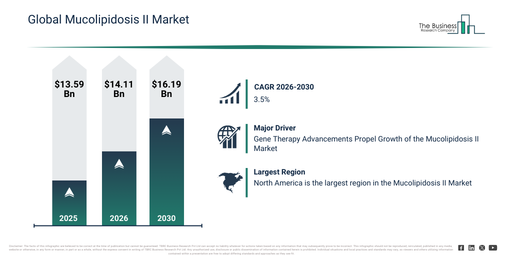
    The mucolipidosis II market has experienced consistent expansion in recent times. Its value is projected to increase from $13.59 billion in 2025 to $14.11 billion in 2026, reflecting a compound annual growth rate (CAGR) of 3.8%. This historical growth has been driven by several factors, including the scarcity of therapies for lysosomal storage disorders, early diagnosis of enzyme deficiency conditions, heightened awareness about rare pediatric diseases, the early establishment of supportive and palliative care methods, and a traditional emphasis on managing symptoms rather than underlying causes.

    The projected size of the mucolipidosis II market anticipates gradual expansion over the coming years. By 2030, its value is expected to reach $16.19 billion, reflecting a compound annual growth rate (CAGR) of 3.5%. This forecasted growth is driven by several key factors, including progress in gene therapy research, heightened financial commitment to orphan drug development, stronger governmental backing for studies on rare diseases, an expanding pipeline for enzyme replacement therapies, and an uptick in collaborative efforts between biotechnology firms and research institutions. Prominent trends shaping this period involve an intensified focus on investigating rare genetic disorders, a broadening application of experimental and gene-based therapeutic approaches, a growing emphasis on coordinated multidisciplinary strategies for symptom management, a surge in clinical trials evaluating enzyme- and stem cell-based treatments, and enhanced early diagnostic capabilities facilitated by advanced screening technologies.

    Download A Free Sample Report For Comprehensive Market Insights:

    https://www.thebusinessresearchcompany.com/sample.aspx?id=16746&type=smp&utm_source=BlogsPR&utm_medium=Paid&utm_campaign=Jul_PR

    Mucolipidosis II Market Industry Drivers: What Is Driving Revenue Growth?

    The anticipated expansion of gene therapy is set to drive the mucolipidosis II market forward. This advanced medical approach treats or prevents genetic disorders by correcting defective genes or inserting new ones into a patient’s cells through techniques like gene addition, editing, silencing, and regulation. Gene therapy holds significant promise for managing ML II by targeting the underlying genetic origin of the condition, specifically by delivering a functional gene copy into cells to restore enzyme production. For example, in January 2024, the American Society of Gene & Cell Therapy, a US-based organization, reported that the number of gene therapies in Phase III clinical trials grew by 10% in the fourth quarter, the first quarterly rise since the third quarter of 2022. Consequently, the growing field of gene therapy is expected to propel the mucolipidosis II market.

    The growth of the mucolipidosis II market is being propelled by heightened research and development (R&D) activities. R&D encompasses systematic investigation and experimentation designed to produce new knowledge, technologies, and therapeutic options. This increase in R&D efforts is fueled by a worldwide emphasis on innovation, the pursuit of competitive advantages, and the necessity to tackle complex medical challenges, such as rare genetic diseases. Progress in R&D is vital for deepening the understanding of mucolipidosis II, aiding in the creation of gene therapies, refining drug delivery methods, and speeding up preclinical and clinical advancements. As an example, in April 2025, the Office for National Statistics (ONS), a UK government authority, noted that the UK’s net expenditure on R&D climbed to $22.7 billion in 2023 from $21.1 billion in 2022, an 8.2% increase. Thus, the uptick in R&D activities is fueling the mucolipidosis II market’s expansion.

    The mucolipidosis II market is anticipated to be driven forward by a rising number of clinical trials. These trials are methodical research investigations involving human participants to assess the safety, efficacy, and best use of new medical treatments, drugs, or interventions. This increase in clinical trials stems largely from the growing prevalence of chronic and rare conditions, which fuels the need for innovative and effective therapies. The surge in such trials aids mucolipidosis II treatment by testing novel therapies, determining their safety and effectiveness, and speeding up the creation of targeted interventions for this uncommon genetic disorder. For instance, in December 2024, the Association of the British Pharmaceutical Industry (ABPI), a UK-based group, stated that the number of pharmaceutical industry trials launched in the UK rose for a second consecutive year, increasing from 411 in 2022 to 426 in 2023. Therefore, the expanding number of clinical trials is driving the mucolipidosis II market.

    Mucolipidosis II Market Segment Analysis And Revenue Opportunities

    The mucolipidosis ii market covered in this report is segmented –

    1) By Treatment: Antibiotics, Physical Therapy, Hip Replacement, Experimental Therapies, Other Treatments

    2) By Mode Of Administration: Injectable, Oral, Other Modes Of Administration

    3) By Symptoms: Deafness, Lack Of Muscle Tone (Hypotonia), Abnormal Spine Curvature, Changing Proportion of Mental Retardation, Low Growth Of Gross And Fine Motor Skills, Other Symptoms

    4) By End-User: Hospitals, Homecare, Specialty Clinics, Other End-Users

    Subsegments:

    1) By Antibiotics: Antibiotics For Respiratory Infections, Antibiotics For Preventive Care, Intravenous Antibiotics, Oral Antibiotics For Chronic Infections, Antibiotic Therapy For Secondary Infections, Antibiotics For Treating Urinary Tract Infections (UTIS)

    2) By Physical Therapy: Range Of Motion Exercises, Strengthening And Conditioning Exercises, Respiratory Therapy And Pulmonary Rehabilitation, Gait Training And Balance Exercises, Hydrotherapy, Occupational Therapy For Daily Activities, Posture Correction And Spine Support, Stretching And Flexibility Programs

    3) By Hip Replacement: Total Hip Arthroplasty (THA), Hip Resurfacing Surgery, Minimally Invasive Hip Replacement, Ceramic-On-Ceramic Hip Implants, Hip Replacement With Metal-On-Polyethylene, Revision Hip Surgery For Failed Implants, Robotic-Assisted Hip Replacement Surgery, Hip Joint Stabilization Techniques

    4) By Experimental Therapies: Gene Therapy For Mucolipidosis II, Enzyme Replacement Therapy (ERT), Stem Cell Therapy For Mucolipidosis II, Chaperone Therapy For Lysosomal Storage Disorders, Small Molecule Drugs Targeting Cellular Pathways, Experimental Drug Trials (Phase I, II, III), Molecular Chaperones To Improve Enzyme Function, Immunomodulatory Therapies

    5) By Other Treatments: Pain Management (Non-Opioid And Opioid Treatments), Nutritional Support And Diet Modification, Surgical Interventions For Organ Dysfunction, Cognitive And Neurodevelopmental Support, Cardiovascular Care (Heart Monitoring, Medications), Hearing And Vision Supportive Therapies, Psychiatric Support And Behavioral Therapy, Palliative Care And End-Of-Life Management

    Mucolipidosis II Market Leading Players Shaping Industry Direction

    Major companies operating in the mucolipidosis ii market are Pfizer Inc., Merck & Co. Inc., Sanofi S.A., Novartis AG, Takeda Pharmaceutical Company Limited, Teva Pharmaceutical Industries Ltd., Sun Pharmaceutical Industries Limited, Jazz Pharmaceuticals, Cipla Limited, Lupin Limited, Zydus Lifesciences Limited, Alembic Pharmaceuticals, Ultragenyx Pharmaceutical Inc., Regenxbio Inc., Denali Therapeutics Inc., Mylan N.V., Intellia Therapeutics Inc., Avrobio Inc., Orchard Therapeutics plc, Lysogene S.A., Sio Gene Therapies, Homology Medicines Inc., Abeona Therapeutics Inc

    Access The Complete Mucolipidosis II Market Report:

    https://www.thebusinessresearchcompany.com/report/mucolipidosis-ii-global-market-report?utm_source=BlogsPR&utm_medium=Paid&utm_campaign=Jul_PR

    Mucolipidosis II Market Largest Region By Revenue And Market Share

    North America was the largest region in the mucolipidosis II market in 2025. The regions covered in the mucolipidosis ii market report are Asia-Pacific, South East Asia, Western Europe, Eastern Europe, North America, South America, Middle East, Africa.

    Get in touch with us:

    The Business Research Company: https://www.thebusinessresearchcompany.com/?utm_source=BlogsPR&utm_medium=Paid&utm_campaign=home_page_test

    Americas: +1 310-496-7795

    Asia: +44 7882 955267 & +91 8897263534

    Europe: +44 7882 955267

    Email us at: marketing@tbrc.info

    Follow us on:

    LinkedIn: https://in.linkedin.com/company/the-business-research-company

    YouTube: https://www.youtube.com/channel/UC24_fI0rV8cR5DxlCpgmyFQ

    Global Market Model: https://www.thebusinessresearchcompany.com/global-market-model
  • mTOR Inhibitors Market Growth Outlook Reveals A CAGR Of 6.2% And A Market Value Of $10.38 Billion By 2030

    mTOR Inhibitors Market Growth Outlook Reveals A CAGR Of 6.2% And A Market Value Of $10.38 Billion By 2030

    Through market attractiveness analysis, total addressable market evaluation, company benchmarking matrices, interactive Excel dashboards, expanded supply chain intelligence, emerging startup coverage, and detailed product insights, The Business Research Company’s 2026 market reports provide more actionable and strategically valuable research.

    mTOR Inhibitors Market Revenue Outlook: What CAGR Is Expected Through 2030?

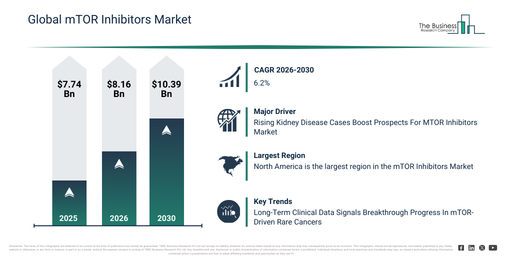
    The market for mTOR inhibitors has experienced robust expansion in recent years. Valued at $7.74 billion in 2025, it is projected to reach $8.16 billion by 2026, reflecting a compound annual growth rate (CAGR) of 5.5%. This historical growth has been driven by factors such as the increasing incidence of cancer, a heightened demand for targeted therapeutic approaches, the early implementation of rapamycin-derived treatments, a rise in clinical trial activity, and advancements in molecular biology research.

    The mtor inhibitors market is projected to experience robust growth during the coming years. By 2030, it is anticipated to reach a value of $10.39 billion, driven by a compound annual growth rate (CAGR) of 6.2%. This expansion in the forecast period is largely fueled by a heightened emphasis on precision medicine, the broadening application of combination therapies, a rise in organ transplant surgeries, greater utilization of both oral and intravenous mtor inhibitors, and increased investments in research and development for novel mtor inhibitors. Key trends shaping this period involve the advancement of personalized cancer treatments, the adoption of combination therapy strategies, improvements in targeted drug delivery mechanisms, a widening scope in oncology and transplant fields, and intensified R&D efforts focused on oral and intravenous formulations.

    Download A Free Sample Report For Comprehensive Market Insights:

    https://www.thebusinessresearchcompany.com/sample.aspx?id=10860&type=smp&utm_source=BlogsPR&utm_medium=Paid&utm_campaign=Jul_PR

    #mTOR Inhibitors Market Growth Factors: Which Forces Are Supporting Market Expansion?

    The anticipated expansion of the mTOR inhibitors market is being driven forward by the increasing occurrence of kidney diseases. Kidney disease is characterized by a gradual decline in organ function and eventual loss of functionality. In treating various renal conditions, mTOR inhibitors play a significant role. Drugs like sirolimus and everolimus, which are mTOR inhibitors, serve as immunosuppressive agents to prevent the rejection of kidney transplants. With a global uptick in kidney disease rates, the need for these inhibitors is on the rise. As an example, the American Cancer Society, a nonprofit based in the United States, projected in May 2024 that about 81,610 new cases of kidney cancer (52,380 in men and 29,230 in women) will be diagnosed in the country during 2024, alongside an estimated 14,390 fatalities (9,450 men and 4,940 women). Consequently, the growing prevalence of kidney ailments is set to fuel the market growth for mTOR inhibitors.

    mTOR Inhibitors Market Segmentation And Category Breakdown

    The mtor inhibitors market covered in this report is segmented –

    1) By Product Type: Rapamune, Afinitor, Torisel, Zortress, Other Product Types

    2) By Indication: Oncology, Immunosuppressant, Organ Transplantation, Other Indications

    3) By Route of Administration: Oral, Intravenous

    4) By Application: Tumor Treatment, Kidney Transplant, Other Applications

    5) By Distribution Channel: Hospital Pharmacies, Retail Pharmacies, Online Pharmacies

    mTOR Inhibitors Market Industry Trends: What Changes Are Reshaping Demand?

    Key players in the mTOR inhibitor space are increasingly prioritizing the generation of long-term clinical data to boost treatment effectiveness and durability for extremely rare malignancies like malignant perivascular epithelioid cell tumors (PEComa). Through extended monitoring studies, valuable insights into sustained response and overall survival are obtained, which assist in refining therapeutic approaches for patients who have few alternatives. A notable example occurred in March 2024 when Aadi Bioscience, Inc., a biopharmaceutical firm based in the United States, disclosed three-year follow-up outcomes from its Phase 2 AMPECT trial evaluating FYARRO (nab-sirolimus) in malignant PEComa. According to Aadi, the findings revealed a median response duration of roughly 40 months along with a median overall survival exceeding 53 months, representing a marked improvement over outcomes historically recorded. This data highlights an emerging trend within the mTOR inhibitor market, where companies are stressing sustained clinical benefit and improved long-term patient survival to reinforce the treatment framework for this condition.

    mTOR Inhibitors Market Competitive Analysis Of Major Industry Participants

    Major companies operating in the mtor inhibitors market are Novartis AG, Pfizer Inc., Teva Pharmaceutical Industries Ltd., Hikma Pharmaceuticals plc, Exelixis Inc., Dr. Reddy’s Laboratories Ltd., Zydus Lifesciences Limited, Accord Healthcare Inc., Par Pharmaceutical, AbbVie Inc., GlaxoSmithKline plc, Biocon Limited, Alkem Laboratories Ltd., Gland Pharma Ltd., Apotex Inc., Glenmark Pharmaceuticals Ltd., AstraZeneca plc, Bristol-Myers Squibb Company, Eli Lilly and Company, Merck & Co. Inc., Bayer AG, Boehringer Ingelheim International GmbH

    Access The Complete mTOR Inhibitors Market Report:

    https://www.thebusinessresearchcompany.com/report/mtor-inhibitors-global-market-report?utm_source=BlogsPR&utm_medium=Paid&utm_campaign=Jul_PR

    mTOR Inhibitors Market Regional Analysis And Leading Geography

    North America was the largest region in the mTOR inhibitors market in 2025. Asia-Pacific is expected to be the fastest-growing region in the forecast period. The regions covered in the mtor inhibitors market report are Asia-Pacific, South East Asia, Western Europe, Eastern Europe, North America, South America, Middle East, Africa.

    Get in touch with us:

    The Business Research Company: https://www.thebusinessresearchcompany.com/?utm_source=BlogsPR&utm_medium=Paid&utm_campaign=home_page_test

    Americas: +1 310-496-7795

    Asia: +44 7882 955267 & +91 8897263534

    Europe: +44 7882 955267

    Email us at: marketing@tbrc.info

    Follow us on:

    LinkedIn: https://in.linkedin.com/company/the-business-research-company

    YouTube: https://www.youtube.com/channel/UC24_fI0rV8cR5DxlCpgmyFQ

    Global Market Model: https://www.thebusinessresearchcompany.com/global-market-model