Blog

  • MSI-H And dMMR Market Forecast Highlights Expansion From $9.31 Billion To $21.12 Billion Through 2030

    MSI-H And dMMR Market Forecast Highlights Expansion From $9.31 Billion To $21.12 Billion Through 2030

    Delivering more actionable and strategically valuable research, The Business Research Company’s 2026 market reports feature market attractiveness analysis, total addressable market evaluation, company benchmarking matrices, interactive Excel dashboards, expanded supply chain intelligence, emerging startup coverage, and detailed product insights.

    MSI-H And dMMR Market Growth Analysis: How Will Revenue Expand During The Forecast Period?

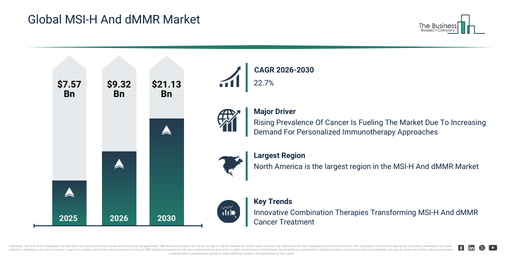
    The market for MSI-H and dMMR has experienced exponential expansion in recent years. Projected to increase from $7.57 billion in 2025 to $9.32 billion in 2026, this represents a compound annual growth rate (CAGR) of 23.1%. Several factors have driven growth during the historical period, including the identification of MSI-H and dMMR biomarkers, the initial effectiveness of immune checkpoint inhibitors, a growing incidence of colorectal and endometrial cancers, the broadening use of molecular diagnostic tools, and the regulatory endorsement of therapies targeting these biomarkers.

    The msi-h and dmmr market size is projected to undergo exponential expansion over the coming years, reaching $21.13 billion by 2030 with a compound annual growth rate (CAGR) of 22.7%. This growth during the forecast period is driven by factors such as the rising adoption of precision oncology, the increased application of genomic testing in cancer care, the broadening of immunotherapy indications, heightened investment in biomarker research, and accumulating clinical evidence that supports tumor-agnostic strategies. Key trends shaping this period include the growing adoption of immunotherapy for msi-h and dmmr tumors, the expanding use of companion diagnostics to stratify patients, an increasing emphasis on tumor-agnostic cancer therapies, the development of combination immunotherapy protocols, and heightened awareness surrounding biomarker-driven oncology.

    Download A Free Sample Report For Comprehensive Market Insights:

    https://www.thebusinessresearchcompany.com/sample.aspx?id=24324&type=smp&utm_source=BlogsPR&utm_medium=Paid&utm_campaign=Jul_PR

    MSI-H And dMMR Market Demand Drivers: What Is Fueling Industry Growth?

    The growing incidence of cancer is expected to drive expansion in the MSI-H and dMMR market in the coming years. Cancer encompasses a range of diseases marked by the unregulated proliferation and dissemination of abnormal cells throughout the body. This upward trend in cancer cases is largely attributed to aging populations, given that the likelihood of developing cancer escalates significantly with age, stemming from the buildup of genetic mutations and extended exposure to risk factors over time. MSI-H and dMMR are utilized in oncology to detect tumors exhibiting high mutation rates due to impairments in DNA repair mechanisms. These biomarkers assist in steering immunotherapy strategies, since such tumors tend to respond favorably to immune checkpoint inhibitors, while also offering clues about prognosis and potential hereditary conditions. For example, in January 2024, the American Cancer Society—a US nonprofit organization—reported that approximately 1,958,310 new cancer cases and 609,820 cancer-related deaths were forecast for 2023 in the United States. These figures are expected to grow in 2024, with around 2,001,140 new cases and 611,720 deaths predicted, underscoring a sustained rise in both cancer occurrence and mortality. As a result, the escalating prevalence of cancer is fueling momentum in the MSI-H and dMMR market.

    MSI-H And dMMR Market Segment Outlook: Which Categories Are Expanding The Fastest?

    The msi-h and dmmr market covered in this report is segmented –

    1) By Treatment Type: Immune Checkpoint Inhibitors (ICIs), Combination Therapy

    2) By Indication: Endometrial, Gastric, Colorectal Cancer, Small Intestine Cancer, Cervical Cancer, Other Indications

    3) By Stage: Early Stages, Advanced Stages

    4) By End User: Hospitals, Oncology Clinics, Research Institutions, Homecare

    Subsegments:

    1) By Immune Checkpoint Inhibitors (ICIs): Programmed Cell Death Protein 1 Inhibitors, Programmed Cell Death Ligand 1 Inhibitors, Cytotoxic T-Lymphocyte Antigen 4 Inhibitors

    2) By Combination Therapy: Immune Checkpoint Inhibitor + Chemotherapy, Immune Checkpoint Inhibitor + Targeted Therapy, Immune Checkpoint Inhibitor + Radiation Therapy, Immune Checkpoint Inhibitor + Other Immunotherapies

    MSI-H And dMMR Market Innovation Trends: Which Developments Are Transforming The Industry?

    Key players in the MSI-H and dMMR market are concentrating on the creation of novel therapies, including combination strategies, to boost treatment effectiveness and improve outcomes for patients. For MSI-H and dMMR cancers, combination therapy integrates two or more treatment methods, frequently immune checkpoint inhibitors or a mix of immunotherapy with chemotherapy, targeted therapies, or radiation. This strategy is intended to heighten treatment responses, counteract resistance, and extend survival for individuals with tumors characterized by high microsatellite instability or deficient mismatch repair. A notable example occurred in April 2025 when Bristol-Myers Squibb Company, a pharmaceutical firm based in the United States, secured approval from the United States Food and Drug Administration (FDA) for the combined use of nivolumab (Opdivo) and ipilimumab (Yervoy) as a first-line intervention for metastatic colorectal cancer (mCRC) displaying MSI-H or dMMR properties, thereby broadening therapeutic possibilities for this difficult cancer type. This authorization represents a major advancement in managing MSI-H and dMMR cancers by introducing an effective new option that engages multiple pathways to elevate patient survival and response rates, thereby fulfilling the unmet needs of this patient segment.

    MSI-H And dMMR Market Key Companies And Competitive Benchmarking

    Major companies operating in the msi-h and dmmr market are Pfizer Inc., F. Hoffmann-La Roche Ltd, Merck & Co. Inc., AbbVie Inc., Bayer AG, Novartis International AG, AstraZeneca PLC, Bristol-Myers Squibb Company, GSK plc., Takeda Pharmaceutical Company, Incyte Corporation, Exact Sciences Corp., BeiGene LTD., Summit Therapeutics Inc., Tempus Labs Inc., Guardant Health, NeoGenomics Laboratories Inc., Promega Corporation, Caris Life Sciences, and Owkin.

    Access The Complete MSI-H And dMMR Market Report:

    https://www.thebusinessresearchcompany.com/report/msi-h-and-dmmr-global-market-report?utm_source=BlogsPR&utm_medium=Paid&utm_campaign=Jul_PR

    MSI-H And dMMR Market Geographic Analysis: Where Is Demand Growing The Fastest?

    North America was the largest region in the MSI-H and dMMR market in 2025. The regions covered in the msi-h and dmmr market report are Asia-Pacific, South East Asia, Western Europe, Eastern Europe, North America, South America, Middle East, Africa.

    Get in touch with us:

    The Business Research Company: https://www.thebusinessresearchcompany.com/?utm_source=BlogsPR&utm_medium=Paid&utm_campaign=home_page_test

    Americas: +1 310-496-7795

    Asia: +44 7882 955267 & +91 8897263534

    Europe: +44 7882 955267

    Email us at: marketing@tbrc.info

    Follow us on:

    LinkedIn: https://in.linkedin.com/company/the-business-research-company

    YouTube: https://www.youtube.com/channel/UC24_fI0rV8cR5DxlCpgmyFQ

    Global Market Model: https://www.thebusinessresearchcompany.com/global-market-model
  • mRNA Therapeutics CDMO Market Expected To Reach $8.26 Billion By 2030 As Growth Accelerates At 11.7% CAGR

    mRNA Therapeutics CDMO Market Expected To Reach $8.26 Billion By 2030 As Growth Accelerates At 11.7% CAGR

    Enhanced with market attractiveness analysis, total addressable market evaluation, company benchmarking matrices, interactive Excel dashboards, expanded supply chain intelligence, emerging startup coverage, and detailed product insights, The Business Research Company’s 2026 market reports deliver more actionable and strategically valuable research.

    mRNA Therapeutics CDMO Market Forecast: What Market Value Is Expected By 2030?

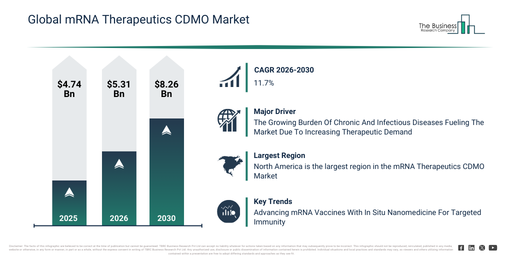
    Over recent years, the market size for mRNA therapeutics CDMOs has experienced rapid expansion, climbing from $4.74 billion in 2025 to $5.31 billion in 2026, reflecting a compound annual growth rate (CAGR) of 12.0%. Historic growth has been driven by several key factors, including the scarce supply of specialized mRNA CDMO offerings, a strong dependence on in-house pharmaceutical production, increasing outbreaks of infectious diseases, the uptake of early-stage analytical testing, and the broadening of academic and research partnerships.

    The Mrna Therapeutics Cdmo Market is projected to experience substantial expansion over the coming years. By 2030, its value is anticipated to reach $8.26 billion, reflecting a compound annual growth rate (CAGR) of 11.7%. This forecasted growth is driven by increased investments in Mrna therapeutic pipelines, progress in plasmid DNA and Mrna synthesis techniques, the expansion of cancer immunotherapy and protein replacement therapies, a growing need for fill-finish services, and a rise in collaborative agreements between biotech firms and CDMOs. Emerging trends shaping this period include a heightened demand for outsourced Mrna development and manufacturing, a stronger emphasis on lipid nanoparticle (LNP) formulation methods, the broadening of viral vaccine and cancer immunotherapy pipelines, stricter regulatory compliance and quality control practices, and wider adoption of analytical and bioanalytical laboratory services.

    Download A Free Sample Report For Comprehensive Market Insights:

    https://www.thebusinessresearchcompany.com/sample.aspx?id=25841&type=smp&utm_source=BlogsPR&utm_medium=Paid&utm_campaign=Jul_PR

    mRNA Therapeutics CDMO Market Growth Drivers: What Factors Are Accelerating Expansion?

    The rising prevalence of both chronic and infectious conditions is set to drive expansion in the mRNA therapeutics CDMO market in the coming period. These health issues include long-term ailments like diabetes, heart disease, and asthma, in addition to illnesses triggered by pathogens such as viruses, bacteria, and parasites, which may be transmitted directly or indirectly between people. An increase in these diseases is linked to aging populations, who face a higher risk for both persistent illnesses and infections. By offering comprehensive development and manufacturing solutions that speed up the delivery of customized mRNA treatments to patients, mRNA therapeutics CDMOs play a key role in managing these health challenges. As an example, the World Health Organization, based in Switzerland, reported in October 2024 that around 8.2 million individuals were newly diagnosed with tuberculosis in 2023—up from approximately 7.5 million in 2022—underscoring the worldwide intensification of infectious disease burdens. Consequently, the mounting strain of chronic and infectious illnesses is fueling growth in the mRNA therapeutics CDMO market.

    mRNA Therapeutics CDMO Market Segment Landscape: Which Areas Lead Market Development?

    The mrna therapeutics cdmo market covered in this report is segmented –

    1) By Type Of Service: Development Services, Manufacturing Services, Laboratory Services

    2) By Indication: Infectious Diseases, Metabolic And Genetic Diseases, Cardiovascular And Cerebrovascular Diseases

    3) By Application: Viral Vaccines, Protein Replacement Therapies, Cancer Immunotherapies

    4) By End User: Pharmaceutical Companies, Biotechnology Companies, Academic Institutions, Research Organizations

    Subsegments:

    1) By Development Services: Process Development, Analytical Method Development, Formulation Development, Regulatory Support

    2) By Manufacturing Services: Plasmid DNA Manufacturing, mRNA Synthesis, Lipid Nanoparticle (LNP) Formulation, Fill-Finish Services

    3) By Laboratory Services: Quality Control Testing, Stability Testing, Bioanalytical Testing, Preclinical Testing

    mRNA Therapeutics CDMO Market Trends: What Is Shaping Future Industry Growth?

    Key players in the mRNA therapeutics CDMO market are concentrating on creating advanced solutions like in situ nanomedicine vaccines to improve the accuracy and effectiveness of mRNA-based vaccines via targeted immune activation. An in situ nanomedicine vaccine represents a next-generation mRNA therapy that produces nanomedicines directly within a patient’s body, allowing for precise delivery and customized immune responses through engineered transgene expression. As an illustration, in January 2025, Esphera SynBio Inc., a biotechnology firm based in Canada, began a new project funded by the CQDM Quantum Leap program. This initiative seeks to improve early-stage lipid nanoparticle or messenger RNA (LNP/mRNA) vaccines by integrating proprietary transgene designs that stimulate the in vivo creation of immunostimulatory nanomedicines. Such an approach facilitates accurate antigen delivery and tailored immune responses, marking this technology as a possible major advancement in vaccine development.

    mRNA Therapeutics CDMO Market Industry Leaders And Market Competition

    Major companies operating in the mrna therapeutics cdmo market are Thermo Fisher Scientific Inc., Danaher Corporation, Merck KGaA, FUJIFILM Holdings Corporation, Evonik Industries AG, AGC Biologics GmbH, Eurofins Scientific SA, Samsung Biologics Co. Ltd., Wuxi Biologics, Recipharm AB, EMERGENT BioSolutions Inc., Genscript Biotech, Ginkgo Bioworks Holdings Inc., Corden Pharma Corp., TriLink BioTechnologies LLC, Biocina Pty Ltd., Aldevron LLC, Synbio Technologies LLC, etherna manufacturing, Bio-Synthesis Inc., Biomay AG.

    Access The Complete mRNA Therapeutics CDMO Market Report:

    https://www.thebusinessresearchcompany.com/report/mrna-therapeutics-cdmo-global-market-report?utm_source=BlogsPR&utm_medium=Paid&utm_campaign=Jul_PR

    mRNA Therapeutics CDMO Market Global Footprint: Which Region Holds Market Leadership?

    North America was the largest region in the mRNA therapeutics CDMO market in 2025. Asia-Pacific is expected to be the fastest-growing region in the forecast period. The regions covered in the mrna therapeutics cdmo market report are Asia-Pacific, South East Asia, Western Europe, Eastern Europe, North America, South America, Middle East, Africa.

    Get in touch with us:

    The Business Research Company: https://www.thebusinessresearchcompany.com/?utm_source=BlogsPR&utm_medium=Paid&utm_campaign=home_page_test

    Americas: +1 310-496-7795

    Asia: +44 7882 955267 & +91 8897263534

    Europe: +44 7882 955267

    Email us at: marketing@tbrc.info

    Follow us on:

    LinkedIn: https://in.linkedin.com/company/the-business-research-company

    YouTube: https://www.youtube.com/channel/UC24_fI0rV8cR5DxlCpgmyFQ

    Global Market Model: https://www.thebusinessresearchcompany.com/global-market-model
  • mRNA Therapeutics Market Set To Grow From $37.17 Billion In 2026 To $42.31 Billion By 2030 At A CAGR Of 3.3%

    mRNA Therapeutics Market Set To Grow From $37.17 Billion In 2026 To $42.31 Billion By 2030 At A CAGR Of 3.3%

    Through market attractiveness analysis, total addressable market evaluation, company benchmarking matrices, interactive Excel dashboards, expanded supply chain intelligence, emerging startup coverage, and detailed product insights, The Business Research Company’s 2026 market reports provide more actionable and strategically valuable research.

    mRNA Therapeutics Market Size Outlook: How Fast Will Revenue Grow Through 2030?

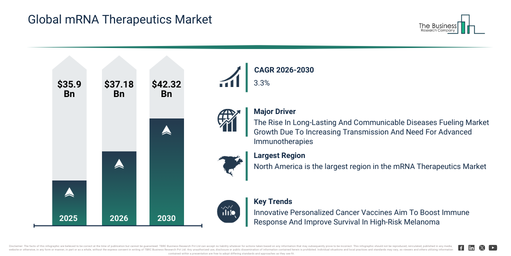
    The mRNA therapeutics market has experienced steady expansion in recent years, with projections indicating an increase from $35.9 billion in 2025 to $37.18 billion in 2026, reflecting a compound annual growth rate (CAGR) of 3.6%. This historical growth has been driven by several key factors, including the groundbreaking success of mRNA vaccines against infectious diseases, significant progress in nucleic acid delivery technologies, a deeper comprehension of gene expression regulation, early-stage research confirming mRNA-driven protein synthesis, and substantial public investment in mRNA research platforms.

    The mrna therapeutics market is projected to experience consistent expansion over the coming years. By 2030, its value is anticipated to reach $42.32 billion, reflecting a compound annual growth rate (CAGR) of 3.3%. This projected growth during the forecast period is driven by several factors, including the increasing demand for targeted and personalized treatment approaches, the broadening application of mrna technology in oncology and rare disease management, heightened biopharmaceutical investment in mrna development programs, a growing number of mrna-based drugs entering clinical trials, and the formation of strategic alliances between biotechnology companies and research institutions. Key trends shaping the forecast period involve the expansion of mrna technology beyond vaccines, a heightened emphasis on protein replacement therapies utilizing mrna, a growing clinical pipeline for non-vaccine mrna applications, increased funding for lipid nanoparticle delivery platforms, and the acceleration of comprehensive end-to-end mrna manufacturing capabilities.

    Download A Free Sample Report For Comprehensive Market Insights:

    https://www.thebusinessresearchcompany.com/sample.aspx?id=17205&type=smp&utm_source=BlogsPR&utm_medium=Paid&utm_campaign=Jul_PR

    mRNA Therapeutics Market Growth Factors Supporting Long-Term Expansion

    The anticipated expansion of the mRNA therapeutics market is driven by the growing incidence of chronic and infectious diseases. These conditions, including tuberculosis, HIV/AIDS, and hepatitis, are characterized by their long duration and ability to transmit between individuals. Their rising prevalence is fueled by heightened global travel and deficiencies in healthcare systems, which amplify transmission rates and complicate effective control. mRNA therapeutics enable faster disease management by allowing the body to rapidly produce proteins that strengthen immune responses, facilitating the swift development of targeted vaccines and treatments. For example, in March 2024, the Centers for Disease Control and Prevention, a U.S. federal agency, reported that tuberculosis cases climbed from 8,320 in 2022 to 9,615 in 2023—an increase of 1,295 cases. As a result, the escalating prevalence of chronic and communicable diseases is accelerating the growth trajectory of the mRNA therapeutics market.

    mRNA Therapeutics Market Segments: Where Are The Largest Growth Opportunities?

    The mrna therapeutics market covered in this report is segmented –

    1) By Product: Vaccines, Drugs

    2) By Application: Infectious Diseases, Oncology, Rare Genetic Diseases, Respiratory Diseases, Other Applications

    3) By End Use: Hospitals And Clinics, Research Organizations, Other End Uses

    Subsegments:

    1) By Vaccines: Infectious Disease Vaccines, Cancer Vaccines, Other Therapeutic Vaccines

    2) By Drugs: Oncology Drugs, Cardiovascular Drugs, Autoimmune Disease Drugs, Other mRNA-Based Drugs

    mRNA Therapeutics Market Industry Trends Shaping Future Revenue Growth

    Leading players in the mRNA therapeutics space are channeling efforts into creating advanced treatments, particularly personalized neoantigen vaccines, designed to boost immune activity and elevate survival rates for cancer patients. These vaccines represent customized cancer therapies that leverage each individual’s distinct tumor-specific mutations, prompting the immune system to seek out and eliminate cancer cells. A notable example occurred in July 2023, when Merck & Co., Inc., a U.S.-based research-focused biopharmaceutical firm, collaborated with Moderna Therapeutics, Inc., a U.S.-based biotechnology company, to launch a Phase 3 randomized clinical trial (V940-001). This trial is investigating mRNA-4157 (V940) paired with KEYTRUDA® (pembrolizumab) as an adjuvant therapy for individuals with resected high-risk melanoma (Stage IIB-IV). This initiative builds on encouraging outcomes from the Phase 2b KEYNOTE-942/mRNA-4157-P201 trial, where the combination demonstrated a significant advantage over KEYTRUDA alone by lowering the likelihood of recurrence and distant metastasis. The Phase 3 study seeks to validate these results through primary and secondary endpoints focused on relapse-free survival and distant metastasis-free survival.

    mRNA Therapeutics Market Major Participants And Competitive Dynamics

    Major companies operating in the mrna therapeutics market are Pfizer Inc., Novartis AG, Sanofi AG, AstraZeneca plc, GlaxoSmithKline plc, Hoffmann-La Roche AG, Moderna Therapeutics Inc, BioNTech SE, Vertex Pharmaceuticals Incorporated, Catalent Inc, Alnylam Pharmaceuticals Inc, Sarepta Therapeutics Inc, Arcturus Therapeutics Holdings Inc, CureVac N.V, Ethris GMBH, eTheRNA immunotherapies NV, In-Cell-Art S.A.S., Nutcracker Therapeutics Inc, SCM LifeScience Co Ltd, Suzhou Abogen Biosciences Co Ltd, Tiba Biotech LLC, CSPC Pharmaceutical Group, CRISPR Therapeutics AG

    Access The Complete mRNA Therapeutics Market Report:

    https://www.thebusinessresearchcompany.com/report/mrna-therapeutics-global-market-report?utm_source=BlogsPR&utm_medium=Paid&utm_campaign=Jul_PR

    mRNA Therapeutics Market Regional Distribution: Which Areas Drive Market Expansion?

    North America was the largest region in the mRNA therapeutics market in 2025. Asia-Pacific is expected to be the fastest-growing region in the forecast period. The regions covered in the mrna therapeutics market report are Asia-Pacific, South East Asia, Western Europe, Eastern Europe, North America, South America, Middle East, Africa.

    Get in touch with us:

    The Business Research Company: https://www.thebusinessresearchcompany.com/?utm_source=BlogsPR&utm_medium=Paid&utm_campaign=home_page_test

    Americas: +1 310-496-7795

    Asia: +44 7882 955267 & +91 8897263534

    Europe: +44 7882 955267

    Email us at: marketing@tbrc.info

    Follow us on:

    LinkedIn: https://in.linkedin.com/company/the-business-research-company

    YouTube: https://www.youtube.com/channel/UC24_fI0rV8cR5DxlCpgmyFQ

    Global Market Model: https://www.thebusinessresearchcompany.com/global-market-model
  • mRNA Cancer Vaccines And Therapeutics Market Opportunities Are Emerging Beyond Traditional Growth Areas

    mRNA Cancer Vaccines And Therapeutics Market Opportunities Are Emerging Beyond Traditional Growth Areas

    Delivering more actionable and strategically valuable research, The Business Research Company’s 2026 market reports feature market attractiveness analysis, total addressable market evaluation, company benchmarking matrices, interactive Excel dashboards, expanded supply chain intelligence, emerging startup coverage, and detailed product insights.

    mRNA Cancer Vaccines And Therapeutics Market Size, Value And Growth Trends Through 2030

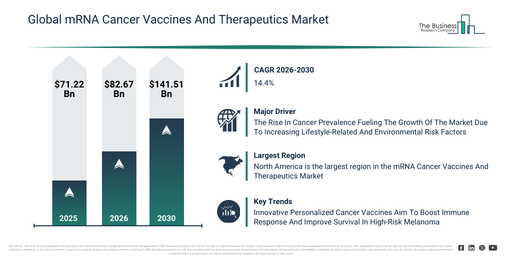
    The market for mRNA-based cancer vaccines and therapeutics has experienced significant expansion in recent years. Projected to rise from $71.22 billion in 2025 to $82.67 billion in 2026, this reflects a compound annual growth rate (CAGR) of 16.1%. During the historical period, this growth was driven by the proven effectiveness of mRNA platforms in infectious disease vaccines, progress in cancer immunology studies, a deeper comprehension of tumor antigens, preliminary clinical evidence supporting mRNA cancer treatments, and heightened investment from both public and private sectors in oncology research and development.

    The market size for mRNA cancer vaccines and therapeutics is projected to experience significant expansion in the coming years. By 2030, it is anticipated to reach $141.51 billion, driven by a compound annual growth rate (CAGR) of 14.4%. This projected growth during the forecast period is influenced by factors such as the increasing global incidence of cancer, a rising demand for targeted and personalized treatment approaches, the enhancement of mRNA production capabilities, a higher number of oncology clinical trials employing mRNA platforms, and key strategic alliances formed between pharmaceutical and biotechnology companies. Among the prominent trends shaping this period are the growing acceptance of personalized cancer vaccines, the broadening use of mRNA-based treatments beyond the oncology field, an intensified focus on developing neoantigen-specific vaccines, a richer clinical pipeline for mRNA-driven cancer immunotherapies, and increased funding directed toward scalable facilities for mRNA manufacturing.

    Download A Free Sample Report For Comprehensive Market Insights:

    https://www.thebusinessresearchcompany.com/sample.aspx?id=17204&type=smp&utm_source=BlogsPR&utm_medium=Paid&utm_campaign=Jul_PR

    mRNA Cancer Vaccines And Therapeutics Market Demand Drivers Creating New Revenue Opportunities

    The growing frequency of cancer cases is anticipated to accelerate the expansion of the mRNA cancer vaccine and therapeutic market in the coming years. Cancer refers to a set of illnesses defined by the unchecked proliferation and dissemination of abnormal cells, which have the capacity to invade and harm healthy tissue. This increase in cancer diagnoses is largely driven by lifestyle factors like physical inactivity, poor nutrition, and exposure to environmental contaminants, all of which heighten the likelihood of developing various forms of cancer. By facilitating customized and targeted immune responses that enable the body to more effectively recognize and destroy cancerous cells, mRNA cancer vaccines and therapeutics significantly enhance treatment outcomes. For example, in January 2024, the American Cancer Society, Inc., a US-based cancer advocacy group, reported that over 611,000 cancer-related deaths are projected in the United States for 2024, equating to more than 1,600 fatalities daily. Consequently, the rising burden of cancer is fueling growth in the mRNA cancer vaccine and therapeutic market.

    mRNA Cancer Vaccines And Therapeutics Market Segment Analysis: What Are The Major Market Categories?

    The mrna cancer vaccines and therapeutics market covered in this report is segmented –

    1) By Type: Adeno Carcinomas, Mucinous Carcinomas, Adenosquamous Carcinomas

    2) By Application: Cancer, Other Applications

    3) By End User: Hospitals And Clinics, Ambulatory Surgical Centers, Research Institutes, Other End Users

    Subsegments:

    1) By Adeno Carcinomas: Lung Adenocarcinomas, Colon Adenocarcinomas, Prostate Adenocarcinomas

    2) By Mucinous Carcinomas: Mucinous Ovarian Cancer, Mucinous Breast Cancer, Mucinous Colorectal Cancer

    3) By Adenosquamous Carcinomas: Pancreatic Adenosquamous Carcinoma, Cervical Adenosquamous Carcinoma, Esophageal Adenosquamous Carcinoma

    mRNA Cancer Vaccines And Therapeutics Market Trends Driving Strategic Industry Expansion

    Leading players in the mRNA cancer vaccines and therapeutics market are actively developing cutting-edge solutions, including personalized neoantigen vaccines, to boost immune responses and enhance survival rates for cancer patients. These vaccines are custom-made for each individual, leveraging distinct tumor-specific mutations to activate the immune system in targeting and eliminating cancer cells. For example, in July 2023, Merck & Co., Inc., a US-based research-driven biopharmaceutical firm, joined forces with Moderna Therapeutics, Inc., a US-based biotechnology company, to launch a Phase 3 randomized clinical trial (V940-001). This study investigates mRNA-4157 (V940) alongside KEYTRUDA (pembrolizumab) as an adjuvant therapy for patients with resected high-risk (Stage IIB-IV) melanoma. The initiative follows encouraging results from the Phase 2b KEYNOTE-942/mRNA-4157-P201 trial, which demonstrated a significant advantage of the combination over KEYTRUDA alone in lowering recurrence and distant metastasis risks. The Phase 3 trial seeks to validate these outcomes by evaluating relapse-free survival as the primary endpoint and distant metastasis-free survival as the secondary endpoint.

    mRNA Cancer Vaccines And Therapeutics Market Leading Companies Driving Competitive Growth

    Major companies operating in the mrna cancer vaccines and therapeutics market are BioNTech SE, Moderna Therapeutics Inc., CureVac N.V., Arcturus Therapeutics Holdings Inc., Immatics Biotechnologies GmbH, Argos Therapeutics Inc., Anima Biotech, Translate Bio, eTheRNA Immunotherapies NV, Gritstone bio Inc., Neon Therapeutics, Codiak BioSciences, Cartesian Therapeutics, Replimune Group Inc., Precision BioSciences, Acuitas Therapeutics, Ethris GmbH, Strand Therapeutics, Crown Bioscience, Roche (Hoffmann-La Roche AG)

    Access The Complete mRNA Cancer Vaccines And Therapeutics Market Report:

    https://www.thebusinessresearchcompany.com/report/mrna-cancer-vaccines-and-therapeutics-global-market-report?utm_source=BlogsPR&utm_medium=Paid&utm_campaign=Jul_PR

    mRNA Cancer Vaccines And Therapeutics Market Leading Geography: Which Region Generates The Most Revenue?

    North America was the largest region in the mRNA cancer vaccination and therapeutics market in 2025. Asia-Pacific is expected to be the fastest-growing region in the forecast period. The regions covered in the mrna cancer vaccines and therapeutics market report are Asia-Pacific, South East Asia, Western Europe, Eastern Europe, North America, South America, Middle East, Africa.

    Get in touch with us:

    The Business Research Company: https://www.thebusinessresearchcompany.com/?utm_source=BlogsPR&utm_medium=Paid&utm_campaign=home_page_test

    Americas: +1 310-496-7795

    Asia: +44 7882 955267 & +91 8897263534

    Europe: +44 7882 955267

    Email us at: marketing@tbrc.info

    Follow us on:

    LinkedIn: https://in.linkedin.com/company/the-business-research-company

    YouTube: https://www.youtube.com/channel/UC24_fI0rV8cR5DxlCpgmyFQ

    Global Market Model: https://www.thebusinessresearchcompany.com/global-market-model
  • Morphine Drugs Market Expansion Is Opening New Pathways For Strategic Investment

    Morphine Drugs Market Expansion Is Opening New Pathways For Strategic Investment

    Enhanced with market attractiveness analysis, total addressable market evaluation, company benchmarking matrices, interactive Excel dashboards, expanded supply chain intelligence, emerging startup coverage, and detailed product insights, The Business Research Company’s 2026 market reports deliver more actionable and strategically valuable research.

    Morphine Drugs Market CAGR Analysis And Future Market Development

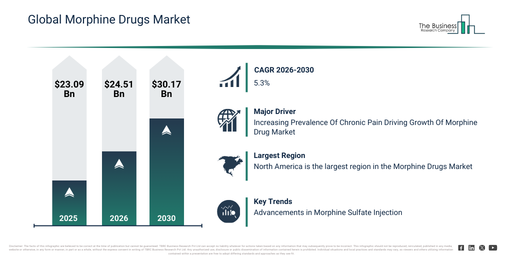
    Strong growth has been observed in the morphine drugs market over recent years. From $23.09 billion in 2025, it is projected to reach $24.51 billion by 2026, reflecting a compound annual growth rate (CAGR) of 6.1%. Several factors drove expansion during the historic period, including the enduring clinical dependence on morphine for managing severe pain, its extensive application in postoperative and trauma settings, a firmly established role in alleviating cancer-related pain, its inclusion on essential medicines lists, and the wide availability of various generic morphine products.

    The market for morphine-based medications is expected to experience significant expansion in the coming years, with projections indicating it will reach a value of $30.17 billion by 2030, reflecting a compound annual growth rate of 5.3%. This anticipated growth during the forecast period is largely driven by several key factors, including the increasing prevalence of cancer which necessitates the use of powerful pain relievers, a growing requirement for palliative care services, the development of hospital infrastructure in emerging economies, the ongoing need for anesthesia and effective management of perioperative pain, and the adoption of more balanced opioid usage patterns within increasingly stringent regulatory frameworks. The principal trends shaping this market include a persistent demand for opioid analgesics in the management of severe pain, the continued application of morphine in palliative and end-of-life care settings, a marked preference for injectable morphine formulations within hospital environments, the provision of a wide range of dosage forms that offer greater clinical flexibility, and a heightened focus on the implementation of controlled and regulated opioid prescribing practices.

    Download A Free Sample Report For Comprehensive Market Insights:

    https://www.thebusinessresearchcompany.com/sample.aspx?id=15611&type=smp&utm_source=BlogsPR&utm_medium=Paid&utm_campaign=Jul_PR

    Morphine Drugs Market Expansion Supported By Key Demand Factors

    The growth of the morphine drugs market is anticipated to be driven forward by the rising incidence of chronic pain conditions. Chronic pain is a complex health issue defined by persistent discomfort lasting over a prolonged period, often acting as a warning sign for injury or illness. This condition has become a significant global health concern due to interconnected factors such as aging populations, increasing obesity rates, sedentary habits, stress and mental health challenges, and environmental influences. Morphine is essential for managing chronic pain because it offers highly effective relief and can be tailored to each patient’s specific needs. It improves quality of life by enabling those with chronic pain to function without enduring constant intense discomfort. For example, in May 2021, the Government of Canada, a federal administration, reported that up to 8.3 million Canadians could suffer from chronic pain by 2025, with projections rising to 9.0 million by 2030. Consequently, the expansion of the morphine drug market is being fueled by the growing prevalence of chronic pain conditions.

    Morphine Drugs Market Segment Breakdown: Which Categories Generate The Most Revenue?

    The morphine drugs market covered in this report is segmented –

    1) By Dosage form: Injectable, Oral, Other Dosage Forms

    2) By Distribution channels: Hospital Pharmacy, Retail Pharmacy, Online Pharmacy

    3) By Applications: Pain Management, Palliative Care, Diarrhea Suppressant, Anesthesia, Other Applications

    4) By End Users: Hospitals And Clinics, Ambulatory Surgical Centers, Other End Users

    Subsegments:

    1) By Injectable: Morphine Sulfate Injection, Morphine Hydrochloride Injection, Morphine Extended Release Injection

    2) By Oral: Oral Tablets (Immediate-Release, Extended-Release), Oral Solution Or syrup, Oral Capsules (Extended-Release Capsules)

    3) By Other Dosage Forms: Rectal Suppositories, Sublingual Tablets Or Films

    Morphine Drugs Market Growth Trends Influencing Competitive Dynamics

    Leading players in the morphine drug market are placing significant emphasis on the creation of innovative delivery methods, especially prefilled syringe formats, aimed at improving effectiveness, increasing safety, and cutting down on both medication mistakes and preparation time. These prefilled syringes are sterile, single-use systems already containing a precise dosage of medication, which removes the requirement for manually drawing it from a vial before use. As an example, in April 2024, Hikma Pharmaceuticals PLC, a multinational pharmaceutical firm headquartered in the UK, introduced its Morphine Sulfate Injection USP available in a prefilled syringe within the United States. This product offers healthcare providers a ready-to-administer, sterile version of the opioid analgesic, significantly improving ease of use in acute care environments. Engineered to lower the risk of dosing errors and streamline workflow by reducing the number of preparation steps needed, the prefilled syringe enhances operational efficiency.

    Morphine Drugs Market Key Players And Strategic Industry Positioning

    Major companies operating in the morphine drugs market are Pfizer Inc., Sanofi S.A., Rusan Pharma Ltd., Johnson & Johnson, Teva Pharmaceutical Industries Ltd., Daiichi Sankyo Company Limited, Sandoz AG, Viatris Inc., Dr. Reddy’s Laboratories Ltd., Apotex Inc., Hikma Pharmaceuticals PLC, Endo Pharmaceuticals Inc., Sun Pharmaceutical Industries Ltd., Johnson Matthey Fine Chemicals, Fresenius Kabi USA LLC, Delpharm SaS, Alvogen Inc., Mallinckrodt Pharmaceuticals, Lannett Company, Mayne Pharma Group Limited, Noramco Inc., Tasmanian Alkaloids, Napp Pharmaceuticals Limited, Alcaliber SA

    Access The Complete Morphine Drugs Market Report:

    https://www.thebusinessresearchcompany.com/report/morphine-drugs-global-market-report?utm_source=BlogsPR&utm_medium=Paid&utm_campaign=Jul_PR

    Morphine Drugs Market Regional Outlook: Where Are The Largest Opportunities Located?

    North America was the largest region in the morphine drugs market in 2025. Asia-Pacific is expected to be the fastest-growing region in the forecast period. The regions covered in the morphine drugs market report are Asia-Pacific, South East Asia, Western Europe, Eastern Europe, North America, South America, Middle East, Africa.

    Get in touch with us:

    The Business Research Company: https://www.thebusinessresearchcompany.com/?utm_source=BlogsPR&utm_medium=Paid&utm_campaign=home_page_test

    Americas: +1 310-496-7795

    Asia: +44 7882 955267 & +91 8897263534

    Europe: +44 7882 955267

    Email us at: marketing@tbrc.info

    Follow us on:

    LinkedIn: https://in.linkedin.com/company/the-business-research-company

    YouTube: https://www.youtube.com/channel/UC24_fI0rV8cR5DxlCpgmyFQ

    Global Market Model: https://www.thebusinessresearchcompany.com/global-market-model
  • Montelukast Sodium Market Trends Are Creating New Opportunities For Industry Leaders

    Montelukast Sodium Market Trends Are Creating New Opportunities For Industry Leaders

    Through market attractiveness analysis, total addressable market evaluation, company benchmarking matrices, interactive Excel dashboards, expanded supply chain intelligence, emerging startup coverage, and detailed product insights, The Business Research Company’s 2026 market reports provide more actionable and strategically valuable research.

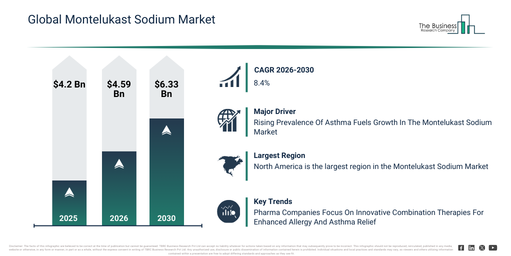
    Montelukast Sodium Market Expansion From $4.59 Billion In 2026 To $6.33 Billion In 2030

    The market for montelukast sodium has experienced notable expansion in recent years. Projections indicate it will rise from $4.2 billion in 2025 to $4.59 billion in 2026, achieving a compound annual growth rate (CAGR) of 9.3%. This growth during the historical period is linked to the long-established clinical application of montelukast in managing asthma, a rising incidence of allergic respiratory conditions, a well-documented safety record for extended use, broad acceptance by healthcare providers for ongoing treatment, and the accessibility of affordable generic alternatives.

    The market for montelukast sodium is forecasted to experience substantial expansion in the coming years. By 2030, its value is projected to reach $6.33 billion, driven by a compound annual growth rate (CAGR) of 8.4%. This anticipated increase over the forecast period can be attributed to a higher global prevalence of asthma and allergic rhinitis, alongside growing rates of pediatric asthma diagnoses. Other contributing factors include a heightened awareness of non-steroidal treatment options, improved access to respiratory medications in developing regions, and a sustained need for oral maintenance therapies. Key developments expected to shape this period encompass a greater reliance on leukotriene receptor antagonists for asthma control, broader use of montelukast for allergic rhinitis, and the proliferation of generic montelukast sodium options. Furthermore, a clear trend is emerging toward oral solid dosage forms for managing chronic respiratory conditions, combined with an uptick in prescriptions targeting both pediatric and adult populations.

    Download A Free Sample Report For Comprehensive Market Insights:

    https://www.thebusinessresearchcompany.com/sample.aspx?id=16123&type=smp&utm_source=BlogsPR&utm_medium=Paid&utm_campaign=Jul_PR

    Montelukast Sodium Market Growth Drivers And Industry Catalysts

    The rising incidence of asthma is anticipated to drive expansion in the montelukast sodium market moving forward. Asthma is a chronic respiratory condition characterized by airway inflammation and narrowing, leading to recurring episodes of wheezing, shortness of breath, chest tightness, and coughing. Its prevalence is climbing due to factors such as environmental pollution, allergen exposure, genetic predisposition, urbanization, lifestyle changes, and respiratory infections. Montelukast sodium functions as a leukotriene receptor antagonist in asthma treatment, aiding in the prevention and control of symptoms by inhibiting leukotrienes, which are responsible for airway inflammation and constriction. For example, in October 2024, the National Asthma Council, an Australian non-profit organization, reported that in 2023, Australia experienced 474 asthma-related deaths—325 females and 149 males. This number closely mirrors the 473 asthma-related deaths recorded in 2022, indicating a steady pattern in asthma mortality across those two years. Consequently, the growing prevalence of asthma is fueling the montelukast sodium market’s growth.

    Montelukast Sodium Market Segmentation: How Is The Market Structured Across Key Categories?

    The montelukast sodium market covered in this report is segmented –

    1) By Product: Crystal-like, Form-less Or Amorphous

    2) By Dosage Form: Tablets, Oral Solutions

    3) By Application: Bronchospasm, Allergic Coryza, Asthma, Urticaria, Other Applications

    Subsegments:

    1) By Crystal-Like: Monohydrate Crystal, Anhydrous Crystal, Spherical Crystals, Needle-Like Crystals, Polycrystalline Montelukast Sodium

    2) By Form-Less Or Amorphous: Amorphous Powder, Amorphous Granules, Non-Crystalline Montelukast Sodium

    Montelukast Sodium Market Trends Influencing Long-Term Demand

    Key players in the montelukast sodium market are concentrating on creating advanced solutions, particularly combination therapies, to deliver broader relief for allergies and asthma while enhancing patient adherence. These combination treatments involve using two or more drugs together in a single regimen to target different disease pathways, leading to improved efficacy. An example of this is in October 2025, when Cadila Pharmaceuticals Ltd., a pharmaceutical firm based in India, introduced Dlorfast-M tablets. This fixed-dose combination includes desloratadine (5 mg) and montelukast (10 mg), designed to manage allergic rhinitis and urticaria. The product offers comprehensive symptom control by simultaneously acting on histamine and leukotriene pathways through a convenient once-daily oral dose. This new formulation is intended to boost patient compliance and provide sustained relief with a favorable tolerability profile.

    Montelukast Sodium Market Competitive Landscape And Leading Companies

    Major companies operating in the montelukast sodium market are Pfizer Inc., Merck & Co. Inc., Sanofi Aventis SA, Teva Pharmaceuticals USA Inc., Hetero Labs Ltd., Sun Pharma Industries Ltd., Aurobindo Pharma Limited, Cipla Inc., Intas Pharmaceuticals Ltd., Seqens Group, Sanyo Chemical Industries Ltd., Morepen Laboratories, Neuland Laboratories Ltd., Medopharm Private Ltd., BEC Chemicals Pvt. Ltd, Delmar Chemicals Inc., Kimia Biosciences Ltd., Ortin Laboratories Ltd., MSN Laboratories Pvt Ltd., Vamsi Labs Ltd., LGM Pharma LLC, HRV Global Life Sciences, Sigmak Lifesciences, Akums Lifesciences Ltd., Anwita Drugs & Chemicals Pvt Ltd

    Access The Complete Montelukast Sodium Market Report:

    https://www.thebusinessresearchcompany.com/report/montelukast-sodium-global-market-report?utm_source=BlogsPR&utm_medium=Paid&utm_campaign=Jul_PR

    Montelukast Sodium Market Geographic Landscape: Which Region Dominates Industry Growth?

    North America was the largest region in the montelukast sodium market in 2025. Asia-Pacific is expected to be the fastest-growing region in the forecast period. The regions covered in the montelukast sodium market report are Asia-Pacific, South East Asia, Western Europe, Eastern Europe, North America, South America, Middle East, Africa.

    Get in touch with us:

    The Business Research Company: https://www.thebusinessresearchcompany.com/?utm_source=BlogsPR&utm_medium=Paid&utm_campaign=home_page_test

    Americas: +1 310-496-7795

    Asia: +44 7882 955267 & +91 8897263534

    Europe: +44 7882 955267

    Email us at: marketing@tbrc.info

    Follow us on:

    LinkedIn: https://in.linkedin.com/company/the-business-research-company

    YouTube: https://www.youtube.com/channel/UC24_fI0rV8cR5DxlCpgmyFQ

    Global Market Model: https://www.thebusinessresearchcompany.com/global-market-model
  • Monoclonal Antibody Therapeutics Market Growth Is Reshaping Competitive Advantage Across The Industry

    Monoclonal Antibody Therapeutics Market Growth Is Reshaping Competitive Advantage Across The Industry

    Delivering more actionable and strategically valuable research, The Business Research Company’s 2026 market reports feature market attractiveness analysis, total addressable market evaluation, company benchmarking matrices, interactive Excel dashboards, expanded supply chain intelligence, emerging startup coverage, and detailed product insights.

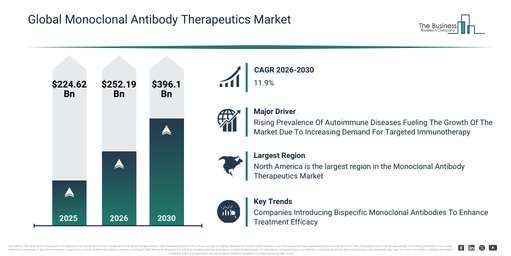
    Monoclonal Antibody Therapeutics Market Forecast Highlighting Growth From $252.19 Billion To $396.1 Billion

    The monoclonal antibody therapeutics market has seen significant expansion in recent years, with its value projected to rise from $224.62 billion in 2025 to $252.19 billion in 2026, reflecting a compound annual growth rate (CAGR) of 12.3%. Historical growth was driven by factors such as restricted antibody engineering techniques, early integration of these therapies in oncology, dependence on conventional clinical trial approaches, limited biologics production capabilities, and increasing recognition of the benefits offered by targeted treatments.

    Over the upcoming years, the market for monoclonal antibody therapeutics is anticipated to experience significant expansion. By 2030, it is projected to reach a value of $396.1 billion, achieving a compound annual growth rate (CAGR) of 11.9%. This forecast period’s growth is driven by progress in bispecific and multi-specific antibodies, heightened production of biologics and fusion proteins, a greater prevalence of autoimmune and infectious diseases, wider adoption in hospitals and private clinics, and the incorporation of AI and automation into drug development. Key trends influencing this period include elevated funding for monoclonal antibody R&D, a broader focus on oncology and autoimmune treatments, increased utilization of antibody-drug conjugates, growth in personalized and targeted therapies, and improved clinical trial infrastructure alongside biomanufacturing capabilities.

    Download A Free Sample Report For Comprehensive Market Insights:

    https://www.thebusinessresearchcompany.com/sample.aspx?id=25839&type=smp&utm_source=BlogsPR&utm_medium=Paid&utm_campaign=Jul_PR

    Monoclonal Antibody Therapeutics Market Opportunity Drivers: What Is Creating New Revenue Potential?

    The increasing occurrence of autoimmune disorders is set to fuel expansion in the monoclonal antibody therapeutics market in the coming years. Autoimmune diseases are defined as medical conditions where the immune system erroneously attacks its own healthy tissues and organs, interpreting them as external dangers, which results in ongoing inflammation and damage to tissues. This growing prevalence is linked to shifts in the environment, including heightened exposure to pollutants and modifications in microbial environments that are thought to stimulate irregular immune reactions in vulnerable individuals. Monoclonal antibody treatments prove beneficial for such conditions by precisely aiming at and blocking particular immune pathways involved in inflammation and tissue destruction, thereby alleviating symptoms and delaying disease advancement. As an example, the Multiple Sclerosis International Federation (MSIF), a UK-based nonprofit organization, reported in November 2023 that approximately 2.9 million individuals worldwide had multiple sclerosis, an autoimmune and immune-mediated disease, during that year. Consequently, the increasing frequency of autoimmune diseases is propelling the monoclonal antibody therapeutics market forward.

    Monoclonal Antibody Therapeutics Market Segmentation Trends And Revenue Drivers

    The monoclonal antibody therapeutics market covered in this report is segmented –

    1) By Product Type: Naked, Fusion Protein, Antibody Fragment, Conjugate, Multi-Specific

    2) By Therapy Area: Autoimmune And Inflammatory Disorders, Oncology, Hematology, Ophthalmology, Other Therapy Areas

    3) By Application: Cancer, Autoimmune Diseases, Infection, Hematological Diseases, Other Applications

    4) By End User: Hospitals, Private Clinics, Research Institute

    Subsegments:

    1) By Naked: Fully Human Antibodies, Humanized Antibodies, Chimeric Antibodies

    2) By Fusion Protein: Receptor Fusion Proteins, Ligand Fusion Proteins

    3) By Antibody Fragment: Single-Chain Variable Fragment, Fab Fragments, Diabodies

    4) By Conjugate: Antibody-Drug Conjugates, Radioimmunoconjugates, Immunotoxins

    5) By Multi-Specific: Bispecific Antibodies, Trispecific Antibodies, T-Cell Engagers

    Monoclonal Antibody Therapeutics Market Innovation Trends Driving Future Development

    Key players in the monoclonal antibody therapeutics industry are increasingly directing their efforts toward the development of novel solutions, particularly bispecific monoclonal antibodies, aimed at improving therapeutic outcomes through the concurrent targeting of two distinct antigens or epitopes. Bispecific monoclonal antibodies represent a distinct category of engineered antibodies uniquely capable of binding to two separate antigens or two different epitopes located on a single antigen at the same time. A relevant example occurred in March 2024, when Roche Holding AG, a pharmaceutical firm headquartered in Switzerland, launched Vabysmo (faricimab-svoa), a bispecific monoclonal antibody indicated for ocular conditions. This therapeutic agent is designed to treat neovascular (wet) age-related macular degeneration (nAMD), diabetic macular edema (DME), and macular edema resulting from retinal vein occlusion (RVO). The drug concurrently targets VEGF-A and Angiopoietin-2 (Ang-2), thereby promoting enhanced vascular stability and diminishing retinal fluid leakage. By leveraging this dual-target mechanism, extended dosing intervals of up to four months are made possible, which substantially reduces the treatment burden placed on patients.

    Monoclonal Antibody Therapeutics Market Industry Leaders: Which Organizations Are Driving Competition?

    Major companies operating in the monoclonal antibody therapeutics market are Pfizer Inc., Johnson & Johnson, F. Hoffmann-La Roche AG, Merck & Co. Inc., AbbVie Inc., Sanofi SA, Bristol-Myers Squibb Company, AstraZeneca plc, Novartis AG, GlaxoSmithKline plc, Takeda Pharmaceutical Company Limited, Eli Lilly and Company, Amgen Inc., Regeneron Pharmaceuticals Inc., Biogen Inc., Daiichi Sankyo Company Limited, UCB S.A., Genmab A/S, ADC Therapeutics, Y-mAbs Therapeutics.

    Access The Complete Monoclonal Antibody Therapeutics Market Report:

    https://www.thebusinessresearchcompany.com/report/monoclonal-antibody-therapeutics-global-market-report?utm_source=BlogsPR&utm_medium=Paid&utm_campaign=Jul_PR

    Monoclonal Antibody Therapeutics Market Largest Region: Which Geography Holds The Highest Market Share?

    North America was the largest region in the monoclonal antibody therapeutics market in 2025. Asia-Pacific is expected to be the fastest-growing region in the forecast period. The regions covered in the monoclonal antibody therapeutics market report are Asia-Pacific, South East Asia, Western Europe, Eastern Europe, North America, South America, Middle East, Africa.

    Get in touch with us:

    The Business Research Company: https://www.thebusinessresearchcompany.com/?utm_source=BlogsPR&utm_medium=Paid&utm_campaign=home_page_test

    Americas: +1 310-496-7795

    Asia: +44 7882 955267 & +91 8897263534

    Europe: +44 7882 955267

    Email us at: marketing@tbrc.info

    Follow us on:

    LinkedIn: https://in.linkedin.com/company/the-business-research-company

    YouTube: https://www.youtube.com/channel/UC24_fI0rV8cR5DxlCpgmyFQ

    Global Market Model: https://www.thebusinessresearchcompany.com/global-market-model
  • Monoclonal Antibodies (MAs) Market Forecast Signals New Revenue Opportunities Through 2030

    Monoclonal Antibodies (MAs) Market Forecast Signals New Revenue Opportunities Through 2030

    Enhanced with market attractiveness analysis, total addressable market evaluation, company benchmarking matrices, interactive Excel dashboards, expanded supply chain intelligence, emerging startup coverage, and detailed product insights, The Business Research Company’s 2026 market reports deliver more actionable and strategically valuable research.

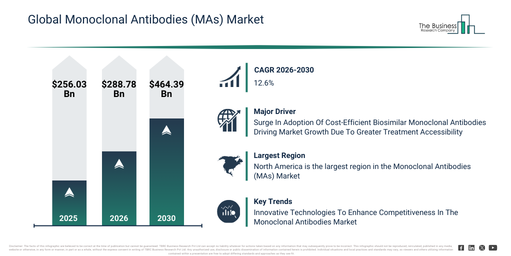
    Monoclonal Antibodies (MAs) Market Revenue Growth Supported By A CAGR Of 464.38% Through 2030

    In recent years, the monoclonal antibodies (mAbs) market has experienced rapid expansion. Its value is projected to increase from $256.03 billion in 2025 to $288.78 billion in 2026, reflecting a compound annual growth rate (CAGR) of 12.8%. This historic growth has been driven by advancements in antibody engineering, a growing prevalence of cancer and autoimmune diseases, an expanding number of approved biologic therapies, enhanced infrastructure for infusion centers, and higher healthcare expenditure.

    The market size for monoclonal antibodies (mAbs) is anticipated to experience swift expansion over the coming years, reaching $464.39 billion by 2030 with a compound annual growth rate (CAGR) of 12.6%. This projected growth during the forecast period is driven by factors such as the expansion of targeted biologics pipelines, heightened use in managing chronic diseases, the proliferation of biosimilars, increased adoption of immunotherapy, and the growth of specialized clinics. Key trends likely to shape the forecast period include a growing preference for biologic-based therapies, greater application of monoclonal antibodies in oncology, the spread of infusion-based treatment facilities, enhanced adoption of humanized and fully human antibodies, and a stronger emphasis on long-term immunotherapy treatment plans.

    Download A Free Sample Report For Comprehensive Market Insights:

    https://www.thebusinessresearchcompany.com/sample.aspx?id=2554&type=smp&utm_source=BlogsPR&utm_medium=Paid&utm_campaign=Jul_PR

    Monoclonal Antibodies (MAs) Market Growth Momentum: Which Factors Are Influencing Demand?

    The expanding availability of affordable biosimilar monoclonal antibodies is anticipated to fuel growth within the monoclonal antibody sector. These biosimilars are pharmaceuticals crafted to closely resemble an already authorized biological drug. Their growing acceptance is driven by increased patient demand for cost-effective biologic treatments, the expiration of patents on key branded monoclonal antibodies, and supportive regulatory frameworks that promote biosimilar development and market entry. The broader use of economical biosimilar monoclonal antibodies benefits the monoclonal antibody field by enhancing treatment accessibility, lowering healthcare costs, and fostering competitive innovation among drug manufacturers. As an example, in February 2025, the World Health Organization, a United Nations agency headquartered in Switzerland that focuses on global public health, reported that biosimilars are roughly 60% less expensive than original biologic medicines, offering considerable cost reductions that can widen access to vital biologic therapies. Consequently, the growing presence of cost-effective biosimilar monoclonal antibodies is propelling the expansion of the monoclonal antibody market.

    The rising frequency of chronic conditions is set to accelerate growth in the monoclonal antibodies (mAbs) market in the coming years. Chronic diseases are enduring health issues that often cannot be cured but can be managed through appropriate medical care and lifestyle adjustments. This increase in chronic illnesses is attributed to lifestyle shifts linked to economic progress and urbanization, resulting in poor dietary habits, reduced physical activity, higher obesity rates, and related metabolic hazards. Monoclonal antibodies (mAbs) are utilized in addressing numerous chronic diseases, especially those involving disrupted immune responses, severe inflammation, and precise molecular targets. For example, in July 2023, the Health Foundation, an independent health policy research and analysis organization based in the United Kingdom, indicated that the number of individuals in England living with a major illness is expected to rise by 37% by 2040—a rate nine times higher than the 4% growth projected for the working-age population aged 20 to 69. Thus, the persistent escalation in chronic disease prevalence will continue to drive advancement in the monoclonal antibodies (mAbs) market.

    Monoclonal Antibodies (MAs) Market Segment Analysis Highlighting Growth Areas

    The monoclonal antibodies (mas) market covered in this report is segmented –

    1) By Source: Murine, Chimeric, Humanized, Human

    2) By Application: Anti-Cancer, Immunological, Anti-Infective Monoclonal Antibodies (MAs), Neuropharmacological, Cardiovascular And Cerebrovascular, Other Applications

    3) By End Users: Hospitals, Private Clinics, Research Institute

    Subsegments:

    1) By Murine: Fully Murine MAbs, Murine-Derived MAbs

    2) By Chimeric: Chimeric MAbs With Murine Variable Regions, Chimeric MAbs With Human Constant Regions

    3) By Humanized: Humanized MAbs With Minor Murine Components, Fully Humanized MAbs

    4) By Human: Fully Human MAbs, Engineered Human MAbs

    Monoclonal Antibodies (MAs) Market Trends Reshaping Industry Growth

    Major players in the monoclonal antibodies market are rolling out cutting-edge technologies like RenMice to secure a competitive advantage. This platform significantly aids in advancing a range of antibody-based therapeutics, which include fully human monoclonal antibodies, bispecific antibodies, bispecific antibody-drug conjugates (BsADCs), nanobodies, fully human T-cell receptors (TCRs), and TCR-mimic antibodies. For example, in September 2023, Biocytogen Pharmaceuticals, a China-based global biotech firm dedicated to accelerating drug research and development through innovative technologies, unveiled the RenMice series. This collection features a range of independently developed fully human antibody mice and TCR mice, all protected by proprietary intellectual property rights.

    Monoclonal Antibodies (MAs) Market Leading Companies: Who Holds Significant Market Presence?

    Major companies operating in the monoclonal antibodies (mas) market are Johnson & Johnson, Merck & Co. Inc., AbbVie Inc., Amgen Inc., Novartis International AG, Pfizer Inc., Thermo Fisher Scientific Inc., Eli Lilly and Company, Bristol-Myers Squibb Company, F. Hoffmann-La Roche Ltd., Sanofi S.A., Abbott Laboratories, Daiichi Sankyo Company Ltd., Seattle Genetics Inc., Shanghai Junshi Biosciences Co. Ltd., GenScript Biotech Corporation, Sigma-Aldrich Co. LLC, AbGenomics Inc., ADC Therapeutics SA, Agensys Inc., Alexion Pharmaceuticals Inc., ALMAC Group Ltd., Ambrx Biopharma Inc., Astellas Pharma Inc., Celgene Corporation, Celldex Therapeutics Inc., Baxter International Inc., Fresenius SE & Co. KGaA, Hikma Pharmaceuticals plc, Jiangsu Hengrui Medicine Co. Ltd., Piramal Enterprises Ltd., CD BioSciences Inc., Creative Biolabs Inc., Advanced ChemTech Inc., Tonbo Biosciences Inc., GlaxoSmithKline plc

    Access The Complete Monoclonal Antibodies (MAs) Market Report:

    https://www.thebusinessresearchcompany.com/report/monoclonal-antibodies-global-market-report?utm_source=BlogsPR&utm_medium=Paid&utm_campaign=Jul_PR

    Monoclonal Antibodies (MAs) Market Regional Analysis: Which Region Leads By Revenue?

    North America was the largest region in the monoclonal antibodies (MAbS) market in 2025. The regions covered in the monoclonal antibodies (mas) market report are Asia-Pacific, South East Asia, Western Europe, Eastern Europe, North America, South America, Middle East, Africa.

    Get in touch with us:

    The Business Research Company: https://www.thebusinessresearchcompany.com/?utm_source=BlogsPR&utm_medium=Paid&utm_campaign=home_page_test

    Americas: +1 310-496-7795

    Asia: +44 7882 955267 & +91 8897263534

    Europe: +44 7882 955267

    Email us at: marketing@tbrc.info

    Follow us on:

    LinkedIn: https://in.linkedin.com/company/the-business-research-company

    YouTube: https://www.youtube.com/channel/UC24_fI0rV8cR5DxlCpgmyFQ

    Global Market Model: https://www.thebusinessresearchcompany.com/global-market-model
  • Molecular Targeted Therapy Market Growth Is Accelerating As Industry Transformation Continues

    Molecular Targeted Therapy Market Growth Is Accelerating As Industry Transformation Continues

    Through market attractiveness analysis, total addressable market evaluation, company benchmarking matrices, interactive Excel dashboards, expanded supply chain intelligence, emerging startup coverage, and detailed product insights, The Business Research Company’s 2026 market reports provide more actionable and strategically valuable research.

    Molecular Targeted Therapy Market Value Expansion And Long-Term Growth Outlook

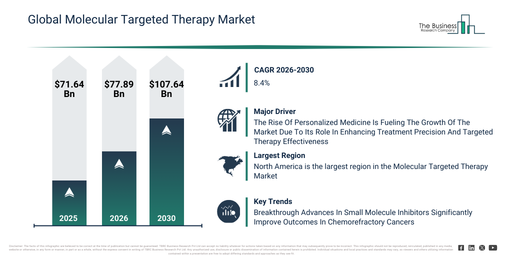
    The molecular targeted therapy market has experienced robust expansion in recent times. Projected to rise from $71.64 billion in 2025 to $77.89 billion in 2026, this growth reflects a compound annual growth rate (CAGR) of 8.7%. Historically, the sector’s advancement has been driven by progress in cancer genomics research, the development of monoclonal antibodies, approvals for oncology drugs, the establishment of hospital oncology centers, and an increase in clinical trial activities.

    The market for molecular targeted therapy is anticipated to experience robust expansion in the coming years. By 2030, it is projected to reach an estimated value of $107.64 billion, driven by a compound annual growth rate (CAGR) of 8.4%. This forward-looking growth is fueled by several factors, including the rise of personalized approaches to cancer treatment, broader utilization of next-generation sequencing, advancements in drug discovery powered by artificial intelligence, the increasing worldwide burden of oncology cases, and improved reimbursement policies for targeted therapies. Key developments shaping this period encompass the growing emphasis on precision oncology, a higher rate of adoption for biomarker-based treatments, an expanding pipeline of targeted cancer drugs, closer integration of companion diagnostic tests, and a stronger trend toward employing combination targeted therapy strategies.

    Download A Free Sample Report For Comprehensive Market Insights:

    https://www.thebusinessresearchcompany.com/sample.aspx?id=24609&type=smp&utm_source=BlogsPR&utm_medium=Paid&utm_campaign=Jul_PR

    Molecular Targeted Therapy Market Expansion Drivers: What Is Shaping Future Growth?

    The anticipated expansion of the molecular targeted therapy market is significantly driven by the growing adoption of personalized medicine. This medical model tailors treatments and preventive strategies to each person’s distinct genetic makeup, lifestyle, and environmental exposures. Its increasing prevalence stems from wider access to genetic data, enabling therapies that are tailored to individual genomes, resulting in improved effectiveness and minimized adverse effects. By examining a patient’s tumor for particular genetic mutations or biomarkers, personalized medicine facilitates the selection of therapies that precisely target these irregularities, thereby enhancing treatment accuracy and decreasing damage to healthy cells. As an illustration, the Personalized Medicine Coalition, a U.S.-based hospital and healthcare entity, reported in February 2024 that the FDA approved 16 new customized treatments for rare disease patients in 2023, compared to only 6 in 2022. Consequently, the ascent of personalized medicine is propelling the molecular targeted therapy market’s growth.

    Molecular Targeted Therapy Market Segment Performance And Strategic Opportunities

    The molecular targeted therapy market covered in this report is segmented –

    1) By Therapy Type: Monoclonal Antibodies, Small Molecule Inhibitors, Gene Therapy, Cell Therapy

    2) By Mode Of Administration: Oral, Injectable, Topical, Intravenous

    3) By Application: Lung Cancer, Breast Cancer, Colorectal Cancer, Leukemia, Other Applications

    4) By End-User: Hospitals, Clinics, Research Laboratories, Diagnostic Centers

    Subsegments:

    1) By Monoclonal Antibodies: Naked Monoclonal Antibodies, Conjugated Monoclonal Antibodies, Bispecific Monoclonal Antibodies

    2) By Small Molecule Inhibitors: Tyrosine Kinase Inhibitors (TKIs), Proteasome Inhibitors, Poly Adenosine Diphosphate (ADP) Ribose Polymerase (PARP) Inhibitors, Mechanistic Target Of Rapamycin (mTOR) Inhibitors

    3) By Gene Therapy: Viral Vector-Based Gene Therapy, Non-Viral Vector-Based Gene Therapy, Genome Editing

    4) By Cell Therapy: Chimeric Antigen Receptor T-Cell Therapy, T-Cell Receptor (TCR) Therapy, Tumor-Infiltrating Lymphocytes (TILs) Therapy, Dendritic Cell Therapy

    Molecular Targeted Therapy Market Strategic Trends: What Is Defining The Next Phase Of Growth?

    Major players in the molecular targeted therapy space are placing significant emphasis on creating cutting-edge products like small molecule inhibitors to enhance outcomes for patients suffering from various cancers and chronic illnesses. These inhibitors are minuscule compounds capable of readily entering cells and blocking specific proteins responsible for disease progression. As an example, in January 2025, Amgen Inc., a pharmaceutical firm based in the United States, launched Lumakras (sotorasib) paired with Vectibix (panitumumab), a combination that gained clearance from the US Food and Drug Administration (FDA), a governmental body in the US. This treatment is intended for adults with KRAS G12C-mutated metastatic colorectal cancer who have undergone prior therapy with fluoropyrimidine-, oxaliplatin-, and irinotecan-based regimens, as confirmed by an FDA-authorized test. The regulatory nod was supported by findings from the Phase 3 CodeBreaK 300 trial, which demonstrated that the duo more than doubled progression-free survival relative to the investigated standard of care, marking the first targeted therapy to deliver such an advantage in this chemorefractory patient group.

    Molecular Targeted Therapy Market Key Players: Which Companies Shape Industry Competition?

    Major companies operating in the molecular targeted therapy market are Pfizer Inc., Merck & Co. Inc., AbbVie Inc., Sanofi S.A., Bristol-Myers Squibb Company, AstraZeneca PLC, Amgen Inc., Regeneron Pharmaceuticals, Vertex Pharmaceuticals Incorporated, Novartis AG, Incyte Corporation, Exelixis Inc., IDEAYA Biosciences Inc., Prelude Therapeutics Incorporated, Gamida Cell Ltd., Adaptimmune Therapeutics plc, Engine Biosciences Pte. Ltd., Krystal Biotech Inc., Sotio Biotech a.s., Cybrexa Therapeutics Inc.

    Access The Complete Molecular Targeted Therapy Market Report:

    https://www.thebusinessresearchcompany.com/report/molecular-targeted-therapy-global-market-report?utm_source=BlogsPR&utm_medium=Paid&utm_campaign=Jul_PR

    Molecular Targeted Therapy Market Geographic Distribution And Regional Opportunities

    North America was the largest region in the molecular targeted therapy market in 2025. Asia-Pacific is expected to be the fastest-growing region in the forecast period. The regions covered in the molecular targeted therapy market report are Asia-Pacific, South East Asia, Western Europe, Eastern Europe, North America, South America, Middle East, Africa.

    Get in touch with us:

    The Business Research Company: https://www.thebusinessresearchcompany.com/?utm_source=BlogsPR&utm_medium=Paid&utm_campaign=home_page_test

    Americas: +1 310-496-7795

    Asia: +44 7882 955267 & +91 8897263534

    Europe: +44 7882 955267

    Email us at: marketing@tbrc.info

    Follow us on:

    LinkedIn: https://in.linkedin.com/company/the-business-research-company

    YouTube: https://www.youtube.com/channel/UC24_fI0rV8cR5DxlCpgmyFQ

    Global Market Model: https://www.thebusinessresearchcompany.com/global-market-model
  • Modular Fill-Finish Micro-Factory Market Outlook Highlights The Next Major Growth Opportunities

    Modular Fill-Finish Micro-Factory Market Outlook Highlights The Next Major Growth Opportunities

    Delivering more actionable and strategically valuable research, The Business Research Company’s 2026 market reports feature market attractiveness analysis, total addressable market evaluation, company benchmarking matrices, interactive Excel dashboards, expanded supply chain intelligence, emerging startup coverage, and detailed product insights.

    Modular Fill-Finish Micro-Factory Market Expected To Reach $2.96 Billion By 2030 At 11.1% CAGR

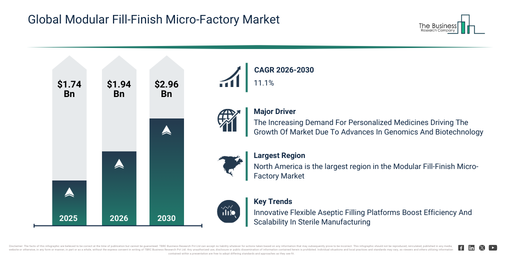
    The market for modular fill-finish micro-factories has seen a quick expansion in recent times. Its valuation is projected to rise from $1.74 billion in 2025 to $1.94 billion in 2026, reflecting a compound annual growth rate (CAGR) of 11.4%. Several factors have driven this historical growth, including a surge in biologics manufacturing, greater vaccine production demands, the spread of contract manufacturing services, a heightened need for sterile injectable medications, and the initial embrace of modular production strategies.

    Over the coming years, the modular fill-finish micro-factory market is poised for substantial expansion. By 2030, its valuation is projected to climb to $2.96 billion, achieving a compound annual growth rate (CAGR) of 11.1%. This upward trajectory during the forecast period is driven by several key factors: heightened investments in decentralized manufacturing, a growing need for facilities capable of providing rapid vaccine responses, the expansion of personalized medicine production, a stronger emphasis on operational flexibility, and an increasing regulatory endorsement of modular setups. Among the notable trends shaping this period are the wider implementation of modular sterile manufacturing environments, the escalating adoption of automated robotic fill-finish systems, a rising requirement for swift manufacturing capacity increases, the expansion of prefabricated GMP-ready facilities, and an intensified focus on flexible production capabilities.

    Download A Free Sample Report For Comprehensive Market Insights:

    https://www.thebusinessresearchcompany.com/sample.aspx?id=29131&type=smp&utm_source=BlogsPR&utm_medium=Paid&utm_campaign=Jul_PR

    Modular Fill-Finish Micro-Factory Market Development Factors: Which Trends Are Supporting Demand?

    The modular fill-finish micro-factory market is anticipated to gain momentum due to a rising need for personalized treatments. Personalized medicine involves customizing disease prevention, diagnosis, and therapy based on a person’s genetic, environmental, and lifestyle characteristics. This growing demand is driven by progress in genomics and biotechnology, which allows for therapies uniquely suited to an individual’s genetic profile, enhancing both effectiveness and safety. By enabling flexible, small-batch, and rapid production tailored to specific patient requirements, the modular fill-finish micro-factory accelerates the delivery of such treatments. As an example, the Personalized Medicine Coalition, a U.S.-based nonprofit, reported in February 2024 that the FDA approved 16 new personalized therapies for rare diseases in 2023—a notable increase from the six approvals in 2022. Consequently, the rising demand for personalized medicines is fueling the expansion of the modular fill-finish micro-factory market.

    Modular Fill-Finish Micro-Factory Market Segment Landscape And Growth Potential

    The modular fill-finish micro-factory market covered in this report is segmented –

    1) By Product Type: Automated Modular Fill-Finish Systems, Semi-Automated Modular Fill-Finish Systems, Manual Modular Fill-Finish Systems

    2) By Scale: Clinical, Commercial

    3) By Application: Pharmaceuticals, Biotechnology, Contract Manufacturing Organizations, Other Applications

    4) By End-User: Pharmaceutical Companies, Biotech Companies, Research Institutes, Other End-Users

    Subsegments:

    1) By Automated Modular Fill-Finish Systems: Robotic Filling Units, Automated Capping Units, Automated Labeling Units, Sterile Transfer Systems, Integrated Packaging Modules

    2) By Semi-Automated Modular Fill-Finish Systems: Semi-Automated Filling Machines, Semi-Automated Capping Machines, Semi-Automated Labeling Machines, Semi-Automated Transfer Systems, Partially Integrated Packaging Units

    3) By Manual Modular Fill-Finish Systems: Manual Filling Stations, Manual Capping Stations, Manual Labeling Stations, Manual Transfer Tools, Manual Packaging Workstations

    Modular Fill-Finish Micro-Factory Market Transformation Trends: Which Innovations Are Driving Change?

    Major industry players in the modular fill-finish micro-factory space are increasingly emphasizing the creation of innovative solutions, including flexible and interchangeable aseptic filling platforms, aimed at boosting production efficiency, accuracy, and scalability within sterile manufacturing environments. These platforms represent cutting-edge systems capable of accommodating diverse container types and batch sizes in sterile conditions, enabling swift configuration adjustments to meet a wide array of product specifications and production demands. As an example, Recipharm AB, a contract development and manufacturing organization based in Sweden, unveiled a new modular sterile filling system in February 2025, tailored to assist with process development, pilot-scale operations, and clinical supply manufacturing. Functioning within a Grade A isolator, this system fully adheres to Good Manufacturing Practice (GMP) standards, thus guaranteeing a wholly GMP-compliant aseptic filling process. Designed specifically for small-batch production—ranging from 500 to 50,000 units per lot—it provides remarkable adaptability through interchangeable modules that work with different product types, such as syringes and vials. Additionally, its cost-efficient design curtails loss of high-value products to under 500 mL, making it exceptionally well-suited for clinical development projects focused on rare diseases, cell and gene therapies, and other advanced modalities.

    Modular Fill-Finish Micro-Factory Market Competitive Landscape: Who Are The Leading Companies?

    Major companies operating in the modular fill-finish micro-factory market are Groninger And Co. GmbH, Lonza Group AG, Sartorius AG, Turner Industries Group LLC, ATS Life Sciences Systems Inc., IMA Group S.p.A., Recipharm AB, Syntegon Technology GmbH, Truking Technology Limited, Optima Packaging Group GmbH, Marchesini Group SPA, Tofflon Science and Technology Co. Ltd., Comecer S.p.A., G-CON Manufacturing Inc., Aseptic Technologies S.A., Steriline S.r.l., Colanar AG, Litek Pharma Solutions Co. Ltd., SKAN AG, Modular Mobile Facility.

    Access The Complete Modular Fill-Finish Micro-Factory Market Report:

    https://www.thebusinessresearchcompany.com/report/modular-fill-finish-micro-factory-global-market-report?utm_source=BlogsPR&utm_medium=Paid&utm_campaign=Jul_PR

    Modular Fill-Finish Micro-Factory Market Largest Region By Revenue And Market Share

    North America was the largest region in the modular fill-finish micro-factory market in 2025. Asia-Pacific is expected to be the fastest-growing region in the forecast period. The regions covered in the modular fill-finish micro-factory market report are Asia-Pacific, South East Asia, Western Europe, Eastern Europe, North America, South America, Middle East, Africa.

    Get in touch with us:

    The Business Research Company: https://www.thebusinessresearchcompany.com/?utm_source=BlogsPR&utm_medium=Paid&utm_campaign=home_page_test

    Americas: +1 310-496-7795

    Asia: +44 7882 955267 & +91 8897263534

    Europe: +44 7882 955267

    Email us at: marketing@tbrc.info

    Follow us on:

    LinkedIn: https://in.linkedin.com/company/the-business-research-company

    YouTube: https://www.youtube.com/channel/UC24_fI0rV8cR5DxlCpgmyFQ

    Global Market Model: https://www.thebusinessresearchcompany.com/global-market-model