Blog

  • Investigational New Drug Contract Development And Manufacturing Organization (CDMO) Market Trends And Growth Drivers Point To Strong Future Potential

    Investigational New Drug Contract Development And Manufacturing Organization (CDMO) Market Trends And Growth Drivers Point To Strong Future Potential

    Enhanced with market attractiveness analysis, total addressable market evaluation, company benchmarking matrices, interactive Excel dashboards, expanded supply chain intelligence, emerging startup coverage, and detailed product insights, The Business Research Company’s 2026 market reports deliver more actionable and strategically valuable research.

    Investigational New Drug Contract Development And Manufacturing Organization (CDMO) Market CAGR Analysis And Future Market Development

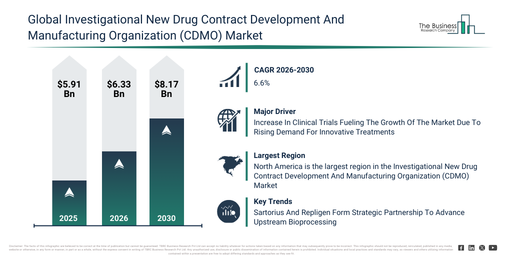
    Between 2025 and 2026, the investigational new drug contract development and manufacturing organization (CDMO) market is projected to expand from $5.91 billion to $6.33 billion, reflecting a compound annual growth rate (CAGR) of 7.1%. This strong growth in recent years has been driven by a scarcity of CDMOs specializing in investigational drugs, heightened demand for small molecule synthesis, continued dependence on traditional manufacturing services, rising numbers of clinical trials, and early uptake of regulatory support offerings.

    The investigational new drug contract development and manufacturing organization (CDMO) market is projected to experience significant expansion over the coming years. By 2030, it is anticipated to reach a valuation of $8.17 billion, reflecting a compound annual growth rate (CAGR) of 6.6%. This forecasted growth is driven by several key factors, including the expansion of capabilities for gene and cell therapy manufacturing, heightened demand for monoclonal antibodies and recombinant proteins, investments in cutting-edge formulation technologies, the embrace of scalable manufacturing platforms, and strengthened global biotechnology research partnerships. Notable developments shaping this period include a surge in demand for services related to early-stage drug development, a rise in clinical trial material supply offerings, a growing emphasis on meeting regulatory and quality benchmarks, the broadening of biologics and advanced therapy development, and the adoption of bespoke manufacturing solutions for both small and large molecules.

    Download A Free Sample Report For Comprehensive Market Insights:

    https://www.thebusinessresearchcompany.com/sample.aspx?id=25803&type=smp&utm_source=BlogsPR&utm_medium=Paid&utm_campaign=Jul_PR

    Investigational New Drug Contract Development And Manufacturing Organization (CDMO) Market Industry Drivers: What Is Driving Revenue Growth?

    The projected expansion of the investigational new drug contract development and manufacturing organization (CDMO) market is expected to be driven by the increasing number of clinical trials. These trials are meticulously structured studies conducted with human volunteers to evaluate the safety and effectiveness of medical treatments, procedures, or interventions under regulated conditions. The growing need for novel therapies, spurred by rising rates of chronic and complex illnesses, is primarily fueling the surge in clinical trials, as pharmaceutical and biotech companies work to develop and test new therapeutic options. By optimizing the development and manufacturing of formulations ready for trials, investigational new drug CDMOs play a key role in supporting these studies, guaranteeing a timely and regulatory-compliant supply of investigational products for every stage of the research. For example, as reported in December 2024 by the Association of the British Pharmaceutical Industry, a trade association for the UK pharmaceutical sector, the total number of industry-initiated clinical trials in the United Kingdom grew from 411 in 2022 to 426 in 2023. Additionally, Phase III trial initiations saw a 16.5% increase over the same timeframe, moving from 182 to 212. Consequently, the growth of the investigational new drug contract development and manufacturing organization (CDMO) market is being propelled by the escalating volume of clinical trials.

    Investigational New Drug Contract Development And Manufacturing Organization (CDMO) Market Segments: Where Are The Largest Growth Opportunities?

    The investigational new drug contract development and manufacturing organization (cdmo) market covered in this report is segmented –

    1) By Product: Small Molecules, Large Molecules

    2) By Formulation Type: Solid Formulations, Liquid Formulations, Injectable Formulations

    3) By Service Type: Clinical Trial Material Supply, Regulatory Support Services, Manufacturing Services

    4) By End-User: Biotechnology Companies, Academic And Research Institutes, Other End-Users

    Subsegments:

    1) By Small Molecules: Synthetic Small Molecules, Semi-synthetic Small Molecules, Peptide-based Small Molecules, Oligonucleotides

    2) By Large Molecules: Monoclonal Antibodies (mAbs), Recombinant Proteins, Vaccines, Cell Therapy Products, Gene Therapy Products, RNA-based Therapeutics

    Investigational New Drug Contract Development And Manufacturing Organization (CDMO) Market Growth Trends: What Is Influencing The Future Outlook?

    Key industry players in the investigational new drug contract development and manufacturing organization (CDMO) market are actively forming strategic partnerships to improve their development capabilities and accelerate clinical-stage entry. These partnerships are defined as formal collaborations between two or more organizations that work together to achieve common goals by combining their strengths, resources, or expertise for mutual advantage while retaining their separate identities. To illustrate, in August 2023, Sartorius AG, a life science firm based in Germany, formed an alliance with Repligen Corporation, a US-based life sciences company, to introduce a combined system that integrates BIOSTAT STR and XCell ATF technologies for upstream process intensification. The purpose of this partnership is to streamline biopharmaceutical production through improved efficiency and scalability. This effort represents a step forward in Sartorius’ ongoing innovation with bioprocessing solutions, underscoring its dedication to advancing the biomanufacturing sector.

    Investigational New Drug Contract Development And Manufacturing Organization (CDMO) Market Major Participants And Competitive Dynamics

    Major companies operating in the investigational new drug contract development and manufacturing organization (cdmo) market are Thermo Fisher Scientific Inc., Fresenius Kabi AG, Lonza Group Ltd., Catalent Inc., Samsung Biologics Co. Ltd., Fareva SA, Recipharm AB, PCI Pharma Services, Vetter Pharma, Delpharm, Kindeva Drug Delivery LP, Ajinomoto Bio-Pharma Services, Cenexi SAS, Grand River Aseptic Manufacturing Inc., INCOG BioPharma Services, Aurigene Pharmaceutical Services, Jubilant HollisterStier LLC, Symbiosis Pharmaceutical Services Ltd., Afton Scientific Corp., Amaran Biotech Inc.

    Access The Complete Investigational New Drug Contract Development And Manufacturing Organization (CDMO) Market Report:

    https://www.thebusinessresearchcompany.com/report/investigational-new-drug-contract-development-and-manufacturing-organization-cdmo-global-market-report?utm_source=BlogsPR&utm_medium=Paid&utm_campaign=Jul_PR

    Investigational New Drug Contract Development And Manufacturing Organization (CDMO) Market Regional Analysis: Which Region Leads By Revenue?

    North America was the largest region in the investigational new drug contract development and manufacturing organization (CDMO) market in 2025. Asia-Pacific is expected to be the fastest-growing region in the forecast period. The regions covered in the investigational new drug contract development and manufacturing organization (cdmo) market report are Asia-Pacific, South East Asia, Western Europe, Eastern Europe, North America, South America, Middle East, Africa.

    Get in touch with us:

    The Business Research Company: https://www.thebusinessresearchcompany.com/?utm_source=BlogsPR&utm_medium=Paid&utm_campaign=home_page_test

    Americas: +1 310-496-7795

    Asia: +44 7882 955267 & +91 8897263534

    Europe: +44 7882 955267

    Email us at: marketing@tbrc.info

    Follow us on:

    LinkedIn: https://in.linkedin.com/company/the-business-research-company

    YouTube: https://www.youtube.com/channel/UC24_fI0rV8cR5DxlCpgmyFQ

    Global Market Model: https://www.thebusinessresearchcompany.com/global-market-model
  • Intravenous Iron Drugs Market Expansion Is Reshaping Competitive Dynamics Across The Industry

    Intravenous Iron Drugs Market Expansion Is Reshaping Competitive Dynamics Across The Industry

    Through market attractiveness analysis, total addressable market evaluation, company benchmarking matrices, interactive Excel dashboards, expanded supply chain intelligence, emerging startup coverage, and detailed product insights, The Business Research Company’s 2026 market reports provide more actionable and strategically valuable research.

    Intravenous Iron Drugs Market Expansion From $4.21 Billion In 2026 To $6.33 Billion In 2030

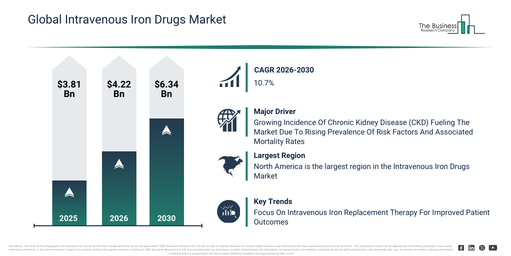
    The intravenous iron drugs sector has seen swift expansion in recent times. Valued at $3.81 billion in 2025, it is projected to reach $4.22 billion by 2026, reflecting a compound annual growth rate (CAGR) of 10.8%. This historical growth has been driven by factors such as the widespread occurrence of iron deficiency anemia, the constraints of oral iron absorption, hospital protocols for managing anemia, rising utilization in dialysis facilities, and the therapeutic efficacy of IV iron treatments.

    The intravenous iron drugs market is anticipated to experience substantial expansion over the coming years, with projections indicating a rise to $6.34 billion by 2030, fueled by a compound annual growth rate (CAGR) of 10.7%. This forecasted growth is driven by factors such as the escalating prevalence of chronic conditions, an expanding population undergoing dialysis, a higher incidence of anemia associated with cancer, a growing demand for swift hemoglobin level correction, and the broadening reach of outpatient infusion services. Key trends shaping this period include the growing application of these drugs for managing iron deficiency anemia, an increasing preference for them among patients with chronic kidney disease, a shift away from oral iron supplements toward intravenous alternatives, the introduction of more single-dose iron formulations, and their enhanced use within oncology and gastroenterology fields.

    Download A Free Sample Report For Comprehensive Market Insights:

    https://www.thebusinessresearchcompany.com/sample.aspx?id=23430&type=smp&utm_source=BlogsPR&utm_medium=Paid&utm_campaign=Jul_PR

    #Intravenous Iron Drugs Market Growth Factors: Which Forces Are Supporting Market Expansion?

    The rising prevalence of chronic kidney disease (CKD) is anticipated to drive the expansion of the intravenous iron drugs market in the coming years. Chronic kidney disease (CKD) is characterized by the progressive decline of kidney function over time, impairing the kidneys’ capacity to adequately remove waste and surplus fluids from the bloodstream. This increase in CKD incidence is largely attributed to the growing rates of diabetes and hypertension, which gradually cause kidney impairment. Intravenous iron medications are used to restore iron levels in CKD patients, correct anemia, and boost hemoglobin levels, thereby improving oxygen delivery and decreasing the reliance on erythropoiesis-stimulating agents. For example, in July 2025, a report from Hamadan University of Medical Sciences, an institution based in Iran, indicated that the global count of newly diagnosed chronic kidney disease cases is expected to reach 25.06 million by 2030. Consequently, the escalating incidence of chronic kidney disease (CKD) is fostering growth in the intravenous iron drugs market.

    Intravenous Iron Drugs Market Segment Analysis: What Are The Major Market Categories?

    The intravenous iron drugs market covered in this report is segmented –

    1) By Product Type: Iron Dextran, Iron Sucrose, Ferric Carboxymaltose, Other Product Types

    2) By Indication: Chronic Kidney Disease, Inflammatory Bowel Disease, Cancer, Other Diseases

    3) By Distribution Channel: Hospital Pharmacy, Retail Pharmacy, Online Pharmacy

    Subsegments:

    1) By Iron Dextran: Low Molecular Weight Iron Dextran, High Molecular Weight Iron Dextran

    2) By Iron Sucrose: Standard Iron Sucrose Injection, Iron Sucrose Complex

    3) By Ferric Carboxymaltose: Single-Dose Ferric Carboxymaltose, Multiple-Dose Ferric Carboxymaltose

    4) By Other Product Types: Ferumoxytol, Ferric Derisomaltose, Sodium Ferric Gluconate

    Intravenous Iron Drugs Market Industry Trends: What Changes Are Reshaping Demand?

    Key players in the intravenous iron drugs market are concentrating on the creation of cutting-edge treatments, such as intravenous (IV) iron replacement therapy, with the goal of boosting effectiveness, safety, and patient results. This approach involves delivering iron straight into the circulation via an IV infusion, serving as a remedy for iron deficiency and anemia, particularly for individuals who cannot handle or sufficiently absorb oral iron supplements. As an example, Daiichi Sankyo Company Limited, a pharmaceutical entity from Japan focused on pioneering drug development and healthcare services, revealed in June 2023 that the U.S. Food and Drug Administration (FDA) had given the green light to Injectafer (ferric carboxymaltose injection) for managing iron deficiency in adult heart failure patients classified as New York Heart Association class II/III, aiming to boost exercise tolerance. Injectafer stands as a frequently employed intravenous iron treatment, recognized for its swift ability to restore iron levels in patients who either cannot endure or fail to respond effectively to oral iron supplements.

    Intravenous Iron Drugs Market Leading Companies Driving Competitive Growth

    Major companies operating in the intravenous iron drugs market are Pharmacosmos A/S, American Regent Inc., Fresenius SE & Co. KGaA, Sandoz Group AG, Hikma Pharmaceuticals plc, Rockwell Medical Inc., Daiichi Sankyo Company Ltd., CSL Limited, Teva Pharmaceutical Industries Ltd., Sun Pharmaceutical Industries Ltd., Dr. Reddy’s Laboratories Ltd., Zydus Lifesciences Limited, Vifor Pharma Management Ltd., Galenica Ltd., Aspen Pharmacare Holdings Limited, Lupin Limited, Aurobindo Pharma Limited, Jiangsu Hengrui Pharmaceutical Co. Ltd., Kissei Pharmaceutical Co. Ltd., Nanjing Hicin Pharmaceutical Co. Ltd

    Access The Complete Intravenous Iron Drugs Market Report:

    https://www.thebusinessresearchcompany.com/report/intravenous-iron-drugs-global-market-report?utm_source=BlogsPR&utm_medium=Paid&utm_campaign=Jul_PR

    Intravenous Iron Drugs Market Geographic Distribution And Regional Opportunities

    North America was the largest region in the intravenous iron drugs market in 2025. Asia-Pacific is expected to be the fastest-growing region in the forecast period. The regions covered in the intravenous iron drugs market report are Asia-Pacific, South East Asia, Western Europe, Eastern Europe, North America, South America, Middle East, Africa.

    Get in touch with us:

    The Business Research Company: https://www.thebusinessresearchcompany.com/?utm_source=BlogsPR&utm_medium=Paid&utm_campaign=home_page_test

    Americas: +1 310-496-7795

    Asia: +44 7882 955267 & +91 8897263534

    Europe: +44 7882 955267

    Email us at: marketing@tbrc.info

    Follow us on:

    LinkedIn: https://in.linkedin.com/company/the-business-research-company

    YouTube: https://www.youtube.com/channel/UC24_fI0rV8cR5DxlCpgmyFQ

    Global Market Model: https://www.thebusinessresearchcompany.com/global-market-model
  • Intravenous Immunoglobulin Market Forecast Reveals Where Future Industry Value Will Be Created

    Intravenous Immunoglobulin Market Forecast Reveals Where Future Industry Value Will Be Created

    Delivering more actionable and strategically valuable research, The Business Research Company’s 2026 market reports feature market attractiveness analysis, total addressable market evaluation, company benchmarking matrices, interactive Excel dashboards, expanded supply chain intelligence, emerging startup coverage, and detailed product insights.

    Intravenous Immunoglobulin Market Forecast Highlighting Growth From $16.86 Billion To $23.43 Billion

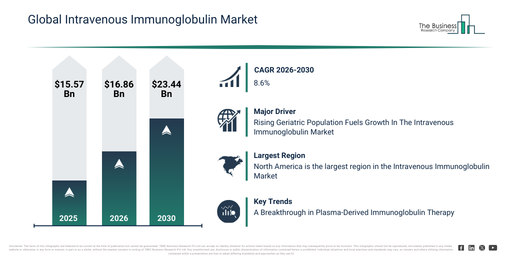
    The intravenous immunoglobulin market has experienced robust expansion in recent years. Projected to increase from $15.57 billion in 2025 to $16.86 billion in 2026, it is set to achieve a compound annual growth rate (CAGR) of 8.3%. Historically, this growth has been driven by a higher incidence of primary immunodeficiency diseases, progress in immunoglobulin purification methods, greater administration of intravenous immunoglobulin within hospital settings, enhanced awareness surrounding autoimmune disorders, and the scaling up of production capabilities for intravenous immunoglobulin.

    The intravenous immunoglobulin market is projected to experience robust expansion in the coming years, with its value anticipated to reach $23.44 billion by 2030, driven by a compound annual growth rate (CAGR) of 8.6%. This forecasted growth is fueled by several key factors, including a rising preference for home-based intravenous immunoglobulin (IVIG) therapy, the emergence of biosimilar IVIG products, the incorporation of automated infusion technologies, broader applications in treating neurological disorders, and increased opportunities in developing markets for immunoglobulin treatments. Notable developments shaping the landscape include trends such as tailored immunoglobulin therapies, the growing adoption of at-home IVIG administration, continued progress in biosimilar development and uptake, improvements in purification methods and safety measures, and the rollout of automated infusion systems.

    Download A Free Sample Report For Comprehensive Market Insights:

    https://www.thebusinessresearchcompany.com/sample.aspx?id=8538&type=smp&utm_source=BlogsPR&utm_medium=Paid&utm_campaign=Jul_PR

    Intravenous Immunoglobulin Market Demand Drivers: What Is Fueling Industry Growth?

    The rising number of elderly individuals is anticipated to propel the intravenous immunoglobulin market. This demographic consists of people aged 65 and older. With advancing age, the immune system becomes less effective, resulting in a deficiency of antibodies. Consequently, immunoglobulins are necessary to supply these antibodies, boosting the demand for intravenous immunoglobulins and accelerating market expansion. For example, in January 2024, the Population Reference Bureau, a Kenya-based nonprofit, reported that the U.S. population aged 65 and over is projected to increase from 58 million in 2022 to 82 million by 2050—a 47% rise. The proportion of this age group within the total population is also expected to climb from 17% to 23% over the same timeframe. Therefore, the growing elderly population will continue to drive the advancement of the intravenous immunoglobulin market.

    Intravenous Immunoglobulin Market Segment Breakdown: Which Categories Generate The Most Revenue?

    The intravenous immunoglobulin market covered in this report is segmented –

    1) By Type: IgG (Immunoglobulin G), IgM (Immunoglobulin M), IgA (Immunoglobulin A), IgE (Immunoglobulin E), IgD (Immunoglobulin D)

    2) By Distribution Channel: Hospital Pharmacy, Retail Pharmacy, Other Distribution Channels

    3) By Application: Hypogammaglobulinemia, Chronic Inflammatory Demyelinating Polyneuropathy (CIDP), Primary Immunodeficiency Diseases, Myasthenia Gravis, Multifocal Motor Neuropathy, Other Applications

    4) By End-User: Hospitals, Clinics, Home Care

    Intravenous Immunoglobulin Market Innovation Trends: Which Developments Are Transforming The Industry?

    Key players in the intravenous immunoglobulin sector are concentrating on developing cutting-edge products, like medicines derived from plasma, and securing approvals from regulatory bodies such as the U.S. FDA to strengthen their market position. Receiving FDA clearance for an innovative IVIG treatment indicates that a new intravenous immunoglobulin therapy has been officially authorized by the United States Food and Drug Administration to address particular health conditions. For example, in June 2024, Biotest AG, a German company specializing in plasma protein and product supply, reported its first FDA authorization for Yimmugo, intended to manage primary immunodeficiencies. As an intravenous immunoglobulin, Yimmugo consists of pooled human plasma-extracted immunoglobulin G (IgG), which is vital for bolstering immune function in individuals suffering from PIDs. This clearance occurs amid a growing demand for therapies based on plasma, underscoring the necessity of effective interventions for those with weakened immune systems. Yimmugo expands Grifols’ current portfolio of intravenous and subcutaneous immunoglobulins, delivering additional choices for patients who depend on these critical medications.

    Intravenous Immunoglobulin Market Key Players And Strategic Industry Positioning

    Major companies operating in the intravenous immunoglobulin market are Bio Products Laboratory Limited, Biotest AG, China Biologic Products Holdings Inc., CSL Behring, Grifols S.A., Kedrion SpA, Shanghai RAAS Blood Products Co. Ltd., Octapharma AG, Takeda Pharmaceutical Company Limited, Baxter International Inc., LFB Biotechnologies SAS, BDI Pharma Inc., Hualan Biological Engineering Inc., ADMA Biologics Inc., Bharat Serums and Vaccines Limited, Sanquin Plasma Products B.V., Prothya Biosolutions B.V., Sichuan Yuanda Shuyang Pharmaceutical Co. Ltd., Pfizer Inc., Kedrion Biopharma, Intas Pharmaceuticals, Octapharma Pharmazeutika Produktionsges.m.b.H., GC Pharma, Grifols Biologicals Inc., Kamada Ltd., LFB USA, Octapharma Plasma Inc., Panacea Biotec Ltd.

    Access The Complete Intravenous Immunoglobulin Market Report:

    https://www.thebusinessresearchcompany.com/report/intravenous-immunoglobulin-global-market-report?utm_source=BlogsPR&utm_medium=Paid&utm_campaign=Jul_PR

    Intravenous Immunoglobulin Market Largest Region By Revenue And Market Share

    North America was the largest region in the intravenous immunoglobulin market in 2025. Asia-Pacific is expected to be the fastest-growing region in the forecast period. The regions covered in the intravenous immunoglobulin market report are Asia-Pacific, South East Asia, Western Europe, Eastern Europe, North America, South America, Middle East, Africa.

    Get in touch with us:

    The Business Research Company: https://www.thebusinessresearchcompany.com/?utm_source=BlogsPR&utm_medium=Paid&utm_campaign=home_page_test

    Americas: +1 310-496-7795

    Asia: +44 7882 955267 & +91 8897263534

    Europe: +44 7882 955267

    Email us at: marketing@tbrc.info

    Follow us on:

    LinkedIn: https://in.linkedin.com/company/the-business-research-company

    YouTube: https://www.youtube.com/channel/UC24_fI0rV8cR5DxlCpgmyFQ

    Global Market Model: https://www.thebusinessresearchcompany.com/global-market-model
  • Intratumoral Cancer Therapies Market Growth Through 2030 Creates New Strategic Opportunities

    Intratumoral Cancer Therapies Market Growth Through 2030 Creates New Strategic Opportunities

    Enhanced with market attractiveness analysis, total addressable market evaluation, company benchmarking matrices, interactive Excel dashboards, expanded supply chain intelligence, emerging startup coverage, and detailed product insights, The Business Research Company’s 2026 market reports deliver more actionable and strategically valuable research.

    Intratumoral Cancer Therapies Market Revenue Growth Supported By A CAGR Of 274.75% Through 2030

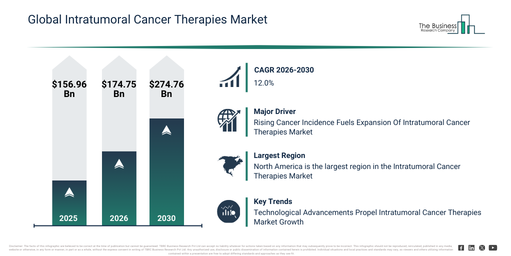
    The intratumoral cancer therapies market has seen substantial growth in recent years, expanding from $156.96 billion in 2025 to $174.75 billion in 2026, reflecting a compound annual growth rate (CAGR) of 11.3%. This historic period’s expansion is driven by factors such as constrained treatment precision, heavy dependence on chemotherapy, limited incorporation of immunotherapy, conventional approaches to tumor injection, and variations in regional healthcare infrastructure.

    The market for intratumoral cancer therapies is projected to experience rapid expansion over the coming years, reaching $274.76 billion by 2030 with a compound annual growth rate (CAGR) of 12.0%. This growth during the forecast period is driven by factors such as the increasing adoption of precision medicine, the rising utilization of immuno-oncology treatments, technological improvements in injection devices, heightened collaboration with biotechnology companies, and expanded funding for cancer research. Key trends shaping this period involve targeted delivery of drugs directly into tumors, the use of combination therapy strategies, personalized approaches to cancer care, minimally invasive techniques for administration, and the optimized modulation of the tumor microenvironment.

    Download A Free Sample Report For Comprehensive Market Insights:

    https://www.thebusinessresearchcompany.com/sample.aspx?id=9979&type=smp&utm_source=BlogsPR&utm_medium=Paid&utm_campaign=Jul_PR

    Intratumoral Cancer Therapies Market Growth Drivers: What Factors Are Accelerating Expansion?

    A rise in cancer diagnoses is anticipated to fuel expansion within the intratumoral cancer therapies market as time progresses. This condition encompasses a range of diseases marked by the abnormal and unchecked proliferation of cells throughout the body. Intratumoral cancer therapies serve a purpose in both detecting and addressing cancer, offering benefits such as minimizing unintended toxicities, reducing dose-related side effects, and curbing adverse reactions linked to immune activation in affected individuals. Data from January 2023 shows that the American Cancer Society, a nonprofit organization based in the United States dedicated to cancer advocacy, predicted around 1,958,310 new cancer cases in the country for 2023, which compares to roughly 1,918,160 new diagnoses reported in the prior year—this translates to an increase of approximately 2.1 percent. Consequently, the growing prevalence of cancer is propelling forward momentum in the intratumoral cancer therapies market.

    Intratumoral Cancer Therapies Market Segmentation: How Is The Market Structured Across Key Categories?

    The intratumoral cancer therapies market covered in this report is segmented –

    1) By Technology: Monoclonal Antibodies, Vaccines, Checkpoint Inhibitors, Cell Therapies, Immunes System Modulator, Adoptive Cell Transfer, Cytokines

    2) By Application: Lung Cancer, Breast Cancer, Melanoma, Prostate Cancer, Head And Neck Cancer, Other Applications

    3) By End Users: Hospitals, Cancer Research Centers, Clinics

    Subsegments:

    1) By Monoclonal Antibodies: Naked Monoclonal Antibodies, Conjugated Monoclonal Antibodies, Bispecific Monoclonal Antibodies

    2) By Vaccines: Peptide-Based Vaccines, Protein-Based Vaccines, DNA Vaccines

    3) By Checkpoint Inhibitors: PD-1 Or PD-L1 Inhibitors, CTLA-4 Inhibitors

    4) By Cell Therapies: CAR T-Cell Therapy, TCR Therapy

    5) By Immune System Modulators: Immune Checkpoint Inhibitors, Toll-Like Receptor Agonists

    6) By Adoptive Cell Transfer: Tumor-Infiltrating Lymphocytes (TILs), Peripheral Blood Lymphocytes (PBLs)

    7) By Cytokines: Interleukins, Interferons, Tumor Necrosis Factor (TNF)

    Intratumoral Cancer Therapies Market Trends: What Is Shaping Future Industry Growth?

    Leading firms within the intratumoral cancer therapies sector are prioritizing the development of cutting-edge solutions, particularly sophisticated oncolytic virus platforms, to address the increasing need for precise tumor destruction, improved immune activation, and advanced localized cancer treatments. Oncolytic virus therapies consist of engineered viral constructs that specifically replicate within cancerous cells, resulting in direct tumor lysis while also fostering systemic anti-tumor immunity, thereby presenting a more targeted and immune-enhancing alternative compared to conventional chemotherapy and radiation. In November 2024, for example, Replimune Group, Inc., a U.S.-based clinical-stage biotechnology company, announced that its primary candidate, RP1 (vusolimogene oderparepvec)—a modified herpes simplex virus equipped with a fusogenic protein and GM-CSF—was granted Breakthrough Therapy Designation by the FDA, and its Biologics License Application was submitted via the Accelerated Approval pathway. This approach facilitates the intratumoral administration of an oncolytic virus that directly kills tumor cells and boosts systemic immune responses, marking a notable breakthrough in cancer therapy.

    Intratumoral Cancer Therapies Market Competitive Landscape And Leading Companies

    Major companies operating in the intratumoral cancer therapies market are Amgen Inc., AstraZeneca plc, Bayer AG, Bristol-Myers Squibb Company, Pfizer Inc., Novartis AG, Johnson & Johnson, Eli Lilly and Company, F. Hoffmann-la Roche, Takeda Pharmaceutical Company Ltd., GSK plc, Ziopharm Oncology Inc., Celldex Therapeutics Inc., Astellas Pharma Inc., Sirnaomics, Checkmate Pharmaceuticals Inc., Immunovative Therapies Ltd., Idera Pharmaceuticals Inc., Daiichi Sankyo, Philogen S.p.A., Apexigen Inc., Merck Group, OncoSec Medical Incorporated, DNAtrix, Istari Oncology Inc., Nanobiotix, Exicure Inc., Karyopharm Therapeutics Inc., Torigen Pharmaceuticals Inc.

    Access The Complete Intratumoral Cancer Therapies Market Report:

    https://www.thebusinessresearchcompany.com/report/intratumoral-cancer-therapies-global-market-report?utm_source=BlogsPR&utm_medium=Paid&utm_campaign=Jul_PR

    Intratumoral Cancer Therapies Market Regional Analysis And Leading Geography

    North America was the largest region in the intratumoral cancer therapies market in 2025. The regions covered in the intratumoral cancer therapies market report are Asia-Pacific, South East Asia, Western Europe, Eastern Europe, North America, South America, Middle East, Africa.

    Get in touch with us:

    The Business Research Company: https://www.thebusinessresearchcompany.com/?utm_source=BlogsPR&utm_medium=Paid&utm_campaign=home_page_test

    Americas: +1 310-496-7795

    Asia: +44 7882 955267 & +91 8897263534

    Europe: +44 7882 955267

    Email us at: marketing@tbrc.info

    Follow us on:

    LinkedIn: https://in.linkedin.com/company/the-business-research-company

    YouTube: https://www.youtube.com/channel/UC24_fI0rV8cR5DxlCpgmyFQ

    Global Market Model: https://www.thebusinessresearchcompany.com/global-market-model
  • Intranasal Corticosteroids Market Size Projected To Increase From $7.31 Billion To $9.74 Billion During The Forecast Period

    Intranasal Corticosteroids Market Size Projected To Increase From $7.31 Billion To $9.74 Billion During The Forecast Period

    Through market attractiveness analysis, total addressable market evaluation, company benchmarking matrices, interactive Excel dashboards, expanded supply chain intelligence, emerging startup coverage, and detailed product insights, The Business Research Company’s 2026 market reports provide more actionable and strategically valuable research.

    Intranasal Corticosteroids Market Value Expansion And Long-Term Growth Outlook

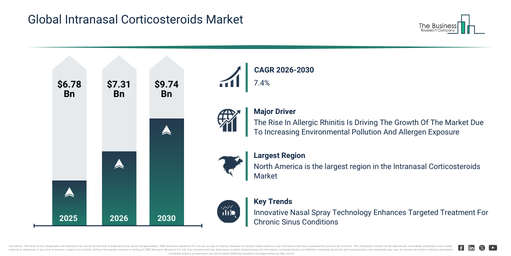
    The intranasal corticosteroids market has experienced robust expansion in recent years, with projections indicating an increase from $6.78 billion in 2025 to $7.31 billion in 2026, reflecting a compound annual growth rate (CAGR) of 7.8%. This historic growth has been driven by factors such as insufficient awareness surrounding intranasal corticosteroids, dependence on hospital-based pharmacies for medication distribution, a rising prevalence of nasal allergies, a continued preference for traditional therapeutic approaches, and limited availability of online pharmacy services.

    The intranasal corticosteroids market is anticipated to experience robust expansion in the coming years, with projections indicating it will reach $9.74 billion by 2030, reflecting a compound annual growth rate (CAGR) of 7.4%. This forecasted growth is driven by factors such as heightened healthcare awareness, the expansion of both retail and online pharmacy channels, a growing frequency of chronic rhinitis and nasal polyp cases, the integration of combination therapies, and the development of user-friendly spray devices. Key trends shaping the market in the forecast period include the increasing prevalence of allergic rhinitis and other nasal conditions, a rising uptake of prescription-based intranasal corticosteroids, growing utilization of over-the-counter versions, the broadening of distribution networks through hospitals and homecare settings, and a heightened emphasis on patient-centric approaches that prioritize ease of administration.

    Download A Free Sample Report For Comprehensive Market Insights:

    https://www.thebusinessresearchcompany.com/sample.aspx?id=25799&type=smp&utm_source=BlogsPR&utm_medium=Paid&utm_campaign=Jul_PR

    Intranasal Corticosteroids Market Growth Factors Supporting Long-Term Expansion

    The anticipated growth of the intranasal corticosteroids market is being driven forward by the rising incidence of allergic rhinitis. This condition, characterized by inflammation of the nasal passages due to allergens like pollen, dust mites, mold, or pet dander, is becoming more common, largely as a result of increasing environmental pollution. Such pollution exposes people to airborne triggers that provoke allergic reactions in the nasal lining. Intranasal corticosteroids work by alleviating this inflammation, thereby reducing symptoms such as sneezing, congestion, and a runny nose. A report from the National Library of Medicine in October 2023 highlighted that allergic rhinitis impacts over 400 million individuals globally, with prevalence rates ranging from 10% to 30% among adults and exceeding 40% in children. Consequently, the expanding prevalence of this condition is fueling the intranasal corticosteroid market.

    Intranasal Corticosteroids Market Segmentation Trends And Revenue Drivers

    The intranasal corticosteroids market covered in this report is segmented –

    1) By Drug Types: Prescribed Drugs, Over-The-Counter Drugs

    2) By Application: Allergic Rhinitis, Nasal Polyps, Sinusitis, Other Applications

    3) By Distribution Channel: Hospital Pharmacies, Retail Pharmacies, Online Pharmacies, Other Distribution Channel

    4) By End User: Hospitals, Clinics, Homecare, Healthcare Providers

    Subsegments:

    1) By Prescribed Drugs: Fluticasone Propionate, Mometasone Furoate, Budesonide, Beclomethasone Dipropionate, Ciclesonide

    2) By Over-The-Counter Drugs: Triamcinolone Acetonide, Fluticasone Furoate, Budesonide Over-The-Counter Drugs

    Intranasal Corticosteroids Market Industry Trends Shaping Future Revenue Growth

    In the intranasal corticosteroids market, key players are concentrating on creating innovative formulations like nasal sprays to optimize targeted drug delivery and boost patient adherence. A nasal spray is a liquid medication administered directly into the nose via a spray nozzle, used to manage allergies, congestion, or inflammation by enabling rapid drug absorption through the nasal mucosa, resulting in swift relief with minimal systemic side effects. For example, in March 2024, OptiNose Inc., a US-based pharmaceutical firm, secured FDA approval for XHANCE, the first and only treatment specifically indicated for adults with chronic rhinosinusitis (CRS) without nasal polyps. This nasal spray employs a distinctive exhalation delivery system that allows the medication to penetrate deeply into the nasal cavity, effectively addressing CRS with or without nasal polyps in adults. Each dose delivers 93 mcg of fluticasone propionate, and the device functions by having the user blow into a mouthpiece while simultaneously releasing the spray into one nostril, ensuring accurate delivery and improved symptom control.

    Intranasal Corticosteroids Market Industry Leaders: Which Organizations Are Driving Competition?

    Major companies operating in the intranasal corticosteroids market are GlaxoSmithKline plc, Teva Pharmaceutical Industries Ltd., Sandoz Group AG, Haleon plc, Intas Pharmaceuticals Limited, Organon Pharma (UK) Limited, Sun Pharmaceutical Industries Ltd., Apotex Inc., Perrigo Company plc, Aurobindo Pharma Limited, Cipla Ltd., Hikma Pharmaceuticals plc, Zydus Lifesciences Ltd., Glenmark Pharmaceuticals Limited, OptiNose US Inc., Taro Pharmaceutical Industries Ltd., Maya Biotech Private Limited, AdvaCare Pharma USA, Lupin Ltd., Xenone Healthcare Private Limited.

    Access The Complete Intranasal Corticosteroids Market Report:

    https://www.thebusinessresearchcompany.com/report/intranasal-corticosteroids-global-market-report?utm_source=BlogsPR&utm_medium=Paid&utm_campaign=Jul_PR

    Intranasal Corticosteroids Market Geographic Analysis: Where Is Demand Growing The Fastest?

    North America was the largest region in the intranasal corticosteroids market in 2025. Asia-Pacific is expected to be the fastest-growing region in the forecast period. The regions covered in the intranasal corticosteroids market report are Asia-Pacific, South East Asia, Western Europe, Eastern Europe, North America, South America, Middle East, Africa.

    Get in touch with us:

    The Business Research Company: https://www.thebusinessresearchcompany.com/?utm_source=BlogsPR&utm_medium=Paid&utm_campaign=home_page_test

    Americas: +1 310-496-7795

    Asia: +44 7882 955267 & +91 8897263534

    Europe: +44 7882 955267

    Email us at: marketing@tbrc.info

    Follow us on:

    LinkedIn: https://in.linkedin.com/company/the-business-research-company

    YouTube: https://www.youtube.com/channel/UC24_fI0rV8cR5DxlCpgmyFQ

    Global Market Model: https://www.thebusinessresearchcompany.com/global-market-model
  • Interventional Lung Solutions Market Growth Outlook Reveals A CAGR Of 8.1% And A Market Value Of $3.65 Billion By 2030

    Interventional Lung Solutions Market Growth Outlook Reveals A CAGR Of 8.1% And A Market Value Of $3.65 Billion By 2030

    Delivering more actionable and strategically valuable research, The Business Research Company’s 2026 market reports feature market attractiveness analysis, total addressable market evaluation, company benchmarking matrices, interactive Excel dashboards, expanded supply chain intelligence, emerging startup coverage, and detailed product insights.

    Interventional Lung Solutions Market Expected To Reach $3.65 Billion By 2030 At 8.1% CAGR

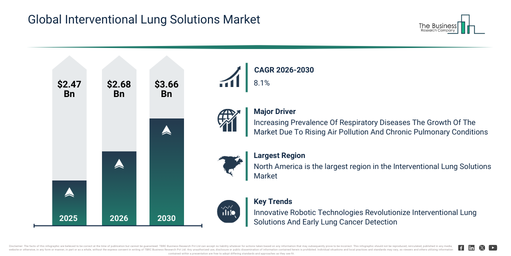
    The market for interventional lung solutions has experienced robust expansion over recent years, with projections indicating an increase from $2.47 billion in 2025 to $2.68 billion in 2026, reflecting a compound annual growth rate (CAGR) of 8.3%. This historical growth has been driven by a higher incidence of COPD and lung cancer, constraints associated with surgical lung interventions, progress in bronchoscopy technology, growing use of minimally invasive techniques in hospitals, and an overall rise in healthcare spending.

    The interventional lung solutions market is projected to experience robust expansion in the coming years, reaching $3.66 billion by 2030 at a compound annual growth rate (CAGR) of 8.1%. This forecasted growth is driven by an increasing elderly population suffering from respiratory conditions, a greater uptake of robotic-assisted interventions, an expansion in outpatient pulmonary procedures, a heightened emphasis on early lung cancer detection, and progress in navigation bronchoscopy technology. Key trends shaping the market during this period include a growing preference for minimally invasive pulmonary techniques, a higher utilization of robotic bronchoscopy systems, an increased demand for lung volume reduction devices, an expansion in image-guided interventional lung therapies, and a rising preference for disposable bronchoscopes.

    Download A Free Sample Report For Comprehensive Market Insights:

    https://www.thebusinessresearchcompany.com/sample.aspx?id=24258&type=smp&utm_source=BlogsPR&utm_medium=Paid&utm_campaign=Jul_PR

    Interventional Lung Solutions Market Demand Drivers Creating New Revenue Opportunities

    The projected expansion of the interventional lung solutions market is being driven by the rising incidence of respiratory diseases. These diseases encompass various medical conditions that impair lung and airway function, leading to breathing difficulties and disrupted respiratory processes. This upward trend in respiratory illnesses is largely attributed to worsening air pollution, which results in sustained exposure to dangerous airborne substances and irritants. Through minimally invasive techniques, interventional lung solutions assist in managing such conditions by enhancing lung performance and alleviating symptoms in patients suffering from chronic pulmonary disorders. As an example, BioMed Central Ltd, a UK-based journal platform, reported in May 2025 that the global prevalence of chronic obstructive pulmonary disease stands at 10.3%, with an anticipated 600 million individuals affected by 2050. Additionally, asthma currently impacts around 262 million people worldwide. Consequently, the growing frequency of respiratory diseases is propelling the interventional lung solutions market forward.

    Interventional Lung Solutions Market Segment Analysis Highlighting Growth Areas

    The interventional lung solutions market covered in this report is segmented –

    1) By Product Type: Bronchoscopes, Endobronchial Ultrasound Needles, Pleuroscopes, Airway Stents, Other Product Types

    2) By Technology: Robotic Surgery, Laser Therapy, Electromagnetic Navigation Bronchoscopy

    3) By Procedure: Bronchoscopy, Thoracoscopy, Pleuroscopy, Other Procedures

    4) By Application: Lung Cancer Treatment, Chronic Obstructive Pulmonary Disease

    5) By End-User: Hospitals, Ambulatory Surgical Centers, Specialty Clinics, Other End-Users

    Subsegments:

    1) BY Bronchoscopes: Flexible Bronchoscopes, Rigid Bronchoscopes, Disposable Bronchoscopes

    2) By Endobronchial Ultrasound Needles: Transbronchial Aspiration Needles, Biopsy Needles

    3) By Pleuroscopes: Flexible Pleuroscopes, Semi-Rigid Pleuroscopes

    4) By Airway Stents: Metallic Stents, Silicone Stents, Hybrid Stents

    5) By Other Product Types: Bronchial Thermoplasty Devices, Lung Volume Reduction Devices, Electromagnetic Navigation Systems, Cryotherapy And Ablation Devices

    Interventional Lung Solutions Market Trends Driving Strategic Industry Expansion

    Major players in the interventional lung solutions sector are concentrating on advancing cutting-edge technologies like the Ion Endoluminal System to boost lung cancer diagnostic precision, facilitate minimally invasive treatments, and improve patient recovery through enhanced navigation and biopsy features. The Ion Endoluminal System represents a robotic-assisted tool intended for low-impact lung procedures, offering accurate airway navigation to target small or challenging lung nodules. As an example, in April 2024, H. Lee Moffitt Cancer Center and Research Institute Foundation Inc., a nonprofit entity based in the United States, unveiled a new Ion Robotic Bronchoscopy platform, strengthening their interventional pulmonology program with sophisticated fiber-optic technology and a minimally invasive catheter system. This innovation employs fiber optics and the industry’s smallest catheter to access all lung regions. The platform includes an extremely thin, highly flexible catheter capable of 180° movement, integrated live visual feedback, and shape-sensing capabilities, allowing exact navigation and sample collection from difficult-to-reach peripheral lung nodules. This setup delivers unmatched steadiness and accuracy for tissue extraction, enabling clinicians to access every one of the 18 lung segments and boosting early-stage lung cancer identification.

    Interventional Lung Solutions Market Leading Companies: Who Holds Significant Market Presence?

    Major companies operating in the interventional lung solutions market are Johnson and Johnson, Siemens AG, Medtronic plc, FUJIFILM Holdings Corporation, GE Healthcare Technologies Inc., Boston Scientific Corporation, Olympus Corporation, Intuitive Surgical Inc., Smiths Medical Inc., Cook Medical Inc., Merit Medical Systems Inc., Penumbra Inc., Vygon SA, AngioDynamics Inc., Vapotherm Inc., Pulmonx Corporation, Broncus Medical Inc., Thirona B.V., Body Vision Medical Ltd., EndoMed Systems GmbH

    Access The Complete Interventional Lung Solutions Market Report:

    https://www.thebusinessresearchcompany.com/report/interventional-lung-solutions-global-market-report?utm_source=BlogsPR&utm_medium=Paid&utm_campaign=Jul_PR

    Interventional Lung Solutions Market Global Footprint: Which Region Holds Market Leadership?

    North America was the largest region in the interventional lung solutions market in 2025. Asia-Pacific is expected to be the fastest-growing region in the forecast period. The regions covered in the interventional lung solutions market report are Asia-Pacific, South East Asia, Western Europe, Eastern Europe, North America, South America, Middle East, Africa.

    Get in touch with us:

    The Business Research Company: https://www.thebusinessresearchcompany.com/?utm_source=BlogsPR&utm_medium=Paid&utm_campaign=home_page_test

    Americas: +1 310-496-7795

    Asia: +44 7882 955267 & +91 8897263534

    Europe: +44 7882 955267

    Email us at: marketing@tbrc.info

    Follow us on:

    LinkedIn: https://in.linkedin.com/company/the-business-research-company

    YouTube: https://www.youtube.com/channel/UC24_fI0rV8cR5DxlCpgmyFQ

    Global Market Model: https://www.thebusinessresearchcompany.com/global-market-model
  • Interstitial Cystitis Drugs Market Forecast Highlights Expansion From $1.5 Billion To $1.81 Billion Through 2030

    Interstitial Cystitis Drugs Market Forecast Highlights Expansion From $1.5 Billion To $1.81 Billion Through 2030

    Enhanced with market attractiveness analysis, total addressable market evaluation, company benchmarking matrices, interactive Excel dashboards, expanded supply chain intelligence, emerging startup coverage, and detailed product insights, The Business Research Company’s 2026 market reports deliver more actionable and strategically valuable research.

    Interstitial Cystitis Drugs Market Size And Revenue Forecast Through 2030

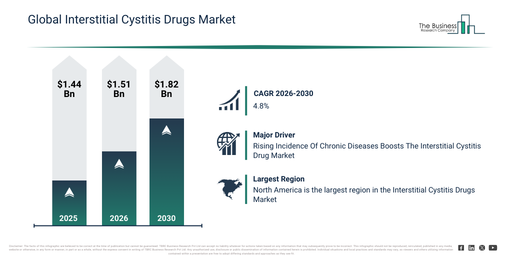
    The interstitial cystitis drugs market has experienced consistent expansion in recent years, with projections indicating an increase from $1.44 billion in 2025 to $1.51 billion in 2026, reflecting a compound annual growth rate (CAGR) of 4.8%. This historical growth has been driven by factors such as limited public awareness of interstitial cystitis, a strong dependence on traditional treatment approaches, a high rate of misdiagnosis, constrained investment in research and development, and the relatively low uptake of intravesical therapy.

    The market for interstitial cystitis drugs is projected to experience consistent expansion over the coming years. By 2030, it is anticipated to reach $1.82 billion, reflecting a compound annual growth rate (CAGR) of 4.8%. This forecasted growth is driven by factors such as the rising uptake of targeted therapies, greater funding directed toward IC research, a higher occurrence of bladder-related conditions, innovations in drug delivery systems, and the broadening of healthcare facilities. Key developments shaping this period include the emergence of personalized treatment plans, the adoption of less invasive drug delivery methods, progress in combination therapies, advances in repairing bladder linings, and a stronger emphasis on managing symptoms effectively.

    Download A Free Sample Report For Comprehensive Market Insights:

    https://www.thebusinessresearchcompany.com/sample.aspx?id=13461&type=smp&utm_source=BlogsPR&utm_medium=Paid&utm_campaign=Jul_PR

    Interstitial Cystitis Drugs Market Expansion Supported By Key Demand Factors

    The growing prevalence of chronic illnesses is anticipated to boost the interstitial cystitis drug market moving forward. Chronic diseases are defined as long-lasting health conditions that continue over an extended timeframe, often throughout a person’s life. Cystitis medications are used to manage urinary tract infections by targeting and eradicating the bacteria causing the infection. These drugs address the root infection within the urinary tract, relieving symptoms such as painful urination, frequent urination, and urgency that result from various chronic conditions, including urinary tract infections (UTIs). For example, in January 2023, the National Institute of Health—a public health research agency based in the US—reported that urinary tract infections led to over 1 million emergency department visits in the country, ranking as the seventh most common reason for such visits. Among these cases, 22% (220,000) were categorized as complicated urinary tract infections (UTIs), and roughly 100,000 patients were admitted to hospitals each year. Consequently, the increasing occurrence of chronic diseases is fueling expansion in the interstitial cystitis drug market.

    Expanding pharmaceutical production is set to drive the interstitial cystitis drug market forward. Drug production involves the entire manufacturing process of pharmaceutical goods, encompassing synthesis, formulation, and packaging of medications intended for therapeutic application. Key factors boosting demand for drug production in the pharmaceutical sector include an aging population, research and development efforts, health initiatives, and the need for generic medications. This production enhances treatment possibilities for interstitial cystitis by creating innovative therapies that address the rising demand for effective drugs, spurred by greater awareness and diagnosis. Improved manufacturing capabilities allow for swift responses to market requirements, guaranteeing that patients receive access to state-of-the-art treatments. In June 2023, as per the European Federation of Pharmaceutical Industries and Associations (EFPIA)—a trade association representing Europe’s pharmaceutical industry based in Belgium—total pharmaceutical production in Europe reached €390,000 million ($422,803 million) in 2023, compared to €363,300 million ($393,857 million) in 2022. Thus, the growing incidence of chronic diseases is propelling the interstitial cystitis drug market’s expansion.

    The expanding older demographic is expected to boost the interstitial cystitis drug market as we look ahead. An aging population describes a rising percentage of elderly individuals in a society, driven by longer life spans and lower birth rates. This group is increasing due to healthcare improvements that have prolonged life expectancy. Interstitial cystitis medications benefit older adults by alleviating chronic bladder pain and enhancing urinary comfort, thereby improving daily quality of life. In January 2024, the Population Reference Bureau—a US-based nonprofit—reported that the number of Americans aged 65 and older is projected to climb from 58 million in 2022 to 82 million by 2050, representing a 47% increase. Accordingly, this age group’s share of the total US population is expected to rise from 17% to 23% over that timeframe. Hence, the surge in the aging population is driving growth in the interstitial cystitis drug market.

    Interstitial Cystitis Drugs Market Segment Performance And Strategic Opportunities

    The interstitial cystitis drugs market covered in this report is segmented –

    1) By Drugs: Pentosan Polysulfate Sodium, Dimethyl Sulfoxide, Other Drugs

    2) By Type: Oral Therapy, Intravesical Therapy

    3) By Distribution Channel: Hospital Pharmacies, Retail Pharmacies, Online Pharmacies

    Subsegments:

    1) By Pentosan Polysulfate Sodium: Oral Pentosan Polysulfate Sodium, Injectable Pentosan Polysulfate Sodium

    2) By Dimethyl Sulfoxide (DMSO): Intravesical DMSO (Bladder Instillation)

    3) By Other Drugs: Amitriptyline, Hydroxyzine, Cimetidine, Gabapentin

    Interstitial Cystitis Drugs Market Key Players: Which Companies Shape Industry Competition?

    Major companies operating in the interstitial cystitis drugs market are Pfizer Inc., Johnson & Johnson , Merck & Co. Inc., AbbVie Inc., Bayer AG, Novartis AG, Sanofi SA, GlaxoSmithKline PLC, Eli Lilly and Company, Amgen Inc., Viatris Inc., Teva Pharmaceutical Industries Ltd., Astellas Pharma Inc., Boehringer Ingelheim International GmbH, UCB S.A., Sun Pharmaceutical Industries Ltd., Perrigo Company PLC, Cipla Limited, Ferring B.V., Grunenthal Pharma, Kyorin Pharmaceutical Co. Ltd, Seikagaku Corporation, UroGen Pharma, Alivio Therapeutics, Lipella Pharmaceuticals, GlycoMira Therapeutics Inc.

    Access The Complete Interstitial Cystitis Drugs Market Report:

    https://www.thebusinessresearchcompany.com/report/interstitial-cystitis-drugs-global-market-report?utm_source=BlogsPR&utm_medium=Paid&utm_campaign=Jul_PR

    Interstitial Cystitis Drugs Market Regional Distribution: Which Areas Drive Market Expansion?

    North America was the largest region in the interstitial cystitis drugs market in 2025. Asia-Pacific is expected to be the fastest-growing region in the forecast period. The regions covered in the interstitial cystitis drugs market report are Asia-Pacific, South East Asia, Western Europe, Eastern Europe, North America, South America, Middle East, Africa.

    Get in touch with us:

    The Business Research Company: https://www.thebusinessresearchcompany.com/?utm_source=BlogsPR&utm_medium=Paid&utm_campaign=home_page_test

    Americas: +1 310-496-7795

    Asia: +44 7882 955267 & +91 8897263534

    Europe: +44 7882 955267

    Email us at: marketing@tbrc.info

    Follow us on:

    LinkedIn: https://in.linkedin.com/company/the-business-research-company

    YouTube: https://www.youtube.com/channel/UC24_fI0rV8cR5DxlCpgmyFQ

    Global Market Model: https://www.thebusinessresearchcompany.com/global-market-model
  • InterLeukin6 IL6 Inhibitor Market Expected To Reach $58.32 Billion By 2030 As Growth Accelerates At 10.3% CAGR

    InterLeukin6 IL6 Inhibitor Market Expected To Reach $58.32 Billion By 2030 As Growth Accelerates At 10.3% CAGR

    Through market attractiveness analysis, total addressable market evaluation, company benchmarking matrices, interactive Excel dashboards, expanded supply chain intelligence, emerging startup coverage, and detailed product insights, The Business Research Company’s 2026 market reports provide more actionable and strategically valuable research.

    InterLeukin6 IL6 Inhibitor Market Growth From $39.43 Billion In 2026 To $58.32 Billion By 2030 At A CAGR Of 10.3%

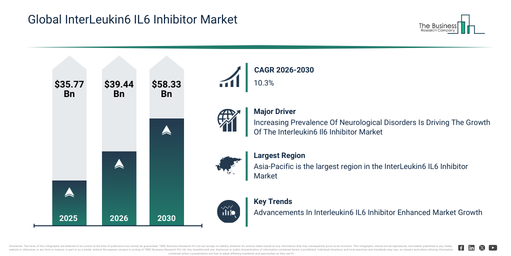
    The market for interleukin-6 (IL-6) inhibitors has experienced rapid expansion in recent years, with its value increasing from $35.77 billion in 2025 to $39.44 billion in 2026, representing a compound annual growth rate (CAGR) of 10.3%. This historical growth has been driven by factors such as a rising prevalence of rheumatoid arthritis, progress in monoclonal antibody development, the broadening of biologics production capabilities, enhanced diagnostic methods for inflammatory conditions, and the proliferation of specialty pharmacies.

    The market for interleukin-6 (IL-6) inhibitors is poised for substantial expansion in the coming years. By 2030, its value is projected to reach $58.33 billion, advancing at a compound annual growth rate (CAGR) of 10.3%. This anticipated growth during the forecast period is fueled by factors such as the increasing prevalence of autoimmune diseases, the broadening application of these inhibitors in oncology, a rise in approvals for biologic therapies, higher levels of healthcare expenditure, and the growing trend toward personalized immunotherapy. Key developments expected in this period encompass a greater shift toward targeted immunotherapies, expanded use of IL-6 inhibitors for treating autoimmune conditions, an increase in biologic drug development pipelines, wider clinical adoption for inflammatory and cytokine-driven disorders, and heightened demand for advanced injectable biologic products.

    Download A Free Sample Report For Comprehensive Market Insights:

    https://www.thebusinessresearchcompany.com/sample.aspx?id=19103&type=smp&utm_source=BlogsPR&utm_medium=Paid&utm_campaign=Jul_PR

    InterLeukin6 IL6 Inhibitor Market Growth Drivers And Industry Catalysts

    The anticipated expansion of the interleukin-6 (IL-6) inhibitor market is being driven by the growing incidence of neurological disorders. These disorders, which impair cognitive, motor, and sensory functions, involve conditions affecting the brain, spinal cord, and peripheral nerves. Their rising prevalence is attributed to an aging population, enhanced diagnostic methods, and lifestyle elements like chronic stress and inactivity. By reducing inflammation and abnormal immune responses within the central nervous system, the IL-6 inhibitor market aids neurological care, easing symptoms and decelerating disease advancement. For example, in March 2023, the National Library of Medicine, a US-based biomedical library, reported that approximately 0.0067 billion Americans aged 65 and older were living with Alzheimer’s dementia in 2023, with forecasts suggesting this figure could climb to 0.0138 billion by 2060. Consequently, the increasing frequency of neurological disorders is fueling growth in the interleukin-6 (IL-6) inhibitor market.

    InterLeukin6 IL6 Inhibitor Market Segment Landscape And Growth Potential

    The interleukin6 il6 inhibitor market covered in this report is segmented –

    1) By Drug Type: Tocilizumab, Siltuximab, Sylvant

    2) By Route Of Administration: Intravenous (IV), Subcutaneous (SC), Other Route Of Administration

    3) By Indication: Rheumatoid Arthritis, Oncology, Systemic Juvenile Idiopathic Arthritis, Giant Cell Arteritis, COVID-19-Related Cytokine Storm, Other Indications

    4) By Distribution Channel: Retail Pharmacies, Hospital Pharmacies, Specialty Pharmacies, Online Pharmacies, Other Distribution Channels

    Subsegments:

    1) By Tocilizumab: Injectable Tocilizumab, Intravenous Tocilizumab, Subcutaneous Tocilizumab

    2) By Siltuximab: Injectable Siltuximab, Monotherapy Siltuximab, Combination Therapy Siltuximab

    3) By Sylvant: Injectable Sylvant, Sylvant For Multicentric Castleman Disease, Sylvant In Combination Treatments

    InterLeukin6 IL6 Inhibitor Market Trends Influencing Long-Term Demand

    Leading players within the interleukin-6 (IL-6) inhibitor space are prioritizing the creation of novel solutions, like the inaugural approved tocilizumab biosimilar, with the goal of broadening therapeutic options, boosting affordability, and elevating patient results. This approved biosimilar represents a product that closely mirrors the originator biologic Actemra; its mechanism involves blocking the IL-6 receptor to mitigate inflammation associated with diseases including rheumatoid arthritis and juvenile idiopathic arthritis, all while delivering equivalent safety, efficacy, and quality at a reduced expense. As an example, in November 2023, Fresenius Kabi, a healthcare firm based in Germany, introduced Tyenne—a tocilizumab biosimilar aimed at various inflammatory and immune-driven disorders—offering adaptable administration routes such as subcutaneous use via prefilled syringes and autoinjectors, alongside intravenous delivery in vials, thereby granting medical professionals flexible treatment selections and providing European patients with a premium, cost-effective substitute for the original medication.

    InterLeukin6 IL6 Inhibitor Market Competitive Landscape: Who Are The Leading Companies?

    Major companies operating in the interleukin6 il6 inhibitor market are F. Hoffmann-La Roche Ltd, Genentech Inc., Chugai Pharmaceutical Co. Ltd., Johnson & Johnson, Regeneron Pharmaceuticals Inc., Sanofi S.A., Celltrion Inc., Novartis AG, GlaxoSmithKline plc, Amgen Inc., Merck KGaA, Astellas Pharma Inc., Galapagos N.V., AbbVie Inc., Bristol Myers Squibb Company, Eli Lilly and Company, Pfizer Inc., AstraZeneca PLC, Takeda Pharmaceutical Company Limited, Kyowa Kirin Co. Ltd.

    Access The Complete InterLeukin6 IL6 Inhibitor Market Report:

    https://www.thebusinessresearchcompany.com/report/interleukin6-il6-inhibitor-global-market-report?utm_source=BlogsPR&utm_medium=Paid&utm_campaign=Jul_PR

    InterLeukin6 IL6 Inhibitor Market Leading Geography: Which Region Generates The Most Revenue?

    Asia-Pacific was the largest region in the interleukin6 IL6 inhibitor market in 2025. North America is expected to be the fastest-growing region in the forecast period. The regions covered in the interleukin6 il6 inhibitor market report are Asia-Pacific, South East Asia, Western Europe, Eastern Europe, North America, South America, Middle East, Africa.

    Get in touch with us:

    The Business Research Company: https://www.thebusinessresearchcompany.com/?utm_source=BlogsPR&utm_medium=Paid&utm_campaign=home_page_test

    Americas: +1 310-496-7795

    Asia: +44 7882 955267 & +91 8897263534

    Europe: +44 7882 955267

    Email us at: marketing@tbrc.info

    Follow us on:

    LinkedIn: https://in.linkedin.com/company/the-business-research-company

    YouTube: https://www.youtube.com/channel/UC24_fI0rV8cR5DxlCpgmyFQ

    Global Market Model: https://www.thebusinessresearchcompany.com/global-market-model
  • Interleukin Inhibitors Market Set To Grow From $68.55 Billion In 2026 To $136.99 Billion By 2030 At A CAGR Of 18.9%

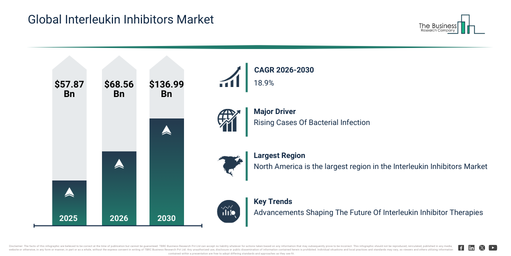
    Interleukin Inhibitors Market Set To Grow From $68.55 Billion In 2026 To $136.99 Billion By 2030 At A CAGR Of 18.9%

    Delivering more actionable and strategically valuable research, The Business Research Company’s 2026 market reports feature market attractiveness analysis, total addressable market evaluation, company benchmarking matrices, interactive Excel dashboards, expanded supply chain intelligence, emerging startup coverage, and detailed product insights.

    Interleukin Inhibitors Market Expansion Outlook: What Revenue Opportunities Lie Ahead?

    The market for interleukin inhibitors has experienced swift expansion over the past few years. Projections indicate that its value will climb from $57.87 billion in 2025 to $68.56 billion in 2026, reflecting a compound annual growth rate (CAGR) of 18.5%. This past growth was driven by factors such as the restricted supply of interleukin inhibitors, a rising occurrence of autoimmune conditions, heightened knowledge and prescribing habits among doctors, dependence on traditional treatment methods, and the broader reach of hospital pharmacies along with specialized clinics.

    The interleukin inhibitors market is anticipated to experience rapid expansion over the coming years, with projections indicating it will reach $136.99 billion by 2030, reflecting a compound annual growth rate (CAGR) of 18.9%. This forecasted growth is driven by factors such as advancements in next-generation biologics, increased funding for personalized immunotherapies, the growth of online pharmacies and telemedicine platforms, a higher number of regulatory approvals for novel interleukin inhibitors, and strengthened government and healthcare initiatives aimed at managing chronic diseases. Key trends shaping this period include the growing use of interleukin inhibitors to treat autoimmune disorders, the rise of biologic therapies targeting cytokines such as il-17, il-23, il-1, il-5, and il-6, a heightened emphasis on personalized and targeted immunotherapy approaches, the broadening of distribution networks through hospitals and specialty clinics, and the increasing integration of digital platforms and telemedicine into chronic disease management strategies.

    Download A Free Sample Report For Comprehensive Market Insights:

    https://www.thebusinessresearchcompany.com/sample.aspx?id=3469&type=smp&utm_source=BlogsPR&utm_medium=Paid&utm_campaign=Jul_PR

    Interleukin Inhibitors Market Opportunity Drivers: What Is Creating New Revenue Potential?

    The interleukin inhibitors market is anticipated to witness growth in the coming period due to the increasing incidence of bacterial infections. These infections are caused by bacteria, which are tiny, single-celled organisms. Interleukin inhibitors play a crucial role in managing and preventing bacterial diseases by inhibiting bacterial proliferation. To illustrate, data from the Centers for Disease Control and Prevention, a US governmental agency, showed that tuberculosis cases climbed from 8,320 in 2022 to 9,615 in 2023, marking a rise of 1,295 cases. Consequently, the growing prevalence of bacterial infections is fueling the expansion of the interleukin inhibitors market.

    Interleukin Inhibitors Market Categorization By Product Type And Application

    The interleukin inhibitors market covered in this report is segmented –

    1) By Type: IL-17, IL-23, IL-1, IL-5, IL-6

    2) By Application: Psoriasis, Psoriatic Arthritis, Rheumatoid Arthritis, Asthma, Inflammatory Bowel Disease, Other Applications

    3) By Distribution Channel: Hospital Pharmacies, Retail Pharmacies, Online Pharmacies

    Subsegments:

    1) By IL-17: Secukinumab, Ixekizumab, Brodalumab

    2) By IL-23: Ustekinumab, Guselkumab, Tildrakizumab

    3) By IL-1: Anakinra, Canakinumab

    4) By IL-5: Mepolizumab, Reslizumab, Benralizumab

    5) By IL-6: Tocilizumab, Sarilumab

    Interleukin Inhibitors Market Innovation Trends Driving Future Development

    Key industry players within the interleukin inhibitors market are concentrating their efforts on creating cutting-edge therapies, including monoclonal antibody biosimilars, designed to boost treatment effectiveness, lower expenses, and increase patient access. A monoclonal antibody biosimilar is a biologic product that closely resembles an authorized reference antibody, showing no significant clinical differences in either safety or efficacy. As an example, in October 2025, Celltrion Inc., a biopharmaceutical firm headquartered in South Korea, introduced AVTOZMA (tocilizumab-anoh) in an intravenous (IV) formulation across the United States. This therapeutic option works by targeting interleukin-6 receptors to address conditions like rheumatoid arthritis and various inflammatory disorders. The initiative aims to enhance both patient access and clinical results by broadening the range of advanced biologic treatments available.

    Interleukin Inhibitors Market Company Landscape And Strategic Competition

    Major companies operating in the interleukin inhibitors market are Sanofi S.A., GlaxoSmithKline plc, Novartis International AG, Johnson & Johnson Services Inc., F. Hoffmann-La Roche Ltd., Eli Lilly and Company, AstraZeneca plc, Teva Pharmaceutical Industries Ltd., Regeneron Pharmaceuticals Inc., Bausch Health Companies Inc., AbbVie Inc., Sun Pharmaceutical Industries Limited, Boehringer Ingelheim International GmbH, Janssen Biotech Inc., Ortho Dermatologics, Amgen Inc., Celgene Corporation, Bristol-Myers Squibb Company, Pfizer Inc., Merck & Co. Inc., Takeda Pharmaceutical Company Limited, Biogen Inc., Incyte Corporation, Kyowa Kirin Co Ltd., Astellas Pharma Inc., Ipsen Biopharmaceuticals Inc.

    Access The Complete Interleukin Inhibitors Market Report:

    https://www.thebusinessresearchcompany.com/report/interleukin-inhibitor-global-market-report?utm_source=BlogsPR&utm_medium=Paid&utm_campaign=Jul_PR

    Interleukin Inhibitors Market Regional Outlook: Where Are The Largest Opportunities Located?

    North America was the largest region in the interleukin inhibitors market in 2025. The regions covered in the interleukin inhibitors market report are Asia-Pacific, South East Asia, Western Europe, Eastern Europe, North America, South America, Middle East, Africa.

    Get in touch with us:

    The Business Research Company: https://www.thebusinessresearchcompany.com/?utm_source=BlogsPR&utm_medium=Paid&utm_campaign=home_page_test

    Americas: +1 310-496-7795

    Asia: +44 7882 955267 & +91 8897263534

    Europe: +44 7882 955267

    Email us at: marketing@tbrc.info

    Follow us on:

    LinkedIn: https://in.linkedin.com/company/the-business-research-company

    YouTube: https://www.youtube.com/channel/UC24_fI0rV8cR5DxlCpgmyFQ

    Global Market Model: https://www.thebusinessresearchcompany.com/global-market-model
  • Interferons Market Opportunities Are Emerging Beyond Traditional Growth Areas

    Interferons Market Opportunities Are Emerging Beyond Traditional Growth Areas

    Enhanced with market attractiveness analysis, total addressable market evaluation, company benchmarking matrices, interactive Excel dashboards, expanded supply chain intelligence, emerging startup coverage, and detailed product insights, The Business Research Company’s 2026 market reports deliver more actionable and strategically valuable research.

    Interferons Market Growth Potential: How Will Market Size Change Through 2030?

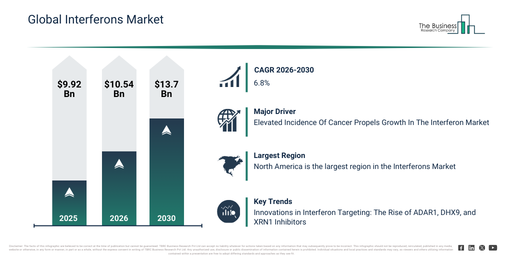
    The interferons market has seen robust expansion in recent years. Between 2025 and 2026, its value is projected to increase from $9.92 billion to $10.54 billion, reflecting a compound annual growth rate (CAGR) of 6.3%. This historical growth has been fueled by factors such as the restricted supply of recombinant interferons, rising rates of hepatitis B and C infections, a greater occurrence of melanoma and leukemia cases, ongoing dependence on traditional interferon treatments, and the broadening infrastructure of hospital pharmacy systems.

    The market for interferons is projected to experience significant growth over the coming years. By 2030, its value is anticipated to reach $13.7 billion, driven by a compound annual growth rate (CAGR) of 6.8%. This forecasted expansion is fueled by factors such as the creation of pegylated and long-lasting interferon variants, heightened application in treating multiple sclerosis and renal cell carcinoma, broader accessibility through online and retail pharmacies, a growing trend toward combining therapies, and increased governmental backing for immunotherapy initiatives. Key developments shaping the market during this period include a higher adoption of interferon-based treatments for viral infections, a greater role for interferons in cancer care, an expanded use of interferon beta for managing multiple sclerosis, a surge in distribution via hospital and online pharmacy platforms, and a concentrated effort to formulate long-acting and enhanced interferon products.

    Download A Free Sample Report For Comprehensive Market Insights:

    https://www.thebusinessresearchcompany.com/sample.aspx?id=2836&type=smp&utm_source=BlogsPR&utm_medium=Paid&utm_campaign=Jul_PR

    Interferons Market Growth Momentum: Which Factors Are Influencing Demand?

    The anticipated growth of the interferon market is being propelled by the increasing prevalence of cancer. Cancer refers to a group of illnesses marked by the formation of abnormal cells that multiply uncontrollably and have the capability to invade other areas of the body. Interferons play a role in managing several cancer types, such as melanoma, Kaposi’s sarcoma, and certain forms of leukemia. These medications are frequently incorporated into combination treatment regimens, enhancing the immune system’s ability to combat cancerous cells. For example, data from the Australian Institute of Health and Welfare, a government agency based in Australia, released in July 2024, indicates that approximately 165,000 new cancer diagnoses were made in Australia in 2023—translating to over 450 cases per day, with males accounting for roughly 55% of those cases. Consequently, the rising incidence of cancer is fueling expansion within the interferon sector.

    Interferons Market Segment Analysis And Revenue Opportunities

    The interferons market covered in this report is segmented –

    1) By Type: Interferon Alpha, Interferon Beta, Interferon Gamma

    2) By Application: Hepatitis B, Hepatitis C, Melanoma, Leukemia, Multiple Sclerosis, Renal Cell Carcinoma

    3) By Distribution Channel: Hospital Pharmacies, Online Pharmacies, Retail Pharmacies, Other Distribution Channels

    Subsegments:

    1) By Interferon Alpha: Interferon Alpha-2a, Interferon Alpha-2b

    2) By Interferon Beta: Interferon Beta-1a, Interferon Beta-1b

    3) By Interferon Gamma: Interferon Gamma-1b, Interferon Gamma Receptor 2

    Interferons Market Trends Reshaping Industry Growth

    Leading players in the interferon market are advancing innovative initiatives, including ADAR1 inhibitors and DHX9 inhibitors, designed to trigger replication stress and cell death in microsatellite unstable tumors. ADAR1 inhibitors are developed to block ADAR1, a target associated with immune activation within cancer cells. Blocking ADAR1 has been demonstrated to cause cell death in cells exhibiting elevated type I interferon signaling. Meanwhile, DHX9 inhibitors consist of small-molecule agents that target DHX9, an RNA helicase responsible for preserving genomic stability in cancers. Suppressing DHX9 can induce replication stress and cell death in certain tumor types. For example, in October 2023, Accent Therapeutics, a US-based biopharmaceutical firm, unveiled its XRN1 program. This initiative focuses on developing small-molecule inhibitors aimed at the enzyme XRN1, crucial for RNA degradation and involvement in innate immunity. The effort seeks to combat tumors characterized by high interferon signaling, thereby improving cancer cell death rates. As a component of Accent Therapeutics’ dedication to crafting precision cancer treatments, recent displays at the 35th AACR-NCI-EORTC Symposium highlighted preclinical validations and advancements in creating selective inhibitors for this essential oncology target.

    Interferons Market Leading Players Shaping Industry Direction

    Major companies operating in the interferons market are Roche Holding AG, Merck & Co. Inc., Bristol-Myers Squibb Company, Biogen Inc., Bayer AG, Zydus Cadila Health Care Limited, Biosidus S.A., Nanogen Biopharmaceutical Co. Ltd., Amega Biotech Inc., Rhein Minapharm Biogenetics S.A.E., PROBIOMED S.A. de C.V., Schering-Plough Corporation, 3SBio Inc., Genentech Inc., Teva Pharmaceutical Industries Ltd., Biocad, Cipla Limited, Dr. Reddy’s Laboratories Ltd., Hetero Drugs Limited

    Access The Complete Interferons Market Report:

    https://www.thebusinessresearchcompany.com/report/interferon-global-market-report?utm_source=BlogsPR&utm_medium=Paid&utm_campaign=Jul_PR

    Interferons Market Geographic Landscape: Which Region Dominates Industry Growth?

    North America was the largest region in the interferons market in 2025. Middle East is expected to be the fastest-growing region in the interferons market during the forecast period. The regions covered in the interferons market report are Asia-Pacific, South East Asia, Western Europe, Eastern Europe, North America, South America, Middle East, Africa.

    Get in touch with us:

    The Business Research Company: https://www.thebusinessresearchcompany.com/?utm_source=BlogsPR&utm_medium=Paid&utm_campaign=home_page_test

    Americas: +1 310-496-7795

    Asia: +44 7882 955267 & +91 8897263534

    Europe: +44 7882 955267

    Email us at: marketing@tbrc.info

    Follow us on:

    LinkedIn: https://in.linkedin.com/company/the-business-research-company

    YouTube: https://www.youtube.com/channel/UC24_fI0rV8cR5DxlCpgmyFQ

    Global Market Model: https://www.thebusinessresearchcompany.com/global-market-model