Blog

  • Medical Drone Delivery Services Market Forecast Insights: The Road To $1.27 Billion By 2030

    Medical Drone Delivery Services Market Forecast Insights: The Road To $1.27 Billion By 2030

    Featuring market attractiveness scoring, total addressable market sizing, company benchmarking matrices, interactive Excel dashboards, deeper supply chain intelligence, emerging startup tracking, and granular product-level insights, The Business Research Company’s 2026 market reports are built to deliver research that is both more actionable and more strategically valuable.

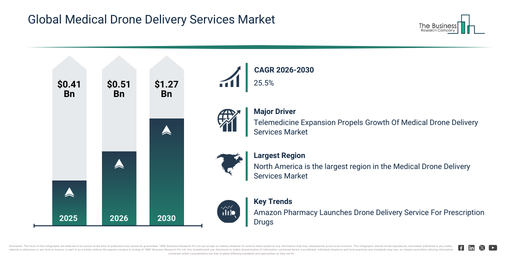
    Medical Drone Delivery Services Market Set To Climb From $0.51 Billion In 2026 To $1.27 Billion By 2030

    The medical drone delivery services market has expanded significantly in recent years. It is projected to increase from $0.41 billion in 2025 to $0.51 billion in 2026, achieving a compound annual growth rate (CAGR) of 25.3%. The market’s past growth can be attributed to factors such as limitations of ground-based medical logistics, poor healthcare access in remote regions, the need for faster emergency response, early pilot programs for UAV healthcare delivery, and government-led healthcare logistics initiatives.

    The medical drone delivery services market is projected to experience substantial growth over the next few years, with its size expected to reach $1.27 billion by 2030, exhibiting a compound annual growth rate (CAGR) of 25.5%. This expansion during the forecast period is driven by factors such as the proliferation of drone-friendly regulations, a heightened demand for swift medical delivery, an increase in emergency healthcare services, rising investments in healthcare logistics innovation, and the scaling of drone infrastructure networks. Significant trends for this period include the broadening of drone-based emergency medical logistics, an increasing reliance on drones for healthcare access in remote and rural regions, a greater adoption of time-critical blood and vaccine delivery, an increase in public–private partnerships for medical drone networks, and the integration of drones into national healthcare supply chains.

    Get A Free Sample Report With In-Depth Market Insights:

    https://thebusinessresearchcompany.com/sample_request?id=78475911&type=smp&name=Medical%20Drone%20Delivery%20Services%20Market%20Report%202026&utm_source=Blogs&utm_medium=Paid&utm_campaign=Nov_PR

    Medical Drone Delivery Services Market Growth Factors Behind Sustained Expansion

    The expansion of telemedicine is anticipated to drive the medical drone delivery services market forward. Telemedicine provides healthcare services such as diagnosis, treatment, and consultation remotely through telecommunications technology. Its emergence is due to factors like remote healthcare needs, enhanced access, and consumer preference and satisfaction. Medical drone delivery services capitalize on telemedicine to improve the accessibility, efficiency, and impact of healthcare delivery, especially in distant or underprivileged areas, ensuring the secure and effective transportation of medical supplies. For example, a report from Eurostat, a Luxembourg-based government agency, in May 2024 indicated that 8.5% of individuals in the EU aged 16 to 74 participated in online consultations using the internet in 2023. Consequently, the increasing adoption of telemedicine is fueling the growth of the medical drone delivery services market.

    Medical Drone Delivery Services Market Breakdown By Product Type And Application

    The medical drone delivery services market covered in this report is segmented –

    1) By Type: Fixed Wing, Rotor Drones, Hybrid Drones

    2) By Application: Blood Transfer, Drugs Or Pharmaceutical Transfer, Vaccination Program, Other Applications

    3) By End User: Government Organizations, Emergency Medical Services, Blood Banks

    Subsegments:

    1) By Fixed Wing: Small Fixed Wing Drones, Large Fixed Wing Drones

    2) By Rotor Drones: Single Rotor Drones, Multi-Rotor Drones

    3) By Hybrid Drones: Hybrid Fixed Wing Rotor Drones, Hybrid Multi-Rotor Drones

    Medical Drone Delivery Services Market Industry Trends Fueling Future Revenue Growth

    Major companies within the medical drone delivery services market are concentrating on advancing drone technology solutions, including the drone delivery of prescription drugs. This refers to the direct transportation of prescribed medications to a customer’s residence via unmanned aerial vehicles (UAVs), such as drones, typically within a brief timeframe of under 60 minutes. For instance, in October 2023, Amazon Pharmacy, a US-based pharmaceutical company, initiated a drone delivery service for prescription medications, beginning in College Stations. Customers can now receive their medications within 60 minutes through drone delivery. This innovative service utilizes Amazon’s Prime Air drones, which fly at altitudes of 40 to 120 meters and employ advanced technology for safe navigation. College Station customers can select drone delivery during the checkout process for over 500 medications that treat common conditions like flu, asthma, and pneumonia. Additionally, this service is provided free of charge and aims to offer quick and convenient access to essential medications.

    Medical Drone Delivery Services Market Company Landscape And Competitive Strategy

    Major companies operating in the medical drone delivery services market are UPS Flight Forward, CEVA Logistics SA, Terra Drone Corporation, Wingcopter GmbH, Volansi Inc, Swoop Aero, Zipline International Inc, Matternet Inc, Skycart, Vayu Inc, MissionGO, Flirtey Holdings Inc, F-drones Pte Ltd, DHL Parcelcopter, RigiTech SA, Redwing Labs Inc, Drone Delivery Canada Corp, TechEagle Innovations, Medifly Drone Services, SkyDrop Inc, Apian Ltd, WeRobotics, Aeronex Solutions, MedDrone Services

    View The Full Medical Drone Delivery Services Market Report:

    https://thebusinessresearchcompany.com/report/medical-drone-delivery-services-global-market-report?utm_source=Blogs&utm_medium=Paid&utm_campaign=Nov_PR

    Medical Drone Delivery Services Market Top Region: Where Does Most Revenue Come From?

    North America was the largest region in the medical drone delivery services market in 2025. The regions covered in the medical drone delivery services market report are Asia-Pacific, South East Asia, Western Europe, Eastern Europe, North America, South America, Middle East, Africa.

    Reach Out To Our Team:

    The Business Research Company: https://www.thebusinessresearchcompany.com/

    Americas: +1 310-496-7795

    Asia: +44 7882 955267 & +91 8897263534

    Europe: +44 7882 955267

    Email us at: marketing@tbrc.info

    Follow us on:

    LinkedIn: https://in.linkedin.com/company/the-business-research-company

    YouTube: https://www.youtube.com/channel/UC24_fI0rV8cR5DxlCpgmyFQ

    Global Market Model: https://www.thebusinessresearchcompany.com/global-market-model
  • Medical Document Management Systems Market Explained: What Is Fueling Growth To $1.82 Billion By 2030?

    Medical Document Management Systems Market Explained: What Is Fueling Growth To $1.82 Billion By 2030?

    Built to provide research that’s more actionable and strategically valuable, The Business Research Company’s 2026 market reports include market attractiveness analysis, total addressable market sizing, company benchmarking matrices, interactive Excel dashboards, broader supply chain intelligence, emerging startup tracking, and in-depth product insights.

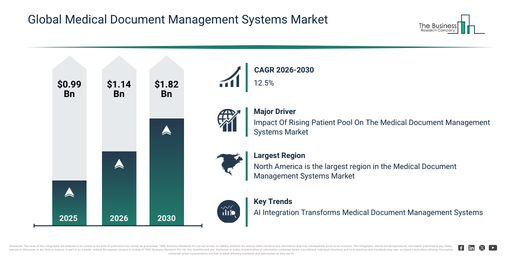
    Medical Document Management Systems Market Forecast: Value Set To Climb From $1.14 Billion To $1.82 Billion

    The medical document management systems market size has shown rapid expansion in recent years. It is anticipated to increase from $0.99 billion in 2025 to $1.14 billion in 2026, reflecting a compound annual growth rate (CAGR) of 14.2%. This historical growth can be attributed to various factors, including the inefficiencies of manual record management, the escalating volumes of hospital data, the early implementation of EHR systems, a growing need for document traceability, and the increasing administrative workload within healthcare.

    The medical document management systems market size is expected to experience significant expansion in the coming years. It is projected to reach a valuation of $1.82 billion by 2030, demonstrating a compound annual growth rate (CAGR) of 12.5%. This growth throughout the forecast period is attributable to several factors, including the accelerating digital health transformation, increasing cybersecurity concerns, growing cloud adoption in healthcare, the expansion of telehealth services, and stricter healthcare data regulations. Major trends anticipated in this period encompass the growing adoption of paperless medical records, a rising demand for secure data storage and access, increased integration with hospital information systems, the expansion of remote and mobile document access capabilities, and a heightened focus on regulatory compliance and audit readiness.

    Get A Free Sample Report With In-Depth Market Insights:

    https://thebusinessresearchcompany.com/sample_request?id=33639883&type=smp&name=Medical%20Document%20Management%20Systems%20Market%20Report%202026&utm_source=Blogs&utm_medium=Paid&utm_campaign=Nov_PR

    Medical Document Management Systems Market Demand Drivers Opening New Revenue Streams

    The expansion of the patient pool is projected to boost the medical document management systems market in the foreseeable future. This patient pool signifies the collective count of individuals or patients within a particular demographic or healthcare environment needing medical treatment or care. Key factors contributing to the increase in the patient pool include population expansion, the growing number of elderly individuals, and enhanced availability of healthcare provisions. Consequently, medical document management systems are seeing greater adoption to manage healthcare data more efficiently, streamline record-keeping processes, and improve coordination of patient care, all in response to the expanding patient base. As an illustration, in May 2023, a report from the American Hospital Association (AHA), a US-based healthcare trade organization for hospitals and health care networks, indicated that total admissions in all U.S. hospitals reached 34,011,386, an increase from 33,356,853 in 2022. This demonstrates that an expanding patient pool will serve as a significant impetus for the growth of the medical document management systems market.

    Medical Document Management Systems Market Segment Analysis And Revenue Potential

    The medical document management systems market covered in this report is segmented –

    1) By Product: Services, Solutions

    2) By Delivery Model: Web Based, Cloud Based, On Premise

    3) By Application: Medical Records, Billing Records, Admission, Registration

    4) By End User: Hospitals And Clinics, Government Organization And Third Party Administration (TPAs), Nursing Homes, Other End Users

    Subsegments:

    1) By Services: Document Digitization Services, Cloud-Based Document Management Services, Document Scanning And Indexing Services, Data Capture And OCR (Optical Character Recognition) Services, Document Storage And Archiving Services, Document Retrieval And Search Services, Security And Compliance Services (HIPAA, GDPR), Electronic Signature Services, Consulting And Implementation Services, Training And Support Services

    2) By Solutions: Electronic Health Record (EHR) Document Management Solutions, Patient Record Management Solutions, Medical Imaging Document Management Solutions, Health Information Exchange (HIE) Solutions, Cloud-Based Document Management Solutions, On-Premise Document Management Solutions, Workflow Automation Solutions, Document Management With AI And Machine Learning, Mobile Document Management Solutions, Compliance Management Solutions (HIPAA-Compliant), Integrated Solutions For EMR And EHR Systems, Collaboration And Sharing Solutions For Medical Teams

    Medical Document Management Systems Market Trends Powering Strategic Industry Growth

    Leading companies in medical document management systems are prioritizing artificial intelligence to improve efficiency and accuracy in handling healthcare data. AI in these systems is revolutionizing healthcare by automating data processing, minimizing errors, and streamlining administrative duties, which leads to better patient outcomes. For example, in April 2024, Andaman7, a Belgium-based software firm, released Andaman7 Personal Health Record v5, which incorporates artificial intelligence. With Version 5 of the app, patients gain deeper insights into their data, allowing researchers to leverage this increased patient engagement to conduct studies and post-market research more efficiently, rapidly, and with enhanced quality. The software features three AI tools to boost patient understanding of health records: simplification, converting medical terminology into plain language; summarization, providing key insights from long reports; and translation, ensuring information is accessible across different languages. These tools are designed to empower patients with a clearer understanding of their health information.

    Medical Document Management Systems Market Key Players Shaping Industry Direction

    Major companies operating in the medical document management systems market are McKesson Corporation, Oracle Corporation, 3M Company, Toshiba Corporation, Siemens Healthineers, FUJIFILM Holdings Corporation, GE HealthCare Technologies Inc., Epic Systems Corporation, Athenahealth Inc., CompuGroup Medical SE & Co. KGaA, Allscripts Healthcare Solutions Inc., Fortra Inc, Midmark Corporation, NextGen Healthcare Inc, Hyland Software Inc, Tungsten Automation, Kofax Inc, DocuWare GmbH, Laserfiche, Agaram Technologies Pvt Ltd, AimProsoft Inc, Pericent Technologies Private Limited, LogicalDOC Inc, Open Bee, ThoughtTrace Inc.

    View The Full Medical Document Management Systems Market Report:

    https://thebusinessresearchcompany.com/report/medical-document-management-systems-global-market-report?utm_source=Blogs&utm_medium=Paid&utm_campaign=Nov_PR

    Medical Document Management Systems Market Regional Breakdown: Where Is Demand Concentrated?

    North America was the largest region in the medical document management system market in 2025. Asia-Pacific is expected to be the fastest-growing region in the forecast period. The regions covered in the medical document management systems market report are Asia-Pacific, South East Asia, Western Europe, Eastern Europe, North America, South America, Middle East, Africa.

    Reach Out To Our Team:

    The Business Research Company: https://www.thebusinessresearchcompany.com/

    Americas: +1 310-496-7795

    Asia: +44 7882 955267 & +91 8897263534

    Europe: +44 7882 955267

    Email us at: marketing@tbrc.info

    Follow us on:

    LinkedIn: https://in.linkedin.com/company/the-business-research-company

    YouTube: https://www.youtube.com/channel/UC24_fI0rV8cR5DxlCpgmyFQ

    Global Market Model: https://www.thebusinessresearchcompany.com/global-market-model
  • Medical Dispatch Solution Market Forecast To Reach $7.01 Billion By 2030: Key Trends Explained

    Medical Dispatch Solution Market Forecast To Reach $7.01 Billion By 2030: Key Trends Explained

    Backed by market attractiveness analysis, total addressable market sizing, company benchmarking matrices, interactive Excel dashboards, wider supply chain intelligence, emerging startup coverage, and detailed product-level insights, The Business Research Company’s 2026 market reports are designed to offer research that is more actionable and strategically valuable than ever.

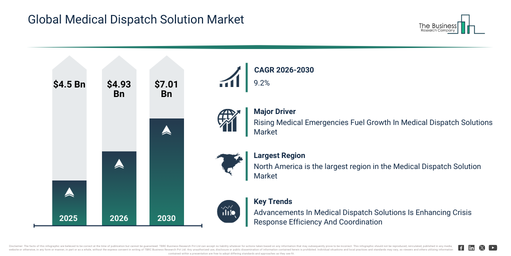
    Medical Dispatch Solution Market Revenue Growth On Track For A 9.2% CAGR Through 2030

    The medical dispatch solution market size has shown significant expansion in recent years. This market is anticipated to increase from $4.5 billion in 2025 to $4.93 billion in 2026, achieving a compound annual growth rate (CAGR) of 9.5%. The factors contributing to its growth in previous periods include a rise in emergency call volumes, the enlargement of urban healthcare infrastructure, an increasing requirement for synchronized emergency response, the implementation of digital dispatch systems, and the widespread access to mobile communication technologies.

    The medical dispatch solution market is anticipated to experience robust expansion over the coming years. Its valuation is projected to reach $7.01 billion by 2030, demonstrating a compound annual growth rate (CAGR) of 9.2%. This growth during the projected period stems from factors such as heightened investments in intelligent emergency response systems, the growing embrace of cloud-based dispatch platforms, the broadening of integrated healthcare IT systems, an increasing emphasis on predictive analytics within EMS, and a rising need for scalable dispatch solutions. Key trends anticipated for the forecast period encompass the increasing implementation of AI-based dispatch algorithms, the rising integration of GPS-enabled fleet management, a wider utilization of cloud-based EMS platforms, the expansion of real-time data analytics in dispatching processes, and a heightened emphasis on optimizing response times.

    Get A Free Sample Report With In-Depth Market Insights:

    https://thebusinessresearchcompany.com/sample_request?id=59972243&type=smp&name=Medical%20Dispatch%20Solution%20Market%20Report%202026&utm_source=Blogs&utm_medium=Paid&utm_campaign=Nov_PR

    Medical Dispatch Solution Market Growth Backed By Core Demand Fundamentals

    The increasing occurrence of medical emergencies is projected to fuel the expansion of the medical dispatch solution market. Medical emergencies are defined as sudden, critical health situations demanding immediate attention, frequently stemming from severe conditions like heart attacks, strokes, serious injuries, or respiratory distress. The rising incidence of age-related health issues such as cardiovascular diseases, strokes, and respiratory conditions contributes significantly to the growing frequency of these emergencies. Additionally, rapid urbanization, shifts in lifestyle, and enhanced access to healthcare have led to an increase in acute medical events and visits to emergency care facilities. Medical dispatch solutions play a crucial role by improving emergency responses through streamlined communication and coordination among emergency services. These solutions also boost the efficiency of response efforts, ensuring timely care delivery and optimizing overall emergency management. For instance, in January 2024, according to the National Health Service, a UK-based healthcare system, the 111 helpline service in the UK received over 95,000 calls in December, which marked an increase of approximately 24,500 calls compared to the preceding month. Consequently, the heightened frequency of medical emergencies will drive the growth of the medical dispatch solution market.

    Medical Dispatch Solution Market Segmentation And Category Overview

    The medical dispatch solution market covered in this report is segmented –

    1) By Component: Software, Services, Hardware

    2) By Communication Technology: Global Positioning System (GPS), Wi-Fi, 4G Long-Term Evolution (LTE), Bluetooth

    3) By Deployment: On-Premise, Cloud

    4) By End-User: Hospitals, Emergency Care Centers

    Subsegments:

    1) By Software: Dispatch Management Software, Fleet Management Software, Electronic Health Record (EHR) Integration, Mobile Applications for Dispatching, Data Analytics and Reporting Tools

    2) By Services: Implementation Services, Training and Support Services, Consulting Services, Maintenance and Upgrades, Customer Support Services

    3) By Hardware: Mobile Data Terminals (MDTs), GPS Devices, Communication Equipment (Radios, Headsets), Server Infrastructure, Workstations and Desktops

    Medical Dispatch Solution Market Growth Trends Reshaping The Competitive Landscape

    Key players in the medical dispatch solution market are concentrating on creating sophisticated solutions, including mobile crisis team dispatch systems, aimed at improving the effectiveness and coordination of emergency services. These systems are designed to foster better real-time communication, simplify dispatching procedures, and guarantee prompt and precise assistance for people experiencing crises, thereby enhancing patient care and shortening response durations. As an illustration, in November 2023, Solari Crisis & Human Services, a non-profit organization based in the US, collaborated with Rainbow Health LLC, a US-based healthcare technology and care delivery services firm, to introduce Solari Dispatch Management, which is a new mobile crisis team dispatch system. Integrated into Oklahoma’s 988 system, this product boosts the efficiency and impact of crisis response through its capabilities for real-time communication and monitoring of mobile crisis teams. The system connects with Electronic Medical Records (EMR) systems, delivering crucial data to crisis teams directly through a cell phone application. Features of the system encompass progress tracking, real-time updates, and an integrated note-taking function.

    Medical Dispatch Solution Market Competitive Analysis Of Leading Industry Participants

    Major companies operating in the medical dispatch solution market are Motorola Solutions Inc., RapidDeploy Inc., CentralSquare Technologies, Hexagon Safety Infrastructure, Tyler Technologies, TriTech Software Systems, Spillman Technologies, Intergraph Corporation, Avtec Inc., Priority Dispatch Corp., ZOLL Medical Corporation, Emergent Health Corp., Traumasoft, Orion Communications, GeoComm, Codan Communications, Aladtec Inc., Delta Health Technologies LLC, Samsara Public Safety, Omnigo Software

    View The Full Medical Dispatch Solution Market Report:

    https://thebusinessresearchcompany.com/report/medical-dispatch-solution-global-market-report?utm_source=Blogs&utm_medium=Paid&utm_campaign=Nov_PR

    Medical Dispatch Solution Market Geographic Landscape: Which Region Leads Industry Growth?

    North America was the largest region in the medical dispatch solution market in 2025. Asia-Pacific is expected to be the fastest-growing region in the forecast period. The regions covered in the medical dispatch solution market report are Asia-Pacific, South East Asia, Western Europe, Eastern Europe, North America, South America, Middle East, Africa.

    Reach Out To Our Team:

    The Business Research Company: https://www.thebusinessresearchcompany.com/

    Americas: +1 310-496-7795

    Asia: +44 7882 955267 & +91 8897263534

    Europe: +44 7882 955267

    Email us at: marketing@tbrc.info

    Follow us on:

    LinkedIn: https://in.linkedin.com/company/the-business-research-company

    YouTube: https://www.youtube.com/channel/UC24_fI0rV8cR5DxlCpgmyFQ

    Global Market Model: https://www.thebusinessresearchcompany.com/global-market-model
  • Medical Disinfectant Wipes Market Analysis: Understanding The Drivers Behind 9.4% CAGR Through 2030 Growth

    Medical Disinfectant Wipes Market Analysis: Understanding The Drivers Behind 9.4% CAGR Through 2030 Growth

    Featuring market attractiveness scoring, total addressable market sizing, company benchmarking matrices, interactive Excel dashboards, deeper supply chain intelligence, emerging startup tracking, and granular product-level insights, The Business Research Company’s 2026 market reports are built to deliver research that is both more actionable and more strategically valuable.

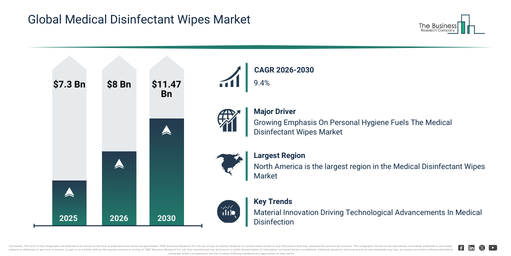
    Medical Disinfectant Wipes Market Value Growth And Long-Term Outlook

    The medical disinfectant wipes market has seen substantial growth in recent years. It is anticipated to expand from $7.3 billion in 2025 to $8 billion in 2026, achieving a compound annual growth rate (CAGR) of 9.6%. This past growth can be attributed to several factors including an increase in hospital-acquired infections, a rising awareness of surface hygiene, the widespread use of disposable medical products, an expansion of healthcare infrastructure, and a growing regulatory focus on sanitation.

    The market for medical disinfectant wipes is projected to experience robust expansion over the coming years. This market is set to reach a valuation of $11.47 billion by 2030, exhibiting a compound annual growth rate (CAGR) of 9.4%. Factors contributing to this anticipated growth include the expansion of outpatient and home healthcare environments, a heightened emphasis on preventive healthcare, increasing consumer preference for environmentally friendly disinfectant options, broader implementation of infection prevention protocols, and rising healthcare spending. Key trends identified for the forecast period encompass an escalating demand for infection control items, a growing inclination towards alcohol-free disinfectant wipes, wider acceptance of single-use hygiene products, enhanced hygiene standards within healthcare facilities, and a greater emphasis on convenient, ready-to-use product forms.

    Get A Free Sample Report With In-Depth Market Insights:

    https://thebusinessresearchcompany.com/sample_request?id=57257749&type=smp&name=Medical%20Disinfectant%20Wipes%20Market%20Report%202026&utm_source=Blogs&utm_medium=Paid&utm_campaign=Nov_PR

    Medical Disinfectant Wipes Market Growth Catalysts And Demand Drivers

    The escalating investment in personal hygiene is anticipated to fuel the expansion of the medical disinfectant wipes market moving forward. Personal hygiene refers to the practice of maintaining the cleanliness of one’s body and attire to preserve overall health and well-being. Medical disinfectant wipes work to mitigate the risk of cross-contamination or the excessive use of soiled clothing. Furthermore, they provide effective cleaning with rapid kill times, ensuring quick surface disinfection. The increasing expenditure on personal hygiene enables the medical disinfectant wipes market to offer enhanced services to customers. For instance, in September 2025, according to the World Health Organization (WHO), a Swizerland-based international public health agency, their report stated that in 2023, an estimated 1.1 billion people were served by health care facilities lacking basic water services, 3 billion lacked basic sanitation services, 1.7 billion lacked basic hygiene services, and 2.8 billion were served by facilities without basic waste services. Therefore, the rising expenditure on personal hygiene is driving the demand for the growth of the medical disinfectant wipes market.

    Medical Disinfectant Wipes Market Segment Outlook: Which Categories Are Growing Fastest?

    The medical disinfectant wipes market covered in this report is segmented –

    1) By Type: Surface Disinfectant Wipes, Germicidal Disposable Wipes, Hydrogen Peroxide Disinfectant Wipes, Other Types

    2) By Material: Textile Fiber Wipes, Virgin Fibers, Advanced Fibers

    3) By Distribution Channel: Supermarkets Or Hypermarkets, Convenience Stores, Specialty Stores, Online Channels, Shopping Complexes, Other Distribution Channels

    4) By Application: Hospitals And Clinics, Dental Clinic, Nursing Home, Other Applications

    Subsegments:

    1) By Surface Disinfectant Wipes: Non-Alcohol-Based Surface Wipes, Alcohol-Based Surface Wipes

    2) By Germicidal Disposable Wipes: Broad-Spectrum Germicidal Wipes, Targeted Germicidal Wipes

    3) By Hydrogen Peroxide Disinfectant Wipes: Pre-Moistened Hydrogen Peroxide Wipes, Wipes With Enhanced Hydrogen Peroxide Formulation

    4) By Other Types: Bleach-Based Wipes, Biodegradable Disinfectant Wipes, Antimicrobial Wipes

    Medical Disinfectant Wipes Market Trends Shaping Long-Term Demand

    Major companies operating in the medical disinfectant wipes market are concentrating on technological innovation in infection control, such as material advancements intended to deliver hospital-grade disinfection while simultaneously reducing environmental impact. Material innovation refers to the creation and utilization of advanced substrates, including biodegradable or non-plastic fibers, that improve the functionality, sustainability, and usability of disinfectant wipes. For instance, in July 2024, Ecolab Inc., a US-based leader in water, hygiene, and energy technologies and services, launched Disinfectant 1 Wipe, a next-generation medical disinfectant wipe specifically engineered for hospitals and clinical environments. The wipe is composed of a pre-saturated sheet with a broad-spectrum disinfectant formula; it functions by swiftly killing pathogens on frequently touched surfaces such as medical equipment, countertops, and patient care areas. Its unique features encompass fast contact time, compatibility with multiple surface types, and single-step cleaning and disinfection. Applications span hospitals, clinics, and long-term care facilities, providing benefits including enhanced infection control, simplified cleaning protocols, reduced surface contamination, and improved healthcare worker efficiency.

    Medical Disinfectant Wipes Market Leading Companies And Competitive Benchmarking

    Major companies operating in the medical disinfectant wipes market are CleanWell LLC, Crosstex International Inc., DrDeppe GmbH, Kimberly-Clark Corporation, Metrex Research LLC, Parker Laboratories Inc., PDI Healthcare Inc., Reckitt Benckiser Group plc, SANITEX LLC, Steris Corporation, Sunshine Global LLC, The Claire Manufacturing Company, The Clorox Company, 3M Company, Cantel Medical, Certol International LLC, Contec Inc., EcoHydra Technologies Ltd., Ecolab Healthcare, Eco-Med Pharmaceuticals, GAMA Healthcare Ltd., GOJO Industries Inc., Healthlink World Wide, Mada Medical Products Inc., Medical Chemical Corporation, Micro-Scientific LLC, Pal International Ltd., PDI Healthcare, Procter & Gamble (P&G), The S.C. Johnson & Son Inc., Weiman Products LLC, Wexford Laboratories Private Limited

    View The Full Medical Disinfectant Wipes Market Report:

    https://thebusinessresearchcompany.com/report/medical-disinfectant-wipes-global-market-report?utm_source=Blogs&utm_medium=Paid&utm_campaign=Nov_PR

    Medical Disinfectant Wipes Market Largest Region: Which Geography Holds The Biggest Share?

    North America was the largest region in the medical disinfactant wipes market in 2025. Asia-Pacific is expected to be the fastest-growing region in the medical disinfactant wipes market analysis in the forecast period. The regions covered in the medical disinfectant wipes market report are Asia-Pacific, South East Asia, Western Europe, Eastern Europe, North America, South America, Middle East, Africa.

    Reach Out To Our Team:

    The Business Research Company: https://www.thebusinessresearchcompany.com/

    Americas: +1 310-496-7795

    Asia: +44 7882 955267 & +91 8897263534

    Europe: +44 7882 955267

    Email us at: marketing@tbrc.info

    Follow us on:

    LinkedIn: https://in.linkedin.com/company/the-business-research-company

    YouTube: https://www.youtube.com/channel/UC24_fI0rV8cR5DxlCpgmyFQ

    Global Market Model: https://www.thebusinessresearchcompany.com/global-market-model
  • Medical Devices Vigilance Market Growth To $149.03 Billion By 2030: What’s Driving The Expansion?

    Medical Devices Vigilance Market Growth To $149.03 Billion By 2030: What’s Driving The Expansion?

    Built to provide research that’s more actionable and strategically valuable, The Business Research Company’s 2026 market reports include market attractiveness analysis, total addressable market sizing, company benchmarking matrices, interactive Excel dashboards, broader supply chain intelligence, emerging startup tracking, and in-depth product insights.

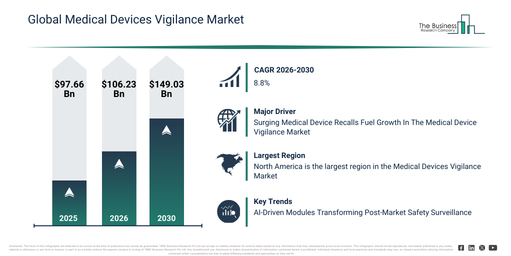
    Medical Devices Vigilance Market Poised To Hit $149.03 Billion By 2030 With A 8.8% CAGR

    The medical devices vigilance market size has seen significant expansion in recent years. It is anticipated to increase from $97.66 billion in 2025 to $106.23 billion in 2026, registering a compound annual growth rate (CAGR) of 8.8%. The growth observed historically can be attributed to an uptick in reported device-related adverse events, the enforcement of post-market surveillance regulations, an escalation in medical device usage, growing awareness concerning patient safety, and the expansion of global regulatory frameworks.

    The medical devices vigilance market is projected to experience substantial expansion in the coming years. This market is set to reach $149.03 billion by 2030, exhibiting a compound annual growth rate (CAGR) of 8.8%. Factors contributing to this anticipated growth include an increase in connected and intricate medical devices, more stringent post-market compliance demands, a rise in cross-border device approvals, greater embrace of proactive risk management strategies, and the need for ongoing safety surveillance. Key trends expected during this period involve enhanced post-market surveillance mandates, a heightened emphasis on gathering real-world evidence, increased regulatory examination of adverse event reporting, an expansion of global vigilance harmonization efforts, and an escalating need for quicker incident response systems.

    Get A Free Sample Report With In-Depth Market Insights:

    https://thebusinessresearchcompany.com/sample_request?id=77297966&type=smp&name=Medical%20Devices%20Vigilance%20Market%20Report%202026&utm_source=Blogs&utm_medium=Paid&utm_campaign=Nov_PR

    Medical Devices Vigilance Market Opportunity Drivers: What’s Unlocking New Revenue Potential?

    The escalating volume of medical recalls is projected to drive the expansion of the medical device vigilance market. These recalls denote measures undertaken by regulatory bodies, manufacturers, or distributors to withdraw or amend medical products posing public health risks or failing to adhere to regulatory standards. Medical device vigilance encompasses the continuous oversight of medical devices in the marketplace to pinpoint adverse events, malfunctions, or safety issues. Such findings are then reported to regulatory authorities, potentially prompting further investigation and, if merited, a product recall. As an illustration, a March 2024 report from Sedgwick, a UK-based risk management and brand protection company, revealed 3,306 medical device recalls occurred in Europe (EU + UK) during 2023, marking a 20% rise from 2022. Thus, the rising incidence of medical recalls is fueling the development of the medical device vigilance market.

    Medical Devices Vigilance Market Segment Landscape: Which Areas Lead Development?

    The medical devices vigilance market covered in this report is segmented –

    1) By Delivery Mode: On-Demand, On-Premise

    2) By Application: Therapeutics, Diagnostics, Surgical, Research, Other Applications

    3) By End-User: Original Equipment Manufacturers (OEMs), Clinical Research Organizations (CROs), Business Process Outsourcing (BPO) Firms

    Subsegments:

    1) By On-Demand: Cloud-Based Solutions, Subscription Services, Remote Monitoring And Reporting

    2) By On-Premise: In-House Software Solutions, Local Server Deployments, Customized System Implementations

    Medical Devices Vigilance Market Innovation Trends Shaping Future Development

    Leading companies within the medical device vigilance market are concentrating on innovations in post-market safety surveillance, notably through artificial intelligence (AI)-driven modules designed to automate adverse event reporting, elevate efficiency, and refine signal detection. Artificial intelligence (AI)-driven modules specifically denote intelligent software components that employ artificial intelligence to process, analyze, and prioritize vigilance data for ensuring regulatory compliance and patient safety. For example, in July 2024, AB Cube, a medical software company based in France, introduced its upgraded customer vigilance platform to facilitate the post-market surveillance of medical devices. This platform unifies adverse event reporting, trend analysis, and compliance documentation into a singular interface, operating by automating the collection, classification, and reporting of device-related incidents to regulatory authorities. Its distinctive features include dashboards for real-time analytics, automated submissions to regulatory bodies, and customizable alerts for significant safety events. The platform’s utility spans medical device manufacturers, notified bodies, and hospitals. Its advantages encompass enhanced patient safety, reduced regulatory exposure, swifter incident response, and an overall boost in vigilance efficiency.

    Medical Devices Vigilance Market Industry Leaders And Competitive Landscape

    Major companies operating in the medical devices vigilance market are Johnson & Johnson, Intel Corporation, Oracle Corporation, Medtronic, Siemens Healthineers, RELX Group plc, MasterControl Inc., Laerdal Medical, Numerix, Smithers, Omnify Software Inc., Freyr, Sparta Systems, MDI Consultants Inc., Greenlight Guru, Jama Software, Sarjen Systems Pvt. Ltd, Arena Solutions Inc., Xybion Corporation, ZEINCRO Group, Extedo Gmbh, AssurX Inc., AB-Cube, Panacea Pharma Projects Limited, Qvigilance, General Electric (GE) Healthcare, Philips Healthcare, Baxter International, Stryker Corporation, Boston Scientific

    View The Full Medical Devices Vigilance Market Report:

    https://thebusinessresearchcompany.com/report/medical-devices-vigilance-global-market-report?utm_source=Blogs&utm_medium=Paid&utm_campaign=Nov_PR

    Medical Devices Vigilance Market Regional Analysis: Which Geography Leads On Revenue?

    North America was the largest region in the medical devices vigilance market in 2025. Asia-Pacific is expected to be the fastest-growing region in the forecast period. The regions covered in the medical devices vigilance market report are Asia-Pacific, South East Asia, Western Europe, Eastern Europe, North America, South America, Middle East, Africa.

    Reach Out To Our Team:

    The Business Research Company: https://www.thebusinessresearchcompany.com/

    Americas: +1 310-496-7795

    Asia: +44 7882 955267 & +91 8897263534

    Europe: +44 7882 955267

    Email us at: marketing@tbrc.info

    Follow us on:

    LinkedIn: https://in.linkedin.com/company/the-business-research-company

    YouTube: https://www.youtube.com/channel/UC24_fI0rV8cR5DxlCpgmyFQ

    Global Market Model: https://www.thebusinessresearchcompany.com/global-market-model
  • Medical Devices Reimbursement Market Trends Reshaping Industry Growth Through 2030

    Medical Devices Reimbursement Market Trends Reshaping Industry Growth Through 2030

    Backed by market attractiveness analysis, total addressable market sizing, company benchmarking matrices, interactive Excel dashboards, wider supply chain intelligence, emerging startup coverage, and detailed product-level insights, The Business Research Company’s 2026 market reports are designed to offer research that is more actionable and strategically valuable than ever.

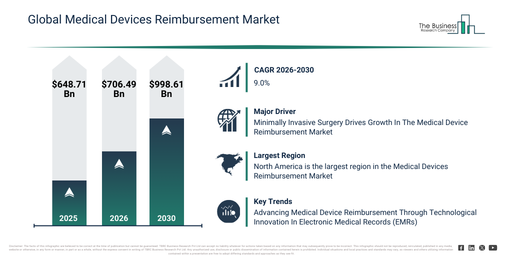
    Medical Devices Reimbursement Market Size And Revenue Outlook Through 2030

    The medical devices reimbursement market size has experienced substantial expansion in recent years. It is projected to grow from $648.71 billion in 2025 to $706.49 billion in 2026, achieving a compound annual growth rate (CAGR) of 8.9%. Historically, this growth was driven by factors such as increased medical device adoption, the broadening of public health insurance programs, rising healthcare expenditure, greater utilization of advanced medical devices, and the establishment of standardized billing codes.

    The medical devices reimbursement market is projected to experience substantial expansion in the coming years. Its valuation is set to climb to $998.61 billion by the year 2030, achieving a compound annual growth rate (CAGR) of 9.0%. This anticipated growth is driven by several factors, including an increase in innovative and high-cost devices, enhanced scrutiny from payers regarding cost-effectiveness, the expansion of healthcare services in outpatient settings, a growing need for transparency in reimbursement processes, and the evolution of reimbursement policy frameworks. Furthermore, major trends expected during this period involve a move towards value-based reimbursement approaches, more intricate reimbursement procedures, an elevated emphasis on clinical and economic evidence, a heightened focus on accelerating coverage approvals, and an expansion of services designed to support reimbursement.

    Get A Free Sample Report With In-Depth Market Insights:

    https://thebusinessresearchcompany.com/sample_request?id=88733517&type=smp&name=Medical%20Devices%20Reimbursement%20Market%20Report%202026&utm_source=Blogs&utm_medium=Paid&utm_campaign=Nov_PR

    Medical Devices Reimbursement Market Growth Momentum: What Factors Are Shaping Demand?

    The increasing need for minimally invasive surgical procedures is anticipated to fuel expansion in the medical device reimbursement market in the coming years. Minimally invasive surgery (MIS) involves medical techniques and tools designed to execute operations with minimal bodily intrusion on the patient, differing significantly from conventional open surgery. Reimbursement for medical devices used in minimally invasive surgery offers advantages such as broader patient access to cutting-edge procedures and lower healthcare expenditures due to shorter hospitalization periods. For example, data from September 2023, released by the American Society of Plastic Surgeons (ASPS), a US-based organization specializing in plastic surgery, showed that 4,715,716 minimally invasive procedures involving botulinum toxin type A (such as Botox, Dysport, and Xeomin) were conducted in 2023, representing a 6% rise compared to the prior year. Additionally, dermal fillers experienced substantial utilization, with 3,441,534 procedures carried out, an increase of 4% from 2022. Consequently, the escalating demand for minimally invasive surgeries is propelling the expansion of the medical device reimbursement market.

    Medical Devices Reimbursement Market Segments: Where Is Growth Concentrated?

    The medical devices reimbursement market covered in this report is segmented –

    1) By Payer: Public, Private

    2) By Claims: Underpaid, Full

    3) By Healthcare Setting: Hospitals, Outpatient Facilities, Other Healthcare Settings

    Subsegments:

    1) By Public: Government Health Insurance Programs, National Health Services, Social Health Insurance

    2) By Private: Private Health Insurance Plans, Employer-Sponsored Health Insurance, Out-of-Pocket Reimbursement

    Medical Devices Reimbursement Market Trends Redefining Industry Growth

    Key players in the medical device reimbursement market are concentrating on advancing technologies, such as electronic medical records (EMR), to uphold their market presence. Electronic medical records (EMRs) are digital renditions of a patient’s physical medical charts, utilized to substantiate reimbursement claims by verifying the medical necessity and proper application of devices. As an illustration, in April 2023, Wemex Corporation, a Japan-based IT solutions firm, introduced the medicom-HRf hybrid cloud, which is an integrated electronic medical record (EMR) system employing cloud technology to enable location-independent operations for clinics. Hybrid cloud solutions like Medicom-HRf are capable of smoothly consolidating various data streams, including patient documentation, medical invoicing, insurance submissions, and regulatory data. This consolidation delivers a thorough perspective of patient care and financial history, which is vital for accurate reimbursement. Medical device enterprises can thereby access current information concerning insurance policies, reimbursement figures, and the status of claims.

    Medical Devices Reimbursement Market Key Participants And Competitive Landscape

    Major companies operating in the medical devices reimbursement market are UnitedHealth Group, CVS Health Corporation, Cigna Corporation, Anthem Insurance Companies Inc., Aetna Inc., Humana Inc., WellCare Health Plans Inc., Reliance Nippon Life Insurance Company Limited, Axa S.A., Assicurazioni Generali SpA, Allianz SE, Zurich Insurance Group Ltd., Aviva plc, Aegon Life Insurance Company, Munich Re Group, Kaiser Permanente, Centene Corporation, Bupa Group, Molina Healthcare, HCSC Health Care Service Corporation, Ping An Insurance Group, China Life Insurance Company, Oscar Health, Medibank Private Limited, Discovery Health Limited

    View The Full Medical Devices Reimbursement Market Report:

    https://thebusinessresearchcompany.com/report/medical-devices-reimbursement-global-market-report?utm_source=Blogs&utm_medium=Paid&utm_campaign=Nov_PR

    Medical Devices Reimbursement Market Geographic Spread And Regional Opportunities

    North America was the largest region in the medical devices reimbursement market in 2025. The regions covered in the medical devices reimbursement market report are Asia-Pacific, South East Asia, Western Europe, Eastern Europe, North America, South America, Middle East, Africa.

    Reach Out To Our Team:

    The Business Research Company: https://www.thebusinessresearchcompany.com/

    Americas: +1 310-496-7795

    Asia: +44 7882 955267 & +91 8897263534

    Europe: +44 7882 955267

    Email us at: marketing@tbrc.info

    Follow us on:

    LinkedIn: https://in.linkedin.com/company/the-business-research-company

    YouTube: https://www.youtube.com/channel/UC24_fI0rV8cR5DxlCpgmyFQ

    Global Market Model: https://www.thebusinessresearchcompany.com/global-market-model
  • Medical Device Testing Services Market Growth To $15.31 Billion Creates New Opportunities Across The Industry

    Medical Device Testing Services Market Growth To $15.31 Billion Creates New Opportunities Across The Industry

    Featuring market attractiveness scoring, total addressable market sizing, company benchmarking matrices, interactive Excel dashboards, deeper supply chain intelligence, emerging startup tracking, and granular product-level insights, The Business Research Company’s 2026 market reports are built to deliver research that is both more actionable and more strategically valuable.

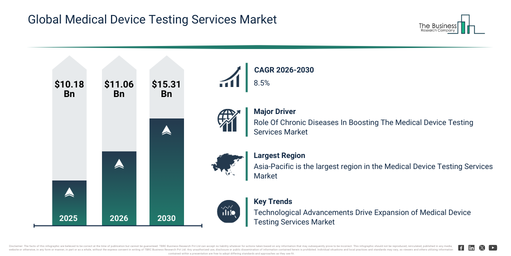
    Medical Device Testing Services Market Growth From $11.06 Billion In 2026 To $15.31 Billion By 2030 At A CAGR Of 8.5%

    The medical device testing services market has experienced robust growth in recent years. Its valuation is expected to rise from $10.18 billion in 2025 to $11.06 billion in 2026, progressing at a compound annual growth rate (CAGR) of 8.7%. This historic expansion can be attributed to several factors, including an increase in medical device approvals, more stringent global regulatory standards, the proliferation of implantable and active devices, expanded clinical research activities, and the imperative for standardized quality testing.

    The medical device testing services market is projected to experience substantial expansion over the upcoming years. This market is anticipated to reach a valuation of $15.31 billion by 2030, exhibiting a compound annual growth rate (CAGR) of 8.5%. Factors contributing to this growth trajectory during the forecast period include the increasing intricacy of combination devices, a surge in demand for in-vitro diagnostics, a heightened emphasis on ensuring patient safety, the proliferation of global clinical trials, and the development of standardized regulatory frameworks. Key trends emerging over the forecast period encompass a growing need for comprehensive end-to-end regulatory testing services, a stronger emphasis on validating biocompatibility and sterility, an increase in outsourced preclinical and clinical testing services, more stringent testing mandates for active and implantable devices, and the broadening scope of comprehensive package and chemistry testing.

    Get A Free Sample Report With In-Depth Market Insights:

    https://thebusinessresearchcompany.com/sample_request?id=94045945&type=smp&name=Medical%20Device%20Testing%20Services%20Market%20Report%202026&utm_source=Blogs&utm_medium=Paid&utm_campaign=Nov_PR

    Medical Device Testing Services Market Expansion Drivers: What’s Shaping Future Growth?

    The increasing spread of chronic illnesses is anticipated to boost the expansion of the medical device testing services market in the coming years. These are defined as prolonged health issues that endure for an extended duration, typically for a year or longer. Such conditions stem from an aging population, poor lifestyle decisions, and environmental influences. In managing chronic diseases, medical device testing services are utilized to facilitate remote patient monitoring (RPM) and the timely identification of health alterations. These services guarantee the safety, effectiveness, dependability, and standard of devices, thereby enhancing patient results and overall quality of life. For example, in February 2024, the Centers for Disease Control and Prevention (CDC), a federal public health agency based in the US, stated that approximately 129 million individuals in the United States suffer from at least one significant chronic disease, covering conditions like heart disease, cancer, diabetes, obesity, and hypertension. Consequently, the increasing occurrence of chronic diseases is fueling the expansion of the medical device testing services market.

    Medical Device Testing Services Market Segment Analysis: What Are The Core Market Categories?

    The medical device testing services market covered in this report is segmented –

    1) By Product: Active Implant Medical Device, Active Medical Device, Non-Active Medical Device, In-Vitro Diagnostics Medical Device, Ophthalmic Medical Device, Orthopedic And Dental Medical Device, Vascular Medical Device, Other Products

    2) By Service: Biocompatibility Tests, Chemistry Test, Microbiology And Sterility Test, Package Validation

    3) By Phase: Preclinical, Clinical

    Subsegments:

    1) By Active Implant Medical Device: Pacemakers, Implantable Defibrillators, Neurostimulators

    2) By Active Medical Device: Infusion Pumps, Diagnostic Equipment, Therapeutic Equipment

    3) By Non-Active Medical Device: Surgical Instruments, Patient Monitoring Equipment, Bandages And Dressings

    4) By In-Vitro Diagnostics Medical Device: Blood Test Kits, Urine Test Strips, Molecular Diagnostic Devices

    5) By Ophthalmic Medical Device: Contact Lenses, Surgical Instruments For Eye Surgery, Diagnostic Equipment For Eye Care

    6) By Orthopedic And Dental Medical Device: Joint Replacement Implants, Orthotic Devices, Dental Crowns And Bridges

    7) By Vascular Medical Device: Stents, Catheters, Vascular Grafts

    8) By Other Products: Miscellaneous Medical Devices, Custom Medical Devices, Combination Products

    Medical Device Testing Services Market Strategic Trends: What Defines The Next Growth Phase?

    Leading businesses within the medical device testing services market are prioritizing the integration of technological improvements, including novel medical device testing services, to deliver extensive testing solutions. These offerings encompass a variety of tests performed by expert firms to guarantee medical devices’ effectiveness, safety, and adherence to both national and international regulations. For example, in October 2023, UL Solutions, a US-based entity specializing in medical testing, inspection, and certification services, introduced new medical device testing services at its Rochester Hills laboratory. These particular services comprise compliance training for medical device manufacturers, usability testing, and independent verification and validation. This initiative supports the state’s growing medical device sector and assists manufacturers in enhancing the safety, security, usability, and interoperability of their devices. Furthermore, it extends independent verification and validation, cybersecurity services, auditing, usability testing, and compliance training to medical device manufacturers, simultaneously addressing potential risks like quality, safety, and cybersecurity issues, all while sustaining the rate of innovation and safeguarding users.

    Medical Device Testing Services Market Top Companies Driving Competitive Growth

    Major companies operating in the medical device testing services market are Laboratory Corporation of America Holdings, Eurofins Scientific SE, SGS SA, Bureau Veritas SA, WuXi AppTec Group, Steris plc, Sartorius AG, Charles River Laboratories International Inc., Altran Corporation, TUV SUD AG, Element Minnetonka, Underwriters Laboratories LLC, Intertek Group Plc., QTS Analytical Limited, Pace Analytical Services LLC, Sterigenics International LLC, Nelson Laboratories LLC, Exova Group Limited, Mérieux NutriSciences Corporation, American Preclinical Services LLC, Toxikon Corporation, North American Science Associates Inc., Avomeen Analytical Services LLC, Element Materials Technology Group Limited, Sionic Advisors LLC, Medical Engineering Technologies Ltd.

    View The Full Medical Device Testing Services Market Report:

    https://thebusinessresearchcompany.com/report/medical-device-testing-services-global-market-report?utm_source=Blogs&utm_medium=Paid&utm_campaign=Nov_PR

    Medical Device Testing Services Market Top Region By Revenue And Market Share

    Asia-Pacific was the largest region in the medical device testing services market in 2025. North America is expected to be the fastest-growing region in the forecast period. The regions covered in the medical device testing services market report are Asia-Pacific, South East Asia, Western Europe, Eastern Europe, North America, South America, Middle East, Africa.

    Reach Out To Our Team:

    The Business Research Company: https://www.thebusinessresearchcompany.com/

    Americas: +1 310-496-7795

    Asia: +44 7882 955267 & +91 8897263534

    Europe: +44 7882 955267

    Email us at: marketing@tbrc.info

    Follow us on:

    LinkedIn: https://in.linkedin.com/company/the-business-research-company

    YouTube: https://www.youtube.com/channel/UC24_fI0rV8cR5DxlCpgmyFQ

    Global Market Model: https://www.thebusinessresearchcompany.com/global-market-model
  • Medical Device Testing Market Forecast: Breaking Down The Numbers Behind Future Expansion

    Medical Device Testing Market Forecast: Breaking Down The Numbers Behind Future Expansion

    Built to provide research that’s more actionable and strategically valuable, The Business Research Company’s 2026 market reports include market attractiveness analysis, total addressable market sizing, company benchmarking matrices, interactive Excel dashboards, broader supply chain intelligence, emerging startup tracking, and in-depth product insights.

    Medical Device Testing Market Expansion Outlook: What Revenue Opportunities Are Ahead?

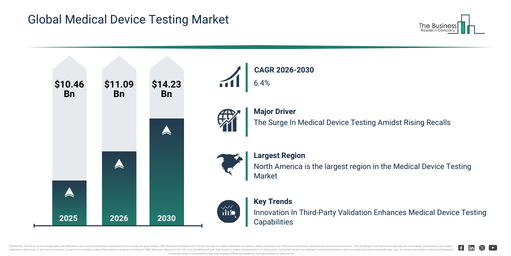
    The medical device testing market size has experienced robust expansion in recent years. It is projected to increase from $10.46 billion in 2025 to $11.09 billion in 2026, demonstrating a compound annual growth rate (CAGR) of 6.1%. This historical growth can be attributed to several factors, including an uptick in medical device approvals, enhanced regulatory scrutiny, the rising adoption of implantable devices, the early globalization of medical device manufacturing, and the demand for standardized quality assurance.

    The medical device testing market is projected to experience substantial expansion over the upcoming years. This market is forecast to reach $14.23 billion by 2030, exhibiting a compound annual growth rate (CAGR) of 6.4%. The anticipated growth during this period stems from factors such as the proliferation of connected medical devices, the increasing intricacy of Class III devices, a heightened emphasis on patient safety results, the broadening scope of outsourced testing services, and evolving worldwide regulatory guidelines. Key trends expected during the forecast timeframe involve an escalating need for extensive regulatory compliance assessments, a stronger commitment to device safety and risk reduction, the expansion of third-party testing and certification offerings, an increased focus on cybersecurity and software validation evaluations, and a greater uptake of sophisticated testing methods for high-risk medical equipment.

    Get A Free Sample Report With In-Depth Market Insights:

    https://thebusinessresearchcompany.com/sample_request?id=34414710&type=smp&name=Medical%20Device%20Testing%20Market%20Report%202026&utm_source=Blogs&utm_medium=Paid&utm_campaign=Nov_PR

    Medical Device Testing Market Development Factors: What’s Supporting Demand?

    The medical device testing market is being advanced by a rise in medical device recalls. A device recall is a procedure through which the manufacturer or distributor of the device takes corrective steps to remove or address issues within the medical device. Medical device manufacturers use medical device testing to identify potential safety concerns associated with devices, which helps in deciding whether a medical recall is necessary to ensure patient safety and device effectiveness, and also assists in enhancing product quality to avoid medical recalls. For instance, in March 2024, according to Sedgwick, a UK-based risk management and brand protection company, there were 3,306 medical device recalls in Europe (EU + UK) in 2023, showing a 20% increase compared to 2022. Consequently, the increasing volume of medical device recalls is driving the medical device testing market.

    Medical Device Testing Market Segment Breakdown: Which Categories Lead On Revenue?

    The medical device testing market covered in this report is segmented –

    1) By Testing Type: Physical Testing, Chemical Or Biological Testing, Cybersecurity Testing, Microbiology And Sterility Testing, Other Testing Type

    2) By Device Class: Class I, Class II, Class III

    3) By Sourcing Type: In-House, Outsourced

    4) By Service Type: Testing Services, Inspection Services, Certification Services

    5) By End-User: Hospital, Research Center, Homecare Clinics, Other End-User

    Subsegments:

    1) By Physical Testing: Mechanical Testing, Environmental Testing, Electrical Testing

    2) By Chemical Or Biological Testing: Chemical Composition Analysis, Biocompatibility Testing, Toxicological Assessment

    3) By Cybersecurity Testing: Vulnerability Assessment, Penetration Testing, Risk Assessment

    4) By Microbiology And Sterility Testing: Microbial Contamination Testing, Sterility Assurance Testing, Endotoxin Testing

    5) By Other Testing Types: Performance Testing, Usability Testing, Regulatory Compliance Testing

    Medical Device Testing Market Transformation Trends: What Innovations Are Driving Change?

    Major companies operating in the medical device testing market are prioritizing innovation in testing and verification, specifically through advanced third-party validation, to ensure device safety, usability, and regulatory compliance. Advanced third-party validation refers to independent assessments performed by specialized laboratories to confirm that devices meet performance and regulatory standards. For instance, in October 2023, UL Solutions, a US-based company offering medical testing, inspection, and certification services, unveiled expanded medical device testing capabilities at its Rochester Hills laboratory. This innovative offering includes verification and validation, usability testing, cybersecurity assessments, and environmental stress testing, thereby assisting manufacturers in improving device safety, reliability, and regulatory compliance.

    Medical Device Testing Market Leading Players And Competitive Positioning

    Major companies operating in the medical device testing market are Intertek Group plc., SGS SA, Bureau Veritas Group, TUV SUD AG, TUV Rheinland Group, Pace Analytical Services LLC., Charles River Laboratories Inc., UL Solutions, North American Science Associates LLC, Medistri SA, WuXi AppTec Inc., Cordant Health Solutions, GE Healthcare Technologies Inc., Thermo Fisher Scientific Inc., Biomedical Device Labs, NSF International, Analytical Lab Group LLC, Boston Analytical, DDL Inc., Element Materials Technology, Empirical Testing Corp., Eurofins Scientific, Gateway Analytical LLC, iuvo BioScience, Laboratory Corporation of America Holdings, Microtest Laboratories Inc., Nelson Laboratories LLC, National Technical Systems Inc., Pacific Biolabs Inc., Sterigenics International LLC, Toxikon Corporation, WCG Imaging, Westpak Inc.

    View The Full Medical Device Testing Market Report:

    https://thebusinessresearchcompany.com/report/medical-device-testing-global-market-report?utm_source=Blogs&utm_medium=Paid&utm_campaign=Nov_PR

    Medical Device Testing Market Regional Analysis And Top Geography

    North America was the largest region in the medical device testing market in 2025. Asia-Pacific is expected to be the fastest-growing region in the medical testing device market report during the forecast period. The regions covered in the medical device testing market report are Asia-Pacific, South East Asia, Western Europe, Eastern Europe, North America, South America, Middle East, Africa.

    Reach Out To Our Team:

    The Business Research Company: https://www.thebusinessresearchcompany.com/

    Americas: +1 310-496-7795

    Asia: +44 7882 955267 & +91 8897263534

    Europe: +44 7882 955267

    Email us at: marketing@tbrc.info

    Follow us on:

    LinkedIn: https://in.linkedin.com/company/the-business-research-company

    YouTube: https://www.youtube.com/channel/UC24_fI0rV8cR5DxlCpgmyFQ

    Global Market Model: https://www.thebusinessresearchcompany.com/global-market-model
  • Medical Device Technologies Market Expected To Grow At 5.3% CAGR Through 2030: What Businesses Need To Know

    Medical Device Technologies Market Expected To Grow At 5.3% CAGR Through 2030: What Businesses Need To Know

    Backed by market attractiveness analysis, total addressable market sizing, company benchmarking matrices, interactive Excel dashboards, wider supply chain intelligence, emerging startup coverage, and detailed product-level insights, The Business Research Company’s 2026 market reports are designed to offer research that is more actionable and strategically valuable than ever.

    Medical Device Technologies Market Growth Potential: How Will Market Size Shift Through 2030?

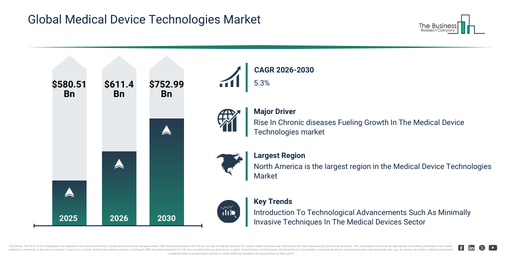
    The medical device technologies market size has experienced strong growth in recent years. It is anticipated to expand from $580.51 billion in 2025 to $611.4 billion in 2026, demonstrating a compound annual growth rate (CAGR) of 5.3%. The market’s historical growth can be linked to advancements in diagnostic imaging technologies, the rising prevalence of chronic diseases, increased healthcare infrastructure investment, early adoption of implantable medical devices, and the growing use of electronic medical records.

    The medical device technologies market is projected to experience substantial expansion over the coming years. By 2030, this market is anticipated to reach $752.99 billion, demonstrating a compound annual growth rate (CAGR) of 5.3%. This anticipated growth during the forecast period is fueled by factors such as an aging worldwide populace, the expansion of telemedicine and remote monitoring, a heightened need for early disease detection, increasing healthcare digitization efforts, and ongoing advancements in medical device engineering. Key trends emerging in this period encompass the greater uptake of non-invasive and minimally invasive techniques, the expanding incorporation of smart and connected medical devices, a rising call for home-based and remote care solutions, the growth of personalized and precision medical devices, and an intensified emphasis on interoperability across various medical systems.

    Get A Free Sample Report With In-Depth Market Insights:

    https://thebusinessresearchcompany.com/sample_request?id=19153146&type=smp&name=Medical%20Device%20Technologies%20Market%20Report%202026&utm_source=Blogs&utm_medium=Paid&utm_campaign=Nov_PR

    Medical Device Technologies Market Industry Drivers: What’s Behind The Revenue Growth?

    A rising prevalence of chronic illnesses is anticipated to drive expansion within the medical device technologies market moving ahead. These long-lasting health conditions are characterized by their extended duration and typically gradual progression. Medical device technologies play a crucial role in chronic disease management, enabling prompt and tailored interventions, leading to better patient results, and elevating the overall healthcare journey. As an illustration, data from February 2024, released by the Centers for Disease Control and Prevention (CDC), a US-based federal public health agency, indicated that approximately 129 million individuals in the United States suffer from at least one significant chronic ailment, encompassing conditions like heart disease, cancer, diabetes, obesity, and hypertension. Consequently, the growing incidence of chronic diseases is a key factor propelling the medical device technologies market.

    Medical Device Technologies Market Segmentation: How Does The Market Break Down By Category?

    The medical device technologies market covered in this report is segmented –

    1) By Type: Molecular Diagnostics, Diagnostic Imaging, Non-Invasive Monitoring, Drug Delivery, Mobility Aid Technologies, Micro Fluids And MEMS, Bio-Implants, Biomaterials, Minimal Or Non-Invasive Surgery, Telemedicine

    2) By Application: Cardiology, Orthopedics, Oncology, Neurology, Respiratory, Other Applications

    3) By End-User: Hospitals, Clinics, Ambulatory Surgical Centers, Diagnostics Centers, Research Organizations, Other End Users

    Subsegments:

    1) By Molecular Diagnostics: PCR-Based Diagnostics, DNA Microarrays, Next-Generation Sequencing (NGS), Isothermal Nucleic Acid Amplification

    2) By Diagnostic Imaging: X-Ray Imaging, MRI Systems, Ultrasound Imaging, CT Scanners, Nuclear Imaging (PET, SPECT)

    3) By Non-Invasive Monitoring: Blood Glucose Monitors, Cardiac Monitoring Devices, Blood Pressure Monitors, Pulse Oximeters

    4) By Drug Delivery: Infusion Pumps, Nebulizers, Inhalers, Transdermal Drug Delivery Patches

    5) By Mobility Aid Technologies: Wheelchairs, Walkers and Canes, Prosthetics, Exoskeletons

    6) By Micro Fluids and MEMS: Lab-On-A-Chip Devices, Microfluidic Pumps, Microarrays, MEMS Sensors

    7) By Bio-Implants: Orthopedic Implants, Cardiovascular Implants, Neurostimulators, Dental Implants

    8) By Biomaterials: Polymers, Ceramics, Metals, Composite Biomaterials

    9) By Minimal or Non-Invasive Surgery: Laparoscopic Devices, Endoscopic Tools, Laser-Assisted Surgery Devices, Robotic Surgical Systems

    10) By Telemedicine: Remote Patient Monitoring Systems, Telehealth Platforms, Video Consultation Systems, Wearable Health Tracking Devices

    #Medical Device Technologies Market Growth Trends: What’s Shaping The Future Outlook?

    Leading organizations within the medical device technologies market are innovating medical devices utilizing minimally invasive techniques to secure a competitive advantage. Minimally invasive techniques denote medical procedures executed with reduced bodily harm compared to conventional open surgeries. For instance, in November 2023, Medtronic plc, a US-based medical device company, launched the Symplicity Spyral RDN system, which offers a minimally invasive treatment for hypertension. The Symplicity Spyral RDN system is applied during the Symplicity blood pressure procedure, representing the inaugural catheter-based methodology employing radiofrequency (RF) energy that supplements pharmaceutical treatments and lifestyle adjustments to aid in blood pressure reduction. This system has received approval from the FDA and is commercially accessible in more than 70 countries around the world.

    Medical Device Technologies Market Competitive Overview And Top Companies

    Major companies operating in the medical device technologies market are Cardinal Health Inc., Johnson & Johnson, Siemens AG, F. Hoffmann-La Roche Ltd., Novartis AG, Thermo Fischer Scientific Inc., Abbott Laboratories Inc., Zenith Healthcare, 3M Company, Medtronic plc, Becton Dickinson and Company, KONINKLIJKE PHILIPS N.V., Stryker Corporation, GE HealthCare Technologies Inc., Baxter International Inc., Boston Scientific Corporation, Zimmer Biomet Holdings Inc., Agilent Technologies Inc., Olympus Corporation, Intutive Surgical Inc., Terumo Corporation, Edwards Lifesciences Corporation, Smith & Nephew plc, Hologic Inc., BioMerieux Inc., Align Technology Inc., ResMed Inc., Dexcom Inc.

    View The Full Medical Device Technologies Market Report:

    https://thebusinessresearchcompany.com/report/medical-device-technologies-global-market-report?utm_source=Blogs&utm_medium=Paid&utm_campaign=Nov_PR

    Medical Device Technologies Market Geographic Analysis: Where Is Demand Rising Fastest?

    North America was the largest region in the medical device technologies market in 2025. The regions covered in the medical device technologies market report are Asia-Pacific, South East Asia, Western Europe, Eastern Europe, North America, South America, Middle East, Africa.

    Reach Out To Our Team:

    The Business Research Company: https://www.thebusinessresearchcompany.com/

    Americas: +1 310-496-7795

    Asia: +44 7882 955267 & +91 8897263534

    Europe: +44 7882 955267

    Email us at: marketing@tbrc.info

    Follow us on:

    LinkedIn: https://in.linkedin.com/company/the-business-research-company

    YouTube: https://www.youtube.com/channel/UC24_fI0rV8cR5DxlCpgmyFQ

    Global Market Model: https://www.thebusinessresearchcompany.com/global-market-model
  • Medical Device Security Market Forecast To Reach $10.67 Billion By 2030: Key Trends Explained

    Medical Device Security Market Forecast To Reach $10.67 Billion By 2030: Key Trends Explained

    Featuring market attractiveness scoring, total addressable market sizing, company benchmarking matrices, interactive Excel dashboards, deeper supply chain intelligence, emerging startup tracking, and granular product-level insights, The Business Research Company’s 2026 market reports are built to deliver research that is both more actionable and more strategically valuable.

    Medical Device Security Market Value Analysis: What Growth Lies Ahead Over The Forecast Period?

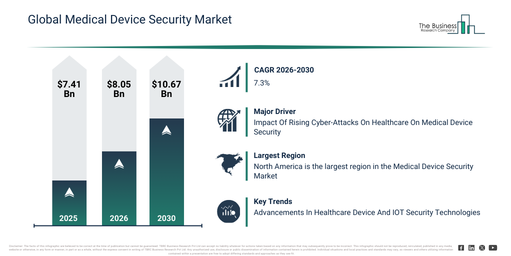
    The medical device security market has experienced substantial growth recently. Projections indicate a rise from $7.41 billion in 2025 to $8.05 billion in 2026, exhibiting a compound annual growth rate (CAGR) of 8.7%. Historically, this expansion has been driven by factors such as the early adoption of digital medical devices, the increasing use of networked hospital systems, initial cybersecurity events within the healthcare sector, the development of connected diagnostic equipment, and heightened regulatory oversight concerning patient information.

    The medical device security market is projected to experience robust expansion in the coming years. It is forecast to reach $10.67 billion by 2030, exhibiting a compound annual growth rate (CAGR) of 7.3%. This growth during the forecast period is fueled by several factors, including the rapid proliferation of IoT-enabled medical devices, an increasing frequency of cyberattacks targeting healthcare, more stringent data protection regulations, the expanded deployment of medical systems in the cloud, and greater investment in cybersecurity by device manufacturers. Key trends anticipated during this period encompass a heightened emphasis on securing interconnected medical devices, the increasing uptake of cloud-based device security solutions, a growing incorporation of ‘security by design’ principles into medical devices, the expansion of managed security services tailored for healthcare, and a greater demand for security frameworks that comply with regulations.

    Get A Free Sample Report With In-Depth Market Insights:

    https://thebusinessresearchcompany.com/sample_request?id=94102525&type=smp&name=Medical%20Device%20Security%20Market%20Report%202026&utm_source=Blogs&utm_medium=Paid&utm_campaign=Nov_PR

    Medical Device Security Market Growth Factors: What’s Supporting Expansion?

    The increasing frequency of healthcare cyberattacks is anticipated to fuel expansion in the medical device security market in the future. These cyberattacks in healthcare involve hostile actions directed at healthcare entities, their systems, networks, and devices, with goals like service disruption, sensitive data theft, or causing damage. The escalation of healthcare cyberattacks is attributed to investments in cybersecurity infrastructure, staff training, consistent risk assessments, and inter-industry collaboration for sharing threat intelligence and best practices. Security for medical devices plays a role in averting cyberattacks on healthcare by safeguarding devices, data, and networks, guaranteeing compliance, and fostering cybersecurity awareness among practitioners. As an illustration, in October 2023, data from the U.S. Department of Health and Human Services, a US-based government department, indicated that an average of almost two healthcare data breaches, each affecting 500 or more records, happened daily, leading to an average of more than 364,000 healthcare records being compromised daily. The increasing occurrence of cyberattacks targeting healthcare is propelling the expansion of medical device security solutions.

    Medical Device Security Market Segment Trends And Revenue Contributors

    The medical device security market covered in this report is segmented –

    1) By Component: Solutions, Services

    2) By Security Type: Endpoint Security, Network Security, Application Security, Cloud Security, Other Security Types

    3) By Deployment Mode: On-Premise, Cloud-Based

    4) By End User: Healthcare Institutions, Medical Device Manufacturers, Other End Users

    Subsegments:

    1) By Solutions: Security Software (Antivirus, Firewalls, Encryption), Network Security Solutions ( Intrusion Detection Systems, Vpns), Authentication And Access Control Solutions ( Multi-Factor Authentication), Risk And Compliance Management Solutions, Endpoint Security Solutions ( Device Monitoring, Patch Management)

    2) By Services: Managed Security Services, Security Consulting Services, Vulnerability Assessment And Penetration Testing Services, Incident Response And Forensic Services, Training And Awareness Services

    Medical Device Security Market Industry Trends: What’s Reshaping Demand?

    Leading companies in the medical device security market are intensifying their efforts to develop advanced solutions, such as clinically-aware anomaly-threat detection modules for protecting healthcare devices and IoT. This endeavor aims to address the increasing need for continuous device visibility, quicker threat prioritization, regulatory adherence, and reduced disruption to patient care. Clinically-aware anomaly-threat detection systems integrate agentless device discovery, behavioral analytics engines, and clinical context enrichment to identify unusual device communications, map devices to clinical workflows, and highlight high-risk incidents with actionable context. Unlike conventional network IDS/IPS tools that often produce generic alerts without specific device-level clinical significance, these modules significantly cut down false positives and accelerate remediation by connecting telemetry directly to device function and patient impact. For example, in March 2024, Claroty Ltd., a US-based cyber-physical systems protection company, unveiled its Advanced Anomaly Threat Detection (ATD) Module as part of the Medigate Platform at HIMSS24. This module delivers agentless and clinically aware threat detection, complete with signature-based alerts, notifications for device changes, and MITRE ATT&CK mapping. It consistently monitors device communications extending beyond firewall boundaries to reinforce hardening and compliance measures. Furthermore, it provides clinically contextualized alerts, empowering security teams to prioritize their responses and allowing healthcare organizations, including hospitals and extensive clinic networks, to decrease investigation time, lessen operational risks, and meet evolving cybersecurity performance requirements.

    Medical Device Security Market Competitive Landscape: Which Companies Lead The Industry?

    Major companies operating in the medical device security market are General Electric Company, International Business Machines Corporation, Cisco Systems Inc., Koninklijke Philips N.V., DXC Technology Company, Palo Alto Networks, Synopsys Inc., Fortinet Inc., Check Point Software Technologies Ltd., McAfee LLC, Trend Micro Inc., Zscaler Inc., FireEye, Sophos Ltd., Irdeto B.V., Imperva Inc., Armis Inc., Protegrity USA Inc., Silex Technology America Inc., ClearData, Cynerio Ltd., Zingbox Inc., CloudPassage Inc., Cylera Inc., Bayshore Networks Inc.

    View The Full Medical Device Security Market Report:

    https://thebusinessresearchcompany.com/report/medical-device-security-global-market-report?utm_source=Blogs&utm_medium=Paid&utm_campaign=Nov_PR

    Medical Device Security Market Global Footprint: Which Region Leads The Market?

    North America was the largest region in the medical device security market in 2025. Asia-Pacific is expected to be the fastest-growing region in the forecast period. The regions covered in the medical device security market report are Asia-Pacific, South East Asia, Western Europe, Eastern Europe, North America, South America, Middle East, Africa.

    Reach Out To Our Team:

    The Business Research Company: https://www.thebusinessresearchcompany.com/

    Americas: +1 310-496-7795

    Asia: +44 7882 955267 & +91 8897263534

    Europe: +44 7882 955267

    Email us at: marketing@tbrc.info

    Follow us on:

    LinkedIn: https://in.linkedin.com/company/the-business-research-company

    YouTube: https://www.youtube.com/channel/UC24_fI0rV8cR5DxlCpgmyFQ

    Global Market Model: https://www.thebusinessresearchcompany.com/global-market-model