Blog

  • Medical Biomimetics Market Forecast 2026: Market Size, Competitive Landscape And Growth Drivers

    Medical Biomimetics Market Forecast 2026: Market Size, Competitive Landscape And Growth Drivers

    Backed by market attractiveness analysis, total addressable market sizing, company benchmarking matrices, interactive Excel dashboards, wider supply chain intelligence, emerging startup coverage, and detailed product-level insights, The Business Research Company’s 2026 market reports are designed to offer research that is more actionable and strategically valuable than ever.

    Medical Biomimetics Market Value Growth And Long-Term Outlook

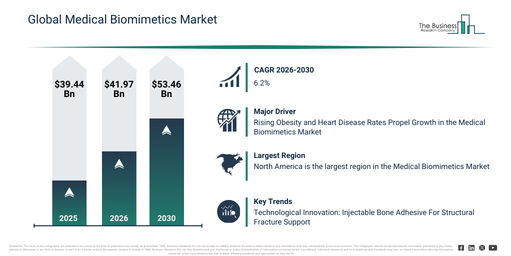
    The medical biomimetics market has experienced robust expansion over recent years. It is projected to increase from $39.44 billion in 2025 to $41.97 billion in 2026, demonstrating a compound annual growth rate (CAGR) of 6.4%. The historical growth in this sector is attributable to various factors, including advancements in material science research, the escalating prevalence of chronic diseases, the recognized limitations of conventional implants, the initial development of tissue engineering techniques, and a rise in academic and clinical research collaborations.

    The medical biomimetics market is projected for substantial expansion in the coming years, with its valuation expected to reach $53.46 billion by 2030, progressing at a compound annual growth rate (CAGR) of 6.2%. This anticipated growth throughout the forecast period can be attributed to the escalating demand for personalized medical solutions, enhanced investments in regenerative medicine, a growing aging population, the broadening of minimally invasive treatment approaches, and increasing approvals for bioinspired medical devices. Significant trends during this period include a wider adoption of biomimetic implants and prosthetics, an expanded utilization of biomimetic drug delivery systems, a heightened call for artificial organs and tissues, the enlargement of tissue engineering and regenerative solutions, and an intensifying emphasis on biocompatible and bioinspired materials.

    Get A Free Sample Report With In-Depth Market Insights:

    https://thebusinessresearchcompany.com/sample_request?id=29616323&type=smp&name=Medical%20Biomimetics%20Market%20Report%202026&utm_source=Blogs&utm_medium=Paid&utm_campaign=Nov_PR

    Medical Biomimetics Market Industry Drivers: What’s Behind The Revenue Growth?

    The rising prevalence of obesity and heart disease is anticipated to drive the expansion of the medical biomimetics market in the coming years. Obesity is defined as a medical state where excessive body fat accumulates to an unhealthy degree, while heart disease encompasses various conditions affecting the heart and its vessels. Biomimetics plays a role in developing assistive devices, such as orthotics and prosthetics, which can help individuals with conditions like diabetes or obesity manage their health. For example, in May 2025, the Office for Health Improvement and Disparities, a UK-based government body, reported that from 2023 to 2024, an estimated 64.5% of adults aged 18 and over in England were overweight or living with obesity, marking an increase from 64.0% recorded between 2022 and 2023. Furthermore, in October 2024, data from the Centers for Disease Control and Prevention, a US-based government agency, indicated that in 2023, cardiovascular disease resulted in 919,032 fatalities, accounting for one in every three deaths. Coronary heart disease continued to be the most common form of heart disease, and notably, approximately one in six deaths from cardiovascular diseases occurred among adults younger than 65 years. Thus, the increasing incidence rates of obesity and heart disease are propelling the growth of the medical biomimetics market.

    Medical Biomimetics Market Segment Breakdown: Which Categories Lead On Revenue?

    The medical biomimetics market covered in this report is segmented –

    1) By Type: Cardiovascular, Orthopedic, Ophthalmology, Dental, Other Types

    2) By Application: Wound Healing, Tissue Engineering, Drug Delivery, Other Applications

    3) By End User: Hospitals, Specialty Clinics, Other End Users

    Subsegments:

    1) By Cardiovascular: Vascular Grafts, Stents and Heart Valves, Cardiac Assist Devices

    2) By Orthopedic: Bone Grafts, Joint Replacement Implants, Spinal Implants

    3) By Ophthalmology: Artificial Corneas, Retinal Implants, Intraocular Lenses

    4) By Dental: Dental Implants, Bone Regeneration Products, Biocompatible Materials

    5) By Other Types: Wound Healing Products, Tissue Engineering Scaffolds, Neurological Devices

    #Medical Biomimetics Market Growth Trends: What’s Shaping The Future Outlook?

    Leading companies in the medical biomimetics market are concentrating on technological advancements in orthopedic care, particularly injectable bone adhesives, which offer structural support and facilitate early patient mobilization for complex fractures. An injectable bone adhesive is a synthetic, calcium phosphate-based biomaterial developed to be injected into bone voids or fracture sites, acting as a bio-adhesive and a mechanically reinforced filler. For example, in January 2024, Biomimetic Innovations Ltd, an Ireland-based medical device company, introduced OsStic, a synthetic injectable structural bio-adhesive bone void filler. OsStic provides provisional fixation and structural support in complex or peri-articular fractures, fills bone defects where standard fixation proves insufficient, and aids in early mobilization. This biomaterial is calcium phosphate-based, suitable for minimally invasive injectable delivery, and crafted to imitate the mechanical properties of natural bone, thereby enhancing osteointegration and overall patient recovery.

    Medical Biomimetics Market Leading Players And Competitive Positioning

    Major companies operating in the medical biomimetics market are BASF SE, Bayer Aktiengesellschaft, Abbott Laboratories, Stryker Corporation, Zimmer Biomet Holdings Inc., Otsuka Medical Device Company Ltd., LivaNova PLC, Össur hf., Forschungszentrum Jülich GmbH, Biohorizons Implant Systems Inc., Inventia Plc, Blatchford Limited, Keystone Dental Corporation, Xtant Medical Holdings Inc., AVINENT Science and Technology, SynTouch Inc., Curasan Inc., CorNeat Vision Inc., Hstar Technologies Co. Ltd., Veryan Medical Ltd., Swedish Biomimetics 3000 ApS, Osteopore International Pte Ltd., KitoTech Medical Ltd., Vandstrom Inc.

    View The Full Medical Biomimetics Market Report:

    https://thebusinessresearchcompany.com/report/medical-biomimetics-global-market-report?utm_source=Blogs&utm_medium=Paid&utm_campaign=Nov_PR

    Medical Biomimetics Market Global Footprint: Which Region Leads The Market?

    North America was the largest region in the medical biomimetics market in 2025. The regions covered in the medical biomimetics market report are Asia-Pacific, South East Asia, Western Europe, Eastern Europe, North America, South America, Middle East, Africa.

    Reach Out To Our Team:

    The Business Research Company: https://www.thebusinessresearchcompany.com/

    Americas: +1 310-496-7795

    Asia: +44 7882 955267 & +91 8897263534

    Europe: +44 7882 955267

    Email us at: marketing@tbrc.info

    Follow us on:

    LinkedIn: https://in.linkedin.com/company/the-business-research-company

    YouTube: https://www.youtube.com/channel/UC24_fI0rV8cR5DxlCpgmyFQ

    Global Market Model: https://www.thebusinessresearchcompany.com/global-market-model
  • Medical Billing Software Market Size In 2026: Regional Growth, Key Segments And Future Outlook

    Medical Billing Software Market Size In 2026: Regional Growth, Key Segments And Future Outlook

    Featuring market attractiveness scoring, total addressable market sizing, company benchmarking matrices, interactive Excel dashboards, deeper supply chain intelligence, emerging startup tracking, and granular product-level insights, The Business Research Company’s 2026 market reports are built to deliver research that is both more actionable and more strategically valuable.

    Medical Billing Software Market Poised To Hit $39.31 Billion By 2030 With A 11.7% CAGR

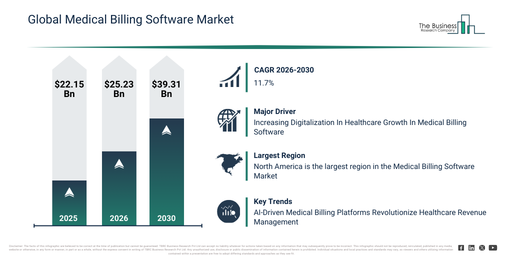
    The medical billing software market has experienced substantial expansion recently. This market is projected to expand from $22.15 billion in 2025 to $25.23 billion in 2026, demonstrating a compound annual growth rate (CAGR) of 13.9%. Historically, this expansion has been driven by factors such as the increasing intricacy of healthcare reimbursement, higher rates of claim rejections, an elevated administrative burden on providers, the initial digitalization of healthcare billing systems, and the imperative for more expeditious payment cycles.

    The medical billing software market is set to experience substantial expansion in the next few years, with projections indicating it will climb to $39.31 billion by 2030, achieving an 11.7% compound annual growth rate (CAGR). This growth during the forecast period stems from factors such as an increasing move towards cloud deployment models, the rising adoption of value-based care billing, growing regulatory compliance requirements, the demand for real-time billing visibility, and the expansion of small and mid-sized healthcare facilities. Prominent trends for the forecast period include the increasing use of cloud-based medical billing platforms, a greater focus on automating claims and coding processes, an escalating demand for integrated revenue cycle solutions, the expansion of compliance and fraud detection capabilities, and the increasing application of analytics to optimize billing performance.

    Get A Free Sample Report With In-Depth Market Insights:

    https://thebusinessresearchcompany.com/sample_request?id=63121347&type=smp&name=Medical%20Billing%20Software%20Market%20Report%202026&utm_source=Blogs&utm_medium=Paid&utm_campaign=Nov_PR

    Medical Billing Software Market Growth Factors: What’s Supporting Expansion?

    The medical billing software market is anticipated to experience growth driven by the increasing digitalization within healthcare. Digitalization in healthcare involves integrating digital technologies across various aspects of healthcare delivery, management, and administration to enhance efficiency, accessibility, and the overall quality of care. This advancement is largely fueled by the ability to quickly and securely share patient information irrespective of location, which improves care coordination and reduces medical errors. For medical billing software, digitalization specifically enhances operational efficiency, accuracy, compliance, and patient engagement, ultimately contributing to better financial outcomes for healthcare organizations. For instance, in 2024, data from the Office of the National Coordinator for Health Information Technology (ONC), a US-based federal agency, indicated that the majority of hospitals had implemented core systems allowing patients to electronically view (99%), download (96%), and share (84%) their health information from their online medical records in at least one care setting. Consequently, the rising digitalization in healthcare is a significant driver for the medical billing software market.

    Medical Billing Software Market Segmentation: How Does The Market Break Down By Category?

    The medical billing software market covered in this report is segmented –

    1) By Type: Claims Scrubbing, Code And Charge Entry, Compliance Tracking, Professional Billing, Institutional Billing

    2) By Deployment: On-Premise, Cloud-Based

    3) By Pricing Option: One-Time, Annual, Monthly

    4) By Function: Patient Pre-Registration, Claims Management, Billing And Collection, Accounting And Financial Management, Other Functions

    5) By End-User: Multi-Specialty Hospitals, Super Specialty Hospitals, Clinics, Pharma And Medical

    Subsegments:

    1) By Claims Scrubbing: Pre-Submission Error Detection, Claim Validation And Verification, Denial Management Tools, Automated Claim Review And Editing

    2) By Code And Charge Entry: Automated Coding Systems, Charge Capture Solutions, Code Lookup And Validation Tools, EHR Integration For Charge Entry

    3) By Compliance Tracking: Regulatory Compliance Monitoring (HIPAA, CMS), Auditing And Reporting Tools, Fraud Prevention And Detection, Compliance Management Dashboards

    4) By Professional Billing: Physician And Provider Billing Solutions, Fee Schedule Management, Patient Billing And Payment Solutions, Insurance And Payer Billing Management

    5) By Institutional Billing: Hospital Billing Systems, Ambulatory And Outpatient Billing Solutions, Facility Charge Capture, Payment Posting For Institutions

    Medical Billing Software Market Industry Trends: What’s Reshaping Demand?

    Key players in the medical billing software market are developing AI-driven platforms aimed at boosting accuracy, efficiency, and revenue cycle management. AI technology is capable of automating repetitive tasks like data entry, coding, and claims processing, which decreases the need for manual work and accelerates the overall billing procedure. For example, in August 2023, FareMD, a US-based health tech startup, introduced an AI-driven platform to streamline medical billing in the US. This platform utilizes automation and artificial intelligence to address billing inefficiencies that incur an annual cost of $300 billion for the nation. FareMD’s platform marks a significant change in healthcare billing by automating the conversion of visit notes and reducing denied claims, ultimately enabling hospitals to operate more efficiently.

    Medical Billing Software Market Competitive Overview And Top Companies

    Major companies operating in the medical billing software market are Oracle Corporation, Tata Consultancy Services Limited, Cognizant Technology Solutions Corporation, GE HealthCare Technologies, HCL Technologies Limited, GeBBS Healthcare Solutions, eClinicalWorks, Athenahealth, Flatworld Solutions Pvt. Ltd., EverCommerce Inc., Phreesia Inc., WebPT, AGS Health, CareCloud Inc., TherapyNotes LLC, Kareo Inc., Medusind, CentralReach, DrChrono, AdvancedMD, Elation Health, Practice Fusion Inc., ImageTrend, Brightree LLC, Digitech Computer LLC, Azalea Health Innovations Inc., Glorium Technologies

    View The Full Medical Billing Software Market Report:

    https://thebusinessresearchcompany.com/report/medical-billing-software-global-market-report?utm_source=Blogs&utm_medium=Paid&utm_campaign=Nov_PR

    Medical Billing Software Market Regional Split: Which Areas Are Fueling Growth?

    North America was the largest region in the medical billing software market in 2025. The regions covered in the medical billing software market report are Asia-Pacific, South East Asia, Western Europe, Eastern Europe, North America, South America, Middle East, Africa.

    Reach Out To Our Team:

    The Business Research Company: https://www.thebusinessresearchcompany.com/

    Americas: +1 310-496-7795

    Asia: +44 7882 955267 & +91 8897263534

    Europe: +44 7882 955267

    Email us at: marketing@tbrc.info

    Follow us on:

    LinkedIn: https://in.linkedin.com/company/the-business-research-company

    YouTube: https://www.youtube.com/channel/UC24_fI0rV8cR5DxlCpgmyFQ

    Global Market Model: https://www.thebusinessresearchcompany.com/global-market-model
  • Medical Billing Outsourcing Market Growth Forecast Through 2030: Market Size And Trends In 2026

    Medical Billing Outsourcing Market Growth Forecast Through 2030: Market Size And Trends In 2026

    Built to provide research that’s more actionable and strategically valuable, The Business Research Company’s 2026 market reports include market attractiveness analysis, total addressable market sizing, company benchmarking matrices, interactive Excel dashboards, broader supply chain intelligence, emerging startup tracking, and in-depth product insights.

    Medical Billing Outsourcing Market Size And Revenue Outlook Through 2030

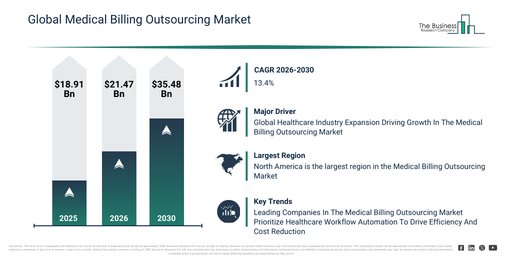
    The medical billing outsourcing market has experienced rapid expansion in recent years. Its value is projected to increase from $18.91 billion in 2025 to $21.47 billion in 2026, demonstrating a compound annual growth rate (CAGR) of 13.5%. This historic growth can be linked to factors such as rising healthcare administrative complexity, increasing claim denial rates, a shortage of trained billing professionals, the growth in insurance-based healthcare systems, and the early adoption of third-party billing services.

    The medical billing outsourcing market size is projected to experience substantial expansion in the coming years. This market is anticipated to reach $35.48 billion by 2030, exhibiting a compound annual growth rate (CAGR) of 13.4%. This anticipated growth during the forecast period can be primarily attributed to several factors, including the intensifying need to enhance provider profitability, the escalating complexity of regulations in healthcare billing, the broader implementation of value-based care models, the increasing embrace of cloud-based billing platforms, and the demand for scalable billing operations. Key trends identified for the forecast period encompass a greater outsourcing of revenue cycle management functions, a heightened emphasis on billing accuracy and compliance management, an escalating need for cost efficiency in administrative processes, the expansion of comprehensive end-to-end billing and coding services, and a wider integration of analytics for monitoring billing performance.

    Get A Free Sample Report With In-Depth Market Insights:

    https://thebusinessresearchcompany.com/sample_request?id=97629035&type=smp&name=Medical%20Billing%20Outsourcing%20Market%20Report%202026&utm_source=Blogs&utm_medium=Paid&utm_campaign=Nov_PR

    Medical Billing Outsourcing Market Demand Drivers: What’s Powering Industry Growth?

    The global expansion of the healthcare industry is anticipated to boost the medical billing outsourcing market in the future. This sector encompasses an integration of economic segments providing goods and services to individuals experiencing diverse health conditions. To enhance operational efficiency and concentrate on essential patient care, the healthcare industry has progressively adopted outsourcing for medical billing services. An illustration of this trend is found in December 2024 data from the Centers for Medicare & Medicaid Services, a US-based federal agency. This data showed hospital spending accelerating from a 3.2% growth in 2022 to 10.4% in 2023, with CMS additionally forecasting an 8.2% NHE growth for 2024. Consequently, the expanding healthcare industry is projected to be a key driver for the medical billing outsourcing market’s growth throughout the forecast period.

    Medical Billing Outsourcing Market Segment Trends And Revenue Contributors

    The medical billing outsourcing market covered in this report is segmented –

    1) By Service: Front End, Back End

    2) By Component: In-house, Outsourced

    3) By End User: Hospitals, Physician Offices

    Subsegments:

    1) By Front End: Patient Registration, Insurance Verification, Coding And Billing, Charge Entry, Other Front-End Services

    2) By Back End: Accounts Receivable Management, Payment Posting, Denial Management, Insurance Follow-Up, Coding Compliance, Other Back-End Services

    Medical Billing Outsourcing Market Innovation Trends: What Developments Are Reshaping The Industry?

    Major companies operating in the medical billing outsourcing market are focusing on developing healthcare workflow automation platforms. Their objective is to enhance efficiency, reduce costs, and improve accuracy in the billing process, thereby streamlining operations for healthcare providers and ensuring timely reimbursement for services rendered. A healthcare workflow automation platform is essentially a software solution crafted to simplify and automate various processes within the healthcare system. This advanced platform transforms order entry and results for outpatient clinics, effectively lowering costs while simultaneously boosting efficiency, accuracy, and the quality of patient care. As an illustration, in November 2023, Shadowbox, Inc, a US-based company, launched its Shadowbox Automation Platform, a dedicated healthcare workflow automation tool. This platform seamlessly integrates with a diverse library of electronic health records (EHRs) and Radiology Information Systems (RIS), enabling a completely paperless workflow for order entry and results. This integration eliminates the necessity for manual processes and intricate EHR integration projects, facilitating a more efficient transfer of data. Furthermore, it provides complete patient information along with automated insurance verification and prior authorization at the time the order is placed.

    Medical Billing Outsourcing Market Competitive Landscape: Which Companies Lead The Industry?

    Major companies operating in the medical billing outsourcing market are Cerner Corporation, Kareo, Genpact, McKesson, eClinicalWorks, The SSI Group, HCLTech, Allscripts, R1 RCM, Accretive Health, Connext Global Solutions, AdvancedMD Inc., CareCloud Inc., Revele Billing Services, Infinite Outsourcing Solutions, Promantra Synergy Solutions Ltd., 4D Global Medical Billing Services, Helpware, Wing Assistant, Medwave Billing & Credentialing Services, Atlas Billing Company LLC, GeBBS Healthcare Solutions, Med-Write Inc., Solutions for Medical Billing Inc., Onion Creek Medical Billing Services, MedAstin Medical Billing Services, iCare Billing Solutions, Unity Communications LLC, Remote CoWorker, P3 Healthcare Solutions, PracticeMax, RRAH Services, 24/7 Medical Billing Services, MedBillingExperts, Flatworld Solutions Pvt. Ltd., MedUSA Healthcare Services

    View The Full Medical Billing Outsourcing Market Report:

    https://thebusinessresearchcompany.com/report/Medical-Billing-Outsourcing-Global-Market-Report?utm_source=Blogs&utm_medium=Paid&utm_campaign=Nov_PR

    Medical Billing Outsourcing Market Top Region: Where Does Most Revenue Come From?

    North America was the largest region in the medical billing outsourcing market in 2025. Western Europe was the second-largest region in the global medical billing outsourcing market analysis. The regions covered in the medical billing outsourcing market report are Asia-Pacific, South East Asia, Western Europe, Eastern Europe, North America, South America, Middle East, Africa.

    Reach Out To Our Team:

    The Business Research Company: https://www.thebusinessresearchcompany.com/

    Americas: +1 310-496-7795

    Asia: +44 7882 955267 & +91 8897263534

    Europe: +44 7882 955267

    Email us at: marketing@tbrc.info

    Follow us on:

    LinkedIn: https://in.linkedin.com/company/the-business-research-company

    YouTube: https://www.youtube.com/channel/UC24_fI0rV8cR5DxlCpgmyFQ

    Global Market Model: https://www.thebusinessresearchcompany.com/global-market-model
  • Medical Automation Technologies Market Analysis: $7.93 Billion Market Size In 2026 And Future Growth Prospects

    Medical Automation Technologies Market Analysis: $7.93 Billion Market Size In 2026 And Future Growth Prospects

    Backed by market attractiveness analysis, total addressable market sizing, company benchmarking matrices, interactive Excel dashboards, wider supply chain intelligence, emerging startup coverage, and detailed product-level insights, The Business Research Company’s 2026 market reports are designed to offer research that is more actionable and strategically valuable than ever.

    Medical Automation Technologies Market Growth From $7.93 Billion In 2026 To $11.82 Billion By 2030 At A CAGR Of 10.5%

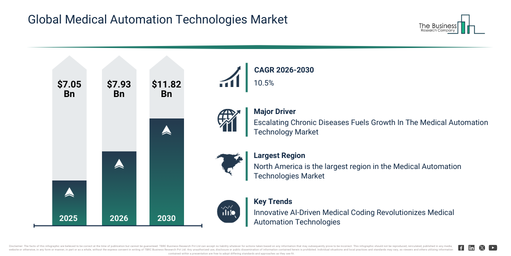
    The medical automation technologies market size has seen rapid growth recently. It is forecast to expand from $7.05 billion in 2025 to $7.93 billion in 2026, at a compound annual growth rate (CAGR) of 12.4%. The historical growth of this market can be attributed to increasing healthcare operational complexity, a shortage of skilled healthcare professionals, rising diagnostic testing volumes, the early adoption of medical robotics, and the demand for standardized clinical processes.

    The medical automation technologies market size is projected for significant expansion in the coming years. It is anticipated to reach $11.82 billion by 2030, demonstrating a compound annual growth rate (CAGR) of 10.5%. This growth throughout the forecast period stems from factors such as the proliferation of remote and home-based care, increasing investments in healthcare automation, the rising integration of AI-driven medical technologies, the demand for quicker clinical decision-making, and the expansion of smart healthcare infrastructure. Prominent trends for the forecast period include the widening deployment of automated diagnostic and monitoring systems, the increasing application of robotic technologies in therapeutic procedures, a greater adoption of automation in laboratories and pharmacies, the growing integration of home healthcare automation solutions, and an enhanced focus on workflow efficiency and error reduction.

    Get A Free Sample Report With In-Depth Market Insights:

    https://thebusinessresearchcompany.com/sample_request?id=51890541&type=smp&name=Medical%20Automation%20Technologies%20Market%20Report%202026&utm_source=Blogs&utm_medium=Paid&utm_campaign=Nov_PR

    Medical Automation Technologies Market Growth Drivers: What’s Behind The Acceleration?

    The future expansion of the medical automation technology market is anticipated to be driven by the rising incidence of chronic diseases. These are enduring health conditions, exemplified by diseases such as diabetes, marked by their extended duration and often slow development, necessitating continuous care and treatment to manage symptoms and avert complications. Factors contributing to the escalating occurrence of chronic illnesses include inactive lifestyles, unhealthy eating habits, pollutants in the environment, and a progressively older population. Medical automation technology aids in managing chronic diseases more effectively by offering tailored treatment strategies, remote observation of patients, and automated analysis of data, thereby boosting efficiency and results while easing the load on healthcare systems. As an illustration, in September 2024, data from the British Heart Foundation, a UK-based cardiovascular research charity, indicated that roughly 7.6 million people in the UK are presently suffering from heart and circulatory ailments, consisting of 4 million men and 3.6 million women. It is projected that by 2030, this figure could grow by 1 million, and by 2040, it might climb by an additional 2 million beyond the current count. Consequently, the growing frequency of chronic diseases is fueling the expansion of the medical automation technology market.

    Medical Automation Technologies Market Segment Analysis Spotlighting Growth Areas

    The medical automation technologies market covered in this report is segmented –

    1) By Type: Diagnostic And Monitoring Operations, Therapeutic Automation, Lab And Pharmacy Automation, Home Healthcare Automation

    2) By Application: Imaging And Radiology, Clinical Chemistry Analysis, Vital Signs Monitoring, Surgery And Rehabilitation

    3) By End Use: Hospitals And Diagnostics Centers, Research Institutes And Laboratories, Homecare Settings

    Subsegments:

    1) By Diagnostic And Monitoring Operations: Diagnostic Imaging Automation, Patient Monitoring Systems Automation, Laboratory Diagnostic Automation, Remote Patient Monitoring

    2) By Therapeutic Automation: Robotic Surgery Systems, Infusion Pumps And Automated Drug Delivery, Automated Rehabilitation Devices, Radiotherapy Automation

    3) By Lab And Pharmacy Automation: Automated Laboratory Equipment, Pharmacy Dispensing Automation, Automated Sample Handling And Analysis, Robotic Pharmacy Solutions

    4) By Home Healthcare Automation: Remote Health Monitoring Devices, Wearable Health Devices, Home Care Robotics, Automated Medication Management Systems

    Medical Automation Technologies Market Trends: What’s Defining The Industry’s Next Phase?

    Major companies operating in the medical automation technologies market are adopting innovative technologies, such as AI-driven medical coding, to drive revenue growth. AI-driven medical coding involves utilizing artificial intelligence algorithms to automatically assign accurate medical codes to patient diagnoses, treatments, and procedures, thereby streamlining healthcare billing and administrative tasks while minimizing errors and improving efficiency. For instance, in December 2023, CorroHealth Inc., a US-based healthcare technology company, launched Pulse, a revolutionary advancement in the automation of medical coding. With adaptive learning capabilities and real-time insights, it continuously improves the accuracy of its coding. Its user-centric design prioritizes process optimization, productivity enhancement, and unmatched value delivery to healthcare practitioners. It effortlessly interfaces with any electronic health record (EHR) and is fully tailored to the specific requirements of every healthcare facility.

    Medical Automation Technologies Market Leading Companies: Who Holds The Strongest Market Presence?

    Major companies operating in the medical automation technologies market are Johnson & Johnson Services Inc., F. Hoffmann-La Roche AG, Thermo Fisher Scientific Inc., Abbott Laboratories, Medtronic plc, Danaher Corporation, Siemens Healthineers AG, Koninklijke Philips N.V., Becton Dickinson and Co, GE HealthCare Technologies Inc., Boston Scientific Corporation, Zimmer Biomet Holdings Inc., Olympus Corporation, Terumo Corporation, Intuitive Surgical Inc., Oracle Cerner, Hologic Inc., Illumina Inc., Mindray Medical International Limited, Nikon Corporation, Sysmex Corporation, Bio Rad Laboratories Inc., QIAGEN N.V., Carl Zeiss Meditec AG, Yuyama Co Ltd.

    View The Full Medical Automation Technologies Market Report:

    https://thebusinessresearchcompany.com/report/medical-automation-technologies-global-market-report?utm_source=Blogs&utm_medium=Paid&utm_campaign=Nov_PR

    Medical Automation Technologies Market Regional Breakdown: Where Is Demand Concentrated?

    North America was the largest region in the medical automation technologies market in 2025. Asia-Pacific is expected to be the fastest-growing region in the forecast period. The regions covered in the medical automation technologies market report are Asia-Pacific, South East Asia, Western Europe, Eastern Europe, North America, South America, Middle East, Africa.

    Reach Out To Our Team:

    The Business Research Company: https://www.thebusinessresearchcompany.com/

    Americas: +1 310-496-7795

    Asia: +44 7882 955267 & +91 8897263534

    Europe: +44 7882 955267

    Email us at: marketing@tbrc.info

    Follow us on:

    LinkedIn: https://in.linkedin.com/company/the-business-research-company

    YouTube: https://www.youtube.com/channel/UC24_fI0rV8cR5DxlCpgmyFQ

    Global Market Model: https://www.thebusinessresearchcompany.com/global-market-model
  • Medical Automation Market 2026 Market Size And Growth Forecast: Key Trends To Watch

    Medical Automation Market 2026 Market Size And Growth Forecast: Key Trends To Watch

    Featuring market attractiveness scoring, total addressable market sizing, company benchmarking matrices, interactive Excel dashboards, deeper supply chain intelligence, emerging startup tracking, and granular product-level insights, The Business Research Company’s 2026 market reports are built to deliver research that is both more actionable and more strategically valuable.

    Medical Automation Market Expansion Outlook: What Revenue Opportunities Are Ahead?

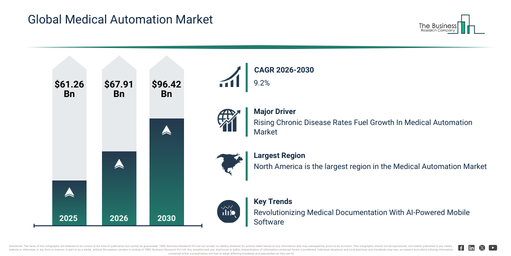
    The medical automation market size has seen rapid expansion in recent years. It is projected to grow from $61.26 billion in 2025 to $67.91 billion in 2026, at a compound annual growth rate (CAGR) of 10.9%. This historical growth can be linked to several factors, including a scarcity of healthcare workforce, an increase in hospital patient volumes, the imperative for operational efficiency, a rise in medical errors from manual processes, and the early implementation of hospital information systems.

    The medical automation market is projected to experience substantial expansion over the coming years. Its valuation is anticipated to reach $96.42 billion by 2030, progressing at a compound annual growth rate (CAGR) of 9.2%. This anticipated expansion during the forecast timeframe is primarily driven by factors such as the increasing digitization of healthcare, a growing need for cost-effective healthcare services, the proliferation of robotic-assisted surgical procedures, wider integration of connected medical devices, and heightened investments in smart hospital initiatives. Key trends anticipated during the forecast period encompass a greater degree of automation within clinical and administrative processes, increased deployment of robotics in surgical operations and diagnostic procedures, the broadening integration of automation platforms powered by software, wider application of automation within laboratory and pharmacy settings, and an escalating call for solutions that minimize errors and enhance patient safety.

    Get A Free Sample Report With In-Depth Market Insights:

    https://thebusinessresearchcompany.com/sample_request?id=87757720&type=smp&name=Medical%20Automation%20Market%20Report%202026&utm_source=Blogs&utm_medium=Paid&utm_campaign=Nov_PR

    Medical Automation Market Growth Factors Behind Sustained Expansion

    The growing occurrence of chronic ailments is anticipated to fuel the expansion of the medical automation market in the future. These are defined as enduring medical conditions that persist over an extended period and typically deteriorate over time. The surge in chronic diseases stems from inactive lifestyles, poor dietary habits, and an aging population. Medical automation enables precise tracking and prompt interventions for chronic conditions, thereby enhancing patient care and results. For example, data released in February 2024 by the Centers for Disease Control and Prevention (CDC), a federal public health agency based in the US, indicated that approximately 129 million people in the United States suffer from at least one significant chronic disease, including conditions such as heart disease, cancer, diabetes, obesity, and hypertension. Consequently, the rising instances of chronic diseases are propelling the expansion of the medical automation market.

    Medical Automation Market Segment Performance And Emerging Opportunities

    The medical automation market covered in this report is segmented –

    1) By Component: Equipment, Capital Equipment, Consumables, Software, Services

    2) By Connectivity: Wired, Wireless

    3) By Application: Diagnostics And Monitoring, Therapeutics, Lab And Pharmacy Automation, Medical Logistics And Training, Large-Joint Replacement, Spinal Fusion, Other Applications

    4) By End User: Hospitals, Diagnostic Center, Pharmacies, Research Laboratories And Institutes, Homecare, Specialty Clinics, Ambulatory Surgical Centers (ASCs), Other End Users

    Subsegments:

    1) By Equipment: Diagnostic Equipment, Therapeutic Equipment, Monitoring Equipment

    2) By Capital Equipment: Surgical Robots, Imaging Systems (MRI, CT Scanners), Patient Lifting Equipment, Automated Laboratory Equipment

    3) By Consumables: Test Strips And Kits, Reagents And Chemicals, Single-Use Devices

    4) By Software: Healthcare Management Software, Diagnostic Software, Automation Software For Laboratory And Pharmacy Systems, AI Or ML-Based Software Solutions For Medical Diagnostics

    5) By Services: Maintenance And Support Services, Consulting Services, Integration And Implementation Services, Training Services

    Medical Automation Market Industry Trends Fueling Future Revenue Growth

    Key companies operating within the medical automation market are concentrating on developing innovative solutions, such as clinician-controlled mobile apps, to stimulate revenue growth. A clinician-controlled mobile app is a software application specifically designed by healthcare professionals, including physicians, nurses, therapists, and other clinicians, to facilitate various aspects of patient care, communication, and management. For instance, in April 2024, Augmedix Inc., a US-based data services and medical documentation company, launched Augmedix Go. This clinician-controlled mobile app utilizes ambient AI technology and structured data to produce a fully automated draft medical note after patients visit healthcare settings like emergency departments. This automation simplifies the medical documentation process, enabling clinicians to dedicate more time to patient care by minimizing the time spent on administrative tasks such as note-taking.

    Medical Automation Market Key Players: Which Companies Lead Industry Competition?

    Major companies operating in the medical automation market are Johnson & Johnson Services Inc., F. Hoffmann-La Roche AG, Thermo Fisher Scientific Inc., Abbott Laboratories, Medtronic plc, Siemens Healthineers AG, Becton, Dickinson and Company, Royal Philips, Stryker Corporation, Boston Scientific Corporation, Zimmer Biomet Holdings Inc., Agilent Technologies Inc., Terumo Corporation, Intuitive Surgical Inc., Smith & Nephew plc, Hologic Inc., ResMed Inc., Bio Rad Laboratories Inc., QIAGEN N.V., Carl Zeiss Meditec AG, Masimo Corporation, Elekta AB, Tecan Group Ltd., Accuray Inc.

    View The Full Medical Automation Market Report:

    https://thebusinessresearchcompany.com/report/medical-automation-global-market-report?utm_source=Blogs&utm_medium=Paid&utm_campaign=Nov_PR

    Medical Automation Market Geographic Landscape: Which Region Leads Industry Growth?

    North America was the largest region in the medical automation market in 2025. Asia-Pacific is expected to be the fastest-growing region in the forecast period. The regions covered in the medical automation market report are Asia-Pacific, South East Asia, Western Europe, Eastern Europe, North America, South America, Middle East, Africa.

    Reach Out To Our Team:

    The Business Research Company: https://www.thebusinessresearchcompany.com/

    Americas: +1 310-496-7795

    Asia: +44 7882 955267 & +91 8897263534

    Europe: +44 7882 955267

    Email us at: marketing@tbrc.info

    Follow us on:

    LinkedIn: https://in.linkedin.com/company/the-business-research-company

    YouTube: https://www.youtube.com/channel/UC24_fI0rV8cR5DxlCpgmyFQ

    Global Market Model: https://www.thebusinessresearchcompany.com/global-market-model
  • Medical Antibacterial Curtain Market Size Forecast: How The Industry Is Expected To Grow From 2026 To 2030

    Medical Antibacterial Curtain Market Size Forecast: How The Industry Is Expected To Grow From 2026 To 2030

    Built to provide research that’s more actionable and strategically valuable, The Business Research Company’s 2026 market reports include market attractiveness analysis, total addressable market sizing, company benchmarking matrices, interactive Excel dashboards, broader supply chain intelligence, emerging startup tracking, and in-depth product insights.

    Medical Antibacterial Curtain Market Growth Potential: How Will Market Size Shift Through 2030?

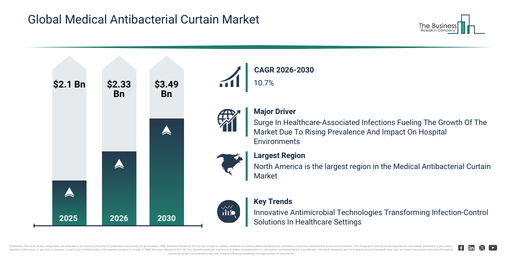
    The medical antibacterial curtain market has experienced rapid expansion in recent years. This market is expected to grow from $2.1 billion in 2025 to $2.33 billion in 2026, exhibiting a compound annual growth rate (CAGR) of 11.0%. The historical growth of this market can be attributed to factors such as rising concerns over hospital-acquired infections, the extensive use of fabric privacy curtains, the initial integration of antimicrobial textile treatments, the expanding healthcare infrastructure, and increasing infection control regulations.

    The medical antibacterial curtain market size is poised for significant expansion in the coming years. This market is expected to reach $3.49 billion by 2030, achieving a compound annual growth rate (CAGR) of 10.7%. The projected growth over the forecast period is driven by factors such as increasing investments in infection prevention infrastructure, a rising demand for reusable antimicrobial textiles, the expansion of outpatient care facilities, a growing focus on sustainable healthcare materials, and more frequent replacement cycles for hospital curtains. Prominent trends for the forecast period include the increasing adoption of disposable antibacterial curtains, a heightened demand for infection-control hospital furnishings, the growing utilization of silver and copper treated fabrics, the wider availability of reusable antimicrobial curtain solutions, and an enhanced emphasis on easy-to-clean curtain materials.

    Get A Free Sample Report With In-Depth Market Insights:

    https://thebusinessresearchcompany.com/sample_request?id=44671135&type=smp&name=Medical%20Antibacterial%20Curtain%20Market%20Report%202026&utm_source=Blogs&utm_medium=Paid&utm_campaign=Nov_PR

    Medical Antibacterial Curtain Market Demand Drivers Opening New Revenue Streams

    The medical antibacterial curtain market is anticipated to experience growth going forward, driven by the increasing occurrence of healthcare-associated infections (HAIs). HAIs are infections that patients acquire while receiving treatment in a healthcare setting. The rise in these infections is often attributed to factors such as extended hospital stays, which heighten individuals’ exposure to infectious agents. Medical antibacterial curtains play a role in mitigating healthcare-associated infections by inhibiting the proliferation and spread of harmful bacteria on various surfaces, thus contributing to a cleaner and safer hospital environment. For instance, in May 2024, the European Centre for Disease Prevention and Control, a Sweden-based government agency, reported that 4.3 million patients annually acquired HAIs in 2022–2023, with 29.3% being respiratory infections. Consequently, the increasing prevalence of healthcare-associated infections (HAIs) is a key factor propelling the medical antibacterial curtain market.

    Medical Antibacterial Curtain Market Segment Landscape And Growth Outlook

    The medical antibacterial curtain market covered in this report is segmented –

    1) By Type: Disposable, Reusable

    2) By Material Type: Polyester, Polypropylene, Polyethylene, Other Material Types

    3) By Application: Hospital Rooms, Operating Theaters, Patient Recovery Areas, Intensive Care Units (ICU)

    4) By Sales Channel: Direct Sales, Online Retailers, Distributors, Wholesale

    5) By End-User: Hospitals, Clinics, Nursing Homes, Home Healthcare Settings

    Subsegments:

    1) By Disposable: Non-woven Fabric Curtains, Polypropylene Curtains, Antimicrobial PVC Curtains, PEVA or EVA Curtains

    2) By Reusable: Polyester Curtains, Cotton Blend Curtains, Treated Fabric Curtains, Mesh-Top Curtains

    Medical Antibacterial Curtain Market Trends Powering Strategic Industry Growth

    Major companies operating in the medical antibacterial curtain market are concentrating on developing novel solutions, such as sporicidal curtains, to address the escalating demand driven by concerns over hospital-acquired infections (HAIs), stricter infection-control regulations, and the need to reduce laundering costs and cross-contamination in high-turnover care environments. Sporicidal curtains, which are specifically treated to eliminate bacterial and fungal spores, contribute to preventing infections by reducing the dispersal of harmful microorganisms, thereby maintaining a cleaner and safer atmosphere in hospitals, clinics, and other healthcare settings where patients are susceptible to contamination. For instance, in September 2025, QSD Custom Manufacturing Inc., a Canada-based custom manufacturing company, launched Endurocide Sporicidal Curtains, an innovative disposable curtain system that provides a proven self-disinfecting surface for healthcare environments. The Endurocide curtains are manufactured from a treated disposable fabric formulation that both captures and inactivates pathogens on contact, remains active for up to two years without requiring laundering, satisfies flame-retardant standards, can be installed on standard curtain tracks, and are positioned for application in hospitals, long-term care, and emergency response units; their key benefits encompass a sustained reduction in surface bioburden, lower operational laundry costs, simplified change-out logistics, and decreased cross-contamination in comparison to conventional reusable textile curtains.

    Medical Antibacterial Curtain Market Competitive Landscape: Who Leads The Industry?

    Major companies operating in the medical antibacterial curtain market are Herculite Products Inc., Zhangjiagang Medi Medical Equipment Co. Ltd, Panaz Ltd., EcoMed, Sotexpro, Reynard Health Supplies, Silentia AB, Elers Medical, Endurocide Limited, ØRN HEALTH, Hygenica Ltd., Medica Pacifica Pte Ltd, Hytex Group Pty Ltd, Iskus Health Ltd., Hospital Curtain Solutions Ltd, Cubicle Curtain Factory Ltd, Global Medical Curtains Ltd, Antimicrobial Fabrics Ltd, Healthcare Cubicle Curtains Ltd, Medical Privacy Systems Ltd

    View The Full Medical Antibacterial Curtain Market Report:

    https://thebusinessresearchcompany.com/report/medical-antibacterial-curtain-global-market-report?utm_source=Blogs&utm_medium=Paid&utm_campaign=Nov_PR

    Medical Antibacterial Curtain Market Largest Region: Which Geography Holds The Biggest Share?

    North America was the largest region in the medical antibacterial curtain market in 2025. Asia-Pacific is expected to be the fastest-growing region in the forecast period. The regions covered in the medical antibacterial curtain market report are Asia-Pacific, South East Asia, Western Europe, Eastern Europe, North America, South America, Middle East, Africa.

    Reach Out To Our Team:

    The Business Research Company: https://www.thebusinessresearchcompany.com/

    Americas: +1 310-496-7795

    Asia: +44 7882 955267 & +91 8897263534

    Europe: +44 7882 955267

    Email us at: marketing@tbrc.info

    Follow us on:

    LinkedIn: https://in.linkedin.com/company/the-business-research-company

    YouTube: https://www.youtube.com/channel/UC24_fI0rV8cR5DxlCpgmyFQ

    Global Market Model: https://www.thebusinessresearchcompany.com/global-market-model
  • Medical Antibacterial Coating Market Reaches $10.07 Billion In 2026: Forecast And Growth Opportunities

    Medical Antibacterial Coating Market Reaches $10.07 Billion In 2026: Forecast And Growth Opportunities

    Backed by market attractiveness analysis, total addressable market sizing, company benchmarking matrices, interactive Excel dashboards, wider supply chain intelligence, emerging startup coverage, and detailed product-level insights, The Business Research Company’s 2026 market reports are designed to offer research that is more actionable and strategically valuable than ever.

    Medical Antibacterial Coating Market Value Analysis: What Growth Lies Ahead Over The Forecast Period?

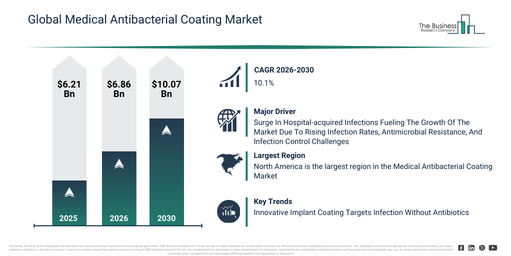
    The medical antibacterial coating market size has seen rapid expansion in recent years. This market is projected to expand from $6.21 billion in 2025 to $6.86 billion in 2026, demonstrating a compound annual growth rate (CAGR) of 10.4%. Historically, this growth has stemmed from factors such as an increasing prevalence of hospital-acquired infections, the extensive use of invasive medical devices, the early implementation of silver-based antimicrobial technologies, a rise in surgical procedures, and heightened awareness regarding infection control.

    The medical antibacterial coating market is anticipated to show substantial expansion over the next few years. It is projected to reach $10.07 billion by 2030, progressing at a compound annual growth rate (CAGR) of 10.1%. This expected growth is primarily due to the increasing need for advanced solutions for infection prevention, the growing use of implantable devices, advancements in antimicrobial polymer research, a heightened regulatory focus on patient safety, and wider acceptance of coated medical devices. Prominent trends for the forecast period include a greater uptake of silver-based coatings, an increased demand for medical devices resistant to infection, the expanded application of polymer-based antimicrobial surfaces, the proliferation of coatings designed for implantable devices, and a stronger emphasis on achieving enduring antibacterial performance.

    Get A Free Sample Report With In-Depth Market Insights:

    https://thebusinessresearchcompany.com/sample_request?id=45156983&type=smp&name=Medical%20Antibacterial%20Coating%20Market%20Report%202026&utm_source=Blogs&utm_medium=Paid&utm_campaign=Nov_PR

    Medical Antibacterial Coating Market Growth Backed By Core Demand Fundamentals

    The anticipated expansion of the medical antibacterial coating market is linked to the increasing occurrence of hospital-acquired infections (HAIs). HAIs are defined as infections contracted by patients while hospitalized, which were absent upon their admission. This rise in HAIs is fueled by elements like crowded hospital environments, which foster the transmission of pathogens among susceptible individuals. Medical antibacterial coatings contribute to reducing hospital-acquired infections by preventing the multiplication and dispersion of detrimental microorganisms on medical equipment and surfaces, thereby boosting cleanliness and patient well-being. As an illustration, data from the Australian Institute of Health and Welfare, an Australia-based government agency, indicated that in April 2025, among 12.1 million hospitalizations, 150,000 cases involved complications stemming from healthcare-associated infections (37%), with delirium (13%), cardiac issues (12%), and respiratory issues (10%) being the subsequent most common complications. Consequently, the escalating rate of hospital-acquired infections is a primary impetus for the expansion of the medical antibacterial coating market.

    Medical Antibacterial Coating Market Breakdown By Product Type And Application

    The medical antibacterial coating market covered in this report is segmented –

    1) By Coating Type: Silver-Based, Copper-Based, Polymer-Based, Other Coating Types

    2) By Application: Implantable Devices, Surgical Instruments, Catheters, Other Applications

    3) By End-User: Hospitals, Ambulatory Surgical Centers, Diagnostic Centers, Other End-Users

    Subsegments:

    1) By Silver-based Coatings: Silver Nitrate Coatings, Silver Sulfadiazine Coatings, Nano-silver Coatings, Silver-Zinc Coatings

    2) By Copper-based Coatings: Copper Oxide Coatings, Copper-Silver Alloy Coatings, Nano-copper Coatings, Copper-Chitosan Coatings

    3) By Polymer-based Coatings: Polyethylene Glycol (PEG)-based Coatings, Polysaccharide-based Coatings, Polyurethane-based Coatings, Polylactic Acid (PLA)-based Coatings

    4) By Other Coating Types: Zinc-based Coatings, Titanium Dioxide (TiO2) Coatings, Chlorhexidine Coatings, Quaternary Ammonium Compound (QAC) Coatings

    Medical Antibacterial Coating Market Growth Trends Reshaping The Competitive Landscape

    Key companies in the medical antibacterial coating market are prioritizing advanced, innovative solutions, such as non-eluting bactericidal coatings. Their aim is to diminish the likelihood of implant-related infections, circumvent antibiotic resistance, and enhance patient outcomes in high-risk surgical scenarios. A non-eluting bactericidal coating is characterized as a surface treatment designed to kill bacteria on contact without releasing antimicrobial agents into the body. For instance, in April 2024, Onkos Surgical, a US-based medical technology company, obtained FDA De Novo approval for its pioneering antibacterial-coated orthopedic implants. These implants are engineered to combat bacterial contamination, which presents a serious risk in permanent implant procedures. Infections of this nature can be particularly detrimental in orthopedic oncology and revision arthroplasty, where patients frequently have compromised immunity. The coating technology seeks to reduce infection risk without dependence on antibiotics. This signifies a considerable stride forward in safeguarding high-risk patients during complex orthopedic surgeries.

    Medical Antibacterial Coating Market Company Landscape And Competitive Strategy

    Major companies operating in the medical antibacterial coating market are BASF SE, Royal DSM N.V., Axalta Coating Systems Ltd., Hempel A/S, Specialty Coating Systems Inc., Sciessent LLC, Bactiguard Holding AB, Sono-Tek Corporation, Harland Medical Systems Inc., Plastic Coatings Limited, Covalon Technologies Ltd., BioCote Limited, AST Products Inc., Mitsubishi Chemical Group Corporation, Hydromer Inc., PPG Industries Inc., Akzo Nobel N.V., Nippon Paint Holdings Co. Ltd., RPM International Inc., Lonza Group AG

    View The Full Medical Antibacterial Coating Market Report:

    https://thebusinessresearchcompany.com/report/medical-antibacterial-coating-global-market-report?utm_source=Blogs&utm_medium=Paid&utm_campaign=Nov_PR

    Medical Antibacterial Coating Market Regional Analysis: Which Geography Leads On Revenue?

    North America was the largest region in the medical antibacterial coating market in 2025. The regions covered in the medical antibacterial coating market report are Asia-Pacific, South East Asia, Western Europe, Eastern Europe, North America, South America, Middle East, Africa.

    Reach Out To Our Team:

    The Business Research Company: https://www.thebusinessresearchcompany.com/

    Americas: +1 310-496-7795

    Asia: +44 7882 955267 & +91 8897263534

    Europe: +44 7882 955267

    Email us at: marketing@tbrc.info

    Follow us on:

    LinkedIn: https://in.linkedin.com/company/the-business-research-company

    YouTube: https://www.youtube.com/channel/UC24_fI0rV8cR5DxlCpgmyFQ

    Global Market Model: https://www.thebusinessresearchcompany.com/global-market-model
  • Medical Animation Market Growth In 2026: Market Size, Key Drivers And Future Outlook

    Medical Animation Market Growth In 2026: Market Size, Key Drivers And Future Outlook

    Featuring market attractiveness scoring, total addressable market sizing, company benchmarking matrices, interactive Excel dashboards, deeper supply chain intelligence, emerging startup tracking, and granular product-level insights, The Business Research Company’s 2026 market reports are built to deliver research that is both more actionable and more strategically valuable.

    Medical Animation Market Size Forecast: How Big Could The Market Get By 2030?

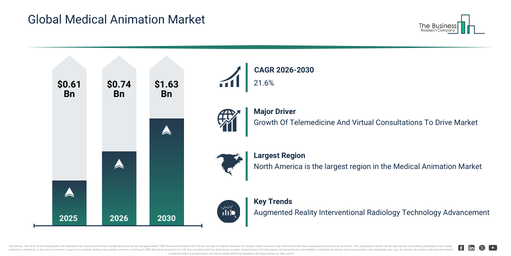
    The medical animation market has witnessed rapid expansion in recent years. It is anticipated to grow from $0.61 billion in 2025 to $0.74 billion in 2026, achieving a compound annual growth rate (CAGR) of 22.1%. The market’s historical growth can be attributed to factors such as the increasing complexity of medical procedures, a rising need for effective medical communication, the growing adoption of digital learning tools, the expansion of pharmaceutical marketing activities, and increased investment in healthcare education.

    The medical animation market size is forecast to undergo significant expansion over the next few years. It is predicted to attain a value of $1.63 billion in 2030, exhibiting a compound annual growth rate (CAGR) of 21.6%. The anticipated growth during the forecast period is fueled by the increase in medical training programs, a heightened emphasis on patient education and awareness, the rising need for immersive learning solutions, the proliferation of digital healthcare platforms, and the increasing incorporation of visualization in precision medicine. Dominant trends within this period include the growing application of visual content in medical education and training, an escalating demand for patient-centric communication tools, a wider adoption of animation in drug and device marketing, an expansion in surgical planning and simulation content, and an increasing preference for interactive and real-time medical visuals.

    Get A Free Sample Report With In-Depth Market Insights:

    https://thebusinessresearchcompany.com/sample_request?id=79261462&type=smp&name=Medical%20Animation%20Market%20Report%202026&utm_source=Blogs&utm_medium=Paid&utm_campaign=Nov_PR

    Medical Animation Market Growth Catalysts And Demand Drivers

    The anticipated expansion of telemedicine and virtual consultations is poised to propel the medical animation market into the future. Telemedicine involves leveraging digital communication tools to deliver healthcare services remotely, allowing patients and providers to interact without needing to be physically present. The rise in virtual consultations can be attributed to technological advancements, enhanced internet access, and a growing desire for convenient healthcare solutions. Medical animation significantly improves telemedicine and virtual consultations by offering clear and engaging visual explanations of intricate medical concepts, procedures, and conditions. This helps patients grasp their diagnosis, available treatment options, and the overall care journey more effectively, consequently boosting communication, patient involvement, and overall satisfaction during remote healthcare engagements. As an illustration, FAIR Health Inc., a US-based non-profit organization, reported in April 2023 that national telehealth utilization grew by 7.3% in 2023, escalating from 5.5% of medical claim lines in December 2022 to 5.9% in January 2023. Thus, the increasing prevalence of telemedicine and virtual consultations will indeed stimulate the medical animation market.

    Medical Animation Market Segment Analysis And Revenue Potential

    The medical animation market covered in this report is segmented –

    1) By Type: 3D Animation, 2D Animation, Real Time Imaging (4D Animation), Flash Animation

    2) By Therapeutic Area: Oncology, Cardiology, Cosmeceuticals/Plastic Surgery, Dental, Other Therapeutic Areas

    3) By Application: Drug Mechanism Of Action (MOA) And Approval, Patient Education, Surgical Training And Planning, Cellular And Molecular Studies, Other Applications

    4) By End Users: Life Science Companies, Medical Device Manufacturers, Hospitals, Surgical Centers And Clinics, Academic Institutes, Other End Users

    Subsegments:

    1) By 3D Animation: Surgical Animations, Anatomical Illustrations, Disease Mechanism Animations, Medical Device Animations

    2) By 2D Animation: Explainer Videos, Medical Educational Content, Health Communication Animations

    3) By Real-Time Imaging (4D Animation): Virtual Reality (VR) Animations, Interactive Medical Animations, Medical Imaging Visualization (MRI, CT scans)

    4) By Flash Animation: Medical Explainers for Websites, Flash-based Health Awareness Campaigns, Interactive Medical Educational Tools

    Medical Animation Market Trends Shaping Long-Term Demand

    Leading companies in the medical animation market are focusing on technological advancements in advanced visualization, such as augmented reality interventional radiology, to improve clinical understanding and real-time procedural decision-making. Augmented reality interventional radiology involves projecting live medical imaging and 3D anatomical data directly into a clinician’s field of view using a holographic display. For instance, in June 2024, GE HealthCare, a US-based medical technology and digital solutions company, collaborated with MediView XR Inc. to introduce the OmnifyXR Interventional Suite. This augmented reality system features a holographic heads-up display that streams live fluoroscopy, ultrasound, hemodynamic data, and 3D anatomy models to an AR headset. This innovation enhances visualization, supports sterile workflows via voice commands, and enables remote collaboration through shared first-person AR views, signifying the initial clinical deployment of an augmented reality interventional suite.

    Medical Animation Market Key Players Shaping Industry Direction

    Major companies operating in the medical animation market are Vee Technologies Inc., Red Nucleus Solutions Limited, Random42 Scientific Communication, BioDigital Inc., Infuse Medical Inc., Visible Body Inc., Elara Systems Inc., Trinsic Animation LLC, Trinity Animation Inc., Understand.com LLC, Vessel Studios, Xvivo Scientific Animation, Hybrid Medical Animation Inc., AXS Studio Inc., Intervoke, Blausen Medical Communications Inc., Ghost Productions Inc., Medmovie Inc., DG Interactive LLC, Scientific Animations Inc.

    View The Full Medical Animation Market Report:

    https://thebusinessresearchcompany.com/report/medical-animation-global-market-report?utm_source=Blogs&utm_medium=Paid&utm_campaign=Nov_PR

    Medical Animation Market Geographic Spread And Regional Opportunities

    North America was the largest region in the medical animation market in 2025. Asia-Pacific is expected to be the fastest-growing region in the forecast period. The regions covered in the medical animation market report are Asia-Pacific, South East Asia, Western Europe, Eastern Europe, North America, South America, Middle East, Africa.

    Reach Out To Our Team:

    The Business Research Company: https://www.thebusinessresearchcompany.com/

    Americas: +1 310-496-7795

    Asia: +44 7882 955267 & +91 8897263534

    Europe: +44 7882 955267

    Email us at: marketing@tbrc.info

    Follow us on:

    LinkedIn: https://in.linkedin.com/company/the-business-research-company

    YouTube: https://www.youtube.com/channel/UC24_fI0rV8cR5DxlCpgmyFQ

    Global Market Model: https://www.thebusinessresearchcompany.com/global-market-model
  • Medical And Diagnostic Laboratory Services Market Size And Forecast 2026–2030: Trends Driving Industry Expansion

    Medical And Diagnostic Laboratory Services Market Size And Forecast 2026–2030: Trends Driving Industry Expansion

    Built to provide research that’s more actionable and strategically valuable, The Business Research Company’s 2026 market reports include market attractiveness analysis, total addressable market sizing, company benchmarking matrices, interactive Excel dashboards, broader supply chain intelligence, emerging startup tracking, and in-depth product insights.

    Medical And Diagnostic Laboratory Services Market Revenue Outlook: What CAGR Lies Ahead Through 2030?

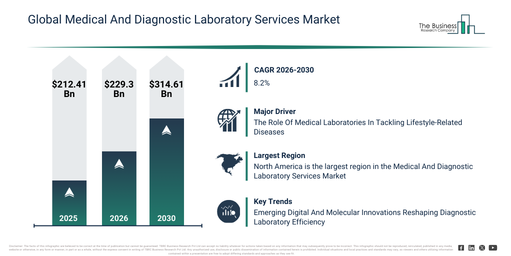
    The medical and diagnostic laboratory services market size has demonstrated significant growth over recent years. It is anticipated to increase from $212.41 billion in 2025 to $229.3 billion in 2026, exhibiting a compound annual growth rate (CAGR) of 8.0%. This historical expansion can be attributed to several factors including an increased burden of disease, growing physician dependence on diagnostics, the broadening of hospital infrastructure, heightened awareness regarding healthcare, and enhanced access to fundamental diagnostic testing.

    The medical and diagnostic laboratory services market is projected to experience substantial expansion over the upcoming years. This market is anticipated to reach $314.61 billion by 2030, demonstrating a compound annual growth rate (CAGR) of 8.2%. Factors contributing to this growth during the forecast period include the increasing prevalence of chronic diseases, a growing demand for personalized diagnostics, the expansion of preventive healthcare initiatives, the broadening of diagnostic services into tier 2 and tier 3 cities, and an uptick in both public and private healthcare expenditure. Key trends identified for the forecast period encompass a heightened demand for preventive and early disease detection diagnostics, an increasing move towards outsourced diagnostic services, the expansion of integrated diagnostic imaging and laboratory networks, greater uptake of home sample collection options, and an intensified focus on quality standards and adherence to accreditation.

    Get A Free Sample Report With In-Depth Market Insights:

    https://thebusinessresearchcompany.com/sample_request?id=11942668&type=smp&name=Medical%20And%20Diagnostic%20Laboratory%20Services%20Market%20Report%202026&utm_source=Blogs&utm_medium=Paid&utm_campaign=Nov_PR

    Medical And Diagnostic Laboratory Services Market Opportunity Drivers: What’s Unlocking New Revenue Potential?

    Contemporary trends such as increased sedentary work, demanding lifestyles, and evolving consumer preferences are influencing global health profiles, particularly the rise of non-communicable diseases like cancer, diabetes, and cardiovascular conditions. Key contributors to chronic illnesses such as diabetes include extended working hours, reduced physical activity, and unhealthy dietary and drinking habits. For instance, in July 2023, according to the Office for National Statistics, a UK-based department, the first quarter of 2023 saw over 1.35 million individuals (53%) who were inactive due to long-term illness report symptoms of depression, anxiety, or nervousness. Diagnostic procedures for these diseases include HbA1c tests for diabetes management, biopsies, tumor marker tests, bone scans, MRI and CT scans for various cancers, and electrocardiograms, chest X-rays, cardiac CT scans, and stress tests for identifying cardiovascular diseases. The increased incidence of lifestyle diseases will escalate the demand for these diagnostic tests, thereby stimulating the medical and diagnostic laboratory services market throughout the forecast period. The expansion of the geriatric population is anticipated to drive the medical and diagnostic laboratory services market forward. This demographic group refers to older adults, typically defined as individuals aged 65 or above. Medical and diagnostic laboratory services are crucial for the elderly population as they enable early disease detection and continuous monitoring, facilitating timely interventions, and improving overall health outcomes. For instance, in July 2024, according to the UK Parliament’s House of Commons Library, a UK-based government administration, there were 12.7 million individuals aged 65 or older in the UK in 2022, constituting 19% of the total population. By 2072, this figure is projected to rise to 22.1 million, comprising 27% of the population. Consequently, the increasing geriatric population is a significant driver for the growth of the medical and diagnostic laboratory services market.

    Medical And Diagnostic Laboratory Services Market Segmentation And Category Overview

    The medical and diagnostic laboratory services market covered in this report is segmented –

    1) By Type: Diagnostic Imaging Centers, Medical Laboratory Services

    2) By Type of Expenditure: Public, Private

    3) By Application: Cardiology, Oncology, Neurology, Orthopedics, Gastroenterology, Gynecology, Other Applications

    4) By End User Gender: Male, Female

    Subsegments:

    1) By Diagnostic Imaging Centers: X-ray Imaging, Magnetic Resonance Imaging (MRI), Ultrasound Imaging, Computed Tomography (CT) Scans, Nuclear Imaging, Mammography

    2) By Medical Laboratory Services: Clinical Chemistry, Hematology, Microbiology, Immunology/Serology, Molecular Diagnostics, Pathology, Blood Banking/Transfusion Services

    Medical And Diagnostic Laboratory Services Market Innovation Trends Shaping Future Development

    Major companies in the medical and diagnostic laboratory services market are dedicated to developing cutting-edge solutions, including enterprise molecular-diagnostics workflow software. This effort aims to address the increasing demand for quicker, higher-throughput qPCR testing, enhanced assay standardization, regulatory traceability, and improved laboratory efficiency, largely influenced by public-health surveillance and the growth of molecular test menus. Enterprise molecular-diagnostics workflow software serves as a unified, on-premise or integrated platform that consolidates instruments, assays, sample and reagent tracking, automated quality control, data interpretation, and laboratory information systems (LIS) into a single interface. For example, in July 2023, Thermo Fisher Scientific, a US-based life-sciences company, launched Diomni Enterprise Software, an enterprise qPCR/molecular diagnostics workflow platform. Diomni is designed as a scalable, on-premise software suite that integrates sample tracking, instrument control, and result reporting into a unified ecosystem. It supports assay development files (ADF) and routine qPCR workflows, automates quality control and fluorescence-curve interpretation, and connects with LIS for audit trails and 21 CFR Part 11–style controls. Notable features include customizable, lockable assay templates, concurrent multi-user access, automated reagent and sample traceability, and built-in compliance/audit functionality. These benefits result in fewer manual steps, improved reproducibility, and, as reported by early adopters, a reduction of several hours in qPCR time-to-results.

    Medical And Diagnostic Laboratory Services Market Competitive Analysis Of Leading Industry Participants

    Major companies operating in the medical and diagnostic laboratory services market are Laboratory Corporation of America, Eurofins Scientific, Quest Diagnostics Incorporated, Sonic Healthcare Limited, RadNet, OPKO Health, Myriad Genetics, Charles River Laboratories Inc., NeoGenomics Laboratories Inc., Bio-Reference Laboratories Inc., Guardant Health Inc., Invitae Corporation, Natera Inc., Foundation Medicine Inc., Veracyte Inc., Exact Sciences Corporation, Fulgent Genetics Inc., Progenity Inc., Adaptive Biotechnologies Corporation, Biocept Inc., Interpace Biosciences Inc., Psychemedics Corporation, Aeon Global Health Corp., Avellino Labs USA Inc., Bio-Techne Corporation, Enzo Clinical Labs Inc., Genoptix Inc., Genova Diagnostics Inc.

    View The Full Medical And Diagnostic Laboratory Services Market Report:

    https://thebusinessresearchcompany.com/report/Medical-And-Diagnostic-Laboratory-Services-Global-Market-Report?utm_source=Blogs&utm_medium=Paid&utm_campaign=Nov_PR

    Medical And Diagnostic Laboratory Services Market Top Region By Revenue And Market Share

    North America was the largest region in the medical and diagnostic laboratory services market in 2025. Asia-Pacific was the second largest region in the medical and diagnostic laboratory services market. The regions covered in the medical and diagnostic laboratory services market report are Asia-Pacific, South East Asia, Western Europe, Eastern Europe, North America, South America, Middle East, Africa.

    Reach Out To Our Team:

    The Business Research Company: https://www.thebusinessresearchcompany.com/

    Americas: +1 310-496-7795

    Asia: +44 7882 955267 & +91 8897263534

    Europe: +44 7882 955267

    Email us at: marketing@tbrc.info

    Follow us on:

    LinkedIn: https://in.linkedin.com/company/the-business-research-company

    YouTube: https://www.youtube.com/channel/UC24_fI0rV8cR5DxlCpgmyFQ

    Global Market Model: https://www.thebusinessresearchcompany.com/global-market-model
  • Medical Affairs Outsourcing Market 2026 Outlook: Market Size, CAGR And Key Growth Opportunities

    Medical Affairs Outsourcing Market 2026 Outlook: Market Size, CAGR And Key Growth Opportunities

    Backed by market attractiveness analysis, total addressable market sizing, company benchmarking matrices, interactive Excel dashboards, wider supply chain intelligence, emerging startup coverage, and detailed product-level insights, The Business Research Company’s 2026 market reports are designed to offer research that is more actionable and strategically valuable than ever.

    Medical Affairs Outsourcing Market Growth Analysis: How Will Revenue Trend Over The Forecast Period?

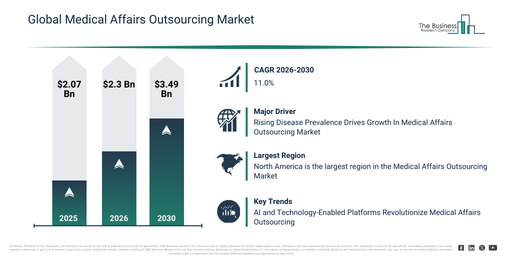
    The medical affairs outsourcing market size has expanded rapidly in recent years. It is forecast to grow from $2.07 billion in 2025 to $2.3 billion in 2026, at a compound annual growth rate (CAGR) of 11.3%. The historic period’s growth can be attributed to several factors including the increasing complexity of regulatory requirements, rising clinical trial volumes, the need for specialized medical expertise, cost optimization strategies adopted by pharma companies, and the expansion of global drug development activities.

    The medical affairs outsourcing market is poised for rapid expansion over the next few years, with projections indicating a rise to $3.49 billion by 2030, reflecting a compound annual growth rate (CAGR) of 11.0%. This projected growth throughout the forecast period stems from factors such as the increasing integration of digital medical affairs solutions, a heightened demand for real-world evidence generation, the ongoing development of biopharmaceutical pipelines, the expansion of outsourced msl activities, and a sharpened focus on data-driven medical strategies. Dominant trends anticipated during this period encompass the growing outsourcing of medical writing functions, an escalating need for remote medical monitoring services, wider adoption of cloud-based medical affairs platforms, the evolution of msl outsourcing models, and an intensified emphasis on compliance and regulatory support.

    Get A Free Sample Report With In-Depth Market Insights:

    https://thebusinessresearchcompany.com/sample_request?id=84796307&type=smp&name=Medical%20Affairs%20Outsourcing%20Market%20Report%202026&utm_source=Blogs&utm_medium=Paid&utm_campaign=Nov_PR

    Medical Affairs Outsourcing Market Growth Momentum: What Factors Are Shaping Demand?

    A rising occurrence of infectious diseases is anticipated to boost the expansion of the medical affairs outsourcing market in the future. These diseases are illnesses capable of spreading between individuals via methods such as direct contact, airborne particles, or vectors. Factors contributing to the surge in infectious diseases include growing urbanization, evolving lifestyles, insufficient healthcare access, and environmental influences. Medical affairs outsourcing offers specialized knowledge in clinical trial management, strengthens adherence to regulations, and refines medical communication and data, thereby aiding in curbing the increase in infectious diseases and facilitating superior disease management and intervention tactics. As an illustration, in February 2024, data from the UK Health Security Agency, a UK-based governmental department, indicated that tuberculosis (TB) incidents in England saw an increase of 10.7%, climbing from 4,380 in 2022 to 4,850 in 2023. Consequently, the growing prevalence of infectious diseases fuels the medical affairs outsourcing market.

    Medical Affairs Outsourcing Market Segment Outlook: Which Categories Are Growing Fastest?

    The medical affairs outsourcing market covered in this report is segmented –

    1) By Services: Medical Writing And Publishing, Medical Monitoring, Medical Science Liaisons (MSLs), Medical Information, Other Services

    2) By Software: Cloud Based Software, On Premise Software

    3) By Industry: Pharmaceutical, Biopharmaceutical, Medical Devices

    Subsegments:

    1) By Medical Writing And Publishing: Regulatory Writing, Clinical Writing, Scientific Publications, Safety Writing

    2) By Medical Monitoring: On-site Monitoring, Remote Monitoring, Risk-Based Monitoring

    3) By Medical Science Liaisons (MSLs): MSL Training and Development, Field Medical Support, KOL Engagement and Management

    4) By Medical Information: Inquiry Management, Adverse Event Reporting, Medical Content Development

    5) By Other Services: Regulatory Affairs Support, Compliance Management, Pharmacovigilance, Biostatistics And Data Management

    Medical Affairs Outsourcing Market Trends Redefining Industry Growth

    Major companies operating in the medical affairs outsourcing market are increasingly concentrating on technological advancements, such as artificial intelligence (AI) and technology-enabled approaches, to improve data management, streamline clinical trials, and enhance regulatory compliance. This focus ultimately drives greater efficiency and effectiveness in disease management and intervention strategies. Artificial intelligence (AI) and technology-enabled methods employ advanced technologies to boost efficiency, accuracy, and decision-making in the management of medical data, processes, and interactions. For instance, in July 2024, Envision Pharma Group, a UK-based pharmaceutical company, introduced 4Sight Drive, an AI-driven platform that uses machine learning algorithms to detect trends, forecast outcomes, and assist decision-making within medical affairs. Its unique functionalities include processing structured and unstructured data from various sources, offering personalized insights for each client, and evolving through user feedback. By utilizing artificial intelligence, organizations are able to refine their medical affairs strategies, increase stakeholder engagement, and improve patient outcomes.

    Medical Affairs Outsourcing Market Leading Companies And Competitive Benchmarking

    Major companies operating in the medical affairs outsourcing market are IQVIA Holdings Inc., ICON plc, Syneos Health Inc., PAREXEL International Corporation, Charles River Laboratories International Inc., Medpace Holdings Inc., Indegene Inc., Caidya Inc., Cytel Inc., Alira Health Inc., The Medical Affairs Company LLC, Bioscript Group Limited, ProPharma Group, EVERSANA, PharmaLex Group, ClinChoice, Astrix, Kantar Health, Precision Medicine Group, Envision Pharma Group

    View The Full Medical Affairs Outsourcing Market Report:

    https://thebusinessresearchcompany.com/report/medical-affairs-outsourcing-global-market-report?utm_source=Blogs&utm_medium=Paid&utm_campaign=Nov_PR

    Medical Affairs Outsourcing Market Regional Analysis And Top Geography

    North America was the largest region in the medical affairs outsourcing market in 2025. Asia-Pacific is expected to be the fastest-growing region in the forecast period. The regions covered in the medical affairs outsourcing market report are Asia-Pacific, South East Asia, Western Europe, Eastern Europe, North America, South America, Middle East, Africa.

    Reach Out To Our Team:

    The Business Research Company: https://www.thebusinessresearchcompany.com/

    Americas: +1 310-496-7795

    Asia: +44 7882 955267 & +91 8897263534

    Europe: +44 7882 955267

    Email us at: marketing@tbrc.info

    Follow us on:

    LinkedIn: https://in.linkedin.com/company/the-business-research-company

    YouTube: https://www.youtube.com/channel/UC24_fI0rV8cR5DxlCpgmyFQ

    Global Market Model: https://www.thebusinessresearchcompany.com/global-market-model