Tag: gastric cancer diagnostic market forecast

  • Gastric Cancer Diagnostic Market Size Projected To Increase From $2.98 Billion To $3.87 Billion During The Forecast Period

    Gastric Cancer Diagnostic Market Size Projected To Increase From $2.98 Billion To $3.87 Billion During The Forecast Period

    Enhanced with market attractiveness analysis, total addressable market evaluation, company benchmarking matrices, interactive Excel dashboards, expanded supply chain intelligence, emerging startup coverage, and detailed product insights, The Business Research Company’s 2026 market reports deliver more actionable and strategically valuable research.

    The market for gastric cancer diagnostics is experiencing steady growth, driven by advancements in technology and increasing awareness of early detection. As medical research progresses and new diagnostic tools emerge, this sector is positioned for notable expansion in the coming years. Here’s an in-depth look at the market size, key growth drivers, segment breakdowns, emerging trends, major players, and regional dynamics shaping the gastric cancer diagnostic landscape.

    Current Market Size and Projected Growth in the Gastric Cancer Diagnostic Market

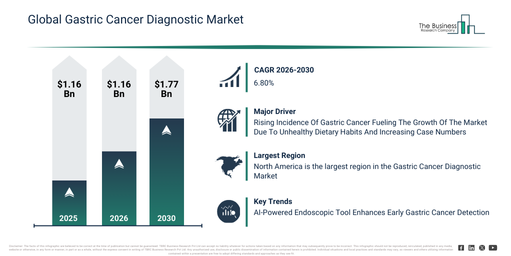
    The gastric cancer diagnostic market has demonstrated robust expansion recently. It is expected to rise from $2.78 billion in 2025 to $2.98 billion in 2026, growing at a compound annual growth rate (CAGR) of 7.2%. This historical growth is linked to factors such as the limited availability of fluorescent probes, reliance on traditional single-color fluorescent in situ hybridization (FISH) methods, increasing genetic research initiatives, enhanced hospital and laboratory infrastructure, and the adoption of basic cytogenetic diagnostic techniques. Looking ahead, the market is poised to reach $3.87 billion by 2030, maintaining a CAGR of 6.8%. Expansion during this forecast period will be supported by the development of multiplex and high-throughput probes, a rising demand for precision medicine, ongoing growth in genetic and pharmaceutical research, improvements in imaging and quantification technologies, as well as stricter regulatory compliance and adherence to quality standards. Key trends will include greater use of multiplex and high-throughput FISH probes, broader applications of genetic and molecular diagnostics, increased involvement in clinical and pharmaceutical research, integration with advanced imaging and analytical tools, and intensified focus on the accuracy and sensitivity of diagnostic probes.

    Download A Free Sample Report For Comprehensive Market Insights:

    https://www.thebusinessresearchcompany.com/sample.aspx?id=27291&type=smp

    Factors Propelling Growth in the Gastric Cancer Diagnostic Market

    One of the primary drivers behind the growth of the gastric cancer diagnostic market is the rising incidence of gastric cancer worldwide. Gastric cancer is characterized by malignant tumors developing in the stomach lining, where uncontrolled cell growth forms masses capable of invading surrounding tissues and spreading to other organs. Increasing rates of this disease are attributed mainly to unhealthy eating habits, particularly the high intake of salted, smoked, and processed foods, which damage the stomach lining and elevate cancer risk. Diagnostic technologies for gastric cancer play a crucial role in identifying malignant lesions at an early stage, enabling timely treatment and enhancing patient outcomes. These diagnostics also improve clinical workflows by delivering accurate and quick results, which supports better disease management. For example, according to the American Cancer Society in May 2024, new stomach cancer cases in the United States reached 26,890, up from 26,500 cases in 2023, underscoring the growing need for effective diagnostic solutions in this market.

    Additional Elements Supporting Market Expansion

    Beyond rising disease prevalence, advancements in technology and research investments are fueling the gastric cancer diagnostic market. Increasing hospital and laboratory infrastructure enables the adoption of improved diagnostic tools, while ongoing genetic and pharmaceutical research expands the scope and precision of testing methods. Additionally, regulatory bodies are enforcing stricter quality standards, which encourages innovation and higher diagnostic accuracy. These developments collectively contribute to a favorable environment for market growth in the near term.

    Access The Complete Gastric Cancer Diagnostic Market Report:

    https://www.thebusinessresearchcompany.com/report/gastric-cancer-diagnostic-global-market-report

    Breakdown of Key Market Segments in Gastric Cancer Diagnostics

    The gastric cancer diagnostic market is categorized into several important segments for better clarity:

    1) Diagnostic Type: Endoscopy, Imaging, Biopsy, Laboratory Tests, Biomarker-Based Testing

    2) Product: Reagents and Consumables, Instruments

    3) Technology: Molecular Diagnostics, Immunoassays, Next-Generation Sequencing, Other Technologies

    4) Application: Early Diagnosis, Screening, Monitoring

    5) End User: Hospitals, Clinics, Diagnostic Laboratories, Other End Users

    Further details on subcategories include:

    – Endoscopy options such as Conventional Endoscopy, Chromoendoscopy, Narrow Band Imaging, Confocal Laser Endomicroscopy, Capsule Endoscopy

    – Imaging techniques comprising Computed Tomography, Magnetic Resonance Imaging, Positron Emission Tomography, Ultrasound

    – Biopsy methods like Forceps Biopsy, Needle Biopsy, Endoscopic Ultrasound-Guided Biopsy, Laparoscopic Biopsy

    – Laboratory Tests including Blood Tests, Stool Tests, Urea Breath Test, Serology

    – Biomarker-Based Testing featuring Genetic Testing, Protein Biomarker Testing, Circulating Tumor DNA Testing, Microribonucleic Acid Testing

    Technological Advancements and Their Impact on Gastric Cancer Diagnostics

    Innovation continues to transform the gastric cancer diagnostic field, with many companies investing in AI-driven solutions to enhance precision and early detection. Artificial intelligence-based endoscopic diagnostic support devices are emerging as cutting-edge tools that help physicians identify gastrointestinal abnormalities during procedures. For instance, in March 2024, Japan’s AI Medical Service Inc. introduced GastroAI-model G, an AI-powered endoscopic support system. It analyzes video images in real time during endoscopy, detecting suspicious lesions that could indicate early gastric cancer. This system highlights potential areas for biopsy or further examination, alerting doctors instantly by marking the affected regions on the endoscopic screen. This technology greatly improves diagnostic accuracy and facilitates timely intervention.

    Who Are the Leading Players in the Gastric Cancer Diagnostic Market

    The competitive landscape of the gastric cancer diagnostic market is shaped by several prominent companies, including F. Hoffmann-La Roche Ltd., Thermo Fisher Scientific Inc., Abbott Laboratories, Becton Dickinson and Company, Quest Diagnostics Incorporated, Agilent Technologies Inc., Illumina Inc., bioMérieux SA, Qiagen N.V., DiaSorin S.p.A, Natera Inc., Myriad Genetics Inc., Fulgent Genetics Inc., Foundation Medicine Inc., Invitae Corporation, NeoGenomics Laboratories Inc., Fujirebio Inc., MiRXES Pte Ltd., BIOCEPT Inc., and Pillar Biosciences Inc. These organizations are driving competitive growth through continuous development of innovative diagnostic tools and expansion into new markets.

    Regional Dynamics and Market Leadership in Gastric Cancer Diagnostics

    North America held the largest share of the gastric cancer diagnostic market in 2025, reflecting strong healthcare infrastructure and widespread adoption of advanced diagnostic technologies. Meanwhile, the Asia Pacific region is anticipated to experience the fastest growth during the forecast period, driven by increasing healthcare investments, rising disease prevalence, and growing demand for precision diagnostics. The market report also covers other significant regions including South East Asia, Western Europe, Eastern Europe, South America, the Middle East, and Africa, offering a comprehensive view of global market trends and opportunities.

    Get in touch with us:

    The Business Research Company: https://www.thebusinessresearchcompany.com/

    Americas: +1 310-496-7795

    Asia: +44 7882 955267 & +91 8897263534

    Europe: +44 7882 955267

    Email us at: marketing@tbrc.info

    Follow us on:

    LinkedIn: https://in.linkedin.com/company/the-business-research-company

    YouTube: https://www.youtube.com/channel/UC24_fI0rV8cR5DxlCpgmyFQ

    Global Market Model: https://www.thebusinessresearchcompany.com/global-market-model
  • Gastric Cancer Diagnostic Market Expansion Outlook Through 2030 With Revenue Growth Insights

    Gastric Cancer Diagnostic Market Expansion Outlook Through 2030 With Revenue Growth Insights

    The Business Research Company’s 2026 market reports feature advanced enhancements such as market attractiveness analysis, total addressable market evaluation, company benchmarking matrices, interactive Excel dashboards, expanded supply chain intelligence, emerging startup coverage, and detailed product insights, delivering more actionable and strategically valuable research.

    What Is The Forecasted Rise In Market Size Of The Gastric Cancer Diagnostic Market During The Forecast Period?

    Significant growth has been observed in the gastric cancer diagnostic market size over recent years. This market is projected to expand from $2.78 billion in 2025 to $2.98 billion in 2026, achieving a compound annual growth rate (CAGR) of 7.2%. Contributing factors to its historical growth include the scarcity of fluorescent probes, the predominant use of traditional single-color FISH methods, the rise in genetic research endeavors, the expanding infrastructure of hospitals and laboratories, and the widespread use of basic cytogenetic diagnostics.

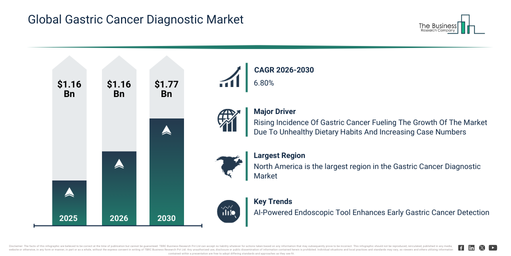
    The market for gastric cancer diagnostics is projected to experience robust expansion in the coming years. This market is anticipated to reach $3.87 billion by 2030, exhibiting a compound annual growth rate (CAGR) of 6.8%. Several factors are expected to fuel this growth during the forecast period, including the emergence of multiplex and high-throughput probes, a growing need for precision medicine, the broadening scope of genetic and pharmaceutical research, innovations in imaging and quantification technologies, and stricter regulatory compliance and quality benchmarks. Key trends anticipated for the upcoming period encompass the increasing integration of multiplex and high-throughput FISH probes, an expanding range of genetic and molecular diagnostic uses, greater application in clinical and pharmaceutical research settings, incorporation with sophisticated imaging and analysis tools, and an intensified emphasis on the precision and sensitivity of probes.

    Download A Free Sample Report For Comprehensive Market Insights:

    https://www.thebusinessresearchcompany.com/sample.aspx?id=27291&type=smp

    What Major Growth Factors Are Impacting The Gastric Cancer Diagnostic Market?

    The increasing occurrence of gastric cancer is projected to stimulate the expansion of the gastric cancer diagnostic market moving forward. Gastric cancer refers to a malignant growth within the stomach lining, where cells multiply uncontrollably, forming a mass capable of invading nearby tissues and spreading to other body parts. This rise in gastric cancer cases stems from unhealthy dietary practices, as high consumption of salted, smoked, and processed foods elevates stomach lining damage and cancer risk. Gastric cancer diagnostic methods assist in diagnosing the condition by enabling the early detection of malignant lesions, which is crucial for timely treatment and improved patient outcomes. These diagnostics enhance clinical efficiency by delivering accurate and rapid results, thus supporting better disease management. For instance, in May 2024, according to the American Cancer Society, a US-based nonprofit organization, the number of new stomach cancer cases reached 26,890 in 2024, an increase from 26,500 cases in 2023. Consequently, the growing incidence of gastric cancer is driving the growth of the gastric cancer diagnostic market.

    Which Segment Divisions Form The Structure Of The Gastric Cancer Diagnostic Market?

    The gastric cancer diagnostic market covered in this report is segmented –

    1) By Diagnostic Type: Endoscopy, Imaging, Biopsy, Laboratory Tests, Biomarker-Based Testing

    2) By Product: Reagents And Consumables, Instruments

    3) By Technology: Molecular Diagnostics, Immunoassays, Next-Generation Sequencing, Other Technologies

    4) By Application: Early Diagnosis, Screening, Monitoring

    5) By End User: Hospitals, Clinics, Diagnostic Laboratories, Other End Users

    Subsegments:

    1) By Endoscopy: Conventional Endoscopy, Chromoendoscopy, Narrow Band Imaging, Confocal Laser Endomicroscopy, Capsule Endoscopy

    2) By Imaging: Computed Tomography, Magnetic Resonance Imaging, Positron Emission Tomography, Ultrasound

    3) By Biopsy: Forceps Biopsy, Needle Biopsy, Endoscopic Ultrasound-Guided Biopsy, Laparoscopic Biopsy

    4) By Laboratory Tests: Blood Tests, Stool Tests, Urea Breath Test, Serology

    5) By Biomarker-Based Testing: Genetic Testing, Protein Biomarker Testing, Circulating Tumor DNA Testing, Microribonucleic Acid Testing

    What Trends Are Impacting The Gastric Cancer Diagnostic Market?

    Companies actively engaged in the gastric cancer diagnostic market are prioritizing the development of innovative diagnostic tools, particularly artificial intelligence-based endoscopic diagnostic support devices, to improve early detection and accuracy. These AI-powered endoscopic support devices are instruments designed to aid in the identification and assessment of gastrointestinal abnormalities during endoscopy. As an illustration, in March 2024, AI Medical Service Inc., a Japan-based medical technology company, introduced GastroAI-model G, an AI-enabled endoscopic diagnostic support system. This system assists gastroenterologists during endoscopic procedures by analyzing video images in real time to pinpoint potential cancerous lesions. It utilizes deep learning to detect suspicious areas indicative of early gastric cancer, which may require a biopsy or further examination. When such lesions are identified, the system instantly alerts the physician by highlighting the area with a rectangle on the endoscopic screen, thereby enhancing diagnostic accuracy and enabling early cancer detection.

    Who Are The Prominent Players Across The Gastric Cancer Diagnostic Market?

    Major companies operating in the gastric cancer diagnostic market are F. Hoffmann-La Roche Ltd., Thermo Fisher Scientific Inc., Abbott Laboratories, Becton Dickinson and Company, Quest Diagnostics Incorporated, Agilent Technologies Inc., Illumina Inc., bioMérieux SA, Qiagen N.V., DiaSorin S.p.A, Natera Inc., Myriad Genetics Inc., Fulgent Genetics Inc., Foundation Medicine Inc., Invitae Corporation, NeoGenomics Laboratories Inc., Fujirebio Inc., MiRXES Pte Ltd., BIOCEPT Inc., Pillar Biosciences Inc.

    Access The Complete Gastric Cancer Diagnostic Market Report:

    https://www.thebusinessresearchcompany.com/report/gastric-cancer-diagnostic-global-market-report

    Which Region Is The Dominant Market In The Gastric Cancer Diagnostic Market?

    North America was the largest region in the gastric cancer diagnostic market in 2025. Asia Pacific is expected to be the fastest-growing region in the forecast period. The regions covered in the gastric cancer diagnostic market report are Asia-Pacific, South East Asia, Western Europe, Eastern Europe, North America, South America, Middle East, Africa.

    Access a Gastric Cancer Diagnostic Market Report for Deeper Competitive Insights

    https://www.thebusinessresearchcompany.com/report/gastric-cancer-diagnostic-global-market-report

    Browse Through More Reports Similar to the Global Gastric Cancer Diagnostic Market 2026, By The Business Research Company

    Thermal Insulation Material Market Report 2026

    https://www.thebusinessresearchcompany.com/report/thermal-insulation-material-global-market-report

    Building Insulation Materials Market Report 2026

    https://www.thebusinessresearchcompany.com/report/building-insulation-materials-global-market-report

    Insulation Products Market Report 2026

    https://www.thebusinessresearchcompany.com/report/insulation-products-global-market-report

    Get in touch with us:

    The Business Research Company: https://www.thebusinessresearchcompany.com/

    Americas: +1 310-496-7795

    Asia: +44 7882 955267 & +91 8897263534

    Europe: +44 7882 955267

    Email us at: marketing@tbrc.info

    Follow us on:

    LinkedIn: https://in.linkedin.com/company/the-business-research-company

    YouTube: https://www.youtube.com/channel/UC24_fI0rV8cR5DxlCpgmyFQ

    Global Market Model: https://www.thebusinessresearchcompany.com/global-market-model
  • Global Gastric Cancer Diagnostic Market Set To Expand To $3.87 Billion By 2030 At 6.8% CAGR

    Global Gastric Cancer Diagnostic Market Set To Expand To $3.87 Billion By 2030 At 6.8% CAGR

    The Business Research Company’s 2026 market reports feature enhanced tools like market attractiveness analysis, TAM assessment, and company scoring matrices, along with interactive dashboards, deeper supply chain insights, and startup coverage strengthening the depth, usability, and strategic value of insights.

    How Is The Market Size Of The Gastric Cancer Diagnostic Market Expected To Scale Between 2026 And 2030?

    The gastric cancer diagnostic market size has experienced robust growth in recent years. This market is anticipated to expand from $2.78 billion in 2025 to $2.98 billion in 2026, demonstrating a compound annual growth rate (CAGR) of 7.2%. The expansion observed in the historic period was driven by limited availability of fluorescent probes, reliance on traditional single-color FISH methods, growing genetic research initiatives, increasing hospital and laboratory infrastructure, and adoption of basic cytogenetic diagnostics.

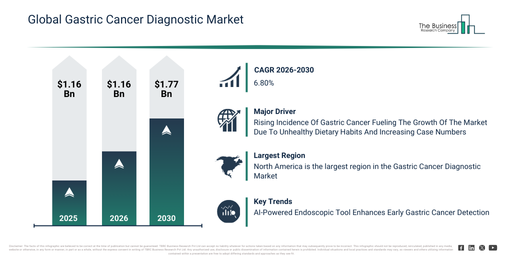
    Significant expansion is anticipated for the gastric cancer diagnostic market size over the coming years. By 2030, this market is projected to reach $3.87 billion, demonstrating a compound annual growth rate (CAGR) of 6.8%. This anticipated growth during the forecast period is driven by factors such as the creation of multiplex and high-throughput probes, an increasing need for precision medicine, the broadening scope of genetic and pharmaceutical investigations, innovations in imaging and quantification technologies, and stricter adherence to regulatory compliance and quality benchmarks. Key trends characterizing this period involve the increasing uptake of multiplex and high-throughput FISH probes, the widening application of genetic and molecular diagnostics, their escalating utilization in clinical and pharmaceutical research, the incorporation of advanced imaging and analysis techniques, and an enhanced emphasis on the precision and responsiveness of probes.

    Access Your Free Sample Report For In-Depth Market Analysis:

    https://www.thebusinessresearchcompany.com/sample.aspx?id=27291&type=smp

    Which Drivers Are Supporting The Gastric Cancer Diagnostic Market Growth?

    The increasing occurrence of gastric cancer is anticipated to drive the expansion of the gastric cancer diagnostic market. Gastric cancer is characterized as a malignant tumor in the stomach lining, where cells proliferate uncontrollably, forming a mass capable of invading adjacent tissues and spreading throughout the body. The elevated incidence of this condition stems from unhealthy dietary practices, as significant consumption of salted, smoked, and processed foods heightens stomach lining damage and cancer risk. Gastric cancer diagnostic tools assist in diagnosis by enabling the early detection of malignant lesions, which is vital for timely intervention and improved patient prognosis. These diagnostics also boost clinical efficiency by delivering precise and rapid results, supporting more effective disease management. For instance, in May 2024, the American Cancer Society, a US-based nonprofit organization, stated that the number of new stomach cancer cases reached 26,890 in 2024, an increase from 26,500 cases in 2023. Therefore, the rising incidence of gastric cancer is directly fueling the growth of the gastric cancer diagnostic market.

    How Are Segments Identified Within The Gastric Cancer Diagnostic Market Segment Framework?

    The gastric cancer diagnostic market covered in this report is segmented –

    1) By Diagnostic Type: Endoscopy, Imaging, Biopsy, Laboratory Tests, Biomarker-Based Testing

    2) By Product: Reagents And Consumables, Instruments

    3) By Technology: Molecular Diagnostics, Immunoassays, Next-Generation Sequencing, Other Technologies

    4) By Application: Early Diagnosis, Screening, Monitoring

    5) By End User: Hospitals, Clinics, Diagnostic Laboratories, Other End Users

    Subsegments:

    1) By Endoscopy: Conventional Endoscopy, Chromoendoscopy, Narrow Band Imaging, Confocal Laser Endomicroscopy, Capsule Endoscopy

    2) By Imaging: Computed Tomography, Magnetic Resonance Imaging, Positron Emission Tomography, Ultrasound

    3) By Biopsy: Forceps Biopsy, Needle Biopsy, Endoscopic Ultrasound-Guided Biopsy, Laparoscopic Biopsy

    4) By Laboratory Tests: Blood Tests, Stool Tests, Urea Breath Test, Serology

    5) By Biomarker-Based Testing: Genetic Testing, Protein Biomarker Testing, Circulating Tumor DNA Testing, Microribonucleic Acid Testing

    Which Trends Are Expected To Impact The Gastric Cancer Diagnostic Market?

    Leading companies in the gastric cancer diagnostic market are concentrating on creating advanced diagnostic instruments, such as artificial intelligence-based endoscopic diagnostic support devices, to improve early detection and precision. These artificial intelligence-based endoscopic diagnostic support devices are AI-driven tools that help identify and evaluate gastrointestinal anomalies during endoscopy. For example, in March 2024, AI Medical Service Inc., a Japan-based medical technology company, introduced GastroAI-model G, an AI-powered endoscopic diagnostic support system. This system aids gastroenterologists during endoscopic procedures by analyzing video images in real time to locate potential cancerous lesions. It leverages deep learning to pinpoint suspicious areas indicative of early gastric cancer, which may require a biopsy or further investigation. When these lesions are found, the system immediately alerts the physician by outlining the area with a rectangle on the endoscopic screen, enhancing diagnostic accuracy and allowing for earlier cancer detection.

    Who Are The Companies Competing Within The Gastric Cancer Diagnostic Market?

    Major companies operating in the gastric cancer diagnostic market are F. Hoffmann-La Roche Ltd., Thermo Fisher Scientific Inc., Abbott Laboratories, Becton Dickinson and Company, Quest Diagnostics Incorporated, Agilent Technologies Inc., Illumina Inc., bioMérieux SA, Qiagen N.V., DiaSorin S.p.A, Natera Inc., Myriad Genetics Inc., Fulgent Genetics Inc., Foundation Medicine Inc., Invitae Corporation, NeoGenomics Laboratories Inc., Fujirebio Inc., MiRXES Pte Ltd., BIOCEPT Inc., Pillar Biosciences Inc.

    Get The Full Gastric Cancer Diagnostic Market Report:

    https://www.thebusinessresearchcompany.com/report/gastric-cancer-diagnostic-global-market-report

    Which Region Dominates The Gastric Cancer Diagnostic Market By Market Share?

    North America was the largest region in the gastric cancer diagnostic market in 2025. Asia Pacific is expected to be the fastest-growing region in the forecast period. The regions covered in the gastric cancer diagnostic market report are Asia-Pacific, South East Asia, Western Europe, Eastern Europe, North America, South America, Middle East, Africa.

    Request A Customized Gastric Cancer Diagnostic Market Report For Competitive Insights:

    https://www.thebusinessresearchcompany.com/customise?id=27291&type=smp

    Browse Through More Reports Similar to the Global Gastric Cancer Diagnostic Market 2026, By The Business Research Company

    Thermal Insulation Material Market Report 2026

    https://www.thebusinessresearchcompany.com/report/thermal-insulation-material-global-market-report

    Building Insulation Materials Market Report 2026

    https://www.thebusinessresearchcompany.com/report/building-insulation-materials-global-market-report

    Insulation Products Market Report 2026

    https://www.thebusinessresearchcompany.com/report/insulation-products-global-market-report

    Get in touch with us:

    The Business Research Company: https://www.thebusinessresearchcompany.com/

    Americas +1 310-496-7795

    Asia +44 7882 955267 & +91 8897263534

    Europe +44 7882 955267

    Email us at info@tbrc.info

    Follow us on:

    LinkedIn: https://in.linkedin.com/company/the-business-research-company

    YouTube: https://www.youtube.com/channel/UC24_fI0rV8cR5DxlCpgmyFQ

    Global Market Model: https://www.thebusinessresearchcompany.com/global-market-model
  • Global Gastric Cancer Diagnostic Market Set To Expand To $3.87 Billion By 2030 At 6.8% CAGR

    Global Gastric Cancer Diagnostic Market Set To Expand To $3.87 Billion By 2030 At 6.8% CAGR

    The Business Research Company’s 2026 market reports feature enhanced tools like market attractiveness analysis, TAM assessment, and company scoring matrices, along with interactive dashboards, deeper supply chain insights, and startup coverage strengthening the depth, usability, and strategic value of insights.

    How Is The Market Size Of The Gastric Cancer Diagnostic Market Expected To Scale Between 2026 And 2030?

    The gastric cancer diagnostic market size has experienced robust growth in recent years. This market is anticipated to expand from $2.78 billion in 2025 to $2.98 billion in 2026, demonstrating a compound annual growth rate (CAGR) of 7.2%. The expansion observed in the historic period was driven by limited availability of fluorescent probes, reliance on traditional single-color FISH methods, growing genetic research initiatives, increasing hospital and laboratory infrastructure, and adoption of basic cytogenetic diagnostics.

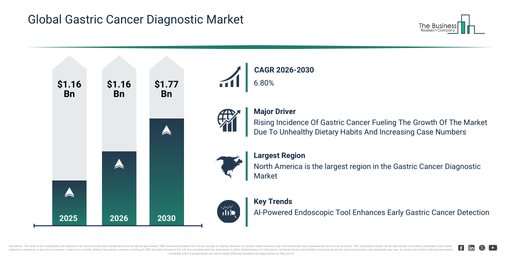
    Significant expansion is anticipated for the gastric cancer diagnostic market size over the coming years. By 2030, this market is projected to reach $3.87 billion, demonstrating a compound annual growth rate (CAGR) of 6.8%. This anticipated growth during the forecast period is driven by factors such as the creation of multiplex and high-throughput probes, an increasing need for precision medicine, the broadening scope of genetic and pharmaceutical investigations, innovations in imaging and quantification technologies, and stricter adherence to regulatory compliance and quality benchmarks. Key trends characterizing this period involve the increasing uptake of multiplex and high-throughput FISH probes, the widening application of genetic and molecular diagnostics, their escalating utilization in clinical and pharmaceutical research, the incorporation of advanced imaging and analysis techniques, and an enhanced emphasis on the precision and responsiveness of probes.

    Access Your Free Sample Report For In-Depth Market Analysis:

    https://www.thebusinessresearchcompany.com/sample.aspx?id=27291&type=smp

    Which Drivers Are Supporting The Gastric Cancer Diagnostic Market Growth?

    The increasing occurrence of gastric cancer is anticipated to drive the expansion of the gastric cancer diagnostic market. Gastric cancer is characterized as a malignant tumor in the stomach lining, where cells proliferate uncontrollably, forming a mass capable of invading adjacent tissues and spreading throughout the body. The elevated incidence of this condition stems from unhealthy dietary practices, as significant consumption of salted, smoked, and processed foods heightens stomach lining damage and cancer risk. Gastric cancer diagnostic tools assist in diagnosis by enabling the early detection of malignant lesions, which is vital for timely intervention and improved patient prognosis. These diagnostics also boost clinical efficiency by delivering precise and rapid results, supporting more effective disease management. For instance, in May 2024, the American Cancer Society, a US-based nonprofit organization, stated that the number of new stomach cancer cases reached 26,890 in 2024, an increase from 26,500 cases in 2023. Therefore, the rising incidence of gastric cancer is directly fueling the growth of the gastric cancer diagnostic market.

    How Are Segments Identified Within The Gastric Cancer Diagnostic Market Segment Framework?

    The gastric cancer diagnostic market covered in this report is segmented –

    1) By Diagnostic Type: Endoscopy, Imaging, Biopsy, Laboratory Tests, Biomarker-Based Testing

    2) By Product: Reagents And Consumables, Instruments

    3) By Technology: Molecular Diagnostics, Immunoassays, Next-Generation Sequencing, Other Technologies

    4) By Application: Early Diagnosis, Screening, Monitoring

    5) By End User: Hospitals, Clinics, Diagnostic Laboratories, Other End Users

    Subsegments:

    1) By Endoscopy: Conventional Endoscopy, Chromoendoscopy, Narrow Band Imaging, Confocal Laser Endomicroscopy, Capsule Endoscopy

    2) By Imaging: Computed Tomography, Magnetic Resonance Imaging, Positron Emission Tomography, Ultrasound

    3) By Biopsy: Forceps Biopsy, Needle Biopsy, Endoscopic Ultrasound-Guided Biopsy, Laparoscopic Biopsy

    4) By Laboratory Tests: Blood Tests, Stool Tests, Urea Breath Test, Serology

    5) By Biomarker-Based Testing: Genetic Testing, Protein Biomarker Testing, Circulating Tumor DNA Testing, Microribonucleic Acid Testing

    Which Trends Are Expected To Impact The Gastric Cancer Diagnostic Market?

    Leading companies in the gastric cancer diagnostic market are concentrating on creating advanced diagnostic instruments, such as artificial intelligence-based endoscopic diagnostic support devices, to improve early detection and precision. These artificial intelligence-based endoscopic diagnostic support devices are AI-driven tools that help identify and evaluate gastrointestinal anomalies during endoscopy. For example, in March 2024, AI Medical Service Inc., a Japan-based medical technology company, introduced GastroAI-model G, an AI-powered endoscopic diagnostic support system. This system aids gastroenterologists during endoscopic procedures by analyzing video images in real time to locate potential cancerous lesions. It leverages deep learning to pinpoint suspicious areas indicative of early gastric cancer, which may require a biopsy or further investigation. When these lesions are found, the system immediately alerts the physician by outlining the area with a rectangle on the endoscopic screen, enhancing diagnostic accuracy and allowing for earlier cancer detection.

    Who Are The Companies Competing Within The Gastric Cancer Diagnostic Market?

    Major companies operating in the gastric cancer diagnostic market are F. Hoffmann-La Roche Ltd., Thermo Fisher Scientific Inc., Abbott Laboratories, Becton Dickinson and Company, Quest Diagnostics Incorporated, Agilent Technologies Inc., Illumina Inc., bioMérieux SA, Qiagen N.V., DiaSorin S.p.A, Natera Inc., Myriad Genetics Inc., Fulgent Genetics Inc., Foundation Medicine Inc., Invitae Corporation, NeoGenomics Laboratories Inc., Fujirebio Inc., MiRXES Pte Ltd., BIOCEPT Inc., Pillar Biosciences Inc.

    Get The Full Gastric Cancer Diagnostic Market Report:

    https://www.thebusinessresearchcompany.com/report/gastric-cancer-diagnostic-global-market-report

    Which Region Dominates The Gastric Cancer Diagnostic Market By Market Share?

    North America was the largest region in the gastric cancer diagnostic market in 2025. Asia Pacific is expected to be the fastest-growing region in the forecast period. The regions covered in the gastric cancer diagnostic market report are Asia-Pacific, South East Asia, Western Europe, Eastern Europe, North America, South America, Middle East, Africa.

    Request A Customized Gastric Cancer Diagnostic Market Report For Competitive Insights:

    https://www.thebusinessresearchcompany.com/customise?id=27291&type=smp

    Browse Through More Reports Similar to the Global Gastric Cancer Diagnostic Market 2026, By The Business Research Company

    Thermal Insulation Material Market Report 2026

    https://www.thebusinessresearchcompany.com/report/thermal-insulation-material-global-market-report

    Building Insulation Materials Market Report 2026

    https://www.thebusinessresearchcompany.com/report/building-insulation-materials-global-market-report

    Insulation Products Market Report 2026

    https://www.thebusinessresearchcompany.com/report/insulation-products-global-market-report

    Get in touch with us:

    The Business Research Company: https://www.thebusinessresearchcompany.com/

    Americas +1 310-496-7795

    Asia +44 7882 955267 & +91 8897263534

    Europe +44 7882 955267

    Email us at info@tbrc.info

    Follow us on:

    LinkedIn: https://in.linkedin.com/company/the-business-research-company

    YouTube: https://www.youtube.com/channel/UC24_fI0rV8cR5DxlCpgmyFQ

    Global Market Model: https://www.thebusinessresearchcompany.com/global-market-model
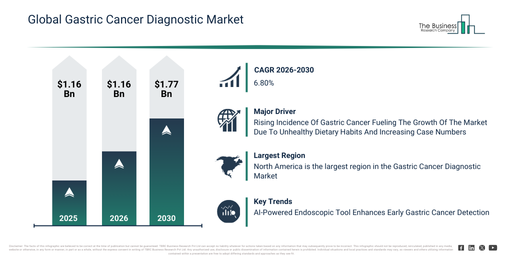
  • Global Gastric Cancer Diagnostic Market Set To Expand To $3.87 Billion By 2030 At 6.8% CAGR

    Global Gastric Cancer Diagnostic Market Set To Expand To $3.87 Billion By 2030 At 6.8% CAGR

    The Business Research Company’s 2026 market reports feature enhanced tools like market attractiveness analysis, TAM assessment, and company scoring matrices, along with interactive dashboards, deeper supply chain insights, and startup coverage strengthening the depth, usability, and strategic value of insights.

    How Is The Market Size Of The Gastric Cancer Diagnostic Market Expected To Scale Between 2026 And 2030?

    The gastric cancer diagnostic market size has experienced robust growth in recent years. This market is anticipated to expand from $2.78 billion in 2025 to $2.98 billion in 2026, demonstrating a compound annual growth rate (CAGR) of 7.2%. The expansion observed in the historic period was driven by limited availability of fluorescent probes, reliance on traditional single-color FISH methods, growing genetic research initiatives, increasing hospital and laboratory infrastructure, and adoption of basic cytogenetic diagnostics.

    Significant expansion is anticipated for the gastric cancer diagnostic market size over the coming years. By 2030, this market is projected to reach $3.87 billion, demonstrating a compound annual growth rate (CAGR) of 6.8%. This anticipated growth during the forecast period is driven by factors such as the creation of multiplex and high-throughput probes, an increasing need for precision medicine, the broadening scope of genetic and pharmaceutical investigations, innovations in imaging and quantification technologies, and stricter adherence to regulatory compliance and quality benchmarks. Key trends characterizing this period involve the increasing uptake of multiplex and high-throughput FISH probes, the widening application of genetic and molecular diagnostics, their escalating utilization in clinical and pharmaceutical research, the incorporation of advanced imaging and analysis techniques, and an enhanced emphasis on the precision and responsiveness of probes.

    Access Your Free Sample Report For In-Depth Market Analysis:

    https://www.thebusinessresearchcompany.com/sample.aspx?id=27291&type=smp

    Which Drivers Are Supporting The Gastric Cancer Diagnostic Market Growth?

    The increasing occurrence of gastric cancer is anticipated to drive the expansion of the gastric cancer diagnostic market. Gastric cancer is characterized as a malignant tumor in the stomach lining, where cells proliferate uncontrollably, forming a mass capable of invading adjacent tissues and spreading throughout the body. The elevated incidence of this condition stems from unhealthy dietary practices, as significant consumption of salted, smoked, and processed foods heightens stomach lining damage and cancer risk. Gastric cancer diagnostic tools assist in diagnosis by enabling the early detection of malignant lesions, which is vital for timely intervention and improved patient prognosis. These diagnostics also boost clinical efficiency by delivering precise and rapid results, supporting more effective disease management. For instance, in May 2024, the American Cancer Society, a US-based nonprofit organization, stated that the number of new stomach cancer cases reached 26,890 in 2024, an increase from 26,500 cases in 2023. Therefore, the rising incidence of gastric cancer is directly fueling the growth of the gastric cancer diagnostic market.

    How Are Segments Identified Within The Gastric Cancer Diagnostic Market Segment Framework?

    The gastric cancer diagnostic market covered in this report is segmented –

    1) By Diagnostic Type: Endoscopy, Imaging, Biopsy, Laboratory Tests, Biomarker-Based Testing

    2) By Product: Reagents And Consumables, Instruments

    3) By Technology: Molecular Diagnostics, Immunoassays, Next-Generation Sequencing, Other Technologies

    4) By Application: Early Diagnosis, Screening, Monitoring

    5) By End User: Hospitals, Clinics, Diagnostic Laboratories, Other End Users

    Subsegments:

    1) By Endoscopy: Conventional Endoscopy, Chromoendoscopy, Narrow Band Imaging, Confocal Laser Endomicroscopy, Capsule Endoscopy

    2) By Imaging: Computed Tomography, Magnetic Resonance Imaging, Positron Emission Tomography, Ultrasound

    3) By Biopsy: Forceps Biopsy, Needle Biopsy, Endoscopic Ultrasound-Guided Biopsy, Laparoscopic Biopsy

    4) By Laboratory Tests: Blood Tests, Stool Tests, Urea Breath Test, Serology

    5) By Biomarker-Based Testing: Genetic Testing, Protein Biomarker Testing, Circulating Tumor DNA Testing, Microribonucleic Acid Testing

    Which Trends Are Expected To Impact The Gastric Cancer Diagnostic Market?

    Leading companies in the gastric cancer diagnostic market are concentrating on creating advanced diagnostic instruments, such as artificial intelligence-based endoscopic diagnostic support devices, to improve early detection and precision. These artificial intelligence-based endoscopic diagnostic support devices are AI-driven tools that help identify and evaluate gastrointestinal anomalies during endoscopy. For example, in March 2024, AI Medical Service Inc., a Japan-based medical technology company, introduced GastroAI-model G, an AI-powered endoscopic diagnostic support system. This system aids gastroenterologists during endoscopic procedures by analyzing video images in real time to locate potential cancerous lesions. It leverages deep learning to pinpoint suspicious areas indicative of early gastric cancer, which may require a biopsy or further investigation. When these lesions are found, the system immediately alerts the physician by outlining the area with a rectangle on the endoscopic screen, enhancing diagnostic accuracy and allowing for earlier cancer detection.

    Who Are The Companies Competing Within The Gastric Cancer Diagnostic Market?

    Major companies operating in the gastric cancer diagnostic market are F. Hoffmann-La Roche Ltd., Thermo Fisher Scientific Inc., Abbott Laboratories, Becton Dickinson and Company, Quest Diagnostics Incorporated, Agilent Technologies Inc., Illumina Inc., bioMérieux SA, Qiagen N.V., DiaSorin S.p.A, Natera Inc., Myriad Genetics Inc., Fulgent Genetics Inc., Foundation Medicine Inc., Invitae Corporation, NeoGenomics Laboratories Inc., Fujirebio Inc., MiRXES Pte Ltd., BIOCEPT Inc., Pillar Biosciences Inc.

    Get The Full Gastric Cancer Diagnostic Market Report:

    https://www.thebusinessresearchcompany.com/report/gastric-cancer-diagnostic-global-market-report

    Which Region Dominates The Gastric Cancer Diagnostic Market By Market Share?

    North America was the largest region in the gastric cancer diagnostic market in 2025. Asia Pacific is expected to be the fastest-growing region in the forecast period. The regions covered in the gastric cancer diagnostic market report are Asia-Pacific, South East Asia, Western Europe, Eastern Europe, North America, South America, Middle East, Africa.

    Request A Customized Gastric Cancer Diagnostic Market Report For Competitive Insights:

    https://www.thebusinessresearchcompany.com/customise?id=27291&type=smp

    Browse Through More Reports Similar to the Global Gastric Cancer Diagnostic Market 2026, By The Business Research Company

    Thermal Insulation Material Market Report 2026

    https://www.thebusinessresearchcompany.com/report/thermal-insulation-material-global-market-report

    Building Insulation Materials Market Report 2026

    https://www.thebusinessresearchcompany.com/report/building-insulation-materials-global-market-report

    Insulation Products Market Report 2026

    https://www.thebusinessresearchcompany.com/report/insulation-products-global-market-report

    Get in touch with us:

    The Business Research Company: https://www.thebusinessresearchcompany.com/

    Americas +1 310-496-7795

    Asia +44 7882 955267 & +91 8897263534

    Europe +44 7882 955267

    Email us at info@tbrc.info

    Follow us on:

    LinkedIn: https://in.linkedin.com/company/the-business-research-company

    YouTube: https://www.youtube.com/channel/UC24_fI0rV8cR5DxlCpgmyFQ

    Global Market Model: https://www.thebusinessresearchcompany.com/global-market-model

  • Gastric Cancer Diagnostic Market 2026–2030: Forecasting Business Opportunities Ahead

    Gastric Cancer Diagnostic Market 2026–2030: Forecasting Business Opportunities Ahead

    Uncover key drivers, emerging technologies, and competitive movements shaping the workstation graphics processing unit (gpu) market from 2026–2035 with trusted insights from The Business Research Company

    How is the Gastric Cancer Diagnostic Market size predicted to change over the forecast window of 2026–2035?

    The gastric cancer diagnostic market has shown significant expansion in recent years. It is projected to increase from $2.78 billion in 2025 to $2.98 billion in 2026, achieving a compound annual growth rate (CAGR) of 7.2%. This historical growth can be attributed to several factors, including the limited availability of fluorescent probes, a reliance on traditional single-color FISH methods, burgeoning genetic research initiatives, expanding hospital and laboratory infrastructure, and the uptake of basic cytogenetic diagnostics.

    The gastric cancer diagnostic market is anticipated to experience robust growth over the next few years, with projections indicating it will expand to $3.87 billion by 2030, demonstrating a compound annual growth rate (CAGR) of 6.8%. This expansion during the forecast period is fueled by the development of multiplex and high-throughput probes, an increasing demand for precision medicine, the broadening scope of genetic and pharmaceutical research, technological progress in imaging and quantification, and heightened regulatory compliance and quality standards. Prominent trends for the forecast period include the surging adoption of multiplex and high-throughput FISH probes, the wider application of genetic and molecular diagnostics, their growing utilization in clinical and pharmaceutical research, integration with advanced imaging and analysis technologies, and a stronger focus on the accuracy and sensitivity of probes.

    Access Your Free Sample Report for In-Depth Market Insights:

    https://www.thebusinessresearchcompany.com/sample.aspx?id=27291&type=smp

    Which Drivers Are Contributing To The Expansion Of The Gastric Cancer Diagnostic Market?

    The increasing occurrence of gastric cancer is anticipated to drive expansion within the gastric cancer diagnostic market in the future. Gastric cancer is defined as a malignant tumor forming in the stomach lining, characterized by uncontrolled cell growth that creates a mass capable of invading adjacent tissues and metastasizing throughout the body. This surge in gastric cancer cases is linked to poor dietary choices, specifically the frequent intake of salted, smoked, and processed foods, which elevate the risk of stomach lining damage and subsequent cancer development. Gastric cancer diagnostic tools assist in diagnosing gastric cancer by allowing for the early discovery of malignant lesions, thereby facilitating prompt treatment and enhancing patient prognoses. These diagnostics boost clinical effectiveness through accurate and swift results, aiding in superior disease management. As an illustration, in May 2024, data from the American Cancer Society, a US-based nonprofit, indicated that new stomach cancer cases climbed to 26,890 in 2024, up from 26,500 cases reported in 2023. Consequently, the growing prevalence of gastric cancer is fueling the expansion of the gastric cancer diagnostic market.

    What Segment Categories Are Covered In The Gastric Cancer Diagnostic Market?

    The gastric cancer diagnostic market covered in this report is segmented –

    1) By Diagnostic Type: Endoscopy, Imaging, Biopsy, Laboratory Tests, Biomarker-Based Testing

    2) By Product: Reagents And Consumables, Instruments

    3) By Technology: Molecular Diagnostics, Immunoassays, Next-Generation Sequencing, Other Technologies

    4) By Application: Early Diagnosis, Screening, Monitoring

    5) By End User: Hospitals, Clinics, Diagnostic Laboratories, Other End Users

    Subsegments:

    1) By Endoscopy: Conventional Endoscopy, Chromoendoscopy, Narrow Band Imaging, Confocal Laser Endomicroscopy, Capsule Endoscopy

    2) By Imaging: Computed Tomography, Magnetic Resonance Imaging, Positron Emission Tomography, Ultrasound

    3) By Biopsy: Forceps Biopsy, Needle Biopsy, Endoscopic Ultrasound-Guided Biopsy, Laparoscopic Biopsy

    4) By Laboratory Tests: Blood Tests, Stool Tests, Urea Breath Test, Serology

    5) By Biomarker-Based Testing: Genetic Testing, Protein Biomarker Testing, Circulating Tumor DNA Testing, Microribonucleic Acid Testing

    Which Innovation Trends Are Advancing Developments Within The Gastric Cancer Diagnostic Market?

    Leading companies in the gastric cancer diagnostic market are concentrating on developing innovative diagnostic tools, such as artificial intelligence-based endoscopic diagnostic support devices, to enhance early detection and accuracy. These AI-powered tools are designed to assist in identifying and evaluating gastrointestinal abnormalities during endoscopy. For example, in March 2024, AI Medical Service Inc., a Japan-based medical technology firm, introduced GastroAI-model G, an AI-driven endoscopic diagnostic support system. This system aids gastroenterologists during endoscopic procedures by analyzing video images in real time to pinpoint potential cancerous lesions. It employs deep learning to detect suspicious areas indicative of early gastric cancer, which may warrant a biopsy or further examination. When such lesions are identified, the system promptly alerts the physician by highlighting the area with a rectangle on the endoscopic screen, thereby improving diagnostic accuracy and enabling early cancer detection.

    Which Major Firms Are Strengthening Their Position In The Gastric Cancer Diagnostic Market?

    Major companies operating in the gastric cancer diagnostic market are F. Hoffmann-La Roche Ltd., Thermo Fisher Scientific Inc., Abbott Laboratories, Becton Dickinson and Company, Quest Diagnostics Incorporated, Agilent Technologies Inc., Illumina Inc., bioMérieux SA, Qiagen N.V., DiaSorin S.p.A, Natera Inc., Myriad Genetics Inc., Fulgent Genetics Inc., Foundation Medicine Inc., Invitae Corporation, NeoGenomics Laboratories Inc., Fujirebio Inc., MiRXES Pte Ltd., BIOCEPT Inc., Pillar Biosciences Inc.

    Access The Complete Report For Deeper Market Insights:

    https://www.thebusinessresearchcompany.com/report/gastric-cancer-diagnostic-global-market-report

    Which Region Is Anticipated To See The Fastest Growth In The Gastric Cancer Diagnostic Market?

    North America was the largest region in the gastric cancer diagnostic market in 2025. Asia Pacific is expected to be the fastest-growing region in the forecast period. The regions covered in the gastric cancer diagnostic market report are Asia-Pacific, South East Asia, Western Europe, Eastern Europe, North America, South America, Middle East, Africa.

    Request Your Customized Gastric Cancer Diagnostic Market Research Report for Competitive Advantage:

    https://www.thebusinessresearchcompany.com/customise?id=27291&type=smp

    Browse Through More Reports Similar to the Global Gastric Cancer Diagnostic Market 2026, By The Business Research Company

    Thermal Insulation Material Global Market Report 2026

    https://www.thebusinessresearchcompany.com/report/thermal-insulation-material-global-market-report

    Building Insulation Materials Global Market Report 2026

    https://www.thebusinessresearchcompany.com/report/building-insulation-materials-global-market-report

    Insulation Products Global Market Report 2026

    https://www.thebusinessresearchcompany.com/report/insulation-products-global-market-report

    Get in touch with us:

    The Business Research Company: https://www.thebusinessresearchcompany.com/

    Americas +1 310-496-7795

    Asia +44 7882 955267 & +91 8897263534

    Europe +44 7882 955267

    Email us at info@tbrc.info

    Follow us on:

    LinkedIn: https://in.linkedin.com/company/the-business-research-company

  • Global Gastric Cancer Diagnostic Market Forecast 2029: Size, Share, and Competitive Landscape

    Global Gastric Cancer Diagnostic Market Forecast 2029: Size, Share, and Competitive Landscape

    Uncover key drivers, emerging technologies, and competitive movements shaping the gastric cancer diagnostic market from 2025–2034 with trusted insights from The Business Research Company

    What Are The Market Size Estimates For The Gastric Cancer Diagnostic Market?

    The gastric cancer diagnostic market size has witnessed strong growth in recent years. It is anticipated to expand from $2.59 billion in 2024 to $2.78 billion in 2025, achieving a compound annual growth rate (CAGR) of 7.3%. This historical growth can be attributed to factors like the increasing prevalence of Helicobacter pylori infection, rising awareness regarding gastric cancer symptoms, a growing incidence of gastric cancer within aging populations, increased consumption of smoked and preserved foods, and the expanding utilization of diagnostic screening among high-risk demographics.

    The gastric cancer diagnostic market is expected to experience substantial growth in the upcoming years, projected to reach $3.63 billion by 2029, at a compound annual growth rate (CAGR) of 6.9%. This expansion over the forecast period is attributed to several factors, including an increasing demand for early detection and screening programs, rising awareness campaigns targeting gastric cancer prevention, the growing adoption of personalized medicine approaches, enhancing healthcare infrastructure development in emerging markets, and a heightened focus on non-invasive and rapid diagnostic tests. Key trends anticipated during this period involve technological advancements in molecular diagnostics, the development of biomarker panels to improve diagnostic accuracy, the creation of portable diagnostic devices for point-of-care testing, the innovation of minimally invasive diagnostic tools, and the integration of various imaging modalities.

    Get A Free Sample Of The Report:

    https://www.thebusinessresearchcompany.com/sample.aspx?id=27291&type=smp

    Which Industry Forces Are Driving The Gastric Cancer Diagnostic Market Forward?

    The increasing prevalence of gastric cancer is projected to fuel the expansion of the gastric cancer diagnostic market moving forward. Gastric cancer describes a malignant tumor in the stomach’s inner lining, where cells multiply without control, forming a mass that can penetrate nearby tissues and disseminate to other body parts. This rise in incidence is attributed to unhealthy eating patterns, as a high intake of salted, smoked, and processed foods escalates damage to the stomach lining and increases cancer risk. Gastric cancer diagnostic tools assist in its diagnosis by allowing for the early detection of malignant lesions, which is crucial for timely intervention and improved patient results. These tools enhance clinical efficacy by offering accurate and rapid findings, supporting superior disease management. For instance, in May 2024, the American Cancer Society, a US-based nonprofit organization, reported 26,890 new stomach cancer cases in 2024, an increase from 26,500 cases in 2023. Thus, the escalating incidence of gastric cancer is a key driver for the growth of the gastric cancer diagnostic market.

    How Is The Gastric Cancer Diagnostic Market Organized By Different Segments?

    The gastric cancer diagnostic market covered in this report is segmented

    1) By Diagnostic Type: Endoscopy, Imaging, Biopsy, Laboratory Tests, Biomarker-Based Testing

    2) By Product: Reagents And Consumables, Instruments

    3) By Technology: Molecular Diagnostics, Immunoassays, Next-Generation Sequencing, Other Technologies

    4) By Application: Early Diagnosis, Screening, Monitoring

    5) By End User: Hospitals, Clinics, Diagnostic Laboratories, Other End Users

    Subsegments:

    1) By Endoscopy: Conventional Endoscopy, Chromoendoscopy, Narrow Band Imaging, Confocal Laser Endomicroscopy, Capsule Endoscopy

    2) By Imaging: Computed Tomography, Magnetic Resonance Imaging, Positron Emission Tomography, Ultrasound

    3) By Biopsy: Forceps Biopsy, Needle Biopsy, Endoscopic Ultrasound-Guided Biopsy, Laparoscopic Biopsy

    4) By Laboratory Tests: Blood Tests, Stool Tests, Urea Breath Test, Serology

    5) By Biomarker-Based Testing: Genetic Testing, Protein Biomarker Testing, Circulating Tumor DNA Testing, Microribonucleic Acid Testing

    What Current And Upcoming Trends Are Shaping The Gastric Cancer Diagnostic Market?

    Leading companies in the gastric cancer diagnostic market are prioritizing the development of innovative diagnostic instruments, such as artificial intelligence-based endoscopic diagnostic support devices, to improve early detection and precision. These artificial intelligence-based endoscopic diagnostic support devices are AI-driven tools that assist in identifying and assessing gastrointestinal anomalies during endoscopy. For example, in March 2024, AI Medical Service Inc., a Japan-based medical technology company, introduced GastroAI-model G, an AI-powered endoscopic diagnostic support system. This system aids gastroenterologists during endoscopic procedures by analyzing video images in real time to pinpoint potential cancerous lesions. It leverages deep learning to detect suspicious areas indicative of early gastric cancer, which might require a biopsy or further examination. When such lesions are identified, the system immediately alerts the physician by highlighting the region with a rectangle on the endoscopic screen, thereby enhancing diagnostic accuracy and enabling the early discovery of cancer.

    Who Are The Primary Market Leaders In The Gastric Cancer Diagnostic Market?

    Major companies operating in the gastric cancer diagnostic market are F. Hoffmann-La Roche Ltd., Thermo Fisher Scientific Inc., Abbott Laboratories, Becton Dickinson and Company, Quest Diagnostics Incorporated, Agilent Technologies Inc., Illumina Inc., bioMérieux SA, Qiagen N.V., DiaSorin S.p.A, Natera Inc., Myriad Genetics Inc., Fulgent Genetics Inc., Foundation Medicine Inc., Invitae Corporation, NeoGenomics Laboratories Inc., Fujirebio Inc., MiRXES Pte Ltd., BIOCEPT Inc., Pillar Biosciences Inc.

    Access The Complete Report Here:

    https://www.thebusinessresearchcompany.com/report/gastric-cancer-diagnostic-global-market-report

    How Do Regional Dynamics Influence The Gastric Cancer Diagnostic Market Performance?

    North America was the largest region in the gastric cancer diagnostic market in 2024. Asia Pacific is expected to be the fastest-growing region in the forecast period. The regions covered in the gastric cancer diagnostic market report are Asia-Pacific, Western Europe, Eastern Europe, North America, South America, Middle East, Africa.

    Customize Your Report Here:

    https://www.thebusinessresearchcompany.com/customise?id=27291&type=smp

    Browse Through More Reports Similar to the Global Gastric Cancer Diagnostic Market 2025, By The Business Research Company

    Mineral Wool Global Market Report 2025

    https://www.thebusinessresearchcompany.com/report/mineral-wool-global-market-report

    Building Insulation Materials Global Market Report 2025

    https://www.thebusinessresearchcompany.com/report/building-insulation-materials-global-market-report

    Insulation Products Global Market Report 2025

    https://www.thebusinessresearchcompany.com/report/insulation-products-global-market-report

    About The Business Research Company:

    With over 15000+ reports from 27 industries covering 60+ geographies, The Business Research Company has built a reputation for offering comprehensive, data-rich research and insights. Armed with 1,500,000 datasets, the optimistic contribution of in-depth secondary research, and unique insights from industry leaders, you can get the information you need to stay ahead in the game.

    Get in touch with us:

    The Business Research Company: https://www.thebusinessresearchcompany.com/

    Americas +1 310-496-7795

    Asia +44 7882 955267 & +91 8897263534

    Europe +44 7882 955267

    Email us at info@tbrc.info

    Follow us on:

    LinkedIn: https://in.linkedin.com/company/the-business-research-company

    YouTube: https://www.youtube.com/channel/UC24_fI0rV8cR5DxlCpgmyFQ

    Global Market Model: https://www.thebusinessresearchcompany.com/global-market-model

  • Global Gastric Cancer Diagnostic Market Overview: Trends Shaping Growth to 2029

    Global Gastric Cancer Diagnostic Market Overview: Trends Shaping Growth to 2029

    Unlock Global Insights – Save 20% on Market Reports with Code ONLINE20

    What Is The Global Market Value Of The Gastric Cancer Diagnostic Industry In 2025?

    The gastric cancer diagnostic market has seen strong expansion in recent years. It is anticipated to increase from $2.59 billion in 2024 to $2.78 billion in 2025, achieving a compound annual growth rate (CAGR) of 7.3%. This growth observed in previous periods is largely attributable to the escalating prevalence of helicobacter pylori infection, enhanced awareness concerning gastric cancer symptoms, the rising occurrence of gastric cancer among older populations, increased intake of smoked and preserved foods, and the expanded application of diagnostic screening in high-risk groups.

    The gastric cancer diagnostic market size is projected to experience substantial expansion over the coming years. It is anticipated to reach $3.63 billion by 2029, exhibiting a compound annual growth rate (CAGR) of 6.9%. This projected growth during the forecast period can be attributed to several factors, including an increasing demand for early detection and screening programs, rising awareness campaigns focused on preventing gastric cancer, the growing adoption of personalized medicine approaches, the expansion of healthcare infrastructure in emerging markets, and a heightened focus on non-invasive and rapid diagnostic tests. Key trends anticipated during this period encompass technological advancements in molecular diagnostics, the development of biomarker panels to enhance diagnostic accuracy, the creation of portable diagnostic devices for point-of-care testing, the innovation of minimally invasive diagnostic tools, and the integration of various imaging modalities.

    Unlock Your Free Sample Report for Exclusive Market Data:

    https://www.thebusinessresearchcompany.com/sample.aspx?id=27291&type=smp

    Which Major Market Drivers Are Shaping The Future Of The Gastric Cancer Diagnostic Market?

    The increasing occurrence of gastric cancer is anticipated to fuel the expansion of the gastric cancer diagnostic market in the coming years. Gastric cancer itself is defined as a malignant tumor originating in the stomach lining, where cells multiply uncontrollably, forming a mass that can penetrate nearby tissues and spread throughout the body. This surge in gastric cancer cases stems from unhealthy eating patterns, as consuming large quantities of salted, smoked, and processed foods heightens the damage to the stomach lining and increases cancer risk. Gastric cancer diagnostic tools contribute to its early detection by identifying malignant lesions, which is crucial for timely medical intervention and enhanced patient prognoses. These tools boost clinical effectiveness by yielding accurate and quick results, thereby supporting superior disease management. For instance, in May 2024, the American Cancer Society, a US-based nonprofit organization, reported that the count of new stomach cancer cases hit 26,890 in 2024, representing an increase from 26,500 cases in 2023. Thus, the escalating incidence of gastric cancer is a primary force driving the growth of the gastric cancer diagnostic market.

    What Are The Major Segment Types Covered In The Gastric Cancer Diagnostic Market?

    The gastric cancer diagnostic market covered in this report is segmented

    1) By Diagnostic Type: Endoscopy, Imaging, Biopsy, Laboratory Tests, Biomarker-Based Testing

    2) By Product: Reagents And Consumables, Instruments

    3) By Technology: Molecular Diagnostics, Immunoassays, Next-Generation Sequencing, Other Technologies

    4) By Application: Early Diagnosis, Screening, Monitoring

    5) By End User: Hospitals, Clinics, Diagnostic Laboratories, Other End Users

    Subsegments:

    1) By Endoscopy: Conventional Endoscopy, Chromoendoscopy, Narrow Band Imaging, Confocal Laser Endomicroscopy, Capsule Endoscopy

    2) By Imaging: Computed Tomography, Magnetic Resonance Imaging, Positron Emission Tomography, Ultrasound

    3) By Biopsy: Forceps Biopsy, Needle Biopsy, Endoscopic Ultrasound-Guided Biopsy, Laparoscopic Biopsy

    4) By Laboratory Tests: Blood Tests, Stool Tests, Urea Breath Test, Serology

    5) By Biomarker-Based Testing: Genetic Testing, Protein Biomarker Testing, Circulating Tumor DNA Testing, Microribonucleic Acid Testing

    Which Trends Are Impacting The Gastric Cancer Diagnostic Market?

    Leading companies operating within the gastric cancer diagnostic market are focusing on developing advanced diagnostic tools, including artificial intelligence-based endoscopic diagnostic support devices, to enhance early detection and accuracy. These AI-powered endoscopic diagnostic support devices are intelligent tools designed to assist in identifying and assessing gastrointestinal abnormalities during endoscopic procedures. For instance, in March 2024, AI Medical Service Inc., a medical technology company based in Japan, launched GastroAI-model G, an AI-powered endoscopic diagnostic support system. This system aids gastroenterologists during endoscopy by analyzing video images in real time to identify potential cancerous lesions. It employs deep learning techniques to detect suspicious areas indicative of early gastric cancer, which may necessitate a biopsy or further examination. When such lesions are identified, the system promptly alerts the physician by highlighting the area with a rectangle on the endoscopic screen, thereby improving diagnostic accuracy and enabling early cancer detection.

    Which Key Players Are Driving Competition In The Gastric Cancer Diagnostic Market?

    Major companies operating in the gastric cancer diagnostic market are F. Hoffmann-La Roche Ltd., Thermo Fisher Scientific Inc., Abbott Laboratories, Becton Dickinson and Company, Quest Diagnostics Incorporated, Agilent Technologies Inc., Illumina Inc., bioMérieux SA, Qiagen N.V., DiaSorin S.p.A, Natera Inc., Myriad Genetics Inc., Fulgent Genetics Inc., Foundation Medicine Inc., Invitae Corporation, NeoGenomics Laboratories Inc., Fujirebio Inc., MiRXES Pte Ltd., BIOCEPT Inc., Pillar Biosciences Inc.

    Download The Full Report For Exclusive Market Findings:

    https://www.thebusinessresearchcompany.com/report/gastric-cancer-diagnostic-global-market-report

    What Regional Growth Trends Are Shaping The Gastric Cancer Diagnostic Market Outlook?

    North America was the largest region in the gastric cancer diagnostic market in 2024. Asia Pacific is expected to be the fastest-growing region in the forecast period. The regions covered in the gastric cancer diagnostic market report are Asia-Pacific, Western Europe, Eastern Europe, North America, South America, Middle East, Africa.

    Request A Customized Version Of The Gastric Cancer Diagnostic Market Report:

    https://www.thebusinessresearchcompany.com/customise?id=27291&type=smp

    Browse Through More Reports Similar to the Global Gastric Cancer Diagnostic Market 2025, By The Business Research Company

    Mineral Wool Global Market Report 2025

    https://www.thebusinessresearchcompany.com/report/mineral-wool-global-market-report

    Thermal Insulation Material Global Market Report 2025

    https://www.thebusinessresearchcompany.com/report/thermal-insulation-material-global-market-report

    Building Insulation Materials Global Market Report 2025

    https://www.thebusinessresearchcompany.com/report/building-insulation-materials-global-market-report

    Get in touch with us:

    The Business Research Company: https://www.thebusinessresearchcompany.com/

    Americas +1 310-496-7795

    Asia +44 7882 955267 & +91 8897263534

    Europe +44 7882 955267

    Email us at info@tbrc.info

    Follow us on:

    LinkedIn: https://in.linkedin.com/company/the-business-research-company

    YouTube: https://www.youtube.com/channel/UC24_fI0rV8cR5DxlCpgmyFQ

    Global Market Model: https://www.thebusinessresearchcompany.com/global-market-model

  • Latest Market Developments in Gastric Cancer Diagnostic Industry: Forecast 2025–2029

    Latest Market Developments in Gastric Cancer Diagnostic Industry: Forecast 2025–2029

    Claim your 30% discount on Global Market Reports with code ONLINE30. Limited time only.

    Claim your 30% discount on Global Market Reports with code ONLINE30. Limited time only._x000D_

    _x000D_

    #What Is the Estimated Industry Valuation for the Gastric Cancer Diagnostic Sector?#_x000D_

    The market for gastric cancer diagnosis has seen significant growth in the past few years. From $2.59 billion in 2024, it is expected to increase to $2.78 billion in 2025, with a compound annual growth rate (CAGR) of 7.3%. The growth in previous years can be linked to factors such as a rise in cases of helicobacter pylori infections, heightened awareness of gastric cancer symptoms, increased instances of gastric cancer in older populations, a rise in consumption of smoked and preserved foods, and an increase in the application of diagnostic screening in populations considered high-risk._x000D_

    _x000D_

    The market size of gastric cancer diagnosis is poised for robust expansion in the coming years, projected to surge to $3.63 billion in 2029 with a compound annual growth rate (CAGR) of 6.9%. Factors contributing to the growth within the forecasted period include enhanced demand for preemptive detection and screening initiatives, stepping up of educational campaigns to prevent gastric cancer, the increasing application of personalized medicinal methods, ongoing improvements in healthcare facilities in newly emergent economies, and a heightened emphasis on quick and non-invasive diagnostic procedures. Key trends throughout the forecasted period encompass advancements in molecular diagnostics technology, the formulation of biomarker panels for more precise diagnosis, the invention of portable devices for point-of-care testing, the conceptualization of less invasive diagnostic tools, and an amalgamation of various imaging methodologies._x000D_

    _x000D_

    #Download The Free Sample Report Here:#_x000D_

    https://www.thebusinessresearchcompany.com/sample.aspx?id=27291&type=smp_x000D_

    _x000D_

    #What Forces Are Driving The Growth Of The Gastric Cancer Diagnostic Market?#_x000D_

    The escalating number of gastric cancer cases is projected to spur the expansion of the gastric cancer diagnostic market in the future. Gastric cancer consists of a hazardous tumor in the stomach lining that can aggressively grow, developing a mass that can breach adjacent tissues and disseminate to varying parts of the body. This surge in gastric cancer prevalence is associated with unwholesome eating habits where consuming high amounts of salted, smoked, and processed food can escalate damage to the stomach lining and amplify cancer risk. Diagnostics for gastric cancer support the early recognition of harmful lesions, thus, ensuring timely therapy and better prognosis for patients. They bolster clinical efficacy by producing prompt and precise results, thereby bolstering superior disease administration. As an illustration, the American Cancer Society, a nonprofit organization based in the US, stated in May 2024 that newly diagnosed stomach cancer cases surged to 26,890 in 2024, a rise from 26,500 cases in 2023. Thus, this escalating trend in gastric cancer cases is fueling the expansion of the gastric cancer diagnostic market._x000D_

    _x000D_

    #How Is The Gastric Cancer Diagnostic Industry Segmented Across Key Parameters?#_x000D_

    The gastric cancer diagnostic market covered in this report is segmented_x000D_

    _x000D_

    1) By Diagnostic Type: Endoscopy, Imaging, Biopsy, Laboratory Tests, Biomarker-Based Testing_x000D_

    2) By Product: Reagents And Consumables, Instruments_x000D_

    3) By Technology: Molecular Diagnostics, Immunoassays, Next-Generation Sequencing, Other Technologies_x000D_

    4) By Application: Early Diagnosis, Screening, Monitoring_x000D_

    5) By End User: Hospitals, Clinics, Diagnostic Laboratories, Other End Users_x000D_

    _x000D_

    Subsegments:_x000D_

    1) By Endoscopy: Conventional Endoscopy, Chromoendoscopy, Narrow Band Imaging, Confocal Laser Endomicroscopy, Capsule Endoscopy_x000D_

    2) By Imaging: Computed Tomography, Magnetic Resonance Imaging, Positron Emission Tomography, Ultrasound_x000D_

    3) By Biopsy: Forceps Biopsy, Needle Biopsy, Endoscopic Ultrasound-Guided Biopsy, Laparoscopic Biopsy_x000D_

    4) By Laboratory Tests: Blood Tests, Stool Tests, Urea Breath Test, Serology_x000D_

    5) By Biomarker-Based Testing: Genetic Testing, Protein Biomarker Testing, Circulating Tumor DNA Testing, Microribonucleic Acid Testing_x000D_

    _x000D_

    #What Notable Trends Are Shaping The Direction Of The Gastric Cancer Diagnostic Market?#_x000D_

    Significant players in the gastric cancer diagnostic market are concentrating on creating innovative diagnostic solutions like AI-based endoscopic diagnostic support devices to bolster early detection and precision. These AI-driven tools help in identifying and evaluating gastrointestinal anomalies during endoscopy. For example, in March 2024, AI Medical Service Inc., a company based in Japan that specializes in medical technology, introduced GastroAI-model G, an endoscopic diagnostic support system powered by AI. This system benefits gastroenterologists during endoscopy by real-time video image analysis to pinpoint potential malignant lesions. It employs deep learning to spot suspicious regions indicative of early stage gastric cancer, which might necessitate biopsy or additional scrutiny. When such lesions are found, the system promptly alerts the doctor by marking the area with a rectangle on the endoscopy screen, boosting diagnostic precision and facilitating early detection of cancer._x000D_

    _x000D_

    #Which Companies Currently Dominate The Competitive Landscape In The Gastric Cancer Diagnostic Industry?#_x000D_

    Major companies operating in the gastric cancer diagnostic market are F. Hoffmann-La Roche Ltd., Thermo Fisher Scientific Inc., Abbott Laboratories, Becton Dickinson and Company, Quest Diagnostics Incorporated, Agilent Technologies Inc., Illumina Inc., bioMérieux SA, Qiagen N.V., DiaSorin S.p.A, Natera Inc., Myriad Genetics Inc., Fulgent Genetics Inc., Foundation Medicine Inc., Invitae Corporation, NeoGenomics Laboratories Inc., Fujirebio Inc., MiRXES Pte Ltd., BIOCEPT Inc., Pillar Biosciences Inc. _x000D_

    _x000D_

    #Get The Full Report Here:#_x000D_

    https://www.thebusinessresearchcompany.com/report/gastric-cancer-diagnostic-global-market-report_x000D_

    _x000D_

    #Which Geographic Regions Are Driving Demand In The Gastric Cancer Diagnostic Market?#_x000D_

    North America was the largest region in the gastric cancer diagnostic market in 2024. Asia Pacific is expected to be the fastest-growing region in the forecast period. The regions covered in the gastric cancer diagnostic market report are Asia-Pacific, Western Europe, Eastern Europe, North America, South America, Middle East, Africa._x000D_

    _x000D_

    #Request For A Customized Report:#_x000D_

    https://www.thebusinessresearchcompany.com/customise?id=27291&type=smp_x000D_

    _x000D_

    #About The Business Research Company:#_x000D_

    _x000D_

    With over 15000+ reports from 27 industries covering 60+ geographies, The Business Research Company has built a reputation for offering comprehensive, data-rich research and insights. Armed with 1,500,000 datasets, the optimistic contribution of in-depth secondary research, and unique insights from industry leaders, you can get the information you need to stay ahead in the game._x000D_

    _x000D_

    #Get in touch with us:#_x000D_

    _x000D_

    The Business Research Company: https://www.thebusinessresearchcompany.com/_x000D_

    Americas +1 310-496-7795_x000D_

    Asia +44 7882 955267 & +91 8897263534_x000D_

    Europe +44 7882 955267_x000D_

    Email us at info@tbrc.info_x000D_

    _x000D_

    #Follow us on:#_x000D_

    _x000D_

    LinkedIn: https://in.linkedin.com/company/the-business-research-company_x000D_

    YouTube: https://www.youtube.com/channel/UC24_fI0rV8cR5DxlCpgmyFQ_x000D_

    Global Market Model: https://www.thebusinessresearchcompany.com/global-market-model