Month: March 2024

  • How Is The Acute Ischemic Stroke Diagnosis Market Expected To Grow Through 2024-2033

    How Is The Acute Ischemic Stroke Diagnosis Market Expected To Grow Through 2024-2033

    The Business Research Company’s global market reports are now updated with the latest market sizing information for the year 2024 and forecasted to 2033

    According to The Business Research Company’s Acute Ischemic Stroke Diagnosis Global Market Report 2024, the acute ischemic stroke diagnosis market is expected to show promising growth in the forecast period.

    Understanding the Market Dynamics
    The acute ischemic stroke diagnosis market has witnessed robust growth in recent years, fueled by various factors:

    • In 2023, the market size stood at $2.14 billion, expected to reach $2.31 billion in 2024.
    • Compound Annual Growth Rate (CAGR) is projected at 7.6% from 2023 to 2024.
    • Growth drivers include increased cardiovascular risk factors, adoption of telemedicine, establishment of stroke centers, aging population, and development of thrombolytic therapies.

    Future Outlook: A Promising Trajectory
    The market is poised for further expansion, with forecasts indicating substantial growth:

    • By 2028, the market is anticipated to soar to $2.99 billion at a CAGR of 6.7%.
    • Emerging trends such as remote monitoring technologies, patient-centric healthcare models, and integration of wearable devices will drive growth.

    Rising Incidence of Acute Ischemic Stroke
    The surge in acute ischemic stroke cases underpins the market’s growth:

    • Acute ischemic stroke is a medical emergency resulting from poor blood supply to the brain.
    • Early diagnosis is crucial for effective treatment and minimizing brain damage.
    • In the US alone, over 795,000 strokes occur annually, with ischemic strokes accounting for 87%.

    View More On The Acute Ischemic Stroke Diagnosis Market Report 2024 – https://www.thebusinessresearchcompany.com/report/acute-ischemic-stroke-diagnosis-global-market-report

    Innovations Shaping Diagnosis and Therapy
    Revolutionary products and advancements are reshaping stroke diagnosis and therapy:

    • Companies like Cardinal Health Inc., Johnson & Johnson Services Inc., and Merck & Co. Inc. are at the forefront of innovation.
    • Imperative Care Inc.’s Zoom POD Aspiration Tubing streamlines stroke therapy, enhancing treatment efficiency.
    • Philips’ acquisition of Cardiologs strengthens its cardiac monitoring portfolio, offering innovative ECG analysis.

    Segmentation and Regional Dynamics
    Understanding the market’s segmentation and regional trends is essential:

    1. Diagnostic Type: Includes CT, MRI, Carotid Ultrasound, Cerebral Angiography, ECG, Echocardiography, and Other Diagnostics.
    2. Surgery Type: Encompasses Carotid Endarterectomy, Angioplasty, and Endovascular Mechanical Thrombectomy.
    3. Application: Covers Tissue Plasminogen Activator (TPA), Anticoagulant, Antiplatelet, and Antihypertensive therapies.
    • North America dominated the market in 2023, while Asia-Pacific is poised for rapid growth.

    Looking Ahead: Opportunities and Challenges
    As the acute ischemic stroke diagnosis market evolves, key opportunities and challenges emerge:

    • Advancements in imaging technologies and artificial intelligence offer new diagnostic avenues.
    • Genetic and biomarker innovations promise personalized treatment approaches.
    • Data security concerns and the integration of augmented reality pose challenges for market players.

    Conclusion: Navigating the Future
    The acute ischemic stroke diagnosis market represents a dynamic landscape with significant growth potential:

    • Leveraging technological advancements and strategic partnerships will be critical for market players.
    • Addressing unmet medical needs and enhancing diagnostic accuracy will drive innovation.
    • Collaboration between healthcare stakeholders and regulatory bodies is vital for fostering a conducive environment for market growth.

    As the market continues to evolve, stakeholders must remain agile and proactive to capitalize on emerging opportunities and address evolving healthcare challenges.

    Request A Sample Of The Global Acute Ischemic Stroke Diagnosis Market Report 2024:
    https://www.thebusinessresearchcompany.com/sample_request?id=12150&type=smp

  • How Is The Rapid Microbiology Testing Kits Market Expected To Grow Through 2024-2033

    How Is The Rapid Microbiology Testing Kits Market Expected To Grow Through 2024-2033

    The Business Research Company’s global market reports are now updated with the latest market sizing information for the year 2024 and forecasted to 2033

    According to The Business Research Company’s Rapid Microbiology Testing Kits Global Market Report 2024, the rapid microbiology testing kits market is expected to show promising growth in the forecast period.

    The rapid microbiology testing kits market has been experiencing steady growth, fueled by various factors and trends shaping its trajectory. Let’s delve into the dynamics driving this market and the innovations shaping its future.

    Market Expansion Overview

    • The market size is projected to increase from $4.61 billion in 2023 to $4.82 billion in 2024, with a compound annual growth rate (CAGR) of 4.7%.
    • Historic growth is attributed to the rising prevalence of infectious diseases, awareness of rapid microbiology testing benefits, food safety concerns, and expanding pharmaceutical manufacturing.

    Future Growth Prospects

    • Forecasts predict continued expansion, reaching $6.35 billion in 2028, at a CAGR of 7.1%.
    • Anticipated growth drivers include public health emergencies, foodborne pathogen detection, environmental monitoring, and biopharmaceutical advancements.

    Emerging Trends

    • Advances in rapid microbiology testing technology
    • Customization and data integration
    • Nanotechnology and microfluidics
    • Point-of-care testing
    • Digital microbiology
    • Antimicrobial susceptibility testing

    Surge In Infectious Diseases Drives Demand For Rapid Microbiology Testing Kits

    The escalating incidence of infectious diseases fuels the demand for rapid microbiology testing kits. Key points include:

    • Rapid diagnostic tests offer speed, reliability, and accessibility compared to traditional tests.
    • With rising infectious disease cases, the need for confirmatory tests grows.
    • Major companies in the market include Abbott Laboratories, Becton Dickinson and Company, Bruker Corporation, and others.

    View More On The Rapid Microbiology Testing Kits Market Report 2024 – https://www.thebusinessresearchcompany.com/report/rapid-microbiology-testing-kits-global-market-report

    Technological Advancements Transform the Market

    Technological innovations are reshaping the landscape of rapid microbiology testing kits:

    • Automation enhances throughput and accuracy in testing.
    • Robotic handling and imaging reduce risks of miscounts and contamination.
    • Example: Abbott Laboratories’ Alinity HQ Hematology Analyzer aims to minimize errors and manual steps.

    FDA’s Process Analytical Technology (PAT) Framework Shapes Regulations

    Regulations, such as the FDA’s PAT framework, play a pivotal role in shaping the rapid microbiology testing market:

    • PAT evaluates the design, control, and measurement of critical quality aspects.
    • Focus on building quality into products rather than testing quality ensures final product quality and manufacturing efficiencies.

    Market Segmentation

    The rapid microbiology testing kits market is segmented based on:

    1. Product Type:
      • Instruments
      • Reagents And Kits
      • Consumables
    2. Testing Type:
      • Growth-Based Rapid Microbiology Testing Kits
      • Cellular Component-Based Rapid Microbiology Testing Kits
      • Nucleic Acid-Based Rapid Microbiology Testing Kits
      • Viability-Based Rapid Microbiology Testing Kits
      • Other Rapid Microbiology Testing Kits Methods
    3. Application:
      • Clinical Disease Diagnosis
      • Food And Beverage Testing
      • Pharmaceutical And Biological Drug Testing
      • Cosmetics And Personal Care Products Testing
      • Environmental Testing
      • Research Applications
      • Other Applications

    Conclusion

    The rapid microbiology testing kits market is poised for significant expansion driven by increasing disease prevalence and technological advancements. As companies innovate and regulatory frameworks evolve, the market presents vast opportunities for growth and improvement in healthcare, food safety, and environmental monitoring. With a focus on innovation and compliance, stakeholders can navigate this dynamic landscape effectively, contributing to the advancement of microbiological testing methodologies and solutions.

    Request A Sample Of The Global Rapid Microbiology Testing Kits Market Report 2024:
    https://www.thebusinessresearchcompany.com/sample_request?id=2541&type=smp

  • Growth Trajectory Of The Psoriatic Arthritis Treatment Market 2024-2033

    Growth Trajectory Of The Psoriatic Arthritis Treatment Market 2024-2033

    The Business Research Company’s global market reports are now updated with the latest market sizing information for the year 2024 and forecasted to 2033

    The psoriatic arthritis treatment market has experienced robust growth in recent years, driven by various factors such as increased diagnosis, rising prevalence of psoriatic arthritis, and expanding treatment options. This blog explores the market dynamics and emerging trends shaping the landscape.

    Market Growth and Projections

    • The market size surged from $10.93 billion in 2023 to $12 billion in 2024, with a CAGR of 9.8%.
    • Forecasts indicate further growth, reaching $17.16 billion by 2028, driven by personalized medicine and emerging biologics.

    Surging Prevalence Of Psoriasis And Psoriatic Arthritis

    • Psoriasis and psoriatic arthritis are inflammatory disorders affecting millions globally.
    • The incidence of psoriatic arthritis is approximately 30% among psoriasis patients.
    • Major companies in the market include AbbVie Inc., Amgen Astellas BioPharma, Johnson & Johnson, and more.

    View More On The Psoriatic Arthritis Treatment Market Report 2024 – https://www.thebusinessresearchcompany.com/report/psoriatic-arthritis-treatments-global-market-report

    Innovative Jak Inhibitors Transform Treatment

    • Janus kinase (JAK) inhibitors represent a novel approach to treating psoriatic arthritis.
    • Drugs like tofacitinib, baricitinib, and upadacitinib offer promising results in managing the condition.
    • Takeda Pharmaceutical’s acquisition of Nimbus Therapeutics strengthens its position in the market.

    Takeda Pharmaceutical Bolsters Psoriatic Arthritis Treatment Portfolio

    • Takeda’s acquisition of Nimbus Therapeutics enhances its product line in psoriatic arthritis treatment.
    • Nimbus Therapeutics, a US-based biotech company, specializes in developing drugs for psoriatic arthritis treatment.

    Market Segmentation The psoriatic arthritis treatment market is segmented based on:

    1. Drug Class: NSAIDs, DMARDs, Biologics, and others
    2. Route of Administration: Oral, Parenteral, Topical
    3. Distribution Channel: Hospital Pharmacies, Retail Pharmacies, Online Pharmacies

    Regional Insights

    • North America dominated the psoriatic arthritis treatment market in 2023.

    Conclusion The psoriatic arthritis treatment market is witnessing significant growth driven by increased awareness, expanding treatment options, and strategic acquisitions. Innovations like JAK inhibitors offer new hope for patients, while companies continue to invest in research and development to address evolving treatment needs. As the market evolves, collaboration and innovation will play pivotal roles in improving patient outcomes and reshaping the treatment landscape.

    Request A Sample Of The Global Psoriatic Arthritis Treatment Market Report 2024:
    https://www.thebusinessresearchcompany.com/sample_request?id=3458&type=smp

  • What Is The Forecast Growth Rate For The Protein Labeling Market?

    What Is The Forecast Growth Rate For The Protein Labeling Market?

    The Business Research Company’s market reports offer an in-depth analysis on the market’s growth potential, major drivers, key trends and more.

    An Overview of Growth Trajectory

    • The protein labeling market has witnessed rapid expansion, with the market size reaching $2.35 billion in 2023.
    • Expected growth to $2.58 billion in 2024 reflects a compound annual growth rate (CAGR) of 10.1%.
    • Drivers of historic growth include increasing demand for protein-based therapeutics and rising adoption of proteomics research.

    Anticipating Future Growth and Trends

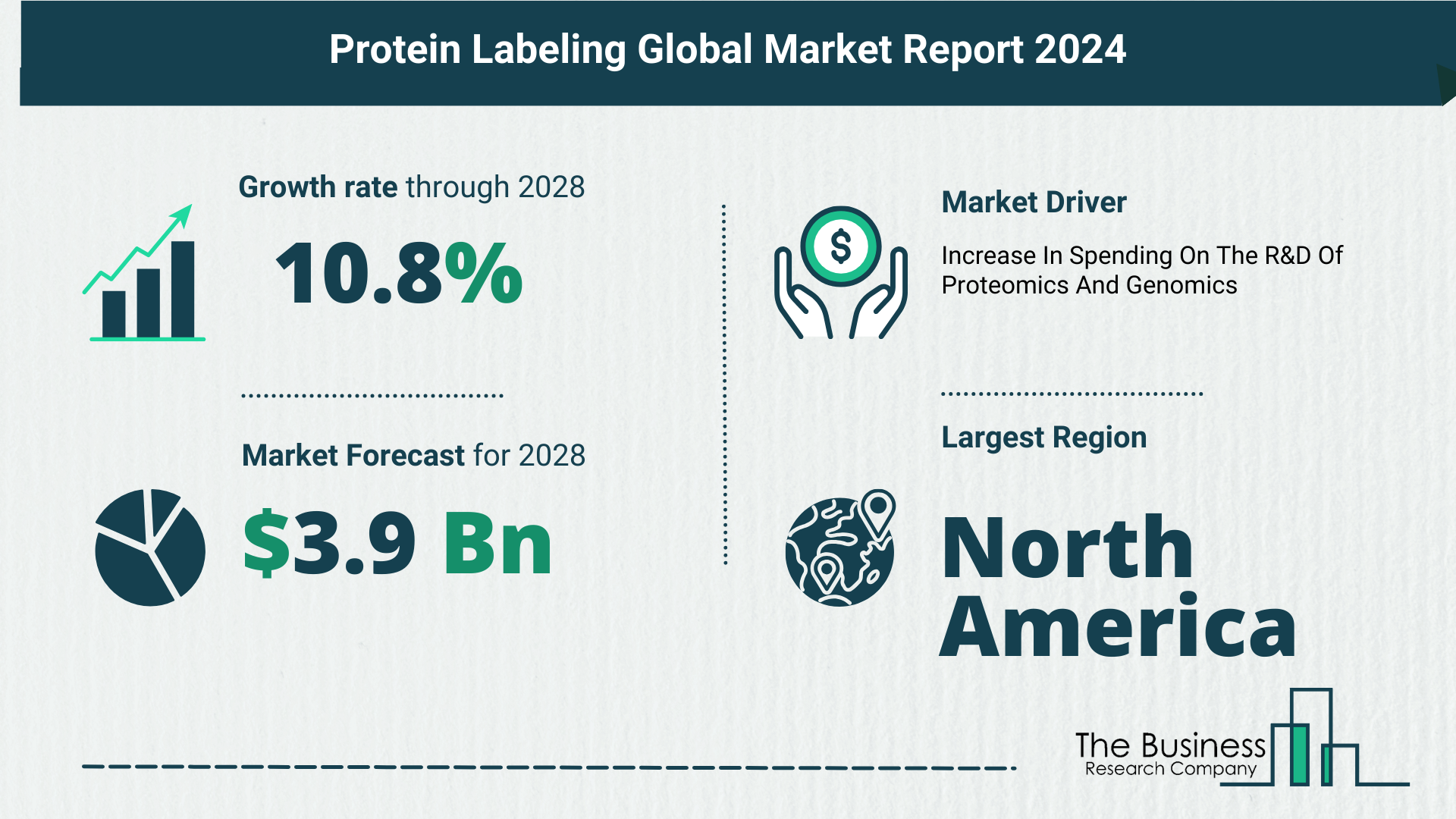
    • Forecasts indicate continued rapid expansion, with the market projected to reach $3.9 billion in 2028 at a CAGR of 10.8%.
    • Factors driving future growth include personalized medicine, point-of-care testing, and increased funding in life sciences.
    • Emerging trends encompass advances in protein labeling technologies, quantum dots, and integration of artificial intelligence.

    Boosting Market through R&D Investments in Proteomics

    • Increased R&D spending in proteomics and genomics fuels the growth of protein labeling reagents market.
    • Proteomics research receives substantial funding from institutions like the National Institutes of Health (NIH).
    • Notable investments include grants awarded to establish mass spectrometry facilities, enhancing protein research capabilities.

    Read More On The Protein Labeling Market Report 2024 – https://www.thebusinessresearchcompany.com/report/protein-labelings-global-market-report

    Driving Innovation through Strategic Collaborations

    • Companies enhance product innovation and competitiveness through strategic collaborations.
    • Collaborations facilitate the development of innovative products and the sharing of expertise.
    • Recent partnerships include enGenes Biotech GmbH’s collaboration with ACIB GmbH for protein labeling.

    Thermo Fisher Scientific’s Strategic Acquisition

    • Thermo Fisher Scientific’s acquisition of PeproTech Inc. for $1.85 billion strengthens its presence in the cell and gene therapy sector.
    • PeproTech Inc., a developer of recombinant proteins, broadens Thermo Fisher Scientific’s product line.
    • The acquisition enhances Thermo Fisher Scientific’s position in the life sciences sector.

    Segmentation and Market Dynamics

    • The protein labeling market is segmented by product, labeling method, and application.
    • Products include reagents, enzymes, probes/tags, and monoclonal antibodies.
    • Labeling methods comprise in-vitro and in-vivo labeling, while applications span various techniques such as cell-based assays and mass spectrometry.
    • North America led the protein labeling market in 2023.

    Conclusion: Embracing Opportunities in an Evolving Market

    The protein labeling market presents abundant opportunities fueled by technological advancements, increased R&D investments, and strategic collaborations. As the industry continues to evolve, stakeholders must remain agile to capitalize on emerging trends and maintain competitiveness. With forecasts pointing towards sustained growth and innovation, the protein labeling market is poised to play a pivotal role in advancing research and therapeutics in the life sciences sector.

    Request for A Sample Of The Global Protein Labeling Market Report:
    https://www.thebusinessresearchcompany.com/sample_request?id=3417&type=smp

  • 5 Key Insights On The Protein Inhibitors Market 2024

    5 Key Insights On The Protein Inhibitors Market 2024

    The Business Research Company’s global market reports are now updated with the latest market sizing information for the year 2024 and forecasted to 2033

    As per The Business Research Company’s Protein Inhibitors Global Market Report 2024, the protein inhibitors market is expected to show significant growth in the forecast period.

    Explosive Growth Trajectory

    • The protein inhibitors market size has witnessed robust growth in recent years.
    • From $80.99 billion in 2023, it is projected to reach $88.74 billion in 2024, boasting a compound annual growth rate (CAGR) of 9.6%.

    Underlying Factors of Growth

    • The historic surge in the market size is primarily attributed to:
      • Drug discovery and development.
      • Advancements in cancer treatment.
      • Regulatory approvals facilitating market expansion.

    Projecting Ahead: A Bright Future

    • Forecasts predict continued growth, with the market soaring to $125.26 billion by 2028, showcasing a CAGR of 9.0%.
    • Anticipated drivers of growth in the forecast period include:
      • Precision medicine initiatives.
      • Expanding applications in immunotherapy.
      • Innovative drug combinations.
      • The aging population’s healthcare needs.

    View More On The Protein Inhibitors Market Report 2024 – https://www.thebusinessresearchcompany.com/report/protein-inhibitor-global-market-report

    Embracing Trends: A Glimpse into Tomorrow

    • Notable trends shaping the market’s future include:
      • Increased data sharing and collaboration.
      • Heightened focus on sustainability and ESG (Environmental, Social, and Governance) principles.
      • Advancements in personalized medicine.
      • Adoption of adaptive clinical trial methodologies.

    Growth Of The Protein Inhibitors Market Due To Increasing Prevalence Of Chronic Diseases

    • The rise in chronic disease prevalence fuels market expansion.
    • Chronic ailments like cancer, cardiovascular diseases, and autoimmune disorders are escalating globally.
    • Protein inhibitors offer potent treatment options with fewer adverse effects and higher efficacy.
    • Market beneficiaries include major players like Bayer AG, Pfizer Inc., and Novartis International AG.

    Developing Inhibitors To Gain A Competitive Edge

    • Industry leaders are investing in developing TYK2 inhibitors to stay competitive.
    • TYK2 inhibitors hold promise in treating autoimmune diseases by targeting immune system responses.
    • Bristol-Myers Squibb’s Sotyktu approval signifies a milestone in TYK2 inhibition therapy for plaque psoriasis treatment.

    Pfizer Inc. Acquires ReViral Ltd.

    • Pfizer’s acquisition of ReViral for $525 million fortifies its anti-infective portfolio.
    • ReViral’s expertise in combating respiratory syncytial virus augments Pfizer’s capabilities in addressing respiratory disorders.

    Market Segmentation Overview

    • The protein inhibitors market is segmented based on:
      1. Product: Protein Kinase Inhibitors, Monoclonal Antibodies, and Other Products.
      2. Application: Oncology, Inflammatory Diseases, and Other Applications.
      3. Distribution Channel: Hospital Pharmacies, Independent Pharmacies, and Online Pharmacies.

    Regional Dominance: North America Leads the Way

    • North America emerged as the largest market for protein inhibitors in 2023.

    Request A Sample Of The Global Protein Inhibitors Market Report 2024:
    https://www.thebusinessresearchcompany.com/sample_request?id=3429&type=smp

  • What’s The Growth Forecast For Polymerase Chain Reactions (PCR) Devices, Reagents And Uses Market Through 2024-2033?

    What’s The Growth Forecast For Polymerase Chain Reactions (PCR) Devices, Reagents And Uses Market Through 2024-2033?

    The Business Research Company’s global market reports provide comprehensive analysis on the various markets in 27 industries across 60 geographies.

    The polymerase chain reactions (PCR) devices, reagents, and uses market has witnessed significant growth in recent years, with a steady rise in market size. According to recent data, the market grew from $5.9 billion in 2023 to $6.19 billion in 2024, reflecting a compound annual growth rate (CAGR) of 5.0%.

    Factors Driving Market Growth
    The growth trajectory of the PCR market can be attributed to several key factors:

    1. Rising Prevalence of Infectious Diseases Fuels Growth

    The increasing prevalence of infectious diseases globally is a significant driver for the PCR devices and reagents market. Clinical laboratories utilize PCR devices to detect infectious diseases efficiently.

    • According to the World Health Organization, approximately 17 million people succumb to infectious diseases annually.
    • The emergence of 30 new infectious diseases in the last 20 years underscores the urgency for advanced diagnostic tools.
    • In the US alone, 15.5 million people sought medical attention for infectious diseases, further propelling demand for PCR devices and reagents.
    1. Demand for Clinical Diagnostic Services

    The escalating demand for clinical diagnostic services further amplifies the need for PCR devices and reagents. This trend is expected to drive market growth significantly.

    1. Growth in Personalized Medicine

    The expanding field of personalized medicine demands sophisticated diagnostic tools like PCR devices, contributing to market expansion.

    View More On The Polymerase Chain Reactions (PCR) Devices, Reagents And Uses Market Report 2024 – https://www.thebusinessresearchcompany.com/report/polymerase-chain-reactions-devices-reagents-and-uses-global-market-report

    1. Adoption of PCR in Research and Development

    PCR technology’s increasing adoption in research and development initiatives also fuels market growth.

    Key Players in the Market
    Several prominent companies dominate the polymerase chain reactions (PCR) devices, reagents, and uses market. These include Bio-Rad Laboratories Inc., F. Hoffmann-La Roche AG, Thermo Fisher Scientific Inc., and many more.

    Challenges and Restraints
    Despite its promising trajectory, the PCR market faces challenges, primarily from emerging alternatives in DNA sequencing.

    1. Emerging Alternatives in DNA Sequencing

    Competitors such as Next Generation Sequencing (NGS) and Sanger Sequencing pose challenges to PCR devices and reagents. These alternatives offer comparable utility and, in some cases, superior results, intensifying market competition.

    • Studies comparing PCR with NGS and Sanger Sequencing demonstrate competitive advantages in terms of analytical sensitivity and accuracy.
    • NGS assays, in particular, offer more precise information about allele sequences and mutation frequencies compared to PCR.

    Market Segmentation
    The polymerase chain reactions (PCR) devices, reagents, and uses market are segmented based on various criteria:

    1. By Product: Instruments, Reagents, Consumables
    2. By Instruments: Standard PCR, RT-PCR, Digital PCR
    3. By End User: Pharmaceutical and Biotechnology Industries, Clinical Diagnostics Labs and Hospitals, Academics and Research Organizations.

    Regional Insights
    North America emerged as the largest region in the polymerase chain reactions (PCR) devices and reagents market in 2023, underscoring its significance in the global landscape.

    Future Outlook
    Looking ahead, the PCR market is poised for robust growth. Forecasts indicate that the market will expand to $8.25 billion by 2028, reflecting a compound annual growth rate (CAGR) of 7.4%.

    Key Trends in the Forecast Period
    Several trends are expected to shape the future of the PCR market:

    • Digital PCR
    • Multiplex PCR
    • Next-Generation Sequencing (NGS) Integration
    • Miniaturization and Portable Devices
    • AI and Data Analytics
    • Automation and Robotics.

    Request A Sample Of The Global Polymerase Chain Reactions (PCR) Devices, Reagents And Uses Market Report 2024:
    https://www.thebusinessresearchcompany.com/sample_request?id=2485&type=smp

  • Key Takeaways From The Global Specialty Enzymes Market Forecast 2024

    Key Takeaways From The Global Specialty Enzymes Market Forecast 2024

    The Business Research Company’s global market reports are now updated with the latest market sizing information for the year 2024 and forecasted to 2033

    As per The Business Research Company’s Specialty Enzymes Global Market Report 2024, the specialty enzymes market is expected to show significant growth in the forecast period.

    A Strong Growth Trajectory

    • The specialty enzymes market has witnessed robust growth in recent years.
    • It will elevate from $6.39 billion in 2023 to $6.86 billion in 2024, boasting a CAGR of 7.4%.
    • This surge is attributed to several factors, including the prevalence of chronic diseases and the rising demand for biofuels and bio-based products.

    Charting the Future: Projections and Forecasts

    • The market is poised for continued growth, reaching $8.84 billion by 2028, with a CAGR of 6.5%.
    • The forecasted expansion is driven by multiple factors, including biopharmaceutical advancements and a heightened focus on sustainable products.

    Biotechnology Research Investment Driving Specialty Enzymes Market Growth

    • Increased investment in biotechnology research and development is a key driver.
    • Specialty enzymes play a crucial role in molecular biology and biotech R&D.
    • Growing investments globally, such as the $83 billion pharmaceutical research and development investment, are propelling market growth.

    View More On The Specialty Enzymes Market Report 2024 – https://www.thebusinessresearchcompany.com/report/specialty-enzyme-global-market-report

     Technological Advances In Enzyme Products

    • Technological innovations are enhancing the efficiency of enzyme production.
    • Challenges like pH maintenance and operational temperature are being addressed.
    • Examples include International Flavors and Fragrances Inc.’s Enovera 3001, a dough strengthener replacing vital wheat gluten.

    Brain Ag Strengthens BioIndustrial Segment With Acquisition Of Biocatalysts Ltd. Shares

    • BRAIN AG’s acquisition of Biocatalysts Ltd. shares for $5.51 million strengthens its BioIndustrial segment.
    • This acquisition expands BRAIN’s commercial opportunities and technology access, particularly in specialty enzyme development.

    Market Segmentation Overview

    • The specialty enzymes market is segmented based on:
      1. Type: Carbohydrases, Proteases, Lipases, Polymerases & Nucleases, Oxidase & Hydratases, and Other Types.
      2. Source: Microorganisms, Animals, and Plants.
      3. Application: Pharmaceutical, Diagnostics, Research & Biotechnology, Food & Beverage, Animal Nutrition, and Other Applications.

    Regional Dynamics: Leading Markets and Emerging Trends

    • North America emerged as the largest region in the specialty enzymes market in 2023.
    • The Middle East is anticipated to witness the fastest growth in the forecast period.

    In conclusion, the specialty enzymes market exhibits a promising growth trajectory driven by biotechnology research investment, technological advancements, and strategic acquisitions. As industries continue to prioritize sustainability and efficiency, the demand for specialty enzymes across various applications is expected to surge. With evolving trends and market dynamics, stakeholders in the specialty enzymes sector are poised to capitalize on emerging opportunities and shape the future of enzyme-based solutions globally.

    Request A Sample Of The Global Specialty Enzymes Market Report 2024:

    https://www.thebusinessresearchcompany.com/sample_request?id=3242&type=smp

  • Top 5 Insights From The Polymer Biomaterial Market Report 2024

    Top 5 Insights From The Polymer Biomaterial Market Report 2024

    The Business Research Company’s global market reports are now updated with the latest market sizing information for the year 2024 and forecasted to 2033

    According to The Business Research Company’s Polymer Biomaterial Global Market Report 2024, the polymer biomaterial market is expected to show promising growth in the forecast period.

    The polymer biomaterial market has experienced significant growth in recent years and is poised for further expansion. Here’s a closer look at the market dynamics, growth factors, and key players shaping its trajectory.

    Market Overview

    • The polymer biomaterial market size has surged from $66.45 billion in 2023 to $79.06 billion in 2024, with a compound annual growth rate (CAGR) of 19.0%.
    • Factors contributing to historic growth include increased demand for medical devices, awareness of polymer biomaterial benefits, rising chronic diseases, and demand in ophthalmology.
    • Forecasts predict continued expansion, reaching $146.61 billion in 2028, at a CAGR of 16.7%.

    Driving Forces Behind Growth

    • Customized and personalized medicine
    • Regenerative medicine
    • 3D printing and biofabrication
    • Aging population

    Emerging Trends

    • Advanced drug delivery
    • Bioresorbable polymers
    • Nanotechnology integration
    • Combination therapies
    • Sustainability and biodegradability
    • Smart and responsive materials
    • Biocompatibility advancements

    View More On The Polymer Biomaterial Market Report 2024 – https://www.thebusinessresearchcompany.com/report/polymer-biomaterial-global-market-report

    Role of Polymeric Biomaterials in Tissue Engineering
    Polymeric biomaterials play a crucial role in tissue engineering, propelling the global polymer biomaterials market forward. Key points include:

    • Polymers are extensively used in regenerative medicine and tissue engineering due to their flexibility and versatile properties.
    • They enable tailoring of damaged tissue’s physical, chemical, and mechanical properties, enhancing regeneration capabilities.
    • Growing applications in tissue engineering are expected to drive market growth in the forecast period.

    Major Players in the Market

    • BASF SE
    • Corbion N.V.
    • Zimmer Biomet Holdings Inc.
    • Royal DSM N.V.
    • Covestro AG
    • Evonik Industries AG
    • And many more…

    Innovative Technologies Transforming the Market
    Major companies are leveraging innovative technologies to enhance their market presence. Noteworthy advancements include:

    • Enzymatic Biomaterials (DEB) technology: Offers a novel method of producing high-performing polysaccharides, enabling customization and fine-tuning of biopolymer characteristics.
    • Example: International Flavors & Fragrances Inc.’s launch of Enzymatic Biomaterials (DEB) technology in June 2023.

    ExxonMobil’s Acquisition of Materia Inc.
    ExxonMobil’s acquisition of Materia Inc. heralds new opportunities in advanced structural materials:

    • ExxonMobil’s acquisition combines Nobel Prize-winning technology with Materia’s innovative culture and cutting-edge technology.
    • Opens new horizons for advanced structural materials, leveraging ExxonMobil’s market experience and Materia’s inventive capabilities.

    Market Segmentation
    The polymer biomaterial market is segmented based on:

    1. Type:
      • Nylon
      • Silicone Rubber
      • Polyester
      • Polymethyl Methacrylate (PMMA)
      • Polyethylene (PE)
      • Polyvinyl Chloride
      • Other Types
    2. Nature:
      • Natural
      • Synthetic
    3. Application:
      • Cardiovascular
      • Ophthalmology
      • Dental
      • Plastic Surgery
      • Wound Healing
      • Tissue Engineering
      • Orthopedics
      • Neurological Disorders / Central Nervous System
      • Other Applications

    Request A Sample Of The Global Polymer Biomaterial Market Report 2024:
    https://www.thebusinessresearchcompany.com/sample_request?id=3416&type=smp

  • Future Growth Forecast For The Remdesivir Global Market 2024-2033

    Future Growth Forecast For The Remdesivir Global Market 2024-2033

    The Business Research Company’s global market reports provide comprehensive analysis on the various markets in 27 industries across 60 geographies.

     The remdesivir market has experienced exponential growth in recent years, reflecting the urgency and demand for effective antiviral treatments, particularly in light of the COVID-19 pandemic.

    1. Current Market Landscape
    • The remdesivir market surged from $4.95 billion in 2023 to $6.49 billion in 2024, exhibiting a compound annual growth rate (CAGR) of 31.2%.
    • Factors driving historic growth include the increasing prevalence of COVID-19, heightened awareness of remdesivir, government support, clinical trials, and research initiatives.
    1. Future Projections
    • Forecasts indicate a continued exponential growth trend, with the market expected to reach $14.12 billion by 2028, boasting a CAGR of 21.4%.
    • Key drivers of future growth include ongoing COVID-19 response efforts, emerging variants, global vaccination campaigns, pandemic preparedness, and global health initiatives.

    Government Expenditure: A Catalyst for Market Expansion

    Government spending plays a pivotal role in propelling the remdesivir market forward, particularly during public health crises like the COVID-19 pandemic.

    1. Role of Government Expenditure
    • Governments allocate funds to finance operations, programs, services, and projects, facilitating the accessibility and affordability of remdesivir.
    • Increased government spending contributes to regulatory support, research investments, and purchasing power, augmenting the availability of critical antiviral medications.
    1. Impact of Partnerships and Collaborations

    Major companies in the remdesivir market are forging strategic partnerships to enhance drug development and accessibility.

    • Gilead Sciences Inc. partnered with the Center for Translational Antiviral Research to explore oral modifications of remdesivir, aiming to improve COVID-19 treatment.
    • Kite Pharma’s acquisition of Tmunity Therapeutics Inc. expands its clinical initiatives and CAR T cell therapy platform, bolstering anti-tumor efficacy.

    View More On The Remdesivir Market Report 2024 – https://www.thebusinessresearchcompany.com/report/remdesivir-global-market-report

    Market Segmentation and Regional Insights

    The remdesivir market encompasses diverse segments and regional dynamics, reflecting the complexity of global healthcare landscapes.

    1. Market Segmentation
    • Route of Administration: Oral, Intravenous
    • Dosage Form: Tablets, Frozen Solution, Lyophilized Solution
    • Distribution Channel: Hospitals, Clinics, Drug Stores/Pharmacies, Online, Other Distribution Channels
    1. Regional Trends
    • North America emerged as the largest region in the remdesivir market in 2023.
    • The Middle East is poised to witness the fastest growth during the forecast period, underscoring shifting dynamics in global healthcare demands.

    Future Trends and Outlook

    The remdesivir market is characterized by evolving trends and innovations that promise to shape its trajectory in the coming years.

    1. Major Trends in the Forecast Period
    • Personalized Medicine
    • Combination Therapies
    • Production Scalability
    • Telemedicine and Remote Monitoring
    • Research on New Indications
    • Alternative Antiviral Therapies

    In conclusion, the remdesivir market represents a dynamic landscape driven by global health imperatives, government initiatives, and innovative collaborations. As the world continues to grapple with infectious diseases, the market’s resilience and adaptability underscore its critical role in shaping healthcare outcomes worldwide.

    Request A Sample Of The Global Remdesivir Market Report 2024:
    https://www.thebusinessresearchcompany.com/sample_request?id=3253&type=smp

  • Overview Of The Plasma Therapy Market 2024-2033: Growth And Major Players Analysis

    Overview Of The Plasma Therapy Market 2024-2033: Growth And Major Players Analysis

    The Business Research Company’s global market reports are now updated with the latest market sizing information for the year 2024 and forecasted to 2033

    The plasma therapy market has witnessed a significant surge in recent years, with promising forecasts indicating further expansion. This growth is propelled by various factors such as the rising prevalence of chronic diseases, increased awareness of plasma therapy benefits, and government support.

    Market Size and Growth Projections

    • The plasma therapy market size is expected to reach $0.55 billion in 2024, with a Compound Annual Growth Rate (CAGR) of 11.4%.
    • Projections suggest a substantial growth to $0.88 billion by 2028, exhibiting a CAGR of 12.5%.
    • Factors driving this growth include the adoption of immunoglobulins, expanding applications, and rising demand for personalized therapies.

    Factors Driving Growth

    • Rising prevalence of chronic diseases
    • Increased awareness of plasma therapy benefits
    • Government support and reimbursement coverage
    • Growing demand for minimally invasive procedures
    • Rising demand for personalized medicine
    • Growing geriatric population

    Trends Shaping the Future

    • Development of new and improved plasma therapy techniques
    • Advancements in biological manufacturing
    • Emergence of cell-free plasma therapies
    • Integration of telemedicine
    • Exploration of new applications through research

    View More On The Plasma Therapy Market Report 2024 – https://www.thebusinessresearchcompany.com/report/plasmas-therapy-global-market-report

    Increasing Osteoarthritis Cases Boost Demand

    • Osteoarthritis cases are on the rise globally, projecting a significant increase by 2050.
    • Platelet-rich plasma (PRP) emerges as a safe and effective treatment for osteoarthritis, offering symptomatic relief and slowing disease progression.
    • Major companies in the plasma therapy market include Takeda Pharmaceutical, Bio Products Laboratory, and Arthrex Inc.

    New Product Launches To Address Evolving Treatment Needs

    • Major companies are introducing innovative products like the ESG-410 to cater to evolving needs.
    • The ESG-410, an Electrosurgical Generator, enhances treatment options for non-muscle-invasive bladder cancer (NMIBC) and benign prostatic hyperplasia (BPH).
    • Olympus Corporation launched the ESG-410 in June 2023, featuring advanced design elements for superior plasma stability.

    Market Segmentation The plasma therapy market is segmented based on:

    1. Type: Pure PRP, Leukocyte-rich PRP, Pure Platelet-rich Fibrin (PRF), Leukocyte-rich Fibrin (L-PRF)
    2. Application: Orthopedics, Arthritis, Dermatology, Plastic Surgery, and more
    3. End-Users: Hospitals & Clinics, Research Institutes

    Regional Insights

    • North America led the plasma therapy market in 2023.
    • The Middle East is anticipated to be the fastest-growing region during the forecast period.

    Request A Sample Of The Global Plasma Therapy Market Report 2024:
    https://www.thebusinessresearchcompany.com/sample_request?id=3278&type=smp