Month: March 2024

  • Pain Management Devices And Therapies Market Forecast 2024: Forecast Market Size, Drivers And Key Segments

    Pain Management Devices And Therapies Market Forecast 2024: Forecast Market Size, Drivers And Key Segments

    The Business Research Company’s global market reports are now updated with the latest market sizing information for the year 2024 and forecasted to 2033

    The pain management devices and therapies market has witnessed remarkable growth in recent years, propelled by a convergence of factors and innovations. Let’s delve into the insights shaping this burgeoning market.

    Understanding the Growth Trajectory

    • Historic Surge: The market surged from $4.38 billion in 2023 to $4.83 billion in 2024, boasting a notable CAGR of 10.3%. Factors contributing to this growth include the increasing prevalence of chronic pain and a growing demand for minimally invasive procedures.
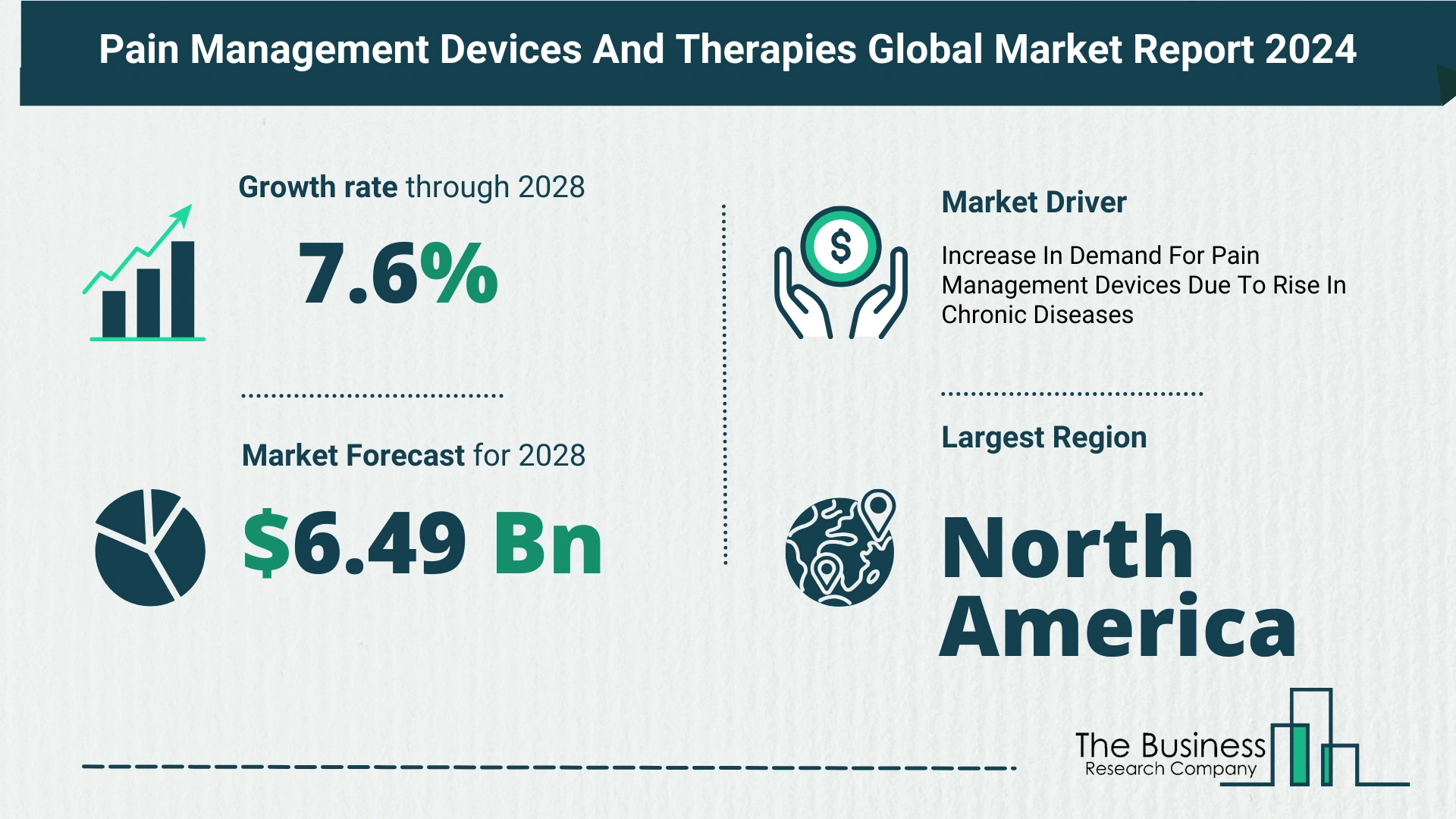
    • Forecasted Expansion: Expectations soar as the market is projected to reach $6.49 billion by 2028, with a CAGR of 7.6%. Non-opioid alternatives and digital health solutions are anticipated to drive this growth.

    Chronic Disease Epidemic: Catalyst for Market Surge
    Rising Demand For Pain Management Devices And Therapies Fueled By Escalating Chronic Disease Rates

    • Chronic Disease Prevalence: Chronic diseases such as cancer and cardiovascular ailments often precipitate unbearable pain, driving demand for pain management solutions.
    • Statistical Insights: Reports indicate a significant portion of the global populace suffering from chronic diseases, underpinning the need for effective pain management solutions.

    View More On The Pain Management Devices And Therapies Market Report 2024 – https://www.thebusinessresearchcompany.com/report/pain-management-devices-and-therapies-global-market-report

    Innovative Solutions: Wearable Devices Redefining Pain Relief
    Innovative Pain Relief Wearable Devices Revolutionizing Pain Management

    • Technological Advancements: Companies are leveraging advanced technologies to develop wearable devices for pain relief, offering opioid-free alternatives.
    • Functionalities: Wearable devices stimulate neural pulses, triggering the body’s natural pain blockers, providing efficient pain management solutions.

    Regulatory Framework: Ensuring Safety and Efficacy
    US FDA Regulations And Requirements For Pain Management Devices In The Medical Device Market

    • FDA Guidelines: Pain management devices fall under specific regulations outlined by the US FDA, emphasizing safety and efficacy.
    • Compliance Requirements: Manufacturers must adhere to registration, labeling, and performance standards, ensuring product safety and efficacy.

    Market Segmentation Insights

    • Device Types: Segmented into Electrical Stimulators, Ablation Devices, Neurostimulators, and Analgesic Pumps.
    • Neurostimulation Devices: Includes Spinal Cord Stimulation (SCS) Devices, Deep Brain Stimulation Devices, and Vagus Nerve Stimulation Devices.
    • Electrical Stimulation Devices: Encompasses Transcutaneous Electrical Nerve Stimulation (TENS) Devices and Neuromuscular Electrical Stimulation (NMES/EMS) Devices.
    • Ablation Devices: Includes Radiofrequency Ablation Devices and Cryoablation Devices.
    • Analgesic Infusion Pumps: Segregated into Intrathecal Infusion Pumps and External Infusion Pumps.
    • Applications: Covers Neuropathic Pain, Cancer Pain, Facial & Migraine Pain, Musculoskeletal Pain, and Trauma.

    Regional Dynamics: Market Trends and Projections

    • North America Leadership: Emerging as the largest region in the pain management devices and therapies market in 2023, North America sets the pace for market innovations and advancements.

    Charting a Path Forward
    The pain management devices and therapies market embarks on an evolutionary journey, driven by innovation, regulatory compliance, and a growing demand for effective pain relief solutions. As stakeholders navigate through regulatory frameworks and technological advancements, the market is poised for unprecedented growth and transformation.

    Request A Sample Of The Global Pain Management Devices And Therapies Market Report 2024:
    https://www.thebusinessresearchcompany.com/sample_request?id=2490&type=smp

  • Oral Biologics & Biosimilar Drugs Market Forecast Until 2033 – Estimated Market Size And Growth Rate

    Oral Biologics & Biosimilar Drugs Market Forecast Until 2033 – Estimated Market Size And Growth Rate

    The Business Research Company’s market reports offer an in-depth analysis on the market’s growth potential, major drivers, key trends and more.

    The oral biologics & biosimilar drugs market has witnessed exponential growth:

    • Market size surged from $5.94 billion in 2023 to $7.19 billion in 2024 at a CAGR of 21.0%.
    • Historical growth attributed to rising prevalence of chronic diseases and increasing awareness of oral biologics.
    • Expected to reach $13.32 billion by 2028, with a CAGR of 16.7%.

    Rising Prevalence Of Chronic Diseases Driving Growth
    Understanding the Epidemic
    Chronic diseases such as arthritis, asthma, and cancer are proliferating:

    • Unhealthy lifestyles contribute to the surge in chronic diseases.
    • Biologics, activating immune responses against cancer cells, play a crucial role.
    • By 2030, chronic diseases are projected to cause 70% of global deaths, escalating the demand for biologics and biosimilars.

    Innovations in Product Offerings and Services
    Focus on Customer Satisfaction
    Major players are emphasizing product innovation:

    • Introduction of interchangeable biosimilars enhances market revenues.
    • Viatris Inc. and Biocon Biologics Limited launched interchangeable biosimilars SEMGLEE and Insulin Glargine, catering to diabetes management.
    • Companies like Novartis International AG, Eli Lilly and Company, and AstraZeneca PLC drive innovation in the market.

    Segmentation and Market Analysis
    Understanding Market Segments
    The oral biologics & biosimilar drugs market is segmented based on:

    1. Therapy: Lymphocyte Modulators, Interleukin Inhibitors, Tumor Necrosis Factor-Alpha Inhibitors.
    2. Disease: Asthma, Crohn’s Disease, Carcinoma, Arthritis, Diabetes, Multiple Myeloma, Enterocolitis, Multiple Sclerosis, Sarcoma, Psoriasis, and Others.
    3. Molecule Type: Vaccines, Proteins and Peptides, Monoclonal Antibodies, Other Molecule Types.
    4. Distribution Channel: Hospital Pharmacies, Retail Pharmacies, Online Pharmacies.

    Regional Outlook

    • North America led the market in 2023.
    • The Middle East is forecasted to experience the fastest growth.

    Conclusion
    The oral biologics & biosimilar drugs market is poised for significant expansion, driven by escalating chronic diseases and advancements in therapeutic options. With an increasing focus on preventive medicine and patient-centric care, the market is witnessing a surge in innovative products and services.

    Innovations such as interchangeable biosimilars exemplify the commitment of major players to provide reliable and effective solutions. As the market continues to evolve, collaboration between pharmaceutical companies and regulatory bodies will be pivotal in ensuring accessibility and affordability of oral biologics and biosimilar drugs.

    In essence, the future of the oral biologics & biosimilar drugs market promises transformative growth, catering to the evolving healthcare needs of populations worldwide. As stakeholders continue to invest in research and development, the landscape of oral biologics and biosimilar drugs will undoubtedly witness remarkable progress, ultimately improving patient outcomes and quality of life.

    Read More On The Oral Biologics & Biosimilar Drugs Market Report 2024 – https://www.thebusinessresearchcompany.com/report/oral-biologics-and-biosimilar-drug-global-market-report

    Request for A Sample Of The Global Oral Biologics & Biosimilar Drugs Market Report:
    https://www.thebusinessresearchcompany.com/sample_request?id=3792&type=smp

  • Key Takeaways From The Global Ophthalmic Microscope Market Forecast 2024

    Key Takeaways From The Global Ophthalmic Microscope Market Forecast 2024

    The Business Research Company’s global market reports are now updated with the latest market sizing information for the year 2024 and forecasted to 2033

    As per The Business Research Company’s Ophthalmic Microscope Global Market Report 2024, the ophthalmic microscope market is expected to show significant growth in the forecast period.

    Rising Prevalence Of Eye Diseases Drives Growth In The Ophthalmology Microscope Market
    The prevalence of eye diseases such as vision impairment is propelling market growth.

    • Ophthalmology microscopes aid in detailed imaging for detecting and diagnosing eye diseases.
    • Global statistics from WHO and CDC highlight the increasing burden of eye conditions.
    • Market growth fueled by the rising demand for eye disease diagnosis and treatment.

    Key Players in the Ophthalmic Microscope Market
    Major companies dominating the ophthalmic microscope market landscape.

    • Alcon Inc., Carl Zeiss Meditec AG, Leica Microsystems GmbH, and others lead the market.
    • Diverse range of players contributing to innovation and market expansion.

    View More On The Ophthalmic Microscope Market Report 2024 – https://www.thebusinessresearchcompany.com/report/ophthalmic-microscope-global-market-report

    Advanced Ophthalmic Microscope To Maximize Profits In The Market
    Focus on developing advanced ophthalmic microscopes for enhanced diagnostics.

    • Introduction of next-generation optical coherence tomography (OCT) systems.
    • Example of Leica Microsystems launching the Proveo 8 ophthalmic microscope with Integrated EnFocus intraoperative OCT.
    • Enhanced imaging capabilities and surgeon comfort drive market adoption.

    Bain Capital Private Equity Acquires Evident Corporation
    Strategic acquisitions shaping the competitive landscape.

    • Bain Capital Private Equity’s acquisition of Evident Corporation expands market footprint.
    • Emphasis on product innovation and geographical expansion.
    • Importance of mergers and acquisitions in driving market growth and competitiveness.

    Segmentation of the Ophthalmic Microscope Market
    Understanding the market segmentation for targeted strategies.

    1. By Type: Optical, Digital, Other Types
    2. By Modality: Ceiling-Mounted, Table-top, Wall-Mounted, On Casters
    3. By Application: LASIK Surgery, Cataract Surgery, Keratoplasty Surgery, Trabeculectomy, Other Applications
    4. By End Use: Hospitals, Ambulatory Surgical Centers, Other End Users

    Regional Insights and Market Forecast
    Insights into regional dynamics and future projections.

    • North America leads the ophthalmic microscope market in 2023.
    • Asia-Pacific emerges as the fastest-growing region in the forecast period.
    • Market expansion opportunities in developing regions contribute to overall growth.

    Future Outlook and Trends
    Anticipated trends and growth drivers shaping the future of the market.

    • Continued rise in eye surgeries and healthcare infrastructure development.
    • Increased awareness, education, and favorable reimbursement policies.
    • Surge in eye disorders and demand for minimally invasive procedures drive market growth.

    Conclusion
    The ophthalmic microscope market exhibits robust growth driven by technological advancements, rising prevalence of eye diseases, and strategic initiatives by key players. With a focus on innovation, market expansion, and addressing evolving healthcare needs, the industry is poised for significant expansion in the coming years. As awareness regarding eye health increases and demand for precise diagnostics and treatments grows, the ophthalmic microscope market is set to witness sustained growth and development, benefiting both patients and stakeholders alike.

    Request A Sample Of The Global Ophthalmic Microscope Market Report 2024:
    https://www.thebusinessresearchcompany.com/sample_request?id=10630&type=smp

  • How Is The Monoclonal Antibodies (MAs) Market Expected To Grow Through 2024-2033

    How Is The Monoclonal Antibodies (MAs) Market Expected To Grow Through 2024-2033

    The Business Research Company’s global market reports are now updated with the latest market sizing information for the year 2024 and forecasted to 2033

    According to The Business Research Company’s Monoclonal Antibodies (MAs) Global Market Report 2024, the monoclonal antibodies (MAs) market is expected to show promising growth in the forecast period.

    The monoclonal antibodies (mAbs) market has witnessed remarkable growth in recent years, indicating a promising trajectory ahead. Here are some key figures and insights:

    • The market size surged from $234.37 billion in 2023 to $261.66 billion in 2024, showcasing a compound annual growth rate (CAGR) of 11.6%.
    • Factors attributing to this growth include the prevalence of chronic diseases, escalating investments in research and development, heightened awareness regarding mAbs, and the expanding elderly population.

    Anticipating Future Trends

    Looking ahead, the market is projected to continue its upward surge, reaching a staggering $424.24 billion by 2028, boasting a CAGR of 12.8%. Here’s what to expect in the forecast period:

    • Expanding therapeutic indications and personalized medicine are poised to drive market growth.
    • The rise of biosimilars and generics, coupled with innovative combination therapies, is expected to reshape the landscape.
    • Trends such as immunotherapy advancements, subcutaneous administration, and digital health integration are likely to dominate the market.

    Rising Popularity Of Cost-Efficient Biosimilar Monoclonal Antibodies Fuels Market Growth

    Understanding Biosimilars

    The burgeoning popularity of cost-efficient biosimilar monoclonal antibodies stands as a significant driver behind the market’s expansion. Key points to note include:

    • Biosimilars aim to alleviate healthcare costs and enhance medication accessibility.
    • These pharmaceuticals mimic the properties of approved biological drugs, offering a more economical alternative.
    • Notably, biosimilar monoclonal antibodies cost 20%–25% less than their original counterparts.

    Indian Biosimilar Policy

    India’s ‘Guidelines on Similar Biologics’ herald a substantial boost to the biosimilar drugs industry, further propelling market growth.

    View More On The Monoclonal Antibodies (MAs) Market Report 2024 – https://www.thebusinessresearchcompany.com/report/monoclonal-antibodies-global-market-report

    Innovative Technologies Enhancing Competitiveness

    Embracing RenMice

    Major players in the monoclonal antibodies market are leveraging innovative technologies like RenMice to gain a competitive edge:

    • RenMice facilitates the exploration of various antibody-based therapies, including bispecific antibodies and nanobodies.
    • Biocytogen Pharmaceuticals’ RenMice series exemplifies groundbreaking advancements in fully human antibody mice and TCR mice, fostering innovation.

    FDA’s Regulatory Support Bolstering Therapeutics Market

    Accelerating Approvals

    The FDA’s regulatory support plays a pivotal role in bolstering the monoclonal antibody therapeutics market:

    • Accelerated approvals for novel treatments, such as avelumab and TECENTRIQ, underscore the agency’s commitment to advancing healthcare.

    Segmentation Insights: Understanding Market Dynamics

    Diverse Segmentation

    The monoclonal antibodies market is segmented across various dimensions, offering nuanced insights into its dynamics:

    1. By Source: Murine, Chimeric, Humanized, Human
    2. By Application: Anti-Cancer, Immunological, Anti-Infective, Neuropharmacological, Cardiovascular, and more.
    3. By End Users: Hospitals, Private Clinics, Research Institutes

    North America Leads the Way

    Regional Dominance

    North America emerged as the frontrunner in the monoclonal antibodies market in 2023, underlining the region’s prominence in driving industry growth.

    In conclusion, the monoclonal antibodies market continues to evolve, driven by technological innovations, regulatory support, and a growing demand for cost-effective therapies. As we navigate through dynamic landscapes, collaborations and advancements will be instrumental in unlocking the full potential of this burgeoning sector.

    Request A Sample Of The Global Monoclonal Antibodies (MAs) Market Report 2024:

    https://www.thebusinessresearchcompany.com/sample_request?id=2554&type=smp

  • 5 Takeaways From The Interferons Market Overview 2024

    5 Takeaways From The Interferons Market Overview 2024

    The Business Research Company’s global market reports are now updated with the latest market sizing information for the year 2024 and forecasted to 2033

    According to The Business Research Company’s Interferons Global Market Report 2024, the interferons market is expected to show promising growth in the forecast period.

    Introduction to Interferons and Market Dynamics

    The interferon market has experienced steady growth in recent years, with the market size reaching $9.17 billion in 2023 and projected to grow to $9.54 billion in 2024 at a compound annual growth rate (CAGR) of 4.0%. This growth is attributed to various factors such as viral infections, antiviral therapies, cancer treatment, and autoimmune diseases. Looking ahead, the market is expected to continue its upward trajectory, reaching $11.98 billion in 2028 with a CAGR of 5.9%.

    Elevated Incidence Of Cancer Propels Growth In The Interferon Market

    • Cancer’s rise is anticipated to drive interferon market growth.
    • Interferons play a crucial role in cancer treatment, particularly in combination therapies.
    • Statistics from the American Cancer Society highlight the significant impact of cancer on society.
    • Major players in the interferons market include Roche Holding AG, Merck & Co. Inc., and Novartis AG.

    View More On The Interferons Market Report 2024 – https://www.thebusinessresearchcompany.com/report/interferon-global-market-report

    Product Innovations In The Interferons Market

    • Companies are focusing on developing innovative products to cater to larger customer bases.
    • Ropeginterferon alfa-2b-njft injections are among the new products introduced to the market.
    • Besremi (ropeginterferon alfa-2b-njft) injection received FDA approval for the treatment of polycythemia vera.
    • PharmaEssentia Corporation’s milestone underscores advancements in interferon therapies.

    Bayer Collaborated With Curadev Pvt. Ltd.

    • Bayer’s collaboration with Curadev Pvt. Ltd. aims to explore new drug candidates.
    • The partnership focuses on Curadev’s Stimulator of Interferon Genes (STING) antagonist program.
    • STING antagonists hold promise for treating various diseases by activating the innate immune system.

    Segmentation and Regional Trends in the Interferons Market

    The interferons market is segmented based on type, application, and distribution channel:

    1. By Type: Interferon Alpha, Interferon Beta, Interferon Gamma
    2. By Application: Hepatitis B, Hepatitis C, Melanoma, Leukemia, Multiple Sclerosis, Renal Cell Carcinoma
    3. By Distribution Channel: Hospital Pharmacies, Online Pharmacies, Retail Pharmacies, Other Distribution Channels
    • North America dominated the interferons market in 2023.
    • The Middle East is expected to witness the fastest growth in the forecast period.

    Conclusion: Embracing Advancements in Interferon Therapies
    The interferon market’s growth trajectory reflects the evolving landscape of medical treatments and the increasing prevalence of diseases such as cancer and autoimmune disorders. With ongoing research, collaborations, and product innovations, the market is poised for further expansion. As pharmaceutical companies continue to explore new avenues for interferon therapy, patients stand to benefit from more effective treatments and improved outcomes in the years to come.

    In conclusion, the journey of interferon therapies underscores the importance of innovation, collaboration, and patient-centric approaches in shaping the future of healthcare. As we navigate through the complexities of disease management, the interferon market serves as a beacon of hope, offering novel solutions and transformative possibilities in the realm of medical science.

    Request A Sample Of The Global Interferons Market Report 2024:
    https://www.thebusinessresearchcompany.com/sample_request?id=2836&type=smp

  • Inhalation Sedatives Market Report 2024: Market Size, Drivers, And Trends

    Inhalation Sedatives Market Report 2024: Market Size, Drivers, And Trends

    The Business Research Company’s global market reports are now updated with the latest market sizing information for the year 2024 and forecasted to 2033

    The inhalation sedatives market has witnessed steady growth in recent years, with projections indicating further expansion. This growth trajectory is fueled by various factors including the rising prevalence of chronic diseases, expanding geriatric population, and increasing investment in research and development. In this blog post, we delve into the market dynamics, growth drivers, and major trends shaping the inhalation sedatives sector.

    Market Overview

    • The inhalation sedatives market size stood at $2.24 billion in 2023.
    • Expected to reach $2.34 billion in 2024 with a CAGR of 4.2%.
    • Growth attributed to rising prevalence of chronic diseases, expanding geriatric population, and increasing investment in R&D.

    Forecasted Growth

    • Predicted to grow to $2.88 billion by 2028, with a CAGR of 5.4%.
    • Factors contributing to forecasted growth include rising demand for outpatient procedures, anesthesia delivery systems, and telemedicine.
    • Expansion of ambulatory surgery centers also driving market growth.

    View More On The Inhalation Sedatives Market Report 2024 – https://www.thebusinessresearchcompany.com/report/inhalation-sedative-global-market-report

    Major Trends

    • Non-pharmacological alternatives gaining traction.
    • Focus on sustainability and eco-friendly practices.
    • Embrace of data integration and artificial intelligence.
    • Advancements in medical technology enhancing treatment options.

    Respiratory Disease Prevalence Driving Market Growth

    • Respiratory diseases affect various parts of the respiratory system.
    • Inhalation sedatives used to manage respiratory conditions.
    • Increasing prevalence of respiratory diseases, such as COPD, propelling market growth.
    • Data from the Australian Institute of Health and Welfare highlights the significant impact of respiratory diseases on mortality rates.

    Key Players

    • Major companies in the inhalation sedatives market include AbbVie Inc., Baxter International Inc., Fresenius SE & Co. KGaA, and more.
    • These companies play a crucial role in driving innovation and product development in the sector.

    Innovation in Inhalation Sedatives

    • Major companies developing innovative products to meet market demand.
    • Sedaconda (isoflurane) introduced to address the need for inhaled sedation.
    • Designed for mechanically ventilated adult patients during intensive care.
    • Launch of Sedaconda in Germany signifies a significant milestone in inhaled sedation therapy.

    Segmentation of the Market

    • Segmented by product, application, and end-user.
    • Products include Sevoflurane, Desflurane, Isoflurane, and Nitrous Oxide.
    • Applications cover induction and maintenance.
    • End-users include hospitals, ambulatory surgical centers, and other healthcare facilities.

    Regional Insights

    • North America emerged as the largest region in the inhalation sedatives market in 2023.
    • The region continues to drive market growth, fueled by technological advancements and healthcare infrastructure.

    Conclusion

    The inhalation sedatives market is poised for significant expansion in the coming years, driven by factors such as rising demand for outpatient procedures, advancements in medical technology, and the increasing prevalence of respiratory diseases. Major players are focusing on innovation and product development to meet evolving market demands. As the sector continues to evolve, collaboration and investment in research and development will play a pivotal role in shaping its future trajectory.

    Request A Sample Of The Global Inhalation Sedatives Market Report 2024:
    https://www.thebusinessresearchcompany.com/sample_request?id=3468&type=smp

  • Key Trends And Drivers In The Hydroxychloroquine Market 2024

    Key Trends And Drivers In The Hydroxychloroquine Market 2024

    The Business Research Company’s market reports offer an in-depth analysis on the market’s growth potential, major drivers, key trends and more.

    The hydroxychloroquine market size has seen robust growth in recent years. It’s projected to rise from $2.07 billion in 2023 to $2.22 billion in 2024, marking a Compound Annual Growth Rate (CAGR) of 7.2%. Factors contributing to this surge include the rising prevalence of malaria, increased awareness of hydroxychloroquine, its wide availability, and its effectiveness in treating autoimmune diseases.

    Future Growth Trajectory
    Expectations are high for the hydroxychloroquine market in the coming years. By 2028, it’s anticipated to reach $2.86 billion with a CAGR of 6.6%. This growth will be driven by the increasing demand for combination therapies, government funding, a growing patient population, enhanced healthcare access, and the rise of personalized medicine.

    Read More On The Hydroxychloroquine Market Report 2024 – https://www.thebusinessresearchcompany.com/report/hydroxychloroquines-global-market-report

    Pandemic Drives Surge In Hydroxychloroquine Demand
    COVID-19 Impact
    The global pandemic has significantly elevated the demand for hydroxychloroquine. With its potential use in treating COVID-19 patients and ongoing clinical trials, the surge in demand is palpable. Regulatory bodies such as the US FDA have authorized emergency use of hydroxychloroquine, further propelling its demand.

    Market Dynamics
    The World Health Organization’s statistics reflect the severity of the pandemic, with millions of confirmed cases and deaths worldwide. Countries heavily impacted by the virus, including the USA, Brazil, and India, are witnessing an increased need for hydroxychloroquine, thereby driving market revenues.

    Industry Players
    Key pharmaceutical companies like Bayer AG, Novartis AG, and Sanofi S.A. are actively engaged in the hydroxychloroquine market, contributing to its growth and sustainability. Their efforts span research, development, and production to meet escalating demands.

    Major Pharmaceutical Companies Investing In Hydroxychloroquine Production To Address Increased Demand
    Strategic Investments
    To cope with the rising demand, major players are investing significantly in hydroxychloroquine production. For instance, Aspen Pharmaceutical Corporation received substantial funding from BNDES to bolster its manufacturing operations, ensuring an adequate drug supply during the pandemic.

    Sanofi And Asahi Kasei Pharma Marketing Agreement
    Market Expansion Initiatives
    In a strategic move, Sanofi S.A. and Asahi Kasei Pharma Corporation inked a marketing license agreement to enhance the availability of Plaquenil in Japan. Plaquenil, an immunomodulator, is crucial in treating autoimmune diseases and has shown promise in managing COVID-19.

    Segmentation and Regional Insights
    Market Segments
    The hydroxychloroquine market is segmented by drug activity, formulation, application, and distribution channel, offering diverse avenues for pharmaceutical companies to cater to varied consumer needs.

    Regional Dynamics
    North America dominated the hydroxychloroquine market in 2023, with the Middle East poised for significant growth. This highlights regional variations in market dynamics and opportunities for expansion.

    Looking Ahead: Future Prospects
    Emerging Trends
    Several trends are shaping the hydroxychloroquine market’s future, including targeted therapies, telemedicine adoption, drug repurposing, sustainability initiatives, global health equity drives, and advancements in biotechnology. These trends underscore the evolving landscape and the need for adaptive strategies.

    In conclusion, the hydroxychloroquine market is witnessing unprecedented growth, fueled by the pandemic’s impact and strategic initiatives by industry players. With evolving trends and increasing demand, the market presents lucrative opportunities for stakeholders across the globe. As the pharmaceutical landscape continues to evolve, adapting to changing dynamics and embracing innovation will be paramount for sustained growth and success in the hydroxychloroquine market.

    Request for A Sample Of The Global Hydroxychloroquine Market Report:
    https://www.thebusinessresearchcompany.com/sample_request?id=3235&type=smp

  • Future Growth Forecast For The Hemostasis Analyzers Global Market 2024-2033

    Future Growth Forecast For The Hemostasis Analyzers Global Market 2024-2033

    The Business Research Company’s global market reports provide comprehensive analysis on the various markets in 27 industries across 60 geographies.

    The hemostasis analyzers market has witnessed substantial growth in recent years, reflecting a promising trajectory that is poised to continue in the foreseeable future. Key factors contributing to this growth include:

    • Prevalence of Bleeding Disorders: Growing incidence of bleeding disorders like Hemophilia and Von Willebrand disease has fueled the demand for hemostasis analyzers.
    • Aging Population: With a globally aging population, the prevalence of hemostatic disorders has increased, driving the need for diagnostic tools.
    • Rise in Surgical Procedures: Increased surgical interventions across various medical disciplines necessitate accurate hemostasis monitoring.
    • Market Size Projection: The market size is projected to expand from $4.84 billion in 2023 to $5.19 billion in 2024, marking a notable compound annual growth rate (CAGR) of 7.2%.

    Future Growth Prospects
    Looking ahead, the hemostasis analyzers market is expected to maintain its robust growth trajectory, reaching an estimated value of $6.89 billion by 2028, with a CAGR of 7.3%. This growth is attributed to several factors, including:

    • Personalized Medicine: Increasing emphasis on personalized medicine is driving the demand for advanced diagnostic tools.
    • Global Health Concerns: Rising awareness of health issues worldwide is fueling the need for improved diagnostic capabilities.
    • Rising Chronic Diseases: The prevalence of chronic diseases necessitates efficient hemostasis monitoring and management.
    • Investment in Infrastructure: Growing investments in hemostasis analyzer infrastructure are expected to propel market growth.

    View More On The Hemostasis Analyzers Market Report 2024 – https://www.thebusinessresearchcompany.com/report/hemostasis-analyzers-global-market-report

    Emerging Trends in the Forecast Period
    Noteworthy trends that are expected to shape the hemostasis analyzers market in the forecast period include:

    • Advances in Technology: Continued advancements in hemostasis analyzer technology, including point-of-care testing and biomarker-based monitoring.
    • Integration of Telemedicine: Increasing integration of hemostasis testing into telemedicine platforms for remote patient monitoring.
    • Data Analytics and AI: Utilization of data analytics and artificial intelligence for enhanced diagnostic accuracy and predictive analytics.

    Raising Awareness for Blood Disorders Drives Hemostasis Analyzer Market Growth
    Importance of Awareness
    Increasing awareness regarding blood disorders, such as Hemophilia and Von Willebrand disease, plays a pivotal role in driving market growth. Organizations like the National Hemophilia Foundation and the Hemophilia Foundation Australia are actively involved in raising awareness and promoting research to improve the diagnosis and management of blood disorders.

    Impact on Diagnosis Rate
    Enhanced awareness contributes to improved diagnosis rates of blood disorders, thereby driving the demand for hemostasis analyzers. Major companies operating in this market include Thermo Fisher Scientific Inc., Siemens AG, and Abbott Laboratories, among others.

    Advancements in Portable Hemostasis Analyzers
    Convenience and Efficiency
    Manufacturers are focusing on the development of portable, handheld hemostasis analyzers to offer convenience and efficiency in diagnostic processes. Devices like the Xprecia Stride Coagulation Analyzer by Siemens Healthcare and the Coatron Coagulation Analyzer by TECO Medical Instruments exemplify this trend.

    Market Segmentation
    The hemostasis analyzers market encompasses various segments, including product types, tests, technologies, and end-users. These segments cater to diverse healthcare settings, including hospitals, diagnostic centers, and research organizations.

    North America: A Dominant Force in the Market
    Regional Dominance
    North America emerged as the largest region in the hemostasis analyzers market in 2023, underscoring its significant contribution to market growth. The region’s robust healthcare infrastructure and technological advancements position it as a key market player.

    In conclusion, the hemostasis analyzers market is characterized by dynamic growth fueled by factors such as rising awareness of blood disorders, technological innovations, and increasing investments in healthcare infrastructure. As the market continues to evolve, stakeholders must adapt to emerging trends and capitalize on growth opportunities to ensure continued success and advancement in diagnostic capabilities.

    Request A Sample Of The Global Hemostasis Analyzers Market Report 2024:
    https://www.thebusinessresearchcompany.com/sample_request?id=2545&type=smp

  • Overview Of The Hematology Analyzers and Reagents Market 2024: Size, Drivers, And Trends

    Overview Of The Hematology Analyzers and Reagents Market 2024: Size, Drivers, And Trends

    The Business Research Company’s global market reports are now updated with the latest market sizing information for the year 2024 and forecasted to 2033

    According to The Business Research Company’s Hematology Analyzers and Reagents Global Market Report 2024, the hematology analyzers and reagents market is expected to show promising growth in the forecast period.

    The hematology analyzers and reagents market size has grown strongly in recent years, with a projected increase from $4.56 billion in 2023 to $4.9 billion in 2024 at a compound annual growth rate (CAGR) of 7.5%. This growth trajectory is influenced by various factors, including:

    1. Prevailing Factors Fueling Market Growth
    • Increasing prevalence of chronic diseases.
    • Aging population.
    • Rising disease burden.
    • Growing prevalence of infectious diseases.
    1. Projected Growth and Contributing Factors

    The market is anticipated to continue its growth trend, reaching $6.12 billion by 2028 with a CAGR of 5.7%. Key drivers in the forecast period include:

    • Global health concerns.
    • Growing investment in hematology infrastructure.
    • Personalized medicine.
    • Expansion of remote monitoring.

    Emerging Trends Shaping the Market
    The forecast period is poised to witness several notable trends that will redefine the landscape of hematology analyzers and reagents:

    • Advancements in technology.
    • High-sensitivity testing.
    • Molecular hematology testing.
    • Automation and integration.
    • Point-of-care testing (POCT).
    • Data analytics and artificial intelligence.
    • Digital hematology.

    Blood Donations Driving Market Growth
    The rising number of blood donations globally serves as a significant catalyst for the expansion of the hematology analyzers and reagents market. Hematology analyzers play a crucial role in blood screening and testing processes:

    • Hematology analyzers are essential in blood banks for testing and screening blood collected from donors.
    • These tests determine blood type, analyze plasma, and detect infectious diseases.
    • According to the WHO, there was an increase of 7.8 million blood donations from voluntary unpaid donors.
    • The surge in blood donations directly correlates with the demand for hematology analyzers and reagents, thus propelling market growth.

    View More On The Hematology Analyzers and Reagents Market Report 2024 – https://www.thebusinessresearchcompany.com/report/hematology-analyzers-and-reagents-global-market-report

    Key Players and Market Competition
    Major companies actively contributing to the hematology analyzers and reagents market include:

    • Abbott Laboratories
    • Bio-Rad Laboratories
    • Horiba Ltd.
    • Siemens AG
    • Sysmex Corporation
    • And many others

    Innovations in Product Development
    Companies are prioritizing the development of compact and integrated hematology analyzers to gain a competitive edge in the market:

    • Mindray Bio-Medical Electronics Co. Ltd. introduced the BC-700 Series, a compact, integrated CBC and ESR hematology analyzer, enhancing diagnostic efficiency.
    • The BC-700 Series streamlines diagnostic processes by offering fast and accurate results for small-to-mid-sized labs.

    Strategic Acquisitions
    In May 2021, Soulbrain Co. Ltd., a South Korean chemicals company, acquired PixCell Medical, an Israeli maker of blood test analyzers. This strategic move underscores Soulbrain’s commitment to expanding its presence in diagnostics and point-of-care testing.

    Market Segmentation
    The hematology analyzers and reagents market is segmented based on:

    1. Product: Including a range of analyzers and equipment.
    2. Applications: Covering various medical conditions and disorders.
    3. End User: Including hospitals, research institutes, and specialized diagnostic centers.

    Regional Insights
    North America emerged as the largest region in the hematology analyzers and reagents market in 2023, highlighting the region’s significant contribution to market growth.

    In conclusion, the hematology analyzers and reagents market is witnessing robust growth driven by technological advancements, increasing blood donations, and strategic initiatives by key players. With continued innovation and evolving healthcare needs, the market is poised for further expansion in the coming years.

    Request A Sample Of The Global Hematology Analyzers and Reagents Market Report 2024:
    https://www.thebusinessresearchcompany.com/sample_request?id=2572&type=smp

  • Growth Trajectory Of The Healthcare Personal Protective Equipment Market 2024-2033

    Growth Trajectory Of The Healthcare Personal Protective Equipment Market 2024-2033

    The Business Research Company’s global market reports are now updated with the latest market sizing information for the year 2024 and forecasted to 2033

    Rising Prevalence Of Infectious Diseases Fuels Healthcare Personal Protective Equipment

    • Infectious diseases present a persistent threat to public health.
    • The healthcare personal protective equipment market responds to the increasing prevalence of diseases like tuberculosis.
    • Enhanced awareness of disease transmission necessitates the use of protective gear.
    • Notable companies like 3M Co., Honeywell International Inc., and Kimberly-Clark Corporation dominate the market.

    Increasing Focus On Introducing Smart Healthcare Personal Protective Equipment To Gain A Competitive Edge

    • Market leaders prioritize innovation with smart personal protective equipment.
    • Gales Inc. introduces Smart PPE Footwear, integrating antimicrobial protection and waterproof features.
    • Adoption of advanced technology enhances safety measures for healthcare workers.
    • Competition drives companies to develop cutting-edge solutions for the market.

    View More On The Healthcare Personal Protective Equipment Market Report 2024 – https://www.thebusinessresearchcompany.com/report/healthcare-personal-protective-equipment-global-market-report

    Harps Acquires Semperit AG To Expand Portfolio

    • Harps Global PTE. Ltd.’s acquisition of Semperit AG Holding’s medical business signals market consolidation.
    • The $120 million acquisition aims to diversify product offerings and expand market reach.
    • Semperit AG Holding, based in Austria, is renowned for manufacturing healthcare personal protective equipment.
    • Strategic acquisitions reshape the competitive landscape of the industry.

    Market Segmentation and Regional Insights

    • Product Segmentation: Healthcare personal protective equipment encompasses head, eye & face protection, respiratory protection, and more.
    • Usability: Products are classified into disposable and reusable categories to meet diverse needs.
    • End Use: Hospitals and clinics, ambulatory surgical centers, and diagnostic laboratories constitute major end users.
    • Regional Dominance: North America leads the global market for healthcare personal protective equipment in 2023.

    Future Projections and Trends

    • The healthcare personal protective equipment market is poised for robust growth, reaching $41.54 billion by 2028.
    • Emerging trends include technology-integrated PPE, sustainable materials, and localized manufacturing.
    • Continued infectious disease threats and aging populations drive market expansion.
    • Global initiatives and telehealth further accelerate demand for protective gear.

    Conclusion
    The healthcare personal protective equipment market experiences exponential growth, fueled by evolving healthcare needs and advancing technology. Companies strive to innovate and introduce smarter solutions to address infectious disease threats and ensure the safety of healthcare workers. Strategic acquisitions and market segmentation reshape the industry landscape, while regional dominance underscores varied market dynamics. As the market expands, embracing sustainable practices and integrating cutting-edge technology remain pivotal for stakeholders navigating the evolving landscape of healthcare personal protective equipment.

    Request A Sample Of The Global Healthcare Personal Protective Equipment Market Report 2024:
    https://www.thebusinessresearchcompany.com/sample_request?id=3252&type=smp