Month: June 2024

  • Poultry Vaccines Market Growth Analysis Till 2033 By The Business Research Company

    Poultry Vaccines Market Growth Analysis Till 2033 By The Business Research Company

    The Business Research Company’s market reports offer an in-depth analysis on the market’s growth potential, major drivers, key trends and more.

    The poultry vaccines market has experienced significant growth in recent years and is poised for continued expansion. This blog explores the factors driving this growth, key trends, and future prospects for the market.

    Recent Market Growth and Projections

    • Market Size and Growth Rate:
      • The poultry vaccines market grew from $1.64 billion in 2023 to $1.8 billion in 2024, with a CAGR of 9.6%.
      • By 2028, the market is projected to reach $2.59 billion, growing at a CAGR of 9.5%.
    • Historical Growth Drivers:
      • Epidemic outbreaks.
      • Globalization of poultry trade.
      • Shifts in consumer demand.
      • Environmental concerns.
      • Emerging infectious diseases.
      • Focus on antibiotic alternatives.

    Future Market Growth Drivers

    • Disease Mutation and Evolution:
      • Continuous adaptation of diseases necessitates advanced vaccine solutions.
    • Global Poultry Industry Expansion:
      • Increasing global demand for poultry products drives market growth.
    • Rising Protein-Rich Food Demand:
      • Health-conscious consumers are opting for protein-rich diets, boosting poultry product consumption.
    • Environmental Concerns and Sustainability:
      • Sustainable farming practices and vaccines that reduce environmental impact are gaining importance.
    • Animal Welfare Focus:
      • Increased attention to animal health and welfare drives demand for effective vaccines.

    Trends Shaping the Future of Poultry Vaccines

    • Digitalization in Vaccination Management:
      • Advanced technologies for tracking and managing vaccination schedules are emerging.
    • Focus on Antibiotic Alternatives:
      • Growing emphasis on reducing antibiotic use in poultry farming.
    • Enhanced Production Efficiency:
      • Innovations aimed at improving vaccine production processes and efficacy.
    • Emerging Infectious Diseases:
      • New disease threats necessitate ongoing vaccine development and adaptation.
    • Environmental Concerns:
      • Vaccines that align with sustainable farming practices are increasingly popular.

    Read More On The Poultry Vaccines Market Report 2024 – https://www.thebusinessresearchcompany.com/report/poultry-vaccines-global-market-report

    Rising Zoonotic Disease Threats Drive Demand

    • Prevalence of Zoonotic Diseases:
      • Zoonotic diseases, caused by pathogens like viruses, bacteria, parasites, and fungi, are on the rise.
      • Increased urbanization, land use changes, and climate change contribute to higher transmission rates.
      • Example: A 64% rise in zoonotic cases in Africa in July 2022, as reported by the World Health Organization.
    • Impact on Poultry Vaccine Demand:
      • The surge in zoonotic cases increases the need for effective poultry vaccines.
      • Zoonotic pathogens account for 60% of emerging infectious diseases in humans.

    Key Players in the Poultry Vaccines Market

    • Major Companies:
      • Merck & Co Inc.
      • Boehringer Ingelheim International GmbH
      • Zoetis Inc.
      • Ringpu Biology
      • MSD Animal Health
      • Elanco Animal Health Incorporated
      • Ceva Santé Animale S.A.
      • Phibro Animal Health Corporation
      • Huvepharma AD
      • Venkys India Limited

    Technological Advancements in Poultry Vaccines

    • Innovation and Effectiveness:
      • Technological advancements have made vaccines more effective and cost-efficient.
      • Example: Zoetis Inc.’s CircoMax, launched in October 2023, protects against multiple PCV2 genotypes.
    • Genotype Evolution:
      • Vaccines like CircoMax aim to stay ahead of evolving genotypes to ensure broad protection.

    Strategic Acquisitions and Market Expansion

    • Bimeda’s Acquisition of Afrivet:
      • In August 2022, Bimeda acquired Afrivet, a leading poultry vaccine manufacturer, expanding its footprint in Africa.

    Market Segmentation

    • By Type:
      • Porcine Vaccines, Poultry Vaccine, Livestock Vaccine, Companion Animal Vaccine, Aquaculture Vaccines, Other Animal Vaccines.
    • By Disease Type:
      • Avian Influenza, Infectious Bronchitis.
    • By Dosage Form:
      • Liquid Vaccine, Freeze-Dried Vaccine, Duct.
    • By Technology:
      • Toxoid, Live Attenuated Vaccines, Recombinant Vaccines, Inactivated Vaccines.
    • By Application:
      • Broiler, Layer, Breeder.

    Regional Market Insights

    • North America:
      • North America was the largest region in the poultry vaccines market in 2023.

    Conclusion

    The poultry vaccines market is set for robust growth, driven by rising zoonotic disease threats, technological advancements, and increasing demand for sustainable and efficient vaccines. As the market continues to evolve, key players and new innovations will play crucial roles in shaping the future of poultry health management.

    Request for A Sample Of The Global Poultry Vaccines Market Report:
    https://www.thebusinessresearchcompany.com/sample_request?id=8622&type=smp

  • Overview Of The Porcine Vaccine Market 2024-2033: Growth And Major Players Analysis

    Overview Of The Porcine Vaccine Market 2024-2033: Growth And Major Players Analysis

    The Business Research Company’s global market reports are now updated with the latest market sizing information for the year 2024 and forecasted to 2033

    The porcine vaccine market has shown robust growth over recent years and is expected to continue this trend. This blog delves into the factors driving this growth, key trends, and future projections for the market.

    Recent Market Growth and Projections

    • Market Size and Growth Rate:
      • The porcine vaccine market grew from $1.74 billion in 2023 to $1.91 billion in 2024, with a CAGR of 9.5%.
      • By 2028, the market is projected to reach $2.73 billion, growing at a CAGR of 9.4%.
    • Historical Growth Drivers:
      • Disease outbreaks and control measures.
      • Global increase in pork consumption.
      • Intensification of pig farming.
      • Government initiatives for disease control.
      • Awareness and education programs.

    Future Market Growth Drivers

    • Global Expansion of Pig Farming:
      • Increasing demand for pork worldwide drives expansion of pig farming operations.
    • Rising Disease Challenges:
      • New and recurring disease threats necessitate advanced vaccine solutions.
    • Stringent Regulations and Compliance:
      • Government regulations on animal health and safety push for effective vaccination programs.
    • Technological Advancements in Vaccine Development:
      • Innovations in biotechnology and genomic approaches enhance vaccine efficacy and customization.
    • Global Trade and Disease Risk Mitigation:
      • Global pork trade requires robust disease control measures to prevent outbreaks.

    View More On The Porcine Vaccine Market Report 2024 – https://www.thebusinessresearchcompany.com/report/porcine-vaccine-global-market-report

    Trends Shaping the Future of Porcine Vaccines

    • Customization of Vaccines for Regional Challenges:
      • Tailoring vaccines to address specific regional disease threats.
    • Integration of Biotechnology in Vaccine Development:
      • Utilizing biotech for more precise and effective vaccine formulations.
    • Rising Concerns About Zoonotic Diseases:
      • Increased focus on preventing diseases that can transfer from animals to humans.
    • Application of Genomic Approaches in Vaccine Design:
      • Genomic technologies aid in developing more targeted and effective vaccines.
    • Growing Investments in Research and Development:
      • Increased funding for innovative vaccine research and development.

    Surging Swine Disease Infections Fuel Growth

    • Swine Disease Infections:
      • Rising infections, such as swine influenza (swine flu), drive demand for vaccines.
      • Swine influenza is commonly caused by the type A influenza virus, leading to frequent outbreaks.
    • Vaccine Mechanism:
      • Porcine vaccines stimulate the pig’s immune system, preparing it to fight pathogens and prevent sickness.
    • Case Example:
      • In December 2021, European countries reported 1,844 outbreaks of African Swine Fever (ASF), highlighting the need for effective vaccines.

    Key Players in the Porcine Vaccine Market

    • Major Companies:
      • Bayer AG
      • Sanofi Pasteur Inc.
      • Eli Lilly and Company
      • Boehringer Ingelheim International GmbH
      • Zoetis Inc.
      • Arko Laboratories Limited
      • Merck Animal Health
      • Elanco Animal Health Incorporated
      • Ceva Santé Animale
      • Huvepharma Inc.

    Innovative Advancements in Swine Health

    • Flex ParvoPRRS Vaccine:
      • Launched by Boehringer Ingelheim in September 2021, it combines protection against PRRS and Porcine Parvovirus.
      • Designed to improve reproductive health and productivity in pigs, supporting mass vaccination strategies.

    Strategic Acquisitions and Market Expansion

    • Vaxxinova International BV Acquisition of Newport Labs:
      • In October 2021, Vaxxinova International BV acquired Newport Labs to enhance its product portfolio and expand its presence in the swine and cattle disease market.

    Market Segmentation

    • By Technology:
      • Inactivated Vaccines, Live Attenuated Vaccines, Toxoid Vaccines, Recombinant Vaccines, Conjugate Vaccines, DNA Vaccines.
    • By Disease Indication:
      • Diarrhea, Swine Influenza, Arthritis, Bordatella Rhinitis, PRRSV, PCVAD, Other Disease Indications.
    • By End User:
      • Veterinary Hospitals, Hog or Pig Production Farms.

    Regional Market Insights

    • North America:
      • North America was the largest region in the porcine vaccine market in 2023.

    Conclusion

    The porcine vaccine market is set for significant growth, driven by increasing disease challenges, technological advancements, and a global expansion of pig farming. With continuous innovations and strategic acquisitions, the market is well-positioned to address the evolving needs of swine health management.

    Request A Sample Of The Global Porcine Vaccine Market Report 2024:

    https://www.thebusinessresearchcompany.com/sample_request?id=9111&type=smp

  • 5 Takeaways From The Population Health Management Market Overview 2024

    5 Takeaways From The Population Health Management Market Overview 2024

    The Business Research Company’s global market reports are now updated with the latest market sizing information for the year 2024 and forecasted to 2033

    According to The Business Research Company’s Population Health Management Global Market Report 2024, the population health management market is expected to show promising growth in the forecast period.

    Rapid Market Expansion

    • Current Market Size: The population health management market size has grown exponentially in recent years.
    • 2023 Figures: It reached $48.34 billion in 2023.
    • 2024 Forecast: Expected to grow to $58.68 billion, marking a compound annual growth rate (CAGR) of 21.4%.

    Factors Driving Growth

    • Public Health Initiatives: Increased public health initiatives have significantly contributed to market growth.
    • Healthcare Reform: Reforms aimed at improving healthcare systems.
    • Value-Based Care Shift: Transition from quantity to quality-focused healthcare.
    • Chronic Disease Management: Rising prevalence of chronic diseases necessitates better management solutions.
    • Rising Healthcare Costs: Need for cost-effective healthcare solutions.

    View More On The Population Health Management Market Report 2024 – https://www.thebusinessresearchcompany.com/report/population-health-management-global-market-report

    Future Market Projections

    • Long-Term Growth: The market is set to grow to $127.87 billion by 2028, with a CAGR of 21.5%.
    • Key Drivers:
      • Expansion of value-based care models.
      • Emphasis on chronic disease prevention.
      • Integration of big data and analytics.
      • Consumer-centric healthcare models.
      • Efforts to contain healthcare costs.

    Major Trends Shaping the Market

    • Holistic Care Integration: Combining various health services for comprehensive care.
    • Health Equity and Inclusivity: Ensuring fair access to healthcare for all.
    • Community Engagement and Outreach: Involving communities in health initiatives.
    • Preventive and Wellness Programs: Focusing on prevention and overall wellness.
    • Social Determinants of Health: Addressing non-medical factors affecting health.

    Value-Based Care Solutions

    • Demand Surge: Rising demand for value-based care solutions is propelling market growth.
    • Benefits:
      • Enhanced quality of services.
      • Reduced errors through better workflows.
      • Cost reductions and increased patient satisfaction.
    • Statistics: 40.6% of healthcare payments were fee-for-service; 18.1% had some link to quality and value.
    • Key Players: Major companies include McKesson Corporation, GE, Accenture, IBM, Deloitte, and others.

    Innovative Solutions in the Market

    • Product Innovation: Companies are focusing on new product developments to maintain market position.
    • Case Example: Verana Health’s VeraQ data engine launched in October 2021 to convert raw healthcare data into actionable insights.
    • Company Highlight: Cerner Corporation acquired Kantar Health for $375 million in April 2021, combining their expertise to advance life sciences research and patient outcomes.

    Market Segmentation

    • By Component: Software, Services.
    • By Mode of Delivery: On-Premise, Cloud-Based.
    • By End-User: Providers, Payers, Other End-Users.

    Regional Insights

    • North America: The largest region in the market in 2023.
    • Asia-Pacific: Expected to be the fastest-growing region in the forecast period.

    The population health management market is on a trajectory of remarkable growth, driven by a combination of innovative solutions, value-based care models, and a focus on holistic, equitable, and preventive healthcare. With major players continually innovating and expanding their capabilities, the market is poised for sustained expansion and transformation in the coming years.

    Request A Sample Of The Global Population Health Management Market Report 2024:
    https://www.thebusinessresearchcompany.com/sample_request?id=6924&type=smp


  • Global Pharmacy Benefit Management Market Overview 2024: Size, Drivers, And Trends

    Global Pharmacy Benefit Management Market Overview 2024: Size, Drivers, And Trends

    The Business Research Company’s global market reports provide comprehensive analysis on the various markets in 27 industries across 60 geographies.

     The pharmacy benefit management (PBM) market has experienced robust growth in recent years and shows no signs of slowing down. From increased focus on preventative care to advancements in pharmaceutical therapies, several factors contribute to this upward trajectory. This blog delves into the current and future growth trends, the impact of insurance, strategic partnerships, and notable acquisitions shaping the PBM market.

    Market Growth: A Snapshot

    Current Market Size and Growth Rate

    • 2023 Market Size: $597.17 billion
    • 2024 Projected Size: $644.58 billion
    • CAGR (2023-2024): 7.9%

    Factors Driving Recent Growth

    • Preventative Care Focus: Emphasis on early intervention and wellness programs.
    • Pharmacy Network Expansion: Broader access to pharmacy services.
    • Partnerships with Healthcare Providers: Collaboration for better patient outcomes.
    • Pharmaceutical Advancements: New therapies enhancing treatment efficacy.

    Future Market Projections

    • 2028 Projected Size: $878.37 billion
    • CAGR (2024-2028): 8.0%

    View More On The Pharmacy Benefit Management Market Report 2024 – https://www.thebusinessresearchcompany.com/report/pharmacy-benefit-management-global-market-report

    Expected Growth Drivers

    • Healthcare Cost Control: Demand for efficient cost management.
    • Increased Prescription Drug Usage: More patients requiring medications.
    • Health Insurance Expansion: More insured individuals needing PBM services.
    • Regulatory Adherence: Compliance driving market adaptations.
    • Patient-Centric Healthcare: Focus on tailored patient care solutions.

    Trends Shaping the Future

    Key Market Trends

    • Value-Based Healthcare Models: Emphasis on quality and outcomes over volume.
    • Specialty Medications Management: Handling complex, high-cost medications.
    • Data Analytics and AI Integration: Leveraging technology for better decision-making.
    • Telemedicine Integration: Remote healthcare services becoming mainstream.
    • Personalized Medicine: Customized treatments based on individual patient profiles.

    Insurance Boom: A Major Growth Catalyst

    Role of Insurance in PBM Market Growth

    • Insurance Coverage: Mitigates high medical costs for patients.
    • Comprehensive Healthcare Solutions: Integration of medical and pharmaceutical products.
    • Enhanced Patient Programs: Insurers leveraging extensive patient data for efficient healthcare programs.

    Example: Insurance Growth in India

    • Life Insurance Premium Growth: 22.2% increase in new premiums in September 2021 compared to September 2020.
    • Impact: More people with insurance drive PBM market expansion.

    Strategic Partnerships: Transforming the PBM Landscape

    Importance of Strategic Partnerships

    • Market Expansion: Entering new markets and leveraging resources.
    • Improved Services: Enhancing capabilities through collaboration.

    Case Study: Navitus Health Solutions and WithMe Health

    • Partnership: Navitus Health Solutions and WithMe Health collaborated in February 2021.
    • Benefit: Access to medication guidance capabilities, ensuring optimal medication use and adherence.

    Major Acquisitions: Expanding Reach and Capabilities

    Centene’s Acquisition of Magellan

    • Date: January 2022
    • Deal Value: $2.2 billion
    • Outcome: Enhanced ability to provide integrated healthcare solutions, focusing on high-cost, complex populations.

    Market Segmentation

    By Services

    • Mail-Delivery
    • Specialty Pharmacy
    • Preferred Network Pharmacy

    By Type

    • Commercial Health Plans
    • Self-Insured Employer Plans
    • Medicare Part D Plans
    • Federal Employees Health Benefits Program

    By End User

    • Pharmacy Benefit Management Organizations
    • Mail Order Pharmacies
    • Retail Pharmacies
    • Inpatient Pharmacies
    • Outpatient Pharmacies

    Regional Insights

    North America

    • 2023 Status: Largest region in the PBM market.

    Asia-Pacific

    • Forecast: Expected to be the fastest-growing region.

    The pharmacy benefit management market is on a robust growth trajectory, driven by advancements in healthcare, insurance expansion, and strategic partnerships. As the market continues to evolve, it promises improved patient outcomes and more efficient healthcare solutions.

    Request A Sample Of The Global Pharmacy Benefit Management Market Report 2024:
    https://www.thebusinessresearchcompany.com/sample_request?id=6883&type=smp

  • Key Insights On The Pharmaceutical Logistics Market 2024 – Size, Driver, And Major Players

    Key Insights On The Pharmaceutical Logistics Market 2024 – Size, Driver, And Major Players

    The Business Research Company’s global market reports are now updated with the latest market sizing information for the year 2024 and forecasted to 2033

    As per The Business Research Company’s Pharmaceutical Logistics Global Market Report 2024, the pharmaceutical logistics market is expected to show significant growth in the forecast period.

    The pharmaceutical logistics market has experienced remarkable growth in recent years and is poised for continued expansion. With stringent regulations, globalization, and advancements in logistics technology, the industry is set to reach new heights.

    Recent Growth and Future Projections

    Rapid Growth in Recent Years

    • Market Size in 2023: $112.31 billion
    • Projected Size in 2024: $124.81 billion
    • CAGR: 11.1%

    Factors contributing to this growth include stringent regulations, the globalization of pharmaceutical trade, temperature-controlled logistics, e-commerce expansion, and the overall growth of the healthcare industry.

    Future Projections

    • Expected Market Size in 2028: $191.18 billion
    • CAGR: 11.2%

    The forecasted growth can be attributed to:

    • Market expansion in developing countries
    • Risk mitigation strategies
    • Enhanced supply chain visibility
    • Healthcare industry expansion
    • Advancements in cold chain logistics

    View More On The Pharmaceutical Logistics Market Report 2024 – https://www.thebusinessresearchcompany.com/report/pharmaceutical-logistics-global-market-report

    Key Trends and Drivers

    Surging Demand for Pharmaceutical Products

    The increasing demand for pharmaceutical products significantly boosts the logistics market. Pharmaceutical logistics ensure the procurement, storage, and transportation of medicines, crucial for meeting global health needs.

    • Example: In 2021, the Indian pharmaceutical market grew by 17.7%, demonstrating the increasing demand for pharmaceutical products globally.

    Focus on Security and Product Integrity

    Ensuring the security and integrity of pharmaceutical products throughout the supply chain is a major trend. This includes implementing advanced tracking and monitoring systems to prevent counterfeit drugs and ensure compliance with stringent regulations.

    Global Supply Chain Network Optimization

    Companies are optimizing their global supply chain networks to enhance efficiency and reduce costs. This involves strategic placement of logistics hubs and improved transportation routes.

    Green Logistics Initiatives

    Sustainability is becoming a key focus, with companies adopting green logistics practices to reduce their carbon footprint. This includes using eco-friendly packaging materials and optimizing routes to minimize emissions.

    Demand for Real-Time Monitoring

    Real-time monitoring of pharmaceutical shipments is crucial for maintaining product quality. Advanced technologies enable continuous tracking of temperature, humidity, and other conditions during transit.

    Regulatory Compliance Demands

    Adhering to regulatory requirements is paramount in the pharmaceutical logistics market. Companies must ensure compliance with international standards to avoid penalties and maintain product integrity.

    Major Players in the Market

    The pharmaceutical logistics market is dominated by major companies such as:

    • McKesson Corporation
    • AmerisourceBergen Corp
    • Cardinal Health Inc.
    • Deutsche Post AG
    • FedEx Corp
    • Kuehne + Nagel International AG
    • SF Holding Co Ltd.
    • CR Pharmaceutical Group Ltd.

    These companies are investing in advanced logistics solutions to meet the growing demands of the pharmaceutical industry.

    Facility Expansion Trends

    UPS Healthcare’s New Facility

    Facility expansion is a significant trend in the pharmaceutical logistics market. For instance, in May 2023, UPS Healthcare opened a new 8,700 m² facility in West Singapore. This facility offers:

    • Packaging and labeling services
    • Return logistics
    • Local customs brokerage
    • Temperature-controlled storage capabilities (ranging from -80°C to 25°C)

    Lineage Logistics’ Acquisition of MTC Logistics

    In March 2022, Lineage Logistics LLC expanded its cold storage footprint by acquiring MTC Logistics. This acquisition added four cold storage facilities along the U.S. East and Gulf Coasts, enhancing Lineage’s capacity to handle pharmaceutical logistics.

    Market Segmentation

    The pharmaceutical logistics market can be segmented by:

    • Type: Cold Chain Logistics, Non-Cold Chain Logistics
    • Component: Storage, Transportation, Monitoring Components
    • Procedure: Picking, Storage, Retrieval Systems, Handling Systems
    • Transportation: Sea Freight, Air Freight, Overland
    • Application: Bio Pharma, Chemical Pharma, Specialty Pharma

    Regional Insights

    • Largest Market in 2023: North America
    • Fastest-Growing Region: Asia-Pacific (forecast period)

    Conclusion

    The pharmaceutical logistics market is on a robust growth trajectory, driven by increasing demand for pharmaceutical products, advancements in logistics technology, and the expansion of the healthcare industry. With major trends focusing on security, sustainability, and real-time monitoring, the market is set to play a crucial role in the global supply chain for pharmaceutical products.

    Request A Sample Of The Global Pharmaceutical Logistics Market Report 2024:
    https://www.thebusinessresearchcompany.com/sample_request?id=7302&type=smp

  • Key Trends And Drivers In The Pet Healthcare Market 2024

    Key Trends And Drivers In The Pet Healthcare Market 2024

    The Business Research Company’s market reports offer an in-depth analysis on the market’s growth potential, major drivers, key trends and more.

    The pet healthcare market has witnessed robust growth in recent years, driven by various factors such as the humanization of pets, advancements in veterinary science, and changing consumer lifestyles. This blog explores the current state of the market, future growth projections, key drivers, and emerging trends reshaping the landscape of pet healthcare.

    Current Market Dynamics and Growth Rate

    • Market Size and Expansion:
      • The pet healthcare market is valued at $239.29 billion in 2023 and is projected to reach $255.96 billion in 2024, reflecting a notable CAGR of 7.0%.

    Projected Growth Catalysts

    • Growing Aging Pet Population:
      • The increasing number of aging pets necessitates enhanced healthcare services, driving demand for pet healthcare products and services.
    • Rise in Pet Adoption:
      • The surge in pet adoption rates worldwide amplifies the need for preventive healthcare measures and medical treatments, fostering market growth.
    • Focus on Preventive Care:
      • Pet owners are increasingly prioritizing preventive healthcare to ensure the well-being of their pets, driving the demand for preventive medications and services.
    • Economic Trends:
      • Economic prosperity enables pet owners to invest in high-quality healthcare services and products for their beloved companions, driving market growth.
    • Advancements in Veterinary Science:
      • Ongoing advancements in veterinary science, including diagnostics and therapeutics, contribute to improved pet healthcare outcomes, further fueling market expansion.

    Read More On The Pet Healthcare Market Report 2024 – https://www.thebusinessresearchcompany.com/report/pet-healthcare-global-market-report

    Future Growth Trends

    • Pharmaceutical Innovations for Pet Health:
      • Continued innovation in pharmaceuticals tailored for pets’ unique health needs enhances treatment options and drives market growth.
    • Personalized Pet Healthcare Plans:
      • The adoption of personalized healthcare plans for pets, considering individual health profiles and needs, emerges as a key trend shaping the market.
    • E-commerce Growth in Pet Medications:
      • The proliferation of e-commerce platforms for pet medications facilitates convenient access to healthcare products and supplements, driving market growth.
    • Increased Focus on Mental Health:
      • Growing recognition of mental health issues in pets prompts the development of specialized treatments and therapies, driving market expansion.
    • Preventive Dental Care for Pets:
      • The emphasis on preventive dental care for pets, including dental cleanings and oral health products, gains traction among pet owners, stimulating market growth.

    Addressing the Surge in Animal Diseases

    • Rising Prevalence of Animal Diseases:
      • The increasing incidence of animal diseases underscores the importance of robust pet healthcare solutions to prevent and treat infections effectively.
    • Case Study: BluePearl Pet Hospital:
      • In 2021, BluePearl Pet Hospital treated 850,000 pets, witnessing a 2.3% increase in pet visits compared to 2020, highlighting the growing demand for pet healthcare services.

    Market Leaders and Strategic Moves

    • Key Players:
      • Leading companies in the pet healthcare market include Nestle SA, Merck & Co Inc., Mars Inc., and others.
    • Technological Advancements:
      • Companies like Cargill Incorporated are leveraging digital platforms to provide remote veterinary consultations, enhancing accessibility to pet healthcare services.
    • Strategic Acquisitions:
      • Zenex Animal Health’s acquisition of Ayurvet strengthens its portfolio with herbal products, reflecting the trend of strategic acquisitions in the market.

    Market Segmentation and Regional Insights

    • Segmentation:
      • The pet healthcare market is segmented by type (therapeutics, diagnostics), animal type (canine, feline, equine, avian, others), and distribution channel (retail, e-commerce, hospital pharmacies).
    • Regional Dynamics:
      • North America dominates the pet healthcare market, while Asia-Pacific is poised to exhibit the fastest growth during the forecast period.

    In conclusion, the pet healthcare market is on a trajectory of substantial growth, driven by evolving consumer preferences, technological advancements, and a growing emphasis on preventive care. As the bond between pets and their owners strengthens, the demand for high-quality healthcare services and products for pets is expected to soar in the coming years.

    Request for A Sample Of The Global Pet Healthcare Market Report:
    https://www.thebusinessresearchcompany.com/sample_request?id=9317&type=smp

  • Pet Grooming Services Market Forecast 2024: Forecast Market Size, Drivers And Key Segments

    Pet Grooming Services Market Forecast 2024: Forecast Market Size, Drivers And Key Segments

    The Business Research Company’s global market reports are now updated with the latest market sizing information for the year 2024 and forecasted to 2033

    The pet grooming services market has experienced robust growth in recent years, driven by increasing pet ownership, rising disposable income, and a growing emphasis on pet care. This blog explores the key factors propelling market expansion, major trends shaping the industry, and significant corporate developments.

    Strong Market Growth in Recent Years

    Recent Market Expansion

    • 2023 Market Size: $7.38 billion
    • 2024 Market Size: Projected to reach $7.96 billion
    • CAGR: 7.9%

    Key Drivers:

    • Increased Pet Ownership: More households are adopting pets.
    • Humanization of Pets: Pets are seen as family members, leading to higher spending on their care.
    • Rising Disposable Income: Higher incomes allow for more spending on pet grooming.
    • Social Media Influence: Platforms highlight pet grooming trends and products.
    • Busy Lifestyles: Owners seek professional services for convenience.

    View More On The Pet Grooming Services Market Report 2024 – https://www.thebusinessresearchcompany.com/report/pet-grooming-services-global-market-report

    Future Market Projections

    Continued Growth Forecast

    • 2028 Market Size: Expected to grow to $10.74 billion
    • CAGR: 7.8%

    Key Drivers:

    • E-commerce Integration: Online platforms make grooming products and services more accessible.
    • Globalization: Wider availability of pet grooming products and services.
    • Rise in Pet Insurance: Insurance plans often cover grooming, increasing demand.
    • Mobile Grooming Services: Convenience of at-home grooming.
    • Government Regulations: Standards ensure quality and safety in pet grooming.

    Emerging Trends

    • Virtual Grooming Consultations: Remote expert advice for at-home grooming.
    • DIY Grooming Kits: Kits for owners to groom their pets at home.
    • Subscription-Based Services: Regular grooming services delivered through subscription models.
    • Human-Grade Ingredients: Premium products with safe, high-quality ingredients.
    • AI-Powered Tools: Advanced tools for precision and efficiency in grooming.

    Surge in Pet Expenditure

    Impact on Market Growth

    • Pet Expenditures: Include food, purchases, supplies, medicine, services, and veterinary care.
    • Family Status of Pets: Pets are seen as family, leading to increased spending.
    • APPA Report (April 2022): The national pet sector reached $123.6 billion in sales in 2021, a 13.6% increase from the previous year.

    Key Players:

    • Major Companies: Chewy Inc., PetSmart LLC, Petco Animal Supplies Inc., and more.
    • Market Segmentation: Services (Bathing, Brushing, Nail Trimming, etc.), Pets (Dogs, Cats, Other), Distribution Channels (Online, Offline), End-Users (Household, Commercial).

    Technological Advancements

    Innovative Solutions

    • DogCare Inc.: Launched the world’s first smart pet clipper in December 2021.
    • Features: Quiet mode, turbo mode, and smart mode for various grooming needs.

    Corporate Strategies:

    • Pet Supplies Plus Acquisition of Wag N’ Wash: February 2022 acquisition to enhance community services and resources.

    Regional Insights

    Geographic Market Dynamics

    • North America: Largest region in 2023.
    • Asia-Pacific: Expected to be the fastest-growing region during the forecast period.

    Conclusion

    The pet grooming services market is poised for significant growth, driven by increased pet expenditure, technological advancements, and evolving consumer preferences. With ongoing innovation and strategic acquisitions, major companies are well-positioned to capitalize on this expanding market. As pet owners continue to prioritize the well-being of their furry companions, the demand for high-quality grooming services is set to soar.

    Request A Sample Of The Global Pet Grooming Services Market Report 2024:
    https://www.thebusinessresearchcompany.com/sample_request?id=8024&type=smp

  • 5 Takeaways From The Pet Care E-commerce Market Overview 2024

    5 Takeaways From The Pet Care E-commerce Market Overview 2024

    The Business Research Company’s global market reports are now updated with the latest market sizing information for the year 2024 and forecasted to 2033

    According to The Business Research Company’s Pet Care E-commerce Global Market Report 2024, the pet care E-commerce market is expected to show promising growth in the forecast period.

    The pet care e-commerce market has experienced rapid growth in recent years and is projected to continue this upward trend. This blog explores the factors driving this growth, key trends, and future projections for the market.

    Recent Market Growth and Projections

    • Market Size and Growth Rate:
      • The pet care e-commerce market grew from $27.87 billion in 2023 to $31.31 billion in 2024, with a CAGR of 12.3%.
      • By 2028, the market is projected to reach $49.05 billion, growing at a CAGR of 11.9%.
    • Historical Growth Drivers:
      • Increasing pet ownership.
      • Growing use of the Internet and smartphones.
      • Shifts in lifestyle.
      • Increasing awareness of pet health.

    View More On The Pet Care E-commerce Market Report 2024 – https://www.thebusinessresearchcompany.com/report/pet-care-e-commerce-global-market-report

    Future Market Growth Drivers

    • Adoption of Subscription-Based Services:
      • Convenience and cost savings drive the popularity of subscription services for pet food and supplies.
    • Rise of Automation:
      • Automated systems for ordering and delivery enhance customer experience and operational efficiency.
    • Increasing Preference for Environmentally Friendly Pet Care:
      • Consumers are more eco-conscious, favoring sustainable and eco-friendly pet products.
    • Growth in Online Veterinary Consultations:
      • The convenience of online vet consultations meets the rising demand for accessible pet healthcare.
    • Globalization of E-Commerce:
      • Expansion of e-commerce platforms into new markets boosts global sales of pet care products.

    Trends Shaping the Future of Pet Care E-Commerce

    • Health Monitoring Wearables:
      • Devices that track pets’ health metrics are becoming popular among pet owners.
    • Virtual Pet Adoption:
      • Online platforms facilitate the adoption process, making it easier for people to find and adopt pets.
    • Pet Food Subscription Services:
      • Subscription services ensure regular delivery of tailored pet nutrition.
    • Innovative Packaging:
      • Sustainable and user-friendly packaging solutions are gaining traction.
    • DIY Pet Grooming Kits:
      • At-home grooming kits provide convenience and cost savings for pet owners.

    Surge in Pet Adoptions Ignites Growth

    • Increasing Pet Adoption Rates:
      • Rising adoption rates from shelters and rescues drive demand for pet care products and services.
    • Marketing and E-Commerce Expansion:
      • Pet care brands enhance their online presence and marketing efforts to reach a broader audience.
    • Adoption Statistics:
      • According to the American Society for the Prevention of Cruelty to Animals, only 3.2 million of the 6.5 million animals entering shelters annually are adopted.
      • The Humane Society of India reports that 31% of cats and 28% of dogs are adopted from shelters each year.

    Key Players in the Pet Care E-Commerce Market

    • Major Companies:
      • Walmart Inc.
      • com Inc.
      • Nestlé S.A.
      • PETstock Pty Ltd.
      • BarkBox Inc.
      • PetMed Express Inc.
      • Groomers Delight LLC
      • Champion Petfoods LP
      • Dover Saddlery Inc.
      • SmartPak Equine LLC
      • NomNomNow Inc.
      • HealthyPets Inc.
      • Revival Animal Health Inc.

    Pet Care E-Commerce Evolution

    • Product Innovations:
      • Companies focus on innovative product solutions to capture market share.
      • Example: Chewy’s CarePlus, launched in August 2022, offers wellness and insurance plans for pet parents, covering prescription drugs, supplements, and veterinary diet food.

    Strategic Acquisitions and Market Expansion

    • Virbac Corporation Acquisition of iVet LLC:
      • In July 2021, Virbac Corporation acquired iVet LLC to strengthen its position in the animal health market and expand into pet food.

    Market Segmentation

    • By Product:
      • Pet Grooming Products, Pet Food, Medications (OTC/Supplies), Other Products.
    • By Animal Type:
      • Canine, Feline, Crawler, Other Animals.
    • By Application:
      • Fungal Infections, Digestive Problems, Other Applications.

    Regional Market Insights

    • North America:
      • North America was the largest region in the pet care e-commerce market in 2023.

    Conclusion

    The pet care e-commerce market is set for continued rapid growth, driven by increasing pet ownership, technological advancements, and evolving consumer preferences. With ongoing innovations and strategic expansions, the market is well-positioned to meet the rising demand for convenient and high-quality pet care solutions.

    Request A Sample Of The Global Pet Care E-commerce Market Report 2024:
    https://www.thebusinessresearchcompany.com/sample_request?id=8015&type=smp

  • Future Growth Forecast For The Personalized Medicine Global Market 2024-2033

    Future Growth Forecast For The Personalized Medicine Global Market 2024-2033

    The Business Research Company’s global market reports provide comprehensive analysis on the various markets in 27 industries across 60 geographies. 

    Explosive Market Expansion

    • 2023 Market Size: The personalized medicine market has seen rapid growth, reaching $352.73 billion in 2023.
    • 2024 Projection: Expected to grow to $390.65 billion in 2024, with a compound annual growth rate (CAGR) of 10.8%.

    Key Drivers of Growth

    • Companion Diagnostics: Enhanced diagnostic tools that provide personalized treatment options.
    • Patient-Centric Healthcare: Shifting focus to patient-specific treatments and care plans.
    • Drug Development Paradigm Shift: Moving towards tailored drug development processes.
    • Healthcare Cost Containment: Reducing costs through targeted therapies.
    • Chronic Diseases: Increasing prevalence necessitates personalized treatment approaches.

    View More On The Personalized Medicine Market Report 2024 – https://www.thebusinessresearchcompany.com/report/personalized-medicine-global-market-report

    Future Market Outlook

    • 2028 Forecast: The market is set to grow to $590.51 billion by 2028, with a CAGR of 10.9%.
    • Growth Factors:
      • Genomic Advancements: Continued progress in genomic research.
      • Biomarker Discovery: Expansion in identifying biomarkers for various diseases.
      • Telemedicine Adoption: Increasing use of telehealth services.
      • Regulatory Support: Enhanced frameworks and regulations.
      • Collaboration and Data Sharing: Improved cooperation among stakeholders.

    Emerging Trends in Personalized Medicine

    • AI Integration: Utilizing artificial intelligence for data analysis and personalized treatment plans.
    • Genomic Sequencing Advancements: Progress in sequencing technologies for better diagnostics.
    • Data Integration and Analytics: Enhanced data management and analysis capabilities.
    • Immunotherapy and Targeted Therapies: Development of new treatments targeting specific disease pathways.
    • Patient Empowerment: Encouraging informed decision-making among patients.
    • Collaborations and Partnerships: Strengthening alliances within the industry.

    Rare Diseases Fuel Market Growth

    • Prevalence of Rare Diseases: Increasing diagnosis rates of rare conditions like Klinefelter Syndrome and Aarskog Syndrome.
    • Impact on Market: Personalized medicine offers tailored treatment options for rare diseases.
    • Statistics:
      • 5%-5.9% global prevalence of rare diseases, affecting 260-440 million individuals.
      • 400 million people worldwide suffer from a rare disease.
    • Key Companies: Major players include Bayer AG, Novartis AG, Thermo Fisher Scientific Inc., and more.

    Technology Adoption by Major Companies

    • Technological Advancements: Companies are integrating new technologies to maintain market leadership.
    • Case Study: In April 2023, OM1 patented an AI-powered platform to enhance personalized medicine through large-scale data analysis.
    • Impact: This platform accelerates diagnosis and treatment processes, improving clinical trials and patient care.

    Strategic Acquisitions

    • 4D Molecular Therapeutics: Acquired worldwide rights to sCFH from Aevitas Therapeutics for $140 million in April 2023.
    • Significance: This acquisition advances personalized medicine for rare and genetic diseases, particularly in geographic atrophy.

    Market Segmentation

    • By Product:
      • Personalized Medicine Diagnostics
      • Personalized Medicine Therapeutics
      • Personalized Medical Care
      • Personalized Nutrition and Wellness
    • By Application:
      • Oncology
      • Neurology
      • Blood Transfusion Safety
      • Diabetes
      • Autoimmune Diseases
      • Cardiology
      • Other Applications
    • By End-Use:
      • Hospitals
      • Diagnostic Centers
      • Research and Academic Institutes
      • Other End-Users

    Regional Insights

    • North America: The largest region in the personalized medicine market in 2023.
    • Asia-Pacific: Expected to be the fastest-growing region during the forecast period.

    The personalized medicine market is on a trajectory of robust growth, driven by technological advancements, the rising prevalence of rare diseases, and increasing collaboration within the industry. With significant investments and strategic acquisitions, the market is poised to transform healthcare by offering more precise, effective, and personalized treatment options for patients worldwide.

    Request A Sample Of The Global Personalized Medicine Market Report 2024:
    https://www.thebusinessresearchcompany.com/sample_request?id=10272&type=smp

  • 5 Key Insights On The Peptide Therapeutics Market 2024

    5 Key Insights On The Peptide Therapeutics Market 2024

    The Business Research Company’s global market reports are now updated with the latest market sizing information for the year 2024 and forecasted to 2033

    As per The Business Research Company’s Peptide Therapeutics Global Market Report 2024, the peptide therapeutics market is expected to show significant growth in the forecast period.

    The peptide therapeutics market has experienced substantial growth in recent years and is poised for continued expansion. This blog explores the factors driving this growth, key trends, and future projections for the market.

    Current Market Size and Growth Rate

    • Market Size and Growth:
      • The peptide therapeutics market grew from $41.44 billion in 2023 to $45.66 billion in 2024, with a CAGR of 10.2%.
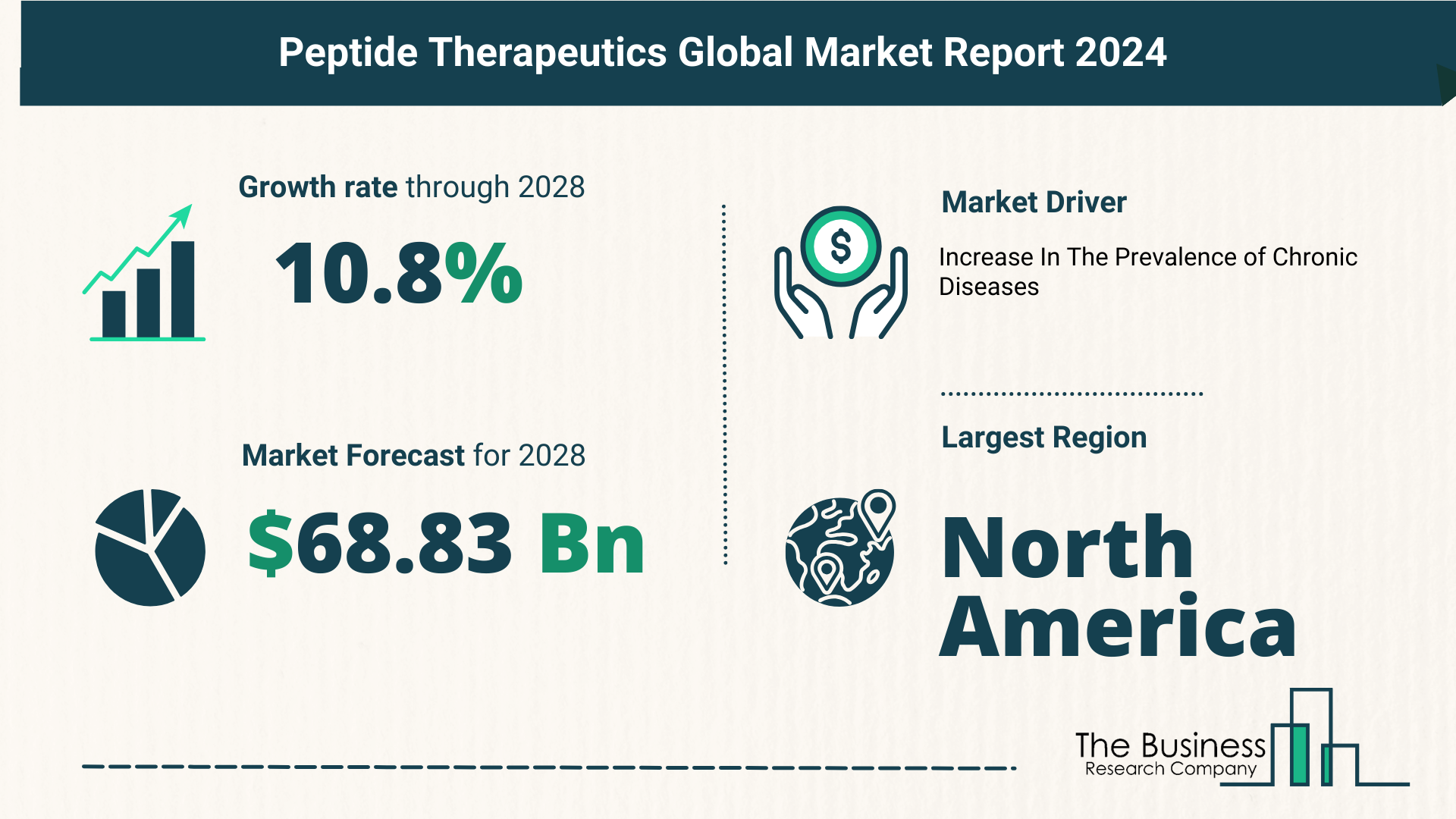
      • By 2028, the market is expected to reach $68.83 billion, growing at a CAGR of 10.8%.
    • Historical Growth Drivers:
      • Increasing incidence of chronic diseases.
      • Growing understanding of molecular biology.
      • Expanding applications in oncology.

    View More On The Peptide Therapeutics Market Report 2024 – https://www.thebusinessresearchcompany.com/report/peptide-therapeutics-global-market-report

    Future Market Growth Drivers

    • Rising Demand for Personalized Medicine:
      • Personalized medicine tailors treatments to individual patients, increasing the effectiveness of peptide therapeutics.
    • Expanding Use in Immunotherapy:
      • Immunotherapy uses the body’s immune system to fight diseases, and peptides play a crucial role in these treatments.
    • Advancements in Peptide Delivery Systems:
      • New delivery systems improve the efficacy and safety of peptide therapeutics.
    • Emerging Peptide Targets in Infectious Diseases:
      • Peptides are being explored as treatments for various infectious diseases.
    • Increasing Focus on Rare Diseases:
      • Peptide therapeutics offer potential treatments for rare and orphan diseases.

    Trends Shaping the Future of Peptide Therapeutics

    • Technological Advancements in Peptide Synthesis:
      • Innovations in synthesis techniques enhance the development of new peptide drugs.
    • Growing Investment and Funding:
      • Increased funding supports research and development in peptide therapeutics.
    • Emphasis on Peptide Drug Safety:
      • Ensuring the safety of peptide drugs is paramount to their success and adoption.
    • Market Expansion in Emerging Economies:
      • Expanding into emerging markets offers significant growth opportunities.
    • Integration of Artificial Intelligence (AI):
      • AI aids in the discovery and development of new peptide drugs.

    Rising Prevalence of Chronic Diseases Propels Market Growth

    • Chronic Diseases Driving Market Growth:
      • Chronic diseases are long-lasting conditions that are often controllable but not curable.
      • Increased use of tobacco, poor nutrition, physical inactivity, and excessive alcohol use contribute to chronic diseases.
    • Peptide Therapeutics for Chronic Diseases:
      • Peptide therapeutics help prevent and treat various chronic diseases.
      • For example, the number of people aged 50 and older with at least one chronic condition in the US is projected to increase by 99.5% by 2050.

    Key Players in the Peptide Therapeutics Market

    • Major Companies:
      • Pfizer Inc.
      • Johnson & Johnson
      • AbbVie Inc.
      • Novartis AG
      • Bristol-Myers Squibb Company
      • AstraZeneca PLC
      • Amgen Inc.
      • Novo Nordisk AS
      • Teva Pharmaceuticals Industries Ltd.
      • Bachem Holding AG
      • PolyPeptide Laboratories BV
      • Arcus Biosciences Inc.
      • Anaptys Bio Inc.
      • Endoceutics Inc.
      • Pepscan Therapeutics
      • Peptech Inc.
      • Merck & Co Inc.

    Innovative Advancements in Peptide Therapeutics

    • Evonik’s Breakthrough in Cell Culture Processes:
      • In June 2023, Evonik Industries AG launched cQrex KC, a next-generation peptide for biopharma applications.
      • cQrex KC optimizes cystine supply and increases cell culture productivity, supporting the development of vaccines, viral vectors, and cell therapies.

    Strategic Acquisitions and Market Expansion

    • Bayer’s Acquisition of Vividion Therapeutics:
      • In August 2021, Bayer acquired Vividion Therapeutics to enhance its small molecule expertise and drug discovery capabilities.

    Market Segmentation

    • By Type:
      • Generic
      • Branded
    • By Route of Administration:
      • Parenteral
      • Mucosal
      • Oral
      • Transdermal
    • By Application:
      • Cancer
      • Cardiovascular Diseases
      • Central Nervous Systems
      • Metabolic Disorders
      • Infections
      • Hematological Disorders
      • Gastrointestinal Disorders
      • Dermatology
      • Respiratory Disorders
      • Acromegaly
      • Other Applications

    Regional Insights

    • North America:
      • North America was the largest region in the peptide therapeutics market in 2023.
    • Asia-Pacific:
      • Asia-Pacific is expected to be the fastest-growing region during the forecast period.

    Conclusion

    The peptide therapeutics market is set for continued rapid growth, driven by rising prevalence of chronic diseases, advancements in technology, and expanding applications. With ongoing innovations and strategic expansions, the market is well-positioned to meet the growing demand for effective and personalized treatments.

    Request A Sample Of The Global Peptide Therapeutics Market Report 2024:
    https://www.thebusinessresearchcompany.com/sample_request?id=7216&type=smp