Month: June 2025

  • Reporter Gene Assay Market in Focus: Forecasting Growth Drivers, Scaling Potential, and Global Opportunities

    Reporter Gene Assay Market in Focus: Forecasting Growth Drivers, Scaling Potential, and Global Opportunities

    Discover trends, market shifts, and competitive outlooks for the reporter gene assay industry through 2025-2034 with The Business Research Company’s reliable data and in-depth research

    What Are the Key Projections for the CAGR of the Reporter Gene Assay Market Size From 2025 to 2034?

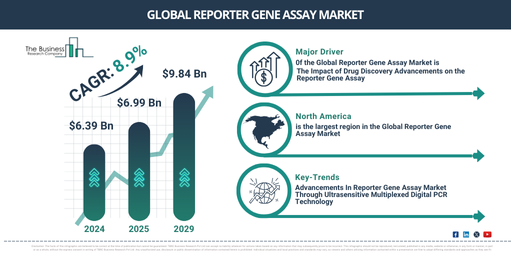
    In recent times, the reporter gene assay market has seen a substantial growth and it is anticipated that it will increase from $6.39 billion in 2024 to $6.99 billion in 2025, witnessing a compound annual growth rate (CAGR) of 9.3%. The expansion during the historical period can be linked to the surge in the requirement for cell-based assays, advancement in genomics research, escalated research in drug discovery and development, growing necessity for individualized treatment, and the necessity for early diagnosis.

    The market size for reporter gene assay is predicted to witness significant expansion in the near future, reaching $9.84 billion by 2029 with a compound annual growth rate (CAGR) of 8.9%. Its growth in the projected period can be linked to increased incidences of chronic genetic diseases, a rising need for personalized medication, the escalating use of molecular imaging systems, the growth of gene therapy portfolios, and governmental initiatives. The forecast period will see trends such as technological progress in gene therapy, developments in molecular biology, the need for enhanced molecular diagnostic tools, a shift towards 3D cell culture models, and strategic alliances.

    Download a free sample to assess the report’s scope and structure:

    https://www.thebusinessresearchcompany.com/sample.aspx?id=16526&type=smp

    Which Factors and External Forces Are Driving Demand in the Reporter Gene Assay Market?

    The escalation in research on drug discovery and development is anticipated to fuel the expansion of the reporter gene assay market. Drug discovery and development research, a systemic procedure within medical, biotechnology, and pharmacology arenas, leads to the identification, formulation, and launching of new pharmaceuticals. The upswing in this research is a result of breakthroughs in proteomics, genomics, high-throughput screening, and the successful creation and approval of innovative medications. Reporter gene assays offer an indispensable resource in such research, providing investigators with the opportunity to understand gene regulation, detect potential treatment targets, scrutinize compound libraries, and assess the potency and safety of prospective drugs. For example, according to the National Science Foundation – a government agency in the US, in 2022, the United States witnessed approximately $885.6 billion in research and development (R&D), representing a 12% boost from 2021 in current (nominal) dollars, and a 5% surge when corrected for inflation (constant dollars). Consequently, the intensification in the research of drug discovery and development serves as a key factor propelling the reporter gene assay market’s growth.

    How Is the Reporter Gene Assay Market Segmented?

    The reporter gene assay market covered in this report is segmented –

    1) By Product: Assay Kits, Reagents

    2) By Application: Promoter Structural And Functional Analysis, Cell Signaling Pathways, Protein Interaction, Clinical And Gene Regulation

    3) By End-User: Biotechnology And Pharmaceutical Companies, Research And Academic Institutes, Hospital And Diagnostic Laboratories, Contract Research Organizations

    Subsegments:

    1) By Assay Kits: Luciferase Reporter Assay Kits, β-galactosidase Reporter Assay Kits, Fluorescent Reporter Assay Kits, Secreted Alkaline Phosphatase (SEAP) Assay Kits

    2) By Reagents: Luciferase Substrates, β-galactosidase Substrates, Fluorescent Proteins, Detection Buffers And Enhancers

    Request customized data on this market:

    https://www.thebusinessresearchcompany.com/customise?id=16526&type=smp

    What Are the Fastest-Growing Geographies in the Reporter Gene Assay Market?

    North America was the largest region in the reporter gene assay market in 2024. Asia-Pacific is expected to be the fastest-growing region in the forecast period. The regions covered in the reporter gene assay market report are Asia-Pacific, Western Europe, Eastern Europe, North America, South America, Middle East, Africa.

    Which Emerging Trends that Are Influencing the Reporter Gene Assay Industry Evolution?

    Key players in the reporter gene assay market are dedicating efforts to the creation of novel solutions like ultrasensitive multiplexed digital PCR assays to consolidate their market status. These PCR assays are able to accurately identify and measure nucleic acids by splitting the sample into thousands, sometimes millions, of individual reactions, each one containing negligible quantities of target DNA or RNA molecules. For instance, in April 2024, US-based life science research firm, Bio-Rad Laboratories Inc., introduced the ddPLEX ESR1 Mutation Detection Kit, the first of its kind in ultrasensitive multiplexed digital PCR assays. This pioneering PCR assay for the detection of breast cancer mutation proves superior in its sensitivity, pinpointing miniscule mutations in complex samples for accurate and early disease tracking. The assay’s multiplexing ability allows for the concurrent detection of multiple mutations, thereby simplifying the testing process. This innovative assay is set to transform the realm of breast cancer research and personalized treatment regimes.

    View the full report here:

    https://www.thebusinessresearchcompany.com/report/reporter-gene-assay-global-market-report

    How Is the Reporter Gene Assay Market Defined and What Are Its Core Parameters?

    A reporter gene assay is a molecular biology technique used to study gene expression and regulatory sequences. It involves the use of a reporter gene, which is a gene that encodes an easily measurable product.

    Purchase the full report and get a swift delivery:

    https://www.thebusinessresearchcompany.com/purchaseoptions.aspx?id=16526

    About The Business Research Company:

    With over 15000+ reports from 27 industries covering 60+ geographies, The Business Research Company has built a reputation for offering comprehensive, data-rich research and insights. Armed with 1,500,000 datasets, the optimistic contribution of in-depth secondary research, and unique insights from industry leaders, you can get the information you need to stay ahead in the game.

    Get in touch with us:

    The Business Research Company: https://www.thebusinessresearchcompany.com/

    Americas +1 3156230293

    Asia +44 2071930708

    Europe +44 2071930708

    Email us at info@tbrc.info

    Follow us on:

    LinkedIn: https://in.linkedin.com/company/the-business-research-company

    YouTube: https://www.youtube.com/channel/UC24_fI0rV8cR5DxlCpgmyFQ

    Global Market Model: https://www.thebusinessresearchcompany.com/global-market-model
  • Remote Diagnostics Market Forecast Reaching $79.8 Billion by 2029 at 10.7% CAGR

    Remote Diagnostics Market Forecast Reaching $79.8 Billion by 2029 at 10.7% CAGR

    Discover trends, market shifts, and competitive outlooks for the remote diagnostics industry through 2025-2034 with The Business Research Company’s reliable data and in-depth research

    What Is the Current and Projected Market Size of the Remote Diagnostics Market Through 2034?

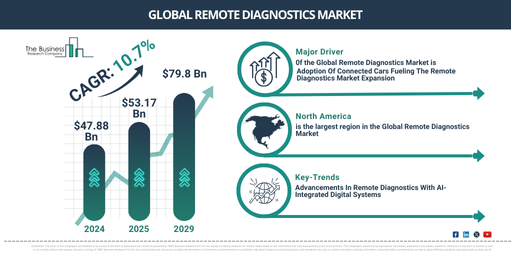
    In recent times, there has been a significant expansion in the size of the remote diagnostics market. It’s predicted to surge from a market size of $47.88 billion in 2024 to an estimated $53.17 billion in 2025, equating to a compound annual growth rate (CAGR) of 11.0%. This upsurge during the historical period can be traced back to several critical factors. These include an increased demand for preventive maintenance, the proliferation of connected medical devices, a rise in the adoption of IoT-based solutions, a spike in the use of remote monitoring, and an expansion in the requirement for electrical systems in vehicles.

    The market for remote diagnostics is anticipated to witness swift expansion in the upcoming years, with its size predicted to reach $79.8 billion by 2029, growing at a compound annual growth rate (CAGR) of 10.7%. This projected increase within the given timescale can be linked to factors such as the growing acceptance of connected cars, a surge in demand for luxury and sports cars, expansion of the automobile industry, elevated worries about maintenance downtime in automotive vehicles, and a rise in the need for passenger vehicles. Significant shifts set to occur in this season of prediction involve advancements in technology, the embracing of IoT and connected devices, the need for cloud-based remote diagnostics, increasing use of artificial intelligence (AI) and machine learning (ML) technologies, and the broadening of telemedicine.

    Download a free sample to assess the report’s scope and structure:

    https://www.thebusinessresearchcompany.com/sample.aspx?id=15660&type=smp

    What are the Fundamental Drivers and Innovations Shaping the Remote Diagnostics Market?

    The upswing in the usage of connected cars is anticipated to drive the expansion of the remote diagnostics market in the future. Connected cars, which are vehicles equipped with internet connectivity and often a wireless local area network (Wi-Fi), can communicate with other devices, networks and services. Factors like the growing need for convenience, efficiency, safety, security, entertainment, and connectivity are causing a surge in the demand for these cars. Such cars provide real-time data, aiding in timely detection of issues and negating the need for physical inspections. Moreover, connected cars enhance safety by automatically sharing diagnostic data with emergency services following accidents, leading to faster responses and possibly life-saving actions. As an example, in March 2022, Scania, a commercial vehicle manufacturer located in Sweden, reported having approximately 560,000 connected vehicles (64% of its 10-year rolling fleet) and this figure is quickly escalating. Hence, the escalating use of connected cars is fuelling the expansion of the remote diagnostics market.

    Which Key Market Segments Comprise the Remote Diagnostics Market and Drive Its Revenue Growth?

    The remote diagnostics market covered in this report is segmented –

    1) By Product Type: Software, Diagnostic Equipment

    2) By Connectivity: 3G (Third Generation), 4G LTE (Fourth Generation Long Term Evolution), Wi-Fi (Wireless Fidelity), Bluetooth

    3) By Application: Roadside Assistance, Vehicle Tracking, Vehicle State Alert, Crash Notification, Training Assistance, Other Applications

    4) By Vehicle Type: Commercial Vehicles, Passenger Vehicles

    Subsegments:

    1) By Software: Diagnostic Software, Remote Monitoring Software, Diagnostic Reporting Software

    2) By Diagnostic Equipment: Wearable Diagnostic Devices, Portable Diagnostic Devices, Imaging Systems For Remote Diagnosis

    Request customized data on this market:

    https://www.thebusinessresearchcompany.com/customise?id=15660&type=smp

    Which Regions Are Driving the Next Phase of the Remote Diagnostics Market Growth?

    North America was the largest region in the remote diagnostics market in 2023. Asia-Pacific is expected to be the fastest-growing region in the forecast period. The regions covered in the remote diagnostics market report are Asia-Pacific, Western Europe, Eastern Europe, North America, South America, Middle East, Africa.

    What Long-Term Trends Are Transforming the Competitive Landscape of the Remote Diagnostics Market?

    Leading enterprises in the remote diagnostics realm dedicate their efforts to the creation of advanced systems, particularly by harnessing next-generation technologies such as real-time telematics and remote diagnostics services. These technologies facilitate automated retention marketing and communications tools for auto repair workshops through data-based operations. The term ‘real-time telematics and remote diagnostics services’ encompasses a broad range of technologies, strategies, and tools used for consistent observation, evaluation, and management of vehicles, assets, or machinery in real-time, typically from a distant location. In November 2022, Mechanic Advisor, a US marketing tool and solutions provider, collaborated with Mojio, a US-based firm specialised in automotive software, to introduce Steermatics. Powered by Mojio, this system combines real-time telematics and remote diagnostics and fully integrates with Steer CRM. This integration empowers car repair businesses with automated, data-driven retention marketing and communication services. Steermatics, the first of its kind in the industry, taps into real-time telematics data from linked fleets to run remote vehicle diagnostics and automated retention marketing tools. Through an exclusive subscription package, fleets employing Steermatics can utilize Force Fleet Tracking, allowing them to apply easy and cost-effective GPS tracking and fleet management tools, thus enhancing their car management capabilities.

    View the full report here:

    https://www.thebusinessresearchcompany.com/report/remote-diagnostics-global-market-report

    How Is the Remote Diagnostics Market Conceptually Defined?

    Remote diagnostics refers to the technique of diagnosing and identifying problems in a system or device from a remote location, often with the help of technology. This technology allows technicians or support workers to examine and resolve problems without physically being present at the location of the equipment or system, which provides faster problem resolution and reduces downtime.

    Purchase the full report and get a swift delivery:

    https://www.thebusinessresearchcompany.com/purchaseoptions.aspx?id=15660

    About The Business Research Company:

    With over 15000+ reports from 27 industries covering 60+ geographies, The Business Research Company has built a reputation for offering comprehensive, data-rich research and insights. Armed with 1,500,000 datasets, the optimistic contribution of in-depth secondary research, and unique insights from industry leaders, you can get the information you need to stay ahead in the game.

    Get in touch with us:

    The Business Research Company: https://www.thebusinessresearchcompany.com/

    Americas +1 3156230293

    Asia +44 2071930708

    Europe +44 2071930708

    Email us at info@tbrc.info

    Follow us on:

    LinkedIn: https://in.linkedin.com/company/the-business-research-company

    YouTube: https://www.youtube.com/channel/UC24_fI0rV8cR5DxlCpgmyFQ

    Global Market Model: https://www.thebusinessresearchcompany.com/global-market-model
  • $17.29 Billion Forecast for Remote Cardiac Monitoring Market by 2029, Backed by Demand and Innovation

    $17.29 Billion Forecast for Remote Cardiac Monitoring Market by 2029, Backed by Demand and Innovation

    Discover trends, market shifts, and competitive outlooks for the remote cardiac monitoring industry through 2025-2034 with The Business Research Company’s reliable data and in-depth research

    What is the Anticipated CAGR of the Remote Cardiac Monitoring Market, and What Factors Will Drive It?

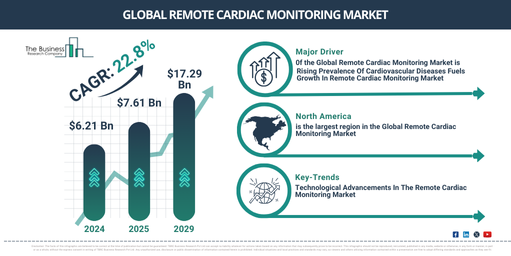
    The market size of remote cardiac monitoring has seen a substantial increase in the past few years. It is projected to rise from $6.21 billion in 2024 to approximately $7.61 billion in 2025, indicating a compound annual growth rate (CAGR) of 22.5%. The expansion during the historic period can be linked to a higher incidence of cardiovascular diseases, a worldwide increase in the aging population, supportive regulatory approvals, heightened consciousness regarding preventive healthcare, and substantial investment and financing in health-tech startups.

    In the coming years, the market size of remote cardiac monitoring is predicted to grow significantly. It is projected to reach a value of $17.29 billion by 2029, expanding at a compound annual growth rate (CAGR) of 22.8%. Factors contributing to this growth during the forecast period include increased healthcare infrastructure, raised awareness in developing economies, the steady increase of telehealth services, consumer interest in health wearables, and measures taken to cut healthcare expenses by reducing hospital readmissions. Key trends to look out for during the forecast period consist of the flawless incorporation of AI and machine learning with telehealth platforms, improvements in data security and privacy, the creation of custom monitoring solutions, heightened usage of cloud-based platforms for data storage and analytics, and technological advancements.

    Download a free sample to assess the report’s scope and structure:

    https://www.thebusinessresearchcompany.com/sample.aspx?id=17243&type=smp

    What Are the Primary Drivers Supporting the Market Growth of the Remote Cardiac Monitoring Market?

    The escalating incidence of heart-related diseases is predicted to fuel the expansion of the remote cardiac monitoring market. Cardiovascular diseases comprise a series of disorders related to the heart and blood vessels, including situations like coronary artery disease, heart failure, arrhythmias, and hypertension. The rising occurrence of these diseases is attributed to factors such as unhealthy eating habits, lack of physical exercise, surge in obesity and diabetes, and growing aging populations. Remote cardiac monitoring is essential for these diseases, providing continuous, real-time monitors of heart health, thereby enabling early detection, appropriate intervention, and effective management of these conditions. For example, a study in August 2022, produced by the American College of Cardiology, a nonprofit medical entity in the US, forecasted striking increments in cardiovascular risks in the US by 2060. This includes a rise in diabetes by 39.3% to 55 million people and an increase in stroke cases by 33.8% to 15 million individuals. Thus, the increasing rate of cardiovascular disorders is set to boost the remote cardiac monitoring market.

    What Segment Types Define the Remote Cardiac Monitoring Market Structure?

    The remote cardiac monitoring market covered in this report is segmented –

    1) By Type: Devices, Software, Services

    2) By Indication: Bradycardia, Tachycardia, Atrial And Ventricular Fibrillation, Other Indications

    3) By End User: Hospitals And Clinics, Emergency Settings, Homecare Settings, Other End Users

    Subsegments:

    1) By Devices: Wearable ECG Monitors, Implantable Loop Recorders (ILRs), Mobile Cardiac Telemetry Devices, Cardiac Event Monitors, Smartwatches With Heart Monitoring Capabilities

    2) By Software: Cardiac Monitoring and Analysis Software, Data Management Software, Cloud-Based Remote Monitoring Platforms, Mobile Applications For Patient Monitoring

    3) By Services: Remote Cardiac Monitoring Services, Data Interpretation And Reporting Services, Telehealth Consultation Services, Device Maintenance And Technical Support Services

    Request customized data on this market:

    https://www.thebusinessresearchcompany.com/customise?id=17243&type=smp

    Which Regions Are Key Players in the Growth of the Remote Cardiac Monitoring Market?

    North America was the largest region in the remote cardiac monitoring market in 2023. Asia-Pacific is expected to be the fastest-growing region in the forecast period. The regions covered in the remote cardiac monitoring market report are Asia-Pacific, Western Europe, Eastern Europe, North America, South America, Middle East, Africa.

    What Key Market Trends and Innovations Are Shaping the Future of the Remote Cardiac Monitoring Industry?

    Leading businesses in the remote cardiac monitoring market are progressing towards technologically sophisticated solutions like ultrasound systems to improve the precision and efficiency of heart health monitoring. The ultrasound system, a medical device, helps conduct ultrasound imaging. For instance, Royal Philips introduced the Ultrasound Compact System 5000 Series in December 2022, which delivers exceptional diagnostic quality, portability, compatibility with EPIQ Elite and Affiniti transducers and comes with Collaboration Live telemedicine software for instant remote consultations. This approach enables access to high-end cart-based diagnostic quality, putting great emphasis on portability and flexibility yet upholding superb image fidelity and performance.

    View the full report here:

    https://www.thebusinessresearchcompany.com/report/remote-cardiac-monitoring-global-market-report

    What Is the Definition of the Remote Cardiac Monitoring Market?

    Remote cardiac monitoring involves the use of technology to continuously monitor a patient’s heart activity from a distance, typically through wearable devices or implanted monitors. This technology transmits real-time data on heart rhythms and other vital signs to healthcare providers for analysis and timely intervention. The purpose of remote cardiac monitoring is to provide ongoing, accurate cardiac care, allowing for early detection of arrhythmias, heart attacks, and other cardiovascular issues, ultimately improving patient outcomes and reducing the need for frequent in-person visits.

    Purchase the full report and get a swift delivery:

    https://www.thebusinessresearchcompany.com/purchaseoptions.aspx?id=17243

    About The Business Research Company:

    With over 15000+ reports from 27 industries covering 60+ geographies, The Business Research Company has built a reputation for offering comprehensive, data-rich research and insights. Armed with 1,500,000 datasets, the optimistic contribution of in-depth secondary research, and unique insights from industry leaders, you can get the information you need to stay ahead in the game.

    Get in touch with us:

    The Business Research Company: https://www.thebusinessresearchcompany.com/

    Americas +1 3156230293

    Asia +44 2071930708

    Europe +44 2071930708

    Email us at info@tbrc.info

    Follow us on:

    LinkedIn: https://in.linkedin.com/company/the-business-research-company

    YouTube: https://www.youtube.com/channel/UC24_fI0rV8cR5DxlCpgmyFQ

    Global Market Model: https://www.thebusinessresearchcompany.com/global-market-model
  • Strategic Growth Drivers Shaping the Cell Penetrating Peptide Market Outlook 2025- 2034:Role Of Research And Development In Fueling Cell Penetration Peptide Market Growth

    Strategic Growth Drivers Shaping the Cell Penetrating Peptide Market Outlook 2025- 2034:Role Of Research And Development In Fueling Cell Penetration Peptide Market Growth

    Discover trends, market shifts, and competitive outlooks for the cell penetrating peptide industry through 2025-2034 with The Business Research Company’s reliable data and in-depth research

    #How Has the Cell Penetrating Peptide Market Growth Performance Trended Historically, And What Lies Ahead?3

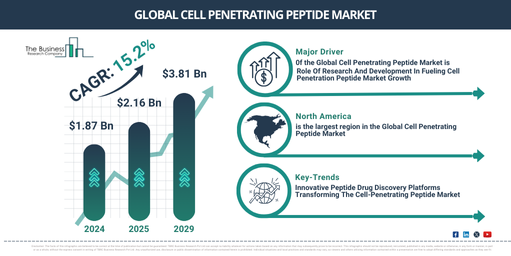
    In the past few years, the market size of cell penetrating peptides has seen significant expansion. The market, which was valued at $1.87 billion in 2024, is projected to increase to $2.16 billion in 2025, demonstrating a compound annual growth rate (CAGR) of 15.6%. This substantial growth during the historical period has been due to a better understanding of how cells absorb these peptides, a rising interest in targeted drug delivery systems, the increasing rates of chronic illnesses, the emergence of personalized medicine strategies, and the broadening scope of pharmaceutical research and development.

    The market for cell penetrating peptides is projected to experience accelerated growth in the coming years, with its value reaching $3.81 billion in 2029, reflecting a compound annual growth rate (CAGR) of 15.2%. This surge can be linked to the emergence of unique peptide-based therapeutic solutions for uncommon diseases, increasing healthcare infrastructure expenditures in emerging economies, a growing appetite for peptide-based vaccines and immunotherapies, regulation moves designed to make the approval process easier for peptide drugs, and a pivot towards eco-friendly and biodegradable peptide delivery systems. Key trends expected during the forecast period include tailoring of cell penetration peptides for specific treatment uses, utilizing cell-penetrating peptides for intracellular delivery, incorporating artificial intelligence and machine learning in peptide design, integrating cell-penetrating peptides, and exploring new delivery pathways.

    Download a free sample to assess the report’s scope and structure:

    https://www.thebusinessresearchcompany.com/sample.aspx?id=15537&type=smp

    Which Factors and External Forces Are Driving Demand in the Cell Penetrating Peptide Market?

    The cell penetration peptide market is anticipated to develop due to rising investment in health research and development. Health research and development (R&D) pertains to strategic investigations and experiments aimed at enhancing scientific comprehension and creating innovative remedies to enhance healthcare results. Increases in health R&D stem from healthcare necessities, technological advancement, international health priorities, financial incentives, and economic prospects. Cell penetration peptides provide an array of effective strategies for the conveyance of biomolecules and therapeutics into cells, these strategies enhance numerous aspects of health research and development including, drug delivery, gene therapy, vaccine formulation, molecular imaging, and cellular research. As an illustration, the National Center for Science and Engineering Statistics, a US-based federal statistical organization stated that state government agencies designated $1.10 billion to health research and experimental development (R&D) in 2022 fiscal year, showing a growth of 2.2% in comparison to the $1.07 billion spent in fiscal year 2021. Hence, the escalation in research and development activities invigorates the growth of the cell penetration peptide market.

    Which Segments in the Cell Penetrating Peptide Offer the Most Growth?

    The cell penetrating peptide market covered in this report is segmented –

    1) By Type: Synthetic Cell Penetrating Peptides, Protein-Derived Cell Penetrating Peptides, Chimeric Cell Penetrating Peptides

    2) By Application: Drug Delivery, Gene Delivery, Diagnostics, Molecular Imaging, Other Applications

    3) By End Use: Pharmaceutical And Biotechnology Companies, Contract Research Organization (CROs), Hospitals And Clinics, Others End Users

    Subsegments:

    1) By Synthetic Cell Penetrating Peptides: Linear Synthetic CPPs, Branched Synthetic CPPs, Peptide Conjugates, Lipid-Modified Synthetic CPPs

    2) By Protein-Derived Cell Penetrating Peptides: Tat Peptides (From HIV-1 TAT), Antennapedia Peptides, Homeodomain Peptides, Other Naturally Derived CPPs

    3) By Chimeric Cell Penetrating Peptides: Fusion Peptides, Hybrid Peptides

    Request customized data on this market:

    https://www.thebusinessresearchcompany.com/customise?id=15537&type=smp

    What Are the Fastest-Growing Geographies in the Cell Penetrating Peptide Market?

    North America was the largest region in the cell penetrating peptide market in 2023. Asia-Pacific is expected to be the fastest-growing region in the forecast period. The regions covered in the cell penetrating peptide market report are Asia-Pacific, Western Europe, Eastern Europe, North America, South America, Middle East, Africa.

    What Are the Key Market Trends in the Cell Penetrating Peptide Market Over the Coming Years?

    Leading entities in the cell-penetrating peptide market are concentrating on building ground-breaking platforms like the peptide drug discovery platforms to maintain a competitive position in the marketplace. A peptide drug discovery platform serves as an inclusive system or a toolkit that aids the discovery, design, optimization, and assessment of CPP-oriented treatments. As an illustration, Fujitsu Limited, an Information and Communications Technology equipment and services firm based in Japan, introduced the Biodrug Design Accelerator in May 2023. This platform was conceived to administer research procedures for peptide drug discovery. The Biodrug Design Accelerator supports pharmaceutical company scientists involved in peptide drug discovery by speeding up and bolstering the competence of peptide drug development, predominantly via the ‘design, make, test, analyze’ (DMTA) cycles. This platform also facilitates smooth communication between scientists about synthesis and testing while maintaining compatibility with HELM, a technique for illustrating complex biomolecules.

    View the full report here:

    https://www.thebusinessresearchcompany.com/report/cell-penetrating-peptide-global-market-report

    What Are the Key Elements That Define the Cell Penetrating Peptide Market?

    Cell-penetrating peptides (CPPs), also known as protein transduction domains (PTDs) or membrane translocation peptides, are short peptides typically composed of 5 to 30 amino acids with the ability to traverse cell membranes and facilitate the intracellular delivery of various cargo molecules, including proteins, nucleic acids, and small molecules. It transports diverse cargoes across biological barriers, including the plasma membrane, endosomal membranes, and nuclear envelope, without causing significant cellular damage.

    Purchase the full report and get a swift delivery:

    https://www.thebusinessresearchcompany.com/purchaseoptions.aspx?id=15537

    About The Business Research Company:

    With over 15000+ reports from 27 industries covering 60+ geographies, The Business Research Company has built a reputation for offering comprehensive, data-rich research and insights. Armed with 1,500,000 datasets, the optimistic contribution of in-depth secondary research, and unique insights from industry leaders, you can get the information you need to stay ahead in the game.

    Get in touch with us:

    The Business Research Company: https://www.thebusinessresearchcompany.com/

    Americas +1 3156230293

    Asia +44 2071930708

    Europe +44 2071930708

    Email us at info@tbrc.info

    Follow us on:

    LinkedIn: https://in.linkedin.com/company/the-business-research-company

    YouTube: https://www.youtube.com/channel/UC24_fI0rV8cR5DxlCpgmyFQ

    Global Market Model: https://www.thebusinessresearchcompany.com/global-market-model
  • Major Drivers Propelling the Growth oh theCell Line Development Market Forward: Rising Cancer Prevalence Propels Growth of Cell Line Development Market

    Major Drivers Propelling the Growth oh theCell Line Development Market Forward: Rising Cancer Prevalence Propels Growth of Cell Line Development Market

    Discover trends, market shifts, and competitive outlooks for the cell line development industry through 2025-2034 with The Business Research Company’s reliable data and in-depth research

    What Are the Projected Market Size and Growth Rates for the Cell Line Development Market From 2025 To 2029?

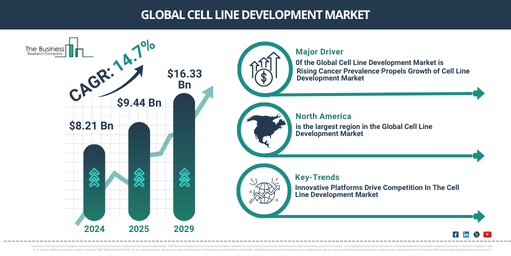
    Recent years have seen a swift expansion in the cell line development market. The market which stood at $8.21 billion in 2024 is forecasted to surge to $9.44 billion in 2025, denoting a compound annual growth rate (CAGR) of 14.9%. This significant growth during the historic period is due to factors such as higher vaccine production, a surge in aging population, and a rise in clinical trials.

    The market size for cell line development is projected to undergo swift expansion in the upcoming years, escalating to a substantial $16.33 billion in 2029, with a compound annual growth rate (CAGR) of 14.7%. This anticipated surge within the forecast period can be attributed to factors such as the escalating incidence of cancer, the rising prevalence of chronic illnesses, and increased government funding in healthcare. Significant trends during this period are expected to encompass partnerships, investments, and product innovations.

    Download a free sample to assess the report’s scope and structure:

    https://www.thebusinessresearchcompany.com/sample.aspx?id=15536&type=smp

    Which Major Market Drivers Are Expected to Boost the Growth Potential of the Cell Line Development Market?

    The expansion of the cell line development sector is expected to be fuelled by an escalating prevalence of cancer. The term cancer defines a host of diseases that are typified by unregulated growth and dissemination of abnormal cells throughout the body. Factors such as population growth and aging, lifestyle habits, obesity, and genetic influences have contributed to the rise in cancer. Cell lines serve as a valuable resource for examining the effectiveness potential drugs in combating chronic illnesses. By exploring numerous compounds and observing their impacts, researchers are able to single out potent drug compounds for subsequent advancement. For example, in February 2024, data from the World Health Organization, a government entity based in Switzerland, anticipate over 35 million fresh cancer cases by 2050. This represents a 77% leap from the projected 20 million cases in 2022. Consequently, the rise in cancer prevalence propels the cell line development industry.

    Which Key Market Segments Comprise the Cell Line Development Market and Drive Its Revenue Growth?

    The cell line development market covered in this report is segmented –

    1) By Product: Reagents And Media, Equipment, Accessories And Consumables

    2) By Source: Mammalian, Non-Mammalian

    3) By Cell Line: Recombinant, Hybridomas, Continuous Cell Line, Primary Cell Line

    4) By Application: Bioproduction, Drug Discovery, Toxicity Testing, Tissue Engineering, Research

    Subsegments:

    1) By Reagents And Media: Cell Culture Media, Serum-Free Media, Recombinant Protein Supplements, Growth Factors, Cytokines And Hormones, Buffers And Salts

    2) By Equipment: Bioreactors And Fermenters, Incubators, Cell Counters And Analyzers, Cell Sorters, Cryopreservation Equipment, Filtration And Separation Equipment

    3) By Accessories And Consumables: Culture Vessels (Flasks, Plates), Pipettes And Pipette Tips, Cell Culture Inserts, Syringes And Needles, Cryovials And Freezing Containers, Petri Dishes

    Request customized data on this market:

    https://www.thebusinessresearchcompany.com/customise?id=15536&type=smp

    Which Areas Are Leading Regions in the Cell Line Development Market Expansion Across the Globe?

    North America was the largest region in the cell line development market in 2023. The regions covered in the cell line development market report are Asia-Pacific, Western Europe, Eastern Europe, North America, South America, Middle East, Africa.

    Which Emerging Trends that Are Influencing the Cell Line Development Industry Evolution?

    Leading firms in the cell line development market are creating groundbreaking platforms in an attempt to achieve market dominance. The unique cell line development platforms are notable for their role in enhancing and streamlining the cell line development procedure, thereby promoting speed, efficiency, and increased productivity in the development of biological drugs. Abzena, a UK-based company offering outsourced research, development, and manufacturing services, for example, launched new platforms named AbZelect and AbZelectPro in January 2023. These platforms were designed to expedite the cell line development (CLD) process for biologic drug programs. The platforms increase productivity, permitting the production of more drug substances in each manufacturing process. This improved efficiency not only expands production capacity and lowers expenses for customers, but also hastens the distribution of essential therapies to patients who desperately need them.

    View the full report here:

    https://www.thebusinessresearchcompany.com/report/cell-line-development-global-market-report

    How Is the Cell Line Development Market Conceptually Defined?

    Cell line development is the process of creating immortalized cell cultures derived from a particular cell type, typically from a specific organism or tissue. These cell lines are cultivated under controlled laboratory conditions and can be perpetually grown and replicated.

    Purchase the full report and get a swift delivery:

    https://www.thebusinessresearchcompany.com/purchaseoptions.aspx?id=15536

    About The Business Research Company:

    With over 15000+ reports from 27 industries covering 60+ geographies, The Business Research Company has built a reputation for offering comprehensive, data-rich research and insights. Armed with 1,500,000 datasets, the optimistic contribution of in-depth secondary research, and unique insights from industry leaders, you can get the information you need to stay ahead in the game.

    Get in touch with us:

    The Business Research Company: https://www.thebusinessresearchcompany.com/

    Americas +1 3156230293

    Asia +44 2071930708

    Europe +44 2071930708

    Email us at info@tbrc.info

    Follow us on:

    LinkedIn: https://in.linkedin.com/company/the-business-research-company

    YouTube: https://www.youtube.com/channel/UC24_fI0rV8cR5DxlCpgmyFQ

    Global Market Model: https://www.thebusinessresearchcompany.com/global-market-model

  • Critical Market Drivers Shaping the Outlook for Cell Free DNA (cfDNA) Testing Market from 2025-2034: Impact Of Rising Cancer Prevalence On The Cell-Free DNA (cfDNA) Testing Market

    Critical Market Drivers Shaping the Outlook for Cell Free DNA (cfDNA) Testing Market from 2025-2034: Impact Of Rising Cancer Prevalence On The Cell-Free DNA (cfDNA) Testing Market

    Discover trends, market shifts, and competitive outlooks for the cell free dna (cfdna) testing industry through 2025-2034 with The Business Research Company’s reliable data and in-depth research

    What Is the Estimated Market Size of the Cell Free DNA (cfDNA) Testing Market In 2029?

    In recent years, there has been remarkable growth in the market size of cell free DNA (cfDNA) testing. The projection is that it will expand from $8.74 billion in 2024 to $10.86 billion in 2025, with a compound annual growth rate (CAGR) of 24.2%. The significant growth in the historic period is attributed to factors such as greater application of cfDNA testing during prenatal care, increased usage of cfDNA analysis, a proliferating interest in cfDNA research across several medical disciplines, and an increase in approvals from regulatory authorities.

    The market size for cell free dna (cfDNA) testing is anticipated to substantially increase in the upcoming years, with estimates concluding that it will reach $25.56 billion in 2029, achieving a compound annual growth rate (CAGR) of 23.9%. This notable growth during the forecast period can be credited to several factors such as the shift towards personalized medicine, improvements in healthcare infrastructure, an aging population coupled with the rise in cancer cases, increased adoption of precision medicine, growing awareness and acceptance of liquid biopsy methods, and the increased investment and funding funnelled into cfDNA studies. Some key developments to watch during the forecast period include the employment of liquid biopsy technologies, major advancements in Next-Generation Sequencing (NGS) technology, the application of AI and machine learning in cfDNA testing, creation of point-of-care cfDNA tests, and the implementation of cloud-based platforms for effective data storage and analysis.

    Download a free sample to assess the report’s scope and structure:

    https://www.thebusinessresearchcompany.com/sample.aspx?id=15757&type=smp

    What Are the Core Growth Drivers Propelling the Cell Free DNA (cfDNA) Testing Market Forward?

    The escalating incidence of cancer is anticipated to boost the expansion of the cell-free DNA (cfDNA) testing market. Cancer constitutes a complicated network of diseases identified by the uncontrollable development and proliferation of abnormal cells that could invade and damage regular tissue, causing serious harm if left unchecked. Factors like aging populations, alterations in lifestyle, environmental factors, and advancements in identification and diagnostic approaches contribute to the prevalence of cancer. cfDNA testing facilitates early detection of genetic mutations linked with cancer, often before the symptoms manifest. This allows for early intervention, enhancing patient prognosis and survival rates by diagnosing cancer in its initial stages. For example, in February 2024, the World Health Organization (WHO), a Switzerland-based intergovernmental organization, predicts there will be over 35 million new cancer cases in 2050, marking a 77% increase from the projected 20 million cases in 2022. Thus, the escalating incidence of cancer is fueling the expansion of the cell-free DNA (cfDNA) testing market.

    What Segment Types Define the Cell Free DNA (cfDNA) Testing Market Structure?

    The cell free dna (cfDNA) testing market covered in this report is segmented –

    1) By Product: Donor-Derived Cell-Free DNA, Circulating Cell-Free Tumor DNA, Cell-Free Fetal DNA

    2) By Platforms: Next Generation Sequencing (NGS), rPCR And Multiplexed PCR, qPCR And dPCR, Other platforms

    3) By Application: Oncology, Non-Invasive Prenatal Test (NIPT), Gynecology, Transplantation, Other Applications

    Subsegments:

    1) By Donor-Derived Cell-Free DNA: Organ Transplant Monitoring, Graft Rejection Detection

    2) By Circulating Cell-Free Tumor DNA: Cancer Detection, Minimal Residual Disease Monitoring, Liquid Biopsy

    3) By Cell-Free Fetal DNA: Non-Invasive Prenatal Testing (NIPT), Fetal Genetic Disorder Screening

    Request customized data on this market:

    https://www.thebusinessresearchcompany.com/customise?id=15757&type=smp

    Which Geographic Areas Hold the Strongest Growth Potential in the Cell Free DNA (cfDNA) Testing Market?

    North America was the largest region in the cell-free DNA (cfDNA) testing market in 2023. Asia-Pacific is expected to be the fastest-growing region in the forecast period. The regions covered in the cell free DNA (cfDNA) testing market report are Asia-Pacific, Western Europe, Eastern Europe, North America, South America, Middle East and Africa.

    What Key Trends Are Shaping the Future of the Cell Free DNA (cfDNA) Testing Market?

    Leading firms in the cell-free DNA (cfDNA) testing industry are prioritizing the creation of novel technologies like liquid biopsy tests, which provide improved sensitivity, specificity, and efficiency in detecting mutations and genetic changes related to cancer. Liquid biopsy tests are diagnostic methods that enable oncologists to analyze circulating cfDNA discarded by cancer cells, thus enabling the design of personalized, targeted treatment plans. For instance, Laboratory Corporation of America Holdings (Labcorp), an American life sciences firm, in May 2023 introduced Labcorp Plasma Focus, a fresh liquid biopsy test intended for patients with advanced or metastatic solid tumors. The test reviews circulating cfDNA revealed by tumor cells through a regular blood draw, making it minimally invasive and delivering quick results. The test amplifies access to precision oncology by identifying clinically meaningful biomarkers in several prevalent cancers, including non-small cell lung, colorectal, breast, esophageal, gastroesophageal junction, gastric cancers, and melanoma.

    View the full report here:

    https://www.thebusinessresearchcompany.com/report/cell-free-dna-cfdna-testing-global-market-report

    What Is the Definition of the Cell Free DNA (cfDNA) Testing Market?

    Cell-free DNA (cfDNA) testing is a non-invasive diagnostic method that analyzes DNA fragments circulating freely in the bloodstream. cfDNA testing is utilized in liquid biopsy procedures and allows for detecting and analyzing genetic mutations and alterations without the need for a traditional tissue biopsy.

    Purchase the full report and get a swift delivery:

    https://www.thebusinessresearchcompany.com/purchaseoptions.aspx?id=15757

    About The Business Research Company:

    With over 15000+ reports from 27 industries covering 60+ geographies, The Business Research Company has built a reputation for offering comprehensive, data-rich research and insights. Armed with 1,500,000 datasets, the optimistic contribution of in-depth secondary research, and unique insights from industry leaders, you can get the information you need to stay ahead in the game.

    Get in touch with us:

    The Business Research Company: https://www.thebusinessresearchcompany.com/

    Americas +1 3156230293

    Asia +44 2071930708

    Europe +44 2071930708

    Email us at info@tbrc.info

    Follow us on:

    LinkedIn: https://in.linkedin.com/company/the-business-research-company

    YouTube: https://www.youtube.com/channel/UC24_fI0rV8cR5DxlCpgmyFQ

    Global Market Model: https://www.thebusinessresearchcompany.com/global-market-model
  • Key Factors Fueling the Growth of the Cell Culture Protein Surface Coating Market in 2025: Rising Demand For Biopharmaceutical Products In Cell Culture Protein Surface Coating Market

    Key Factors Fueling the Growth of the Cell Culture Protein Surface Coating Market in 2025: Rising Demand For Biopharmaceutical Products In Cell Culture Protein Surface Coating Market

    Discover trends, market shifts, and competitive outlooks for the cell culture protein surface coating industry through 2025-2034 with The Business Research Company’s reliable data and in-depth research

    How Fast Is The Cell Culture Protein Surface Coating Market Expected to Grow Between 2025 And 2029?

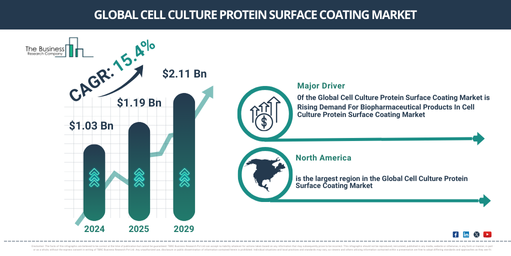
    In the past few years, the market size of the cell culture protein surface coating has seen rapid growth. The market, which was worth $1.03 billion in 2024, is projected to expand to $1.19 billion in 2025, with a compound annual growth rate (CAGR) of 15.8%. The significant growth in the historical period can be linked to the enhanced concentration on stem cell research endeavors, the escalating incidence of chronic illnesses, and the growing emphasis on cell-based research.

    The market size of the cell culture protein surface coating is predicted to experience rapid expansion in the forthcoming years. It’s projected to escalate to $2.11 billion by 2029, with a compound annual growth rate (CAGR) of 15.4%. The surge during the predicted period can be accredited to the surging acceptance and utilization of 3D cell culture, the escalating demand for protein therapeutic solutions, augmented healthcare expenditure, and uprising investments in research and development. Prominent trends within the projection period encompass the emergence of high-throughput screening methods, the evolution of technologies, significant technological progress, and the introduction of novel products and services.

    Download a free sample to assess the report’s scope and structure:

    https://www.thebusinessresearchcompany.com/sample.aspx?id=16369&type=smp

    What are the Fundamental Drivers and Innovations Shaping the Cell Culture Protein Surface Coating Market?

    The cell culture protein surface coating market is predicted to flourish due to the escalating demand for biopharmaceutical products. Biopharmaceuticals, medicinal substances derived from living beings or synthesized through biotechnological procedures, are in higher demand because of the surge in chronic and age-relevant diseases, and advancements in cell culture technologies, bioprocessing and genomics. The cell culture protein surface coating enhances cell growth, function, and manufacturing potency in biopharmaceutical manufacturing, which significantly aids in crafting safe, potent, and superior quality biopharmaceutical products. As per a report from the Alliance for Regenerative Medicine in August 2023, there’s been a 101% jump in cell, gene, and tissue-engineering therapeutic developers worldwide from the first quarter of 2022 to the first quarter of 2023, thus giving a boost to the demand for biopharmaceutical products, ultimately inducing growth in the cell culture protein surface coating market.

    Cell Culture Protein Surface Coating Market Driver: Effect of Rising Instances of Chronic Diseases on the Cell Culture Protein Surface Coating Market


    How Is the Cell Culture Protein Surface Coating Market Segmented?

    The cell culture protein surface coating market covered in this report is segmented –

    1) By Coating Type: Pre-Coating, Multiwall Or Microwell Plates, Flasks, Petri Dishes, Slides, Cover Slips, Self-Coating

    2) By Protein Source: Animal-Derived Protein, Human-Derived Protein, Synthetic Protein, Plant-Derived Protein

    3) By Application: Scientific Research, Industrial Production

    Subsegments:

    1) By Pre-coating: Ready-To-Use Pre-Coated Plates, Pre-Coated Flasks, Pre-Coated Petri Dishes

    2) By Multiwall Or Microwell Plates: 96-Well Plates, 384-Well Plates, 1536-Well Plates

    3) By Flasks: Tissue Culture Flasks, Serum-Free Flasks, Spinner Flasks

    4) By Petri Dishes: Standard Petri Dishes, Disposable Petri Dishes, Specialized Coated Petri Dishes

    5) By Slides: Microscope Slides, Glass Slides With Coating, Poly-l-lysine Coated Slides

    6) By Cover Slips: Standard Glass Cover Slips, Hydrophilic Cover Slips, Specially Coated Cover Slips

    7) By Self-coating: Self-Coating Plates, Self-Coating Flasks, Self-Coating Dishes

    Request customized data on this market:

    https://www.thebusinessresearchcompany.com/customise?id=16369&type=smp

    Which Regions Are Driving the Next Phase of the Cell Culture Protein Surface Coating Market Growth?

    North America was the largest region in the cell culture protein surface coating market in 2023. Asia-Pacific is expected to be the fastest-growing region in the forecast period. The regions covered in the cell culture protein surface coating market report are Asia-Pacific, Western Europe, Eastern Europe, North America, South America, Middle East, Africa.

    View the full report here:

    https://www.thebusinessresearchcompany.com/report/cell-culture-protein-surface-coating-global-market-report

    How Is the Cell Culture Protein Surface Coating Market Defined and What Are Its Core Parameters?

    Cell culture protein surface coating refers to the process of applying specific proteins or biomolecules onto the surface of culture vessels such as Petri dishes, flasks, or plates. This process aims to enhance cells’ attachment, growth, and behavior in an in vitro environment, mimicking the natural extracellular matrix (ECM) encountered by cells in vivo. The coating facilitates cell adhesion, development, and differentiation, which is crucial for various biomedical and research applications.

    Purchase the full report and get a swift delivery:

    https://www.thebusinessresearchcompany.com/purchaseoptions.aspx?id=16369

    About The Business Research Company:

    With over 15000+ reports from 27 industries covering 60+ geographies, The Business Research Company has built a reputation for offering comprehensive, data-rich research and insights. Armed with 1,500,000 datasets, the optimistic contribution of in-depth secondary research, and unique insights from industry leaders, you can get the information you need to stay ahead in the game.

    Get in touch with us:

    The Business Research Company: https://www.thebusinessresearchcompany.com/

    Americas +1 3156230293

    Asia +44 2071930708

    Europe +44 2071930708

    Email us at info@tbrc.info

    Follow us on:

    LinkedIn: https://in.linkedin.com/company/the-business-research-company

    YouTube: https://www.youtube.com/channel/UC24_fI0rV8cR5DxlCpgmyFQ

    Global Market Model: https://www.thebusinessresearchcompany.com/global-market-model
  • Major Trends and Emerging Patterns in the Cell Culture Media Storage Containers Market: Innovations Reshapes Cell Culture Storage Containers Industry

    Major Trends and Emerging Patterns in the Cell Culture Media Storage Containers Market: Innovations Reshapes Cell Culture Storage Containers Industry

    Discover trends, market shifts, and competitive outlooks for the cell culture media storage containers industry through 2025-2034 with The Business Research Company’s reliable data and in-depth research

    What Are the Key Projections for the CAGR of the Cell Culture Media Storage Containers Market Size From 2025 to 2034?

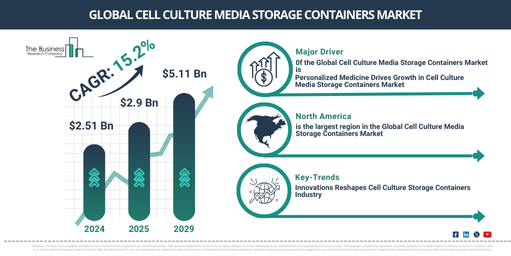
    The market for storage containers for cell culture media has seen significant expansion in recent times, ballooning from a value of $2.51 billion in 2024 to an estimated $2.9 billion in 2025, indicating a Compound Annual Growth Rate (CAGR) of 15.6%. This incredible growth trajectory during the historical phase can be linked to several contributory factors, principally among these being heightened activities in life sciences research, an escalating demand for cell-based therapies, increasing interest in personalized medicine, a burgeoning biopharmaceutical industry and a proliferating biotechnology sector.

    The market for cell culture media storage containers is projected to experience a significant surge in the coming years, swelling to a worth of $5.11 billion by 2029 with a Compound Annual Growth Rate (CAGR) of 15.2%. The expected growth within the prophesized timeframe is primarily due to increased applications in regenerative medicine, the advent of novel cell therapy technologies, escalating demand for 3D cell culture systems, the adoption of automated processes in cell culture, and a heightened focus on cell-based assays. The forecast period also expects to see a rise in the adoption of single-use systems, the development of environmentally friendly packaging options, the incorporation of intelligent technology for monitoring and regulation, customization, and modular designs for flexible usage, along with an increased emphasis on traceability and quality assurance in storage solutions.

    Download a free sample to assess the report’s scope and structure:

    https://www.thebusinessresearchcompany.com/sample.aspx?id=15756&type=smp

    What Are the Primary Drivers Supporting the Market Growth of the Cell Culture Media Storage Containers Market?

    The increasing shift towards personalized healthcare is projected to fuel the growth of the cell culture media storage containers market. Personalized medicine, otherwise known as precision medicine, is a healthcare strategy specifically designed considering the unique traits of each patient. The increasing concentration on personalized medicine is attributed to the requirement for more targeted and efficient treatments as well as advances in genomics and precision healthcare technologies. Cell culture media storage containers are key to personalized medicine’s formulation as they are required to sustain and store cell cultures, which facilitates the creation of patient-specific treatments. For example, the Personalized Medicine Coalition, a U.S. organization advocating personalized medicine adoption, stated in February 2024 that the U.S. Food and Drug Administration approved 16 new personalized treatments for patients with rare diseases, an increase from 6 in 2022. Consequently, the increasing emphasis on personalized medicine is leading to the expansion of the cell culture media storage containers market.

    Which Primary Segments of the Cell Culture Media Storage Containers Market Are Driving Growth and Industry Transformations?

    The cell culture media storage containers market covered in this report is segmented –

    1) By Product: Storage Bag, Storage Bottle, Storage Bin And Drum, Other Products

    2) By Application: Biopharmaceutical Production, Tissue Engineering, Diagnostic, Regenerative Medicine

    3) By End Use: Pharmaceutical And Biotechnology Companies, Contract Research Organizations And Contract Manufacturing Organizations, Academic And Research Institutes

    Subsegments:

    1) By Storage Bag: Single-Use Storage Bags, Biopharmaceutical Storage Bags, Sterile Storage Bags

    2) By Storage Bottle: Polycarbonate Storage Bottles, Plastic Storage Bottles, Glass Storage Bottles

    3) By Storage Bin And Drum: Plastic Storage Bins, Metal Storage Drums, Food-Grade Storage Bins

    4) By Other Products: Cryogenic Storage Containers, Vials And Tubes, Storage Carboys

    Request customized data on this market:

    https://www.thebusinessresearchcompany.com/customise?id=15756&type=smp

    Which Regions Are Key Players in the Growth of the Cell Culture Media Storage Containers Market?

    North America was the largest region in the cell culture media storage containers market in 2023. Asia-Pacific is expected to be the fastest-growing region in the forecast period. The regions covered in the cell culture media storage containers market report are Asia-Pacific, Western Europe, Eastern Europe, North America, South America, Middle East and Africa.

    What Long-Term Trends Are Transforming the Competitive Landscape of the Cell Culture Media Storage Containers Market?

    Leading businesses in the cell culture media storage containers market are introducing new and inventive products like single-use bioprocess containers in an effort to provide trustworthy solutions for biopharmaceutical fluid management and gain a market advantage. These single-use bioprocess containers are specialized storage units designed for the bio-pharmacological industry to hold, manage, and transport biological materials including cell culture media, cell suspensions, and drug products during different stages of bioprocessing. For instance, Single Use Support GmbH, an Austria-based company offering fluid and cold chain management solutions, announced the introduction of the innovative IRIS single-use bioprocess containers product line in October 2022. Built for the storage and management of biopharmaceutical substances, these IRIS containers provide solid storage and shipping solutions for drug substances with customization alternatives available based on client requirements.

    View the full report here:

    https://www.thebusinessresearchcompany.com/report/cell-culture-media-storage-containers-global-market-report

    What Parameters Are Used to Define the Cell Culture Media Storage Containers Market?

    Cell culture media storage containers refer to vessels designed to maintain the integrity of cell culture media. These containers offer tight-sealing lids or caps to prevent evaporation and maintain optimal conditions for cell growth. The cell culture media storage containers come in various sizes and shapes to accommodate different volumes of media and fit into various laboratory equipment.

    Purchase the full report and get a swift delivery:

    https://www.thebusinessresearchcompany.com/purchaseoptions.aspx?id=15756

    About The Business Research Company:

    With over 15000+ reports from 27 industries covering 60+ geographies, The Business Research Company has built a reputation for offering comprehensive, data-rich research and insights. Armed with 1,500,000 datasets, the optimistic contribution of in-depth secondary research, and unique insights from industry leaders, you can get the information you need to stay ahead in the game.

    Get in touch with us:

    The Business Research Company: https://www.thebusinessresearchcompany.com/

    Americas +1 3156230293

    Asia +44 2071930708

    Europe +44 2071930708

    Email us at info@tbrc.info

    Follow us on:

    LinkedIn: https://in.linkedin.com/company/the-business-research-company

    YouTube: https://www.youtube.com/channel/UC24_fI0rV8cR5DxlCpgmyFQ

    Global Market Model: https://www.thebusinessresearchcompany.com/global-market-model
  • Key Developments and Trends Steering the Cell Cryopreservation Market Forward: Innovation In Cell Cryopreservation Media

    Key Developments and Trends Steering the Cell Cryopreservation Market Forward: Innovation In Cell Cryopreservation Media

    Discover trends, market shifts, and competitive outlooks for the cell cryopreservation industry through 2025-2034 with The Business Research Company’s reliable data and in-depth research

    How Has The Cell Cryopreservation Market Growth Evolved From 2024 To 2025, And What’s Ahead?

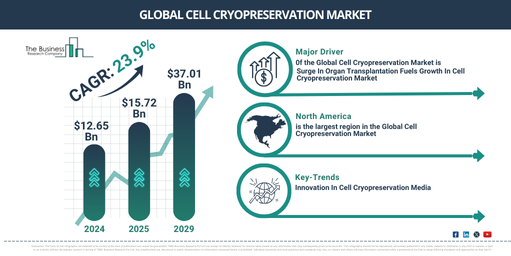
    In recent times, there has been enormous growth in the cell cryopreservation market size. From $12.65 billion in 2024, it is projected to surge to $15.72 billion in 2025, with a compound annual growth rate (CAGR) of 24.3%. The expansion during the historical period is attributable to a rising demand for cell-based treatments, increased biomedical research, a heightened need for organ transplantation, increased R&D activities geared towards cell-based therapies, and a spike in the utilization of cryopreserved cells.

    In the upcoming years, tremendous growth is anticipated in the cell cryopreservation market. It is projected to rise to $37.01 billion in 2029, with a compound annual growth rate (CAGR) of 23.9%. Many factors contribute to this predicted growth in the timeline forecasted. These include the increasing demand for in vitro fertilization (IVF) procedures, advancements in organ transplantation procedures, the broadening scope of biobanking activities, the escalating incidence of chronic diseases, and supportive government initiatives and funding. Some significant trends foreseen during this projected growth period include improvements in cryopreservation techniques, progressive developments in MRNA vaccine storage and transport, enhancements in cryoprotectants and freezing methods, a surging trend towards personalized medicine, and advancements in stem cell research.

    Download a free sample to assess the report’s scope and structure:

    https://www.thebusinessresearchcompany.com/sample.aspx?id=15755&type=smp

    How Are Key Drivers in the Industry Acting as Catalysts for the Growth of the Cell Cryopreservation Market?

    The surge in organ transplantation operations is anticipated to catalyze the expansion of the cell cryopreservation market. Organ transplantation, a procedure that involves substitute of a failing or damaged organ with a healthy organ from a donor, is on the rise due to organ failure triggered by genetic abnormalities, infections, injuries, and chronic illnesses. The role of cell cryopreservation in organ transplantation includes freezing and storage of cells taken from organs to uphold their future viability, augment graft accomplishment, and minimize immune rejection. For example, data from the Health Resources and Services Administration, a federal agency based in the US, indicated that in 2023, a total of 46,632 organ transplants were carried out from both living and deceased donors. This marked an 8.7% rise from 2022, and a 12.7% surge from 2021 – the first year that saw over 40,000 organ transplants. Consequently, the growth of the cell cryopreservation market is being steered by the rise in organ transplantation operations.

    Which Segments in the Cell Cryopreservation Offer the Most Growth?

    The cell cryopreservation market covered in this report is segmented –

    1) By Product: Cell Freezing Media, Equipment, Consumables

    2) By Application: Hepatocytes, Stem Cells, Oocytes And Embryotic cells, Sperm Cells, Other Applications

    3) By End-Use Channel: Biopharmaceutical And Pharmaceutical Companies, Research Institutes, Biobanks, In Vitro Fertilization (IVF) Clinics, Other End-Use Channels

    Subsegments:

    1) By Cell Freezing Media: Serum-Based Freezing Media, Serum-Free Freezing Media

    2) By Cryoprotectants: Cryoprotectants

    3) By Equipment: Cryopreservation Freezers, Cryo Storage Tanks, Controlled-Rate Freezers

    4) By Consumables: Cryovials, Cryo Storage Bags, Cryo Tubes

    Request customized data on this market:

    https://www.thebusinessresearchcompany.com/customise?id=15755&type=smp

    What Are the Fastest-Growing Geographies in the Cell Cryopreservation Market?

    North America was the largest region in the cell cryopreservation market in 2023. Asia-Pacific is expected to be the fastest-growing region in the forecast period. The regions covered in the cell cryopreservation market report are Asia-Pacific, Western Europe, Eastern Europe, North America, South America, Middle East and Africa.

    What Key Market Trends and Innovations Are Shaping the Future of the Cell Cryopreservation Industry?

    Firms working in the cell cryopreservation sector emphasize on the creation of cryopreservation medium solutions. These are unique formulations designed for preserving cells or tissues by freezing them at extremely low temperatures, promoting long-term storage and distribution while ensuring their viability and functionality. To illustrate, in April 2024, Pluristyx Inc., a US firm supplying tools, technologies, and services for cell therapies, introduced PluriFreeze, its own cryopreservation medium solution to fast-track stem cell therapy development. This solution supports the expansion of induced pluripotent stem cells (iPSCs) and introduces a pioneering approach to enhance the efficacy and quality of iPSC therapy advancement. The PluriFreeze Cryopreservation Media by Pluristyx, intended for research use only, aspires to simplify the progression of stem cell therapy and support the commercialization of cell therapies.

    View the full report here:

    https://www.thebusinessresearchcompany.com/report/cell-cryopreservation-global-market-report

    What Are the Key Elements That Define the Cell Cryopreservation Market?

    Cell cryopreservation is the process of preserving cells by cooling them to sub-zero temperatures, typically in liquid nitrogen at -196°C. This method halts all biological activity and metabolism, allowing cells to be stored for extended periods without degradation. Cryoprotective agents are used to prevent ice crystal formation, which can damage cell structures during freezing and thawing.

    Purchase the full report and get a swift delivery:

    https://www.thebusinessresearchcompany.com/purchaseoptions.aspx?id=15755

    About The Business Research Company:

    With over 15000+ reports from 27 industries covering 60+ geographies, The Business Research Company has built a reputation for offering comprehensive, data-rich research and insights. Armed with 1,500,000 datasets, the optimistic contribution of in-depth secondary research, and unique insights from industry leaders, you can get the information you need to stay ahead in the game.

    Get in touch with us:

    The Business Research Company: https://www.thebusinessresearchcompany.com/

    Americas +1 3156230293

    Asia +44 2071930708

    Europe +44 2071930708

    Email us at info@tbrc.info

    Follow us on:

    LinkedIn: https://in.linkedin.com/company/the-business-research-company

    YouTube: https://www.youtube.com/channel/UC24_fI0rV8cR5DxlCpgmyFQ

    Global Market Model: https://www.thebusinessresearchcompany.com/global-market-model
  • Market Trends Influencing Strategic Decisions in the Cell Banking Outsourcing Industry: Innovative Single Cell Potency Characterization Platform Revolutionizes Cell Therapy Research

    Market Trends Influencing Strategic Decisions in the Cell Banking Outsourcing Industry: Innovative Single Cell Potency Characterization Platform Revolutionizes Cell Therapy Research

    Discover trends, market shifts, and competitive outlooks for the cell banking outsourcing industry through 2025-2034 with The Business Research Company’s reliable data and in-depth research

    What is the Projected CAGR for the Cell Banking Outsourcing Market Size from 2025 to 2034?

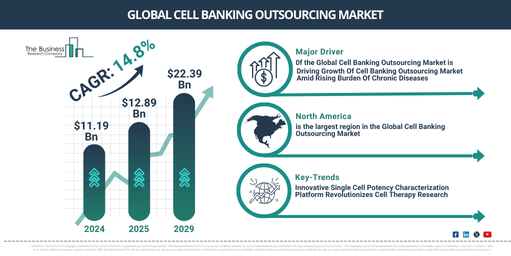
    In the past few years, there has been a surge in the size of the cell banking outsourcing market. This market is estimated to expand from $11.19 billion in 2024 to $12.89 billion in 2025, with a compound annual growth rate (CAGR) of 15.2%. Factors such as the escalating prevalence of chronic diseases, an uptick in government efforts, regulatory backing and guidelines, as well as the growth of banking services, have all contributed to this historic period growth.

    In the coming years, the market size for cell banking outsourcing is projected to experience speedy growth. By 2029, the market is predicted to grow to $22.39 billion, with a compound annual growth rate (CAGR) of 14.8%. The forecast period’s growth can be credited to factors such as the increasing acceptance of cellular products, escalating demand for monoclonal antibodies, burgeoning adoption of stem cell therapies, an aging population, and a growing reliance on cell-based therapies. Notable trends for the forecast period encompass product innovations, technological progress, investment in research and development, and partnerships between biotech firms and specialized cell banking services.

    Download a free sample to assess the report’s scope and structure:

    https://www.thebusinessresearchcompany.com/sample.aspx?id=15754&type=smp

    What Are the Major Market Drivers Behind the Rising Adoption of Cell Banking Outsourcing Market?

    The escalation in chronic disease prevalence is anticipated to drive the cell banking outsourcing market’s expansion. Chronic ailments are enduring conditions that usually evolve slowly and carry on for a prolonged duration. The surge in such conditions is attributed to various factors like lifestyle alterations, aging demographics, and genetic propensities. Cell banking outsourcing proves critical in enhancing research and development initiatives aimed at combating chronic diseases by offering expertise, resources, and infrastructure not typically available internally. For example, in July 2023, the Department of the Treasury, an Australian national treasury and financial department, stated that in 2020-2021, almost half of all Australians (46.6%) suffered from one or more chronic ailments, while nearly one in five (18.6%) had two or more chronic conditions. As a result, the increasing burden of chronic diseases is fueling the growth of the cell banking outsourcing market.

    Which Key Market Segments Comprise the Cell Banking Outsourcing Market and Drive Its Revenue Growth?

    The cell banking outsourcing market covered in this report is segmented –

    1) By Type: Master Cell Banking, Working Cell Banking, Viral Cell Banking

    2) By Cell Type: Stem Cell Banking, Non-Stem Cell Banking

    3) By Phase: Bank Storage, Bank Characterization And Testing, Bank Preparation

    Subsegments:

    1) By Master Cell Banking: Human Master Cell Bank, Animal Master Cell Bank

    2) By Working Cell Banking: Human Working Cell Bank, Animal Working Cell Bank

    3) By Viral Cell Banking: Virus Bank For Vaccine Production, Viral Vector Bank For Gene Therapy, Adenovirus Bank

    Request customized data on this market:

    https://www.thebusinessresearchcompany.com/customise?id=15754&type=smp

    Which Areas Are Leading Regions in the Cell Banking Outsourcing Market Expansion Across the Globe?

    North America was the largest region in the cell banking outsourcing market in 2023. Asia-Pacific is expected to be the fastest-growing region in the forecast period. The regions covered in the cell banking outsourcing market report are Asia-Pacific, Western Europe, Eastern Europe, North America, South America, Middle East and Africa.

    Which Technological Trends Are Reshaping the Cell Banking Outsourcing Industry Dynamics?

    Companies that dominate the cell banking outsourcing market are prioritizing the creation of technologically superior solutions, like platforms for single-cell potency characterization, to conduct precise evaluations of the potency of individual cells. A platform for single-cell potency characterization is a complex technology or system of methodologies targeted at assessing the potency and functional abilities of cells within a population. One example is the January 2024 launch of VivaCyte by Cellply Srl, an Italian biotechnology firm. VivaCyte is the company’s key product and a comprehensive single-cell potency characterization platform that merges potency analysis with immunophenotyping to simplify cell therapy research and development. As a fully automated standalone platform, VivaCyte is designed to decrease development durations, costs, and risks through swift and comprehensive characterization of the intricate functionality of potential cellular immunotherapies. The platform expedites the testing of multiple cell therapy candidates against various target tumor cells, offering consistent immune cell characterization and functional characterization at the single-cell level in a time significantly less than that required by currently available analytical tools.

    View the full report here:

    https://www.thebusinessresearchcompany.com/report/cell-banking-outsourcing-global-market-report

    How Is the Cell Banking Outsourcing Market Conceptually Defined?

    Cell banking outsourcing refers to the practice of contracting external organizations to establish, maintain, and manage repositories of cell lines crucial for various applications in biotechnology and pharmaceutical industries, such as drug discovery and biomanufacturing. It ensures that cells are handled, stored, and maintained under standardized conditions, ensuring consistency and reliability.

    Purchase the full report and get a swift delivery:

    https://www.thebusinessresearchcompany.com/purchaseoptions.aspx?id=15754

    About The Business Research Company:

    With over 15000+ reports from 27 industries covering 60+ geographies, The Business Research Company has built a reputation for offering comprehensive, data-rich research and insights. Armed with 1,500,000 datasets, the optimistic contribution of in-depth secondary research, and unique insights from industry leaders, you can get the information you need to stay ahead in the game.

    Get in touch with us:

    The Business Research Company: https://www.thebusinessresearchcompany.com/

    Americas +1 3156230293

    Asia +44 2071930708

    Europe +44 2071930708

    Email us at info@tbrc.info

    Follow us on:

    LinkedIn: https://in.linkedin.com/company/the-business-research-company

    YouTube: https://www.youtube.com/channel/UC24_fI0rV8cR5DxlCpgmyFQ

    Global Market Model: https://www.thebusinessresearchcompany.com/global-market-model